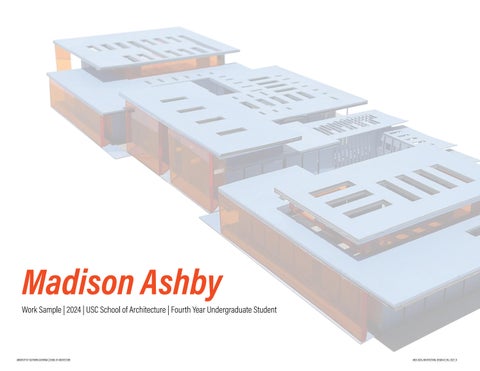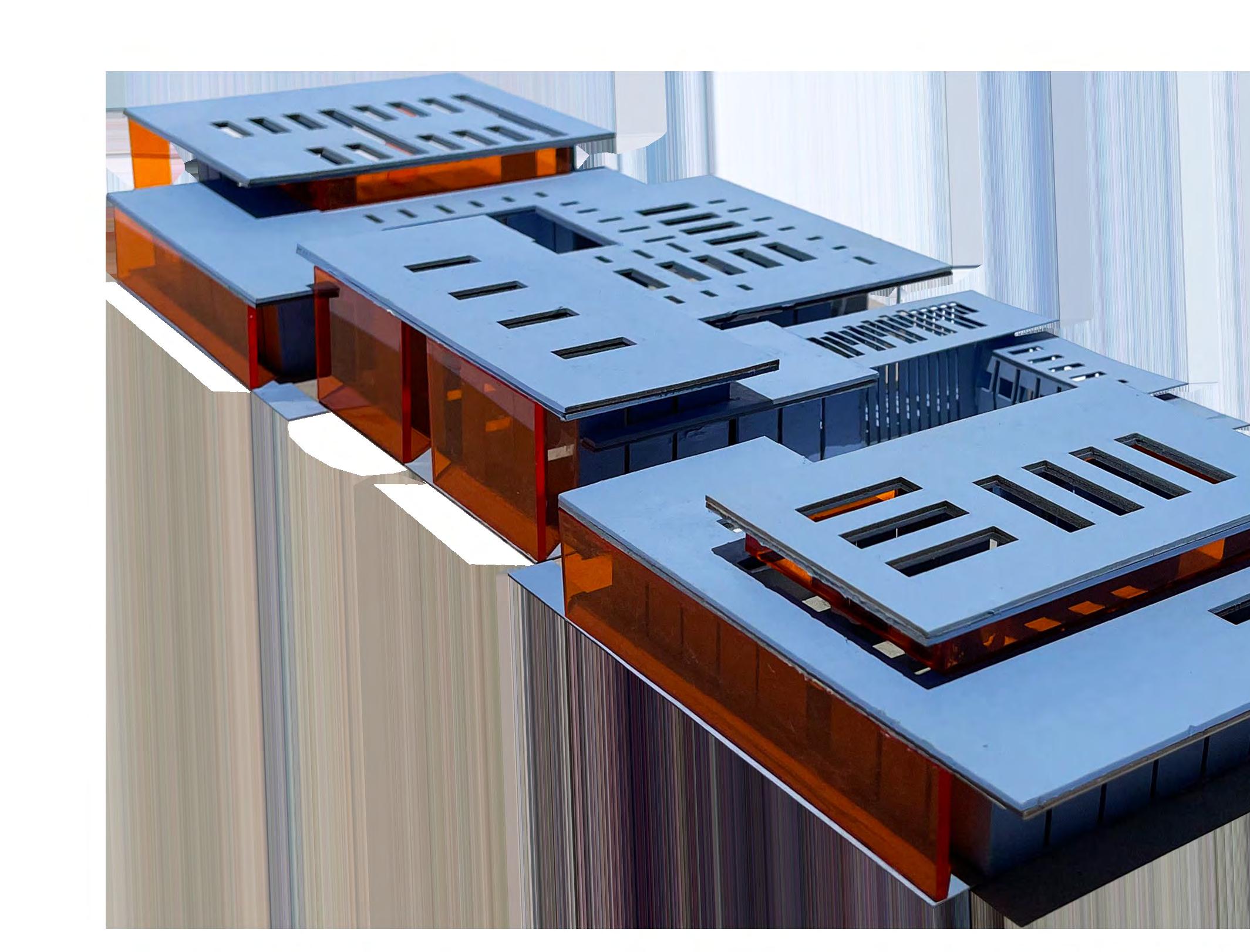
ARCH-302A | ARCHITECTURAL DESIGN III FALL 2022 UNIVERSITY OF SOUTHERN CALIFORNIA SCHOOL OF ARCHITECTURE Madison Ashby Work Sample | 2024 | USC School of Architecture | Fourth Year Undergraduate Student
UNIVERSITY OF SOUTHERN CALIFORNIA SCHOOL OF ARCHITECTURE 2 Contents Contents Designing Maximal Housing: Pollination Education The Money Train: Growing Beyond the Classroom The Reading Room The Library Selected Artworks 3 8 13 18 23

Designing Maximal Housing: Pollination Education
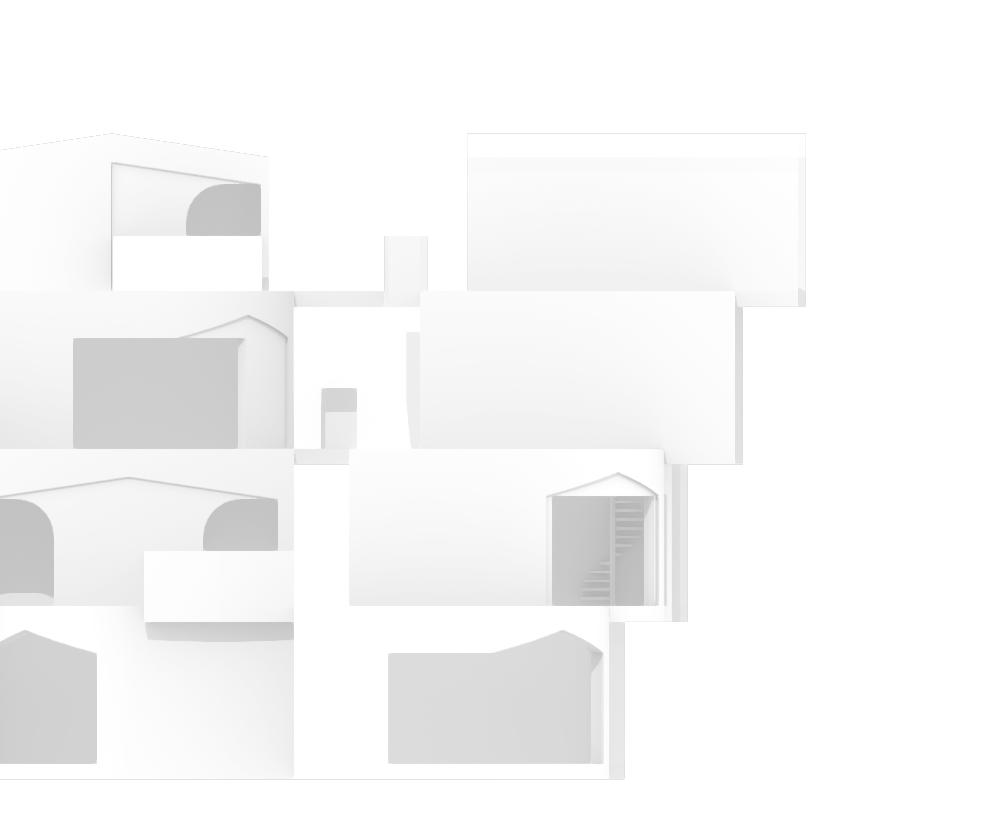
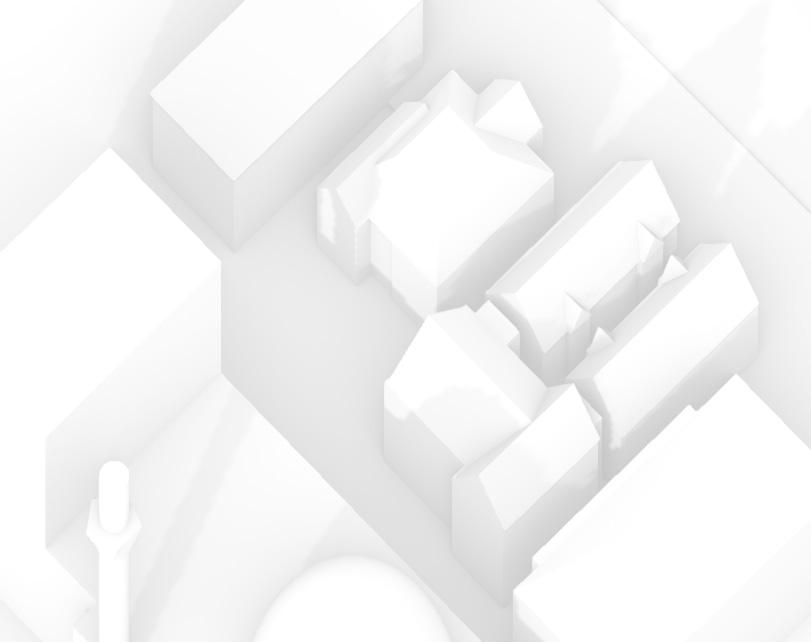
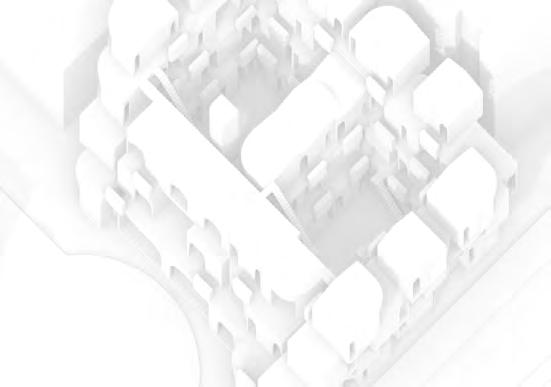
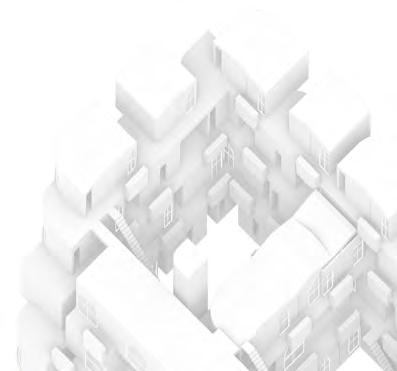
Site C of Harvest Housing contains the after school/daycare center of the cooperative, as well as the main pollinator-attracting plants and flowers.
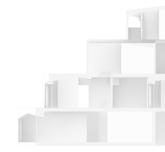
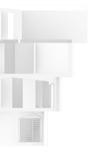
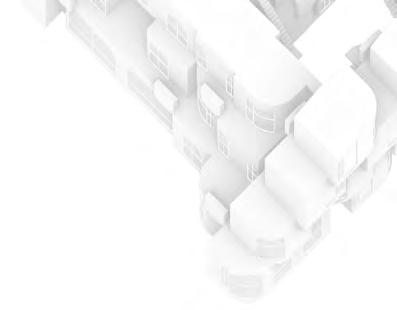
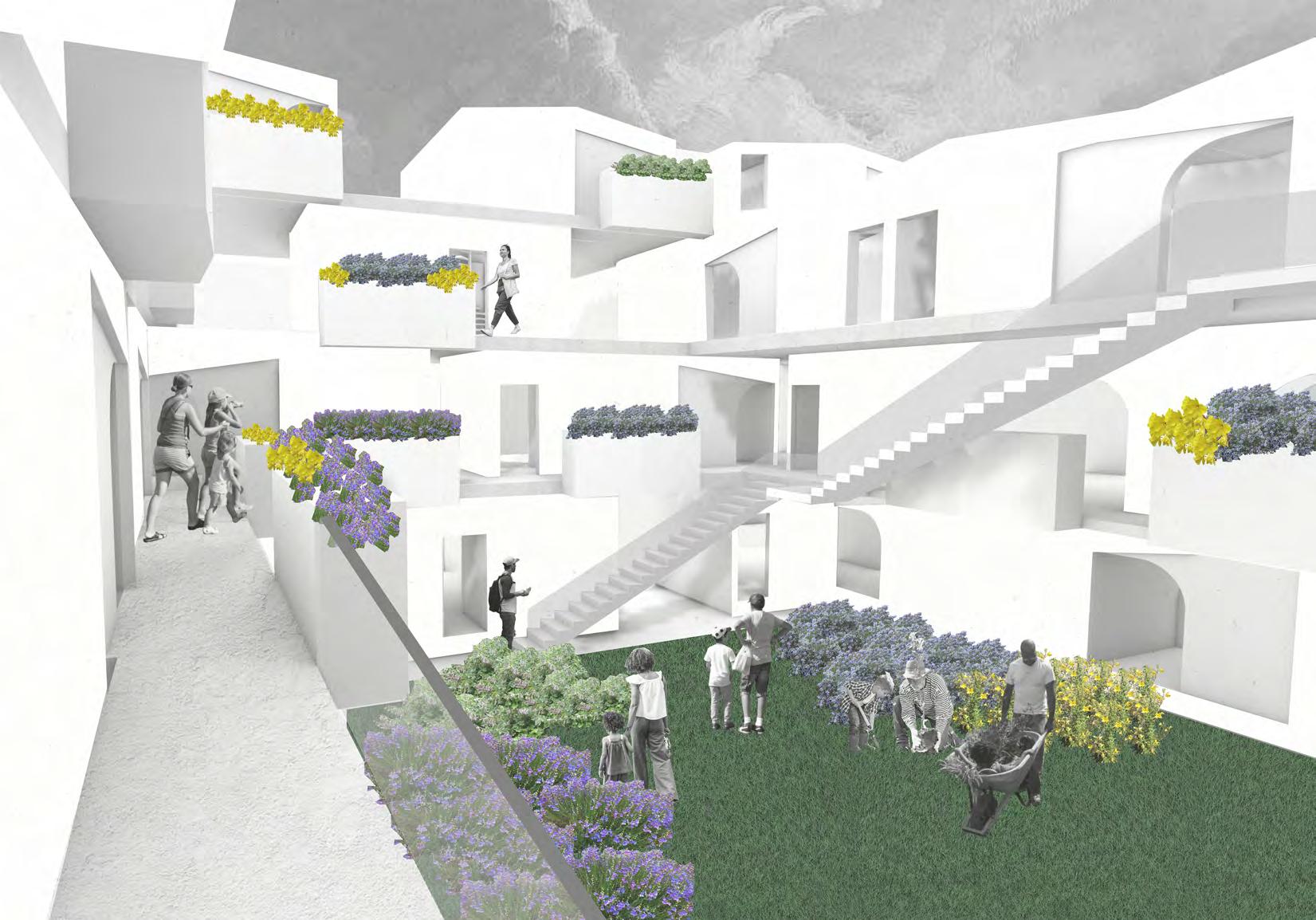
Three main architectural tools exist in my project: the curved wall, stepping, and the pitched roof. The units, consisting of two, three, and four person arrangements, are placed around two central courtyards on the ground floor. The west courtyard contains the flower ground floor flower garden, and the east courtyard features gathering and playspace for the children, situated next to the daycare. Curved walls within each unit act as a main reveal for each unit, defining the external spaces between the units. Some act as private balcony space, while others act as public growth pockets, for flowers that require less sunshine. The stepped form allows for better shading of the units and some flower species, and is also seen through the offsetting of the multi-level units. The internal pitches thicken the floor and ceiling to allow for soil space and utility space for the apartments. Ultimately, the driving philosphy is to create ample space for flower and pollinator cultivation. By situating the daycare on this site, the residents engage in education about the importance of gardening and pollination.

ARCH-302A | ARCHITECTURAL DESIGN III FALL 2022 UNIVERSITY OF SOUTHERN CALIFORNIA SCHOOL OF ARCHITECTURE 3







































































UNIVERSITY OF SOUTHERN CALIFORNIA SCHOOL OF ARCHITECTURE 4 ARCH-302A ARCHITECTURAL DESIGN III FALL 2022
ARCH-302A | ARCHITECTURAL DESIGN III FALL 2022 UNIVERSITY OF SOUTHERN CALIFORNIA SCHOOL OF ARCHITECTURE 5











ARCH-302A | ARCHITECTURAL DESIGN III FALL 2022 UNIVERSITY OF SOUTHERN CALIFORNIA SCHOOL OF ARCHITECTURE 6
Green roofs/rooftop garden space absorbs heat/aids in air filtration.
Window boxes provide shading of interior pathways and air filtration.
Summer sun blocked by stepping.
Winter sun allowed in to collect heat.
Latitudinal Section
Greenspace + Solar Panel Diagam
Winter and Summer Sun Angle Diagram
ARCH-302A | ARCHITECTURAL DESIGN III FALL 2022 UNIVERSITY OF SOUTHERN CALIFORNIA SCHOOL OF ARCHITECTURE 7
The Money Train: Growing Beyond the Classroom
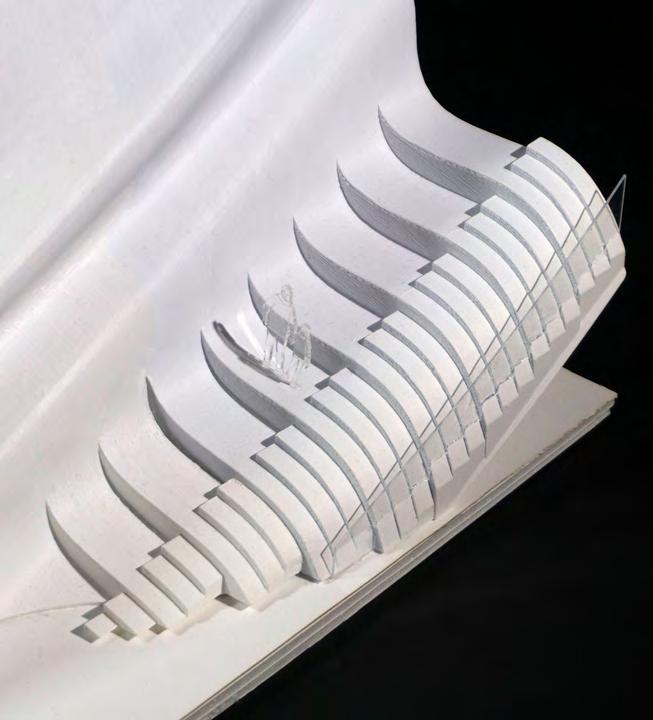
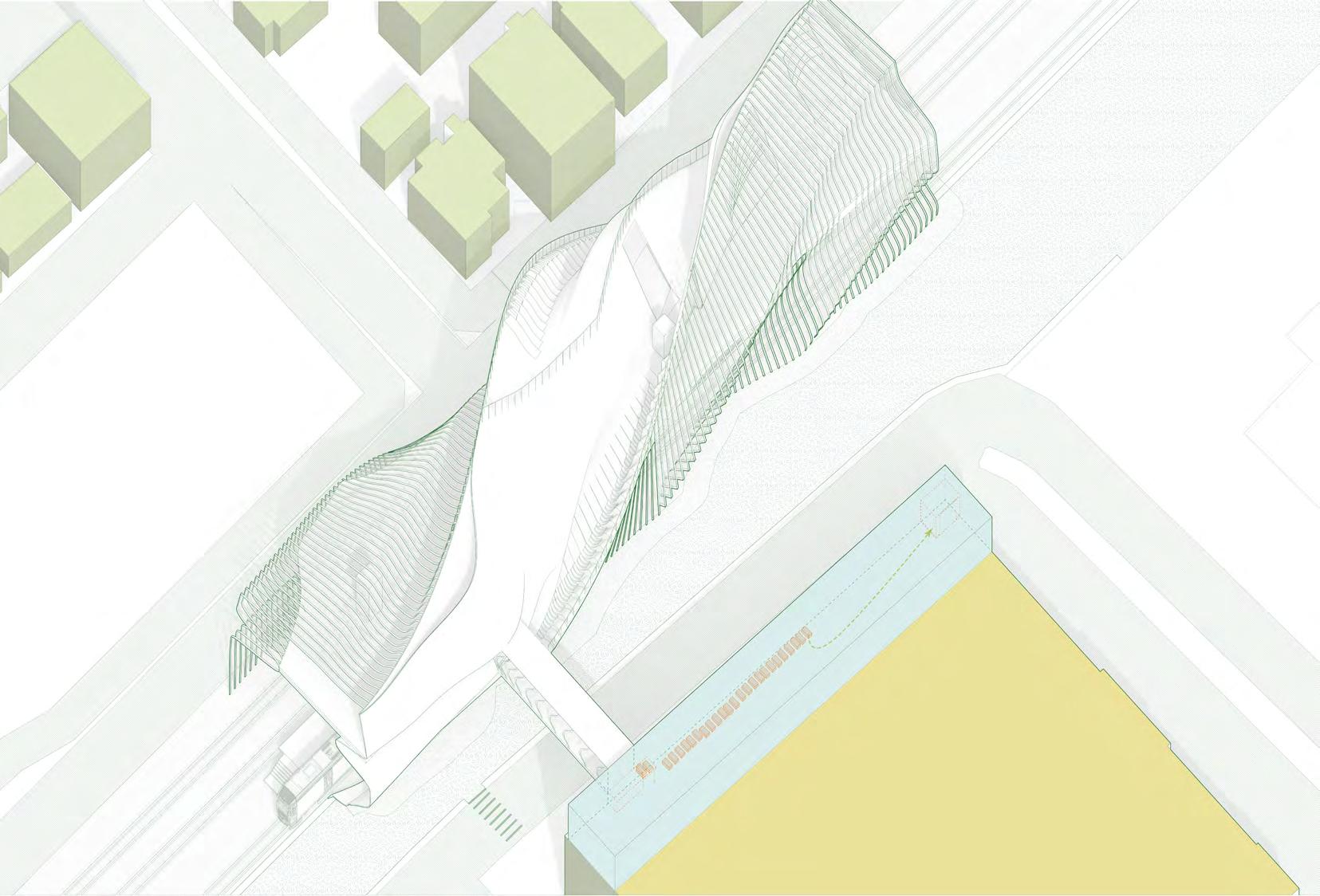
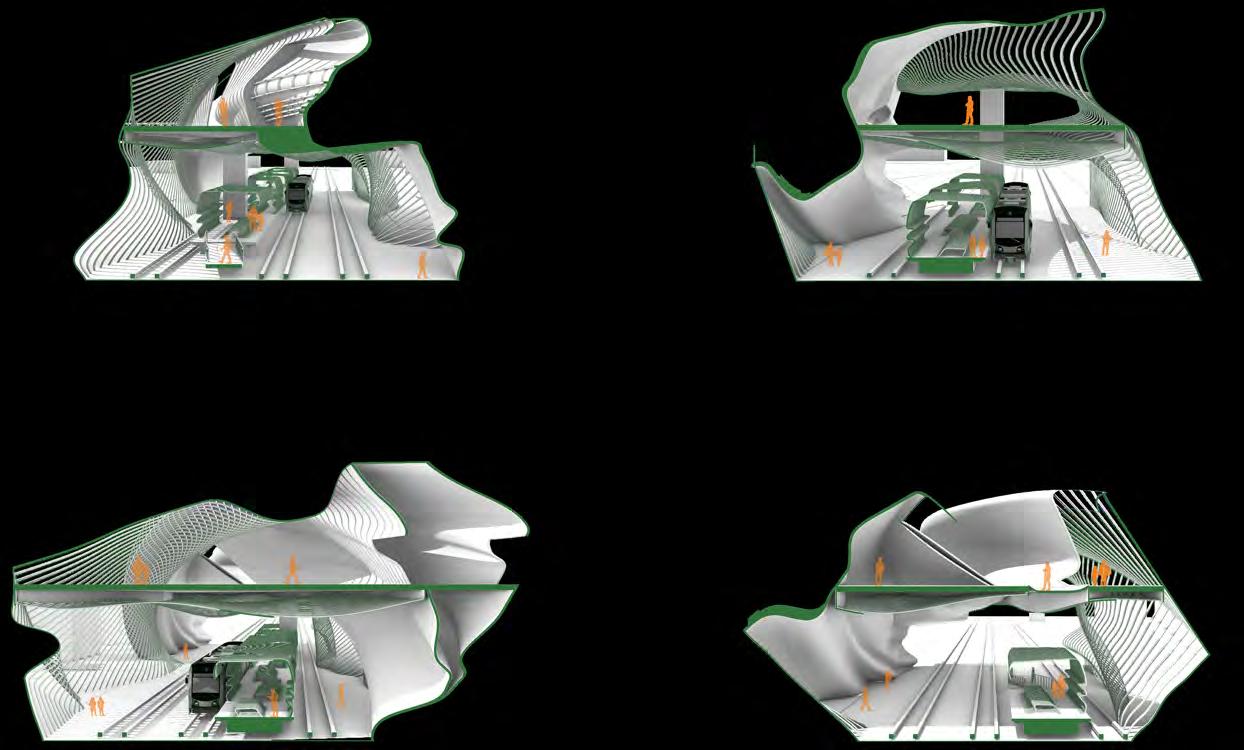
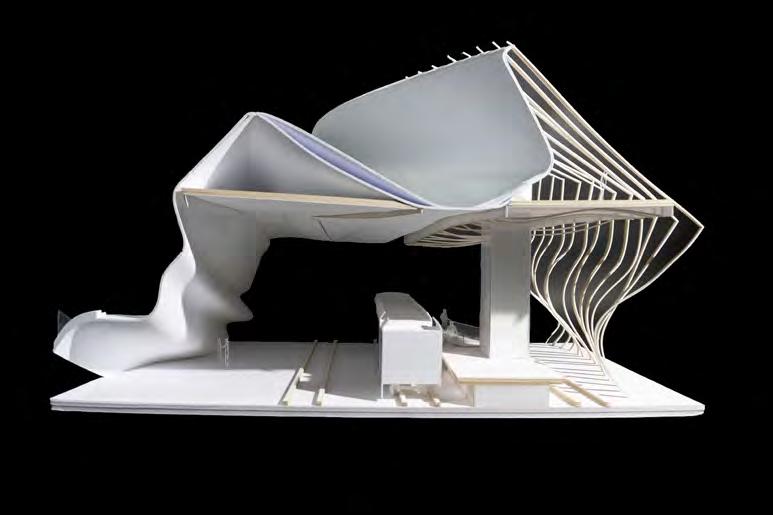
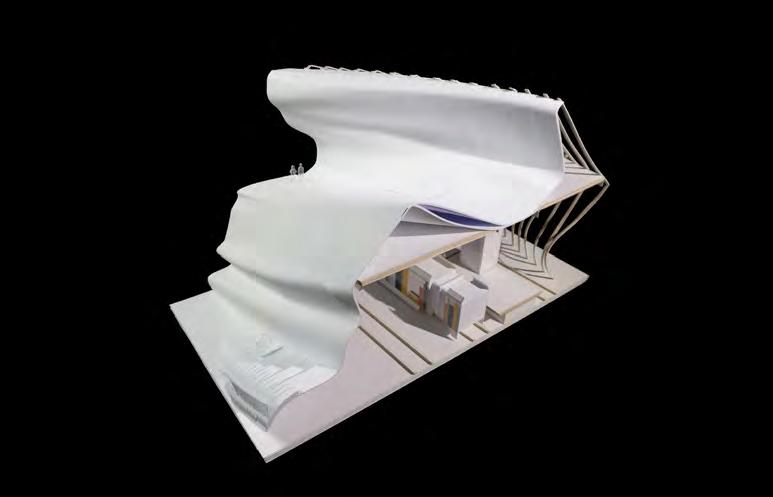
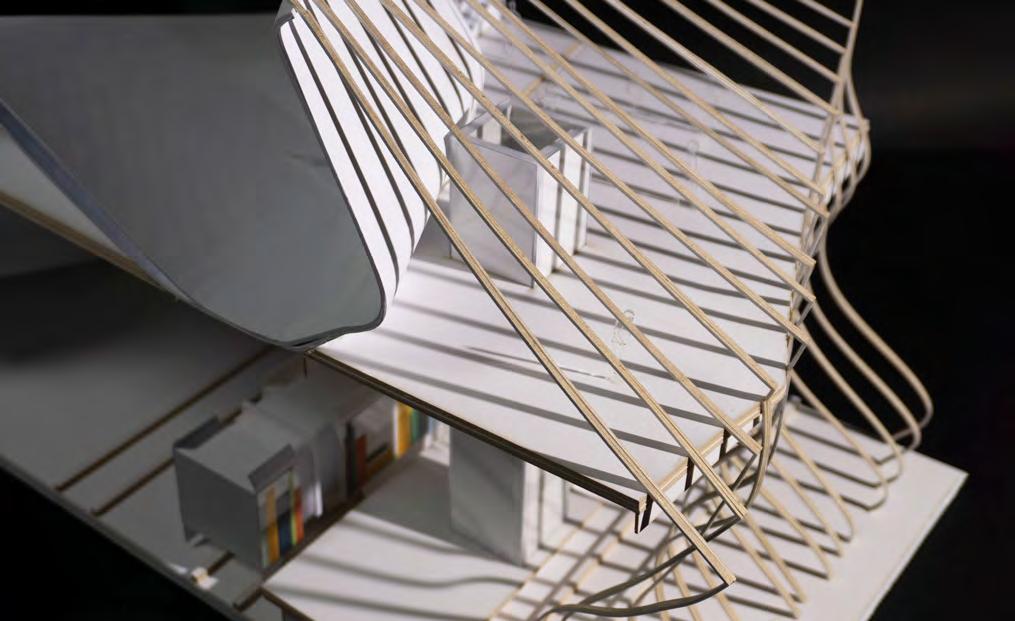
The Money Train: Growing Beyond the Classroom, reimagines the way in which we move fresh produce and educational opportunities throughout Los Angeles. Utilizing the Los Angeles Blue Line, running all the way from Azusa to Long Beach, the Money Train hits a core of primarily African American and Latino communities. Growing Beyond the Classroom provides a mobile classroom experience for elementary aged students. Students while riding learn more about their local Los Angeles History through panoramic tours and stops to museums and cultural sights, while also gaining culinary lessons on using fresh produce from local chefs. Phase two of the project, the train station, we decided to set our station in Compton due to its proximity to elementary schools, Superior Grocers, and Compton Library. The station provides arts exhibition space, library space, and book swap opportunity all within the curved forms of the structure, inspired by the organic forms of the train interiors. Views, and visibility in and out of the station are prioritized by the twisting circulation up and onto the roof, as well as the undulating ribs that make up a portion of the structure. The elevator core provides circulation up to the library and exhibition space, as well as a means of transferring produce from the train cars and up and into the grocery store connected to the train station.
This is a collaborative project with Lilly Tung.
UNIVERSITY OF SOUTHERN CALIFORNIA SCHOOL OF ARCHITECTURE 8 ARCH-402A ARCHITECTURAL DESIGN IV FALL 2023
UNIVERSITY OF SOUTHERN CALIFORNIA SCHOOL OF ARCHITECTURE 9 ARCH-402A ARCHITECTURAL DESIGN IV FALL 2023
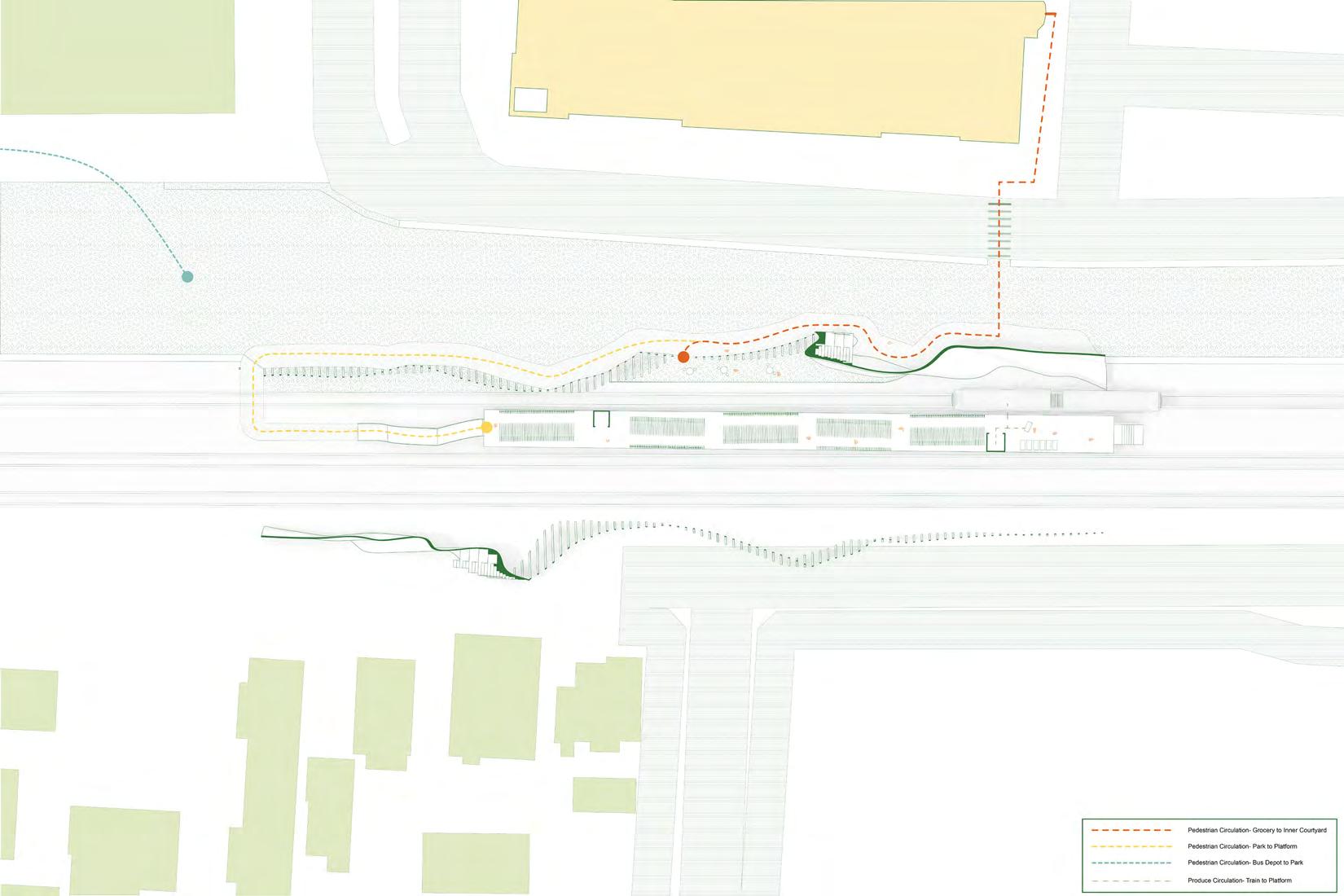
UNIVERSITY OF SOUTHERN CALIFORNIA SCHOOL OF ARCHITECTURE 10 ARCH-402A ARCHITECTURAL DESIGN IV FALL 2023
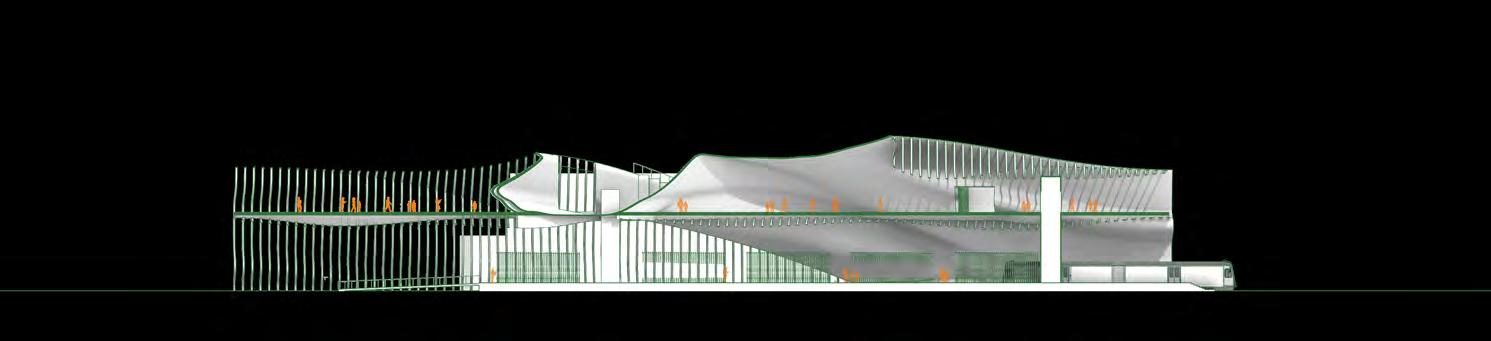
Longitudinal Section
UNIVERSITY OF SOUTHERN CALIFORNIA SCHOOL OF ARCHITECTURE 11 ARCH-402A ARCHITECTURAL DESIGN IV FALL 2023
Serial Transverse Sections
UNIVERSITY OF SOUTHERN CALIFORNIA SCHOOL OF ARCHITECTURE 12 ARCH-402A ARCHITECTURAL DESIGN IV FALL 2023
The Reading Room
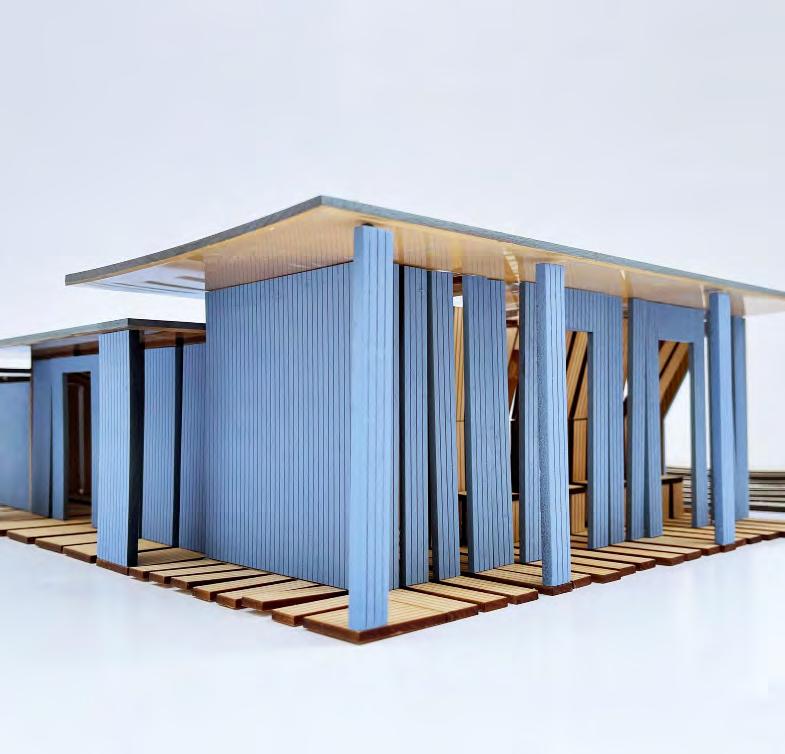
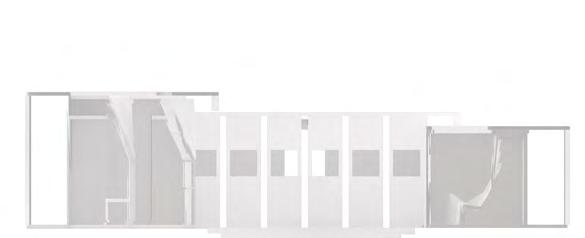
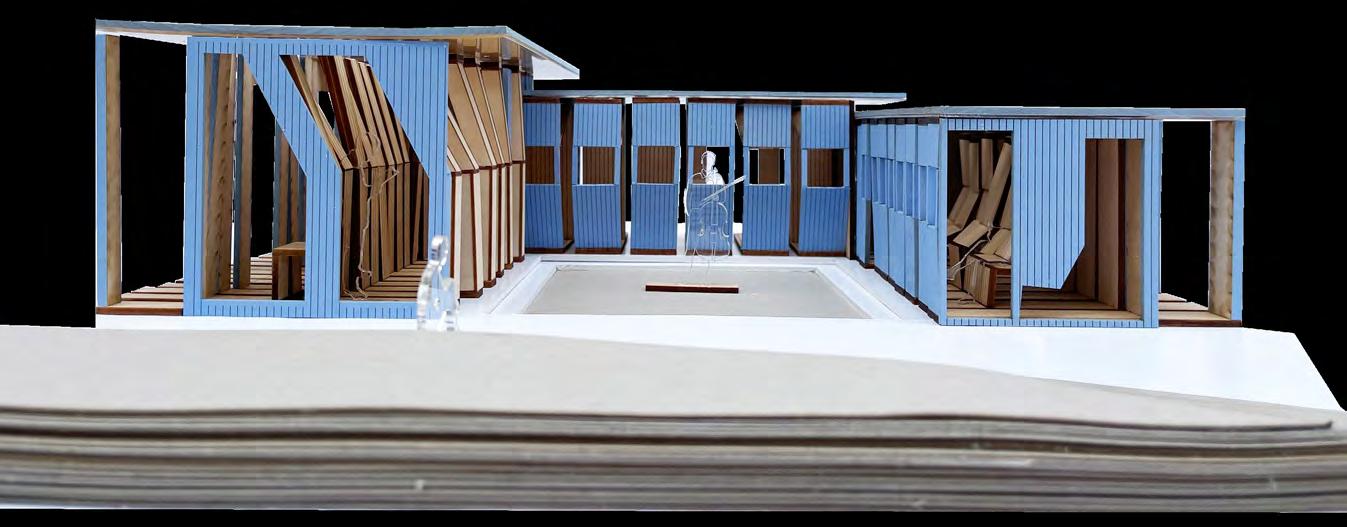
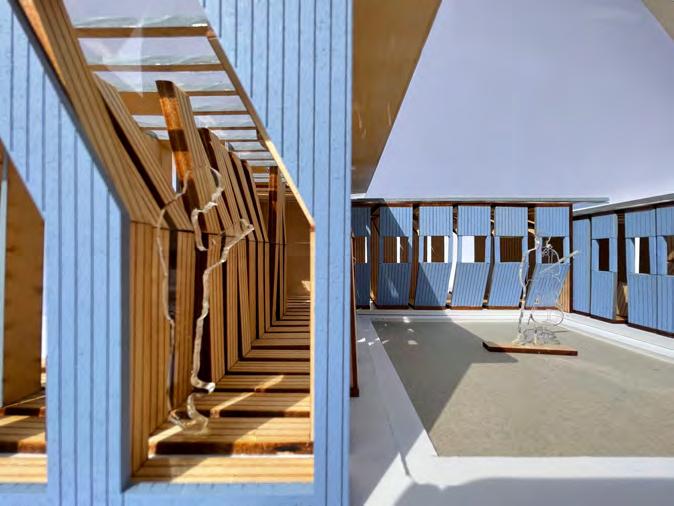
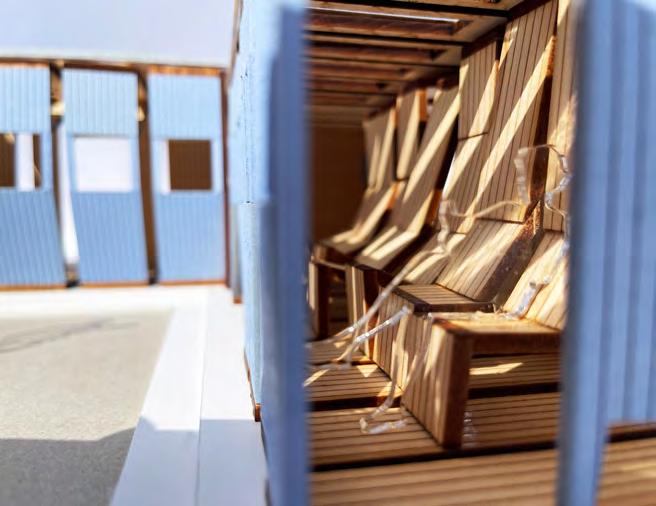
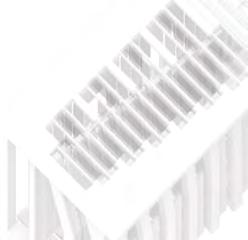
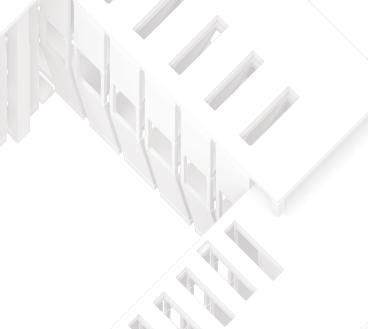
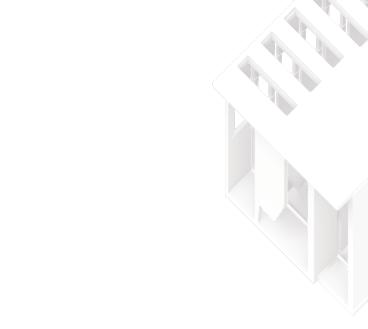
The Reading Room, located in the Los Angeles State Historic Park, acts as a quiet reading and gathering space by day, and a performance space by night. Shaped by the three characters I created for the park, the reading room offers a variety of program. The U-shaped organization of the reading room is inspired by linear and continuous nature of the park that it sits within. The linear circulation path is layered around the U, with an exterior circulation path defined by an exterior collonade and roof overhang. The U, divided into three sections, starts with the book stacks, then transitions to exhibition space, and then finally the reading and work space. The wood panels vary in thickness, with one thickness assigned to each section. The books, all consisting of literature on yoga and mindfulness practice. The shifting and movement of the body through yoga practice inform the folds and angles of the project. Within the bookstack section, the stacks derive from thickening the panels that enclose the space, and other panels shift up and out to create seating. Openings viewing into the central sunken courtyard get bigger as one walks through the project, with the seating area being the area with the largest panel. By night, these areas can become viewing spaces for the performers that practice within the courtyard. Ultimately, the reading room promotes mindfulness and supports the performing arts scene of the Chinatown and Downtown areas of Los Angeles.
UNIVERSITY OF SOUTHERN CALIFORNIA SCHOOL OF ARCHITECTURE 13 ARCH-202B ARCHITECTURAL DESIGN II SPRING 2022






































UNIVERSITY OF SOUTHERN CALIFORNIA SCHOOL OF ARCHITECTURE 14 ARCH-202B ARCHITECTURAL DESIGN II SPRING 2022
AA
AA
Roof Plan Plan
Storyboard
Name: Renee
Relationship to Proposal: Renee is drawn to the reading room to complete some of her psychology work, as well as find time to relax. She appreciates that it has certain solitary elements where she can be removed from the outside world.
Name: Emilio
Relationship to Proposal: Emilio was looking for performance spaces for his students to have their recitals, and found that the reading room features outdoor performance space.
Longitudinal Section Characters
Name: Krystal
Relationship to Proposal: Krystal is drawn to the reading room because it gives her a quiet space to catch up on her fantasy novels, as well as place to practice and perform with her dance troop.
UNIVERSITY OF SOUTHERN CALIFORNIA SCHOOL OF ARCHITECTURE 15 ARCH-202B ARCHITECTURAL DESIGN II SPRING 2022 10:00 am 2:00 pm 2:30 pm 4:30 pm 6:45 pm 6:30 pm 6:00 pm 5:30 pm
Experiential
UNIVERSITY OF SOUTHERN CALIFORNIA SCHOOL OF ARCHITECTURE 16 ARCH-202B ARCHITECTURAL DESIGN II SPRING 2022







































































UNIVERSITY OF SOUTHERN CALIFORNIA SCHOOL OF ARCHITECTURE 17 ARCH-202B ARCHITECTURAL DESIGN II SPRING 2022
The Library
Situated in Los Angeles State Historic Park, this library acts as a continuation of the reading room project, housing books on mindfulness and yoga practice.
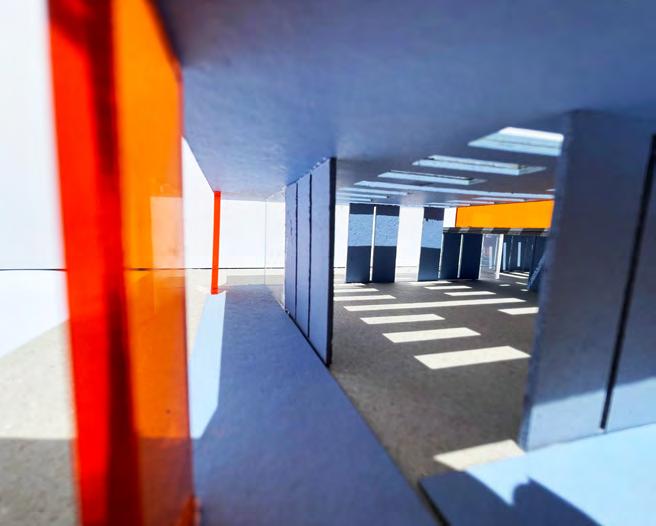
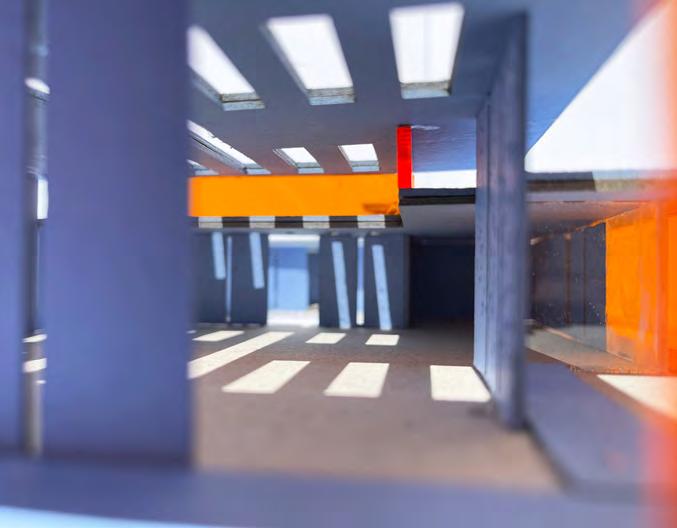
Taking the U-Shaped organization of the reading room and arranging it along a grid, the library branches into layered circulation paths and spaces, informed by varying ceiling datums to delineate program according to gathering. The panelization of reading room comes back into play with the tilt-up concrete panels as the main wall space with small gaps of glass that allow light to enter as well as create a visual separation between the panels. Some tilt up panels turn into full glazing to allow for views into the park.
Entering the main entrance, visitors must walk through the book stacks to get to the main quiet reading space. The stacks, organized in rows of shelves, each tilt at slightly varying degrees to create a space that undulates around the user. The tilt is in reference to the shifting of the bookstacks within the reading room, informed by the movement of shifting of the body in a yoga sequence such as sun salutations.
In conclusion, the main design driver of this space, calling back to the reading room, provides a linear path of experiences for the user, to encourage one to slow down.
UNIVERSITY OF SOUTHERN CALIFORNIA SCHOOL OF ARCHITECTURE 18 ARCH-202B ARCHITECTURAL DESIGN II SPRING 2022
UNIVERSITY OF SOUTHERN CALIFORNIA SCHOOL OF ARCHITECTURE 19 ARCH-202B ARCHITECTURAL DESIGN II SPRING 2022
UNIVERSITY OF SOUTHERN CALIFORNIA SCHOOL OF ARCHITECTURE 20 ARCH-202B ARCHITECTURAL DESIGN II SPRING 2022
Section Perspective

UNIVERSITY OF SOUTHERN CALIFORNIA SCHOOL OF ARCHITECTURE 21 ARCH-202B ARCHITECTURAL DESIGN II SPRING 2022
UNIVERSITY OF SOUTHERN CALIFORNIA SCHOOL OF ARCHITECTURE 22 ARCH-202B ARCHITECTURAL DESIGN II SPRING 2022
Cutaway Axonometric of Bookstacks
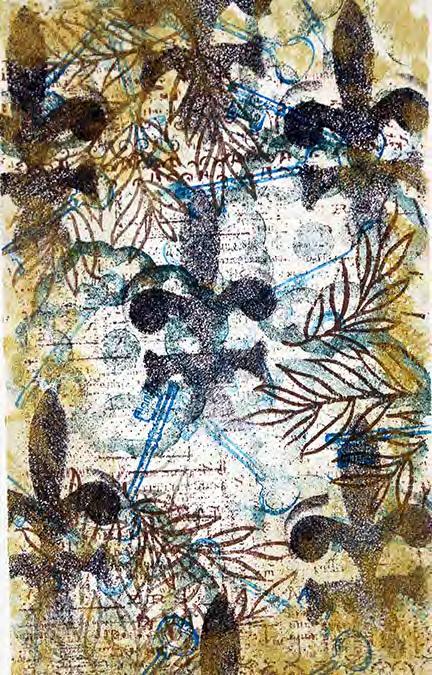
Selected Artworks
UNIVERSITY OF SOUTHERN CALIFORNIA SCHOOL OF ARCHITECTURE 23 Selected Artworks|


UNIVERSITY OF SOUTHERN CALIFORNIA SCHOOL OF ARCHITECTURE 24 Selected Artworks|

UNIVERSITY OF SOUTHERN CALIFORNIA SCHOOL OF ARCHITECTURE 25 Selected Artworks|
UNIVERSITY OF SOUTHERN CALIFORNIA SCHOOL OF ARCHITECTURE Thank You madisonashby02@gmail.com 313-819-1678 You Can Reach Me At: