 (Jim Stephenson, 2020)
(Jim Stephenson, 2020)
(Jim Stephenson, 2020)
Abstract
Venturing into the Future: Embracing the Passivhaus Standard in the New Era of Construction, building a happy and healthy home for generations to come.
For those with a residence in the UK looking to better their environment and homes, wanting to make a change for their planet but also for their personal health and wellbeing while saving you a significant amount of money in the long term; I present to you this industry report exploring the continuous global issues of global warming, and how we collectively and you personally can mitigate some of the most adverse effects that are detrimental to sustaining our life here on earth by changing the way we build up our built environment, using passivhaus building standards, aiding us to reach our global target of achieving net zero by 2050.
Throughout this report, we will discuss the underlying issue, global warming, shedding light on the gloomy facts of how we got to where we are today, what caused it, and what will happen if we continue, in the hopes of encouraging people into action to bring about change. This issue can no longer be neglected. We have to make a change. More greenhouse gas emissions will accumulate if we continue on our current path, producing an adverse effect on our climate. We may be able to avoid some of the more devastating consequences if we can reduce emissions.
And how are we going to reduce emissions? Observe the situation at hand. According to the Passivhaus Trust (Passivhaus Trust ), the built environment accounts for a quarter of all UK carbon emissions (26%), with most coming from inefficient and wasteful houses, making housing the target in which to improve its efficiency.
But exactly can the passivhaus building standard help to address such persistently damaging global challenges while also improving your quality of life and saving you an enormous amount of money? Dive into this insightful industry report and unlock the knowledge you need on this transformative topic.
2 / Making The Future Passivhaus Introduction
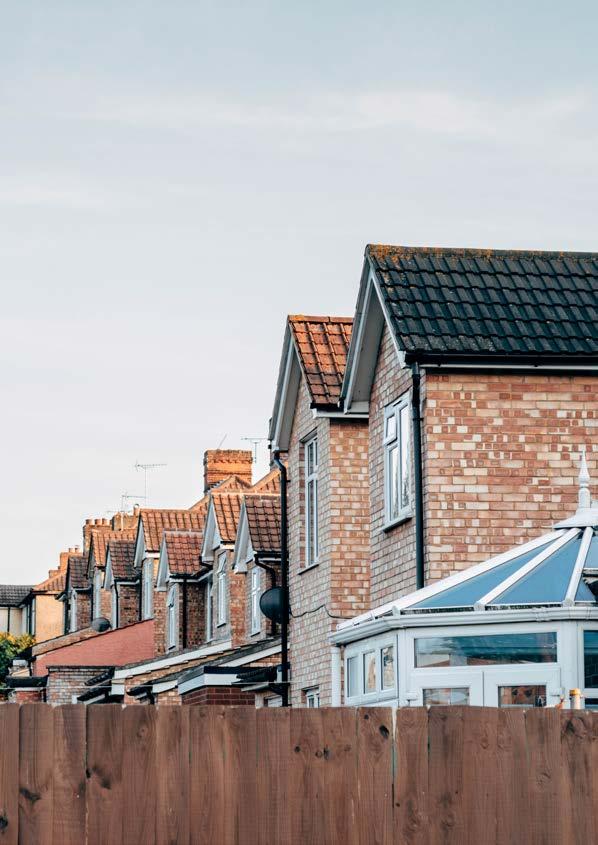
/ 3 (Super Straho, 2020)
4 / Making The Future Passivhaus Content Page
/ 5
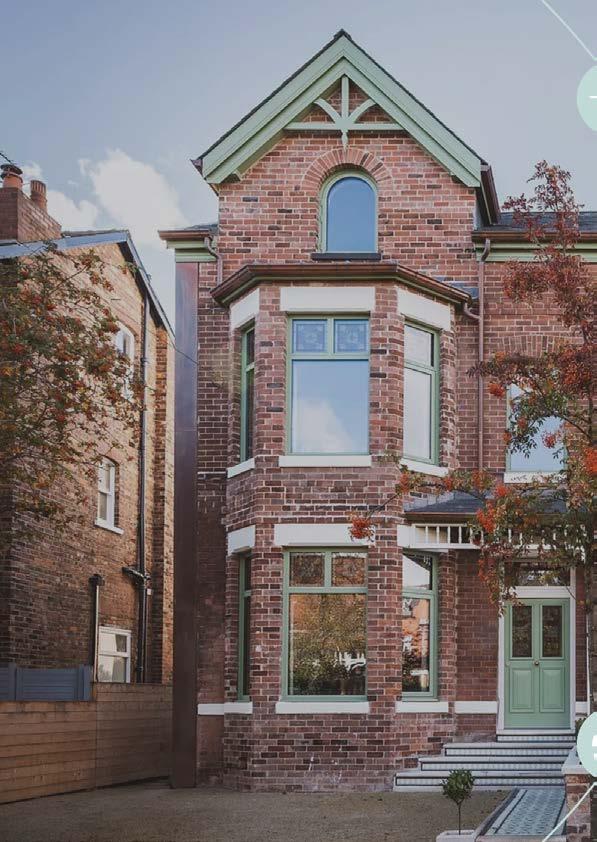
(Rick McCullagh, Gug Wilders, Ecospheric, 2018)
Introduction
This industry report serves as an excellent introduction to understanding the benefits of shifting our construction strategy to the passivhaus architectural route when developing the built environment. The Passivhaus Standard is a rigorous energyefficient building standard that aims to create buildings that maintain an almost constant temperature (Woodward ). The standard requires accurate design modelling using the Passive House Planning Package (PHPP), very high levels of insulation, extremely high-performance windows with insulated frames, airtight building fabric, and thermal bridgefree construction (What is Passivhaus? ).
The building sector contributes to a quarter of all UK carbon emissions, with inefficient and wasteful homes accounting for the majority of that (Woodward ). By adopting the Passivhaus building standards, we can significantly reduce the carbon footprint of the building sector and contribute to a more sustainable future. In this report we will explore how this standard can positively impact our planet and ourselves to help us reach our global target of reaching net zero by 2050.
Section 1 : Unveiling the Net Zero Horizon: Global Warming and the Impact of Passivhaus Standards.
The first section of this industry report provides an overview on the present worldwide concern regarding global warming, that underpins the purpose of this report. Exploring how we got to this point, what caused it and why, and how it impacts us on a daily and longterm basis, with this research later looking at the possible solution of implementing the passivhaus building standard to mitigate the adverse effects of these global challenges.
Section 2A : What is passivhaus? : Unpacking the 5 Principles and Core Values for Passivhaus.
This section delves into the fundamental aspects of the Passivhaus standard, examining its stringent criteria and why it must be strictly adhered to, the five foundational principles that serve as precise guidelines, and the core values that form the foundation of this standard.
Section 2B : The Benefits of Passivhaus Building Standards.
Testimonies from Successful Projects in the UK Following on from the previous section, we will examine the most important matter, the benefits, and how investing your time and money will benefit you and the planet in terms of health and well-being, as well as the implications for energy and cost savings. Following that, realworld UK Passivhaus homeowners revealed their personal journey and experiences living in their energy-efficient homes in order to emphasise the incredible impacts and importance of Passivhaus for the building sector.
Section 3 : Passivhaus Case Studies in the UK: inspiring Examples of EnergyEfficient Residential Properties
Finally, this section celebrates two outstanding UK-based Passive Homes that have won awards for their distinctive and innovative energy-saving designs. Demonstrating how versatile passivhaus retrofit homes can be, embracing a variety of designs and keeping original characteristics while remaining energy-efficient, debunks the popular misconception that energy-efficient homes must be simple and lacking charm.
6 / Making The Future Passivhaus Introduction
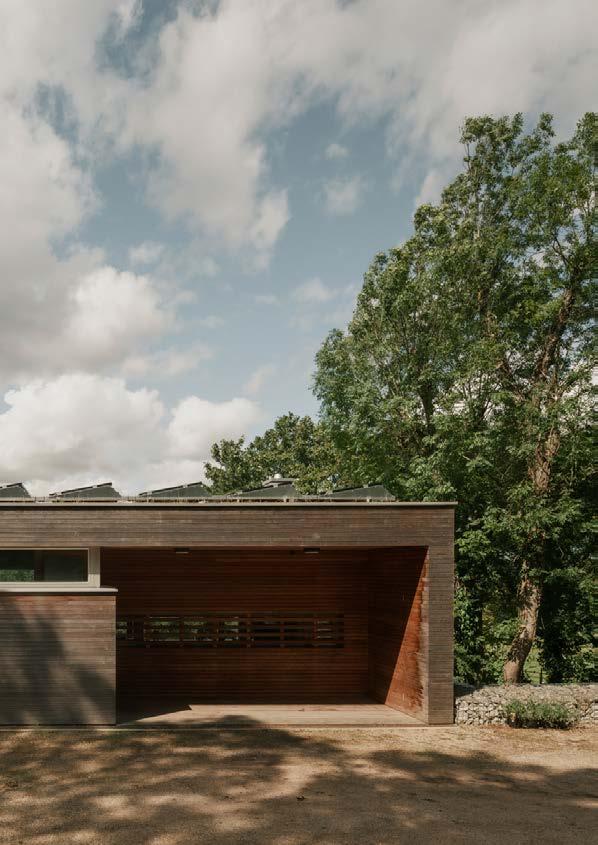
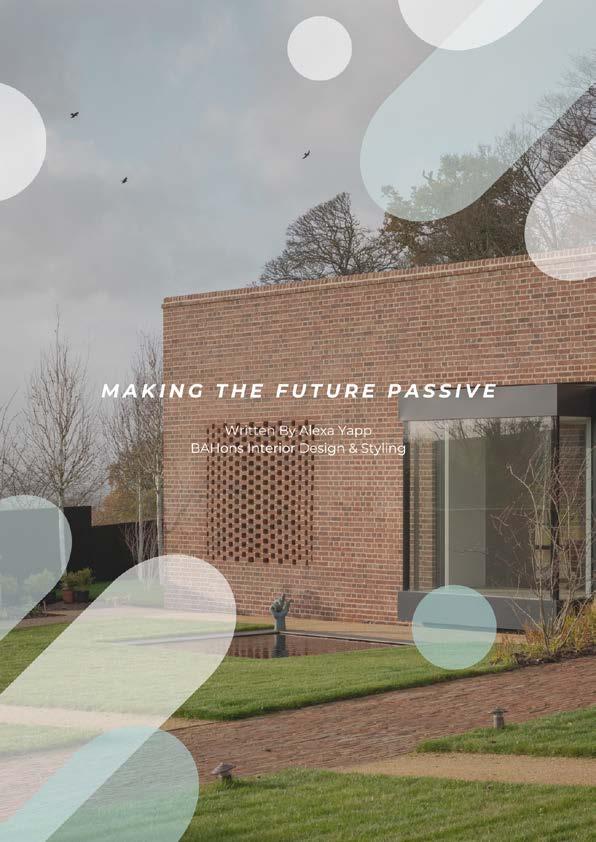
Image Source : ‘Devon Passive House’, Jim Stephenson, Dezeen, 2020
/ 7 (Jim
Stephenson, 2020)
8 / Making The Future Passivhaus Introduction
Context
To determine the research focus for this industry report, I looked to the UN Sustainable Development Goals for guidance. Among these, Goal 7 - Affordable and Clean Energy (2021) piqued my interest. (Goal 7: Affordable and clean energy 2021). It made me question global warming and the existence of a more efficient alternative to restore our planet’s health. A massive issue that impacts us socially, economically, and environmentally. This aim contains several targets, including doubling energy efficiency improvements. This inspired me to look into what an energy-efficient home is and what it requires.
I discovered the Passive House Institute (Passive House Institute ), which defines a building standard based on energy efficiency. It entails very high levels of insulation, highperformance windows with airtight building fabric, and thermal bridge-free construction (What is Passivhaus? ). The aim is to construct buildings so well-insulated that there is no room for heat to escape, thereby reducing our dependence on traditional heating and cooling systems that contribute to carbon emissions, a primary cause of global warming. The standard helps to address the devastating global challenges while increasing your quality of life and saving a large amount of money. Which I felt was important to share since we currently face the Cost of Living and the Energy Crisis? In order to urge homeowners
to consider this energy-efficient alternative.
Further investigation led me to an online course from the Passivhaus Trust (Passivhaus Trust ), which I completed. The built environment accounts for a quarter of all UK carbon emissions (26%), with the majority coming from inefficient and wasteful houses, making housing the target for efficiency improvement. This standard also meets the other targets linked with goal 7.
This would be the basis of my report: encouraging the use of Passivhaus building standards to improve homes’ energy efficiency, aiding in mitigating the adverse effects of global warming, and steering us towards achieving net-zero emissions by 2050.
The research sources were from recognised organisations / companies such as NASA, The Passive House Institute and the UN, with no biases, guaranteeing its validity, and relevance having been produced within the last five years. I chose the Passivhaus online course to gain a comprehensive understanding of Passivhaus, as a foundation for further research. I read numerous studies with misleading information, the most notable being that by adhering to passivhaus standards would eliminate the need for a heating system. So, having this credible source of information from the outset saved misunderstanding.
/ 9 (Tim Crocker & Peter Cook, N.D.)

10 / Making The Future Passivhaus Section 1 : Unveiling the Net Zero Horizon: Global Warming and the Impact of Passivhaus Standards
/ 11 (Andres
Siimon, 2021)
Unveiling The Net Zero Horizon:
Global Warming and the Impact of Passivhaus Standards
Global warming is the long-term gradual increase in the Earth’s surface temperature, which has been observed since pre-industrial period (between 1850 and 1900) caused by human activity, mainly the burning of fossil fuels, which raises the amount of greenhouse gases in our atmosphere that trap heat.
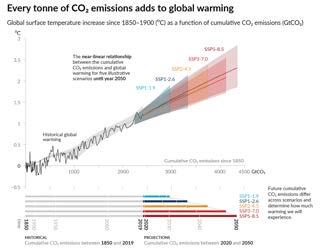
According to the IPCC’s Sixth Assessment Report, published in 2021, human-caused greenhouse gases have already warmed the planet by approximately two degrees Fahrenheit (1.1 degrees Celsius) since 18501900.1. Within the next few decades, the global average temperature is expected to rise to or exceed 1.5 degrees Celsius (approximately 3 degrees Fahrenheit) (Climate Change 2021: The Physical Sci...). Human activity will continue to affect the quality of Earth, and as humans have a responsibility to care for our environment by changing our behaviour including the way we design infrastructure. As clearly shown in the IPCC’s Sixth Assessment Report graph (IPCC ), If we continue on our current path, more greenhouse gas emissions will accumulate causing a damaging impact on our climate. If we can reduce emissions, we may be able to avoid some of the most serious repercussions.
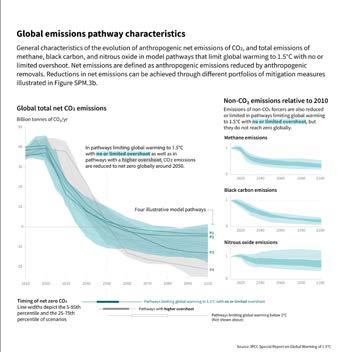
This brings us operation Net zero, a possible solution. Net zero means each property has enough renewable energy to offset all energy consumption, including storage losses during the storage process of renewables, which will be explained later. The IPCC’s special report, 2018 established a “CO2 route” (Global Warming of 1.5 ºC ) to achieve net zero emissions by 2050. As seen in the diagram below (IPCC ), this pathway allows us to halve our C02 emissions by 2030 and further reduce till we reach net zero emissions by 2050. With this definitive target in place, we can see where we stand in terms of mitigating global warming and achieving net zero emissions.
All energy used in the building ( regulated + unregulated energy) + storage losses
= Energy available to offset the energy generated.
To reach net zero we not only need to reduce our carbon, but also reduce our reliance on energy. The solution to global warming lies in addressing its cause: carbon emissions. However, accurately measuring the volume of carbon entering our atmosphere is challenging due to its constant fluctuation, influenced by various factors such as daily solar intensity or wind changes. This necessitates defining what metrics we should track to gauge our progress towards our environmental goals. We do know that energy remains constant and as stated by the UN sustainable development goals, in relation to goal 7, ‘affordable and clean energy’ (Energy 2015) “consumption of energy is the dominant contributor to climate change, accounting for around 60 percent of total global greenhouse gas emissions” , this further explains why energy is the focus in reaching net zero.
12 / Making The Future Passivhaus Section 1 : Unveiling the Net Zero Horizon: Global Warming and the Impact of Passivhaus Standards
Fig. 1 : Sixth Assessment Report, By The IPCC, digital, 2021 (IPCC )

/ 13 (Markus Spiske, 2019)
14 / Making The Future Passivhaus Section 1 : Unveiling the Net Zero Horizon: Global Warming and the Impact of Passivhaus Standards
(Tim Crocker & Peter Cook, N.D.)
The built environment uses a quarter of all UK carbon emissions (26%), with 16% of that 26% being inefficient and wasteful homes, states the passivhaus trust (Passivhaus Trust ), making housing the target in which to improve its efficiency.
Now introducing the Passivhaus building standard that “focuses designers on the important decisions around form factor, orientation, glazing optimisation, shading, comfort and air quality that result in good design“, further states the passivhaus trust. To be a passivhaus, the building must strictly abide by a criteria, which alongside each stage of the RIBA stages of work, must be signed off by a passivhaus certified designer, contactor and tradesperson stating that the build wasn’t compromised in any way, this removes the performance gap, which enables the building to be delivered as designed. However, It is not enough to make every building a passive one by 2050, nor is it possible. Therefore, we need to put a few things in place to change the way we manufacture homes to reduce our carbon emissions and our reliance on energy.


Good fabric
To reach net zero there are three points of action, and it all starts with designing buildings with good fabric in the beginning. Buildings account for 26% of UK emissions, with the majority of emissions going to heating and cooling. The passivhaus standard carefully designs the buildings fabric to have continuous insulation, airtightness, triple glazing and a MVHR, to reduce the demand for heating and cooling systems which produce these carbon emissions, making passivhaus an efficient way to reach net zero.
Renewable energy
To become truly Net Zero, there will be only renewable energy sources which make our efficient use of renewables the next point of action. Solar, wind, and tidal energy are nearly infinite, however, our ability to harvest it is not. As a result, the amount of renewable energy we can produce is limited. Effective harvesting of renewable energy involves storage, but prolonged storage leads to losses. To distribute this stored energy efficiently, we need to leverage our electricity grid and implement demand response strategies
Demand response
The idea behind demand response is that we have a network of connected buildings that can decide when and if they need to draw energy from the electricity grid. This spread of energy means we don’t have a high energy demand which cannot be accessed. The electricity grid “creates a network of smart equipment that levels out peaks and troughs in demand and supply”, it supplies energy to buildings within a large area which need it, giving us a “flexible energy ecosystem that can balance out large-scale renewable energy use”, explains the Passivhaus Trust (Passivhaus Trust ). To aid reaching net zero, we need to create buildings that are capable of demand response. In a passivhaus, as it doesn’t rely on a regular heating, cooling system due to its good fabric to begin with, it doesn’t need energy from the electricity grid regularly, so when needed, it can choose if and when to receive it, therefore it has a demand response.
Demand Response + Good Fabric = Great results in heating
In conclusion, targeting the major carbon emission source of 26% from inefficient homes, the Passivhaus standard serves as a comprehensive solution. Through the integration of high building fabric, renewable energy adoption, effective storage, and the ability for demand response, this standard plays a crucial role in minimising carbon emissions, achieving net-zero and addressing global warming.
/ 15

16 /
Passivhaus
Making The Future
Section Two A : What is Passivahus?
/ 17 (Andres
Siimon, 2021)
What is Passivhaus?
Unpacking the 5 Principles & Core Values for
This section will highlight the quintessential parts of the passivhaus standard and its five principles that define passivhaus. Diving into the core values to unravel the intricacies; Illustrating how this approach improves our built environment, aiding global net-zero by 2050 and enhancing health through efficient, aesthetically pleasing green spaces that boost well-being
Energy Balance
Keeping the heat in the building means you don’t have to use extra energy to warm it up again. As a result, no energy is wasted. In a passivhaus, heat loss is minimised as there are no gaps (thermal bridges), for heat to escape so little additional heating from typical heating systems are required to maintain a comfortable temperature.
Costs
It may be intimidating looking at the total costs of such a project since there are some additional costs, However, the Passivhaus Trust noted “The investment in higher quality building components required by the Passive House Standard is mitigated by the elimination of expensive heating and cooling systems’’ (Passivhaus benefits 2022). Further explaining that financial support is available. The essential thing to consider is that living in a passivhaus significantly lowers your utility bills long term.
Quality
By employing high-quality construction materials and processes to build a solid fabric, can not only prevent heat loss, but require minimum maintenance. This commitment to quality is complemented by strict adherence to a criteria that reduce the performance gap: the difference between the team’s current performance and the desired performance during the construction process, which if not addressed can cause the building to underperform in terms of energy efficiency, resulting in a building that does not comply with the passivhaus criteria, rendering it nonpassivhaus. To avoid this, “Passivhaus projects has certified passivhaus designers, certifiers and tradespeople involved in every RIBA stage. Ensuring the criteria isn’t compromised and the building is delivered as designed”. (Passivhaus News )
Health and comfort
As we spend the majority of our lives at home, having an environment that makes us feel comfortable and healthy has a significant impact. The passivhaus trust conducted a survey (Passivhaus benefits supplementary paper ) showing that “links between the environmental conditions in buildings and the health of the occupants are not just coincidence ”. Surveys revealed which factors influence comfort and health (e.g., income, energy efficiency, location), how changing one’s home affects one’s health, and how using biomedical knowledge and research to observe and measure people’s health (blood pressure, memory tests, lung function) can help us understand the direct impact our environment has on our health. A complete list of health and comfort benefits may be found in the report’s benefits section.
To have good continuous insulation. It is key for this to be continuous as this means there is no thermal bridges.
have good continuous insulation. It is key for this to be continuous as this means there is no thermal bridges.
when the insulation layer is interrupted creating a gap
Having the highest standard of glazing is required to keep as much heat in as possible. Triple glazing is currently used.
A mechanical ventilation system that draws fresh air in and pushes out stale air. Where the two meet in the middle, the stale air re-heats the fresh air, maintaining a comfortable temperature within the building appropriate for the season. All of this occurs simultaneously and silently in the background, 24/7.
18 / Making The Future Passivhaus Section Two A : What is Passivahus?
Continuous Insulation 1
Continuous Airtight Layer 2
for heat to
No Thermal Bridges 3
To
Occurs
escape the building.
Glazing optimisation 4
Mechanical ventilation with heat recovery unit (MVHR) 5
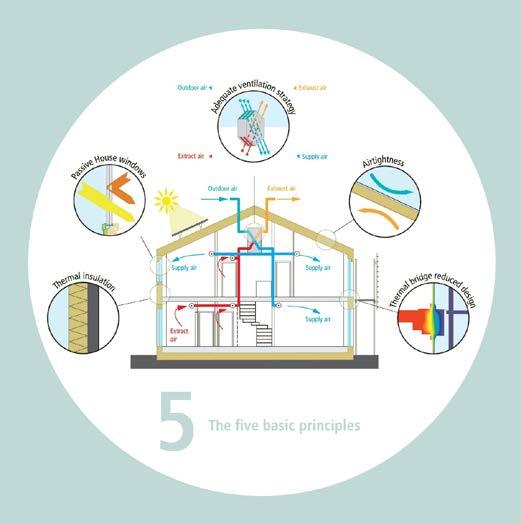
Additionally the consideration of
• Form factor - The ratio between a buildings external heat loss areas and the internal floor area
• Solar orientation - Planning the orientation of the building in terms of windows, walls and roofs will help maximise solar energy intake for solar panels, heat generation through the windows and help shade certain areas you wish to keep cool, which are all positioned in accordance to the sun’s positions.
In conclusion, all of these principles collectively establish a robust foundation in which nothing is compromised. By adhering to the standard, homeowners can significantly reduce their reliance on traditional heating and cooling systems where, “Typically, most of the energy goes towards heating”, (Operational net zero 2021). This energy-efficient approach reduces our carbon footprint and reduces our energy usage, as well as reduces our carbon emissions, in order to achieve net zero.
To see the complete detailed Passivhaus Building Standard criteria (see appendix A).
/ 19 Fig.3 : The Five Basic Principles, By The Passive House Institute, digital booklet, 2021 (PassiveHouseAward_2021 )
The Benefits Of The Passivhaus Standard
Testimonies from Successful Projects in the UK
This section uncovers the many benefits that this standard brings, shaping the future of construction toward a more resilient and eco-conscious built environment. As Well as presenting the real stories of Passivhaus owners, sharing their unique experiences on the significant effects of living in a passivhaus. These firsthand accounts provide insight into the physical benefits and lifestyle improvements that come with living in a Passivhaus-certified home.
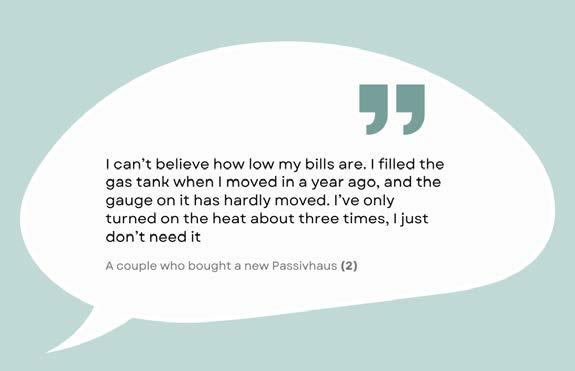
To see the complete list of Passivhaus owners quoted experiences (see appenxid B) (2) Hearne, John. n.d. “Affordable Passive Scheme That Beggars Belief - Passivehouseplus.co.uk.” Accessed December 12, 2023. https://passivehouseplus.co.uk/magazine/new-build/affordable-passive-scheme-that-beggars-belief.
Fig.4 : Benefits to Passivhaus Quote, By Alexa Yapp, Digital Infographic, January 2024
20 / Making The Future Passivhaus Section Two B : The Benefits of the Passivhaus Standard
S O C I A L B E N E F I T S
Reduces the impact of external noise
Improves air-quality and internal humidity / condensation leading to mould
Eliminates cold homes and related health impacts which usually causes the NHS £848 million a year
Passivhaus uses less energy which Lowers utility bills by 90%
Discounted mortgages for energy efficient properties
High levels of comfort B E T T E R B U I L D I N G P E R F O R M A N C E
Improves learning outcomes, as comfort affects our ability to learn
Reduces risk of buildings overheating in the summer, with the elderly (2000 people) being at risk of heat related deaths in the UK
E N V I R O N M E N T A L
B E N E F I T S
C L I M A T E E M E R G E N C Y
Lowers
C A R B O N
E M I S S I O N S
Quality components mean properties don’t require frequent maintenance and management, lowering costs
Reduces energy demand making building more affordable to run, reduces reliance on fuel shielding low income households from the rising fuel prices
Allows us to our climate goal of reaching by 2050 N E T Z E R O
Effective and health ventilation
Lowers requirement for renewable energy
Robust in facing extreme weather
L L I O N A Y E A R
M I
I M P
P R O D U C T I V I T Y
H E A L T H & W E L L B E I N G , P E O P L E P E R F O R M A N C E
E L D E R L Y P E O P L E A T R I S K E C O N O M I C B E
E
R O V E S
£ 8 4 8
2 0 0
N
F I T S
L
H O
E L I F E C O
7
F I N A N C I A L , F U E L P O V E R T Y
O W E R S W
L
S T S
0 %
L O W E N E R G Y D E M A N D R E S I L I E N T A N D F U T U R E P R O O F E D
/ 21 Fig.5 : Benefits to Passivhaus, By Alexa Yapp, Digital Infographic, January 2024

22 /
Future Passivhaus Section
Inspirational Case
Making The
Three :
Studies

/ 23 (Andres
Siimon, 2021)
Devon Passivhaus Exeter, Devon, UK 01
Location: Exeter, Devon, UK
Completion Year : 2018
Certification: April 2019, Passivhaus
Client : Private
Architect : McLean Quinlan
Contractor : Goulden and Sons
Area : 388m²
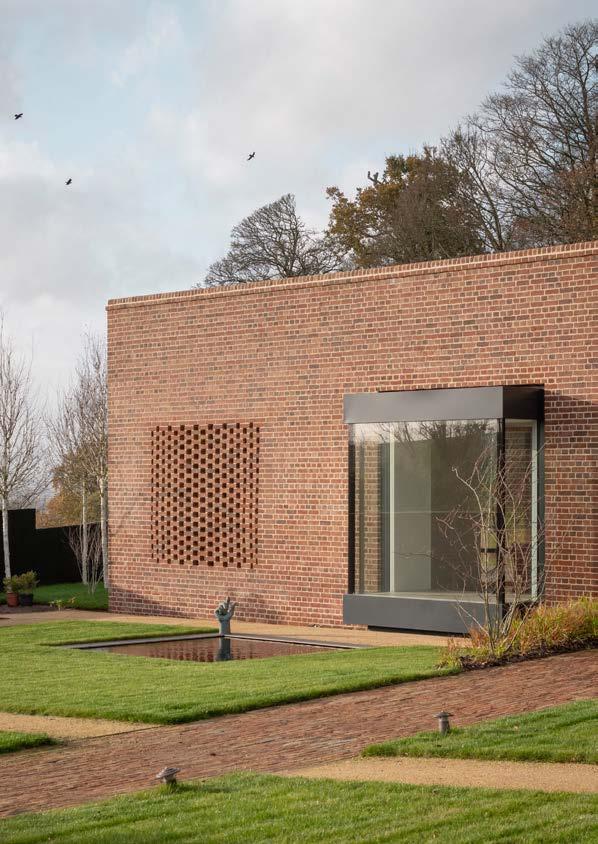
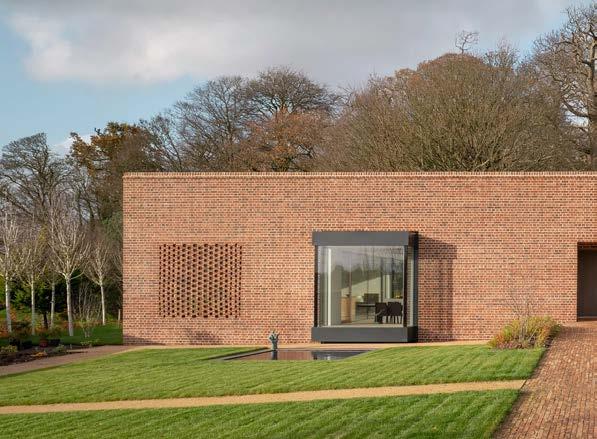
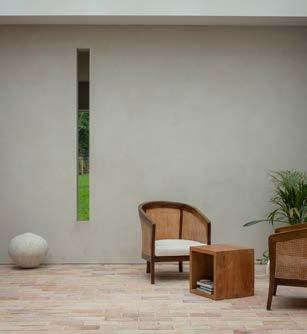
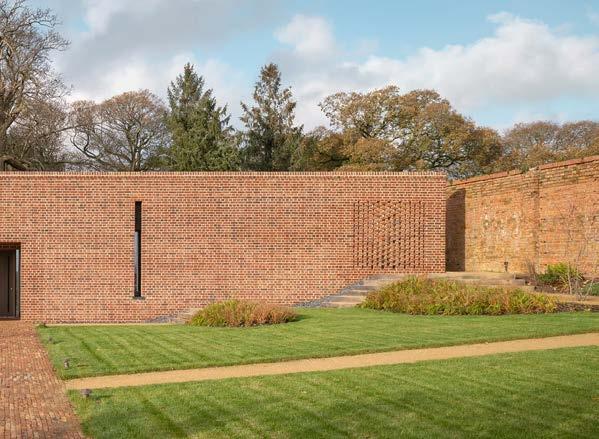
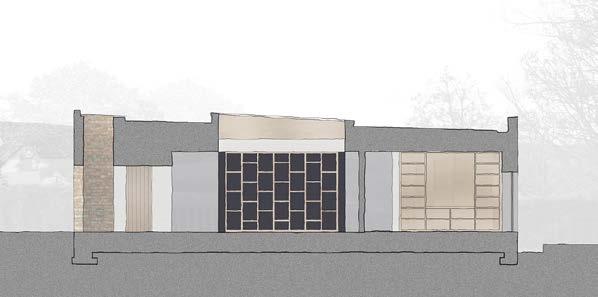
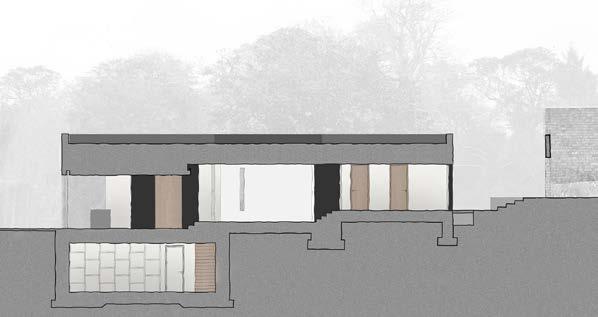
Under the ‘exceptional design’ clause of the National Planning Policy Framework (NPPF), this historically Georgian high garden wall converted to an elegant contemporary residence received planning permission and completed in 2018. Due to its countryside location, to meet the criteria of Paragraph 79 (Quality in design can win exceptional...) - a UK planning policy that only allows “exceptional and innovative” newbuild homes in the countryside, the architect had to take a different approach to the clients desired ‘barn-like build’ with vaulted spaces as they said in their interview with Dezeen (Crook 2020).
As the first Pasivhaus for all parties involved (client, architect, and contractor), this project was named a Small Projects Finalist in the 2021 UK Passivhaus Awards, which was a great accomplishment (PassiveHouseAward_2021 ), pages 34-37.
The inspiration for this project emerged from the existing building and surrounding gardens, which was planted with 100 new trees, as well as over 300 metres of hedging. This backdrop served as a
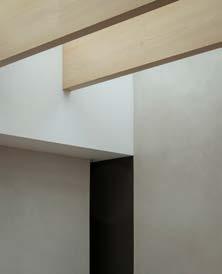
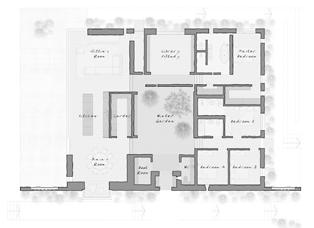
muse for the client, who is an avid photographer. At the heart of the home sits a glazed courtyard, fit with living space flooded with natural light.
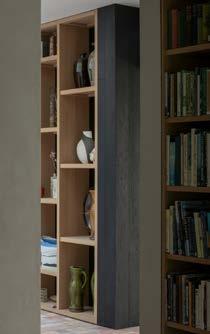
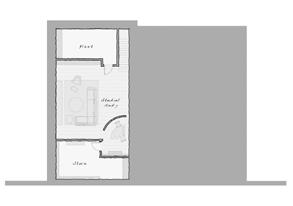
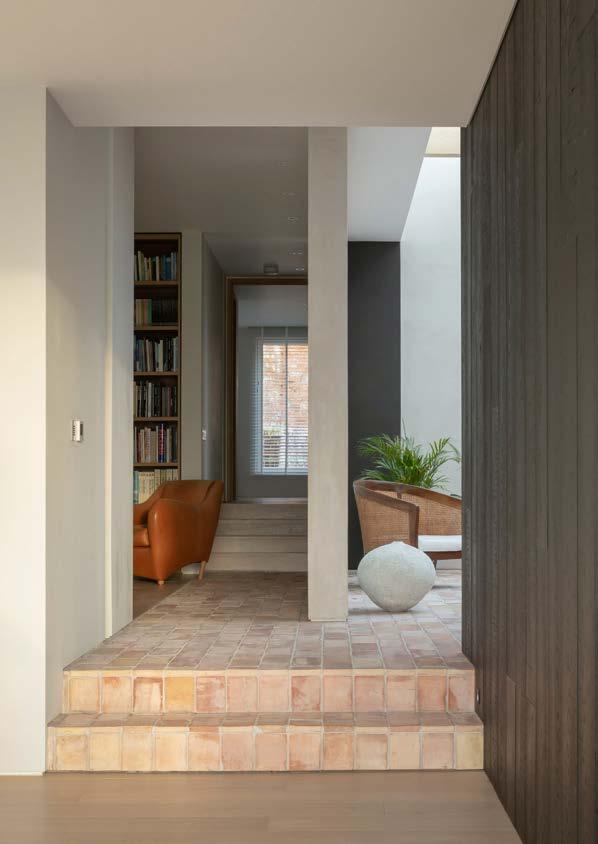
McLean Quinlan expressed later on in the interview “It was to be simple and clean and was kept low rise to link it back to the garden architecture that informed the design”. Involving a new brick wall making the front of the single story home and basement that extended at a 90 degrees from the original wall. With said simple forms and tactile materials using reclaimed terracotta, rough sawn oak, and clay plaster
This passivhaus generates 40% more energy than required from renewable sources the architect noted, having an air source heat pump, 36 photovoltaic panels, and electric & thermal battery storage, including a private borehole water supply and a private sewage plant.
Making The Future Passivhaus Section Three : Inspirational Case Studies
/ 25 (Jim Stephenson, 2020)
The following information was given by The Passivhaus Trust (Project Gallery ) outlining the intricate details of this Passivhaus.
Construction :
• Walls : ‘HyperSIP’ panels comprising of two skins of 12mm magnesium oxide board encasing a 161mm PU core with stainless steel frame and EPS insulation board, which is highly insulated, with an integral airtightness layer, has fire resistance and exceptional acoustics properties = U-value 0.11 W/m²K
• Floor : Screed, Kooltherm, concrete, beam & block = U-value: 0.1 W/m²K
• Windows : Josko triple-glazed windows & large Lamilux roof-light, with a high proportion of glazing to frame, = U-value of 0.61w/m²k.
• Roof : insulation, rigid insulation, plywood deck = U-value: 0.1 W/m²K
Sustainability :
• Manufacture process and installation designed to minimise waste
• ‘HyperSIP’panels - Manufactured locally and taken a cradle to cradle approach with a 39% carbon reduction rather than classic bricks and mortar.
• Installation is locally produced Rapid construction on site uses minimal external energy and minimal additional material.
• The materials in the insulation panels, namely MgO boards, have an inherently low carbon footprint, with polyurethane and stainless steel, all recyclable at the end of life.
• All timber used was FSC/EUTR certified.
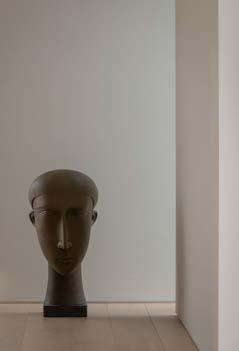
Performance
:
• Thermal energy demand (≲15) : 14.6 kWh/m².yr
• Thermal energy load (≲10) : 5.6 W/m²
• Primary energy demand (≲135) : 20.96 kWh/m².yr
• Primary energy renewable generation : 33.76 kWh/m².yr
• Airtightness (≲0.6) : 0.56 ACH
Year 1 - 2019
:
• 7.5 MWh total energy consumed of which 4.95 was self-generated and
• 2.55 imported from the grid. 10.45 MWh total solar generation of which
• 4.45 exported to the grid.
• 60kWh consumed in July-Sept 2019, mainly for powering the Inverters. 3500kWh generated by PV panels.
Year 2 - 2020
:
• The 2020 figures were similar Power generation was a little higher
• Heating requirement lower (nearer to 10kwh/m².yr)
• Clients recorded 7% overheating (occurred when clients were away and house was closed-up for an extended period) - The design relies on occupants opening windows to ventilate in warmer weather.
(Jim Stephenson, 2020)
26 / Making The Future Passivhaus Section Three : Inspirational Case Studies
/ 27
Fig.6 : Devon Passive House, By McLean Quinlan, Digital Elevations and Floor plan, 2020
“Period semi-detached properties represent a huge portion of our housing stock, yet they are one of the trickiest formats to upgrade. It’s critical that planners, architects, and builders explore and define appropriate methods to tackle them. The existing UK housing stock of today will account for over 80% of the stock in 2050. New build solutions do not tackle this, it is sustainable retrofit that is critical to meeting the Government’s 2050 greenhouse gas emission targets”.
Kit Knowles, Ecospheric“ ““You don’t need to do anything - the house does it all for you. It is warm, comfortable, fresh, and each space in the house offers something unique due to its layout. If anything, the house has changed us rather than us changing for the house. We have become more aware, more considered & more respectful of everything around us”.
Client, after living in the property for a year
28 / Making The Future Passivhaus Section Three : Inspirational Case Studies
/ 29 (Jim Stephenson, 2020)
Zetland Road Manchester, UK 02
Location: Zetland Road, Manchester, UK
Completion Year : Mid 2018
Certification: November 2018, (EnerPHit Plus certification)
Client & Developer: Ecospheric
Architect : Guy Taylor Associates
Developer : PHT member Ecospheric
Contractor : Phillips Building Services
Area : 484 m²
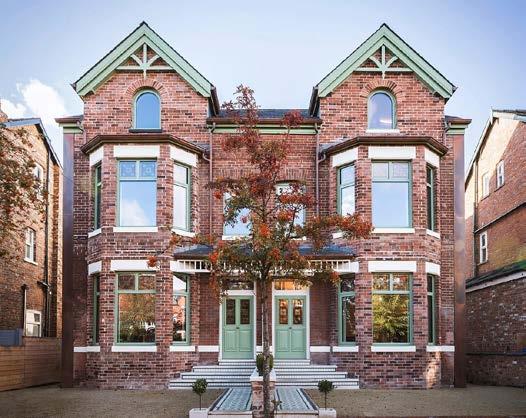
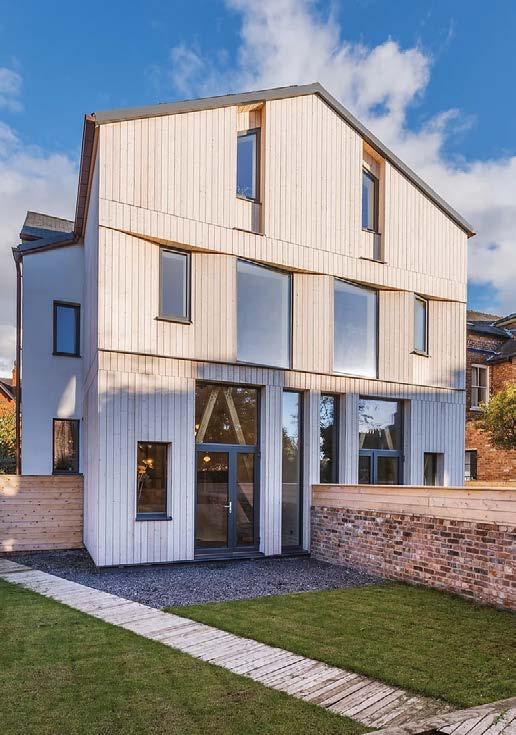
This pair of semi-detached Victorian town houses, became the first European eco home to receive EnerPHit Plus certification in November 2018 and later won the “Living Comfort” prize at the 2021 International Passive House Awards (PassiveHouseAward_2021 ), on pages 76-81. The goal is “providing solutions for retrofitting period properties to meet zero carbon targets”, according to the developer, Ecospheric (Zetland Passive Houses ). They further explain that this design goes “beyond Passivhaus targets” since they avoided petrochemicals throughout the building’s fabric, utilising only durable, healthy to inhale, natural materials to encourage healthy and sustainable living.
According to the architects in their interview with the International Passive House Association (International Passive House Associati...),
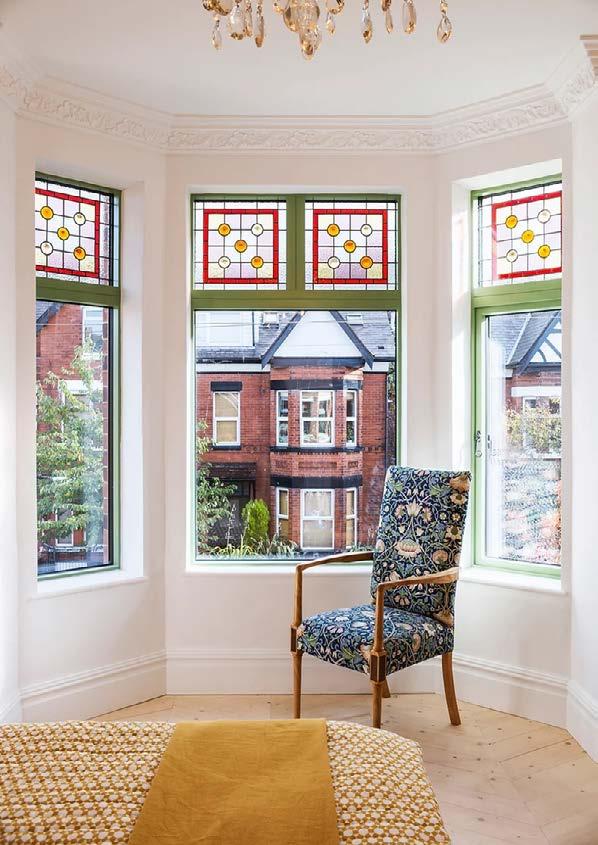
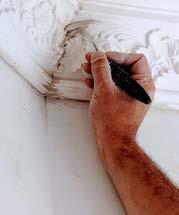
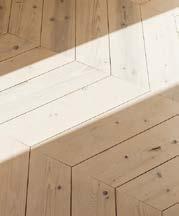
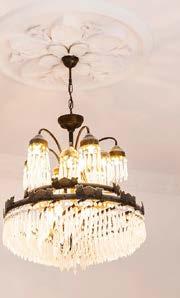
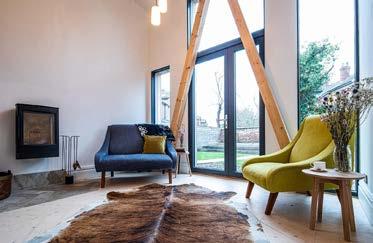
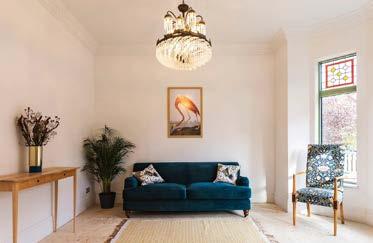
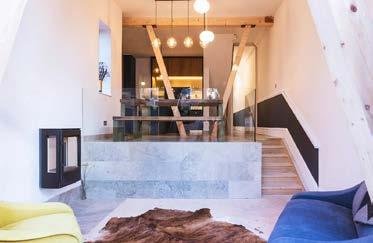
it was important to everyone to not only to make this property high energy-efficient, but also to “conserve and enhance the original 19th century building”. They harmonised with the victorian history by preserving the 200 tonnes of original brick on the façade, adding antique chandeliers rewired to meet low-energy standards, adding character with ceiling roses and cornices and reused the home’s original flooring, enhancing it by re-laying in a herringbone pattern. The style shifts towards a more contemporary look towards the back of the building. Where the external walls contrast with the front, using pre-fossilized wood and cladding. The unique triangle VNA timber support can be found within. The architect explained that they avoided steel beams due to their high embodied carbon and the risk of thermal bridging, while the triangle design provides the most effective support for the high ceilings.
30 / Making The Future Passivhaus Section Three : Inspirational Case Studies
(Rick McCullagh, Gug Wilders, Ecospheric, 2018)


To achieve the highest amount of energy efficiency without compromising the original brick, internal insulation was built at the façade using i-joists filled with blown cellulose, while external insulation was laid at the back to maximise internal space. This was critical so the architect employed tiny house principles to maximise and utilise space. The combination of high levels of insulation and airtightness layers (11kW PV installation) and A+++ rated appliances reduces energy demand even further, Ecospheric stated that “the houses should generate more energy than they consume - 95% reduction in space heating demand with no central heating system and no energy bills”. This passivhaus was the first to install a ‘mixergy’ hot water tank, an app enabled, AI-controlled smart tank which separates hot and cold water, heating only what’s needed. In addition to a ‘Pawl’ MVHR system, both are powered by solar PV roof panels.
Construction
• Walls : External façade is made with original Victorian brick, with an internal insulation layer made from i-joists, filled with blown cellulose (recycled newsprint and wood fibre). Then plastered with lime plaster for its alkaline nature making it resistant to mould, damp and bacteria, absorbing carbon dioxide, then painted with graphene infused paint for its crack resistant finish. The rear external walls are rendered with vertical timber cladding, with the same i-joist and cellulose system. This all combined gives a u-value of 0.116 to 0.175 W/(m²K)
• Low-energy LED lighting throughout the property.
• Floor & Roof: I-joists and cellulose insulation layer, and intelligent building membrane, ‘Saiga my Rex membrane’, giving an airtight barrier and releasing moisture.
• Windows : Bespoke, combining the u-value, solar gain and air tightness requirements, conservationappropriate frame profiles, while manufacturing the first passivhaus stain glass windows. Rear windows took a more minimal look, with simple frames that were angled to optimise solar energy.
Sustainability
• The use of hardwood timber - renewable, locally sourced with better thermal bridging performance
• Reusing existing materials - Bricks, floor boards, joists under the floors, rafters in the roof and staircase
• At the rear using pre-fossilized wood and cladding which will last 50 years without maintenance.
Predicted Performance
Actual Airtightness : 0.9 ACH
• Annual Heating Demand : 12 kWh/m².yr
• Heating Load : 11 W/m²
• PER Demand :
• Energy Demand : 43 12 kWh/m².yr Renewable Energy Generation : 55 12 kWh/m².yr
Exploring these two inspiring case studies demolishes the common myth that energyefficient homes must be simple, charmless, and highly modern designs that start from scratch, but this simply isn’t true. These properties demonstrate how versatile passivhaus retrofit homes can be, incorporating a range of styles and preserving original features while still being energy-efficient.
:
/ 31 DN DN UP DN UP DN Bed 3 Bed 4 Bed 5 Wet Rm Step Up Rooflight Bed 5 Rooflight Step Up Bed 4 Bed 3 Plant Wet Rm Plant 4920 3801 1916 518 3494 2856 3494 3487 5309 Master Bedroom Bedroom 2 Family Bathroom Bedroom 2 Family Bathroom Master Bedroom En Suite En Suite Dressing Dressing 3801 4831 3494 2649 428 1682 2213 1710 5309 3487 2085 4315 1713 1 : 50 Level 2 1 : 50 Level 1 North May 2016 P8 P7 Furniture revised CR 22.09.16 P8 Dimensions added CR 27.09.16 Project: Drawing Title: Drawing Number: Revision: Original Issue Date: Scale: Original Drawn By: Original Checked by: Rev: Description: Revised By:Issue Date: Reason For Issue: HQ Building, 2 Atherton Street, Manchester M3 3GS T: 0161 826 1042 M:07914 402 101 manchester@guytaylorassociates.co.uk www.guytaylorassociates.co.uk 1 50@A1 16-0001-21-103 UA CR 6&8 Zetland Road Chorlton Proposed Elevations Sheet 01 Planning Elevation 1 : 50 Front Elevation P4 P1 Planning Issue UA 24.05.16 P2 Revised elevation UA 29.06.16 P3 Revised following planners UA 12.07.16 P4 Balanced elevations UA 28.07.16 The contractor must verify all dimensions on site before commencing fabrication drawings. If this drawing exceeds the quantities taken North are to be informed before the work is initiated. Only figured to be taken from this drawing. Do not scale off this drawing. Drawings Ordnance Survey and or existing record drawings design and drawing subject to detailed Site Survey, Structural Survey, Site Investigations, Statutory Requirements and Approvals. Authorised reproduction Survey Map with permission of the Controller of Her Majesty’s Stationery Crown Copyright reserved. GTA North Limited Copyright. Guy Taylor Is a trading name of GTA North Limited. Project: Drawing Title: Drawing Number: Revision: Original Issue Date: Scale: Original Drawn By: Original Checked North Rev: Drawing Notes: Description: Revised By:Issue Reason For Issue: Location Plan HQ Building, 2 Atherton Street, Manchester M3 3GS T: 0161 826 1042 M:07914 402 101 1 50@A1 16-0001-21-103 UA 6&8 Zetland Road Chorlton Proposed Elevations Sheet 01 Planning Elevation 1 : 50 Front Elevation P1 Planning Issue UA P2 Revised elevation UA P3 Revised following planners UA P4 Balanced elevations UA Plan level 1 | Grundrisse Erdgeschoss Elevation front | Außenansicht Front
rear | Rückansicht außen
Elevation
Fig.7 : Zetland House, By Ecospheric, Digital
Elevations and Floor plan,
2018
32 /
The Future Passivhaus Section Three : Inspirational Case Studies
Making
““We proposed a high-performance energy-efficient building for the Paragraph 55/79 submission, and Passivhaus gave us a benchmark to hit and a standard to achieve that could be measured and understood by everyone involved. The project didn’t start as a Passivhaus, but as the design of the scheme evolved, it felt like the right thing to do’’.
McLean Quinlan, Architect“We are energy positive, with power generated exceeding power consumed by 40% and CO2 negative. In the summer months, the house generated 3,500kwh of electricity whilst only using 60 kwh, with the remaining power fed back into the grid”.
Client
(Rick McCullagh, Gug Wilders, Ecospheric, 2018) / 33



34 / Making The Future Passivhaus Section Three : Inspirational Case Studies
/ 35
(Rick McCullagh, Gug Wilders, Ecospheric, 2018)
36 / Making The Future Passivhaus Conclusion
Conclusion
What : To conclude this exploration of passivhaus building standards to combat global warming and its negative effects, it was examined that the path to net-zero emissions involves two actions: we must lower our carbon footprint while also decreasing our reliance on energy. The solution to avoiding global warming is to address its underlying cause, carbon emissions. The built environment accounts for 26% of all UK carbon emissions, with inefficient and wasteful residences accounting for 16% of this proportion. This emphasises the critical need to improve the efficiency of our homes.
How: The Passivhaus standard emerges as a possible solution, addressing the major cause of carbon emissions, inefficient homes. This standard plays a vital part in minimising carbon emissions by designing buildings with high-quality building fabric, utilising renewable energy, providing effective storage for renewables, and constructing buildings capable of demand response, therefore aiding in achieving the global target of net-zero emissions by 2050, therefore, addressing global warming. Along with the 5 principles of passivhaus, working together to form a solid foundation in the beginning in which no aspect is compromised. Compliance with the Passivhaus standard allows homeowners to considerably reduce their dependence on traditional heating and cooling systems, where “Typically, most of the energy goes towards heating”, (Operational net zero 2021).
Why: These findings are critical for our long-term path to sustainability. They highlight the significance of improving the home’s efficiency while designing to Passivhaus standards in order to achieve net-zero emissions by 2050. Future research could look into how these criteria are implemented step by step and how they affect different types of buildings, for example, on an existing building and a new build. Furthermore, the study shows that by adhering to the Passivhaus standard, homeowners can significantly decrease their reliance on traditional heating and cooling systems, in order to help reach the global goal of net-zero emissions. This energy-efficient approach not only reduces our carbon footprint and energy consumption, but it also moves us closer to our net-zero emissions goal.
I hope it has enlightened you about the environmental issues we face, and kindled a spark within you to take transformative action. Let your experiences be the voice for others with firsthand knowledge having the ability to inspire change. Let’s not just dream of a better world, let’s build it together.
(Word Count 5.000)
/ 37
(Tim Crocker, Jefferson Smith, Dan Kitwood, Micha Theiner, N.D.)
38 /
/ 39
(Tim Crocker, Jefferson Smith, Dan Kitwood, Micha Theiner, N.D.)
Passivhaus Criteria
The criteria that must be strictly met for a building to be considered a Passivhaus can be found here. This data was collected directly from the Passive House Institute’s website (Passive House Institute ). Where “Passive House buildings are planned, optimised, and verified using the Passive House Planning Package (PHPP),” which can be accessed and followed to build a passivhaus here on this site.
1.
2.
3.
4.
The Space Heating Energy Demand is not to exceed 15 kWh per square metre of net living space (treated floor area) per year or 10 W per square metre peak demand. In climates where active cooling is needed, the Space Cooling Energy Demand requirement roughly matches the heat demand requirements above, with an additional allowance for dehumidification.
The Renewable Renewable Primary Energy Demand (PER, according to PHI method), the total energy to be used for all domestic applications (heating, hot water and domestic electricity) must not exceed 60 kWh per square metre of treated floor area per year for Passive House Classic.
In terms of Airtightness, a maximum of 0.6 air changes per hour at 50 Pascals pressure (ACH50), as verified with an onsite pressure test (in both pressurised and depressurized states).
Thermal comfort must be met for all living areas during winter as well as in summer, with not more than 10 % of the hours in a given year over 25 °C.
All of the criteria listed above are met through clever design and use of the five Passive House principles:
Principle
Thermal Insulation
Passivhaus Windows
Ventilation heat recovery
Airtightness
Absence of thermal bridges
Detailes
All opaque building components of the exterior envelope of the house must be very well-insulated. For most cool-temperate climates, this means a heat transfer coefficient (U-value) of 0.15 W/(m²K) at the most, i.e. a maximum of 0.15 watts per degree of temperature difference and per square metre of exterior surface are lost.
The window frames must be well insulated and fitted with low-e glazings filled with argon or krypton to prevent heat transfer. For most cool-temperate climates, this means a U-value of 0.80 W/(m²K) or less, with g-values around 50% (g-value= total solar transmittance, proportion of the solar energy available for the room).
Efficient heat recovery ventilation is key, allowing for a good indoor air quality and saving energy. In Passive House, at least 75% of the heat from the exhaust air is transferred to the fresh air again by means of a heat exchanger.
Uncontrolled leakage through gaps must be smaller than 0.6 of the total house volume per hour during a pressure test at 50 Pascal (both pressurised and depressurized).
All edges, corners, connections and penetrations must be planned and executed with great care, so that thermal bridges can be avoided. Thermal bridges which cannot be avoided must be minimised as far as possible.
40 / Making The Future Passivhaus Appendices A : Passivhaus Criteria
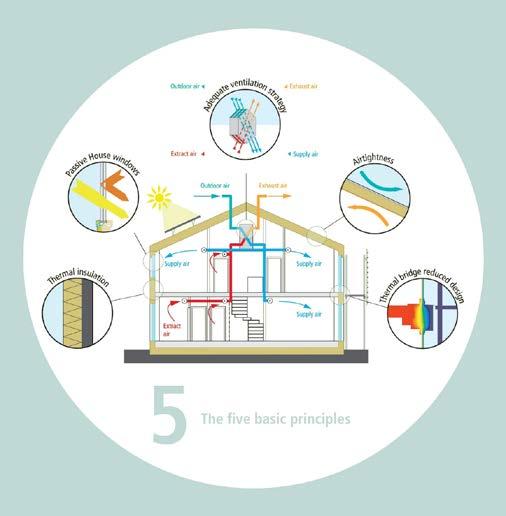
Fig.3 : The Five Basic Principles, By The Passive House Institute, digital booklet, 2021 (PassiveHouseAward_2021 )
/ 41
It’s really, really quiet. You don’t hear anything outside
Tenant, Passivhaus social home (1)
You can understand i wellbeing], when you you always get cold, a infections, so many in move out and you mo property, well-being a
Occupants of a Passivhaus
The
house costs
virtually nothing to run. It could be entirely self-reliant
Homeowner of a Passivhaus remodel (3)
Day or night you can wander around and feel comfortable. When I get up in the night to go to the toilet, I don’t feel the cold, it keeps the temperature the same, all the time
Occupants of a Passivhaus deep retrofit, elderly and suffering chronic respiratory health problems (6)
Once we open the front door we’ comfortable environment which throughout the house, it’s 21 deg everywhere, so it’s a really really which to live
Retired couple who bought a new Passivh
42 / Making The Future Passivhaus Appendices B : Testimonies
t, the difference [in 're living in a cold house always get chest nfections, but when you ove into this kind of and health will be alright retrofit (5)
My husband has asthma, and has barely needed his inhaler since we moved And I used to have problems sleeping and now I don’t I fall asleep easily. The air feels purer
Resident in a Passivhaus home, Southwest Scotland (4)
‘Yes, I know, it’s lovely. It’s like this all the time, even in winter it’s like this
-Occupants of a Passivhaus retrofit (5)
’re in a really is constant grees nice place in
haus in Ireland (2)
I can’t believe how low my bills are I filled the gas tank when I moved in a year ago, and the gauge on it has hardly moved I’ve only turned on the heat about three times, I just don’t need it
A couple who bought a new Passivhaus (2)
/ 43 Fig.8 : Passivhaus Owners Experiences, By Alexa Yapp, Digital Infographic, November 2023
References
bere:architects. 2012. “Bere Architects - Retrofit for the Future : Episode 3.” Youtube. November 17, 2012. https:// www.youtube.com/watch?v=BLGowGq6kes.
“BN_Whole-Life-Performance-WEB.pdf.” n.d. https://www.lcmb.co.uk/wp-content/uploads/BN_Whole-lifeperformance-WEB.pdf.
“Climate Change 2021: The Physical Science Basis.” n.d. Accessed November 28, 2023. https://www.ipcc.ch/report/ ar6/wg1/.
“Climate Change Evidence: How Do We Know?” n.d. Climate Change: Vital Signs of the Planet. Accessed November 14, 2023. https://climate.nasa.gov/evidence/.
Crook, Lizzie. 2020. “Linear Brick Wall Conceals Earthy and Tactile Interiors of Devon Passivhaus.” Dezeen. August 7, 2020. https://www.dezeen.com/2020/08/07/devon-passivhaus-mclean-quinlan-architecture-uk/#/.
“Energy.” 2015. United Nations Sustainable Development. United Nations: Sustainable Development Goals. January 7, 2015. https://www.un.org/sustainabledevelopment/energy/.
Experiences, Resident. 2018. “Erneley Close Passive House Retrofit,” February. Fenton, Hannah. n.d. “Top Tips from a Passivhaus Homeowner.” Accessed December 12, 2023. https://www. granddesignsmagazine.com/self-build/passivhaus-advice/.
“Global Warming of 1.5 oC.” n.d. Accessed November 28, 2023. https://www.ipcc.ch/sr15/.
Hearne, John. n.d. “Affordable Passive Scheme That Beggars Belief - Passivehouseplus.co.uk.” Accessed December 12, 2023. https://passivehouseplus.co.uk/magazine/new-build/affordable-passive-scheme-that-beggars-belief.
International Passive House Association. 2020. “Passive House Open Days - Kit & Chris in Manchester, UK.” Youtube. June 25, 2020. https://www.youtube.com/watch?v=xwMns82a_aA.
———. 2023. “[No Title].” International Passive House Association. November 27, 2023. https://passivehouseinternational.org/.
IPCC. n.d. “Figure 10.” PNG. IPCC. https://www.ipcc.ch/report/ar6/wg1/downloads/figures/IPCC_AR6_WGI_SPM_ Figure_10.png.
———. n.d. “FIGURE SPM.3A.” Png. https://www.ipcc.ch/site/assets/uploads/sites/2/2019/02/SPM3a.png.
Jackson, Randal. n.d. “The Effects of Climate Change.” Climate Change: Vital Signs of the Planet. Accessed November 28, 2023. https://climate.nasa.gov/effects/.
Joseph G. Allen, John D. Macomber. 2020. Healthy Buildings : How Indoor Spaces Drive Performance and Productivity. Health Buildings. Cambridge, Massachusetts, London, England: Harvard University Press.
“Operational Net Zero.” 2021. Passivhaus Trust. September 10, 2021. https://passivhaus.uk/lessons/operational-netzero/.
Palmer, John. 2017. “The Performance of Passivhaus in New Construction.” https://www.passivhaustrust.org.uk/ UserFiles/File/Technical%20Papers/The%20performance%20of%20Passivhaus%20in%20new%20construction_ July%202017%20V2.pdf.
“Passive House Buildings.” n.d. Accessed November 27, 2023. https://passivehouse-database.org/index.php.
44 / Making The Future Passivhaus Conclusion
“PassiveHouseAward_2021.” n.d. Accessed November 27, 2023. https://www.ig-passivhaus.de/upload/ PassiveHouseAward_2021/PassiveHouseAward_2021.html.
“Passivhaus and Wellbeing.” n.d. Accessed November 27, 2023. https://constructiveindividuals.co.uk/2020/11/08/ passivhaus-and-wellbeing/.
“Passivhaus Benefits.” 2022. Passivhaus Trust. June 14, 2022. https://passivhaus.uk/lessons/passivhaus-benefits/.
Passivhaus benefits supplementary paper. n.d. “Health, Wellbeing and People Performance.” Accessed December 5, 2023. https://www.passivhaustrust.org.uk/UserFiles/File/research%20papers/Benefits%20technical/Health%20 wellbeing%20and%20people%20performance%20v1.0%20230524.pdf.
“Passivhaus News.” n.d. Accessed November 14, 2023. https://www.passivhaustrust.org.uk/news/detail/?nId=1126.
Passivhaus Trust. 2023. “Passivhaus Social Housing: The Costs of Passivhaus.” Youtube. September 28, 2023. https://www.youtube.com/watch?v=FJv-Ue85Tao.
———. n.d. Accessed December 19, 2023. https://www.passivhaustrust.org.uk/.
“Project Gallery.” n.d. Accessed January 1, 2024a. https://www.passivhaustrust.org.uk/projects/detail/?cId=91.
———. n.d. Accessed December 31, 2023b. https://www.passivhaustrust.org.uk/projects/detail/?cId=109.
“Quality in Design Can Win Exceptional Permission for Rural Buildings.” n.d. Accessed December 31, 2023. https://www.architecture.com/knowledge-and-resources/knowledge-landing-page/using-paragraph-79-to-designinnovative-country-houses.
Seppänen, Olli, William J. Fisk, and Q. H. Lei. n.d. “Helsinki University of Technology.” Accessed November 21, 2023. https://eta-publications.lbl.gov/sites/default/files/lbnl-60946.pdf.
Shaftel, Holly. n.d. “What Is Climate Change?” Climate Change: Vital Signs of the Planet. Accessed November 14, 2023. https://climate.nasa.gov/what-is-climate-change/.
“Sixth Assessment Report.” n.d. Accessed November 28, 2023. https://www.ipcc.ch/assessment-report/ar6/.
Stocker, Thomas. 2014. Climate Change 2013: The Physical Science Basis: Working Group I Contribution to the Fifth Assessment Report of the Intergovernmental Panel on Climate Change. Cambridge University Press.
“The Causes of Climate Change.” n.d. Climate Change: Vital Signs of the Planet. Accessed November 14, 2023. https://climate.nasa.gov/causes/.
“What Is Net Zero?” 2020. Net Zero Climate. June 28, 2020. https://netzeroclimate.org/what-is-net-zero-2/.
Working Group I Contribution to the. n.d. “The Physical Science Basis.” https://doi.org/10.1017/9781009157896.
“Zetland Passive Houses.” n.d. Ecospheric. Accessed January 3, 2024. https://www.ecospheric.co.uk/zetland.
“Zetland Story.” n.d. Ecospheric. Accessed January 3, 2024. https://www.ecospheric.co.uk/zetland-gallery.
/ 45 Image Source :
Image References
Andres Siimon. 2021. “black solar panels on a purple flower field during daytime”. [online]. Unsplash. https:// unsplash.com/photos/black-solar-panels-on-purple-flower-field-during-daytime-fCv4k5aAZf4 . [Accessed on January 08 2024]
Super Straho. 2020. “Street Photography”. [online]. Unsplash. https://unsplash.com/photos/brown-and-whiteconcrete-houses-under-white-sky-during-daytime-wDTIGTomUlw . [Accessed on January 12 2024]
Jim Stephenson. 2020. “Devon Passive House.” [online]. Dezeen. https://www.dezeen.com/2020/08/07/devonpassivhaus-mclean-quinlan-architecture-uk/. [Accessed on December 31 2023]
(Tim Crocker & Peter Cook, N.D.)
Tim Crocker & Peter Cook. N.D. “Larken Rise.” [online]. bere:architects. https://bere.co.uk/architecture/lark-rise/?acc eptCookies=659eb5e005400 . [Accessed on December 30, 2023]
Fig. 1 : Sixth Assessment Report, By The IPCC, digital, 2021 (IPCC )
Markus Spiske. 2019. “THERE IS NO PLANET B”. [online]. Unsplash. https://unsplash.com/photos/a-protest-signthat-says-there-is-no-planet-b-TknRspuNTJs . [Accessed on January 12, 2023]
Tim Crocker & Peter Cook. N.D. “Larken Rise.” [online]. bere:architects. https://bere.co.uk/architecture/lark-rise/?acc eptCookies=659eb5e005400 . [Accessed on December 30, 2023]
Fig. 2 : IPCC’s special report, 2018 (IPCC )
Fig.3 : The Five Basic Principles, By The Passive House Institute, digital booklet, 2021 (PassiveHouseAward_2021 )
Fig.4 : Benefits to Passivhaus Quote, By Alexa Yapp, Digital Infographic, January 2024
Fig.5 : Benefits to Passivhaus, By Alexa Yapp, Digital Infographic, January 2024
Fig.6 : Devon Passive House, By McLean Quinlan, Digital Elevations and Floor plan, 2020
Rick McCullagh, Gug Wilders, Ecospheric. 2018. “Zetland Passive House.” [online]. ecospheric. https://www. ecospheric.co.uk/zetland-gallery . [Accessed on January 03 2024]
Fig.7 : Zetland House, By Ecospheric, Digital Elevations and Floor plan, 2018
Tim Crocker, Jefferson Smith, Dan Kitwood, Micha Theiner. N.D. “The Muse.” [online]. bere:architects. https://bere. co.uk/architecture/the-muse/ . [Accessed on December 30, 2023]
Fig.8 : Passivhaus Owners Experiences, By Alexa Yapp, Digital Infographic, November 2023
46 / Making The Future Passivhaus Conclusion
/ 47 Image Source :
 (Jim Stephenson, 2020)