
DegreeOptions
To apply to Social Psychology, including the Research Specialist Option, students must successfully complete a Social Sciences Level I program, including below courses Enrolment in these programs is limited and possession of the published minimum requirements does not guarantee admission.
Research Specialist Options are intended for students who are considering research-based graduate programs
Honours Social Psychology B.A.
Grade Point Average of 5.0 (C) including a grade of at least C in SOCPSY 1Z03 and successful completion of one of PSYCH 1F03, PSYCH 1X03, SOCIOL 1Z03
Social Psychology provides an understanding of:
How individuals are influenced by their relationships and social networks
How small groups and communities interact
How social interactions influence identities, attitudes, and mental health
Students learn how to situate themselves in their cultures, geographies and in relation to others
Yourfirstyearwith interestin
Honours Social Psychology B.A. (Research Specialist Option)
Grade Point Average of 5.0 (C) including a grade of at least C in SOCPSY 1Z03 and successful completion of one of PSYCH 1F03, PSYCH 1X03, or SOCIOL 1Z03.
Honours Social Psychology B.A. (Psychology Specialization)
Grade Point Average of at least 5 0 including a grade of at least C in SOCPSY 1Z03 and successful completion of one of PSYCH 1F03, PSYCH 1X03, or SOCIOL 1Z03



Honours Social Psychology B.A. (Research Specialist Option with Psychology Specialization)

Grade Point Average of at least 5.0 including a grade of at least C in SOCPSY 1Z03 and successful completion of one of PSYCH 1F03, PSYCH 1X03, or SOCIOL 1Z03. Completion of SOCSCI 1RM3 in Level 1 is strongly recommended







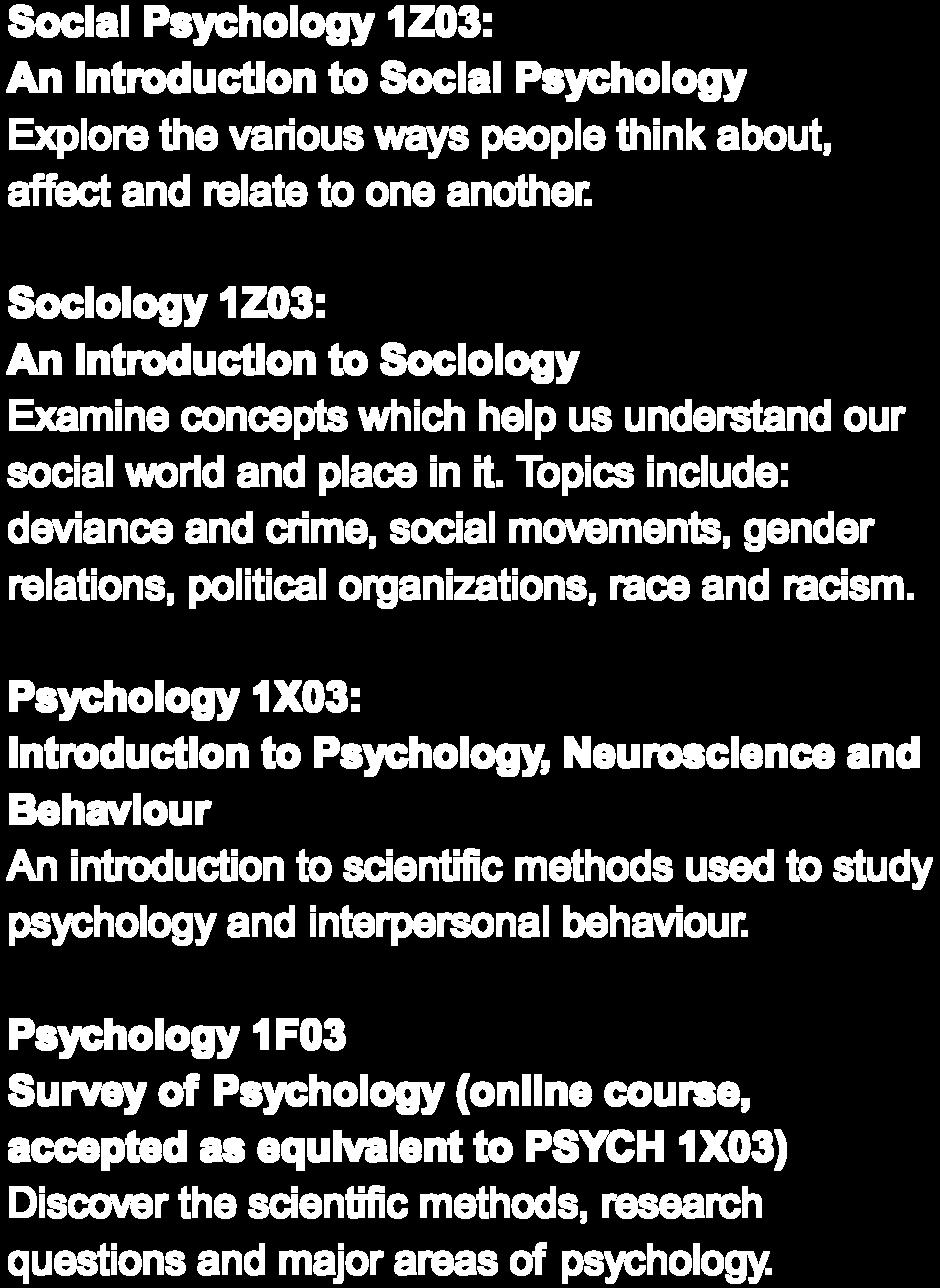
LevelICourses
SkillsDevelopment
Solve problems using critical, reasoned thought
Communication skills gained through verbal presentations, discussions and informed debates
Hands-on experience designing quantitative studies and analyzing data with statistical software
Qualitative analysis of interview data
Experience writing research reports, literature reviews and analytical papers
Analyze root causes of social problems, and work towards solutions with diverse groups of people
BeyondFirstYear
Students will take courses in social psychology, psychology, sociology and from multidisciplinary elective courses.
Social Psychology courses:
Psychology of Close Relationships
Psychology of Well-Being
Counselling and Psychotherapy
Mental Health
Child Clinical Psychology
Making and Breaking Rules
Regimes of Social Control
Psychology of Intergroup Relations
Small Worlds: Children and Childhood
Psychology/Sociology courses:
Adolescent Psychology
Attitudes and Persuasion
Forensic Psychology
Gender and Sexualities
Race and Ethnic Relations
Careers&Experiential Education
Through Careers & Experiential Education programs, you can participate in paid internships, a tuition-free career planning course, academic placements and job shadowing
Take advantage of upper year research courses to gain valuable technical skills
Take an independent study course to work one-on-one with a supervising professor and conduct original research
Conduct original research in groups with a supervising professor in your fourth year
PotentialCareers
Counselling/Psychotherapy
Education
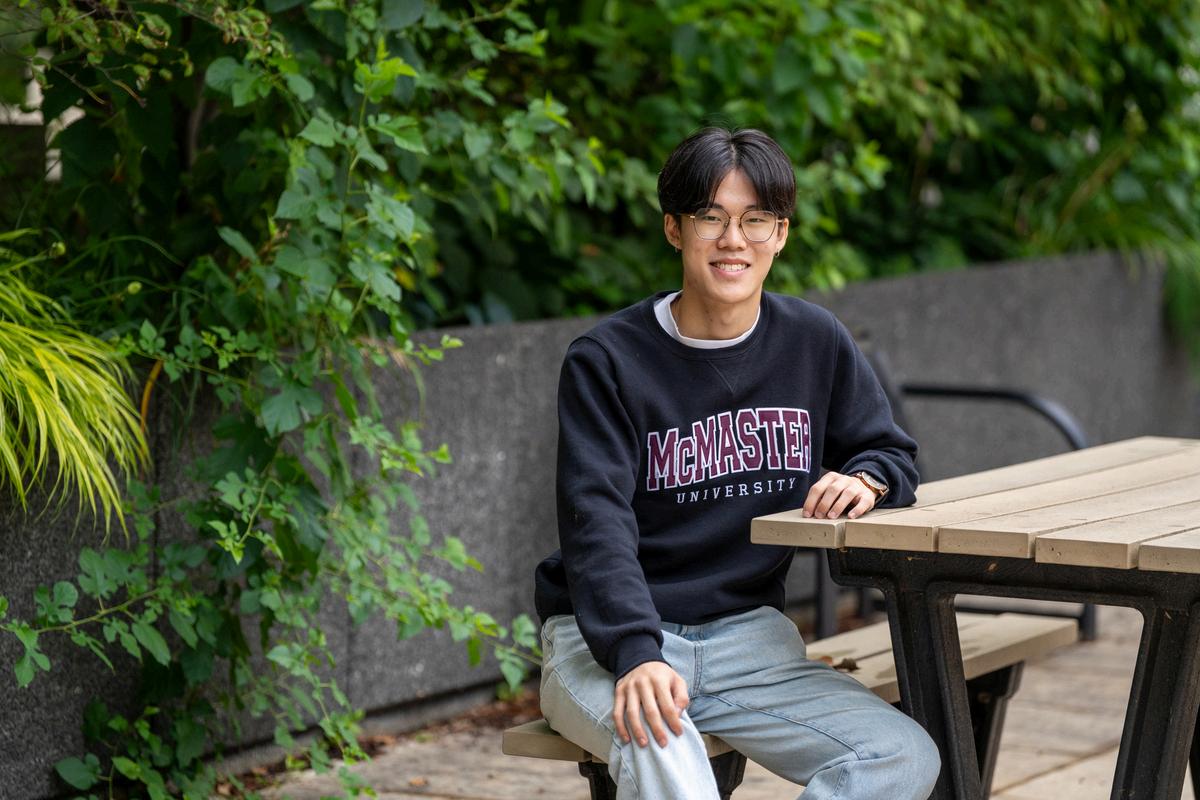
“SocialPsychologyoffersawiderangeof opportunitiesandhasgivenmethetools toexploresocialandpsychological knowledgeacrossvarioussettings.The ResearchSpecialistprogramatMcMaster hasstrengthenedmycriticalthinkingand researchskills,makingmefeelconfident andpreparedtoexploremyacademic andprofessionalinterestsfurther.”
-NickY.(SocialPsychologyStudent)
Law
Research
Human Resources
Public Relations
Occupational Therapy
Marketing
Journalism
Business
Public Health
ASocialPsychologydegreealsoprovidesthe foundationforgraduatestudiesin psychology,sociology,socialwork,andMBA programs.