ARCHITECTURE PORTFOLIO
Maud Campo
EDUCATION
Bachelor of Architecture
Master of Architecture 2016-2020 2020-2022
University of Antwerp University of Antwerp
WORKSHOPS
Summerschool: Re-Claiming Ground
Porto Academy summerschool
BAMBOO U: Design & Build
30 aug - 10 sep
20 jul - 27 jul
20 aug - 31 aug 2021 2022 2022
SOFTWARE
Revit
Vectorworks
Adobe Illustrator
Adobe Photoshop
Adobe Indesign
LANGUAGES
ABOUT ME
contact:
date of birth: place of residence: maud.campo@gmail.com
+32 477 73 21 44
13.10.1997 Antwerpen
Dutch English French native
This portfolio is the final product of my journey as a designer. It shows my development through my projects, research and inspirations. Each project is explained through different themes and illustrations; themes such as tectonics, footprint and context are addressed in different projects. With this selection of projects I try to give an accurate picture of my interests and skills.
Bachelor of Architecture
1st Master of Architecture
RE-USE HIGH-RISE EXTRACURRICULAR
1st Master of Architecture
2nd Master of Architecture
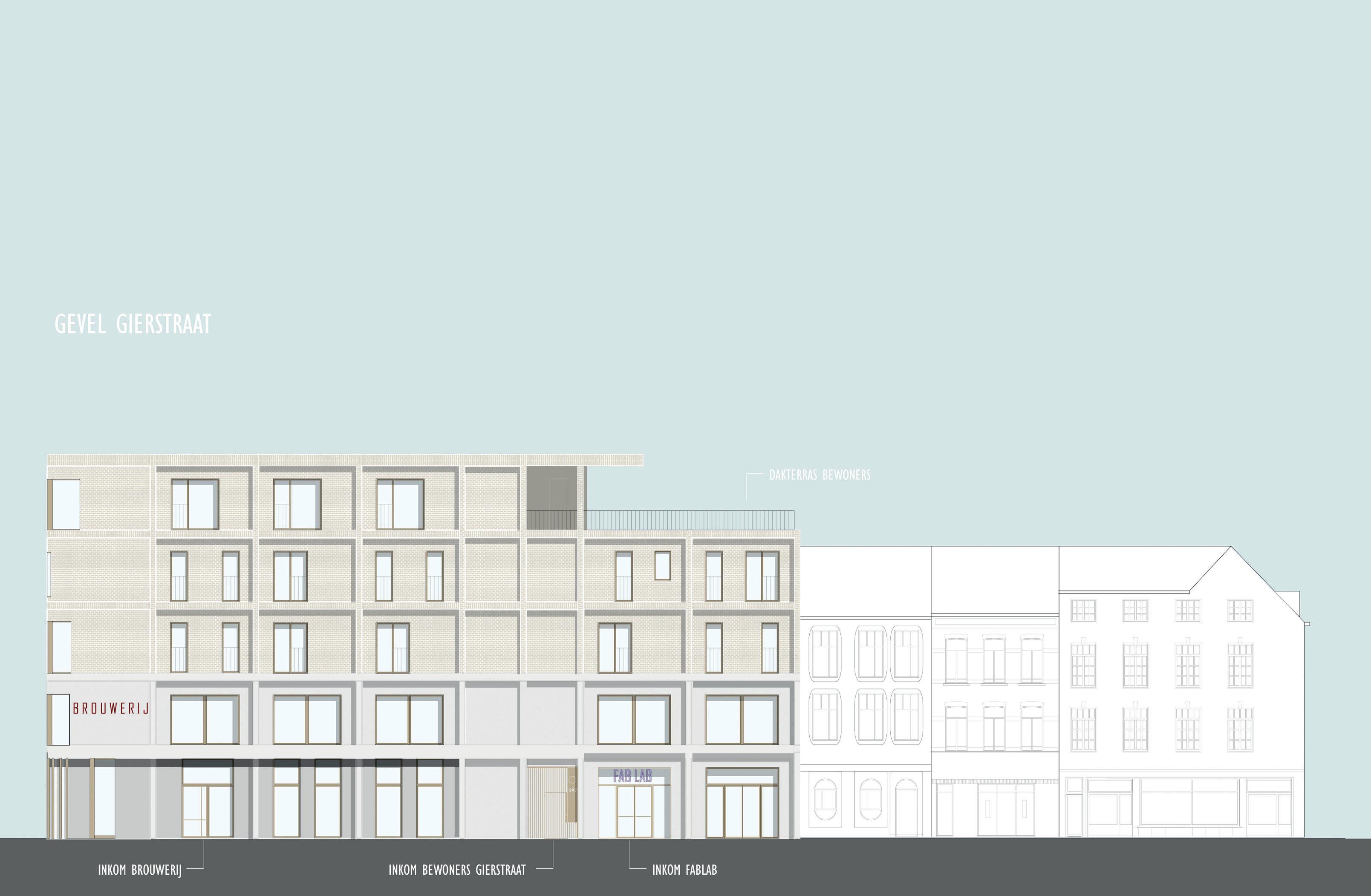
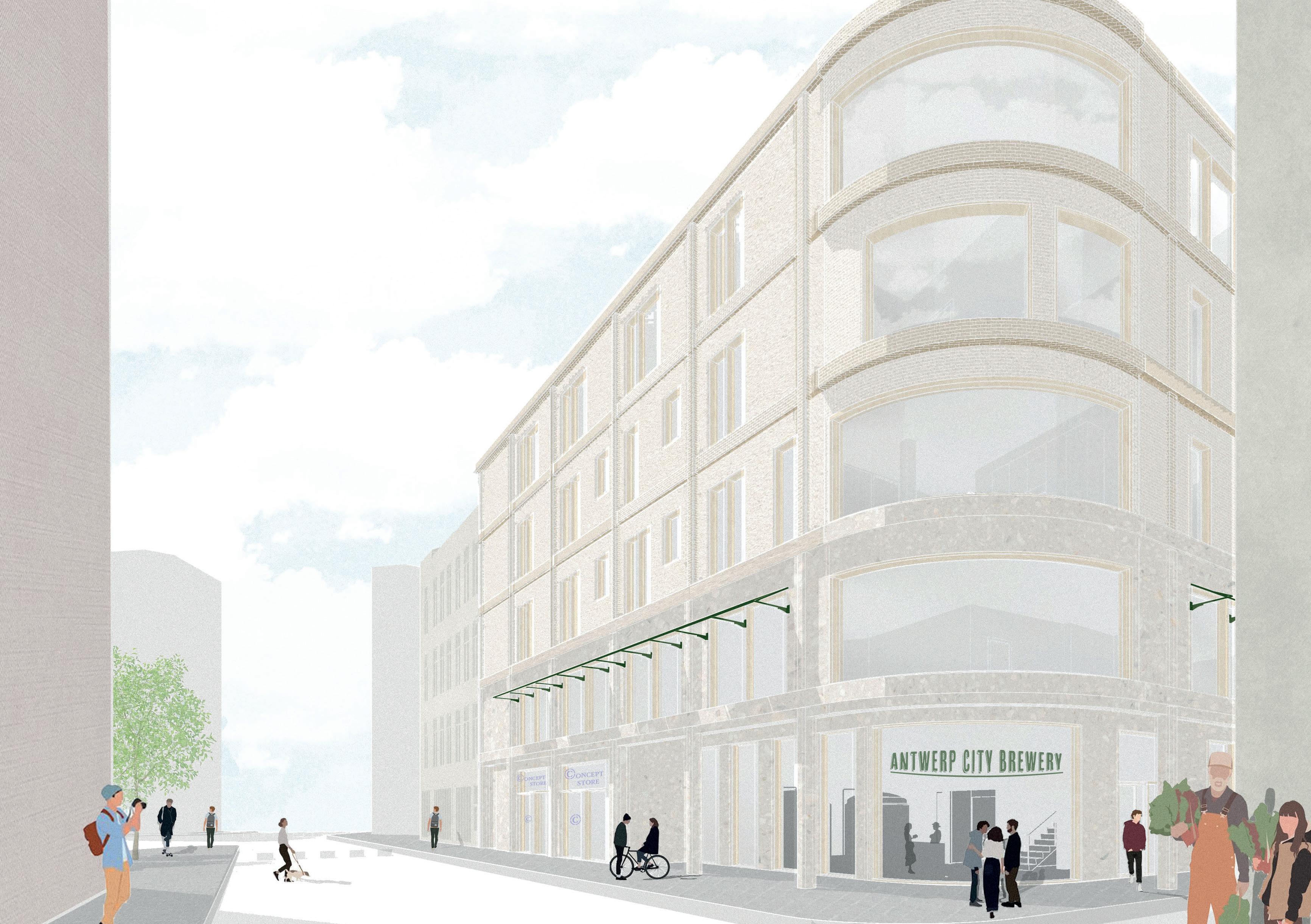
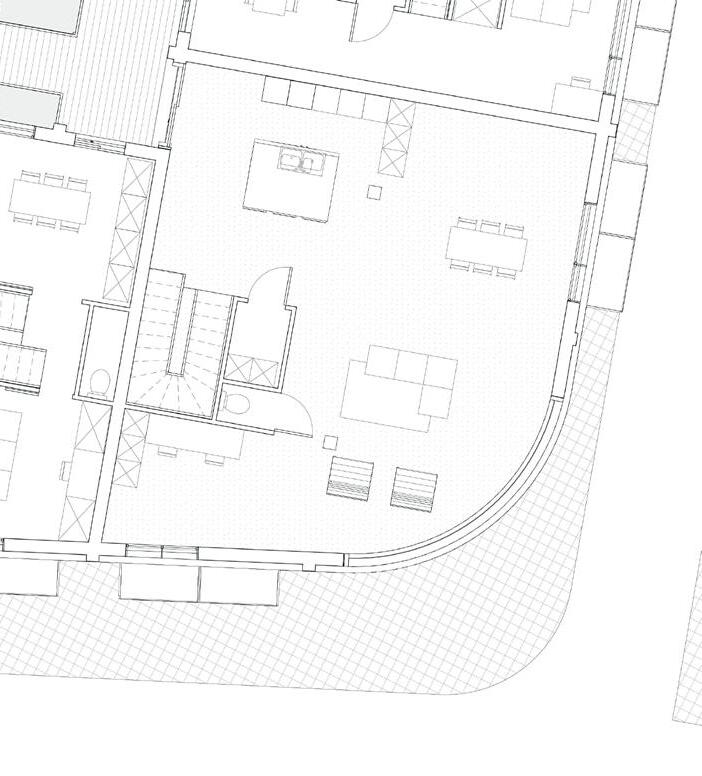
Residential units, Post office, Conceptstore, Art gallery, Brewery, Fablab, Sactuary.
SOLITUDE IN THE CITY
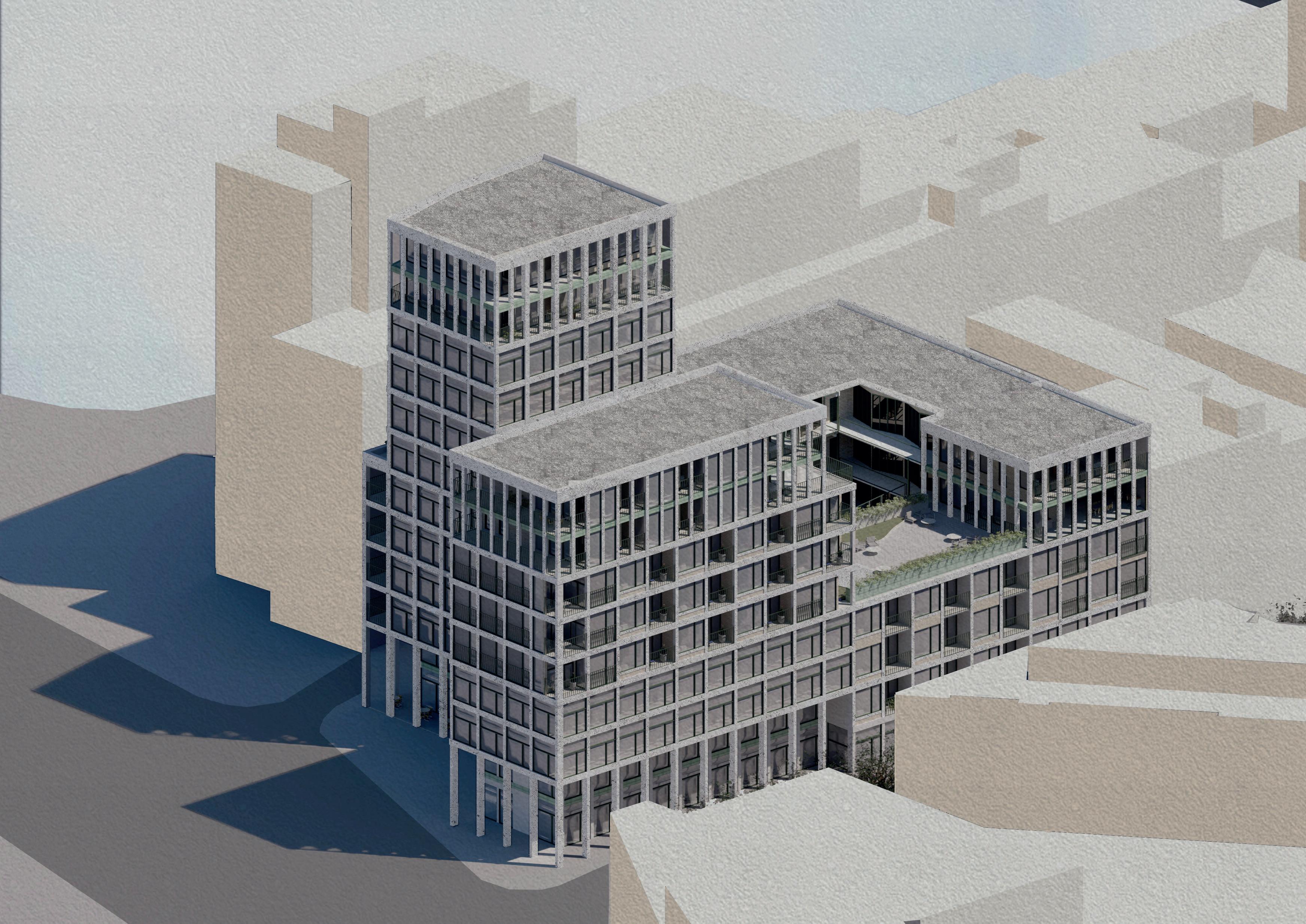
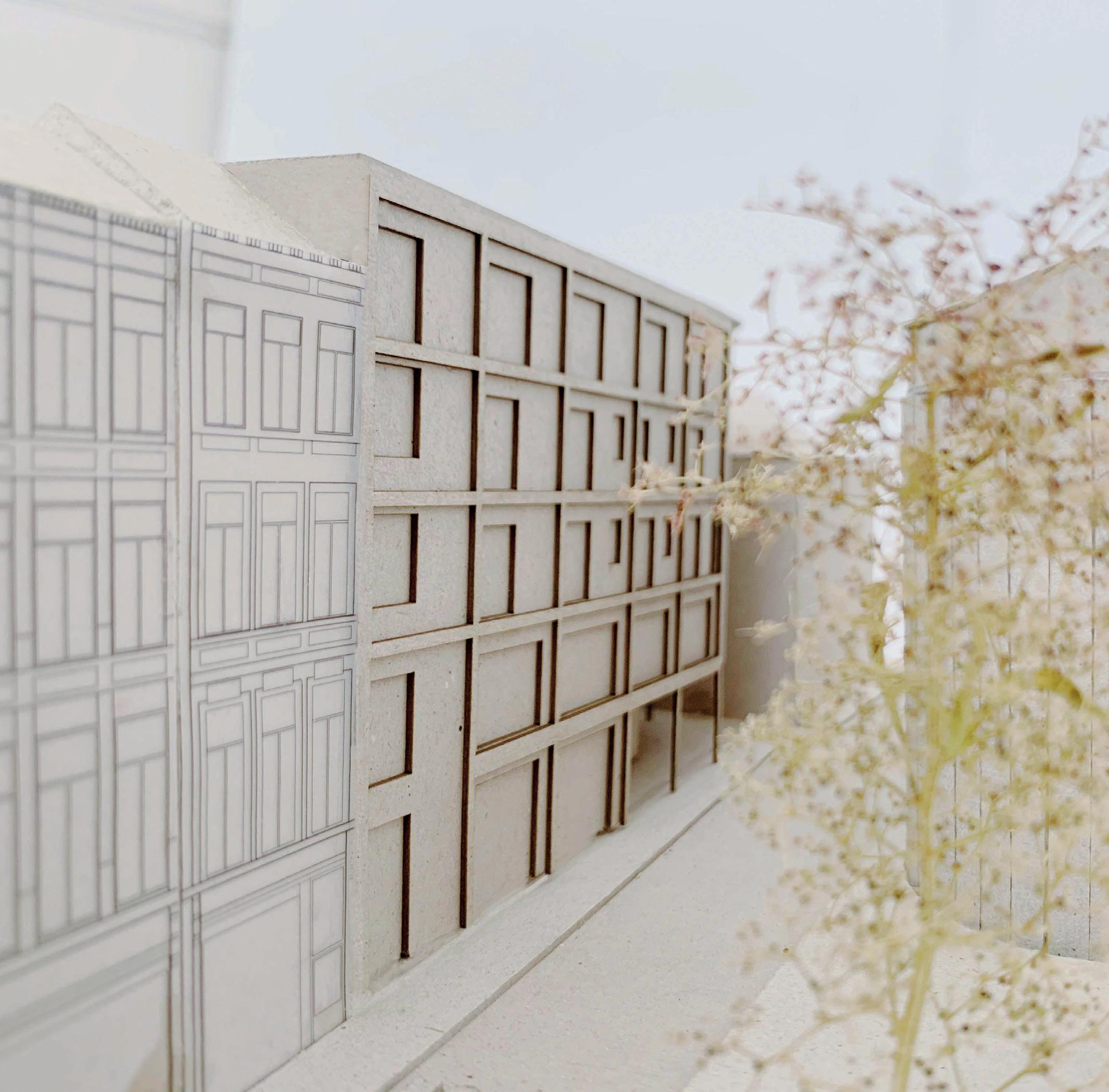
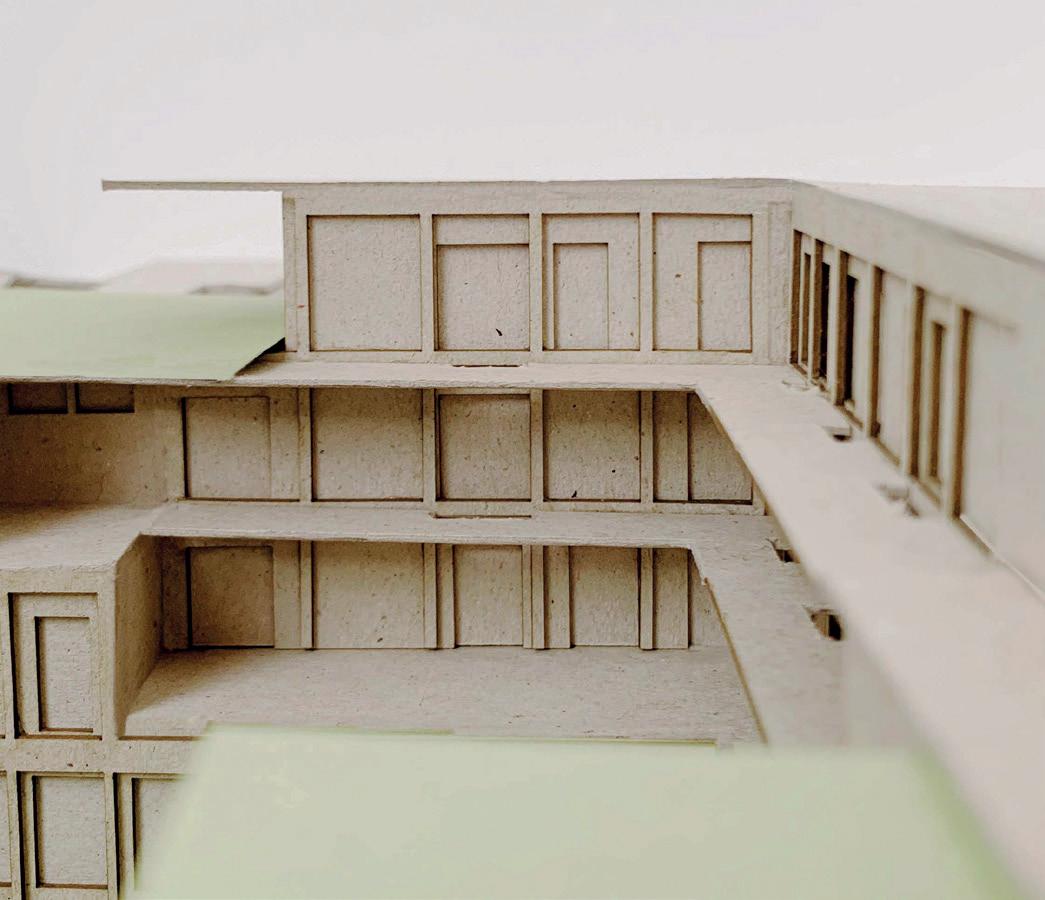
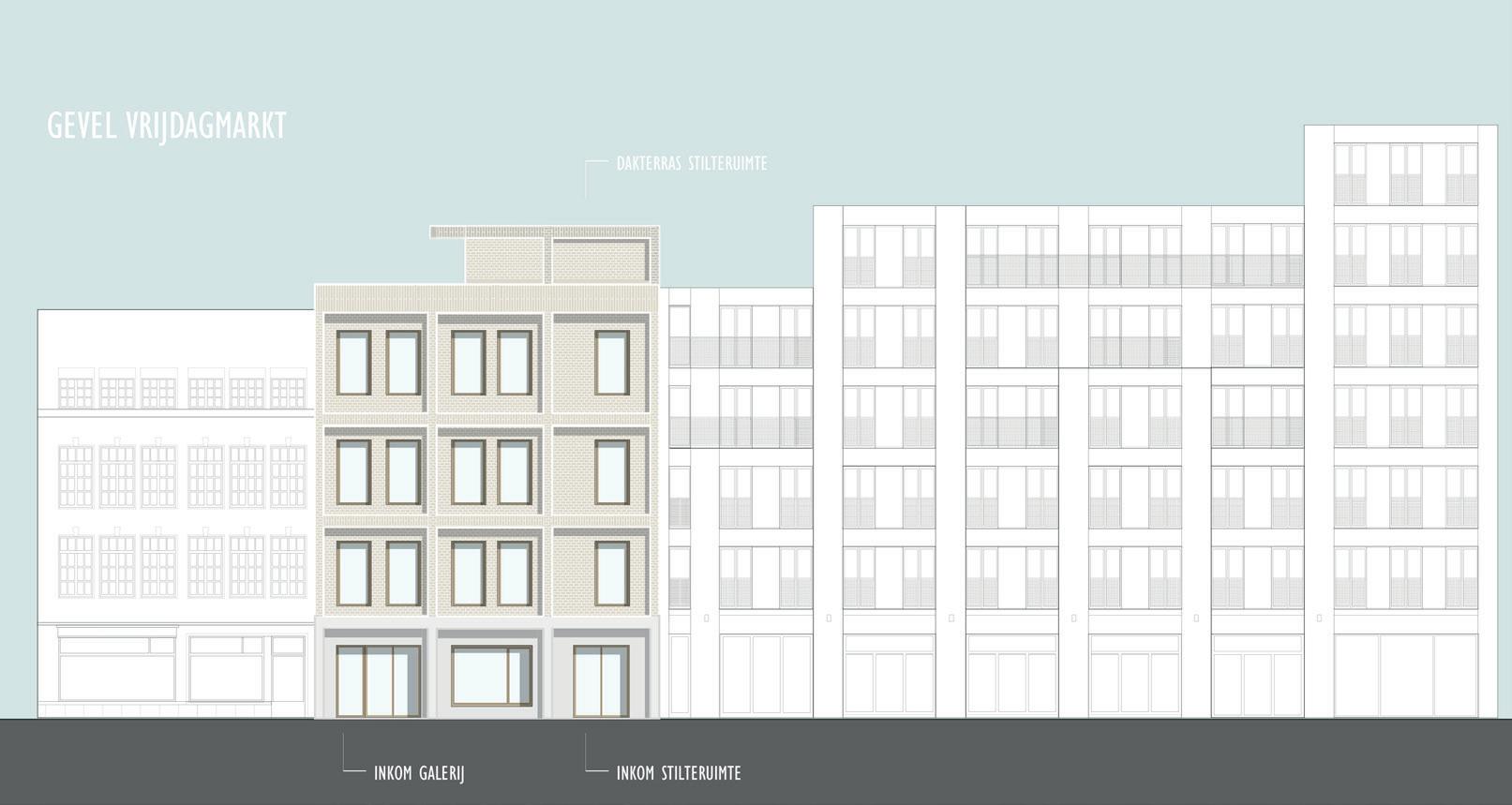
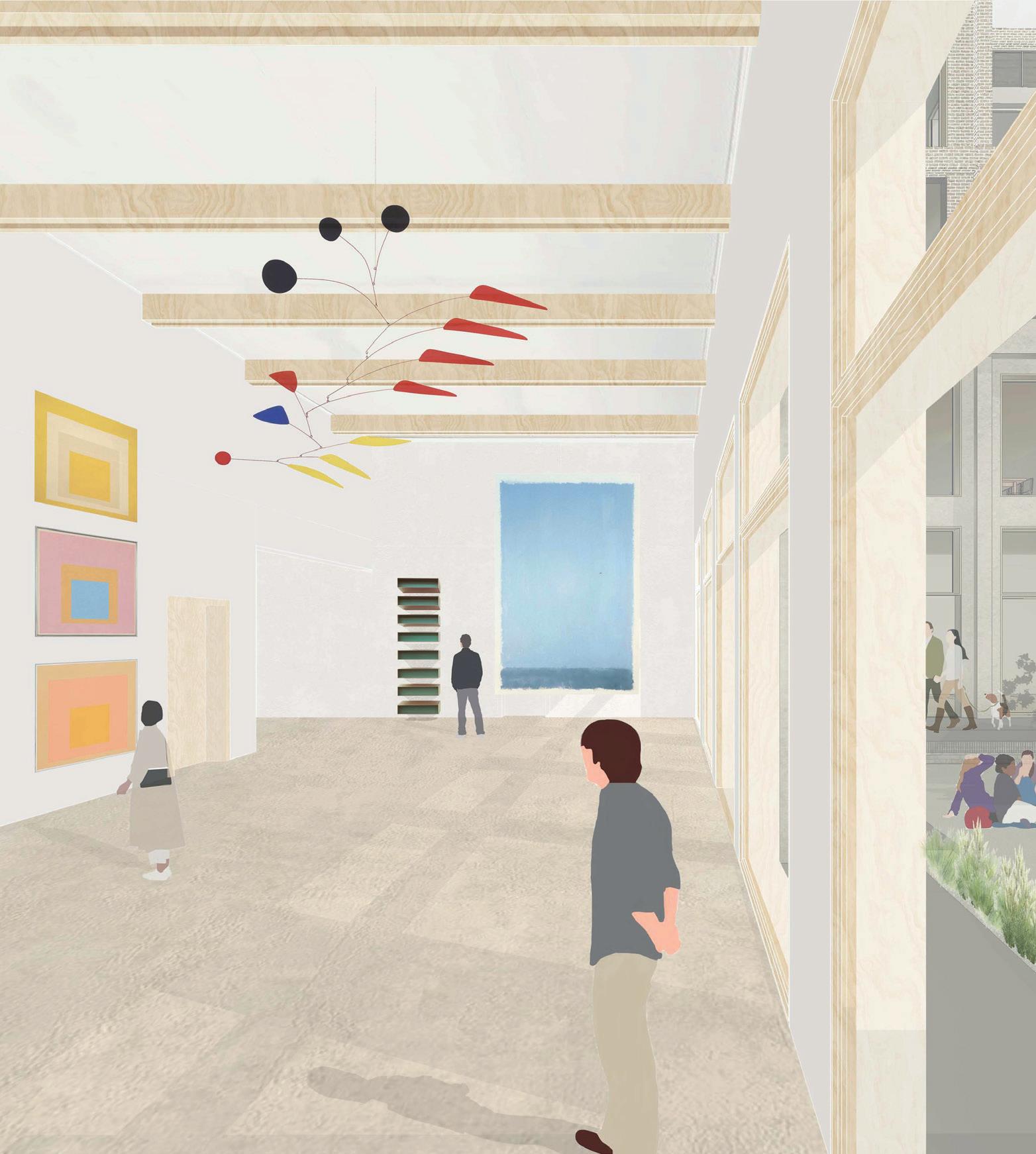
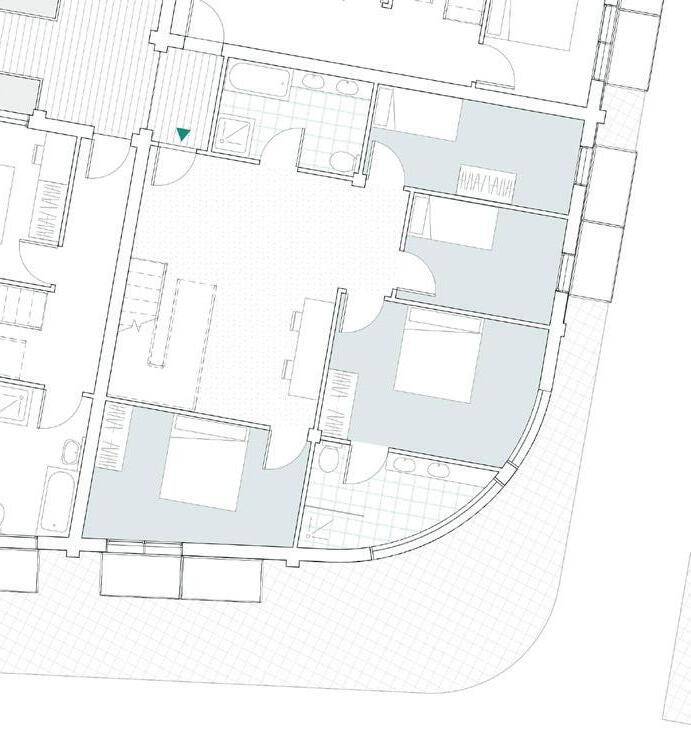
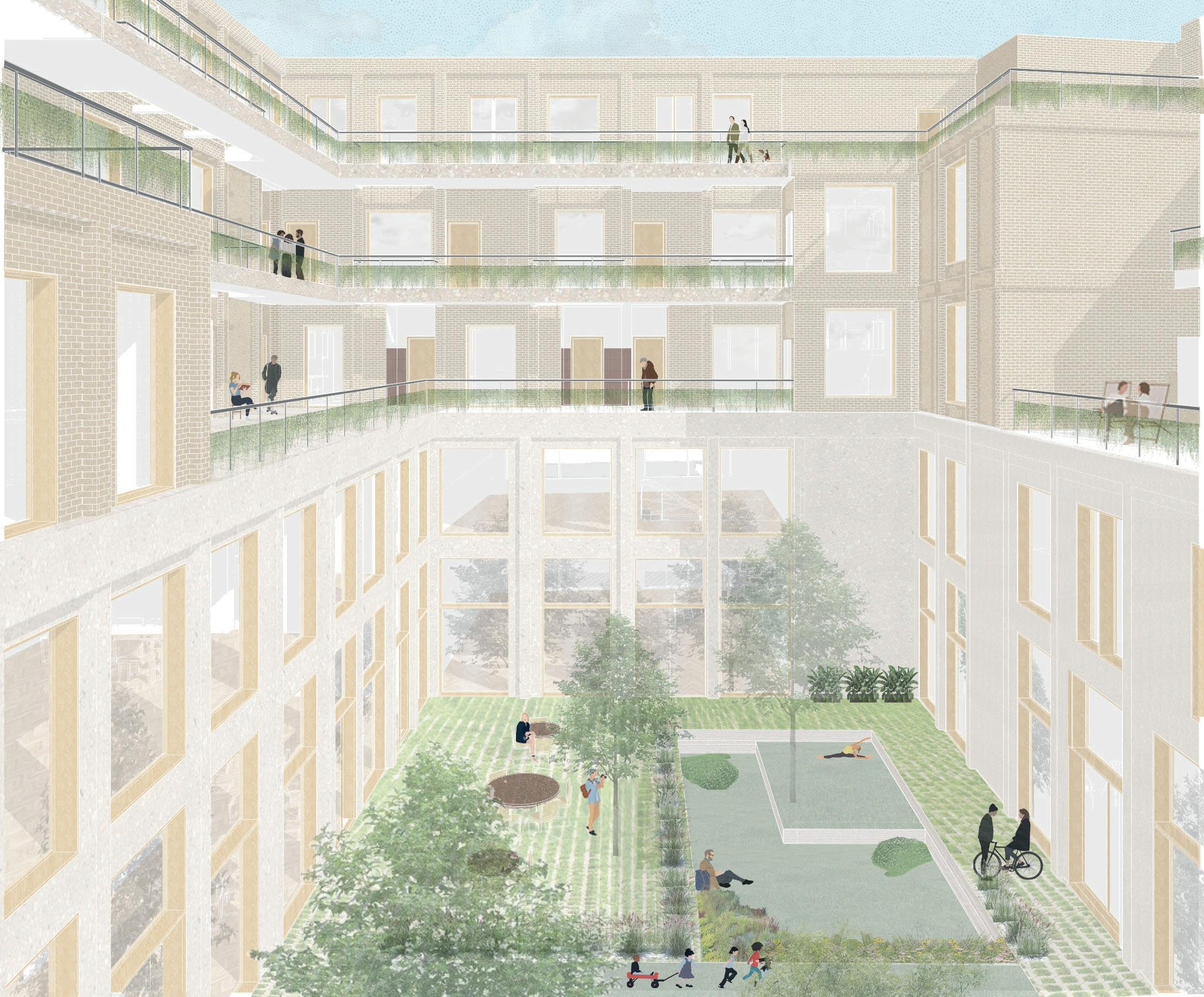
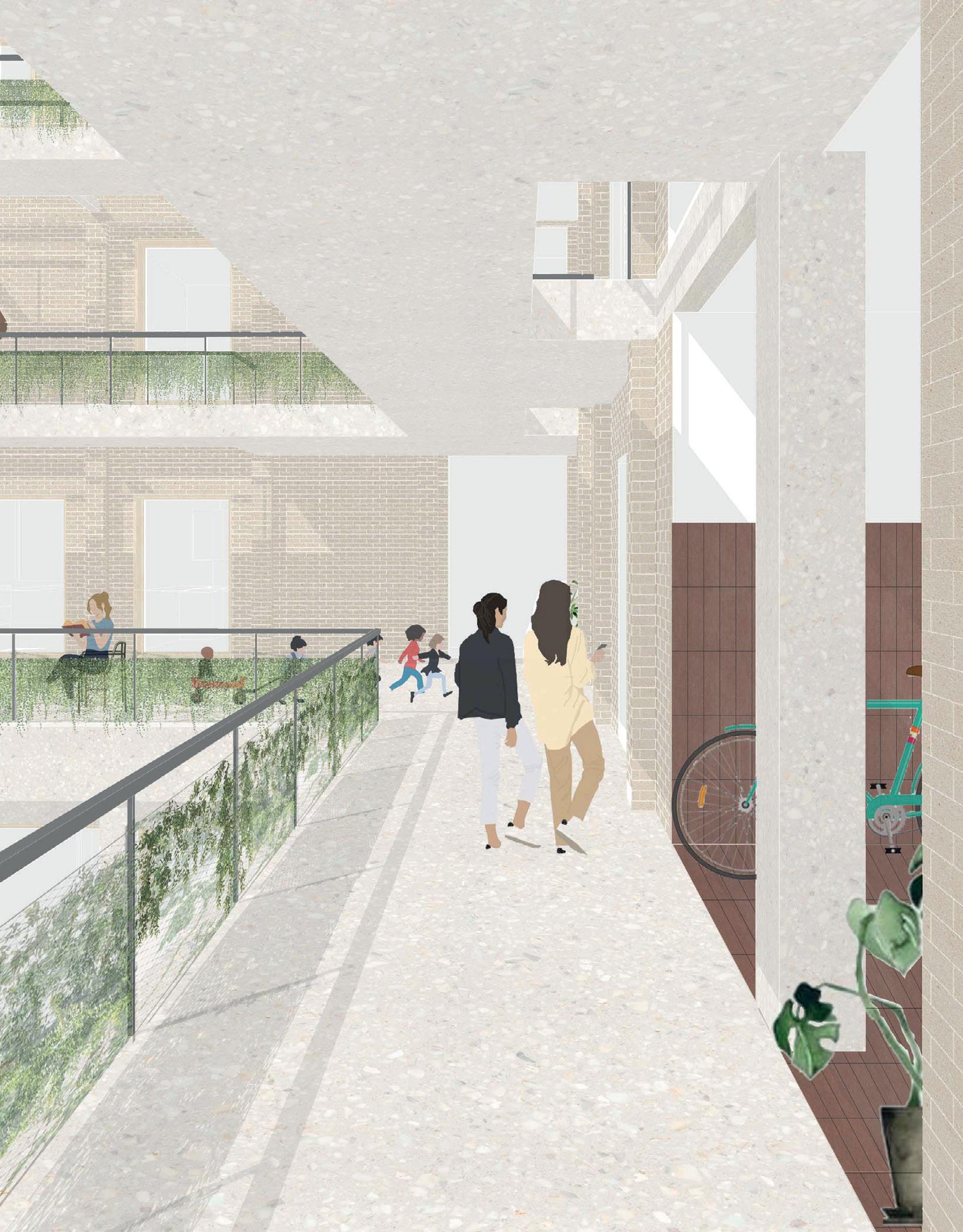
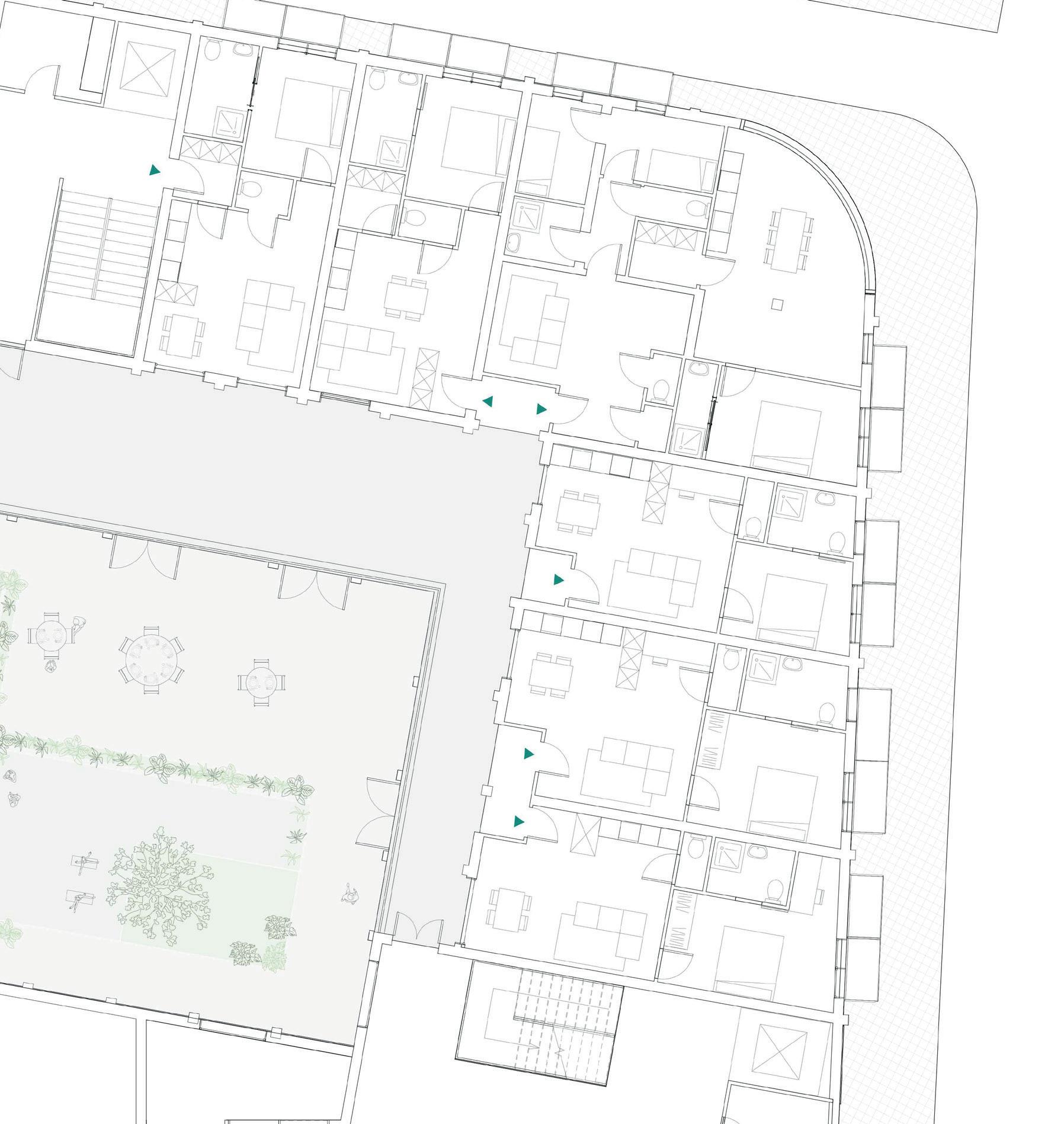
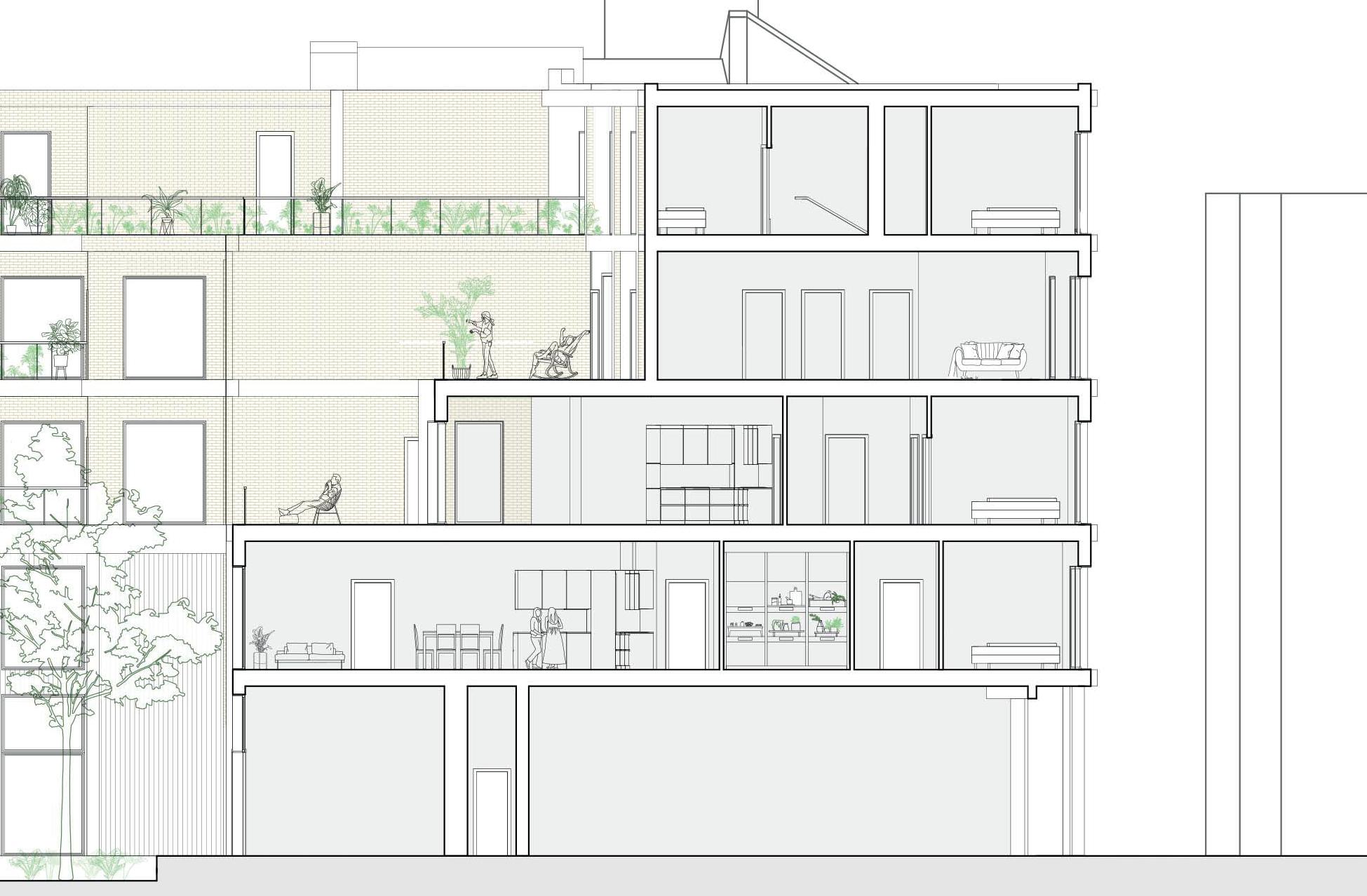
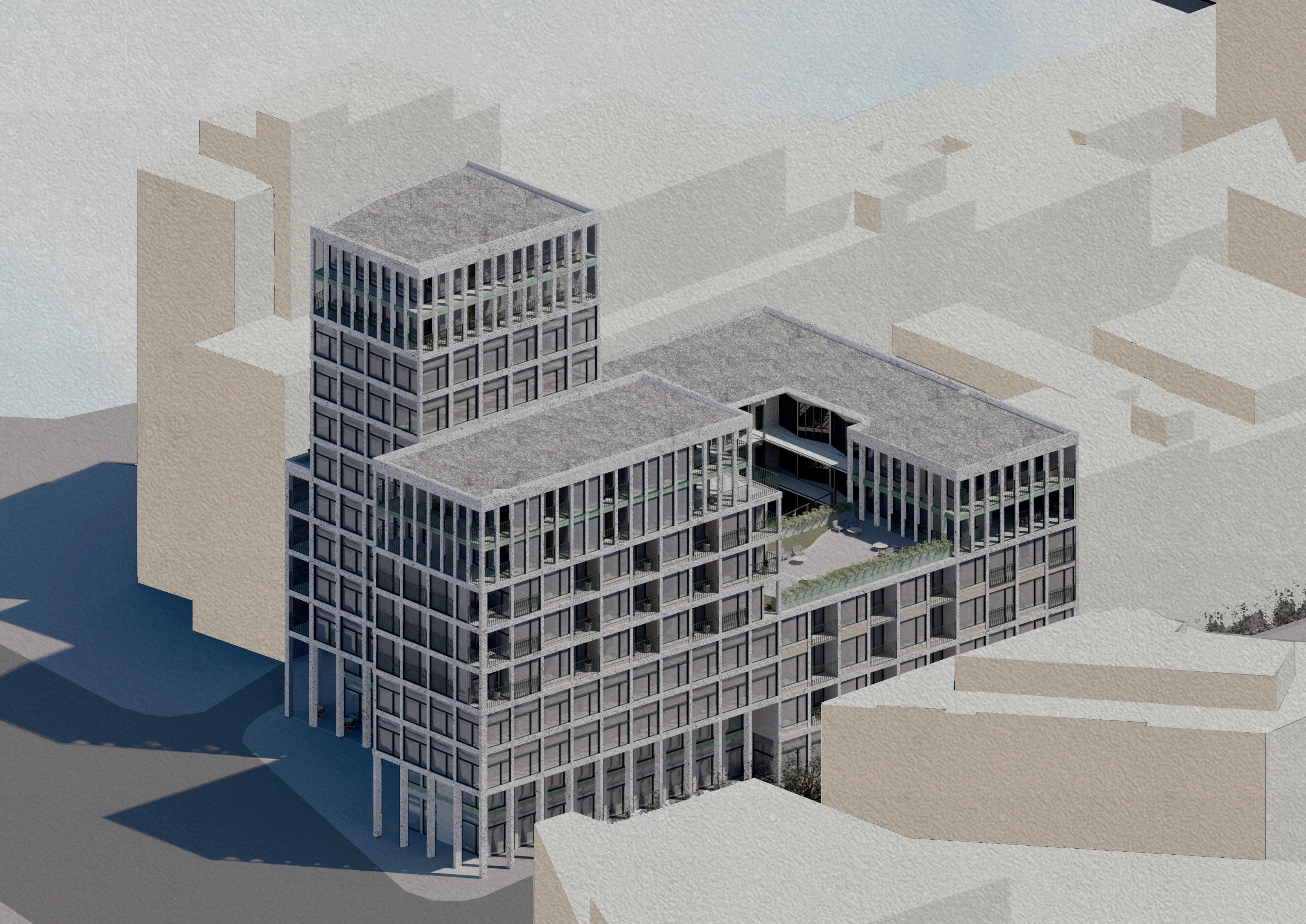
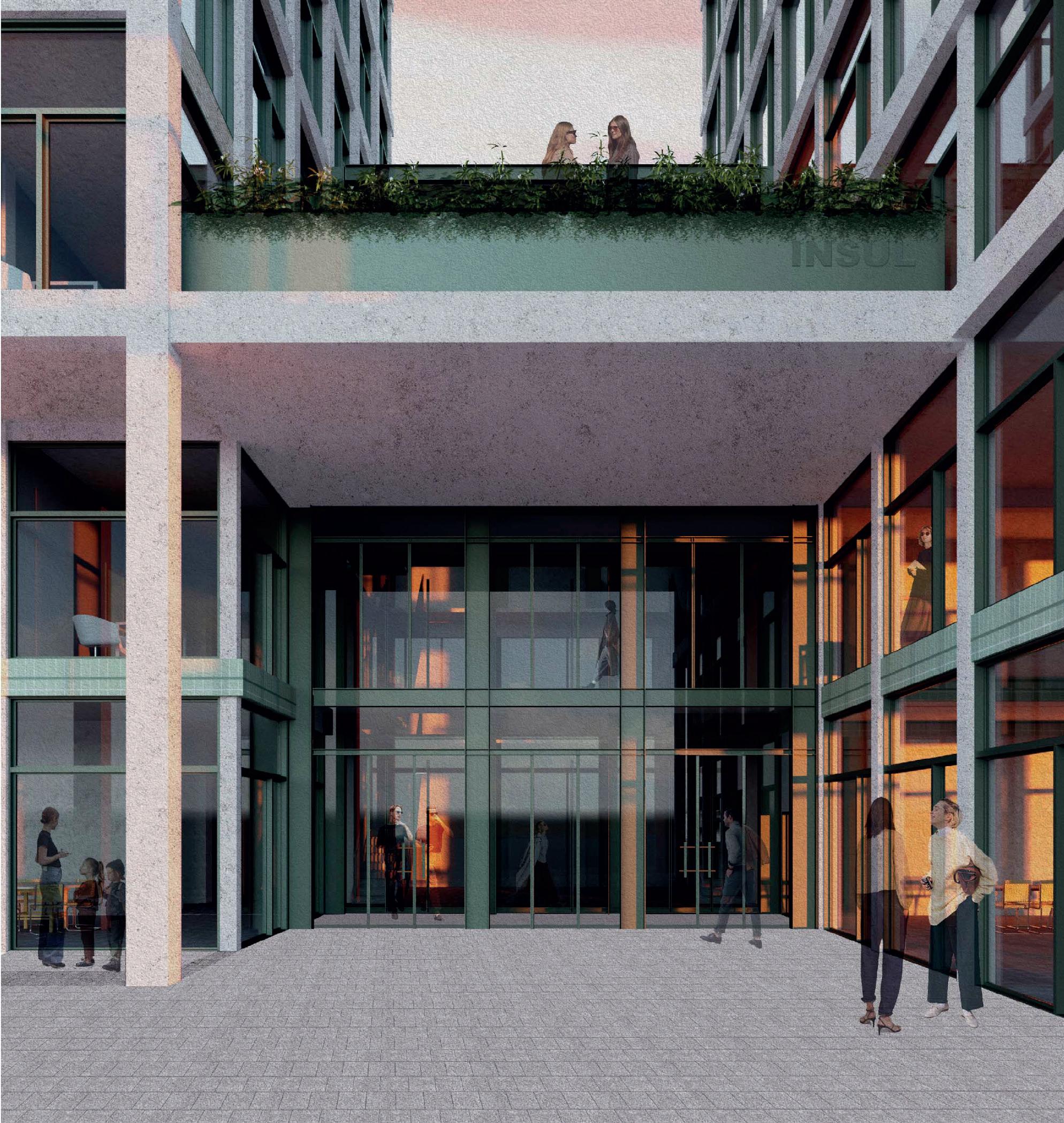
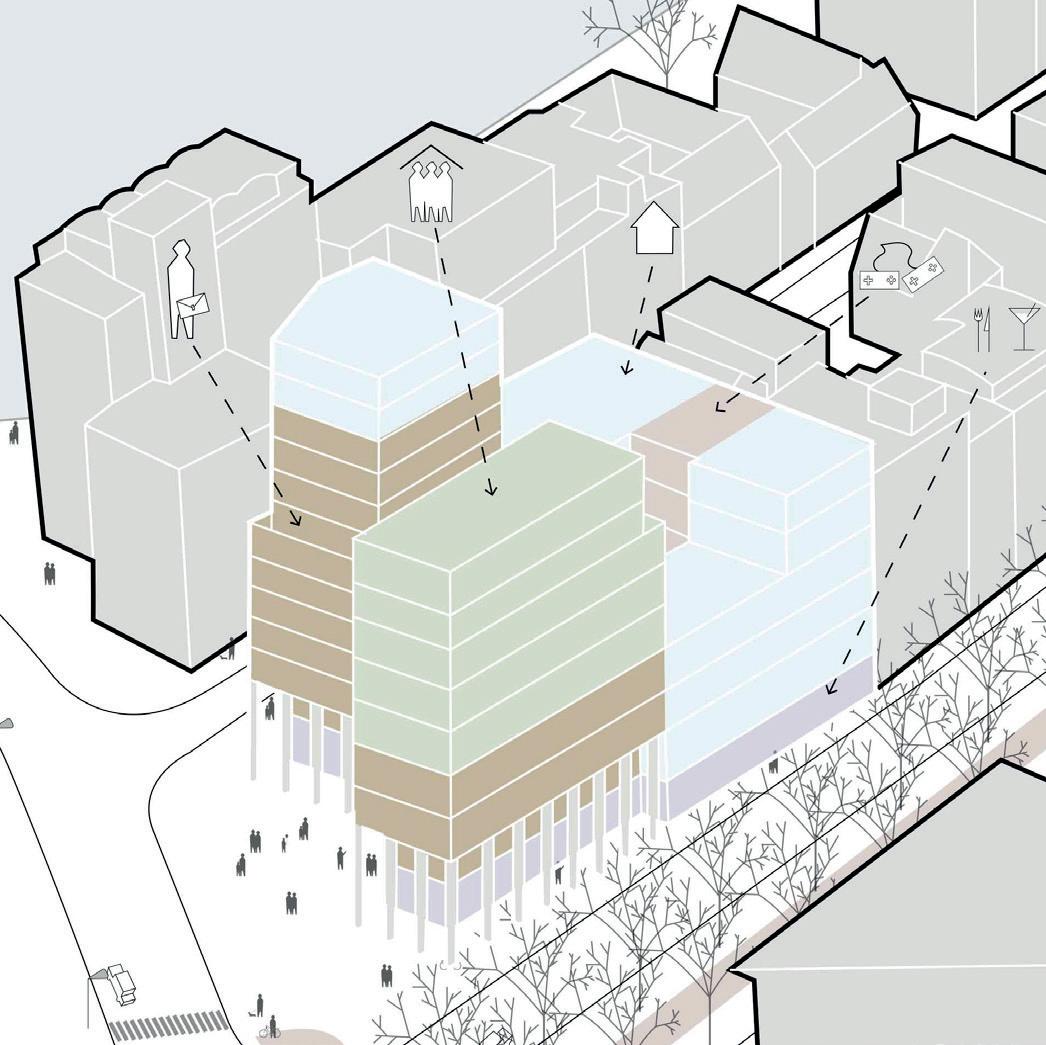
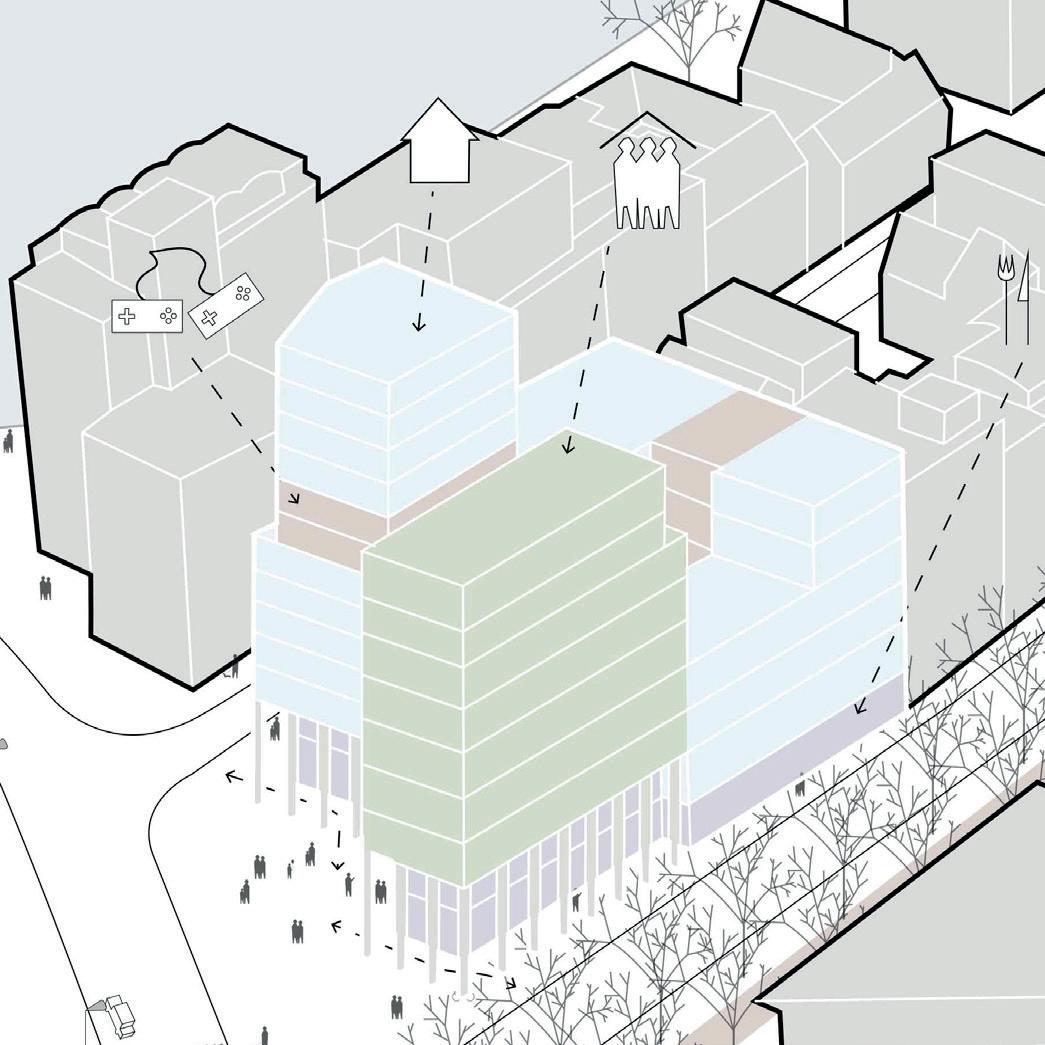
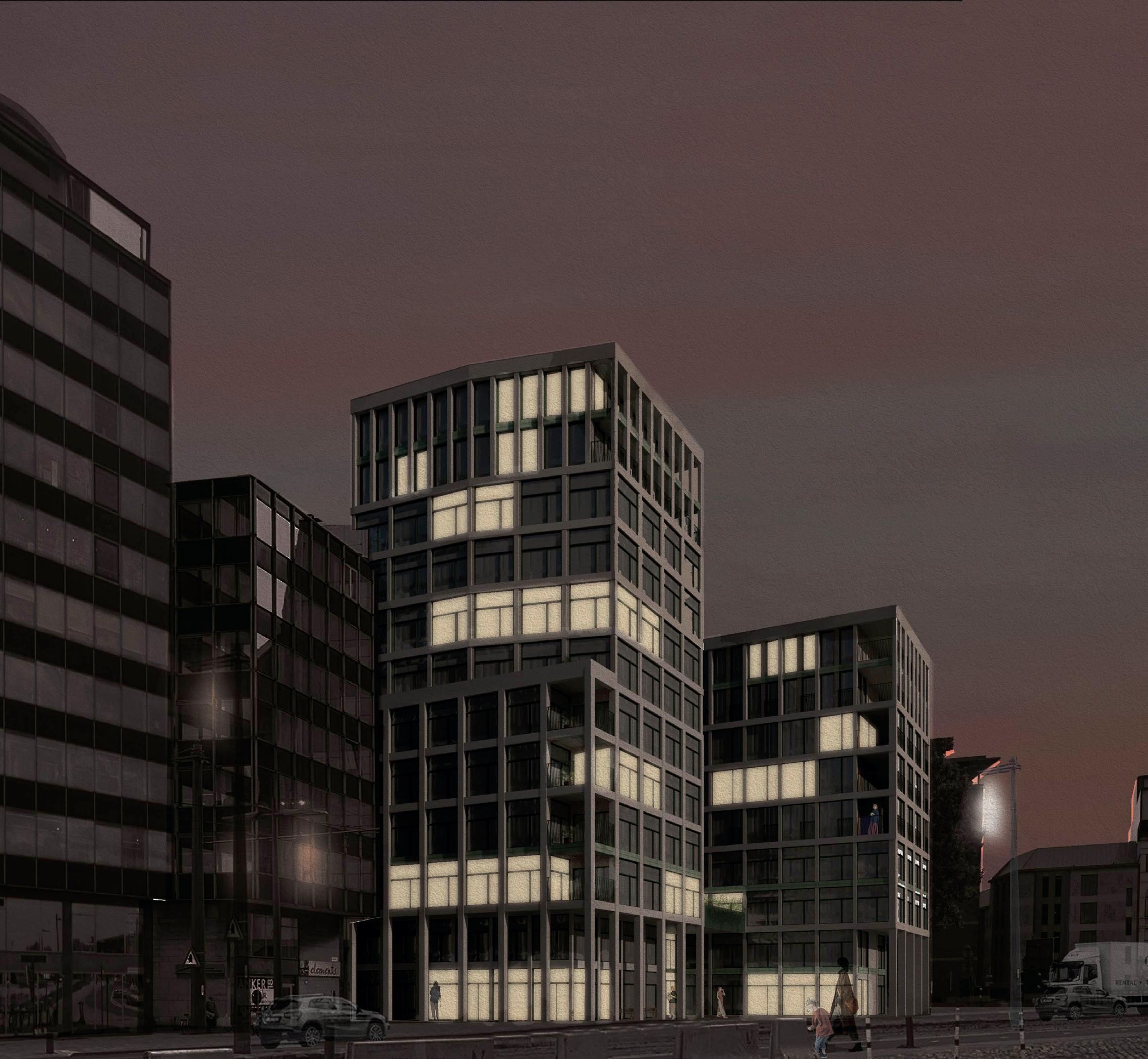
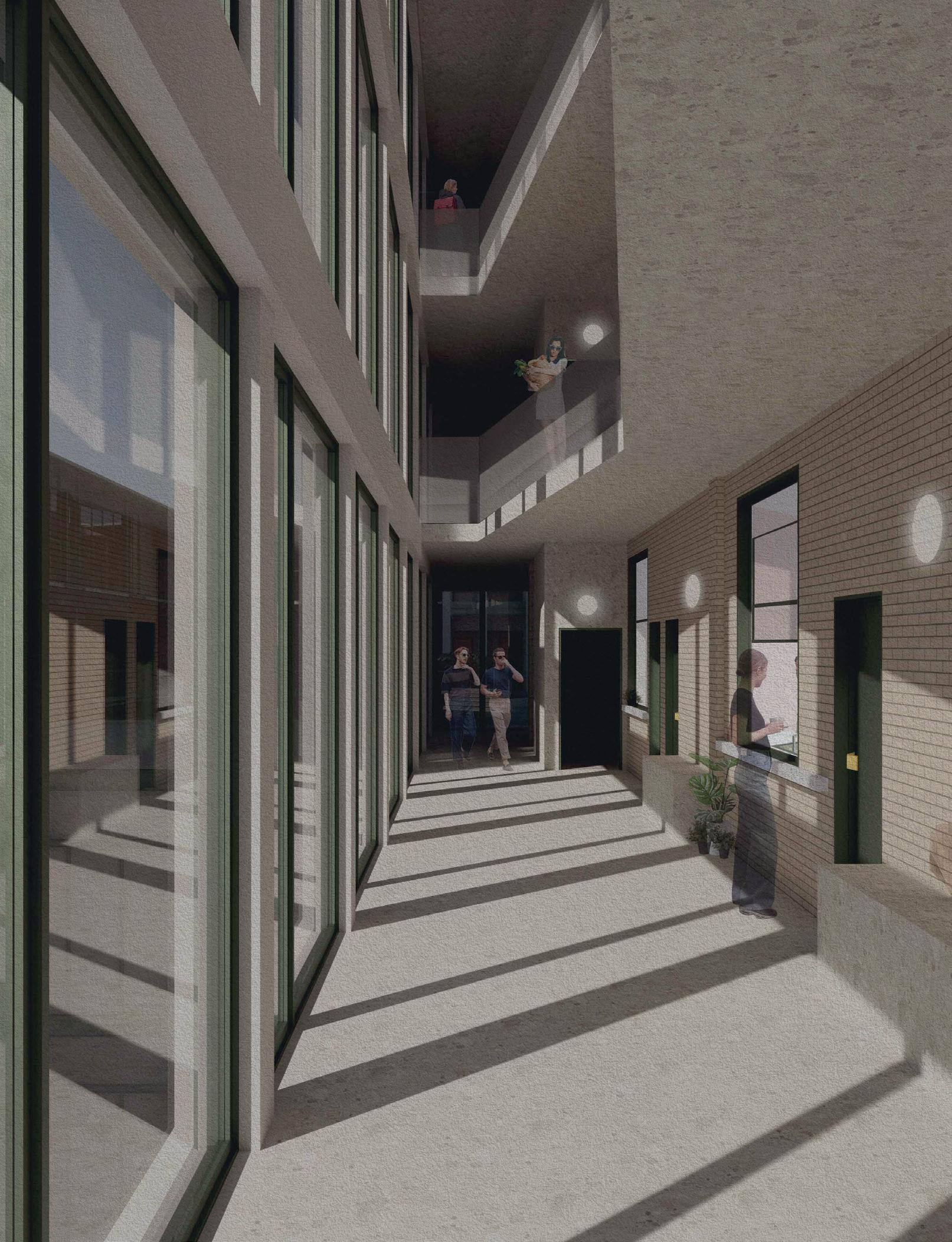
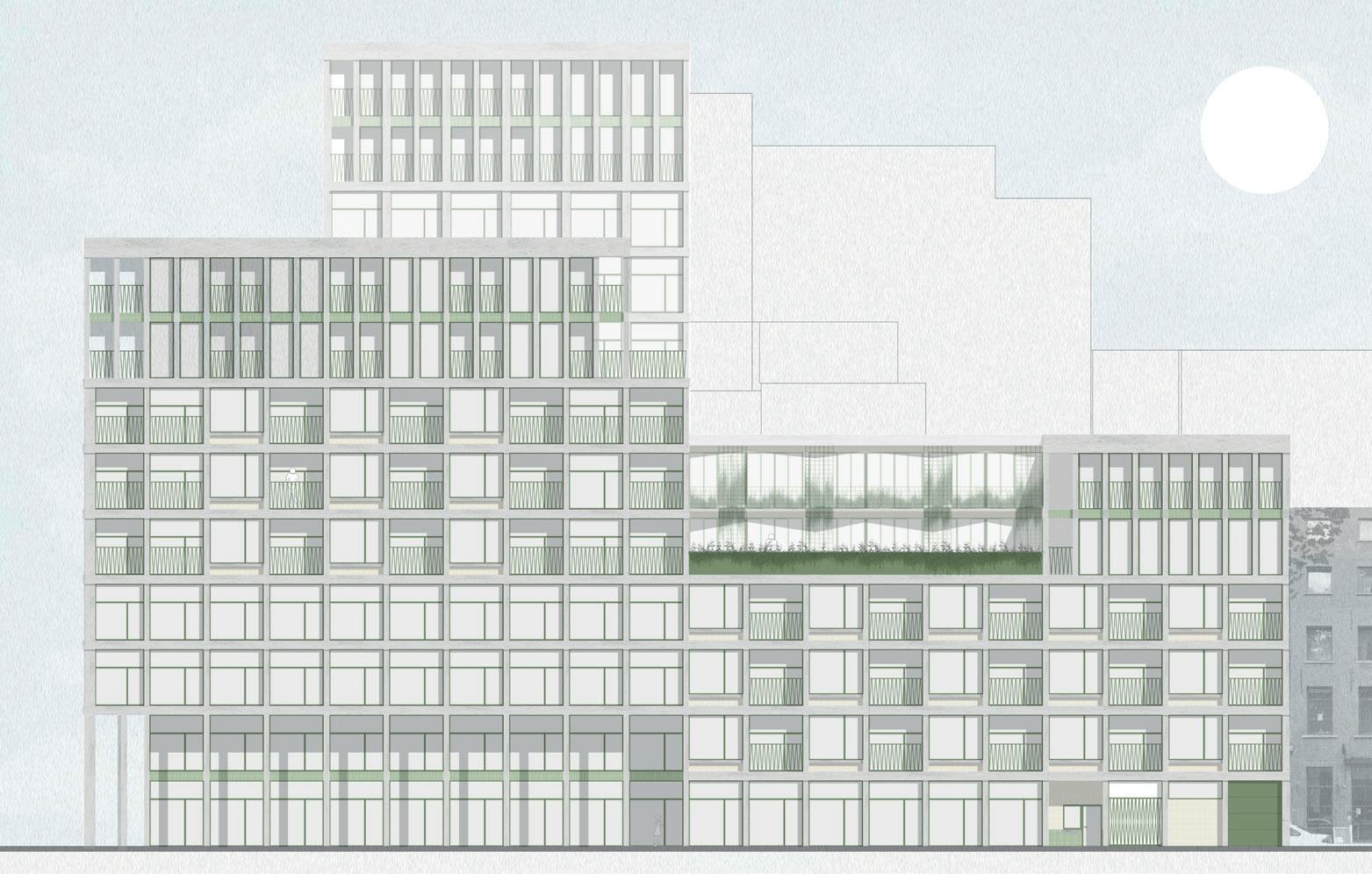
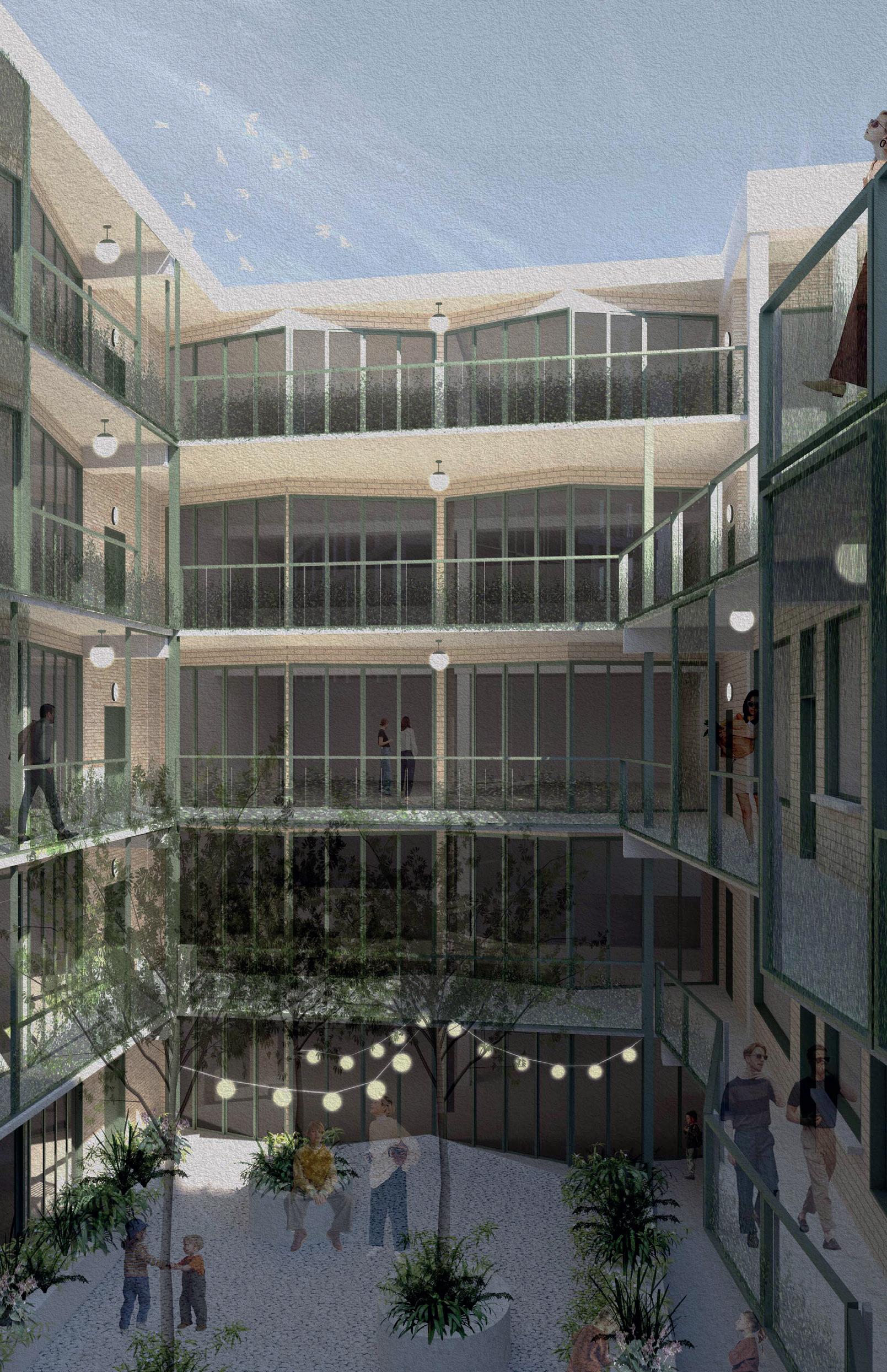
the specific programme demands a blend of both commercial and private spaces. Therefore, this design seeks a solution to organise public and private spaces as a coherent whole in the building block. It is important to find a balance between public commercial spaces, the privacy needed for residential spaces and qualitative collective spaces that can add value to the project as a whole. The importance of transitions between public, collective and private spaces is the focus here. This is realised through a central courtyard connecting the commercial function on the ground floor. Passerelles, collective and private roof terraces and communal functions also create a variety of statuses.
SPACE IN THE CITY
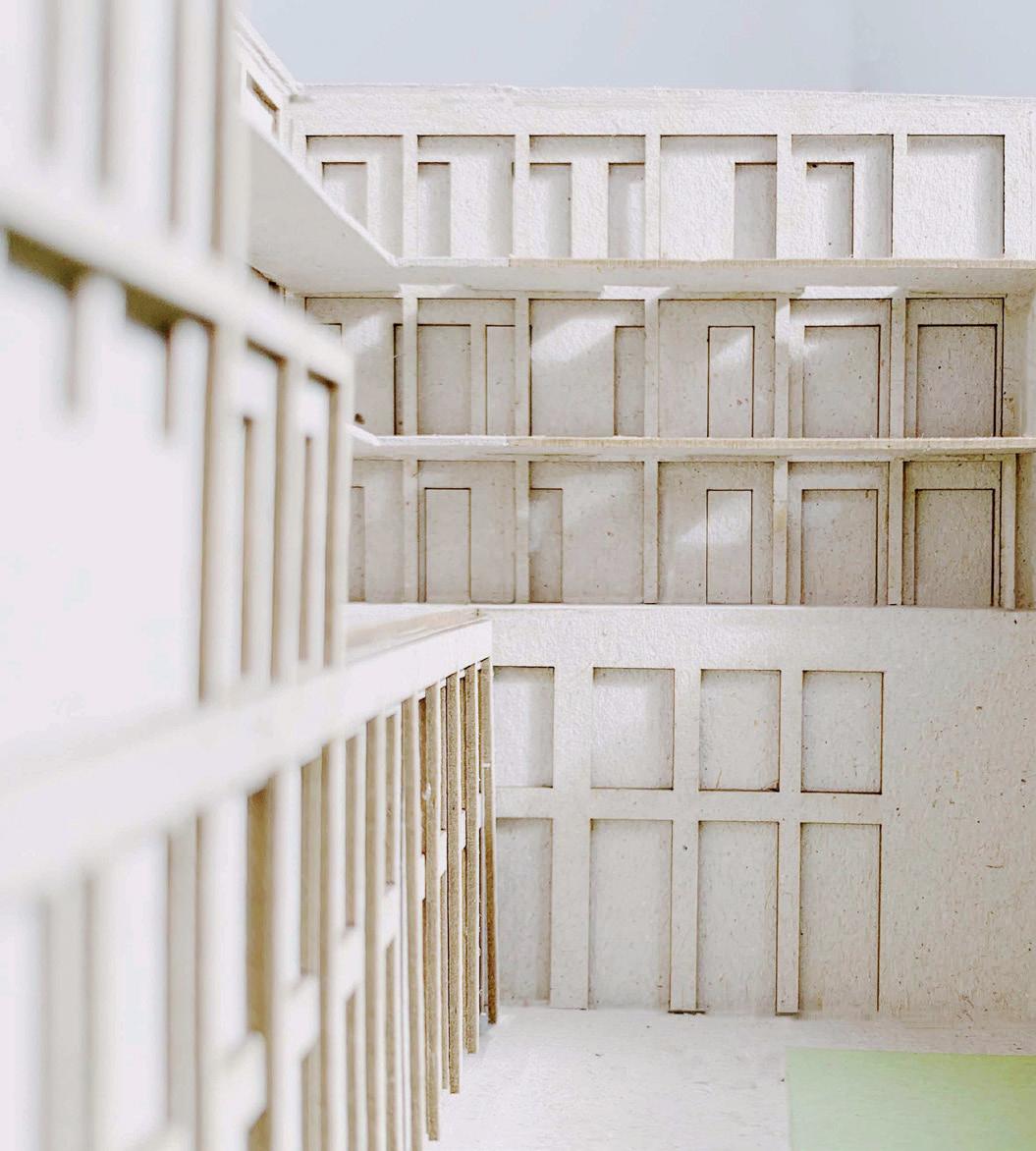
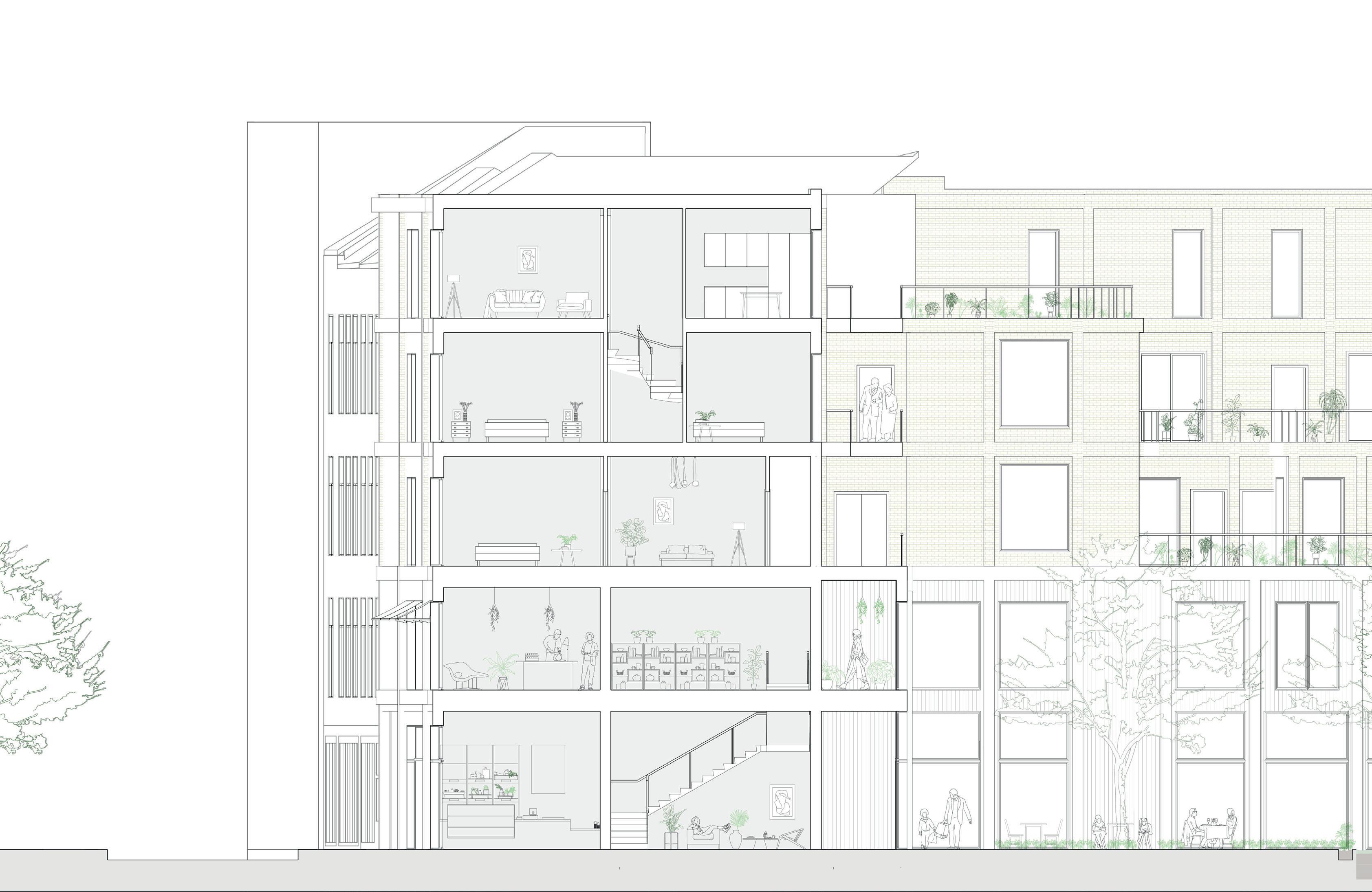
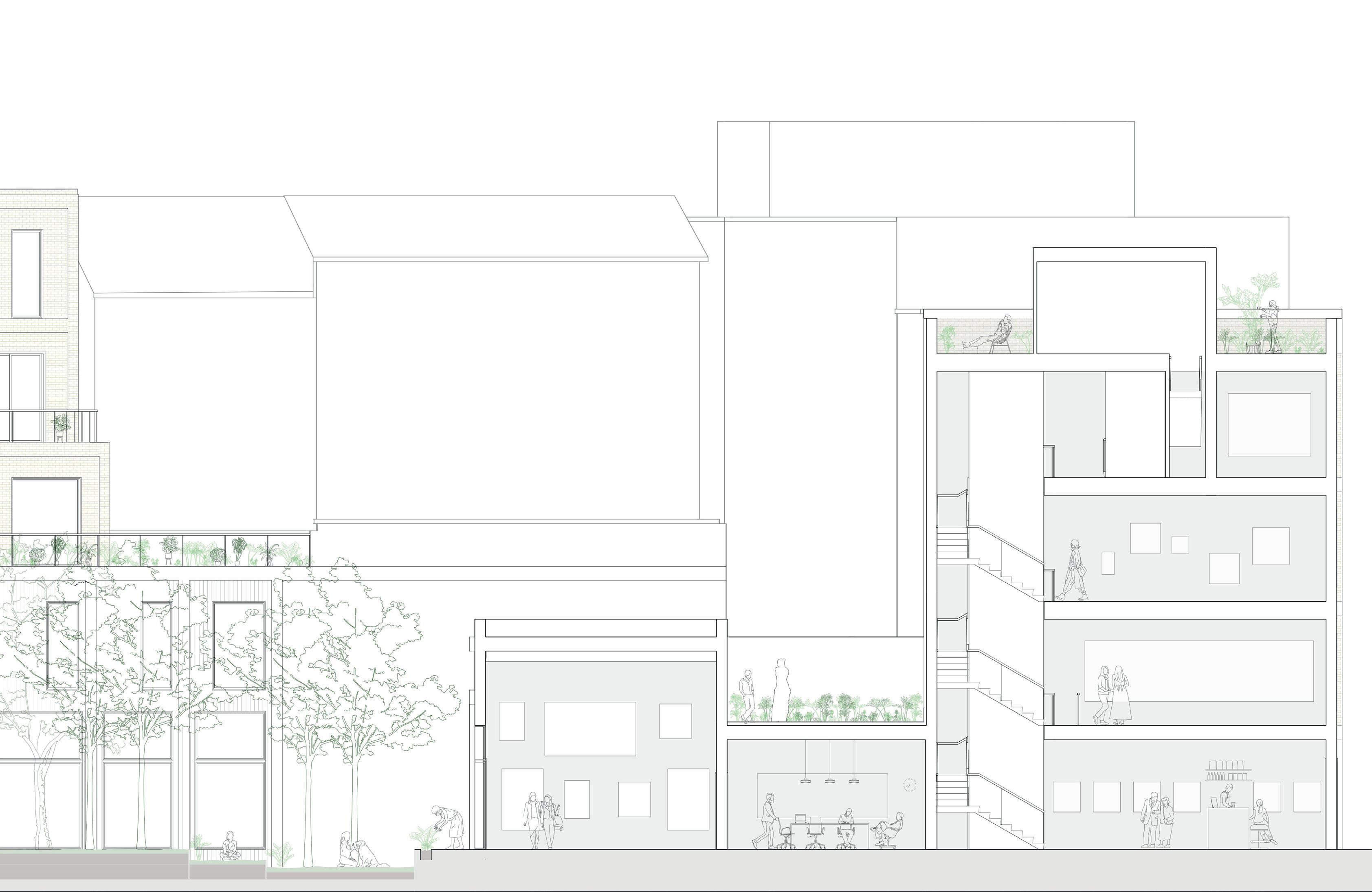
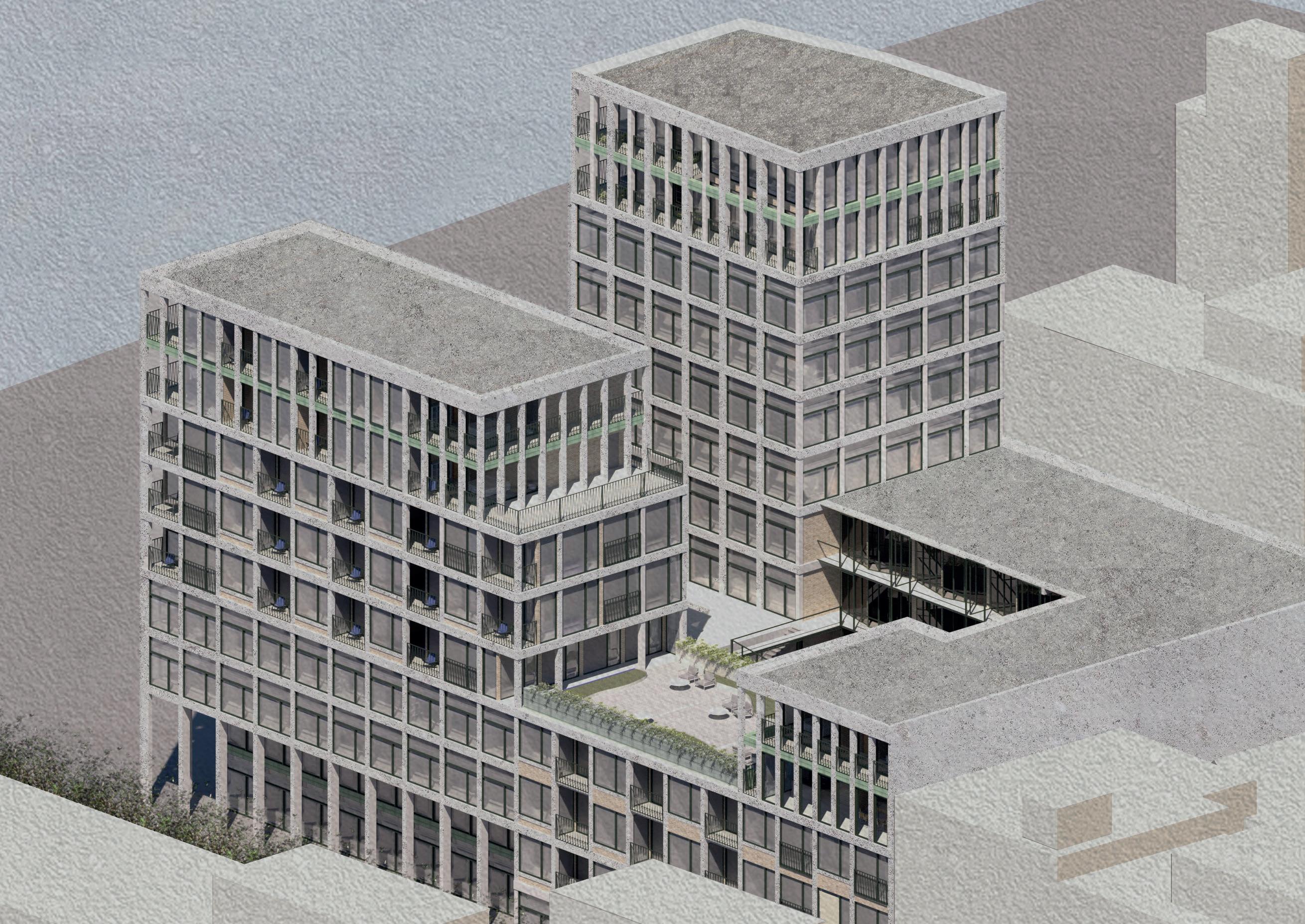
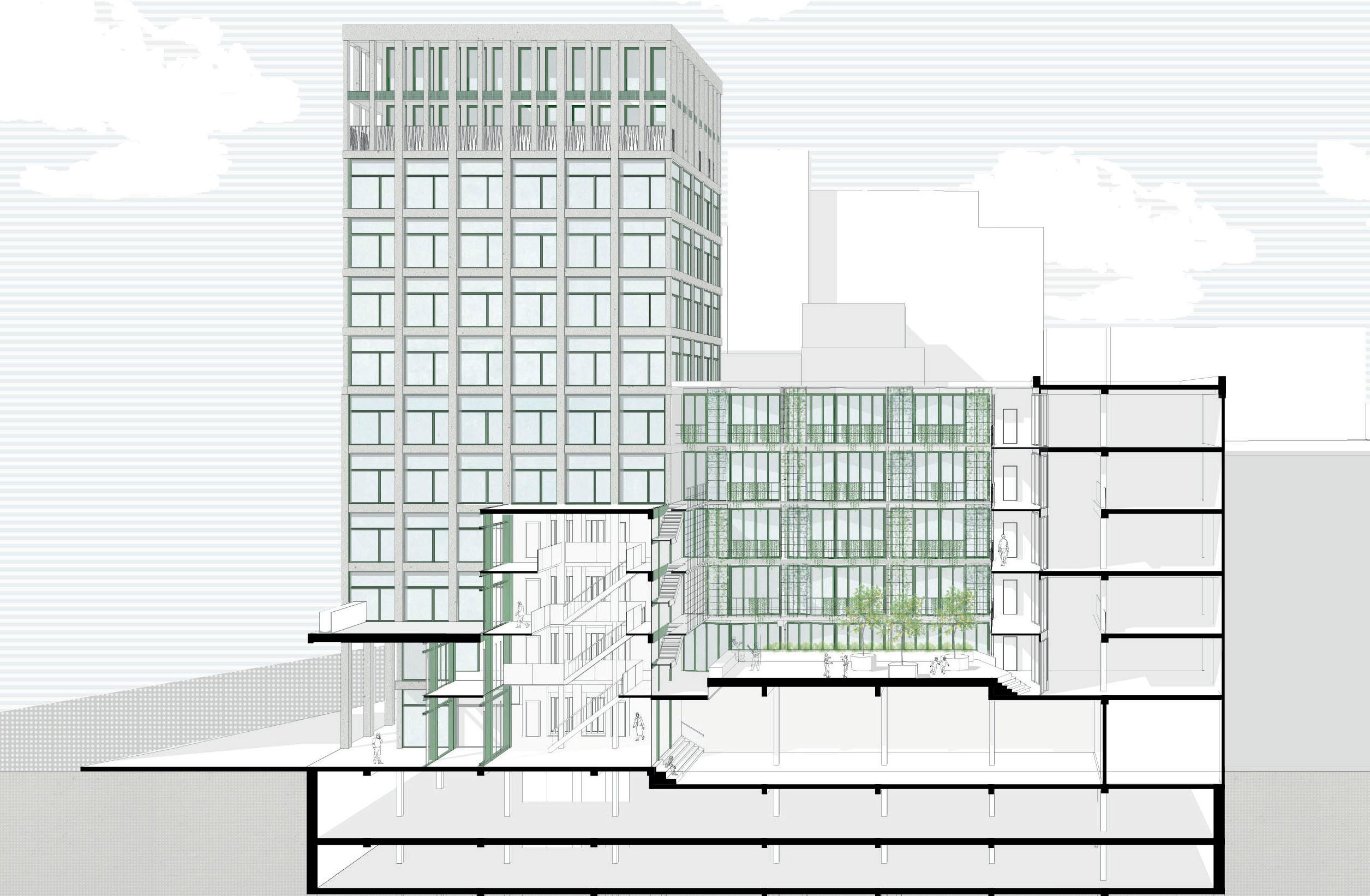
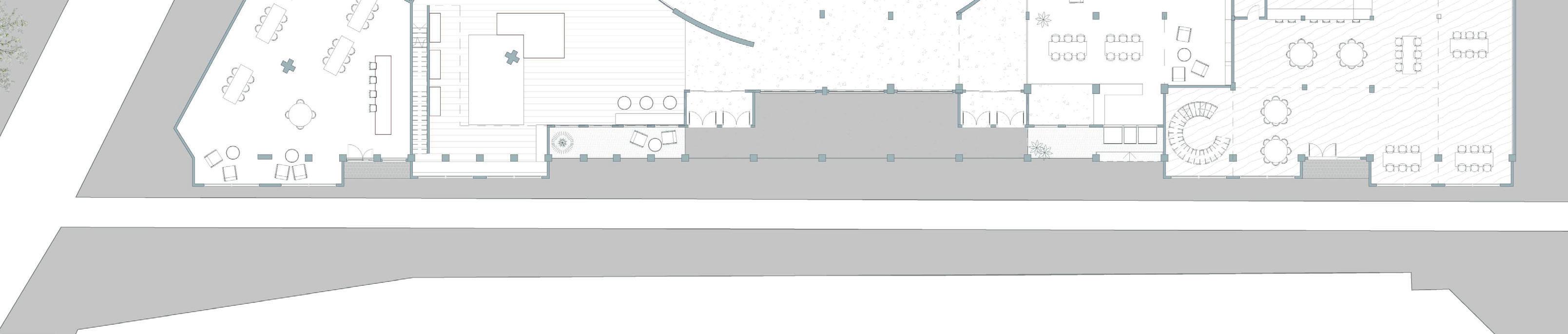
The need for quality open space in the city is a point of concern. The footprint is reduced to a minimum area. Freeing up space in the centre of the block was a first step in the design. The courtyard provides light, air and tranquillity. It connects to the commercial functions in the plinth and serves as a viewing greenspace for the residential units higher up.
CONNECTING TO THE CITY
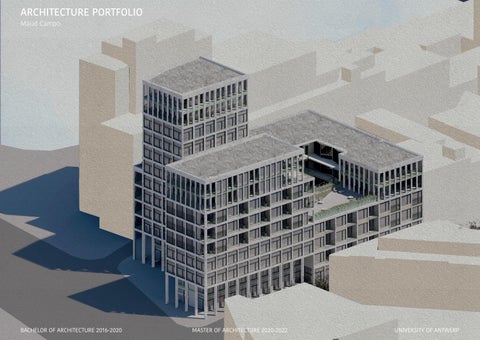
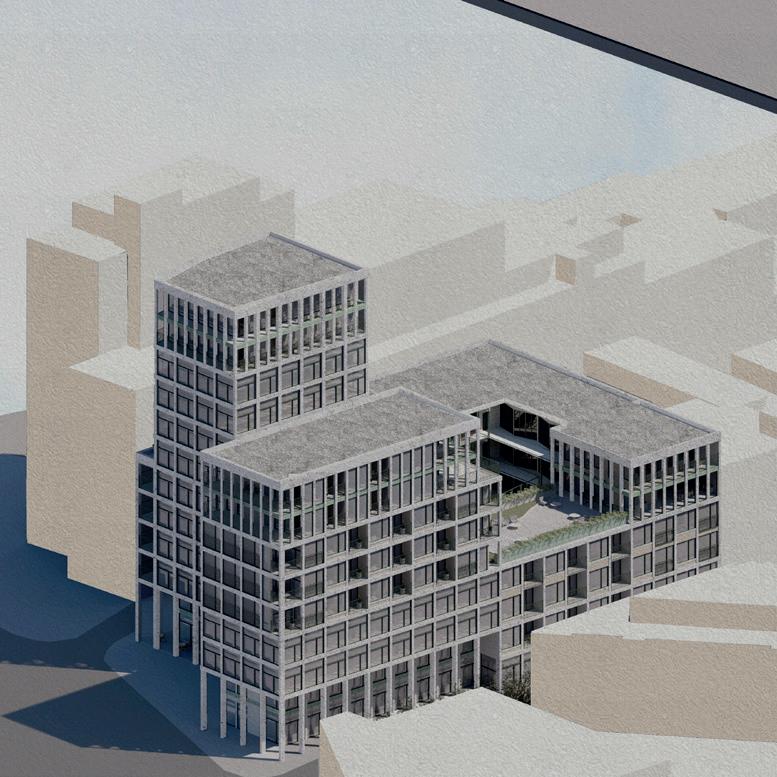
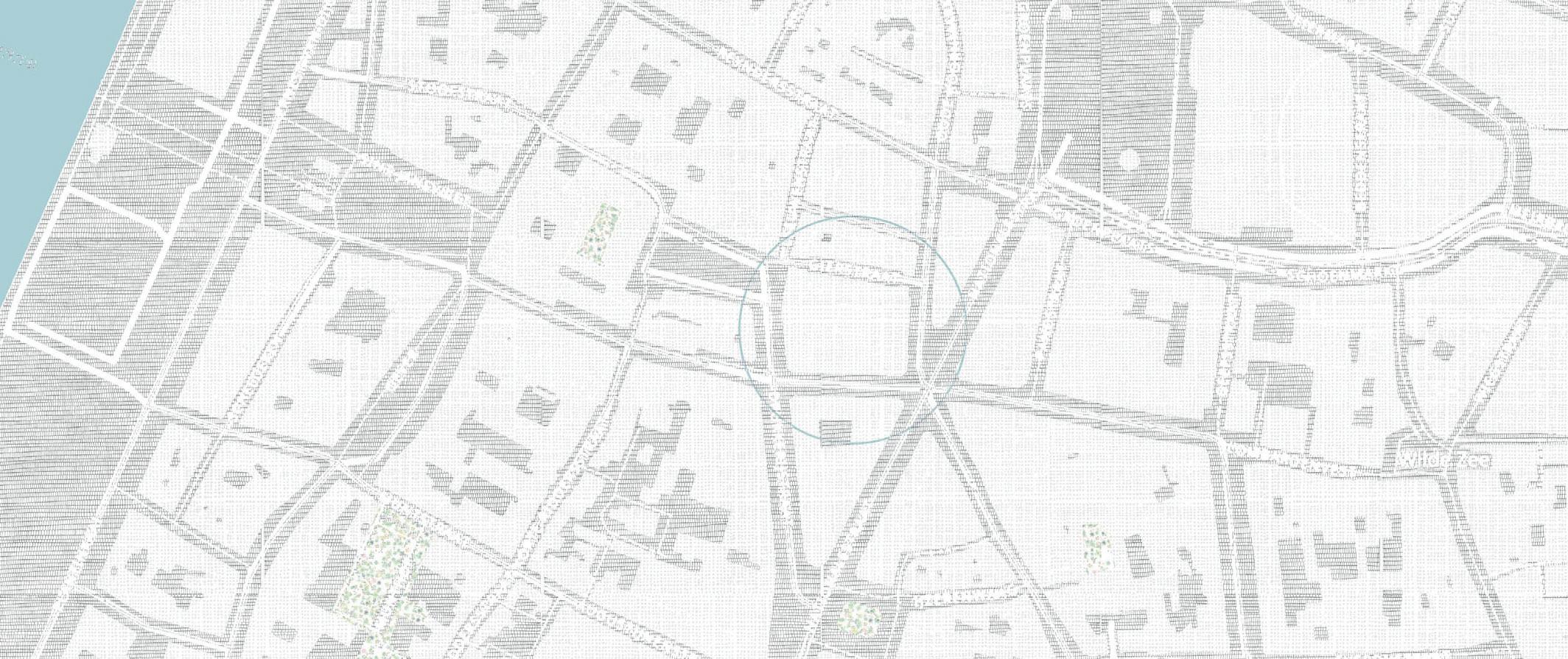
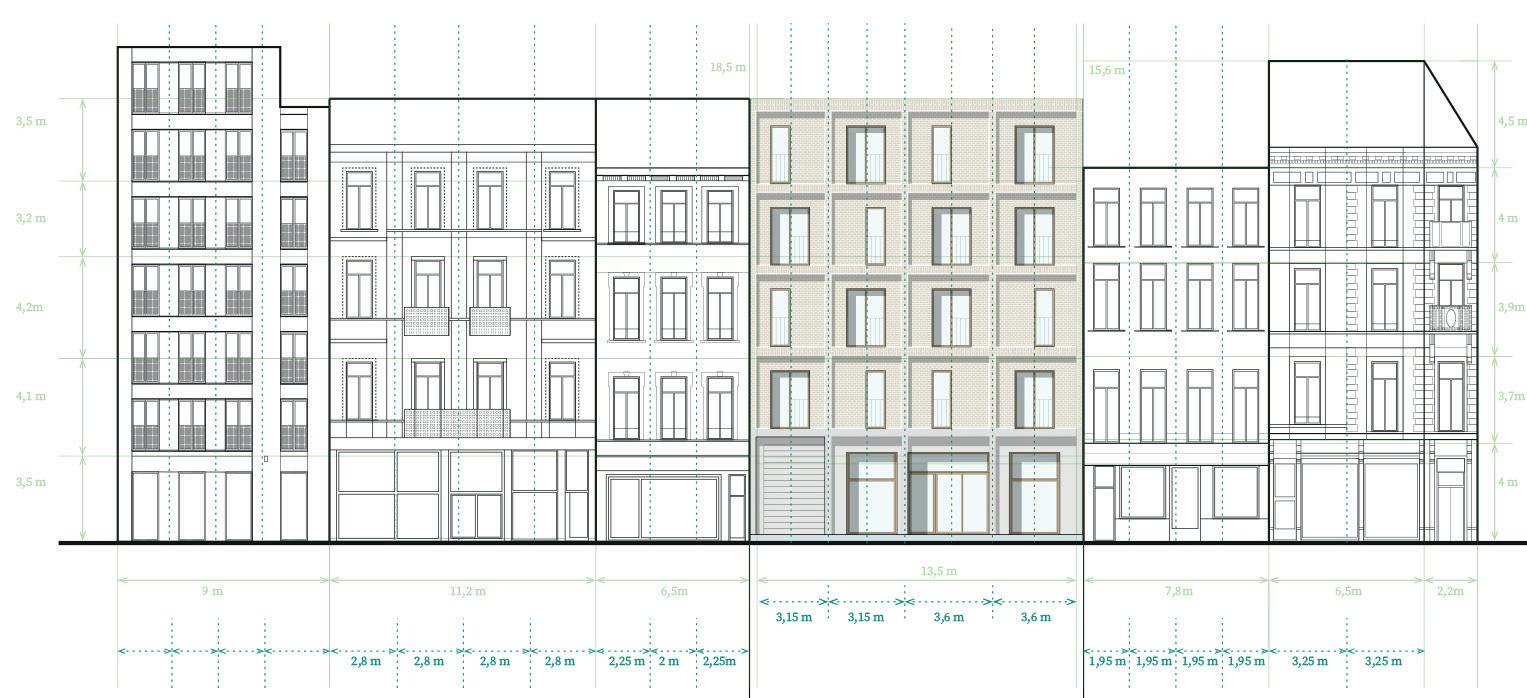
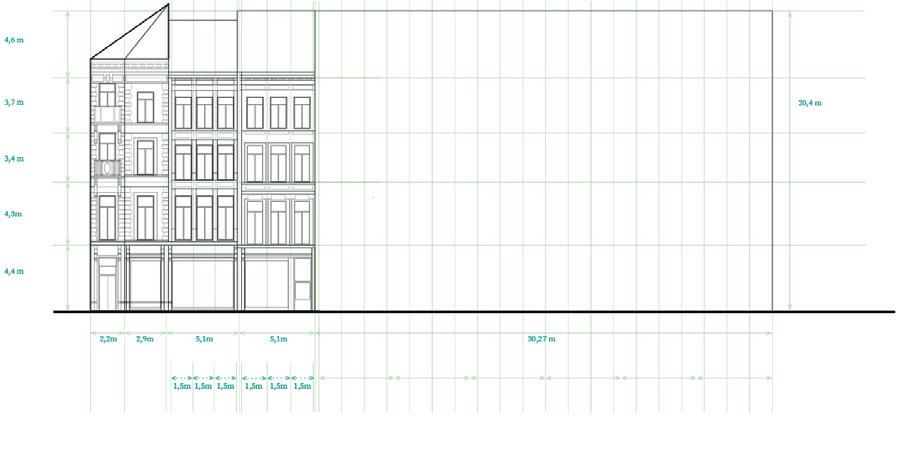
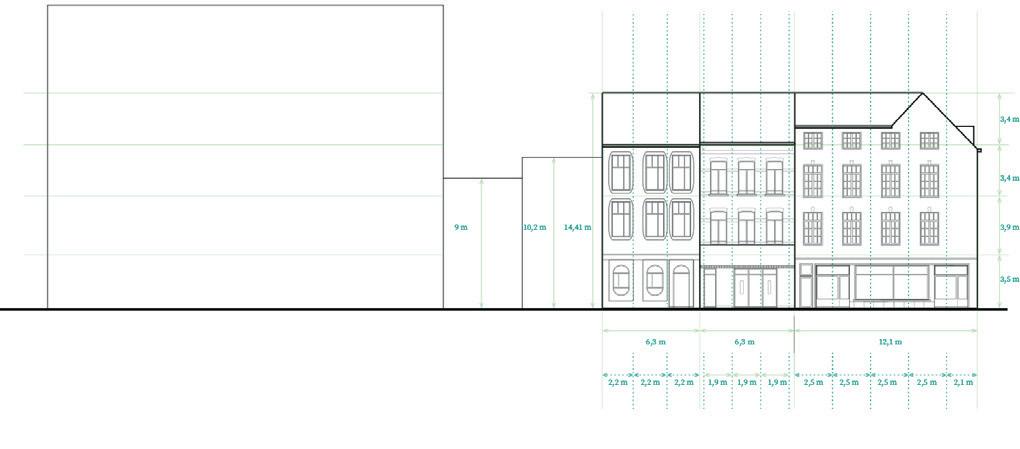
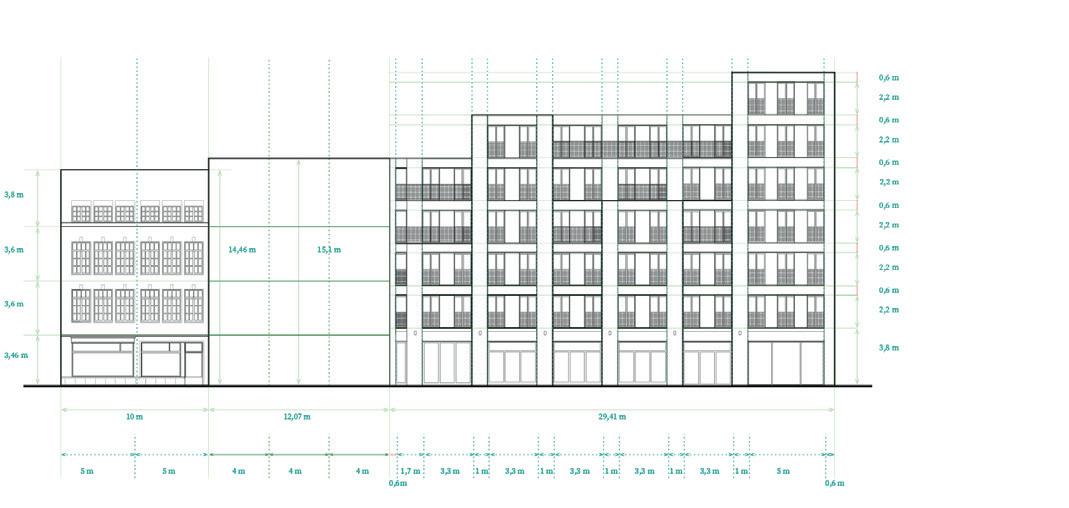
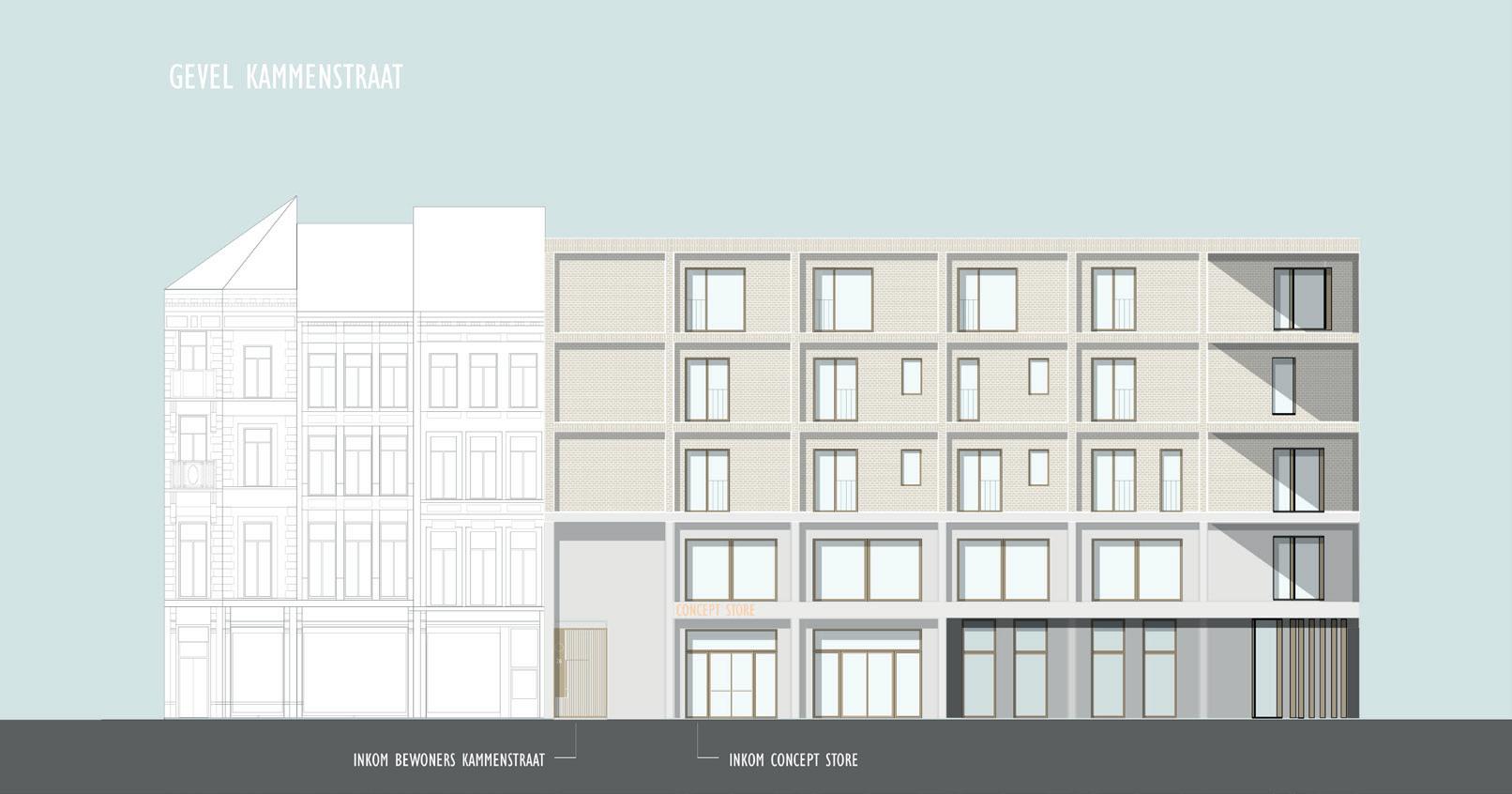
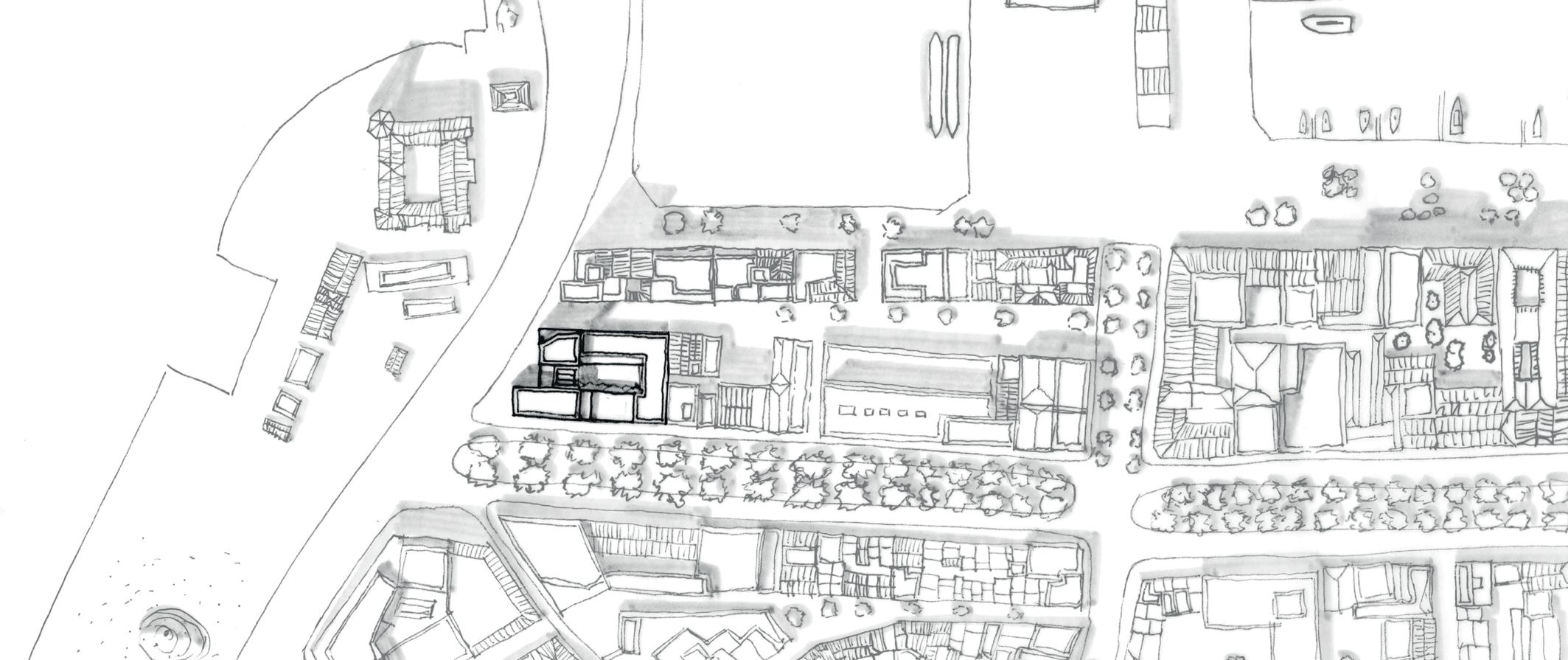
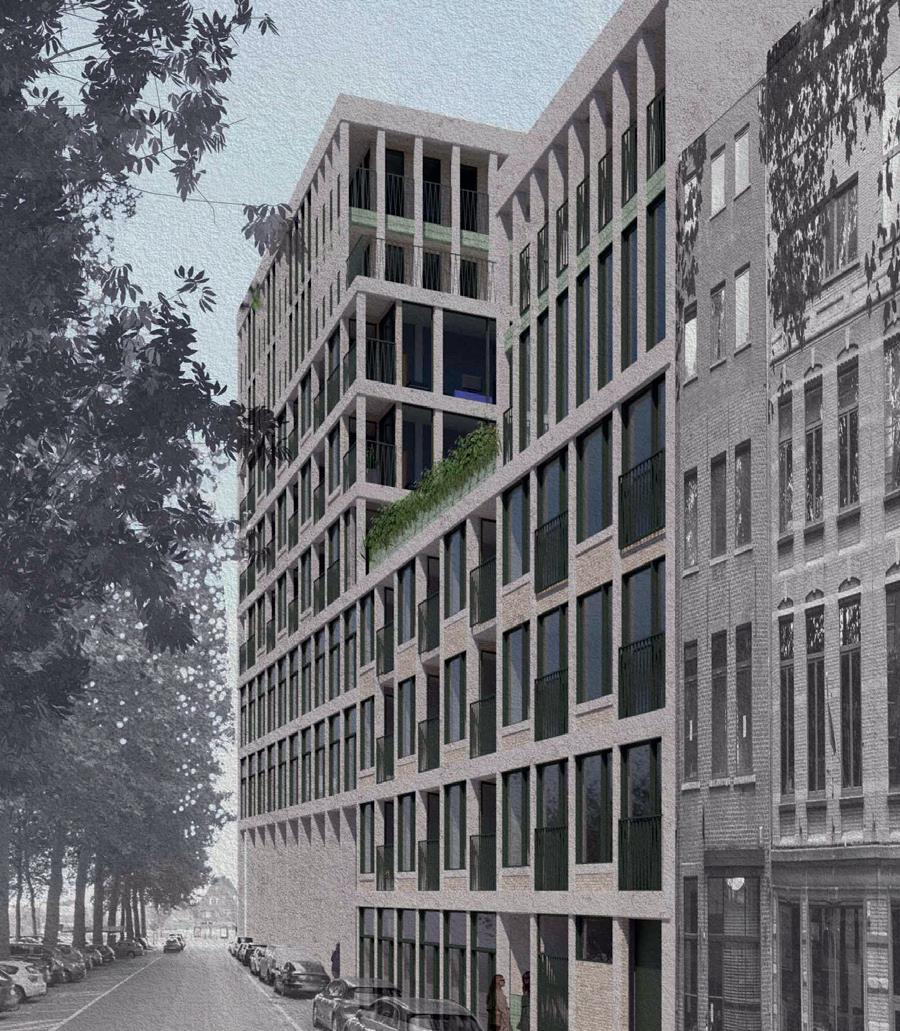
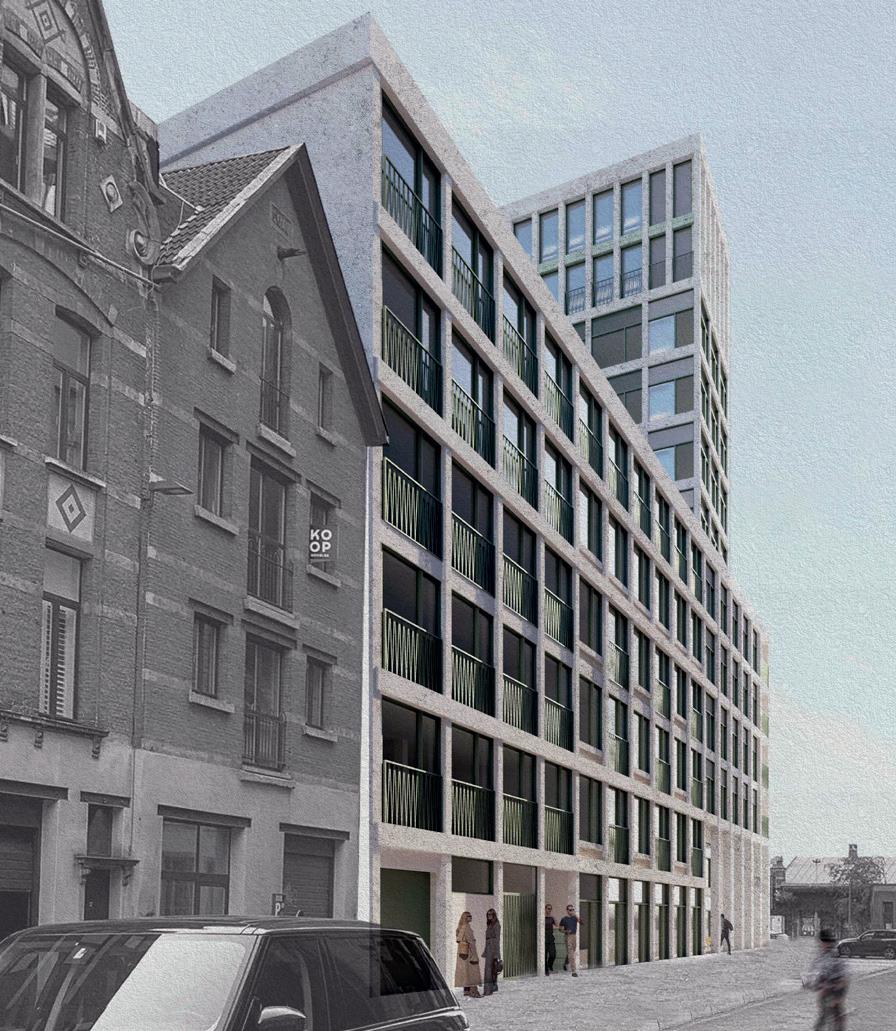
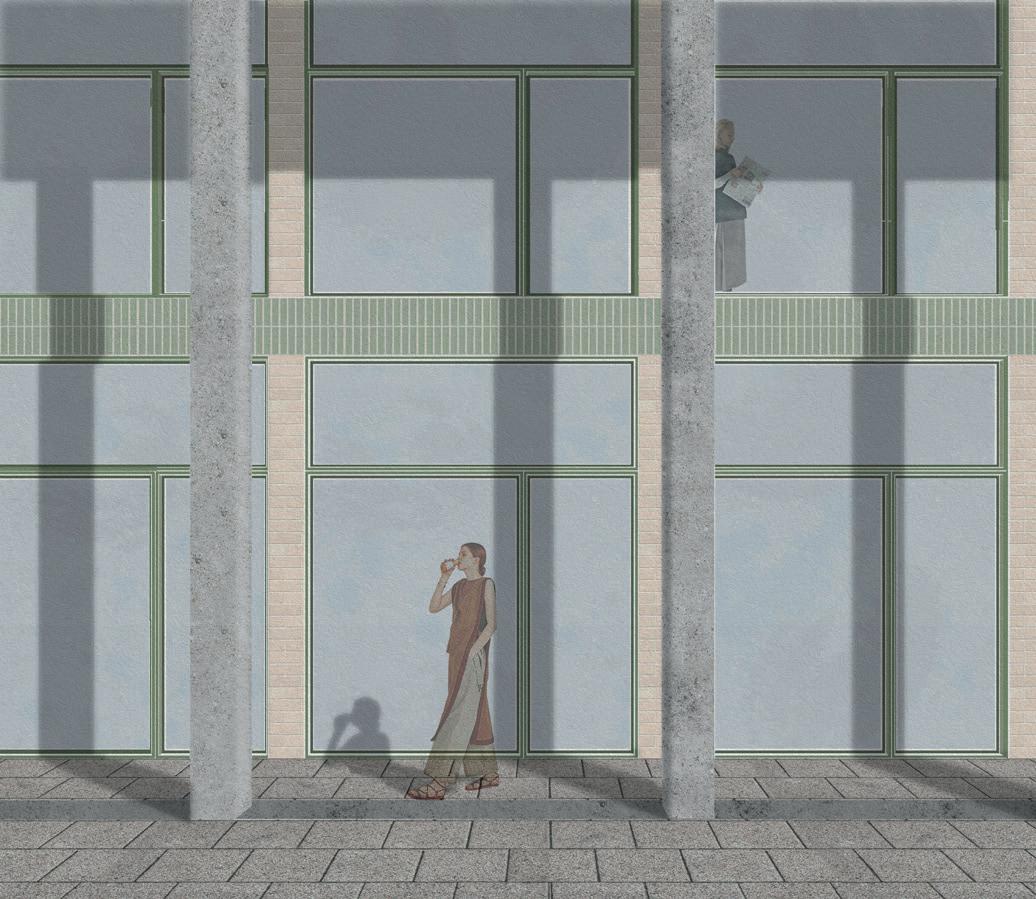
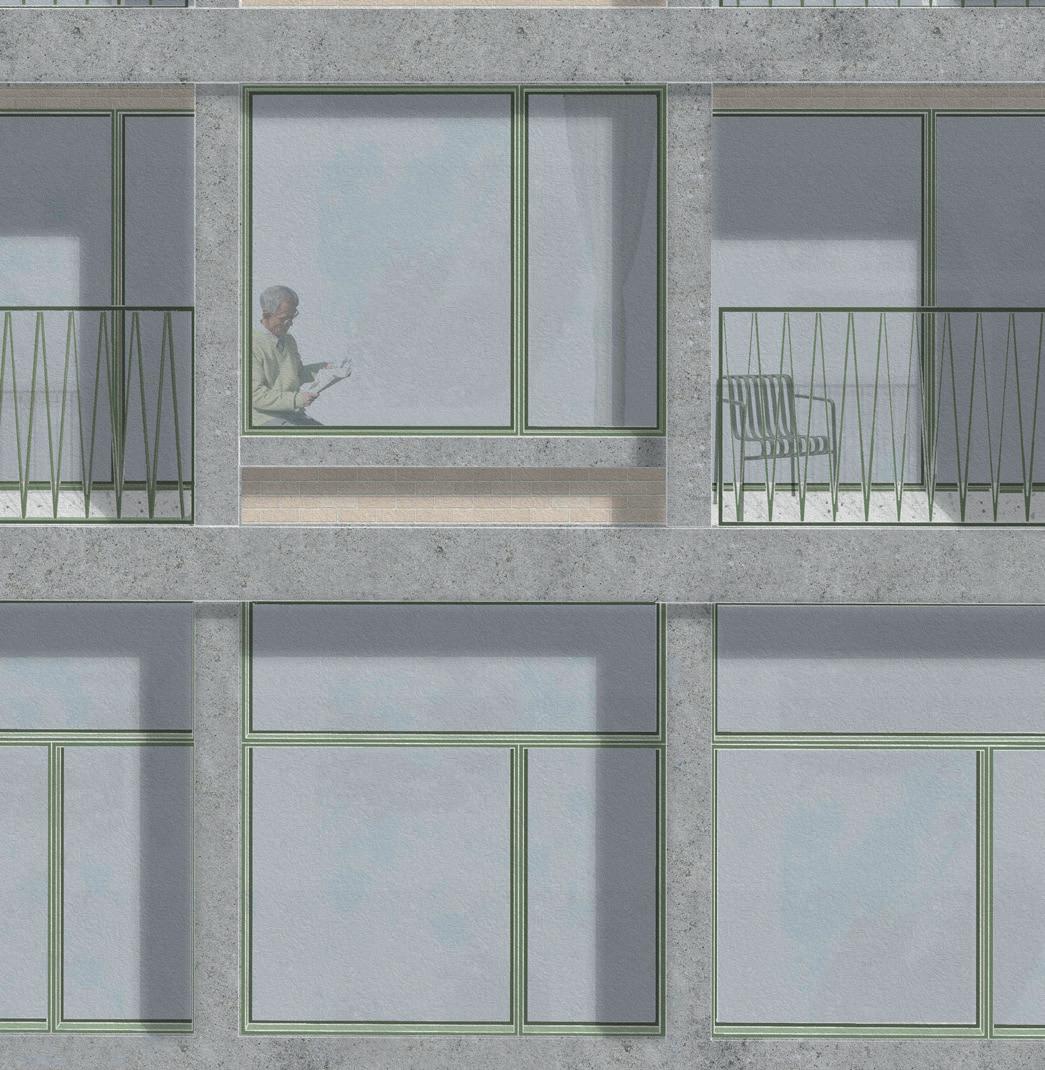
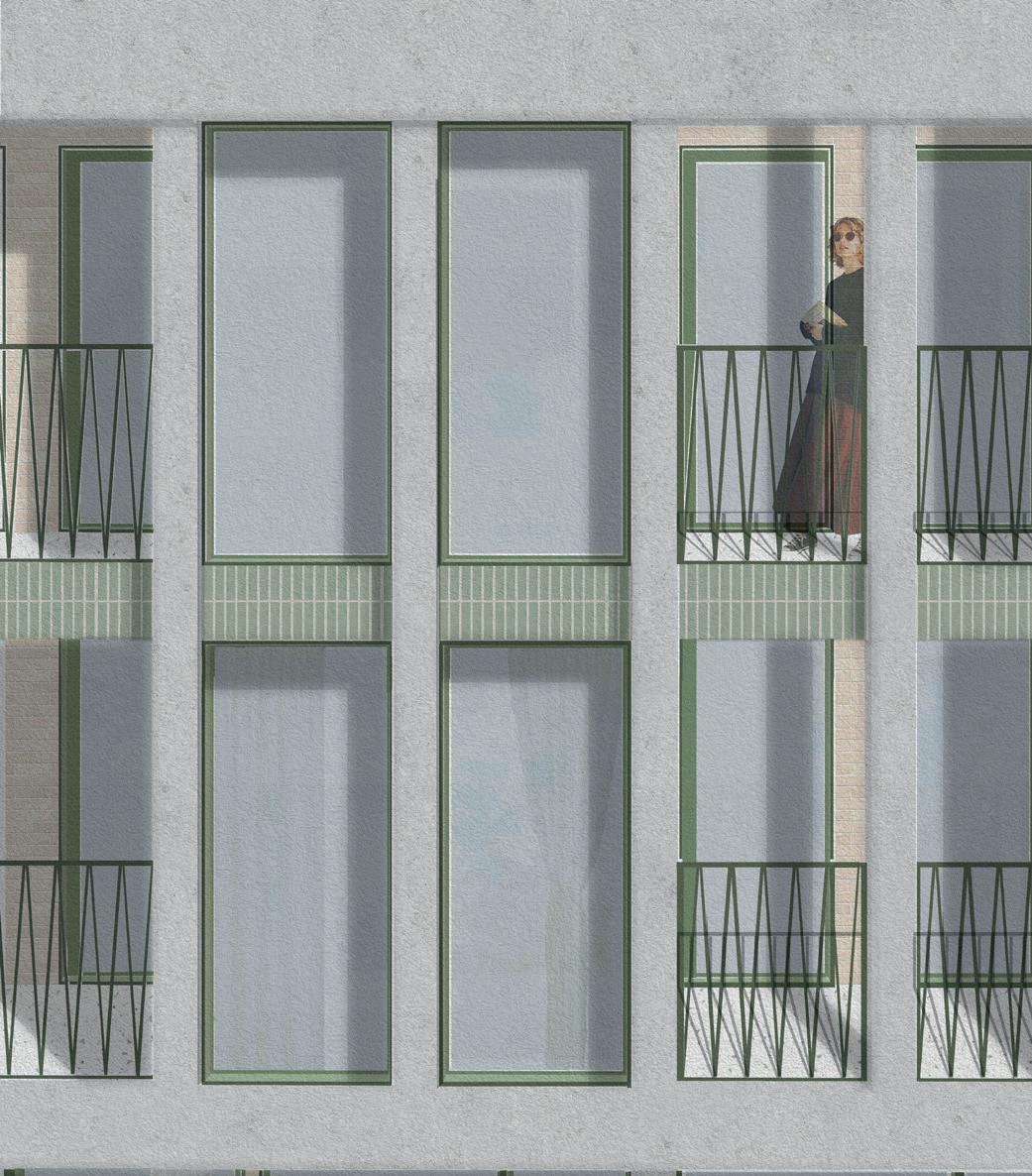
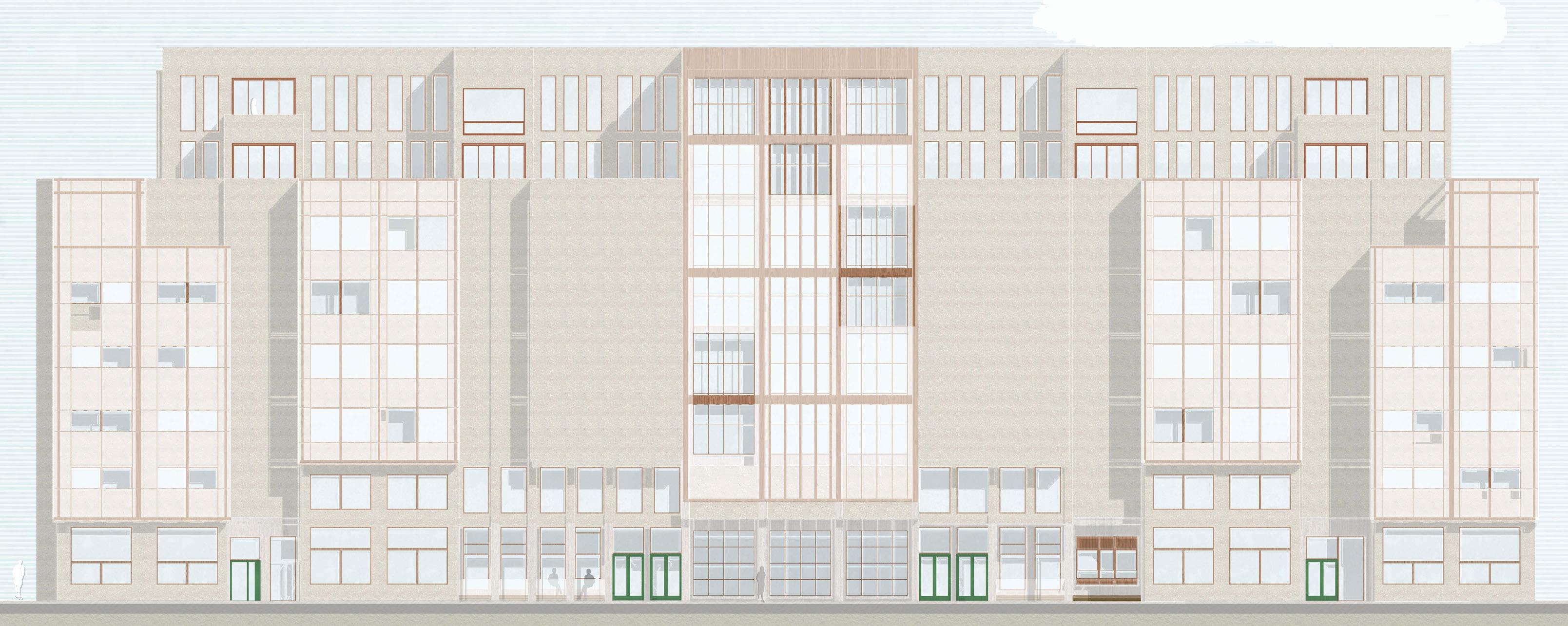
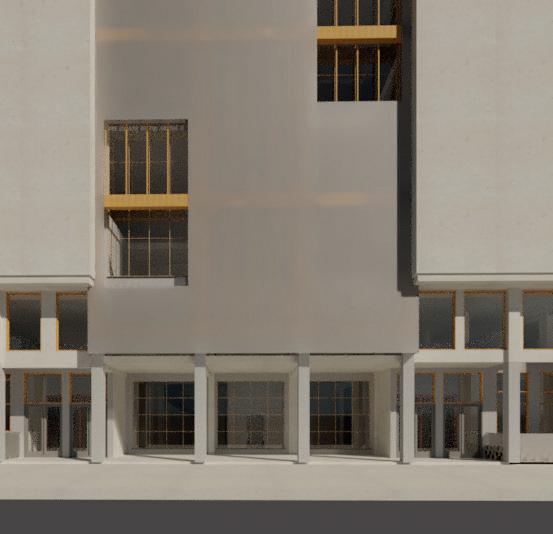
The building block is located in the historic centre of the city of Antwerp. The design of the façades is based on an analysis of the surrounding façades. The rhythm of the historical context is preserved. The heights of the surrounding buildings are maintained. The courtyard is also designed as a connection to the surrounding urban fabric.
Dries Geysen
rounded corner at the intersection of Kammenstraat and Gierstraat
courtyard surrounded by commercial facilities (level 0 - level 1)
apartments are connected by collective passageways (level 2 - level 4)
DESIGNING MOVEMENT
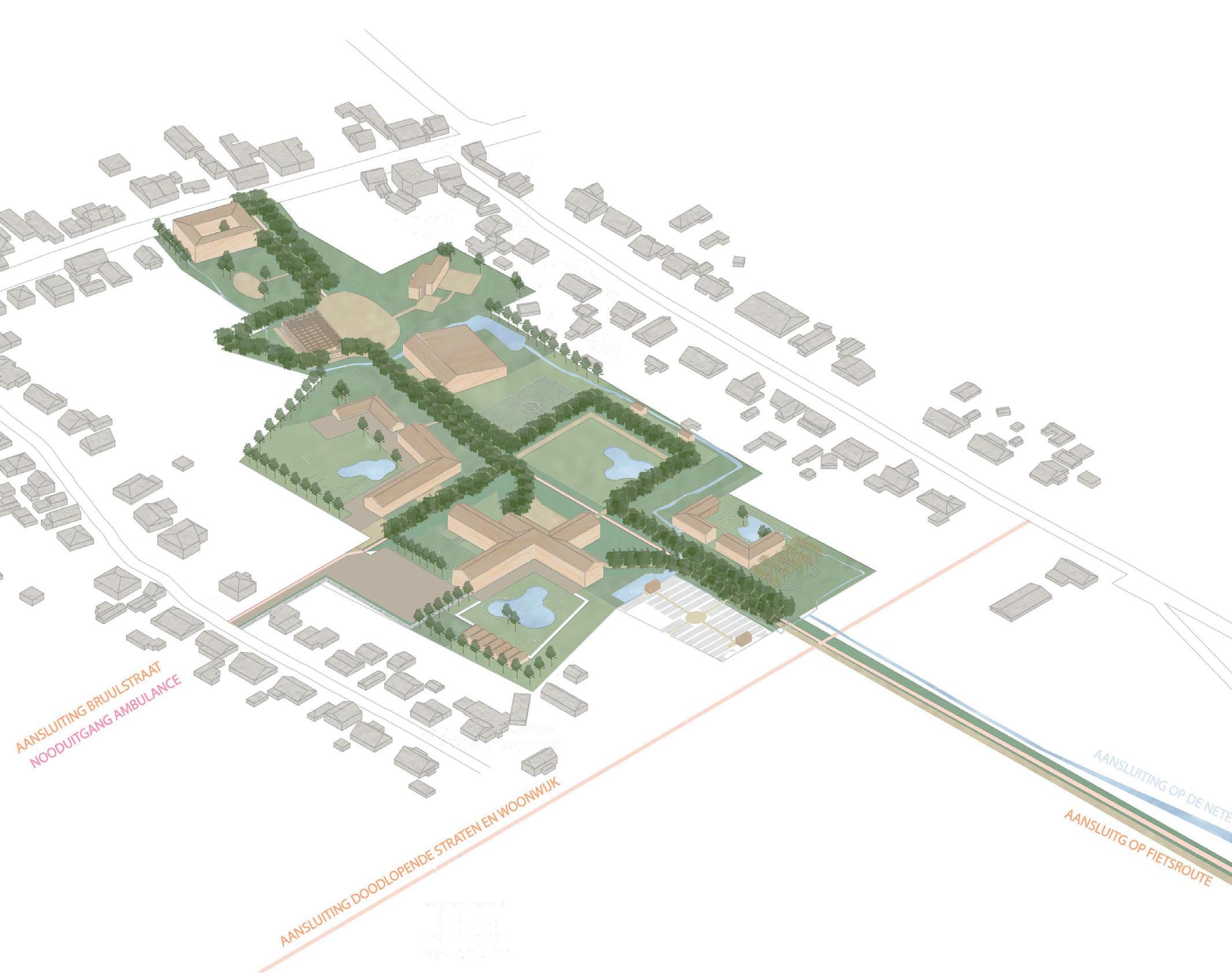
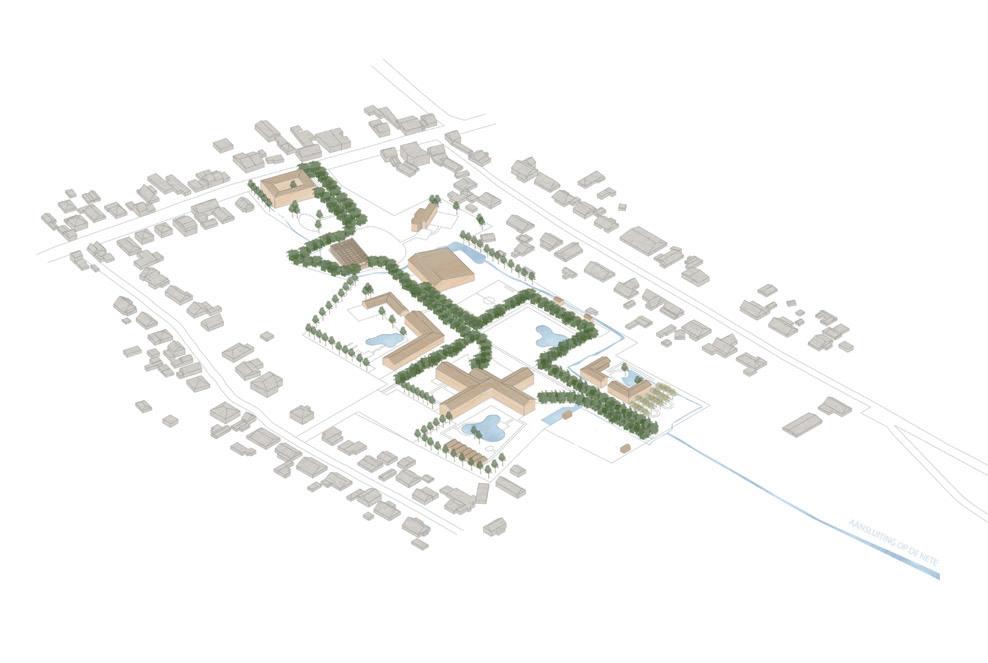
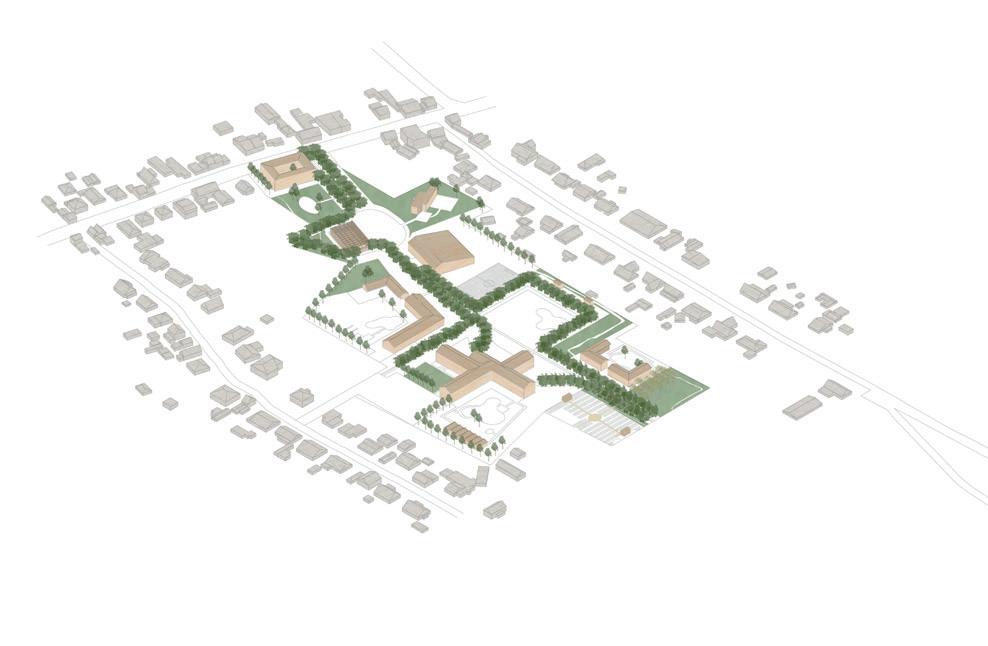
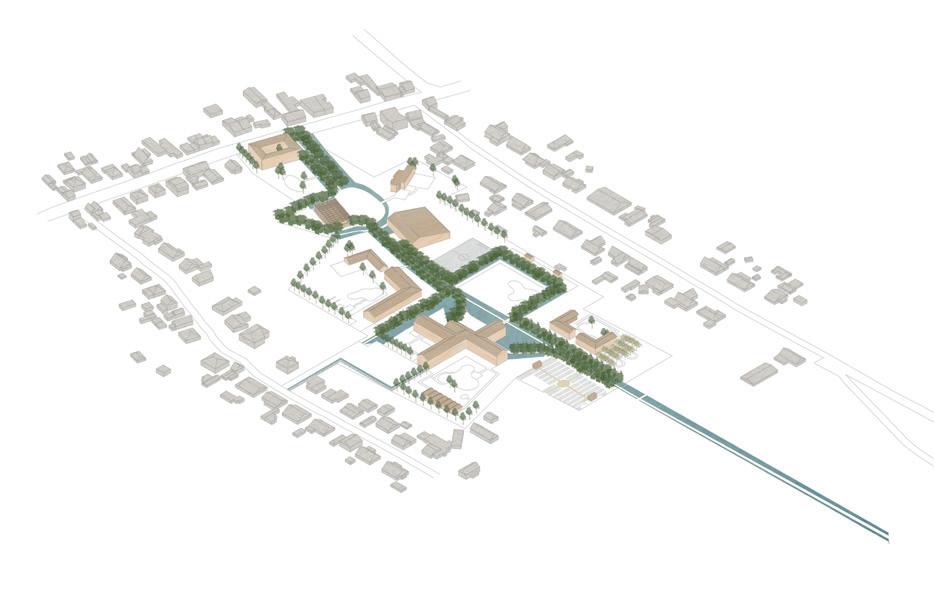
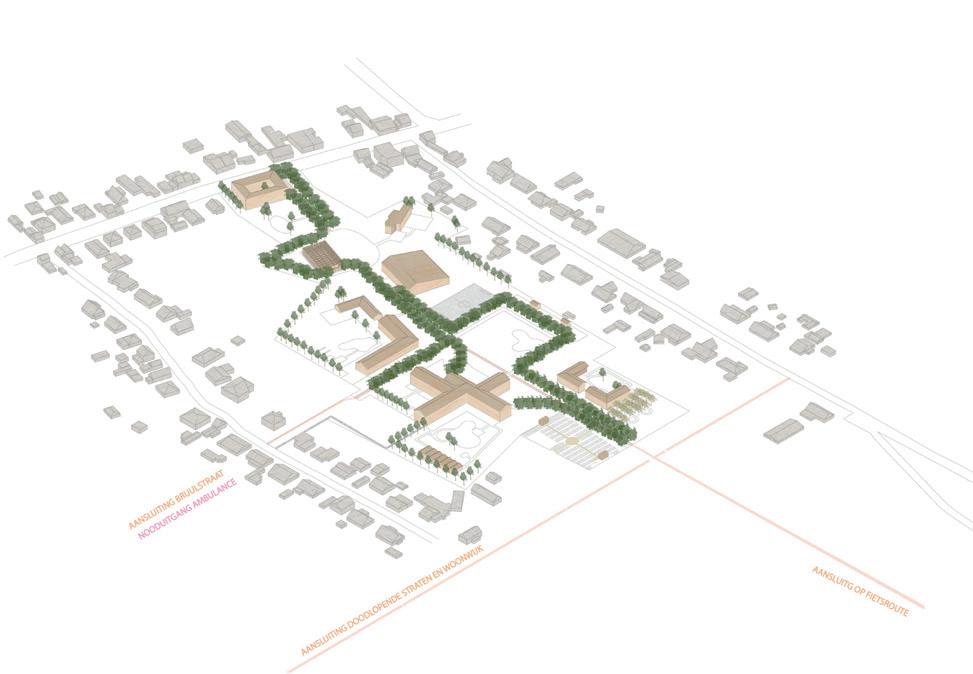
THE MASTER PLAN AS DEVELOPMENT FRAMEWORK
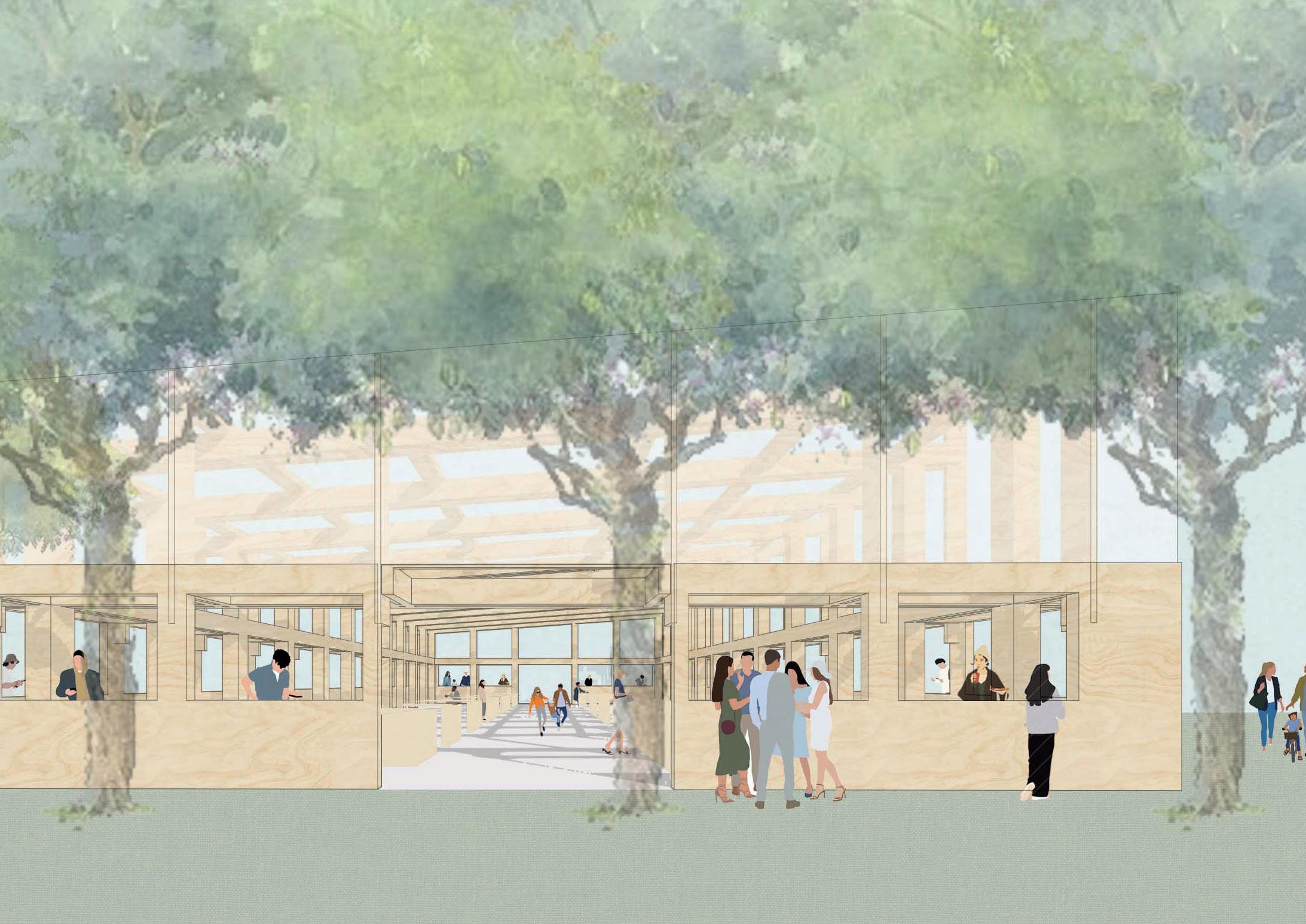
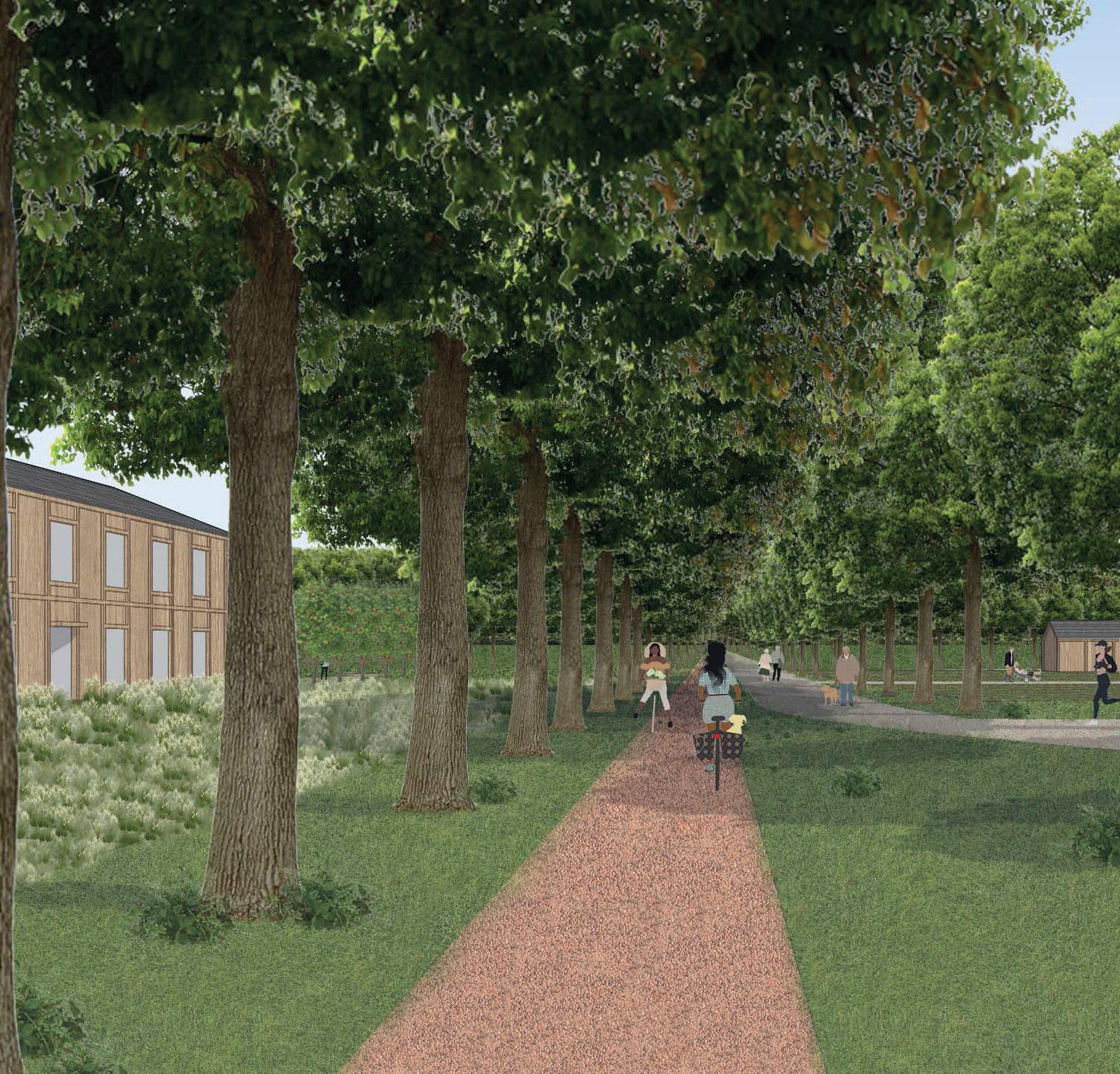
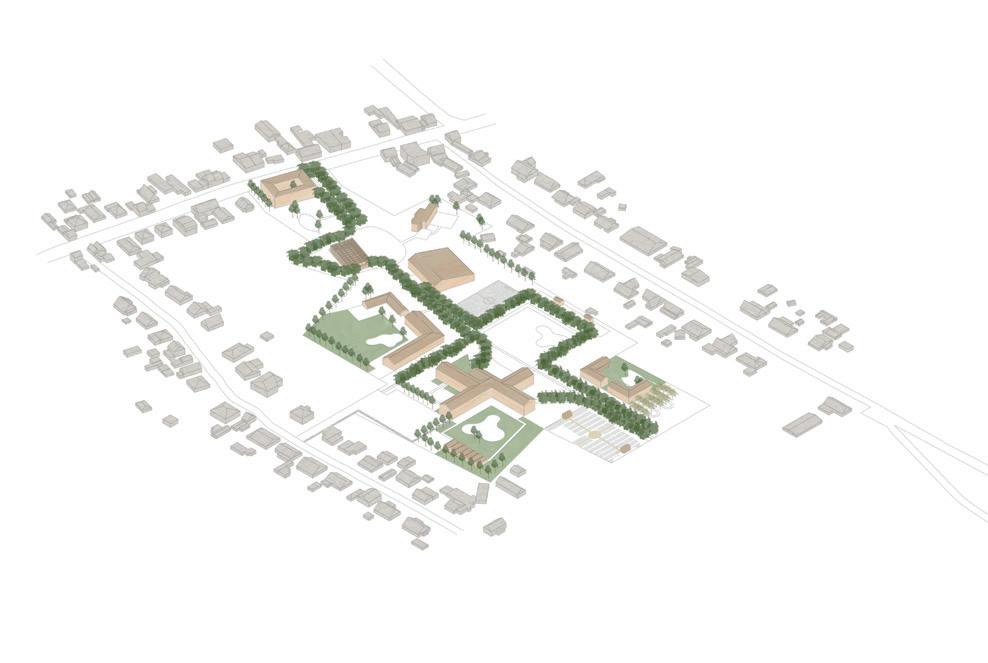
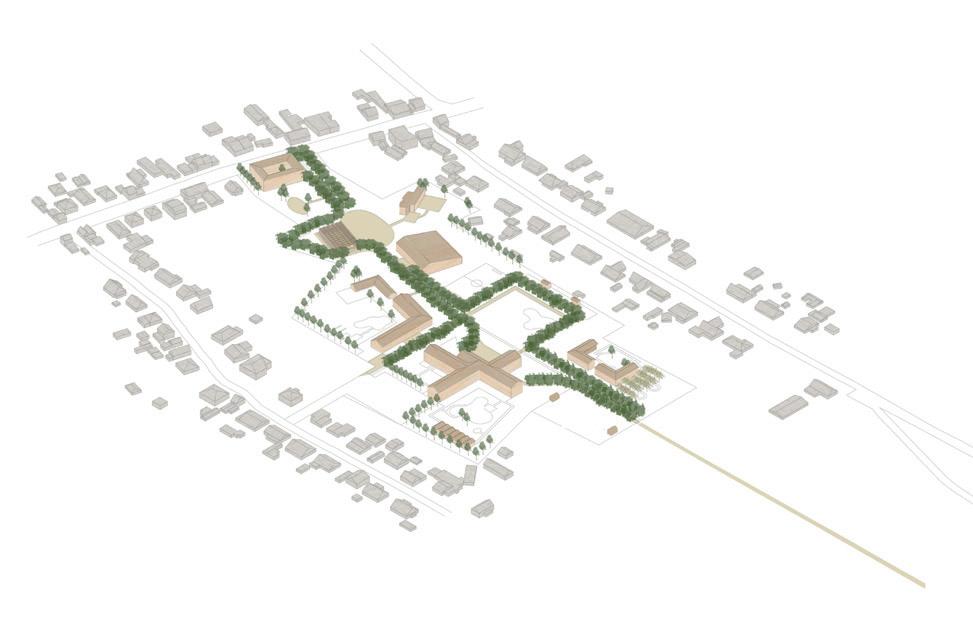
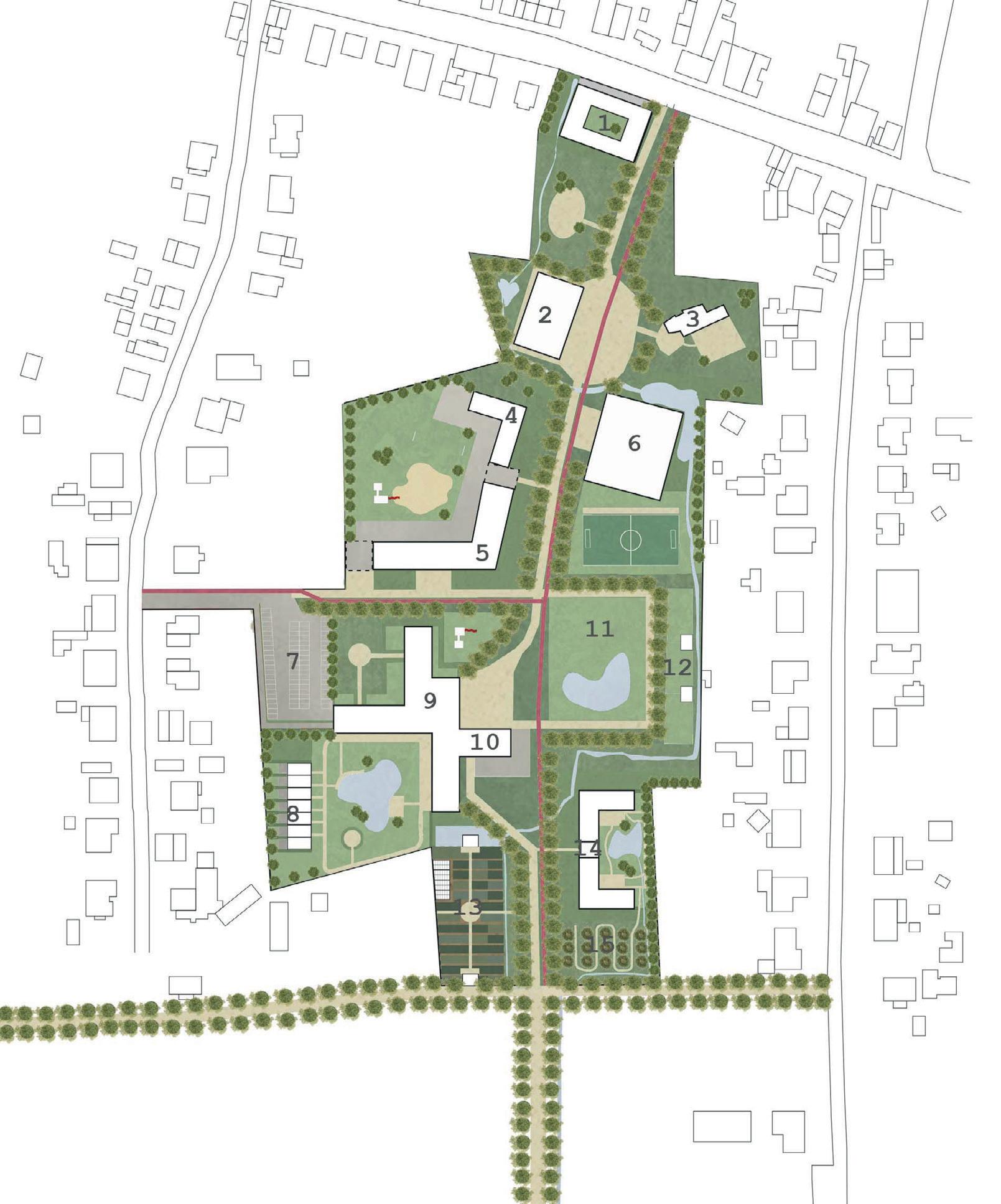
The masterplan grew out of a broader approach to the town of Hulshout. The ultimate community facilities were sought in various ways to stimulate both the mental and physical health of the residents. The facilities on the site are placed within walking distance and connected by a central lane. The lane was designed to accommodate both cyclists and pedestrians. Different types of greenery fill in the open space. They are also used to promote the boundary between public and private. The water facilities are connected to the nearby Nete (river) and serve as a buffer against excess rainwater.
Maarten Van Acker, Jasmien Smets
MARKET HALL
CHILDCARE
RE-USE 1st Master Architecture
AN INTELLIGENT STRUCTURE
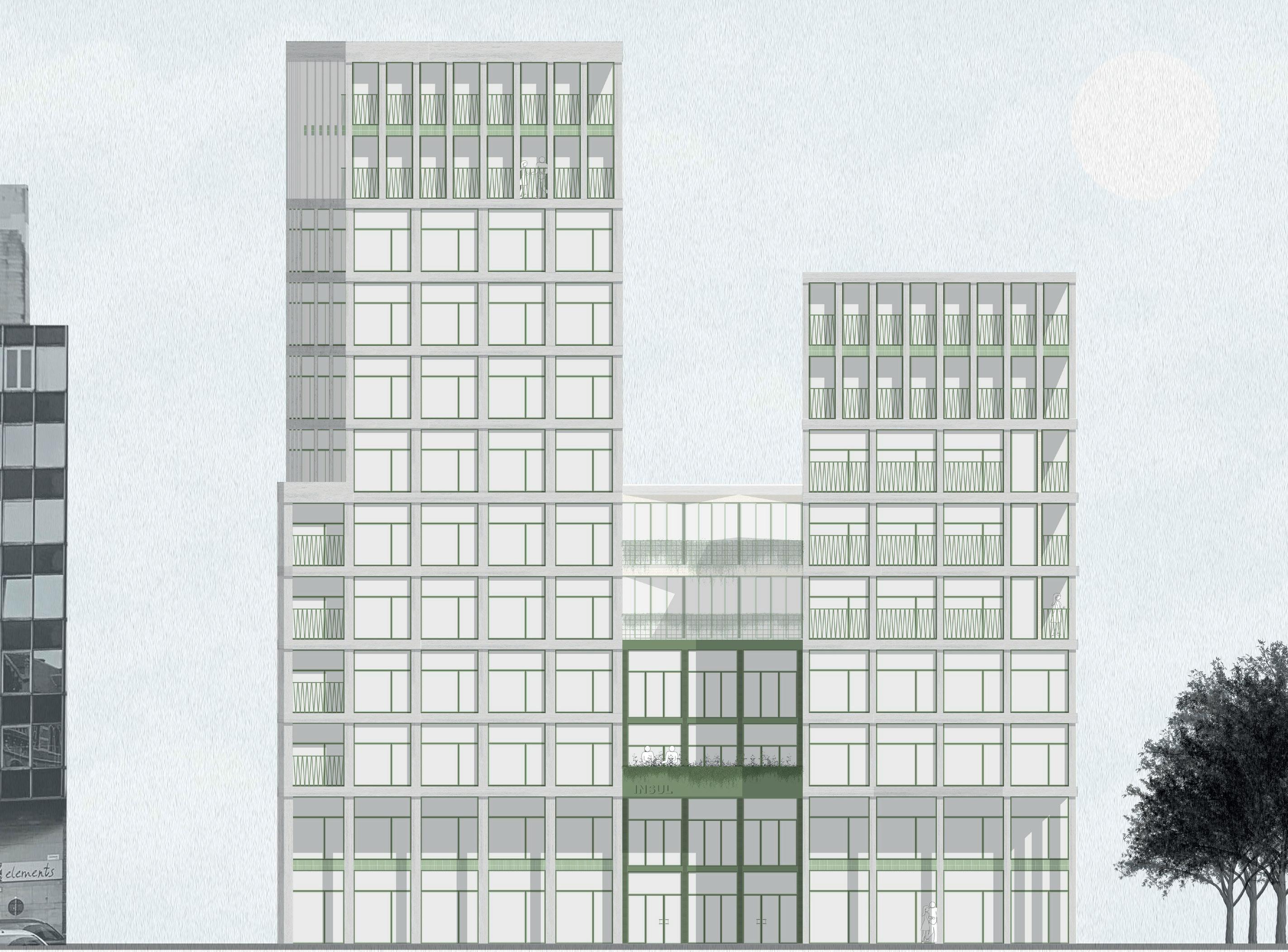
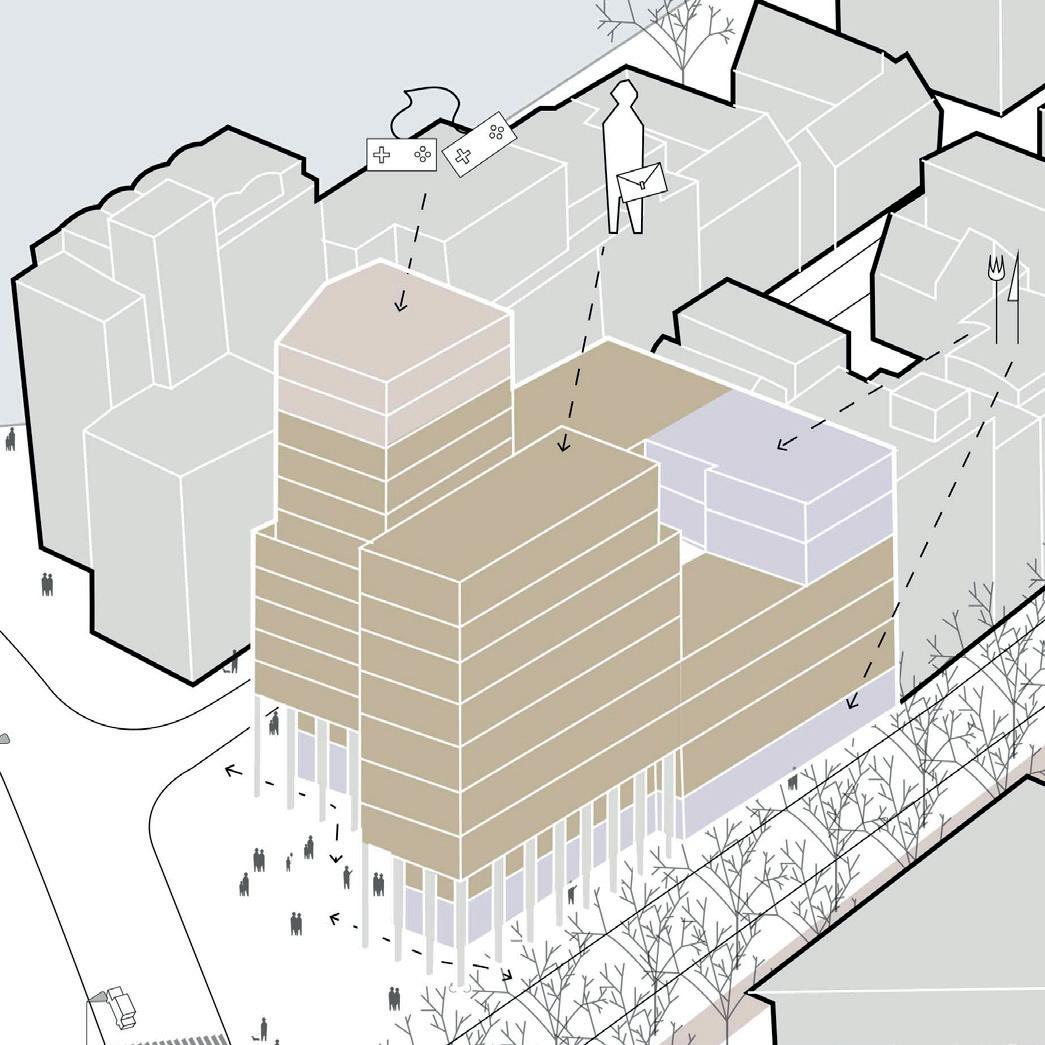
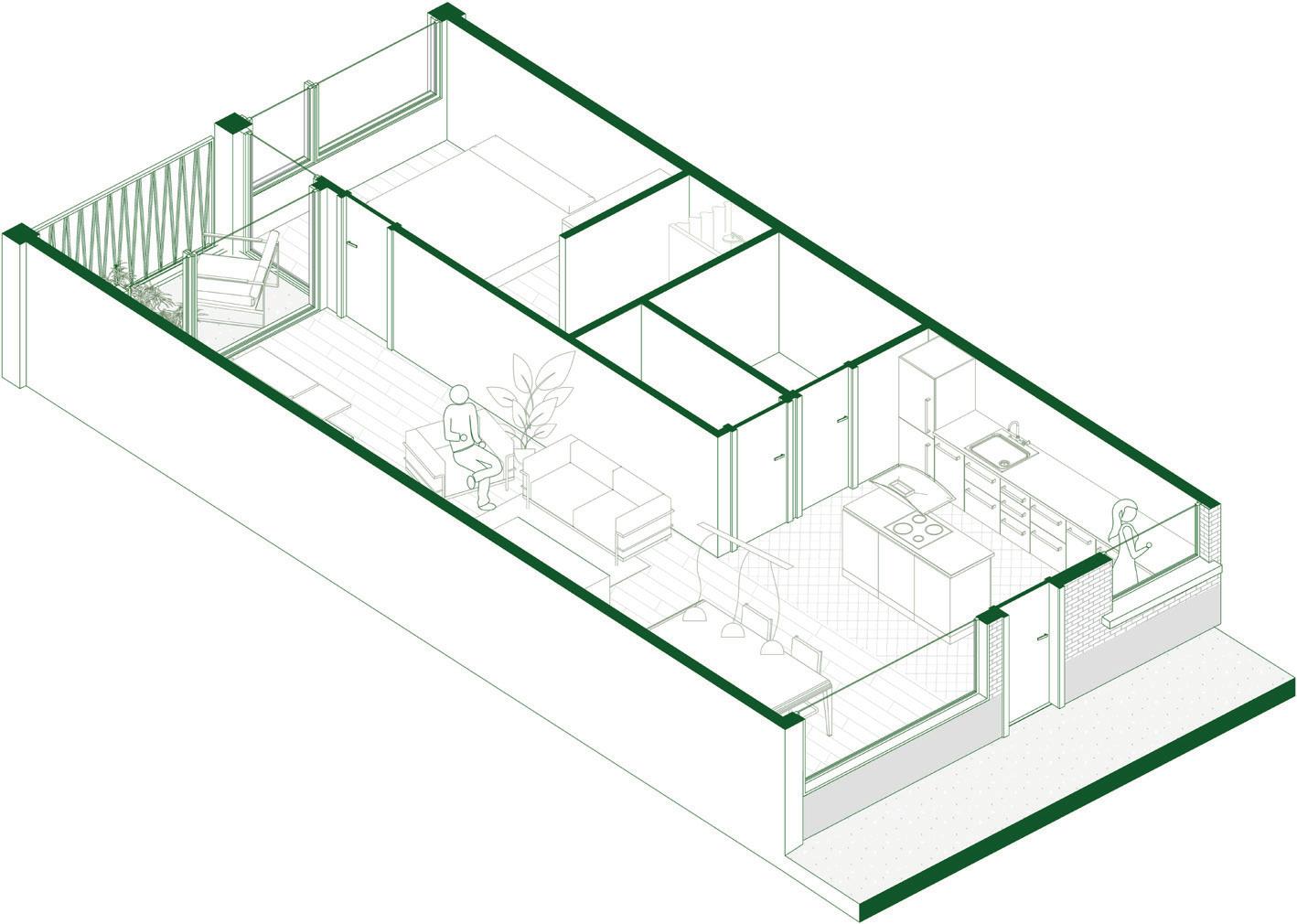
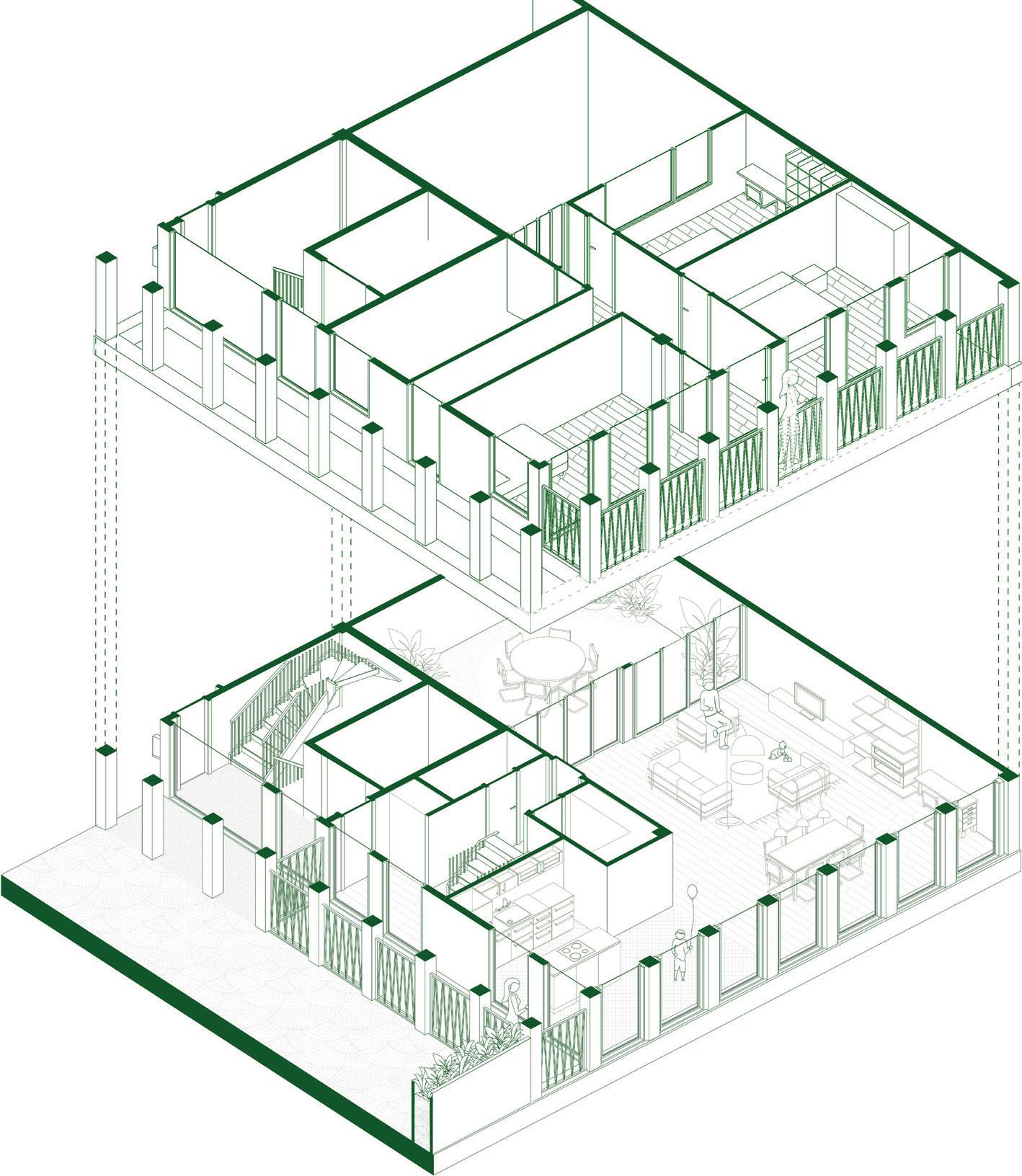
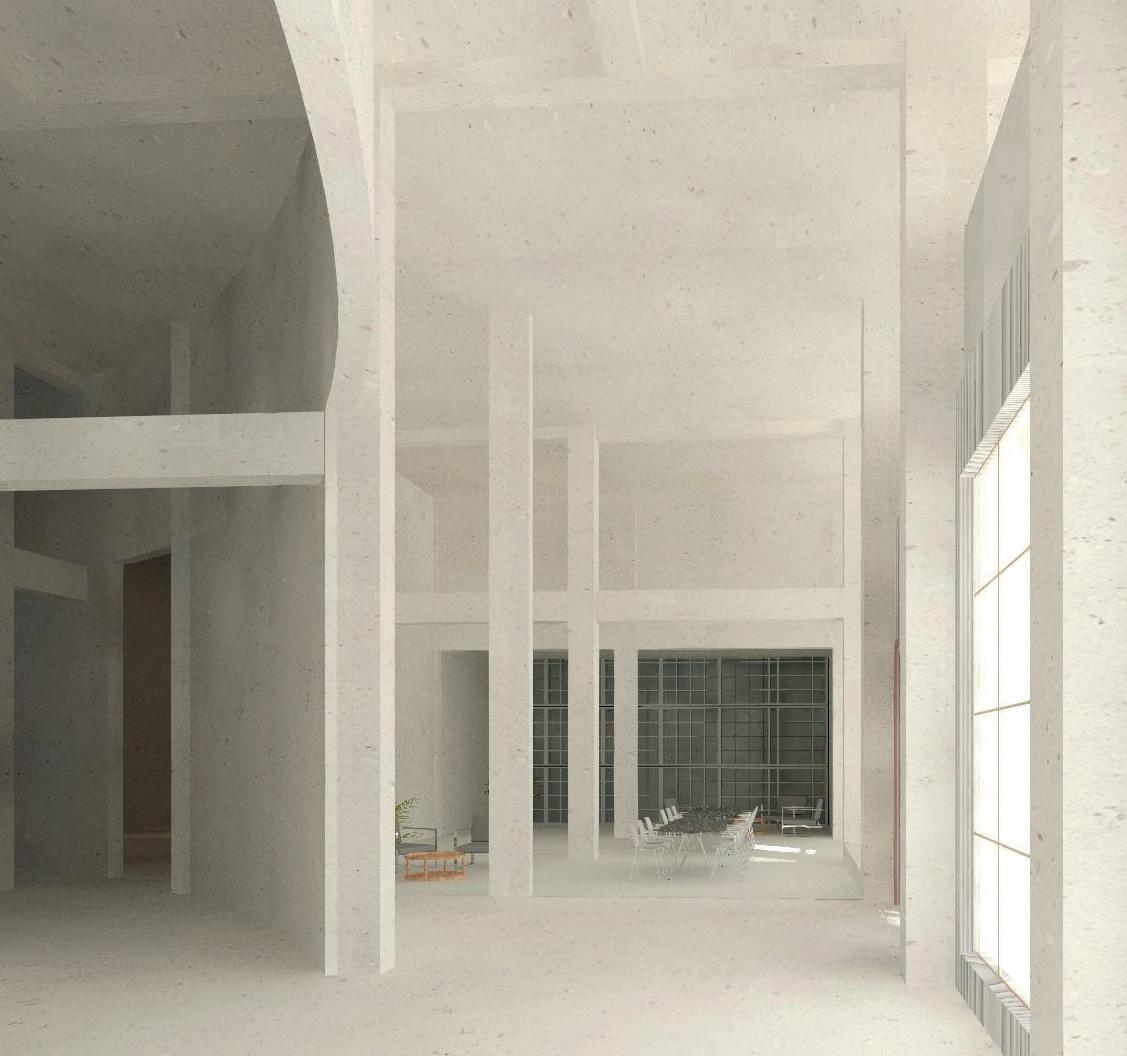
The studio RE-USE resulted in a research into multifunctional design. This can be interpreted as a design that pays attention to both structure, façade, footprint and interaction with the city. The existing structure was analysed and questioned. A flexible structure that is fluid towards the future was then sought. The designed column structure makes it possible to organise a modifiable programme. The dimensions of 6m40 allow for flexibility in the floor plan and, as a result, the organisation of living and working can continue to evolve. The rhythm of the structure is also reflected in the dimensions of the façades.
TRANSITION ZONES
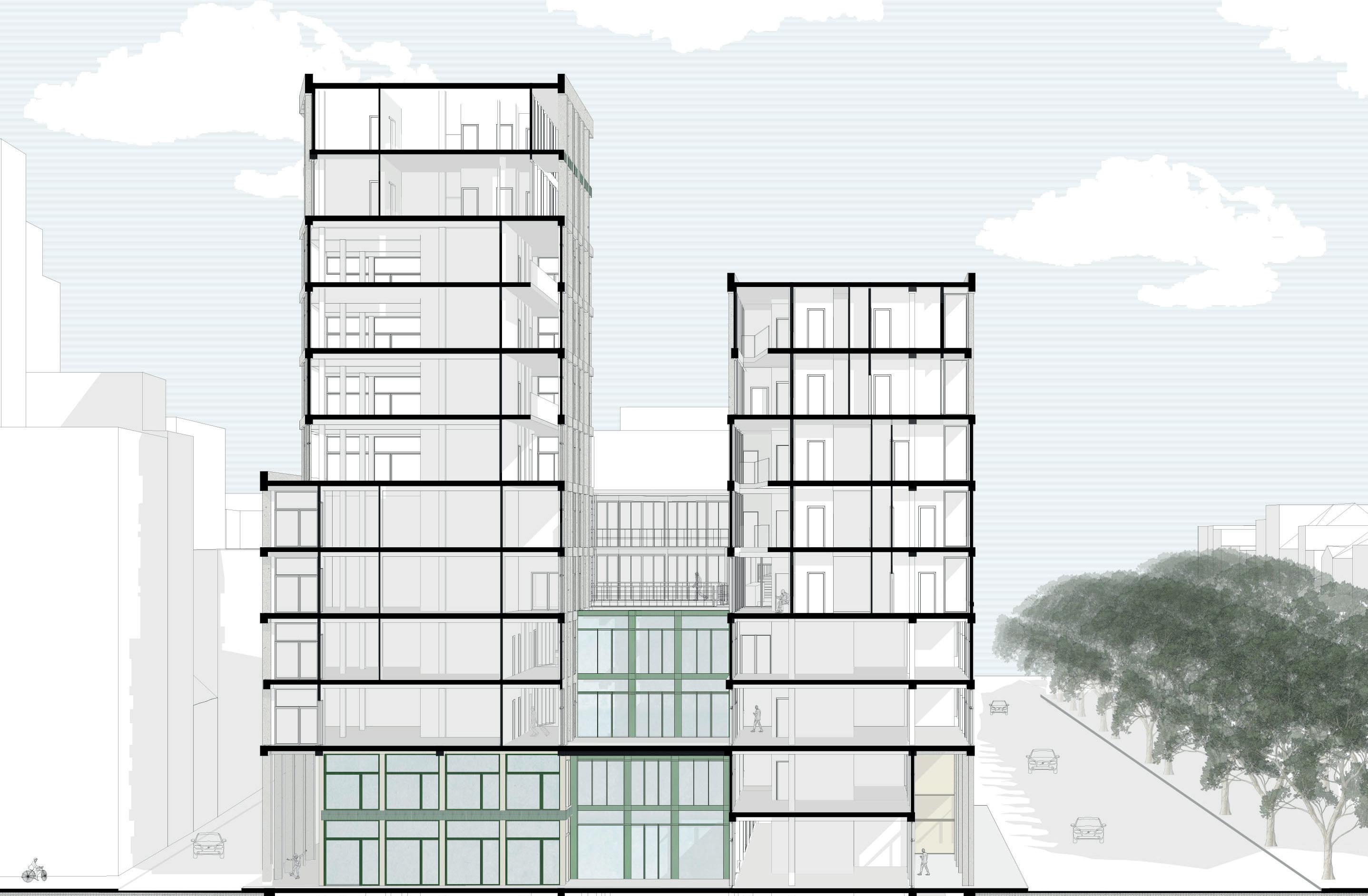
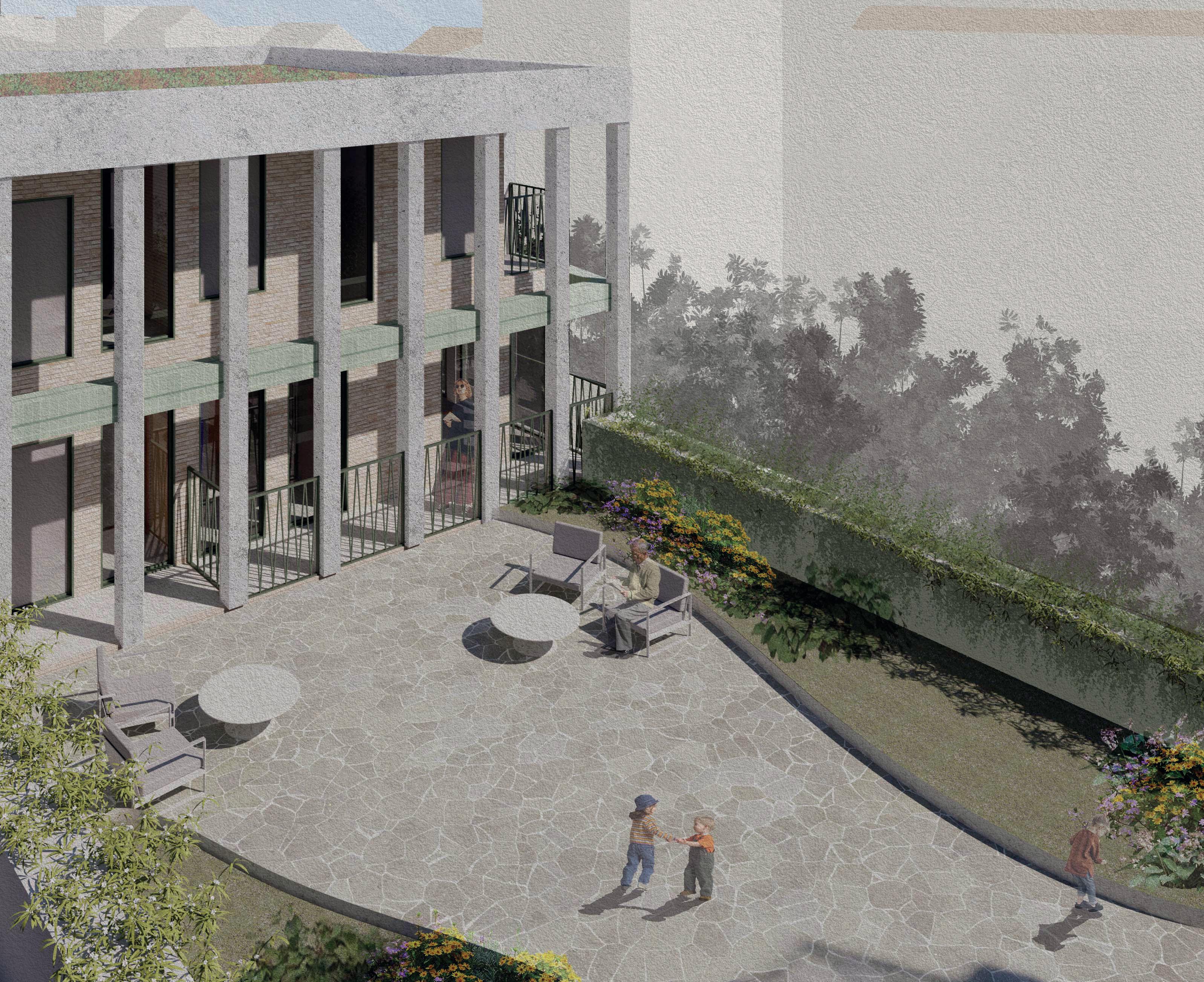
The courtyard connected to the living area creates a private space for the apartments. It has a collective character with transition zones between public, collective and private spaces. Combining residential and work functions was also examined. The final design aims to answer the question: What does the ideal working and living environment of the future look like?
FOOTPRINT
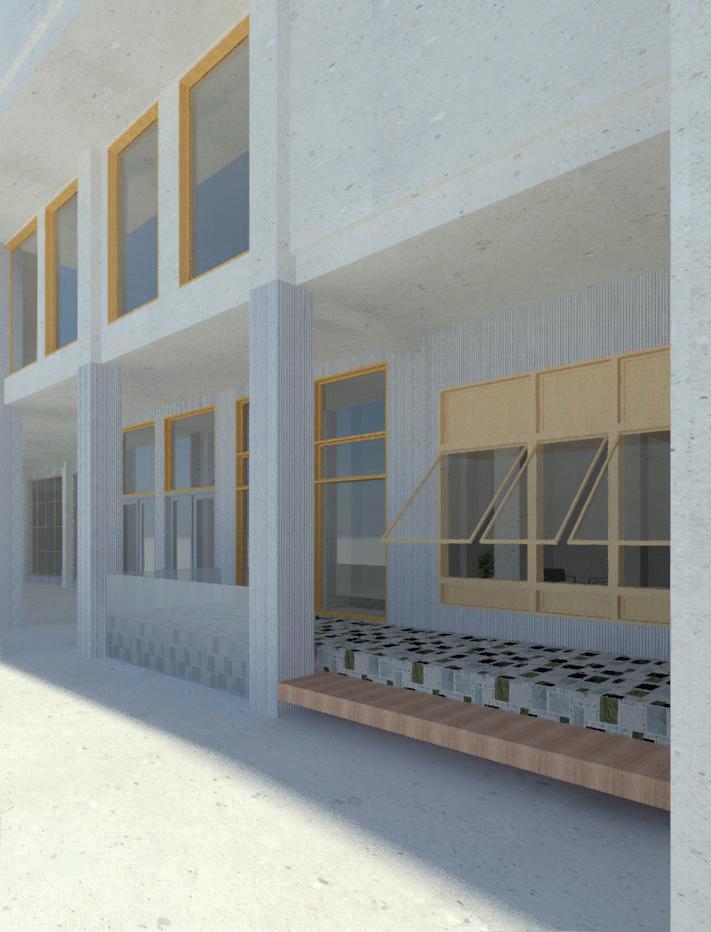
The ‘horseshoe’ typology identifies the boundaries of the building towards the city. The set-back in the façade and the enclosing colonnade create a transition period between public and private space. A balance was sought in this design between minimum footprint and maximum quality in space.
Janssen, Geert Driesen
BROUWERSVLIET
ADRIAAN BROUWERSTRAAT
TAVERNIERKAAI
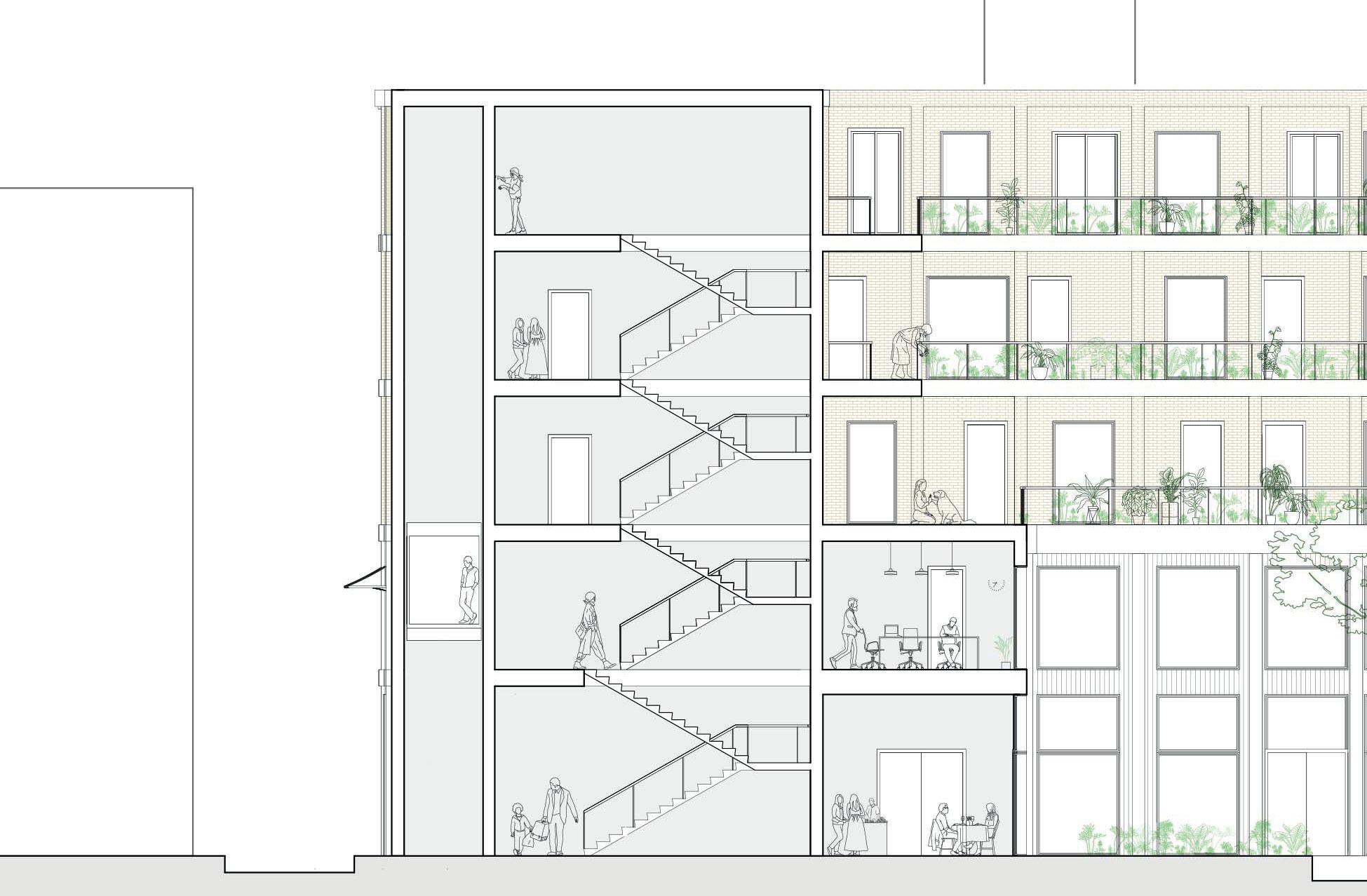
Section 2: cutting through the entrance of the offices, the stair hall and the courtyard (adjoining the apartments). The section shows how the building layers decrease towards the existing neighbourhood
image 66
perspective drawing of the building along the bottom with the three themes applied to the existing structure
| image 67 the footprint in the surrounding area
INTRODUCTION
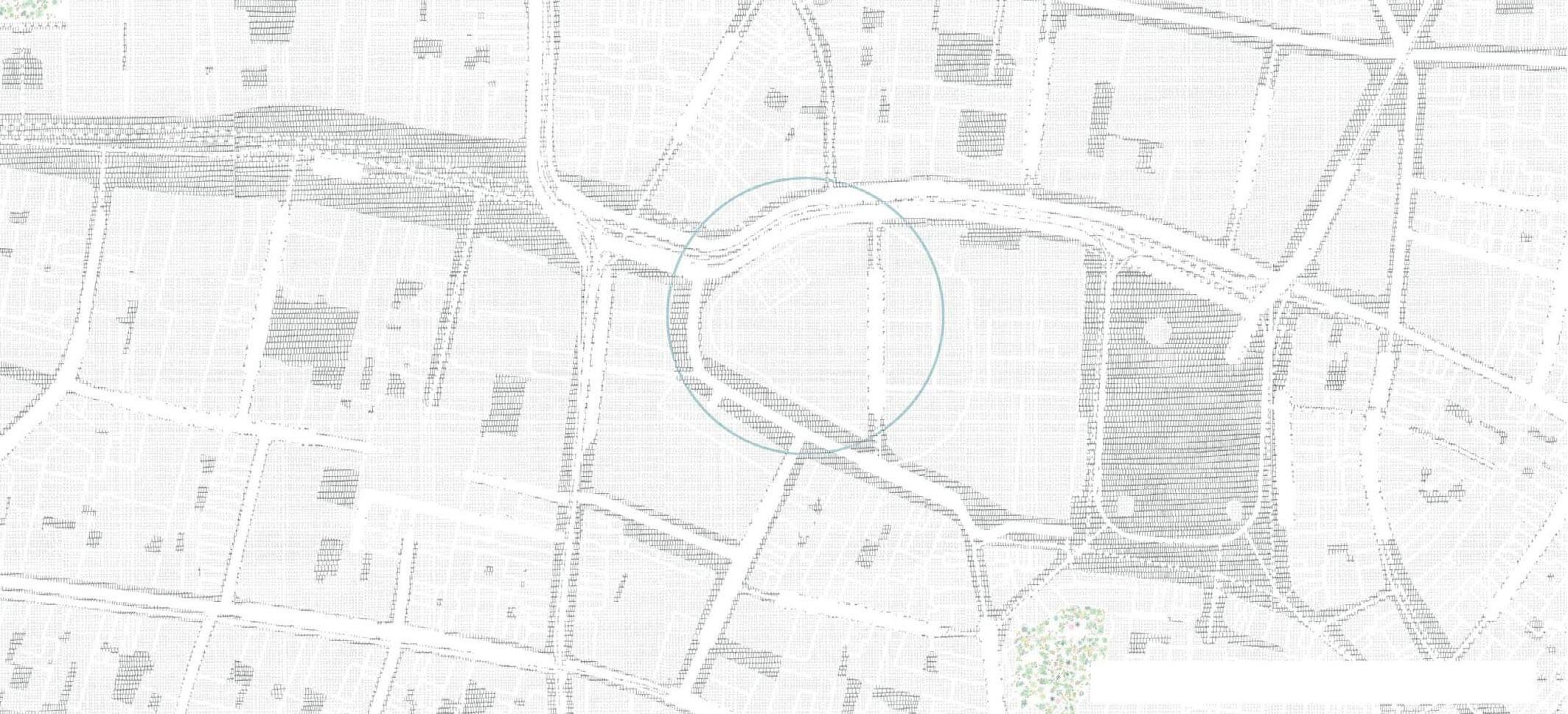
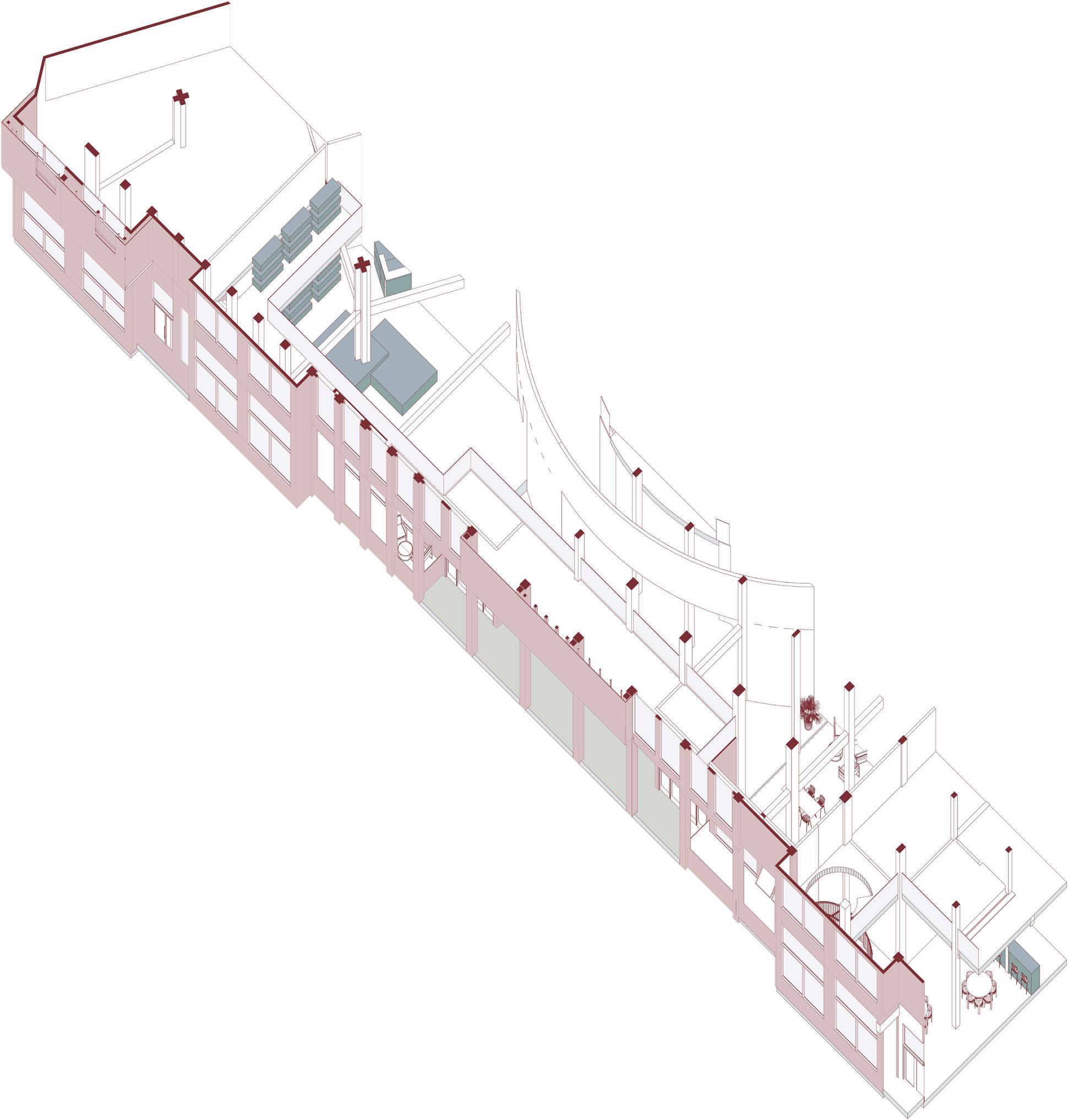
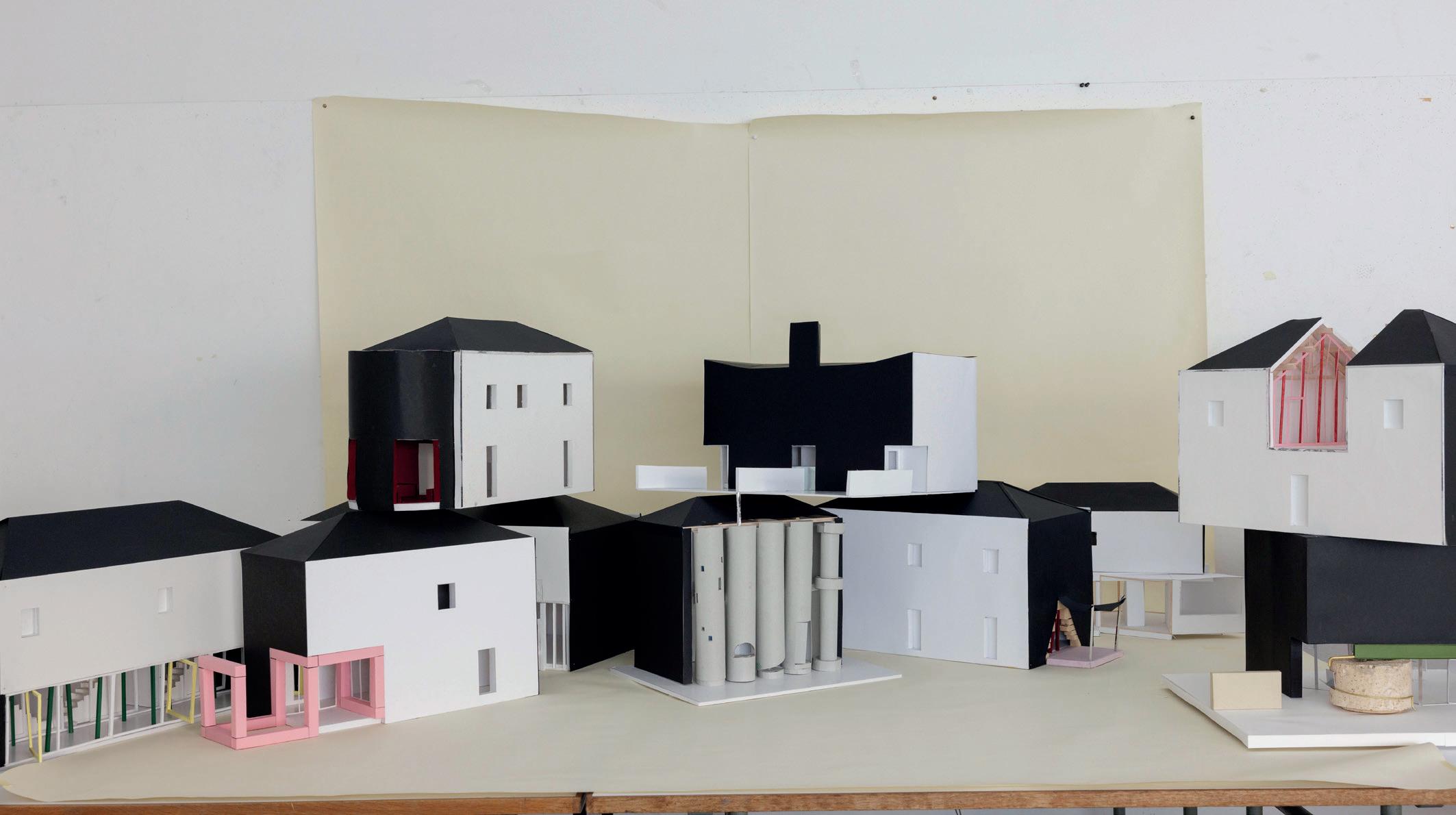
The High-Rise studio explores contemporary issues about highrise buildings. We explored how these structures can contribute to a denser urban fabric.Inspired by Rem Koolhaas’ “Delirious New York” (1978), the studio reflects on earlier high-rise discussions from the 1970s to develop practical design strategies. Inspired by Koolhaas, Madelon Vriesendorp and Zoë Zenghelis’ “City of the Captive Globe” concept, the architectural exercise focuses on building the first 40 meters of the skyscraper. Because the plinth is directly connected to the urban fabric. Also, the plinth is the starting point that dictates both the structure, circulation and facade of the skyscraper.
FIRST PHASE
With these assumptions in mind, the first phase of the design process began. In this phase, we analyzed the design theories of Robert Venturi and Denise Scott Brown. Both the book “Learning from Las Vegas” and “Complexity and Cotradiction in Architecture” were the focus to our research.
SECOND PHASE
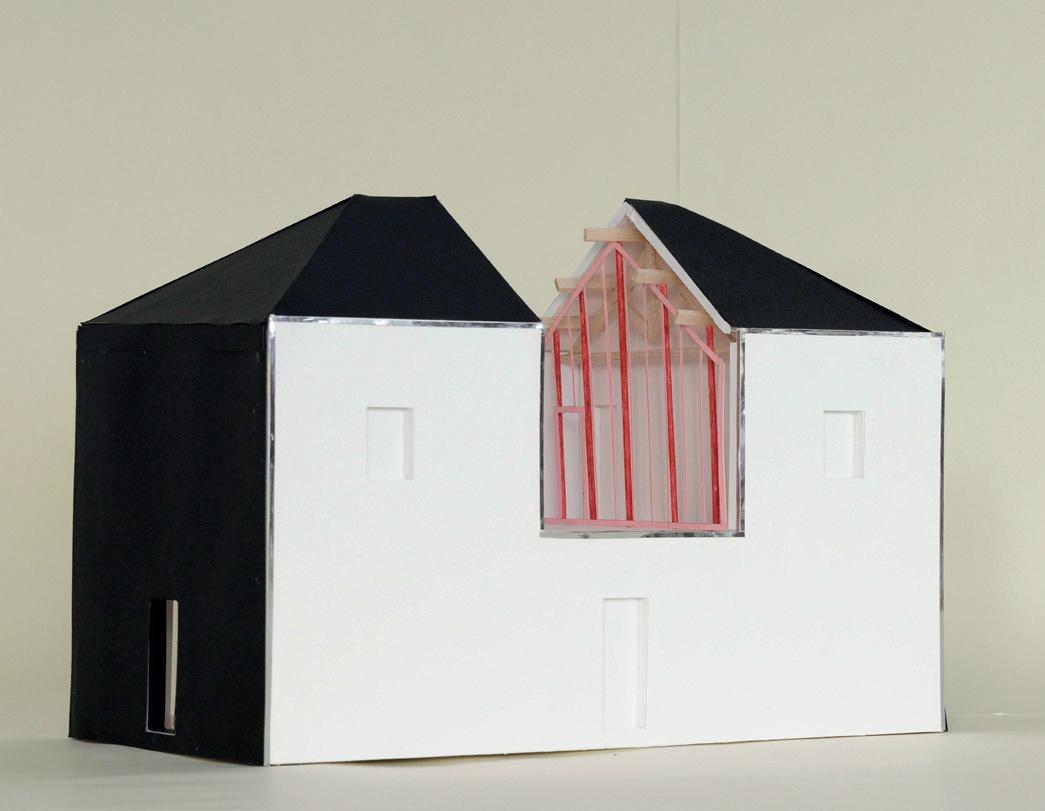
In the second phase, I chose to apply three themes from the book “Complexity and Contradiction in Architecture. I apply the themes to the ‘Boerentoren’. A monumental skyscraper in Art Deco style. Realized in 1931 and designed by Emiel Van Averbeke, Jan Vanhoenacker and Jos Smolderen.
CONTRADICTION JUXTAPOSED
CHAPTER IIX:
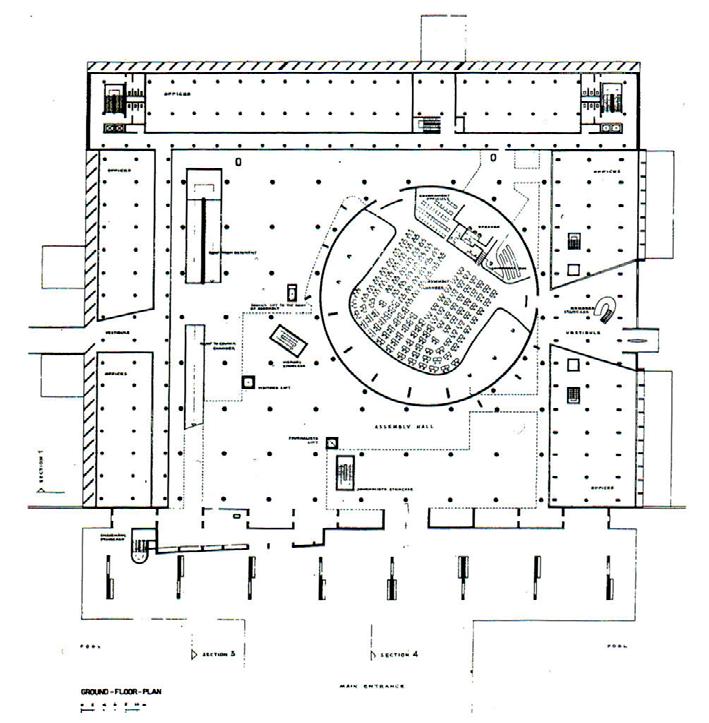
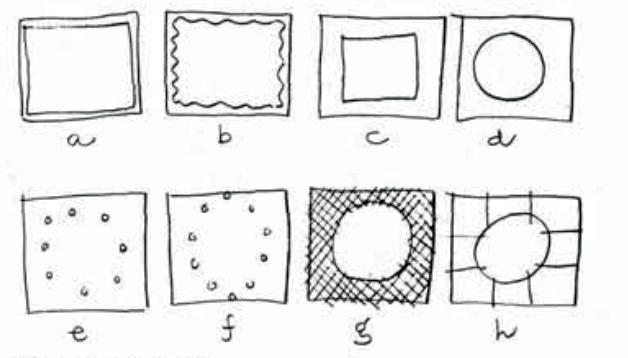
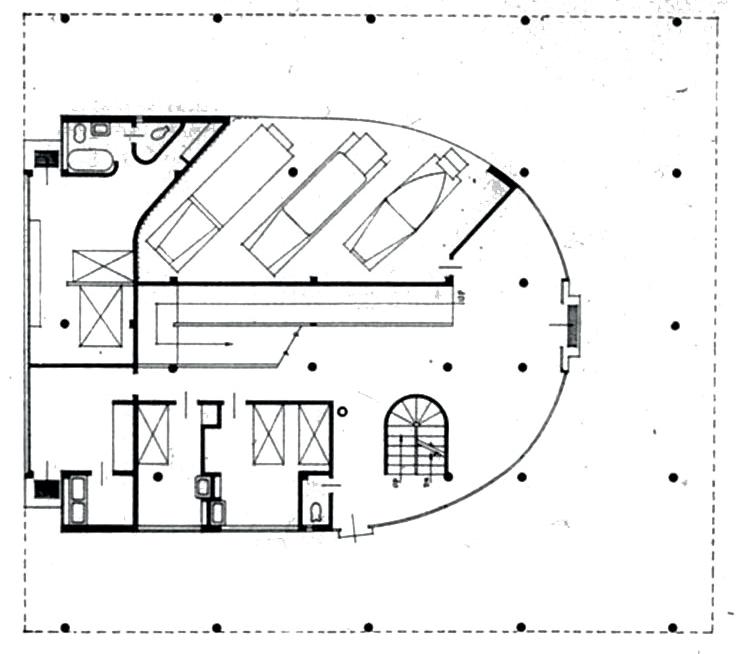
In this chapter, Venturi discusses contradictions that arise from uncompromising adaptations. He shows that it is possible to obtain new meanings by creating a deviated organization within the whole.In Le Corbusier’s Assembly Building, the circular hall creates a contradiction in the plan. The hall does not conform to the structural grid that defines the order of the plan as a whole.
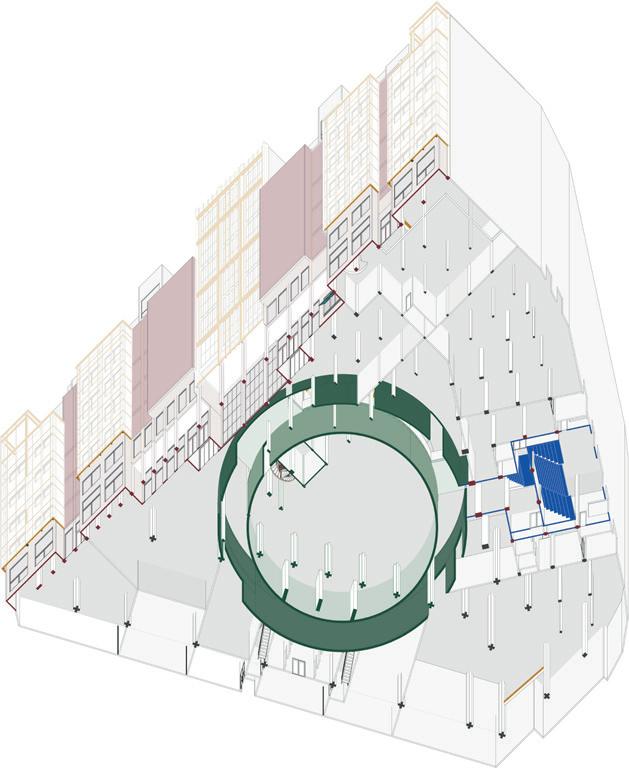
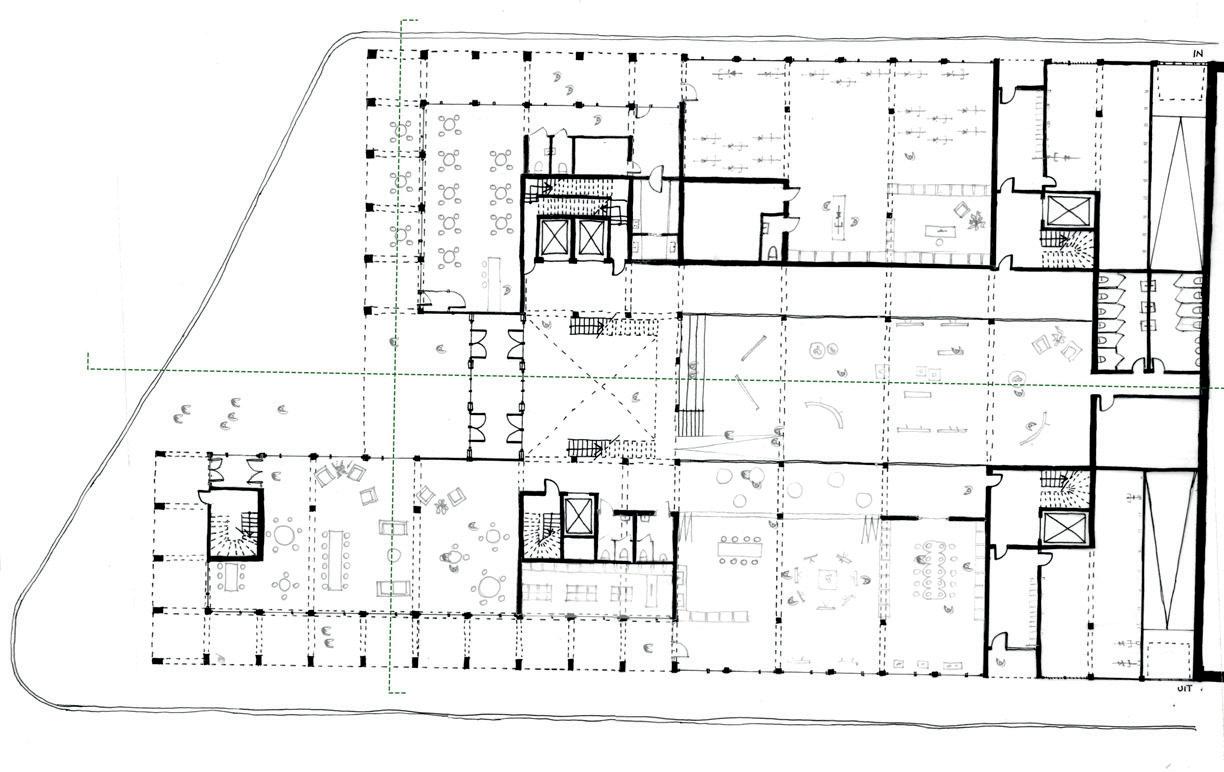
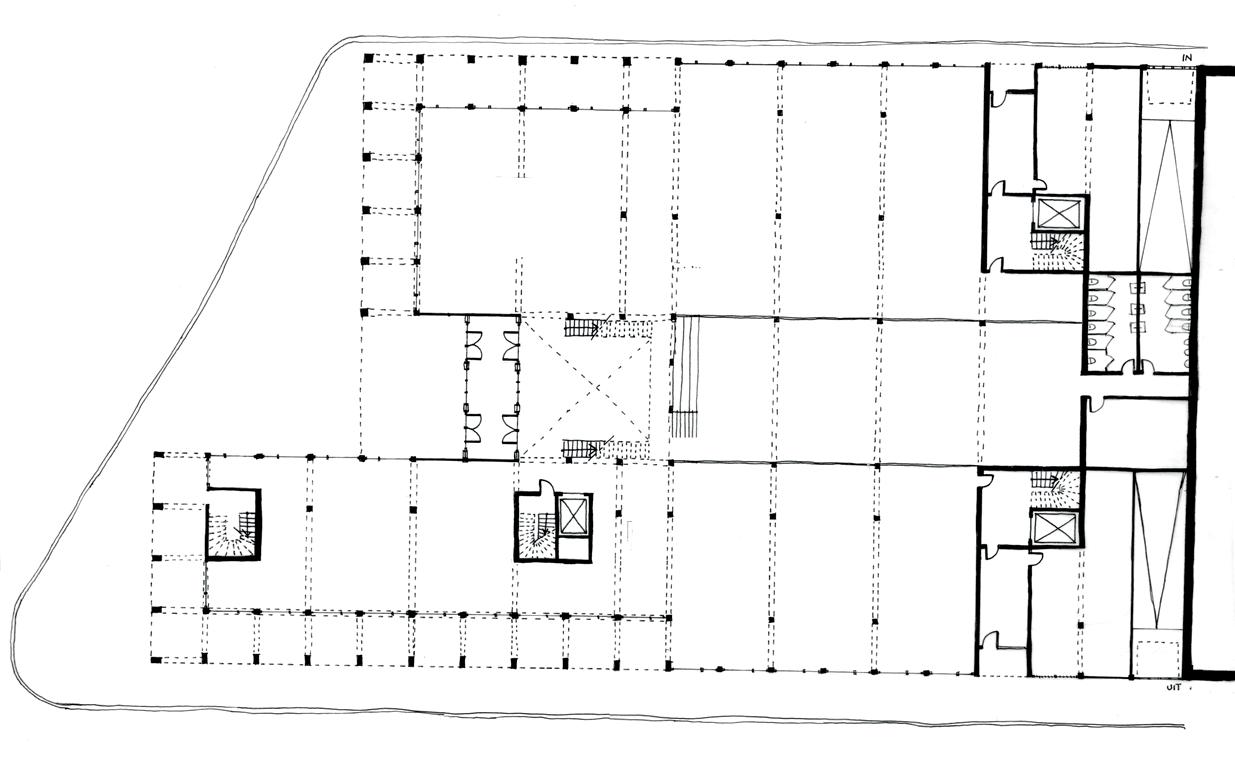
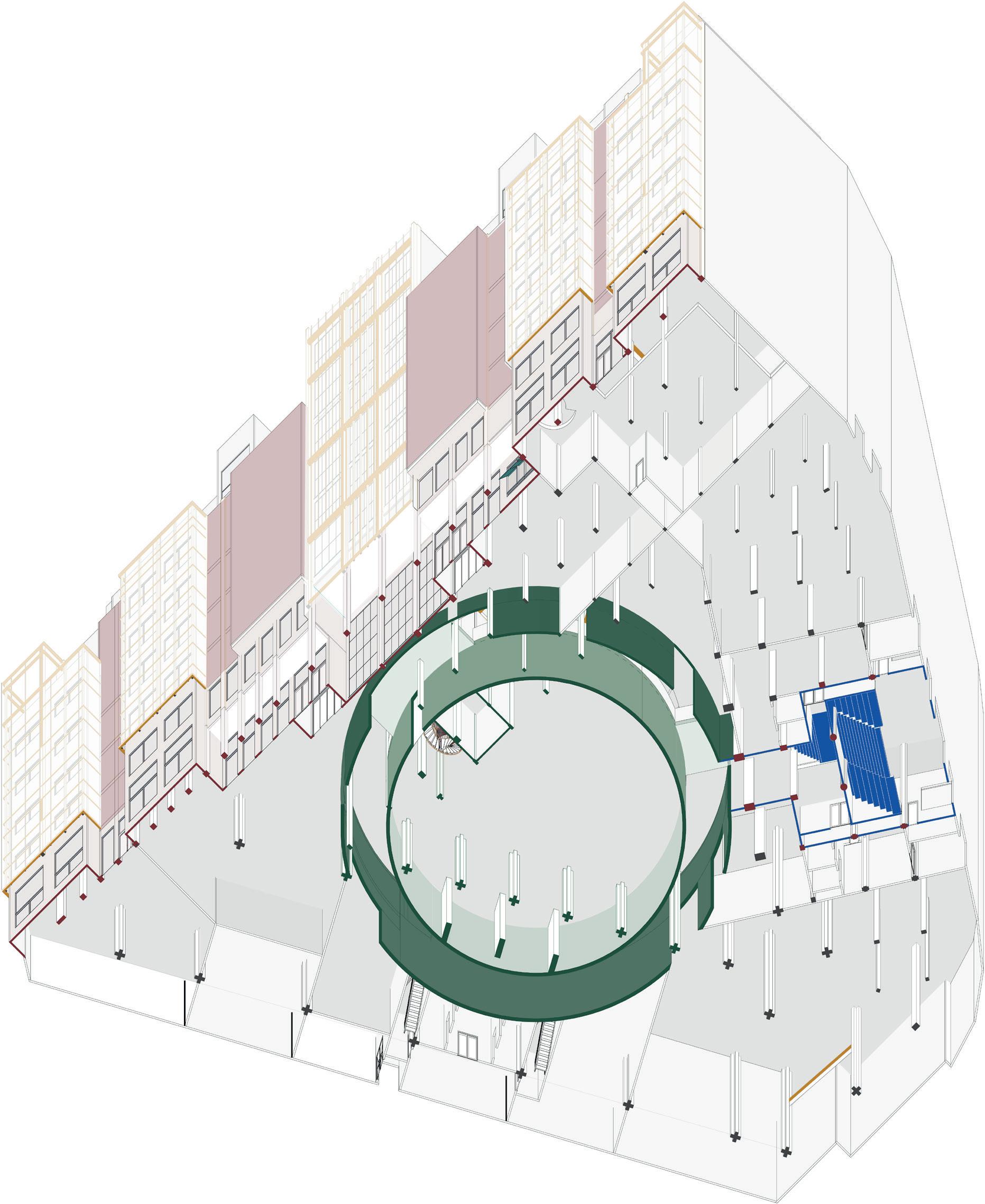
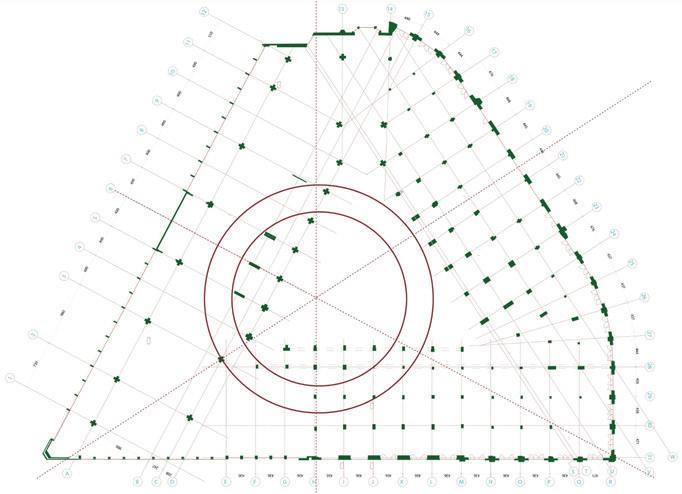
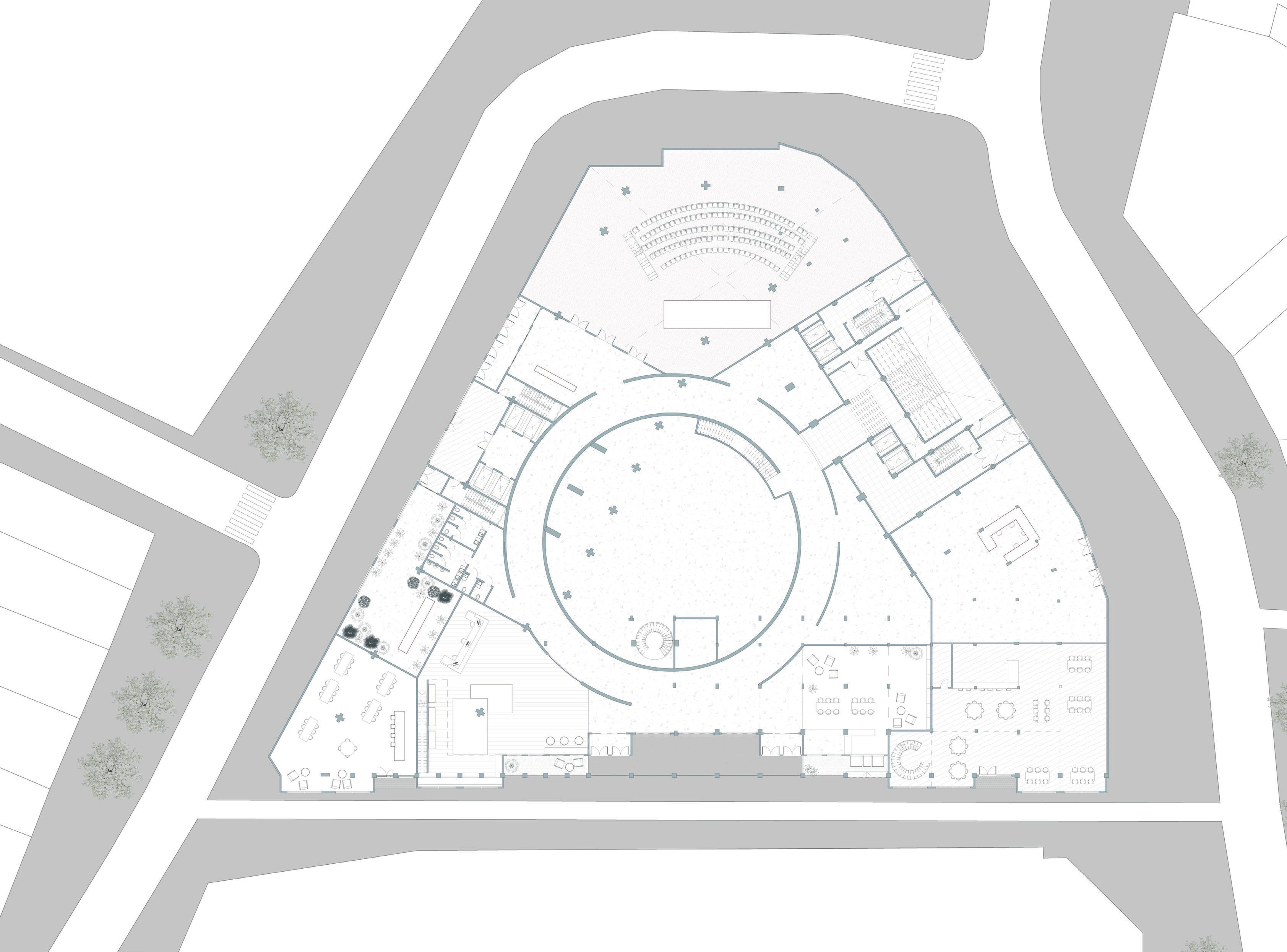
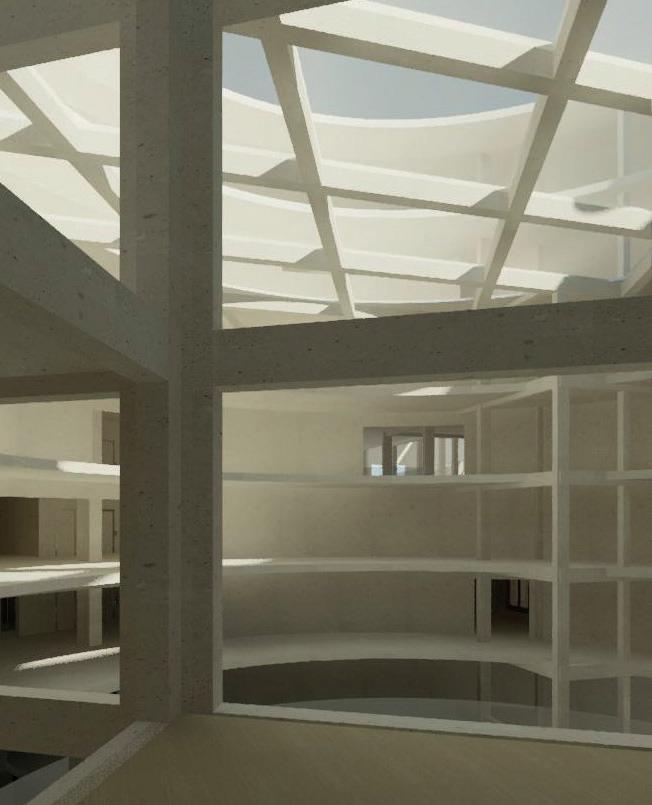
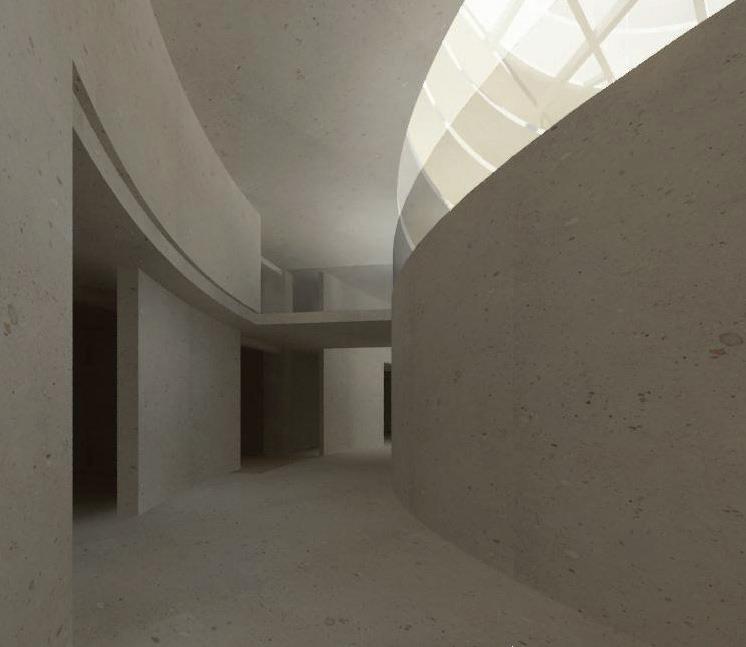
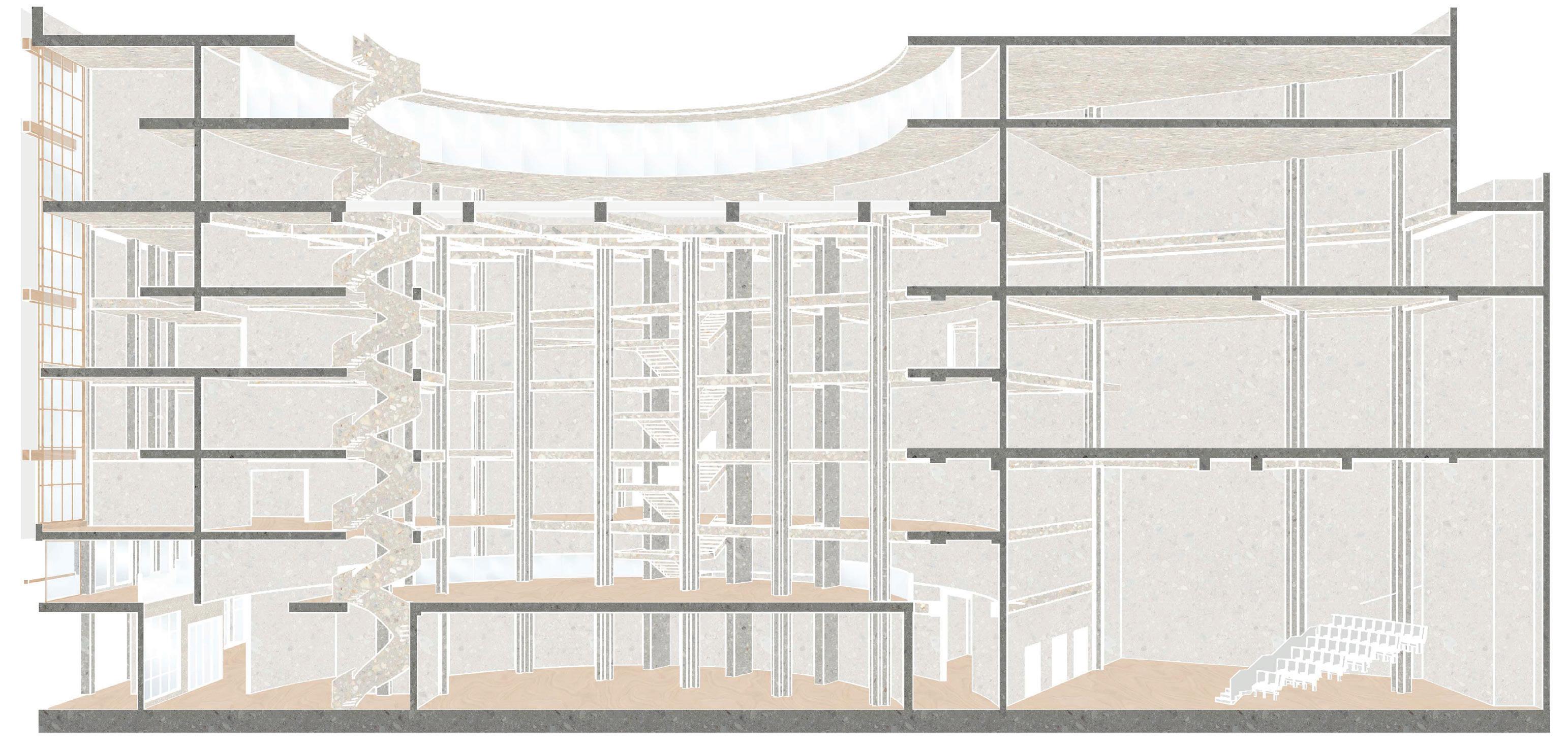
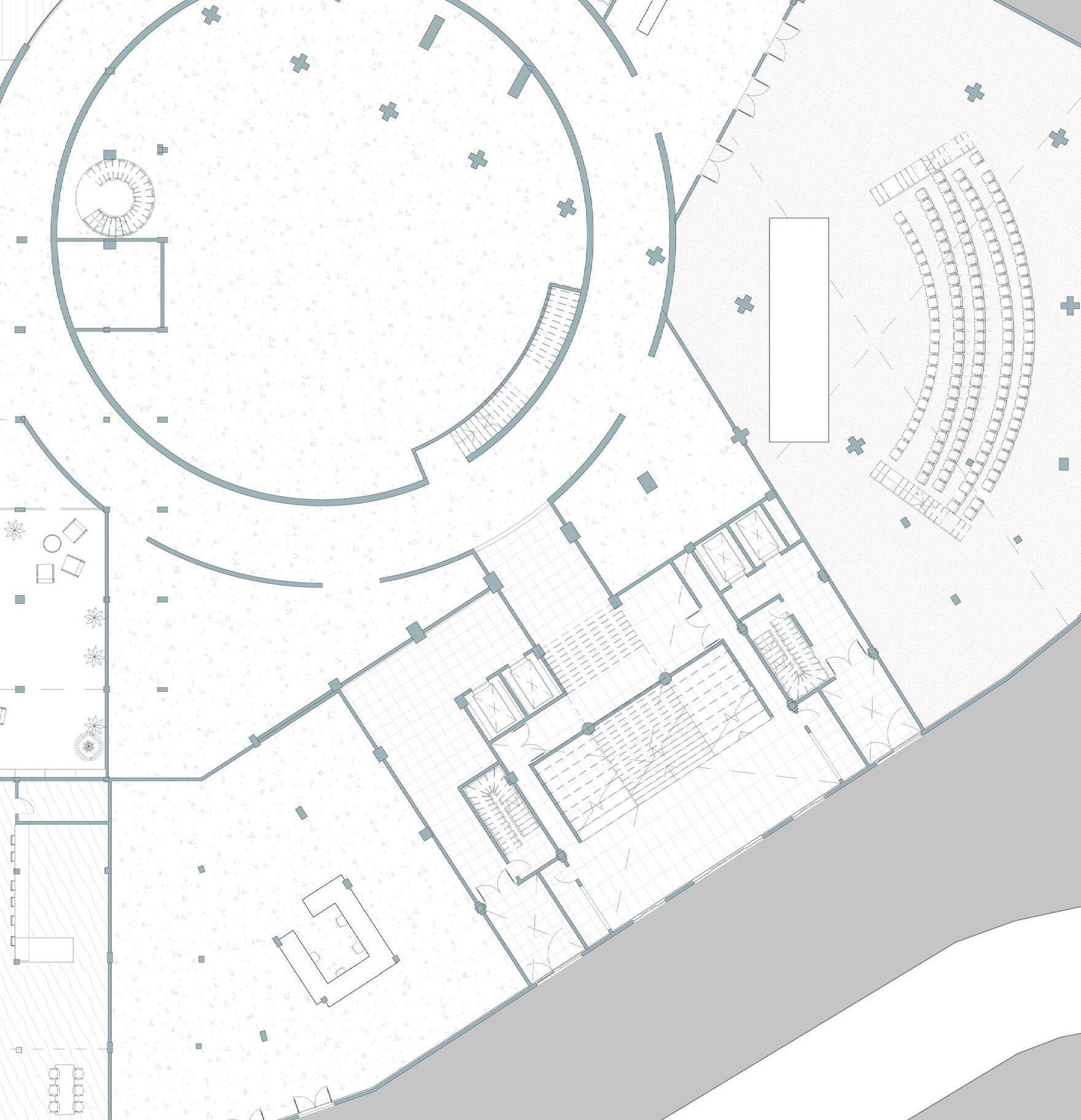
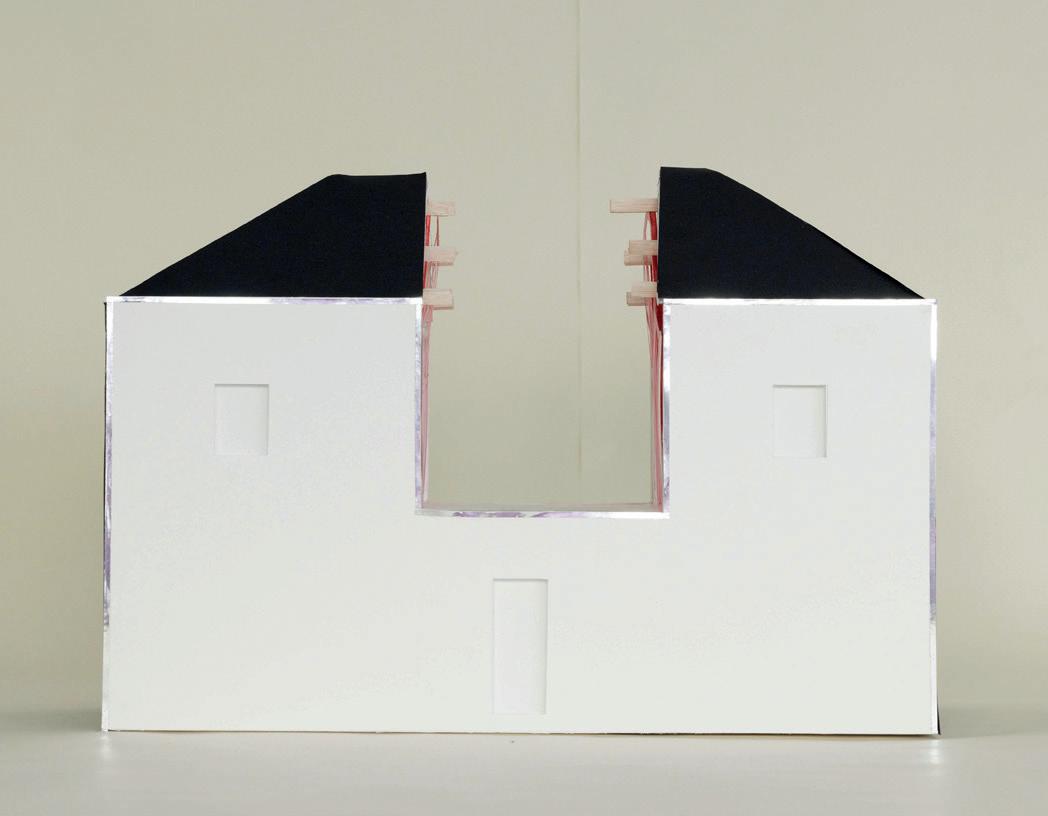
The circular opening contrasts with the existing structure and creates new spatial qualities in the surrounding spaces. Sharp angles contrast with the curved walls of the courtyard. By maintaining the structure, the circular opening gives space to the existing structure. The two parts of the structure meet in the courtyard and manifest in the building. The intervention is uncompromising, both in plan and section. The organnic form of the circle dominates the triangular floor plan.
“It is the role of design to adjust to the circumstantial.”
Louis Kahn
reference: Villa Savoye, Le Corbusier, Poissy.
THE INSIDE AND THE OUTSIDE
CHAPTER IX
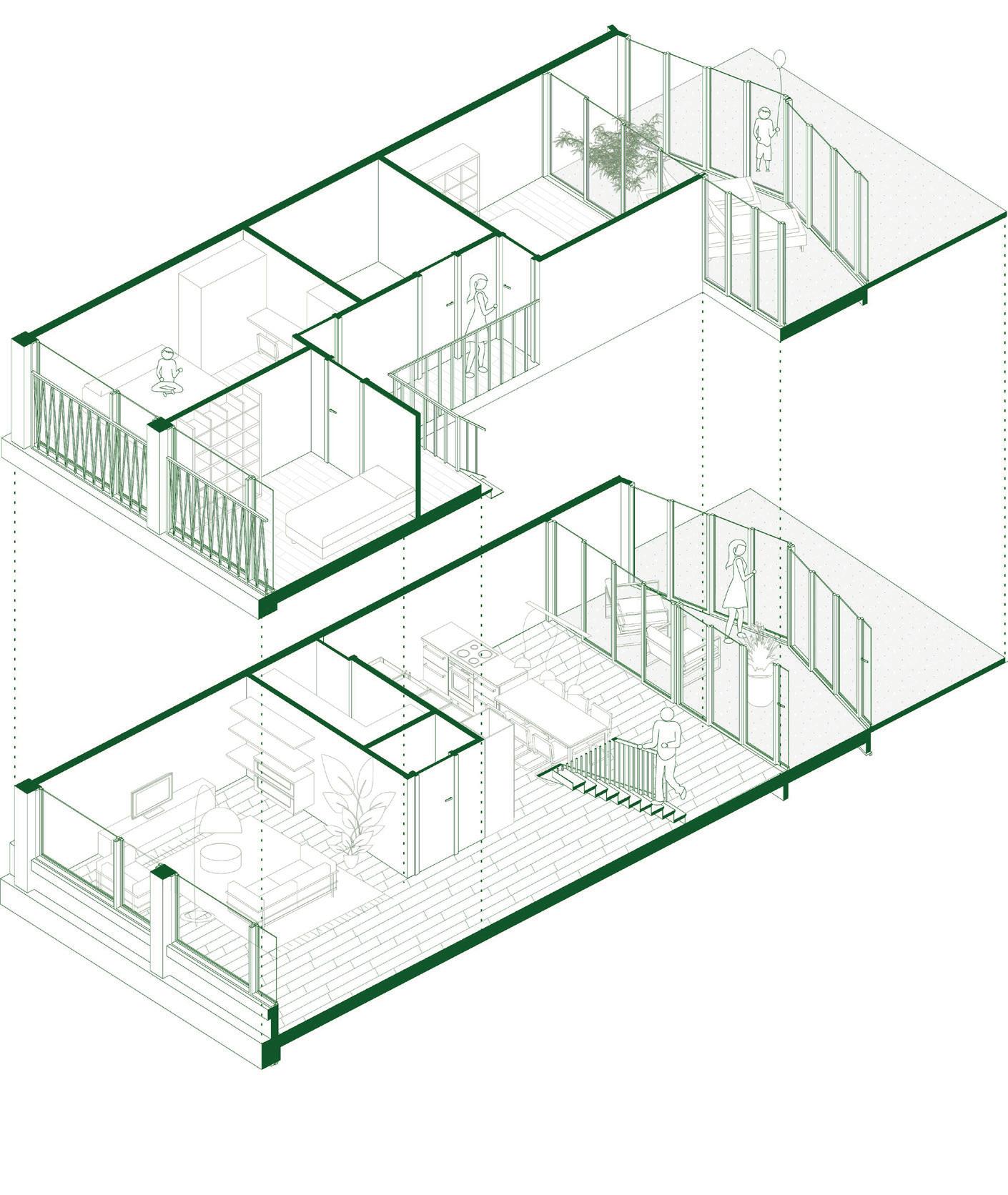
The emphasis here is on the contrast between indoor and outdoor spaces. The plan diagram (opposite) illustrates that the layers between the interior and exterior spaces can contrast in form, position, rhythm and size.
The ground plan of Le Corbusier’s Villa Savoye shows that although the interior spaces were optimally designed according to the domestic scale, the exterior spaces arrange themselves according to the scale of the surroundings. This causes them to contrast with each other.
In my design, I seek the contrast by designing the façade in function of the existing context. The exterior spaces gradually flow into the interior spaces. This brings the interior and exterior spaces together. As a result, contradictions arise.
“Architecture occurs at the meeting of interior and exterior forces.”
Venturi
Robert
isometric perspective of the façade: transition between interior and exterior spaces
Detail of the façade: Beddenstraat
CONTRADICTORY
LEVELS: THE PHENOMENON OF “BOTH-AND” IN ARCHITECTURE.
CHAPTER IV
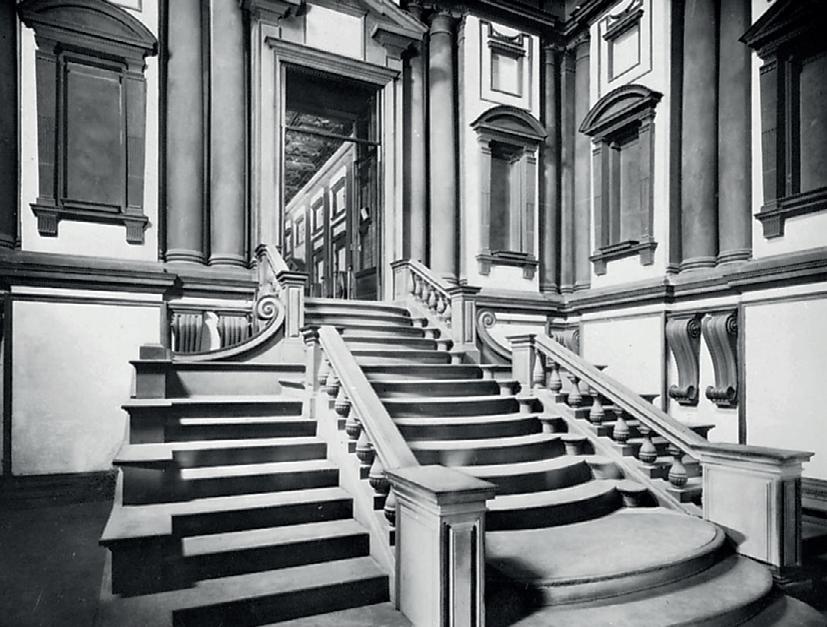
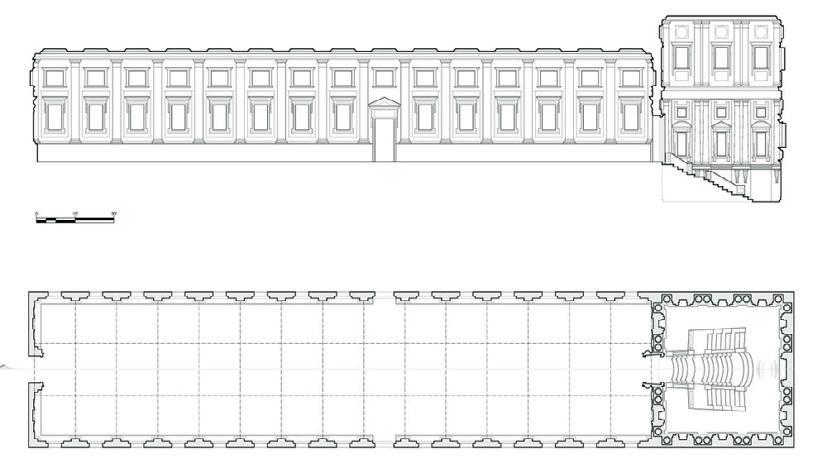
This theme is about architecture that involves different levels of meaning. For example, the proportion of the staircase in the Laurentian Library is too large in relation to the space in which it is located. If you look at the entire plan, you notice that the volume of the space behind it justifies this overproportionality.
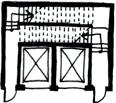
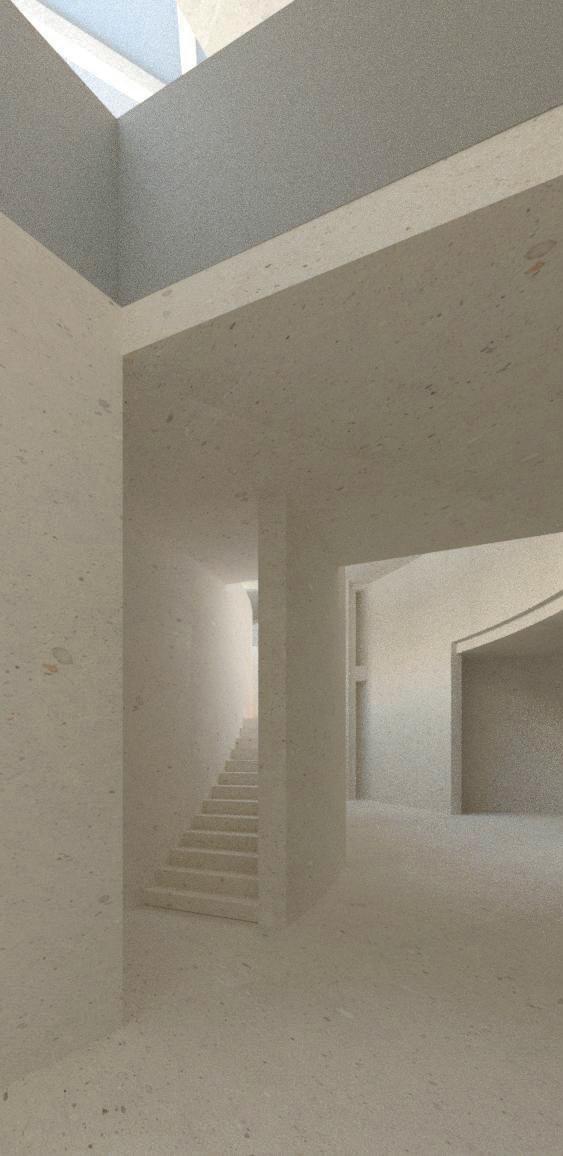
I apply this theme to the main entrance of the building. The staircase is designed into the existing column structure of the tower. As a result, the staircase is perforated by the structure. This creates a narrowing in the course. Some parts of the staircase are functional, while others serve as resting areas. The staircase is both directional and non-directional. This results in a double meaning. Also, the dimensions of the stairs were matched to the totality of the floor plan
“At one moment one meaning can be perceived as dominant; at another moment a different meaning seems paramount.”
Robert Venturi
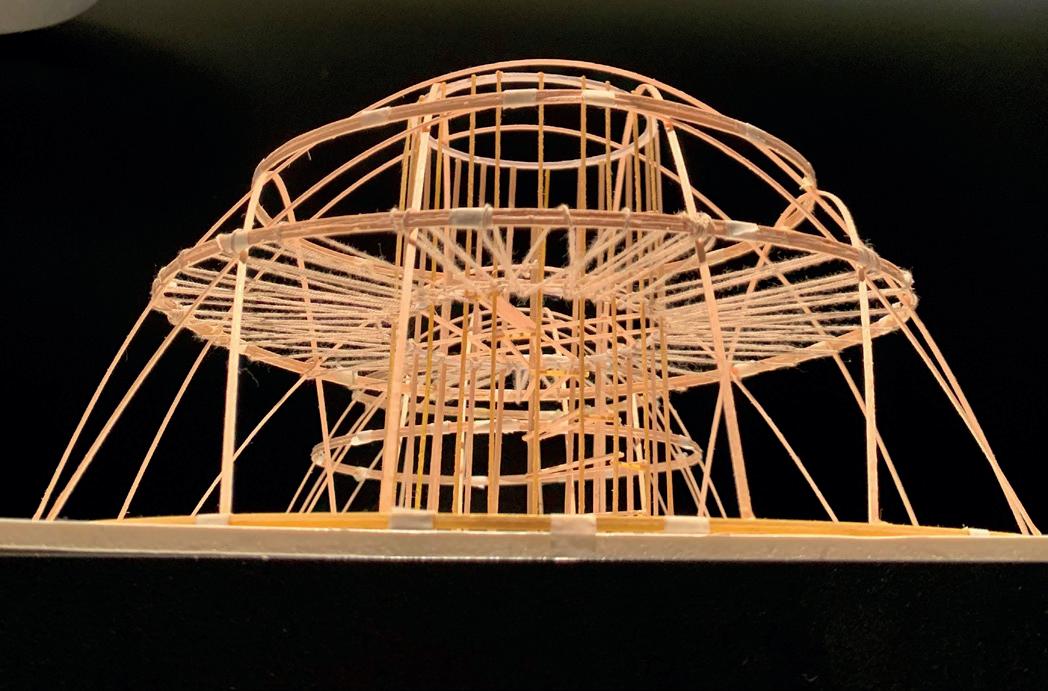
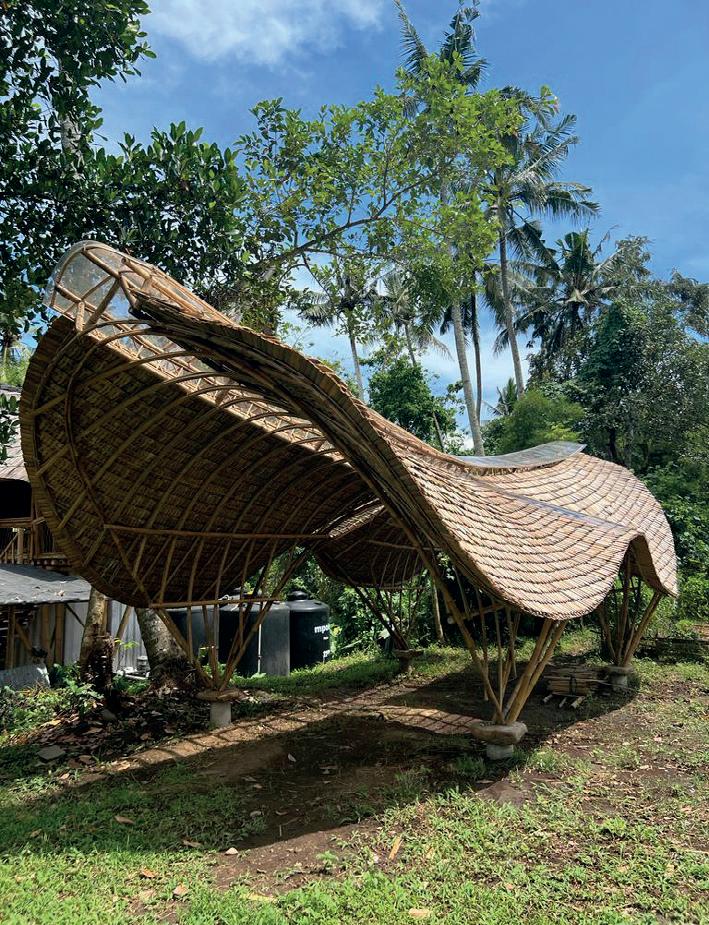
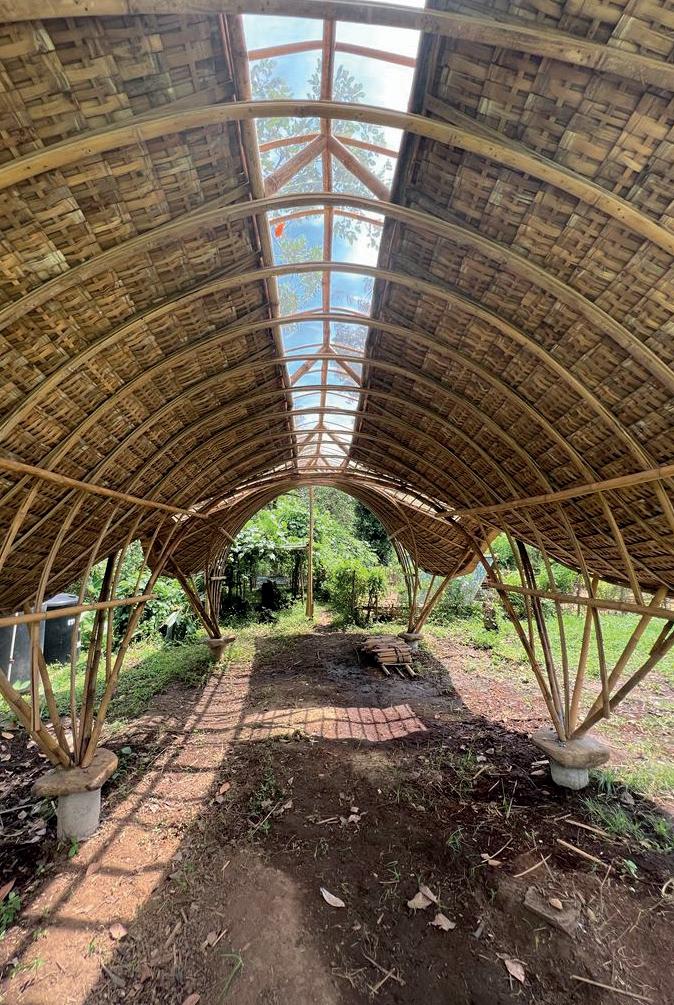
Summerschool:
Re-Claiming Ground:
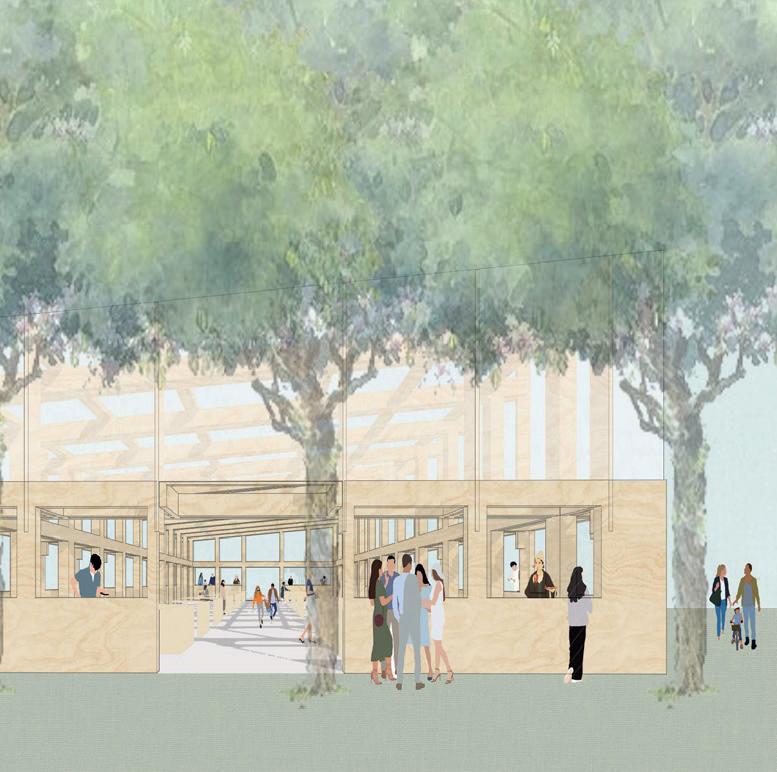
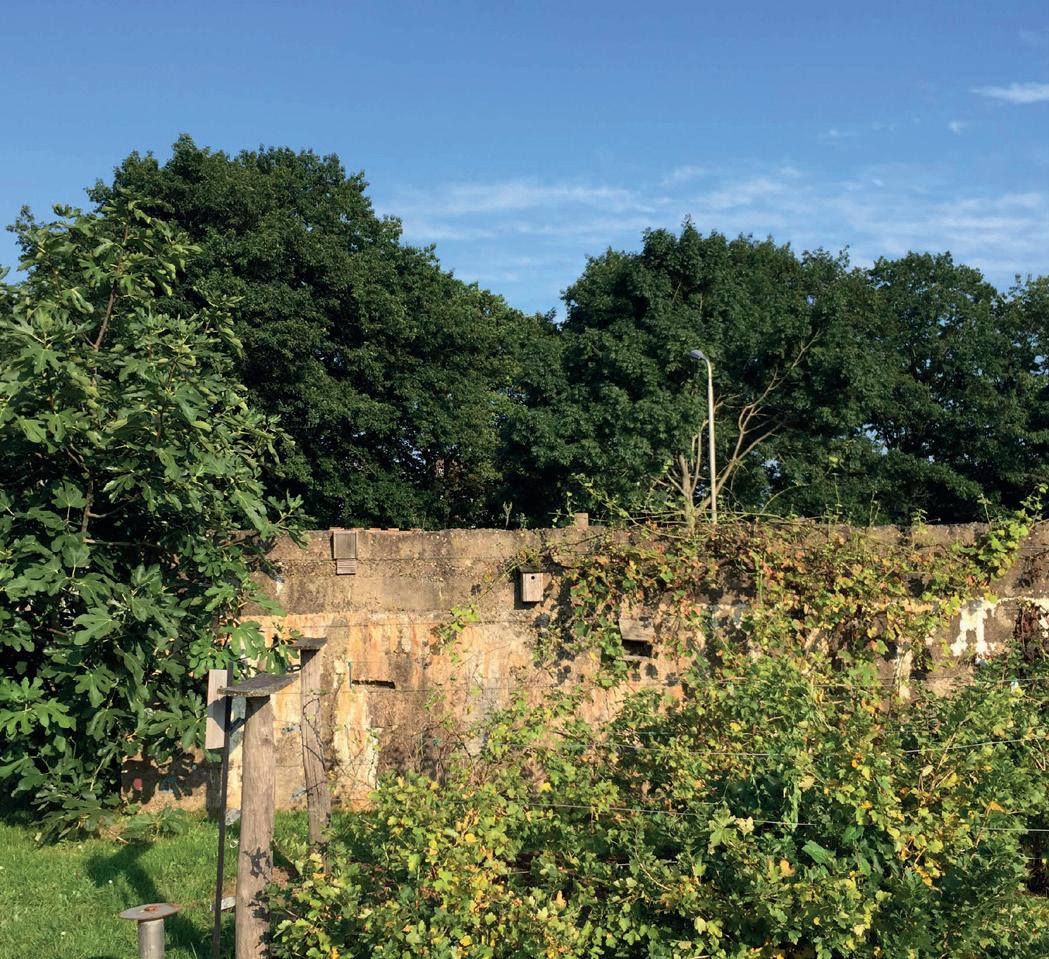
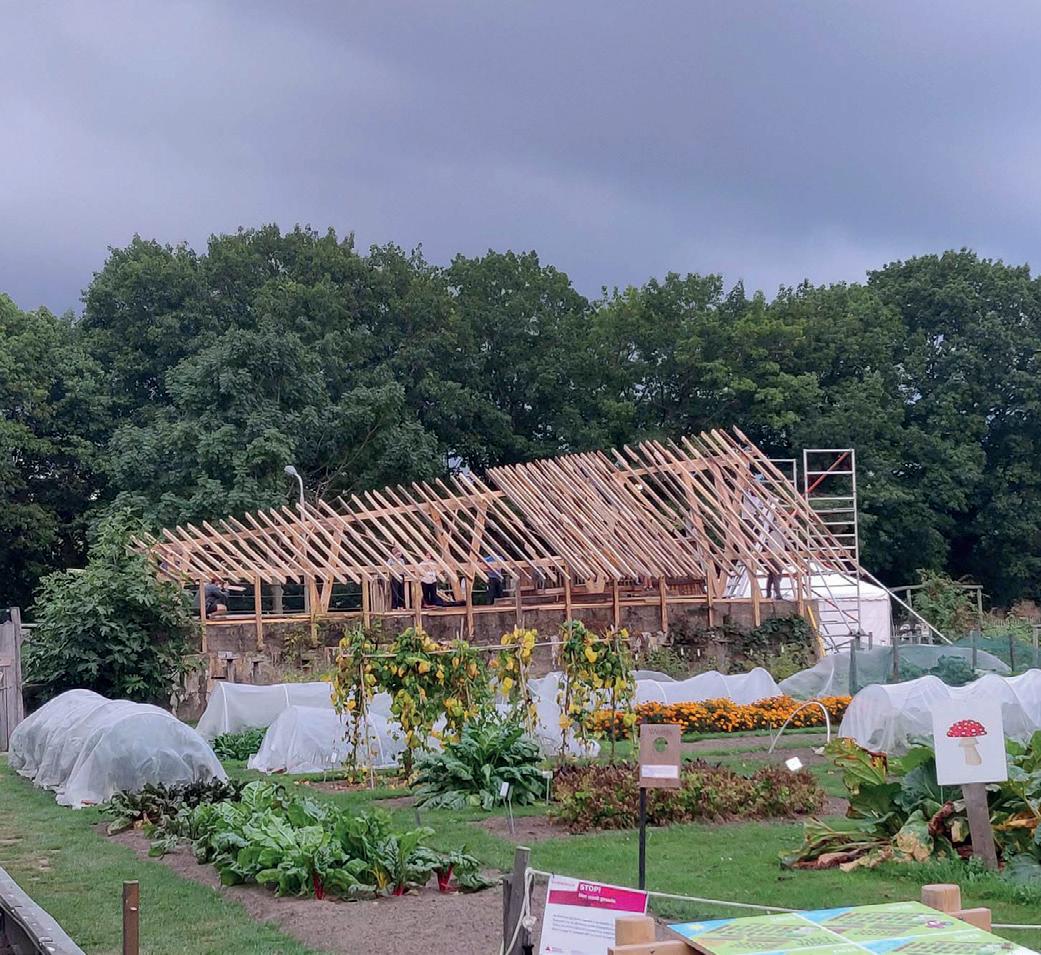
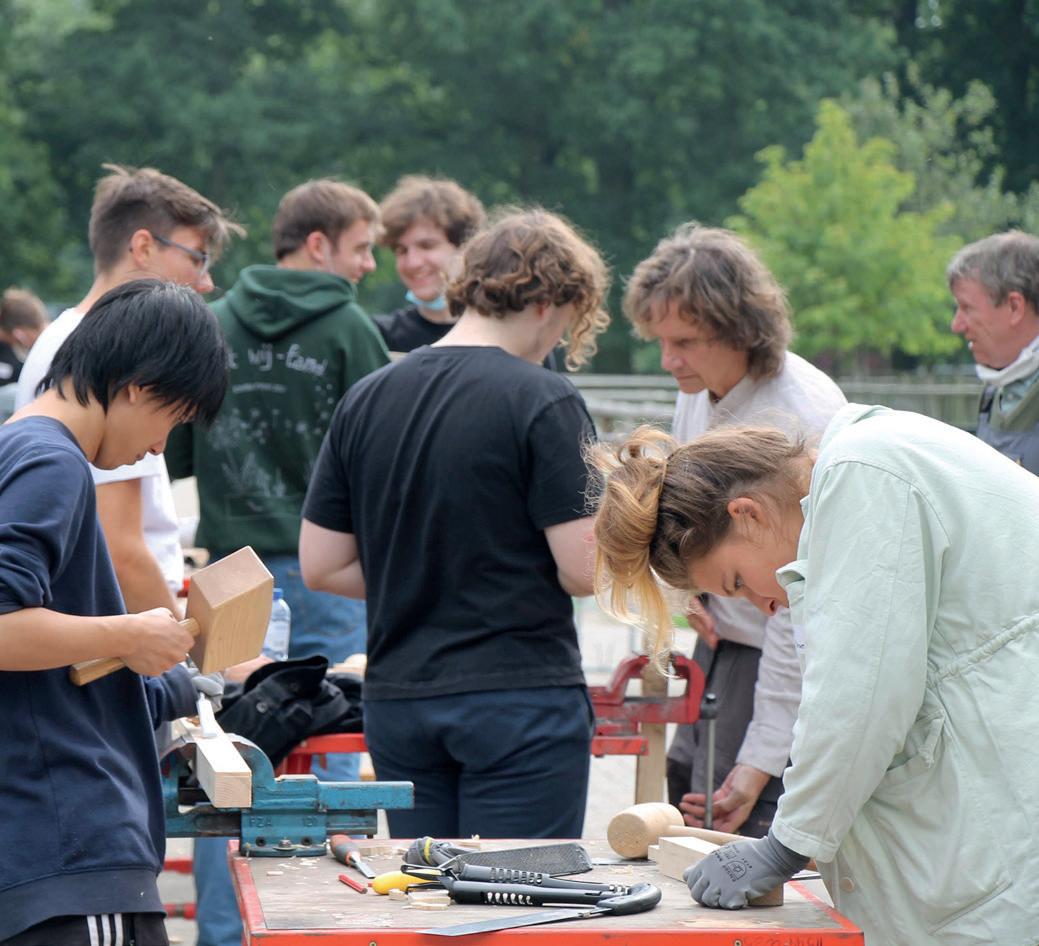
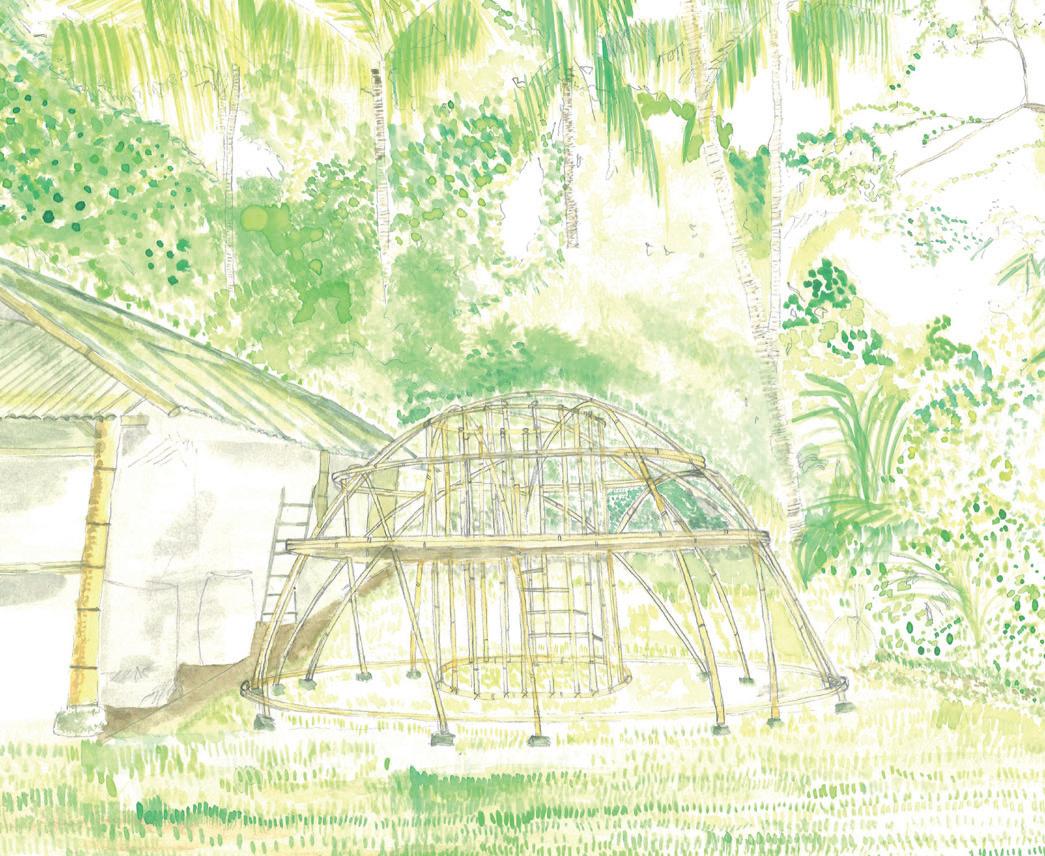
Design and realization for a pavilion in the garden of a city farm.
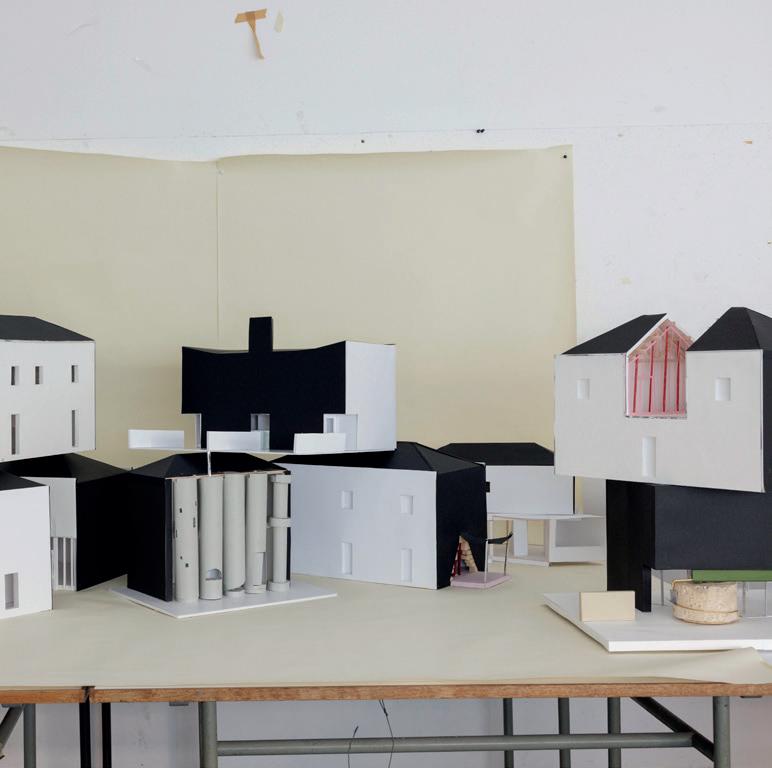
In 2021, I participated in a summer school organized by the University of Antwerp. In addition to educational lectures, design assignments and analysis, this hands-on experience furthered my skills in structural design.
Porto Academy summerschool
Studio Jo Taillieu
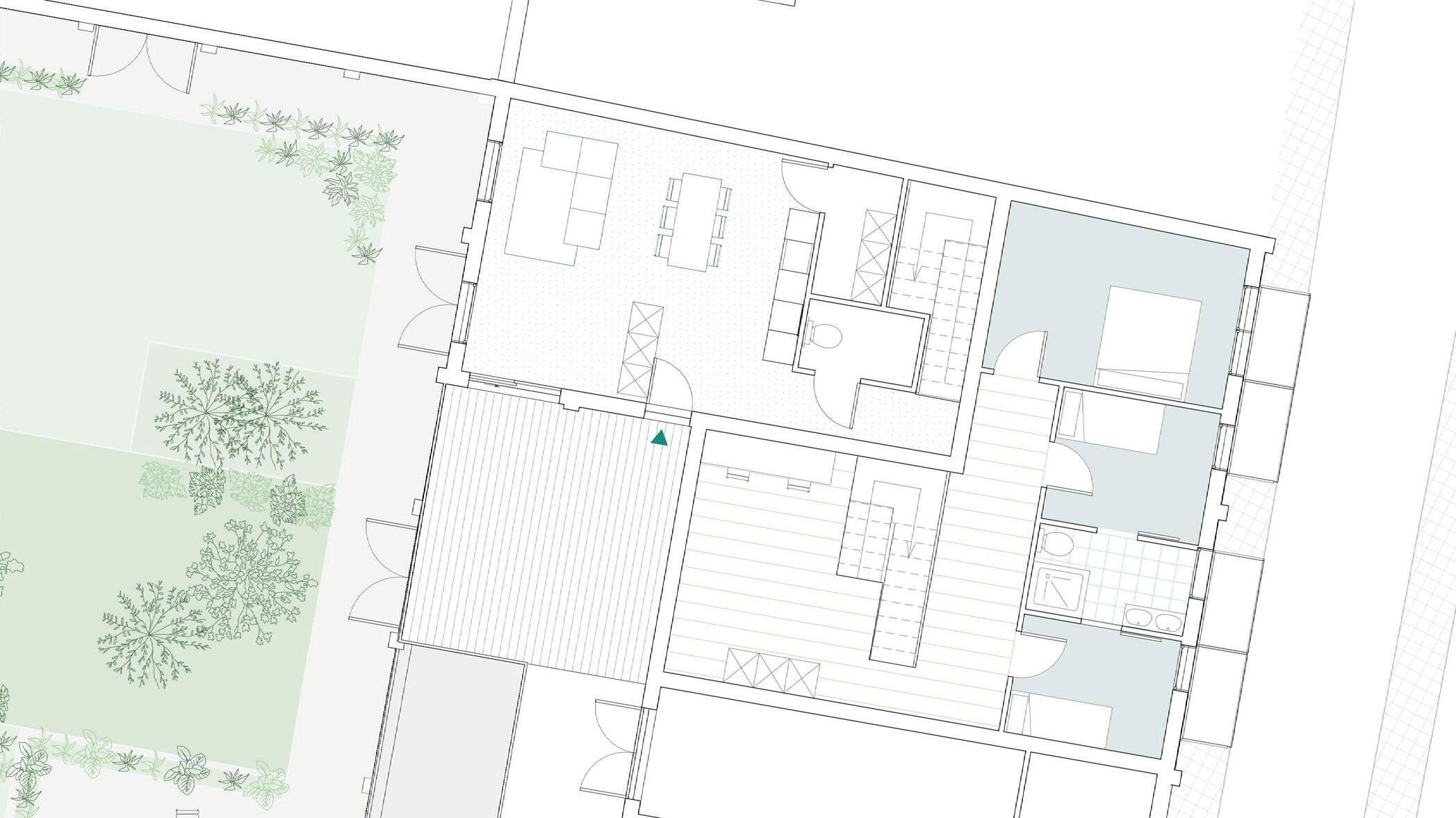
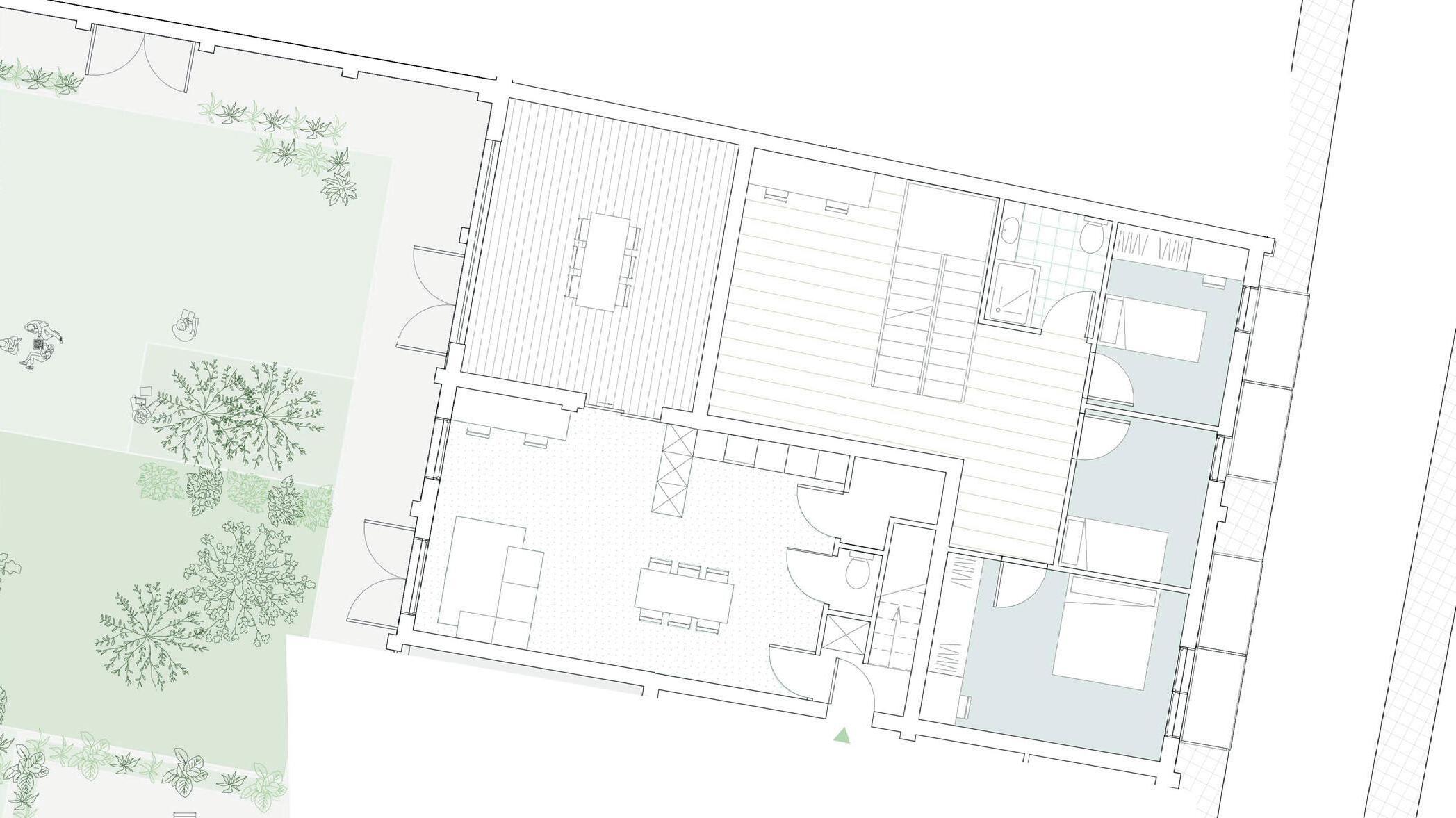
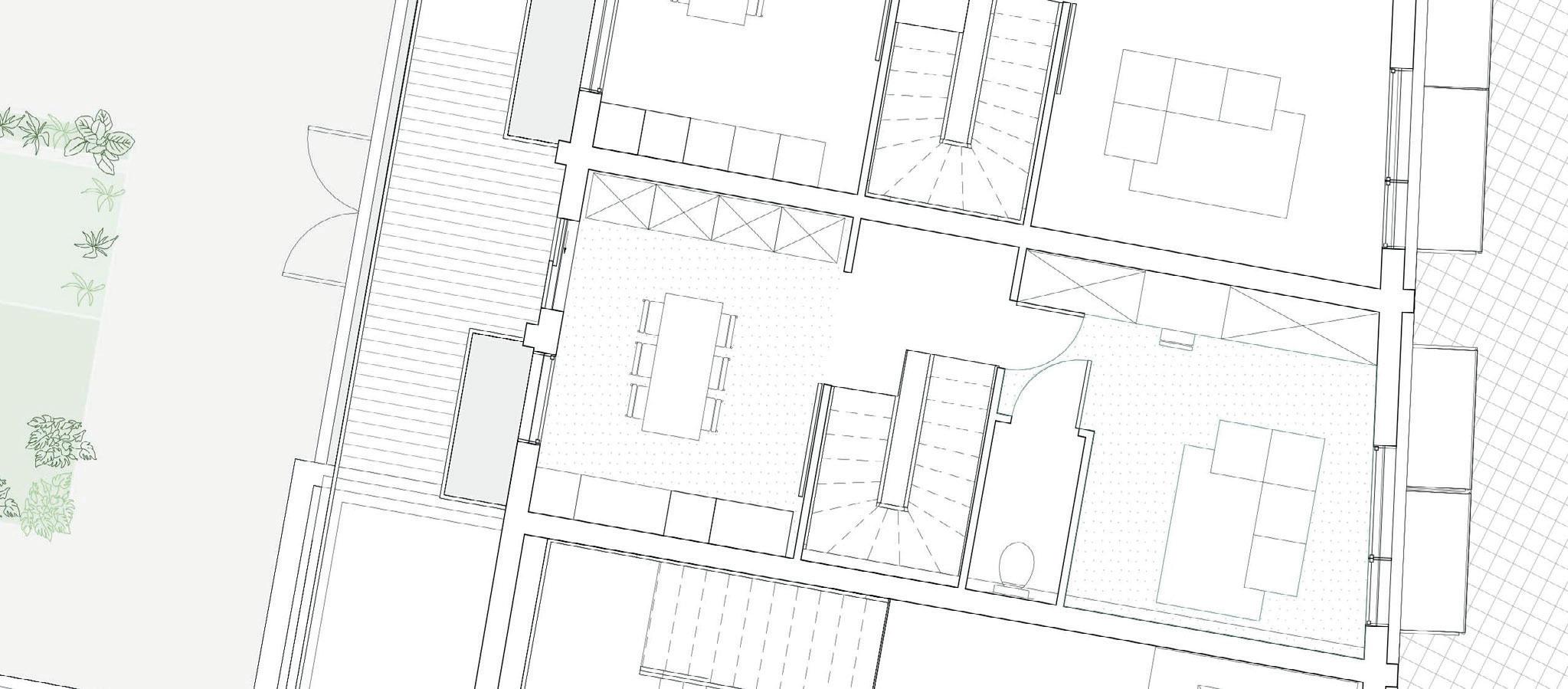
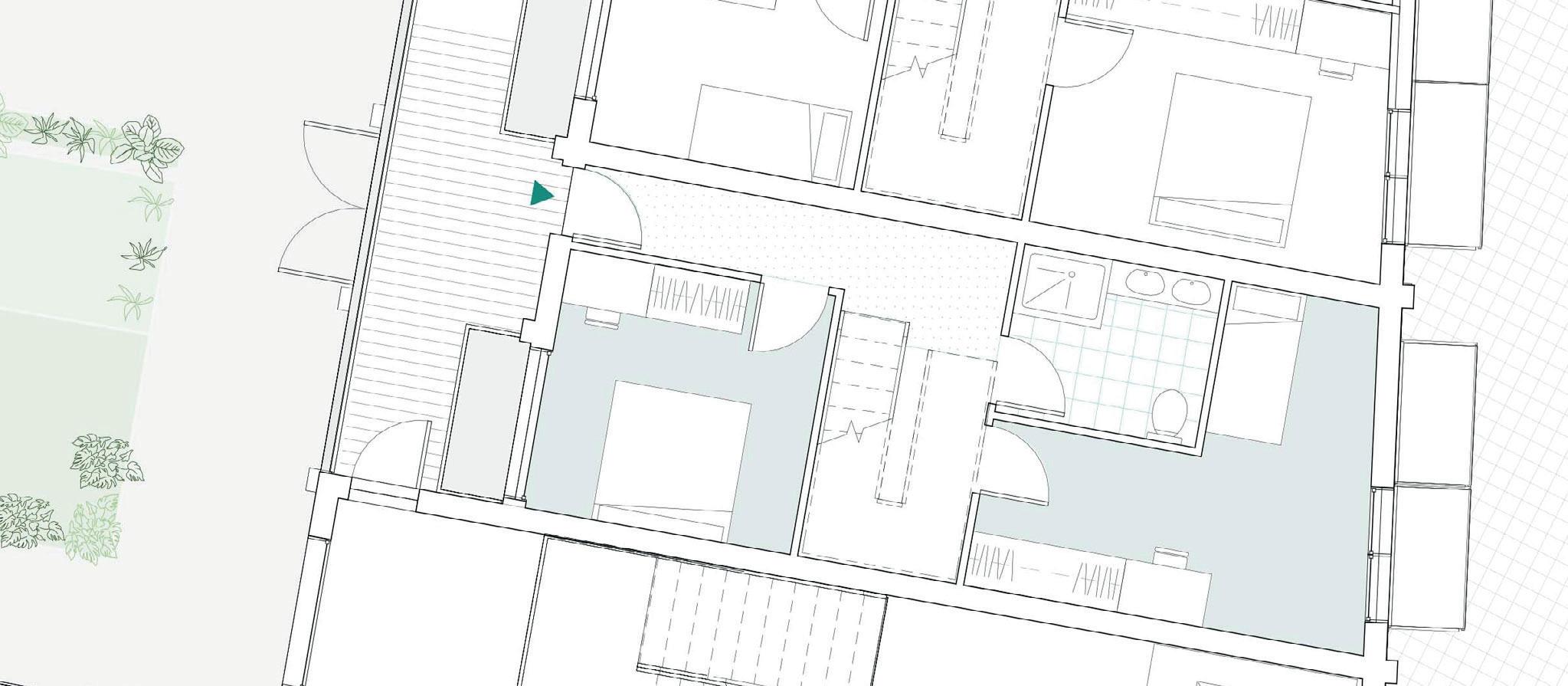
In 2022, I participated in a summer school at the Porto Academy. Here I participated in Jo Taillieu’s studio. This studio analyzed a social housing project in Porto. I explored the possibilities of upgrading the existing architecture through small, structural modifications in order to add value to what is perceived as “conventional” architecture.
BAMBOO U
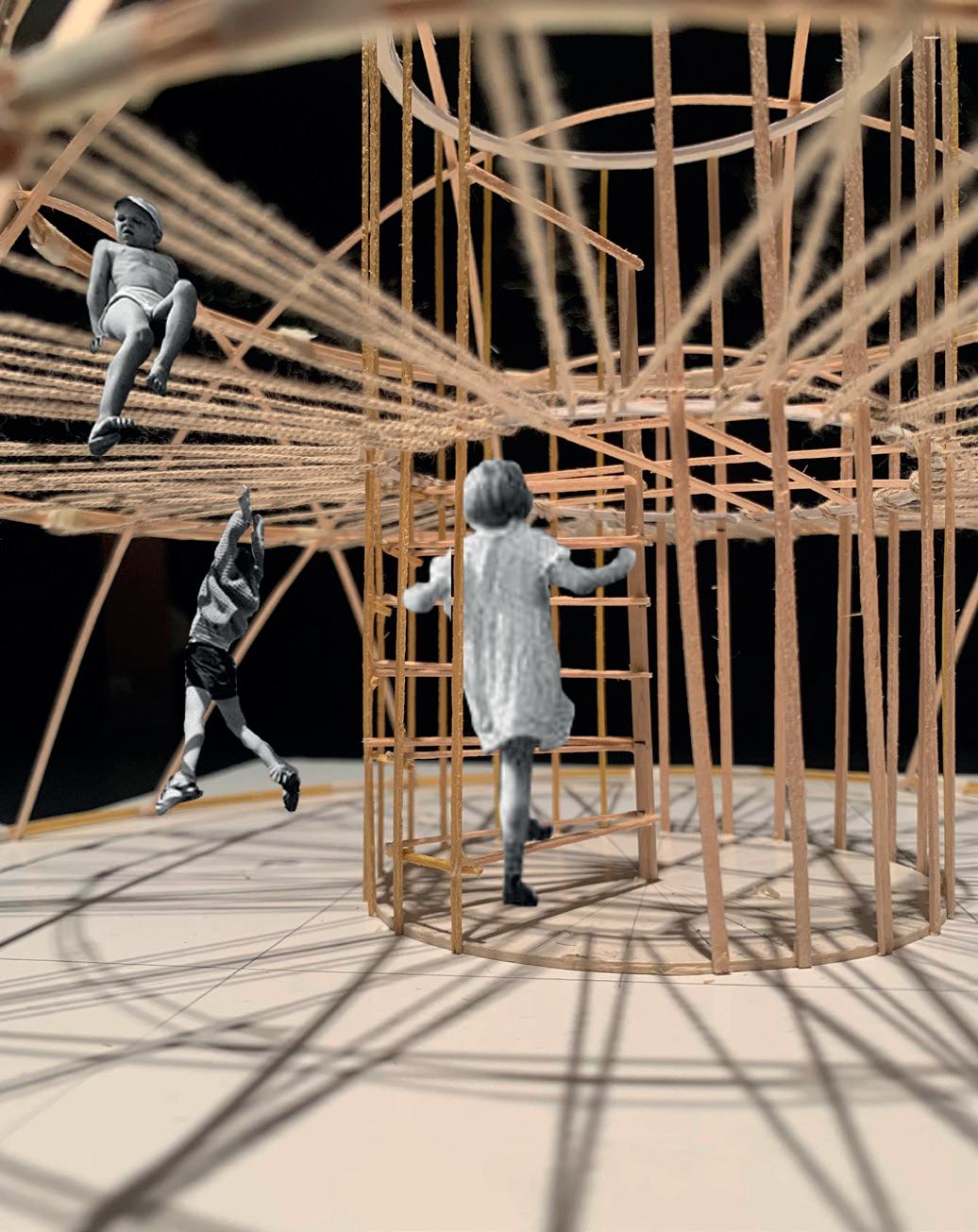
bamboo build & design workshop + design for a children’s playground in Indonesia
After finishing my education, I attended a workshop in Indonesia at Bamboo U, a pioneer in ecological building with bamboo. This workshop taught me a lot about the advantages and disadvantages of the material. Furthermore, working with bamboo expanded my interest in sustainable design methods and innovative construction techniques.
Maud Campo
My portfolio reflects a selection of projects where I have been able to apply my creativity, dedication and knowledge. From an early age, my passion for art and architecture drove me to pursue a career in architecture.
I began studying architecture in high school at the age of 16 and continued to develop my knowledge and skills at university, where I eventually obtained my Master’s degree in Architecture.
My design process comes from analytical observation. Studying buildings and theories has broadened my frame of reference over the years. This has helped me to recognise and apply certain universal values in architecture. Even in my own environment, I find it interesting to study the influence of different architectural elements.
I believe that there are many factors that determine the quality of good architecture. Although I have often sought a unified and definitive
answer to the question of what constitutes good architecture for me, I have not yet been able to formulate a definitive answer. This quest remains a central part of my growth, as I continue to discover new insights and perspectives.
As a result, my design philosophy is rather conventional: I focus on creating rational, sustainable and aesthetically pleasing spaces, taking into account their context, and I have found that teamwork and communication are important throughout the design process. I work well in environments where ideas are shared and solutions are worked out collaboratively.
After my education, I broadened my expertise by working on several projects. I participated in a bamboo workshop in Indonesia, where I gained practical experience in sustainable building and learned about the properties of bamboo as a building material.
I also gained some practical experience: for example, I assisted in the design and visualisation of a renovation project for a single-family house in Antwerp.
I also gained experience working for Christine von der Becke Architects. I mainly assisted with drawing plans and 3D images for a number of private and commercial commissions.
As I continue to grow and develop in my career, I am excited to apply my dedication, critical thinking and passion for architecture to new challenges and opportunities. I look forward to developing my skills and discovering what I can contribute to the contemporary architectural landscape.
PORTFOLIO ARCHITECTUUR
Maud Campo