



Editorial
ANewPlatformforCommonwealthThought Leadership
LeadEssays
TheFutureofFDIinEmergingCommonwealth Economies
TradeDiplomacyinaMultipolarWorld
Research&Analysis
InvestmentFlowsAcrossCommonwealth Markets
PolicyPerspectives
RethinkingTradeAgreements
StrategicCommentaries
BusinessLeadershipinEmergingMarkets
EmergingVoices
YouthLeadershipandtheFutureofGlobal Governance

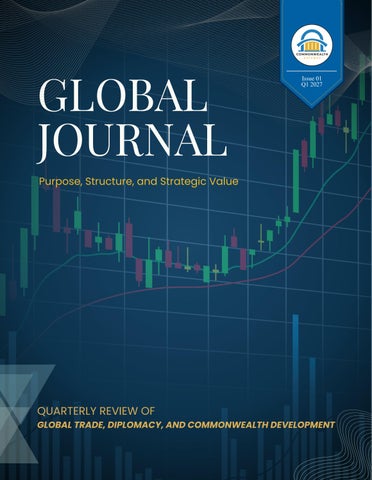
E D I T O R I A L
The launch of Global Journal marks the beginning of an ambitious intellectual initiative within the Commonwealth Gateway ecosystem. At a time when global economic systems are undergoing profound transformation, thoughtful dialogue and informed analysis are more important than ever.
The Commonwealth represents one of the world’s most diverse and dynamic international networks. With 56 member nations spanning every continent and encompassing a wide range of economic and political systems, it provides a unique environment for collaboration, innovation, and shared development.
Yet the opportunities within the Commonwealth often remain underexplored. Rapid technological change, evolving geopolitical relationships, and the emergence of new economic centres are reshaping the global landscape. In this context, policymakers, business leaders, academics, and diplomats must engage in deeper conversations about the future of international cooperation.
Importantly, this publication is not intended to represent a single viewpoint. Rather, it is designed as an open intellectual platform one where diverse perspectives can contribute to a richer understanding of global challenges and opportunities The Commonwealth Gateway initiative aims to strengthen economic ties, promote trade and investment, and encourage collaboration across the Commonwealth community. By connecting thinkers, institutions, and decision-makers, Global Journal will help reinforce the intellectual foundations of this broader mission.
As the publication evolves, we hope it will become a respected forum for thoughtful analysis and constructive debate. The future of international cooperation will depend not only on policy decisions but also on the quality of ideas that inform them.
We invite readers, contributors, and partners to join us in shaping this conversation.
Paul Borrow-Longain Chairperson, Commonwealth Gateway
Global Journal
Foreign direct investment (FDI) has long served as a catalyst for economic growth, technological advancement, and cross-border collaboration. Across the Commonwealth, investment flows have played a central role in developing industries, modernising infrastructure, and expanding international trade networks.
However, the global investment landscape is undergoing significant change Shifting geopolitical alliances, the acceleration of digital technologies, and the growing urgency of climate adaptation are reshaping how and where capital is deployed.

For Commonwealth nations, these developments present both opportunities and challenges.
On one hand, the Commonwealth benefits from a shared legal heritage, common language structures, and long-standing diplomatic relationships that facilitate cross-border investment. These structural advantages have historically helped reduce transaction costs and improve investor confidence between member states.
On the other hand, competition for international capital has intensified. Emerging markets across Asia, Africa, and Latin America are increasingly competing to attract global investors, while new regulatory frameworks and sustainability standards are altering the dynamics of investment decision-making.
In this context, the Commonwealth community has an opportunity to rethink how it positions itself within the global investment ecosystem.
Strategic collaboration between governments, financial institutions, and private-sector leaders could unlock significant new investment flows across Commonwealth markets. By strengthening institutional transparency, investing in digital infrastructure, and promoting sustainable development initiatives, member nations can create more attractive environments for long-term capital.
The contributions in this edition of Global Journal explore these issues from a range of perspectives. Authors examine how emerging technologies are reshaping investment patterns, how geopolitical shifts are influencing capital allocation, and how policymakers can design frameworks that encourage sustainable economic growth.
Together, these analyses highlight a central theme: the future of investment will depend not only on capital availability, but also on the strength of the institutions and partnerships that guide its deployment.
TE M E

ByDr.SarahMalik SeniorFellow,InternationalEconomicPolicyInstitute
Foreign direct investment has historically played a pivotal role in the economic development of emerging markets By providing access to capital, technology, and global supply chains, FDI enables countries to accelerate industrial growth and enhance their participation in international trade.
Across the Commonwealth, many emerging economies have leveraged foreign investment to transform key sectors such as manufacturing, telecommunications, renewable energy, and digital services.
However, the global investment environment is becoming increasingly complex. Several structural trends are influencing the direction of international capital flows. First, the rise of regional economic blocs is encouraging investors to focus on markets that offer both scale and regulatory stability. Second, technological innovation is altering the types of industries that attract investment. Digital infrastructure, data services, and advanced manufacturing are now among the fastest-growing sectors for cross-border capital.
Third, sustainability considerations are rapidly gaining importance. Environmental, social, and governance (ESG) standards are now central to many institutional investment strategies, meaning that countries seeking to attract capital must demonstrate credible commitments to sustainable development.
For Commonwealth economies, these trends present a unique opportunity. Many member states possess abundant natural resources, young and growing populations, and expanding urban markets. If supported by effective governance frameworks and modern infrastructure, these factors can create highly attractive investment environments.
At the same time, policymakers must address persistent structural challenges. Regulatory complexity, political uncertainty, and inadequate infrastructure continue to discourage potential investors in some regions.
Addressing these issues requires coordinated action across multiple sectors. Governments must strengthen legal protections for investors, improve transparency in regulatory processes, and invest in infrastructure that supports modern economic activity.
The Commonwealth network itself could also play a more active role in facilitating investment flows. By strengthening institutional cooperation between member states, it may be possible to create shared frameworks that simplify cross-border investment and encourage long-term partnerships.
Ultimately, the future of FDI in Commonwealth markets will depend on the ability of governments, businesses, and institutions to collaborate effectively. Those economies that succeed in building stable, transparent, and forward-looking investment environments are likely to attract significant global capital in the decades ahead.

ByDr.SarahMalik SeniorFellow,InternationalEconomicPolicyInstitute
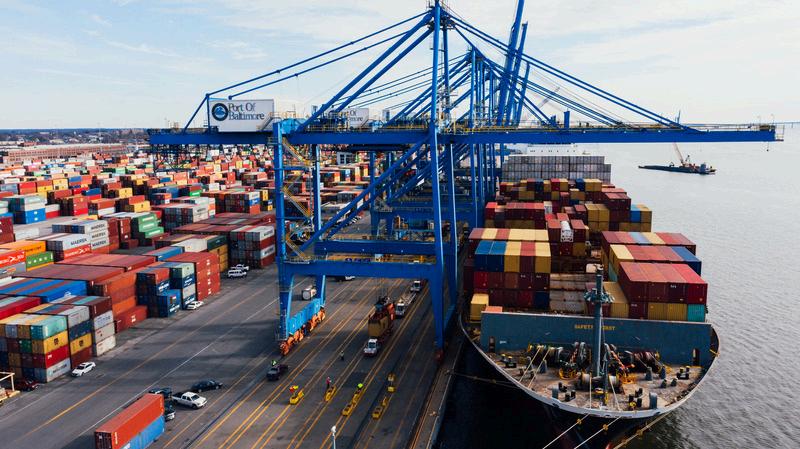
Foreign direct investment has historically played a pivotal role in the economic development of emerging markets. By providing access to capital, technology, and global supply chains, FDI enables countries to accelerate industrial growth and enhance their participation in international trade.
Across the Commonwealth, many emerging economies have leveraged foreign investment to transform key sectors such as manufacturing, telecommunications, renewable energy, and digital services.
However, the global investment environment is becoming increasingly complex.
Several structural trends are influencing the direction of international capital flows. First, the rise of regional economic blocs is encouraging investors to focus on markets that offer both scale and regulatory stability. Second, technological innovation is altering the types of industries that attract investment Digital infrastructure, data services, and advanced manufacturing are now among the fastest-growing sectors for cross-border capital.
Third, sustainability considerations are rapidly gaining importance. Environmental, social, and governance (ESG) standards are now central to many institutional investment strategies, meaning that countries seeking to attract capital must demonstrate credible commitments to sustainable development.
For Commonwealth economies, these trends present a unique opportunity. Many member states possess abundant natural resources, young and growing populations, and expanding urban markets. If supported by effective governance frameworks and modern infrastructure, these factors can create highly attractive investment environments.
At the same time, policymakers must address persistent structural challenges. Regulatory complexity, political uncertainty, and inadequate infrastructure continue to discourage potential investors in some regions.
Addressing these issues requires coordinated action across multiple sectors. Governments must strengthen legal protections for investors, improve transparency in regulatory processes, and invest in infrastructure that supports modern economic activity.
The Commonwealth network itself could also play a more active role in facilitating investment flows. By strengthening institutional cooperation between member states, it may be possible to create shared frameworks that simplify cross-border investment and encourage long-term partnerships.
Ultimately, the future of FDI in Commonwealth markets will depend on the ability of governments, businesses, and institutions to collaborate effectively. Those economies that succeed in building stable, transparent, and forward-looking investment environments are likely to attract significant global capital in the decades ahead.




ByRajivMenon Chairman,GlobalInfrastructurePartners
Business leaders operating in emerging markets must navigate a landscape that is both complex and rapidly evolving. Economic volatility, regulatory change, and shifting geopolitical dynamics can create uncertainty for investors and companies alike. Yet these same environments often offer some of the most compelling opportunities for long-term growth and innovation.
Across many emerging Commonwealth economies, structural transformation is underway. Urban populations are expanding, digital technologies are reshaping traditional industries, and governments are investing heavily in infrastructure and connectivity. These developments are generating new markets for services, technology, finance, and manufacturing, creating conditions that can support sustained economic expansion.
For international companies and investors, however, success in these markets requires more than financial resources. It requires a deep understanding of local economic conditions, institutional frameworks, and cultural dynamics. Leaders must be able to navigate regulatory systems, build trusted relationships with local partners, and adapt global strategies to regional contexts.



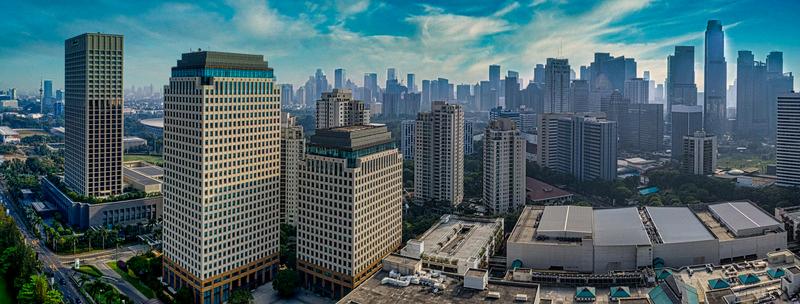
One of the defining characteristics of effective leadership in emerging markets is strategic patience. Infrastructure projects, industrial development initiatives, and market expansion strategies often unfold over extended timelines. Investors who approach these markets with short-term expectations may find themselves discouraged by initial challenges. Those who commit to long-term engagement, however, frequently discover significant and lasting value.
Another important factor is the growing role of sustainability and responsible investment. Environmental, social, and governance (ESG) considerations are increasingly influencing corporate strategy and investor behaviour. Businesses operating in emerging markets are now expected not only to generate economic returns but also to contribute to broader societal goals such as sustainable development, environmental stewardship, and inclusive economic growth.
This shift presents an opportunity rather than a constraint. Companies that embed sustainability within their operational models often gain stronger support from local communities, improved access to international capital, and enhanced reputational credibility in global markets.
As the global economy becomes increasingly interconnected, emerging markets will play a central role in defining patterns of trade, innovation, and investment. The organisations and leaders who recognise this shift and who are prepared to invest thoughtfully within it will contribute not only to their own success but also to the broader advancement of international economic cooperation.