RESUME
Education
09/2018-Present Chongqing University (CQU)
Bachelor of Architecture (5ys)
Major: Architecture
GPA: 3.63/4.00
06/2022-07/2022 Harvard GSD Design Discovery Virtual
Program Certificate Research
05/2019 Annual International Conference for Students
Third Prize
Team Leader, Preliminary Study on the Passive Cooling Methods Applied in Traditional Architecture in Ba -Yu Area; A Case Study on Huguang Guild Hall
Competition
2019-2022 National English Competition for College Students
First Prize (Band C, 05/2022)
Second Prize (Band C, Three Times, 05/2021, 11/2020, 05/2019)
2021-2022 The 7th China Habitat Environment Design Academic Year Award
Bronze Award in Urban Design (12/2022)
Project: Slowly, Slowly, Slowly Team Member, Rendering/Modeling and Drafting/Type Setting
Bronze Award in Interior Design(11/2021)
Project: Back to Nature - A Healing Garden in Seclusion in A Modern City Team Member, Working Drawing/Modeling and Drafting/Type Setting
Architectural Design Excellence Award(11/2021)
Project: Planting Academy - Factory Reconstruction Design Based on Psychological and Environmental Restoration
Team Member, Schematic Design/Modeling and Drafting/Type Setting
07/2020 National Green Buildings Design Competition
Grand Prize
Project: Travelling
Team Member
07/2020 China College Students' ‘Internet+'Innovation’ and Entrepreneurship Competition
Silver Award
Project: Model Photography Studio Team Leader Honor
2021 The 2nd Prize of CQU Outstanding Student Comprehensive Scholarship (Twice)
2021 CQU Excellent Student Cadre
2021 CQU Advanced Individual in Scientific and Technological Academic Innovation
2020 The 3rd Prize of CQU Outstanding Student Comprehensive Scholarship (Twice)
2020 CQU Merit Student Association
09/2019-Present CQU YEMA Dance Club
Vice President
Organized Activities
11/2020-07/2021 CQU Student Union of School of Architecture and Urban Planning
Deputy Minister of Art
Organized Activities
Other
Language Chinese (Native), English (TOEFL 106)
Interest Piano (Level 9), Dance Travelling
Software AutoCAD Photoshop Lumion, Rhino illustrator InDesign Revit, ArchiCAD, 3DMax
Han, Jinyue Jinyueh_18@outlook.com +8613116115612
01 Twisting Shell
STADIUM DESIGN CHONGQING, CHINA ACADEMIC WORK
TEAM WORK, COOPERATOR: YUHAN GUO, CHI WANG, JIAJING GAO MY ROLE: CONCEPT, ANALYSIS, DRAWING, MODELS 2022.02-2022.04, 8 WEEKS
TUTOR: XUESONG WANG, ASSOCIATE PROFESSOR, CHONGQING UNIVERSITY
The architecture can provide seats for more than 5000 audience and space for the athletes to train in the training hall. It's also required to deal with the height difference of over 14 meters in the site.
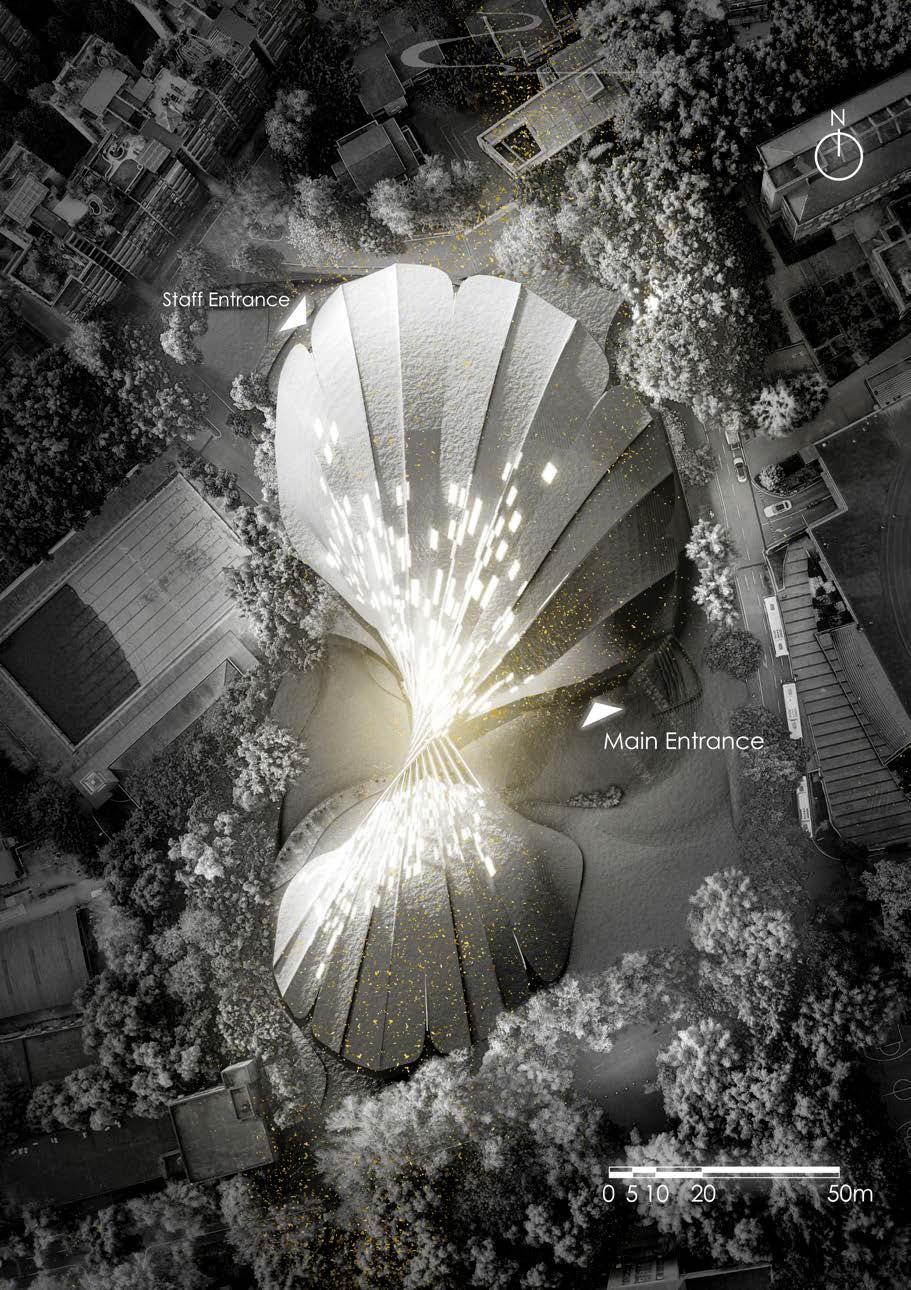
The design mainly focued on the innovation in its structure. With the rotating layout of steel arches in different heights, the structure connects the stadium and the training hall smoothly, creating an illusion of a twisted structure.
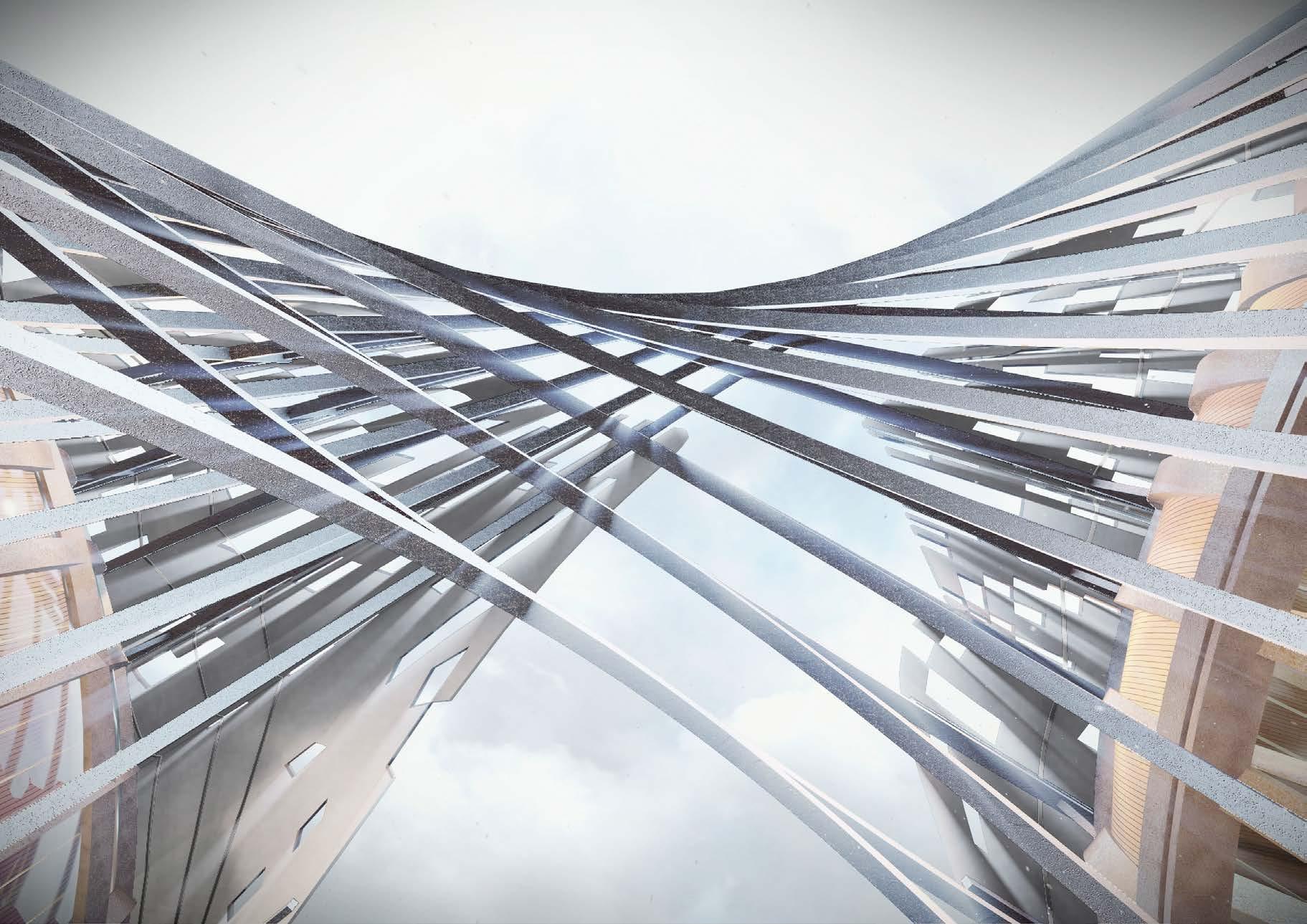
Structure Perspective
The site is located in Chongqing University, Chongqing, China. Surrounded by the playground and other outdoor sports courts, this stadium is required to make up the lack of indoor space for competitions and matches.
Drawing by Jinyue Han
Twist & Expand
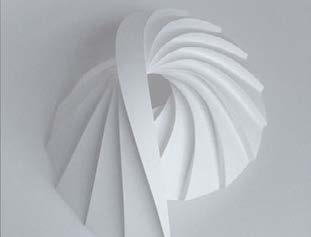
Fan art is known for its beauty and ingenious, but what makes fan art different from other drawing art is the existence of fan bones . Serving as the structure, a single piece of fan bone can seems tedious and simple while an unexpected view was created when a fan with a handful of bones opens. During the process, it is the tiny twist that keeps the whole structure balanced and harmonious when expanded.
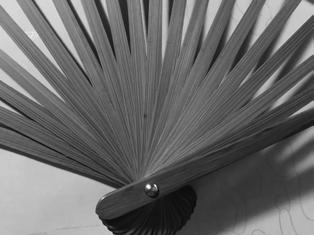
When the twist of the fan bones was studied and used as the main supporting structure of architecture, it creates two similar spaces while keeping their characteristics. In a campus stadium, these similar and differences fit the function and the need of the training hall and competition venue.
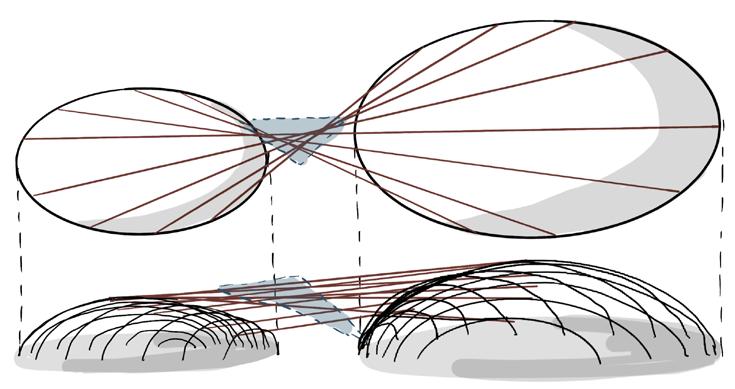
The structure intersects in a triangle on the plan, making it more steady
Avoid adding too much pressure on one point
Fan Bone
Site Plan
Plan Perspective
From Google From Google Paper Shell
Stadium
Drawing by Chi Wang and Jinyue Han
Training Hall
Drawing by Jinyue Han
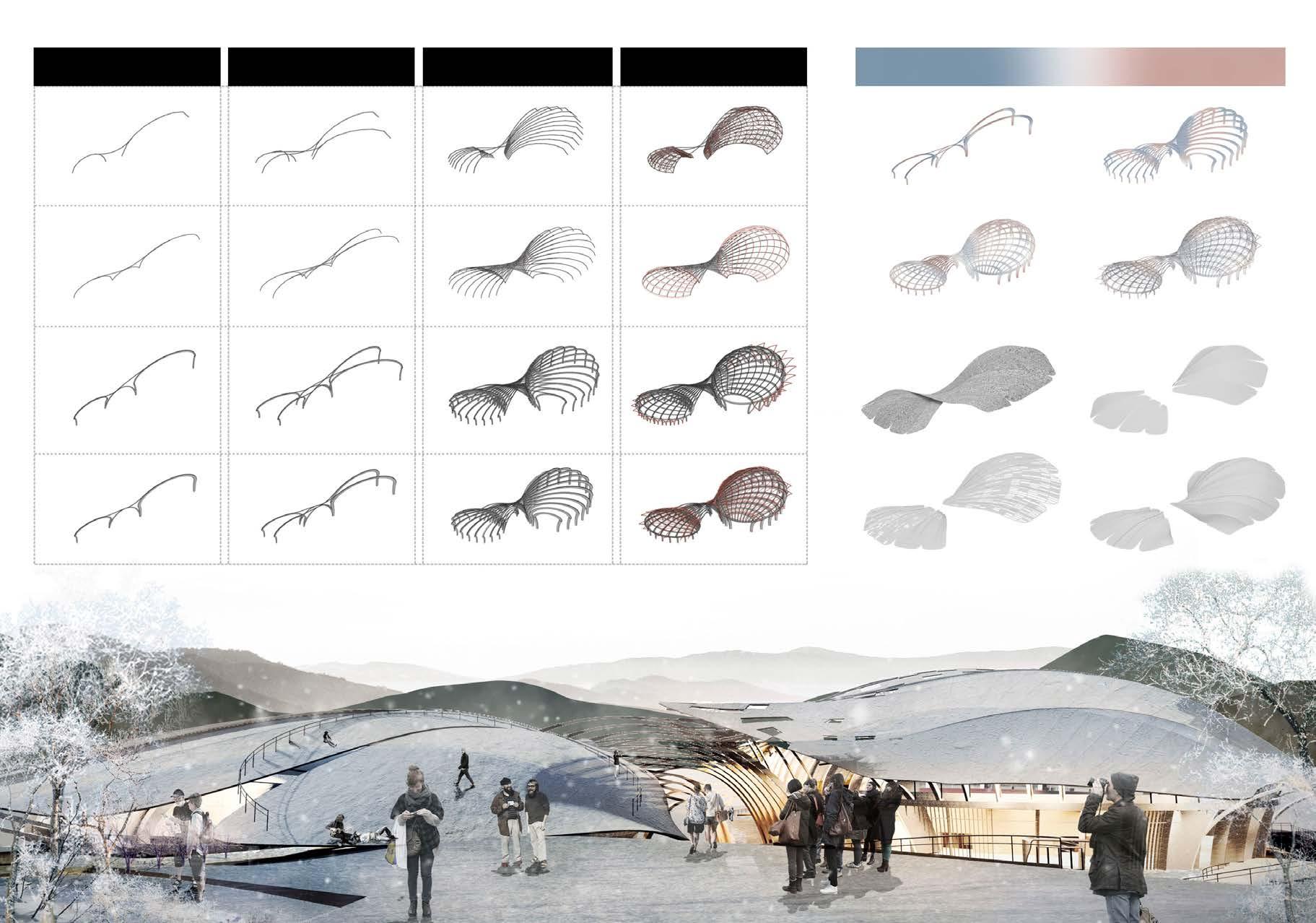
Structure Evolution
Analysis Roof Evolution 1.Single Arch 1-2 Connect 2-2 Intersect Add Bind After Secure 4-2 Bind 3-2Arrange 1-4 Tighten 2-4 Crossed 4-4 Secure 3-4 Arrange 1-1 Seperate 2-1 Correspond Arch More Stable 4-1 Connect 3-1 Arrange 1-3 Lift 2-3 Crossed 4-3 Join 3-3 Arrange 2.Double Arch 3.Rotating Arch 4.Roof Structure Compressive Tensile 1.Roof covering the structure 3.Add frame and hollowing 2.Uncover the passageway 4.Rearranginng hollowing Central Square Perspectives Drawing by Jinyue Han
Structure

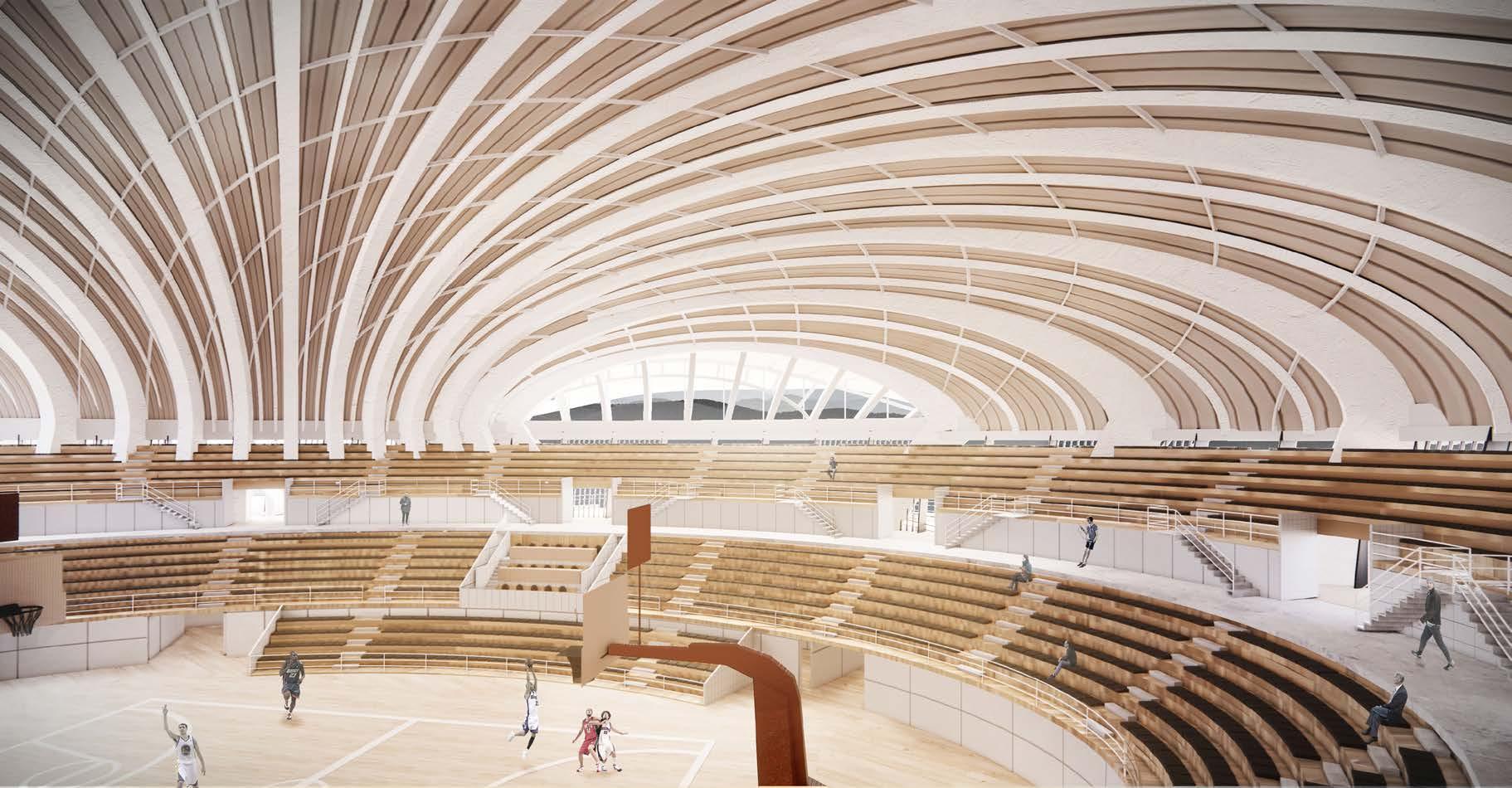
Stadium Interior Perspective
West Elevation
East Elevation
Drawing by Yuhan Guo
Drawing by Jinyue Han
Exploded Axonomatric
Roof Hollowing helps the roof gradually faded into the center
Above the ceiling, vertically supports the roof
Hides the remaining structure and the equipment
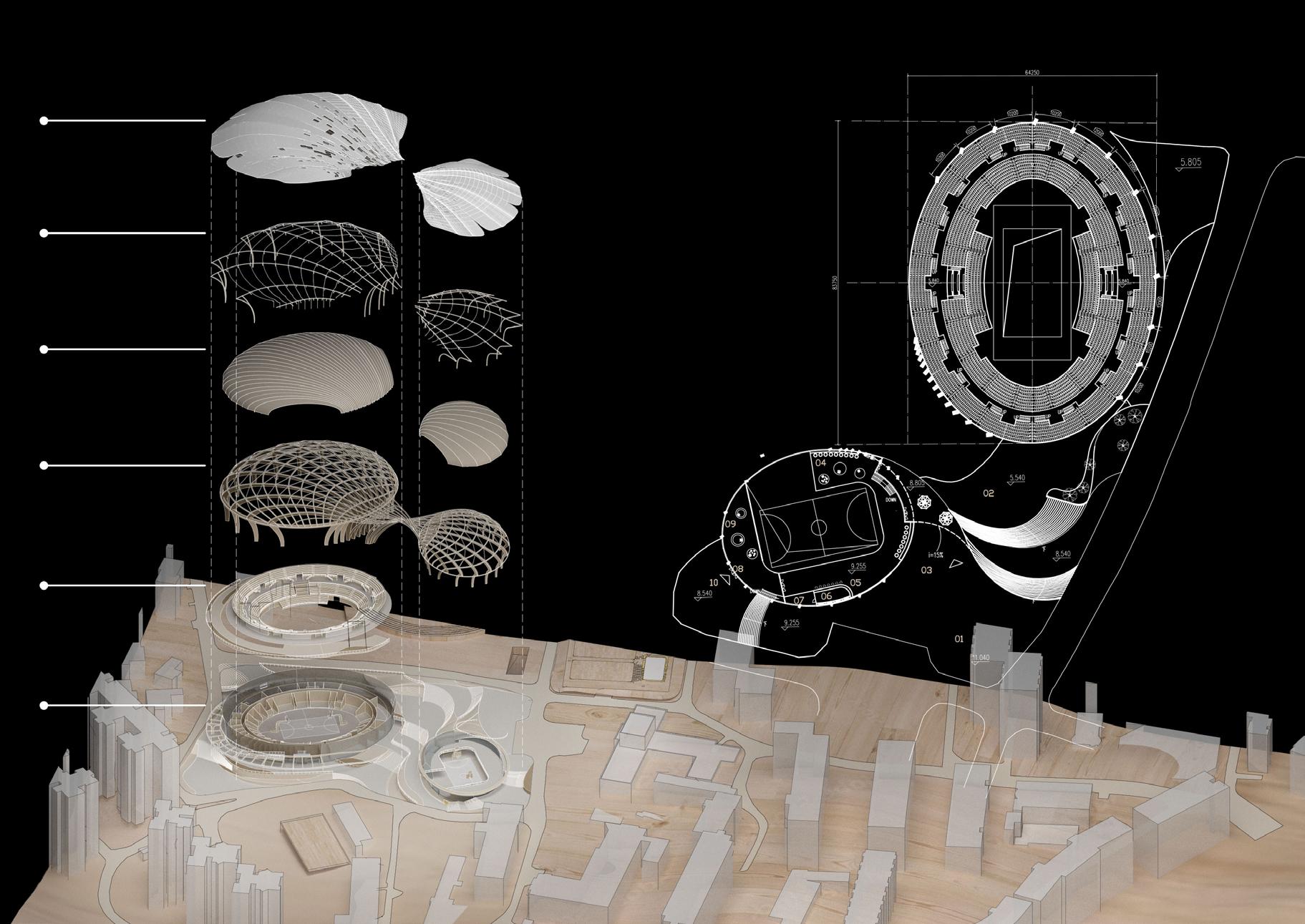
Supports the roof and the ceiling while creating the twisting illusion Provides seats for 5000 people
Rooms for athletes, referees, reporters, staff and equipment
Ceiling Basement Sitting Area Structure Roof Structure
Floor Plan 01 Tree Square 02 Central Square 03 East Entrance 04 Resting Area 05 Drink Bar 06 Kitchen 07 Storage 08 Entrance Hall 09 Sitting Area 10 West Entrance Drawing by Jinyue Han
3rd
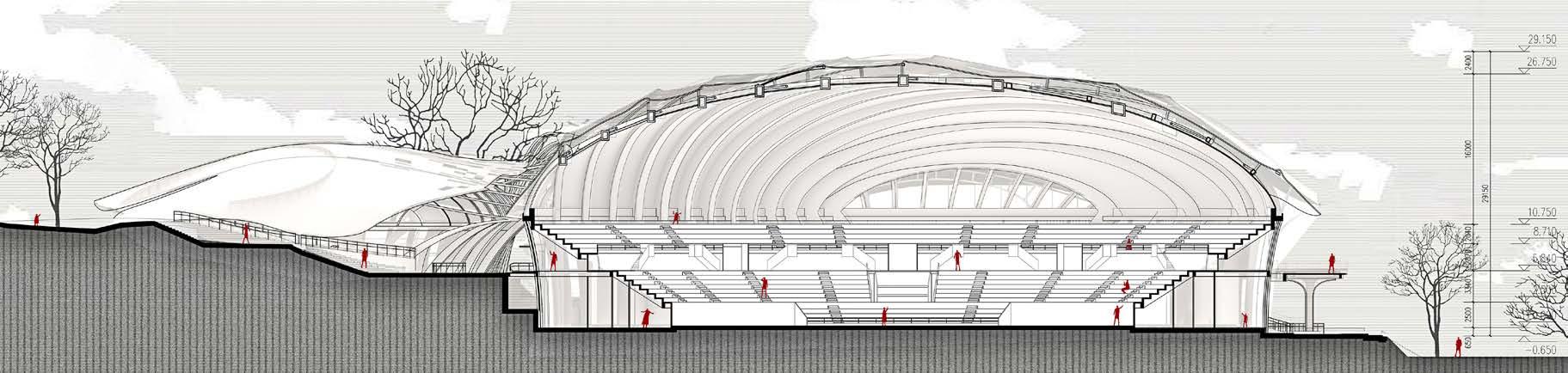
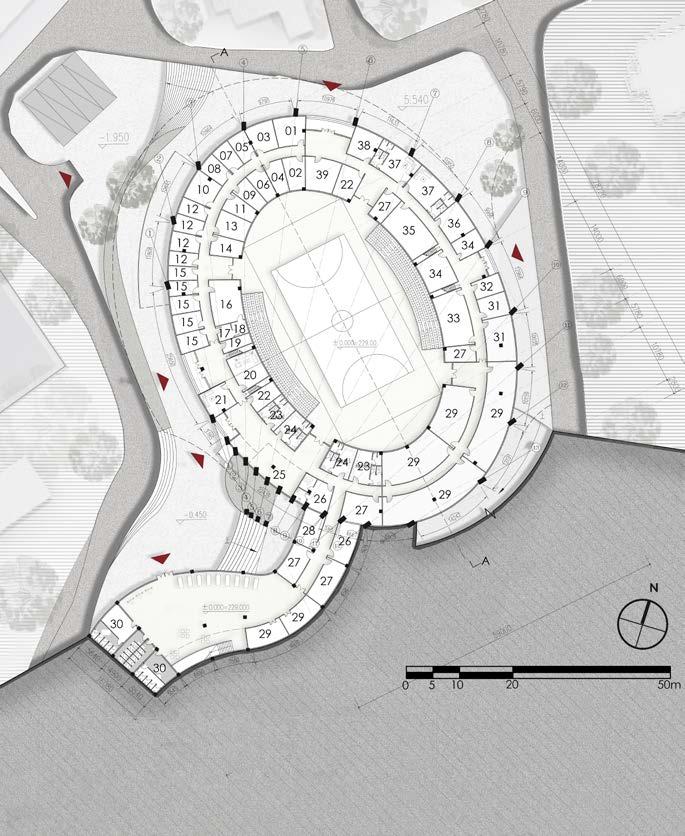
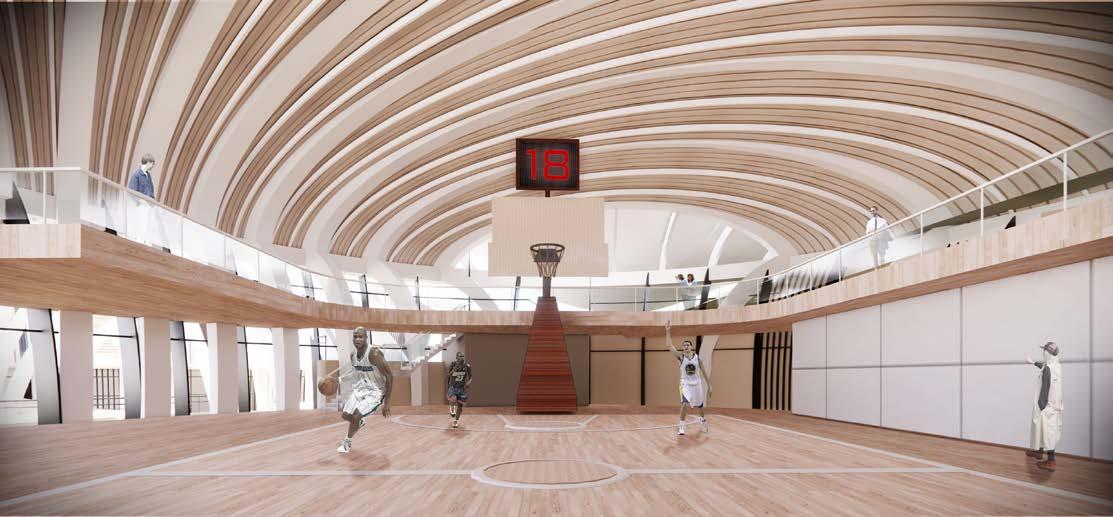
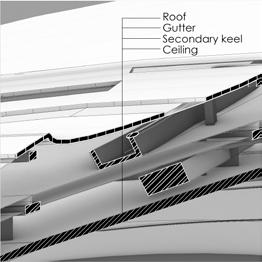
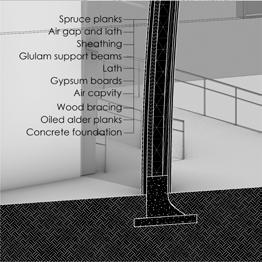
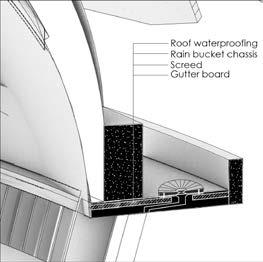
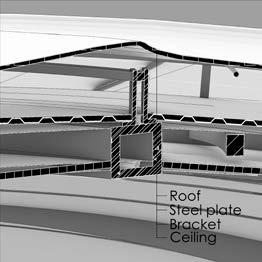
Section A-A 1st Floor Plan Joint Detail Training Hall Interior Perspective Siphon Drain Roof Support Roof Gutter Wall Section 10 Meeting Room 11 Chronograph 12 Organizing Committee 13 Light Control Room 14 Camera Conversion 15 Office 16 Computer Room 17 Front Room 18 Change Room 19 Accompanying Person 01 Broadcast Room 02 Display Screen Control Room 03 Post-match Control Center 04 Broadcast Room 05 Arbitration 06 Sound Control Room 07 Print Room 08 Edit Room 09 Command Room 20 VIP Lounge 21 VIP Room 22 Restroom 23 Women's Dress Room 24 Men's Dress Room 25 Warm-up Waiting Area 26 Stimulant Test Room 27 Lounge 28 Medical Emergency Room 29 Device Room 30 Locker Room 31 Equipment Room 32 Power Distribution Room 33 Editing Room 34 Journalist Office 35 Announcement Room 36 Press Hall 37 Referee Lounge 38 Fire Control Room 39 Data Processing Room Drawing by Jinyue Han First Floor Plan/Join Detail/Section A-A Drawing by Jinyue Han
02 Spiral Church
CHURCH DESIGN
GUANGZHOU, CHINA
ACADEMIC WORK
INDIVIDUAL WORK, 2022.09-2022.11, 8 WEEKS
TUTOR: JUN LI, LECTURER, CHONGQING UNIVERSITY
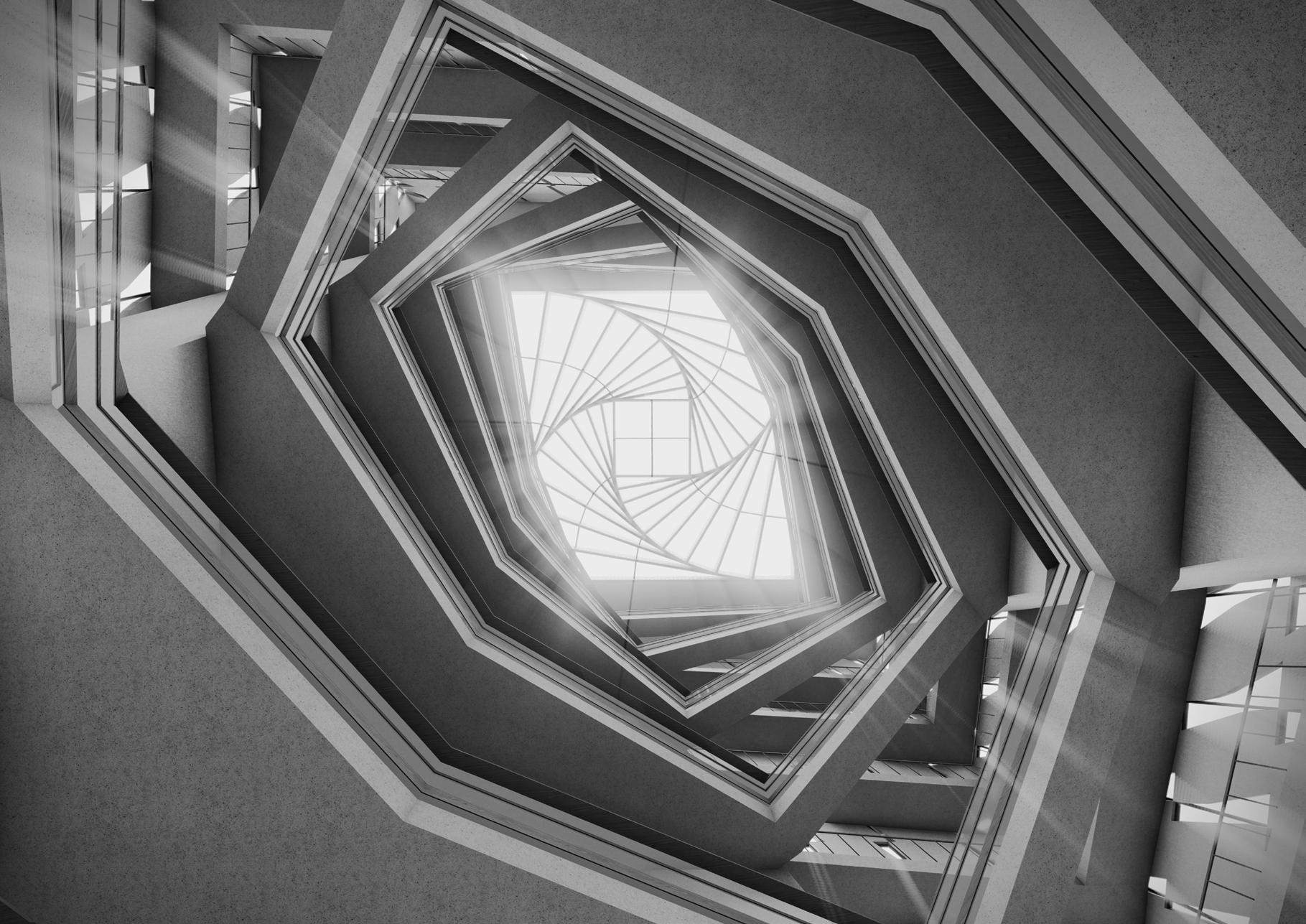
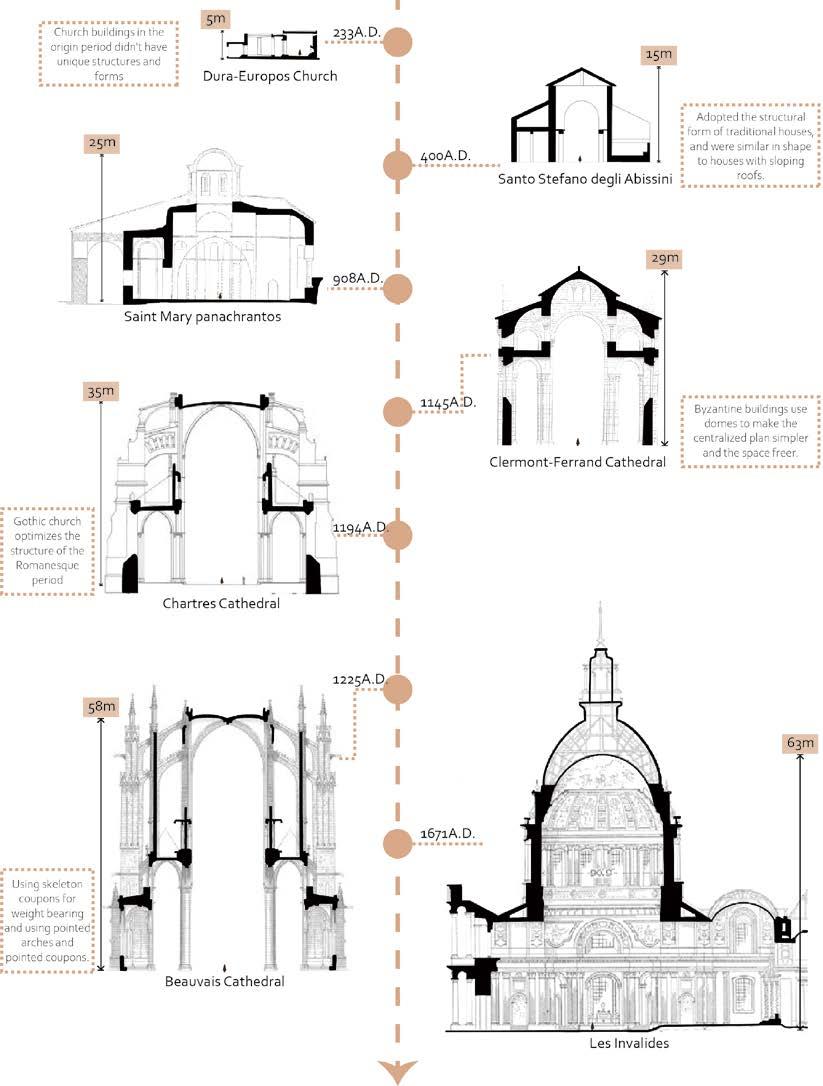
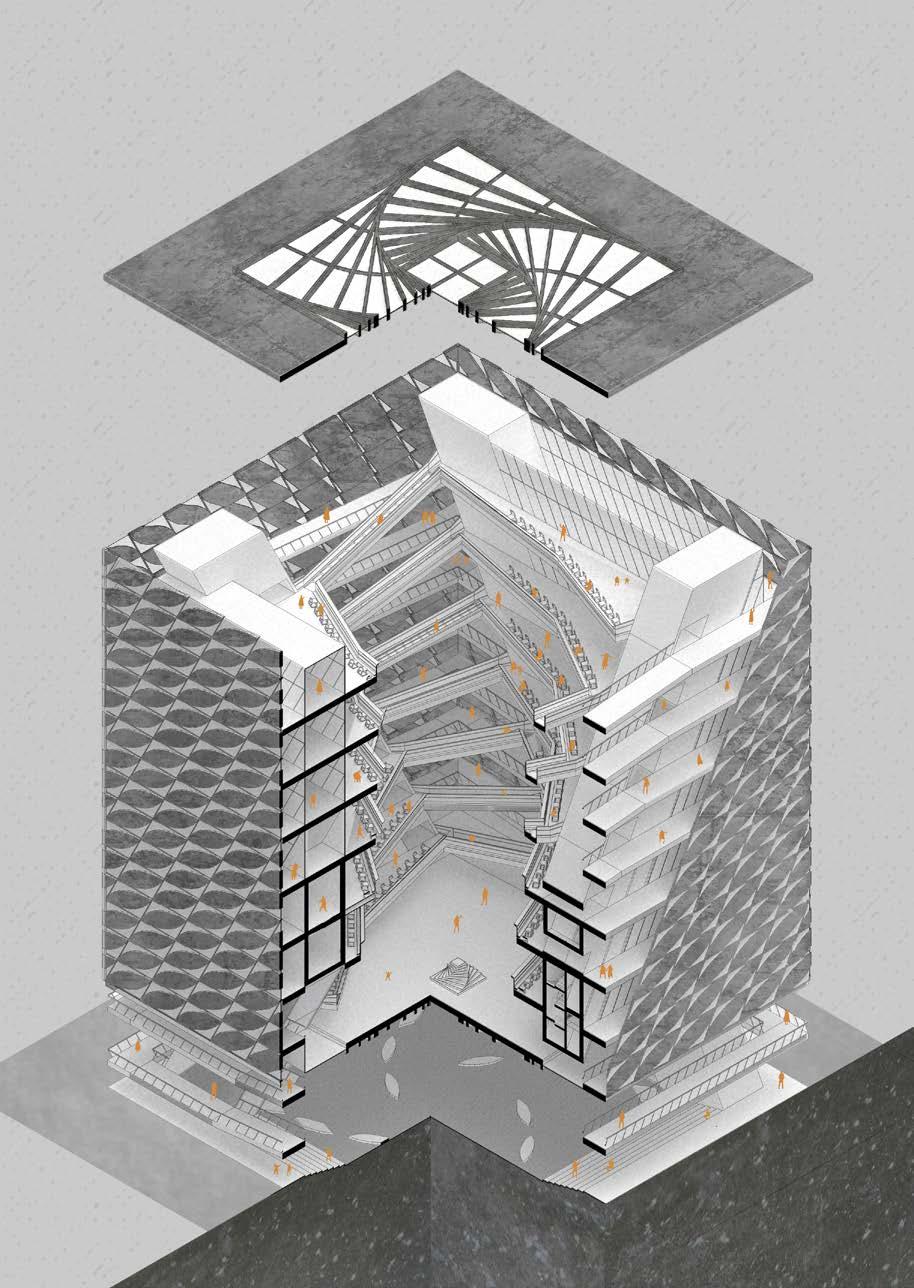
From ancient times to the present, church architecture has been exploring different structures and plane forms to achieve higher heights and purer divine spaces. The continuous developing structure allows the church to have more floating plan and incredible height that helps the church become more sacred.With the exploration of structure and development of techniques, high-rise buildings have gradually evolved a unique structural system that allows us to achieve height and atmosphere that we've never experienced before. So what will it happen if a church was applied to the structural system of high-rises?
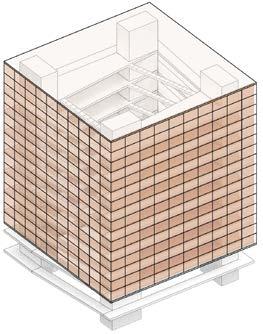
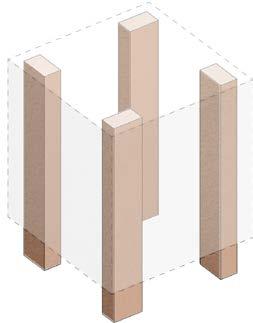
The traditional church only uses the ground space, divides the space by pillars. The space above only serves as decoration and visually worship
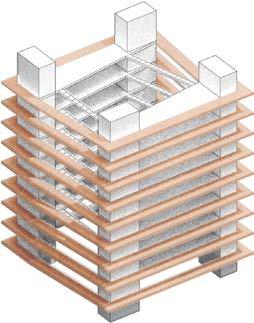
Adding floors above the ground helps build up the vertical space. Gradually setting back floor boundaries promote visual communication.
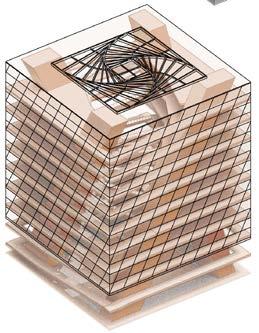
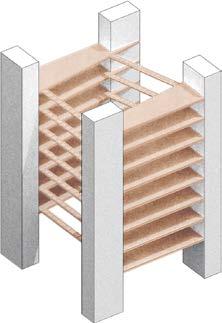
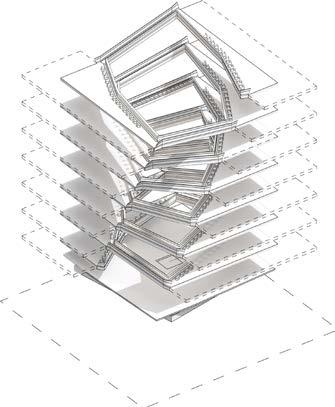
Using continuous slopes to connect floors not only makes the circulation more complete, but also keeps people keep going upwards.
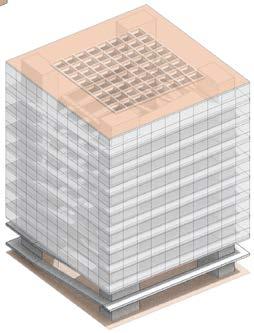
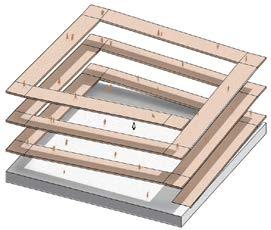
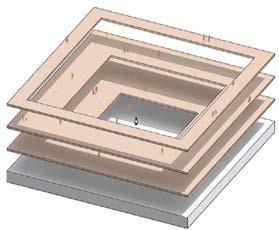
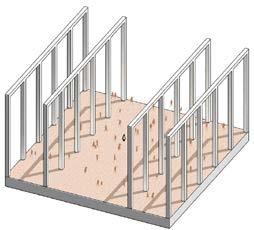
Sacred Height New Height For Sacred Space
Rotate Facade Spiral Nave Design Evolution Crossing Aisle Ramp Core Transportation 1 4 2 5 3 6
Horizontal Church Vertical Church Spiral Church
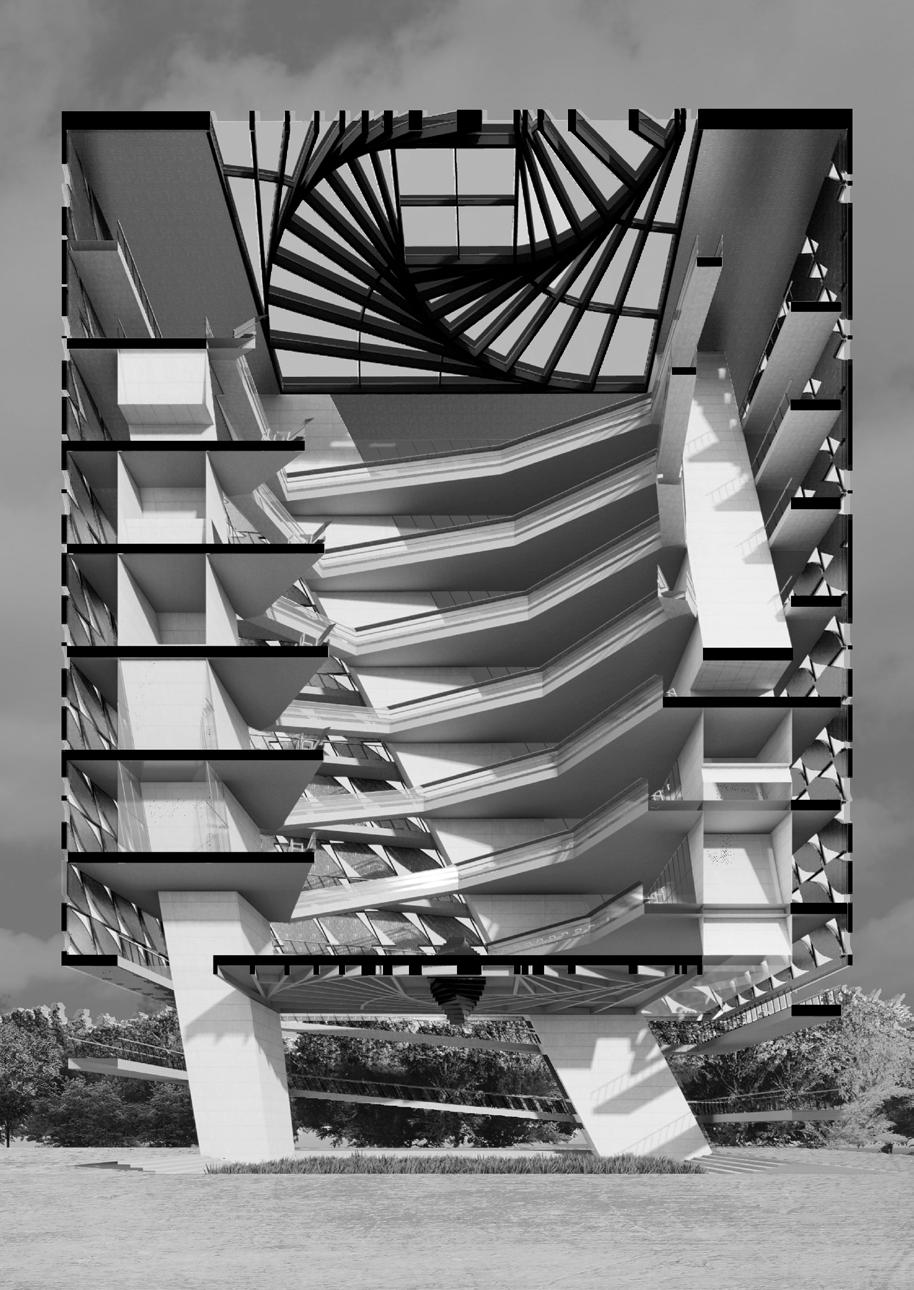
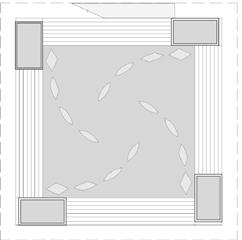
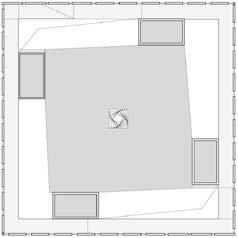
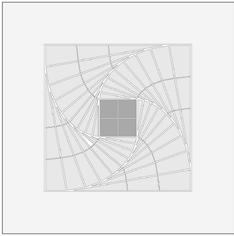
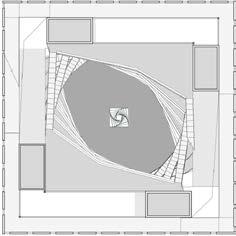
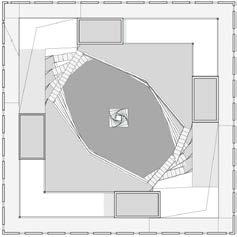
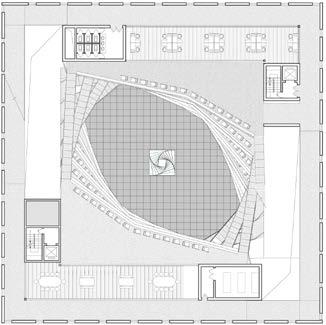
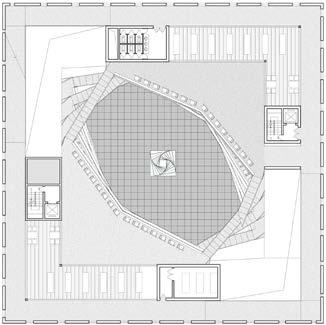
Section Perspective Plan 1st Floor 4th Floor 7th Floor 8th Floor 10th Floor 2nd Floor 5th Floor 9th Floor 3rd Floor 6th Floor Roof
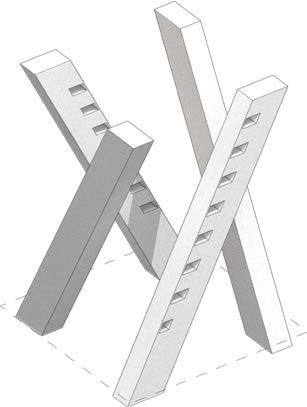
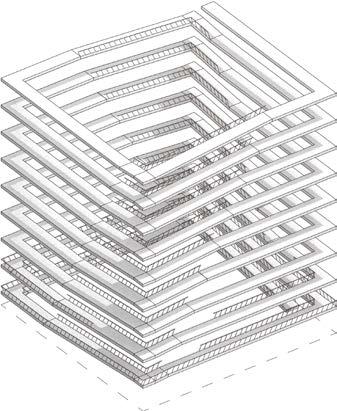
Core Aisle The pattern is indicating the shape of the central space Nave
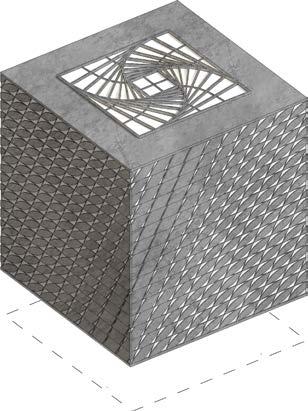
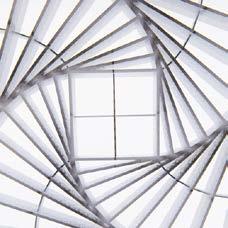
Spiral System Facade Pattern Section Axonometric 1 6 2 7 3 8 4 9 5 10
Facade
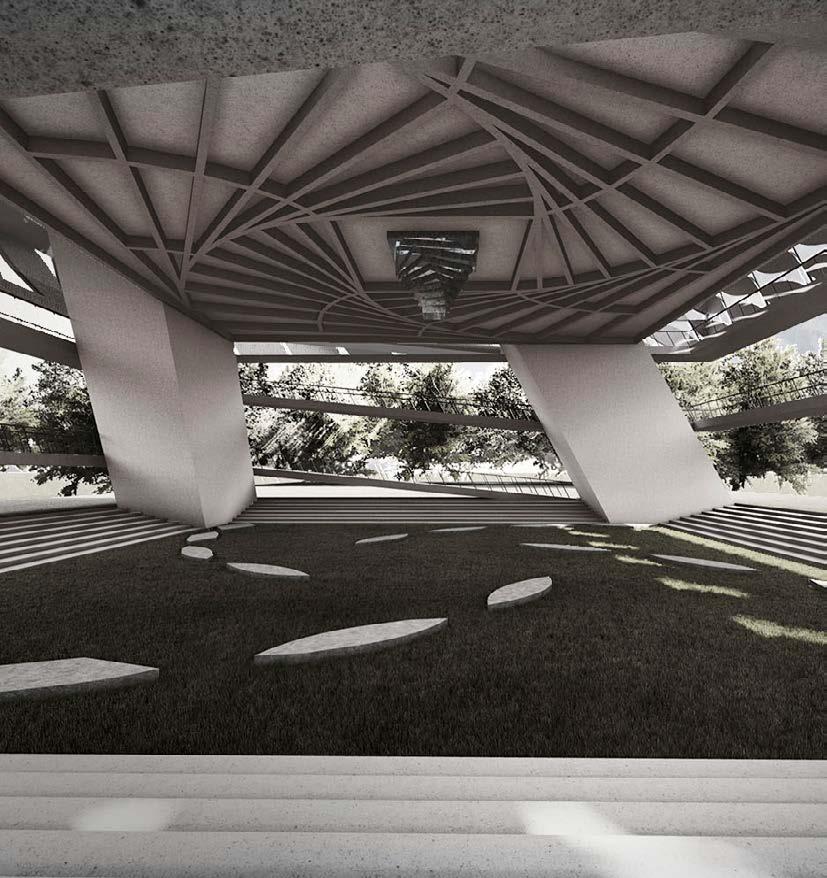
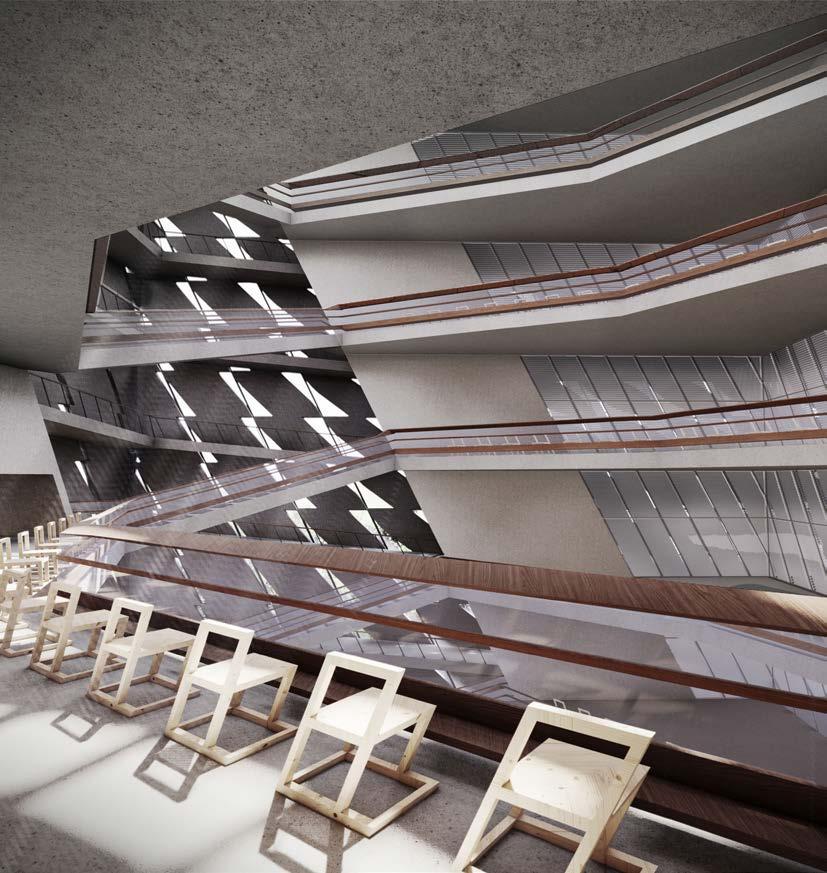

Garden Perspective Interior Perspective
Material
Wood
Shutter
Concrete Stone Steel Metal
03 Under The Tree
COMMUNITY CENTER DESIGN
GUANGZHOU, CHINA
ACADEMIC WORK
INDIVIDUAL WORK, 2021.09-2021.11, 8 WEEKS
TUTOR: YAN SUN, ASSOCIATE PROFESSOR, CHONGQING UNIVERSITY
Tree&Space
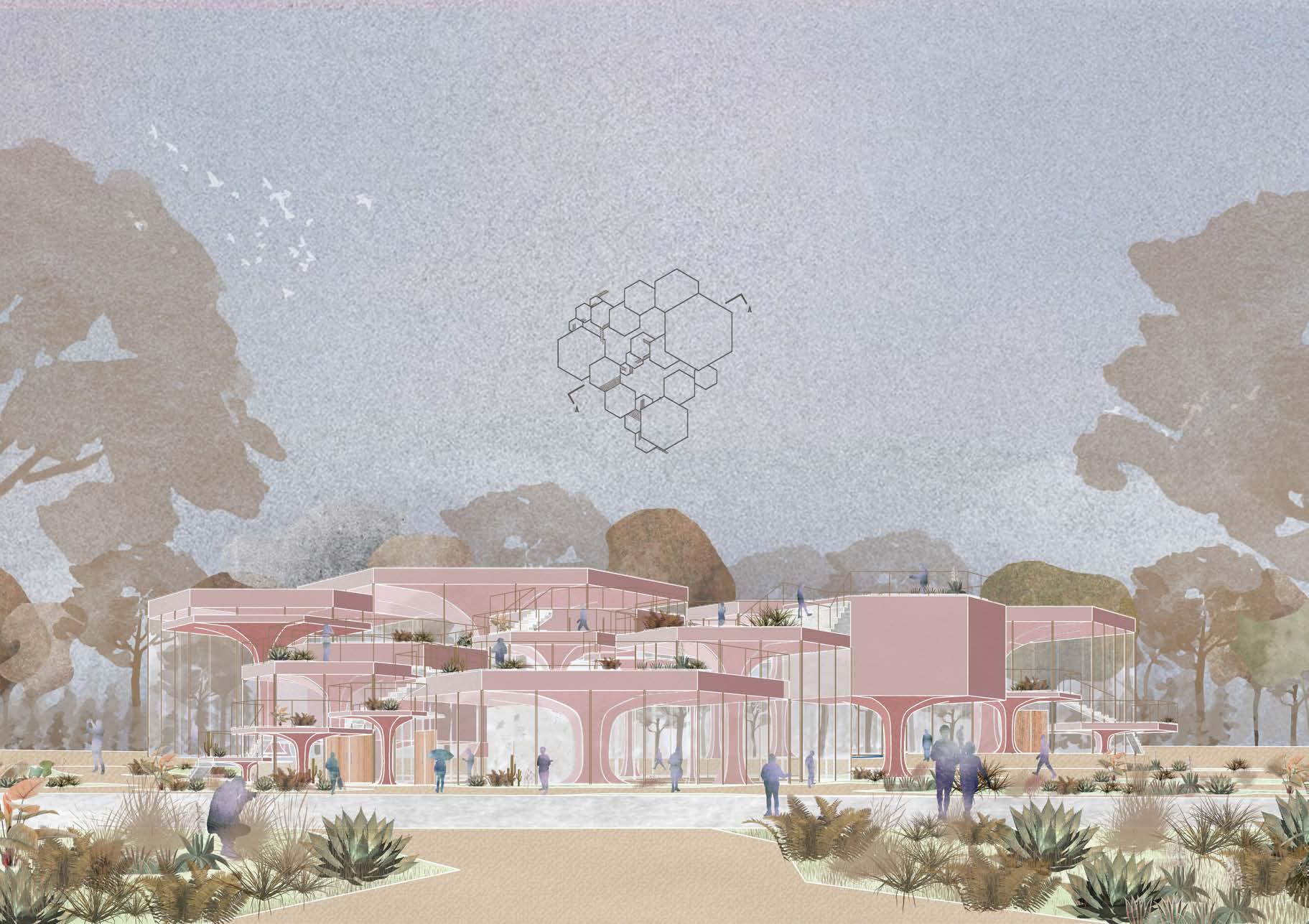
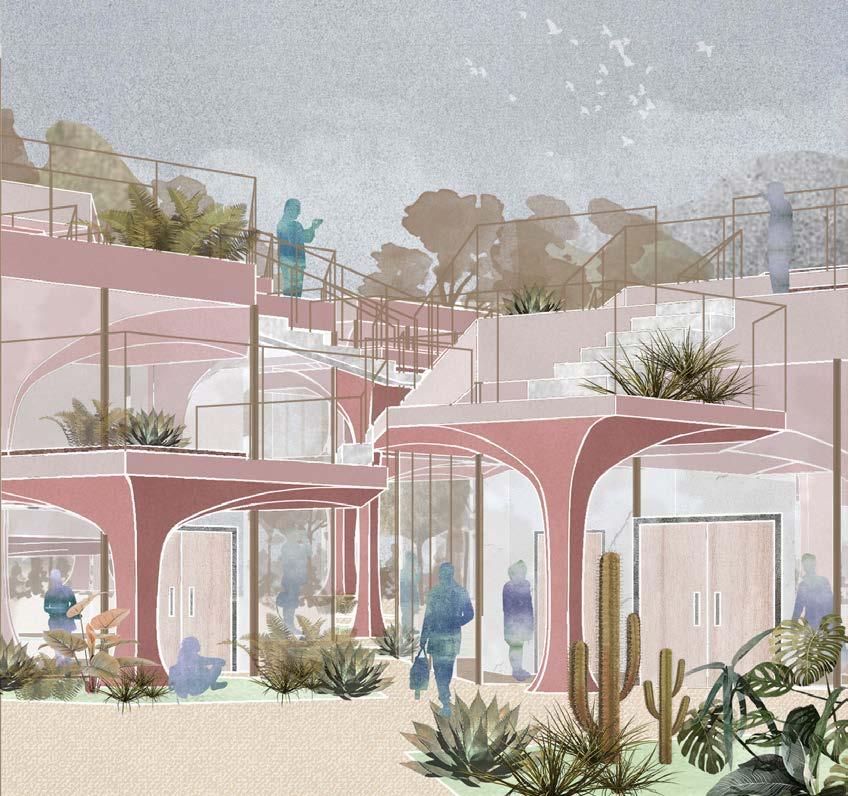
From the beginning of its invention, architecture was designed to protect people from nature and unknown threats outdoor. But as civilization develops, the essential spirit has changed. More and more people advocate the natural environment. As a significant part of daily life, architecture started to play a role in helping people come back to nature.
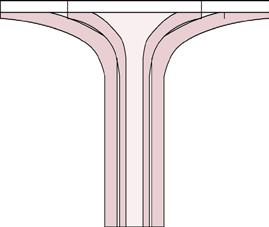
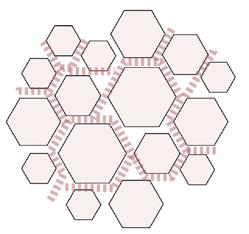
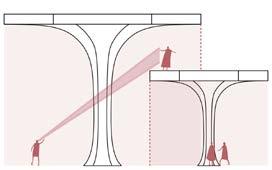
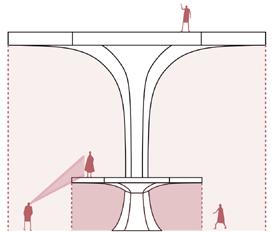
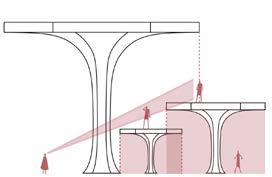
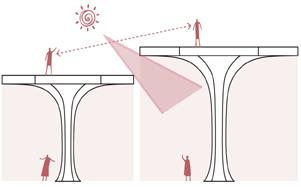
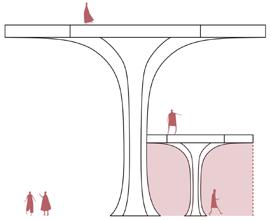
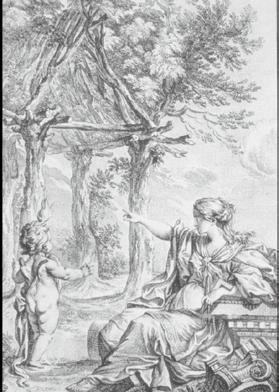
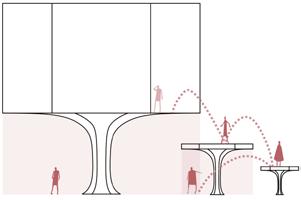
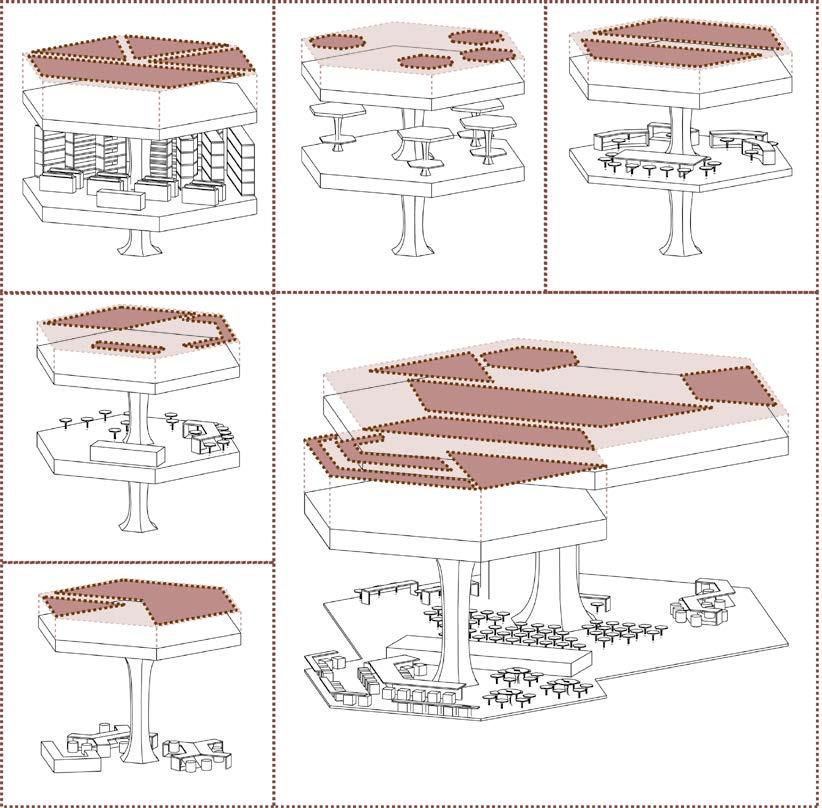
The tree is nature itself and space itself . The shielding shadow it creates can be considered one of the earliest spaces in the world. Trees divide space in a way that's completely different from that of architecture. The up-head branches and leaves indicate the space underneath without using blocks insight, such as walls. Therefore, the design is trying to extract this way of limiting space and create a community center that blends the building with nature around. Umbrella-like columns are used to imitate the tree trunk and branches while become the main structure of the architecture.
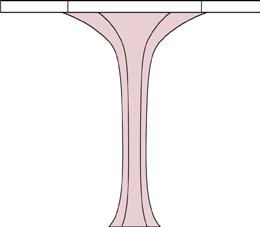
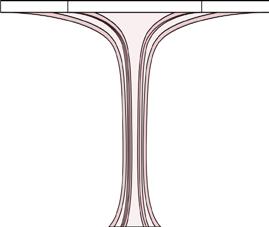
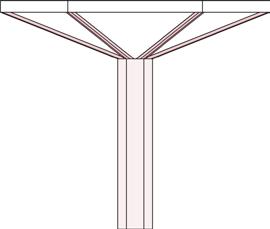
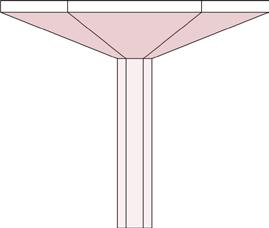
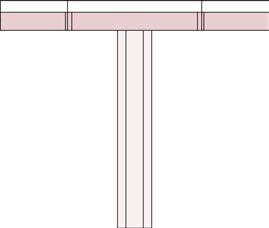
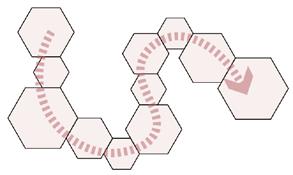
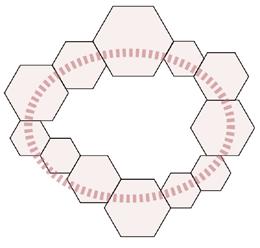
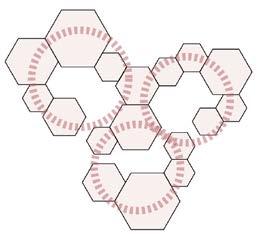
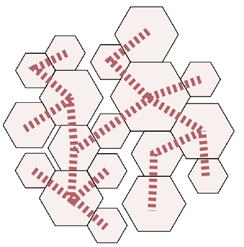
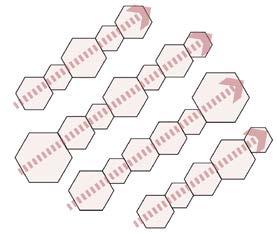
Relationship Transform Arrange Cluster Supporting Gradient Tight Tight Separate Paralle
Overlap Random
Intersect Linear Bending Symmetry Annular Smooth Covered
Funnel
Beam
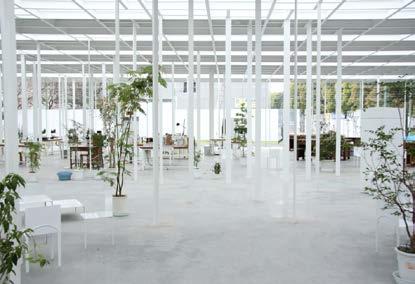
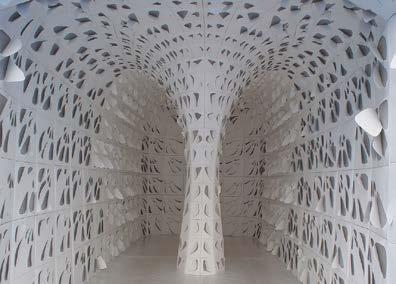
Hope Tree by 24d-Studio
KAIT Workshop
Drawing by Charles Eisen
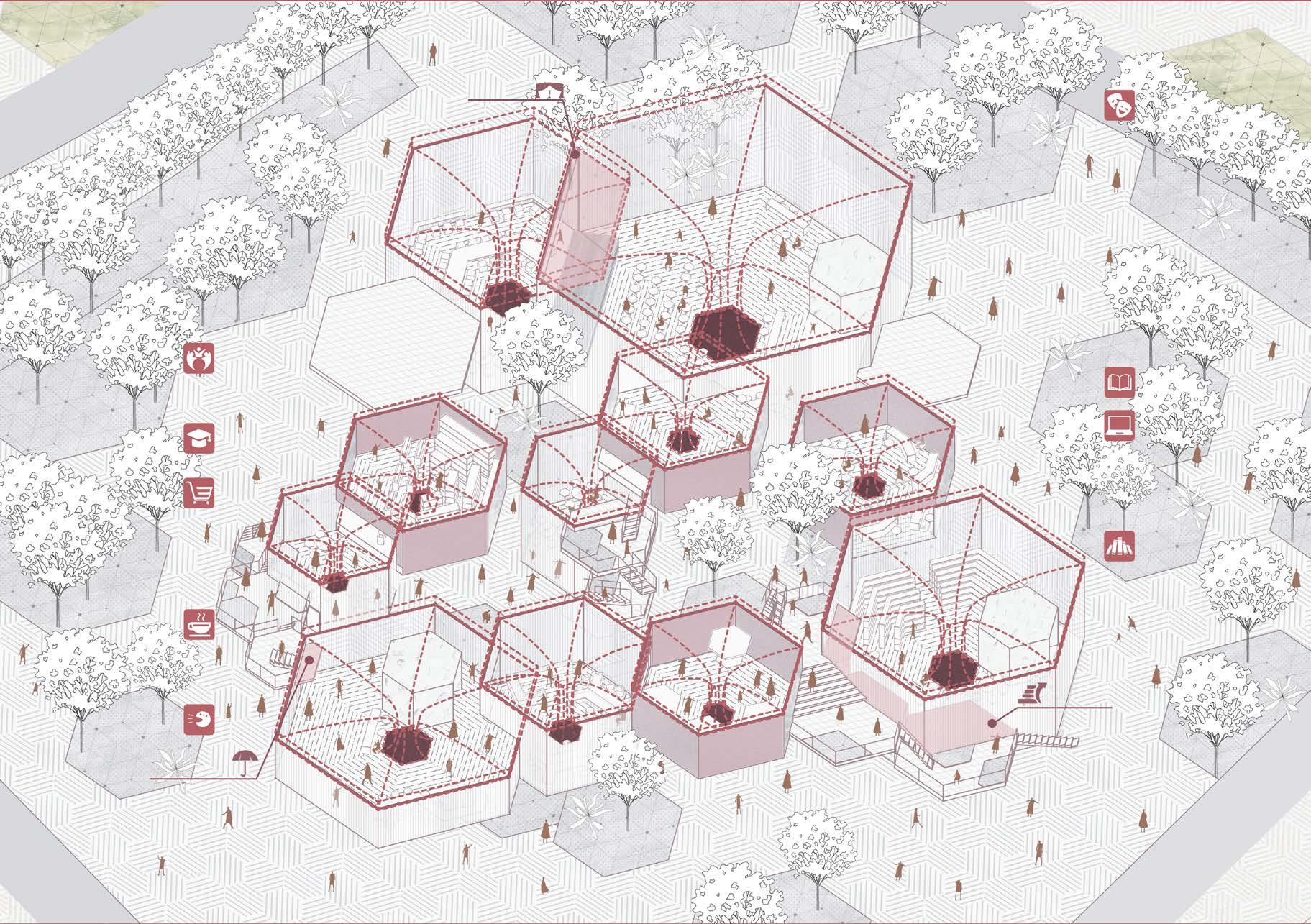
Axonometric Readroom Office Library Theatre Activity Room Classroom Store Coffee Entrance
The overlapping is used as stage
The overlapping is used as achievable platforms
The overlapping is used as rainshed
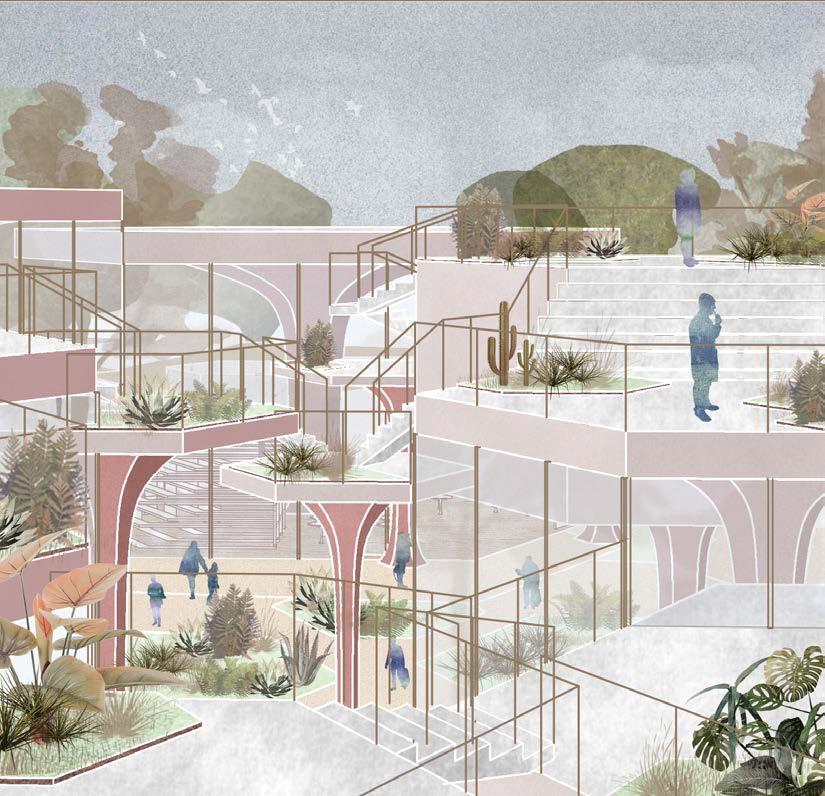
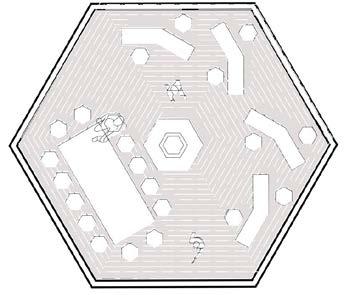
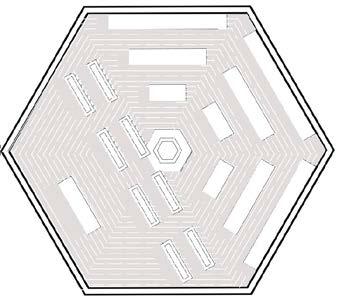
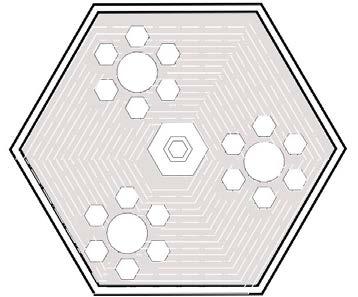
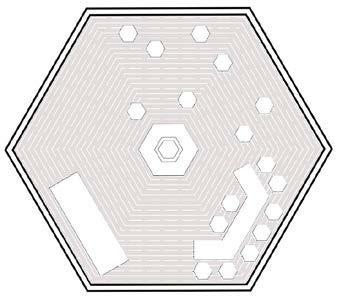
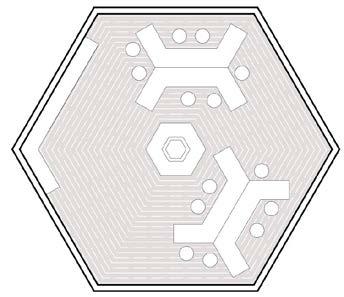


Roof Perspective Functional Plan Entrance Perspective Classroom Readroom Store Office Coffee
Overhead And Supporting Structure
Furniture And Space
Chair And Table
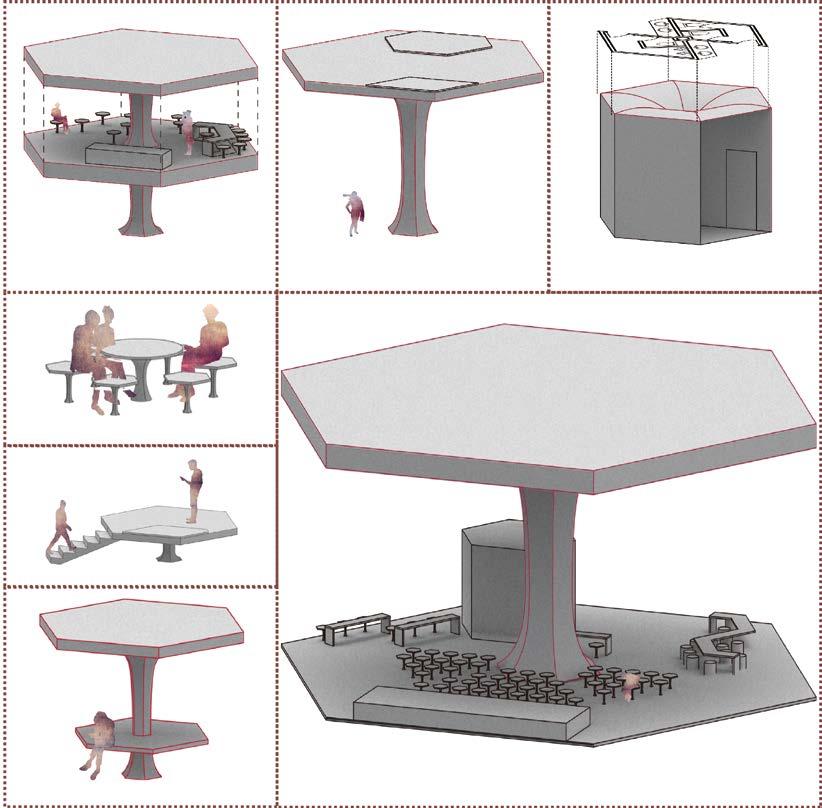
Reachable Platform
Resting Area Coincide
Theatre Supporting Structure
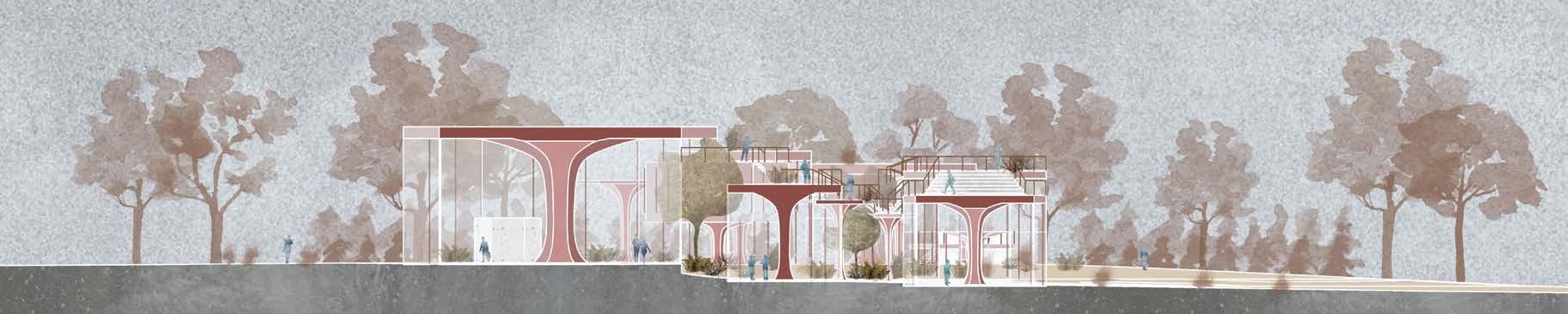
 Section A-A
Function Of The Element
Symmetry
Combination
Group
Random Shed and Garden Half Restroom
04 Be Seen
URBAN DESIGN CHONGQING, CHINA
ACADEMIC WORK
TEAM WORK, 2022.04-2022.06, 8 WEEKS
COOPERATOR: YUE MENG, TINGJUN GUO
MY ROLE: CONCEPT, ANALYSIS, MODELING, DRAWING
TUTOR: ZHEN YANG, PROFESSOR, CHONGQING UNIVERSITY
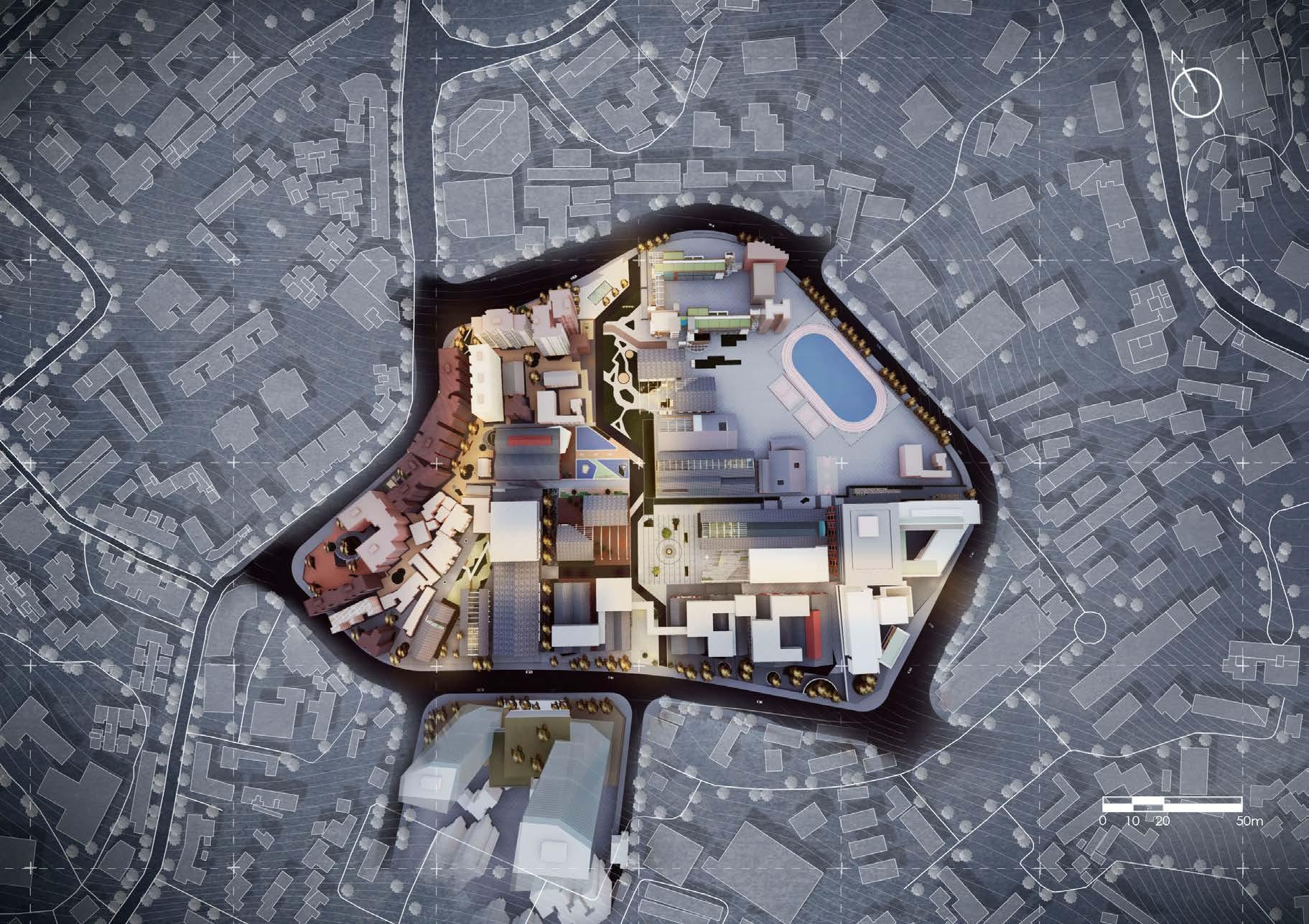
Drawing by Jinyue Han Site Plan
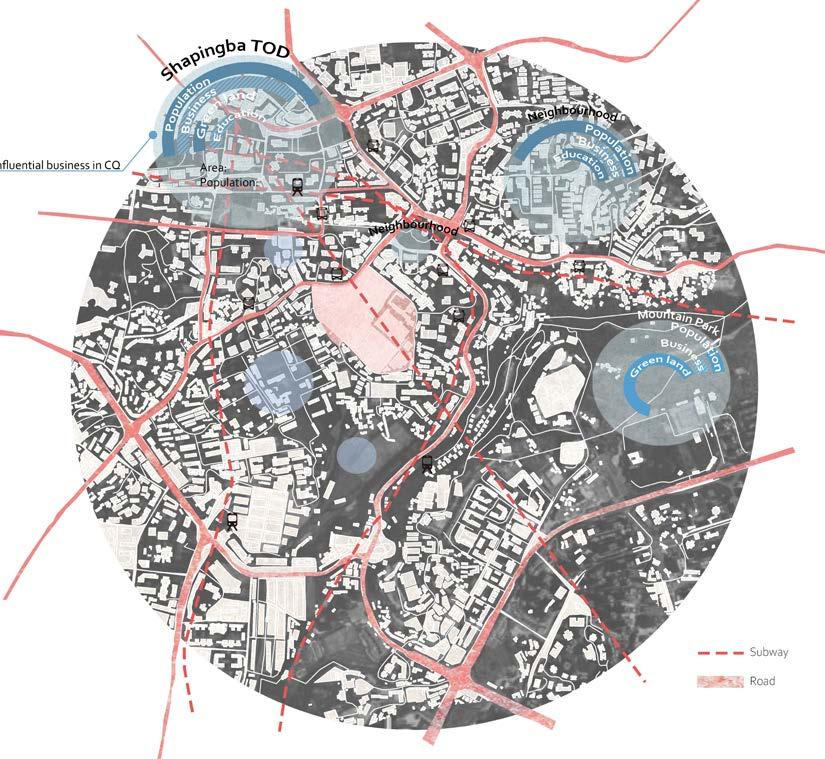
Surrounding Analysis
Invisible & Be seen
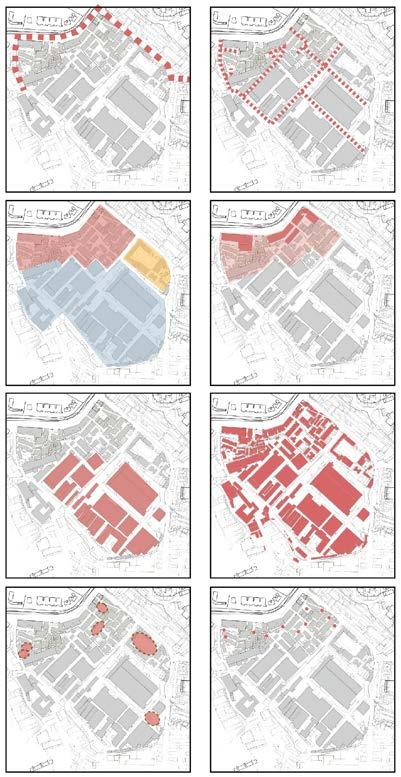
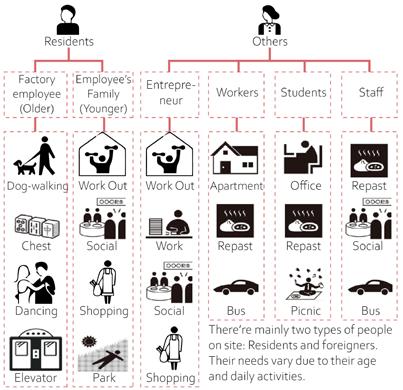
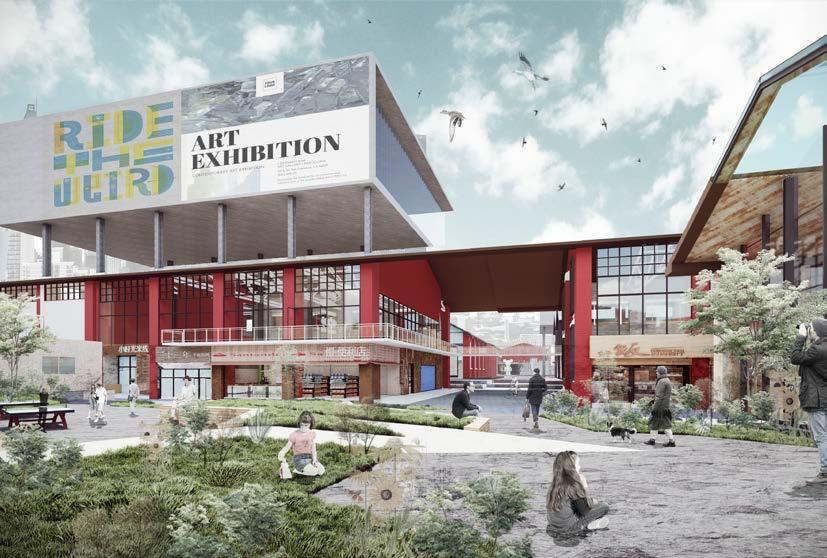
The site originally has little connection to the city. Therefore, even though the site is surrounded by parks, TOD, education resources, and commercial squares, only a few people visit this area on purpose. Only employees that used to work in factories remain here, making the site lack creativity and vitality. With all combined, the site is nearly invisible in the surroundings and the city . To help the site be seen, several approaches are used to achieve the goal. The original existing architecture is evaluated and few are removed to create clearer axes through the site. Three axes for different uses and themes are created. Factory buildings are transformed into studios that welcome both tourists and young people to start their businesses here, hoping to make the site attractive again.
Target People
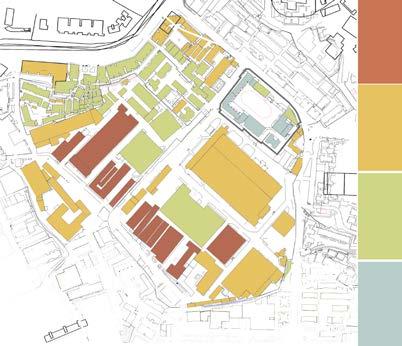
Site Context Protective

Business mode
Quality Evaluation
building Streets Old Factory Old Community Public Space Good Factory Average Bad
Drawing by Yue Meng
Drawing by Tingjun Guo
Drawing by Yue Meng
Drawing by Tingjun Guo
Drawing by Jinyue Han
City Road Sections Factories Greenland Neighbourhood Road Old Neighbourhood All Buildings Public Space
Drawing by Jinyue Han
Site Analysis
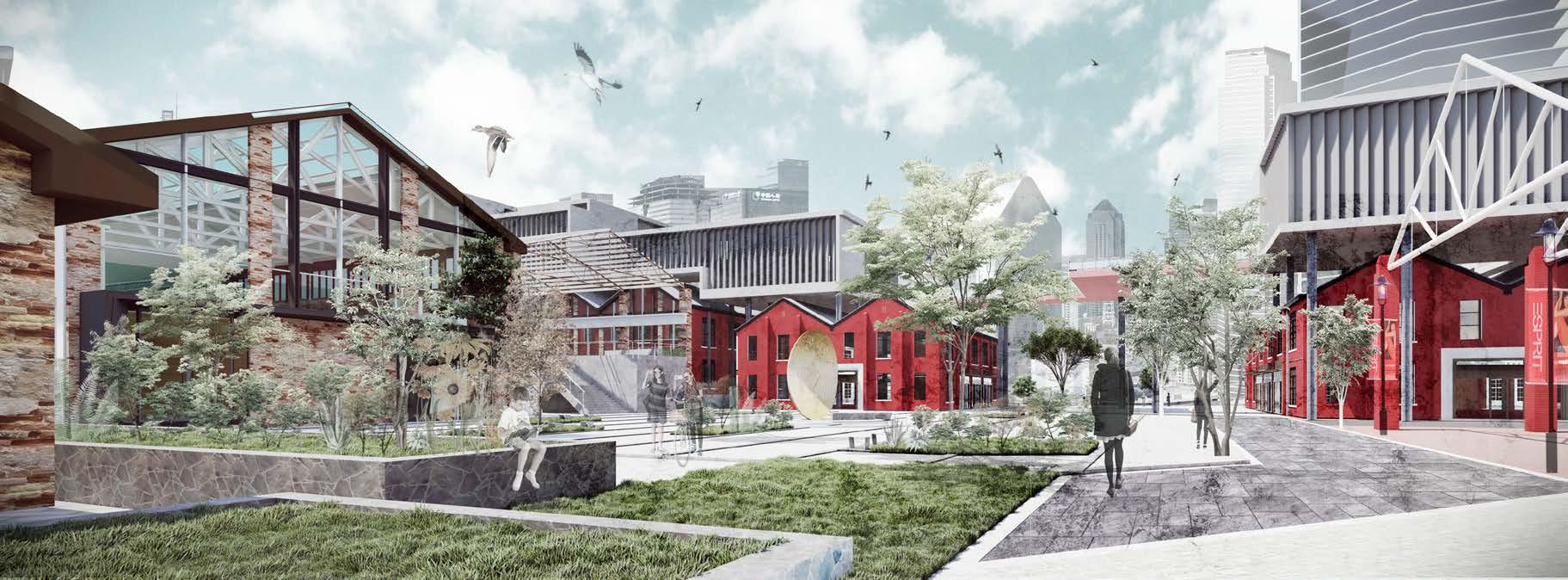
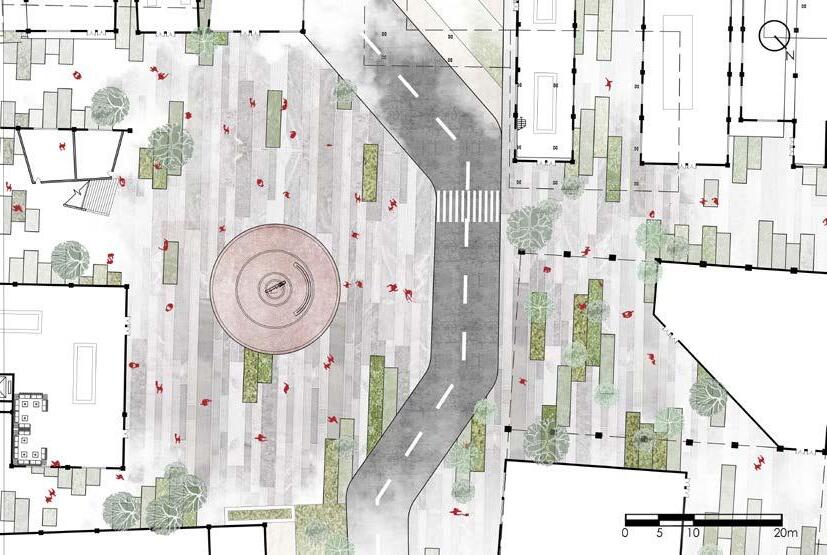
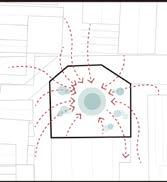
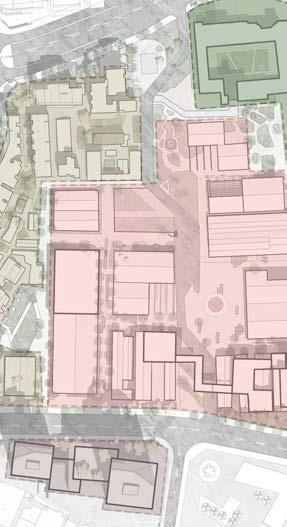
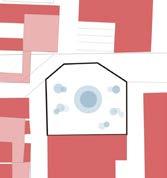
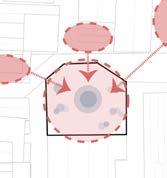
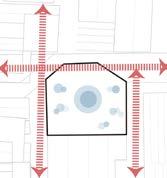
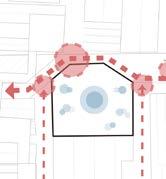
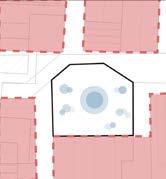
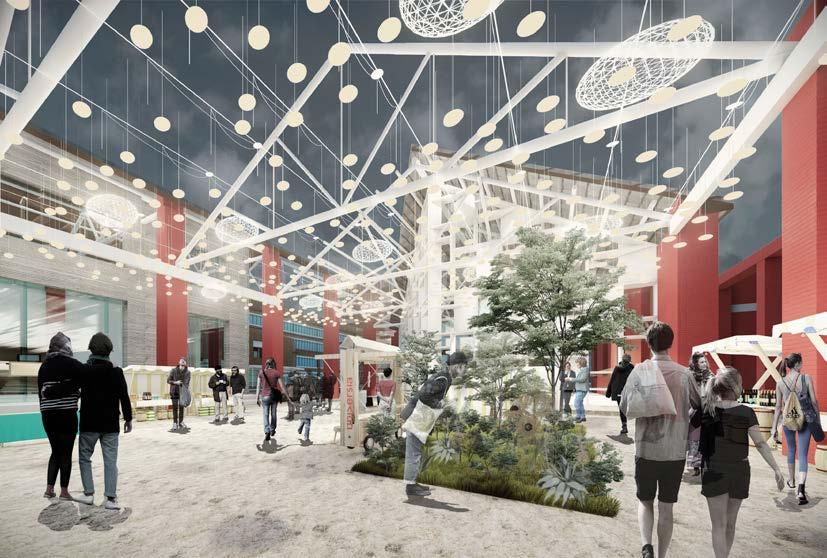
Central Square Perspectives SITE CIRCULATION CONNECTION SEPERATION AXES CENTER POINT
and Sections Program
Functions
road for vehicles
The
site is surrounded by public architecture, both old and new buildings Nearby
and pedestrian friendly road
The square have easy access to all surrounded architecture
The square seperate different functions of studios
the center of a few near
The square is at the center of three axes of the whole site
At
squares and spots, making connections
Drawing by Jinyue Han
Drawing by Jinyue Han
Drawing by Jinyue Han
Drawing by Jinyue Han
①Central Square ②Community Park ③Pocket Park New High-rise Old Community Primary School Factory turned studio ② ① ③
1st Floor Plan
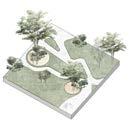
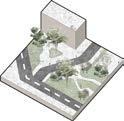
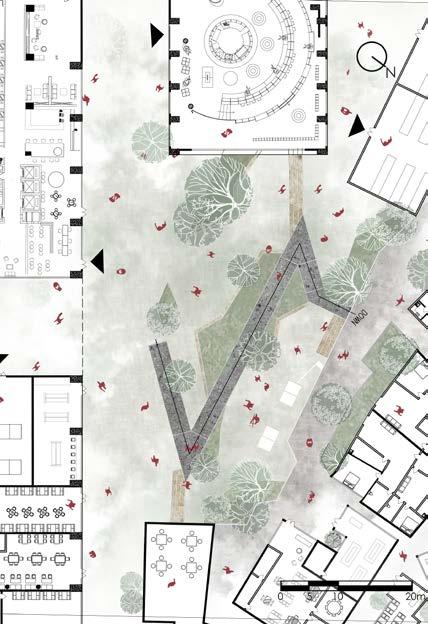
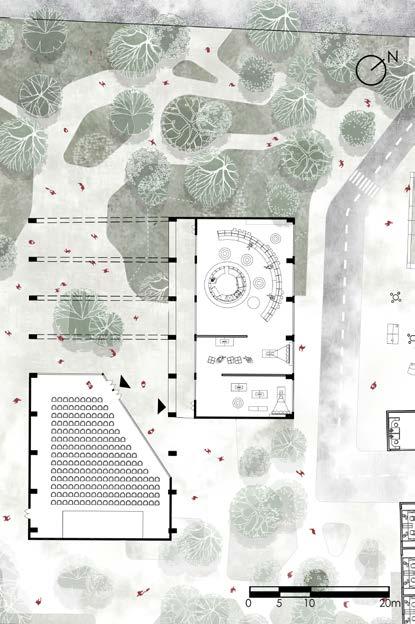
The community park locates in the neighbourhood, connecting the living area and the public area . Factories around are redesigned to fit in the function of community center and stores. This park also serves as the start of an axis, repres enting the reserved buildings.
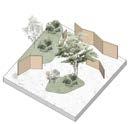
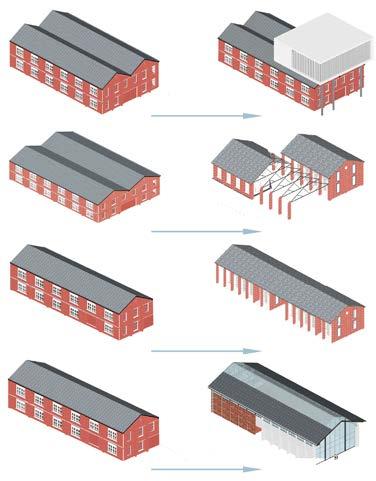
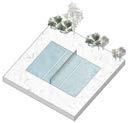
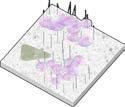
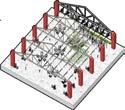
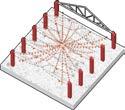
Factory to Studio
Add Cubes Above
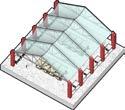
Expose Some Truss
Open The Middle For Passing
Change Some Of The Materials
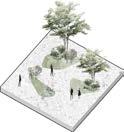
The pocket park is located between the primary school and the exhibition factory gallery . This park not only provides space for students in the school after-class activity area, but also for residents and workers a place to stay and play during festivals and weekeds.
Activities
Exhibition
School Park Playing Festival
Sports Field
Pocket Park Perspectives Community Park Perspectives
1st Floor Plan
CHILDREN
1st Floor Plan
WORKERS RESIDENTS
MORNING EVENING HOLIDAY
Pocket Park Activity Walking Fair
Drawing by Jinyue Han
Drawing by Jinyue Han Drawing by Jinyue Han
Drawing by Jinyue Han
Drawing by Jinyue Han Drawing by Jinyue Han
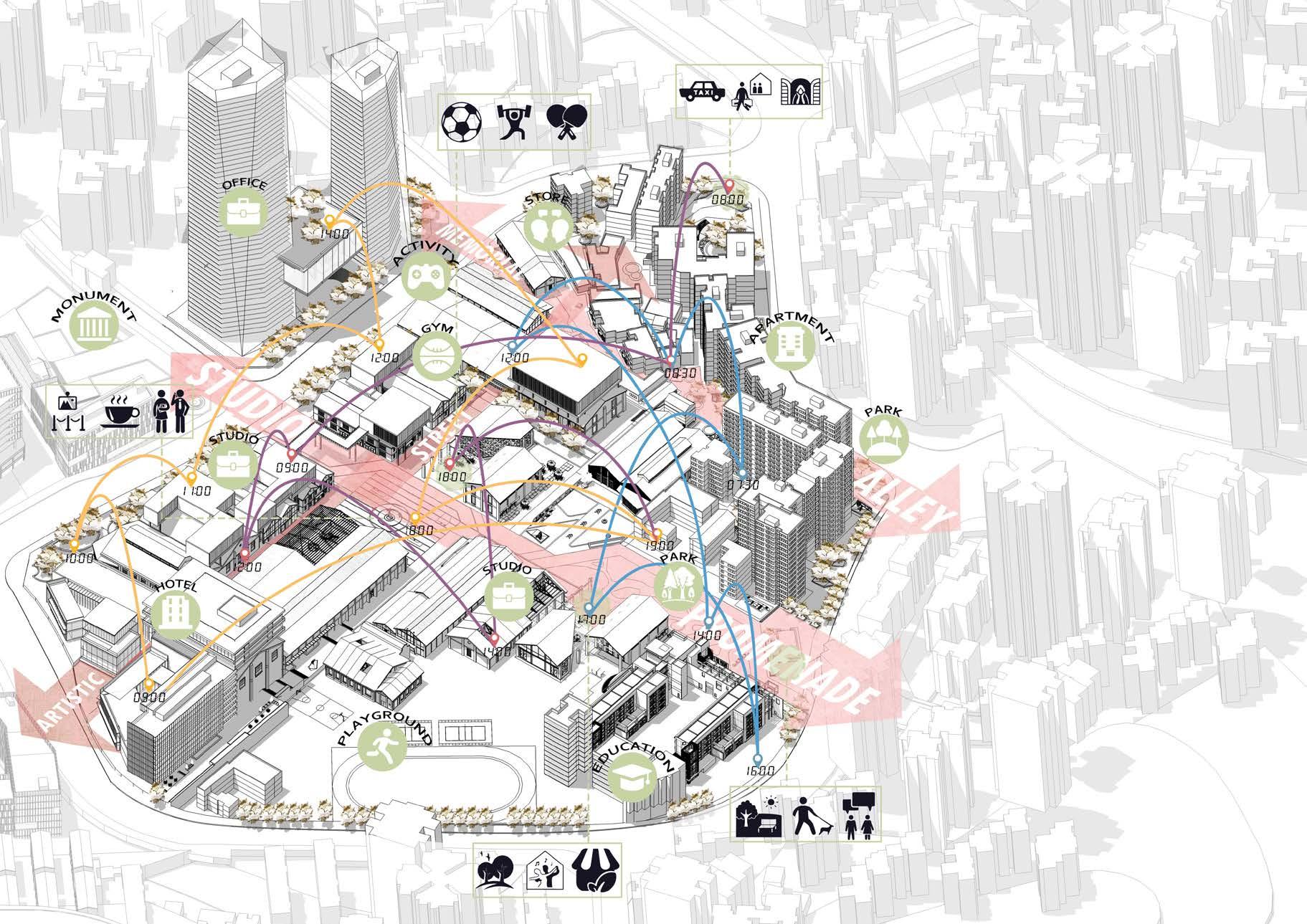
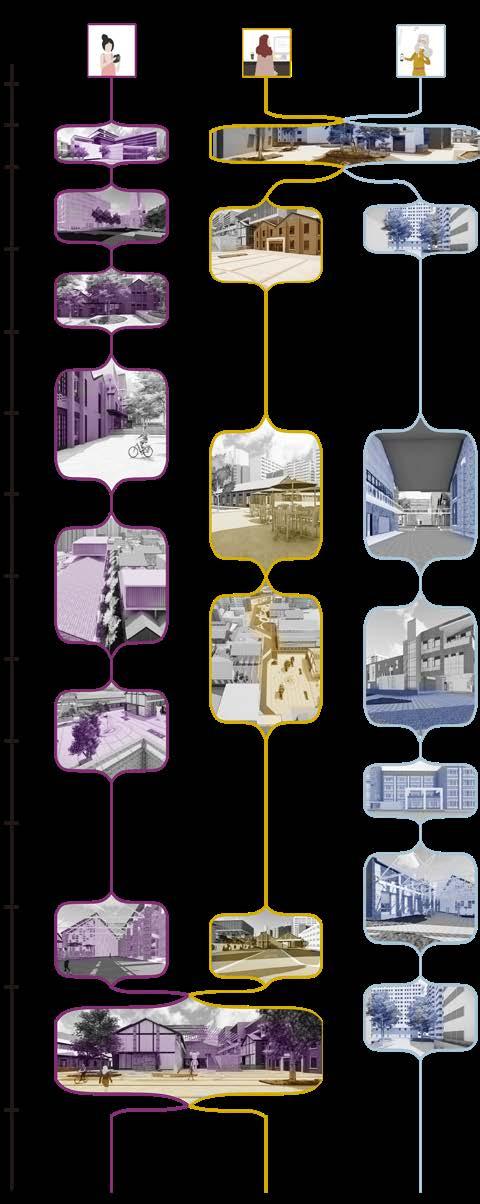
Axonmatric&Timeline Buy Breakfast In Community Store Have Dinner In The Community Work In Design Studio Have Lunch Work Out In Gym Work Out In Gym Set Exhibition In The Gallery Wake Up In The Hotel Walk Around Visit The Design Studio Community Center Visit The Art Gallery Visit The High-rise Back Home Have Lunch Chat And Walk Back Home Do Exercise Pick Up Grandson At School Han-Worker In The Art Studios Meng-Original Resident Guo-Tourist Drawing by Jinyue Han
05 The Moon
BATHING HOUSE DESIGN
SEOUL, SOUTH KOREA
ACADEMIC WORK
INDIVIDUAL WORK, 2021.02-2021.04, 8 WEEKS
TUTOR: XUESONG WANG, ASSOCIATE PROFESSOR, CHONGQING UNIVERSITY
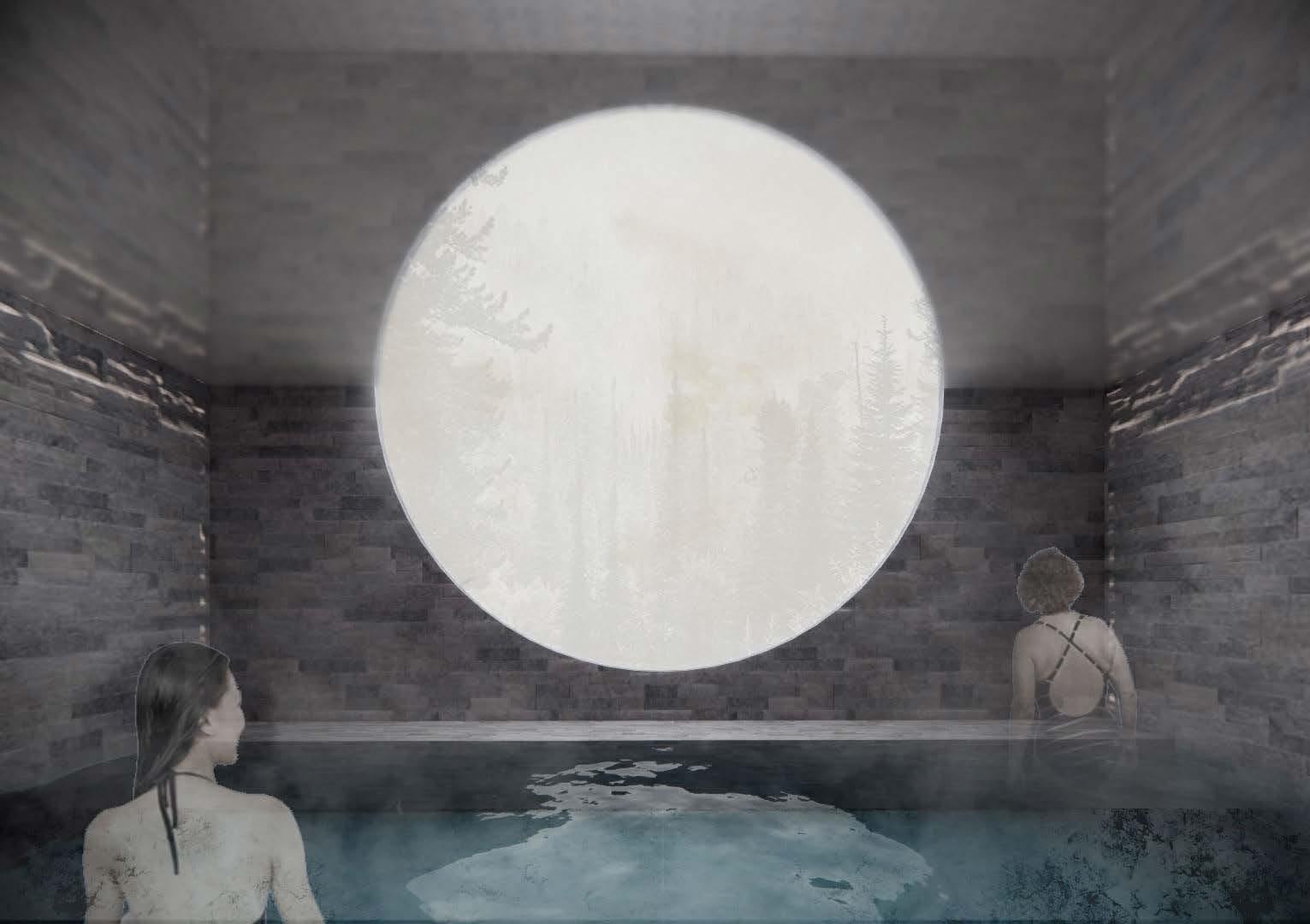
The Moon Perspective
Mirror & Symmetry
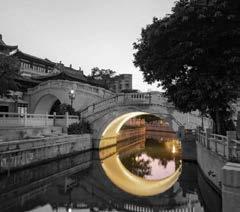
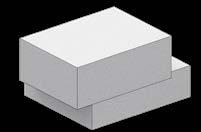
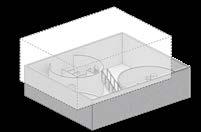
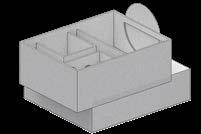
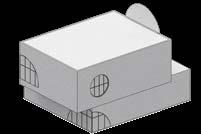
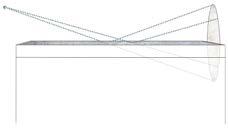
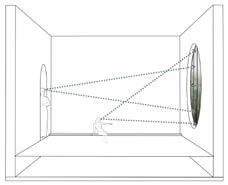
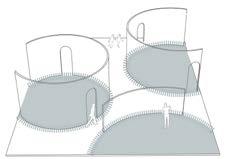
The simplest and commonest ordering is symmetry, familiarly from the animal in nature to man-made objects in daily life, which provides the idea of cleanness and succinctness without introducing a new element. Symmetry in architecture mainly focuses on symmetrical facade or layout, such gothic cathedrals.
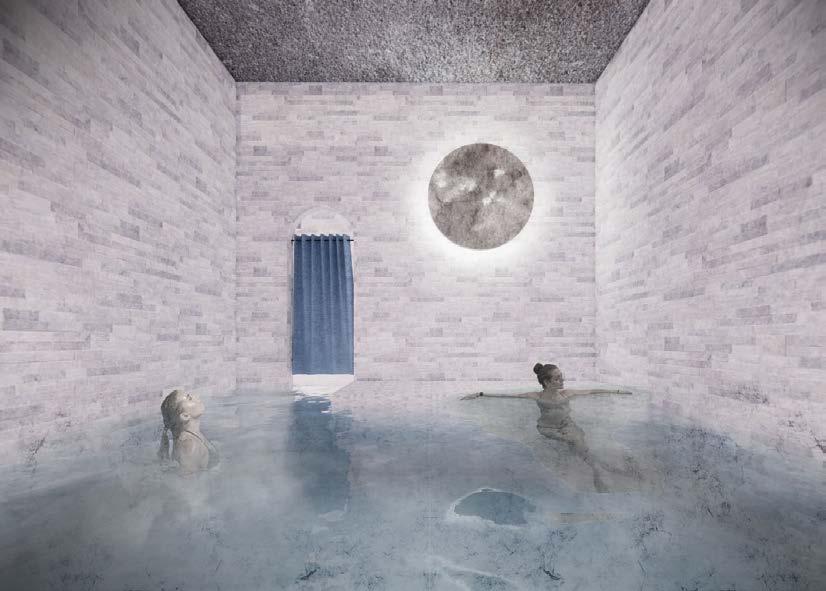
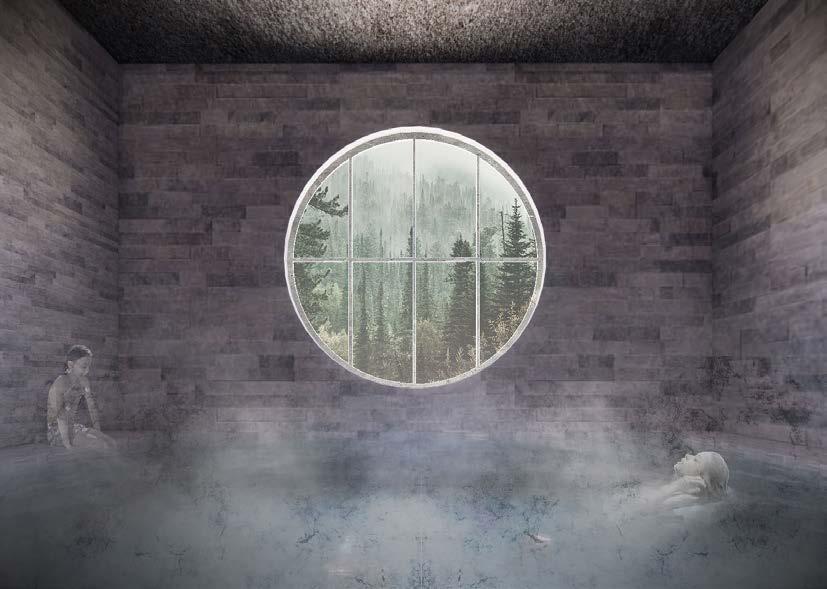
This design, however, pays attention on the process that complete the shape, highlighting the axis and surface of the symmetry shape. High-reflectance materials, such as water surfaces, helps a semicircle becomes. Other symmetrical elements, such as the window bring the concept further, creating a series of non-traditional symmetric spaces.
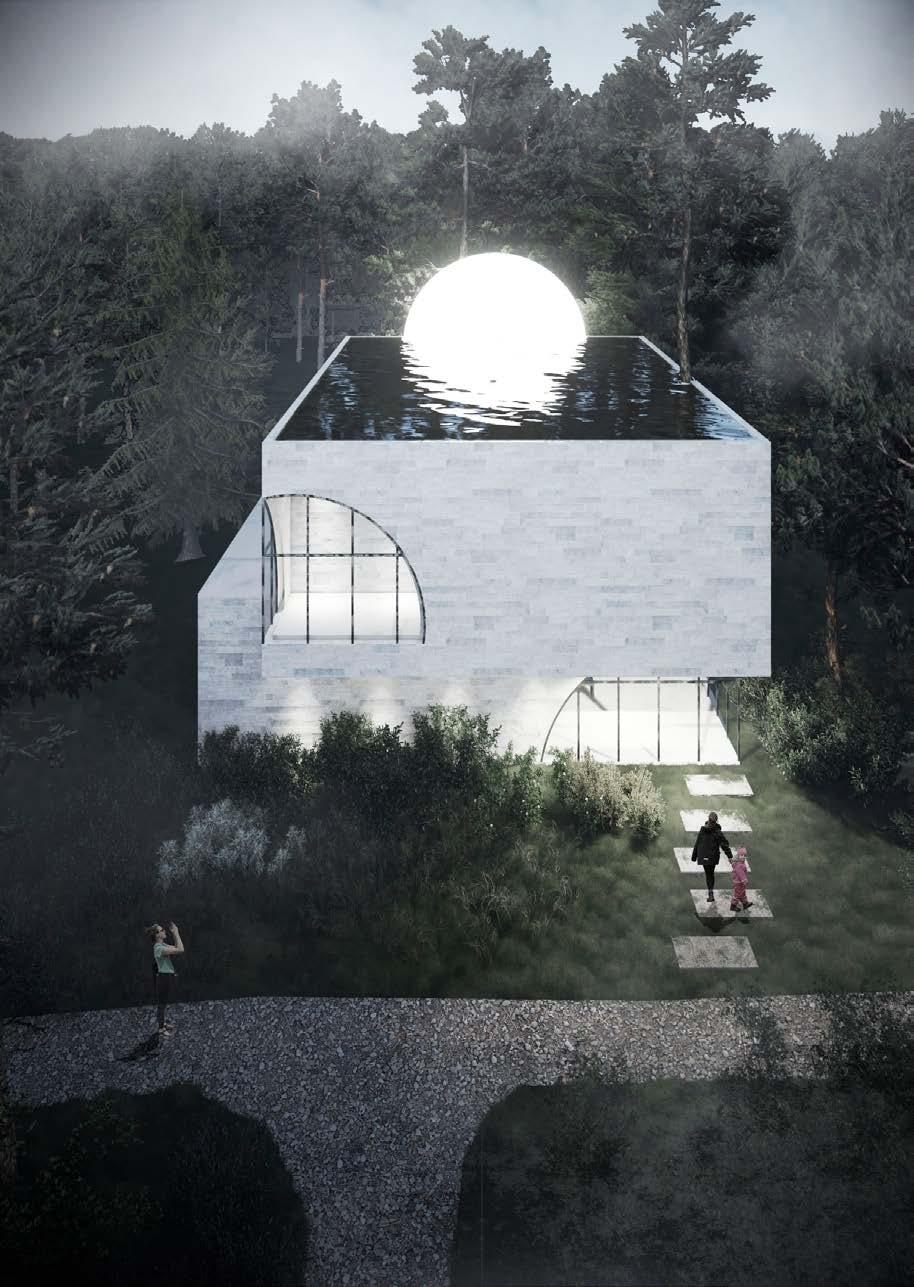
Site Perspective
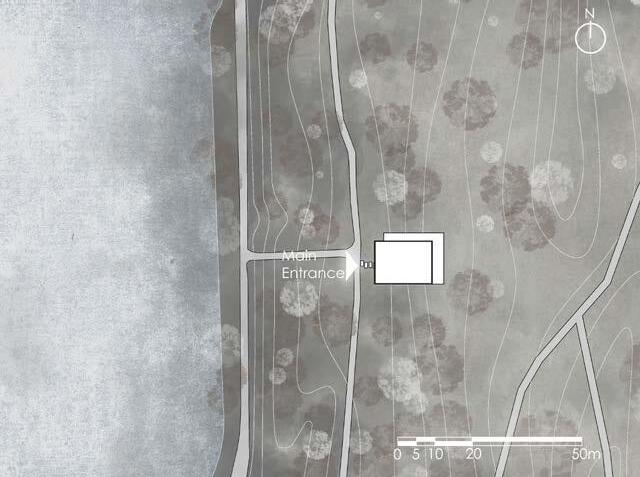
Site Plan
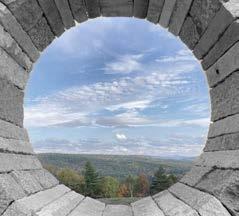
From Google Moon Bridge by Jared Flynn
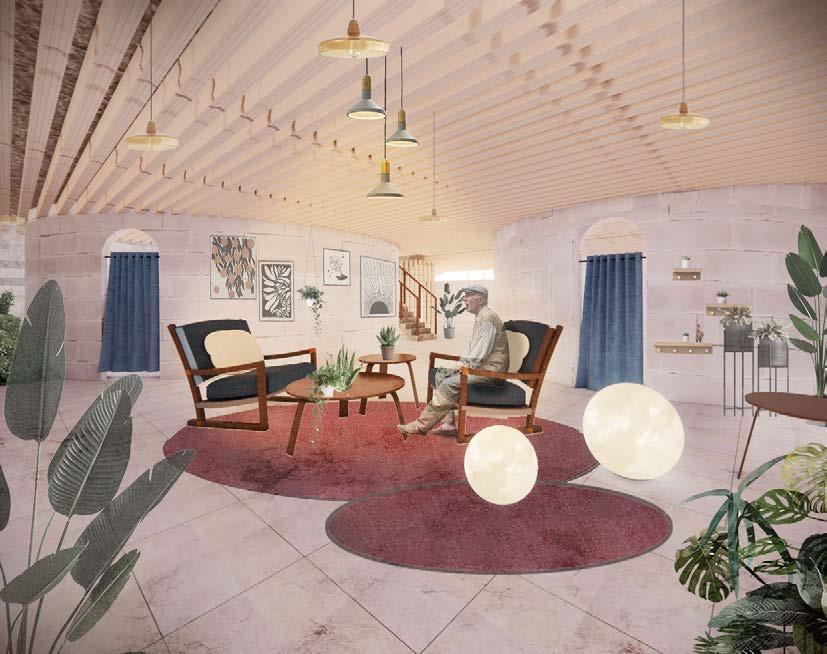
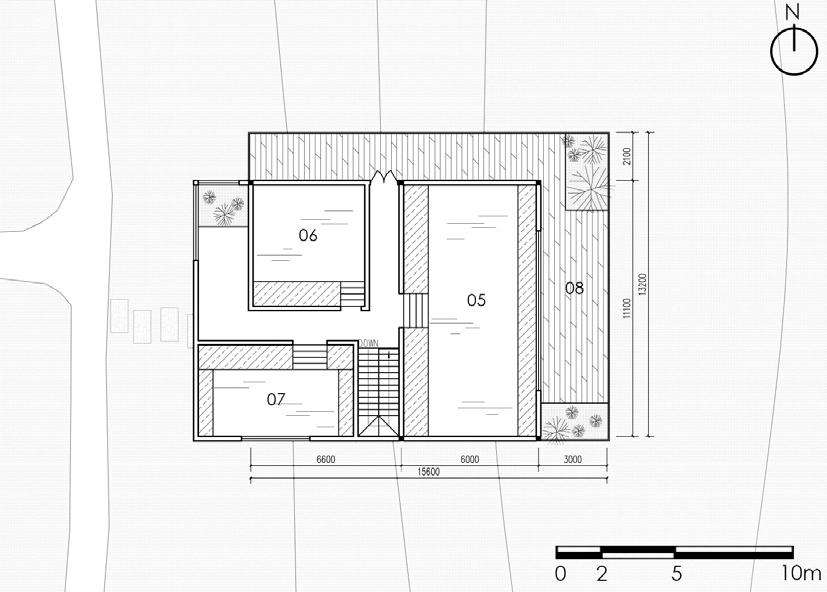
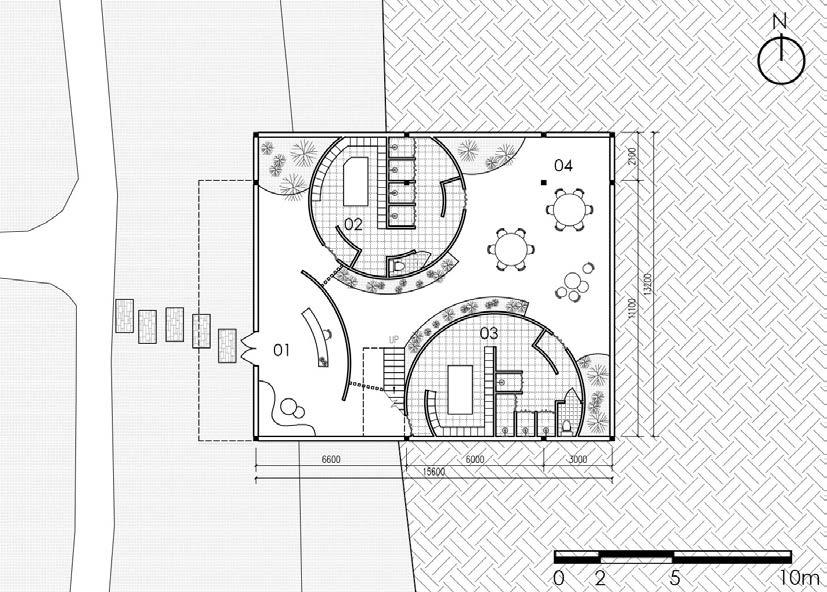
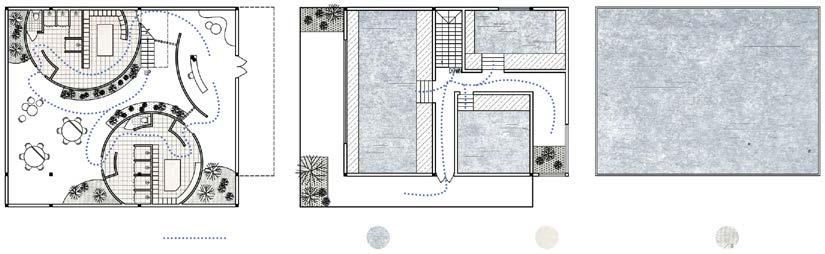
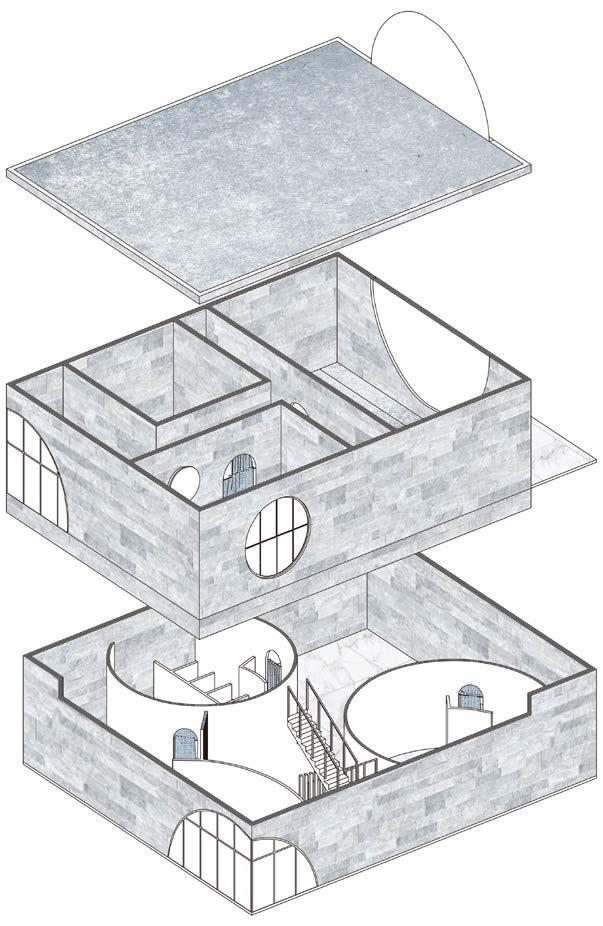
Evaluation Function and Circulation 1st Floor Plan 2nd Floor Plan Resting Area Perspective Brick Circulation Locker Room Grass Cubes 1st Floor 2nd Floor Facade 01 Entrance 02 Men's Locker Room 03 Women's Locker Room 04 Resting Area 05 The Moon Room 06 The Hanging Moon Room 07 The Transparency Moon Room 08 Outdoor Platform
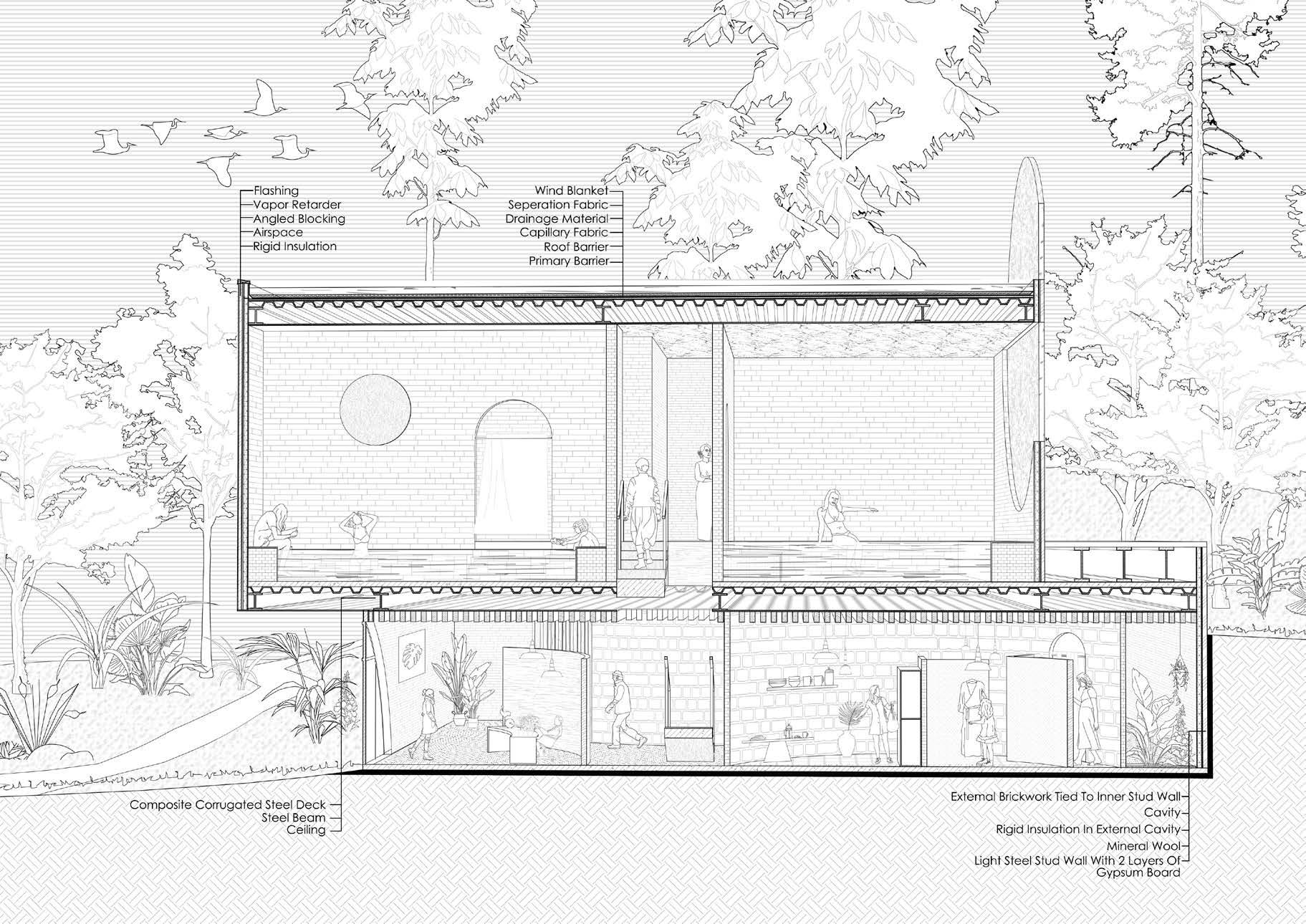
Section Perspective
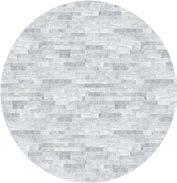
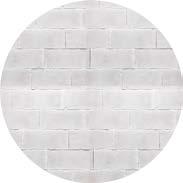
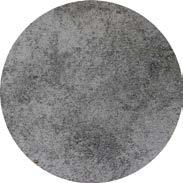
MOON in architecture
Material
MOON In The Water
Water surface as the reflection surface, completing the moon
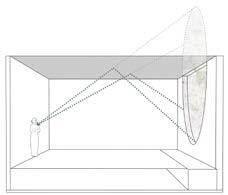
MOON In The Sky
Ceiling as the reflection surface, completing the moon
MOON In The Wall
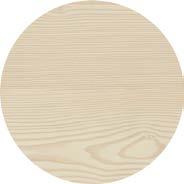
Stone Tile Wood Stone
MOON In Plan
The Hanging Moon Room Perspective
The Transparency Moon Room Perspective
09/2020-10/2020
TUTOR: Haijing Huang Cooperator: Jiajing Gao Loft Design
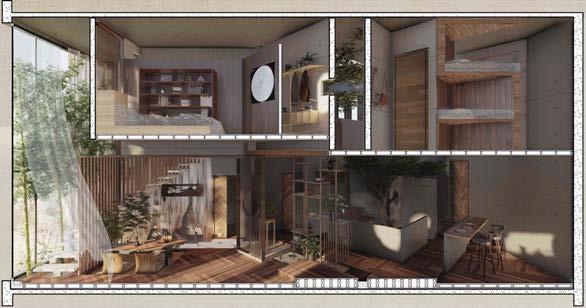


Back To Nature
Other Works
09/2021-10/2021
TUTOR: Yudi Liao Cooperator: Yue Meng Ancient Building Recovery







Jingshan Temple
08/2019
TUTOR: Wei Zhang
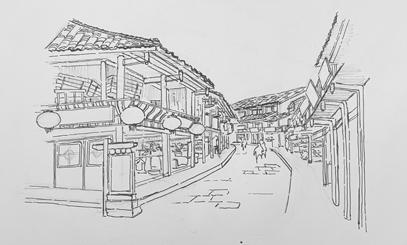
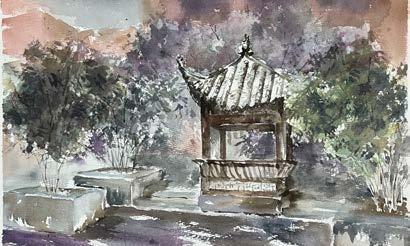
Pen-Sketch&Watercolor
Shangli Alley
01/2020-02/2020
TUTOR: Haijing Huang Cooperator: Jiajing Gao, Tingjun Guo, Yuhan Guo Student Center Design
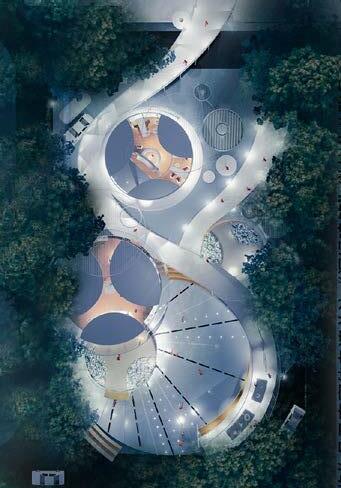

Travelling
05/2021-07/2021
TUTOR: Yan Sun Cooperator: Tingjun Guo Old Factory Reconstruction Design
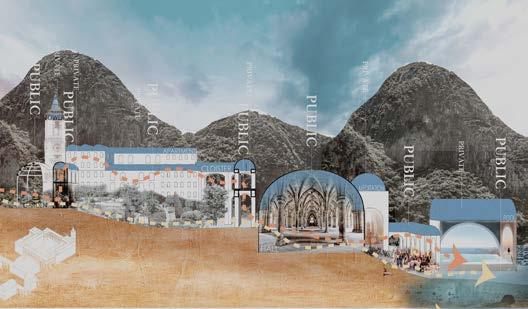

Planting Factory
07/2022
TUTOR: Isaac Pollen, Natasha Community Design
To The Sea
10/2021-12/2021
TUTOR: Jun Li Cooperator: Yue Meng, Tingjun Guo High-Rise Design
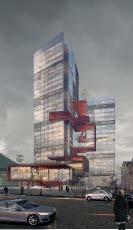



Interweave City