Ideal Daily Routine - Purification & Rejuvenation of Mind, Body & Soul
Art of Living: An Ideal Way of Life
Dear Course Member:
Welcome to Utopian Health — The Luna Spa, Art of Living Program. We are honored and pleased you have chosen this journey with us to reach your highest potential. Utilizing ancient healing traditions integrated with modern medicine, Utopian Health delivers the best scientific techniques and principles of mind body medicine from around the world. The foundation for this course is AyurVeda, a 5,000-year-old healing system, which translates to “the science of life” and originated in India. This life science offers a proven guide for a life of health, happiness, prosperity and purpose. One of the main principles of AyurVeda is that no imbalance or disorder is treated in isolation; Utopian Health can only be in terms of wholeness. It’s vital that we address more than just our body, but also our mind and the environment in which we interact with daily. Health is when one aligns themself with the invincible laws of nature, natures intelligence. The same intelligence that created the entirety of the cosmos. This course offers principles and tools to increase your health and magnify your happiness and prosperity through your own conscious choices, purifying and refining your mind, body, soul connection.
Yours truly,
Courtney “Ketu” Thomas
Luna Spa, founded in 2020 by Courtney “Ketu” Thomas and Arielle Thomas, is a premier relaxation destination — a serene, refreshing experience, for rejuvenation of mind and body.
We provide a prevention-oriented approach to well-being, utilizing a consciousness-based system of healthcare. Courtney has a BA in AyurVeda Wellness and Integrative Health, specializing in developing consciousness and human potential and Arielle with a MA in Sustainable Business, Ketu and Ari bring you the leading technologies and ancient traditions to develop self-awareness and live your highest potential. After having increased reputation in the community, they have decided to take their teachings to the global market.
Our goal is to promote social harmony and radiate peace and enlightenment to the world family. Self-care is not a luxury, its a priority.
Chapter 1: Consciousness-Based Healthcare Emphasis on the Inner YOU
Utopian Health explores a fresh outlook on health and well-being, a consciousness-based approach to health. A system where consciousness is primary; self aware energy and information. The mind, body and soul are intimately connected by a field of intelligence known as consciousness.
This approach allows for health to be affected through changes in recognition, belief, analysis and choices. Happiness and health are a true possibility. This is possible if you are in tune with your self and if you discover the true Inner, YOU which is an unbounded ocean of consciousness. That is the ultimate reality. You will discover yourself to be much beyond what you have ever thought yourself to be.
Understanding the laws of nature and how to stay aligned with them, enables you to live this reality.
For the most part, much of humanity live the entirety of their lives in the first 3 states of consciousness. Wake up, eat, work, play, sleep, dream, and repeat. Rarely, or never, having the opportunity to transcend the sensory perceptions that we all love so dearly. Knowing this to be our reality, day in and day out, we tend to forget our true nature, in consciousness. “I AM THAT I AM,” and “If you know me then you know the Father.”
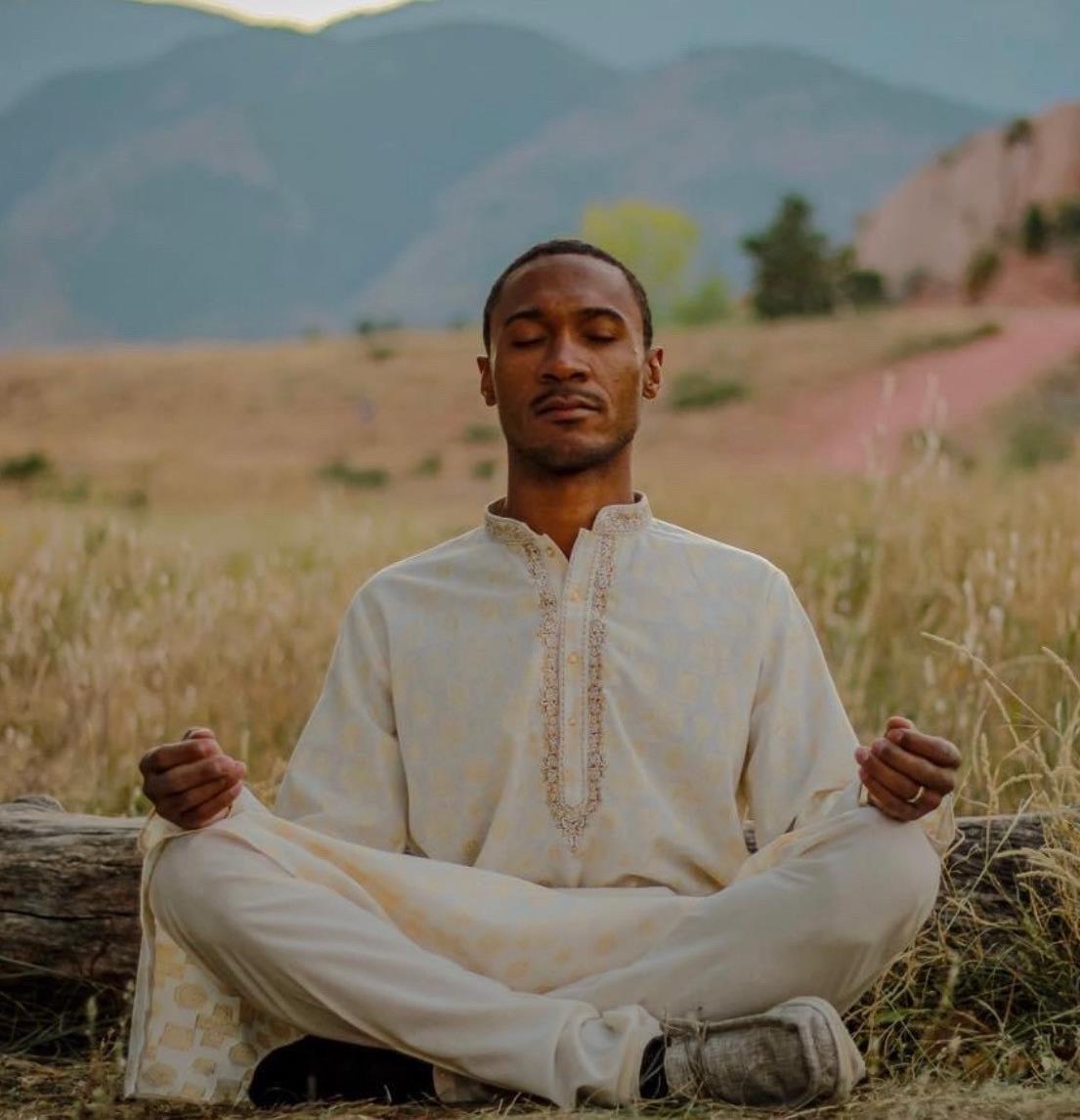
To possess such a prize possession that would allow us to transcend easily and naturally when we saw fit, would be quite the boon. The technique that we utilize and is the foundation of all our teachings is Transcendental Mediation. This technique takes the awareness from the field of diversity in the waking state of consciousness to the field of Unity, the fourth state of Transcendental Consciousness.
The most silent, expanded state of our own awareness, which is a unique state of restful alertness, distinct in its mental and physical characteristics from the changing states of waking, dreaming and sleeping. It is the fundamental value underling all states of consciousness. It is the field of total inner intelligence, a field of all possibilities.
“Higher states of consciousness develop when the physiology reaches specific thresholds of integration and purification. Growth of higher states thus has nothing to do with adopting new ideas, attitudes or moods. It depends instead on cultivating coherent brain functioning and on refining and purifying the nervous system. Without these refinements, higher states cannot develop.”
Maharishi
Mahesh Yogi
Through continued practice of Transcendental Meditation, the awareness becomes permeated with this all-knowing level of consciousness and when the physiology is free from impurities and the nervous system is refined, this level of consciousness becomes permanently established. The individual gains the fifth state of Cosmic Consciousness, aligned with the managing intelligence of the laws of nature. Cosmic Consciousness is an uninterrupted continuum of Transcendental Consciousness, experienced as the background of inner silence supporting all mental and physical activity.
From here, the physiology is at complete ease and is on its highest path to evolution. The five senses are intimately connected so sensory perceptions become more refined. This is due to the human organism digesting and metabolizing experiences with more refinement, which allows it to draw and produce more energy for the senses to feed on.
When the system reaches a certain level of life force, the sixth state of God Consciousness is attainable. Due to a silent, clear, and settled state of Cosmic Consciousness, outer perception becomes more refined until the outer physical world is perceived in its full relative glory where inner absolute values shine through. This experience of the most refined state of Cosmic Consciousness gives rise to God Realization.
The seventh state, Unity Consciousness is when one experiences everything in terms of oneself. This is the supreme level of human development in which the process of evolution finds its ultimate fulfillment in the realization that “I am the Totality”.
Living life in these Higher States of Consciousness is the Art of Living and Transcendental Meditation is our Primary technique that can be used as a practical tool of achieving our highest potential. This is Utopian Health! All our other technologies of consciousness, including Ayurveda, is to assist with the removal of impurities and refinement of the nervous system so that there are no obstacles towards transcending. This regular transcending allows selfactualization, which brings happiness, health and prosperity in all your endeavors!
Transcendental Meditation is the cornerstone of the Ayurvedic Ideal Daily Routine and is therefore the first level of knowledge before getting deeper into the course content.
If learning this technique is of interest, feel free to reach out to us anytime and we can connect you with a local teacher, so you can enjoy this meditation practice for a lifetime!
One of the great strengths of the program is the systematic teaching procedure. To ensure the effectiveness of the technique, the Transcendental Meditation program is taught by qualified teachers who have been personally trained by Maharishi Mahesh Yogi, its founder, through video taped lectures and standardized teaching procedures.
The program is comprised of an initial seven-step course of instruction in Transcendental Meditation. There is a follow up program of personal and group checking meetings to stabilize the practice, and advanced lecture to further deepen your experience and understanding.
Learn TM Systematically in these Seven Steps
1.Introductory Lecture
Presents a vision of possibility for personal development through TM
2.Preparatory Lecture
Explains the mechanics of the technique, the foundation of its timeless knowledge and overall uniqueness.
3. Personal Interview
Teacher gets better acquainted with those wanting to learn the technique. There is an opportunity to discuss with the teacher any special personal benefits one might hope to gain from the practice.
4. Private Instruction
Receiving the Transcendental Meditation technique.
5. First Day of Checking
Verification of experience and understanding following the first day of practice of the technique.
6. Second Day of Checking
Verification of experience and explanation of the benefits of the practice in the light of the experience of second day of practice of the technique.
7. First Day of Checking
Verification of experience and understanding of the benefits of the practice of the technique as they start to unfold.
Following these seven steps of instruction, you will have learned all you need to practice TM regular and enjoy the benefits, for a lifetime. There is a four-to-sixmonth follow-up program for personal checking and verification of experience that you can take advantage of for gaining the maximum benefit from practice.
Following this first course in Transcendental Meditation, with time and experience one becomes eligible to learn the advanced techniques of the TM program, including the Transcendental Meditation Sidhi Program and Yogic Flying.
It is recommended to have four months of regular practice of TM before applying for advanced techniques.
Photo by Teo Tarras ID: 1236746887
Chapter 2: Ayurveda Wellness
The Foundations
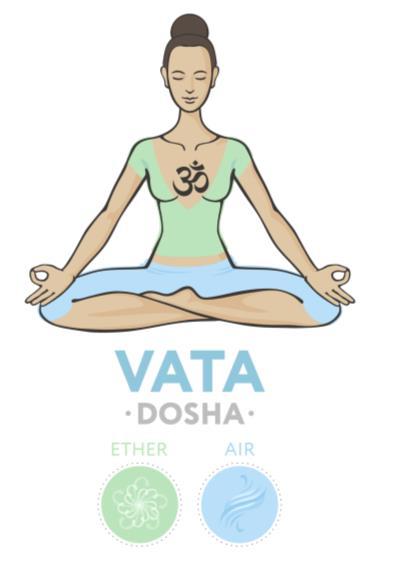
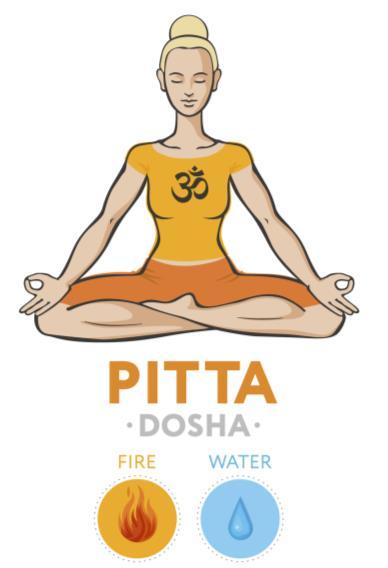
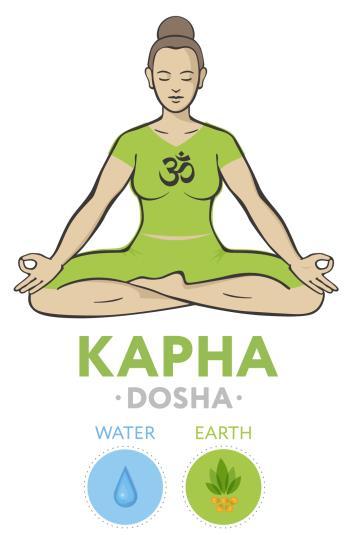
The nature of consciousness is Prāna and it expresses in the form of space, air, fire, water and earth. These five elements are the building blocks of nature. Ayurveda breaks it down a bit further into three doshas or categories known as the mind-body constitutions.
Vata Dosha – Ether and Air.
Pitta Dosha – Fire and Water
Kapha Dosha – water and Earth.
Understanding nature from a macrocosmic level gives you a better insight into your own physiology, and vice versa. Depending on the environment, the climate, and the elemental makeup of the mother while growing a fetus, all of these things and more will play a role in determining your mind-body constitution.
What is your mind-body constitution?
Take this dosha quiz to find out! https://mapi.com/pages/dosha-quiz-landing
Vata dosha is the Ayurvedic mind-body element associated with air and space. It’s light, cool, and dry in nature, and it governs all movement and processes in your mind and body—including processes like blood flow, elimination, breathing, and the movement of thoughts in your mind.
When Vata is in balance, an individual is energetic and lively, learns easily, has a clear and alert mind, falls asleep easily at bedtime, has balanced digestion and elimination, and good circulation.
When Vata is out of balance, an individual may feel tired or fatigued, lacks focus and memory, difficulty sleeping, has constipation or gas, poor circulation with cold hands or feet and feeling anxious or worried.
Pitta dosha is associated with heat, fire and water, and its effects are especially felt during the hot summer. Its qualities are light, pungent, hot, sharp, acidic and oily. This dosha governs metabolism and transformation in the body, including digestion.
When balanced, one experiences sharp intellect, strong digestion, good vision, and contentment.
Signs of an aggravated Pitta include excess stomach acid, diarrhea, heartburn, skin eruptions and irritability.
Kapha dosha is associated with earth and water. It embodies stability, lubrication, and structure for the mind and body. It is steady in nature, heavy, slow, smooth, cool and oily.
Kapha in balance shows strength and stamina, strong and healthy physiology, deep sleep and compassion.
Signs of aggravated Kapha is weigh gain, lethargy, food cravings, slow digestion, depression and respiratory conditions
Dinacharya: Ideal Daily Routine
Align Your Natural Rhythm to the Universal Rhythm of the Universe
The distractions of modern times make it almost impossible to align oneself with Natures Intelligence. While we can’t add more hours to the day, we can control how we use the time we have. Self-care is not a luxury, it is a priority that we must place our focus on to live a more healthy, happy and prosperous life. With that in mind, creating an ideal daily routine (dinacharya) becomes of utmost importance.
From an Ayurvedic perspective, this means to align with nature’s rhythms each day. It’s extremely important for the body to stay in harmony with the natural circadian rhythms for optimal health. Circadian rhythms are the 24 hours of day and night happening due to the earth spinning on its axis. Seasonal rhythm is a cycle caused by the rotation of the earth around the sun. Its a 12-month cycle or 4 seasons, in the US region. Lunar rhythm comes from the moon revolving around the earth. There is also Tidal rhythm, which is the gravitational impact of the moon of Earth’s water.
We can take it a bit farther and speak on the rhythms of the other planetary bodies in our solar system and the effect they have on mind, body and environment. The sister science of Ayurveda, Jyotish is a study of astronomy and astrology and how to
bring health and harmony between the individuals' life, and cosmic life.
The Sun is the primary source of the laws of nature in our solar system, and the moon plays a secondary role as it is closest to Earth. These planetary bodies have the greatest effects on our human physiologies, so placing primary attention here would be of utmost importance. To the best of our abilities and availability, here are some rituals and routines to realign your life with the rhythms of nature.
You may have heard the phrase: “Early to bed, early to rise makes a man healthy, wealthy and wise.” There is research to show that every hour of sleep before midnight is equal to at least two hours after midnight. This one ritual alone would make the most difference to our health.
The ideal time to be in bed is by 10pm. This is the beginning of Pitta time which is all about digestion. The majority of your digestion and metabolism of the days experiences happens between 10pm and 2am and if you are awake during this time or especially eating during these times, that process is hindered.
Morning Routine
6:00am - 10am (Kapha)
• Arise early – each morning, best is 30 minutes before sunrise. (Essential Oil {EO} inhaler Lemongrass)
• Oil pulling – with 1-tbsp sesame oil and cinnamon bark EO. Then brush teeth and tongue scrape, preferably with silver or copper scraper. Stainless steel is the next option. **Use10ml of Cured Sesame Oil to 6 drops of essential oil.**
• Drink Water – Now that your mouth is clean, drink 20 to 32 ounces of room temperature water that has set overnight in a silver or copper container. This helps for circulation and evacuation of bladder and bowels. If you practice Asanas, you can take neem and turmeric tablets, 2 each with a tsp honey when drinking the water. This dilates the cellular structure allowing energy to be absorbed by the cells, keeps the eliminatory canal clean from harmful microorganisms and transmits energy evenly across the body.
**To assist digestion, try taking triphala before bed each evening.**
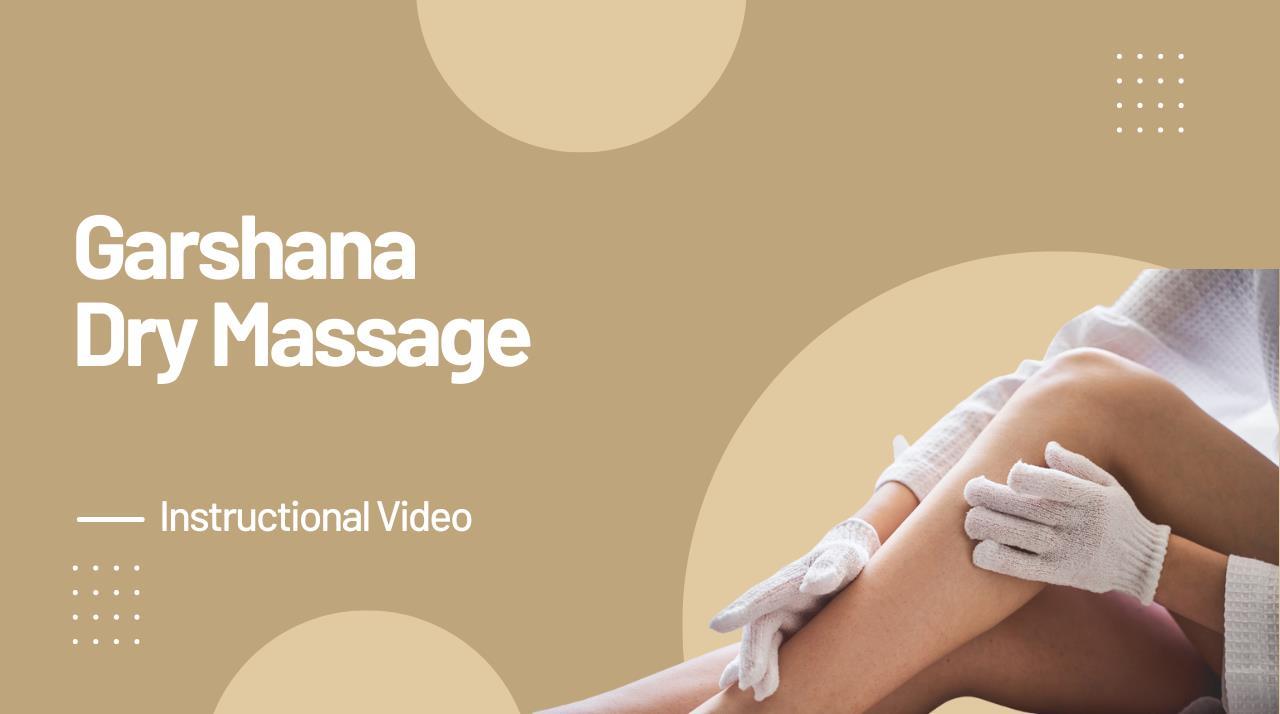
• Garshana (dry massage) to unclog pores, optimize sweat gland function, and improve lymphatic circulation using premium raw silk gloves o exfoliate dead skin without the harshness of a hard bristle brush. *Video Content Available*
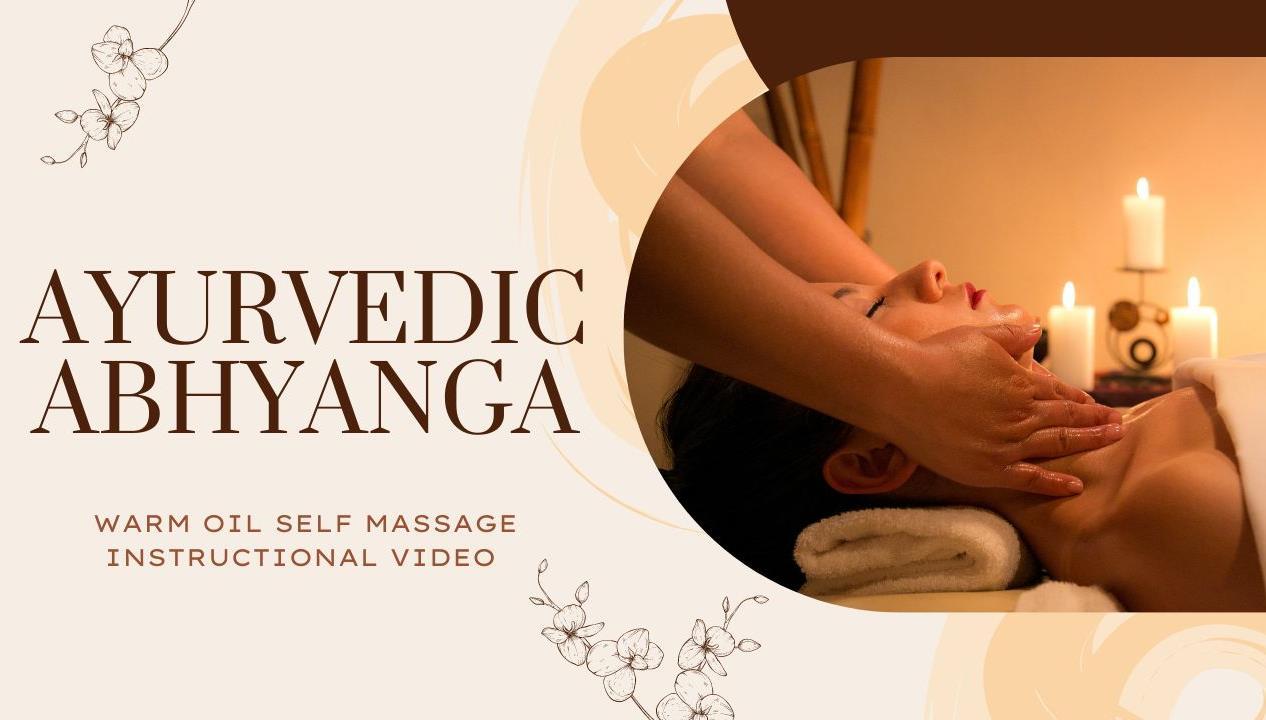
• Abhyanga (warm oil massage) – letting the oil stay on the skin for 1020min. Preferably daily, minimum twice weekly. *Video Content Available* Use Cured Sesame oil. 10ml of Sesame to 6 drops of essential oil. (Palo Santo - Spiritual enhancement) If you are Tridoshic (Jasmine - Relaxation & Bliss)
(Rosemary - Enliven, energy, memory & focus)
(Frankincense - Relax & stress relief)
• Shower (Cleanliness is next to Godliness) Now that you’ve detoxified and purified the Temple through these gentle cleansing and balancing procedures, it is good to begin spiritual work.
• Oleation, Directly After Shower while body is still moist (deep rejuvenation and regeneration of the skin) - Rosa Rubiginosa 5-10 drops + Ylang Ylang or Jasmine 1-2 drops
• Pranayama – EO Inhaler with Black Spruce (5-5-5 / 10x), Diaphragm Breathing 3min, Alternate Nostril Breathing (5min) *Video Content Available*
• Meditation – Samadhi Blend to forehead (16ml jojoba, 2ml sandalwood, 1ml frankincense, 1ml myrrh) & Rose blend to solar plexus (10ml to 6 drops of rose oil)
• Light breakfast – Eat mindfully with awareness
• Work/Study – Fight fatigue at work (Bergamot, Pettigrain or rosemary in inhaler) Increased focus and memory while studying - (Rosemary in inhaler)
Midday Routine
10:00am -2:00pm (Pitta)
• Eat lunch
1tsp Ghee w/ 1 drop each EO coriander & lemon
**Ingesting it 10 minutes before will help stimulate appetite and assist with digestion and metabolism.**
Eat a well-cooked lunch consisting of balanced foods when the Sun is at its peak (noon). This helps with the digestive process. After lunch apply Jojoba oil and 2 drops of cardamom oil rubbed on abdomen to further aid digestion.
• Lassi (refreshing yogurt drink) – would also help with digestion tremendously while also adding but avoid when eating fish. Take a brief rest after lunch for about 10-15 minutes, away from work and stress. A short walk after rest is also beneficial.
• Work/Study - Fight fatigue at work (Bergamot, Pettigrain or rosemary in inhaler) Increased focus and memory while studying - (Rosemary in inhaler)
• Physical exercise of choice for 20-30 minutes. Preferable exercises include Yoga Asanas, swimming, or brisk walking, followed by meditation.
Evening Routine
6:00pm - 10:00pm (Kapha)
• Eat Dinner – Dinner should consist of light and balanced foods. About 10 minutes before dinner to help stimulate appetite and assist with digestion and metabolism eat 1-tsp honey w/ 1 drop coriander EO. After dinner apply Jojoba oil and 2 drops of basil or bay laurel EO rubbed on abdomen to further aid digestion and finish with a brief rest and walk.
• Relaxing recreational activities – inhale bergamot or cypress.
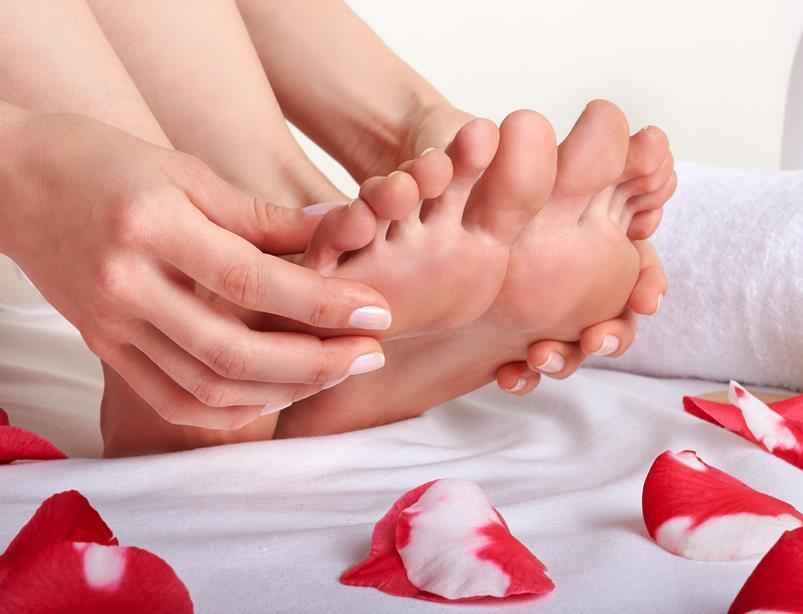
• Foot bath – Add 4-5 drops of sweet marjoram to milk, cream or olive oil. Use that mixture with warm water.
• Foot massage – Mix 10ml sesame oil to 6 drops EO (Roman chamomile, neroli or Angelica root)
• At a minimum, leave about a 60 to 90-minute gap between dinner and going to bed, as this will aid digestion and allow for deeper sleep.
• Inhaler – (Lavender or Red mandarin) About 10 minutes before bed, complete the evening with this. Mix 2 drops of jojoba oil to 1 drop EO on feet. (Vetiver, Spikenard, Lemon balm, neroli, rose, jasmine, sandalwood, lavender) Preference: use jasmine… also in between the eyebrows and behind the earlobe.
Photo
Daily and Seasonal Routines in Nature
RITUCHARYA: Seasonal Routine
Staying in balance as the seasons change
Daily Cycles of Doshas
Vata – 2:00 - 6:00 AM/PM
Pitta – 10:00 - 2:00 AM/PM
Kapha – 6:00 - 10:00 AM/PM
As is the macrocosm, so is the microcosm. The outer environment affects our inner state of mind and body. When there is a change is seasons, counteraction must be done to take out the accumulated doshas. Reducing these elements within the physiology improves longevity and health. When the weather is hot and humid during Pitta season (JulyOctober), those Pitta qualities of heat build in the body as well. When the air is cool and dry in Vata season (November-February), we experience more of those qualities inside us. Kapha season is from March to June. (USA) When the temperature, humidity, and length of days start changing as a new season begins, we respond to these changes in nature by desiring different foods and daily routine. We can overcome or prevent disease by regimen foods and activities to be done or not to be done. Seasonal foods contain the energy coming from the earth and balances the energies of the season, (atmospheric and climate). In general, there is cold, hot, and rainy seasons. Everything depends on the Agni (digestive fire). Therefore, to correct the Agni is the treat disease.
Photo by Yarrrrrbright
The different weather conditions are damaging to the physiology. Ex: You see the dryness on the skin but are completely unaware of what is happening to the neuro-fibers. The brain is like a lotus with all its roots to the spine. If you leave a lotus in the cold, it will dry and shrivel. Similarly, if you don’t protect the head from cold the same will happen. This creates issues in the nervous system, neuropathy in the body. This is the importance of applying oil daily.
We all need to consciously take certain precautions at the change of seasons. The seasonal changes affect every individual in a beneficial or harmful way. By following the principles of Ritucharya (seasonal dietary recommendations and routine), everyone can achieve maximum benefits from the good qualities of the season and remove the harmful effects of seasonal change. This is also a great time for detoxification. Either through herbal protocols or panchakarma. We currently sell the three premier herbal combinations for a gentle and highly effective detox.
Internal Cleansing Protocol
• Herbal Cleanse - supports elimination and internal cleansing—naturally! This gentle laxative herbal formulation promotes intestinal detoxification; helps remove acidity from the system; supports efficient absorption of nutrients; and is cooling to the bowel.
https://shrsl.com/3rmw1
• Genitrac - supports genitourinary function and healthy kidneys; helps flush toxins and boosts digestion to avoid future buildup of toxins.
https://shrsl.com/3rmvy
• Elim-Tox - gently purifies the liver and blood; helps the liver to digest quickly and filter impurities; and enhances absorption of nutrients.
https://shrsl.com/3rmvx
Purchase in store or online and receive an Internal Cleansing protocol. In 2023 will plan to open our panchakarma clinic and begin those cleansing and nourishing treatments at our facility, allowing one to come and experience a 10-day to 23-day Utopian Health Retreat.
Chapter 3: Tools Explained
& Video Tutorials Time to Turn Knowledge Into Action
Using these tools can change your life! I know that learning some of these daily habits may feel cumbersome to add into your day because we felt the same when we learned back in 2015 but I now do these things daily, and some weekly, without any remorse. We feel so much better everyday because of the time and commitment we have been able to dedicate to our self-care habits.
If you start to sprinkle in some of the tools you are about to learn, you will feel better everyday because of your daily release of toxic build-up and you will want to continue after you start to notice the results. We understand that everybody cannot implement all these things daily. Remember, that these tools will always be available to you now and you can implement them in whichever frequency works best for you in your life. Even engaging in yogic exercise every other day, or only twice a week will still improve your overall quality of life, so isn’t it worth getting started?
We are here for you as a resource anytime on your journey to Utopian Health. Please email us at courses@lunafloatspa.com with any questions or concerns.
Gandusha (Oil Pulling)
This ancient practice of gently “swishing” oil in your mouth for a few minutes is said to fortify the gums, freshen breath, purify toxins, and promote healthy teeth. The use of herbalized oil daily, draws out toxins through the oral channels, rejuvenate the tissues and protects oral health.
Tongue Scraping
Helps to remove bacteria and toxins (or ama) from the tongue. Benefits of a cleaner mouth, fresher breath, improved taste, better digestion, stronger immunity and spot red flags sooner.
Garshana (Dry Massage)
Use of premium raw silk gloves to exfoliate dead skin without the harshness of a hard bristle brush. This helps to unclog pores, optimize sweat gland function, and improve lymphatic circulation.
Abhyanga (Oil Massage)
The purpose of Ayurvedic Daily Oil Massage as part of daily routine is to assist in preventing the accumulation of physiological imbalances and to lubricate and promote flexibility of the muscles, tissues, and joints.
The classical texts of Ayurveda also indicate that daily oil massage promotes softness and luster of the skin as well as youthfulness. The following are some simple instructions to assist you in learning the Ayurvedic Daily Oil Massage.
1) Unless a specific oil has been recommended for you, then sesame oil should be used for daily massage. If you find sesame oil unsuitable in some way, you may try olive oil or coconut oil as alternatives. To purify the massage oil, ‘cure’ it by heating it to about 100-degree Celsius (212-degree Fahrenheit), the boiling point of water. By adding a drop of water to the oil, in the beginning, you will know that the proper temperature has been reached when the water boils. It is best to cure oil for each day’s massage daily. As an alternative (to save time) you may cure more oil at a time. One liter of oil will cover about fifteen massages.
Note: Please be aware that sesame oil and other oils are flammable, for this reason they should be cured in the following way:
- Always heat oil on low heat, never on high heat.
- Oil should never be heated unattended.
- Once oil reaches the proper temperature it should be removed from heat and stored in a safe place to gradually cool.
2) Before beginning the massage, the oil should be at or slightly above body temperature. Start by massaging the head. Place a small amount of oil on the fingertips and the palms and begin to massage the scalp. Use comfortably soft pressure for the massage. The massage for the head and for the entire body should be with the palm of the hands rather than with the fingertips alone. Since the head is said to be one of the most important parts to be emphasized during Ayurvedic Daily Oil Massage, spend proportionately more time on the head than you do on other parts of the body.
3) Next apply oil gently to your face and outer part of your ears. You do not need to apply much pressure to these areas. Be careful not to put sesame oil into the eyes as it might burn.
4) Massage both the front and back of the neck, and the upper part of the spine. Continue to use the palms of your hands, in a rubbing type of motion.
5) You may want to now apply a small amount of oil to your entire body and then proceed with the massage to each area of the body. This will allow maximum amount of time for the oil to in contact with the body and get absorbed through the skin.
6) Next massage your arms. The proper motion is back and forth over your long bones, and circular over your joints. Massage both arms, including the hands and fingers.
7) Now apply the oil to the chest and abdomen. A very gentle circular motion should be used, following the bowel pattern from the right to the right lower part of the abdomen, moving clockwise towards the left lower part of the abdomen.
8) Massage the back and spine. There will be some area which you may have difficulty reaching.
9) Massage the legs. Like the arms, use a back-and-forth motion over the long bones and circular over the joints.
10) Lastly, massage the soles of the feet. The feet also are considered especially important and proportionately more time should be spent here than on other parts of the body. Use the palms of your hands and massage vigorously back and forth over the soles of the feet. Leave the oil on the body for a few minutes and then take a warm shower (ideally after about 10-20 minutes).
Photo by Portumen
ID: 170715413
This completes the Ayurvedic Daily Oil Massage. Ideally, about 10 to 20 minutes should be spent each morning on the massage. However, if this time is not available on a particular day, it is better to do a very brief massage rather than to skip the massage altogether. Once you have added this Ayurvedic Daily Oil Massage to your daily routine, the benefits will make it quite natural for you to continue the massage on a permanent basis.
When not to perform Daily Oil Massage:
• in case of indigestion
• when having fever or a common cold
• during menstruation
• do not use sesame oil in case of skin rash, open wound or if there is a strong Pitta imbalance (because sesame oil has a heating effect)
Benefits of Daily Oil Massage according to
“Just as a pitcher, a dry skin, and an axle become strong and resistant by the application of oil, so by oil massage the human body becomes strong, smooth-skinned, and not susceptible to diseases due to Våta. It becomes resistant to exhaustion and exertion. Våyu dominates in the sense organ pertaining to touch, and this sense organ is located in the skin. Oil massage is exceedingly beneficial to the skin; so one should practice it regularly. Of one who practices oil massage regularly, the physique is smooth, flexible, strong, and charming, and even if subjected to injuries or strenuous work, it is not much affected. By regular oil massage aging is prevented.”
Charak Samhitå, Sutrasthån, 5.85–89
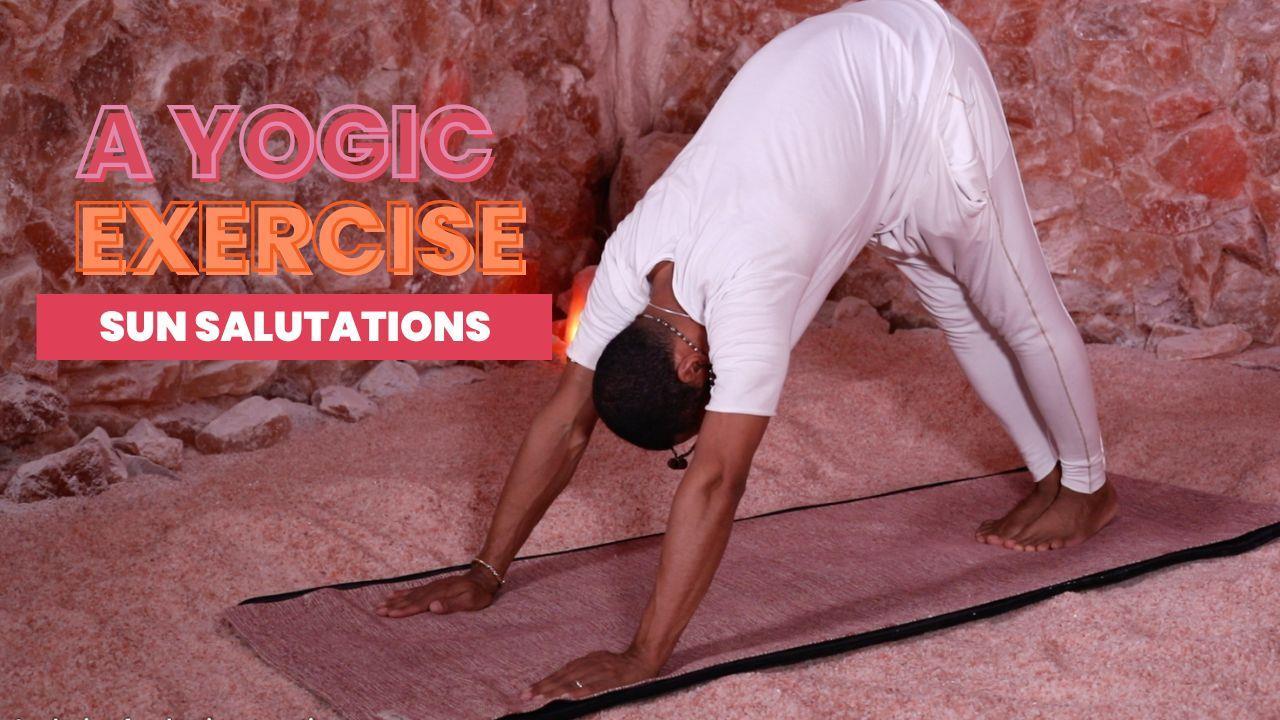
“ Surya Namaskar (Sun Salutations)
A potent yogic practice which offers an opportunity to activate the power of the Sun within you. This is a complete exercise system within itself. A yogic exercise which boosts vigor and vitality and improves circulatory health. It also develops mental clarity and focus and prepares the physiology for yoga asanas and transcending in meditation. Performed slowly, with attention to breathe is encouraged.
Surya Namaskar Sequence
• Patangasana - Butterfly (2min)
• Shishupalasana - Rock The Baby (2min/leg)
• Nadi Vibhajan - (3 cycles)
• Surya Namaskar (3cycles)
1. Samastithi - Shoonyaka (Emptiness of breath)
2. Namaskar Urdhvasana (Elevated)
3. Padahastasana (Hand to foot - 7x)
4. Ashva Sanchalana (Equestrian - right leg back)
5. Parvathasana (Mountain)
6. Sashtanga (8 limb)
7. Bhujangasana (Snake - rapid nostril breathing)
8. Parvathasana (Mountain)
9. Ashva Sanchalana (Equestrian - right leg forward)
10.Padahastasana (Hand to foot - 3x)
11.Ashva Sanchalana (Equestrian - left leg back)
12.Parvathasana (Mountain)
13.Sashtanga (8 limb)
14.Bhujangasana (Snake - rapid nostril breathing)
15.Parvathasana (Mountain)
16.Ashva Sanchalana (Equestrian - left leg forward)
17.Padahastasana (Hand to foot)
18.Urdhvasana (Elevated)
19.Namaskar
20.Samastithi - Kumbhaka (Fullness of breath)
• Chetan-Asana - Awareness Pose (2min)
• Uddyana Bandha - Diaphragm Lock (3 cycles)
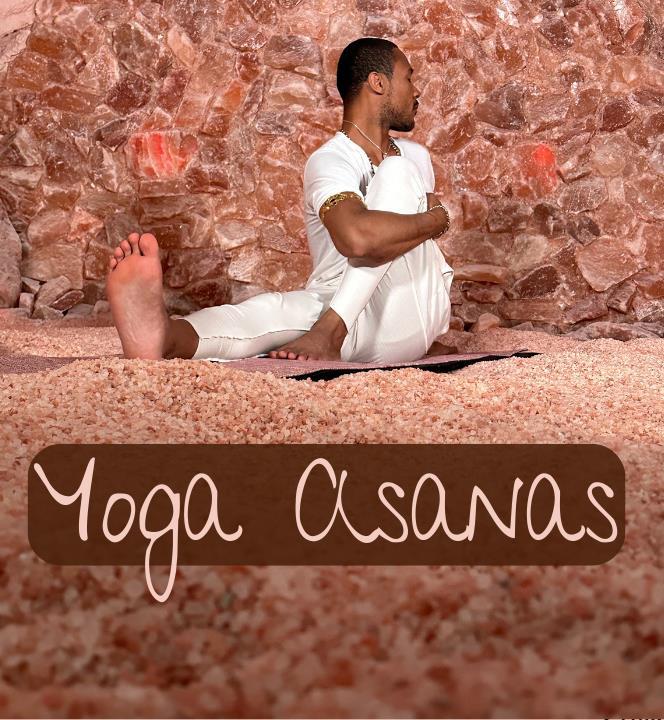
Maharishi Yoga Ᾱsanas:
The Complete System of Prevention-Oriented Natural Health Care for the Individual and Society
The First Set of Ᾱsanas Benefit: To Create a Physiological Balance and MindBody Coordination for Good Health and Well-Being
Yoga Asanas are the ideal preparation for Transcendental Meditation. Each Ᾱsana produces beneficial effects for specific parts of the body, and if time allows one can practice ChetanᾹsana after each Ᾱsana to allow the mind to integrate its relationship with the body.
The new value of mind-body coordination developed by each
specific Ᾱsana can thereby be fully metabolized and stabilized. However, we should always be sure to practice Transcendental Meditation for the full period, and not shorten the Ᾱsana practice.
This set provides levels of preparation that progress sequentially from more active to quieter, from grosser to subtler, effects on mind-body integration.
After this preparation, the TM program is practiced, unfolding the full creative potential of the individual and society, as validated by hundreds of scientific research studies documenting their wide-ranging effects for body, mind, behavior and environment.
Importance of Yoga Ᾱsanas
To keep the body healthy and flexible, regular physical activity is necessary. Only about ten minutes twice daily practicing Yoga Ᾱsanas before TM are required to promote health and produce a wonderful feeling of growing mental and physical strength. The test of a correct Ᾱsana is feeling restfully, pleasantly settled.
The Value of Attention
By letting the mind be on the area of stretching, after a moment the sensation of stretching will begin to disappear, giving rise to pleasantness. With this program, the pleasantness will spread all over and whatever inflexibility there is in different parts of the body will be replaced by pleasant flexibility, creating mind-body integration.
Ideal Environment
We practice Ᾱsanas—
▪ On a firm, but soft, comfortable surface
▪ Away from strong, uncomfortable sunlight
▪ Comfortable room temperature
▪ In a settled environment without distractions (unpleasant sounds, sights, touch, pets, and smells)
Personal Preparation
We practice Ᾱsanas—
▪ When well-rested and feeling comfortable, preferably with empty bladder and bowels
▪ In comfortable, loose clothing
▪ With full attention (without TV, radio, talking & interruptions)
We do not practice Ᾱsanas—
▪ Within 3 to 4 hours after a full meal. It is not best to eat or bathe immediately after Ᾱsanas
▪ Within 15 to 20 minutes of taking any beverages
▪ During indigestion
▪ During illness where exercise is contra-indicated, or feverish
Valuable Features of Maharishi Yoga Ᾱsanas
Natural • Holistic • Systematic • Scientifically Validated Benefits • Culture Good Health • Develop Higher States of Consciousness • Authentic
• Time-Tested • Easy to Practice • Free from Harmful Side-Effects • Oriented Towards Correcting the Root Cause of Imbalance
Maharishi Yoga Asana Sequence
Sanskrit Name for Pose Common Name Instructions
1. Sukh-Ᾱsana
2. Sankalp
3. Chetan-Ᾱsana
4. Samvāhan
Seated Indian
Same pose but set an intention
Seated Indian
5. Vellan Knees to chest
6. Pād-Sanchalan
Bicycle Kicks
7. Pavan-Mukt-Ᾱsana Knee to chest
8. Utthit-Ekapād-Ᾱsana
9. Sarvāng-Ᾱsana
10. Kati-Ᾱsana
Leg extensions or raises
Shoulder stand
Bridge Pose
11. Bhujang-Ᾱsana
Cobra Pose
12. Ardh-Shalabh-Ᾱsana
Locust Pose
Sit in a comfortable position
Close the eyes for about one minute
Relax for 1-2 minutes, lying on back, hands at sides.
Toning the body, about for two minutes, always ending at the heart; massaging front of head, back of head, arms, torso/back to, & feet/legs
Hold for 1-2 seconds. Hug knees to chest and roll 3 times to each side (alternating)
Bicycle kicks 3-5 times with each leg (alternating)
Hold each position for about 10 seconds. Repeat 1-3 times (alternating)
Hold for about 10 seconds; 3 times each leg (alternating)
Hold for 10 seconds-1 minute
Feet hips width distance, lift pelvis up. Hold for 5-10 seconds; Repeat 3-5 times.
Hands on ground under shoulders then lift the torso up. Hold for 5-10 seconds; Repeat 35 times.
Hands remain at sides, lying on stomach and nose to ground; one leg lifts up and back. Hold for 510 seconds; Repeat 3 times with each leg (alternating)
Maharishi Yoga Asana Sequence
Sanskrit Name for Pose
Common Name Instructions
13. Vajr-Ᾱsana Diamond Pose Sitting up on bent knees, then moving legs forward to stretch out one at a time and returning. Hold for 10 seconds-1 minute; Repeat 1-3 times.
14. Shashānk-Ᾱsana Childs Pose Bend knees under the body and stretch hands forward until comfortable, then allow elbows and forehead to drop to ground. Hold for 5-10 seconds; Repeat 3-5 times.
15. Jānu-Shir-Ᾱsana Head to Knee Bending forward from the hip. Hold for 5-10 seconds; Repeat 1-3 times each side (alternating)
16. Vakr-Ᾱsana Seated Spinal Twist Bend one knee and twist to the same side, turning spine towards the back of the room. Hold for 5-10 seconds.
17. Hast-Pād-Ᾱsana Standing Forward Bend With hands outstretched in front upon rising and falling. Hold for about 5-10 seconds; Repeat 3 times.
18. Chetan-Ᾱsana Shavasana Relax for about 1-2 minutes.
19. Sukh-Prānāyāma Alternate Nostril Breathing Practice for 4-5 minutes.
20. Sukh-Ᾱsana Any comfortable seated position for meditation During the practice of Transcendental Meditation
Correct Performance
➢ We practice Ᾱsanas easily, comfortably, and naturally, without strain or applying force. This is very important. If one is unable to complete the posture comfortably, one should not strain to complete it, but should perform the Ᾱsana only as far as is comfortable, and hold the post only as long as is comfortable. This applies particularly to individuals who are weak or unaccustomed to physical exercise.
➢ Effortless practice and the experience of pleasant steadiness ensures the fastest rate of progress.
➢ We practice in the following manner:
1. Move until a natural stretch is felt.
2. Easily, spontaneously, and effortlessly let the attention be on the stretch.
3. Gradually, slowly, and easily come back to the starting position.
➢ We breathe normally and naturally throughout the practice.
➢ If any discomfort or pain arises, then we rest until the discomfort, physical or mental, is gone. Chetan- Ᾱsana can be done at any time, including after each Ᾱsana.
➢ During the Ᾱsanas it is best if the eyes are closed, if it feels natural. Otherwise, the eyes may be open. There should be no effort either way.
➢ Traditionally the general instruction for all the Ᾱsanas is that men begin with the right side and ladies with the left side.
➢ The twice-daily practice of each Ᾱsana as part of this set of Ᾱsanas, brings the best results. The natural sequence of Ᾱsanas is given by the sequence of chart numbers.
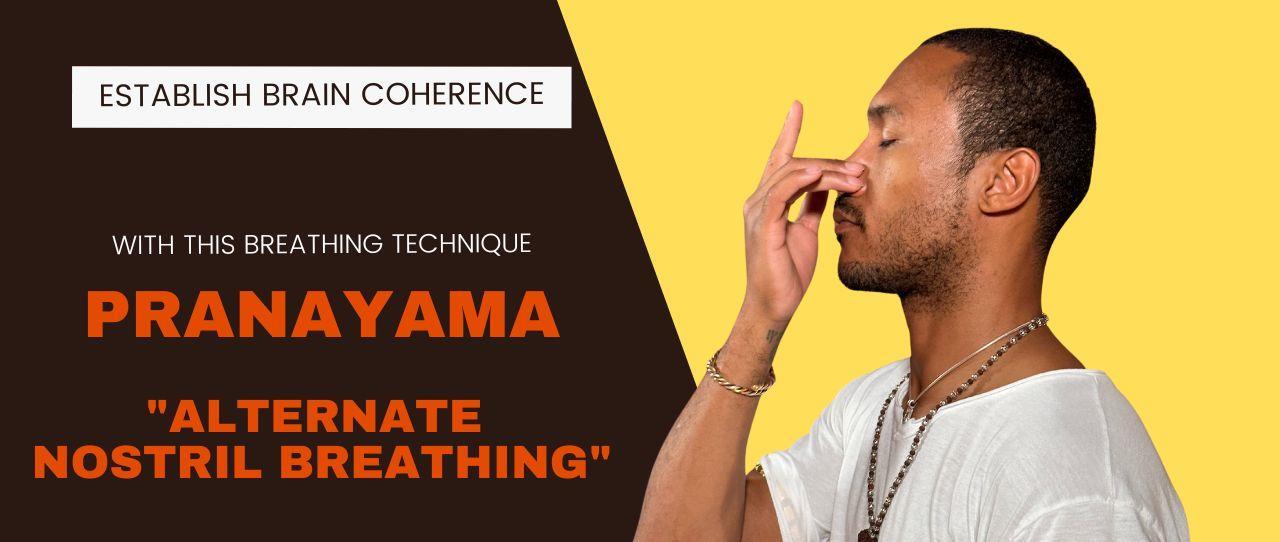
Prānāyāma | Alternate Nostril Breathing
Prānāyāma is a Vedic breathing technique, which stimulates and increases the vital energy, ultimately bringing about perfection and evenness of the soft flow of Prāna within the whole physiology.
It is a means to connect individual breath with Cosmic breath, individual life with Cosmic life.
Prāna: ‘Pra’ – the first ‘an’ –to move, to breathe
Yāma: to observe, to control
Prāna is the vital force which pervades the whole universe. Prāna is the link that connects consciousness and matter, Ātma (individual Self) and the body. Prana is more subtle than air or oxygen. It activates the gross body via the subtle channels, called Nādis.
Āyu, the span of life, depends on the mode of respiration. A person who breathes in short, quick gasps is likely to have a shorter life span than a person who breathes slowly and deeply.
Deep, slow breathing bestows greater vitality and long life. Therefore, in Vedic Tradition, life span is measured not in years but in number of breaths.
Resources for Measurements
➢ Meditation Jojoba 16ml to 2ml Sandalwood, 1ml
Frankincense, 1ml Myrrh
➢ Heart Opener— Jojoba 18ml to .5ml Rose
➢ Abhyanga— Cured Sesame 473ml to 15ml Palo Santo
➢ Lotion Jojoba 473ml to 15ml Palmarosa
➢ Foot massage— Sesame 30ml to 1ml Roman Chamomile
➢ Gandusha (oil pulling)— Sesame 30ml to 1ml Cinnamon Bark
Additional Course Resources
➢ Mind-Body Health Questionnaire- Discover Your Dosha