SCHOOL OF ARCHITECTURE
2024-2025
2024-2025
262-302-1807

luke scalise23@gmail com
https://www linkedin com /in/luke-scalise24276928a/
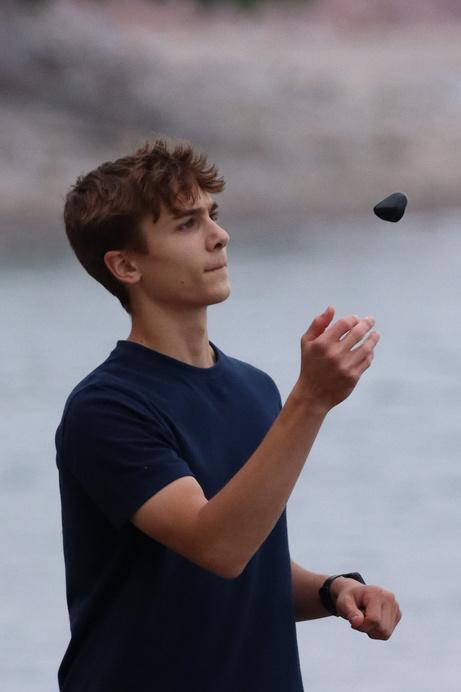
I am currently a third-year MArch student at KU In the field of architecture, my passions include historic preservation, passive design, and the interplay between the built environment and urban fabric My creative, analytical, and collaborative skills are rooted in a strong work ethic and an undying interest in new perspectives and ideas
2
Modeling
Sketchup
Rendering
Twinmotion
Documenting
Illustrator
Conducted existing building and site measurements
Orchestrated design decisions
Indulged in divergent creativity throughout the preliminary design process
Used Revit to model residential additons
Used Enscape to create realistic renderings and presentations for clients
Assembled concept design and official ARC drawing sets
Participated in client and internal meetings
Grading homework assignments and conducting weekly office hours
Managed an independent all-service lawn care business
Maintained a reliable schedule for 4-5 customers
Performed services such as mowing trimming weeding etc
Orchestrated monetary decisions
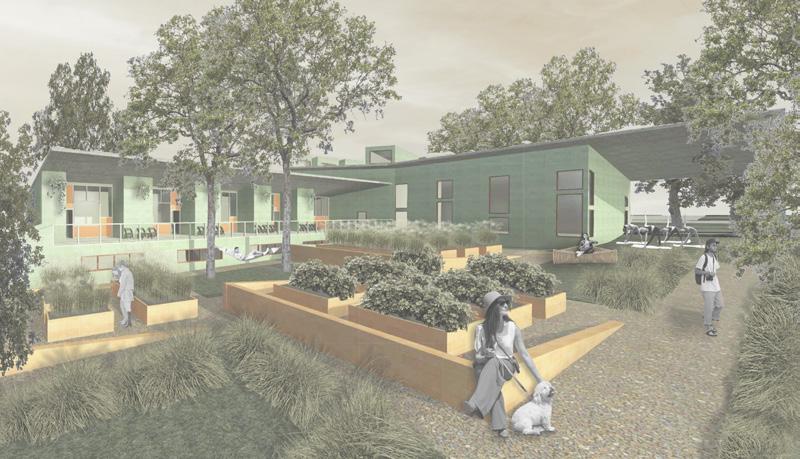
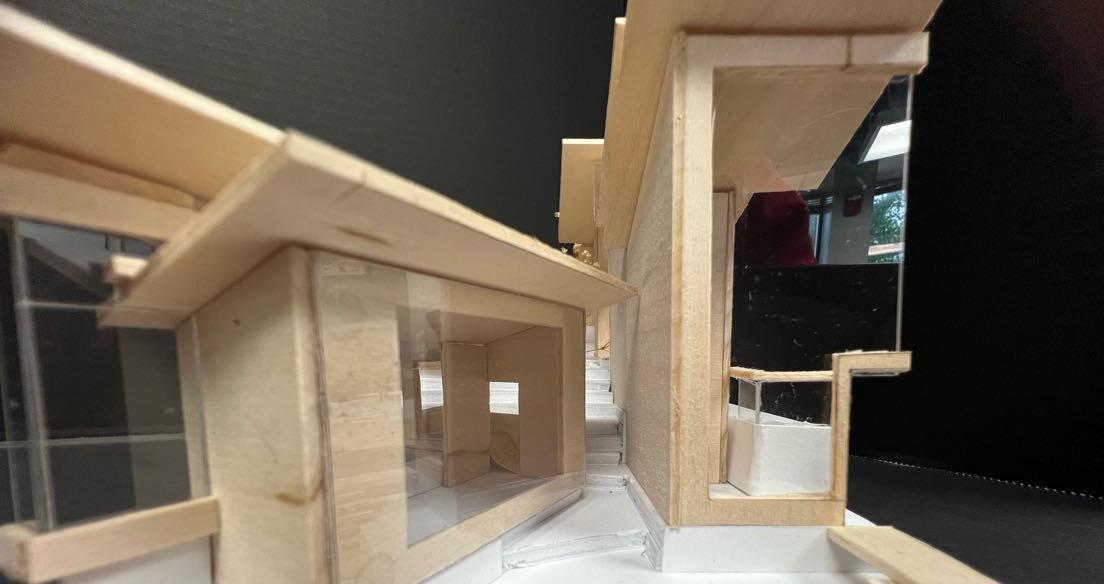
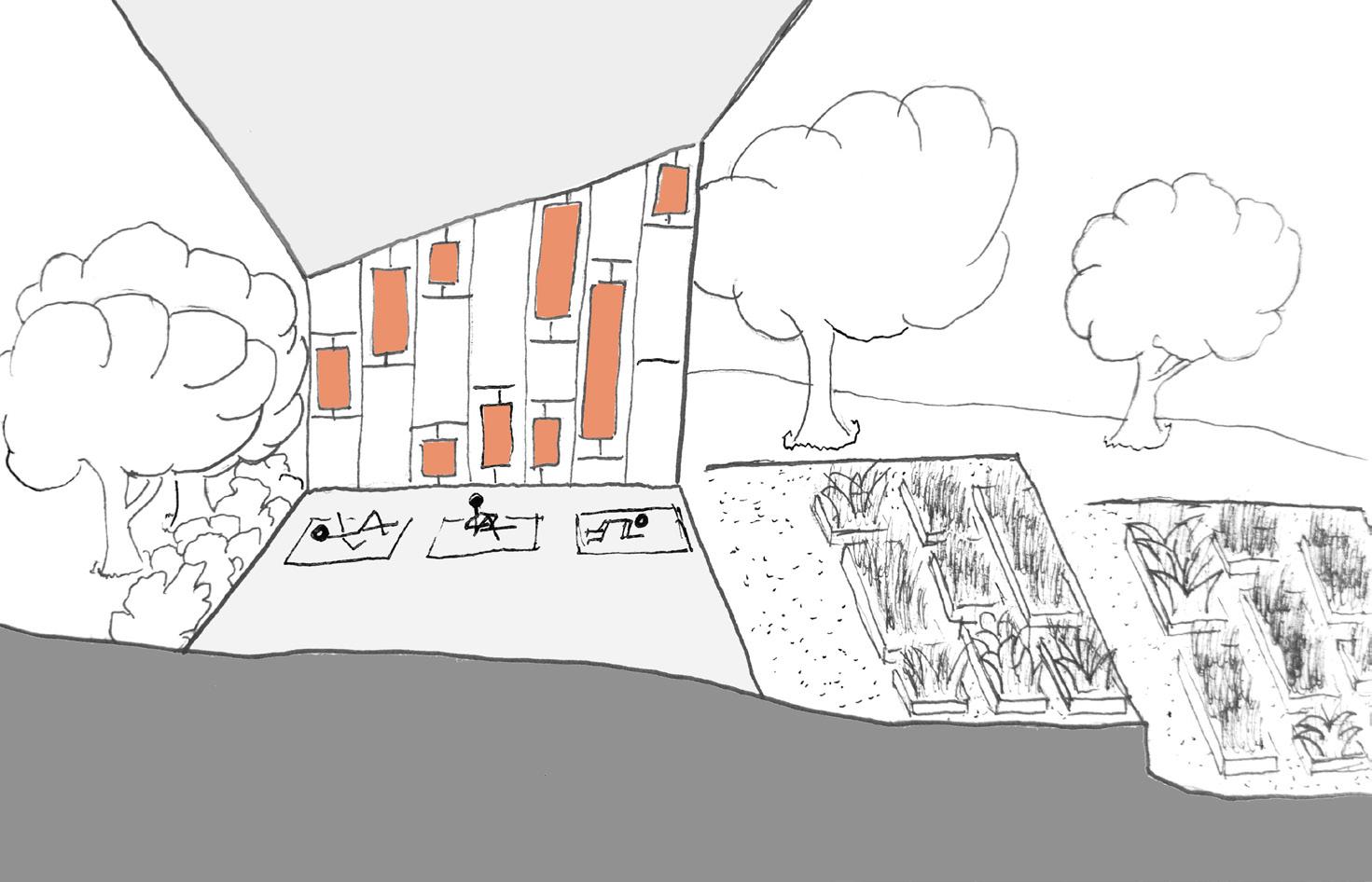
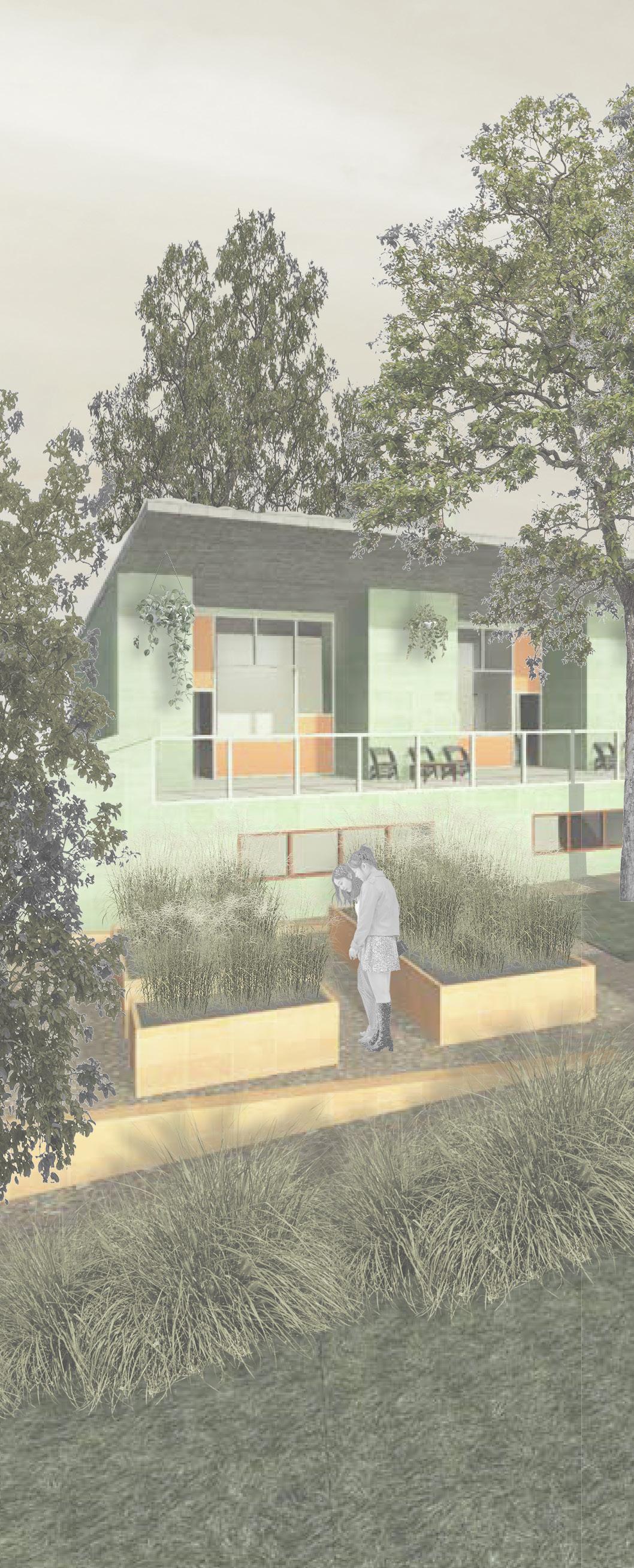
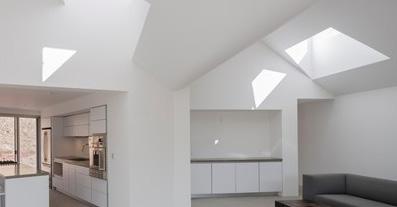
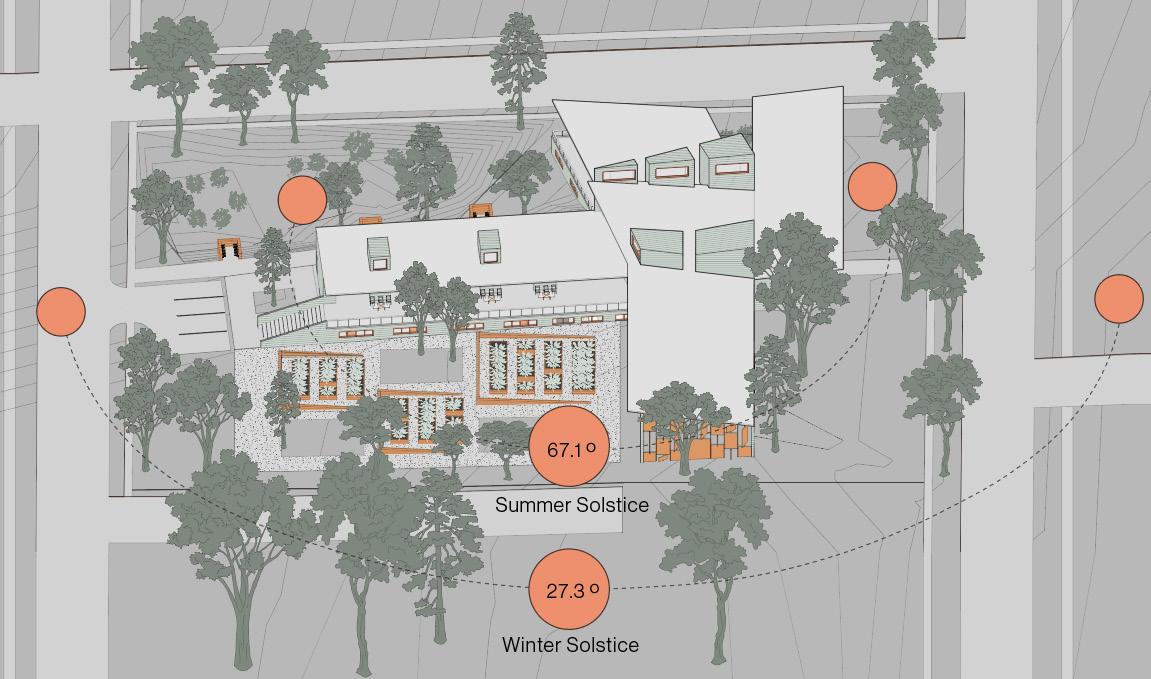
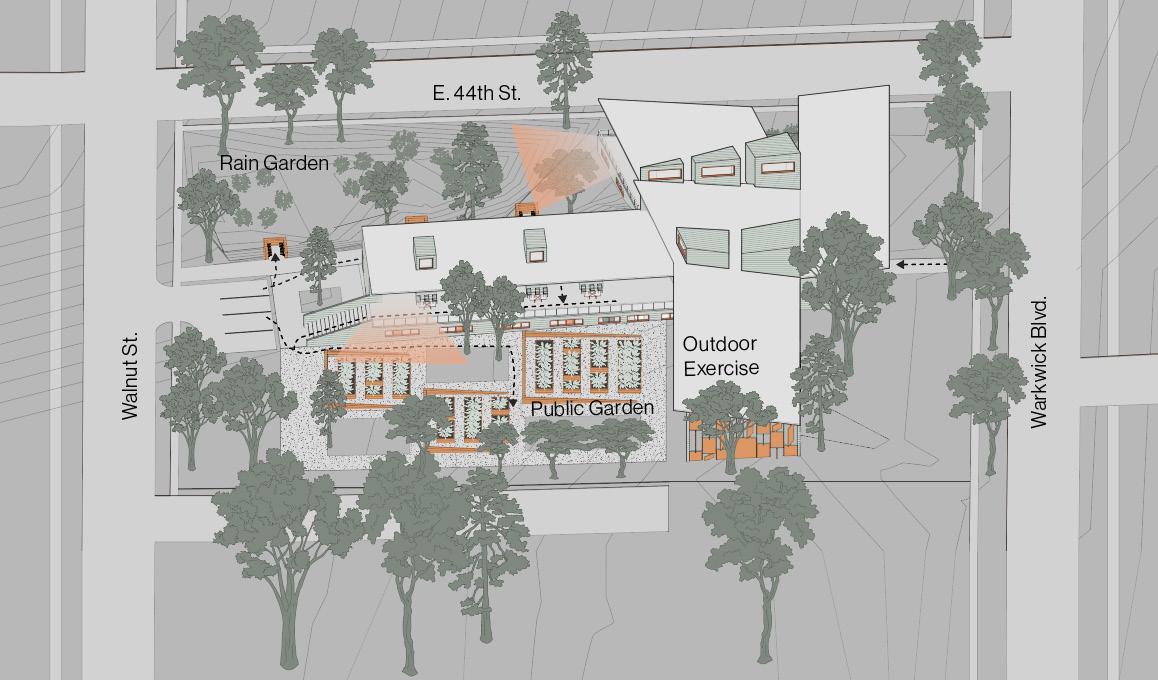
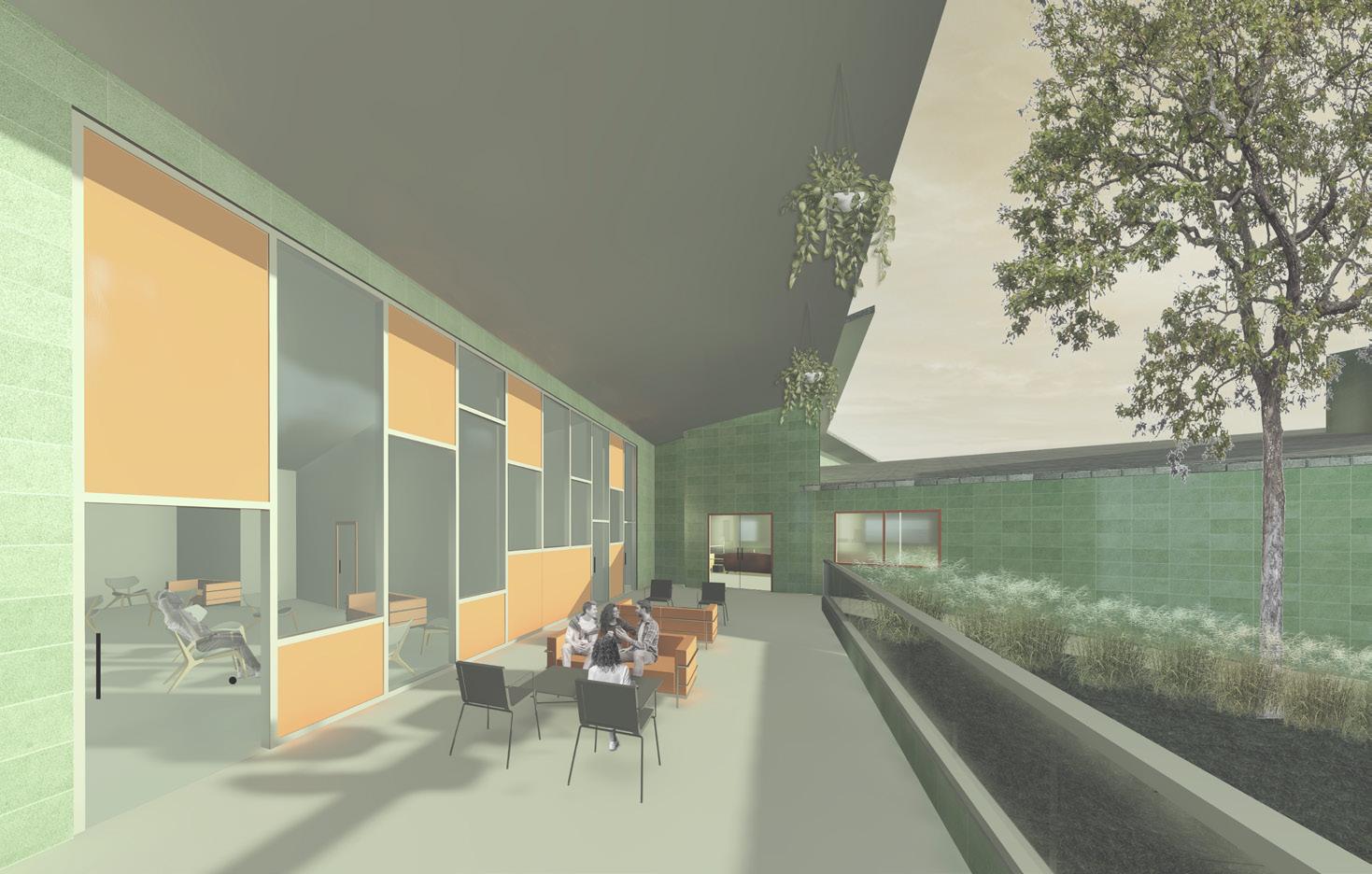
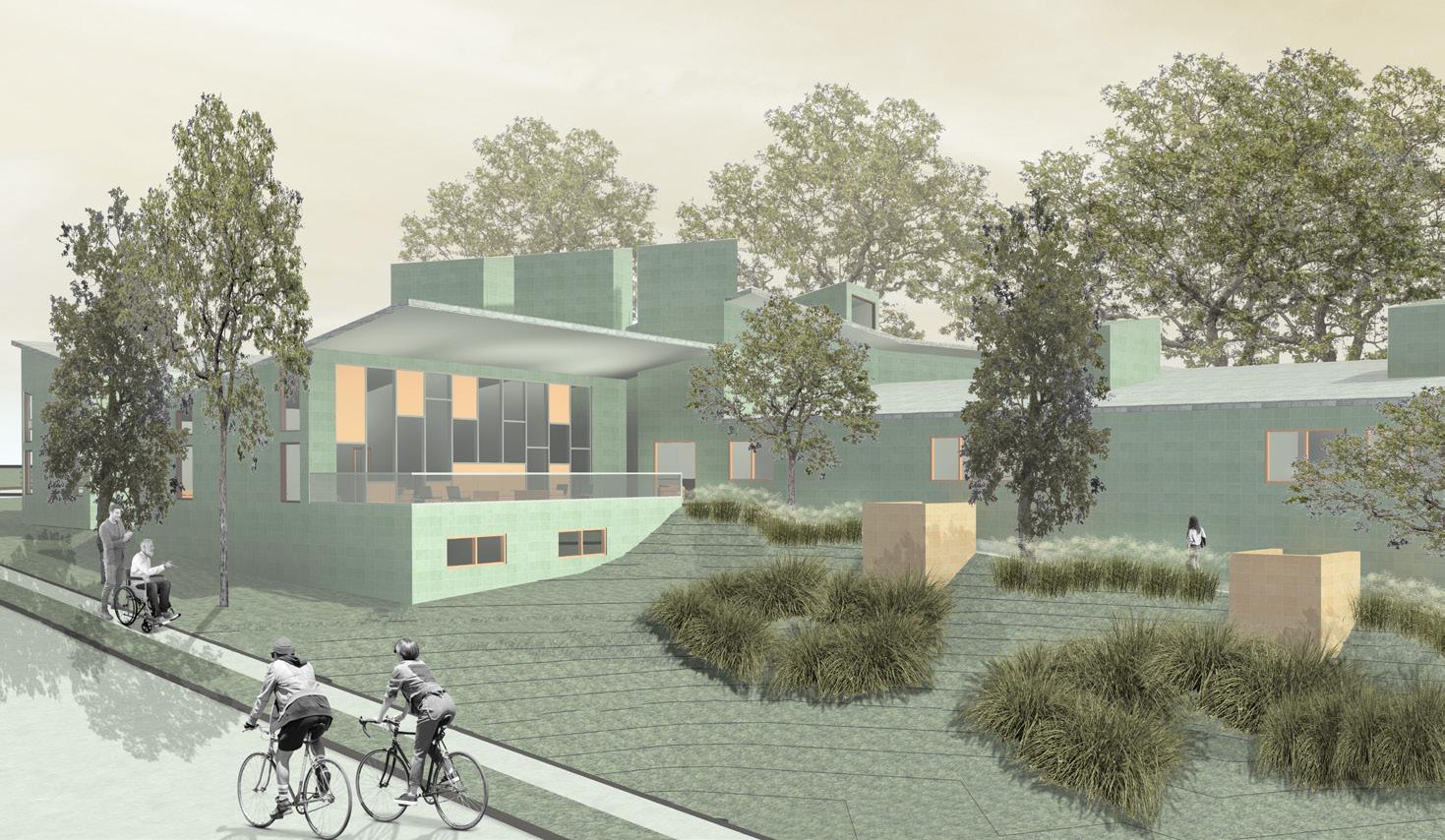
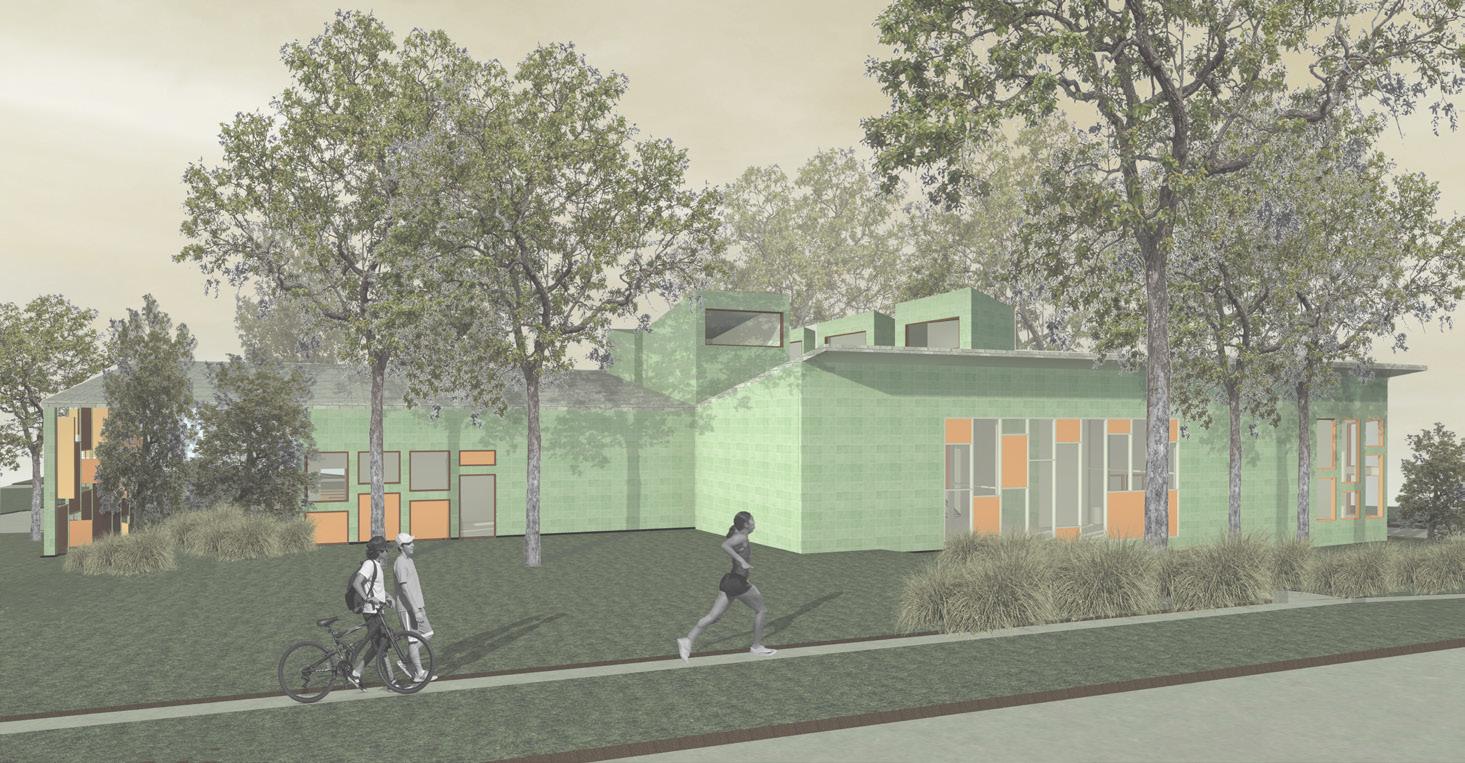
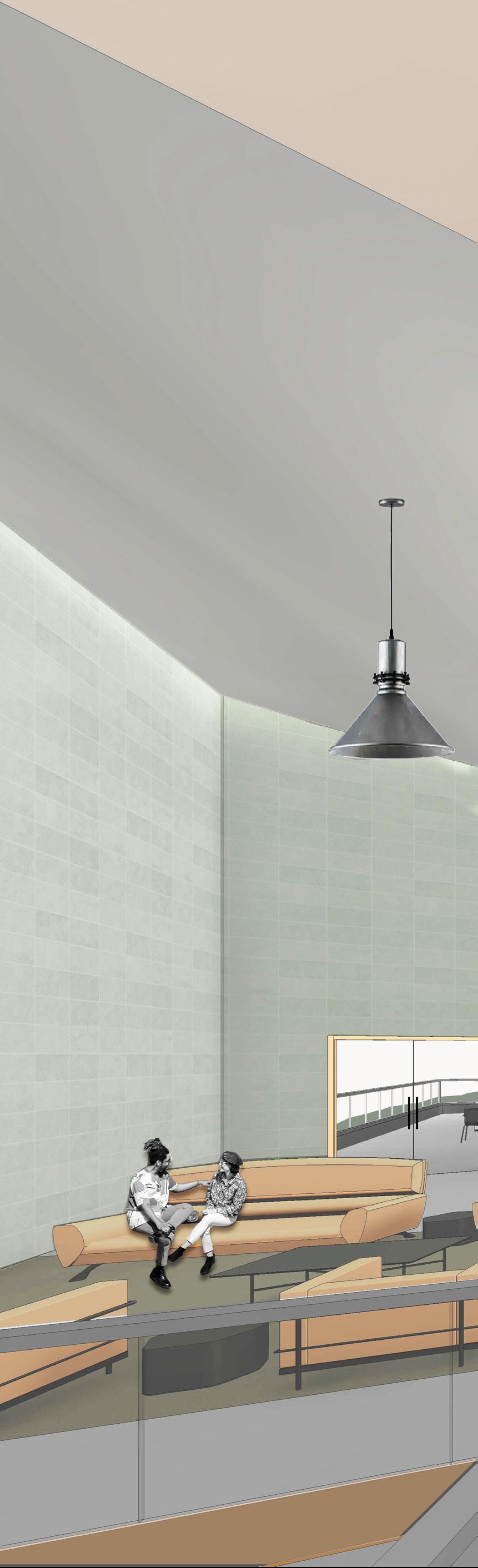
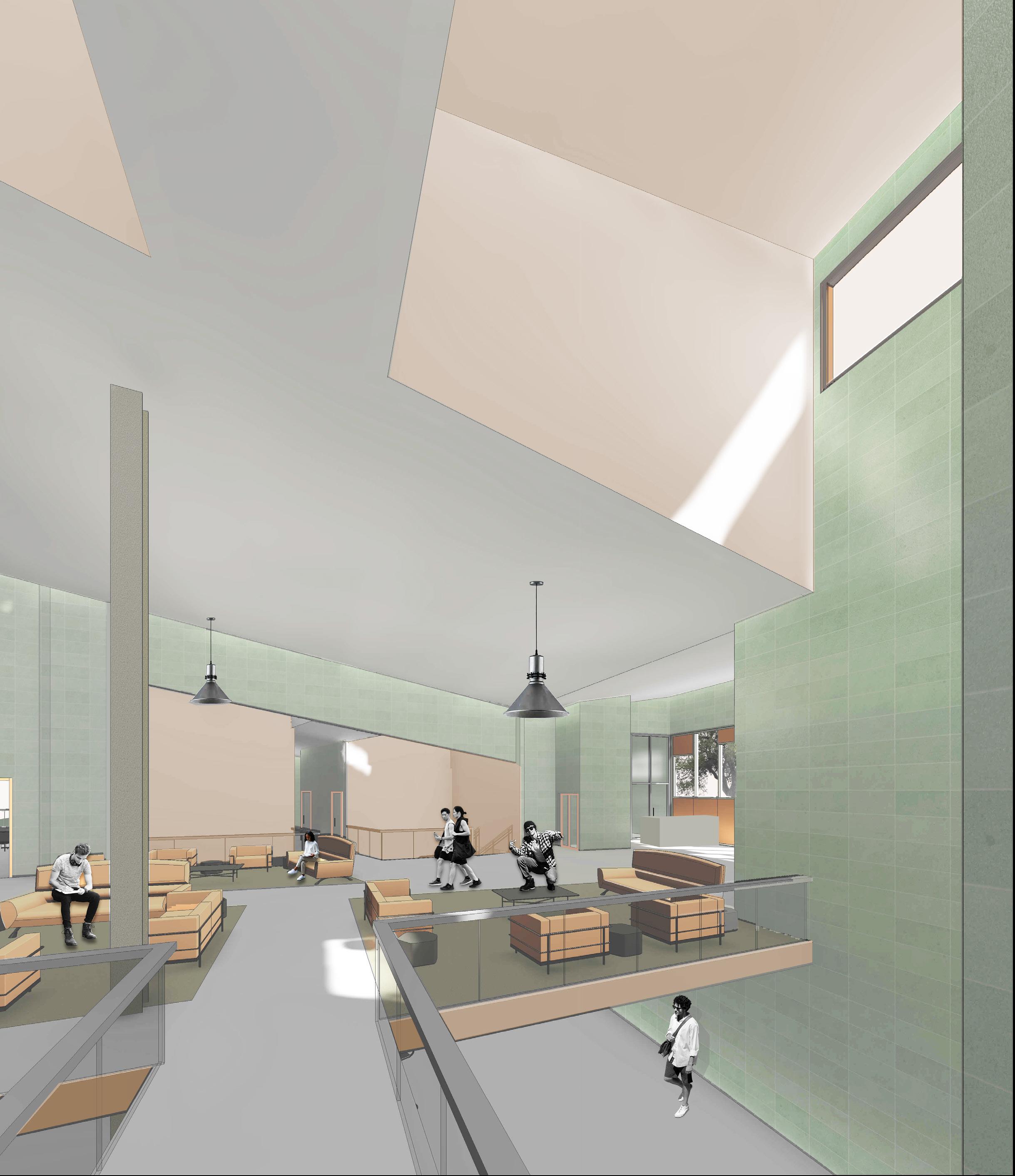
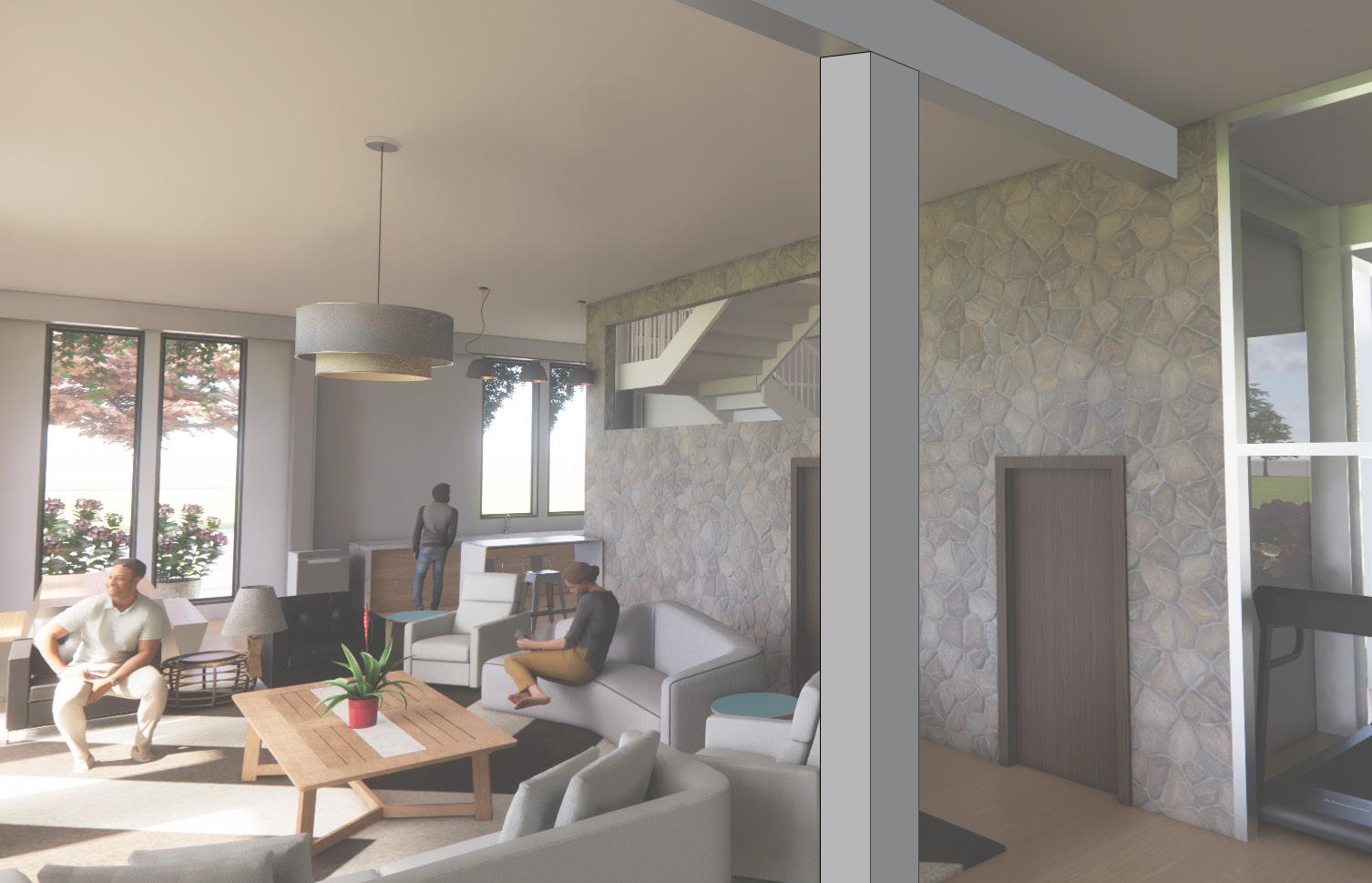
In an effort to reduce technology addiction, this project uses architectural nodes to foster immersive social and spatial experiences. Nestled into its topographical context, the building has a grounded approach, while still offering expansive views and maintaining an urban edge. The program consists of four functional wings: staff, therapy, fitness, and living. The wings converge at a central node, which houses the common room on the main floor and kitchen and dining area below. This node is characterized by its light cannons, which protrude through the roof plane, capture sunlight throughout the day, and disperse luminescence through the entire node. The building’s fragmented form creates opportunities for porches and gardens, which act as smaller nodes. These areas foster a connection to nature and encourage socialization between patients. In addition to the light cannons, the building achieves solar harmony through overhangs and curtain wall panels.
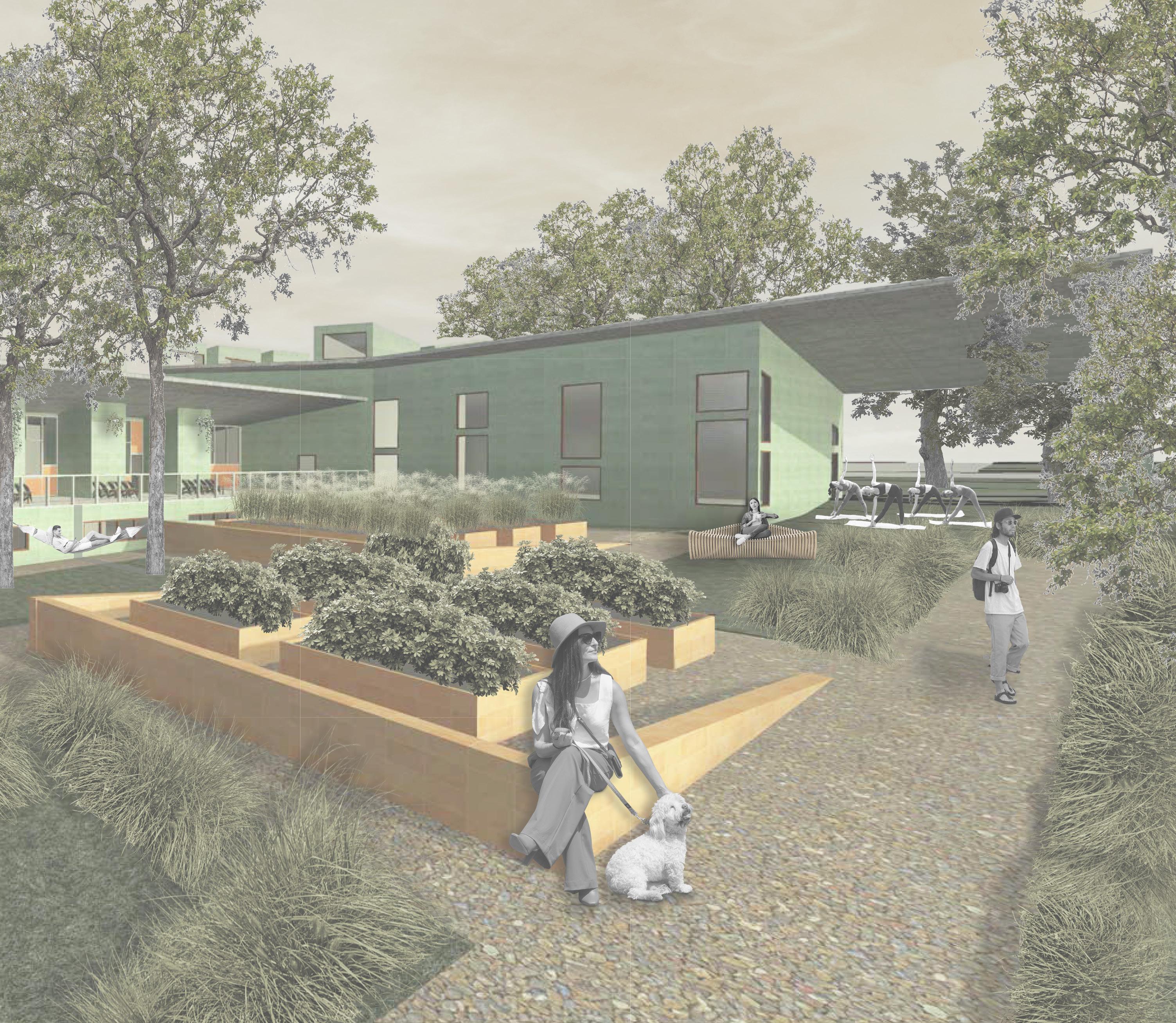
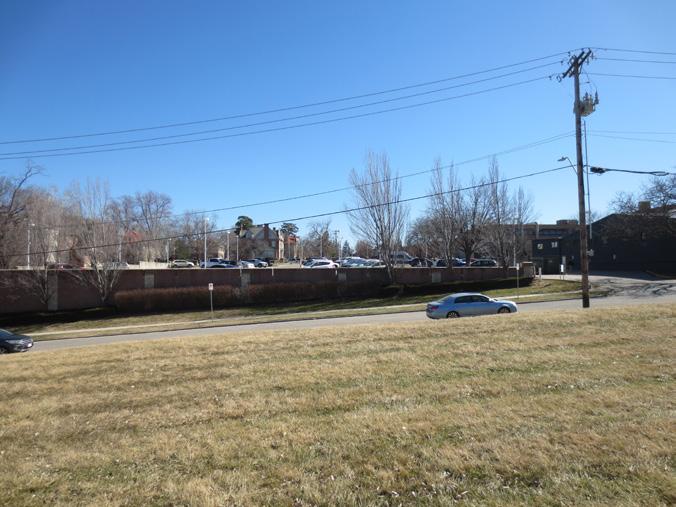
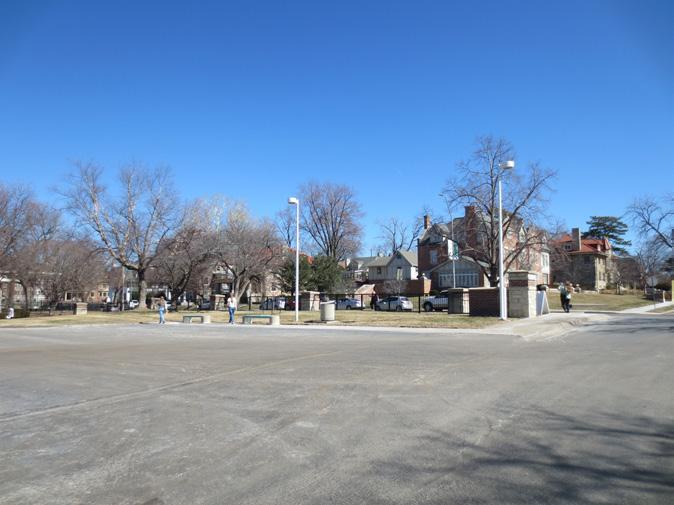
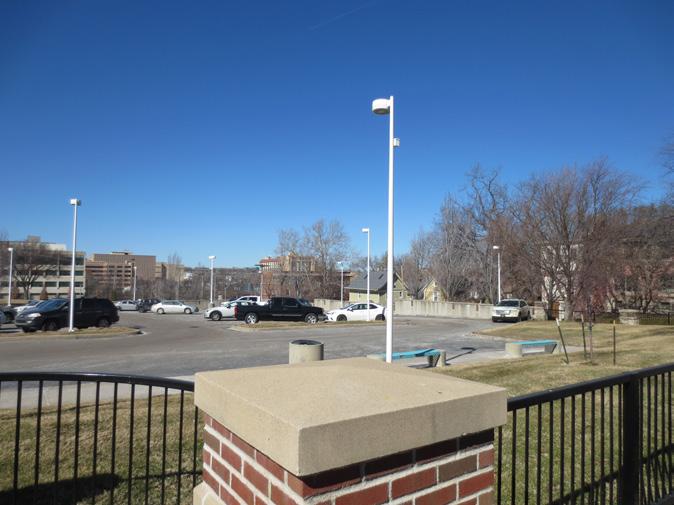
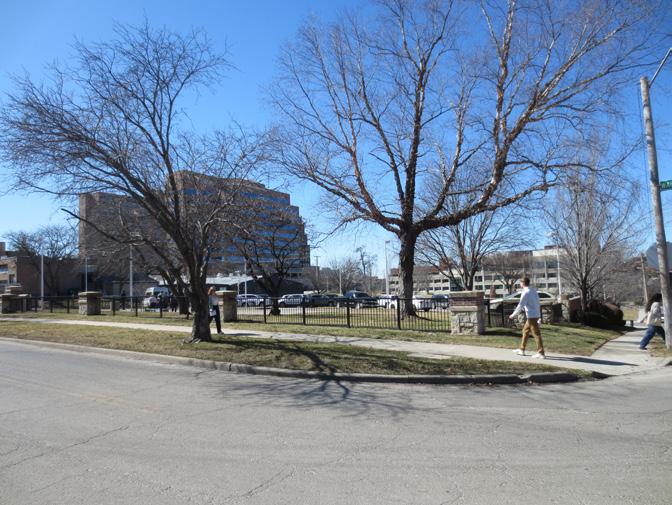
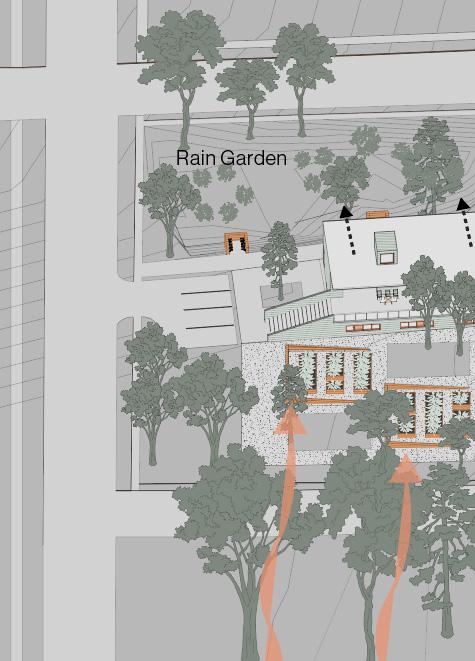
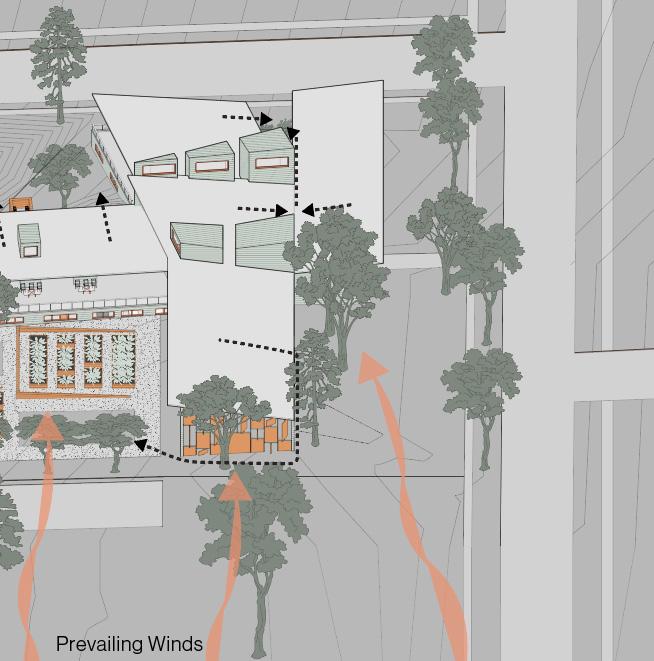
The Tech Addiction Rehab Center is situated in Southern Kansas City within a context of walkability, transit, and recreation. A bus stop is conveinently located in the backyard of our site, which provides access to a much broader range of amenities and attractions. Much of the surrounding area is pedestiran friendly, with sidewalks and public parks.

MOS Architects | Star Axis, NM
Project Team: Michael Meredith, Hilary Sample, Cara Liberatore
Year: 2009-10
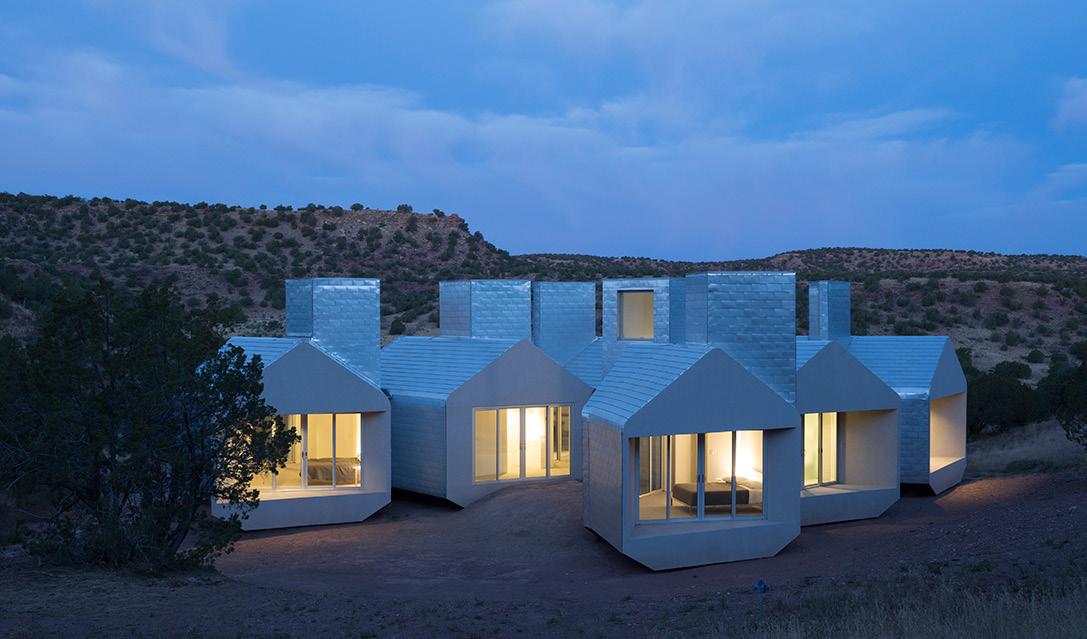
Exterior Perspective
House No. 5 adheres to fragmented massing, with modular masses radiating outwards and seperated by function. At its center is a common node, which is accentuated by light cannons. These devices capture light from all directions, flooding the interior with soft natural light throughout the day.
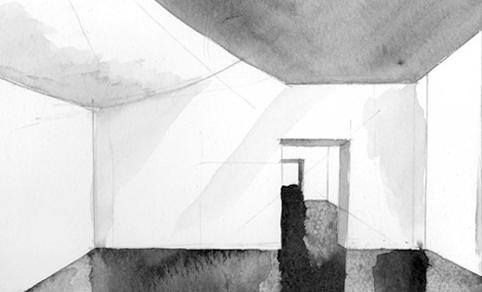
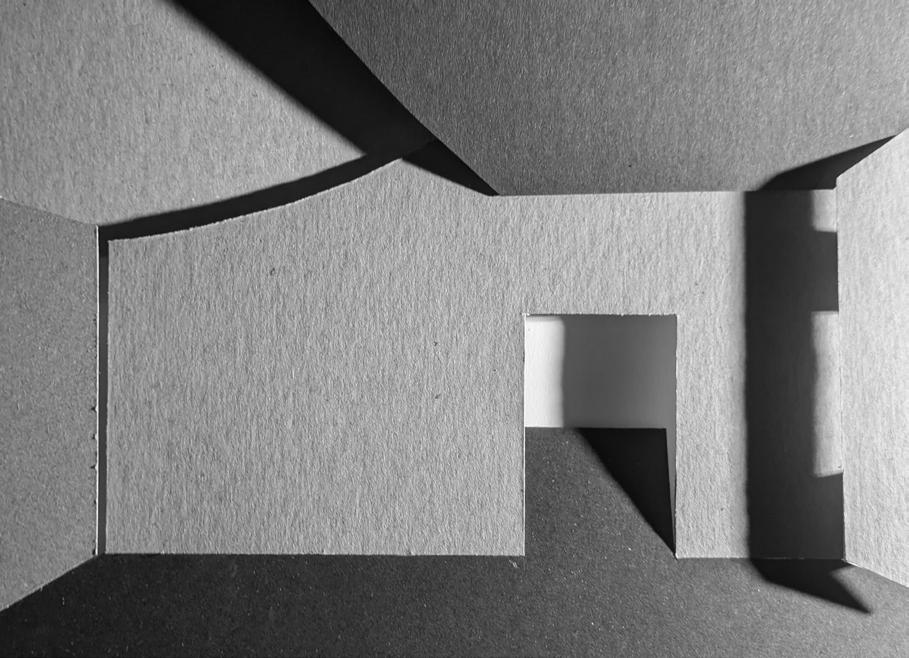
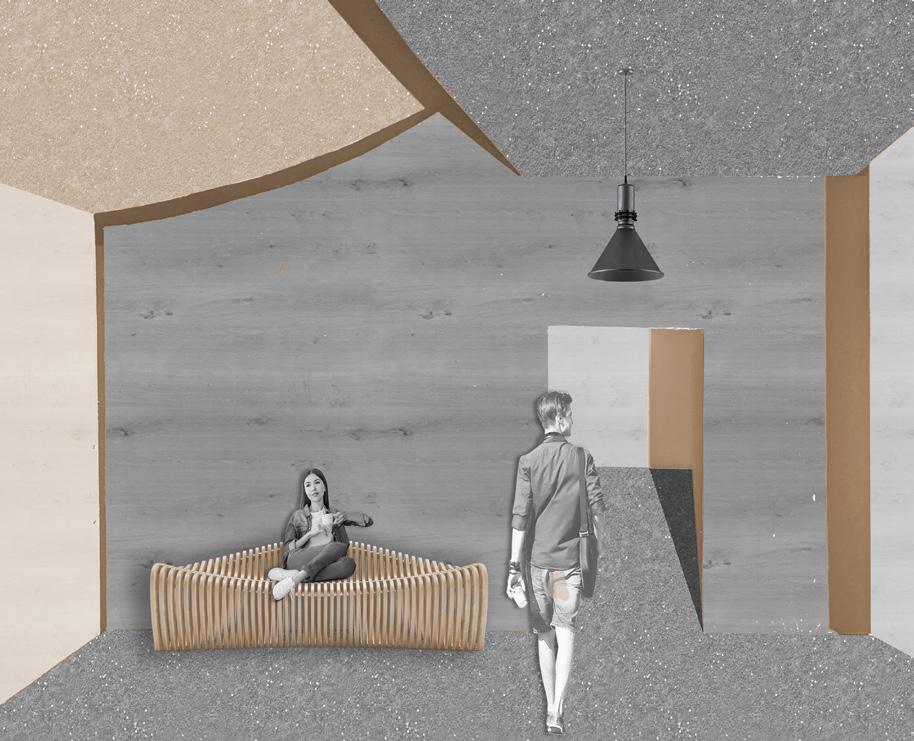
Steven Holl’s interior watercolor composition emphasizes the dispersion of light from a hidden source above. This concept was interpreted and made original through the depth model and composition.
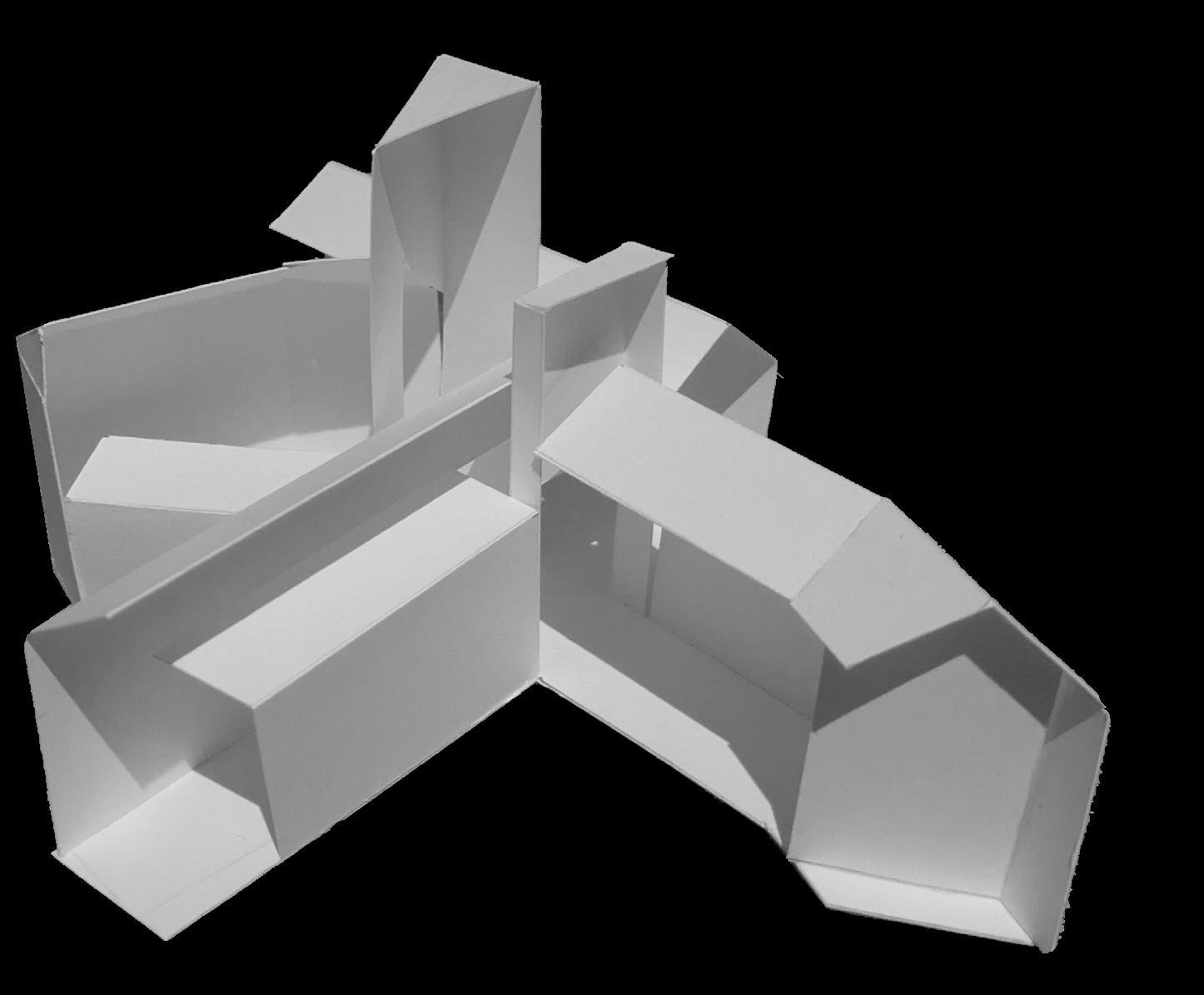
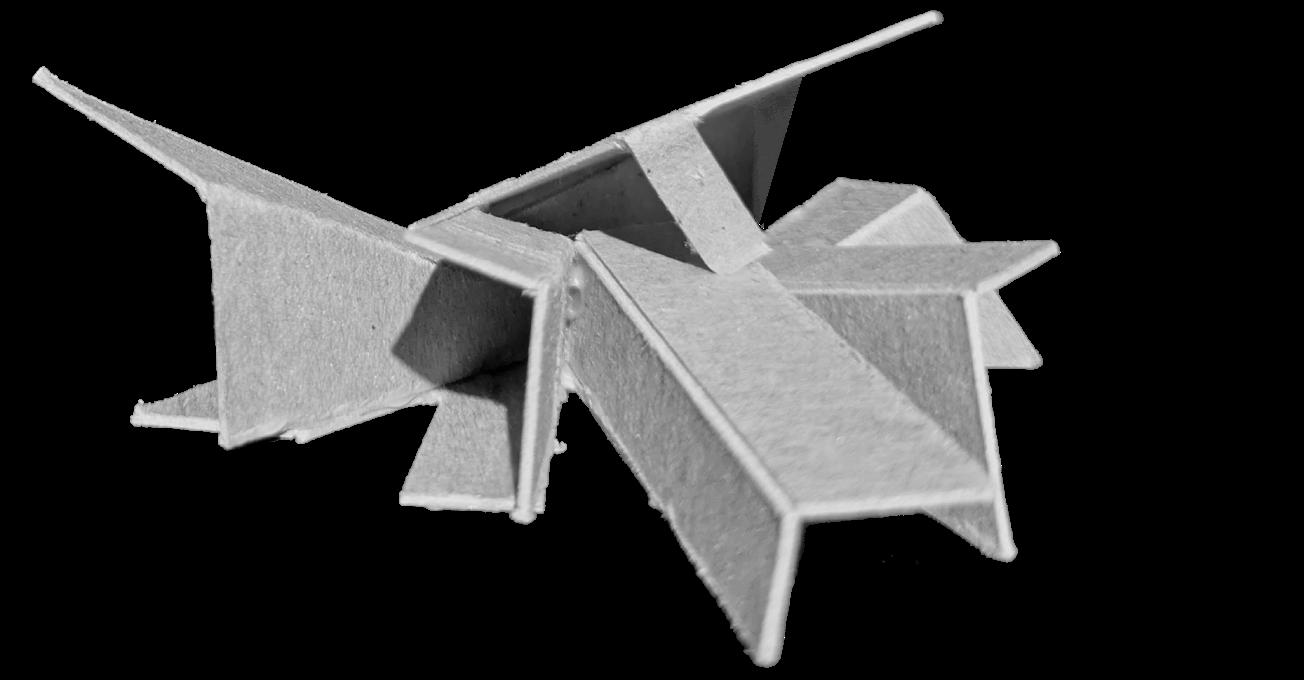
The large graphic represents a conceptual systhesis of House No. 5, the Holl Exercize, and the study models. These concepts were fragmentation, node, and solar harmony. During the project, these ideas developed in harmony with the site.
Light cannons capture the south facing sunlight, providing natural light to the downstairs bedrooms (2 per unit). The living rooms also recieve south facing light and offer views of the public garden. The two upstairs bedrooms offer access to a private porch, which can be opened up to the expansive public terrace.
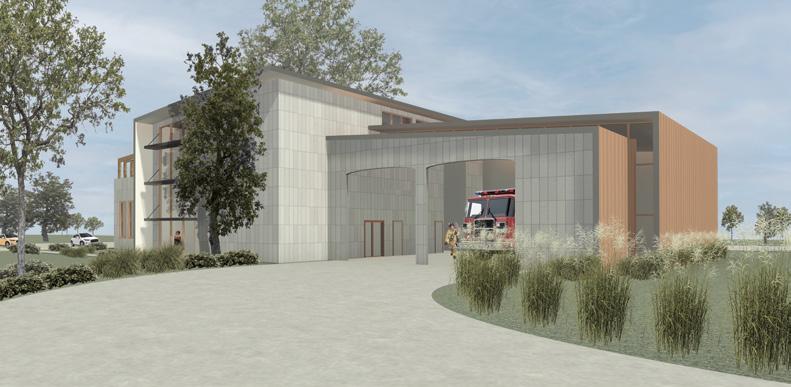
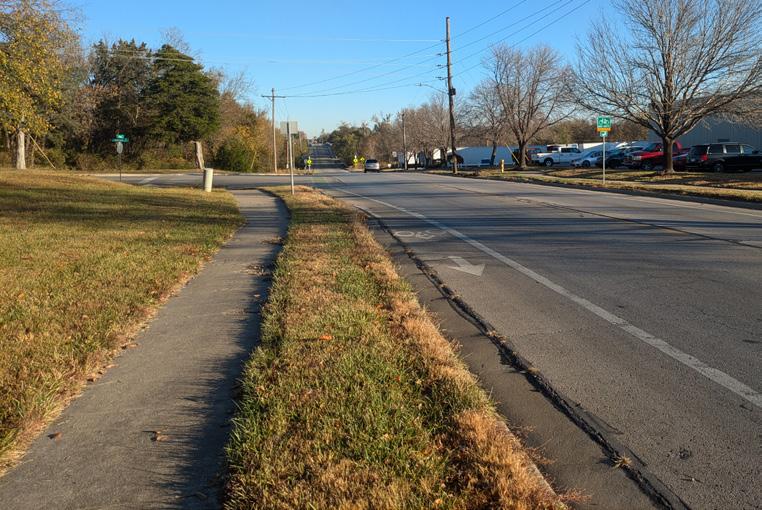
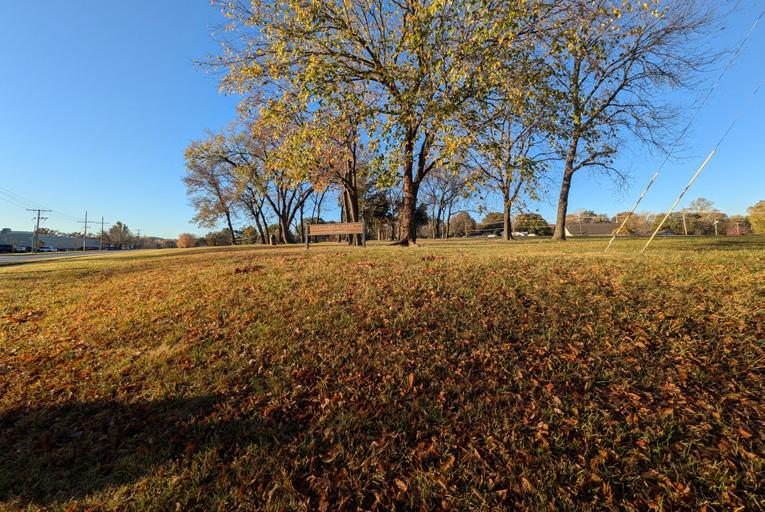
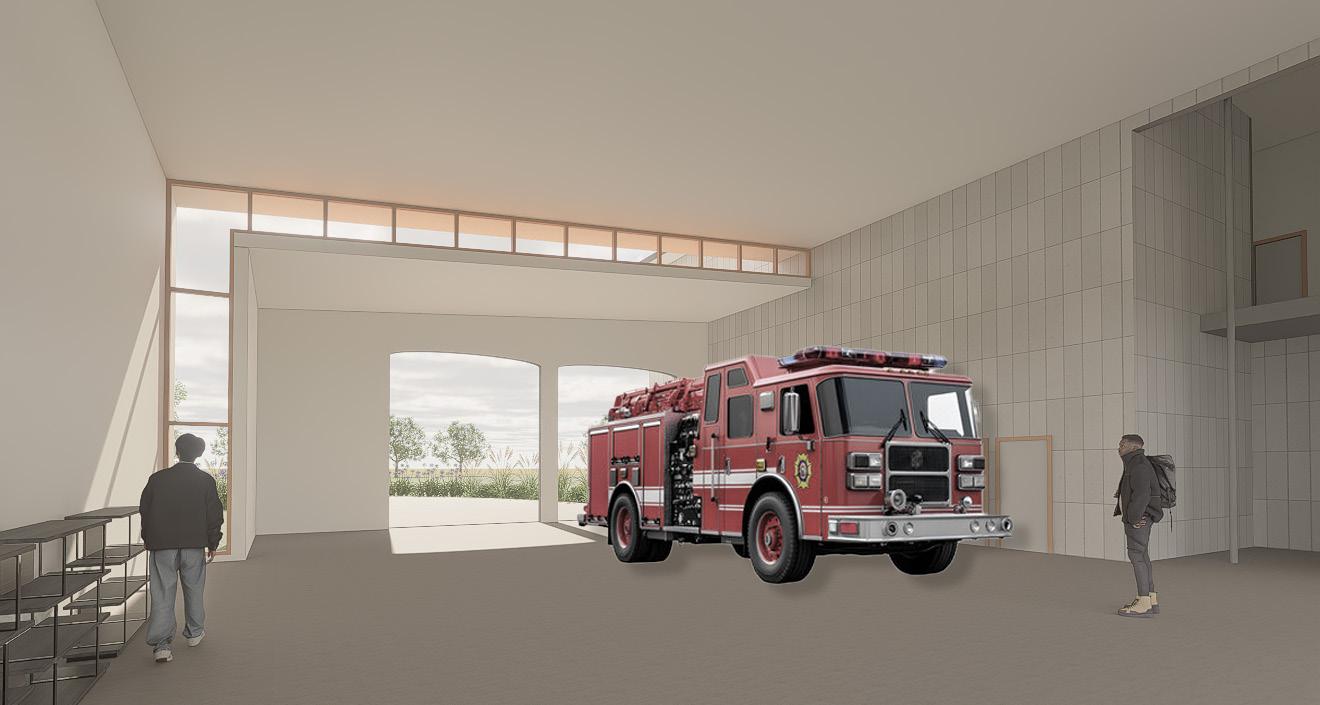
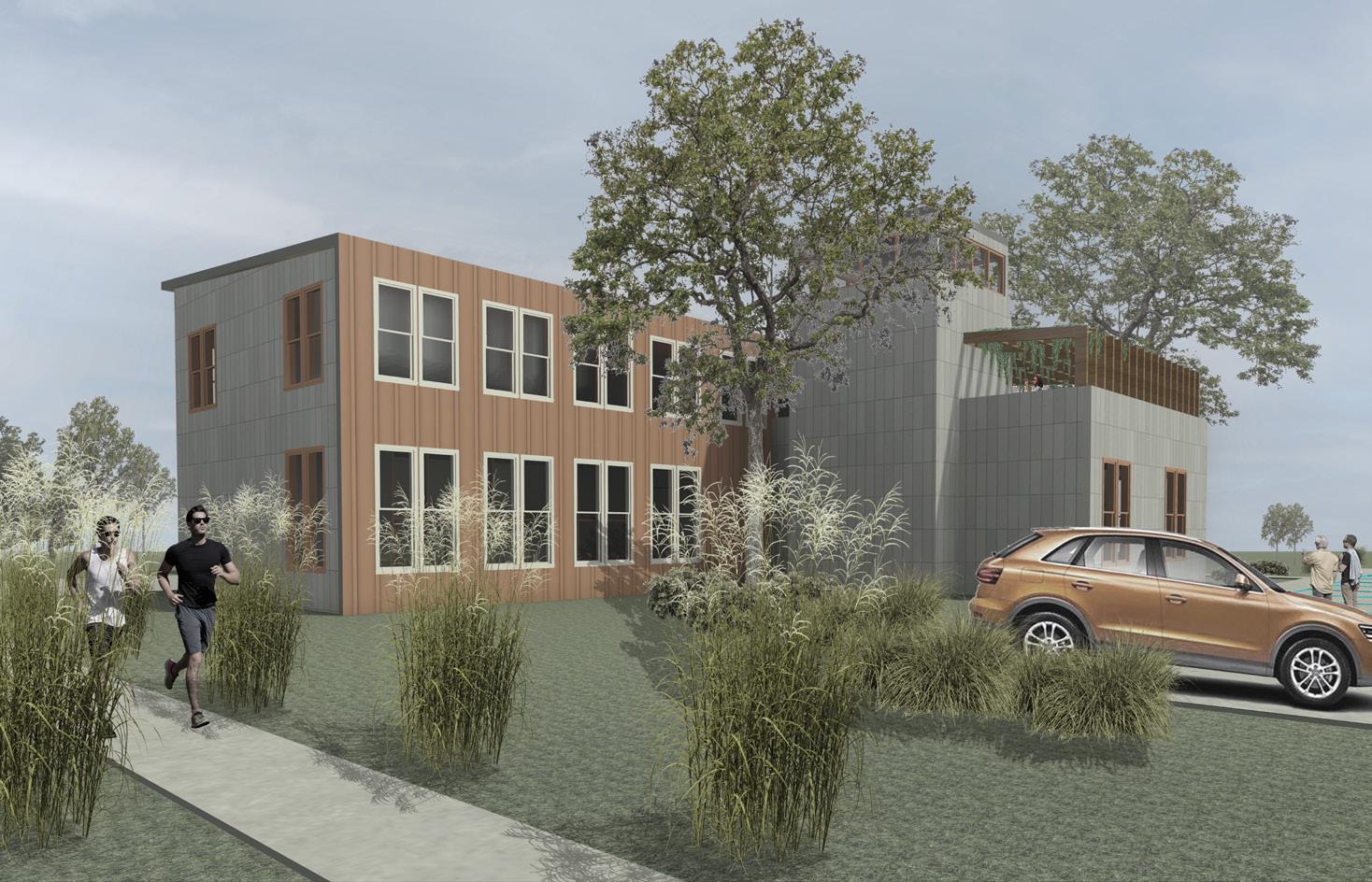
Within the industry of firefighting, a respone time of 4 minutes or less is considered best practice. However, due to a lack of funding, resources, and station locations, reponse times in certain areas of Lawrence have surpassed 8 minutes. This has inevitably resulted in more severe damages and injuries. The laregly residential northwest Lawrence has certainly been an area underserved by LDCFM. Therefore, to improve community health and safety, I designed a fire station at the intersection of Peterson Avenue and Iowa Street. This two-story design includes 10 sleeping quarters, a 2 engine apparatus bay, and a training tower. This building was designed for prompt response time while also serving as a comfortable and healthy home for the firefighters. Numerous sustainible design practices such as louvers, clerestories, and passive ventilation were also utilized . The fire station is supported by a steel structure.
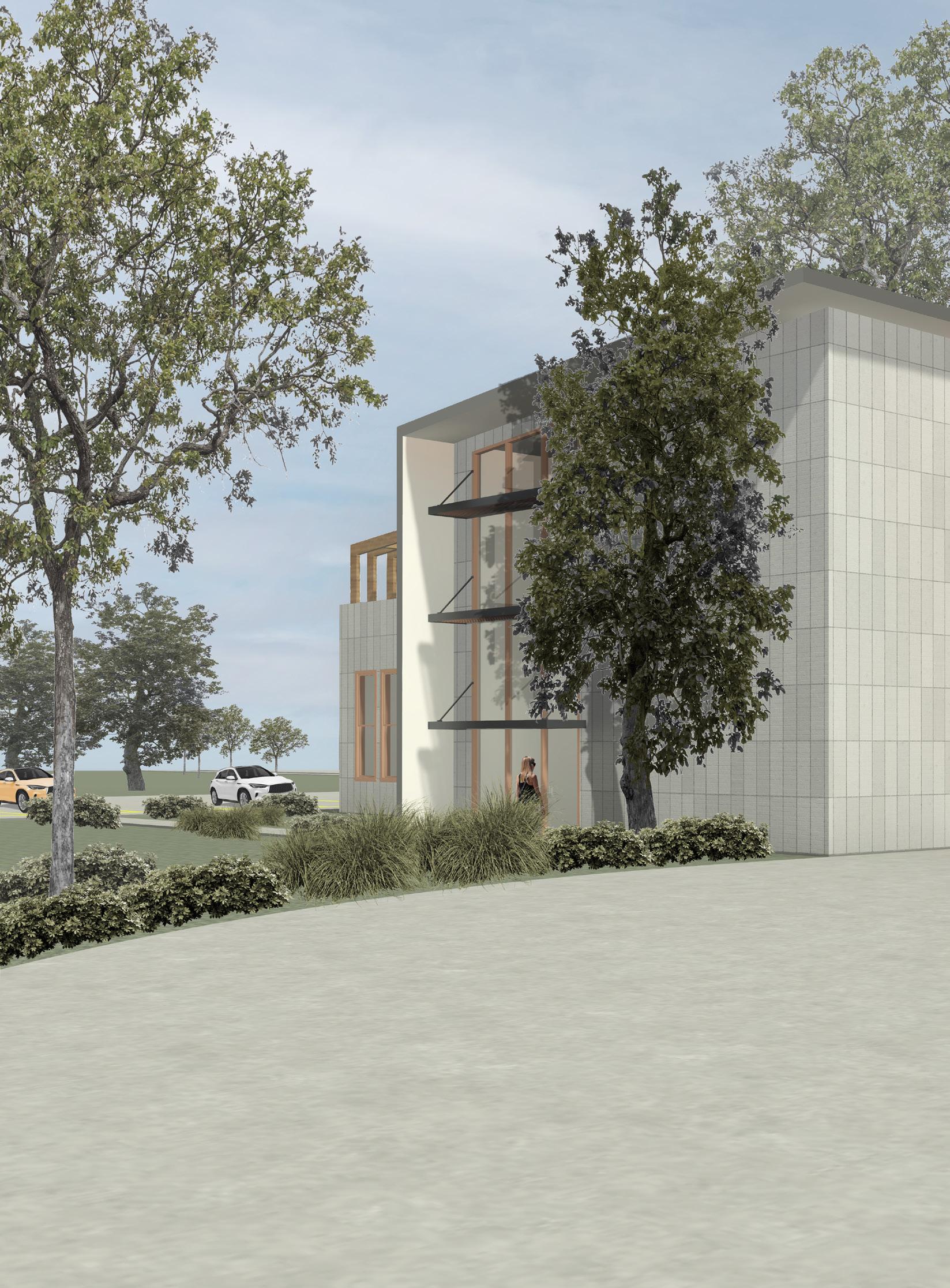
From Driveway
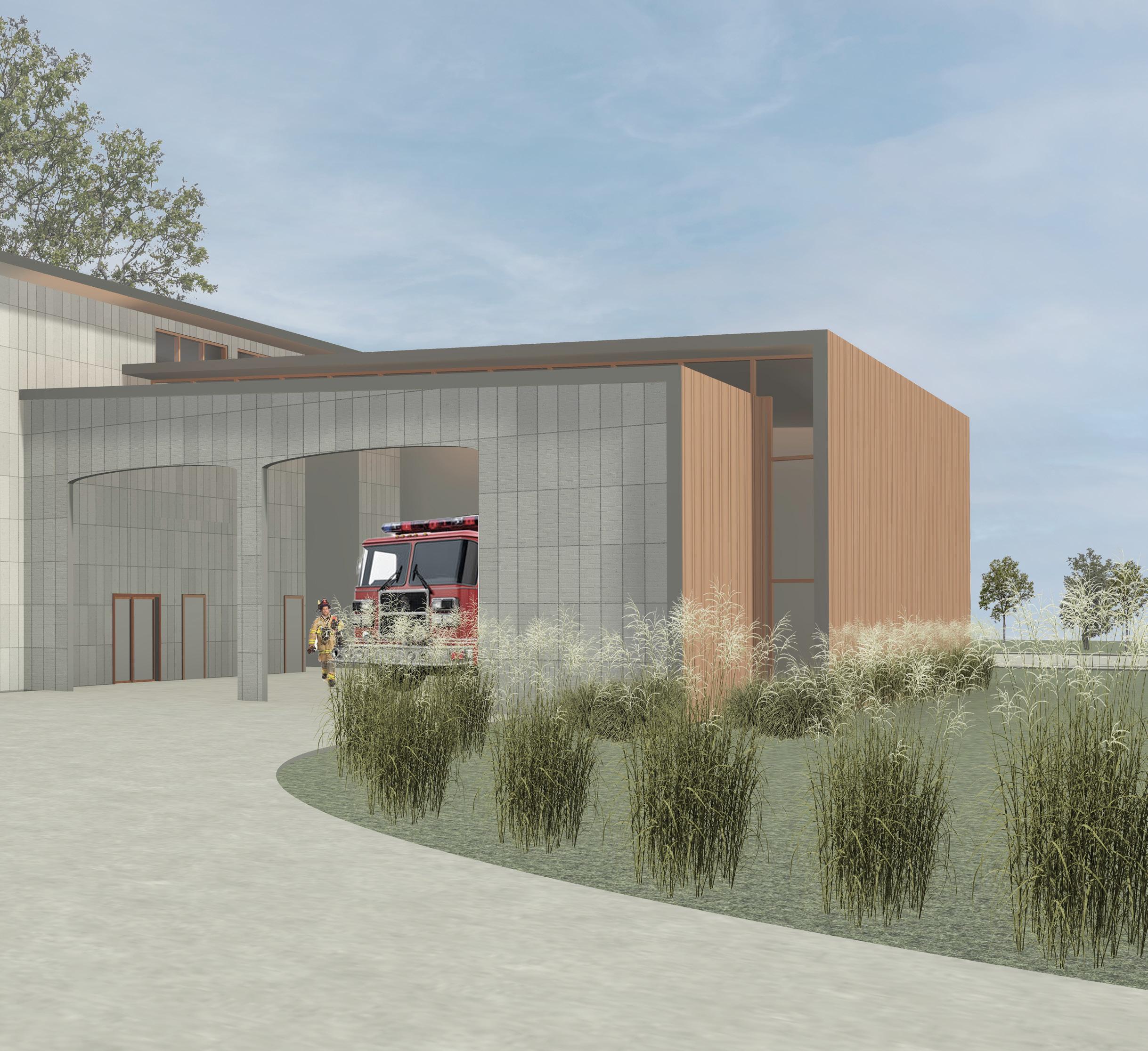
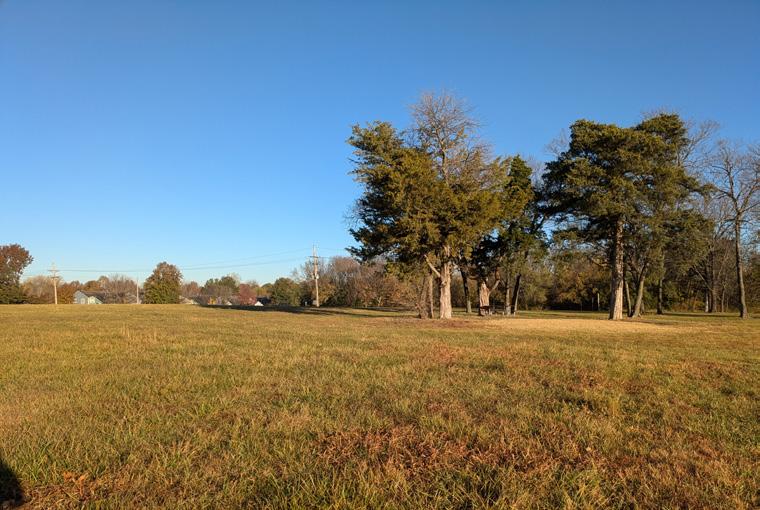
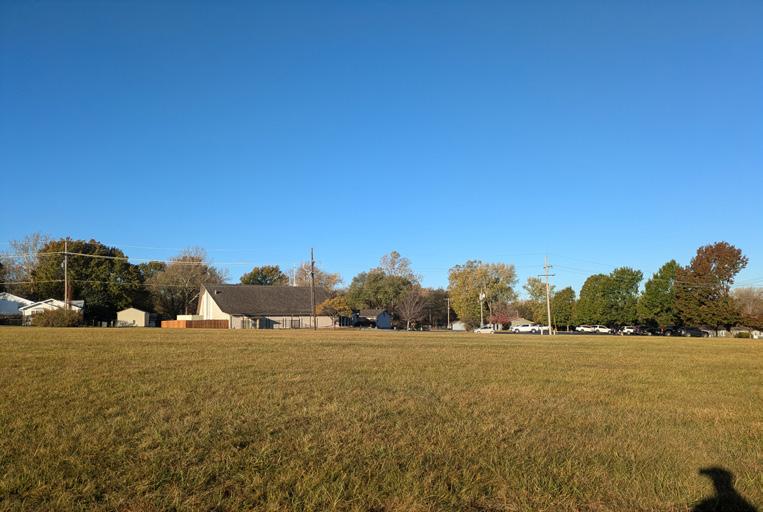
The station is situated on the corner of Iowa and Peterson, enabling the fire trucks to enter and leave the apparatus bay in a timely manner. To minimize interference in the time of an emergency, the staff and visitor parking lot is seperated from the apparatus path. The station’s location allows quick response time to a previously underserved residential area, as well as quick access to a major arterial roadway (Iowa Street) and I-70.
Response Analysis
Second Floor
1. Upper Common Room
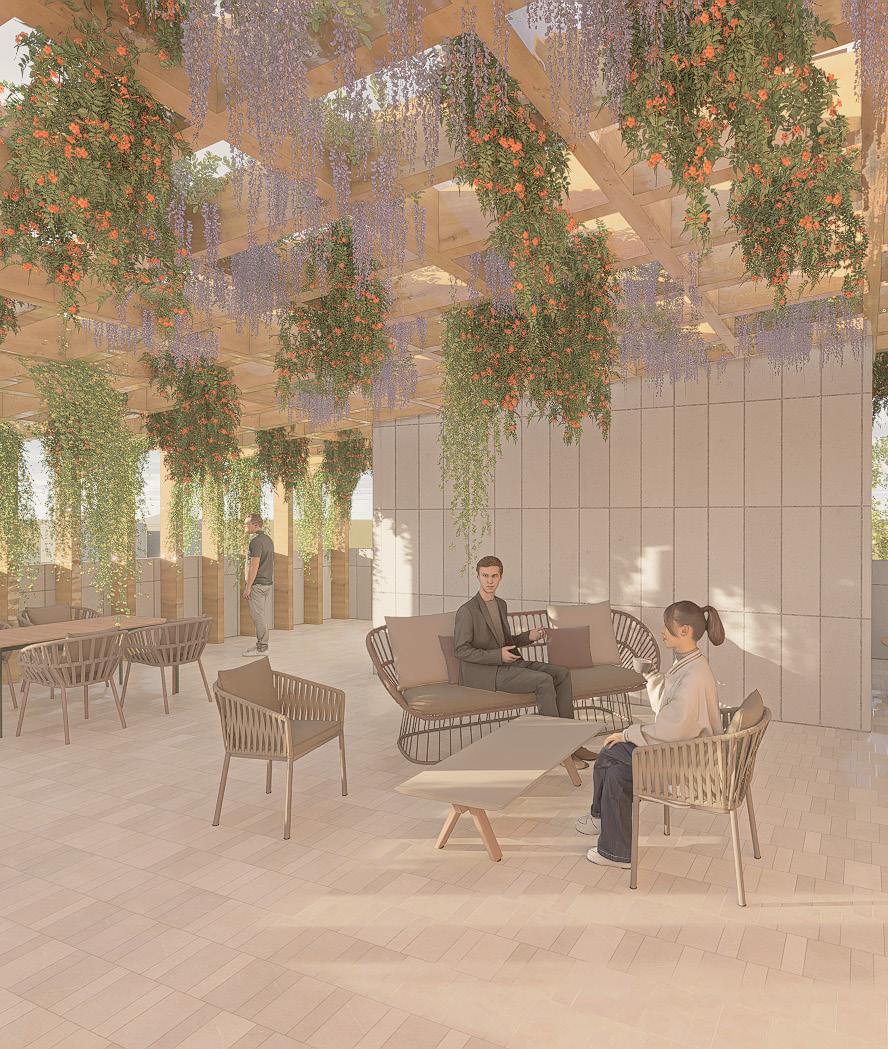
Bedrooms 3. Bathrooms with Showers 4. Rooftop Garden

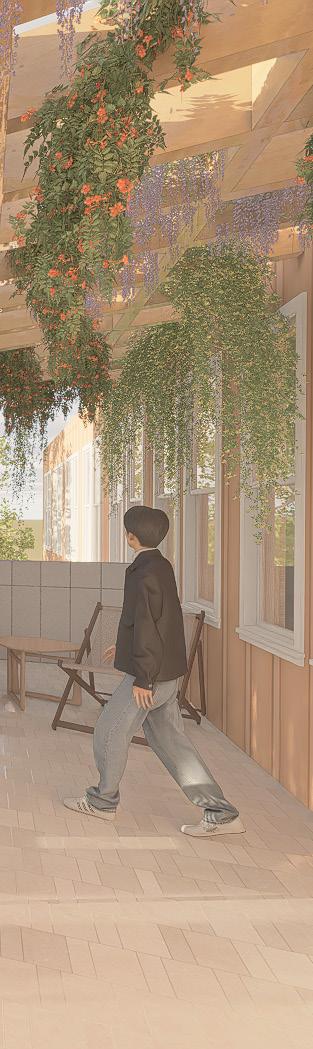
A south facing curtain wall conceals the front atrium, which includes a second floor balcony. This allows sunlight to infiltrate both floors, and horizonal brise soleils intercept filter out harmful sunlight. The overhead shade structure on the rooftop garden serves a similar purpose, creating a pleasant outdoor experience.

This station’s training tower doubles as a solar chimney. South facing sunlight beats against the dark-painted area near the top of the tower, heating the collumn of air inside. To passively heat the building, the upper vent windows are closed, and the heat is retained within the building. To passively cool the building, the vents are opened, allowing the heated collumn of air can escape and creating a convection draft that pulls fresh air in from the open windows on the first floor. As this air warms, it rises through the chimney and exits. In the apparatus bay exists a large operable clerestory, ensuring that heat and fumes do not get trapped inside.
ARCH 209 - SPRING 2025
DR. PETER OLSHAVSKY
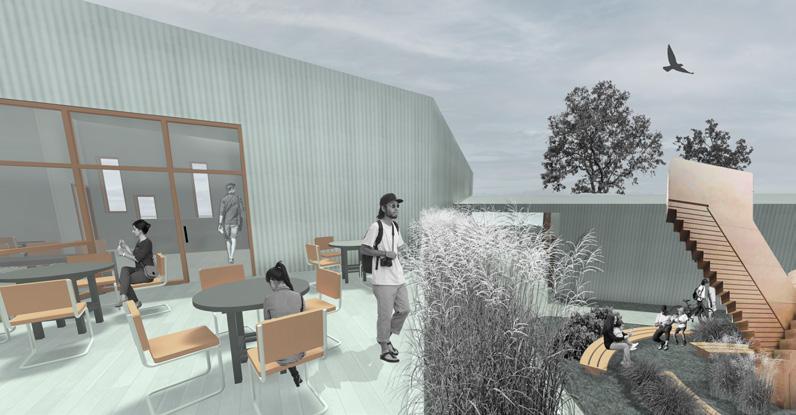
This arts porch was designed for southmoreland park in KCMO. It accommodates for shakespearean Five Sculptures will be scattered around Southmoreland park to add to the midtown arts walk, which the arts porch courtyard, serving as a culturally significant gathering point. Additionally the building’s Nelson Atkins addition. Outside of its cultural purpose, the arts porch serves the public by providing a threshold that pedestrians are invited to pass through. This creates a public courtyard that maintains as it is central to pedestrian flow during plays and the arts walk, with users passing through it en route
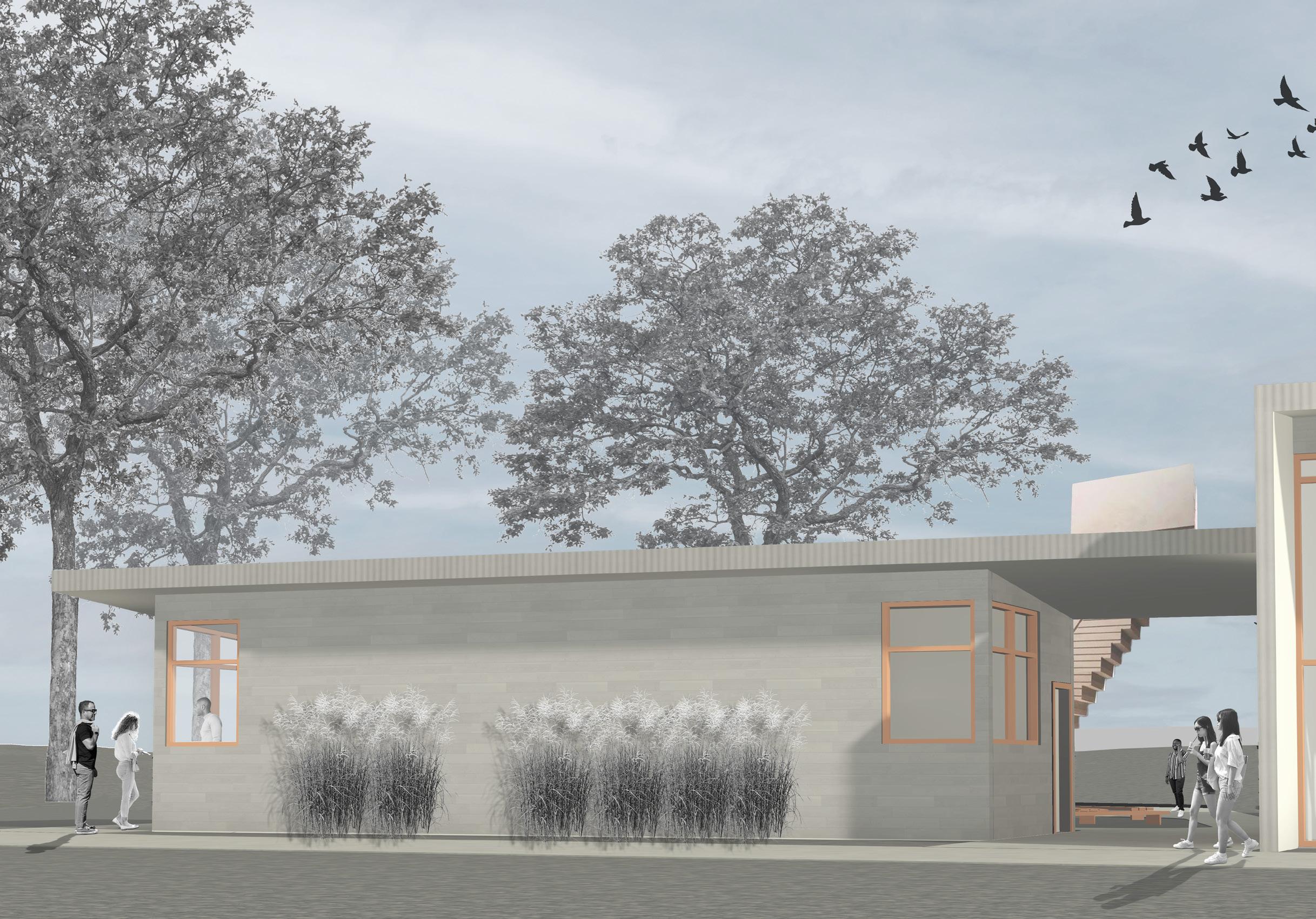
shakespearean plays at the outdoor theatre during the summer, with a ticket office and concession stand. which takes place throughout the summer. One of these sculptures will be located in the center of building’s slender, fragmented massing creates visual cohesiveness with the Steven Holl Architects providing single use bathrooms, an elevated cafe and terrace, and a courtyard. This building serves as maintains a sense of serene privacy. During events however, the courtyard’s importance is elevated, route to the theatre or sculptures.
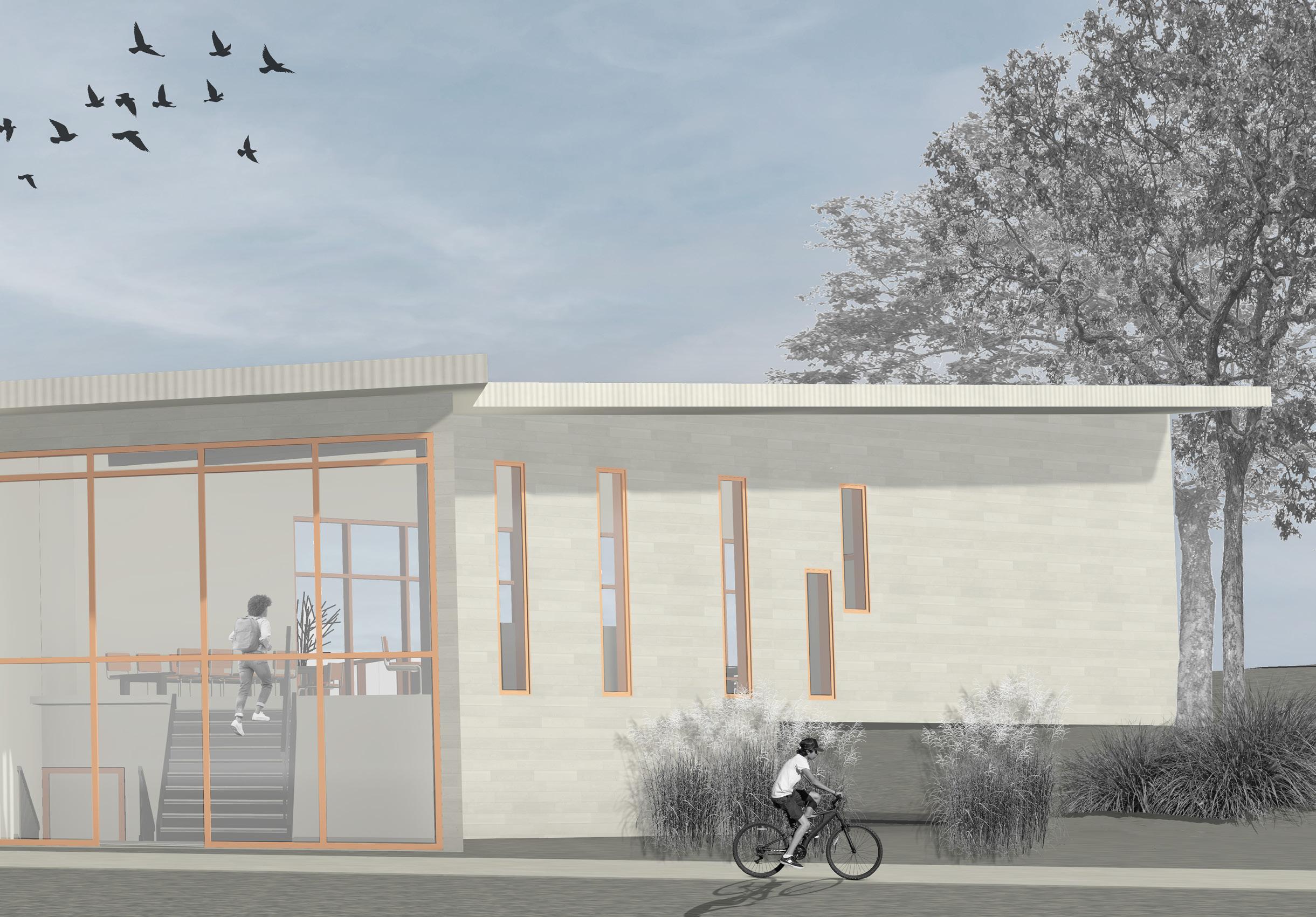

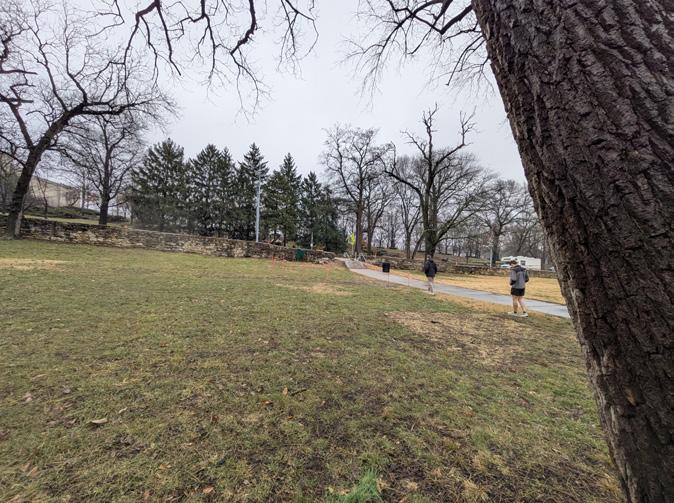
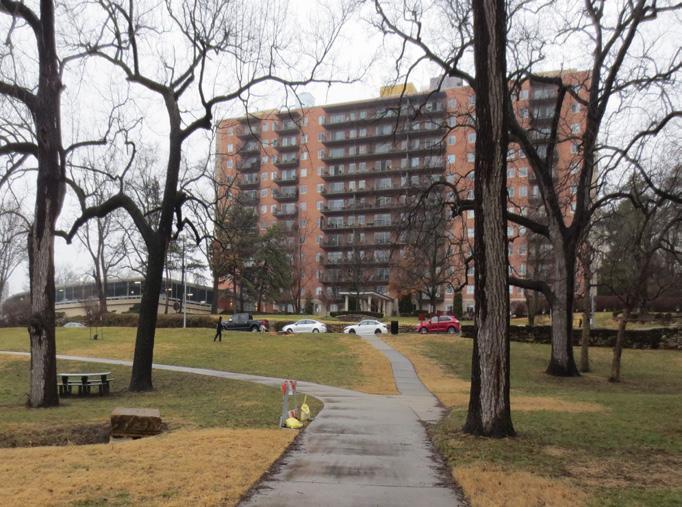
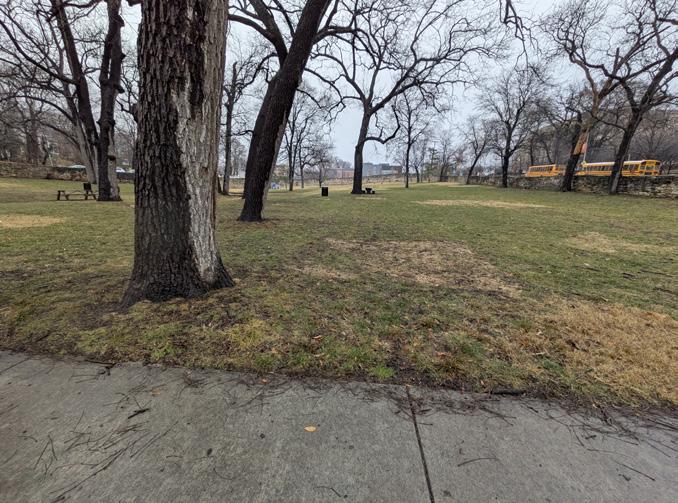
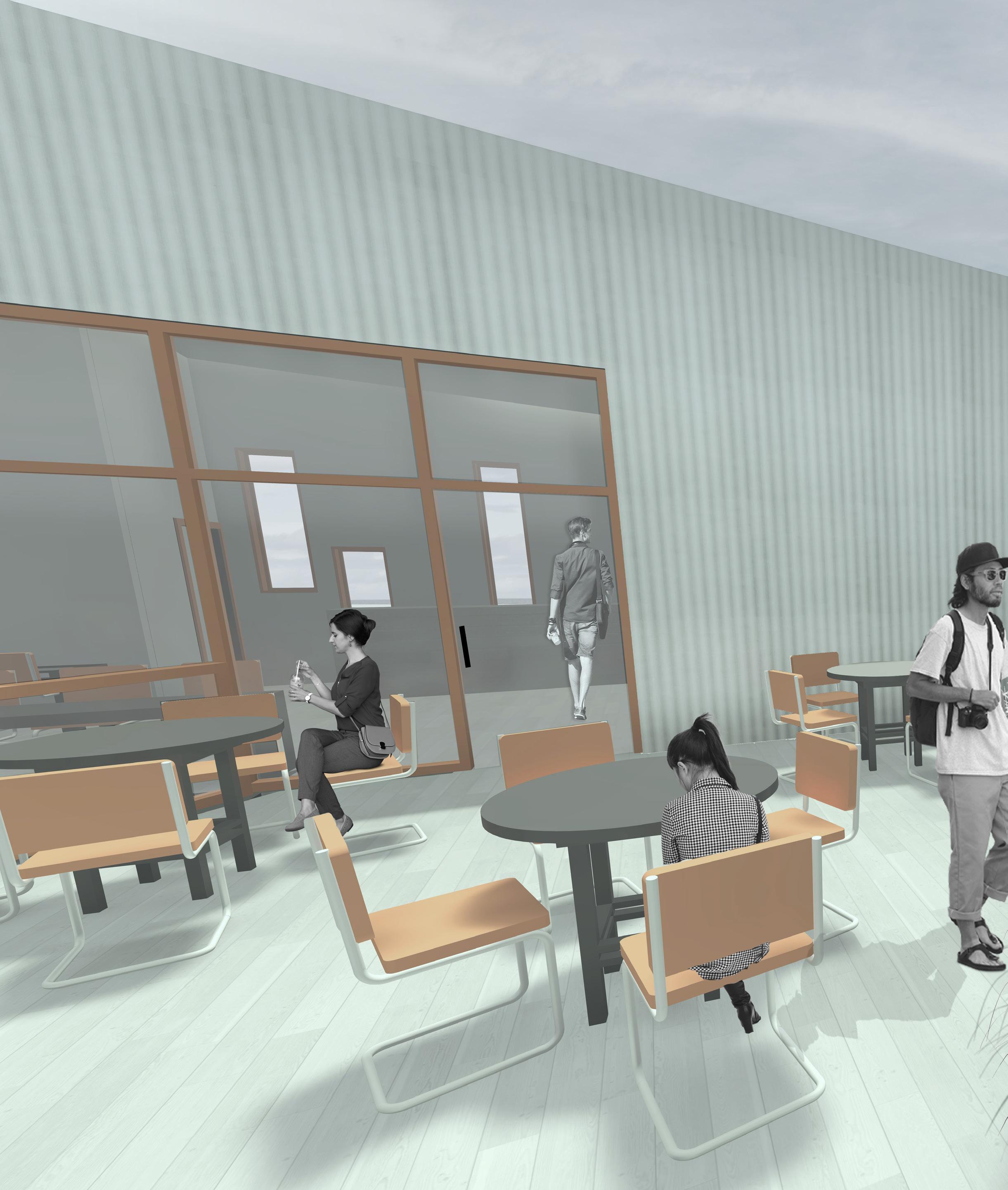
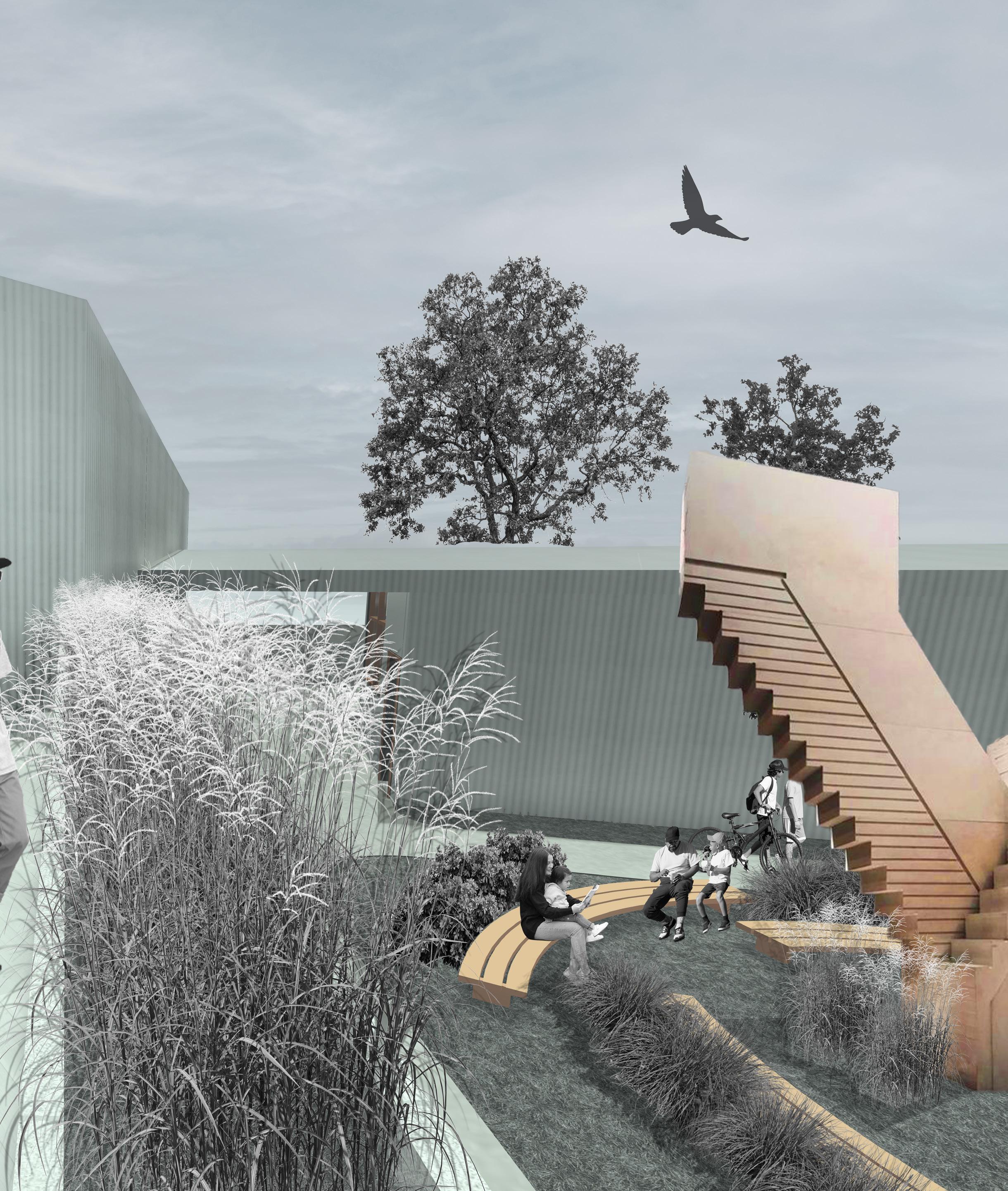
The site of Southmoreland Park lies within a vibrant area of downtown Kansas City. From the Nelson Atkins Museum and sculpture garden to its east to the Kansas City Art Institute and Kemper Museum to its north, our site finds itself at the epicenter of Kasas City’s artistic scene. The arts porch will become a focal point of this district by creating a public space for parkgoers, artists, and performers. The park itself is lightly forested, and accomodates a summr theatre. Upon entering Southmoreland Park, visitors are greeted with the arts porch. During events, pedestrians are guided between the two masses. Under the overhang, they will recieve/scan their tickets. En route to the theatre, they will experience the courtyard to the left; a circle of benches and shrubbery, with Rachel Whiteread’s Stairs sculpture at its focal point. To their right will be the terrace’s exposed CMU wall, which will be decorated with art that periodically rotates out. During the play, visitors may purchase food and drinks from the concession stand on the west side of the building. The light from the concession stand will be blocked by a wall, so as to not interfere with the performance. While events are not in session, the cafe, terrace, courtyard, and bathrooms will serve the public. The wide curtain wall on the northwest face of the cafe offers terrace and park views. The curtain wall on the northeast face peers over the retaining wall and frames the Nelson Atkins sculpture garden across the street.
This building prioritizes a seperation of event spaces (west) and public spaces (east). During events, the ticket office and concession stand will be operational, and the two single use restrooms in the west enclosure will be primarily for employees. Otherwise, they will be open for parkgoers. In the eastern enclosure, the cafe is elevated up half a flight of stairs, and a platform lift is included for handicap accessibility. At this
cafe, coffee, drinks, and premade food will be available for order. Parkgoers can enjoy their meal and enjoy views of the park either inside the cafe or on the outdoor terrace. The cafe space also houses storage and a single use restroom. The basement is down half a flight of stairs, and provides access to the mechanical room. The lift is also able to be used for transportation of heavy equipment.
Overhangs are situated to block any direct sunlight from entering the main curtain wall during the summer. The south facing cafe windows allow for thin pops of light while surrendering minimal solar gain. All of these openings will welcome less intense sunlight duirng colder months. During all seasons, the cafe will only recieve direct sunlight from the thin windows. The setting sun will also be captured through the northern curtain wall,
which offers picturesque views of Southmoreland Park. Kansas City’s prevailing winds in the summer come primarily from the south. The western mass of the building protects the courtyard from these harsh winds, while the eastern mass protects the terrace. Opening all of the cafe windows allows pleasant crossventilation through the cafe and out towards the terrace.
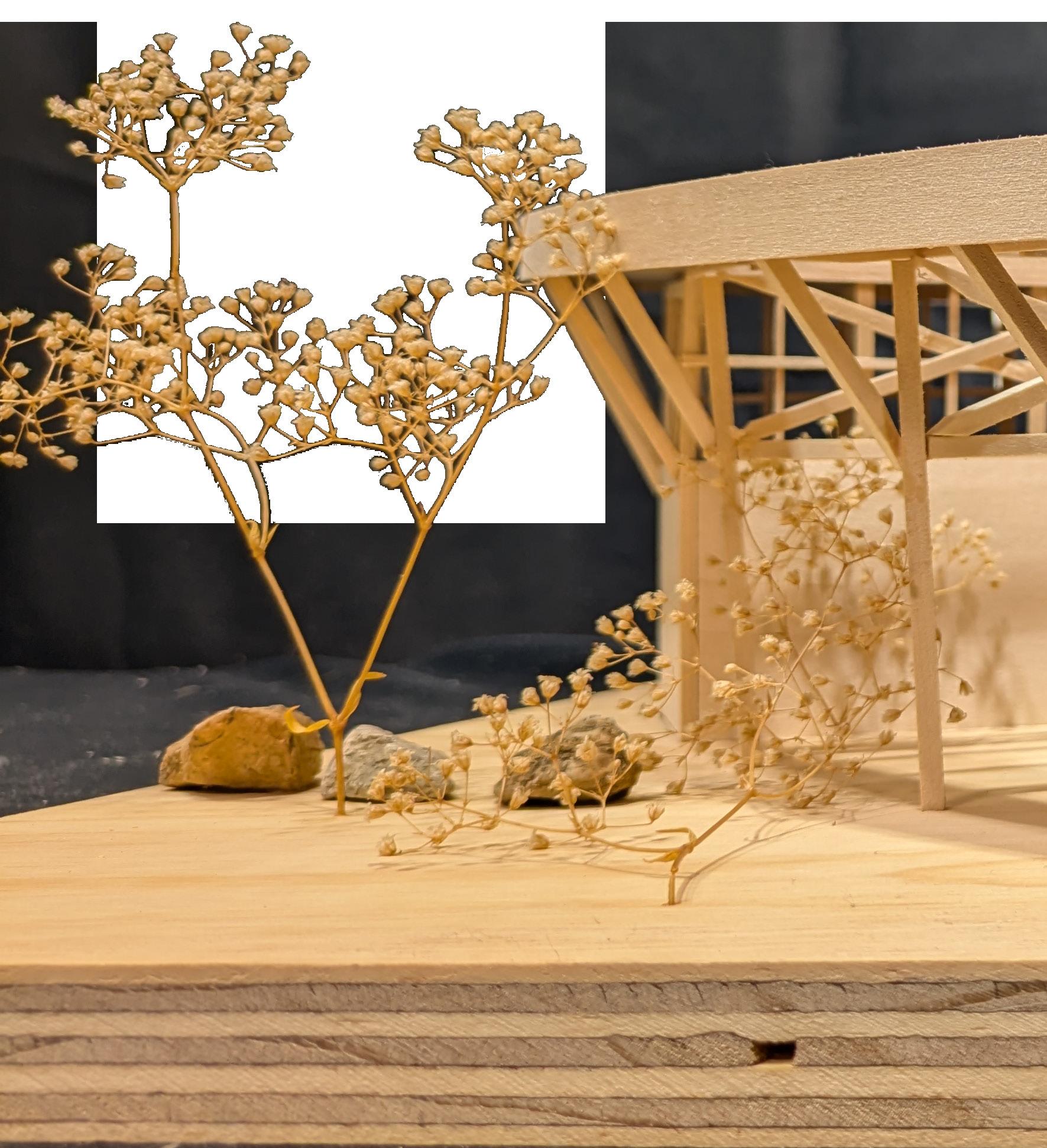
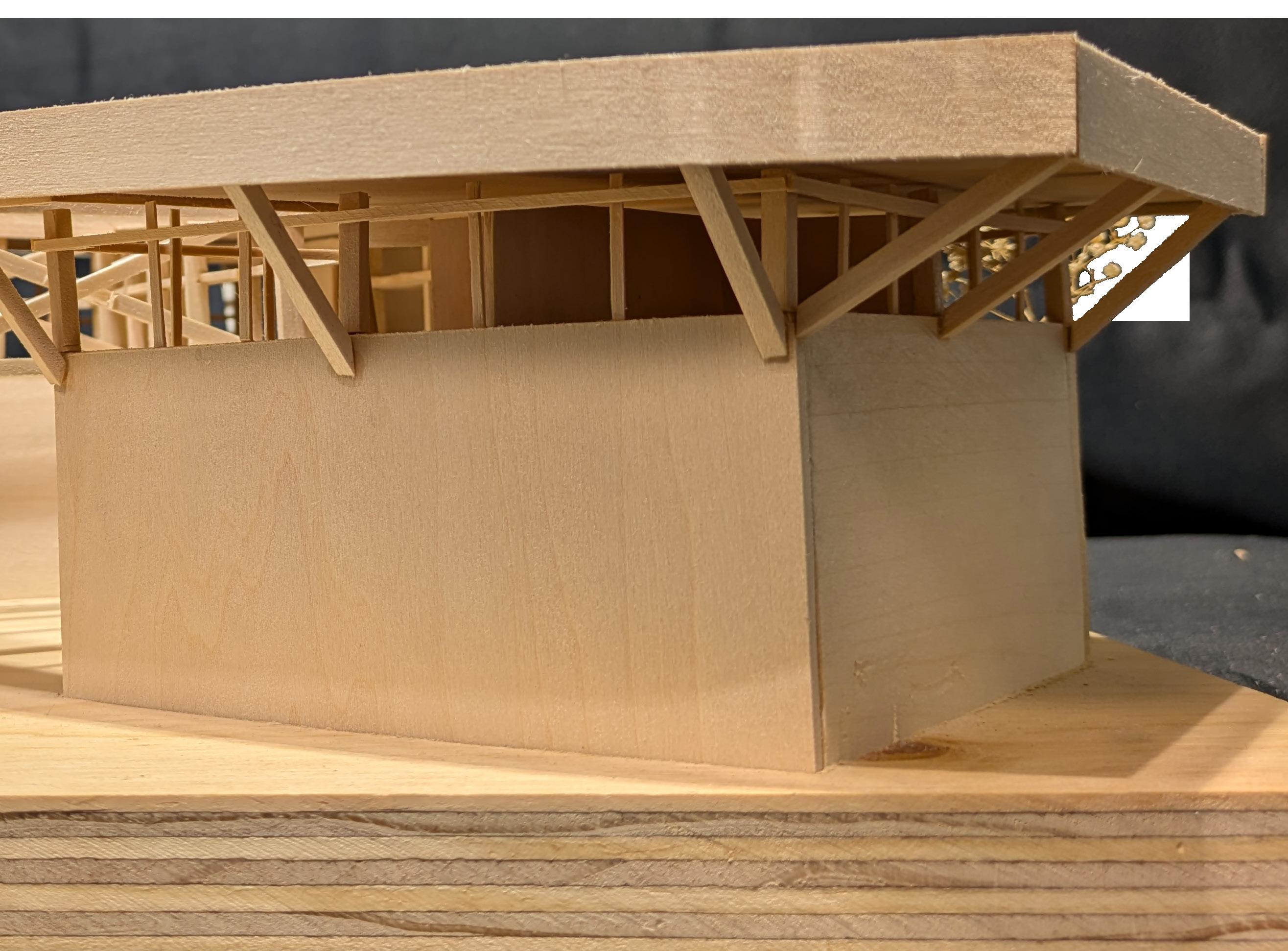
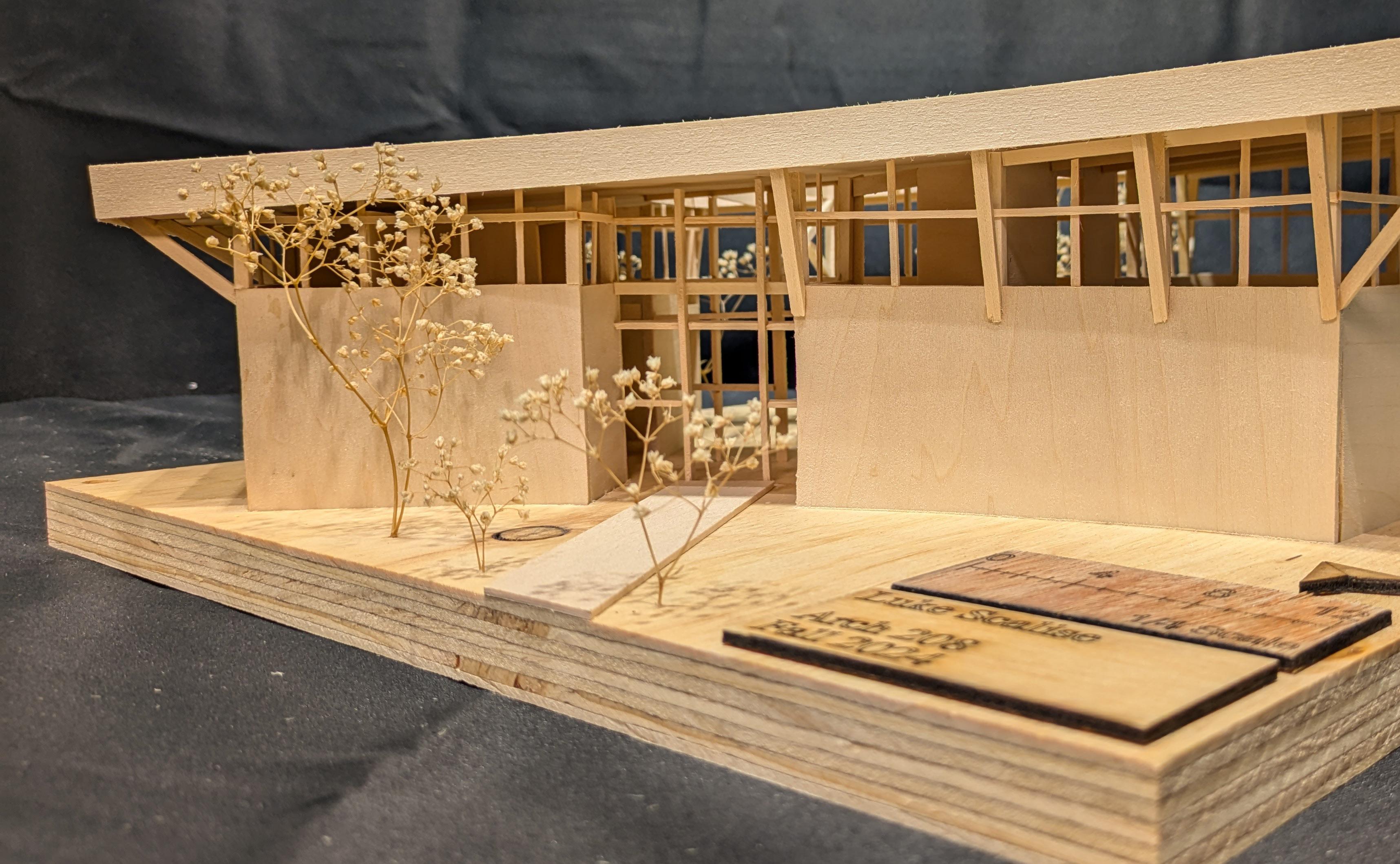
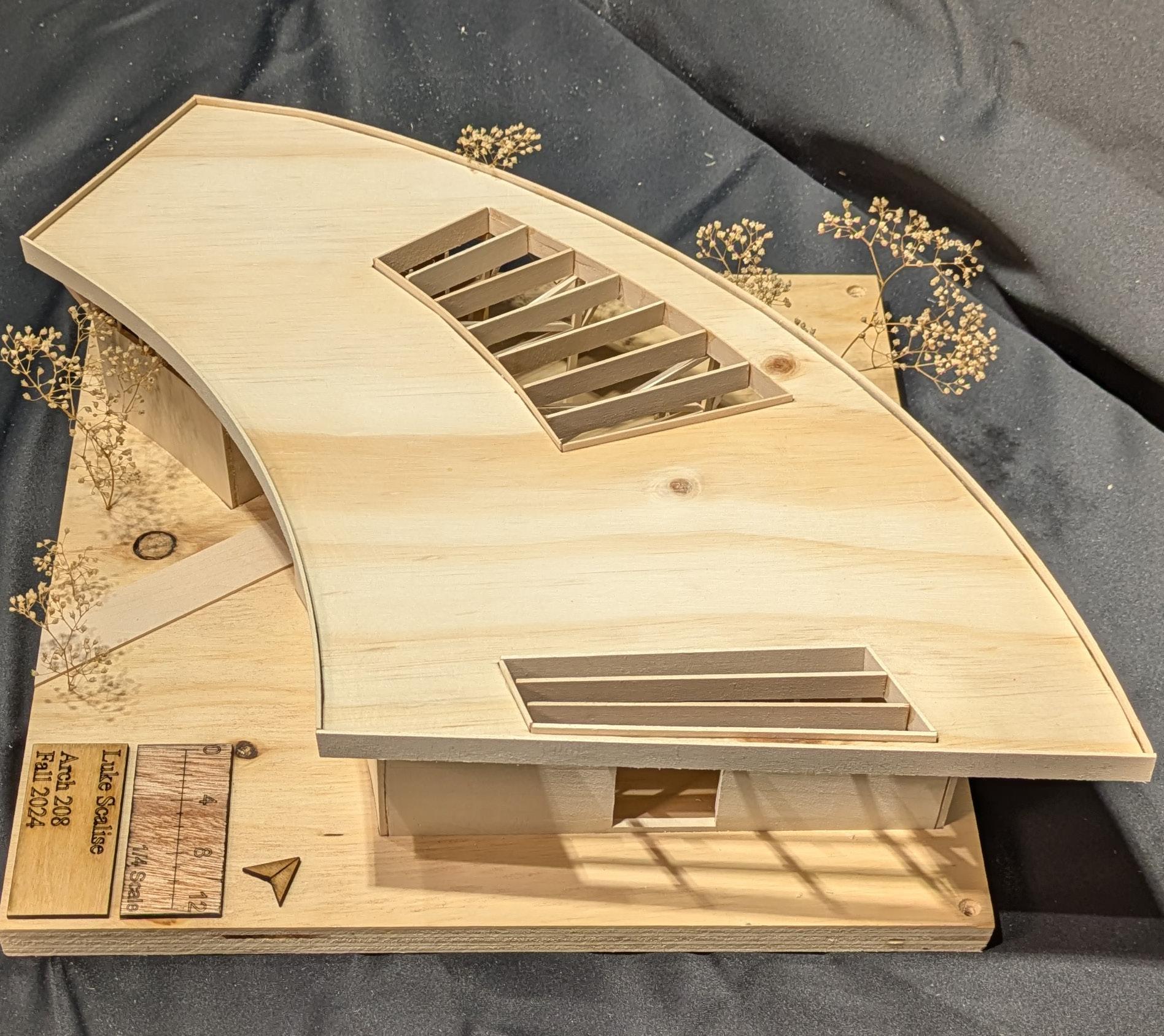
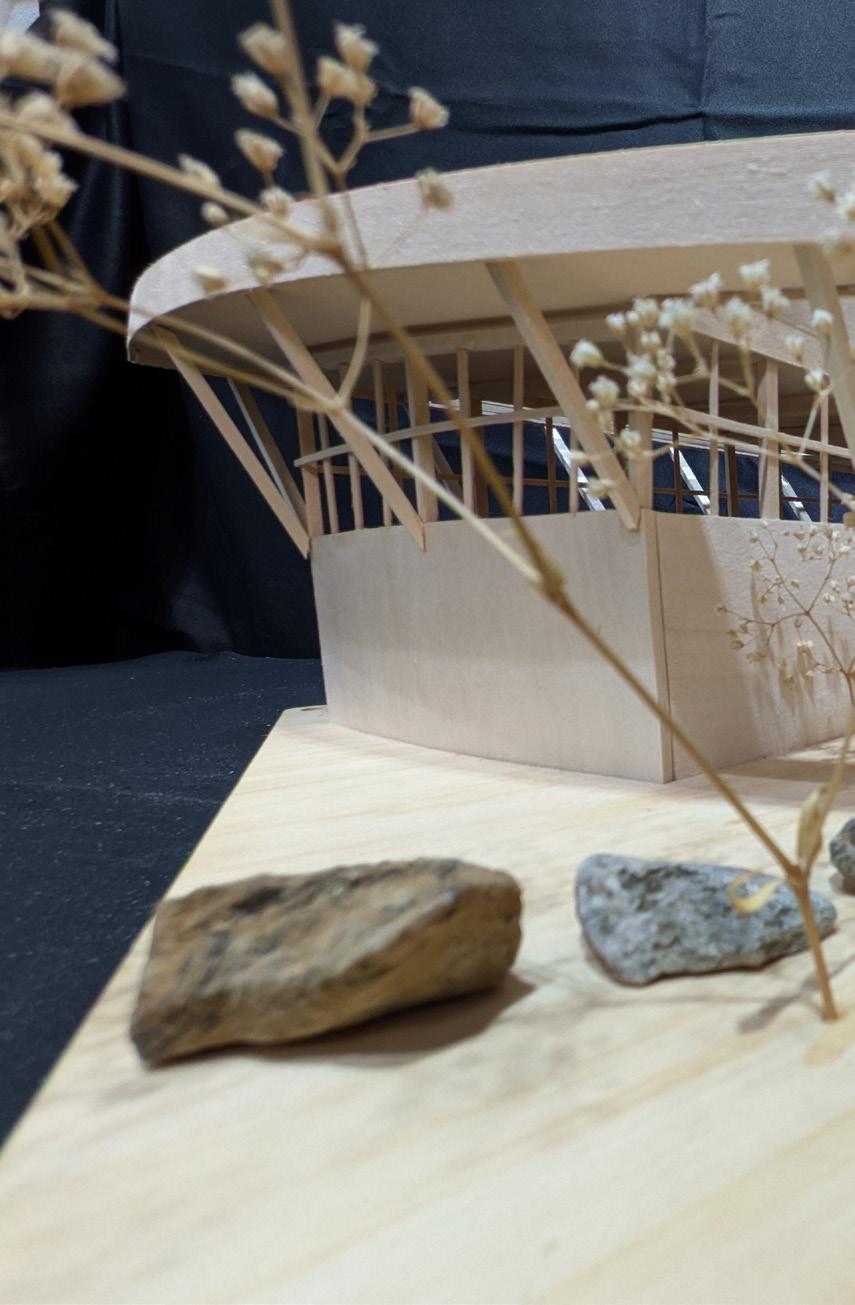
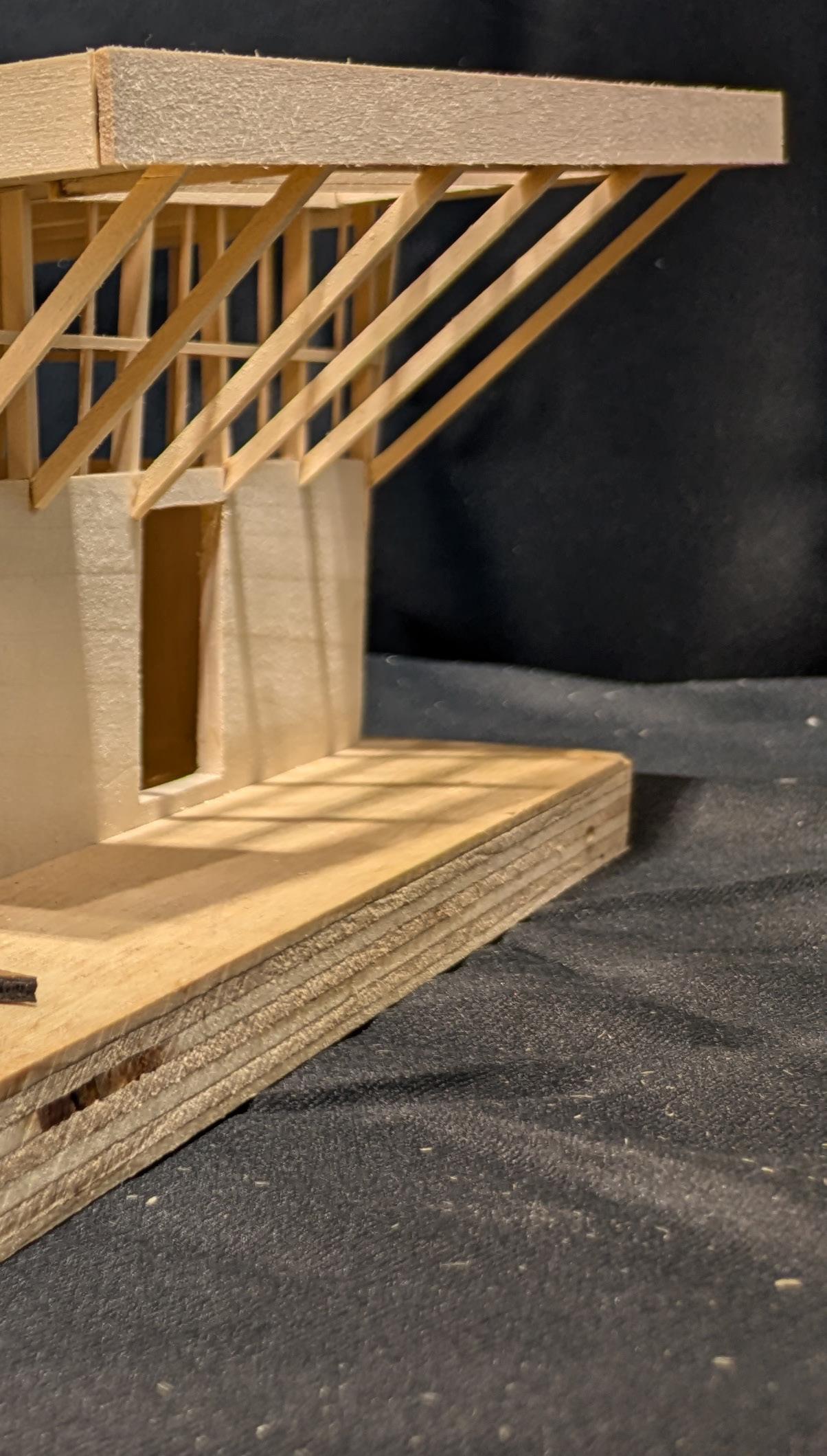
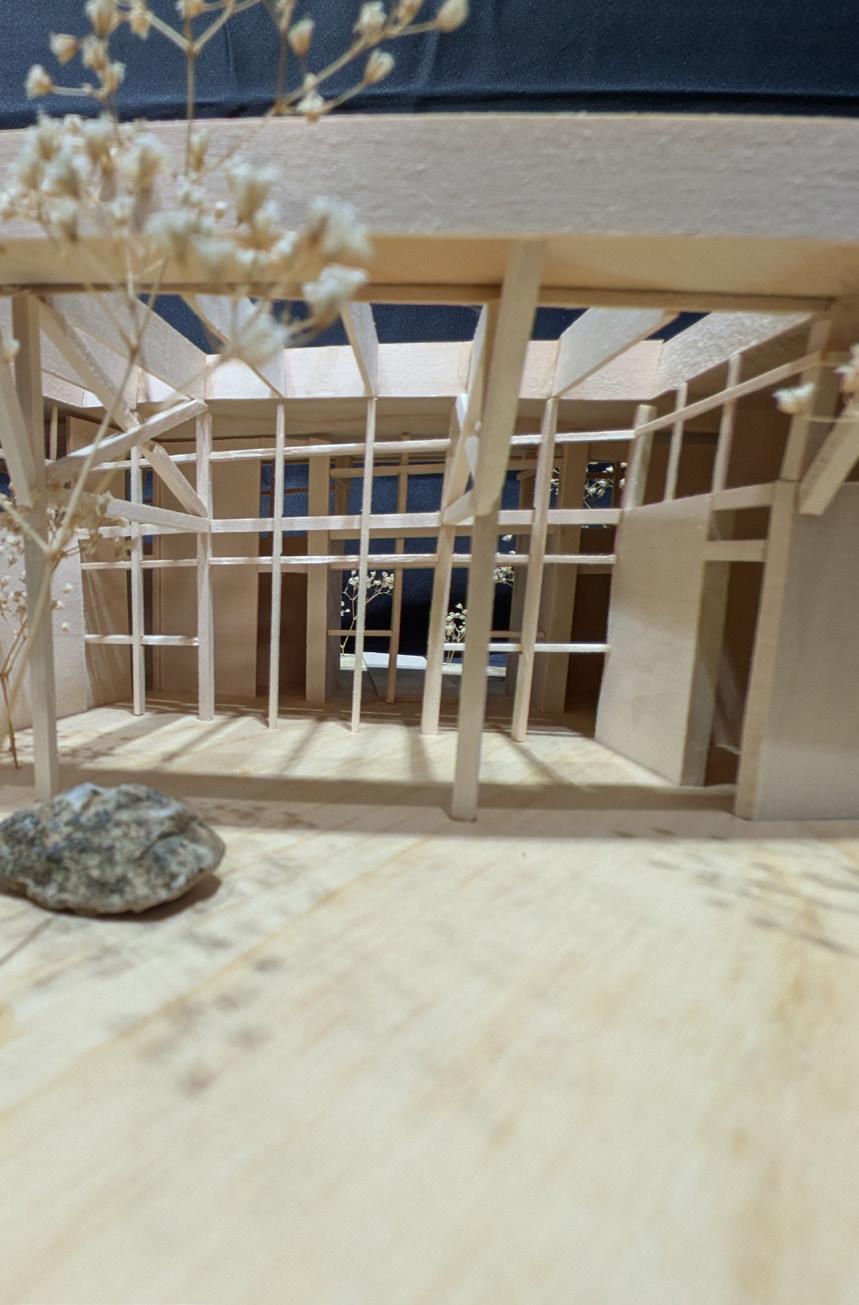
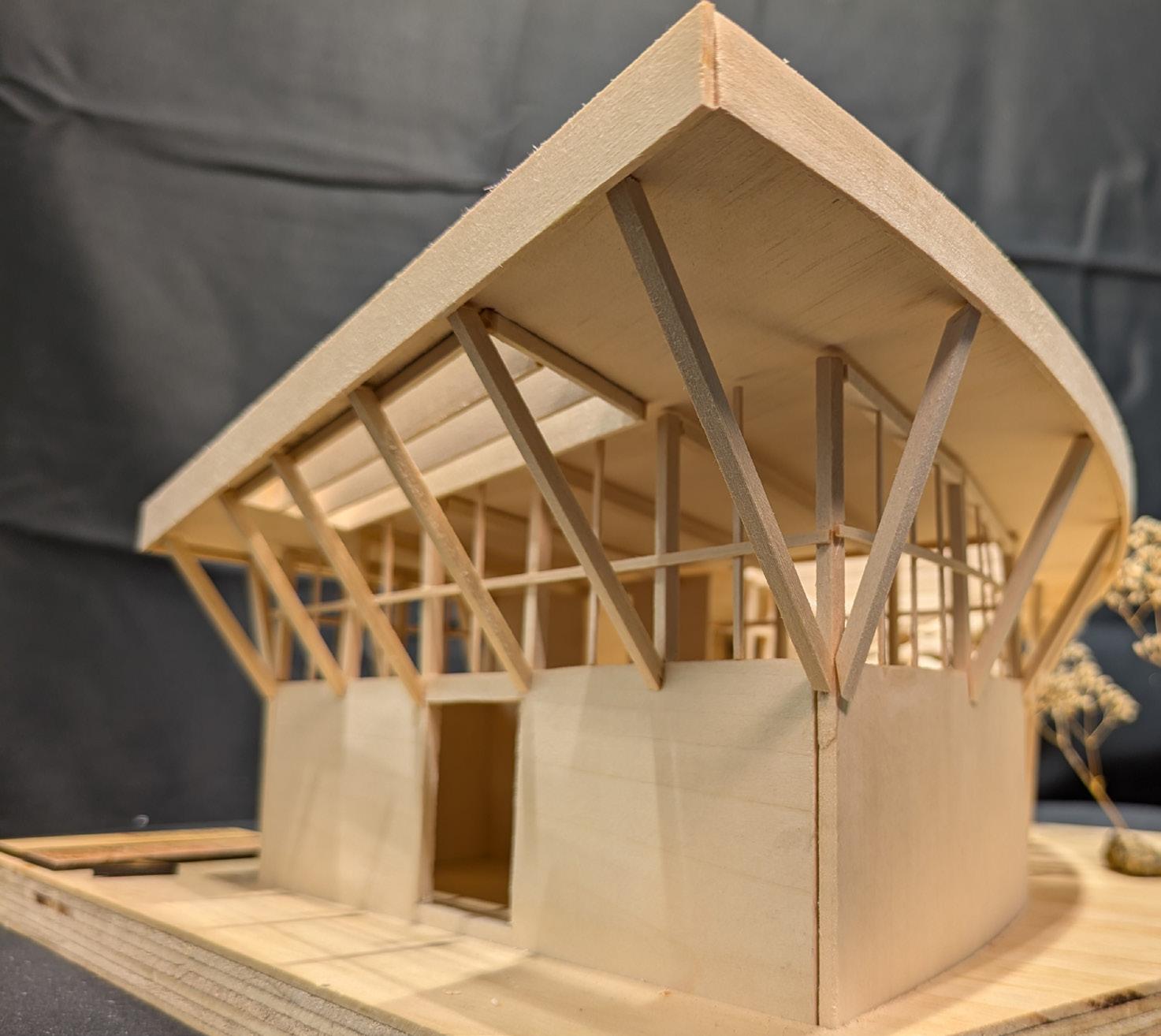
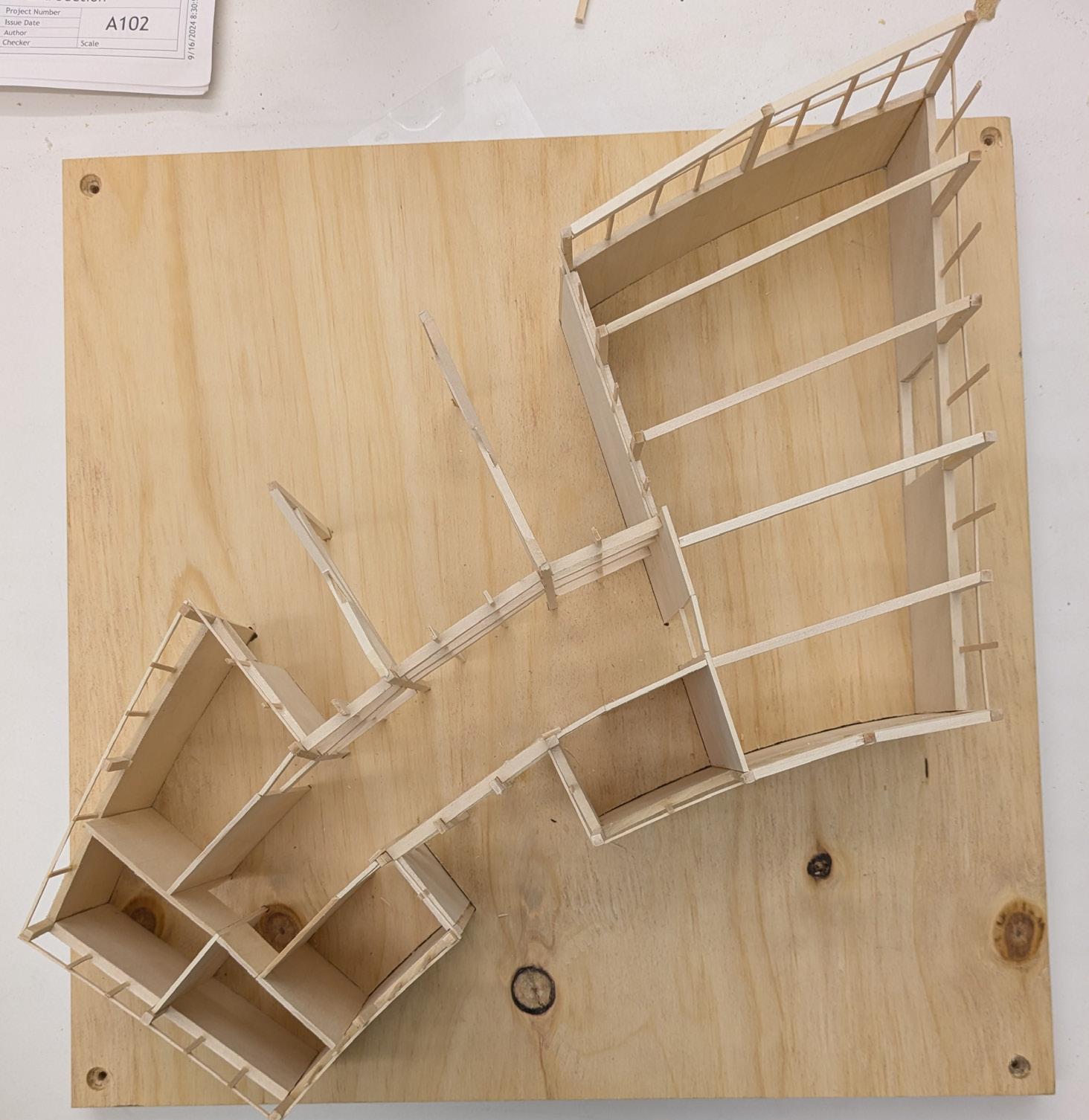
For the first project of the semester, I designed a meditiation center for KU’s West Campus. My intent was to create a space free of distractions that instills a sense of security in users. All design decisions were centered around seperating meditators from the often stressful nature of campus life while simultaneously connecting them with the surrounding natural environment. This was achieved through clerestories, greenspace, and pragmatic spatial organization. The meditation center set the stage for a semester of analyzing site factors and configuring structural systems.
PROF. DAN FINNELL
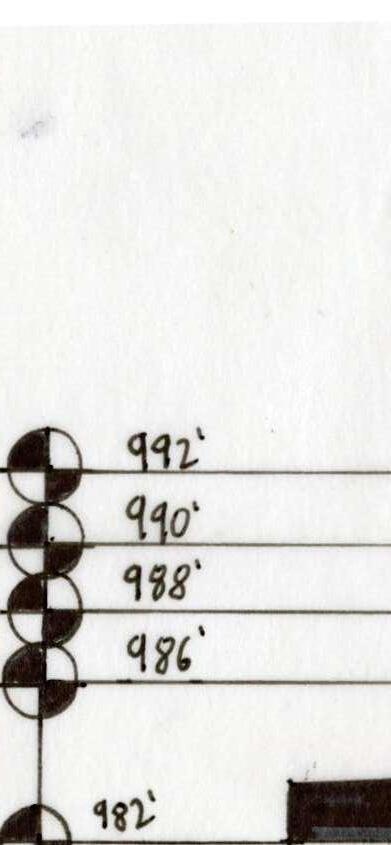
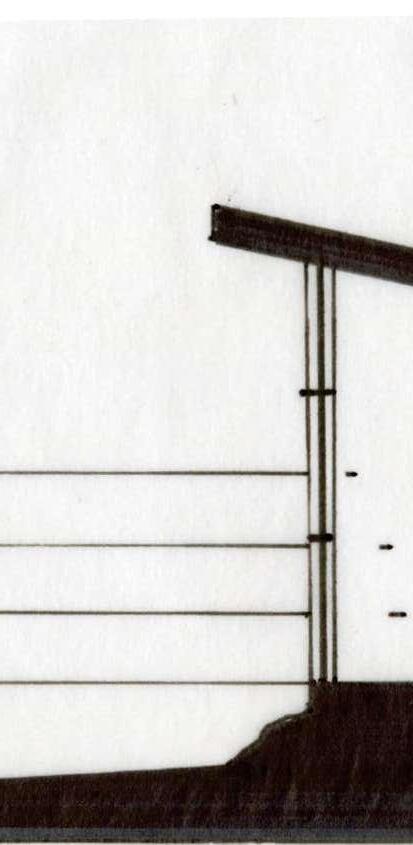
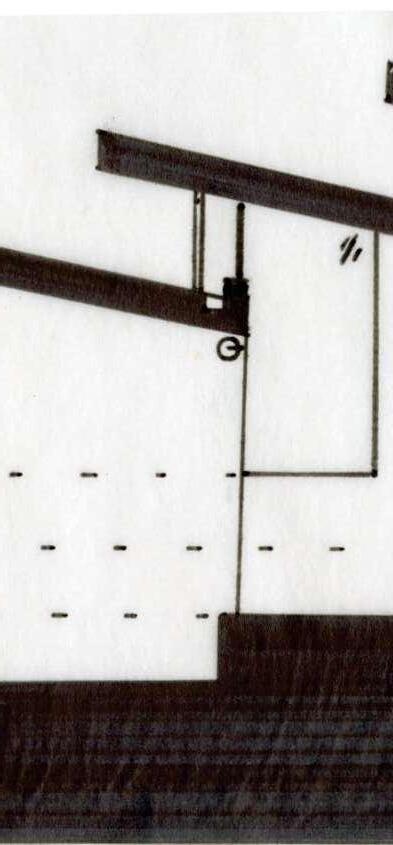
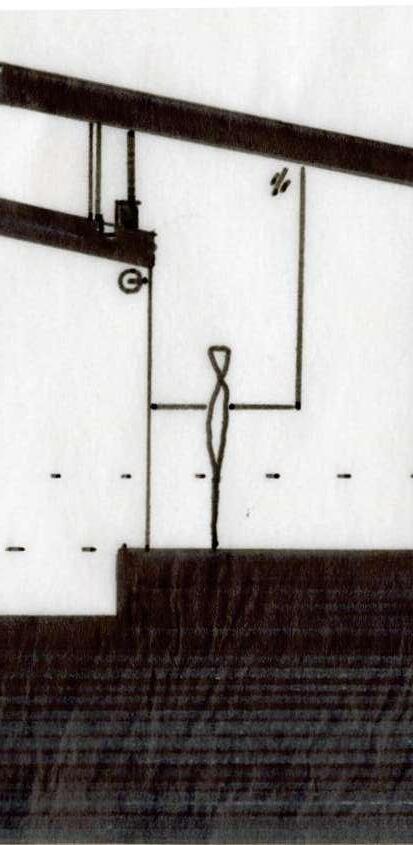
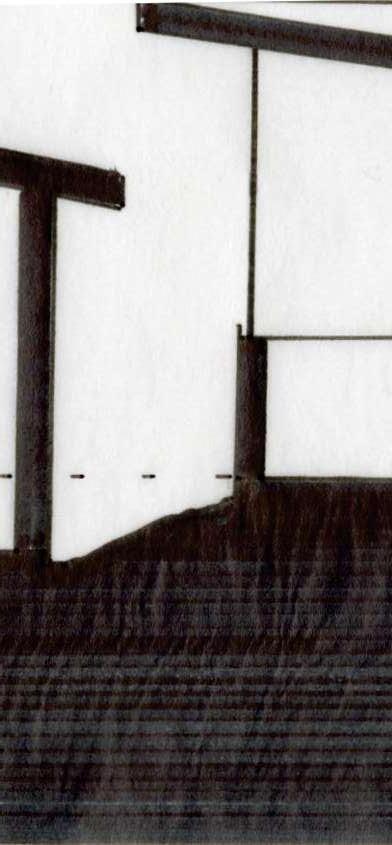
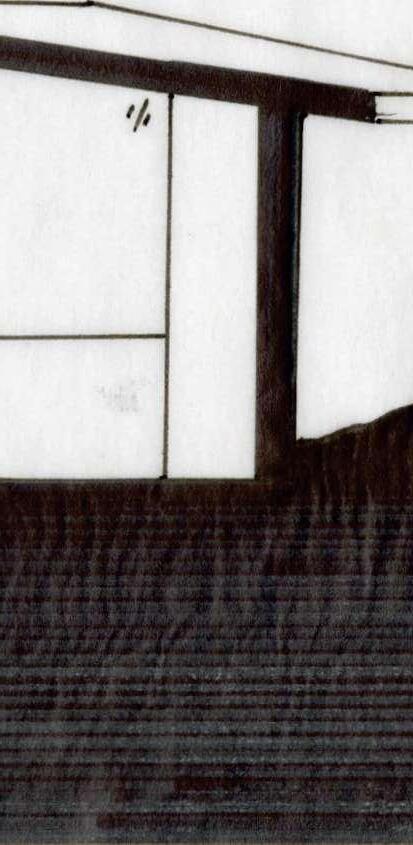
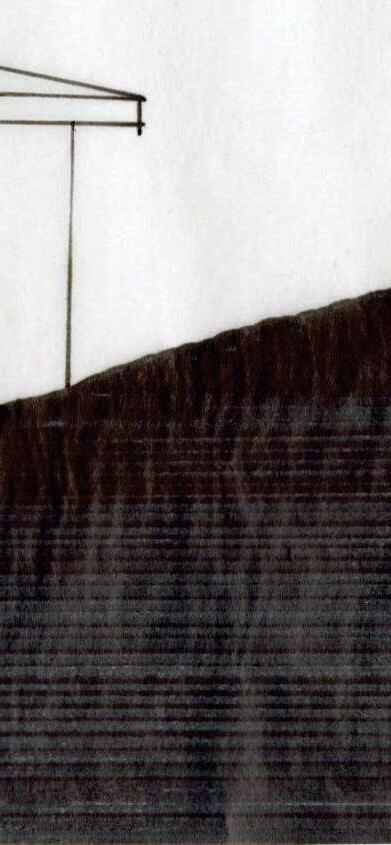
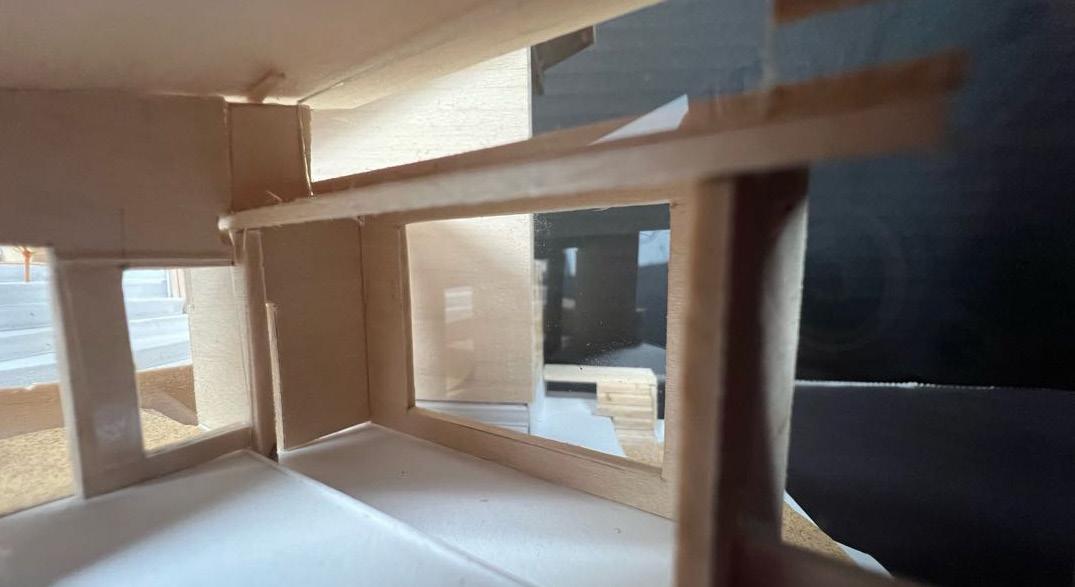
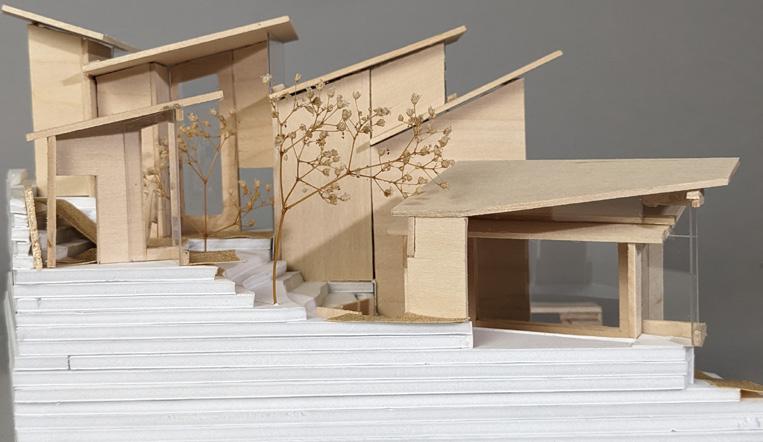
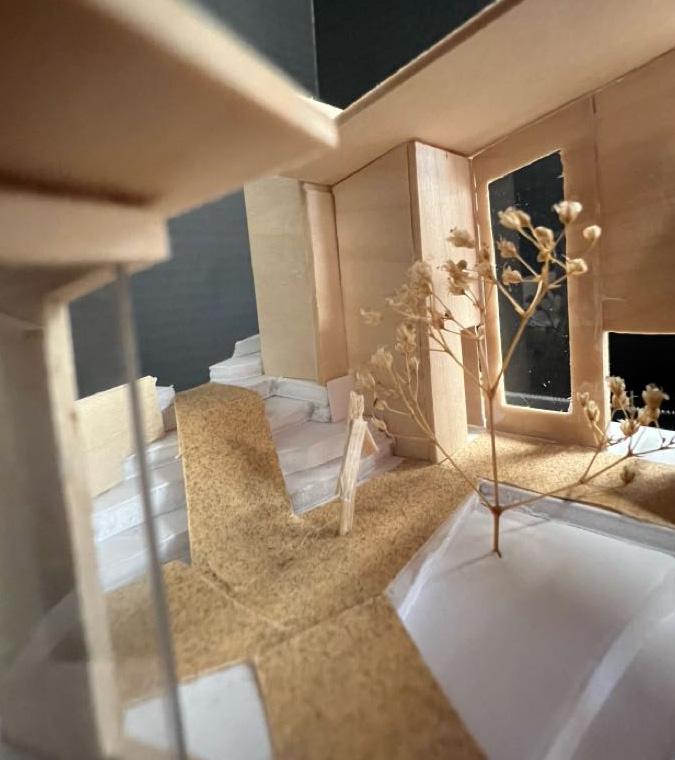
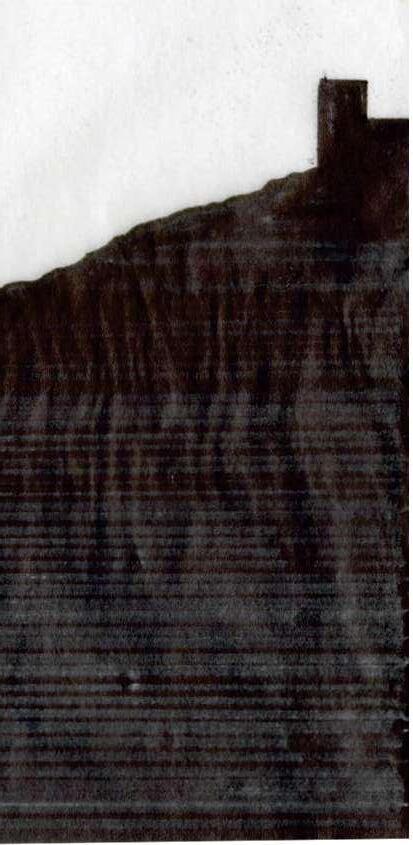
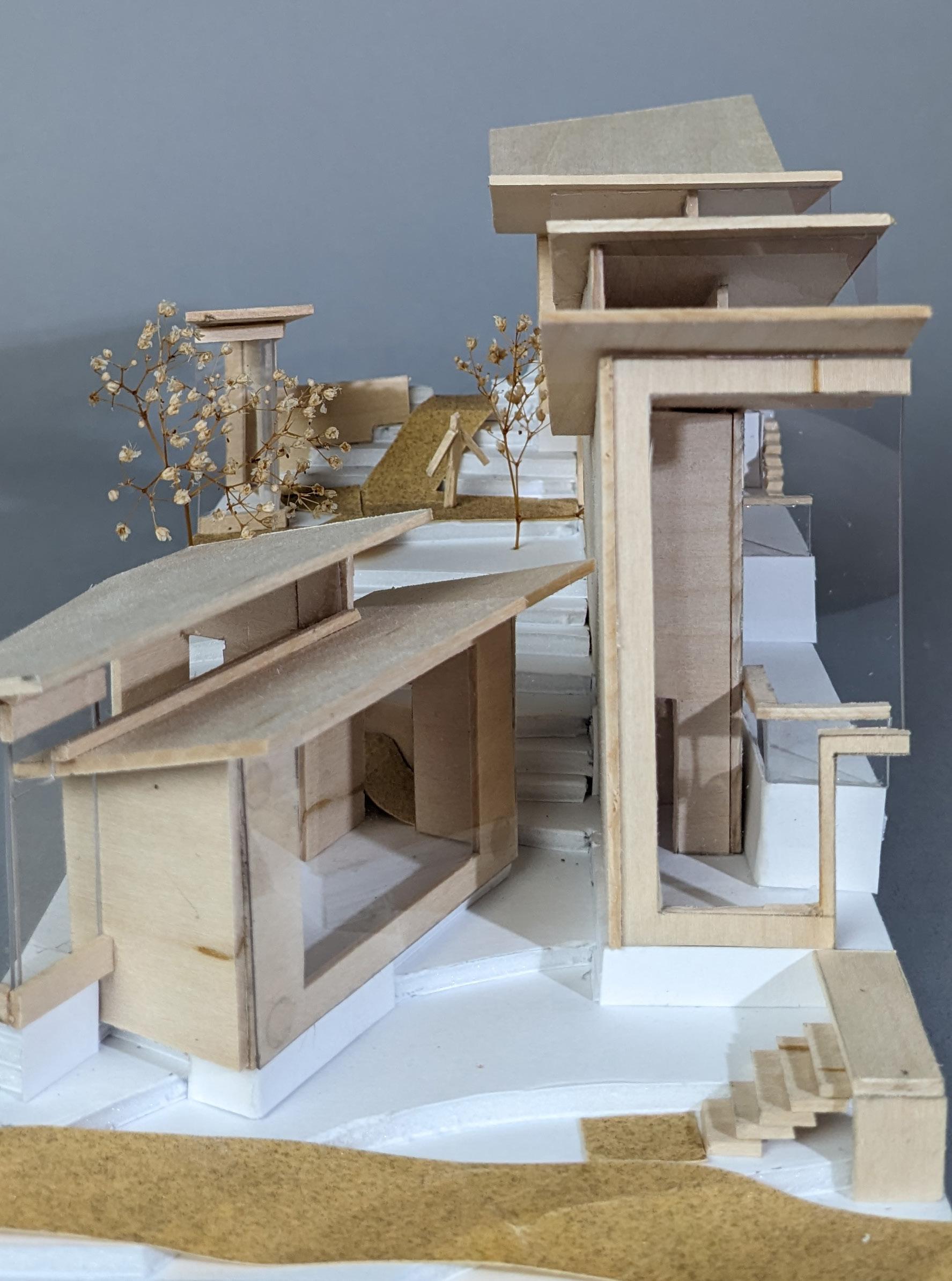
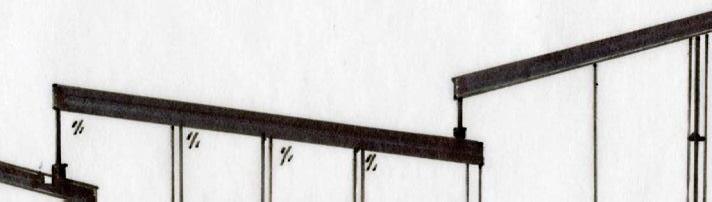
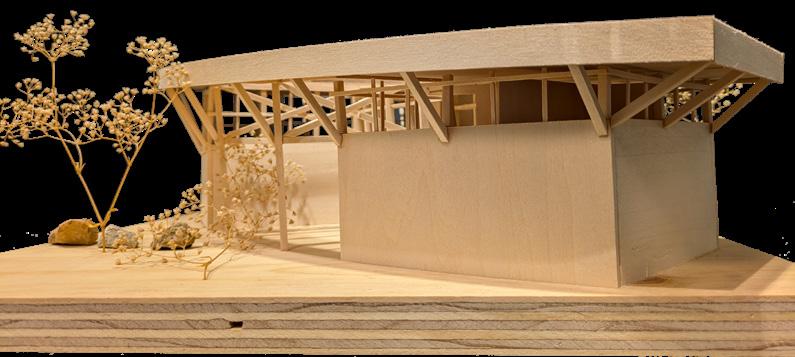
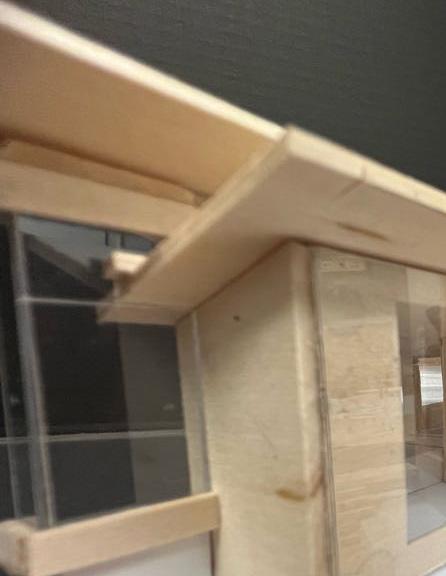
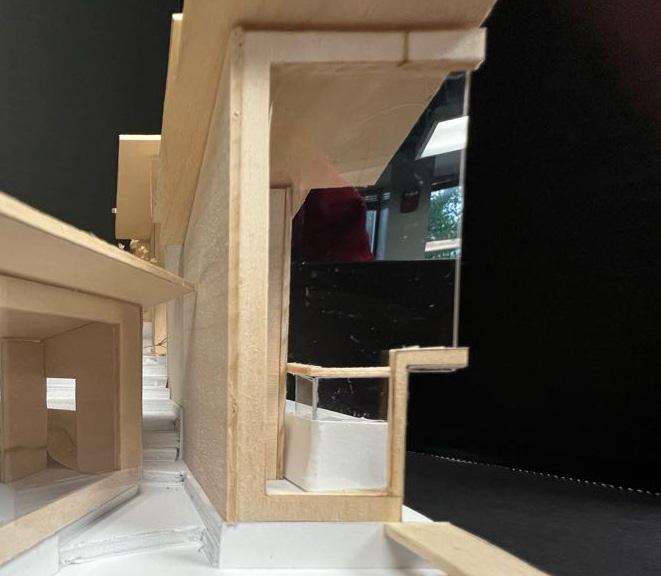
To conclude the second semester, I created a makerspace for KU’s campus, equipped studio spaces for various artists and a gallery for the general public. Our site was situated behind Watson Library, which provided a topographical challenge. Cut and fill methods were utilized to manipulate site topography, allowing the structures to nestle into the hill without creating potential for flooding. The final product was a 1/8” = 1’- 0” scale section cut model, which provides a detailed view of the studio pods, the terraced gallery, and the courtyard that unites all of these spaces.
Topographical Floor Plan