Lucy Millard | U2258004
International Fashion Buying and Management
Word Count: 6490
Is AI-Powered Trend Forecasting the Future for Sustainable Buying?
Introduction
This research project aims to explore the future of the fashion industry regarding the forecasting and buying processes and their involvement with Artificial Intelligence (AI). This case study will investigate how the fast fashion industry is the catalyst for utilising AI. The reasoning for this research is to provide a thorough argument that investigates multiple components of artificial intelligence and its impact, as well as to address the gap within the fashion realm of people’s awareness of how technology is advancing and how automated consumers can be attached to AI without even realising it. Judgement can be drawn that it is a complex idea and a challenge to unpick. Therefore, this research aims to bring aspects of reality to the question of: Is AI-Powered Trend Forecasting the Future for Sustainable Buying? Featuring the voices of academics, forecasters, buyers and the public – a depth of knowledge will be highlighted.
Valuably, this argument hopes to bring a detailed juxtaposition of the positives and negatives of how AI meets sustainability within fashion. The fashion industry represents a significant contributor to environmental challenges. It is described to be “already under scrutiny for its environmental impact” (The Fashion Guild, 2024.) A critical issue within this sector is overproduction, evidenced by the substantial volume of unsold merchandise and constant sales within in-store and online platforms. This indicates a pressing need for improved methodologies in demand for forecasting and buying. As some consumers increasingly prioritise sustainability, whilst others favour fast fashion - brands are changing to provide innovative solutions that align with ethical and environmental objectives while maintaining profitability. The focus will aim to relay a comparison of trend forecasting methods and how sustainable this can be. Artificial intelligence emerges as a transformative approach for predicting consumer demand, challenging traditional methods that predominantly rely on historical data and manual input by utilising real-time data sourced from various channels, such as social media, market trends, and consumer behaviour. Despite the promising potential of AI, its adoption within the industry remains limited. Various challenges, ethical considerations, and costly operational constraints can affect a brand's ability to fully embrace this innovation.
The objectives include evaluating AI's implementation into the industry and how this can be adapted positively and negatively, plus its profitability. This will be critically analysed through academic sources in the Literature Review. Additionally, Chapter 1 will explore consumer perceptions of eco-friendly shopping through a public questionnaire. Moreover, Chapter 2 will examine how AI can influence profitability and efficiency within brands, with a specific focus on the current effects of AI on fashion brands. These aspects will be addressed through the interview process in Chapter 2.
As the world progresses and technology advances, the use of artificial intelligence cannot be denied. Its progression is proving to be vital when gathering numerical data to aid supply chains, simplify logistics and ensure the e-commerce industry runs smoothly. It’s fast at predicting trend forecasts and allowing fast fashion to be even faster, having many positive and negative effects on the planet and people. (Fashion Retail Academy,2023.)
Some limitations have been recognised within this field of work. This work will not provide the detailed complexities of AI and its use within data collection, accuracy, logistics and scalability, but it will unveil how the industry has adopted its ways and the effect this is having on the planet and people from various points of view.
Literature Review
The force of AI and its impact when powering fashion forecasting is a very relevant issue as it tackles the future of fashion buying and consumption, with sustainability being at the forefront. There is a vast amount of literature surrounding this topic which examines the advantages and disadvantages of Artificial Intelligence being used as a key tool.
Why AI is needed to compete with modern-day consumption.
Charlene Gallery and Jo Conlon express in their 2024 book “Fashion Business and Digital Transformation” that large and small fashion companies are “redesigning supply chains using innovative technologies such as blockchain, artificial intelligence (AI) and predictive planning tools.” These methods support ondemand production for fast fashion businesses that prioritise selling trend-driven items regularly for consumers who prioritise new fashions weekly. These advanced methods help with “managing demand, preventing waste and boosting a brand’s sustainability, agility and transparency.” (Gallery & Conlon, 2024, p60.) They focus on one of the main concerns within the current fashion economy, which is described as the “right now” consumer. (Gallery & Conlon, 2024, p143.) The reason this aspect of consumer demand is an area to be analysed is because of the forecasting and buying that contribute to its success. The key is speed, fast analytics, data collection, processing, manufacturing and delivery to stores and online interfaces, followed by compulsory next-day delivery. These elements rely on strong mechanics which simply bypass human resources. STX Next, who 4
are a global leader in IT consulting that specialises in delivering AI solutions. They have an online page that details their argument titled “AI Planning and Forecasting vs Traditional Forecasting Methods.” They discuss a similar opinion when considering that traditional methods can be limiting regarding data collection and analysis. Humans cannot examine and process vast amounts of external data as fast or thoroughly as machines can. Machines make use of the information provided and evaluate issues that can then aid in predicting future events as well as learning continuously based on new data, whereas traditional methods can become less accurate and outdated. (STX NEXT, 2023). Interestingly, the opinion from these academics links quite similarly with the outcomes of the interview process further in the case study with Victoria Redshaw.
This can be drawn to a summative conclusion that artificial intelligence is needed due to its increased processing times that match the increasing demand for fashion and speed.
Does AI face any challenges?
Despite the progressive factor being its speed, AI can face some challenges regarding its relationship with data privacy, accuracy, scalability and industry adoption; this can determine which brands choose to implement it into their processes. Beata Wilczek discusses the theory and implications of a digitalised industry, claiming that the long-term adoption and success of using AI platforms is to be held accountable. Outlining that one factor used when facilitating the industry’s transition to sustainability is “traceability and authentication, supported by tokenising products on the blockchain and providing access to information about products’ authenticity, origin, design, and certifications” this factor is very important for legal and ethical reasons. This area of concern is due to the lack of reliable data on the topic from independent companies compared to data gathered within the industry. (Wilczek, B, 2024.)
There are more challenges addressed within this publication titled “Opportunities and Challenges of Artificial Intelligence Technologies for the Cultural and Creative Sectors.” Written by the corporate authors working for the communication network for content and technology within the European Commission. One of the chapters highlights the issues faced when accessing data regarding its quality and the risk of cyber-security. Beginning with exploring algorithms and their compatibility with prediction tools. Companies that have access to more valued data hold more ownership and so there is an element of competition. When evidencing which companies hold more ownership this can come from larger companies such as Netflix, Getty Images, Apple and Google News as these hold very large and diverse numbers of online users. The solution to this crisis is to make large datasets available to stakeholders so that smaller companies can access accurate and targeted data. (European Commission, 2022, p47-p51.) This fixture would then result in a fairer distribution of data, which is then used for prediction tools and monitoring sales performance that is only if it is used to its maximum potential. The Business of Fashion released an interview with Robin
Mellery-Pratt who is their head of Content Strategy and Sona Abaryan, the Partner and global fashion and luxury lead for Ekimetrics. They highlight the challenges of using data effectively in decision-making processes and compacting the barrage that comes alongside. Sona Abaryan states that there is a difference between just using data to “improve the status quo and being transformative with it.” An example of this she gave includes her work with Loreal, in which they use Artificial intelligence to gain a deeper numerical outcome to examine product ratings and reviews in which the data collected is made available to product development teams and numerous stakeholders globally to help enrich research strategies. (Business of Fashion,2024.)
What are the advantages of Artificial Intelligence?
CEO of Apparel Magic, Brandon Ginsberg, detailed his professional personal opinions in a piece written in Forbes. He began by exclaiming, “I can tell you that artificial intelligence is quickly becoming a game-changer in the fashion industry” then continued to detail a comparative list of the benefits and challenges, some of the factors previously highlighted. He discussed one of the biggest impacts related to supply chain management - as particular AI models are trained using historical inventory levels and sales performances to then predict future business strategies therefore more informed decisions can be made as to what to stock and when this results in reduced waste, improved customer satisfaction and increased profits. Marketing is a positive for businesses as they can use specific tools to analyse data, which then determines targeting the correct customers to maximise the impact, this saves time and money. Lastly, the design process, due to the fact algorithms can predict trends and analyse customer preferences. Therefore, fashion businesses can create designs that are more likely to sell to their target market with reduced risk. Despite these benefits he also addressed some concerns such as the potential for AI to replace human labour and the potential to make fashion more homogenised, with algorithms driving these decisions, there is a risk that fashion will become less individual and creative, therefore leading to a decline in the quality of fashion products and the popularity of the overall industry. (Ginsberg,2023.)
The Future of AI and its Profitability.
There are vast predictions for intense growth evidenced in an article that was written in 2020 by PR Newswire in New York, they stated that “AI in the Fashion Industry is expected to grow at a Compound Annual Growth Rate of ~ 39.17% during the forecast period 2020–2026.” (PRNewswire,2020.) In addition to this figure, Statista released a report detailing the CAGR to result in the amount of “4.4 billion U.S. dollars by 2027.” (Statista, 2024.) This quantitative evidence has come from credible sources from various dates in time, which builds trust within this argument, and the data forecasts a period which is relevant to strategic planning within the fashion industry. However, it can be interpreted economically there are some positives, but it is unclear how these insights will impact sustainability and customer behaviour. Will consumers be the reason for growth?
Or Businesses to businesses? For comparative reasons, in 2025, the industry size of AI in fashion is evaluated at 2.9 billion USD (Research Nester,2024.), which is tiny compared to a prediction of the use of AI in the Pharmaceutical industry, which is valued for 2025 to be worth between $350 - $410 billion. (BioPharmaTrend,2024.) Both comparisons were published in November 2024, ensuring a similar timeframe. Despite the irrelevance in industries, it can show that the growth into the billions is broad across multiple forms.
Methodology

Various types of primary research have been carried out to gain diverse insight into various aspects of this report. Firstly, examining how optimising buying decisions through AI forecasting can impact profitability and sustainability. Specifically, how minimising overproduction can enhance both financial outcomes and sustainability. This topic has been discussed thoroughly through interviews with specially selected professionals. Beginning with Eleanor Kendall-Jones, who is a buyer admin assistant at PrettyLittleThing. Eleanor’s experience working with the youthful online fast fashion brand can provide an alternative perspective and insight into how AI has impacted her daily life. As well as Victoria Redshaw, founder and lead forecaster of Scarlet Opus. She is described as having “an enviable wealth of knowledge in design, fashion, interiors, sustainability, technology, history, and politics.” (Scarlet Opus, n,d.) Victoria was chosen to interview due to her advanced education regarding the topic and her influential personality.
Furthermore, a questionnaire was crafted to explore AI’s potential to influence sustainable consumer shopping habits by researching what brands are utilising AI and how consumers perceive this when shopping in an automated and ecofriendly way. The questionnaire was targeted at a diverse group of people via a Facebook post and Instagram story. Using Microsoft Forms, the questionnaire consisted of 13 questions. It began by asking the respondent's age to enable a clearer insight into whether there was a correlation between people's age and their answers. The structure of the questionnaire was to allow for any level of knowledge to be utilised by asking questions that predominantly require a selection of multiple already given answers and require no previous knowledge of the subject.
Chapter 1: Questionnaire Results and Discussions
The questionnaire highlighted a growing interest in Artificial Intelligence and its impact on sustainability, revealing optimism about its potential to reduce waste, specifically in fashion. However, low consumer
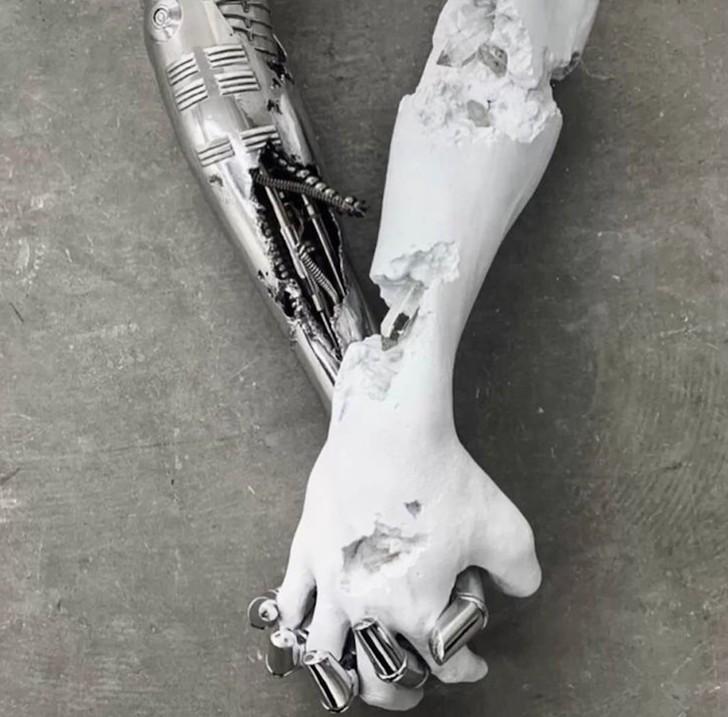
7 Figure 2. Touching Hands (Pinterest, nd.)
trust and general understanding indicate a need for greater transparency and education. Additionally, affordability and accessibility remain significant barriers to sustainable shopping. The questions asked allowed for unconscious bias and people’s knowledge regardless of their expertise.

Is AI-Powered Trend Forecasting the Future for Sustainable Buying? This was the question proposed for the public questionnaire. It was made up of 13 questions to assess how consumers perceive AI and the adoption of shopping habits. Twelve days after the questionnaire was distributed via Instagram and Facebook stories, 64 people anonymously responded, and it took on average 5 minutes to complete. The first question asked for the person’s age, this is so a possible correlation between their age and answers could be discovered. The highest number of responses came from people over 55, closely followed by those aged 18-24, which provides a great juxtaposition regarding shifts in culture and possibly a correlation in wealth.
The second question explored people’s familiarity with sustainability within fashion. 10 people stated they were ‘not familiar’, 41 people were ‘somewhat familiar’, 12 people claimed ‘very familiar’ and only one person aged 18-24 said to be ‘expert level.’ Interestingly, five people over the age of 55 answered they weren’t familiar compared to just one person aged between 18-24. This exemplifies that the younger respondents were more aware of the subject matter than those who were older, this could be due to multiple factors, including much greater exposure in social media towards younger audiences about the topic. The third question, "Do you shop for clothing sustainably?" revealed that only 14% of respondents (9 out of 64) claim to shop sustainably. In contrast, a significant majority of 86% indicated that they either do not shop sustainably or do so only occasionally. This highlights a notable gap in sustainable shopping practices among the participants. Interestingly those who answered "yes" came from a variety of age groups, with no distinct demographic trend emerging. This lack of pattern suggests that sustainable shopping is not strongly associated with specific age groups within this sample. However, the fourth question asked for further detail, requiring those who answered ‘yes’ or ‘sometimes’ to specify how. 11 out of 37 responses included ‘vinted’ within their answers, highlighting its popularity and ease of access. Fascinatingly, Arnas Levickas, the senior product manager at Vinted used AI to input historical user research into the system to speed up its programming and functionality. This formed a visible hierarchy of user insights. (They do,2024.) Therefore, those who use Vinted to shop sustainably are associating with a brand that uses AI. Moreover, many responses mentioned general charity shops and thrifting/upcycling clothing, but interestingly, 14 people mentioned only purchasing when necessary/ less often/higher quality pieces that last forever as their habits when considering sustainability. Plus, 3 people mentioned they prioritise their buying habits with a
brand focus - this being loyalties to Patagonia specifically. Patagonia is renowned for its contributions towards product and business sustainability. They share information regarding their supply chain with full transparency regarding the facilities and manufacturing, promote fair working conditions and use robust environmental and animal welfare programs with guides to explain their products in-depth. (Patagonia,2024.)
“How important is it to you that your fashion choices are sustainable and why?”
Question 5 revealed that 27 people said they had never thought about it and it isn’t their priority, some detailing wealth as an issue, for example, “It isn’t important to me, it’s whether the price is right” and “due to budget constraints and sizing restrictions I have to take what I can get”, “at the end of the day I’m broke so need cheaper” and “if finances were less of an issue I would shop more sustainably”. This results in the question: Why is sustainable clothing liked with a more luxury price tag? There can be multiple factors that influence the cost of this clothing including the raw cost of materials, but it’s predominantly the price tag that comes alongside transparent supply chains, certifications, working conditions and small batch manufacturing. (Good Maker Tales, n.d.) Furthermore, more responses juxtaposed the cost of sustainability and confidently compared by claiming, “I am not interested in such a thing. If I like something and want it, I'll buy it” and “I would rather be able to fill my wardrobe with new items than only be able to afford 1-2 regular items of clothing because it’s the sustainable option.” These opinions contrast multiple other answers that express the importance of it, many using terms like “to protect our environment” and “too much waste in landfill”. One respondent summarised these environmental factors with the answer, “Sustainability is very important as there is no planet b.” Other common answers related to building capsule wardrobes and investing in life-long pieces that due to their composition are often more sustainable, which is interesting because they then correlate to people quoting fast and slow fashion brands. It can be concluded that a variety of people hold various opinions and no dominating trend is emerging.
Question 6 began to cover the subject of Artificial Intelligence. 11 people stated that ‘yes’ they believe AI can help make fashion more sustainable, similarly, 11 people said “no” and 42 responses claimed “maybe.” There wasn’t one age group that dominated one response it was evenly distributed across all answers and all demographics. However, the most popular response was "maybe", which reflects uncertainty among participants, this option was implemented so an aspect of honesty could be gathered as it was presumed there would be a lack of knowledge and understanding or scepticism. This results in future enquiries of fashion brands educating more people on how and if AI is used more evidently. Question 7 resulted in similar responses and aimed to enhance a deeper understanding of consumer trust. “How likely are you to trust fashion recommendations from AI

compared to those from a human?” The data shows a clear trend: most respondents (52%) are either somewhat unlikely or very unlikely to trust AI recommendations over human ones. Only 3% are fully confident in AI's abilities. These results allow opportunities to build trust in question 6, if there was a possible hybrid approach of AI complementing human resources rather than replacing it or detailing exactly how consumers can utilise AI, it would allow for more acceptance.
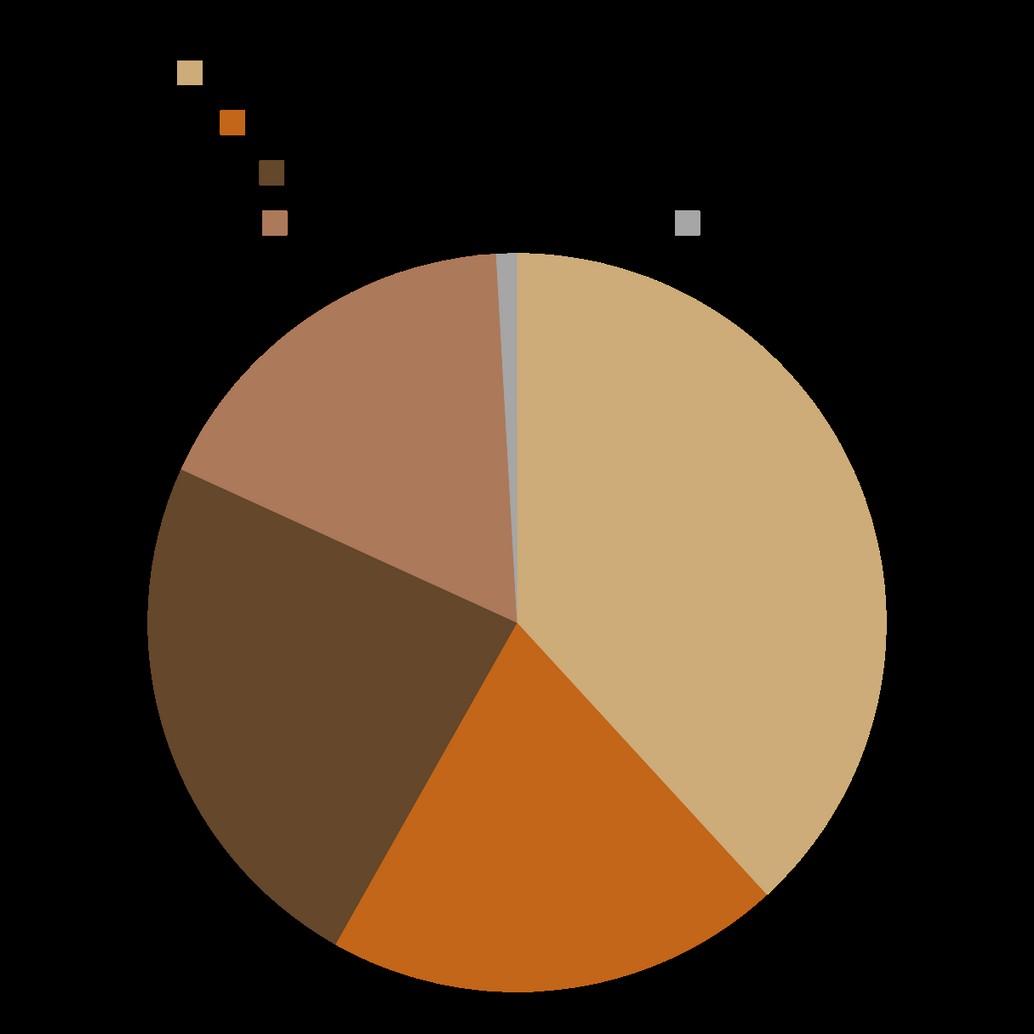
Despite the uncertainty in the previous two responses, question 8 provided a much more optimistic answer. It asked, “Do you believe AI could help reduce waste in the fashion industry by better predicting consumer demand?” 44% of people answered ‘yes’, 14% answered ‘no’ and 42% said ‘maybe.” A combined total of 86% saying either ‘yes’ or ‘maybe’ allows for a much more positive outlook on AI’s potential. To detail the reasons why and follow up on these percentages, question 9 asked for a more precise outlook. “In what ways do you think AI-powered trend forecasting could contribute to sustainability? If other, please specify.” Most answers agreed on a core theme, which is overproduction. The response “reducing overproduction by predicting demand more accurately” was the most popular, with 38.2% of people believing there is too much waste within the fashion industry, as well as 23.6% agreeing that this could be reduced by ‘helping consumers find sustainable alternatives.’ These insights portray a dual perception of AI, as it can help reduce waste and overproduction while guiding consumers to make better choices. For AI to succeed, it should continue to effectively address both sides of the supply chain. Following this question 10 asked, “What are your main concerns, if any, about using AI for trend forecasting in sustainable fashion? If other, please specify.” Only a small portion (12%) reported no concerns, indicating apprehension among most participants, juxtaposing the most popular answer in which 31% agreed that there would be a ‘loss of creative inputs into fashion”. This suggests that many worry AI might undermine the artistry and human intuition that are integral to fashion. Closely followed by 28% of people who said that ‘privacy and data security’ is an area for concern, reflecting the growing awareness of data privacy issues. Also, 26% of people stated an ‘over-reliance on technology’, implying unease with relying too heavily on AI in an industry where adaptability and human judgment are valued. This question summarises that, as previously mentioned, there is a balance needed to even out human inputs alongside AI to ensure ethical developments to foster consumer trust and see a wider adoption within the industry.
Question 11 develops consumer shopping experience and interestingly 92% of people answered “no” to the question, “Are you aware of any current brands or retailers using AI to enhance sustainable practices?” With only 8% responding
that ‘yes’ they are aware. The volume of ‘no’ responses suggests that either few brands are actively marketing their use of AI or possibly not using it. Therefore, consumers are not informed on how it can be used within the industry so it’s a missed opportunity to drive a focus on this topic. This opinion relates to the second to last question which challenges loyalty and human resources asking, “Would you be more likely to support a brand that uses AI for sustainable practices?” 8 people said ‘yes’, 18 people said ‘no’ and 38 answered ‘maybe.’ The 38 people who answered ‘maybe’ could again link to people’s uncertainty and confusion about the topic and lack of awareness.
Lastly, the final question highlighted for respondents to “Please share any additional thoughts you have about AI and sustainability in the fashion industry:” Kindly, all 64 people responded with a very large mixture of answers, although 27 people stated they were ‘not sure’ or explained ‘I don’t have much knowledge’. This lack of confidence addresses the common correlation of a lack of understanding and assurance throughout the whole questionnaire regarding AI’s use and effect on the industry and its consumers. Although some very insightful answers covered various aspects of AI, one respondent touched on the design process, detailing that “Coming from a design perspective, AI can help reduce textile and fabric waste in the design process, this can be through using AI to create a Layplan.” Which is crucial in reducing waste and controlling the amount of fabric the fashion industry contributes to landfills. The answers “I think it would be great to predict numbers so overconsumption is less likely” and “I think it could allow merchandisers to reduce or increase supply quantities on colours patterns designs and sizes” relate to the matter of overconsumption being prominent on people’s agendas. On the other hand a group of respondents touched on the digital consumption aspect of AI, writing ideas such as it could “be useful to quicken admin tasks and undertake basic searches” and “using AI can be beneficial for sustainability as it will appear more on Instagram stories then you are more inclined to click on” and the “algorithm for fashion and clothing suggestions could be more tailored to the consumer and promoted through platforms such as Instagram or Pinterest if linked with sustainable brands this could help raise awareness of the brands and improve sustainability.” More answers described receiving consumer suggestions through social media to encourage various buying habits as well as these quoted.
Chapter 2: Interview Results and Discussions
The interview process was used to develop a deeper insight into how and why brands utilise AI as a form of a specialised case study. Two women working in the specialised buying and forecasting sector were interviewed. This allowed for various interpretations. To begin, Eleanor Kendall-Jones is a buyer admin assistant for Pretty Little Thing and upon discussion, we investigated how AI is perceived at the fast fashion brand.
Eleanor Kendall Jones
Please refer to Appendix 1 for a full transcript of Eleanor’s Interview.
The interview with Eleanor proved to be conclusive to aspects of the public questionnaire as it linked to similar ideas regarding the public’s knowledge of how and if brands use Artificial Intelligence. To summarise and evaluate the information, it was learnt that at Pretty Little Thing (PLT), artificial intelligence is not used within their daily tasks, everything is done manually but they still use various systems such as Excel. Eleanor highlighted that they could perhaps use AI to pick out future trends from fashion weeks and within other publications to speed up the process. However, she emphasised it would then take away the personal aspect of fashion development, which is her favourite part. Her answer to “Have you adopted any eco-friendly forecasting methods or technologies, and if so, what results have you observed in terms of reducing environmental impact?” was quite simply “Not at all.” This could be viewed as surprising as PLT is a digital retailer so not using recent technologies seems unconventional against public expectation. PLT is not disclosing their use of AI, in comparison to other large fashion brands such as H&M and Zara, which have been reported to use the technology to enhance mapping customer demand and identify algorithms. (WFX,2024.) Eleanor also mentioned that regarding AI, “it is not something that is discussed openly or implemented here at PLT. It would be allowed to be used, but that would be a personal decision and not something introduced by management, for example.” She mentioned that her opinion is that it could be a useful tool in helping create content ideas for names and collections as well as assist with signing off trend development in the future. This links to the fact she mentioned one of the limitations of using traditional methods is the amount of time it takes to look at various sources, as it can be hard to navigate so AI could aid development. On the other hand, there is also a huge advantage of this which is taking the time to personally discover upcoming trends- which is an element of fashion buying that she loves.
“Do you see AI completely replacing traditional forecasting methods, or do you believe a hybrid approach will persist?” In response to this question, Eleanor stated, “No time soon!” and then addressed the idea of hybrid methods remaining. Conversely, she did mention with some optimism that “perhaps the new generation of buyers coming into the industry will have more experience with AI”, and this could then result in professionals seeking “shortcuts in their daily tasks which I am sure would be encouraged industry-wide across any roles.” This outlook seems very positive and accepting of a future that includes Artificial Intelligence.
To conclude the interview, Eleanor expressed some other thoughts surrounding the topic, which she felt to personally address considering her experience and knowledge within the buying sector so far. She highlighted a lack of education surrounding the topic of AI, and this results in a lack of its use. She gave an example: “Nobody has ever discussed AI with me, whether that be at university during my degree all I was told is I can use AI as long as I reference it, and I never took the time to discover it myself as I felt uncomfortable and didn’t know the line of when and where to use it.” Finishing her point by claiming that it is
not used in her daily tasks due to her minimal capabilities. This point allows for further discussion and the concept that AI is overwhelming to some individuals.
Victoria Redshaw
Please refer to Appendix 2 for a full transcript of Victoria’s Interview.
The second interview was with Victoria Redshaw, a Futurist at Scarlet Opus. Upon answering the same questions as Eleanor, a diverse and detailed opinion was drawn on how AI is viewed throughout her business. Victoria analyses within her responses the positives, negatives and future of AI with a comparative insight. Her answer to ‘How is AI currently being integrated into fashion forecasting and buying processes?’ demonstrated the foundations for how and what is impacting forecasting. Victoria began by using the adjective ‘revolutionising’ to refer to Artificial Intelligence. Stating that “It enables real-time global monitoring of sales + demand. In turn, this enables more sustainable practices, reducing waste, less unsold product + materials going to landfill or being incinerated and reduces emissions.” As well as saying, “It is also significantly helping with the accurate sourcing of materials upstream that are needed to manufacture products for the Fashion industry.” Specifically saying that “Blockchain technology” is a key part of this process within supply chain management. She described it as “playing a crucial role in promoting environmental sustainability, ensuring transparency and efficiency in traceability.”
Question 2 highlighted a more personal view: “Have you adopted any ecofriendly forecasting methods or technologies, and if so, what results have you observed in terms of reducing environmental impact?” In response to this, Victoria highlighted the fact she and her team are a trend forecasting agency dedicated to the interior sector so her answer will relate to that perspective. “Honestly, I think it would be disingenuous + naive of me to say that how my team harnesses Al + tech is reducing our environmental impact in a meaningful/significant way (other than us using far less paper and needing to travel less for meetings + presentation).” As well as the fact that “Al and the tech companies connected with it have a measurable environmental impact... and it's not a positive one. The LSEG calculates that the world's data centres could generate around 294 million tons of CO emissions in 2026.” Victoria regarded further literature as the issue that has been raised within Designer Elena Dagg’s work. 'Landscapes of Intelligence'. Where to summarise, she believes AI is detached from our world and “relies on a complex network of infrastructures”.
“How has the implementation of AI in trend forecasting changed the role of a fashion buyer or forecaster?” Victoria explained that the processes they use involve a lot of time “searching online for information, reading reports, surveys, studies, news articles, White Papers, legislative bills, etc”, and so “hours and hours and hours of research and reading before any analysis, translation or concrete forecasting could be started.” So due to the length of time of this process she stated, “We regularly use AI to do the initial searching, reading and
summarising for us.” Although there are some negatives of this, such as “It can misunderstand things, and draw inaccurate conclusions, and it does hallucinate”, despite this “, it is a huge timesaver in terms of the initial groundwork.” This means that “This frees us up to dedicate our time + effort to the more nuanced + complex aspects of forecasting, some of which are based on experience gained across our careers, as well as a genuine understanding of people and society (partly based on lived experience… something AI cannot tap into).” AI can also be used within their processes for other aspects such as to “track social media platform content in a more efficient way if we want to.” Plus, “The creation of images via Generative AI platforms + tools is also changing how we work. Because we’re focussed on the future” there are technologies such as “Image generators, like DALL-E3, Midjourney, etc, that enable us to create unique imagery that is exactly right for our forecasts” However “It's not necessarily as timesaving as you might think – instead of spending time searching for perfect images we instead spend time writing the perfect prompt”. Victoria then continued to regard why we use trends and their significance because times are evolving, and the need for these trends is diminishing. People are overconsuming and becoming aware of trends very quickly, which can be overwhelming, and according to Victoria, “AI and algorithms play a role in this.” Another outlook is that “eventually consumers may choose to take a step back, instead investing in products they believe will have greater longevity”. Her opinion relates to an aspect of relief as she claims, “Thankfully, we’re gradually seeing signs of a slowdown of the disposable consumerism that fast fashion drives a pseudo desire + demand for, with a greater exercising of moderation, editing back, adoption of capsule wardrobes, trans-seasonal dressing, and, hugely significantly, increased second hand C2C sales/purchasing on platforms + apps, e.g. Vinted.”
What are some advantages and limitations of using traditional trend forecasting compared to AI-driven forecasting? Here is a key point of discussion and comparison, despite some aspects being previously covered automatically by Victoria, she stated some advantages include “A truly human-centric approach to forecasting by people that understand what it is to be human and what people’s lives are like their wants, needs, desires, fears, problems etc. For now, only humans can understand the human condition.” Which is great for jobs and careers and people’s passions. As well as the fact that human forecasters can recognise what information is significant, therefore “Filtering out all the noise to get to that which has meaning, i.e. nuanced judgement. ‘Experience + Intuition.’ to be exact.” On the other hand, there are some limitations of using traditional trend forecasting methods, which can include “The slowness of processing large amounts of information… in fact, we can’t possibly consume + consider all the available information. This makes it more challenging to identify patterns + interconnections quickly.” Plus, personal biases. “You can always find a stat, quote or survey result to support your own belief, opinion or preference. Human forecasters are influenced by their own experiences, preferences, and cultural contexts, which can lead to unintentional biases in their predictions. So, people must be disciplined + diligent about maintaining subjectivity. Whereas AI, when
well-trained and appropriately managed, can provide more neutral, data-driven insights.”
Do you see AI completely replacing traditional forecasting methods, or do you believe a hybrid approach will persist? Victoria evaluates a dual opinion on this: “For now, I believe ‘humans aided by AI’ is the best approach to trend forecasting… integration + collaboration.” The overwhelming nature of trends and consumerism could “have an adverse reaction to the fast pace + vastness of all the product, style + trend information” She is “Therefore, in a quest for contentment and greater levels of wellness” as explained: “I expect people will eventually step back from following trends (which will make Trend Forecasting, in its current form, redundant) and will instead make much more personal decisions regarding their fashion purchasing choices and interior décor.” As a result of this prediction, Victoria changed her job title from Trend Forecaster to Futurist a few years ago. This is because she said, “I feel it’s crucial to pre-emptively adapt to the new world view that is emerging, and that part of that may well be an end to the following of trends and purchasing in line with trends. But I believe a new role will emerge that is much more closely related to problem-solving, creative thinking, and answering the needs of people and society at large.”
Lastly, allowing for a more opinion to be portrayed, it was asked if Victoria had any other opinions she would like to express regarding the topic. Interestingly, we relate back to the humane side of the job as directly emphasised: “To be a good Trend Forecaster, you have to be curious.” However, being curious isn’t as simple as some may think. “You must cultivate curiosity as a skill. You must be genuinely interested in people and society and understand the stresses + joys of modern life.” In conclusion, “For now, AI isn’t capable of these traits, skills, and emotions. I think it likely will be capable of things eventually… but right now, human insights are still incredibly valuable.” This evaluation stands for herself and her colleagues as “trend forecasting is an organic process based on sentient skills. AI can collate info and provide a reasonably accurate near future/shortterm prediction (6-12 months into the future). We’ve tested this in-house, and AI does just fine. But for longer-term predictions, you need the empathy, intuition, soulful understanding, imaginative vision of humans.”
In summary, to combine both interviews, Eleanor Kendall-Jones from Pretty Little Thing highlighted a limited use of AI in favour of traditional methods, expressing concerns about losing the creative aspect of her role. In contrast, Victoria Redshaw from Scarlet Opus embraced AI’s ability to provide real-time insights and support sustainable practices while acknowledging the environmental impact of AI infrastructure. She advocated for a hybrid approach, combining AI efficiency with human creativity. These views highlight AI’s potential and limitations in fashion, emphasising the need for education and training.
This study has revealed the positives and negatives of artificial intelligence within the fashion industry from a buyer, forecaster and consumer point of view, whilst considering how sustainable these methods are for the people and the planet. It can be concluded that a hybrid approach works successfully and will be a positive way forward within the industry. Efficiency and profitability are at the forefront of priorities as AI can be supplemented as a tool where human weakness can be found. This project aimed to explore the future of how the fashion industry will look considering the use of AI and provide a juxtaposition of opinions that highlight various components whilst addressing the gap within the fashion realm of people's awareness. Both the questionnaire and the interview processes demonstrated a dual point of view on multiple factors that can influence the opinions surrounding AI, from financial constraints, trust, people’s passions and environmental impact. Victoria and Eleanor agreed that a human’s expertise is a skill that includes passion and education which AI cannot replace. They also agreed that AI does help in assessing data which saves time and resources. Despite these agreements which link to aspects of the literature review, Victoria stressed how they utilise AI in their workplace at Scarlet Opus, opposing Eleanor at Pretty Little Thing who never implements it. Despite these two professionals expressing opinions, this work is an acknowledgement and not a definite conclusive summary of AI’s impact.
References
AI in Fashion market worth $ 2.42 billion in 2026: COVID-19 Impact on AI in the Fashion market, size, share, growth, and forecast 2020-2026. (2020, Jul 31). PR Newswire https://libaccess.hud.ac.uk/login?url=https://www.proquest.com/wirefeeds/ai-fashion-market-worth-2-42-billion-2026/docview/2429006275/se-2
Business of Fashion . (2024, March 26). Using AI to Create Customer Centric Business Strategies | The Business of Fashion [Video]. The Business of Fashion. https://www.youtube.com/watch?v=JxI30fRTYFY
Directorate-General for Communications Networks, Content and Technology (European Commission). (2022). Opportunities and challenges of artificial intelligence technologies for the cultural and creative sectors . Publications Office of the European Union.. https://op.europa.eu/en/publication-detail/-/publication/359880c1-a4dc-11ec83e1-01aa75ed71a1/language-en
Fashion Retail Academy. (2023). HOW ARTIFICIAL INTELLIGENCE IS USED IN THE FASHION INDUSTRY. Fashion Retail Academy. https://www.fashionretailacademy.ac.uk/news/how-artificial-intelligence-is-usedin-the-fashion-industry
Gallery, C., & Conlon, J. (2024). Fashion Business and Digital Transformation : Technology and Innovation Across the Fashion Industry. Taylor & Francis Group. https://ebookcentral.proquest.com/lib/hud/reader.action? docID=31338294&ppg=1
Ginsberg, B. (2023). Artificial Intelligence In Fashion . Forbes. https://www.forbes.com/councils/theyec/2023/02/21/artificial-intelligence-infashion/
Hickinson, M. (2024). What will be the key trends in AI innovation in the Pharmaceutical Industry in 2025?. Bio Pharma Trend. https://www.biopharmatrend.com/post/1025-what-will-be-the-key-trends-in-aiinnovation-in-the-pharmaceutical-industry-in-2025/#:~:text=It%20is %20estimated%20that%20AI,precision%20medicine%2C%20and%20commercial %20operations.
Patagonia. (2024). Everything we make has an impact on the planet.. Patagonia. https://eu.patagonia.com/gb/en/our-footprint/
Research Nester. (2024). Global Market Size. Research Nester. https://www.researchnester.com/reports/ai-in-fashion-market/6296#:~:text=The %20AI%20in%20fashion%20market%20size%20was%20over%20USD %202.19,will%20drive%20the%20market%20growth
Scarlet Opus. (n.d). Meet the Team. Scarlet Opus. https://www.scarletopus.com/about/meet-the-team/
Statista. (2024). Global artificial intelligence in the fashion market value 20182027. Statista. https://www.statista.com/statistics/1070736/global-artificialintelligence-fashion-market-size/#:~:text=The%20global%20artificial %20intelligence%20in,billion%20U.S.%20dollars%20by%202027.
STX NEXT. (2023). AI Planning and Forecasting vs Traditional Forecasting Methods. STXNEXT. https://stxnext.com/blog/how-ai-transforms-businessforecasting#:~:text=Complex%20Pattern%20Identification%3A%20AI %20forecasting,a%20much%20larger%20data%20set
THE FASHION GUILD. (2024). The Ethical Dilemma of AI in Fashion: Navigating Innovation and Responsibility. THE FASHION GUILD. https://www.thefashionguild.com/post/the-ethical-dilemma-of-ai-in-fashionnavigating-innovation-and-responsibility#:~:text=The%20fashion%20industry %2C%20already%20under,to%20reduce%20the%20ecological%20footprint
Theydo. (2024). Vinted Transforms User Research into Actionable Insights with TheyDo & Journey AI. Theydo. https://www.theydo.com/blog/customer-stories/vinted-transforms-user-researchinto-actionable-insights-with-theydo-and-journey-ai#
Tidswell, E. (n,d). A COSTLY IMPACT: 8 REASONS WHY SUSTAINABLE CLOTHES ARE SO EXPENSIVE. Good Maker Tales. https://goodmakertales.com/why-aresustainable-clothes-so-expensive/
WFX. (2024). How Top Fashion Brands Use Artificial Intelligence. WFX. https://www.worldfashionexchange.com/blog/artificial-intelligence-in-fashion/ Wilczek, B. (2024). (Im)possible Digital Fashion Dreams: Who Can Deliver on Accessible and Sustainable Digital Fashion?. Bloomsbury Fashion Central. https://www-bloomsburyfashioncentral-com.libaccess.hud.ac.uk/encyclopediachapter?docid=b-9781350359659&tocid=b-9781350359659chapter11&st=AI+in+fashion
Image References
Figure 1. Pinterest. (n.d). Holding Hands [Image]. Pinterest. https://uk.pinterest.com/pin/215750638392148245/
Pinterest. (n.d). Touching Hands [Image]. Pinterest. https://uk.pinterest.com/pin/32932641018951753/
1
Interview
Transcript
Eleanor Kendall Jones
How is AI currently being integrated into fashion forecasting and buying processes?
Within Pretty Little Thing buying, AI isn’t used within our daily tasks. Everything is done manually using various systems, especially Exel. However, sending development to suppliers is a daily task where AI could be utilised. We use trend prediction sites and Pinterest daily for inspo for development where we could perhaps be using AI to pick out future trends from fashion weeks etc. However, it could then take away the personal aspect of our developments which is personally my favourite part.
We also send over weekly content suggestions to design and management which we sometimes use AI for names of these or initial ideas etc as these can be hard to pluck from your head and create a commercial name.
Have you adopted any eco-friendly forecasting methods or technologies, and if so, what results have you observed in terms of reducing environmental impact?
Not at all :(
How has the implementation of AI in trend forecasting changed the role of a fashion buyer or forecaster?
Currently for us it hasn’t changed our roles. However, I have only just started my career in buying and therefore might see AI integrated more into our tasks as my career continues. But it is not something that is discussed openly or implemented here at PLT. It would be allowed to be used but that would be a personal decision and not something introduced by management for example. In terms of trend forecasting we don’t use AI, however as stated earlier I think AI could be a useful tool in helping create content ideas, names and collection organisation. As well as helping us to navigate main trends and features of fashion shows and collections. However here at PLT trend forecasting mainly comes under designs role. We then incorporate their trends when gathering our development for sign off. This is all done manually however could also be another task that AI could assist with in the future.
What are some advantages and limitations of using traditional trend forecasting compared to AI-driven forecasting?
Limitations of us using traditional methods for our trend forecasting tasks would mainly be the amount of time we spend looking through various sources and it is sometimes hard to navigate fresh and true forecasts. The new approach here at PLT is to allow our girl to shop more clean girl styles and keep all our product options fresh and new. Meaning Trend forecasting is more important than ever as we are trying to avoid bring backs and rebuys where possible to keep the website and the imagery fresh and clean.
However a huge advantage of traditional methods is we are taking time to personally discover upcoming trends we love and develop samples we thing our girl will love !
Do you see AI completely replacing traditional forecasting methods, or do you believe a hybrid approach will persist?
No time soon !
I think hybrid methods will remain. However, perhaps the new generation of buyers coming into the industry will have more experience with AI and therefore use it to create short cuts in their daily tasks which I am sure would be encouraged industry wide across any roles.
Do you have any other opinions you would like to express regarding the topic?
I personally think the lack of use of AI as a whole is due to the lack of education surrounding it. For example, nobody has ever discussed AI with me whether that be at university during my degree all I was told is I am able to use AI as long as I reference it. And I never took the time to discover it myself as I felt uncomfortable and didn’t know the line of when and where to use it. This lack of education then extends into my role here at PLT as I am not familiar with AI capabilities, so I therefore don’t use it in my daily tasks.
Appendix 2
Interview Transcript
How is AI currently being integrated into fashion forecasting and buying processes?
For sure AI and machine learning (supported by Big Data Analytics ) are revolutionising buying processes. These systems + emerging technologies can process vast amounts of data, as well as identify patterns too subtle or complex for human detection. It enables real-time global monitoring of sales + demand. In turn, this enables more sustainable practices; reducing waste, less unsold product + materials going to landfill or being incinerated, and also reduces emissions.
It is also significantly helping with the accurate sourcing of materials upstream that are needed to manufacture products for the Fashion industry. Blockchain technology is part of this transformation of supply chain management. It’s set to play a crucial role in promoting environmental sustainability, ensuring transparency and efficiency in traceability e.g. Product Passports, and the tracking of environmental impact.
Have you adopted any eco-friendly forecasting methods or technologies, and if so, what results have you observed in terms of reducing environmental impact?
As you know, we’re a trend forecasting agency dedicated to the Interiors sector, so I can only reply from that perspective. Honestly, I think it would be
disingenuous + naive of me to say that the ways in which my team harnesses AI + tech is reducing our environmental impact in a meaningful/significant way (other than us using far less paper and needing to travel less for meetings + presentation). And I say that because, although it might not seem immediately obvious, AI and the tech companies connected with it have a measurable environmental impact… and it’s not a positive one. The LSEG calculates that the world’s data centres could generate around 294 million tons of CO₂ emissions in 2026.
This issue is something Designer Elena Dagg has highlighted in her work ‘Landscapes of Intelligence’ (which you might be interested to explore). She believes there is a “common perception of Artificial Intelligence as a purely abstract force, detached from the physical world. In reality, AI relies on a complex network of infrastructures, energy, and material resources. Water, essential for hardware production and cooling data centres, is one of the most underappreciated of these resources.”
How has the implementation of AI in trend forecasting changed the role of a fashion buyer or forecaster?
I’m coming from a purely Trend Forecasting perspective again here, rather than that of a Fashion Buyer: our process used to involve a huge amount of time spent searching online for information, reading reports, surveys, studies, news articles, White Papers, legislative bills etc., hours and hours and hours of research and reading before any analysis, translation or concrete forecasting could actually be started. Now we regularly use AI to do the initial searching, reading and summarising for us. It can misunderstand things, and draw inaccurate conclusions, and it does hallucinate – we have to be mindful of that + hypervigilant, verifying + factchecking – but it is a huge timesaver in terms of the initial groundwork. This frees us up to dedicate our time + effort to the more nuanced + complex aspects of forecasting, some of which are based on experience gained across our careers, as well as a genuine understanding of people and society (partly based on lived experience… something AI cannot tap into).
So, the speed at which we can now conduct our research, and the convenient formatting of information that is more easily digestible, makes that aspect of our forecasting work much faster. We can also track social media platform content in a more efficient way if we want to.
The creation of images via Generative AI platforms + tools is also changing how we work. Because we’re focussed on the future, it’s often incredibly difficult or impossible for us to find exactly the right images of products, models, interiors etc., for inclusion in our trend forecasting reports, because the products + styles simply don’t exist yet. Image generators, like DALL-E3, Midjourney etc., enable us to create unique imagery that is exactly right for our forecasts. It's not necessarily as time saving as you might think – instead of spending time searching for perfect images we instead spend time writing the perfect prompt –but it does allow us to create a view of the future that doesn’t currently exist.
It’s interesting to consider that the fast pace and volume of all the information available online to everyone now could actual slow trends eventually, because it has the potential to become overwhelming. It might seem counterintuitive, because right now the high speed + massive volume of information + images people are exposed to is driving a fast pace of transient trends. AI and algorithms play a role in this. But eventually consumers may choose to take a
step back and begin to make much more personal decisions regarding their fashion + home styles and their purchasing choices, and actively not follow trends, instead investing in products they believe will have greater longevity (mindful of over-consumption + environmental impact). Ultimately data overload could drive a move towards greater simplicity to counteract the complexity of everyday life and the huge amount of input we deal with. Thankfully we’re gradually seeing signs of a slowdown of the disposable consumerism that fast fashion drives a pseudo desire + demand for, with a greater exercising of moderation, editing back, adoption of capsule wardrobes, trans-seasonal dressing, and, hugely significantly, increased second hand C2C sales/purchasing on platforms + apps e.g. Vinted.
What are some advantages and limitations of using traditional trend forecasting compared to AI-driven forecasting?
Hopefully I’ve covered some of this in your 3rd question Lucy, but in addition I’d say:
The advantages of using traditional trend forecasting methods include:
A truly humancentric approach to forecasting by people that understand what it is to be human and what people’s lives are actually like; their wants, needs, desires, fears, problems etc. For now, only humans can understand the human condition.
The ability of human forecasters to recognise what information is significant amongst the deluge of information that is available. Filtering out all the noise to get to that which has meaning i.e. nuanced judgement.
Experience + Intuition.
The limitations of using traditional trend forecasting methods include:
The slowness of processing large amounts of information… in fact, we can’t possibly consume + consider all the information that’s available. This makes it more challenging to identify patterns + interconnections quickly.
Personal biases. You can always find a stat, quote or survey result to support your own belief, opinion or preference. Human forecasters are influenced by their own experiences, preferences, and cultural contexts, which can lead to unintentional biases in their predictions. So people have to be really disciplined + diligent about maintaining subjectivity. Whereas AI, when well-trained and appropriately managed, can provide more neutral, data-driven insights.
Do you see AI completely replacing traditional forecasting methods, or do you believe a hybrid approach will persist?
For now, I believe ‘humans aided by AI’ is the best approach to trend forecasting… integration + collaboration. But ultimately, I don’t personally think there will be the same need or desire for trend forecasting in the mid-to-far future. I’m hopefully that consumer sentiment will change regarding consumerism, and perhaps even our capitalist foundations will be forced to change too. Much of this will be driven by necessity, when the climate emergency becomes a more alarmingly daily reality for everyone. But, as I touched on earlier (in response to Q.3) I predict citizens/end consumers will have an adverse reaction to the fast pace + vastness of all the product, style + trend information they’re bombarded with 24/7, 365, because it’s already becoming overwhelming + stressful, fuelling insecurities and dissatisfaction. Therefore, in a quest for contentment and greater levels of wellness I expect people will
eventually step back from following trends (which will make Trend Forecasting, in its current form, redundant) and will instead make much more personal decisions regarding their fashion purchasing choices and interior décor. With all of this in mind, I change my job title from Trend Forecaster to Futurist a few years ago. I feel it’s crucial to pre-emptively adapt to the new world view that is emerging, and that part of that may well be an end to the following of trends, and purchasing in line with trends. But I believe a new role will emerge that is much more closely related to problem solving, creative thinking, and answering the needs of people and society at large.
Do you have any other opinions you would like to express regarding the topic?
To be a good Trend Forecaster you have to be curious. You have to cultivate curiosity as a skill. You have to be genuinely interested in people and society and understand the stresses + joys of modern life. For now, AI isn’t capable of these traits, skills, and emotions. I think it likely will be capable of things eventually… but right now human insights are still incredibly valuable. For me and my colleagues, trend forecasting is an organic process based on sentient skills. AI can collate info and provide a reasonably accurate near-future/short term prediction (6-12 months into the future). We’ve tested this in-house and AI does just fine. But for longer term predictions you need the empathy, intuition, soulful understanding, imaginative vision of humans.