LOYOLA NURSING
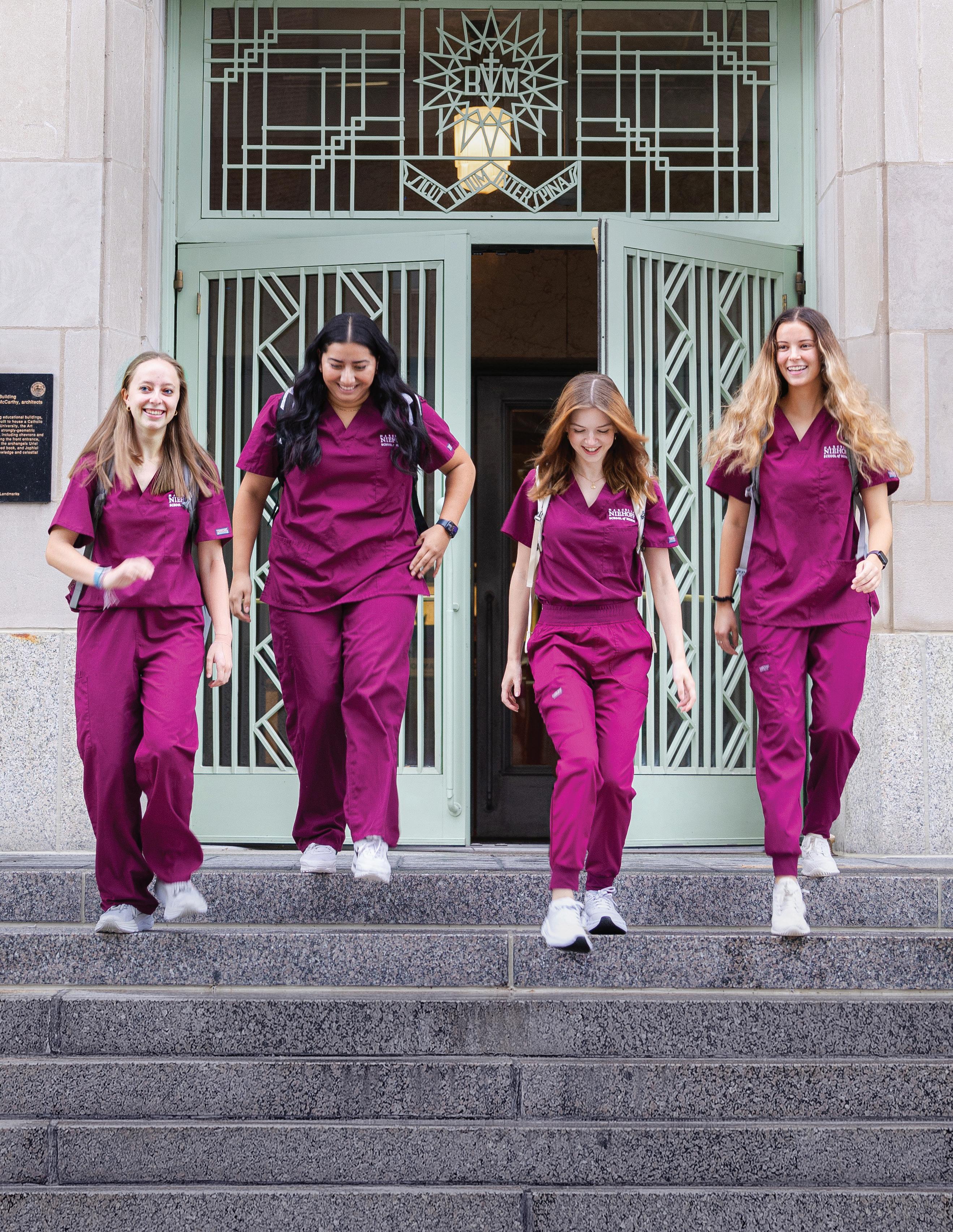
WE ARE GROWING!
NEW BUILDING WILL PROVIDE SPACE FOR CONTINUED EXPANSION
SCHOOL WELCOMES ITS LARGEST BSN CLASS
UNDERGRADUATE PROGRAM GETS HIGHEST U.S. NEWS RANKING EVER

WE ARE GROWING!
NEW BUILDING WILL PROVIDE SPACE FOR CONTINUED EXPANSION
SCHOOL WELCOMES ITS LARGEST BSN CLASS
UNDERGRADUATE PROGRAM GETS HIGHEST U.S. NEWS RANKING EVER
AT THE MARCELLA NIEHOFF SCHOOL OF NURSING, 2025 has been a time of reflection, celebration, and bold new beginnings. Since our founding 90 years ago, Loyola Nursing has distinguished itself by educating compassionate, highly skilled nurses who bring the University’s Jesuit values—the pursuit of justice, learning, and cura personalis, or care for the whole person—into action every day.
Our commitment to academic excellence has earned us the distinction of being one of the top nursing programs in the country. This year, our Bachelor of Science in Nursing program achieved its highest-ever ranking from U.S. News & World Report, rising to #13 among undergraduate nursing programs nationwide.
Meanwhile, our four-year BSN program recorded its highest enrollment in the school’s history this fall. And we are poised for even more growth: Earlier this year, Loyola announced plans for a new building that will be home to our four-year BSN program. This state-of-the-art facility will allow us to double our BSN enrollment, expanding access to a Loyola Nursing education for even more students.
We are deeply proud not only of Loyola Nursing’s exceptional BSN program, but also of our thriving graduate and research programs that attract talented students and competitive grant funding. As we look toward Loyola Nursing’s bright future, I extend gratitude to all the students, faculty, staff, alumni, and generous donors who have laid the foundation for our success.
I invite you to learn more about Loyola Nursing, from our innovative new programs to our exceptional faculty and alumni, in the pages that follow.
Warmly,
Lorna Finnegan, PhD, RN, FNP, FAAN Dean and Professor Marcella Niehoff School of Nursing
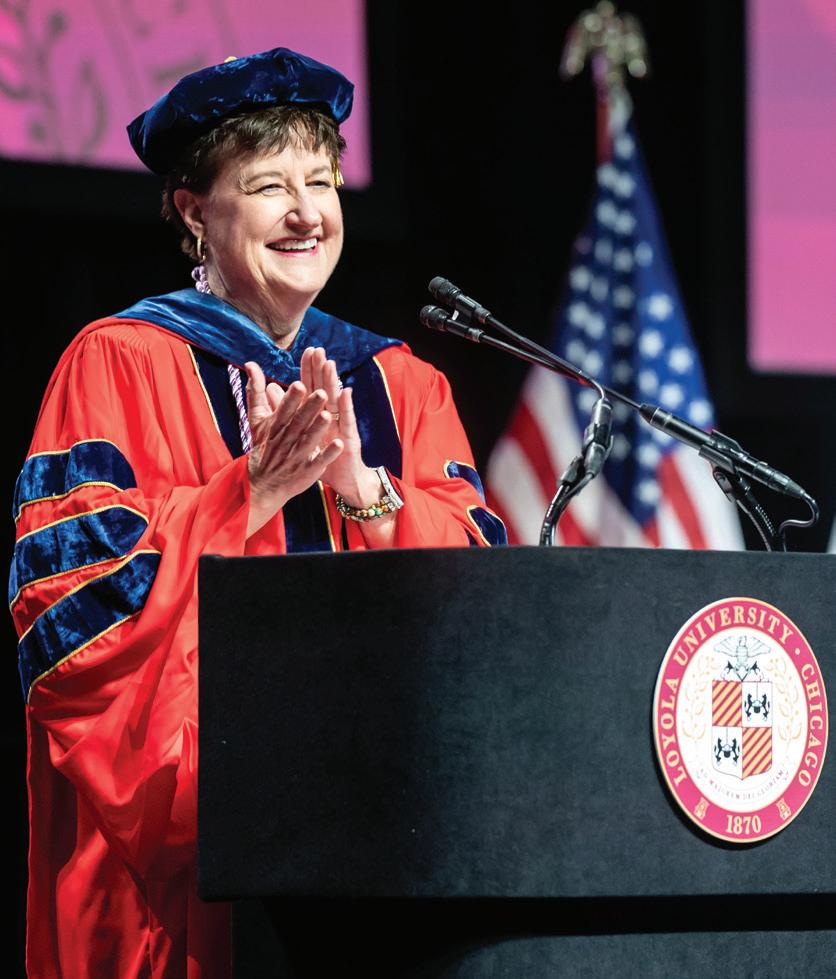
Our commitment to academic excellence has earned us the distinction of being one of the top nursing programs in the country.”
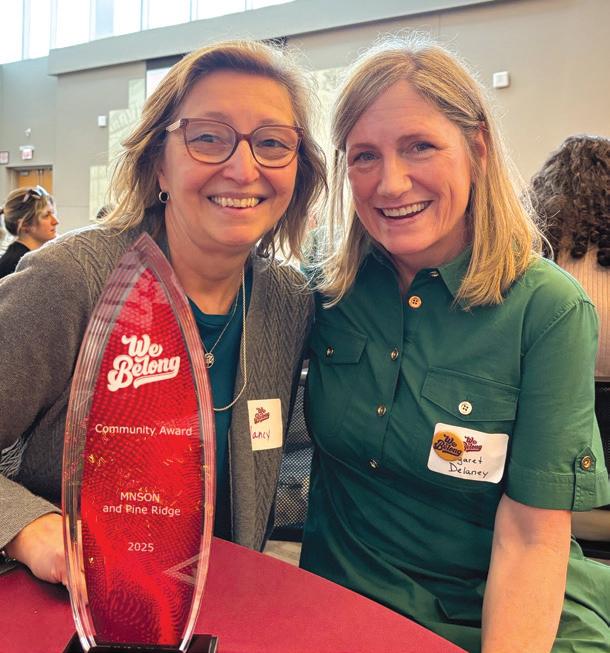
CLINICAL ASSISTANT PROFESSORS Nancy Raschke Deichstetter and Margaret Delaney (pictured below) received the inaugural Community Award from Loyola’s Office of Institutional Diversity, Equity, and Inclusion (OIDEI) in May in recognition of their leadership of the school’s annual immersion at a South Dakota reservation.
The Pine Ridge immersion, launched in 2018 by Professor P. Ann Solari-Twadell, takes nursing students to the rural, medically underserved Native American reservation during spring break week. During the 2025 trip, Loyola Nursing hosted a nursing career fair for high school students at Mahpíya Lúta, a school on the reservation; visited Pine Ridge Hospital; and met with community leaders.
The Community Award is part of OIDEI’s annual READI (Racial Justice, Equity, Accessibility, Diversity, and Inclusive Excellence) Impact awards, which recognize campus changemakers whose work fosters an inclusive, human-centered culture of belonging. This year's award included $10,000 to support Loyola’s mission.
According to OIDEI, the Pine Ridge immersion “expanded the perspectives of Loyola’s own students on health care access, cultural humility, and the social determinants of health.”
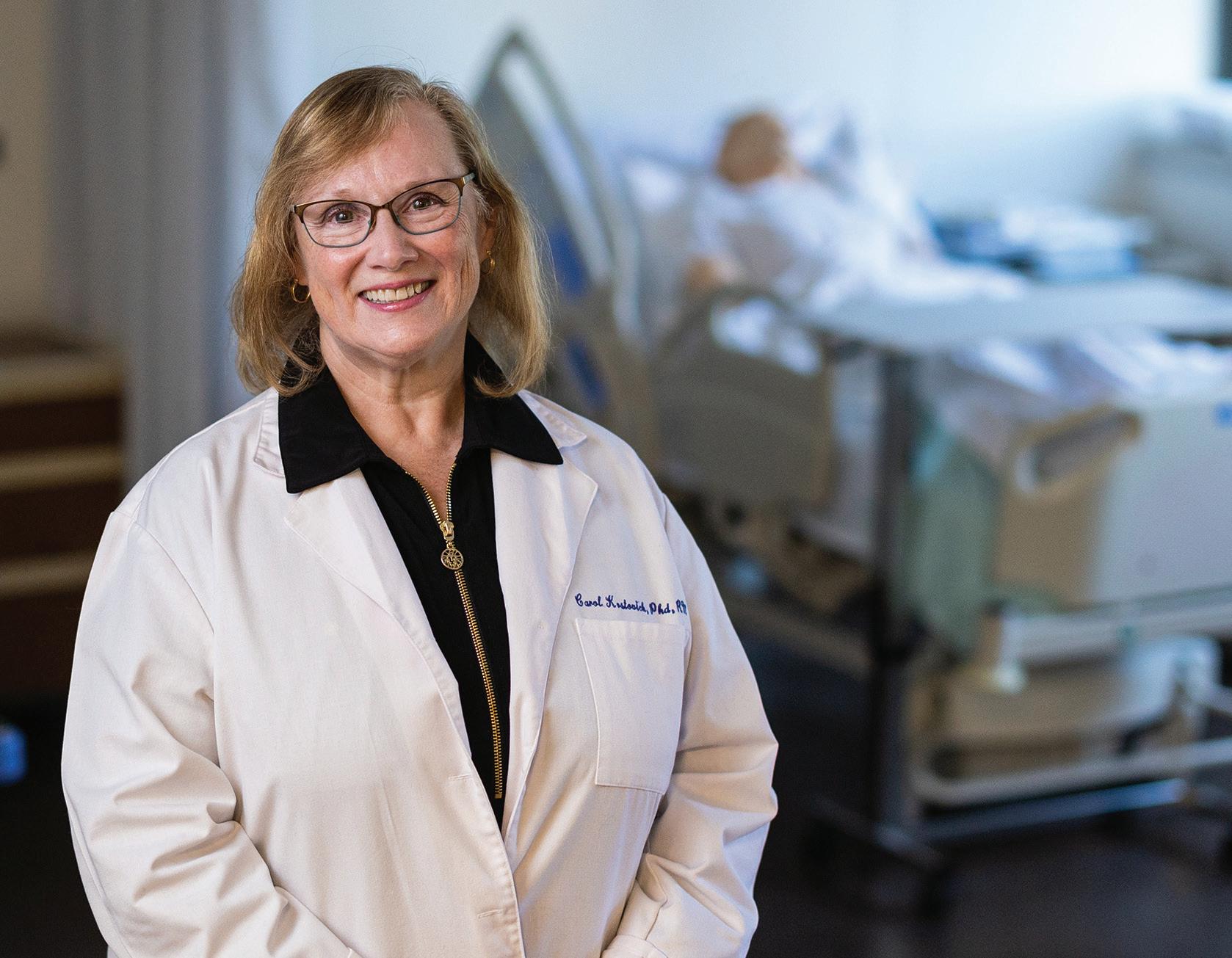
ASSOCIATE PROFESSOR CAROL KOSTOVICH, a researcher and educator who studies how nurses can better connect with and support their patients, was inducted into the prestigious American Academy of Nursing (AAN) in October.
Kostovich is assistant dean of innovative educational strategies and simulation at Loyola Nursing, where she studies “nursing presence,” or the ability to forge interpersonal relationships with patients. AAN fellowship is one of the highest honors in nursing, recognizing substantial contributions to nursing science and advancing public health.
Fellows are selected through a competitive peer review process and induction is a significant career milestone.
Much of Kostovich’s work has focused on the nurse-patient relationship and how to integrate nursing presence into simulation education. Her efforts have focused on
quantifying nursing presence and developing measurements so both the nurse and patient can share their perceptions of an interaction.
Kostovich developed the Presence of Nursing Scale (PONS) and the Presence of Nursing Scale-R N (PONS-RN) to measure both patient and nurse perspectives. Along with other Loyola Nursing simulation faculty, she led the development of a standardized debriefing model that incorporates the Jesuit focus on reflection and discernment into each simulation session.
“Knowing how to support a patient isn’t always intuitive, especially for undergraduates as they’re first starting to interact with patients,” Kostovich said. “By integrating nursing presence into our curriculum, we’re helping students develop the awareness and socio-emotional skills they need to become better nurses and provide better care to their patients.”
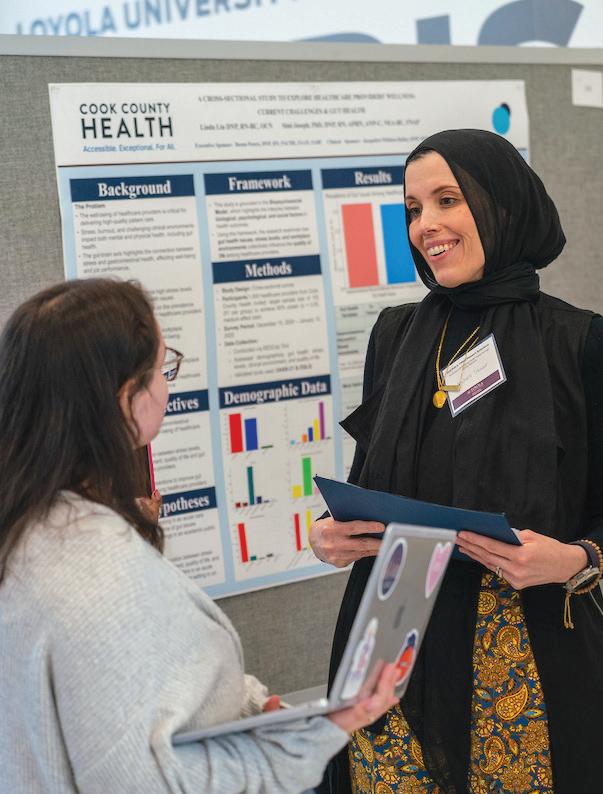
LOYOLA NURSING HELD its largest-ever Ruth K. Palmer Research Symposium in March, highlighting the role of nursing science and interdisciplinary collaboration in addressing health disparities.
The 38th annual event showcased Loyola Nursing’s growing nursing research program and came one month after Loyola was designated an R1 institution by the American Council on Education and the Carnegie Foundation for the Advancement of Teaching.
Keynote speakers were Tené Lewis, a professor of epidemiology at Emory University, and Lenette Jones, the Nancy S. and Michael B. McLelland Professor of Nursing at the University of Michigan.
The Palmer Symposium, which was
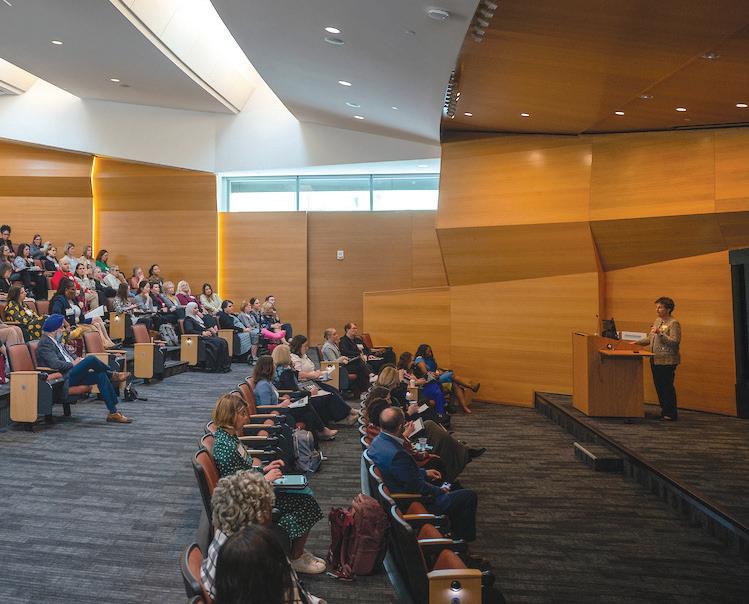
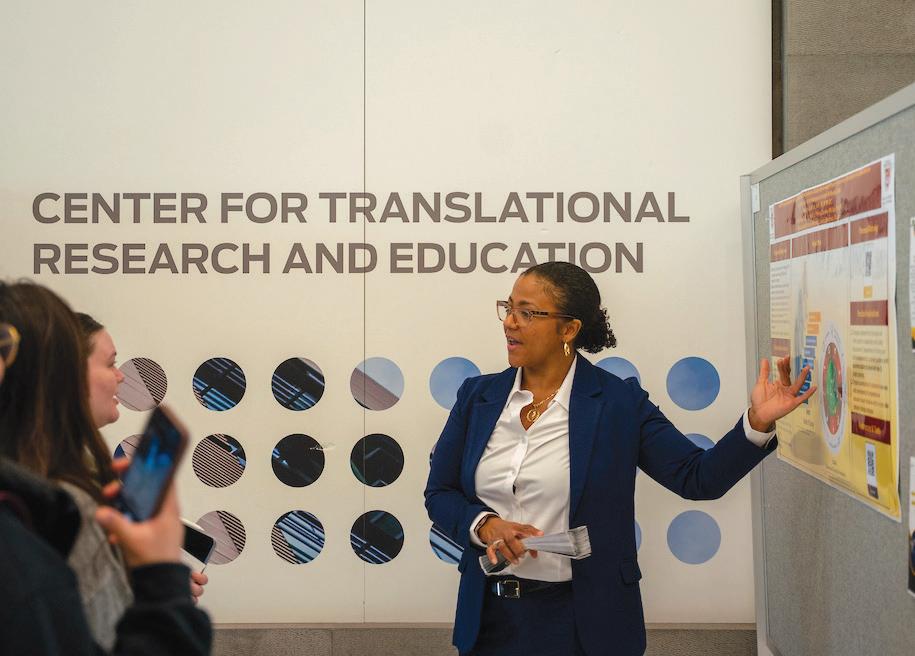
held at Loyola’s Health Sciences Campus, draws experts in nursing, public health, and medicine.
Several Loyola Nursing faculty were podium presenters, including Assistant Professor Alexandra Nowak and Associate Professor Lindsey Garfield.
Held each spring at Loyola’s Health Sciences Campus, the conference inspires interdisciplinary collaboration and serves as a forum for researchers in nursing, as well as public health and medicine, to develop new partnerships.
Established in 1987 and endowed by former Dean Gladys Kiniery, the Palmer Symposium addresses matters seminal to health care research, education, administration, policy, and clinical practices.
THE MARCELLA NIEHOFF SCHOOL OF NURSING earned its third Higher Education Excellence and Distinction (HEED) Award for Health Professions Schools in recognition of its strong, sustained commitment to academic excellence, belonging, and community-building. The award is given annually by Insight Into Academia magazine.
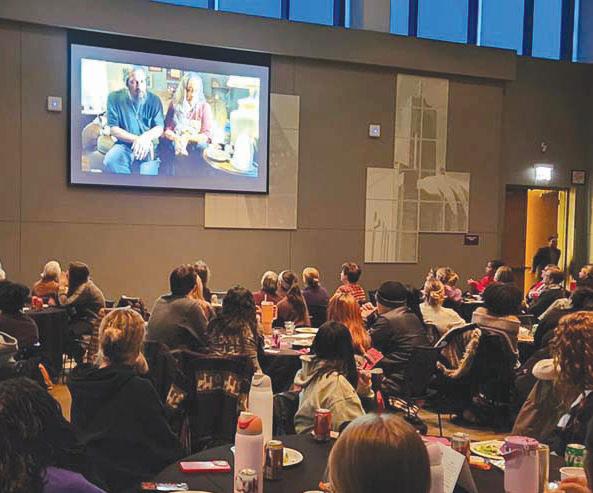
APPROXIMATELY 250 STUDENTS, faculty, and alumni attended Loyola Nursing’s screening of the award-winning documentary Inheritance at Loyola’s Damen Center in February. The film follows the struggles of a boy growing up in rural Appalachia in a family struggling with opioid addiction and poverty. The screening was followed by a panel discussion, moderated by faculty member Leah McClellan, with the film’s co-director and the young man featured in the film.
Dean Lorna Finnegan said Inheritance highlights how the opioid epidemic has become a public health crisis. It also helps nursing students better understand how social determinants of health, such as poverty and housing instability, can impact health outcomes.
“Nurses are often the first and most trusted advocates for people navigating these complex challenges,” she said. “We have the responsibility to destigmatize mental illness, provide holistic care, ensure that no one struggles in silence, and advocate for a future where health is a right, not a privilege.”

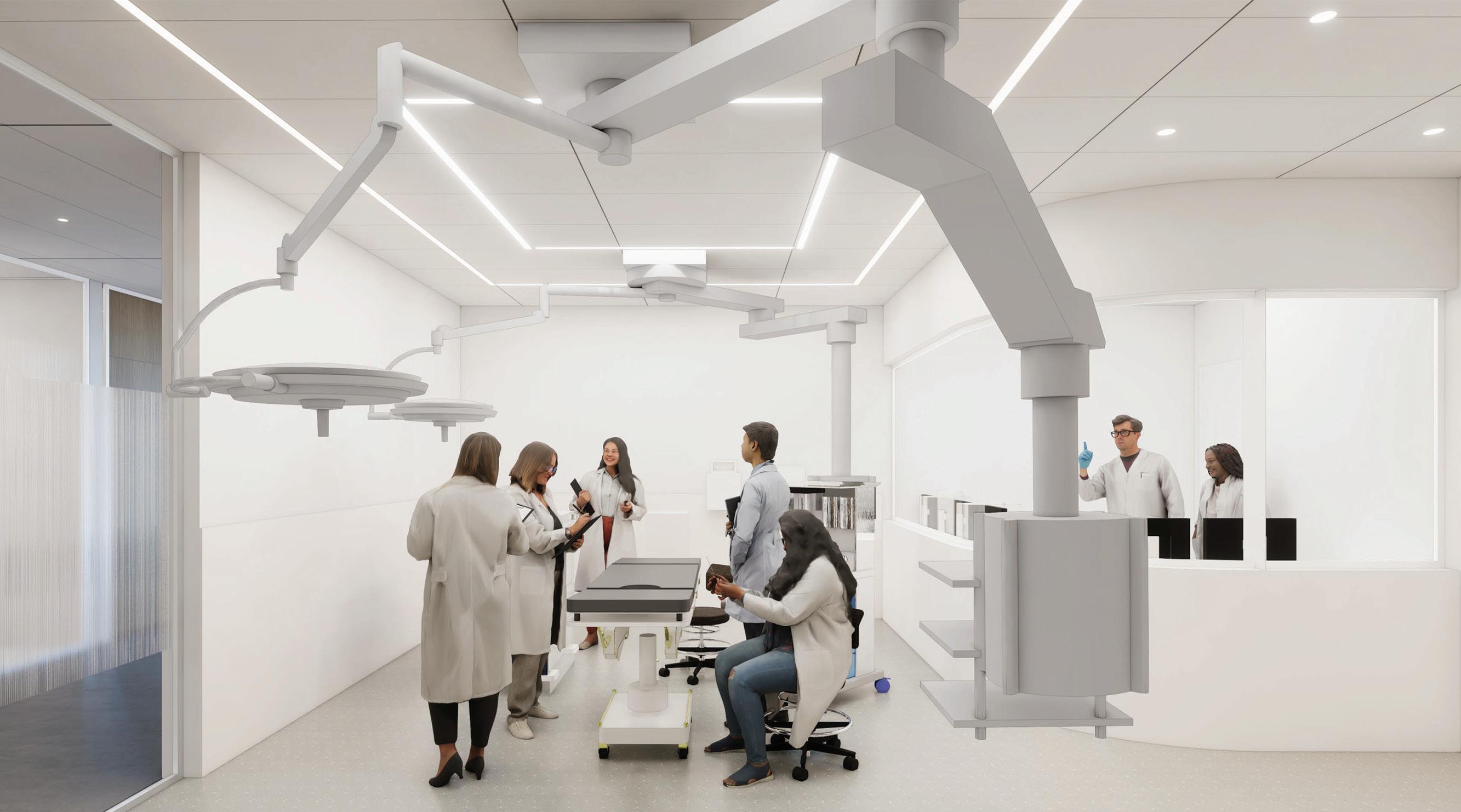
The Marcella Niehoff School of Nursing is growing
BY ASHLEY ROWLAND
Anew building, scheduled to open in fall 2028 on Loyola University Chicago’s main residential campus, will provide much-needed space for the school’s undergraduate program to expand. Enrollment in Loyola Nursing’s four-year Bachelor of Science in Nursing (BSN) track will gradually increase while construction is underway, with the goal of admitting 400 students annually by 2028—nearly doubling the size of the program.
“This marks a major new phase in Loyola Nursing’s proud 90-year history,” Dean Lorna Finnegan said of the ambitious expansion, a key part of the school’s effort to address the critical nationwide nursing shortage.
“Because of this building, we’ll graduate more BSN-prepared students and build on our legacy of academic excellence and meeting the needs of our communities,” Finnegan added. “At a time when demand for highly skilled nurses has never been greater, this world-class facility will be a catalyst for innovation in nursing education and propel our undergraduate program to the next level.”
Applications for Loyola Nursing’s BSN program, ranked 13th nationally by U.S. News & World Report, have increased steadily in the past decade.
The planned facility will centralize the
school’s faculty, staff, and students and provide a state-of-the-art learning environment featuring specialized classrooms, advanced simulation and virtual reality labs, and welcoming gathering spaces.
“There’s a sense of excitement and momentum within the school,” said Associate Professor Jorgia Connor, assistant dean of the BSN program. “Our mission is to educate nurse leaders who are exceptional in their commitment to health equity and service to humanity. Being able to expand our program to this level is a sign that we’re delivering on that mission.”
The six-story building will replace Campion Hall, an aging dormitory, and is one of the first projects in the University’s Campus Plan to modernize facilities and advance its presence in health care and the sciences. Loyola Nursing will share part of the space with the College of Arts and Sciences’ Forensic Science Program and Department of Chemistry and Biochemistry.
Provost Douglas W. Woods said the University’s prioritization of a new nursing school facility signals its investment in Loyola Nursing and dedication to educating compassionate nurses in the Jesuit tradition.
“The School of Nursing and its exceptional reputation are a source of pride across the University,” Woods said. “This project
represents our commitment to ensuring our nursing school facilities match the caliber of our academic programming and meet the needs of our students and faculty.”
Loyola Nursing’s four-year BSN program is located at Loyola's Lake Shore Campus on the northern edge of the city. The school’s graduate and Accelerated Bachelor of Science in Nursing programs are housed at Loyola's Health Sciences Campus in west suburban Maywood.
Plans for the nursing space were designed with the unique needs of BSN students in mind, said Kana Henning, vice president for facilities and campus management. Simulation labs, debriefing rooms, and skills labs will provide high-quality instruction, while huddle rooms and work stations will support group and individual study.
The building intentionally reflects the school’s Jesuit commitment to cura personalis, or care for the whole person, by creating formal and informal spaces that foster mentoring and community, she said. Space is earmarked for participants in the school’s CARE (Collaboration, Access, Resources, and Equity) Pathway to the BSN.
“The BSN program is incredibly demanding. We wanted to create a facility that would offer the best education possible, while making it easier for students to connect with faculty and peers,” she said. L
On Loyola Nursing’s 90th anniversary, two graduates and one student reflect on their nursing journeys
BY ASHLEY ROWLAND
Nearly 14,000 students have graduated from the Marcella Niehoff School of Nursing since its founding in 1935, following the unification of nursing schools from six Chicago-area Catholic hospitals.
Inspired by Loyola’s Ignatian values, our nurses have gone on to careers across the spectrum of health care, including clinical practice, research, management, academia, informatics, and public health.
Here are three of their stories.
MARY ANN MCDERMOTT
As a high school student, McDermott did not plan to go to college. Instead, the Chicago native planned to attend a three-year diploma program—then the standard for nursing education.
At the urging of a friend and a Jesuit priest, she looked at Loyola, then one of a handful of universities nationwide with a baccalaureate nursing program. McDermott earned her Bachelor of Science in Nursing in 1960 and her Master of Science in Nursing in 1965. She joined Loyola’s nursing faculty, specializing in obstetrics, and stayed until her retirement in 2005. She remains a staunch advocate of the liberal arts in nursing education.
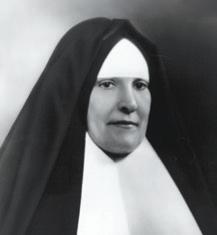
“Nobody else in my family was a nurse; they were all teachers and I wanted to be something else. So I chose nursing.
“At the time, I didn’t know you could go to college to become a nurse. But once I was there, Loyola was the right fit. The faculty and the liberal arts were really attractive to me.
“I didn’t originally intend to spend my career as a faculty member, but I really loved teaching and I loved incorporating the liberal arts into being an ‘educated nurse,’ with students taking classes in speech, the humanities, writing, English.
“Why is a liberal arts education important for nurses? You’ve got to be able to explain yourself well, to write well, to think critically. Bedside, all these skills help you meet the needs of the patient.
“I was given a lot of opportunities as a faculty member at Loyola. I, along with two other faculty members, started the Nursing Center (the predecessor of today’s Community Nursing Center) in St. Ignatius Parish in 1980.
"I also helped launch the nursing study abroad program at the Rome Center. But I’m proudest of my graduates, seeing the progress they’ve made in their careers.”
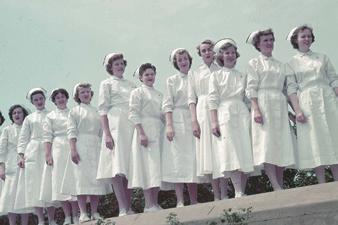
1955
The basic and general nursing programs received full accreditation from the National League for Nursing Accrediting Service.
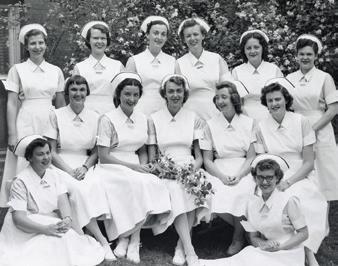
LAURA FERRIO
Ferrio, MSN ’93, is the senior vice president and chief operating office at Chicago’s Shirley Ryan AbilityLab, a globally recognized rehabilitation hospital. She graduated from Loyola with her Master of Science in Nursing in 1993, and also earned her Master of Business Administration at Loyola.
She has spent her career at Shirley Ryan AbilityLab— first as a direct care nurse, then in administrative positions, many of them at the executive level.
“There’s a mural in the Shirley Ryan AbilityLab lobby with the words, ‘the soul moves first.’ It resonates with me in regard to the care we provide to our patients, but it always brings me back to the concept of faith-based education. It inspires me to take Loyola’s values of service and striving for more to the patients we serve and their families.
“Loyola Nursing emphasizes holistic care, and that doesn’t necessarily mean you need to be at the bedside. It can be in any practice environment. For me, that’s administration.
“I moved into administration because I wanted to be able to wrap my arms around more patients. I wanted to make the systems and processes better for nurses to nurse, and for doctors to treat patients. I wanted to make a long-term impact.
“I’m in my ninth role at Shirley Ryan AbilityLab, and I’ve had good mentors here who helped me grow and develop. I’ve been able to pass that on to others, and I believe I learned the leadership skills I needed to do that at Loyola.
“When I’m asked or tapped to do something, I view it as a calling. Instead of thinking, ‘No, I can’t do that,’ I’m more in the mode of, ‘How can I do that?’ The call to be more and a sense of mission—that was instilled in me at Loyola.”
DAMILARE ABDULSALAM
Born in Nigeria, Abdulsalam immigrated to Chicago with his family as a child. He graduated from Loyola’s Arrupe College with his associate’s degree in 2024; while at Arrupe, he began taking nursing classes through a dual-enrollment program that offers a five-year pathway to a Loyola Nursing degree. Now a junior, Abdulsalam is on track to graduate with his BSN in 2027.
“At first, I was interested in nursing because of the potential for job stability. It didn’t take me long to figure out that this is something I really wanted to do. I have a job as a CNA (Certified Nursing Assistant) and I love it.
“Throughout my nursing classes, I’ve seen that every faculty member is passionate about what they do. You just look at them and you know they love what they do. They have this ability to break everything down for you and help you understand the concepts. Then, they lead by example.
“I’ve learned from them to think about, if you were in your patient’s shoes, how would you want to be treated? You’re not treating this person as a disease. You’re treating this person as a whole—spirit, soul, and mind.
“You want to be aware of the patient’s background, religion, all aspects of a patient. Communication goes a long way and makes a huge difference in how the patient does in the end.
“People here help you. The school is highly ranked and the degree is respected. Being at Loyola is not a decision I regret. Going to nursing school is probably the best decision I’ve made in my life.
“I don’t know exactly what I want to do yet, but I might become an emergency care nurse. I like a fast pace around me and critical thinking, and having a patient come in and then helping to stabilize them. I’m thinking about grad school. There’s so many things I can do in nursing and I can’t wait to explore it.” L
1964
First students accepted into Loyola’s graduate nursing program.
1980
The school was renamed the Marcella Niehoff School of Nursing, in recognition of a generous gift from Marcella Niehoff, a local businesswoman.
1980s
1988
PhD in Nursing program established.
2009
Doctor of Nursing Practice (DNP) program established.
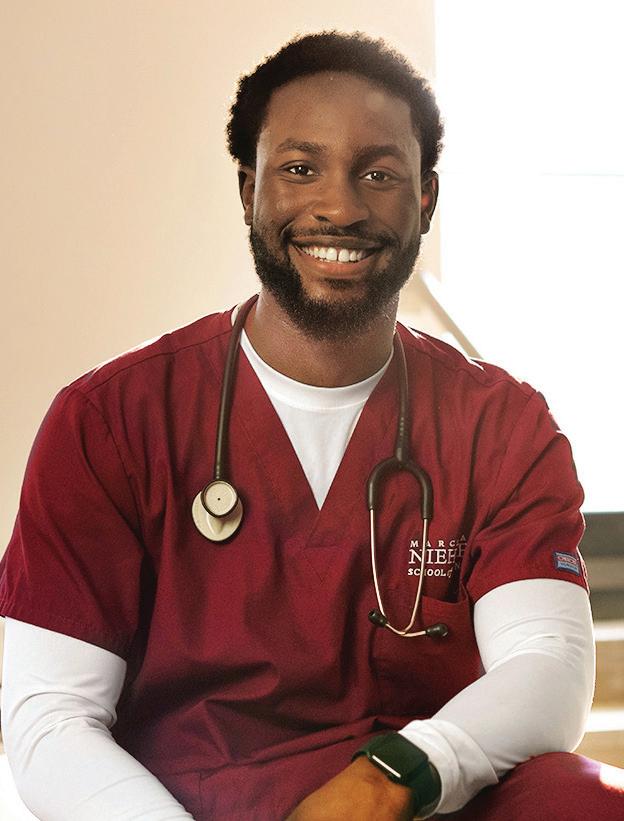
2025
The school celebrates its 90th anniversary and welcomes its largest-ever BSN class.
2020s
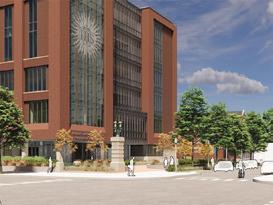
2028
New nursing-science building scheduled to open.
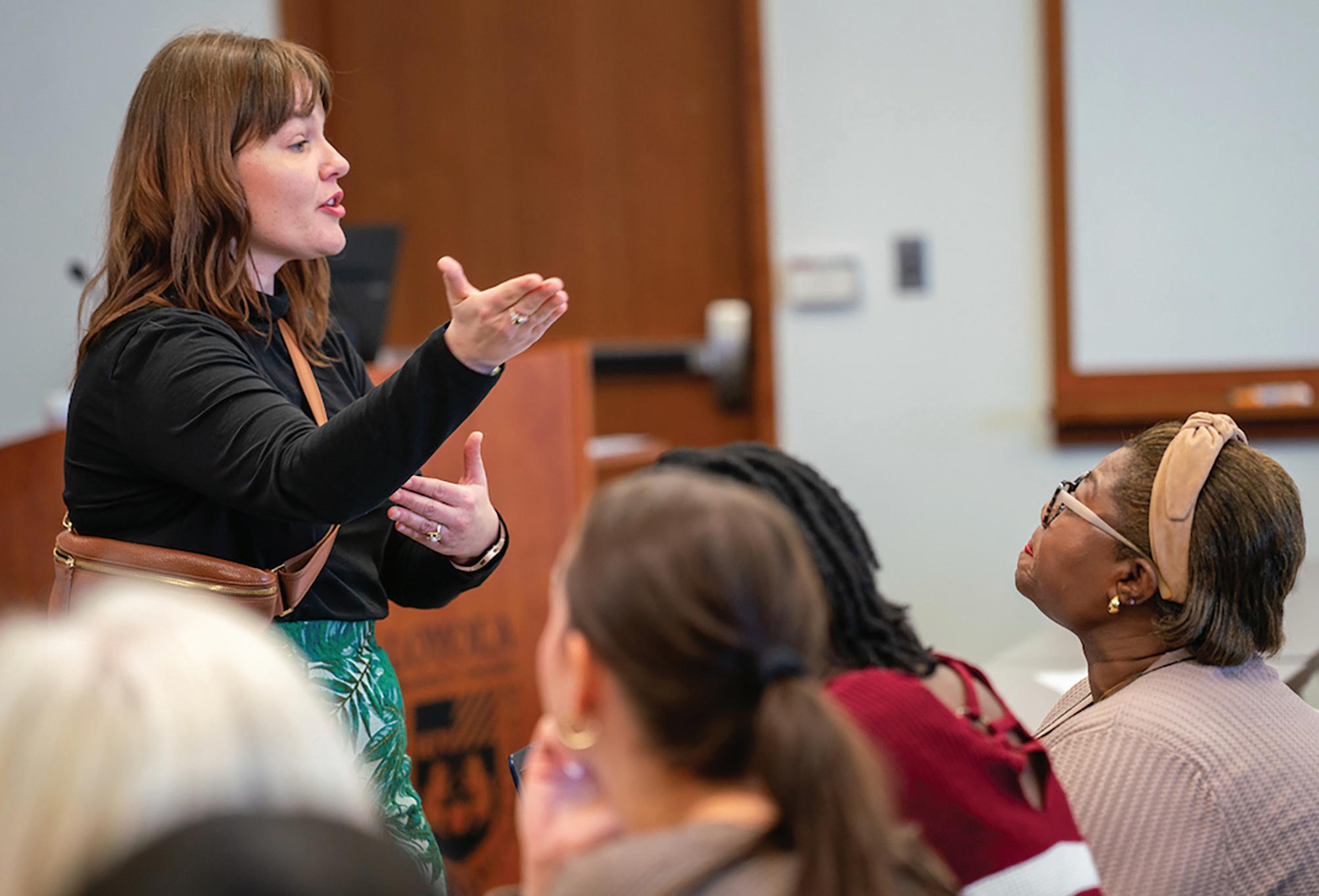
Loyola’s Marcella Niehoff School of Nursing saw an opportunity to innovate.
BY TIM BANNON PHOTOS BY ROB HART
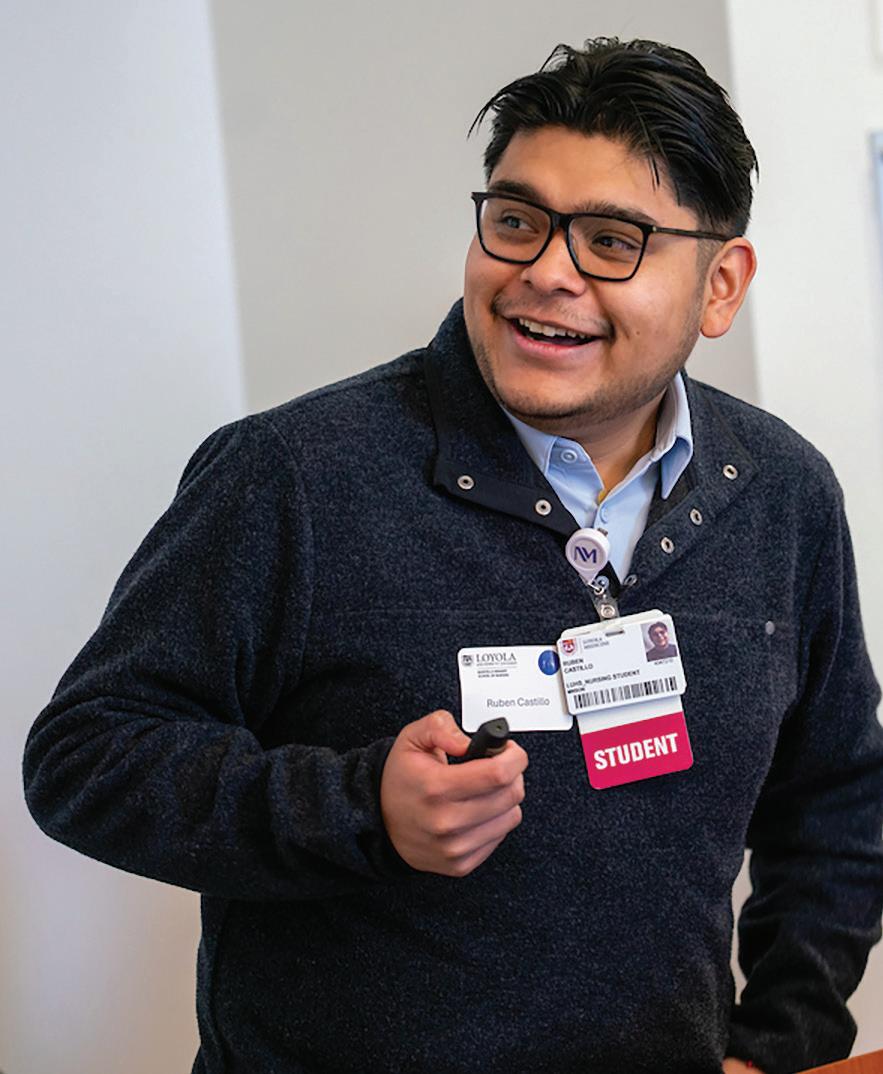
Enrollment in its Doctor of Nursing Practice (DNP) program has been rising— an increase of 337 percent over five years, from 43 in 2020–21 to 188 in the 2024–25 term.
Since each DNP student is required to complete a rigorous scholarly project, coordinating all those assignments was challenging.
“Overseeing this process from start to finish, a bird’s-eye view, was crucial,” said Associate Professor Mandy Peacock. “So we pitched it to Lorna (Finnegan, Loyola Nursing dean) and she liked it.”
Loyola Nursing created the new position of director of DNP Project Experiences—and, in July 2024, Peacock got the job.
“Not all institutions have that level of support for students, or for their faculty, from a project perspective,” Peacock said. “Having someone who helps them navigate all of these potential barriers and processes at different sites is helpful and innovative.”
Once a student develops an idea, ideally one that will improve either practice or patient outcomes, they work with the school to arrange a clinical site and secure agreements to start the research, get all the necessary clearances and paperwork, including Institutional Review Board approval, and complete onboarding. Then begins the project itself: development, implementation, assessment, and, finally, dissemination of the findings.
These projects take a year to complete.
Peacock’s job is to help—with the faculty adviser—guide the project from the beginning to the final presentation. Often, Peacock’s work is troubleshooting.
Take Hannah Kerr, for instance.
Kerr, who will graduate from the DNP program in December, had everything arranged for a project at St. Francis Hospital in Evanston. But then, in March, the hospital was sold, and her project was derailed.
“ As prospective students consider Loyola for their graduate work, they say ‘Wow, Loyola has this person who helps you find your project and helps guide you through the entire project experience.’
That’s a plus.”
—VICKI BACIDORE, DIRECTOR OF THE ADULT-GERONTOLOGY ACUTE CARE NURSE PRACTITIONER TRACK
“Dr. Peacock was my savior,” said Kerr. They decided to switch locations, which required an entire new round of negotiations and paperwork. “Without her, I would have had to push my graduation to next spring.”
Kerr was not alone. Other Loyola DNP students have had to switch sites mid-project, and Peacock also helped with the transfers.
Julia Peterson, who will graduate with her DNP in December, said Peacock was also crucial in getting all the approvals necessary to launch her project at Northwest Community
Hospital. “I didn’t really even know how to begin,” Peterson said. “That would have been a lot more stressful if she had not been there to help.”
Peacock’s new role has also been a difference maker for the DNP faculty. She has built relationships with clinical sites and professional organizations to expand the program, and has nurtured a growing network of skilled mentors.
“It’s just so nice to have a go-to person,” said Vicki Bacidore, director of the Adult-Gerontology Acute Care Nurse Practitioner track, who has been teaching at Loyola Nursing since 2012 and in the DNP program since 2016. “She oversees everything. And she has added quality improvement to the whole project process.”
Peacock, for instance, has recruited more faculty to be project advisers and has created a database that tracks every project. She also launched a repository of DNP projects, making them available to prospective DNP students.
This helps with recruiting.
“As prospective students consider Loyola for their graduate work,” Bacidore said, “they say, ‘Wow, Loyola has this person who helps you find your project and helps guide you through the entire project experience.’
That’s a plus.”
Above all, Peacock has added a higher level of direct support for students.
DNP graduate Mary Zawlocki said her project process was rigorous and rewarding, helping prepare her for her nursing career. Peacock’s guidance was so focused, Zawlocki said, that “sometimes it made me feel as if I were her only student.” L
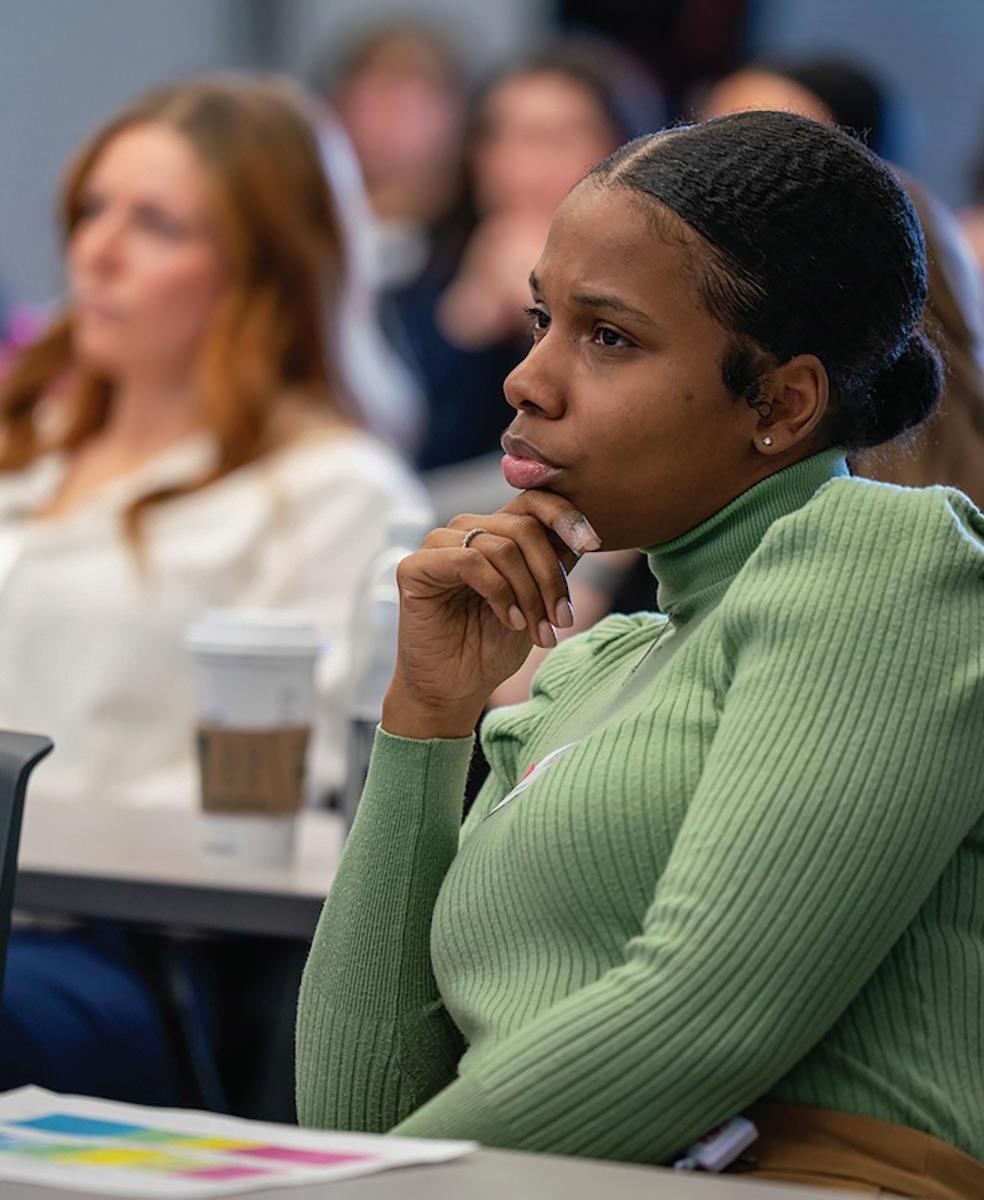
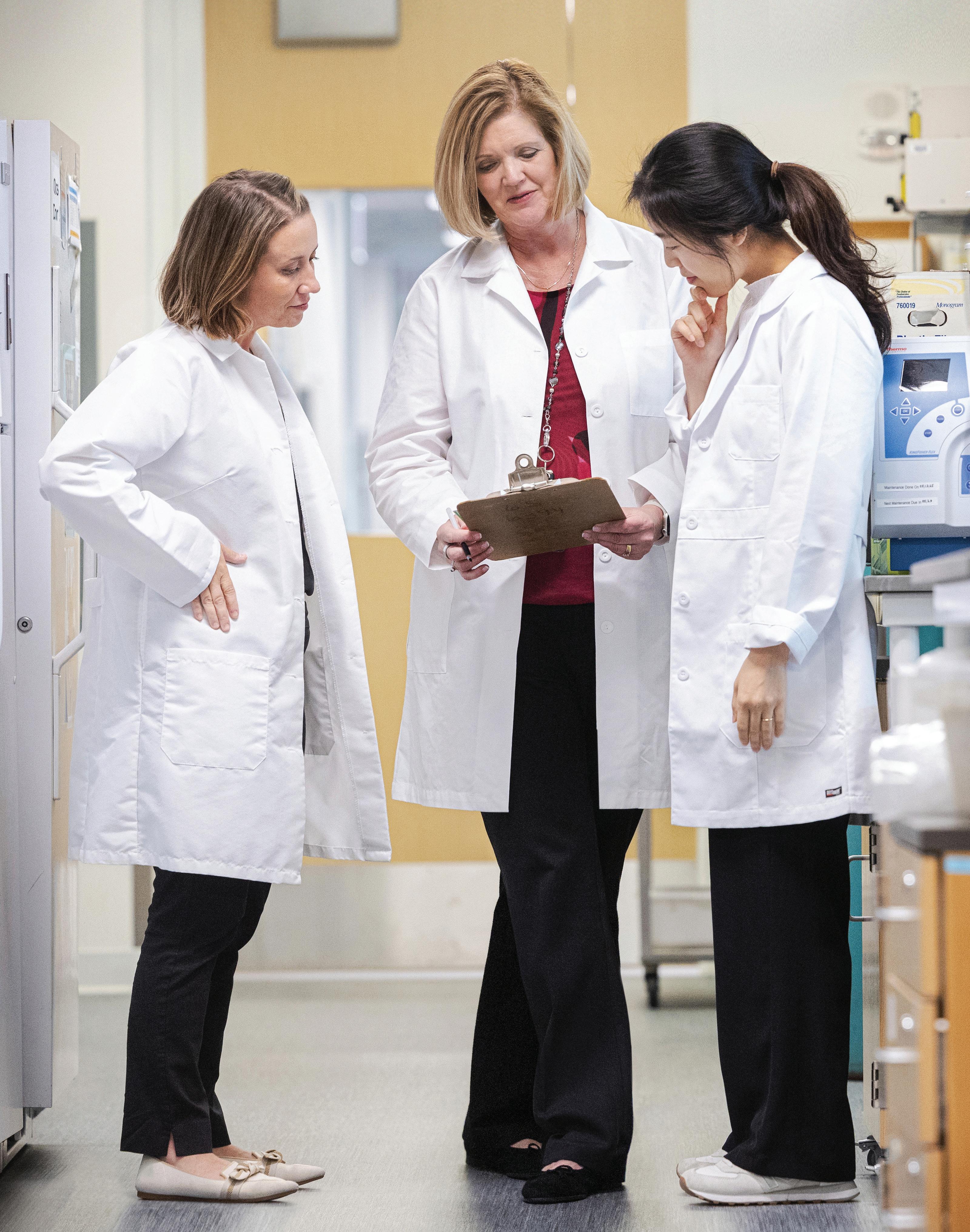
Opposite Associate Professor Mandy Peacock started as the director of Doctor of Nursing Practice Project Experiences in 2024. Top DNP student Ruben Castillo, part of the growing DNP program at Loyola Nursing, presents his project at this year’s DNP Immersion Day event. Bottom A student listens to one of the research presentations at the Health Sciences Campus.
BY ASHLEY ROWLAND • PHOTO BY LUKAS KEAPPROTH
With a successful career in clinical practice and nursing administration, Karen Saban never planned to become a researcher. But today, she’s an internationally recognized nurse scientist with a talent for grant writing and coaching earlycareer scientists—and, as of July, the Marcella Niehoff School of Nursing Endowed Chair for Research.
A three-time Loyola Nursing alum (BSN ’86, MSN ’90, PhD ’06), Saban has received more than $15 million in funding to study health disparities. Driven by Loyola’s social justice mission, she comes to her new role after five years as the school’s associate dean for research and scholarly innovation.
As Endowed Chair, she leads the school’s growing nursing science program, focusing on expanding research aligned with her own work in stress inflammation and epigenetics across populations.
Today, she’s a vocal advocate for improving health outcomes in all communities through nursing science.
“There’s so much more we can do to prevent people from becoming sick,” she said.
You spent 20 years in clinical practice and administration. How did you end up in research?
I was curious and I liked trying to figure out why things worked, and how we could address (health equity) issues.
I always liked learning so I went back to school. I went through the whole PhD program at Loyola and didn’t know I was going to take a position as an academic. The dean at the time (Sheila Haas) encouraged me to apply and it worked out.
What do you enjoy most about nursing science?
I never get bored. There’s always something to learn. I love to read and figure out why things happen the way they do, answering all those “why” questions. There’s always something new to look at.
I also love working in groups and collaborating.
I love brainstorming with others and working with interdisciplinary teams.
What inspires you as a researcher?
Being able to make a difference in people’s lives. As a nurse, you impact individuals, families, and communities, but with applied research you impact everybody. You can make changes that affect policy and practice, not just in the country but worldwide.
Why did you return to Loyola Nursing as a faculty member?
I had such a great experience as a student here. It was a very nurturing environment and I liked the faculty. I appreciated the Jesuit mission. That’s why I ended up coming back and staying as long as I have. I feel like we live out our social justice mission and that’s important to me.
I also stay because I really like the incredibly smart people I work with, who always keep me challenged.
You’re passionate about being a mentor. Why?
I love mentoring. I have two postdocs and what I really enjoy is seeing them succeed and figure things out, and helping them think about what their future is going to look like. They’re so smart and have so much potential, and it’s the same working with faculty. It’s so encouraging to see them grow and succeed.
Any advice for future nurse scientists?
Find good mentors who have a passion for research. Think about having not just one mentor, but a mentoring team. And find mentors who are really committed to your success. I’ve been fortunate to have mentors that I’ve stayed connected with for decades. I can still reach out and get advice from them.
Be open to different ideas and take advantage of opportunities when they come to you. That’s where I was successful—I didn’t plan this as a career, but I took opportunities when they came my way. L
SABAN IS PRINCIPAL INVESTIGATOR OF THE RESILIENCE, STRESS, AND ETHNICITY (RISE) STUDY, A NATIONAL INSTITUTES OF HEALTH-FUNDED INTERVENTION TRIAL THAT AIMS TO REDUCE CHRONIC STRESS AND INFLAMMATION IN BLACK WOMEN AT RISK OF CARDIOVASCULAR DISEASE.
IN 2025, SABAN BECAME THE FIRST LOYOLA NURSING SCIENTIST TO BE INDUCTED INTO THE SIGMA THETA TAU INTERNATIONAL NURSE RESEARCHER HALL OF FAME, WHICH HONORS RESEARCHERS WHOSE WORK HAS MADE A LASTING IMPACT ON THE NURSING PROFESSION AND IN COMMUNITIES.
SIGMA IS A GLOBAL NURSING HONOR SOCIETY WITH MORE THAN 100,000 MEMBERS. ONLY 15 NURSE SCIENTISTS WERE CHOSEN FOR THIS YEAR’S HALL OF FAME COHORT.
BY ASHLEY ROWLAND
A MARCELLA NIEHOFF SCHOOL OF NURSING SCIENTIST has been awarded a $2.57 million National Institutes of Health grant for her research on how to help extremely premature infants—those born so early they may not be able to breathe, suck, or swallow on their own— learn to eat.
Assistant Professor Thao Griffith’s oral feeding intervention, the Multisensory Early Oral Administration of Human Milk, or M-MILK, targets babies born between 23 and 32 weeks’ gestation. Thirty-nine weeks is considered full term.
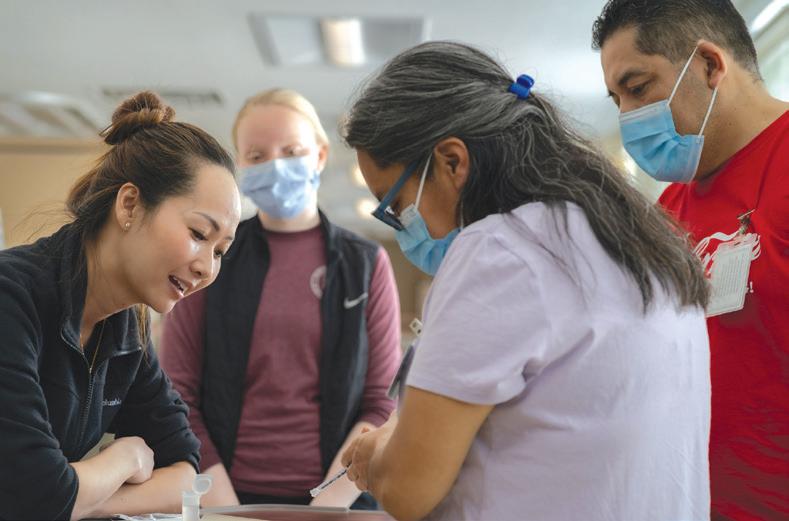
Many extremely premature infants face lengthy stays in neonatal intensive care and rely on feeding tubes to survive. M-MILK, through the seemingly simple act of giving them droplets of human milk, aims to help them learn to feed without medical assistance.
“The idea is to support that innate development that they would have had if they were in the womb,” said Griffith, recipient of the fiveyear grant from the Eunice Kennedy Shriver National Institute of Child Health and Human Development. “The goal is to have them feed like any other baby so they can go home earlier and without the complication of a feeding tube.”
The M-MILK intervention starts on day three of life, when caregivers place milk on the baby’s lips. If the infant responds positively, more milk is given each day in tiny increments. Over time, the baby learns to ingest milk orally and the feeding tube can be removed. That means potentially less time in the NICU and less stress on the baby.
Karen Saban, the Marcella Niehoff School of Nursing Endowed Chair for Research, called Griffith’s study “groundbreaking research supporting our tiniest patients.” L
BY TIM BANNON
PROFESSOR P. ANN SOLARI-TWADELL has received a $3.8 million Nurse Education, Practice, Quality and Retention—Workforce Expansion Program grant from the Health Resources and Services Administration.
This award will allow the Marcella Niehoff School of Nursing to establish an undergraduate Rural Health Care Nursing Scholars program and increase the number of students who receive specialized training in acute and long-term care in rural settings.
The program will include a curriculum in rural health care with online, hybrid, and simulated content; reflective journaling; smallgroup and face-to-face classroom/ workshop education; and clinical experiences in rural sites.
The grant builds on the annual Pine Ridge service immersion, launched by Solari-Twadell in 2018, which sends Loyola Nursing students to a medically underserved rural reservation in South Dakota for one week each spring.
The grant will also allow the school to:
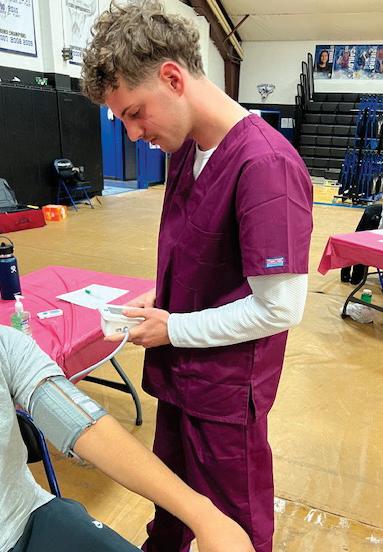
fair for high school students at Mahpíya Lúta, a school on the Pine Ridge Reservation.
• Expand clinical partnerships in rural areas in South Dakota, Illinois, Michigan, Wisconsin, and Indiana.
• Create and pilot-test an asynchronous, module-based educational undergraduate program that can be replicated by other schools.
• Increase the number of new Loyola Nursing graduates working in rural areas.
• Increase the number of preceptors and clinical faculty ready to educate students in rural settings. L
AS THE MARCELLA NIEHOFF SCHOOL OF NURSING CELEBRATES ITS 90TH ANNIVERSARY, it continues to expand its reputation for academic excellence and educating highly skilled nurses in the Jesuit tradition. The school reached new milestones in enrollment and national rankings this year, further establishing Loyola Nursing as a leader in nursing education.
HERE ARE SOME OF OUR HIGHLIGHTS IN 2025
#13
U.S. NEWS & WORLD REPORT’S LATEST RANKING OF OUR BSN PROGRAM
TOP 2%
BSN RANKING AMONG NATIONAL PROGRAMS 1,278
UNDERGRADUATE AND GRADUATE ENROLLMENT
302
RECORD NUMBER OF FIRST-YEAR BSN STUDENTS

38 STATES OUR UNDERGRADUATES ARE FROM 95%
NATIONAL COUNCIL LICENSURE EXAMINATION (NCLEX) PASS RATE FOR FIRST-TIME TEST TAKERS 57.2%
PERCENTAGE OF UNDERGRADUATES WHO ARE STUDENTS OF COLOR $829k
DONOR GIFTS IN FISCAL YEAR 2025
18
NEW AND ONGOING RESEARCH GRANTS IN FISCAL YEAR 2025 # 56
NATIONWIDE IN NATIONAL INSTITUTES OF HEALTH RESEARCH FUNDING FOR NURSING SCHOOLS IN FY 25
‘‘ As
the demand for compassionate, highly skilled nurses grows, Loyola Nursing continues to deliver on its mission of educating exceptional nurse leaders committed to serving humanity and providing more equitable health care for all.”
PROVOST
DOUGLAS W. WOODS
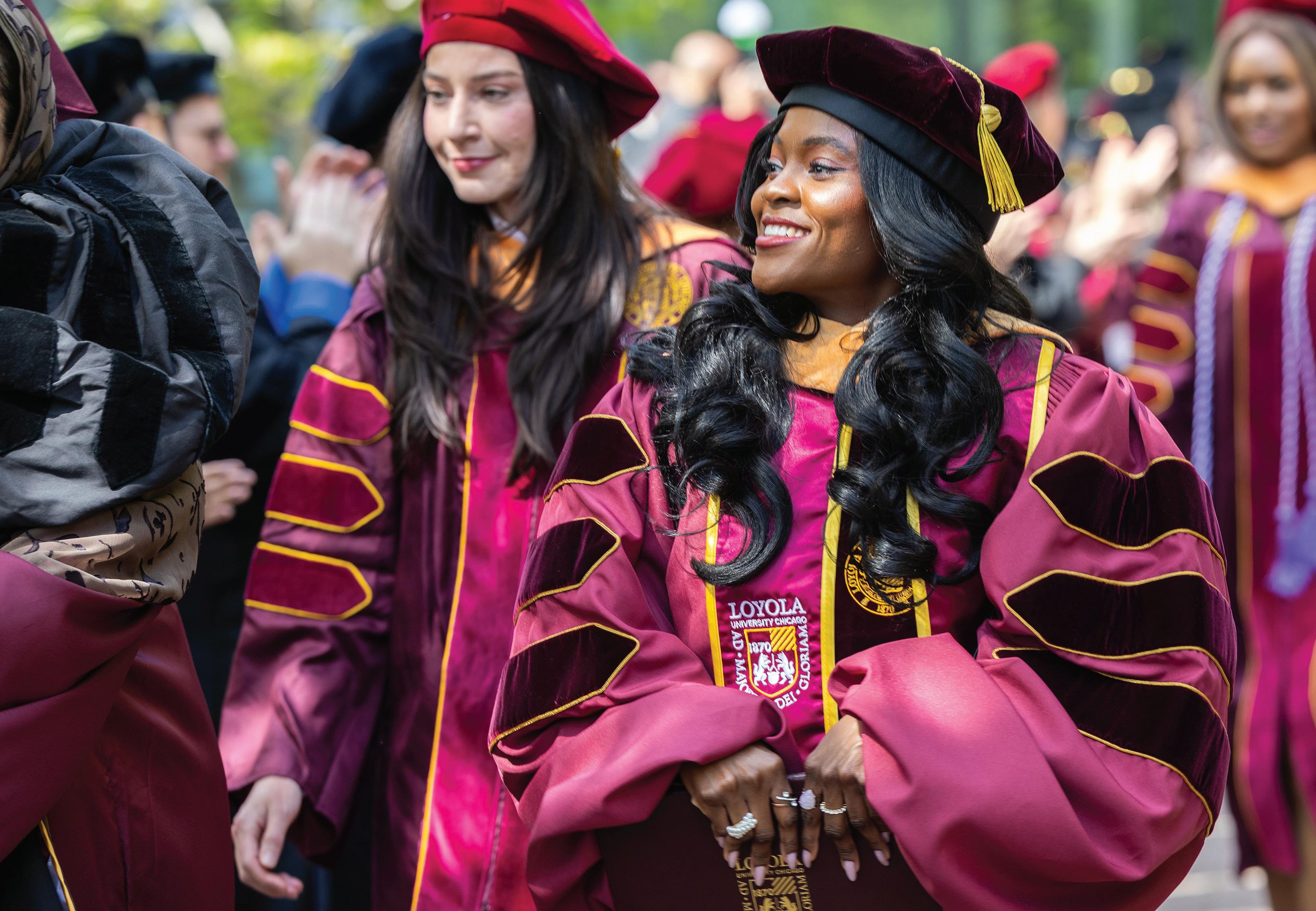
Loyola Nursing’s Doctor of Nursing Practice (DNP) and Doctor of Philosophy in Nursing (PhD) programs offer different pathways for advancing your career and making a difference.
DNP: Practice-Focused Degree
• Transform health care through evidence-based innovation
• Lead systems change with confidence and impact PhD: Research-Focused Degree
FIND OUT MORE: LUC.edu/NursingGradDegrees The demand for doctorally prepared nurses has never been greater.
• Drive innovation in nursing research
• Learn from nationally recognized nurse scientists