LUCAS VIERKÖTTER
INTERIOR DESIGN & ARCHITECTURE PORTFOLIO VOL. 02
ADRESSES BY THE RIVER
PAGES 4-9
CHAIR No. 33
PAGES 10-13
PAGES 46-51
PAGES 14-21
PAGES 52-53
PAGES 22-31
PAGES 32-37
PAGES 38-45
TUNNELSTORIES VILLA IN OLIVELLA HOUSE INSIDE A GAP
KITCHEN 02 01 03 04 05 07 08 06
SQUEEZED HOUSING
BATHROOM
PROJECT: ADRESSES BY THE RIVER 01
This Project took place in my 2nd year. The ideawastoconstructapublicspaceatthe river Neckar, that runs through Stuttgart. The city of Stuttgart made a competition out of it and my partner and i did win the
2nd place. The The city of Stuttgart meant to create a pathway for fish to cross the floodgate at the riverside, so this is where our idea originated. We wanted to make this interesting place accesible.
CONSTRUCTING IN WOOD
So we created a space to enjoy the view and feeling of the location, but also a place to just sit down, and spectate and listen to the sounds of the water passing through the floodgates nearby.
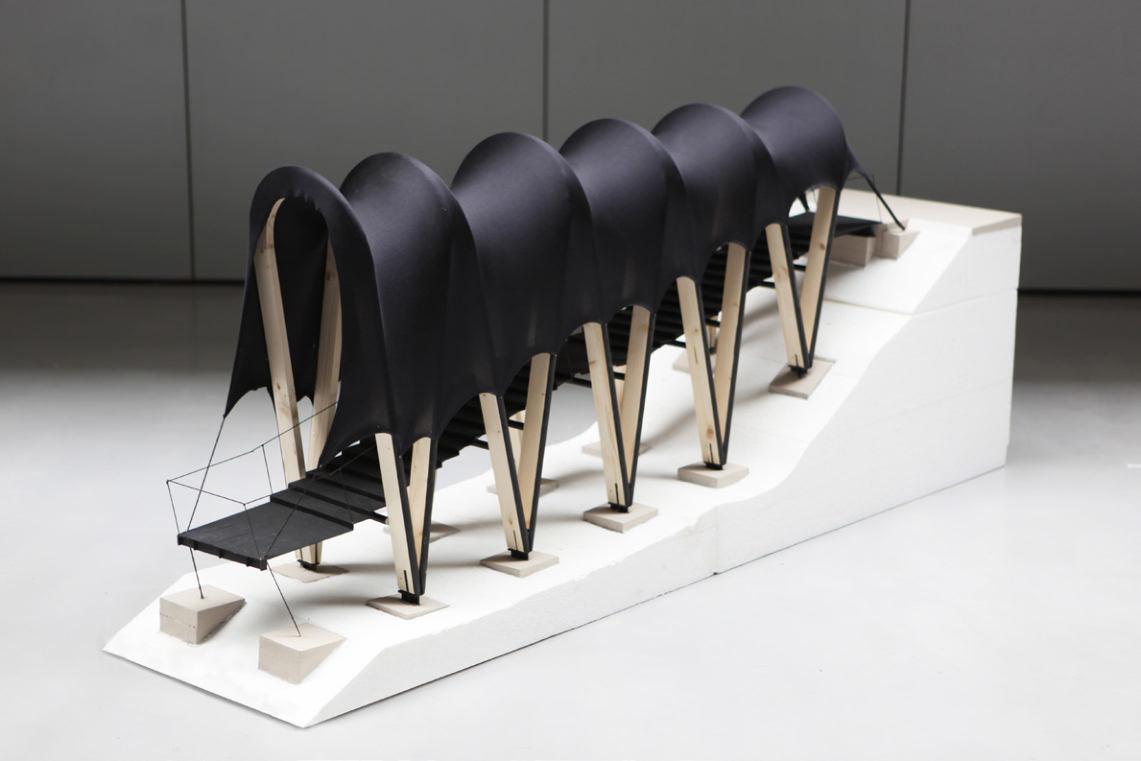
POUR FOUNDATIONSMOUNT WOODEN ARCHESMOUNT STEEL PIPES
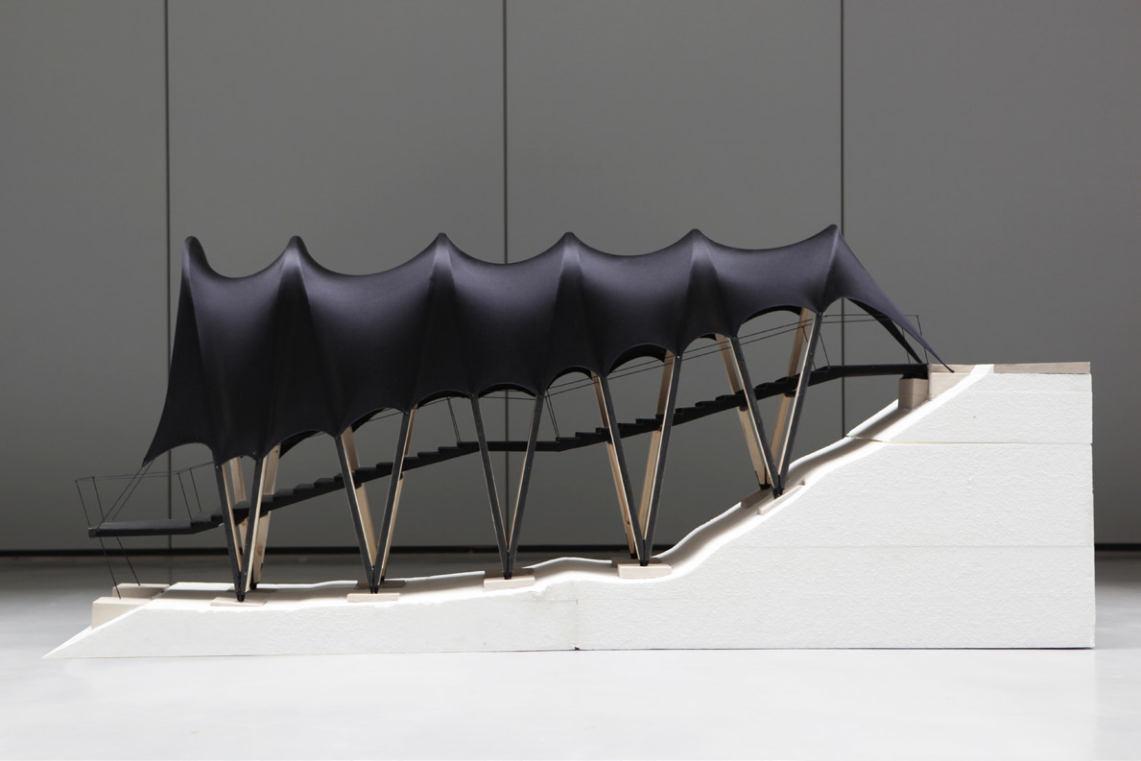
PLACE STAIR ELEMENTS SPREAD OUT MEMBRANEMOUNT
THE CONNECTION OF THE STAIR ELEMENTS DETAIL
The stairs are made of steel plates and to connect the stair pieces to the wood construction, every wooden arch has a horizontal steel pipe, the stairs will sit on. Because of the weight of the steel, the stair elements can freely rest on the steel pipes.
THE CONNECTION TO THE GROUND DETAIL
The most important spot about a membrane, is the connection to the ground. We created a foundation made of orthogonal steel plates, that are concreted to the ground, to get necessary stability for the construction in the x, y and z-axis.
THE MEMBRANE CON
For us it was necesarry for the look from the outside, so we de to keep the membrane made ou keep the distance between the
CONSTRUCTION DETAIL
membrane to have a seamless developed a construction detail, out of one piece. The bent pipes the wood and the membrane.
THE MEMBRANE GROUND CONNECTION DETAIL
The membrane needs to be connected to the ground on both endings of the construction. We made use of a very standard ground detail, that we arranged in our model to generate a clean ending and to shape the membrane.
THE LOCATION
In Stuttgart - Alldingen at the river Neckar, just behind the bridge and flood gates, there is a little flat space at the riverside, which is barely used, badly accessible, but actually a very interesting space. Which now is accesible and ready to experience.
CHAIR No. 33 02
FINAL PRODUCT:
PROJECT: DIALOGUE OLD AND NEW
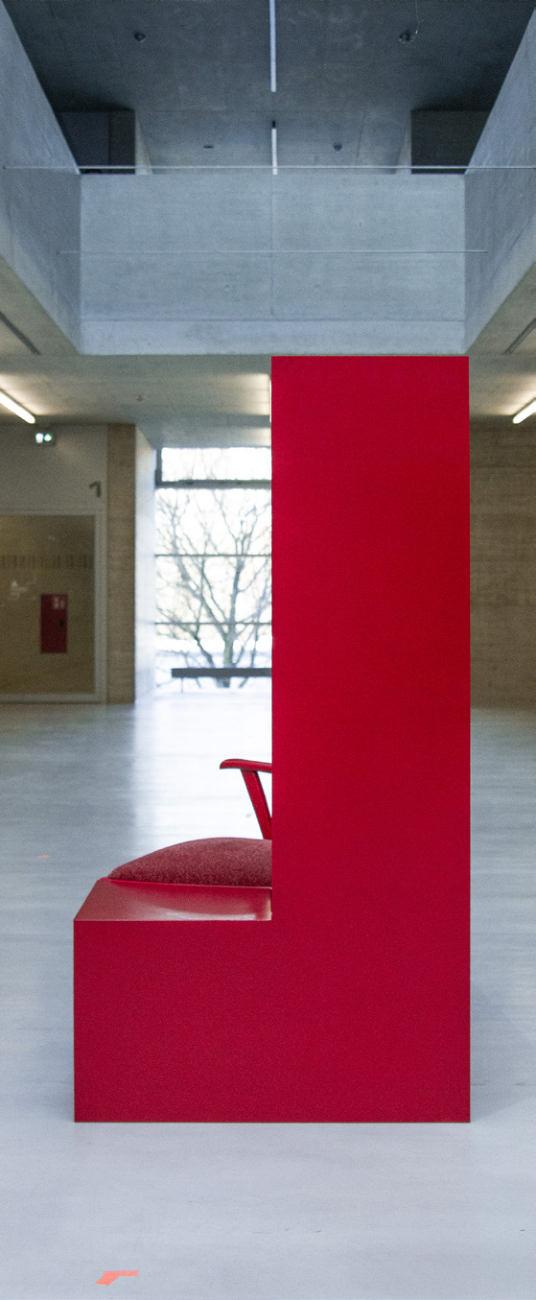
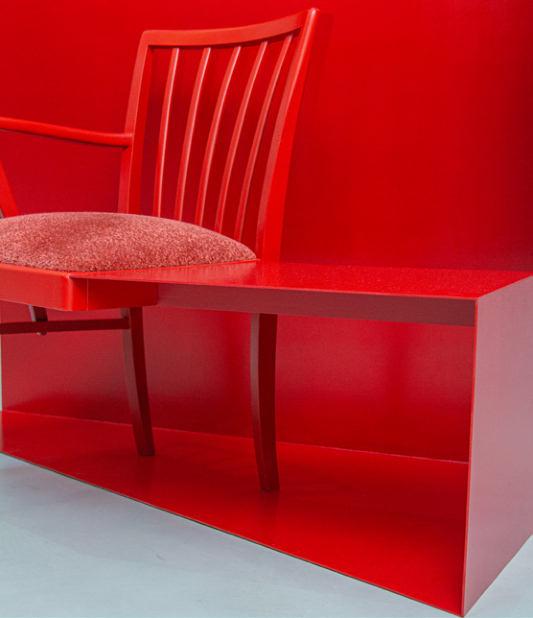
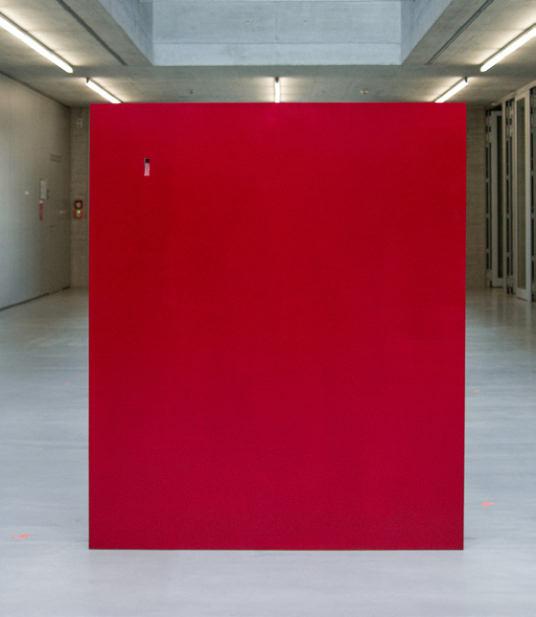
Our final product is an interior furniture, which can be used in greater offices or entrance halls. It gives privacy to the sitting person and allows to set a highlight in its placement.

INITIAL SITUATION:
Me and my partner were assigned this chair. We wanted to keep the upholstery becaus it was finely made.Theoverallformofthechairwasalsosomethingwewantedtokeepbecauseofitsuniqueform.
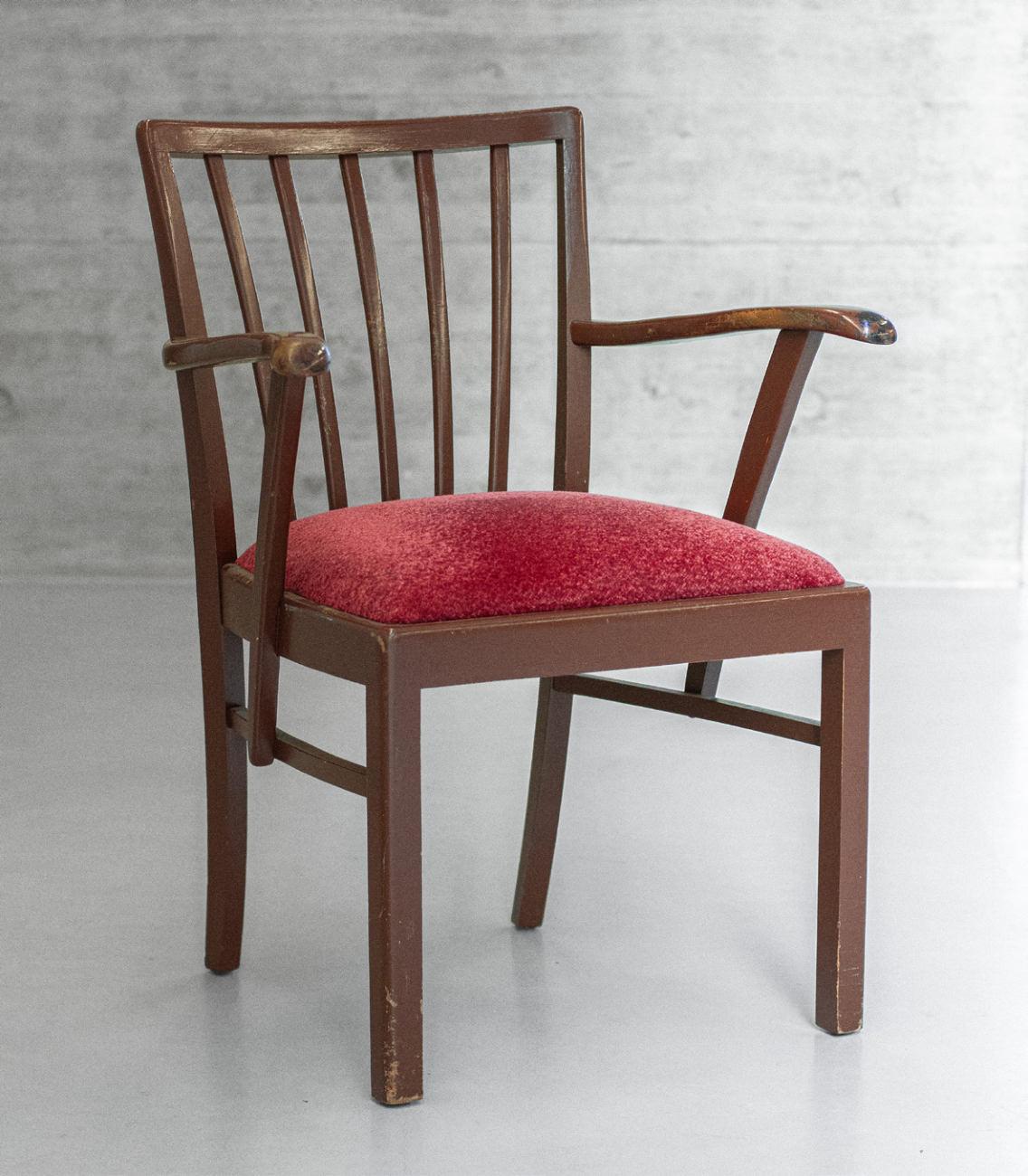
DIALOGUE OLD AND NEW- CHAIR No. 33
„Dialogue old and new“ was a project in my second year. My partner and I were offered furniture out of a older house, which was supposed to be demolished in the same year. We designed a furniture for sitting, which gives the user some privacy and a protected back.
We removed one of the front legs to combine the chair with the metal construction. The steel construction is made of 3mm stainless steal lacquered in red. The form of the construction can be cut and fold out of one piece of metal, except the supporting piece beneath the side table.
STUHLBEIN BODENPLATTE
QUERSCHNITT STUHLBEIN AUSGELASERT AUS BODENPLATTE
KLEIDERHAKEN AUSGELASERT UND UMGEKANTET
RÜCKWAND AUS STAHLBLECH
ABKANTUNG
STAHLBECH 3mm PULVERBESCHICHTET RUBINROT
ABKANTUNG
SCHWEIßVERBINDUNG
STUHLRAHMEN
GEFÄLZTE TRAVERSE TRÄGT STUHLRAHEMN IN NUT
25
FRONTALSCHNITT M 1:1 STUHLBEINHORIZONTALSCHNITT M 1 :1 TRAVERSE
VERTIkALSCHNITT M 1:1 KLEIDERHAKEN
V e c t o
TUNNELSTORIES - AND 03
A SC
AND THEIR ENDINGS
SCENOGRAPHIC BACHELOR THESIS ABOUT A MOBILE EXHIBITION
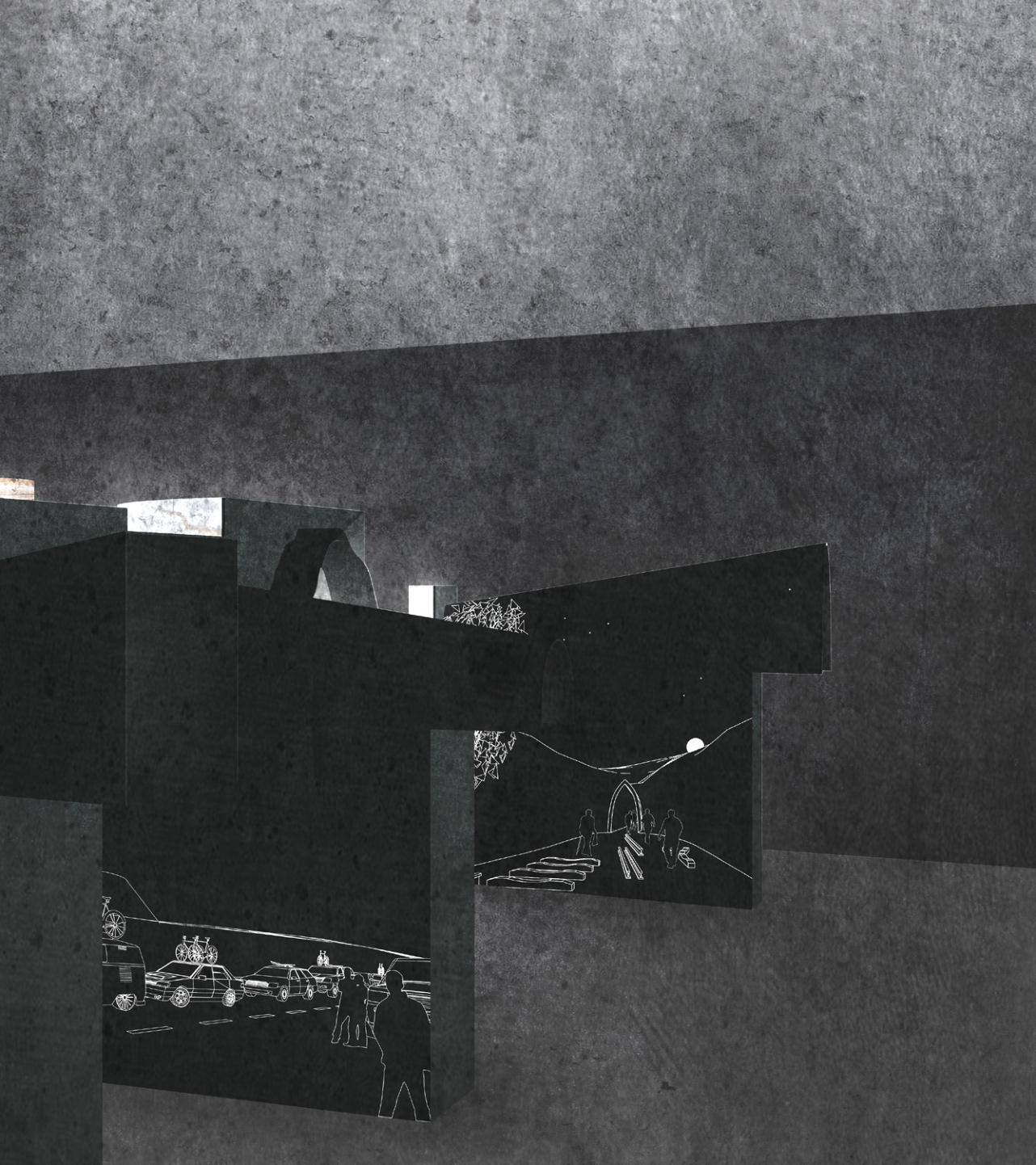
The air smelled and tasted like it has already been breathed. She was bored. Slowly, it was getting brighter again. The Radio was crackling several times
imes. Suddenly a voice began speaking in a language she couldnt understand. She was happy about finally beeing allowed again to roll down the window. Tunnelending
BACHELORARBEIT LUCAS VIERKÖTTER
PROF. THOMAS HUNDT SZENOGRAFIE
TUNNELGESCHICHTEN und ihre Enden

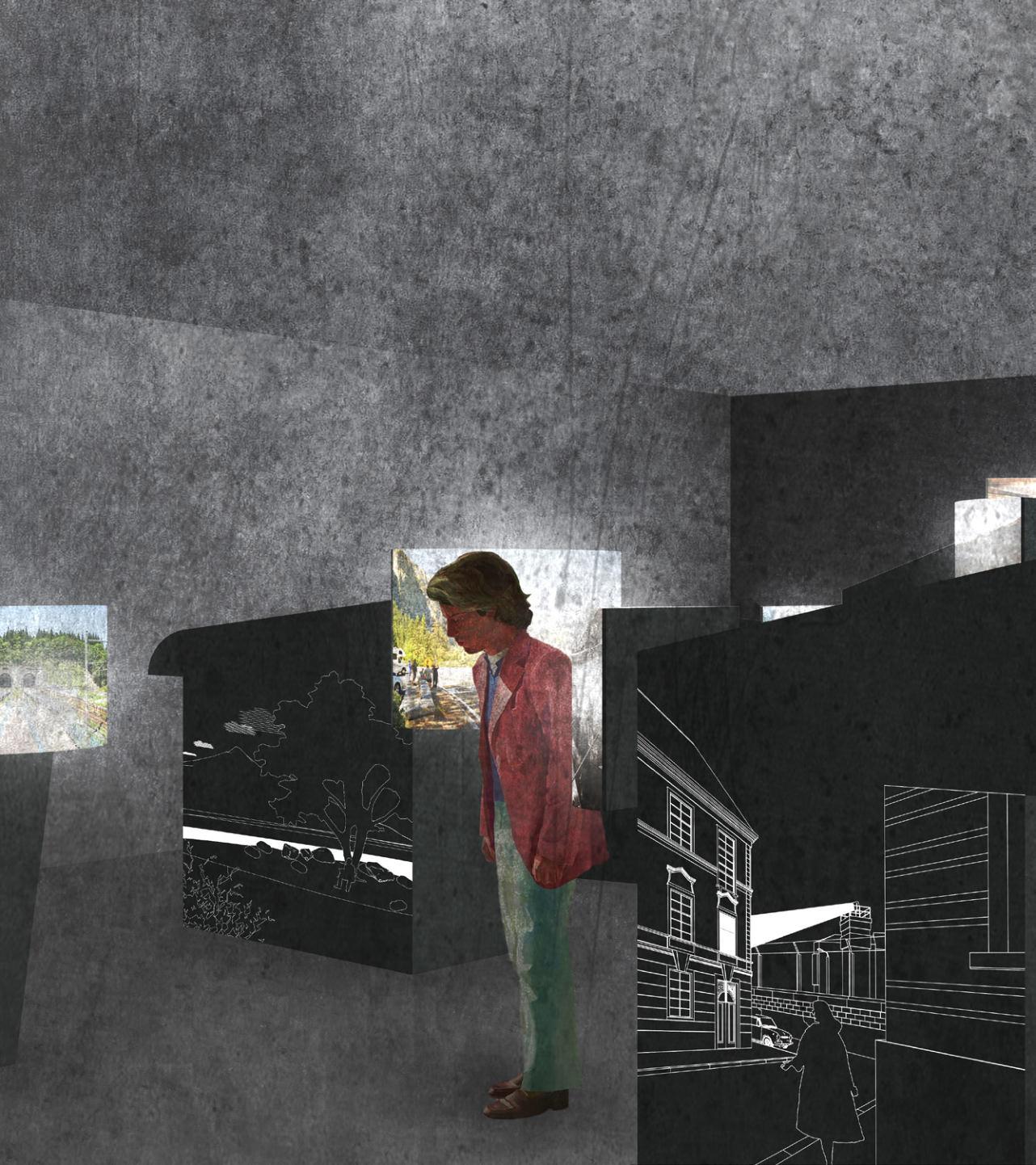
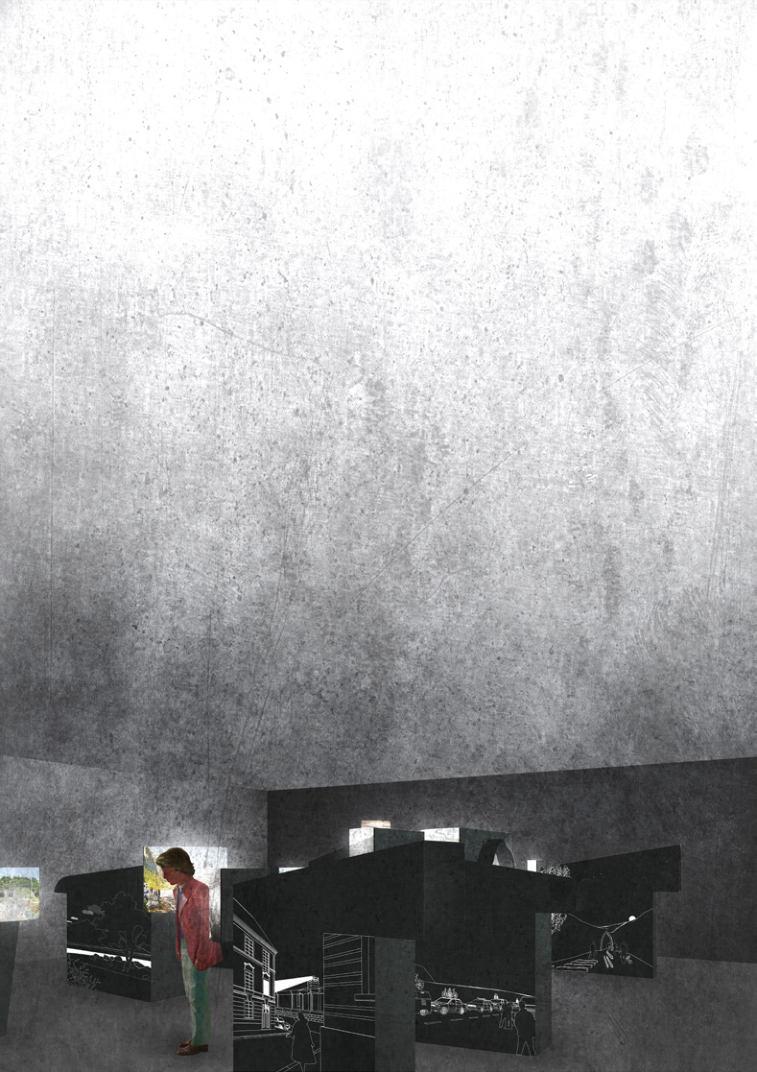
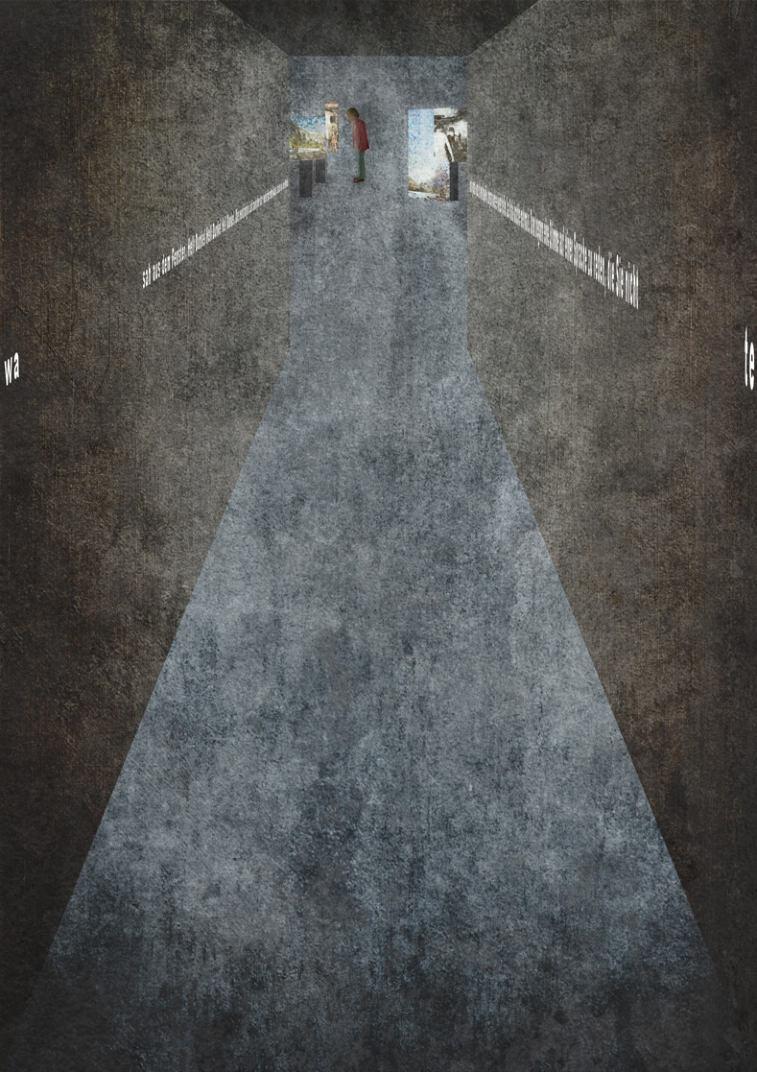
„Tunnelstories and their endings“ is an exhibition about experiencing the moment we exit a tunnel. In eight different tunnels, that are chosen because of beeing special itself or because of their special ending, the visitors are brought closer to the feeling. To make it easier to understand the feeling that is described, the visitors are lead into, and at the end out of the exhibition through a tunnel.
Inside of the tunnel is a philosophical introduction, which you can read on the previous page. The Tunnels are distinguished in two sides: Tunnels where you feel reliefed when you exit - and tunnels where you feel joy when you exit. Each tunnel has its own story, that shall emphasize the effect its ending has. The story is written on the sides of the elements, shown in a graphic on the
side, can be seen when you look inside of the tunnel through an exhibit and a atmospherical staging and in the end of the tunnel you can see its ending. Because we experience tunnels most of the time while sitting, there is boxes to sit on, which also makes the exhibitionwheelchair-friendly.Theexhibitionismobile,theobjectscanbesolitaireandthechosentunnels can stand alone, be replaced or more can be added.
V e c o r w o r k s E d u c a t i o n a l V e r s i o n
TUNNELGESCHICHTEN und

ihre Enden
BACHELORARBEIT LUCAS VIERKÖTTER
29. Juni - 2. Juli 2023
HFT Stuttgart
PROF. THOMAS HUNDT SZENOGRAFIE
2013 Tresor, Tiefgarage und Tunnel DIE LEIDEN EINES TUNNELBAUERS TUNNEL ZUM ERFOLG TAKTIKEN EINES TUNNELS 1858190319331964196419701995 TIEFSEETUNNEL FLUCHT NACH WEST YOSEMITES ERSTER WÄCHTER URLAUB IN ITALIEN Blue Ridge Tunnel Backbone Rock Wawona Tunnel Tunnel 57 Seikan Tunnel Gotthardt Straßentunnel Laerdals Tunnel Berlin Steglitz EInbruchtunnel KOSTEN BAUDAUER TUNNELBREITE TUNNELHÖHE MENGE AN VERWENDETEM SPRENGSTOFF ANZAHL VERLETZTER ARBEITER
PROJECT: SQUEEZED HOUSING 04
REUSE

EXISTING
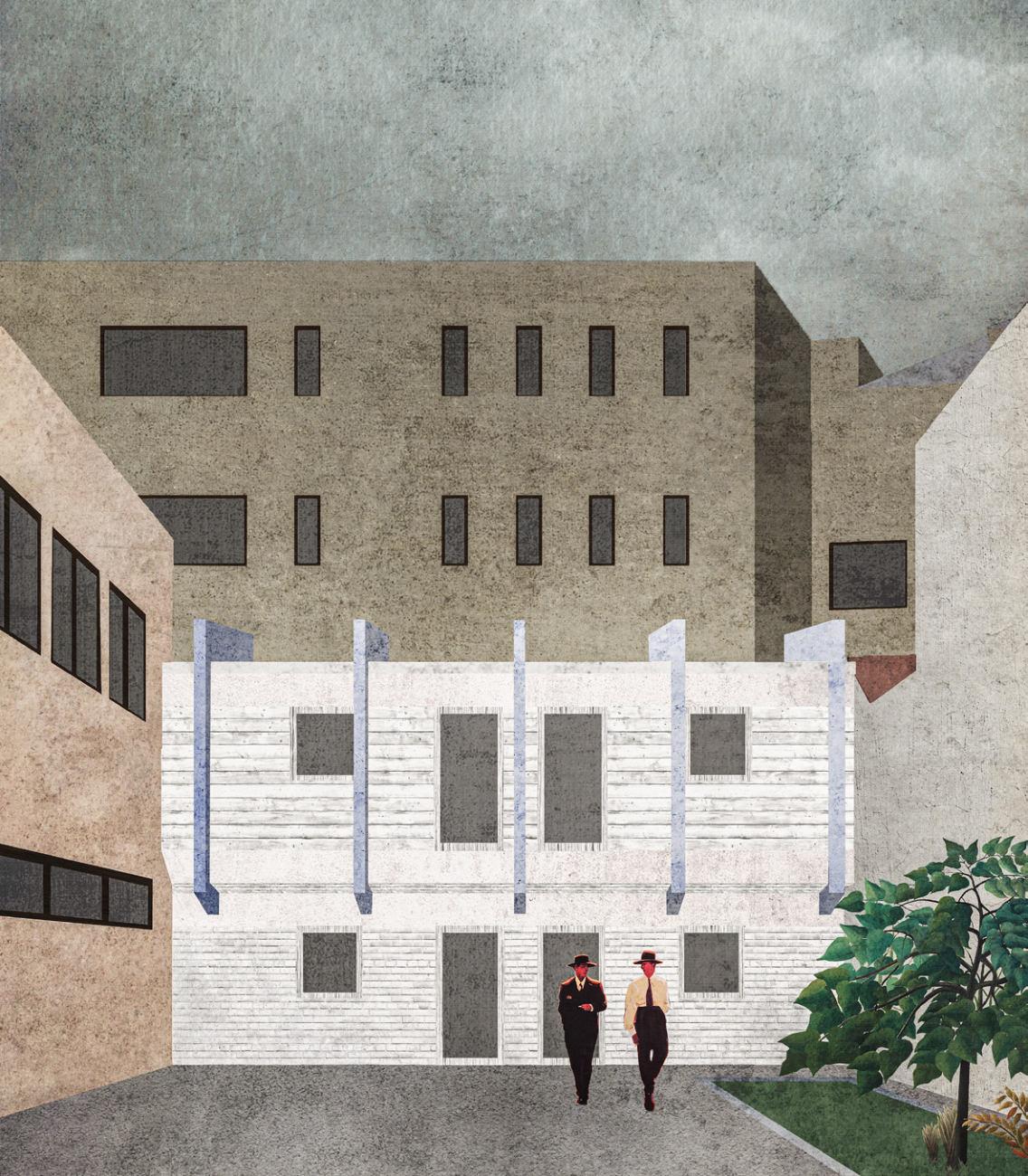
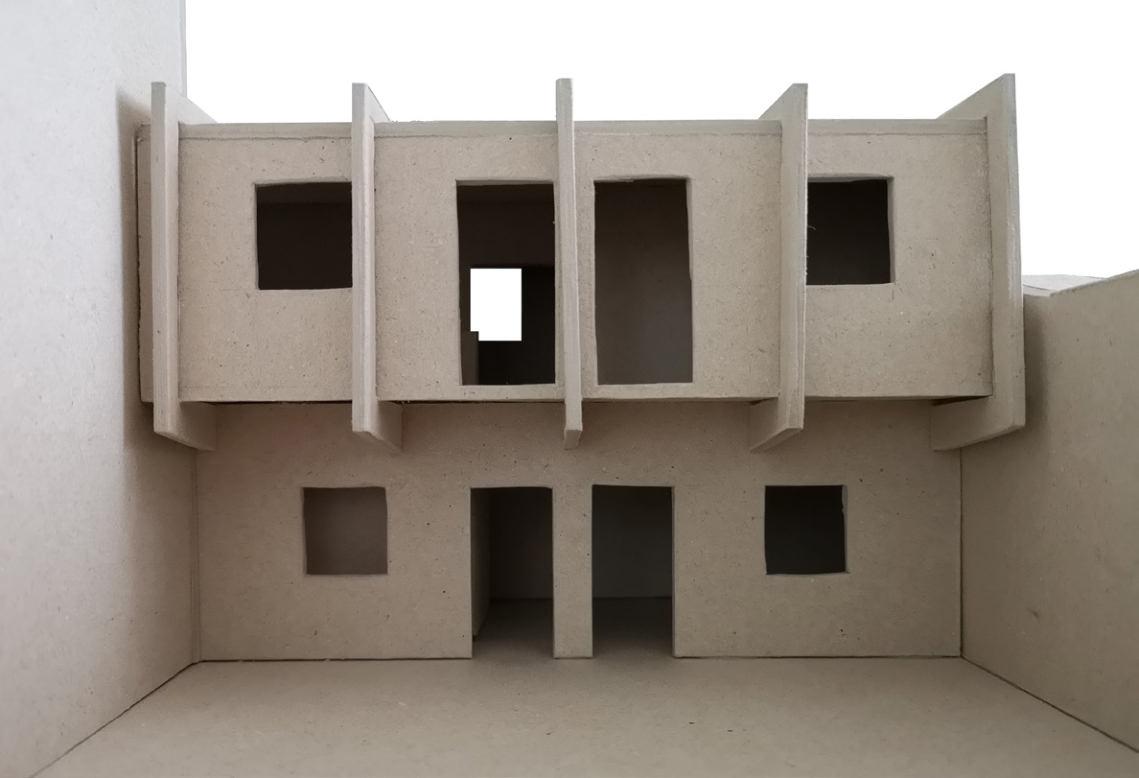
This Project took place in my 2nd year. We had to look for a place in Stuttgart West, that had to potential to be reused for a living space. I came across this old server room that is squeezed inbetween walls and buildings, situated in a quiet big backyard.
The structure of the place was in a well condition, and as far as i could judge also built in a high quality, but for a living it lacked of natural lighting. In the top frame, you can see the existing architecture and the way it is squeezed into a shaded gap.
REUS
I decided to keep as much as possible of the existing walls and to make the concrete beams, that were carrying the canopy, my main design element. Due to lack of light, and the fact that the roofing anyways would have to be improved, i decided to add a second floor
EUSINGCOMBINING
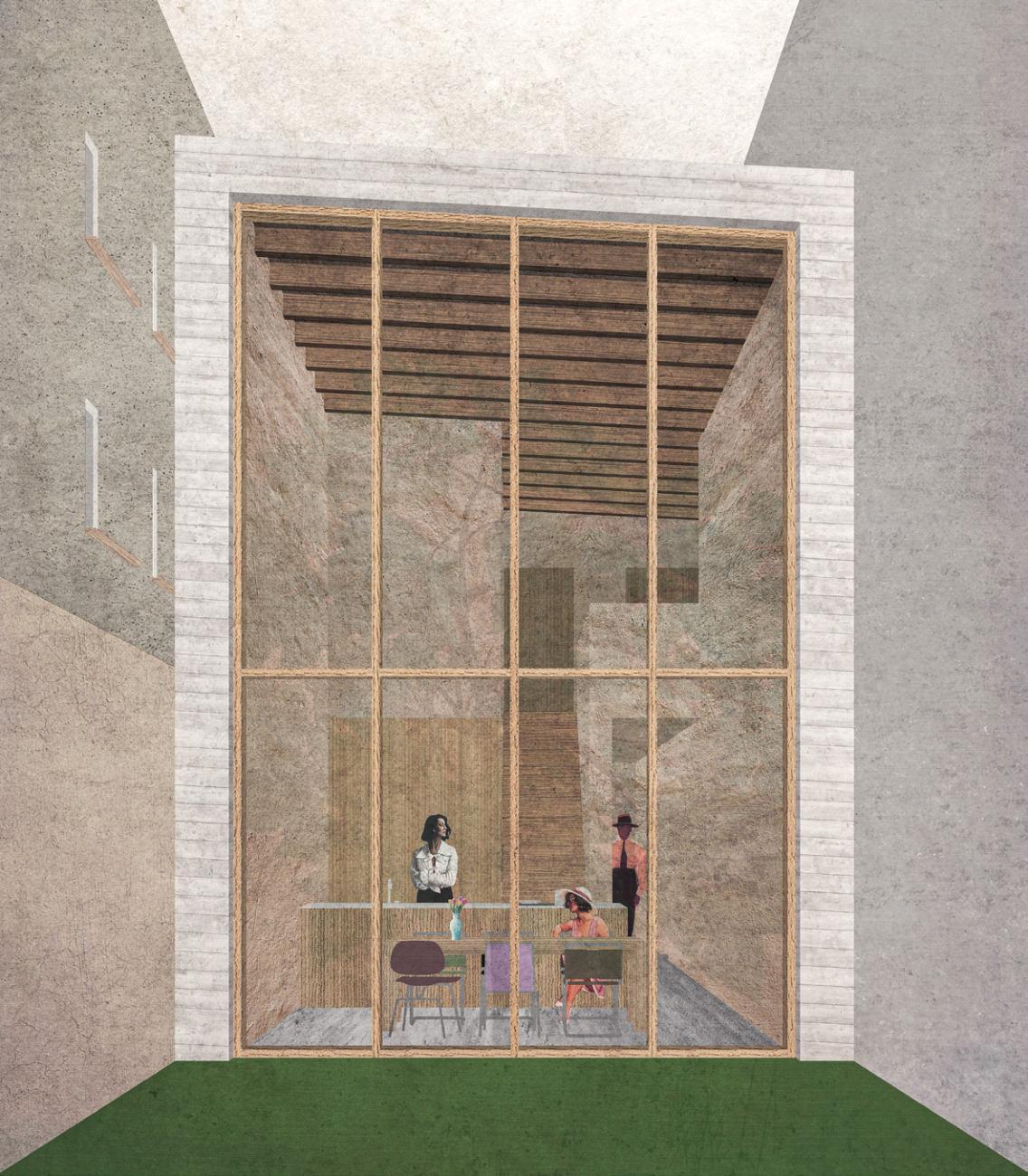
on top. To ensure enough lighting in the building i trimmed the left part of the building to guarentee natural light in the building through a two-story glass facade. The exterior space that is generated by doing that, is the perfect place for a private garden area.
The exterior building itself, has an interesting, but very flat look. The concrete beams became the major desing element, by extending and wrapping them around the building. Parts of the concrete pillars can be used in thebuildingstructure.Thefacadeyoucansee
from the court, already had an interesting symmetrical look, so i decided to just copy the wall openings. I took the chance that the concrete beams were carrying a cantilevered roof and made the second floor a little bigger to get more space inside.
The house is located in Stuttgart West, in a very familiar area. One of the buidlings next to it is a office buidling for a mail company, the other surrounding buildings are family homes. The courtyard in front of it can be accessed through a passage beneath a huge building. And altough it is situated in a very central location, it is due to the courtyard a very private and silent place to live.
When you enter the building, to your right side is a studio, that is connected to a small guests bathroom. To the left there is a small passage which leads you into a two-story open space, where kitchen and dining area are located. Outside of the glass facade in front of you you can see the private garden area. On the upper floor, the more private rooms are located. If you walk upstairs, to your right side is an open living room and to the left, there is a room for housekeeping and house technics. In front of you is the master bedroom and the master bathroom.
VILLA IN OLIVELLA 05
FAMILY VILLA ON A SLOPE IN OLIVELLA
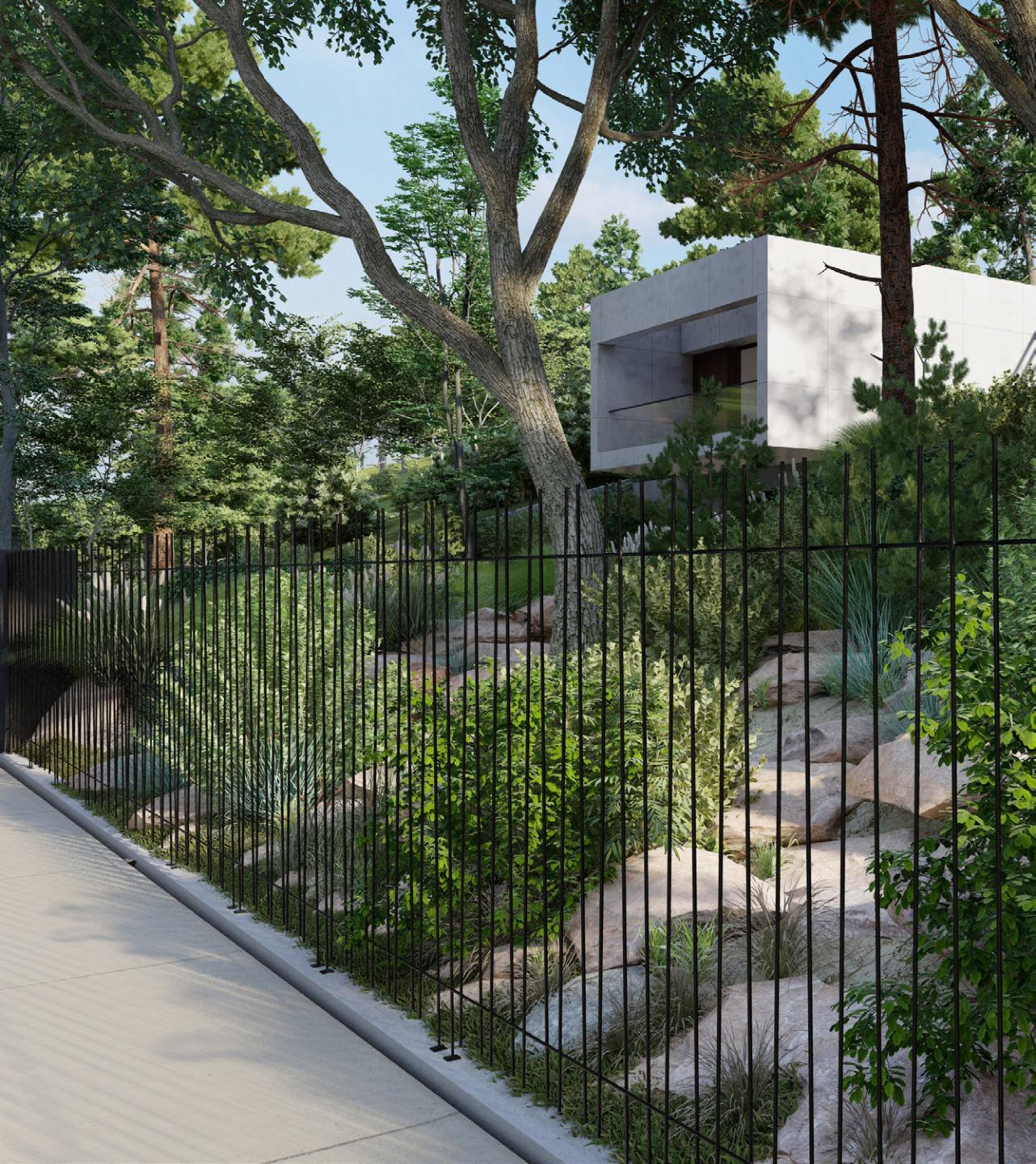
This is one of the projects i worked on in my internship at RARDO Architects during my 5th Semester. The final design already existed and i worked on detailing and constructing the initial design concept into buildable plans.
RARDO ARCHITECTS
Asidefromthatiworkedonadesignconceptforthe entrance totheplotandonvariousalternativesfor the kitchen design. The construction was about to startjustafewmonthsafteriendedmyinternship.
ENTRANCE ELEMENT DESIGN
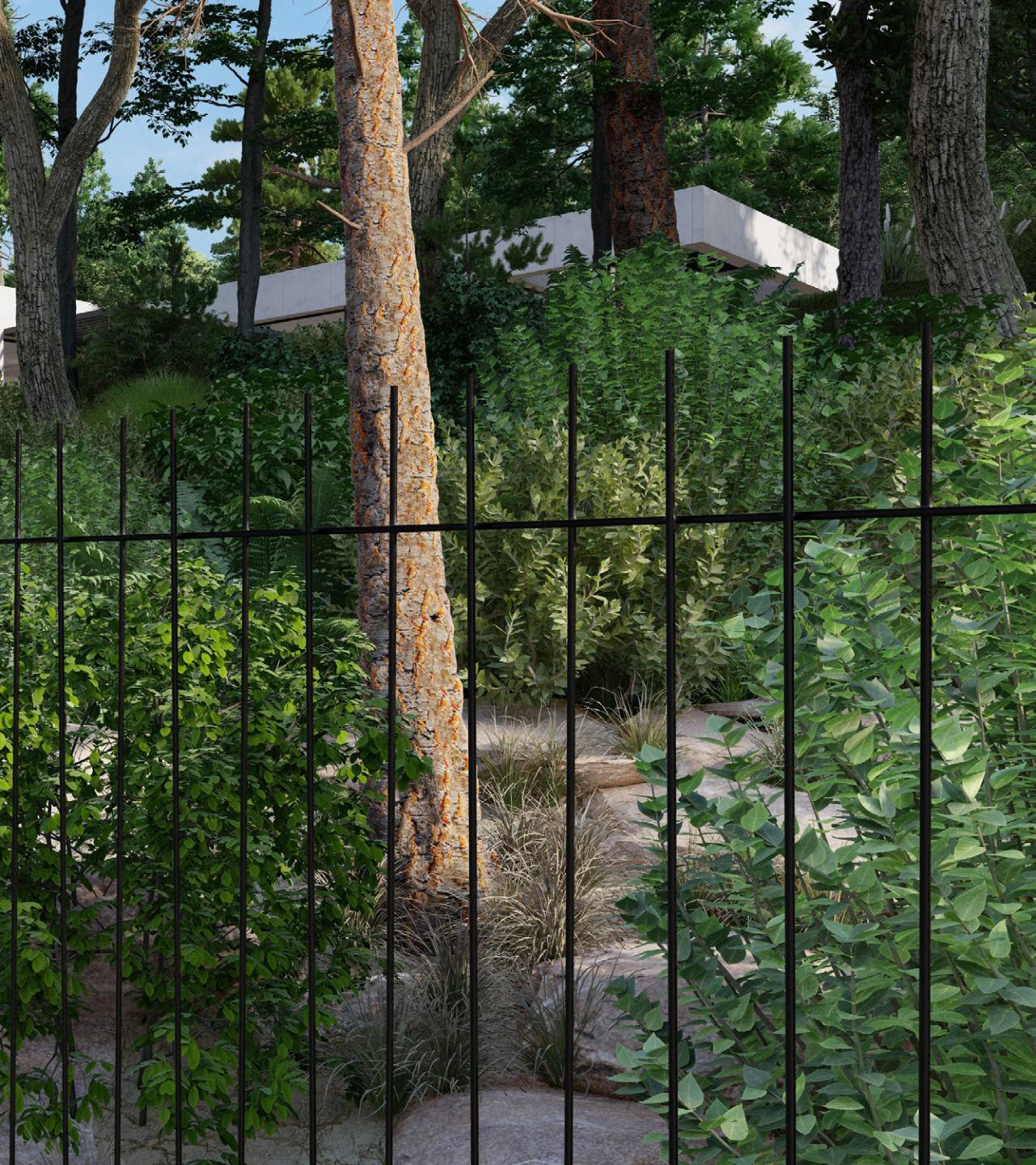
Iworkedonthedesignandconstructionofthe entrance element of this plot. The fence is the slimmest possible version to keep the transparency, only existing for seperating the plot from the road. The entrance element in contrast is a massive and solid element, that provides space for electricity and water meter, a doorelement,aletterboxandadoorforthecar.
Theobjectwasplannednottogettooexpensive,soitismadeinconstructiontechniques,and materials that are quiet common in this area.
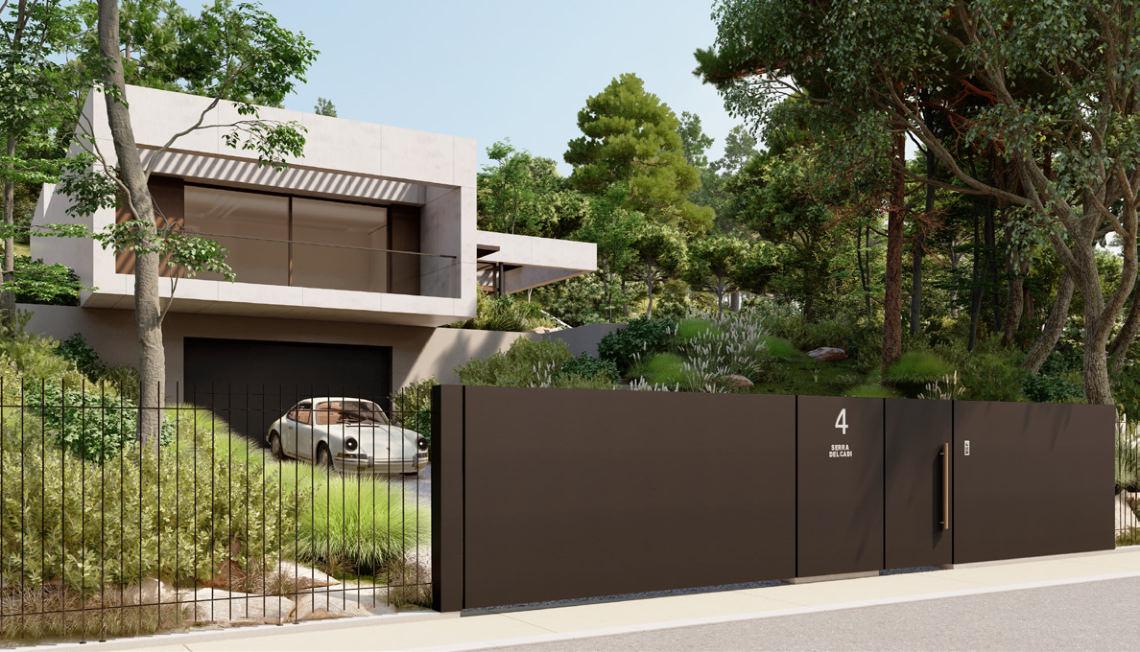
4 SERRA DEL CADI
FRONT FACADE DETAILS

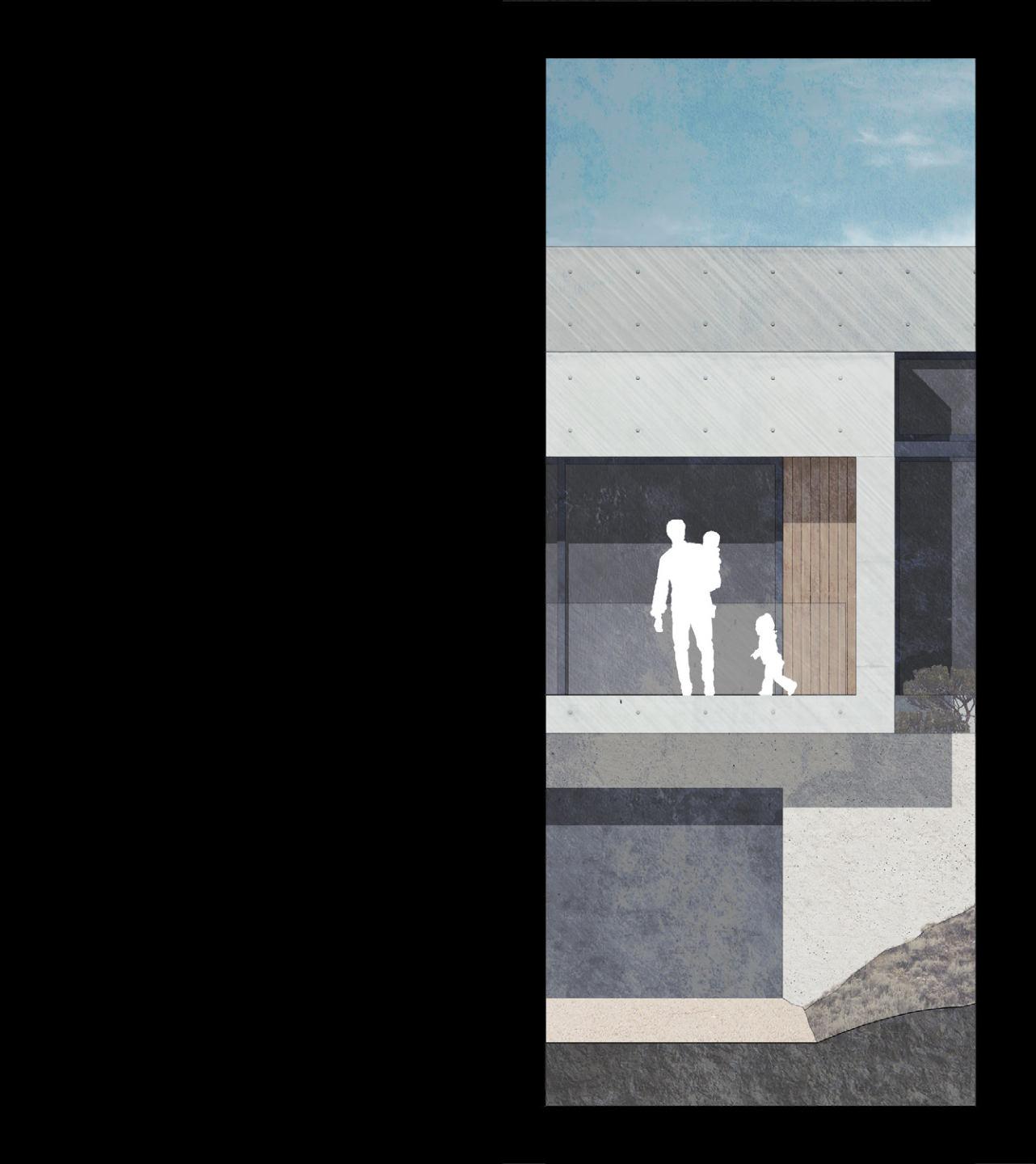
This is one of the projects i worked on in my internship at RARDO Architects during my 5th Semester. The final design already existed and i worked on detailing and constructing the initial design concept into buildable plans. This page shows some of the drawings that were needed for the construction of the front facade.

PROJECT: COURAGE TO THE GAP
KITCHEN 07
COURAGE TO THE GAP - KITCHEN
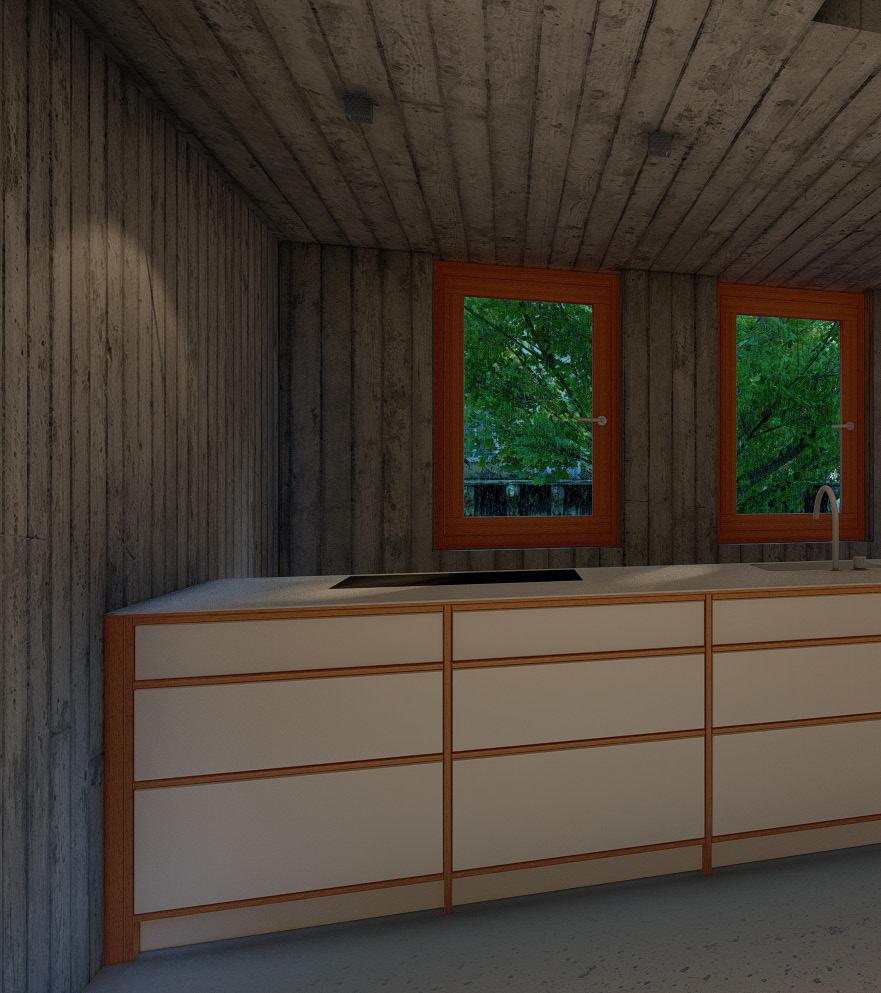
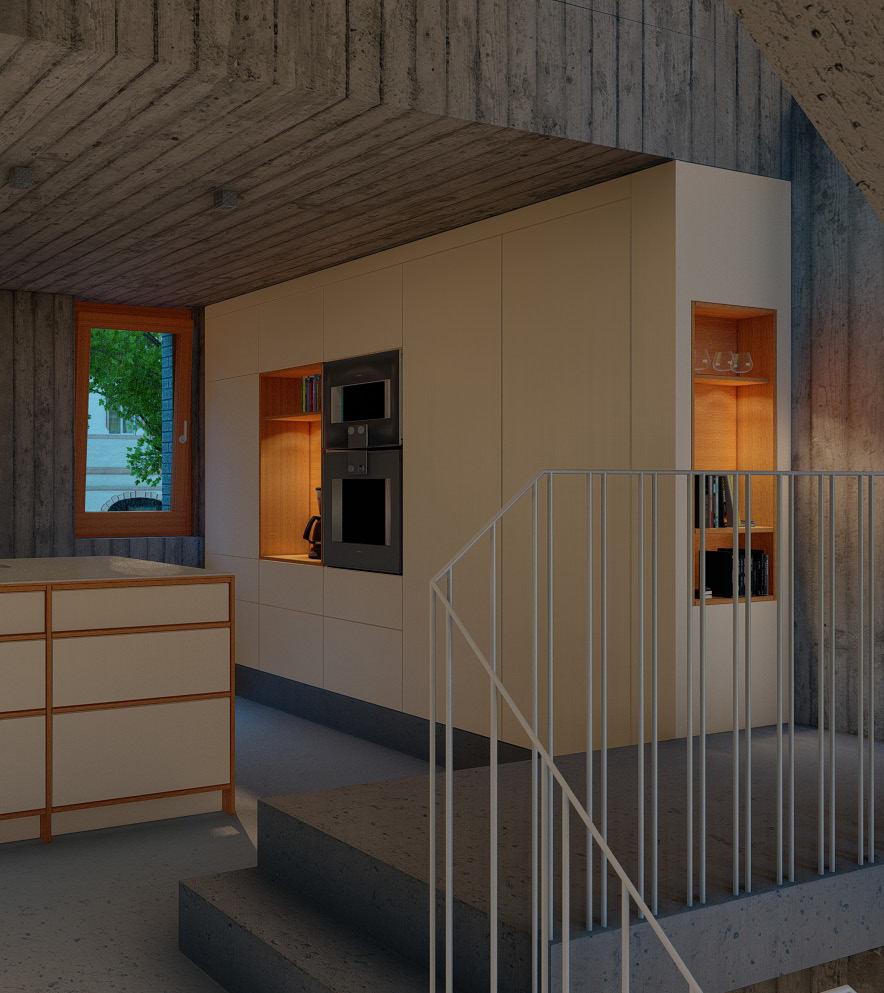
The overall form of my kitchen is strongly influenced by the stairs and their platform. To construct the floor plan in an isle and a row of cupboards avoids non- beautiful detailing in the corners and allows to freely organize the elements, to reach a kitchen for an ideal cooking process.
On the visible side of the kitchen isle i developed a system, to construct the kitchen on site. The construction gives a very clean look, if you design the fronts of the kitchen to be set back. Above you can see the single parts coming together in the axonometric.
The color palette is based on the exterior brick facade and is combined with oak wood. The fronts are made of Linoleum, a material i fell in love with during my time as a woodworker. All the other elements are made of a stainless steel, which gives contrast to the rest of the warm materials.
PROJECT: COURAGE TO THE GAP

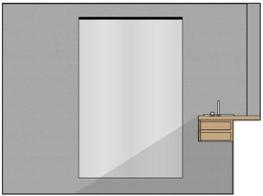
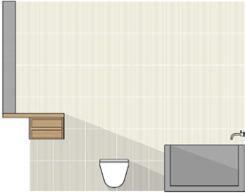
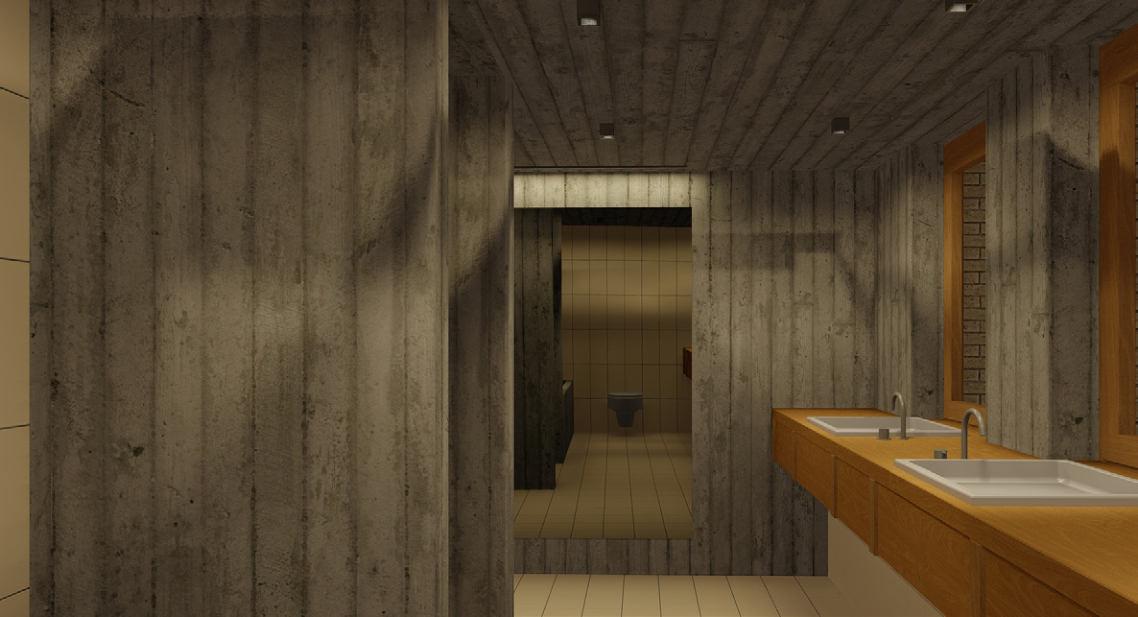
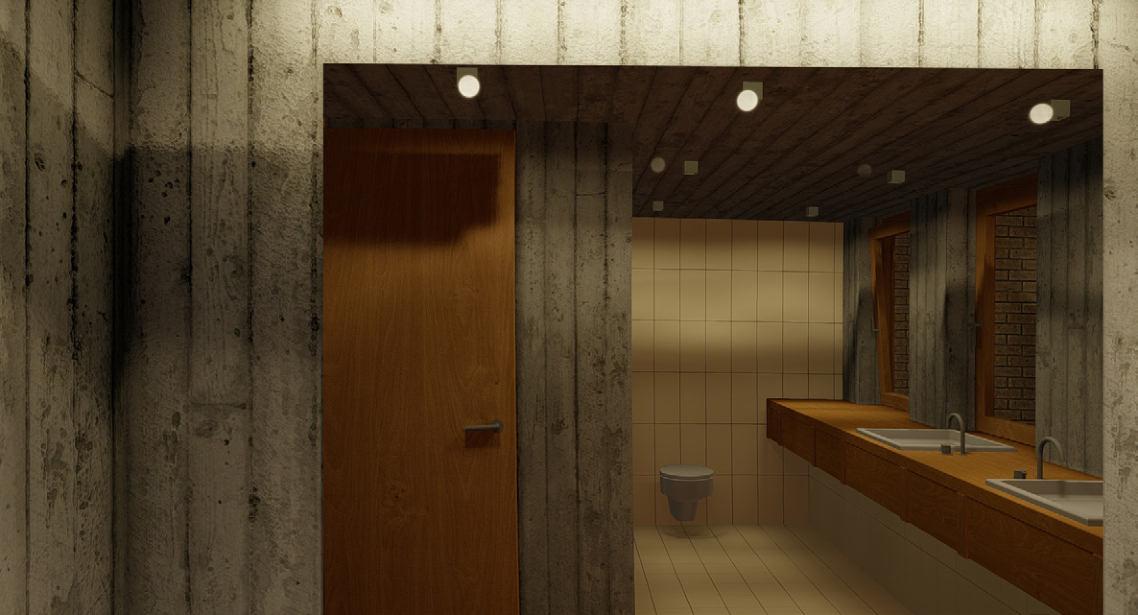
Anotherprojectwastodesignandconstructthemasterbathroominsideofthesame house.Thebathroomisplacedontheeasternsideofthehouseonthe3rdfloor. Thecolourpaletteisreducedandbasedonthematerialtherestofthehouseisconstructedin.


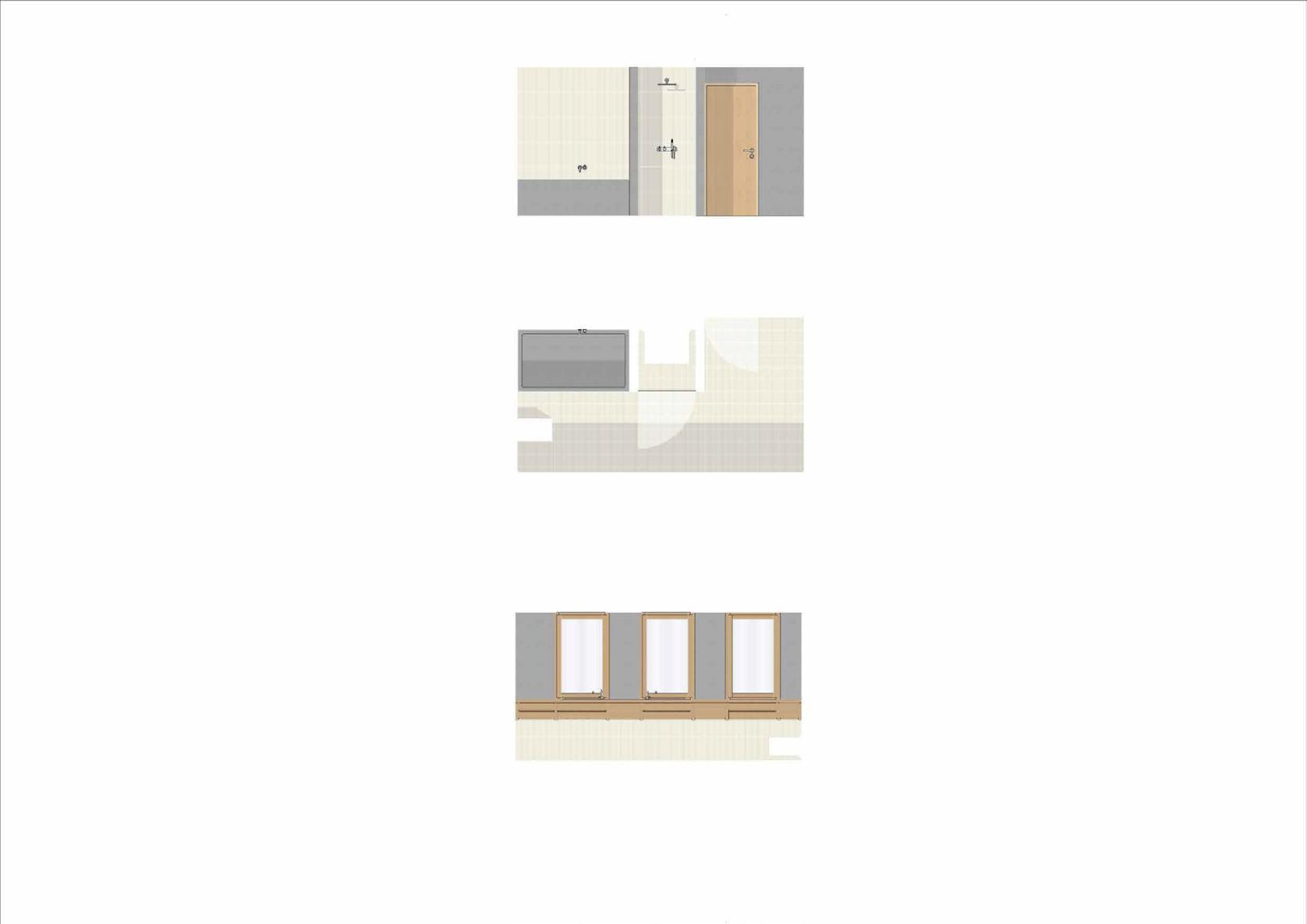
0 [J 1 II 1 II u ,R 1�1 1 1 """" :�1 :H
Lucas Vierkötter 1002348 Hochschule für Technik
Maßstab 1 :50
Prof. Weber Technischer Ausbau_2 SoSe 21
Badezimmer
Datum DIN
3.0G Veilchenstraße 16/18 D- 76131 Karlsruhe
08
BATHROOM
THE END.