

_Trabajos académicos / Academic work / Akademische Arbeiten
_Proyectos personales / Private projects / Persönliche Projekte
_Diseño gráfico / Graphic design / Grafikdesign
_Ilustración digital / Digital illustration / Digitale Illustration
_Modelado arquitectónico / Architectural modeling / Architektonische Modellierung
ESTABLECIMIENTO TEMPORAL PARA CALABRESE
TEMPORARY SHOWROOM FOR CALABRESE
TEMPORÄRER AUSSTELLUNGSRAUM FÜR CALABRESE


CENTRALIDAD URBANA EN NAZARET
URBAN CENTER IN NAZARET
URBANE ZENTRALITÄT IN NAZARET
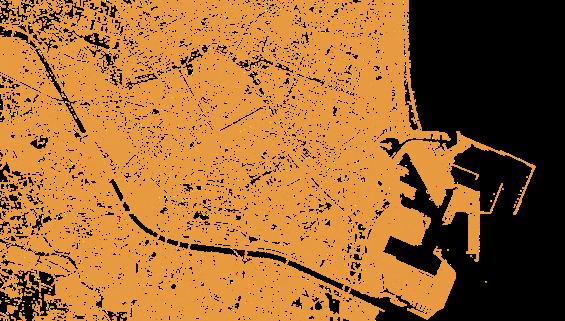
CASA PATIO PARA INVITADOS EN VILAMARXANT
PATIO HOUSE FOR GUESTS IN VILAMARXANT
PATIOHAUS FÜR GÄSTE IN VILAMARXANT
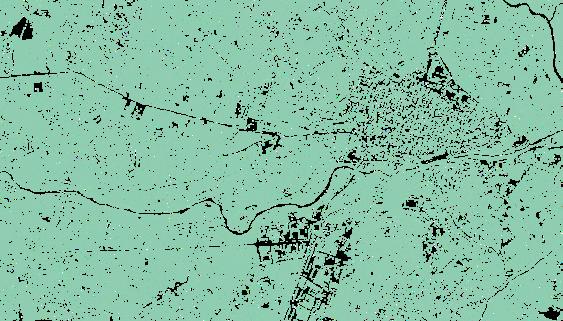
ÁREA RECREATIVA PERIURBANA DE BENIOPA
SUBURBAN RECREATIONAL FACILITY IN BENIOPA
VORSTÄDTISCHE FREIZEITEINRICHTUNG IN BENIOPA

_ESTABLECIMIENTO COMERCIAL TEMPORAL PARA CALABRESE
_TEMPORARY SHOWROOM FOR CALABRESE FASHION BRAND
_TEMPORÄRER AUSSTELLUNGSRAUM FÜR CALABRESE
RESUMEN
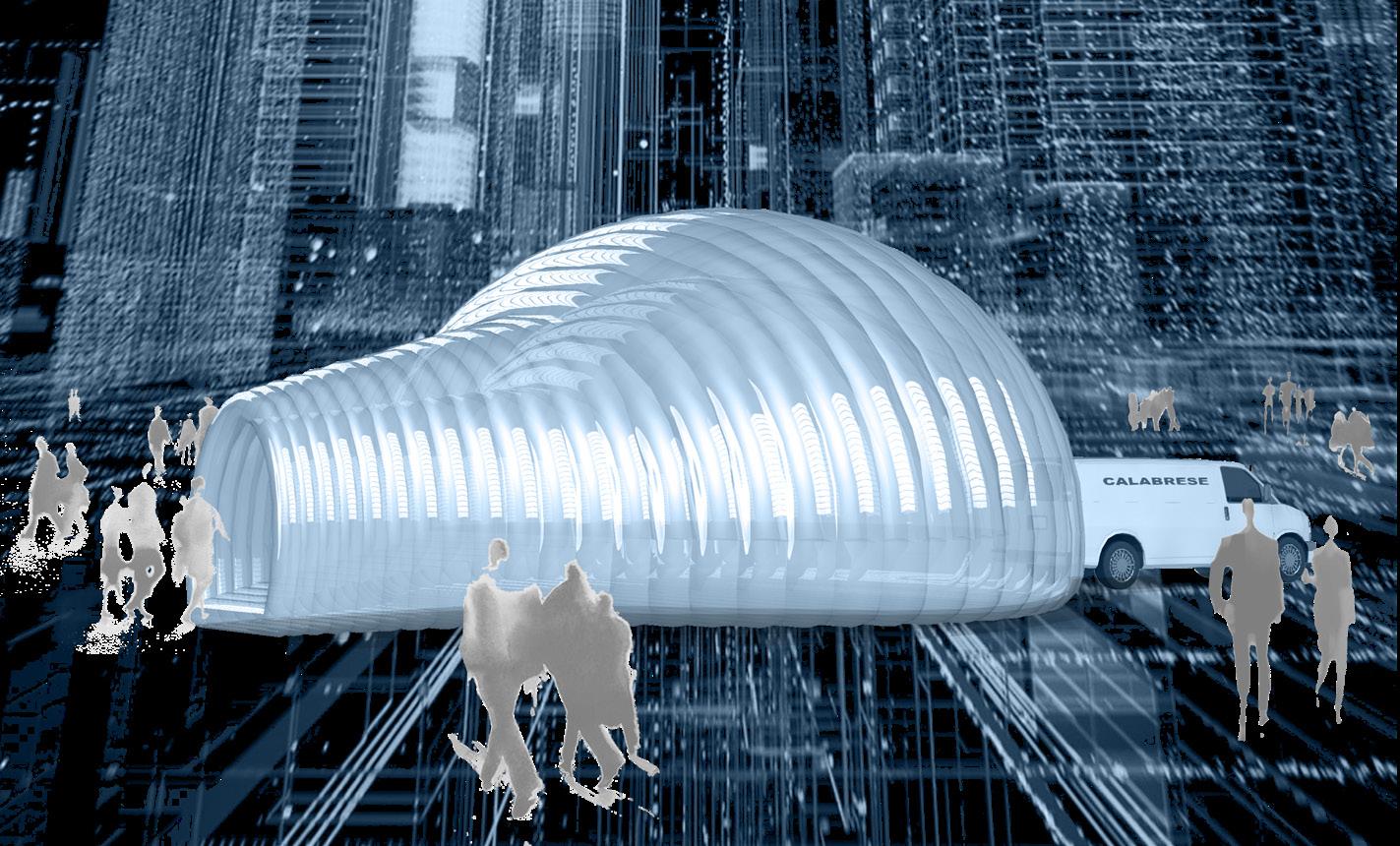
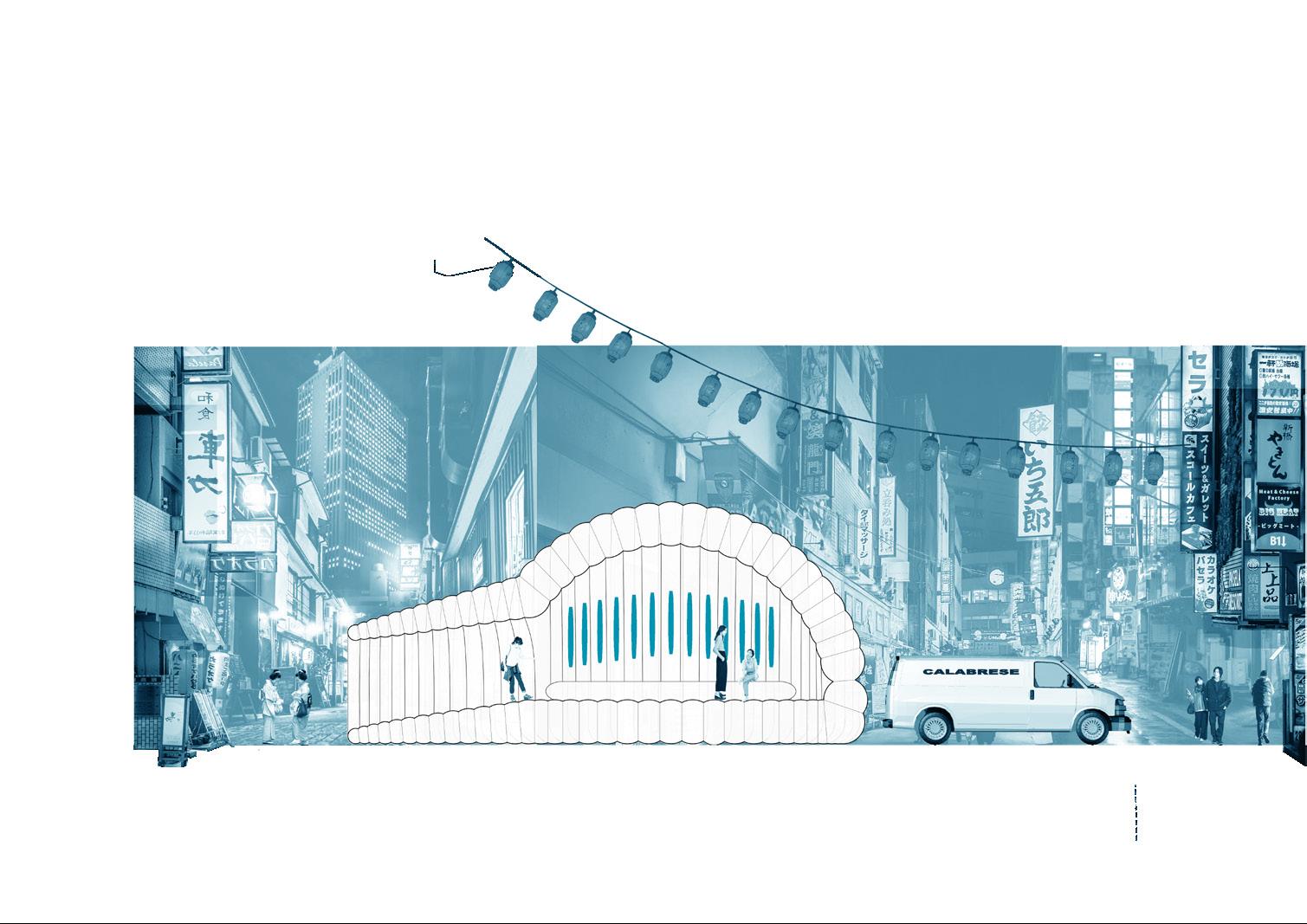
El proyecto consiste en la ideación de un espacio comercial temporal (Pop-up store) para la firma de moda CALABRESE. El establecimiento se concibe como parte del proyecto final de carrera que quiere presentar la joven artista fundadora de la casa. Inspirado en la estética y las ideas del ciberpunk que caracteriza la colección de prendas que plantea, se propone la ideación de un recinto de factura hinchable que destaca por su aspecto artificial, retroiluminado y distópico. Con una aparencia semejante a la de un iglú, el local se basa en pabellón “AirBubble” que presenta la firma ecoLogicStudio en la COP26 de Glasgow (2021).
Diseñado para ejercer esencialmente como boutique y área de desfiles, aunque también como atelier o taller de costura, el espacio funciona como un elemento polifuncional y versátil capaz de adaptarse a las necesidades de la marca sin realizar modificaciones sustanciales en el espacio. El uso de mobiliario móvil y utilería que se adhiere fácilmente a los paramentos, contribuyen a que se logre una gran flexibilidad de usos en el interior.
El recinto, además, se complementa con un vehículo furgoneta personalizado que brinda apoyo como espacio de almacenaje o camarín. Análogamente, el transporte constituye el medio a través del cual la instalación es trasladada a las distintas localizaciones que se agendan.
SUMMARY
The project consists of a scheme for a temporary commercial space (pop-up store) for the fashion brans CALABRESE. Inspired by the aesthetics and ideas of the cyberpunk movement, the projects proposes the construction of an inflatable enclosure with an artificial, backlit, dystopian appearance. Resembling an igloo, the venue is based on the “AirBubble“ pavilion design presented by ecoLogicStudio at COP26 in Glasgow (2021).
The dome is design to function primarily as a boutique and fashion show area. However it also function as a fashion design and sewing workshop. The space is a multifunctional and versatile environment that can be easily adapted to fit the brand needs. the use of mobile furniture and equipment which can be easily attached to walls contributes to a highly flexible space.
The store is also complemented by a custom-built van that provides external support as a storage space and a dressing room. The vehicle also enables transport of the installation between cities.
ZUSAMMENFASSUNG
Das Projekt zielt auf die Konzeption eines temporären Gewerberaums (Pop-up-Store) für die Modemarke CALABRESE. Die Einrichtung ist als Teil des Abschlussprojekts eines jungen Gründers konzipiert. Inspiriert von der Ästhetik und den Ideen der Cyberpunk-Bewegung zielt das Projekt auf den Bau eines aufblasbaren Gehäuses mit einem künstlichen, hinterleuchteten und dystopischen Erscheinungsbild. Der Veranstaltungsort sieht ähnlich aus wie ein Iglu und basiert auf dem Pavillondesign „AirBubble“, das von ecoLogicStudio auf der COP26 in Glasgow (2021) vorgestellt wurde.
Die Kuppel ist hauptsächlich als Boutique- und Modenschaubereich konzipiert. Sie kann jedoch auch als Atelier und Nähwerkstatt dienen. Insgesamt fungiert der Raum als multifunktionales und vielseitiges Element, das sich leicht an die Bedürfnisse der Marke anpassen lässt. Die Verwendung mobiler Möbel und Requisiten, die einfach an die Wände geklebt werden können, trägt ebenfalls viel dazu bei, eine große Flexibilität im Inneren zu erreichen.
Das Gehäuse wird außerdem durch einen personalisierten Lieferwagen ergänzt, der externe Unterstützung als Lagerraum und Umkleidekabine bietet. Ebenso stellt das Transportfahrzeug das Hauptverkehrsmittel dar, mit dem sich die Installation zwischen verschiedenen Städten bewegt.
Esquema de montaje / Assembly scheme / Montageschema

1_Llegada



2_Despliegue y preparación de la base
Sección longitudinal / Longitudinal section / Längsschnitt
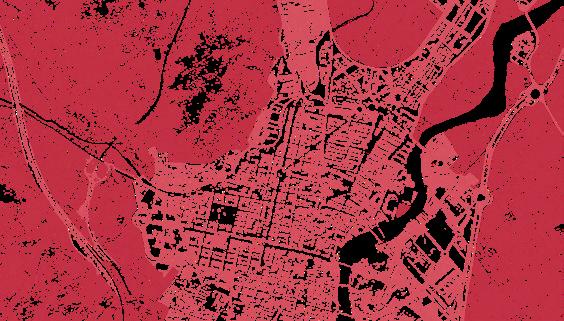
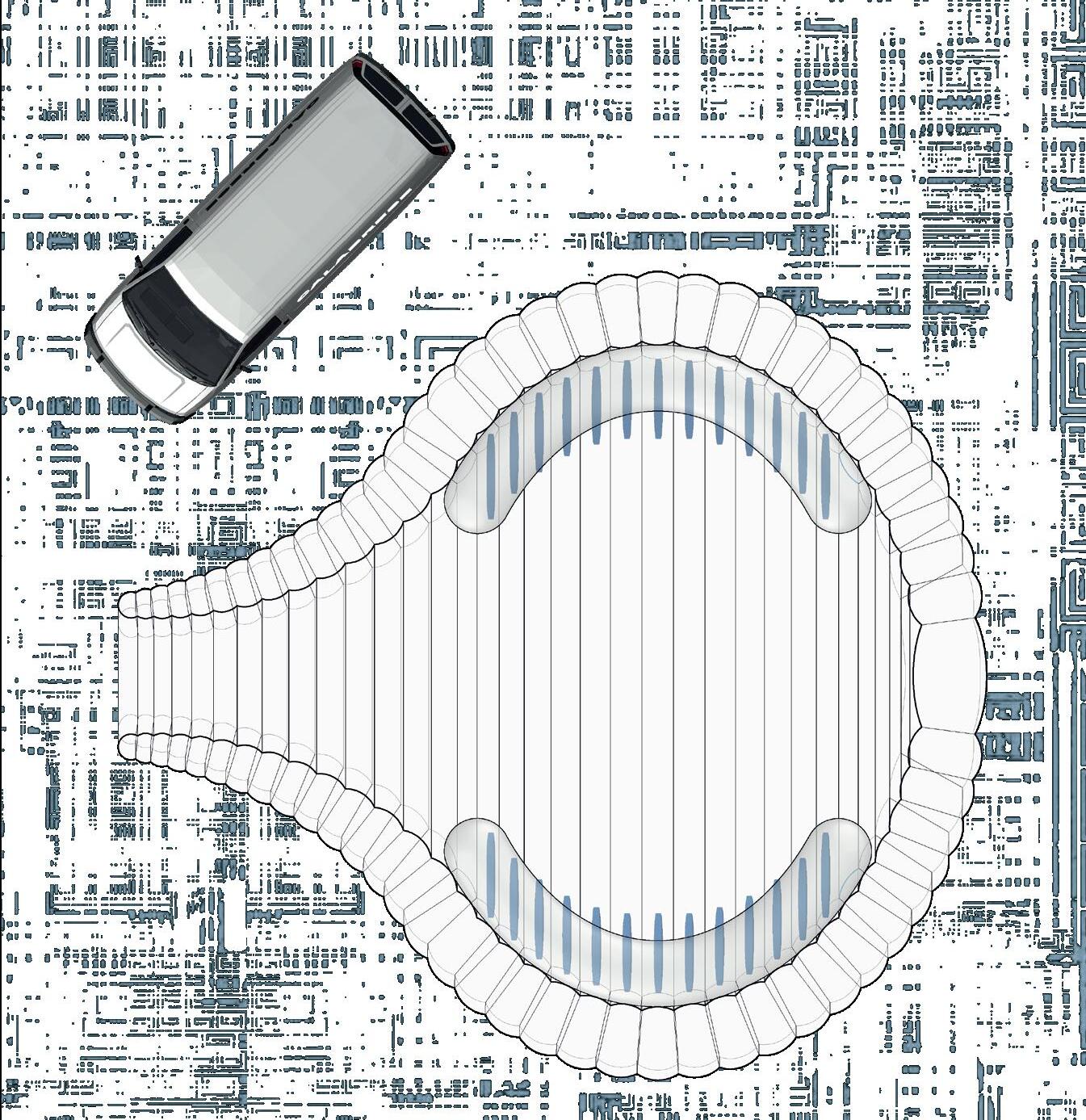
Plano del entorno del proyecto / Project site plan / Projektstandortplan

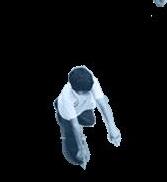
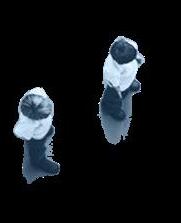


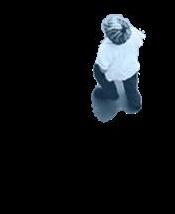

Esquema de usos / Uses scheme / Verwendungsschema
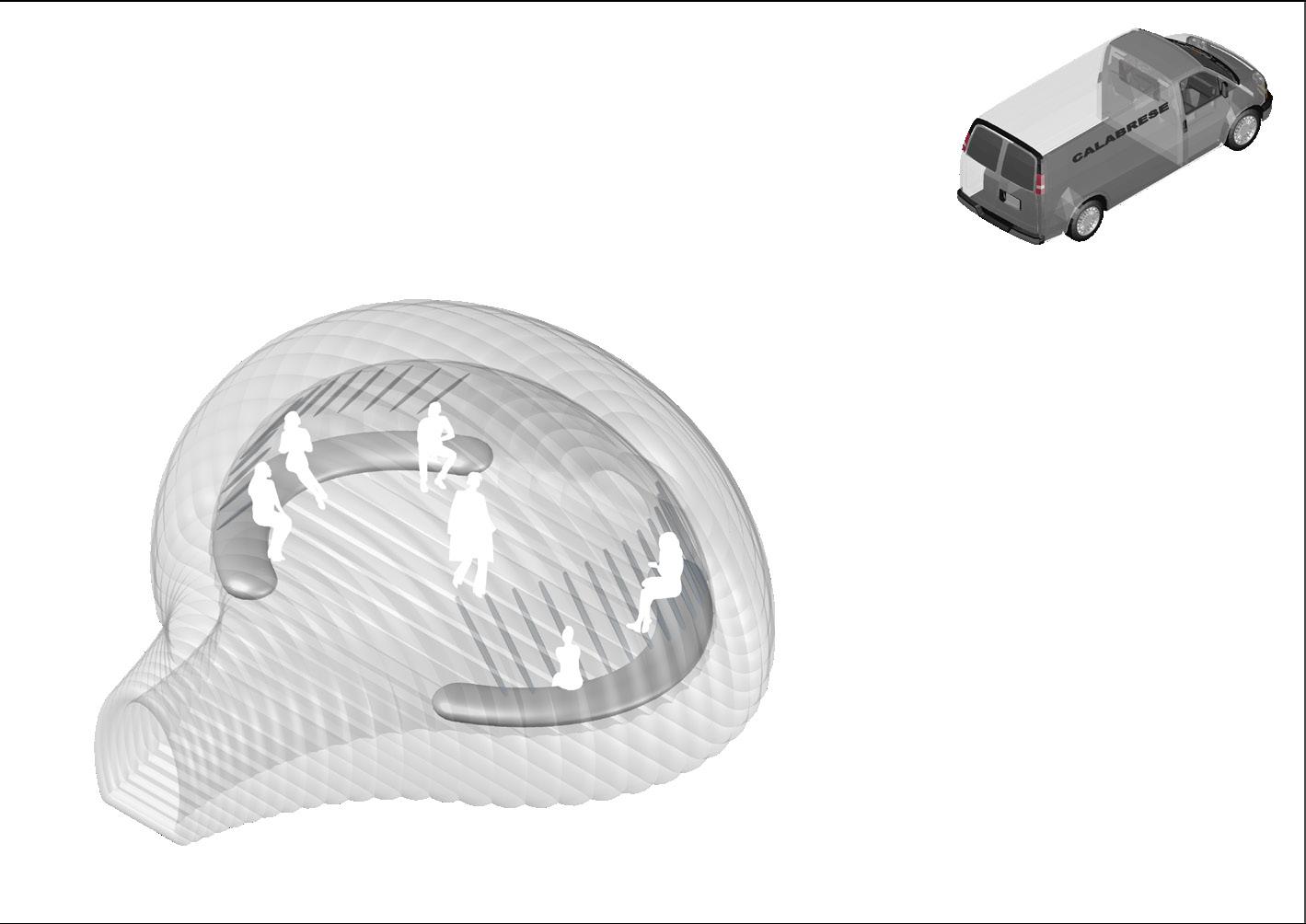
b._Boutique
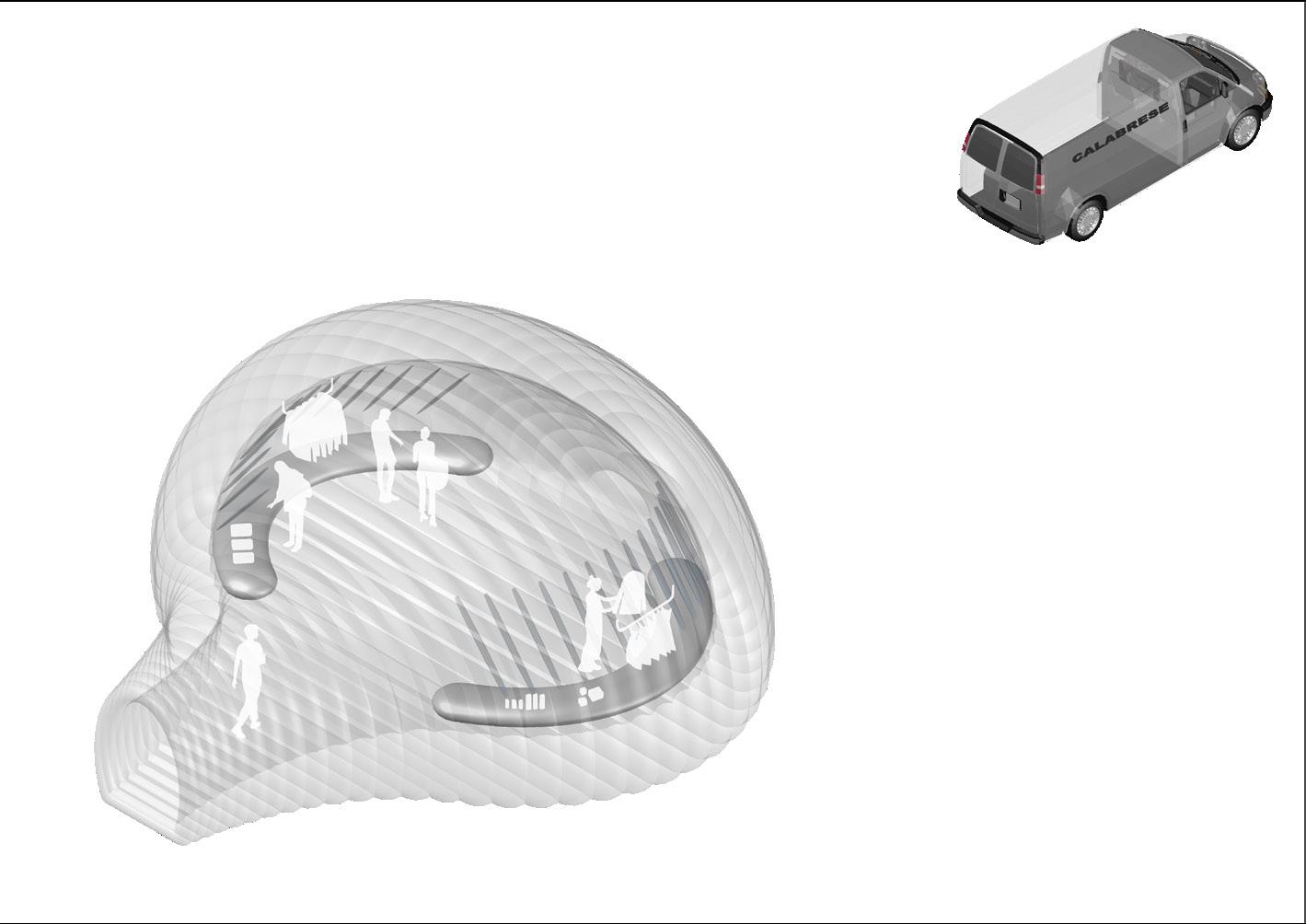
c._Atelier

Trabajo gráfico para la cartelería del desfile / Fashion show poster graphic work / Grafische Arbeit der Modenschauplakate

Visualización interior del proyecto / Rendering of project´s interior / Rendering des Projektinnenraums


_CENTRALIDAD URBANA PARA LA MEMORIA COLECTIVA EN NAZARET (VALÈNCIA)
_URBAN CENTER FOR THE COLLECTIVE MEMORY IN NAZARET (VALÈNCIA)
_URBANE ZENTRALITÄT FÜR DIE KOLLEKTIVE ERINNERUNG IN NAZARET (VALÈNCIA)
RESUMEN
La playa del lazareto de València era uno de los lugares más destacados del barrio de Nazaret. Desaparecida en la década de los 80 para dar cabida a la ampliación del puerto, la ciudad perdió uno de sus espacios relevantes de encuentro y convivencia. La construcción posterior de grandes infraestructuras anexas a la terminal, provocó la definitiva desconexión del barrio con respecto al territorio y el resto de la ciudad. Dichos eventos iniciaron un proceso de degradación y marginación que llega hasta nuestros días.
El proyecto que se presenta busca la reactivación, la recuperación y la reintegración de Nazaret a través de una intervención arquitectónica sobre los terrenos de la antigua playa. Aunque la zona se encuentra actualmente abandonada y amurallada, todavía son apreciables las huellas que delatan la estrecha relación que históricamente se ha mantenido con el mar: la alineación de la edificación con la bahía, las villas de recreo en primera línea, la nomenclatura del callejero, y el balneario de Benimar, entre otros.
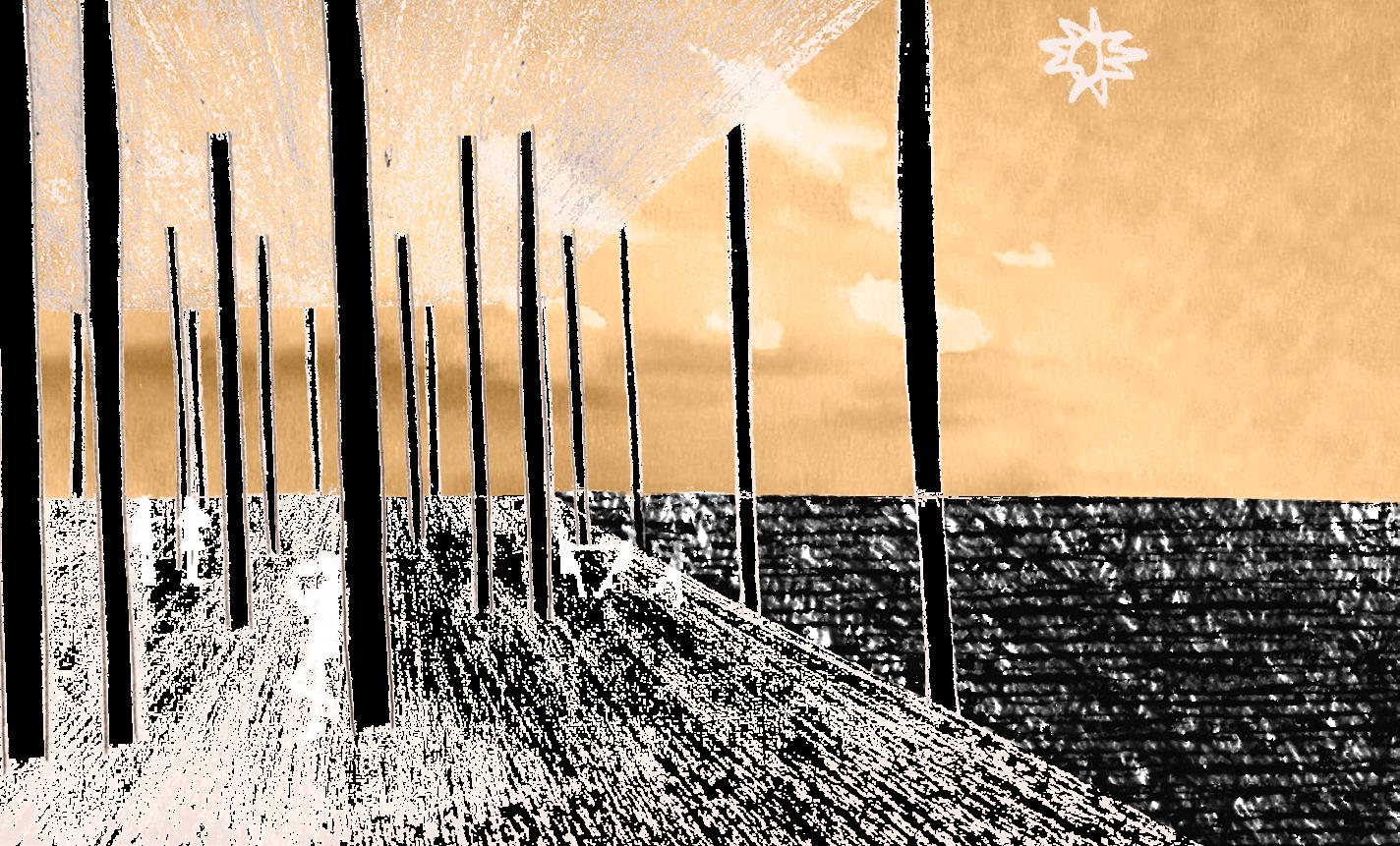
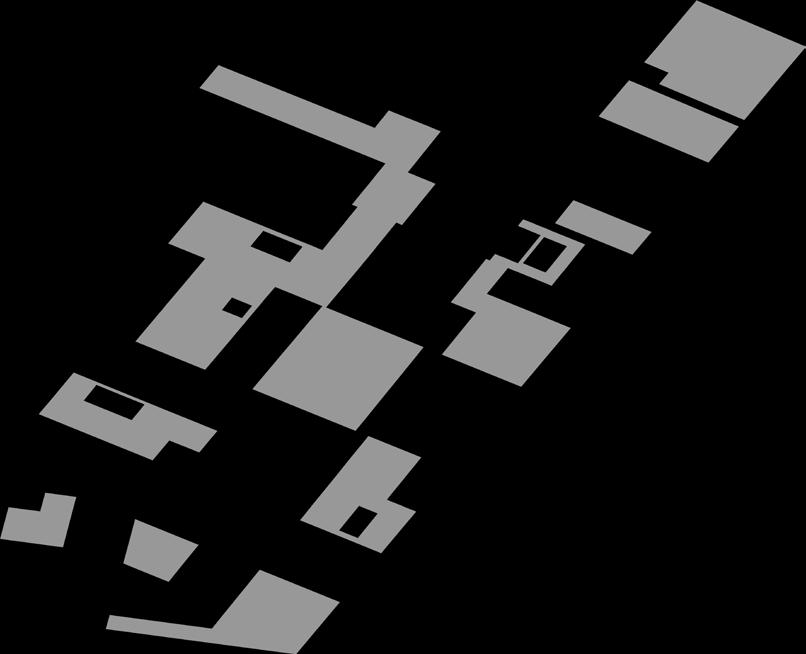
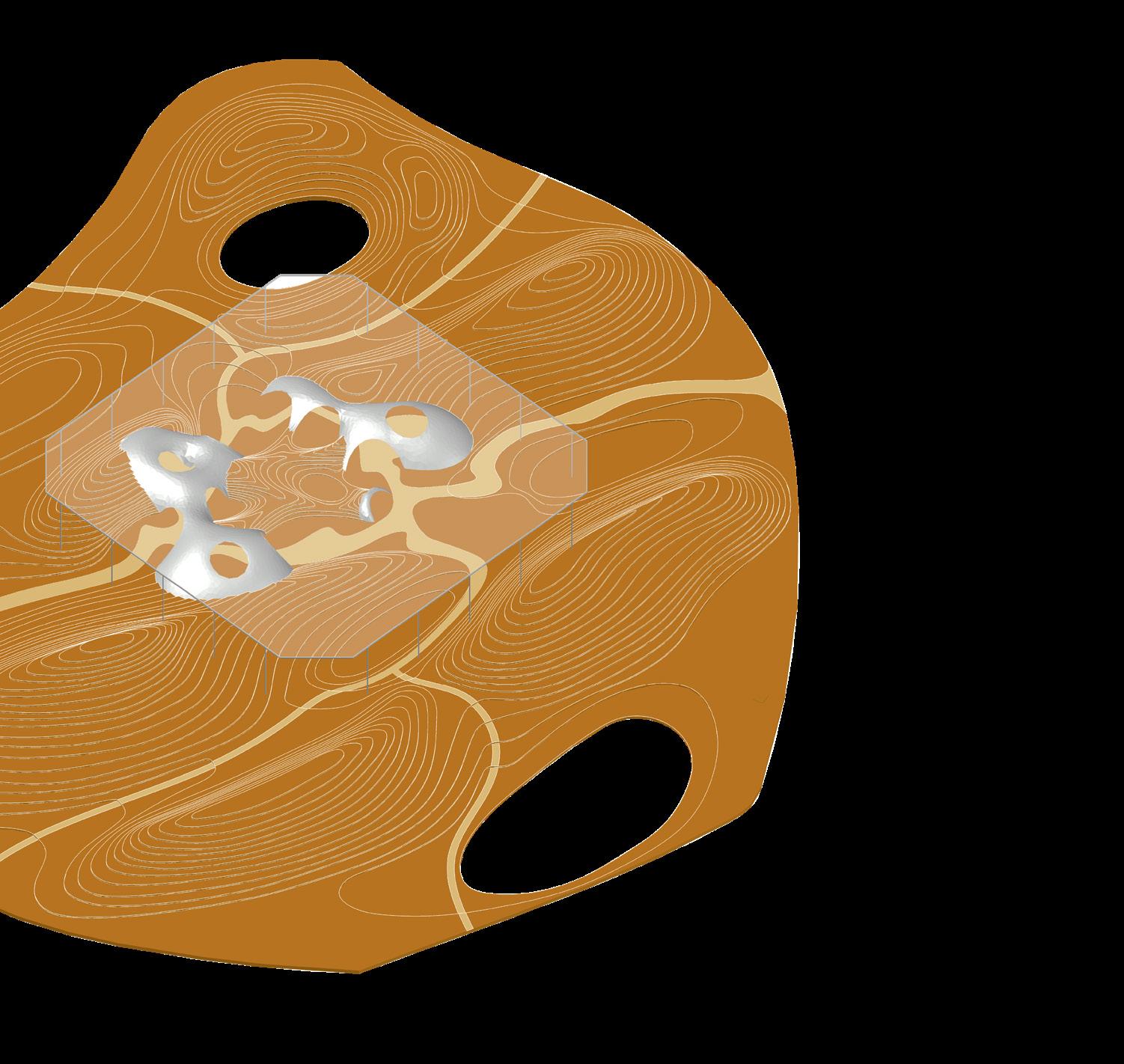
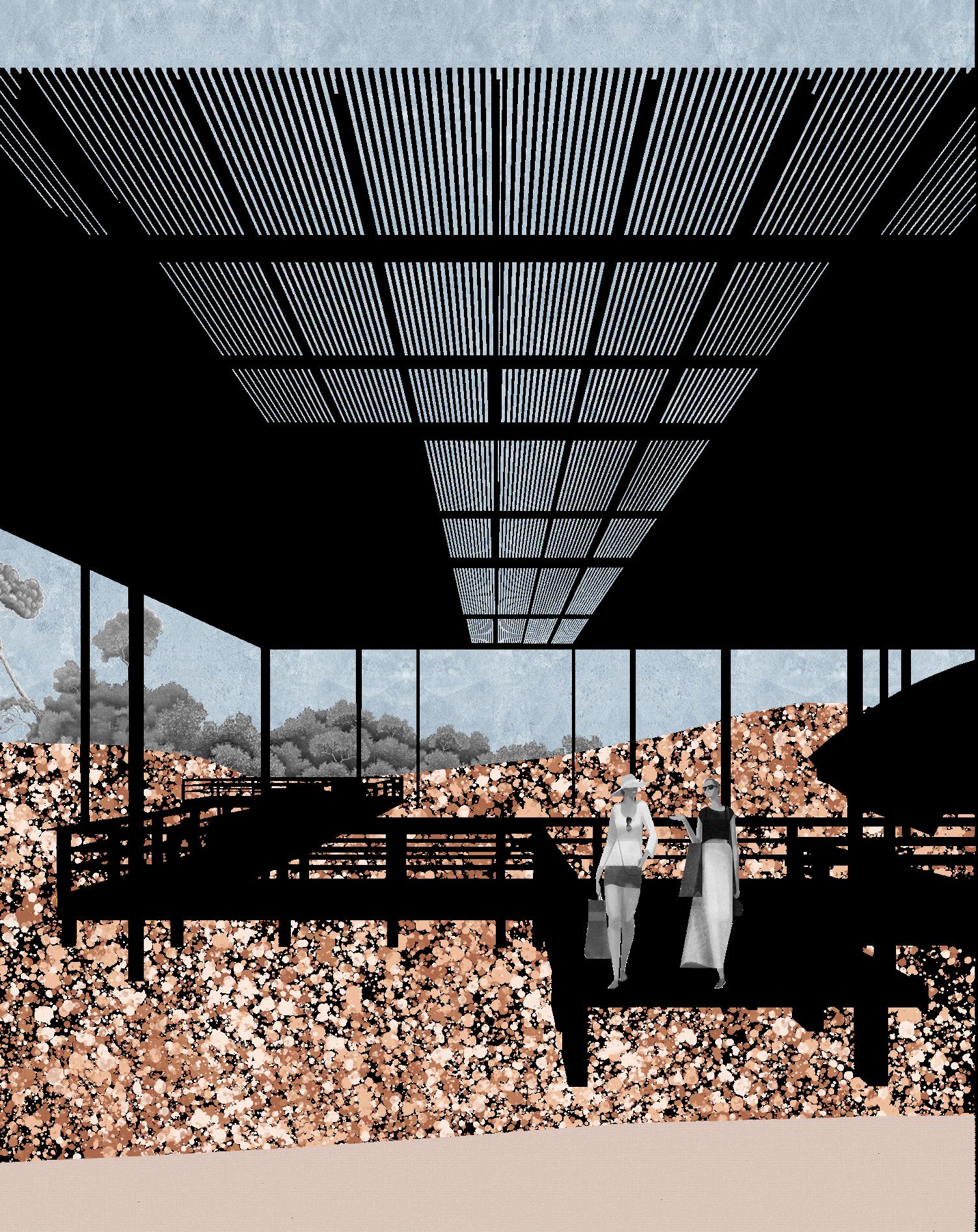
La propuesta que se plantea busca crear un lugar distintivo que ayude a devolver el carácter de ocio con el que tradicionalmente se ha identificado a Nazaret y su playa. Para ello, se propone modelar el terreno circundante, creando una morfología que imita las dunas y la estructura de una playa virgen. Esta intervención se cubre parcialmente con una gran estructura que recuerda a los umbráculos de cañizo que se instalaban de forma estacional en la playa.
SUMMARY
València’s Lazareto beach was one of the most distinctive places in Nazaret neighbourhood. In the early 80s, the harbor extension project had a devastating impact on the beachfront area. As a result, the city lost a place where citizens from all over the area used to come and enjoy their free time. This tragic loss, as west as the construction of other important infrastructure around the district cause substantial degradation and marginalization of the neighborhood.
This project aims to reactivate, regenerate, and reintegrate Nazaret’s lost beach landscape through architectural intervention. Although the beach no longer exist (replaced by the commercial harbor), and the old seaside plots are abandoneed and walled off, Nazaret retains signs which reveal its historic relationship with the sea. There signs include urban blocks following the shape of the bay, holiday villas that follow the old beach boundaries, street naming, and the Benimar bathhouse building.
The architectural proposal seeks to restore the distinctive leisure destination which Nazareth and its beach have traditionally been known for. To achieve this, the proposal aims to restore the surrounding terrain, creating a morphology that imitates the dunes ans the structure os a virgin beach. This intervention is partially covered with a large structure reminiscent of the reed umbrellas that were seasonally installed on the beach.
ZUSAMMENFASSUNG
Der Strand Lazareto in València war einer der markantesten Orte im Viertel Nazaret. Anfang der 80er Jahre wurde er durch das Hafenerweiterungsprojekt verschüttet und zerstört. Dadurch verlor die Stadt einen Ort, an dem Menschen aus aller Welt ihre Freizeit genossen. Dieser tragische Verlust sowie der Bau anderer wichtiger Infrastrukturen rund um das Viertel führten zu einem massiven Abbau und Ausgrenzungsprozess des Viertels. Ziel dieses Projekts ist es, Nazarets verlorene Strandlandschaft durch architektonische Eingriffe zu reaktivieren, zu regenerieren und wieder zu integrieren. Obwohl der Strand derzeit nicht mehr vorhanden ist und die alten Grundstücke am Meer verlassen und ummauert sind, weist Nazaret immer noch die Zeichen auf, die seine historische Beziehung zum Meer offenbaren. Zu diesen Zeichen gehören Stadtblöcke, die der Form der Bucht folgen, Ferienvillen an den alten Strandgrenzen, die Straßenbenennung und das Gebäude des Benimar-Bads.
Der architektonische Vorschlag zielt darauf ab, den unverwechselbaren Freizeitort wiederherzustellen, mit dem Nazareth und sein Strand traditionell identifiziert wurden. Um dies zu erreichen, wird vorgeschlagen, das umgebende Gelände zu modellieren und eine Morphologie zu schaffen, die die Dünen und die Struktur eines unberührten Strandes imitiert. Dieser Eingriff ist teilweise mit einer großen Struktur bedeckt, die an die Schilfschirme erinnert, die saisonal am Strand installiert wurden.

















_CASA PATIO PARA INVITADOS Y HUÉSPEDES EN VILAMARXANT
_PATIO GUEST HOUSE IN VILAMARXANT _PATIOHAUS FÜR GÄSTE IN VILAMARXANT
RESUMEN
Martín y Colette son una joven pareja extranjera que vive en el entorno rural del oeste de la población de Vilamarxant. Su residencia, situada en el corazón de un valle agrícola dominado por cultivos de cítricos, recibe con reguralidad la visita de familiares, amigos, y otros conocidos.
Con la intención de minimizar las interferencias que la acogida regular de gente les generaba en la vida privada, valoraron la construcción de un espacio independiente para albergar huéspedes. Para ello, decidieron reaprovechar el área del antiguo gallinero, y solicitaron la elaboración de una propuesta para este espacio. El área de intervención escogido, sin embargo, planteaba algunos inconvenientes y puntos desfavorables, pues se trata de un lugar situado en un extremo de la parcela que se completamente rodeado de edificaciones y otros elementos constructivos que no pueden ser alterados.
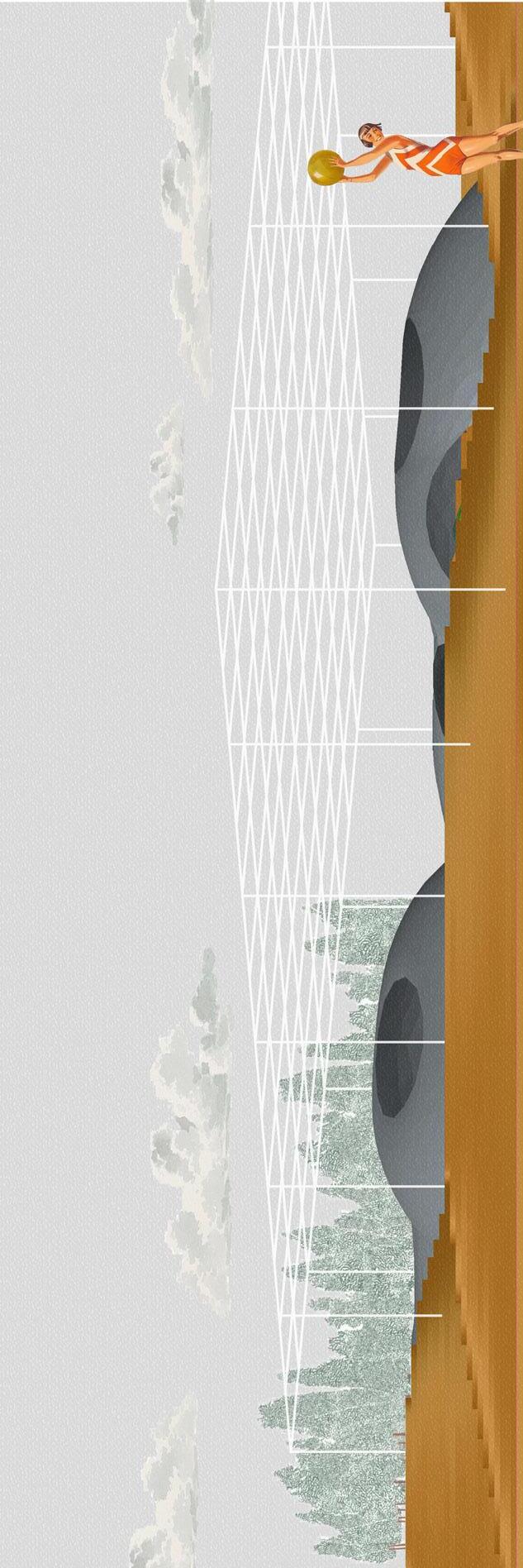
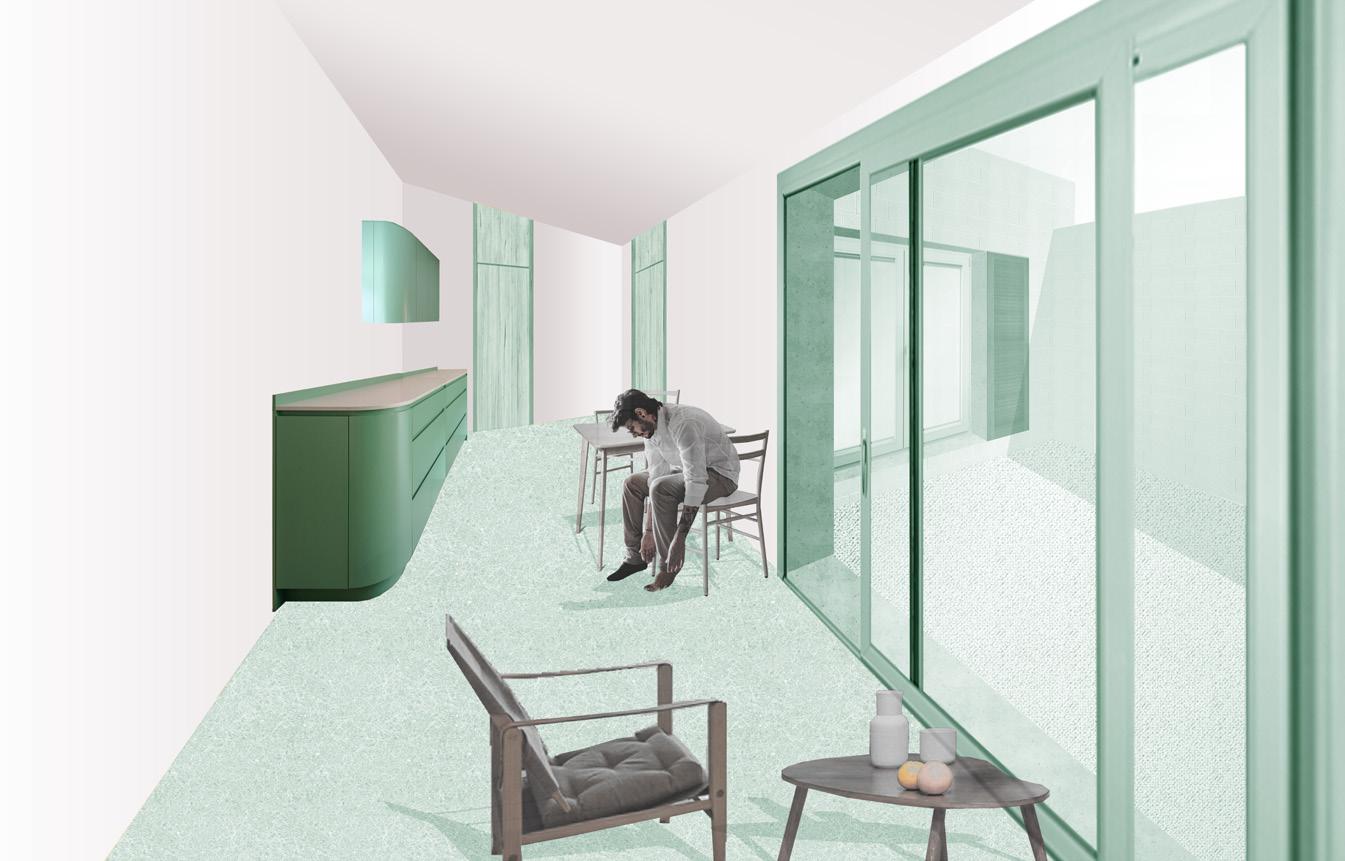
Ante estas condiciones, no obstante, se les propuso la ideación de una edificación organizada alrededor de un patio central siguiendo el modelo tradicional de la casa patio. En el diseño se trató de integrar las edificaciones circundantes así como también de respetar la caracterización constructiva presente. Por es razón, se optó por el uso del bloque de hormigón como componente arquitectónico principal. Así las cosas, este componente formó parte tanto del sistema de la estructura, de la compartimentación, y de la fachada.
SUMMARY
Martín and Colette are a young ex-pat couple who live in the western rural surroundings of the town of Vilamarxant. Their residence, which is located in the heart of an agricultural valley dominated by citrus crops, is regularly visited by family, friends, and other acquaintances.
Because they want to minimize the interferences that regular hosting generates in their private lives, the couple sought the construction of an independent space dedicated to guest accomodation. To do this, they would like to reuse the old chicken coop area which is located in a corner of the site and is completely surrounded by buildings and other construction elements that cannot be altered.
Based on these requirements, I soughtt to design a building organized around a central patio which follows the traditional patio house format. The design integrates the surrounding buildings and preserves the current construction style. For this reason, the project tends to use concrete blocks as the main architectural component. Thus, this component is incorporated into the structural system, the compartmentation, and the façade.
ZUSAMMENFASSUNG
Martín und Colette sind ein junges ausländisches Paar, das in der ländlichen Umgebung im Westen der Stadt Vilamarxant lebt. Ihr Wohnsitz, der im Herzen eines von Zitrusfrüchten dominierten landwirtschaftlichen Tals liegt, wird regelmäßig von Familie, Freunden und anderen Bekannten besucht.
Da sie die Störung, die die regelmäßige Bewirtung in ihrem Privatleben mit sich bringt, so gering wie möglich halten möchten, erwägt das Paar den Bau einer eigenständigen Unterkunft für Gäste. Zu diesem Zweck möchten sie den alten Hühnerstallbereich wiederverwenden, der an einer Ecke liegt und vollständig von Gebäuden und anderen Bauelementen umgeben ist, die nicht verändert werden können.
In Kenntnis dieser Bedingungen wurde ihnen vorgeschlagen, ein Gebäude zu entwerfen, das um einen zentralen Innenhof herum angeordnet ist und der traditionellen Anordnung von Innenhöfen folgt. Der Entwurf versucht, die umliegenden Gebäude zu integrieren und gleichzeitig den aktuellen Baustil beizubehalten. Aus diesem Grund tendiert das Projekt dazu, den Betonblock als Hauptarchitekturkomponente zu verwenden. Somit wird diese Komponente in das Struktursystem, die Unterteilung und die Fassade einbezogen.




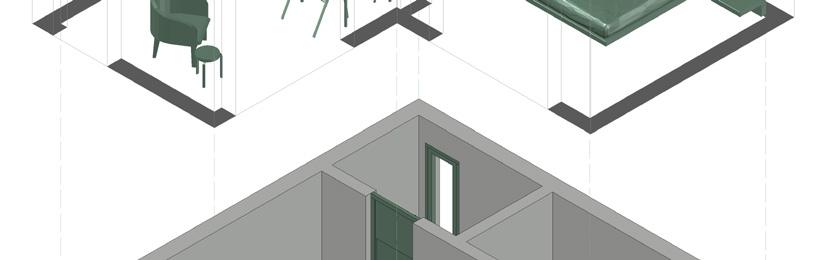
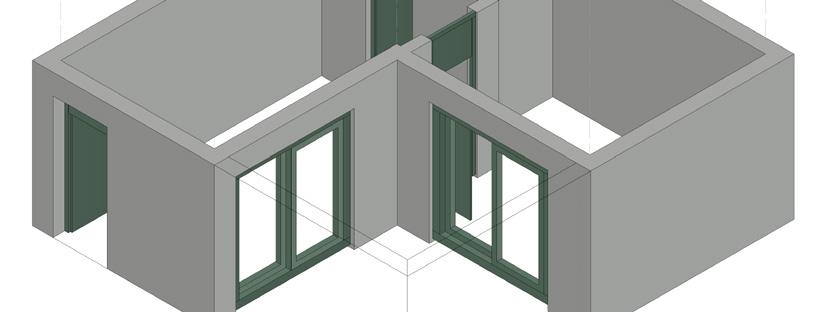
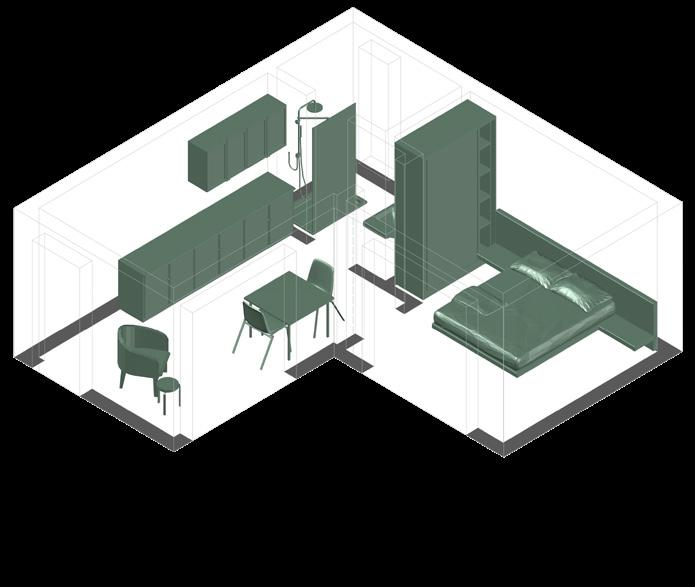
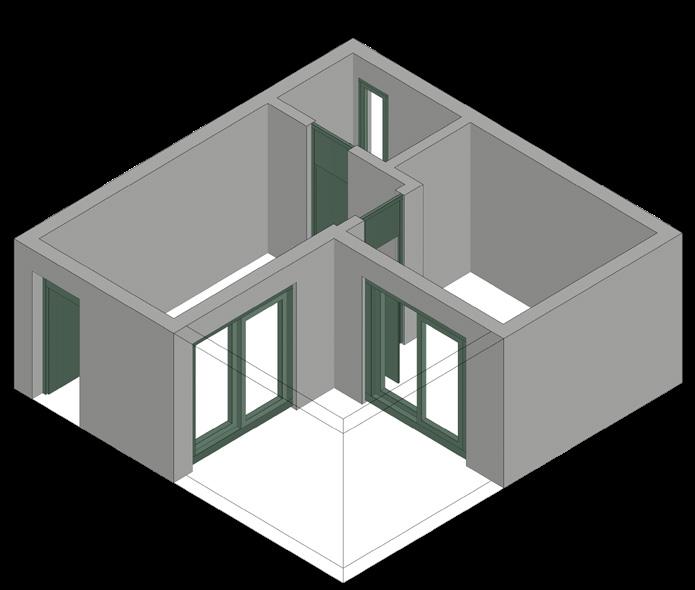
Axonometría interior / Internal axonometry / Interne

External



























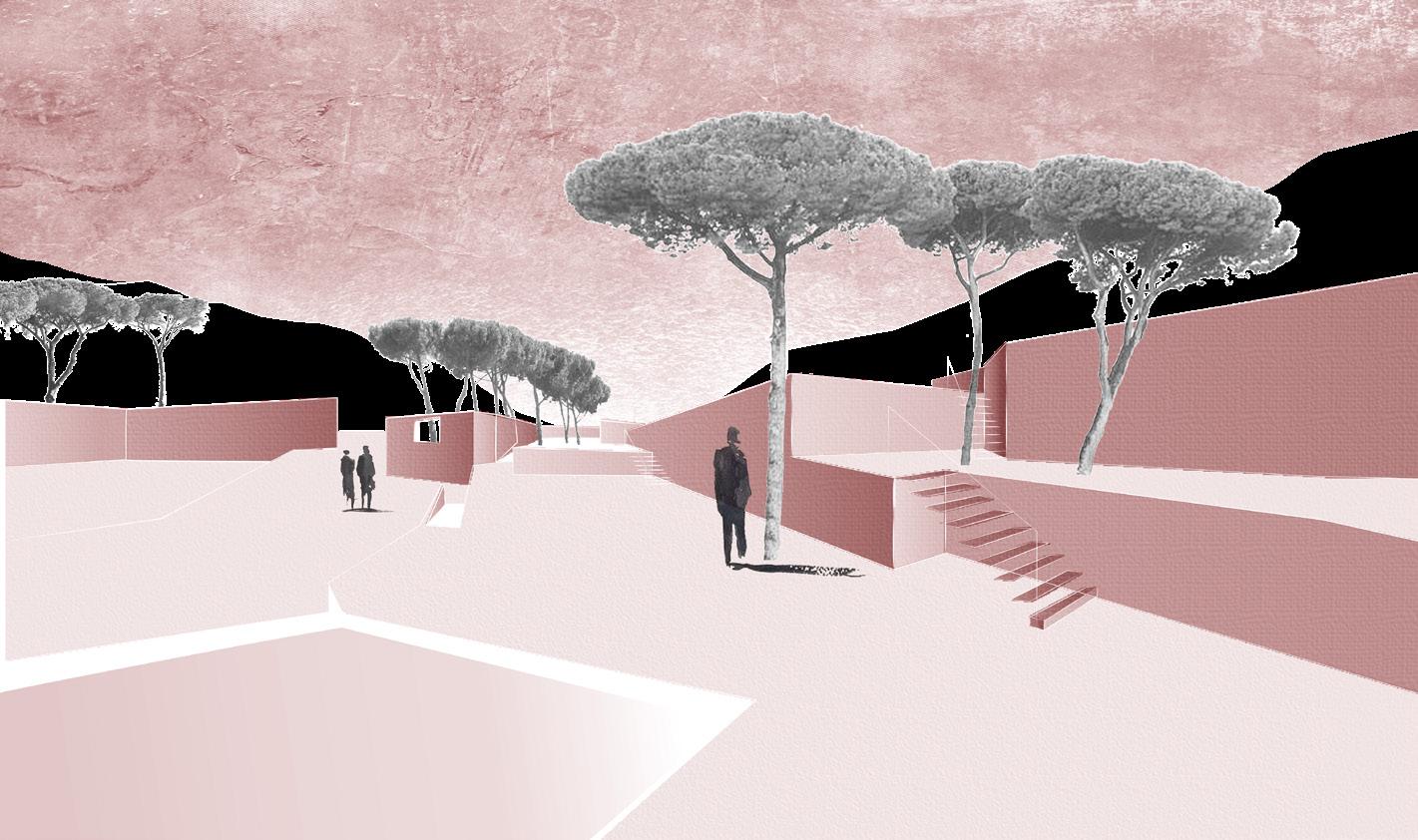
_ÁREA RECREATIVA PERIURBANA DE BENIOPA
_SUBURBAN RECREATIONAL FACILITY IN BENIOPA _VORSTÄDTISCHE FREIZEITEINRICHTUNG IN BENIOPA
RESUMEN
Beniopa es un antiguo pueblo de tradición agrícola que a mediados del siglo pasado fue anexionado por la localidad de Gandia. Aunque administrativamente se encuentra integrado dentro de la ciudad, socialmente conforma una unidad independiente respecto al resto del municipio. El particular encaje urbanístico del poblado entre la muntanyeta de Santa Anna, el coll del Papai y el barranc del Borrell ha favorecido la permanencia de un sentimiento de autonomía que ha resultado clave para la conservación del la huerta de la Banyosa, un área agrícola fuertemente ligada a la identidad de la población.
Tanto es así que, en los años 80, para no afectar la superficie cultivable, se tomó la decisión unánime de erigir el campo de fútbol local en el extremo norte de la partida, un punto notablemente alejado del núcleo urbano. A pesar de la distancia, el equipamiento fué muy popular entre los vecinos, quienes se acercaban con regularidad no solo para asistir a los partidos, sino también para disfrutar del resto de las instalaciones. Desafortunadamente, a raíz del traslado del equipo a unas nuevas instalaciones, el lugar fué poco a poco perdiendo interés. Numerosos proyectos de reconversión se sucedieron sin que se llegaran realmente a materializar y, al final, el lugar terminó en un elevado estado de ruina y abandono.
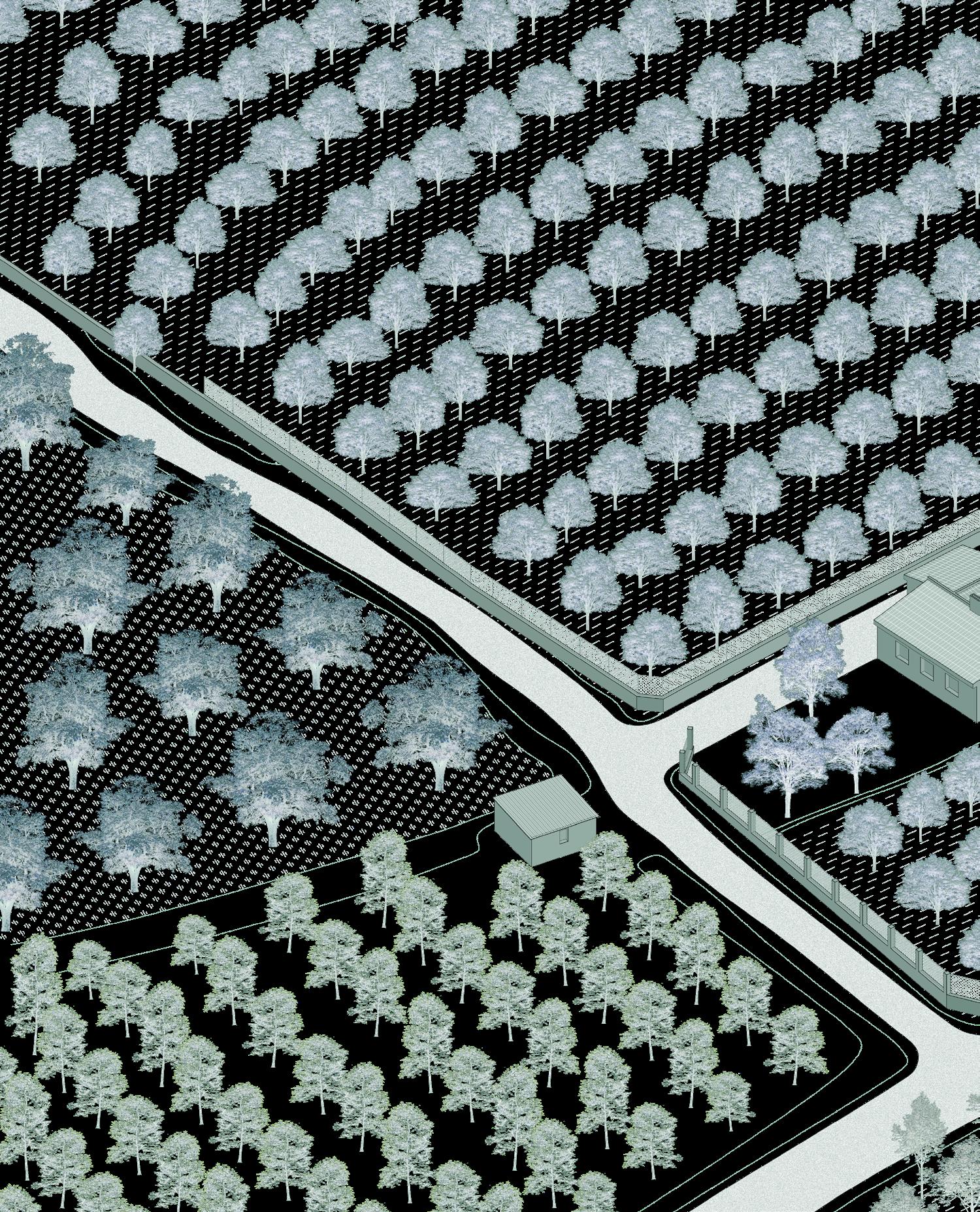
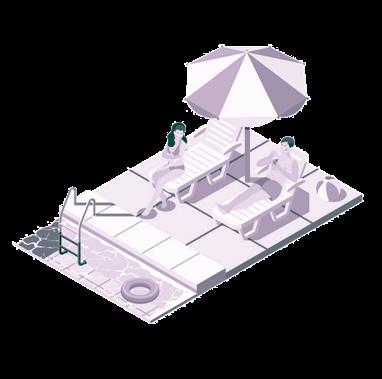
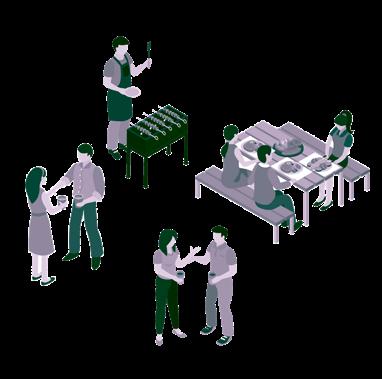
No obstante, en el último lustro, las instituciones públicas han planteado la recuperación de la zona mediante propuestas económicas, realistas y verdaramente ejecutables. Así las cosas, el presente proyecto, sugiere la transformación del recinto en un lugar multiusos que combina ocio, deporte y cultura mediante la reorganización del espacio actual y el emplazamiento de nuevas instalaciones deportivas junto con la habilitación de áreas adaptadas para celebraciones de gran afluencia y la construcción de zonas de esparcimiento, recreación, y servicios para todos los públicos.
SUMMARY
Beniopa is a traditional borough located in the heart of a fertile agricultural area at the south of the Valencia province. Althought it was annexed in the mid 20th century by the city of Gandía, it essentially maintains aw if it was an independent village. This has helped preserve the suburban Banyosa orchard fields, an historical agricultural space strongly linked to the identity of the population.
Residents’ motivation to protect this area is so strong that even in the 80s the local soccer team’s new field building project was cancelled because of public affection for the arable landscape. Beniopa inhabitants only ceeded when a new project was arranged at the northern end of the area, on a then wasteland site noticeably far from the urban center. Surprisingly, despite the great distance, the facility was very popular among residents. Citizens used to come regularly to attend the games and also to enjoy other services with their families. Unfortunately, as a result of the team’s decline, interest in the site declined. Several transformation projects were proposed but none actually materialized. In time, the place was abandoned and left in ruin.
However, recently, a new wave of ideas have been proposed in order to recover the area. Local government is actively collaborating to arrange an economic, pragmatic and fully executable proposal. The present project brings together and materializes some of these ideas to create a multipurpose place that combines leisure, sports and culture. To achieve this, there is a reorganization of the current space to locate new sports facilities as well as leisure, recreation, and service buildings.
ZUSAMMENFASSUNG
Beniopa ist eine traditionelle Gemeinde im Herzen einer fruchtbaren landwirtschaftlichen Gegend im Süden von Valencia. Obwohl sie Mitte des 20. Jahrhunderts von der Stadt Gandía annektiert wurde, behält sie praktisch ihre Autonomie, als wäre sie ein unabhängiges Dorf. Dies hat dazu beigetragen, die Obstgärten der Vorstadt Banyosa zu erhalten, ein historisches landwirtschaftliches Gebiet, das eng mit der Identität der Bevölkerung verbunden ist.
Die Mobilisierung der Bürger zum Schutz dieses Gebiets ist so stark, dass sogar in den 80er Jahren das Bauprojekt für ein neues Feld für lokalen Fußballmannschaft wegen seiner Beeinträchtigung des Ackerlandes abgesagt wurde. Die Einwohner von Beniopa gaben erst nach, als ein neues Projekt am nördlichen Ende des Gebiets geplant wurde, auf einer damals brachliegenden Landzunge, die deutlich vom Stadtzentrum entfernt war. Überraschenderweise war die Anlage trotz der großen Entfernung bei den Einwohnern sehr beliebt. Die Bürger kamen regelmäßig, um die Spiele zu besuchen und auch andere Dienstleistungen mit ihren Familien zu nutzen. Leider verlor der Ort aufgrund des Niedergangs der Mannschaft allmählich an Interesse. Es wurden mehrere Umgestaltungsprojekte vorgeschlagen, aber keines davon wurde tatsächlich verwirklicht. Schließlich wurde der Ort aufgegeben und verwüstet.
Vor kurzem gab es jedoch eine neue Welle von Ideen, um das Gebiet wiederherzustellen. Die lokale Regierung arbeitet aktiv daran, einen wirtschaftlichen, realistischen und wirklich umsetzbaren Vorschlag auszuarbeiten. Das vorliegende Projekt fasst einige ihrer Ideen zusammen und verwirklicht sie, um einen Mehrzweckort zu schaffen, der Freizeit, Sport und Kultur vereint. Um dies zu erreichen, wird der aktuelle Raum neu organisiert, um neue Sportanlagen sowie Freizeit-, Erholungs- und Dienstleistungsgebäude unterzubringen.
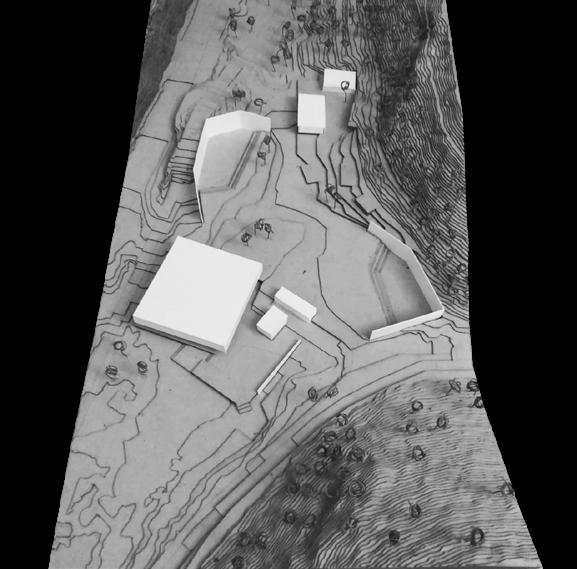
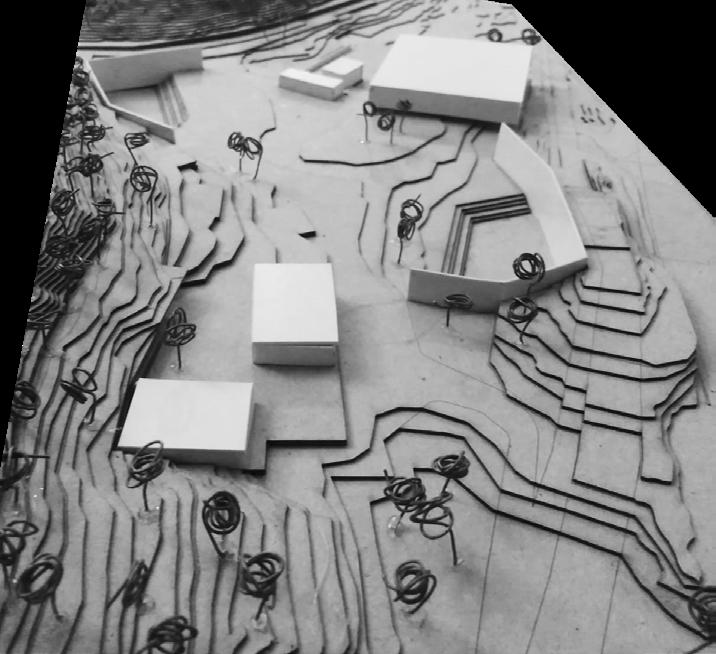
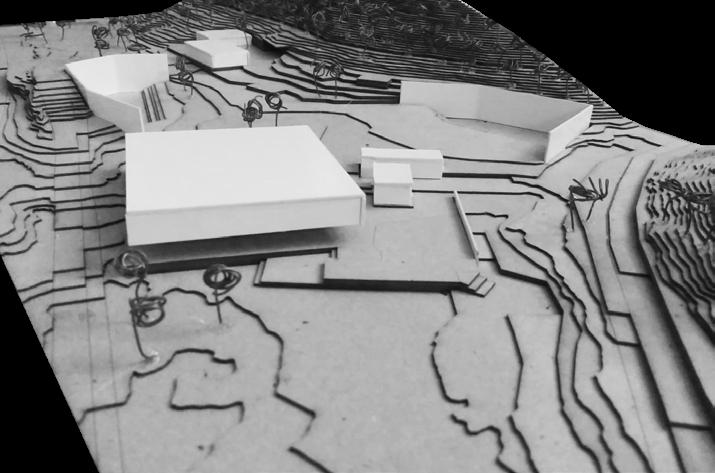

Plano de emplazamiento del proyecto / Project site plan / Projektstandortplan
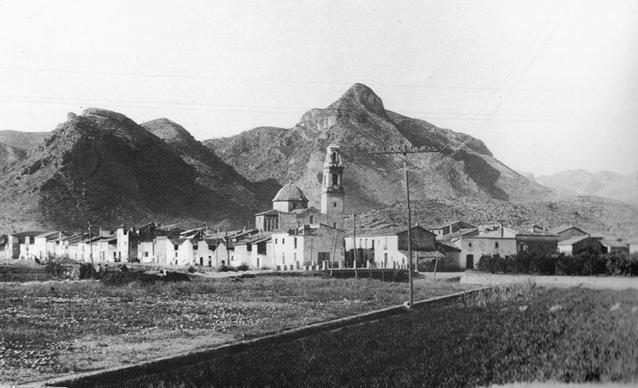
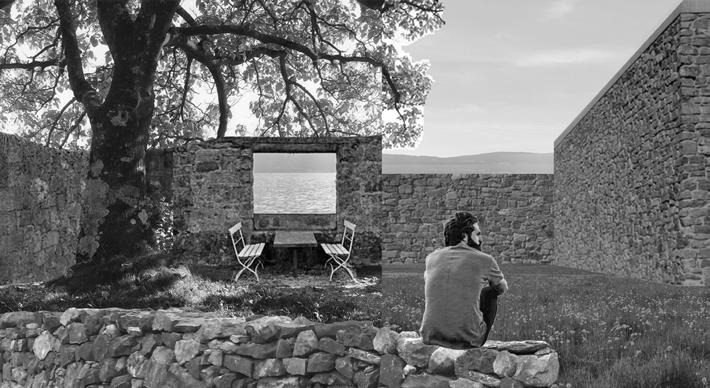
Collage de imágenes / Image collage / Lichtbildcollage
Muro de contención / Embankment / Staumauer
Cerramiento / Enclosure / Außenwand


Sección longitudinal / Longitudinal section / Längsschnitt