2025






Graphic
University
Photo: Per Pettersson, Linda Alfredsson, Melina Granberg, Shutterstock Images, Marie Nolin, Sofia Stridsman, LTU and others


CDT’s mission is to accelerate digital innovations for sustainable impact, based on high quality scientific research.
WE CONNECT ACADEMIA, INDUSTRY AND SOCIETY AT LARGE IN RESEARCH, DESIGN AND INNOVATION, INCLUDING KNOWLEDGE TRANSFER PROCESSES
OUR PARTNERS ARE:
• Academia
• Developers, Suppliers and End-Users of Digital Infrastructure and Solutions
• Society
• Research and Innovation financiers
• Policy makers
CDT OPERATIONS ARE; RESEARCH, DESIGN AND INNOVATION INTEGRATION:
• Projects
• Proposals
• Experimentation
• Spin-off support
NETWORKING AND COLLABORATION
• External (e.g. ENoLL, Net World Europe, EARMA, IoT Forum, North Star, Swedsoft, BDVA, AIOTI, 6G IA)
• LTU internal, partners (e.g. meeting with researchers, partner networking and events)
• Local: Luleå Business & Economic Development, IT Industry Association, IUC Norr, RISE SICS North AB, Luleå Science Park, Skellefteå Science City, Boden Business Agency
• Experience of EU FP 4, 5, 6, 7, Horizon 2020 and Horizon Europe, Interreg Aurora KNOWLEDGE INTEGRATION AND COMMUNICATION
• Webinars
• Workshops
• Handbooks
• Courses
• Conferences
FUTURE FUNDING INFLUENCE
• Contribution to policies, roadmaps, lobbying, research agendas and programs
• Future studies
• Regional development plans
We are looking for new collaborations in the following areas with great challenges, change and impact.
Smart communities
• Digitalization in cities, regions, and rural areas
• Open data and Data-driven decision making
• Digital Inclusion
• Digital Healthcare and Welfare
• Digital cultural and creative solutions
Cloud and Edge Computing
• Cloud-to-Edge-to-IoT continuum
• Green, energy efficient, datacenters of the future
• Focus on sustainability, security, scalability, and smart algorithms
• Efficient distributed and software defined systems
Digitization for green transition
• Twin Transition - Green and Digital
• Green Traceability
• Smart Grids
• System demonstrators Communication
• Further development and tests around 5G Advanced and introduction of 6G
• Research around 6G
• Rural coverage
• Resilient networks
• Non-terrestrial networks and airspace
• Gender Mainstreaming
• Living Lab, Ethics & Responsible Innovation
• AI
• Cybersecurity
• New Business Models
• Digital Twins

The year 2025 has been characterized by continued change and development, and by a clear acceleration in the adoption and impact of artificial intelligence. At the same time, an increasingly uncertain global situation has placed new demands on resilience, collaboration, and efficient use of technological resources. Despite a dynamic and sometimes challenging environment, we at CDT have been able to conduct our operations in a stable and constructive manner. Our activities have, as usual, focused on project execution, collaboration with partners, organization of events, and the ongoing development of our business.
During the year, we have strengthened our project portfolio and continued to work within our core areas, including digital infrastructure, connectivity, and applied research related to telecommunications and data-driven solutions. Artificial intelligence has increasingly become a cross-cutting enabler across many of our activities. Rather than being a standalone technology, AI is now influencing how networks are designed, how data is processed closer to the edge, and how complex systems can be monitored, optimized, and made more resilient.
In our view, one of the most significant developments is how AI is moving from experimental use cases to becoming an integrated part of critical infrastructure and industrial processes. This shift places higher demands on reliable connectivity, secure data handling, and energy-efficient computing — areas where CDT’s competence and focus are highly relevant. The current global situation has also accelerated the need for new forms of cooperation across sectors and domains.
To make better use of limited resources, the importance of technologies that can serve both civilian and societal resilience
purposes has become increasingly clear. During 2025, the dual-use perspective has therefore gained stronger relevance, particularly in areas such as communication infrastructure, data centers, and intelligent network solutions, where shared technological foundations can support multiple applications and stakeholders.
Throughout the year, we have closely followed and contributed to developments where AI, advanced communication networks, edge computing, and resilience requirements converge. This holistic view will continue to guide our strategic priorities.
Looking ahead, we see significant opportunities as new national and international initiatives and collaborative programs are launched. Together with our partners, we are preparing several new project applications aligned with our strategic focus. Located in Northern Sweden, and in the midst of a large-scale green and digital societal transformation, we see strong potential in projects that combine sustainable infrastructure, efficient resource utilization, AI-enabled services and LTU’s great knowledge about Arctic conditions.
We welcome continued dialogue and collaboration and encourage partners to contact us with ideas for future projects. With these words, I and my colleagues would like to thank all partners for the good cooperation during 2025 and look forward to many new and rewarding collaborations in the years to come.
Luleå, January 2026
Dr. Björn Backe Executive Director
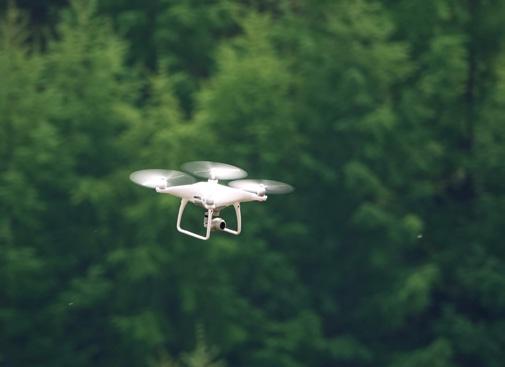
Would you trust a drone to fly, navigate, and document a hazardous site all on its own?
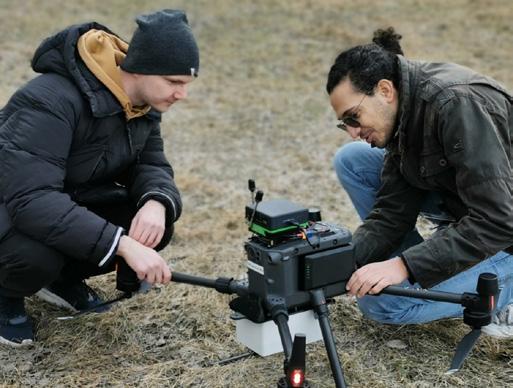
Imagine a drone that can take off the moment a sensor sends an alert, navigating on its own and delivering video and data from places humans cannot easily or safely reach. That’s exactly what the Robotics and AI Team RAI group at Luleå University of Technology and ThingWave AB have tested. With a flight time of 30 minutes, these experiments mark a step forward in developing robust autonomous technology for monitoring and mapping hazardous or inaccessible areas.
This work is part of the EU-project AMBITIOUS, where academia and industry join forces to create next-generation solutions for surveillance and safety in controlled areas. A great example of how cutting-edge research and innovation can contribute to a safer and more efficient world.
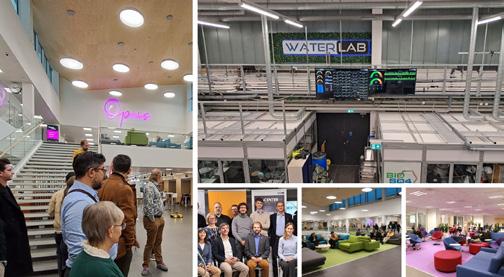
In October 2025, the city of Kuopio, Finland, hosted the partners of the AMBITIOUS project consortium to discuss progress in the project’s pilot activities and to explore new opportunities for technology-driven solutions in sustainability, healthcare, and regional development.
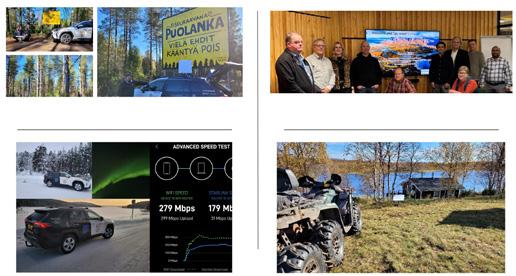
Researchers from Luleå University of Technology, University of Oulu, and Lapland UAS presented the final outcomes of the Interreg Aurora-funded Arctic 6G project during the webinar “Exploring Future 6G Opportunities –Final Results and Lessons Learned” in Oulu, 21 October 2025.
“Arctic 6G has shown that the North can lead in connectivity innovation,” said Michael Nilsson, coordinator at LTU. “The lessons from our testbeds and collaboration with the Oulu and Tornio teams will shape future 6G development.”
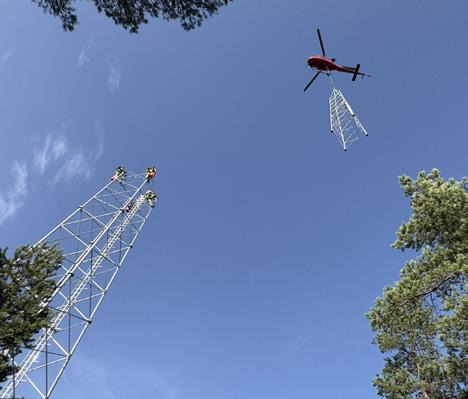
The project, running from 2022 to 2025, explores how next-generation networks can deliver resilient, inclusive connectivity for Arctic regions. Highlights include new survey data on rural broadband gaps, Zero Trust cybersecurity frameworks, using wind-turbine towers as potential 6G base stations, and LEO satellite integration to reach remote communities.
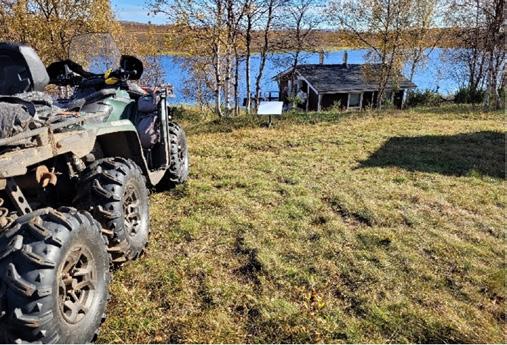
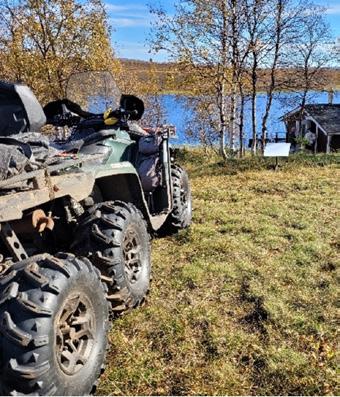
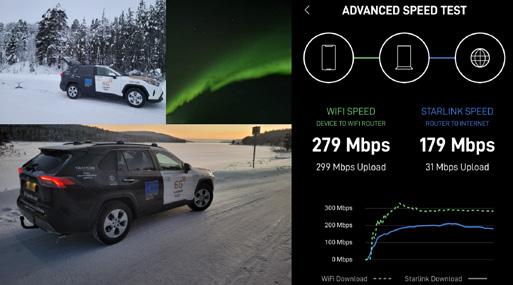
The Arctic 6G project, in collaboration with The Sámi Education Institute and the University of Lapland, conducted a joint measurement campaign to test off-grid power tools, drones, and satellite connectivity in the Pöyrisjärvi lake area, a Sami reindeer herding village. Starlink measurements showed its potential for providing Internet connectivity in remote areas, despite limited satellite coverage in the North.
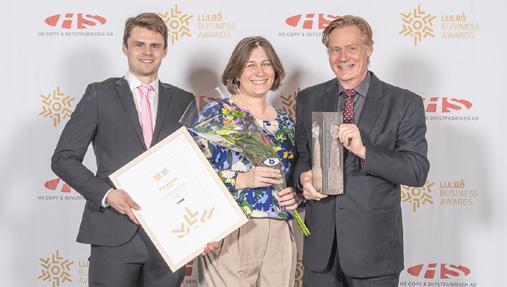
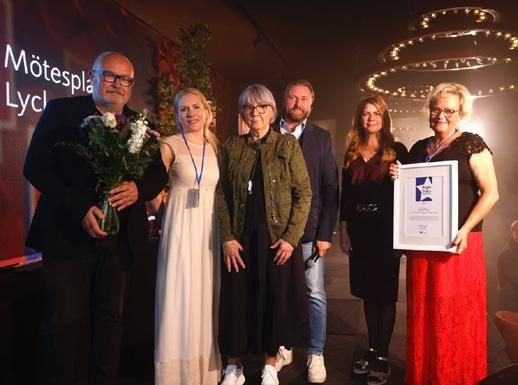
One of CDT’s project partners, ThingWave, won the “Innovation of the Year” award at the Luleå Business Awards.
The jury’s motivation reads:
ThingWave offers advanced sensors and IoT solutions for industry, with a focus on smart ventilation and supply chain optimization. Through rapid development and strong adaptability, the company has established a global presence across multiple industries.
ThingWave is proud and honored to have been selected for the Innovation of the Year award at the Luleå Business Awards.
We think it’s fantastic, congratulations!
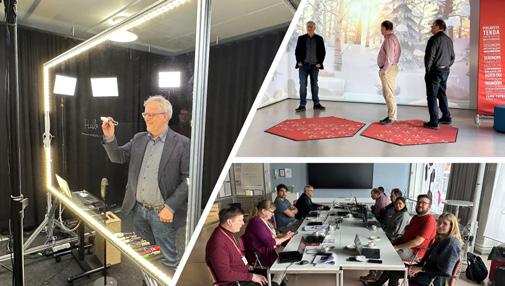
The Arctic 6G project convened in Tornio in April 2025 to discuss progress in next-generation mobile technology. The meeting focused on societal needs, innovation, and practical demonstrations to improve connectivity in remote and rural areas. Participants also explored solutions such as smart applications for sparsely populated regions, repurposing wind turbines as mobile towers, and strengthening 6G networks with secure, low-power, and cyber-resilient technologies.
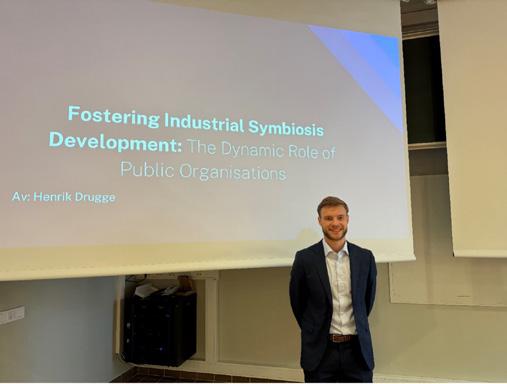
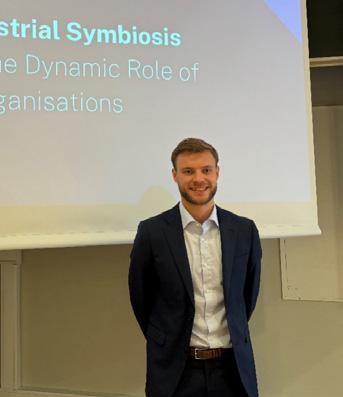
A new master’s thesis within the Green Transition North initiative shows how public organizations can take a more active role in driving the green transition.
Henrik Drugge, a master’s student in Industrial Engineering and Management at Luleå University of Technology, explores this in his thesis Fostering Industrial Symbiosis Development: The Dynamic Role of Public Organisations. The study examines how public actors can support the development of industrial symbiosis – an advanced form of circular collaboration between companies.
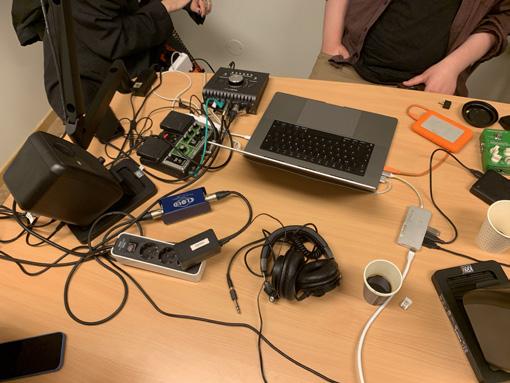
We run many projects, and one of the more artistic and creative initiatives is Let’s Create Music. The project has resulted in 70 songs through global songwriting sessions where Swedish and American music creators have collaborated, as well as two publications.
Our partner BD Pop is responsible for the musical aspects of the project, while we focus on the underlying technology.
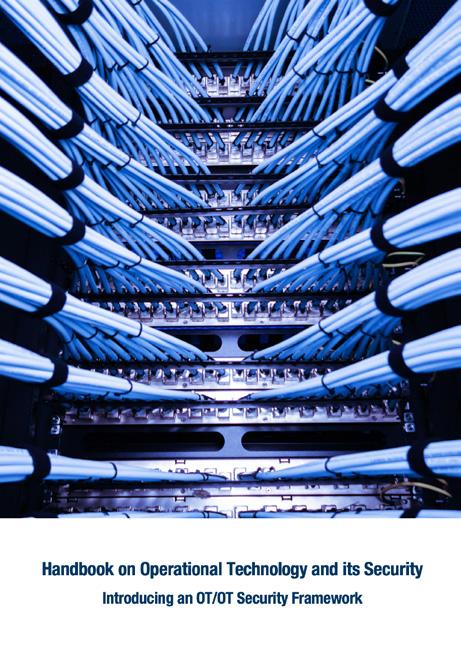
The new Handbook on Operational Technology and its Security is now available for download below.
The handbook is intended for professionals working in Operational Technology (OT) and Information Technology (IT), as well as for senior management in organizations that operate across both domains. It provides an overview of the challenges and opportunities of connected IT and OT environments, offering practical guidance and a structured framework for achieving a riskbased and integrated approach to IT/OT security.
Co-developed within within the project Arctic 6G and based on experiences from several large industrial collaborations, the handbook also serves as a foundation for academic courses at the master’s level.
Find the book here: https://issuu.com/ltucdt/docs/handbook_on _operational_technology_and_its_security
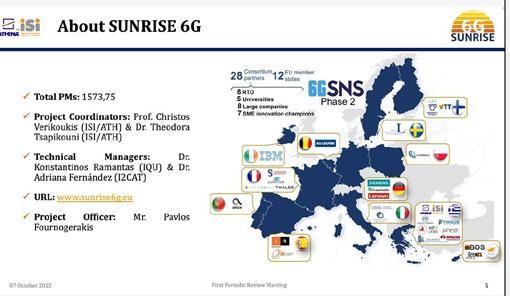
CDT participates in the Sunrise 6G project. 27 partners are part of the project. LTU is responsible for a use case in the area of mining. We use the LTU SubT Lab running 6G tests involving drones of different kinds.
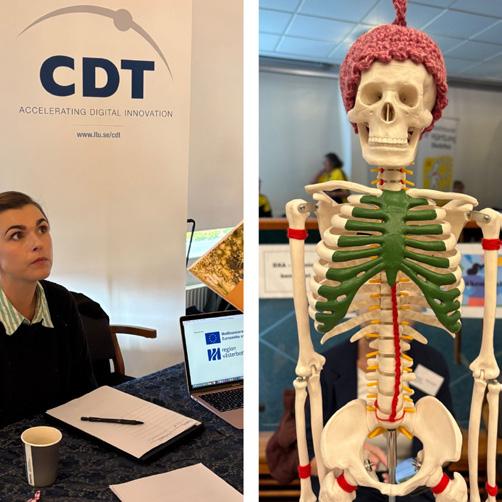
CDT, together with the feasibility study FIRSTAID, participated in the Senior Day in Skellefteå. FIRSTAID is carried out in collaboration with Skellefteå Municipality. We are looking for people with experience in dementia care, whether as relatives, family caregivers, or healthcare professionals.
Many inspiring organizations took part in the event. One even brought a skeleton. We were represented by Sara Sällström and Annica Bray. Please feel free to contact either of them if you have experience or insights you would like to contribute.
The 33-list is an annual ranking by Ny Teknik that highlights Sweden’s 33 most promising young technology companies. Three of this year’s companies are from Luleå, and all of them are connected to Luleå University of Technology and CDT, which has been a collaboration partner or provided support through various projects.
One of the companies is Vimotek, which develops sensors and solutions for space-based navigation. Founder and CEO Anatoliy Valentirov emphasizes the importance of the award for the industry:
“We hope that our recognition will inspire more people to become aware of and join this exciting industry.”
Another space company on the list is Remos Space Systems, which develops ground stations and satellite modems.
The third company, Flasheye, develops 3D-LiDAR solutions for surveillance, safety and automation in industrial environments. Founder Ulf Lindström highlights the significance of the recognition and says: “...reminds us why we do what we do: to challenge what is possible and to build technology that truly makes a difference.”
In addition, the Luleå-based company Arctic Space Technologies has been named the winner of Di Gasell North 2025. The company is a leading actor in ground-based satellite communication. The award highlights sustainable growth and entrepreneurship, and requires both doubled revenue over four years and maintained profitability.
Congratulations from all of us at CDT to all four companies. Together, they demonstrate the strong innovation capacity in northern Sweden and how collaboration between research, industry and fast-growing technology companies drives development forward.
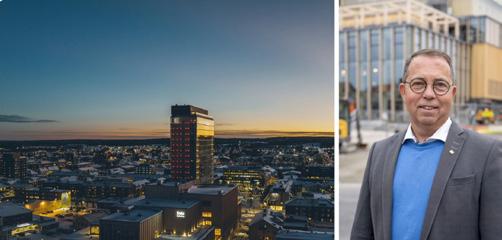
A meeting on future business opportunities between Skellefteå Kraft and small businesses was held in April 2025 at Skellefteå Innovation Park. The event brought together small and medium-sized enterprises and larger actors to discuss collaboration, energy solutions, and supplier opportunities. The meeting was organized by Skellefteå Science City and Skellefteå Kraft, with Green Transition North as a co-organiser.
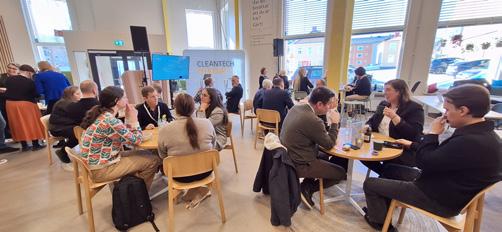
CDT participated in the Cleantech Meetup in Örnsköldsvik, which focused on access to testbeds. Our project manager, Annika Svensson, took part in a panel discussion and presented the university’s 5G testbed, which is part of Telia’s and Ericsson’s Innovation Network North Star. She also highlighted other initiatives offered by the Digitalisation 2030 project to support small and medium-sized enterprises in Norrbotten and Västerbotten.
Read more about Digitalisation 2030 at: digital2030.se
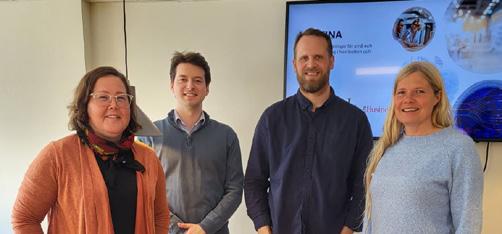
Björn Backe from CDT and LTU Business met with the local business community in Arjeplog. The discussions focused on artificial intelligence, future solutions, and how sustainable development can be created together. Many thanks to Argentis AB, Lotta Lestander and Therese Stenvall for the invitation to present the MARTINA and Digital 2030 projects to an engaged and forward-looking business network at Simloc Hotel.
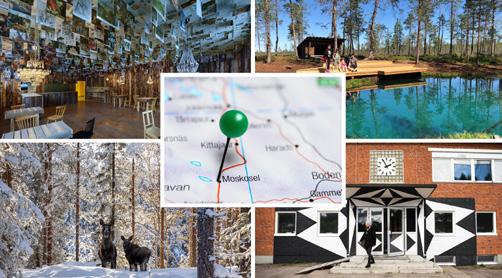
An Inspiration Day on rural development and collaboration was held in Moskosel on 28 August 2025, bringing together local actors, businesses, and public organisations. The programme included visits to Moskosel Creative Park, local businesses, and Abmo Adventure, an elk park, where participants gathered for discussions by the fire in a traditional Sami kåta.
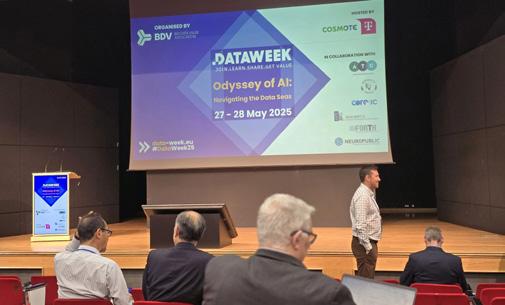
CDT was on site in Athens to take part in Data Week 2025, Europe’s leading meeting place for research and innovation in data and AI.
Under the theme “Odyssey of AI: Navigating the Data Seas”, experts from across Europe gathered to explore how artificial intelligence (AI) could be used to create value from data. The conference highlighted the importance of cross-sector and interdisciplinary collaboration to advance research and real-world application of data and AI.
Among the most interesting sessions were:
• Manufacturing-X and B2B Data Spaces: Discussions focused on opportunities and challenges related to enabling the circular economy and digital product passports.
• Democratising Digital Agriculture: Sessions addressed breakthroughs and ongoing challenges within digital agriculture.
• Sisyphus’ Code: The Ongoing Quest for Trustworthy AI: In-depth discussions explored the challenges of building trustworthy AI systems.
• Automation Meets Accountability: The sessions examined the future of regulatory compliance within AI and data spaces.
Björn Backe and Petter Kyösti participated in the conference with the aim of building new connections, sharing insights, and bringing valuable knowledge back to Sweden.
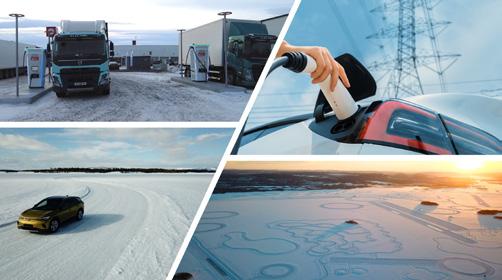
A Vehicle-to-Grid (V2G) demonstration was held in Arjeplog, focusing on the role of V2G in future energy systems. The event gathered industry representatives, researchers, and experts to share insights on electrification, grid stability, and e-mobility, and featured a live demonstration of the technology at Colmis. Participants also discussed challenges and opportunities for deploying V2G solutions in Sweden.
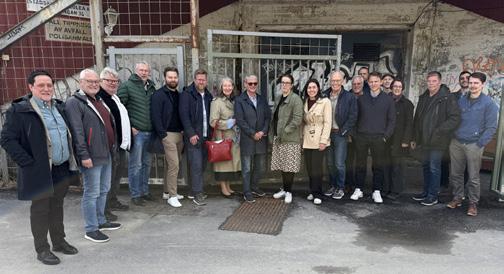
CDT hosted a visit from the Swedish Post and Telecom Authority (PTS) and the Broadband Forum. CDT presented its long-standing experience in running collaborative research and innovation projects together with both private and public stakeholders.
Professor Jaap van de Beek and industrial PhD student Gerasimos Damigos shared insights into Luleå University of Technology’s research in 6G, as well as robotics and AI. Telia and CDT also described their collaboration within the 5G Innovation Network North Star, led by Telia and Ericsson, and the group visited the university’s underground 5G test environment.
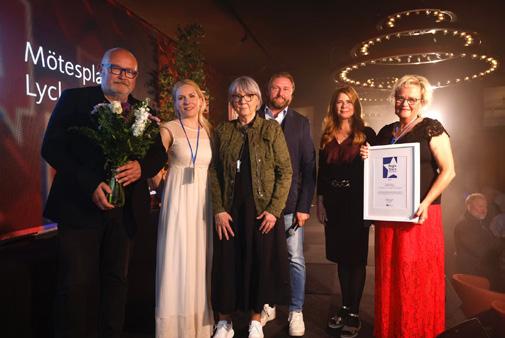
Regio Stars Västerbotten is an initiative by Region Västerbotten that highlights innovative regional development projects in Västerbotten. Through this award, Region Västerbotten showcases how actors in the region contribute to positive impact and value for Västerbotten and its residents.
SMALL would like to extend a special thank you to all engaged companies, associations, mobile libraries, and others who are helping to drive our pilot projects forward.
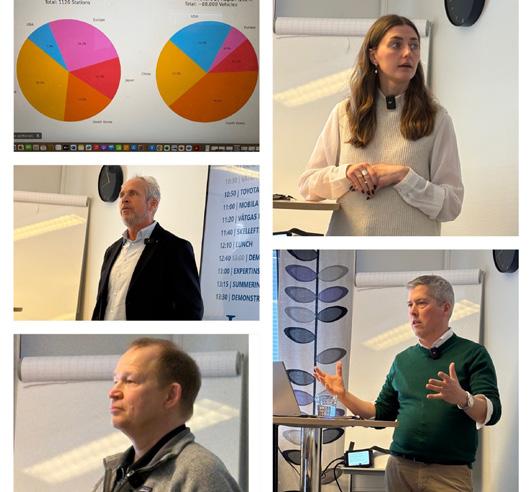
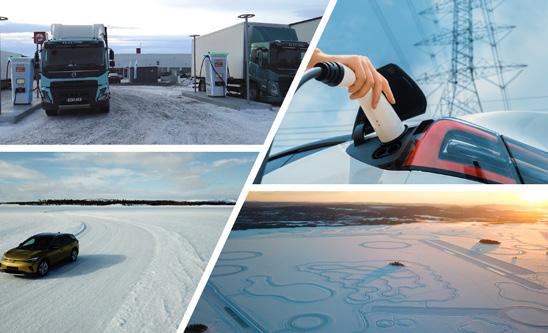
The project EmergNT gathered at Icemakers in Arjeplog for a seminar on the role of hydrogen and its future potential. Representatives from Region Norrbotten, Toyota, Skellefteå Kraft, Arctic Center of Energy, CH2ESS, LTU Business and others shared insights on industrial initiatives and hydrogen’s role in the transition to fossil-free transport and energy systems. The afternoon included demonstrations of hydrogen technology and test drives of the hydrogen-powered Toyota Mirai, as well as discussions on electric mobility in winter conditions.
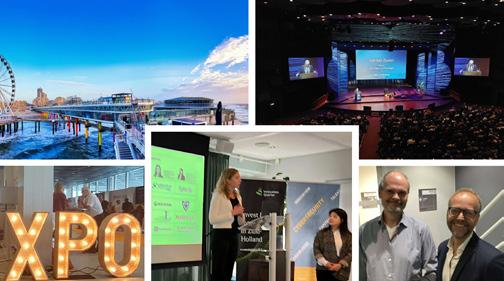
Digital 2030’s partner company Softjoy and Luleå University of Technology participated in The ONE Conference in The Hague as part of a Swedish delegation organized by Business Sweden, NCC-SE, and Cybernode.se. ONE is Europe’s leading cybersecurity conference. The program highlighted the importance of combining technology, legal frameworks, and collaboration to address future threats, as well as how the EU’s new NIS2 regulations can be implemented in practice.
At the conference, Softjoy presented its solution Domain Radar, which analyzes 1.4 million .se domains with a focus on DNSSEC, SPF, DKIM, DMARC, and geographical resilience. For LTU, the participation provided an opportunity to strengthen both research activities and collaboration with industry and public-sector actors.
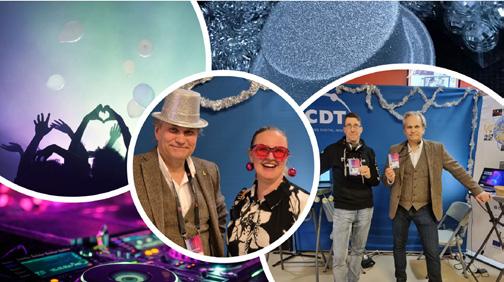
CDT and the project Let’s Create Music showcased their work at a stand during a heat of Sweden’s Eurovision Song Contest selection in Luleå. Using a 5G testbed, the project explores new ways to create and collaborate on music digitally, without distance being a barrier. The goal is to enable musicians to collaborate, create, and learn from their work regardless of where they live in the region.
Thanks to Luleå Municipality and our funders for supporting innovation at the intersection of music and technology.
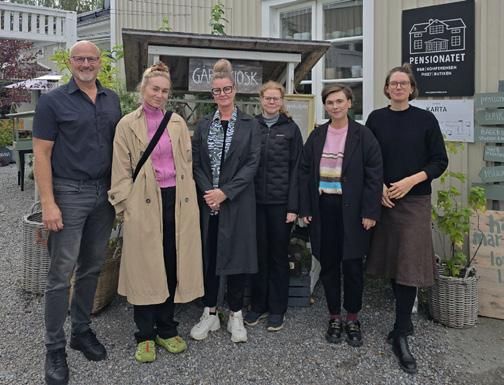
In September, the project group for our new project Build Equal held its kickoff and startup meeting. The project is a three-year initiative funded by the European Regional Development Fund, Region Norrbotten, Region Västerbotten, Skellefteå Municipality, Luleå University of Technology, and the Swedish Construction Federation. The aim of the project is to strengthen skills supply in the construction and civil engineering sector in Upper Norrland through gender equality mainstreaming and increased diversity. The project is owned by Luleå University of Technology, where CDT is proud to act as project lead together with the research subjects of Work Science and Design. Many exciting activities are ahead, so stay tuned. Would you like to get in touch with Build Equal? Please contact: Sara Sällström, Project Manager sara.sallstrom@ltu.se
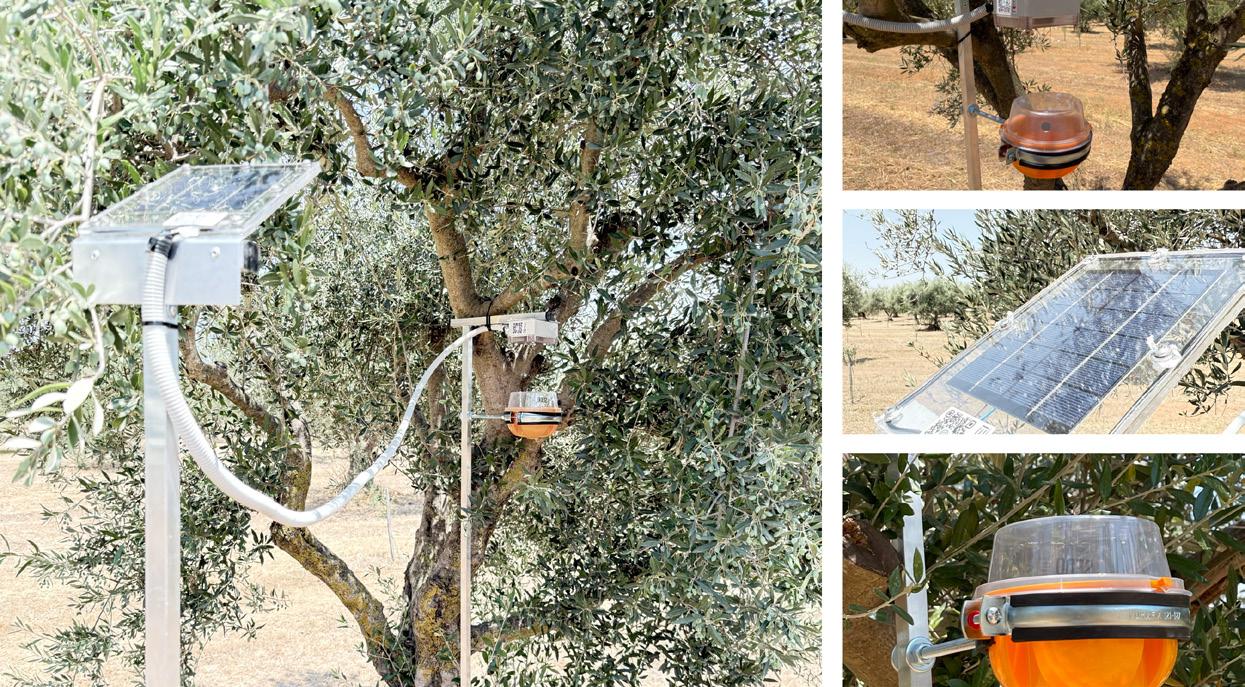
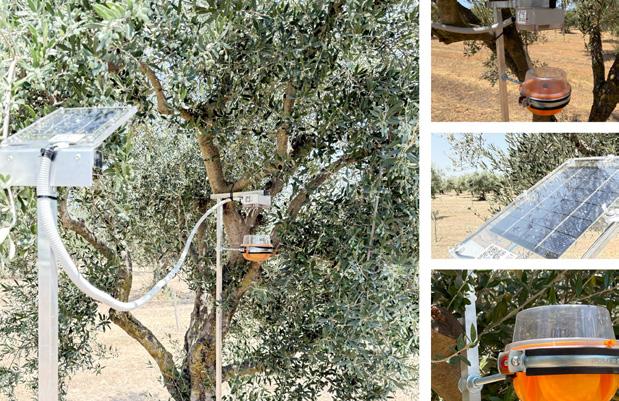
Within the I3-funded CDT project AMBITIOUS, the Region of Western Greece is implementing a pilot system for detecting infestations of the olive fruit fly (Bactrocera oleae).
“Specifically, through the Directorate of Rural Economy, the Region of Western Greece supported the installation of the first pilot detection system for olive fruit fly infestation in an olive grove in the area of Haikali, Achaia.
THIS PIONEERING SYSTEM, DEVELOPED BY PIKEI, A PROJECT PARTNER OF THE AMBITIOUS INITIATIVE, COMPRISES THREE MAIN COMPONENTS:
• An olive fruit fly trap, the well-known tool used to attract and capture the Bactrocera oleae.
• A solar panel, which provides the necessary energy for the system’s autonomous operation.
• A high-definition camera which, in combination with a microcomputing unit and cloud infrastructure, records and detects the presence of insect populations inside the trap.
The system is equipped with a rechargeable battery and solar panel, ensuring energy autonomy. It utilizes Internet of Things (IoT) and 5G technologies, enabling the collection and analysis of data to extract useful insights. This data will be used for the development of specialized software to identify and monitor insect populations, enhancing the capacity for timely and targeted interventions against the olive fruit fly.
This installation marks the first phase of the project.
In the near future, additional systems are planned to be deployed in two more olive groves within the Region of Western Greece, while the software development will continue, aiming to optimize the detection and monitoring of this harmful insect species.
The AMBITIOUS Project, which includes the participation of the University of Patras among other stakeholders from Western Greece, integrates cuttingedge technologies to protect olive cultivation and strengthen agricultural production through innovation and digital transformation.
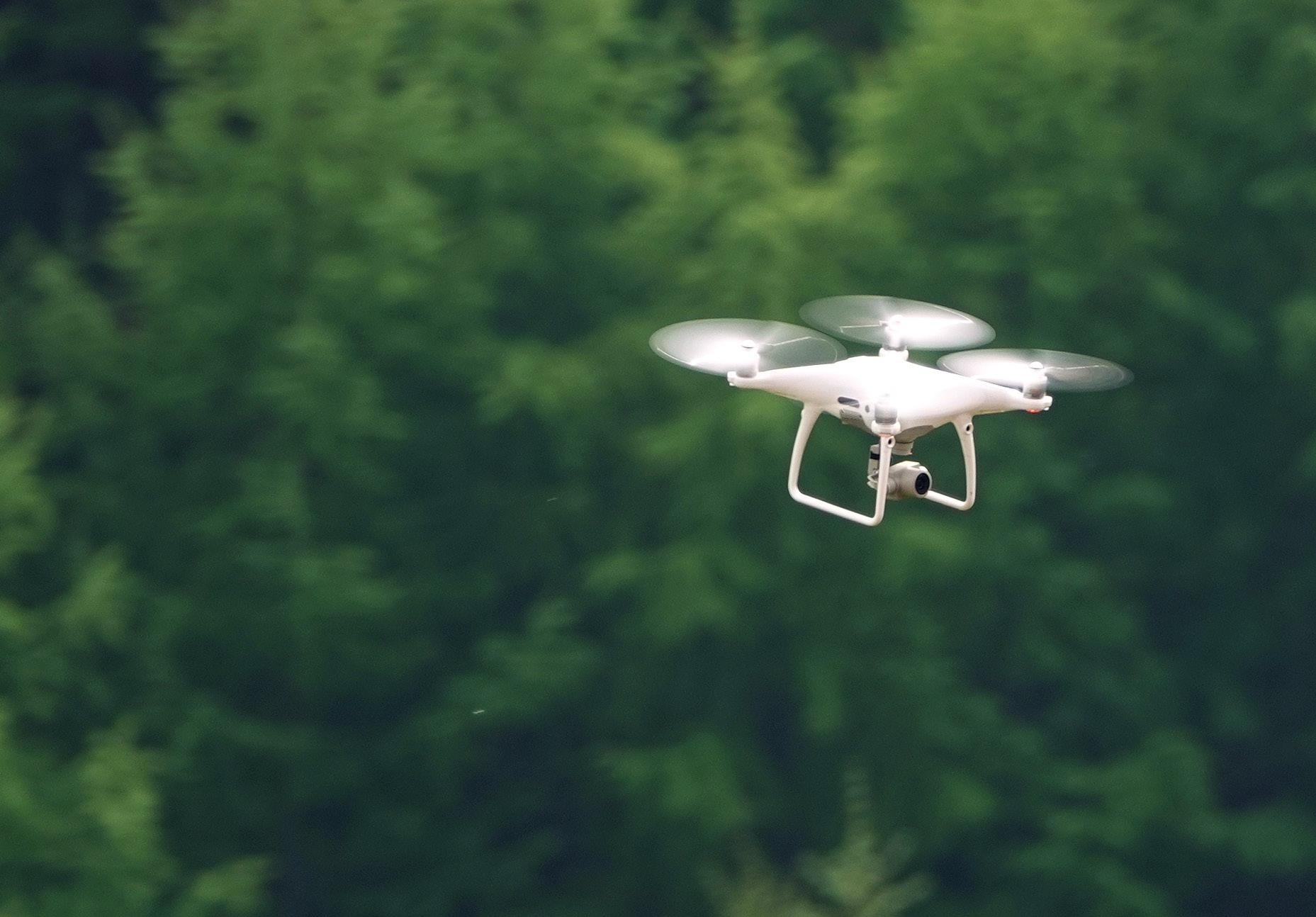
At Luleå University of Technology, the Robotics and AI research team is pushing the boundaries of what autonomous systems can achieve in extreme and hazardous environments. By developing advanced autonomous aerial and ground robots, the team is enabling safe, efficient exploration and mapping of areas too dangerous or inaccessible for humans.
These technologies are designed to operate without human intervention in environments such as underground mines. The primary goal is to collect critical data and generate high-resolution 3D maps, supporting scientific research, disaster response, and future space missions.
A recent mission demonstrates the practical application of LTU’s autonomous technology in underground environments. The LTU team deployed autonomous flying drones to explore and map a complex network of tunnels in a mining area. Due to the risk of collapsing ceilings, unstable ground, and limited visibility, human access was considered too hazardous.
Instead, autonomous drones navigated the underground passages and performed detailed 3D mapping—completely without exposing personnel to danger. The high-resolution data collected can support safety assessments, improve planning for future operations, and enhance situational awareness in challenging mining environments.
A leader in intelligent robotic exploration
LTU’s research contributes to a wide range of fields, including geological surveying, environmental monitoring, emergency response, and underground infrastructure inspection. Whether responding to a natural disaster or inspect-
ing an abandoned mine, LTU’s robotic systems are designed to adapt and operate autonomously in dynamic, high-risk settings.
With ongoing research and successful field deployments, LTU continues to establish itself as a leader in intelligent robotic exploration, unlocking new opportunities both on Earth and beyond.
This work is part of the AMBITIOUS project’s use case “Surveillance and Monitoring of Controlled Areas”, which focuses on the use of drones and advanced technologies for surveillance and object detection. By integrating edge computing, image recognition, and drone-generated data, the system enables efficient and autonomous infrastructure monitoring. The goal is to develop a framework that allows real-time transmission of video and photo streams from drones to a cloud-based system, powered by 5G connectivity for a range of applications.
Key objectives include enabling remote monitoring, automating surveillance processes, and addressing challenges related to connectivity and data security. To meet these goals, the proposed solutions involve accurate image annotation for reliable object detection, and real-time video streaming to the cloud using advanced 5G and edge computing technologies.

The digital divide remains a major barrier to equal participation in society. A recent article published by Lapland University of Applied Sciences examines how access to reliable internet affects education, employment, healthcare, and social inclusion, particularly in remote and sparsely populated areas.
Based on extensive interviews with local residents, businesses, and public sector representatives, the article highlights the real-world consequences of limited connectivity. Participants described challenges such as disrupted remote work, restricted access to digital healthcare, and economic limitations. At the same time, successful strategies for improving digital inclusion were identified, offering valuable models for future development.
The findings reinforce that connectivity is not just a technical issue but a key factor in regional development, economic sustainability, and social equality.
Read more: https://blogi.eoppimispalvelut.fi/lumenlehti/2025/02/06/ digitaalinen-kuilu-vai-tasa-arvo-verkkoyhteydet-yhdenvertaisen-jakestavan-yhteiskunnan-tukena/
Despite advances in cellular technology, some areas and residents in northern Sweden and Finland suffer from limited connectivity that hinders daily activities, such as remote work and schoolwork at home, and work and free time activities in the outdoors.
The questionnaire and interviews in the Arctic 6Gproject have revealed that although the connectivity problem is not a concern for the majority, it is still disturbing to those who suffer from it.
One place where the maintenance teams have observed connectivity problems, affecting their working efficiency and potentially safety, is a windmill park near Piteå, Sweden, consisting of 550 turbines and a hilly landscape. The connectivity is needed for staff driving and moving in the park area and on their way to and from there. In addition to the main fibre connection, a microwave link may be required to secure backup internet access if the fibre goes down.
Our initial work examined the possibility of using windmill towers as cellular towers. Offshore, the towers typically have terraces well above sea level, where antennas can be installed to form an inter-
park network. Onshore, however, these terraces do not exist, which means alternative solutions are needed.
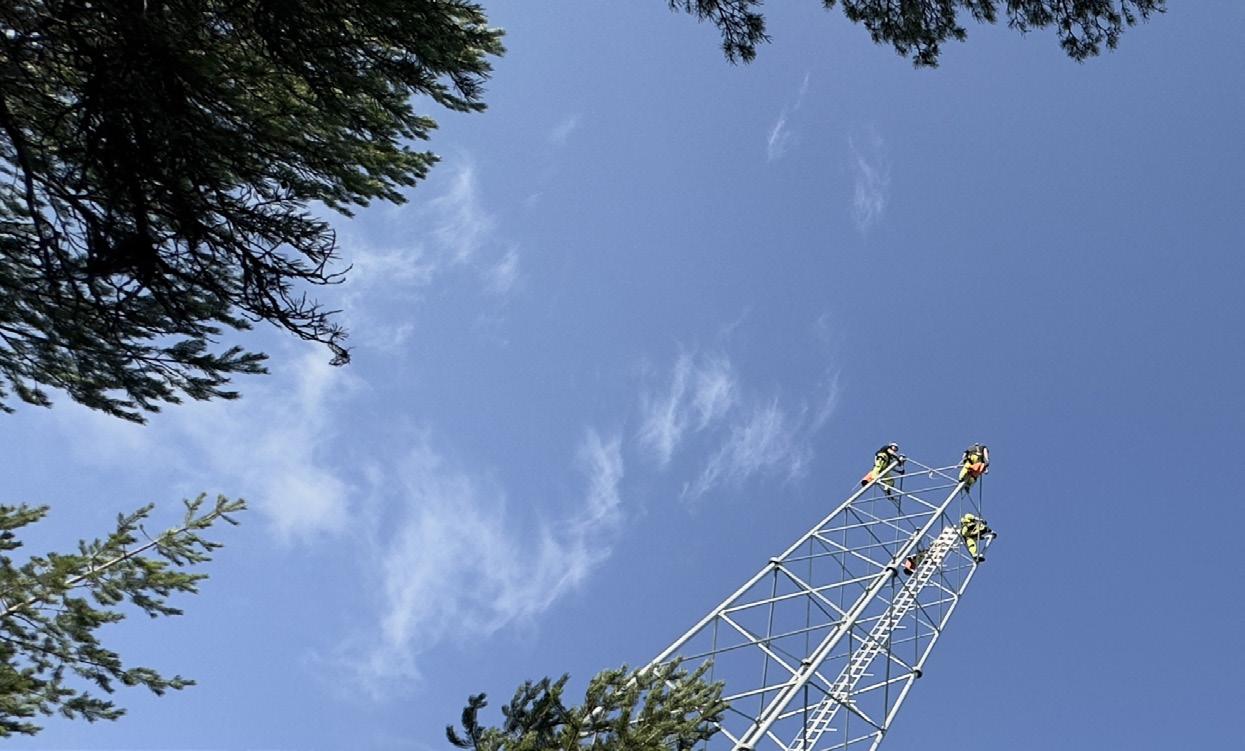
Another option is to mount the antennas on the nacelle, the rotating hub at the top of the windmill that carries the blades. This position provides practical benefits such as access, available electricity, and existing internet cabling. Its height, typically more than 100 metres, also improves radio propagation.
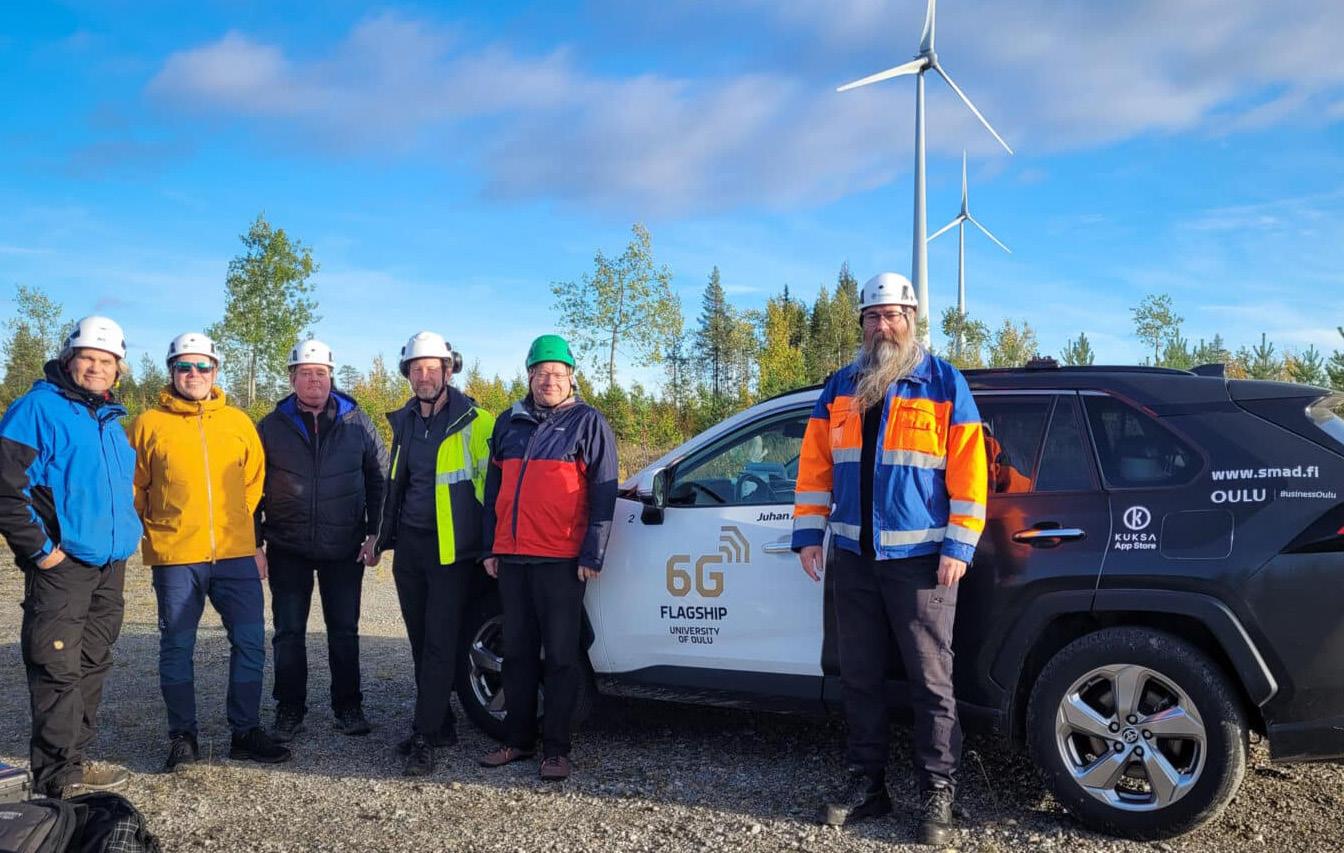
Developing the use of windmill towers as base stations requires further work. To support this effort, we conducted feasibility measurements on September 2, 2025 at DRAGALIDEN wind mill farm.
It is well established that wind farms, and even individual turbines, can interfere with radio propagation. The concrete and steel towers cause signal attenuation, while the rotating blades introduce additional disturbances. In radar applications, they are also known to create reflections.
Earlier studies have shown that signals passing through a wind farm can experience fades of 10–15 dB. To better understand conditions for equipment located inside the park, very close to a turbine, we carried out measurements near Piteå. Our initial results indicate that a single tower can cause about 20 dB of attenuation at 2.4 GHz and
3.8 GHz. The effect of the blades appears milder. The whole concept still requires further analysis. This work is part of the Arctic 6G-project, funded by Interreg Aurora and Region Norrbotten.
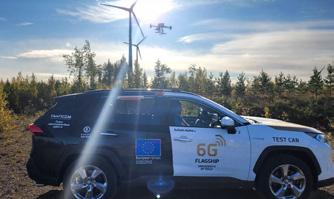
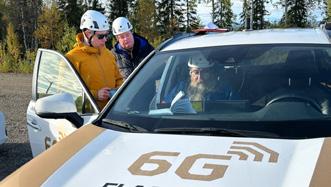
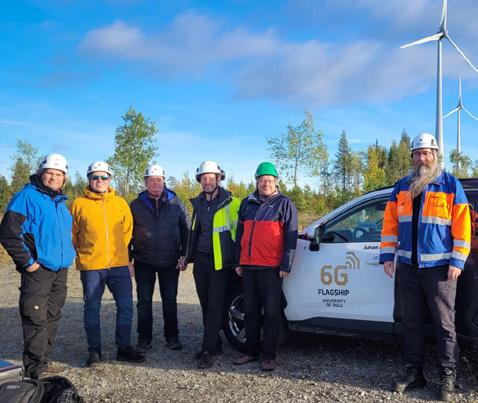
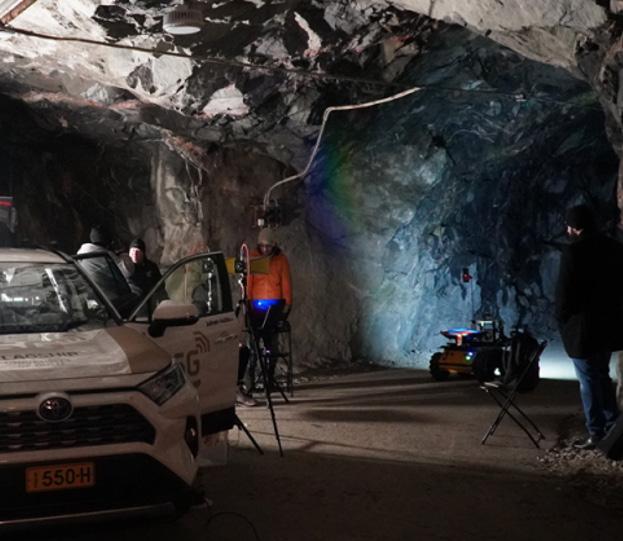
Researchers use the 6G Flagship test car to run measurement equipment during field experiments at the Piteå
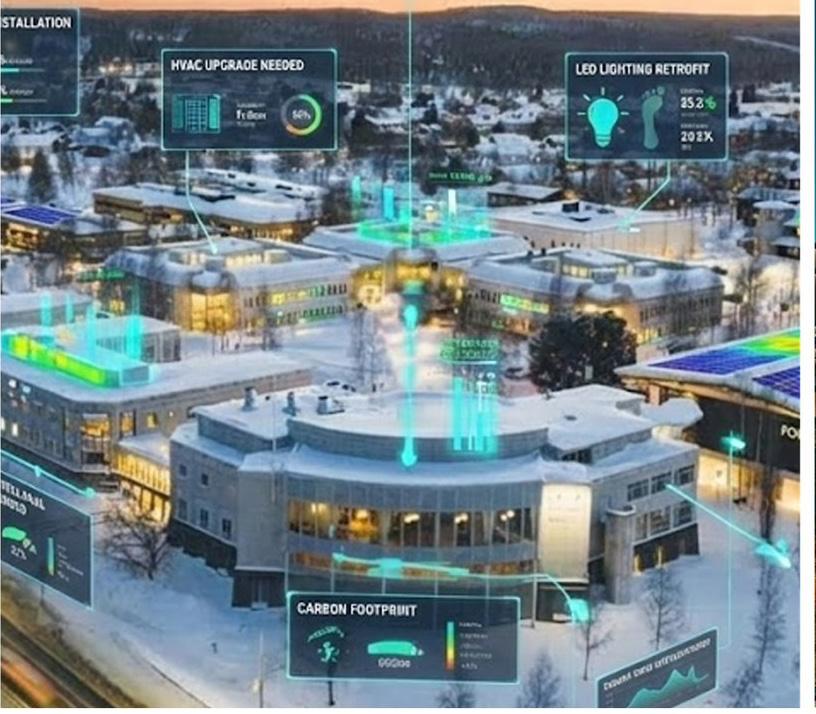
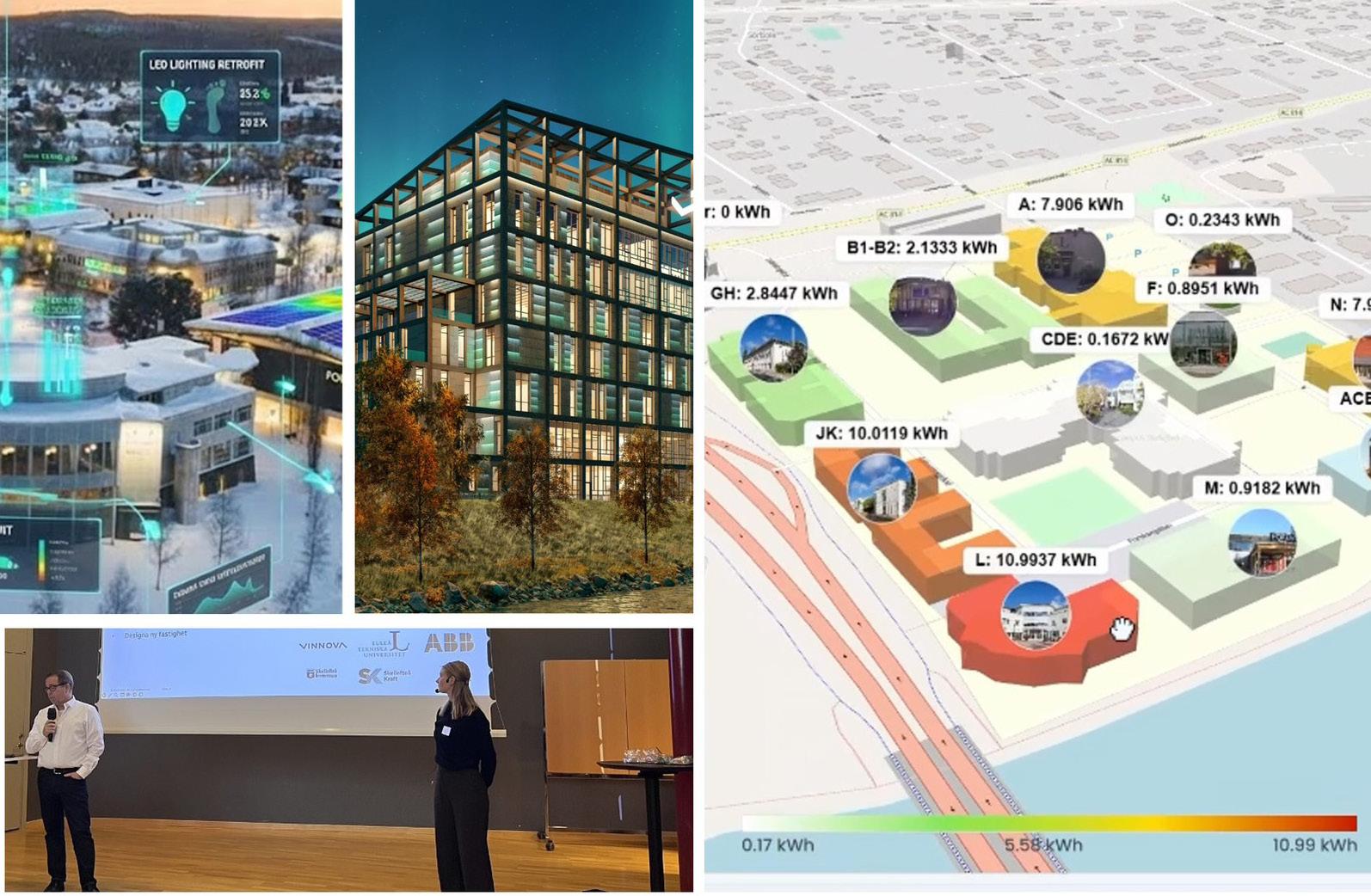
On 3 December 2025, the Vinnova- and Advanced Digitalisation–funded project Digital Urban Development – Campus Skellefteå held its final conference, focusing on sharing results and communicating the project’s conclusions.
The conference showcased how smart meters, energy profiles, and data visualisation can be used to reduce peak power shortages and optimise energy use in real time. Participants also saw how reuse, net-zero CO₂ targets, and advanced certifications are implemented in practice through ACE Powerhouse, and why robust, resilient energy systems are becoming critical as electrification accelerates. The event highlighted how future energy systems
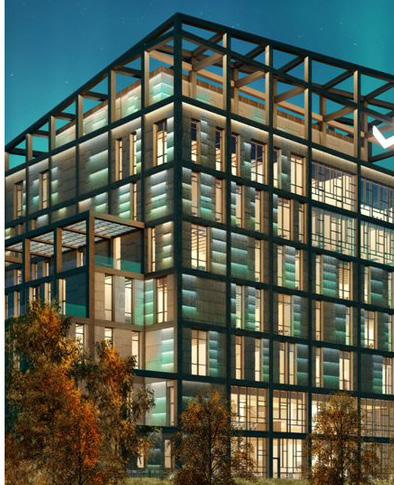
are shaped by AI, digital technologies, and new collaboration models between industry, academia, and municipalities. Together, the project partners, Luleå University of Technology, ABB, the Municipality of Skellefteå, Skellefteå Kraft, and Pratexo, have developed a test environment and new AI- and digitally driven energy solutions.
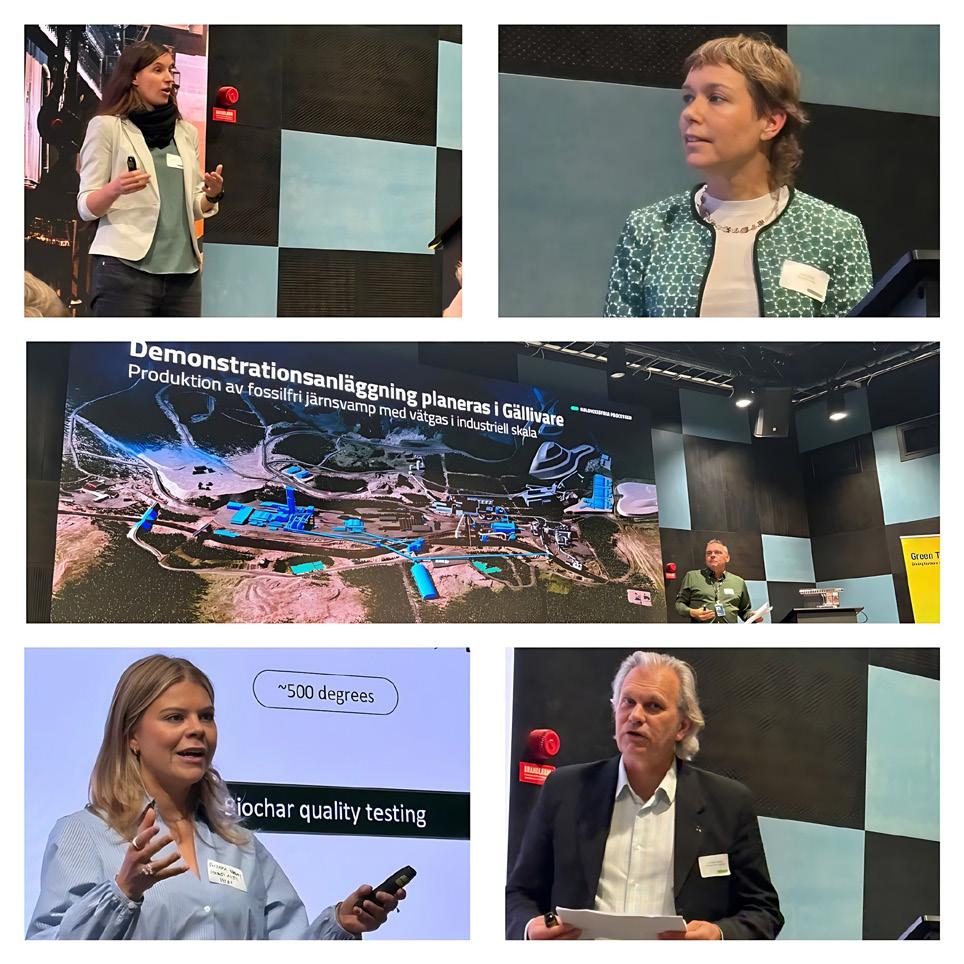
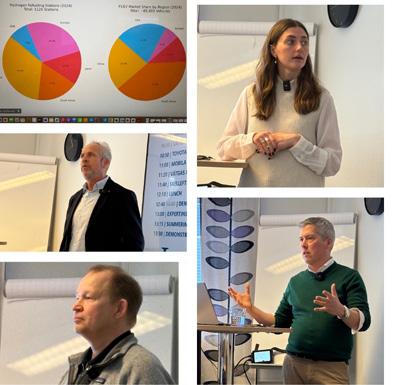
How can Northern Sweden maintain momentum in the green transition? This question was at the center when industrial companies, researchers, and societal actors gathered at the LKAB Lab & Innovation Center in Luleå Science Park during the event “The green transition is moving forward – how do we stay on track?”
The event was organized by Green Transition North in collaboration with CDT, LTU Business, and Skellefteå Science Park. Led by moderators Michael Nilsson and Björn Backe from CDT, the day offered inspiration, concrete examples, and a strong future focus.
Companies and organizations such as Bodens Energi, LKAB, Harads Arctic Heat, LTU, Grepit, and Visolar Energy shared insights ranging from societal transformation and technical challenges to biochar, energy efficiency, and the energy systems of the future.
The presentations were followed by dialogue sessions where participants discussed topics including “How do we secure sustainable energy supply
for industrial transition?” and “What is required to build sustainable supply chains?”
The moderators emphasized the importance of turning visions into concrete projects that deliver real results. Participants, in turn, highlighted collaboration as a key factor in safeguarding northern Sweden’s leading position in the green transition.
Green Transition North strengthens the region’s role as an innovation engine for sustainable development in the north. By bringing together industry, academia, and small and medium-sized enterprises, the project creates a platform for applied research, pilot solutions, and future collaboration.
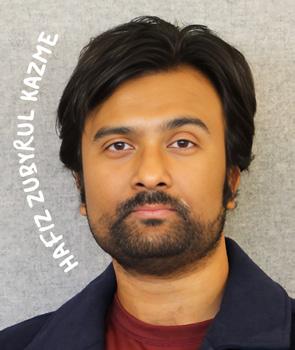
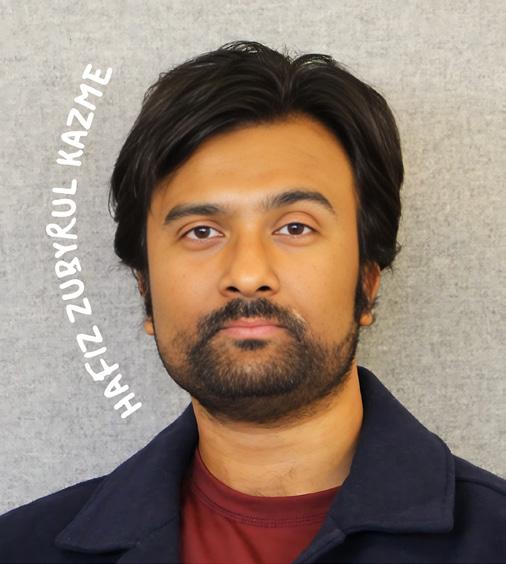
We interviewed Hafiz Zubyrul Kazme, a Doctoral Student in Electric Power Engineering at Luleå University of Technology, to learn more about his work within the VISA/5G project..
Hafiz is contributing to research on how 5G can enhance the reliability and flexibility of digital substations in modern power systems. His work focuses on identifying key challenges in critical power infrastructure—particularly regarding latency and system stability.
Looking ahead, he aims to validate his findings through field trials and contribute to the green energy transition by advancing technological innovation.
Bachelor’s Degree in Electrical and Electronic Engineering Ahsanullah University of Science and Technology, Dhaka, Bangladesh (2012)
Master’s Degree in Electric Power Engineering Chalmers University of Technology, Gothenburg, Sweden (2021)
Current Role: Doctoral Student in Electric Power Engineering, Luleå University of Technology
Field of Research: Reliability analysis of digital substations utilizing 5G communication networks
What motivated your decision to pursue a Master’s in Electric Power Engineering at Chalmers University of Technology in Sweden after completing your Bachelor’s in Bangladesh?
Pursuing a Master’s degree from a well-regarded institution abroad had always been a personal dream of mine. Coming from Bangladesh, where local universities often lack global recognition, I was determined to seek academic excellence on an international platform. When the opportunity finally arose, Sweden stood out to me for its strong education system and emphasis on innovation and sustainability. Among the choices,
Chalmers University of Technology immediately caught my attention for its rich heritage, academic reputation, and cutting-edge research in electric power engineering. Joining Chalmers was not only a step toward fulfilling a long-held dream, but also a chance to learn from some of the best minds in the field.
Having studied in both Bangladesh and Sweden, what differences have you observed in academia between the two countries?
There are notable differences in the academic environments of Bangladesh and Sweden. In Sweden, I found the campuses to be much more student-centric, with inspiring spaces, well-equipped labs, and 24/7 access to study facilities. The teaching approach is also more
interactive—lecturers devote significant time and attention to each topic, encouraging deeper understanding. Most importantly, students are given greater freedom to think critically and creatively, especially when tackling real-world problems.
Can you elaborate on your research regarding the reliability analysis of digital substations utilizing 5G communication networks? What specific challenges are you addressing in this area?
My research focuses on assessing the reliability of digital substations when traditional wired communication networks are replaced with wireless 5G technology. Since the power industry is typically cautious about adopting new technolo-
gies, my goal is to identify the key challenges of this transition and propose viable solutions. A major issue I’m currently tackling is the higher and more variable latency in 5G networks compared to wired networks. I’m analyzing how this affects the real-time performance and operational stability of digital substations, with the aim of ensuring a reliable and seamless integration of 5G into critical power infrastructure.
How does the implementation of 5G technology enhance the reliability and efficiency of substation automation systems compared to traditional communication methods?
As modern power grids become more dynamic with the integration of renewables and energy storage, substations need greater flexibility and responsiveness. 5G technology opens up a new level of connectivity and adaptability compared to traditional wired systems. By eliminating physical cabling, maintenance becomes simpler and the substation becomes highly scalable. 5G also supports denser device communication, enabling smarter, data-driven operations with reduced risk of single points of failure—ultimately enhancing reliability. Moreover, it allows geographically distant substations to communicate and coordinate seamlessly, improving overall system efficiency and resilience.
What are the primary challenges in achieving vendor-independent substation automation, and how does the VISA/5G project address these challenges?
One of the main challenges in achieving vendorindependent substation automation is ensuring seamless interoperability between devices from different manufacturers. While the IEC 61850 standard provides a strong foundation, small inconsistencies in implementation can still arise. In critical infrastructures like substations, even minor compatibility issues can have serious consequences. The VISA/5G project brings together industry leaders—such as Hitachi Energy, Vattenfall, Ericsson, Telia, and Metrum— to collaboratively address these challenges. By aligning efforts early in the development process, the project aims to identify and resolve potential issues before the technology is deployed, paving the way for more robust, vendor-agnostic substation automation.
In your opinion, what are the emerging trends in this area that professionals should pay attention to in the coming years?
I believe the future of power systems is increasingly data-driven. Innovations in automation, predictive maintenance, and AI-based decisionmaking all rely on the ability to collect and process vast amounts of data efficiently. With AI becoming more capable, robust communication infrastructure—like 5G—must evolve alongside to support real-time data exchange across the grid. In the coming years, professionals should focus on how AI, big data, and next-generation communication technologies can work together to enable smarter, more flexible, and sustainable power systems. Strengthening these areas will be key to accelerating the green energy transition.
Is there a particular contribution in your research that you feel especially proud of?
Although I’m still early in my research journey, I’m proud to have identified key challenges in transitioning digital substations to 5G networks. One contribution I value deeply is serving as a
bridge between the electrical power and communication industries. To do that effectively, I had to immerse myself in both fields to truly understand their perspectives—a demanding but ultimately rewarding experience. Helping both sides communicate more clearly has made our collaboration more productive, and it’s fulfilling to know my efforts are playing a part in advancing this important transition.
The next step in my research is to conduct field trials of the technology, gather essential data, and validate the key challenges and areas for improvement. Once we fully unlock the potential of 5G communication in the context of electrical substations, the opportunities for innovation will be vast. In the long term, I aim to focus my career on exploring new technologies and helping integrate them into industries, ultimately driving progress and unlocking new possibilities for growth and efficiency.
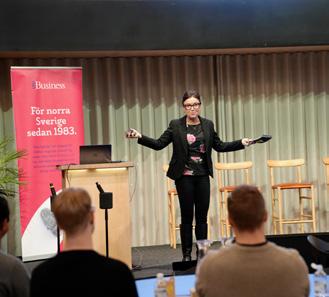
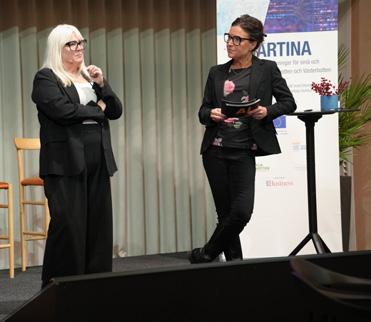
“If we don’t take the time to learn, we risk becoming irrelevant”
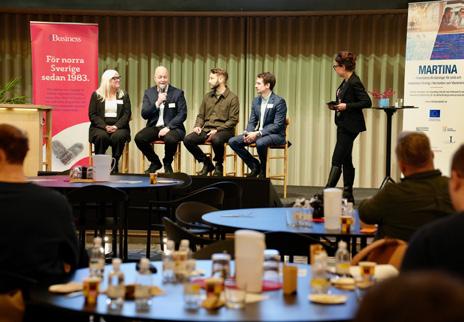
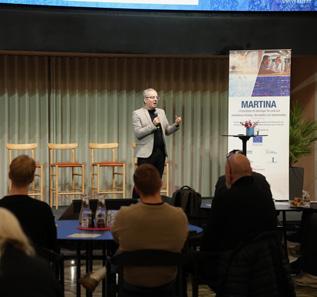
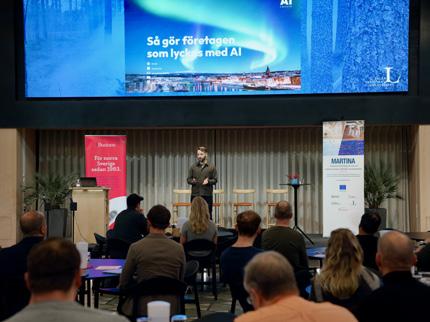
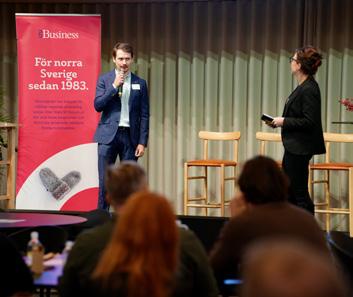
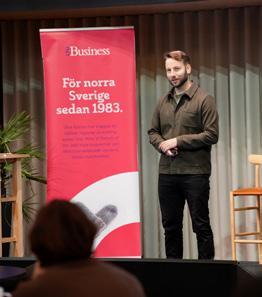
Together with AI Sweden, the MARTINA project invited business leaders from the region to Vetenskapens Hus in Luleå for an afternoon dedicated to exploring how artificial intelligence and digitalisation can strengthen competitiveness and support sustainable growth.
A clear message ran through the inspirational keynote by Per Clingweld from AI Sweden: the winners of the future are learning organisations. As an AI Change Agent, he shared experiences of turning AI from vision into reality.
“ The more we know, the more we invest, and the more value we create. But if we don’t take the time to learn, we risk becoming irrelevant,” he said.
Per emphasised the importance of learning speed, experimentation, and leadership that leads by example.
“Learning is about iterating and experimenting to move forward—today more than ever, when technology is accessible to so many.”
From LTU Business, Katharina Saalo offered practical advice on how companies can start working with AI:
“Start with the small irritations, where work is duplicated or things fall between the cracks. Take small steps, dare to begin, analyse, and adjust.”
Petter Kyösti from Luleå University of Technology, project manager for MARTINA, highlighted the crucial role of data:
“AI will never be better than the data we train it on.”
“Garbage in, garbage out, squared. AI will never be better than the data we train it on.”
The day also featured company cases and panel discussions on future digital competitiveness. A big thank you to all participants, and feel free to contact us if you would like to learn more about the possibilities of AI.
The event was organised by the MARTINA project in collaboration with AI Sweden. Co-funded by Region Norrbotten, the European Regional Development Fund, the Swedish Agency for Economic and Regional Growth (Tillväxtverket), Vinnova, Luleå University of Technology, the Municipality of Luleå, and the Municipality of Skellefteå.
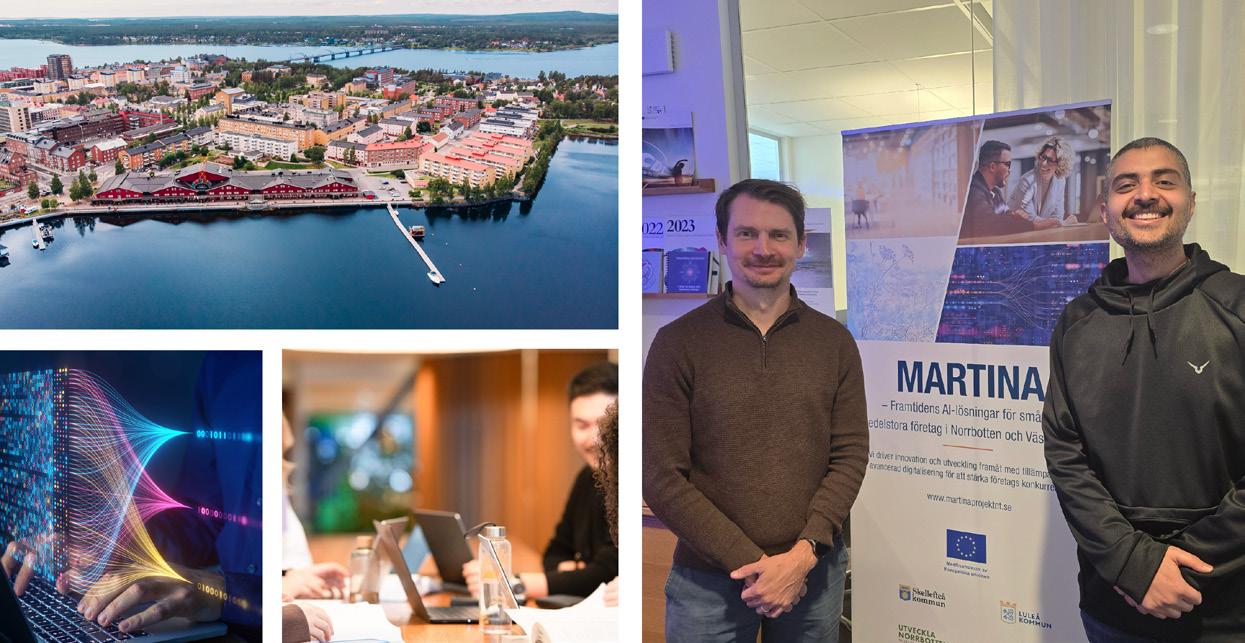
The MARTINA project enables both researchers and small and medium-sized enterprises to develop, test, and scale AI solutions locally within the region. The project contributes to the establishment of an AI cluster—a powerful technical environment for training and testing AI solutions. It serves as a shared engine for innovation, where new ideas can rapidly be transformed into reality, whether they originate from academia or from a local company facing a concrete challenge.
We spoke with Sumit Rakesh, Research Engineer specializing in AI and digital infrastructure for machine learning at Luleå University of Technology. His background is broad, covering both hardware installation and the automation of AI solutions from code to deployment.
Sumit explains:
“The cluster consists of graphics processing units (GPUs), high-speed networks, and shared storage systems that together make it possible to train and test advanced AI models efficiently and accessibly.”
The planned computing infrastructure will strengthen the research infrastructure at Luleå University of Technology and includes an AI cluster accessible to researchers, students, companies, and other public-sector actors. Use cases range from student courses, master’s theses, and doctoral projects working with large language models, to local organizations across all industries. For this reason, the system is designed to be flexible and upgradeable, capable of meeting current demands while remaining prepared for future needs.
The MARTINA project focuses on strengthening small and medium-sized enterprises by making AI practically accessible. The AI cluster is a tangible tool in this work and provides:
• A secure test environment where companies can experiment with AI solutions without investing in costly hardware
• Workshops and guidance to translate research knowledge into practical value
• Migratable solutions, allowing models and tools developed in the cluster to be transferred to companies’ own IT environments
The AI cluster also strengthens the university’s research environments and lays the foundation for a future Nordic data lab.
Within the AI cluster, researchers and companies meet in a shared digital environment:
• Researchers contribute expertise in high-performance computing, advanced AI models, analytics tools, and evaluation methods
• Companies bring real-world data and concrete needs
• An integrated development environment ensures that technology and infrastructure operate seamlessly in the background, allowing full focus on co-creating solutions
This enables research ideas and business needs to converge within a common technological infrastructure, where solutions can be rapidly tested, refined, and implemented in practice.
• Easy access to expertise and advanced technology, enabling learning before major investments
• Rapid onboarding, with ready-made templates and tools that help move from data to solution within weeks
• Efficient and climate-smart operation, as shared infrastructure reduces both costs and energy consumption
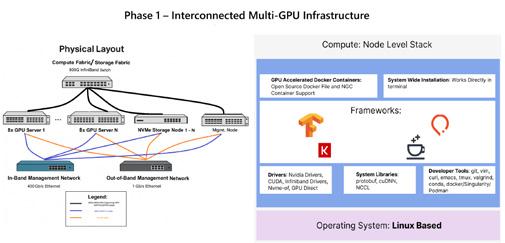
Phase 1 – Foundation
A network of interconnected AI servers with intelligent resource allocation is being established, tailored for large-scale data experiments. Development of the cluster is supported by funding from the Kempe Foundations and the European Regional Development Fund.
The high-performance GPU computing cluster is designed to support largescale, data-intensive training workflows and includes:
• Compute nodes with multiple tightly coupled GPUs connected via NVLink for high-speed intra-node communication, combined with 800 Gb/s InfiniBand using NVIDIA GPUDirect RDMA and NCCL for inter-node GPUto-GPU communication
• Storage nodes connected to the InfiniBand fabric with RDMA support, enabling direct GPU-to-storage transfers, as well as to a 400 Gb/s Ethernet network for external data upload and download and integrated data management operations
• A management node running all control-plane services (Slurm, LDAP/ PAM) and mounting BeeGFS for orchestration and user authentication
The cluster is further enhanced with software and tools that enable end-toend AI workflows, from training to production, either in real time or batch mode. Models and solutions developed in the environment can be seamlessly deployed to company-owned systems, private data centers, or public cloud platforms.
“We are building a hybrid AI-enabled cluster where all heavy computation takes place centrally, while edge devices can send data and receive models for local inference,” says Sumit Rakesh.
He continues:
“Our centralized GPU-based environment handles both training and inference and is directly connected to edge devices. We use this backend system to train models in computer vision, natural language processing, and other machine learning domains, and then distribute quantized weights to edge nodes for on-device inference. This ensures that all computationally intensive AI tasks are performed within the cluster, while edge nodes can send data for processing or download lightweight, optimized models for local inference. We retain full control, orchestration, and intelligence in the central cluster, while enabling real-time decision-making flexibility at the edge.”
The cluster has also contributed to the establishment of a new initiative:
Bothnia EDGE-HPC Lab
Does your company have an AI challenge you would like to explore or develop?
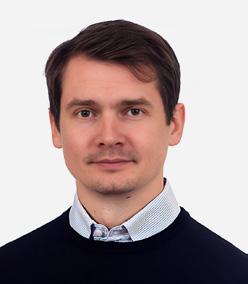
You are welcome to contact Petter Kyösti for more information.
Email: petter.kyosti@ltu.se
Phone: +46 70 284 11 96

“My goal is to use AI to solve
Richa Upadhyay has been instrumental in bridging the gap between academic research and practical applications. Her work in both the AIDIHN and the MARTINA project at Luleå University of Technology, has equipped her with a deep understanding of the unique challenges regional companies face.
Now, as she completes her PhD (March 2025), she is eager to leverage her expertise in AI to tackle real-world problems, aiming to make technology more accessible and sustainable.
Can you tell us about your dissertation?
My dissertation focuses on making Artificial Intelligence (AI) smarter and more efficient by enabling it to learn multiple tasks simultaneously, much like humans do. Currently, most AI models are trained to perform a single task at a time, such as recognizing objects in images or predicting weather patterns. However, real-world problems are interconnected.
Consider self-driving cars—they need to detect pedestrians, read road signs, and predict traffic movements. Instead of training separate AI models for each task, Multi-Task Learning (MTL) allows AI to learn them together, making it faster, smarter, and more efficient. Learning one skill helps improve others, similar to how humans learn. This research enhances AI’s
sustainability because MTL enables a single AI model to handle multiple tasks, reducing the need for vast amounts of data and computing power. This leads to lower energy consumption and a smaller carbon footprint. Instead of developing a new AI for every problem, we can create one flexible AI that adapts to multiple tasks, making AI more practical, efficient, and environmentally friendly.
How have your experiences in the AIDIHN and MARTINA projects influenced your research?
Participating in these projects was a valuable learning experience, as it allowed me to see how AI can be applied in the real world, especially in small
and medium-sized enterprises (SMEs) in the Norrbotten region. In research, we often deal with theoretical problems and ideal datasets, but in industry, the challenges are different and more practical. Many SMEs wanted to explore AI but did not know where to start. Our role was to help them understand AI, build proof-of-concept solutions, and adapt AI to their specific needs. This helped me realize that the biggest challenge is not always technical complexity—it is finding the right solution that fits the business.
These experiences changed the way I think about AI development. Instead of focusing solely on theoretical improvements, I began considering how AI can be made more adaptable to different industries and how we can reduce computational costs so that AI is accessible to SMEs, not just large tech companies. These projects reinforced the idea that AI should be useful, scalable, and sustainable. In a way, I worked towards bridging the gap between academic research and industry applications, aiming to make my research more practical and impactful.
After completing my PhD, I am seeking a position where I can apply my skills and research to real-world challenges. My goal is to use AI to solve meaningful problems and make technology more accessible while keeping sustainability in focus. I am particularly interested in roles that allow me to bridge AI research with practical applications, making AI more efficient, adaptable, and beneficial for society. I would love to work in an environment where I can continue learning, collaborate with diverse teams, and
contribute to innovative AI solutions—whether in industry, applied research, or interdisciplinary research.
How can your research and expertise be relevant to companies in the Luleå region?
Luleå has a growing ecosystem of technology, manufacturing, energy, and AI-driven industries. My research in computer vision, particularly in building efficient AI systems, can contribute in several ways:
• Automation & Process Optimization:
AI can enhance manufacturing, logistics, and industrial automation. Companies in Luleå looking to improve efficiency, predictive maintenance, or quality control can benefit from scalable and adaptable AI solutions.
• Assisting in AI Adoption:
Many companies in the region are interested in AI but face challenges such as limited data, computing power, and technical expertise. My competence in AI development and practical implementation can help these companies navigate these challenges, identify suitable solutions, and integrate them effectively into their operations.
• Collaboration with Local Industries:
Through projects like AIDIHN and MARTINA, I have already worked with companies in the region, helping them understand and implement AI. This experience allows me to bridge the gap between research and industry, making AI solutions practical and business-friendly.

“My competence in AI development and practical implementation can help companies navigate challenges, identify solutions, and integrate them into their operations.”
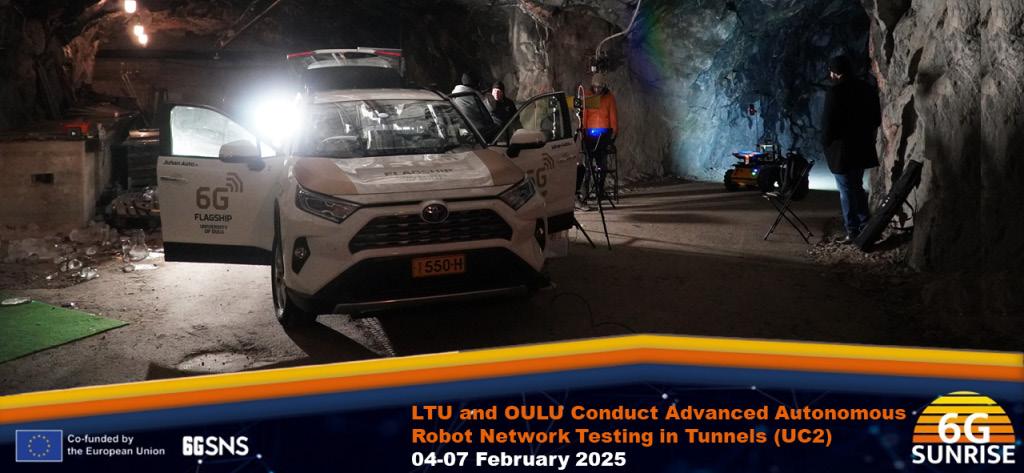
Between February 4–7, 2025, Luleå University of Technology and the University of Oulu completed the installation and conducted the first series of advanced network tests to evaluate the performance of autonomous robots in controlled tunnel environments.
The tests focused on various network configurations, power levels, and antenna settings to optimise data transmission and reception for autonomous operations.
The high-priority tests were designed to measure key performance indicators (KPIs) related to radio frequency (RF) and network parameters. These included:
Downlink (DL)-oriented network tests: Conducted using a single power level and modulation, with one measurement per tunnel.
Uplink (UL)-oriented network tests: Performed at two different power levels and three modulation settings, with two measurements per tunnel. These tests focused on evaluating RSRP, RSRQ, RSSI, SINR, latency, and throughput to establish optimal configurations for autonomous robots operating underground.
Additional tests were conducted to assess the network’s ability to handle real-time data streaming and performance under different conditions:
Dummy data streaming to the EDGE server: Using UL-oriented networks, these tests determined the best power level and modulation with three uplink data stream rates (20, 50, and 90 Mbps). Each tunnel underwent three measurements.
Reflector testing: Evaluated the impact of signal reflectors on UL-oriented networks. This included different uplink data stream rates (20, 50, 90 Mbps plus dynamic adjustments) and further latency and delay analysis.
The final phase of testing involved offloading LiDAR and camera processing to an EDGE server, optimising data handling for autonomous robot operations. This included:
The best power and modulation levels, as determined by previous RF measurements.
Three uplink data stream rates (20, 50, 90 Mbps plus dynamic adjustments).
Three measurements per tunnel.
The tests provided valuable insights into how network configurations impact autonomous robot functionality in tunnel environments. LTU and UOULU researchers gathered crucial data for enhancing network infrastructure to support reliable autonomous operations by assessing latency, errors, packet loss, and throughput.
Moving forward, LTU and UOULU plan in the next test cycle to further analyse the collected data to refine network settings, improve EDGE processing efficiency, and explore the potential for integrating enhancements such as dynamic rate adjustments and improved reflector utilisation.
The successful completion of these tests represents a significant step toward advancing autonomous robotic systems in challenging underground environments, paving the way for improved industrial and commercial applications through the ongoing EU SUNRISE-6G project.

Our collaboration with LTU’s research groups remains a very important component of our work. Today, we collaborate actively with several different areas of research.
Automatic control
Automatic control is “the science of automated systems”. Simply put, automatic control theory is about controlling systems so that they behave as desired.
CONTACT:
Dina Shona Laila, Professor dina.shona.laila@ltu.se +46 (0)920-493448
Biochemical Process Engineering
The subject is bout developing environmental friendly technologies that optimizes how renewable fossil based coal reserves can be used.
CONTACT:
Ulrika Rova, Professor Ulrika.rova@ltu.se +46 (0)920-491315
Cyber-Physical Systems
Focus is on fully integrated software and application architectures with implementations of highly distributed embedded systems. The systems interact with each other and their surroundings to enable secure, goal-oriented, autonomous and developable solutions.
CONTACT:
Jerker Delsing, Chaired Professor jerker.delsing@ltu.se +46 (0)920-491898
Cyber Security focuses on technical security aspects as well as protection of systems that are connected to the Internet and include protection of software, data, and hardware
CONTACT:
Karl Andersson, Professor, Dean karl.andersson@ltu.se +46 (0)910-585364
Dependable Communication and Computation Systems
The research subject focus on cyber physical systems and Internet of Things, simulation of complex distributed systems, agent-based architectures and bio-inspired control in complex industrial infrastructures, among other things.
CONTACT:
Valeriy Vyatkin, Chaired Professor valeriy.vyatkin@ltu.se +46 (0)920-492505
Design research is conducted within, among other things, Engineering Technology and development of methods used with modern design technology, multidisciplinary collaboration in design, cultural aspects of global design and ergonomics and design.
CONTACT:
Åsa Wikberg Nilsson, Chaired Professor Asa.Wikberg-Nilsson@ltu.se +46 (0)920-491342
Electric Power Engineering
Electric power engineering covers studies of sustainable systems for production of electrical energy, transport of electrical energy and the interaction between the power grid, electricity production and electricity consumption.
CONTACT:
Sara Rönnberg, Professor +46(0) 910-585721 sarah.ronnberg@ltu.se
Electronic Systems
The research subject includes electronic design, measurement technology and electromagnetic compatibility for control, monitoring and instrumentation of technical processes and systems.
CONTACT :
Jonas Ekman, Chaired Professor Jonas.Ekman@ltu.se +46 (0)920-492828
Energy Engineering
Energy engineering concerns the development of technologies and processes in order to build a sustainable energy supply.
CONTACT:
Marcus Öhman, Chaired Professor marcus.ohman@ltu.se +46 (0)920-491977
Entrepreneurship and Innovation
The subject deals with the development of firms and organizations with a specific focus on business development based on innovative products and services, production solutions or ways to lead and organize activities.
CONTACT:
Vinit Parida, Chaired Professor vinit.parida@ltu.se +46 (0)920-492469
Experimental Mechanics
Involves the development of experimental methods for studying phenomena within the field of applied mechanics.
CONTACT:
Mikael Sjödahl, Chaired Professor +46(0) 920-491220 mikael.sjodahl@ltu.se
Fluid Mechanics
The Focus is on flow through porous media, multiphase flow, flow with free surfaces and in-stationary flow.
CONTACT:
Staffan Lundström, Chaired Professor staffan.lundstrom@ltu.se +46 (0)920-492392
Human Work Science
The research group Human Work Science is part of the Division Humans and Technology. Since 1974, we have conducted research and education within human work science in both technical and social science sectors.
CONTACT:
Lena Abrahamsson, Chaired Professor lena.abrahamsson@ltu.se +46 (0)920-492107
Industrial Marketing
Industrial Marketing involves activities and processes for creating, communicating, and delivering value to customers and other stakeholders.
CONTACT:
Maria Ek Styvén, Chaired Professor Maria.Styven@ltu.se +46 (0)920-491501
Information Systems
Information Systems covers design and use of information technology in relation to people, organizations and societies.
CONTACT:
Ahmed Elragal, Chaired Professor ahmed.elragal@ltu.se +46 (0)920-493670
Law
The research in law have different legal bases for environmental and natural resources.
CONTACT:
Maria Pettersson, Chaired Professor +46(0) 920-492195 maria.pettersson@ltu.se
Machine Design
With a background in computer-aided computational methods, Machine Design has evolved to work with a research profile that supports simulation-driven product development. The research areas are modeling, simulation and product development.
CONTACT:
Magnus Karlberg, Chaired Professor +46(0) 920-492418 magnus.karlberg@ltu.se
Machine Elements
Machine Elements comprises the analysis and optimization of machine components and component systems in order to enhance performance, longevity, energy-efficiency, reliability and sustainability.
CONTACT:
Roland Larsson, Chaired Professor Roland.Larsson@ltu.se +46 (0)920-491325
Machine Learning
The Machine Learning group targets fundamental and application-oriented research in Machine Learning and Artificial Intelligence, including deep learning, pattern recognition, and
human computer interaction; with applications in digital humanities, education, document analysis, and Industry 4.0.
CONTACT:
Marcus Liwicki, Chaired Professor marcus.liwicki@ltu.se +46 (0)920-491006
Pervasive and Mobile Computing
Pervasive and mobile computing address distributed systems and mobile networks, which enable mobility, ubiquity and interactivity of computers, data, software and users.
CONTACT:
Christer Åhlund, Chaired Professor christer.ahlund@ltu.se +46 (0)910-585331
Polymeric Composite Materials
Polymeric Composite Materials is an area of research that in interaction with other closely related areas constitutes the basis for production and determination of the function of advanced polymer-based composite materials and structural components of today and tomorrow
CONTACT:
Roberts Joffe, Chaired Professor +46(0) 920-491940 roberts.joffe@ltu.se
Robotics and AI
The Robotics team is world-class when it comes to Robotics and specifically drone technology.
CONTACT: George Nikolakopoulos, Chaired Professor george.nikolakopoulos@ltu.se +46 (0)920-491298
Signal Processing
Luleå University of Technology established Sweden’s first professor’s chair in Signal Processing in 1988. Current research areas are flexible radio communications and signal processing methods in measurement technology applications.
CONTACT: Jaap van de Beek, Chaired Professor jaap.vandeBeek@ltu.se +46 (0)920-493383
Waste Science and Technology
Developing solutions to waste-related problems in society and industry.
CONTACT: Jurate Kumpiene, Chaired Professor +46(0) 920-493020 jurate.kumpiene@ltu.se
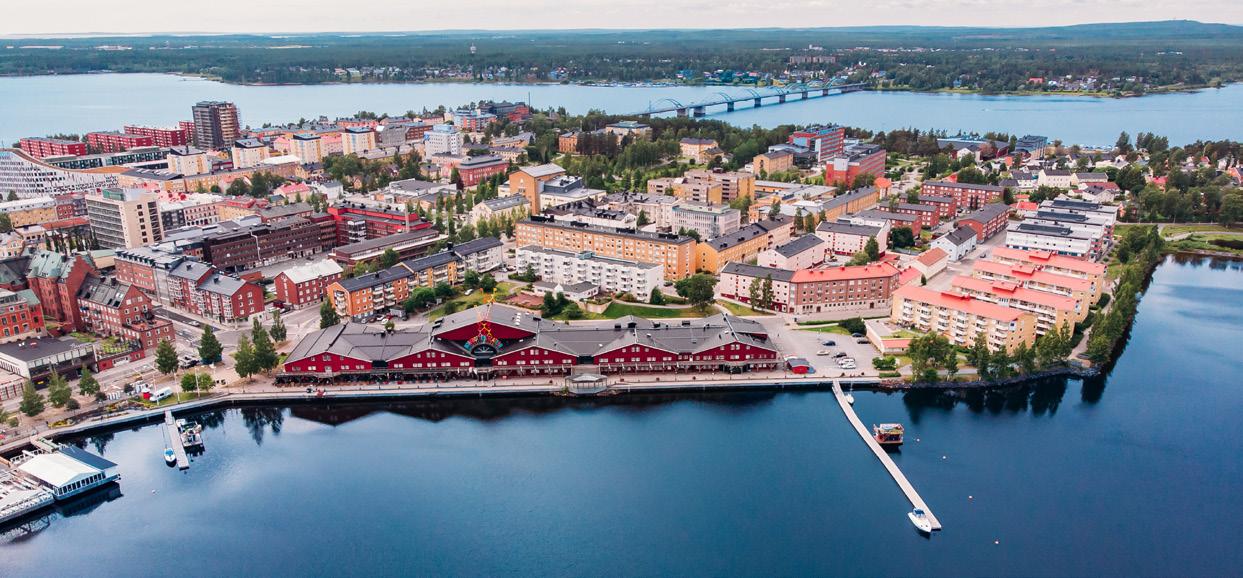
Our aim is to identify highly innovative and novel research findings with technical and commercial potential. We also need to export these ideas to society and companies by creating sustainable business innovation.
Moreover, our research groups at Luleå University of Technology is a key asset of our activities. To secure continuous world class innovations, academic achievements are of great importance to us. Consequently, we measure the number of publications, reports, Doctoral degrees as well as how many Licentiate degrees that were awarded each year.
Professors/
Associate Professors
Anita Mirijamdotter
Anna Ståhlbröst
Birgitta Bergvall-Kåreborn
Dick Schefström
Hamam Mokayed
James P LeBlanc
Jeaneth Johansson
Jeandri Robertson
Karl Andersson
Kåre Synnes
Malin Malmström
Mari Runardotter
Mikael Wiberg
Olov Schelen
Peter Parnes
Wolfgang Birk
Åsa Wikberg Nilsson
Doctors
Abdolrasoul Habibipour
Achilleas Seisa
Ahmed Afif Monrat
Ali Padyab
Anders Lindgren
Anna Ståhlbröst
Anton Koval
Aya Rizk
Björn Lindqvist
Dan Johansson
Daniel Granlund
Dick Schefström
Emad Ibrahim
Eva Källhammer
Frank Sjöberg
Gerasimos Damigos
Jan-Jaap van de Beek
Jeremiah Scholl
Jil Sutaria
Johan Karlsson
Johan Kristiansson
Johanna Lindberg
John Lindström
Josef Hallberg
Juwel Rana
Karl Löwenmark
Kazi Main Uddin Ahmed
Konstantina Nikolaidou
Kåre Synnes
Lara Lorna Jimenez
Lars-Åke Larzon
Malin Malmström
Marita Holst
Mikael Degermark
Mikael Drugge
Mikael Sundström
Niklas Karvonen
Nosheen Abid
Olov Schelén
Oluwatosin Adewumi
Per Ödling
Peter Parnes
Prakash Chandra Chhipa
Raihan Ul Islam
Richa Upadhyay
Roland Hostettler
Roland Parviainen
Saleha Haseeb
Sami Kabir
Thomas Pederson
Ulf Bodin
Yulia Berezovskaya
Licentiates
Ahmed Afif Monrat
Ali Padyab
Anders Lindgren
Andreas Jonsson
Andreas Papadimitriou
Anna Ståhlbröst
Dan Johansson
Daniel Granlund
Emad Ibrahim
Frank Sjöberg
Gerasimos Damigos
Helena Oskarsson
Jeremiah Scholl
Johan Karlsson
Johan Kristiansson
Johan Nykvist
Josef Hallberg
Josefin Lassinantti
Karl Löwenmark
Kåre Synnes
Lars-Åke Larzon
Laurynas Riliskis
Lena Palmqvist
Marcus Nilsson
Martin Sehlstedt
Mats Folke
Matthias Wahlqvist
Mikael Drugge
Morteza Alizadeh
Nosheen Abid
Oluwatosin Adewumi
Pierre Fransson
Prakash Chandra Chhipa
Raihan Ul Islam
Richa Upadhyay
Richard Nilsson
Robert Granlund
Roland Parviainen
Samir Kabir
´Stefan Elf
Tomas Nilsson
Ulf Bodin
Ulrika Wiss
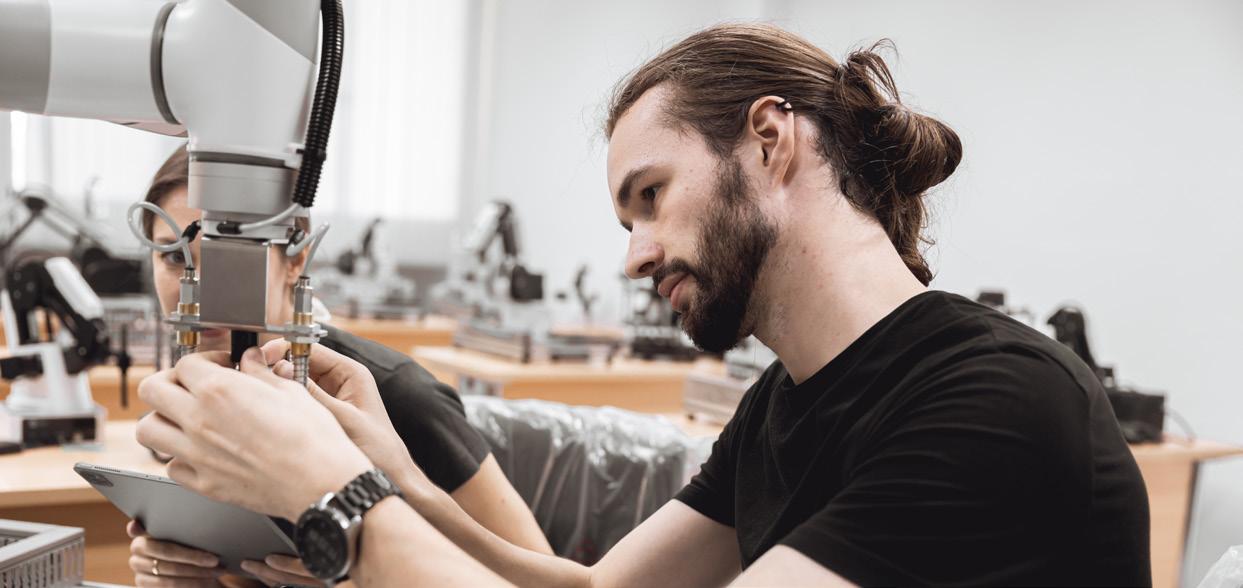
CDT supports and finances the commercialization process of research innovations. A powerful way to do this is the generation of commercial spin-off companies. Since start, CDT has been involved in the forming of many spin-off companies based on academic research from Luleå University of Technology. The creation of these companies is beneficial to local economic development in the region.
Actegra – A design, product development and manufacturing company of electronic equipment for wireless communications and positioning. The concept behind the company arose in year 2009. In 2011, the collaborations with the CDT project “Sense Smart City”, was one of the factors that led to that the company expanded its activities and registered as a limited liability company. www.actegra.se
iGW – A company focusing on a developing infrastructure for collection, management and visualization of large amounts of data. www.igw.se
Oricane AB – The target customers of the company are vendors of software based network equipment, such as routers and firewalls, as well as vendors of custom hardware classification engines for high-end network equipment, 2006. www.oricane.se
Parnes Labs – Realizes dreams in the realm of development for the Web, Android, iPhone/iPad and just about anything related to the Internet! www.parnes.com/labs
Adela Innovation AB – A company developing products and services within area of enabling people to receive and listen to speech news-papers, 2008. www.adela.nu
Rubico AB – A company targeting the Swedish market for digital audio newspaper receivers/recorders, 2004. www.rubico.se
Operax AB – Operax develops key technology for data and telecommunication over Internet and Intranet within fixed and mobile systems, 2000. www.operax.com
Marratech AB – An Internet company developing products and services, which facilitate meetings between people on Internet, so called e-meetings, 1998. Bought by Google 2008, now a part of Google toolbox. www.marratech.com
Effnet AB – A developer of Internet Protocol (IP) header compression technologies, 1997. www.effnet.com
IT Norrbotten AB – A regional development company with the objective to create economic growth and develop work and industry in Norrbotten, 1996. www.itnorrbotten.se
Bollen Labs – A company that experiment with new ways to interact with computers, and new types of data visualization. www.bollenlabs.com
Skylite Affärsutveckling AB - The company offers qualitative services in digital business development, with expertise in project management, collaboration development, Business Intelligence and Artificial Intelligence. www.skylite.se
Team Tools Sweden AB - A company that develops simple and effective digital services for managing financial flows, administration and incomegenerating activities in associations. www.teamtools.se

Innovation of the Year
Partner company ThingWave AB was awarded Innovation of the Year 2025 at Luleå Business Awards.
Most Innovative Swedish Tech Startups
Partner companies Flasheye, Vimotek and Remos Space Systems were included on the list when the magazine Ny Teknik selected the 33 most innovative Swedish technology startups of 2025.
Sustainability Award of the Year Partner company Noah Lokal Mat was named the winner of the Sustainability Award of the Year 2025 at the Luleå Business Awards.
Most Innovative Regional Development Project
The SMALL project was selected as Västerbotten’s most innovative regional development project of 2025 at the RegioStars Västerbotten awards.
Outstanding young researchers
Jeandri Robertson from Luleå University of Technology was awarded the Kungl. Skyttean Society’s 2025 Prize for Young Outstanding Researchers.
Royal Skyttean Society’s Prize
Wiebke Reim at LTU won the prize 2024.
Power Woman of the Year NOMINATION
Sara Rönnberg, LTU, nominated 2024.
Finalist for Best New Mining Innovation
Partner company Thingwave nominated at InvestMETS in Australia 2024.
AMBASSADOR OF THE YEAR FOR ADVANCED DIGITALISATION
Karl Andersson, CDT, LTU, won Vinnova’s Ambassador of the Year Award for Advanced Digitalisation 2023.
Infra Awards
The project Predictive Movement won second place in Infra Awards in 2021.
Winner: Datatadriven innovation
The project Predictive Movement won “Sveriges paketombud” and their data driven innovation challenge in 2020.
IM 100
CDT’s project manager Annika Svensson was named by the organization Infrastructure Masons as one of the 100 most important people who have contributed to the industry in 2020.
Finalist: Challengegov
The project Predictive Movement was finalist in the Challengegov competition in 2020.
New entrepreneur of the year
Partner company Team Tools won “New entrepreneur of the year” at the Boden Business gala in 2020.
Best Impact Maker
Team Pay was awarded best Impact Maker in the Venture Cup Regional Final in Start-up, Region North 2019.
Norrbotten’s Equality Award
NOMINATION
Paula Wennberg at CDT was nominated to Norrbotten’s Equality Award 2019.
Norrbotten’s Equality Award
NOMINATION
Paula Wennberg at CDT was nominated to Norrbotten’s Equality Award 2016.
Young Researcher Prize
Awarded Associate Senior Lecturer Damiano Varagnolo, Luleå University of Technology in 2015 from Norrbottens Forskningsråd.
Best Exhibitor
Awarded the CDT project USEMP during the ICT Days 2015 in Lisbon.
Spin-off of the year
The CDT spin-off company KYAB receive the award “Spin-off of the year 2013” from the Luleå University of Technology.
Ericsson Patentable Invention Award
Award received by Ph D student Juwel Rana, LTU, Associate Professor Kåre Synnes, LTU and Stefan Håkansson and Johan Kristiansson at Ericsson in 2012, Sweden.
Best Student Paper Award
The International Conference on Social Computing and its Applications awarded Juwel Rana, Kåre Synnes and Johan Kristiansson “Best Student Paper Award”, in November 2012, in Xiangtan, China.
IT Personality of the Year
Dataföreningen i Norr, awarded Professor Christer Åhlund “IT personality of the year 2012”, in Skellefteå, Sweden.
Best Idea
Awarded the research project Sense Smart City at the European summit on the future of Internet in Luxembourg, 2011.
IT Organization of the Year
Awarded CDT in year 2011 from the IT society in Norrbotten, Sweden.
Chester Carlson Prize NOMINATION
Finalist Mikael Sundström in 2009 by IVA for efficient compression, storage and retrieval of information.
Best Paper NOMINATION
Awarded Bigitta Bergvall-Kåreborn, Marita Holst and Anna Ståhlbröst for “Concept Design with a Living Lab Approach at HICSS-42 at Big Island, Hawaii, in 2009.
SBAPA Award
Received by Kimmo Yliniemi (KYAB) in 2008.
Mobile Technology of the Year 2008
GULDMOBILEN
Awarded Oricane in 2008.
The Competence Gala´s
Great Honorary Prize
Shared by Östen Mäkitalo and Anton Abele in 2008.
European Grand Ict Prize FINALIST
Awarded Operax AB in year 2007 by the European Commission.
Best Presentation Award
Awarded Mikael Sundström at ItechPartner Forum in Porto, Portugal, in 2007.
Best Paper
Awarded Christer Åhlund, Robert Brännström, Karl Andersson, and Örjan Tjernström for ”Multimedia Flow Mobility in Heterogeneous Networks Using Multihomed Mobile IPv6” at The 4th International Conference on Advances in Mobile Computing and Multimedia in Yogyakarta, Indonesia, in 2006.
Best New-Establishment In Luleå
Rubico AB, a CDT-offspring, awarded for the best new establishment in Luleå in 2006.
Competitive Regions Best Practice 3
VITAL Project selected for presentation in Magdeburg, Germany, 2005.
Best Student Paper
Awarded Anna Hedman, David Carr, Hans Nässla in year 2004 for “Browsing thumbnails: A comparison of three techniques” by ITI2004 in Croatia.
Ericsson Inventor of the Year
Awarded Krister Svanbro at Ericsson in year 2001 for Header compression by Ericsson.
No 1 Swedish Research Project
Awarded Rocco project in 2000 by magazine Ny Teknik.

CDT is mainly financed by institutional sources, both nationally and internationally. This is for example EU framework programs and structural funds, along with national and regional governments.
CDT is a non-profit organization. Nonetheless, a strong financial position helps us achieve our goals by being able to better support the projects we are involved in.
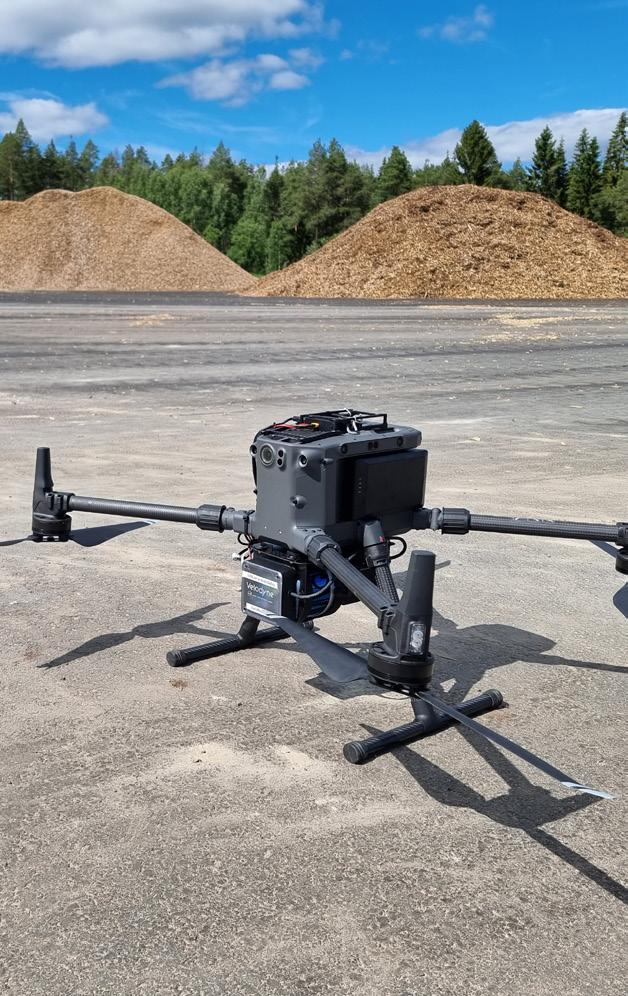

CDT offers an integrated environment for efficient cross-border collaboration between universities, commercial companies, governments and end users.
Our partners come from different organizations and working cultures, located at different geographical sites. CDT’s goal is to be a preferred R&D partner and meeting place. We have for several years invested in building long-term alliances with
selected national and international scientific communities as well as business partners.
Today, we consider our network one of our strongest assets, including many companies, organizations and research centres.

CORE PARTNERS
Luleå University of Technology
Ericsson
Skellefteå Municipality
COMPANIES
Swedish SMEs
Arctic Falls
Colmis
Cyloq
eCiceron
Effnet
Icemakers
Ovzon
ThingWave
Tjintokk
Harads Arctic Heat
Xarepo
Vatten och
Miljökonsulterna
Grepit
Swedish Industry
ABB
AFRY
Bodens Energi
Stegra
Hitachi Energy
LKAB
Luleå Energi
Northvolt
PiteEnergi
Skellefteå Kraft
Swerim
Telia
Uniper
Vattenfall
Ericsson
International companies
DataRiver, Italy
Funlus, Finland
Frontida Zois, Greece
Hellenic Telecommunications Organization, Greece
Italtel, Italy
PIKEI New Technologies, Greece
RE:LAB, Italy
SAMMY, Greece
Pratexo
PUBLIC SECTOR
Municipalities and Regions
Boden Municipality
Lumire
Swedish Armed Forces
Luleå Municipality
Piteå Municipality
Lycksele Municipality
Norsjö Municipality
Skellefteå Municipality
Umeå Municipality
Municipality of Egaleo, Greece
Region of Western Greece
Council of Oulu Region, Finland
Region Norrbotten
Swedish Transport Administration (Trafikverket)
NON-PROFIT ORGANISATIONS
Arctic Business Incubator
BD Pop
Brainport Development, the Netherlands
Boden Business Agency
Boden Business Park
Cluster Health, Emilia-Romagna, Italy
Clust-ER Innovate, Emilia-Romagna, Italy
Cluster SCC, Lombardy, Italy
Filmpool Nord
IT-branschrådet Luleå
IUC Norr
LTU Business
Luleå Science Park
Skellefteå Science City
Skellefteå Digital Alliance
SPGA
Byggföretagen
UNIVERSITIES AND RESEARCH INSTITUTES
Lapland University of Applied Sciences
University of Oulu
RISE Research Institutes
of Sweden
Savonia University of Applied Sciences
Umeå University
University of Patras
SPONSORS
Horizon Europe
I3 Programme
Vinnova
Swedish Agency for Economic and Regional Growth (Tillväxtverket – ERUF)
Interreg Aurora
Region Norrbotten
Region Västerbotten
Luleå Municipality
Umeå Municipality
Skellefteå Municipality
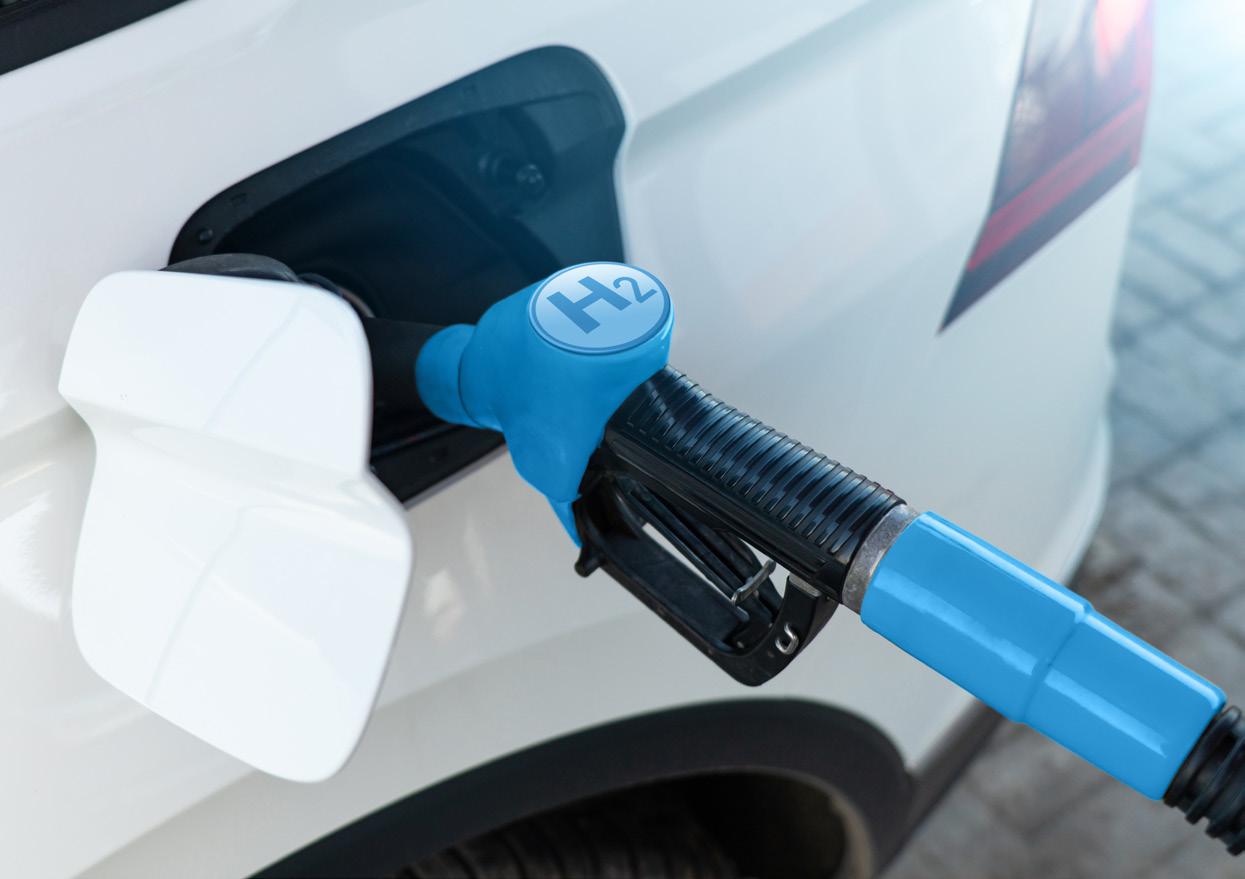
One of CDT’s main tasks is to initiate and coordinate innovation projects. In most of our projects, research from Luleå University of Technology is combined with real-world applications. During a project, important resources are created, such as architectures, new technologies, methods and models. If the projects prove to be very successful, the results can lead to innovations in the form of products, services, prototypes or business concepts.

The project AMBITIOUS aims to advance the state of the art in AI, 5G and IoT and to promote interregional collaboration and commercialisation.
It demonstrates its solutions through seven use cases based on existing 5G testbeds in Sweden, Finland Greece and Italy. By providing funding, testbeds and support, the project enables SMEs to compete globally, improve security measures, minimise energy waste and improve their innovation pathway to eventually integrate into EU value chains. The consortium consists of 10 SMEs, 1 large company, 1 region, 1 municipality, 4 universities and 1 research institute and includes both the demand and supply side. The main funder is the EU and the project is led by Luleå University of Technology.
www.ambitious-project.eu
PROJECT PERIOD
October 2023 - December 2026
CONTACT
Jan-Olov Johansson
+46(0)920-491209
jan-olov.johansson@ltu.se
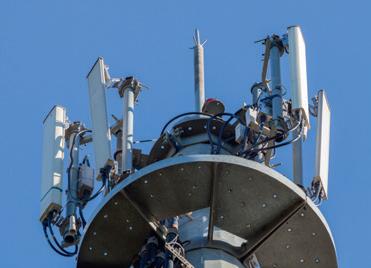
The main goal of the project is to develop, demonstrate and disseminate new technologies that will improve the societal resilience of future 6G networks in the Aurora region.
Key targeted outcomes include:
- Development of new quantitative tools to evaluate and measure inequality in cellular coverage
- Development of new, energy-efficient 6G technology for rural and remote areas, new IoT device location methods and improved network security features
- Develop understanding of Sapmi and reindeer herders’ connectivity needs
The project is financed by EU Interreg Aurora and Region Norrbotten, led by Luleå University of Technology and CDT with the partners Oulu University and LAPIN AMK.
www.arctic6g.se
PROJECT PERIOD
December 2022 - November 2025
CONTACT
Michael Nilsson
+46(0)70- 288 45 20 michael.nilsson@ltu.se


The project aims to strengthen skills supply in the construction and civil engineering sector in Northern Sweden through gender mainstreaming, diversity, and collaboration between academia and industry.
The PURPOSE
To address the skills shortage in male-dominated industries by developing and implementing research-based methods that promote gender equality, attractiveness, and innovation capacity within the construction and civil engineering sector.
OBJECTIVE
To create a digital platform for gender equality work, implement competence development initiatives in companies, and build more inclusive work environments that enhance the overall sustainability and competitiveness of the industry.
MAIN FUNDERS
European Regional Development Fund (Swedish Agency for Economic and Regional Growth – Tillväxtverket), Region Norrbotten, Region Västerbotten, Luleå University of Technology, and Skellefteå Municipality.
PROJECT PERIOD
1 August 2025 – 1 December 2028
CONTACT
Sara Sällström
sara.sallstrom(a)ltu.se
+46(0)920-49 36 52


CIRCUIT, Cross-border Innovation and Research for Creative & Immersive Transformation, is accelerating digital transformation in northern Sweden, Finland and Norway through immersive technologies such as virtual reality (VR), augmented reality (AR) and multisensory experiences.
The project strengthens digital skills, supports innovation in culture, education, tourism and industry, and builds a long-term cross-border innovation network. Through research, co-creation and pilot projects, CIRCUIT develops sustainable, inclusive and AI-supported immersive solutions.
Luleå University of Technology contributes through research in AI and immersive technologies, leading knowledge dissemination and developing learning resources to ensure wide regional impact.
PARTNERS
Lapland University of Applied Sciences (lead), Sør-Varanger Utvikling (NO), Luleå University of Technology (SE)
PROJECT PERIOD
December 2022 – November 2025
CONTACT
Sara Sällström sara.sallstrom(a)ltu.se
+46(0)920-49 36 52

Digitization within Cloud, Edge, IoT. For small and medium-sized companies in North Sweden.
The project wants, through innovation, product development and business development, to increase companies’ ability to become prominent players within this growing regional ecosystem and to contribute to a smarter use of advanced technology, 5G and Edge test environments as well as research and innovation activities within the industry area.
Main financiers are the European Regional Fund, Region Norrbotten and Region Västerbotten.
www.digital2030.se
PROJECT PERIOD
January 2024 - April 2027
CONTACT
Jan-Olov Johansson
jan-olov.johansson@ltu.se
+46 (0) 920-491209
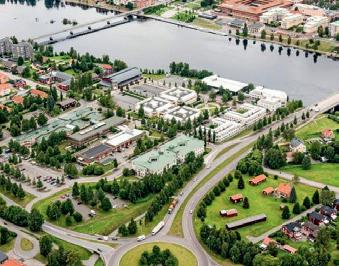
The project’s main idea is to connect world-class research with innovative hightech companies and the public sector and develop innovative and ground-breaking technical solutions for energy management systems with simulation tools and digital twins.
The goal is for energy efficiency measures, implementation of new loads, energy storage and local energy production to be handled in the simulation tool and the digital twin. The idea is that the solutions should be able to be used for the continued development of neighborhoods where lack of power is a limiting factor, where we adapt consumption within the local network to enable new properties or other loads to develop. As a case study, the Skellefteå campus has been selected. The project is financed by VINNOVA, led by Luleå University of Technology and CDT with partners such as Skellefteå Municipality, Skellefteå Kraft and ABB.
https://digitalstadsutveckling.se
PROJECT PERIOD
August 2022 - February 2026
CONTACT
Karl Andersson
karl.andersson@ltu.se
+46(0)70- 819 54 84

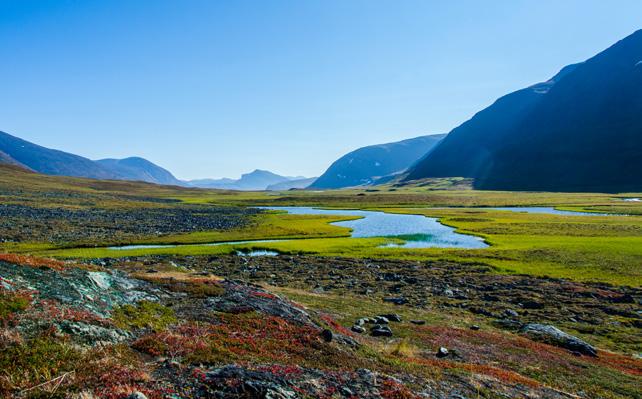
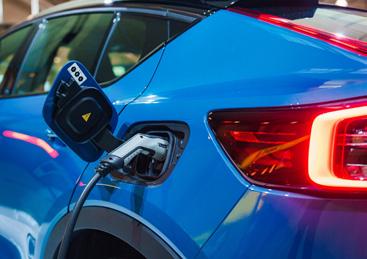
The project is part of a broader initiative to accelerate the green transition in Upper Norrland with the goal to develop smart energy systems, grids, and innovative storage solutions outside the trans-European energy network (TEN-E), focusing on the sustainable integration of electromobility.
By establishing testbeds in public environments, the project aims to create support structures for a rapid shift to fossil-free energy systems. Through nine public demonstrations across regional municipalities, the project will showcase how rural areas can become a testbed for the EU’s future energy systems.
Main funders are European Regional Development Fund, Region Norrbotten and Region Västerbotten.
PROJECT PERIOD
July 2024 – June 2028
CONTACT
Björn Backe
+46 (0) 920-492111
bjorn.backe@ltu.se
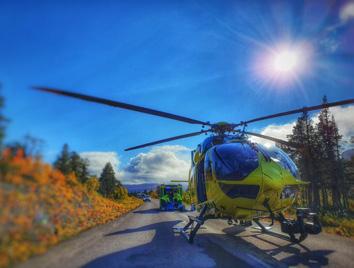

New
The project develops and demonstrates next-generation, cyber-secure carrieragnostic overlay networks for both civilian and military applications.
- What does this mean?
• A carrier-agnostic network operates independently of the underlying infrastructure.
• A resilient overlay network designed for redundancy and rapid recovery in critical environments.
• Practical applications in defence, security, and emergency services based on real operational scenarios.
• Knowledge development in post-quantum protection of today’s asymmetrically encrypted traffic.
The project examines security, future scenarios, cryptography, and how the technology can be applied to enable secure, robust, and flexible communications.
PROJECT LEAD
CDT, Luleå University of Technology
PROJECT PARTNERS
CYLOQ, eCiceron, Ambulance Helicopter Services Region Norrbotten, the Swedish Armed Forces, Ovzon
PROJECT PERIOD
November 2025 – November 2028
CONTACT
Björn Backe
+46 (0) 920-492111
bjorn.backe@ltu.se

Green Transition North
Green Transition North includes 13 subprojects aimed at smart energy systems and circular economy. The projects are carried out in close collaboration with industry within the green transition and with a focus on small and medium-sized companies in northern Sweden.
The goal is to focus on research, development and innovation within the region’s SMEs to make them even more competitive and relevant in the ongoing green societal transformation. The project involves the most important actors in the green transition and their need for knowledge to create businesses and products with high circularity, i.e. minimal use of non-renewable resources.
The project is a collaboration between researchers and 15 companies within the green industrial transition in northern Sweden. The project is led by Luleå University of Technology, CDT. Project partners are LTU Business, Boden’s development, IUC Norr and Skellefteå Science City. Financiers are the European Regional Development Fund, Region Norrbotten, Skellefteå Municipality, Luleå University of Technology and participating industrial companies.
www.greentransitionnorth.se
PROJECT PERIOD
April 2023 - January 2028
CONTACT : Michael Nilsson
+46(0)70- 288 45 20 michael.nilsson@ltu.se


The project will work to enable salable and sustainable music production regardless of geographical location.
A virtual music studio will be created and in a 5G testbed the project will work on reducing obstacles such as delay. Collaboration and creative processes will also be developed through research. The work will take place cross-border and location-independent between the music/games industry, academia and business developers.
Parties involved are BD Pop and Luleå University of Technology. Main financiers are the European Regional Development Fund, Region Norrbotten, Luleå Business Region, Skellefteå municipality and Sparbanken Nord.
PROJECT PERIOD
December 2022 - March 2026
CONTACT
Sara Sällström
+46(0)920-493652 sara.sallstrom@ltu.se

The project drives innovation and development forward through applied AI and advanced digitalization, aiming to strengthen the competitiveness of the region’s businesses.
The project actively supports small and medium-sized enterprises in Upper Norrland in their digitalization and innovation journeys. By combining research, technological development, and close collaboration with industry, we create solutions that enhance companies’ competitiveness and foster future innovations.
MARTINA stands for Multiple ARTificial intelligence INnovations - Again.
Main funders are European Regional Development Fund, Region Norrbotten, Skellefteå Municipality and Luleå Municipality.
www.martinaprojektet.se
PROJECT PERIOD
September 2024 – August 2027
CONTACT
Petter Kyösti +46(0)920-492315 petter.kyösti@ltu.se
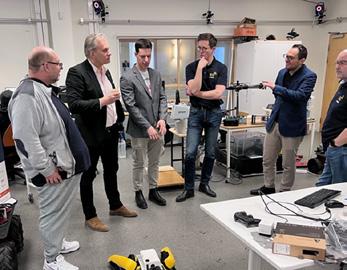
6G will revolutionise digital society in 2030 and beyond with ground-breaking access technologies. SUNRISE-6G aims to unite private and public infrastructures under a scalable, internet-like architecture.
It will create a federation of 6G test infrastructures across Europe for Testing as a Service (TaaS) workflows and offer a unified catalogue of 6G enablers.
The project focuses on four key pillars:
• Implementation of new 6G enablers
• Establishing a scalable and 3GPP federation solution
• Adopting a federated AI layer
• Provision of a standardised experimentation plane for joint workflows
Main funder is EU.
www.sunrise6g.eu
PROJECT PERIOD
November 2023 – November 2026
CONTACT
Michael Nilsson michael.nilsson@ltu.se
+46(0)70-288 45 20



WiReTEN-c (Winter Resilient Trans-European Network Collaboration) aims to develop solutions for safer winter roads and to address challenges such as snowdrift, icy surfaces and reduced visibility in northern regions.
The project will identify innovative solutions to improve traffic safety and accessibility under winter conditions, with a particular emphasis on snow and ice.
Objective:
To address concrete challenges affecting winter road infrastructure in Norrbotten and the Trans-European Transport Network, contributing to both local and regional development.
Partners:
The project is led by LTU together with Region Norrbotten and additional partners, including RISE, and is supported through EU funding (ERDF).
PROJECT PERIOD
September 2025 – December 2028
CONTACT
Björn Backe
+46 (0) 920-492111
bjorn.backe@ltu.se

The project aims to scale up industrial pilots in the area of wireless ICT.
Collaborating parties will join the forces to scale up vertical pilot cases into full-scale cross-European value chains and sustainable business cases, aiming to industrial pilots utilising fast, reliable, secure, and energy-efficient wireless ICT. Approach used to the prepared pilots is from bottom-up, listening carefully to the needs of the companies. Active participation of regional governments will ensure alignment between the business and the societal challenges thus making the value chains robust on a long-term perspective.
Thematic working areas are:
• Health
• Future sustainable industry
• Autonomous vehicles
• Smart cities/regions
PROJECT PERIOD
December 2022 – June 2026
CONTACT
Michael Nilsson
+46(0)70- 288 45 20 michael.nilsson@ltu.se


VISA/5G stands for Vendor Independent Substation Automation over 5G.
One of the biggest advantages of edge computing is the ability to run time-critical protection and control applications on-site. This combination of low latency and edge computing capabilities offered by 5G is very attractive for power grid protection and control. In this scenario, both centralised and distributed automation architectures are conceivable, and a vendor-independent approach can be explored.
This project, together with partners Hitachi Energy, IETV, Ericsson AB, Telia, Metrum and Luleå University of Technology (LTU), will demonstrate vendor-independent substation automation over 5G (VISA /5G) in two scenarios: LTU’s 5G testbed and edge computing cluster, and Vattenfall’s real substation.
Project partners are Vattenfall, Hitachi Energy, IETV, Metrum, Telia, Ericsson AB. The main financier is Vinnova.
www.visa5g.se
PROJECT PERIOD
January 2023 - December 2025
CONTACT
Björn Backe
+46 (0) 920-492111
bjorn.backe@ltu.se

Björn Backe
Executive Director
bjorn.backe@ltu.se
+46 (0)920 49 21 11
Michael Nilsson
michael.nilsson@ltu.se
+46 (0)70 288 45 20
Jan-Olov Johansson
jan-olov.johansson@.ltu.se
+46 (0)70 619 22 31

Marie Nolin marie.nolin @associated.ltu.se
+46 (0)72 526 20 70
Annika Svensson
annika.c.svensson @associated.ltu.se
+46(0)70 591 04 23

Sara Sällström sara.sallstrom@ltu.se
+46 (0)920 49 36 52

Annica Bray annica.bray@associated.ltu.se
+46 (0)70-600 18 06
Petter Kyösti petter.kyosti@ltu.se
+46 (0)70-2841196
The CDT board of directors has approved the CDT annual report 2025. Luleå, March 2026.

Markus Andersson Ericsson Research

Michael Carlberg Lax
Skellefteå Municipality
Niklas Lehto Luleå University of Technology
Ida Lindh
Skellefteå Municipality
Jaap Van De Beek Luleå University of Technology

Mats Nordberg Acting Chairman Ericsson Research
CDT offers an integrated environment of people, infrastructure, tools, processes and services for research, development, innovation and test.
• Foster and develop strategic partnerships
• Provide access to valuable networks and key contacts
• Initiate and lead collaboration projects at regional, national, and international levels
• Develop and provide test beds and system demonstrators in fields such as 5G, 6G, and Edge computing
• Support and accelerate new researchers and research topics by assisting with applications and projects
• Bridge disciplines, organizations, and cultures, working across subject areas and national borders
• Shape funding programs, innovation strategies, and forward-looking policies to drive technological and societal progress

ACCELERATING DIGITAL INNOVATION
Luleå University of Technology, SE-971 87 Luleå. Phone: +46 (0)920 49 10 00. E-mail: cdtinfo@ltu.se, www.ltu.se/cdt CDT is a research center at Luleå University of Technology, www.ltu.se