1 Hunter St. E., Suite 200, Hamilton, ON, L8N 3W 1
Phone: (905) 528-8411 | Fax: (905) 528-9008
1006 Skyview Drive, Suite 103, Burlington, ON, L7P 0V1
Phone: (905) 639-1052 | Fax: (905) 333-3960
OUR BUSINES S IS CONDOMINIUM
Over forty years of helping our clients with all aspects of condominium law including:
• Advising Boards of Directors
• Development
• Construction Claims
• Project Financing
• Mediation and Arbitration
• Litigation
• Employment
OUR
CONDOMINIU
M LAWYER S
Maria Durdan, ACCI
Cameron Neil
Bilal Mirza
Christopher Dilts
Warren Mouck
Kevin Mitchell
COMMUNICATIONS COMMITTEE
Craig McMillan Chair
Carole Booth
Jeremy Nixon
Colin Ogg
Tim Van Zwol
Brent Chislett
Patrick Greco Board Liaison
Travis Langley
Condo News
is produced 4 times per year
Summer Issue (July)
Deadline – June 15th
Fall Issue (October)
Deadline – September 15th
Winter (January)
Deadline – December 15th
Spring (May)
Deadline – April 15th
Articles of interest to condominium owners and directors are welcome. See details for submissions on page 50.
To advertise contact:
Golden Horseshoe Chapter of the Canadian Condominium Institute
Box 37, Burlington, Ontario L7R 3X8
Tel: 905-631-0124 | 1-844-631-0124
Fax: 416-491-1670
Email: admin@cci-ghc.ca
The authors, the Canadian Condominium Institute, and its representatives will not be held liable in any respect whatsoever for any statement or advice contained herein. Articles should not be relied upon as a professional opinion or as an authoritative or comprehensive answer in any case. Professional advice should be obtained after discussing all particulars applicable in the specific circumstances in order to obtain an opinion or report capable of absolving condominium directors from liability [under s. 37 (3) (b) of the Condominium Act, 1998].
Authors’ views expressed in any article are not necessarily those of the Canadian Condominium Institute. All contributors are deemed to have consented to publication of any information provided by them, including business or personal contact information.
Advertisements are paid advertising and do not imply endorsement of or any liability whatsoever on the part of CCI with respect to any product, service or statement. #LifeIsGolden
From the President FROM THE PRESIDENT
Will MacKay, CFP, CIM GHC-CCI President
Winter 2025 has arrived, and while the weather has reminded us that snow removal never sleeps, the Chapter has continued moving forward with solid momentum. The transition with the refreshed board has been smooth, energizing, and— thankfully—free of any emergency meetings about frozen pipes. That’s a testament to the strong foundation built by the past boards at the Golden Horseshoe Chapter and the dedication of our volunteers, members, and partners who keep things running even when winter tests everyone’s patience.
I would once again like to extend a sincere thank-you to Richard Elia of Elia Associates for his continued leadership as past president. Richard leaves behind a chapter that is organized, respected, and well positioned for the future—which is exactly what you want when you’re handed the keys. The success of our recent conferences and educational programs didn’t happen by accident, and we’re focused on building forward, not starting from scratch.
This winter quarter, the Board has been concentrating on three things: keeping members engaged, strengthening partnerships with our sponsors, and welcoming new faces into the CCI community. Education remains at the heart of what we do—practical, relevant, and delivered by people who understand real-world condo challenges. We’re also making a conscious effort to broaden participation, whether that’s first-time board members, new professionals in the industry, or organizations discovering that CCI is more than just meetings and name badges.
As we look ahead to the rest of 2025, our goal is simple: keep the Chapter approachable, valuable, and a little bit fun. Change, when done right, is less about disruption and more about fresh energy—kind of like getting outside on a sunny winter day. I encourage you to stay involved, attend events, bring a colleague, and share your ideas. This community works best when everyone has a seat at the table—and preferably a warm drink in hand this winter.
Warm regards,
Will MacKay
President, CCI Golden Horseshoe Chapter
Golden Horseshoe Chapter of the Canadian Condominium Institute
Box 37, Burlington, Ontario L7R 3X8
Tel: 905-631-0124 | Toll Free 1-844-631-0124
Fax: 416-491-1670 | Email: admin@cci-ghc.ca
Website: Website: www.cci-ghc.ca
2025-2026 Board of Directors
PRESIDENT
Will MacKay, CFP, CIM
VICE-PRESIDENT
Kevin Shaw
PAST PRESIDENT
Richard Elia, B.Comm., LL.B, LL.M (ADR) ACCI
TREASURER
Alicia Gatto, CPA, CA, LPA (Chair Finance Committee)
SECRETARY
Michelle Joy, BA, RCM, OLCM
BOARD OF DIRECTORS
David Corbett
Jennifer Beaver, BSc., AdDpHR, OLCM
Maria Durdan, B.A., LL.B., ACCI
JJ Foulds, BA, OLCM, RCM
Patrick Greco, B.A.Sc., LL.B. (Chair Policy & Governance Committee, Member of the Communications Committee)
Kelly MacDonald (Member Professional & Business Partners Committee)
Sokol Meta, RCM, CMCA, BA (Board Liaison Professional & Business Partners’ Committee)
Thomas F. Nederpel, B.Sc., PEng
Submit your condo and earn the spotlight of our front cover! ... and a chance to win $500 for your Condominium!
Tell us why your Condominium is worthy of winning the “Condo of the Year” award.
Each entry will be featured in one of the upcoming issues of the “Condo News” magazine.
See full details on page 23.
GOLDEN HORSESHOE PROFESSIONAL & BUSINESS PARTNERS DIRECTORY
Find the right product and service company for your next condominium project online in the Golden Horseshoe Professional & Business Partners Directory START YOUR SEARCH NOW Click on a category and go directly to that section of the online Directory
Professional & Business Partners Committee
Golden Horseshoe Chapter
PROFESSIONAL & BUSINESS PARTNERS COMMITTEE
Ryan Griffiths Condominium Lending Group Chair, Professional & Business Partner Committee
Ryan is Managing Director at CLG - Condominium Lending Group, and works exclusively with Condominium Corporations, Property Managers, and other stakeholders across Canada to develop and implement customized financing solutions.
Welcome to the 2026 edition of Condo News dedicated to our Professional and Business Partners!
We are pleased to present articles contributed by leading professionals within our chapter. The CCI Golden Horseshoe chapter is fortunate to have a diverse array of professionals and businesses dedicated to serving the condominium industry. We are especially grateful to those who volunteer their time and expertise to support our initiatives.
I would like to extend my sincere appreciation to the members of the Professional & Business Partners committee for their hard work and dedication over the past year. Your contributions are invaluable.
Within this edition of Condo News, you will find the Professional & Business Partners Directory, showcasing various businesses that support our chapter. We encourage you to utilize this directory as your primary resource for all condominium-related needs.
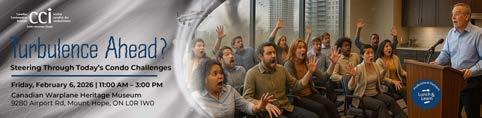
Looking ahead, our committee is excited to announce our first Lunch & Learn for 2026 scheduled for February 6th at the Canadian Warplane Heritage Museum in Mount Hope. This seminar will focus on navigating challenges within condominium communities. We have a fantastic panel lined up and a remarkable venue, so be sure to register early as spaces are limited! We hope to see you there!
Wishing you all the best,
Ryan
Golden Horseshoe Chapter
PROFESSIONAL & BUSINESS PARTNERS
COMMITTEE
Gail Cote, RCM
Property Management Guild
gail@pmguild.ca
Gail is a Condominium Manager at Property Management Guild. She has enjoyed providing professional Property Management services to her clients since 1999 and has achieved her RCM designation. Gail has enjoyed: past participation on the CCI-GHC Board of Directors as well as volunteering on the CCI-GHC Professional Business Partners and Communication Committees. Gail has participated as a speaker at CCI events including CCI-GHC Annual Conferences, webinars, lunch & learn events as well as having written articles for the CCI-GHC Condo News publication.
Justin Deboer
Skyline Contracting
Since 2004, Justin Deboer has led Skyline Contracting with a commitment to excellence in roofing, total building envelope care, and proactive property maintenance throughout the Golden Horseshoe region—including Oakville, Burlington, Hamilton, Ancaster, Grimsby, Stoney Creek, Brantford, Niagara Falls, and beyond. Under his leadership, the company is known for responsive service, superior workmanship, and helping condo corporations save time and money through efficient, science-based solutions. Justin actively contributes his expertise as a member of the Professional & Business Partners Committee of the Canadian Condominium Institute (CCI) Golden Horseshoe Chapter, where he extends his impact beyond individual projects to community and industry development. Justin’s professional ethos revolves around adding value and making a positive difference in every aspect of his work.
Kelly MacDonald
Detail Roofing & Sheet Metal
Kelly MacDonald has been an active member of the condominium industry since 2017 through her role at Detail Roofing & Sheet Metal. As the lead for Client Engagement & Events, she develops and delivers educational webinars and in-person seminars—many of which qualify for Continuing Professional Education credits for CMRAO-licensed managers. In addition, she oversees the planning and execution of industry events and supports the company’s broader marketing initiatives.
Kelly has been an engaged volunteer with the CCI Golden Horseshoe Chapter since 2022, recently joining the 2024-25 Board of Directors. She is a member of the Professional & Business Partners Committee and co-chair of the CCI National Events Committee, and contributes regularly to committee meetings, in-person events, and has authored articles for CondoNews magazine.
Shaun McCartney ServiceMaster Restore of Oakville claims@svmoakvilledr.com
Shaun is the Business Development Manager of ServiceMaster of Oakville Disaster Restoration. We are a premier provider of professional restoration services to the condominium marketplace. We are an Atrens-Counsel Preferred vendor.
Zeke Margaritis
ArmourCo Solutions zeke@armourco.condos
Zeke Margaritis is currently the business development representative at ArmourCo Solutions. A proud graduate of The Lang School of Business and Economics. Zeke has grown up in the condo industry with a passion for construction. Zeke currently volunteers for CCI-GHC Professional Business Partners and Conference committees.
Craig McMillan, RCM, ACCI, LCCI, CMCA, CAPM
Maple Ridge Community Management cmcmillan@mrcm.ca
Craig McMillan is President of Maple Ridge Community Management (MRCM) an Associa Company. He has been a Condominium Professional since 2003.
Craig holds his RCM designation from ACMO, and his ACCI and LCCI designation from CCI-National. He is a member of the Project Management Institute and holds his Certified Associate in Project Management designation CAPM.
He currently serves on the Board of Directors for ACMO and ACMO’s Membership & Programs Committee as well as the Condo Conference Committee hosted by ACMO & CCI-Toronto.
Craig also serves on the Professional & Business Partners Committee and the Communications Committee with CCI-GHC, as well as an inaugural member of CMRAO’s Advisory Committee. He is a frequent speaker at industry events & conferences, as well as contributing articles for various industry publications.
Sokol Meta RCM, CMCA, BA Wilson Blanchard Management sokol.meta@wilsonblanchard.com
Sokol is a Director of Condominium Management at Wilson Blanchard Management Inc., an Associa Company.
He has achieved his RCM designation from ACMO and CMCA designation from CAMICB. He has been providing professional Condominium Management services to his clients since 2017. Sokol volunteers on the CCI-GHC Professional Business Partners and Communication Committees.
Continued…
Golden Horseshoe Chapter
PROFESSIONAL & BUSINESS PARTNERS
COMMITTEE
Mike Mullen R.C.M, B.A. Wilson, Blanchard Management Inc. mike.mullen@wilsonblanchard.com
Mike is the Executive Vice President of Operations at Wilson, Blanchard Management Inc. Mike has been involved in the Condominium industry since 1999 and has been an RCM since 2003. Mike has sat on many industry related Committees over the years including CMRAO and ACMO Education Advisory Committees as well as CCI Golden Horseshoe Transition Committee. Mike is a frequent speaker at industry events.
Natalie Park
Park Group of Companies ltd. HVAC & Refrigeration Contractors www.parkgroupofcompanies.com
Natalie Park is Manager/Owner of Park Group of Companies HVAC & Refrigeration Services. We Provide Industry Leading Materials with the Highest Quality Service Solutions for both Residential and Commercial Properties. Natalie is on a Board Member with CCI Golden Horsehoe Professional & Business Partners, Education Committe. She is also the Co-Chair for the CCI Golden Horseshoe Annual Conference.
Wayne Scott Sales Manager, Wellington Dock and Door Ltd. Wayne.scott@wellingtondockdoor.ca
Wayne has been Sales Manager at Wellington Dock and Door for 3 years and has been in sales for 20+ years but would not say exactly how long. Wayne enjoys renovations in his spare time (NOT) and is currently renovating a 179 year old home with his wife in Plattsville, Ontario. On a serious note, Wayne enjoys meeting people from all walks of life and believes everyone deserves the same opportunities so they can help the world be a better place. Wayne is looking forward to being a part of the Professional Business Partners Committee.
Kevin Shaw, B.Tech.(Arch.Sc.), LCCI
Principal – Cion Engineers & Building Scientists kevin.shaw@cion.com
Kevin was instrumental in launching the Cion Building Science Group and continues to be responsible for all operational aspects of the firm’s building science team. With over 25 years of experience in building evaluation and rehabilitation, Kevin is a recognized authority in: building envelope, failure investigations pertaining to the building envelope and structural components of buildings, design and project management of building rehabilitation projects, accessibility audits, performance audits and reserve fund studies. Kevin holds the LCCI designation with CCI and is actively involved in the advancement and education of the Condominium Industry.
Stephanie Sutherland is a condominium lawyer at the Kitchener office of Cohen Highley LLP. Stephanie assists condominium boards, unit owners, and managers with day-to-day governance matters, compliance issues, drafting and registration of new and amended condo governance documents, court and CAT proceedings, and mediations and arbitrations. She sits on several Grand River, Golden Horseshoe, and national CCI committees. Stephanie also regularly speaks at CCI events and contributes articles to condo industry publications.
Jordan Vandervelde
Edison Engineers
Jordan is a Project Principal and Regional Lead at Edison Engineers, responsible for delivering major building restoration projects and leading the firm’s Golden Horseshoe–based team. He blends extensive hands-on contracting experience together with deep expertise in structural design and building restoration, effectively bridging theory and practical application to achieve exceptional outcomes.
In addition to project delivery, Jordan supports teams across Edison’s four offices by providing strategic insight into the development of Capital Plans, Reserve Fund Studies, and Performance Audits. He is passionate about guiding clients through complex engineering challenges while building and mentoring high-performing teams that consistently deliver value-added services.
Justin Deboer Skyline Contracting
Why “50-Year Shingle Warranties” Don’t Apply to Condo Roofs — and What Boards Should Focus on Instead
This article focuses specifically on asphalt shingle roofing systems used on condominium buildings. It does not address flat roofing assemblies or membrane-based systems.
The content is adapted from interviews with roofing manufacturers and warranty specialists. The author thanks the manufacturers who contributed their time and insight to help clarify how multi-residential shingle warranties work in practice.
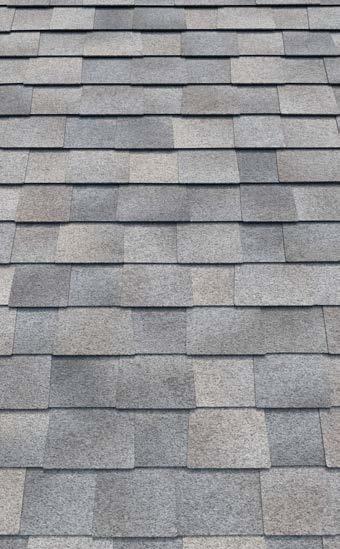
Condominium boards overseeing shingle-roofed buildings often assume their new roof comes with a “50-year” or “lifetime” warranty. It’s not their fault. Warranty literature is overwhelmingly Single family detached home focused, and can be confusing for anyone looking to replace shingle on any other type of building. The assumption is straightforward: if something goes wrong decades down the road, the manufacturer will step in.
In practice, that assumption is rarely correct for multi-residential shingle roofs — and the gap between perception and reality is larger than most boards realize.
continued…
The Key Difference Boards Need to Understand
Residential roofing warranties and condominium shingle roofing warranties are not the same product — even when the shingles themselves are identical.
Manufacturers shorten and restructure warranties for condominiums because the buildings are used differently. Condo shingle roofs experience:
l Regular roof traffic from maintenance and service trades
l Work by third parties after installation (HVAC, electrical, telecom, and others)
l Long-term ownership where warranty claims are far more likely to be exercised
For these reasons, manufacturers typically cap multi-residential shingle warranties at approximately 25 years, even when the same product carries a “50-year” label in residential marketing.
This is not a downgrade. It is a more realistic alignment between coverage and how condominium buildings are actually managed.
What Boards Often Don’t Realize About “Out-of-the-Box” Coverage
One of the least understood aspects of condominium shingle roofing is the difference between default (out-of-package) coverage and what is actually available.
While manufacturers rarely describe it this way in marketing materials, out-of-the-box coverage for condo shingle roofs is often limited in scope and duration. Once exclusions, proration, and labour limitations are considered, the practical value of default coverage is fre-
quently closer to short-term protection, not long-term risk transfer.
At the same time, the residential warranties most commonly advertised — including “50-year” and “lifetime” warranties — do not apply to condominiums.
The result is a significant gap between what boards believe they are receiving and what is actually in place by default.
The Opportunity: CondoSpecific Warranties That Are Lesser Known
What is genuinely encouraging — and far less widely known — is that stronger, condo-specific shingle warranties do exist.
Through proper specification, system selection, certified installation, and registration, condominiums can access warranty programs that provide:
l Meaningfully longer non-prorated periods
l Broader coverage beyond materials alone
l L abour, tear-off, and disposal protection
l Clearer alignment with reserve fund planning timelines
For condominium corporations, the difference between out-ofpackage coverage and a properly structured extended warranty can represent substantial long-term value, particularly in an environment of rising insurance deductibles and capital costs.
What a “Good” Condo Shingle Warranty Actually Looks Like
For boards, the value of a shingle warranty has little to do with how long it sounds and everything to do with what it pays for.
When properly structured for multi-residential use, higher-tier shingle warranties may include:
l Non-prorated coverage for a defined period
l L abour and material replacement
l Tear-off and disposal
l Claim values adjusted for inflation
Lower-tier or default warranties often cover materials only — sometimes on a prorated basis — leaving the corporation exposed to significant costs even when a legitimate defect exists.
Qualification Is Where Boards Are Most Often Exposed
Many warranty problems do not arise from denied claims. They arise because the warranty was never properly established.
Enhanced condominium shingle warranties typically require:
1. Installation of a complete manufacturer-approved roofing system
2. Use of a contractor certified by the manufacturer for multi-residential shingle work
3. Formal warranty registration at project close-out
If any one of these steps is missed, coverage may quietly default to minimal protection — in some cases as little as five years — even when boards believe they secured long-term coverage.
Cost vs. Risk: A Board-Level Decision
One of the most common misconceptions is that enhanced shingle warranties significantly
increase project cost.
In practice, warranty registration fees are often modest compared to the overall value of a roofing project, particularly when spread across all units. The financial impact of not securing appropriate coverage, however, typically appears years later, when insurance deductibles are high and reserve funds are under pressure.
For boards, the decision should be framed as risk transfer, not simply price.
What Every Condo Board Should Ask Before Approving a Shingle Roof
Before approving a shingle roofing project, boards should be able to answer “yes” to all of the following:
☐ Is this warranty specifically written for multi-residential shingle roofs?
☐ Does it clearly state what is covered (labour, materials, tear-off, disposal)?
☐ Is coverage non-prorated, and for how long?
☐ Does it require a full roofing system, not just shingles?
☐ Is the contractor manufacturer-certified for condominium shingle work?
☐ Will the warranty be formally registered, and who is responsible for that?
☐ Does the warranty meaningfully reduce exposure relative to the corporation’s insurance deductible?
If any answer is unclear, the risk typically sits with the corporation — not the manufacturer.
Performance Still Matters More Than Paper
No warranty replaces product quality and proper installation.
Manufacturers consistently emphasize that better-engineered shingles and complete system assemblies reduce the likelihood of failure in the first place. Well-designed shingle roofs often exceed their stated warranty periods, aligning naturally with reserve fund planning timelines.
The Board-Level Takeaway
For condominiums, shingle roofing warranties are not marketing tools. They are risk-management instruments.
The most important question is not “How long is the warranty?”
It is “What happens if something goes wrong — and who pays?”
When boards focus on coverage clarity, qualification requirements, and long-term alignment with reserve planning, shingle warranties move from assumed protection to real financial security.
Manufacturers Interviewed (with thanks)
This article was informed by interviews with representatives from the following roofing manufacturers. Readers are encouraged to consult each manufacturer’s published warranty documentation directly.
l CertainTeed — https://www.certainteed.ca
l GAF — https://www.gaf.com
l IKO — https://www.iko.com
Questions or Clarifications
This article is intended to support informed decision-making by condominium boards, managers, and advisors. If any clarification is required regarding shingle roofing warranty structure, terminology, or how these concepts apply to a specific building or project, readers are welcome to reach out to the author for further discussion.
Since 2004, Justin Deboer has led Skyline Contracting with a commitment to excellence in roofing, total building envelope care, and proactive property maintenance throughout the Golden Horseshoe region. He actively contributes his expertise as a member of the Professional & Business Partners Committee of the Canadian Condominium Institute (CCI) Golden Horseshoe Chapter.
Tool Talk
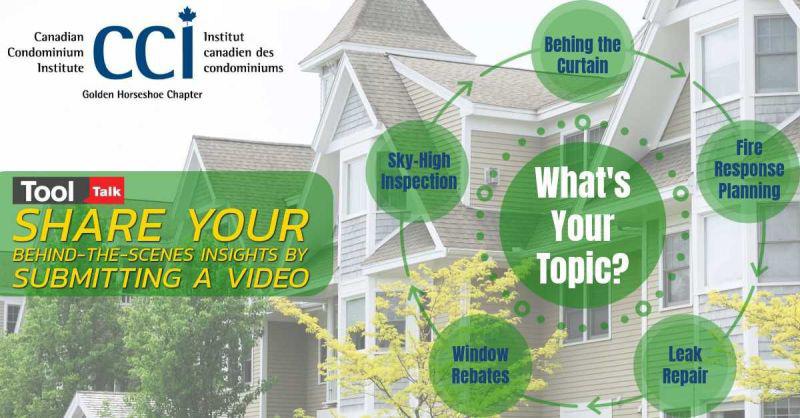
The mandate for the Professional Partners Committee has always been to promote and grow a network of trusted professionals for the benefit of all CCI members. To that end much of our focus has been organizing networking events where we bring together our business partners with our CCI members. The majority of these events are planned as educational seminars where our professionals present on a wide variety of topics that the Committee feels will benefit our membership.
The Tool Talk series of videos will provide some behind the scenes views of our professionals to highlight a few of the many services our experts provide to their condo clients. The idea is for these short videos (3 to 4 minutes each), to give our membership a behind the scenes look at our experts at work. Many of these clips will be a view of activities/operations which may never have been seen/witnessed by our members before. Some of the first videos will focus on engineering, contracting and emergency/ disaster response.
The video clips will be uploaded to the CCI Golden Horseshoe website for easy viewing access and a library of multiple topics/insights will be created. We hope the clips will provide a fun and interesting look “behind the curtain” with our professionals while also educating the viewers on the methods, materials, operations utilized to inspect, resolve and repair typical problems being faced by condominiums within our community.
You can review our current library of videos here:
As always, the committee welcomes input from our members. If anyone has a suggestion for one of our videos, please feel free to reach out to us at admin@cci-ghc.ca.
View Tool Talk Videos
Kelly MacDonald Detail Roofing & Sheet Metal
Built to Last? What Really Determines the Life of Your Roof
Aroof is one of the most important parts of any building structure. It covers and protects the entire building, its inhabitants, and its contents, and therefore must be able to withstand all elements. Generally speaking, you can typically expect a roof to last between 15 to 30 years depending on various factors including the roof design and materials, climate, quality of installation, and regularity of maintenance.
The continental climate we live in is arguably the harshest for any roof system. Winter can cause particular strain with its freeze-thaw cycles and abundance of snow and ice. During this period where we see extreme temperature fluctuations in a short period of time, roofing materials expand and contract which can lead to weaknesses like splits and cracks. Even the summer months can cause stress to a roof, as prolonged UV exposure can also cause materials to breakdown, leading to similar deterioration and cracking. The good news is
that the roof systems we see most commonly in Southern Ontario are made up of durable, flexible materials – like asphalt, rubber, plastic –and built to combat Mother Nature’s whims. Standard weather effects, even when harsh, won’t normally start to impact a roof until well into its life, so early leaks from natural wear-and-tear aren’t common. What often does lead to premature leaks and a shortened lifespan is poor installation and neglect.
Quality of Installation
The design and installation quality of your new roof can make or break its anticipated lifespan and the presence of interior leaks throughout. A new shingled roof may come with a 25-year or lifetime warranty, but that doesn’t mean a thing if the shingles were installed poorly. With both newly constructed and recently replaced roofs, we have seen countless instances of deficiencies leading to widespread water infiltration a few short years, or even months, after installation.
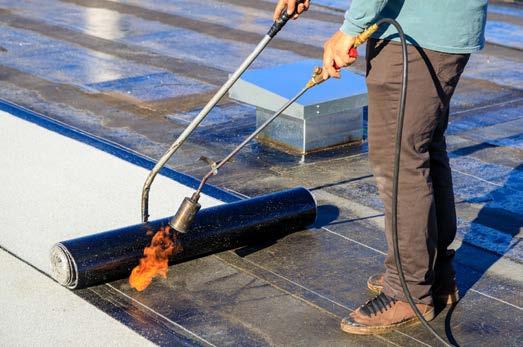
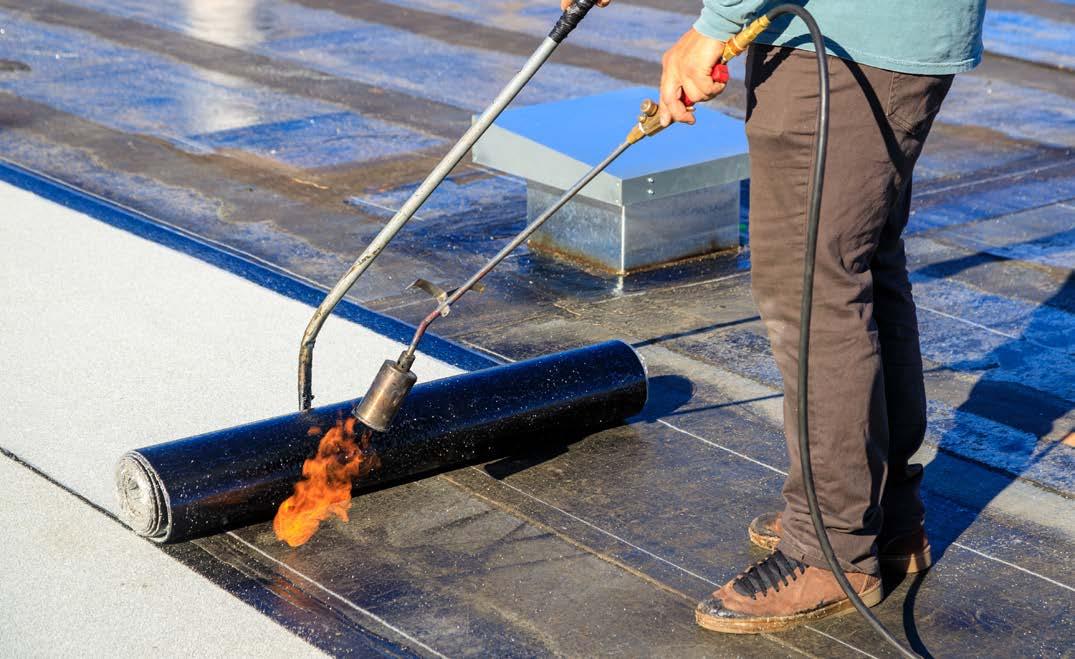
A notable example was a townhome complex we encountered with 12 blocks of 3-storey flat, modified bitumen roofs. Installation defects aren’t always immediately noticeable to the untrained eye, but in the case of this corporation, the deficiencies were clear. Throughout the roof surfaces, the membrane was wrinkling, blistering, and had visibly open seams on flat surfaces, at upturns, and around roof penetrations, allowing water entry. Water infiltration began early in the roof’s life, between 1 to 2 years after installation, and remained constant afterwards. When heavy rainfall hit, a leak at this corporation was pretty much guaranteed. Leak occurrences were especially prevalent in the
The design and installation quality of your new roof can make or break its anticipated lifespan and the presence of interior leaks throughout.
winter months, where snow and ice accumulated on roof surfaces and had several opportunities to find entry points. Ultimately, the corporation ended up completing a full replacement project 14 years after the initial installation, and following years of regular, costly leaks for nearly that entire time.
A modified bitumen membrane system is a popular choice for flat roofs – and rightfully so. When installed correctly and properly maintained, they can last well over 20 years. Unfortunately, it’s one of the roofs we see installation errors with most frequently, like in the case above. With this particular roof system, installation defects can be attributed to several causes, including improper installation techniques, inadequate surface preparation, use of incompatible materials, insufficient material storage and handling, and more. Care and attention must be given throughout the installation process to avoid errors that can result in deficiencies, and potentially dramatically reduce the lifespan of the roof.
Maintain Your Roof to Maximize Its Life
Your roof may be out of sight (especially in a high rise) but don’t let it be out of mind. Completing routine, professional inspections, at least on an annual basis, and carrying out any proactive repairs will ensure your roof meets its expected service life, if not exceeds it. Due to the harshness of winter, inspections on either side of the season are ideal to maximize your roof and prevent leaks. Fall inspections help to identify any potential weak points that may cause issues or worsen over the winter, while spring inspections allow you to assess any deterioration or damages that occurred throughout the season. Whenever you have your roof inspected, there are a few key areas that should be included.
Drains and Scuppers
Clear drainage is crucial to the functionality of the roof system, especially during seasons where higher volumes of precipitation are common. Blockages at the drains from debris, gravel ballast, and vegetation or foliage limit the free flow of water off the roof system and can lead to flooding in severe cases. Existing damages in the roof membrane or other roof elements may be more susceptible to water infiltration in cases where the drains are blocked, and excess water is present on the roof.
Roof Penetrations
Roof penetrations such as vents, plumbing stacks and electrical conduits, can be some of the leading sources of water infiltration due to issues at the roof flashing or surrounding membrane. Inspecting the
flashing at roof penetrations for defects like cracks or perforations can be helpful for early leak detection. Where the roof membrane is visible, checking the condition of the membrane at the base of the penetration is important for ensuring there is no deterioration occurring that could lead to leaks.
Damage and Deterioration
Localized roof damages are common after severe storms or particularly volatile winters. On a sloped roof, all surfaces should be inspected to confirm if any shingles are missing, damaged, or loose, and require repair. Flat roof membranes should also be inspected where possible to determine if there are any issues like deterioration, splits, cracks, or openings of any kind. Protected roof systems, like green roofs or inverted roofs, present a challenge as the waterproofing membrane is covered by multiple layers and is not visible when inspecting the roof surfaces.
Deteriorated Sealant
Sealants like caulking are an important first-line of defence against water entry in critical areas like at roof flashing seams, joints and transitions. Once caulking becomes deteriorated to the point that its split open, it’s no longer able to serve its purpose and leaves areas vulnerable to leaks. During routine inspections, identifying and addressing caulking renewal requirements can help minimize leaks and ultimately expand the life of your roof. Catching early signs of deterioration, like when sealants start to become hardened and brittle, is ideal.
Missing or Displaced Roof Elements
Especially in cases of strong winds, roof elements like vent caps, drain screens and metal flashing can become loose or detached, and may even be missing during an inspection. Loose or detached metal is especially concerning as it becomes a safety issue if it pres-
ents a hazard to pedestrians below and can lead to leaks if the area beneath the metal isn’t adequately waterproofed.
Get the Most Out of Your Roof
While weather and time are unavoidable, premature roof failure is not. The difference between a roof that reaches its full service life and one that leaks early often comes down to two controllable factors: quality workmanship and proactive maintenance. Investing in proper installation, carrying out routine inspections, and addressing minor issues before they escalate can significantly extend the life of your roof and help avoid costly, disruptive repairs.
Kelly MacDonald is lead for Client Engagement & Events at Detail Roofing. She develops and delivers educational webinars and in-person seminars—many of which qualify for Continuing Professional Education credits for CMRAO-licensed managers.
Upcoming Events
6
FEB
24 FEB
Condo Talk
January 27, 2026 - 12:00 – 1:00 pm
Money Matters: Making Sense of Condo Audits
Lunch and Learn
February 6, 2026 - 11:00 am – 3:00 pm
Canadian Heritage Warplane Museum Turbulence Ahead? Steering Through Today’s Condo Challenges
Condo Talk
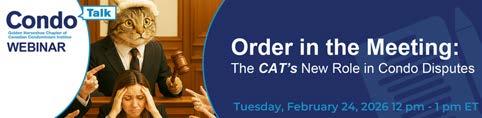
February 24, 2026 - 12:00 – 1:00 pm
Order in the Meeting: The CAT’s New Role in Condo Disputes 24 MAR
Condo Talk
March 24, 2026 - 12:00 – 1:00 pm
The Fine Print: Navigating Contracts in Condominium Management
21 APR Condo Talk
April 21, 2026 - 12:00 – 1:00 pm
Status Certificates 101: Best Practices for Boards and Managers
Condo Talk
19 MAY
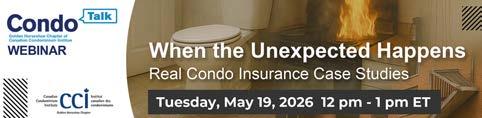
May 19, 2026 - 12:00 – 1:00 pm
When the Unexpected Happens: Real Condo Insurance Case Studies
Zeke Margaritis
ArmourCo Solutions
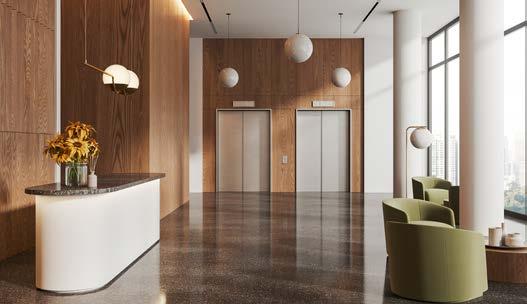
The Transformative Impact of Entryway Modernization on Condo Values
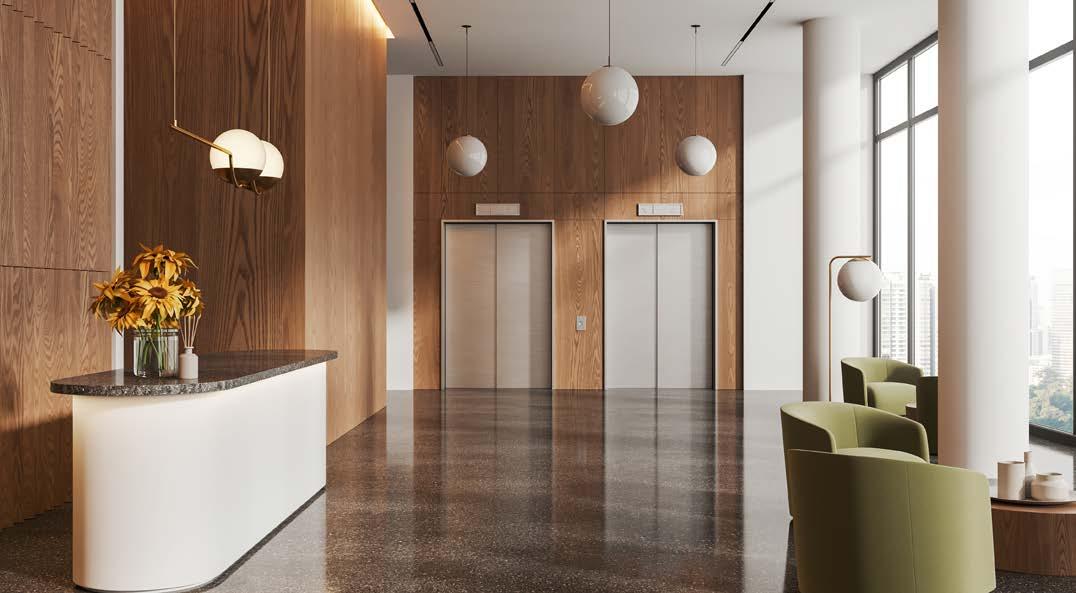
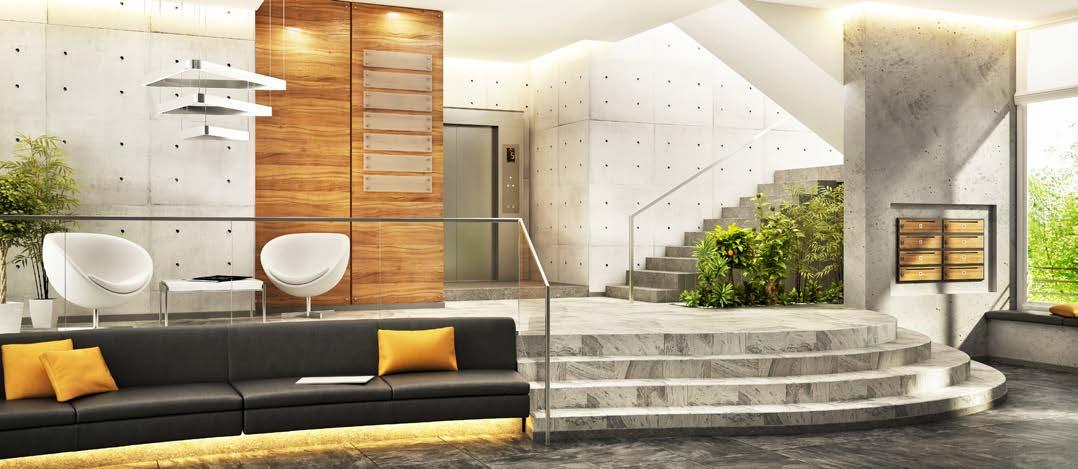
In the ever changing condominium real-estate market in Ontario, the value of a property is not solely determined by its square footage or location. Increasingly, modernization and aesthetic upgrades play a pivotal role in enhancing the overall appeal and, consequently, the market value of a condominium. One area that has gained prominence in this regard is the modernization of entryways in condo buildings specifically lobbies. Beyond mere aesthetics, the transformation of entryways can have a profound impact on the perceived value of condominiums, attracting discerning buyers and elevating the overall living experience.
The Evolving Landscape of Condo Living
Condominium living has become a lifestyle choice for many urban dwellers seeking a blend of convenience, security, and community living. As the demand for condo living continues to rise, property developers and condo boards are recognizing the importance of staying ahead in terms of amenities and design. The lobby, being the first point of contact for residents
and visitors alike, serves as a crucial element in shaping the overall perception of a condominium.
Enhancing Aesthetics for a Lasting Impression
One of the key aspects of entryway modernization is the emphasis on aesthetics. A well-designed and visually appealing entrance not only creates a positive first impression but also sets the tone for the entire living experience within the condo. Modern architectural elements, tasteful landscaping, and innovative lighting can transform a mundane entrance into a welcoming and sophisticated space. This visual appeal is not only pleasing to current residents but also proves to be a major draw for potential buyers.
Security and Technology Integration
Beyond aesthetics, modernization brings with it advancements in security and technology. Condo entryways are now equipped with state-of-the-art access control systems, surveillance cameras, and intercoms, offering residents enhanced safety and peace of
mind. The integration of smart home technology, such as keyless entry systems and remote monitoring, further contributes to the appeal of a modernized entryway.
Community and Social Spaces
Entryway modernization isn’t just about creating a visually appealing facade; it extends to the utilization of the space as a community hub. Condos are becoming more than just residential spaces; they are evolving into communities where residents seek social interaction and shared experiences. Modern entryways often incorporate seating areas, green spaces, and interactive art installations that foster a sense of community among residents. This community-centric approach not only adds intrinsic value to the condo but also enhances the overall lifestyle for those living within it.
Economic Impact on Condo Values
Investing in the modernization of entryways can yield a significant return on investment for condo
owners. Studies consistently show that properties with upgraded and aesthetically pleasing entryways command higher prices in the real estate market. The enhanced curb appeal and modern amenities serve as strong selling points, making these condos more attractive to potential buyers. In a competitive real estate landscape, a well-maintained and modernized entryway can be the differentiator that maximizes the resale value of a condominium.
Future-Proofing Condo Investments
As the real estate market continues to evolve, the concept of future-proofing investments becomes increasingly relevant. Modernized entryways not only meet the current expectations of buyers but also position condominiums for long-term value appreciation. By staying ahead of design trends, incorporating sustainable features, and embracing technological advancements, the board of directors and residents can ensure that their investments remain attractive and competitive in the years to come.
continued…
Things a Board Should Consider Before Starting a Lobby Refurbishment
1. Define the Purpose of the Lobby
What are the primary functions of the existing lobby, and where does it fall short? Consider what you would like the new space to offer—first impressions, security, wayfinding, seating, accessibility, or multi-use functionality.
2. Understand Regulatory and Code Requirements
Before exploring design options, confirm any legal or regulatory limitations that may impact the project. This includes fire and life-safety requirements, building codes, accessibility standards, and any municipal or condo -
minium regulations that apply to common areas.
3. Gather Resident Input
As a shared space used by all residents and visitors, understanding resident expectations is critical.
• Conduct a resident survey to collect feedback on current issues, desired improvements, and overall priorities.
• Engage professionals early, such as designers or contractors, who can help interpret resident feedback and assist in developing a clear, well-structured Request for Proposal (RFP).
Conclusion
The modernization of entryways in condo buildings is more than just
a cosmetic enhancement; it is a strategic investment that positively impacts the overall value of condominiums. Beyond the immediate visual appeal, modernized entryways contribute to the safety, technology integration, and community-centric living that define the contemporary condo experience. Property managers, the board of directors, and individual condo owners alike stand to benefit from this transformative approach, with higher property values, increased market demand, and a lasting positive impact on the quality of life for residents. As the real estate landscape continues to evolve, the value of entryway modernization will remain a cornerstone in shaping the future of condominium living.
Zeke Margaritis is currently the business development representative at ArmourCo Solutions. zeke@armourco.condos
If yes, then the Communication Committee encourage your condominium to write an article (with photos) showcasing your condo.
The article should highlight the following points -
• What are the features/qualities that make your community unique;
• What accomplishments has your condo achieved;
• What is the overall environment like within your condo community; and
• What makes residents proud to live in this community?
Have your condo featured in a future issue of “Condo News” for a chance to win Condo of the Year and $500 for your condo! One entry will be featured in each issue of the “Condo News” magazine – Spring, Summer, Fall and Winter.
The winner of the Condo of the Year will be selected by the GHC-CCI Communications Committee and will be announced at the Annual General Meeting in the fall.
Spring Article deadline March 15th
Summer Article deadline June 15th
Fall
Article deadline September 15th
Winter Article deadline December 15th
Interested applicants should submit their articles, or contact information for an interview, by mail OR by email to:
CCI-Golden Horseshoe Chapter PO Box 37 Burlington, ON L7R 3X8
Email: admin@cci-ghc.ca
The GHC Communication Committee
Kevin Shaw B.Tech.(Arch.Sc.), LCCI
Cion
– Engineers & Building Scientists
Reserve Fund Studies –Hot Topics
Reserve Fund planning has become increasingly complex, with two critical issues dominating discussions among condominium boards and property managers: managing inflation and establishing clear guidelines for adequate funding. These factors are essential to ensuring financial stability and protecting long-term asset value.
Inflation
Inflation impacts Reserve Fund planning in two key ways:
• Current repair and replacement costs
• Projected inflation rates for future expenditures
Recent cost increases have created significant cashflow shortfalls for many condominiums, largely because previous studies did not anticipate the sharp
price escalations of recent years. It is imperative that these increases be incorporated into new Reserve Fund Studies and reflected in current cost calculations. When this is done accurately, future inflation assumptions can remain moderate, as rates have stabilized since their peak in 2022.
To determine appropriate inflation rates, planners should review reliable sources:
Consumer Price Index (CPI)
CPI is a statistical estimate of the level of prices of goods and services bought for consumption purposes by households. It is calculated as the weighted average price of a market basket of consumer goods and services. As it stands recently, Statistics Canada indicated that the Consumer Price Index (CPI) has fluctuated between 1.9% and 2.2% for 2025. This is much better than the 6.8% rate peak we experienced in 2022. While CPI is generally not the direct index being used by Reserve Fund Planners, it remains an important benchmark.
Building Construction Price Index (BCPI)
BCPI is a quarterly series that measures change over time in the prices that builders/contractors charge to construct new buildings. Statistics Canada indicates that construction costs for new residential buildings rose approx. 3.3% in 2025. Although BCPI does not directly reflect repair or restoration costs, it is a useful indicator for monitoring market trends.
CAO – Report on Reserve Fund Survey Findings
An interesting report was issued by the Condominium Authority
The Condominium Act requires that all Condominium Corporations conduct periodic studies to determine “whether the amount of money in the reserve fund and the amount of contributions are adequate to provide for the expected costs of major repair and replacement of the common elements and assets of the corporation”.
of Ontario (CAO) in September of 2024 that provided a series of findings from surveys conducted with over 700 condos in Ontario regarding Reserve Funds and their importance.
The study found that the majority of reserve fund studies completed between 2021 and 2023 were using an average of 1.1% to 3% for inflation and that inflation in studies was tracking upwards in the later years (many as high as 6%). This indicated planners were aware of rising costs but stakeholders were all significantly impacted by the unprecedented rise in prices.
Another clear finding was that overall inflation related to construction costs was outpacing the Consumer Price Index and that this should be taken into account for Reserve Fund Studies.
Professional Engineers of Ontario
The Professional Engineers of Ontario (PEO) has a guide for Engineers titled “Guideline for Conducting Performance Audits and Reserve Fund Studies” (published in 2021). As pointed out within the guide, there are no published indexes that relate directly to the estimated cost of restoration of existing buildings. The PEO therefore recommends that “practitioners use their judgment and knowledge of the marketplace in selecting an inflation rate”. They further indicate
that the use of the StatsCan BCPI for residential buildings may be deemed reasonable although they recognize this index reflects new construction and not the restoration type work typically included within Reserve Fund Studies.
Adequate Funding
The Condominium Act requires that all Condominium Corporations conduct periodic studies to determine “whether the amount of money in the reserve fund and the amount of contributions are adequate to provide for the expected costs of major repair and replacement of the common elements and assets of the corporation”. That appears straight forward except the word “adequate” was never defined and it has been left to planners to interpret how to incorporate this concept into their Studies. While there may be different interpretations of adequate, it is generally accepted in the industry that this would mean:
• No negative closing balances within the 30 year Study period.
• Annual contribution increases should align with, or not exceed, the assumed rate of inflation.
Back in 2013, a wide review of the Condominium Act was undertaken with a panel of industry
experts and a publication was released through Canada’s Public Policy Forum. The report was sub-titled “Condominium Act Review - Stage Two Solutions Report”. In it, several recommendations were made for changes to the Act that would assist with clarifying some of the questions raised over the years regarding Reserve Fund Studies.
The policy review recommended that the term “adequate” needs to be clarified in order “to prevent disagreements and the heightened risk of underfunding”. The review also recommended that the “yearover-year percentage change in total contributions to the Reserve Fund should be no greater than the assumed inflation rate”. It further advocated that should total contributions need to be higher than the assumed inflation rate, they should only be applied in the first three (3) years of the Study. I think those
latter couple of recommendations can most easily be incorporated into all Studies.
As highlighted in the PEO guideline for Reserve Fund Studies, “it is generally accepted in the industry that the goal of an ideal reserve fund study is that the rate of escalation of contributions should not exceed the assumed rate of inflation.” Where this is not possible (as a result of total contributions being less than projected expenditures), It further states that “it is reasonable to inflate contributions at a greater rate than inflation for the period of time until the next study will be completed (three years), after which time the contribution rate should match the rate of inflation”. This mirrors the recommendations made through the Public Policy Forum and makes sense as a reasonable approach.
Conclusions
Boards and property managers must work closely with Reserve Fund planners to ensure studies reflect current costs and realistic inflation assumptions. Discuss strategies for managing contributions, particularly if increases beyond inflation are required to maintain financial health. Proactive planning today will safeguard condominium assets and prevent costly shortfalls in the future.
Kevin Shaw is a Principal with CionEngineers and Building Scientists and is responsible for all operational aspects of Cion’s building science services. Kevin has over 25 years of experience in building evaluation and rehabilitation. Kevin holds his LCCI designation with CCI and is an active member of the Business Partners Committee of the Golden Horseshoe Chapter.
Stephanie L. Sutherland Cohen Highley LLP
The Duty to Act (Reasonably) –Exercising Discretion in DecisionMaking for Condo Boards
Every day, condo Boards make decisions – large and small – about how their condos operate. It’s a big responsibility, and one that individual directors should, and do, take seriously. I often get questions from Board members about their potential personal liability, wondering about the risks even where they are doing their best for their condo, and requesting guidance on decision-making.
The Condominium Act, 1998 is a good place to start for directors who are looking for guidance on their duties with respect to decision-making. Section 17(2) of the Act says the a condo has the duty to “control, manage and administer the common elements and the assets of the corporation”, and section 17(3) says that a condo has a duty to “take all reasonable steps to ensure” compliance with the Act and with the condo’s governing documents – the Declaration, By-laws, Rules, and policies if applicable. As the decision-making body for the condominium corporation, the Board is who carries out those duties of the condo.
continued…
Whether it’s a records request from an owner, a complaint about non-compliance, a decision about repair and maintenance, or choosing which contractor to hire, each director on the Board must exercise discretion in forming their opinion and making the decision.
Board members can also look to the Act for guidance on their personal process for decision-making. Section 37(1) states that directors must “act honestly and in good faith” and make decisions that “a reasonably prudent person would exercise in comparable circumstances.”
In addition to these duties set out in the Act, case law has recognized other duties that arise in the context of Board decision-making, and particularly with respect to enforcement: the duty to investigate, and the duty to meet.
Taken together, these duties can perhaps be summarized with two words: Exercise Discretion.
Whether it’s a records request from an owner, a complaint about non-compliance, a decision about repair and maintenance, or choosing which contractor to hire, each director on the Board must exercise discretion in forming their opinion and making the decision.
It sounds simple, but it’s a difficult thing to do. There are many factors that can affect a director’s decision-making process: pressure
from owners, financial considerations of the condominium corporation, opinions from professionals, and the director’s own personal feelings and beliefs. Some may say that last factor should not be part of the decision-making process, but directors are human after all, and none of us can truly separate from our own feelings and beliefs. Directors should, however, make best efforts to keep personal issues out of decision-making when acting in their capacity as director.
There is a process that can be followed that can help directors to carry out their duties properly and in accordance with the Act, and that process starts with gathering all the relevant information. This is where the duty to investigate and the duty to meet come in, for enforcement matters, but in my view it applies equally to all kinds of decisions that Boards must make. Review relevant documents, speak with the people with the knowledge – whether that’s witnesses or experts – and make sure that you know the legal considerations. After all, making decisions in a way that a reasonable person would do in
similar circumstances is going to be difficult to do if you don’t have the information you need to determine what exactly those circumstances are.
Once the Board has the information that it needs and is ready to decide on next steps, the ultimate question at the centre of the decision-making discussion should always be “What is in the best interests of the condominium corporation?”. Of course, this question should always be asked in the context of the Act and applicable law; non-compliance with legal requirements will never be in the best interests of the condo. But while what some owners may want, or what will cost the least, or even what seems kindest and most fair, are all considerations, they are not the ultimate question.
An example of this that has come up frequently both in recent case law and in some of the files our firm has dealt with is how a Board should approach a situation where a tenant or occupant in a rented unit has caused the condo to incur damages and/or costs. Perhaps there has been a fire in the unit, or the condo has needed to hire additional security to deal with the tenant/occupant and their guests, or the condo has incurred legal costs in enforcing compliance against the problematic individual. This is often happening while the unit owner is doing their best to address the situation, within the restrictions of the process for eviction set out in the Residential Tenancies Act or other legal frameworks that may apply.
In these situations, Boards often instinctively want to find a way not to charge back the amount to the unit owner, who has done nothing wrong and is working cooperative-
ly with the condo to address the situation. This is what seems kind and fair. Unfortunately, it is likely not what is in the best interests of the condo.
If the costs incurred by the condo are not charged back to the unit, then the condo has no lien right, which is a very powerful basis for recovering its costs. It could sue the tenant/occupant for the amount incurred, or if there is a court order can pursue recovery of costs through court enforcement methods, but if the person does not have the money or cannot be found then the condo will have little chance of recovering the money. If the condo cannot recover its costs, then those costs are passed on to every other unit in the condo.
The landlord unit owner may not have done anything ‘wrong’, but they did make the choice to rent
out their unit or allow the occupant to reside in the unit, and the Board cannot make the rest of the unit owners suffer the consequences of that one unit owner’s choice.
The necessity to centre the best interest of the condo regarding legal costs was set out in the recent decision of York Region Condominium Corporation No. 570 v. Edery, 2025 ONSC 4190, where a daughter moved in with her elderly mother who owned the unit, and began to cause serious problems within the condo. While the other daughters, as powers of attorney for the mother who had Alzheimer’s, attempted to remove the daughter, ultimately the condo was required to bring an application for an order that the daughter was prohibited from being on the condo’s property. The condo sought its legal costs for the application. The Judge hearing the
case recognized that the daughters, on behalf of their mother, had attempted to remove the problematic daughter, and that it was unfortunate that the mother would have to incur the costs created by the daughter’s behaviour. Ultimately, though, the condo as a legal entity and the other unit owners could not be required to pay for the costs caused by one unit owner. The Judge did, however, exercise discretion in ordering that the daughter was to reimburse the mother for two-thirds of the costs award.
A Board of Directors in a situation like this must exercise discretion and take the legal options available to it to ensure that the condo recovers the costs, by charging back the amount to the unit and, if necessary to preserve the lien right, registering a lien against the unit. However, as the
Judge did in the Edery decision, the Board can also exercise its discretion in how and whether it chooses to enforce that lien right: perhaps the condo and the unit owner can enter into a reasonable payment plan rather than requiring the owner to pay the entire amount upfront or can provide a reasonable amount of time for the unit owner to gather the necessary funds. Proceeding directly to the power of sale process and requiring the unit to be sold to pay off the amount owing may be an option, but that doesn’t necessarily mean it’s a reasonable step to take in the circumstances.
Another type of situation where I often see Boards struggling with centering “the best interests of the corporation” is when a complaint is received from a unit owner or resident who has historically been the source of trouble for the condo. In these cases, it is understandably tempting to downplay or dismiss the complaint given past behaviour. However, it is essential for directors and the Board as a group to treat the complaint as they would any complaint received from any unit owner or resident. Previous interactions with the individual may need to be considered, but it must be remembered that someone who tends to create problems can also themselves experience a legitimate problem, and the Board still has the same duty to address that problem as it would for anyone else in the condo community.
Again, then, the Board must exercise discretion: gather the necessary information, consider the issue from as unbiased a perspective as possible, and decide how to respond based on the relevant facts and the law. Dismissing an otherwise legitimate complaint because
it comes from someone who has created problems for the condo in the past will likely not be in the best interests of the condo, as it will very possibly create further legal issues.
For every decision that a condo Board must make, there can be several potentially reasonable and appropriate options. It is the duty of each individual director and the Board as a group to exercise their discretion, consider the relevant information and legal issues, and make a decision that can be justified as being in the best interests of the condominium corporation. If that approach is taken, then the directors will have met their duties under section 37(1) of the Act, the condo will have met its duties under section 17(1) and (2) of the Act, and the condo and its community will have been well-served.
Stephanie Sutherland is a condominium lawyer at the Kitchener office of Cohen Highley LLP. Stephanie assists condominium boards, unit owners, and managers with day-to-day governance matters, compliance issues, drafting and registration of new and amended condo governance documents, court and CAT proceedings, and mediations and arbitrations
The Ron Danks Leadership Award
The Ron Danks Leadership Award
Through the Ron Danks Leadership Award, the Golden Horseshoe Chapter recognizes its true condominium board member leaders; those individuals that have gone that extra mile, time and time again, to help their condominium community.
If your condominium corporation is a current GHC member and you know of a current or past board member that exemplifies the spirit of what leadership means, email outlining why the candidate is worthy of this recognition. Your submission should be of sufficient detail for the judging panel to want to know more. Simply being a long-time board member is not sufficient. What has your candidate done to make a difference?
Submit your nomination online at https://cci-ghc.ca/who-is-cci/ ron-danks-leadership-award.
Are you still stressing over holding your
Annual General Meeting
virtually?
Can’t find a service provider to host your meeting?
Are you a member of Golden Horseshoe Chapter –Canadian Condominium Institute? Yes!
THEN WE CAN HELP!!
The GHC-CCI will offer our technical expertise and the use of our Zoom platform to host your AGM. You will still be required to prepare everything needed for your AGM:
•PowerPoint
•Script
•Host
•Collection of proxies
•Minute taker
•Polling/voting questions and choice of answers
•Distribution of your AGM package
•Provide GH with name/emails of partici-pants
Golden Horseshoe Chapter will supply the following:
•Zoom Pro platform (including polling through Zoom)
•Conference call number for those not able to connect through zoom
•Any confidential voting requirements through an online survey link
•A technician to run the event in the background who will:
-set Up link and any recording requirements
-set Up polls
-launch Polls and surveys
-provide tech help/troubleshooting
This service is available for smaller condos as follows:
1-19 Units - $250 + HST
20 – 49 Units - $350 + HST
50 – 80 Units - $450 + HST
This service is only being offered to small condominium units that are members of GHC-CCI and is on a first come, first served basis.
If you are interested in using our services please email us at admin@ghc-cci.ca with the date and time of your AGM, and we will get back to you with our availability.
Thank you for being a member of GHC-CCI!
• Confirm article subject approval before writing.
• No word limit.
• Email article in Word format.
• Write for an audience that includes condominium owners and directors. Avoid technical language.
• If using pictures or graphs within the article, limit to three or fewer.
• No self-promoting content within article.
• Editors will approach authors about any major edits, but may insert minor changes (e.g. grammar, spelling, etc.) without notice.
• Cite any content taken from another source.
Don’t forget to:
• Send a high-resolution headshot and a brief bio of three or four lines.