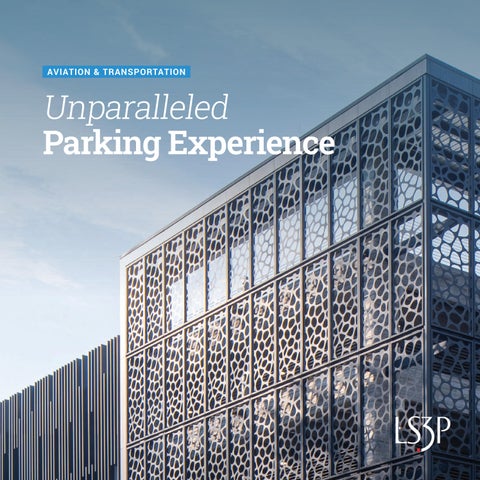
Unparalleled Parking Experience
At LS3P, we believe that even a parking garage deserves design excellence.
Whether it’s an airport hub, a multimodal facility, or a neighborhood garage, our goal is to create spaces that are safe, intuitive, and inspiring. We don’t just design for vehicles — we design for people. Every project is a chance to elevate the everyday, to blend performance with sustainability, and to build trust through thoughtful, efficient solutions.
That’s how we pave with purpose.

excellence since1963
LS3P is an architecture, interiors, and planning firm celebrating more than 60 years of design excellence. With deep regional roots and a national reach, we offer large-firm expertise and resources with small-firm relationships and service. In everything we do, we’re guided by our vision: In our commitment to the Southeast, we create architecture that enriches community through a culture of design excellence, expertise, innovation, and collaborative engagement.
At our core, we are a design firm, dedicated to engaging people in the process of architecture to create outstanding places to learn, live, work, heal, and serve.
site
Our parking decks are designed to optimize spatial efficiency while integrating fluidly with the architectural footprint of the building.
14,000,000 SF of Parking Designed 675+ Awards for Design Excellence
safety
At multimodal intersections, we embed smart design strategies that prioritize safety for drivers, passengers, pedestrians, and staff.

wayfinding

We design parking structures for intuitive flow, using color, form, and clear visual cues to elevate wayfinding and enhance the user experience.

design
As transportation rapidly evolves — driven by emerging technologies, dynamic regulations, and rising passenger expectation — we design environments that do more than move people. Through multimodal, interconnected solutions, we reimagine transit hubs as vibrant, human-centered experiences that adapt to the future.
engage
Transportation unlocks opportunity — connecting people to work, discovery, and meaningful experiences. Our designs embrace this potential, creating seamless, welcoming environments for every journey. We approach each project as a unique collaboration, diving deep into your goals and vision before a single line is drawn.


transform
Design excellence doesn’t just shape how we move through a space — it influences how we feel when we arrive. We believe transportation environments should do more than function; they should uplift. By transforming routine travel into a curated experience, we reframe the journey from a means to an end into a moment worth remembering.


As part of the 2010 CLT Master Plan by LS3P, this seven-level, 3.2M SF garage combines premium parking for 7,700 vehicles with a full-service rental car facility. Strategically positioned in front of the main terminal, it supports future expansion of roadways, infrastructure, and terminal development.
Level 1 is future-ready, designed to accommodate an automated people mover and transfer station. Levels 1-3 house rental car operations, including a quick-turnaround (QTA) facility with 56 fuel dispensers,eight car wash bays, and a 30,000 SF customer service center with direct terminal access.
Double-stranded helices provide efficient vertical circulation, separating rental and hourly traffic and requiring just three rotations from ground to roof.
The garage features fiber-reinforced glass column enclosures and LED lighting for enhanced visibility and navigation. Twelve stair and elevator towers, reinforced with cantilevered concrete beams and translucent ceiling panels, offer clear sightlines and a floating architectural effect — prioritizing safety, security, and design elegance.


This multi-phased facility offers 6,200 total parking spaces and a 6,000 SF customer service center for airport patrons.
Phase 1 features a four-story parking garage constructed with posttensioned cast-in-place concrete. Completed in 2011, it provides 3,200 parking spaces accessed via separate cast-in-place helices designed to optimize circulation and wayfinding. Open stairwells and glass-enclosed elevator cores further enhance accessibility and navigation.
Conveniently located on Level 2, the 6,000 SF customer service center includes airport shuttle stations, transaction counters, and public restrooms. A second-story mezzanine houses valet management offices, while an adjacent office area is reserved for future amenities such as dry cleaning and concessions.
Completed in 2015, Phase 2 added 4,000 parking spaces within a new five-story garage adjacent to the original structure. The new facility is expandable by an additional 1,500 spaces to accommodate future demand.


Serving Charlotte Douglas International Airport (CLT), the daily parking garages accommodate up to 6,500 vehicles.
Multiple design iterations were explored to optimize the facility’s placement, taking into account aircraft circulation, ramp layouts, taxiway access, runway utilization, a potential second terminal, hotel development, consolidated rental car facilities, future interstate expansions, and access to a light-rail transit system.
These garages go beyond conventional parking design. Perforated stainless steel panels, backlit in blue to reflect the airport’s brand, provide visibility while revealing the underlying truss structure. These panels also support natural ventilation, eliminating the need for mechanical fans and ductwork.
The façade evolves throughout the day — by daylight, the metal panels evoke the profile of an airplane wing, symbolizing innovation and technology. At night, accent lighting creates a more theatrical effect. The underside of each level is painted white to enhance safety, reduce the need for artificial lighting, and lower energy costs.


This design reimagines the airport entry experience to deliver a positive journey for travelers. A new parking garage, surface lot, roadway enhancements, and thoughtfully designed walkways streamline arrival and create a strong sense of place. The layout supports intuitive navigation — helping passengers find the correct lane, identify available parking, and enjoy a short, comfortable walk to the terminals.
Equally, the return journey is simplified, with clear paths back to vehicles and a smooth exit and payment process. Drawing from a materials palette, scale, and form inspired by Charleston’s built environment, the design emphasizes natural, human-scale elements. From a well-lit, quiet, and visually appealing garage interior to landscaped processional routes, the experience serves as an inviting gateway between the city and the airport.
Integrated technology reduces traveler stress and enhances convenience. In addition to clear signage and graphics, creative lighting at stairwells highlights vertical circulation to support intuitive wayfinding. The design preserves the airport’s friendly, accessible character while accommodating future growth in capacity and parking demand.


LS3P partnered with the Charleston Regional Aviation Authority to design a state-of-the-art Consolidated Rental Car Facility (ConRAC) and Public Parking Garage at Charleston International Airport. This transformative project enhances airport infrastructure with modern amenities and expanded capacity for travelers and rental car users.
The facility includes 5,164 private vehicle spaces and 2,036 rental car spaces. The ConRAC streamlines the rental process by centralizing pick-up and drop-off, while the garage features enhanced lighting, EV charging stations, and sustainable design elements.
A new elevated pedestrian bridge connects the garage to the terminal, offering seamless access. An electronic parking management system will guide patrons to available spaces, improving efficiency and convenience.
This development is a key component of the airport’s expansion, designed to meet growing regional demand and elevate the travel experience. LS3P remains committed to delivering innovative, sustainable solutions that enrich the community and enhance mobility.


This state-of-the-art parking garage and rental car facility will serve GreenvilleSpartanburg International Airport (GSP), offering over 760 premium parking spaces alongside rental car operations and support services.
The 7,600 SF integrated customer service building reflects the clean design aesthetic of GSP’s existing terminal and brings abundant natural light into the lobby through extensive curtainwall glazing. Elevator towers are clad in translucent glass panels, which will serve as illuminated wayfinding beacons at night.
The precast concrete frame and double-tee parking garage includes a quick-turnaround (QTA) facility with fueling, cleaning, and wash stations. Two vertical helices provide direct connections between the QTA, rental car return, and two levels of private vehicle parking.
During the design process, LS3P evaluated multiple façade options to transform the garage’s appearance while establishing a new architectural language for the airport. The resulting design is flexible and responsive to future development, aligning with the airport’s long-term expansion plans.


The new surface lot Rental Car (RAC) Canopies at Myrtle Beach International Airport provide weather protection for 650 vehicles while visually breaking up the expanse of the large site. The design thoughtfully considers perspectives from both above and below, utilizing a stepped module to interrupt the long spans.
The single, center-supported cantilevered canopies reflect the Lowcountry aesthetic through lowslope surfaces, planked materials, and generous overhangs. Sloped and tapered cantilevered beams echo the rooflines of the adjacent terminal and RAC pedestrian canopy, reinforcing a cohesive design language across the airport campus.
Subtle use of airport-branded colors on each canopy row aids intuitive wayfinding for passengers locating their vehicles. All exposed structural elements are hot-dip galvanized, ensuring a durable, maintenance-free finish.


In partnership with JMT, the new Claymont Transportation Center reimagines the site of a former steel mill as a modern, intermodal transit hub. Honoring the area’s industrial heritage, the design incorporates historical materials and forms — brick, steel, and glass — while providing updated access to SEPTA commuter rail via rail, bus, car, bike, and pedestrian connections.
The JMT/LS3P team is coordinating with agencies including DelDOT, AMTRAK, and SEPTA to ensure compliance with rail regulations for platform, tower, and bridge alignments. LS3P’s design includes a 464-space parking garage, a 115-foot weathering steel bridge, enclosed stair towers, and metal canopies — all unified by an architectural language inspired by nearby historic structures and stations.
This project not only replaces outdated infrastructure but also sets the stage for future development, anchoring a broader vision for the Claymont site.


The two eight-level parking garages at the TEN30 Campus provide 2,300 employee parking spaces.
Partially submerged and built with precast concrete, the garages feature board-formed textures that reflect the campus design language. The South garage also conceals a below-grade loading dock with trash and mailroom functions.
Steel-framed stair and escalator cores, filled with natural light, promote pedestrian flow between levels. These vertical circulation zones are clad in curtainwall or perforated metal panels, balancing protection with aesthetic continuity. Solar panels on the roof power elevators and escalators, supporting the campus’s WELL Certification.
Transparency is central to the design. Sunken gardens near elevator lobbies bring light and air to lower levels, while glass-backed elevators offer views of the office tower and garden water features. A courtyard and shaded path connect the garages to the adjacent office tower, echoing the site’s natural heritage.


This hybrid fitness and parking garage supports a growing corporate financial campus with 600 parking spaces and a wellness center, unified by a contemporary palette of wood, steel, and glass. Sustainability, connectivity, and transparency drive the design, which reimagines the traditional parking garage as an active, integrated part of the campus.
The fitness component forms a dynamic façade, buffering adjacent buildings while promoting movement and wellness. Inspired by the verticality of longleaf pines, the structure’s form and materials reflect the natural site.
A grand entrance and varied massing define key program areas, including studios, a clinic, and a rooftop deck.
Solar panels power building systems, while EV charging stations support sustainable commuting. Glass and perforated metal panels enclose vertical circulation zones, and sunlit interiors enhance the user experience — all contributing to the campus’s WELL Certification goals.


The Bank of America Tower Parking Garage is a multi-level, integrated parking facility located in the heart of Charlotte’s urban core, adjacent to the 600, 620, and 650 South Tryon office towers. Designed to support the high-density commercial and cultural district surrounding South Church Street and Brooklyn Village Avenue, the garage serves as a critical infrastructure component for both tenants and visitors to the Bank of America Tower and nearby institutions such as the Levine Center for the Arts.
The garage features a speed ramp system, elevator access to the building lobby, and bike racks, providing efficient vertical circulation and multimodal accessibility. Each level accommodates 50 parking spaces, with clearly marked entry and exit points along South Church Street and Brooklyn Village Avenue.
The facility also integrates retail frontage at the street level, contributing to the pedestrian experience and urban activation. The garage connects directly to the Bank of America Tower via a dedicated elevator core, streamlining access for employees and guests.


Drawing from extensive experience in urban and mixed use development, LS3P proposed that this parking deck be configured to facilitate shared sitedevelopment with residential/retail buildings at the Washington Street and McBee Street ends of the site. This strategy offers immediate financial return to the City through private residential investment while allowing the design team to create a unique architectural facade on the Spring Street side of the building.
The architectural design reinforces the red-brick character of the historic center of Greenville, providing a street-level arcade and giving vertical emphasis to an otherwise horizontal building. The facade successfully masks the sloping plates of the parking ramps. The brise-soleils add textured shadowing to the exterior, while the glazed stairway enclosures act as nighttime lanterns and draw visual emphasis to pedestrian access points. The vehicle entrance is expressed as a portal with a deck layout that accommodates access from multiple streets with revenue control systems for both card access and pay-per-visit customers.


The Honeywell Tower Parking Garage is a multi-level facility designed to support the growing demand for secure and efficient parking in Charlotte’s urban core. Located adjacent to the Honeywell Tower and integrated into the Midtown North development, the garage serves both corporate tenants and visitors to the surrounding mixeduse district. Its strategic placement near Pearl Parkway and Kenilworth Avenue allows for seamless vehicular access and pedestrian connectivity.
The garage features a combination of existing and newly constructed garages, with multiple entry and exit points along Berkley Avenue and Pearl Street Park. The design incorporates new elevator cores, light wells, and covered terraces to enhance user experience and vertical circulation.
The garage reflects LS3P’s commitment to creating an unparalleled parking experience. Perforated stainless steel panels provide natural ventilation and visual transparency, while accent lighting transforms the façade from day to night. The underside of each level is painted white to improve visibility and reduce energy consumption. These design elements not only enhance safety but also align with the brand identity of adjacent corporate tenants.


Center City Green is a 12-level, LEEDcertified parking garage offering 1,400 spaces in a compact, high-density urban setting. Located on a uniquely shaped two-acre site bordered by public streets, a light rail line, and major cultural landmarks, the garage is designed to integrate seamlessly into its surroundings. Ground-level retail activates the street edge, enhancing the pedestrian experience and supporting local commerce.
Architectural features such as glassbacked elevators and glazed stair towers provide both functional vertical circulation and visual interest, helping to scale the structure appropriately alongside the adjacent arena. A standout element is the express helix ramp — a bi-directional system that allows drivers to ascend or descend two levels with a single rotation. This ramp also cleverly conceals a rainwater cistern used for onsite irrigation, demonstrating a commitment to sustainability.
The garage also supports alternative transportation, offering bicycle racks, an adjacent shower room, and 5% of its spaces reserved for hybrid or zeroemission vehicles.


The nCino Headquarters Parking Garage is a thoughtfully designed multi-level facility that supports the growing needs of Wilmington’s tech and business community. Located adjacent to nCino’s corporate campus, the garage serves as a vital infrastructure component for employees, visitors, and community partners engaging with the headquarters and surrounding developments.
The garage is part of a broader master plan that includes the nCino Sports Park and other mixed-use amenities. Its design reflects a commitment to sustainability and placemaking, incorporating recycled wood and metal materials while promoting environmental stewardship.
Key features of the garage include efficient vehicular circulation, integrated pedestrian pathways, and visual connections to adjacent recreational and office spaces. The structure supports multimodal access and is positioned to accommodate future expansion as the campus grows. Gradations of shelter and enclosure within the facility create a variety of user experiences, from secure parking zones to open-air gathering spaces that encourage interaction and activity.


Located in the heart of Cape Fear Community College’s downtown campus — adjacent to the Humanities and Fine Arts building and Union Station — the Union Station Parking Garage redefines the role of a traditional parking structure. Designed to serve students, faculty, and the broader community, the garage goes beyond utility to become a vibrant, multi-functional space that supports both transportation and the arts.
The design takes full advantage of the site’s natural topography, allowing for dual-level access and a seamless pedestrian connection to the adjacent park. This thoughtful integration encourages walkability and strengthens the relationship between the campus and its surrounding urban environment.
Material selections — including brick veneer, architectural precast panels, and a vegetated metal screen — were carefully chosen to soften the visual impact of the five-story structure. These elements work together to conceal parked vehicles while blending the deck into the architectural language of the campus. The vegetated screen introduces a layer of biophilic design, contributing to sustainability goals and enhancing the user experience.