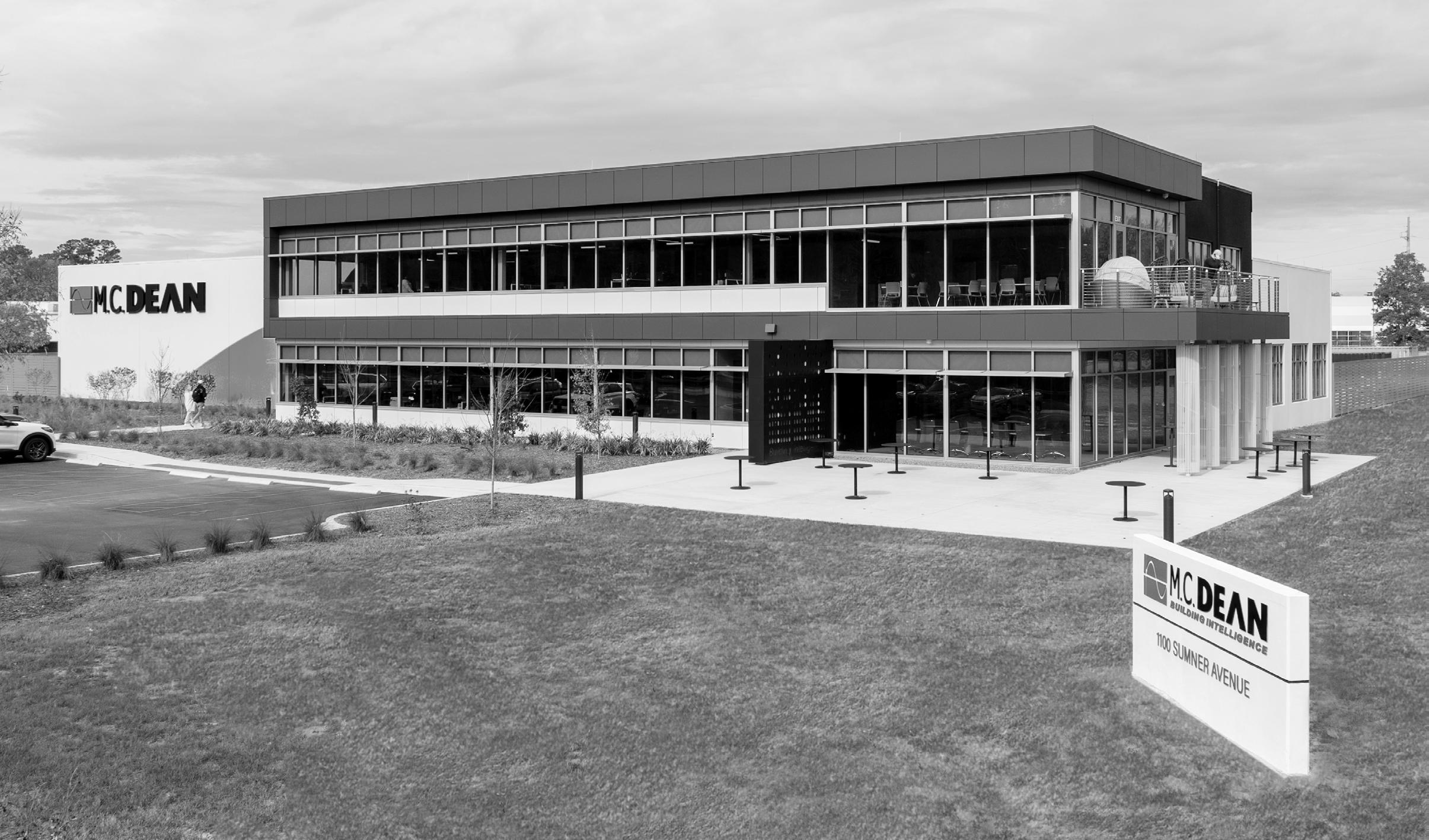
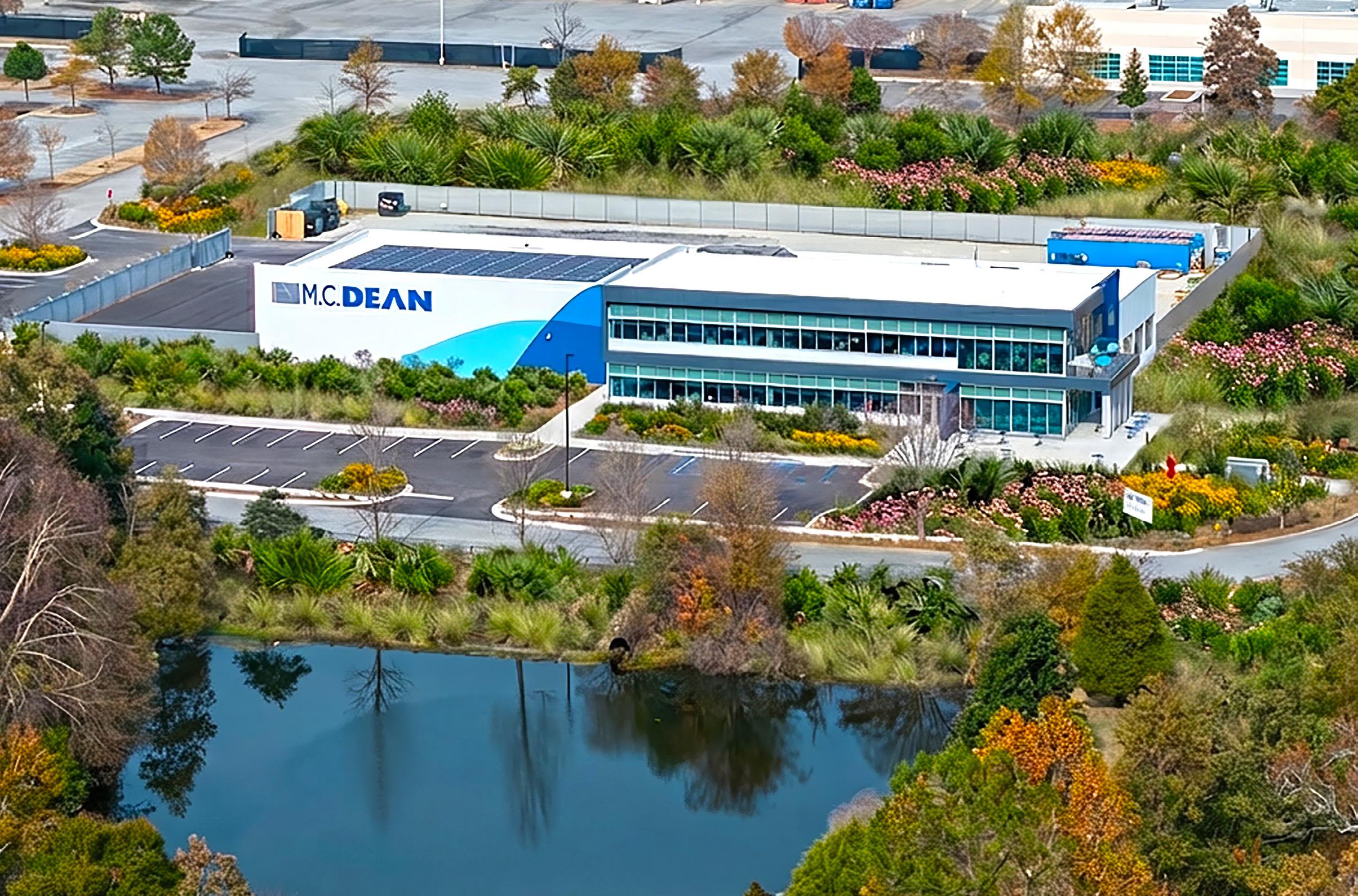
M.C. Dean’s new 25,000 SF office building in Hanahan, SC is the first building in the state to achieve both LEED Gold and WELL Gold certification.
The company, which specializes in cyber-physical solutions, wanted to create a wellnessfocused workplace to support its employees. An integrated, holistic design approach helped to unite a multidisciplinary team around shared goals for sustainability, well-being, and the AIA’s Framework for Design Excellence.
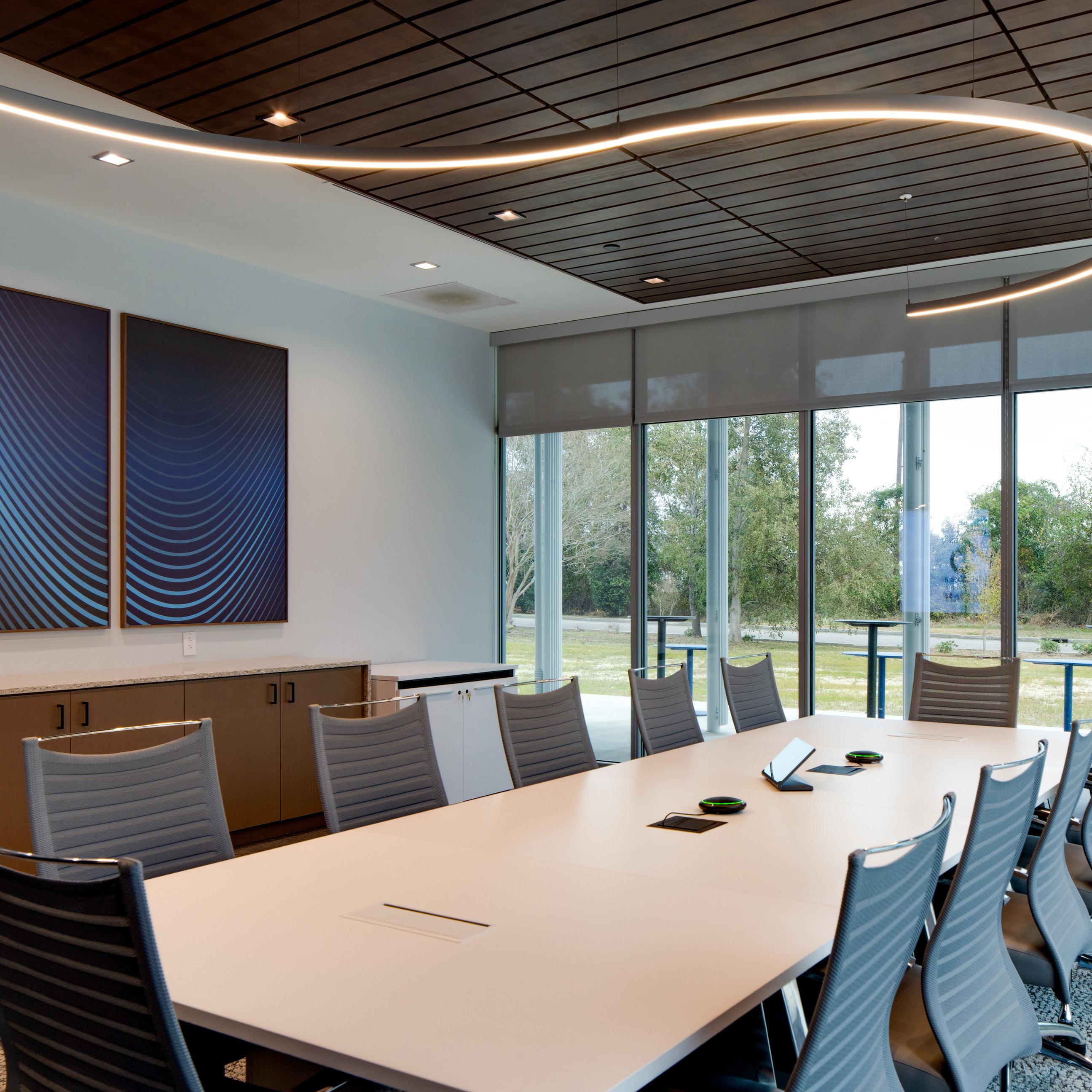
Native plantings and EV-ready parking Conference room with daylight views and shading controls
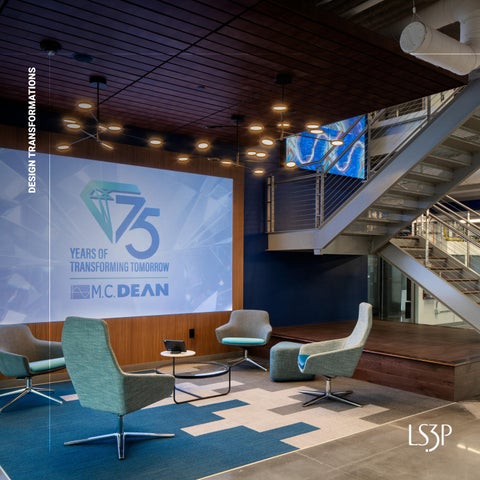
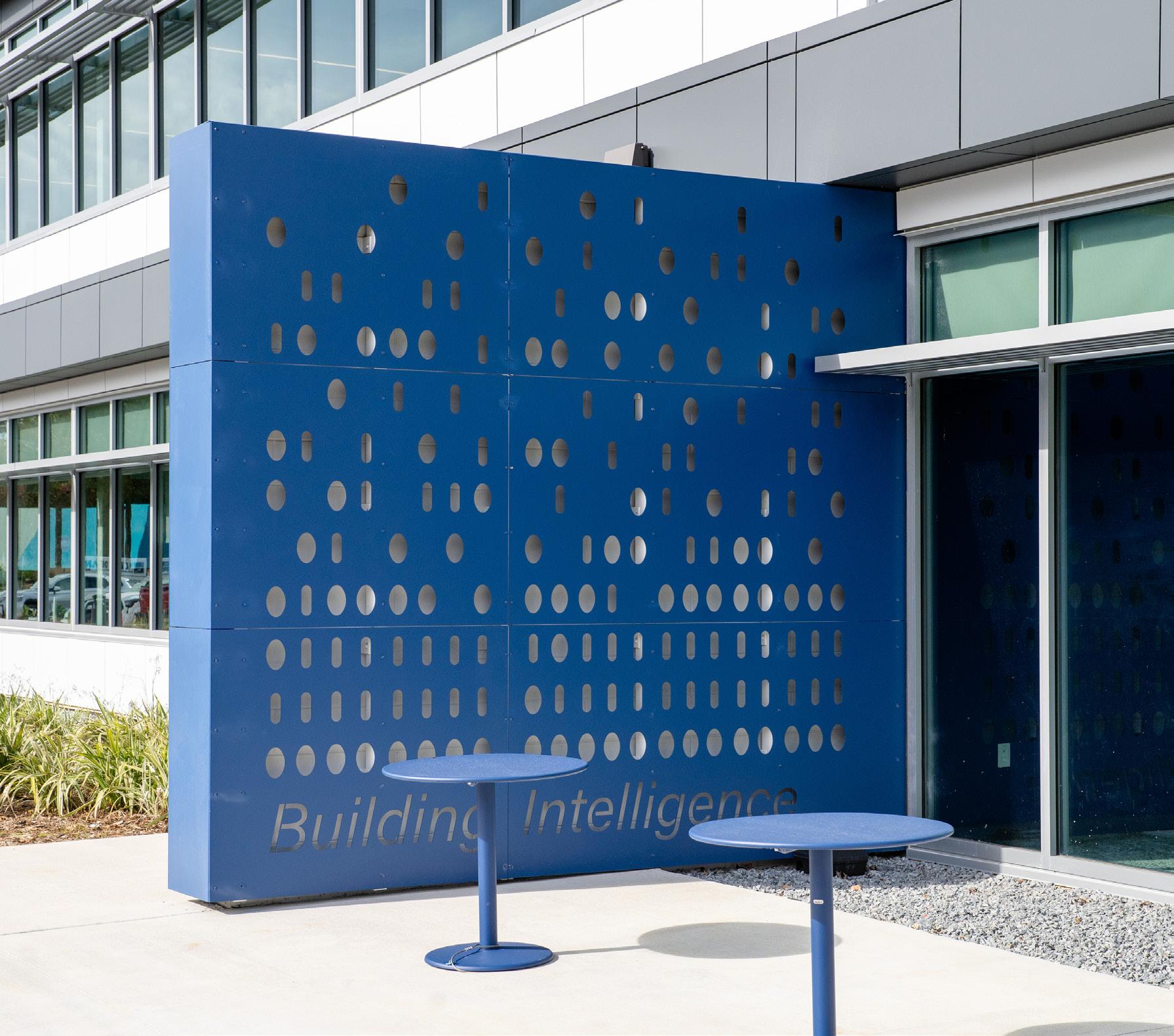
The binary code installation reinforces the client’s brand while bringing curiosity and delight to the senses
Design for Integration
The project kick-off included an integrative design charrette to determine project goals and achieve buy-in across a multidisciplinary team. These early-stage conversations informed the client’s decision to pursue both LEED and WELL Gold building certification.
Design for Ecosystems
An Initial site assessment identified strategies to preserve open space, reduce light pollution to support local ecosystems, and integrate a minimal/low hazard pest control hand to protect the surrounding habitats and watershed.
Building is strategically positioned to minimize impact on the existing ecosystem
Design for Water
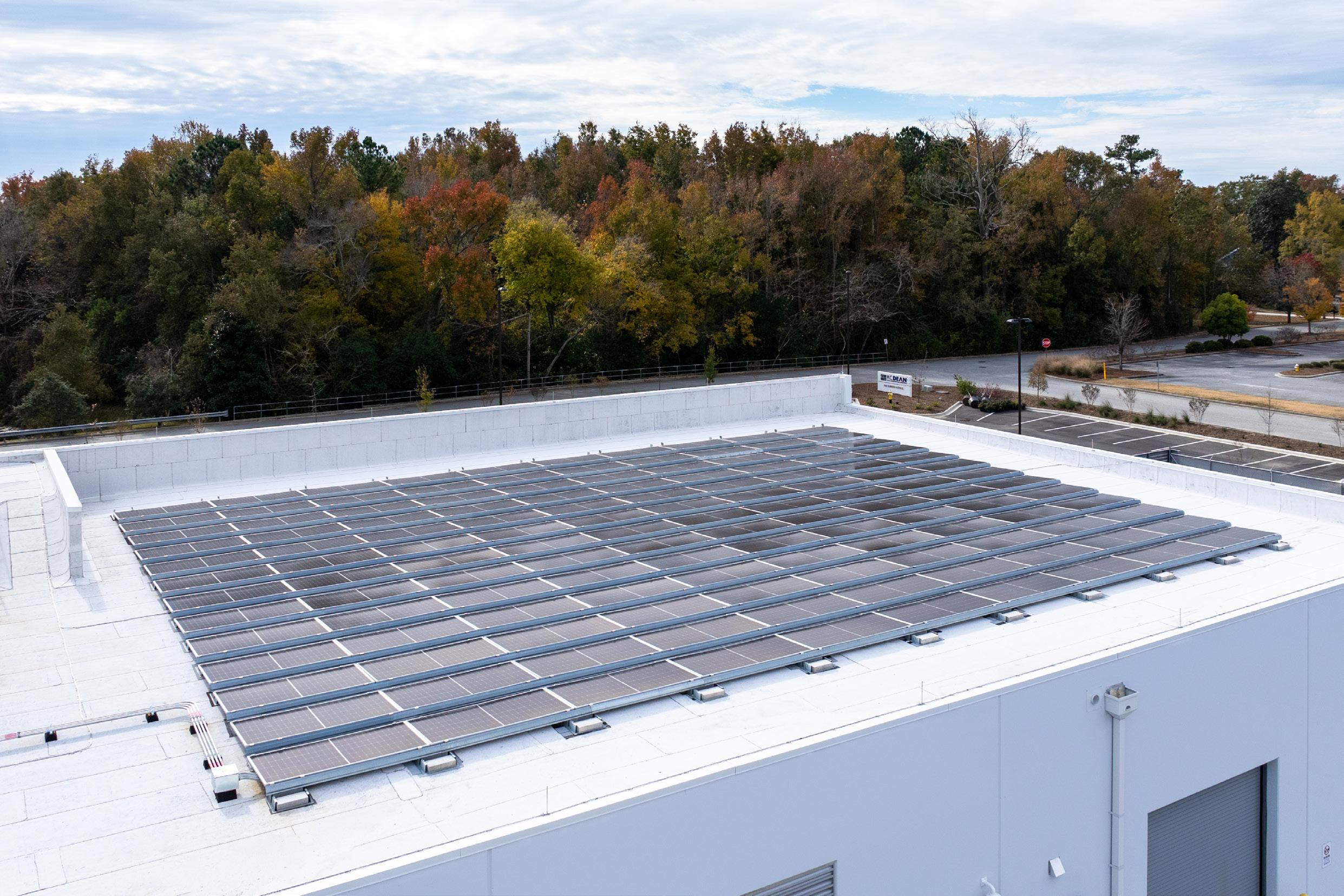
Rooftop Solar Array
The design reduced indoor water use by over 35%, and native landscape plantings will thrive without permanent irrigation. Drinking water thresholds met for WELL performance verification
Design for Energy
A rooftop solar array contributes to an annual 32% reduction of energy use over the baseline for this all-electric facility. Enhanced building commissioning supports optimized systems and maximum efficiency. Additional open roof space also allows for future PV expansion.
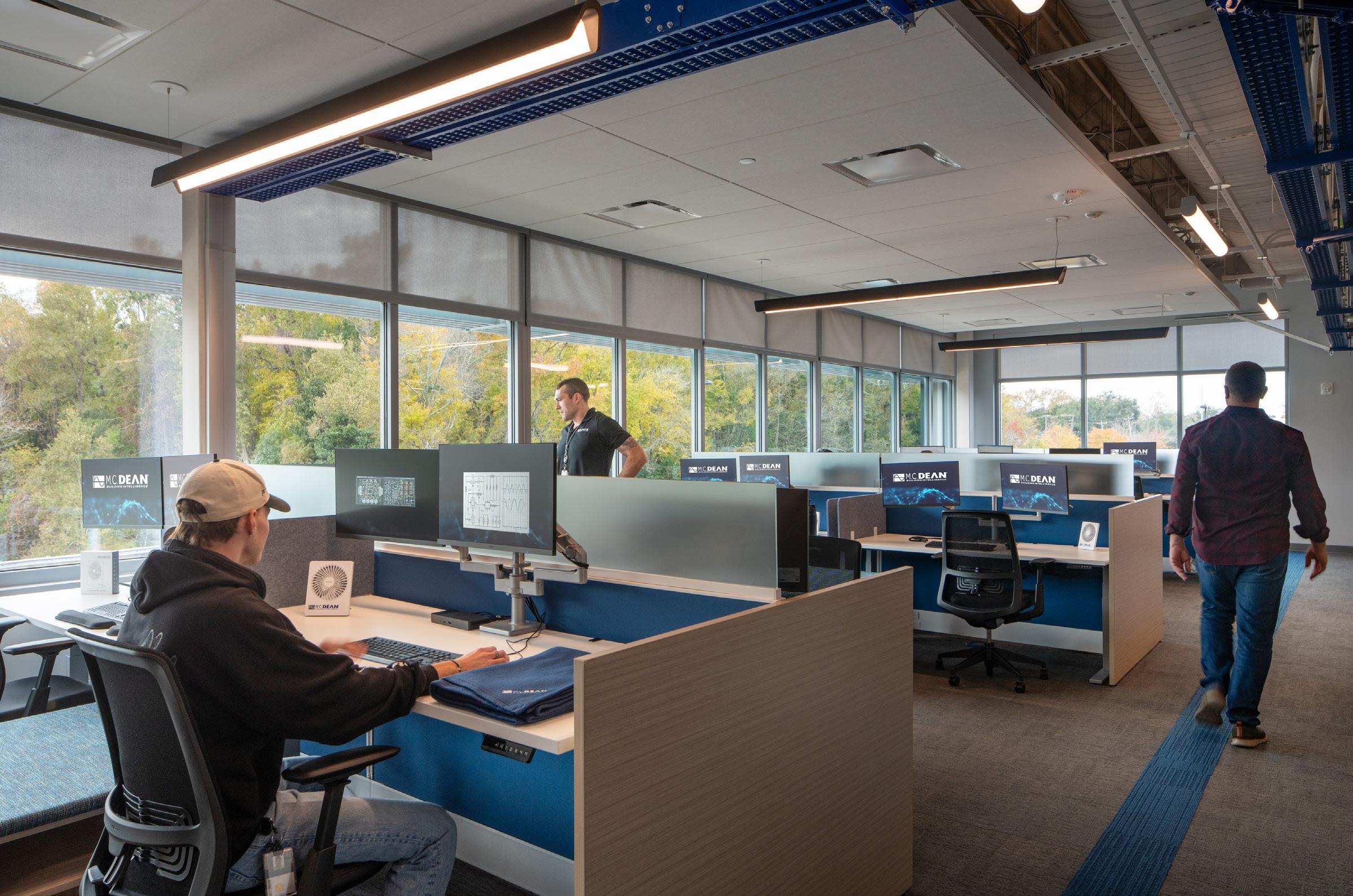
Clear sight-lines for ease of navigation
Design for Change
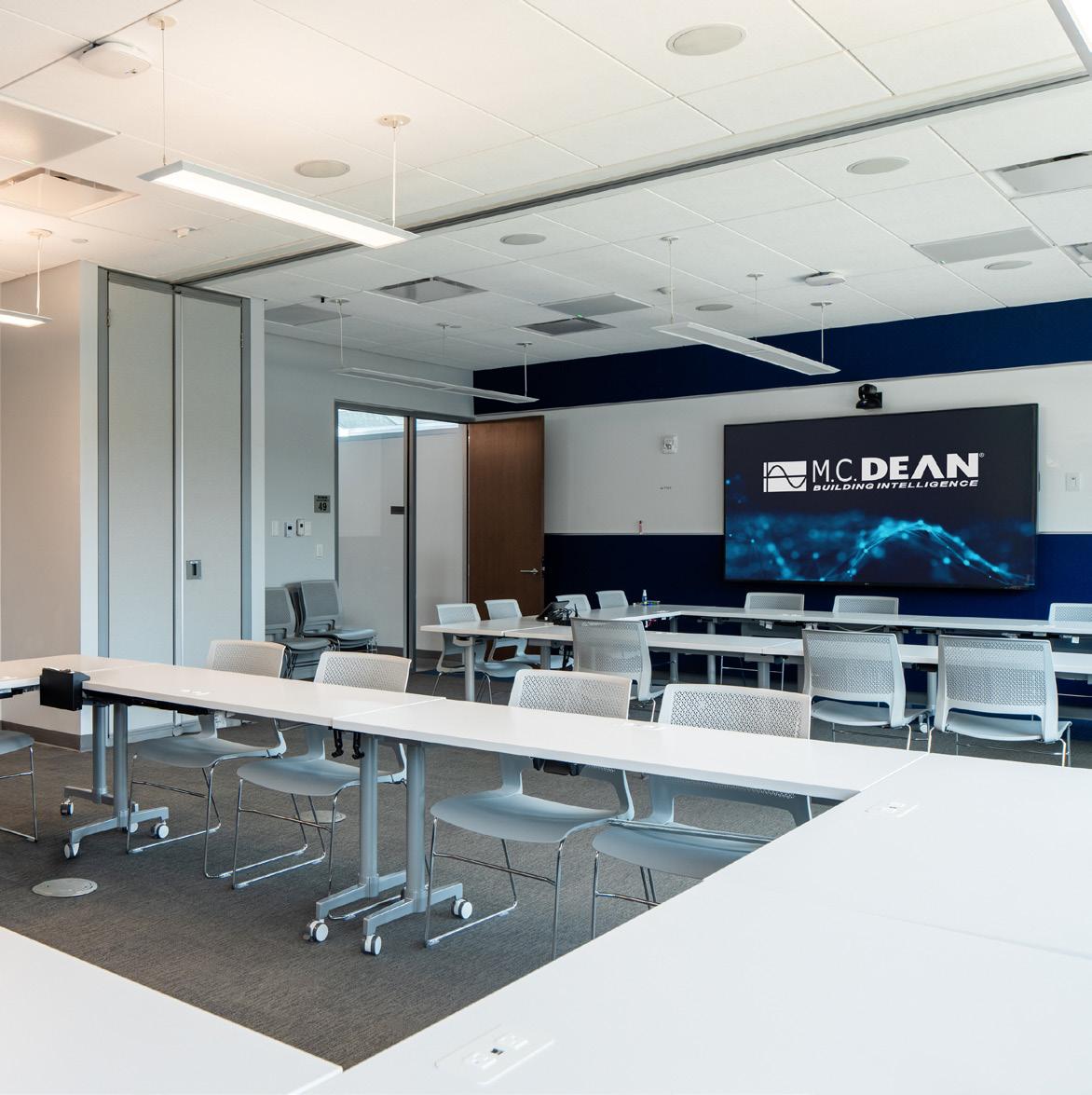
The owner and project team developed an emergency preparedness plan to support employee safety, while design strategies like strategic shading, flexible workstations, and operable conference room walls enhance future program flexibility and current employee productivity.
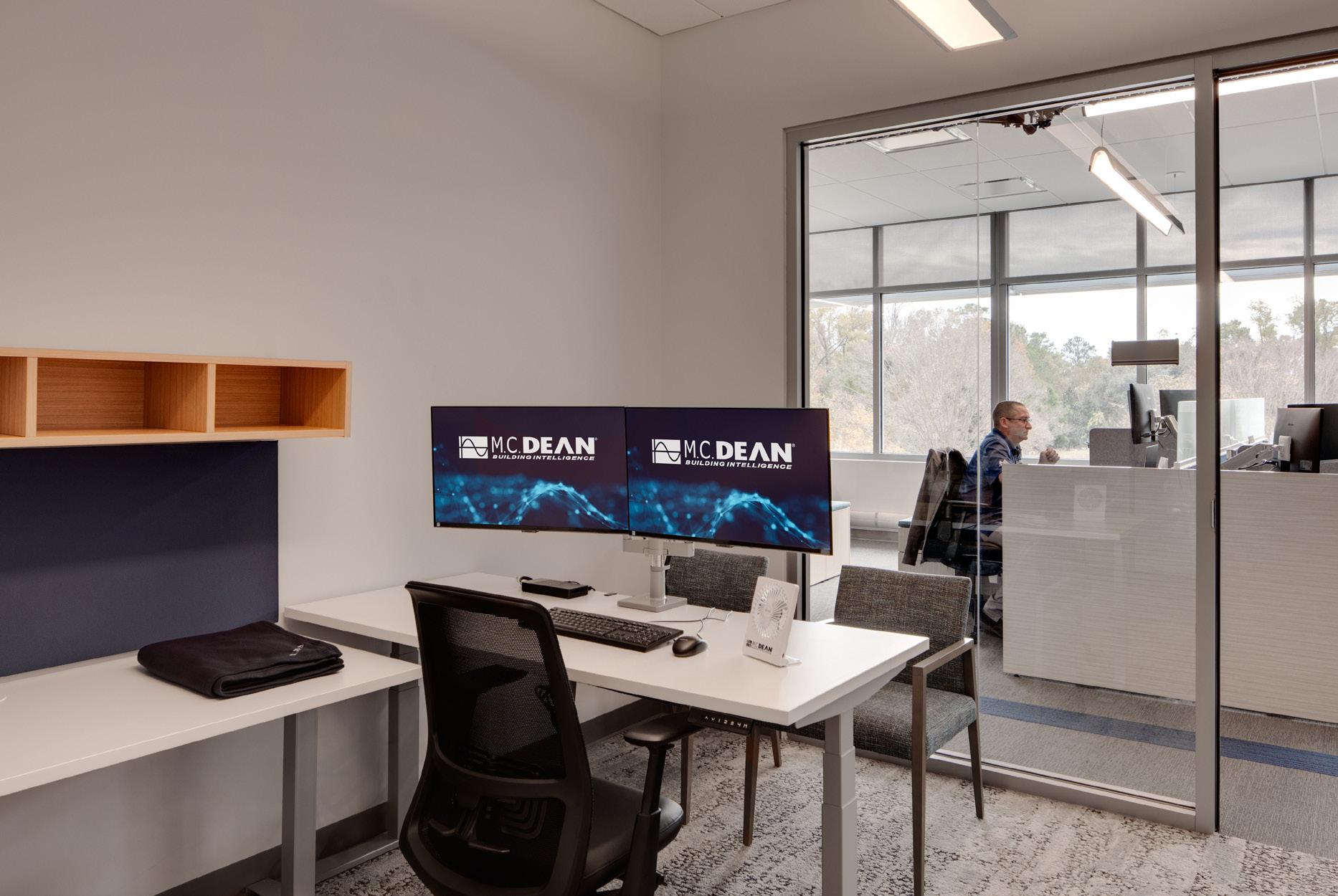
Visual connections between open and private offices
Operable conference room walls allow the space to adapt
Design for Resources
The selection of materials prioritized transparency documentation and life-cycle optimization. 67% of construction waste was diverted from landfills through reuse or recycling. A minimal materials palette was utilized to reduce carbon impacts and the potential for chemicals of concern.
Design for Wellbeing
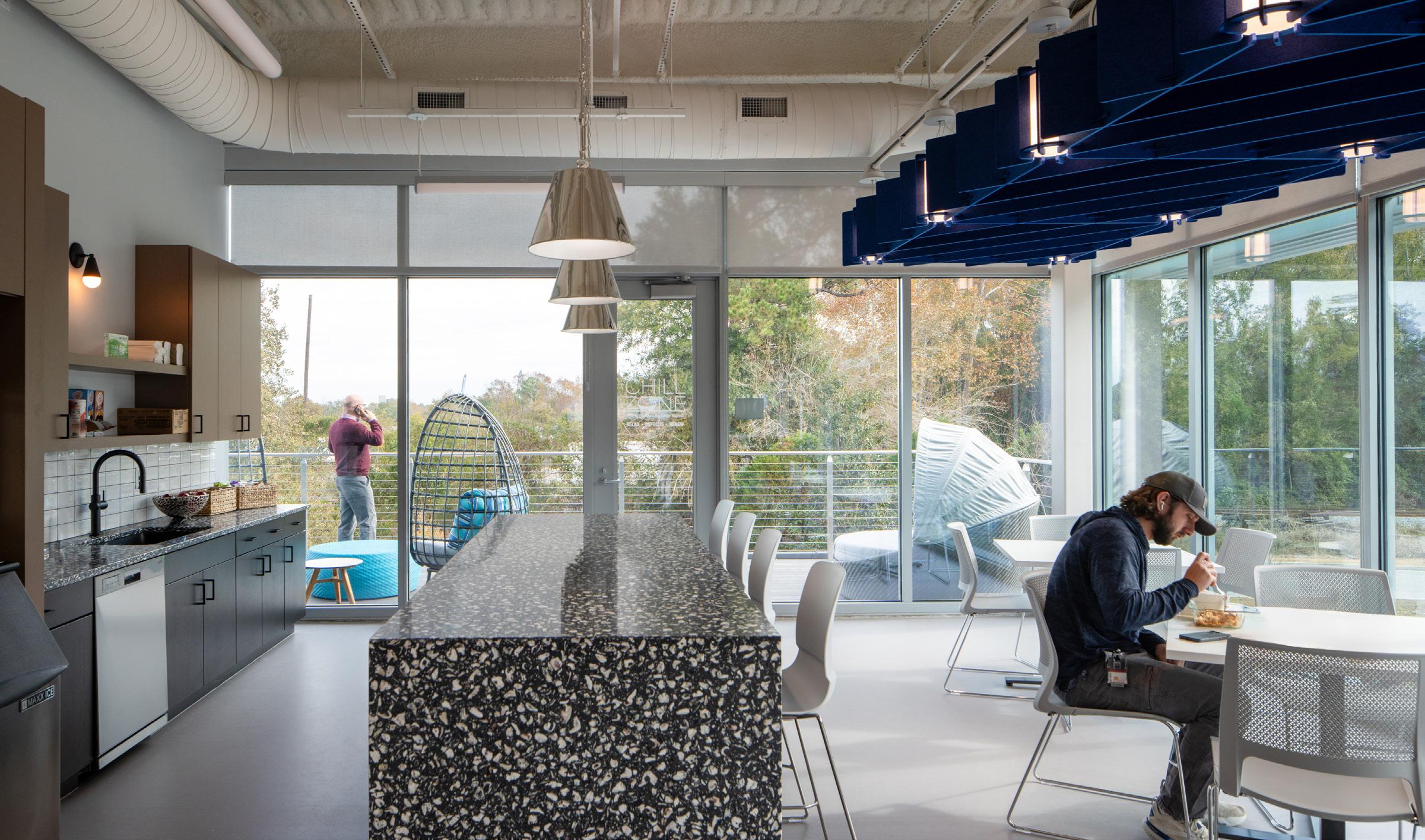
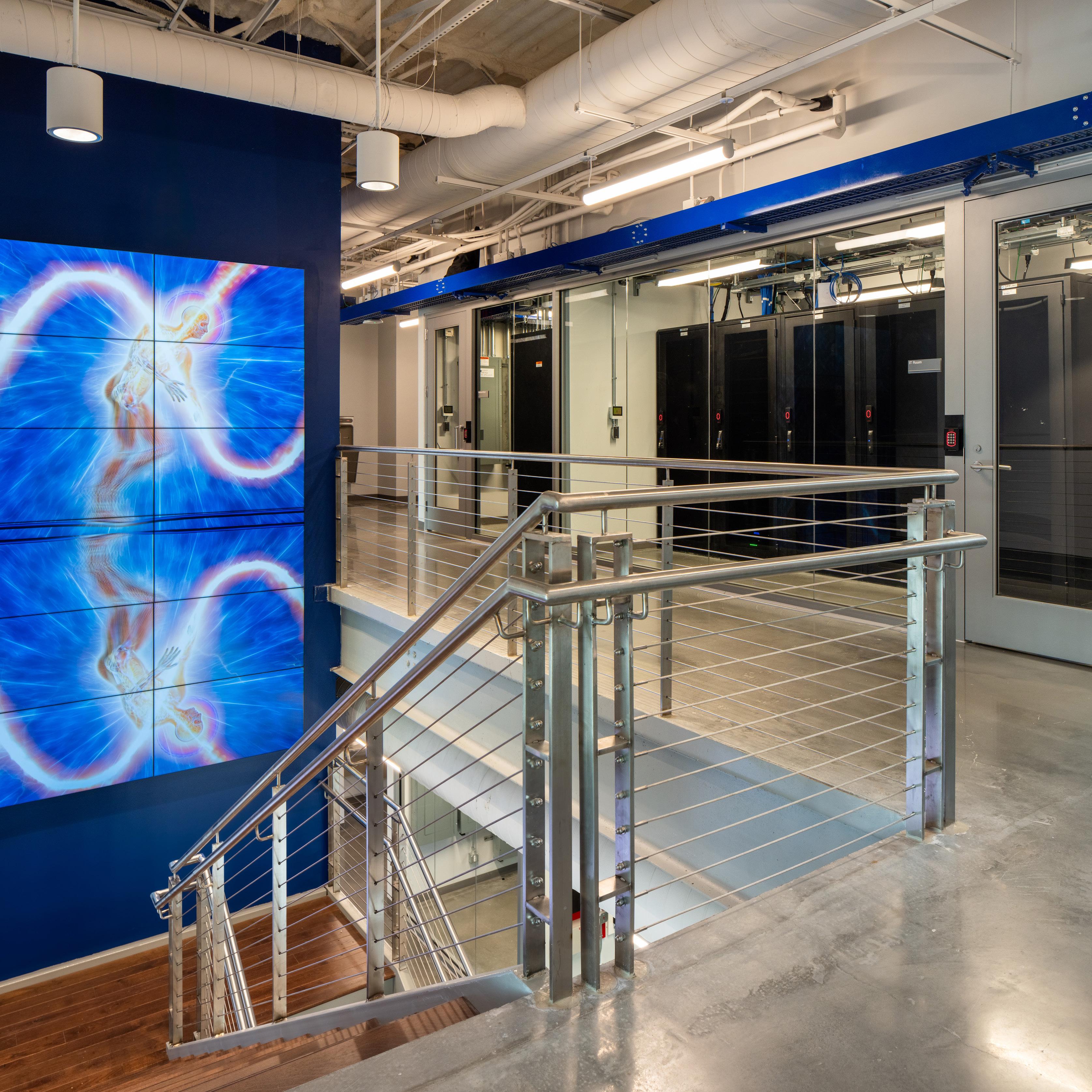
Ergonomic and adjustable workspaces, natural light, views, access to nature, and thoughtful acoustic design all contribute to employee wellness and satisfaction. The space also includes provisions to support new mothers, mindful eating, and hydration. Optimal indoor air quality drove MEP design and materials selection decisions; showers, lockers, walking trail access, and central stairs all encourage movement throughout the day.
Break room supports mindful eating and connection to restorative space
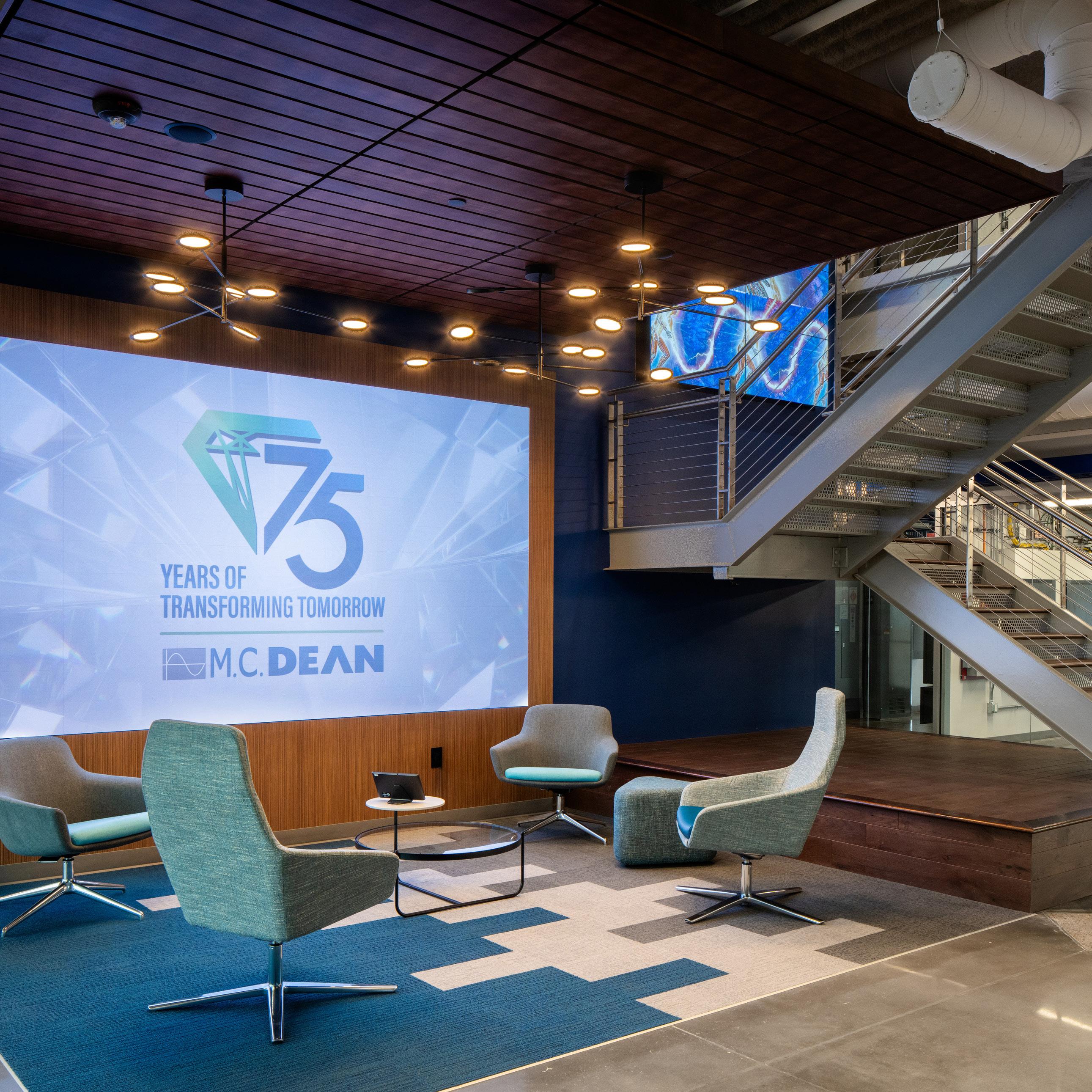
Custom interactive art encourages use of central stair for daily movement.