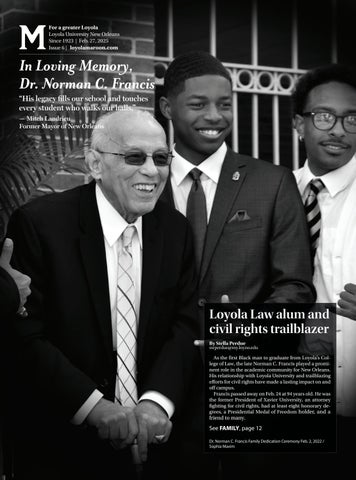
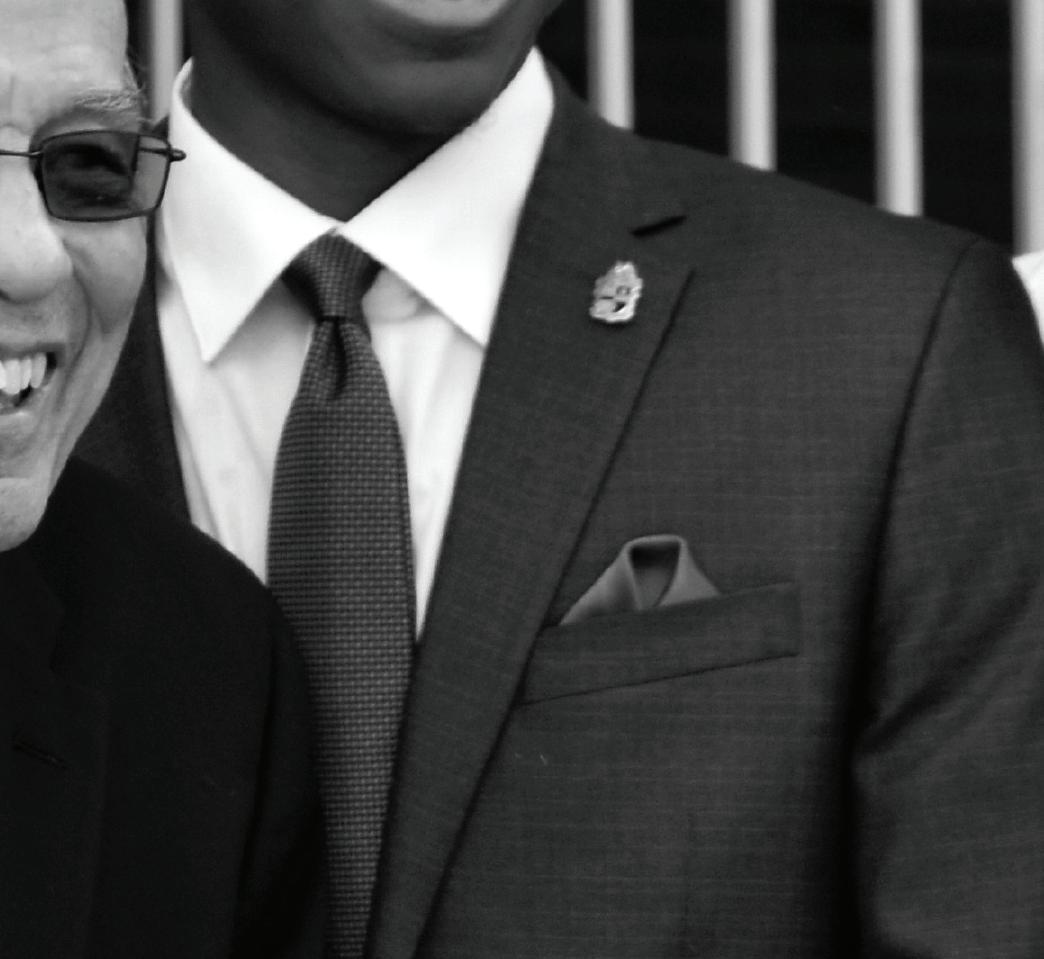
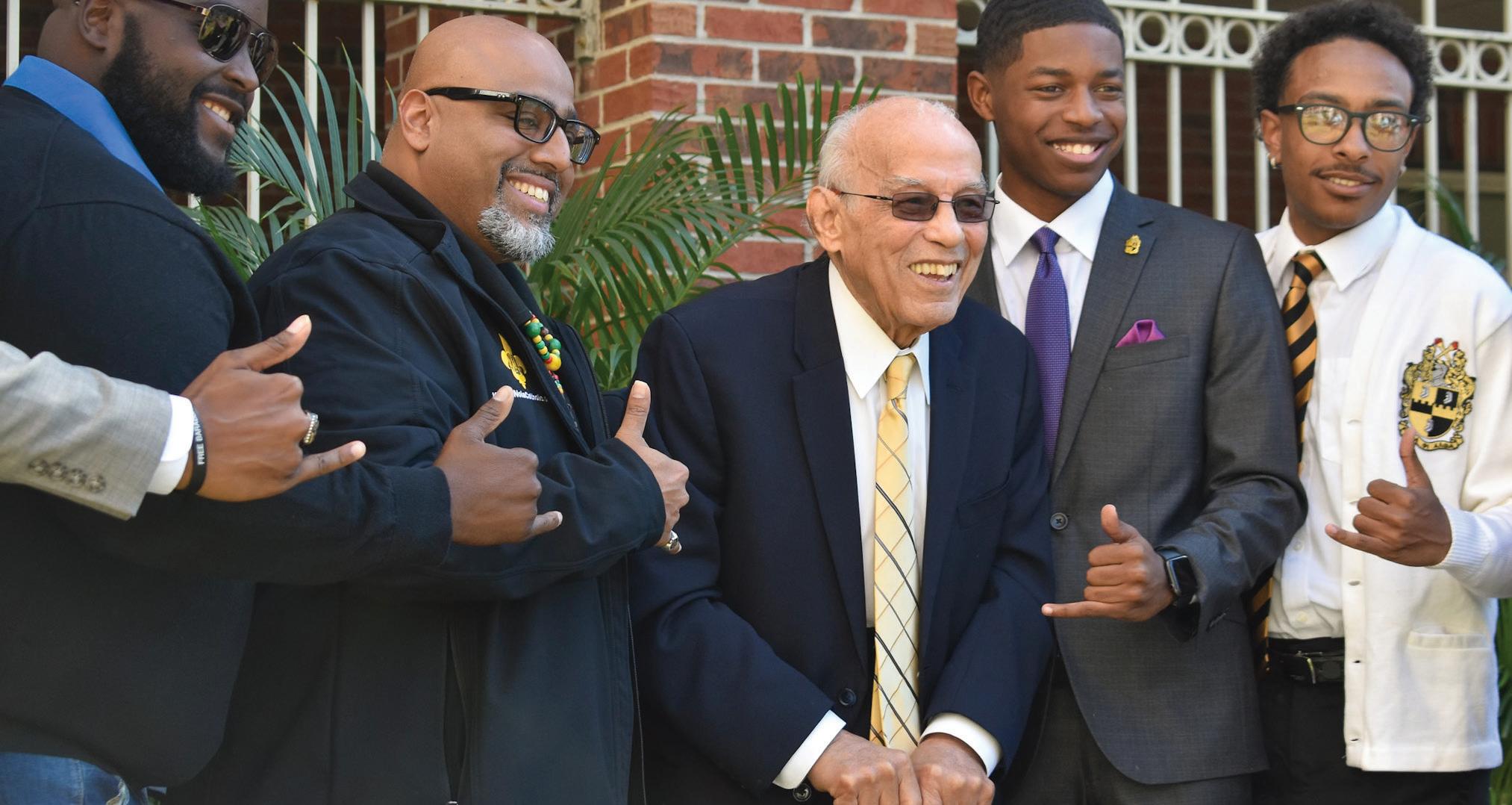
As the rst Black man to graduate from Loyola’s College of Law, the late Norman C. Francis played a prominent role in the academic community for New Orleans. His relationship with Loyola University and trailblazing e orts for civil rights have made a lasting impact on and o campus.
Francis passed away on Feb. 24 at 94 years old. He was the former President of Xavier University, an attorney ghting for civil rights, had at least eight honorary degrees, a Presidential Medal of Freedom holder, and a friend to many.
Leading Toward Justice: Loyola, New Orleans, and the Struggle for Civil Rights.
Historic New Orleans Collection in partnership with Loyola University
New Orleans J. Edgar and Louise S. Monroe Library present The Trail They Blazed traveling exhibit in conjunction with Leading Toward Justice: Loyola, New Orleans, and the Struggle for Civil Rights at Loyola University New Orleans Monroe Library January 22 – April 19, 2026.*
*Leading Toward Justice will exhibit all of 2026
EXHIBITS ON THE FIRST, SECOND, AND THIRD FLOORS OF THE LIBRARY.
Opening reception
◦ January 22, 2026
◦ 5 p.m. – 7 p.m.
◦ Monroe Library, First Floor
Featured speaker
Dr. Ronnie Moore, Fr. Louis J. Twomey, SJ Legacy Scholar in Residence, Jesuit Social Research Institute, 2024 Loyola Honorary Degree Recipient.
TRIO: Opening campus conversation
By Lily Bordelon lmbordel@my.loyno.edu
“[It’s] just adding to the greatness of what Loyola is"—this is how Monica Curtis, director of TRIO Student Support Services, described the TRIO program on campus.
Curtis believes that Loyola’s TRIO academic program does much more than directly aid the annual 140 students accepted into the program: it starts a conversation for the entire university.
TRIO is a network of programs nationwide that run from middle to graduate school, Curtis explained. These programs are designed to aid a variety of students, including first-generation students, low-income students, and students with disabilities.
Since Curtis joined Loyola’s TRIO staff in 2022, the program has increased their staffing to having two full-time advisors, providing more coverage in need. Because the program is becoming more established and well-known, Curtis stated that the team is moving towards focusing on larger initiatives.
Large-scale events, she explained, are what the program wants more of for students, including first-gen week, national TRIO day events, and possibly leadership conferences.
Because of this, the program planned
multiple events this week for National Trio Day on Saturday, including an information session, “Wellness Wednesday,” and “First-Gen Friday.”
Additionally, the organization was able to bring students to a Pelicans game last Saturday.
“It really was just for our students to talk with professionals in the field, marketing, communications,” Curtis said.
Although Loyola’s TRIO program does not take center stage for academic advising and success coaching, it acts as an additional source of hands-on support for students who may require additional help.
“I mean, every week, I at least have someone that says, oh, I'm so thankful to come to you guys to just grab supplies or to talk or get a recommendation letter
"I'm proud of the work that we've done. I'm proud of my team. I'm proud of our students."
— Monica Curtis Director of TRIO Student Support Services
or navigate a grad school application,” Curtis said.
With the second grant cycle in full swing, the university has seen an increase in the first-generation student population, according to Curtis.
“So 30% of our students here at Loyola are first gen and our incoming class from last fall, 39% of those students, are first generation,” she said.
Because of the growing population of first-generation students, Curtis explained, TRIO has switched gears from assisting only so many students to opening the conversation and demonstrating how to increase student success and
graduation.
“I'm proud of the work that we've done. I'm proud of my team. I'm proud of our students,” Curtis said.
Miriam Afran, a senior double majoring in Business Analytics and Business Management, is a first generation college student that joined TRIO when she was struggling to find her place in college.
“I did not just need academic help. I needed guidance, reassurance, and a community that understood what it felt like to navigate higher education for the first time,” she said.
Through TRIO, Afran was able to manage her FAFSA, budgeting, academics, and other college responsibilities with the help of her advisors.
At the end of her junior year, Afran was offered the opportunity to return to TRIO as a peer mentor for students in situations similar to hers.
“Stepping into that role felt like coming full circle,” Afran said. “TRIO did more than help me succeed academically. It gave me confidence, belonging, and the purpose to give back and uplift others on their journey.”
Theater for the Culture celebrates Black plays
By Valentina Russell varussel@my.loyno.edu
To celebrate Black History Month, Loyola’s Theater For The Culture club has been hosting special events throughout February. The Black Play Reading series, which had an event on Feb. 19, was created for students to gather and listen to Black playwrights’ works and enjoy them together.
All types of artists are welcome, whether they are actors, writers, playwrights, or students simply looking to meet other creatives.
The club was started in March of 2024 as a way to join Black storytellers and makers together, as well as to share their work here at Loyola.
“The event pays homage to not only Black stories, artistry, and community, but more importantly advocates for appreciation of Black playwrights that studied the hardships and unique beauty of the Pan-African Diasporic experience,” said junior musical theater major and Black studies minor and TFC’s Vice President, Yeva Guthrie.
Junior musical theater and liberal arts physics major Gabrielle Stanfield, the club’s president, said that each week has a different theme to showcase different aspects of Black artistry, “ranging from comedy, abstract, fantasy, and love, which are not always showcased in mainstream media.”
The readings help highlight some of the unique elements of Black
plays, such as whimsy, resilience, love, musical influence, and cultural perseverance. The plays read at each event include In the Red and Brown Water and Choir Boy by Tarell Alvin McCraney, as well as Purlie Victorious by Ossie Davis.
“It is important to tell black stories, because if we don’t tell them, who will?
If we don’t stand loud and proud in the minority, the marginalized side lines, our stories will lose power,” Guthrie said.
“Most importantly, without sharing our stories we are doing an injustice to the younger generations of black creatives, who desire to see themselves in Black playwrights.”
Stanfield is proud to have the Black Play Reading series here at Loyola because of its importance to the communi-
ty and the change it can bring.
“Not only does this initiative foster community within the niche population of theater folks but also brings in people who may not be familiar with theater and script reads. It promotes literacy awareness of different text structures, and in Black lense,” she said.
Stanfield herself wrote and produced a play last year in the theater department’s New Works Festival titled Nothing but Bliss, and the club hosted a Latin Cabaret for Hispanic Heritage Month back in September.
The club hosts a variety of different events throughout the school year, as well as highlighting opportunities in the New Orleans community, such as casting calls and workshops.
Mardi Gras: Does student motivation decrease?
By Dominique Campbell ddcampbe@my.loyno.edu
As Mardi Gras has reached its end, the Loyola student body returns back to campus to close out the semester. Students and professors alike wonder if the zeal and enthusiasm from the beginning of the semester are still present after Mardi Gras break.
Thus begs the question, does student motivation seem to decrease when it comes to giving their best in the classroom following Mardi Gras?
Mass Communications Professor Angelique Dyer said, “I can definitely tell when students go into brain-off mode.”
Not only does Dyer explore this from the viewpoint of an instructor but also that of a former student.
“I was once a college student in New Orleans at Loyola---I know the feeling,” Dyer said.
Dyer recounted fond memories of being a student at Loyola and the strategy that she and classmates may have used to complete their work on time but also enjoy the festivities the Mardi Gras offers.
“I know the feeling…sitting in my 3 p.m. Thursday Theory and Research class wanting to be getting ready for Muses,” she said.
“Now as a professor, I’ve always made
sure to make my class and assignments as low maintenance as possible, not because I’m a ‘cool’ professor but because I’m already aware of the fact that so many of my students have mentally checked out, and I’d rather not waste each other's time,” Dyer said.
Similarly, some students echo Professor Dyer’s thoughts regarding the decrease in effort to complete assignments after the revelry of Mardi Gras.
Senior Ryan Fisher said, “I think that student motivation decreases after Mardi Gras. Before Mardi Gras, I feel everyone is in a rush to get all of their work done before the days of partying and celebrating begin.”
Fisher continued, “After you come back from a couple days off and from not doing schoolwork you feel unmotivated to do assignments because you just had a really fun couple of days and the thought of having to go back to doing schoolwork can be exhausting.”
In contrast, some students look forward to the extended time off as a time of rest from the day-to-day hustle and bustle that being on campus and their various activities brings.
Senior Mya Butler sees it as a time to focus on completing last minute assignments and tying up loose ends.
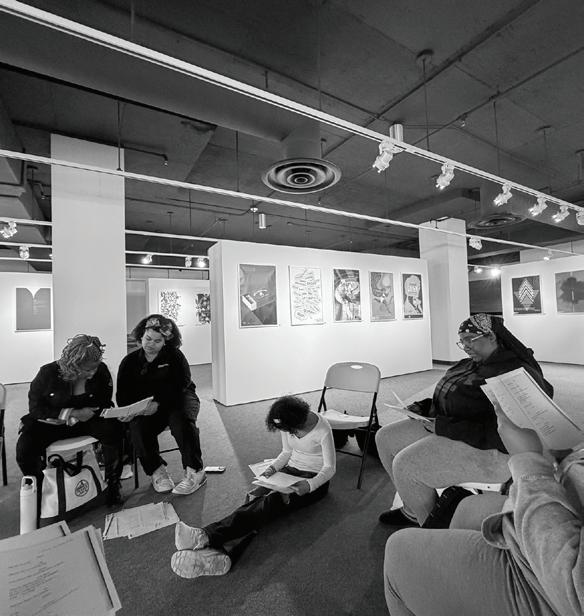
Theater for the Culture students cold read scenes from Choir Boy by Tarrell Alvin McCraney on the fourth floor of Monroe Library. Courtesy of Nala Scaife for the Maroon.
TRIO Student Support Services official logo.
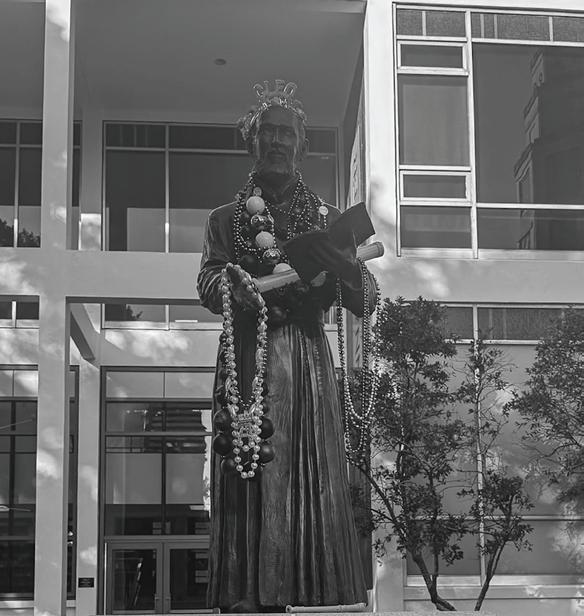
Mardi gras beads left on St. Ignatius statue outside Danna Student Center. Pharrell Every/The Maroon.
PUZZLES
ACROSS
1. Oval, orange-colored fruit
7. “Yes” in Spanish
9. Metal that is wound into a coilshape
10. Socially awkward, boring, unfashionable person
13. “Pencil” in Spanish
15. Pre x usually meaning “back” or “again”
16. To burn ercely
17. South Africa abbr.
19. to consider, judge, or regard something in a particular way
20. To decay
21. ___ Hirt, legendary New Orleans trumpeter
23. Liberia abbr.
24. Opposed to smile
25. Freshen, as a stamp pad
28. Rest in Peace, abbr.
30. Opposed to wet
31. 1993 song by Janet Jackson
32. Staten Island, abbr.
33. 1986 horror novel by Stephen King about seven children in Derry
35. e coin worth 10 cents is called a __
36. Adult Swim, abbr.
37. One might say this to scare somebody
39. Classical guitarist Fernando ___
40. Bob and ___
43. Author _. _. Stein
44. Land Rover, abbr.
46. Greece, abbr.
48. a hard-shelled, edible fruit or seed, rich in protein and healthy fats
49. Executive Order, abbr.
50. Rhode Island, abbr.
51. Occupational erapy, abbr.
54. Popular phrase, “Get the hell outta ___”
57. American Eagle, abbr.
58. Big X a Plug claims himself to be, “ e biggest, the __”
63. Bugs Bunny’s famous saying, “What’s up __”
64. Adult Protective Services, abbr.
65. Cherry-red shade
67. To be honest, abbr.
68. red, spherical, approximately one-inch diameter devices packed with ash powder
DOWN
1. It keeps the doctor away
2. e last king of Troy during the Trojan War
3. Modern slang for charm
4. Opposed to “Out”
5. Visual e ects in lm and media, abbr.
6. “Special Agent __-O” (2009) Disney Cartoon
7. A strawberry is the only fruit to have this on the outside
8. Latin abbreviation for “id est.”
9. ___ -toothed cat
11. Wide Receiver, abbr.
12. Popular smartphones (1999) with a tangible keyboard (L-O-L)
13. Serving soup spoon
14. Peanuts comic strip character, Peppermint ___
17. Amaretto ___ (cherry-garnished cocktails)
18. Cherry ___ (bakery treat)
20. Rapper __ Wave
22. Longitudinal Employer-Household Dynamics
26. e largest and oldest all-female krewe in New Orleans
27. A two-dimensional diagram; alignment chart
28. “He has ___” Easter greeting
29. March 14, 2026 is __day!
32. Jigsaw exclaims, “I want to play a game”, in this 2004 lm
34. e best pasta shape is bow-__
37. ___ orange (citrus variety)
38. Overload, abbr.
41. Atomic symbol for gold
42. U.S. state where Ben and Jerry’s ice cream company was founded, abbr.
43. Cherry's signature color
45. __ V. Wade (1973) courtcase
47. “__ de Janeiro”
52. Tic-___-toe
53. AKA Soviet Union, abbr.
55. Antonym of “don’t”
56. “You guys made a whole __ without me ;(“
59. Railroad crossing sign letters, abbr.
60. Grantmakers in Health, abbr.
61. Uncle, in Portuguese
62. A free overlay network for enabling anonymous communication
64. Core exercises are focused on these types of muscles, abbr.
Assistant Student Media Adviser: Gabriella Killett Vargas
CONTACT US
Main O ce - (504) 865 - 3535
Business O ce - (504) 865 - 3536
Adviser’s O ce - (504) 865 - 3295
Correspondence - maroon@loyno.edu
Letters to the Editor - letter@loyno.edu
Advertising - ads@loyno.edu
Website - www.loyolamaroon.com
Twitter - @loyola_maroon
Facebook - e Maroon
Instagram - @loyola_maroon
Our o ce is in the Communications/ Music Complex, Room 328.
Send mail to: e Maroon, Loyola University, Campus Box 64, 6363 St. Charles Ave., New Orleans, LA 70118
e Maroon is published every Friday. Unless otherwise noted, all content is copyrighted by e Maroon. All rights reserved. First copy free to students, faculty, and sta . Every additional copy is $1.00.
e Maroon is printed on 30 percent post-consumer recycled content.
Crossword by Kira Phillips and Olive Riley/ e Maroon
CIE hosts annual Study Abroad fair
By Claire Schmit cischmit@my.loyno.edu
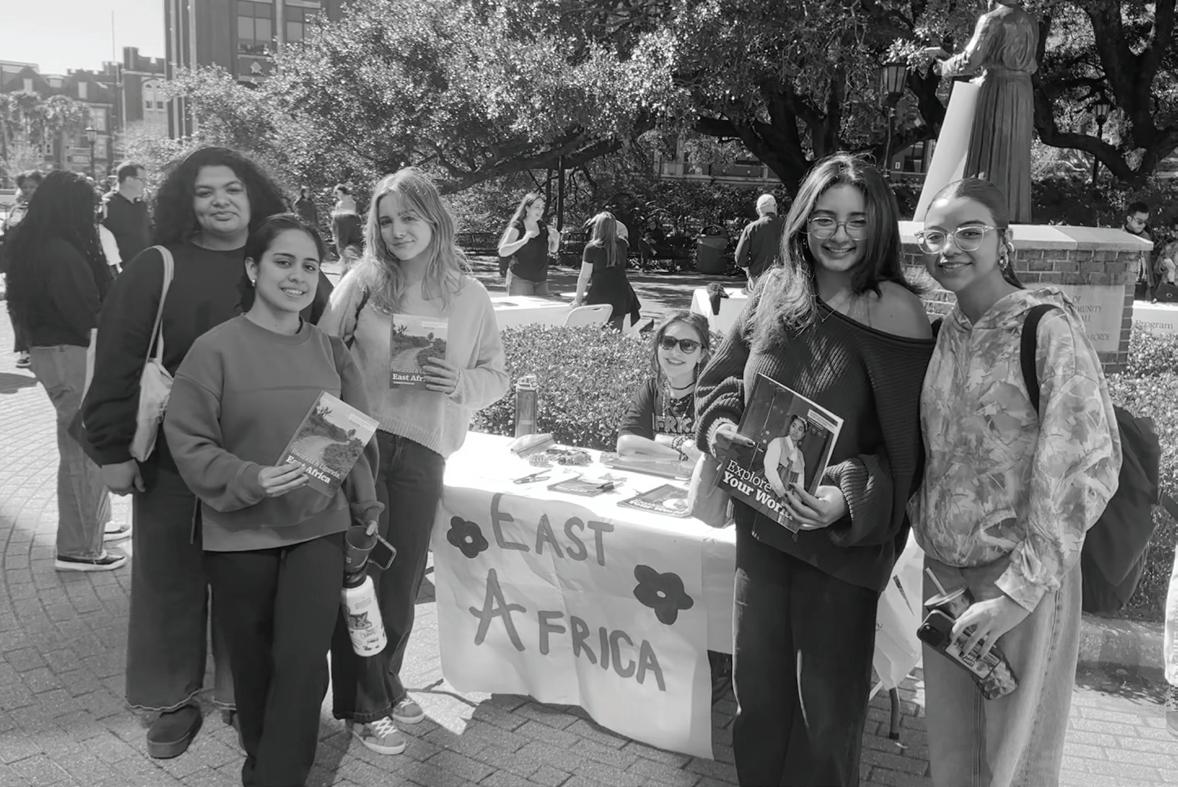
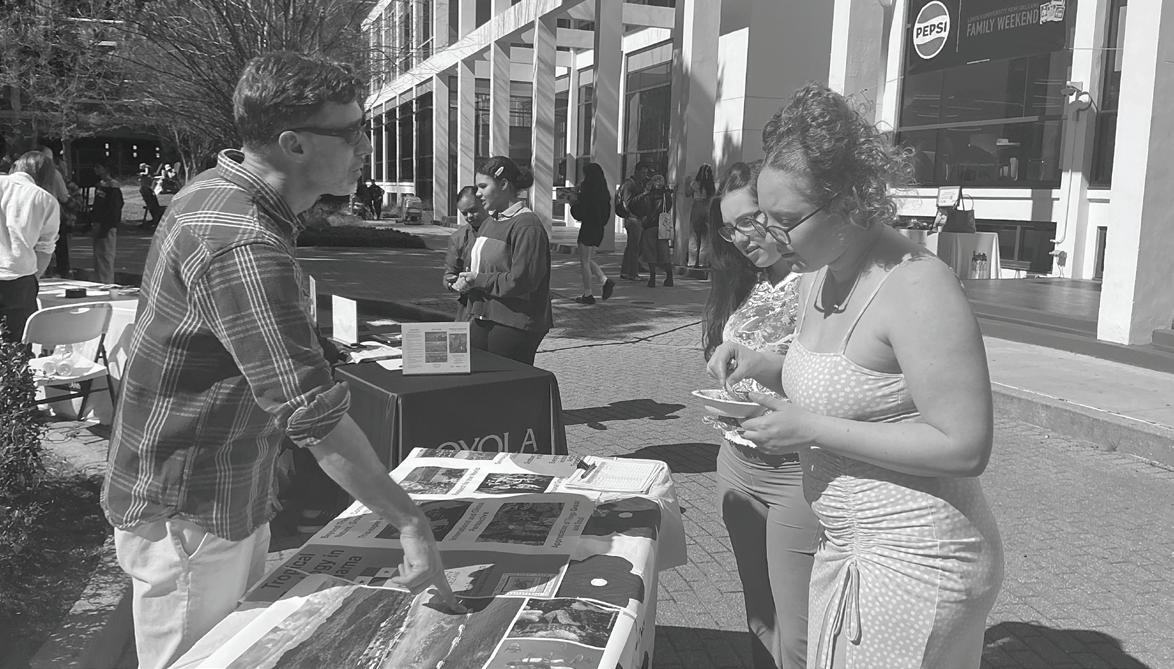
The Center for International Education hosted their annual “Study Abroad Fair,” one of many events hosted by Loyola’s Center for International Education to promote their selection of programs. The Study Abroad Fair focused on the J-term and summer programs led by faculty members.
The Iceland program, led by Tracey Watts and Kevin Rabalais, is one of the new programs that CIE is introducing this year.
Last year, Watts led a study abroad program in Prague, Czech Republic, at the end of May, but this year will be the first time Loyola hosts a study abroad program in Iceland. Watts is hoping to alternate between the Prague program and the Iceland program each year. If there is enough student interest in the new Iceland program, Watts and Rabalais will take students to Iceland in May 2026, and next year she will host the Prague program again.
Watts is extremely excited to take students to Iceland, which she has traveled to four times.
In her time there, she has developed an appreciation for the literature that emerges from Iceland, and she describes the Icelandic people as “very well-read.”
“1 in 10 Icelanders publishes a book; they’re huge proponents of literature,” Watts said.
Once in Iceland, Watts will teach a “Writing about Literature” course with a focus in Medieval Icelandic texts, Norse mythology, and modern Icelandic literature. Additionally, Rabalais will teach “Documentary Photography," allowing students to earn six credits in total while traveling and learning about Icelandic
culture.
Theater arts freshman Gabriel Vasquez attended the event to learn more about Loyola’s Mass Communications summer program in London. The program he is interested in will run from May to June of 2026, and will be led by Professors Lisa Collins and John Duke.
“I’m looking for an opportunity to get out of my comfort zone, especially since I’ve gotten so used to the same style of education. Studying abroad would be a good change of scenery and a chance to learn about a different culture,” Vasquez said.
Peer advisor at the Study Abroad Office, Trinity Townsend, a senior majoring in international business, was drawn to work with the CIE after her experience studying abroad in Barcelona.
“Studying abroad is a really good experience to have,” Townsend said. “There are very few times in people’s adult lives where they can just live in another country for three months to a year, then come back. Why not do it now?”
LOYOLA'S NEW FACULTY ADVOCATES ARE TAKING A STAND FOR STUDENTS AND EMPLOYEES
By Eloise Pickering ewpicker@my.loyno.ed
Loyola’s American Association of University Professors chapter made themselves known on campus with the publication of an open letter in The Maroon, where they advocated for the universities’ immigrant community. But, with AAUP’s nearly 15-year campus hiatus, many on campus can’t be blamed for not knowing the organization’s purpose.
AAUP is a national organization with individual chapters. Loyola’s chapter was reinstated in the fall of 2025 after disbanding around 2011. According to former University Senate Chair, AAUP Vice President, and law professor Isabel Medina, it took a few years of effort
to gather enough interested faculty to re-establish the chapter. They currently have 16 dues-paying members, all faculty.
Loyola’s AAUP functions as an independent faculty group that advocates for faculty rights and academic freedom, according to Sarah Allison, Loyola’s university senate leader and English professor.
According to Patricia Boyett, Loyola’s AAUP president and history professor, the chapter has three major goals: Faculty compensation, the preservation of academic freedom, and the pursuit of social justice.
Faculty Compensation
For years, Loyola faculty have been pushing for more equitable salaries.
“I'm a first generation scholar from a working class background. It's very disheartening that I still cannot make a living wage,” said Pablo Zavala, a Loyola Spanish and Latin American studies professor and member of AAUP.
According to Boyett and Zavala, as well as past research and interviews conducted by The Maroon, most faculty members have not received a raise in over a decade. These pay inequities have been present across numerous generations. Current Loyola President Xavier Cole and his administration has made efforts to bridge the salary gap, such as raising $1.2 million in spring of 2025 for long-time faculty bonuses.
Loyola administration has also announced 2% raises for all faculty, effective in August. Additionally, faculty
promotions will be coming with bigger salary increases.
Many Loyola faculty members, however, are still earning far less than their counterparts. According to Zavala and ProPublica, 75% of faculty at comparable universities earn more than Loyola faculty.
“It's almost a poverty wage,” Zavala said.
Loyola’s AAUP plans to work with Loyola administration to remedy salary inequalities.
“We would like to have some shared governance with the administration to rectify some of these inequities and come up with better equitable raises in the future,” Boyett said.
AAUP leadership met with Loyola’s Provost and Senior Vice President for
Academic Affairs, Thomas Chambers, regarding their goals and collaboration with the administration.
"They are dedicated and skilled faculty who care about the university, their colleagues, and our students. We look forward to working together," Chambers said.
Boyett expressed her confidence moving forward in regards to her role as a communicator and the organization's relationship with administration.
“We've expressed all our concerns… I am hopeful and I feel like part of my job as president and all of us on the board is to try to keep very open communications,” Boyett said.
See Academic Freedom, p. 12.
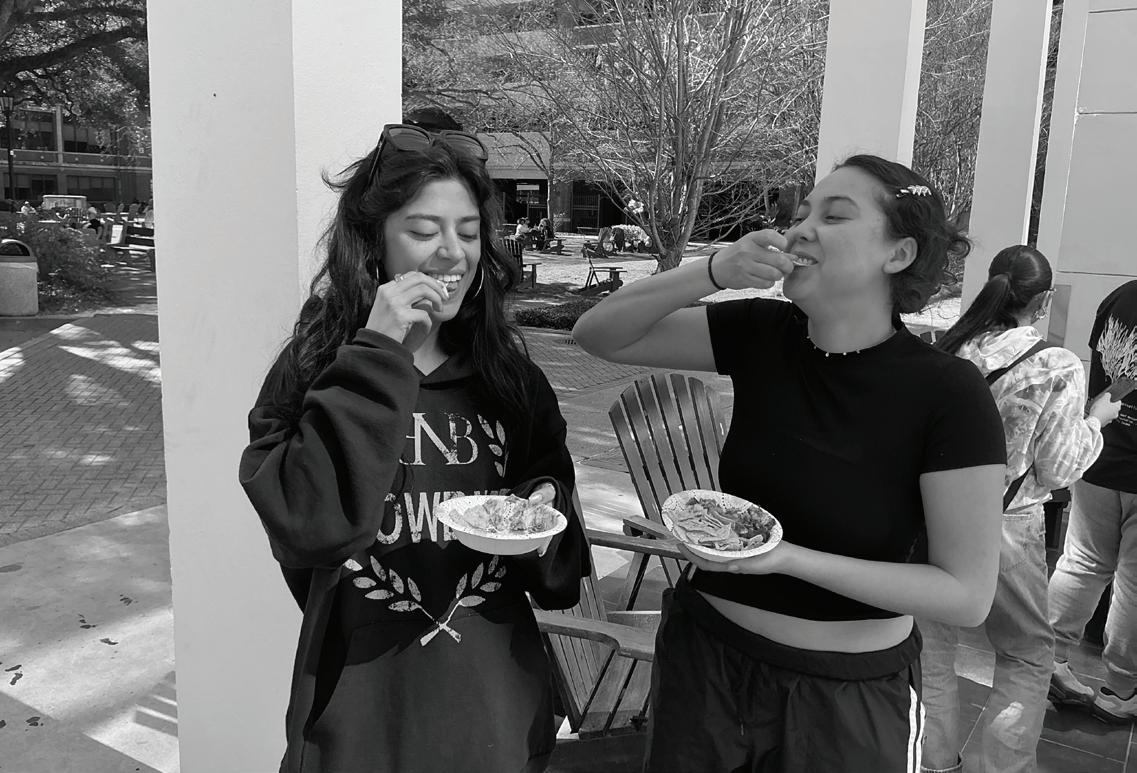
Isabella Jayne and Emily Keller enjoying guacamole, salsa, jalapeños, onion, and cilantro. The Study Abroad Fair was held in the peace quad to promote studying abroad to students. Elyssa Willis/The Maroon.
Jade Desandovaland and juniors stand at the South Africa. The Study Abroad Fair was held in the peace quad to promote studying abroad to students. Elyssa Willis/The Maroon
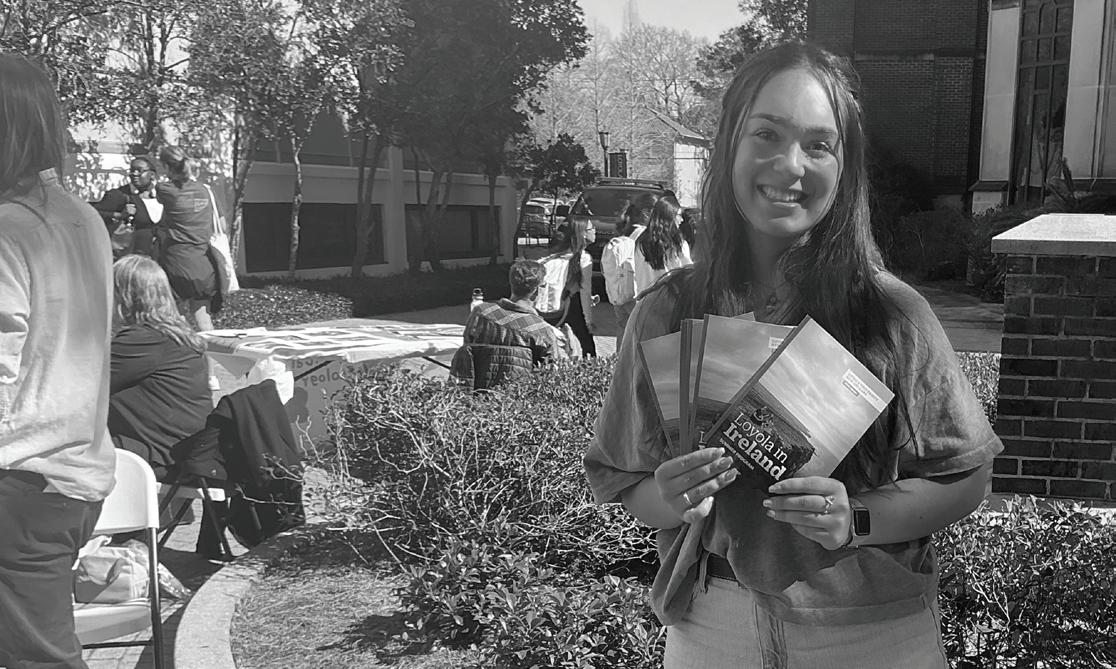
Taylor James promotes Ireland study abroad by holding pamphlets. The Study Abroad Fair was held in the peace quad to promote studying abroad to students. Elyssa Willis/The Maroon
Phil bucolo promotes the Tropical Ecology study abroad in Panama to students. The Study Abroad Fair was held in the peace quad to promote studying abroad to students. Elyssa Willis/The Maroon
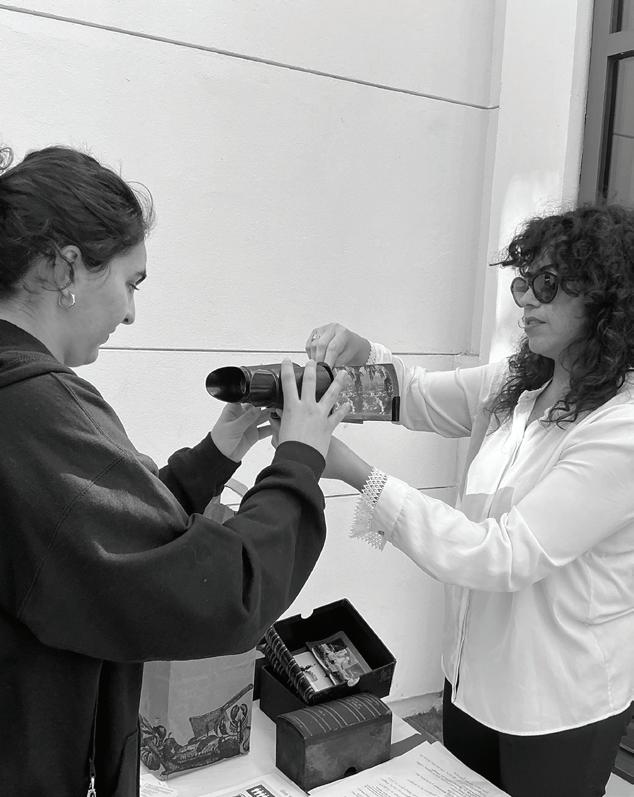
Valentina Russell inspects photos through a telescope handed to her by Dr. Diana Soto-Olson. The Study Abroad Fair was held in the peace quad to promote studying abroad to students. Elyssa Willis/ The Maroon
As the city cleans up Mardi Gras, Loyno alum aims for a greener carnival
By Nicholas Parrella nrparrel@my.loyno.edu
After the streets are cleaned from Mardi Gras 26, Loyola alum Kevin Fitzwilliams looks to a more green future
Mardi Gras is a celebration. A time of joy, overwhelm, grief, and… trash. A recent article by NOLA.com stated that just last year, over 1100 tons of trash was sent to landfills after the twelve day parade period. That's over 2.4 million pounds.
This year was no different. However, it doesn’t have to be like this, and many riders and volunteers celebrate Mardi Gras and sustainability hand in hand.
Loyola ‘03 alum Kevin Fitzwilliam has spent much of his life working towards a more sustainable Mardi Gras.
“I’m from New Orleans. So as far as Mardi Gras goes, I mean, I’ve been going to Mardi Gras my whole life”, he said. “It was 25 years ago that I rode in Thoth… I rode and threw only recycled or reused beads, and plush items and stuff like that.”
At Loyola, Fitzwilliam found himself reading about the environment often, forming his conservation mindset.
Stewardship combined with education, Fitzwiliam noted, is “all a part of the gumbo pot of caring about the environment.”
Fitzwilliam noted that he “always cared about the environment” and he studied the environment in college.
Fitzwilliam has been involved in Mardi Gras sustainability for about 15 years.
Even before his time at Loyola, Fitzwilliam recalls, “going to mardi gras parades being like, what the hell is going on here?”
This observation drove him to get involved.
In 2017, Fitzwilliam founded Atlas Beads, an organization that sells bracelets, necklaces, coin purses, earrings, and Christmas ornaments all made with recycled magazine paper by women in Uganda.
“My role in this is literally just to sell the women’s products that they’re making, so they have an audience here in New Orleans… And also that when people catch this necklace, it opens people's eyes to what’s possible with the type of throws that they catch,” he said.
Through his organization, he also sells post cards and poetry scrolls, all created and written by him.
“This is just one of the cogs in the wheel of helping people to shift away from mass produced plastic.”
There are many organizations like Atlas Beads that work to push this recycling effort, such as Glass Half Full and Osprey Foundation, who during the Mardi Gras
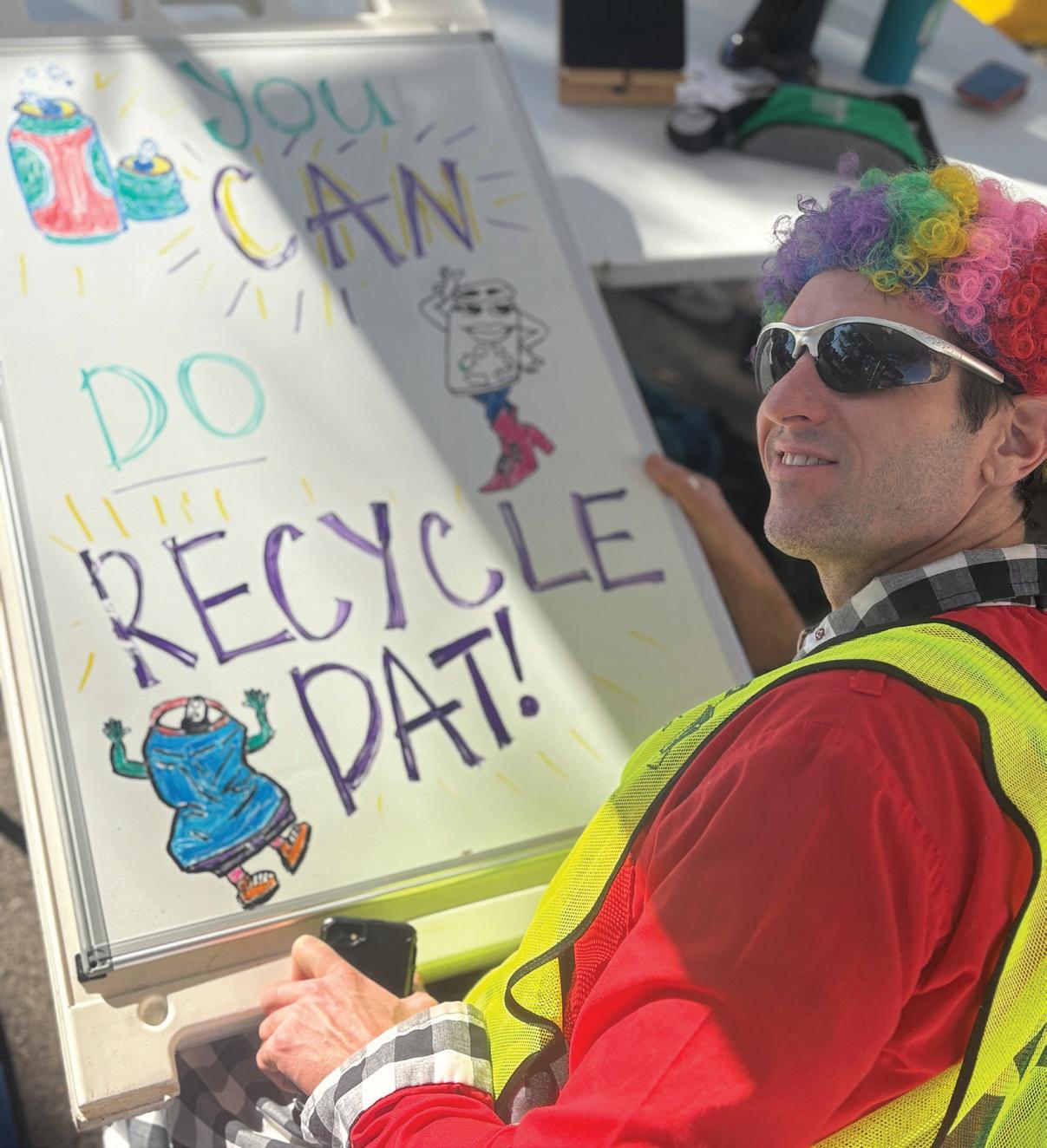
season work team up with Recycle Dat!, an initiative led by Grounds Krewe, a local nonprofit whose goal is to promote waste prevention during Mardi Gras and beyond.
“I am one of 100 people any given year,” Fitzwilliam said.
This year, he acted as a station lead which entailed putting up X-Frames, where people can drop off their plastics and cans.
Every year, Fitzwilliam goes out on the town as his character Canny the Recycling Clown, promoting sustainability in a fun way. He is also a part of a krewe called the Re-Cyclists, formerly known as the Trashformers, who dress up in “recycling pun costumes or as recycling superheroes.” For the last two years they have been riding with Krewe Boheme.
“When I go to parades, nothing ends up on the ground ever, and basically nothing ends up in the trash” he said. “To me, there doesn’t have to be any trash on the ground.”
Fitzwilliam is one of many advocates, volunteers, and residents around the city who are working towards a cleaner future.
“What we’re doing is having fun, we’re living that, where we’re preserving what’s beautiful about Mardi Gras,” Fitzwilliam said.
Kevin Fitzwilliam with a Recycle Dat sign, courtesy of Kevin Fitzwiliam
Cleaning crew raking trash after parades on Napoleon and St. Charles, Tuesday, Feb. 17. Elise Beck/the Maroon
You like Jazz? Six local spots to check out this semester
By Cae Nguyen ctnguye3@my.loyno.edu
From annual festivals to the city’s plethora of clubs and bars, nights here in New Orleans are endless. Although, what really works its magic throughout the city is music, and for most New Orleanians, music goes beyond entertainment – it is a necessity. New Orleans is considered the birthplace of jazz for a reason.
Cultural Daily’s “Why New Orleans is Considered the Birthplace of Jazz” describes jazz as a “rich cultural tapestry,” fusing in uences from African, Caribbean, Spanish, and French backgrounds. Weaving a cultural mosaic of New Orleans, the genre is greatly in uenced by the city’s African American and Creole communities, who were instrumental to the development of jazz. Jan Ramsey for O beat Magazine describes jazz best: “freedom-loving music.”
In uential jazz gures include Charles “Buddy” Bolden, Louis “Satchmo” Armstrong, Jelly Roll Morton, the Dodds brothers, and Sidney Bechet. eir approaches to jazz set new standards for performance, bridging communities together and speaking the universal language of live sound.
If you're over 21 on a night out in New Orleans, consider ditching your average club or bar, and go to these six local jazz spots instead:
1. e Spotted Cat Mu- sic Club
Known as “ e Cat” by locals, this music club is internationally known as the spot for jazz music. e Cat was established in December 2000 and is located at the core of the Faubourg Marigny District. Described as a small music box – “a glamorous spectacle without needing to be pretentious about it” according to ViaNolaVie– this club has a stage, bar, and
a cozy atmosphere to gather jazz lovers in the French Quarter. Do not stall for too long – this music club is strictly rst come, rst served!
2. Mahogany Jazz Hall
A hidden gem in the French Quarter has reopened in 2021 under new ownership. Mahogany Jazz Hall is the ideal
luxurious interior. Be sure to look out for the Hall’s special events, where they host themed nights and workshops to engage patrons in the rich culture of jazz.
3. e Jazz Playhouse
Located in the lobby of e Royal Sonesta New Orleans, one of the city’s most prestigious hotels, this 2014-estab-
der it was awarded Best Jazz Club in New Orleans by Where Y’at Magazine’s Best of the Big Easy. Tickets are required for reserving tables, but bar seating and standing room is o ered on a rst-come, rst-served basis. Come and enjoy the Playhouse’s live jazz and selection of appetizers and entrees. Do not fret if you are not staying at the hotel – the Playhouse is open to outside visitors.
spot to enjoy nightly jazz performances up close and personal. Celebrated for its mesmerizing atmosphere, this spot’s ambience reels you in with its warm lighting, cozy seating arrangements, and
New Orleans public library searches for local artists
By Elise Beck erbeck@my.loyno.edu
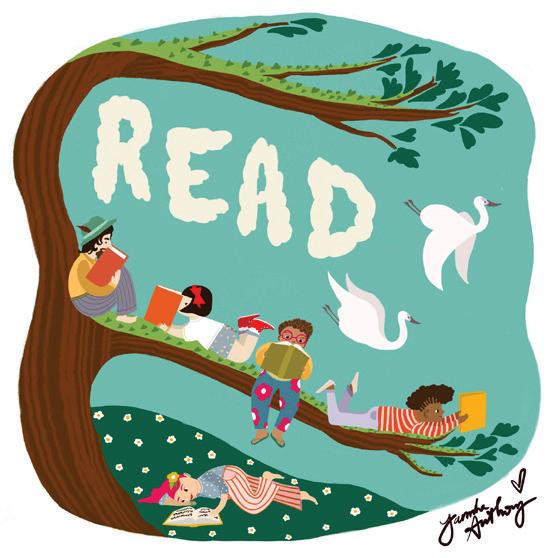
e New Orleans public library is seeking local artists to partner with them for their Summer Fun and reading challenge.
“ e selected artist’s original work will be featured across the city and online, including on our limited-edition 2026 tote bag and promotional materials,” according to the library.
e library noted that artwork should “re ect the uniqueness and diversity of New Orleans” through color, as well as tie in elements of reading. Artists must be 18+, live in Southeastern Louisiana, and submit 3 samples of their work. e deadline for submissions is Monday, March 2, at midnight. More criteria is available on the New Orleans Public library website.
lished jazz spot honors the city’s musical heritage by holding nightly performances from local and renowned musicians. is Playhouse lives on in its rich history dating back to 1721, making it no won-
4.Fritzel’s European Jazz Pub
Known for being the oldest operat-
ing jazz club in New Orleans, this jazz pub is located in a dated 1831 building in the French Quarter. is pub was established in 1969 and is described as “a mecca for jazz lovers and musicians alike” according to its website, also known for bringing in Joie de Vivre—the cheerful enjoyment of life. e Fritzel’s Jazz Band raises the energy of the pub seven nights a week. If you are looking to forget about your worries, live in the moment, and move along with the music, Fritzel’s is where you should be.
5. Maple Leaf Bar
Characterized as “a neighborhood watering hole located on the funky Oak Street corridor” by the bar itself, Maple Leaf Bar continues to be one of New Orleans’ longest operating music clubs. is bar is home to legendary musicians such as James Booker and Clarence “Gatemouth” Brown, Grammy Award winners like George Porter Jr., and is a special place for many emerging musicians and music students at Loyola University New Orleans, Tulane University, and the University of New Orleans. If you are looking to be in the place of legends with live performances seven nights a week, go check out the Leaf.
6. Sweet Lorraine’s Jazz Club
Described as a “cultural cornerstone” over your average music venue on the club’s website, Sweet Lorraine’s holds over fty years of New Orleans’ history, with live jazz performances nearly every night. is club features a curated selection of local talents and legendary musicians, making each night its own celebration of sound and community.
Scott Rodger speaks after lm screening
By Elise Beck erbeck@my.loyno.edu
Loyola’s advance screening of “Man on the Run,” Morgan Neville’s documentary about Paul McCartney, brought the community an opportunity to look at a very speci c time period in the star’s life. e lm was McCartney’s manager Scott Rodger’s idea, and this screening allowed viewers to watch a live Q & A between Rodgers and Loyola Professor Jonathan McHugh following the lm.
Rodger noted that he hates “talking
heads” in documentaries, and therefore the lm doesn’t have any sit-down camera interviews. Instead, it is essentially all found footage from McCartney’s life in the 70s.
Rodger noted that when you’re with friends and family, your guard is down, and you’re free to be yourself.
Clips of McCartney on 60mm lm and Super 8 lm, shot by Linda and other close friends, show the musician at his silliest - frequently cracking jokes and looking rumpled.
Needle drops of energetic Wings
Watch reporter Elise Beck's interview with Scott Rodger through the QR code above!
songs match McCartney’s zany energy. e audience, mostly made of Gen Xers, laughed frequently, sometimes at jokes that I didn’t quite understand. It was pushing 10 p.m. on a Tuesday night, and the occasional audience member began to slip out.
Rodger noted that he’d keep it quick, as it was “getting late for everyone.”
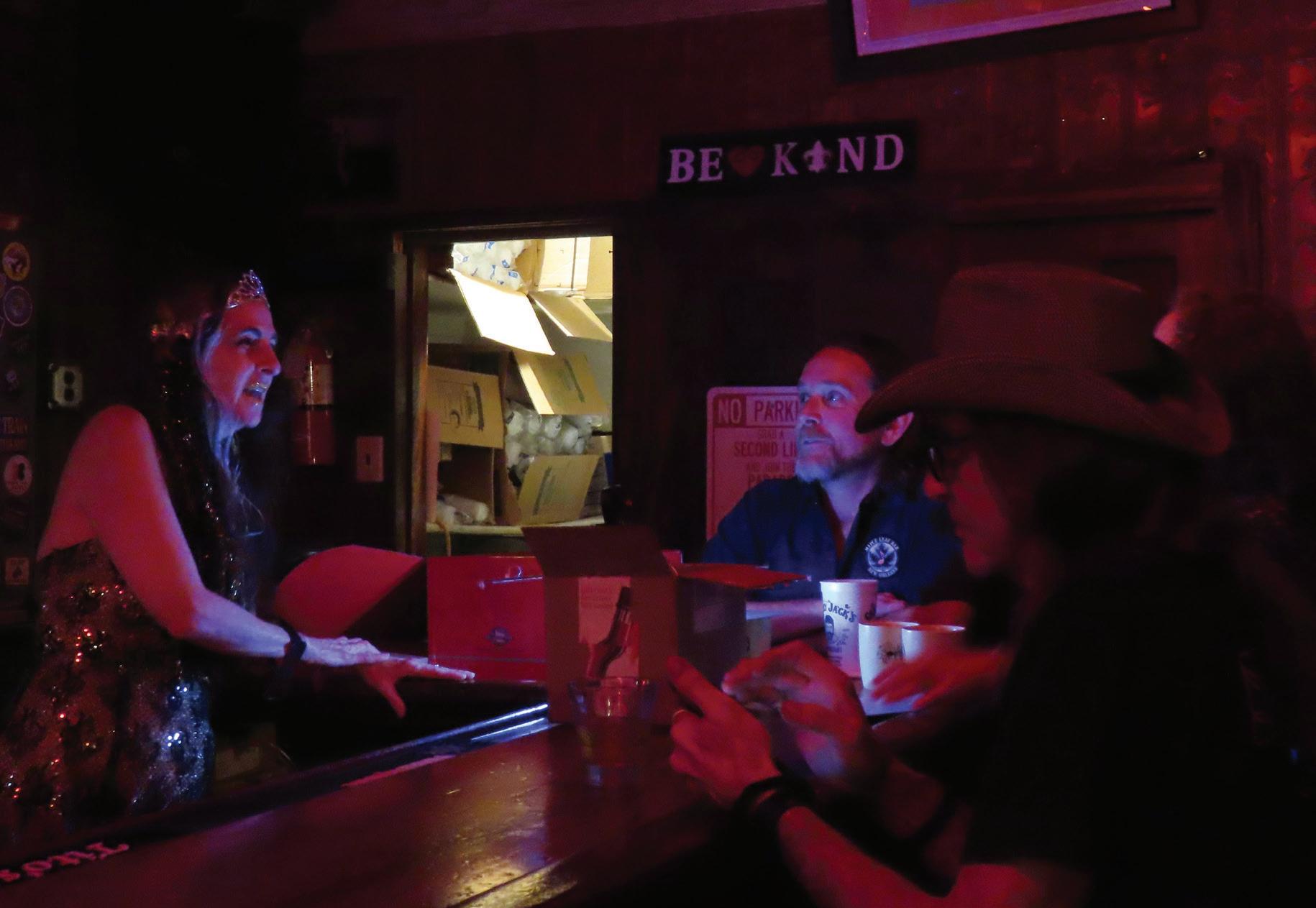
A bartender speaks with patrons at the Maple Leaf Bar on Wednesday, Feb 10, 2026. Cae Nguyen/the Maroon
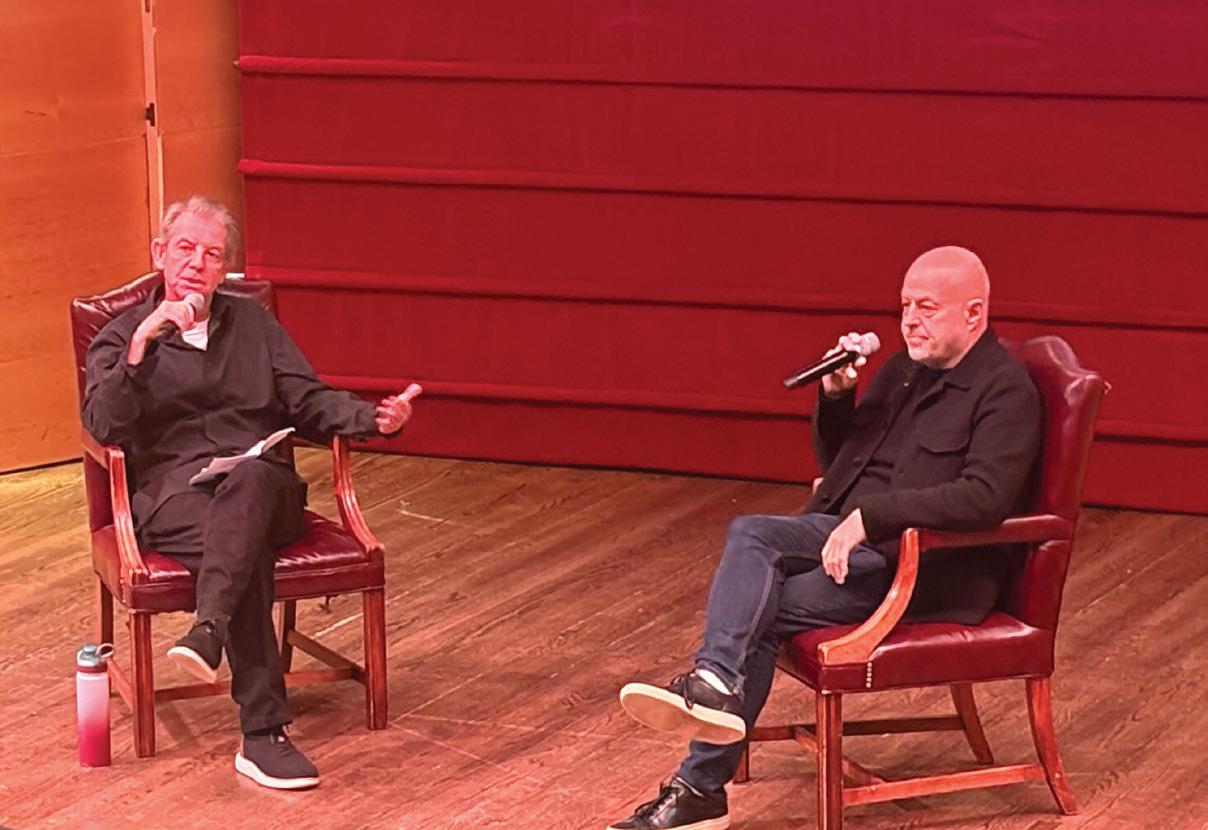
Professor Jonathan McHugh interviewing Scott Rodger in Nunemaker auditorium on Tuesday, Feb 10, 2026. Elise Beck/the Maroon
Previous years' winning pieces, courtesy of the New Orleans public library
BUILD THE FUTURE NOLA
Your voice matters. Change starts with showing up.
Build the Future brings together local leaders, advocates, and organizations to share information and provide hands-on opportunities for civic participation.
March 4, 2026
Reserve your spot now:
Loyola College of Law 4:00 - 7:00 pm e you
Court hears laws requiring Ten Commandments be displayed in classrooms
By Xavier Buckley-Wilson xlbuckle@my.loyno.edu
Federal appeals courts are hearing Texas and Louisiana laws that would place the Ten Commandments in the respective states’ public school classrooms.
The attorneys general of both states appealed the laws after the 5th Circuit of Appeals deemed them both unconstitutional in 2025. These laws would mandate that “the Ten Commandments be permanently displayed in every public school, be in constant focus, and have large, readable letters,” said Amy Tai, an attorney on the Louisiana and Texas cases and a senior litigation counsel for Americans United for Separation of Church and State. Tai argues that these requirements threaten the First Amendment’s Es-
tablishment Clause, which prohibits the government from officially recognising a religion.
Tai said that the Texas and Louisiana laws not only “express a denominational preference,” but they “coerce schoolchildren to meditate on the Ten Commandments.”
Louisiana Attorney General Liz Murrill wrote in a post on X, formerly known as Twitter, that she believes the law to be constitutional.
“We believe Louisiana’s Ten Commandments law is constitutional, and we look forward to making that case before the Fifth Circuit today at 1,” Murrill said. “Thou shall not kill and thou shall not steal should not be controversial.”
However, some Loyola students voiced concerns about the law.
Nicholas Oliver, a sophomore ma-
joring in political science and English, experienced parallel circumstances in his senior year when his high school installed the Ten Commandments in classrooms.
At the time, his classmates were “mostly confused, disgusted, and frustrated” by the rule. Oliver warns that these rules will make “people that aren't Christian or agnostic feel uncomfortable in the classroom.”
Nora Ahmed, the legal director of the American Civil Liberties Union Louisiana Chapter and attorney on the Louisiana case cautions that legislation like this “endangers people’s right to practice or not to practice a religion … intertwines church and state.”
Trent Watts, a sophomore music major and member of the faith-based Alpha Chi campus organization, used to support a union of church and state,
but now thinks they should be seperate.
“I think everyone should have the opportunity to be exposed to Jesus Christ, but at the same time, I believe in the First Amendment and the freedom of religion,” Watts said. “It’s unnecessary to put the Commandments in classrooms, because that's why there's church.”
The Louisiana law states that the Ten Commandments are “historical documents,” a perspective Tai disagrees with. Tai argues that the Commandments are religious documents.
“We hired a historian that says there’s no historical evidence that the Commandments are fundamental to U.S. law,” she said.
Viviana Capasso, a senior majoring in political science, disagrees with Tai’s hired historian.
“The United States is a nation founded on Christian values and morals… We shouldn’t impose our religion on others, but we also shouldn’t change our ways,” Capasso said.
Students relate the Texas and Louisiana laws to national political culture.
Oliver criticises the school system and politicians for enacting “worthless rules like this” for “political brownie points from the Trump administration.”
Olivers says that instead of garnering “political notoriety and Christian panic,” lawmakers should “be making school lunches consistently free, or introducing budgets that would funnel some money into extracurriculars and classroom supplies.”
After shooting at Dooky Chase's restaurant, community support remains strong
By Dessadra Tezeno dltezeno@my.loyno.edu
A shooting at the historic Dooky Chase’s restaurant has shaken New Orleans, raising safety concerns while community members rally to protect the landmark’s legacy.
On Jan. 16, 2026, the violence left 19-year-old Kareem Harris dead and three tourists injured. The suspect, 18-year-old Makahi Kelly, allegedly entered the Orleans Avenue establishment and opened fire, shocking the city and drawing attention to public safety in one of its most culturally significant neighborhoods.
When addressing the media after the incident, Mayor Helena Moreno emphasized that the restaurant itself was not the target.
“In 85 years, this establishment has never experienced anything like this,” Moreno said.
Her comments sought to reassure the public and protect the reputation of a business deeply woven into the cultural fabric of New Orleans.
But how has the shooting affected the restaurant’s popularity? Professor C.W.
Cannon of Loyola University believes that the shooting will not have a significant effect on the restaurant’s popularity.
“Violent incidents typically do not have much effect on Orleans Parish residents, who know that crime is an unfortunate fact of life in the city. Locals take these waves of violence in stride and continue to participate in cultural life, including visiting institutions like Dooky Chase’s,” he said.
Cannon added that the perception issue is often more significant for tourists or suburban visitors, who may be less familiar with the city’s realities.
For some Loyola students, the news hit close to home. Eryn Goines, a sophomore, said she learned about the shooting before it was reported by news outlets.
“One of my family friends was working at the restaurant that night,” Goines said. “He reached out to my family to let us know what happened and to inform us that he was okay, but he is just in shock.”
Goines said she was very familiar with the restaurant long before the incident.
“My family has eaten dinner there
multiple times, and we have enjoyed ourselves each time,” she said. “Dooky Chase has so much history and culture in their walls, and I will forever recommend it to anyone visiting New Orleans.”
Despite the tragedy, the shooting has not changed her perception of the restaurant.
“The shooting has not changed my opinion on Dooky Chase at all,” Goines said. “After all of the years that Dooky Chase has had their doors open, nothing like this has happened until that night.”
When asked whether she would feel comfortable dining there again, Goines was clear.
“Yes, I would still feel comfortable eating at Dooky Chase,” she said. “It was an unfortunate incident that took place at the wrong time.”
Another Loyola student, Angelica Petit, a freshman, said she first learned about the shooting through social media.
“I heard about the shooting. I saw it on empoweryounola and my friend works there and said what happened,” Petit said.
Petit said she had dined at the restaurant before and associates it strongly
with New Orleans culture.
“It’s probably the only restaurant gumbo that I like,” she said. “Dooky Chase and the late Leah Chase inspired Disney’s first Black princess, Tiana. That representation is important to me as a local because it highlights New Orleans’ culture and showcases all our city has to offer.”
The shooting did not alter her view of the restaurant.
“No, the shooting didn’t change my perception because people in the restaurant were overall safe and the area isn’t that bad,” Petit said.
She added that she would still feel comfortable dining there.
“The restaurant area is overall safe and in today’s world shootings can happen at unexpected locations, but it’s unlikely it will happen in the same location this close to the first incident,” she said.
Petit also emphasized the importance of continued support for historic Black-owned businesses.
“At the end of the day this is history and supporting historic Black businesses helps with spread of knowledge about Black history and that way it won’t be forgotten,” she said.
Dooky Chase’s, founded by Leah Chase and her late husband, Edgar Lawrence “Dooky” Chase Jr, has been a cornerstone of New Orleans’ cultural identity for decades, hosting civil rights leaders, artists and politicians.
Professor Cannon explained, “Blackowned legacy businesses like Dooky Chase’s play an essential role in New Orleans’ cultural identity. Both the restaurant and the city’s tourism agencies regularly highlight its historic role in Black leadership. Establishments like this are central to understanding the city’s post-Civil Rights cultural acknowledgement, which increasingly emphasizes Black contributions.”
Despite the shock of the shooting, the restaurant’s reputation appears intact, supported by a local community that understands crime as an ongoing reality rather than a reflection on a historic institution.
As Cannon noted, “Crime is a reality of life in New Orleans and will remain so, but locals continue to engage with cultural institutions like Dooky Chase’s. The restaurant’s legacy and significance in Black history endure, particularly during Black History Month.”
Man walking by Dooky Chase's restaurant at night on Feb. 24. The establishement has been open since 1941. Sophia Renzi/The Maroon.
FAMILY: Francis' work throughout New Orleans
Francis’ advocacy work and character echo through the halls of Loyola University, inspiring the current generation of students and faculty alike. His substantial legacy emphasizes the importance of diversity, equity, and inclusion in the world of academia and beyond, according to former Loyola President Justin Daffron.
In 1955 amidst the budding Civil Rights movement in the deep south, Dr. Francis earned his J.D. from the College of Law, a break in the glass ceiling for Black academics that set the tone for Loyola’s future.
Much of Loyola’s faculty, including Jay Davis, the Associate Director for Residential Life, recall the ways in which Dr. Francis paved the way for inclusion at Loyola. “...Dr. Norman C. Francis opened doors that made it possible for many of us–including me, as a Black woman–to learn, work, and belong at Loyola,” she said. She continued to explain how Dr. Francis exemplified what it means to be a Loyola student, how he “...lived a life rooted in faith, devoted to family, and driven by service,” Davis said. As a symbol of Dr. Francis’ leadership and service, Loyola awarded him an honorary Doctorate of Humane Letters in 1982.
Bringing his passion for equality to the national stage, Dr. Francis served in the Army and then worked in the U.S. Attorney General’s Office where he helped to integrate federal agencies.
took initiative to help restore the New Orleans community as a whole. As the head of the Louisiana Recovery Authority, he oversaw the multi-billion dollar rebuilding project. Former New Orleans Mayor Mitch Landrieu was quoted in saying that “in his toughest moments,” it was Francis who he turned to for support. A year after the devastation hit, former U.S. President George W. Bush awarded Francis with the Presidential Medal of Freedom for his role in the restoration and his civil rights activism.
Academic freedom: AAUP's work for students
Continued from pg. 5
The Preservation of Academic Freedom
Loyola’s AAUP members promote the importance of free debates and discussions within the classroom, with Zavala referencing Loyola’s goal of academic freedom: the free and unfettered pursuit of truth.
“His work reflected his belief that New Orleans was a home for all of us,” Cole said.
Returning to Loyola in 2015, he was the recipient of the St. Ives Award–the most prestigious acknowledgement a person can get from the Loyola Law Alumni Association, solidifying his decades long relationship with the university.
“His presence carried a quiet strength and conviction that left a lasting impression on me. That strength was rooted in faith, discipline, and a deep commitment to expanding opportunity for others,” President Cole said when asked about his personal relationship with Dr. Francis.
In 2022, Loyola renamed their Carrollton Residence Hall to the Blanche and Norman C. Francis Family Hall after Francis and his wife in order to signify Loyola’s values of inclusion and equity, values that the Francis family channeled through their actions.
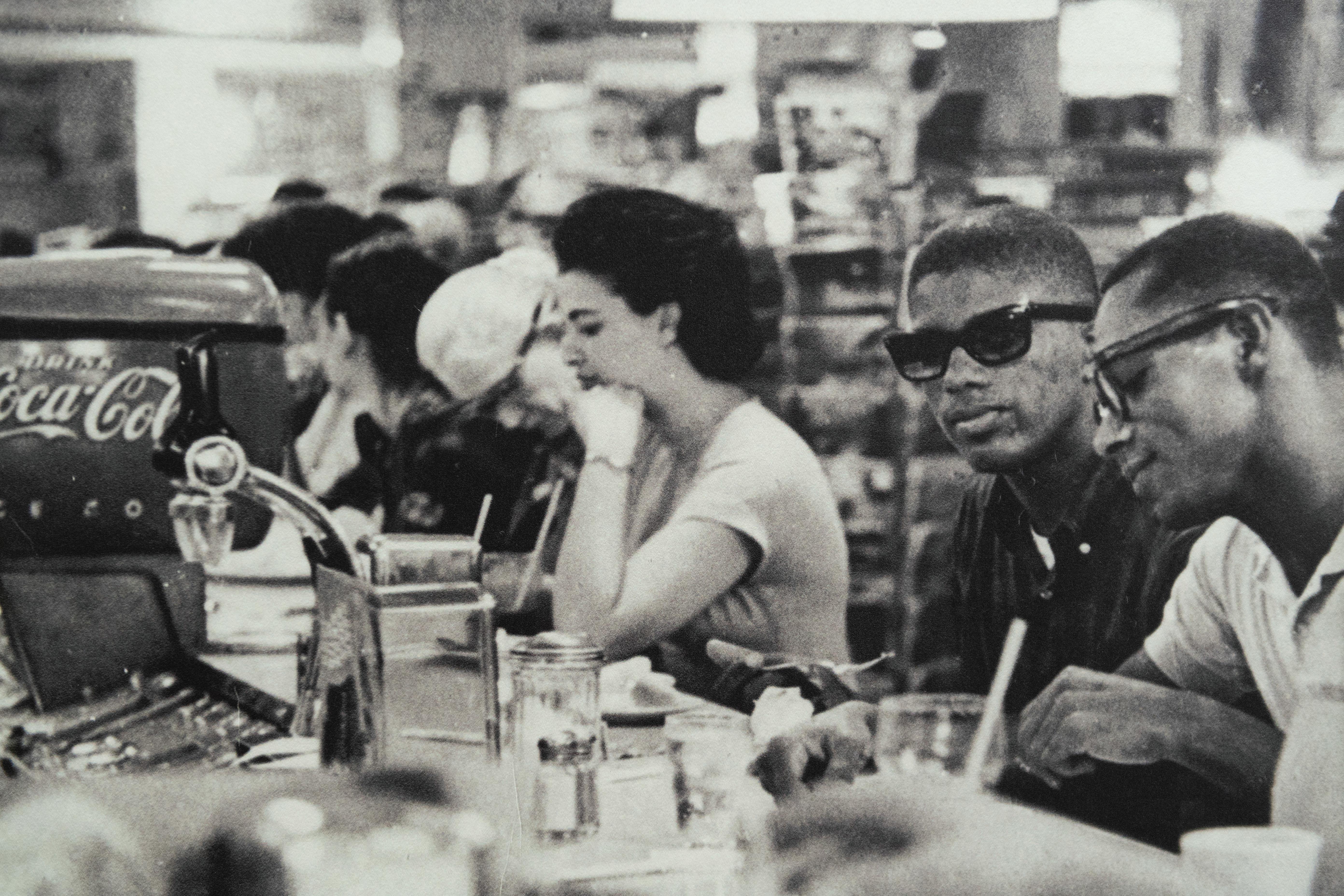
As a lawyer in the 1960s, he represented a civil rights case that made it all the way to the Supreme Court–defending students affiliated with the Core of Racial Equality who staged a sit-in at a segregated New Orleans lunch counter and were arrested for it. The result was a win, setting a legal precedent against segregation in the South.
“Dr. Francis's bravery and commitment to equality inspired many law students - myself included - to use the law as a tool for advancing justice and serving our neighbors," said Dean of Loyola’s College of Law, Madeline Landrieu.
As an administrator at Xavier University, Francis provided shelter for the Freedom Riders at Xavier after they had been attacked following a bus boycott in 1961.
He served as president of Xavier for 47 years–from 1968 until 2015, doubling enrollment and increasing opportunities for Black STEM and medical students.
His efforts in the academic community led to the inspiration of many, according to a statement made by Loyola University’s President Xavier Cole.
“[He] was a hero to me personally,” Cole said.
Francis’s life’s work also continues to inspire the students at Loyola, including the members of the Black Student Union on campus.
“Francis dedicated his life to education, leadership, and the advancement of black excellence. His unwavering commitment to empowering students continues to inspire us,” said BSU President Paris Hayes.
According to Hayes, Francis’s legacy was pivotal for generations of black students across the country.
“We are committed to honoring his contributions by continuing the work of uplifting one another, striving for academic excellence, and advocating for equity and opportunity. Dr. Francis’ impact will not be forgotten,” Hayes said.
When Katrina hit in 2005, Francis laid the groundwork to rebuild Xavier and
“His legacy fills our school and touches every student who walks our halls,” Landrieu said
Eloise Pickering and the Associated Press contributed to this report. Continued from front
United States President Donald Trump and his administration have publicly targeted diversity, equity, and inclusion initiatives among universities nationwide.
“We want to make sure our students and faculty have academic freedom, because we think that that's central to any kind of education,” Boyett said.
Boyett expressed concern that the censoring of free debate in the class-
room and amongst faculty will detract from critical thinking, what she calls the “main goal of a university.”
“The main goal of a university is to prepare students to critically think and be able to do that in their careers as well,” Boyett said.
Social Justice
Loyola’s AAUP chapter’s main social justice pursuit right now pertains to the topic of immigration.
“Many of our students [and faculty] come from immigrant families, and we just think that as part of our social justice mission, we wanted everybody to know that we are standing with them in this very challenging and heartbreaking time,” Zavala said.
On Jan. 26, a protest was held on Freret Street by students and commu-
nity members in response to Immigration and Customs Enforcements killing of Alex Pretti on Jan. 24. Loyola’s AAUP co-sponsored the event, a “historic” move, according to Zavala.
“The whole time that I've been at Loyola, the protests by our students have not been co-sponsored by faculty or any faculty organization. And the fact that the AAUP, our chapter, co-sponsored that protest to me was incredible,” Zavala said.
Zavala detailed that co-sponsoring the rally coincided with AAUP’s open letter.
“I can see that the students care for the immigrant community [and] that dovetails our open letter because we said it very publicly. We love our immigrant community and the students show … that they care about the immigrant community,” Zavala said.
He had: Scott Rodger answers student industry questions
Continued from pg. 8
He had a very easygoing and understanding air. As other student journalists and I fumbled in our pre-showing Q&As, he remained calm, collected, and above all, reassuringly Scottish. He asked our majors, what our passions were, and there was no sense of a rush.
When McHugh finished his questions, he opened up the floor to the audience, asking if anyone had any last questions for Rodger. There was one catch though.
“Not like how to get into the music business,” McHugh noted, joking that his students frequently pull this move.
An audience member raised his hand.
“What is the first thing that you would tell a young artist trying to emerge in the industry?”
His question was met with laughter from the audience.
Rodger good-naturedly responded, “You gotta make music for yourself. Don’t try and make it for a trend...people know when it’s not authentic.”
SPORTS
Homecoming win: e second to last home game
By Keri Smith klsmith1@my.loyno.edu
e Loyola University New Orleans men’s and women’s basketball teams picked up wins during ursday’s homecoming games at e Den, completing a sweep in front of a large crowd.
e women’s team played rst in the afternoon and controlled the game early. Loyola scored on its rst two possessions and created separation with defensive pressure. e Wolf Pack forced turnovers in the opening minutes and converted those opportunities into points on the other end. By the end of the rst quarter, Loyola had built a steady lead.
In the second quarter, Loyola continued to move the ball well in its half-court o ense. e team found scoring inside and knocked down open perimeter
shots when available. Defensively, the Wolf Pack limited second-chance opportunities by securing rebounds and closing out on shooters. e opponent struggled to string together consistent scoring runs. Loyola entered halftime with the lead after maintaining control for most of the rst half.
Coming out of the break, the Wolf Pack extended its advantage with another scoring run. Loyola forced additional turnovers and pushed the ball in transition. Quick passes and strong nishes at the rim helped stretch the margin. e defense remained consistent, contesting shots and limiting open looks.
In the fourth quarter, Loyola focused on managing the clock and protecting the ball. e Wolf Pack continued to attack the basket and earned trips to the free-throw line. In the nal minutes, defensive stops and key rebounds prevent-
ed any late comeback attempt. Loyola secured the win as time expired, giving the women’s program a homecoming victory in front of students, alumni and families.
e men’s team followed later in the evening and closed out the day with a win of its own. e rst half featured several lead changes as both teams found o ensive rhythm. Loyola scored from beyond the arc and inside the paint, while the opponent responded with its own perimeter shooting. e game remained close through much of the opening half.
Midway through the rst half, Loyola increased its defensive intensity. e Wolf Pack applied pressure on the ball and disrupted passing lanes, leading to transition opportunities. Loyola converted key possessions late in the half to take a narrow lead into halftime.
In the second half, the Wolf Pack built momentum with timely three-pointers and strong rebounding. O ensive rebounds created second-chance points and extended possessions. Loyola also limited its opponent’s extra opportunities by securing defensive boards. e team’s ability to control the glass played a major role in maintaining the lead.
A scoring run midway through the second half gave Loyola some separation. e Wolf Pack slowed the pace when needed and executed in half-court sets. Ball movement helped create open shots, and patient possessions forced the opponent to defend late into the shot clock.
Defensively, Loyola continued to contest shots and rotate e ectively. e opponent was forced into di cult attempts, particularly in the closing minutes. With the game still within reach
late, Loyola protected the ball and made free throws to keep its advantage. In the nal stretch, the Wolf Pack secured key defensive rebounds and avoided turnovers. Free throws in the nal minute helped seal the win. As the buzzer sounded, players celebrated at midcourt while the home crowd responded with applause. is game was one of the most attended game days of the season. Both teams defended their home court and added conference wins to their records. With homecoming complete, Loyola now turns its attention to the SSAC championship after winning their last home game on February 21. Both the men’s and women’s teams will look to build on the momentum from the past two games to improve performances as they nish out the season.
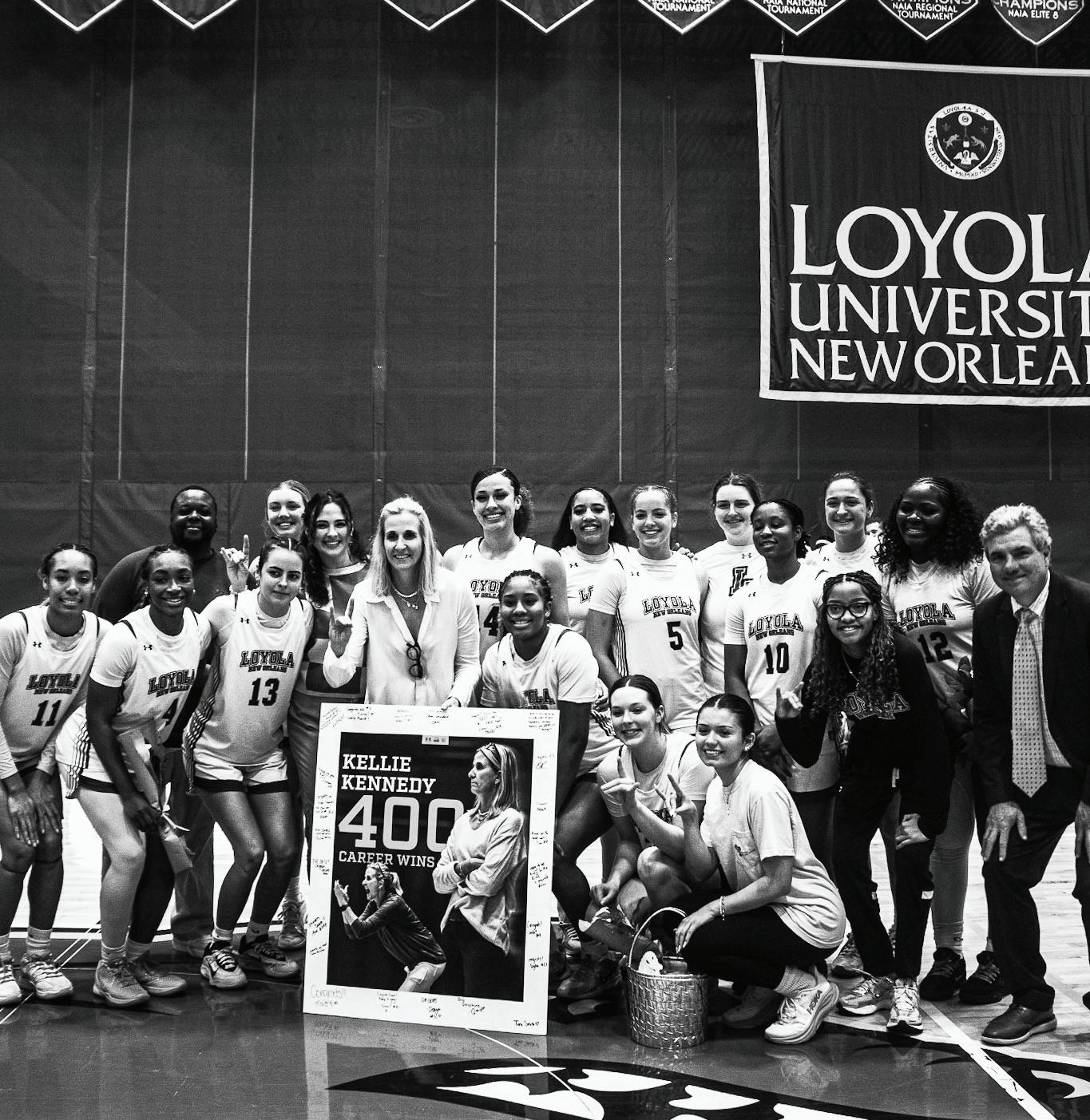
Coach Kennedy milestone: 400 career wins
By Mary-Ella Hasting mlhastin@my.loyno.edu
Women's basketball coach Kelly Kennedy coached her 200th winning game at Loyola.
e win took place at an away game against Life University in Georgia. Kennedy has been coaching women's basketball at Loyola for 18 years and said that 400 wins “ won't change much” as she plans to continue coaching with the same dedication and lead her team into the Southern States Athletic Conference.
Kennedy grew up playing basketball in her driveway and went on to play for North Carolina State. She shared that upon reaching the 400th win milestone she didn't realize it had been that many wins.
“ For me it was just coaching another game. When I found out it was nice and a little crazy to think I had coached that many games,” Kennedy said.
Kennedy shared that her team and
everyone who supports the team are her favorite things about coaching at Loyola. She says they have a great team that is dedicated to what they do. Deniya ornton, a junior criminal justice psychology major, and Caitlin Travis, a junior cyber security major both play for the women's basketball team and spoke very highly of Coach Kennedy.
“ Having Coach Kennedy has been nothing but a blessing,” said ornton. ornton and Travis both said that Kennedy encourages everyone to push onward even on hard days and has fostered a team that feels like a family.
“ is has helped to create great team chemistry and an atmosphere in the team that has also [contributed] to our success,” Travis said.
Travis said that Kennedy leads high intensity practices with an emphasis on purpose, and that this translates to wins on the oor.
“ is is evident in Coach Kennedy's 400 plus wins she has accumulated in her years of coaching,” Travis said.
Another thing both the players agreed on is that Kennedy is committed to helping the players improve their game and does so by using her basketball experience. As well as making sure the players know she is there for them all the time.
“Outside of basketball she cares for you like her own,” ornton said.
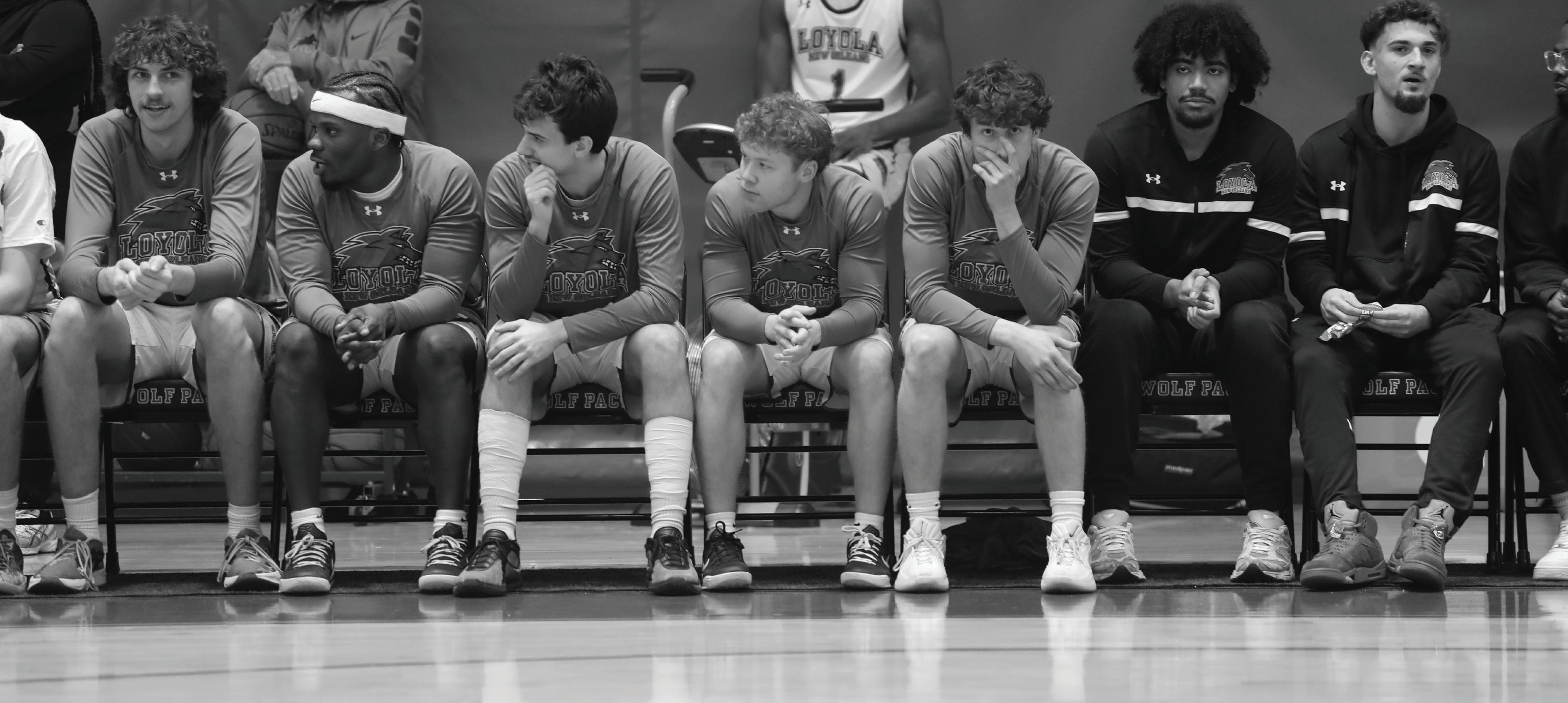
Mens team sitting on the side of the court. They have won their last two home games and Competing in the SSAC Championship. Dessadra Tezeno/The Maroon
Coach Kelly Kennedy posing with her 400 career sign along with her basketball player. she has been at Loyola for 18 years. Courtesy Heidi Herrera- Wanke
Why multiple perspectives matter in student media
By Nicholas Parrella nrparrel@my.loyno.edu
Student media serves as an open forum for students, faculty and staff to share information, concerns, and debate topics that directly affect our campus community and world. What makes this form of media different from others, is its proximity. We as a campus community see each other all the time which can make some opinions feel… personal.
But when we try to silence these opinions, we slowly chip away at the very mission of student media. Open dialogue.
There is plenty of inflammatory and divisive media out in the world and it can be very difficult to identify if what we’re consuming is uncomfortable or harmful. Harm is when free speech is used to purposefully deceive or attack and incite violence or division. Discomfort, alternatively, is a reaction that occurs when our own personal ideas, values, and morals are questioned.
The Maroon published an opinion piece recently by Anistin Murray titled “AmericaFest & building TPUSA on campus”. Like many in our Loyola community, I was outraged. I found the piece to be violently tone deaf, full of privilege, and lacking any meaningful understanding or research on the organization it was attempting to praise.
Those are my feelings. My opinions
The state of the union
By James Wyrtzen jawyrtze@my.loyno.edu
On Jan. 20, we passed the one-year mark of this Trump administration. However, this year, 2026, represents the 10th year that America has dealt with the Trump circus in our institutions. 10 years of waking up every morning, wondering what morally questionable move Donald Trump could make today. Early on in Trump’s political service, he frequently claimed he would be the one to “drain the swamp”, outlining his plan to root out corrupt systems and people in our government - something many citizens criticized about previous administrations. Some admired his policies for reducing the power of the federal government; some admired his plain-spokenness about the nature of our government at the time of his emergence; and most of all, some admired his charisma, carried over from his previous career as a reality media star.
Beyond that, he attacked marginalized groups in as many ways as conceivably possible, bragged about his severe
mistreatment of women, and pretty much blurred every moral line his base could have beyond recognition. Now, 10 years later, anyone who couldn’t see it then should clearly see it now: Donald Trump is the most efficient con man this country will ever see.
From his gold-plated Oval Office, he is leading our country by completely ignoring the needs of American citizens. He ran on a platform of affordability, transparency, and security.
Has Trump’s aggressive foreign economic policy resulted in lower grocery prices? Has the promise to weed out inefficient government institutions been fulfilled? Is there any accountability for the Americans named in the Epstein Files? Are all of the Epstein Files released, without a doubt that they’ve been doctored to protect any of the offenders? Do you have faith that the American government is acting in the best interest of its people?
The answers to all of these questions have been no.
As a collective American people, we
and criticisms. I should without a doubt have the right to express and discuss them… just as Murray has the right to publish her piece.
I am in no way endorsing Murray’ piece. I use it as an example of what happens when we try to erase something rather than critically respond. The way we respond to controversial pieces matters just as much as the pieces themselves. Free speech does not equal freedom from scrutiny. It means understanding that ideas will be challenged, analyzed, and in some cases knocked down. It seems simple, however, the way we choose to navigate these points is extremely important.
When we disagree, we often reach for harmful language instead of constructive criticism. It feels easier to immediately label something as harmful, instead of taking a deeper look and calling out its flaws. If we avoid thoughtful engagement, especially here on a college campus, we drive ideas underground where we can’t see them, never allowing them to be challenged.
This is why I emphasize student media. This argument has a lot of nuance and that nuance is substantial. I am not saying we should allow hate speech and harmful rhetoric on campus with zero editorial judgment, rather that as a uni-
versity paper, The Maroon has a responsibility to allow all students (including YOU) to share your thoughts, ideas, and feelings, even ones that may be controversial.
Think of it as a kind of boot camp for the future journalists, writers, editors, and publishers of the world. Your opinions and comments on what we do directly impacts how us, the next generation of media professionals will navigate the industry. The way you interact with and respond to our content matters and the way you respond to each other does as well.
If we replace engagement on our campus with erasure, we lose the opportunity to sharpen our own reasoning and critical thinking. College should be a place where we as students hone the skills necessary to respond thoughtfully to ideas we don’t agree with.
My fear for Loyola isn’t division, it’s complete and total disengagement. Picking sides doesn’t make you safe, it makes you complicit. When you see something you disagree with, respond to it. Don’t dismiss it, and don’t erase it. Argue against it, harshly critique it, but don’t attempt to make it disappear as if it was never there.
What are we really doing by attempting to silence speech?
The other side of the table
By Claire Kerr clkerr@my.loyno.edu
must demand accountability from our institutions, no matter who is in charge of them, as it is impossible to hold the American government in good faith when they actively sponsor law enforcement agencies that unlawfully kill American citizens in our streets. While these activities are really nothing new, it doesn’t mean we should not be demanding justice for Alex Pretti and Renee Nicole Good, as well as the many non-citizens who have been killed. Humans are dying at the hands of Trump’s pride and joy: extreme immigration policy. There are more humane ways to do this. Whether you love it or hate it, the 10 years of Trump have forever changed the perception and operation of the United States government. It represents a manifestation of all the years of the train of American imperialism, finally arriving at its station. Recently, just like Merle Haggard, I’ve been wondering if the good times are really over for good. A better question, though, would be if the good times were ever really good.
Adam Reiner, veteran of top New York restaurants recently wrote an article for the Wall Street Journal about what the waitstaff really thinks about their guests. Reiner spoke on how a successful dining experience comes from work on both ends.
I love the idea that dining is not just a service but a collaboration between both parties. It almost feels like a piece of art brought together by teamwork and some good food. It was a unique piece, as usually the focus is entirely on the customer rather than the people behind the scenes. Collaboration is not only about customer behavior but mutual awareness. Servers need to read customers' cues without rushing them and customers need to communicate without belittling their server. A good meal depends less on who is right and more on a team effort to create a great dining experience. My dad and I came across this piece in the Sunday paper at brunch, and wound up in a long conversation about waiting habits. If dining is a collaboration, I have a few thoughts from the other side of the table.
How about the awkward moment when the waiter asks you if you're done with a look of fierce judgment in their eyes, and you’ve only taken a few bites? Maybe I was full, maybe my eyes were
bigger than my stomach, maybe I’m suddenly self-conscious, who knows. Sometimes I love the meal, but I simply wanted a few bites. My family has always been very big on ordering several dishes and sharing them. Sometimes when we’re at a good restaurant, we order a few extra dishes just to try, but can’t finish them all. I always find myself shifting my gaze down as they pick up the unfinished plates with resentment in their eyes. To all the waiters out there, I promise I loved the dish; I just wasn’t that hungry. When I’m feeling a little indecisive and not having my sharpest days, I may need a little more time to think about my order. When my waiter begins to circle my table like a shark to its prey, there has to be a happy medium where the waiter knows when to come back, and I don’t feel like the menu is a final exam I have yet to study for, and the waiter is my teacher, glaring down in disappointment.
Why must the waiter walk past the table with the most beautifully smelling full tray of dishes right as I have reached a state of pure hunger and then drop it at the table next to me - the audacity. Is there another route they could’ve taken to spare me from that deep feeling of misery? I can’t keep letting delicious food pass me by; I must seize the bite. In all transparency, I worked as a hostess for a month and couldn’t make it past that without shedding a few tears, so I understand some of that judgment may be well deserved. The balance of customers rushing in, slippery floors, and no time for a bathroom break is not a battle I hope to fight again soon. There's a system for seating but for me that was all out the window once a few too many people walked in. The service industry is not for the faint of heart, and waiters deserve all the respect in the world. At the end of the day, they’re just trying to do their job, and the rest of us are just trying to eat. Maybe it’s not so bad to collaborate and have a little patience. If we all work together the dining experience can be smoother and more enjoyable for both parties.
Imad Siddiqui /The Maroon
Imad Siddiqui /The Maroon
President Donald Trump speaks during a session on his Board of Peace initiative at the Annual Meeting of the World Economic Forum in Davos, Switzerland, Thursday, Jan. 22, 2026. (AP Photo/Markus Schreiber)
The Maroon
Feb. 27, 2026
More than
just the first:
In 1952, twelve years before the signing of the Civil Rights Act of 1964, Norman Francis became one of only two Black students admitted to Loyola’s law school.
ree years later, in 1955, he became the rst African American to graduate from Loyola University. at detail matters.
is was not post–Civil Rights Act America.
is was the Jim Crow South, where segregation was still legally and socially enforced. For Francis, enrolling at Loyola was not just about earning a degree, it was an act of courage.
It is easy to reduce milestones like his to simple “ rsts.” e rst Black law student. e rst Black graduate.
But when we do that, we ignore the reality of what those moments required. We overlook the isolation, the resistance, and the pressure of walking into classrooms where you were not fully welcomed. Being the rst often means being alone.
Loyola’s relationship with integration was complex and, at times, frustrating for students of color. In a piece published by e Maroon, sta writer Patrick Ra erty detailed how racial diversity was challenged throughout much of the university’s history.
Editorial Board
Editor in Chief
Eloise Pickering
Managing Editor for Print
Mary Ella Hastings
Pre-Content Director
Alana Frank
Post-Content Director
Callie Honeycutt
Campus News Editor
Lily Bordelon
Campus News Editor
Stella Perdue
Worldview Editor
Pablo Pineiro-Ramy
HOWLS & GROWLS
HOWL to Clean water
GROWL to Mens Hockey
HOWL to Alyssa Liu
GROWL to Shia LaBeouf
HOWL to Womens Hockey
GROWL to State of the Union
Honoring the trail Norman Francis blazed
On Feb. 6, 1970, nearly twenty years after Francis broke the color barrier, the Black Student Union was formed to help Black students adjust to a predominantly white campus. at fact alone shows that admission did not automatically create belonging.
In November 1983, e Maroon ran a two-page spread describing racism in Loyola’s classrooms. According to the article, 58% of students believed instructors showed prejudice on the basis of race. at statistic is di cult to ignore. Even after integration, many students still felt bias in academic spaces. Structural change did not immediately erase cultural issues.
By 1993, however, some progress was visible. Only 14% of Loyola’s student body described racial relations at the school as poor, and 75% of Black students said they would recommend Loyola to their peers. ese numbers suggest improvement.
ey show that student organizing, faculty advocacy, and administrative shifts can lead to meaningful change. But that progress did not happen on its own. It was built on the e orts of people like Francis who were willing to endure discomfort in order to make the institution better.
As Justin Da ron wrote in e Ma-
Assistant Worldview Editor
Angelica Pineda
Life and Times Editor
Elise Beck
Assistant Life and Times Editor
Olivia Sanyal
Sports Editor
Kerieyaunta Smith
Opinion and Editorial Editor
Imadnisa Siddiqui
Breaking News Editor
Natalie omas
e Wolf Editor
Laura Welles
roon, Loyola’s residence halls were not integrated when Francis was a student. He did not nd a home of belonging in campus housing because the institution had not yet made space for him.
Yet instead of walking away, he worked with other students and faculty to push for fuller integration at every level. at decision, choosing reform over retreat , is what truly de nes a trailblazer.
After graduating from Loyola, Francis went on to become one of the longest-serving college presidents in American history.
At Xavier University of Louisiana, he served for nearly 50 years. Under his leadership, Xavier became a national leader in sending African American students to medical school and became a model for Black higher education in the Deep South.
His impact extended far beyond Loyola and far beyond New Orleans.
In recognition of his contributions to education and democracy, Francis received the Presidential Medal of Freedom, the highest civilian honor in the United States.
at award re ects not only his professional accomplishments but also the moral leadership he demonstrated throughout his life.
It is also important to acknowledge
Senior Sta Photographer
Sophia Renzi
Assistant Photo Editor
Pharrell Every
Design Chief
Makayla Parker
Social Media Manager
Mabel Regalado-Hernandez
Social Media Manager
Carlos Andrade
Copy Editor
Mark Michel
that it took Loyola decades to fully honor him. While Francis blazed trails in the 1950s, the renaming of a residence hall and other visible recognitions came much later. at delay is worth re ecting on. Institutions sometimes move slower than the individuals who transform them. Recognition often follows long after courage.
Still, honoring him now sends a clear message. e student who once could not live in integrated residence halls will now have his name displayed prominently on campus.
at reversal is powerful. It symbolizes growth, accountability and remembrance.
Given the current social climate in the United States, this recognition feels especially necessary. Civil rights remain
“The challenges Francis faced may look di erent today, but they have not disappeared entirely. .”
— Editorial Board The Maroon
at the forefront of national debates. In multiple states, legislation has limited diversity initiatives in public higher education. Issues surrounding voting rights, policing and educational access continue to spark political and legal battles. ese realities show that progress is not permanent. e challenges Francis faced may look di erent today, but they have not disappeared entirely.
We often talk about trailblazers as gures from the past. But there are trailblazers among us now.
Student-led organizations promoting racial equity, professors working to diversify curricula, and civil rights groups taking legal action to protect constitutional rights.
e lesson of Francis’ life is not just to celebrate what he accomplished. It is to recognize that the work continues.
Honoring Dr. Norman C. Francis is more than placing his name on a building.
It is acknowledging that many of the barriers he faced still have modern parallels.
It is committing to ensure that no student at Loyola feels like an outsider in their own university.
Trailblazers clear the path. Now, it is up to us to keep walking it.
EDITORIAL POLICY
The editorial on this page represents the majority opinions of The Maroon’s editorial board and does not necessarily re ect the opinions of Loyola University. Letters and columns re ect the opinions of the authors and not necessarily those of The Maroon’s editorial board.
The Maroon does not represent the opinion of administration, sta and/or faculty members of Loyola.
Letters are subject to editing for length, grammar and style. Please limit submissions to 400 words. Submissions are due no later than 4 p.m. the Sunday before publication. Please send all submissions — The Maroon, 6363 St. Charles Ave., Box 64, New Orleans, LA 70118. Email us your letters — letter@ loyno.edu.
Submissions may also be made online at www.loyolamaroon.com.
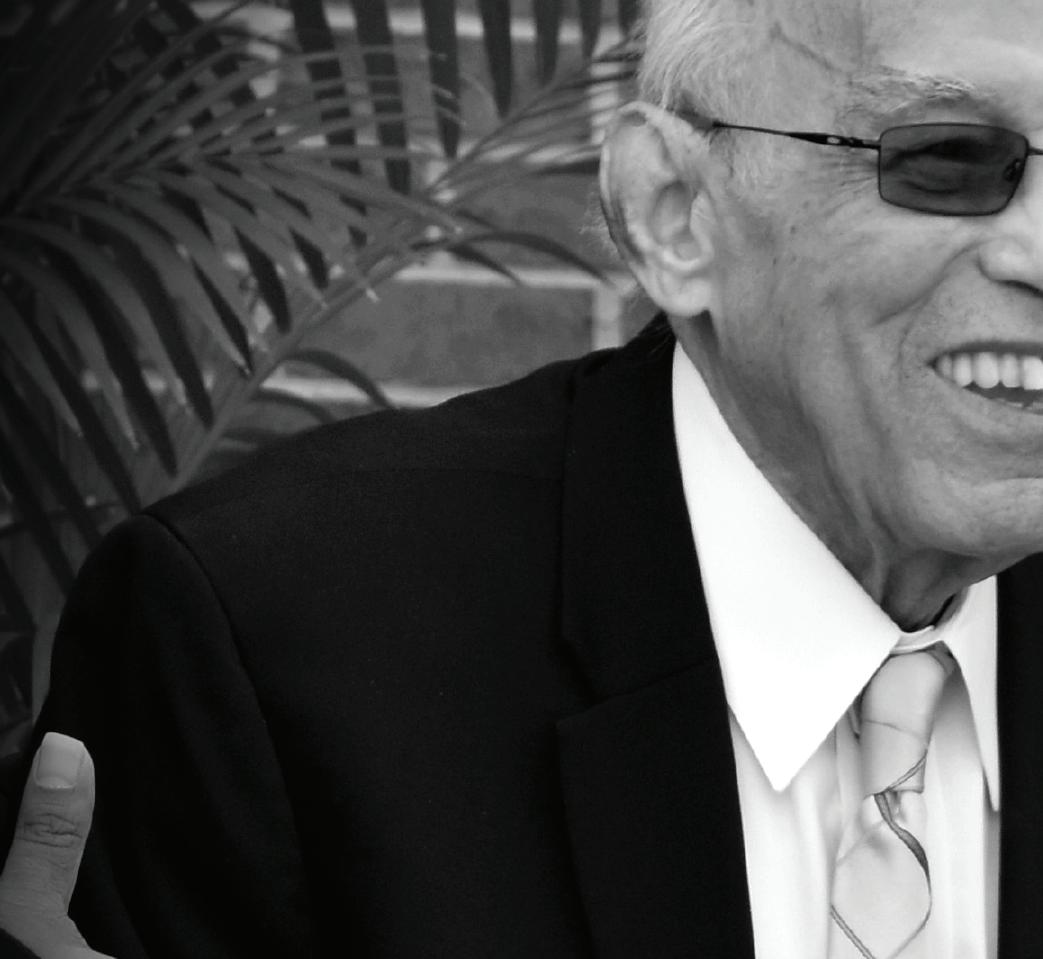
Dr. Norman C. Francis and others from the Loyola community celebrate the blessing of the new Francis Family Hall in 2022. Francis passed away on February 18th, 2026/The Maroon