

















By Stella Perdue swperdue@my.loyno.edu
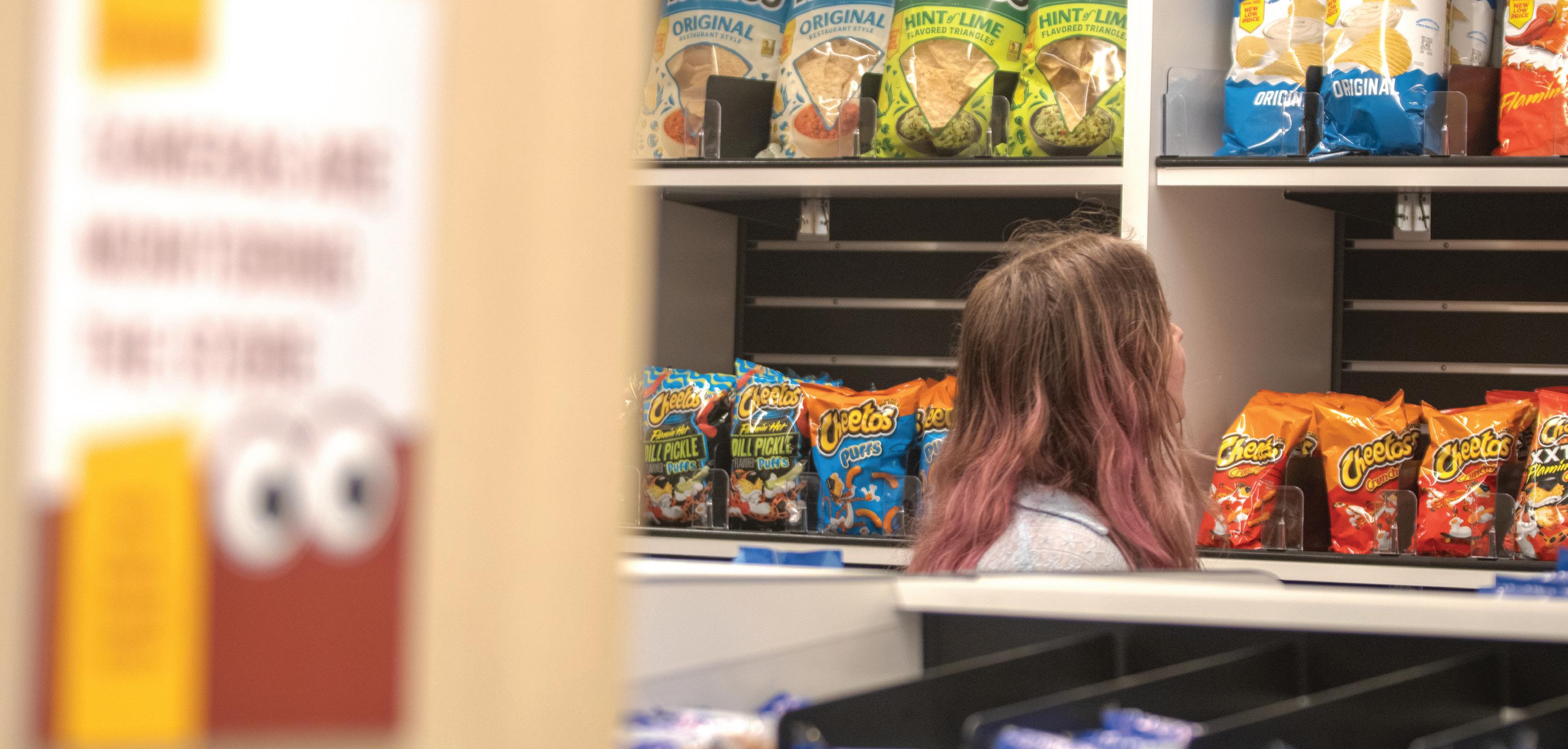
Sodexo’s plans to introduce Amazon’s Arti cial Intelligence-powered Just Walk Out technology in the market was a cause for concern among the Faculty Senate, who were described as “horried” about it.
Adam Beauchamp, a member of the university’s committee on Arti cial Intelligence, submitted a report to the University Senate on privacy and accessibility issues with the system. e
By Eloise Pickering
ewpicker@my.loyno.edu
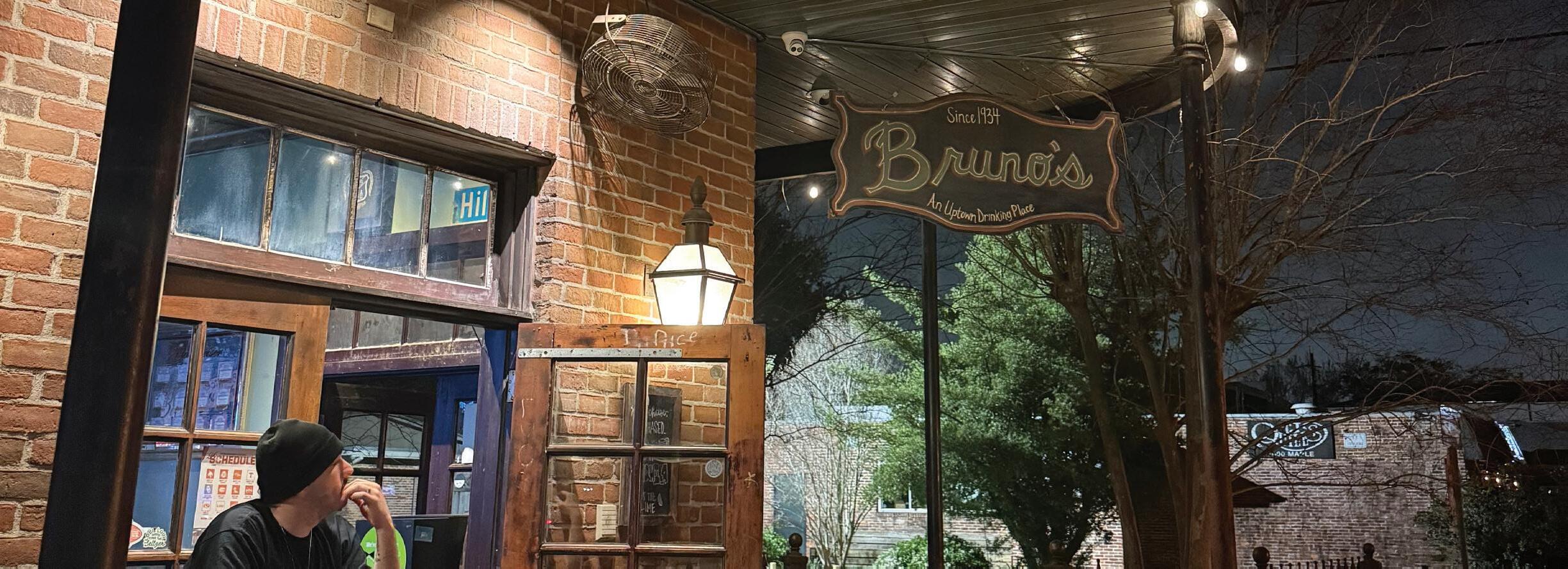
Bruno’s Tavern closed inde nitely on April 21 following a legal dispute between BCI Properties, L.L.C. and the current owner, Tim Spratt. Bruno’s, a popular college bar located on Maple Street in Uptown New Orleans, was in the process of being sold by Pratt.
A page from a legal ling was
the
system developed by Amazon currently operates in several universities across the United States to allow customers to select their items, with cards being charged automatically after shopping.
Following the Maroon’s initial reporting on the incoming changes, Beauchamp felt it was necessary to notify the senate on “concerns that you have to have at least $10 in your account, or on a credit card to even go into the store,” he said.
Aside from accessibility concerns, there were also questions about what
video footage could be recorded by cameras and where the AI would store it. e report was sent to the Faculty Senate by Beauchamp for deliberation on if it could violate the university’s AI Policy.
“ e strength of the AI Policy is that it considers a wide range of ways that agentic AI intersects with teaching, research, and learning. [ e Senate’s] concerns were outside the scope of that committee’s work and the policy as written,” said Sarah Allison, head of the university’s Faculty Senate.
Following the report, the Senate asked the administration for more information about the process of reviewing the “Just Walk Out” changes, according to Allison. “I also followed up on the Senate’s previous request for the creation of a mission-aligned partnership committee that would ensure that a range of campus stakeholders get consulted in advance of changes that a ect us all. Given where we are in the academic year, that will likely be a question for fall,” Allison said.
Loyola’s administration supports So-
dexo’s mission to streamline the shopping process in the market in order to enhance the student experience, according to Julia LeBlanc, director of communications. However, they also want to ensure that it is carefully implemented.
“At the same time, we are committed to ensuring that any technology used on campus is implemented responsibly, with careful attention to privacy, transparency, and accessibility,” LeBlanc said.

By Lily Bordelon lmbordel@my.loyno.edu
Loyola’s ninth annual Earth Week introduced two new events for students to participate in: The Geographic Information System Conference and a Walter Anderson Auction.
According to Environment Program Office Manager Kimberly Kahn, who worked alongside Biology department Research Associate Mark Tobler to curate the event, the addition of these events was meant to broaden the outreach towards students that Earth Week has.
The GIS Conference took place on Tuesday, April 21 in the Tchoupitoulas Room, where multiple community and student presenters were able to open conversations about multiple issues surrounding measurements of data and the analysis of certain indicators. The conference ran for around four hours and also included a speech by Loyola’s president, Xavier Cole.
Additionally, the Walter Anderson Auction ran for the entirety of Earth Week, from April 16 to April 22, and auctioned a few of his pieces that were donated by the Walter Anderson family. Anderson was an artist connected to the Gulf South’s environment, so Kahn explained that the auction intended to intertwine arts and humanities with Earth Week while also keeping it local.
The funds received from the auction will go towards supporting future Earth Week projects, according to Tobler.
"There are always new things that we're adding or that people come to us and want to participate in doing,” Tobler said.
Additionally, Khan recognized that as they have developed Earth Week, events have begun to reach out to other majors in a way that ties the entire university community together.
“Earth Week is becoming more than a set of fun and familiar events—though there's nothing wrong with that. The addition of things like the GIS Conference and the Walter Anderson Auction shows the Environment Program is trying to reach different kinds of students and participants, just as we should,” Kahn said.
Alongside these two new events, Professor Craig Hood’s Bat Walk event ran for what may be the last time, since Hood is retiring after the spring semester. Hood is the E. Letitia Beard Distinguished Professor of Biological Sciences and Director of the Environment Program, and he has been in the Department of Biological Sciences since 1986. This year, he and 25 others went out to Audubon Park, where they saw and recorded various bats flying over their heads.
Another event that took place this Earth Week was the beautification of Dittman Circle, hosted by Keep Loyola Beautiful. Students and other participants planted a pollinator garden within the circle that will attract multiple pollinators to campus.
“They'll be really beautiful and really bring a lot of pollinators, butterflies, and things like that in and tons of flowers. So by next fall, when everybody comes back for the fall semester, they should be doing really well and be just really stunning,”
Tobler said.
Both Kahn and Tobler emphasized the importance of Earth Week to Loyola’s
community for multiple reasons. One of these is because of the large amount of traction the Environmental Program receives throughout the week.
“For the Environment Program itself, Earth Week is its most visible moment of the year. It’s where the program translates its academic work into something public and tangible. Courses, research projects, and student interests that might otherwise stay inside classrooms get showcased to the broader community,” Khan said.
Additionally, Earth Week sets an example for students during the rest of the year. By showing them methods to appreciate and support the environment, Earth Week is ensuring that students are able to participate in environmental activism. Still, it is up to these students to carry out that attitude after the fact.
“People need to carry that vibe and that appreciation that they show on Earth Day itself through the rest of the year and practice even small things,” Tobler said. “If it's using a reusable water bottle, if it's bringing a bag to the grocery store instead of taking a new one, the smaller actions just make it a routine for you and you're setting an example as well for other people. That's really important to make people aware of the importance of the earth and the resources on it and how we're using them and how we abuse them, too.”
Students for Environmental Action also helped the Environmental Program with many of the events in Earth Week, most prominently the Keep Loyola Beautiful event.
Katie Buc, SEA’s president and senior

double-majoring in political science and environmental studies, views Earth Week from a full-circle perspective since she’s seen its development since her freshman year.
“It feels less like a collection of events and more like a coordinated effort to build a lasting environmental awareness and grow a culture of sustainability on campus,” Buc said. “And for me personally, being able to contribute to that in my final year makes it feel like a meaningful final push and a fitting way to close out my time here.
Buc also believes that Earth Week acts as a way for students to engage in the environment, and it also builds Loyola’s community around sustainability.
“It’s about turning Earth Day into something bigger; it’s about making it a week, or a year, or ultimately a part of
your life,” she said. “Small steps become big impacts when you give people opportunities to engage and learn. I hope that this week creates momentum in someone's life to be the change they want to see."
Next year will be Earth Week’s 10 year anniversary, carrying out old and new events from years before. As of next week, Tobler and Kahn will begin planning next Earth Week's layout in respect to how this year turned out.
“I think we’re moving in the right direction, but I also see this as a moment to build on that momentum rather than coast on it,” she said. “If we keep pushing to connect these events more directly to student learning, faculty work, and the broader Loyola community, Earth Week can become something even more central to the life of the university.”
By Mary Ella Hastings mlhastin@my.loyno.edu
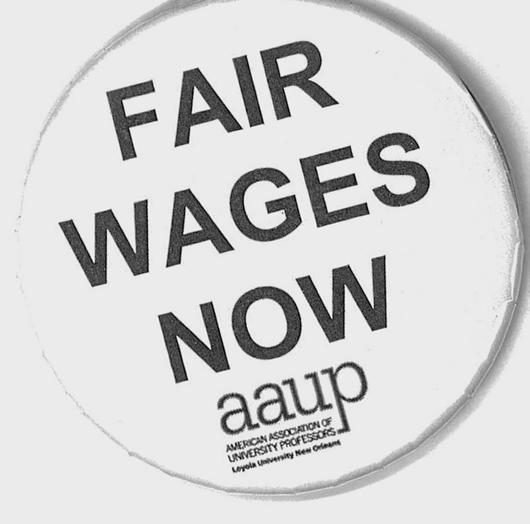
Loyola faculty are reportedly suffering with low wages and an overload of work, according to their advocacy group.
Patricia Boyett, a history professor and the president of the Loyola University New Orleans Chapter of the American Association of University Professors is fighting for Loyola faculty to receive fair compensation by enacting motions and rallying professors. These professors express that their wages are unlivable and with them Boyett said she could “never imagine retiring.”
In 2012, Loyola went through a financial crisis and had to cut retirement significantly for faculty according to Boyett. She said that the faculty that chose to stay through this time was promised to receive raises and get back their full retirement of 8% once Loyola was able to “rebuild”. She said that the faculty has
held up their end of the bargain, but the Loyola administration has not.
“The administration that promised this, they are gone. But this new administration has inherited a bargain that was promised, and they need to deliver on it,” Boyett said.
While the faculty is set to receive a 2.5% percent raise overall in August and has a 2% percent retirement matching contribution, they are still being grossly underpaid according to Boyett.
Boyett spoke about feeling frustrated with the hypocrisy of Loyola being a Jesuit institution with justice at its core but, at the same time, mistreating its staff. She said that some Loyola faculty are paid in the lowest percentile compared to others, similar universities, while the administration is paid in the top percentile.
“All this time where we were asked to sacrifice and not get raises, they are getting salaries at the top percentile of like institutions,” she said.
Desiree Rodriguez, President Cole’s chief of staff, said that they want to have open dialogue about faculty compensation and are grateful to all of their staff for their dedication.
“Compensation remains a priority within Loyola’s Strategic Plan, and we are committed to making continued, incremental progress,” Rodriguez said.
Boyett also spoke about the small steps forward that have been taken by the current administration and ex-
Loyola president Xavier Cole for the bonuses that were given to professors that have been here for over 10 years.
“I think maybe [the current administration] feels like ‘we are trying to do something; why are you angry at us,’ but I want them to understand that we’ve been suffering for so many years and through so many broken promises,” Boyett said.
When Tania Tetlow was president of the university, the Women's Center asked if they could do an equity study on the salaries at Loyola, according to Boyett. While Tetlow agreed to the study, Boyett said Loyola decided to hire a firm to conduct the study and then did not release it to the faculty.
When asked by the Maroon whether or not they plan to release this study in the future Rodriguez responded saying that university leadership has since changed and they do not have access to the study.
“Given this, we believe it is most appropriate to conduct a current assessment using internal resources. We will share updates with the faculty and staff as that process moves forward,” she said.
Boyett recently introduced a motion on behalf of AAUP to release the equity study as well as a motion to do full faculty disclosures. By its own governing documents, Loyola has committed to shared governance, meaning that while administration implements the final pol-
icies, they are determined in coordination with the faculty.
“There were a few people opposed to it, but I mean, the vast majority of the college voted in favor of releasing both of these. And the administration still said no. To me that's saying that they're not interested in shared governance,” she said.
Boyett added that many Loyola professors have stayed despite the low wages because of the students and their commitments to social justice, although she feels like the treatment the faculty receive is not in line with those values.
“When we stand up for ourselves, we are told that we are a Jesuit institution so we must sacrifice," Boyett said. ”It's heartbreaking because I love the mission here. It's one of the reasons I took the job, ‘cause I love the social justice concept, and I love the Loyola community.”
AAUP restarted the Loyola chapter after suffering for years with poor compensation and a feeling of shared governance diminishing, as well as a response to the Trump Administration's attacks on higher education, according to Boyett.
“We considered it vital to restart the chapter to respond to the recent attacks on academics across the nation by political leaders,” Boyett said. “ We are deeply frustrated with the corporalization of higher education in general that has led to an expansion of administrators to receive large salaries and bonuses.”
Boyett spoke about the matter at this year's Labor Spring, an event organized by Cody Melcher, a sociology professor at Loyola who wants students to understand unions.
“The Labor Springs is designed to tell students about the history of the labor movement because it's generally neglected,” Melcher said.
Em Bay, a junior sociology major at Loyola, said it is important to learn about unions in Louisiana because we are a right-to-work state.
“So you can be fired for absolutely any reason, which should not be allowed. But the importance of unions is respect for workers; honestly, we are incredibly exploited,” Bay said.
They went on to say that they hope this event helps prepare students to enter the workforce.
“It's so important for students to understand that we're going into this big workforce, and we are going to be exploited. But it's not just something you have to live with,” Bay said. “There's actual change we can do. We don’t have to be working 80 hour weeks with no f—ing breaks and killing ourselves for it.”
“It's so important for students to understand that we're going into this big workforce, and we are going to be exploited. But it's not just something you have to live with,” Bay said. “There's actual change we can do. We don’t have to be working 80 hour weeks with no f—ing breaks and killing ourselves for it.”
Dat Dog 5030 Freret Friday May 1st 7 - 10pm
LIVE MUSIC - DRINK SPECIALS - GOOD TIMES
“The
best night of the rest of your life.”
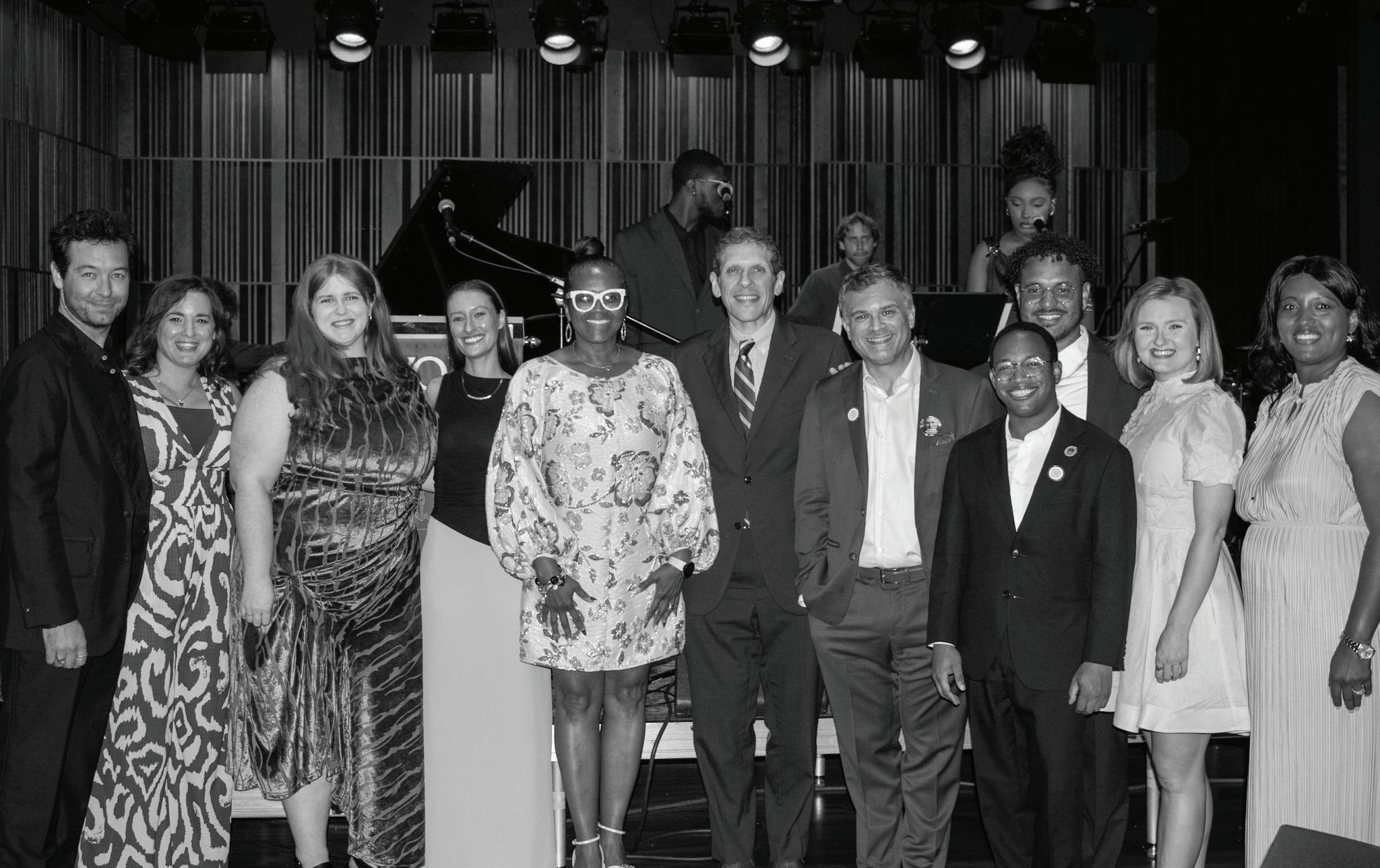
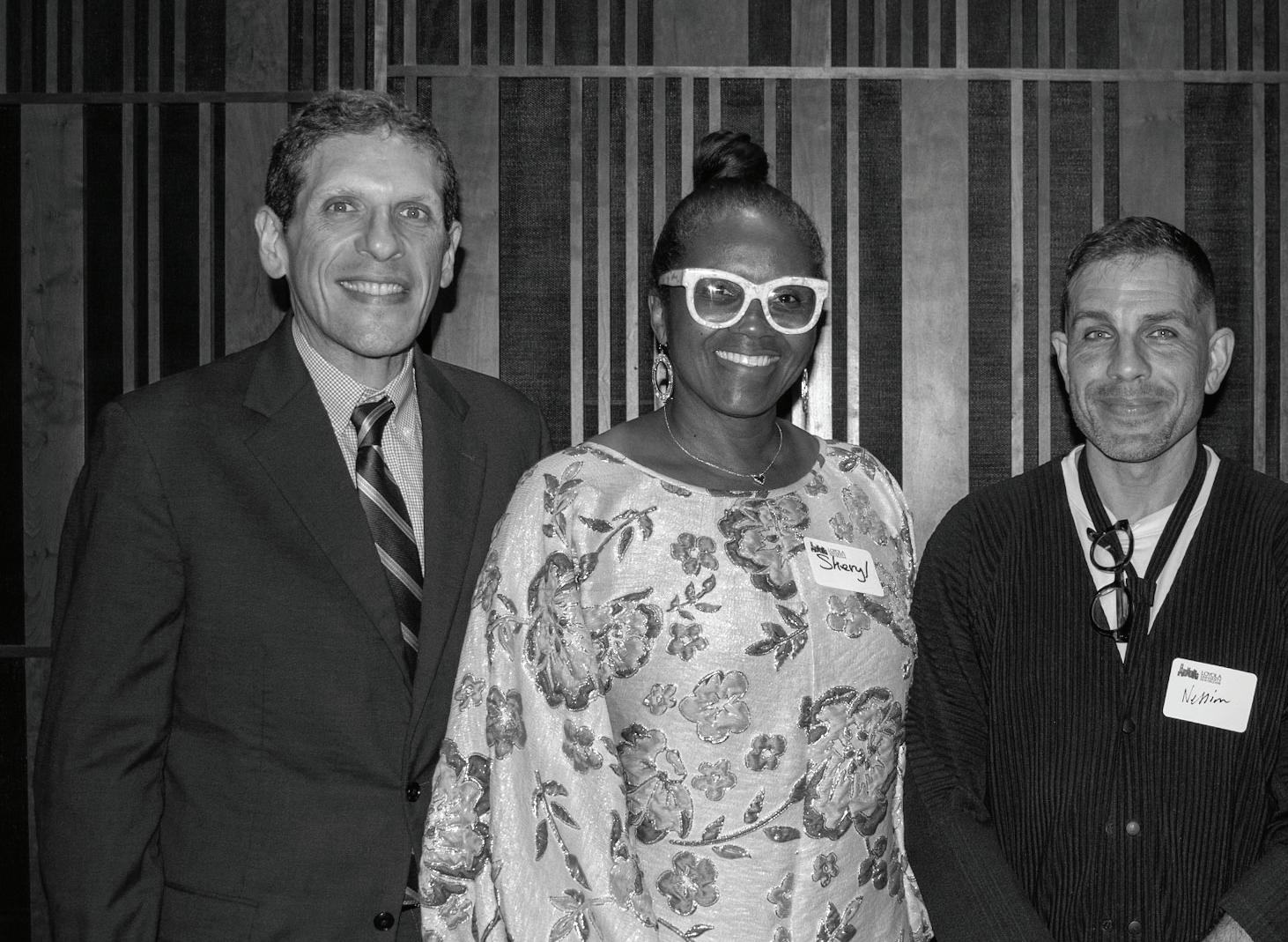
Loyola’s College of Music and Media's Communications Hall of Fame Celebration took place at the New Orleans Jazz Museum on April 15, celebrating the Loyola alumni that were inducted into the CMM Hall of Fame. The Den of Dis -
tinction Inductees included Dominic Massa and Nessim Higson; the Next Gen Den Inductees were Michael Lardizábal, Lily Cummings, and Ashleigh Sparks; and the Howlies Inductees were Kendall Cousin, Chaz Sexton, Ryan Rillette, Bari Bellard,
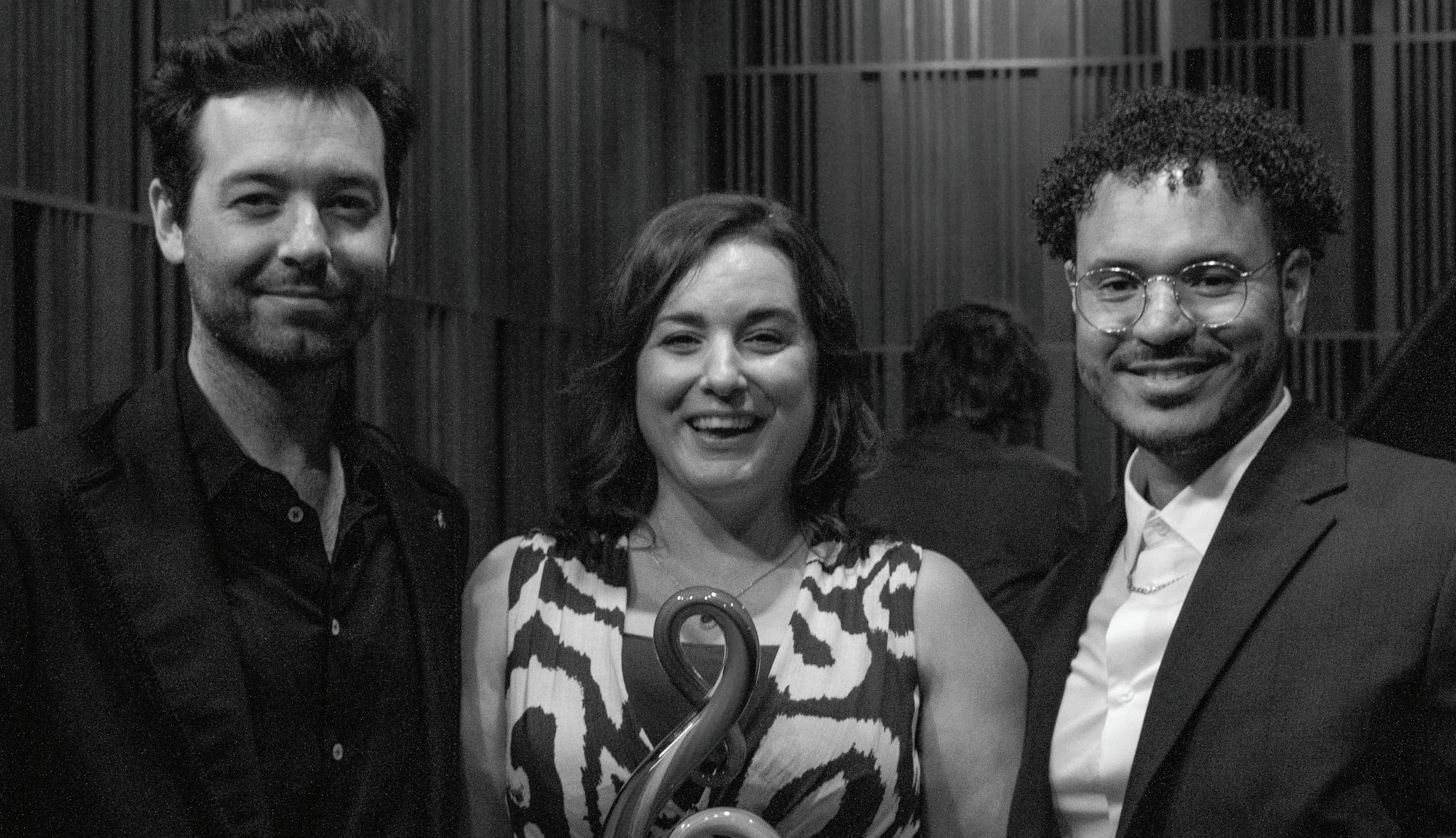
Emily Barber, and Alfred Walker. This event honors both School of Music and Theatre Professions and School of Communication and Design alumni that were deemed remarkable in their fields.

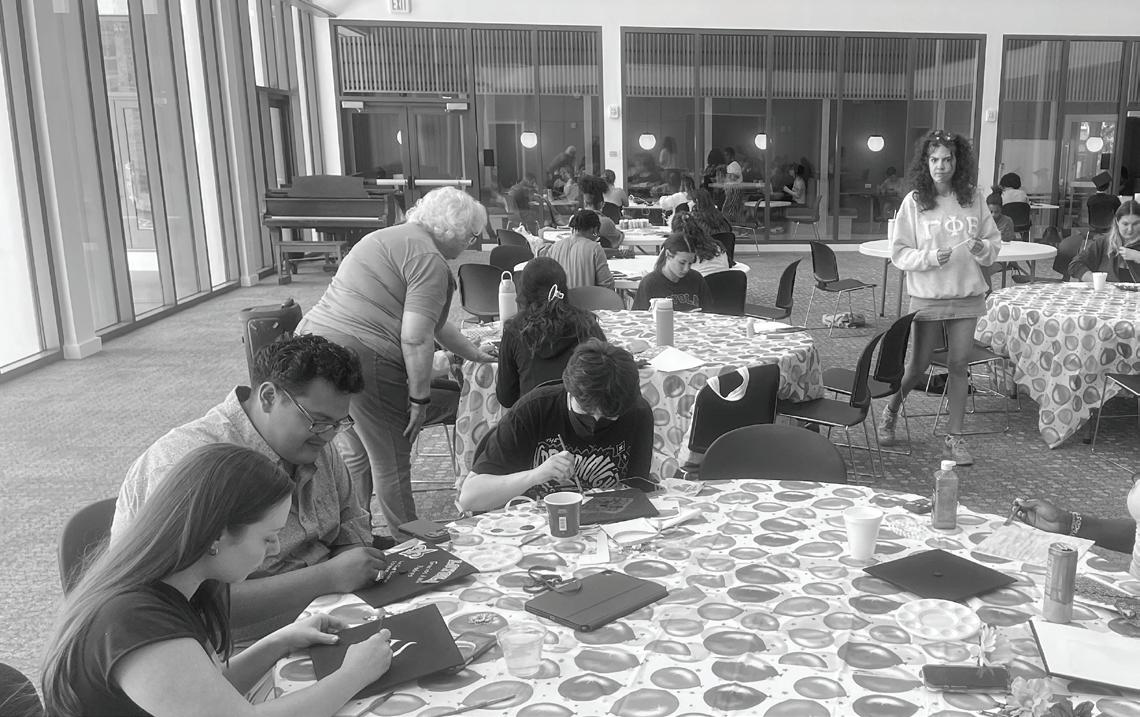

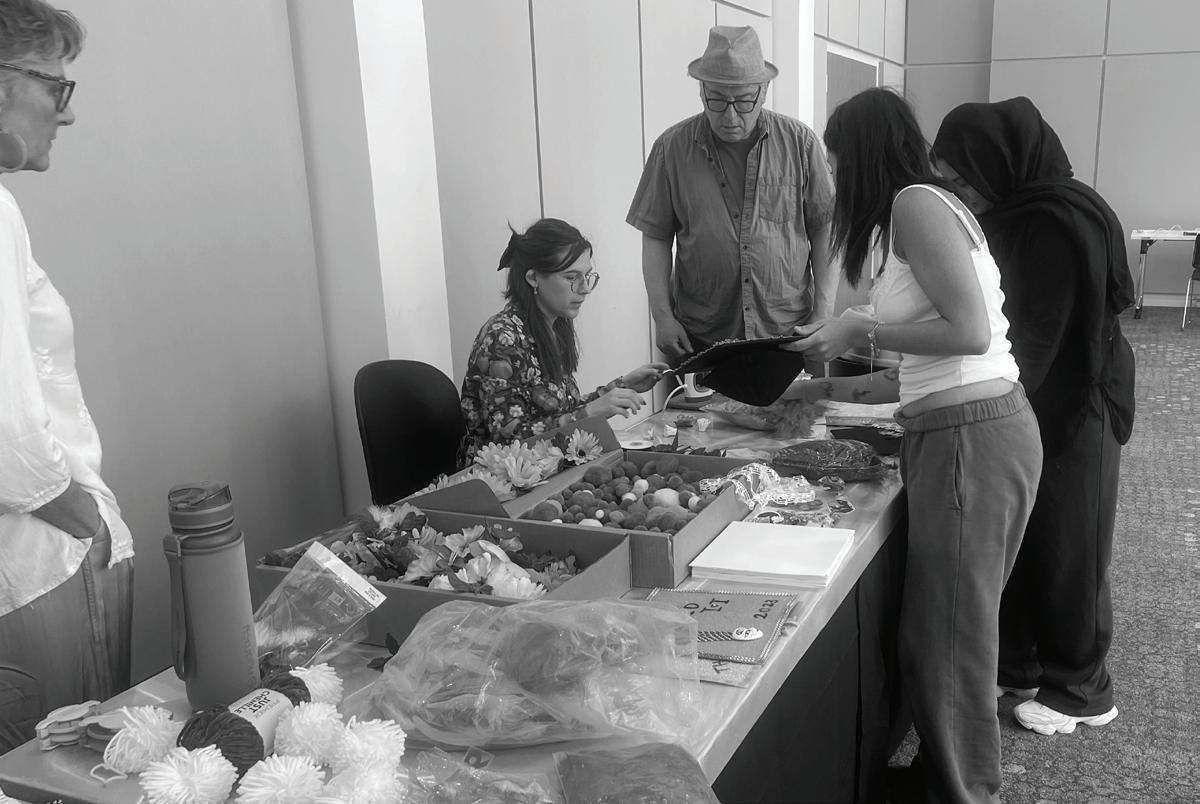
The Grad Cap Decorating Event was thrown by Student Life and Ministry as part of senior send-off. They had a professional artist help out seniors with design choices. The materials that they had weren’t simple like
markers and paper, but lots of college-focused choices and accent pieces that would make for a good grad cap. If students didn’t have an idea of what to do, they also had miniature examples.
ACROSS
1. Charles Darwin's eory of ___
7. "It's raining cats and ___s"
9. Rest and relaxation, for short
10. Boston sch. with a terrier mascot
11. ___ rally
14. Green ___ and Ham (Seuss classic)
16. App designer's eld, for short
17. India Pale __
18. Brazen
19. Bread, in Spanish
20. Late-night host Jay
21. Form blank: Abbr.
22. "___, caramba!"
23. Finals week spot
25. Exxon, abroad
26. Yellow Pages, for short
27. Holiday with bonnets and brunch
29. But, in Spanish
30. Connecting- ight wait
34. Adult Swim network, initially
35. MLK's birthplace
36. "Criminal Minds" org.
37. ___ Girl (Zooey Deschanel sitcom)
38. Custard- lled pastry
40. Bluetooth, for short
41. Stephan King's "__"
43. "How annoying!"
44. Lemon-___
45. Sequel indicator, often
46. Voodoo pair?
48. Before noon: Abbr.
49. Lou Gehrig's disease: Abbr.
50. Startup exec concerned with tech: Abbr.
51. Reed of the Velvet Underground
53. Scarface rst name
54. N.O. street where F&M's is
61. Warm embrace
62. Gene-editing tool
1. For example: Abbr.
2. e ___ (Loyola cafeteria)
3. ___ clef
4. English, en español
5. Church instruments
6. Side-by-side contrast
7. Airport annoyance
8. "___ sesame!"
10. What Bugs Bunny is (and this puzzle's theme)
11. TMZ types
12. BBQ side dish
13. Renaissance faire fare
15. Brownstone's front steps
23. "Well, la-di-___!"
24. Pronto, in the ER
27. Merit
28. Household pest
31. Intl. volleyball competition: Abbr.
32. Electronic Transaction Aggregation and Analysis Layer, abbr.
33. Surprise attacks
39. Do over?
42. Horn sound
43. "Let me think..."
47. " at smarts!"
50. Applaud
52. Lovell "___" Cooper, Loyola music professor
53. Ice Bucket Challenge cause: Abbr.
55. "U wanna __ tn?" (text slang)
56. Original, in slang
57. Texting sign-o letters
58. Danna Center eatery, for short
59. Screen layout design, for short
60. Fourth-yr. students
For weekly puzzle answers, visit our Website via the QR code:

Editorial Board
Editor in Chief - Eloise Pickering
Managing Editor - Mary Ella Hastings
Pre-Content Director - Alana Frank
Post-Content Director - Callie
Honeycutt
News Editor - Lily Bordelon
News Editor- Stella Perdue
Worldview Editor - Pablo Piñeiro
Life & Times Editor - Elise Beck
Asst. Life & Times Editor - Olivia Sanyal
Sports Editor - Keri Smith
Opinion/Editorial Editor - Imad
Siddiqui
Breaking News Editor - Natalie omas
Copy Editor - Mark Michel
Senior Sta Writer - Dominique
Campbell
News Consultant - Mark Michel
e Wolf Director - Laura Welles
Senior Sta Photographer - Sophia Renzi
Photo Editor - Ashlyn Bobb Collins
Asst. Photo Editor - Pharrell Every
Social Coordinators - Carlos Andrade, Maria Touzard
Broadcast Producer - Cecilia Calderín
Lead Anchor - Dessadra Tezeno
Newscast Editor - Christopher Nesbit
Design Chief - Makayla Parker
Newsletter Writer - Rodrigo Delgato
Distribution Manager - Sophia Renzi
Alyvia Pierson, Keily Martinez Pereira, Chandler Giallo, Dutch Buckley, Katherine Leslie, Claire Kerr, Alyssa Jones, Cae Nguyen, Nicholas Parrella, Angelica Pineda, Anistin Murray, Sabrina Huynh, Finian Jones, Erin Lovato, Valentina Russell, Claire Schmit, Joshua Fletcher, Lonniesha Carroll, Patricia Boyett, Amari Winchester, Nikolai Huilgol, Maria Touzard, Vaishnav Desabhatla, Xavier BuckleyWilson, James Wyrtzen, Claire Kerr,
Sales Manager: Emily Keller
Sales Representative: Carrie Adams Olsen
Student Media Adviser: Michael Giusti
Assistant Student Media Adviser: Gabriella Killett Vargas
CONTACT US
Main O ce - (504) 865 - 3535
Business O ce - (504) 865 - 3536
Adviser’s O ce - (504) 865 - 3295
Correspondence - maroon@loyno.edu
Letters to the Editor - letter@loyno.edu
Advertising - ads@loyno.edu
Website - www.loyolamaroon.com
Twitter - @loyola_maroon
Facebook - e Maroon
Instagram - @loyola_maroon
Our o ce is in the Communications/ Music Complex, Room 328.
Send mail to: e Maroon, Loyola University, Campus Box 64, 6363 St. Charles Ave., New Orleans, LA 70118
e Maroon is published every Friday. Unless otherwise noted, all content is copyrighted by e Maroon. All rights reserved. First copy free to students, faculty, and sta . Every additional copy is $1.00.
e Maroon is printed on 30 percent post-consumer recycled content.

By Mary Ella Hastings mlhastin@my.loyno.edu
Bernadette Lambert, a 26-year-old Louisiana native and elementary school teacher said the amount of medical stories she was seeing on TikTok was scary, and led her to delete the app.
About one in six adults report using social media to seek out medical advice according to a poll from KFF, a nonpartisan organization that studies U.S. health care issues.
e results of this poll say that 40% of TikTok users report trusting the medical information they are seeing on the app. ere are currently around 136 million U.S. TikTok users according to Demand Sage, a platform with data reporting and research. Health content on the app has been increasing gradually since 2021 when it grew by 600% according to MDPI, an academic journal.
Samuel Carter, who is speaking on his own behalf and whose views do not represent Ochsner, is a doctor of osteopathic medicine and neurocritical care sta physician at Ochsner Medical Center. He has practiced medicine independently since 2022 and noticed an increase in people using TikTok, a popular app with short form vertical videos, as a source of information since the COVID-19 pandemic.
“I think it has become a lot more common for this to become something that's directly brought up or discussed with patient care,” Carter said.
He believes the increase comes from anyone being able to claim expertise and access to a larger audience that comes with TikTok.
“ is has led to people who maybe were restricted in audience, now being able to reach a much wider audience,” Carter said.
He also explained that people feel
more comfortable when they get condent solutions, and sometimes doctors cannot give a 100% reliable solution.
“People will often reach for someone who is con dently providing some solution or cure to something that the main medical establishment may not feel so con dent about, and people especially in a desperate reach for such things,”
Carter said.
e doctor shared that he has seen this issue prevalent in people who are in need of more high risk treatments, such as chemotherapy.
“People want to keep their options open and if there's somebody out there who says, ‘well, you don't have to do all those scary things that you've heard you can do this instead’ And you'll always nd someone online who can give testimony that it worked for them,” Carter said.
In terms of his day-to-day work, he said that he tries hard to ensure that his patients and their families understand the treatments being o ered and that they feel completely comfortable with the treatment plan.
“It’s our job as physicians to try to inform and educate our patients, but we also need to hear them,” Carter said.
He continued saying that people are seeking out information from platforms like Tiktok because they are desperate and scared.
“ ey may have been told that this disease is not curable. ey don't want to hear that. And I can totally understand that. Most people are seeking these alternative options out in good faith,” Carter said.
He went on to explain one of the main risks is that people will delay necessary treatments to pursue alternative therapies rst and their conditions will worsen, sometimes to the point of permanent harm.
“I think cancer is the number one example, but many autoimmune diseases progressing can cause permanent harm, if not addressed timely,” Carter said.
He said it has also led to a larger general mistrust of modern medical care.
“Some of that mistrust is based on legitimate problems, the medical establishment has, many times, been unfair or racist or not responsive to minority populations and their needs,” Carter said. “So these sorts of things have really allowed the alternative and non-evidence-based practices to make their way in.”
Alexis Ford, a 26-year-old graduate student said that she doesn't always trust doctors and often goes to the internet as a rst option.
“If getting in to see the doctor was easy, I would call the doctor, “ Ford said.
She guessed that about 10-15% of the videos she sees on TikTok are medical related. Clark Lambert, a 28-year-old music teacher, agreed with that statistic and said that he used the internet as a way to nd solutions to symptoms rather than searching for diagnosis.
“It's normally for symptom relief, if my throat hurts I will look up what to do,” Lambert said.
He added that he rarely visits the doctor because it's such a “hassle.”
“I rarely go to the doctor, the only time I went to the doctor in the last ve years was when I was coughing up blood,” Lambert said.
Bernadette Lambert said that medical videos on TikTok have been more harmful than helpful for her.
“Somebody would post a story about some sort of disease that they have and then I would google how to prevent that in myself,” Bernadette Lambert said. “I think it was very harmful for me and that's why I deleted the app.”
Carter said that social media is here to stay, and medical professionals need
to learn how to use it to reach people. He added that there are plenty of reliable medical accounts on social media platforms.
“Certainly there are a lot of really great accounts that are run by people who are able to explain and show the bene ts of evidence-based medical, modern medicine in a way that does reach patients,” Carter said.
He ended with a reminder that the main priority, no matter the platform,




should be physicians building trust with their patients.
“We have to always remember that it's not the patient or family's job to have gone through all those years of medical training and be able to interpret advanced papers. We have to be able to take complex concepts and explain them in a way that you shouldn't need a degree to understand. And it is 100% possible. ere's no excuse not to do so,” Carter said.







By Amari Winchester abwinche@my.loyno.edu
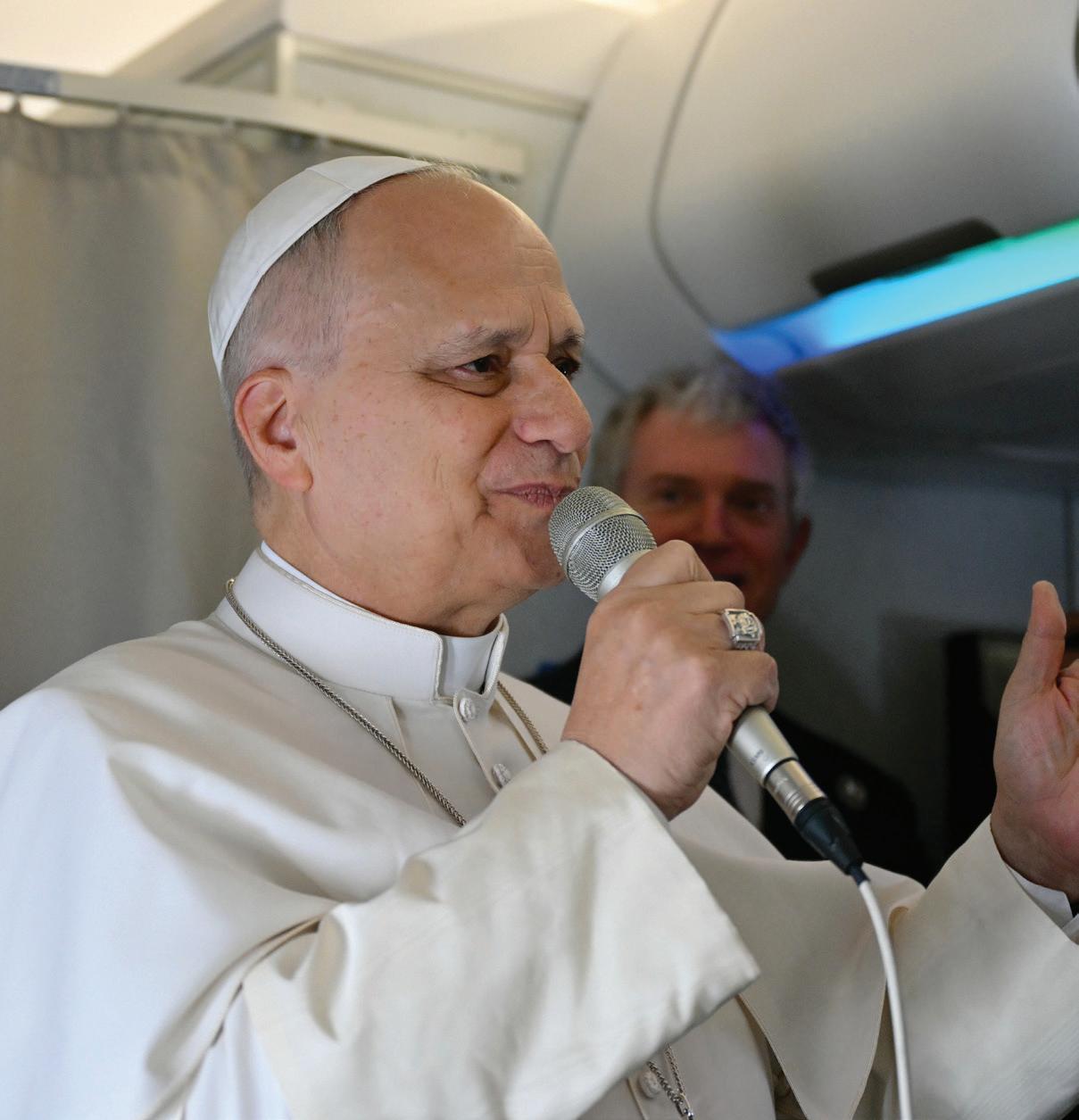
As U.S. President Donald Trump continues to criticize Pope Leo XIV over his stance on Iran, the Loyola community has grown frustrated with the dispute between the two gures and sided with the Pope to an overwhelming extent.
e exchanges between the two started when members of Trump's cabinet reached out to the Christian community for prayers against the war taking place in Iran. Pope Leo responded to this stating that God “does not listen to the prayers of those who wage war, but rejects them.”
Lindy Brasher, the University minister for social justice and resident minister, thinks the core of the Pope’s statements are very biblical.
“From a Catholic perspective, that lines up with the idea that you can’t separate prayer from moral action,” Brasher said. "You can’t ask God to bless something that is morally wrong or rooted in violence. So if the comment is pushing back against people using prayer to justify or encourage violence, that’s consistent with both Scripture and Catholic social teaching.”
As a result of the Pope’s stances, Trump has made several public statements condemning the pope for his con-
icting values, even creating a now deleted post of Trump depicting himself as Jesus Christ. When faced with backlash, he stated that he was depicting himself as a doctor.
“He was very much against what I’m doing with regard to Iran, and you cannot have a nuclear Iran. Pope Leo would not be happy with the end result,” Trump said. “I think he’s very weak on crime and other things, so I’m not going to apologize.
When asked the same question, lm student Kelsey Yanez had this to say.
“I agree with [the Pope’s] stance,” Yanez said. “ e Pope’s job is to promote peace and God’s teachings, so it makes sense that he would be against this violence.”
Ken Weber, Loyola's Associate Director of Ministry stated that he thinks Trump’s response is tied to whatever he thinks his responsibility is.
“Pope Leo's responsibility is to preach the gospel of Jesus Christ. Responses to that preaching have always ranged from rejection to acceptance,” Weber said. “I pray that the preaching of the gospel of Jesus Christ be accepted ever more deeply by all people, including political leaders like Trump.
Freshman Wyatt Houle thinks that the president's response was “stupid”. To him it's obvious that the Pope wouldn’t
agree because he’s trying to bring harm to another country.
“And just overall completely shrugging o the head of the Catholic Church and being overall disrespectful. at is very childish and unprofessional.”
When asked about their thoughts of the Pope’s role in foreign politics, Law student Raven Ancar, thinks while Catholicism is a big power house in the world, more perspectives need to be involved.
“I just want other religious leaders of other major religions and minor religions to also be represented in the conversation about global politics.” Ancar said. “It can’t just be the pope, and often I feel like it is”
e Associated Press contributed to this report.
The Associated Press
A mass shooting at Shreveport, Louisiana has left eight children dead and two women wounded.
The eight children ranged in age from 3 to 11. The children were all related to the shooter, seven of them being his children and one of them his nephew. He also shot and wounded his wife and another woman. This was the deadliest mass shooting in the U.S. in more than two years.
The gunman, Shamar Elkins, had a felony gun conviction. Court records showed that Elkins was placed on probation in 2019 after pleading guilty to illegal use of weapons. A police report for that case said Elkins fired five rounds at a vehicle and told police that someone inside it had pulled a gun on him.
Authorities have not said how or where Elkins obtained the weapon
used in Sunday's attack.
Elkins and his wife were separating and had been arguing about their relationship before the shooting, said Crystal Brown, a cousin of a woman shot in the attack.
Shreveport Police Department
Lieutenant Captain Shanna Deville declined to comment due to the shooting being an ongoing investigation.



By Mary Ella Hastings mlhastin@my.loyno.edu
When NASA launches astronauts to step foot on the moon in 2028, A New Orleans rocket will send them there.
“We don’t get to the moon without coming through New Orleans. There's no negotiation on that,” said Chandler Sheuermann, NASA Space Launch System production manager.
The core stage, the biggest section of the rocket, for NASA’s mission Artemis III was built at the Michoud Assembly Facility in New Orleans and was shipped off to Florida Monday to continue its assembly. It is set to launch mid-2027, according to NASA officials, who also say we are on track to land on the moon by 2028.
Michoud has been a part of the space program for over 60 years and has been building all the vehicles used to get to the moon since the Apollo missions, according to Sheuermann. He added that the goal is to reduce the time it takes to make the core stage part of the rocket.
Scheuermann said that he wants all New Orleanians to understand the significance of the work done at Michoud. He said he hopes the Artemis II mission, which sent people deeper into space than ever before earlier this year, caught people's attention and showed the facility's role in getting humanity back to the moon.
“We do great work here, and I think that those familiar with NASA, everybody knows Kennedy Space Center, and Johnson Space Center, but even a lot of New Orleanians don't necessarily know what we do out here in Michoud,” he said.
2028 moon landing
NASA Artemis Program Manager Lori Glaze said that they are working with their partners SpaceX and Blue Origin to make sure the human landing systems will be ready by 2028.
“We've been working with them since the last fall on accelerating their plans to make sure that we have set the right requirements that allow us to meet that deadline to land in 2028,” Glaze said.
According to Glaze, the first step in getting a crew to the surface of the moon is being able to transfer them from the Orion spacecraft into the lander, the spacecraft that is designed to land on the surface of the moon.
“This is something that has never been done before between these two particular systems,” Glaze said. “We have tested it out to make sure that the hardware fits, but actually being able to do that docking in space and then be able to transfer the crew back and forth through that hatch is going to be critical.”
Chris Cianciola, space launch system deputy program manager, and Terry Prickett, space launch system core stage chief engineer, both said that each Artemis mission has served a different goal in the trajectory of the final goal of landing and retaining human life on the moon.
“Where we are going with Artemis is a permanent presence in space. Which is huge for humanity,” Cianciola said.
“For Artemis III and the plans that we have to exercise the machines in our processes in lower orbit, that's just another step or a long-term goal of landing astronauts on the surface of the moon,” Prickett said.
NASA Associate Administrator Amit Kshatriya wants to produce machinery faster than once a year.
“I mean, this facility has an amazing capacity, the tools that are here are good to go. What we struggle with the most is getting the high-quality parts that we need to actually get to assemble the machine the right way,” Kshatriya said.
“Right now, our biggest challenge is getting material into the factory, not making the factory go faster.”
The Building of Artemis
The core stage is the work of about 300 people and three years of labor, according to Sheuermann.
Cianciola says that the first step of building the core stage is a “robust” design.
“You know your margins, and you test in the environments you're going to fly. Obviously, you want the rocket to be as light as you can, so we are trying to be
razor thin,” Cianciola said.
The core stage is also the biggest part of the rocket, according to Prickett. NASA Astronaut Nichole Ayers spoke about trusting that the vehicle will get you to the moon and back safely.
“It [the rocket] stays here, and I get to meet everybody and put faces to names and meet the quality engineers and the test engineer. It's about the relationship and the humans behind the flight,” Ayers said. “So it's easy to trust these guys because they're professional and they work with integrity and they speak up when they're not comfortable about things and they speak up when we need to pause.”
Ayers said that human space flight is the greatest team sport humans have, and collaboration is vital to the success of the missions.
Why Artemis matters
Sheuermann said that the Artemis missions excite him because it's a chance to bring people together in hard times.
“There's a lot of challenging stuff in the world today that is challenging for a lot of people, and this is something that I think everybody, whether you are American or international, it doesn't matter, is something that we can all look at and come together and say, that's a good thing,” Sheuermann said.
For Kshatriya there's multiple positives that come out of each Artemis mission.
“For me, it's another amazing reason why we do these missions. It's because it motivates the American supply chain in ways and brings back incredible jobs and capabilities in communities that, you know, 30, 40 years ago they went away,” Kshatriya said.
Prickett highlighted the ways that space exploration is good for mankind as a whole.
“To go to the moon, you have challenges that you have to overcome, and as you work your way through that, you develop new technology and new methods to make that possible.
So it benefits all of mankind to develop those technologies," Prickett said.
By Tessa Ca ery-Valenzuela taca er@my.loyno.edu
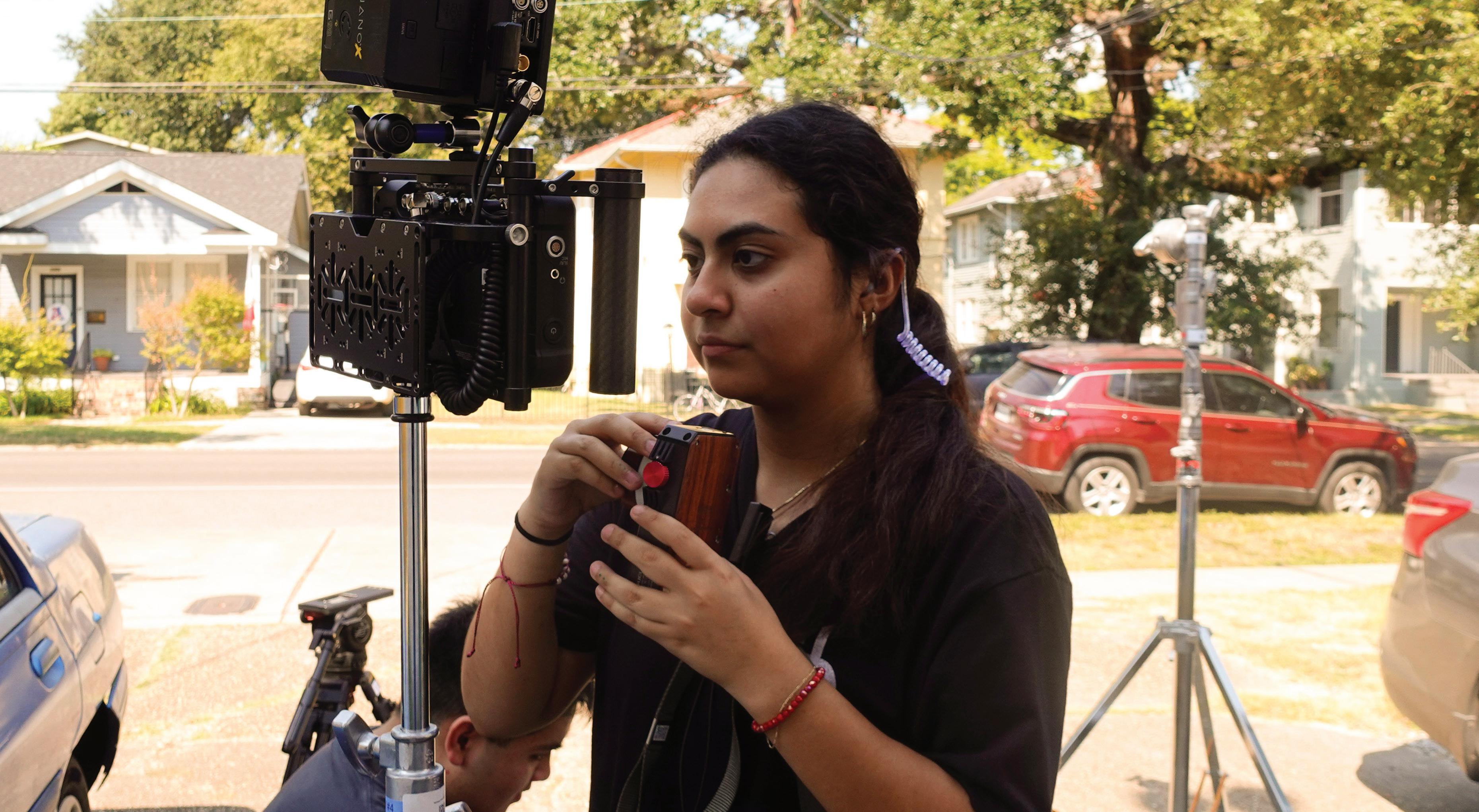
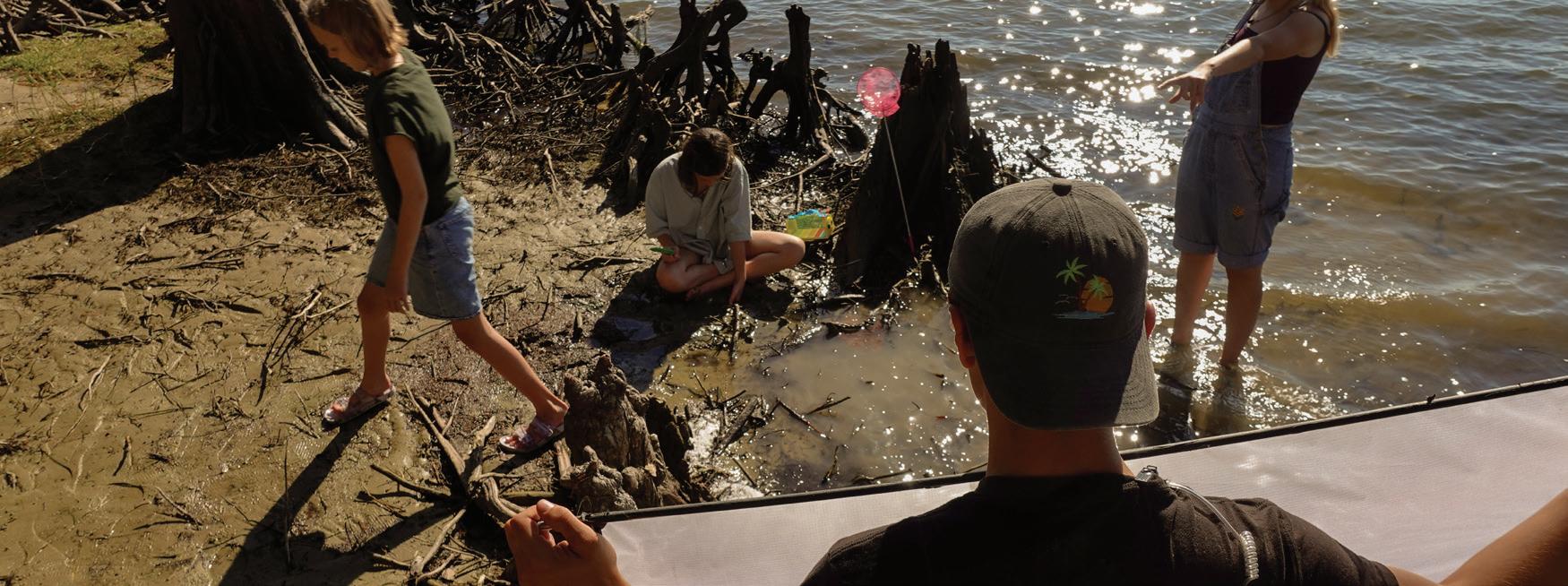
e Loyola lm department show-
case is the culmination of senior students' hard work throughout the entire year. Each senior is required to write, produce, and edit their own lms for the showcase on Sunday, April 26, at the Broad eater from 12 p.m. to 4 p.m. e event is free and open to anyone interested in seeing student lms.
With the help of their professors, each senior can bring their lms from concept to reality. One of these professors, Nathan Tape, highlights the values this showcase has for his students every year.
“Filmmakers are often so close to their own work that it becomes di cult to evaluate it with complete objectivity. In many ways, sharing a lm with an audience is the true nal step in the creative process,” Tape said. “Observing how viewers respond, what resonates, what confuses, and what lingers, o ers invaluable insight into what the lm communicates. As often say, once your work is in front of an audience, they reveal what you’ve truly made.”
Additionally, the lm department has another event for its sophomore students called Script to Screen, inspired by a lm class.
In this class, the students work as a group, using a student-written script to carry out a lm production from conception to completion. Some roles they adapt in the class are production designer, assistant director, or director of photography. is gives every student a chance to showcase their talents in a leadership role.
e Script to Screen showcase is held on May 1, in the Communications and Music Complex at 5:30 p.m. is event is
also free and open to the public. Claire Kantrow, a junior showing her lm “Farewell, Louise” at the showcase, appreciates the support the lm department shows, no matter what you are producing.
“It’s good to celebrate those little wins because for us, it’s not so little,” Kantrow said. “ is industry is hard and exclusive, and a screening/mini celebration of our hard work moving towards that is imperative for the students to feel empowered, motivated, and proud of themselves thus far.”
Another professor, Miles Doleac, the chair of the lmmaking department, comments on how vital it is for the hard work of these students to be shown on the big screen.
“Movies are meant to be shared,” Doleac said. “I think it's critical that the nal step in our program allows students to present their lms in an actual movie theater before an audience of friends, family, strangers, and fellow artists and to feel that audience respond to the work in real time. at experience is what movies are all about."





By Maria Touzard mstouzar@my.loyno.edu
is upcoming week, the eater and Arts Department is putting on a New Works Festival, where 10 new works written, produced, and directed by students will debut. e works include musicals, plays, and even a puppet show, ranging throughout di erent genres. e festival runs from ursday, April 23 through Saturday, April 25. A day pass ticket costs ve dollars, and each day has three to four productions.
Loyola o ers students a space to expose their work and to network with others seeking careers in a shared eld. rough working on a piece written by a student, to producing, directing, and acting on it, Loyola makes one shared space for students and faculty to work together towards one singular goal: giving students a platform to showcase their creativity.
All students were able to submit their work to the festival, and ten were chosen.
Makhi Jenkins, a Loyola student who wrote “Jasmine with a Capital J for Jesus,” said that their works were chosen for production in January and that set everything into motion.
“I was a little hesitant about it, because you’re putting forth your work to be reviewed by someone else,” Jenkins said.
According to Jenkins, these nerves are accompanied by great excitement.
is is just a really good opportunity to test the waters and see how people will react to something that I wrote,” Jenkins said.
When asked about the process of putting on the play, she expressed pure enjoyment saying.
"All of the TAD department is really supportive and they make the process really easy,” Jenkins said.
As her rst time working with new works, she said the most challenging aspect of putting on her work was going to and from di erent rehearsals, as several students from the department can work on di erent plays across the festival.
Writer of “Terror Best Felt,” senior Hyacinth Downey, let us into their creative process writing the work. With a lot of concepts in mind, Downey incorporated aliens, outer space, and humans for a play described as: “space, drama, puppets.”
As a writer, building the puppets for the play set out to be the most challenging part of this experience; visiting di erent stores and guring out how to accurately transform words to reality.
In their own words, the real challenge was nding the hyper-speci c things that you need.” ough it has been a long time in the works, and building props has not been the easiest task, Hyacinth said that the most enjoyable factor of working in this festival was getting to share their art with so many other people, and watch the cast and others interpret their art.
Emauni Johnpire, who wrote “Almost Intersecting,” said that she was driven to write her work from a class she had her rst semester of college where she learned about a concept called experimental theater. rough this new concept, she was able to create her work.
“I am not able to decide on just one thing to write about, have so many feelings about a lot of things, I want to talk about a lot of things that are wrong in society,” Johnpire said. Knowing she had so much to say and having found a way to express it, she started putting her work together.
“I learned about a concept called experimental theater, so, how am going to combine poetry into something love writing?” Johnpire said. After playing around with a lot of her poems and transforming them into scenes, she created a work she was proud of. As a freshman, she described being overly grateful for her rst time working with new works. e process has been beautiful, just like working with everyone. I think everyone has really put in their weight, even my director of theater and Arts, she’s been so open, and so helpful,” Johnpire said.
Emauni shared this was a learning experience for her as well, now being exposed to new people, works, and concepts, such as “trigger warnings.” ough putting her work into action was in her own words, exhausting, given the chance to describe her play in three words she said: “Healing, uncomfortable, comedic”.


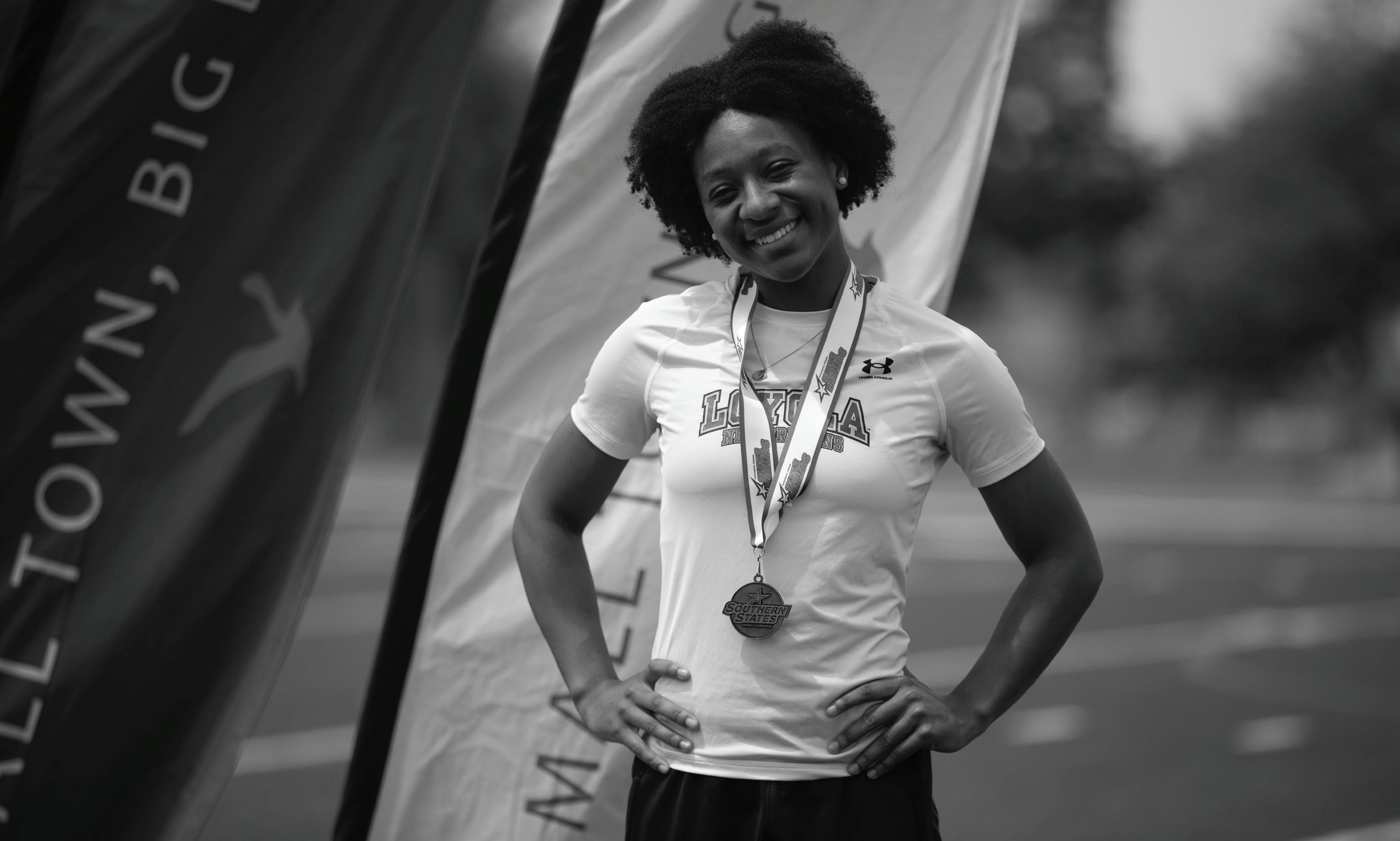
Jordyn Minor broke and created the new record
By Keri Smith klsmith1@my.loyno.edu
A new program record in the 100-meter dash usually comes with bold predictions, carefully planned goals, and an intense focus on the clock. But Jordyn Minor, a junior nursing major, told a different story, one built on trust, patience, and a mindset that prioritized growth over pressure. In a race defined by fractions of a second, it wasn’t just speed that made the difference, but a shift in perspective.
“The record did in fact surprise me,” Minor said. “I didn't have a specific goal going into the race, being that I had not ran that race the previous meet. So, I was really just interested in what I would run and how the race would go.”
This season, that mental shift has been intentional. Moving away from focusing strictly on times and outcomes, she has developed a more balanced approach to training and competition, one that emphasizes patience and self-awareness.
“I noticed when I was focused on times or distances I didn't perform as well. I've learned to rather take the moment for what it is and have more patience with my performance.”
That growth has been especially important in the 100-meter dash, where there is little room for error and no time to recover from mistakes. The race demands not only physical precision but also complete mental clarity. For her, that clarity comes from reframing each race as an opportunity rather than a test.
“Every race I participate in I take it as an opportunity to get better,” Minor said.
“So, I try to relieve myself of any pressure by just allowing myself to trust how I have practiced and not think too much about the result of the race.”
That trust was evident from the very start of the race. Exploding out of the blocks with improved reaction time and control, she immediately set the tone. In sprinting, the start and drive phase are often the most critical components, and this time, both came together at exactly the right moment.
“A change I have made to my training that seemed to help me reach this level was to not put as much pressure on myself,” she explained. safer.”
— Jordyn Minor Junior track athlete
“There were two main factors that set this race apart from my others,” she said. “One was my start in my race and the other was the competition. The start of the race is commonly known as the
determinate of the results of the race. I had a better start than my previous races and was significantly more patient in the ‘drive phase.’ I think this was a help in setting the record.”
Her patience in the drive phase allowed her to build speed efficiently rather than rushing upright too soon; a small but crucial adjustment that made a big impact. Every stride was controlled, powerful, and intentional, reflecting the work she has put in behind the scenes.
Equally important was the level of competition surrounding her. Rather than feeling intimidated, she used it as fuel..
Minor said. “Everyone who has cheered for me or congratulated me has made me feel special even in the times I don't feel I performed my best and I am incredibly grateful for them. They have always been there to encourage me and help me to understand that whether I win or lose, I will always have people in my corner supporting me no matter what.”
“My competition was another factor that pushed me to fight for the win,” she added
“Running against girls that are faster than me prompts me to run faster in my race as the determination to win is very prevalent.”
— Jordyn Minor Junior track athlete
That competitive environment brought out another level in her performance, pushing her beyond what she may have expected from herself. It wasn’t just about keeping up—it was about rising to the moment and embracing the challenge.
Behind that moment, however, is a strong and consistent support system that has played a vital role throughout her journey. From coaches and teammates to friends and family, their encouragement has helped her stay grounded through both successes and setbacks.
“My biggest motivation throughout my journey has been my support system,”
That sense of support has allowed Minor to approach competition with confidence, knowing that her value extends far beyond any single performance. It has also helped her develop resilience is an essential quality in a sport where improvement often comes through small, incremental gains.
Even with her name now etched into the record books, she remains focused on what comes next. For Minor, this achievement is not a final destination but a stepping stone.
“In terms of new goals, I just plan to continue to practice, progress, and set new records,” she said. “I am grateful to have my name next to various school records, but I've made it a point to not become complacent and continue to strive to reach new heights.”
That mindset reflects a deeper understanding of success - one that is rooted in consistency, discipline, and a willingness to keep improving. It’s not about one race or one moment, but about building
something lasting over time.
Her development has also been shaped by the guidance of her coaches and the energy of her teammates, who continue to push her to grow.
“Yes, I am grateful for their constant support and being my cheerleaders,” Minor said. “From a coaching standpoint, I have learned adaptability and the importance of taking an initiative.”
Those lessons extend far beyond the track, influencing how she approaches challenges in every aspect of her life. And while her athletic achievements are impressive, her long-term focus remains centered on something even bigger.
“I am a student-athlete that put great effort into both my academic and athletic career,” she said. “I don't allow records or wins to distract from the ultimate goal which is to take advantage of the opportunities and doors this university will open and secure my degree.”
It’s a perspective that highlights maturity, discipline, and a clear sense of purpose. For her, success isn’t just measured in seconds, it's measured in growth, opportunity, and the ability to create a meaningful future.
As she continues her journey, she hopes her story will inspire others to chase their own goals with the same determination and balance.
“I hope to show how hard work and dedication leads you to achievements and places you couldn't imagine.”
And with a record-breaking performance already behind her, and likely more ahead, that message is already being heard loud and clear.
By Alana Frank anfrank@my.loyno.edu
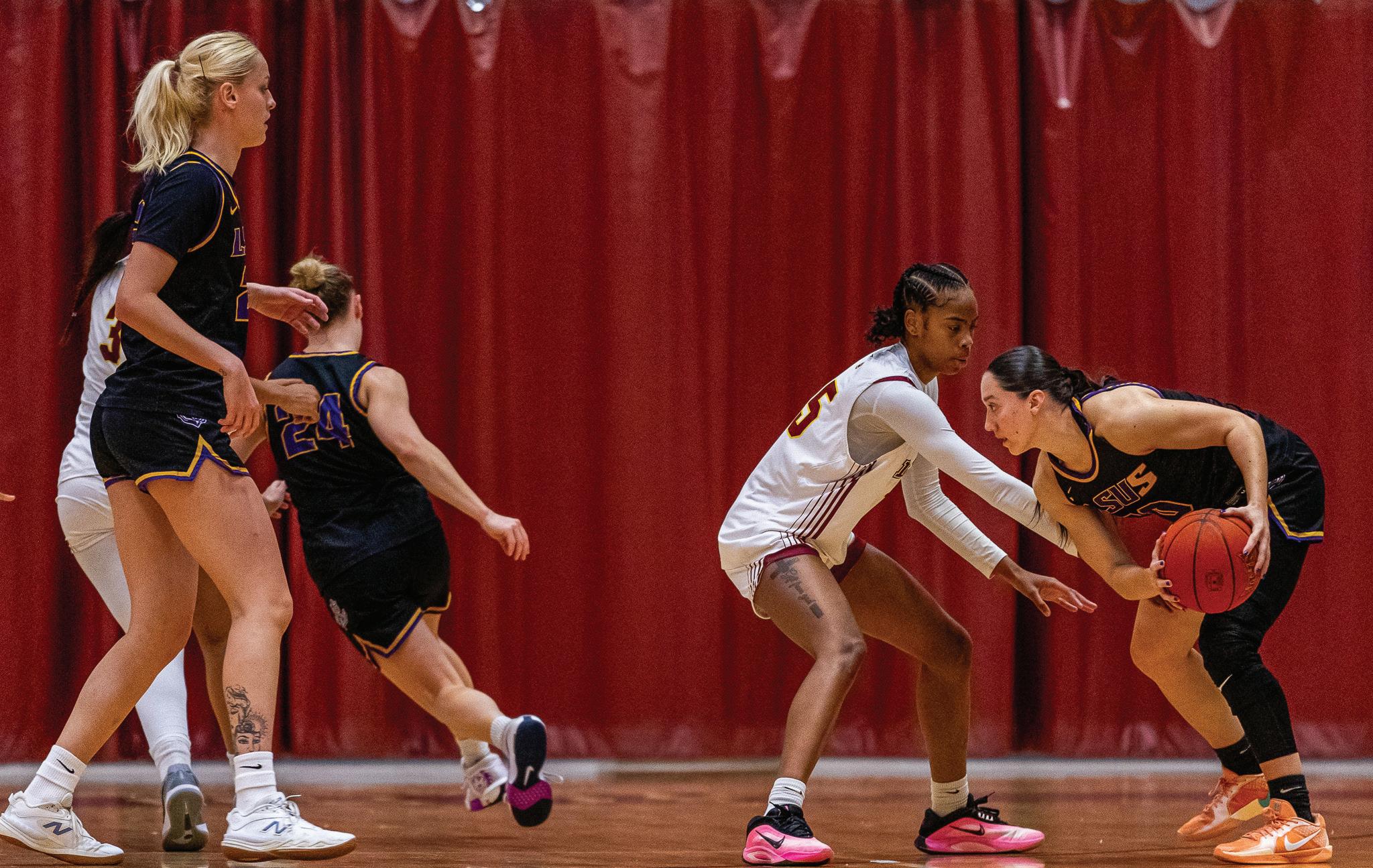
For Loyola guard Deniya Thornton, success is not just measured by what happens on the court, but in the classroom as well.
Thornton, a junior criminology major, was named Loyola University’s Scholar Athlete of the Year, recognizing her achievements both academically and athletically.
“Honestly, I was really surprised when
I found out,” Thornton said. “I knew I had been putting in the work, but I wasn’t expecting something like this.”
Thornton’s impact goes far beyond the award. This season, she earned National Association of Intercollegiate Athletics All-America Second Team honors and was named Southern States Athletic Conference Defensive Player of the Year. She also earned first-team All-SSAC honors for the second straight season and was named SSAC Scholar-Athlete of the Year.
She averaged 15.8 points and 6.3 rebounds per game while leading Loyola in minutes, steals and blocks. Her 72 steals rank among the top single-season totals in program history, making her the first Loyola women’s player in nearly two decades to reach that mark.
Despite her success on the court, Thornton said academics help her stay grounded.
“Honestly, school is kind of my escape from basketball,” Thornton said. “When things get stressful on the court, I can fo-
cus on my work and clear my mind.”
She said her focus on academics is also about preparing for life after basketball.
“I take my academics seriously because I know what I want to do after basketball,” she said. “That keeps me motivated to stay on top of everything, even during the season.”
Thornton said being a scholar-athlete is about more than just performance.
“Being a scholar-athlete means more than just doing well in school and sports,” Thornton said. “It’s about representing yourself the right way and showing that you can succeed in both areas if you stay focused.”
Her performance also helped Loyola finish 25-5, win the SSAC regular-season championship and reach the second round of the NAIA national tournament, while setting a program record with a 17game winning streak.
Those closest to Thornton said the recognition reflects her dedication and character.
“I am incredibly proud of her for being named Scholar Athlete of the Year,” Chelsie Thornton Deniya Thorton aunt said. “This honor reflects who she is, not just as an athlete, but as a person.”
Chelsie Thornton said her family has always put education at the forefront.
“In our family, we’ve always emphasized education first and athletics second, so to see her excel at such a high level in both areas really speaks to her discipline and work ethic,” she said.
Thornton’s friend Isabella April said the recognition comes as no surprise.
“Seeing Deniya be named Scholar Athlete of the Year didn’t surprise me at all,” April said. “It’s not easy balancing basketball and school, but she makes it look that way.”
April said Thornton’s work ethic stands out.
“I’ve never met anyone who works as hard as she does, both in the classroom and on the court,” she said. “She’s focused and driven in everything she does,and this award really shows all the effort she’s put in.”
Thornton said her support system has played a big role in her success.
“My family and friends really keep me going,” she said. “They remind me why I started and push me to keep doing my best, even when things get stressful.”
Even with the recognition, Thornton said she is not finished yet.
“It’s a great feeling,” she said. “But I know I still have more I want to accomplish.”
As she looks ahead, Thornton said she plans to continue her academic and athletic career at Southern University of A&M College in Baton Rouge, with the long-term goal of playing professionally, possibly overseas.
“I’m just focused on taking the next step and seeing where basketball can take me,” she said. “I’m excited for what’s next.”

By Keri Smith klsmith1@my.loyno.edu
For Presha Shanthamoorthi, being named Freshman of the Year means a lot after her first season playing college tennis. The award reflects the work she put in throughout the year and gives her confidence moving forward as she continues her career.
“Honestly, it means everything,” Shanthamoorthi said. “I worked so hard this year and to get recognized for it feels amazing. Coming in as a freshman, I just wanted to prove myself and this award tells me I’m heading in the right direction.”
Shanthamoorthi said she came into the season with high expectations for herself and wanted to make an immediate impact on the team. She focused on putting in consistent work every day and trusting that it would pay off. Adjusting to the pace and level of college tennis was something she took seriously from the beginning, and she approached each practice with the goal of improving.
“I always set big goals for myself. I came in hungry and wanted to make my
mark straight away. I knew if I put in the work every day, good things would happen,” Shanthamoorthi said.
Throughout the season, Shanthamoorthi had several strong performances, but one moment stood out to her the most. During a match against William Carey, she had to push through physical discomfort and stay mentally focused in order to win. The match tested both her physical endurance and mental strength, forcing her to rely on everything she had practiced throughout the season.
“I was cramping so bad I could barely move, but I just kept fighting. My teammates were going crazy on the sideline and my coach kept telling me to embrace the struggle. Winning that tiebreak was one of the best feelings of my life,” Shanthamoorthi said as she recounted the event.
She said that match showed her how much she had grown as a competitor and how important it is to stay mentally tough, even in difficult situations. Being able to push through challenges like that gave her more confidence in her game and showed her that she could compete under pressure.
In addition to competing on the court, Shanthamoorthi also had to adjust to the academic side of college. Balancing school and athletics was challenging at times, especially during travel and matchheavy weeks, but she stayed disciplined and focused on both responsibilities.
“It wasn’t easy but I just stayed disciplined,” she said. “I love competing but I also take my studies seriously. Finishing with a 4.0 GPA last semester showed me I can handle both when I stay focused.”
She said staying organized and committed helped her manage her schedule and maintain a high level of performance in both academics and athletics. Developing those habits early in her college career was important said Shanthamoorthi
Shanthamoorthi also worked on improving different aspects of her game throughout the season. One of the main areas she focused on was her transition game, which helped her become a more aggressive and confident player on the court. Learning when to move forward and take control of points became a key part of her development.
“My coach pushed me to get inside the court more and take the ball earlier. Once I started doing that consistently, my game became way more aggressive and dangerous,” Shanthamoorthi said.
As the season went on, she became more comfortable with her playing style and more confident in her decision-making during matches. Shanthamoorthi said those improvements helped her compete at a higher level and allowed her to stay consistent throughout the season.
Another important takeaway from the season was learning more about herself as a player. Shanthamoorthi said she discovered a new level of mental toughness that she didn’t fully realize she had before. Competing in close matches and high-pressure situations helped her grow both mentally and emotionally.
“I learned that I’m a fighter,” she said. “I never knew how mentally tough I was until this year. Playing through tough moments and still finding a way to win gave me so much confidence in myself.”
She said that experience will help
her moving forward, especially in tight matches where focus and composure are important. Being able to stay calm and trust her training is something she plans to continue building on.
Shanthamoorthi also credited her teammates and coaches for playing a big role in her success. Adjusting to a new environment and being away from home was not always easy, but she said the team helped make that transition smoother and more comfortable.
“They were everything to me this year,” she said. “Being so far from home was tough but my team made it feel like family. My coach always knows exactly what to say to keep me locked in during matches.”
Head coach Matthew Llewellyn said Shanthamoorthi’s success reflects the work of the entire team and the environment they created throughout the season.
“We are proud of Presha being named freshman of the year,” Llewellyn said. “We view individual awards as team accomplishments. She trained and competed alongside her teammates every practice. Without them, she would not have been prepared to have this successful season. She is a great competitor and fights for her teammates. She has learned a lot this season which has positioned her to potentially create her own Loyola legacy.”
He said her effort, attitude, and willingness to compete have made a strong impact on the program and set a foundation for future success. Her ability to learn and grow throughout the season has been an important part of her development.
Looking ahead, Shanthamoorthi said she wants to continue improving and
become more consistent in her performance. She plans to use the summer to keep working on her game and build on what she accomplished this season, focusing on both physical and mental preparation.
“I want to be more consistent. Same energy, same intensity every single day,” Shanthamoorthi said. “I’m going after the [Intercollegiate Tennis Association] Championships and I want to be the player my team can always count on when it matters most.”
She said her goals include continuing to develop her skills, staying disciplined, and competing at a high level in every match. Shanthamoorthi also wants to continue being a reliable teammate and someone her team can depend on in important moments.
Shanthamoorthi has long-term goals for her tennis career. She said she wants to keep improving during her time in college and eventually pursue opportunities at the professional level. She understands that it will take time, effort, and consistency, but she is willing to put in the work.
“I feel like I’m just getting started,” Shanthamoorthi said. “College tennis is making me tougher and smarter every day. My plan is to keep growing here and eventually take my shot at the professional level. I believe I have what it takes.”
As she moves into the summer, Shanthamoorthi said she plans to stay focused and continue putting in the work. After a strong freshman season, she is looking to build on that success and keep improving in the years ahead while continuing to represent her team at a high level.

By Isabella McCoy iamccoy@my.loyno.edu
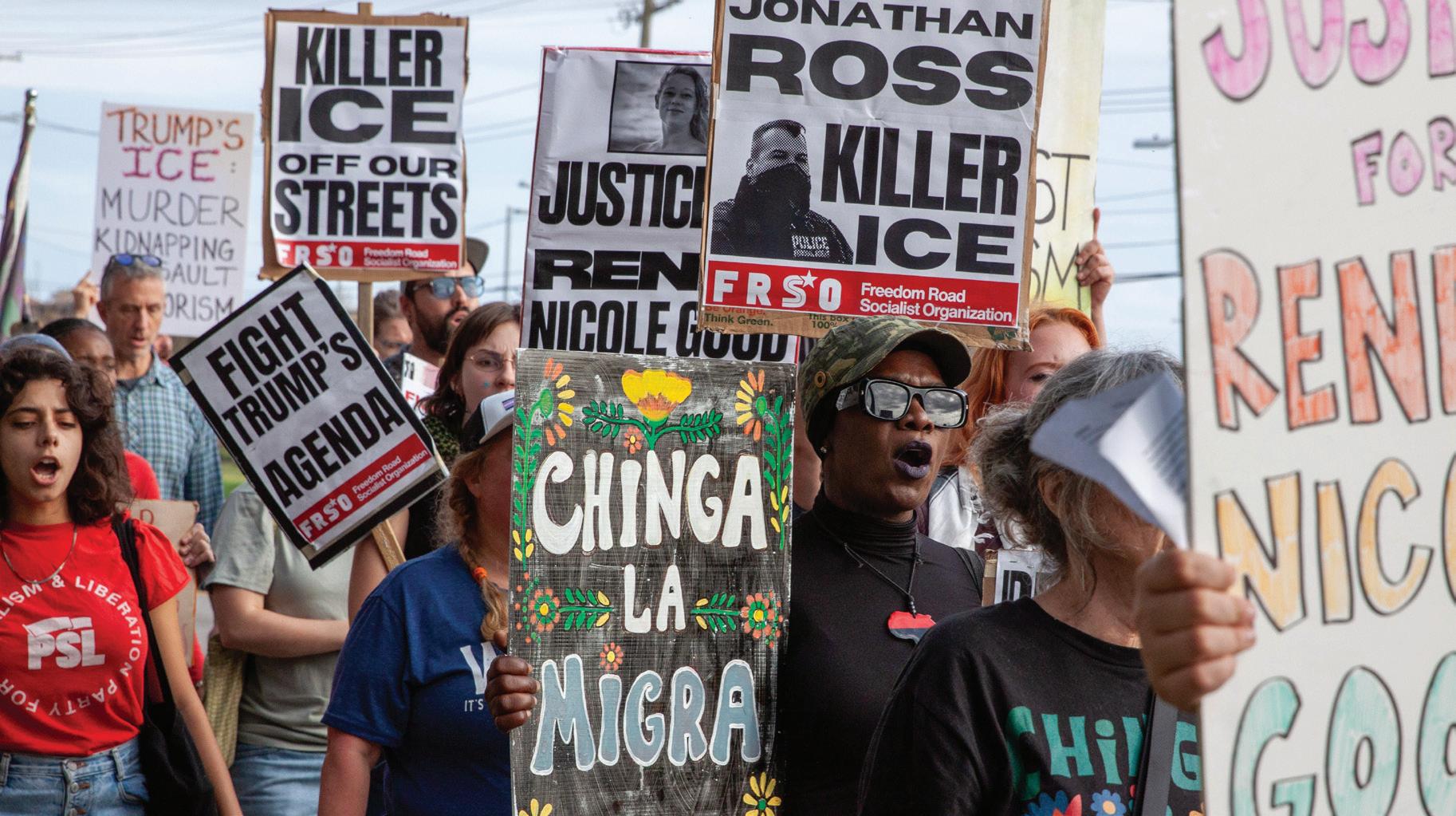
Imagine you attend a protest on Jan. 7 in the bustling, diverse city of Minneapolis, Minnesota, surrounded by others in support of migrants' rights, only to watch a woman, Renee
Good, be shot multiple times and killed in broad daylight by an Immigration and Customs Enforcement officer. Then, just weeks later, you watch a man, Alex Pretti, shot multiple times and killed in the same vicious manner on Jan. 24.
That’s what onlookers experienced after attending a protest to stand up for their neighbors; the same neighbors who are not offered due process simply for the act of migration. The same neighbors who are being ripped from their homes and experiencing forced assimilation in a country that has prided itself on the idea of the American Dream. Renee Good and Alex Pretti are two more people whose due process rights were violated by those who are supposed to protect them.
My city mourns the loss of these two brave individuals in a place where
we have amplified diverse cultures and backgrounds to bring light to our city. Although we have been forced to grieve, the light of Minneapolis shines through in the nationwide fight for immigrant justice. Sadly, these deaths reflect a continuing trend.
According to Ilse Ramirez, 2025 saw 23 reported deaths involving ICE in a single fiscal year, marking the most fatal period for ICE detainees since 2004. In 2026, the numbers are already on pace to surpass that record, with eight people dead inside immigration detention centers or as a result of ICE shootings in January alone. This does not account for detainees released shortly before their deaths or those whose cases go unreported.
The villainization of migrants has become commonplace. A study by Michael Light and Ty Miller found that increased undocumented immigration is actually associated with declines in violent crime. Another study by Cherra Mathis and David Androff highlights how immigration court proceedings are civil, not criminal, in nature. Because of this, migrants have the right to a lawyer but are not automatically entitled to one. According to
Article 13 of the 1948 Universal Declaration of Human Rights, the ability to move freely is a fundamental human right.
And yet, individuals who migrate are not afforded the same protections and are treated as if they are violent criminals. Practices that should spark outrage have become normalized, denying migrants their humanity by defining them solely through criminal labels such as “illegal aliens.” This has allowed Immigration and Customs Enforcement to distance itself from the people it interacts with. The very institution meant to protect us instead instills fear in our neighbors, pushing them further into the shadows, where their stories are lost and their intentions distorted by the media.
When public outcry is met with intimidation and fearmongering, it enables the abuse of power and the oppression of marginalized groups. People who attempt to stand up against this unjust system face serious repercussions, ranging from losing their livelihoods to losing their lives. Public safety should not create fear, it should provide protection. People seeking asylum due to destitution, violence, or war should not be met with

persecution. Instead, they should be welcomed with open arms, as the socalled American Dream proclaims, an ideal that has been slipping away for decades.
The oxymoronic nature of the “American Dream” allows it to be equated with a false reality. We cannot claim to practice what we preach when entire groups are excluded from this vision. Human rights still exist, regardless of someone’s background—including their immigration status.
The world we live in today exists because generations before us made the decision to migrate for countless reasons. Accepting this truth bridges the divide between “us” and “them.” Because of this artificial separation, we must take action against individuals and institutions that contribute to the degradation of immigrants. There is no place in society for those who violate human rights, tear families apart, and spread fear among communities.
ICE must be abolished. This requires sustained lobbying efforts, the termination of its funding, and the expansion of sanctuary policies that build trust between communities and
law enforcement. Similarly, other cities should follow the example of places like Chicago by implementing laws that allow ICE agents to be held accountable for wrongdoing. Minneapolis has already begun to set the stage for how cities can exercise their First Amendment rights and challenge abuses of power.
Individuals who care about this issue should attend protests and support local migrant communities and businesses. People must also use social media to amplify interactions between ICE and individuals, especially as anyone with an accent or a non-white identity has increasingly become a target. Another way to raise awareness is by contacting representatives and advocating for policies that protect migrants.
Every constituent should exercise their right to vote in local and state elections. Standing idly by is not only a disservice to our neighbors, friends, and family who have been directly affected, but also to the countless others enduring similar injustices.
How many more lives must be ruined before people can, quite literally, just live in peace?

By Chris Maldonado cwmaldon@my.loyno.edu
“I can't pay no doctor bills, But whitey's on the moon. Ten years from now I'll be payin' still, While whitey's on the moon. The man just upped my rent last night, Cause whitey's on the moon. No hot water, no toilets, no lights but whitey's on the moon.”
These are just a few lines from Gil Scott-Heron’s famous spoken word poem from 1970, Whitey on the Moon, but the words ring just as true today as they did then. Scott-Heron’s poem was a direct criticism of a U.S. government that would rather spend billions to send astronauts to the moon as it did with Apollo 11 Moon Landing mission instead of
redirecting that spending to more “terrestrial” matters such as the constant struggles of the working class and especially the struggles of working-class African Americans. Those same critiques feel just as relevant today to the most recent example of exorbitant spacefare spending, Artemis II. For those who are unaware, Artemis II is a recent mission conducted by NASA that saw a crew of four astronauts complete a lunar flyby with the express purpose of testing out new launch technologies and other systems for spaceflight systems and navigation. All of this is part of the larger mission of the Artemis Program as a whole which seeks to bring humans back to the moon for the first time since 1972. While it is certainly a scientific marvel, I can’t help but ask what is the actual point of dedicating an entire program to this seemingly redundant task? A program that since 2012 has cost upwards of $93 billion, while many Americans continue to grapple with
poverty, live paycheck to paycheck, face homelessness, struggle with decades worth of debt, and are continuously facing the rising cost of goods as wealth disparity continues to grow. To me this is reflective of a government and its agencies that would rather do frivolous spending for the sake of national ego-stroking than actually addressing the concerns and needs of those who make this country function: the working class. Let me be clear, I think space exploration is fascinating and certainly could be worthy of investment, but for it to take priority over the actual struggles and issues faced by working-class Americans is a complete joke. Rather than using those billions to make meaningful changes on the Artemis program to make actual meaningful material changes for the lives of all Americans, we instead get a trip that to me is as “significant” as when the a flight by Blue Origin took Jeff Bezos and a bunch of other wealthy celebrity leaches up for a joyride in space. The
only difference is that at least the crew of Artemis II are respectable. Both as Americans and as members of the global community, the world is continuously faced with war, genocide, exploitation, poverty, imperialism, and all types of environmental degradation and destruction imaginable. There is so much that the world is constantly faced with and all of it demands serious attention and resources to have any chance of even somewhat addressing these issues but as we see with the Artemis program, the U.S. government would rather continue to build up programs whose benefits would realistically only be accessible to the wealthy few who continue to hollow out this country. Space exploration is an incredible achievement but we all need to remember that when whitey’s on the moon, we’ll still be here on Earth to face all the struggles that our government neglects to even consider from their ivory towers and their soon-to-be built ivory space stations.


ByAndrea Landry aklandr1@my.loyno.edu
Over the winter break, I found myself “victim to the algorithm.” Every other post on my social media feeds seemed to be centered around a very new but rising popular television series that was growing in acclaim just as quickly as it had been released. Before I knew it, nearly every post on my social media feed was talking about Heated Rivalry. e series had immediately sparked many conversations surrounding the substance and content of the show. Something that caught my attention in particular, was the quick criticism the show received regarding its portrayal of queerness.
Many social media users began to raise questions about the representation and visibility that the show brought to Lesbian, Gay, Bisexual, Transgender, and Queer (or Questioning) communities. e show garnered a wide audience of heterosexual female viewers, raising questions of who the intended audience of the series really was. Other concerns circulated, including the depiction of homosexuality in hypermasculine spaces and the ethics of actors who are presumed straight portraying queer characters. e laundry list of potentially problematic instances that have risen from the popularity of Heated Rivalry may appear endless, but are actually focused on one particular issue: media representation. At the core of this issue, it is futile to examine the individual goodness of gay characters on television. Many people equate the goodness of a person to the accuracy and therefore the perfection of their representation of the community. is is reductive. Queer people, just like any other person you
may meet in your day to day life, are nuanced and not always perfect. A queer person with character aws is still an accurate representation, whether we agree with their choices or not.
e pressure for these characters to be depicted as perfect models of queerness stems from a lack of representation on screen as a whole. According to McInroy and Craig, “From the rst representations of LGBTQ identities on television in the 1960s to contemporary representations, LGBTQ people have consistently been stereotyped as comic relief, villains and/or criminals, mentally and/or physical ill, and victims of violence.”. In the study conducted by McInroy and Craig, young adults in Canada gave them many responses discussing the representation they saw as inadequate, criticizing characters for one-dimensional stereotypes which resulted in limited storylines and trajectories for the LGBTQ characters.
is issue of representation extends in many directions. Atypical representations of queer men, like presented in Heated Rivalry opened up the discussion to another signi cant issue. Many comments critical of the show are upset by the idea that the characters are not merely gay, they are depicted in a hypermasculine context. e show takes place within the world of professional sports, a profession that is not visibly queer both in real life and on screen. In a study performed by Galdi, Guizzo, and Fasoli, depictions of masculine-aligned homosexual men can actually exacerbate homophobic responses from heterosexual men, stating “counter-stereotypical masculine gay men ‘blur’ the distinctiveness between heterosexual and gay
men, in that they share both the same sex category and the same masculine traits. It is therefore possible that exposure to counterstereotypical masculine gay men poses a greater threat to men’s heterosexual social identity than stereotypical feminine gay men, thus leading heterosexual men to engage in attempts to restore their ingroup distinctiveness.” eir study amongst straight men in Italy came to the conclusion that depictions of counterstereotypical gay men in television led to widely negative reactions due to a lack of distinctiveness from their heterosexual counterparts. In relation to the widespread negativity that has targeted Heated Rivalry and its depiction of men within the world of professional sports, it is reasonable to believe that much of this backlash, speci cally from straight men, is due to the representation of homsexual men in a context outside of the typical stereotypical boundary they are usually depicted in on television. If anything, it is a necessary signal that widespread representations of a multitude of queer identities and presentation are required in the mainstream.
Overall, I do not believe that Heated Rivalry is an evil to the queer community that many social media critics have attempted to make it. While many valid concerns have been raised as a result of this overnight phenomenon, the core issue of representation is what deserves our attention. What the success, and subsequent backlash, of Heated Rivalry should ask us to is to examine what representations we have been exposed to through the mediums of lm and television, and how we can nd greater acceptance of multitudes of representations in our entertainment.

By Maria Touzard mstouzar@my.loyno.edu
Everybody has had a moment in which they have been taken by surprise (either pleasant or not) by a loved one’s political stances.
Friends, family, even partners can suddenly present you with unexpected political views, ones you may not feel particularly accepting of.
In today’s heavily polarized political climate, we are not strangers to an increasing number of these situations. In uencers, celebrities, and whole companies are constantly praised or scrutinized due to the revelation of certain beliefs.
is recurring experience has led me to the following question: when, if ever, is it ethical to cut someone o because of their political beliefs?
First, one must examine the concepts surrounding political beliefs.
Are they mere opinions, with no true manifestation of moral character, or are political stances a true re ection of an individual’s moral values.
To be politically aligned with an idea means your vote supports that belief, your thoughts are put into action, and you choose to stand by them. is means that one’s political stances are as much power as one is given. As most common citizens are not actively running for o ce or seeking governmental positions, their stances are the only political power they hold, as this will guide their vote. An individual's limited amount for political choice/vote then relies solely on what they believe. Furthering, one’s views guide their vote, and that
vote is not meaningless, as it is meant to determine what is in best interest for the whole country. A political belief is not simply an opinion; it demonstrates who and what you believe in, and what you think others deserve.
For the past few years, stronger and more radical views have seemed to resurface. While some have gained more awareness of their political climate and educated themselves enough to align their stances with their moral values, others seem to have fallen into the traps of misinformation and prejudice.
Over the past decade, we have been witness to how one misaligned view can spread throughout millions of minds like a pest.
Many of those who claim to stand strongly for certain beliefs have no true foundation for what they believe, just the words out of someone’s mouth.
Even worse, that mouth can be responsible for spewing misinformation.
However, no single person can hold all of the responsibility for unfortunate political views, as access to information has become easier than ever and we all possess a mind of our own. It would be far too easy to simply put the blame on a single individual for ignorance disguised as a political belief, yet it seems that misinformation and discrimination has spread like wild re throughout the whole country.
So who’s responsible for attempting to educate those whose political views can interfere with others’ well beings? ough it might not seem fair for the responsibility to always fall on the politically educated individual, part of it must.
It is true that some views can truly interfere with our relationships, and some that stances might even be enough to bring relationships to a complete halt.
But what about the milder, not borderline infringing on human rights stances; those that are in disagreement with the educated, but don’t directly interfere with anyone’s autonomy or health?
ese are the ones we must think about twice before letting them drive us to cut o a loved one.
Although it might not be fair, those who are truly educated on such topics must seek to educate, rather than ostracize, if our goal is to always seek the greater good.
erefore, the Good of man must be the end of the science of Politics. -Aristotle
The Maroon
April 24, 2026
Every year, Student Government Association elections come around with the same promises: more engagement, better communication, real change.
Every year, a large portion of the student body still ends up asking the same question: what does SGA actually do?
With the new presidential candidates for the 2026–2027 school year now announced, that question feels more important than ever.
At this point, it’s not just about who wins, it’s about whether SGA is nally ready to step up.
at means something speci c. It means moving past vague campaign slogans and actually showing students how things are going to run.
Not in general terms, not in buzzwords, but in clear, concrete plans. How are you going to increase outreach? What does that actually look like on a week-to-week basis? How will students know what’s happening, and more importantly, how will they know their voices are being heard?
Right now, that connection just isn’t there.
Too many things slip through the cracks. Events go unnoticed, initiatives don’t reach the broader student body, and decisions feel disconnected from the people they’re supposed to represent.
It’s not necessarily that SGA isn’t doing anything, it’s that students don’t see it, don’t feel it, and often don’t understand it. And in a role that is entirely built on representation, that disconnect is a problem.
If this next administration wants to be di erent, outreach cannot just be a campaign promise.
It has to be a system. Consistent communication, visible action, and intentional engagement; not just when elections roll around, but throughout the entire year.
e Turning Point USA situation was
one of the rst moments in recent memory where the university found itself at the center of a controversy that reached beyond campus.
Multiple news outlets picked it up. Students were talking about it constantly. It wasn’t just a campus issue, it became a public one.
And in moments like that, transparency matters.
When e Maroon and others reached out for comment, the response was often silence or “no comment.” and while that might feel like the safest move institutionally, it doesn’t sit well with students who are actively trying to un-
derstand what’s happening in their own community.
SGA is supposed to be the bridge between students and administration, especially in moments of tension or uncertainty. at can’t happen again.
is isn’t about expecting SGA to have all the answers. It’s about expecting them to show up, to communicate, and to acknowledge what students are experiencing in real time.
If SGA only speaks when things are easy, then it’s not really representing students, it’s just managing optics.
ere’s also something else that makes this moment important: trans-
parency.
Loyola is a place where students come and go quickly.
Four years sounds like a long time, but in reality, it moves fast. People graduate and leadership turns over. at means every new SGA administration isn’t just building forward, it’s often rebuilding.
Which is exactly why transparency matters so much.
SGA leaders are students rst.
ey’ve been the ones sitting in classrooms, scrolling past emails, feeling disconnected from decisions being made above them.
ey know what it’s like to feel out of the loop, to wonder if their voice matters and that experience should shape how they lead.
is role isn’t about representing an idea of students, it’s about representing actual students, with all of their di erent perspectives. at means engaging with all sides of a story.
It means being present even when situations are complicated or controversial.
It means remembering that leadership is not just about visibility when things are going well, but responsibility when they are not.
Students don’t need more promises. ey need clarity. ey need transparency. ey need consistency.
Most importantly, they need to feel like the people elected to represent them actually understand what that responsibility means.
At the end of the day, SGA isn’t just another organization on campus.
It’s supposed to be the voice of the student body.
At Loyola, “Jesuit values” are everywhere. ey’re in brochures, on banners, in speeches, in mission statements. Words like justice, community, care for the whole person, and magis are repeated so often they start to feel like part of the campus landscape itself.
But values are not meant to live on banners. ey are meant to live in action, to live by, to be seen everyday and right now, there is a growing sense that at Loyola, those two things, words and action, are no longer aligned. is moment isn’t about Jesuit values at all. It’s about whether the university is actually willing to follow them.
e university says it is committed to its faculty and sta . It points to budgeting processes, incremental raises, and onetime bonuses as signs of progress . But if you listen closely to the people who make this university what it is, a di erent story begins to emerge.
A story of professors who have gone years without meaningful compensation. A story of promises made during times of crisis, promises of rebuilding, of restoration, that many feel have never truly been ful lled. Perhaps most troubling of all, a story of a university that continues to expand in some plac-
es, while asking those at its core to keep sacri cing.
Here is the truth Loyola cannot a ord to ignore: Students do not come here for administrative structures.
ey come here for professors. ey come for the people who challenge them, mentor them, laugh with them, push them, and shape the way they see the world. Ten years from now, no student will remember a budget report.
ey will remember a professor who stayed after class to help them understand something. A professor who believed in them when they didn’t believe in themselves. A professor whose jokes, whose passion, whose humanity made learning unforgettable. at is Loyola. at has always been Loyola.
Yet, those very people, the ones who de ne all of our Loyola experiences, are the ones increasingly being asked to do more with less. More work, responsibilities, and expectations.
All while being told that meaningful change must come slowly, incrementally, eventually.
Jesuit values are not incremental.
ey are not something you invoke when convenient and set aside when
di cult.
If Loyola truly believes in cura personalis, care for the whole person, then that care must extend to the people who give everything to this institution. If Loyola truly believes in justice, then it must confront inequities, not obscure them. If Loyola truly believes in community, then it must listen to that community, not just speak for it. ere is a deeper contradiction at play here.
e university asks its faculty and sta to embrace magis, to do more and to be more. But what happens when that call is not reciprocated? When “do more” becomes a one-sided expectation? When dedication is met not with support, but with silence or delay?
At some point, magis stops being a mission and starts becoming a burden. is is not an argument against Loyola. It is an argument for what Loyola claims to be. is university has something rare: a community of professors who stay not because they are paid the most, but because they believe in the mission.
Who stay because they love their students.
Who stay because they believe in what Loyola could be.

HOWLS & GROWLS
HOWL to Earth song by Lil' Dicky
GROWL to Pollution
HOWL to Jazz fest
GROWL to Gas prices
HOWL to Thrifting
GROWL to
War
Editorial Board
Editor in Chief
Eloise Pickering
Managing Editor for Print
Mary Ella Hastings
Pre-Content Director
Alana Frank
Post-Content Director
Callie Honeycutt
Campus News Editor
Lily Bordelon
Campus News Editor
Stella Perdue
Worldview Editor
Pablo Pineiro-Ramy
Assistant Worldview Editor
Angelica Pineda
Life and Times Editor
Elise Beck
Assistant Life and Times Editor
Olivia Sanyal
Sports Editor
Kerieyaunta Smith
Opinion and Editorial Editor
Imadnisa Siddiqui
Breaking News Editor
Natalie omas
e Wolf Editor
Laura Welles
Senior Sta Photographer
Sophia Renzi
Assistant Photo Editor
Pharrell Every
Design Chief
Makayla Parker
But belief alone cannot sustain an institution. Eventually, belief needs to be met with action.
Loyola often speaks about forming students who will go out and create a more just world.
But that work does not begin after graduation.
It begins here. In how the university treats its own people. In whether it lives up to the values it teaches. In whether justice is something practiced internally, or simply projected outward.
If the lesson is that values can be spoken without being practiced, that justice can be delayed, that voices can be heard but not acted upon, then that is the lesson that will last.
Loyola still has the opportunity to realign itself with the very principles it was built on.
To match words with action.
To treat its faculty not as expendable, but as essential.
To remember that the heart of this university is not in its branding, but in its people.
Jesuit values are not just something you claim, they are something you prove and live by.
Social Media Manager
Mabel Regalado-Hernandez
Social Media Manager
Carlos Andrade
Social Media Manager
Maria Touzard
Copy Editor
Mark Michel
Newscast Editor
Christopher Nesbit
Lead Anchor
Dessadra Tezeno
EDITORIAL POLICY
The editorial on this page represents the majority opinions of The Maroon’s editorial board and does not necessarily re ect the opinions of Loyola University.
Letters and columns re ect the opinions of the authors and not necessarily those of The Maroon’s editorial board.
The Maroon does not represent the opinion of administration, sta and/or faculty members of Loyola.
Letters are subject to editing for length, grammar and style. Please limit submissions to 400 words. Submissions are due no later than 4 p.m. the Sunday before publication. Please send all submissions — The Maroon, 6363 St. Charles Ave., Box 64, New Orleans, LA 70118.
Email us your letters — letter@ loyno.edu.
Submissions may also be made online at www.loyolamaroon.com.


The same personalized support. The same hands-on learning experience. All new possibilities for your career.




Explore versatile programs at Loyola College of Law.



· ·


Juris Doctor – full time, part time, and evening programs






Master of Arts in Environmental Law



















Master of Arts in Health Law & Administration ·