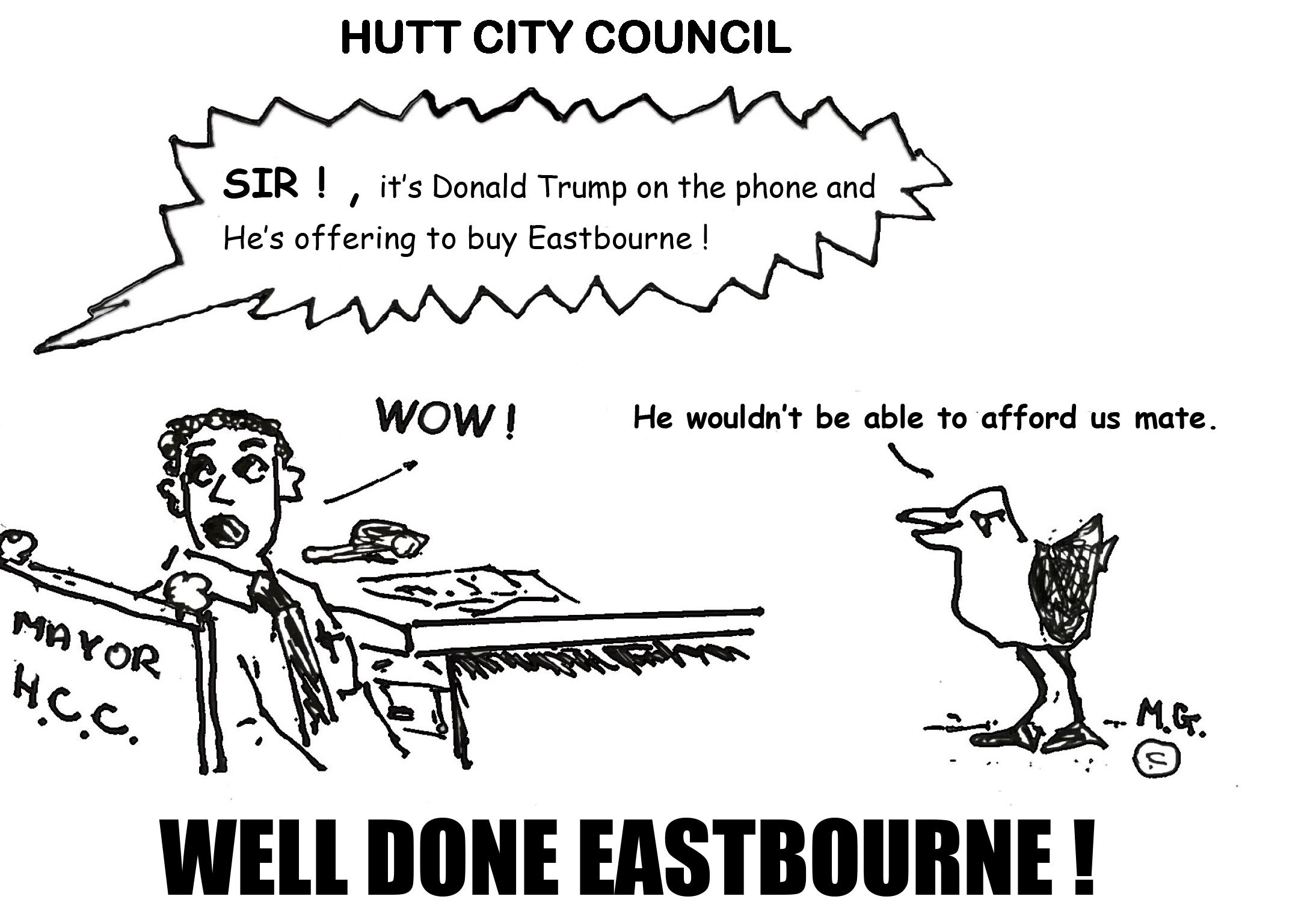
The Eastbourne Community Board will remain operational for at least another three years, despite the majority of Hutt City Councillors voting to disband it last year.
The vote followed the recommendation of an independent panel, chaired by Paul Swain, which undertook the representation review as part of a six-yearly legislative requirement.
The panel’s report questioned the appropriateness of community boards in the current local government context. It highlighted an inability of community boards to improve the Council’s engagement with its city-wide communities of interest; a perceived lack of equity in having community boards in some areas and not others; and the increased mobility and inter-connectedness of residents with other parts of the City since community boards were established in 1989 at the time of amalgamation.
In November, councillors voted 8-4 in favour of the recommendations, which also included adjustments to ward boundaries. Ironically, many councillors supporting the removal of community boards had started their political careers on them. At the time, no alternative mechanisms for representation were proposed.
After receiving 370 submissions, 72 percent of which opposed axing community boards, the Local Government Commission’s (LGC) decision included retaining the Eastbourne and Wainuiomata community boards. However, the Petone Community Board will be dissolved following October’s local body elections, with the commission finding the area did not contain a sufficiently distinct community or communities of interest.
Belinda Moss, chair of the Eastbourne Community Board, expressed her delight with the decision, attributing it to the community’s extensive written and oral submissions. She also thanked The Eastbourne Herald for keeping residents informed throughout the process. “The review and appeal have involved significant work for the ECB, and we are now looking forward to continuing our role of representing and advocating for Eastbourne residents for the remainder of this term, ending with the October 2025 local body elections,” she said. Mrs Moss encouraged residents interested in local governance to consider standing for election.
The LGC last made a determination in relation to Hutt City Council’s representation in 2019. The 2019 determination endorsed HCC’s proposal to retain its three community boards and altered the proposed ward-based representation to a combination of wards and at-large representation. The council’s current representation arrangements have been in place since and comprise a mayor elected at large and 12 councillors. Six councillors are elected by the district as a whole and six are elected from six wards. Under the new structure, seven councillors will be elected from five general wards:
• Northern General Ward: Stokes Valley, Taitā, Naenae, Avalon (2 councillors)
• Central General Ward: Boulcott, Epuni, Fairfield, Waterloo, Hutt Central, Alicetown, Melling, Woburn, Waiwhetū (2 councillors)
• Western General Ward: Manor Park, Belmont Park, Kelson, Belmont, Tirohanga, Normandale, Maungaraki
(1 councillor)
• Harbour General Ward: Korokoro, Petone, Moerā, Gracefield, Eastern Bays, Eastbourne through to Pencarrow (1 councillor)
The Eastern Ward will be removed, and some ward boundaries will be adjusted. Additionally, residents will elect the Mayor, five councillors at large, and one representative for the Māori Ward.
Mayor Campbell Barry welcomed the LGC’s decision, emphasising the importance of these changes for the next election. “This new structure is the result of a rigorous process based on best practices, led by an independent panel. The LGC’s determination affirms the validity of this approach, including adjustments in community board representation. I’m confident that the 2025 election will operate under a framework that will best serve our communities,” he said.
Mayor Barry also expressed appreciation for those who participated in the Representation Review, as well as the independent panel and past and present community board members. HCC will now focus on finalising engagement strategies to be implemented by the incoming Council after October’s election.
LGC recommended that in its next representation review, any proposal for community boards should include alternative mechanisms for representation and advocacy, "not only engagement, and meet the needs of geographically defined communities before their abolition is determined.
Momentum gathers for plans to save historic church
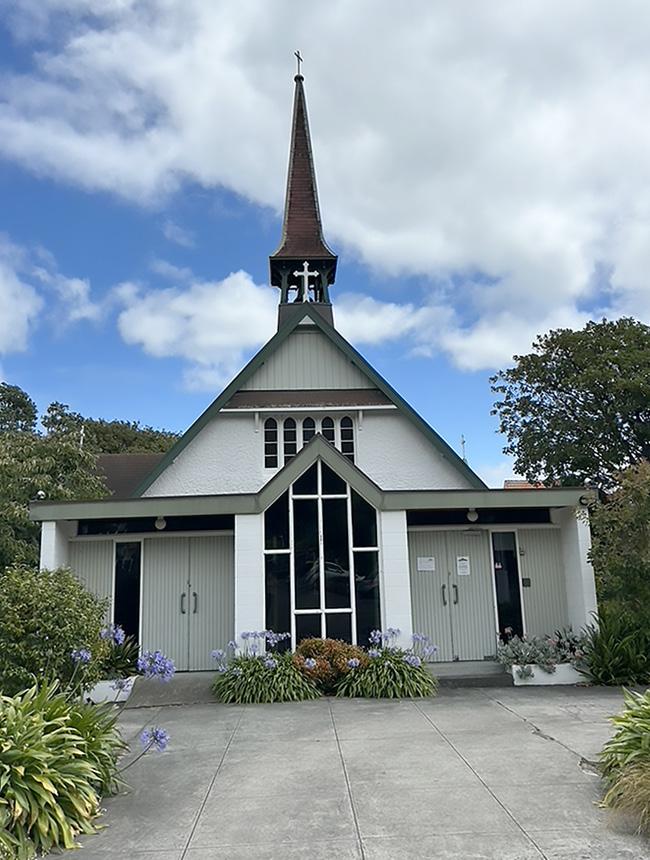
St Alban's Anglican church and hall look set to survive following support from the parish for the earthquake strengthening of the 1911 Frederick de Jersey Clere-designed church building. The plan, overwhelmingly supported by the local parish, will see the existing church and hall strengthened to 34 percent of NBS - an index used to characterise the expected seismic response of a building to earthquake shaking. It helps identify buildings that represent a higher seismic risk than a similar new building, built to current Building Code standards.
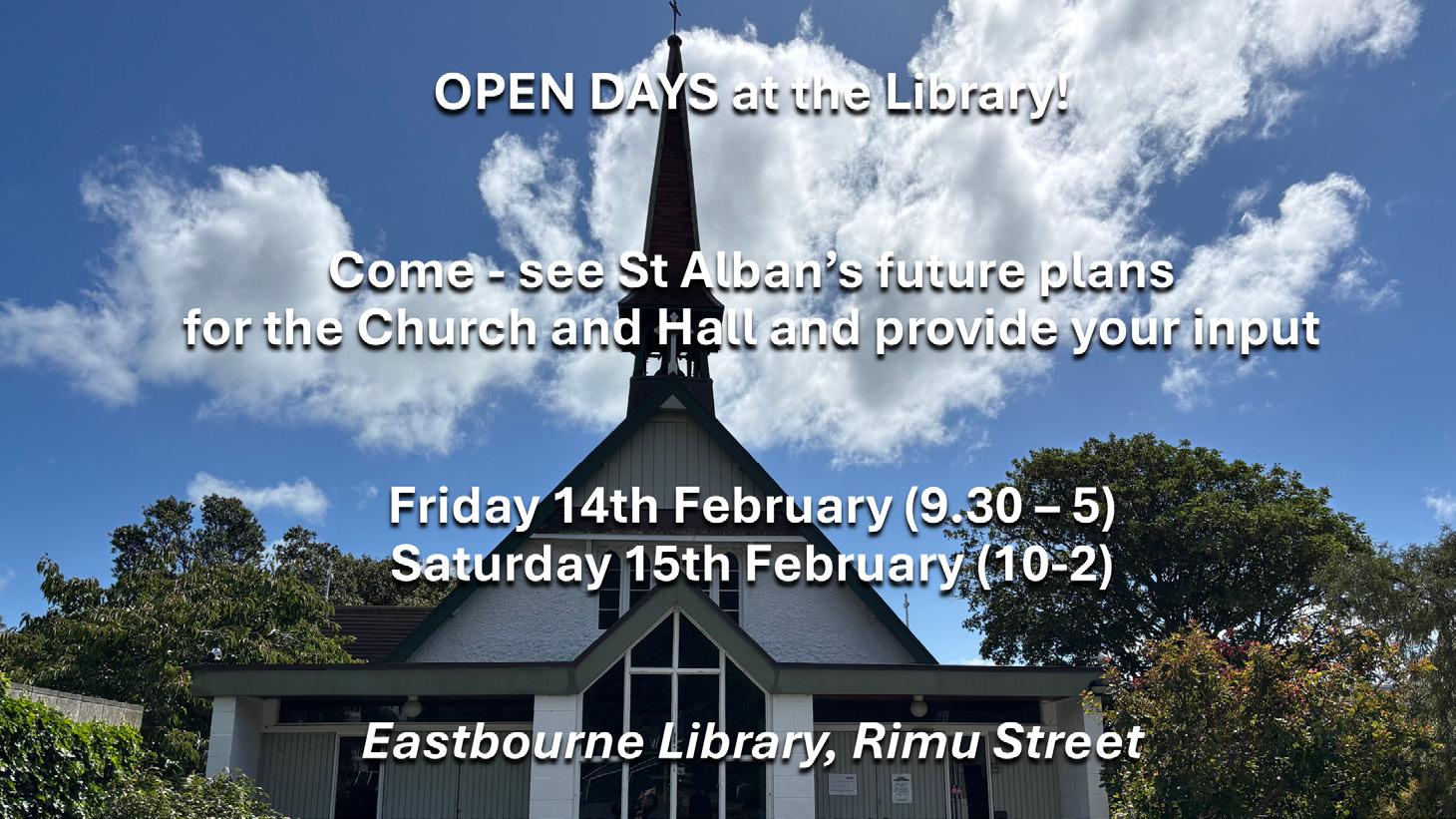
Now St Alban's vicar Sue Brown wants to hear what the wider community would like to see in a revamped church base in Ngaio Street. On February 14 and 15 the church is holding open days at Eastbourne Library for members of the community to see the plans for the church and to "give their input and share their hopes and dreams".
“We want the church and hall to come alive again – to be a place that is open seven days a week, where people come and go; where they dance - sometimes literally through the buildings," Rev. Brown says. "A place where Church and community work in partnership to bring people together in ways that are bigger than each one of us alone.”
The open days will be held at Eastbourne Library on Friday, February 14 between 9.30am and 5pm, and Saturday, February 15 from 10am-2pm.
Once this period of consultation has ended, it is expected that plans will be submitted to the diocese for approval.
From there, consents will be sought and fundraising will begin to bring the congregation home. St Alban's services have been conducted at San Antonio Church in recent years, and prior to this Wellesley College.
The historic church, whose future has been uncertain, is now set to be repaired.
The next public Eastbourne Community Board meeting will be at 7.15pm on Tuesday, 11 February, at Eastbourne Neighbourhood Hub (Library), 38 Rimu Street
Early Bird Chats Before the Meeting
We’ll be at the February Eastbourne Community Board (ECB) meeting 30 minutes early, from 6:45 pm, to speak with residents about any issues or questions. This is the perfect time to share concerns or topics for the meeting, as standing orders don’t allow speaking from the floor. Council officers may also be present.
Community Board future secured for Eastbourne
The Community Board is delighted that the Local Government commissioners have now overturned the council’s decision, ensuring Eastbourne and Wainuiomata Community Boards will be retained. However, we regret that Petone’s Community Board will not continue. This outcome is a reminder of the importance of advocating for local voices. Thank you to everyone who supported this effort—your contributions made a difference!
Pedestrian Flow Trial
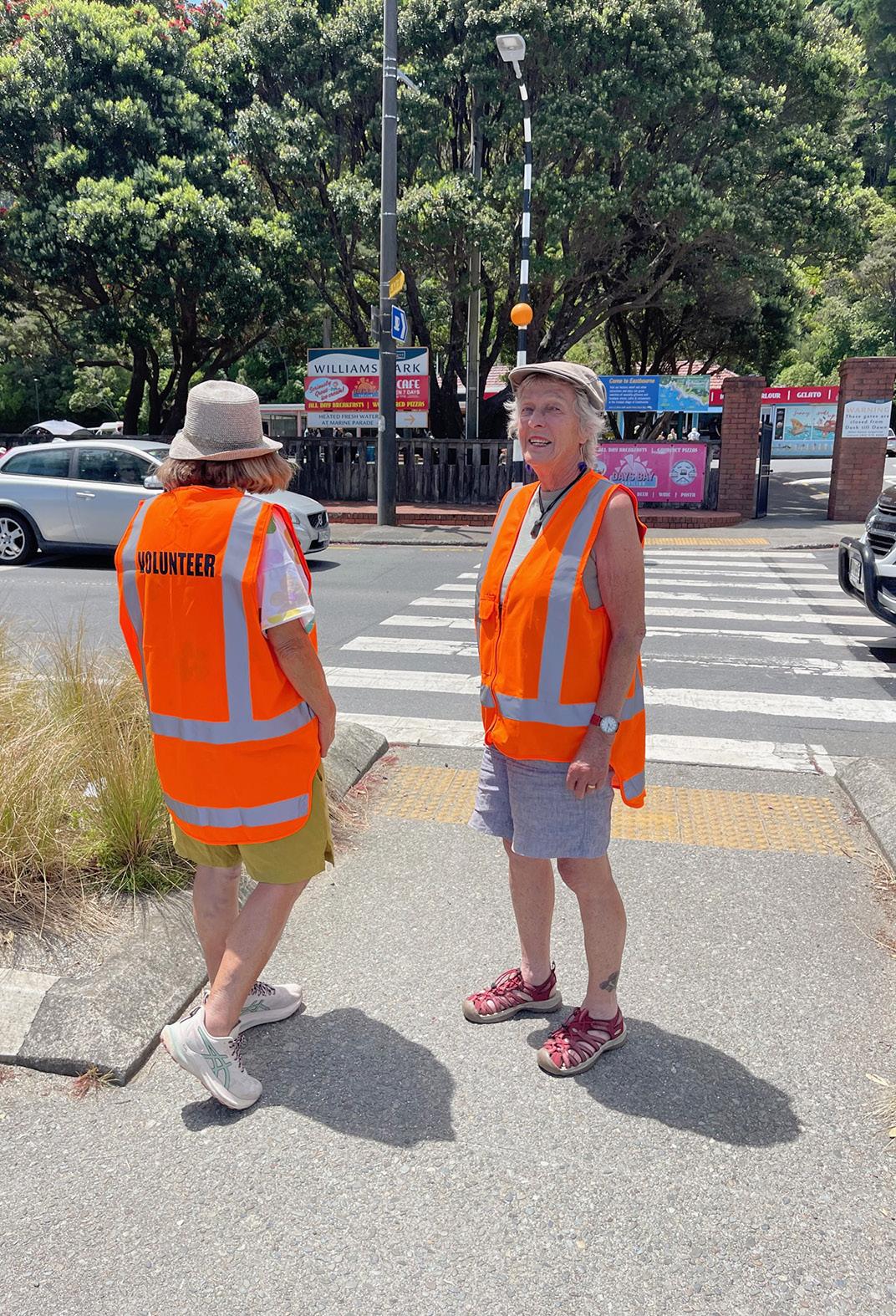
Thank you to the volunteers helping manage pedestrian flow at the Days Bay crossing. Though activated only a few times, early results are promising. We’ll review the trial after more summer days.
Eastbourne Lions Recycling Services
The Lions provide a rubbish skip and electrical recycling service at Burdan’s Gate on the last Saturday of each month (8–11:30 am). Charges depend on quantity. They’re also looking to add polystyrene recycling soon—stay tuned! Find recycling options at https://eastbourne.nz/recycling. Battery recycling is available at St Ronan’s Church (south side).
Improving Meeting Spaces
We’re working to address sound issues in the library. Updates from HCC may see us temporarily move meetings back to the East Harbour Women’s Club (EHWC) rooms.
Belinda Moss (Chair) 029 494 1615
belinda.moss@huttcity.govt.nz
Emily Keddell (Deputy Chair) 021 188 5106
Bruce Spedding 021 029 74741
Frank Vickers 027 406 1419
Murray Gibbons 04 562 8567
Tui Lewis (Ward Councillor) 021 271 6249
“Cross now!”
by Ann Packer
Perhaps our conditioning during childhood, waiting for those school patrol signs to go up, has helped us accept a quiet request to wait at a crossing…
Diane Cheyne, one of the organisers of a volunteer group trialling a scheme to ease summers’ day traffic at the pedestrian crossing at Days Bay wharf, thinks our familiarity with road patrols may explain why people have been so cooperative with the crossing management, which has just recently started operating.
She’s been impressed with the behaviour of pedestrians and drivers waiting for their turn to go through.
“People were really supportive of the volunteers,” she says. “I just stood there and people saw my vest and waited.” Volunteers stand back from the crossing until a group is gathered ready to cross.
Volunteer Ginny Horrocks says the only challenge when she was on duty was to get cars to move on through, as they are so used to stopping for people in hi-vis vests.
The initiative was set up by a small group from Eastbourne Community Board and Days Bay Residents’ Association after funding for a long-awaited speed management plan was unavailable. Volunteers from Days Bay and the wider Eastbourne community work in pairs for an hour at a time. No road cones are used, as it’s the people not vehicles that are being held back, voluntarily.
Mrs Cheyne thinks the new landscaping design with its one-way traffic has also made “a huge difference” to the traffic flow as cars are going into Williams Park, but not out, at the crossing.
It could also be the wintry weather – we haven’t had many of those stinking hot days that see visitors pouring in to the bay and crossing endlessly for ice creams at the Pavilion.
The roster pretty much runs itself via What’s App, which allows for last minute changes to personnel and takes weather into account.
Hutt City Council officers were not involved in organising or coordinating volunteers, says HCC’s Jon Kingsbury. “While we appreciate the community’s initiative, the Council’s resources and priorities are focused on delivering planned city-wide projects aimed at improving safety and transport outcomes,” he says.
We’re told a parking warden was observed in Days Bay at the weekend; it seems some resources are available.
If you’d like to help with summer crossings at Days Bay mailto:dbcrossing@eastbourne.nz or private message Eastbourne Community Board on Facebook.
Diane Cheyne and Ginny Horrocks man the crossing.
Ōkiwi Trust after ideas to widen its scope of service
by Ann Packer
Celeste McCabe, who coordinates the volunteer driver scheme for Ōkiwi Trust, says December’s Christmas gathering at Tartines was a wonderful event and a first in that it mixed drivers and clients together.
“It was a relaxed atmosphere and they could talk about other things [than their appointments] for a change,” she says.
Ms McCabe thinks Eastbourne may be unique in what it offers in the way of driving assistance to help older local people get in and out of the community.
“Eastbourne and people in the bays all help each other,” she says, recalling one Eastbourne woman who recently visited a sister in Tauranga discovering that city has nothing similar.
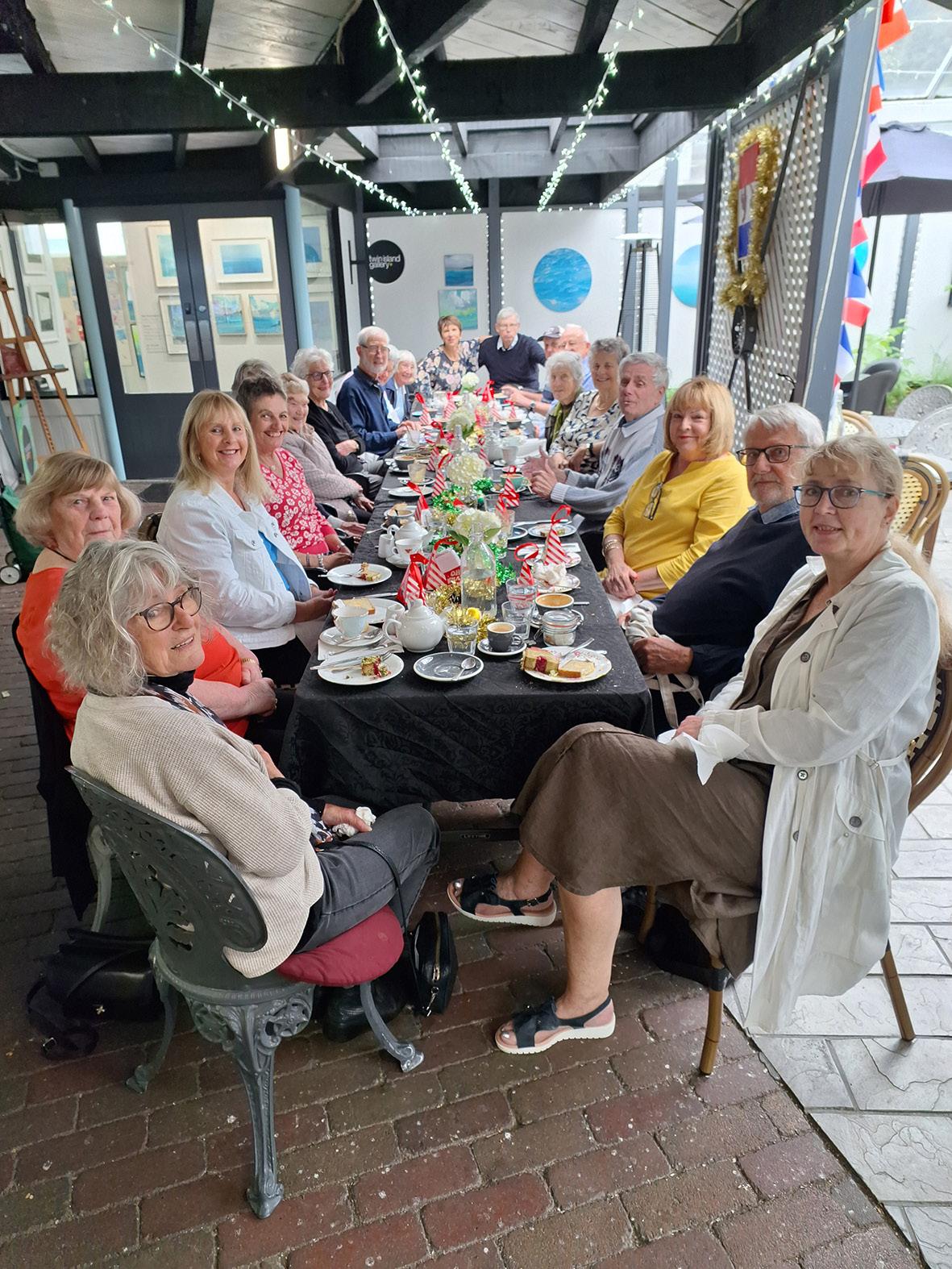
Enjoying the Ōkiwi Christmas lunch are (from left): Chris Reynolds, Norma Williams, Kim Weber-Swain, Pippa De Court, Irene Quinn, Francie Dellabarca, David Carew, Heather McLean, Pauline Meo, Celeste McCabe, Neil Newman, Keith Young, George Tuffin, Helen Mulgan, Susan Ewart, Kevin Brennan, Denise Cornford, Evan Voyce, Milika Nederlof.
The Volunteer Driver Scheme began after the small residential home known as Ōkiwi House, set up in 1973 on Muritai Rd, was sold in 2001. The proceeds, used to continue the aims of the Trust (now under the auspices of the Eastbourne Bays Community Trust), help older residents who no longer drive or use public transport to continue to live in the local community and still get out.
A cross-section of drivers, aged from mid40s to 70, assists some 25 regular users, with around 30 drives organised per month.
That doesn’t just mean medical appointments, Ms McCabe says; it could be visiting a friend, going to the hairdresser, or doing some shopping. One recent excursion was to an Upper Hutt rest home.
Regular events include a monthly movie outing to the Lighthouse Cinema in Petone, while the monthly DVD screenings at the East Harbour Women’s Club are set to be reframed this year. New activities will include outings to exhibitions and tea at places of interest in the Hutt Valley and Wellington.
Ōkiwi also offers a 20 Minute Volunteer Service assisting people to change washers and light bulbs, move firewood, fix window and door latches, and wash down windows – all things that older residents may find tricky.
Ms McCabe thinks many locals “don’t quite understand what we do” and she would welcome fresh ideas for what the service might offer.
Contact the Ōkiwi Trust on 0800 654 942 or 021 206 5713.
Spencer Logan Valuations Limited Registered Valuers and Property Consultants
The prototype of a sailing yacht designed at Seaview is attracting worldwide attention from organisations looking for a better vessel for use by people with disabilities.
Groups from as far afield as San Diego, New York and the UK have expressed interest in the ParAble-Whakatauki boats, two of which – Prodigal Son and the Jeff Dixon – are on the water at Seaview. But funding is still needed so this new class of yacht, can be recognized here and internationally. That could potentially allow Sailability Wellington Trust (Inc), which also has bases at Evans Bay and Porirua, to support itself through the sale of such yachts, reducing its reliance on charitable funding.
Hutt sailor Don Manning QSM, CEO of Sailability Wellington Trust, says the moulds are ready; they just need money for hulls, sails and spars. He says while they knew from the beginning it would be a Herculean task raising money to build six identical yachts to race in a national regatta (so the new class can be approved by Yachting New Zealand) they are up to the challenge. $300,000 has been raised so far; they just need another $90,000.
It’s more than a decade since Mr Manning started thinking about a boat to replace the colourful Australian-designed and built Hansa 303s that Eastbourne drivers see on the water at Seaview most Tuesdays and
Wednesdays. The Hansas – of which there are currently 22 in Wellington – were becoming less “fit for purpose” due to crew weight, design and materials evolution. While the Hansas accommodate one or two sailors up to 160kg, the new boats take 240 kg.
“Every sailor believes they can improve on what they have,” Mr Manning says, adding “most fail.”
The former Catholic priest knows his limits
as a designer. Addicted to sailing since he first stepped into a dinghy aged nine, at Plimmerton Boating Club on Karehana Bay, he built his first yacht when he was 13, and went on to complete 14 more, including some of his own design. He sailed catamarans competitively out of Evans Bay before entering the seminary, and while a parish priest in Aitutaki built ten Optimists “then taught the kids how to sail them”, leading to an Oceania-wide competition that still continues.
Experts who’ve helped design this new craft include four disabled sailors: Brent Porter, Kelvin Smith, Darrell Smith and Graham Hook. Mackay Boats of Silverdale, who specialize in racing dinghies including the Olympic class 49er, FX and 470 boats, are supporting the project; designers Bruce Askew and Kevin Cudby, and teams at Doyle Sails and C-Tech spars are also involved.
Mr Manning thinks his affinity with people with disabilities goes back to a spell in the Home of Compassion at Island Bay as a five-yearold, when a bout of acute nephritis saw him confined to bed rest in a ward of mostly disabled children. He has worked for the Rehabilitation League (the forerunner of Workbridge), the Deaf Society and the Laura Fergusson Trust in Wellington, and has been involved with SWT since it began in 2002.
What makes the ParAble-Whakatauki prototype unique?
It is self-righting and safe, can be launched from a simple beach trolley, can carry a payload of 240kg, incorporates a self-draining cockpit, can include individualised seating, can be sailed in either 2 sail or 3 sail configurations, can be used both for racing and for learn-to-sail, and will be suitable as a family day boat for sea scouts and schools. It can also take a small electric motor on the stern.
You can donate on Give- A Little or for more information contact: www.sailability-wellington.org.nz / info@ sailability-wellington.org.nz / 027 2494275
The new ParAble-Whakatauki boats are garnering international attention.
Faith in the Community
The gate of the year...
Once again, in the words of Minnie Haskins, we stand at the gate of another year, and ponder what it may bring. In the natural world there are massive fires and hurricane force winds, floods from unprecedented rainfall. And in the political world chaos continues to reign with few signs of hope. Minnie penned those well-known words in 1908, and they came to attention of the world at large when the young Princess Elizabeth, aged 13, gave Minnie’s poem to her father, King George VI; he read them as part of his 1939 Christmas message, and her words were inspirational in the early days of World War II.
They have continued as a source of comfort in difficult times:
And I said to the man who stood at the gate of the year:
“Give me a light that I may tread safely into the unknown”
And he replied:
“Go out into the darkness and put your hand in the Hand of God.
That shall be to you better than light and safer than a known way.”
There’s more, of course, but the point is clear. There is a way to walk with confidence into the valley of the shadow, and although we may not have much influence on world affairs, we can reach out our hand to be a source of hope in our neighbourhood, among friends, and in our families.
St Alban’s + St Ronan’s: 1st Sundays 9:30am monthly shared communion services (alternating venues, leaders and preachers) 2 February at St Ronan’s church, 2 March at San Antonio church. St Ronan’s: 1st Sundays shared with St Alban’s (see above). 2nd and 4th Sundays 9:30am informal, 3rd Sundays 9:30am traditional, 5th Sundays 12:00pm fellowship meal. E:office@ stronans.org.nz W:www.stronans.org.nz
St Alban’s: 1st Sundays shared with St Ronan’s (see above). Other Sunday services at San Antonio church at 9:30am. 1st Thursdays, communion at 10:30am at St Ronan’s church. Details www.facebook.com/StAlbansNZ E:office@ stalbanschurch.nz W:www.stalbanschurch.nz San Antonio: Vigil Mass, Sat 5.30pm. Sacred Heart, Petone: Mass, Sun 9.30am and 5.30pm. E:holyspiritparish41@gmail.com W:www.holyspirit.nz
Eastbourne Family Ceilidh - give it a whirl
by Ann Packer
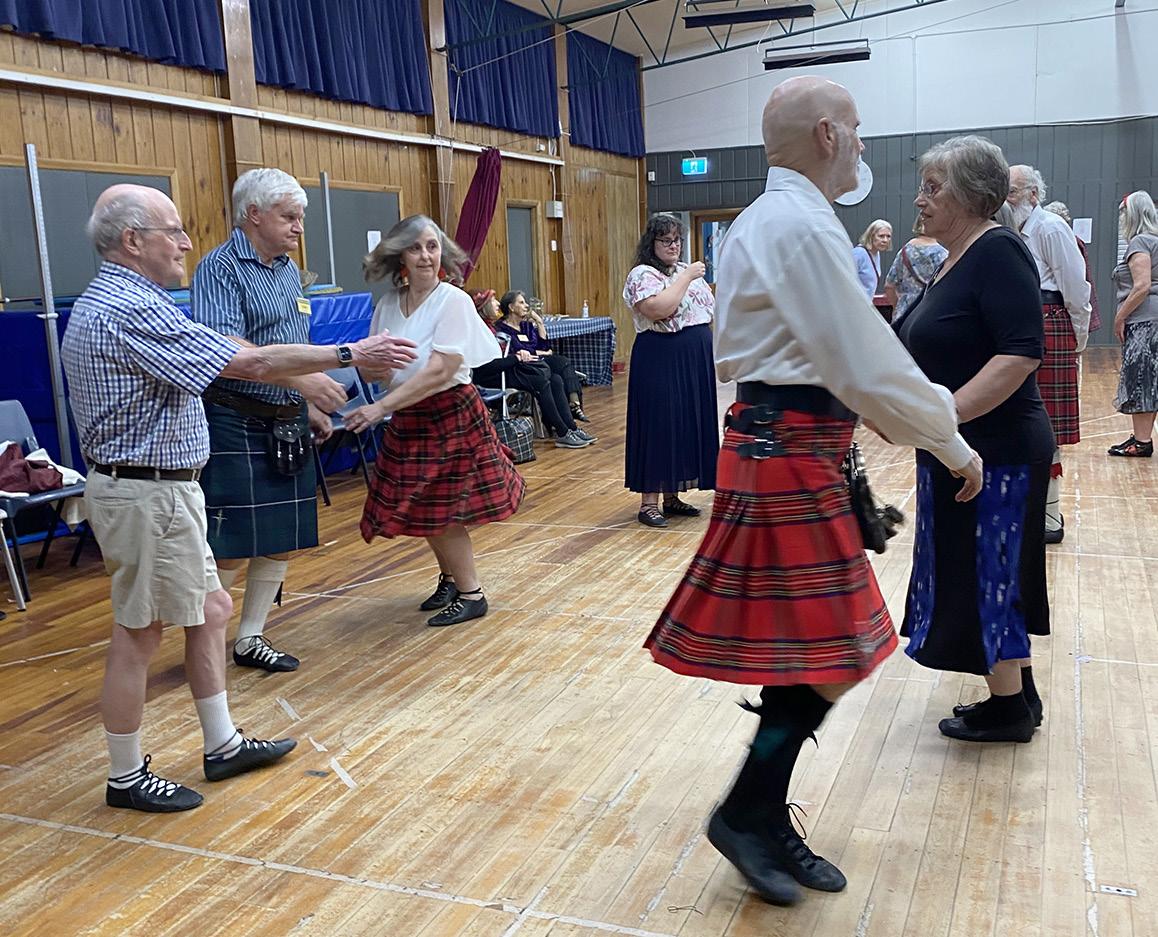
Given an estimated quarter of all Kiwis have some Scots heritage it’s not surprising toes start tapping when the music gets going in Muritai School’s hall. Ours certainly did last year when we photographed dancers from around the region at an endof-year evening of dancing.
To start 2025, Eastbourne’s Scottish Country Dance Group –which has been meeting for some 66 years – has organised a Ceilidh on 15 February. That’s a typical Scottish or Irish get together for all the family, of all ages, with traditional dancing and music and the sharing of food, says Denise Pitts, who’s been enjoying the group for the last two years since a friend asked her along.
“I loved it straight away and became secretary the same year,” she says. “We have a lot of fun together.”
Mrs Pitts hopes people will come along to Muritai School hall for the 15 February event, when groups from around the region will join
to swell the numbers. There’s live music; no experience is required, but you’d best book a ticket in case it sells out.
And she hopes this will result in increased numbers for the Eastbourne group’s regular sessions, on Wednesdays from 7.30 pm, starting 5 March.
Eastbourne Family Ceilidh, Saturday 15 February, Muritai School Hall, 7 pm – 10.30 pm, $15 adult/$5 child/$40 family. Tickets –iain@jumbletree.com /027 232 2727 or cash at the door if availability. Please bring finger food for a shared supper.
Penny Clarke Career Consultant
Highly regarded, experienced and qualified Independent Careers Consultant now based in Eastbourne.
Clients include -
• Adults needing to find new employment opportunities or needing to reinvent themselves.
• School leavers or those completing a tertiary study course needing to make realistic and planned steps towards achieving their ‘perfect fit’ career and getting a good job.
• Students taking a GAP year in 2025 (how to do this effectively and with future value).
• Senior high school students returning for their final years of secondary education who need help with direction, subject selection, options available, part-time work opportunities, CVs and cover letters.
• Year 13 students - valuable advice and planning, support with university applications, tertiary provider courses; assistance with financial Scholarship applications - creating strong Personal Statements used in these applications.
Consultations can be in person, via Zoom or over the phone.
A suitable Plan A, B and C is formulated, with the necessary steps required, in a professional, comprehensive and confidential consultation - a Consultation Review is provided (via email) for clients to refer to or share.
References are available, from large NZ secondary school Principals, Year 13 Deans, Careers HODs, University Student Advisers as well as past students and clients.
OBITUARY
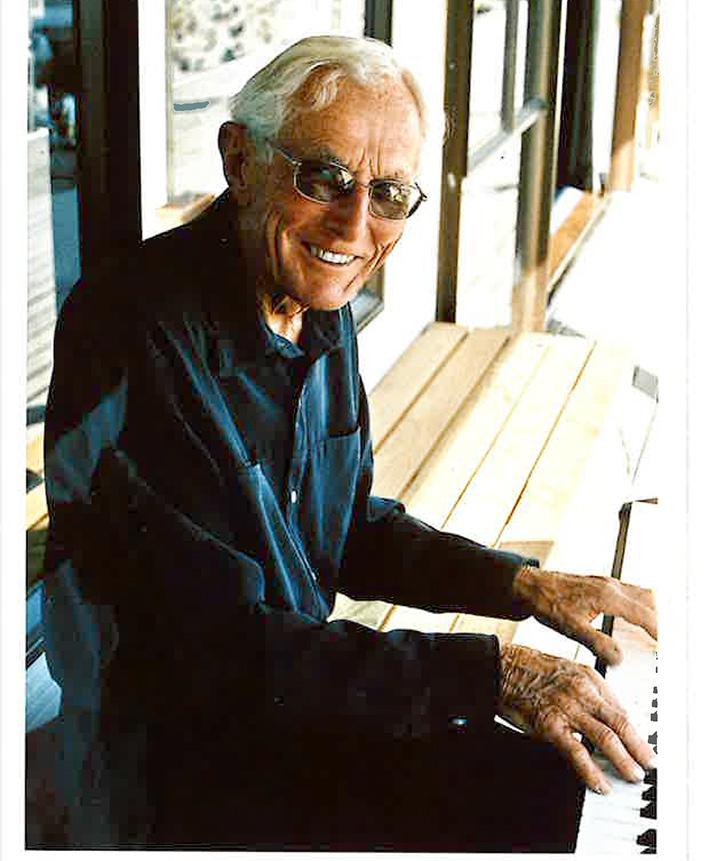
William George Wollerman, 15 September 1924 – 2 January 2025
Much loved Eastbourne jazz legend and runner, Bill Wollerman, whose 100th birthday celebrations we marked in our October issue, died the day after New Year’s Day.
Musician Jeremy Winter, the Wollermans’ neighbour in Pukatea St before they moved to Shona McFarlane village in 2017, sent us these anecdotes that, as he puts it, “tell us heaps” about Bill’s joy in living a long life.
“For Bill’s 93rd birthday, fellow local piano-player Bob Keeton – with some help from me – arranged a celebration at the Days Bay Pavilion. Bob organised a top Wellington bass player and a top drummer to perform with Bill ... and he was brilliant, of course. Bill used my digital piano for this gig –having played it before at our house when we were Pukatea Street neighbours and he would sometimes come over for a jam. On the morning after the Pav gig, Bill phoned me to thank me for helping to organise the celebration. He said how much he enjoyed playing my keyboard.
"I was a youthful 61 years old at the time and Bill had just clocked over 93, nevertheless, Bill concluded his phone call with a request: ‘Jeremy, would you leave your piano to me in your will, please?’.
“To contribute to Eastbourne’s commemorations of 100 years since World War One, the then RSA president (Colin Rushton, also in his 90s) asked me to do a singalong event, for members and friends, of WW1 era songs. I asked Bill W to join me as he was the master of hosting Eastbourne community singalongs and could play every song you could think of.
"Halfway through one tune, my piano stool collapsed (I still have pangs of guilt) and Bill fell quite badly. There was a gash on his head and we called Wellington Free Ambulance to check him over.
"While we were waiting for the medics to arrive, Bill ‘got back on the horse’ and continued to play the piano. The medics looked
for signs of concussion and quickly concluded that Bill was surely fine if he could continue to play the piano that brilliantly – confirmed, thank goodness, later that afternoon by a subsequent examination at ED.
“Other tales involve Bill’s tireless campaign to update the lyrics of our national anthem because they were so irrelevant in our modern multicultural society. Unfortunately, hard on the heels of John Key’s failed attempt to change the flag, the timing was against him.
“Regarding his jogging, which I believe continued when he and Margaret moved to Shona McFarlane Retirement Village, I did hear he felt it was insensitive to run past the windows of residents who were far less mobile, so he would often jog in the garage!”
“Covid annoyingly interrupted us continuing to make music together and I regret not pursuing it since.
“Bill is a legend, and we are so much richer for being touched by his genius and generosity.”
To read our tribute to Bill in the October Eastbourne Herald, visit https://issuu.com/ louiseparry8708/docs/replacement_for_ online_16_page_oct_2024
Garden Stuff with Sandy Lang PLANTS & ANIMALS
January/February: Mid/late summer. Coolest since 2014 = maritime climate + climate change. Plants and animals are very different. But are they...? Genes and levels: We share ~40% of our genes with plants, so it’s the ~60% we don’t share that makes us different. We are least different at the biochemical level. Our DNA and cell metabolisms are similar. Even our cell organelles are similar. But differences increase as we look from the level of the cell, to the tissue, to the organ, to the whole organism.
Evolution: First came plants (autotrophs – energy from light), then came the animals that eat plants (heterotrophs – energy from other organisms). Plants are at the bottom of every food chain. Plants don’t much need to move about, but they do need to grow tall to compete for light. Animals don’t much need to be big, but they do need to move about to find food. Different requirements but similar mechanisms.
Plant stiffness: For plants to evolve from unicells, to multicellular organisms, eventually to trees, requires they develop stiff support structures. An engineer will tell you stiffness requires some elements to be under compression and others under tension.
So, plants developed tissues that can sustain tension (fibres - think ropes) and other tissues that can sustain compression (turgid cells – think bouncy castles inflated with water). So, the stems of young plants gain stiffness from tensioned fibres, embedded in a matrix of compressed cells. Lower cell pressure and they will wilt (sag). Combine a lot of fibres together and the tissue (wood) can also sustain compressiontree trunks don’t wilt.
Animal mobility: Animals gain structure and mobility in a similar fashion. Here the tension tissues are muscles, and the compression tissues are rigid skeletons (think bone [us], cartilage [sharks] and chitin exoskeletons [flies]). Balanced tension between opposing muscles gives stiffness - imbalanced tension causes bending - controlled changes in imbalance cause motion.
Plant mobility: While plants can’t locomote, they are mobile in that they bend their limbs about. They orientate flowers and leaves to the sun, they bend stems seeking support, they wrap tendrils tightly around things they find. Until recently we were unaware of these motions because we couldn’t see them (too slow). But time-lapse photography (now on your phone camera) reveals these motions by speeding them up. They look much like animal motions. They are caused by controlled pressure changes in the cell matrix.
slang@xtra.co.nz www.mulchpile.org
Mondays
• Retired Persons’ Assn meet 4th Mon, 10am St Ronan's Church hall for morning tea followed by a speaker - $2 entry.Transport can be arranged for these meetings on request, ph 562 7365 or 562 8387.
• “Baby Bounce & Rhyme” at the library 10.00am.
• Toy Library - Two Monday Sessions at 1.302.30pm and 7.30-8.30pm. EastbourneToyLibrary on Facebook. Kathy 0273551950
•DB Playcentre Monday, Tuesday, and Wednesday mornings, from 9:30am to 12 noon. Drop in anytime to visit a session or email daysbay@playcentre.org.nz to arrange a visit.
• Pt Howard Playcentre. Mon 9.15 -11.45am. pcpointhoward@gmail.com
• The Historical Society’s Eastbourne History Room above the library is open 2-4 pm every Monday.
• Eastbourne Volunteer Fire Brigade training every Monday 7-9pm. Ph 562 7001 for more info.
• Keas - 5:15pm - 6:15pm. Ed 021 738 699
Tuesdays
• Mindful Mummas group for Mums and preschool children. Childminder onsite. 1011.30. Text Emily 027 552 6119 to join or go to bemoreyou.co.nz for more info.
•DB Playcentre Monday, Tuesday, and Wednesday mornings, from 9:30am to 12 noon. Drop in anytime to visit a session or email daysbay@playcentre.org.nz to arrange a visit.
• Muritai Tennis Club 9.30–noon. Merryn 562 0236.
• Eastbourne Homebirth Group 1st Tuesday of the month. Phone Kate 562-7096.
• East Harbour Women’s Club Morning Tea & Chat Group 10am. Contact Glendyr 0210303480.
• Indoor Bowls Club 1.30pm, at the croquet club, Oroua Street. Rosemary 562 7365
• Menzshed 9 till 12 , Williams Park, Barrie barrielittlefair@gmail.com 0204 1234511. Women welcome.
• 9.30am Nia Dance Fitness Class (low impact - teens to 70+) Music Movement MagicMuritai Yacht Club - call Amanda 021 316692 www.niainwellington.com
Wednesdays
• Cubs: 5.30pm - 7.00pm, Ed 021 738 699.
• Venturers - 7:15pm - 9pm - Ed 021 738 699.
• Library preschool story time 10.00 am.
• Pt Howard Playcentre Wed 9.15 -11.45am.
WHAT'S ON
pcpointhoward@gmail.com
• Scottish Country Dance. Merryn 562 0236.
• Bridge Club 7-10pm. Shona 562 7073.
•DB Playcentre Monday, Tuesday, and Wednesday mornings, from 9:30am to 12 noon. Drop in anytime to visit a session or email daysbay@playcentre.org.nz to arrange a visit.
• “Steady as You Go” Age Concern sponsored Falls Prevention and Exercise Programme. Held 12 noon each Wednesday at Eastbourne Community Hall. Classes are held for 1 hour and costs only $2. Improve your strength and balance to reduce falls and injuries. Falls are preventable. Please join us!
• EHock - Fun Stick and Ball game Girls and Boys 7- 13.Eastbourne Community Hall. Wednesdays 6.00 p.m. - 7.30 p.m. Derek Wilshere 0274303596.
Thursdays
• Menzshed 9 till 12 , Williams Park, Barrie barrielittlefair@gmail.com 0204 1234511. Women welcome.
• St Ronan’s Mainly Music, 9.15am-11.15am, during school terms. Contact Cathy 027 213 9342.
• SPACE at Days Bay Playcentre. Michelle 971 8598.
•Lions meet 2nd Thursday of the month at the Eastbourne Sports and Services Club, Tuatoru St 6.30 pm. New members and visitors are welcome. Graham 562 8819.
• Scouts 6pm-8pm - Ed 021 738 699
• Eastbourne Bowling Club casual summer bowls 5.30pm for an hour or so. Make up a mixed team of three. Contact Keith Turner ph 04 934 4142.
• Sing Eastbourne: 8pm, St Alban's Hall.
Fridays
• Pop in and Play playgroup at St Ronan's Church Hall, 9am-11.30am during school terms. All preschoolers (0-4 years) welcome. Cath 027 213 9342.
• Pt Howard Playcentre Fri 9.15 -11.45am pcpointhoward@gmail.com
• AA Plunket Rooms 7.30pm. Mark 566 6444/ Pauline 562 7833
Saturdays
• Justice of the Peace at the Eastbourne Community Library, first Saturday of each month 12pm-1pm.
• Croquet from 10am Muritai Croquet Club. Lyn 562 8722 or Val 562 8181.
• Lions' Bin - cost effective rubbish and e-waste disposal. Last Saturday of the month (except December) by Bus Barns. Gavin 027 488 5602.
Sundays
• AA Plunket Rooms 10am. Karen 021 440 705.
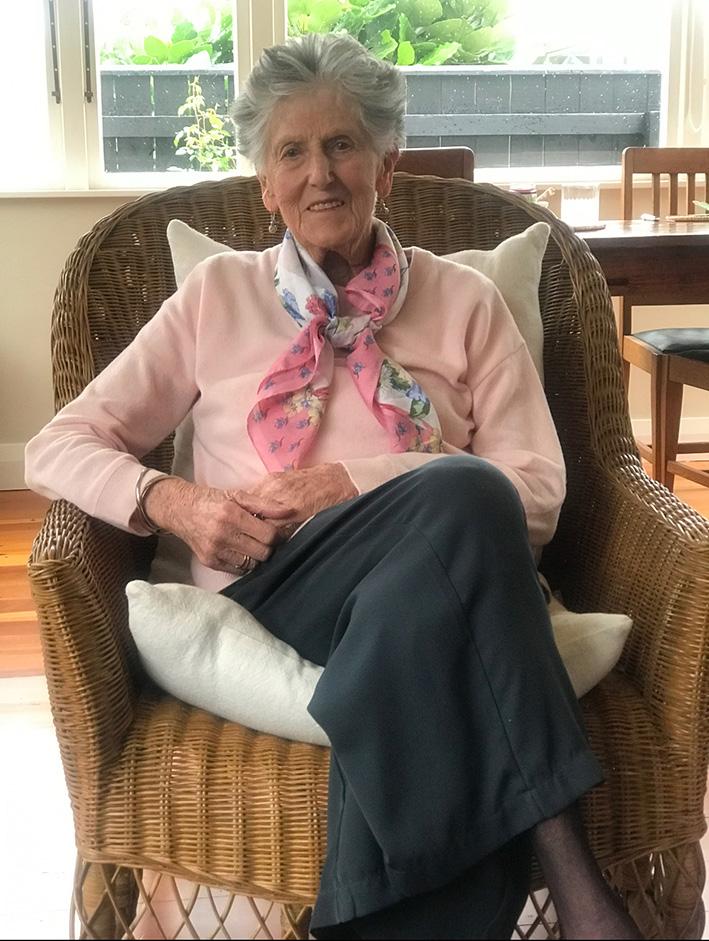
Jocelyn Marie Kerslake 13 October 1931 – 13 September 2024
Former Eastbourne teacher and writer Jocelyn Kerslake died late last year. Following the death of her husband John, she eventually moved to the Woburn Masonic Village in Lower Hutt.
Jocelyn was born in Hamilton in 1931, to Stan and Vera Rees and a few years later her only sister, Rosalind, was born. Jocelyn had a lifelong loyalty to the Waikato region, as many of her mother’s family – the Clarkins – lived in the area. As children, Jocelyn and her sister had many happy visits to family living on local farms, especially in and around Paeroa.
Only a week or two before she died she was reminiscing about how they used to take a lemon, a little sugar and an empty jug to the Paeroa soda springs, long before L&P became a commercial drink.
Jocelyn’s parents moved around New Zealand for her father’s work in the government, living first in Wellington, then Christchurch, where the girls went to secondary school. They recalled living there during the terrible Ballantyne’s fire.
Jocelyn eventually returned to Wellington, where she graduated from Teachers' College and went on to teach at a number of local schools, including Chilton St James School in Lower Hutt. She and John were married in Lower Hutt in January 1959 and just before Christmas that year the first of their four children was born. Stan and Vera, who lived one street over, were a great support and there were lots of happy get-togethers with nearby
Kidztalk
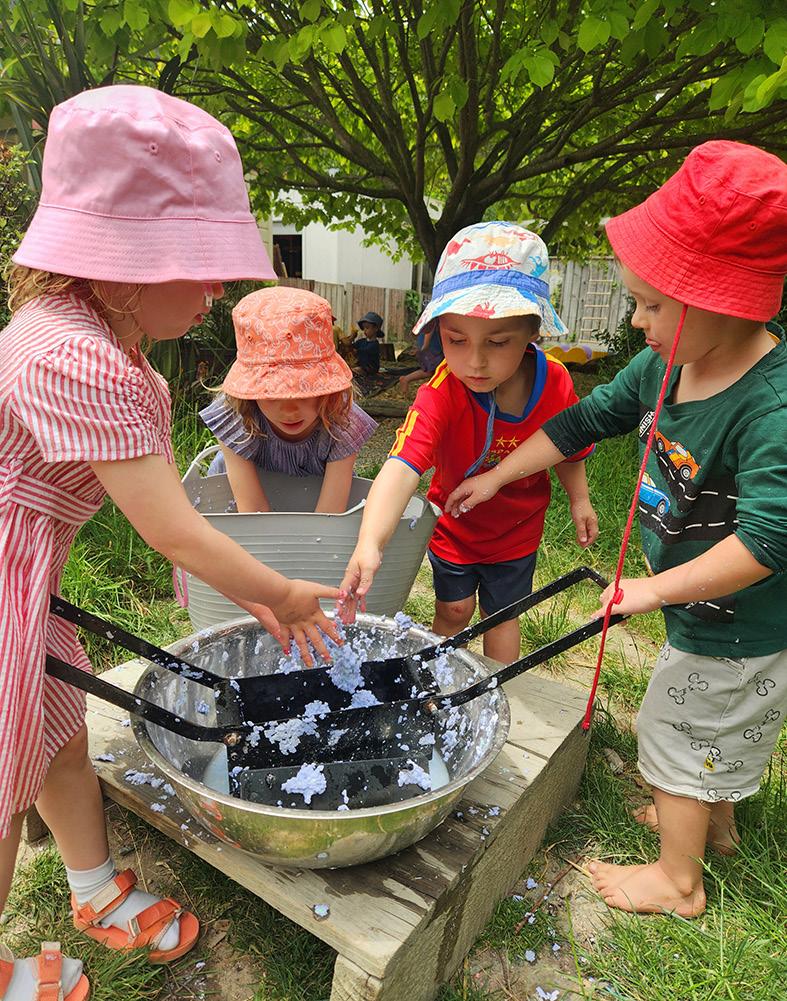
The tamariki at East Harbour Kindergarten have been engaged in hands-on activities like planting, making briquettes from recycled paper and creating using open-ended resources which encourage teamwork, creativity, and environmental awareness. These collaborative projects allow children to explore sustainability while developing problem-solving skills and strengthening their sense of community.
We would like to give a big thank you to those who helped create, sell and purchase this year's EHK Historical Calendar. The funds raised go towards the continued upkeep of our environment as well as resources to support the high-quality learning opportunities we provide.
For enrolment information or to arrange a visit please contact Gemma and the team on: 04)5628929 or email eastharbour@ wmkindergartens.org.nz
PROUDLY SPONSORED BY
OBITUARY
and their parents.
After the intensive child-raising years were largely over, Jocelyn resumed teaching at Chilton St James, eventually taking on a role as an English teacher. She absolutely adored her work, the girls at the school, and especially her colleagues. When she retired she worked as a relief teacher for many years.
Jocelyn was commissioned to write the Chilton history, and also later wrote the history of St Oran’s College, and the history of the San Antonio parish in Eastbourne (titled Una Chiesa al Mare). She spent many hours drafting the content and was immensely proud when each thorough history was published.
She also wrote many articles for magazines and newspapers as well having work published in the School Journals. She was a longtime member of the original New Zealand Women’s Writers Association, as well as local poetry and reading groups.
In their retirement, Jocelyn and John moved to Tauranga – although they missed their friends and family down south. They soon returned to the Hutt Valley then onto Eastbourne where they lived for 30 years. They developed a spectacular garden (at one point Garden of the Year in Eastbourne) and spent many hours looking after it. They travelled widely overseas, enjoying cruises and tours, and connecting with friends new and old around the world – a very sociable couple who took a deep interest in everyone they met, and were excellent at building and nurturing friendships throughout their life. They were active members of various clubs, particularly those associated with Probus.
Jocelyn kept detailed diaries of her travels and these continued to bring her a great deal of pleasure. With her trademark enthusiasm, she often recalled the wonderful experiences that she and John enjoyed during their trips. She was immensely proud of all her children – Anne, David, Nicola and Michael – and her four grandchildren, following their studies and work with great interest. Three of Jocelyn’s family members are still Eastbourne residents.
“Jocelyn had a fantastic memory and many funny stories. She was still surprising us with new stories until a week or so before she died,” her son David Kerslake says.
NEWS FROM EAST HARBOUR KINDERGARTEN
News from our local early childhood centres
cousins
Join the midweekers for serious fun
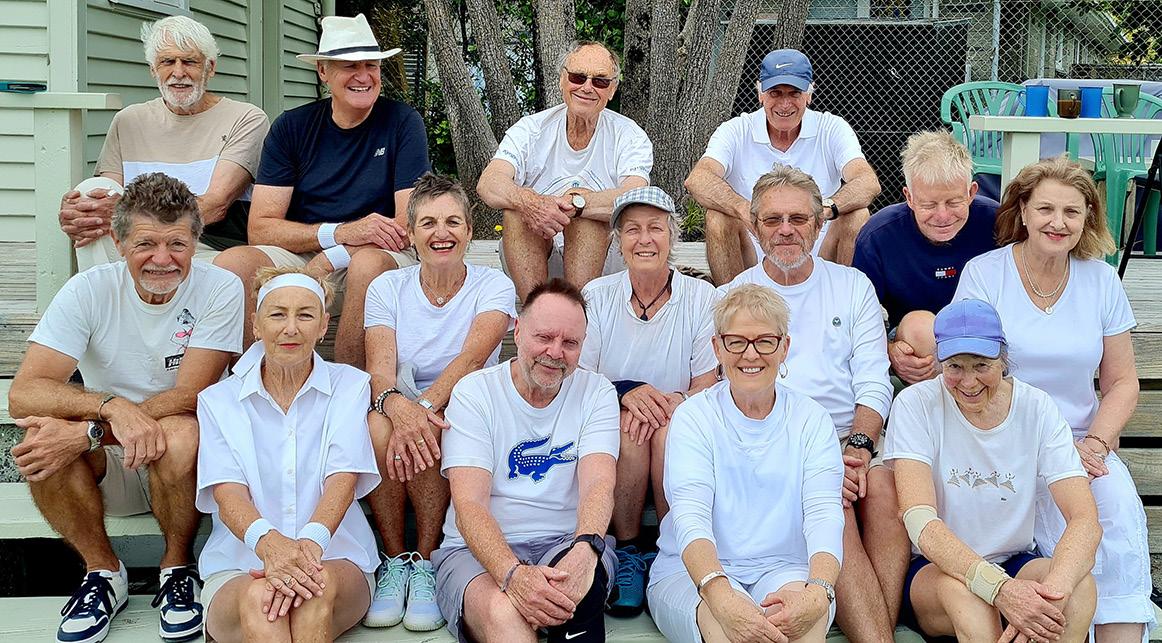
Muritai Tennis Club is open for business on Tuesday mornings, and new players are being welcomed with open arms.
Presently there are enough players for three courts to be in use on Tuesday mornings, with players predominately semiretired or retired. Member Pippa de Court says anyone who is a member of Muritai Tennis club or wants to become a member can play tennis on Tuesdays between 9.30 and midday, which is aimed at having good games while having fun.
Although not mandatory, when you’re rostered on to provide morning tea, a batch of scones with lashings of whipped cream and strawberry jam wouldn’t go amiss,” she says.
“Social interaction plays a big part of
Tuesday tennis. We are a diverse group and shrieks of laughter can be heard wafting over the courts. Our games are usually pretty competitive however; we are mostly intermediate to semi advanced players, having
played tennis from a younger age.”
Anyone who is interested is encouraged to go down to the tennis courts on Tuesday, have a game and discuss options.
TRADES AND SERVICES
Certifying Plumber and Gasfitter Contact Steve 021607658
plumbgasmaint@gmail.com
• Kitchen & bathroom renovations
• Gas hot water systems
• Hot water cylinders
• General maintenance
J. M. Coulter Flooring Ltd
Commercial & Domestic We Supply & Install all • Carpets • Vinyls • Natural Wood Floors • Floor Sanding Contractors • Cork Tiles • Wall Cladding For a Consultation Phone
Rhona Fraser is not one to let her audience down, and being temporarily relocated to the other side of the world has not stopped the Days Bay Opera producer from lining up another summer treat for Wellington opera lovers. Bellini's belcanto gem Il Pirata is the next production, with last year's Shepherd King, Rebecca Ryan, singing the prima donna role of Imogene. The title role of pirate Gualtiero stars young Invercargill tenor Zachary McCulloch, now based in Europe, while Ernesto – husband of Imogene and enemy of Gualtiero – is sung by Kieran Rayner, a now-established baritone in the English music scene, who has sung in three previous Days Bay productions. Il Pirata, which features the love triangle which is at the heart of many operatic plots, premiered at La Scala 1827 and is famous for its long melancholic melodies and for the first belcanto "white satin" mad scene. Directed by Rhona Fraser, it will be sung in Italian, with a Days Bay Opera Orchestra of 15 players conducted by Mark Carter. Il Pirata: 13, 15, 16 February, 5.30pm. https:// daysbayopera.org.nz/booking-for-il-pirata/
BRIEFS
In last month’s Pg 6 story “It’s that time of year again…”, The Eastbourne Herald mistakenly attributed information in the last two paragraphs about the work taking place on mitigating the risk of forest fires to Quentin Duthie. This information came from Hutt City Council.
Clean out your clutter and make some cash –or come along and grab a bargain. The success of last year’s car boot sale has encouraged Muritai School Home & School committee to run a repeat fundraiser, in late February. Individuals and groups pay a $30 fee to park in the playground and raise their car boot to offer…almost anything, from vintage clothes, bric-a-brac, books and plants to whatever they’ve found in the back bedroom. Home & School’s Genevieve Packer says it’s a great way to raise some funds for the school, as well as bringing the school and community together in a fun, sustainable and festive event.
February 23, 10 am to 1 pm, rain day 2 March. To book a spot email muritaihomeandschool@ gmail.com
TRADES AND SERVICES
Wirely Electrical
Summer in paradise
No matter the season, climate or cycle, we’ll continue elevating our offerings, so we consistently deliver exceptional results for you. Here’s to an Altogether Better summer in paradise!
0800 BAYLEYS | bayleys.co.nz
LETTING OUR CLIENTS DO THE TALKING
“Duncan and Jasper were right there, from the first big smiles and warm greetings all the way through the journey for me as a first home buyer. Their approach to both the vendor and I (as the buyer), was so great! They ensured we were fully informed and supported while being mindful of who we are and our respective circumstances. Their professionalism came hand in hand with their kindess, calmness and responsiveness.”
- Mel | Buyer | Petone
“Thanks again for the wonderful result you have achieved. It’s very impressive indeed and we are delighted with the outcome and indeed the buyer that you have found. You have achieved much better results in a much tougher environment than we managed 9 months ago and that is a reflection of your professionalism in how you operate and the approach in which you deal with people. Thank you!