Fluoride failure likely to impact most vulnerable
by Louise Parry
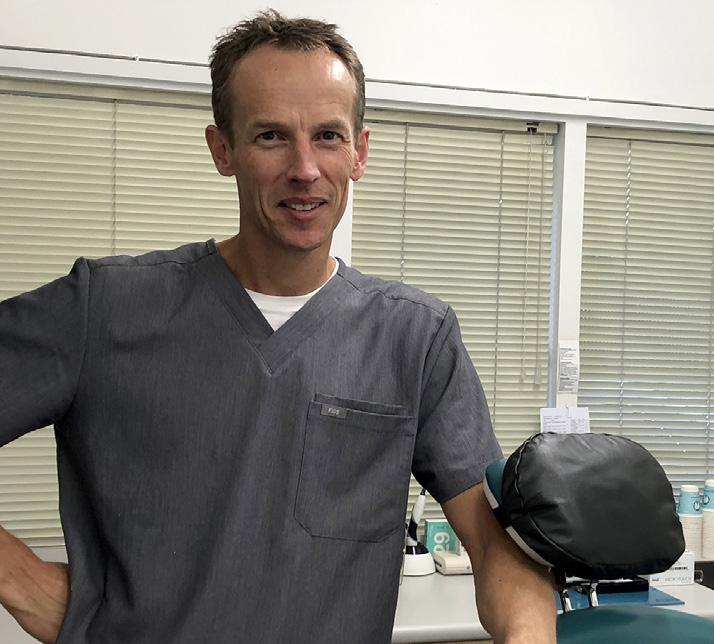
Eastbourne dentist David Excell is appalled at the news that much of Wellington region’s water has been without healthy levels of flouride for months, if not years.
It’s unclear whether Eastbourne’s water supply is among those affected by Wellington Water's failure to fluoridate consistently at several of its water treatment plants for at least ten months. On its website, the company said Wainuiomata Treatment Plant is operating, but needs work.
In a statement, Wellington Water said "The fluoride facilities at Waterloo and Wainuiomata remain operating. We are working to optimise these facilities, including ongoing maintenance work and a long-term project to design, procure and build new fluoridation facilities.”
Eastbourne’s water supply is sourced mainly from the Wainuiomata plant, but is supplemented by the Gear Treatment Plant ??? in Petone Eastbourne or two days a month. The latter is one of several treatment plants that the company has said were either not dosed at all, or adequately with flouride over at least the past ten months.
“The fluoride faculties at the Gear Island Water Treatment Plant were decommissioned in November 2021 due to structural concerns with the building. The fluoride dosing equipment at Gear Island is also aging and no longer meets acceptable performance standards," the statement continued.
Flouride in water is a contentious issues for some people, who do not believe it should be added to their drinking water supplies, but for Dr Excell, a long-standing board member of the New Zealand Dental Association, there’s
no contention: it’s a public health issue.
“Everyone’s entitled to their opinion, but it’s a collective health responsibility for all. Lower socio-economic areas may not be able to afford decent toothpaste or toothbrushes, or to get access to dental therapy, “Dr Excell says. ”This is not about your own personal decision to fluoridate or not, it’s a wider health issue.”
Flouride is naturally occurring in the environment, with some countries such as Jordan in the Middle East, having to treat water to reduce its concentration and bring it to a therapeutic level, which is between 0.8 and 1 parts per million litres. New Zealand, on the other hand, has water with lower flouride levels, so needs to add the element.
“New Zealand water has been fluoridated since 1954. We know that by having flouride in the water at therapeutic levels, tooth decay decreases,” Dr Excell says.
“It helps to prevent the pain and suffering caused from tooth decay, especially among more marginalised groups of our communities
because it reduces decay rates by between thirty and forty percent.”
The consequences of no fluoridation will be seen in two to three years, Dr Excell believes. Oral health does not just affect the teeth, but has a huge impact on overall health.
“It is just frankly unbelievable and shocking that community water fluoridation could have been turned off without anyone knowing. This will potentially harm hundreds of thousands of people living in the region, especially those on low incomes, and children,” he says.
“It may be that the fluoridation of Eastbourne water has not been affected significantly, but the point is that we just don’t know. There needs to be an investigation to correct this huge mistake and going forward the community needs to be assured that there is ongoing monitoring and reporting so the public can be assured the correct level of flouride supplementation is being delivered to our drinking water.”
Dr Excell says the NZDA is calling for all schools in the region to adopt a water only policy – no soft drinks in school – if they haven’t already done so.
“While Wellington Water sorts out the issue I advise people to ensure they are brushing their teeth twice a day with fluoridated toothpaste and to cut down on sugar and sugary drinks in particular. And spit the toothpaste out, don’t rinse,” he says.
USA Centre for Disease Control and Prevention in 2015 listed community water fluoridation as one of the top ten most important health measures of the 20th century Some toothpastes do not contain flouride, and NZDA has lobbied supermarkets to stop selling these.

MARCH POUTU-TE-RANGI 2022
David Excell.
Depart Days Bay
Cooking classes

Private events
Friday night dinner
Enquiries: 021 028 85347

What's Happening Hair!?
TIMETABLE

& PUBLIC

(S) = Sailing calls at Somes Island, subject to passengers.
FERRY FARES One way: adult $12, child $6. Family Days Bay $66 (Return). 10 trip: adult $91, student $68, child $46. Monthly pass: adult $273, child $138. Matiu Somes Island: adult $25, child $13, family $68 (Return).
Sailings may be cancelled at short notice due to weather. To check today’s sailings, call our daily status line on (04) 494 3339.
March 'round hair!
As we March into Autumn we begin to think about cooler hair colours for the cooler months ahead We also want to make sure that our hair is easy to maintain and doesn't require too many colour appointments



With my latest products and newly learned techniques, I can help you keep your colour looking great and the amount of time you spent on your hair low! The trending foiling style which I am using is all about placement, it allows me to make the colour pop with not as many foils in your hair This is a win win - you get a bright and youthful look, with less damage to your roots and ends
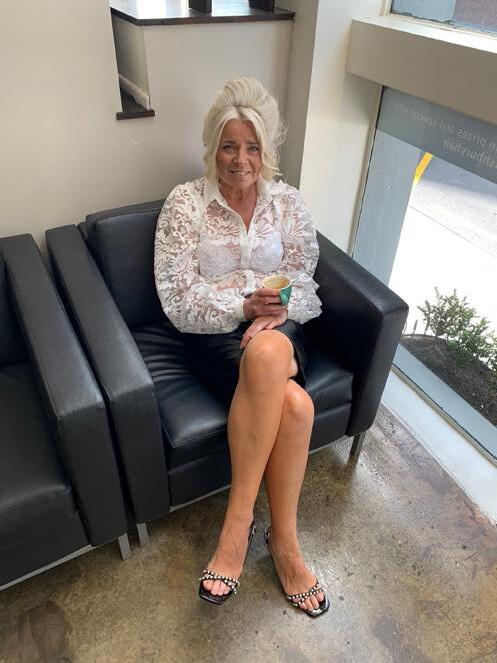
More 2022 trends that I am loving at the moment include babylights, these have been around for a while but I am noticing new ways of including them into your look, including mid-length texturising and medium intensity face framing giving your hair dimension and shape
A huge contributor to beautiful hair is the product used I am an advocate for quality while looking after the environment and Lakme, the vegan colour from Italy, is just this Lakme gives you the benefits of a great colour, while leaving out the damage Lakme combined with my Moroccan Oil range is the best way to keep your colour looking great. A trade secret of mine is that the care you put into your hair between colours, is how you make the colour last, and during winter it is so easy! With a good quality shampoo, conditioner and hair mask, you will see your hair and colour last weeks longer than before Using brands which works together is very important, they compliment each other with their ingredients and give your hair exactly what it needs Come and see me to find out exactly which products in my range are best for you
The Eastbourne Herald, 25 March 2022 2
6.15am 6.45am 7.15am 7.45am 8.15am 8.45am 10.00am (S) 12 noon (S) 2.05pm (S) 3.50pm 4.30pm 5.00pm 5.30pm 6.00pm 6.30pm 7.00pm Depart Queen’s Wharf WEEKDAYS: 6.45am 7.15am 7.45am 8.15am 8.45am 9.15am 10.45am (S) 12.45pm (S) 3.15pm (S) 4.15pm 4.55pm 5.25pm 5.55pm 6.25pm 6.55pm 7.25pm
10am (S) 12 noon (S) 2.10pm (S) 3.45pm (S) 5.05pm
238/10 MURITAI ROAD, EASTBOURNE, LOWERHUTT, WELLINGTON https://www facebook com/Anne-Mackris-Berdebes-Hairdressing 0277422559 AMB
SAT, SUN
HOLIDAYS: 10.40am (S) 12.45pm (S) 3.00pm (S) 4.25pm (S) 5.30pm
Anne Mackris-Berdebes
Tartineseastbourne@gmail.com www.tartinesfrenchcafe.com Open Wednesday-Sunday
...a stronger integrated legal team! Call 04 939 2366 www.jaglegal.co.nz JAG033
7am-4pm
Next ECB meeting:
7.15pm Tuesday 12 April, 2022, East Harbour Women’s Club, 145 Muritai Rd.
Annual walkabout
The ECB’s annual ‘walkaround’ scheduled for 5 March was cancelled. However, the concerns submitted by residents and resident associations have been passed on to Council to investigate. The ECB will respond to residents when we have received feedback from Council (though this may take time with many Council officers away or covering for those who are).
Tupua Horo Nuku (Eastern Bays Shared Path)
The urban design protocols for the first part of the shared path have been completed for Sunshine Bay and Ma-Koromiko / Okiwi-Iti (Windy Point). If you live in these two areas and are interested in commenting on the designs, but haven’t seen them, contact your bay representative or the ECB (see below). Any comments must be in writing and submitted by Sunday 3 April. The designs are the result of last year’s consultation with residents.
Puriri Street development
The ECB is monitoring the plans for a multiapartment development in Puriri Street, especially the proposed encroachment and fencing on the berm, which is public land. The ECB believes the development should be notifiable so residents have a formal opportunity to comment.
Have your say on government’s housing intensification changes in Lower Hutt
Public consultation begins in late March on parts of Lower Hutt’s District Plan affected by the new legislation. Check the library or Hutt City Council website for more information.
Eastbourne Community Board (ECB)


Residents are welcome to contact board members. Members often sort minor issues directly with council staff or may ask for a report from officers to go on the next meeting agenda. You can also contact us on the Eastbourne Community Board Facebook page.
Virginia Horrocks (Chair) virginia.horrocks@huttcity.govt.nz
Ph 021 230 8210
Frank Vickers (Deputy Chair) frank.vickers@huttcity.govt.nz
Ph 027 406 1419
Bruce Spedding bruce.spedding@huttcity.govt.nz
Ph 021 029 74741
Murray Gibbons
murray.gibbons@huttcity.govt.nz
Ph 04 562 8567
Tui Lewis (Ward Councillor) tui.lewis@huttcity.govt.nz
Ph 021 271 6249
Belinda Moss
belinda.moss@huttcity.govt.nz
Ph 029 494 1615
Plan prompts calls for notification
by Louise Parry
A proposed eight-house development at 15 Puriri Street has some neighbours up in arms, while Hutt City Council considers who the affected parties to the plan are, and who should have their say on its possible consent.
Neighbours opposing a proposed development at 15 Puriri Street Eastbourne say they are unhappy that it has not been notified, however planners are currently considering who, if anyone, should be notified about it.

One neighbour who did not wish to be named said he was not opposed to development, but was concerned at the use of road reserve as allowance for the total land available for the houses to be built on .
The development includes four blocks of two, two-storeyed houses. With the section below the size needed to meet the development requirements, the berm, which is classified as road reserve, would be included in the land allowed to be built on.
The plans were submitted on December 23, 2021 for resource consent, and include the berm as part of the “allocated outdoor living space”.
The neighbour says he doesn't oppose building on the section, but wants to see it meet the requirements within district plan rules.
In written answers to questions submitted by The Eastbourne Herald, Helen Oram, HCC Director Environment and Sustainability. said: "An assessment is currently being undertaken
on this application, and a notification decision to determine who is an affected party has not yet been made. So currently, we do not know if there will be affected parties, or if the application will be notified."
Neighbours have told The Eastbourne Herald they have tried to speak to planners and have left messages but have not been contacted. Some have written with their concerns.
"We have noted their concerns, and appreciate them bringing them to our attention," Ms Oram says.
Continues Page 7
The Eastbourne Herald, 25 March 2022 3
Local children protest the removal of a 100-year-old Oak tree on the property. See story on Page 5.
A meaningful change of career for funeral celebrant
by Ann Packer
Her business card reads “Mary Death, Funeral celebrant”. But surely, that’s not her real name…

Indeed it is – Mary Hunt married Mr Death some 50 years ago and when they divorced, she kept the surname, though it’s only in the last three years she’s become a celebrant. Not for weddings, though – “I would prefer not to do brides” the Eastbourne woman says.
In her forties, her boys grown up, she was able to resume the nursing training she’d not completed in the 1960s. A placement with Mary Potter Hospice was to set her life’s direction – and for most of her career in palliative care she was known as Nurse Death.
Over 25 years she served from Wellington to Blenheim to Whangārei, retiring after six years as director of nursing at Lower Hutt’s Te Omanga Hospice.

Having just celebrated her 125th funeral, Mary says her dream job builds on all those years of hospice nursing, calling for compassion, listening and storytelling skills. Working with families to craft and celebrate the last rituals for their loved ones, from children to the very elderly and all stages in between, she has to quickly establish a
relationship of trust in order to act as an MC for respectful, dignified services that don’t involve a religious person

Her first point of contact with families is often via the funeral director – and she did think about taking that up at one stage, but it’s a very physical job and not one for a retiree. Now she’s becoming known on the Eastbourne Facebook page for her poignant poetry and articles about grief, people are beginning to approach Mary directly.
She has conducted a funeral for more than 300 people at Old St Paul’s, one for more than 700 at the Events Centre in Lower Hutt and an intimate gathering of 30 where the family requested the entire service take just 30 minutes. She enjoys thinking outside the square, holding services at the beach as well as the graveside and including dogs and toasts –not just with champagne but with cans of beer, popped at the appropriate moment.
Mary has known personal loss – two of her sons died, one in the US, and one in Australia, as a result of childhood car accidents, one immediately and the other many years later –and fairly soon after returning to New Zealand her parents and brother died within six months, her brother dying the day after her Mum.
All this, she says, allows her to relate with utter honesty to families – “there are times
when I really do know how they feel,” she says.
Mary prides herself on customising meaningful services, right down to the corsage if necessary – like cauliflower one for a man who’d always objected to paying a lot for flowers and used to threaten to buy his wife a cauliflower as a more practical option.
“My role as a celebrant brings me such joy.”
Does your street flood when it rains?
flood-risk.

The extreme weather over the last few years is a reminder of the flooding risks that we live with in our island nation
To help understand these risks and plan for the future, we ’ re creating flood maps which show the impact of heavy rainfall on Eastbourne
This information is crucial for improving the city’s resilience and will be used for future planning to reduce flooding hazards

The Eastbourne Herald, 25 March 2022 4
your knowledge of flooding in your area so that we can work to make our communities safer and reduce
We need
Tell us about flooding in your area here: https://wellingtonwater.mysocialpinpoint.com /flood-risk-eastbourne
Mary Death.
'Save the Oak'
Generations of neighbourhood children have played in its branches or swung from the tyre that remained long after the sprawling Phillips house was demolished. Now, what locals call the “hundred-year-old oak” is the last remaining tree, save for a berm pohutukawa, on the once leafy property on the corner of Puriri and Hinau Streets.
When Armes Tree Services arrived unannounced on Monday 14 to cut down the oak, as well as several plane trees, resident Geoff Bartlett was incensed and said he would sit under the tree all day if necessary. (Contrary to rumours, he did not chain himself to it.)
“They had a letter that was all very vague,” he says. “In the end, they went away.”
The fact the tree sits half on the property and half on the berm adds to the confusion. The issue seems to have been passed between council officers for months – as far back as 26 October, before any consent application had been received, they were emailing each other for clarification.
Mayor Campbell Barry says:
“In a nutshell, there is nothing Council can do to require the developer to keep the tree. Council has never had responsibilities for the tree, as it is on private land (its encroachment onto public land doesn’t give Council any authority over it); the only protection it could have is through the District Plan’s Notable tree list. I’m advised that unfortunately it isn’t on this list.I have asked if there is a way for this tree to be incorporated into the development, and again, have been advised that nothing can be required on the developer.”
Mr Bartlett says the tree is part of the character of the street and the whole of Eastbourne. “Residents would like to see the number of proposed townhouses reduced, along with car parking issues, so they can still walk safely to the beach.”
Former community board member Rob Ashe, who lives nearby, says the tree means a lot to his family. “My four-year-old girl loves to swing in it every time we pass by on the way to the beach. And it feels like generations of kids have done exactly the same thing for I don’t know how long; it’s a pretty old tree.”
Paddy Dunford, who lived in the old house
Covid forces businesses to adapt
 by Ann Packer
The last few weeks have been challenging for all local hospitality outlets but Hive probably takes the cake for a perfect storm. For owner Brandon Bodden it was a combo of “Covid, [possible] nuclear war and a new baby” all on the same Tuesday morning, 8 March. Son Otis, his and Lizzy’s fourth child, arrived nine days late just as the Russians captured a nuclear installation in Ukraine. Hive was open again within two days.
The Eastbourne Deli, which served takeaway coffees to those put out by Hive’s sudden closure – talk about first world problems, people! – closed for a month the following day, with a blackboard sign saying “Gone Bush”. Owner James Hutton had already notified customers via Facebook he’d be closed till 24 March – he told us his key worker was recovering from surgery.
It turned out to be the best time to get out of town and the deli’s was just one of a range of options for local cafes and food outlets.
At the RSA, ESSC Eats closed for some days when co-owner Mark Nicholas became ill; they reopened a week later, serving in the bar area only. Fortunately, the weather was good and outside areas were also usable. On Facebook, they apologised for the inconvenience and thanked staff who continued to offer dine-in patrons a limited menu.
Pavilion owner Nicki Zong has managed to stay open by reducing her hours some days; she says most of her staff are “OK at the moment” and expects to be open from 8 am to 8 pm from this weekend, 25 March.
Cotti owner Rozellia posted on Facebook she’d be closed for a week isolating but hoped to reopen this week.
The Still Room, closed on Mondays, has a recorded message saying Tuesday to Fridays 4 till late and Weekends 12 till late.
Tartines, runner-Up for Best French Café & Bistro in the latest edition of New Zealand’s French Business Awards, is always closed Mondays and Tuesdays but so far they’ve managed to avoid other closures, in spite of some staff needing to isolate. “`We’ve got a good team,” says owner Camille Furminieux.
Darshan Bhalani of Chocolate Dayz coped with a rotating list of staff Covid cases by closing on Mondays and Tuesdays – his quietest days – for three weeks, but he expects to be open seven days again from Monday 28th. He does warn, though, that all prices, not just coffee, will be going up – he’s had warning emails from all his suppliers. Presumably that goes for the others as well.
for some years, says she was crying. “So many children, including my grandchildren, have climbed on that magnificent tree and swung on the tyre swing we put up. And hundreds of birds, tui and kereru and blackbirds, have

nested and swooped playfully in and out of it every day.”
Residents have asked the developer, Alistair Scott, to hold off removing the tree until the council have reviewed the development.
The Eastbourne Herald, 25 March 2022 5 Get on with some DIY www.mitre10.co.nz Contactless shopping with Click & Collect and Home Delivery. Everything you need online. www.mitre10.co.nz PET ONE UPPER HUTT & PORIRU A
Macy, Seb, Huds and Ots Bodden
It's a choice, not persecution
There is an old adage “it is better to remain quiet and appear stupid, than to open your mouth and remove all doubt”. Modern social media threads are a perfect example of this, with our local community page recently falling victim to a handful of individuals who should have heeded this advice.
Without an effective peer-review system, social accounts can sadly fall victim to lies and exceptional claims on the flimsiest of evidence. Out of context screenshots, links to random statuses, and personal anecdotes are held to be of the same evidential quality as reputable research organisations, primary resources, and museum descriptions.
Rather than honestly engaging in debate, some members of the community prefer the

Okiwi Volunteer Driving Service
Okiwi Volunteer Driving Service
Provides transport to appointments in the Hutt Valley, and Wellington for all Eastbourne’s older residents.
Provides transport to appointments in the Hutt Valley, and Wellington for all Eastbourne’s older residents.
path of abject self-victimisation, drawing strong parallels between themselves, and victims of rape or the Holocaust. Ignoring all historical fact, these screeching voices hastily rewrite history to conform to their beliefs, confirm their point, and encapsulate them in a cocoon of self-righteousness. Theories should fit facts; facts should not be made to fit theories.
Perhaps before individuals can comment on topics such as vaccinations, plague management, rape, or the Holocaust, they should first research these topics to some degree rather than coming across as an uncaring antisemite. Some historical perspective could have gone a long way to deflating the entitlement expressed by some members of our community. Members who do not care for the well-being of others, who do not understand the importance of cooperation, herd immunity, and are oblivious to the difference between persecution due to an integral part of yourself, and simply facing the consequences of one’s own choices.
Freedom of speech is not freedom from consequences.
Zac Klavs
Life saving help from community
On Tues evening 15 Feb I started to get ready for bed, and sat down to remove my shoes and socks. Somehow I must have had a rough fingernail which cut across my lower shin. I suddenly realized I was in a bad way when blood spurted rapidly ……. apparently a cut vein.
I immediately called my neighbours for help and also the WF Ambulance. My neighbours (Pauline, Kathryn and Lloyd) came quickly and found me on the floor. Kathryn applied pressure to my leg for about 50mins. The Hutt ambulances were engaged on other calls and couldn’t come immediately. Lloyd managed to contact Eastbourne’s Emergency Response team and five of them came and provided other help (I was a bit fuzzy by then) and between them all, got me into the ambulance , which took me to Hutt Hospital. There, the nursing staff and doctors were great. They seemed to think I had lost 750ml of blood. I needed a transfusion of 2 pouches of blood plus an iron pouch.
I was discharged 7pm next day and brought home by my neighbours. Other friends and neighbours have offered help as well. I am so very appreciative of all the assistance……….. “thank you” doesn’t say enough. However, these are trying times with the pandemic, and I would like to say my heartfelt thanks to the wonderful people of Eastbourne who came to my assistance.
I was a blood donor decades ago, and would ask anyone who is eligible, please donate blood if you can………….you don’t know when it may be needed.
Our ‘20-Minute Volunteers’ are also available for small jobs around the home.
Our ‘20-Minute Volunteers’ are also available for small jobs around the home.
Okiwi Volunteer Driving Service
Heather McLean

Find out more about us at www.okiwi.org.nz
Phone
Kim the co-ordinator on
Find out more about us at www.okiwi.org.nz
Phone Pippa
Provides transport to appointments in the Hutt Valley, and Wellington for all Eastbourne’s older residents.

Phone Pippa
the co-ordinator on 0800 654 942
the co-ordinator on 0800 654 942

Our ‘20-Minute Volunteers’ are also available for small jobs around the home.
Find out more about us at www.okiwi.org.nz

or on our Facebook page
Phone Pippa the co-ordinator on
0800 654 942
The Eastbourne Herald, 25 March 2022 6 LETTERS
Okiwi Eastbourne Herald ad_14_aw.indd 3 2/10/14 9:35 AM
Okiwi Eastbourne Herald ad_14_aw.indd 3 2/10/14 9:35 AM
Community classes an alternative to the gym
by Ann Packer
We all know people who take out a gym membership in a fit of the guilts only to drop out and give up. It can be an expensive mistake. Setting up in business, Silva Noakes was determined to give her Eastbourne Community Fitness customers a reasonable alternative.
“I wanted to offer a variety of affordable, small group fitness classes on a term basis so people aren’t locked into long term contracts,” says the German-born, South African-raised woman, who chose New Zealand as an Englishspeaking country in which to bring up her two boys. “I wanted to be community-focused and supportive.”
Proof of her commitment is the Sunday morning Nordic Walking group meeting that Ms Noakes helped set up, still going after 15 years.
Her own fitness education started with a Swiss Ball. As a young mother finding her feet again, Ms Noakes went to classes led by Lynne Plimmer, in the now-demolished Soccer Club rooms above the public toilets, back in 2005.
She enjoyed them so much she enrolled for an Exercise Science diploma at Weltec and began working for her instructor part-time. When Ms Plimmer went back to Australia in 2015, Ms Noakes took over the business, renaming it Eastbourne Community Fitness to reflect a wider range of options for all ages and stages.

Over six years, different combinations were trialled before finally coming up with today’s 19 small-group classes, including Yoga, Qigong, Stretch, Fascia, Core and Strength Training as well as Chair Fitness all held in the old council rooms above the library, and at the Croquet Club.
None of this would have happened without the person Silva calls her “guardian angel”. Marguerite Hartshorne, or Margo, is known to many locally as a yoga instructor but first appeared when Silva needed help setting up her business – something she has also done for other Eastbourne women. Something of
a fitness fanatic, from her days in the army and practising martial arts, Ms Hartshorne is widely qualified academically – including a bachelor’s in clinical psychology and a Master’s in neuropsychology. But it is the practice of yoga, with its “edge of mental resilience”, that she is most passionate about. She stepped up to run Pilates classes as a stopgap for Ms Noakes and never left.
Now studying the role of nutrition in health, Ms Hartshorne’s next challenge is to develop more men’s classes – in strength, core and stretch. (Watch for these in next term’s class line up.)
In 2018, Ms Noakes began offering oneon-one training at the Croquet Club rooms, working with a client’s injuries and limitations – even including dementia – towards what she calls “functional fitness”. She now has 18 individual clients.
“This is incredibly special and very satisfying,” she says. “You get to know people on an intimate level and there is a wonderful
FLOORPLAY HARDWOOD
SYSTEMS
trust, which forms quickly. I feel honoured when people trust me with their body and it brings me so much joy to be part of changing someone’s life.”

For more details see www.ecfitness.co.nz
From Page 3
"However, we must make an impartial decision on the consent based on the district plan rules and policies. As such, if the resource consent planner considers there are affected parties, those people will be included in the consent process. The weight their input is given will be dependent on their submissions. Should the resource consents planner determine the consent should be fully notified, then anyone who considers themselves an affected party can make a submission."
In a letter to HCC planners, the Eastbourne Community Board called for the consent to be notified, writing, " the current plans show extensive encroachments onto public land partly fenced off for the use of the owners of the houses in the development. While the owners of many properties in Eastbourne are able to use the berm outside their properties, none that we know of have been permitted to fence these areas off from the street. The absorption of public land into private hands is a matter of community concern and the community must have a say in such a decision.
"The Eastbourne Community Board understands the impetus and need for infill housing, however the proposed development at 15 Puriri Street has a number of issues which we feel must be examined before any development goes ahead. We are concerned not only with this development but with the precedent it could create for similar developments elsewhere."
The Eastbourne Herald, 25 March 2022 7
WOCA Oil Products
Specialising in floor staining & sanding
Solid Timber floor laying
Pre-finished floors
Waterborne polyurethane staining
•
•
•
•
•
kim@floorplay.co.nz www.FLOORPLAY.co.nz
FLOOR
Silva Noakes and Margo Hartshorne.
OBITUARY
Environmentalist, scientist, wilderness advocate, tramper, arts lover, woman of faith, mentor. There are so many words to describe Jan Heine, who packed everything she could into her 81 years. But for a diagnosis of motor neuron disease a year or so before her death on December 28 last year, she might have continued adding to the list.
Jan and her husband, the late Arnold Heine, met through the Hutt Valley Tramping Club, a passion for the outdoors and concern for the Hutt Valley environment bringing them together. Before the advent of firebreaks along the eastern hills, they initiated a bush fire group, working with the forest service to fight fires in the region.

Their 53 years together, many spent in a house high above Days Bay, saw them involved in predator trapping and bird recovery projects throughout New Zealand. Along with Stan Hunt and Dr George Gibbs, they set up the Mainland Island Restoration Operation (MIRO), a highly successful conservation group working to control pests in the East Harbour Regional Park. Jan continued to look after some of the trapping lines well into her 70s. She was also a volunteer on Matiu/Somes Island, helping restore its flora and fauna and working as a guide.
Jan studied geology at Canterbury University and, after two years’ teaching at Nelson Girls' College, she moved to Wellington where she joined the Soil Bureau at the then Department of Scientific and Industrial Research. Along with Arnold, she shared a love of Antarctica, and spent two seasons there in the early 1980s, analysing penguin guano at Cape Bird. She made a third visit in 2008.
Former colleague and close friend Les Molloy knew Jan for more than 50 years. As well as admiring her as a scientist (her magnum opus was a soil survey of the Mangaroa Valley in rural Upper Hutt, which she completed and published after her redundancy from the Soil Bureau in 1988), he remembers her as a role model for generations of women trampers and mountaineers. She was also a qualified instructor for Skiing for the Physically Handicapped.
“Jan was always so fit and full of life, fitting so much into every day,” Les said.
“She was an active member of St Ronan’s Presbyterian Church. She often made us smile on a Sunday morning as she arrived by bicycle, dressed in her tramping gear having cleared pest trap lines. She would then change into one of her ethnic ensembles before racing into church.”
As well as editing the St Ronan’s church magazine, Record , for many years, Jan was an enthusiastic member of Ronan Readers, a group of church volunteers helping children at Randwick School with their reading. Jan also helped with their vegetable garden and by providing breakfasts for many of the children.
Jan was a lover of the arts, in particular theatre and orchestra. One of her last wishes
was that her wedding dress might be used in the Butterfly Creek Theatre Troupe’s production of A Midsummer Night’s Dream. Fortunately it fitted Lian Butcher, appearing in a wedding scene near the end of the play, perfectly.
As Jan’s illness sapped more and more of her energies and mobility, she reflected on her life’s journey, turning once again to the beauty of nature for comfort and meaning.
In the November Record, she wrote: “So, what is the meaning of our existence? The temptation is to give in, to such negative thoughts.
“A recent expedition through our beautiful forest has reoriented my mind. The symmetry of tree ferns silhouetted against a clear blue sky. The play of light on leaves. The strength of tree forms. Colours and patterns backed by the patterns of sound from the chortling of tui, the twittering of piwakawaka, the chattering of little humans. Because they exist, I am alive…
“Life is still worth being alive for, life is not to be given away easily. After all, the time when the tide will turn will come soon enough.”
Jan’s memorial service at St Ronan’s Church on January 11 was overflowing, as tributes from family and friends encompassed her life of service to the environment and community.
- By Anne Manchester
News from Point Howard
Point Howard Community Garden
Thank you to all the volunteers who attended the Point Howard beach working bee on 09 March. Twenty volunteers made reasonable progress over approximately a 5m stretch of the beach but there is still more to do.
The PHA will be organising another working bee at the end of the year.
The volunteers also raised a concern about the big build-up of seaweed and driftwood on the beach and the PHA has asked the council to consider doing a clean-up.
There was a bumper summer crop at the Point Howard Community Garden this year.
The gardeners will be working hard over the next few weeks sowing the seeds for the winter crop of cauliflowers, broccoli, kale and carrots to name a few.
It would be great if residents could rummage through their cupboards or garden sheds for seeds that they had every intention of planting, but never got round to doing so, and consider donating them to the garden.
Please contact: pointhowardgarden@gmail.com if you’re interested in donating your time or your seeds!
pthowardassn@gmail.compthowardassn@ gmail.com


The Eastbourne Herald, 25 March 2022 8
Jan Heine, Te Araroa, Richmond Range, 2018.
Faith in the Community
St Patrick’s Day...
On 17 March many celebrated St Patrick’s Day. Their thoughts turned to green Guinness and funny hats to remember the Patron Saint of Ireland. It’s less well known that Patrick was a slave in Ireland, before escaping to his family in Britain. He then received a call from God to return to Ireland. In his ministry in Ireland he spoke out passionately against slavery.
The world watches in horror as President Putin seeks to enslave a whole country. We dedicate this column to all who stand against those who seek to enslave… To Patrick, Martin Luther King, Desmond Tutu, President Zelenskyy and all Ukrainians. We honour the woman who held up a protest sign on Russian TV news, and the many in Russia who’ve protested the war. We encourage world leaders to stand against evil. When we fill up our cars and are startled by the high cost, consider that by accepting this without grumbling, you are making a small stand against tyranny and slavery.
God bless the Ukraine, Guide her leaders, Guard her children, Give her peace…
Ukraine: Christian World Service encourages us to pray for the people of Ukraine. St Ronan’s church will be open 12:30-1:30pm each Friday during Lent if you wish to pray there.
Combined churches: Good Friday service, 15 March at 10am, at St Ronan’s.
St Ronan’s: Easter Sunday, Dawn service on beach, by RSA, at 6.30am - hot cross buns and tea/coffee after. Service in the church later at 9.30am. Regular services Sun 9.30am (informal 1st and 3rd, traditional 2nd and 4th). Ask if you’d like our monthly printed magazine the Record E:office@stronans.org.nz W:www.stronans.org. nz
St Alban’s: Two services Wellesley School Sun: 8:30am (traditional) and 10am (contemporary), with Kids Club (primary) and Hot Chocolate Club (intermediate). Communion Thurs 10am at St Ronan’s. E:office@stalbanschurch.nz W:www. stalbanschurch.nz

San Antonio: Easter Sunday Family Mass 9.30am, San Antonio. Regular Services: Vigil Mass, Sat 5.30pm, San Antonio. Mass, Sun 9.30am and 5.30pm, Sacred Heart, Petone. E:holyspiritparish41@gmail.com W:www. holyspirit.nz
What's cooking?
The latest project from the Eastbourne Menzshed is a mud bench for Days Bay Playcentre. After checking out the new equipment, which included climbing into the oven, Theo Cooper and Sauri Quy got busy with pots and pans while Theo’s mum Trinidad Curutchet, and Menzshed member Mike Parker and chair Barrie Littlefair look on.

There is no charge for membership of the dozen-strong retirees’ group, which has been meeting on Tuesday and Thursday mornings, in the Old Fire Shed in Williams Park, for the last ten years. (Morning tea and a cuppa at 10
am.) Tuesdays are full but new faces, including women, are welcome on Thursdays from 9 am. Working mainly in wood on projects such as bait stations and traps for MIRO, white crosses for the local memorial lawn and smaller personal items, companionship is a key principle in the nationwide movement that’s all about mental health. “We watch out for each other.”
And they are always happy to consider suggestions for new projects. barrielittlefair@ gmail.com, 020 41234511

The Eastbourne Herald, 25 March 2022 9
Another Masters team turns out for EFC
The Eastbourne Football Club will once again head into the season under Covid protocols but we're hoping that won’t detract from the success of the last few seasons and the enjoyment of another season ahead.
The club will kick off the 2022 season with healthy junior numbers and an additional Masters team (over 35 years). El Toros (the Bulls) join the three existing EFC Masters teams (The Hammers playing in the M1 grade; the Thirsty Fives playing in the M5 grade; and the Gs playing in the Over 43 grade).
Last season the EFC had three full-sized masters squads but with a number of players warming the bench and others waiting in the wings, it became increasingly clear that if we pushed for a fourth team this season, it would eventuate. The call went out to the wider Eastbourne bays and it wasn’t long before management was sitting down and calibrating four squads for the upcoming season. Full credit to Mike Watkins and all four teams 'management for making it happen.
All four Masters teams are well into their pre-season training with “friendly” games scheduled against teams from other clubs and midweek fitness sessions taking place to ensure the guys are in peak condition before the first game kicks off.
The “Hammers” are pumped after competing in Capital Football’s top Masters grade last season, finishing an impressive fourth place. They’ve bolstered their squad with some new players and are confident of another successful season competing against former All Whites and Phoenix players.

The “Thirsties” have earned promotion to the Masters 5 grade after finishing runnerup in the Masters 6 grade last season and are quietly confident of bigger and better things. They recently got pipped in a pre-season game against a handy Lower Hutt Masters 2 grade team which doubled as a farewell match to club stalwart Christophe Cottereau.
The “Gs” have a particularly strong squad this season with former players strapping on their boots and looking to re-live their youth.
New team “El Toros” are expected to be placed in the Masters 6 grade but they have a useful combination of current EFC players and fresh blood. The Gs and El Toros will play a pre-season game on the Bishop Park’s hallowed turf prior to the start of the season with plenty of banter among players over who will take away the spoils.
The club’s junior teams will kick off their seasons a little later than usual and a big thanks to those who will coach and manage the youngsters this season.
A big thanks also to our club sponsors and benefactors including main sponsors Mitre 10 Mega Petone and Calbeni Flooring.
The EFC Committee is always looking for helpers, including a website administrator, so if any readers think they might have some spare time on their hands at any time, please feel free to reach out to the Committee.
- by Mike Andrews
Covid hits ANZAC Day
Reluctantly the Eastbourne Memorial RSA has had to cancel this year’s ANZAC Day march and service - as they had to in 2020.
EMRSA will ensure that the Memorial Gates and the Field of Remembrance will be well presented and available for individuals to visit during the day - the New Zealand Flag will be flown and a floral tribute laid – and Poppies will adorn the Field of Remembrance. If visiting these or other local Memorials please observe all Covid safety requirements.
Hutt City Council advises it is likely that there will not be a public service this ANZAC Day, replaced by a private service to be live streamed to the public.
The EMRSA will miss not being able to share this very special day with the Eastbourne Community – but hopes that you will find time to remember and commemorate the service and sacrifice of veterans and their families – especially those that made the ‘ultimate sacrifice’ – WE WILL REMEMBER THEM.
Colin Hemingway-Rushton President EMRSA

The Eastbourne Herald, 25 March 2022 10
Above: last season's runner-up of Capital Football's Masters 6 grade - the EFC Thirsty Fives.
Garden Stuff with Sandy Lang
CLEVER SEEDS

March/April: Early/mid-autumn. •Gardens need watering in autumn. Although rainfall and plant water use are about in balance, we still get dry periods and our sandy soils soon run out of water. •Now is transition time. Harvest and clear out summer crops and plant winter ones soon, while it’s still warm, so they get going before the cold.
Tiny sleepy plants: The new generation of plants is inside their seeds. After flowering, pollination and fertilisation, the embryo grows. But in the seed (now a tiny plant already with root, shoot and leaf) it stops growing and dries out. Alive but dormant, it can sit there for a very long time - 32,000 years in a permafrost (campion) or 2,000 years in a dry desert (date). Most garden seeds will last several years if kept dry.
Experiment: To see one of these tiny dormant plants, soak a broad bean in water for 24 h to soften it. Peel off the leathery seed coat. Pull it apart. Inside you’ll see the tiny root, shoot and leaf.
Seed bank: To germinate, a seed needs just water and mild temperatures - bury a domesticated seed in moist soil, at room temperature, and it will germinate. But most wild seeds won’t. Domesticated seeds have been selected (by us) for quick germination. Wild seeds have been selected (by nature) to remain dormant for years. Why? So, they accumulate in the soil (a seed bank) with just a few germinating each year. Then, if this year’s lot of seedlings is wiped out by a pest, disease, drought, flood, fire or frost, next year’s lot will come up just as if nothing had happened. Makes sense. Plants are survivors…
Seed dormancy: Even when moisture, temperature and light are optimal, there are many ways seeds delay germination. (a) In some the seed coat is hard (stops the embryo expanding) or waterproof (stops it getting water). (b) Some seeds have a chemical growth retardant. This is gradually broken down (slow chemistry) or leached out (repeated rainfall) –then the seed germinates. (c) Many seeds need a winter before germination. You can simulate winter by ‘stratifying’ wild seeds. Put them in a plastic bag, with damp tissue, in the fridge, for 12 weeks. Then, back in the warm, they’ll germinate. Google seed dormancy wiki.
- slang@xtra.co.nz

www.mulchpile.org

After 170 monitoring trips to the Eastbourne foreshore, Parangarahu Lakes and Baring Head, the 2021-2022 dotterel 6th season of protection, monitoring and banding is ending. As we write this article, around 65 birds from the three locations are gathered at Lake Kohangatera preparing to fly to their wintering sites. Most of our birds go to Lake Wairarapa, Onoke Spit (Southern Wairarapa) and Pauatahanui for the winter season, with the one exception of male dotterel flagged PAP. PAP has now flown to feed at the exact same spot in New Caledonia two years in a row, a flight of 2550 km non-stop. He has also returned to the Eastbourne foreshore to nest with the same female (PEY) in the same spot for the last three years. Unfortunately, PAP and PEY nested 3 times this year and none of their eggs made it to fledgling. One of our Eastbourne hatched birds nested at the southern end of the Wellington Airport. This supports our theory that the birds leave their birthplace to breed elsewhere thereby strengthening their gene pool.


To meet the main objective of our management plan we need to have 1 chick make it to fledgling per 2 nests found. At Eastbourne there were 8 pairs of birds who nested 19 times with only 2 birds fledging—a
big failure. At Pencarrow we had 7 pairs of birds who nested 9 times with 4 fledglings—close to target. At Baring Head we had 8 pairs of birds who nested 11 times with 8 fledglings—a big success. The only differences amongst the three areas is that we do not target cats at Eastbourne, and that there was a big surge in stoat numbers at the lakes, with MIRO and GW trappers trapping 35 in 6 weeks. Stoats prefer the open grassland such as that at the lakes. With the fencing, signage and Rahui, we had no human or dog damage at the three nesting sites which used to be the third most common reason for nest failure. The first reason for failure is predation and second is nests being wiped out by southerly storm surges.
MIRO would like to take this opportunity to thank all of those involved in this project including the weekly monitoring volunteers, Taranaki Whānui ki Te Upoko o Te Ika, Birds New Zealand, Friends of Baring Head, Greater Wellington Regional Council, Hutt City Council, DOC banding office, ERAT trappers, MIRO Lakes trappers, GIS in Conservation, Eastbourne Venturer Scouts, Eastbourne Scouts, Pencarrow Lodge and Hem of Remutaka. We would also like to thank those Eastbourne folks who kept their cats in overnight, the dog walkers who kept out of the Eastbourne fenced nesting areas and the public who did not enter the fenced nesting areas at Baring and Pencarrow while the Rahui was in place.
- Parker Jones, MIRO
The Eastbourne Herald, 25 March 2022 11
PARKSIDE
PAP in full breeding colours upon returning from New Caledonia June 2021 and a phot taken 9th March 2022 showing post breeding colours before heading back to New Caledonia. Photo:Geoff de Lisle
Mondays
• Retired Persons’ Assn meet 4th Mon, 10am St Ronan's Church hall for morning tea followed by a speaker - $2 entry.Transport can be arranged for these meetings on request, ph 562 7365 or 562 8387.
m-5.30pm. Contact Judy Bishop 562 8985
• “Baby Bounce & Rhyme” at the library 10.00am.
• Singalong 1st Mon, 2pm at St Ronan’s.
• DB Playcentre Monday, Tuesday, Wednesday and Friday mornings, from 9:15 to 11:45, phone Jeanne 021979177.
• Pt Howard Playcentre. Mon 9.15 -11.45am. Lucy 021 335 391.
• The Historical Society’s Eastbourne History Room above the library is open 2-4 pm every Monday.
• Eastbourne Volunteer Fire Brigade training every Monday 7-9pm. Ph 562 7001 for more info.
• Toy Library 8-9pm. St Ronans Hall www. eastbournemibase.com.au Elizabeth 021 08224664.
• Eastbourne Karate Dojo junior and senior classes (children 8 year & older, plus parents) on Monday and senior classes on Thursday. Contact lindsaysensei@live.com, cell 021 844 873.
• Keas: Monday 5.15pm – 6.15pm. Kea Leader: Ed 021 738 699
• Venturers: 7.00pm - 9.00pm, Susan 0275 35 4962
Tuesdays
• Pt Howard Playcentre Tues 9.15 -11.45am. Lucy 021 335 391.
• Days Bay Playcentre Puddle Jumpers Tues 10:30 to 12 noon: Messy and Sensory play for children 2 years and under. Casual sessions, $3 donation.
• Muritai Tennis Club 9.30–noon. Merryn 562 0236.
• Eastbourne Homebirth Group 1st Tuesday of the month. Phone Kate 562-7096.
• East Harbour Women’s Club Morning Tea & Chat Group 10am. Contact Glendyr 562 7181.
• Indoor Bowls Club 1.30pm, at the croquet club, Oroua Street. Rosemary 562 7365
• Menzshed 9 till 12 , Williams Park, Barrie barrielittlefair@gmail.com 0204 1234511. Women welcome.
• Poetry group, every second Tuesday meet to read and enjoy poems old and new. Phone 562 8387.
• Toy Library 9.30-10.30am. St Ronans Hall. Facebook: Eastbourne Toy Library Elizabeth 021 08224664www.eastbournemibase.com.
au
• 9.30am Nia Dance Fitness Class (low impact
- teens to 70+) Music Movement MagicMuritai Yacht Club - call Amanda 021 316692 www.niainwellington.com
• Pump Dance preschool and junior hip hop. 4pm onwards St Ronans Hall. 0274373508 info@pumpdance.com
Wednesdays
Cubs: 5.30pm - 7.00pm, Erica 021 190 3900
• Library preschool story time 10.00 am.
• Pt Howard Playcentre Wed 9.15 -11.45am. Lucy 021 335 391.
• Scottish Country Dance. Merryn 562 0236.
• Bridge Club 7-10pm. Shona 562 7073.
• DB Playcentre Mon, Wed, Fri 9-12. Siobhan siobhan_whelan@yahoo.ie
• “Steady as You Go” Age Concern sponsored Falls Prevention and Exercise Programme. Held 12 noon each Wednesday at Eastbourne Community Hall. Classes are held for 1 hour and costs only $2. Improve your strength and balance to reduce falls and injuries. Falls are preventable. Please join us!
• Intermediate/teen hip hop and contemporary. 5pm onwards St Ronans Hall. 0274373508 info@pumpdance.com
• EHock - Fun Stick and Ball game Girls and Boys 7- 13.Eastbourne Community Hall. Wednesdays 6.00 p.m. - 7.30 p.m. Derek Wilshere 0274303596
Thursdays
• Menzshed 9 till 12 , Williams Park, Barrie barrielittlefair@gmail.com 0204 1234511. Women welcome.
• St Ronan’s Mainly Music, 9.30am-10.30am, contact Cathy 027 213 9342.
• SPACE at Days Bay Playcentre. Michelle 971 8598.
• East Harbour Women’s Club
- Bolivia 12.45pm, Contact Glendyr ph: 562 7181. Guest Speaker (3rd week of month)7pm, drinks and nibbles provide, Contact Diane ph: 562 7555
•Lions meet 2nd Thursday of the month at the Eastbourne Sports and Services Club, Tuatoru St 6.30 pm. New members and visitors are welcome. Graham 562 8819.
• Eastbourne Karate Dojo junior and senior classes (children 8 year & older, plus parents) on Monday and senior classes on Thursday. Contact lindsaysensei@live.com, cell 021 844 873.
• Intermediate Contemporary Dance Thursdays 6:30pm - 7:30pm St Ronan's Hall info@pumpdance.com,0274373508
• Scouts: Thursday 6.00pm - 8.00pm, Vanessa 021 669 727.
Fridays
• Pop in and Play playgroup at St Ronan's Church Hall, 9am-11.30am during school terms. All preschoolers (0-4 years) welcome.
Cath 027 213 9342.
• Pt Howard Playcentre Fri 9.15 -11.45am. Lucy 021 335 391.
• AA Plunket Rooms 7.30pm. Mark 566 6444/ Pauline 562 7833
• DB Playcentre Mon, Wed, Fri 9-12. Siobhan siobhan_whelan@yahoo.ie
• Discovery Time for 4years+ at San Antonio School, 78 Oroua Street, 9.30-10.30am. Office 562 7398.
• Eastbourne Bowling Club. Newly formed Ladies casual bowling group meets Fridays at 2.00pm. Experience is not required. Bowls & instruction available. Casual dress code. Contact Cheri - 021 0699 274.
Saturdays
• Justice of the Peace at the Eastbourne Community Library, first Saturday of each month 12pm-1pm.
• Lions’ rubbish bin last Saturday of each month.
• Croquet from 10am Muritai Croquet Club. Lyn 562 8722 or Val 562 8181.
Sundays
• AA Plunket Rooms 10am. Karen 021 440 705.
CLASSIFIEDS
SONNY'S YOGA - EASTBOURNE CLASSES - Enjoy a relaxing yoga class near the ocean. Every Wednesday 6.45pm at Muritai Yacht Club. Beginners welcome. First Wednesday of each month will be a gentle YIN yoga class. For more info visit www.sonnysyoga.nz
ECOGARDENER-restoration,restyling,maintenance. All sizes. All styles. txt 027 6939 323
Dan Reed lawn mowing, lawn and garden care. Contact 027 337 1360.
WATERBLASTING Services – For all exterior cleaning and maintenance – call Mike on 027 587 5871. Lawn mowing and gardening services. Contact Supreme mowing. Phone Grant 0212481771. STUDIO TORU. JEWELLERY, ART, CERAMICS
3 Oroua St Eastbourne. Open Thurs, Sat, Sun 10am4pm, Fri 10am-6.30pm or by appointment. Call Philothea on 021 433 082.
Public Notice
The Okiwi Trust Special General Meeting, open to all Eastbourne-Bays residents, will not take place on 28 April, 2022, due to ongoing COVID concerns. A new date in May will be published in the April Herald.
The SGM will consider the proposal that the Okiwi Trust merge with the Eastbourne-Bays Community Trust.
The Eastbourne Herald, 25 March 2022 12
WHAT'S ON
Frost eyess overseas success

Young Nixon Frost of Eastbourne has some big boots to fill but, with each passing week, he’s looking more comfortable fitting in with the massive task he’s set himself.
Thanks to the initiative and combined support of Motorcycling New Zealand (MNZ), Motorcycling Australia (MA), 11-year-old Nixon now has the world at his feet.
Nixon has been in Melbourne,, partway into the innovative FIM Oceania Junior Cup series, trying to see how far he can go with the sport in Australia and, as it transpires, possibly even into Europe.
The Oceania Junior Cup provides young riders with everything they need to take to the track, opening the pathway to the next generation of elite racers.
Nixon's father, mentor and coach, Sloan Frost, was twice New Zealand Superbike Champion, in 2016 and 2018, and Suzuki International Series champion in 2015 and it’s his experiences with that which have been the foundation for Nixon’s growth and development within motorcycling.
“It’s going really well. Obviously Nixon hasn’t really got that much experience and it’s been a steep learning curve for him. MNZ and MA have been great and this FIM Oceania Junior Cup has been really helpful,” Sloan says.
“We missed the test beforehand, so all the other kids had a bit of an advantage over him there, and for some this is their second year of the series, so we have not put too much pressure on Nixon... But he did his qualifying and races and, although it was all new to him, he did really well."
After Phillip Island, the six-round series headed to Queensland for round two. “Nixon has dropped something like two seconds a session in his training (between the Oceania
rounds) at Winton with Garry McCoy (the now 49-year-old Australian icon who won races in the 125cc and 500cc World Championships, as well as in the Superbike World Championships).
“McCoy was on the factory team with Kiwi Simon Crafar, back in the Red Bull days. He’s been really good for the kids."

Nixon has also been taking part in the new FIM MiniGP Australia Series, basically a world series qualifier and with top racers from all over the world being selected to go to Spain.
The new “Road to MotoGP” program will take place utilising Ohvale GP-0 160 machinery designed specifically for racing on karting circuits – a perfect entry level platform for riders aged between 10-14 years who are new to the sport of motorcycling.
The series includes events in Australia, Italy, Malaysia, France, Netherlands, North America, Spain, UK, Alpe Adria (a bioregion in Central Europe, embracing all of Slovenia, the Austrian states of Carinthia and Styria, and the Italian regions of Friuli-Venezia-Giulia and Veneto), Indonesia, Ireland, Portugal, Qatar and Austria.
The winner from each national, regional or continental MiniGP Cup will have the opportunity to participate in the World MiniGP Final in Europe.
“We have been offered help to enter this in Melbourne and so we are staying over here a little bit longer. It’s a big ask and we don’t really expect Nixon will end up going to Spain. But we are taking every opportunity and I’m a sucker for punishment I guess. We’re jamming everything in and jumping in the deep end.
“MNZ and MA have been super supportive. Nixon is the only Kiwi doing this and it’s great to have that backing.”
MNZ general manager Michael Kerrisk said he was thrilled to see it all come together
HEALY (née Craig), Joyce Elaine passed away peacefully at Lower Hutt Hospital on 20th March 2022. Beloved wife of the late Eric, dearly loved mother and mother-in-law of Paul, Debbie, Craig and Viv. Cherished grandmother of Alex, Kristin, Rachael, Nick, Michael and Alex. And valued sister of Norice, Norman and Merry. Joyce treasured her family. Our grateful thanks to the staff of Hutt Hospital’s Medical Ward for their dedicated and professional care of Joyce and the family. And to the staff at Bob Scott Retirement Village, for their loving support and caretaking. Messages to the family may be sent to c/- PO Box 44-176 Lower Hutt. In lieu of flowers, donations would be appreciated to Save the Children Fund at savethechildren.org.nz. In accordance with Joyce’s wishes a private service will be held in Wellington.
Nixon
for Nixon Frost.
“We’ve offered this opportunity to get young Nixon over to Australia and represent New Zealand and put his best foot forward,” he said. - Andy McGechan
Olympic dreams
Despite a year of constant last minute cancellations, disappointments and the ongoing commitment of gruelling daily training sessions, 12 Year Old, Wellingtonian Marina Nadilo (above) has always kept eye on the prize of competing at the Olympics in the future.
She recently completed in the 2021 Wellington Short Course Junior Championships (12 years and under) which was recently rescheduled due to an isolated Covid case in November.


The talented swimmer had a stellar performance, winning 8 Golds from 8 races and awarded the prize for top overall 12 year old female swimmer.
Her next goals is to qualify for the Pan Pacific Championships which is scheduled to be held in Hawaii in August 2022.

The Eastbourne Herald, 25 March 2022 13
Frost.
from
Installed* office@findltd.co.nz – 0800 346 358
$1895












The Eastbourne Herald, 25 March 2022 14 SERVICE EXPERTS Stu Fargher Don’t put up with Ant Infestations, Fly Control, Mice, Rats or other pest problems - call the experts for a free quote. We guarantee our work Freephone: 0800 284 767 Mobile: 022 033 0405 www.ecfitness.co.nz Full details: Silva 021 175 4081 It’s never too late to start! • Pilates • BodyTone • Strength Training • QuickFit • Qigong • Fascia Training • Yoga • Chair Fitness • Active Seniors Whatever your age or fitness level, we have a results-based class to suit: LOCAL venues: Muritai Croquet Club & Eastbourne Library Eastbourne Community Fitness Certifying Plumber and Gasfitter Contact Steve 021607658 plumbgasmaint@gmail.com • Kitchen & bathroom renovations • Gas hot water systems • Hot water cylinders • General maintenance Our Services include Exterior House, Roof, Gutter, Deck & Driveway Cleaning. Professional Pest Control Service. Shower Glass Restoration. Calvin Noronha 021 0232 9471 calvin@yourlocal.nz www.yourlocal.nz John Wylie wirelyelectrical@gmail.com 027 571 0824 Wirely Electrical 562 0204 Lemaks Delish Eastern European Catering Susanna 021 0282 5622 www.lemaksdelish.nz Discover the rich & diverse cuisine of Eastern Europe. Sit down menus Celebration cakes Finger food FREE local delivery







The Eastbourne Herald, 25 March 2022 15 SERVICE EXPERTS Makaro Construction Ltd 027 205 8569 jasgibb@gmail.com Jason Gibb LBP Registered Renovations and Maintenance Bathrooms Decks and Fences All General Building Work J. M. Coulter Flooring Ltd Commercial & Domestic We Supply & Install all • Carpets • Vinyls • Natural Wood Floors • Floor Sanding Contractors • Cork Tiles • Wall Cladding For a Consultation Phone WN 567 3187 FAX 0-4-567 5595 Unit 4, 2 Horlor St, Naenae. P.O. Box 31-208, L.H. willie@williedavislimited.co.nz 027 294 5543 ACTIVE ELECTRICAL LTD Industrial Commercial Domestic • Additions & Alterations • Lighting Upgrades • Garden Lighting • Hot water Cylinders • Heat Pumps 0800 AEL NOW (566 2273) email ael@xtra.co.nz AEL Krissy Crooks 0276 31 4242 krissyrkin@gmail.com Need a hand? I can help! ¦Office accounts - on & off-site ¦Set-up systems incl. xero ¦Account reconciliation & collection ¦Ad-hoc work Bookkeeping Admin&Services Advertise HERE for as little as $38.50 + gst (b/w) or $57.75 + gst colour FOR NO EXTRA COST YOUR AD WILL APPEAR IN OUR ONLINE EDITION, SHARED WITH COMMUNITY GROUP PAGES IN EASTBOURNE, LOWER HUTT AND PETONEA REACH OF MORE THAN 300,000 POTENTIAL CUSTOMERS! email editor@eastbourneherald.co.nz to find out how




The Eastbourne Herald, 25 March 2022 16 www.tommys.co.nz Lower Hutt P 04 568 2222 Upper Hutt P 04 528 2422 Safari Real Estate Limited MREINZ Licensed Under the REAA 2008
