Louie Lauren Apostol selected works
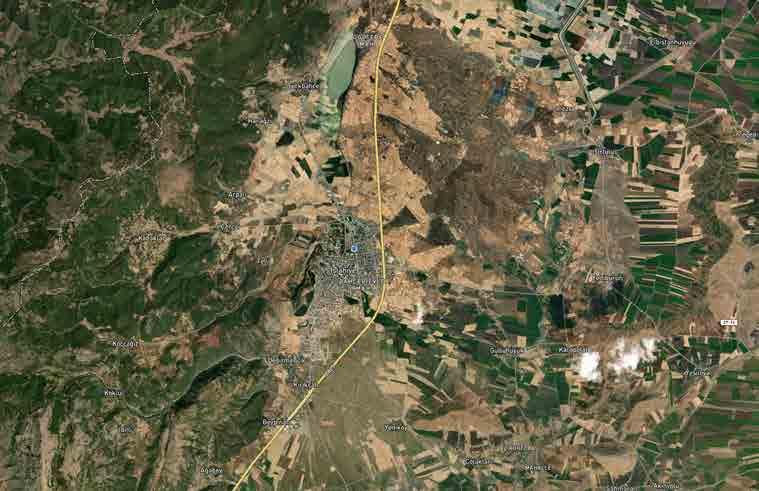
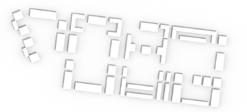
ISLAHIYE PLAZA DE ARCO
HOUSE OF OPENINGS
FALL 2023. ADVANCED STUDIO PROFESSOR JANE KIM
Won Best in Category (1200 sq. ft.)
Montclair Gateway to Aging in Place (mGAP) is dedicated to identifying GAPs between existing services and those services needed to sustain older citizens who want to remain residents in the communities they live in. mGAP has advocated local communities to adopt Accessory Dwelling Unit (ADU) ordinances to help address the shortage of accessible housing options for aging in place.
As of March 2023, Montclair homeowners have the option of constructing ADUs in their backyards to provide new housing options suitable for; aging-inplace, housing the disabled, and accommodating small family units of one or two adults.
SITE PLAN
THE WALL
FALL 2023. TOPICS IN TECHNOLOGY
PROFESSOR CHRISTIAN VOLKMANN
DESIGNER: MATEO PENAFIEL
IN COLLABORATION WITH FABRIZIO CHAMORRO AND LOLITA BOGDANOVA
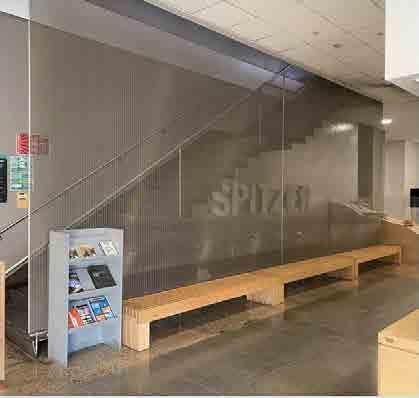
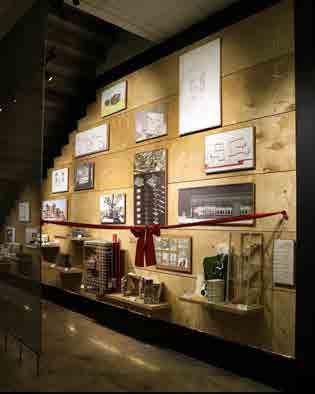
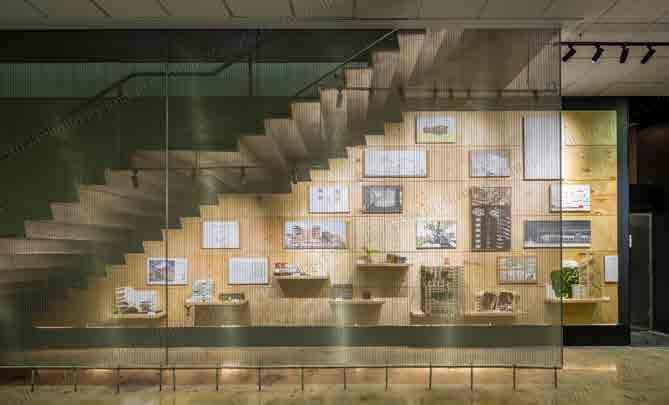
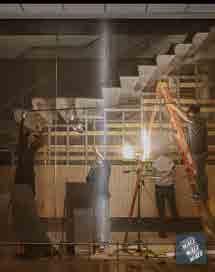
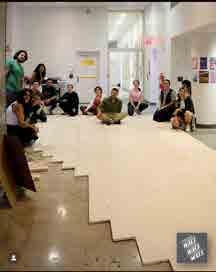
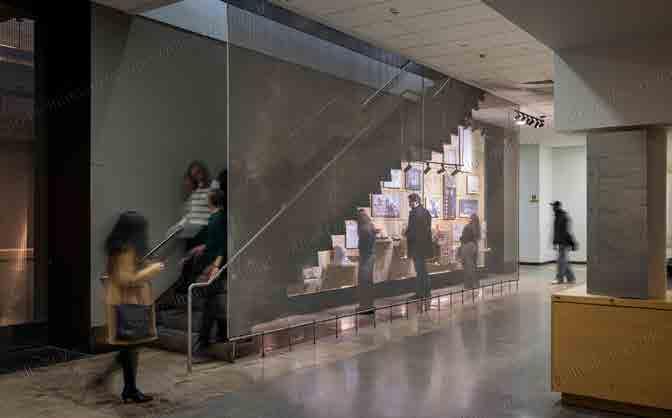
The Wall was designed for Spitzer internal com petition to redesign the space under the main stair. Upper students proposed a new exhibitions space for the student work that would adapt to any kind of medium.
The new wall will feature a pegboard that allows student work to be displayed in a variety of modules. This wall will be updated every semester with new student work, and will be a hub at the entrance to present efforts of Spitzer students.
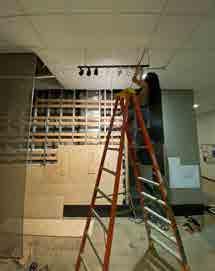
My team and I specifically worked on the lighting design, budget management and installation used for the exhibit space.
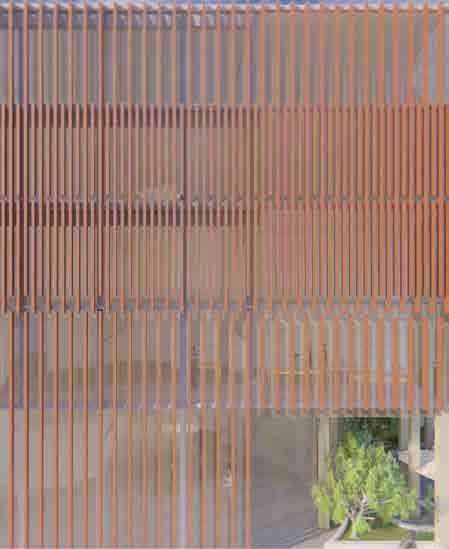
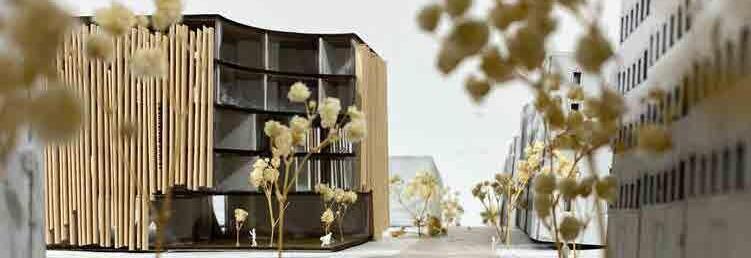
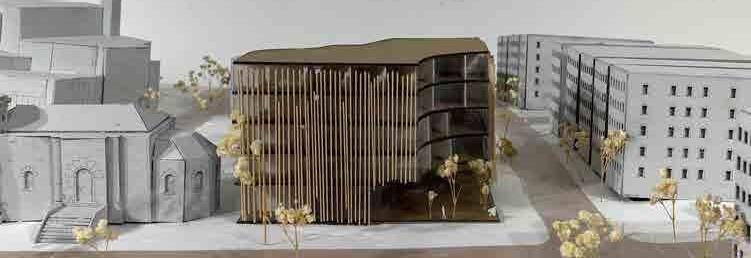
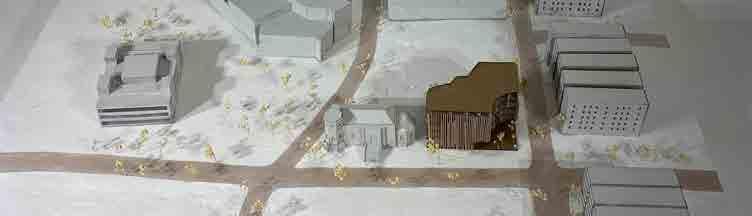
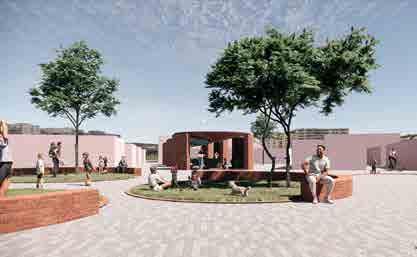
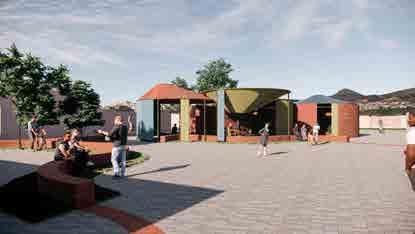
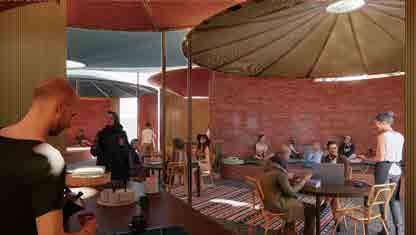
PLAZA
DE ARCO
SPRING 2023
PROFESSOR DEMIR PURISIC
IN COLLABORATIN WITH LOLITA BAGDANOVA AND JUNIOR CHAMORRO
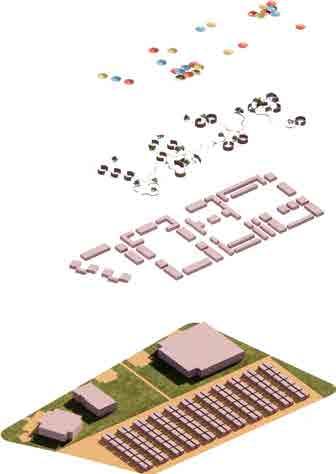
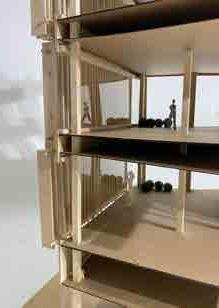
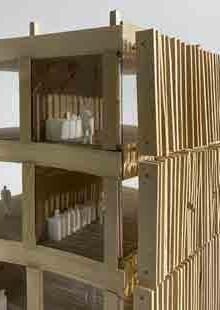
The project is to design a mixed-use arts INCUBATOR for the City of New York, with a particular emphasis on the housing component, located in the CCNY Campus, on the space that surrounds the Croton Aqueduct Gatehouse, on Convent Ave and 135th Street, right in front of the Spitzer School of Architecture, to be used by artists and the community.
The Croton Aqueduct Gatehouse was built in 1884 and was added to the National Register of Historic Places on September 1983. After being decommissioned in 1984, the below-grade valve chambers were filled, and the building sat empty for nearly two decades. Between 2004 and 2006, architects oversaw an adaptive reuse project converting the gatehouse into theater space for Harlem Stage/Aaron Davis Hall. The Gatehouse/Harlem Stage is now the performing arts center that bridges Harlem’s cultural legacy to contemporary artists of color and dares to provide the artistic freedom that gives birth to new ideas. In 2006, Harlem Stage opened the landmarked, award-winning Harlem Stage Gatehouse—a New York City landmark, as the pivotal facility within the Croton Aqueduct system. This historic building has been restored into a state-of-the-art, flexible performance, rehearsal, and support space. What was originally a pivotal source for distributing fresh water to the City is now a vital source of creativity, ideas, and culture.













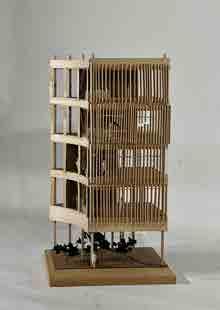
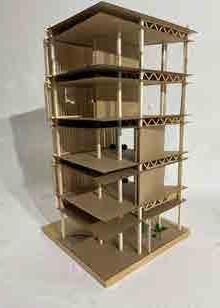
METAL DECK
STEEL JOIST CONCRETE SLAB
STEEL COLUMN BEAM GIRDER
PANELIZED CURTAIN WALL SYSTEM
LOUVERS
TIMBER BRIDGE COMPETITION
INTERNATIONAL COMPETITION
PROFESSOR MOHAMMAD BOLHASSANI
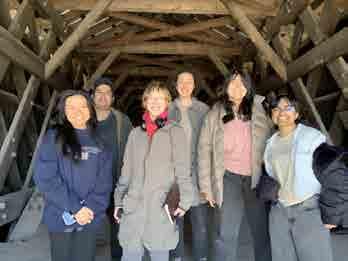
IN COLLABORATION WITH MIRIAM PEREL, JUNIOR CHAMORRO, HAYA CITRON, TAZ HASAN, SERAFIMA ZAYTSEV
PRESERVATION MENTOR EDWARD FITZGERALD
The Preservation Engineering Technical Committee (PETC) Student-Design Build Competition is a hands on challenge to students with an interest in historic buildings and structures.
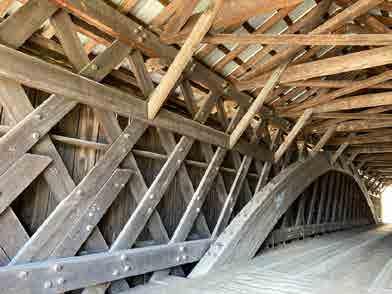
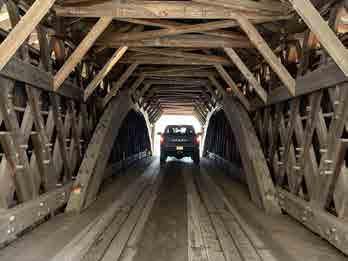
On a narrow road sloping down from Old County Route 17 stands the Van Tran Flat Bridge, a wooden lattice truss covered bridge spanning the Willowemoc Creek. One can catch a glimpse of the structure when driving along Old County Route 17 near the town of Rockland in Sullivan County, NY. The United States was once home to thousands of similar covered bridges built throughout the 19th and early 20th centuries, but today only hundreds remain. Transversing creeks and rivers, these structures form an integral part of America’s network of highways and bridges and tell the history of the country’s expansion.
This project is an analysis of the history and structure of Van Tran Flat Bridge and presents a proposal to preserve the historic structure for future generations.
structural but may have been developed in later years as a decorative element. Although the exact purpose of the “buttresses” is unknown, they may have been used to lay planks across to access the exterior mid-span of the bridge during construction and for future repairs.
STRUCTURAL ANALYSIS
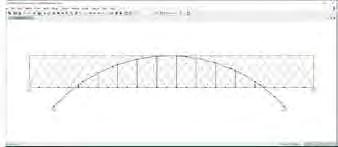
The structural analysis of the bridge was conducted using the SAP software to evaluate its performance under circumstance load conditions (Fig 5). The primary aim of this analysis was to observe the deformation behavior of the bridge when exposed to a significant load, specifically a load of one kip (1000 pounds force). This testing scenario was crucial for understanding the load distribution and the resultant stresses and strains within the bridge co mponents.
structural but may have been developed in later years as a decorative element. Although the exact purpose of the “buttresses” is unknown, they may have been used to lay planks across to access the exterior mid-span of the bridge during construction and for future repairs.
STRUCTURAL ANALYSIS
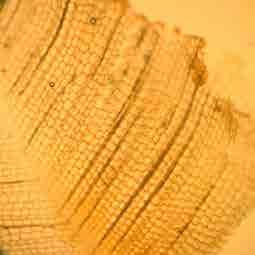
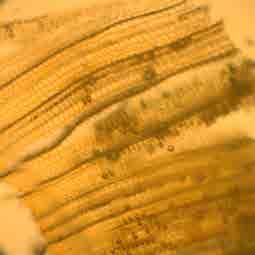
CROSS SECTIONS OF WOOD SAMPLES TAKEN FROM THE ORIGINAL TRUSS (LEFT) AND NEW TRUSS ADDITIONS (RIGHT)
The structural analysis of the bridge was conducted using the SAP software to evaluate its performance under circumstance load conditions (Fig 5). The primary aim of this analysis was to observe the deformation behavior of the bridge when exposed to a significant load, specifically a load of one kip (1000 pounds force). This testing scenario was crucial for understanding the load distribution and the resultant stresses and strains within the bridge co
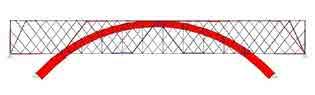
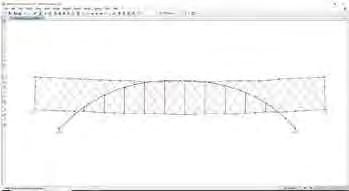
In the analysis, it was found that the presence of the arch played a critical role in the bridge’s ability to withstand tensile forces. When the arch was included in the model, the bridge’s vertical members exhibited a significantly higher capacity to resist tensile forces compared to a scenario where the arch was absent. This highlights the arch's importance in enhancing the bridge's structural integrity and load-bearing capacity (Fig. 6). Without the arch, the vertical members were subjected to greater tensile stresses, indicating that the arch effectively distributes these forces throughout the structure (Fig. 7).
5: 2D SAP Model
In practice, the laminated arch was heavily reinforced to handle substantial loads it was designed to bear. This reinforcement ensured that the arch could effectively carry and redistribute the applied forces. The truss, although less burdened compared to the arch, played a crucial role in supporting vertical loads, particularly through the vertical members located at the center of the arch.
In the analysis, it was found that the presence of the arch played a critical role in the bridge’s ability to withstand tensile forces. When the arch was included in the model, the bridge’s vertical members exhibited a significantly higher capacity to resist tensile forces compared to a scenario where the arch was absent. This highlights the arch's importance in enhancing the bridge's structural integrity and load-bearing capacity (F ). Without the arch, the vertical members were subjected to greater tensile stresses, indicating that the arch effectively distributes these forces throughout the structure (Fig. 7).
In practice, the laminated arch was heavily reinforced to handle substantial loads it was designed to bear. This reinforcement ensured that the arch could effectively carry and redistribute the applied forces. The truss, although less burdened compared to supporting vertical loads, particularly through the vertical members located at the center of the arch.
Fig. 7: 2D SAP Model with deformation
The simulation results also indicated how different elements of the bridge respond under different circumstance loading. The arch, being heavily reinforced, acts as the primary load-bearing component, efficiently transferring the applied load across its curve. This distribution reduces the compressive forces experienced by the upper chord and diagonal members, ensuring that these components undergo lesser deformation and stress. By mitigating the loads on these members, the arch helps maintain the overall stability and performance of the bridge. Additionally, the analysis
Fig
Fig 6: 2D SAP Model with Laminated arch
Fig 5: 2D SAP Model
Fig 6: 2D SAP Model with Laminated arch
2D SAP MODEL
2D SAP MODEL WITH LAMINATED ARCH
2D SAP MODEL WITH DEFORMATION