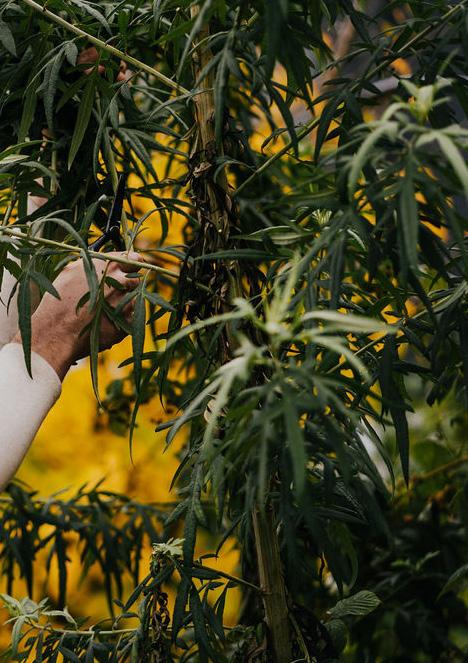
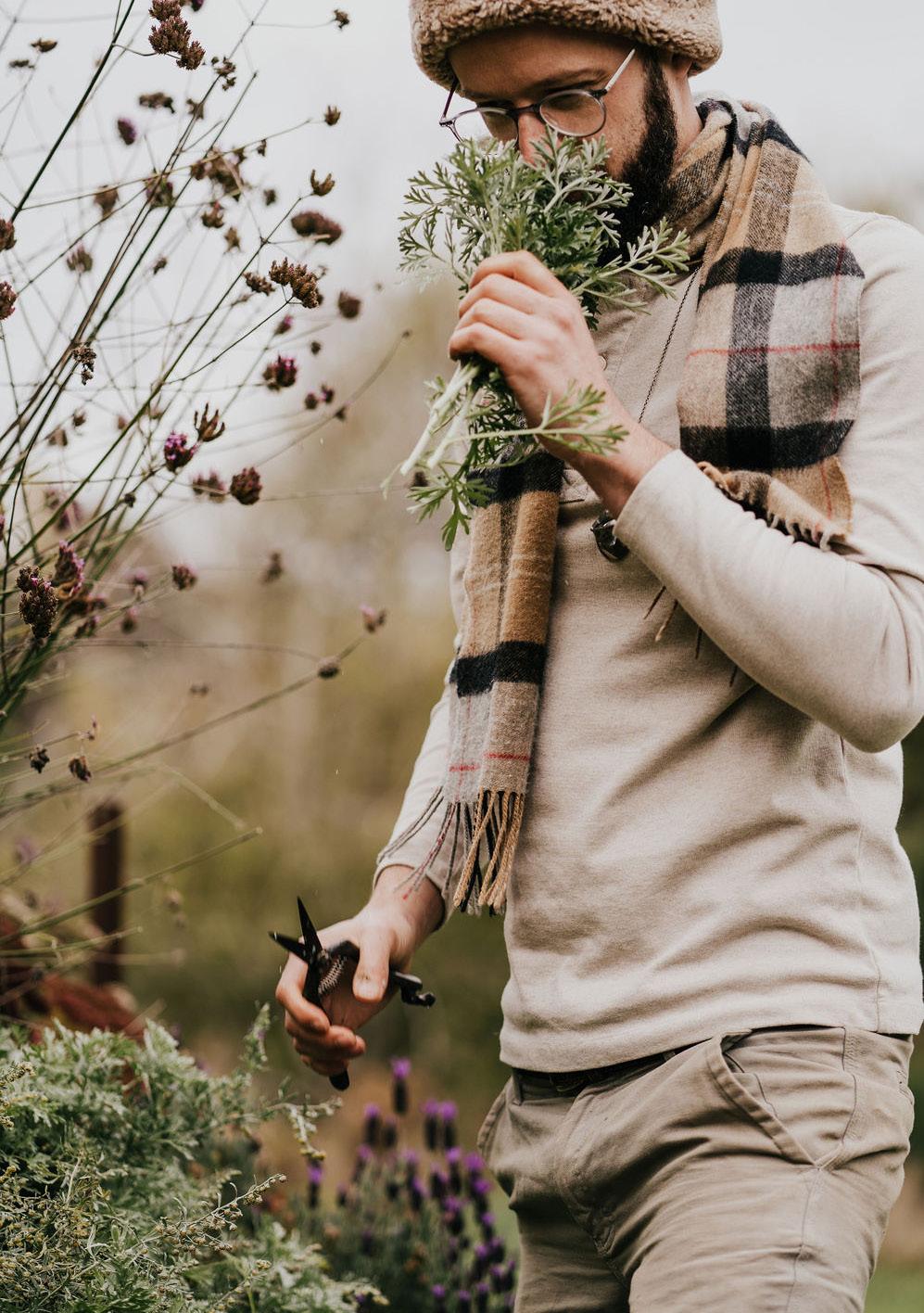
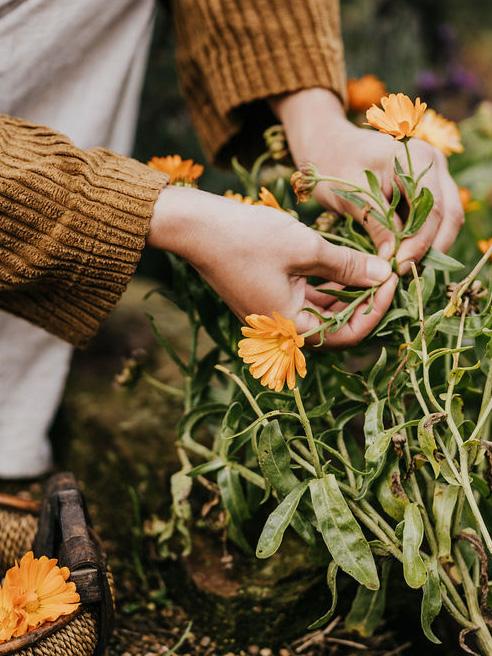
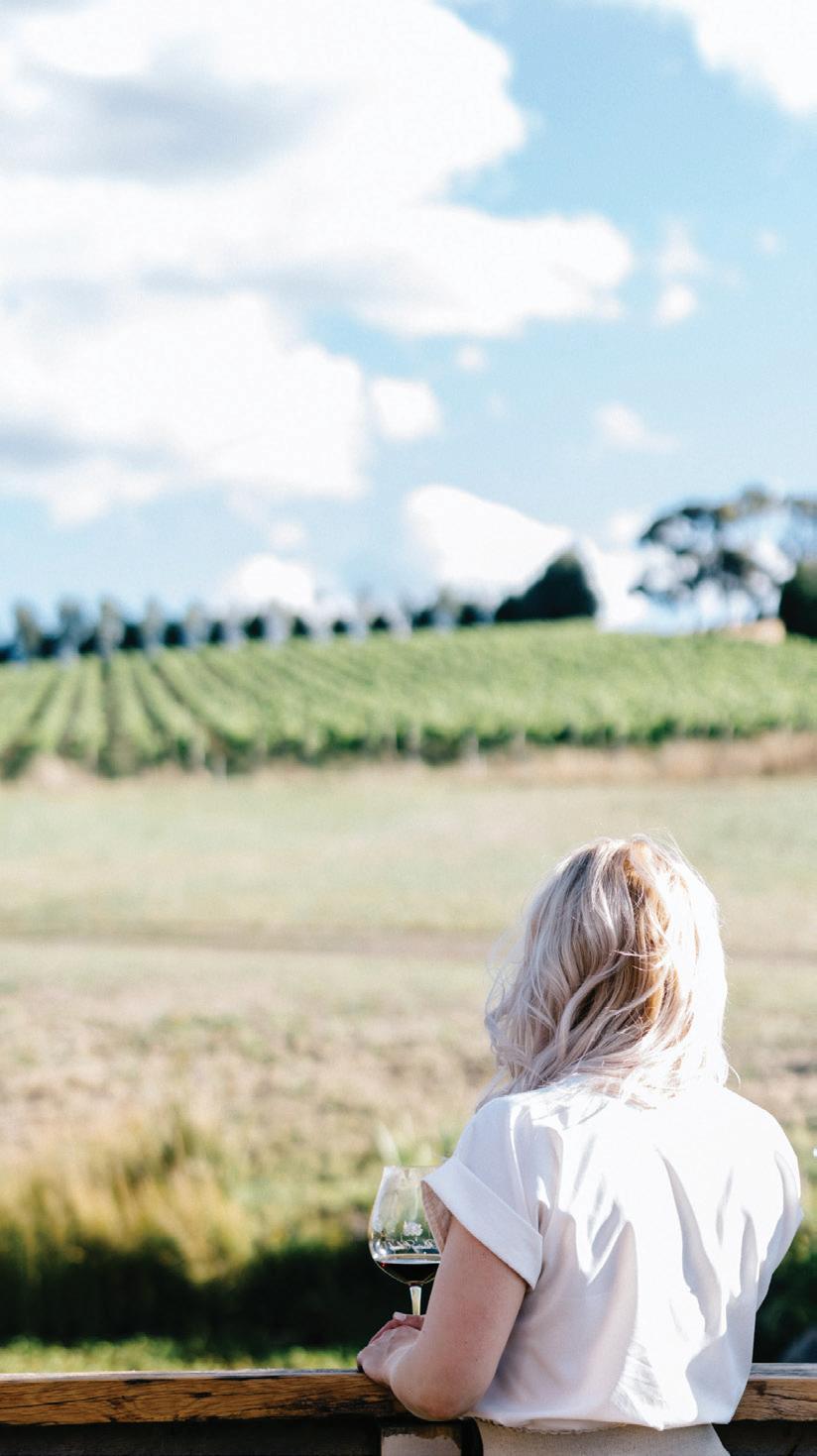
Scan here to learn more Experience this historic wellness sanctuary like never before...
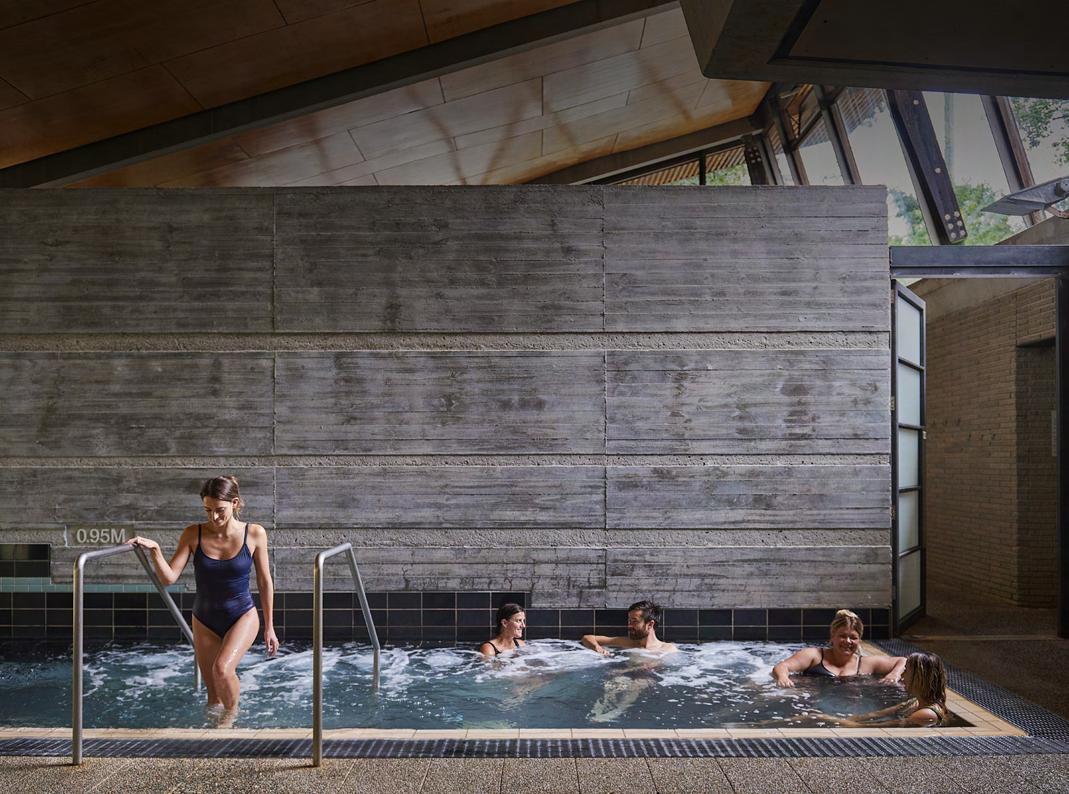
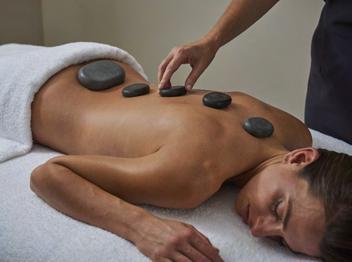
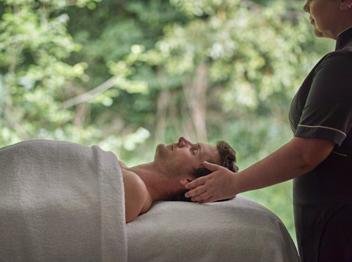
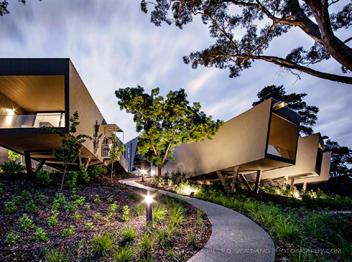
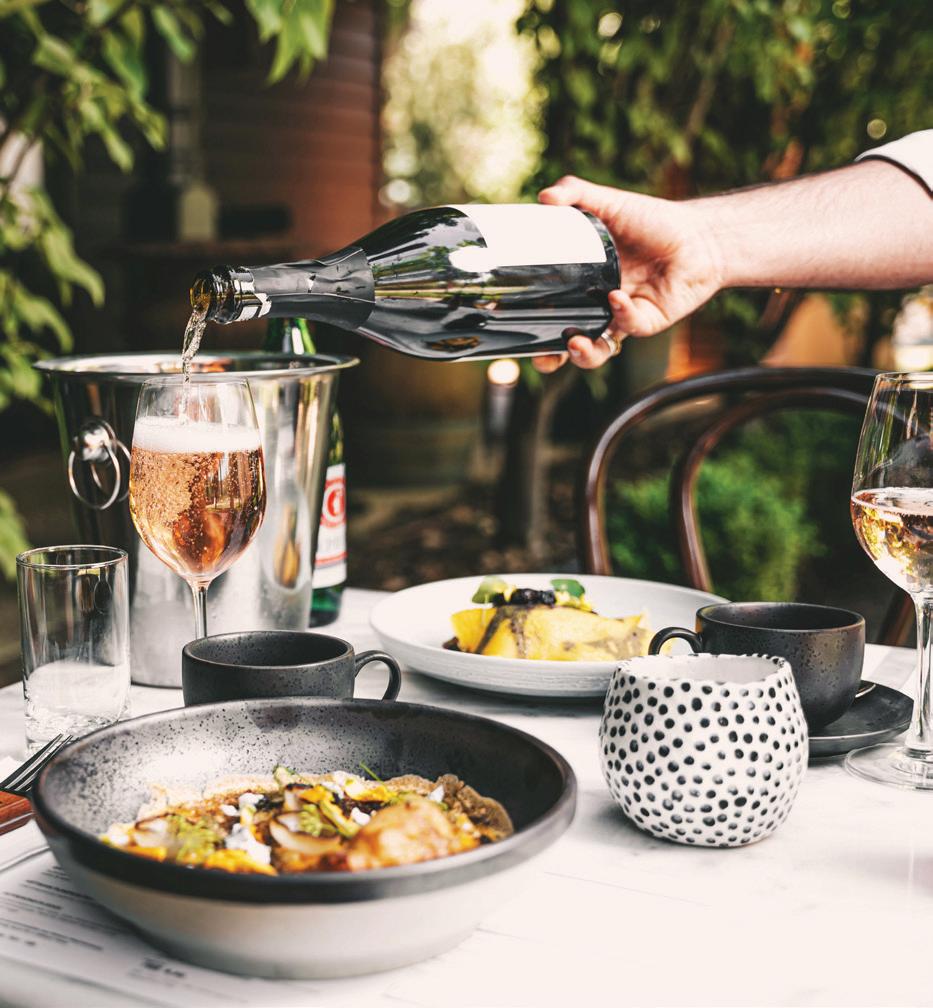
Step into this award-winning bathhouse and spa and treat yourself to all-new offerings. A lush escape offering Private, Sanctuary and Bathhouse Mineral bathing, a luxurious spa treatment menu, Apothecary and a bustling cafe and revitalising accommodation a stone’s throw from Daylesford, you’ll leave feeling at peace.
hepburnbathhouse.com
ABOUT LOST MAGAZINE
Lost Magazine is an independent magazine circulating throughout Daylesford, Hepburn Springs, Kyneton, Trentham, Glenlyon, Castlemaine, Woodend, Creswick, Clunes and surrounds. We also distribute to select Melbourne venues and to an ever-growing subscriber base.
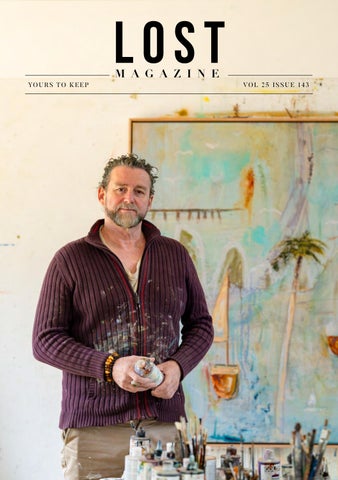
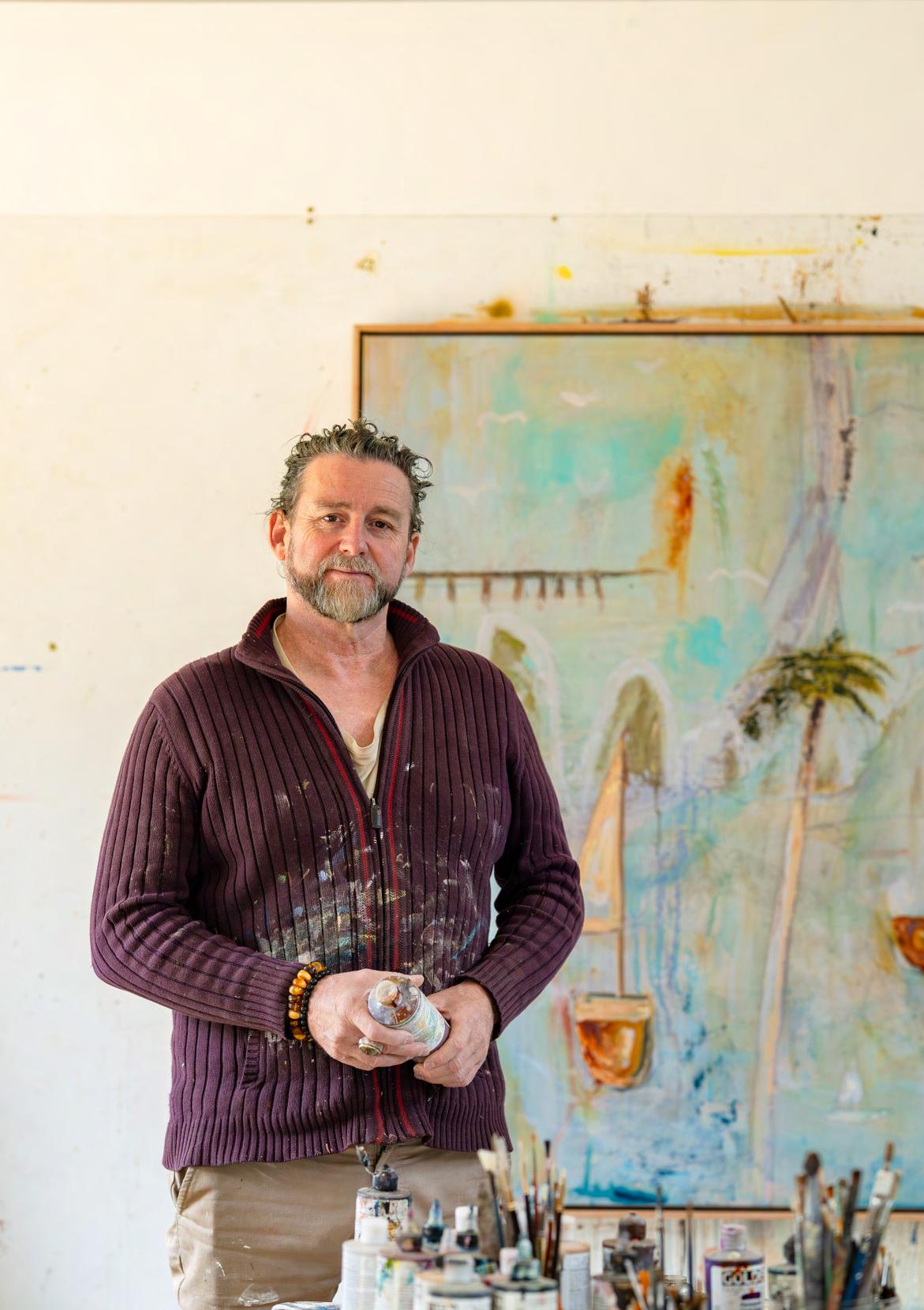
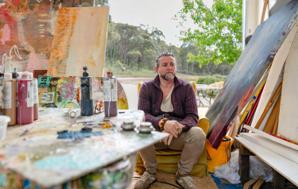
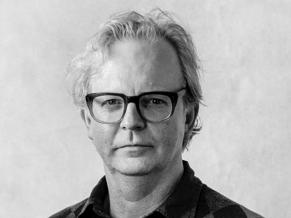
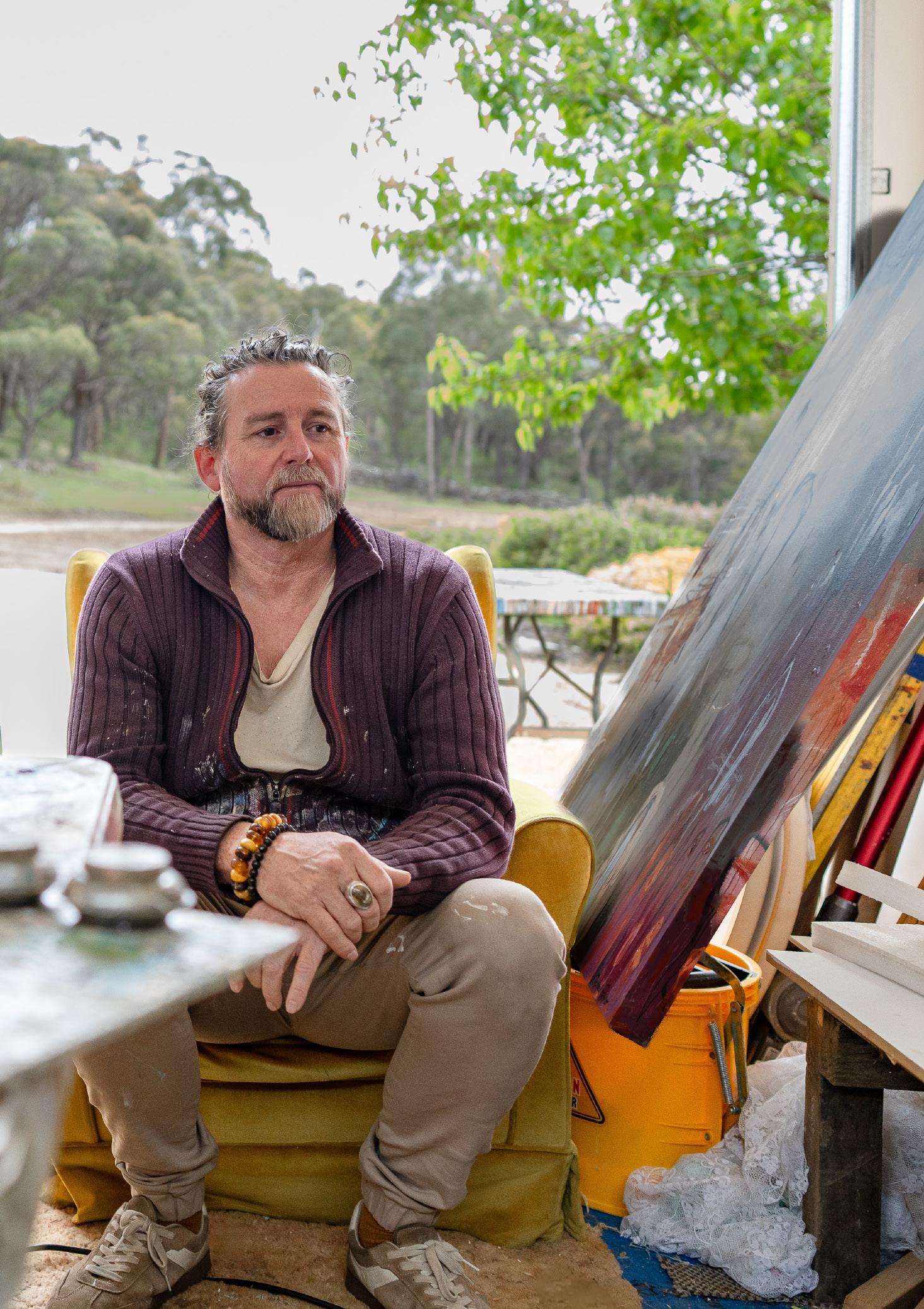
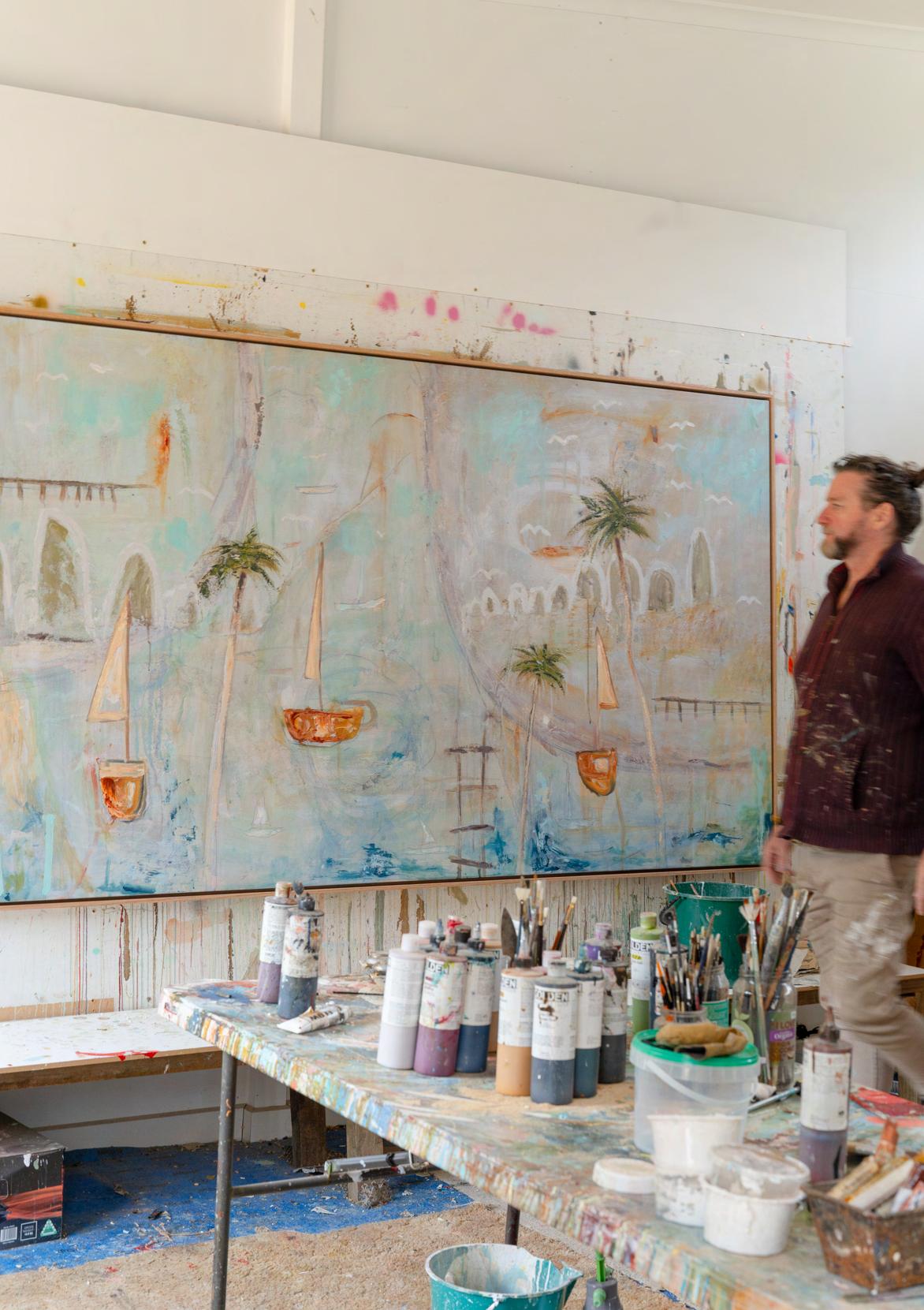
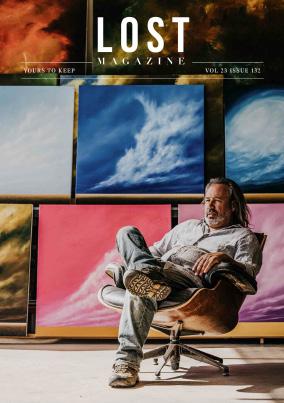
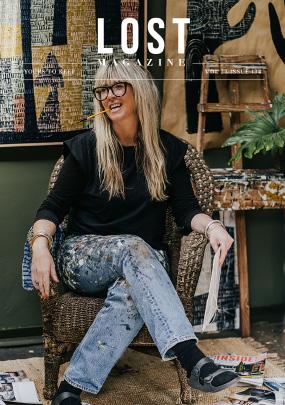
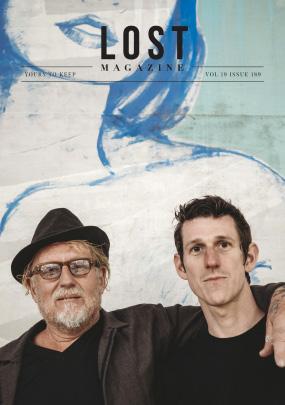
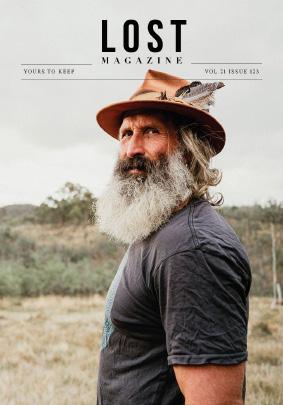
Michael Parker by photographer Amber Gardener. Read the full story on page 10
ALL RIGHTS RESERVED
All content in this publication is copyright and may not be reproduced in whole or in part in any form without express permission of the publisher. All care is taken to ensure accuracy in editorial and advertising however the publishers and any contributors accept no responsibility for errors or omissions. All material herein constitutes information and not advice.
LOST TEAM
FEATURE WRITER
Larissa Dubecki
FEATURE WRITER
Mahmood Fazal
FEATURE WRITER Michael Harden
DESIGN & BRAND
Jessica Walsh
PUBLISHERS
Theresa Albioli & Tony De Marco
EDITOR
Melissa Jenkins
Live the dream, naturally
Sustainable today. Regenerative tomorrow.
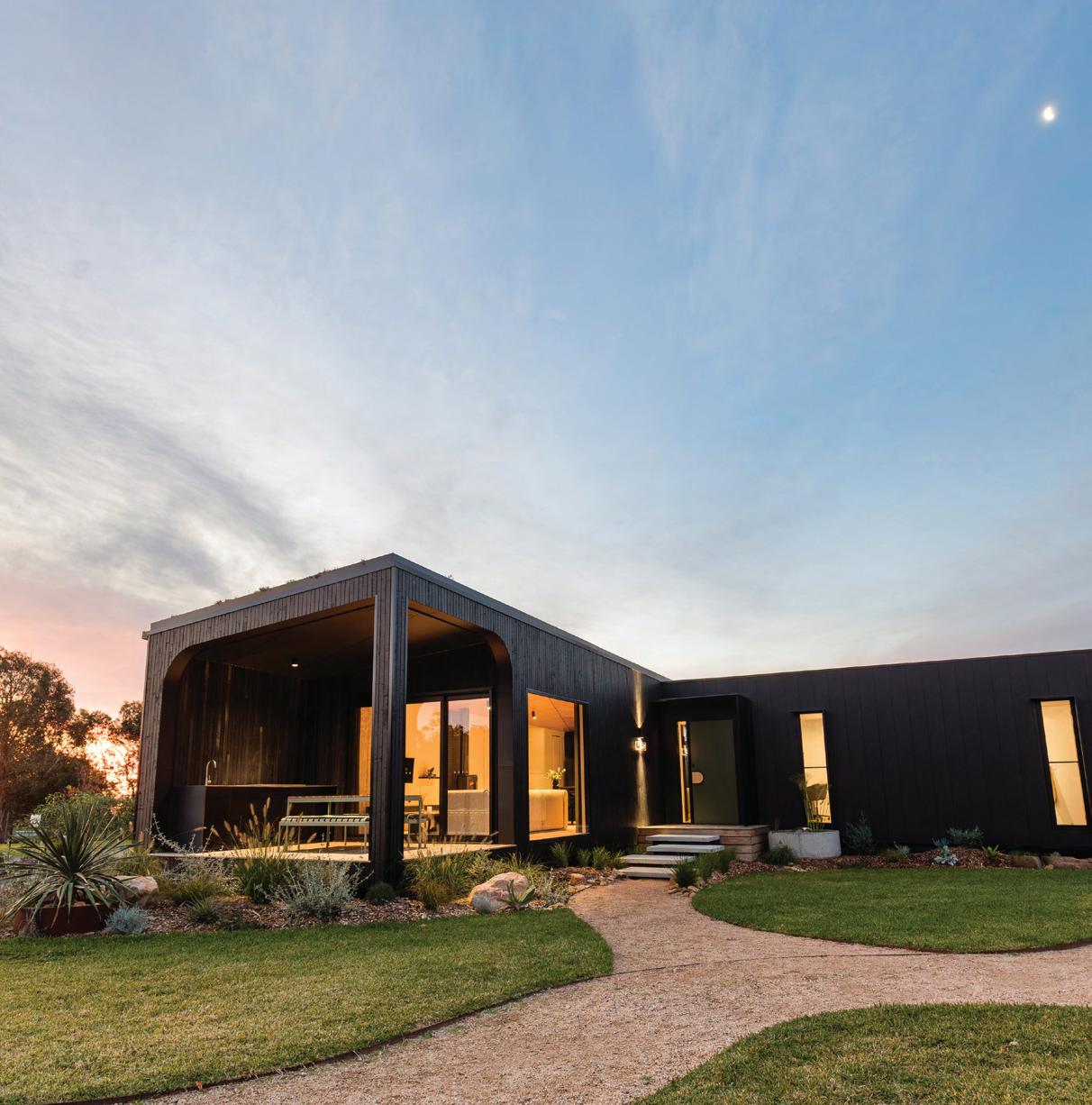
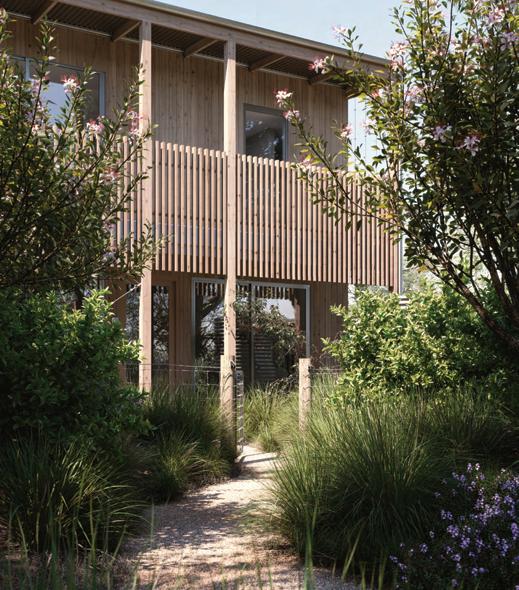
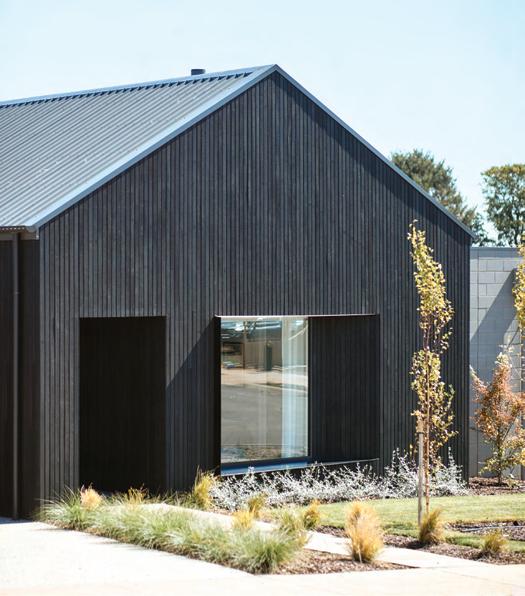
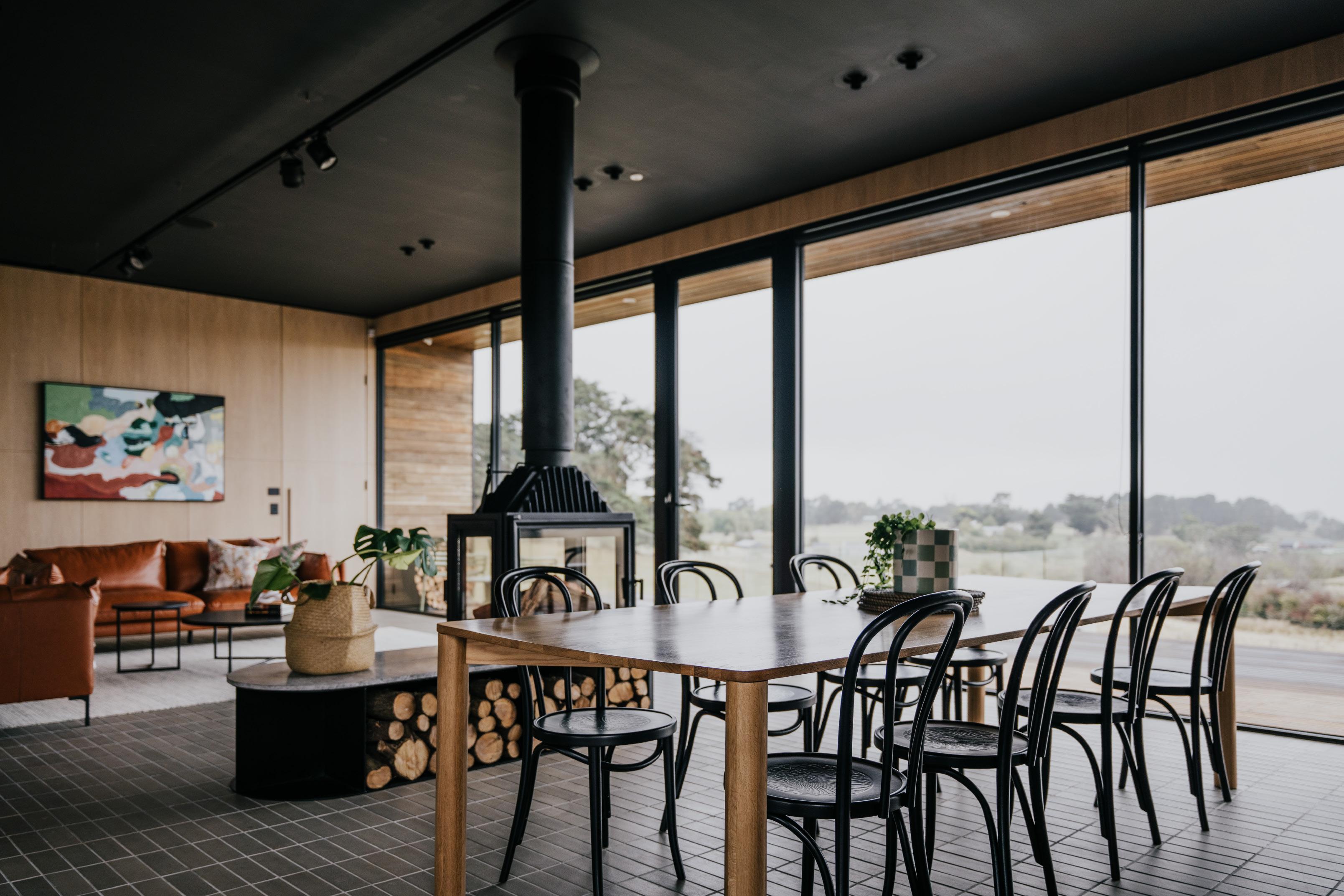
Designed for the Australian landscape and lifestyle, Ecoliv prefab modular homes are responsible, renewable, and contribute to a regenerative future.
Our new EcoGeneration range brings this vision to life, moving beyond sustainability toward climate-positive design that actively restores the environment, generates more energy than it consumes, and demonstrates the real potential of regenerative living that gives back to the planet.
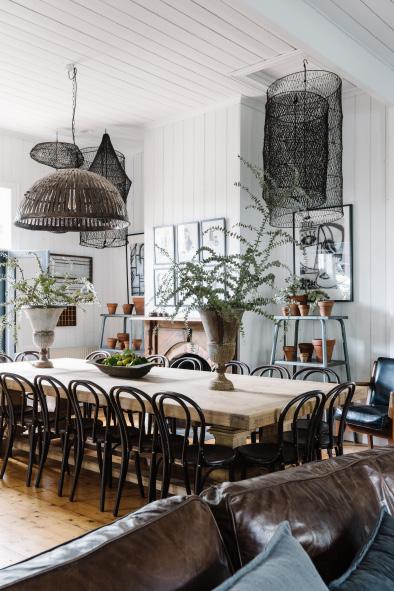
Lewellyn House
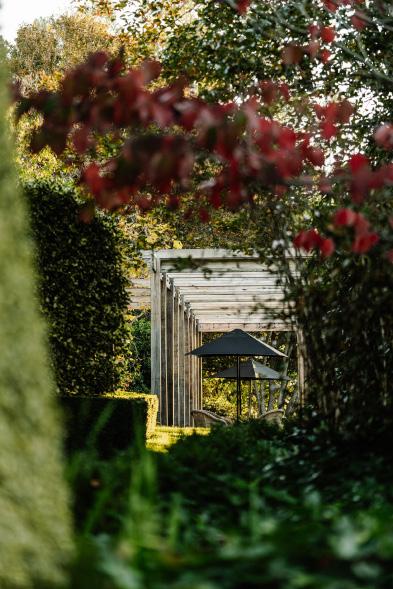
Wombat Park Estate
Art by Lana Daubermann
LOST NEWS
Summer has a way of sharpening our focus. Maybe it’s the light, or the warmth, or simply that we give ourselves the permission to slow down a bit and notice what’s happening across the region. I love seeing people getting on with the business of making thoughtful, well-crafted things, be they spaces, produce, or experiences. That’s where LOST sits. Our job is to tell the stories of the makers, the growers, and doers who are shaping this place from the ground up.
In this issue, we visit Bistro Merenda-Bar Merenda in their new home, spend time at Enki Apothecary’s new farm, walk the grounds of Riddells Creek Nursery, and step inside the layered work of artist Michael Parker. We also take in the tactile appeal of Villa Daylesford and talk patience, process, and aged wine with Robin Wilson at Lake House.
Together, these stories make a clear case for regional life: quality over scale, care over speed. This region isn’t defined by distance from Melbourne, but by proximity to land, to ideas, and to people willing to back what they believe in.
As the year edges toward its busiest stretch, I want to thank our readers, contributors, advertisers, and everyone who shared their time, ideas, and stories with us. I hope the season ahead brings great company, relaxing breaks, and a chance to enjoy everything you’ve been working towards.
From all of us at LOST, a heartfelt thanks for being part of our 2025.
Melissa Jenkins Editor
WP ARTIST RETREAT
Layers Memory of
STORY BY MAHMOOD FAZAL
PHOTOS BY AMBER GARDENER
MICHAEL PARKER
Michael Parker is not the kind of artist whose work arrives fully formed at the easel. He doesn’t approach a blank panel with a fixed design in mind. “I make marks, scrape things back, tear paper, glue bits down, and let the surface take shape,” he tells me, describing his process as a dive into the unknown, a plunge that trusts accidents to become “the most interesting parts of the work.”
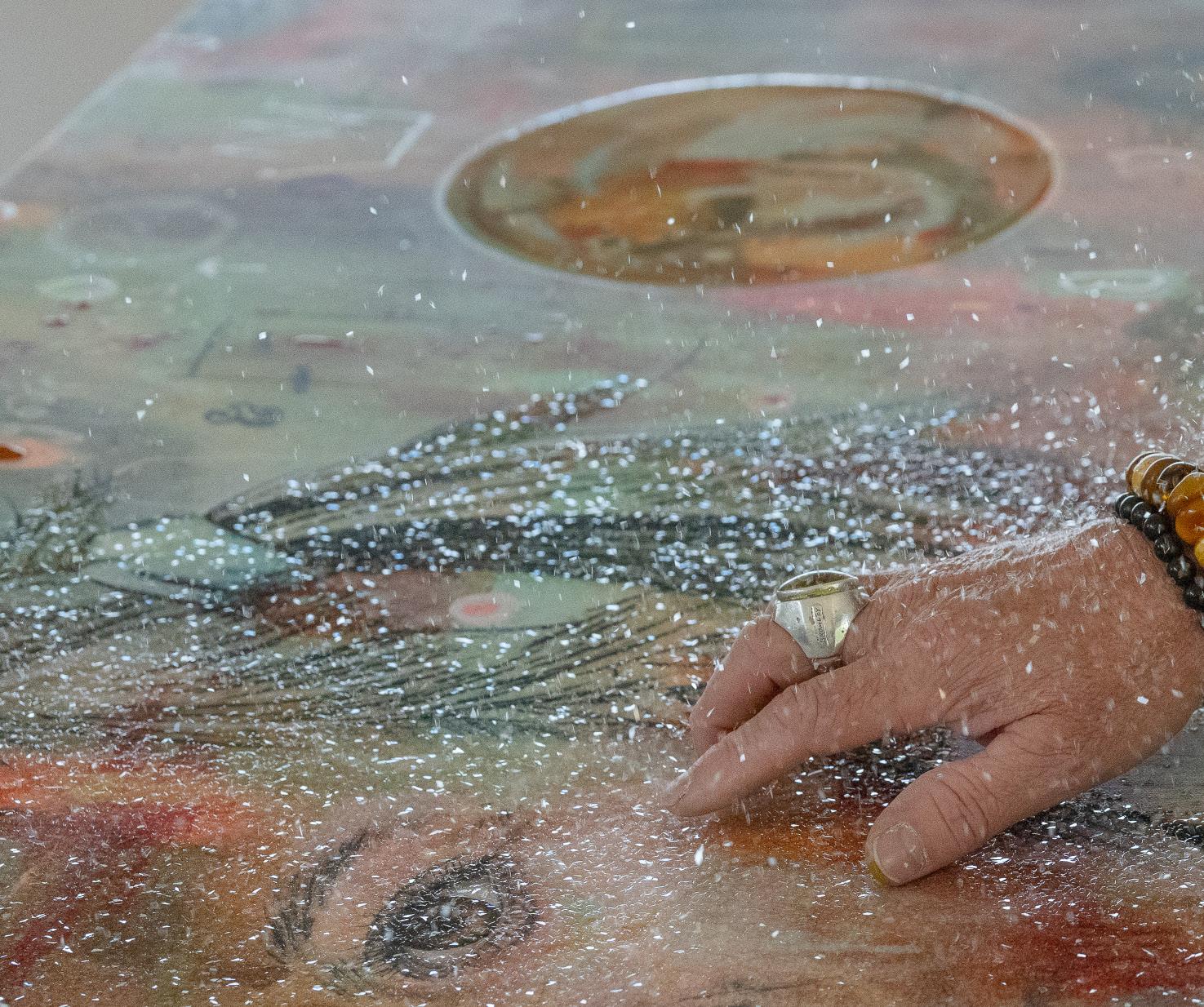
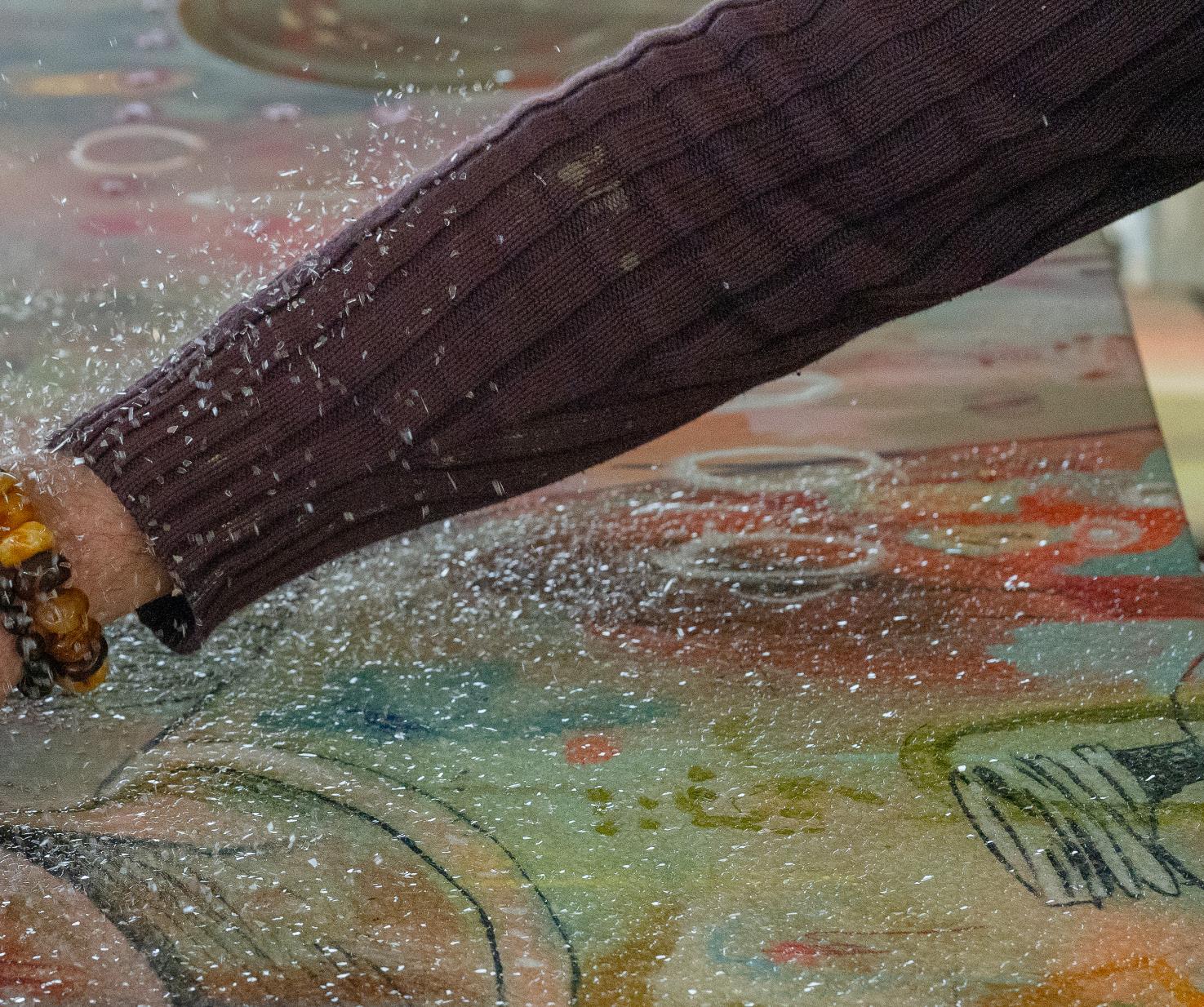
What unfolds is not a preordained image but a living surface: textured, scarred, haunted by its own making. Layers of wax, paint, wood, old paper, vintage postcards, rusty metal - fragments with previous lives - accumulate until something emerges. In Parker’s hands, these materials don’t just sit side by side; they converse. The result is a work that carries history in its scars and quiet beauty in its imperfection.
Parker lives and works in the bushland between Daylesford and Fryerstown, Victoria. In that space, time seems to slow. The wide skies, shifting light, and the gentle footsteps of kangaroos, deer, ducks, and rabbits outside his studio windows create a rhythm very different from city urgency. “Living out here gives me a huge sense of space both mentally and physically,” he says. That quiet, that sense of breathing room, shapes not only when he works but how he thinks: ideas get to settle, gestate, evolve. The stillness becomes part of the painting. And that quiet rural setting is more than backdrop: it’s a collaborator.
It wasn’t always like this. Parker’s early years were steeped in a more traditional artistic ambition. Growing up surrounded by his mother’s botanical paintings, he learned early that a blank canvas could feel like pure possibility “like magic,” he remembers. As a child he tried selling small works, then in his twenties travelled, taught himself to capture light and likeness, and exhibited small paintings at markets. After working in human services and screen printing, his guts finally told him it was time to leap. He quit everything, spent a year painting full-time, and the next thing he knew he had founded his own space, a property that became Stony Creek Gallery. Soon after came Michael Parker Gallery in town. These galleries are not mere shops but extensions of his studio life, where the work can breathe, be seen, and find resonance.
Over time, Parker began to shift: realism and the careful craft of trompe l’œil gave way to intuitive, imperfect, layered abstraction and mixed-media works. “There was not one defining moment. It was more gradual. I would try something, mess it up, and realise the mistake had more honesty and energy than the thing I had originally planned.” Those “happy accidents” offered vitality that precision couldn’t. His surfaces, built up and scraped back, reworked and re-coloured, embraced instability.
The controlled pastels of realism were replaced by the grit of reclaimed materials, the warmth of wax, the whispers of words embedded in paint.
Words, affirmations, fragments of lyrics, poems, passing thoughts, often surface quietly in his paintings, as if they were always there in the grain of the canvas.
Parker says he believes in the energy of language. “Thoughts become things,” he explains; words slip onto the canvas when it feels right. Sometimes a piece needs none, sometimes a single word is enough to shift its energy entirely. There is no formula. It is an instinctual act, like a heartbeat, quiet but persistent.
He rarely considers the viewer while he paints. First and foremost, the work must excite and sustain him; only later, once
the canvas leaves the studio, might it find someone to resonate with. “Some pieces connect with people straight away and others take longer or speak to different people for different reasons. That connection is always a surprise and a lovely one. People bring their own stories to the paintings.” For Parker, art is not about selling a polished object but offering something alive, something open to interpretation and memory.
Today, after decades of making, selling, teaching himself, and building galleries, Parker still senses momentum in the unknown.
He speaks of the pull of new places, India, full of colour and pulse, texture and movement, and imagines letting fresh landscapes shape his work anew. The future, like the beginning of any piece, feels like a blank panel: full of risk, possibility, and the promise that if he dives in, the accidents might lead him somewhere profound.
In the work of Michael Parker there is no final polish, no slick perfection, no detachment. There is the scent of wax and old paper, the grain of wood and the whisper of ink, the tilt of the canvas under shifting light, the memory of seasons in bush and sky.
And beyond the studio, in the galleries he built, there is the possibility that someone might see a scar, a layer, a word, and find in it a fragment of their own story.
Michael Parker
Michael Parker Gallery 52 Vincent St, Daylesford and Stony Creek Gallery 10 Stony Creek Rd, Daylesford michaelparkergallery.com.au
e XPerience a weekenD of Pure J oY witH tHe warmtH of a small countrY town in tHe Heart of tHe gol D fiel Ds region .
music fills tHe town all weekenD witH B lues, folk, new orleans, BusH music, glorious guitars anD mucH more
90 minutes from mel B ourne | 15 minutes from Ballarat 12 intimate ticketeD venues & siX free out D oor stages
PuBs, cafes, Hotels & air Bn B wit H in walking Distance
two cam P sites five minutes out of town
sH uttle Bus service all weeken D satur DaY nig Ht Dancing
aBc live B roa D cast free for ki Ds 12 & un D er wH at more coulD You want ?
Purpose Beauty
STORY BY MAHMOOD FAZAL
PHOTOS BY AMBER GARDENER
VILLA DAYLESFORD and
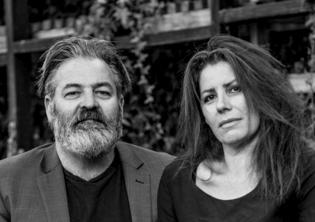
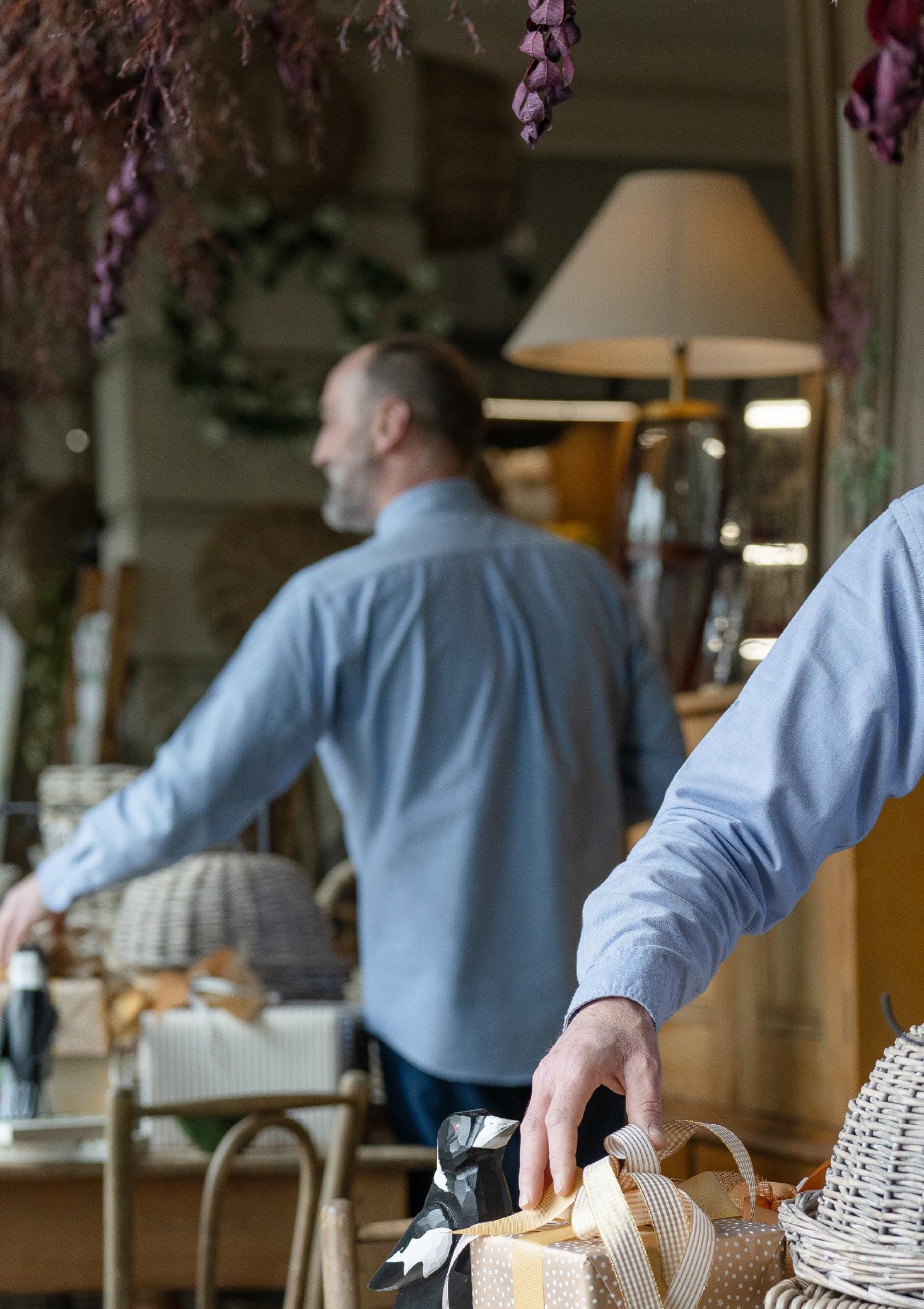
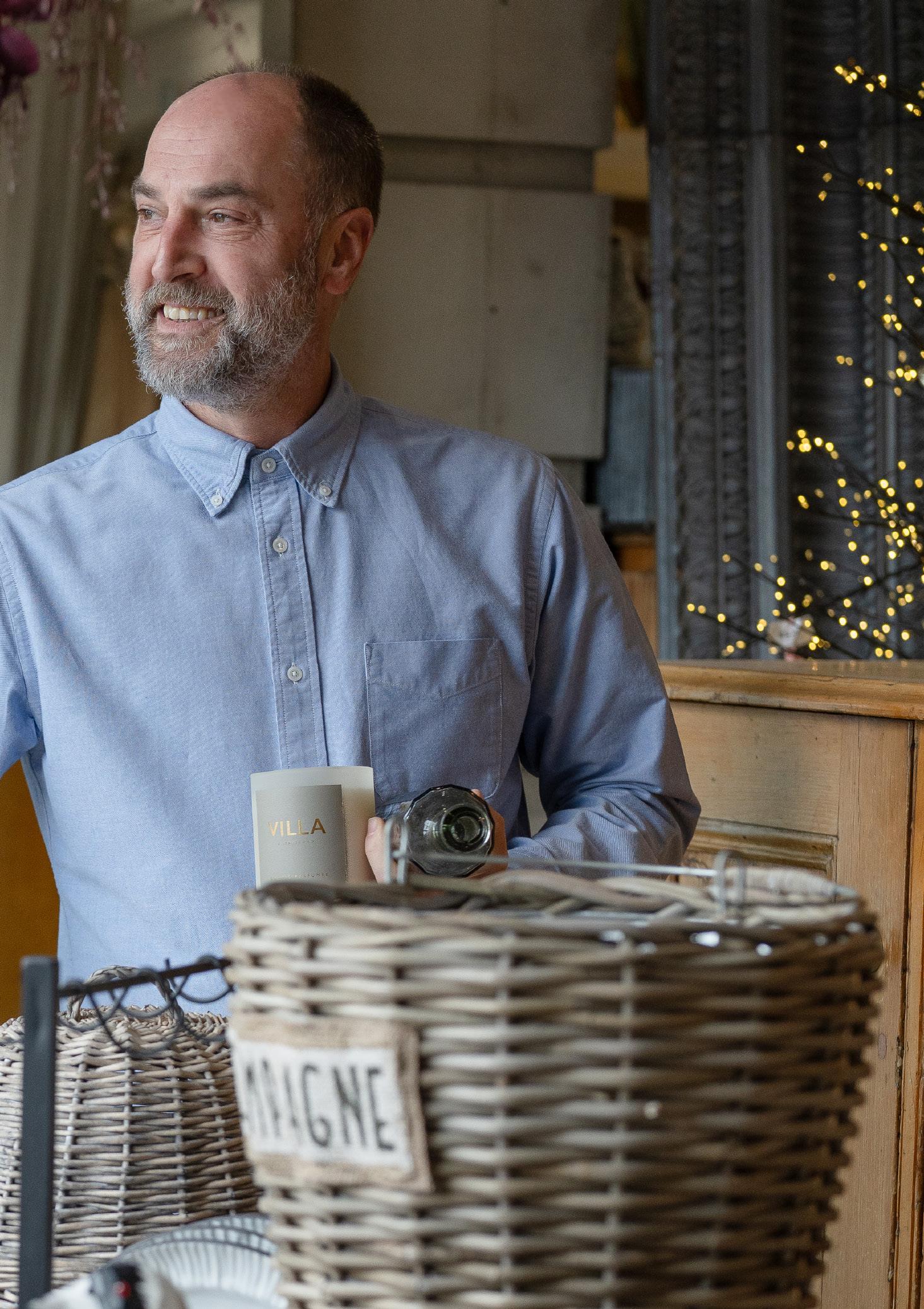
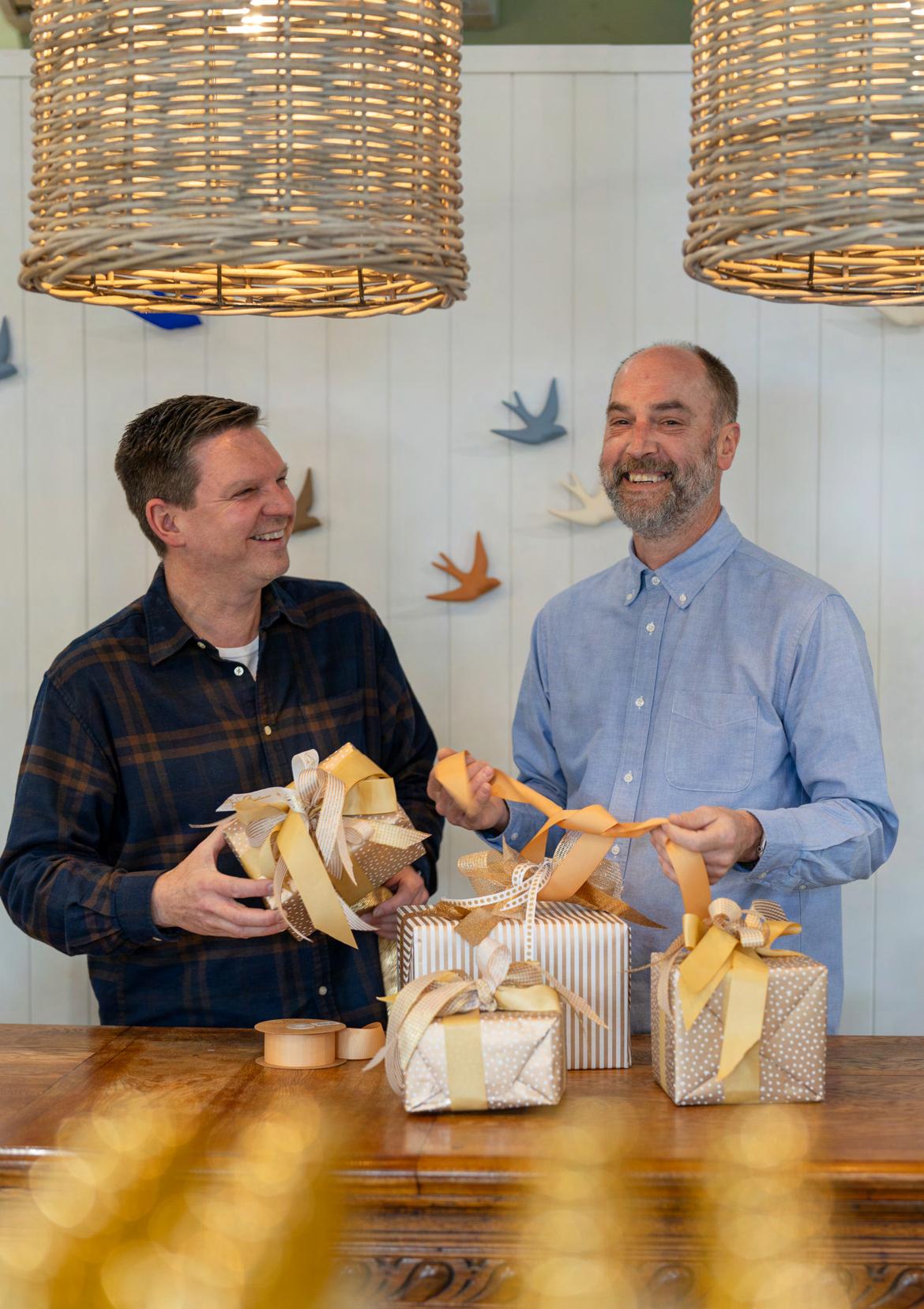
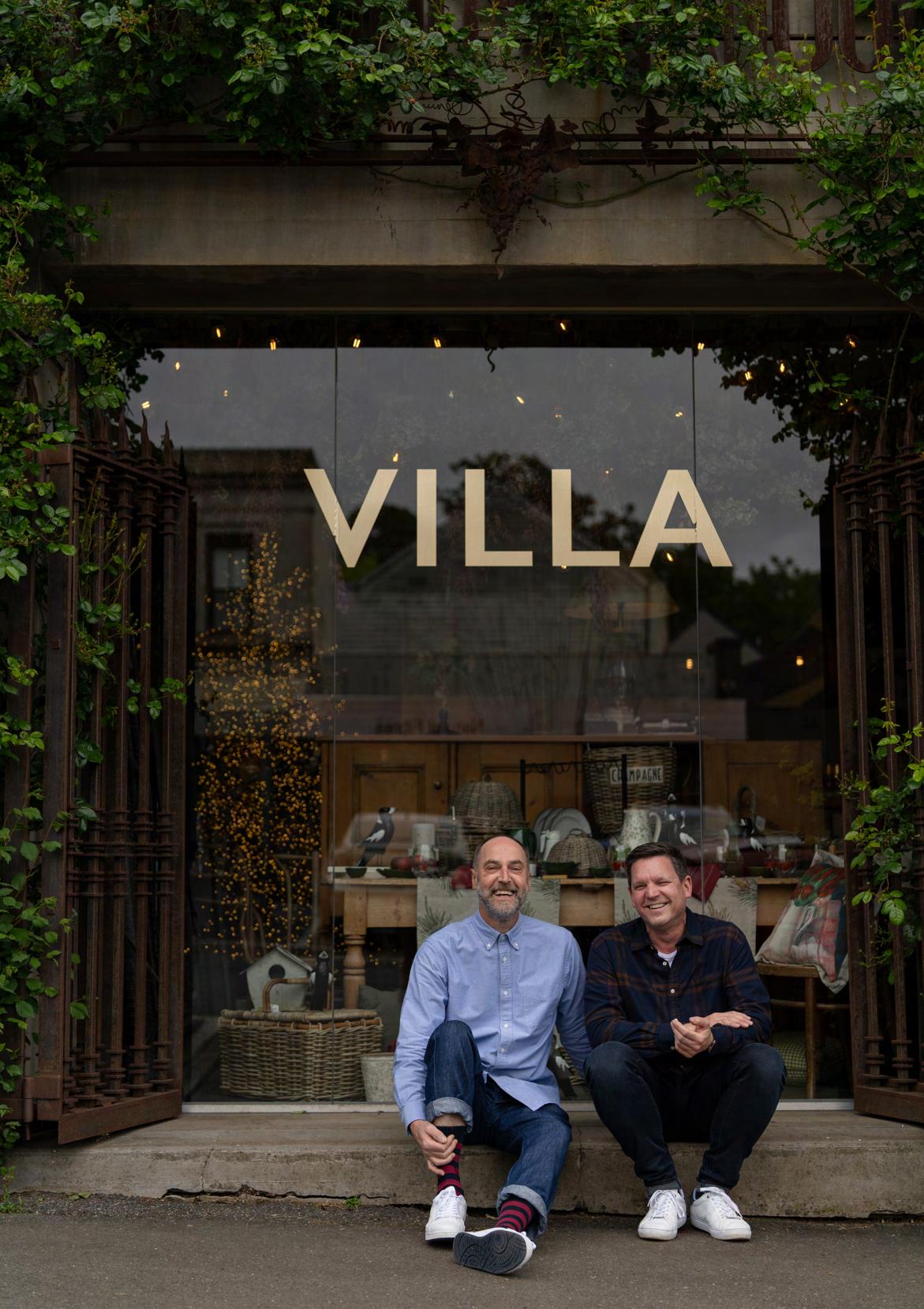
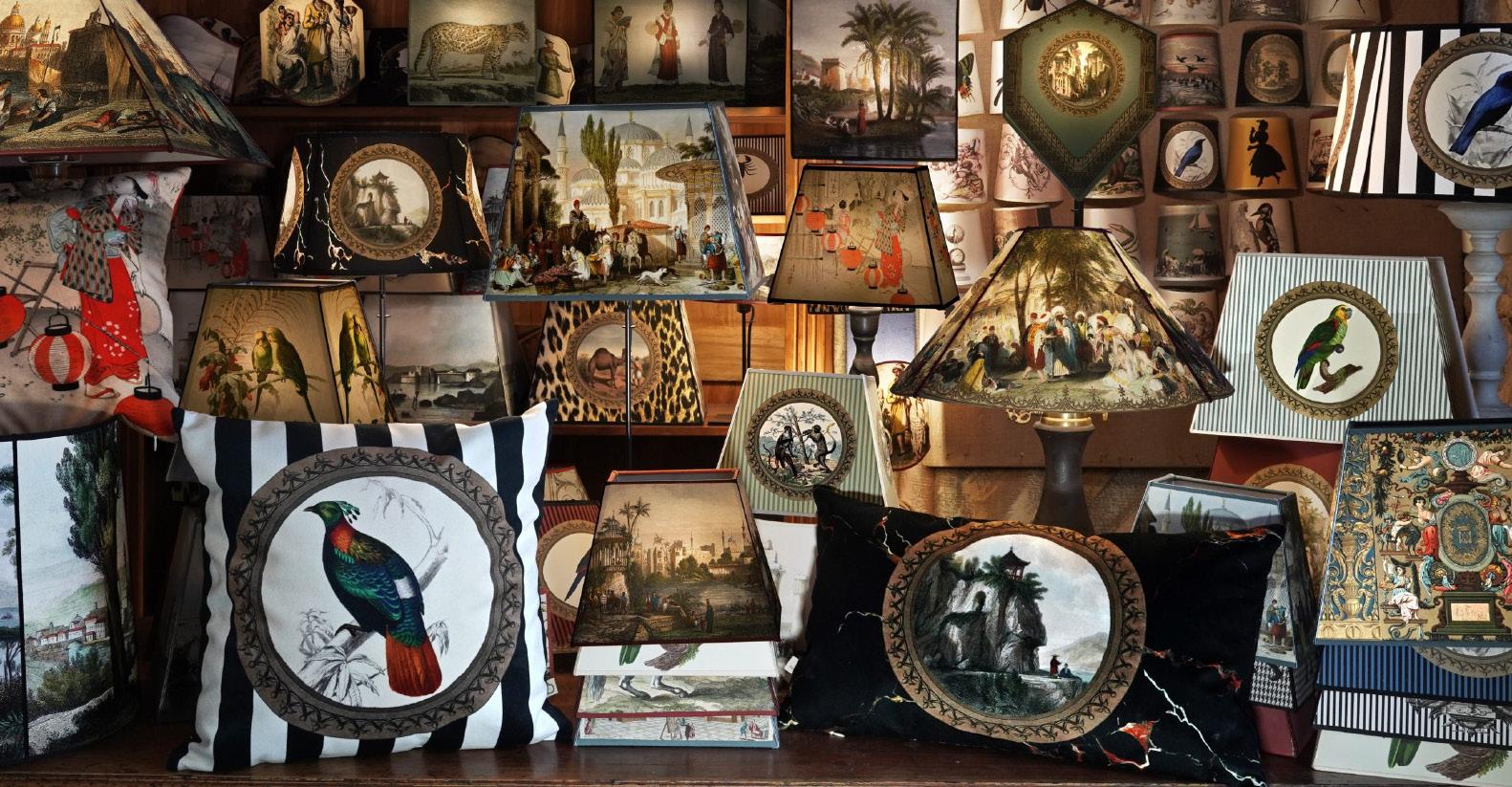
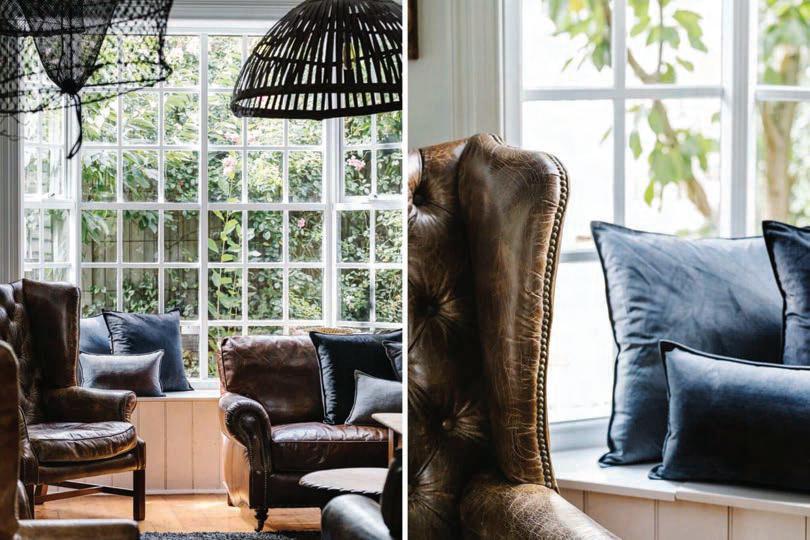
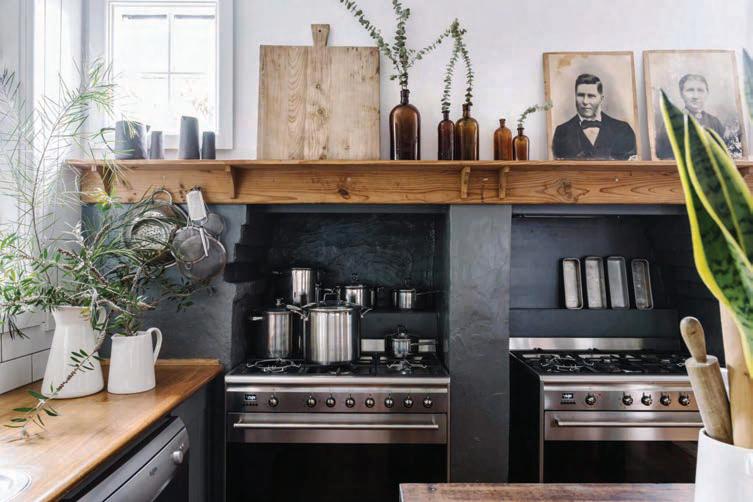
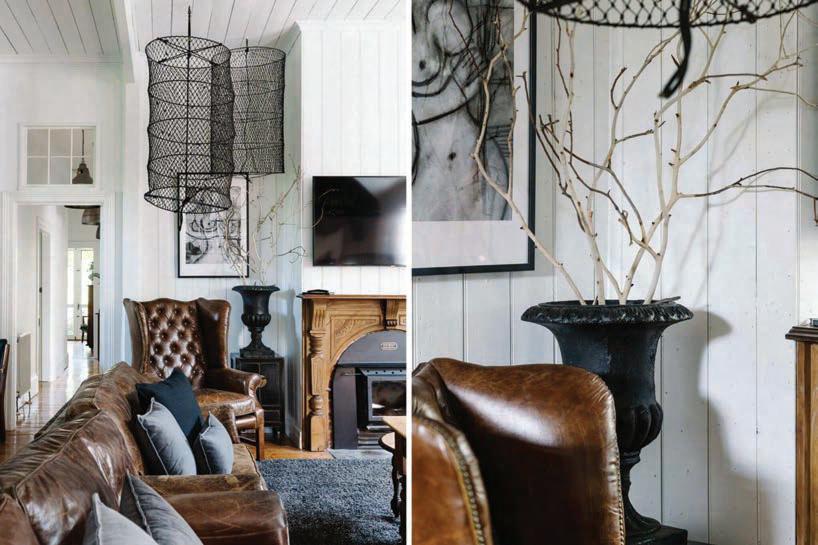
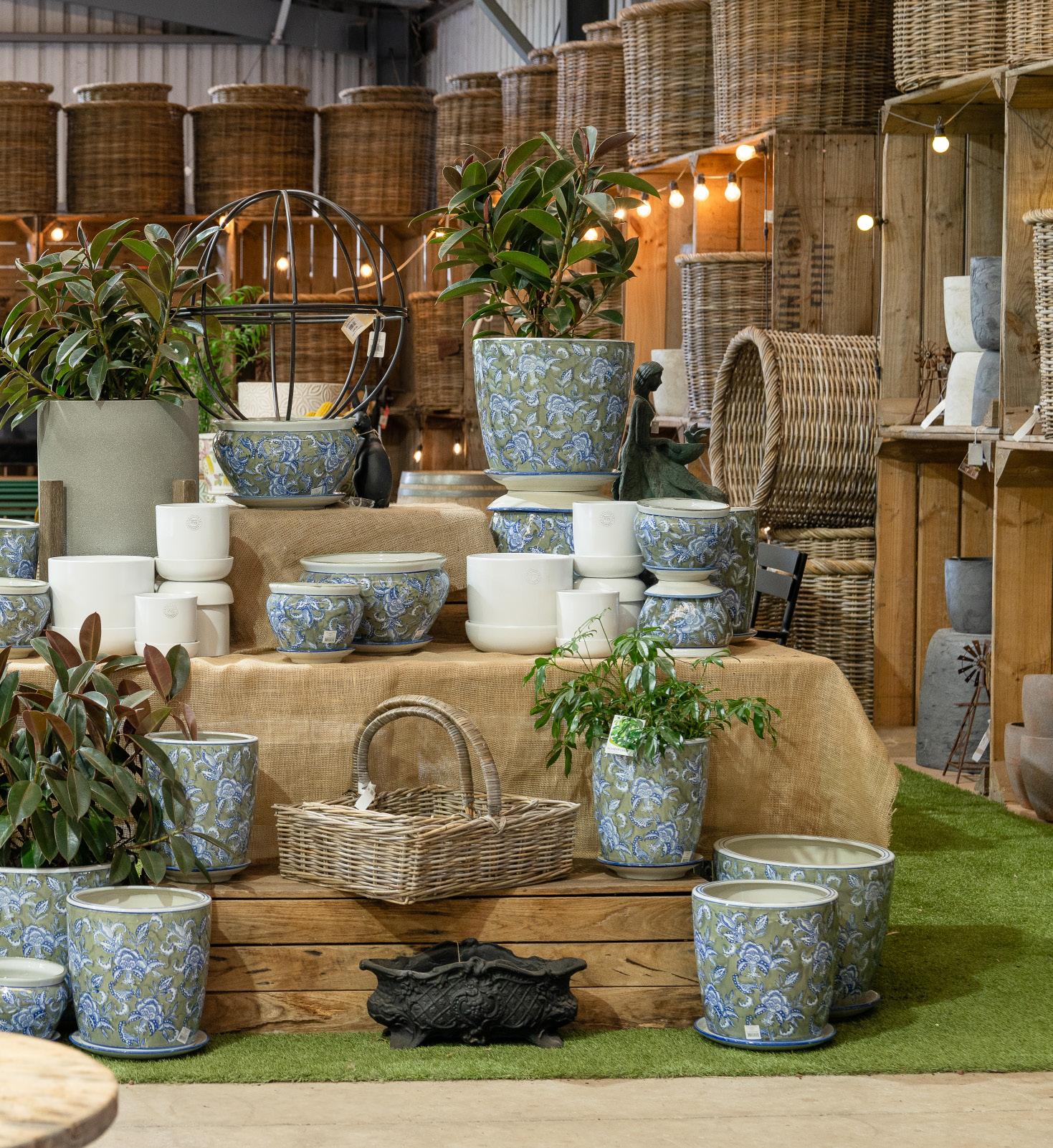
Villa Daylesford wasn’t launched by locals Michael and Paul as a business strategy so much as a sensation; “a space that felt layered,” they say, “a place where people could take a piece of that feeling home.” When they first stepped into the historic Frangos building, the emotion was immediate and disarming. “It felt undeniably bold,” they admit. “Especially at a time when many businesses were pulling back.” But hesitation never had much of a foothold. “The ‘why’ was clear,” they say. “Villa Daylesford was always part of the vision: a tactile extension of our aesthetic and philosophy.”
They could have opened anywhere. There were easier locations, less complicated leases, rooms without ghosts. But none of those places spoke. “The Frangos building has soul, history, and patina, refined yet warm, European-inspired yet unmistakably Daylesford.” It wasn’t simply charming; it felt inhabited by its own memory. “That kind of character can’t be manufactured,” they say. “Instinct told us it was the right canvas. Purpose reminded us that creating something enduring in a digital world truly matters.” They shrug at the risk. “Yes, it was a risk - but it was also ‘us.’”
The philosophy behind the store emerged from the way Michael and Paul think about objects. “For us, a story is the character and origin of an object; the hands that made it, the materials chosen, the feeling it brings into a home.” They source pieces from Daylesford makers and from Europe, the UK, Japan, wherever intention lives. “Authenticity and thoughtful craftsmanship matter,” they say. “Items that carry history or inspiration, from tradition or nature.” Their selection process is emotional rather than algorithmic. “If a piece sparks curiosity or an emotional connection, it’s one worth sharing.”
Inside the shop, every choice slows the pace. Villa Daylesford is meant to feel lived in, not styled. “Stepping into Villa Daylesford is like slipping into a quiet, layered story,” they say. “Every homeware and beauty product carries a narrative, crafted to be experienced, savoured, and taken home.” Retail here is not transactional; it is conversational. “Visitors often arrive decompressing or on holiday, so interactions are personal.” Michael and Paul refuse the distance that comes with modern retail. “We don’t work from behind a keyboard; we work in the store, alongside our customers.” The connections formed; small observations, casual stories, shared appreciations: “help the space feel alive and authentic.”
The way they describe it, running the space is an act of deep listening. “Retail here isn’t about volume, it’s about depth.” They curate slowly, with intent, letting the store shift with light and season. “We create meaningful moments and let the space evolve with the seasons.” The conversations that happen around the shelves and tables have begun to shape the store’s personality. “The conversations forming around the store, the shared appreciation for beautiful, purposeful things are becoming a defining part of our identity.” Growth, for them, is a kind of unfolding. “We’re listening, learning, and letting the direction unfold organically.”
Yet behind the calm surface lies constant calibration. “There isn’t a single secret,” they admit. “It’s a constant negotiation between aspiration and practicality.” Elevated design must meet the needs of locals. “Elegance and timelessness must coexist with the needs of a regional audience: how they shop, what they value, what feels familiar.” Sometimes this means indulgence; sometimes restraint. “The trick is knowing where to invest and where to scale back.”
They talk of “materials that feel luxurious but withstand local conditions,” and of adding “small, authentic regional cues so the space feels rooted in community.” In the end, they say, “Embracing constraints as tools, not limits, gave Villa Daylesford quiet confidence: both elevated and genuinely local.”
And though the store already feels settled, composed, assured, Michael and Paul insist they’re still at the beginning. “Even after only a year, it feels early to define the next chapter,” they say. “The journey has just begun.” They look ahead without rushing, open to what might arrive. “We’re excited, open to new materials, ideas, collaborations, and especially the community spirit that has already begun to shape us.”
For now, they keep returning to the same belief: that a shop can slow time, that objects can hold stories, and that in a world moving too fast, a place like Villa Daylesford can invite people to pause; to look, to touch, to breathe.
Villa Daylesford
82c Vincent St, Daylesford villadaylesford.com.au
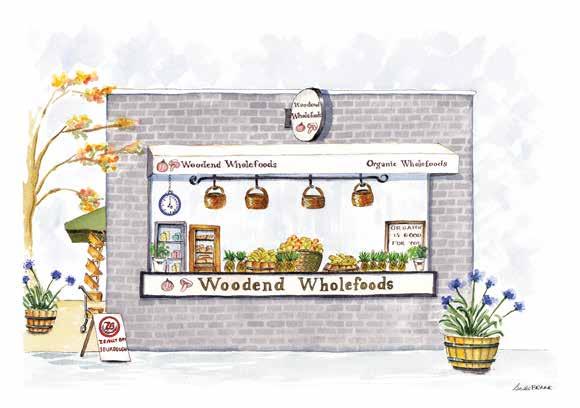
Woodend Wholefoods
FILLED TO THE BRIM WITH ORGANIC GOODNESS
Certified organic produce
Torquay sourdough bread
Handcrafted chocolates
Organic milk varieties
Dukes organic coffee
Bulk coffee beans
Local organic eggs
Organic beef cuts
Organic chicken options
Organic salmon/trout
Bulk refill station
Flour & grains
Spices & herbs
Rice & oats
Nuts & seeds
Chocolate items
Cleaning products
Personal care items
S ething f e ry individual
Moves House Merenda
BISTRO MERENDA
PHOTOS BY AMBER GARDENER
STORY BY LARISSA DUBECKI
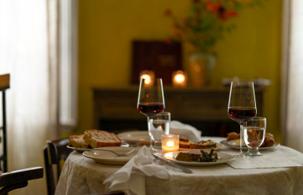
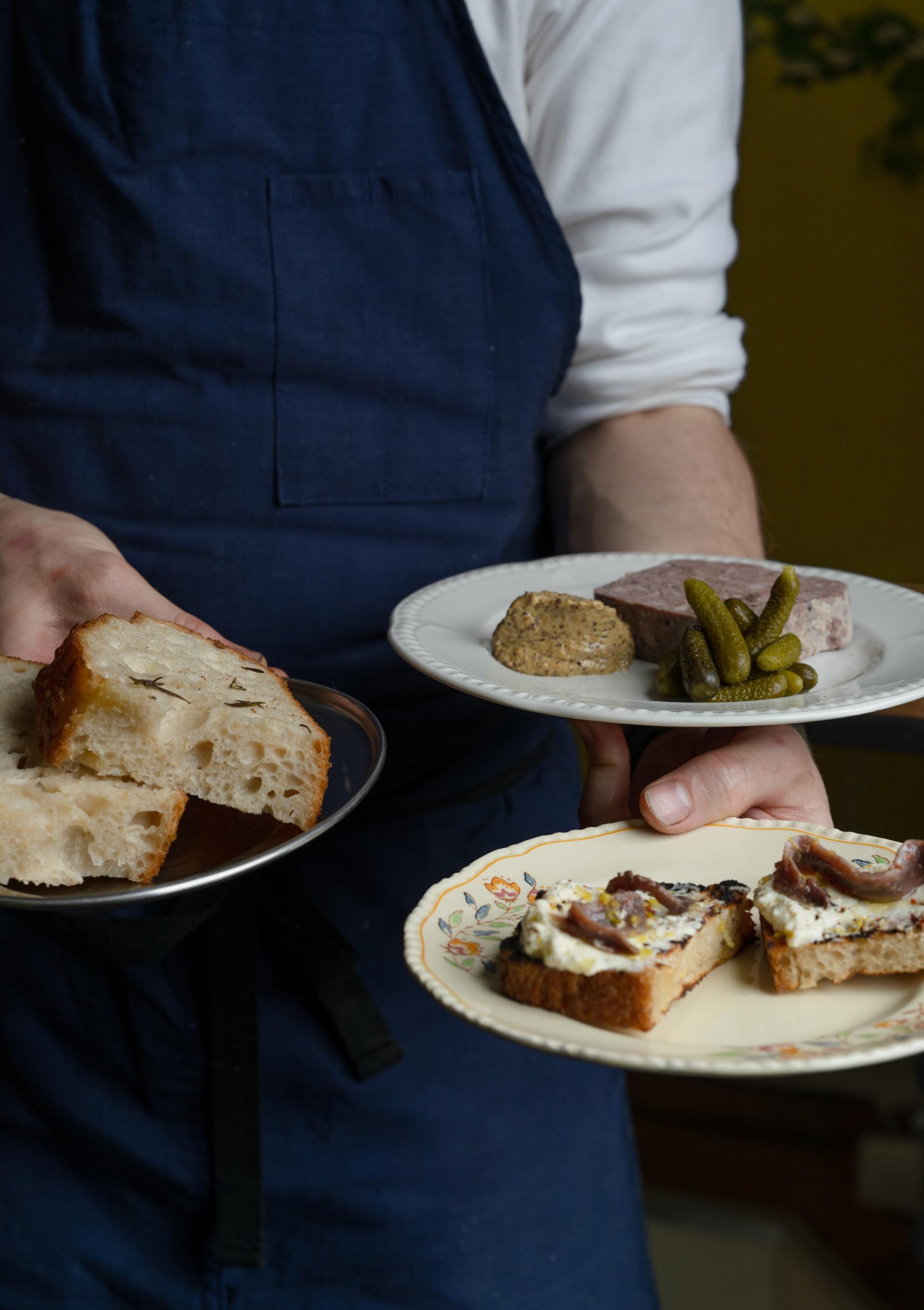
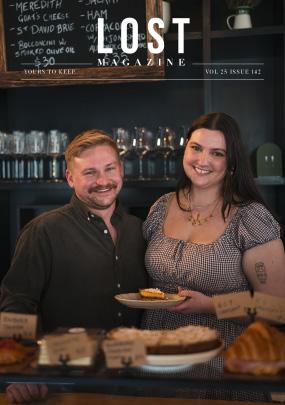
Daylesford’s favourite wine bar has grown up and moved out, all without losing its soul. Bar Merenda’s recent move into new premises is a shift that initially inspired dismay among its rusted-on tribe of fans, but Andy Ainsworth, who opened the OG venue on Howe Street with wife Clare in 2021, says the transition has been warmly received. “People seem to be responding well to the space and using it how we’d imagined they might,” he says.
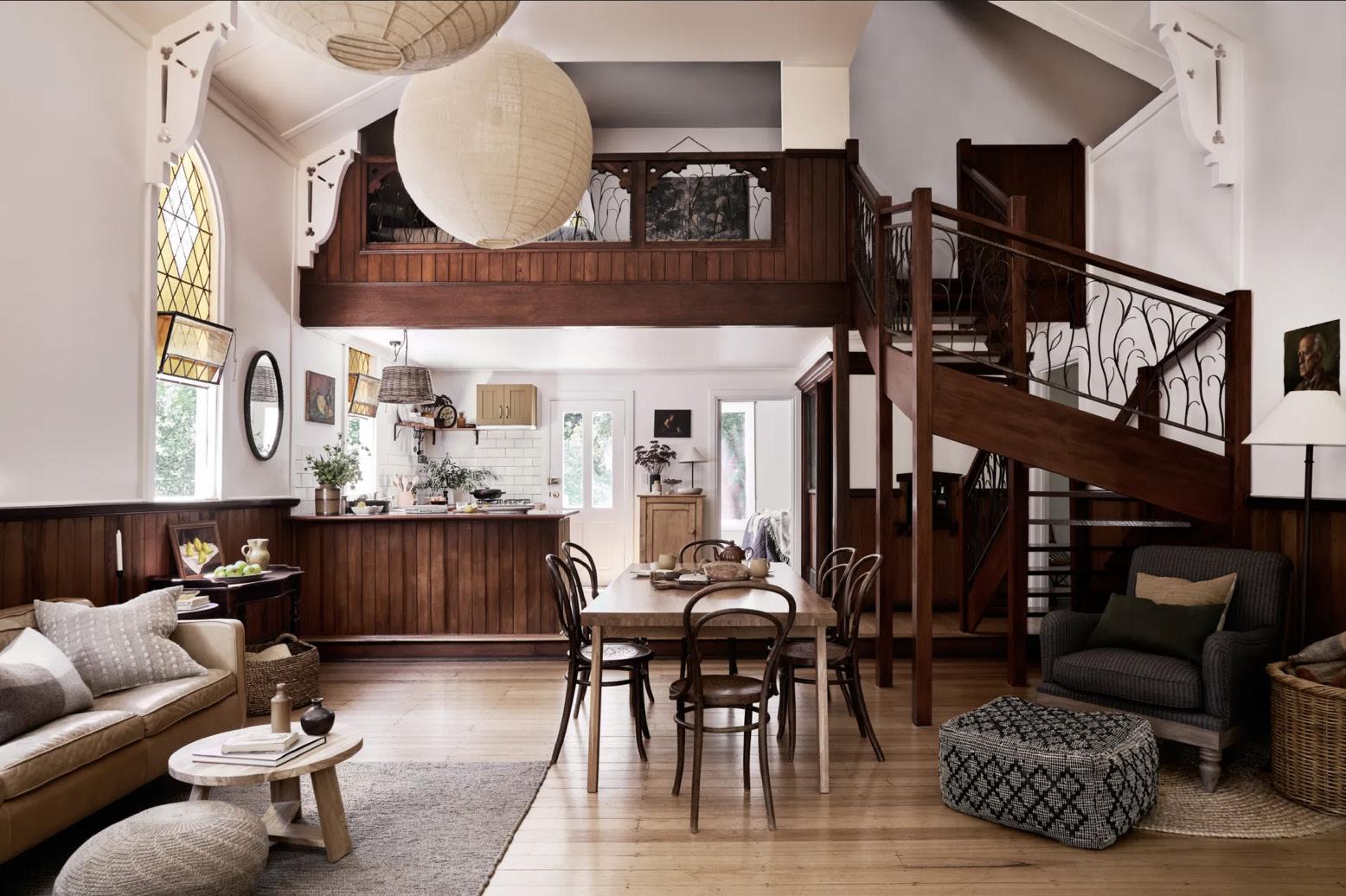
The team has taken over the former Pancho site - an address already dear to many locals - and transformed it into a venue with a dual personality: intimate downstairs wine bar, refined upstairs dining room.
Downstairs is designed to be easy, fluid and spontaneous. “We want to sort of be that allday, all-night casual wine bar,” says Andy.
“It’s an à la carte blackboard menu… maybe they want a snack, maybe they want a bowl of soup, maybe they want something off the grill.” It’s a promise of generosity without pretence: a place where locals know they can simply wander in: “No reservations. I just want it to be dynamic.”
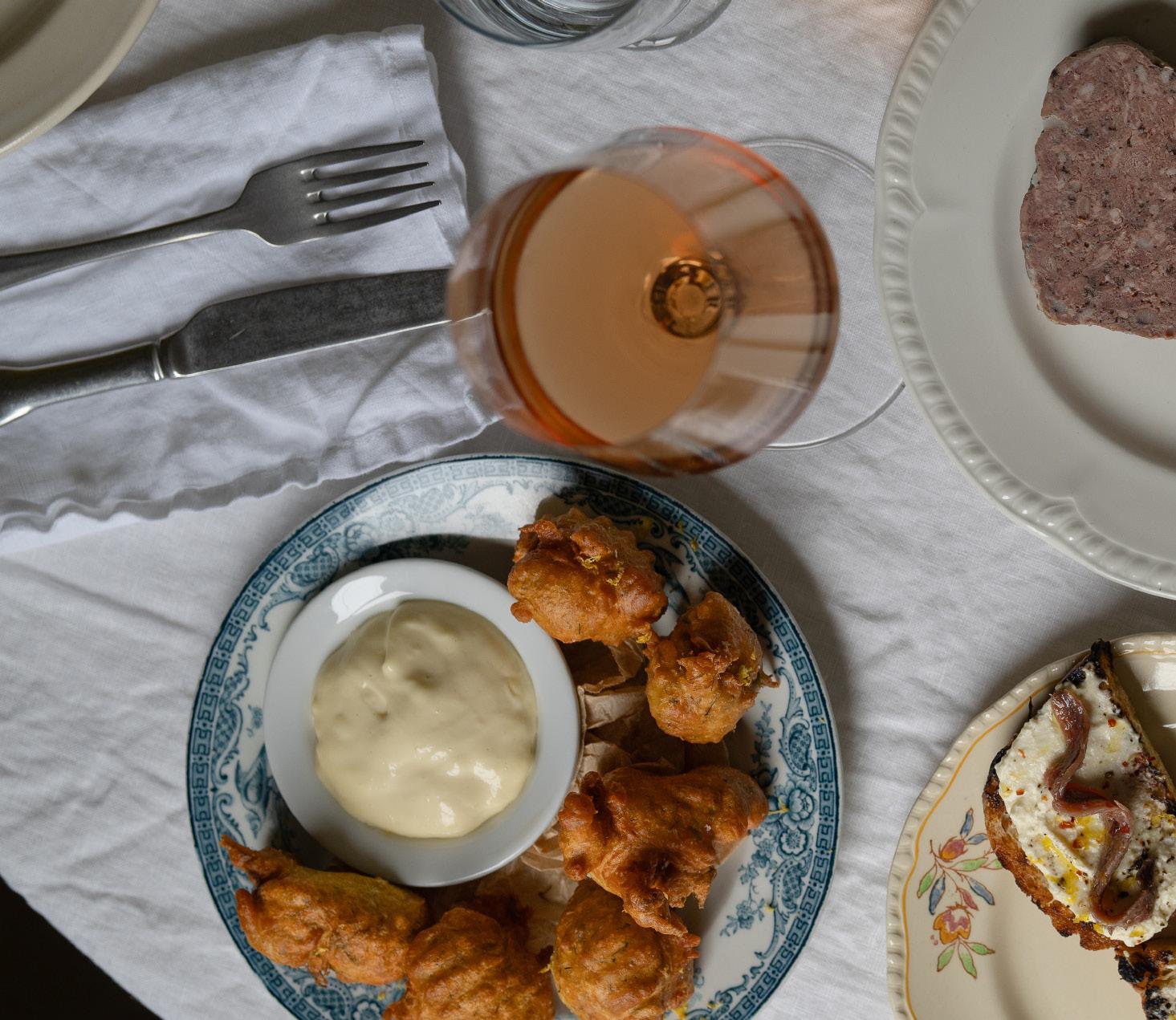
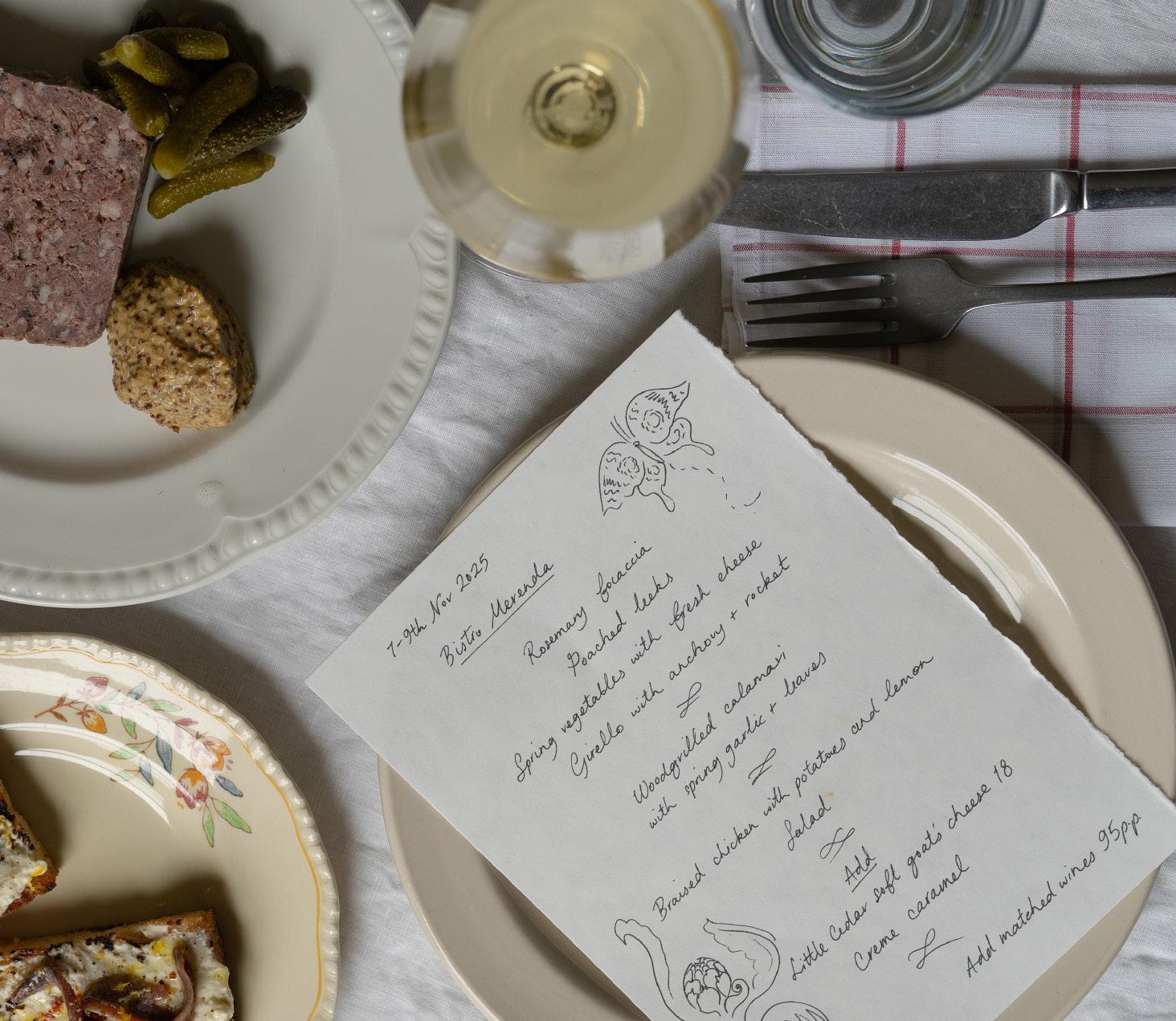
That dynamism extends to the menu itself. As always, the venue is guided entirely by ingredients. “It’s written each week, and it’s purely based off what we receive from this wonderful network of small local producers… If they’re not growing it, we’re probably not selling it.” It’s a philosophy that turns the region’s seasons into a weekly creative challenge. “We kind of go, what’s growing? What have our farmers got? What do the fishermen say is great? And then we work backwards from there.”
Up the curving staircase, the mood shifts.
The room is small - just 16 seats - and the energy is quieter. “We do a weekly fourcourse menu up there,” Andy says. Bookings are recommended; the experience is more of a commitment. As with downstairs, the wine selection threads through both spaces, and diners can opt for a thoughtful pairing. “For those who just want to leave it up to us entirely, we’ve always got really cool things open.”
Space was a key part of the decision to move. “It’s just a spectacular building… there’s some wonderful outdoor spaces as well,” Andy says. Kerbside seating and a leafy rear courtyard invite the wine bar to spill outward when the sun appears.
“People can perch on the windowsill… the capacity can grow quite a lot when the weather’s good.”
Inside, fire is the new heartbeat. The team kept the open fire but shifted it into the kitchen, extending their cooking possibilities.
“We’ve installed a little wood-fired grill that we have going all day,” Andy explains. The grill, he adds, brings “that charry goodness” to everything from vegetables to meat, an elemental new layer to the food. Fish, pork, leeks - anything can pass over the coals.
“It’s a nice way to cook… very much about the core ingredients rather than fancy techniques.”
Despite the move, the team is unchanged. The kitchen, the floor and the philosophy - all intact. “It’s not like a new restaurant opening,” says Andy. “It’s just like moving house.”
Bistro Merenda - Bar Merenda
117 Vincent St, Daylesford barmerenda.com.au
Botanical
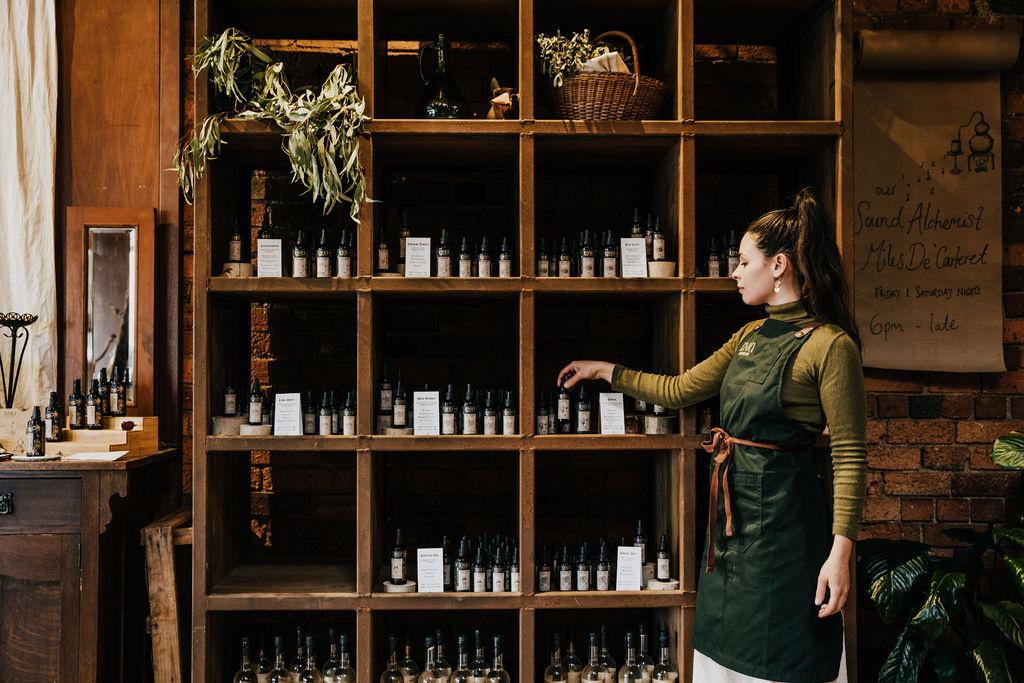
ENKI APOTHECARY
STORY BY MAHMOOD FAZAL PHOTOS BY CHRIS TURNER
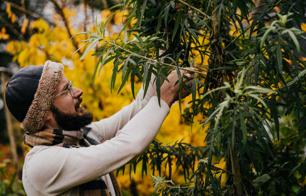
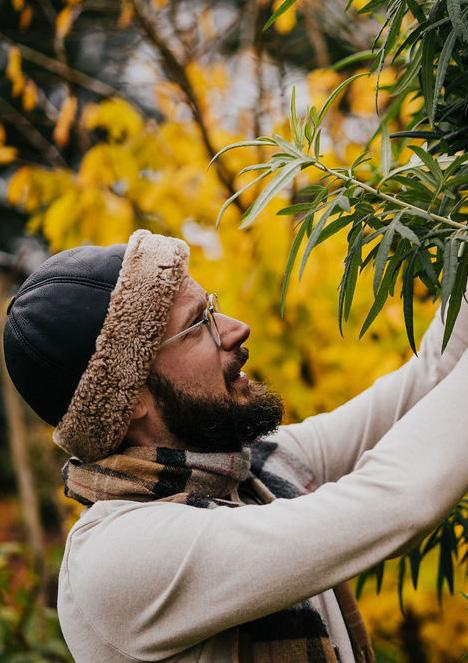
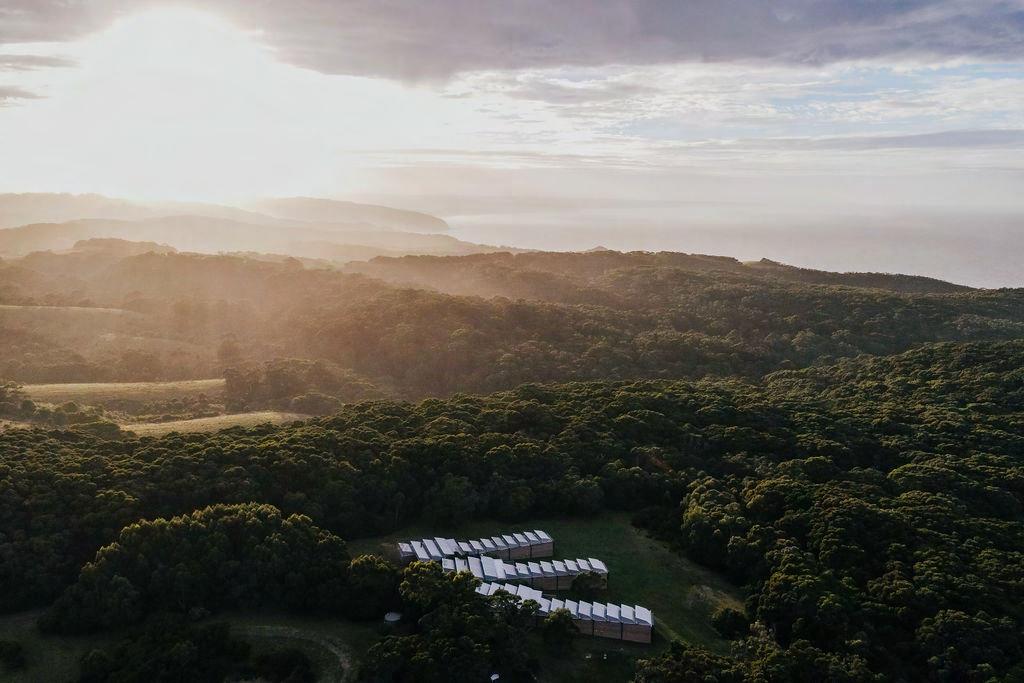
On a windy rise in Musk, Jesse Leith says the new Enki farm is rapidly coming to life. “We’ve been heads-down in that project,” he tells me. “But it’s coming along, man, and it’s going to be quite a stunning thing.”
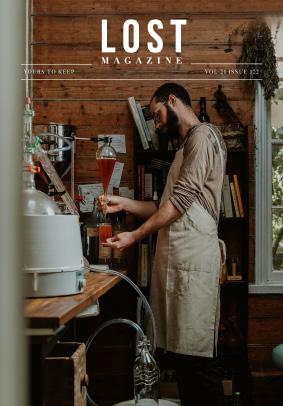
For Leith, the farm was never a side project, it was the gravitational centre. “We’ve had it for three, three and a half years,” he says. “It’s been producing the herbs for the company, and the lab got moved there two years ago. All the extraction happens on site now.” The quiet escalation; new lab, new equipment, expanded acreage, has crept up on him. “Manufacturing has been scaled up quite a bit,” he adds. “We’ve got over fifty botanical species we’re using for the company.”
When I ask which plants anchor Enki’s apothecary, he doesn’t hesitate. “Ashwagandha is a key one. Very hard to grow in Australia, and very hard to get good quality worldwide. To grow that biodynamically is big.” Then the mushrooms: “Native Australian reishi, native Australian lion’s mane.” And the old-world herbs that read like notes from a medieval pharmacopeia: “Yarrow, calendula… baronia, which is a native we grow for skincare. Ashwagandha and shatavari are big ones. And Siberian ginseng…people love hearing we’re growing ginseng.”
He describes the plant’s journey with a craftsman’s patience. Ashwagandha, he says, “is very hard to grow as a perennial in temperate climates, but with our biodynamic techniques we manage to get it there.” Most of their herbs are grown from seed. “It means they’re adapted to the area. They grow two to three years before harvest. We hand-harvest everything. It’s a root, so we dig the roots, cure them, and then they go into the extraction process to be made into a high-potency botanical extract; supplements, skincare, aromatics, depending on the plant.”
The project circles around an ethos Leith is certain will define the next decade: nutrient density. “Organic really means nothing,” he says. “In the 1920s an orange was always organic, and the nutrient density of that orange was eight times that of an organic orange today.” What matters now, he insists, is soil. “Nutrient density is going to be a significant store of value in the future. That’s what I would want to invest my money in… and that’s why I do.”
Enki’s agricultural philosophy rests on three pillars: permaculture, syntropic agroforestry, and biodynamics. “Syntropic agroforestry is the commercially viable form we’ve gone for,” Leith explains. “Trees and perennials grown close together, lots of chop-and-drop to rehabilitate the soil.
We put in three times the garden waste we take out.” The biodynamics are informed by Enki’s spagyric practice. “We can manufacture our own biodynamic applications,” he says. “Above-and-beyond quality preparations. They do a lot more for the soil.”
The farm will open to the public in January. “By appointment only,” he says. Not a café, not a cellar door in the wine-country sense. “It’ll be low-key, low-volume. A tea house, an herbal apothecary. A curated retail experience.”
He envisions “garden tours, a tea house, workshops, distillation workshops, herbal gardening workshops. Very experiential.” The intention, he says, is educational. “Enki’s experience spaces aim to connect people with food as medicine and herbs as the forgotten food that is our medicine.” The teas and infusions will allow for a slower communion. “By sitting down and engaging with the plants, it gives a connection to nature. That’s our botanical renaissance. We want people to be connected to plants and nature. We think it’s important. We love it. And it’s changed our lives.”
Before we finish, he adds one more thing: “There’ll be skincare and perfume experiences too.” He says it almost casually, though it feels like another door opening.
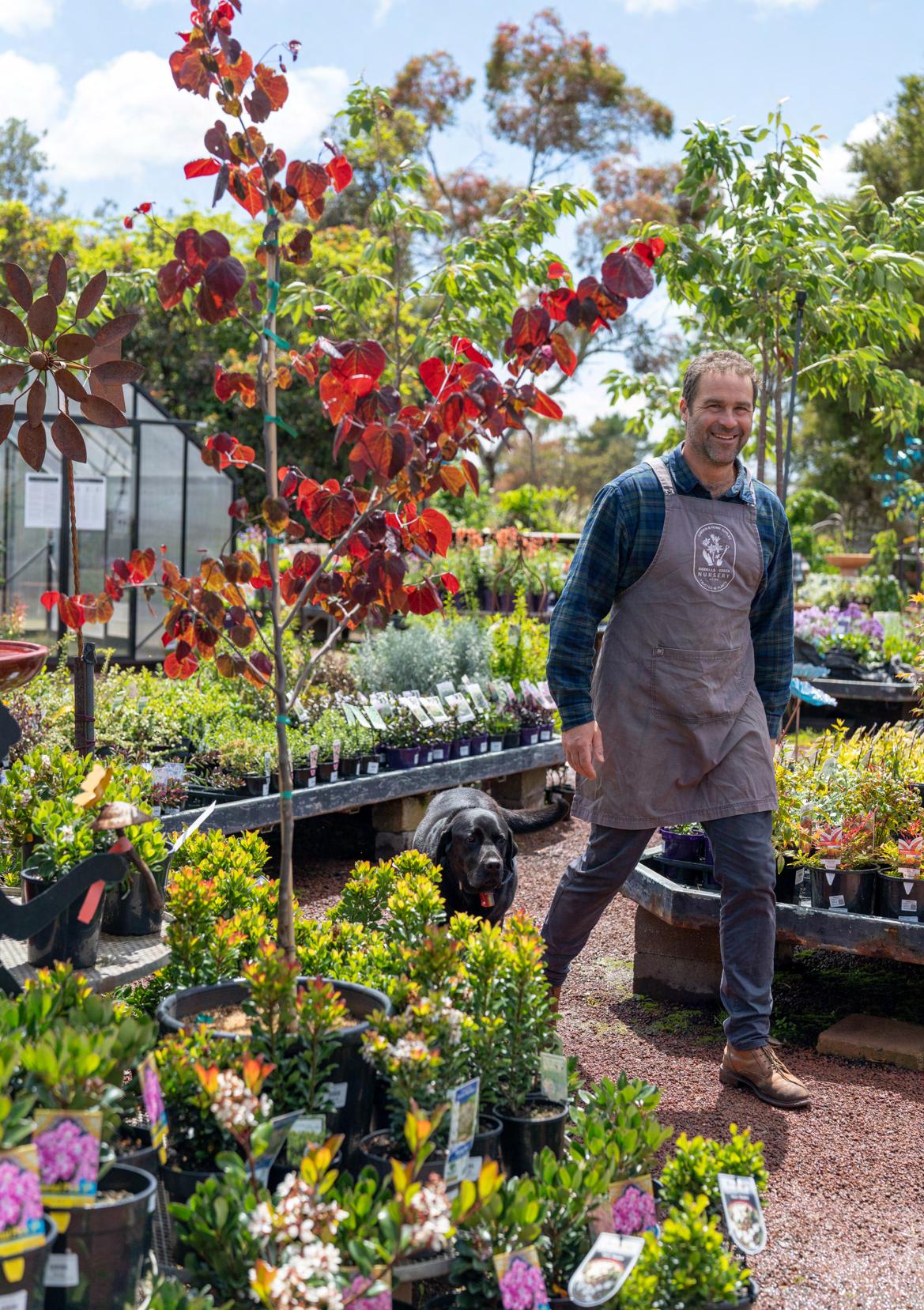
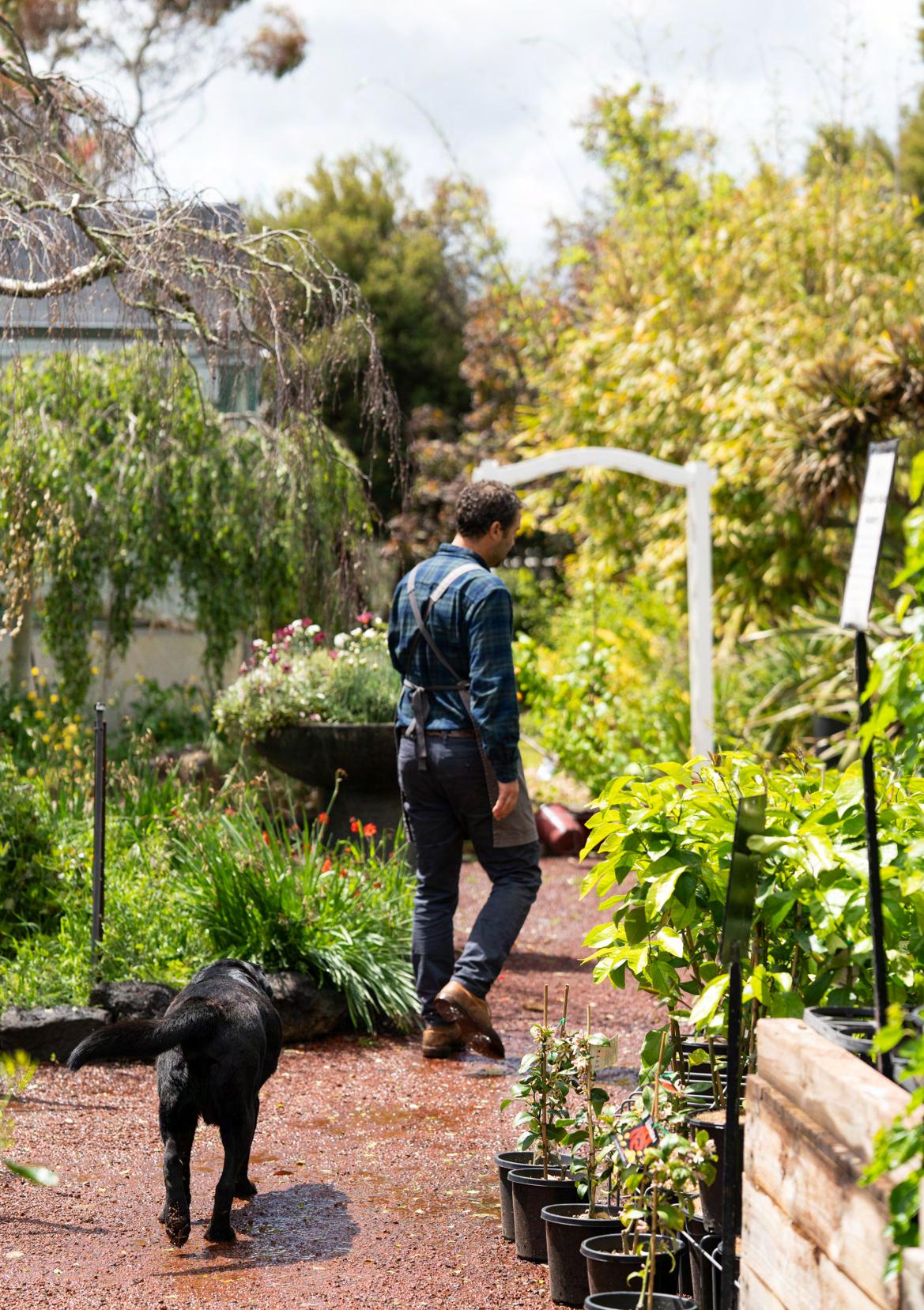
When Geordie Taylor looks back on the path that led him to Riddells Creek Nursery, he traces it to where he began. “I grew up on a broad acre farm, and… spent a lot of time in a five-acre garden,” he says. “I always enjoyed being outside in the garden… that was part of life.”
As a young adult, creativity pulled him in another direction. “I kind of decided that I was a bit more creative… and really enjoyed performing arts,” he says. After graduating from acting school, he realised that steady acting work was elusive, so he broadened his skills. “I ended up doing events, and I made a film on the farm. And from that film we did a film festival.” The festival led to hospitality, then corporate events, and eventually to a leadership role. “Eight years later, I ended up running the franchise network for Hudson’s Coffee.”
RIDDELLS CREEK NURSERY
STORY BY MAHMOOD FAZAL PHOTOS BY AMBER GARDENER
He loved business, but the travel and pace eventually wore thin. “I was commuting a lot… going all around Australia, flying, and I just wanted a change.” So he wrote down the three things he wanted from his next chapter: “Being outside, being able to pick up my kids every day, and finding a business that could support the lifestyle we wanted.”
The nursery appeared almost serendipitously. “I had an alert on for commercial businesses in the Macedon Ranges, and it came up,” he recalls. “I just looked at it and went, ‘Oh, I could do that.’”
With years of experience in retail, operations and business strategy, the fit felt right.
“I kind of trained perfectly to buy a retail business. And this one just happened to be living things.”
He remembers telling his wife, designer Charlotte Coote. “I bounced it off my wife and she said, ‘Really? You really want to do that?’ And I was like, ‘Yeah, I think I really do.’”
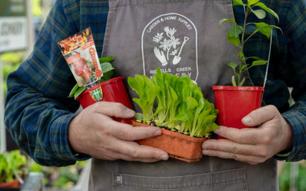
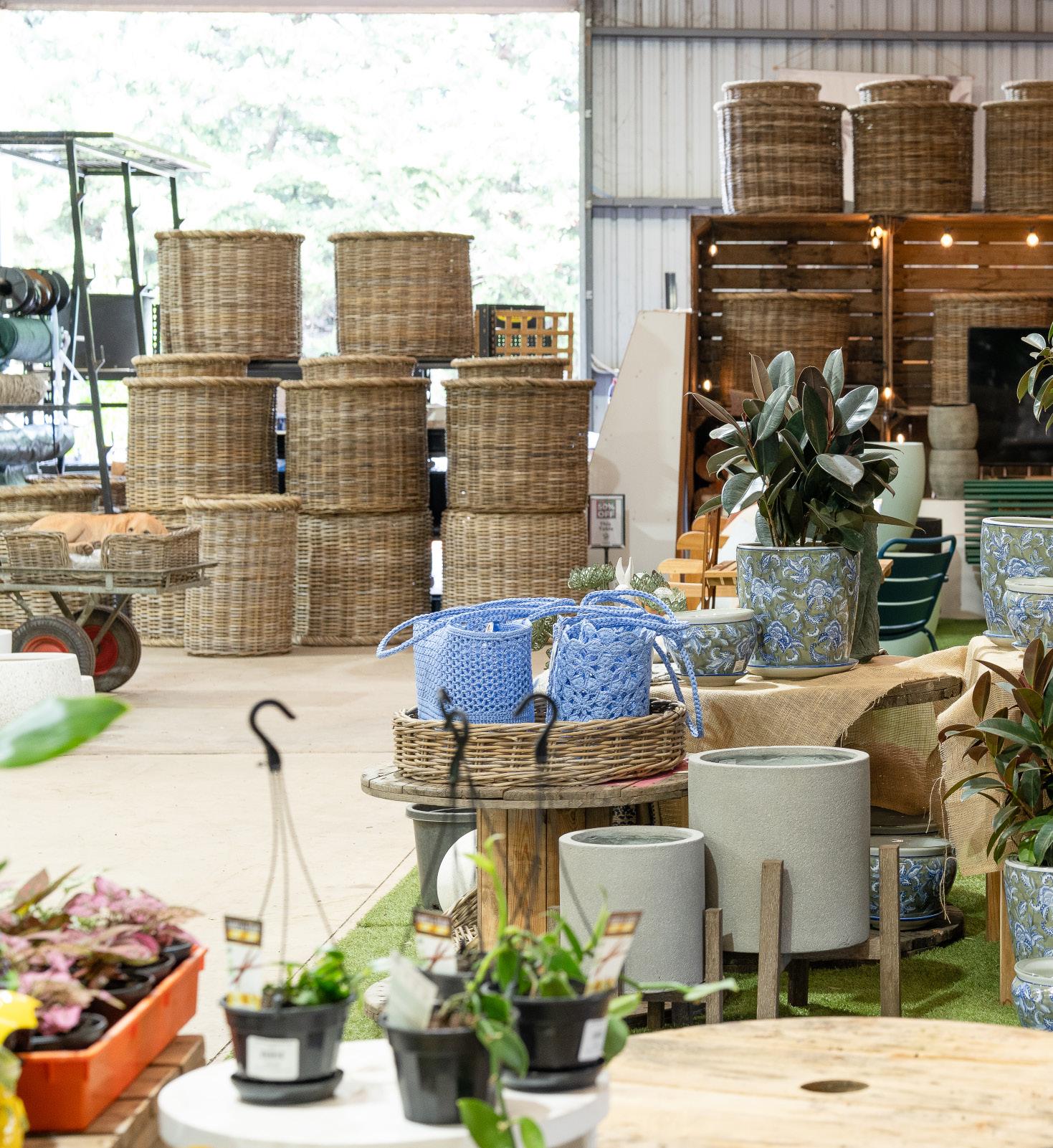
Today, Riddells Creek Nursery is a beloved stop for gardeners. Geordie believes the appeal is simple. “You can’t really replicate the visceral experience of walking through the plants and the garden,” he says.
“People want to come and experience the nursery… it’s a beautiful environment.” His performing-arts instincts still play a role. “There is a huge element of theatre in retail,” he says. “I want that entrance to be something people are dying to see again…
it’s always changing.” Living on Mount Macedon also shapes his eye. “I’m a tree addict because of where we live,” he laughs. “We just got in a whole lot of beautiful maple. I try and dress the space the way our garden looks at home.”
The nursery’s plant trends shift with the seasons, but some favourites stand out.
“At the moment it’s hydrangea,” he says. “Hydrangea in flower is one of our key lines, and we have a huge and great selection. We’ve definitely become a bit of a hydrangea specialist.” Natives are also surging. “It’s over 20% of our plant sales… with the climate, everyone’s more focused on natives, and I think that’s really good.”
Horticulture continues to teach him new lessons especially about soil. “Soil health and nutrition is vastly under-understood,” he says. Seeing what could grow in nutrient-rich soil in Tasmania changed how he gardens. “If your soil is healthy, you can really grow a lot more than you think.”
Community, meanwhile, is second nature. “My grandmothers were very committed to community… my parents have always given back,” he says.
“I think it’s important. I enjoy helping people.” And he encourages customers to visit and ask questions.
Looking ahead, the nursery’s future includes some logistical questions. “We are a tenant… at some point we may need to shift to a close-by site,” he says. “But I love the business, and I’ll continue running it.”
Before signing off, Geordie makes sure to emphasise one thing above all: “My team are amazing… without the team, I’d be nothing.”
Riddells Creek Nursery 675 Kilmore Rd, Riddells Creek riddellscreeknursery.com.au
Find Your Sanctuary This Festive Season in Spa
Country
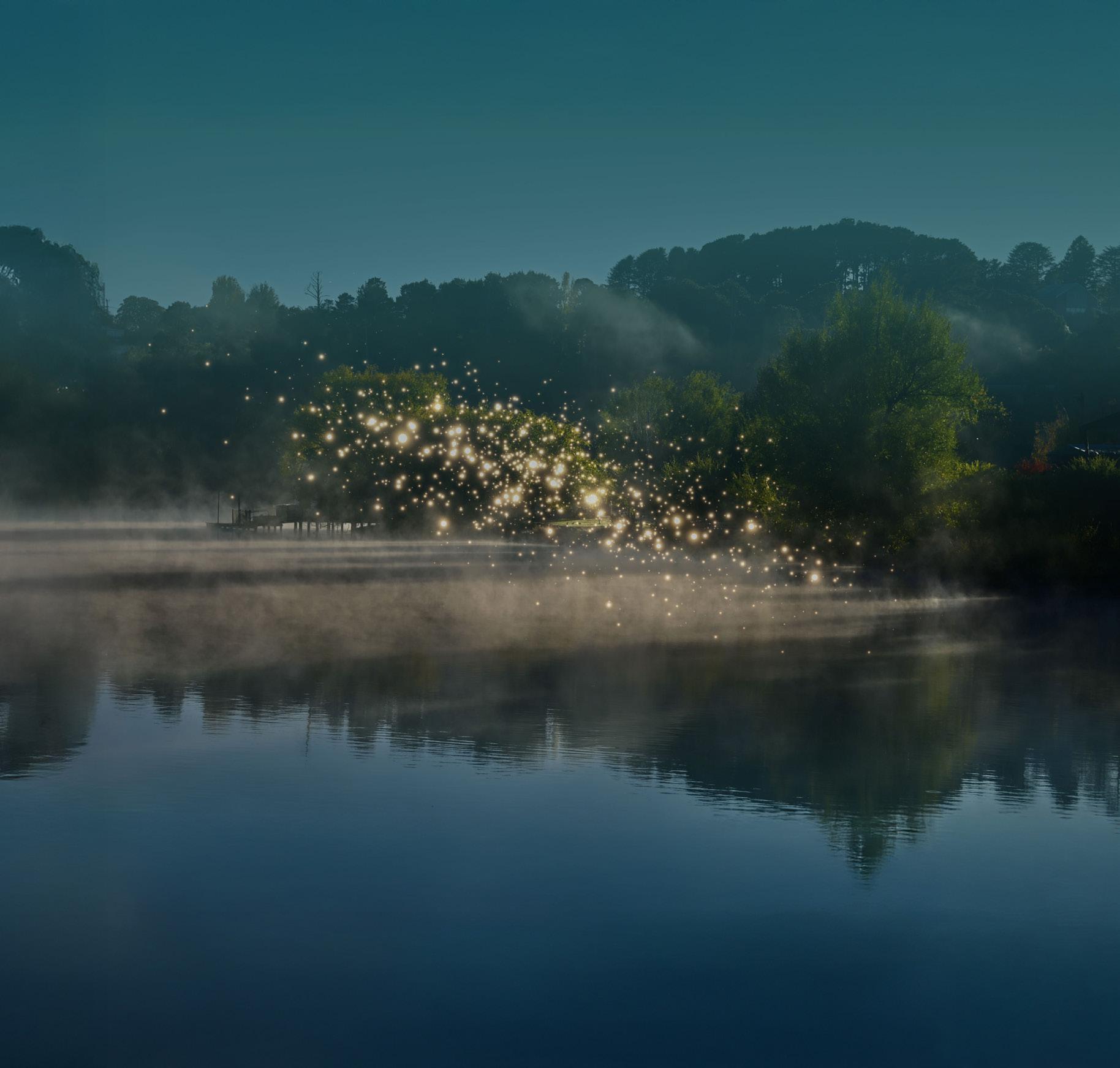
As mist settles over Lake Daylesford, there’s an air of gentle anticipation — that feeling of promise just before something wonderful happens — a reminder that magic lives here.
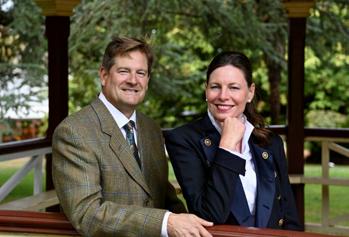
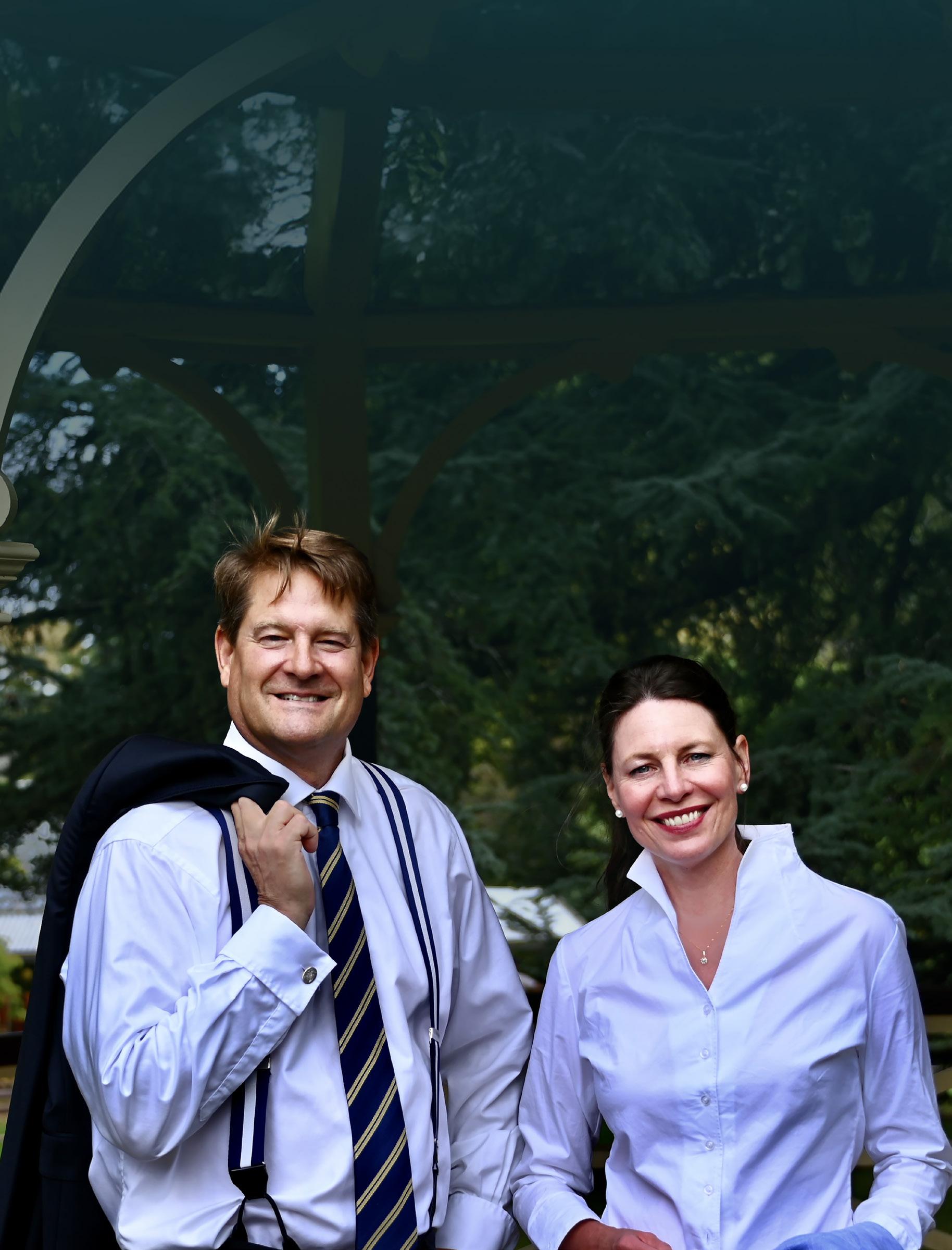
Whether you’re buying, selling, or simply dreaming of a new beginning, let Spa Country Real Estate guide you home this festive season.
SEBASTIAN BROWNE
0410 400 919
SUZI BROWNE
0438 886 848
Dreaming of your next chapter?
Find out what your property is worth today.
Scan the QR code for an instant property estimate, or contact us for a confidential consultation.
03 5348 1388
Time in a
Bottle
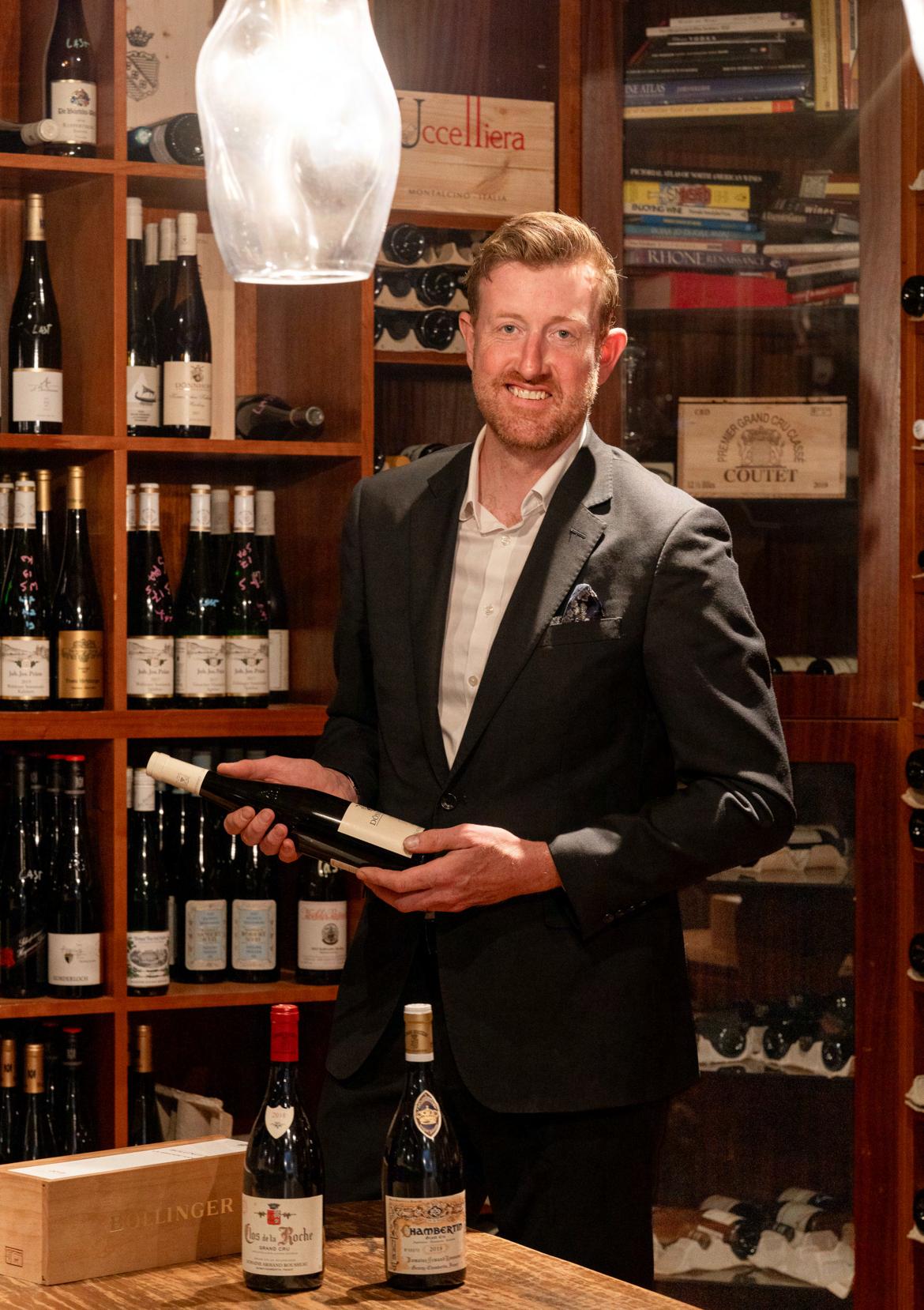
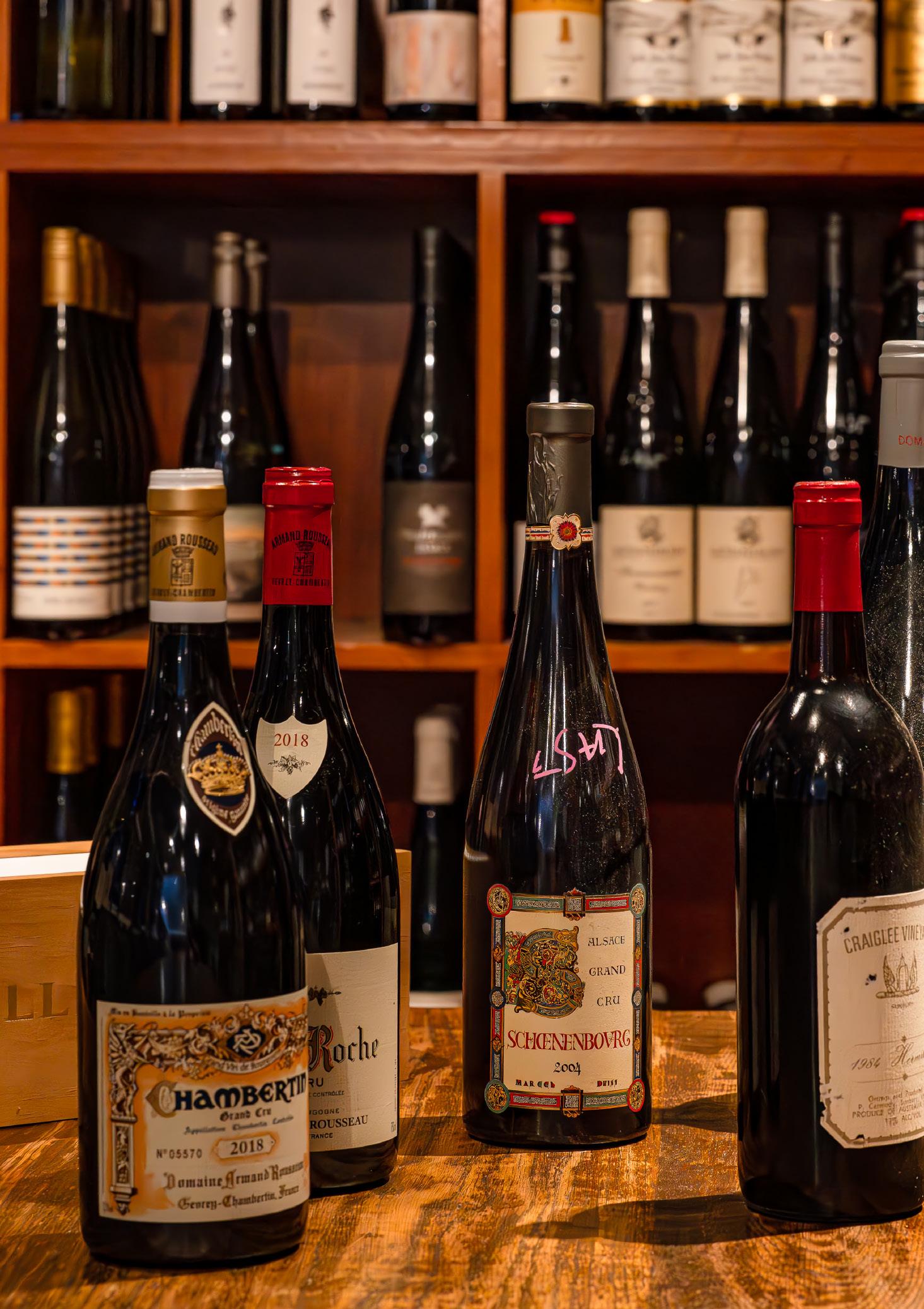
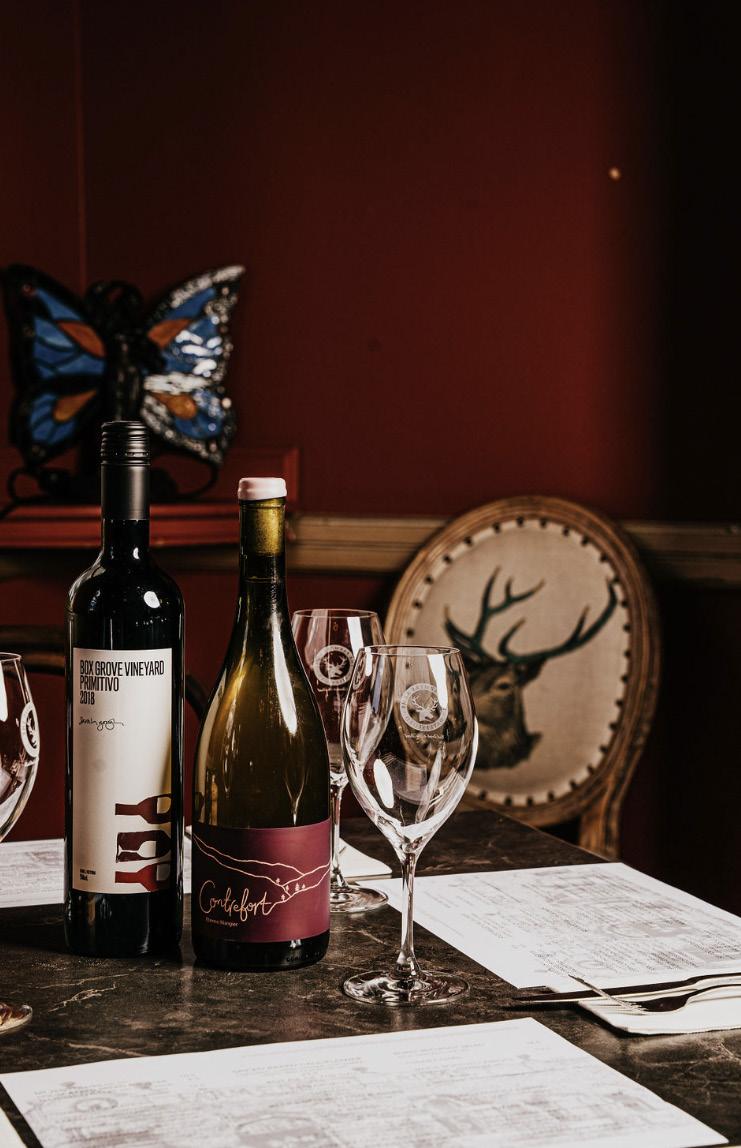
In the absence of a time machine, a bottle of wine is the most foolproof way we have of seeing into the future right now. This is not about the effects of drinking too much wine, but how the practice of cellaring and aging wine can give us a glimpse of how a recently bottled wine is going to taste in the future. Comparing two wines from the same winery made from the same grape variety but with one being a decade or so older than the most recent vintage is something that Robin Wilson, Beverage Director at Daylesford’s Lake House, has an almost evangelical passion for.
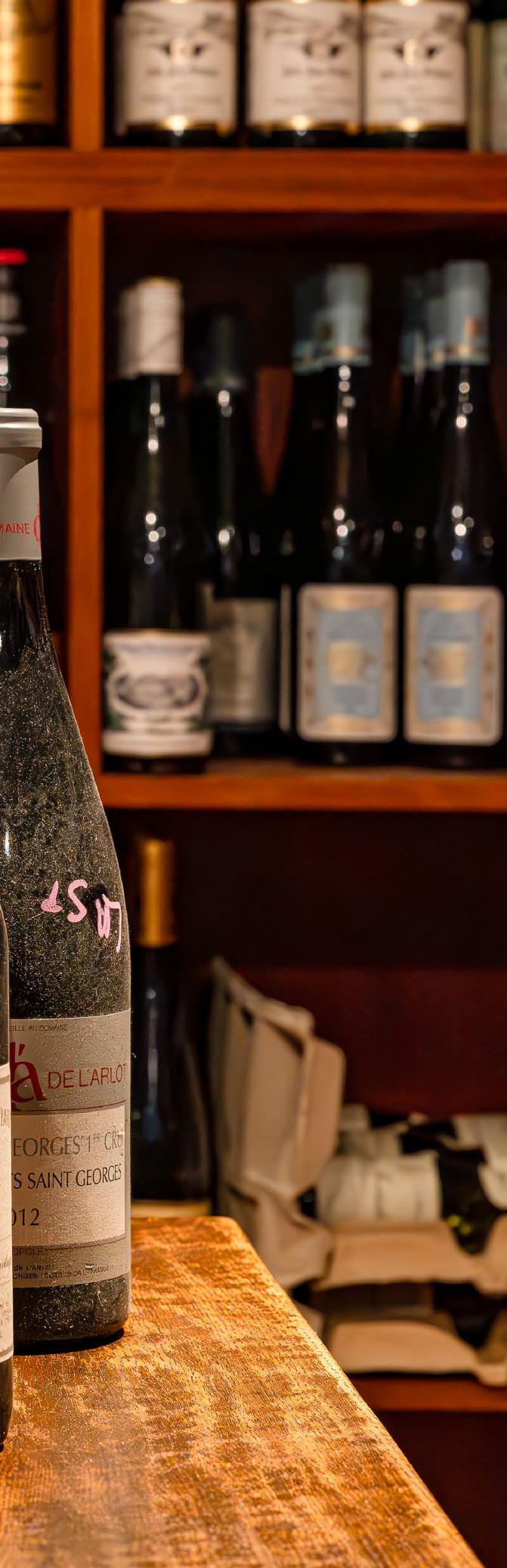
“We have a remarkable cellar that’s been here for 41 years and part of that is an amazing collection of aged wines,” he says.
“We have a cellar for the by-the-glass and faster moving wines on our list but we also have a long-term cellar with bottles that we only put on the list when they have ten to twelve years of age on them.
“Lake House is a special occasion restaurant and people who come here for a celebration like to drink something unique that they can’t get everywhere else.
STORY
ROBIN WILSON
BY MICHAEL HARDEN
PHOTOS BY AMBER GARDENER
We had a lunch recently featuring Bindi’s Block 5 pinot noir, comparing the 2024 vintage with the 2017 and 2000 vintages. This gave us the amazing opportunity to see all the changes that happen with age, the way the primary fruit drops away and you get more texture and richness as the acid softens and broadens, displaying more texture on the palate. With the comparison, you get to witness time in a bottle.”
Given that Lake House’s cellar contains more than 13 000 bottles, Wilson’s enthusiasm is a given, but he’s equally excited about other businesses in the region which are showing a commitment to a cellaring program.
“Places like Bar Merenda and Winespeake in Daylesford and The Surly Goat in Hepburn Springs all have remarkable lists that not only put local wines next to the Barolos and Burgundies but are also committed to small producers and aging wines. This means well-balanced and exciting lists where you can always find something you haven’t seen before and really want to drink.”
Access to wines with age on them also provides a handy reference point for the mere mortals amongst us who might like the idea of putting some wine aside to drink for a special occasion down the track. Being able to experience the complexity that age brings to a particular wine can be a great marker for which wines to buy for this purpose. To age wines effectively, though, you do need the right conditions.
For starters, you’ll need stable temperatures – “dark, humid and cold” is the ideal. Then, there’s the types of wines that lend themselves to ageing. For the local region, this means chardonnay and pinot noir.
“The Macedon Ranges wines that do well with cellaring are the chardonnays that are lean with good acid which means they age well,” says Wilson. “Our pinot noirs are more tannic, which is lovely because you still have that core of fruit but as they age, they start to show some really beautiful, slightly more savoury characteristics.”
In lieu of that time machine, aged wines provide a reassuringly accurate prediction of the future. In turbulent times, that’s surely something deserving of raising a glass.
Lake House 4 King St, Daylesford lakehouse.com.au
As directors of Spa Country Real Estate, Sebastian and Suzi Browne personally represent a limited number of homes — delivering prestige service with integrity, genuine care, and decades of real industry experience. SEBASTIAN BROWNE 0410 400 919 SUZI BROWNE 0438 886 848
Reasons to get LOST
THE LOST TEAM ARE EXPLORING THIS SUMMER
Plein Air Painting Retreat at Wombat Park Estate
Escape to Daylesford for a weekend Art Retreat at Wombat Park Estate, with renowned landscape artist Lana Daubermann. Enjoy rare access to Wombat Park Estate’s private grounds while spending two immersive days painting en plein air with Lana’s expert, intuitive guidance.
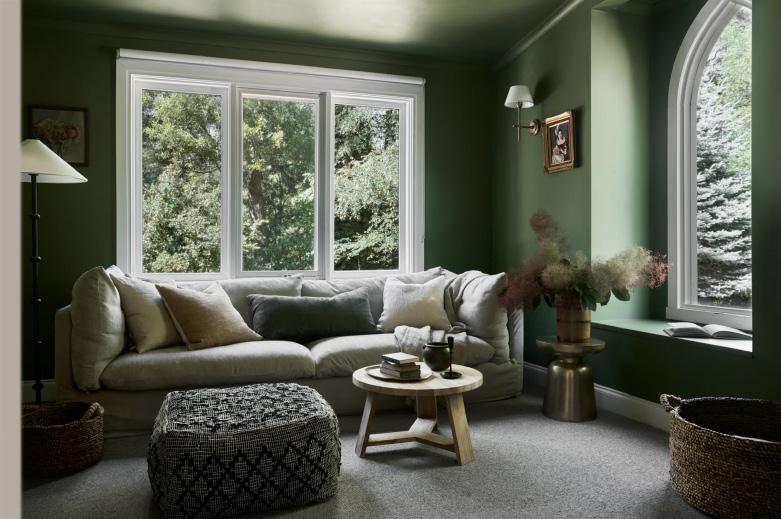
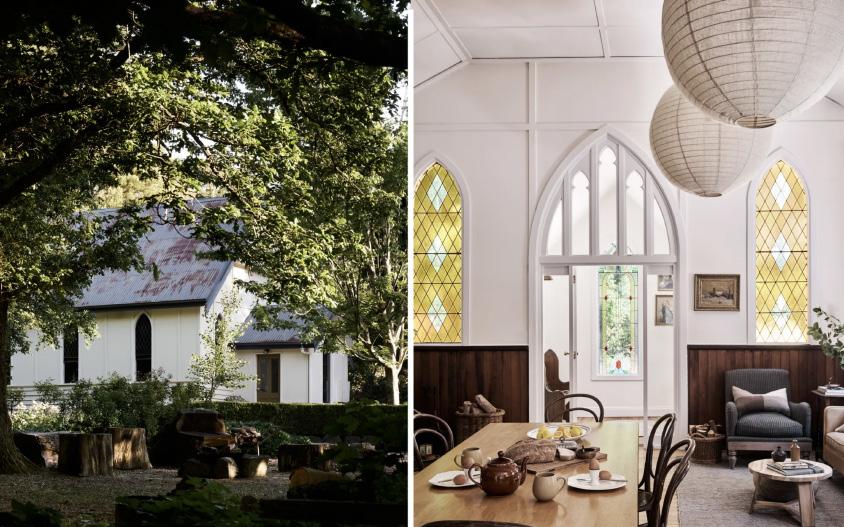
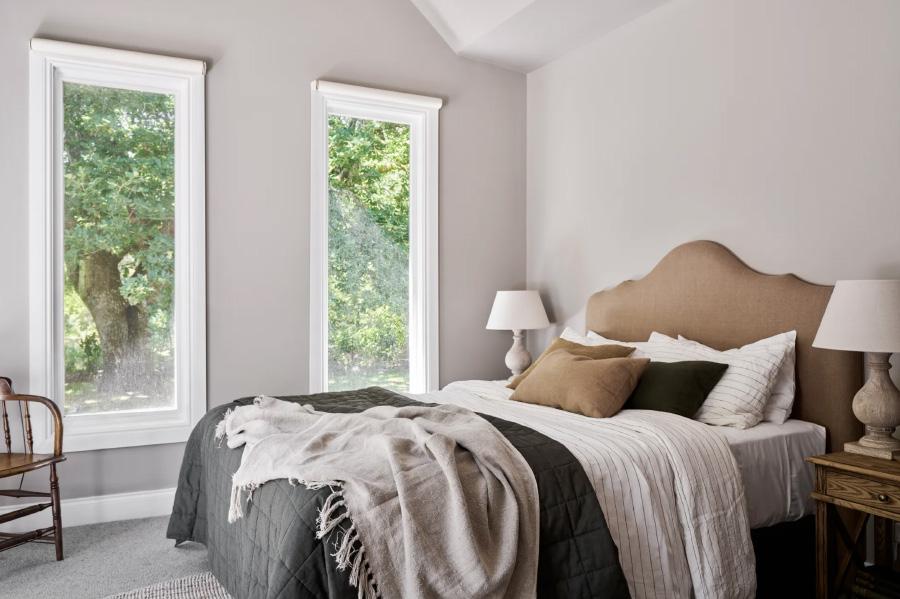
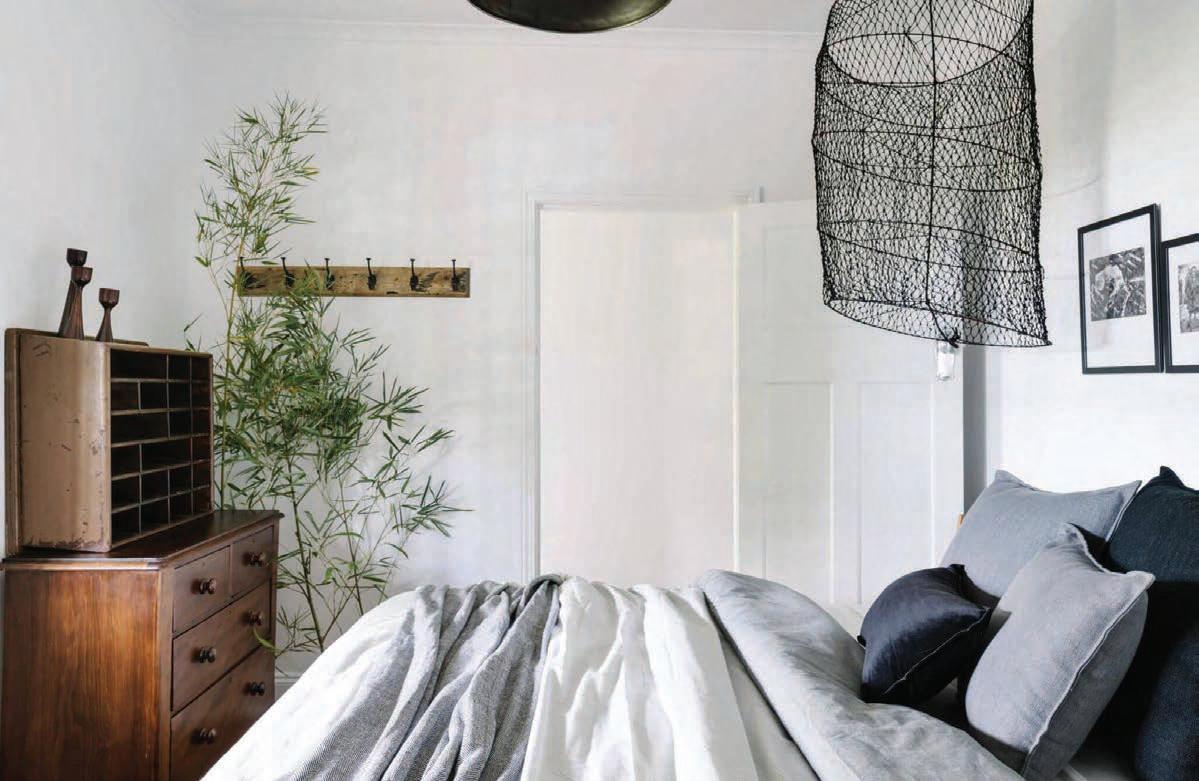
Stay at the elegant Lewellyn House, a beautifully restored historic home in the heart of town. With sunset aperitivo, all meals included, and a welcoming atmosphere for both beginners and experienced painters, this retreat offers a focused chance to slow down, reconnect with your creativity and paint within one of the region’s most inspiring private estates.
6-8 February. For info and tickets visit thehousesdaylesford.com/ theretreatsdaylesford
Woodend Pool Party
The Macedon Ranges Youth Team is hosting a pool party! Join them for a delicious sausage sizzle and enjoy music from a DJ.
Woodend Swimming Pool 14th January 12-3pm
Mamma, Yokai!
Local puppetry creatives Hamish Fletcher and Tamara Rewse (Things of Foam & Wood) are taking over Kyneton’s Bluestone Theatre for the first creative development of their new bilingual stage work, Mamma, Yokai!
They’ll be joined by artists from Osaka’s KIO theatre company for a cross-cultural collaboration - and you’re invited. Meet the artists, watch the puppets come to life, and discover the yokai hiding within.
Hepburn Bathhouse and Spa has reopened its refreshed Hepburn Pavilion as a vibrant Wellness Café with a new menu by local chef Caliopi Buck. Featuring local producers, the menu includes fluffy crumpets, gourmet bagels, tasting platters, and extensive vegetarian, vegan, glutenfree and dairy-free options. From Wellness Bowls to Devonshire Tea, brunch, lunch and sweet treats, the new café offers a fresh, wellness-driven foodie escape.
Mineral Springs Reserve, Hepburn Springs. Open 7 days.
Plan Your Autumn Now: Two Festivals Heating Up the Central Highlands and Early Bird Tickets on Sale
While autumn may feel a long way off, the Central Highlands is already gearing up for next year’s cultural season - and with CresFest early-bird tickets now on sale, it’s the perfect time to plan ahead.
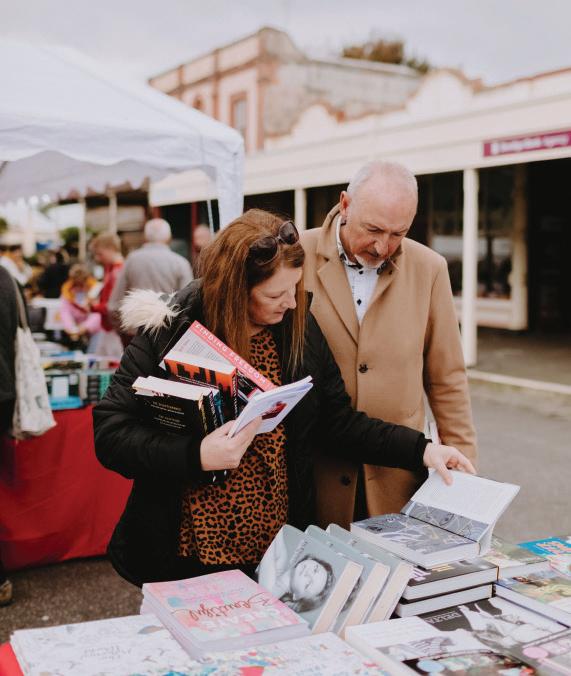
The Clunes Booktown Festival returns on 21–22 March 2026 for its 20th year, once again turning the historic main street into a lively literary village with more than 100 book stalls, thousands of books, and a program of talks and workshops for readers of all kinds.
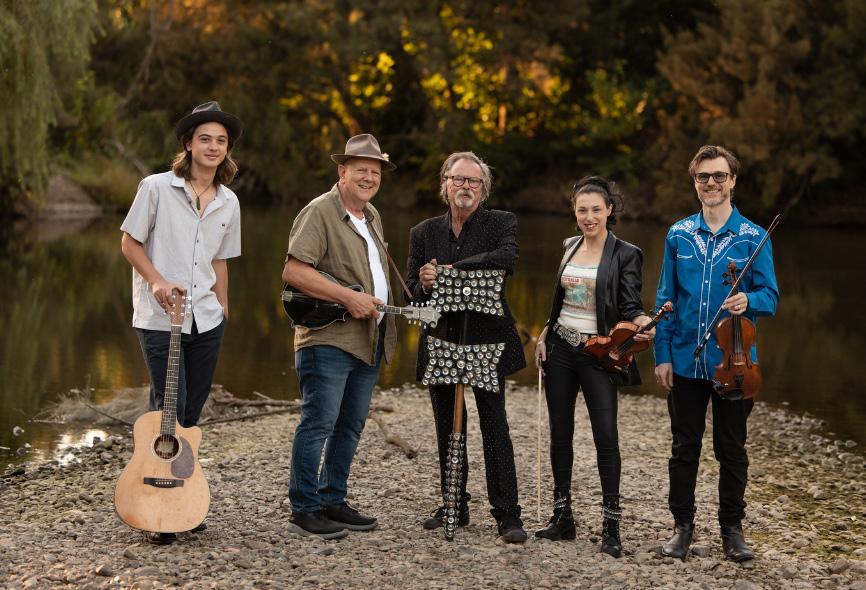
Then, from 10–12 April, CresFest brings three days of folk, roots and world music to Creswick across 12 intimate venues. With over 45 local and international acts - including Fiona Boyes, Natalie & Brittany Haas, Tony McManus, Riccardo
Tesi & Giua, Queen of Hearts and Makepisi - plus workshops, sessions and familyfriendly activities, it delivers a warm village atmosphere and standout regional music experience.
If you like being ahead of the curve, now’s the moment: CresFest early-bird tickets are on sale for a limited time.
Clunes Booktown Festival passes on sale now. Visit clunesbooktown.org.au
CresFest 2026 is a boutique festival capped at 2000 people so buy your tickets early to avoid disappointment. Their Early Bird sale is on now and ends 31 Dec or until allocation is exhausted. Head to cresfest.com.au/tickets
The Bushwackers will be performing at CresFest
A World of Influence at the FARMERS ARMS HOTEL
1 EAST ST, DAYLESFORD
03 5348 2091
farmersarmshoteldaylesford.com.au
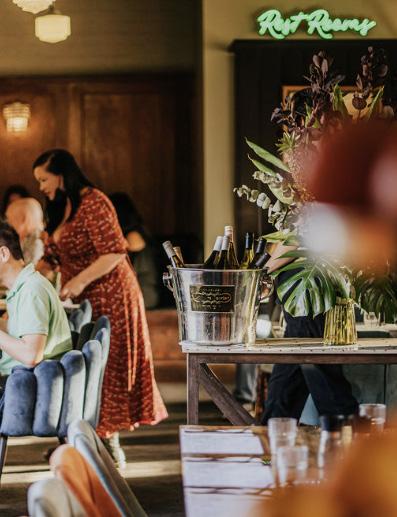
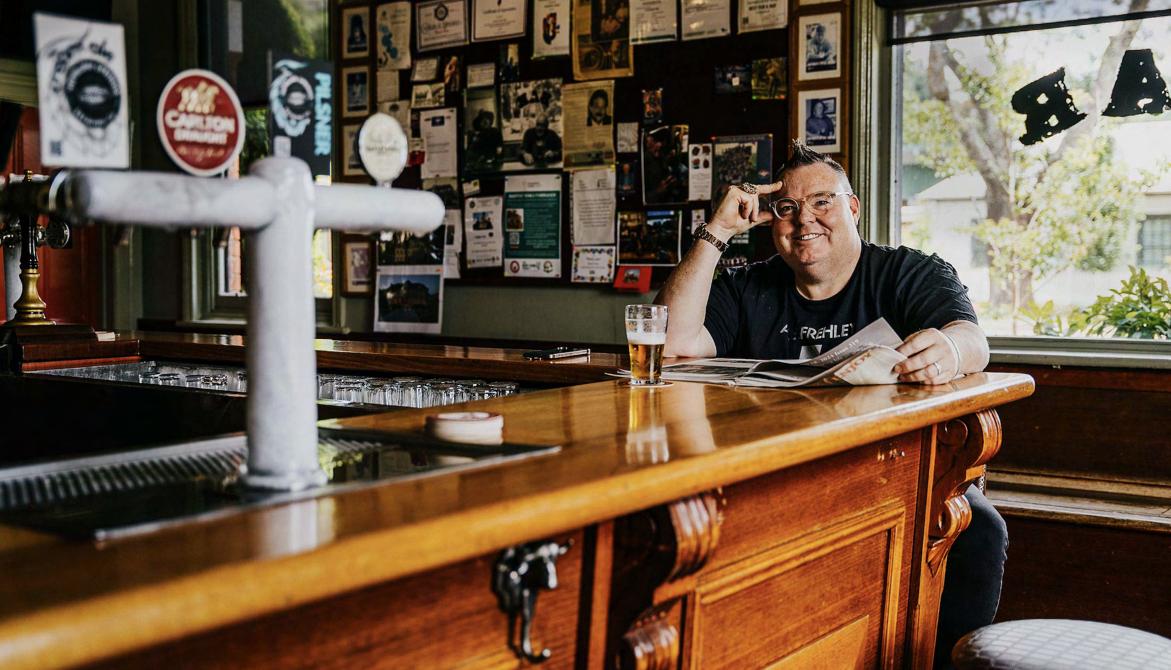
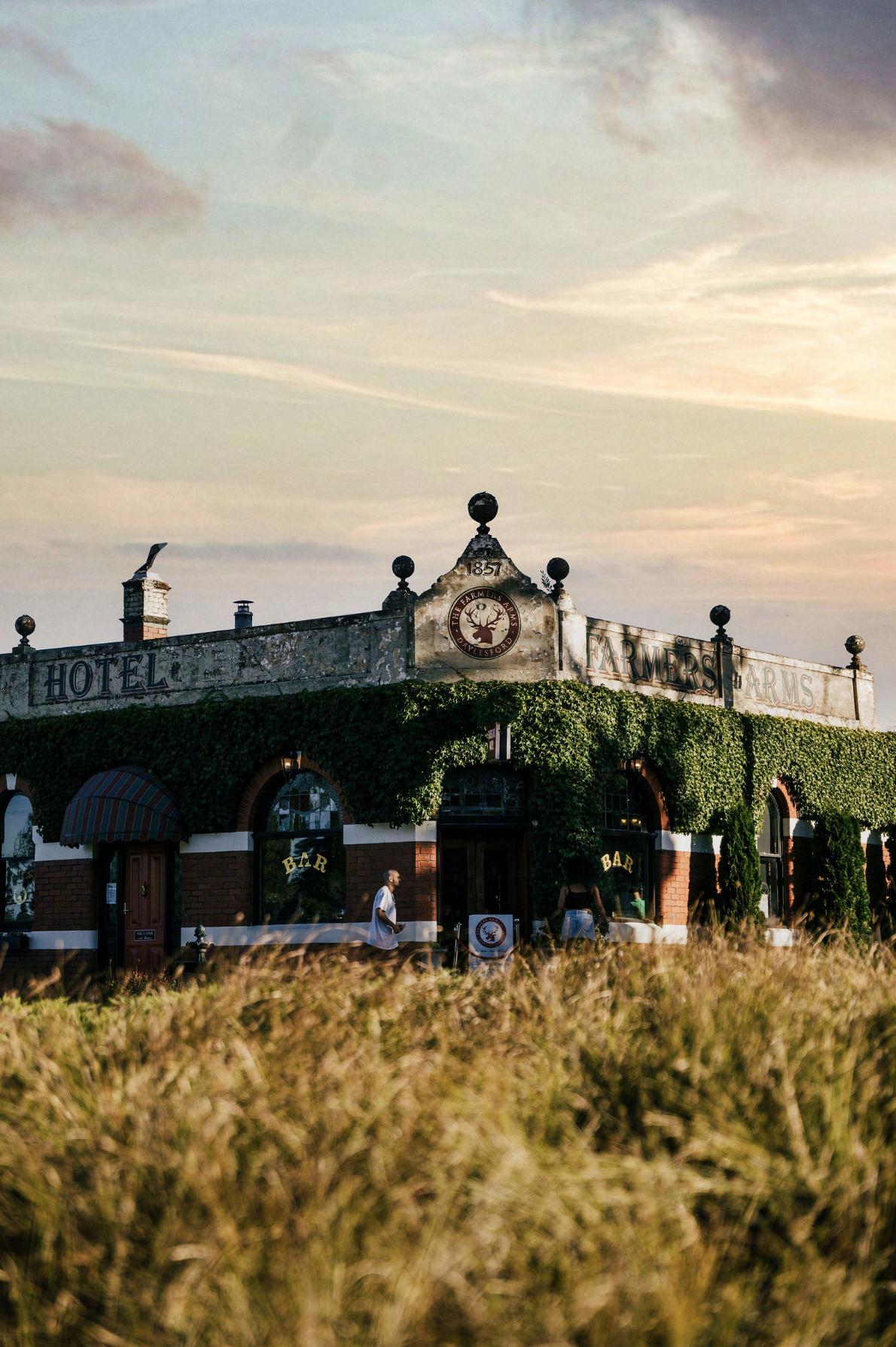
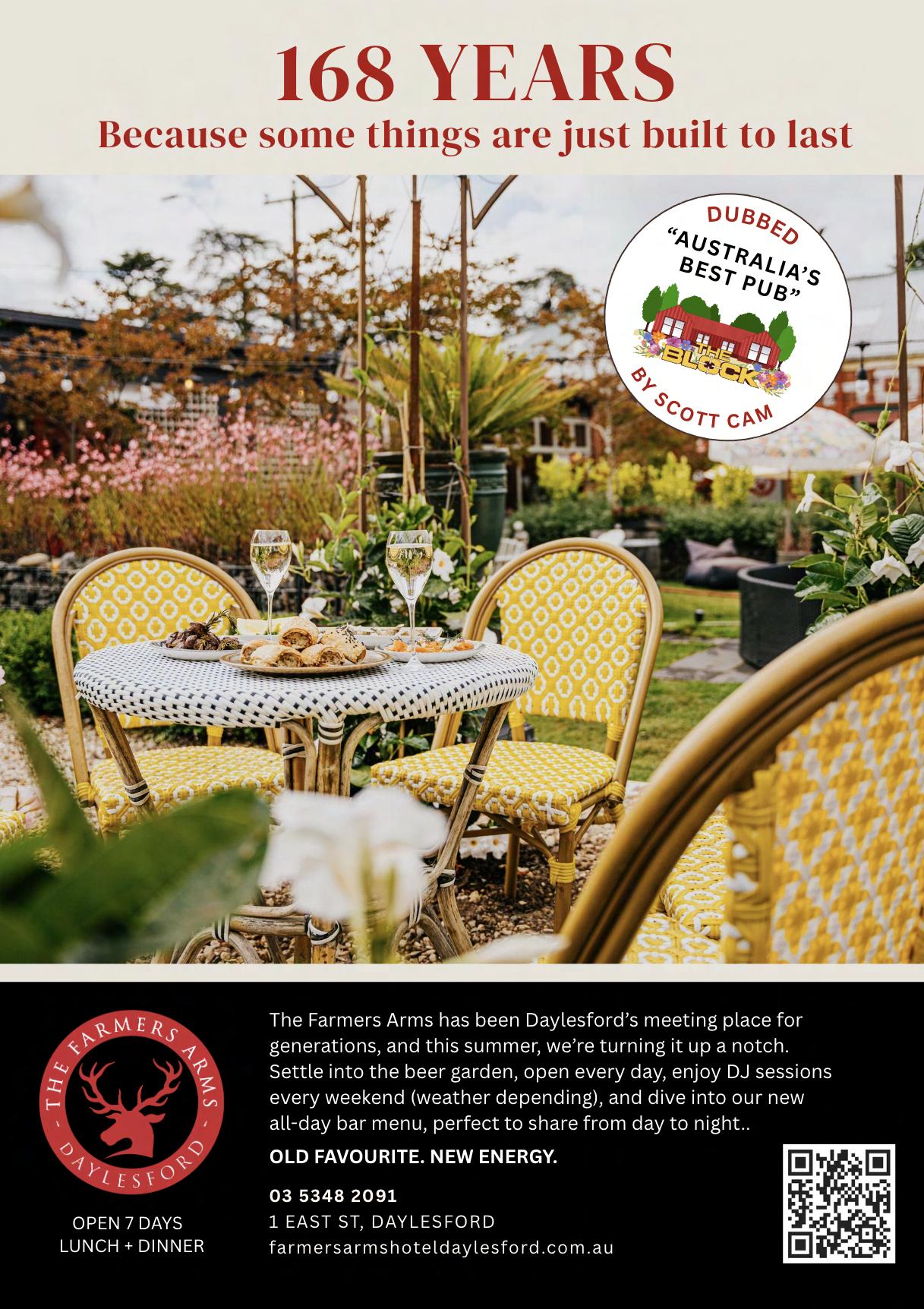
The Farmers Arms Hotel, one of Daylesford’s most well-loved landmarks, is experiencing a new chapter. With a globally influenced menu with local produce at its core, refreshed interiors and a standout beer garden, the hotel is combining local charm with worldly inspiration. Publican Mitch Duncan has travelled to more than 55 countries, bringing back ideas in food, design and hospitality. “After eating all these different cuisines overseas, all I end up craving when I get back is simple but elevated food,” he says , a philosophy that underpins the entire venue.
THE BEER GARDEN: INSPIRED BY ITALY
Daylesford’s most talked-about beer garden draws inspiration from O’Parrucchiano La Favorita in Sorrento, Italy. While the climate differs, Duncan has recreated the atmosphere through layered greenery, warm lighting and a relaxed Mediterranean feel. It’s now a favourite spot for locals to spend long afternoons, shared plates and wines.
A COUNTRY DINING ROOM WITH GLOBAL ELEGANCE
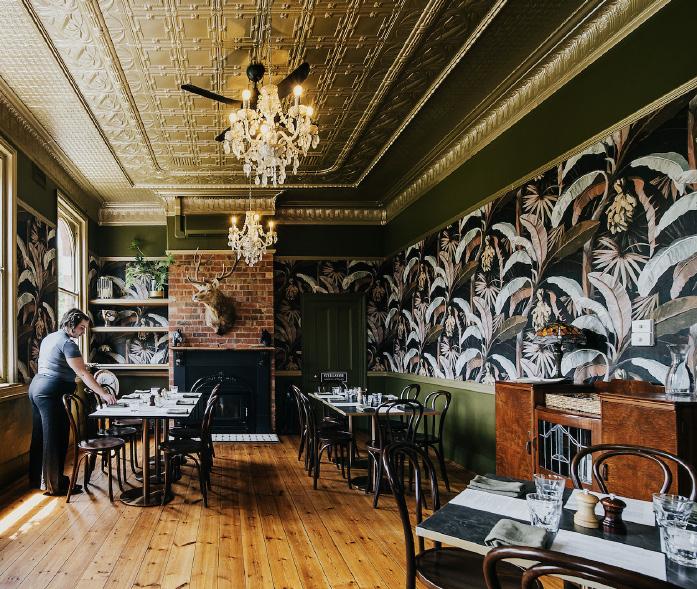
Inside, the dining room channels the richness of Duncan’s favourite international restaurants, including Dear Jackie in London’s Soho and the grand dining rooms of The Ritz in London and Paris. Deep colours, intimate lighting and a timeless sense of occasion create a space that feels both luxurious and welcoming.
A MENU WITH A PASSPORT
The new menu blends global influences with local produce and refined pub classics. Expect comfort dishes elevated with technique and experience.
A LOCAL INSTITUTION, REIMAGINED
With refreshed spaces, an inspiring menu and the charm of a true country pub, the Farmers Arms Hotel remains at the heart of the Daylesford local comminity but offers a truley unique visitor experience, since 1857.
TRY ONE OF MITCHES SIGNATURE DISH
Duncan’s Pork Cotoletta perfectly captures his “simple but elevated” approach golden, crunchy and crowd-pleasing. Find the recipe on page 60.
Mitch Duncan Publican Farmers Arms Hotel
PORK COTOLETTA
Publican Mitch Duncan has dined his way around the world, but at home he craves something honest - crispy edges, clean flavours, and soul. This Pork Cotoletta delivers, simple and satisfying!
Serves: 2–3
Prep Time: 20 minutes
Cook Time: 10 minutes
INGREDIENTS
For the pork
2 large pork loin steaks fat trimmed
Salt and freshly cracked black pepper
½ cup plain flour
2 large eggs
1 tbsp Dijon mustard
1 ½ cups panko breadcrumbs
½ cup finely grated Parmesan
Zest of 1 lemon
A handful of finely chopped parsley
Olive oil, for shallow frying
Butter (optional)
RECIPE THANKS
METHOD
1. Prepare the pork
Place each pork loin between two sheets of baking paper and gently pound with a rolling pin until evenly thin, aim for about 1cm. Season both sides generously with salt and pepper.
2. Set up your crumbing station
Put the flour on one plate. In a shallow bowl, whisk the eggs with the Dijon mustard until smooth. On a third plate, mix together the panko, Parmesan, lemon zest and parsley. Dip each piece of pork first in the flour, then the egg mixture, and finally press firmly into the breadcrumb mixture to coat.
3. Fry until golden
Heat a generous layer of olive oil in a large pan over medium heat. Add a small knob of butter for richness, this is one of Mitch’s tricks for flavour and colour. When the oil shimmers, lay in the pork. Cook for 3–4 minutes each side, or until beautifully golden and crisp. Transfer to a wire rack or paper towel to drain. Season with a final pinch of sea salt.
4. Serve simply, serve proudly
Plate the cotoletta with fresh lemon wedges and a small rocket salad dressed with just olive oil, vinegar, and sea salt. The beauty of this dish is its simplicity - no fuss, no clutter, just great ingredients cooked well.
Shane Pedretti
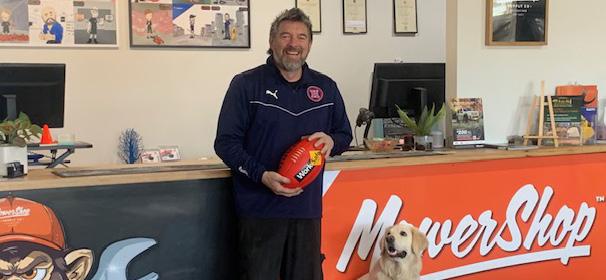
Shane Pedretti is lifelong local with family roots stretching back to the early settlement days. On weekdays, you will find him covered in grease as the hands-on owner of The Mower Shop and Courtot Automotive. On weekends, he’s rallying players and supporters as the proud President of the Hepburn Football Netball Club. And in between, he’s the kind of friend who shows up to lend a hand before you even ask. Shane embodies everything that makes our region feel like home. We sat down with him to talk family, footy and favourite local spots.
The Pedretti name is well known in this region, is there a particular story or tradition that’s been passed down through generations?
First of all, I’d like to say thank you for giving me the opportunity to be the guest in the LOST summer edition. Yes the Pedretti‘s have been around for a while and the thing that connects us the most would be probably the Hepburn Football Netball Club. It’s something that we’ve all started at and usually draws us back. But interest not only in the Hepburn Football Netball Club but in all the local sporting clubs as well and obviously bullboars and mineral water has also been a staple. We used to make the bullboars back in the day. We haven’t done that for a while. I think my uncle Morris who is 100 years old still keeps that tradition going sometimes.
What’s the first place you think of when someone asks you what makes Daylesford and this region so special?
It has to be the Hepburn Mineral Springs, it’s a place of beauty and significance and it’s been something that I’ve grown up around all my life. It makes us unique, to walk around the surrounding bush and to stumble across a place were beautiful natural mineral water flows freely is amazing. There’s not many other places in the world where this happens.
Running The Mower Shop means you hear plenty of stories over the counter. What’s the most memorable moment you’ve had over the years?
Yes it has been an amazing few years since we’ve opened. The support from the locals has been nothing short of fantastic and some of the stories have been hilarious. We have
many colourful characters coming into the shop and the stories are too many to recall. But one in particular does stand out it is from one of our very best customers. He had just picked up his ride-on mower and put it into his trailer and took off to his next job not long after we got a call by another customer to see if we had lost a ride-on mower as one was in the middle of the road. So we went down to see and sure enough it was his. it wasn’t that long after we received a phone call from this customer saying that he lost his mower on his way to his next job had we found it? This was very funny but I also have to add this does happen a bit and not only to this very important customer. So that’s just a timely reminder to make sure you ride-on is strapped down before you leave.
As President of a Football Netball Club, what does community sport mean to you?
It’s an honour to be able to be the President of the Hepburn Football Netball Club. Not only because of the 150+ years of history and community service but just being part of a community that is more than just about the sport. Community sport in my opinion is massive. It can teach you so many things; winning, losing, the highs the lows, but also the diverse people that you meet when you’re involved in a community sporting club. It’s not just my club. It’s everybody’s club and the beauty about living in a community that has a lot of different other clubs and a lot of different sports is that everyone can find their own community which in this day and age is fantastic, and to be able to feel and be a part of something bigger than yourself is what I really thinkwe are here for. I would say if anyone has a chance to become involved as any kind of volunteer or player in a community sporting club just go for it. The people you meet and the doors it opens is amazing.
If you had one perfect free day - with no shop work and no footy commitments - what would your ideal local day out look like?
My perfect day starts with walking our dogs down the footy ground followed by an egg and bacon muffin and coffee from the Hepburn General Store. Then we love to go to the Mill Market for a look around. After that a walk through the bush to the springs is always nice. Then the biggest decision of the day looms… what to have for tea? Pizza from the Daylesford Hotel, fish and chips from Daylesford Seafood Bar, or a sit-down meal from the Royal Hotel or the Farmers Arms. Or any one of the other fantastic places to eat. We are very spoiled when it comes to places to eat.
Who in the community inspires you the most?
I struggle to name just one single person. I think it’s everyone that volunteers from the CFA to the sporting clubs to the schools to everyone that takes time out of their day to help anyone else. I think this community would have to be one of the best communities for rallying behind people and an organisation that need a hand. There isn’t a day that goes by that l don’t hear about someone doing something for a person that just needs a little pick me up. There’s a little inspiration in everyone.
For someone visiting the region for the first time, what’s the one piece of advice you’d give them to experience it like a true local?
Go for a walk in the bush, experience the beautiful surroundings we have. Walk in the creek with bare feet and drink the mineral water. Just let the place relax you and wind down. Find a local event and participate in it anyway they could. Talk to the shop owners about what’s going on and seek it out. Enjoy our places to eat and drink and truly embrace the most fantastic place to live. We are very lucky.