The History of Christmas: from History.com
Christmas is celebrated on December 25 and is both a sacred religious holiday and a worldwide cultural and commercial phenomenon. For two millennia, people around the world have been observing it with traditions and practices that are both religious and secular in nature. Christians celebrate Christmas Day as the anniversary of the birth of Jesus of Nazareth, a spiritual leader whose teachings form the basis of their religion. Popular customs include exchanging gifts, decorating Christmas trees, attending church, sharing meals with family and friends and, of course, waiting for Santa Claus to arrive. December 25—Christmas Day—has been a federal holiday in the United States since 1870.
How Did Christmas Start?
The middle of winter has long been a time of celebration around the world. Centuries before the arrival of the man called Jesus, early Europeans celebrated light and birth in the darkest days of winter. Many peoples rejoiced during the winter solstice, when the worst of the winter was behind them and they could look forward to longer days and extended hours of sunlight.
In Scandinavia, the Norse celebrated Yule from December 21, the winter solstice, through January. In recognition of the return of the sun, fathers and sons would bring home large logs, which they would set on fire. The people would feast until the log burned out, which could take as many as 12 days. The Norse believed that each spark from the fire represented a new pig or calf that would be born during the coming year.
Remember Pearl Harbor!

The end of December was a perfect time for celebration in most areas of Europe. At that time of year, most cattle were slaughtered so they would not have to be fed during the winter. For many, it was the only time of year when they had a supply of fresh meat. In addition, most wine and beer made during the year was finally fermented and ready for drinking.

In Germany, people honored the pagan god Oden during the mid-winter holiday. Germans were terrified of Oden, as they believed he made nocturnal flights through the sky to observe his people, and then decide who would prosper or perish. Because of his presence, many people chose to stay inside.
Saturnalia and Christmas

In Rome, where winters were not as harsh as those in the far north, Saturnalia—a holiday in honor of Saturn, the god of agriculture—was celebrated. Beginning in the week leading up to the winter solstice and continuing for a full month, Saturnalia was a hedonistic time, when food and drink were plentiful and the normal Roman social order was turned upside down. For a month, enslaved people were given temporary freedom and treated as equals. Business and schools were closed so that everyone could participate in the holiday’s festivities.
Also around the time of the winter solstice, Romans observed Juvenalia, a feast honoring the children of Rome. In addition, members of the upper classes often celebrated the birthday of Mithra, the god of the unconquerable sun, on December 25. It was believed that Mithra, an infant god, was born of a rock. For some Romans, Mithra’s birthday was the most sacred day of the year.
Is Christmas Really the Day Jesus Was Born?
In the early years of Christianity, Easter was the main holiday; the birth of Jesus was not celebrated. In the fourth century, church officials decided to institute the birth of Jesus as a holiday. Unfortunately, the Bible does not mention date for his birth (a fact Puritans later pointed out in order to deny the legitimacy of the celebration). Although some evidence suggests that his birth may have occurred in the spring (why would shepherds be herding in the middle of winter?), Pope Julius I chose December 25. It is commonly believed that the church chose this date in an effort to adopt and
The History of Christmas: from History.com continued on page 6...

No moment in the history of the United States casts a longer shadow than Pearl Harbor. “Remembering” it has become a national imperative, a patriotic duty for the American people, and reminding us of that duty has become a ritual of media and political discourse—repeated so often and in so many ways that it’s become part of the routine of our communal life. You might say, even 80 years after the fact, Pearl Harbor is still a national obsession.
And no wonder! The drama of the event justifies every bit of the attention it has received. Those Japanese Zeros and Kates and Vals swooping out of the sky were carrying out the first armed attack on US territory since the British burned Washington in August 1814—a long time ago, even in 1941. A sudden and surprise attack (we used to call it a “sneak attack” when I was a boy, though that phrase seems to have dropped out of our vocabulary); a US fleet utterly unprepared for what was transpiring and barely able to defend itself; battleships sunk; mass casualties?: Pearl Harbor was a national trauma, the kind of grisly event that would be hard to forget even if we tried.
In 1941, the United States went to war, quite literally, with “Remember Pearl Harbor!” as its battle cry, and even today, it seems entirely fitting that our war with Japan began at one anchorage and ended at another. Stretching from Pearl Harbor to Tokyo Bay, the Pacific War was an almost perfect example of historical symmetry. Will Americans ever forget? Today, certainly, there seems little chance of that happening. Indeed, we hear the words “Pearl Harbor” all the time. Whenever

Volume 15 • Edition 23 December 7, 2022 Delivering to over 17,000 homes & businesses including all of Fort Lupton and Lochbuie. WHAT’S IN THIS ISSUE Page 2: Way of the World Page 2: Jon Caldara on Lessons Learned Page 3: Sherrie Peif on Third Party Spoilers Page 3: Bill O’Reilly on Twitter Disclosures Page 4: Cardinal Community Veteran’s Day Program Page 5: Loaves & Fishes Update Page 8: State of Colorado Workforce Growth Page 9: Platte Valley Ambulance Service Recognized by State Page 12: Why Price of Eggs Went Up Page 16: 2022 Christmas in Keenesburg Pictures “Truth will ultimately prevail where there is pains taken to bring it to light” George Washington “If we are to guard against ignorance and remain free, it is the responsibility of every American to be informed” Thomas Jefferson Our thoughts and prayers are with you both.
Remember Pearl Harbor! continued on page 7 ...
In remembering Pearl Harbor, we remember who we are. by Robert Citino, PhD, the National World War II Museum in New Orleans
Top Image: USS West Virginia Pearl Harbor Attack. Image courtesy of the Naval History and Heritage Command, 97398.
Way of the World

by Bob Grand
Elections are over, almost, and the finger pointing among Republicans continues. The Republicans lost big time in the state across a broad range of contests. Some were close and in those we are hearing it is all the fault of those pesky Libertarians. Well guess what? Count the votes. More importantly count the votes of Republicans and unaffiliated voters who did not vote, for whatever reason. Those numbers are far more telling and dwarf the Libertarian turn out. That assumes the Republicans, especially what I refer to as the old guard are willing to accept the reality of the change in the nature of the Colorado voter. Fiscally conservative but not as socially conservative. (See Jon Caldara’s article on page 2). This year for the first time England is less than 50% Christian with the growth coming in agnostic and Islam beliefs. Where are we in the United States and where are we in Colorado or Weld County? There are many people who are living in the past and ignoring the dynamics of the shifting demographics. Change requires leadership and the Republican party needs to address the reality of the demographics in Colorado and decide whether it can figure out how to act like adults and lead to the future or remain stuck in ever growing muck of the past. Governor Ron DeSantis commented on the election results that “Although voters did not approve of Biden’s policies or the direction of the country, they still did not want to vote for Republican candidates. The question is how do you run and win majorities? In Florida we exercised leadership. We took on big interests and produced results, that attracts more people who want to be on your team”. Think about that. Is that process you can see in Weld County. If you have trouble comprehending that, it is understandable because it does not exist, and you wonder why people do not vote?
Although the Democrats are winning elections, they are not winning on core issues that matter to the people in their everyday lives. They bash Donald Trump, champion choice, and argue climate change. Kitchen table issues are real and are not improving. Crime, inflation, education, immigration is all headed in the wrong direction. The Washington and Denver answer seems to be to form more committees, study the problem and create a new, well paid, task force to address the issue. Unfortunately, no one ever asks is what they are doing working? There is no accountability.
We should all be asking ourselves how is our quality of life doing? Now this is a very subjective question as it is uniquely individualistic by definition. The problem today is that too many of our elected officials do not view that as a meaningful item in their agenda, which for many, is just to insure they’re reelection. Being a parent is a tough job as you are ultimately responsible for everything that happens with your child. A pretty daunting task. You should judge the performance of your elected officials on how they balance the complexities of the issues they face with how they impact your quality of life, not whether they are a good Republican or a good Democrat. Like being a good parent, that is a tough job, and nobody is perfect. But officials need to understand that is how their performance will be measured. Russia, China, and Iran are beginning to see the quality-of-life question becoming a far greater force than any of them ever imagined possible. As time progresses, we will see how that all evolves.
Many of our local, county, state, and federal level officials think there is an unlimited checkbook to pursue whatever they want to do. The size of our national debt is staggering and creating an almost insurmountable burden on our future generations. We will see if the newly elected Republican controlled House of Representatives will begin addressing that issue, or will they be sucked into the tit for tat? I can out investigate you which we have been hearing. We need to focus on addressing our core issues. Start to develop real solutions that impact our quality of life.
As always, your thoughts and comments are always appreciated. Thanks again to all of you who have contacted us. publisher@lostcreekguide.com

Caldara: Lessons to be Learned from Election Spoilers
by Jon Caldara, President of the Independence Institute

As Republicans digest how the last election could be an extinction-level event for their party in Colorado, some of their political grief might well turn to blaming spoilers.
When a candidate wins, but doesn’t win by more than 50% of the vote, it means some third-party yahoo entered the race and “spoiled” it for the guy who came in second.
Mostly this gripe is reserved for Libertarians (note the large “L” to denote the actual Libertarian Party) who ruined it for the Republican.
Once upon a time Democrats had a similar problem. Some crazed nutjob in the Green Party would run in a state House or Senate district and pull enough votes away from the Democrat candidate to swing the victory to the Republican.
And, for a short period, there seemed to be some degree of parity in this Game of Spoilers — not quite a détente, but at least both sides got wounded.
Then Colorado Democrats did what they seem to do. They turned it into their political advantage. They took the entire Green Party Manifesto and absorbed it into Democratic Party gospel. After which the Green Party didn’t really need to exist here to shut down fossil fuels and mandate unaffordable, unreliable energy. Democrats would do it better and faster.
The Democratic Party merely out greened the Greens.
The Republican Party did the opposite to Libertarians. On the relatively few issues that separate them — but do so violently, like the drug war, gay rights, assistance in dying — the Republican Party shunned Libertarians. But Colorado, at least on social issues, did not.
Coloradans went on to legalize marijuana and mushrooms, as well as aid in dying at the ballot box.
When Colorado Republicans were in control of the state House a civil unions bill with protections for religious objections (like cake bakers) was moving toward passage until Republican leadership shot it down instead. This opened the wallets of the ultrawealthy, gay-rights super team of Tim Gill, Pat Stryker, Rutte Bridges and Jared Polis, leading to the Democratic takeover of the state.
Had the Republicans just passed civil unions back then, who knows what might be different today. And the sad part for them? Although they couldn’t have seen it coming, it wasn’t long after shutting the door on civil unions that the U.S. Supreme Court legalized gay marriage altogether.
If Republicans were more libertarian then, Colorado might not be so socialist now.
Libertarians say they pull votes away from both the Democrat and the Republican, roughly equally. I have a hard time buying that, and certainly the losing Republican doesn’t buy it.
In Colorado’s new 8th Congressional District, the Libertarian candidate, Richard Ward, pulled in nearly 4% of the votes. Democrat Yadira Caraveo defeated Republican Barb Kirkmeyer by a victory of a mere 0.73%. The Libertarian brought in five times that difference.
The Libertarian cost Kirkmeyer her seat. Absolutely. Chalk one up for the spoilers. Need a clearer example? Colorado’s State Board of Education, like the rest of the state’s governments, are firmly in the hands of the Democrats.

Also in the 8th District, Democrat Rhonda Solis beat Republican Peggy Propst by 0.88%. But the Constitution Party candidate brought in 2.24%.
Though Libertarians make a weak but plausible argument that they pull votes equally from Rs and Ds, the Constitution Party only pulls from Republicans. They are only voters who feel the Republican Party has gone too squishy on them.
In State House District 25, Republican incumbent Colin Larsen lost to the Democrat, also with a Libertarian making the margin of difference. But the numbers are much tighter in this race.
And that’s it. Two cases where spoilers absolutely caused the Republican defeat and one maybe. Outside of that, spoilers were a non-factor in some 35 other races.
Republicans would be wise to accept Colorado is not a socially conservative state anymore. But as seen by the 21-point victory of the Independence Institutebacked income tax cut, we might still be a fiscally conservative state.
There may be a libertarian (note the small “l”) path forward for Republicans here. Another lesson from the Democrats, if Republicans care to listen.
And it would be better still if voters didn’t throw their votes away on protest candidates that can’t win no matter how much they dislike the candidates that can.
Jon Caldara is president of the Independence Institute, a free market think tank in Denver.
Congratulations to the Citizen’s of Keenesburg
This election had a 300% increase in the number of voters participating and the largest number of candidates running in many years. Your vote did count and it did matter. Let us hope that our newly elected officials can deliver on what they talked about. You did your part.
Lost Creek Guide deCember 7, 2022 2 The LosT Creek Guide, LLC Bob Grand - Publisher 303-732-4080 publisher@lostcreekguide.com Delivering on the 1st & 3rd Wednesday of the month and sent to all Postal Boxes. Our hours are Tuesday, Weds, & Thursday 10am to 3pm. Call or email us for advertising rates. Our deadline is 7 wOrking days befOre publicatiOn 105 Woodward - PO Box 581 Keenesburg, CO 80643 lcgnews.com Letters to the Editor are encouraged. Letters may be edited for length, libelous, or inappropriate content. All letter submissions should include name, address, & phone number for verification purposes. Letters are published at the editor or publisher’s discretion. Opinions expressed in letters to the editor do not necessarily reflect the opinion of the Lost Creek Guide or staff.
Third-party Spoilers Leave Weld County Voters Blue as Democrats Win by Plurality
By Sherrie Peif
GREELEY — The 2022 midterm election has left many residents in the northern Colorado cities of Evans, Garden City and most of Greeley feeling like Santa left them a lump a coal in their stocking.
Not one of the Democrats who won office at the state and federal levels in this area were elected with more than 50 percent of the vote. And one was not elected at all. And many believe third-party candidates likely helped push three of the other four over the finish line, and they point to the sole Republican winner as even more proof.
First, voters learned they wouldn’t even get a say on a new representative in Senate District 13, because of redistricting and a state constitutional rule that doesn’t allow a sitting official to be drawn out of office. Sen. Kevin Priola was originally elected to Senate District 25 in Adams County, but was drawn into Senate District 13 under the new maps. The current SD13 representative, John Cooke, was term limited at the end of 2022. So, Priola was awarded Cooke’s seat by default.
If finding out that Cooke’s seat going to Priola — a Republican with a long history of voting with Democrats more often than his own party — wasn’t enough, soon after, Priola officially jumped ship and switched parties, putting a Democrat in that seat for the first time in as long as anyone can remember, leaving voters to question whether or not Priola truly has their best interests at heart.
Then, the new 8th Congressional District–created after the last census because Colorado grew in population–opened up three new seats: one in the House of Representatives, one to the CU Board of Regents, and one on the State board of Education.
Historically the tri-town area around Greeley was represented by the 4th Congressional District and a long line of Republicans, and nearly all predictions were the new 8th would go red as well.
CD-8 does not look like any other district in Colorado. It spreads north across sections of Adams, Larimer and Weld counties, and includes the cities of Westminster, Brighton, Commerce City, Thornton and Greeley, among others. It is home to the state’s largest block of Hispanic voters.
However, with the exception of the CU Regent seat, all offices were won by Democrats.
Finally, House District 50 — although traditionally the lone seat in Weld County held by a Democrat and generally won by 55 percent and more — also fell likely because of a third party.
The spoilers
Although there are always stories of third-party spoilers, the 2022 midterm in northern Colorado is probably the most large-scale example of where it affected a single set of geographic voters.
In the 8th Congressional District House seat race, Yadira Caraveo won with just 48.38 percent of the vote (114,377) while Libertarian Richard Ward took 3.93 percent of the votes (9,280). There was just a 1,632-vote difference between Caraveo and Republican opponent Barbara Kirkmeyer.

Ward, however, never reported a single penny raised or spent with the Federal Elections Commission. He didn’t campaign and most didn’t know he was running for office.
Also in the 8th Congressional District, the Republican running for the State Board of Education seat also lost by just under 2,000 votes, despite overwhelmingly beating her Democrat opponent on her own home turf.
Peggy Propst, almost unknown in Weld County, beat Democrat Rhonda Solis by nearly 17,000 votes in Weld County where Solis spent eight years on the Board of Education for the county’s largest school district in Greeley-Evans School District 6 (the heart of CD8) and started the Latino Coalition of Weld County, which purports to give a voice to Latinos in a county where Hispanics make up the majority of the population.
However, American Constitution (ACN) candidate James Treibert, who also raised no money and spent no money on his campaign, garnered 5,367 votes. Those who have worked in politics for decades, such as former Colorado GOP Chairman and political analyst Dick Wadhams say it is highly unlikely any ACN voter would have voted for the Democrat had Treibert not been on the ballot.
Solis also did not get more than 50 percent of the vote in her victory. She won with 49.28 percent of the vote.
Wadhams said the results are not surprising. He recalled a story when he was helping a Republican running for U.S. Senate in 2000 in another state. He said the example is a classic explanation into how Libertarian voters think when they cast their ballot.
The race was very close, Wadhams said. They had convinced the Libertarian on the ballot to drop out and endorse the Republican candidate. They flew all over the state attending events together and making sure that Libertarians knew he was supporting the Republican candidate. But in the end the Democrat won by a margin smaller than the vote count for the Libertarian because, as Wadhams said, Libertarians will vote for Libertarians regardless.
“It doesn’t matter if the people who vote the Libertarian line don’t know who the candidate is,” Wadhams said. “They just want to vote for the Libertarian.”
The only Republican to win in the 8th Congressional District was Republican Mark VanDriel, who won his CU Regent seat with 51.68 percent of the vote.
However, there was no third-party candidate on the ballot, yet one more reason experts believe it was the third-party candidates who were the spoilers.
Lastly, in House District 50, the only stronghold of the Democrat party, it was more of the same.
Republican newcomer Ryan Gonzalez the 27-year-old son of Mexican immigrants came within 300 votes of beating his very intrenched Democrat opponent Mary Young — the wife of State Treasurer Dave Young — despite Democrats soft money spending nearly $700,000 on the race against Gonzalez. Young’s campaign also spent more than $100,000. The most money spent on any House race in Colorado.
Gonzalez campaign spent just over $43,000 on his race.
Historically, for the last two decades, the Democrat in 50 has won with at least 55 percent of the vote. This year, however, Young won with just 49.19 percent. And the Libertarian on the ballot, who spent just $35 on his campaign, brought in 615 votes.
“It’s awful, just awful,” Wadhams said about the third-party problems in elections. “But there is very little anyone can do about it.”
But there might be. A runoff system would mean in any case that a candidate did not receive 50 percent plus 1 vote, the top two vote getters would face off in a second election.
For the people of Weld County, that might make them feel a bit more respected, considering anyone who lives in Evans, Garden City or east of 35th Ave in Greeley is now represented by four Democrats, none of whom were elected by the majority of voters in the district.
It’s unclear exactly how it would become law, but Wadhams, who said he could support the idea, thinks it as simple as a citizen-initiated state statute, since the Democrat controlled legislature is unlikely to put it to the voters.
“I like it,” Wadhams said. “But since the Dems seem to benefit all the time from a third-party candidate, I doubt they’d go along with it.
Truth Be Told
By: Bill O’Reilly
One of the reasons the surf never came up for Republicans on Election Day was the barrage of Democrat propaganda which was relayed non-stop by the corrupt media.
It was relentless. “Democracy is on the ballot,” implying a GOP victory would end the Republic.
“The Republicans want to destroy Medicare and Social Security.” “Abortion will be illegal in most places.” “Trump and his deniers will do heinous things!”
Yes, it is true that conservatives grind out propaganda as well, but they don’t have a corporate media to peddle it.
It is also true that only a nitwit would believe the leftwing hysteria, but there are many nitwits.
One word: Crypto.
Sadly, many Americans believe what they want to believe and gobble up propaganda like it’s Haagen Dazs, especially since there is no accountability. Foolish, ill-informed votes count. And intellectually limited Americans seek out friends in the same category.
Call it gooney birds of a feather flock together.
Here is a vivid example of propaganda that took deep root in this country. On March 25, 2021, Georgia passed the Election Integrity Act so the Trump chaos could not happen in the Peach State again. The new law streamlined the voting process and mandated voter ID, something very loathsome to the far left.
In response, President Biden read these words: “This is Jim Crow in the 21st Century. It must end.”
Of course, it did not end, as the courts found no violations of “voter’s rights.”
Then another nitwit, Major League Baseball Commissioner Rob Manfred, attempted to punish Georgia by moving the All-Star Game from Atlanta to Denver.
Said Manfred: “Major League Baseball fundamentally supports voting rights for all Americans and opposes restrictions to the ballot box.”
The man is noble, is he not?
Well, on November 8, the state of Georgia had a record-high voter turnout for a midterm election. And the state accurately counted the four million ballots on Election Day - it didn’t take a week.
So, I am expecting an apology from Joe Biden, Rob Manfred, and the legions of corrupt commentators who cynically manipulated the American people over the Georgia law.
No chance these people will ever acknowledge their deception because that’s not part of the propaganda program.
Jesus said: “the truth shall set you free.”
Not sure the Nazarene anticipated all the nitwits.
What is the Santa’s Hard Luck Fund?
Many years ago a few wise fair board members realized that we provided a great opportunity to our RE3J students during the Southeast Weld County Jr. Fair & Rodeo each year, an opportunity to showcase their hard work on projects in 4H and FFA, and even more wonderful, an opportunity to market specifically their livestock projects in the sale, but what about the children and families in our community who were less fortunate, and/or unable to take advantage of this specific opportunity?
Supporters have come from near and far for 100 years now to support budding youth in our community at the fair. Many of those supporters walk the halls of our schools each day, or have children of their own who co-mingle with families who just have not had the best of luck. It is a sad reality that we aren’t sure that each and every child in our community will have a warm and bright Christmas morning by the tree, or a hot meal before they fall asleep with visions of sugar-plums dancing in their heads. It was when this doubt of less fortunate children longing for the holiday joy crept into these wise men’s heads that they sprung to their feet much like St. Nick and plotted a way to deliver more support to our community. Keep reading, this Christmas story is about to get good!
The Santa’s Hard Luck Fund began small and has continued to grow each year, since its start hundreds of children have benefited. The fund’s biggest gifting goes toward helping families nominated by the school district each Christmas season with Target Gift Cards. Target cards are specifically chosen so that these families can purchase warm clothes, food, and toys, but removes the opportunity for it to be spent on tobacco or alcohol products. It should also be noted during the year our community continues to see other challenges and the Hard Luck Fund stands to support those in need past the holiday giving season!
The thoughtful and generous men who came up with this cause still stand strong in their belief of making sure, “We Do It For the Kids!” With this note I will leave you, if you find yourself searching for a place to donate this season, and would like to serve those in our community, please stop by High Plains Bank and make a donation to the SEWC Hard Luck Fund! If you donated through the silent auction at this years’ fair or made other donations to our cause we would like to extend the greatest of our gratitude for your continued support!
December 7, 2022 Lost creek GuiDe 3
Cardinal Community Academy Hosts Veterans Day Program
 by Madison Richmann
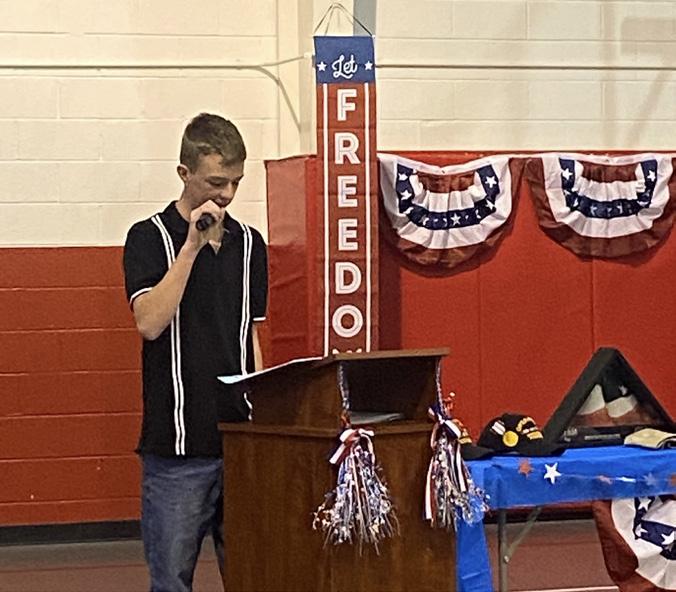
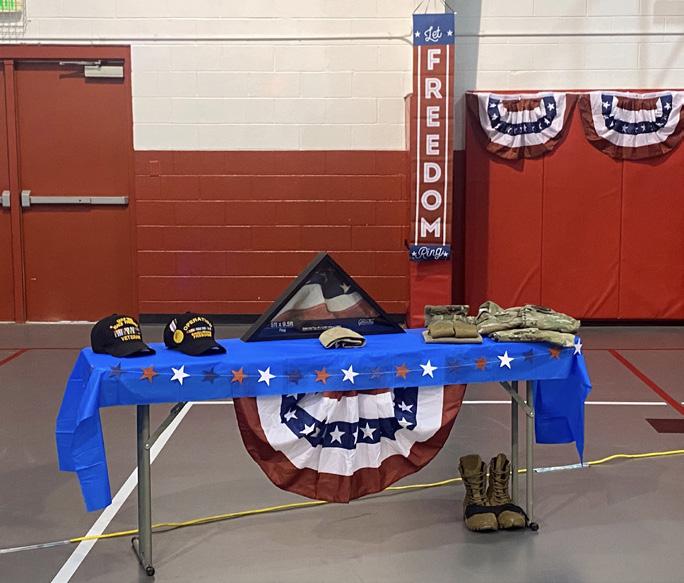
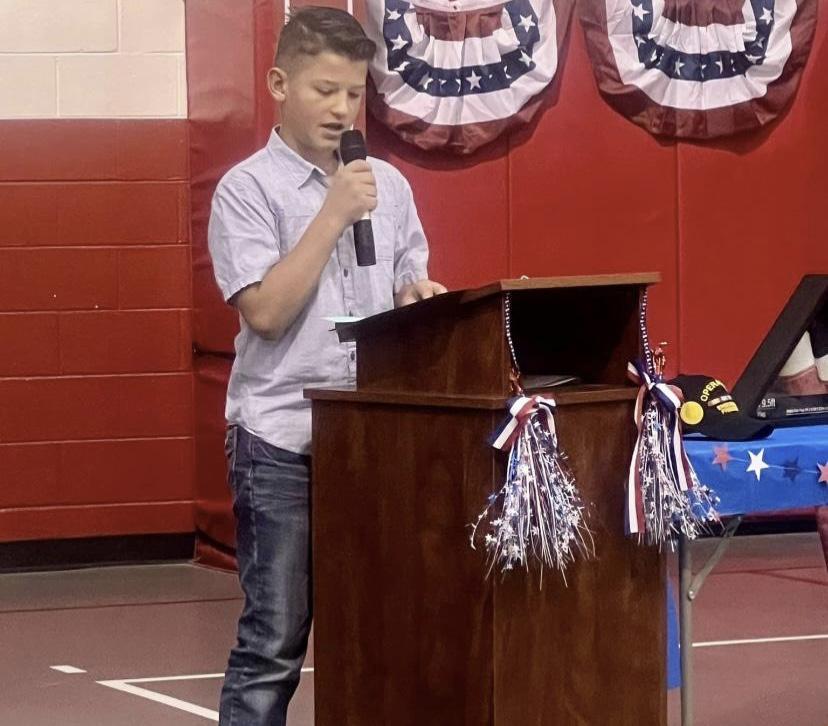
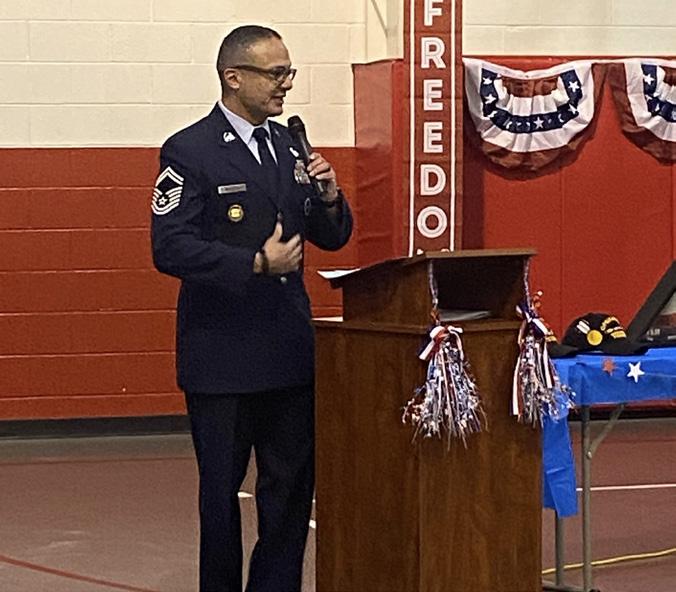
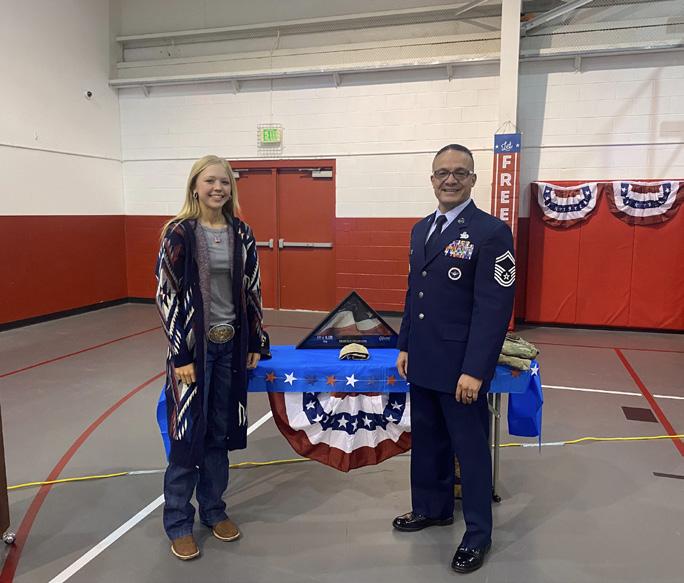
November 11 is a day that we all remember and honor the veterans who fought for our freedom as the United States of America. Cardinal Community Academy, a local charter school in Keenesburg, takes it very seriously. Newly hired principal, Mr. Jerry Archulta was enlisted into the Air Force immediately after high school. Sergeant Archulta then served in various leadership positions and career fields. He served as a Military Training instructor, and the Commandant for the Pitsenbager Airman leadership school. His assignments ranged from 1988 to 2008 all over the United States and Germany. Senior Master Sergeant Archuleta has received many awards in the armed forces, a few being the Air Force Commendation Medal with four Oak Leaf Clusters, and the Korean Service Medal.
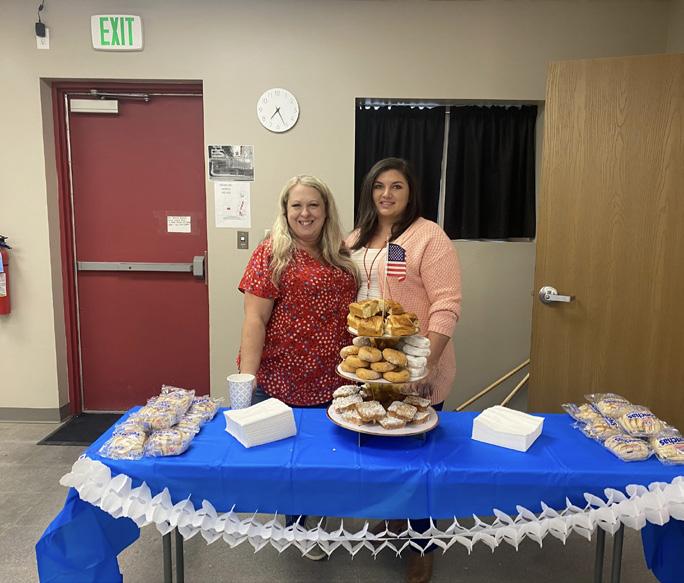
Principal Archuleta found it very important to honor those who have served, and to show the students of Cardinal Community Academy the importance of November 11th. He organized an assembly to do just that. All students, kindergarten through eighth grade, parents, teachers, and community members attended the assembly to show respect and honor to our veterans and to support Mr. Archuleta and our beloved charter school. The CCA PTO put together all the decorations, snacks and beverages, and helped to organize the entire program.
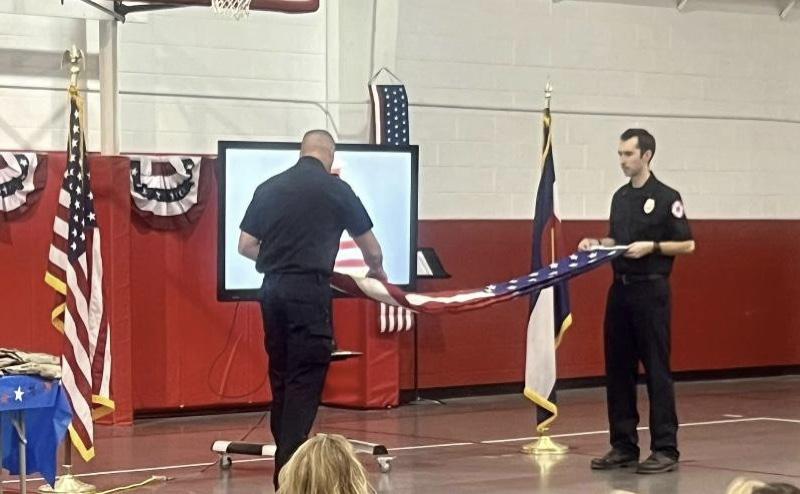
The assembly started at 8 a.m. with the national anthem sung by Mrs. Sarah Johnson (8th grade teacher at CCA,) and a few of her choir students. The Keenesburg fire department posted the colors, and did a flag folding ceremony. Current and past Cardinal students spoke as guest speakers during the program. A slideshow of all veterans,family members and friends of the CCA family was shown while the first grade class sang, “Thank a Vet.” Mr. Archulta gave his testimony and explained to the student body why November 11th is of such importance.
Thank you Mr. Jerry Archuleta for a memorable Veterans Day Program that touched so many students, parents, and more. As a community, we are very happy to welcome you to Keenesburg, and to Cardinal Community Academy, we are so very lucky to you!
Heart of the Plains Cemetery Announces it will become an Official Location for the 2022 National Wreaths Across America Day
National Wreaths Across America Day is a free community event open to all people.
The cemetery will join the more than 3,100 participating locations across the country to Remember, Honor and Teach on Saturday, Dec. 17, 2022
Columbia Falls, MAINE, and Roggen, COLORADO — Nov. 18 2022 — National nonprofit Wreaths Across America (WAA) announced today that Heart of the Plains Cemetery, 38044 County Road 10, Roggen, CO will be joining in the mission to Remember, Honor, Teach, as an official location for 2022. This is the first year that the cemetery will participate in this national program
Wreaths Across America started as a simple gesture of thanks that has grown into a national movement of dedicated volunteers and communities coming together to not only remember the nation’s fallen and honor their service, but to teach the next generation about the sacrifices made for us to live freely. This year, there will be more than 3,100 participating locations placing veterans’ wreaths on National Wreaths Across America Day – Saturday, Dec. 17, 2022 – with more than two million volunteers coming together.
The goal for Heart of the Plains Cemetery was to raise enough funds to place twenty-eight sponsored veterans’ wreaths on the headstones of all the local heroes laid to rest there, to ensure that the individuals who served to protect the freedoms of our country never be forgotten and to bring the community together in patriotic commemoration. Thanks to the generosity of the Marine Corps League of Greeley, CO, all wreaths have been sponsored.
“We are forever grateful for the thousands of supporters who dedicate their time and effort to fulfilling our mission all year long,” said Karen Worcester, executive director, Wreaths Across America. “These individuals and their communities know the value of remembering the fallen, honoring those who currently serve and teaching the next generation about the sacrifices made for our freedom every day, and without their continued support, Wreaths Across America would not exist.”
CDA Hires First-Ever Permanent Ag Emergency Coordinator to Lead Crisis Response Team for Disasters Impacting Rural Colorado
The Colorado Department of Agriculture has hired Dan Frazen to serve as the Agriculture Emergency Coordinator for Colorado, a position CDA created this year after approval by the legislature to build out the Department’s emergency response capabilities. In this new position, Frazen will lead the Department’s response to allhazards incidents that impact agricultural communities and coordinate with other government agencies and stakeholders for all phases of disaster management.
“With the addition of Dan to our team, CDA is expanding our capacity to support our ag communities in responding to emergencies, a focus of ours since day one,” said Colorado Commissioner of Agriculture Kate Greenberg. “Dan’s background in emergency management will support CDA’s goal of increasing resilience and preparedness to natural disasters and other emergencies in rural and ag areas of Colorado.”
This position will also act as the State Emergency Support Function (ESF) lead for agriculture and livestock at the State Emergency Operations Center (SEOC) when activated for a state or regional disaster. It will also oversee agriculture emergency management, preparedness, and response activities and support agricultural emergencies statewide.
“I’m eager to start building out CDA’s department-wide, all-hazards emergency management program that better prepares staff and our agriculture communities for natural and human-caused disasters,” said Dan Frazen, CDA’s Agriculture Emergency Coordinator. “I’m especially looking forward to expanding the Agriculture Emergency Liaison Program in farming and ranching communities across Colorado, so members of our ag communities can serve as the subject matter experts and assist local and state emergency management professionals with preparedness, response, and recovery operations.”
The Agriculture Emergency Coordinator will be responsible for identifying department emergency management priorities and assisting with the development of plans to address concerns. This full time, dedicated position will serve on CDA’s multiple emergency planning teams and respond to myriad threats, including wildfire and drought, proactively strengthening Colorado’s agricultural resilience through coordination, mitigation and recovery efforts.
>Dan Frazen is a Colorado Certified Emergency Manager (CO-CEM), Certified Fire Investigator (IAAI-CFI), and Incident Command System (ICS) instructor and has almost 30 years of public safety and emergency response experience. He began his emergency management career in the aftermath of the 2013 Colorado floods, developing plans and systems for Northern Colorado communities to better mitigate, prepare for, respond to, and recover from disasters.
In his previous position, Dan served as the Emergency Manager for the City of Greeley. He has been a member of the Type 3 Eastern Colorado Incident Management Team (ECIMT) since 2015, and he was assigned to the State of Oregon’s Type 2 Northwest Incident Management Team 6 for the Cameron Peak Fire in 2020. Dan continues to work in public safety as a part-time Deputy Sheriff for the Jackson County Sheriff’s Office in Walden.
Dan graduated from Colorado State University with a Bachelor of Arts degree in Sociology and holds a Master of Science degree in Emergency Services Management from Columbia Southern University. He recently graduated from FEMA’s National Emergency Management Advanced Academy (NEMAA). He lives in Weld County with his wife and two children and enjoys family camping trips, swimming, and anything science related.
Lost Creek Guide deCember 7, 2022 4
Newly-Elected Republican Women Strengthen House Majority
By Ambassador Callista L. Gingrich



On Nov. 8, the American people elected a Republican majority to lead the U.S. House of Representatives. Although the margin is slim – a majority is a majority.
In January, [getting number from NRCC] freshman members of Congress from across America will be sworn in as members of the House.
Hailing from vastly different backgrounds with a range of expertise, America’s newly-elected representatives, including GOP women, will bring unique perspectives to Washington, D.C.
Consider Monica De La Cruz, who is a small business owner and single mother of two children from the Rio Grande Valley in Texas. A political newcomer, De La Cruz will become the first Republican in history to represent Texas’ 15th Congressional District.
As the daughter of a single mother, and the granddaughter of an immigrant and a first-generation American, De La Cruz grew up knowing the value of service, perseverance, and education. As part of her campaign platform, De La Cruz advocated for school choice, securing the southern border, and implementing universal work requirements for welfare.
Throughout her campaign, she kept her core message consistent: “What I represent and stand by are my values of putting God first, putting our families first and putting America first.”
De La Cruz’s message resonated with the voters of her congressional district, with an eight-point victory over her Democratic opponent, Michelle Vallejo.
Similarly, Jen Kiggans, who unseated Democratic incumbent Representative Elaine Luria in the race for Virginia’s 2nd Congressional District, advocated for giving power back to families, supporting businesses and job creation, and providing affordable health care.
A mom of four kids, Kiggans served as a helicopter pilot in the U.S. Navy before working as a geriatric nurse practitioner. In 2019, she was elected to Virginia’s state senate where she served as a champion for veterans, active-duty military, and working families.
During her term as a state senator, Kiggans worked to give our American heroes and their families the care and benefits they deserve. In Congress, she plans to continue delivering for the men and women who have served our country by supporting U.S. Department of Veterans Affairs reforms and policies that encourage more job and career opportunities for veterans.
Kiggans’ victory over Luria, in one of the most competitive House races this cycle, underscored that voters wanted a candidate who will courageously fight for them.
In Oregon’s 5th Congressional District, voters also selected a candidate capable of delivering results. Lori Chavez-DeRemer served as the first female and Latina Mayor of Happy Valley for eight years. While serving as mayor from 2010-2018, she led Oregon’s fastest-growing community and made it business-friendly, safer, and affordable.
Now, Chavez-DeRemer will serve as the first Hispanic woman in Oregon to be elected to Congress. After winning her election by two points and flipping the open seat for the GOP, Chavez-DeRemer said, “Oregonians spoke loud and clear that they wanted somebody with a proven track record, somebody who can roll up their sleeves, somebody who can get things done and bring all Oregonians along.”
Newly-elected Republican Representative for Indiana’s 9th Congressional District Erin Houchin also has a proven record of success from her time serving in her state’s senate. While serving as a state senator from the 47th District in Indiana, Houchin passed legislation to protect the unborn, defend Second Amendment rights, and support law enforcement. Moreover, Houchin supported balanced budgets and fought tax increases.
As a small business owner and the mother of three children, Houchin will bring her experience fighting for fiscal responsibility, opposing runaway spending, and supporting law enforcement in Indiana to Capitol Hill.
From skyrocketing inflation and rising crime, to failing schools and recordhigh overdose deaths, Americans and their families are facing devastating and imminent challenges every day.
Congress has a duty to deliver on critical issues for the American people. The Republican women who have been newly elected to the U.S. House of Representatives have made it clear that they intend to get the job done.
Loaves & Fishes Food Pantry Update

Loaves and Fishes Food Pantry was founded in 2008 by Pastor Keith McDonald, who served the Keenesburg and Hudson Methodist Churches. His vision to collaborate with local churches, schools and organizations to create Loaves and Fishes Food Pantry and provide for the community has remained strong. Local individuals, churches, FFA chapter, Weld Central High School LULAC, 4-H Clubs, Rockin’ K Family Rodeo, Hoff Elementary and Cardinal Community Academy, to name a few, have all been generous supporters. If you are interested in donating to Loaves and Fishes, call (303) 732-4319 to arrange a time to drop off donations. Tax deductible donations can be made to Loaves and Fishes Food Pantry and mailed to PO Box 195, Keenesburg, CO 80643.
In 2021, we distributed over 100 food boxes and bags of toiletries for Easter, Fourth of July, Thanksgiving and Christmas and on a need-based arrangement in-between holidays. Without the financial and food item donations we receive throughout the year we would not be able to pack these boxes to the brim. These boxes provide sustenance and hope for families in need within our area. Financial donations have allowed us to purchase food and non-food items as well as keep our out-of-pocket costs low.
If you live within the Keenesburg-Hudson-Roggen areas and are in need, you may call (303) 732-4319. You will need to provide proof of residency in area codes 80642, 80643, and 80652. Our deadlines for Thanksgiving and Christmas 2022 boxes have already passed. However, if you are in need of a box in-between holidays please reach out and you will be added to the holiday list for distribution in 2023.

December 7, 2022 Lost creek GuiDe 5 Invites You to Join Us for Our CUSTOMER APPRECIATION
DAY
Prize
FRIDAY, DECEMBER 16TH, 2022 5:00 AM to 12:00 PM 165 N Market Street Keenesburg, CO 80643 Come on down for some free French Toast Sticks and Donuts! We’ll also be offering free coffee, soda, and other goodies Make sure to fill out a raffle ticket for a chance to win! (One per Adult; Must be 18 or Older to Enter) Drawing will occur at 1pm Need not be present to win Winner will be contacted by phone Grand
SAMSUNG 55 In Crystal AU8000 Series Smart TV with Alexa Built in Door Prizes • Avalanche Hockey Tickets 4 Pack at Club Level • (January or February Various Games to Choose From) • Family Beef Bundle from Kleve Ranch ($99.99 Value) • • Elves’ Christmas Beef Bundle from Kleve Ranch ($79.99 Value) • • $25, $25, and $50 in Shell Gift Cards • • Avalanche, Rockies, and Broncos Merch •
Business Spotlight: Twin Beaters
Based out of Fort Morgan, Colorado, Twin Beaters is your one-stop shop for handcrafted jams, jellies, hot sauces, loose-leaf teas, and more. The company was founded in 2021 by Madeline Hagan and Kyle Tawney, both of whom had been selling their handmade goods at local markets together. After seeing the demand for locally sourced and handcrafted consumables, the two knew they had to expand their operations.
Now, Twin Beaters offers a wide variety of consumable goods, including over thirty jam and jelly flavors, pie fillings, syrups, seven different hot sauce flavors, and over ten loose-leaf tea blends. In addition to their everyday collection, limited edition seasonal products are offered throughout the year. Some of the current Holiday products include a Holiday Jam with black grapes, cranberries, orange zest, and clove, and a delicious Chocolate Orange Jam, inspired by the classic chocolate orange candies sold during Christmas Time. Custom and pre-made gift baskets are also available year-round, as are bulk and custom orders.
Madeline and Kyle travel around Colorado attending different markets and selling their handmade goods. In addition to the markets they attend, Kyle’s hot sauce, Just The Tip hot sauce, is available for purchase in The Flower Petaler in downtown Fort Morgan. Their other products are available online in their Etsy shop. Both have dreams of further expanding their operations, and they are currently undergoing the process to manufacture and sell all of their products in stores.
Madeline has a background in herbalism and is a certified Integrative Health Practitioner. She incorporates many aspects of herbalism into her loose-leaf tea blends to provide natural remedies to customers. She started canning jellies and jams in 2019 and found a passion for it, and since then has canned thousands of jams, jellies, and pie fillings!

Kyle has always had a passion for cooking and has over ten years of experience working in restaurants. He received his certificate in Culinary & Hospitality Management in 2012. His inspiration for Just The Tip hot sauce emerged as he couldn’t find a hot sauce on the market with the right amount of heat, flavor, and thickness. As such, his “Original” flavor was formed and since then he has made over ten different hot sauce flavors!
Twin Beaters is focused on supporting local economies and uses local ingredients when possible. All of their products are made in small batches, ensuring high quality and delicious taste! If you are interested in shopping their products or would like to place a custom order, visit them at www.twinbeaters.com or contact them at twinbeaters@gmail.com. You can also follow them on Facebook and Instagram @ twinbeaters to see their creations or view their event schedule!
absorb the traditions of the pagan Saturnalia festival. First called the Feast of the Nativity, the custom spread to Egypt by 432 and to England by the end of the sixth century.

By holding Christmas at the same time as traditional winter solstice festivals, church leaders increased the chances that Christmas would be popularly embraced, but gave up the ability to dictate how it was celebrated. By the Middle Ages, Christianity had, for the most part, replaced pagan religion. On Christmas, believers attended church, then celebrated raucously in a drunken, carnival-like atmosphere similar to today’s Mardi Gras. Each year, a beggar or student would be crowned the “lord of misrule” and eager celebrants played the part of his subjects. The poor would go to the houses of the rich and demand their best food and drink. If owners failed to comply, their visitors would most likely terrorize them with mischief. Christmas became the time of year when the upper classes could repay their real or imagined “debt” to society by entertaining less fortunate citizens.
When Christmas Was Cancelled
In the early 17th century, a wave of religious reform changed the way Christmas was celebrated in Europe. When Oliver Cromwell and his Puritan forces took over England in 1645, they vowed to rid England of decadence and, as part of their effort, cancelled Christmas. By popular demand, Charles II was restored to the throne and, with him, came the return of the popular holiday.
The pilgrims, English separatists that came to America in 1620, were even more orthodox in their Puritan beliefs than Cromwell. As a result, Christmas was not a holiday in early America. From 1659 to 1681, the celebration of Christmas was actually outlawed in Boston. Anyone exhibiting the Christmas spirit was fined five shillings. By contrast, in the Jamestown settlement, Captain John Smith reported that Christmas was enjoyed by all and passed without incident.
After the American Revolution, English customs fell out of favor, including Christmas. In fact, Christmas wasn’t declared a federal holiday until June 26, 1870.
Washington Irving Reinvents Christmas in America

It wasn’t until the 19th century that Americans began to embrace Christmas. Americans re-invented Christmas, and changed it from a raucous carnival holiday into a family-centered day of peace and nostalgia. But what about the 1800s piqued American interest in the holiday?
The early 19th century was a period of class conflict and turmoil. During this time, unemployment was high and gang rioting by the disenchanted classes often occurred during the Christmas season. In 1828, the New York city council instituted the city’s first police force in response to a Christmas riot. This catalyzed certain members of the upper classes to begin to change the way Christmas was celebrated in America.
In 1819, best-selling author Washington Irving wrote The Sketchbook of Geoffrey Crayon, gent., a series of stories about the celebration of Christmas in an English manor house. The sketches feature a squire who invited the peasants into his home for the holiday. In contrast to the problems faced in American society, the two groups mingled effortlessly. In Irving’s mind, Christmas should be a peaceful, warm-hearted holiday bringing groups together across lines of wealth or social status. Irving’s fictitious celebrants enjoyed “ancient customs,” including the crowning of a Lord of Misrule. Irving’s book, however, was not based on any holiday celebration he had attended—in fact, many historians say that Irving’s account actually “invented” tradition by implying that it described the true customs of the season.
– Helen Serios

Lost Creek Guide deCember 7, 2022 6
The History of Christmas: from History.com
... each): rème E H O L I D A Y S W I T H O U R A D E B A K E D G O O D S Add in an 8 oz. jar of Jalapeno Cranberry Jam for $8 or Chocolate Cranberry Jam for $10! Orders accepted until December 20th. Pickup on December 23rd from 1-3 pm at The Block at 19592 East 8th Avenue in Fort Morgan Place an order by contacting Madeline at 720-361-6418 or twinbeaters@gmail.com Shop our products at www.twinbeaters.com or follow us on Facebook @twinbeaters 2 lb Breads: Sourdough ($8) Cinnamon Raisin ($10) Christmas Loaf ($15)
continued from page 1
A Big Thank You! Thank you to everyone who sent such beautiful cards and messaages for my 96th birthday. I appreciate your kindness and thoughtfulness very much! God Bless you.
Kyle and Madeline with Mr. and Mrs. Claus at their booth during Miracle on 4th Street in Downtown Longmont on November 13th, 2022
Remember Pearl Harbor! continued from page 1 ...
something surprising, shocking, or disastrous happens, someone, somewhere calls it “a new Pearl Harbor.”
Here’s a partial list:

From the 1990s to the present time, digital analysts in and out of government have been warning the country of the dangers of a terrorist attack on our essential computer systems. They paint a dire picture: critical infrastructure wrecked, the electrical grid taken down, hospitals and other essential services shuttered for months. And when they describe these catastrophic scenarios of doom, they invariably accompany them with a key descriptive phrase, warning us of “a cyber Pearl Harbor.”
Likewise, no one alive in 2001 can possibly forget the number of times that opinion leaders and politicians likened the horrible events of 9/11 to Pearl Harbor, often describing the terrorist attack on the World Trade Center as “this generation’s Pearl Harbor.” Once again, the country went to war—a pair of wars, in fact—with Pearl Harbor on our lips, or at least a metaphorical version of it. Indeed, a backlash soon arose, with just as many pundits arguing that 9/11 was not particularly similar to Pearl Harbor, and that the continued use of the comparison could be harmful, since we weren’t fighting a war against an identifiable country as we were in 1941. One way or the other, however, Pearl Harbor was much in the news that year.
In 2008, with global markets tanking, banks closing, and real estate values plummeting—all early warning signs of what was about to become the Great Recession—industrialist and financial guru Warren Buffett argued that it was time for a government bailout. Why? Because according to the “sage of Omaha,” the country was facing an “economic Pearl Harbor.”

In April 2020, with COVID-19 just then getting untracked in the United States and the infection and death toll beginning to rise, Surgeon General Jerome Adams warned Americans that the country was in trouble and that they had better get ready to hear more bad news. Why? Because “this is going to be our Pearl Harbor moment…,” he said, “and I want America to understand that.”
Unlike much of US political life today, the obsession with Pearl Harbor is widely shared and bipartisan. Republicans used it to discuss President Donald Trump’s impeachment (described by one Republican congressman as a moment of “infamy”); the other side of the aisle has used it to characterize the Capitol Riot of January 2021 (with a Democratic congressman arguing that, as in 1941, “our democracy was at stake.”)
And sometimes it’s just absurd. Consider that unforgettable moment in December 2020 when Los Angeles Chargers head coach Anthony Lynn invoked Pearl Harbor to describe his team’s mood after getting hammered by the New England Patriots 450. How did he feel? It was “a Pearl Harbor day,” he said, “one of the biggest defeats this country’s had.” The game was actually played on December 6, but the coach’s meaning was clear enough.
The point is not to make fun of anyone or to be overly critical of the metaphors people use. We invoke Pearl Harbor whenever things are bad, really bad, when it’s time to respond to a threat, or when we need an exhortation to get up, dust ourselves off, and do something.
While we should never reduce Pearl Harbor to a cliché, our continued use of the metaphor is proof positive that our history matters, that shared memories are essential to tying Americans together as a people. Every time we remember Pearl Harbor, we recall the events of that day, and the brave men who died there. But perhaps we remember something about who we are, too.
Friend, Happy early Thanksgiving! As you get ready to hop in the car for your road trip or get your head start on cooking we’ve got some exciting news to share with you.
A few weeks ago, Kids at their Best was invited to attend the El Pomar Foundation’s Awards for Excellence ceremony at the Broadmoor Hotel in Colorado Springs.
We’re beyond excited to let you know that at that event we were honored to receive the organization’s 2022 Rural Award for Excellence in recognition for the tireless work we’ve been doing over the past 16 years!
On top of the award, we were also awarded a $30,000 grant to expand our work from one of the El Pomar Trustees.
Team KATB with the Rural Award.
We received the award because of our dedication to the youth we serve. What started out in 2006 as a program to feed hungry youth during the Summer months has now expanded to become Northern Colorado’s largest foodbank and most importantly a self sustaining year-round leadership program that provides a path out of poverty and into college and a career.
Kids at their Best is getting the recognition that we deserve but we still have a lot more work to do and a lot more room to grow. That’s why we are asking that you donate $25 or whatever you can spare so we can build on this momentum and make 2023 our biggest year yet!
Donate!


And with the holidays coming up, we hope that you will consider getting your wreath and holiday decor from our partner Gift it Forward. Enter the code: KIDSATCO002 - then shop & checkout like normal and we’ll receive a portion of what you buy!
Thank you for your support. We could not have done this without you.
Jodi Walker Founder/Executive Director Kids
at Their Best
MERRY CHRISTMAS!
December 7, 2022 Lost creek GuiDe 7
Colorado’s State Government Workforce: A Snapshot of Growth
from FY2013 through FY2023
February 2022
The recent changes in state government employment vary greatly across each department. Though the Governor’s FY23 budget request proposes a 0.85% increase in the overall level of the state government’s workforce, five agencies are proposed to grow above 6%.
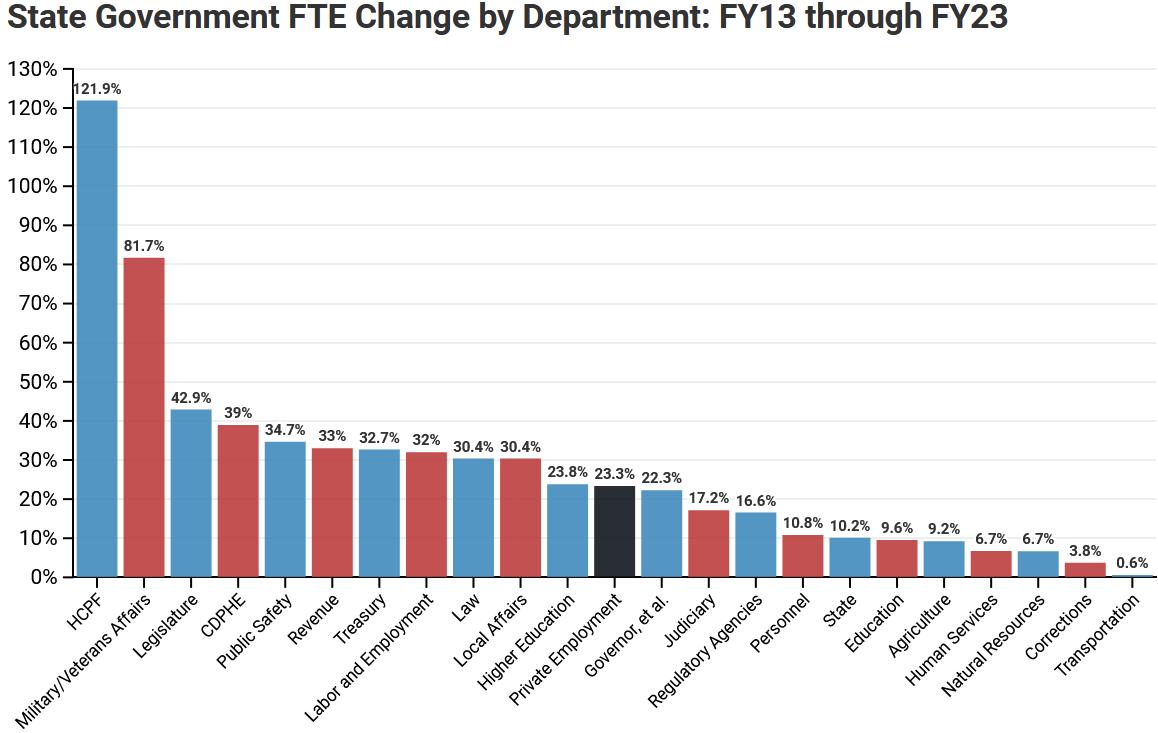
The significant growth in full time equivalent employment (FTE) for some agencies follows a clear historic trend. Over the last 10 state budgets, including the Governor’s FY23 proposal, the cumulative growth rate of state government employment (20.3%i) is projected to be lower than private-sector employment growth (23.3%ii). However, over that same period several state departments have grown significantly faster or slower.
The following charts and key findings track the changes in state government FTE employment levels across departments. FTE employment excludes seasonal and contract workers,iii and therefore, tends to be less volatile than appropriations and can help understand long-term budgetary commitments.
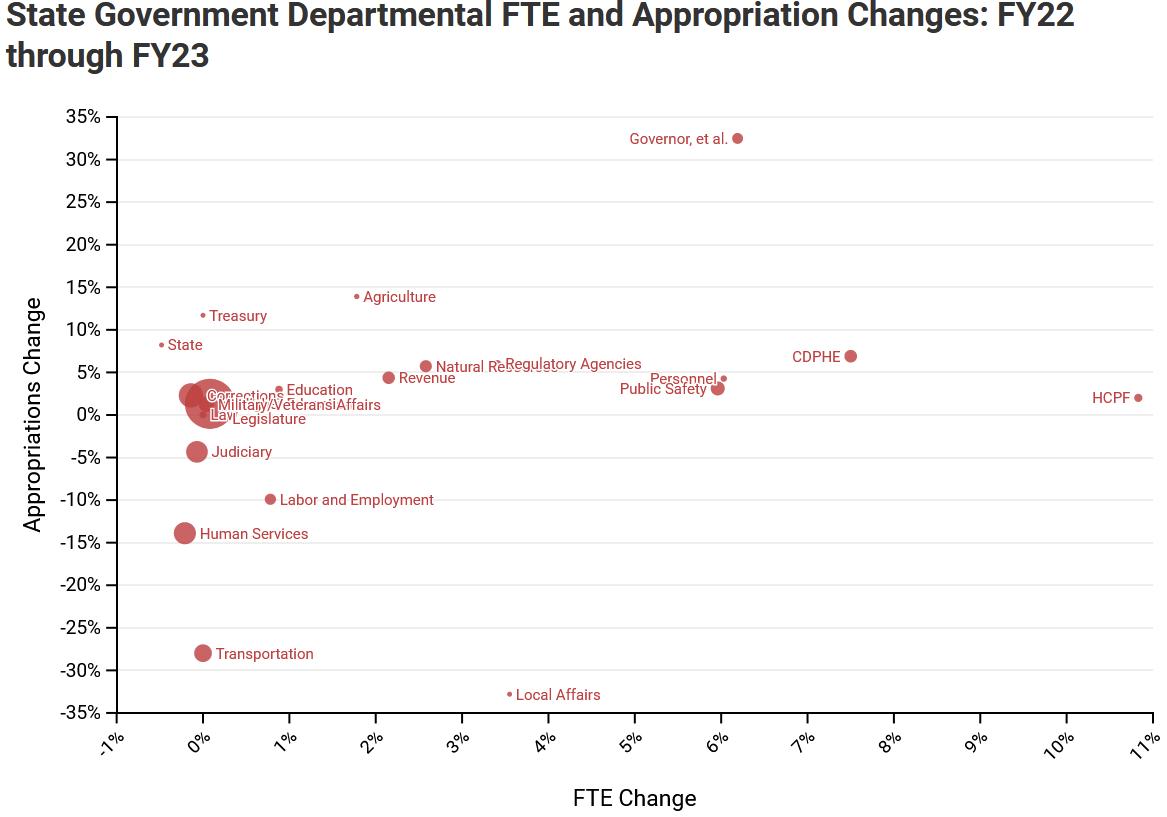
FTE Changes in the Governor’s FY23 Budget Request
• Although private sector employment is projected to grow by 3.4%, government FTE would increase by 0.85% in FY23 under the Governor’s Budget request.
• The Departments of Health Care Policy and Financing and Public Health and Environment would receive the largest proportional FTE growth in FY23. They would grow by over 10% and over 7%, respectively.
• Seven of the 22 state-government departments would receive either no FTE growth or negative FTE growth in FY23. Among these are the state’s 2nd- through 5th-largest departments.
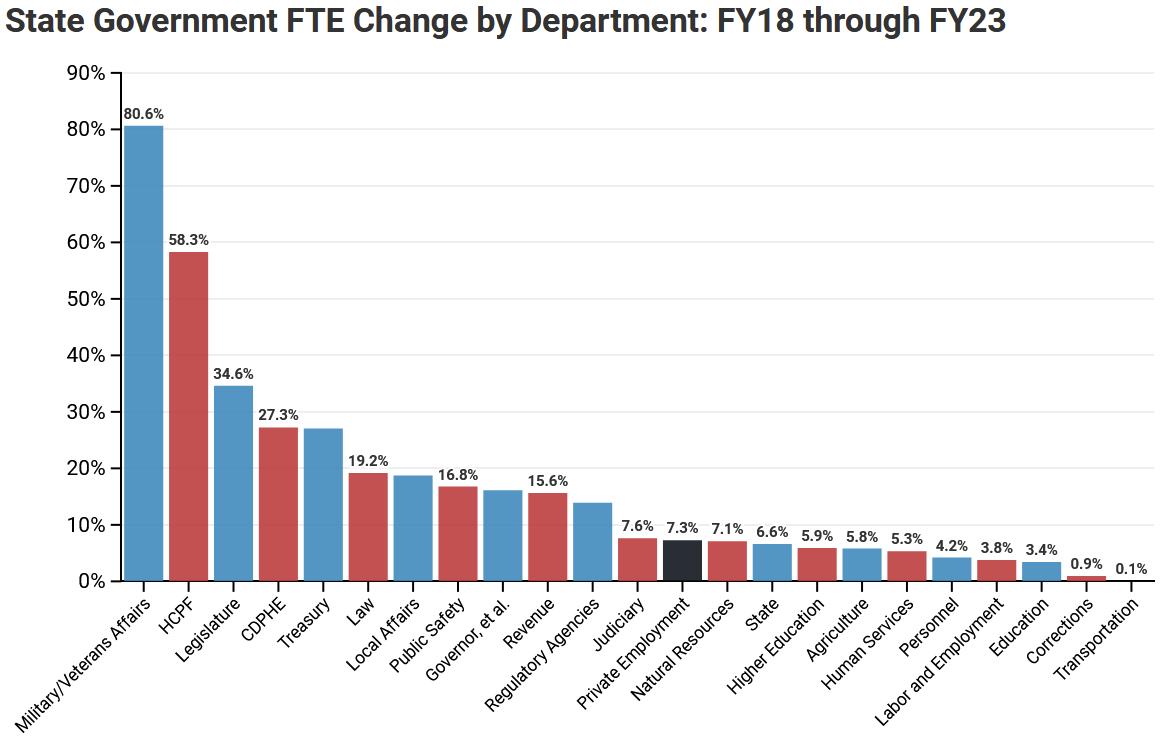
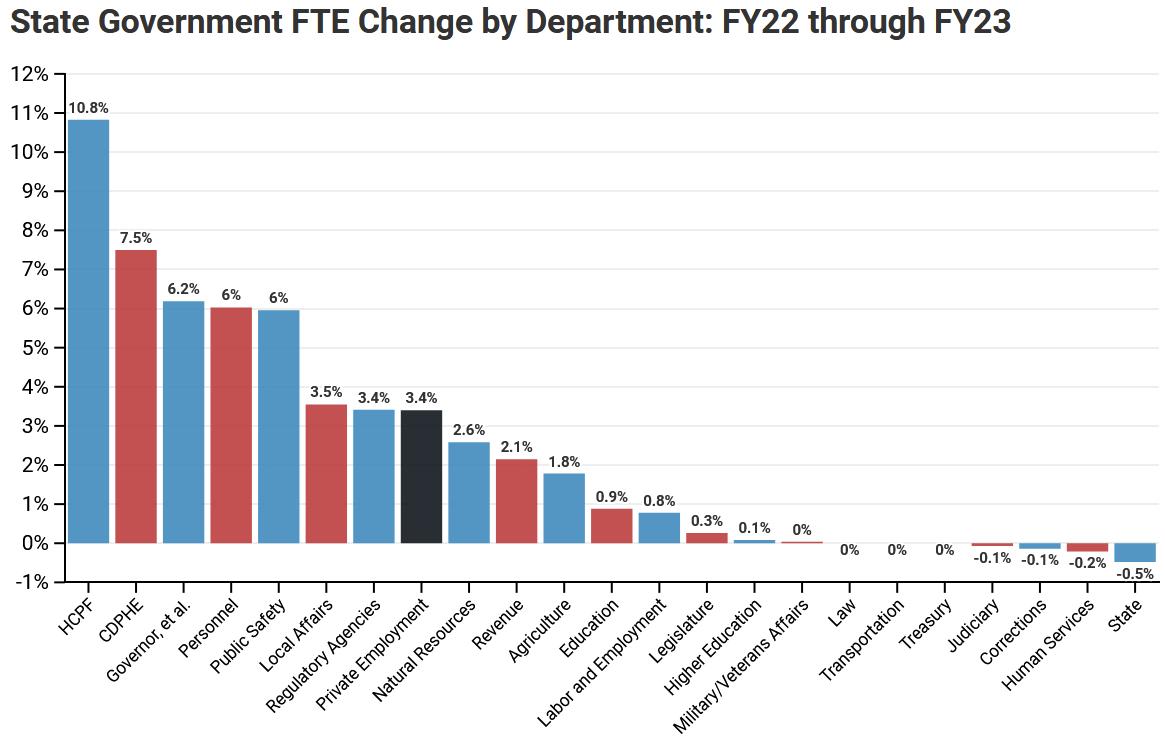
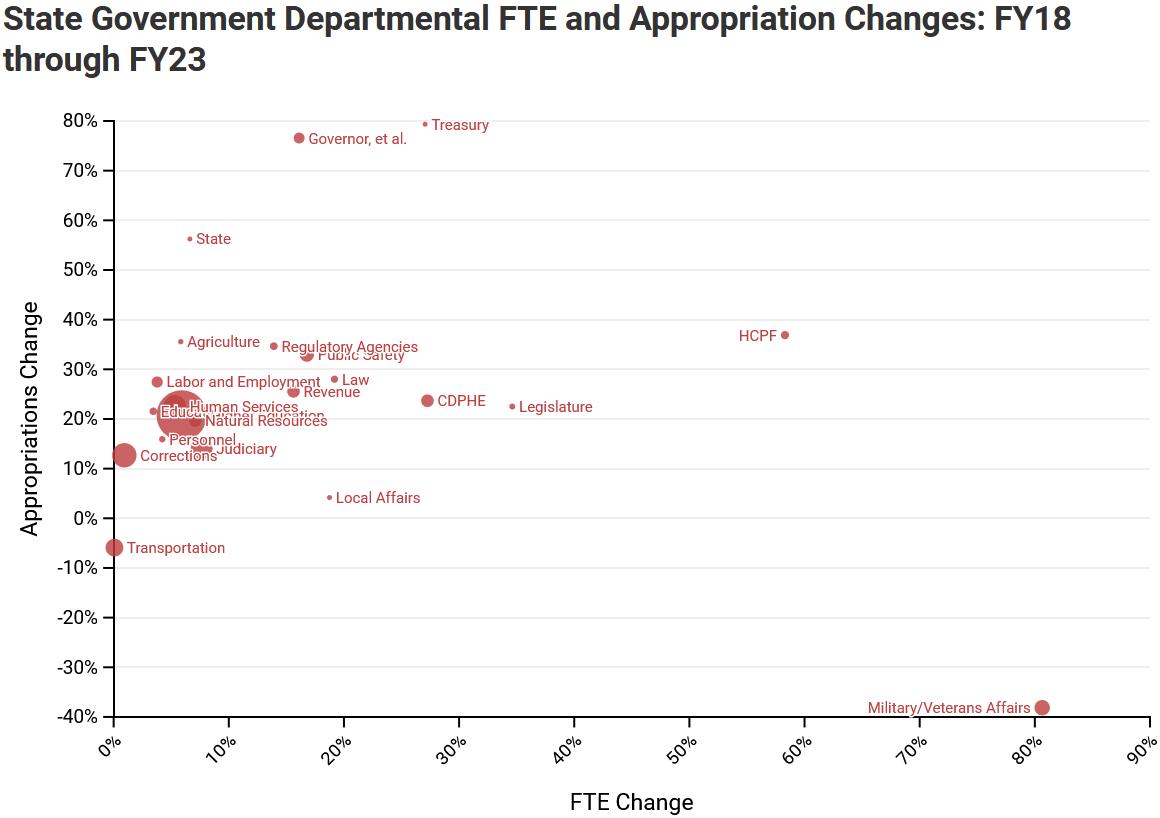
• Although the Department of Military and Veteran Affairs’ employment growth rate has been the second highest since FY13, its FY23 appropriation is almost 40% lower than its FY13 appropriation.
• The Department of Transportation’s FY23 appropriation is 33% higher than its FY13 appropriation (4th lowest among all departments) and its employment growth over that time has been almost zero.
• Only the Departments of Local Affairs and Labor and Employment would receive any FTE growth out of the six state government departments appropriated less money in FY23 than in FY22.
The Change in State Government FTE Over Last 5 and 10 Years

• Between FY13 and FY23, total state government FTE will have grown by 20.3% under the Governor’s latest proposal and private-sector employment is projected to have grown by 23.3%. Before 2020, private employment grew by an annual average of 2.7% and total government FTE grew by an annual average of 2.1%.
• In 2020, private sector employment dropped by 5.7% while state government FTE increased by 3.4%.
• The Department of Health Care Policy and Financing’s workforce increased by 122% since FY13 and its total appropriation has increased by 142%.
i Derived from annual Joint Budget Committee Appropriations Reports (https:// leg.colorado.gov/appropriations-reports)
ii Private employment from BLS (2013 through 2021) and projections from the December 2021 Economic Forecast produced by CO Legislative Council Staff (https:// leg.colorado.gov/publications/forecast-december-2021)
iii CRS § 24-75-112 (1)(d)(II)
Lost Creek Guide deCember 7, 2022 8
Wreaths across America Ceremony at Heart of the Plains Cemetery remember Honor Teach
The lives of our twenty-eight veterans buried at Heart of the Plains Cemetery will be remembered with veterans’ wreaths on Saturday, December 17, 2022 beginning at 10 A.M. All Wreaths Across America ceremonies take place on the same day and near the same time as the ceremony begins at Arlington National Cemetery. Veterans’ wreaths are not the same as Christmas wreaths and are made of ten bunches of balsam fir attached to the wreath; each bunch stands for a quality of a veteran. The red bow symbolizes sacrifice. All wreaths are made in Maine and shipped across America by eighteen-wheelers that have volunteered transport.
The ceremony is open to all and is a free community event. It is non-political and not affiliated with any religion.
The program will begin with the flag raising and the Pledge of Allegiance. After a brief welcoming and a moment of silence, those currently serving in the branches of the U.S. military will be honored with the placing of eight ceremonial wreaths. Taps will be played. Local high school students will conclude the ceremony by individually placing a veterans’ wreath on each of the veterans’ graves. Each student will speak aloud the veteran’s name and express gratitude for his/her service before placing the wreath. The students have been taught the significance of the ten qualities of a veteran and the purpose of the non-profit Wreaths Across America program which will place wreaths at more than 3,100 participating cemeteries.
The cemetery is grateful to the American Legion Post #180 of Keenesburg, CO and Southeast Weld Fire Protection as both will be participating in the ceremony.
The Marine Corps League of Greeley graciously donated all the wreaths for Heart of the Plains Cemetery.

New K9 Program and Narcotics K9 Coming to the Hudson Police Department

The Hudson Police Department is implementing its very first K9 program and adding its first member to the K9 Unit after securing sufficient funding through generous donations from the public.
The Town of Hudson has grown in the last 6 years with the addition of a truck stop, hotel, and new housing. With new growth, comes an increase in traffic as we are the gateway to two large metropolitan areas such as the Denver metro area, and Loveland/Greeley area. These thoroughfares of I-76, Highway 52, and Kersey Rd are also a gateway for criminal activity with the transportation of illicit drugs, human smuggling, drug currency, and narcotic disbursement into our communities. The addition of K9 Gary, through generous donations from Liberty Energy and Verdad Resources, allows our small, rural police department to have the tools necessary to assist our six patrol officers in combating the distribution and transportation of illegal narcotics that affect all of our communities.
The Hudson Police Department secured funding for the purchase of K9 “Gary”, a 1 ½-year-old black Labrador, through a partnership with Liberty Energy and Verdad Resources. Back the Blue K9 Force; a 501(c)(3) non-profit organization, dedicated to assisting law enforcement agencies with K9 programs, made it possible for taxdeductible donations.
Without the commitment from Liberty Energy and Verdad Resources, the purchase of K9 Gary would not have been possible. The Hudson Police Department and the citizens of Hudson appreciate Liberty Energy and Verdad Resources’ support to help provide a crime-free place to live and work.

“Liberty is proud to support the communities in which we live and work. Partnering with the Hudson Police Department and Verdad Resources in the funding of their new K9 unit is not only helping our local community but building the foundation for our relationship for years to come. Liberty is looking forward to watching the K9 program grow.”
Schuyler Paugh Comms & Community Outreach Coordinator

“Verdad Resources is excited and honored to support the Hudson Police Department. We hope to forge a durable and lasting relationship with the Hudson community in the years to come.”
Justin Pivik Director of
Platte Valley Ambulance Service Earns Statewide Ambulance Service of the Year Award
Brighton City Council, Adams County Commissioners honor the team at recent meetings
Brighton, CO, December 1, 2022 –Platte Valley Ambulance Service (PVAS) was recently recognized as EMS Ambulance Service of the Year by the Emergency Medical Services Association of Colorado and the Colorado Department of Public Health and Education.
Brighton City Councilmembers hosted and honored PVAS at their meeting on Nov. 15. Councilmembers recognized the team for their inspired and tireless work amid the challenging conditions. This award honors an ambulance service that has become a leader in patient care, medical control, quality assurance, public access, and training and education.
“We’re grateful for the amazing partnership with our dispatchers, co-responders and hospital professionals,” said Carl Craigle, PVAS Chief. “Without their ongoing support, this recognition would not have been possible. We share this award with all of you!”
Adams County Commissioners added their name to the list of governing bodies lauding the efforts of PVAS and celebrating this milestone at their meeting on Nov. 29 as well.
ABOUT PVAS:
In May 1972, to find a solution to address a local funeral home ambulance that was going out of service, the City of Brighton and the Brighton Community Hospital formed a citizen committee that would ultimately create Platte Valley Ambulance Service. In 1992, PVAS became a Platte Valley Medical Center hospital based-ambulance service. In partnership with many local first responder agencies, PVAS coverage has now expanded to include southeast Weld County, Lochbuie and Hudson, which includes:

• Todd Creek
• Great Rock
• Henderson
• Commerce City
• Reunion
• Wattenburg
• Keenesburg
• Prospect Valley
• Roggen
December 7, 2022 Lost creek GuiDe 9
D&C Operations
Aims Community College Goes
“All In” to Fight Hunger


GREELEY, CO November 17, 2022 – During the holiday season, and throughout the year, Aims Community College makes it a priority to support students and the community when it comes to food security. This month, Aims is providing a number of Thanksgiving meal kits to students who need them and Aims employees are volunteering at the Weld County Food Bank. These are just a few of the everexpanding efforts the college has adopted in recent years.
Food Insecurity: a Growing Problem



When students are concerned about their next meal, it can lead to a lower GPA, poor mental health and limited social life. Food insecurity among community college students is a growing concern across the country. A recent report produced by the Center for Community College Student Engagement at the University of Texas at Austin found that 29 percent of students reported food insecurity. Aims students experienced a slightly higher rate of limited or uncertain access to adequate food, at 33 percent, according to a college-wide survey.
“There is a high number of college students that are food insecure,” said Aims Hunger Free Campus Coordinator Patty Schulz. “They’re choosing not to eat so that their kids can eat, or they’re skipping meals because they can’t afford to eat more than once a day. So, we started doing some research on how we could mitigate that. Aims is great at seeing something and jumping on it before it becomes a bigger problem.”
In the last five years, Aims began to focus on addressing student hunger in numerous ways. This includes everything from planning events such as cooking demonstrations and healthy meal preparation events to providing food to students at no cost. Efforts to provide food to students didn’t stop during the pandemic. Arty’s Pantry provided students with one $20 Walmart electronic gift card per week while the campus was closed to give some help. In 2020, Aims set up an online ordering system to allow for limited contact pick-up.
The most visible program is Arty’s Pantry, an on-campus food and supply pantry. It provides any enrolled Aims student with groceries, personal hygiene products and school supplies, no questions asked. Items from Arty’s Pantry are available on the Greeley, Windsor, Fort Lupton and Loveland campuses. Since the opening of the pantry in March 2018, Arty’s Pantry has served 1,180 students. For the first ten months of 2022:
• 45,104 items were distributed to students
• 3,998 total visits

• 555 unique students served
“We want our students to be able to concentrate on their studies, plan for the semester, and not worry about how they will get their next meal,” Schulz said. “Students have been receptive to this project and thankful that Aims has Arty’s Pantry. Our work is to help feed student success.”
Currently, six students work as Arty’s Pantry attendants. The employees help students sign up for the pantry, fill orders, stock shelves and shop for inventory. Student workers also track data, research programs, and partnership opportunities.
“The best part of my job is getting to help people.” Said Jeff Thatch, an Aims student who works at the pantry. “I’ve dealt with food insecurity in my own life, and I know how frightening and distressing it can be. The fact I can genuinely help people overcome that insecurity is very fulfilling.”
Due to nationwide inflation, the cost of food is rising for everyone. “Arty’s Pantry has resources to help students with these expenses,” Thatch said. We also have new shelves which allow us to keep more items in stock and offer more variety in what we carry. With our fridge and freezer, we can start offering more frozen proteins, dairy items, and things that have seen significant price jumps, like eggs and cheese.”
Expanding Hunger-Free Efforts


A partnership with the Weld Food Bank has enhanced the hunger-free efforts at Aims. This relationship allows the college to obtain food for the pantry at a significant discount through the food bank. An arrangement with the Weld Food Bank provided 2,850 pounds of food for special Thanksgiving meals for students at no cost to Arty’s Pantry.
This effort supplied 75 Thanksgiving meals to students who signed up. Meals include a frozen turkey (about 12-15 pounds each), a bag of potatoes, a bag of onions and a food box containing stuffing mix, cake mix, mac and cheese, corn muffin mix and canned veggies and fruit. “We are super excited to help feed our students and their families this Thanksgiving,” Schulz said.
Another program is the Weld Food Bank Farms To Families Food Truck which supports the Aims community. “I’m excited about expanding visits from the Farms To Families Food Truck,” Schulz said. The food truck visits locations across Weld County to provide healthy, fresh foods with a converted refrigerated beverage truck that can deliver fresh produce, dairy, meat, baked goods, and more. The food truck visits the Greeley, Windsor and Fort Lupton campuses monthly. The schedule of Weld Food Bank Farms To Families Food Truck visits is available on the Aims events page. “Don’t be afraid to use the resources available,” Schulz said. “A food pantry is just like using financial aid. If you need help, just ask.”
In addition to bringing free food to campus, the college is working in other ways. The Aims Hunger Free team helps students apply for the Supplemental Nutrition Assistance Program (SNAP) that helps low-income households buy food. Many
students are not enrolled because they need to be made aware that they qualify, do not know how to register or feel stigmatized when they use these services.
Another piece of the puzzle is financially supporting these on-campus efforts. Aims staff and faculty, community members and grants fund Arty’s Pantry from donations and in-kind donations such as canned foods. Local organizations like the Weld Community Credit Union and Atmos Energy supported Aims food security efforts in 2022. In May, Atmos Energy donated $12,000 and reusable bags to Arty’s Pantry. The Weld Community Credit Union contributed $535.40 in cash and in-kind donations of non-perishable food and supplies. Local restaurants have also donated food; for example, Panera gave bread to the Pantry. Aims also received funding from the Colorado Food Pantry Assistance Grant Program, Higher Education Emergency Relief Fund, The Weld Trust and United Way. To donate items to the pantry, email artys.pantry@aims.edu. The Aims Foundation coordinates all financial donations for the college; the online form allows you to contribute to Arty’s Pantry.
This ethic of helping people goes beyond providing money and food. A number of Aims staff and faculty will take part in an annual “give back” to the community event at the Weld County Food Bank on Nov. 18. Aims also provides in-kind support to make these programs possible. For example, for the Thanksgiving program, Dirk Smith at Aims Facilities and Operations loaded the food on pallets and smoothly got it to our campus. Christina Edwards, director of events, allowed Arty’s Pantry to store extra turkeys in the walk-in cooler in the catering kitchen in the Welcome Center. It is a team effort from the entire college, a community of care.
With all that is going on, Aims has been recognized for its efforts. In May 2022, the Colorado Department of Higher Education (CDHE) recognized Aims as a HungerFree Campus. That doesn’t mean that the work is done; it only solidifies the work the college is doing. “The Hunger Free Campus designation doesn’t mean that we’ve reached the pinnacle of addressing food insecurity at the college,” said Aims Dean of Students Shannon McCasland. “It does mean that we are 100 percent committed and have focused efforts to fight hunger at Aims.”
This dedication to being hunger-free keeps expanding in the Aims community. Future plans include a Hunger-Free advisory council, a potential community garden, more special events and additional outreach programs.
To learn more about Arty’s Pantry, visit aims.edu/departments/sail/artys-pantry.

Aims Welcome Center Recognized as One of the Top Building Projects in Colorado
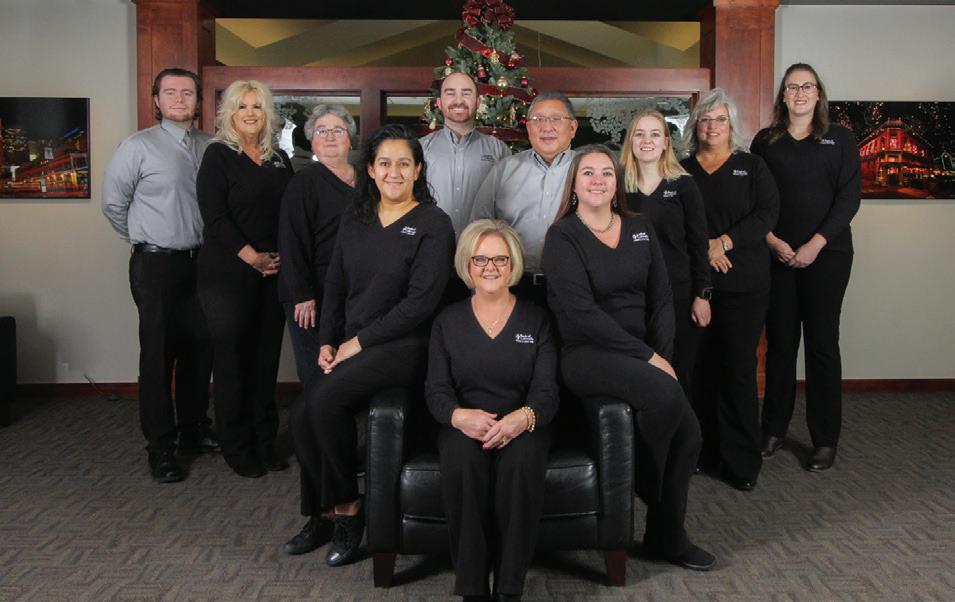
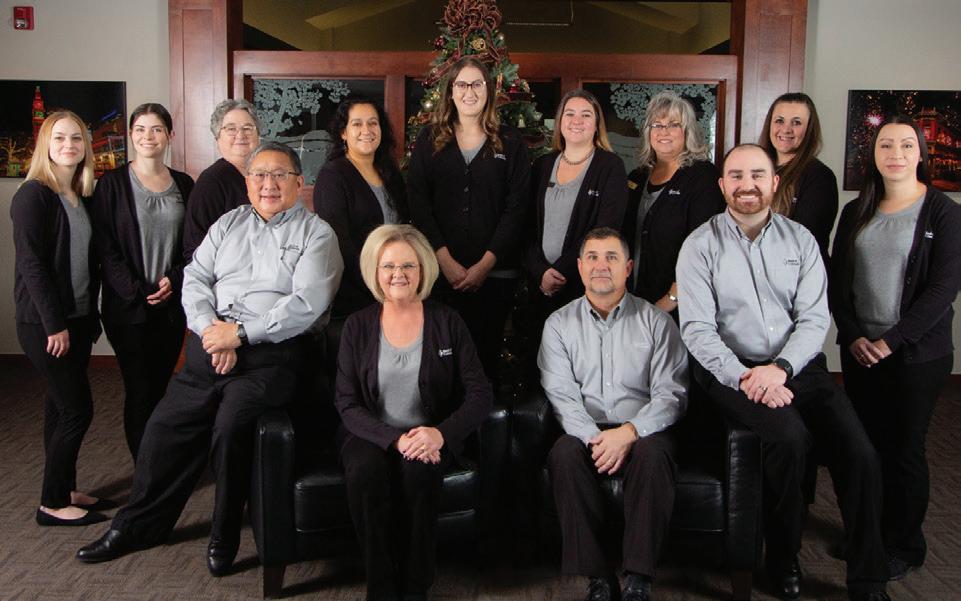
GREELEY, CO November 30, 2022 – Aims Community College’s Welcome Center won Silver in the ACE Best General Contractor Building Project ($40 - $70 Million) category by Associated General Contractors of Colorado. The contractor on the project, Fransen Pittman, applied for and won the award. Peers in the construction industry vote on the ACE awards. The Welcome Center beat out Bronze recipient Meow Wolf Convergence Station in Denver and placed second to Lone Rock Retreat in Bailey.
Aims Facilities and Operations Executive Director Michael Millsapps said, “To be recognized by construction industry peers says it all. It continues to convey that community colleges are an important part of the communities they serve and the industry.” He noted that the Aims Welcome Center was the only community college building to receive an award this year.
Fransen Pittman Senior Project Manager, Brady Fountain, said, “To be recognized by industry peers is the greatest compliment we can get as a company.” This was recognition for all our employees’ hard work and commitment to constructing great buildings.”
Fountain acknowledged the teamwork among Aims, Fransen Pittman and the architects at Hord Coplan Macht. “Without the team approach we took, this building would not have been as great of a success as it was. This was a fun team with great camaraderie and a unified purpose. Aims staff made sure the project was successful by choosing the partners they believed in and they wanted this to be the jewel of Aims for generations to come. They truly fostered a team atmosphere, so we all succeeded.”
Millsapps also emphasized the synergy of the group. “The collaboration with the project team from the beginning was a clear path to a special and unique construction project. Every step of the way, this project did not disappoint. The design created many challenges, all confronted with innovation and optimism.”
Another special part of the Welcome Center project team included Aims students studying construction management, providing them with experience and jobs. Fransen Pittman hired several interns from Aims during construction and brought three interns on as full-time employees.
About the Welcome Center
The Welcome Center on the Greeley Campus offers access to student services in one central location. The building also features an auditorium, 800 capacity ballroom, executive-level conference space, and outdoor patios with western views of the Front Range. The Welcome Center is designed to meet the needs of the next generation of students and the community.
“From concept to reality, the Welcome Center checked all the boxes; from welcoming new students to hosting them at graduation, it has always been a full-circle approach,” Millsapps said. The 105,720-square-foot has many unique features:
• A story wall display that tells the history of Aims, with room to grow
• The only escalator in Weld County
• An auditorium lighting system designed by a Hollywood studio

• A stage back wall with a glass garage door that can open to the outdoor atrium
• Outdoor patio space with a courtyard, fire pit and plenty of seating
• Skyboxes that double as conference rooms with closable glass and blackout curtains
• Large west-facing windows with views of the Rocky Mountains
• A sky deck with an expansive view of Weld County
“This building stands out for the obvious reason that there is nothing that looks like it in Greeley. It is functional but elegant. This building was designed to serve the Aims community with style,” Fountain said. Learn more about the Welcome Center at aims.edu/welcome-center.
Lost Creek Guide deCember 7, 2022 10
FORT LUPTON 111 S. Rollie Ave., 303.857.3400 bankofcolorado.com From your friends at Merry Christmas and Happy Holidays 21_BC62_FTLPTN_CHRISTMAS_AD.indd 1 12/8/21 8:56 AM
WELD COUNTY, CO — Despite a small amount of snow gracing the southern portion of Weld County this past weekend, snowfall throughout the county this year has been somewhat nonexistent. However, that’s expected to change later this week as the forecast is calling for strong winds with a 50 to 70% percent chance of snow in some areas. Before drivers are impacted by changing weather, the Weld County Department of Public Works wants to remind them of the following tips to help them stay safe, along with county plow truck drivers and motor grader operators responsible for snow removal on more than 2,100 miles of gravel roads and more than 700 miles of paved roads:
Don’t expect bare pavement – Plow truck drivers and motor grader operators within Public Works work to make county roads passable not completely clear. Expect to deal with snow on roads and prepare for changing conditions. Before heading out, ensure your car is in good working condition and consider assembling an emergency preparedness kit to keep in your vehicle. Check out our emergency preparedness flyer for ideas on creating a prep kit.
Drive for conditions – Slow down, give yourself extra time to get to your destination and monitor weather reports to determine if travel is safe or necessary. Beyond accounting for the amount of snow on the roads, factoring in the strength of the wind is also important as blowing snow can reduce visibility.


Leave plenty of space – Drivers of plow trucks and motor graders are trying to help the traveling public get where they need to be safely. Help them achieve this goal by leaving them plenty of space. Public Works recommends drivers leave at least 250 feet between themselves and plow trucks and motor graders. Also, as plow trucks and motor graders can create clouds of snow when clearing roads, resist the urge to pass them.
Snow affects everyone, so please be patient – We get it. Snow can be an inconvenience. However, during snowstorms, teams of 22 drivers are working 12-hour shifts to make paved roads passable while 27 motor grader operators are doing the same on gravel roads. Plowing arterial roads — roads that connect to high traffic areas — is Public Works’ top priority, so please be patient when waiting for roads to be plowed.
Follow the county’s social media platforms – Snow desk posts contain information about county road conditions during snowstorms. Follow the county’s Facebook and Twitter platforms for those updates.
Find more information on Public Works’ process for snow removal by reviewing the department’s snow and ice webpage.

December 7, 2022 Lost creek GuiDe 11 GREEELEY FORT LUPTON LOVELAND WINDSOR ONLINE Your future starts here. Take a new career path or commit to lifelong learning. Spring classes start January 17. Register today and save your seat! aims.edu Tips to Remember ahead of Snow Season
Why the Price of Eggs Went Up in Colorado this Year
Avian flu has killed off 85% of Colorado’s egg-laying hens amid high inflation. The industry says there’s no egg shortage — just higher costs for everyone. by
needy. Those eggs have to go through the shipping process to get to the right areas. You’ve got a lot of costs involved with shipping of eggs to distribution points. You’ve got an increase in materials and packaging. You’ve got an increase in labor costs. Everything that’s associated with inflation is associated with the production of eggs as well.”
The cost of food has gone up higher than overall inflation, according to the Consumer Price Index from the U.S. Bureau of Labor Statistics. In the latest inflation report for Denver, area prices were down from August, but up 7.7% in September compared to a year earlier. Food prices were up 11.8% and eggs — part of the meats, poultry, fish and eggs category — were up 12.9%. But who pays for that isn’t just the consumer or customer.
“What happens is that you get hit with inflationary pressure and there’s a gap between when you start getting hit before you reprice. And in that gap, you’re eating it,” said Marco Antonio Abarca, president of Denver-based Ready Foods, which provides prepared soups and sauces from scratch for restaurants and supermarkets. “I’m eating more and more as the customer is reluctant to take the inflationary hit. It’s understandable but the people who really eat it are the manufacturers or the producers.”
During the last recession around 2009, Abarca said he used that time to invest in real estate and expand. He’s doing that again because he needs a larger factory, but with higher interest rates, he’s paying more for the real estate loans. His new factory will have more automation and robotics as a way to manufacture more efficiently. But he still needs workers, which he said he pays above minimum wage for. That’s going up too. Denver’s minimum wage will increase 9% to $17.27 an hour on Jan. 1.
In July, Natural Grocers reluctantly raised the price of free-range eggs by a dollar for members of its loyalty program. But as signs posted around the egg shelves reminded shoppers at the time, “Even at $2.99, they are still priced less than they are at other stores.”

The Lakewood-based grocery chain received little pushback from customers, said Katie Macarelli, the company’s spokeswoman. Likely because around the same time, gas was nearing an average of $5 a gallon in Colorado, the Federal Reserve had made its first of four (so far) three-quarter-point interest rate hikes, and the U.S. had just hit its largest inflation rate increase in 40 years.
Still, it was still a tough decision for the company, which aims to offer healthy and affordable food options for customers. It has subsidized free-range and organic eggs for its {N}Power members since 2017.
“It’s getting more expensive because the base is rising,” he said. “I’m going to need good industrial workers who are able to handle robotics and other things. So there’s inflation and the labor shortage that are causing these issues.”
Christie Pettys, who visits farms to check on the welfare of animals as Natural Grocers’ product standards manager, said she’s seen the pressure of inflation on local farmers, as well as the fear of avian flu. She hasn’t heard that any of her egg suppliers were affected by the flu, but farmers canceled film shoots with the Lakewood-based grocer out of extreme caution.
“They said, ‘We’re not worried about you humans getting sick. We are worried about you killing our birds,’” Pettys said. “That’s a huge concern.”
“The general ethos (of subsidizing eggs) is multilayered, but eating good food should not cost you your whole paycheck,” Macarelli said. “You should be able to feed you and your family in an affordable way. Eggs are really the perfect food. They have all the essential amino acids, they have so many nutrients and vitamins. For the pennies it costs you to have two eggs in the morning, it’s probably one of the most economical food products you can buy.”
While the Russian war on Ukraine and the billions in federal relief in the pandemic contributed to overall inflation, including for egg farmers, other factors may have played a greater role in pushing egg prices higher than they’ve ever been.

Farmers were still reeling from the added costs of the pandemic when the contagious avian flu began wiping out 85% of Colorado’s egg-laying chicken population in March. Nearly 5 million chickens have been slaughtered. And now, starting in January, a state law goes into effect requiring commercial egg producers to make hen pens roomier with a cage-free housing system, though farmers have two more years to comply with cage-free environments.
“It’s kind of the perfect storm,” said Dawn Thilmany, an economics professor of labor and agribusiness at Colorado State University. “At the same time those laying hens are (being euthanized), pretty much for every food product, we have high inflation.”
And the new law will likely add more costs, she said. “If we follow what happened in California (after) they went to cage-free laying hens, we tended to see higher prices because the space for those laying hens had to be bigger and as soon as you need more real estate, it’s going to be more costly. Plus, there’s record keeping for those layers,” she said. “Everything that could make prices go up right now probably is making prices go up right now.”
How high?
Egg prices have indeed been rising this year, though retailers have often used them as a loss leader. Advertised prices have been as low as $1.24 a dozen in September, according to the USDA advertised egg prices data.
But at wholesale, a dozen large Grade A white eggs in the South Central region, which includes Colorado, reached $4.23 in October. It fell back to around $3 but is back up to $3.68 as of Nov. 10.
“The cost associated with producing eggs has gone up,” said Bill Scebbi, executive director of the Colorado Egg Producers, which represents local egg farmers. “We’re producing 1 billion eggs in our state and giving 1 million eggs to food banks or the

Natural Grocers still offers $1.99 free-range eggs to members of its program, which is free to join. But they had to raise the price on some brands and specialty eggs. Organic and pasture-raised eggs increased 50 cents a dozen to $3.99 and $4.99 respectively. It’s tough for smaller grocery chains to absorb the rising costs, especially when industrywide costs for eggs have increased about 20% since 2019.
“The real cost increase on all these farms was two-plus years ago,” Pettys said. “They have been holding the cost for us. And finally, they have had to pass it on to customers because they cannot afford to keep having all of their increases in the cost of business go up and not change the price.”
Plenty of eggs in Colorado though not all are native
The most recent commercial outbreak of avian flu in Colorado was in late September in Weld County. Roughly 1.15 million hens were euthanized in early October. Smaller hen houses found on backyard farms continue to show up in the state’s avian flu weekly up dates. There have been no reinfected facilities in Colorado, though there have been in oth er states, said Olga Robak, a spokeswoman for the Colorado Department of Agriculture.
It’s been devastating, she said. But most cases are among backyard, noncommercial farmers who don’t realize the gravity. The contagious virus affects the organs and has a 90% to 100% mortality rate in chickens, often within 48 hours, according to the Centers for Disease Control and Prevention. Avian flu tends to be spread by wild birds, which shed the virus through saliva, nasal secretions and feces. But birds can also get infected through contact with contaminated surfaces — and people.
“In fact, we had a case here in Colorado, it was a backyard case, where the husband went duck hunting and five days later, all of their chickens died from” avian flu, Robak said. “We don’t know exactly how (it happened but) he was out there touching water fowl, he didn’t follow proper biosecurity and he wasn’t aware of it. And so somehow, he was the mechani cal vector that tracked the virus from the wild birds into the domestic chickens.”
As farmers ramp up egg production again (and for the curious, the chicken comes first in production, said Scebbi, with the Colorado Egg Producers), the process can take a year to get back to full production. After removing the birds and cleaning up, there’s a 150-day quarantine or “virus elimination phase,” followed by additional testing to make sure the virus is not present. Only then can a farmer consider repopulating the coop. Specialty eggs, like organic and cage free, and larger eggs take longer to produce.
In the meantime, Colorado gets eggs from neighboring states, Scebbi said.
“Our egg industry is a very tight-knit industry. So when eggs are required in the state of Colorado, and we don’t have the number of eggs to get into the stores, those eggs are purchased from other farms in other states,” Scebbi said. “They work with each other to make sure that there’s a sufficient quantity of eggs to serve the 6 million people in the state of Colorado. The economic impact really isn’t going to be on the loss of the egg to the consumer. It’s going to be the loss of the farmer. The farmer is going to be paying more for those eggs with shipment and logistics.”
Why the Price of Eggs went up in Colorado
Lost Creek Guide deCember 7, 2022 12
Tamara Chuang, The Colorado Sun
Adrienne Burns checks on the condition of the eggs while shopping at Natural Grocers, Friday, Nov. 18, in Golden. (Hugh Carey, The Colorado Sun)
A shopper stops in front of the eggs and milk section inside Natural Grocers Friday in Golden. (Hugh Carey, The Colorado Sun)
Eggs at Natural Grocers in Golden. (Hugh Carey, The Colorado Sun)
This Year continued on page 13...
Why the Price of Eggs Went Up in Colorado This Year continued

from page 12...
But the thing is, there should be enough eggs for
them, even if prices are higher than they were a year ago.
“We are a global society,” Robak said. “Just because we produce eggs here in Colorado doesn’t mean those are the only eggs we eat.”

The Colorado Sun is a reader-supported news organization that covers Colorado people, places and issues. To sign up for free newsletters, subscribe or learn more, visit ColoradoSun.com

Wiggins Tigers Volleyball Finishes 24-5, Reaches 2A Semifinal


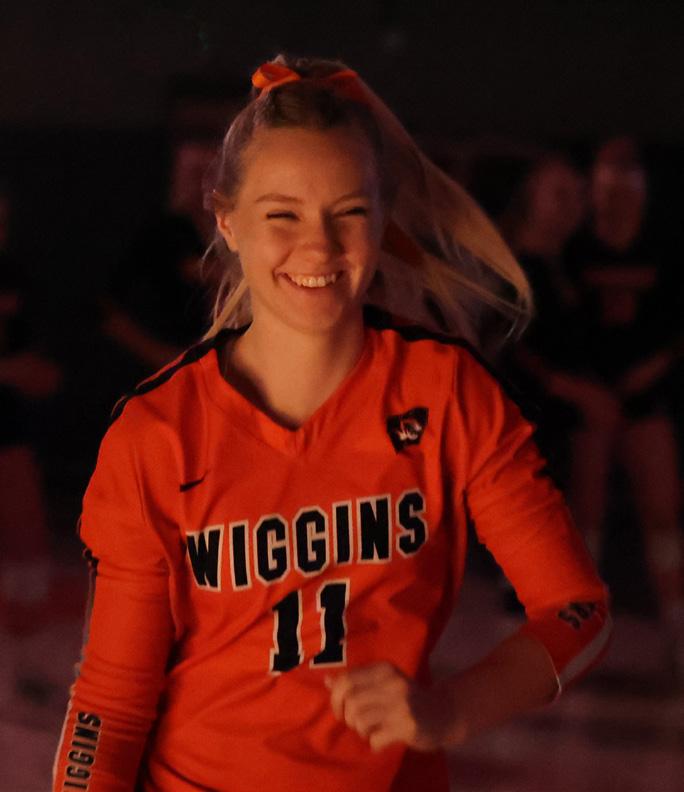
by Paul Dineen, The Picture Sports LLC

Wiggins Tigers volleyball had another successful season in 2022-23. They were 20-3 in the regular season and 4-2 in the playoffs. They made it to the semifinal playoff game before losing to eventual champion Sedgwick County Cougars, The Cougars were also last year’s champions. The Tigers were champions the year before that. In the one regular season meeting between these teams, Wiggins won, 3-0, at Julesburg.
The Tigers finished first in the 2A/1A Lower Platte league, with an 8-0 mark. This season was the forth in the last six in which they had at least 20 wins. The two exceptions were 2021 with 19 and 2020 with 17 (a COVID-shortened season). Their average record for the last six seasons is 21-6.
Head coach Michelle Baker achieved the milestone of 150 career victories this season.
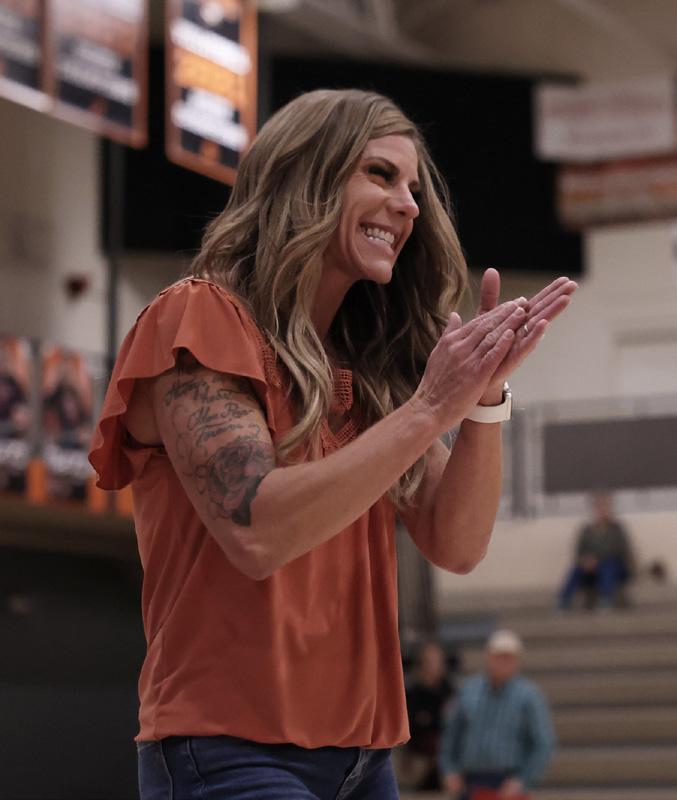
For next year’s squad, they will lose only three players to graduation. Potentially returning will be this year’s four juniors, four sophomores and two freshmen. Individual leaders included Tyleigh Fehseke 309 kills, Kennedy Kerr 65 aces and 717 assists, Taelynn Epple 71 block, Avery Burdette 542 digs and 476 serve returns.
476
717 assists.
December 7, 2022 Lost creek GuiDe 13
Kroger-brand eggs are sold at a King Soopers in Englewood. (Olivia Sun, The Colorado Sun via Report for America)
every Coloradan who wants to buy
Kennedy Kerr led the Tigers with 65 aces and
Avery Burdette led the Tigers with 542 digs and
serve returns.
Head coach Michelle Baker achieved the milestone of 150 career victories this season.
Taelynn Epple led the Tigers in blocks with 71.
- Obituary -

Dale Lee Pastelak
He grew up helping work the family farm in Keenesburg. Even before he could legally drive, he was headed down the dirt roads in the combine ready to work the next field.
He graduated from Wiggins High School in 1991 where he enjoyed performing in the school plays. This is when he bought his first motorcycle and he enjoyed riding the rest of his life.
He married Shannon Strauch in 1999 and they had a son Cody Steven Pastelak on July 3, 2000.
He served in the Army from 2009 to 2013. As Signal Support System Specialist, he served in Iraq as part of Operation New Dawn. He was very proud of his time in the service and received many commendation medals.
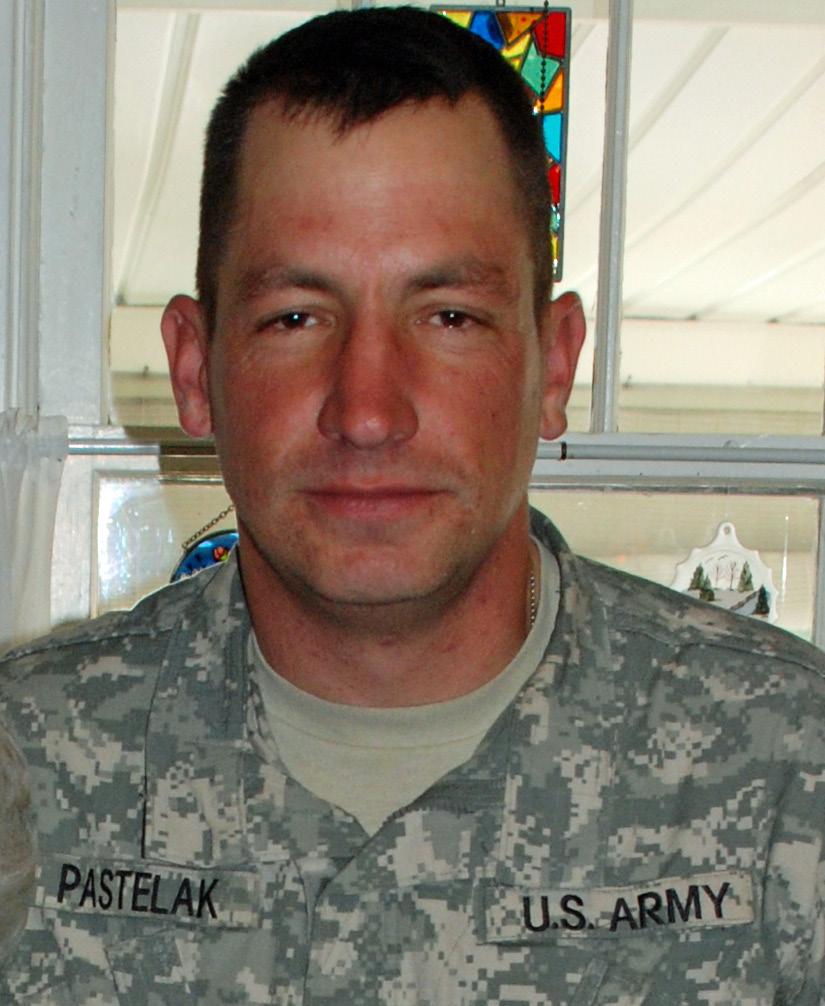
Besides his time in the Army, the jobs he loved the most were working on the farm and being a truck driver. He was always good with equipment and had a knack for fixing almost anything.

He married Pam on May 28, 2010 and added her and her 3 kids to the family to share his big heart with.
Recently, medical conditions made it hard for him to work so he enjoyed spending time with his family and dogs. He also enjoyed doing peer support with other veterans suffering from PTSD.
Everyone that met Dale saw he had the biggest heart. He was always ready to help out anyone in need.
He is survived by his wife Pam, sons Cody and J.J., daughters Cora and Patty (Steven), grandson Ricardo, Parents Steve (Monika) Pastelak, Lynne (Keith) Howell, sisters Suzanne (Wayne) Morine and Dianne (Rob) Becker, nieces Kaitlyn and Nicole and nephew Garret.
He was preceded in death by his grandparents.
Military burial will be November 17th at 10:00 am at Ft. Logan National Cemetery followed by a Celebration of Life Reception at the American Legion Post 180 in Keenesburg at noon.

Lost Creek Guide deCember 7, 2022 14
Dale Lee Pastelak was born August 3, 1973 in Brighton, Colorado and passed away on November 4, 2022 in Evans, Colorado.













December 7, 2022 Lost creek GuiDe 15 SERVICE DIRECTORY Thomas J Croghan DDS Family Dental Practice Appointments: 303-377-8662 New Patients Welcome Appointments Available in Keenesburg and Denver Computer Support R epai R , S e R vice & S ale S Reliable, Local, Professional Roggen Telephone Company 303-849-5260
Recycled asphalt, concrete Great for driveways & parking areas. Also sand & gravel. Reasonable Prices Call Kevin for free quote 303-901-5034 Dave Haney Painting & Dry Wall Interior - Exterior Cabinets, Fence Staining Located in Platteville 720-217-2089 Open Mon. - Fri. 8am - 5pm Family Medical are for All Ages 190 So. Main St., Keenesburg 303-732-4268 Keene Clinic BT Built, LLC Your Construction Company Dream Kitchen remodels, Interior/Exterior Doors & Hardware, Bathroom remodels, Framing, Residential Concrete Fences & Gates, General Carpentry BT Built will take on your home remodel project no matter the size ! 720-402-8861
McCarthy Trucking
2022 Christmas in Keenesburg
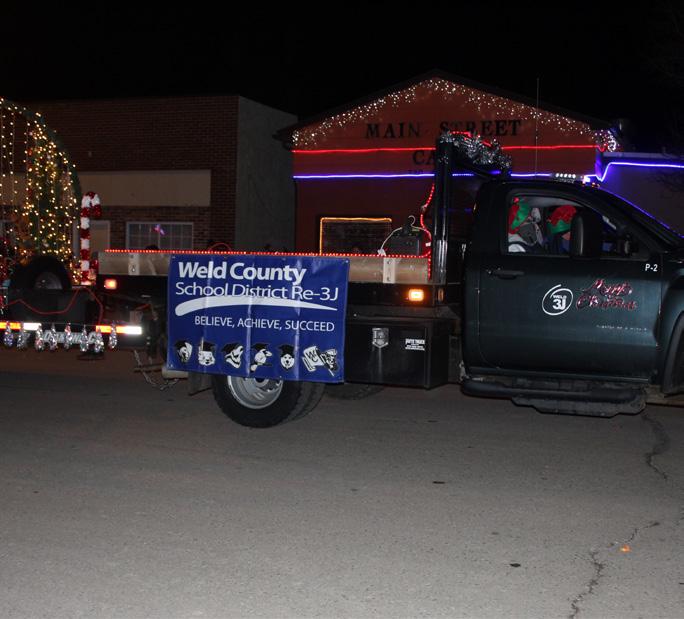







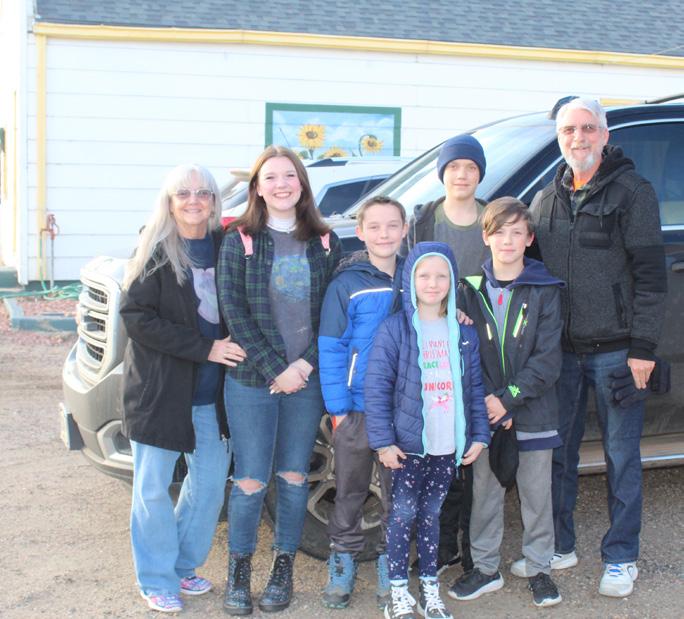


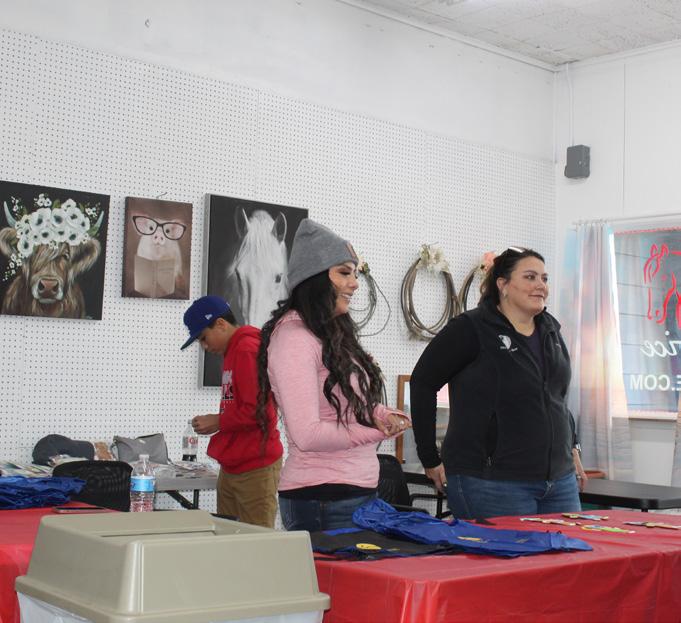





Lost Creek Guide deCember 7, 2022 16
For more pictures go to www.ourtowncolorado.com; I-76; Keenesburg news/events
