The Gray Data Zone
To Lock or Not to Lock?
How to Tackle BOPIS in 2026 PLUS: The Next Chapter of Interviewing


The Gray Data Zone
To Lock or Not to Lock?
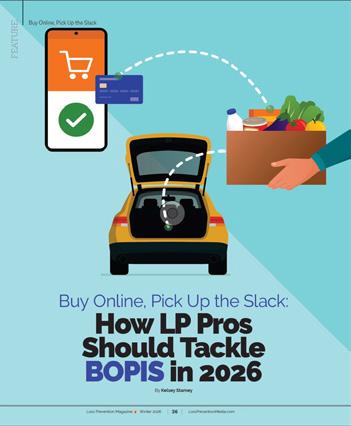
How to Tackle BOPIS in 2026 PLUS: The Next Chapter of Interviewing
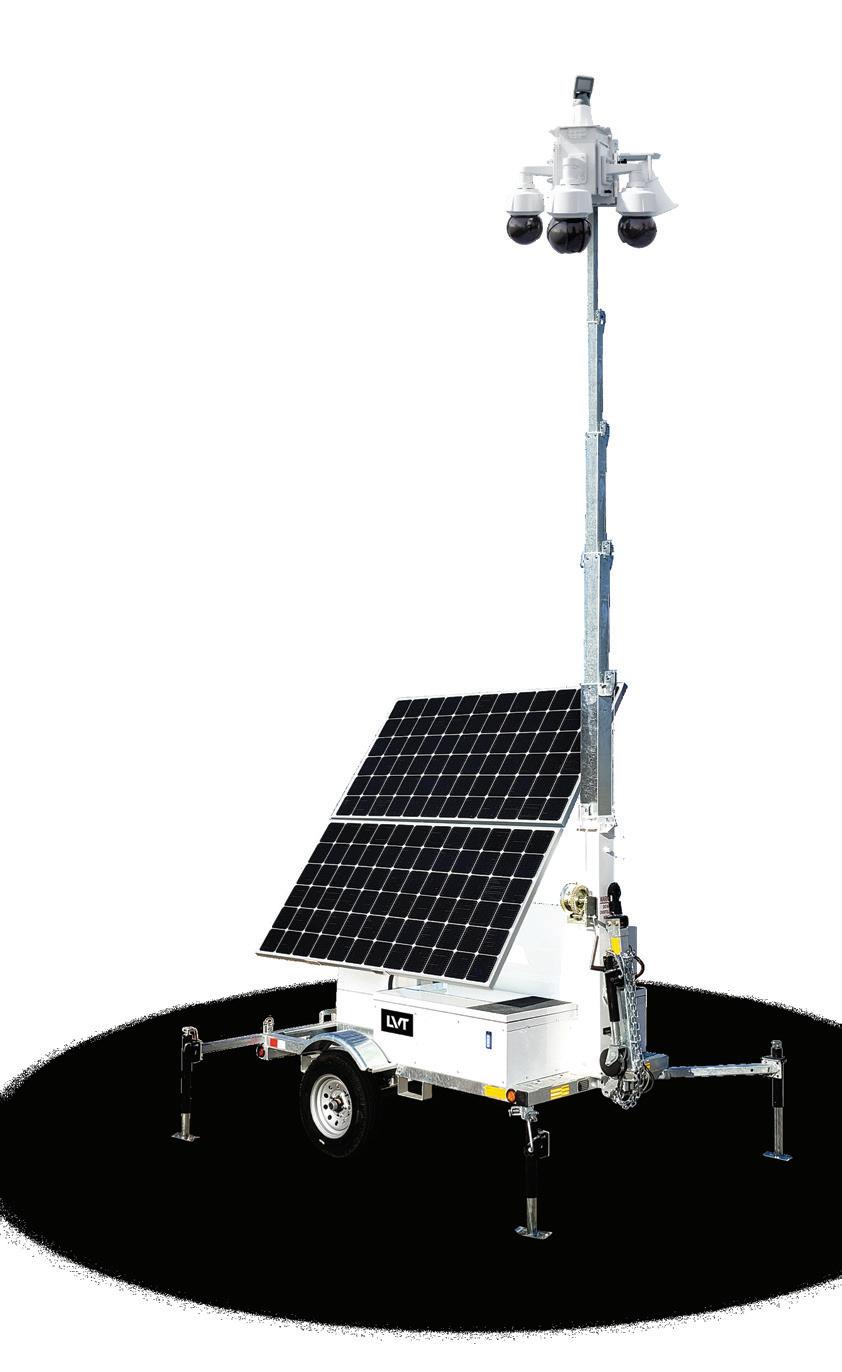
Frost & Sullivan names LVT the leader in innovation in the mobile surveillance industry. The objective evaluation presented in the Frost RadarTM: Mobile Surveillance positions LVT as the most innovative mobile surveillance partner by setting a high bar for intelligence, autonomy and system integration. What

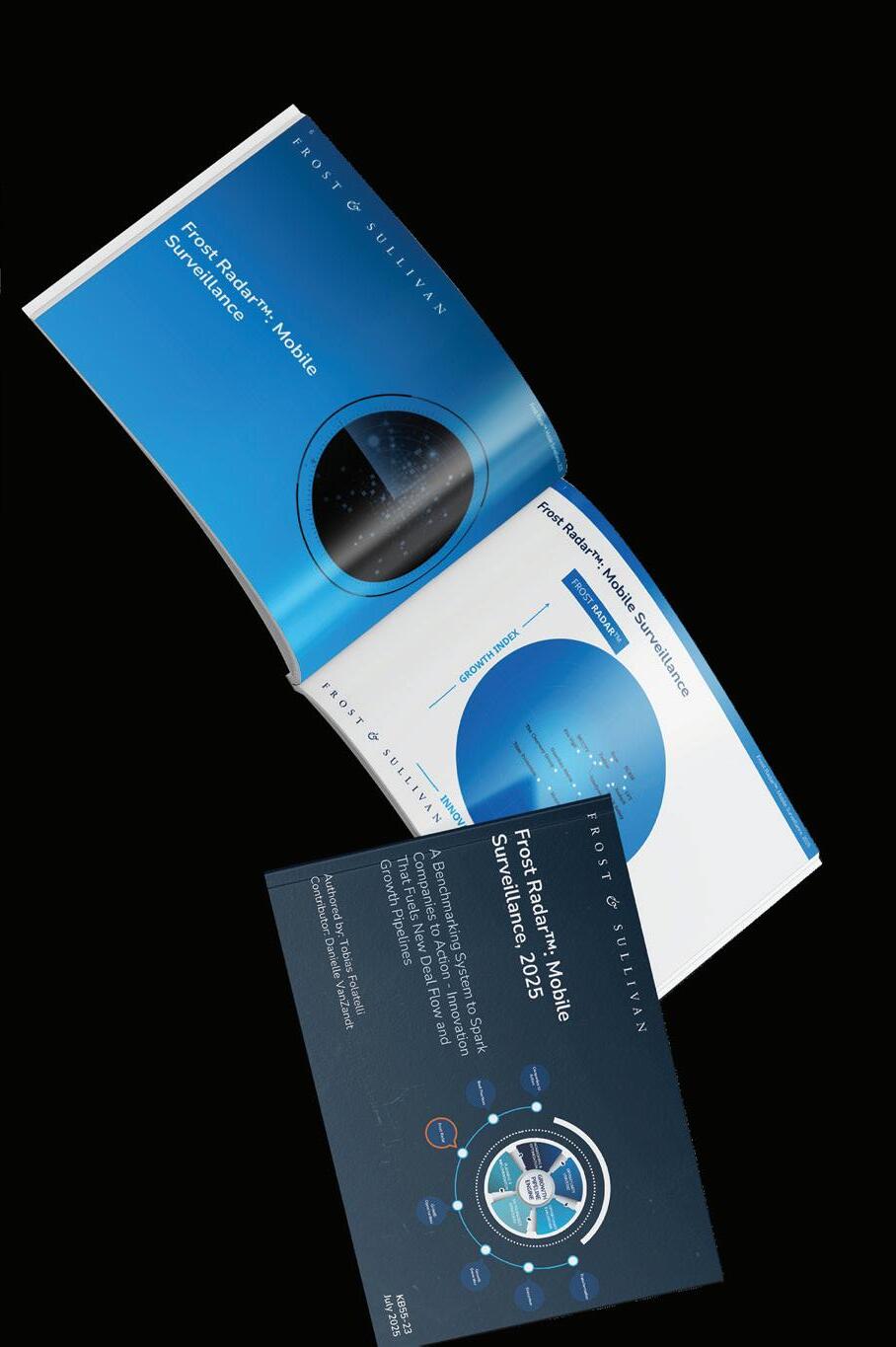
Scan to access the full report and read key insights.
Revolutionize your retail surveillance with our innovative modular camera systems
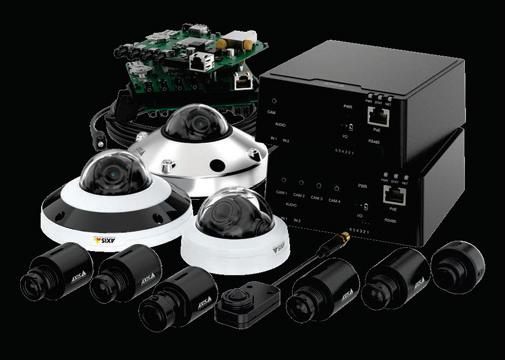
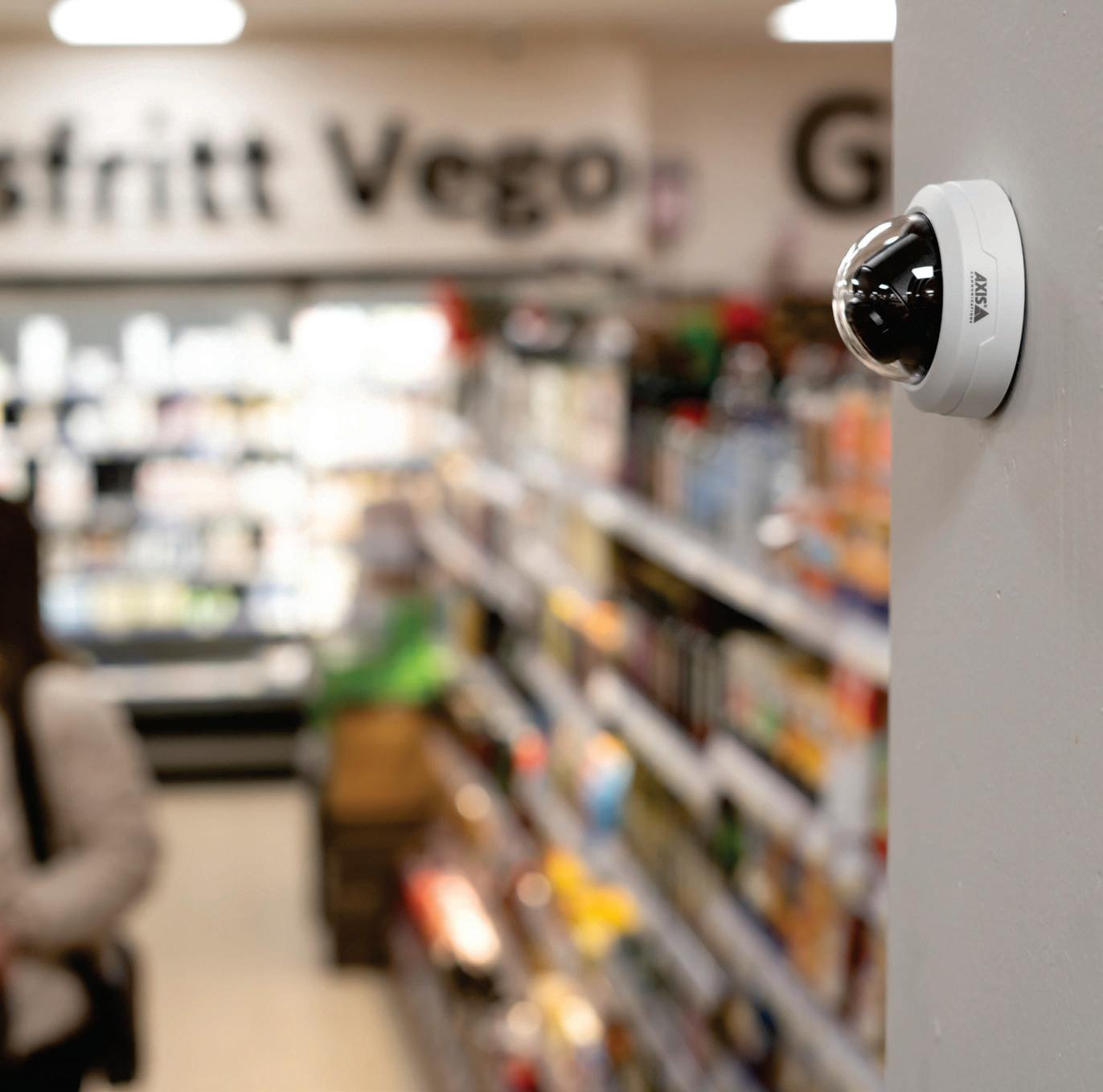
Get comprehensive coverage with fewer cameras, simplifying installation and significantly reducing costs, all while maintaining discreet, high-quality video. Our systems not only optimize your initial investment but also deliver substantial longterm savings through reduced power consumption and streamlined maintenance.
Key benefits:
Save money and simplify setup: Cover multiple areas with a single main unit by connecting up to four sensor units, significantly reducing installation complexity, labor, and wiring, getting your system up and running faster.
Lower your total cost of ownership: By powering multiple sensors from fewer main units, you’ll experience significant power savings compared to traditional camera setups, leading to lower utility bills every month. This reduced energy footprint, combined with simplified maintenance due to fewer components, substantially lowers your total cost of ownership over the system’s lifespan.
Get the coverage you need: Achieve flexible surveillance that adapts to your space, ensuring every important area is monitored. Our modular design allows for optimal placement and coverage, maximizing effectiveness with fewer devices.
Maintain store aesthetics: Our discreet sensor units provide high-quality video without being an eyesore, blending in seamlessly with your store’s design.
Checkouts / self checkouts High-value merchandise displays
Sales floor - shelves Use cases Discreet retail surveillance
Chain of custody confirmation
Compliance & liability protection
Multiperspective incident documentation
Forensic investigation
Entry ways
Internal investigations
Learn more about what modular cameras can do for your store

Jacque Brittain, LPC
By Courtney Wolfe

Stefanie Hoover, CFI, Editor-in-Chief
I
n the Fall of 2001, something gamechanging happened in our industry: The very first print copy of Loss Prevention Magazine arrived at retailers’ doorsteps. As I read through Jack Trlica’s first publisher’s letter, he reported the excitement that he was hearing in response to the prototype, and it was clear that Jack and Jim Lee were onto something.
Our niche within retail demanded its own trade publication. Our roles were still evolving from security guards to professional partners. We had developed our own language and acronyms, specific training programs, and unique ways of looking at the business. We were having a significant impact on the bottom line for retail. No other publications were covering this, and it turned out people were hungry for it.
What Jack wrote about in his first “Publisher’s Letter” has remained the bedrock of LP Magazine for twenty-five years. Our mission, the Editorial Board, advertiser support, and reader feedback all continue to be the lifeblood of this endeavor. Without strong community support, the magazine couldn’t have gotten off the ground. We continue to rely on this support today.
On the cover? You guessed it, an article on organized retail theft. Written by King Rogers, the information in this article holds up today. King cites examples of ORT from twenty-five years earlier. Do the math; we’ve been battling this problem for well over fifty years. Like Nostradamus, he points out the need for legislation to define and combat ORT, explains its international nature, and the need for law enforcement collaboration to mitigate it. It’s amazing how long LP leaders have been sounding the ORC/ORT alarm. Maybe 2026 will be the year CORCA finally gets over the finish line.
A baby-faced Walter Palmer appears in the first issue. Walter’s article on “Return on Investment” has stood the test of time—it’s been updated and run multiple times as we continue to get requests





on this topic. Walter, like many early contributors, continues to support LPM’s mission in countless ways.
And speaking of baby-faces, Doug Wicklander and Dave Zulawski’s inaugural article on interviewing was the first in a twenty-five-year run from W-Z that continues today. Personally, this was always my favorite section of the magazine, and I can clearly point to ways it improved my interviewing skills. What was your favorite part of LPM?
I would be remiss if I didn’t recognize those advertisers and solution partners who were in the first issue and continue their support today: Pinkerton, Sensormatic, Alpha Security (now a part of Checkpoint), CAP Index, Vector Security, Learn It Solutions, and ADT (now Everon) all took a leap of faith and I want to thank them for joining us on this journey.
Another important ally we’ve had since the beginning, helping us behind the scenes with print production and creative, is SPARK Publications. Owned by Fabi and Larry Preslar, SPARK has been instrumental in keeping us on track, on brand, and sane. Thank you for all you do, SPARK!
This year, help us celebrate LP Magazine’s anniversary. We’ll hear from some of the original contributors, the OGs, throughout our print editions this year. We’ll be running campaigns on LinkedIn to get you involved and hear what you think about this body of work. Send us your thoughts on our twenty-five years and how LPM may have impacted your career at editor@losspreventionmedia.com. Putting together a print magazine is not easy; it can be a hair-pulling and hairraising experience. I can only imagine the effort it took twenty-five years ago, in uncharted territory and without many of the digital tools we have today. Hat’s off to everyone who helped bring LP Magazine to life. Be proud of the legacy you have given the industry, and here’s to twenty-five more years! l
President Caroline Kochman Caroline.Kochman@losspreventionfoundation.org
Vice President, Editor-in-Chief Stefanie Hoover, CFI StefanieH@LossPreventionMedia.com
Editorial Director Jacque Brittain, LPC JacB@LossPreventionMedia.com
Managing Editor Courtney Wolfe CourtneyW@LossPreventionMedia.com
Assistant Editor Allie Falk AllieF@LossPreventionMedia.com
Retail Technology Editor Tom Meehan, CFI TomM@LossPreventionMedia.com
Contributing Writers Lauren Fritsky Kelsey Stamey David Thompson, CFI
Design & Production SPARK Publications info@SPARKpublications.com
Creative Director Larry Preslar
Advertising Strategist Ben Skidmore 972-587-9064 office 214-597-8168 mobile Ben@PartnersPR.com
Subscription Services New or Change of Address LPMsubscription.com or circulation@LossPreventionMedia.com
Postmaster Send change of address forms to Loss Prevention Magazine 33 Walt Whitman Road, Suite 121W Huntington Station, NY 11746



Rick Beardsley Senior Director of Loss Prevention and Safety, At Home Group









Robert Holm Director, Global Safety and Security McDonald's


Mike Lamb, LPC Vice President, Asset Protection and Safety, (Ret.) Kroger



Lund, MBA, LPC, CFI Executive Director, International Association of Interviewers


LPM's Editorial Board is composed of some of the loss prevention and asset protection industry's top executives from a wide range of retail sectors. These senior executives provide guidance to the LPM team on article topics and industry issues that are of current concern and interest to LP professionals. To learn more about the Editorial Board, contact Stefanie Hoover, CFI, at StefanieH@LossPreventionMedia.com.








Rhett Asher SVP, Community Relations and Partnerships

Sharon Costanza Senior Enterprise Account Executive

Stephen B. Longo Chief Revenue Officer/EVP

Chris Reene Senior Director, Strategic Accounts

Dave Sandoval President

Alix Arguelles Director of Product





Frank Panebianco VP Sales and Marketing NA

Craig Greenberg Chief Commercial Officer

Cita Doyle, LPQ, LPC VP, Sales and Marketing

Brianna Witts Senior Industry Marketing Coordinator


Amy Day-O'Connor Senior Director, Enterprise Marketing

Tom Meehan, CFI CEO



Mike Jennings VP Sales, US Retail


Scott Thomas National Director for Signature Brands


Rex Gillette VP, Retail Sales


Hoang Chief Customer Officer

Matt Kelley, MBA Head of Retail, Go To Market


Steve Fahey Global Head of Retail Strategy

Kevin O'Brien EVP of Business Development


Cathy Klein Global Leader, Strategy and Transformation
Robb Northrup Director, Marketing Communications


Tony Sheppard, MSM, CFI, LPC VP, Retail Risk Solutions

Scott Pethuyne, LPC
Sr. Analytics Solution Consultant


Allan Watters, LPC Director, Security Sales


Nick Rykhoff President
LPM's Solution Partner Board is composed of the magazine's strongest solution provider supporters. These executives provide their counsel on how the magazine can better advance and serve the loss prevention and asset protection industry. To learn more contact Ben Skidmore at Ben@PartnersPR.com.
Join these great companies as an LPM corporate sponsor. Email Editor@LossPreventionMedia.com for more information.




























By Jacque Brittain, LPC
The retail industry encompasses an enormous scope of business models that vary greatly in appearance and offerings, limited only by consumer needs and desires and the skills and creativity of the business owner. But every business needs to establish an awareness and understanding of what makes it profitable, regardless of its type. That’s no different when considering the role of loss prevention (LP), where the function of leadership and style of management must adapt to meet those needs. And while every company is unique, there are those models that require a much different style of leadership.
The franchise industry is one of those formats, offering partners across the country the opportunity to share branding with some of the largest and most iconic names in the business world. With an economic output estimated to be approximately $897 billion annually, the franchising industry is a significant contributor to the US economy. Recent studies estimate that there are roughly 831,000 franchise establishments in the United States alone, employing millions of people across a wide range of industries.
The franchising arrangement typically involves a company licensing its brand, products, and processes to a separate business, which will then operate under the larger company’s name. This practice is common in a variety of industries and encompasses some of the most wellknown companies in the world. Millions of us had our first jobs working in the franchise industry. While the largest businesses using the franchise model have consistently involved the restaurant or food service industry, franchises can also include other formats and services to include convenience stores, health and fitness centers, home improvement centers, hair salons, mailing and shipping, home cleaning services, and even preschool franchises.
Franchises are typically a collection of related locations, most often carrying the same name, selling the same products, sharing the same network of resources, managed under well-documented systems, possessing a strong support team, and following the same policies. Chains can be local, regional, national, or international, with locations typically built to a standard format. The operational structure, floor plan and layout, brand culture, and guest experience are very similar from location to location.
Based on the type of business and the structure established by the brand or

corporate leadership, a chain can operate under different ownership models.
Corporate-Owned Chains: When a chain is corporate-owned, the parent corporation owns all of the stores or units, retains total control of each unit, and runs the day-to-day operations.
Franchise Agreements: Under a franchise agreement, the company sells the rights to operate individual units to outside investors in exchange for a percentage of the unit’s sales. In exchange for the time-tested business plan, the buying power of a large chain, marketing power, and brand name, the franchisee pays royalties to the company (the franchisor). Each franchised unit must follow guidelines established by the parent company, such as the types of products sold, operating procedures, and typically the prices charged.
Blended Ownership Chains: Some chains operate under a business model that includes both corporate-owned locations and franchised units, maximizing their business potential by capitalizing on both.
While the franchising model can provide many exciting opportunities for those who savor the entrepreneurial spirit, it can also offer some complex challenges. Buying into a franchise allows a business owner to license from a larger corporation, but the franchisee remains responsible for the day-to-day operations of the business. With this type of relationship, the franchisee ultimately has responsibility for and control over the franchise employees, not the corporation or franchisor.
The company granting the license—or franchisor—offers support, marketing, and a business concept that’s proven to work. Often, they will provide additional support in terms of training, mentorship, and other guidance to include LP services.
There are different ways that a franchise business can be organized, each with their
“Security and LP is not the top focus of the franchise owner—and it shouldn’t be. You must first approach the process with a business-minded focus, understanding what’s most important to them.”
Rob Holm
own risks and potential rewards. From a safety, security, and LP perspective, it’s critical to have a core understanding of the environment, how the business operates, and the fundamental challenges it faces within its business model. Given the complexity of this business model, these relationships are paramount for the LP professional to understand.
Rob Holm is the director of US security at McDonald’s, where 95 percent of their locations across the country involve franchise operations. “For us, working with our franchise locations is very much a consultative role, offering recommendations, guidance, and best practices,” discloses Holm. “In our environment, we are most often dealing with businessmen and women with little to no security experience. Education and the transfer of knowledge are our primary responsibilities in these situations.”

“You need to have a lot of flexibility and structure expectations to really be effective,” Holm continues. “Security and LP is not the top focus of the franchise owner—and it shouldn’t be. You must first approach the process with a business-minded focus, understanding what’s most important to them. Tying the message into their language will make you much more successful. You’re a business-minded, professional consultant with expertise in security. That’s how you need to be perceived.”
David Johnston, current vice president of asset protection and retail operations with the National Retail Federation and former senior director of corporate security and LP for Dunkin’ Brands, agrees—while adding an important ingredient. “Across most franchise environments, the relationship is primarily defined by the franchise agreement and brand standards,” he says. “Where LP has no direct authority, they must act as educators,
informing franchisees about the concepts and value of LP. They can provide guidance, common practices, and resources, but unless a specific arrangement exists, the ultimate responsibility for implementing these practices rests with the individual franchisee.”

Johnston further emphasizes the importance of being an effective influencer.
“In a franchise environment, the most prominent difference in handling LP issues is the lack of direct authority,” he continues.
“Unlike a typical retail setting where corporate teams can dictate and enforce policies, LP in a franchise is all about influence and persuasion. You must effectively ‘sell’ the value of LP initiatives to individual franchisees by demonstrating how these measures will directly improve their business’s profitability and protect their assets. It’s a consultative approach rather than a top-down mandate.”
Given the complexities of the franchise environment, the level of engagement of an LP department with its franchise community depends on several factors, including the franchise agreement, brand standards, and the franchisor-franchisee relationship. In most environments, however, the LP department will have little, if any, direct control, oversight, or management of a franchisee’s employees.
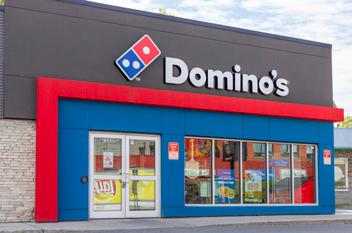
reveals Van Carney, former director of LP, safety, and security at Domino’s. “The corporate locations would serve as the foundation for new policies, procedures, innovations, and similar objectives that would be shared with the franchises.

But there was typically very little in our franchise agreements on LP. The franchises were required to have a safety program, which also fell under my umbrella, but we didn’t want to get too deeply involved with any franchisee on LP issues based on joint employer concerns.”
“Our focus was on best practices and serving as a consultant,” Carney continues. “We had area leaders who were liaisons with

the franchises and who would develop strong relationships with them. I had regionals out in the field who would be able to offer guidance and best practices on how to handle the different situations. If a franchisee requested training on LP-related topics, it would open the door to guidance. We also held mini conferences on specific topics related to LP and safety. To have a successful LP program, you really must develop partnerships across the organization.”
For example, a corporate LP (LP originating with the franchisor) may provide access, tools, high-level recommendations, and other basic resources to help franchisees manage their businesses. They may conduct presentations, provide general training programs, perform physical assessments, and recommend solution providers based on subject matter expertise, depending on the company and the specifics of the franchise agreement. However, in most franchise environments, corporate LP typically may not conduct internal investigations or interviews with dishonest employees on behalf of franchisees.

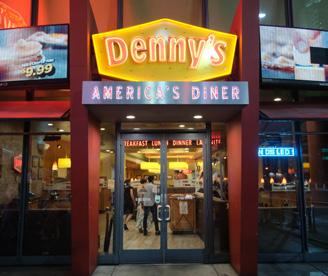
“In the franchise setting, there’s a lot less direct control and much more emphasis on partnerships,” explains Aaron Hancart, director of business development at i3 International and the former senior director of asset protection and safety at Denny’s. “The relationship is based primarily on what the franchise agreement outlines. Most agreements grant franchise owners greater autonomy. We had franchise business coaches who would work directly with the franchises, but in LP, our everyday, functional role was more focused on consulting. Some franchises have their own LP team, depending on franchise size and leadership. Some don’t have any. In the small pool of restaurants owned by Denny’s, we had more direct authority, but in the franchise locations, it’s much more about guidance and influence.”
“At Domino’s, we also have both corporate restaurants and franchise locations, but it’s primarily a franchise-driven company,”
“Unlike a typical retail setting where corporate teams can dictate and enforce policies, LP in a franchise is all about influence and persuasion. You must effectively ‘sell’ the value of LP initiatives to individual franchisees by demonstrating how these measures will directly improve their business’s profitability and protect their assets. It’s a consultative approach rather than a top-down mandate.”
David Johnston
For those operating in a franchise environment, the willingness or ability to assist franchisees may be constrained by legal or franchisor requirements. Reflecting on what would typically be considered day-today responsibilities, LP rarely gets involved in theft or similar incidents, although they may be asked to assist based on the gravity of the situation and the franchisee’s needs.
“Based on specific concerns, we may be asked to assist with all kinds of issues from ‘dine and dash’ problems to homicides, but we had to be invited or asked to get involved by the franchise,” shares Hancart. “Even then, we’re often only asked to assist when there is a serious or significant problem. Our level of involvement is based on their requests for assistance.”
Carney agrees. “If a franchisee asked us to, we would get involved in serious crimes [investigations]. Most franchisees would want us to get involved in those. But even in those situations, you have to be very careful not to direct. Your role is to consult.”
“Unlike a typical corporate structure, assisting a franchisee is constrained by legal standards and the specific franchise agreement,” adds Johnston. “This requires that the LP team understands their boundaries and focuses on influence rather than authority.”
When working directly with franchises, a more prominent role focuses on risk
mitigation and addressing challenges such as workplace violence, workplace safety, OSHA compliance, and related concerns. “There are certain standards that we emphasize, such as workplace violence mitigation and equipment standards like alarms, cameras, safes, etc., that the restaurants need to comply with,” says Holm. “But the recipe has an emphasis on being proactive with a pinch of understanding how to effectively react to these situations when the need arises.”
Common franchisor investigations often involve violations of the franchise agreement. “LP can play a significant role in ensuring franchises operate within the terms of their agreements,” says Johnston. “The extent of this role depends on the specific franchise agreement and the franchisor’s LP department structure. Common oversights include royalty assurance or the accuracy of franchisee sales reporting, upholding safety and security standards, and training to those standards.”
These investigations may include:
l Underreporting of Sales or Royalties: Franchisees may underreport sales to pay fewer royalties, resulting in higher

Robert Way / Shutterstock.com
“Based on specific concerns, we may be asked to assist with all kinds of issues from ‘dine and dash’ problems to homicides, but we had to be invited or asked to get involved by the franchise.”
profits for their own business, stakeholders, or individuals. Underreporting can occur in various ways and may depend on how sales and royalties are recorded or reported. Examples may include failing to properly ring sales or falsely reporting sales or royalty amounts to the franchisor.
l Unauthorized Products: Most franchised environments have requirements governing which products may be used or sold at a location. Using unauthorized products in a location can degrade product quality, endanger customer safety, and damage the brand’s reputation.
Aaron Hancart, CFI
l Unauthorized Sales Channels: Products with high brand recognition may end up on back-of-house third-party auction sites. Others may find unapproved distribution to third-party locations, i.e., serving brandrecognized products in non-brand locations, including local markets, convenience stores, and other establishments.
l Unauthorized Locations: Some franchisors have seen unauthorized or counterfeit locations open using their trademarks and similar products. Commonly found internationally in emerging markets, these locations can significantly damage a brand’s

reputation in a country or area where it is trying to establish a positive foothold.
Many franchise agreements have clauses and sections that relate to the franchisee’s requirement to represent the brand positively and obey all laws. Although other forms of investigation may occur in a franchised relationship, much of the focus remains on royalty assurance and the overall protection of the product and brand.
“An important aspect of our role is to protect the franchise royalty stream. For example, we use an exceptionbased reporting system that monitors activity such as bad orders, edit orders, voided orders, and manual price changes that could be broken down by the market, location, or even employee level.”
Van Carney
“An important aspect of our role is to protect the franchise royalty stream,” explains Carney. “For example, we use an exception-based reporting system that monitors activity such as bad orders, edit orders, voided orders, and manual price changes that could be broken down by the market, location, or even employee level. When we found an issue that was a concern, this was followed by a progressive action program with letters sent out if issues were found. While most issues were resolved, if
action wasn’t taken to correct the problem it could be taken to default of the franchise agreement. However, it was always our top priority to work with the franchises and make the entire business as successful as possible.”
This approach requires an ongoing focus on technology, understanding and operating within the boundaries of the franchise agreements, and effectively managing costs by working with all the different moving pieces that are a part of the business model.
“To manage these investigations effectively, you have to be a student of the business, understanding profit and loss statements, what are uncontrollable costs versus controllable, and what contributes to cash flow,” adds Holm. “Franchises are running multi-million-dollar businesses. To be valued partners, LP practitioners need to be flexible and open-minded, use terms that resonate such as return on investment, use the data and technology available to us, and make smart decisions in the best interests of all parties involved.”
In the franchise environment, LP must be viewed through a different lens. While the focus of the program remains critical to the overall success of the business, the application of these concepts requires an approach that opens doors largely through the power of cooperation and communication. While every successful leader understands the importance of these skills when building an effective program, this requires next-level application when working with independent franchise operations.
To truly have a successful LP program, you must develop your partnerships across the organization,” emphasizes Carney. “You must have strong people skills to go along with superior written and verbal skills. Your messages have to be more than heard to be successful—they must be understood and accepted by the franchise audience.”
“All the general public sees is the name brand, which makes it especially challenging,” adds Hancart. “Flexibility is key—you have to be ‘Gumby.’ When working with so many different business owners, we often have to be both creative and open-minded to find common ground. Bending to fit the mold of the business, learning the backstories and the culture— all while sending a consistent message. If you want to be successful, you have to
make strong partnerships with the franchise owners. They have to understand that we’re all on the same team.”
While consistency remains a primary objective, dealing with the wide variety of franchise owners, the personalities that drive these operations, their perspectives on the best and most productive ways to run the business, and the neverending opportunities for new and different challenges can make each day an experience.
“Our job is anything but boring,” says Holm. “I feel McDonald’s is unique and stands on its own in some respects. With our brand recognition and over 14,000 locations, we truly are a microcosm of society. We are embedded in the communities we serve and we take great pride in that. But rarely a day goes by when something different doesn’t happen. McDonald’s US employs over 1 million people, and we serve approximately 25 million people a day. So, if someone says there is a one-in-a-million chance of something happening, it could happen twenty-five times a day at McDonald’s. That makes it especially important to go into every situation with humility, trying to determine how we can solve things in a smarter and more empathetic way.”
And while this style of leadership will present unique challenges, it will also mold exceptional leadership skills.
“Working in the franchise environment taught me a great deal about business development and communication,” says Johnston. “I learned more about business overall, understanding the complex franchisor-franchisee environment.
Engaging with the different franchisees— each of whom functioned as the CEO of their own business—required me to tailor my communication and ‘sales’ approach to effectively promote LP. This experience significantly improved my skills as a leader and practitioner, and I still apply these transferable skills in my current role.” l

Jacque Brittain, LPC, is editorial director for LP Magazine. Prior to joining the magazine, he was director of learning design and certification for Learn It Solutions, where he helped coordinate and write the online coursework for the Loss Prevention Foundation’s LPC and LPQ certifications. Earlier in his career, Brittain was vice president of operations for one of the largest executive recruiting firms in the LP industry. He can be reached at JacB@LossPreventionMedia.com





Zulawski co-founded Wicklander-Zulawski & Associates, Inc. (WZ) in 1982. He is a licensed polygraph examiner in Illinois and has personally conducted over 10,000 interrogations and polygraph examinations. Thompson is the CEO of Wicklander-Zulawski & Associates, providing investigative interview and interrogation training to a global audience. He has served as a subject-matter expert in developing curriculum and providing consultation to investigators, attorneys, and the academic community. He can be reached at dthompson@w-z.com.
© 2023 Wicklander-Zulawski & Associates, Inc
Change has always been the constant in effective interviewing, even when it felt uncomfortable or unnecessary at the time. This article is written at a moment of transition, not just for the profession, but for WicklanderZulawski (WZ) itself. The evolution of the organization mirrors the broader journey of investigative interviewing over the past four decades. Dating back more than a couple of decades, the founding author of this column, Dave Zulawski, has joined us to offer both a reflection and a reaffirmation: progress does not require abandoning the past, but rather building on it with intention. Just as interviewing moved from instinct to evidence, and training from lecture to experience, WZ’s story reminds us that meaningful change, when guided by values and science, is not a departure from legacy, but its continuation.

Over the past forty years, the most significant change in the interview process has been the integration of science into everyday practice.
Every profession has a beginning that feels improvised in hindsight. LP interviewing in the 1980s was no different. Long before structured models or the incorporation of peer-reviewed research, interviews were driven largely by instinct and experience. Practitioners relied on what they were taught by those who came before them, often learning through trial and error.
Closed-circuit cameras were bulky and grainy, EAS tags were new and unreliable, and surveillance often meant walkie-talkie code words and well-worn observation spots. During this era, LP interviewing was largely outcome-driven. Success was measured by confessions obtained and cases closed. Interviewers were expected to be assertive, confident, and firmly in control. Techniques were passed down informally, shaped by lessons in the field, by senior investigators, and by law enforcement practices adopted with little adjustment for the retail environment.
In 1982, Doug Wicklander and Dave Zulawski founded Wicklander-Zulawski & Associates and spearheaded a movement toward non-confrontational interviewing. Over forty years ago, and ahead of its time, there began
a movement to transition to a more rapport-based and structured interview process.
Concepts such as false confessions, suggestibility, and interviewer bias were not widely discussed in loss prevention circles at the time. Most practitioners were doing the best they could with the tools and knowledge available, often operating in an environment that valued producing confessions over process and analysis. With fewer technological resources available, case closure often relied heavily on the results of an investigative interview.
Progress does not require abandoning the past but rather building on it with intention. Long before structured models or the incorporation of peer-reviewed research, interviews were driven largely by instinct and experience.
Yet even then, change was a constant, and interviewers continued to seek to improve their craft. Seasoned practitioners observed that aggressive tactics did not always yield reliable information and could create preventable liability. Those early discomforts created the desire to drive the profession forward, shifting the focus from simply getting results to understanding whether those results were obtained through the appropriate process. Social scientists, practitioners, legal experts, and others have worked diligently over the last few decades to understand the impact of investigative interviewing. As in any profession, continued education is essential to minimizing risk and improving efficiency. This is no different when it comes to the skill and science of conducting interviews.

An interview is no longer judged solely by whether it produced a confession, but by whether it produced reliable information that can withstand scrutiny and advance the investigation.
Over the past forty years, the most significant change in the interview process has been the integration of science into everyday practice. What was once driven largely by intuition and anecdotal success has steadily evolved into a discipline informed by research. Earlier interview models assumed that pressure produced the disclosure of truthful information. Assertiveness and confrontation were seen as necessary tools to overcome resistance from the interviewee. Over time, however, research began to challenge those assumptions.
Studies on memory demonstrated that recall is reconstructive, not recorded, and that stress, fatigue, and suggestion can significantly distort information. This directly contradicted long-held beliefs that increased pressure would clarify the truth. Instead, we’ve learned things like how trauma may impact memory recall and that pressure produces compliance versus cooperation.
Science has also reframed practitioners’ understanding of deception. Rather than relying on stereotypical “tells” or behavioral cues, research has shown that human behavior is highly variable and context-dependent. This has led to a shift away from behavioral analysis and toward an investigative mindset focused on corroboration and evidence-based decision-making. Interviewers began to focus less on “catching lies” and more on gathering accurate, reliable information.










Looking forward, the integration of science into interview practice is likely going to continue to drive the profession forward.
Another major change was the recognition of interviewer influence. Research highlighted how question wording and sequencing can unintentionally shape responses. This insight prompted the development of structured interview frameworks that emphasize neutrality, open-ended questions, and information gathering over confession seeking. And maybe the most important part—the focus on listening versus narrating.
As interview science matured, it also highlighted the need to adapt approaches to different case types and populations. Interviews involving employee relations or workplace threats require different objectives and safeguards than traditional loss cases. The goals may have changed to prioritize risk mitigation and safety. Similarly, greater awareness of vulnerabilities, such as youth, cognitive limitations, trauma exposure, or mental health concerns, has created more informed interviewers and research-based guidelines.
Ultimately, the profession shifted its definition of success. An interview is no longer judged solely by whether it produced a confession, but by whether it produced reliable information that can withstand scrutiny and advance the investigation. Science has helped to provide practitioners with tools to make better decisions, ask better questions, and strategize more effectively.
Just as the interview process evolved, so too did the delivery of interview training. Forty years ago, training was predominantly lecture-based. Learners sat in classrooms, listened to instructors explain techniques, and were then expected to apply those concepts later in the field. Success often depended on the instructor’s storytelling ability and the attendee’s interpretation of the content.

Scan the QR code and answer questions about this article to earn CEUs towards your CFI designation or to learn more about the advantages of becoming a Certified Forensic Interviewer.
As research began influencing the interview methods themselves, it also reshaped how those methods were taught. This realization drove a fundamental shift from instructor-centered lectures to learner-centered training. Trainers recognized that complex communication skills cannot be mastered through passive listening alone. Understanding concepts such as cognitive load, memory contamination, and question structure requires more than explanation or the observation of a case example. It requires an application of the material learned, with systemic feedback and coaching.
Several years ago, the introduction of e-learning marked a major inflection point. Online modules allowed training curriculum to be delivered more consistently and provided accessibility to practitioners. In recent years, virtual classrooms further expanded access and flexibility. Instructor-led sessions via videoconferencing have not only removed geographic barriers, but also fostered a more intentional integration of technology into the learning experience. Breakout rooms, polling software, or real-time investigation exercises have enabled active participation even in remote environments.
Most importantly, with a better understanding of the science behind adult learning principles, modern training has shifted decisively toward practical application. Role-plays, case analyses, and facilitated debriefs have replaced long lectures. This approach aligns with what

Advances in psychology and other social sciences will continue to refine how interviews are conducted and the
credibility of statements assessed.
science tells us about skill acquisition: people learn best by practicing in realistic conditions, receiving feedback, and building confidence through repetition. Training has become not just about knowing what to do, but about being able to do it well under real-world conditions.
Looking forward, the integration of science into interview practice is likely going to continue to drive the profession forward. Advances in psychology and other social sciences will continue to refine how interviews are conducted and the credibility of statements assessed. In the spirit of the scientific method, findings will continue to evolve, and additional research questions will help scholars generate further answers to support investigators.
Training delivery will also continue to evolve. Virtual and hybrid models are expected to become more sophisticated, incorporating new technology with a greater focus on the application of learned skills. AI has already been incorporated into training platforms, but it will become a more reliable source of supplemental training and support for knowledge retention. As scientific research on adult learning evolves, there will be ongoing changes in how to ensure that the curriculum is delivered in the most impactful way—achieving learning objectives rather than merely checking a box for class attendance.
The evolution of interviewing and training over the past forty years underscores a simple truth: progress is driven by a willingness to question assumptions and adapt to new evidence. From instinct-led practices to scienceinformed methods, the profession has matured in ways that strengthen both outcomes and integrity. As WZ continues its own transition, this shared journey serves as a reminder that honoring a legacy does not mean standing still. It means carrying forward the principles that matter most while remaining committed to learning, improvement, and the responsible pursuit of truth. l

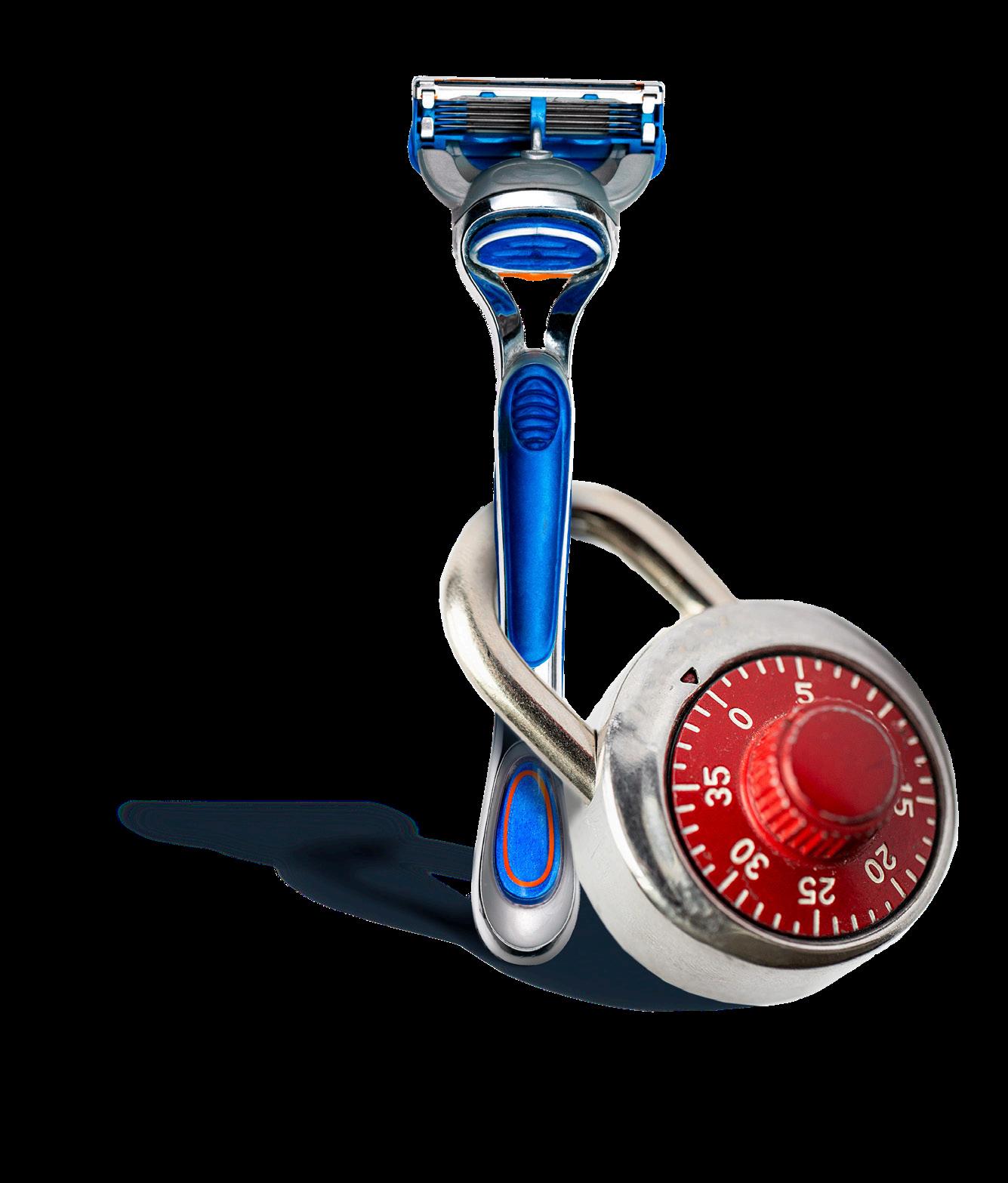
By Courtney Wolfe
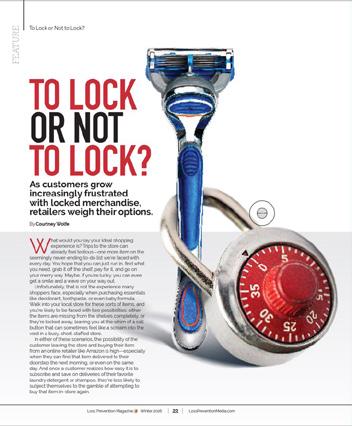
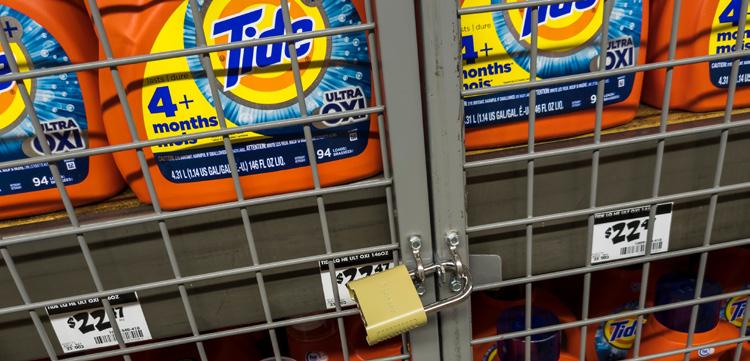
What would you say your ideal shopping experience is? Trips to the store can already feel tedious—one more item on the seemingly never-ending to-do list we’re faced with every day. You hope that you can just run in, find what you need, grab it off the shelf, pay for it, and go on your merry way. Maybe, if you’re lucky, you can even get a smile and a wave on your way out. Unfortunately, that is not the experience many shoppers face, especially when purchasing essentials like deodorant, toothpaste, or even baby formula. Walk into your local store for these sorts of items, and you’re likely to be faced with two possibilities: either the items are missing from the shelves completely, or they’re locked away, leaving you at the whim of a call button that can sometimes feel like a scream into the void in a busy, short-staffed store. In either of these scenarios, the possibility of the customer leaving the store and buying their item from an online retailer like Amazon is high—especially when they can find that item delivered to their doorstep the next morning, or even on the same day. And once a customer realizes how easy it is to subscribe and save on deliveries of their favorite laundry detergent or shampoo, they’re less likely to subject themselves to the gamble of attempting to buy that item in-store again.

“Lockups introduce friction, and friction directly impacts conversion,” said Khristopher Hamlin, vice president of asset protection and retail technology at the Retail Industry Leaders Association (RILA). “When a customer has to wait for assistance, the likelihood of abandonment increases, and the perception of the brand experience declines.”
But retailers are in an impossible situation. If they lock up products, they risk frustrating customers and overextending an already overwhelmed workforce. If they don’t lock up product, they’re making it much easier for bad actors to steal from their shelves. And if their product is being swiped, not only are they losing money, but they are losing customers due to out-of-stocks.
“It’s a trade-off,” said siffron Director of Marketing Robb Northrup. “While locking up products can reduce theft, it adds friction to the shopping experience. Many customers don’t want to wait for assistance. They skip the item, find a substitute, or buy online instead. Research shows that over 25 percent of shoppers say they’ll abandon a purchase or switch retailers when they encounter locked up merchandise. That’s a significant loss of potential sales. Beyond the numbers, there’s a perception issue; locking up merchandise can make a store feel less inviting or even unsafe. For everyday essentials, it disrupts impulse buying and erodes trust. Retailers must weigh the benefits of reduced shrink against the costs of lost sales and a diminished customer experience.”

This isn’t a new conundrum—retailers have been locking up high-value, commonly stolen products for decades—but, like most things, it grew worse during the COVID-19 pandemic. The combination of an increase in theft, reduced staffing, and supply chain volatility drove stores to lock up merchandise they previously would not have.
“Physical controls like locking and tethering high-risk items became an always-on solution that did not rely on staffing levels or perfect execution,” said Pete Morello Jr., executive vice president of global sales and operations at CIS Security Solutions. “In many cases, lockup was not a preference, but a practical response to stretched teams and limited visibility.”


Scott Glenn, LPC, JD, vice president of enterprise asset protection at The Home Depot, pointed to additional factors that led to lockups: “Addiction levels, decriminalization, bail reform, and other political elements relaxed many attitudes toward crime and punishment. Safety of the associates and customers became as important as the financial impact of loss.”
Employees can also be negatively impacted by lockups, though, says Mike Lamb Consulting Services Owner and Former AP Retail Executive Mike Lamb. “I think we often lose sight of just how significantly [locking up merchandise] affects the staff,” Lamb noted. “In many cases, not only do they have to take the time to assist in unlocking the product, but the associate is required to walk the product to the checkout area. While doing so, they often are forced to ignore other customers and set aside more critical priorities that have an impact on their overall customer experience.”

But if you look at things from a different lens, you could see this extra effort as a replacement for shelf replenishment hours, as Glenn does. He says The Home Depot even has data showing that locking up merchandise is a net positive for employee workloads.
Ultimately, the decision of whether to lock up merchandise or not is a weighing of pros and cons that each individual retailer must consider based on its unique needs.
“Physical controls like locking and tethering high-risk items became an always-on solution that did not rely on staffing levels or perfect execution. In many cases, lockup was not a preference, but a practical response to stretched teams and limited visibility.”
—Pete Morello Jr., CFI
“Product tethering does not have to hurt customer satisfaction or sales when executed thoughtfully,” Morello said. “Proper tethering allows customers to touch, handle, and evaluate products while keeping them secure, preserving engagement without adding friction. Retailers also tend to tether only higher-value items, which quietly signals importance and perceived value to shoppers. When an associate unlocks a secured item, it creates an intentional, guided interaction instead of an interruption. This allows customers to receive help, validation, and product knowledge at the point of decision while giving associates a natural opportunity to upsell, cross-sell, and reinforce value, all while protecting the product.”
Stuck between a rock and a hard place, retailers might find a sweet spot somewhere in the middle when deciding how to protect their merchandise.
“In some cases, locking cases are the only option for a retailer to do business, but retailers need the right type of locking cases, the right staffing levels, and the right communications and awareness technologies to make it easy for workers to know when
“In some markets, locking up merchandise is the difference between profitability and loss. This is a complex challenge that requires solution providers, retailers, law enforcement, community members, and academia to work together.”
Tom Meehan, CFI
“I think we often lose sight of just how significantly [locking up merchandise] affects the staff. In many cases, not only do they have to take the time to assist in unlocking the product, but the associate is required to walk the product to the checkout area. While doing so, they often are forced to ignore other customers and set aside more critical priorities that have an impact on their overall customer experience.”
Mike Lamb
someone needs assistance to unlock cases for them,” said Dr. Cory Lowe, PhD, director of research at the Loss Prevention Research Council (LPRC).
The National Retail Federation’s (NRF) 2025 Impact of Theft and Violence Report details a layered security approach extending beyond, but including, product lockdown.

In the report, retailers reported utilizing enhanced cameras, lighting, store layout, employee training, and item-level security measures such as EAS and RFID.
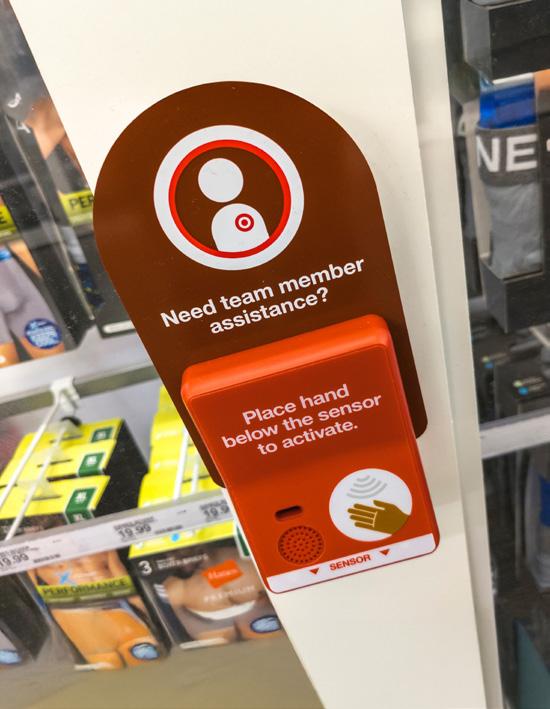
“The goal today isn’t to ‘lock out’ the customer, but to control access intelligently or add deterrents to manage access,” Northrup said. “Intelligent locking systems now use sensors, time-delayed magnetic locks, and digital assistance buttons that alert associates instantly.”
The goal, he added, should be to match the protection to the threat so retailers don’t have to choose between security and experience anymore. With the right
technology or solution, they can ideally have both.
“Retailers are investing in an integrated tech stack that shifts the model from reactive control to predictive and preventive safeguards, including: computer vision analytics that identify patterns of risk, not people; RFID-enabled inventory intelligence; AI-driven exception reporting paired with rapid root-cause analysis; store redesigns that improve sightlines and product flow; enhanced associate training focused on customer engagement as a frontline deterrent; and vendor-supported packaging innovation to reduce targetability,” Hamlin said. “These solutions are designed to protect people, purpose, and performance while maintaining a frictionless shopping experience.”
Glenn said The Home Depot has enabled QR code scan technology in its lock boxes, which allows customers to connect with staff and be serviced in less than ninety seconds on average. Another option Glenn’s team is testing is a customer model linking loyalty data, self-service cases, and smart locks. In an interconnected world, this can
help retailers keep products protected while improving the customer experience.
The LPRC refers to this as a value exchange, as individuals gain easier access to locked merchandise in exchange for information that could be used to investigate theft or other crimes. “These solutions enable registered users to access cases or locks via an app on their phone; alternatively, some cases work by entering your phone number and having a single access code texted to your phone,” Lowe said. “This is a very interesting approach because it targets the friction on the intent of the guest. An offender will not want to trade their personally identifiable information for access to locked merchandise if they can avoid it, but the customer is relieved from having to wait around on a team member to unlock a case.”
Lamb, who provides consultative advice to a company that offers this sort of technology, views these solutions as critical to ensuring retailers don’t lock up sales. “We’ve dubbed it the ‘trust but verify’ approach,” he said.
For retailers using lock boxes that require employee assistance, Lowe stresses communication as the key to success. “Make it easy for retail workers to receive alerts and unlock products. Requests to unlock merchandise can be sent to radios, or lights can be positioned above the locations of call buttons to make the location of the customer more apparent to workers. There also needs to be more options to unlock cases—for example, key management is often easier with smart locks that can be unlocked with devices that are assigned
“Lockups introduce friction, and friction directly impacts conversion. When a customer has to wait for assistance, the likelihood of abandonment increases, and the perception of the brand experience declines.”
Khristopher Hamlin
to specific employees. This enables retailers to know which employees accessed which cases when, but only if the stores do a good job of not sharing handhelds. More technology companies need to figure out how to use some of the wearables to unlock cases, whether that is radios, body-worn cameras, or other assignable wearables for employees.”
Tom Meehan, CFI, CEO of CONTROLTEK, added that overall, a more robust, holistic approach to addressing theft is needed: “In some markets, locking up merchandise is the difference between profitability and loss. This is a complex challenge that requires solution providers, retailers, law enforcement, community members, and academia to work together.”

“The goal today isn’t to ‘lock out’ the customer, but to control access intelligently or add deterrents to manage access. Intelligent locking systems now use sensors, timedelayed magnetic locks, and digital assistance buttons that alert associates instantly.”
Robb Northrup
It’s evident that technology companies and retailers have been working hard to rise to this particular challenge. So, are the days of pushing a call button and waiting too long for a grumbling employee to assist you over?
“I would hope that as deterrence and law and order functions start to return we will need less [lock boxes],” Glenn said. “We are continually assessing our efficacy and have removed some locking fixtures on certain products and in some markets as theft
“We are continually assessing our efficacy and have removed some locking fixtures on certain products and in some markets as theft demand has fallen. As much of a ‘brute force’ tactic product protection is, it can also be effective if done with the right partnership, testing/ modeling, and customer education. In a perfect world, we won’t
do this, but we all understand that is not the world we
demand has fallen. As much of a ‘brute force’ tactic product protection is, it can also be effective if done with the right partnership, testing/modeling, and customer education. In a perfect world, we won’t need to do this, but we all understand that is not the world we live in today.”
Lamb believes the industry is more focused than ever on coordinated, organized theft, and while he hopes this will reduce the need for product protection, he acknowledges that theft remains a challenge. “This challenge/opportunity is another great example of how solution providers and retailers can continue to collaborate and partner to ensure we protect the bottom line and ensure the continued success in shrink reduction,” Lamb said.
Rather than remove controls completely, Morello said retailers are more likely to adjust scale. A common first step, he said, is

Scott Glenn, LPC, JD
recalibrating value thresholds. For example, items previously tethered at and above a value of $50 may now be tethered at $100 and above as conditions stabilize. “Tethering itself is not a short-term response,” he explained. “Humans have been securing valuable items for tens of thousands of years. While thresholds and tactics may evolve, tethering remains a simple, proven method to protect product availability and support sales, especially in uneven operational environments.”
Northrup said that while retailers are cautious to roll back controls, he’s noticed a shift in mindset that signals change: “Once a product is identified as high-risk, it takes sustained improvement in theft trends before they will remove security measures. That said, instead of relying on reactive measures like locking up merchandise, retailers are investing in
“In some cases, locking cases are the only option for a retailer to do business, but retailers need the right type of locking cases, the right staffing levels, and the right communications and awareness technologies to make it easy for workers to know when someone needs assistance to unlock cases for them.”
Cory Lowe, PhD
need to
live in today.”
proactive solutions—technology, analytics, and smarter merchandising layouts—that make stores both safer and easier to shop. The long-term goal is to return to opensell environments that maintain security through visibility and engagement, not physical barriers.”
NRF Vice President of Asset Protection and Retail Operations David Johnston said retailers should review internal controls and metrics for product protection decisions. “The NRF’s 2025 Impact of Theft and Violence Report found that 64 percent of surveyed retailers reported less than half of their store-related theft incidents to law enforcement,” Johnston said. “Decisions regarding security measures like locking up products should be based on internal factors, not external statistics, using similar internal analyses as when the measures were first implemented.”

David Johnston
More sophisticated data analytics teams and emerging technology tools could help retailers make more informed decisions. “The narrative around retail crime cannot be oversimplified,” Hamlin added. “This is not about one tactic, lockups, security presence, data, or store design. It’s about building a resilient operating model that empowers associates, protects customers, and sustains performance. The industry is committed to innovation, collaboration, and balanced solutions that keep stores open, safe, and accessible for the communities they serve.” l

Courtney Wolfe is LPM’s managing editor focusing on creating and curating editorial content for the magazine’s print publication and website. Prior to LPM, she was managing editor for SDM Magazine, a trade publication for security systems integrators. She received her bachelor’s degree in multimedia journalism from Columbia College Chicago. She can be reached at CourtneyW@LossPreventionMedia.com.

FaceFirst adds a top NIST-ranked algorithm for even better performance. Al you can trust. Accuracy you can prove. First for a reason.

By Jody O’Guinn, MPA, CHS-III, CCFI, WVTS
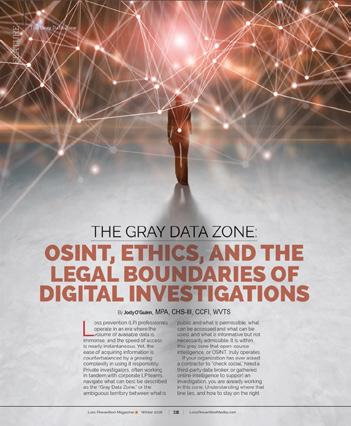
Loss prevention (LP) professionals operate in an era where the volume of available data is immense, and the speed of access is nearly instantaneous. Yet, the ease of acquiring information is counterbalanced by a growing complexity in using it responsibly. Private investigators, often working in tandem with corporate LP teams, navigate what can best be described as the “Gray Data Zone,” or the ambiguous territory between what is
public and what is permissible, what can be accessed and what can be used, and what is informative but not necessarily admissible. It is within this gray zone that open-source intelligence, or OSINT, truly operates. If your organization has ever asked a contractor to “check social,” hired a third-party data broker, or gathered online intelligence to support an investigation, you are already working in this zone. Understanding where that line lies, and how to stay on the right
side of it, is now critical not only to the integrity of investigations but to the longterm credibility of the LP profession itself.
OSINT, in its purest definition, is the collection and analysis of information that is lawfully available to the public. It extends far beyond the surface of the internet. It includes open websites, social platforms, government records, digital marketplaces, and even the metadata embedded in images and videos. Investigators use these sources to uncover behavioral patterns, link associates, corroborate stories, and identify anomalies that point toward theft, fraud, or misconduct.
For LP teams, OSINT has become indispensable. It allows investigators to trace fencing networks, monitor employee activity that may signal internal theft, and identify organized retail crime operations that span multiple states. It helps confirm addresses, associate accounts with specific identities, and anticipate where stolen goods might resurface. When properly applied, it saves time, reduces physical surveillance costs, and focuses investigative resources where they will yield the greatest results.
However, the same tools that make OSINT powerful also make it perilous. The assumption that “if it’s online, it’s fair game” is a misconception that has led many professionals into ethical and legal jeopardy. The difference between effective intelligence gathering and
social media post or photo is publicly viewable does not mean it can be downloaded, republished, or scraped in violation of a platform’s terms of service. These terms carry contractual weight, and violations can result in account suspension and legal liability. Several court cases have already addressed whether automated collection of publicly available data, known as scraping, violates computer misuse statutes. The outcomes vary, but the trend is clear: regulators are increasingly willing to draw limits around how far “open source” can stretch.
Another critical issue is the concept of privacy expectation. Even if information is accessible online, courts may still recognize a reasonable expectation of privacy depending on the context. For instance, collecting data from restricted groups, closed forums, or private chat rooms using deception can cross ethical and legal lines. Investigators must ask not only whether they can access information, but how that access was achieved and whether it would withstand scrutiny in court.
LP professionals must also be mindful of sector-specific laws. The Fair Credit Reporting Act (FCRA) applies whenever collected information is used to make employment decisions, such as hiring, discipline, or termination. A company that uses OSINT in an employee investigation must ensure that consent, dispute rights, and adverse-action protocols are followed. Similarly, privacy frameworks like the California Consumer Privacy Act (CCPA) or Europe’s General Data

LP PROFESSIONALS MUST ALSO BE MINDFUL OF SECTOR-SPECIFIC LAWS. THE FAIR CREDIT REPORTING ACT (FCRA) APPLIES WHENEVER COLLECTED INFORMATION IS USED TO MAKE EMPLOYMENT DECISIONS, SUCH AS HIRING, DISCIPLINE, OR TERMINATION.
an unlawful invasion of privacy often hinges on how data is collected and subsequently disseminated, not just what data is collected.
The first misconception many investigators fall prey to is equating visibility with free use. Just because a
Protection Regulation (GDPR) impose obligations regarding how data is stored, shared, and deleted. In other words, the LP function cannot hide behind the “we’re not law enforcement” defense. Compliance applies to anyone processing personal data, regardless of intent.
Because of these complexities, OSINT collection should be guided by legal counsel whenever possible. When
investigations are conducted under the direction of an attorney, privilege protections may apply, and documentation can be structured to reflect a legitimate investigative purpose. This does not shield misconduct, but it does ensure that the investigation follows a defensible framework from start to finish.
If the law determines what you may do, ethics determine what you should do. Ethics are not an afterthought; they are a strategic safeguard. A reputation for fairness and restraint can determine whether a prosecutor trusts your report, whether a jury believes your findings, and whether your organization retains public credibility after an investigation concludes. An ethical approach to OSINT begins with legitimacy and necessity. Investigators should collect information only when it serves a legitimate business purpose tied directly to a documented risk or incident, such as fraud, workplace violence, or theft. The scope should be narrowly defined to avoid unnecessary intrusion. Collecting “everything available” is not only inefficient; it may expose the company to privacy claims or data breach liability if that information is mishandled. Equally important is truthfulness. Deceptive identities, pretext accounts, or impersonation can sometimes seem like shortcuts to information, but they are rarely justified and often illegal. If investigators must operate under an assumed identity, for example, when verifying the sale of stolen goods online, there must be explicit written authorization, a clearly defined scope, and a documented justification for why it was necessary.
Finally, data security and accountability close the ethical loop. Investigators are custodians of sensitive information, and that responsibility extends beyond the case’s conclusion. Proper retention schedules, secure storage, and routine audits ensure that information is used ethically and protected against misuse.
One of the most important distinctions in OSINT work is the line between information that leads to an investigative direction and information that can stand as evidence. Too often, investigators treat screenshots or online posts as conclusive
proof, only to see them excluded because the method of collection compromised authenticity. OSINT should first be viewed as a tool for lead development. Once a digital clue points to a viable path, the investigator should shift to formal evidentiary collection methods that preserve metadata, establish a chain of custody, and comply with evidentiary standards.
When an investigator captures a social media post or marketplace listing, it should be immediately preserved with a time stamp, URL, and cryptographic hash value to ensure integrity. Tools designed for forensic web capture—free tools such as Magnet WPS, Forensic OSINT, and PageRecon—can create admissible records, while simple screenshots, especially without context, invite doubt. The difference between a useful lead and admissible evidence can be the difference between an arrest and a dismissed case.
In the era of disinformation, assessing credibility is as important as finding data itself. Online information must be weighed on a spectrum of reliability. A self-asserted claim from an anonymous user, for example, carries little evidentiary weight compared to an official record verified by an external source. Crossplatform corroboration, such as matching profile photos, handles, or geolocation tags, adds confidence, but investigators should never assume that online identities are consistent or truthful.
One practical approach is to rate each data point by reliability, explaining why it should be considered strong or weak. Including such assessments in investigative reports demonstrates analytical rigor and helps decision makers understand the context behind the findings. This discipline not only improves case quality but also protects investigators from the accusation of bias or selective reporting.
Operating undercover in the digital realm can be effective but dangerous. Using “sock puppet” accounts, false personas created to observe or engage with suspects, requires clear boundaries. If investigators infiltrate closed groups or pretend to be someone they are not, they may violate both platform rules and, in some jurisdictions, laws against deceptive access and practices. The line between
legitimate observation and entrapment can blur quickly.
Organizations should maintain written policies governing the use of assumed identities, defining who can authorize them, how credentials are managed, and under what circumstances they may be used. Investigators should never impersonate real individuals or falsify professional credentials. Even when done lawfully, such tactics should be employed only when absolutely necessary and documented meticulously.

should verify time stamps, confirm identities, and preserve full-page captures that include the context of posts. Private messages and direct communications, while tempting, are generally off-limits without legal authority. Attempting to access them by deception or without consent can expose investigators to significant liability. When a case depends on private messages or account records, law enforcement should be engaged early to pursue subpoenas or warrants.
AS
INCREASINGLY
THROUGH
As technology evolves, investigators are increasingly tempted to automate data collection through scraping tools and bots. While automation can save time, it also multiplies risk. Automated scraping that circumvents access controls or overwhelms a platform’s servers may constitute unauthorized access. Furthermore, automated tools can inadvertently capture personal or sensitive data that exceeds the investigative scope, creating privacy liabilities.
When possible, manual collection is safer for critical evidence. It ensures human oversight, captures context, and avoids the perception of indiscriminate data harvesting. If automation must be used, it should be transparent, rate-limited, and compliant with platform terms. Every data collection effort should be documented, including how, when, and by whom the data was retrieved, so that the process can withstand legal or regulatory review.
Social media is perhaps the richest and riskiest OSINT source for LP. It has exposed countless theft rings, insider misconduct cases, and fraud networks, but it is also rife with pitfalls. Misidentification is common; people share names, photos are repurposed, and content may be years old or altered. Before drawing conclusions from social media data, investigators
Even public content must be preserved carefully. Screenshots alone are insufficient; forensic web capture tools can record the underlying metadata, helping authenticate posts in court. The key is discipline: capture the evidence lawfully, preserve it thoroughly, and let the legal process do the rest.
Organized retail crime cases often rely on link analysis, the mapping of relationships between people, places, vehicles, and online accounts. OSINT can be invaluable here, but it must be handled with precision. The best investigators start by defining known anchors, such as case numbers, SKU identifiers, or confirmed suspects. They then map relationships between social media profiles, associates, addresses, and online marketplaces. Each link is supported with evidence, timestamped, and rated for reliability. The objective is not to collect everything but to build enough confidence in a small set of connections to justify further action. Once a network is reasonably established, investigators can coordinate with law enforcement to validate findings through lawful process, such as subpoenas for marketplace records or payment data. In doing so, they maintain a clear boundary between private sector intelligence and public sector enforcement, ensuring the integrity of both.

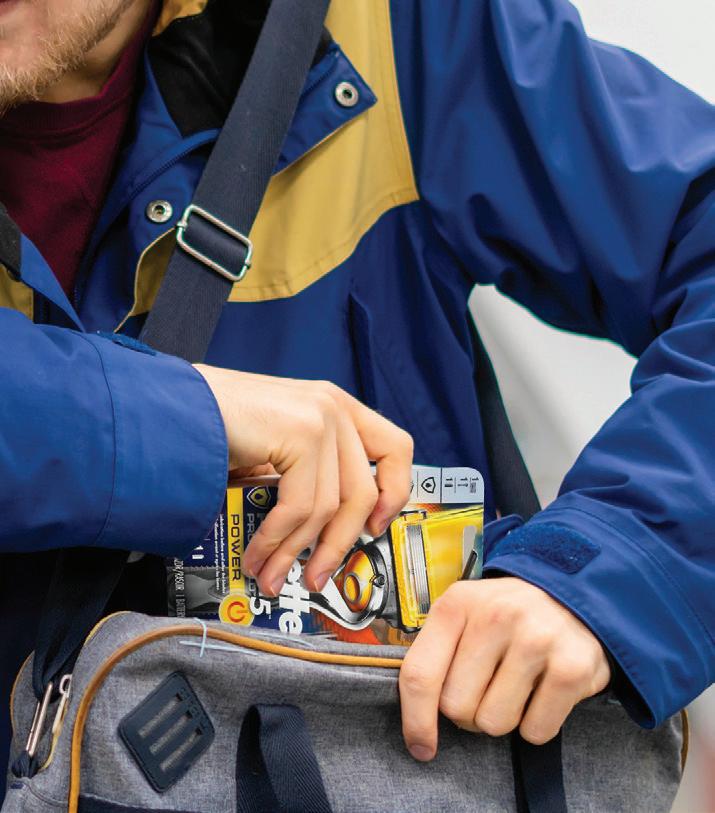
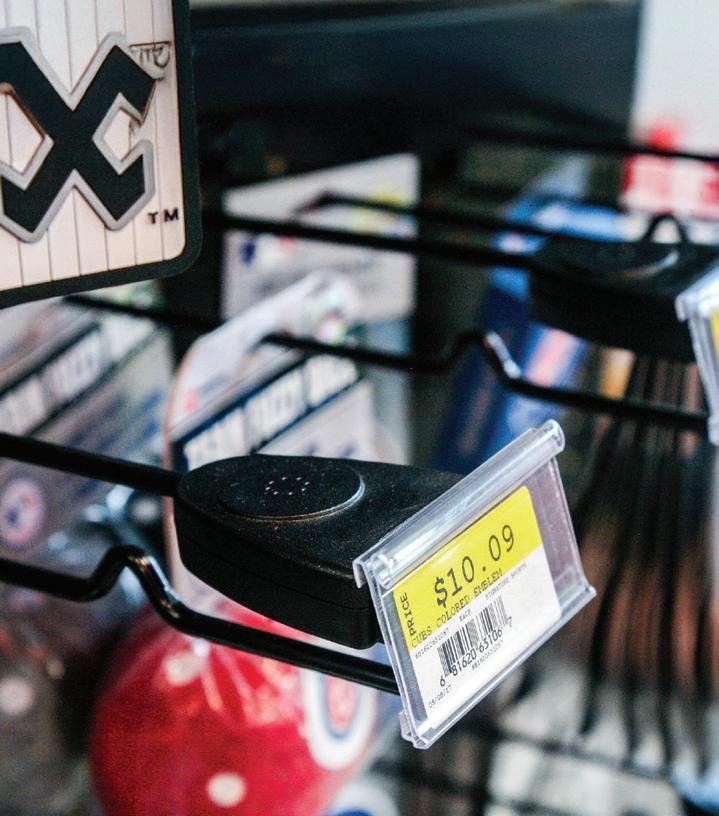
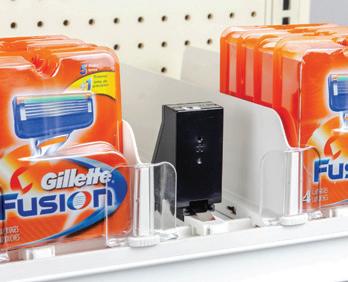
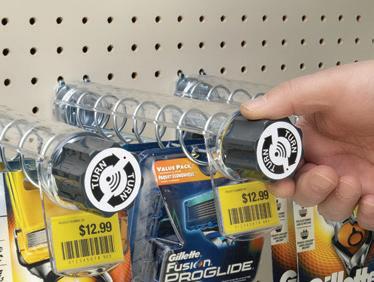


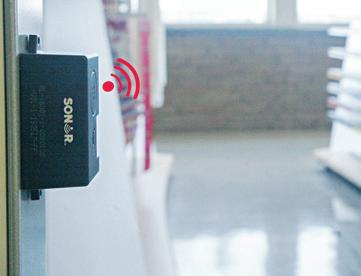
Protect your products where it matters most, right at the shelf. SONR™ is a complete wireless ecosystem that detects product activity and instantly alerts store staff.
From hooks and shelf pushers to LM Tags and more, SONR™ solutions deter theft by letting offenders know items are being monitored, all while relaying activity to the SONR Echo Box up to 200 feet away.
Easy to install and scale to any category or store, SONR™ integrates seamlessly with your existing security systems to create a powerful tiered alert network. The result? Immediate deterrence, real-time awareness, and smarter protection for every product.
Partnerships between corporate LP teams, private investigators, and law enforcement are essential in combating theft and fraud that cross jurisdictions. Yet these relationships must be built on mutual respect for legal process. Private investigators cannot issue subpoenas or compel records, and they should never attempt to act as de facto police. Their role is to preserve what is publicly visible, package it coherently, and provide law enforcement with a concise, well documented summary of findings.
Law enforcement agencies appreciate organized, authenticated evidence packets far more than massive data dumps. A well-prepared packet includes a clear methodology, an index of artifacts, timestamped captures, and a narrative that explains relevance. It should also maintain chain-of-custody documentation for each artifact. When investigators work within
their methods, and allow audits of their processes. Regular internal audits and annual training sessions reinforce these expectations and ensure that ethical practice becomes institutional habit rather than individual discretion.
Perhaps the most overlooked risk in OSINT is human bias. Analysts bring assumptions and perspectives to their work, and those assumptions can color how data is interpreted. Confirmation bias—seeing what you expect to see—can lead investigators to misread neutral content as incriminating. To counter this, investigators must deliberately seek disconfirming evidence, document alternative explanations, and have a second analyst review key findings. Fairness also extends to how subjects are treated. When investigations involve employees, contractors, or customers, the

LP THRIVES ON SPEED, ACTING QUICKLY TO STEM LOSSES, PROTECTING EMPLOYEES, AND PREVENTING HARM. OSINT ENABLES THAT SPEED, BUT UNRESTRAINED USE INVITES REGRET. THE GRAY DATA ZONE WILL ALWAYS EXIST; TECHNOLOGY EVOLVES FASTER THAN LAW.
these parameters, they not only enhance prosecutorial success but also reinforce the credibility of the private sector as a responsible partner in public safety.
A defensible OSINT program begins with governance. Every organization conducting online investigations should have a written playbook outlining purpose, roles, collection standards, review processes, and retention protocols. The playbook should specify who is authorized to conduct investigations, under what circumstances, and what tools or vendors may be used. Collection standards should emphasize manual capture for key artifacts, strict adherence to privacy laws, and explicit bans on illegal access or pretexting. Retention schedules must be defined, and non-responsive or irrelevant data must be deleted in a timely manner. Vendors should be contractually obligated to comply with the same standards, disclose
principle of proportionality should guide action. Collect only what is necessary, avoid collateral exposure of uninvolved individuals, and redact or anonymize unrelated data when sharing internally. Ethical restraint is not weakness; it is the mark of professionalism.
In one recent case, an LP team investigating excessive returns discovered that the same customer was selling identical merchandise online. OSINT revealed the reseller’s profile, which included photos of the exact products with matching SKU labels. Investigators carefully captured the listings with time stamps and hash values before engaging law enforcement. The resulting warrants led to the dismantling of a regional fencing operation. The success hinged not on luck, but on disciplined, ethical OSINT work.
In another case, an employee posted photos from a restricted stockroom on a
private social media group. Rather than overreaching by demanding access to the entire group, investigators focused narrowly on the images provided by a tipster, verified time stamps against security logs, and conducted a structured interview. The employee eventually admitted to the violation, and the company took appropriate corrective action without overstepping legal boundaries.
These examples highlight the difference between precision and overreach. Ethical OSINT is about restraint as much as discovery.
LP thrives on speed, acting quickly to stem losses, protecting employees, and preventing harm. OSINT enables that speed, but unrestrained use invites regret. The Gray Data Zone will always exist; technology evolves faster than law. The challenge for LP professionals and private investigators is to build systems that adapt responsibly.
That means treating OSINT not as a shortcut, but as a discipline grounded in legality, ethics, and documentation. It means training teams to differentiate between what they can find and what they should use. It also means recognizing that credibility is a form of capital. When your investigations are fair, your findings are trusted.
The ultimate goal is balance, harnessing the immense power of open data without crossing into intrusion or impropriety. In the end, how we investigate says as much about our professionalism as what we uncover. The public’s trust, and the justice that flows from it, depends on our ability to operate in the Gray Data Zone with clarity, integrity, and purpose. l

Jody O’Guinn, MPA, CHS-III, CCFI, WVTS, is a retired police chief with thirty-four years of law enforcement experience and the CEO and principal investigator of Calabash Investigative Consultants, LLC, a Georgia-licensed investigative firm. A veteran SWAT and regional WMD SRT commander, he also held key roles with the DEA and MEGSI narcotics task forces. A graduate of the FBI National Academy and LEEDS program at Quantico, he holds an MPA from Southern Illinois University. He pioneered the world’s first board-certified cryptocurrency forensic investigator course and serves as director of law enforcement operations at Baker Group International.



Stuart “Stu” Rosenthal sadly and suddenly passed away on December 10, 2025. He was an incredible leader, mentor, and overall person. His loss will be felt deeply by his team at Checkpoint and the LP community.
Stu’s career in LP began in the early 80’s when he was attending college. He worked part-time as a store detective chasing shoplifters at Rich’s Department Store in Atlanta, Georgia. He got the bug and never left the profession. Later, he moved on to Britches, then Ross and Kids R Us before moving to the supplier side of LP.
Stu started at Checkpoint Systems Inc. almost sixteen years ago as a key account manager for the Alpha HighTheft Solutions division. In his first year, he took home the 2010 Rookie of the Year Award and was the winner of the Checkpoint President’s Club Award. Stu briefly left Checkpoint in 2013 to pursue other career opportunities, but returned the following year permanently. On September 13, 2016, Stu was promoted to vice president of Alpha sales and marketing, where he oversaw the North America sales team and the Canton, Ohio, manufacturing facility.
Stu saw everything Alpha could be and made it his mission to make that vision come to life. He and members of leadership at Checkpoint went to work advancing operations at the Canton facility. The facility underwent changes to become the state-ofthe-art facility it is today. Stu was promoted to vice president of Alpha Global Business on February 11, 2025.
“I had the pleasure of working with Stu for many years. I remember when he joined Checkpoint, I could not wait to talk to him and learn about his experiences in the industry. Over the years, Stu and I have had many conversations about business, and they were always followed up with conversations about family and sports. Stu was a caring and driven leader, and I will always cherish our friendship and all the great memories of him. Rest in peace, my good friend. You will be missed,” reflects Frank Panebianco, VP of sales and marketing NA.
“If you wanted to know what Stu thought the true success of the Alpha business was, all you had to do was talk to him about his team in Canton and Thorofare. Stu wore his emotions on his sleeves when discussing this wonderful family that makes up the Alpha business. He spoke with such fierce support, compassion, and raw emotion. With each success, Stu would ensure everyone knew it was due to his incredible team. That is the strength that made Stu a special person. He will be sorely missed,” says Joe Esposito, VP of customer operations.
The team in Canton stated, “Stuart Rosenthal was more than a leader to the Canton team—he was a mentor, a steady presence, and someone who genuinely cared about people. He led with integrity, humility, and purpose, and he never lost sight of the fact that behind every role was a person, a family, and a life that mattered. Stu had a way of making people feel seen and valued. He listened, encouraged growth, and believed in people even when they doubted themselves. His leadership wasn’t just about results or operations—it was about building trust, developing others, and doing the right thing the right way. That left a lasting impact on our facility, our team culture, and the families connected to the work we do every day.”
Stu had a way of making people feel seen and valued. He listened, encouraged growth, and believed in people even when they doubted themselves. His leadership wasn’t just about results or operations—it was about building trust.
“I don’t think I have worked closer with anyone like I have with Stu the past year and a half. He was a great leader and mentor to everyone. His shoes will be incredibly difficult to fill. Still, the things I will miss most will be talking and texting with him off hours about family, sports, or in many cases both. Rest in peace Stu. You will be greatly missed,” says Eric Servais, sales director, Alpha.
To many of us, Stu was a friend as much as he was a mentor. He offered guidance without ego, support without hesitation, and kindness without conditions. His influence extended far beyond the walls of the Canton facility, shaping how we lead, how we support one another, and how we show up for our communities. Stu’s legacy lives on through the people he invested in and the values he modeled. He will be deeply missed—but never forgotten. We are better leaders, better teammates, and better people because of him. His impact will continue to be felt for years to come.
Stu went on to further his impact on the LP industry. He was recently brought on to the Loss Prevention Foundation’s (LPF) Board of Directors.
Stu was a family man first and foremost. Despite his hectic traveling schedule, he always made sure to spend quality time with his wife, children, and grandchildren. The Georgia University alumni was passionate about his school’s football team, the Bulldogs. In his free time, Stu enjoyed golfing, fishing, and spending time at the beach.
Services for Stu were held on December 20, 2025. For those who desire, memorial contributions in honor of his mother may be made to the American Cancer Society, Making Strides, Post Office Box 6704, Hagerstown, MD. 21741. l

By Kelsey Stamey
It’s 3 p.m. You’ve just taken a sip of your afternoon cup of Earl Grey, grateful for the gently caffeinated jolt that will carry you through to the end of your workday. You turn your attention to the next email in your inbox and overhear a colleague casually mention their sister’s wedding— and your eyes suddenly snap open wide. It’s your own anniversary today. How could you have forgotten?
Luckily, it’s also 2026. You pick up your phone, click into the app of a nearby department store, and select a bottle of your wife’s favorite perfume. A few more taps and it’s on order, waiting for you to snag it on your way home. Maybe you’ll even add on a small box of candy at the register to sweeten the gift. Whew—crisis averted.
As consumers, most of us are familiar with, and lucky to benefit from, the conveniences offered by the buy online, pickup in-store (BOPIS) option described in this scenario. As modern retail professionals, however, we know that the BOPIS strategy also creates significant vulnerabilities.
BOPIS emerged with the advent of e-commerce as a way to tie together shoppers’ online and in-person retail experiences. The tactic allows shoppers to place online orders and pick up their items at a local store. It’s been around since at least 2013, when a test of what was then being called “click-and-collect” was piloted at the Stop & Shop in Chelmsford, Massachusetts.
BOPIS exploded in popularity during the pandemic, as customers sought safety in social distancing and chose to pick up their items curbside instead. Retailers that weren’t already offering BOPIS scrambled to make it work, many times in an effort to keep their doors open. Digital commerce platform KIBO noted its retail clients saw BOPIS orders surge more than 500 percent in 2020.
While the days of shopper capacity limits and social distancing are behind us, consumers aren’t giving up the convenience of BOPIS. According to a Capital One Shopping report, 97.2 million Americans regularly used BOPIS in 2024. That’s more than a third of US consumers who rely on this fulfillment option as a standard practice. And during the backto-school shopping season in 2025, store pickup was even more popular than home delivery among shoppers (43 percent to
38 percent), according to Sensormatic Solutions survey data. Retailers, too, are keeping up their end of the bargain. The Retail TouchPoints and Design: Retail 2024 Store Operations Survey found that 81 percent of retailer respondents already offer BOPIS or plan to add the option.
Why does consumer interest in BOPIS remain so strong? In a word, convenience. When something is needed sooner rather than later, it’s quicker than home delivery. It’s also a guarantee rather than a gamble that something will be in stock. Customers
want to be. It can boost foot traffic in the store. Each customer who comes through the doors is another face-to-face touchpoint to make a connection or an additional sale. It’s an upselling goldmine, in fact: the Capital One Shopping report found that 85 percent of BOPIS shoppers have made an additional purchase when they went in to collect an order. And finally, store pickup circumvents the need for retailers to manage shipping headaches, costs, and potential fraud related to home delivery.
In light of these advantages, a BOPIS offering is practically a necessity.
“I don’t think we’re leaving buy online, pickup in-store because whatever the customer wants, they’re going to vote with their wallet, so you’ve got to provide it to them.”
Mike Lamb
who pick up their item at the store don’t pay shipping fees and can touch, feel, and assess it before taking it home. The demographic data bears out the idea of convenience as a top priority: A 2025 FMI report found that online grocery ordering is especially popular among time-starved millennial professionals (born between 1981 and 1996), parents, and people living fast-paced urban lifestyles.
What about the advantages for retailers? For one, BOPIS builds customer loyalty by meeting shoppers where they
Customers in 2026 expect the BOPIS option, so retailers—of all sizes and verticals—must offer it to remain competitive. If your store isn’t offering it, customers will turn elsewhere, according to Mike Lamb, retired vice president of asset protection and safety for Kroger. “I don’t think we’re leaving buy online, pickup in-store because whatever the customer wants, they’re going to vote with their wallet, so you’ve got to provide it to them,” he said.
In the years since the pandemic, retailers and industry experts have worked hard to streamline BOPIS processes.
Researchers in Auburn University’s RFID Lab even put together a BOPIS Retailer Scorecard in 2021 to help retailers analyze and improve their capabilities in this arena. Best practices outlined by the scorecard include factors such as:
l Ensuring accurate inventory counts by location
l Fine-tuning online product search and checkout functionality
l Communicating order information to customers in a clear and efficient manner
our introductory example decided to snag the order and walk out with it, or if the store employee fulfilling the order tossed in a second bottle of perfume for free. “There are multiple areas where there is an elevated level of risk,” says Khris Hamlin, vice president of asset protection with the Retail Industry Leaders’ Association (RILA).
Successful implementation of BOPIS requires keeping an eye on several business areas simultaneously, including the authenticity of the initial online transaction, order staging, pickup processes, and more. As you evaluate
“Things can get very busy for that front-end employee, especially if they have multiple jobs. They’re picking [orders], they’re servicing customers, and they also have to bring the package out. It could be easy for somebody to be tricked into giving a package to somebody who’s unauthorized [to receive] that package.”
Khris Hamlin
But for all the effort put forth into improving processes, there’s been what feels like an equal or greater effort by bad actors to circumvent the system and take advantage of BOPIS for their own nefarious purpose. Imagine what might happen if the perfume buyer in
your department's BOPIS risk, consider the following areas.
1. Authenticity of Transaction.
E-commerce sales have climbed to $4 trillion globally, according to Statista, but losses to online payment fraud were judged to be around $44 billion in 2024.
Since BOPIS purchases initiate online, the authenticity of that transaction must be the first consideration for retailers. Fraudsters can hijack customer store accounts using leaked credential data or bots. They then use saved payment information to place what appears to be legitimate orders at nearby retail locations. By the time the fraud is discovered, the goods may already be in a bad actor’s possession.
2. Physical Setup and Staging. Postpandemic, retailers worked to smooth the order pickup process for consumers, who use BOPIS for the sake of convenience, after all. But that order staging area still needs to have some degree of friction to be secure. Unfortunately, “pushouts still happen with BOPIS,” says Doug Baker, vice president of industry relations at FMI. Unmonitored areas and tamperable containers expose retailers to external theft incidents, especially when racks of BOPIS orders are near an easy exit.
3. Pickup Problems and Return Fraud.
Even store leaders who have been thoughtful about setting up secure pickup areas can experience challenges when things get hectic. “Things can get very busy for that front-end employee, especially if they have multiple jobs,” says Hamlin. “They’re picking [orders], they’re servicing customers, and they also have to bring the package out. It could be easy for somebody to be tricked into giving a package to somebody who’s unauthorized [to receive] that package.”
In other words, a busy store associate may feel they don’t have the time to be thorough. And even when that associate takes the time to check an ID during the pickup process, the fraudster might simply use a fake one. (“Synthetic ID fraud” is a much easier proposition in the world of generative AI, according to Experian).
Not only that, but return fraud can be a tempting avenue for bad actors when buy online, return in-store (BORIS) processes aren’t secured. Problems may arise when retailers have legacy system gaps that don’t capture the full transaction. When comprehensive merchandise tracking isn’t in place, bad actors may be tempted to misrepresent what was in their BOPIS order. “How easy is it for a customer to come back and say, ‘I ordered a Polo this, but I [picked up] a not-Polo that.’ And now
they’re asking for a refund,” Hamlin says by way of example. “That retailer is going to err on the side of caution and make it right for that customer’s experience. Here’s a retailer who is not only out that one Polo item, but now they have either given another Polo item to that customer, or they’ve canceled the check, or returned that transaction.”
4. Internal Theft. It’s hard to know just how much of a store’s total inventory loss is due to internal theft. Past estimates have placed this number around a third of overall loss, but concrete visibility into the data is weak. One thing is clear: BOPIS (and BORIS) processes inject new areas of possible exploitation by employees. Some of these areas include:
l Product Diversion: Picking an item for a BOPIS order, then keeping it or handing it off to an accomplice
l Collusion: Giving an extra, unpurchased item to a customer when they come in to pick up their legitimate order
l Fictitious Returns: Using a real BOPIS order receipt to process a return that never actually comes back to the store.
5. Working with Third Parties. Although this practice may be more prevalent in the delivery realm, some retailers choose to work with third-party companies to fulfill BOPIS orders. In reality, this may look like people employed by another company who come in to pick orders after store hours. A third-party associate who is unaffiliated with the store may feel little or no sense of loyalty to the retailer and could feel less compunction about bad behaviors, especially if they’re given unaccompanied access to product. FMI’s Baker encourages retailers to ask themselves: “How do you manage that relationship to ensure they’re actually being good stewards when in your store and not increasing theft?”
In 2026, retail LP pros must walk a tightrope of satisfying good customers by continuing to offer convenient purchasing options—and keeping people and profits safe. Mike Lamb offers a useful framework for thinking about loss prevention efforts when it comes to BOPIS (and beyond): the answer needs to be a mix of physical security, technology, and operational rigor. Think about a BOPIS transaction from A to Z. First, the initial online purchase needs to be verified. Thankfully, today’s artificial intelligence tools can assess risk in real time while a transaction is occurring,
matching online behavior patterns and flagging data anomalies to help retailers distinguish between a legitimate customer purchase and a bad actor. For example, if the “customer” navigates immediately to a high-dollar item on the retailer’s site and checks out within seconds but doesn’t look at any other product pages, the technology could flag the transaction for review. “Retailers use a lot of risk profile algorithms in their e-commerce platforms,”
opportunities. “The shopper has no idea who the customer is,” explains Lamb, who helped implement the system during his tenure at the grocer. “They just have an order number.”
Lamb says it’s key to have an auditing process as a fundamental piece of the BOPIS strategy, too. In other words, someone other than the associate who filled the order should double-check to ensure it contains what it should. “There
“Training is number one. Give the employees the tools to manage [BOPIS].”
Doug Baker


Hamlin says. This technology is becoming a non-negotiable.
Next, the BOPIS order must be fulfilled. Whether it’s a front-end employee or a third-party associate handling the picking and packing, it’s important for retailers to enable these folks to do their jobs well. Has the BOPIS order fulfillment process been optimized for efficiency, and have expectations been made clear to the team? Do associates have adequate bandwidth to fulfill orders alongside other job responsibilities? “Training is number one,” Baker says. “Give the employees the tools to manage [BOPIS].”
Operational rigor comes into play with the idea that collusion prevention processes should be a standard part of the BOPIS strategy. One retailer, Kroger, has adopted a randomized orderpicking system to reduce sweethearting


was a rigorous audit process that was stood up to the teams in the back of the store when I was at Walmart,” he says. “On top of that, you had audits conducted by your asset protection team, so you didn’t have the fox watching the hen house, so to speak.”
Camera positioning, smart lighting, and strategic storage of BOPIS orders in restricted zones as they await pickup are also factors to consider. In recent years, zones requiring security attention have extended beyond the store’s walls into the parking lot, where curbside pickup often takes place. This extended area introduces additional complexity, especially during evening pickups or in parts of town that see higher crime rates. “I think about the safety of those associates and customers through that BOPIS transaction,” says Matt Kelley,
senior vice president at LVT, a remote security technology company.
Kelley, who formerly worked at The Home Depot handling physical security for over a decade, says that while mitigation strategies have been developed to address many fraud problems, the physical safety of those involved in transactions—particularly those completed curbside—is a major ongoing concern. “People may give a second thought in going to that [store]
visual and audio cues, to be able to look at what the absence of normal looks like,” Kelley says. “Is it normal for somebody to approach an associate who is taking a high-dollar TV from a Best Buy to a curbside pickup? Maybe that triggers a response from physical security systems in the store to let LP know that area is being monitored and to try to dissuade that activity from happening.”
In that final BOPIS step—the handoff
“I’m excited about the use of generative AI in different models and processing power to be able to recognize behaviors using visual and audio cues, to be able to look at what the absence of normal looks like.”
location if the retailer’s not making the investment in keeping their community, their frontline associates, and their customers safe.”
The good news is that monitoring technologies are emerging with the capabilities to surveil business property with completely automated deterrents and proactive alert systems in response to unwanted behavior. “I’m excited about the use of generative AI in different models and processing power to be able to recognize behaviors using
of the order from the associate to the customer—of course it’s critical the order lands in the right hands. Certain technologies have been developed to ensure this is the case. Instead of being satisfied with a customer name or even an ID, some retailers use a unique QR code that must be scanned from the customer’s mobile app. Hamlin details similar tech where “when an item is ready for pickup, they text the consumer with a code, and that consumer has to tell the code to the
person getting the bag before they can release it.” This is an added measure to ensure the Jane Smith who placed the order is the same Jane Smith who picks it up.
AI facial recognition tools are becoming more prevalent in 2026, too. These tools are valuable for helping retailers identify repeat offenders among the mix of BOPIS customers, “We’re seeing retailers become more comfortable with it from a legal standpoint,” Baker notes. “It’s balancing security and safety with privacy.”
Finally, LP pros can look to public-private partnerships with law enforcement agencies to boost BOPIS risk mitigation efforts. The advent of real-time crime centers (RTCCs) in many communities can help in positively identifying bad actors, shortening investigations, and leading to quicker apprehensions of shoplifters or fraudsters. With RTCCs, retailers send information gathered by on-premise tech to local law enforcement “to give them actionable data, to say, ‘Hey, you need to respond,’ but also giving them the context of what’s happening as they’re sending first responders out there, so they can respond in the appropriate way,” Kelley said.
In the grand scheme of loss prevention concerns, BOPIS risk might not be at the top of the list. It might be overshadowed by “ORC, self-checkout loss, all those things that go thump in the night,” according to Lamb. But that doesn’t mean it can be overlooked. With its popularity among consumers holding steady in the post-pandemic era, BOPIS isn’t going anywhere. And new technologies are feeding right into its growth and likely expansion. What gaps and blind spots will emerge with agentic commerce, for example? Time will tell. Let’s just hope your autonomous AI shopper remembers your anniversary. l

Kelsey Stamey is an experienced freelance writer and former staffer of LP Magazine. She can be reached at kelseykstamey@gmail.com.
Craig Greenberg
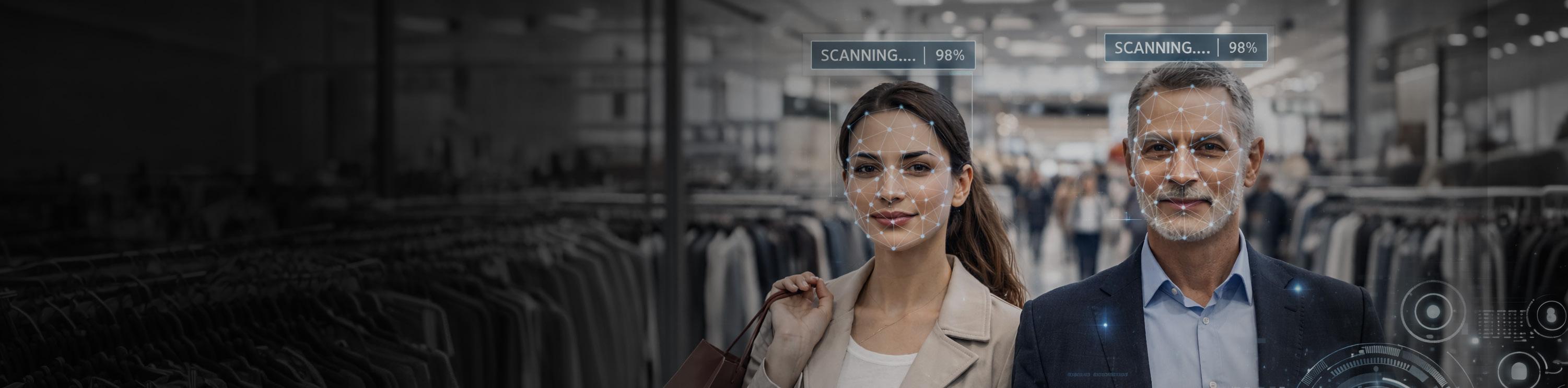
Greenberg is Chief Commercial Officer at Gatekeeper Systems, a global leader in facial recognition technology and other loss prevention solutions. Craig began his career in retail operations. He later helped retailers implement cart-loss prevention solutions at Carttronics before joining Gatekeeper Systems. Since 2004, he’s collaborated with retail leaders worldwide to enhance safety, address retail theft, and improve operational efficiency. Now, with 20+ years of executive experience, Craig serves on LP Magazine's Solution Partner Board. Contact Craig at cgreenberg@gatekeepersystems.com.
LPM: It’s been a year since FaceFirst became part of Gatekeeper Systems. What updates can you share?
Greenberg: First, we spent a lot of time just listening. We wanted to know what our clients already loved about the FaceFirst® facial recognition software and what enhancements they wanted next.
So, it’s exciting to share that FaceFirst, the retail leader in face matching, got even smarter. We’ve added a top NIST-ranked algorithm from ROC, the #1 Western vendor for facial recognition accuracy, directly into the FaceFirst platform. Now, every probable match is assessed by our dual-algorithm integration for even higher investigative confidence, all while preserving the proven speed and performance our clients have relied on for years. Our strategic partnership with ROC gives investigators the confidence that comes from NIST-validated performance with the high standard for individual privacy and governance that FaceFirst has always delivered.
We’re also excited to launch FaceFirst Touch™—our streamlined, faster mobile experience. This modern app offers a cleaner interface and more efficient workflows for those using FaceFirst on mobile devices.
Gatekeeper’s investment in FaceFirst focuses on one thing: helping retailers protect people, products, profits, and privacy more effectively. You’ll see us continue to prioritize accuracy, reliability, and user experience—because retailers have told us those matter most.
LPM: Is loss prevention the primary use case for facial recognition in retail?
Greenberg: FaceFirst’s rapid adoption has been driven by retailers making the safety of employees and customers their top priority. Having an active threat solution that sends immediate alerts when known violent offenders enter is critical in today’s retail environment.
Of course, LP is a significant consideration, too. The FaceFirst software lets our clients truly understand who their biggest recidivists are. They can quickly identify ORC rings and build cases to shut them down. Our technology can do in minutes what would take humans days or weeks—if at all—using standard CCTV.
LPM: California’s workplace violence law also requires employers to investigate and track all threats of violence, including those made on social media. Would facial recognition technology help meet that requirement?
Greenberg: One of FaceFirst’s most powerful features is our “look back” visitor search capability. It really sets FaceFirst apart.
Here’s an example: A FaceFirst client received a social media threat of gun violence posted by an unknown individual. Using FaceFirst’s search tools and a social media image, the client’s investigators formed a threat profile for the man.
They confirmed with their local law enforcement partners the individual had a record of violent crimes against another retailer.
FaceFirst provided investigators with the precise locations, dates, and times of the man’s recent store visits. They reviewed his visits and confirmed he’d had a verbal altercation with a store employee then enrolled the man in their FaceFirst system. When the man entered one of the retailer’s stores eight days later, FaceFirst matched his face and sent an immediate notification: “Do not approach—call 911.” Although the man was arrested without incident, the responding law enforcement officers found an illegal firearm in his car. Authorities issued a chainwide restraining order, and the man has not returned to any of the retailer’s stores since.
LPM: Some retail executives are still exploring facial recognition technology for their stores. Any insights for them and their teams?
Greenberg: Every retailer who reviews CCTV footage already uses facial recognition. Every security guard, store manager, and LP team member with a BOLO list in the back office is looking at faces as they enter and trying to remember whether those faces have caused them trouble. The question is: Are retailers going to continue relying solely on humans, who perform this task slowly and are proven to be highly prone to error? Or are they going to use AI-assisted face matching, which is exponentially faster and more accurate, and then rely on their trained, experienced humans to review those AI-driven results and make the decisions?
We love sharing how FaceFirst helps retailers create safer places to work and shop, improve investigative efficiency, and protect consumer privacy. And how FaceFirst also offers powerful analytics, reporting, and data governance features.
There are many reasons why FaceFirst is trusted in leading grocery, home improvement, luxury apparel, and discount department stores, as well as distribution centers and corporate offices. Our team is here to walk you and your teams through what’s new—and what’s next! l

Meehan is retail technology editor for LP Magazine as well as CEO of CONTROLTEK. Previously, Meehan was director of technology and investigations with Bloomingdale’s, where he was responsible for physical security, internal investigations, and systems and data analytics. He currently serves as the chair of the Loss Prevention Research Council’s (LPRC) Innovations Working Group. Meehan recently published his first book titled Evolution of Retail Asset Protection: Protecting Your Profit in a Digital Age. He can be reached at TomM@LossPreventionMedia.com.
It’s no surprise that faraway events can have a profound effect on retail operations in the US. How can companies recognize and prepare for disruptive changes on the horizon? In this article, we’ll discuss the risks posed by world events and what security professionals should look for as part of a modern risk strategy.
Geopolitical risk refers to the potential for large-scale events such as political instability, war, sanctions, tariffs, or misinformation to disrupt global business, finance, and supply chains. Such developments can create uncertainty, impacting investments, trade, and overall economic activity worldwide. And they can strike at any time—often suddenly, with little or no warning.

Geopolitical risk directly affects how products are made, moved, priced, and sold worldwide.
Organizations today face unprecedented levels of uncertainty. Ongoing conflict in Ukraine and the Middle East, changes in governments and political ideologies, widespread civil unrest, fuel price volatility, and instability in global shipping lanes all contribute to a more complex risk environment. If we learned anything from the COVID-19 pandemic, it is that the global economy is deeply interconnected and highly dependent on a fragile supply chain and outdated systems.
In previous work, I’ve written about methods for indexing risk and revisiting business resilience strategies. We are now in an evolutionary moment for security professionals. Geopolitical risk must be included in modern risk portfolios, whether the focus is on civil unrest, customer perception, or the safety and well-being of employees at home and abroad.
Now more than ever, geopolitical risk plays a critical role in retail and other global industries. It is likely we will see changes at the executive level, including the emergence of roles such as chief geopolitical risk

officer or chief resilience officer. My good friend Jim Palmer has pioneered this shift in his work with the Coast Guard Community Services Command. He says, “The modern-day retail LP/AP practitioner’s role has vastly evolved over the last three decades. Enterprise Security Risk Management (ESRM) is the new playbook if you’re going to succeed in public-facing businesses.”
Over the past two decades, I’ve written and spoken extensively on the importance of open-source intelligence and active threat monitoring as proactive tools for early risk identification. Today, having a defined geopolitical risk strategy is no longer optional.
Geopolitical risk directly affects how products are made, moved, priced, and sold worldwide. Global supply chains remain fragile, with many retailers relying on overseas manufacturing, international shipping routes, and cross-border suppliers. Events such as
war, sanctions, trade disputes, or transportation blockages can delay shipments, shut down factories, or force rapid sourcing changes. As we’ve seen with recent geopolitical shifts, once-close allies can become adversaries.
Cost volatility is another major factor. Geopolitical instability can drive fuel and energy price spikes, as well as tariffs, import duties, and currency fluctuations. The result for retailers is higher landed costs, margin compression, and difficult decisions around pricing and profitability.
Security and loss risks also increase during periods of economic and political instability. Organized retail crime, cargo theft, fraud, and cyberattacks continue to rise. These risks contribute to higher shrink, increased insurance costs, and the need for greater investment in security infrastructure.
Recognizing these global factors, Forbes has identified the appearance of a new executive position— chief geopolitical officer—as one of the new trends in retail. The message is clear: anyone in the world of risk management must have some understanding of geopolitics.
To note just a few of the factors that can impact retail activity:
l Regulatory environments can change overnight.
l We are seeing market shifts made based on social media posts.
l Governments may introduce sanctions, export controls, sourcing restrictions, ESG
mandates (or removal of mandates), or new compliance requirements.
l Products that were compliant yesterday may be restricted tomorrow, forcing rapid operational changes.
As an illustration of the unanticipated impact global events can have, we are now seeing items being pulled from shelves based on where they were manufactured. For example, if you traveled to Canada recently, you would find that all US bourbon has been removed from the shelves. This move was retaliatory toward US manufacturing based on tariffs imposed by the US.
Consumer behavior is also impacted by geopolitical events. Panic buying, shifts toward essential goods, reduced discretionary spending, and preferences for local or trusted brands create volatility in demand and forecasting challenges. Inventory mismatches and planning disruptions become more common.
Today, geopolitical risk sits alongside cyber, AI, climate, and physical security risks. Retailers and global enterprises are increasingly expected to demonstrate scenario planning, supplier diversification, inventory visibility, and operational resilience.
Ultimately, geopolitical risk matters because it directly affects availability, cost, security, compliance, and customer trust. Organizations that succeed are not those that predict the future perfectly, but those designed to adapt quickly to global change. Now is the time to ensure your risk strategy includes an adequate consideration of geopolitics. l


The LP Magazine Founders’ Awards offer a means to celebrate industry accomplishments on an ongoing basis, recognizing the loss prevention professionals, teams, solution providers, law enforcement partners, and others who demonstrate a stellar contribution to the profession.
The ability to influence change is a product of drive, creativity, and determination, but it also requires a unique ability to create a shared vision that others will understand, respect, support, and pursue. Each of the following recipients reflects that standard of excellence, representing the quality and spirit of leadership that makes a difference in our lives, people, and programs. Please join us in celebrating the accomplishments of our latest honorees.
“To be a true leader in the industry, you need to have a people-first mindset,” says Doyle. “Being a leader today takes a great deal of emotional intelligence and acceptance. Looking back on my career, it was always the more humble, less egodriven people that had a much greater leadership impact. It’s very important to have empathy and be a good listener.”
Dan has shown diversity and flexibility throughout his career, holding LP positions in the stores, supply chain, and corporate offices early in his career development. Then, in 1990, he was recruited to build the first LP program for Bealls, a family-owned retailer in Florida with sixty-seven stores at the time. Within five years he was promoted to DVP and later took on the human resources function in
“When building business partnerships, I’ve always believed that honesty, passion, sincerity, and diligence are the most important qualities that you can hold,” says Staib. “A close colleague once told me that people do business with people they know, like, and most importantly— trust. I have never forgotten those words. When you start from a place of trust, you empower people to rise to the occasion and honor the trust you’ve put in them.”
addition to LP. Eventually he was asked to take on responsibilities beyond LP and was promoted to executive vice president and chief people officer.
“Throughout my career, I was always given a great deal of support and latitude,” he says. “While serving as the NRF Advisory Council Chairman may have been my greatest honor, I believe my greatest accomplishment was building and developing a true professional LP program from scratch—which is still thriving today. My thirty-five years at Bealls allowed me to work with three generations of family leaders and have a substantial impact on the culture and values of the company.”
“The best advice I can give is to be a constant student of the business. Learn as much as you can in as many areas of the business as possible. LP is dramatically different today—in a very good way. The collaboration, teamwork, and ability to learn from others in the industry is remarkable. The industry takes care of its own and continues to raise the bar. I’m very proud to have been part of it.”

Barb started her retail career at Bruno Magli, taking on roles with increasing responsibility with the high-end shoe retailer, and was eventually named director of sales. Afterseventeen years, she decided to follow her passion for service, joining the National Association for Shoplifting Prevention (NASP), a nonprofit organization providing education, advocacy, and shoplifting
prevention and education programs for the court system, retailers, and the broader community.
As the director of communications, Barb serves as an industry advocate across the retail industry and the criminal/juvenile justice communities nationwide, focused on the issue of shoplifting and the much broader implications to our society, economy, and youth. She is a devoted champion of the retail asset protection community and a longtime proponent of innovative and collaborative strategies that reduce shoplifter recidivism, address ORC challenges, and improve community safety.
“After twenty-five years of learning from every level of stakeholder involved in the shoplifting issue—judges, prosecutors, police, probation, retailers, and the thousands of shoplifters who have gone through a NASP program—my takeaway is still the same: we all need to be pulling in the same direction,” she emphasizes. “Not every petty offender requires police intervention and prosecution, but they all require progressive and proportionate accountability. This can and should be our goal if we are to have any hope of stemming the rising and changing tide of shoplifting.” l
By Allie Falk

What if one of the most powerful tools in LP wasn’t policy, checklists, or a camera, but a human interaction that doesn’t even take a full minute of your time?
Feeling seen and acknowledged by leaders has a measurable effect on employees. Psychology Today reports that employees who feel respected are 55 percent more engaged and 56 percent more likely to stay long-term.
LP leaders rarely have the luxury of time during store visits. Between audits, KPI reviews, and investigations, interactions with associates are often short. Yet those brief moments—how LP leaders listen, speak, and carry themselves—can leave a lasting impression that influences trust, cooperation, and culture.
With a career spanning senior LP leadership roles at Gap Inc., WilliamsSonoma Inc., and Macy’s, Debbie Maples, CFI, VP of global safety and security at Salesforce, said, “You have a job to do: audits, investigations, compliance, and more, but how you do it matters just as much as what you’re there to accomplish. When people feel respected, they’re more willing to work with you instead of against you.”
While some leaders might think keeping a distance preserves authority, Maples disagrees: “Approachability doesn’t weaken authority; it actually strengthens it. When people trust you, compliance improves naturally.”
The difference between being an enforcer and an ally often comes down to whether interactions recognize what’s done right, not just what’s wrong.
Joe Laufenberg, LPC, senior director of AP at Festival Foods, realized early on that focusing only on mistakes can create anxiety and distance. He said, “While identifying risk is important, what you reinforce is what you get more of.”
He emphasizes recognizing associates who model the right behaviors. “Empathy and respect don’t replace accountability; they strengthen it. Buy-in grows, accountability becomes shared, and compliance improves as a result.”
Laufenberg explained.
That balance between purpose and partnership carries into every store visit. Even with a clear objective, the impact is shaped less by a checklist and more by the relationships in the building, because progress ultimately depends on the people doing the work and the trust they place in LP.
“LP people have a mission to do,” said Gary Johnston, NRF Ring of Excellence inductee and Advisory Council member for the Law Enforcement and Justice Administration Department at Western Illinois University. “You’re going to that store for a reason, whether it’s investigative, probative, or training—but you can’t lose sight of the fact that you need the people in the store to help you get there. An audit isn’t really about catching mistakes. It’s about catching opportunities, process flaws, training gaps, and so forth. You might have a metric to get it done, but how you do it and how you build rapport along the way determines whether it’s a productive visit. In all of those touch points, it’s a training opportunity. Even when you’re identifying a problem, you’re still building credibility.”
shaping how people remember both the visit and the role LP plays in their day-to-day work.
“A quick acknowledgment, a thank-you, or a moment of listening can change how someone views LP entirely,” Maples noted. At times, we all feel pressured with time, but using this pressure as an excuse to ignore the human side of work can be harmful. Quick interactions can have an outsized impact.
“When people believe in you, they believe in the mission and become advocates instead of seeing it as ‘us versus them.’”
David Johnston
Time is one of LP’s most limited resources. Every interaction becomes a choice: rush through a checklist or engage with intention. The strongest impressions don’t come from staying the longest, they come from making each moment count.
“Short visits force you to be intentional. You don’t have time to over-explain or posture. You have to connect quickly and authentically,” Maples said.
Being present means noticing everyone, not just those in leadership roles. Every associate contributes to the culture, and every interaction matters.
“Be where your feet are,” Laufenberg said. “Be fully present. Put your phone away and focus on the people in front of you. Make sure you’re connecting with all associates, not just those in leadership roles. Sometimes the most impactful thing you can do is listen without judgment.”
Presence doesn’t have to be grand or time-consuming to be meaningful. Often, it shows up in the smallest moments: an intentional pause, a few seconds of eye contact, or a simple acknowledgment that someone’s effort is seen. Those brief interactions may seem minor in the moment, but they have a way of lingering,
“You can accomplish more in a two-minute conversation with somebody than you can rushing through a two-hour checklist. Time is always tight in retail, and that’s just part of the business, but that’s not an excuse to stop being human. Retail is a people business. We need people, and we need to talk to people like people,” Johnston said.
For example, Johnston shared a story about stopping to offer on-site employees water and asking how they were doing on a particularly hot day. LP wasn’t at this location frequently, so when they were there, people assumed something was wrong. That thirty or forty seconds of kindness helped take away the stigma and paid off later when one of those employees came to him with near-miss safety incidents that probably wouldn’t have been reported otherwise. That bridge of trust started with just a simple bottle of water.
Leadership in LP has shifted. “Hard skills” or technical knowledge alone are no longer enough. Today, listening, modeling behavior, and cultivating soft skills are just as critical as understanding policy.
Much like children mirror the behavior they observe, how a leader communicates under pressure and treats associates leaves a lasting imprint.
“You’re modeling behavior whether you realize it or not. How you speak to associates, how you listen, how you respond under pressure—that’s what people take with them,” Maples noted.
At the center of that modeling is listening, not as a passive act, but as an intentional leadership skill. The way leaders ask questions, create space for responses, and resist the urge to immediately correct or direct can determine whether an interaction feels transactional or genuinely peoplecentered. When associates sense that their input is valued, conversations shift from compliance-driven exchanges to moments of connection and engagement.
“It starts with listening. Ask the right questions, then shut up and actually listen to the answers,” Johnston said. “When people feel heard, they know their voice matters. That’s when it becomes peoplecentered instead of policy-centered.”
Empowerment is often the natural outcome of that kind of leadership. When leaders listen first, they create space for others to step forward and grow. For Laufenberg, empowerment means shifting the focus from having all the answers to helping others build confidence.
“Short visits force you to be intentional. You don’t have time to over-explain or posture. You have to connect quickly and authentically.”
Debbie Maples, CFI
“Leadership today looks different than it did even five years ago. Soft skills aren’t optional anymore—they’re critical,” Maples said.
“My focus has shifted from having the answers to empowering others,” he said. “Many people have the capability to lead but may lack confidence.”
Concrete support can make a difference. Helping a store manager identify and solve challenges demonstrates trust rather than enforcing policy.
“A home run is asking a store manager, ‘What’s the one blind spot in your store I could help you with?’ And then actually helping them with it instead of letting it fall into some big corporate black hole,” Johnston explained. Disagreements are opportunities for culturebuilding. “Even when there’s disagreement, it’s about being conversational: ‘Yes, but have you thought of it this way?’ versus ‘Yes, but policy says.’ That difference matters,” he added.
Trust is the foundation of LP. Without it, even the best policies can fail. People-first leadership improves performance, morale, and culture.
“People-first leadership isn’t a niceto-have in LP. It’s a strategic advantage,” Maples said.
“Every store visit is an opportunity, not just to assess risk, but to reinforce trust and leave the environment better than you found it,” she added.
Johnston emphasizes trust as the basis for everything. “LP, by its very nature, is driven by trust. Whether you’re seeking compliance, training, or information someone doesn’t want to share, trust is the foundation. LP is about the long game, not just the short game. When people believe in you, they believe in the mission and become advocates instead of seeing it as ‘us versus them.’ Those interactions have to be genuine, not performative. If you’re just going through the motions, you’re not getting short-term results, and you’re hurting the long game.”
Authentic engagement delivers measurable results. Teams step up, safety improves, and compliance strengthens when people feel genuinely heard and valued.
remind people that LP exists to support both the business and the people within it. When leaders show up with intention, compliance shifts toward collaboration and accountability becomes shared.
“Be where your feet are.”
Joe Lauffenberg, LPC
“We’ve seen store-level engagement continue to grow, and in many locations that engagement has aligned with improvements in safety outcomes and reductions in theft,” Laufenberg said. “Often it’s the smallest actions that end up shaping someone’s confidence, career, or willingness to take the next step. You drop the rock, and the ripples move outward over time. You don’t always hear those leadership echoes right away, but when you do, they matter deeply.”
In LP, leadership is not measured by how many boxes are checked or how quickly a visit moves. It is measured by the impression left behind. Every store visit offers a choice. Interactions can remain transactional, or they can become opportunities to build credibility, reinforce purpose, and
The most effective LP leaders understand that culture is shaped in moments, not mandates. A brief conversation, genuine listening, or simple acknowledgment can change how LP is perceived and how its role is experienced on the floor. In a profession rooted in relationships, presence is not an extra skill. It is the foundation that allows everything else to work.

Allie Falk is assistant editor for LP Magazine where she focuses on social media, daily e-newsletters, interviewing LP experts for magazine articles, and crafting email blasts. Prior to LPM, she was a digital content marketing intern for Tyler Technologies, the leading CAD software provider in the US, where she was awarded ‘Spotlight Intern’. Allie received her bachelor’s degree in communications from the University of Detroit Mercy in 2022, where she was awarded Communications Student of 2022. She can be reached at AllieF@LossPreventionMedia.com

By Kam Leung (Sam) Yeung, PhD and Diya Raj
In the public safety landscape, a persistent barrier separates events occurring in retail spaces from the official records maintained by law enforcement. This disconnect is best understood as a language gap where retailers and police speak different dialects of data. While both sides possess critical information for a cohesive story, the lack of a shared system ensures that data points rarely align. This information gap prevents retail loss prevention teams and police departments from forming a unified front against crime. A field study conducted at the LPRC supported this discrepancy. A 2024 study titled “A Field Study of Mobile Protective Units’ Crime-Deterrent Effect,” published in the LPRC Knowledge Center, revealed a significant gap between store-level incidents and official police data. The research found that law enforcement Calls for Service counts were consistently
lower than the incident data captured by the retailers in all three test stores. These shadow crimes—incidents recorded by a business but never officially reported to 911—represent a massive reservoir of untapped intelligence. If properly formatted, this data could help both sectors better understand and combat regional crime trends.
NIBRS: The Shared Foundation
To bridge this divide, a common framework is required: the National Incident-Based Reporting System (NIBRS). Created by the FBI, NIBRS offers a unified way to record crime using more than eighty detailed offense codes. Unlike older systems that only recorded the most serious offense in an incident, NIBRS is a granular, hierarchical framework that accounts for all crimes occurring within a single event.

NIBRS is essential because it ensures consistency regardless of local or state legislative differences. It provides a structure that allows agencies to record multiple offenses within a single incident, such as identifying both a burglary and the resulting property damage. By adopting this system, retailers can transform their internal logs into a format that law enforcement is already designed to analyze and act upon, creating a single page of reference for collaboration.
The primary obstacle to this synchronization is the unpredictability of retail narratives. These notes are the backbone of daily reporting, but they arrive as unstructured text, written quickly under stress. One employee might describe a verbal argument while another writes
“suspect engaged in dispute.” Retailers often design internal categories for business operations, and inconsistent training can lead to different coding choices for the same behavior.
While law enforcement uses NIBRS primarily as an aggregating tool to compare crime across jurisdictions, retailers face a different challenge. When retail narratives differ widely across locations and teams, trend detection becomes harder and the quality of intelligence decreases. This fragmentation makes it impossible to align retail theft data with police statistics, leaving important patterns in ORC hidden in plain sight.
Advances in Large Language Models (LLMs) provide a pathway to solve this persistent challenge. At the LPRC, we attempted to demonstrate the possibility of aligning crimes by developing a research prototype that uses AI, specifically ChatGPT API in this case, to automate the conversion of raw retail narrative text into NIBRS codes. Unlike traditional software, LLMs interpret meaning and context, allowing them to
manage narratives that differ in length, detail, and tone.
The system operates by reading a narrative and retrieving comparable examples from the history of expertcoded incidents. It does not just provide code; it offers a confidence assessment and identifies the specific evidence spans in the text that influenced its decision.
For example, if a narrative mentions a broken window and stolen jewelry, the AI can identify Code 220 Burglary with high confidence, citing the unlawful entry of a structure as the primary factor. The figures on this page illustrate the translation of a single incident narrative text to the matching NIBRS codes.
The goal of this automation is to concentrate on human expertise where it matters most. Our prototype utilizes a human-in-the-loop design where experts can review the AI suggestions.
l Batch Processing: Retailers can upload spreadsheets containing hundreds of incidents and receive a standardized NIBRS-mapped table in seconds.
l Transparency: The system provides
clear reasoning for every code, allowing reviewers to understand the logic behind each classification.
l Continuous Improvement: Through a Bulk Feedback Editor, experts can mark items as correct or incorrect and provide the corresponding reason for the latter case. These corrections are used to improve the model, increasing the reliability of the system over time.
Standardizing crime coding transforms scattered notes into a coherent foundation for safety. When retailers and police have a common reference point, it becomes possible to line up incidents consistently and uncover ORC patterns that were previously invisible. Retailers gain a clearer view of regional trends, allowing them to allocate security resources with precision.
Unstructured text contains a wealth of intelligence, but that intelligence is often locked away behind the disorder of manual writing. By using AI as a transparent assistant, we can reduce the hours spent on manual interpretation and elevate human judgment to focus on high-level strategy. The future of public safety depends on our ability to interpret narratives as accurately as we interpret the events themselves. l

Kam Leung (Sam) Yeung, PhD, is a research scientist at the Loss Prevention Research Council. He received his BS from Cornell University and a PhD in Cognitive Psychology from Iowa State University, where his research focused on consumer psychology and decision-making. With extensive experience in experimental design, statistical modeling, and data science, Sam applies Python, SQL, and large language models to address critical challenges in retail crime and safety. At the LPRC, he builds secure, large-scale data pipelines, analyzes millions of public records, and develops real-time dashboards that provide situational intelligence to retailers. He leads both the Retail Fraud Working Group and the Data Analytics Working Group, advancing projects on automated NIBRS-based crime classification, randomized controlled trials of prevention technologies, and simulation modeling of active shooter events in retail environments. His mission is to translate rigorous research into practical, data-driven strategies that reduce loss, improve safety, and strengthen retail operations. He can be reached at sam@lpresearch.org.

Diya Raj is a computer science student with interests in software engineering, data-driven systems, and humancentered technology. She is currently pursuing her degree while actively building projects at the intersection of web development, AI, and interactive learning experiences. Her work includes developing language-learning applications and educational tools that combine JavaScript, React, Flask, and generative AI to improve engagement and accessibility.

Siemers is vice president of Global Protection at Tiffany & Co. With more than thirty-five years in security and asset protection, he leads global programs focused on protecting people, assets, and brand. He graduated from St. John’s University and played professional baseball in the Minnesota Twins organization. He has spoken at events for leading retailers, law enforcement, universities, asset protection practitioners, and industry associations in the United States and globally to advance the profession, examine key trends and issues, and support organizational goals and objectives.

Icut my teeth at Barnes & Noble doing the standard LP work: internal investigations, operations, and shoplifting. The mission was clear, the threats familiar, and the metrics easy to measure. But over time, my exposure shifted from LP to high-level crime and brand-defining risk.
When I first arrived at Tiffany & Co. twenty-seven years ago, event and A-lister security were not even on the radar. We were primarily a retail operation with little exposure to the high-stakes world of luxury events. As the company evolved, moving deeper into the luxury space, into high society and high spectacle, the security posture had to evolve too.
Most companies outsource this kind of work. We didn’t. We saw a chance to align directly with the company’s new direction and build those capabilities internally. By doing so, we delivered a more tailored, agile, and cost-efficient model, one that understood both the brand’s culture and the unique demands of prestige-driven risk.
Events that celebrate prestige are magnets for attention. And attention, in today’s world, carries risk.
That’s why elite security isn’t about reacting to danger; it’s about anticipating it.
High jewelry isn’t just about luxury; it’s about power, precision, and perception. Behind every glimmering showcase and red carpet photo-op lies a battle plan. I’ve stood post and in control rooms watching the world’s most valuable gems move across the floor under perfect lighting and absolute control. Because when a single event brings together hundreds of millions in gemstones and the world’s most recognizable faces, security stops being a support function. It becomes the strategy.
One thing I’ve learned: success breeds exposure. The recent theft from the Louvre Museum reminded the industry that no vault is invincible, and no museum is untouchable. Glamour attracts
Events that celebrate prestige are magnets for attention. And attention, in today’s world, carries risk. That’s why elite security isn’t about reacting to danger; it’s about anticipating it. The job isn’t to dampen the spectacle; it’s to
protect it. Because in high jewelry, safety is the ultimate luxury.
We’ve secured events in the world’s most iconic settings—from the Forbidden City’s imperial courtyards to a Tiffany-blue Burj Khalifa and a secluded island in the Andaman Sea. The guests ranged from royalty to Hollywood A-listers, all eager to enjoy the night’s glamour.
The scenery may change, but the mission never does; you must maintain control without breaking the spell. Every event is a living organism, complex, unpredictable, constantly shifting. The best teams build frameworks that flex under pressure.
1: Before the Spotlight—Building a Fortress That Feels Like Freedom
Security doesn’t start with metal detectors; it starts with intelligence. Weeks, sometimes months, before the first champagne flute is poured, the groundwork is laid with surgical precision. You’re also sending a signal—this event is a fortress, and the risks outweigh any reward.
Trust, but verify. Every person entering the perimeter—staff, vendors, caterers—gets vetted. Insider threats aren’t hypothetical; I’ve seen them test the edges more than once.
Protect the information, protect the event. Confidentiality agreements aren’t paperwork; they’re protection. The fewer who know logistics, the safer the jewels and the guests.
Eyes on the digital horizon. We’ve neutralized more than one threat just by catching a careless social media post well before the event.
Technology is a force multiplier. From predictive monitoring to discreet AI-enabled cameras, visibility is security.
Medical preparedness. Hire EMTs and plan for health emergencies. At high-profile events, medical incidents are among the most common. An EMT’s presence reduces response time, prevents panic, and reinforces confidence among staff and guests.
Partner, don’t just post. Involve local law enforcement early. Integration builds speed. When private and public teams act as one, response time shrinks to seconds.
And plan for the worst to deliver the best. Rehearse crisis scenarios until calm becomes muscle memory. When pressure hits, silence and order speak louder than panic.
A flawless event feels effortless because the preparation wasn’t.
When the lights go up, the plan goes live. The challenge? Balance. Control everything without looking like you control anything.
Access control means access earned. RFID wristbands, biometrics, no one walks in on charm alone.

Behind every glimmering showcase and red carpet photo-op lies a battle plan. The best teams build frameworks that flex under pressure. The best security is felt, not seen.
Visibility without intrusion. The best security is felt, not seen. Off-duty police officers and trained agents blend in with the crowd, but every one of them is ready to move.
Information is oxygen. Real-time feeds, secure comms, and command center coordination are the lifeblood of the night.
Preparation is power. Whether it’s a fainting guest, a misplaced diamond, or a smoke alarm, everyone must know what to do before it happens.
And flexibility, which is the final layer of defense. The night never unfolds exactly as planned. It never has. That’s where leadership earns its name.
Phase 3: After the Applause— Securing the Exit
The event may be over, but the mission isn’t.
The final act: breakdown - transport - withdrawal is often the most vulnerable.
Armored logistics, trusted couriers, airtight inventories—nothing moves without verification. I’ve seen plans unravel in the final hour because someone skipped that one step. Never again.
Then comes the debrief. Document, analyze, refine. Every event becomes the blueprint for the next. Because excellence isn’t a finish line, it’s a habit.
High jewelry events are more than gatherings of wealth; they’re stages where artistry meets power and perception shapes value. The sparkle isn’t just in the diamonds. It’s in the discipline behind them and in the quiet confidence of knowing that while the world saw beauty, we saw every risk and controlled it. l
Preparation is power. Whether it’s a fainting guest, a misplaced diamond, or a smoke alarm, everyone must know what to do before it happens.
To stay up-to-date on the latest career moves as they happen, visit the Professional Development page on the LPM website LossPreventionMedia.com.
To inform us of a promotion or new hire, email us at PeopleOnTheMove@LossPreventionMedia.com.


This edition of People On the Move is powered by the Loss Prevention Fondation
Brent Smerczynski, LPC, is now corporate AP manager, AP operations and supply chain at 7-Eleven.
Ashley Kendall was promoted to manager of brand protection; Alexandra Heppel, CFI, was promoted to executive protection and event specialist; and Season Chow (Hong Kong) was promoted to senior AP district manager at Abercrombie & Fitch.
Josue Figueroa is now a regional ORC investigator at ALO.

Hedgie Bartol, LPQ, LPC, was named VP of retail business development at Alpha Vision.

Alaina Kring is now senior director of partnership development at ALTO USA.
Lee Davies, CPP, was promoted to head of global investigations; Cole Pogson was promoted to senior program manager, cargo theft interdiction and recovery; Nathan Oldacres, BA, CPO, PCI (UK), was promoted to senior manager, risk, WWOS, global investigations; Roger Gerdes was promoted to senior physical security PM, design and solutions; Malory Cox and Tsuyoshi Kasuya (Japan) are now senior security program managers; Kyle Frail was promoted to healthcare security operations risk lead; Maisie Glenn was promoted to employee relations investigator; Danny Miller was promoted to ER investigations manager; Christopher Barth was promoted to regional investigations manager; Matthew Grady was promoted to senior escalations investigator; Nicholas Rapisardi was promoted to data center security manager; Megan Severs, Kameron Reddick, Stanley John Dsouza (Canada), and David Johnson, LPC (UK), are now security and LP experts; Omar Lara was promoted to multi-cluster security manager; and Nguyen Le, Jeremy Krantz, Michael Cadena, and Matt Gumpper were promoted to cluster LP managers at Amazon.
Kaitlyn Holmecki, MPA, was promoted to director of international trade and security policy at the American Trucking Associations.
Emerson Fernando de Freitas is now corporate LP manager at Grupo Amigão (Brazil).
David Seidler, MBA, CFI, is now corporate security manager, AMR West at Apple.
Chris Kelly was promoted to director of enterprise risk management, supply chain and distribution, workplace safety, and health at Aritzia.
Tony Shergold is now a regional security manager at Associated British Foods (UK).
Evan Borcherding and Raúl Tejeda (Mexico) are now regional LP managers at AutoZone.
Cleuton Santos is now an LP coordinator at Barbosa Supermarkets (Brazil).
Austin Crager, CFI, is now a regional AP manager at Bath & Body Works.
Tora Harris, CFI, was promoted to LP field director, and Katie Kikendall was promoted to district LP manager at Bealls.
Nickolas Brown was promoted to senior area AP manager at Belk.
Wendell Wade, CFI, is now a regional AP manager at BJ’s Wholesale Club.
James Mullin, LPC, is now director of LP at Blarney Castle Oil.
Bhanu Pratap is now a regional security LP manager at Blinkit (India).
Larry Martinez and John Carlone, LPC, are now senior safety and AP business partners at Bob's Discount Furniture.
Sabrina Ruiz is now a regional AP manager, and Raffy Luna, Anthony Trujillo, Jose Nieto, Troy Britt, and Ishmael Kindred are now district AP managers at Burlington Stores.
James Cowan is now a security manager at Canadian Tire (Canada).
Juan Fernando Alonso Leiva is now a regional manager of LP, Spain, Portugal, Italy, and Switzerland at Capri Holdings (Spain).
Matt Farley was promoted to senior manager of centralized AP investigations at CarMax.
Josh Francis is now a multi-site manager, field safe and secure and Christopher Walin is now a manager of field safe and secure at Carvana.
Christophe Hale is now director of security, safety, and general services at Castorama (France).
Tommy Howard is now a territory AP manager, and Kerry Sweet and Nickolas Schilling are now area AP managers at Catalyst Brands.
Djalma Junior is now LP and asset security manager at Cencosud SA (Brazil).
Jailson Barroso is now inventory coordinator at CEVA Logistics (Brazil).
Joseph Madisson was promoted to regional AP manager at Christian Dior Couture.
Victoria Stelfox is now a coordinator III, corporate LP specialist at Claire's.
John Clark was named president of the Coalition of Law Enforcement and Retail (CLEAR).
Todd Stief is now senior security manager, TOS investigations at Comcast.

Carlos Spindola is now head of LP at Grupo Comolatti (Brazil).
Sébastien Lebon (France) is now senior inventory control manager and Simon Bremer (UK) is now a profit protection data and analytics manager, global at Dyson.
Franklin Klink, MA, is now supply chain AP manager at eBay.
Frank Lucatuorto was promoted to VP of risk and AP, and Canaan Peacock, CFI, CFE, was promoted to director of risk and AP at EōS Fitness.
Edgar Esparza is now an area AP manager at Evergreen Goodwill of Northwest Washington
Sue Hanson is now a regional profit protection manager at Compass Group (UK).
John Barrios, PhD, has been named head of global security at Crane Worldwide Logistics.
Nathan Dammann was promoted to senior regional AP manager, supply chain and Sidney Scarborough, CFI, is now a senior regional AP business partner at Crate & Barrel.
Victor Wichi, MBA, CFI, LPC, is now a regional AP manager at CVS Health.
Brandon Cummings, CFI, LPC, was promoted to senior director, AP and safety; Nicholas Deringer is now a regional AP manager; and Tom Barding, CFI, LPC, was promoted to AP senior manager, supply chain at Dollar General.
Semarr Patrick is now a major crimes investigations manager and Jaime LeBlond is now a regional AP manager at Dollar Tree Stores.
Christine Valdez is now a regional AP manager at DSW Designer Shoe Warehouse.
Robert Hough, CFI, was promoted to VP of LP, audit, and firearms compliance at Dunham's Sports.

Joe White was named chief executive officer at Everseen.
Sean Huggins and Michael Camiola are now managers of major crime investigations; Jennifer Jenkins is now a regional AP manager; Madison Herron is now an AP investigations analyst; and Saturno Mercado is now an AP market investigator at Family Dollar.
Bruno Fagner is now an LP coordinator at Farmácias Pague Menos (Brazil).

Jessica Jones was promoted to district LP manager at Homegoods.
Rick Pfeifer, LPC, CFI, was promoted to AP manager of operations at Five Below.
Diane Wantuck was named president at the Florida Law Enforcement Property Recovery Unit (FLEPRU).
Mike Lugar was promoted to director of AP operations and analytics at Follett Higher Education.
Melissa Housden is now head of profit protection at FOOTASYLUM (UK).
Brian Christopher was promoted to digital investigations manager, and Ray Cole, LPC, is now an area AP manager at Gap.
Shelby Dotson took on an additional role as executive director at Georgia Retailers.
April Delvisco is now a regional AP manager at The GIANT Company.
Joshua Keznor and Lloyd Shaffer are now senior regional LP managers at Giant Eagle.
Dereck Ethington, LPC, was promoted to director of LP and security at Goodwill of Kentucky.
Kirk Carter is now a regional LP manager at Goodwill of Southern California.
Stephen Archer is now national AP manager at Greencross Pet Wellness (Australia).
Christian Ibbott, CFI, LPC, is now security operations center lead at H&M.
Devon Smith is now an area LP manager at Harbor Freight Tools.
Daniel Cano was promoted to director of corporate security, and Quenton Bell was promoted to area LP manager at H-E-B.
Benjamin Schwartz, LPC, was promoted to director of AP resources, technology, and innovation; Bryan Miller was promoted to senior manager of AP resources, technology, and innovation; Kyle Dunn, CORCI (Canada), is now AP manager, central investigations; Michael Neagle was promoted to ORC investigator; and Ted Lucht and Kenny Hayes are now district AP managers at The Home Depot.
Leo Masihi is now a territory retail profit and AP manager, Netherlands, Belgium, Nordics at JD Sports Fashion (Netherlands).
Laura Swinburne was promoted to secure by design specialist, and Phillip Andrews is now a crime and fraud analyst at the John Lewis Partnership (UK).
Anthony Gabino, CFE, CFI, was promoted to senior director of enterprise AP and inventory control at Kendra Scott.
Tim Ross is now an area LP manager at Kohl's
April Sherwin is now manager of compliance and ethics/investigations at Kontoor Brands.
Adam Ruiz, LPC, is now a division AP manager, and John Gosart, CORCI, is now an ORC manager at Kroger.
Murtaza Danishwar is now senior investigator at La Maison Simons (Canada).
Jason Lopes was promoted to manager of resource protection investigations at LCBO (Canada).
Daniel Croteau is now director of security and LP at Legault Group (Canada).
David Johnson, LPC, is now European LP manager at the LEGO Group (UK).

Julie Lawson, MBA, LPC, is now director of partnerships and business development at The Loss Prevention Foundation.
Satesh Singh is now director of AP at Louis Vuitton.
Laura Sykes was promoted to regional AP director; James Mozel, LPC, was promoted to senior manager, supply chain AP and safety, process and strategy; Amanda Manlove, ACP, LPC, was promoted to AP business lead; Randy Vickers Sr., LPC, was promoted to merchandise shrink business lead; Jonathan Graham, LPC, was promoted to regional investigations manager; and Steve Sharp, LPC, Kevin Floyd, and Frank Gunning III, LPC, are now district AP managers at Lowe's.
Eddie Assad is now global fulfillment AP manager at lululemon.
Nicholas Moore, MA, is now North America fraud prevention team leader at LuxExperience.
James Franks was promoted to senior director of AP, central region, and Rewell Fermin was promoted to senior manager of AP corporate security, law enforcement liaison and special events at Macy's.



When
WZ is introducing a new flexible, rolling training schedule designed to meet the needs of teams where they are, and when they’re ready to get #WZTrained. At any given time, four months of investigative interviewing courses are available, with new dates and locations added on a rolling basis to keep training timely, accessible, and aligned with real-world demands.
New dates and locations are released the first week of every month, so you and your team can plan with confidence, without waiting a year or missing critical training opportunities.
Grounded in reliable, evidence-based methods, WZ supports interviewing professionals at every stage by equipping them with the tools to build rapport, create productive interview environments, and secure accurate, actionable information. WZ prepares professionals to uncover the truth with confidence, consistency, and integrity, because when conversations carry consequences, being ready matters.

Level I
Investigative Interviewing Techniques
Advance your skills with the latest techniques, delivered in person or virtually. Now available in Spanish!
Level II
Practical Application Worshop
Go deeper with immersive skill-building and investigating cases from initial complaint to full conclusion.
CFI Preparation Workshop
Refine your skills and gain the confidence needed to prepare for the Certified Forensic Interviewer (CFI) exam.
Focused LIVE Webinars
Zero in on the specific skills you need, from organized retail crime to remote interviewing and everything in between. Now available in Spanish!
Trauma-Informed Interviewing
Explore techniques that reveal what memory hides, avoid missteps, and unlock more productive conversations.
ADDED EVERY MONTH!
Scan to get access to the schedule, suggest your city, or let us help you find the right training solution.

Jim Lapcevic, LPC, is now corporate LP manager at MarketSource.

Kevin Darnell is now strategic partnerships director at LVC Companies.
Jamie Cornes is now a retail LP manager at New Balance (Netherlands).

Armie Decano, LPC, is now compliance manager at Majid Al Futtaim (UAE).
Andres Oliveri was promoted to district LP manager at Marshall's.
Sathish Raju is now a regional LP manager at Max Fashion (India).
Victor Gomes, CFE, LPC, is now senior manager of investigations and data analytics at McKesson.

Rick Cooper is now a regional AP manager at NAPA Auto Parts.
Rafael Rodrigues Bacelar is now a senior LP transportation analyst, and Jardel Faustino Raimundo is now an LP coordinator at Mercado Livre (Brazil).
Frank Camerino was named executive VP of LP, and Margie Manto was promoted to COO at Metro One Security.
Kait Rickard is now director of investigations at National Child Protection Task Force (NCPTF).
Bob Caruso is now chief of staff at Metro One Security.
Rodrigo Canal is now executive manager of risk and LP at Grupo Modena e Silva (Brazil).
Roberto Sánchez Reynoso is now a district LP manager at Nike (Mexico).
Dave Henderson, LPC, CFI, is now a senior regional manager of AP, and Boudieny Titus is now an area AP manager at Nordstrom.
Kyle Knox was promoted to regional investigator at Nordstrom Rack.
Kyle Pearson, CFI, is now a regional AP business partner at Nouria.

Louise Kadege was promoted to CEO at ORIS (UK).
Nader Alotaibi is now a regional security and LP at Panda Retail Company, Savola Group (Saudi Arabia).
Diana Dindial Guzman is now an LP business partner at Pandora.
Adam El-Hayek has been promoted to e-commerce fraud prevention lead at Petco.
Travis Beggs was promoted to manager of LP and investigations at PGA TOUR Superstore.
Brigham Roberts, MA, CSM, LPC, PSP, is now senior director of LP business continuity at ProTrans.
Dirk Heiers is now a retail risk and LP specialist at PVH Corp. (Germany).
Michael Aliffi is now an AP business partner at RaceTrac.
Luciano Landim is now a senior LP analyst at RD Saude (Brazil).
Stephen Rabbitt is now director of enterprise fraud and security and Jessica Barragan is now an area AP manager at The RealReal.
Marcos Vieira is now audit and LP manager at Lojas REDE (Brazil).
Will Rutty, LPC, was promoted to director of AP field operations at REI.
Sachin Jadhav was promoted to territory manager of LP, and Rajesh Kumar was promoted to manager of security and LP analytics at Reliance Retail (India).
Miguel Peguero was promoted to regional security manager at Richemont.

Guiselle Piedras is now manager of LP at Ripley (Chile).

James Nicol is now an area AP and safety manager at RONA (Canada).
Sean Staron was promoted to regional director of AP at Saks Off 5th.

Mike Reilly, LPC, is now senior director of field LP; Troy Holub was promoted to regional LP director; Adina Palinsky, CFI, is now a senior area LP manager; and Nolan Kieszek, Matthew Rice, and Jeremy Kauffman, LPC, are now area LP managers at Ross Stores.
Kathie Carter is now an ORC manager at Safeway.
Bryan Granata was promoted to VP of AP; Erik Ruiz, CFI, was promoted to director of investigations; Linda Chiappone, MBA, CFCI, is now manager of AP analytics and predictive insights; Gregory Hammond was promoted to director of systems and analytics AP; Stephanie Liadis was promoted to senior manager of corporate investigations; and Tiara Bradley was promoted to market AP manager at Saks Global.
Madilynn Arenas, David Lopez, and Cassandra Highlander are now AP partners, and Tiffany Wimbish, CFI, is now a district AP manager at Sephora.
Lauren Zieja, LPC, is now associate manager of safety and security at Sharp Electronics Corporation USA.
Jeohvaa Rocha Olvera is now deputy director of security and protection for stores, corporate security, and executive protection at Organización Soriana (Mexico).
Gabriel Levit, CFI, MLS, is now head of LP at Staples.

Pete Barker is now manager of digital
Samantha Smith was promoted to AP director; Bobby Haskins is now director of cybersecurity defense, product and strategy; Jessica Smith was promoted to senior manager of the specialized threat intelligence group; Molly Morer was promoted to manager of AP central support; and Samantha Layton, Drew Gallagher, Cody Duff, and Justin Butler were promoted to AP business partners at Target.
Scott Nelson is now security manager, southwest region, and Alex Riveroll was named security manager, The Landmark at Tiffany & Co.
Adam Tometich is now an ORC investigator; Marissa Oakley was promoted to national task force investigator; Stephan KeemeSayre was promoted to market district LP manager; and Nicolás Leiro Padilla (Spain), Bryan Celestin, Joshua Posada, Jack Fenimore, LPQ, and Joshua (JD) Grabel, LPQ, were promoted to district LP managers at TJX.
Omar Angulo, CFI, was promoted to senior ORC manager at T-Mobile. Jonathan Riehle is now a regional LP manager at Torrid.
Paul Signs is now an area LP manager at Ulta Beauty.
Michael Uri is now stores loss lead at Woolworths (New Zealand).
Chris Baker, CCIP, MS, is now director of security operations at Verizon.
Matthew Garcia was promoted to senior manager of safety and security at VF Corporation.
Patrick Friscone was promoted to director of AP; Rachel Hoffman is now a regional AP manager; and Arshdeep Gill is now an AP investigator at Victoria’s Secret.

James Stark is now strategic innovation and business development at Wachter.
Edward Coloske was promoted to retail AP manager at Wakefern Food.
Jeremy Vargas was promoted to LP security operations manager at UNIQLO.
Clay Thrasher was promoted to director of supply chain integrity, AP; Mike Aldridge, LPC, was promoted to manager, AP hub, investigations; and Louis DeFalco CPP, CSP, PMP, PSP, CRT, is now physical security specialist, AP investigations at Walmart.
Robert Grant is now an AP manager at Wayfair.
Jeff Maksimowicz is now director of AP, operations, health, and safety at WHSmith North America.


Phone scams are hitting retail harder than ever. According to the National Retail Federation’s ImpactofTheftandViolence 2025 report, 70 percent of retailers reported increases in phone scams in the past year—the highest increase of any type of fraud. Though approaches differ, the ultimate goal is for fraudsters to gain access to money, secure areas, or sensitive information by deceiving store associates. Protect yourself and your store by stopping and thinking before acting.
A caller identifies themselves as being from the FBI or other government agency and states the store has accepted counterfeit currency, and you must remove all funds from the store and buy gift cards. The employee then supplies the gift card numbers to the caller.
A caller says they are from a utility company, fire inspection, or other local agency and states a bill is past due, and they will shut off power or water, or force the store to close if the manager does not pay the bill. The manager is directed to remove funds, go to an ATM near the store, and deposit them.
A caller identifies themselves as someone with authority and indicates they have someone high up at the retail organization listening in on the line, maybe even referring to them by name. They may state they will have the listener call the phone you are on and your phone rings with an incoming call. Then, using AI, they will spoof the voice of someone at your organization.
Scammers will typically follow a pattern of posing as authority figures, using urgent language, requesting money or information, and disappearing—leaving you and the store to suffer the consequences.
NEVER agree to remove funds from the store for any reason.
Stay calm and resist pressure and consult management if you’re unsure of what to do.
Avoid giving card numbers, PINs, or other sensitive information over the phone,
Ask the caller to provide a callback number and let them know you need to verify their request with management. They may try to bully or push you to stay on the line with them. Hang up immediately and call your manager.













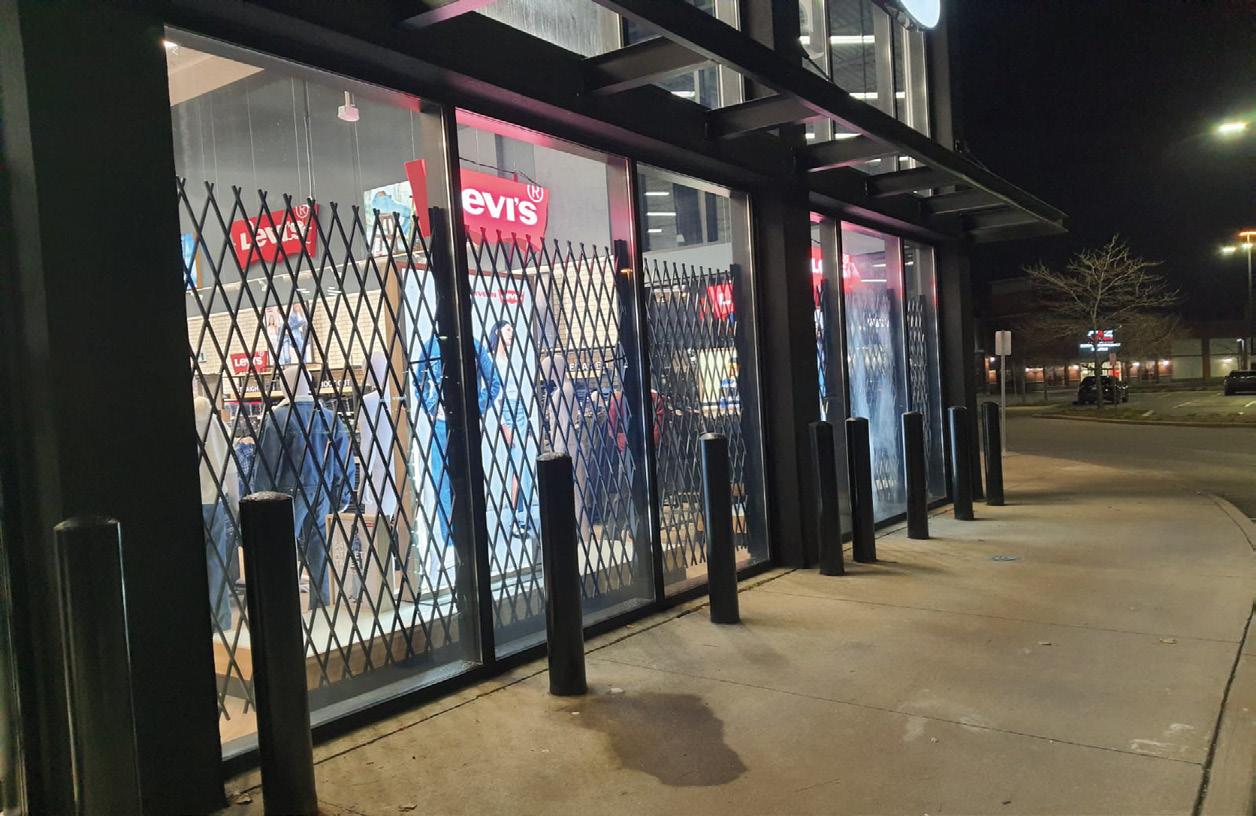









In an industry where change is consistent and threats evolve daily, the Loss Prevention Foundation empowers professionals to lead, innovate, and secure the future of retail. Whether you are just starting or advancing in your career, the LPQ (LPQualified credential) and LPC (LPCertified credential) are the gold standards for credibility and competence.
Industry-recognized certifications
Flexible online learning at your own pace
Trusted by major retailers
Career resources, community, and continued education
Start your certification journey at www.LossPreventionFoundation.org












































































The Loss Prevention Foundation (LPF) is a leader in educating and certifying retail loss prevention and asset protection professionals by providing relevant, convenient, and challenging educational resources. The LPF is dedicated to elevating the industry through its accredited LPQualified and LPCertified courses. For more information, visit losspreventionfoundation.org.



“I transitioned into LP from a career in law enforcement investigations, where I investigated nearly every type of crime imaginable—except retail. While I am a well-trained investigator, the retail business environment was new to me. The LPQ course has been critical to my development as a loss prevention professional, teaching me the many facets of the retail landscape. From the importance of relationshipbuilding to safety and security planning and execution to embracing a leadership role in stores, this course covered more than I expected—and did so in a way that was impactful, memorable, and, most importantly, relevant. This course was not easy, but it was 100 percent worth the time and effort I invested. I began applying what I learned from day one and will continue to do so as I move forward in my LP career.”

“The LPQ course helped me gain a greater understanding of loss prevention as a partner within the retail ecosystem. I now have a much stronger grasp of sales, marketing, and the role LP plays in retail.”

“I began my LPQ certification journey in October, looking to broaden my horizons and gain a deeper understanding of loss prevention as a whole. After enrolling in the LPQ courses, I was not disappointed. I learned a variety of new concepts that I can apply to grow within the LP field. The course was very detailed, with a significant amount of information packed into each section. The endof-chapter quizzes helped me stay on track and reinforced the material, making the LPQ exam feel more manageable and far less stressful. I also appreciated being able to revisit the courses and retake quizzes after completion. I plan to implement what I learned into my daily LP routine at HomeGoods and use it to continue growing professionally.”


“Earning my LPC strengthened both my knowledge and confidence in the field. The program is an outstanding resource for anyone looking to advance their expertise in loss prevention and leadership. LPC is more than a certification—it’s an investment in yourself and your future.”

The following are individuals who recently earned their certifications.
Recent LPC Recipients
William England II, LPC, Weis Markets
Jeffrey Miller, LPC, LPQ, DICK’S Sporting Goods
Heather Toth, LPC, Goodwill of Delaware
Jennifer Nunez, LPC, LPQ, DICK’S Sporting Goods
Amir Shafei Cortez, LPC, LPQ, TJX
Derek Martin, LPC, LPQ, Meijer
Javier Rivera, LPC, Coast Guard Exchange System
Tonia Rees Willett, LPC, Dollar Tree
Keith McClane, LPC, Dollar Tree
Aundrea Smith, LPC, LPQ, Casey’s
John Bernard, LPC, Meijer
Bradley Norton, LPC, Harbor Freight Tools
John Hoffman II, LPC, Meijer
Jennalee Mihulka, LPC, Casey’s General Stores
Brian Hankins, LPC, Casey’s General Stores
Holly Frye, LPC, Casey’s General Stores
Ashley McCloy, LPC, Panera
Lexis Plumley, LPC, T-Mobile
Greg Dolcich, LPC, Casey’s General Stores
Victoria Mirelez, LPC, DICK’S Sporting Goods
Kristina Irwin, LPC, DICK’S Sporting Goods
Ronnie Pacchioli Jr., LPC, DICK’S Sporting Goods
Timothy Downes, LPC, The Home Depot
Tracy Gilmer, LPC, DICK’S Sporting Goods
Justin Kaylor, LPC, PetSmart
Sean Maddox, LPC, LPQ
Steven Fisher, LPC, LPQ, Academy Sports + Outdoors
Robert Briggs, LPC, Fanatics
Michael Kilgore, LPC, Kroger
Alec Haines, LPC, Weis Markets
Recent LPQ Recipients
Angelina Amato, LPQ, TJX
James Armington, LPQ, Goodwill Northern New England
Natalie Avery, LPQ
Maggie Biggs, LPQ
Otis Bilbo, LPQ, HomeGoods
Brandon Cadena, LPQ, TJX
Brenden Calpin, LPQ
Alexis Colon, LPQ, Everon
Thomas Cosgrove, LPQ, FMI
Andrew Davis, LPQ, ThinkLP
Gabriel Diaz Oquendo, LPQ, TJX
Alisha Drum, LPQ, Harris Teeter
Sabryna Ellerson, LPQ, TJX
Christopher Ferrigno, LPQ, Housing Works
Vanessa Garcia Hurtado, LPQ, TJX
Eronita Gashi, LPQ, TJX
Bridget Gregor, LPQ
Carson Grube, LPQ
Nickolas Hanlon, LPQ, TJX
Evol Hewitt-Whitehurst, LPQ, TJX
Dallas Hite, LPQ, Advance Auto Parts
Kameron Ishimura, LPQ, TJX
Matthew Knittle, LPQ, TJX
Christina Latella, LPQ, TJX
Jackson Lauth, LPQ
Robert LeMaster, CFI, LPQ, Hobby Lobby
Nicole Magnani, LPQ
Susanna McCormick, LPQ
Katie McCroskey, LPQ, RaceTrac
Dani Noel-Melton, LPQ, Pilot Company
Grayson Page, LPQ
Randy Pahlmann, LPQ, Allied Universal
Nakia Peek, LPQ, ALTO
Emilee Peters, LPQ
Matthew Quinn, LPQ
Frank Rhodes, LPQ, The Home Depot
Robert Shelton, LPQ, The Home Depot
Sean Slattery, LPQ
William Smith, LPQ
Cierra Stamey, LPQ, ThinkLP
Luke Stanger, LPQ, TJX
Paul Starr, LPQ, TJX
Charlie Stauffer, LPQ, University of Cincinnati
Ozan Urgun, LPQ
Thomas Ware, LPQ
Glen Weber, LPQ, Pilot Company
Karin Wennerstrom Quinn, LPQ, IKEA
Mark Wilson, LPQ. l