








The ‘RuPaul’s Drag Race’ alumna discusses her role in the show and what it can teach us about our current political climate
By JOEL MEDINA
Watching a good musical can be transcendental.
As the more theater-inclined members of the queer community can attest, watching a musical that makes you feel something is a legitimately unforgettable experience. These are productions that feature not only amazing music but resonant themes, drawing on core aspects of the human experience to make viewers feel connected with the artistry taking place onstage. Modern audiences are lucky to have many inventive musicals that they can connect with — but few are as unfortunately relevant as David Byrne’s Here Lies Love.
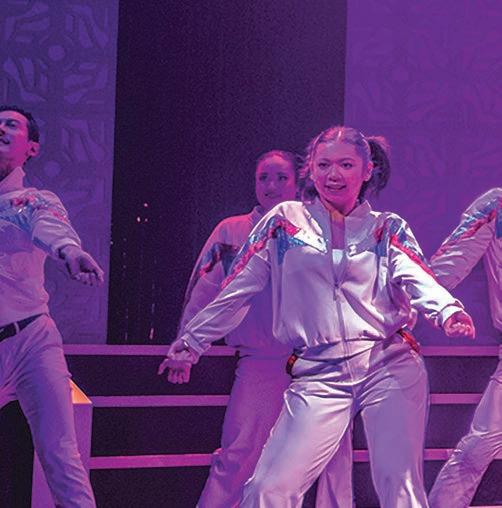
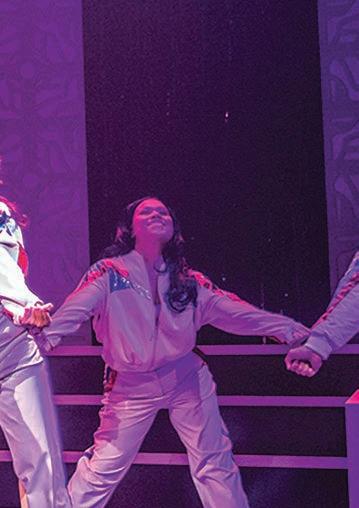
First premiering off-Broadway in 2013, Here Lies Love documents the glamorously haunting rise of Imelda Marcos, who, with her husband, served as the Philippines’ dictator for decades in the late 1900s. The story uses pop music to document her steady descent into fascism, with its dazzling images reflecting how Marcos used her trademark style as a cover for mistreating millions of citizens she was meant to serve.
In recent years, as the Philippines and the U.S. struggle with fascism, viewers have recognized the production’s political importance, with its themes of fighting oppression becoming more important than ever before. It’s why so many fans were thrilled when it was announced Here Lies Love was coming to LA in what was promised to be the queerest version of the show yet — meaning it was perfect for RuPaul’s Drag Race alumna, Aura Mayari.
“What really caught my attention was the Filipino-ness of this story,” said Mayari, as she sat down with the LA Blade to discuss her role in the show. “In my drag, I really love to intertwine my culture into what I do. And so when I was told that it’s a Filipino story and it’s going to be an all-Filipino cast, I was all in!”
It’s an aspect of the performer’s art that
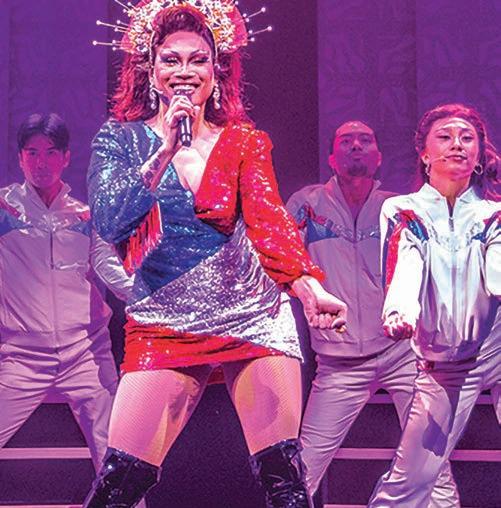
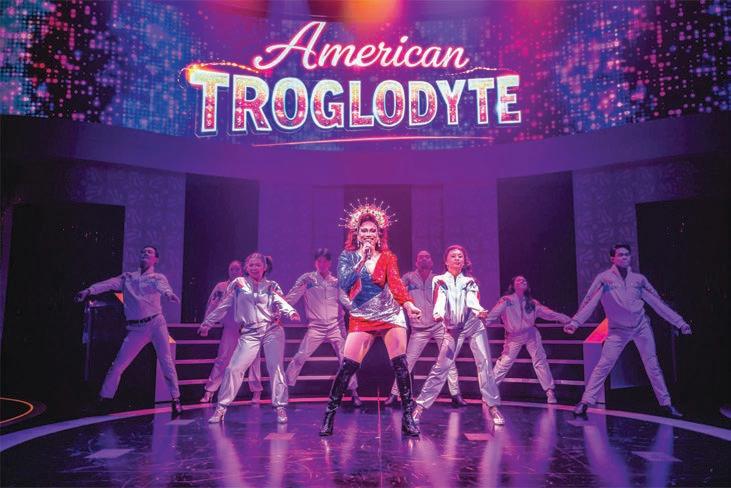
fans know well; Aura first made waves on RuPaul’s Drag Race season 15 as one of that cast’s best dancers (and self-titled ‘trade’ of the season). While on the series, she proudly discussed her experience as a queer Filipino, with the years since seeing Mayari bring her intersectional drag to countless clubs across the country. It made her a perfect fit for a show that merges Filipino culture with visually stunning effects, with the LA iteration creating a new role just for the queen: Imeldific, a drag version of Imelda Marcos who narrates the story to a group of club goers.
Aura spoke about what a personal honor it was to originate this role, explaining, “I moved to the United States [from the Philippines] when I was 11…and I wanted to be American so bad. I didn’t want to stand out, and I wanted to avoid being bullied. I didn’t want to be seen as someone who was an immigrant until after college, when I met a lot of my Filipino friends that I’m still friends with today.” It’s a pride that she was honored to bring into Here Lies Love, and it only grew once she encountered a cast who understood and loved the intersectional identities she showed through her drag. “They embraced my queerness and what I could bring to the table. And I think a lot of what I’ve learned through my Drag Race experience, I was able to use and [help] inspire my cast members to make something as magical as this show is.”
The performer stressed how being a part of this ensemble truly felt like being at home. “We get to eat a lot of Filipino food — people bring in a lot of Filipino snacks, and a lot of Filipino egg rolls!” Aura laughed, describing her experience on set.
“Every day, being in the show…it’s so special to me. I’ve never, ever thought to be a part of a project that celebrates Filipino culture and that dives into the history that a lot of people don’t know about. I have learned so much about my own history
from this show.”
It’s a history that, unfortunately, we are seeing repeated across the world today.
Since the 2024 election, U.S. citizens have seen numerous attempts by this administration to strip away the freedoms of marginalized communities. And in the Philippines, for many months in 2025, thousands of citizens fought against widespread government corruption through protests extremely similar to the ones that toppled the Marcos regime. It’s a deeply disheartening experience to watch Here Lies Love and realize that not only have the issues portrayed in the show not gone away, in some cases, they’ve also worsened. Aura recognized this fact, but she reminded everyone watching: Here Lies Love’s story doesn’t end with corruption.
“History repeats itself. And it’s really important to know and understand that history — and to fight the erasure of our stories.”
She emphasized how Imelda Marcos is not the only character in this show, that the audience gets to meet many of the real advocates who never stopped fighting against their country’s authoritarianism and eventually toppled their gorgeous dictator. “[Here Lies Love] really reminds us how quickly power can shift and how propaganda can influence people…[it shows] that people have fought things like this in the past, and [their fighting] has worked.” On what these stories are meant to teach the audience, Mayari continued, “I think [the lesson] is: if you do believe in
something, anything can change. You just really have got to be aware, and you have to teach yourself [to fight back].” It’s an inspiring message that so many need to hear right now, and that Aura Mayari is delighted to share through her performance as Imeldific eight times a week.
As the interview came to a close, Aura realized that in the span of thirty minutes she’d discussed Here Lies Love’s queerness, innovative storytelling, and political pertinence — and she’d barely scratched the surface of all that this production contains! Recognizing that she would need many hours to speak about everything she’s experienced during her time with the show, Aura summed up her feelings by saying, “It’s so special to me. I’ve never, ever thought to be a part of a project that celebrates Filipino culture and that dives into the history that a lot of people don’t know about. And I have learned so much about [myself and] my history from this show.”
It’s a truly deserved experience for an artist who’s dedicated her career to uplifting her communities. And, for the many people who get to watch Aura perform in Here Lies Love at the Mark Taper Forum in Los Angeles, the show is a good reminder that, yes, the issues we’re facing today have all happened before. But those people fought back, and they won.
So that means we can too.
Here Lies Love is playing at the Mark Taper Forum in Los Angeles from February 11 to April 5, 2026.

Four minors and their families are fighting on behalf of thousands at risk of losing gender-affirming care at Rady Children’s Health
By KRISTIE SONG
For nearly 15 years, Rady Children’s Health, a major pediatric healthcare system that includes the Children’s Hospital of Orange County (CHOC) and Rady Children’s Hospital San Diego, has been a primary provider of gender-affirming care for transgender youth under 19 years old in the Orange and San Diego Counties.
On Jan. 20, patients received this message in their online portals: “Due to recent federal actions, we will no longer be able to provide gender-affirming medications and procedures.” Gender-affirming care and services were to be halted shortly after, on Feb. 6. This would strand nearly 1,900 transgender youth receiving essential and necessary care at the two hospitals.
10 days later, California Attorney General Rob Bonta, who in 2024 approved the merger of Rady Children’s Hospital and CHOC on the condition that they would continue to provide specialty services like gender-affirming care, sued Rady Children ’ s Health. In the press release, Bonta stated that, under the conditions of the merger, Rady was required to obtain his approval before reducing or eliminating gender affirming care. They had violated the terms of their merger and thus, the law. A temporary restraining order was granted, and Rady Children ’ s Health was ordered to continue providing gender-affirming care to their trans and gender expansive youth patients. However, the Blade learned yesterday that the order is only in effect until April 27.
Families are fighting back to make sure the care their trans and gender expansive children receive will continue, and for good. On Thursday morning, Western Center on Law & Poverty, the Impact Fund, and the National Center for LGBTQ Rights (NCLR) announced that they had filed a new lawsuit on behalf of four families against Rady Children ’ s Health — explicitly citing the health system ’ s unlawful discrimination against transgender people.
“ By singling out transgender patients,” the complaint reads, “ and terminating their medically necessary care without consent or concern for their physical and mental health, Defendants have discriminated against Plaintiffs on the basis of their sex, gender identity, and disability in violation of the Unruh Civil Rights Act and Government Code section 11135.”
The four plaintiffs represented in the case are all minors who have been receiving gender-affirming care at Rady Children ’ s Hospital. They are seeking, beyond damages paid for civil code violations and losses suffered as a result of “unlawful conduct,” that Rady Children s Health be prohibited from eliminating or
reducing its gender-affirming care services. It would be required to continue providing the same level of care that it had prior to Jan. 20 to the plaintiffs and its nearly 2,000 other trans and gender expansive youth patients.
One of the plaintiffs, named “ Plaintiff B.B.” in the suit, is a minor who began receiving gender-affirming care at Rady Children ’ s Hospital in 2025. They had been diagnosed with gender dysphoria and were experiencing serious mental health issues. The current potential, impending interruption to their care has been distressing, and their family members have faced difficulties in getting them an appointment — even after Bonta ’ s temporary restraining order was set into place.

This makes the timing of the lawsuit even more urgent and pressing. A harrowing picture is being painted: what is the alternative to care, and what does the unfolding of this reality present?
In a 2024 study conducted by The Trevor Project , a prominent LGBTQ+ suicide prevention organization, researchers found that the rise in anti-transgender laws from 2018 to 2022 could be correlated to a 72% increase in suicide attempts among trans and gender expansive youth.
As trans and gender expansive youth are continually refused the care that allows them to inhabit bodies that affirm their identities, what happens in the interim? How long will they have to wait? How do they cope with increased violence and rhetoric that targets and undermines their existence?
Rady Children ’ s Health ’ s initial decision to cut gender-affirming care came in the midst of a domino-like movement of hospitals caving under federal pressure nationwide. Last December, the U.S. Department of Health and Human Services (HHS) announced a series of proposed actions that included withholding federal funding from hospitals that provided gender-affirming care to youth patients.
This was to, as the HHS press release stated, “ carry out” President Trump ’ s executive order to end “ sex-rejecting procedures on children.”
The directive has had wide-sweeping effects. Last August, NBC News reported that at least 21 hospitals had ended or restricted gender-affirming care for trans and gender expansive youth. That number has almost doubled since, advocates estimate. LGBTQ+ organizations are calling attention to this worrying development, mobilizing in ways to defend the most vulnerable in their communities: transgender and gender expansive folks.
“ At this particular moment — with federal executive orders attacking transgender people across nearly every domain of life, with hundreds of anti-transgender state bills, and with a Supreme Court that has already signaled hostility — the cumulative weight on transgender young people and their families is severe,” Shannon Minter, NCLR ’ s legal director, wrote to the Blade. “ Calling out discrimination is not just legally important; it is a form of bearing witness to what this community is experiencing and affirming that it is wrong.”
Now that the lawsuit has been filed, Rady Children ’s Hospital will respond to the complaint, and the case will move through the court system, NCLR senior staff attorney Amy Whelan explained to the Blade. If successful, the lawsuit could become a paradigm for change for states with anti-discrimination laws similar to California ’ s. The victory would also invoke an important sentiment: people will resist, again and again, the erasure of trans people.
“ In a moment when transgender young people are being told in every direction that they can be excluded and ignored, a lawsuit that invokes California’s anti-discrimination framework sends an unambiguous message,” Minter wrote. “ The law sees you, protects you, and stands with you.”
Kristie Song is a California Local News Fellow placed with the Los Angeles Blade. The California Local News Fellowship is a state-funded initiative to support and strengthen local news reporting. Learn more about it at fellowships.journalism.berkeley.edu/cafellows .
By KRISTIE SONG
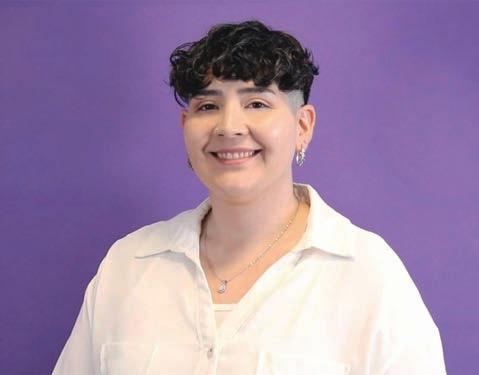
Thirty miles north of San Francisco, in a town hugged by the San Pablo Bay, Ariela Cuellar grew up with little exposure or connection to the queerness she now proudly inhabits. Cuellar is the senior communications specialist at the California LGBTQ Health and Human Services Network, where she creates educational materials and storytelling that champions queer people’s health, social equity, and political empowerment.
As an adolescent, Cuellar attended a private Catholic school in Vallejo, where conversations around health and sex education were funneled through the lenses of abstinence and piety. Sex was taught as something to avoid; it was a rite of passage that was meant to facilitate and affirm the sanctity of family, marriage, and religious devotion.
Visible queerness was shunned, too. Only a few of Cuellar’s classmates were out, and rumors quickly spread
about them. “Queer folks were not talked about in a positive light,” Cuellar told the Blade. There were no LGBTQ+ resource centers in town either, rendering queerness invisible if not outright impossible.
When she entered college at UC Davis, Cuellar began to explore new arenas of possibility, which involved active participation in queer and feminist spaces. She interned for the Women’s Resources and Research Center and helped organize the campus’s Feminist Film Festival. “That’s where I first got my experience working in communications and with a community-based center,” Cuellar said. “[From] that space, I knew I really wanted to be in advocacy and also be around my people.”
Upon graduating, Cuellar worked in community engagement and marketing at the Sacramento LGBT Community Center before moving into her current role at the California LGBTQ Health and Human Services Network.
The organization mobilizes LGBTQ+ coalitions across the state to strengthen the ongoing fight for queer rights and protections. Staff members host panels on important legislation and LGBTQ+ research; organize events that bring the community together for conversations around health access, substance abuse, and mental health; and create culturally sensitive education on stigmatized subjects to reflect and support the entire breadth of the LGBTQ+ umbrella.
The Network is stitched together by queer educators and advocates, including Cuellar, who are dedicated to upholding nuance and inclusion in their work. They make sure that their own humanity, and the humanity of their community members, is what is felt first. “We’re not robots that show up with our work hat on,” Cuellar said. “We, as queer people, are also feeling the impacts of these real-world events. It feels like a pendulum…progress has been set back.”
To combat federal attacks against the queer community, the Network is prepared to ramp up its efforts this year. Cuellar explains that this involves increased advocacy for trans youth, and making sure more conversations
are sparked around bodily autonomy, gender affirming care, and debunking misinformation around trans people.
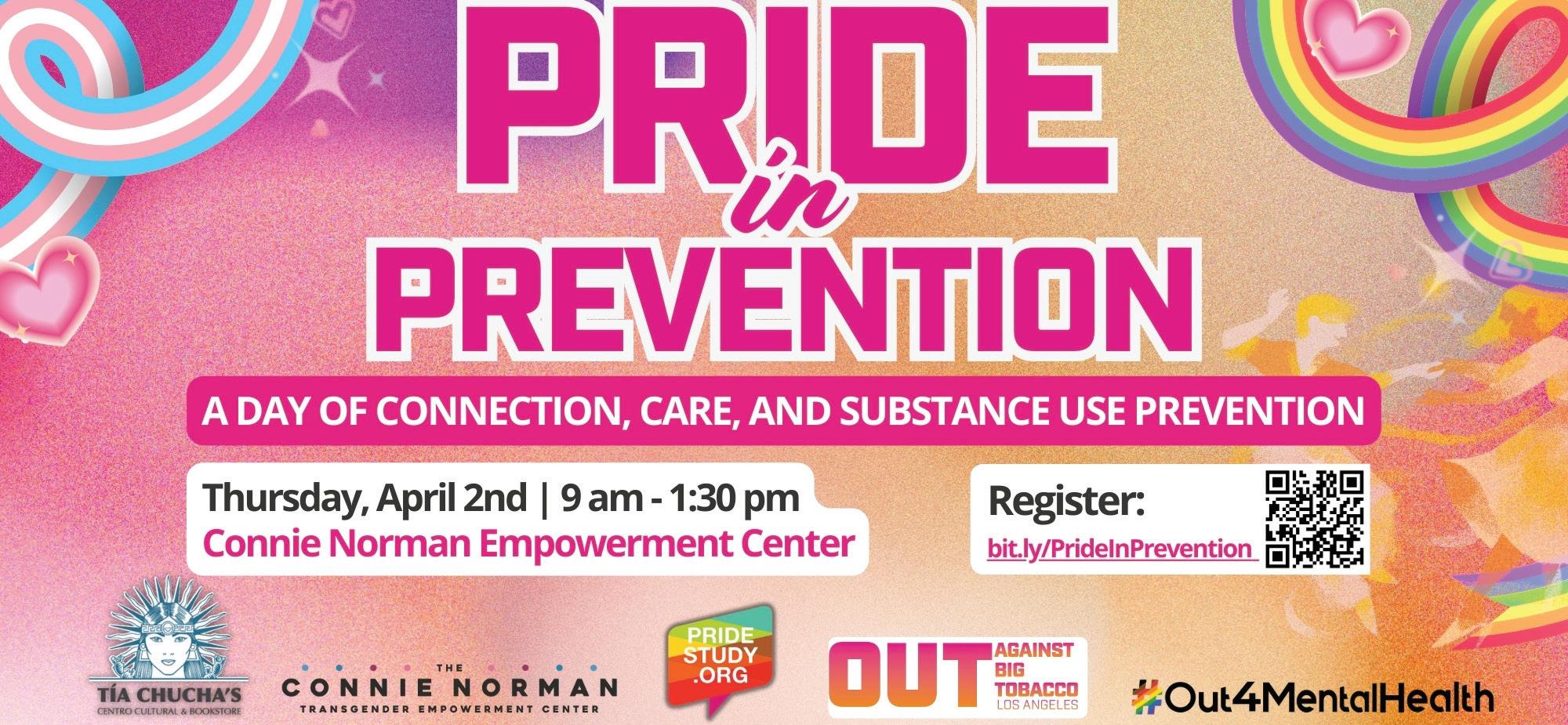
The Network is also hosting a “Pride in Prevention” event on April 2, where they are collaborating with Tía Chucha’s Centro Cultural for a day of community care at the Connie Norman Transgender Empowerment Center. Various organizations will be present to provide resources on substance use prevention, structural violence, incarceration, and other topics for people to engage with. Cuellar says the atmosphere will be comfortable and relaxed: a chance to learn, in a safe space, about how one can be proactive about their health.
Community efforts like these are imperative in confronting the disparities and gaps LGBTQ+ people face when accessing the care they need. In a new Measure of America report on the well-being of various Angelenos, 11% of cisgender LGBTQ+ adults and 21% of trans and nonbinary adults reported that they had not sought out health care because they were afraid they would be treated unfairly based on their gender or sexual identity.
Local activations that center queer health and destigmatization can build bridges for a more equitable and healthy future for queer folks, including the most marginalized in these communities. Organizations like the Network inspire that hope. “We’ve been in difficult and similar situations before,” Cuellar said. “With community strength, knowledge, and relationship-building, I know we’ll be able to make it past this administration and after this.”
Pride in Prevention takes place on April 2, from 9 a.m. to 1:30 p.m. at the Connie Norman Transgender Empowerment Center. More information can be found on eventbrite, as well as on the California LGBTQ Health and Human Services Network’s social media.
Kristie Song is a California Local News Fellow placed with the Los Angeles Blade. The California Local News Fellowship is a state-funded initiative to support and strengthen local news reporting. Learn more about it at fellowships.journalism. berkeley.edu/cafellows.

The Blade spoke with Christopher Street West board president Lawrence Carroll to learn about this year’s LA Pride Parade, and the vision it sets for year-round advocacy
By KRISTIE SONG
Every June, Hollywood Boulevard is transformed into a portal of queer joy as over 100,000 Angelenos gather for the LA Pride Parade. The county’s streets are adorned with rainbow flags, awash with the vibrancy of its local LGBTQ+ communities. Queer locals band together with friends and allies to march in a proud, unified display of their joy and existence, resisting the disapproval and hostility of the federal administration.
In three months, LA Pride will return for its 56th year of celebrating queer visibility and advocacy. The parade takes place on Sunday, June 14, under the bold theme: “Rise with Pride.” Organized by Christopher Street West (CSW), a nonprofit that created the first-ever sanctioned gay parade in 1970, the LA Pride Parade is Southern California’s most historic and long-standing Pride celebration.
This June, the parade will feature over 130 groups composed of bands, dancers, floats, and special guests who embody the spirit
of fearless queer liberation. The parade will also honor three grand marshals: people who have defied repression and discrimination through proud, open advocacy, expression, and community service.
Emmy-winning actor and comedian Jeff Hiller will serve as LA Pride’s celebrity grand marshal, prominent transgender criminal defense attorney and LGBTQ+ rights activist Mia Yamamoto will serve as community grand marshal, and the late and beloved humanitarian Shirley “Ms. Shirley” Raines, who transformed and documented L.A.’s unhoused communities, will be recognized as the legacy grand marshal.
LA Pride mirrors the evolution of queer history, progress, and protest in the county. The festivities culminate on one long-awaited day, but its mission is ever-present. It uplifts joy but also contends with the complicated realities LGBTQ+ Angelenos face. Queer immigrants and transgender community members, especially, face high rates of vio-
lence and persecution. CSW board president Lawrence Carroll hopes “Rise with Pride” can affirm and support their well-being.
“For a lot of people right now, especially those in our most vulnerable communities, just existing openly can feel like resistance. This theme is about honoring that and making it clear that they are not alone in it,” Carroll wrote to the Blade.
“At the same time, I want it to feel grounded. Not just something we say, but something people can see in how we move. That means creating accessible spaces, programming that reflects real experiences, and partnerships that actually extend resources into the community,” Carroll continued. “If someone walks away feeling seen, supported, and a little less isolated in their experience, then we’re doing what we’re supposed to do.”
“Rise with Pride” is a guide for how CSW intends to show up: not just in June, but yearround. Carroll explained that the organiza-
tion is building out “Pride 365” programming that holds community needs at its core. Other events include the upcoming “Trans Self Care Sunday” on Mar. 29, the “Salon Series” conversations, as well as “Pride Makes a Difference,” which emphasizes direct services for LGBTQ+ community members.
Other long-term investments include CSW’s Youth Advisory Board, which will support emerging queer voices and youth perspectives in future Pride celebrations. “The goal is to make sure LA Pride isn’t just a moment people show up to, but something that actually shows up for people throughout the year.”
For more information about LA Pride, visit lapride.org.
Kristie Song is a California Local News Fellow placed with the Los Angeles Blade. The California Local News Fellowship is a state-funded initiative to support and strengthen local news reporting. Learn more about it at fellowships. journalism.berkeley.edu/cafellows
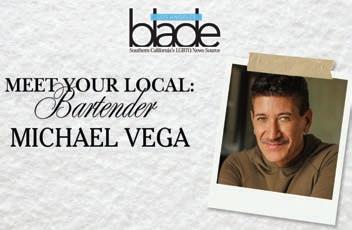
West Hollywood bartender/actor brings you cocktails with the right blend of sass, wit, and drama
Long-time West Hollywood fixture, Michael Vega, gives us a quick chat about his career, nightlife, and acting
By CHRISTIAN CINTRON
Bartenders are a unique blend of therapist, den mother, and bouncer. In gay bars, their role is even more important as they administer to the queer community and keep our remaining few safe spaces queer-friendly and well lubricated. Meet Michael Vega.
You may remember him from his tenure at Micky’s or you can currently catch him at Mattie’s (formerly Rocco’s). If you lived in New York City you may have seen him at The Monster in the West Village. If you lived in San Francisco you may remember him from the popular night spot The Powerhouse. He took some time to share some insights from behind the bar.
How did you get into bartending?
When I was between college years, I spent a summer in Philly, where a friend got me a job as a waiter in a fancy pants restaurant called The Moshulu. I had no experience, but was a quick study.
They had me as a cocktail waiter in the lounge, serving drinks that I wasn’t old enough to drink. I watched the bartender and asked a lot of questions. So, when a year or so later the opportunity to work in a night-
club called “The Cartwheel” in New Hope, PA, came up, I was able to fudge my experience behind a bar and say, “Sure, I can do this.”
Then it snowballed from there. It helped that I got a theatre degree, so needing a side gig was necessary. No one tells you that a 3-picture deal doesn’t come with the degree.
How long have you been bartending?
Longer than I care to admit.
What do you love about bartending?
Over the years so many of the dearest people in my life have come from being behind a bar.
What do you love about Los Angeles/ West Hollywood?
Diversity & opportunity.
What brought you to LA?
I’m an actor first and foremost, so after several years in San Francisco, where I was a working actor in theatre & some film, I’d grown less interested in the acting opportunities there. So moving to LA was the next logical step for my career. I go back several times a year to visit, though.
What is your passion?
My passion is being an actor. It’s all I’ve ever
wanted to do since I was a kid. I’m very grateful that I’ve been able to continuously do it for all these years.
What’s a weird thing you learned about life from bartending?
One thing I learned about life through bartending is that everyone has a very primal need to be seen, heard, and acknowledged. Simply remembering someone’s name can make all the difference in their day.
Favorite spot in Los Angeles?
My place. Outside of that I love Scum and Villainy, a sci-fi geek bar in Hollywood. How has Los Angeles changed you?
Not sure if it qualifies as a change, but I’ve never been one to alter who I am to fit in. If anything, LA made me more steadfast in that.
What piece of advice would you give to your younger self?
Stay out of tanning beds & wear sunscreen.
If you could make one wish for Los Angeles what would it be?
Less traffic
What do you want for the queer community?
To be kinder to each other. Mean Girls was
a fun film…not something to aspire to.
What do you look for in a person?
I gravitate to those with a love for, involvement in, or at the very least a curiosity for the arts.
Celebrity crush?
Jonathon Bailey… because he’s so fucking charming. I feel like I’m under his spell and not in control of my carnal wits.
What is your favorite thing to do in your down time?
Not Speak. I value having time to just be alone with my thoughts. It helps me to focus and figure stuff out.



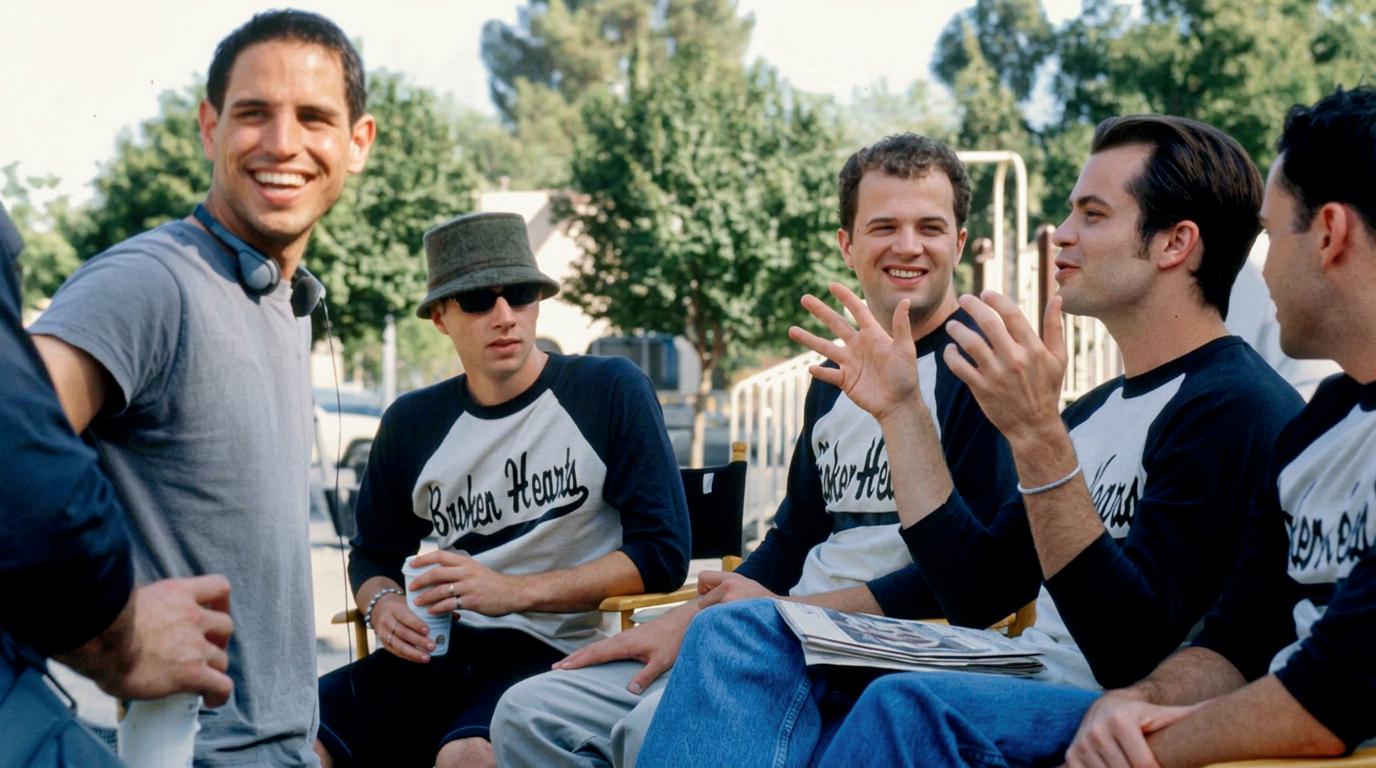
SAT, APR 25 | WEST HOLLYWOOD PARK




MODERATED CAST DISCUSSION • VIP MEET & GREET • INTERACTIVE GAMES • FOOD & BAR • BENEFITING PRIDE HOUSE LA–WEST HOLLYWOOD TICKETS ON SALE NOW - PRIDEHOUSELAWEHO.ORG/EVENTS 5:30PM • 647 N SAN VICENTE BLVD














If you’ve thumbed through socials over the holidays, you’ve likely been witness to obstinate aunties or mordant memes about family dinner politics. Somewhere during this doomscroll from hell, between the pumpkin spiced piety and eat, pray, trauma-dump narratives, rises a not-so-new yet trending topic: family estrangement. Cue the collective clutching of pearls.
By AJ SLOAN
For many non-queer (FKA “straight”) folks, this concept has a glisteningly new sense of significance. From therapeutic spheres to social platforms, family estrangement is no stranger to the current collective zeitgeist. Hell, even billi-illi-illionaire Oprah Winfrey spent an entire episode on the topic. Across many conversations there exists some debate on whether the “no contact” approach is just an excuse to ghost on family time or procrastinate on confronting difficult conversations with not-so-like-minded family members. But what rings true for so many of our beloved queer community is that estrangement from bloodkin is nothing new. It has been a thing for decades and then some, not some trending debate over seasonally appropriate hor d’oeuvres.
Before we all start believing that family estrangement was recently invented by the same folks who brought us matcha scented pooperie and self-diagnosed neurodivergence, let’s look into what this term actually means, why it’s not always an act of narcissism, and how, for so many, it can be a long-overdue act of self-preservation.
Family estrangement can sound to some like a diagnosis or pathology, but it simply refers to a breakdown in emotional closeness between family members, sometimes to the extent of no contact. And it’s nothing new. What is new is its visibilityas a topic of public discussion. This visibility comes with both empathy and judgment.
Estrangement is by no means rare. Research shows that about one in four American adults reports being estranged from at least one family member. According to sociologist Karl Pillemer’s national survey, roughly 27% of U.S. adults have cut off contact with a family member, translating to millions of people dealing with emotional or physical separation from family members of origin. Another YouGov poll found that 38% of adults are currently estranged from someone in their family, including siblings (24%), parents (16%), children (10%), and even grandparents (9%). So, yes, it’s a discussion not to shy away from.
Though estrangement is in no way beholden to queer folks, extensive research tells us that roughly half of LGBTQ+ adults report being estranged from their family of origin, which is significantly higher than the general population. This happens because when one’s identity is the source of familial rejection, one can either try to “fix” an unfixable situation or create new structures of acceptance and belonging. We queer folk have been nothing short of pioneers at the latter, finding our own chosen families that show us compassion in place of judgement.
For most of the queer community, estrangement isn’t a trending form of self-care. It s self-preservation and, unfortunately for many, a matter of safety. Parents and family members who re-
fuse to accept one’s sexuality or gender identity can fuel environments where safety, emotional, physical, or otherwise, is no longer present.
When mental health professionals talk about estrangement, they tend not to downplay it as some trending aura-cleansing enema. They describe it as a shift in dynamics with the goal of safety and protection. It isn’t about punishing parents or anyone else. It’s doing what one needs to do to protect their well-being.
And this can leave many with those lingering voices in their heads (metaphor) telling us that we should be thankful, should be more forgiving, be present despite our cores telling us not to. But when you take a step back and look at it from an outside perspective, we can also see that holding gratitude does not necessitate harm. Forgiving does not translate to or go hand in hand with forgetting. Being present for your own needs takes precedence over forcing yourself to be present for others. Not all others deserve it.
Now, let’s not slip into looking at this as an all-or-nothing scenario. It s more often than not a disservice to yourself to see things in black or white. In reality, the path looks different for everyone. Like most things, it is a spectrum that everyone needs to navigate for themselves while taking into consideration the boundaries that protect their own mental health. Opting for complete silence is not always the best fit and is by no means the only option one has.
For an arguably lucky few, reinitiating conversations after time apart and mutual effort eventually presents itself as an option. Estrangement doesn t have to be permanent. Reengagement won’t necessarily occur overnight and will take some effort and recalibrating, not to mention, caution.
Like *ssholes, everybody has opinions that more often than not stink. There is a growing number of folks who argue that estrangement is a trend birthed from selfishness. The irony here is that the more people protest, the more evident it is that it is ingrained in our society to respect and honor our blood ties unconditionally. We are told to honor our parents and elders without asking whether they deserve it. We have been force-fed the “family first” narrative even when that same narrative has invited harm into our lives. F*ck that.
If we are to discuss estrangement as a trend, let us at least be specific. The trend isn’t people walking away from families. The trend is people beginning to publicly acknowledge that it happened, as opposed to keeping things hush-hush. It’s about damn time we as a society shake off the taboo and open the conversation.
Family estrangement is not about shunning love. Rather, it is recognizing when it has been overshadowed and rendered dormant by judgement and rejection. Stepping away from the hate and the damage it leaves in its path is no easy feat and sometimes requires tapping into our reserves of bravery but will leave you that much more resilient. It will also leave you with more time and energy than can be spent on the folks in our lives who truly deserve it. When the old definition of “family” is no longer working for you, make your own path and your own peace.
PHONE 310-230-5266
E-MAIL arodriguez@losangelesblade.com
INTERNET losangelesblade.com
PUBLISHED BY Los Angeles Blade, LLC
PUBLISHER
ALEXANDER RODRIGUEZ arodriguez@losangelesblade.com, 310-230-5266 x8080
EDITORIAL
NATIONAL EDITOR
KEVIN NAFF kna @washblade.com, 202-747-2077 x8088
LOCAL NEWS REPORTER
KRISTIE SONG ksong@losangelesblade.com
CONTRIBUTING WRITER
KAREN OCAMB karenocamb@losangelesblade.com
CONTRIBUTORS
MICHAEL K. LAVERS, TINASHE CHINGARANDE, JOHN PAUL KING, LOU CHIBBARO JR., SUSAN HORNIK, JOE REBERKENNY, DANIEL ITAI, ISAAC AMEND, PETER ROSENSTEIN, TERRI SCHLICHENMEYER, JOE PHILLIPS, ANKUSH KUMAR, ESTEBAN RIOSECO, SAM KISIKA, ELVIS KAWEDO, HENRY CARNELL, DAWN ENNIS, AJ SLOAN
SALES & ADMINISTRATION
SALES EXECUTIVE
SHANA WONG SOLARES swong@losangelesblade.com, 808-386-0872
MARKETING DIRECTOR
STEPHEN RUTGERS srutgers@washblade.com, 202-747-2077 x8077
NATIONAL ADVERTISING
RIVENDELL MEDIA sales@rivendellmedia.com, 212-242-6863 ADMINISTRATION
PHILLIP G. ROCKSTROH prockstroh@washblade.com, 202-747-2077 x8092 CREATIVE DESIGN/PRODUCTION
MEAGHAN JUBA production@azercreative.com DISTRIBUTION
CHRISTOPHER JACKSON, 562-826-6602




All your favorites in nightlife, media, arts, and more
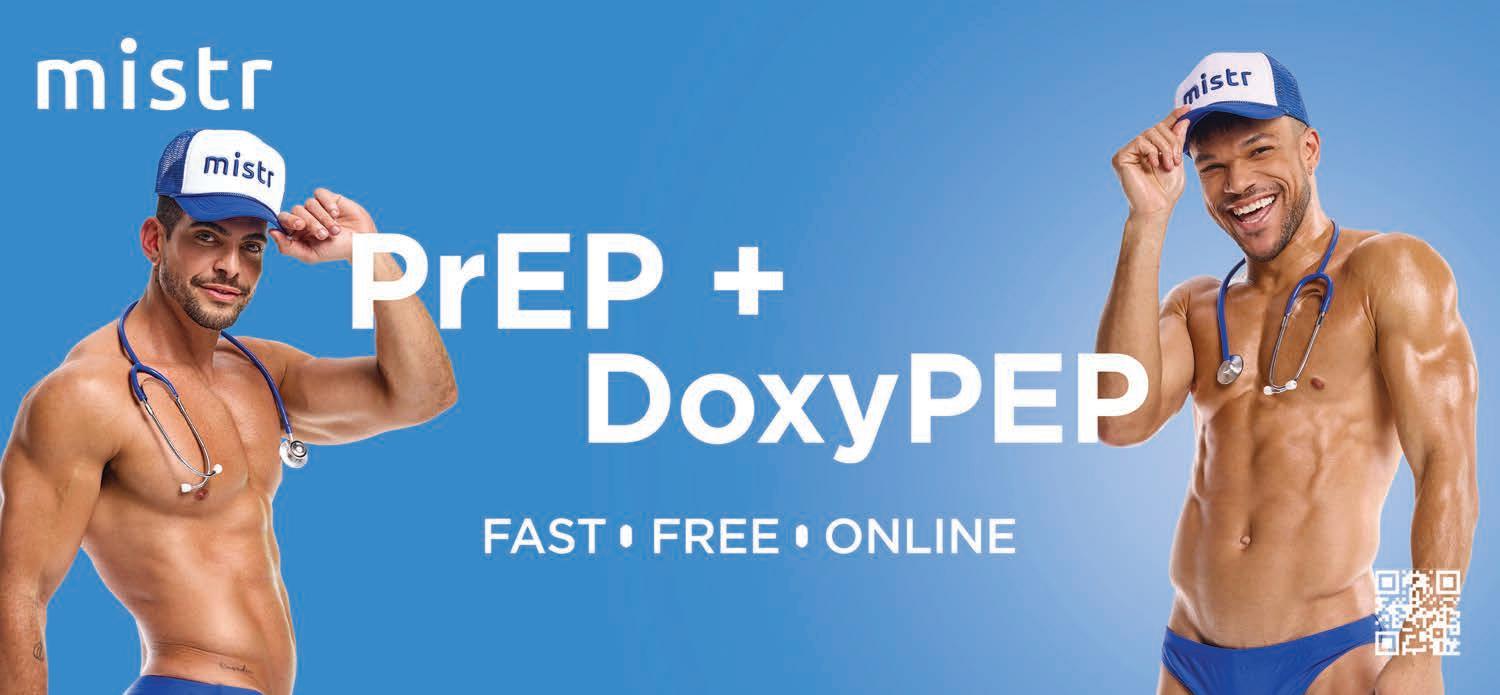
This week marks the Los Angeles Blade’s 9th Annual Best of LA Award Show, honoring leading members from the community as voted on by readers of the Blade. Presented in part by MISTR and Visit West Hollywood, the community gathered on Thursday, March 26, at The Abbey, to celebrate the winners:
Best Drag Performer
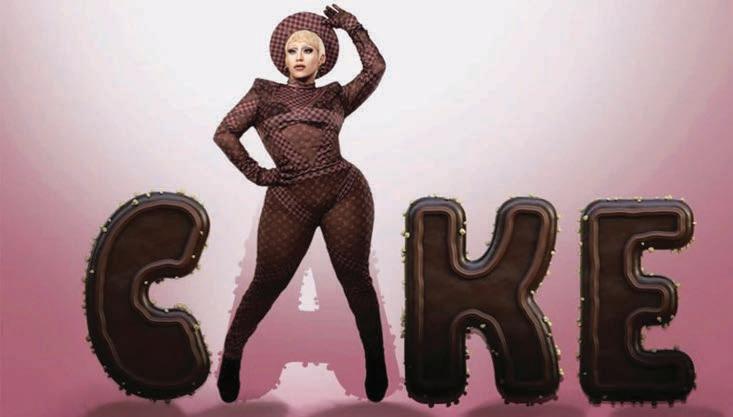
Cake Moss
Kyra Jete, Runner-up
Best Drag Show
Rocc-ettes at Mattie’s
Hamburger Mary’s Weho. Runner-up
Local Influencer of the Year
Rose Montoya
Lucas Dell, Runner-up
Best LGBTQ Bar
Gym Bar
The Abbey.Runner-up
Best Happy Hour
Motherlode
Hi-Tops, Runner-up
Go-Go of the Year
Steven Dehler
Prince Joshua, Runner-up
Best Restaurant
Bottega Louie
WeHo Bistro, Runner-up
Best Radio or TV Station
REVRY
KTLA, Runner-up
Best Cannabis Retailer/ Lounge
Green Qween
Artist Tree Lounge, Runner-up
Best LGBTQ Owned Business
MISTR
Green Qween, Runner-up
Best LGBTQ Social Group
Gay Men’s Chorus of Los Angeles
Dark Circle Film Society, Runner-up
Best House of Worship
Hollywood United Methodist
Congregation Kol Ami, Runner-up
Activist of the Year
Maebe A. Girl
Rose Montoya, Runner-up
Public Official of the Year
John Erickson
Lindsey Horvath, Runner-up
Best Local Pro Sports Team, co-presented by Pride House
LA/West Hollywood
LA Dodgers
LA Lakers, Runner-up
Local Ally of the Year
Kevin De Nicolo
Jessica Steinman, Runner-up
Best Doctor/Medical Provider
AIDS Healthcare Foundation
LA LGBT Center, Runner-up
Most LGBTQ-Friendly Workplace
Los Angeles LGBT Center
City of West Hollywood, Runner-up
Non-Profit of the Year
Los Angeles LGBT Center
Trans Lifeline, Runner-up
Best Local Actor
Annie Reznik
Matthew Scott Montgomery, Runner-up
Best Local Theatre
Center Theatre Group
Pasadena Playhouse, Runner-up
Local Musical Artist of the Year
Prince Joshua
Ross Alan, Runner-up
Best LGBTQ Event
Outloud Music Festival at Weho Pride GLAAD Awards, Runner-up
Best Regional Pride
WeHo Pride
Long Beach Pride, Runner-up
Best Promoter of the Year
Beau Byron
Paul Nicholls, Runner-up
LGBTQ Professional of the Year
Erik Braverman
Michael Ferrera, Runner-up
Best Bartender
Danny Hernandez
Michael Susi, Runner-up
Best DJ
Boy Apocalypse
DJ Les Ortiz, Runner-up
Best Local LGBTQ Podcast
BabyGay
On The Rocks, Runner-up
Best Salon/Spa
Shorty’s Barber Shop
The Massage Company WEHO, Runner-up
Best Music Venue
The Hollywood Bowl The Troubadour, Runner-up
Best Fitness/Workout Spot
LA Fitness, Hollywood Barry’s WEHO, Runner-up
Best Hotel Hotel Ziggy SoHo House, Runner-up
This year’s Local Hero Award goes to Genevieve Morrill in honor of her role as an ally, serving as president and CEO of the West Hollywood Chamber of Commerce.
Gus Kenworthy received the first-ever Los Angeles Blade Athlete Legacy Award, co-presented by Pride House LA/West Hollywood.
Los Angeles Blade publisher Alexander Rodriguez shared, “In light of the year we’ve had to contend with as the queer community, it is imperative that we take moments to share the accomplishments and resilience of our local family of activists, leaders, and allies. Honoring our nominees and winners this year is proof of the power of queer joy. Until next year!”

‘If I Had Legs I’d Kick You’ now streaming
By JOHN PAUL KING
Now that Oscar season is officially over, most movie lovers are ready to move on and start looking ahead to the upcoming crop of films for the standouts that might be contenders for the 2026 awards race.
Even so, 2025 was a year with a particularly excellent slate of releases: Ryan Coogler’s “Sinners” and Paul Thomas Anderson’s “One Battle After Another,” which became rivals for the Best Picture slot as well as for total number of wins for the year, along with acclaimed odds-on favorites like “Hamnet,” with its showcase performance by Best Actress winner Jessie Buckley, and “Weapons,” with its instantly iconic turn by Best Supporting Actress Amy Madigan.
But while these high-profile titles may have garnered the most attention (and viewership), there were plenty of lesser-seen contenders that, for many audiences, might have slipped under the radar. So while we wait for the arrival of this summer’s hopeful blockbusters and the “prestige” cinema that tends to come in the last quarter of the year, it’s worth taking a look back at some of the movies that may have come up short in the quest for Oscar gold, but that nevertheless deserve a place on any film buff’s “must-see” list; one of the most essential among them is “If I Had Legs I’d Kick You,” which earned a Best Actress Oscar nod for Rose Byrne. A festival hit that premiered at Sundance and went on to win international honors – for both Byrne and filmmaker Jane Bronstein – from other film festivals and critics’ organizations (including the Dorian Awards, presented by GALECA, the queer critics association), it only received a brief theatrical release in October of last year, so it’s one of those Academy Award contenders that most people who weren’t voters on the “FYC” screener list for the Oscars had limited opportunity to see. Now, it’s streaming on HBO Max.
Written and directed by Bronstein, it’s not the kind of film that will ever be a “popular” success. Surreal, tense, disorienting, and loaded with trigger-point subject matter that evokes the divisive emotional biases inherent in its premise, it’s an unsettling experience at best, and more likely to be an alienating one for any viewer who comes to it unprepared. Byrne stars as Linda, a psychotherapist who juggles a busy practice with the demands of being mother to a child with severe health issues; her daughter (Delaney Quinn) suffers from a pediatric feeding disorder and must take her nutrition through a tube, requiring constant supervision and ongoing medical therapy – and she’s not polite about it, either. Seemingly using her condition as an excuse to be coddled, the child is uncooperative with her treatment plan and makes excessive demands on her mother’s attention, and the girl’s father (Christian Slater) – who spends weeks away as captain of a cruise ship – expects Linda to manage the situation on the home front while offering little more than criticism and recriminations over the phone.
Things are made even more stressful when the ceiling collapses in their apartment, requiring mother and child to move to a seedy beachside motel. Understandably overwhelmed, Linda turns increasingly toward escape, mostly through avoidance and alcohol; she finds her own inner conflicts reflected by her clients – particularly a new mother (Danielle Macdonald) struggling with extreme postpartum anxiety – and her therapy sessions with a colleague (Conan O’Brien, in a brilliantly effective piece of against-type casting) threaten to cross ethical and professional boundaries. Growing ever more isolated, she eventually finds a thread of potential connection in the motel’s sympathetic superintendent (A$AP Rocky) – but with her own mental state growing ever more muddled and her daughter’s health challenges on the verge of becoming a lifelong burden, she finds herself drawn toward an unthinkable solution to her dilemma.
With its cryptic title – which sounds like the punchline to a macabre joke and evokes expectations of “body horror” creepiness – and its dreamlike, disjointed approach, “If I Had Legs I’d Kick You” feels like a dark comedic thriller from the outset, but few viewers are likely to get many laughs from it. Too raw to be campy and too cold to invite our compassion, it’s a film that dwells in an uncomfortable zone where we are too mortified to be moved and too appalled to look away. Though it’s technically a drama, Bronstein presents it as a horror story, of sorts, driven by psychological rather than supernatural forces, and
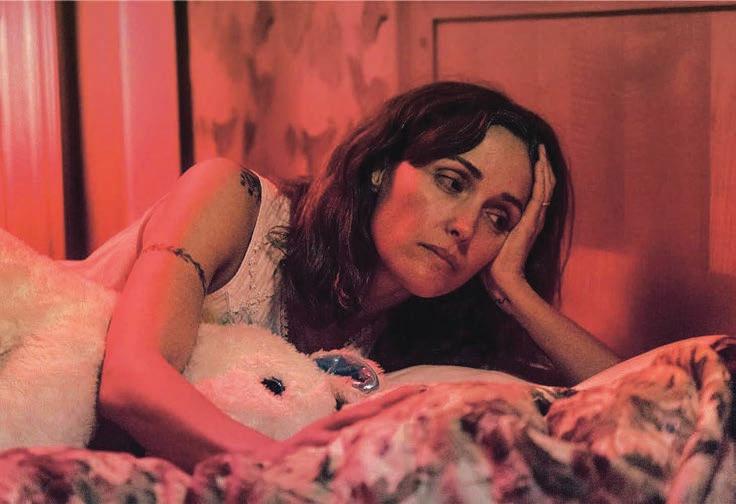
builds it on an uneasy structure that teases us with expectations of “body horror” grotesquerie while forcing us to identify with a character whose lack of (presumably) universal parental instinct feels transgressive in a way that is somehow even more disquieting than the gore and mutilation we imagine might be coming at any moment of the film.
And we do imagine it, even expect it to come, which is as much to do with the near-oppressive claustrophobia that results from Bronstein’s use of near-constant close-ups as it does with the hint of impending violence that pervades the psychological tension. It’s not just that our frame of vision is kept tight and limited; her tactic keeps us uncertain of what’s going on outside the edges, creating a near-constant sense of something unseen lurking just beyond our view. Yet it also helps to put us into Linda’s state of mind; for almost the entire film, we never see the face of her daughter – nor do we ever know the child’s name – and her husband is just a strident voice on the other end of a phone call, and the effect places us squarely into her dissociated, depressed, and desperate existence.
Anchoring it all, of course, is Byrne’s remarkable performance. Vivid, vulnerable, and painfully real, it’s the centerpiece of the film, the part that emerges as greater than the whole; and while Oscar may have passed her over, she delivers a star turn for the ages and gives profound voice to a dark side of feminine experience that is rarely allowed to be aired.
That, of course, is the key to Bronstein’s seeming purpose; inspired by her own struggles with postpartum depression, her film feels like both a confession and an exorcism, a parable in which the expectations of unconditional motherly love fall into question, and the burden placed on a woman to subjugate her own existence in service of a child – and a seemingly ungrateful one, at that – becomes a powerful exploration of feminist themes. It’s an exploration that might go too far, for some, but it expresses a truth that those of us who are not mothers (and many of us who are) might be loath to acknowledge.
Uncomfortable though it may be, Bronstein’s movie draws us in and persuades our emotional investment despite its difficult and unlikable characters, thanks to her star player and her layered, puzzle-like screenplay, which captures Linda’s scattered psyche and warped perceptions with an approach that creates structure through fragments, clues and suggestions; and while it may not land quite as squarely, in the end, as we might hope, its bold and transgressive style – coupled with the career-topping performance at its center – are more than enough reason to catch this Oscar “also-ran” before putting this year’s award season behind you once and for all.

Now my father is ill and I don’t know what to do
By MICHAEL RADKOWSKY
Dear Michael,
I stopped talking to my family last year because they all voted for Trump. It’s not like they didn’t know whom they were voting for — they’d already had four years of seeing him in action.
I decided that I couldn’t remain in contact with people whom I felt wanted to take away my rights as a gay man. That is what they essentially did by voting for Trump.
They had come to my wedding in 2012, they had welcomed my husband and me into their homes for the holidays for our entire relationship, so I couldn’t believe how little they actually cared about me and my community. I was profoundly hurt.
They’ve reached out but I have been too angry at their hypocrisy to engage in more than a perfunctory way. I miss them, sure, but as I’ve watched our community be attacked, I just get so angry that I don’t want to talk. I certainly don’t want to hear them justify bigotry and hatred.
Now one of my siblings has reached out to let me know that my father’s health is rapidly declining. I’m wondering if I should rethink my decision and reach out to him, maybe even visit, before he dies.
But then I think of ICE’s attack on our country and the removal of the Pride flag from Stonewall and I don’t want to talk to people who support what is happening to vulnerable, marginalized people and the LGBTQ community.
impractical, and sometimes damaging.
Of course, a person may hold some beliefs that give you reason not to want to have any connection to them. But is that the case here?
From your description, your family has always been loving and supportive of you as a gay man. That is no small thing. They seem to care about you enough to have continued to reach out, even though you have stopped talking to them.
Perhaps they had some other reasons for voting as they did, other than to roll back LGBTQ rights and to attack immigrants.
My father was a good father to me. Even when I first came out to him, he was loving and supportive. I can’t square his behavior personally toward me with his support of this regime. The hypocrisy makes me so angry. How could he purport to love me and then vote against my freedoms?
I would love some suggestions about how to square my two opposing viewpoints.
Michael replies:
Many years ago, a great mentor taught me that the one thing you can count on in a relationship is learning to tolerate disappointment: Both being a disappointment, and being disappointed in the other person. This is true for love relationships and it’s also true for other significant relationships. All of us are different in some major ways and so we are bound at times to disappoint our loved ones in major ways, and to be disappointed by them in major ways.
That is why I’m not a fan of purity tests. To expect that someone must think like you (much less vote like you) in order for you to have a relationship with them is unrealistic,
Instead of wondering how they could be so hypocritical, how about talking with them and striving to understand their choices? I don’t know what they will say, and you may hear different answers from your various family members. But at least you will get some clarity, rather than presuming that they made their voting choices from a place of malice. Then you will be in a better position to decide if you want a relationship going forward. Another point to consider: Very few things are set in stone. Even if your family made their voting choices based on holding positions that you neither like nor respect, they may be open to shifting their views over time. One way to perhaps influence their thinking is by engaging with them, sharing your thoughts, and asking them to consider the possible consequences of their actions. If you choose to re-engage with them, two points to consider: First, don’t expect that you will change their minds. You can advocate for what you want, but you have to let go of the results.
Second, they are more likely to consider your points if you do not approach them from a judgmental, self-righteous stance.
Many years ago, when I was newly a vegetarian, I was eager to challenge and “educate” friends who weren’t following my dietary ideas. Guess what? It didn’t work. Then I got some great advice: A great way to influence others to consider eating fewer animals was to serve them delicious vegetarian food.
The same point is true here. We can’t beat people over the head to agree with us. But if we approach them with some kindness, rather than with the certainty that we hold the moral high ground, we may help them see a bigger picture.
And sometimes, we too may see a bigger picture.
(Michael Radkowsky, Psy.D. is a licensed psychologist who works with couples and individuals in D.C., Maryland, Virginia, and New York. He can be found online at michaelradkowsky.com. All identifying information has been changed for reasons of confidentiality. Have a question? Send it to michael@michaelradkowsky.com.)