










‘We are grateful for our diversity, which is the strength of our state’ FROM STAFF REPORTS
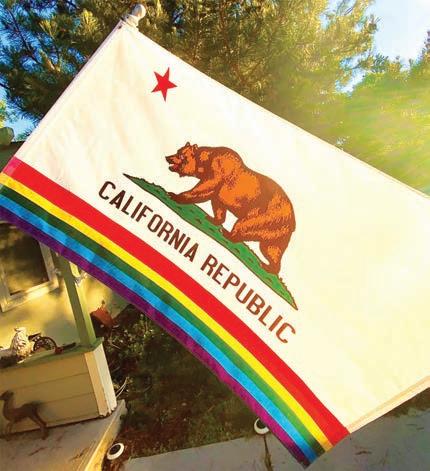
The California Legislative LGBTQ Caucus stands in solidarity with allies across the world today, as June 1 marks the beginning of Pride month. The annual celebration of the LGBTQ+ community’s history and culture — now in its 52nd year — will provide numerous opportunities to highlight milestones achieved over the last year, as well as events expected to coincide with the state’s June 15 reopening.
In 2018, California became the first state in the nation to officially recognize June as Pride month, when Assemblymember Evan Low (D-Silicon Valley) authored AB 2969 and former Gov. Jerry Brown signed the bill into law. Pride month not only commemorates the Stonewall Riots of 1969, which were prompted by a series of police raids targeting the LGBTQ+ community in New York City, but also celebrates the modern civil rights movement and recent advances in equality and inclusion.
“Words cannot convey how difficult this last year has been for so many people, which is why we feel so fortunate that Pride Month is coinciding with California’s reopening,” said Assemblymember Low, Chair of the LGBTQ Caucus. “Pride has always been a beautiful blend of civic engagement and celebration — part activism and part festival. As we return to seeing our loved ones in person, we will use Pride Month as an opportunity to recognize our victories in advancing equality while acknowledging that the struggle continues. We must be unwavering in our mission until every LGBTQ+ person can live a life free from persecution.”
Pride events this month will take place online as well as in person, and the Capitol Dome will be illuminated in Pride’s rainbow colors for an entire week starting on June 21. The lighting will mark just the second time in state history the dome has featured the “Colors of Progress,” which was first done in 2015 after the Supreme Court legalized marriage equality.
Over the last four years, California has continued to advance legislation in the name of equality despite numerous attacks under former President Trump. The LGBTQ Caucus is grateful for the allyship of Governor Gavin Newsom, who has been a steadfast champion of the LGBTQ+ community since his time as Mayor of San Francisco.
“The LGBTQ Caucus and the community at large is undeniably still in a fight to secure equal rights for everyone, and recent attacks on transgender youth — as well as the isolation many have felt during this pandemic — has increased the urgency of the Caucus’ efforts,” Governor Newsom said. “As we once again celebrate Pride Month, we are grateful for our diversity, which is the strength of our state, and support those that work towards equality in California.”
Despite making substantial progress in representation — more than 220 LGBTQ+ candidates celebrated election victories across the country last year — the LGBTQ Caucus and the community at large is undeniably still in a fight to secure equal rights for everyone, regardless of gender identity or sexual orientation. The past year has featured a substantial increase in legislative attacks on the rights of transgender youth, and the pandemic put a larger spotlight on disparities in our health care system when it comes to access and delivery of services to LGBTQ+ and communities of color.
“This has been an incredibly difficult year for the LGBTQ+ community,” said Senator Susan Talamantes Eggman (D-Stockton), Vice Chair of the LGBTQ Caucus. “Historic legislative attacks on our community in the midst of recovery from a global pandemic. It is more
important than ever for our community to come together in celebration of Pride month this June. To show resilience and defiance in the face of such hate. This Pride will be a muchneeded refuge from the storm and an opportunity to rally against inequality and injustice everywhere.”
Ricardo Lara, California’s first openly gay Insurance Commissioner and a former LGBTQ Caucus member during his time serving in the Senate and Assembly, noted that Pride Month is a chance to celebrate as well as renew our collective pledge to making sure all of California’s LGBTQ+ residents have an opportunity to prosper.
“I want to wish every Californian a Happy Pride Month! Together, we celebrate the hard work of our ancestors, the victories we’ve won, the strength and beauty of our diverse community, and the work ahead,” Commissioner Lara said. “Pride began as an uprising, and our fights for progress, inclusion, and civil rights are far from over.”
Senate President pro Tempore Toni G. Atkins (D-San Diego)called on the LGBTQ+ community and allies to reimagine what’s possible during Pride Month, while also paying homage to those who paved the road to progress.
“While our community continues to combat challenges confronting our LGBTQ+ siblings, we must also take a moment to celebrate our heroes and victories, and shine a light on their contributions for Californians and our country to see,” Senate President Pro Tem Atkins said. “From enacting laws that protect our rights and safety, to advancing language that is more inclusive and understanding, it’s inspiring to not only be a part of the movement, but to watch and learn from the next generation of trailblazers.”
Assembly Speaker Anthony Rendon (D-Lakewood) noted that the Pride Flag will be flying high for the month of June, which will serve as a hopeful reminder of what’s possible when we collectively fight for equal rights.
“Pride Month and the rainbow flag are reminders that every single Californian deserves recognition of their identity and their humanity,” Assembly Speaker Rendon said. “LGBTQ rights are everyone’s rights, and Pride Month is a celebration for everyone.”
In addition to the Capitol Dome lighting on June 21, the LGBTQ Caucus will also hold a ceremony that day to celebrate a diverse list of honorees who have dedicated their lives and careers to advancing civil rights and equality. More events will be announced in the coming days and weeks.
Below are additional statements from LGBTQ Caucus members and allies:
Assemblymember Sabrina Cervantes (D-Corona): “Another year and another opportunity to celebrate love, representation, and our collective passion for equality. May we use this month to reaffirm we are here, and queer, and fighting for the injustices we still face. As we continue the dialogue for justice, we should acknowledge this month as ours. May you find rest, inspiration, and solace.”
Sen. John Laird (D-Santa Cruz): “It is my sincere honor to wish all those celebrating a Happy Pride Month! As the Senator representing the 17th District, I take great pride that 40 years ago this November, I was first elected to public office. At that time, there were only 10 out LGBTQ people in office in the entire United States. When we formed the LBTQ elected officials’ association in 1985 there were only 15. For those of us that put ourselves out early, we enjoy the fact that there is a great deal of diversity, acceptance, and understanding in our country today.”
Assemblymember Alex Lee (D-San Jose): “I’m proud to be the first openly Bisexual legislator in the State Assembly. Far too often, bi erasure makes too many of us in the community feel invisible. The fight for equality is far from over but we can continue to combat bi erasure and LGBTQ+ stigma by living authentically and educating others.”
Sen. Scott Wiener (D-San Francisco): “Pride is an incredibly important time for the LGBTQ community to come together, celebrate, and reflect. While I’m sad we won’t be together in person for every event this year, I’m confident this will be our last virtual Pride. I want to thank the Chair and Vice Chair for their leadership in putting together another outstanding Pride celebration.”
Rick Chavez Zbur, executive director of Equality California: “Now more than ever, it’s important that we unite as a community and celebrate Pride together — celebrate our progress, our resilience and our diversity. We’re proud to join the Legislative LGBTQ Caucus in commemorating Pride month and continuing our work to create a world that is healthy, just and fully equal for all LGBTQ+ people.”

The Biden administration has officially ended a policy that forced asylum seekers to pursue their cases in Mexico.
The previous White House’s Migrant Protection Protocols program, which became known as the “Remain in Mexico” policy, took effect in 2019. Advocates sharply criticized MPP, in part, because it made LGBTQ asylum seekers who were forced to live in Tijuana, Ciudad Juárez, Matamoros and other Mexican border cities even more vulnerable to violence and persecution based on their gender identity and sexual orientation.
By MICHAEL K. LAVERS

The White House in January suspended enrollment in MPP shortly after President Biden took office. Homeland Security Secretary Alejandro Mayorkas on Tuesday in a memo he sent to acting U.S. Customs and Border Protection Commissioner Troy Miller, acting U.S. Immigration and Customs Enforcement Director Tae Johnson and acting U.S. Citizenship and Immigration Services Director Tracy Renaud that announced the end of the Trump-era policy said roughly 11,200 asylum seekers with MPP cases have been allowed into the U.S. between Feb. 19 and May 25. Estuardo Cifuentes, a gay man from Guatemala who ran Rainbow Bridge Asylum Seekers, a program for LGBTQ asylum seekers and migrants in Matamoros that the Resource Center Matamoros, a group that provides assistance to
asylum seekers and migrants in the Mexican border city, helped create, is among them.
“MPP does not adequately or sustainably enhance border management in such a way as to justify the program’s extensive operational burdens and other shortfalls,” wrote Mayorkas in his memo.
“In deciding whether to maintain, modify, or terminate MPP, I have reflected on my own deeply held belief, which is shared throughout this administration, that the United States is both a nation of laws and a nation of immigrants, committed to increasing access to justice and offering protection to people fleeing persecution and torture through an asylum system that reaches decisions in a fair and timely manner,” he added. “To that end, the department is currently considering ways to implement long-needed reforms to our asylum system that are designed to shorten the amount of time it takes for migrants, including those seeking asylum, to have their cases adjudicated, while still ensuring adequate procedural safeguards and increasing access to counsel.”
Steve Roth, executive director of the Organization of Refuge, Asylum and Migration, a Minnesota-based organization that works with LGBTQ refugees and migrants around the world, welcomed the end of MPP.
“We’re very happy to see, at long last, the termination of the dangerous and illegal ‘Remain in Mexico’ policy that was put in place by the Trump administration in early 2019,” Roth told the Washington Blade in a statement. “This policy forced asylum seekers at our Southern border — including many LGBTIQ individuals — to spend months and sometimes years in dangerous Mexican border towns while they waited for their asylum cases to be processed.”
Roth added MPP “was not in keeping with the United States’ commitments to international asylum law and it was not reflective of who we are as a country.”
“We’re grateful to President Biden and his administration for overturning this policy and for their commitment to a just and humane immigration and asylum system,” he said.
Immigration Equality Legal Director Bridget Crawford echoed Roth.
“President Trump created a humanitarian disaster with this policy that has resulted in well over a thousand asylum seekers being assaulted, raped, kidnapped or murdered while awaiting their asylum hearing, including LGBTQ and HIV-positive people,” Crawford told the Blade in a statement.
Ending MPP is the latest in a series of steps the Biden administration has taken to reverse the previous White House’s hardline immigration policies.
State Department spokesperson Ned Price told the Blade last month that protecting migrants and asylum seekers who are fleeing persecution based on their gender identity and sexual orientation is one of the administration’s global LGBTQ rights priorities.
Vice President Kamala Harris is among the administration officials who have publicly acknowledged that anti-LGBTQ violence is a “root cause” of migration from Central America. Texas Congresswoman Veronica Escobar, whose district includes the border city of El Paso, and others have noted to the Blade that Title 42, a Centers for Disease Control and Prevention rule that closed the Southern border to most asylum seekers and migrants because of the coronavirus pandemic, remains in place.
Congress has yet to consider a comprehensive immigration reform bill that Democrats introduced in February. Crawford in her statement also notes Mayorkas’ memo “does not address the many thousands of individuals who were wrongfully denied relief under the MPP program.”
“These people no longer have ‘active’ cases, so they are not being processed by the administration, but many are living in Mexico or have been returned back to their countries where they face persecution. Quite literally, some of these people have been handed a death sentence,” said Crawford. “The Biden administration has not addressed these cases yet and whether people wrongfully denied relief under the MPP program will have an opportunity to renew their claims.”
Gay circuit party impresario Jeff rey Sanker, owner of the Los Angeles-based White Party Entertainment company, died last Friday at Cedars-Sinai Hospital with family members in attendance after a long battle with liver cancer.
The 65-year-old WeHo resident had built his company and reputation on hosting large-scale parties in exotic places, including Puerto Vallarta in Jalisco, Mexico, Las Vegas, Nevada and Miami, although his trademark extravaganza, White Party Palm Springs, had evolved into the nation’s largest gay dance music festival, attracting more than 30,000 attendees from every corner of the globe.
As word of his death spread on social media, tributes to Sanker fl owed in. In a text to the Blade, former West Hollywood City Councilmember John Duran noted, “Jeff rey was a long time friend. He was an iconic fi gure in gay history with his creation of the White Party. For many gay men, he created a space for them to fi nd their tribe and sexuality. While he had his critics – he loved his gay community and left a lasting mark. So many of us found a place to belong because of his vision“
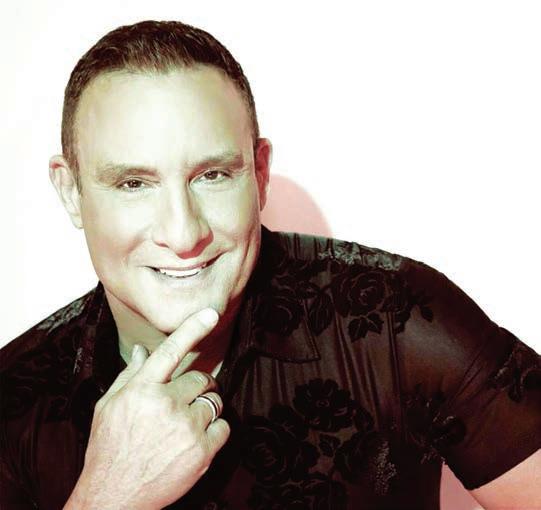
LGBTQ political activist James Duke-Mason told the Blade, “I heard [about Sanker]. Horrible news. Some of the best times of my life at White Party. Jeff rey was a great friend to me and to the community. Devastating loss.”
Sanker moved to Los Angeles in 1987. His innovative technique of using landmark venues for trend-setting themed events was credited for breathing new life into the Los Angeles gay entertainment night scene.
In addition to hosting superstar entertainment events, which included Lady Gaga, and other celebrities over the years, Sanker is credited with launching the careers of many new, upand-coming performers.
According to his biography, Sanker’s events featured high caliber DJs/producers, including: Dave Aude, the late Peter Rauhofer, Junior Vasquez, Victor Calderone, Freemasons, Manny Lehman, Rosabel and Tony Moran.
Sanker also staged and produced fundraising events on behalf of numerous charities and community organizations, including Gay & Lesbian Elder Housing (GLEH), The Trevor Project, and Desert AIDS Project.



The global game-streaming firm Twitch announced last week that it has added affirming tags for its users. The Californiabased high-tech company said that streamers will be able to select from more than 350 new tags related to gender, sexual orientation, race, nationality, ability, mental health, and more.
Twitch is the largest of all of the popular social video platforms for online video gamers, and was recently acquired by Amazon. The company said, “these additions won’t change how tagging works and are completely optional. They simply give creators more choices.” The streams’ tags also denote categories such as languages, geographic areas, in addition to newly added gender, sexual orientation, race and nationality categories.


Twitch noted that, “We’d like to thank our trans community for originally requesting the “transgender” tag, and for their passion and persistence in pursuit of that request. This has been one of the most popular requests we’ve heard, and the simple truth is that we should have done this sooner.”
The streaming platform’s actions are following a current trend by social media platforms to be more inclusive. Earlier this month, Instagram rolled out a new feature for its platform users in the U.S., U.K., Canada and Australia that allows its users to select their preferred profile pronoun from he/him, she/her and they/them. Once selected, the pronoun preference will appear in small gray letters next to their username.


The change by Twitch comes at a time when Trans youth in the U.S. are under legislative attack in over 30 states, which are attempting to ban trans youth from participating in intermural and intramural sports at a secondary and collegiate level.
The company acknowledged that its LGBTQIA+ tag ‘began as an experiment a few years ago and stayed based on overwhelmingly positive feedback from the community.’ But it also acknowledged that it needed to be more expansive in affirming categories, “we understand that, as comprehensive as we have tried to be, we will inevitably miss tags that our community is looking for.”
“We’ve partnered with several independent, third-party organizations such as GLAAD, The Trevor Project, AbleGamers, SpecialEffect, and other experts focused on the progress of underrepresented racial and ethnic groups, LGBTQIA+, disabled, and marginalized communities. And finally, we reached out to members of the Twitch community for their feedback,” the company wrote.
The company also stressed that it was mindful of its user’s online safety.
“Our hope is that these new tags help every community, but especially those that are underrepresented, grow and thrive. As with any means of discovery, there are bad actors who may use the ability to find streams for malicious purposes. Users that utilize these tags as a means to harass those displaying the tags will be subject to enforcement of our Hateful Conduct and Harassment Policy.”
FROM STAFF REPORTS






Tune in or Stream June 4



By KAREN OCAMB
(Editor’s note: This is part one of a four-part series on the 40th anniversary of AIDS. Part two looks at the panic, confusion and efforts to fight the mysterious disease in the face of intentional neglect; part three looks at Gottlieb, Rock Hudson, Elizabeth Taylor and founding of amfAR; and part four covers Clinton to COVID.)
In the beginning, the deaths and disappearances were isolated, frightening but shorn of consequence, like short, scattered tremors before a massive earthquake. Gay San Francisco Chronicle reporter Randy Shilts suggests in his extraordinary AIDS history “And the Band Played On” that the mysterious contagious disease that would claim the lives of millions silently exploded when sailors in ships from 55 nations came to New York Harbor on July 4, 1976 to join thousands celebrating America’s bicentennial.
Then death came home. Hugh Rice, director of the STD Clinic at the Los Angeles Gay and Lesbian Community Services Center during the height of the disco era, recalled a very sick young, thin penniless gay man covered in purple lesions in 1979 who came in for his STD shot, disappeared, and died six weeks later in isolation at LA County Hospital. Matt Redman, the interior designer and disco fan who cofounded AIDS Project Los Angeles, suspected he had been infected with HIV in the late 1970s.
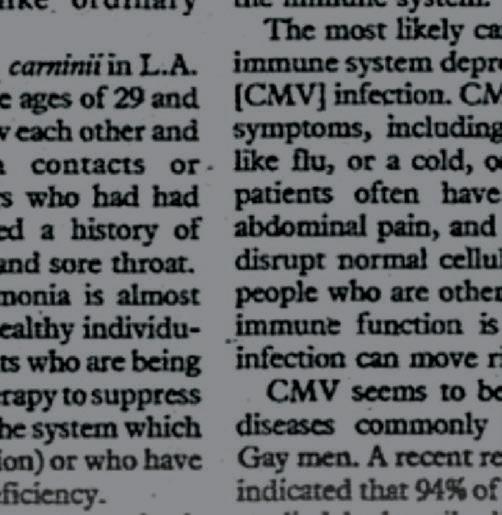
But it wasn’t until L.A.-based Dr. Michael Gottlieb and colleagues authored a report published June 5, 1981 in the Centers for Disease Control’s Morbidity and Mortality Weekly that identified the mysterious illnesses that would become known as AIDS.
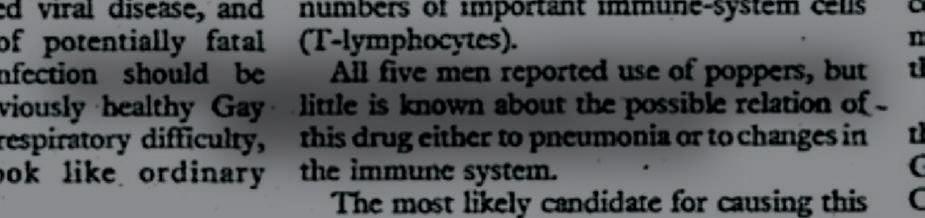
At the time, Gottlieb was a 33-year-old assistant professor at the University of California Los Angeles (UCLA) Medical Center specializing in immunology who was fortuitously curious. He asked a postdoctoral fellow to go to the wards and ask interns and residents if there were any patients who had interesting immunologic conditions. He found medical intern Robert Wolf, whose patient Michael had been admitted to the UCLA emergency room in January with fevers, some fungal infections on his skin, a 25 pound weight loss, and a mouth full of thrush, or candidiasis. Additionally, Gottlieb obtained a still experimental blood test looking at Michael’s T-cells that revealed that his CD4 (“helper cells”) “had essentially gone missing.”
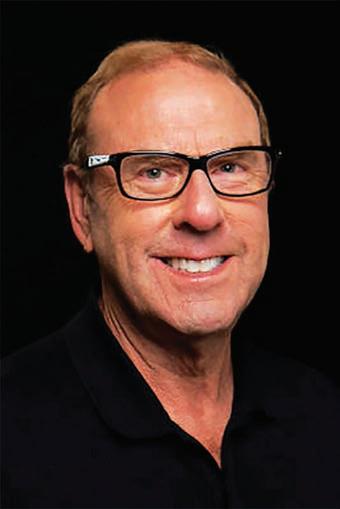
“This was a unique finding. We had never seen anything like this in any other immunologic or in any other medical condition,” Gottlieb tells the Blade.
Michael was discharged from the hospital but returned a week or two later with a lung infection.
“He came back to Robert Wolf. Ordinarily, you would not do a bronchoscopy for a community acquired pneumonia — ordinary bacterial pneumonia. But Robert astutely said, ‘you immunologists are telling us that this man is immune deficient. He is an immunecompromised host. We therefore should do a bronchoscopy (an invasive procedure) to be sure he might have an opportunistic infection. And indeed, he had pneumocystis pneumonia. So that’s the story of patient number one,” says Gottlieb.
“Michael was a model. He had bleached hair. He looked like a rock star. A few months later, he developed a large lesion of Kaposi’s sarcoma on his chest. And that was a mystery also. He died within the first six months of his first emergency room admission,” Gottlieb says. Michael also “happened to be gay.”
Sexual orientation wasn’t a specific consideration until Gottlieb got a call from Dr. Peng Fan, who was the acting chief of Rheumatology at the Wadsworth VA in Los Angeles. He had been moonlighting at Riverside Hospital where Dr. Joel Weisman and Dr. Eugene Rogolsky had been admitting patients from their gay practice, two of whom had similar symptoms to Michael. They were transferred to the respiratory care unit at UCLA.
Pulmonary doctors immediately performed bronchoscopies “and low and behold, these two patients also had pneumocystis pneumonia. And now we had three gay men with pneumocystis pneumonia and absent CD four cells. That’s when we said, ‘oh, we have three
gay men with pneumocystis pneumonia. That was the moment,” he said.
Gottlieb called the editor of the New England Journal of Medicine and asked for his advice on how to publish their findings there. “And he said, ‘well, have you spoken to CDC?’ As an immunologist, my orientation was not toward the CDC — infectious disease doctors are oriented toward the CDC. But I wasn’t an infectious disease doctor. So I said, ‘no, I haven’t.’ And he said, ‘well, maybe you ought to.’ So I called Wayne Shandera, the CDC person in Los Angeles assigned to the LA County Health Department as an epidemic intelligence service officer. I knew him from my time at Stanford because he was there as well. And I said, ‘Wayne, are you aware of anything unusual going on among gay men in Los Angeles or anywhere in the country?’ And there was an eerie silence on the other end of the phone. And he said, ‘no, but I’ll look into it.’ I told him, we think it might have something to do with the virus called CMV cytomegalovirus.’”
Shandera found some CMV growing from a patient sample from Santa Monica. “He went down to Santa Monica hospital and spoke to the patient and indeed, it was a gay man with pneumocystis, pneumonia and CMV as well. And so he unearthed a fourth patient,” says Gottlieb.
It was after Gottlieb’s fifth patient, Randy, referred to him by a doctor at Brotman Hospital, that he decided it was time to write up a report for the CDC, with a more explanatory article published later in the New England Journal. He sat down at Shandera’s dining room table in the Fairfax district and typed up the report on an IBM Selectric typewriter, after which it was sent it off to CDC.
The editor of the CDC’s MMWR returned it with some modifications and corrections. “Interestingly, we called it ‘Pneumocystis Pneumonia Among Homosexual Men in Los Angeles.’ The CDC changed the title to ‘Pneumocystis pneumonia, Los Angeles.’”
Gottlieb doesn’t see anything nefarious in the change since the MMWR was focused on disease outbreaks like the salmonella outbreak in Idaho. Additionally, “if CDC had called it Pneumocystis Pneumonia Among Homosexual Men in Los Angeles,’ it might’ve even worked against us,” says Gottlieb, “although, ultimately, it got characterized as a gay disease anyway.”
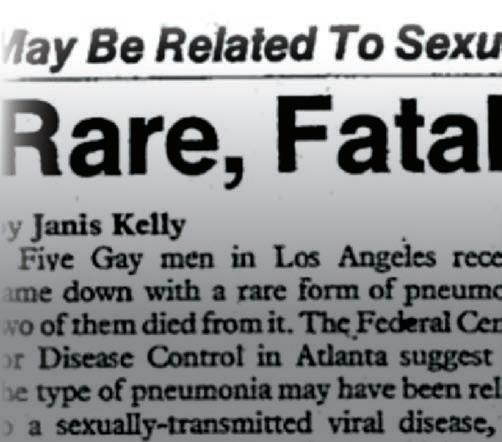
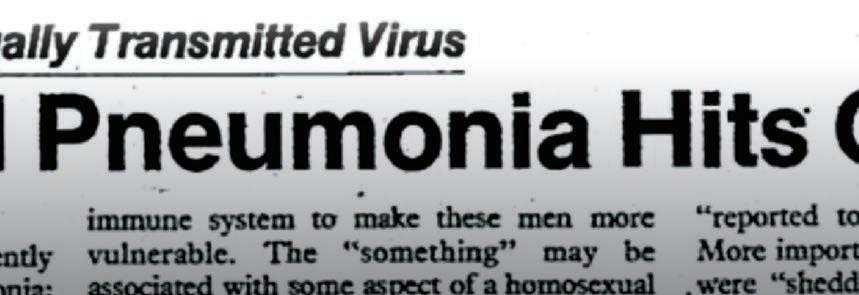
The focus on gays may have been prompted by the article in the New York Times one month later, on July 3, 1981. The small story, “Rare Cancer Seen in 41 Homosexuals,” was published on page 20 and focused on Kaposi’s Sarcoma.
“The cause of the outbreak is unknown, and there is as yet no evidence of contagion. But the doctors who have made the diagnoses, mostly in New York City and the San Francisco Bay area, are alerting other physicians who treat large numbers of homosexual men to the problem in an effort to help identify more cases and to reduce the delay in offering chemotherapy treatment,” Lawrence K. Altman reported. “The [violet-colored] spots generally do not itch or cause other symptoms, often can be mistaken for bruises, sometimes appear as lumps and can turn brown after a period of time. The cancer often causes swollen lymph glands, and then kills by spreading throughout the body.”
The next day, July 4, 1981, the CDC reported 36 more cases of KS and PCP in New York City and California, linking the two coasts. The following month, the CDC reported 70 more cases of KS and PCP that included the first heterosexuals and the first female. By December, when Gottlieb’s New England Journal article was finally published, the CDC reported the first cases of intravenous-drug users with PCP. But also, by then, the media had painted the mysterious new diseases as Gay-Related Immunodeficiency Disease (GRID) or as it was more commonly called: the “gay plague.”

$267 million increase sought to
By CHRIS JOHNSON | cjohnson@washblade.com
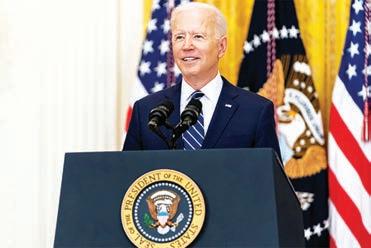
President Biden’s formal budget proposal for the U.S. government in the upcoming fiscal year has advocates in the fight against HIV/AIDS cheering over the commitment to increase funds to confront the domestic epidemic, although one group is criticizing the proposal for seeking to flat-fund international programs.
The fiscal year 2022 proposal, unveiled last Friday, would afford an additional $246 million for domestic HIV testing, prevention and treatment programs for the Ending the HIV Epidemic initiative, which seeks to end HIV by 2030, and would also provide a general boost of $46 million to Ryan White HIV/AIDS programs and $20 million for HUD’s Housing Opportunities for People with AIDS (HOPWA).
Carl Schmid, executive director of the HIV + Hepatitis Policy Institute, said in a statement Biden is “demonstrating his commitment to ending HIV in the United States” in the budget request to Congress.
“While it falls short of what is needed and the community has requested, if this funding is realized it will continue the momentum already created and make further progress in ending HIV in the U.S. Efforts to end HIV will help eradicate an infectious disease that we have been battling for the last 40 years and help correct racial and health inequities in our nation,” Schmid said.
The total $670 million requested by the White House for the Ending the HIV Epidemic initiative breaks down as follows:
• Centers for Disease Control & Prevention: $100 million in new money for a total of $275 million;
• Ryan White: $85 million in new money for a total of $190 million;
• Community Health Centers for PrEP: $50 million in new money for a total of $152 million;
• National Institutes of Health: $10 million in new money for a total of $26 million;
• Indian Health Services: $22 million in new money for a total of $27 million.
Counterintuitively, each of those numbers is actually below what the Trump White House proposed in the previous administration’s final budget request, with the exception of the proposed increase in money for Community Health Centers for PrEP and flat-lining for money for Indian Health Services.
The requested increase in funds for the Ending the HIV Epidemic was expected. Biden had signaled he’d seek the additional $267 million in funding in the “skinny budget” issued by the White House in February that preceded the more formal and detailed request to Congress last week.
Biden requests the increase in funds after he campaigned on ending the domestic HIV epidemic by 2025, an ambitious goal many advocates in the fight against HIV/AIDS were skeptical about achieving.
Nick Armstrong, the AIDS Institute’s manager of advocacy and government affairs and co-chair of the AIDS Budget & Appropriations Coalition, said in a statement the time to ramp up efforts against HIV has come as the nation emerges from the coronavirus pandemic.
“Public health departments have made herculean efforts to battle COVID over the past year,” Armstrong said. “But now it is time to reinvigorate neglected efforts to end the HIV, opioid, and viral hepatitis epidemics. Congress must go above and beyond what the president has proposed to bolster our critical public health infrastructure to protect
Americans against infectious disease.”
The budget now goes on to Congress, which has authority on whether or not to appropriate funds consistent with the president’s request. Congress could either meet, short fund or even exceed in money the request by Biden as part of that process.
Schmid said via email to the Blade he’s optimistic about getting an agreement from Congress for an increase in funds to fight HIV/AIDS based on the “strong bipartisan support the proposal has enjoyed in the past.
“We still have work to do with the Congress due to so many demands on the budget but I am fairly confident Congress will support it, they have been anxious to see what the Biden administration does with the program in his budget and we have the answers now,” Schmid said. “The Biden-Harris administration firmly supports ending HIV.”
Although Biden was lauded for the increase in funds in domestic HIV programs, international programs are a different matter. The White House has essentially flat-funded programs designed to fight the global HIV epidemic, including the President’s Emergency Plan for AIDS Relief, or PEPFAR, or the Global Fund to Fight AIDS, Tuberculosis & Malaria.
Matthew Rose, director of U.S. Policy and Advocacy at the New York-based Health GAP, said in a statement Biden’s budget proposal “displays a lack of bold leadership motivated to end the HIV pandemic.”
“If the U.S. had continued fully funding PEPFAR since 2003 instead of letting funding levels slip into a flat-line for more than a decade, the HIV pandemic would look remarkably different today,” Rose said. “This is not a budget to end AIDS – and it could have been. This is not a budget to end the COVID-19 pandemic – and it could have been. The unconscionable lack of political will in recent years has created a world in which people cannot get access to the life-saving services they need.”
Health GAP is calling on Congress to approve a budget with at least a $750 million increase for PEPFAR and $2.5 billion in increased funding over the next four years to scale up HIV prevention and treatment and mitigate harms to the HIV response done by the COVID-19 pandemic, the statement says.
Additionally, Health GAP is calling on Biden to name “a highly qualified nominee” to serve as the U.S. Global AIDS Coordinator, the statement says.
President Biden issued the first formal proclamation of his administration recognizing Pride month on Tuesday, telling LGBTQ people both at home and abroad they should “accept nothing less than full equality.”
Biden’s proclamation kicks off Pride month by remembering the 1969 riots at the Stonewall Inn that started the modern LGBTQ movement, which he said was a “call to action that continues to inspire us to live up to our nation’s promise of equality, liberty, and justice for all.”
“Pride is a time to recall the trials the Lesbian, Gay, Bisexual, Transgender, and Queer (LGBTQ+) community has endured and to rejoice in the triumphs of trailblazing individuals who have bravely fought — and continue to fight — for full equality,” Biden writes. “Pride is both a jubilant communal celebration of visibility and a personal celebration of self-worth and dignity.”
Biden also name-checks the Equality Act, federal legislation that would expand the prohibition on discrimination against LGBTQ people under federal law, although the legislation is all but dead as it continues to languish in Congress.
“I will not rest until full equality for LGBTQ+ Americans is finally achieved and codified into law,” Biden writes. “That is why I continue to call on the Congress to pass the Equality Act, which will ensure civil rights protections for LGBTQ+ people and families across our country.”


Return to western Mexico with us in the fall of 2022 for 7–8 luxurious nights aboard the revolutionized Celebrity Millennium®, sailing from Los Angeles.

Find romance in Puerto Vallarta, nestled between the Sierra Madre and the Pacific.



Unwind on the famous beaches of Mazatlán, also known for its charming Old Town. Live it up in spirited Cabo San Lucas. Taste authentic local cuisine in Ensenada. You’ll sail without a care, since drinks, Wi-Fi, and tips are Always IncludedSM.*






















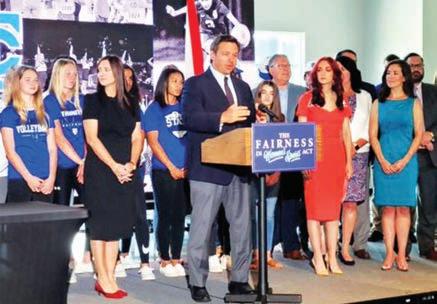
Florida’s Republican Gov. Ron DeSantis signed Senate Bill 1028, a bill that bars transgender youth athletes from participating in sports on the first day of Pride month. One provision of the law stipulates that a trans student athlete would have to affirm her biological sex by supplying proof such as a birth certificate.
The bill was an education bill amended to include a previous standalone bill specifically targeting trans girls and young women, banning them from playing on female sports teams. DeSantis signed the bill, which includes the so-called Fairness in Women’s Sports Act, during a news conference at Trinity Christian Academy in Jacksonville.
The law, scheduled to go into effect on July 1, applies to all public secondary and high schools, public colleges and universities.
“The governor and Republican leaders in Tallahassee chose to make Florida more dangerous for our community, for no reason but political gain in an election-driven culture war,” said Equality Florida Executive Director Nadine Smith. “Even previously moderate Republicans capitulated to the most extreme wing of their party.”
State Rep. Carlos G. Smith whose House district includes portions of Orlando, took to Twitter blasting the governor’s actions. Smith, an openly gay Latino lawmaker noted, “Appalling. First day of LGBTQ Pride month and @GovRonDeSantis signs SB 1028 which bans trans kids from school sports. FHSAA has allowed trans kids to participate in FL since 2013 with ZERO problems. This fuels transphobia and puts vulnerable kids at risk for no good reason.”
Smith then took aim at the location DeSantis chose for the signing ceremony. “Let’s point out some things about Trinity Christian Academy where @GovRonDeSantis signed the trans sports ban. 1) As a private school, they’re exempt. 2) Trinity’s policy is to expel ANY LGBTQ student from school. 3) They receive millions in taxpayer funded vouchers to do this,” Smith tweeted. “We need to be clear about the message of this hateful bill: Gov. DeSantis and GOP leaders in the legislature are not concerned about athletics, they simply don’t believe that transgender people exist,” said Equality Florida Director of Transgender Equality Gina Duncan. “That is the kind of erasure that makes life more dangerous for those who are already at the highest risk of
violence. Last week, we saw a horrifying story of violence against a transgender girl in her school in Deerfield Beach. It’s not an accident that when transphobia is spewed from the highest levels of leadership, trans kids take the brunt of the bigotry. This bill is shameful, violent, and just made the world less safe for our most vulnerable young people.”
Other LGBTQ advocates also decried the timing of the bill’s signing ABC News reported. Sam Brinton, vice president of advocacy and government affairs for the Trevor Project, an LGBTQ suicide prevention organization, said signing the bill on the first day of LGBTQ Pride month was “unconscionable.”
“This group of young people desperately needs more support, not to be further marginalized and attacked by those in positions of power,” Brinton said in a statement.
“Gov. DeSantis and Florida lawmakers are legislating based on a false, discriminatory premise that puts the safety and wellbeing of transgender children on the line. Transgender kids are kids; transgender girls are girls. Like all children, they deserve the opportunity to play sports with their friends and be a part of a team. Transgender youth must not be deprived of the opportunity to learn important skills of sportsmanship, healthy competition, and teamwork,”
Human Rights Campaign President Alphonso David said in a statement.
“Transgender children should be loved and valued exactly as they are. We should be affirming and uplifting them, not terrorizing them for political gain. Supporters of equality everywhere will always stand by transgender young people. History will judge harshly those who have abandoned some of the most marginalized members of our community for cheap political points and we will hold them accountable in court,” he added.
More than 30 states have introduced or passed restrictions on trans youth athletes with Florida now listed as the seventh state — following Arkansas, Alabama, Mississippi, Montana, Tennessee and West Virginia — to enact such legislation. In South Dakota, Republican Gov. Kristi Noem issued similar executive orders.
BRODY
LEVESQUE
A bill that bans the so-called LGBTQ panic defense in Maryland will take effect on Oct. 1. Republican Gov. Larry Hogan on May 28 announced he would allow House Bill 231 to become law without his signature.
Hogan in his announcement also said he would allow House Bill 130, which creates the Commission on LGBTQ Affairs in the Governor’s Office of Community Initiatives, to become law without his signature. The measure, like HB 231, will take effect on Oct. 1.

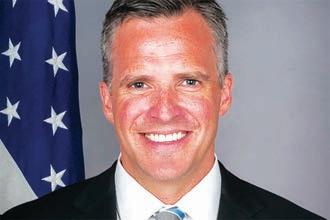
Rufus Gifford, who was one of seven openly gay ambassadors during the Obama administration before becoming an early supporter of Joe Biden in the 2020 campaign, has officially won the nod for the position as State Department chief of protocol.
A White House announcement on presidential nominations last Friday lists Gifford as one of three new picks for upcoming roles in the Biden administration. Each of the nominations is subject to Senate confirmation, including Gifford’s.
Gifford’s nomination was expected. The media outlet Axios reported in January that Gifford would obtain the nomination as chief of protocol for the State Department. The official is responsible for being on the frontline of engagement in U.S. foreign policy, which means being the gateway between foreign
leaders and the president.
For example, Gifford would likely be a point person between Biden and Vladimir Putin for their summit next month in Switzerland, making an openly gay man the face of the United States for a country in talks with a leader who has rolled back LGBTQ rights and looked the other way amid violence against LGBTQ people in Chechnya.
No stranger to foreign policy, Gifford served during the Obama administration as U.S. ambassador to Denmark, a role he obtained after his work as a fundraiser for the Obama campaign and the Democratic National Committee in the 2008 and 2012 elections.
During the 2020 presidential primary, Gifford early on endorsed Biden for president and became a top adviser and deputy campaign manager.
According to his White House bio, Gifford is actively engaged as a civil society leader and has promoted and sponsored a variety of organizations, including UTEC in Lowell, Massachusetts, the LGBT History Museum in New York, the Human Rights Campaign and the Provincetown Center for Coastal Studies in Provincetown, Mass. Gifford earned a bachelor’s degree from Brown University in 1996.
CHRIS JOHNSON


is CEO of the Los Angeles LGBT Center.
LA LGBT Center calls for end to neglect of those in foster care
Thirteen years ago, the County abandoned the LGBTQ youth under its care when it stopped funding the system’s only LGBTQ+-specific services. Despite expressly agreeing in the years since that such services are critical to properly care for and keep these youth safe from harm, and contrary to explicit promises to the Center and the State of California that they would remedy this situation, the County has failed to act.
All we’ve seen from Bobby Cagle are empty promises. The appalling consequences for LGBTQ youth have been dire, including emotional trauma, torture, and even death. Yet, the very agency responsible for their care and protection, knowing this for many years, has done nothing to change the situation. This intentional neglect must stop!
The County knows that at least 1 in 5 youth under their care are LGBTQ; and 90% of these are youth of color. They know, too, that their failure to properly care for these youth is actually causing them irreparable harm. Yet, they can’t manage to take even the simplest step of asking the Board of Supervisors for the resources necessary to prevent LGBTQ+ foster youth from a life of suffering. This shocking dereliction of duty is inexcusable. Queer youth of color are not expendable! It’s time for our County to do whatever is necessary to save the lives of LGBTQ foster youth.
According to research commissioned by the Center and conducted by UCLA’s Williams Institute in 2014, approximately 20% of foster youth identify as LGBTQ and more than 90% of them are youth of color. Other studies have indicated that as many as 30% of foster youth identify as LGBTQ. There is no dispute that LGBTQ youth are overrepresented in Los Angeles County’s child welfare system yet there is zero investment in programs and services specifically for them.
My colleague, the Center’s Youth & Family Connections Manager Jo Cerda pointed out that “LGBTQ youth need services and programs specifically designed for them to exist in the foster care system and enter the world as healthy, equal, and complete members of society. The failure of DCFS to provide culturally competent services to LGBTQ youth of color is causing actual harm to these youth. Our children
ADDRESS
8237 Blackburn Avenue Ste. 201, Los Angeles, CA 90048
PHONE 310-230-5266
E-MAIL tmasters@losangelesblade.com
INTERNET losangelesblade.com
PUBLISHED BY Los Angeles Blade, LLC
PUBLISHER
TROY MASTERS tmasters@losangelesblade.com 310-230-5266 x8080 (o), 917-406-1619 (c)
SALES & MARKETING
SALES EXECUTIVE
ALEJANDRO CERVANTES alejandro@losangelesblade.com 310-230-5266 x9460
CHRIS WILMORE cwilmore@losangelesblade.com 310-230-5266 x9461
ROMAN NAVARRETTE roman@losangelesblade.com 310-435-3022

are suffering and dying under the DCFS watch. They deserve better. DCFS has failed LGBTQ youth by denying them lifesaving services,” she said.
Amid the high-profile child fatalities of Gabriel F. and Anthony A., two youth under the care of DCFS who were tortured and murdered for their gender expression and perceived sexual orientation, the Center attempted to work with DCFS to prevent future horrific acts like these and to establish LGBTQ-specific services.
In response to a DCFS request, the Center created a Countywide plan that detailed an achievable, comprehensive, and efficient approach to provide LGBTQ+-specific services, including positive identity development programs, mental health services, and case management.
Then as a direct response to a State audit into the death of Anthony A., DCFS promised to implement such vital services. Yet, DCFS has refused to allocate a single penny to the LGBTQ+-specific services that are necessary to prevent LGBTQ+ foster youth from irreparable harm.
“When LGBTQ youth end up in the foster care system, they deserve to find a social worker who understands them, aligns them with programs that affirm their identities, and addresses their unique needs in a nurturing way,” another Center colleague, Erica Rodriguez, a Center clinician who provides direct mental health services to LGBTQ foster youth told me.
“DCFS came to the Center and asked us for a plan. We presented a plan, yet DCFS has failed to share it with the Board of Supervisors for approval. Director Cagle and his DCFS staff need to act now before another youth dies,” she added.
The Los Angeles County Board of Supervisors has direct oversight of DCFS and Director Cagle. Contact your Supervisor now and demand that DCFS and Director Cagle immediately fund and provide LGBTQ+-specific services so our LGBTQ foster youth have the opportunity to live safe, healthy, and productive lives.
Take action by finding your Supervisor, contacting Director Cagle, and staying connected at lalgbtcenter.org/DCFS.
NATIONAL ADVERTISING RIVENDELL MEDIA sales@rivendellmedia.com, 212-242-6863
MARKETING DIRECTOR
STEPHEN RUTGERS srutgers@washblade.com, 202-747-2077 x8077
EDITORIAL
CONTRIBUTING WRITER
KAREN OCAMB karenocamb@losangelesblade.com
NATIONAL EDITOR
KEVIN NAFF kna @washblade.com, 202-747-2077 x8088
INTERNATIONAL EDITOR
MICHAEL K. LAVERS mlavers@washblade.com
EDITOR AT LARGE BRODY LEVESQUE California
CONTRIBUTORS
ERNESTO VALLE, YARIEL VALDÉS GONZALEZ, PARKER PURIFOY, CHRISTOPHER KANE, AUSTIN MENDOZA, JOHN PAUL KING, JOEY DIGUGLIELMO, CHRIS JOHNSON, LOU CHIBBARO JR., MARIAH COOPER, REBEKAH SAGER, JON DAVIDSON, SUSAN HORNIK, CHANNING SARGENT, SAMSON AMORE, CHRISTOPHER CAPPIELLO, MICHAEL JORTNER, DAN ALLEN, SEAN SHEALY, SCOTT STIFFLER, RHEA LITRÉ
CREATIVE DESIGN/PRODUCTION AZERCREATIVE.COM DISTRIBUTION
CHRISTOPHER JACKSON, 562-826-6602
All material in the Los Angeles Blade is protected by federal copyright law and may not be reproduced without the written consent of the Los Angeles Blade. e sexual orientation of advertisers, photographers, writers and cartoonists published herein is neither inferred nor implied. e appearance of names or pictorial representation does not necessarily indicate the sexual orientation of that person or persons. Although the Los Angeles Blade is supported by many ne advertisers, we cannot accept responsibility for claims made by advertisers. Unsolicited editorial material is accepted by the Los Angeles Blade, but the paper cannot take responsibility for its return. e editors reserve the right to accept, reject or edit any submission. A single copy of the Los Angeles Blade is available from authorized distribution points, to any individual within a 50-mile radius of Los Angeles, CA. Multiple copies are available from the Los Angeles Blade o ce only. Call for rates. If you are unable to get to a convenient free distribution point, you may receive a 26-week mailed subscription for $195 per year or $5.00 per single issue. Checks or credit card orders can be











is a longtime LGBTQ rights and Democratic Party activist. He writes regularly for the Blade.
leader with vision and experience
Corey Johnson is an experienced, smart, courageous gay man who has already accomplished much in his career and life. He has served the people of New York City with intelligence, distinction and honor and they are fortunate to have the chance to vote for him for comptroller. Corey is an experienced fiscal manager and understands the details of the city’s budget better than anyone running for any office.
Corey’s experience is what the city needs in the office of comptroller. New York City has a budget of $90 billion, many times larger than most states. The comptroller’s office monitors the budget on a daily basis to ensure the fiscal health of the city. Corey’s experience will allow him to do that better than anyone else.
As speaker of the City Council, Corey delivered on-time and balanced budgets three years in a row managing a staff of nearly 900, including a team of financial analysts and economists.
During the COVID-19 crisis, Corey led the City Council through one of the worst budget crises in the city’s history and preserved millions in funding for critical city services ensuring support for the most vulnerable New Yorkers. It is this hands-on experience that will enable Corey to hit the ground running ensuring every dollar in the city’s budget is being used effectively.
The city, like the rest of the nation, continues to deal with the devastating impact of COVID-19 on its residents and its budget. Having an expert in the office of comptroller will ensure the services people need will continue to be protected.
Corey understands the role of comptroller in today’s difficult times and has laid out his vision for the office. He will act as a watchdog for COVID-19 relief, overseeing every dollar in COVID aid spent in New York City. He will ensure aggressive, impactful oversight and audits of key agencies, including affordable housing programs and policing misconduct. He will provide responsible stewardship of the city’s pension system, protecting benefits city workers spent a lifetime earning. He will support monetary policy ensuring affordable housing, good jobs, small business and green infrastructure through community investments, with a particular focus on minority and women-owned businesses. He will deliver greater accountability

for New Yorkers when he creates new publicly searchable databases for citizens and journalists to use. He will work to promote fiscal policy that prioritizes racial and gender equity, both within municipal government and in the private sector supporting working people by increasing workplace protections and creating goodpaying jobs.
Corey has committed to creating a COVID-19 Recovery and Rebuilding Unit headed by an Assistant Comptroller for Recovery and Rebuilding that will have a laser-like focus on the city’s response and recovery efforts making sure every dollar is spent efficiently and equitably. Using the data and recommendations from this new unit, Corey will make recommendations to the mayor and Council members on potential improvements to the city’s plans. He is committed to launching a COVID-19 Relief Dashboard to monitor the new funding the city will receive including $5.9 billion in direct aid and up to $4.5 billion for schools from the new federal stimulus package.

The city is also scheduled to receive $1 billion in FEMA reimbursement. Corey will work to see not a single dollar is wasted. The Dashboard will track how the city is spending this federal aid. Corey believes armed with this knowledge, New Yorkers will be able to hold their government accountable and track opportunities for financial assistance and support. In addition Corey commits to auditing Emergency Procurement and Small Business Loans because he believes city government has a social responsibility and financial opportunity to invest in its hardest hit communities helping them rebound from the pandemic. Currently not all funds are being distributed equitably. Corey intends to use the Comptrollers auditing authority to hold a magnifying lens to the City’s emergency procurement and loans disbursed by the Department of Small Business Services to ensure no one is improperly profiting from the city during this time and that all New Yorkers have the opportunity to share and access recovery funds.
New York City is on the verge of rebounding from the pandemic. It is more important than ever to have elected leaders who both talk the talk and have walked the walk ensuring no one is left behind in this recovery. Corey is such a leader and will make a great city comptroller.




























By JOHN PAUL KING
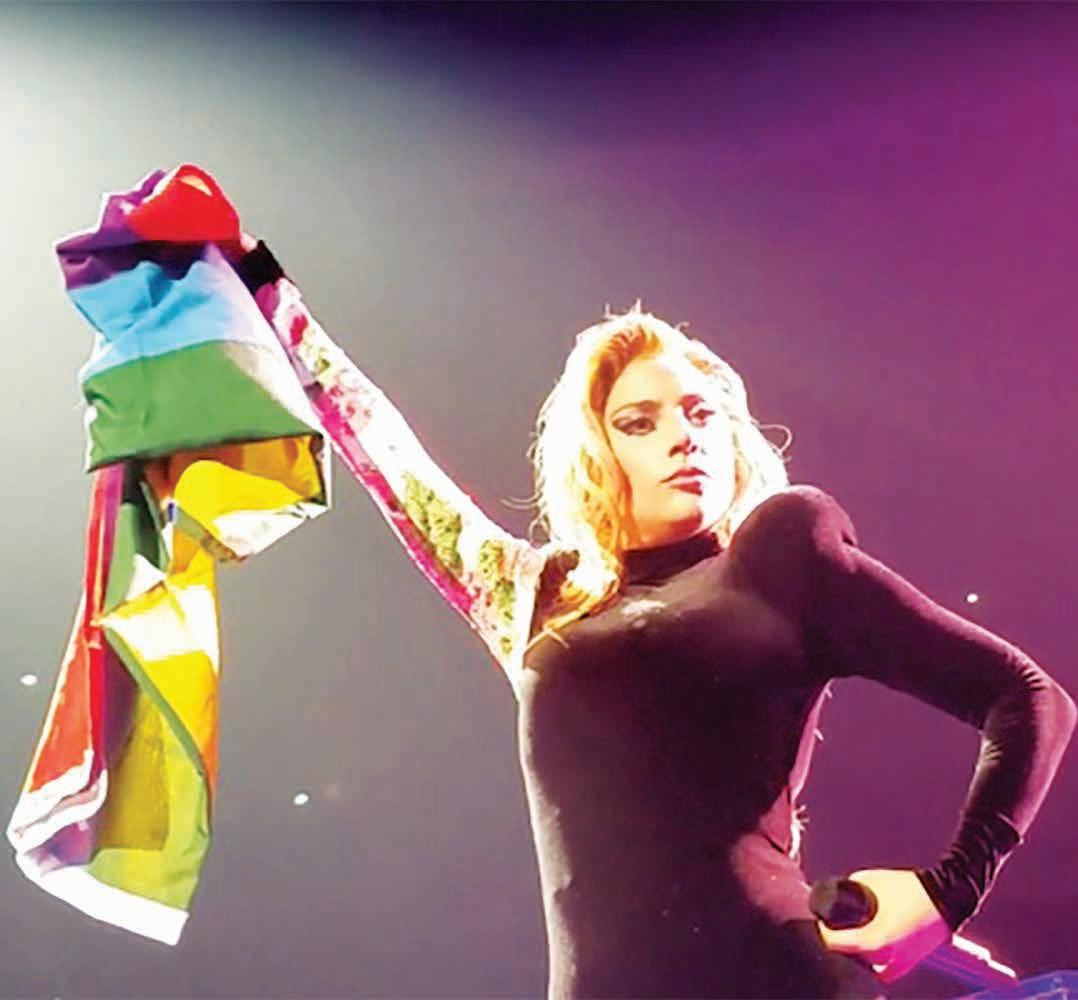
It’s been a decade since Lady Gaga gave her Little Monsters a gift for the ages with the album “Born This Way” – hard to believe, but it’s true – and we’ve all been grateful ever since.
It turns out Gaga is grateful to her fans, too, and to show it, the diva has announced the release of a new special edition “Born This Way: The Tenth Anniversary” album, to be released via Interscope on June 18.
The new release will feature new packaging and include all of the 14 iconic songs from the original 2011 release of the “Born This Way” album, alongside six “reimagined” versions of songs from the album. Each of these new cuts have been created by artists who represent and advocate for the LGBTQIA+ community, whose identities will be revealed over the next few weeks.
Fortunately, we don’t have to wait for all of them. In celebration of Gaga’s announcement, the first reimagined track dropped today – “Judas,” by Bounce music icon Big Freedia. It’s now available on all music platforms, and you can watch the video below.
Of the recording, Big Fredia says: “‘Judas’ was my favorite song when it came out originally, so I really wanted to cover it. I am beyond excited that it’s the first to drop from this project. To me, ‘Judas’ is a love song about when someone does you dirty. I’ve sure had my experience with that. Who can’t relate?”
Besides “Judas,” the other tracks to be covered on “Born This Way: Reimagined” are “Marry the Night,” “Highway Unicorn (Road to Love),” “Yoü and I,” “The Edge of Glory,” and the tantalizingly titled “Born This Way (The Country Road Version).”
The new anniversary edition comes on the heels of Lady Gaga celebrating the 10-year anniversary of the original album and its legacy last week in West Hollywood, where a proclamation was issued naming May 23 as “Born This Way Day” and the beloved icon received the keys to the city.
“Through her music and activism, Lady Gaga has become a cultural icon for our generation,” said WeHo Mayor Lindsey P. Horvath, who announced the new holiday and presented the Lady with the key. “The anthem ‘Born This Way’ has become an out-and-proud declarative stance for countless LGBTQ people. The Born This Way Foundation [co-founded by Gaga and her mother, Cynthia Germanotta] fosters honest conversations about mental health with young people and seeks to eradicate the stigma around mental health struggles.”
In addition to the special album edition, Lady Gaga has launched a special “Born This Way” merchandise collection, with the brand new designs now available at shop.ladygaga. com.
As for the album, it’s available for pre-order right now. What are you waiting for?

When we think of LGBTQ activism in the 1970s, we tend to think of picket signs, protest marches, and people carrying megaphones – but it also took other forms.
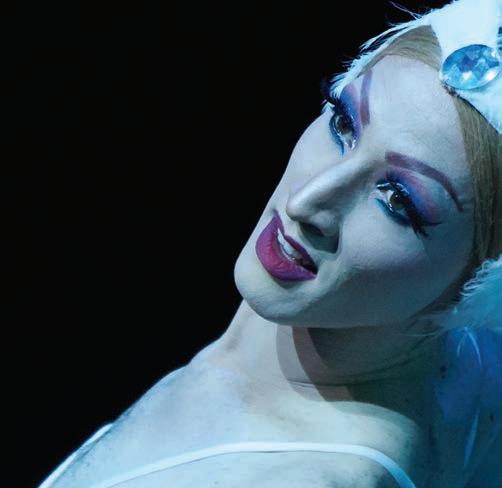
Back in the heady post-Stonewall days of what was then called the “Gay Liberation” movement, a different approach to the struggle for acceptance was taking seed at a run-down performance space in Manhattan’s Meat Packing District, where a group of classically trained dancers – all men – were performing drag versions of the great ballets. They called themselves Les Ballets Trockadero de Monte Carlo, and nearly five decades later they have become a world-renowned dance company, known as much for carrying a message of equality, inclusion and social justice as they are for delivering classical ballet both en pointe and in drag.
If you’ve never heard of Les Ballets Trockadero de Monte Carlo (lovingly known as “The Trocks” by their fans), it’s not a surprise. After all, ballet is something of a “niche” interest these days, particularly in American culture, and only those with a natural affinity for the art form are drawn to it – so anyone unfamiliar with the company can certainly be forgiven.
That is, until now.
In honor of Pride Month, PBS’s venerable “American Masters” is debuting a new documentary about the Trocks. “Ballerina Boys,” directed and produced by Chana Gazit and Martie Barylick, presents a portrait of the company as they tour the Carolinas and culminates with their 2019 performance at the Stonewall 50th anniversary concert in NYC’s Central Park. Along the way, it goes for a deep dive into the history of Les Ballets Trockadero de Monte Carlo, offering up plentiful rehearsal and performance footage, both from the company’s archives and from the tour, and weaving everything together with in-depth interviews from past and present members of the troupe.
What gives the film its greatest appeal, of course, is the chance it affords to see this legendary performance troupe in action. With generous amounts of screen time devoted to the dancers dancing, the audience is allowed to grasp something much closer to the full power of what they do than can be gleaned by a few brief snippets of footage. “Ballerina Boys” is as much

about the art of dance itself, and the passion that drives its practitioners to devote their entire being to its service, as it is about the Trocks themselves; the troupe’s history may be the central focus of the film, but it’s their dancing that allows us to connect with them.
By JOHN PAUL KING

It also allows us to understand why this unique company has not only survived for 47 years, but established itself as an iconic presence in the world of dance, as well as helping us to grasp the importance of their use of that position in that world as a platform to promote acceptance. The Trocks have become beloved for their signature style, a blend of rigorous technique and satire that delights their audiences – while also challenging the rigid gender norms deeply entrenched not just in the art form, but in society itself.
In the words of Roy Fialkow, a former Trock interviewed extensively in the film, “We were pushing the limits of the definition of what men did. What Ballet Trockadero has done over the years has turned this notion of what is beautiful in ballet kind of on its head, and turned it upside down, so that there can be moments in this ballet, where you can just say, ‘Wow.’”
There are plenty of “wow” moments in “Ballerina Boys” that treat us to better-than-front-row views of these gifted, athletic, disciplined young bodies in motion – something that is impressive for all the reasons you would imagine – and they reveal the secret of Ballet Trockadero’s formula by reminding us that something can make us laugh and still be beautiful, too.
Of course, beauty is in the eye of the beholder, and the Trocks’ history – which unfolds largely through the reminiscences and comments of Fialkow, Company Founders Peter Anastos and Natch Taylor, and Artistic Director Tory Dobrin, supplemented with insights from LGBTQ historian Eric Marcus – has seen the troupe meet resistance from some who didn’t find its loving lampoon of the austerely traditional ballet form quite so beautiful. Perhaps unsurprisingly, much of that resistance came from within the dance world itself, and had more to do with breaking those austere traditions than with the politics of LGBTQ activism.
Still, the film makes clear that it is the troupe’s devotion to the art form and its traditions that makes their work so effective – something it illustrates, time and time again, with breathtaking moments in which gifted dancers take us from the absurd to the profound to the transcendent within a few short seconds of movement. It also lets us get to know a few of the current company members – such as Philip Martin-Nielson, whose autism has proven an asset both in the performance and teaching of his craft, and Duane Gosa, who has found in Ballet Trockadero a perfect haven to be truly himself while following his passion.
“Being in a company like this where I can freely be Black and gay and a dancer on stage and be good at it, is a great thing for younger people to see,” Gosa tells us. “I am fortunate enough to be able to show that this is possible.”
That, of course, is the ultimate importance of the Trocks, and one that perhaps lies at the heart of their concept even in their earliest days. Though they may not have been activists, they freely admit being inspired by the Stonewall Riots (the legendary kickline performed by some of the queens at the bar as they were rushed by the police gets a prominent mention) and fueled by the spirit of defiance and creative exuberance that the gay rights movement fostered within the queer community of the time. At the peak of their success in the 1980s, they had become international ambassadors not just for acceptance; watching them ride a tour bus through the South, still an epicenter in the struggle for LGBTQ rights, it’s clear that’s a role they are still fulfilling – and one that still has its dangers.
Still, the Trocks have gotten away with it for so long because the humor and the beauty they personify are able to reach across the barriers of intellect and identity and strike a universal chord with their audiences. In their ballets, they invite us into a world where gender is just another part of the costume, ultimately irrelevant to the humanity that we experience there –and once there, it just might become possible to remember that we already live there.
“American Masters: Ballerina Boys” premieres nationwide Friday, June 4 at 9 p.m. on PBS (check local listings), pbs.org/americanmasters and the PBS Video app in honor of Pride month.

The Los Angeles Lakers are proud to support LA PRIDE and the LGBT Community.
‘Punch Me Up to the Gods’ an emotional, rewarding journey
By TERRI SCHLICHENMEYER
Little kids have it so easy.
Somebody feeds them when they’re hungry, does their laundry, buys them toys, and plays with them. Somebody escorts them everywhere and sometimes, they even get carried. Yep, life is good when you’re a little kid except, as in the new memoir, “Punch Me Up to the Gods” by Brian Broome, when it’s not.
He called Corey his “best friend,” but Corey was no friend to 10-year-old Brian Broome. Sure, things were simpatico at first but it didn’t take long for Corey to sense Broome’s insecurities, or to start pummeling Broome, or to humiliate him. Broome’s father hoped that Corey might act as “a form of therapy” for a boy who played with girls too much; Broome endured the abuse and didn’t complain to the adults because he was a little in love with Corey.
As if Corey’s thrashings weren’t harsh enough, Broome’s dad beat Broome for a multitude of reasons, from a pink shirt to frustration over unemployment to racism: he said he’d rather kill his children himself than to let a white person do it. Broome, in fact, often wished that he was white like the people on TV, so he’d have the benefits of it. White parents really seemed to love their kids.
Broome dreamed of moving far away from the tiny working-class Ohio town of his birth, to a larger city where he believed he could avoid the bullying and teasing, leave his life behind, and escape the embarrassment of his parents’ ramshackle existence. He did leave once, for college, but he was deeply humiliated by the racism and homophobia of his roommates. He called his mother then, and she came to get him.
She was one of a handful of Black women who saved him.
Being a man isn’t easy. Being a Black man in America is harder. Being a gay Black man led Broome to drugs, alcohol, and away from his family – although, he says, “... yes, I was


‘Punch
By Brian Broome cc.2021, HMH Books
$26 | 272 pages
loved. Just not in ways that I could understand.”
Be prepared to be messed with here. Your emotions may never be the same.
There’s a tightly coiled, ready-to-strike fist wrapped in melancholy and a miles-long people-watching incident in this book, both giving aptness to its title. “Punch Me Up to the Gods” refers to author Brian Broome’s father’s second-favorite words before the beatings began, and they’ll hit you hard, too. You’re not embarrassed, in fact, to be seen carrying a book around, are you? Because you will, this one.
Happily, there are moments of humor, too, as Broome recalls things that occurred in his youth, or maybe just a few years ago. He surprises readers with similes that are sobering, in the middle of laughter. He steps back sometimes, to pick at something else, turns it over twice to examine it, and pulls it into his tale.
For this, you won’t regret picking this wonderfully companionable, startlingly gracious and compelling memoir. “Punch Me Up to the Gods” is a don’t-miss, devouring it is so easy.