All About DWEE: Agency Listservs
By the Nebraska Department of Water, Energy, and Environment
Nebraska Department of Water, Energy, and Environment (DWEE) provides several ways to share news with the public, the regulated community, and other stakeholders.
Press releases, web updates, and social media play a large role in these communications. But DWEE can reach its audiences directly through their inboxes using our listserv mailing lists.
Here are the listervs DWEE has available. These listservs are free, and anyone may sign up to receive updates.
Outreach and Assistance
DWEE uses the Outreach and Assistance Listserv to share news that may affect the regulated community. This includes information from DWEE’s Assistance Division, Small Business Environmental Assistance Program, and more. Permitted facilities and members of the public may sign up to receive updates.
To subscribe, visit our website and follow the directions on this web page: dee.nebraska.gov/resourcesservices/dwee-outreach-andassistance-listserv-instructions.
Air Quality Program
The Air Quality Program Listserv provides updates specific to DWEE’s Air Quality Program. Permitted facilities and the public are welcome to sign up for updates: dee.nebraska.gov/air/air-section/
1335 L Street
Lincoln, NE 68508
(402) 476-2829
info@lonm.org
air-quality-program-listservinstructions-how-subscribe Waste Grant
DWEE’s Waste Reduction and Recycling Incentive Grants Fund and Litter Reduction and Recycling Grant Program recently launched the Waste Grant Listserv. This email list aims to provide information from the Waste Grant Section regarding application deadlines, resources, and other information for applicants.
This listserv is open to everyone who is interested. Subscribe here: dee.nebraska.gov/land-waste/ land-waste/waste-grant-listservinstructions-how-subscribe.
ONE RED
In August 2023, DWEE received $3 million from the U.S. Environmental Protection Agency through its Climate Pollution Reduction Grants. This grant provides funds to develop a statewide Priority Climate Action Plan (PCAP) and a Comprehensive Action Plan (CAP).
DWEE submitted Nebraska’s PCAP to the EPA on March 1, 2024. In July 2024, it was announced the agency was awarded $307 million from the EPA to implement select measures from the PCAP.
DWEE has launched its ONE RED program (Opportunity for
March 2026
Nebraska: Reducing Emissions and Decarbonization), which is working to develop programs funded by the implementation grant.
In addition to creating new grant programs for Nebraska, ONE RED also continues to put together the state’s CAP.
To receive updates on the ONE RED programs, the CAP planning progress, or to learn about how you can participate, you can subscribe at dee.nebraska.gov/aid/one-redopportunity-nebraska-reducingemissions-decarbonization/onered-contact-information
Beach Watch
If you love visiting Nebraska’s public lakes in the summer, the Beach Watch listserv is for you. From May to September, DWEE provides weekly updates to let people know which lakes are on health alert for Harmful Algal Blooms, commonly referred to as HABs, or toxic blue-green algae.
Subscribing through our listserv sends these weekly updates straight to your inbox, so you don’t need to check the news or our website before making a weekend trip to the lake. To subscribe, go to deq-iis. ne.gov/zs/bw/
Nebraska Energy Quarterly
The Nebraska Energy Quarterly is a newsletter that focuses on DWEE’s energy programs. In addition to energy news within the agency, it also provides energy statistics and energy-saving tips. Sign up here: ndee-energy-newslistserv-instructions
Lash Chaffin
Safety Corner: Office safety tips
By Lash Chaffin, Utilities Section Director
Does your office or shop have a shortage of electrical outlets. Many of our municipal buildings were constructed before computers, iPad, cellphone, and a multitude of office equipment that are plugged in.
It seems almost everything else these days is wireless, but we still need one if not more chargers plugged in. Once again technology is out pacing the updating of electrical wiring in our facilities causing us to cut corners with multiple extension cords and surge strips. Often it
can be found where surge strips are plugged into each other with all ports in use. Amperage ratings can be easily overcome tripping a breaker or overheating a cord or equipment creating a potential fire hazard. If the surge strip has a breaker built in it might need reset or possibly the entire unit may need to be replaced.
The surge strip might become a multi-port unit with little to no protection if it cannot be reset. Another item is extension cord abuse around the office or shop. Extension cords are to be used as temporary devices, not to be used

in place of permanent wiring. Often these cords are not rated for high amperage equipment that is plugged into them such as space heaters. A good measure of how heavy duty is your extension cord, what did you pay for it and is the cord thick in diameter.
Trip hazards can also be a problem associated with extension cord use. When stepped on they can roll, causing a fall or you can trip on them if they are not secured to the floor. Also stepping on or running over cords with a vehicle can put pressure on internal wires causing
Continued on page 3


Utilities Section Newsletter
2026 Nebraska Meter School held
By Jackson Sash, Utilities Field Rep./ Training Coordinator
The Nebraska Meter School was held Feb. 17-18 at the Kearney Holiday Inn. Thirteen municipal systems and 15 power districts participated. Municipal systems included Arnold, Central City, Crete, Curtis, David City, Emerson, Imperial, Schuyler, Seward, St. Paul, Valentine, Wakefield, and Wayne. Power Districts included Burt County PPD, Cuming County PPD, Custer County PPD, Elkhorn Rural PPD, High West Energy, Howard Greeley PPD, KBR PPD, McCook PPD, Midwest Electric Cooperative Corporation, Niobrara Valley EMC, Northeast Power, Polk County Rural PPD, South Central PPD, Twin Valleys PPD, and Wheatbelt PPD.
The first day began with a whole group presentation titled “Basic Lineman Metering 101” given by Jim Meyer, Chris Kelmel, Mike Palmer, and Brady Harrington from WESCO. After this, each time slot had two sessions. The next set of sessions were “Instrument Transformers” by Bill Amelse of Primus Marketing and “AMR vs. AMI” by Jeff Pohl and Shawn Lehmkuhler of Dutton-Lainson Company. Just before lunch, we heard two different sides of the same coin when it comes to software. John Vandenberg of Border States presented on “Landis+Gyr Software” while Will Elliott of ACLARA Technologies/Hubbell presented on “ACLARA Meter Mate Software.” We enjoyed a mix of options at lunch including beef brisket, fried chicken, coleslaw, and potato salad.
Following lunch, we hopped back into meters with two concurrent sessions. The first was “Testing of Services and Theft of Services” presented by Chris Kelmel and the second was “Understanding Nameplate Ratings” presented by Shaun Starnes of GE Vernova. To
finish off the first day, we had one final set of concurrent sessions: “Meter Security presented by Ricardo Velarde of DeWalch Technologies and “Revenue Protection Via Meter Site Analysis” presented by Malcolm Halliday of Radian Research Inc.
The second day of the Nebraska Meter School was a half day with three sets of concurrent sessions. The first set began at 8:30 AM and consisted of a presentation on “Reactive Metering” by Will Elliott and another titled “Testing CTs and Meters on Transformer Rated Metering Installations” by Dan Hollow of TESCO. After a short break, Will Elliott gave his final session on “Totalization” while Jim Meyer and Chis Kelmel also gave their final session on “Hands-On Metering.”
The final set of sessions for the day and school included a second presentation from Bill Amelse titled “Using AMI Data for more than Meter Reads” and a safety presentation given by Jackson Sash of the League of Nebraska Municipalities titled “Outside is Trying to Kill You.” Following session evaluations, the attendees were dismissed.
The next Nebraska Meter School is scheduled for Feb. 9-10, 2027, at the Kearney Holiday Inn. Be on the lookout for more information and registration instructions towards the end of 2026.
Office safety tips
Continued from page 2
them to fray or break. Another electrical issue of concern is when the electrical outlets are not grounded or cords with two-prongs (no ground prong) are used. Removing a ground eliminates protection and often the outlet screw connecting an adapter may not provide an adequate ground. Using an adapter can often add enough weight to cause the cord to sag, pulling the prongs partially out of the outlet. This may cause sparking and a fire could result.
Next time you walk through your office take time to observe and evaluate the electrical outlets and the equipment plugged into them to prevent a potential fire. During the holidays we tend to find a lot of decorative lights and decorations that can overload an outlet. Many offices and shops tend to utilize hop heaters and those heaters that are under the desk. Try to purchase heaters that shut off it tipped over to prevent a fire. The updating of electrical wiring within the building can cost thousands but a fire can cost a lot more.
Near misses
By Jackson Sash, Utilities Field Rep./Training Coordinator
At one point or another, every utility personnel will either be injured or have a near miss. If you have been lucky enough to avoid this, you are likely to know someone who hasn’t been so lucky. Incidents where an injury occur are common topics for safety roundtables and tailgate talks before a project. I want to be clear that I am not discrediting these kinds of discussions – they are incredibly valuable for the purposes of preventing similar incidents in the future. Though, discussing near misses can be just as important for your utility staff’s safety. A near miss is any unplanned event that could have resulted in injury, illness, damage, or a compliance issue, but did not. This
could be as simple as using a ladder and it shifts but does not fall or as scary as a gas monitor going off but we escape the space before we are overcome. It is incredibly important to dissect these kinds of incidents at our safety meetings because something happened (or didn’t happen) that led to the near miss. Near misses are often not reported or discussed even though a safety meeting about the incident could have a lasting positive impact on the utility’s overall safety record. The biggest challenge to overcome is typically the culture of the utility. A fear of repercussions or getting made fun of for a near miss should not exist. The safest work environments are those where workers feel comfortable coming to their supervisors and coworkers about safety violations and near

misses. A near miss is rarely (if ever) the result of the actions of a single employee, rather than the result of gaps in communication, unclear procedures, aging infrastructure, or assumptions that have gone untested. It is critical that near misses are used as a learning tool and a way to generally improve the safety of our job sites.
Another aspect of near misses
Continued on page 5


Near misses
Continued from page 4
that often leads them unreported is due to a lack of a formal reporting system. The reporting system does not necessarily need to add a bunch of paperwork or new responsibilities for the operators; it is up to each utility to decide how they want to handle near misses. One such example is a shared online document or a notebook in the common area of the shop where near misses can be documented. Have employees add the key details: what happened, where it happened, what could have gone wrong, and
what can be done to prevent a similar incident in the future. Having formally documented near misses provides more benefits than just for topics during safety meetings. They also can offer a way to improve communication with management and elected officials within your community. Using these near misses as examples of real-world incidents that your utility has encountered can help to justify investments in safety equipment to prevent incidents that might happen. It can also be used to show why some equipment needs to be
replaced even though it “technically works,” why additional training is necessary, or why a procedure needs to be updated.
Ultimately, near misses should not be ignored or thought of as less than an incident where an injury does occur. A near miss is a rare opportunity to see a problem before it fully develops, allowing you the time to remedy the problem before serious harm happens. Taking the time to recognize and learn from these near misses can make a measurable difference in both safety and system reliability.

City Administrator. The City of Burwell is accepting applications for the position of City Administrator. The City of Burwell is the county seat of Garfield County and has approximately 1,200 residents. Burwell is located seven miles from the Calamus Reservoir in Central Nebraska. The municipality owns, operates, and provides electric, water, and wastewater services to its residents. Law enforcement is under the direction of the County Sheriff’s Department. This position requires comprehensive knowledge of municipal finance, expertise in city, state, and federal laws, regulations and guidelines, strategic planning, and supervisory skills. Individuals should possess a degree in a related field and/or possess a level of education that together with experience and training gives the required knowledge and experience to perform the duties as City Administrator. This person serves the community at the direction of the Mayor and City Council. Salary is negotiable based on experience and qualifications and includes competitive benefits. Interested candidates should contact the City Office at 404 Grand Avenue (PO Box 604), Burwell, NE 68823 or phone 308-3464509. Completed application along with a cover letter and resume should be mailed or delivered to the city office address above or emailed to cityofburwell@nctc. net and will be accepted until the position is filled. The City of Burwell is an equal opportunity employer. Water/Wastewater Operator. The City of Tekamah is accepting applications for a full-time Water/Wastewater Operator. Qualifications include State of NE Grade IV
Water Operator, Grade VI Backflow, and State of NE Class L Wastewater Operator Certifications, or the ability to obtain all three certifications. Pre-employment drug test required. Applicants must be at least 18 years old, have a high school diploma and hold a valid Nebraska driver's license. Application and job description may be requested at: City Office, 1126 S 13th Street, Tekamah, NE 68061 or tekwater2@tekamah.net. Applications will be accepted until position is filled. Equal opportunity employer.
Maintenance/Water and Wastewater Operator: The Village of Clearwater is seeking a full-time maintenance/water and wastewater operator. Applicant must hold or be willing to obtain a Grade IV Water Operators Certificate and a Class I Wastewater License with the State of Nebraska; hold or be willing to obtain, at minimum, a Class B State of Nebraska CDL driver’s license; have the ability to operate large equipment and vehicles; read and interpret gauges, understand electrical and mechanical equipment used in the regular operations of water and wastewater systems; make minor repairs to water and wastewater systems; ability to maintain and make minor repairs to vehicles and equipment; ability to supervise others, withstand extreme weather conditions, distinguish colors, lift up to 75 pounds, crawl, climb, bend, stoop, reach and work in confined spaces and at extended heights. Applicant should reside or be willing to relocate within five miles of Clearwater village limits. Duties will include, but are not limited to: street maintenance, including patching and snow removal; maintenance, upkeep, testing and recordkeeping of water, wastewater, and backflow systems; mowing and weed eating for all village properties; maintain park and playground, including
Continued on page 7
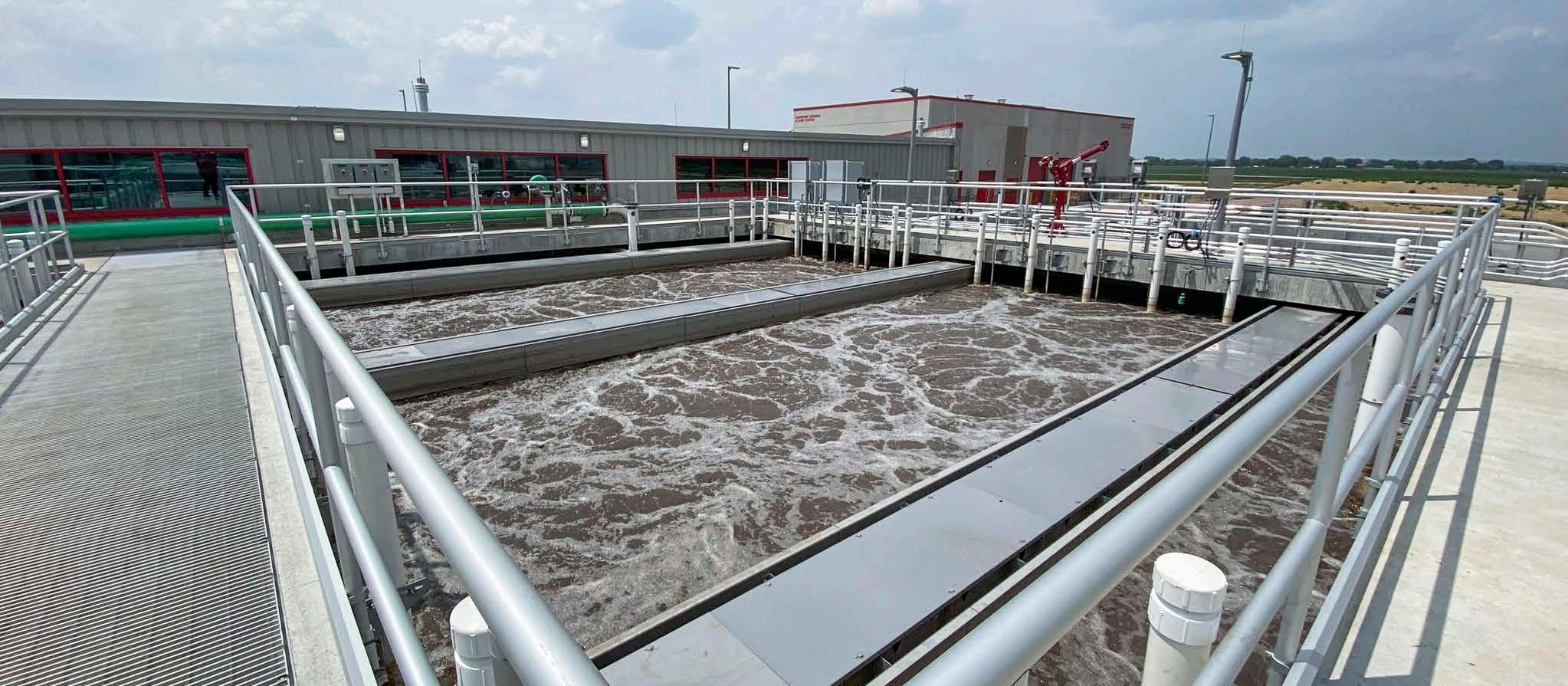
HDR, we’re helping our clients push open the doors to what’s possible, every day.
Utilities Section Newsletter
Classifieds
Continued from page 6 trash removal; maintain tree dump and ensure only authorized items are being dumped; animal control; and other responsibilities as required or requested by supervisors. For more information, contact Angie Hupp at 402-485-2365 or clerk@ clearwaterne.com. The Village of Clearwater is an Equal Opportunity Employer.

Two Super T Series Self-Priming Centrifugal Pumps. The Village of Sterling has two Gorman-Rupp Pumps for sale: Model #T4A71SB/F; Imp. Diameter STD; Unit weight 675 lbs.
Utilities Section members only
March
One is new in the crate, and the other was used for a short time. Both have been in storage for some time. The Village of Sterling upgraded and these are just taking up space. Click here for pump specs and pictures.
Contact the Village of Sterling at 402-866-4545 for questions or to schedule a time to come look at them.
Do you have a position to fill or equipment to sell? Place your ad in the Classifieds section of the Utilities Section Newsletter for free. This service is a membership benefit. Email ad to brendah@lonm.org.

Utilities Section Newsletter
2026 Training Calendar
Visit
April
Apr. 21 Water Operator Training Workshop McCook
Apr. 22.......... Water Operator Training Workshop .................... Holdrege
Apr. 23.......... Water Operator Training Workshop .................... Hebron
May
May 19 ......... Water Operator Training Workshop .................... North Platte
May 20 Water Operator Training Workshop Grand Island
May 21 ......... Backflow Workshop ............................................ League Office, Lincoln
July
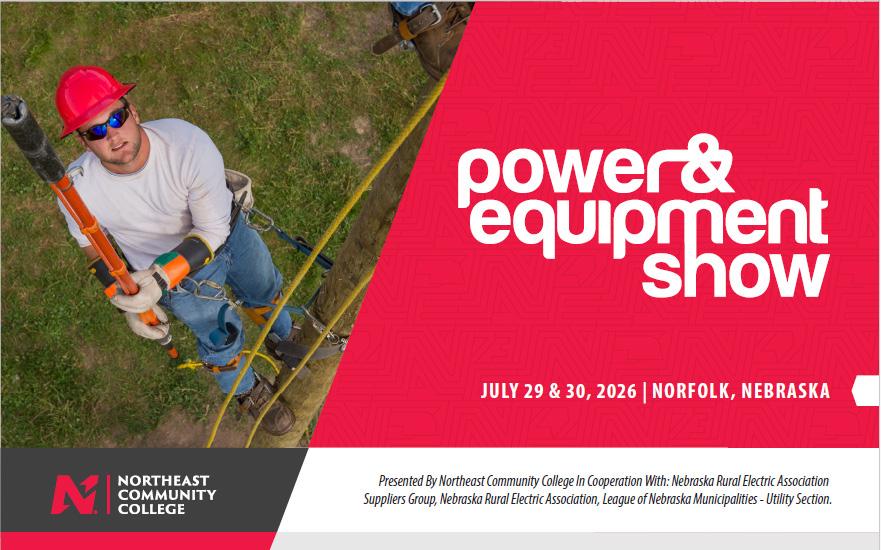
July 29-30..... NECC Power & Equipment Show ...................... NECC Chuck Pohlman Ag Complex, Norfolk
August
Aug. 11 ......... Water Operator Training Workshop .................... O’Neill
Aug. 12 ......... Backflow Workshop ............................................ Wayne
Aug. 13 Water Operator Training Workshop Fremont
September
Sept. 15 Water Operator Training Workshop Gering
Sept. 16 ........ Backflow Workshop ............................................ Ogallala
Sept. 17 ........ Water Operator Training Workshop .................... Lexington
October
Oct. 20 .......... Water Operator Training Workshop .................... Ainsworth
Oct. 21 Water Operator Training Workshop St. Paul
Oct. 22 .......... Backflow Workshop ............................................ Beatrice
Utilities Section Executive Board
President Gary Thurlow Utility Supt.
1st Vice President
Sarah Sawin Director of Utilities Kearney
2nd Vice President
Matt Owens Water & Sewer Supervisor
President
Pat Heath City Administrator Gering
Board Member
Jeramie Van Leer Utility Supt. Ord
Board Member
Ryan Schmitz Utilities Director Grand Island
Board Member
Joel Hansen
Street & Planning Director Wayne
Ex Officio Member
Kyle Svec
City Admin./Utilities Supervisor Geneva