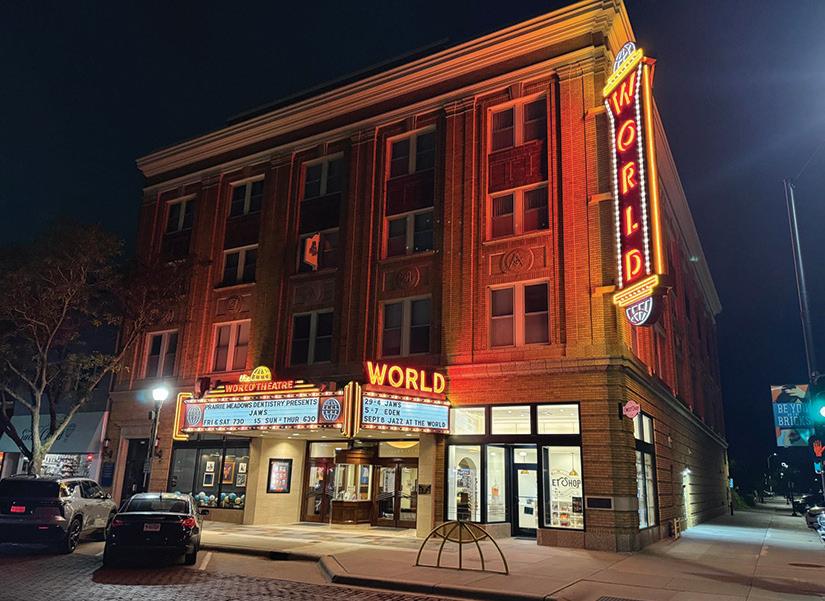
Kearney named one of the top 100 arts-vibrant communities in the U.S.
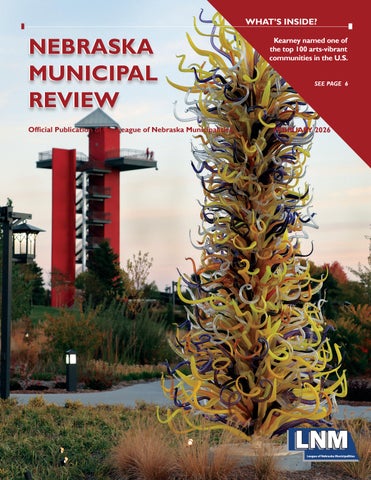
Kearney named one of the top 100 arts-vibrant communities in the U.S.
The NEBRASKA MUNICIPAL REVIEW (ISSN 0028–1906) is published monthly and the official publication of the League of Nebraska Municipalities, an association of the cities and villages of Nebraska, published at 1335 L St., Lincoln, Nebraska 68508. Subscription rates are $5 per single copy — $50 plus tax for 12 issues. Periodicals postage paid at Lincoln, Nebraska. Views of contributors, solicited or unsolicited, are their own and not to be construed as having the endorsement of the League unless specifically and explicitly stated by the publisher
The NEBRASKA MUNICIPAL REVIEW is a nonprofit publication administered and supervised by the League of Nebraska Municipalities. All revenue derived from the publication is used by the association to defray publication costs.
League of NE Municipalities staff 402-476-2829 • www.lonm.org
L. Lynn Rex, Executive Director
Christy Abraham, Legal Counsel
Lash Chaffin, Utilities Section Director
Cherie DeFreece, Admin Assistant/ Membership Services Assistant
Brenda Henning, Membership Services Assistant/ LIGHT Admin Assistant
Ethan Nguyen, LNM/LARM Information Technology Manager
Shirley Riley, Membership Services Director
Jackson Sash, Utilities Field Representative/Training Coordinator
Ashley Wolfe, Marketing/Communications Director
LARM staff
Dave Bos, Executive Director
Tracy Juranek, Asst. Executive Director, Customer Service Specialist
Diane Becker, Communications/Marketing Director
Kyla Brockevelt, Executive Administrative Assistant
Drew Cook, Customer Service Specialist
John Hobbs, Loss Control Specialist
James Kelley, Loss Control Specialist
Fred Wiebelhaus, Loss Control/Claims Manager
POSTMASTER: SEND ADDRESS CHANGES TO NEBRASKA MUNICIPAL REVIEW, 1335 L STREET, LINCOLN, NEBRASKA 68508.
Have an idea, project or opinion to share? The League welcomes member articles, information, and op-eds.
Want to reach local decision makers? The League can help you get your message out to Nebraska’s 3,500+ municipal officials.To learn more, contact Ashley Wolfe at 402-476-2829 or ashleyw@lonm.org
President Marlin Seeman, Mayor, Aurora
President-Elect Bryan Bequette, Mayor, Nebraska City
Vice President David Black, Mayor, Papillion Past President Deb VanMatre, Former Mayor, Gibbon
Directors
Leirion Gaylor Baird


Mayor, Lincoln
John W. Ewing, Jr. Mayor, Omaha
Sharon Powell Village Board President, Utica
Larry Evans Mayor, Minden
Rod Petersen Mayor, Louisville
Jim Bulkley Mayor, Columbus
Betsy Vidlak Mayor, Scottsbluff
Pat Heath City Administrator, Gering
Janine K. Schmidt
CMC/Treasurer, Morrill
Kyle Svec City Admin./Utilities Supervisor, Geneva
Affiliated Sections
City Managers
Wes Blecke, Wayne Clerks
Munic. Accounting & Finance
Derek Bargmann, Seward
Becky Erdkamp, Exeter Fire Chiefs
Dennis Thompson, North Platte Utilities Gary Thurlow, Atkinson La Vista: 14 22 26
Kearney named one of the top 100 arts-vibrant communities in the U.S.
A lasting legacy - The City of Ralston unveils new fountain–the result of a substantial donation and a vision for the future
Papillion: Powers recognized by Midlands Business Journal’s 40 Under 40
City of Norfolk saves over $2.2 million on West Plant water projects
Comms 101: Communication – next steps
Nebraska Game & Parks: Grant application window announced along with new funding opportunity
City of Lincoln, Lancaster County celebrate opening of GoodToGo reuse store
Grand Island Mayor delivers State of the City Address
Bike Walk Nebraska - E-bikes, e-motos, e-scooters: egads!
Columbus Parks and Rec launches community garden for residents
NLC: 5 proven ways to build social connections in your community
FEMA: 4 tips to prepare for winter weather risks
4
The Director's Message - L. Lynn Rex, LNM Executive Director - LB 1219: Revenue Committee voted to advance the bill to General File [...]
LARM – From accident to improvement: A supervisors role
The Legal Corner by Tara Stingley, Cline Williams Wright Johnson & Oldfather, L.L.P. - FMLA leave includes travel to and from medical appointments
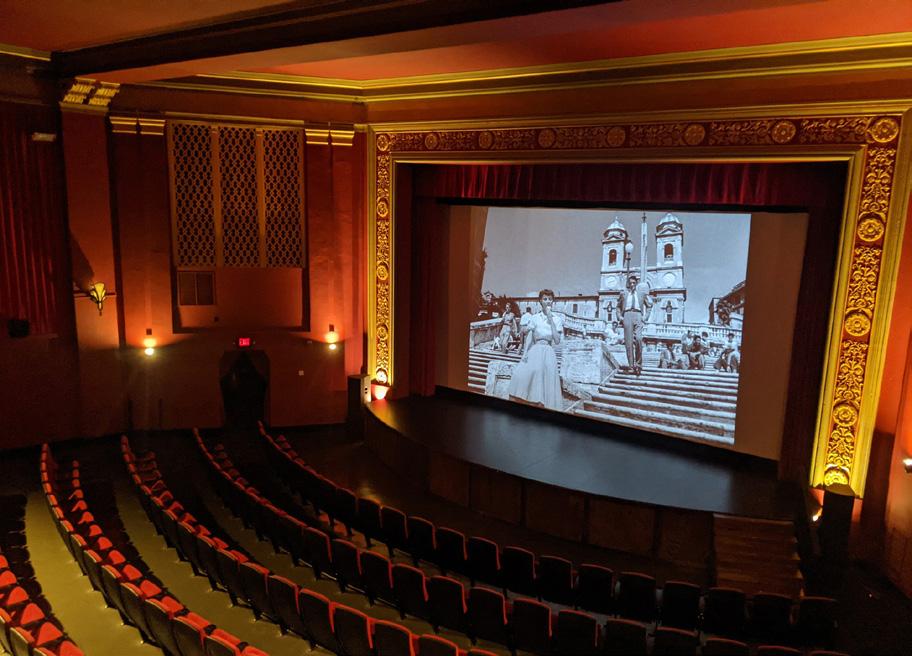
Nature, public art, and cultural events converge at Yanney Heritage Park in Kearney. Photo provided by Visit Kearney.
John McGhehey, Mayor, Alliance
Tobias Tempelmeyer, City Administrator, Beatrice
Rusty Hike, Mayor, Bellevue
Jim Ristow, City Administrator, Bellevue
Mindy Rump, Mayor, Blair
Phil Green, City Administrator, Blair
David Scott, Deputy City Administrator of Operations, Blair
Tom Menke, City Manager, Chadron
Jim Bulkley, Mayor, Columbus
Tara Vasicek, City Administrator, Columbus
Dave Bauer, Mayor Crete
Tom Ourada, City Administrator, Crete
Jody Sanders, City Administrator, Fremont
Kent Ewing, Mayor, Gering
Pat Heath, City Administrator, Gering
Roger Steele, Mayor, Grand Island
Patrick Brown, City Administrator, Grand Island
Mike Evans, Mayor, Gretna
Paula Dennison, City Administrator, Gretna
Mark Funkey, City Administrator, Hastings
James Liffrig, Mayor, Holdrege
Chris Rector, City Administrator, Holdrege
Brenda Jensen, City Manager, Kearney
Brad DeMers, Asst. City Manager, Kearney
Doug Kindig, Mayor, La Vista
Kevin Pokorny, Director of Administrative Services, La Vista
John Fagot, Mayor, Lexington
Joe Pepplitsch, City Manager, Lexington
Margaret Blatchford, Assistant City Attorney, Lincoln
Riley Slezak, Senior Advisor to the Mayor, Lincoln
Linda Taylor, Mayor, McCook
Nate Schneider, City Manager, McCook
Bryan Bequette, Mayor, Nebraska City
Perry Mader, City Administrator, Nebraska City
Justin Webb, Council Member, Norfolk
Scott Cordes, City Administrator, Norfolk
Brandon Kelliher, Mayor, North Platte
Layne Groseth, City Administrator, North Platte
Steve Krajewski, Mayor, Ogallala
Kevin Wilkins, City Manager, Ogallala
Thomas Warren, Chief of Staff, Omaha
David Black, Mayor, Papillion
Amber Powers, City Administrator, Papillion
R. Paul Lambert, Mayor, Plattsmouth
Emily Bausch, City Administrator, Plattsmouth
Don Groesser, Mayor, Ralston
Brian Kavanaugh, Council President, Ralston
Jack Cheloha, City Administrator, Ralston
Art Lindberg, Mayor, Schuyler
Lora Johnson, City Administrator, Schuyler
Betsy Vidlak Mayor, Scottsbluff
Kevin Spencer, City Manager, Scottsbluff
Joshua Eickmeier, Mayor, Seward
Greg Butcher, City Administrator, Seward
Brandon Bonregard, Mayor, Sidney
Brett Kerkman, Vice-Mayor, Sidney
Lance Hedquist, City Administrator, South Sioux City
Jill Brodersen, Mayor, Wayne
Wes Blecke, City Administrator, Wayne
Barry Redfern, Mayor, York
Dr. Sue Crawford, City Administrator, York
Legislative Committee
Chaired by Tom Goulette, City Administrator of West Point
Lisa Schroedl, City Administrator/Clerk/Treasurer, Ainsworth
Jessica Quady, City Administrator, Ashland
Crystal Dunekacke, City Administrator/Economic Developer, Auburn
Marlin Seeman, Mayor, Aurora
Adam Darbo, City Administrator, Aurora
Chris Anderson, City Administrator, Central City
Andrew Lee, Admin/Clerk/Treasurer, Curtis
Alan Michl, Chairperson, Exeter
Becky Erdkamp, Clerk/Treasurer, Exeter
Kyle Svec, City Administrator, Geneva
Matt Smallcomb, City Administrator, Gibbon
Gary Greer, City Administrator, Gothenburg
Jana Tietjen, Clerk, Hebron
Barb Straub, Admin/Clerk/Treasurer, Hemingford
Kelly Oelke, City Administrator, Hickman
Janine K. Schmidt, CMC/Treasurer, Morrill
Sandra Schendt, Clerk/Treasurer, Nelson
David Russell, Director of Gov. Affairs, NMPP Energy
Sandy Kruml, Clerk/Treasurer, Ord
Mike Feeken, Mayor, St. Paul
Sandra Foote, Council Member, Superior
Warren Myers, City Administrator, Sutton
Jessica Meyer, City Administrator, Syracuse
Kelly Adamson, City Council Member, Tekamah
Sharon Powell, Village Board President, Utica
Kyle Arganbright, Mayor, Valentine
Melissa Harrell, City Administrator, Wahoo
Desiree Soloman, City Attorney, Waterloo
Stephanie Fisher, City Administrator, Waverly
Tom Goulette, City Admin./Utility Superintendent, West Point
Randy Woldt, Utilities Superintendent, Wisner
Robert Costa, Community Planner, Yutan

(All statute citations to Revised Statutes of Nebraska)
• Within 10 days following meeting or before next meeting (whichever is sooner) Clerk to have minutes available for public inspection. (84-1413)
• Within 15 days of Passage Clerk publishes ordinances passed. (16-405)
• Within 30 days following Council meeting Clerk publishes official proceedings of meeting. (19-1102)
• End of each quarter - Report from depository banks. (16-714)
• Semiannually - Mayor and Council publish a statement of receipts and expenditures (16-722)
• Within 20 days after end of month Treasurer files monthly financial report. (16-318)
• April 30 - Liquor licenses (other than Class C) expire unless renewed. (53-124)
• * * Clerk must prepare agenda prior to next Council meeting. (84-1411)
• On or before May 1- Annual report to governing bodies regarding redevelopment projects (TIF) (18-2117.02)
• Within 10 days following meeting or before next meeting (whichever is sooner) Clerk to have minutes available for public inspection. (84-1413)
• Within 15 days of Passage Clerk publishes or posts ordinances passed. (17-613)
• Within 30 days following Council meeting Clerk publishes official proceedings of meeting. (19-1102)
• Within 20 days after end of month Treasurer files monthly financial report. (17-606)
• April 30 - Liquor licenses (other than Class C) expire unless renewed. (53-124)
• ** Clerk must prepare agenda prior to next Council meeting. (84-1411)
• On or before May 1- Annual report to governing bodies regarding redevelopment projects (TIF) (18-2117.02)
• Within 10 working days following meeting or before next meeting (whichever is sooner) Clerk to have minutes available for public inspection. (84-1413)
• Within 15 days of Passage Clerk publishes or posts ordinances passed. (17-613)
• Within 30 days following Board meeting Clerk publishes official proceedings of meeting, including claims. (19-1102)
• Within 20 days after end of month Treasurer files monthly financial report. (17-606)
• * * Clerk must prepare agenda prior to next Board meeting. (84-1411)
• On or before May 1- Annual report to governing bodies regarding redevelopment projects (TIF) (18-2117.02)

1219: Revenue Committee voted to advance the bill to General File to limit the total
amount
of property taxes that may be
levied to 2% plus the political
‘real
growth
percentage,’
subdivision’s
as a starting point for negotiations for a cap ‘firmer than LB 34’
BY L. LYNN REX, EXECUTIVE DIRECTOR, LNM
Plymouth Sen. Tom Brandt introduced LB 1219 to limit the total amount of property taxes that may be levied by any political subdivision to 2% plus the political subdivision’s “real growth percentage,” without exceptions above the cap. Sen. Brandt also introduced LR 317CA, a proposed constitutional amendment with the same provisions (similar to the Property Tax Request Act also referred to as the “Pink Postcard Bill.”) The Revenue Committee did not vote to advance LR 317CA to General File.
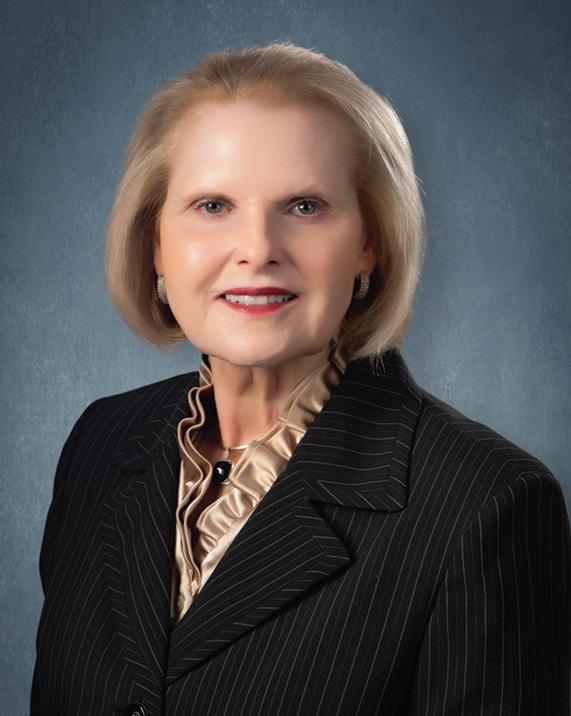
On Feb. 18, the following members of the Revenue Committee voted to advance LB 1219 to General File: Brad von Gillern, Mike Jacobson, Teresa Ibach, Kathleen Kauth, Dave Murman, and Tony Sorrentino. Lincoln Sen. Eliot Bostar voted “no” and Lincoln Sen. George Dungan was “present and not voting” due to his serious concerns about the bill.
On Feb. 20, Elkhorn Sen. Brad von Gillern, Chair of the Revenue Committee, told the League and the Nebraska Association of County Officials (NACO) that LB 1219 is a “starting point” for negotiations to have a cap that is “firmer than LB 34” (passed in the 2024 Special Session and then amended by LB 647 in the 2025 session to make it workable). He also stated that whatever amendments are negotiated would be incorporated into one of the Revenue Committee Priority Bills.
The Revenue Committee held a hearing on LB 1219 and LR 317CA on Feb. 5, as reported in League Legislative Bulletin #5. During the hearing, opponents testifying with a League representative included Stephen Curtiss from the City of Omaha, Meg Harris from the City of La Vista, NACO , Nebraska Association of School Boards , Nebraska Rural Community Schools Association, Nebraska Community College Association, and Educational Service Unit Coordinating Council. A representative of the Greater Nebraska School Association also testified in opposition to the proposals on behalf of Stand for Schools - Nebraska. Opponents testified about the devastating impact these proposals would have on local budgets, necessitating significant cuts in essential services. In addition to a number of other problems with the provisions in LB 1219
and LR 317CA, the definition of “real growth value” does NOT include the tax increment financing language that is part of the Property Tax Request Act.
Proponents of LB 1219 and LR 317CA stated the proposals are simple to understand; these proposals limit all political subdivisions to a small property tax increase each year without any exceptions. Those testifying with Sen. Brandt in support of the legislation included Nebraska Taxpayers for Freedom and the Nebraska Farm Bureau. The representative of the Nebraska Farm Bureau also testified on behalf of Nebraska Cattlemen, Nebraska Corn Growers Association, Nebraska Pork Producers Association, Nebraska Sorghum Growers Association, Renewable Fuels Nebraska, and National Federation of Independent Businesses.
LB 1219 in its entirety states as follows: “(1) Beginning January 1, 2027, and notwithstanding the Property Tax Growth Limitation Act and the School District Property Tax Limitation Act, the total amount of property taxes that may be levied by a political subdivision in any year shall not exceed the total amount levied in the prior year by more than the allowable growth percentage. (2) For purposes of this section: (a) Allowable growth percentage means a percentage equal to the sum of (i) two percent plus (ii) the political subdivision’s real growth percentage; (b) Real growth percentage means the percentage obtained by dividing (i) the political subdivision’s real growth value by (ii) the political subdivision’s total property valuation from the prior year; and (c) Real growth value means the increase in a political subdivision’s total property valuation from the
prior year to the current year due to (i) improvements to real property as a result of new construction and additions to existing buildings, (ii) any other improvements to real property which increase the value of such property, (iii) annexation of real property by the political subdivision, (iv) a change in the use of real property, and (v) any increase in personal property valuation over the prior year.”
Municipalities and counties are the only political subdivisions subject to the “Property Tax Growth Limitation Act.” Schools have a different property tax cap, the “School District Property Tax Limitation Act.” All other political subdivisions remain subject to the “lid on restricted funds” which has been in effect since passage of LB 299 in 1996.
LB 1154: On Feb. 18, the Revenue Committee unanimously voted to advance LB 1154 to General File to amend provisions
of the Property Tax Growth Limitation Act relating to “unused property tax request authority.”
Thanksto Ralston Sen. Merv Riepe for introducing LB 1154 on behalf of the League and NACO. The bill was placed on General File on Feb. 23. Thanks to the Revenue Committee for advancing this important measure to amend section 13-3403 to change the calculation of a political subdivision’s property tax request authority. The Act only applies to cities, villages, and counties. The bill modifies the calculation for determining the “preliminary property tax request authority” and increases for the political subdivision’s “growth percentage” and “inflation percentage” by removing “unused property tax request authority” under section 13-3406 from the list of exceptions that are subtracted when determining the base amount used for those calculations. The bill does not alter the remaining statutory exceptions under section 13-3404, nor does it change the process for carrying forward or using “unused property
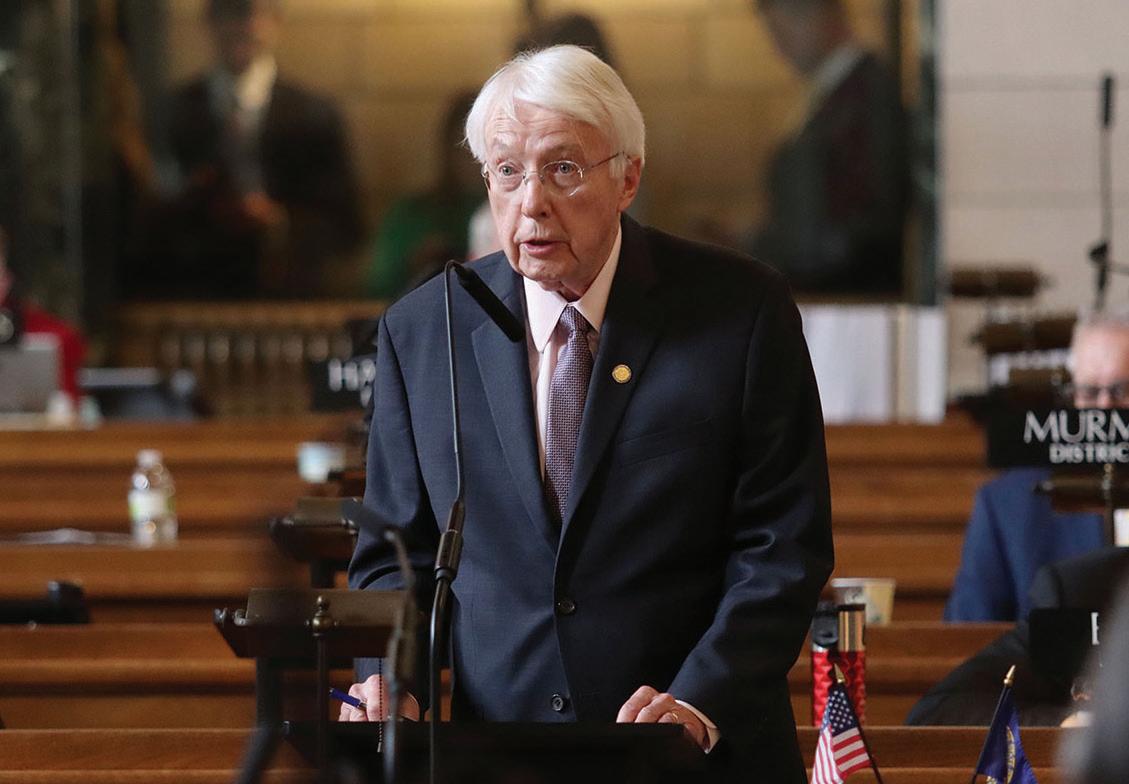
Sen. Merv Riepe District 12
tax request authority” which cannot exceed an aggregate of 5% of the total property tax request authority from the prior year as provided in section 13-3406.
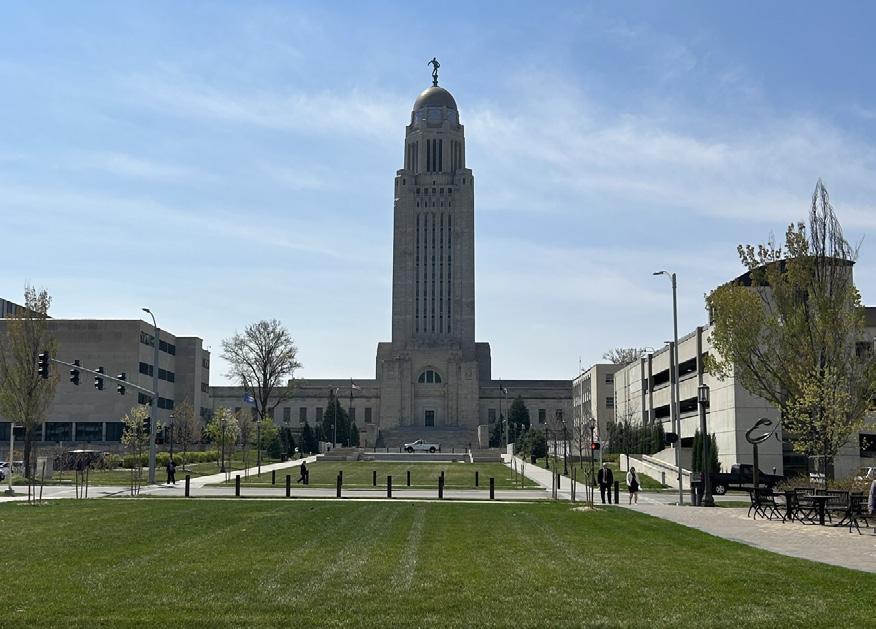
Kvibrant communities in the United States in the 2025 Arts Vibrancy Index, released by SMU DataArts, the National Center for Arts Research at Southern Methodist University. This year marks the 10th anniversary of the Arts Vibrancy Index and the first time the list has expanded from 40 to 100 communities nationwide, recognizing the top 10 percent of arts-vibrant communities across the country. Kearney ranked #87 overall and is the only Nebraska community to earn a spot on the list.
[We were] thrilled to see Kearney recognized among the Top 100 Most Arts-Vibrant Communities of 2025, a distinction that reflects the city’s deep commitment to creativity, culture, and community engagement. The strength of Kearney’s visual and performing arts sector not only enriches the quality of life but also plays a vital role in driving tourism, workforce attraction, and sustained economic growth in the region.
Lance Nielsen, Executive Director of Nebraskans for the Arts
Nebraska ranked #29 nationally in the 2025 state arts vibrancy rankings, but Kearney emerged as the state’s sole representative in the national Top 100, highlighting its
role as a key arts and culture community statewide. Nationally, Kearney appears alongside well-known arts destinations such as Santa Fe, New Mexico; Jackson, Wyoming; and Nantucket, Massachusetts, as well as major metropolitan areas like New York and Los Angeles—proving that arts vibrancy isn’t about population size, but participation and support.
“Kearney truly is the cultural heartbeat of Nebraska. It is an honor working alongside so many talented artists and creatives every day. This recognition affirms that we live in an incredible community that
Continued on page 12 / See Kearney






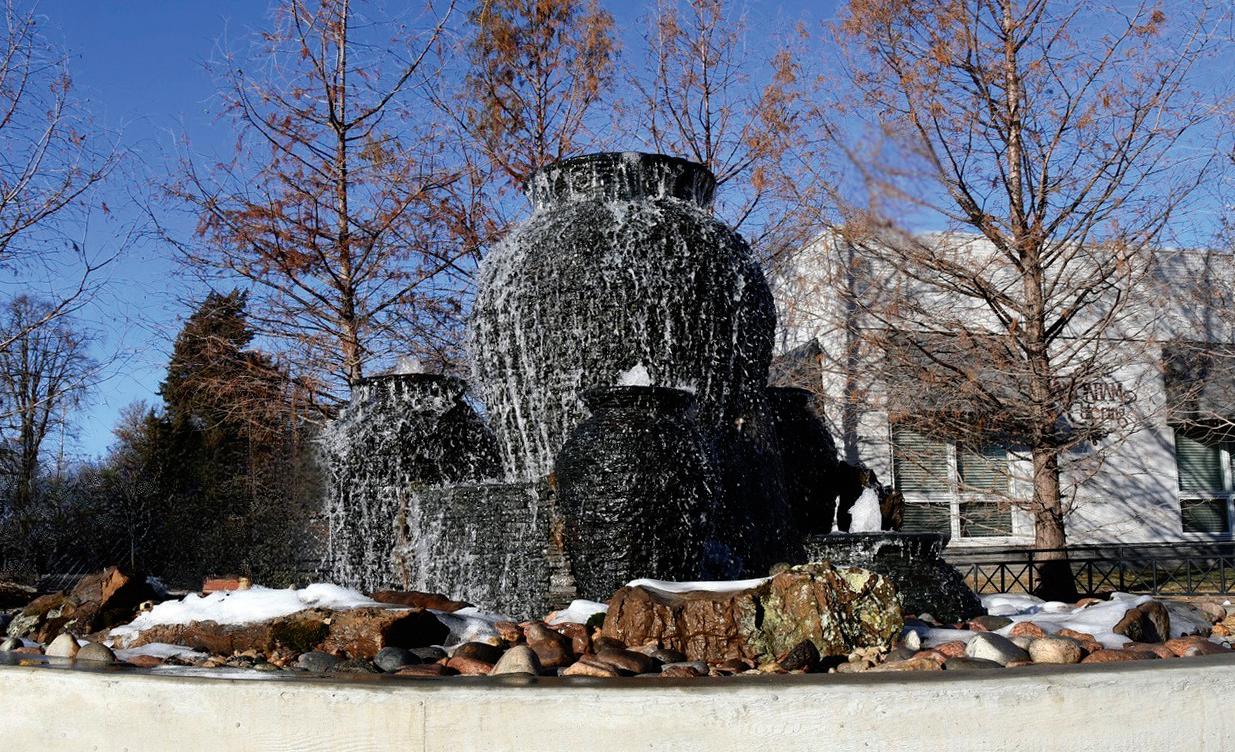
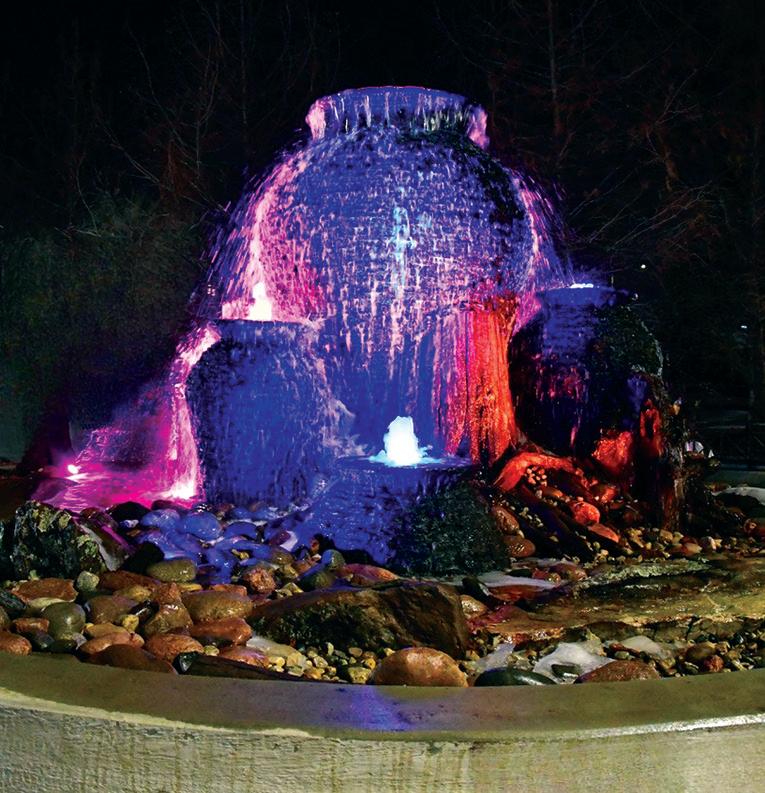
The scenery in downtown Ralston is changing and was made possible through a large donation from longtime Ralston resident, LaDonna Johnson.
As reported in the November 2025 issue of the Nebraska Municipal Review, this spot has long been a community centerpiece with a gazebo and plaza built in the mid-1990s. Through years of weather wear and usage, the original pieces had seen better days, but through the generous gift the space has been revamped and has a fresh new look.
In 2019, La Donna Johnson and her family gave a $7.5 million gift to the City of Ralston to help provide critical funding for an economic development effort known as the Hinge Project. Her initial donation has helped spur over $100 million in proposed investments in the Hinge area to date.
The Hinge Project is an economic development vision to develop the area around 72nd and Main Streets so it serves as a connection between the arena and the city’s downtown. The idea came out of the city’s 10-year comprehensive plan completed in 2014, and includes mixed-use developments, entertainment, and dining areas. The plan is designed to attract new residents and businesses and provide more amenities for Ralston visitors and residents.
“Ralston is a great community with a high quality of life because of the foresight of those who came before us. Each generation has planned for the next,” Ralston Mayor Don Groesser said. “Thanks to the Johnson family’s gift, that tradition will continue.”
Amber has served at City Administrator of Papillion since 2020, was the only city or county governmental official recognized
The National Civic League invites tribes, towns, cities, counties, and regions to apply for the 77th annual All-America City Award! The application deadline has been extended to March 5.
With the theme “America at 250: Strengthening Civic Health and Building Trust,” the 2026 award will recognize communities that are creatively engaging residents in collective efforts to create thriving and welcoming places where trust and belonging are abundant.
BY TRENT ALBERS, CITY OF PAPILLION
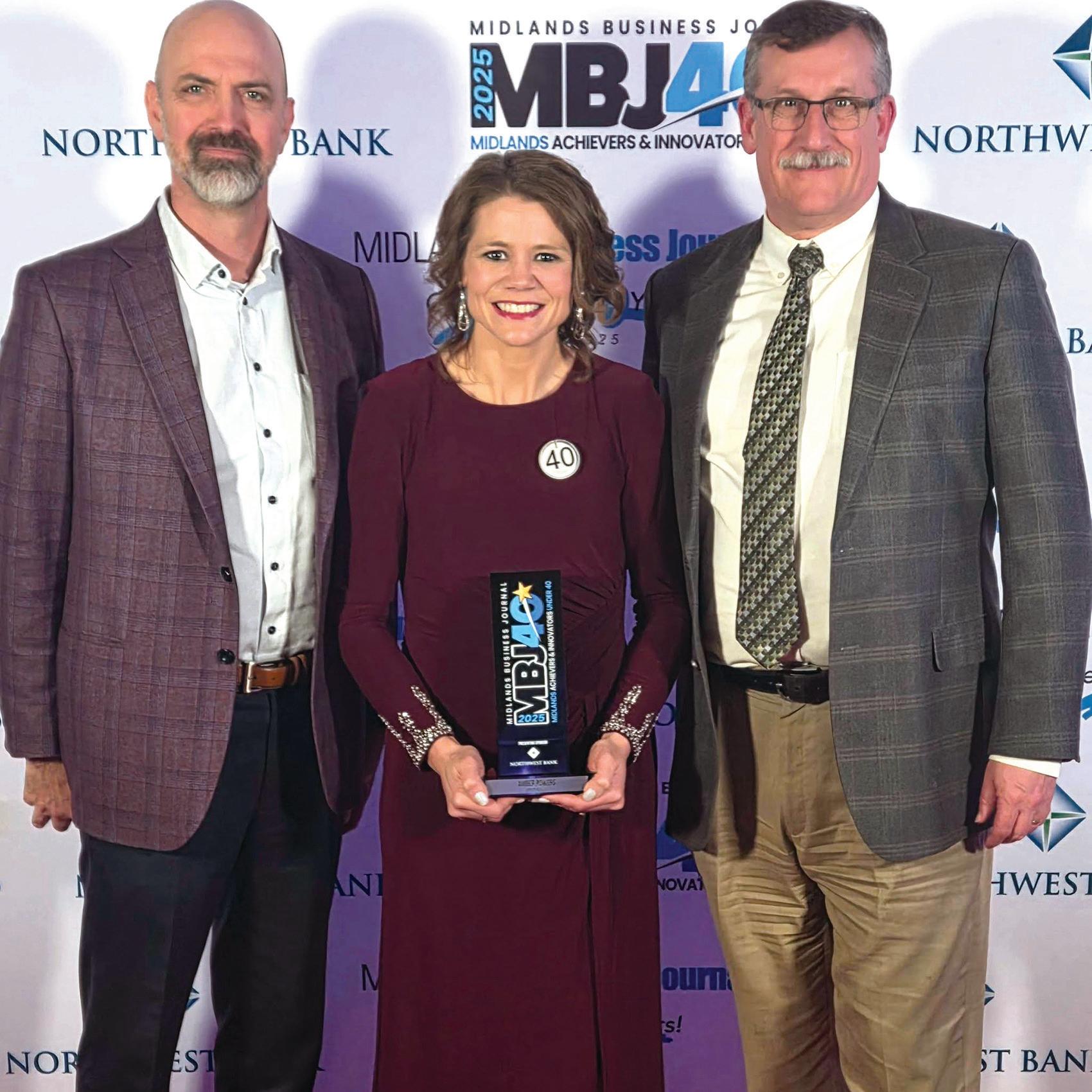
PapillionCity Administrator Amber Powers was named to the Midlands Business Journal’s 2025 40 Under 40, recognizing achievers and innovators under the age of 40 from the greater Omaha, Lincoln and Council Bluffs areas. Among the group of 40 individuals, Powers was the only local city or county government official recognized. Appointed by Mayor David Black as Papillion’s City Administrator in 2020, Powers leads a team of 600 City employees in serving the Papillion community — one of the state’s fastest growing cities. Accomplishments under her leadership include maintaining Papillion as the city with the lowest property tax in the metro area; expansion of the Papillion Police Station; renovation of Papillion’s 150-year-old City Park; maintaining the Papillion Fire Department’s multi-jurisdictional partnership with the City of La Vista and the Papillion Rural Fire District; facilitating major roads, water and sewer infrastructure projects in Papillion; providing support for the Nebraska Vietnam Veterans Memorial to locate in Papillion; and facilitating arts partnerships in the community. A recent citizen survey found that 96% of residents rate Papillion as a good or excellent place to live, and 84% of residents rate their trust/confidence in the City of Papillion as good or excellent — fantastic numbers that are a result of a wide variety of accomplishments under Powers’ leadership.
Applicants are encouraged to showcase inclusive, creative approaches to engagement—such as deliberative forums, storytelling, or civic tech—that bring America’s founding ideals to life by ensuring the power to shape the future resides with the people.
Twenty finalists will be invited to participate in the second stage of the competition, held June 26–28, 2026, in Denver.
Learn more and start your community’s application today: https://www.nationalcivicleague.org/america-cityaward/how-to-apply/.


NLC’s Congressional City Conference brings together local leaders. Collaborate with peers, hear from federal o cials, and connect with Members of Congress on how to advance your community priorities on the national stage.
Atits recent meeting, the Norfolk City Council approved awarding a contract to Rutjens Construction Inc. for the West Plant Reaction Basin /20x24 Pipe Connection project in the amount of $438,127.00, continuing ongoing improvements to the city’s water infrastructure.
The approval builds on the City of Norfolk’s recent success completing several major West Plant water projects under budget, saving ratepayers more than $2.2 million.
Recently completed projects included a new Well 14 transmission line, a 2-million-gallon water storage tank, and additional improvements at the West Plant. The original estimated cost for these projects totaled $7.1 million, while the final cost came in at $4.9 million, resulting in total savings of $2,222,979.
A key factor in achieving these savings was the city’s use of city staff to oversee daily project activities. By handling daily observations, reporting, pay application review, and testing in-house, the city avoided the need to hire outside consultants while still ensuring all work met required safety and quality standards.
“This approach allowed us to save more than $2.2 million while still delivering reliable, high-quality improvements to Norfolk’s water system,” said Chad Roberts, Water and Sewer Director.
The newly approved project will further strengthen Norfolk’s water system and support long-term reliability and service for residents.
These investments reflect the city’s continued commitment to responsible financial management, efficient project delivery, and careful stewardship of ratepayers’ dollars.
Source – City of Norfolk

Texas
A&M Engineering Extension Service - National Emergency Response and Recovery Training Center, is offering three upcoming cybersecurity training courses that will be hosted at First National Bank of Omaha in Omaha. All courses are completely free of charge. These trainings are Department of Homeland Security (DHS) and Federal Emergency Management Agency (FEMA) funded.
Below are QR codes to access the flyers with more information and a link to register.
May 13, 2026
AWR136: Developing Cybersecurity Resiliency for Everyone - Register here
May 14, 2026

AWR376: Understanding Targeted Cyber Attacks - Register here
June 16-17, 2026
MGT384: Preparing for Cyber Attacks and Incidents - Register here


If your organization or community is interested in hosting similar training, please reach out to Stephanie Brown with Cybersecurity and Infrastructure Security Agency (CISA), so she can assist your organization. Her email address is: stephanie.brown@cisa.dhs.gov.
Source – CISA
Continued on page 6
supports and values the arts with their attendance, donations, and volunteerism. We could not do what we do without the help of everyone around us.” - Steve Barth, Executive
Director of Crane River Theater
The Arts Vibrancy Index uses publicly available data to measure arts activity, participation, and support in communities across the United States, adjusting for population and cost of living to create fair comparisons between places of all sizes. SMU DataArts is the National Center for Arts Research at Southern Methodist University, providing data-driven insights to help communities strengthen and sustain arts and culture nationwide.
To explore the full 2025 Arts Vibrancy Index, visit culturaldata.org/arts-vibrancy-2025/top-100communities/.


The League Insurance Government Health Team (LIGHT) helps hundreds of its members throughout Nebraska obtain affordable health insurance coverage.
With seven plan options and three networks to choose from, you’re sure to find one that meets your group’s coverage and benefit needs.
Offering your employees much-needed protection against the high cost of medical care:
• Three PPO options
• Four HSA-eligible high deductible options
• Prescription drug coverage
Single: Covers the employee only
Employee and spouse: Covers the employee and their spouse
Employee and children: Covers the employee and their eligible dependent children, but does not provide coverage for the spouse
Family: Covers the employee and eligible dependents including a spouse
RECEIVE DEDUCTIBLE AND OUT-OF-POCKET CREDIT FROM YOUR CURRENT VALID GROUP PLAN WHEN YOU SWITCH!
With several networks available, you have easy access to quality providers:
• NEtwork BLUE (Statewide)
• Premier Select BlueChoice (Regional)
• Blueprint Health (Regional)
• Out-of-state network availability
Contact your current local Agent/Broker Or contact
Dennis Maggart
Executive Vice President P: 913-378-9841 or 816-718-0335
Dennis@McInnesGroup.com
Jane Limbach Account Man ager P: 913-378-9840
Jane@McInnesGroup.com

This is part three of a Comms 101 series highlighting effective ways to communicate with legislators regarding issues of importance for your municipality. So once you reach out and connect with your Senator, what are some of the best ways to share your views?
1) Identify the bill or issue. - Many bills are introduced in each session. Be specific with the bill number and describe it by the popular title (ex: local option sales tax bill). Know the name of the bill sponsor.
2) Contact your legislators at the appropriate time. - Sometimes a bill is out of committee before a helpful letter/email or phone call arrives. Inform your legislators while there is still time to take effective action.
3) Concentrate on your own delegation. - The Senator(s) in your district cast your votes in the Legislature and want to know your municipality’s views.
4) Be reasonably brief. - Many issues are complex, but your opinions and arguments stand a better chance if stated as concisely as the subject matter permits.
5) Take time to be specific. - A personal letter or email is far better than a form letter/email or signature on a petition. Form letters/emails are readily recognizable and often receive form replies. Think about questions such as - what is your municipality’s viewpoint? and how is your municipality affected? All of these things matter!
6) Give your reasons for taking a stand. - Statements like “Vote against LB 100; I’m bitterly opposed” do not help much. If a legislator does not realize all the possible effects of a bill, your letter/email may help them understand what it means to an important segment of their constituency. Be sure to provide specific examples.
7) Be constructive. - If a bill deals with a problem you admit exists, but you believe the bill is the wrong approach, share a better approach. Be positive and courteous.
8) If you have expert knowledge, share it with your Senator. - Of all the letters/emails legislators receive, perhaps one in a hundred comes from a constituent who is an expert on the subject. The opinions expressed in the others are important, and will be heeded, but this one is a real gold mine for the conscientious Senator.
9) Say “well done” when deserved. - Senators are human, too, and they appreciate an occasional “well done” from people who believe they have done the right thing. Even if you think they were wrong on an issue, they would welcome a courteous letter telling them you disagreed. It may even help with another issue at a later date.
10) Do not berate your legislator or make threats. - You cannot hope to persuade anyone of your position by calling them names. If you disagree with your Senator, give reasons for your disagreement. Try to keep the dialogue open. Be respectful.
11) Do not pretend to wield vast political influence. - Write your Senator as an individual.
12) Do not become a constant “pen pal” on every issue.Quality counts over quantity. Quality, respectful messages will help Senators and staff see you as a trusted resource.
13) Do not demand a commitment before the facts are in. - If you have written a personal letter and stated your reasons for a particular stand, you have a right to know your legislator’s present thinking on the question. But writers who “demand to know how you will vote on LB 100” should bear in mind the complexities of the legislative process. Be reasonable.
14) Organize meetings with your Senator. - Many municipal officials organize a formal meeting in their city or village with their Senator, often a luncheon or a dinner to discuss their positions on legislation affecting municipalities. This is often done just prior to the start of the legislative session.
15) Develop a personal relationship with your Senator. - It is most helpful to have a personal relationship with your Senator. If they perceive you as a “friend,” rather than just another constituent who wants them to vote a certain way, they will be much more attentive to your views. Visit often with your Senator, not just when you need their vote on a crucial issue.
BY SHARI SORENSON, RECREATION GRANT ADMINISTRATOR, NG&P
The Recreational Trails Program (RTP) and Land and Water Conservation Fund (LWCF) grant programs through Game and Parks begin 2026 announcing the application windows for 2026, a new LWCF grant, and the 2025 approved project lists.
With a new grant portal in place come April, RTP will open the grant application on Monday, May 4, and close on Friday, August 21, at noon. LWCF grant application window has changed to the 1st Monday in August–Aug. 3, followed by a commitment to apply letter due Sept. 18. LWCF application window will close Friday, Oct. 30 at noon.
A new grant opportunity will be offered through LWCF with a lower grant ask and project cost. To be eligible, the property must already be LWCF encumbered. The application will mirror the standard grant. Eligibility requirements and other guidance will be available in early April.
An informational webinar for both LWCF and RTP will be held Thursday, April 9, at 11a.m. CT. The registration link will be available on our website.
RTP selection committee identified the following projects which received approval from the Board of Commissioners to proceed:
Lower Platte South Natural Resources District will receive $250,000 for the Prairie Corridor Trail, Spring Creek Phase II which consists of constructing a new pedestrian and bicycle trail, approximately 8,000 feet long and 10-foot wide, along with an access road and a trailhead parking lot. The total project cost is estimated to be $529,560.
City of Norfolk will receive $239,000 for construction of a 2,500-foot perimeter trail in Winter Park and a 60-foot pedestrian bridge to connect Winter Park and 4th Street Park.The total project cost is estimated to be $388,415
The new Statewide Comprehensive Outdoor Recreation Plan is out!
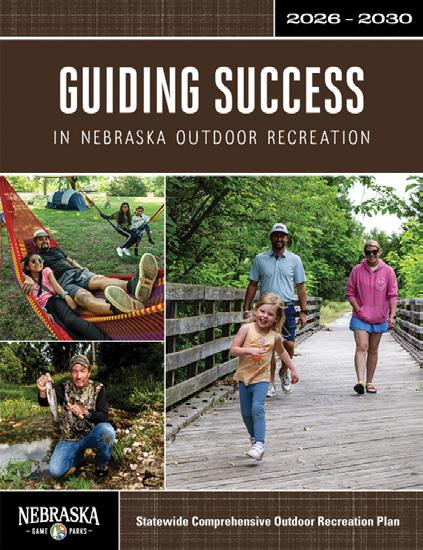
To download your copy go to www.outdoornebraska.gov and search SCORP.
Nebraska State Snowmobile Association will receive $17,000 for educational programs at the 58th Annual International Snowmobile Congress in Omaha which will occur June 3-6, 2026. The total project cost is estimated to be $24,286.
City of Fairbury will receive $250,000 for rehabilitation of the trail bridge over the Little Blue River. The total project cost is estimated to be $686,036.
LWCF selection committee identified the following projects which received approval from the Board of Commissioners to proceed with the next step of awarding from the National Park Service:
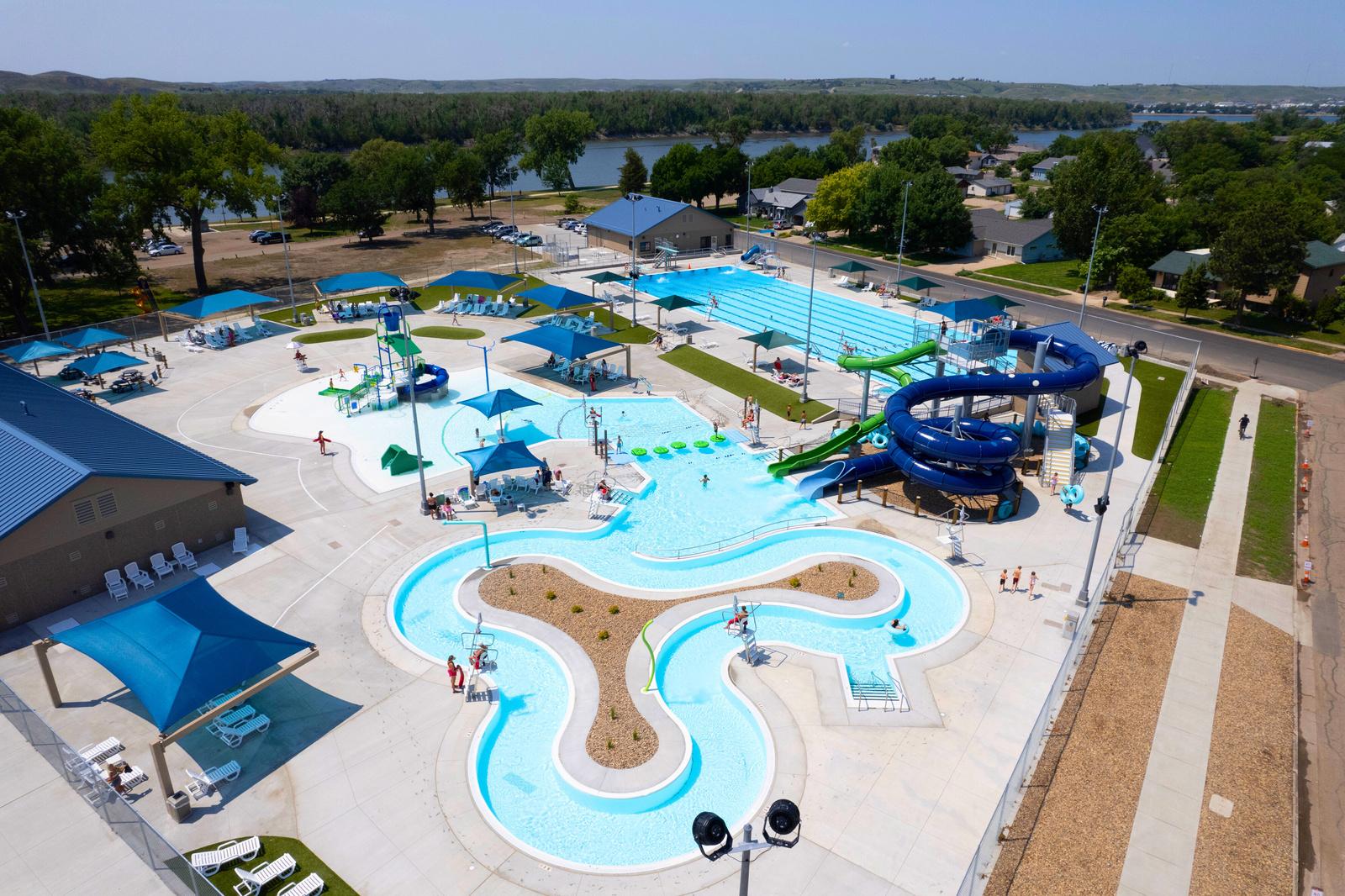
The City of Auburn will receive $600,000 for Legion Memorial Park improvements. The grant will assist with swimming pool and bathhouse refurbishments including a new zero entry toddler pool, and renovations to the sports courts facility with resurfacing and new lighting. The total project cost is estimated to be $1,724,000.
The City of Neligh will receive $210,000 for development of Russell Park and a playground expansion and court refurbishment at Riverside Park. Russell Park development will include a disc golf course (extension from Riverside) and a dog park. The total project cost is estimated to be $420,000.
The City of Beatrice will receive $265,665 for the acquisition of land and expansion of the pickleball courts at Chautauqua Park. The total project cost is estimated to be $513,330.
The City of Curtis will receive $600,000 for a new swimming pool and bathhouse. Features will be a zero-entry pool, a flume slide and modern shade structures. The total project cost is estimated to be $4,101,800.
The Village of Spalding will receive $542,255 for a pool refurbishment. This will include new liner and filtration system for the main pool, shade structures, a new kiddie pool with splash pad features, and a new bathhouse. The total project cost is estimated to be $1,084,510.
The City of LaVista will receive $340,410 for the renovation of two neighborhood parks, Ardmore and Camenzind. Both parks will receive new playgrounds and picnic shelters, and Camenzind will receive new sidewalks. The total project cost is estimated to be $680,820.
The Village of Stamford will receive $96,666 for refurbishment of City Park. This will include new playground equipment, picnic tables, seating, and landscaping throughout the park. The total project cost is estimated to be $241,665.
If you have any questions, would like to discuss your project, or would like to sign up for the LWCF newsletter, contact Shari Sorenson, LWCF ASLO, shari.sorenson@nebraska.gov, 402.471.5283 or Erin Johnson, RTP and LWCF ASLO, erin.l.johnson@nebraska.gov, 402.471.5513.
of Lincoln, Lancaster County celebrate opening of GoodToGo reuse store
New facility aims to reduce waste, support sustainability
InNovember, Lincoln Mayor Leirion Gaylor Baird and Kerry Kernen, Lincoln-Lancaster County Health Department (LLCHD) Director, announced the opening of a new reuse store, GoodToGo. The facility offers at no-cost used and unopened household products collected by HazToGo, Lincoln’s Hazardous Waste Center.
“Through our new GoodToGo store, we offer useful products that make sense for both your home and your budget. As we make everyday items accessible for all families, we also support sustainability by reducing waste and preventing reusable materials from ending up in the landfill.”
- Mayor Gaylor Baird
Joining Mayor Gaylor Baird and Director Kernen at the news conference at GoodToGo was Steve Owen, Assistant Lincoln Transportation and Utilities Director.
The new GoodToGo facility is funded by a $1.3 million grant from the Nebraska Environmental Trust. GoodToGo is an expansion of the HazToGo building and services which enables the facilities to work together to reduce waste, protect the environment, and support sustainability, Kernen said.
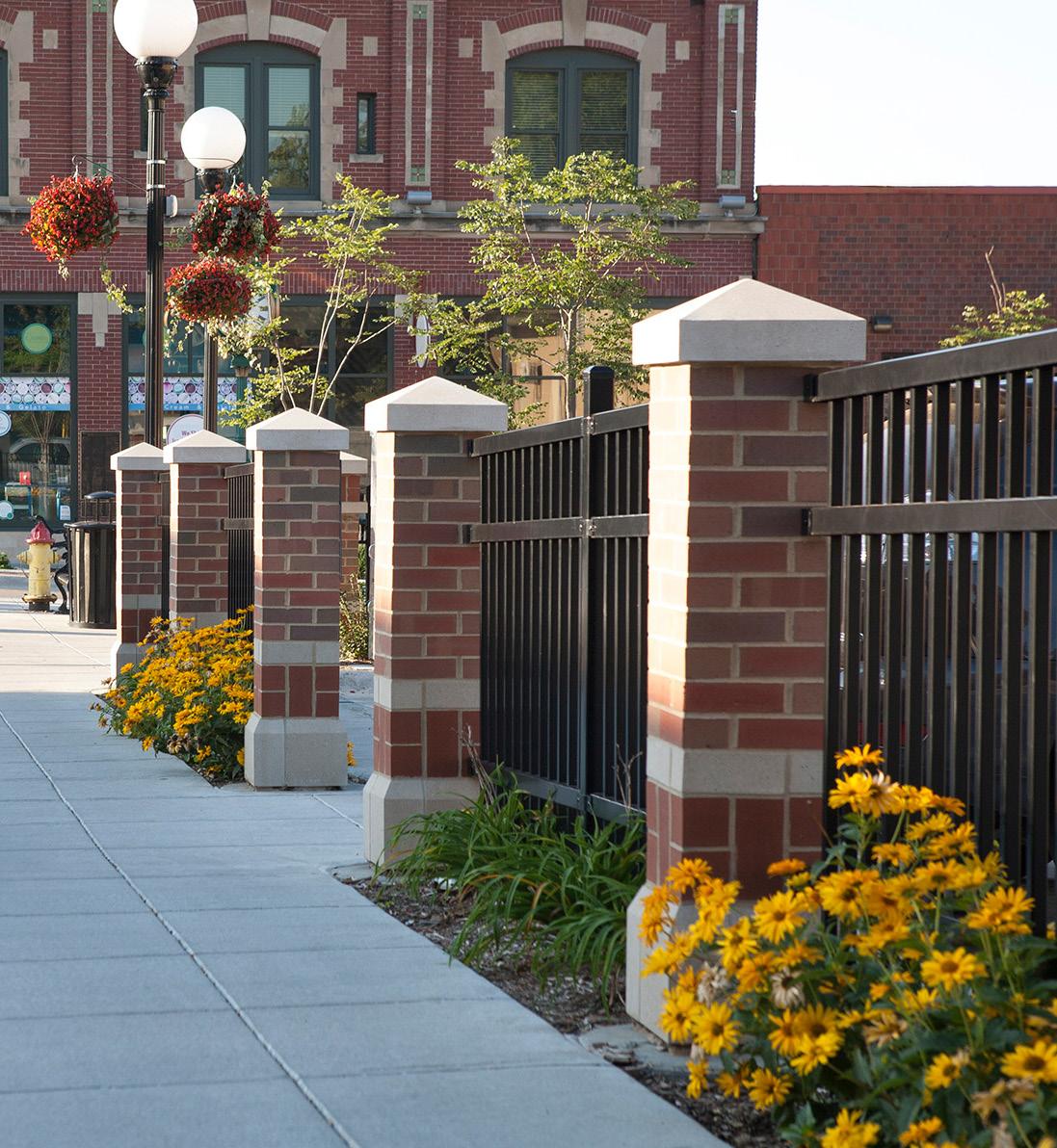
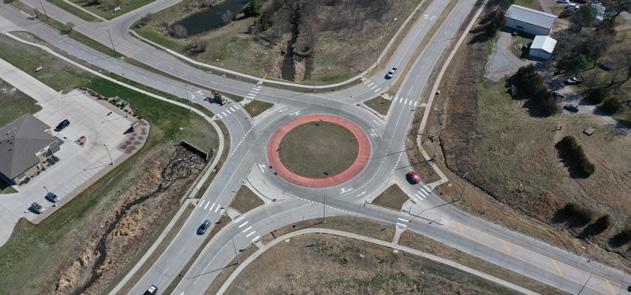
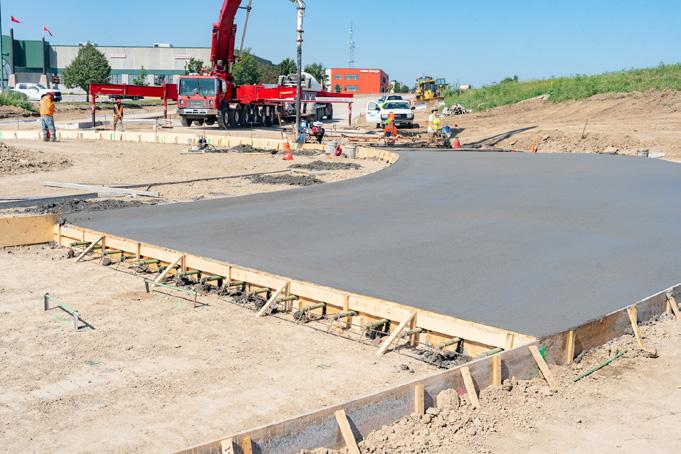
Helping communities move safer, smoother, and more efficiently—one intersection at a time.


Workplace accidents, incidents, and near misses are more than isolated events, they are opportunities to strengthen safety culture, improve operational practices, and reduce long-term risk. For municipalities facing rising insurance costs and increased scrutiny, supervisors play a pivotal role in ensuring that every incident is investigated thoroughly, documented accurately, and used as a learning tool for future prevention.
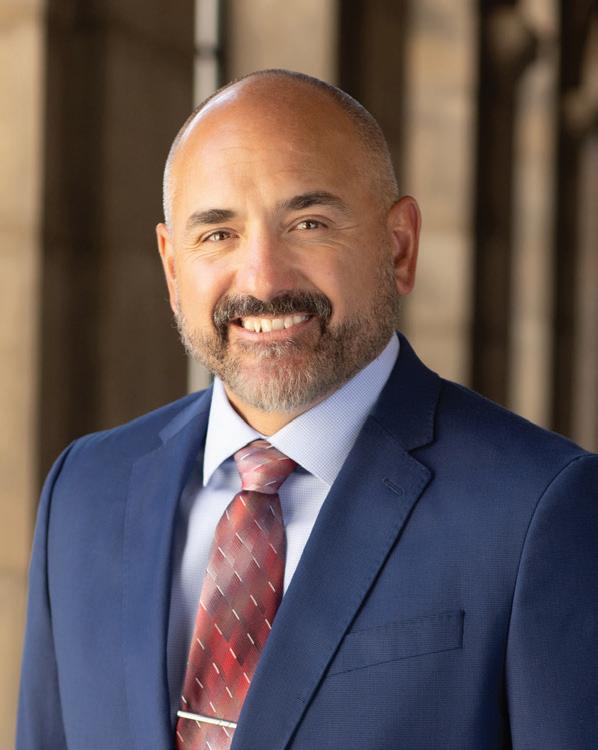
JAMES KELLEY LOSS CONTROL SPECIALIST, LARM
When an incident occurs, the first priority is to ensure the safety and well-being of all involved. Once immediate needs are addressed, supervisors should initiate the investigation with a clear message: the goal is to understand what happened, not to assign blame. This approach encourages openness and honesty, helping employees feel safe to share their experiences without fear of punishment.

In a mid-sized public works department, a sanitation worker slipped while stepping off a truck during icy conditions. The supervisor reassured the employee that the investigation was about improving safety, not discipline. This led to a candid discussion that revealed the truck’s step was often slick due to poor drainage. As a result, anti-slip coatings were added to all fleet steps.
Timeliness is critical. Investigations should begin as soon as possible, ideally at the scene of the incident. This allows supervisors to observe environmental conditions, equipment status, and other contextual factors that may be lost over time. Gathering first-hand accounts while the event is fresh in employees’ minds improves accuracy and helps identify contributing factors that might otherwise be overlooked.
After a parks department employee was injured while using a hedge trimmer, the supervisor arrived on-site within 30 minutes. They noticed the trimmer’s guard was missing, a detail that might have been missed if the investigation had been delayed. This led to a review of equipment inspection protocols and a refresher training on tool safety.
Supervisors should create a space where employees can speak freely and without interruption. Listening actively then repeating the details back to the employee helps confirm understanding and ensures that the account is accurately captured. This technique also builds trust and reinforces the collaborative nature of the investigation. Use phrases like, “Let me repeat what I heard to make sure I understand,” or “Can you walk me through what happened again, step by step?”
Comprehensive documentation is essential. Supervisors should record all relevant details, including:
• Photos of the scene and equipment
• Timelines of events
• Witness statements
• Environmental conditions
• Equipment status
• Root cause analysis
This documentation not only supports regulatory compliance but also serves as a legal safeguard for the municipality. It provides a clear record of the incident and the steps taken in response, which can be invaluable in future audits, claims, or legal proceedings.
Collaboration on Preventive Measures
Involving employees in identifying corrective actions fosters a proactive safety culture. When workers contribute to solutions, they are more likely to support and follow new procedures. This “buy-in” strengthens team cooperation and reinforces the message that safety is a shared responsibility.

Following a near miss involving a street maintenance crew and a distracted driver, the team suggested adding temporary signage and high-visibility cones to their setup. Their input led to a new traffic control checklist that reduced future incidents.
Conduct Post-Incident Training
Once the investigation is complete, supervisors should organize training sessions to review lessons learned and update procedures as needed. These sessions should be inclusive, engaging, and focused on equipping staff with the knowledge and tools to prevent similar incidents.

A water utility department held a post-incident workshop after a valve failure caused flooding in a service area. The training included hands-on valve inspections and a review of emergency shut-off procedures. The result: improved response times and fewer equipment failures.
Effective accident investigation is not just a reactive measure; it’s a strategic tool for building a safer workplace. By approaching incidents with empathy, diligence, and collaboration, supervisors can transform challenges into opportunities for growth. In doing so, they help protect employees, reduce liability, and contribute to a resilient municipal workforce.



Grand Island
Mayor Steele highlighted major projects and community-focused initiatives transforming the municipality
BY SPENCER
SCHUBERT, CITY OF GRAND ISLAND
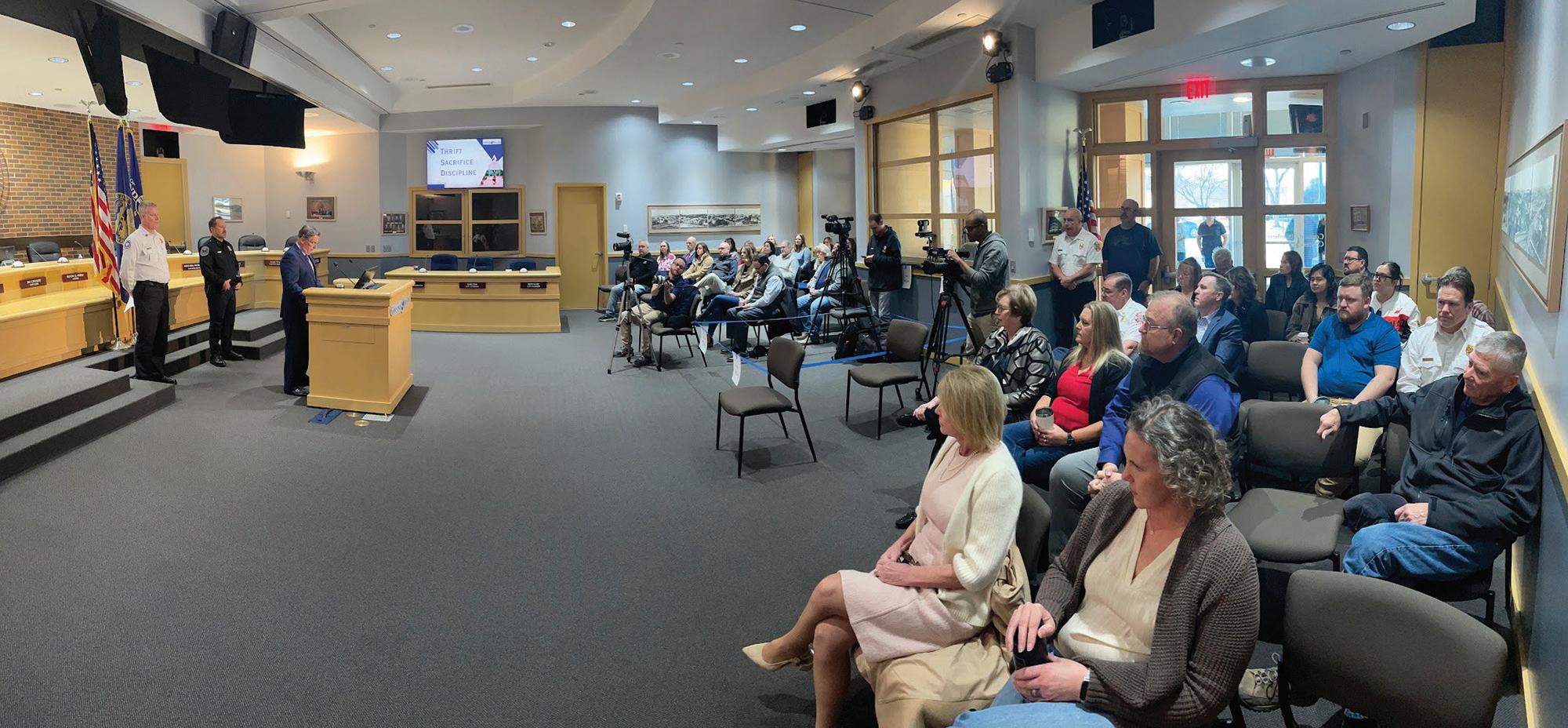
OnJan. 12, Grand Island Mayor Roger Steele delivered his annual State of the City Address, outlining seven years of historic growth, disciplined financial stewardship and a continued commitment to public safety and quality of life for the Grand Island community.
Joined by Grand Island Police Chief Kevin Denney and Fire Chief Cory Schmidt, Mayor Steele emphasized a central theme that has defined his administration: Grand Island has not stood still. He highlighted major economic development projects, infrastructure investments and community-focused initiatives that continue to reshape the city and strengthen its role as a regional destination.
Among the projects highlighted were the redevelopment of the former Veterans Home into housing for veterans, continued growth in regional healthcare facilities, and the soon-to-begin $600 million Good Life District, the largest single development in the city’s history. The Good Life District will include a sports complex, aquatics center, housing, hotels and retail development, providing long-term jobs and opportunities for residents.
Mayor Steele also pointed to quality-of-life investments including Ryder Park stadium renovations, ongoing improvements at Island Oasis Water Park, and the next phase of enhancements to the Stolley Park train area. He announced the creation of a new Nebraska State Park through the combination of Mormon Island and Camp Augustine, calling it a transformative opportunity for tourism, outdoor recreation, and long-term economic impact.
Throughout the address, Mayor Steele underscored his
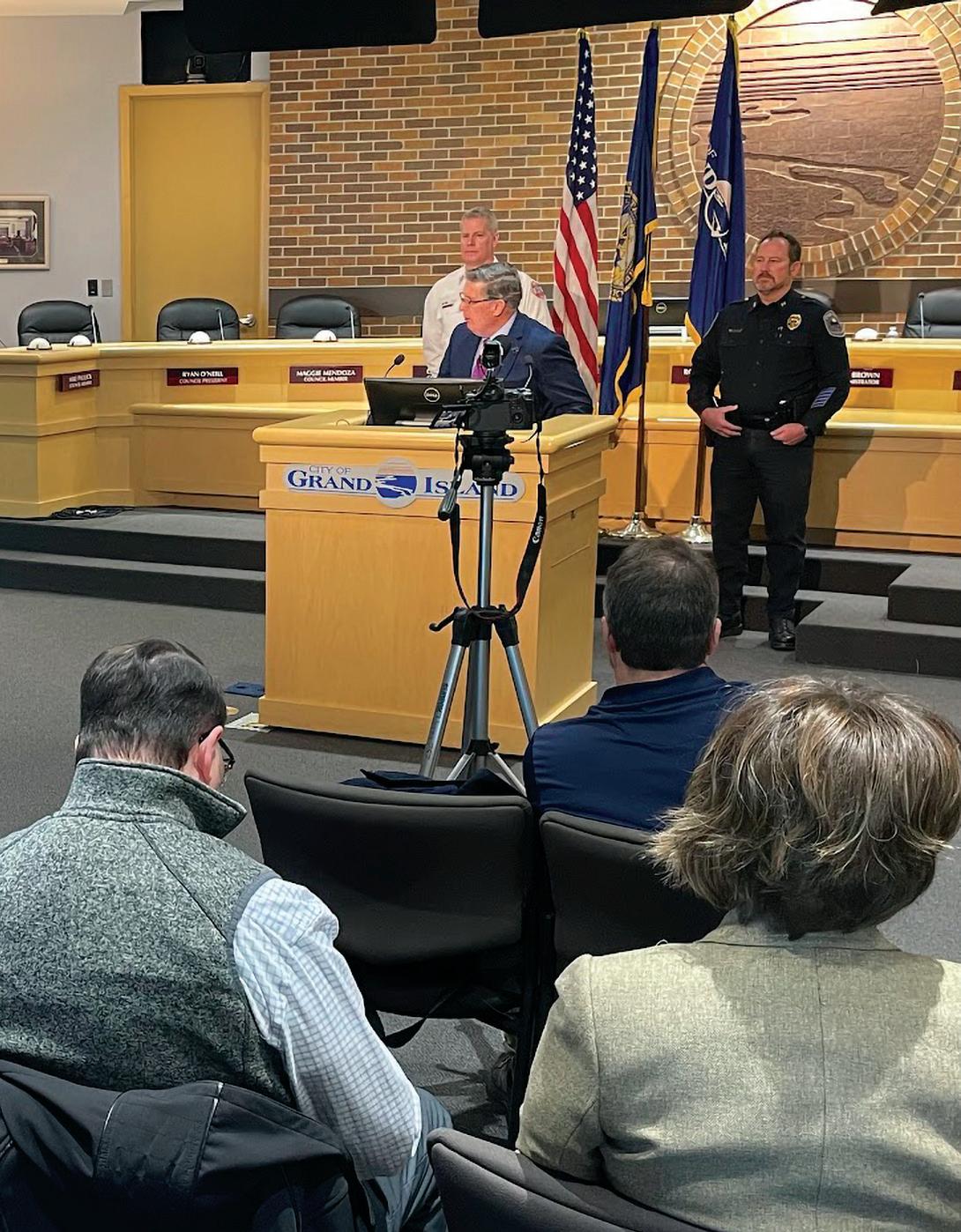
Redevelopment of the former Veterans Home into housing for veterans, continued growth in regional healthcare facilities, and the soon-to-begin $600 million Good Life District were a few of the topics covered in Mayor Steele’s State of the City Address. Photo provided by the City of Grand Island.
administration’s focus on conservative budgeting, disciplined planning and maintaining flat property tax requests for seven consecutive years, while still investing in essential services and future growth. Public safety was identified as the city’s top priority, with Mayor Steele announcing plans to propose adding three police officers and three firefighter-paramedics to ensure staffing levels keep pace with community growth and maintain timely, professional emergency response. He also highlighted recent investments in the Grand Island Fire Department, including a new Fire Station No. 3 and a new ladder truck.
Continued from page 17
“GoodToGo provides an opportunity to further reduce waste, reuse good products, and help promote a more sustainable community,” Kernen said.
Kernan explained that household hazardous waste collected by HazToGo determined to be usable is then made available at GoodToGo. HazToGo will continue to properly manage hazardous materials that are no longer usable.
GoodToGo’s inventory will change regularly and offer items in their original containers with original labels such as:
• Automotive products like motor oil or antifreeze
• Home and garden products like cleaners, ice melt, and fertilizers
• Finishing products like spray paint, stains, and varnish Household hazardous waste facilities that have incorporated reuse have seen a 10% or more increase of collected material diverted from the landfill, decreasing the cost of hazardous waste management, Kernen added.
“The addition of GoodToGo is another step to enhancing sustainable waste management within the community and part of the LincolnLancaster County Solid Waste Management Plan,” she said. Learn more about the GoodToGo reuse store at GoodToGoLNK.com or call 402-441-8021.
Source – City of Lincoln



BY JULIE HARRIS, EXECUTIVE DIRECTOR, BIKE WALK NEBRASKA
The hottest topic for myself and my colleagues right now: the presence of e-scooters, e-motos and other devices that look like e-bicycles but are, in fact, not actually bicycles are making life on our trails, streets and sidewalks more complicated.
Speed and safety are common themes in complaints about these devices, and with good reason. If you are out for a leisurely stroll, taking a dog for a walk, or perhaps out with a child who is just getting started on learning their bike riding skills, it can be nerve-wracking, and sometimes downright dangerous, to have someone pass you at a speed not meant for sidewalks.
We’re starting to see local ordinances being passed attempting to address the issue. Unfortunately, this has resulted in “standard” e-bikes (defined by the 3-tier classification system within state statute) getting lumped into the same category as e-motos battery- or gaspowered devices, without operating pedals, or otherwise not requiring human power to function), and e-scooters.
However, what we’re currently facing isn’t as new of an issue as many think.
Many years ago, I led bike rides for kids. We regularly practiced the group riding techniques of riding single file and relaying messages from the leader back through the pack; any time “rider up!” echoed behind me, it made me smile.
One morning, our group was rolling along nicely when I heard distressed sounds from behind. About that same time, a rider on a high-end bike blew past and cursed at me about “getting those $%$^% kids under control.”
Rude, disrespectful behavior and unsafe speeds can just as easily be experienced from someone riding a bicycle powered only by quads of steel, as someone on an electricpowered device.
The market for e-devices is outpacing the policy, creating a sense of urgency, but sound policy needs to be thoughtfully considered for it to be effective.
State statute prohibits bicycles on interstate highways and officially designated freeways. Local ordinances that further restrict e-bikes on certain roads are punitive to people who need/use their bikes to get to work, school or exercise. Further, many of the ordinances are nearly impossible to enforce on a practical level. Visually, it can be difficult to differentiate between a standard bike, an e-bike, and an unclassified e-moto. Speed enforcement equipment isn’t necessarily calibrated for bicycles, and local law enforcement likely doesn’t have the capacity to add this to the list.
Bike Walk Nebraska is actively working with several communities and organizations to find a set of solutions to alleviate safety concerns while maintaining access for all.
If your community is considering adopting an ordinance on this issue, we respectfully ask you to consider pausing until sound recommendations are developed. We encourage you to be in touch with input on the issue as well.
This is a priority issue for us, and we look forward to updating you on our recommendations.
Columbus residents will soon have the chance to grow their own fruits and vegetables right in their backyard - well, the city’s backyard, that is.
BY MATT LINDBERG, CITY OF COLUMBUS
The Columbus Parks and Recreation Department is bringing a community garden to Frontier Park, offering residents an opportunity to reserve plots and cultivate fresh produce later this year.
The idea grew from a single email. Cassandra Bormann, a Columbus resident, reached out to the Parks Department last year with a simple question: “Could the city create a space where residents without yards could garden?”
“I got into gardening last year at work, and I thought, ‘Why not have one for the community in general?’”
Bormann said, noting she doesn’t have her own garden because she lives in an apartment complex. “Fresh fruits and vegetables anytime in the year would be really nice.”
Parks Coordinator Nick Zakrzewski said Bormann’s email sparked the project.
“It gave me the idea to reach out to Columbus High School, and their shop class built garden boxes for us within a week,” he said.
Great Plains Lumber donated the materials, even delivering them to the site, while No Swett Fencing donated and installed the fencing around the garden. Zakrzewski said the Parks Department is appreciative of CHS, Great Plains Lumber and No Swett Fencing for their generosity.
The garden’s exact placement in Frontier Park is still
being finalized to avoid low-power lines. Zakrzewski said he expects the garden to open in April, with plot reservations starting Feb. 1.
Columbus residents can reserve one plot per household for $50, with remaining plots later available for additional residents or non-residents at $70.
“It’s all legal vegetables,” Zakrzewski said, noting participants can review the guidelines and contracts online via the Parks Department website.
Parks Director Sydney Mroczek emphasized the communitydriven nature of the project, noting there will be 16 garden beds initially.
“A resident came to us with an idea, and we made it happen,” Mroczek said. “It’s a great example of how we listen and respond to our citizens.”
Bormann is already planning her own garden plot.
“I’m thinking a salsa garden for part of it,” she said.
She’s also encouraging fellow residents to sign up and explore what they’d like to grow.
“Walk around and see what you’re interested in growing. It’s exciting to know your idea moved forward and is becoming a reality,” she said.
From concept to construction, the Columbus Community Garden at Frontier Park demonstrates the city’s commitment to collaboration, healthy living, and giving residents a chance to cultivate not just plants, but community connections.

BY TARA A. STINGLEY, CLINE WILLIAMS WRIGHT JOHNSON & OLDFATHER, L.L.P. *
On Jan. 5, 2026, the U.S. Department of Labor (DOL), Wage and Hour Division, issued an Opinion Letter addressing the use of leave under the Family and Medical Leave Act (FMLA) for time spent traveling to and from medical appointments related to a serious medical condition.i The DOL clarified that employees may use FMLA leave for such travel time, and that a health care provider’s medical certification does not need to include any information regarding travel time to be valid under the FMLA.
Under the FMLA, eligible employees with serious health conditions, or eligible employees who care for a qualifying family member with a serious health condition, are entitled to medical leave.ii The FMLA defines serious health condition to include the immediate effects of the condition on the employee, as well as continuing treatment of the condition by a health care provider.iii Employers can require employees to submit medical certification from their health provider.iv Employees must, to the extent feasible, attempt to coordinate their medical treatment schedule with their employer to minimize disruptions.v
A covered employer under the FMLA includes privatesector employers who employ 50 or more employees in 20 or more workweeks in either the current or the previous calendar year.vi Public agencies are also considered covered employers under the FMLA, regardless of the number of employees
If an employee works for a covered employer, the employee is eligible for FMLA leave only if they have worked for at least 12 months, have at least 1,250 hours
of service with the employer during the 12 months before their FMLA leave starts, and work at a location where the employer has at least 50 employees within 75 miles.vii Thus, a public agency, including federal, state, or local employers, may be a covered employer without any covered employees if the agency does not employ more than 50 employees within 75 miles.viii
The DOL’s Opinion Letter makes clear that eligible employees may use FMLA leave for time spent traveling to a health care provider, because travel time is “part and parcel of obtaining care and continuing treatment[.]” But, the FMLA does not cover instances in which an employee leaves a medical appointment and chooses not to return to work, despite the physician releasing the employee for a half-day or light-duty work. Nor does the FMLA cover time spent detouring during travels to and from medical appointments.
The DOL’s Opinion Letter additionally clarified that the FMLA does not require health care providers to provide information about an employee’s travel time. The FMLA limits health care provider’s medical certifications to the medical facts within their knowledge.ix
The DOL provided several examples of travel time under the FMLA, including the following:
• David is an eligible employee who requests intermittent leave to take his mother to her biweekly doctor’s appointments for the treatment of a serious health condition. David provided a medical certification to his employer explaining that his mother must attend an estimated 30-minute appointment every other week. Every other week, David leaves his job site, drives to
his mother’s house, picks her up and drives her to her appointment, and drives her home before returning to work. The amount of time David needs to travel, wait for his mother’s appointment to begin and end, and assist his mother when she returns home, varies. David typically uses between two to two and a half hours every other week for the care of his mother. This leave is FMLA-protected and counts against his FMLA entitlement.
Rick requests leave from work to accompany his child on his child’s high school band trip. His child has a chronic serious health condition but does not have any episodes of incapacity or need for care during the trip. Any time Rick takes off work to travel on the band trip would not be covered by the FMLA because the leave is unrelated to his child’s serious health condition.
For employers, the DOL’s Opinion Letter provides two practical lessons. First, eligible employees may take FMLA leave not only for the actual appointment, but also for the time spent traveling to and from the appointment. Second, the DOL’s Opinion Letter appears to limit an employer’s ability to request documentation of an employee’s travel time from the employee’s health care provider because the FMLA does not require health care providers to estimate or certify their patient’s travel time. That said, requesting employee verification of travel time can ensure accurate tracking of FMLA leave.
* Special thanks to Delaney S. Stekr, law clerk for Cline Williams, for her assistance in the preparation of this article.
Editor’s Note: This article is not intended to provide legal advice to its readers. Rather, this article is intended to alert readers to new and developing issues. Readers are urged to consult their own legal counsel or the author of this article if they wish to obtain a specific legal opinion regarding their particular circumstances. The author of this article, Tara A. Stingley, can be contacted at Cline Williams Wright Johnson & Oldfather, L.L.P., 12910 Pierce Street, Suite 200, Omaha, NE 68144, (402) 397-1700, tstingley@clinewilliams.com or www.clinewilliams.com
See U.S. Department of Labor, Wage and Hour Division, Opinion Letter FMLA2026-2, available at https://www. dol.gov/sites/dolgov/files/WHD/opinion-letters/FMLA/ FMLA2026-2.pdf.
ii 29 U.S.C. § 2612(a)(1).
iii 29 U.S.C. § 2611(11).
iv 29 U.S.C. § 2613(a); 29 C.F.R. § 825.305(a).
v 29 U.S.C. § 2612(e)(2); 29 C.F.R. § 825.302(e), (f).
vi 29 C.F.R. § 825.108.
vii
29 U.S.C. § 2611(2).
viii 29 U.S.C. § 2611(2)(B)(ii); 29 C.F.R. § 825.108(d) (stating “employees of public agencies must meet all of the requirements of eligibility, including the requirement that the employer (e.g., State) employ 50 employees at the worksite or within 75 miles.”).
ix 29 U.S.C. § 2613(b)(3).




BY RISA WILKERSON, EXECUTIVE DIRECTOR OF HEALTHY PLACES BY DESIGN
The need for strong mental health has never been greater, but there are now clear actions municipal leaders can take to help their residents. Community-level approaches that focus on reducing social isolation and building social connections play a crucial role in mental health. Social connections create feelings of belonging and being valued, which are essential for human flourishing and well-being. Research shows that strong social bonds can protect against serious mental and physical health issues, and individuals with better social connections tend to live longer, healthier lives. Additionally, social isolation and loneliness are linked to increased risks of mental health conditions, highlighting the importance of maintaining relationships. Engaging in social interactions not only enhances emotional well-being but also contributes positively to brain health.
Municipalities that foster social connections can reap numerous benefits, including:
Enhanced connection and collaboration build trust among residents and between them and local government. This makes residents more likely to participate in addressing local issues and strengthens greater civic participation.
Better Health:
Better social connections lead to improved resident mental and physical health, positively impacting the workforce and healthcare systems.
Improved Safety:
Socially connected municipalities have lower rates of crime and violence; their residents feel safer and are more likely to collectively take action to take care of each other and prevent crime.
More Resiliency:
When people feel an emotional connection to their community, the local economy grows and is more resilient against economic downturns. It also helps people be more prepared for and recover from emergencies and unexpected crises.

Social connectedness can be integrated into community-level strategies that address root causes of poor health and social isolation. Here are five steps municipal leaders can take. Explore them further in Healthy Places by Design’s Socially Connected Communities: Solutions to Social Isolation (PDF) report.
When designed and managed well, public spaces provide residents with accessible places to interact with each other and their government, experience cultural activities, access nature and gain a sense of belonging. Municipalities can co-create public spaces with residents to ensure they are inclusive, healthy and safe for all ages. This includes maintaining their quality and ensuring access regardless of weather as well as supporting activation strategies for healthy social interaction through hosting programs and events.
Safe, accessible, and affordable transportation options connect people to jobs, education, health care, childcare, social services, and other critical resources that foster social connection. Public transportation, walking and bicycling networks can provide opportunities for meeting others, starting conversations and building trust in neighbors and institutions. By investing in these networks and other elements that enhance public life — like walking school bus programs (a supervised group of children walking to school together) and play streets (temporarily closing sections of streets for play) — municipalities can cultivate stronger communities and a greater sense of belonging.

As municipal leaders consider the design of housing developments, they can co-locate community centers, green spaces, neighborhood parks, playgrounds and dog parks nearby to draw people together. Mixed-use developments improve access to various services and resources, which reduces transportation-related challenges and typically increases street-level activity. Increased activity on streets improves safety and provides opportunities for spontaneous interaction with others.
When designing places, programs or policies, include the people for whom those efforts are intended: your constituents. This helps to align solutions with community or cultural values and builds trust in government leaders. Meaningful community engagement can strengthen a sense of belonging for residents. There are many ways municipalities can engage residents meaningfully, such as incorporating practices and policies that increase participation opportunities (i.e., childcare, transportation, meals) in public input processes. This may also look like partnering with grassroots and nonprofit organizations that have established relationships in the community and can elevate practices rooted in culture.
All sectors have a role to play, and their efforts become more effective when social connectedness is a community-wide priority and norm. City leaders can pair a Social in All Policies framework with approaches that are trauma- and resilience-informed. Such efforts are responsive to lived experiences and open the door for conversations about co-creating a shared vision for a future where everyone experiences absolute belonging and well-being.
The opportunities for municipal leaders to strengthen social connections are endless. By embracing and building upon these five action steps, municipalities can combat social isolation and build stronger, healthier communities for all.
Across the state winter storms and winter weather are something we all have experience with. Worries about the bitter cold temperatures and potential for heavy snowfall are often in the back of our minds during the winter months. Staying aware of the weather can help you stay safe. These tips from the Federal Emergency Management Agency (FEMA) can help prepare you for any winter weather challenges you might encounter.
When traveling in extremely cold weather, preparation is key to staying safe and warm. Before heading out, take steps to ensure you’re ready for the conditions and know how to protect yourself from the risks associated with extreme cold, such as frostbite or hypothermia.
Dress Properly: Wear a warm coat and dress in layers to regulate your body heat. Make sure to cover exposed skin, especially your nose, ears, fingers and toes, as these areas are most vulnerable to frostbite. Hats and scarves help retain body heat, and mittens are more effective than gloves for keeping your hands warm.
Stay Warm: Limit the time you spend outside in extreme cold. If you must be outdoors, take breaks in warm, sheltered areas to avoid prolonged exposure low temperatures.

Footwear: Choose shoes or boots with sturdy, nonslip soles to prevent falls on icy or snowy surfaces.
Additional supplies: Bring blankets, extra clothing or hand warmers for extra heat, if needed.
Watch for Frostbite and Hypothermia: Be aware of frostbite signs, such as numbness, white or grayish-yellow skin, or skin that feels unusually firm. Hypothermia symptoms include shivering, slurred speech, confusion and exhaustion. If you notice these signs, seek warmth immediately.
Stay Dry: Wet clothing increases heat loss, so avoid wearing items soaked by snow, rain or sweat. If your clothing becomes wet, change into dry layers as soon as possible.
• Seek medical attention as soon as possible.
• Go to a warm room or shelter.
• Change out of wet clothing.
• Wrap up in warm layers of blankets or clothing.
• If you can, sip on warm fluids to stabilize your body temperature.
• If experiencing frostbite, place affected areas in warm-to-touch water. Never place body parts in extremely hot water or in front of a fireplace, heat lamp, radiator or stove, as this can harm people with frostbite further.
Home heating is the second-leading cause of fires, and winter is when most household fires occur. Fifty percent of carbon monoxide incidents reported to local fire departments occur between November and February, peaking in December.
The following tips can prevent emergencies and ensure a warm and safe home:
• Keep anything that can burn at least three feet from heat sources, including fireplaces, wood stoves, radiators, portable heaters, or candles.
• Install and test smoke alarms and carbon monoxide detectors with battery backups.
• Clean dust or other build-up in heat sources.
3.

• Always plug space heaters directly into an outlet, and make sure the cord isn’t damaged or frayed.
• Maintain heating equipment and chimneys by having them cleaned and inspected each year by a professional.
Winter storms may bring power outages that can disrupt communications, utilities, and complicate medical needs.
• Do not use a gas stove or oven to heat your home. Doing so can put you at risk for carbon monoxide poisoning.
• Keep freezers and refrigerators closed. Throw away any food that has been exposed to temperatures 40 degrees or higher for two hours or more, or that has an unusual odor, color, or texture.
• Have alternate plans for medications or medical devices if they require refrigeration or depend on power.
• Disconnect appliances and electronics to avoid damage from electrical surges.
• Check with your local or state officials to locate the nearest community location with power if you can’t safely heat your home.
Portable generators can be useful but can cause injuries and death if not used safely.
If you’re using a generator, remember these tips:
• Never use generators indoors. ONLY use them outside, in well-ventilated areas away from doors, windows, and vents. Make sure your generator exhaust is pointed away from your home and is at least 20 feet from your house and/or garage before using.
• Do not use a generator in a wet area. This practice may lead to shocks or electrocution.
• Do not fuel your generator while it is running. Spilling gas on a hot engine can cause a fire.
PHOTOS AND
PROVIDED BY THE CITY OF LA VISTA
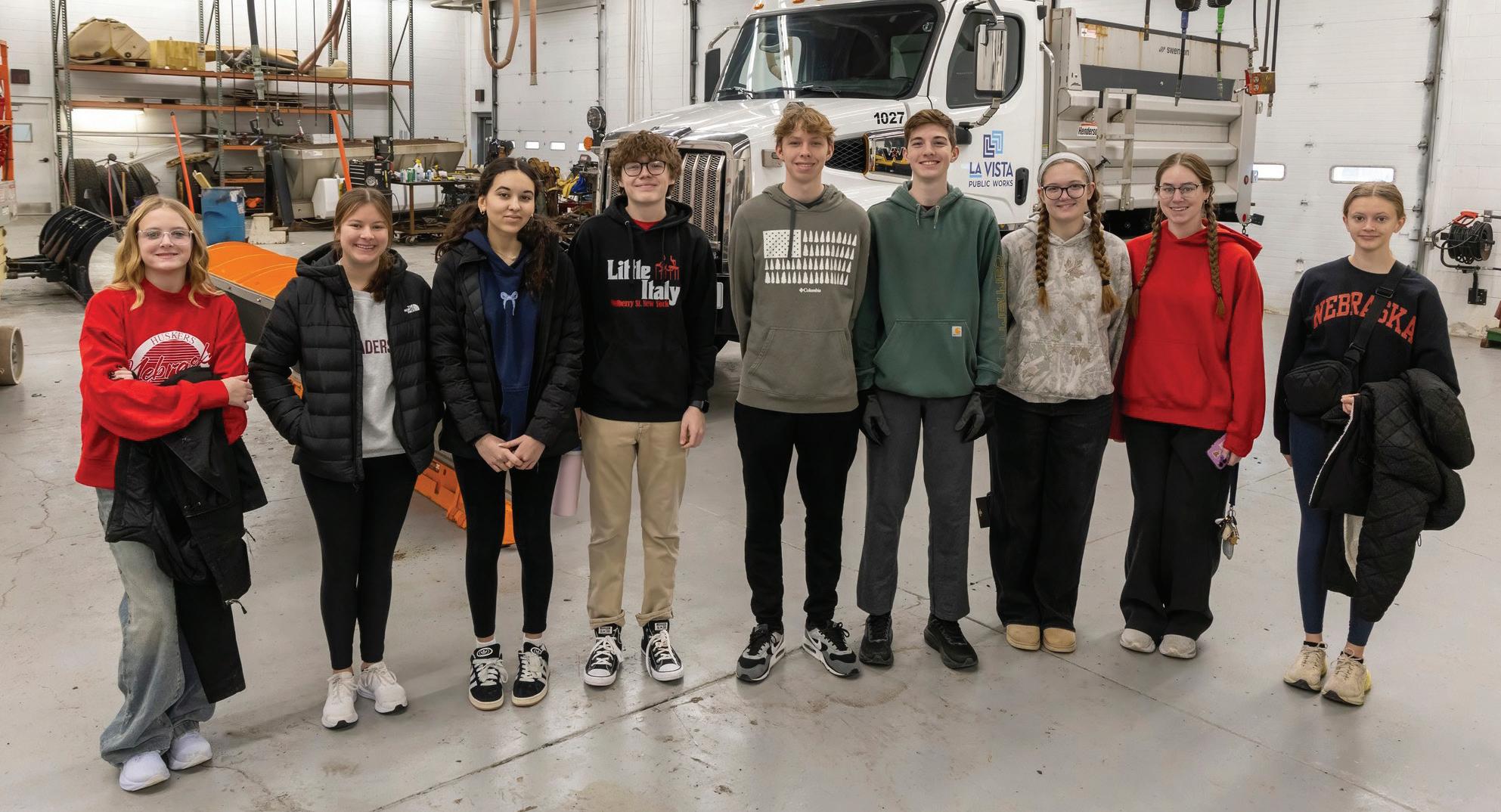
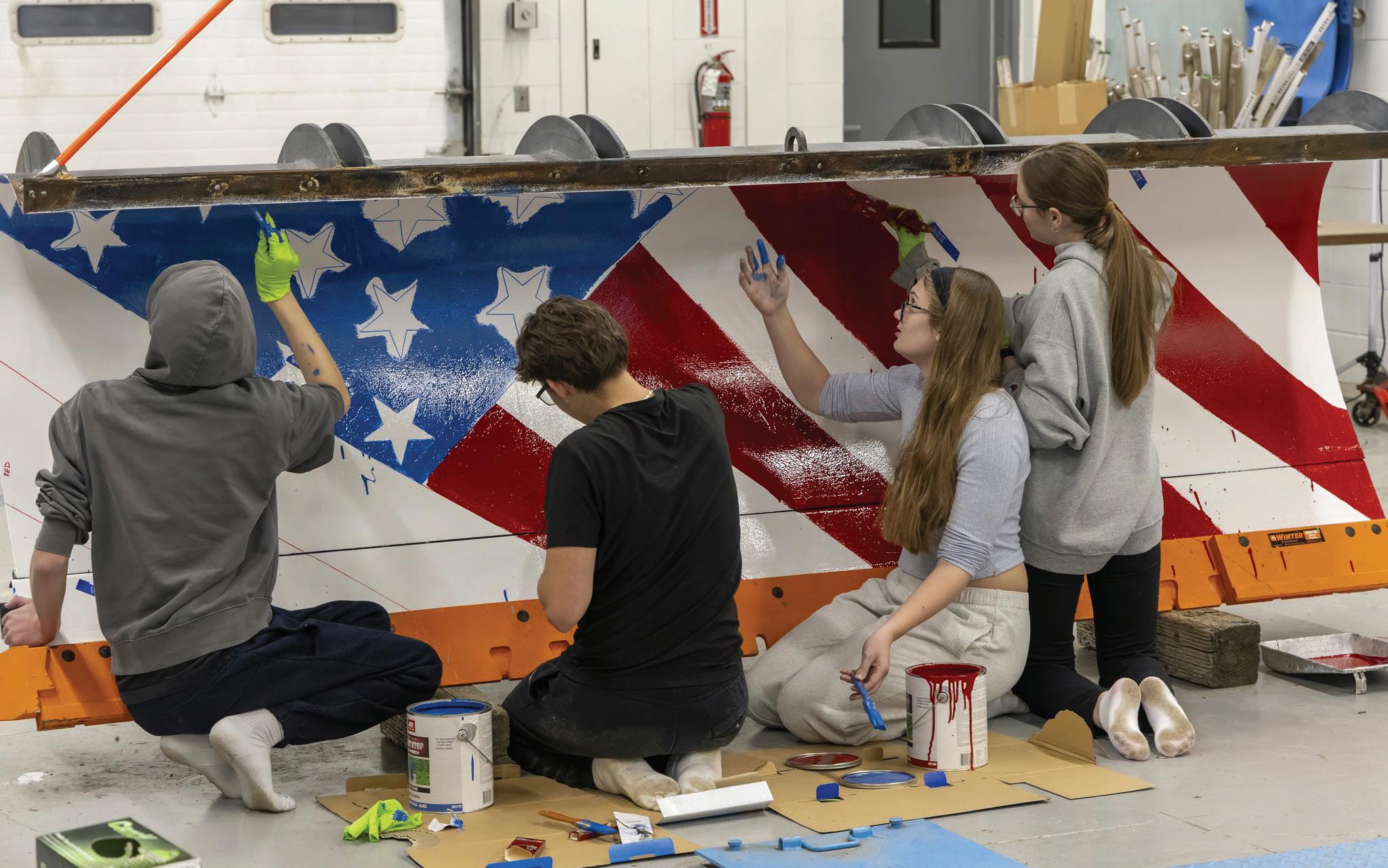
LaVista’s Mayor’s Youth Leadership Council recently dropped off bagels and coffee for public works employees. Students wanted to thank the crews who work long hours during holidays and throughout the winter to plow streets and keep roads safe. This turned into a fun learning opportunity for the students. They were able to speak with public works staff, ask questions and even try driving a snowplow (with supervision in the parking lot)!

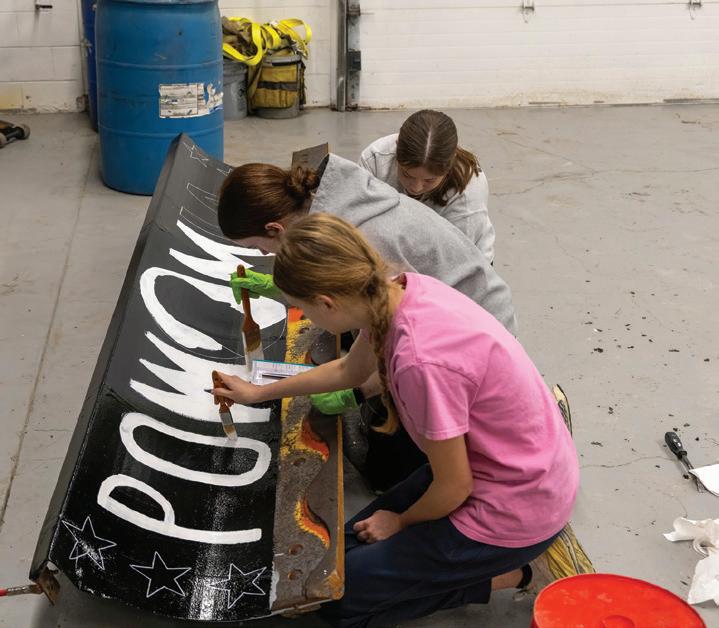
Several Youth Council members also recently volunteered their time and talents to make over a couple of the city’s plow blades. The fresh paint job is impressive. Watch for the students’ artwork around town the next time it snows.
The La Vista youth council is comprised of teens in grades 7-12 who live in the community and want to learn more about leadership and public service.