League of Nebraska Municipalities
February 2026
Local Leaders in Action: Preparing Cities for Extreme Winter Weather
Julia Merlo, Program Specialist for Marketing & Communications at the National League of Cities (NLC)
With a significant winter storm expected to hit many regions this weekend, local leaders are activating response plans to prepare their communities – focused on protecting people, keeping daily services moving and ensuring neighborhoods remain safe for everyone.
In cities, towns and villages of every size, municipal officials are putting winter weather response plans into motion, communicating with residents and partnering with community members to bolster resilience before, during and after snowstorms. At the National League of Cities (NLC), we see every day that winter response works best when local leaders and residents work together.
Planning and Coordination
Before the Storm
Local governments don’t wait until the first flake falls to act. In advance of forecasted storms, city leaders activate winter response plans that draw on months of preparation: public works teams pre-treat major roads, emergency managers communicate parking rules and snow ordinances and departments coordinate to ensure resources are staged where they’re needed most. These efforts are
1335 L Street
Lincoln, NE 68508
(402) 476-2829
info@lonm.org
anchored in a clear priority –keeping emergency access routes passable so that ambulances, fire crews, emergency responders and transit can continue to operate safely.
However, local leaders also know that municipal resources are limited. That’s why they are intentional about equipping residents with information and encouragement to support block-by-block safety while crews are responding citywide.
Neighborhood Accessibility Starts With Leadership and Communication
One of the core messages local leaders are emphasizing this winter is that neighborhoodlevel accessibility matters. Local leaders across the country are reminding residents that city snow crews typically focus first on primary thoroughfares. That means sidewalks, curb ramps, steps, hydrants and shared walkways may not be cleared immediately, even though residents need them to access transit, work, school and essential services.
Local leaders are sharing guidance early and often:
• Remind residents of snow ordinances and sidewalk clearing responsibilities to
improve predictability.
• Communicate parking restrictions so plow drivers can do their jobs efficiently.
• Encourage early shoveling and treatment of high-traffic pedestrian areas to reduce icy conditions and prevent injuries. By proactively engaging residents in the response conversation, local leaders can ensure that everyone understands how municipal efforts and community action combine to keep people safe and connected.
Preventing Injuries Through Shared Responsibility
Public safety is a top priority during winter weather events, and small actions can make a big difference. Local emergency responders emphasize that prevention starts with awareness – knowing your city’s winter rules, clearing snow before it turns to ice and treating walkways with salt or sand. When
Continued on page 2
Lash Chaffin
Preparing Cities for Extreme Winter Weather
Continued from page 1 and strengthening community bonds, which in turn reinforces resilience during emergencies.
residents take these steps, they help reduce the risk of falls, promote mobility for neighbors of all ages and abilities and lessen demand for emergency responders who are already stretched thin during storms.
Supporting Vulnerable Neighbors With Respect
Winter weather doesn’t impact everyone equally. Older adults, people with disabilities and those who are homebound face particular challenges when snow and ice accumulate. Local leaders are encouraging neighbor-to-neighbor outreach that is both respectful and empowering – offering help rather than assuming what’s needed.
City communications often highlight this simple principle: Ask before acting. A respectful offer to shovel a sidewalk or salt a walkway goes a long way in building trust
Working Together in Shared Spaces
In multi-unit buildings or rental properties, snow removal responsibilities can be confusing. Local leaders encourage property managers to communicate with tenants about snow removal schedules, and residents are encouraged to collaborate with neighbors to ensure shared entrances and walkways remain accessible. Together, these actions improve neighborhood safety and highlight the importance of neighbors helping one another.
Leadership, Proximity, and Preparedness
Local government leaders understand that their proximity to residents is their superpower – and in moments of extreme weather, that
closeness enables rapid response and meaningful communication. By activating and articulating clear plans, engaging residents as partners and elevating communitybased action, local governments ensure that their cities remain safe, connected and resilient.
Additional Resources for Local Leaders
The National League of Cities offers practical guidance to help cities prepare for and respond to extreme weather. Local leaders can explore tips on how to utilize social media during extreme weather to keep residents informed in real time, as well as key considerations for planning future extreme weather events to strengthen long-term resilience. Together, these resources support clearer communication, better coordination and safer communities before, during and after severe weather.


Engineering a world where everyone thrives.
2026 Snowball Conference held
By Jackson Sash, Utilities Field Rep./Training Coordinator
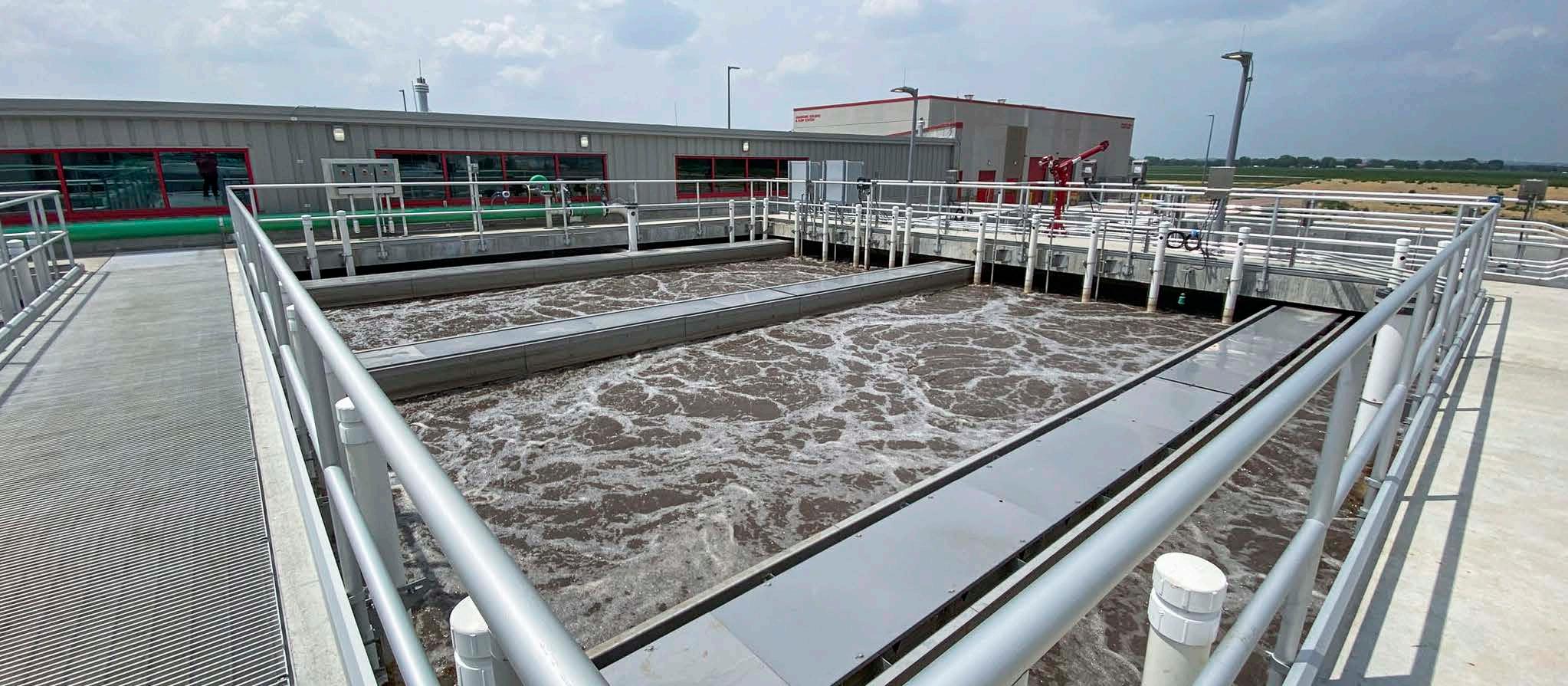
The 35 th Annual Snowball Wastewater Conference took place Jan. 28-29, 2026, at the Kearney Holiday Inn. This event was jointly organized by the League of Nebraska Municipalities-Utilities Section and the Nebraska Water Operators Committee (NWOC) of the Nebraska Water Environment Association (NWEA), which is part of the National Water Federation (WEF).
This year’s conference saw a strong turnout, with approximately 208 attendees, including 151 wastewater operators. Over the past 35 years, more than 8,050 operators, engineers, and wastewater industry professionals have participated in this event, accumulating over 354 hours of wastewater recertification credit. For 2026, licensed wastewater operators earned 10 hours toward their relicensing, while water operators received up to 6.5 hours for grades 1-4 depending on the sessions attended. Seven of this year’s sessions were eligible for water credit. While certificates were not issued this year, hours were
recorded on the League’s website (lonm.org) and submitted to the state for inclusion in operators’ portal records. The League maintains Snowball attendance records with hours for the past two years on its website. Operators are responsible for tracking their own continuing education credits. Those with questions regarding their hours should contact the League office. The conference agenda covered a range of topics relevant to wastewater professionals. The Jan. 28 morning sessions included discussions on sanitary sewer basic maintenance, low pressure sewer, water chemistry basics, NPDES support services, Nebraska 811 safe digging and damage prevention, and noxious weed control around lagoons. Afternoon sessions featured presentations on lead service line replacement, sanitary sewer rehabilitation, advances in water meters and AMI, NPDES Compliance & DMR submissions, generators, and clarifier center drive maintenance.
On Jan. 29, the day began with a series of updates from the League, NWEA, NWOC, and the NDWEE wastewater program. Following a

short break, we jumped into a Q&A with employees from the NDWEE wastewater program. To end the conference, we had a session on customer relations and regulations and a safety presentation.
The conference featured an impressive lineup of speakers, including Monte Dakan (Johnson Service), Ryan Turnbull (Iowa Pump Works), Mark Pomajzl (JEO Consulting), Jill Geyer (Nebraska 811), Brent Meyer (Lancaster County Weed Control Authority), Tim Korby & Brian Hare (SEH inc.), Paul Hurley (Xylem Inc.), Will Ford (Core and Main), Mason Rohrich (Nebraska Generator Service), Chris Johnson (Gurney & Associates), Joel Jirak (Olsson), Lash Chaffin and Jackson Sash (LNM), and NDWEE representatives Mike McBride, Phillip Halstead, Jeff Sittle, Jian Li, and Madison Feilmeier.
A big thank you goes out to the Holiday Inn for once again providing outstanding facilities and catering. Appreciation is also extended to the companies that contributed through exhibits, presentations, or sponsorship, ensuring another successful event.
Continued on page 4
2026 Snowball Conference held
Continued from page 3 Service, Inc.
Companies supporting the 2026 Snowball Conference:
• Armor Equipment
• Atlas Automation LLC
• Automatic Systems Co
• CIT Sewer Solutions
• Core & Main
• EES Engineered Equipment Solutions (A UFT Company)
• Electric Pump
• GPM Environmental Solutions LLC
• Gurney and Associates
• HOA Solutions, INC.
• Hydraulic Equipment
• Iowa Pump Works
• JEO Consulting
• Johnson Service Company
• Lancaster County Weed Control Authority
• Lincoln Winwater
• MacQueen
• Mellen & Associates
• Miller & Associates Consulting Engineers, P.C.
• Municipal Pipe and Tool
• Nebraska 811
• Nebraska Department of Water, Environment, & Energy
• Nebraska Generator Service
• Northwest Electric
• Olsson
• OTC Industrial
• Predictive Maintenance Technologies
• Rose Equipment
• Schemmer
• SEH Inc.
• USDA Rural Development
• Vessco Inc.
• Viking Industrial
• Xylem Inc.
Those listed in BOLD are 2025 -26
Continued on page 6
Classifieds
City Administrator. The City of Burwell is accepting applications for the position of City Administrator. The City of Burwell is the county seat of Garfield County and has approximately 1,200 residents. Burwell is located seven miles from the Calamus Reservoir in Central Nebraska. The municipality owns, operates, and provides electric, water, and wastewater services to its residents. Law enforcement is under the direction of the County Sheriff’s Department. This position requires comprehensive knowledge of municipal finance, expertise in city, state, and federal laws, regulations and guidelines, strategic planning, and supervisory skills. Individuals should possess a degree in a related field and/or possess a level of education that together with experience and training gives the required knowledge and experience to perform the duties as City Administrator. This person serves the community at the direction of the Mayor and City Council. Salary is negotiable based on experience and qualifications and includes competitive benefits. Interested candidates
should contact the City Office at 404 Grand Avenue (PO Box 604), Burwell, NE 68823 or phone 308-3464509. Completed application along with a cover letter and resume should be mailed or delivered to the city office address above or emailed to cityofburwell@nctc. net and will be accepted until the position is filled. The City of Burwell is an equal opportunity employer. Utility Office Manager. The City of North Platte is seeking a Utility Office Manager to direct the daily operations of the utility office; manage and participate in customer service activities; interpret administrative decisions and policies as they apply to the operation of the utility office. Supervise utility office personnel; plan, organize, and assign the work of customer service representatives, utility billing and collection employees; direct smooth office workflow. Coordinate the scheduling of utility office staff to ensure uninterrupted service to the public. Full-time exempt. Salary range $91,000–$122,000 per year. For the complete job description, abilities, qualifications, and to apply, please visit www. northplattene.gov/Jobs.aspx and click on the full description for the Utility Office Manager or on Indeed at https://www.indeed.com/viewjob?jk=9596bbc2c5f 13a37&from=shareddesktop_copy.
Water/Wastewater Operator. The City of Tekamah is accepting applications for a full-time Water/ Wastewater Operator. Qualifications include State of NE Grade IV Water Operator, Grade VI Backflow, and State of NE Class L Wastewater Operator Certifications, or the ability to obtain all three certifications. Preemployment drug test required. Applicants must be at least 18 years old, have a high school diploma and hold
Continued on page 6
Ideas Transform Communities
At HDR, we’re helping our clients push open the doors to what’s possible, every day.
hdrinc.com
Utilities Section Newsletter
Classifieds
Continued from page 5
a valid Nebraska driver's license. Application and job description may be requested at: City Office, 1126 S 13th Street, Tekamah, NE 68061 or tekwater2@tekamah.net. Applications will be accepted until position is filled. Equal opportunity employer.
February 2026
2026 Snowball Conference held
Continued from page 4
League/Utilities Section Associate Members. Looking ahead, the next four Snowball Wastewater Conferences are scheduled and contracts signed with the Kearney Holiday Inn:
Utilities Section members only
• Jan. 27-28, 2027
• Jan. 26-27, 2028
• Jan. 31-Feb. 1, 2029
• Jan. 30-31, 2030
We look forward to seeing everyone again next year for another great event!
Do you have equipment to sell or a position to fill? Place your ad in the Classifieds section of the Utilities Section Newsletter for free. This service is a membership benefit. Contact Brenda at the League office at 402-476-2829, fax to 402-476-7052, or email brendah@lonm.org.

Utilities Section Newsletter
2026 Training calendar
Visit our website for a complete list of workshops and conferences.
February
Feb. 11 Solid Waste Transfer Station Workshop Fire Training Center, Norfolk
Feb. 17-18 .... Nebraska Meter School .............................................. Holiday Inn, Kearney
Feb. 23-24 .... Midwinter Conference ................................................ Cornhusker Marriott Hotel, Lincoln
March
Mar. 17 ......... Water Operator Training Workshop ........................... Chadron
Mar. 18 Water Operator Training Workshop Ogallala
April
Apr. 21 Water Operator Training Workshop McCook
Apr. 22.......... Water Operator Training Workshop ........................... Holdrege
Apr. 23.......... Water Operator Training Workshop ........................... Hebron
Utilities Section Executive Board
President
Gary Thurlow
Utility Supt. Atkinson
1st Vice President
Sarah Sawin Director of Utilities Kearney
2nd Vice President
Matt Owens Water & Sewer Supervisor Imperial
Past President
Pat Heath City Administrator Gering
Board Member
Jeramie Van Leer Utility Supt. Ord
Board Member
Ryan Schmitz Utilities Director Grand Island
Board Member
Joel Hansen
Street & Planning Director
Wayne
Ex Officio Member
Kyle Svec City Admin./Utilities Supervisor Geneva