
In-House vs. Outsourcing Software Development-Which One Is Right ForYou: The Ultimate Guide
Arecent study found that app-based startups achieve 825% higher initial public offerings compared to non-app-based startups.This has led many businesses to develop mobile apps for their ventures. However, non-technical business founders face the challenging decision of whether to develop software in-house or outsource it. Both options have their pros and cons, making the choice difficult.This decision impacts not just cost, but also control, expertise, flexibility, and speed to market.
Choosing the right approach is crucial for the future success and growth of a business, especially for non-technical founders.This article explores the key factors influencing this choice, analyzes the advantages and disadvantages of each option, and provides actionable insights to help you make an informed decision. Read on to the end for a comprehensive understanding.
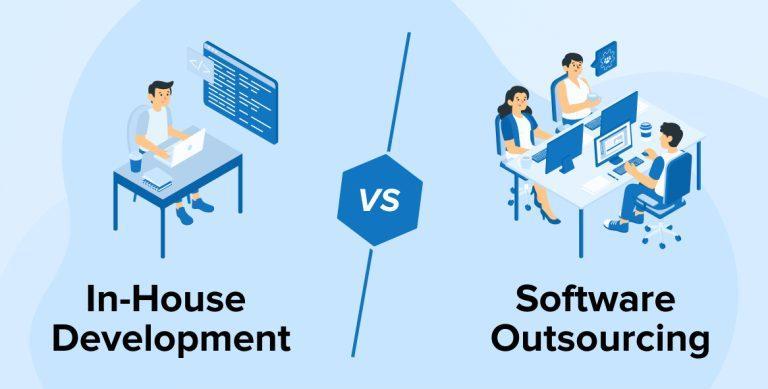
In-House vs. Outsourcing Software Development: Understanding Your Options
In-House Software Development: This involves building and maintaining a mobile application using the organization’s own resources, including developers, designers, and tech professionals. This method ensures the app aligns closely with the business’s vision, culture, and specific requirements.
When to Choose In-House Software Development:
Sensitive Data Handling: For businesses dealing with sensitive data, like financial institutions and healthcare providers, in-house development can ensure stringent security measures and data confidentiality.
Proprietary Technology: Protecting innovative technology and intellectual property is easier with an in-house team.
Complex Systems Integration: If a business needs a new application to integrate with existing systems, an in-house team, familiar with the current infrastructure, can handle this more effectively.
Sufficient Resources: If the startup has adequate resources to maintain an expert development team, in-house development can be feasible.
Frequent Iterations and Customization: Companies needing frequent updates and customizations benefit from the flexibility and oversight of in-house teams.
Outsourcing Software Development:This involves hiring external development firms or freelancers to manage the company’s software development projects. It offers several advantages, especially for non-technical entrepreneurs or businesses aiming to optimize costs.
When to Choose Outsourcing Software Development:
Limited Budget & Resources: Startups with tight budgets can access high-quality development services without the financial burden of maintaining a full-time team.
Scalability & Flexibility: Outsourcing allows businesses to quickly scale development efforts up or down based on fluctuating workloads.
Faster Time to Market: External firms can mobilize resources rapidly, and teams across different time zones can provide round-the-clock development.
Risk Mitigation: Sharing project risks with an experienced outsourcing partner can reduce the risk of project failures.
Tackling Talent Shortages: Outsourcing provides access to necessary expertise without the prolonged recruitment process, especially in regions with talent shortages.
In-House vs. Outsourced Software Development: Key Factors
Cost Considerations:
Initial setup costs: High for in-house (office space, equipment, recruitment); low for outsourcing (minimal setup).
Ongoing costs: Predictable salaries and benefits for in-house; project fees and variable costs for outsourcing.
Control and Flexibility:
Development process control: High for in-house; lower for outsourcing.
Flexibility in changes: Moderate for in-house (team size-dependent); high for outsourcing (adjustable scope).
Talent and Expertise:
Skilled developers availability: Limited in-house; wider access through outsourcing.
Specialized expertise: Requires hiring specialists in-house; readily available with outsourcing partners.
Time to Market:
Speed of development: Fast with an established in-house team; potentially faster with experienced outsourcing partners.
Meeting deadlines: Dependent on internal team performance in-house; reliant on communication with outsourcing partners.
Advantages & Disadvantages
In-House Software Development:
Advantages:
● Control and Customization: Direct oversight and immediate changes.
● Team Integration: Cultural fit and clear communication.
● QualityAssurance: Consistent standards and immediate feedback.
● Security: Better control over data protection.
Disadvantages:
● Scaling Challenges: Resource limitations and less flexibility.
● Skill Gaps: Need for ongoing training and development.
● ResourceAllocation:Talent acquisition challenges.
● LongerTime to Market:Time-consuming recruitment and onboarding.
Outsourcing Software Development:
Advantages:
● Global TalentAccess: Specialized skills and highly qualified specialists.
● Scalability and Flexibility: Rapid project expansion and flexible contracts.
● Faster Time to Market: Immediate start and round-the-clock development.
● Focus on Core Business: Delegation of non-core tasks.
● Advanced Tools and Technologies:Access to state-of-the-art resources.
Disadvantages:
● Communication Challenges:Time zone differences and language barriers.
● Control and Oversight: Less direct control and dependency on vendors.
● Quality Concerns: Variable quality and security risks.
● Cultural Differences: Potential misalignment and integration issues.
Weighing the Options
The choice between in-house and outsourced software development depends on your specific requirements and resources. Data shows an increasing trend towards outsourcing, with the IToutsourcing market expected to grow significantly. Outsourcing offers cost-effectiveness and flexibility, making it a popular choice for many businesses.
Final Verdict for Non-Technical Founders: Outsourcing is generally recommended for non-technical founders, particularly for startups and small businesses. It provides cost-effectiveness, scalability, and access to a broader talent pool. However, in-house development can be more suitable for large enterprises with a strong technical team and long-term development needs.
Checklist for Outsourcing Software Development:
Selection of Outsourcing Partner:
○ Define requirements and identify necessary skills.
○ Research and evaluate potential partners.
○ Conduct interviews and request proposals.
Project Initiation & Planning:
○ Define objectives and establish communication channels.
○ Sign detailed contracts covering all aspects.
Development Phase:
○ Conduct a kick-off meeting and set up project management tools.
○ Schedule regular updates and conduct iterative testing.
Documentation & Knowledge Transfer:
○ Maintain comprehensive documentation and facilitate knowledge transfer.
Security & Compliance:
○ Implement data security measures and access controls.
○ Perform regular security audits.
Why Choose Logic Square Technologies:
For non-technical startup owners, outsourcing ITservices to Logic SquareTechnologies can be a smart decision. Our lean MVPmodel, skilled talent pool, and focus on frugal innovation ensure high-quality outcomes while keeping costs in check. Partnering with us means experiencing top-notch software development tailored to your business needs and budget constraints.
Read full blog here




Contact US Email : support@logic-square.com Call : +1872 222 8274 Website : https://logic-square.com/