I am an ambitious and driven student with hands-on experience in Urban Planning and Design. Through various professional opportunities, I’ve gained valuable insights into working with multidisciplinary teams, including planners, architects, community development and engineers. My passion lies in creating sustainable and well-regulated communities, with a particular interest in public sector work. I am eager to contribute my skills to innovative projects that promote economic development and enhance the quality of life in cities.
WORK EXPERIENCE
City of Kettering
Planning and Development Co-Op
JANUARY 2023 - AUGUST 2024
• Assisted in reviewing and amending the city’s zoning code to align with evolving community needs and regulatory requirements through research, analyzing, and identifying areas for improvement
• Worked with property maintenance to research on body cameras for field inspectors, leading to the department securing the body cameras
• Assisted in administering the CDBG-funded Micro-enterprise Loan Forgiveness Program and Emergency Rental Assistance, working closely with local businesses and residents affected by economic hardship
• Responsible for reviewing and inspecting sign permits and landscape site plans to ensure compliance with zoning regulations and municipal design standards
• Assisted developers facing challenges with their project by creating a conceptual landscape site plan that aligned with zoning requirements and aesthetic goals
• Performed comprehensive data analysis and research to provide community development with a foundation for new grant programs
Vaughn Duebber Farm LLC
Supervisor
JANUARY 2023 - AUGUST 2024
• Oversee the daily activities of the farm, managing a team responsible for planting, harvesting, and maintaining crops
• Coordinated schedules, ensured efficient workflow, and monitored the health and progress of crops to meet production goals
• Responsible for overseeing the maintenance and operation of farm machinery, ensuring all equipment was in top condition for optimal productivity
• Coordinated routine checks and repairs, and implemented preventive maintenance strategies to minimize downtime and extend the lifespan of machinery
• Oversee the daily care and management of the farm’s cattle herd, ensuring their health, nutrition, and overall wellbeing
1 | SOUTH FAIRMOUNT
Neighborhood Study
South Fairmount
South Fairmount will be a vibrant, sustainable community with diverse residents and fostering connectivity, becoming a model of mixed-use development, supporting local businesses and innovation while enhancing neighborhood quality.
VALUES
Equity:
• Access
• Services
• Economic opportunities
Community Connection:
• Social interaction
• Collaboration
• Sense of identity
GOALS
Mixed-use Vibrancy:
• Encourage walkability
• Create Social interaction
Green Infrastructure:
• Manage stormwater
• Promote biodiversity
OBJECTIVES
Placemaking:
• Public spaces
• Creating identity
• Improved streetscapes
Green Roof Requirement:
• Mitigate urban heat island
• Improve stormwater
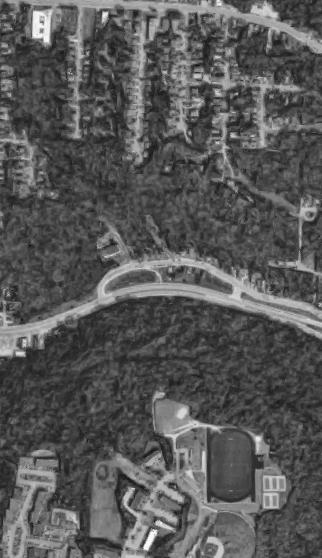
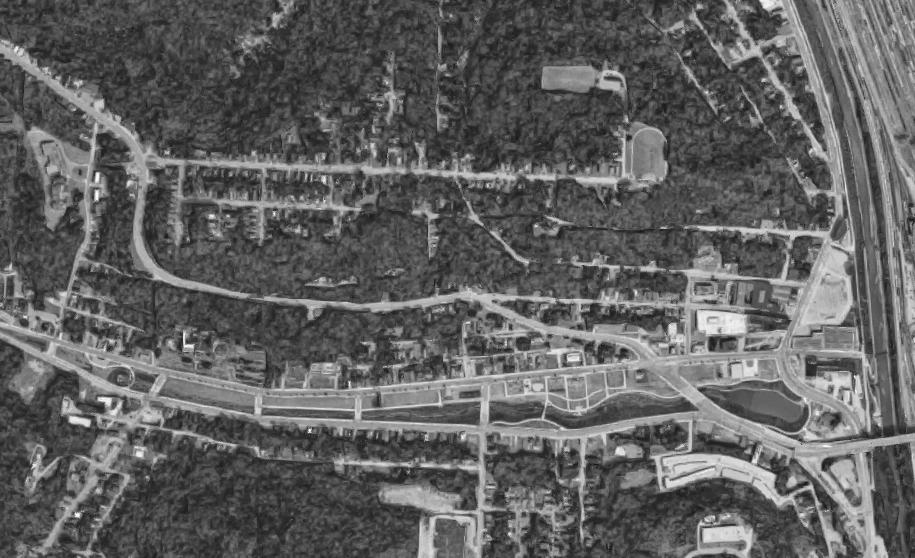
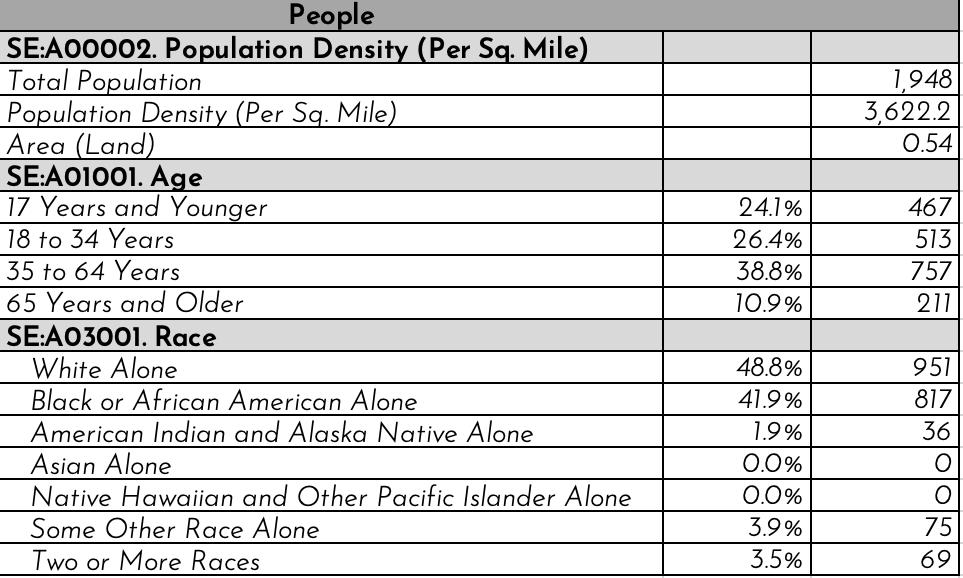
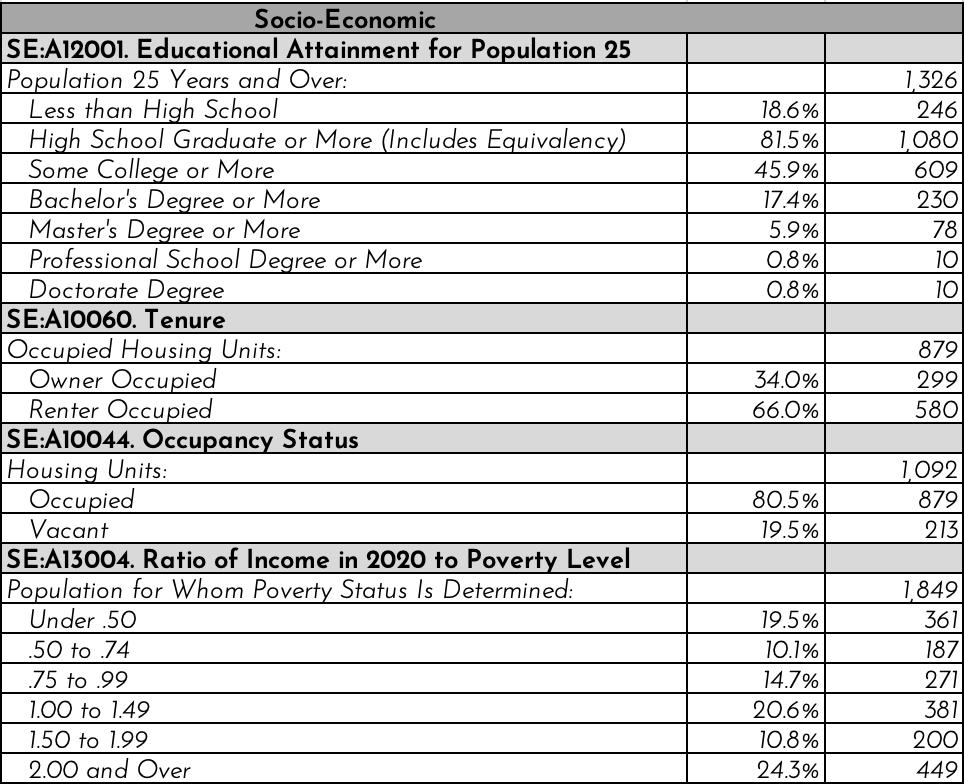
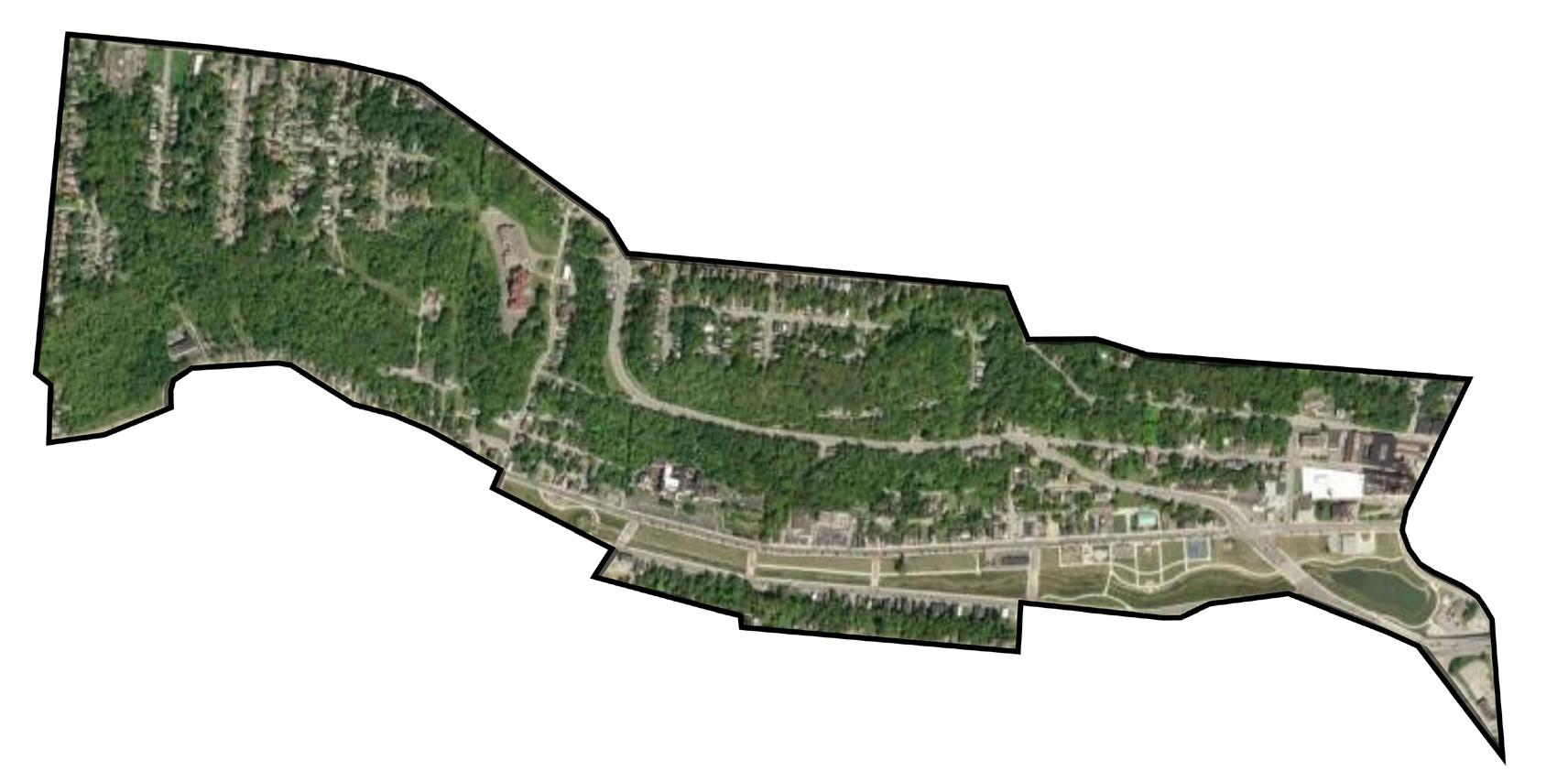
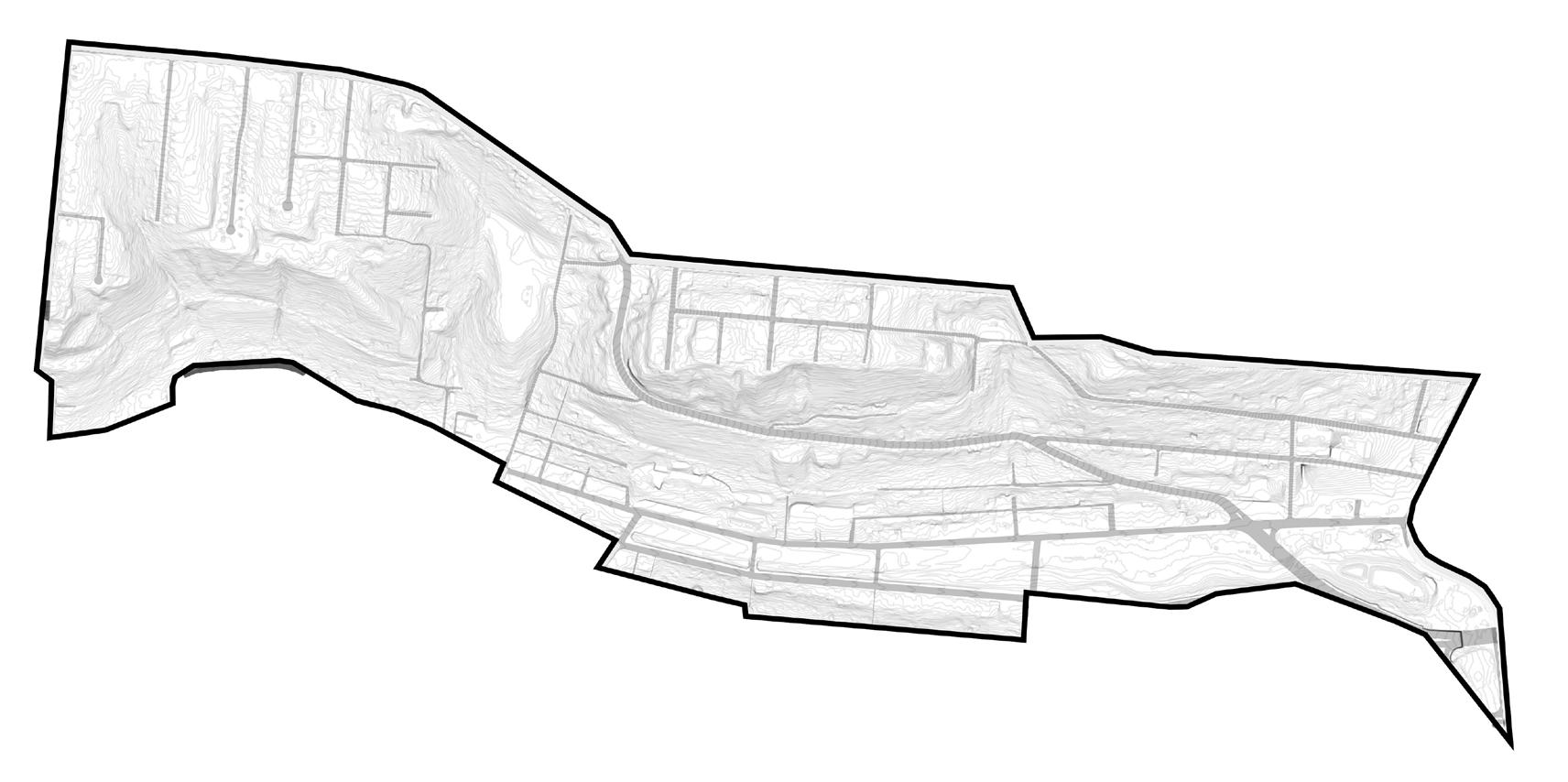
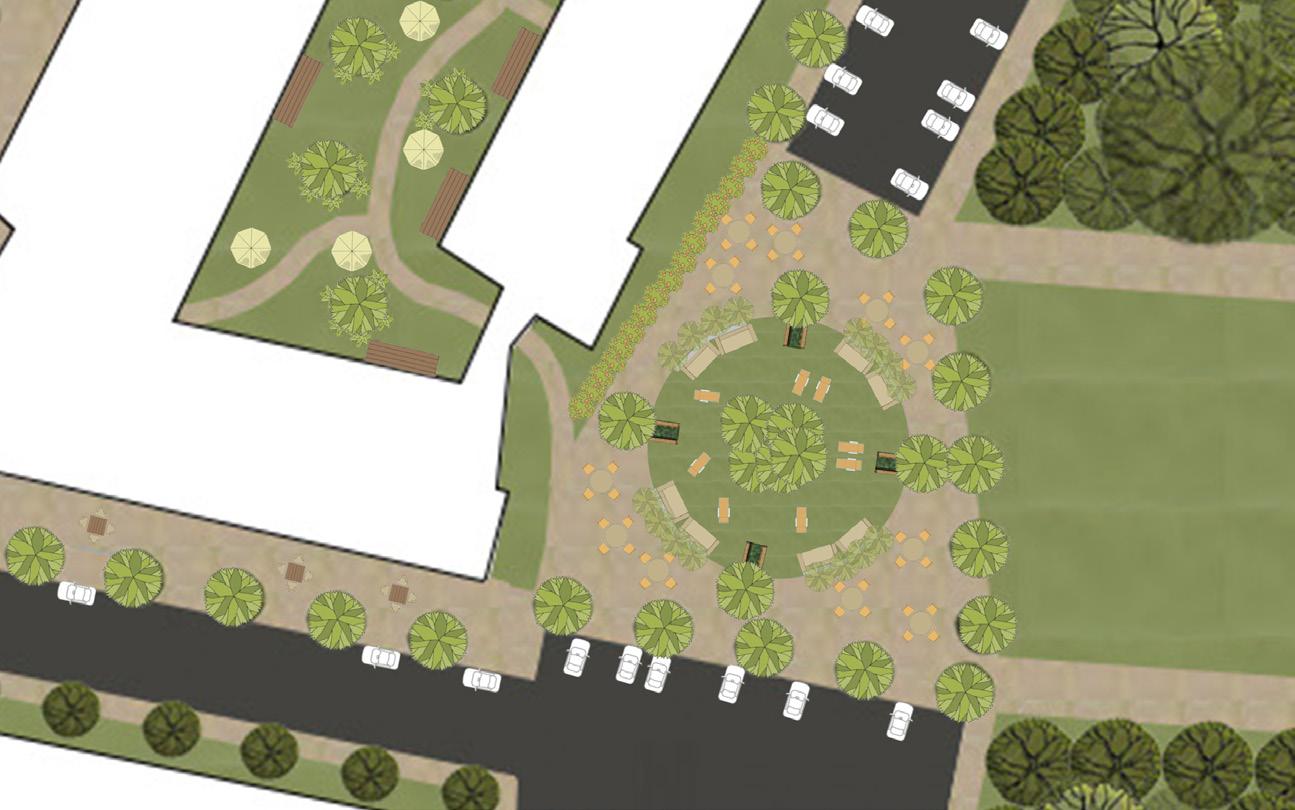
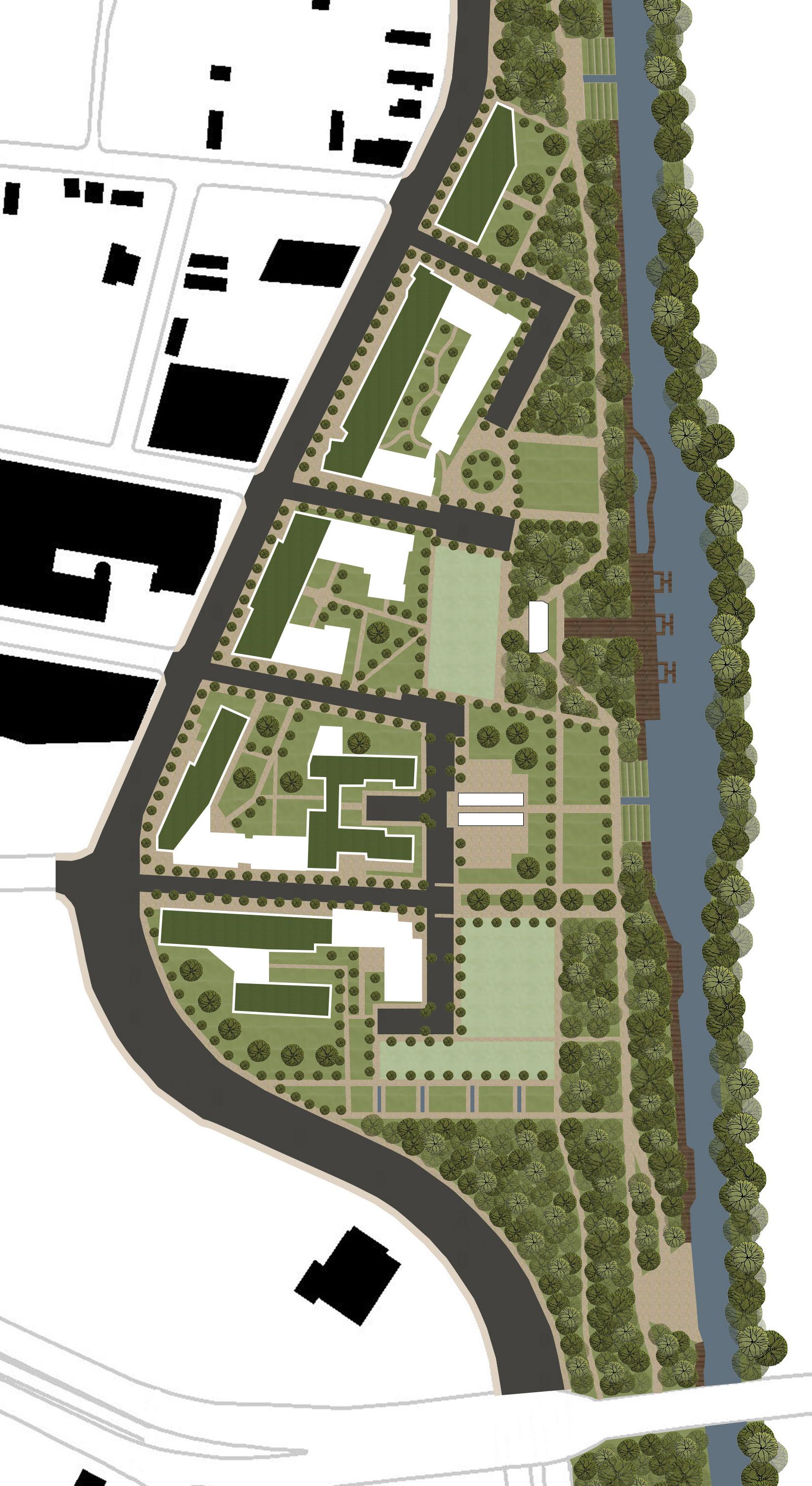
The Focus Area in South Fairmount is approx. 23.70 acres of land redevelopment along the Mill Creek. This site has the potential in providing many benefits and opportunities for both the community of South Fairmount and the City of Cincinnati.
• Manage stormwater
• Promote biodiversity
• Improve air quality
• Encourage walkability
• Reduce car dependency
• Diversify transportation
• Create Social interaction
• Increase Affordable Housing
• Promote Connection to the Mill Creek
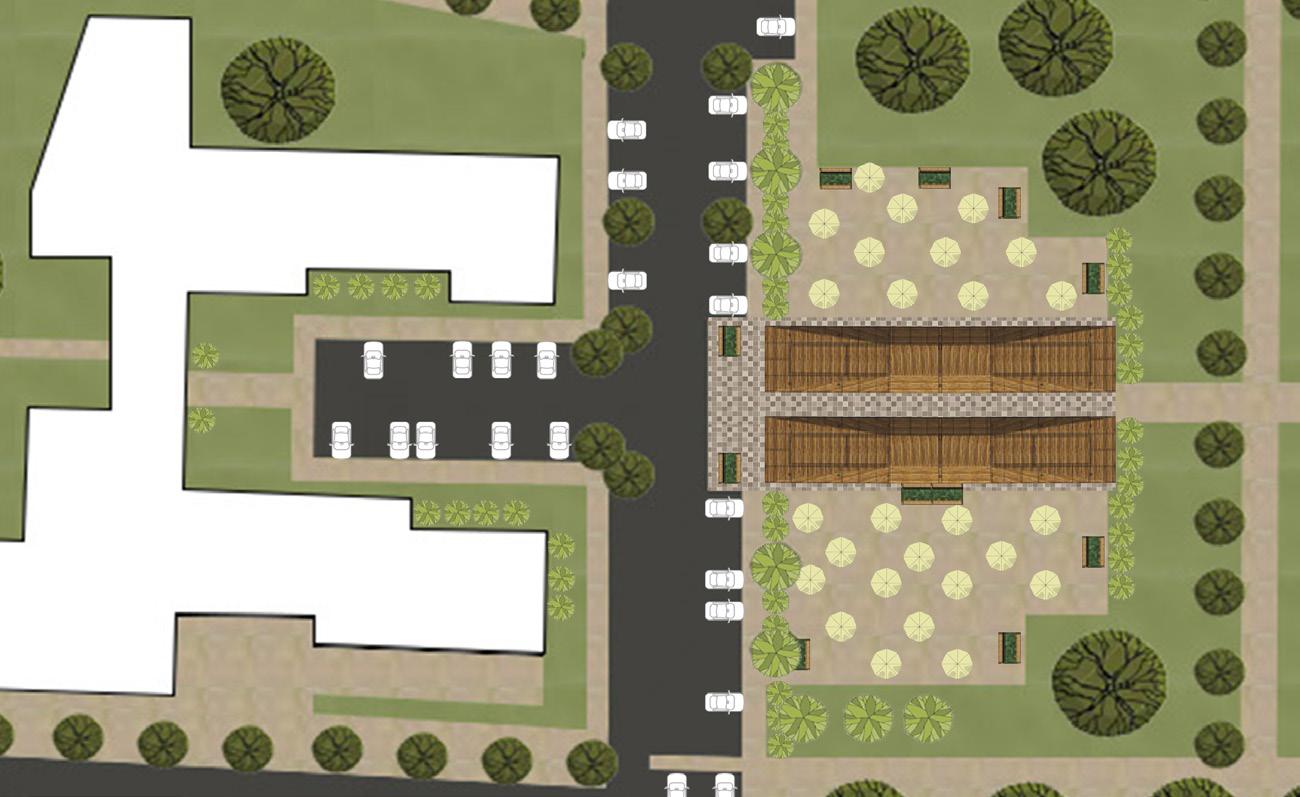
FARMER’S MARKET
2
| COLLEGE HILL Neighborhood Study
College Hill
The Hamilton Avenue BRT will be supported through the densification of the corridor, while simultaneously strengthening the diverse and vibrant communities.
Strategies
Infill:
Development of vacant or underutilized land within a built-up area. Increasing density without expanding the urban footprint into natural land
Upzone:
Decreasing setbacks and adding floors to existing buildings. This is best suited for area’s with a preexisting urban fabric.
Gradate:
Sloping of density from a core area. Areas with gradate development have dense nodes that naturally decrease as they get further from transit
3 D’s
Design (Intentional):
• Improve pedestrian experience
• Unique neighborhood skylines and building makeup
• Infill brown field and greenfield lots
Diversity (Building):
• Allow for non-conforming uses
• Allow more multi-family building structures
Destination (Businesses):
• Improve aesthetics of business districts
• Increase residential density near BRT line
• Encourage small businesses
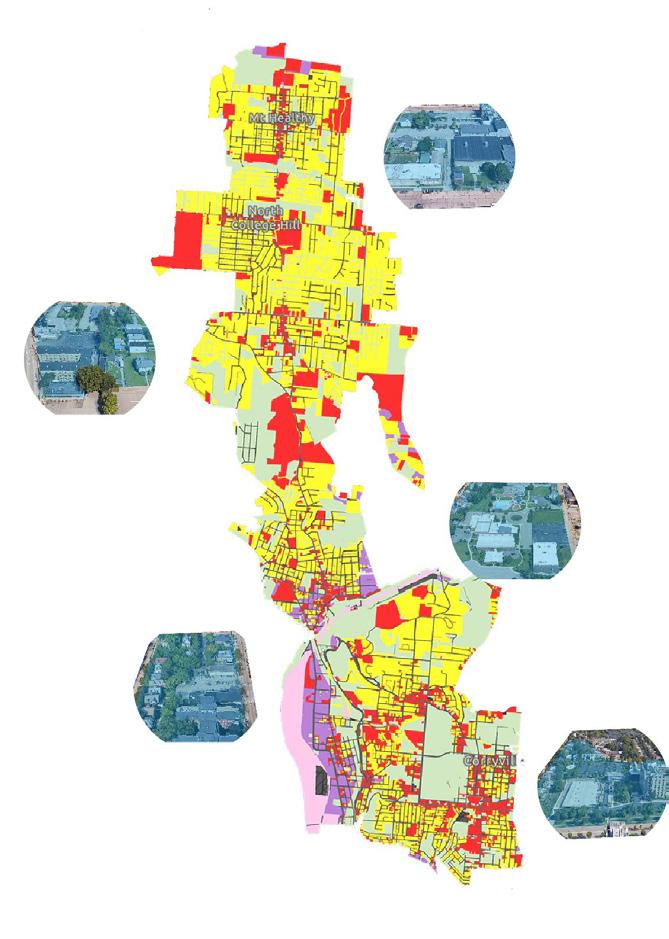
Understanding The Corridor
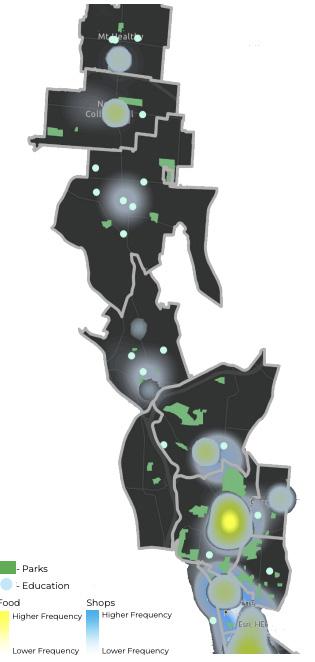
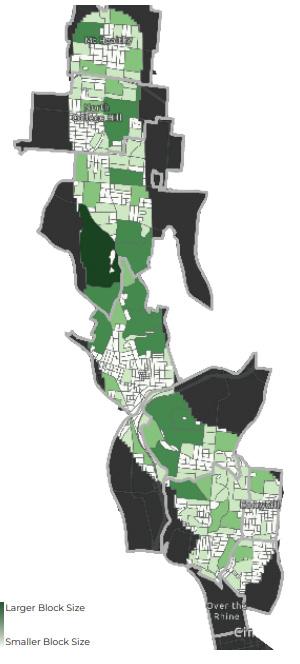
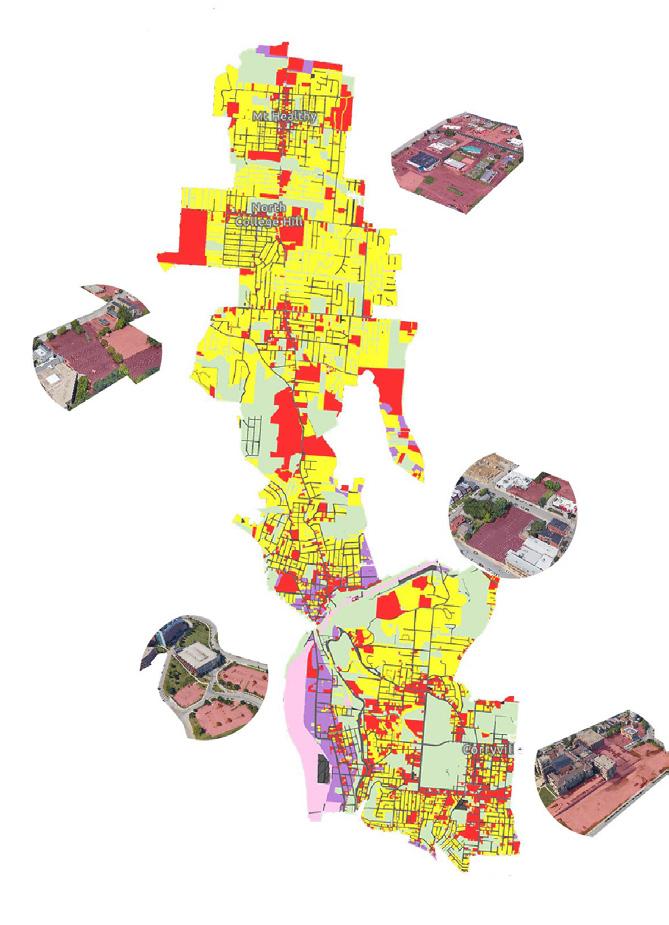
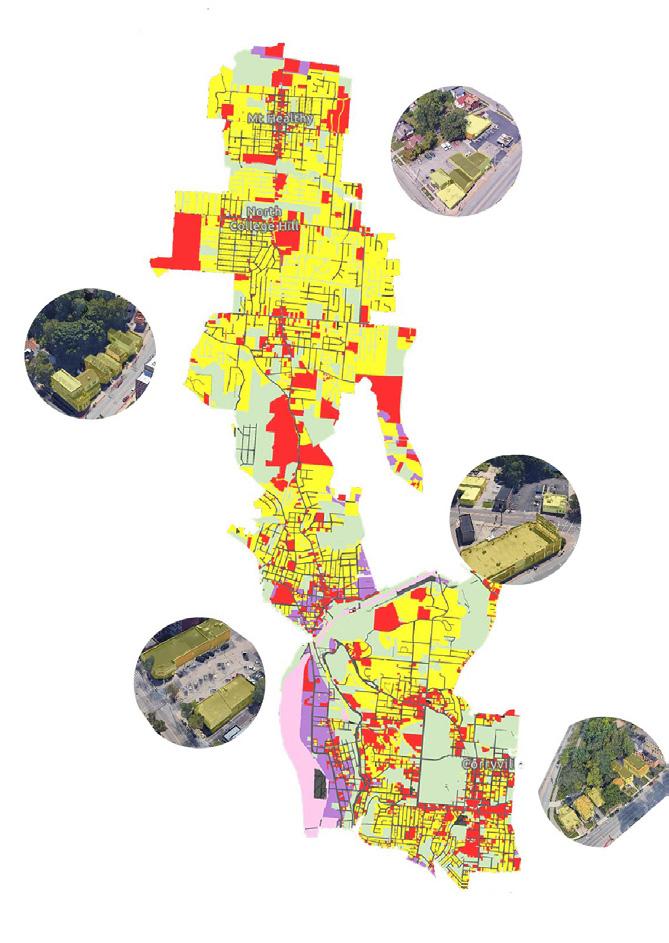
FOOTPRINT AMENITIES BLOCK SIZE
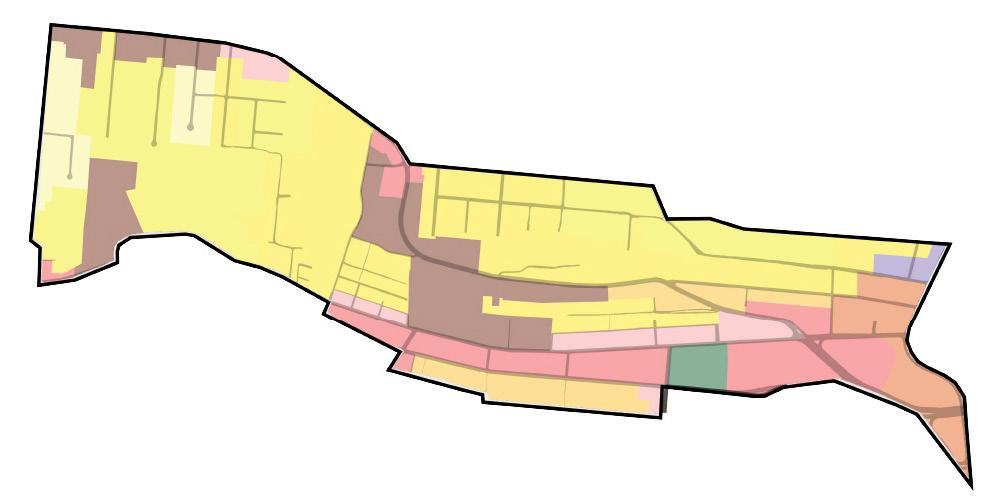
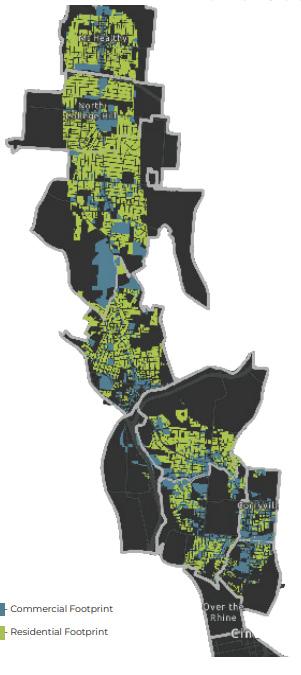
The blue and green zones on the map indicates majority of parcels are designated exclusively for residential or commercial purposes
Amenities and services are concentrated in Downtown and seems to weaken more North you travel.
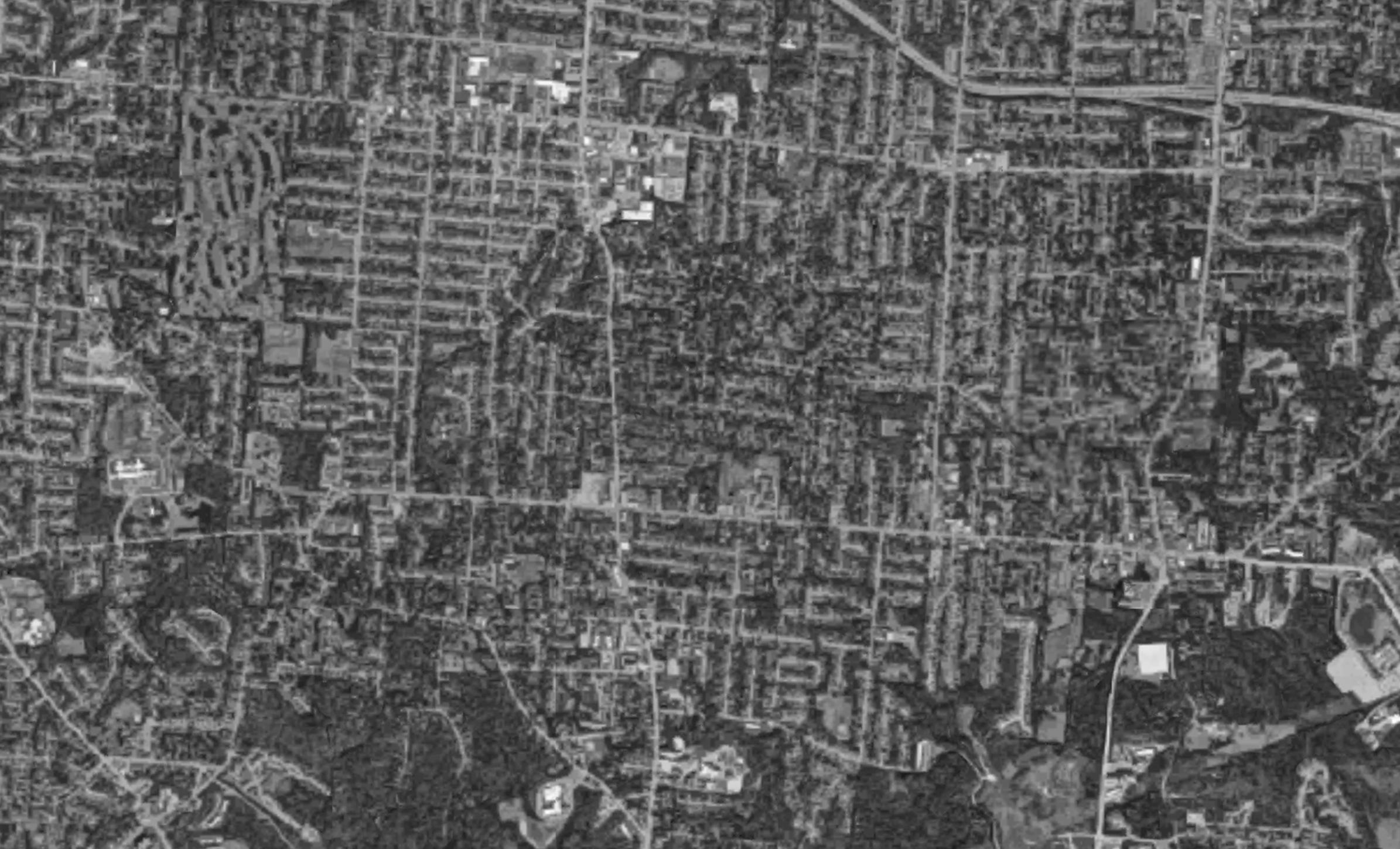
Smaller block sizes are seen throughout the corridor and centered around neighborhood business districts
Credit: Max Adams
Credit: Max Adams
Any barren lots without a demand for development should be green space
A block should have a perimeter no longer than +/- 2,000 feet.
Parcels along Hamilton Ave. should have a high Building Coverage Ratio
18% of housing adjacent to Hamilton Avenue will have >50 units
Rezone residential parcels from single-family to residential-mix
2,200 to 4,000 housing units needed to support the neighborhoods
Eliminate parking requirements around transit stops
Maintain a uniform population density across census blocks
Parcels along Hamilton Avenue should have a Floor-Area ratio of over 1
DESIGN (INTENTIONAL) Creating a pedestrian scaled-space
Using BRT lanes as a pseudo barrier between traffic and pedestrians
Light protected cross-walks
Bi-Directional Model where sidewalk width thins out
DIVERSITY (BUILDING) Allow for horizontal and vertical mix
Constructing high density, mid-rise condominiums on pre-existing structures
DESTINATION
Utilizing alleyways and other disused areas for community driven use
Upzone Single Family homes to Residential Mix
Minimize setbacks along Hamilton Avenue
(BUSINESSES) Taking advantage of available space
Encourage business in the Uptown and Midtown areas
STRENGTHS
- Existing Form Based Code
- College Hill Urban Redevelopment Council
- Main Street and Multi-Family Zone along Hamilton Ave.
- Low Dwelling-Until Vacancy Rate
WEAKNESSES
- Inconsistent Block Sizes
- Large Amount of Surface Parking
- Transportation Costs Constitute a High Income
- No Bike Lanes
OPPORTUNITIES
- Connections to Other Communities
- Growing Population
- Development of a Business District
- Close to Children’s Hospital
THREATS
- Single Family Zoning
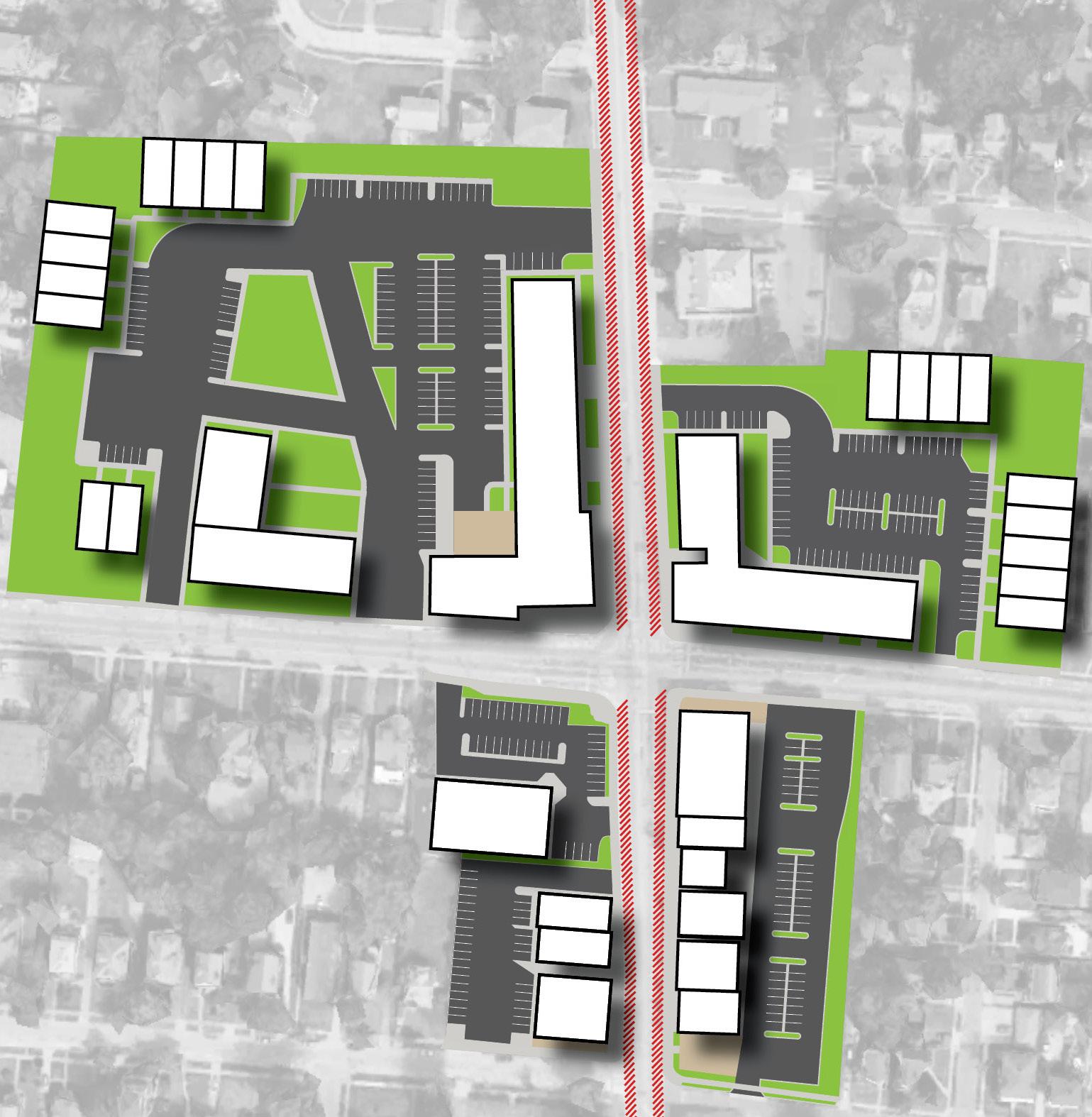
CROSSROADS | MASTER PLAN
The Crossroads District of College Hill will be centered by the redevelopment of College Hill Station. Setting a marking point to the start of a more sustainable College Hill.
• 19 Townhomes
• Improved Parking Sites
• 280+ Apartment Space
• 19,000 SF of Retail
• Sidewalk and Roadway Improvements
• BRT Station and BRT Designated Lanes
• Elimination of Street Parking
• Pedestrian Traffic Lights and Increased
Pedestrian Safety
BRT ROUTE
3 | THE BANKS Neighborhood Study
The Banks
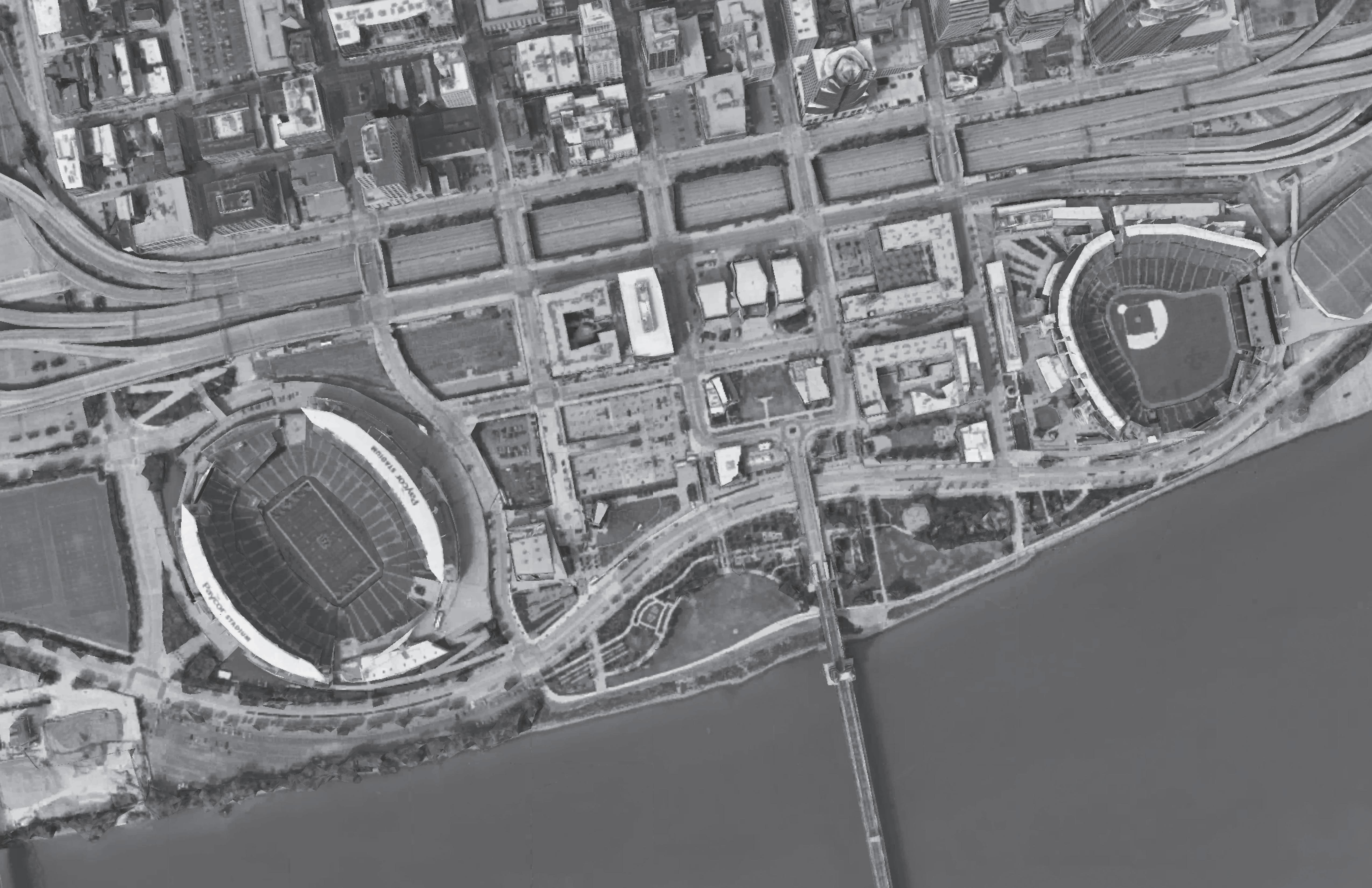
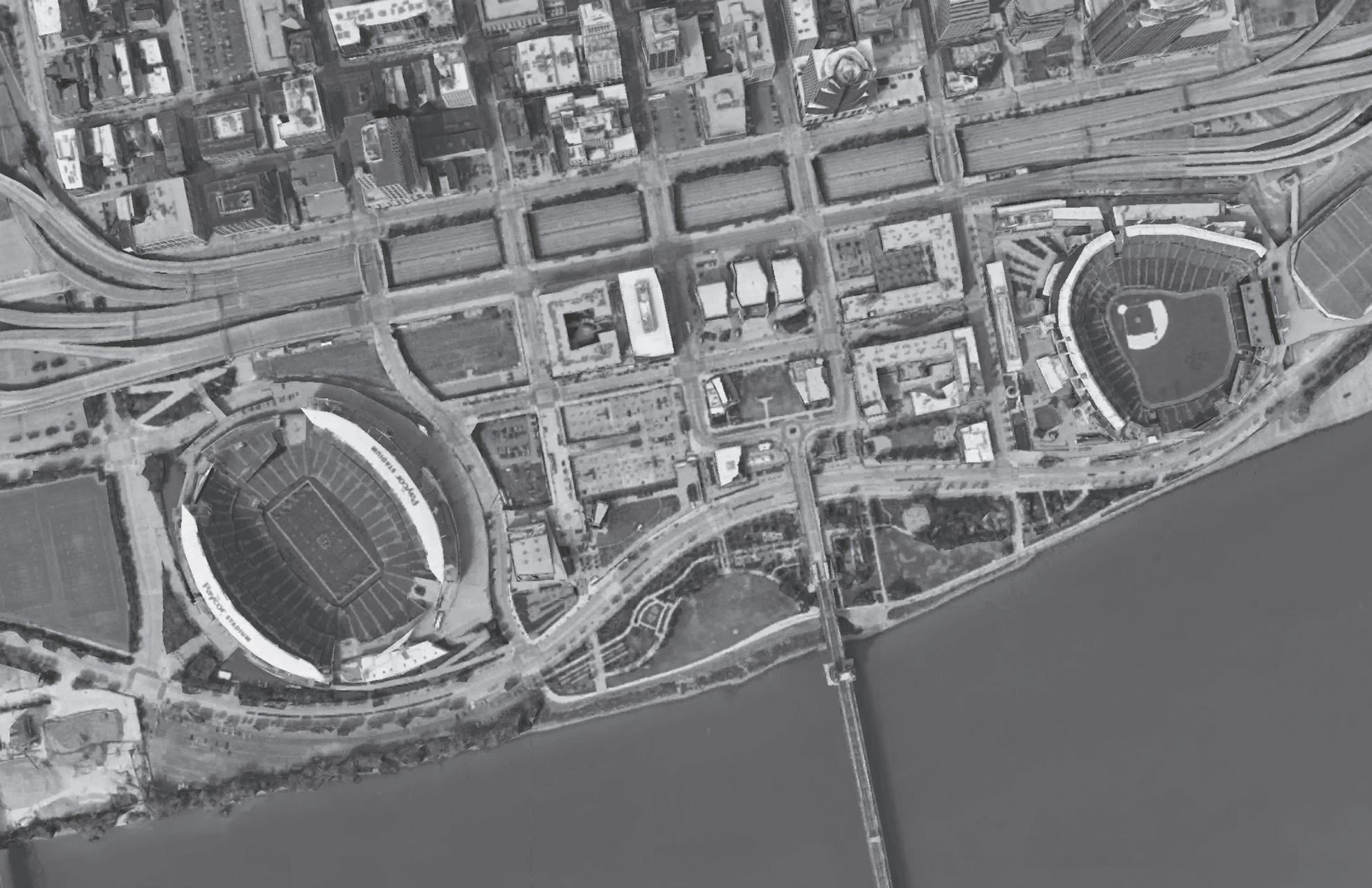
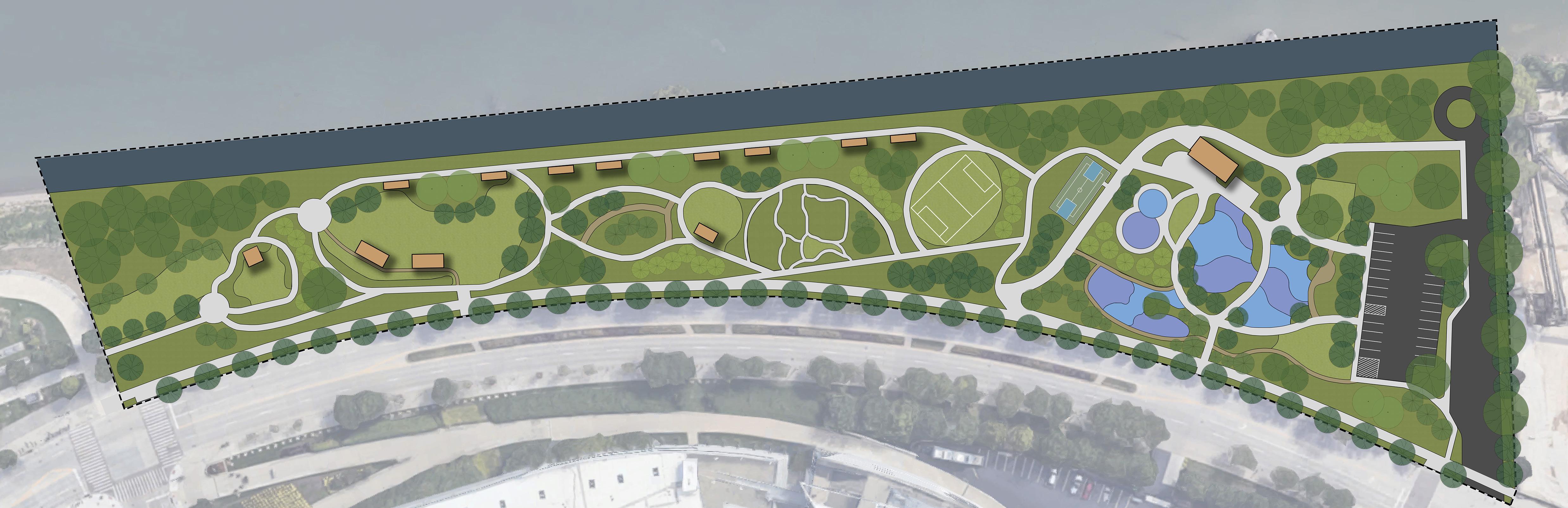
The main objective is to explore urban scenarios of streetcar corridors that rethink existing buildings, streets, and public spaces as a connective pedestrian realm focused in the Downtown Riverfront area. With this, the team and I came up with the question on what would happen if we transformed this site into a Green Corridor.
Strategies
Site Analysis & Context
• Evaluate land use and connectivity to nearby parks, riverfront, and neighborhoods
• Enhance links for pedestrians, cyclists, and public transit Sustainable Design Features
• Incorporate green infrastructure: permeable pavements, bioswales, and green roofs
• Reduce urban heat islands and promote stormwater management
• Design open spaces for recreation and community activities Environmental Resilience
• Create a network of walkable, bike-friendly paths that enhance connectivity
• Prioritize public space for active transportation and public transit integration
SITE LOCATION
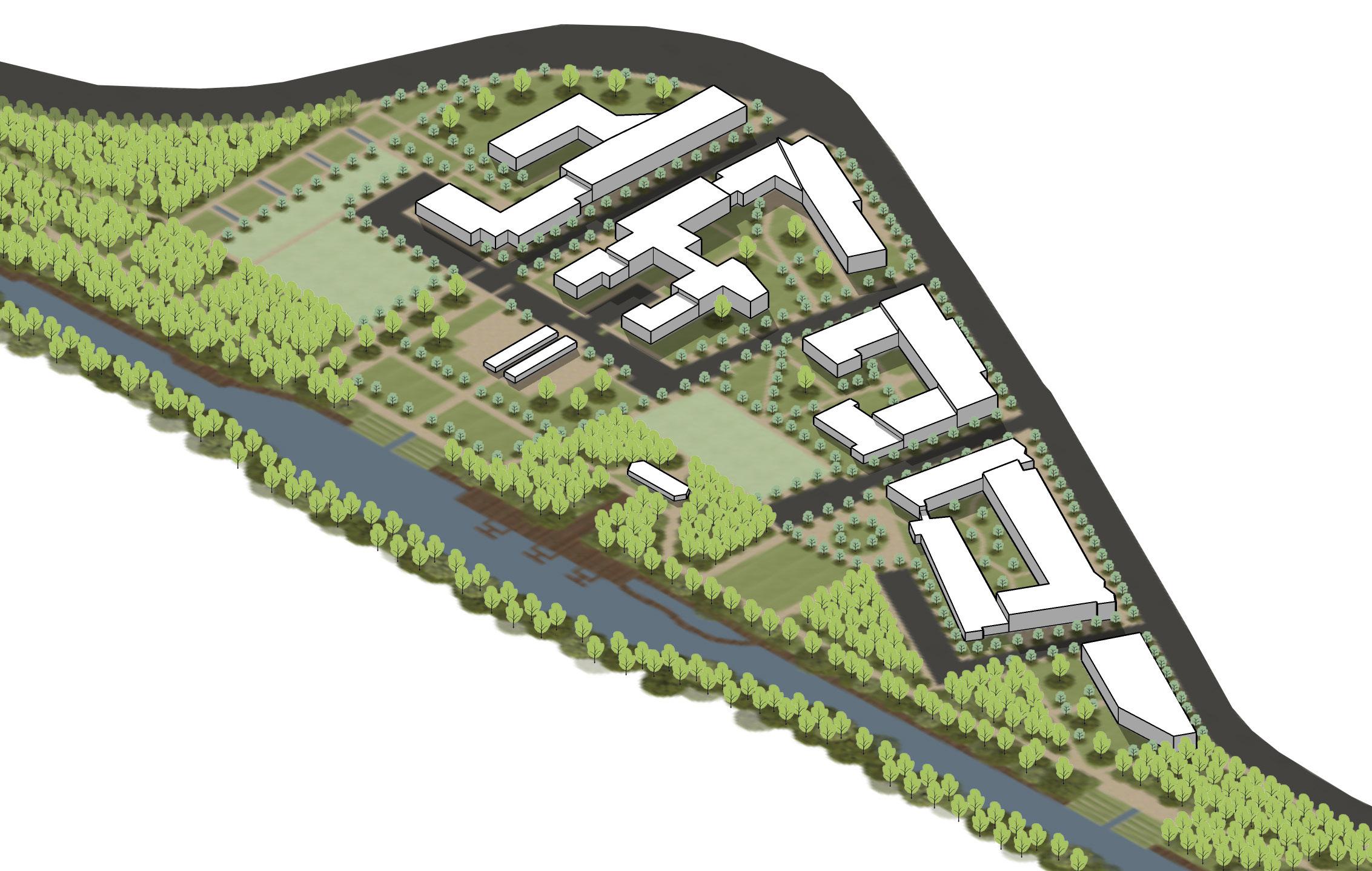
The Riverfront Park is designed as a multi-functional space where nature, community, and recreation come together and will serve as a destination for all members of the community. Offering diverse amenities for relaxation and family-friendly activities. The park’s thoughtful layout and connection to the river create a seamless urban retreat while promoting ecological sustainability.
4 | UNIVERSITY OF CINCINNATI Campus Study
University of Cincinnati
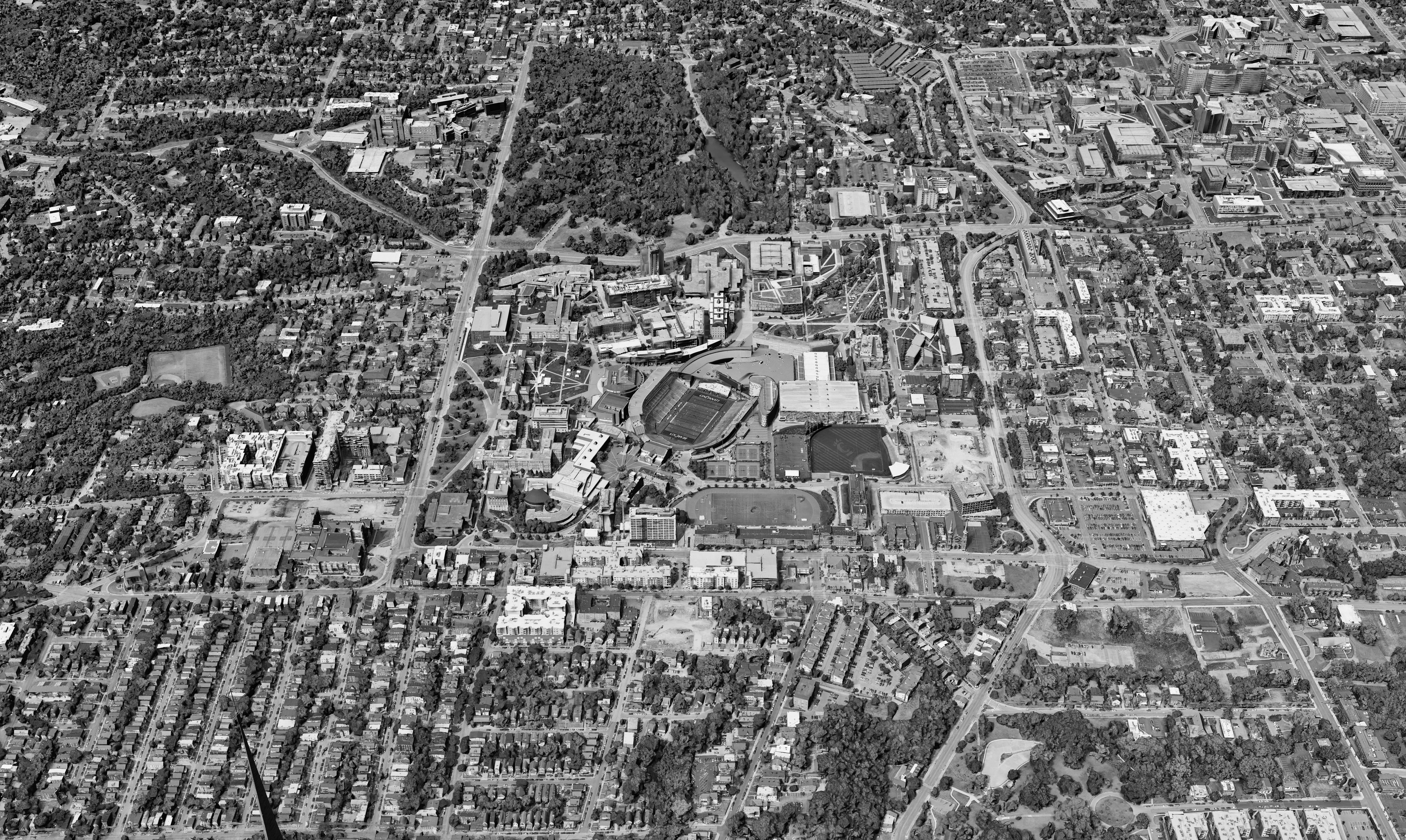
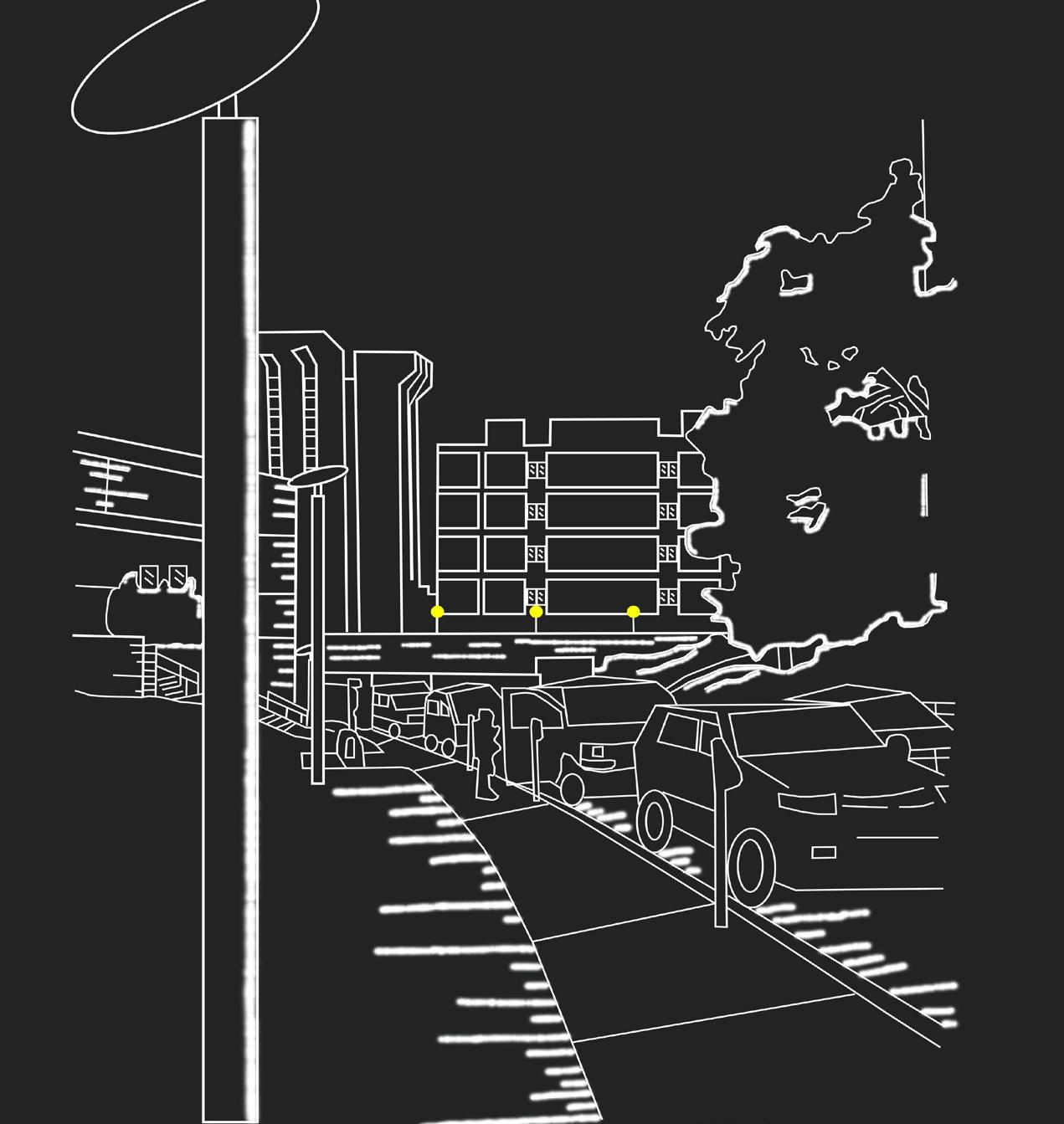
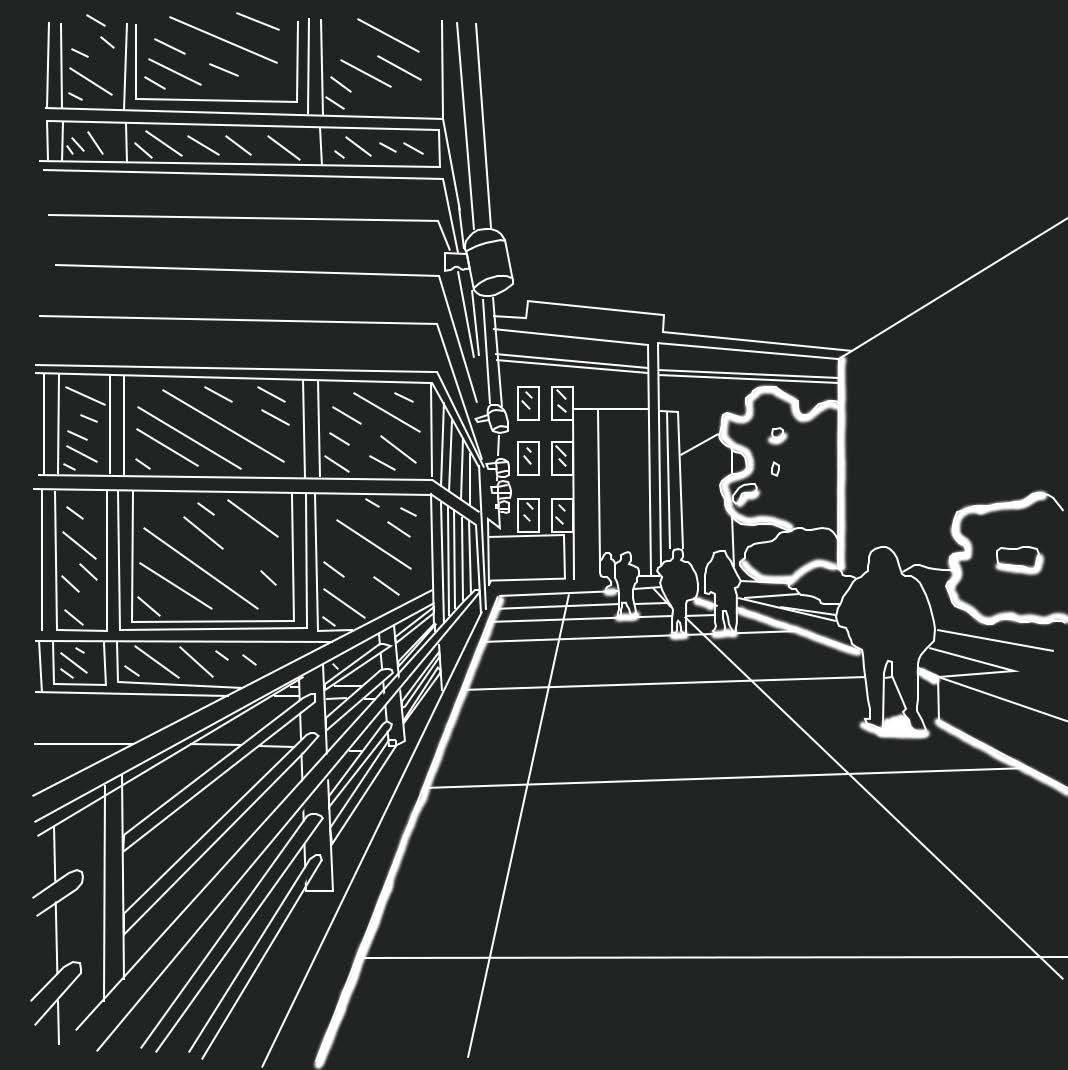
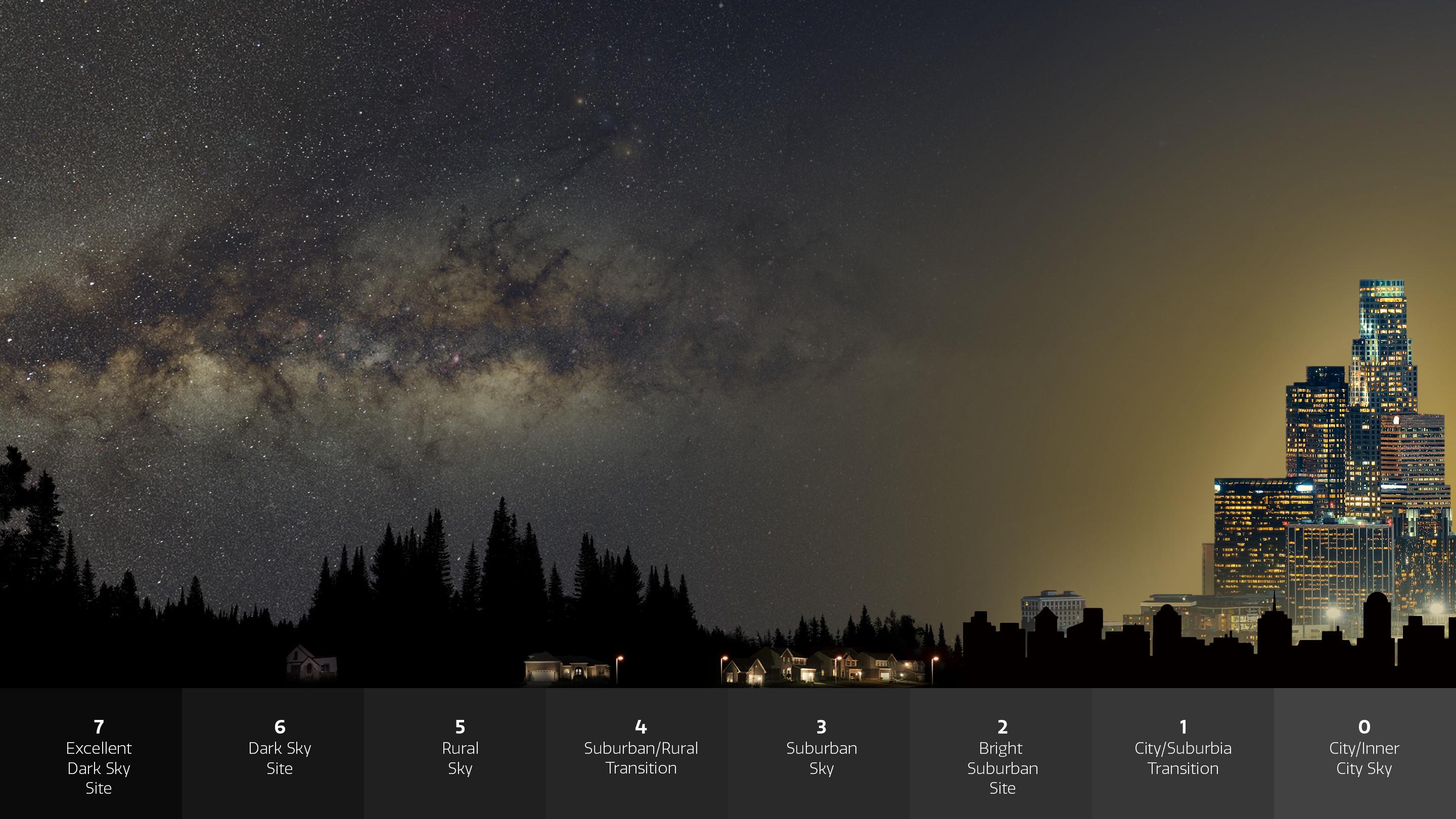
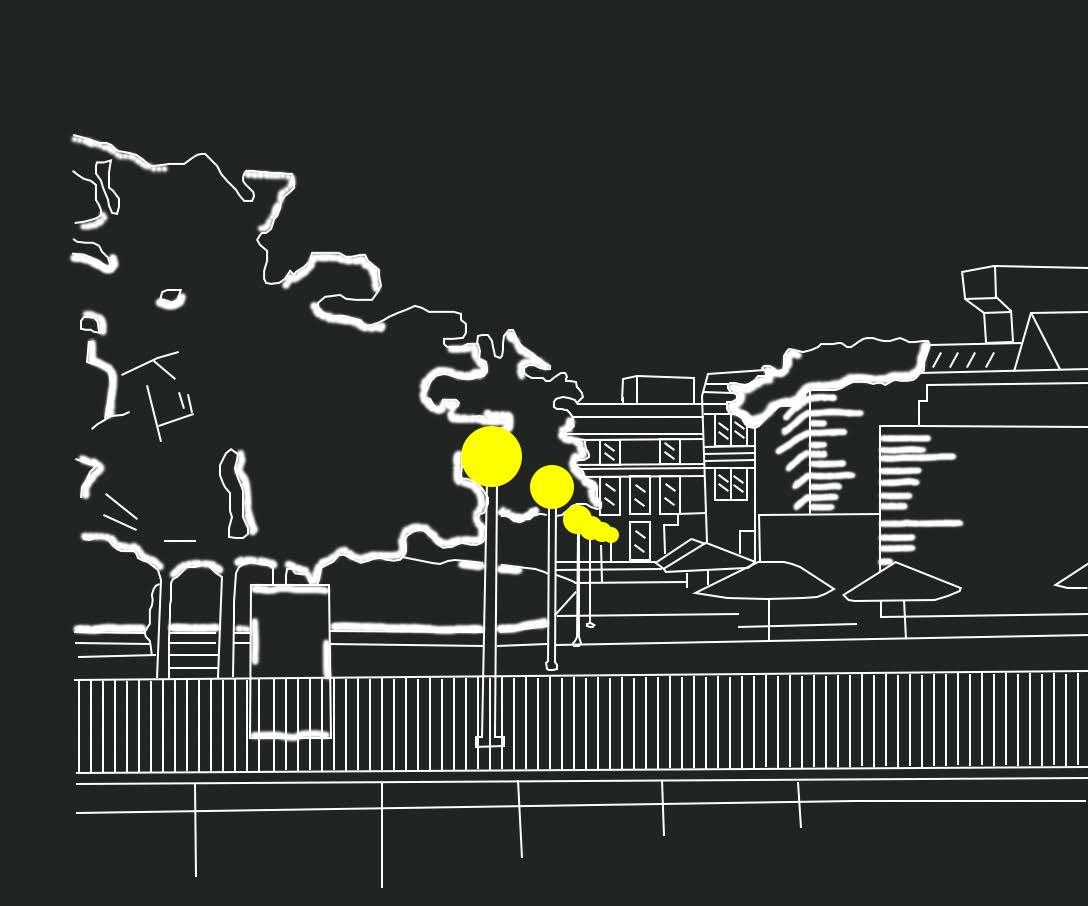
The University of Cincinnati Campus currently has two predominate light fixtures around their campus. That being the Round-Bulb and Flat-Head fixtures. These two lights are culprits to the production of light pollution, known for brightening the night sky caused by street lights and other man-made sources, creating a disruptive effect on natural cycles and inhibits the observation of stars and planets. Lights provide three different types of pollutants:
(1) Wasted Light
(2) Productive Light
(3) Glaring Light
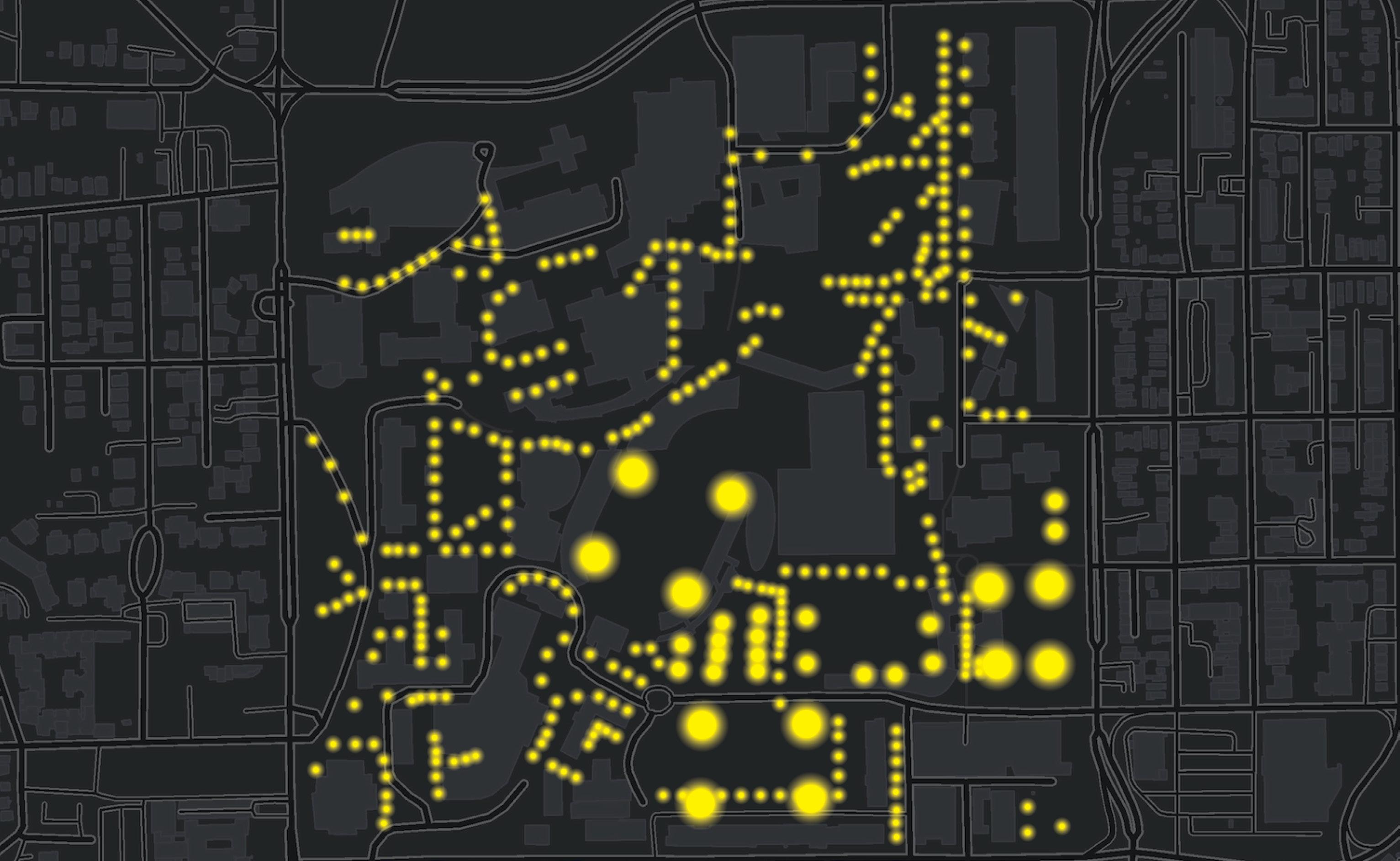
Currently, The University of Cincinnati campus has a light ratio of 5:4 between the Round-bulb fixture and Flat-head fixture
"Courtesy: National Science Foundation" for this great representation of light pollution
The round-bulb fixture produces a significant amount of wasted light, with 45% as wasted and 10% in glare, leaving only 45% of the light as productive. This inefficiency necessitates closer spacing of fixtures to achieve adequate illumination levels.
FLAT-HEAD
University At Night
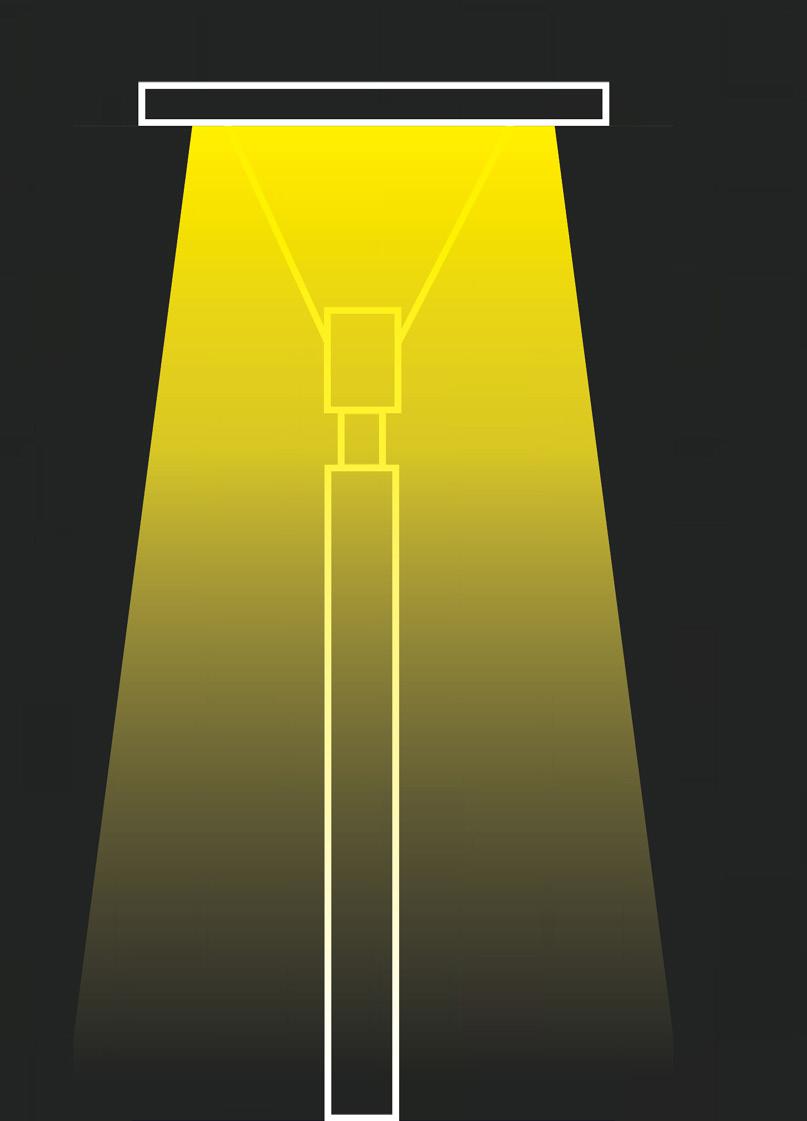
When looking at the two light fixtures. The Flat-Head is seen to give off 0% Wasted Light, 5% Glared Light, and 95% Productive Light, whereas the Round-Bulb gives off 45% Wasted Light, 10% Glared Light, and 45% Productive Light. Comparing the two, it’s imperative that The University of Cincinnati replace the majority of its Round-Bulbs around the campus with FlatHead fixtures, allowing for the disruption of Wasted Light production and being one step closer to reducing Light Pollution.
The flat-head fixture delivers 95% productive light, with no wasted light and only 5% glare, making it highly efficient. Its optimized design allows for wider spacing between fixtures without sacrificing illumination quality reducing the need for additional fixtures.