LOGAN CONLEY senior // bachelor of architecture


LOGAN CONLEY senior // bachelor of architecture
LOGAN CONLEY, JOHANA RAMIREZ, KATHRYN SAWALLISCH
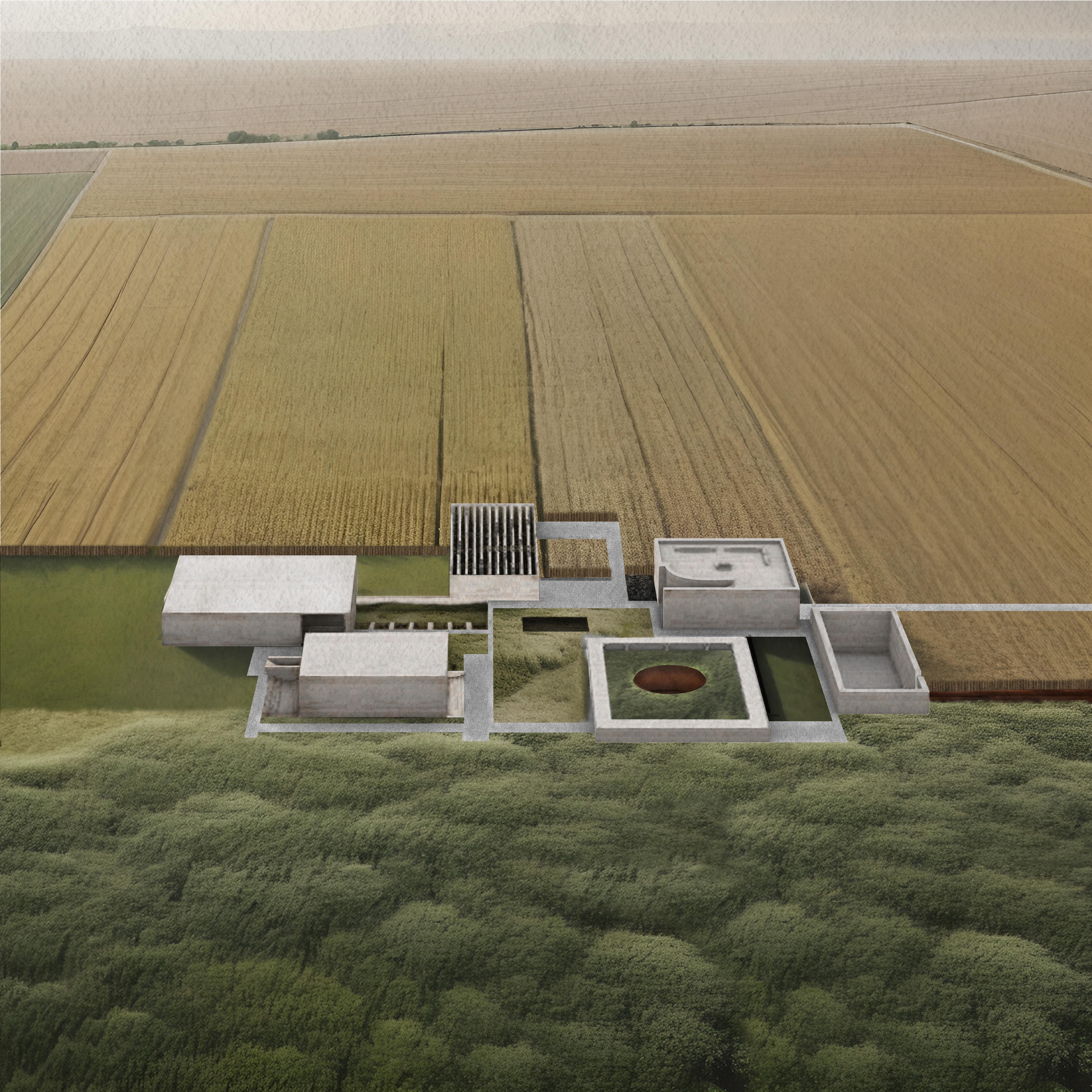
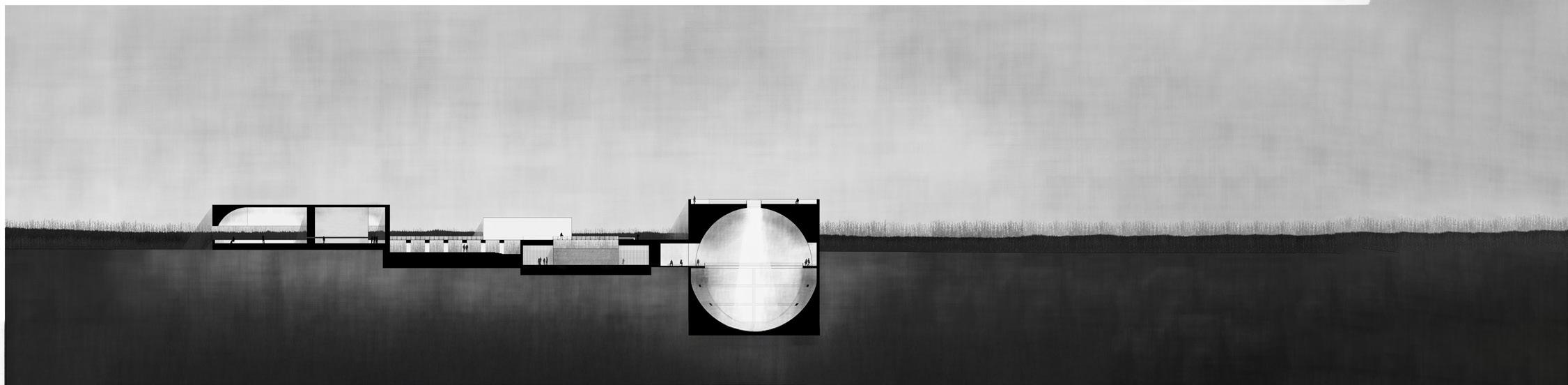
Our present surroundings are one of the most under-appreciated and yet most striking landscapes. In our fast-paced culture, removing the mind from its routine and taking time for deep appreciation without conscious effort is virtually impossible. Liminal creates a space that forces this slower pace, fostering a growth of great appreciation. This landscape-centered exhibition space focuses on confronting the concept of a traditional white cube museum. In this new museum, the primary mission is to challenge the visitor’s understanding of the Iowan landscape. The experience will break down the components of the surrounding environment and enable the visitor to view these pieces as one whole, transcending the perception of the utilitarian machine and exposing the rich beauty of the landscape. The design leads each visitor through a sequential journey, creating a path wherein the mind can transition from its external state to a renewed perspective. It begins with a long cleansing journey, freeing the mind to gain a greater appreciation for the land. This journey is focused on nine elements central to the Iowan landscape; each space along the journey features an installation that allows the visitor to be deeply immersed in the sensory experience of these elements. Each visitor will emerge from this journey with a deep admiration for the landscape; the mind renewed as the soil is after a winter’s rest.
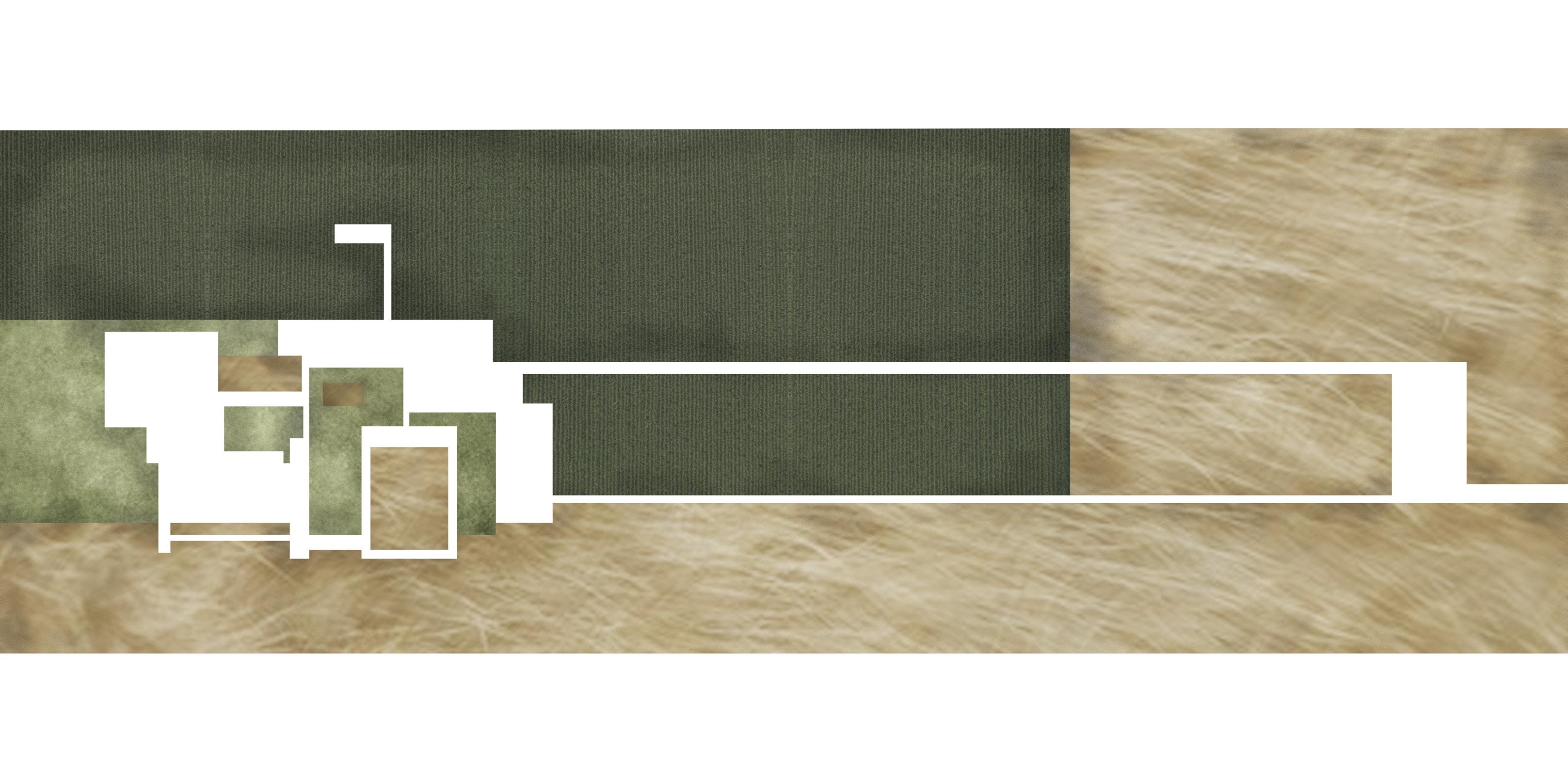

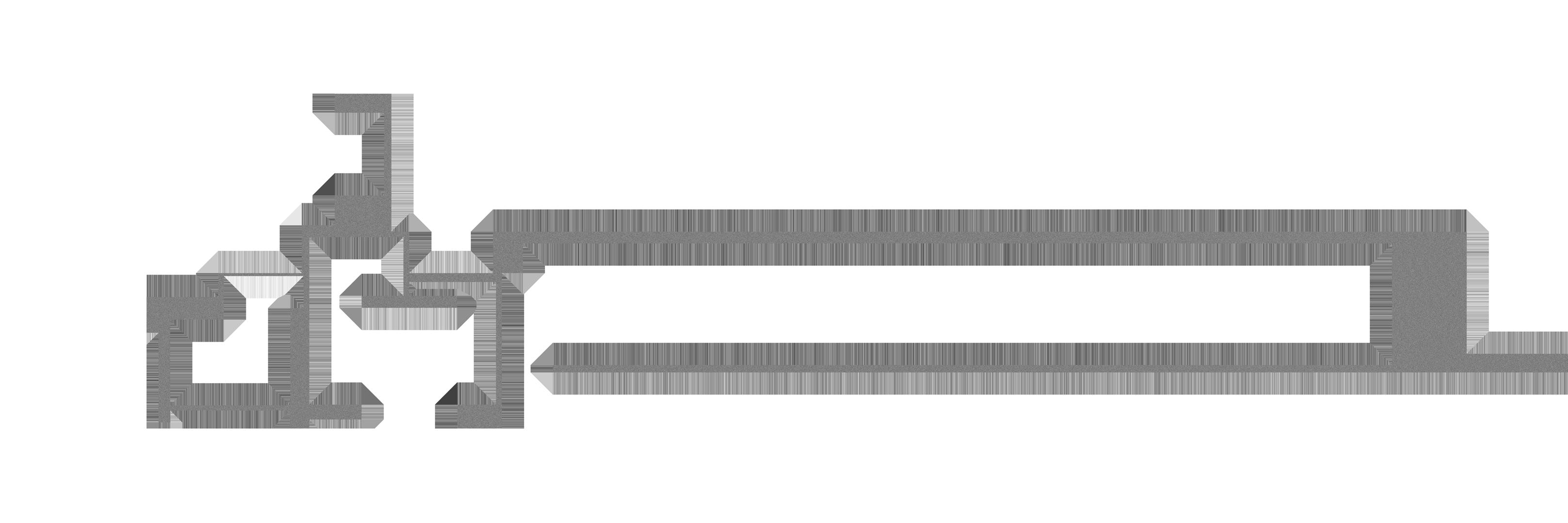

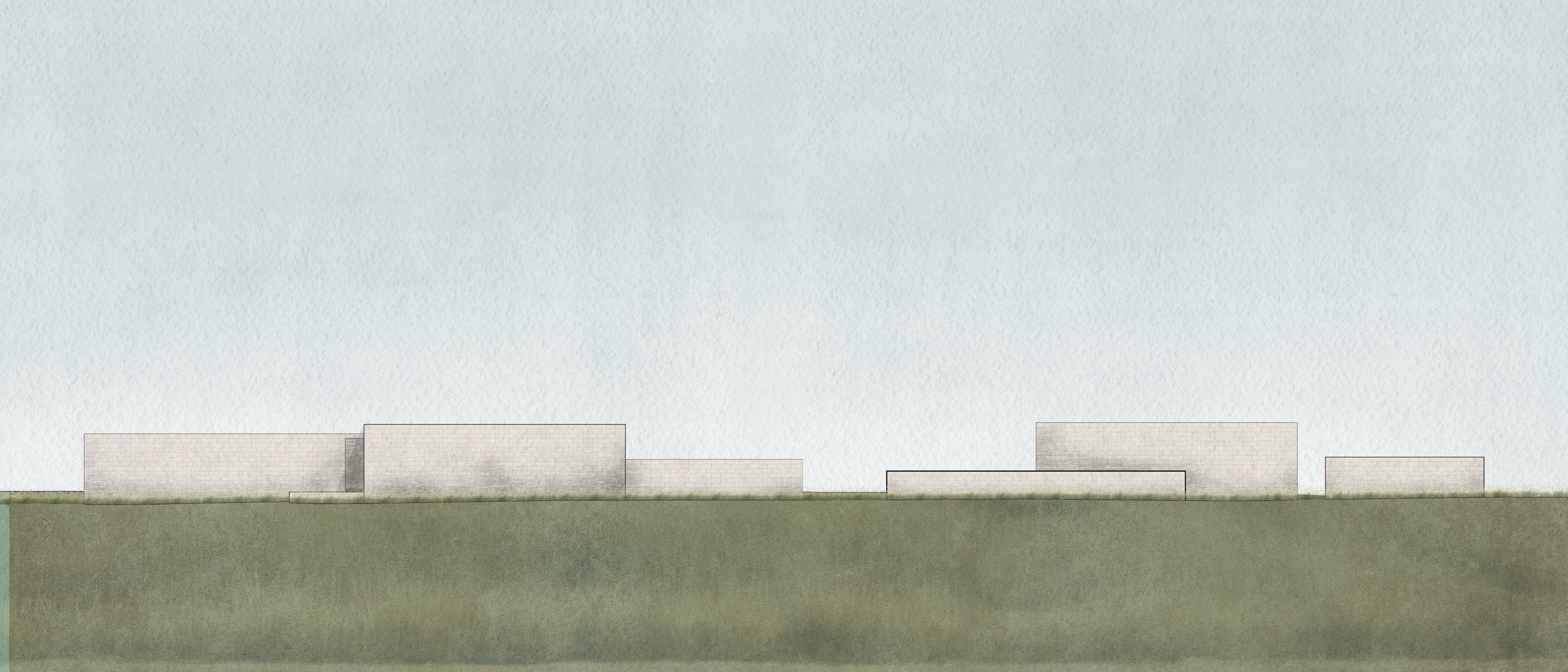

exhibitions: panorama, wind, row, prairie, and rolling hills
exhibitions: sky, aquifer, gravel, soil, and wind
South Elevation


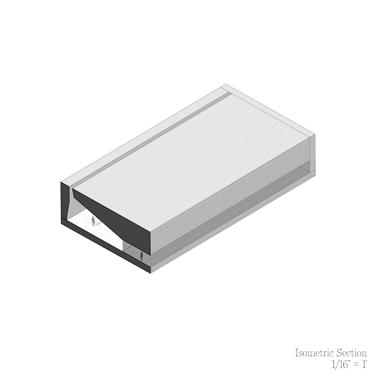
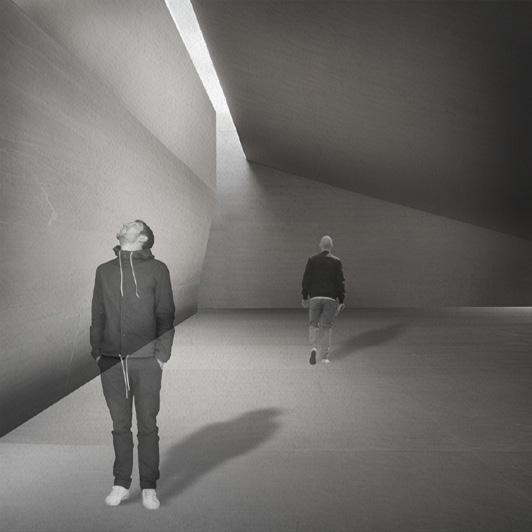
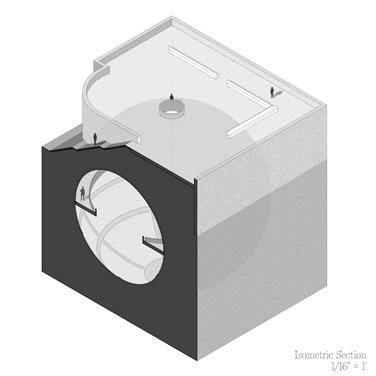
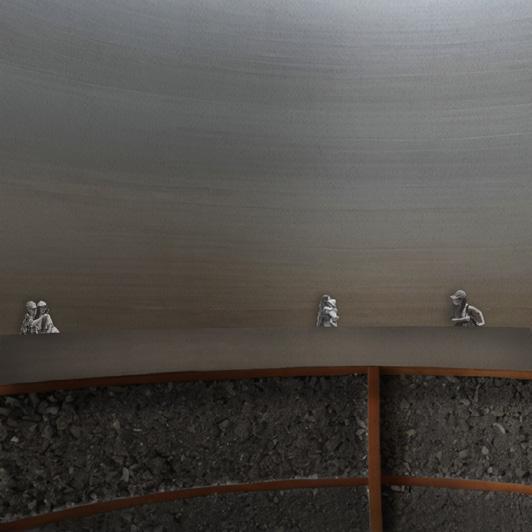

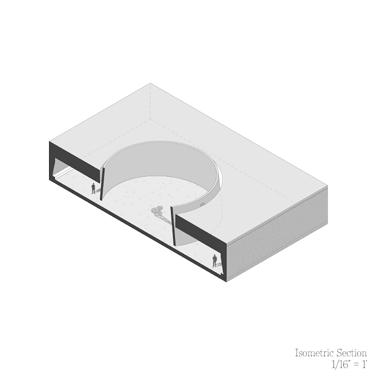
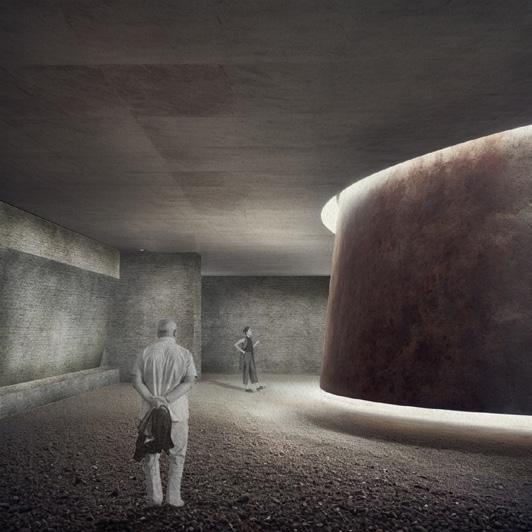
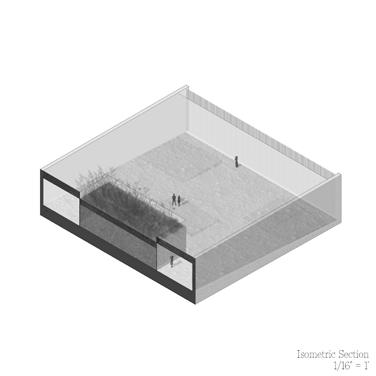
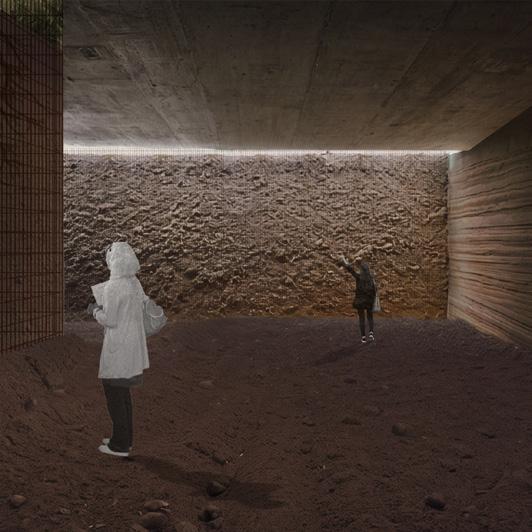
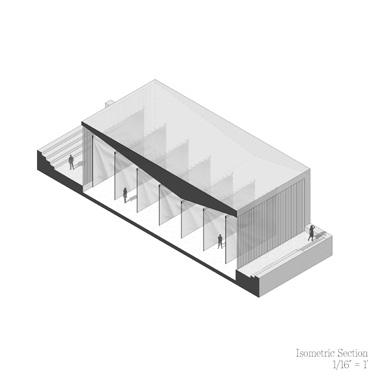
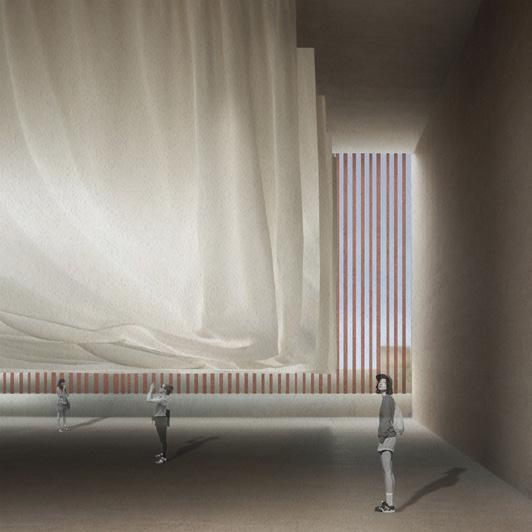


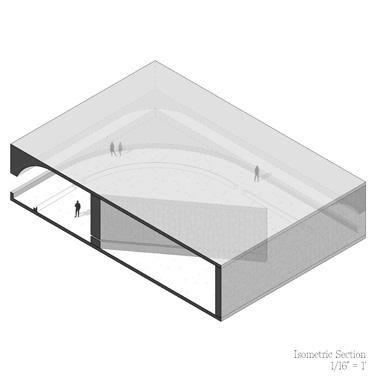
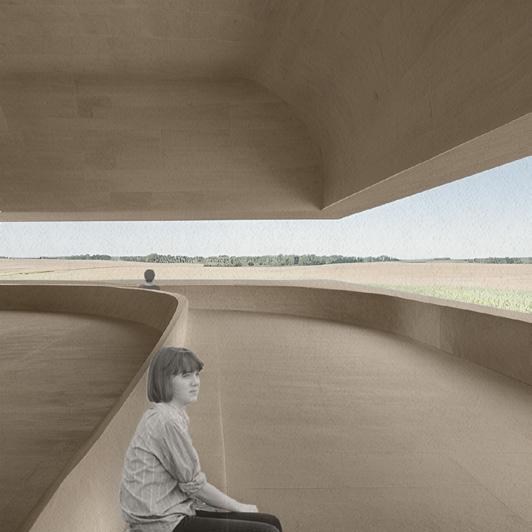


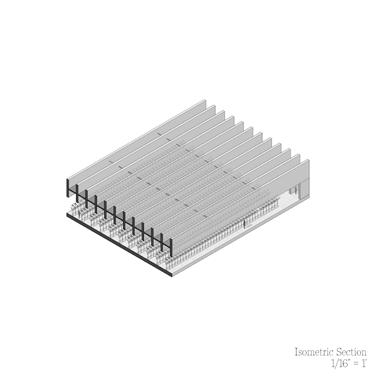
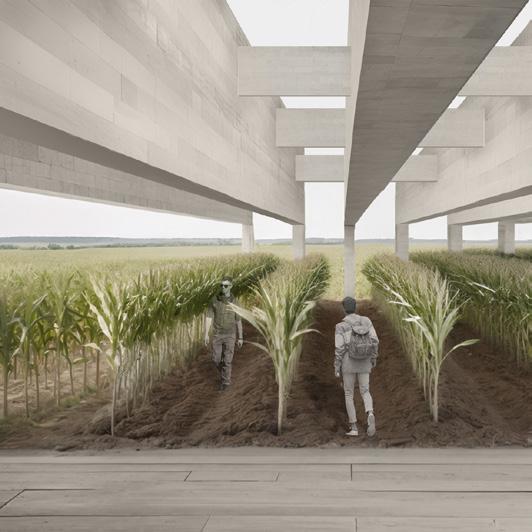

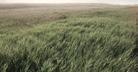

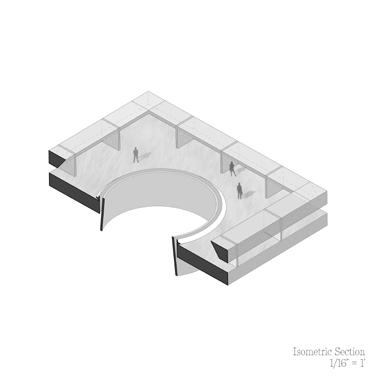
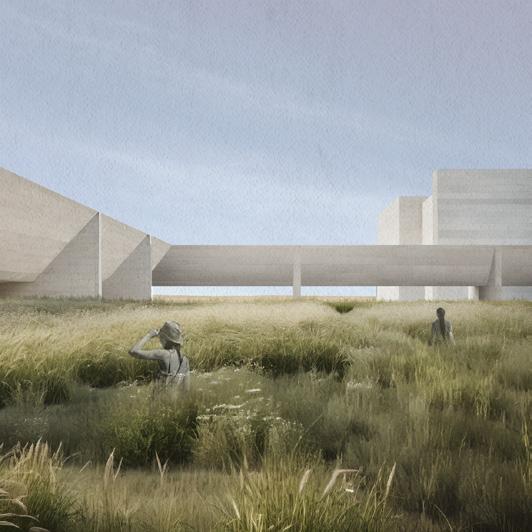

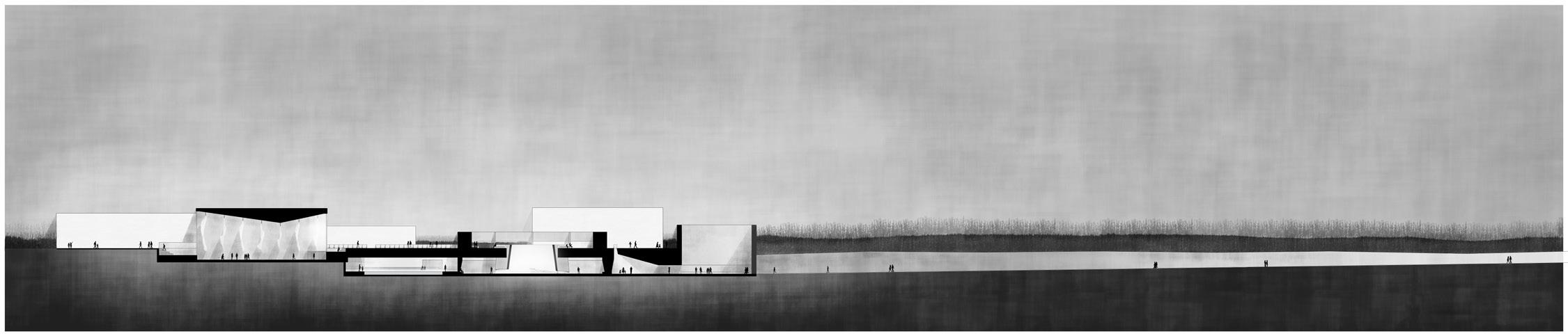
The sections communicate the varying spatial qualities that showcase each of the landscape elements.



LOGAN CONLEY AND KAITLYN GOTH
LOGAN CONLEY AND KAITLYN GOTH
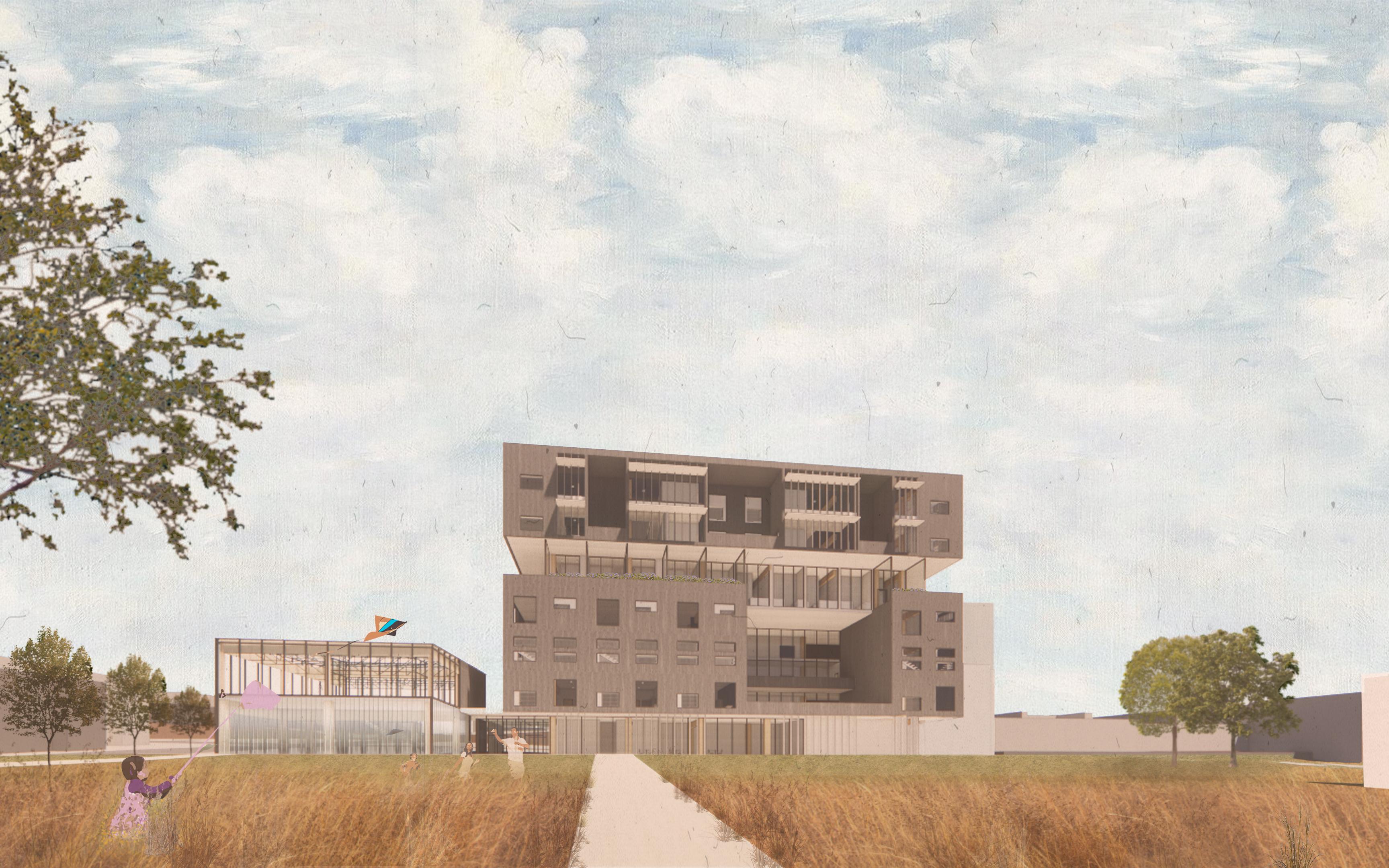
Rise aims to support the mental well-being of the lowincome populations of Des Moines by providing access to natural and individualized spaces. Initial research into Des Moines area demographics revealed that lowincome residents of Des Moines suffer disproportionately from mental illnesses such as depression and anxiety. The proposal and outdoor design creates room for unrestricted outdoor play, as well as walking paths, both of which are stated to be beneficial activities for those struggling with their mental health. There are also exterior spaces adjacent to interiors that allow for protected outdoor exposure. The outdoor experience is brought indoors through the greenhouse which provides residents with fresh produce throughout the year, supporting a healthy diet for residents. Other interior spaces include a craft space; anecdotal evidence shows that crafting has a positive impact on those suffering from mental illnesses because of the dopamine released during acts of creativity. The housing environments are also designed to cater to the needs of residents by providing a plethora of spaces for different functions. All the bedrooms are designed with a built-in module which allows people of different backgrounds to be able to move into a fully furnished space. This space is designed for multiple functions to happen simultaneously and provides abundant storage opportunities and natural lighting. Spaces are designed to be extremely efficient with their use of square footage, which will keep rent low while still providing secure units with high-end finishes.
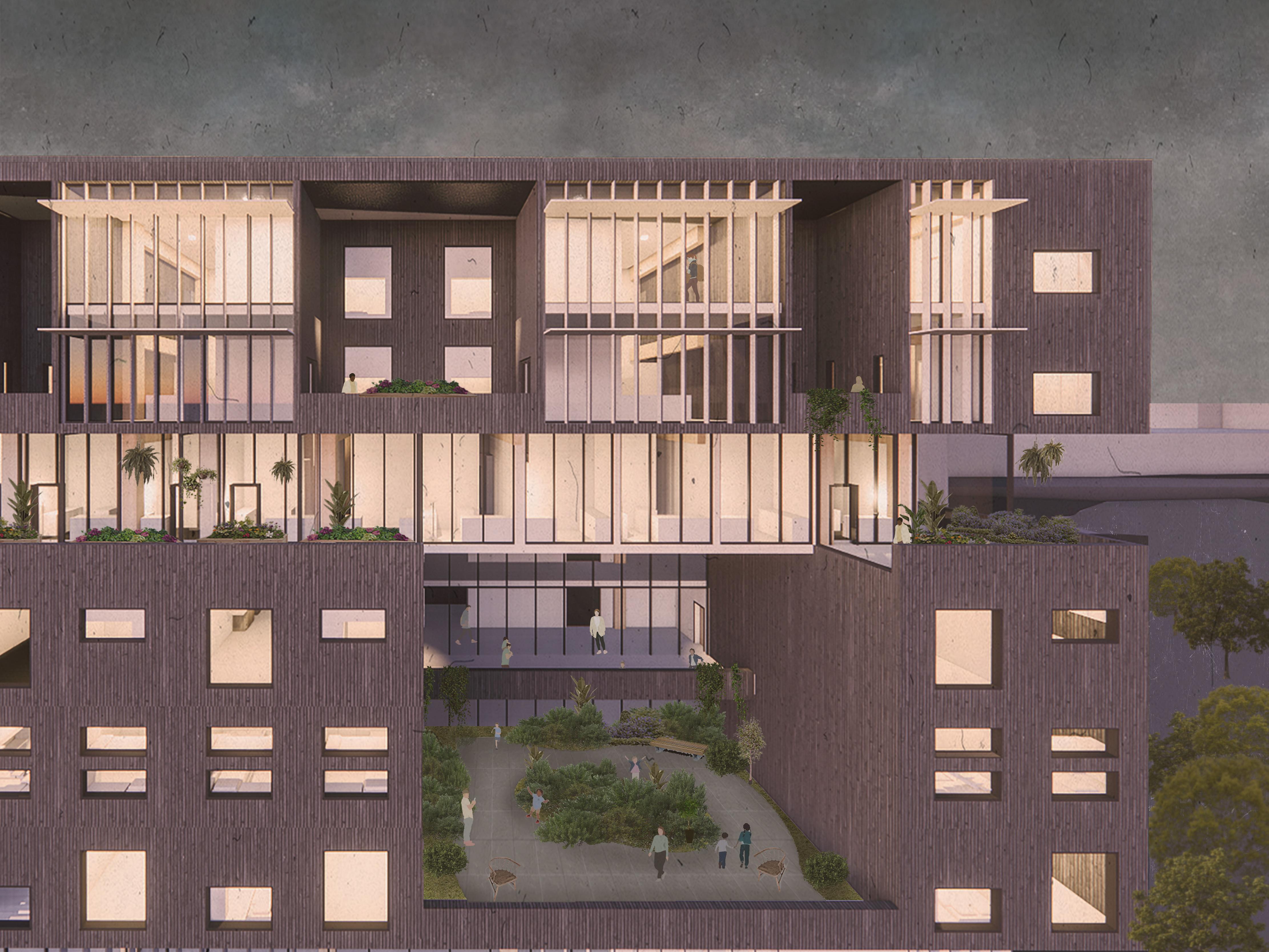
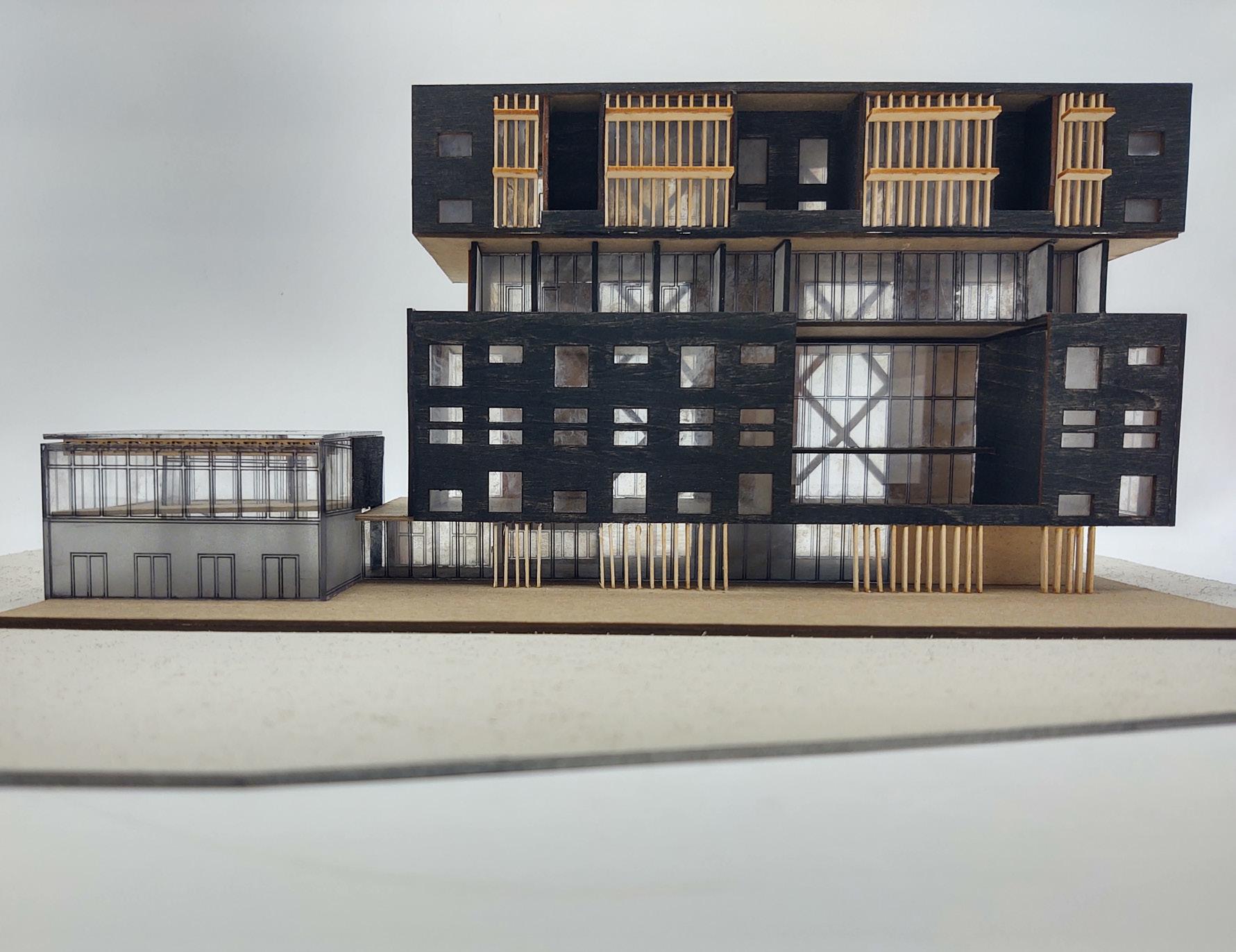
The south facade showcases all of the exterior spaces offered to residents of Rise. The areas allow for exposure to nature within the safety of your home.
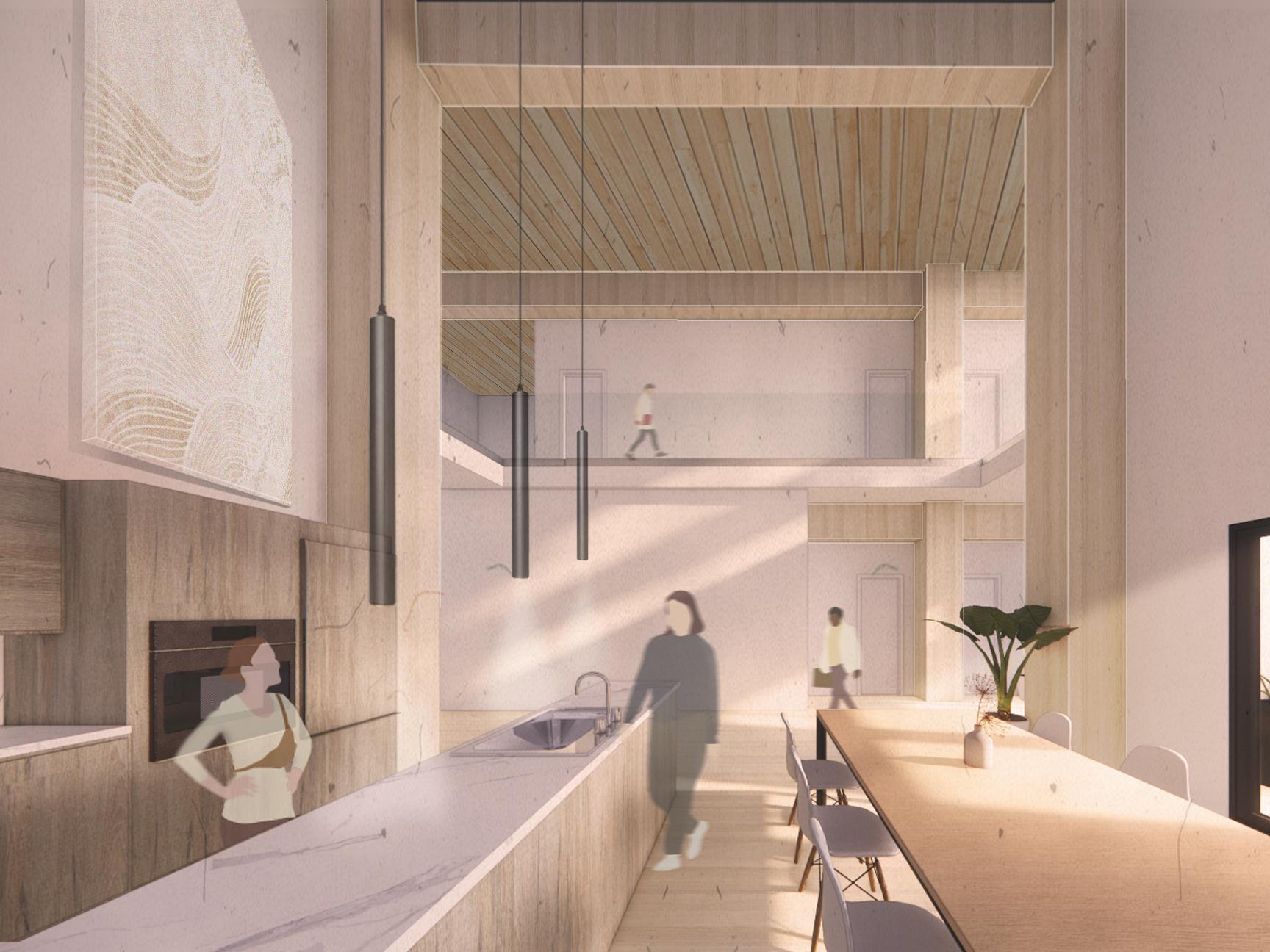
The double volumes of the co-living units create beautiful lighting that carries throughout all of the public spaces.
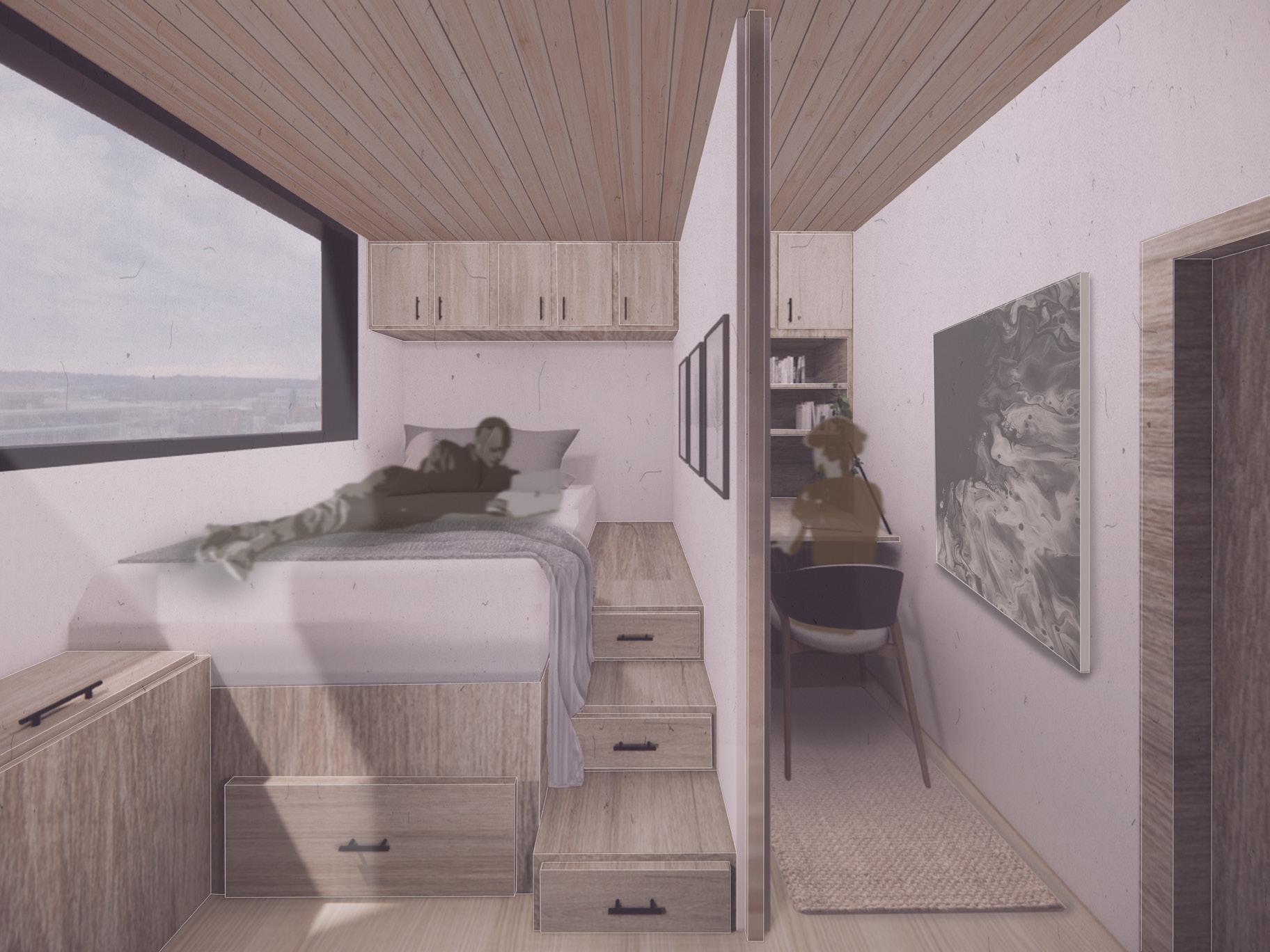
This bedroom module offers efficient, functional spaces for all residents of Rise. The micro-unit’s design choices allow for multiple occupants to operate independently and provide ample storage.
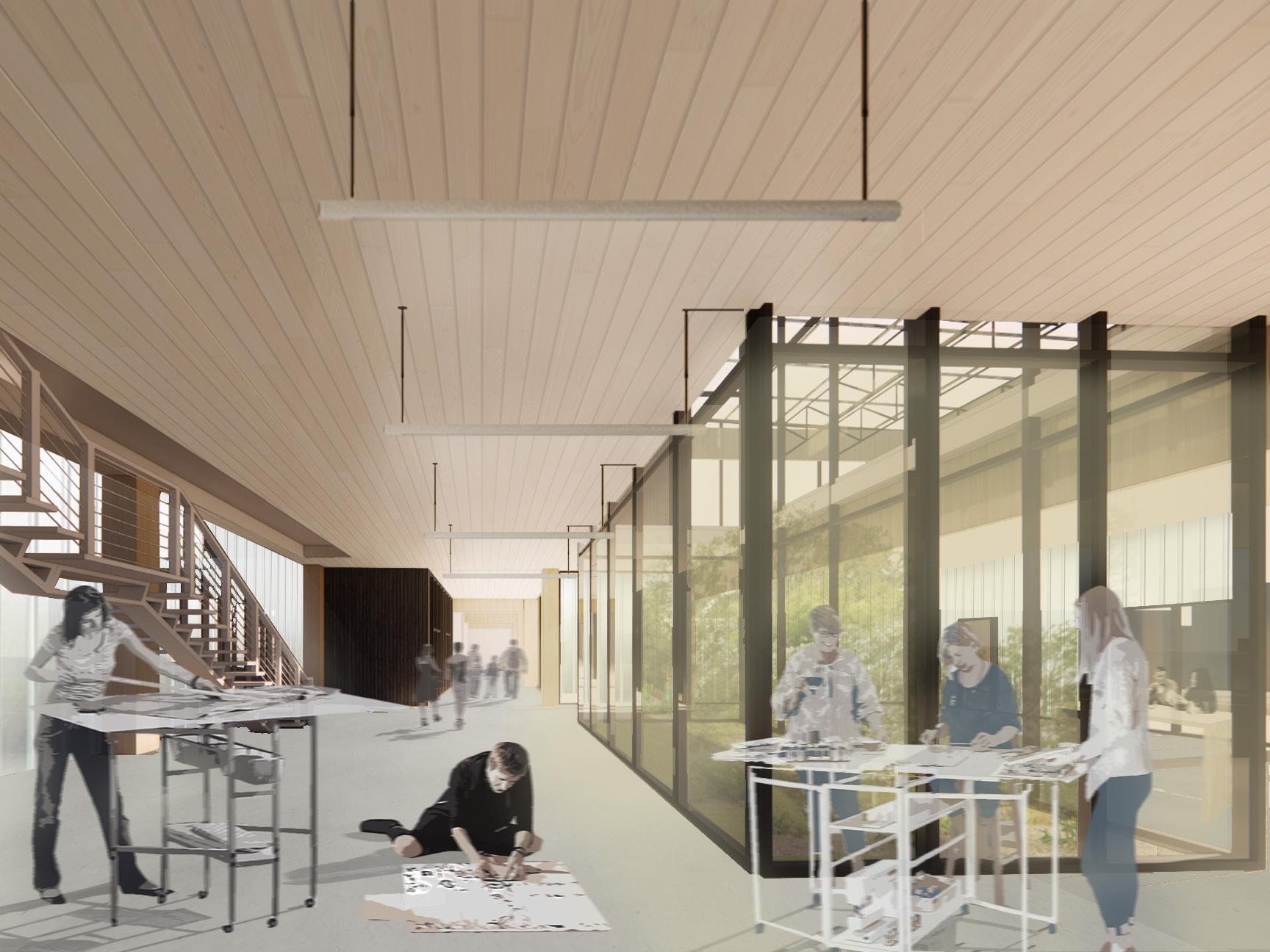
The craft center is a place for all kinds of crafting opportunities that supports the mental health of residents and members of the community.
Model created using laser cut basswood and acrylic. Stains were used to achieve the desired colors.
LOGAN CONLEY, KATHRYN SAWALLISCH, KAITYLYN GOTH
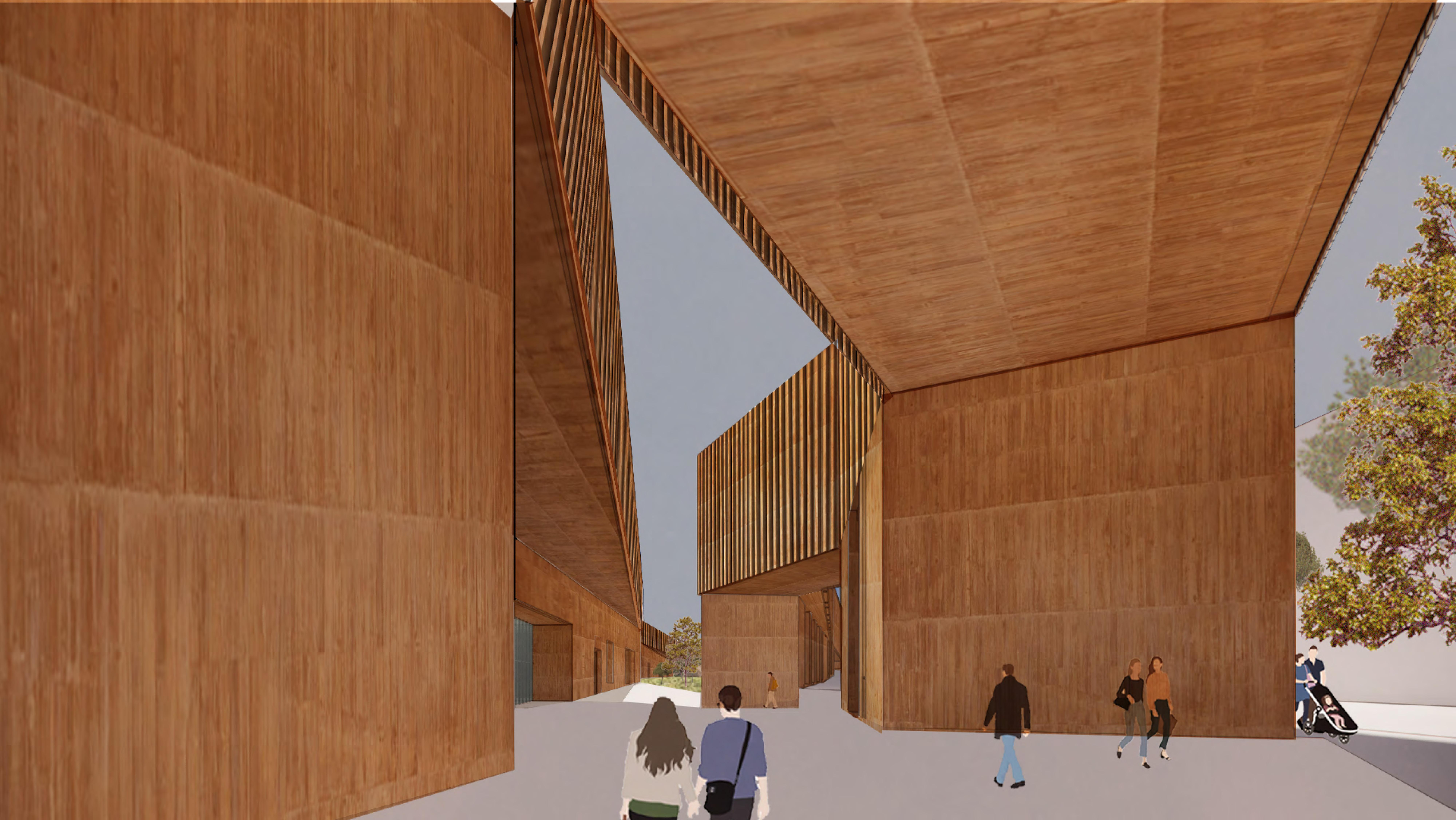
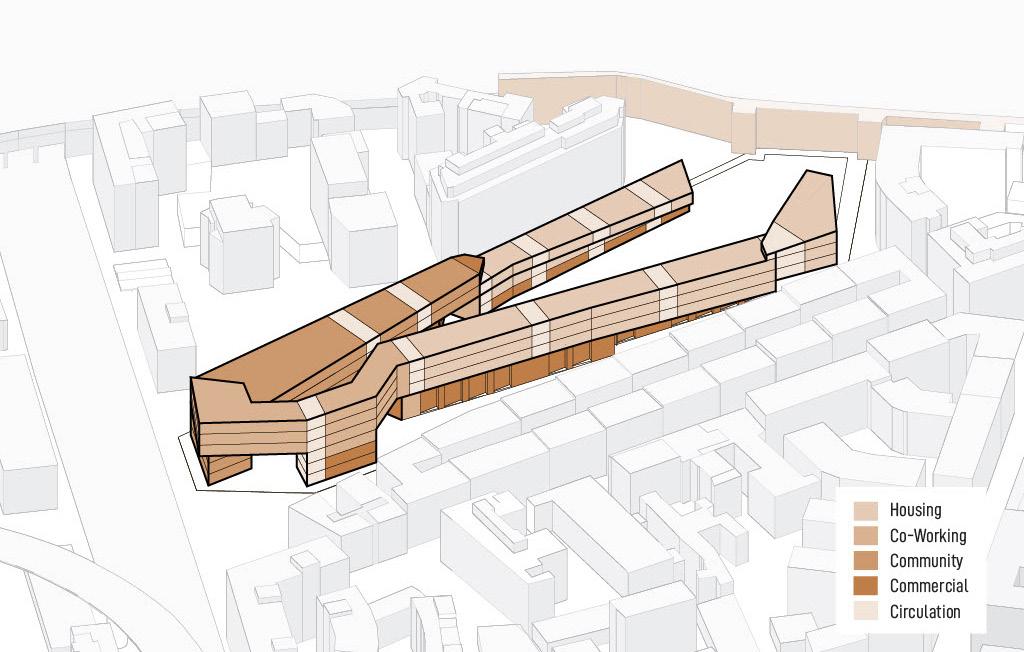
Carved is a multi-use building located along the historic Aurelian walls in San Lorenzo. It houses a community center, many commercial storefronts, co-working spaces, and several different housing options. The form utilizes subtraction to foster a bold and monumental feeling that shapes the user experience and engages with the surrounding context. Large, covered pass-throughs communicate entry points to visitors, and bold overhangs provide protection from the elements. Commercial spaces line the form at the ground level and use multiple subtractive strategies. At a large scale, the form pushes in to create a boulevard to the north, which welcomes visitors to the shopping area; at a small scale, each commercial space has a deepset, glass doorway that differentiates stores and communicates the point of entry. A large, subtracted entry is placed at the west end of the site, near higher traffic areas. When entering the site from this direction, the mass creates a clear frame of the Aurelian walls and the green space before it. This central area offers a green space unavailable in most of San Lorenzo, which will offer guests and residents the vital opportunity to engage with nature. The program of this proposal meets the many needs of the San Lorenzo neighborhood and this monumental form aids in improving the community through bold design.
THIRD FLOOR: RESIDENTIAL AND
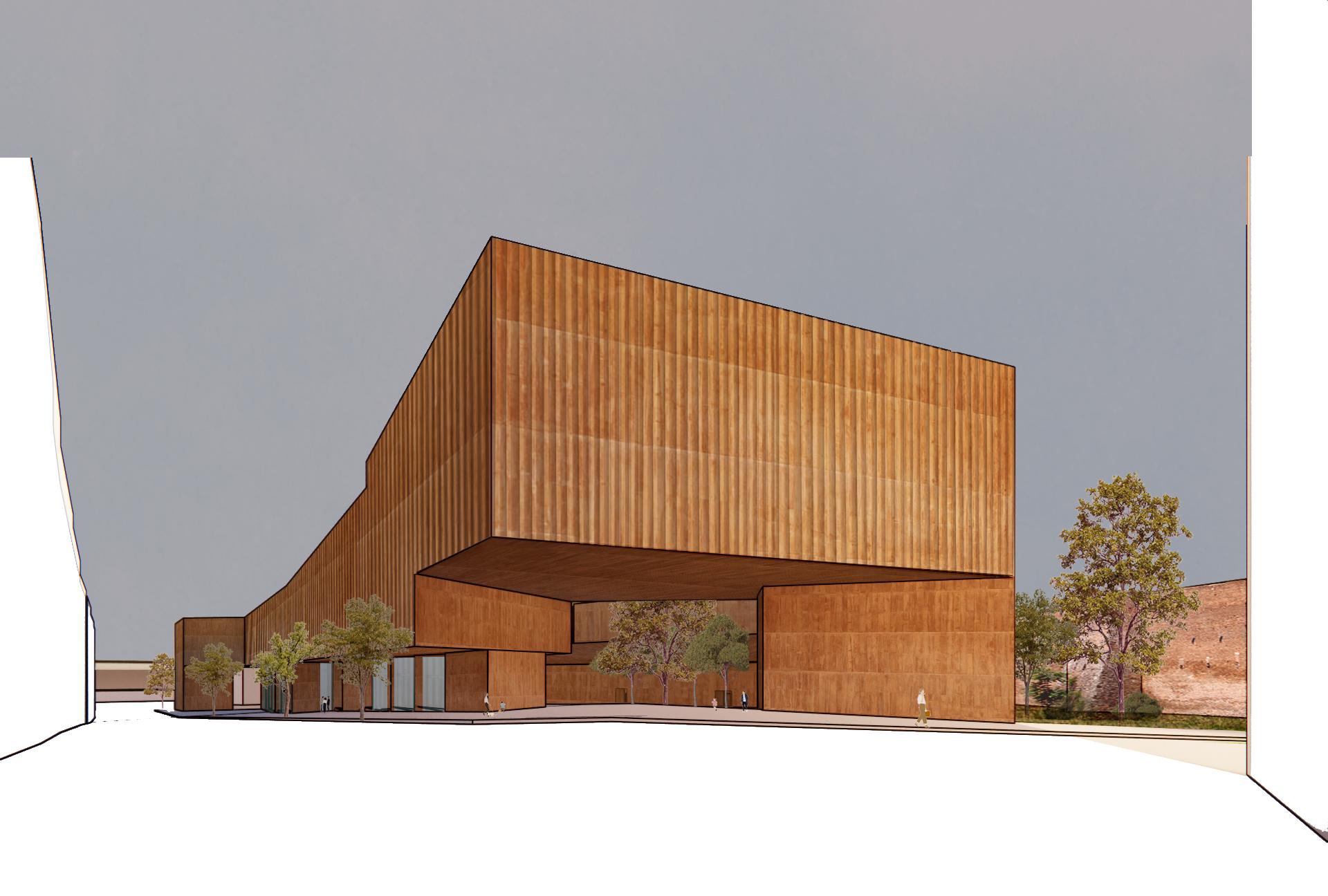
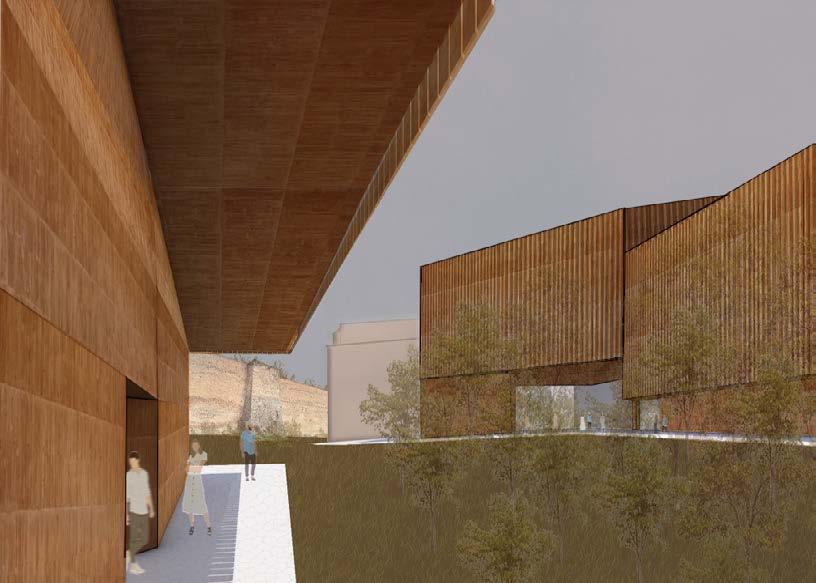
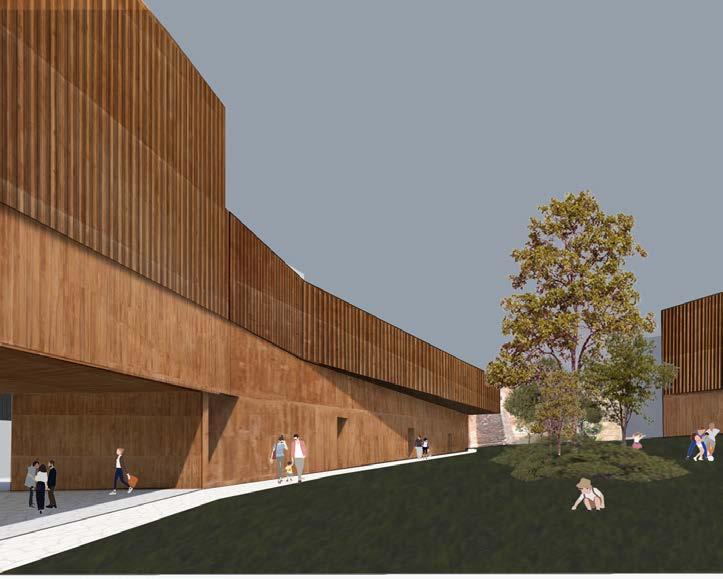
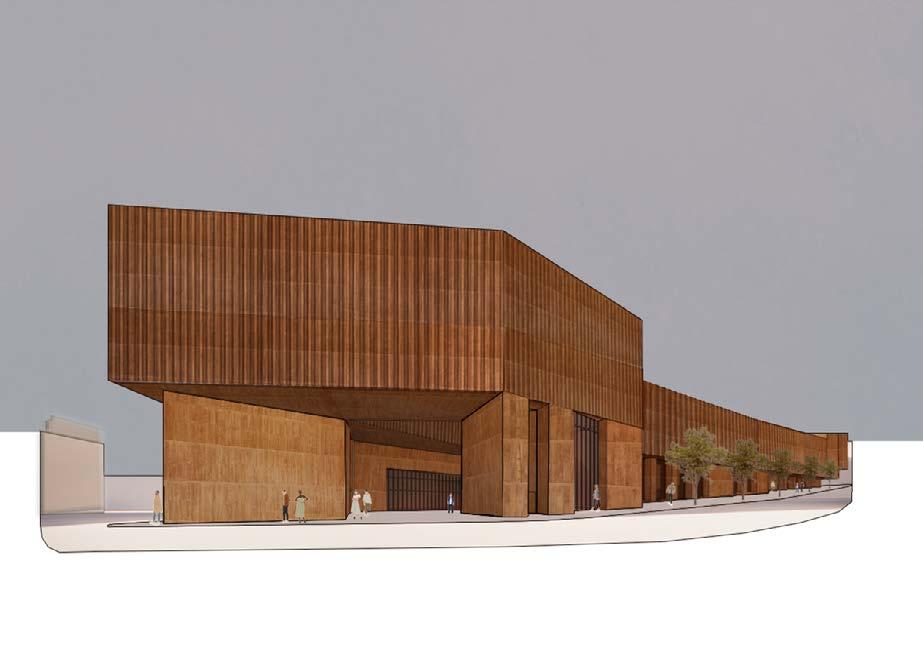
Perspectives to depict how the massing strategy influences the site experience.
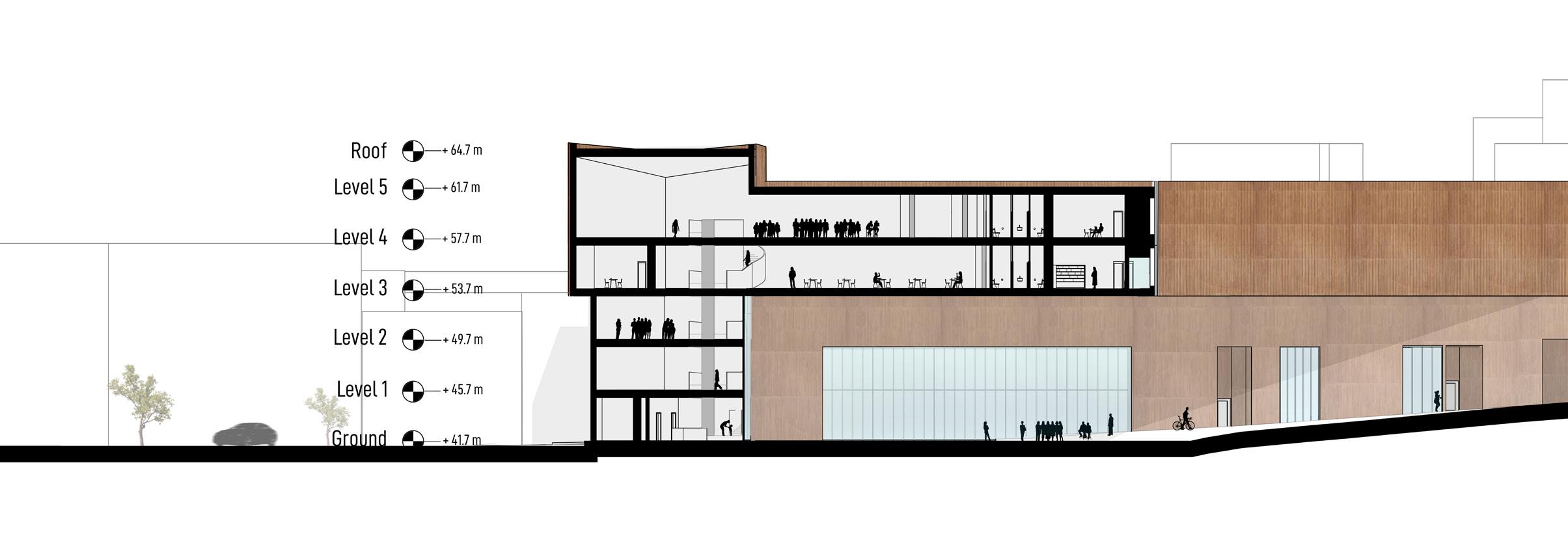
Section representing the complexity of the topography and the resulting massing strategy.
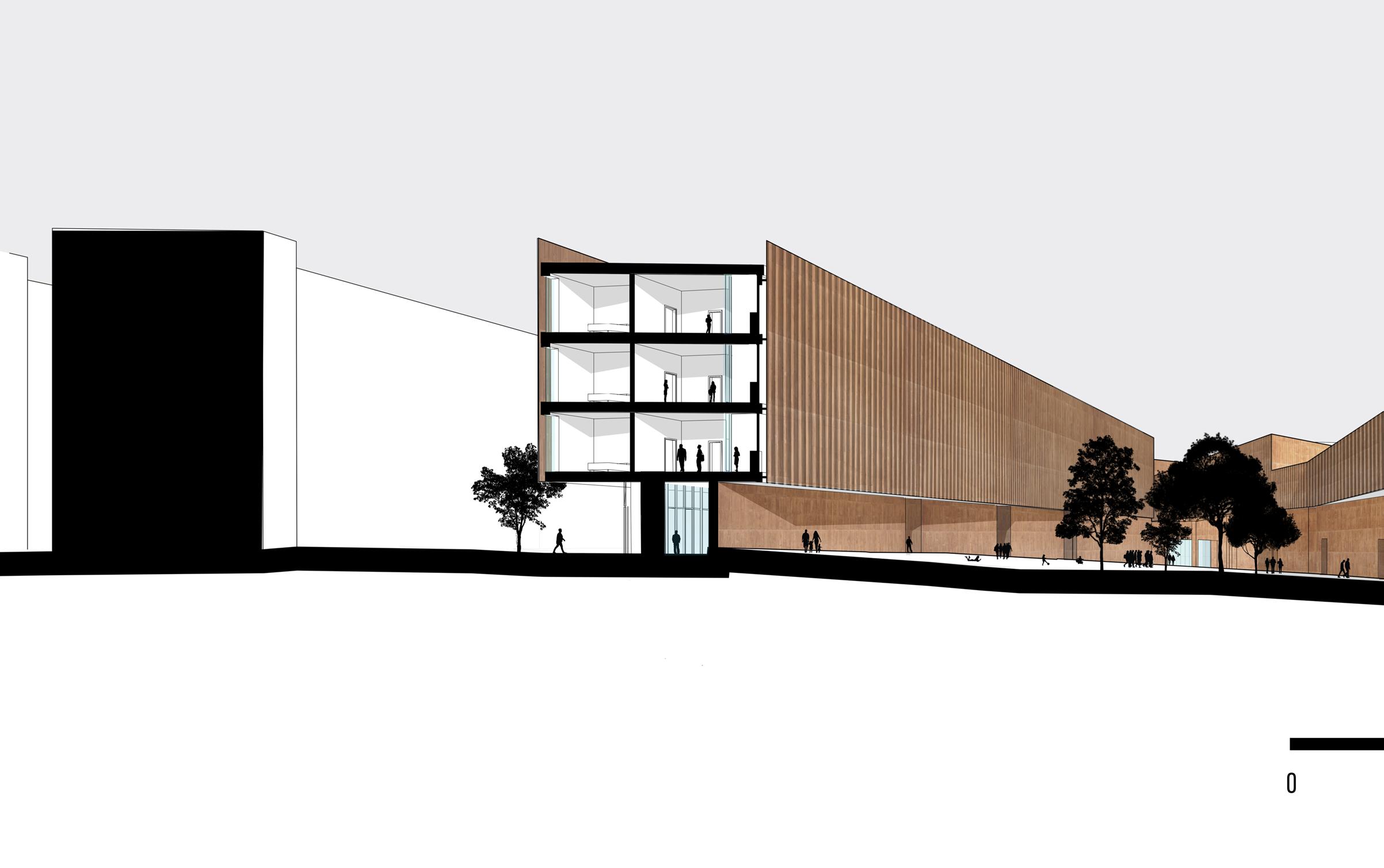
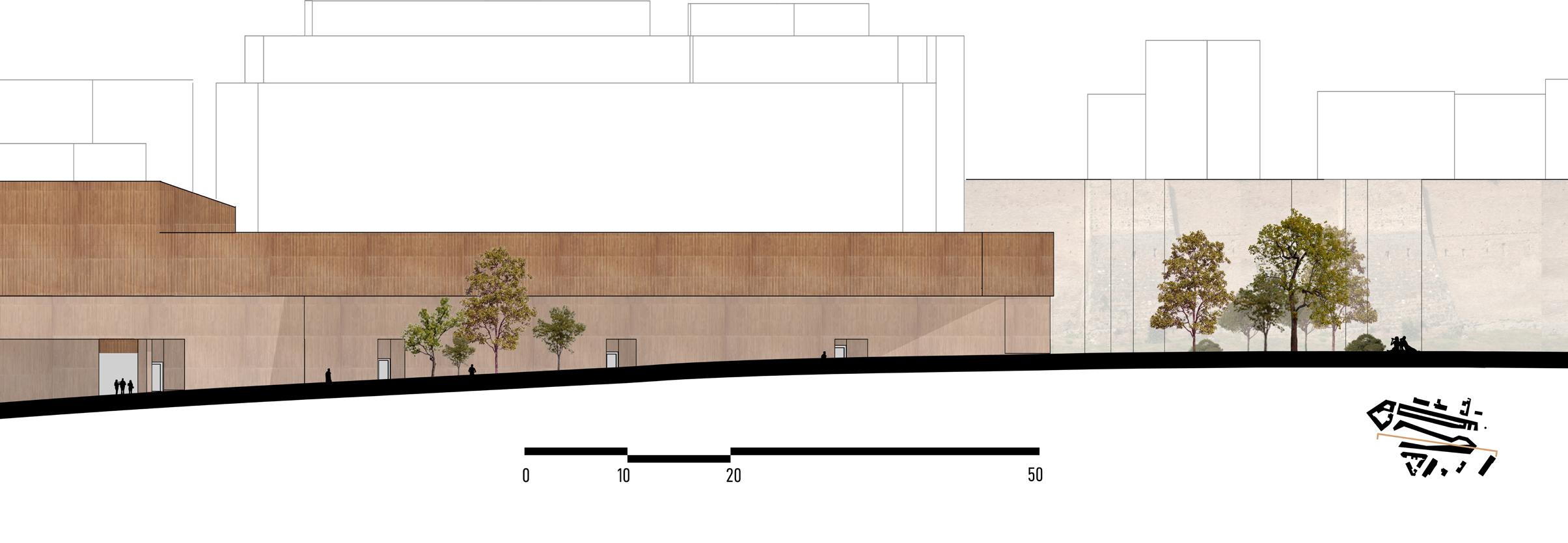
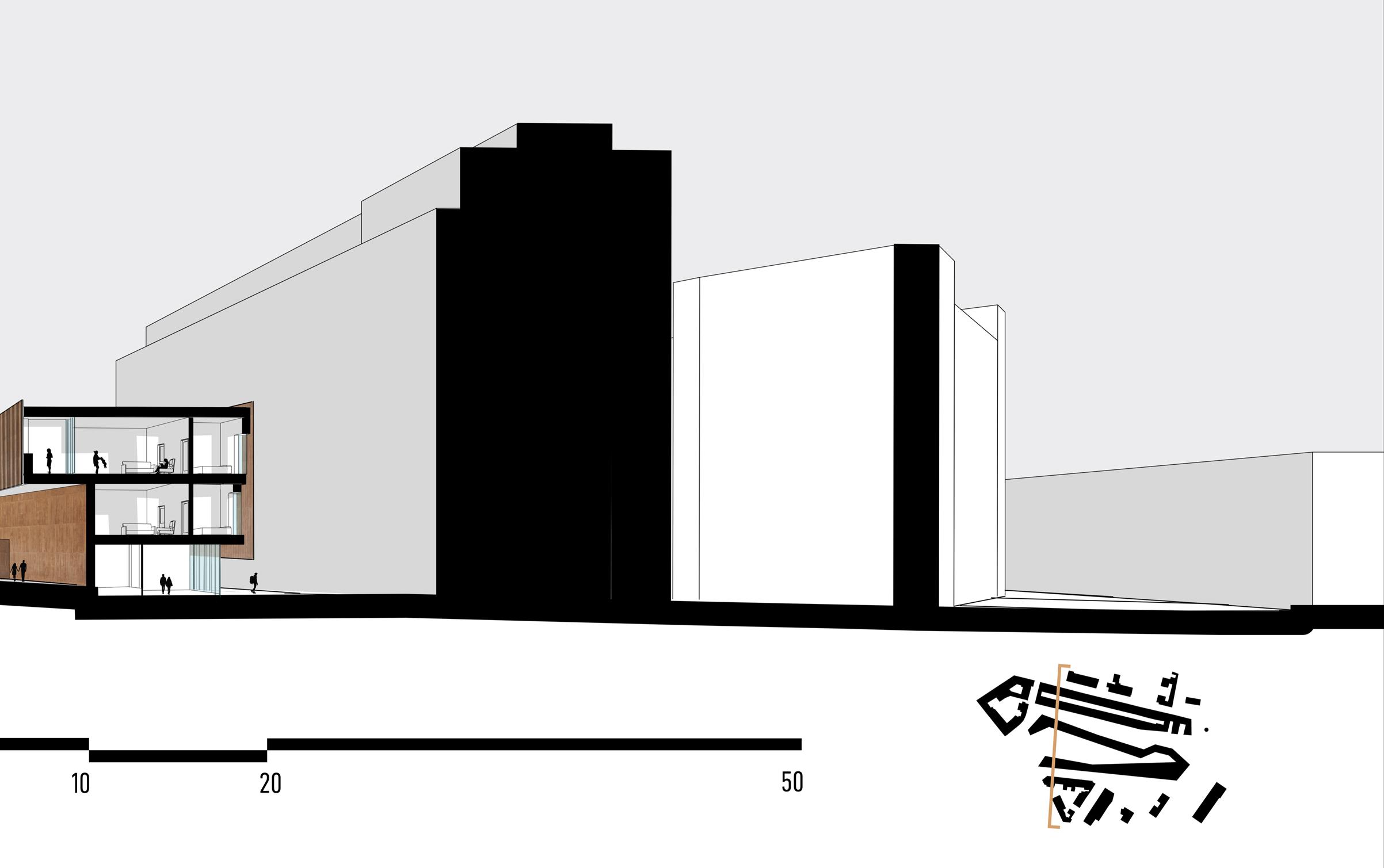
Section portraying the layers of subtraction in the mass and the expansion of green space.
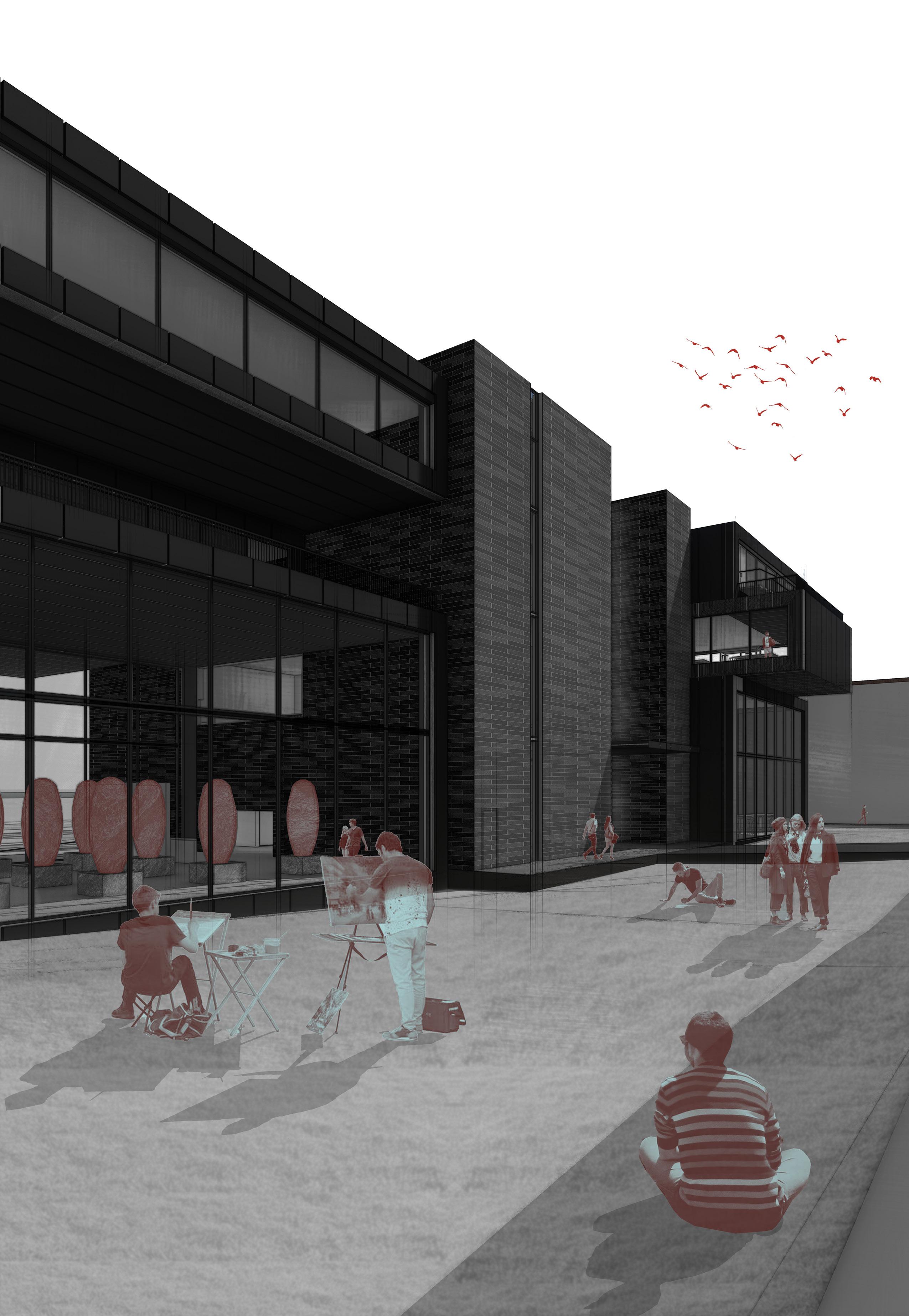
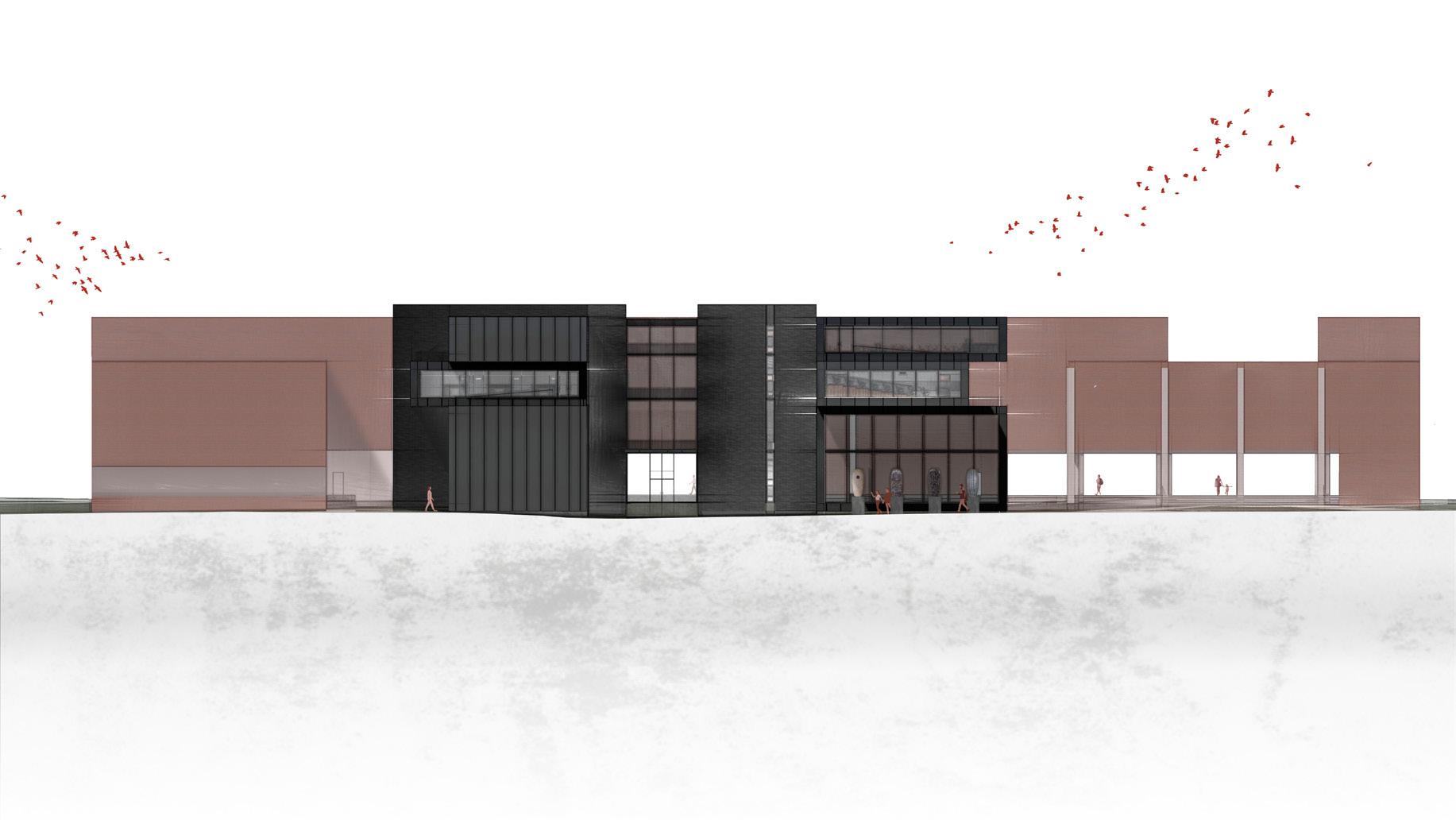
This proposal for a new studio arts building at Drake University focuses on clarifying the entrance to campus by creating an impactful, new axis point. The strucuture also provides more adequate studio spaces to support students in their pursuit of creative success.
The sequential section drawings show the volumetric conditions through each of the major spaces level creates an interesting sectional quality, as does the additive and subtractive
The plans communicate and
spaces of the form. The loft subtractive nature of the facade.
communicate the different qualities of interior spaces, featuring exterior balconies, interior mezzanines and double volume spaces. The prominent axis through campus can be seen in the ground floor plan.
LOGAN CONLEY, ELLIE DOUGHERTY, KYLIE KRASS
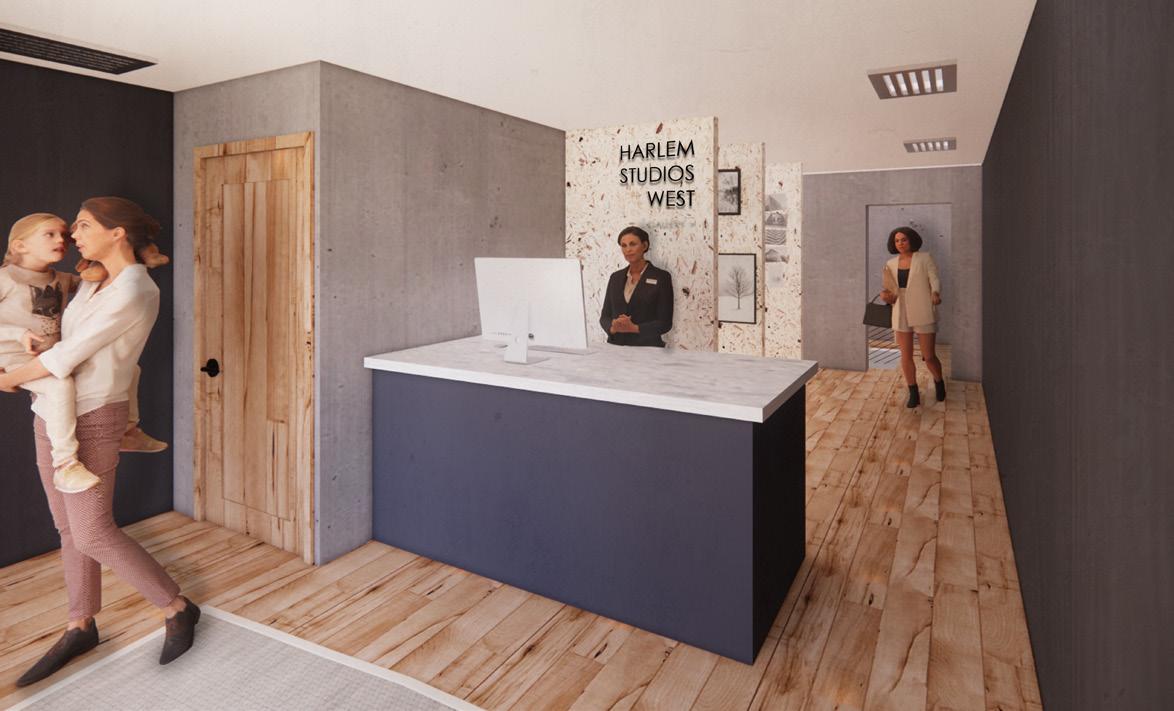

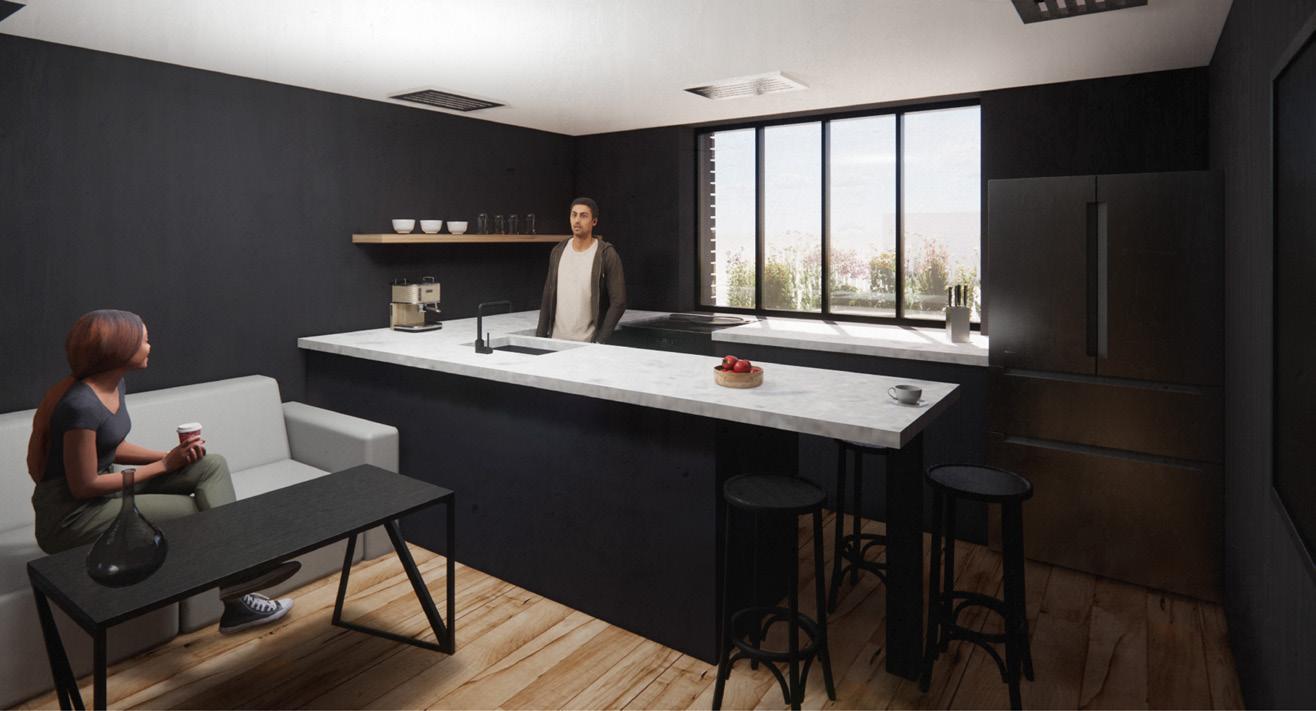
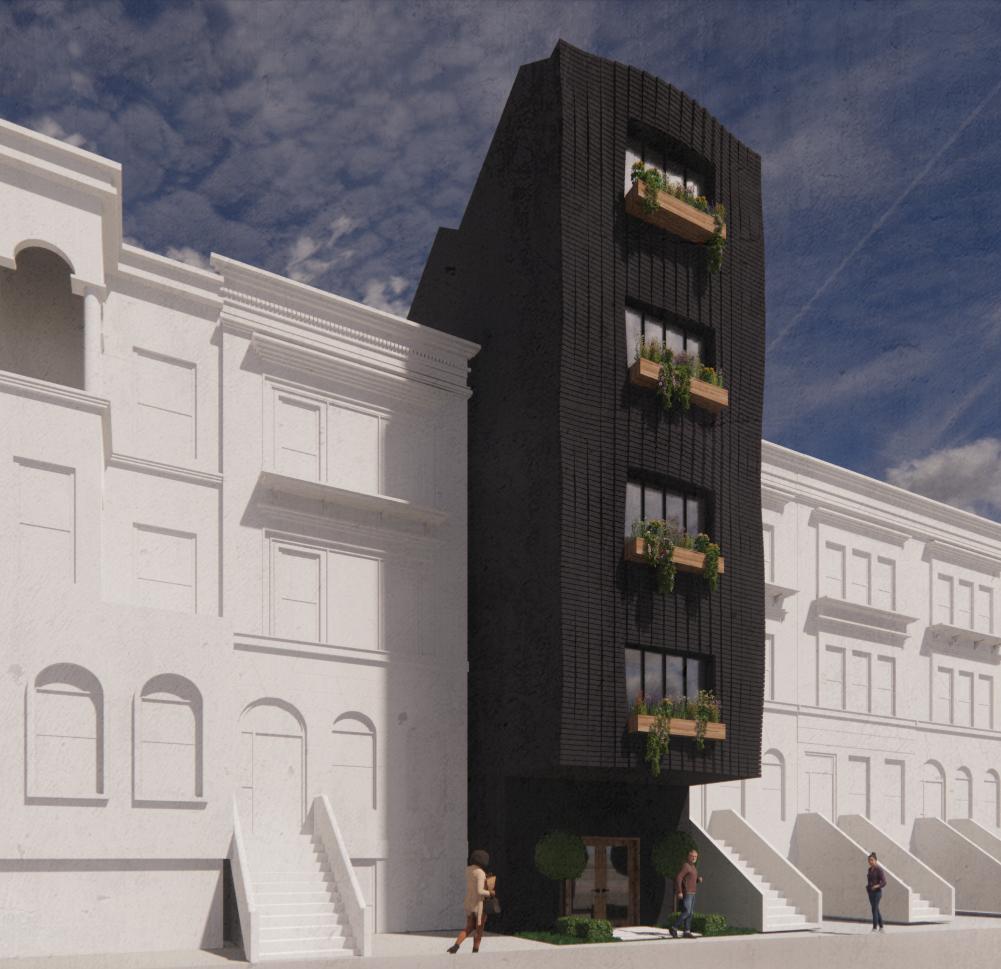
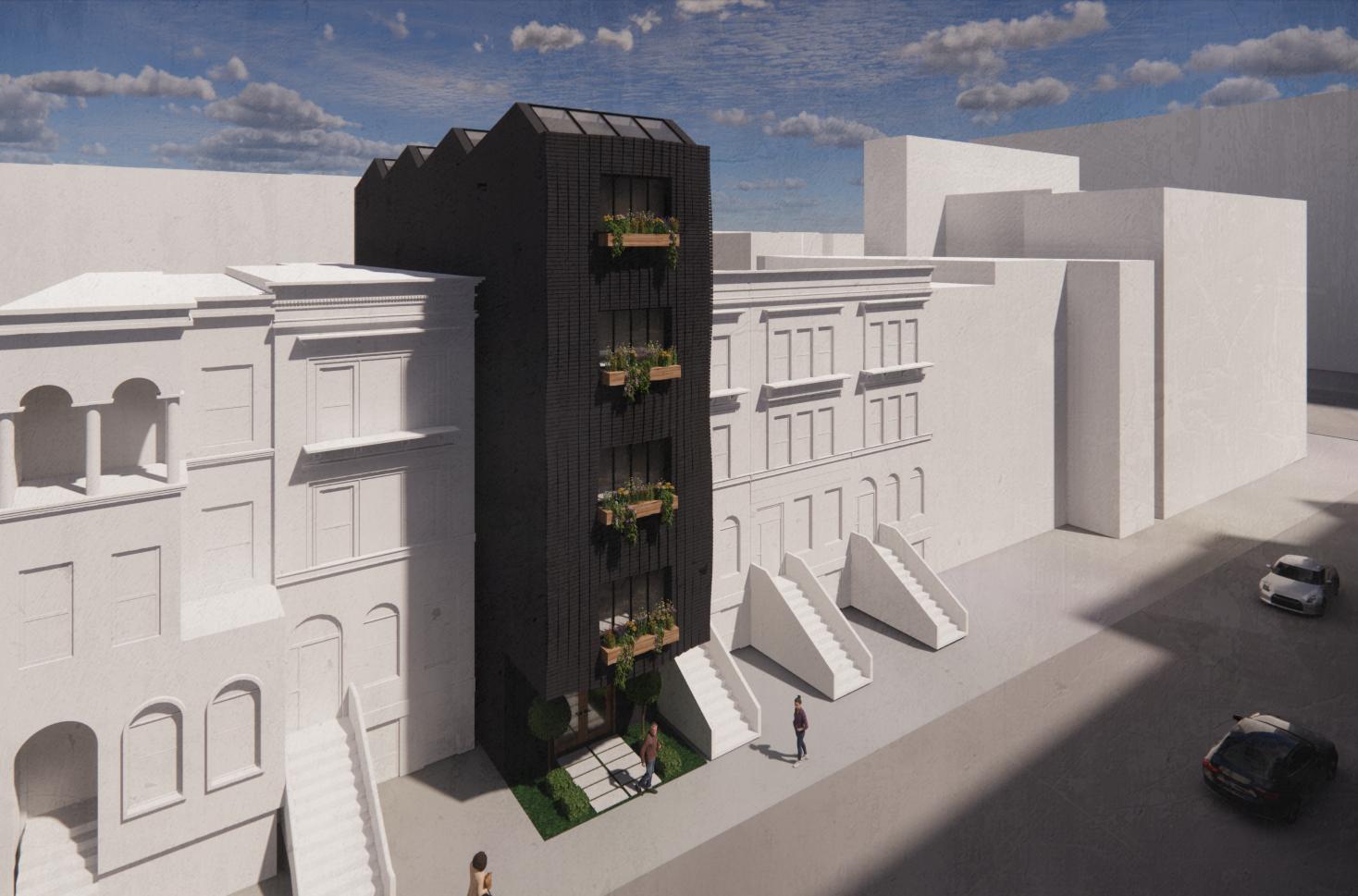
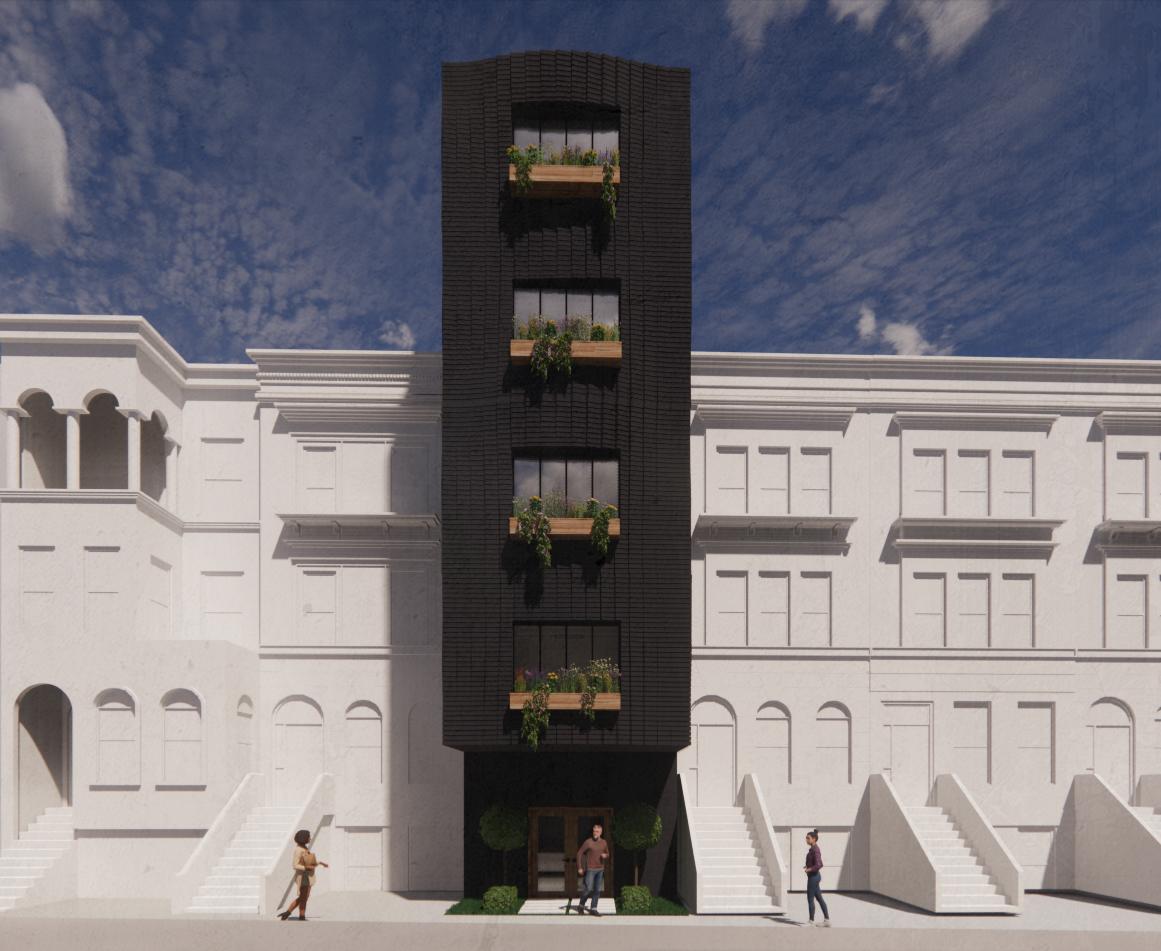
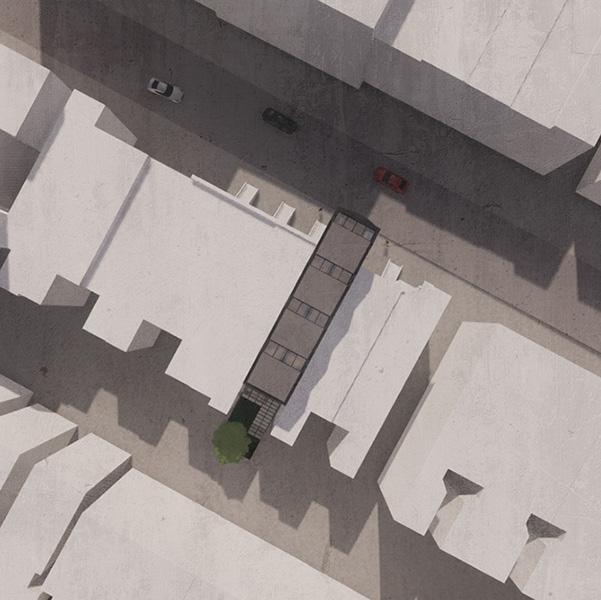
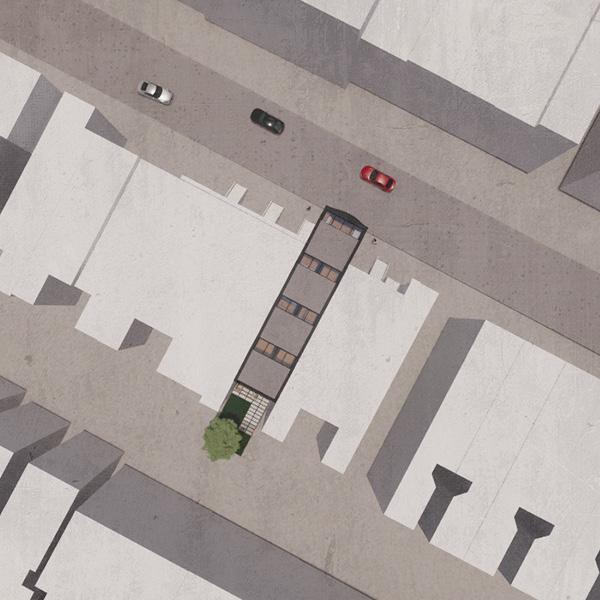
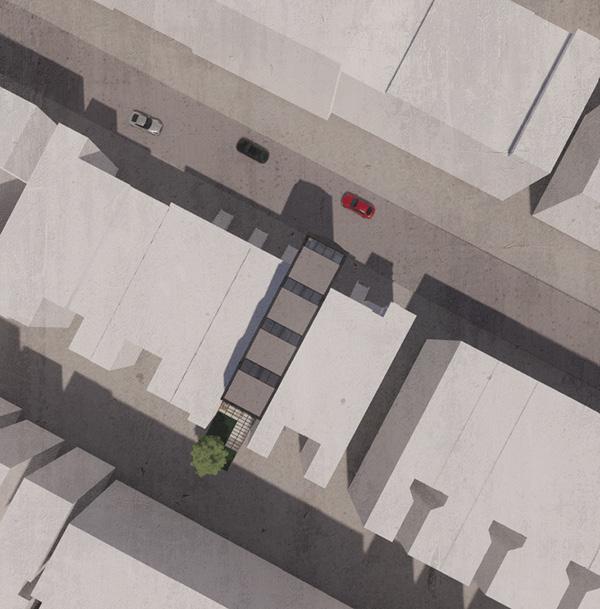
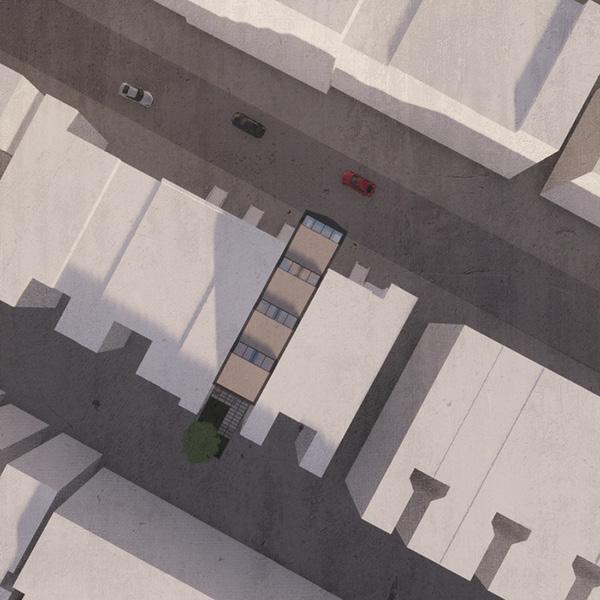
Harlem Studios West aims to provide low-income housing opportunities to the residents of Harlem, New York, without sacrificing great design. The material choice for this project, precast concrete, allowed for a modular design that results in both rapid construction and lowincome feasibility. The main floor and basement feature a gallery space to showcase Harlem’s rich history of art and each of the floors above house one unit, with either one or two bedrooms. The top floor includes a community workspace for residents to pursue job opportunities or further education.
This project was a part of a design competition sponsored by Wells Concrete, where we were challenged to use precast panels in new ways. Our innovative use of CNC forms, transparent concrete, and transportation systems push the precast industry to new and exciting opportunities.
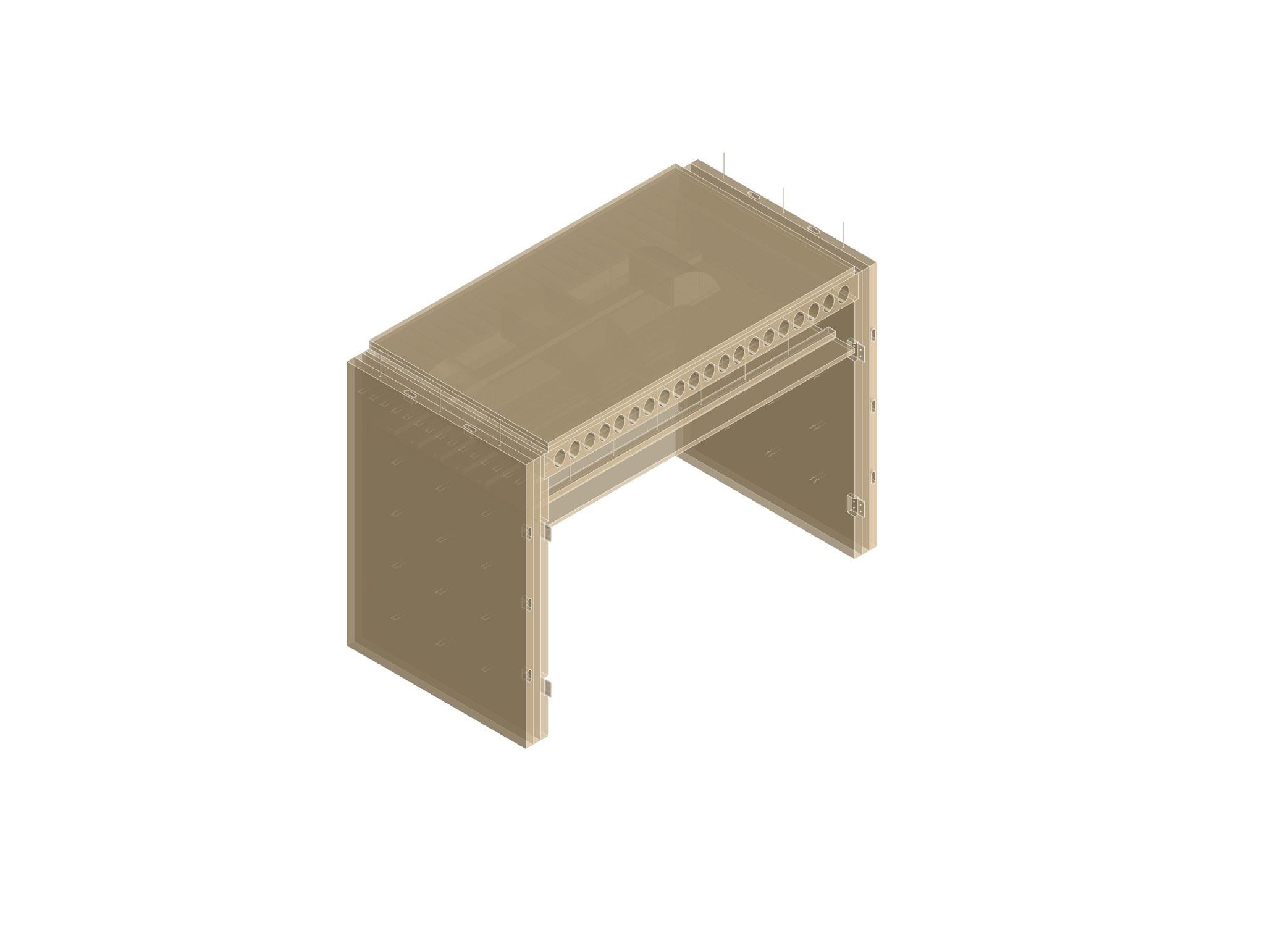
Our innovative idea to assemble wall and ceiling units prior to transport allows the structure to be constructed in a matter of days with a relatively small crane.
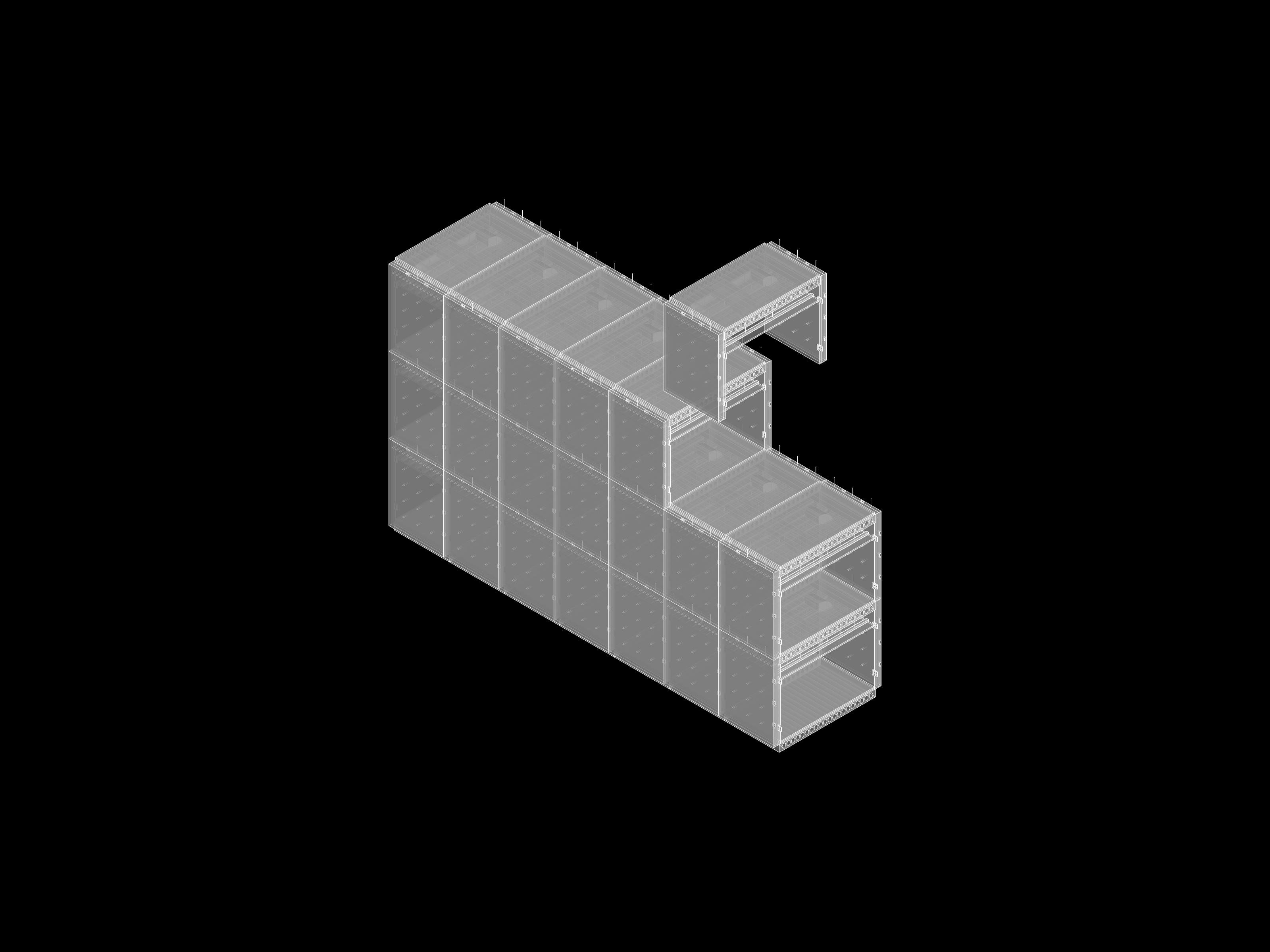
This assembly factors in many components, including the insulation that would be necessary for the exterior walls.
Our design process focused on repeating form sizes, so the manufacturing of our components would be an efficient process.
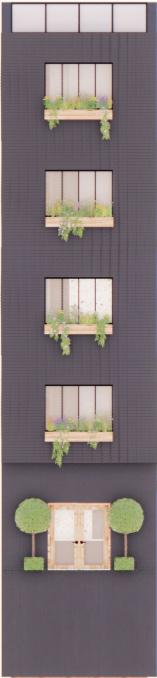
As detailed, we designed a CNC form that would allow us to cast this intricate waving brick form for the front facade. The pattern is repeated twice with two 11’x16’ forms.
The back elevation faces into our stair core. Because we were using the secondary sunlight access for the stair core, we chose to implement translucent concrete. This allows light to carry into the stair core while maintaining some degree of privacy.