New changes to St. George’s administrators create a positive impact on the community pg. 4
St. George’s Independent School | Collierville, TN | 02.21.24 | 7.2
A Little Fresh Air Passing the Baton Finding Your Future
Caroline Ruffin’s SIS helps inspire students for the next stage of their lives pg. 8 It never hurt anyone pg. 6
Advisor
Mr. Zack Adcock
The Lodge and gryphonlodge.com are dedicated to serving as an unbiased and authentic voice for the students of St. George’s Independent School. We at The Lodge strive to be an open forum for student expression, to act in the best interests of the student body and to embody the principles of journalistic excellence. The Lodge is affiliated with the Tennessee High School Press Association and the National Scholastic Press Association. The Lodge is funded by advertisers, donors and St. George’s Independent School and is published once every eight weeks during the school year by schoolprinting. com. The Lodge prints and distributes 200 copies of each issue to 500 students and faculty on the St. George’s Collierville campus. Bylines indicate the primary writer(s) of each article, and additional contributors are indicated in the shirttail. All of our content is written, edited and designed by our staff unless otherwise clearly stated. The Lodge provides free advertising for student clubs, events and activities and paid advertisements
L
The
To
or
for advertising, email our
at thelodge@sgis.org. About Us: Arts/Design
Livi VanSteenberg
Photography
Livi
Web Editor Kirklyn
Copy Editor Olivia
Staff O’Neal Starrett
Social Media
Sienna Lightman ‘24 Cover photography by Livi VanSteenberg
for local businesses.
Lodge welcomes letters to the editor and article submissions.
submit a letter, article
request
staff
Editor Abbi Whitehead ‘25 Co-Editors-In-Chief Sienna Lightman ‘24
‘25
Editor
VanSteenberg ‘25
Moore ‘25
Vitale ‘24
‘24 Johnny Bailey ‘25 Ella Coons ‘25 Molly Gorham ‘25 Sydney Murray ‘25 Caroline Wood ‘25
Editor
Features 04Passing the Baton 06A Little Fresh Air News Sports & Arts Opinion 08Finding Your Future 12Getting Groovy with the Gryphons 17Discussions are Healthy 19The Little Things 14Keeping it Professional 10Something for Everyone 16We Need to Decide for Ourselves 18Navigating Second Semester 08 06 04 14
Passing the Baton
Administrative change creates a positive impact on the community
By Sienna Lightman
Photography by Ella Coons and Sienna Lightman
On Monday, November 20th, 2023, students received an email from the then-current Head of School, Mr. Timothy Gibson, announcing surprising news: he was stepping down from his position and repositioning as the Head of Student and Alumni Affairs.
This came as a shock for many, but for Mr. Gibson, it was a positive change that he needed.
“There are things I know that I’m good at, and I’m interested in getting to focus my energy there. I like working with people. I particularly like working with young people. It’s why even as Head of School, I still did some college counseling. I still taught a class. Because for me to spend all of my time in crisis was mentally and physically exhausting.”
During his four years as Head of School, numerous crises occurred, and Mr. Gibson had to go face-toface in handling them.
Starting off as Interim Head
of School following the fall 2019 departure of Mr. Ross Peters, Mr. Gibson was almost immediately hit with the beginning of COVID-19, the pandemic that took us out of school and onto Zoom.
“I think settling through COVID-19 was the thing I will be remembered for. It was also the hardest thing I’ve done. Because you obviously can’t plan for a global pandemic,” Mr. Gibson said.
After the pandemic, the question of safety in the St. George’s community started to become an issue after the death of Mrs. Eliza Fletcher, a St. Mary’s Episcopal School early childhood teacher, carjackings around the area and shootings around Shelby County.
“I get nervous about you all driving downtown, because it feels different than it did before. Than it did three or four years ago. And that makes me sad because we are in a moment of crisis in this area,” admitted Mr. Gibson.
This began to make him question what he can and can’t do; what
he can do is get people excited for their future.
“I don’t want [students] to have to live in fear, because I think part of being…a senior in high school is you get to dream big. You know where you’re going next year, and to think, ‘Oh my gosh, [you are going to college],’ and it’s gonna be amazing,” Mr. Gibson said.
Over the past summer, Mr. Gibson and Mr. Benjamin Mrva, Chair of the St. George’s Board of
After everybody’s input was made, it was obvious that the decision was greatly supported, and now, as Head of Student and Alumni Affairs, Mr. Gibson is going to be able to do what he has always loved: working with and supporting students.
“I’ll actually get to be in one place and engage authentically, as opposed to, ‘[as] soon as this is over I’ve got something else I’ve got to do,’” he said.
“I’ll actually get to be in one place and engage authentically as opposed to, ‘[as] soon as this is over I’ve got something else I’ve got to do.’”
- Mr. Timothy Gibson
Trustees, discussed how to make this year the best year yet.
“Running a school is really hard, especially over these last four years with COVID and the floods at the Germantown campus,” said Mr. Mrva. “[Mr. Gibson] and I started having those conversations about what he wanted to do next…if you ask him what he’s most passionate about, it’s the students, right? There’s people that would say he’s better than anybody doing what he does.”
Mr. Mrva also expressed the fact that this administrative decision to change roles took as much input as possible to work. It took a lot of time and discussion with numerous administrators and staff, and there were as many voices in the decision as possible.
“This was not a unilateral decision in any way,” he said. “For it to work, everybody’s input is really important to make sure that it does.”
As Head of School, Mr. Gibson was often pulled away from students due to constantly traveling around all three campuses and working with staff and administrators, but now he is excited to be able to attend more student athletic and arts events.
“I get to go to state again. I get to do things where I can support you all, and that matters the most to me,” Mr. Gibson said.
Senior Kewan Randolph, Student Body President, also explained how positive this new position is for Mr. Gibson.
He said, “It’s something that Mr. Gibson wanted. He wants to work more hands-on with the [students]. I mean, he did it as Head of School, but it was just really hard because as Head of School, you have different priorities… but you have to do the business side of the school.”
One of Mr. Gibson’s long-term
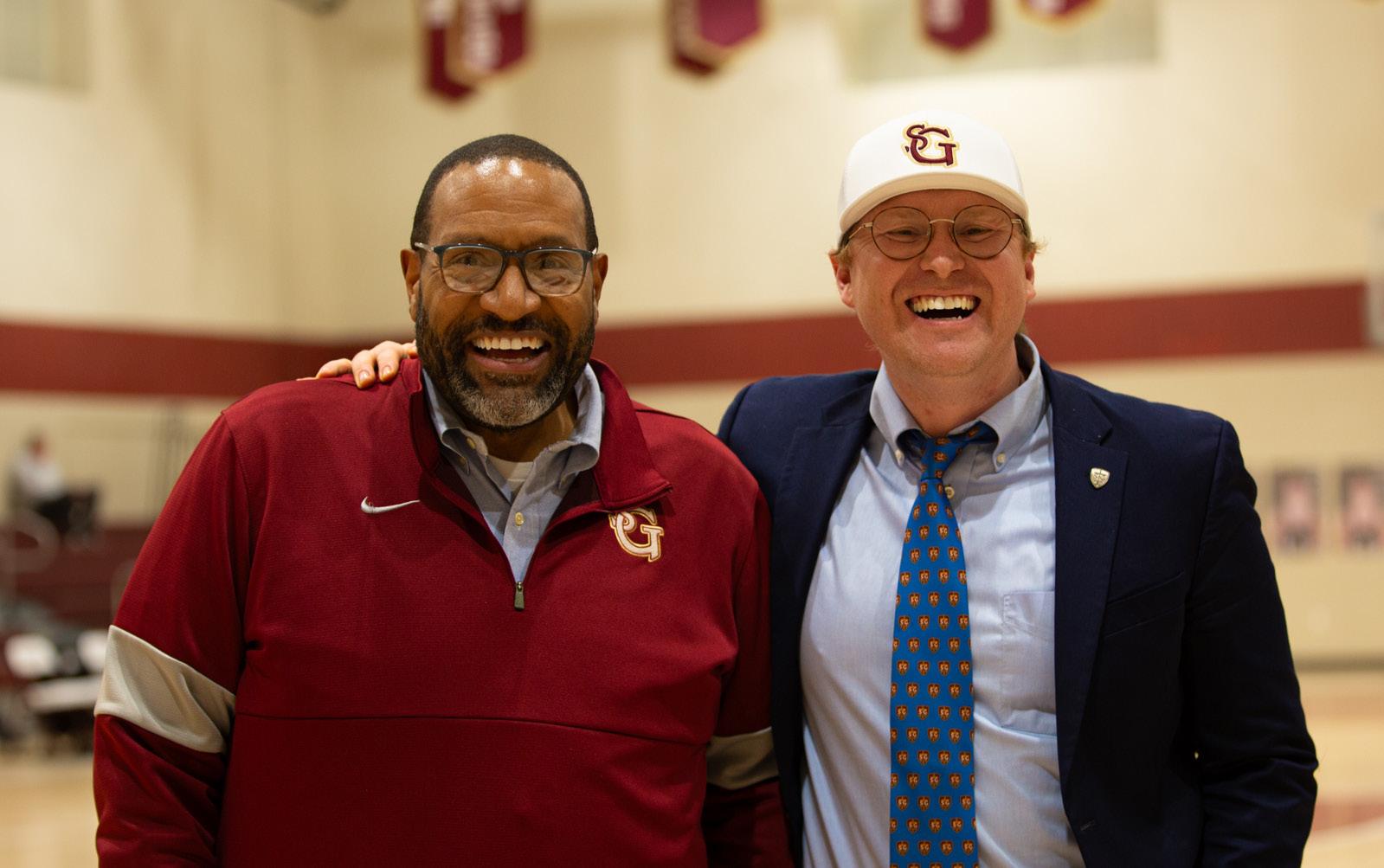
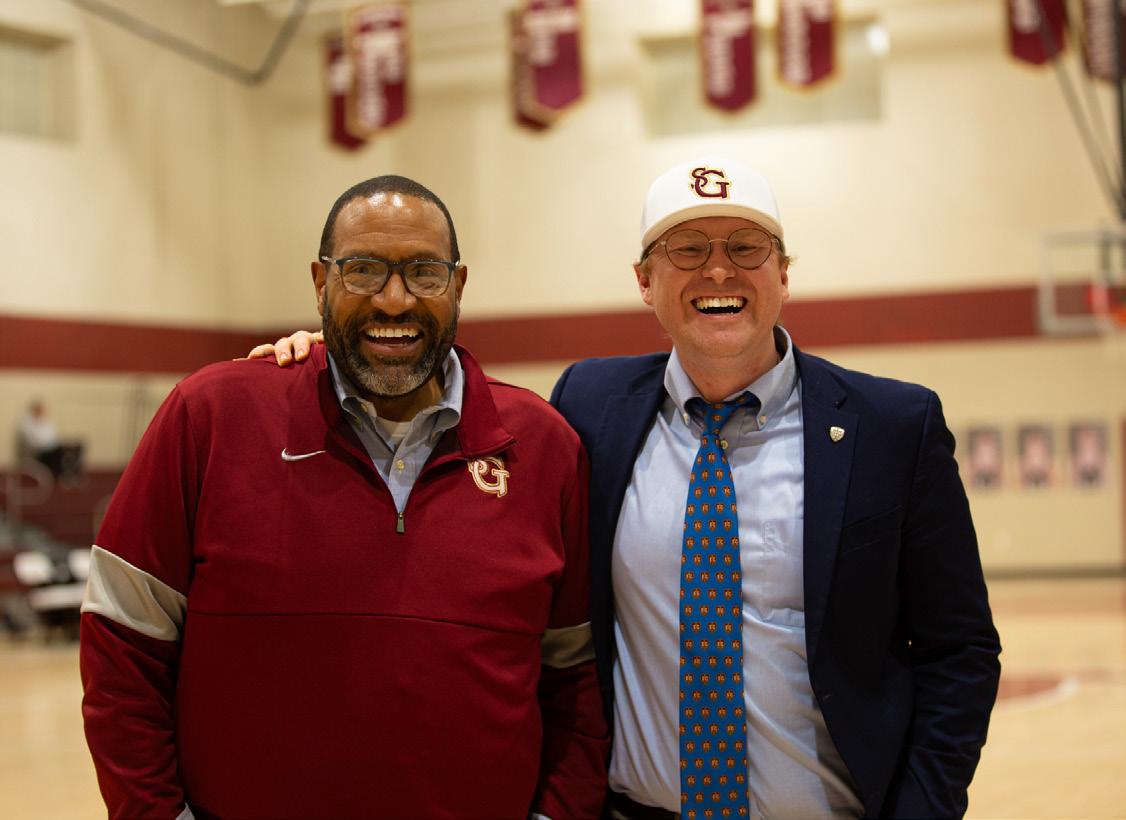
Mr. Gibson and Mr. Pruett pose together at the basketball senior night. They both presented flowers and congragulated the seniors.
Features |4
goals for his new position is to set up a greater connection between students and alumni.
“If we have a student who’s going to college in Alabama, here are the other people in Alabama. When you graduate and say ‘I’m into environmental studies, and I want to move to Colorado, here’s a network of people in Colorado that you can connect with,’” Mr. Gibson postulated.
Alongside connecting alumni and students, Mr. Gibson also wants to strengthen the St. George’s community itself.
“How do we advance [our academics] so that people who are looking at St. George’s have an understanding of exactly who we are and how we can provide?” asked Mr. Gibson. “I think so much of that is sometimes needed in the sort of marketing that is attached to a program.”
As Mr. Gibson is excited about his new role, our new Interim Head of School, Mr. Luke Pruett, is ready to take on his role with a smile and a fist bump.
“I’m so excited,” said Mr. Pruett. “I did not enjoy Christmas break as much as I probably will in the future because I’ve just been so excited to get back and get started. I think my primary emotion [to having this position] overall has just been that I’m really humbled.”
Mr. Pruett joined the St. George’s community this year, previously working for Choose 901, an organization that works to spread positivity in the Memphis community, and as the Major Gifts Foundation Director with Le Bonheur
read emails,” he explained.
At the beginning of the year, most people across the three St. George’s campuses really did not know who Mr. Pruett—now well-known for his presence with a gimbal stabilizer attached to his phone recording events—was, and and why our school’s social media was suddenly more active than ever.
But, it did not take long for everyone to interact with him and understand just how excited he is about being a part of the St. George’s community.
Randolph has had the opportunity to work directly with Mr. Pruett towards improving student connections. One of Randolph’s favorite moments was seeing the refinement of the pep rallies, something that usually is just enjoyed by upper-classmen.
“We did pep rallies and we made sure that everybody in each grade was represented. It wasn’t just seniors and juniors,” he said.
Students at all three St. George’s campuses have seen Mr. Pruett almost everywhere. He comes to sporting events to cheer on our teams, even going to the rec-basketball games which are not even affiliated with St. George’s. On house day, he was spotted leaping off a golf cart to hype up students and film content for our social media accounts.
His lively and positive attitude is one of the things that caught the attention of Mr. Mrva and the board of trustees.
“It takes a lot of energy to run a three-campus school, and I think that you don’t have to spend too
“I want students to just be really proud of having graduated from St. George’s.”
- Mr. Luke Pruett
Children’s Hospital, raising money and donations for the betterment of the hospital.
Throughout this year, Mr. Pruett has made a grand impact on our community already, serving as Assistant Head of School and leading Institutional Advancement.
Randolph noted Mr. Pruett’s impressive strides so far this year.
“He’s very active on social media. All the news is not just in an email because a lot of people don’t
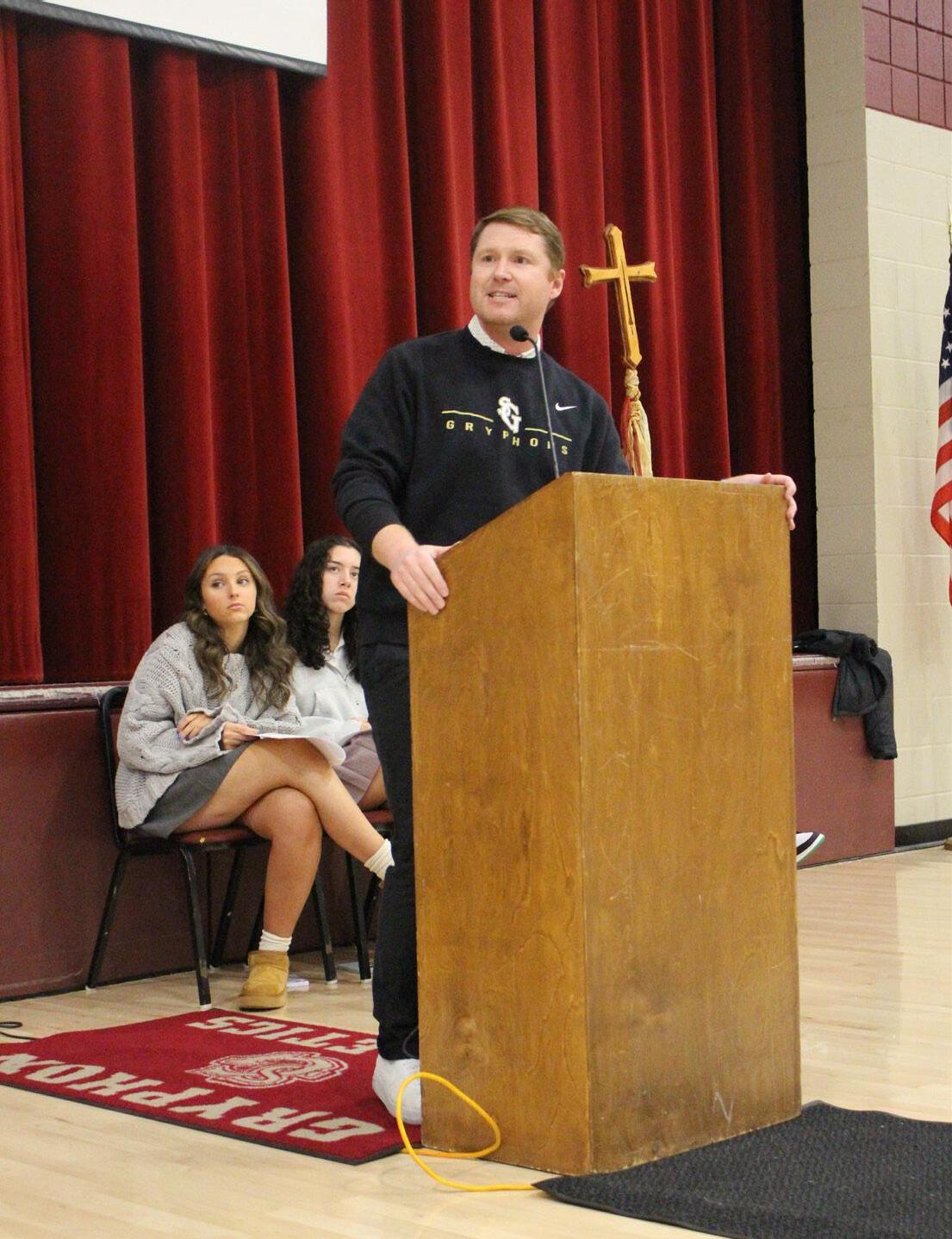
Mr. Pruett
School.
goals: supporting students, faculty and staff, building administrative systems and bringing in community support for projects like the Whitsitt Center for Science and Technology.
For Mr. Pruett, a major component of bringing together all of these constituents is bringing together all three campuses.
“A huge priority for all of us is interconnectivity between Memphis and Germantown Campuses,” explained Mr. Pruett. “I love every single time upper school and middle school visit the campuses, whether that’s athletic teams or after-school care, so I’d love to really figure out a way to connect that even more.”
Highlighting our students really is the theme this year at St. Georges and Mr. Pruett wants to hear from them.
“Students have a direct line to me any time, and I want all the ideas, both simple and small, but also crazy and big,” he added.
In the end, our faculty and staff want students to enjoy their experience, and they want to do everything in their power to make that possible.
“This year, [our goal is] to be better listeners to the faculty, better listeners for our parent community, but also better listeners from the students,” said Mr. Mrva
much time in a room with Mr. Pruett to realize that he has a lot of energy,” said Mr. Mrva.
Mr. Gibson agreed, explaining how his fresh perspective could really make an impact.
“[Mr. Pruett] comes in and he presents an interesting perspective, being new to St. George’s, so know[ing] the school as a parent,” said Mr. Gibson.
But now as interim Head of School, Mr. Pruett has even more
He is also excited to continue to do what he has already been doing: interacting with the students and being an active presence for the school on various social media platforms.
“I joke that my greatest life skill is being a hype man, and so I want to write really tremendous references and launch people,” said Mr. Pruett. “I think, if anything, my presence with students is going to greatly increase.”
Mr. Pruett agrees, explaining that he wants to make sure students have the best experience they can during their time as St. George’s students.
“I want students to just be really proud of having graduated from St. George’s,” said Mr. Pruett.
Features |5
speaks in all school chapel for his first speech as Interim Head of
A Little Fresh Air
It never hurt anyone
 By Livi VanSteenberg
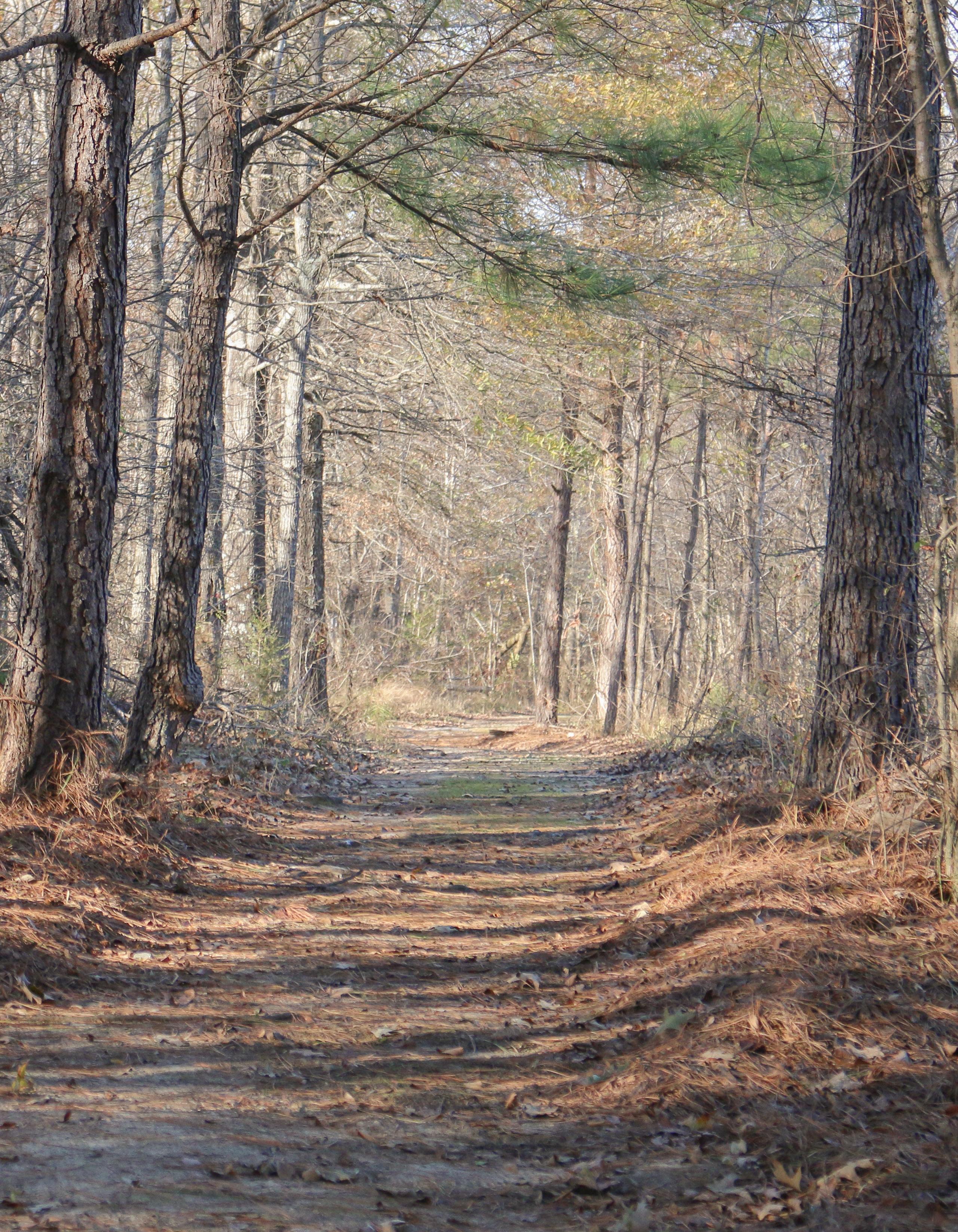
On damp trails starting behind the nearly-deserted baseball facility, there is a decrepit wooden structure that suddenly appears out of the trees, its caution-tape wrapped extremities towering ominously over the clearing. It’s out of place by an idyllic lake, surrounded by kayaks on racks and across from a dock jutting out into the water.
But this isn’t some kind of horror movie set; this is the treehouse, one of the now-neglected structures built for students over the course of the Collierville Campus’ development. They — the gazebo covered in wisteria, the benches littered around the academic building, the outdoor classroom, the staircases to the beaches and the deck on the boardwalk — represent the vision the founders had for the future of St. George’s. This vision, namely integrated outdoor learning, is one of the key pieces to the school’s sales pitch and supposedly a huge part of campus identity.
With 250 acres of woods and wetlands backing up to the Wolf River, St. George’s is in a unique position — students have the opportunity to learn surrounded by nature, literally hearing crickets chirp when their class goes quiet and the incessant croak of bullfrogs after a large storm. There are miles of manicured trails that crisscross the woods, passing by ponds and patches of wildflowers that bloom from early April until late September.
Despite having fairly similar student populations — the Collierville Campus student body is 1.2 times larger than Lausanne Collegiate School’s and 1.5 times larger than Christian Brothers High School’s — our campus is an incredible 8.3 times larger than Lausanne’s and 7.9 times larger than CBHS’. This was an intentional decision by the
founders, who envisioned the Collierville Campus as being dynamic and connected to nature.
All of this was designed for one purpose: students. The outdoor spaces were placed deliberately so that young adults at St. George’s could be connected to their studies through nature, so they could learn about the beauty of the world they live in. There are quiet study nooks tucked into nearly every corner of the property waiting for people to find them.
So where is everyone?
Aside from wellness classes and recess, they are almost always indoors.
St. George’s has a certain level of rigor expected from its courses, and with 70.74% of eligible students — those in 10th grade and above — in Advanced Placement classes, teachers can feel pressure to squeeze every bit of instruction into the 70 minutes allotted to them. There are transcripts to worry about and grades that suddenly really matter, particularly in the upper school.
Interim Head of School Mr. Luke Pruett confirmed, “The demand is really high in a largely AP, high-achieving student body to get in-classroom instruction time.”
In middle school, students have campouts, trail biking and fishing trips led by Mr. Smith Ferguson, Director of Student Connections. These outings are often after school, when students are encouraged to bring their fishing poles or bike helmets to explore the woods together. In Wellness there are swim units each year, the capstone of which is the spring semester of eighth grade where students go out to Bullfrog Pond to kayak, canoe and paddle board during class.
There are numerous ways to get involved on campus both during and after school, and there’s far more room to do things that inter-
est students rather than just activities that look good on resumes.
With the transition from the middle to upper school, school becomes less about exploring and more about succeeding, and in that transition, the woods, a core part of experiential learning on the Collierville Campus, fade into the background.
Once people hit the level where classes are going on their records and a little box on Scoir shows their
“Our mission calls us to be stewards of the land.”
-Mr. Luke Pruett
likelihood of getting into each college they’re interested in, students start to lose interest in activities that won’t make a direct impact on their college applications.
Wanting to catch the biggest fish becomes wanting to boost their GPA 0.05 points so that they have a slightly better chance of getting into their dream school. And with most opportunities for upper schoolers to be in the woods only coming after 3:15 when they have sports practices and hours of homework ahead of them, exploring nature becomes a less appealing way to spend their time.
That being said, some students still find ways to get outside.
“When I was a sophomore, for the fall semester I took the new Wellness and Fitness Plus class… and I loved it so much,” junior Lorelai Michael, an avid mountain biker and outdoorswoman, explained. “I remember some mornings I would have my bike, I would bring it to school…and my first class of the day I would just be biking in the woods and it was the best way to start the day.”
Classes such as Wellness Plus, a class added in 2022 to the upper school course registration list, allow students to spend time in the woods by taking them kayaking and trail biking instead of doing workouts in the weight room. The environmental science elective is currently in the process of building a trail.
Outdoor lunch, something that started as a way for students to unmask during the COVID-19 pandemic, is now a time for students to sit under the awnings during nice weather while their friends kick soccer balls and throw frisbees around the main lawn. Additionally, there are clubs such as the Chicken Coop Club, led by Dr. Marianne Leung, and For the Birds, a birdwatching club led by Mr. Andrew Gafford.
Yet this still isn’t the kind of experiential learning the founders initially envisioned. Some students are in the woods, but the woods aren’t a part of every student’s experience. Chemistry classes aren’t outside testing the pH of the Wolf River. English students aren’t reading the next chapter of The Great Gatsby in hammocks.
“I don’t remember [outdoor classes] ever really being offered,” Michael explained.
For the most part, the nature surrounding the school goes unnoticed. Not only does this mean the full potential of the Collierville Campus isn’t being tapped, it also means one of the key pieces of the school’s identity is being ignored.
Mr. Pruett said, “Our mission calls us to be stewards of the land. It’s directly in the mission of what we are.”
As an Episcopal school, St. George’s and the members of its community are meant to care for and learn from the outdoors as well as each other. It is a core part of the student experience to study in and about the outdoors, not only
Features | 6
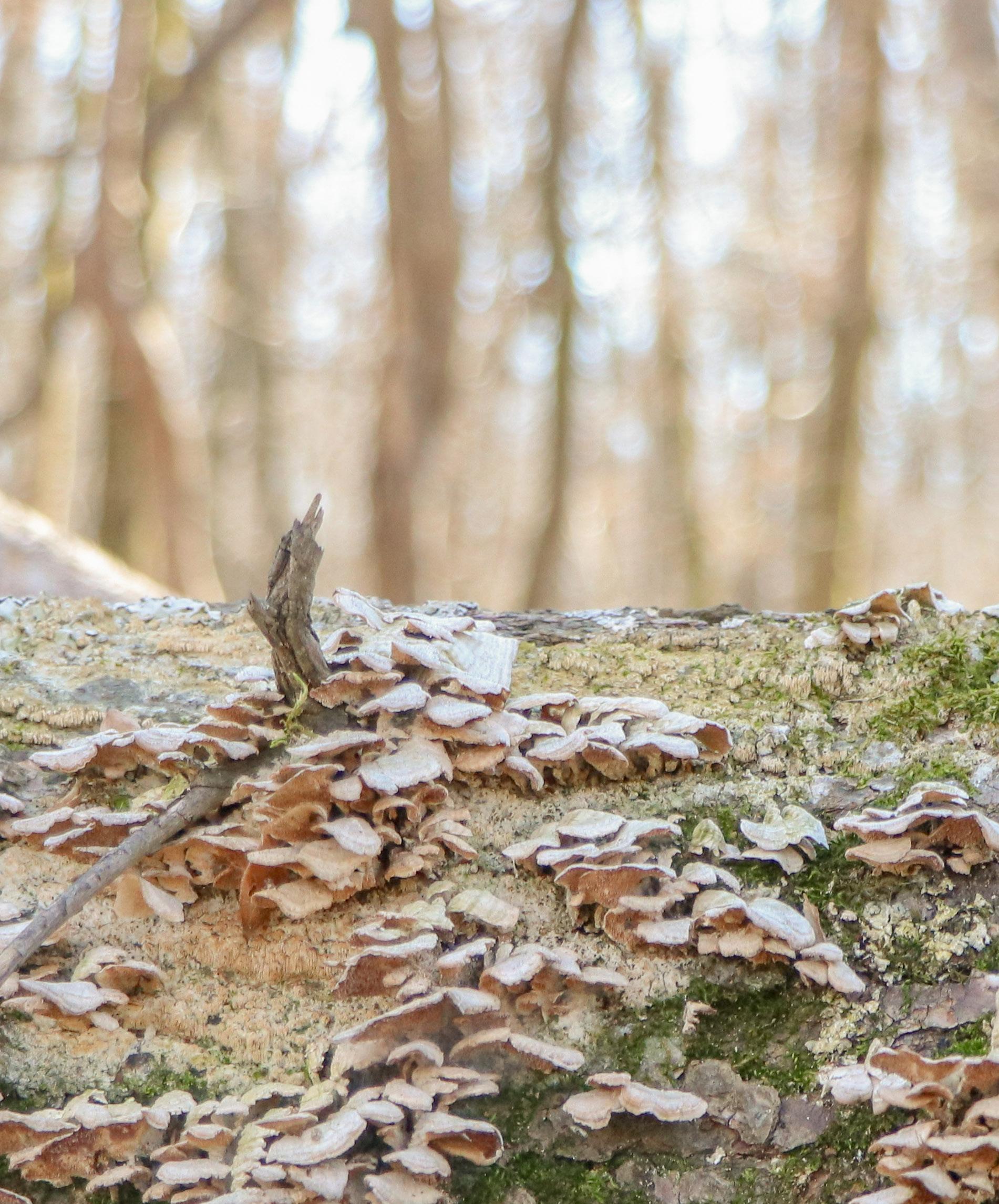
Photography by Livi VanSteenberg
to make us appreciate how lucky we are to enjoy such a beautiful campus, but to also connect to our Episcopal identity as we explore the wonders of the world we live in.
On the school website a page about St. George’s Great Outdoors, a program initiated to help students get in touch with nature, says, “SGGO fosters stewardship of our beautiful campuses and surrounding communities while encouraging students to explore and appreciate the inherent beauty of God’s creation.”
With a program specifically dedicated to the exploration, education on and preservation of the woods and wetlands on campus, one would expect for students to be outdoors far more than they currently are. There are trips to places like Colorado and Wyoming being offered, but the main issue is getting people outside during school hours.
In theory, SGGO is an innovative project that roots itself in science, faith and culture in order to bring the Gryphon community closer to nature. In practice, getting classes outside is much harder than it seems.
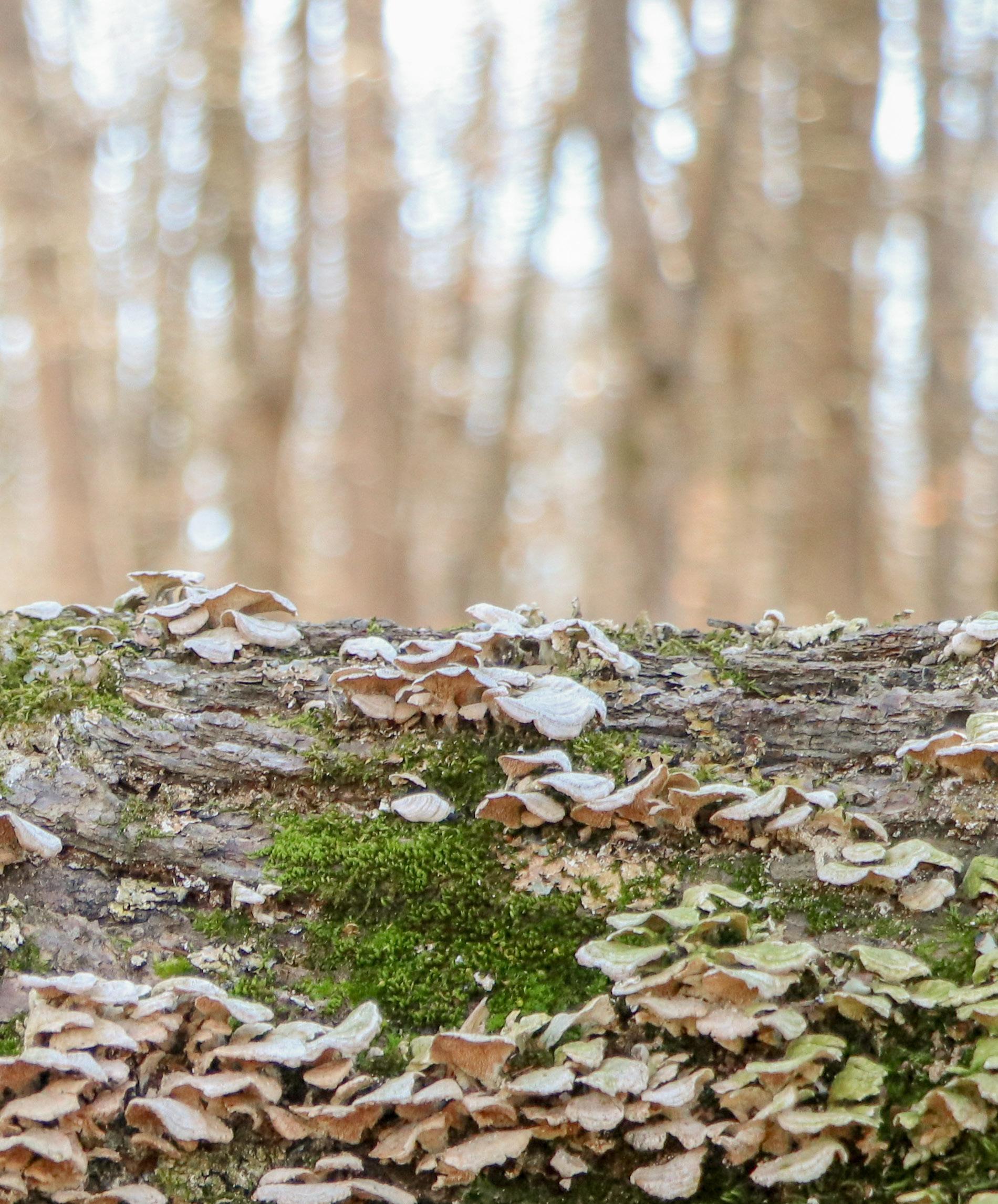
“It’s an [un]conventional way of learning, whereas we all learn in a classroom with air conditioning or heat[ing] at a desk with notebooks and pens and…WiFi, but I think we can learn outdoors just as well,” said Michael.
“We have so much land, so much to do.”
- Lorelai Michael ‘25
Memphis weather is notoriously finicky, compounded by the school’s unique block system that makes it even more likely that at least one class period will be rained or sweated out. Many teachers would rather avoid the uncertainty of outdoor lessons in favor of just staying inside where the temperature is consistent and the likelihood of getting soaked is much closer to zero.
Mr. Ferguson added, “[A] starting point could be asking teachers…‘what are the obstacles, how else can we help make this happen?’”
Teacher initiative is one of the driving forces behind taking back the Collierville Campus, and it doesn’t have to be major. Some
instructors are already taking small steps, be it Ms. Marilee Malott’s AP Language and Composition students taking their textbooks outside for the day or Mr. Michael Masters and his physics class testing mechanical lifting on the trails.
These lesson plans, though not complex, are shown to help increase students’ quality of life.
Researchers working on a study from Grand Canyon University published in June of 2023 found, “...spending time outdoors can help reset your body’s natural clock, which can address insomnia and enable individuals to get more high-quality sleep at night.”
Getting a full eight hours of sleep is a constant struggle for high schoolers, particularly those with AP courses to study for and ACT scores to worry about. By taking just one class per week outdoors, teachers can help reduce issues like insomnia within the student body — while this is by no means a miracle fix, the five minutes of class time lost in walking to the deck or the outdoor classroom can be compensated for by increased attention spans and fewer missed hours of sleep.
Being outside, though, no matter
what form it takes, doesn’t have to be a one-party initiative. Mr. Ferguson suggested, “It can be something as simple as, ‘Alright, the senior class for advisory on Tuesday, we’re just gonna go out..and do hot chocolate.’ Just do something really easy. That doesn’t put a burden on teachers.”
With the administration working with teachers to help the Collierville Campus evolve into a dynamic, indoor-outdoor environment, change will arrive more quickly and students may be in some of the outdoor study areas by the end of the semester. It largely depends on cooperation between faculty, staff and the weather.
“[Having class outside] opens up a whole new part of our campus,” Michael said. “We have so much land, so much to do.”
The administration has confirmed that there will be change.
Mr. Pruett said, “You’ve got a commitment from the administration to make this a priority in the spring that’s immediately upon us before this [senior class] graduates, and then particularly in what we build…for next year’s schedule.”
Now it’s up to the rest of us to see it through.
Features | 7
Finding Your Future
Caroline Ruffin’s SIS helps inspire students for the next stage of their lives
By Ella Coons
Senior Caroline Ruffin kicked off her Senior Independent Study (SIS), a project where seniors document their work towards a passion and present their project at the end of the year, on October 23 with an email inviting juniors and seniors to the Learning Commons. She promised free pizza for the first ten students to sign up.
The reason for the invitation? An alumni speaker.
On October 31, Eric Folk (‘08) was set to come back to St. George’s to discuss his career in accounting and how he got involved. Folk lives in Memphis and currently
works for KPMG as an Audit Associate. With 20 to 30 students arriving promptly at 12:25 to hear him speak, the project’s kick-off was a hit.
Ruffin explained that part of the reason she decided to do this as her SIS was because of her understanding that it is hard to find out what direction to go in after graduation.
“I’ve had a really hard time figuring out what I want to major in because there’s not one specific area that I’m super passionate about. I feel like I could kind of fit in anywhere,” said Ruffin.
An SIS is an unique graduation requirement for seniors where they
have the choice of an exploratory (20 hours and a one page reflection) or comprehensive (40 hours and a paper) project under a strand leader — advisors for different areas of SIS projects specific to their classes and education.
Students can choose between
areas such as personal growth, academic research, the great outdoors and many other strands of projects.
Ruffin also wants to use these alumni visits as a way for high schoolers to be able to work out what they might want to major in. She also intends for them to help
“It’s easier to go (to college) knowing what you want and knowing what you want to do for your career.”
- Caroline Ruffin ‘24
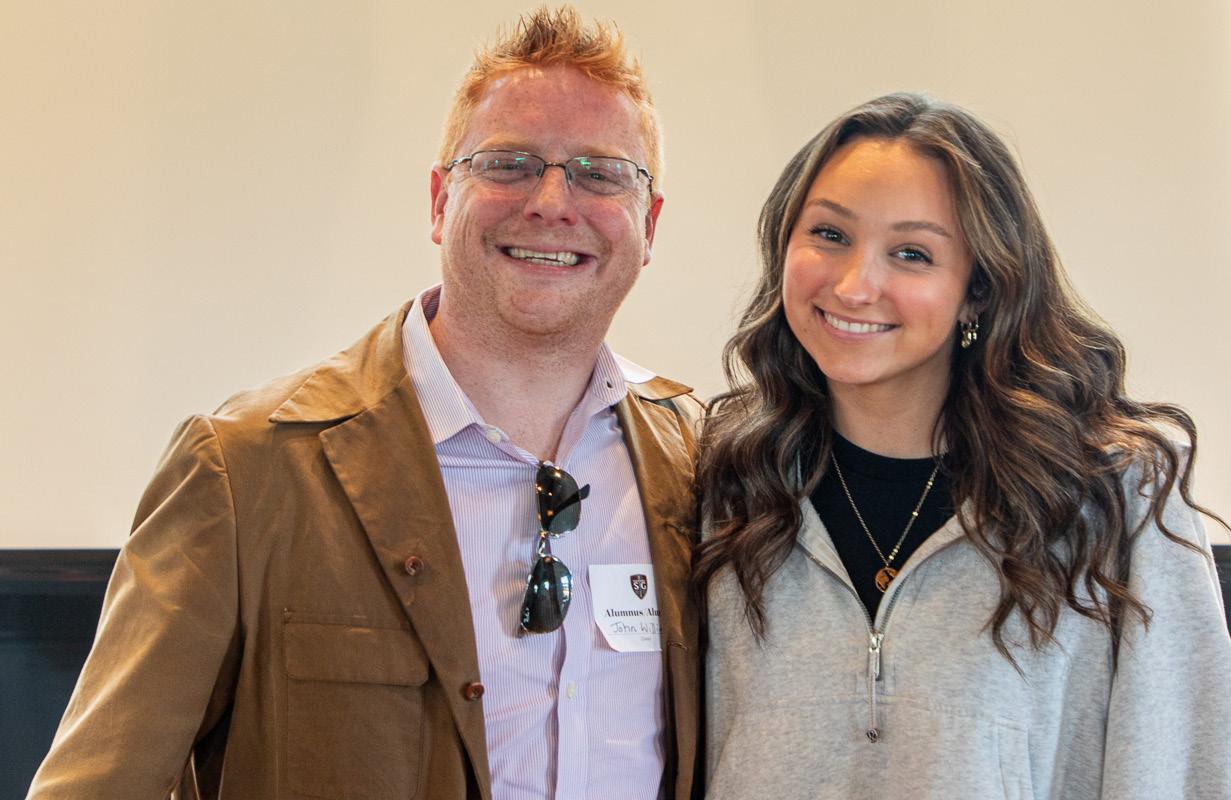
figure out what a specific career will be like when they have graduated and are in the workforce.
“[I’m] having [alumni] come in and speak to students who sign up about what they chose for their major, how they chose it and all the things that school doesn’t really… teach you about,” she explained.
Not knowing what to major in is not an uncommon feeling for many high school students or even college freshmen.
An estimated 20-50% of students begin university with an undecided major and nearly 75% change their major at some point in their time at college, according to the National Center for Education Statistics.
The college guidance team at St. George’s is fantastic at helping students choose and get into a college, but some believe they struggle to help students find the job pathway for their future.
Photography by Whitney Blanchard / JCW Creative
Features |8
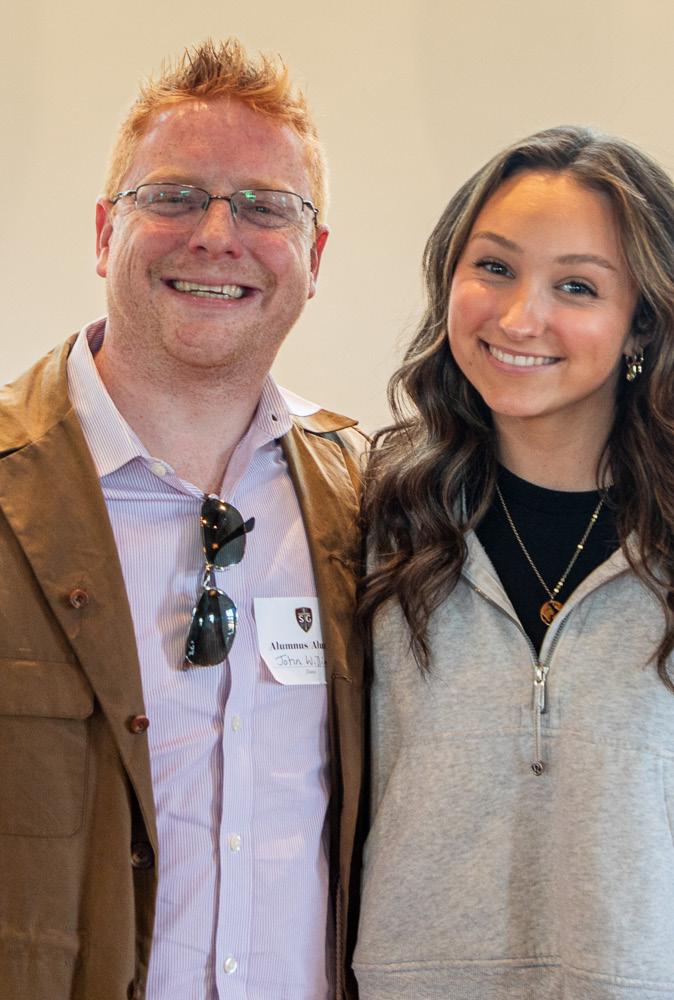
Caroline Ruffin ‘24 and John Christian Williams ‘10 pose for a photo after he spoke to St. George’s students about his career path.
JCW Creative, his own company.
Williams was excited to talk about his career, how he began and how he followed his passion to create his career in business. He was also excited to be invited to come back to his old school.
“I was very excited… to get the opportunity to come back to St. George’s and talk to other students,” he said. “It’s just such an honor to be at such a great school and to be able to come back and give back to other kids.”
Alumni that are invited to come back to campus are not just local; former Gryphons are all over the country.
As a newer incentive this year to connect former students around the country, St. George’s administrators are beginning to try to expand their alumni connections.
Mr. Timothy Gibson, Former Head of School and the new Head of Student and Alumni Affairs, is trying to provide alumni connections in different cities within his new role.
Senior Sofia Delahoussaye agreed, explaining she has not had much help with deciding her major.
“[College guidance] does a really good job of preparing you to apply to colleges but they kind of drop the ball in terms of what you actually want to do,” she said.
However, Delahoussaye mentioned that they did give her some advice regarding her major.
“The advice that they gave [seniors] was like, ‘You have time’ and ‘pick something generally in an area [of interest] so that you can move around and be flexible with it,’ which is good advice. It’s just not much.”
especially since it’s something that I know I would have wanted,” Ruffin said.
Ruffin added that even though everybody has a different path to choosing your major before you apply to college can be a lot less stressful.
er, has been helping Ruffin with the logistics of the project.
He reaches out to former students through phone calls, emails or social media and helps them connect back to St. George’s.
“I was very excited… to get the opportunity to come back to St. George’s and talk to other students.”
- John Christian Williams ‘10
“It’s easier to go [to college] knowing what you want and knowing what you want to do for your career,” she said. “You don’t want to have to switch [your major] a million times when you’re in college.”
“We’ve done a lot of emailing back and forth, and I just help Caroline brainstorm some things when she’s thinking about how she wants to approach her events. Early on we were thinking about all the logistics such as who do you contact when you need to reserve a space? If somebody needed to be let out of class early, then I would get that list and send that to the teachers,” explained Mrs. Rubín.
Eric Folk may have been the first presenter, but he was not the last. On November 16, Avery Whitehead (‘17) had the opportunity to speak to the students about her career in health sciences.
She went to college at Furman University committed to playing Division I lacrosse. She was the last speaker in 2023, but more speakers were set to come in 2024.
“We’ve always worked to bring people back to campus for tacky sweater parties, for sports events and that sort of thing. But now that we know that we have pockets of people in various cities, [we] also [want to] help them connect with St. George’s.”
Caroline Ruffin’s senior independent study is well known by students through her initative. The amount of effort put in is astounding and Mrs. Rubín agrees.
“Caroline has to work with so many different people and she’s done a really great job navigating all of that.”
Be on the lookout for future alumni visits and be sure to sign up to attend if they are speaking about a topic you are interested in or even if you just want to learn more about job pathways.
Ruffin noted this issue and also made it clear that was another motivating factor for her choice of SIS project.
“I just thought that it would be really beneficial to the students,
In order to get alumni speakers to come in, Ruffin has to research past alumni and where and what they are doing now. Then, she reaches out to them and sees if they would be willing to speak.
Ruffin has not been doing this alone however. Mrs. Heidi Rubín de la Borbolla, Ruffin’s strand lead-
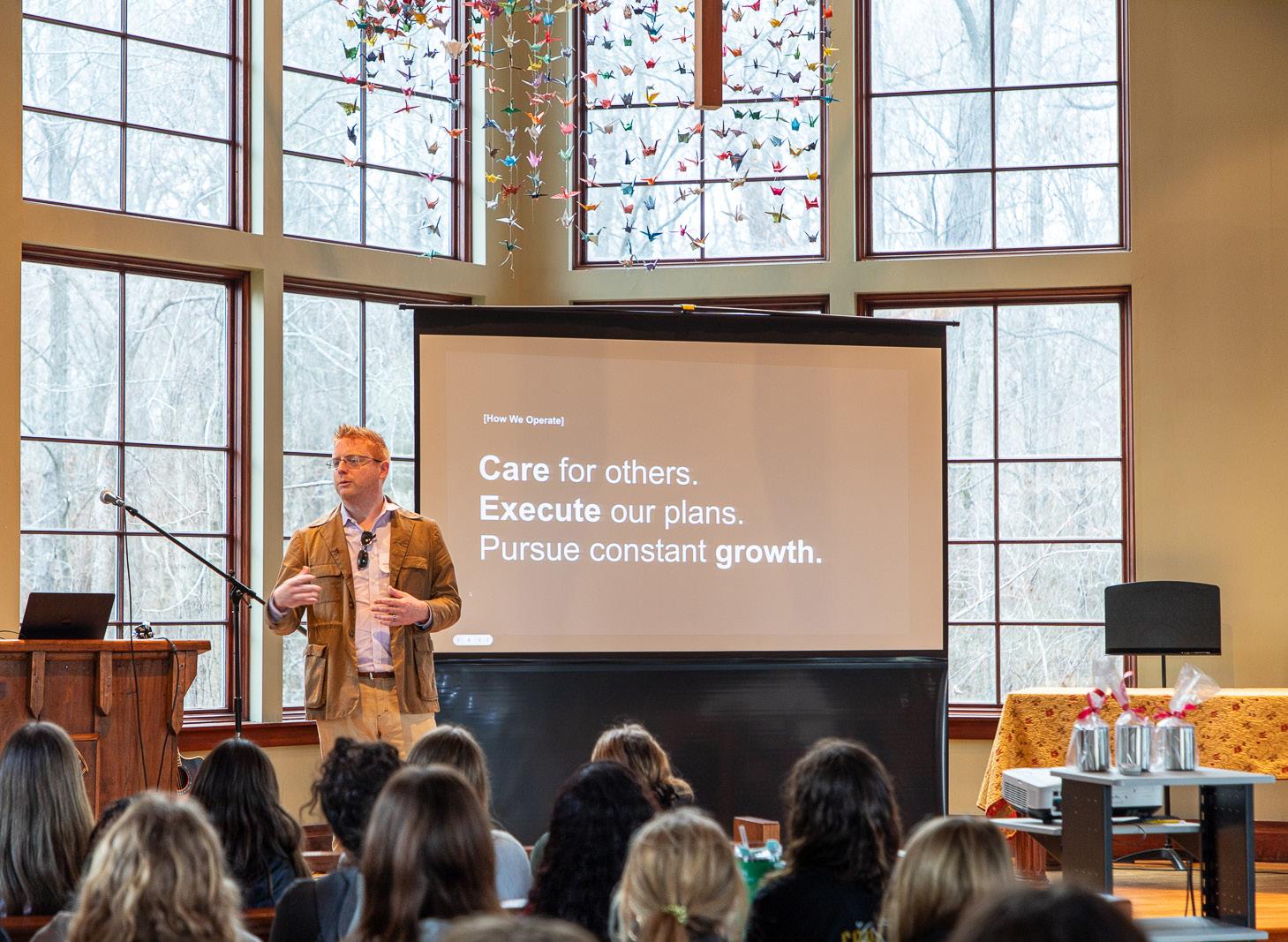
On a cold, windy Friday night before a foot of snow and no school for a week, John Christian Williams came back to campus to speak about his career in communications.
A graduate of St. George’s in 2010 and Louisiana State University in 2014, Williams built up a company and became CEO of
And, if nothing else, there is free pizza.
Features |9
John Christian Williams ‘10 speaks to students about his work in communications and his brand, JCW Creative.
Something For Everyone
Micro changes bring more variety to the Collierville campus
By Kirklyn Moore
Illustrations by Kirklyn Moore
From two club options to seven, the opportunity for students to become involved in their interests has expanded this year.
St. George’s values its diversity of backgrounds, student passions and more, and the micro system has laid the foundation for our student body to embrace their different interests.
From the Dungeons and Dragons club to Ultimate Frisbee, finding a club that meets a student’s interests has been easier than ever, and the micro system allows for joining multiple clubs of interest fostering more involvement in St. George’s clubs.
While this is true, the multitude of micro options can feel overwhelming looking through the roster of clubs possible to join at the beginning of the year, so some clubs fall into the student body’s periphery.
Below are some new and rein-

vented clubs, the leaders of which are excited for new members in the coming years and enthusiastic about each club meeting.
Ultimate Frisbee, led by Mr. Ethan Sullivan, the chemistry and AP chemistry teacher, began in 2015 with an enthusiastic group of students excited to play some ultimate frisbee with a beloved teacher.
“Every Friday from 3:30 until 5:00 p.m., and even 5:30 sometimes, a group of people would come out and play, and we did a few fun little tournaments. . . we had even won some city championships because they actually had a youth league here in Memphis,” said Mr. Sullivan.
This routine ended with the beginning of COVID, but was happily reintroduced in a new way with the development of the micro system. The Ultimate Frisbee Club brought in many cheerful members this year, including juniors Tyler Bergin and Griffin Davis, as well as sophomore Noah Rolfe.
“We play on the turf, and we get into two teams and throw the frisbee back and forth. It’s a lot of fun. My team, we really work on that team synergy. I feel like I get to know people I wouldn’t have known in our school had I not done Ultimate Frisbee Club,” explained Bergin.
Rolfe agreed on the liveliness of the club.
“I have it on both days I can have it. . . It’s a very fun, competitive environment,” said Rolfe.
Davis also explained how excited he was to end his day with a fun game of ultimate frisbee.
“Every day I’m on the frisbee field, I have a smile on my face,” said Davis.
The club members are excited for its future and hopeful for more

opportunities to take the club outside of what it is now.
“[I hope] that the people that really want to be involved get to play and have a good time, and if they do start up another Memphis Youth League, we’d absolutely join and compete against some of the other local teams,” explained Mr. Sullivan
Mr. Sullivan is not the only one who believes in this, students like Bergin also believe that the club can build into something more.
“I hope we get a team and can actually play,” he said. “I just really hope we can build up a team in the spring, maybe even in summer.”
Any St. George’s students that are interested in doing something different than their major sport, playing frisbee or making solid friendships during Micro are highly encouraged by Ultimate Frisbee Club to join.
“I made a lot of friends in Frisbee Club, I’ve strengthened friendships and most of all, I’ve learned how to play frisbee,” Bergin added.
“It’s open to all. . . if you want to change things up, it’s a non-contact sport and a good way to meet people you haven’t maybe spent time around and have a good time,” said Mr. Sullivan.
The Chess Club is sponsored and led by Mr. Brendan Gorham. Most clubs are either just middle school or just upper school, but Chess Club is different. There are many middle school attendees and a few upper schoolers who work to be better at chess every meeting.
While Mr. Gorham is not a big chess player, he enjoys watching the students in the club and giving them the opportunity to delve into their common love of the game.
“It’s a niche thing. . . [The students] don’t just know how the pieces move. It’s a whole other level. It’s really fascinating. It’s really cool, but I’m an outsider,” he said. “Everyone needs to find their little niche, and I’m glad to offer one of those even though it’s not my niche.
For most Chess Club meetings, sophomore Mason Merkle plays chess against a number of competitors as part of the club. While this is the major aspect of Chess Club, not every meeting is only playing chess.
Between chess tournaments, Merkle and fellow sophomore Will Getman find time to talk with one another and simply hang out together in Mr. Gorham’s room. Although he mainly competes against Getman, Merkle will play middle schoolers and practice chess to get better at different club meetings.
News |10

In the Chess Club, physical chess is not nearly as common as playing chess online. Online the club members find chess matches with random players across the globe.
“Everybody comes in opens up their laptop and plays chess online against people on the other side of the world,” explained Mr. Gorham.
The micro system has played an important role in giving Chess Club the time to meet and play.
“The micro system has been really good for the chess club. It’s given them a great time to come together and share their common interest,” said Mr. Gorham. “You’ll have all different types of students sitting next to each other all bonded by their love of chess, and that’s pretty cool to see.”
While Chess Club would be fun for anyone who enjoys chess or wants to learn from the best of their peers, it tends to be unnoticed by high schoolers among the many clubs to choose from when deciding what to do for micros.
“I wish there were more people in it, and it’d be nice if more people talked about it more, but I think for what it is, it’s handled really well,” explained Merkle.
The Classics Club started off as a Latin club that only Latin students would take, but junior Sloan Carruth changed that.
“I’m president of it, but I don’t actually take Latin anymore, so I want it to be thought of as more of a thing for people who really are
interested in the ancient languages like Latin or Greek or if they just really love the history or mythology,” explained Carruth.
Most Classics Club meetings involve crafts and games, as well as talking with others about their interest in Latin and topics connected to it to keep the club fun and different each and every meeting.
“We made roman columns out of marshmallows and frosting, and I brought in cut up pieces of colored construction paper and we made roman mosaics. . . Sometimes we’ll do a greek alphabet lesson, fun games and easy trivia games about mythology,” detailed Carruth. “We try to keep it fun.”
While Carruth plans many crafts and games for most meetings to keep up fun activities for Classics Club members, Mr. Tyler Bickford, the club sponsor and Latin teacher, shares the bright vision and excitement for the club’s plans and future meetings.
“I gave them an introduction to the Greek alphabet and how to read a little bit of Greek. . . we’re going to watch a video about Prometheus. . . [and] for the Latin Convention we’re going to make togas like real togas, not bedsheets,” said Bickford.
Carruth believed that the future goals of the club is to grow.
“[We] definitely [want] to grow. I really want more people to sign up because I think a lot of people stray away from it. . . but really it’s just an opportunity to do the fun things you can’t do in class with your language.”
Mr. Bickford agreed, “I would just like for more people to know about it. . . It’s not just an extension of Latin class; there’s more to it. . . It’s more a greater appreciation of the world itself.”
Carruth encourages all who have an interest in Latin and other ancient languages to join.
“I feel like a lot of people don’t really know about it. . . You don’t have to be a Latin student to join, you could be taking Spanish or French or be past your language requirement, it’s just a good place to share your interest,” she said.
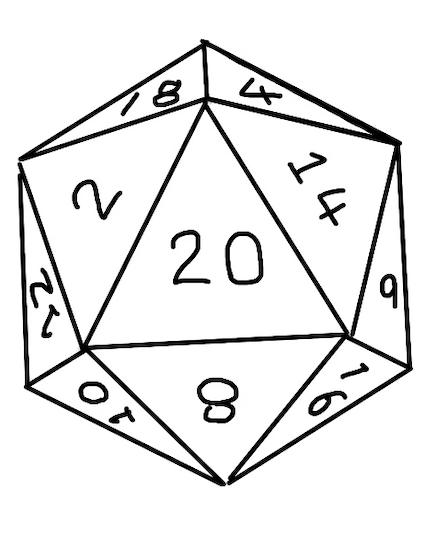
The Dungeons and Dragons club is where the members play the beloved cult classic tabletop roleplaying game of the same name, in which a dungeon master, a story-
teller/narrator who also acts similar to an author, builds a world that the players follow and adventure through as their own character.
Sophomore Jade Masters, who started the club and is now a dungeon master, suggests that Dungeons & Dragons, known to fans as D&D, is somewhat hard to explain.
“The best analogy is that it’s like a video game, but not,” Masters said. “You get to build a fantasy world together and it’s a good way to socialize and interact with another and in a way escape from the laws of reality.”
As the narratives go on much longer than 45 minutes, each meeting brings a new chapter of the story. The players listen in closely to the detailed stories of their game masters and when coming to a game move that involves a big decision, the players leave it up to statistics by rolling a multi-sided dice.
The game is played in the club in groups with different campaigns played in different sessions. These groups bring interaction between all members of the club and create a close community around the game.
“It’s really a community thing, and it’s open for anyone,” Masters said.
Masters is excited for the upcoming semester of this club as he finds new, excited members for their newly added micro day for D&D club.
“Now the way I’ve placed it, D&D should happen every week, and we can have more people because I was really upset when I found out that a lot of people who were interested couldn’t join because they already had obligations [on those micro days],” explained Masters.
Masters and the club sponsor Dr. David Rosenberg, who organize much of what the club does together, are excited for new members and the bright future of the D&D club with them.
“My goal is for there to be more people, more games going on and all of it being run by students,” Masters said.
“Everyone loves hearing stories, telling stories,” Dr. Rosenberg added.“Everybody, I think, innately has the ability to have fun in a D&D session because it involves so much:
community, being able to act a little, being able to lose yourself from the all too humdrum daily reality.”
If you have an interest that is not represented in St. George’s many clubs, students have the opportunity to create and lead a club themselves with the support of administrators and faculty behind them. In the past, the process of creating a club was more formal. Writing a charter and mission along with creating a budget and fundraising plan were necessary steps to bringing a club of interest to life. However, that process has become more simple.
“We’ve decided that we don’t want it to be that level of application because we don’t want to discourage students from giving it a whirl,” Assistant Campus Director, Ms. Leanne Ricketson explained.
For the upcoming school year, the process begins with naming your interest in creating a club through an email followed by thinking through the set up of the club: what it’s purpose would be, who they’d like the sponsor to be and whether they already have student interest or if that interest would need to be generated.
“We want students to have that experience of starting something, organizing something and getting it up and running,” said Ms. Ricketson.
Ms. Ricketson encourages students to create a club.
“Look for the email. Look for the process, and also don’t hesitate to talk to Mr. McCollough, [myself]or Mrs. McClain if you’ve got a big, cool idea that you’re too excited about to wait,” she said.
News | 11
Getting Groovy with the Gryphons
St. George’s student musicians connect with the greater community
By Caroline Wood & Molly Gorham
St. George’s is known for its success in the music world, having received many accolades over the years, with the American Music Ensemble once again winning the Downbeat Student Music Award for Best High School Blues/Pop/Rock Group this year, along with the St. George’s Singers doing a major
pursue their love for music outside of school.
Senior Thomas Densford and juniors Alex Smith, Mary Frances Forbes, Homer Beaudoin, and Griffin Davis all fit into this category and have worked hard to make a name for themselves in the greater Shelby County area.
Love for music started “basically
“I really hope that I’m able to work [music] into my life as an adult, even if it’s not as major as it is now.”
- Mary Frances Forbes ‘25
tour across Central Europe this past summer, performing for sizable audiences in historic spaces like St. Michael’s Church location and the Salzburg Cathedral.
However, many students have used their passion and extraordinary talents to not only contribute to the arts here at St. George’s, but to
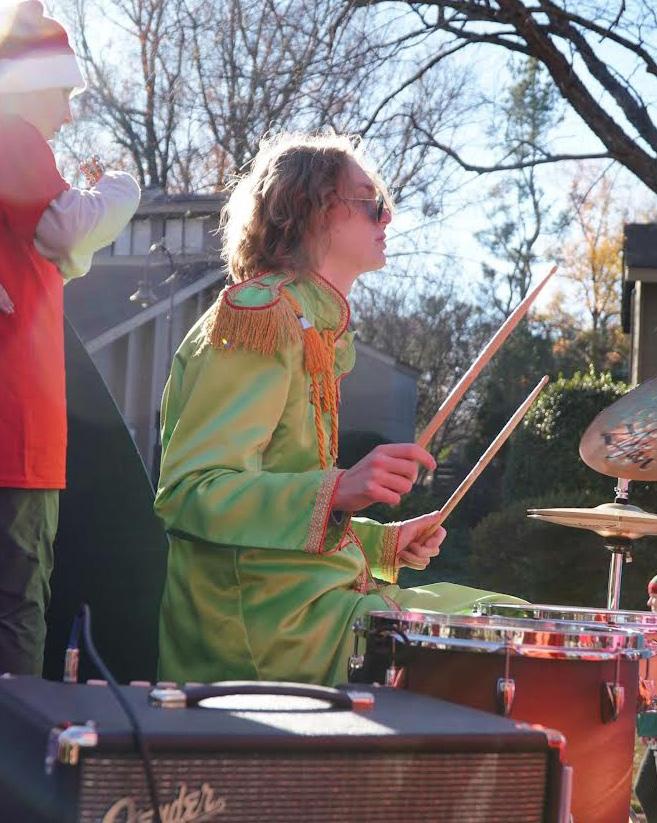
right out of the womb,” said junior Alex Smith, who is the lead guitarist in the American Music Ensemble here at St. George’s. “I started playing drums when I was eight… [and] guitar three-and-a-half years ago,” he explained. Smith is also a former member of the St. George’s Drum
Brigade, which nurtured his love for performing in elementary school, along with attending School of Rock, which is exactly what it sounds like–a place for young musicians to learn and perform alongside others.
Smith is currently in two other bands outside of St. George’s, known as After Hours and Dream of Gardens. “There were some friends that wrote original music and they wanted to play it and…needed people to play it with them, so they asked me as well as a couple of other[s],” Smith said.
Similarly, junior Homer Beaudoin got an early start in music, performing alongside Smith in the drum brigade.
Beaudoin grew interested in making music around a year and a half ago, and is currently a member of his own band that he curated, an alternative rock/metal band known as The Contradictions.
“I’m the singer. I write the music, I write the lyrics, and sometimes



[do] guitar…and drums stuff…I guess technically I’m the front man,” said Beaudoin.
Junior Mary Frances Forbes, who plays lead guitar and is a vocalist, is also in a band of her own, Estatia. Alongside her are other members of the St. George’s community — senior Thomas Densford on keys and rhythm guitar along with junior Jeremiah Boggan on bass.
“Thomas and Jeremiah and I are all pretty good friends, and we go to a lot of shows in the city, so we see lots of bands also run by teenagers,” Forbes said. “We were just like, ‘We can do this,’” so they did just that.
When it comes to exploring music, senior Thomas Densford, who plays keys in Estatia, “can’t imagine starting anywhere else” other than Memphis.
“I’ve talked to…musicians that gig in the area and have played other places like New York City, Los Angeles, and Nashville” he continued, “and they all say Memphis is unique.”
Densford’s interest in music sprouted in fourth grade from an Easter walkthrough at his elementary school, Christ Methodist Day School.
Sports & Arts | 12
Mary Frances Forbes ‘25 sings at the St. George’s Christmas concert. She explained how St. George’s has helped her foster her love for music.
Photo by Sienna Lightman

and Jack Wolaver, was brainstorming rapper names inspired by ancient civilizations.
“We had King Khan, $aesar, and then I came up with Yung Ra and I was like, that’s it,” Davis said.
Recently, Yung Ra, released a new album called “Married to the Game,” with the most popular song being “Made It Out Da Burbs,” as well as somewhat of a diss track towards Lil PooBear, sophomore Jack Wolaver, titled “God Of None.”
Smith happens to be the mastermind producer behind Yung Ra’s music, creating original mixes of music that are unique to Yung Ra’s sound, while still staying true to the current rap trends. You can find Yung Ra’s music on most streaming platforms such as Spotify and SoundCloud. Many of these musicians and performers plan on carrying music close to their hearts even after they graduate.
“I would probably join some ensemble in…college…I want to keep playing music and performing.” Smith said.
Beaudoin’s future in regards to music is uncertain with college quickly approaching, but he still hopes for it
to remain a significant figure in his life.
“It’d be really cool if we got a record deal, which is…shooting for the stars, but hopefully that happens,” he said.
As for Forbes, she said that music “will always be an important hobby.” She hopes to work it, “into [her] life as an adult, even if it’s not as major as it is now.”
Densford however has strict plans to pursue music at the University of Memphis beginning this fall, pursuing gigs on the side, including playing the accordion with bluegrass band The Late Greats.
The leadership of teachers here at St. George’s and the opportunities provided for all ages across the three campuses have all contributed to and nurtured the passion that burns inside these young musicians.
As students go off in to the world, they can remember their beginning and the opportunities they have received through St. George’s. Don’t be surprised if you see these former students selling out arenas in the near future.
“They were looking for a pianist and since I had a month’s worth of lessons when I was in first grade, I thought I was qualified and signed up…[and] ever since then I’ve been playing piano,” he said.
In such a culturally rich music city like Memphis, there are quite a few staple venue locations that are frequented by performers.
“There’s a lot in Midtown [and] East Memphis like Growlers, Lafayette’s, Newby’s and Memphis
people together.
“The music community…in Memphis is so connected,” Forbes explained. “There are people from every single different school in Memphis who come to shows, who play in bands, and sort of support each other.”
Junior Griffin Davis has a differing relationship with music than the prior students, pursuing it through his rapping persona, Yung Ra.
“When I was a kid in the St.
“One day I just decided I wanted to be a rapper so I started studying the game.”
- Yung Ra (Griffin Davis ‘25)
Current…[but] one of my favorites places to play is Society Skate Park, because they clear out a half pipe and we play at the bottom,” Smith said.
However, The Condradictions also recently gigged at Wreath Run, a Christmas 5k in the Central Gardens neighborhood.
“It was kind of funny to see a post grunge, hard rock band play at a Christmas [celebration],” Beaudoin said.
Gigs not only provide these bands with more exposure, but bring
George’s talent show in elementary school I actually did…Eminem’s ‘Lose Yourself,” he said.
Like his peers, Davis did not need a deep background in music to seize an opportunity to express himself.
“One day I just decided I wanted to be a rapper so I started studying the game” he said.
Davis recalls the process of coming up with his rapper name, Yung Ra, which stems from the ancient Egyptian god of the sun, Ra. On the way to a wrestling match, Davis, alongside teammates Gavin Clarke
Sports & Arts | 13
Homer Beaudoin ‘25 singing on stage during on of his live shows.
Photo by Sam Gary
Alex Smith ‘25 plays drums at the Germantown Festival.
Photo courtesy Alex Smith
Keeping it Professional
Juniors take a shot at recreational basketball
By Livi VanSteenberg
Photography by Livi VanSteenberg
The gym is stale. There is no breeze except a pathetic gust of air that wheezes like an asthmatic person breathing through a straw every time the door opens. Snowflakes made from coat hangers, the kinds of crafts one might find prisoners serving life sentences making, are zip tied to the railings of the spectator seating.
The gaping space is too large for the forty-odd people gathered to watch the game and every sound echoes off of the domed roof — fans peer over the edge of the balcony, whispering to each other as they wait for the game to begin. It is always too cold or too
hot, but they show up anyway in small packs to sit on gum-covered bleachers and cheer on their team.
Welcome to the Linda Kerley Gym, home of the Professionals.
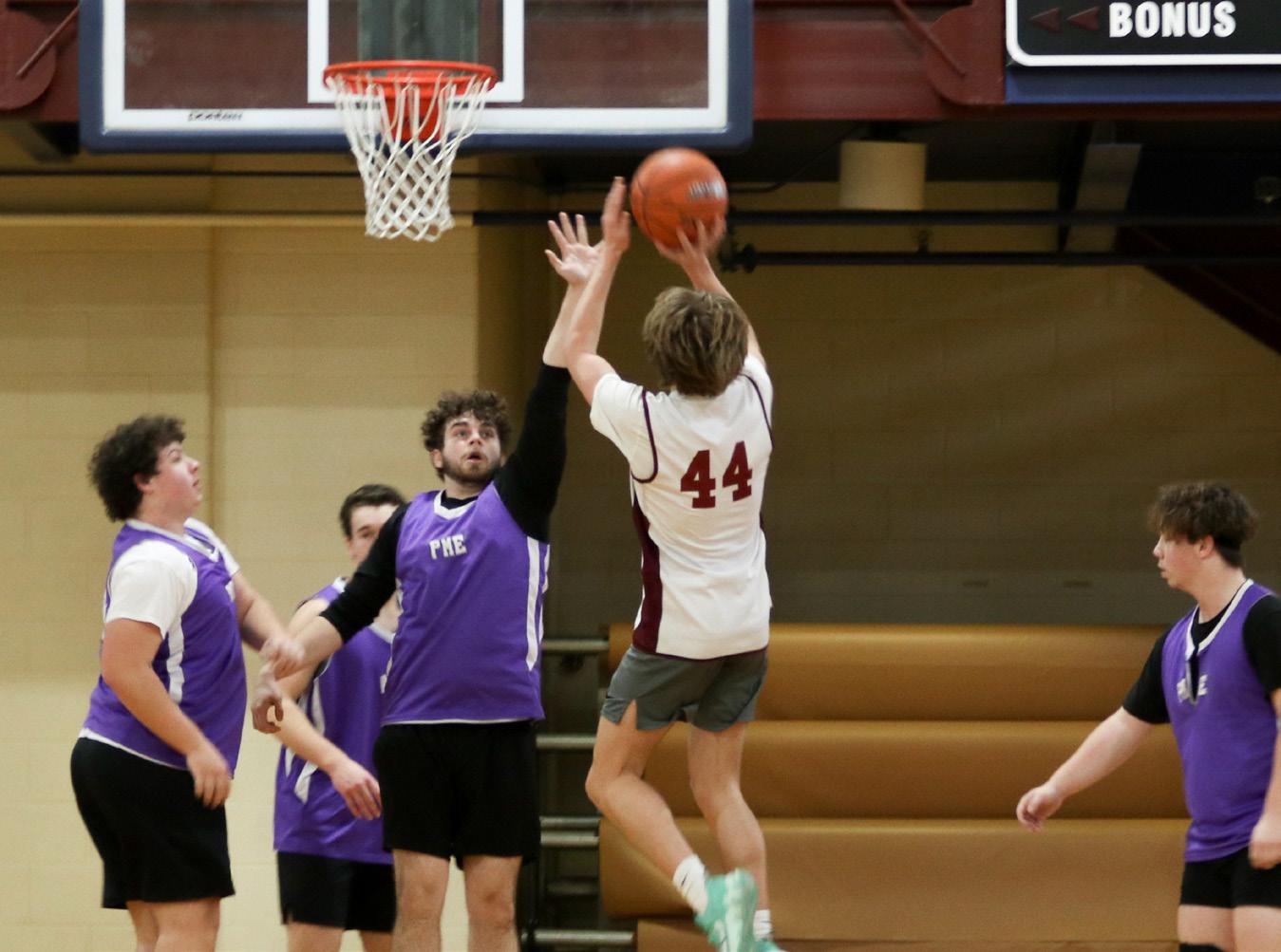
At one end of the court stands a cluster of floppy haircuts and borrowed maroon jerseys, circled around a teenage coach as they review their game plan. It’s a group of juniors, none of them particularly basketball player-coordinated, with their arms crossed as junior Amir Wilson, their coach, scribbles something on a tiny whiteboard. They break apart, take their positions and the game begins.
student peformers
It’s fast-paced, action-packed game time. Passes are quick and stumbles are many. It’s amazing to
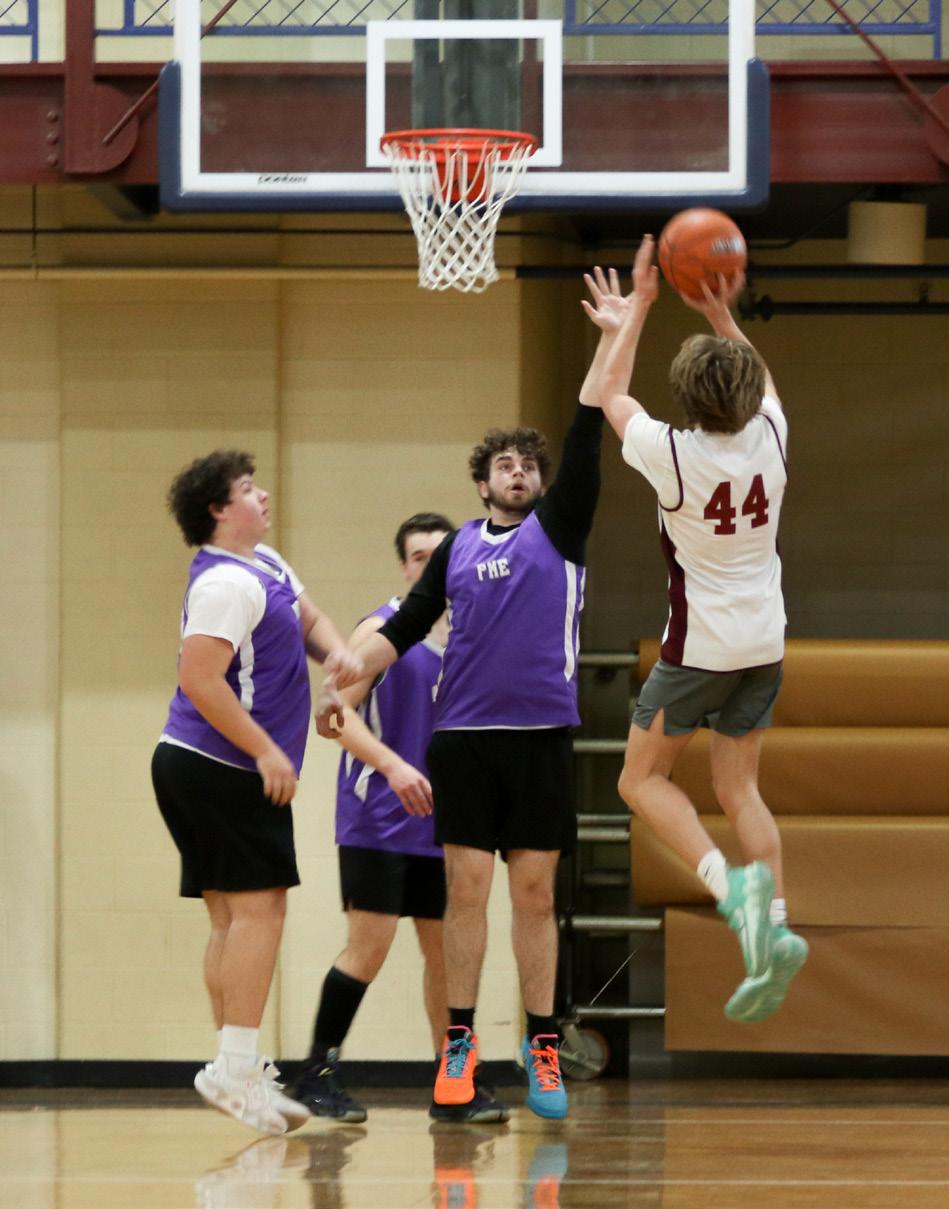
think this team hasn’t been playing together for years, despite this being their first time hitting the court.
Junior Bo Farnsworth, noted on the team for his knowledge of niche 2000s NBA players, explained, “We all play basketball and we were like, ‘We should join a league.’”
“It was a collective decision between me, Holden [Shuping ‘25] and Colby [Wiedower ‘25],” West Brown ‘25, recognized for his hating according to the team’s Instagram, specified.
Recreation basketball teams aren’t uncommon for high school friends looking to spend some more time together. It’s a way to bond over a shared interest and foster a connection between the players without the pressure, time commitment or skill required to make a school team.
The Professionals, St. George’s resident junior class team, plays not only against two St. George’s student senior teams — the Memphis
and Wednesdays. Each of them works hard to hit the court in their own ways.
“I make sure I’m in prime physical condition and make sure my teammates are…great mentally,” Brown said.
With all of this effort on their side, it’s easy for the players to feel confident in their abilities.
“I’m already at my full potential,” confirmed Farnsworth.
Each member of the team has different strengths, according to the Professionals’ official Instagram — from junior Finn Barry’s famous rebounding and rizz (slang for charisma, for those not in the know) to junior Ayaan Aman’s tough shot making to junior Coleman Byrum’s calves and layup packages.
Farnsworth clarified that diversity, not Brown’s Hot Cheeto mac’n’cheese or junior Zachary Turner’s rebounding, is his team’s greatest strength.
“I’m already at my full potential.”
- Bo Farnsworth ‘25
Dolphins and the White Mambas — but high schoolers from all around the Collierville area. In theory, it’s the same as being on a varsity or junior varsity team; the dozen players meet up to run drills and practice in their positions multiple times a week..
“We’re the best team on campus,” Farnsworth claimed. “We’re tied with the Memphis Dolphins.”
Even though it might be easy to dismiss recreational basketball as merely fun and well, games, the Professionals have to put in serious effort to get the results they strive for. They practice late in the evening, making three-point shots and layups so they can prepare for their games on Sundays, Mondays
“We’ve got every type of person on our team,” he said. “It’s our friend group.”
With players spanning religions, height and athletic prowess, the Professionals don’t discriminate. The only requirement is being a junior and having a deep and abiding love of basketball.
“We keep our team professional and business-like,” Brown explained.
When asked about who was the best player on the team, Farnsworth said, “Probably myself…and second place is Ari [Taub].” He refused to elaborate on his selection of Taub and instead asked to move on, at which point he explained that the weak link was also Taub.
Farnsworth answering with Taub for both questions might seem like
Sports & Arts | 12 Sports & Arts | 14
Lawson Hay ‘25, a junior at Christian Brothers High School and a stand-in for Colby Wiedower ‘25, takes a jump shot.
a joke, perhaps a jab at his lack of coordination on the court and poor ball handling, but this simply demonstrates the duality of each player — being simultaneously one of the best and worst players on the team shows the dynamism of their gameplay.
Taub is, however, noted for his shooting skills.
“We just sit him on the bench every game. Give him a few minutes, maybe shoot a three[-point shot]. He’s just there for moral support,” said Farnsworth.
Brown disagreed with both of Farnsworth’s assertions.
“Holden [Shuping] is our strongest asset because he carries the ability to get the job done, the natural talent, and the leadership,” Brown said.
team member in the spirit of cooperation.
Even so, Farnsworth holds doubts about their ability to go all the way.
“There’s a team in the league with an actual coach, and a waterboy and a whiteboard. He gets on one knee every timeout and he consults his team,” he explained. “We lost to them by ten.”
Brown again disagreed with his teammate.
“I feel very confident because the record right now doesn’t matter. It’s about the end of the season, not the beginning,” he said.
At the end of the day, though, it really is about having fun.
“It’s about the end of the season, not the beginning.”
- West Brown ‘25
Shuping averages 12 points per game and oftentimes leads in scoring overall — he often acts as point guard. Despite his height, which might inhibit him in competitive basketball leagues or a medium-sized crowd, he remains a key player and a constant on the starting roster.
Brown continued, “I can’t pull out someone as a weak link because we all have a great importance in the Professionals.”
On game days, the pressure is on. Every true athlete knows about rituals. Whether you’re a cheerleader who has to stretch your splits in a certain order or a baseball player who can only eat Cool Ranch Doritos before a tournament, how well your routine goes generally dictates how you feel about what comes afterward.
The same goes even for those competing at the highest level.
“I listen to ‘A Great Chaos’ by Ken Carson everyday before the game. It’s a great album. It gets me into the zone,” said Farnsworth.
Watching them play, it’s clear the Professionals are nothing short of a well-oiled machine. Luke Grant passes the basketball over a defender’s head to Wiedower, who passes it to Farnsworth, who in turn shoots it over the goal and into the hands of an opposing
“My favorite game memory is when Preston [Riales] had 12 points against the other team and led us to the victory when we really needed the job to be done,” Brown said.
Farnsworth’s was a notable career highlight — an attempted step-back three-point shot that ended up sailing over the goal. “I crossed [the defender] up, then I airballed it and I ran back on defense before the ball went in. It never went in,” he added.
Through the combined athletic prowess and grit of its players, the Professionals have eked out a spot in the Collierville Recreational Basketball League. Even though they may not win the championship, their successes will remain in the hearts and minds of all those lucky enough to have watched them play.
Looking forward, expect to see Farnsworth, Shuping and Taub entering the NBA draft for the 2024-2025 season.

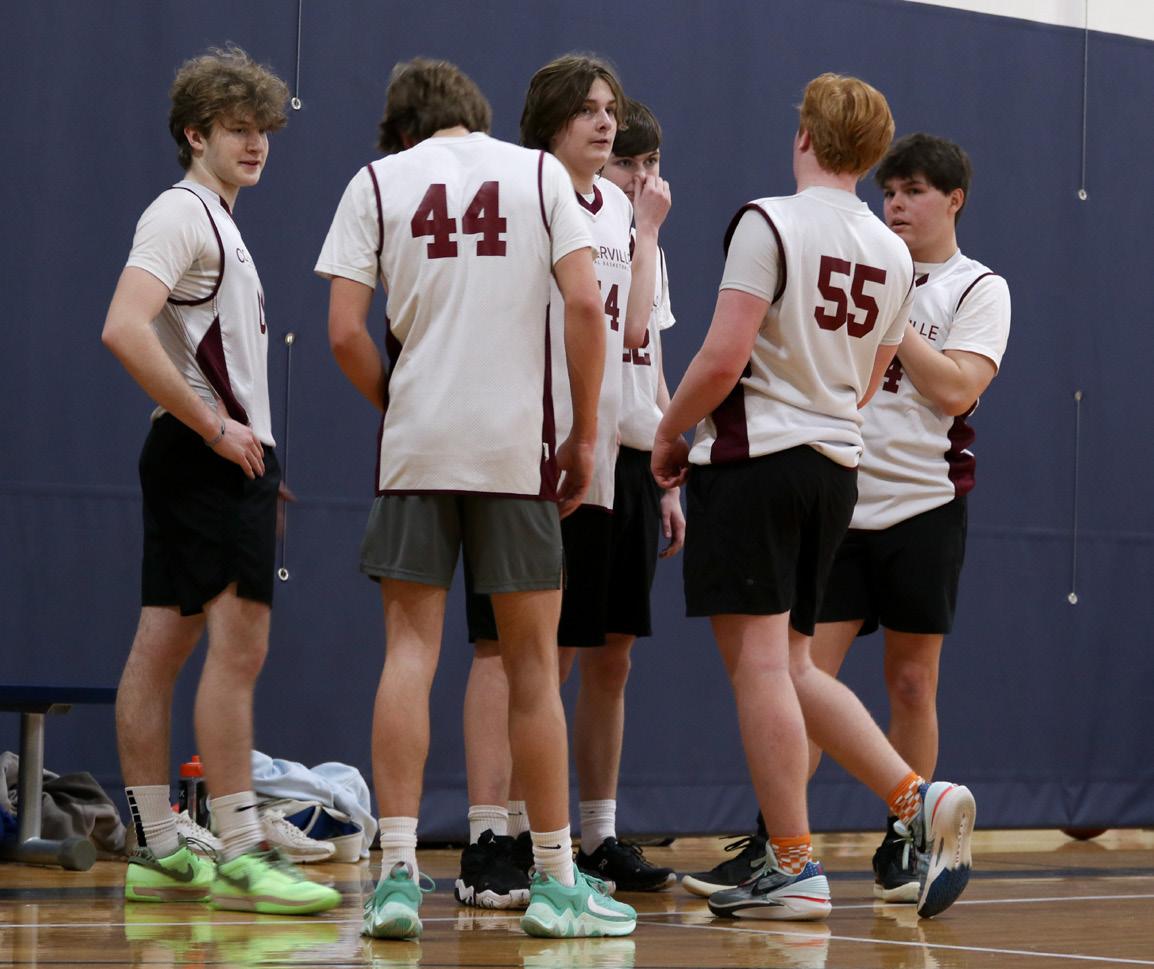
Sports & Arts | 13 Sports & Arts | 15
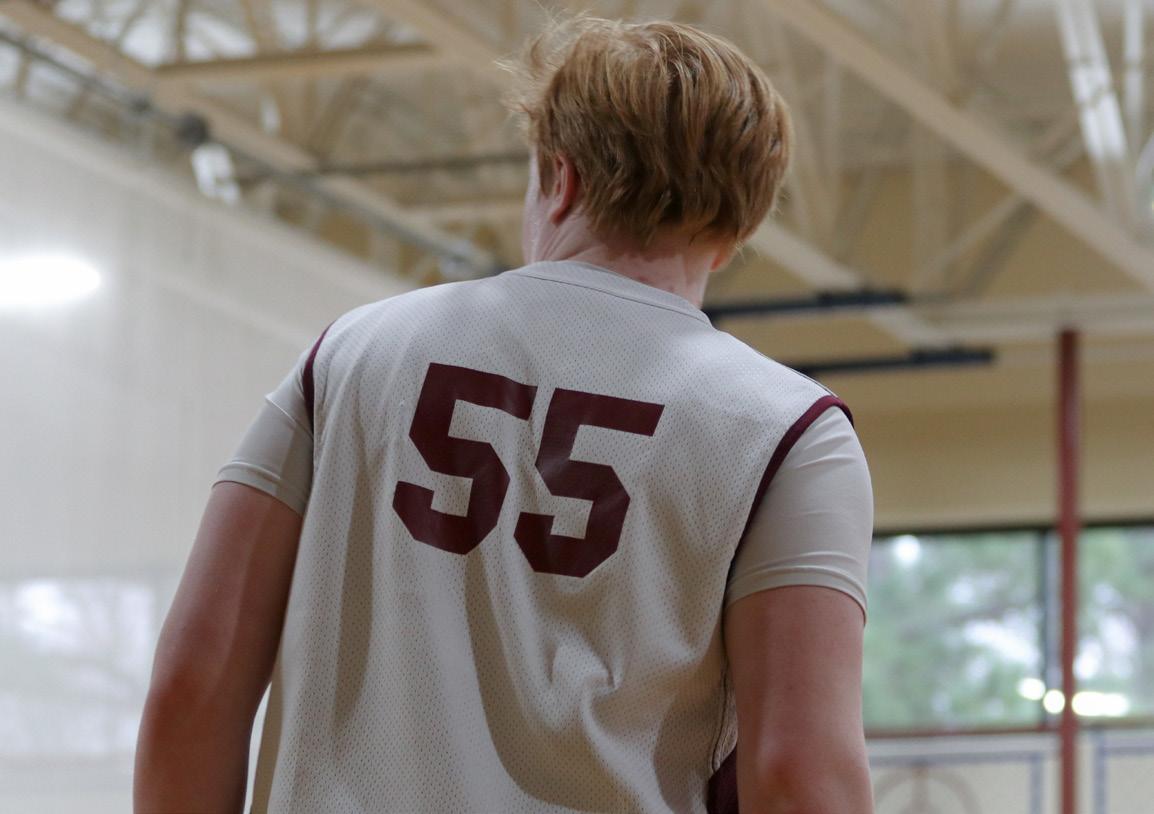
Luke Grant ‘25 watches the ball get thrown in.
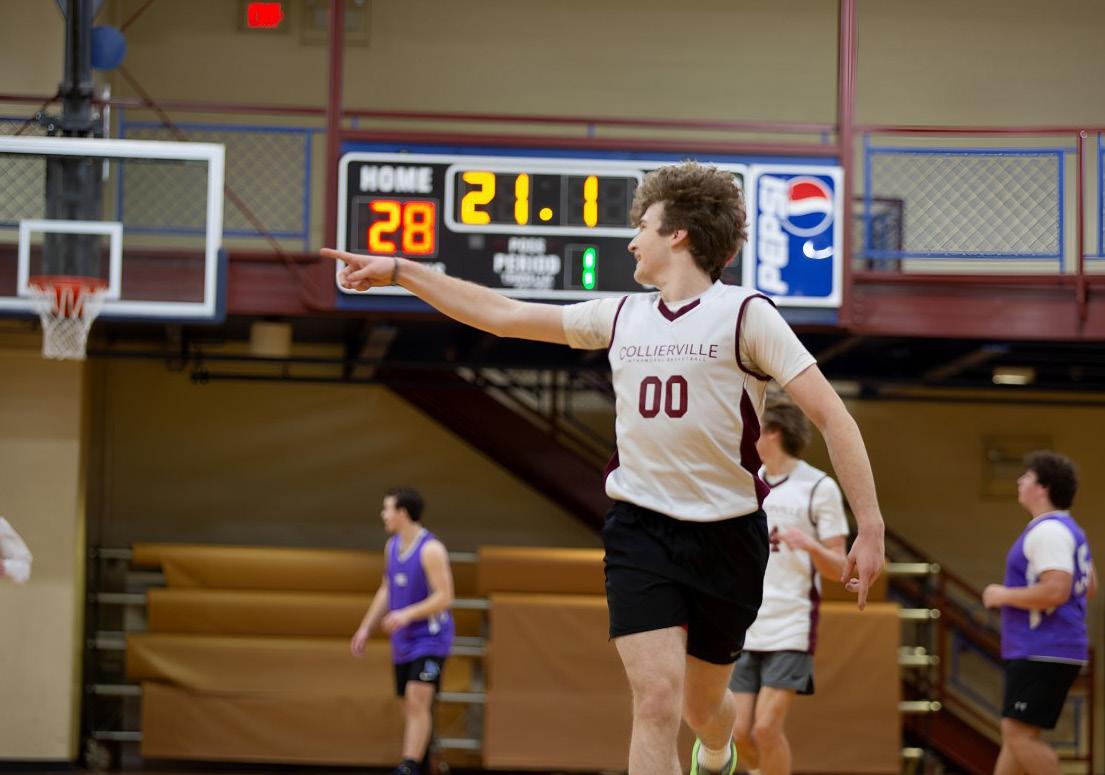
Finn Barry ‘25 points at an opposing player after making a three-point shot.
The Professionals regroup during a timeout during the playoff game.
We Need to Decide for Ourselves Why teachers should not express their political opinions
By Ella Coons
Illustration by Abbi Whitehead
Everyone has opinions. ‘Chocolate is the best ice cream flavor.’ ‘No, vanilla is.’ ‘Pink is the best color.’ ‘No, yellow is.’
Opinions are everywhere and while little squabbles between friends are bound to happen, they don’t often ruin relationships.
Teachers have a significant amount of influence over their students, shaping not only their academic development but also their perspectives on the world. While educators undoubtedly possess personal political beliefs, the question arises whether they should openly share these opinions within the classroom.
Classrooms are filled with students from diverse backgrounds, cultures and political affiliations. When teachers express their political views, it can alienate students who hold differing opinions and create an environment where some students mistake these differences for faults.
The main goal of schools is to give students an education and to encourage critical thinking skills, and a good way to complete this goal is to have students feel comfortable in the classroom.
Dr. DeLeon Grey, an associate professor of educational psychology at North Carolina State University, said in the College of Education News, “When students feel a sense of belonging in the classroom, it can increase their educational success and motivational outcomes in multiple ways.”
When teachers input their political opinions in a class, they risk making students feel uncomfortable and less willing to learn and participate in class.
Inclusive environments with mutual respect and apprecation for different viewpoints are important for creating a sense of belonging; by not sharing political opinions, teachers contribute to the creation of an inclusive space where all students feel valued and respected.
Teachers should provide a space for students to develop critical thinking skills by listening to a range of perspectives as a means of forming their own opinions. When teachers input their political beliefs into the discussion, it can influence students’ views and make them more likely to believe what a favorite teacher says rather than forming their own opinions.
Dr. Deborah Son Holoien, a graduate of Princeton University, addresses this in her article, “Do differences make a difference?” She suggests that the effects of diversity on learning, intergroup outcomes and civic engagement create “increased exposure to people who differ on various attributes,” which “can cause individuals to question their beliefs and assumptions about the world and correct any negative biases they may possess about unfamiliar others.”
Without the personal influence of a teacher, students are more likely to think for themselves and less likely to follow random thoughts.
While teachers sharing their political opinions can have their benefits, such as teaching students how to debate in a closed setting, there are more convincing arguments on why teachers should not express their opinions to promote individual thinking and to remain neutral.
In short, opinions are important to have, but if they can be detrimental to a learning environment
then they should not be expressed. A teacher’s job is to educate their students, and if a teacher’s own opinions slip into a lesson, students could feel alienated from their classmates and not feel there is adequate room to form their own thoughts and opinions.
It is crucial for students to develop beliefs and ideas for themselves, and teachers expressing their political beliefs detracts from a student’s ability to grow as a person—something that is fundamental for both high school and adolescence as a whole.

OPINION POLICY: The Lodge opinion section is a venue for the free expression of the student views at St. George’s Independent School. The opinions represented in this section are those of the authors alone and do not necesarily reflect those of the Lodge staff or of the St. George’s community at large. The Lodge strives to be an open forum for the thoughtful and deliberate exchange of comment and criticism and therefore welcomes letters to the editor. Letters to the editor will be printed in the opinion section of the newspaper, should not exceed 300 words and must be signed and accompanied by a verifiable email address. These letters will not be printed if the content is judged obscene, violates the privacy of others or encourages physical disruption of school activities.
Opinion | 16
By Olivia Vitale
Discussions are Healthy Political conversations need to happen
Illustration by Abbi Whitehead
Why do we always feel the need to make politics the elephant in the room?
While these conversations can cause tension, it teaches maturing minds critical thinking and empathy. In a controlled environment and appropriate setting, it is time
to use the influence of these conversations to foster mutual respect and understanding of different opinions.
This is why I believe that teachers should share political opinions on the condition that they do not attempt to force their beliefs on students. They can go about this by not bringing it into a situation

where it would be off-topic, letting discussions happen naturally, creating safe spaces to have a professional conversation and not suffocating the entire class with their beliefs.
Since 2020, the amount of topics considered political has skyrocketed. For example, certain states have prevented teachers from even implying that past actions from the U.S. were motivated by racism. Specifically, Florida Governor Ron DeSantis banned education on critical race theory, which would prevent education on racism, and would push the boundary of the First Amendment.
Even if it shouldn’t be political, it still is. In history classes, especially, teachers have taken the time to cover current events, as those events will become part of history itself. These discussions are important as they teach students to be aware of the things happening in the world around them, a trait that too many people lack.
With a lot of current events circling in the news, it is important to have those conversations to help people find reliable news sources.
Showing that politics can be brought up without arguments starting can assist people in proving their maturity to their peers, which in turn creates a stronger sense of mutual respect.
As we all know, respect is one of the core principles we are taught at St. George’s.
When observing a political conflict, looking at both sides and their motivations helps people to understand why the conflict is happening.
Trying to remain fully neutral or complacent takes away from the big picture, and makes even mention-
ing the subject redundant.
Neutrality is possible for an argument between students, not for a pressing issue.
According to the Pew Research Center, both political sides have become more polarized than the median by 24-28%.
In this day and age, full neutrality is less of a set belief system and more of an unrealistic ideal.
Indoctrination is one thing, but getting angry with a teacher for facilitating a healthy, educational discussion is closed-minded and prevents those discussions from happening. While discussions can be student-led, an engaged classroom sometimes requires an engaged teacher.
St. George’s is a place that prides itself on preparing its students for the broader world. One of the ways they can do this is by teaching students the line between a discussion and an argument.
A discussion is civil, and more organized, while an argument is more spontaneous and disorganized. It doesn’t take a genius to know that being able to discuss without arguing and an awareness of your world are crucial skills.
It also prides itself on being an institute of diversity, and that diversity includes a diversity of opinions.
Additionally, hearing some of their beliefs allows students to get to know their views and personality more.
Showing that we can have these important political discussions without fuss backs up the claimed diversity, and creates a community of dependability and respect.
OPINION POLICY: The Lodge opinion section is a venue for the free expression of the student views at St. George’s Independent School. The opinions represented in this section are those of the authors alone and do not necesarily reflect those of the Lodge staff or of the St. George’s community at large. The Lodge strives to be an open forum for the thoughtful and deliberate exchange of comment and criticism and therefore welcomes letters to the editor. Letters to the editor will be printed in the opinion section of the newspaper, should not exceed 300 words and must be signed and accompanied by a verifiable email address. These letters will not be printed if the content is judged obscene, violates the privacy of others or encourages physical disruption of school activities.
Opinion | 17
Navigating Second Semester
The St. George’s Gryphon is starting his stressful second semester. Help him navigate the twists and turns and make sure his GPA stays above a 3.0!
Illustration by Sienna Lightman


Summerbreak!
Opinion | 18

The Little Things
Taking care yourself in times of stress is crucial
This 2023-2024 school year has not only brought the change of administrative positions such as Mr. Timothy Gibson becoming Head of Student and Alumni affairs and Mr. Pruett becoming Interim Head of School, but also comes with a message of understanding and doing what’s best for yourself.
Self-care and prioritizing yourself are both important. In “Passing the Baton” on page four, Mr. Gibson, former Head of School, spoke to how his position wasn’t the best choice for himself. That he found more energy and excitement in the return to his College Guidance position and working with students and alumni demonstrates that Mr. Gibson chose his own happiness, and people noticed an overall improvement in his demeanor.
“Ms. Taylor told me ‘I feel like I’m seeing sort of the you that we used to know.’ And I feel that as well, so that’s been good for me” said Mr. Gibson.
As we’ve started the second semester of this school year and classes have fallen behind due to the snowy week after MLK weekend, it is important for students to take care of themselves.
AP classes have to get back on track, assignments have to get made up and teachers have to change their course plans. Juggling many activities and services for others is noteworthy, but it cannot be done well without sometimes doing things for yourself.
Doing your best at the things you do requires a level of self-care.
We increasingly hear the suggestion that one should prioritize their mental health over school, but that tends to be stigmatized and hard to follow.
How do people find time to take care of themself when they have to get work done? Getting the right amount of sleep, taking breaks from studying and homework and eating well brings you the energy you need to get through the day and work your best.
This fact is proven in scientific research. According to Andy Eugene and Jolanta Masiak in their article “The Neuroprotective Value of Sleep” from the National Institutes of Health (NIH), sleep prolongs alertness and memory recall (both of which are crucial throughout the school day) and relieves stress and depression.
Sleep brings energy, and deficiency of sleep is very detrimental to your physical and mental health. Students often stay up late to do homework due to late practices or
other extracurricular activities.
Because of this, they feel that they have no choice but to miss valuable sleeping hours if they want to get their homework done or study for assessments.
Breaks throughout the day are incredibly helpful for productivity, too. According to Emily Boynton in her article “Taking Breaks Is Good for Your Brain – Here’s Why” from Right as Rain by UW Medicine, breaks bring your brain to different electrochemical brain states based on how much focus is required for the task at hand, and the time in different brain states helps your brain’s creativity, problem-solving, and memory storage.
What you eat also affects your brain and your mood. Eva Selhub MD in her article “Nutritional Psychiatry: Your brain on food” from Harvard Health Blog puts it like this, “Like an expensive car, your brain functions best when it gets only premium fuel.

This premium fuel means high quality foods rich with vitamins, minerals and antioxidants. While unhealthy food is often easier in that it tends to be fast and easily accessible, taking extra effort to find nourishing foods for your body is important.
While these actions are very important for your overall health and activity, there are many more ways to practice self care and prioritize yourself for your betterment.
Some ways to enact self care are taking a shower to clear your head, moisturizing and washing your face or using skincare products. You might find our suggestions something you don’t have time for, but self care doesn’t have to be intimidating or as much as another person’s routine. Finding a simple, daily routine can help you make sure that self care is a part of your day.
If you find yourself struggling to sleep enough, eat properly or give yourself enough breaks, it is important to remember that the teachers at St. George’s are here for you. They are understanding, and if you feel like you can’t juggle your work without adequate self care, remember just to reach out!
The second semester is always the hardest. One can feel drained, unable to find motivation or just mentally exhausted.
Doing what is best for you is always crucial: although we may receive social clues that this is narcissistic behavior, putting your personal wellness first, whether you are a staff member or a student, is paramount.
Opinion | 19
From, The Editorial Board What is a staff editorial? Editorials represent the opinion of the editorial board and do not necessarily reflect those of The Lodge staff or the St. George’s community at large. The Editorial Board: Sienna Lightman, Livi VanSteenberg, Kirklyn Moore, Olivia Vitale, Abbi Whitehead
Illustration by Sienna Lightman
FOLLOW US ON INSTAGRAM @newsgryphs
instagram.com/newsgryphs
FOLLOW US ON TIKTOK
@gryphonlodge_
CHECK OUT OUR WEBSITE gryphonlodge.com