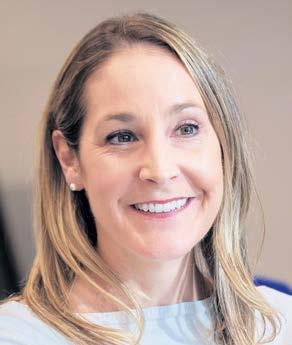
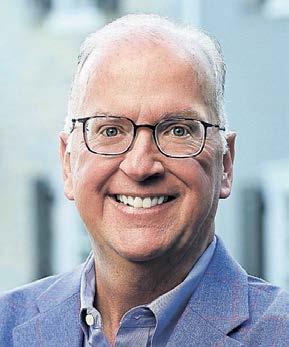
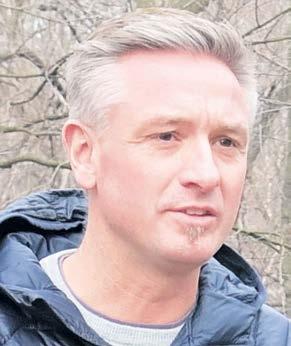
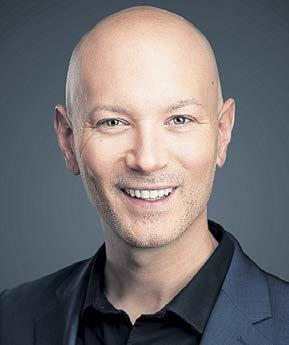
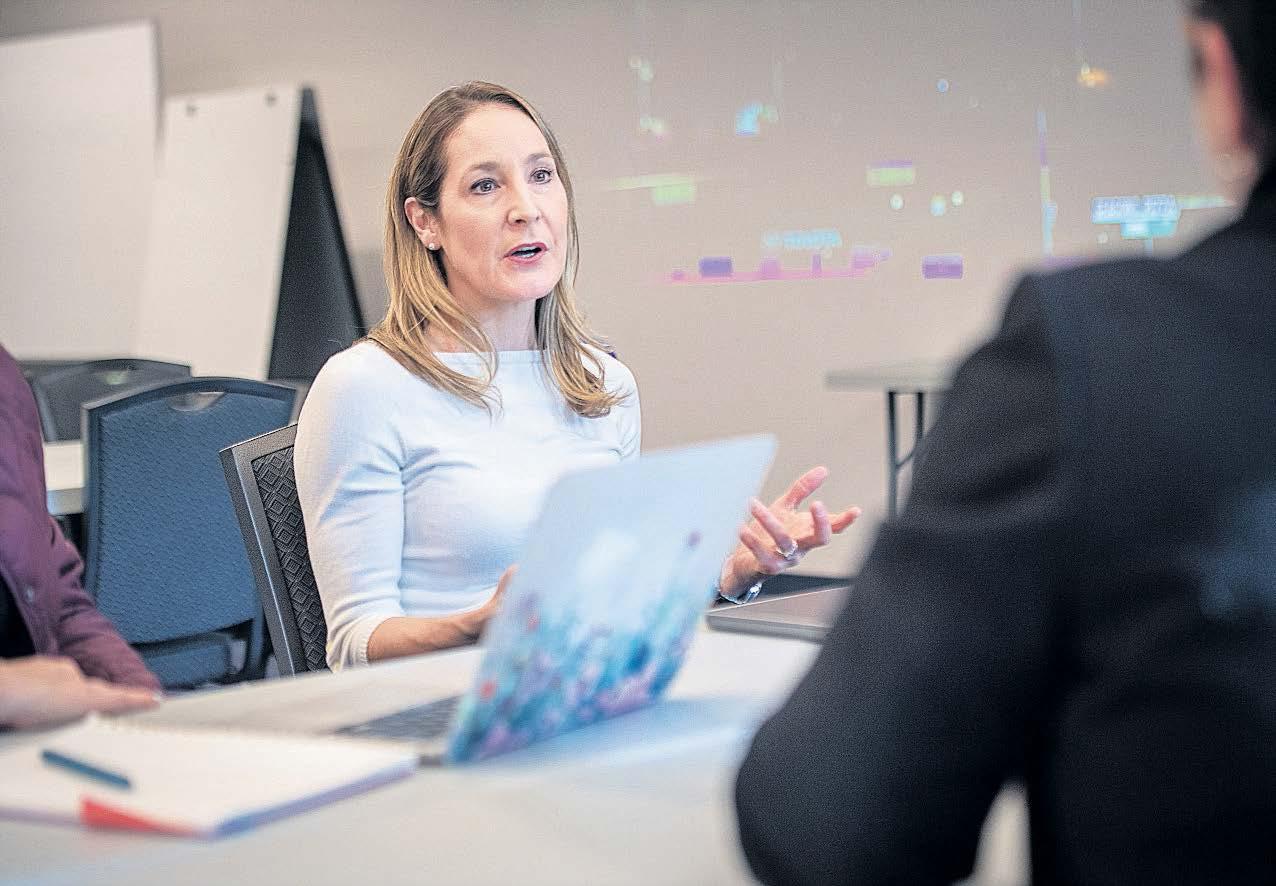
FROM HEALTH CARE TO CULTURE AND INDUSTRY, MEET THE PEOPLE WHO ARE SHAPING LANCASTER COUNTY’S FUTURE
March 1, 2026
THANKS TO OUR SPONSORS
We recently asked LNP | LancasterOnline readers to tell us about the people they believe are having a significant impact on our lives in Lancaster County across a wide range of areas, from business and industry to health care and the environment. We had our own ideas as well. In this 2026 edition of Lancaster County Progress, we take a look at some of the people who are not only shaping the way we live today but also charting what our county will look like in the future.
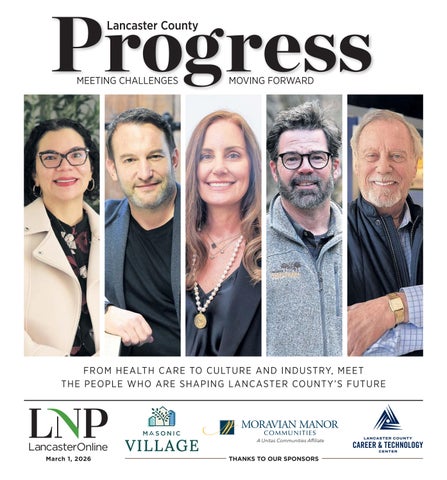
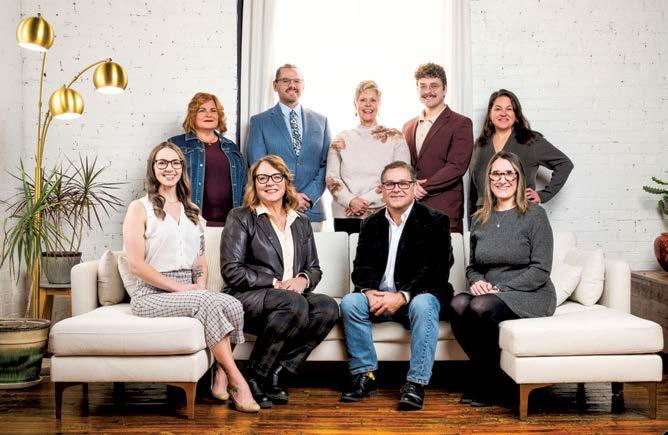
ON THE COVER (from left):
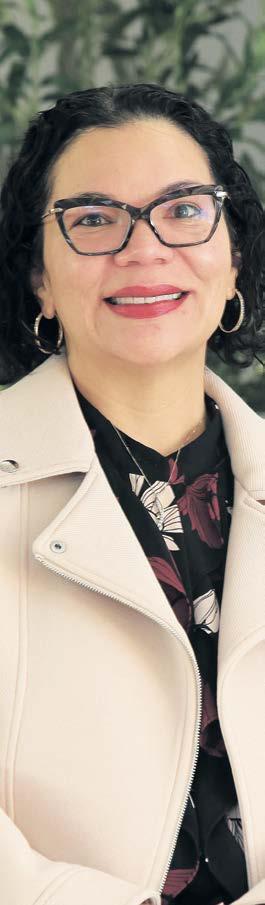
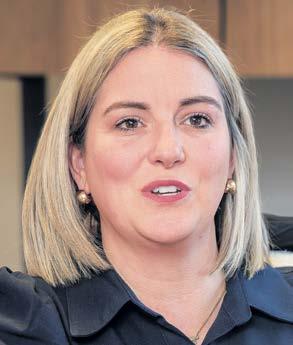
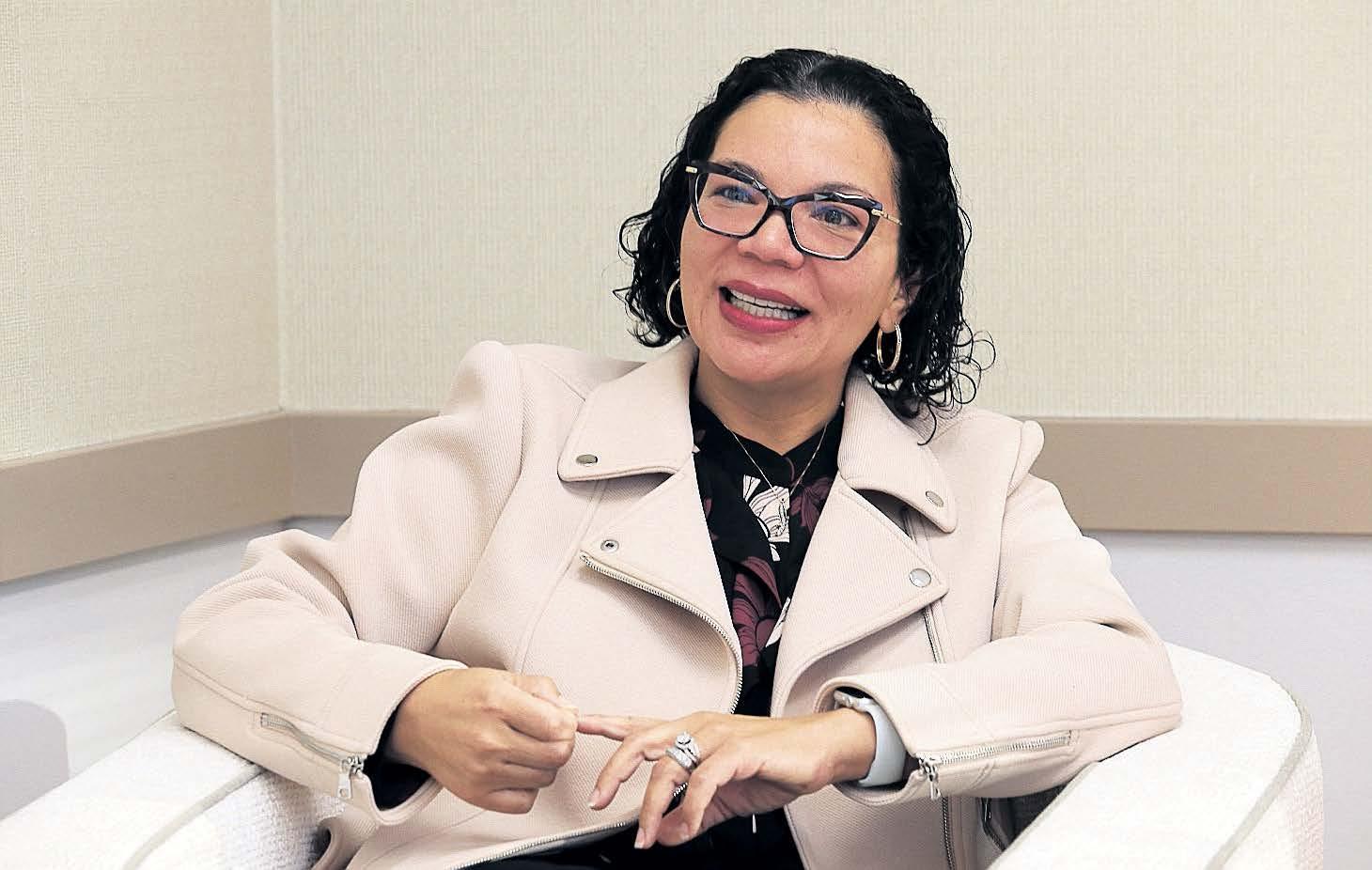
Alisa Maria Jones, president and CEO of Union Community Care. Photo by Vinny Tennis. Page 10
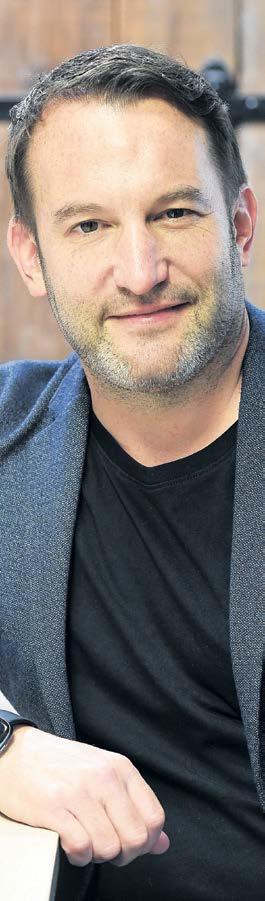
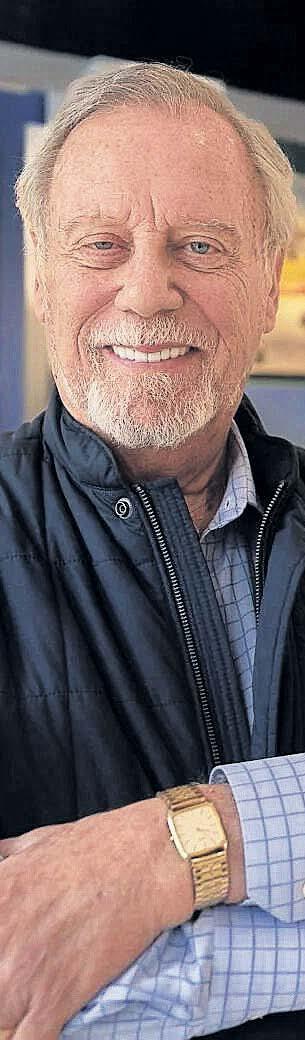
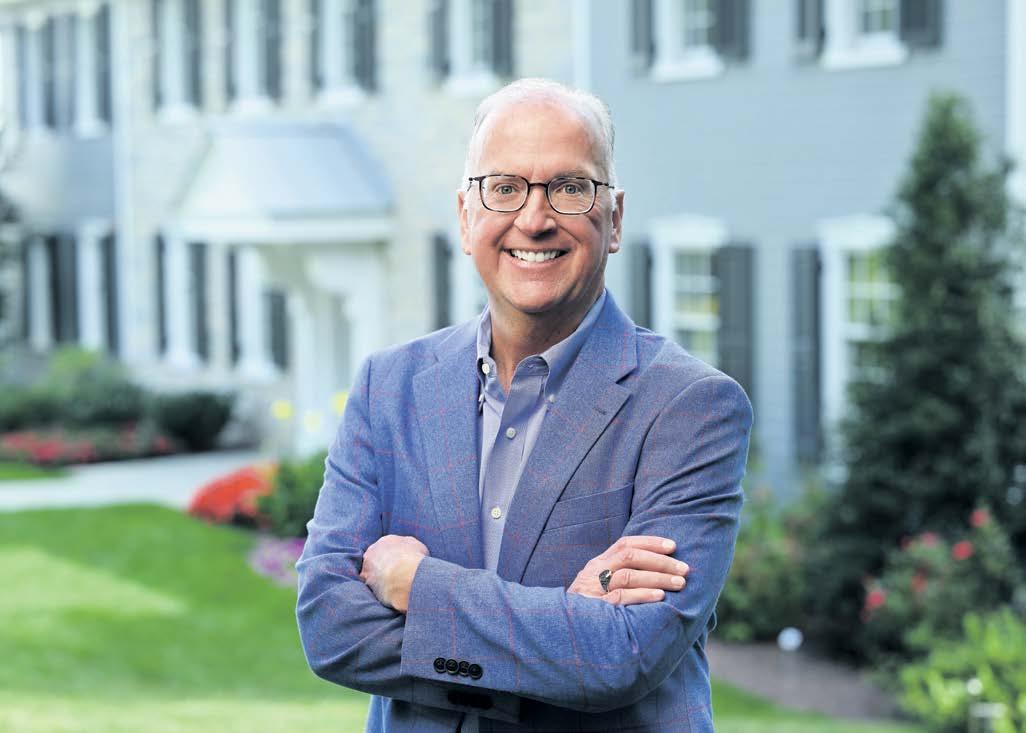
David Greene, interim publisher and board chair of Always Lancaster, the nonprofit that owns LNP | LancasterOnline.
Photo by Blaine Shahan. Page 20
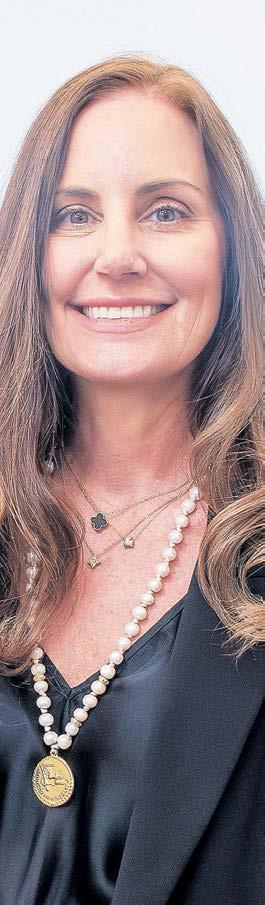
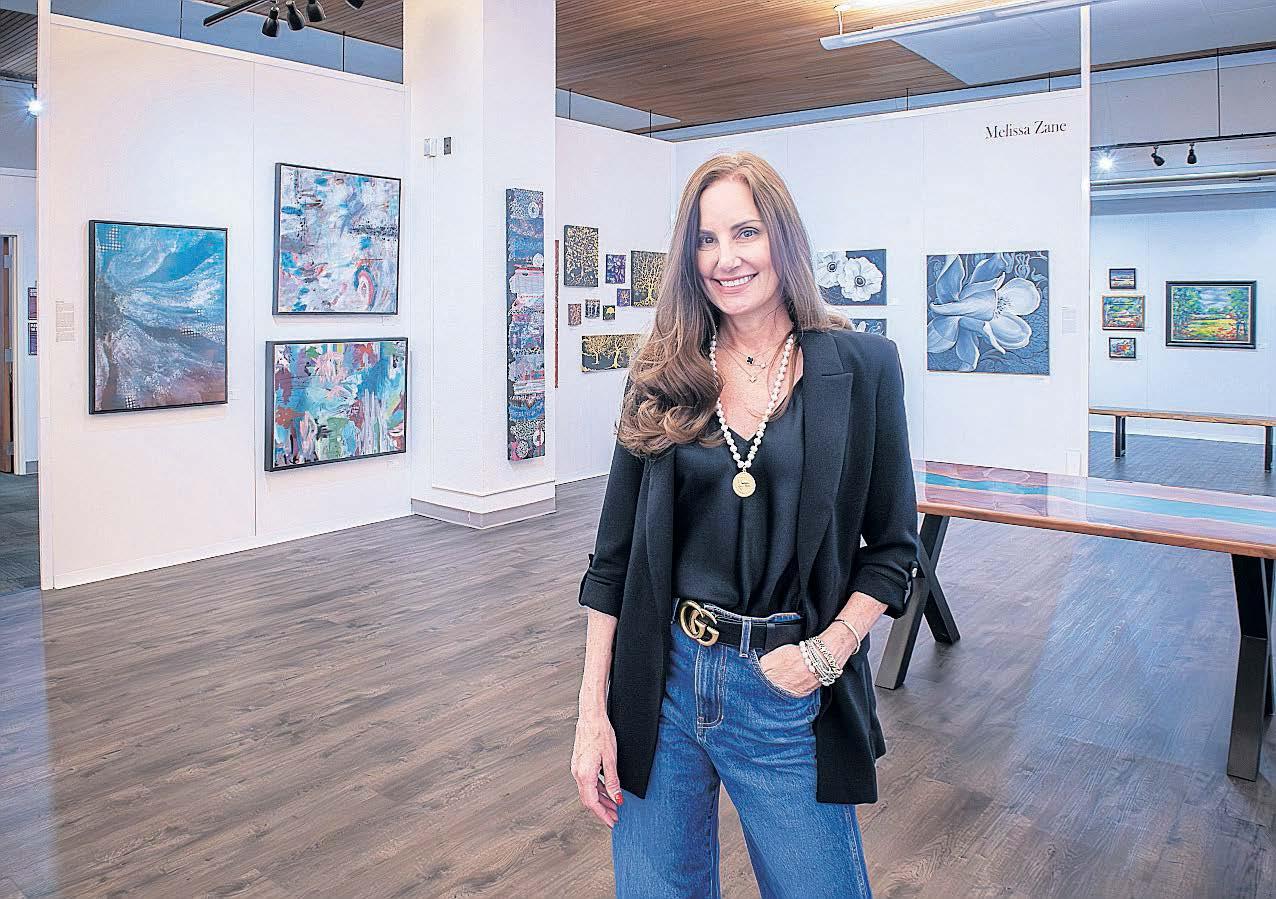
Victoria Abadir, owner and founder of Lancaster Art Vault. Photo by Blaine Shahan. Page 36
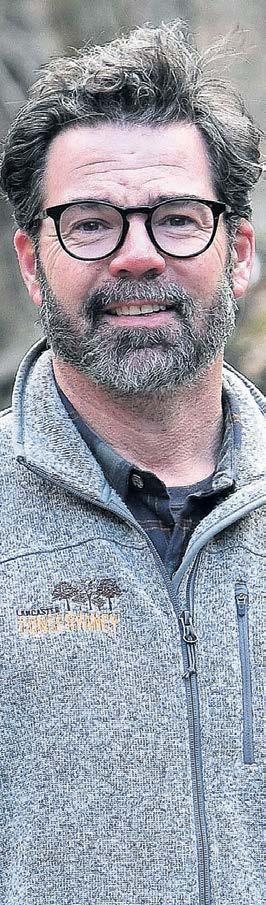
Fritz Schroeder, president and CEO of Lancaster Conservancy. Photo by Chris Knight. Page 14
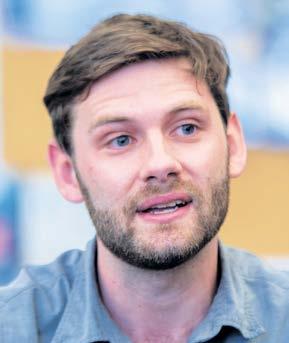
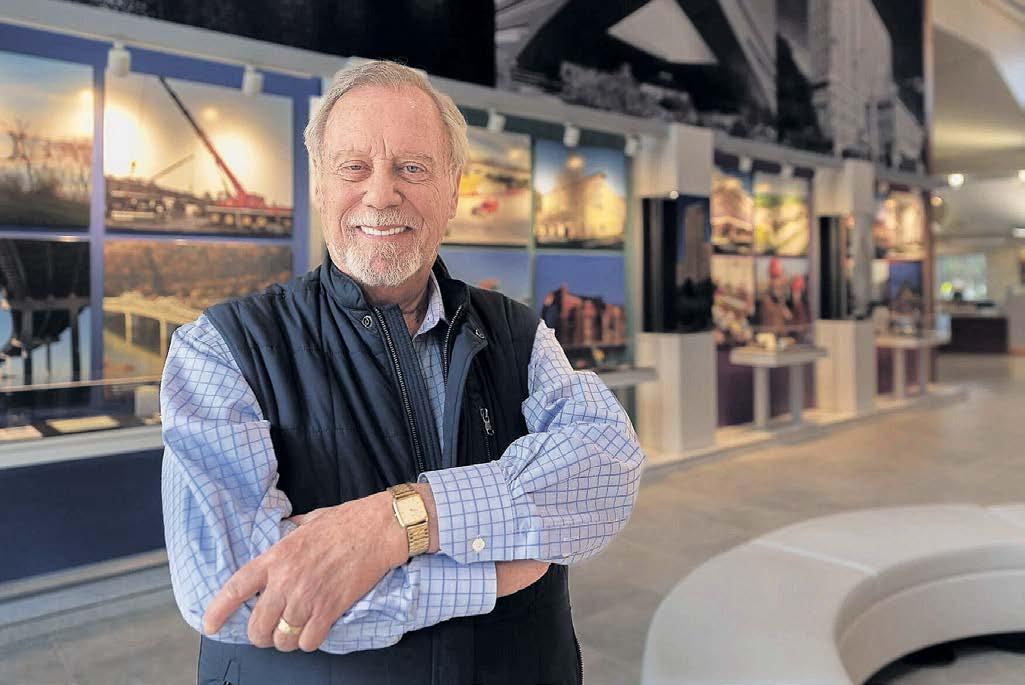
S. Dale High, board chair of the High Foundation. Photo submitted. Page 5
Content Editor: Margaret Gates
Cover Artist: Abby Rhoad
Visual Editor: Abby Rhoad
Managing Editor of Content: Stephanie Zeigler Team Leaders: Jenelle Janci, Pat Bywater
HEATHER VALUDES Lancaster Chamber JACOB BOWEN Planner, East Lampeter Township
LAUREN MILLER Lancaster County STEM Alliance
PETE GURT Catherine Hershey Schools
JOE MUGAVERO Developer
MITCH NUGENT Prima Theatre
ECONOMY
PAGE 6
Shoppers look for Black Friday deals at Tanger Outlets in East Lampeter Township. Jacob Bowen, the township’s new director of planning, is helping to create a comprehensive plan that will guide growth for the next decade.
ANDY BLACKBURN | STAFF PHOTOGRAPHER
BUILDING RELATIONSHIPS
As head of the Lancaster Chamber, Heather Valudes has to think on her feet while planning for the future
REBECCA LOGAN FOR LNP | LANCASTERONLINE
Heather Valudes is proof that there’s power in networking.
About 15 years ago, she was running the softball team for Leadership Lancaster, a training program for existing and emerging leaders that Valudes put herself through while employed at a bank. Through the team, she connected with the executive assistant to Tom Baldrige, then president of the Lancaster Chamber.
“She was the one who said to me, ‘Hey, there’s this advocacy job coming up at the chamber. You should apply,’ ” Valudes says. “I told her no way was I going to get hired for that job. They are going to want somebody with way more experience than I have.”
She was wrong. She got the job. Valudes says that, with hindsight, her hiring likely came down to relationships she’d built through civic engagements and gigs like interning for longtime Sen. Mike Brubaker during his first summer in the 36th District office.
“I certainly didn’t know everything about policy flow at the state level, or depth of issues,” she says. “But, when I think about it, it was about, ‘What do those relationships look like?’ ”
Valudes rose through the chamber ranks. When Baldrige retired in 2022 after 22 years in the job, she stepped into the role where relationships are still serving her well. So says Eric Wenger, managing partner of the Lancaster office of the accounting firm RKL LLP
“In our current world, everybody is so polarized in their perspectives,” says Wenger, treasurer and chairelect of the board for the chamber that has nearly 1,500 member companies across the county.
Those are diverse, Wenger says.
HEATHER VALUDES
“So wearing that hat of leadership for a countywide organization and still being able to engage and maintain good relations with a wide array of constituencies?” he says. “It’s really admirable how she’s walked that.”
Valudes guided the chamber through the launch of its new longrange strategic plan, which outlines a vision for making Lancaster “the best place to live, work and thrive” by 2035.
Pushing for pro-business policy is part of that, she says.
“That’s the type of stuff that a business is not really going to go out and
advocate for on their own, unless it’s specific to their industry,” she says. “You don’t hear of a lot of businesses calling up and being like, ‘We need the 222/30 interchange fixed.’ And yet that is the movement of goods and people. And we’re always going to be in those spaces.”
Workforce is a challenge in Lancaster County, in that many of the people who move in are older than the typical working-age band, she says.
n Age: 39.
n Job title: President and CEO, Lancaster Chamber.
n Education: Bachelor’s in political science and master’s in administration, both from West Chester University.
n In her office: Photos of her family. Art with various Lancaster connections. Decorative trees made by her mom. Cards from when she got the CEO job.
A bottle of bourbon that the chamber produced for its 150th anniversary.
A micro fridge she got for Christmas “basically to hold all my Diet Coke.” She also has Lego creations. Valudes says she’s developed in recent years an affinity for working with those.
Heather Valudes, president of Lancaster Chamber, talks in her East King Street office.
BLAINE SHAHAN | STAFF PHOTOGRAPHER
VALUDES, page 7
‘A MODERN-DAY MILTON HERSHEY’
S. Dale High continues to use his business success to better the Lancaster County community
SARAH NICELL SNICELL@LNPNEWS.COM
S. Dale High knows very little about astrology. Still, he can tell you that he’s a Taurus, and maybe that’s why he’s so stubborn.
“I like to retranslate that into ‘persistence,’” High says during a January interview. “That’s how we get things done.”
In his 83 years, High has arguably gotten many things done. It would be difficult to find a Lancaster County resident who hasn’t heard at least the basics of the High story, or hasn’t seen High’s name tacked onto an event sponsorship poster.
High has watched his family business, which began as a small welding company founded by his father in 1931, expand across construction and real estate industries and blossom financially over the decades. After graduating from Elizabethtown College, High joined his father full time in 1963, and by 1977, he was CEO of High Industries.
While High no longer officially leads the near-dozen High-affiliated companies and limited liability corporations in the Lancaster area, he still serves on the High Industries and High Real Estate Group board of directors. Plus, he chairs the High Foundation, a nonprofit that gives millions of dollars in annual grants to Lancaster County organizations focused on housing, education and more.
Despite his companies’ long history, High hasn’t slowed down quite yet. In the past few years, High has donated nearly all High Industries and High Real Estate Group assets to the High Foundation. The nonprofit continues to award grants promoting housing and environmental conservation in Lancaster County.
Most recently, High Foundation funded a new nonprofit, Lancaster Housing Works, with $10 million
to build 360 affordable workforce housing units in Lancaster County in the next five years. The first step in that mission included the purchase of Stonecreek Court Apartments, a 60-unit complex in Ephrata, as announced on Jan. 15. High says the effort is an attempt to address high housing costs for workers who have steady jobs but are still falling short.
“I never believed that it was wise to simply try to accumulate as much wealth as you can,” High says. “You have a responsibility to give back to that community.”
Projects old and new
Jordan Steffy, founder of Attollo
Prep, a college access and leadership development program for county high school students, first heard the name S. Dale High as the economy crashed. In 2008, Steffy and his friends hunted for jobs after graduating college.
People close to him quickly flocked to the Lancaster County Convention Center — which faced years of controversy among taxpayers before it found its footing — for employment.
One 2006 Lancaster Intelligencer Journal column considered whether the center might be “the stupidest idea since New Coke.” Others called it essential to downtown revitalization.
S. DALE HIGH
n Age: 83.
n From: Strasburg.
n Job title: Board chair of the High Foundation.
n How he spends his free time: Being on the beach, hiking in nature, reading books and traveling. He’s checked off about 50 countries so far.
SUBMITTED
S. Dale High continues to serve on the boards of High Industries and High Real Estate Group and as chair of the High Foundation.
A CALL TO SERVICE
Jacob Bowen brings Peace Corps lessons to job as East Lampeter Township planner, zoning officer
CHRIS REBER CREBER@LNPNEWS.COM
The desire to serve others led Jacob Bowen to spend more than two years on an island halfway around the world. Then it brought him back to Pennsylvania, where he’s helping to guide future growth in East Lampeter Township.
As the township’s director of planning/zoning officer, 33-year-old Bowen reviews development projects in a township that is evolving to incorporate more housing into commercial areas while trying to preserve farmland.
Prior to taking the job in May 2025, he served as a Peace Corps volunteer in Timor Leste (East Timor) from January 2023 to March 2025. The decision to join the Peace Corps as he entered his 30s reflected a call to service he heard years before while studying community and economic development at Penn State — to chart a career path that would help improve the lives of others.
“I made a vow in college that I don’t want to work just to make money for someone,” he says. “Not that there’s anything wrong with that, but my motivation is definitely serving.”
When Bowen was offered the opportunity in Timor Leste, he had to look it up on Google and Wikipedia. The country is about 400 miles north of Australia and shares an island with Indonesia-controlled Timor Barat (West Timor). Once a Portuguese colony that was later occupied by Indonesia, Timor Leste gained independence in 2002 and today is home to 1.4 million people. It takes more than 24 hours by plane from the U.S. to reach the capital city of Dili, via the Indonesian island of Bali.
While in the Peace Corps, Bowen became fully immersed in the culture, living with a Timorese family.
His job was to help provide economic development — teaching residents to write business plans, use Microsoft Excel and speak English.
“People were very appreciative, ready to learn, and just trying to improve their lives, because it’s very difficult to get ahead,” he says.
He also met his now-wife, who is Timorese. After Bowen’s Peace Corps service concluded, the couple returned to the United States, and he resumed his career in community planning. Prior to joining the Peace Corps he obtained a master’s in urban management and development at a college in the Netherlands, and worked in planning departments in
Harrisburg and near Pittsburgh.
Bowen says his work in Timor Leste gave him a new appreciation for some of the regulations that he’s responsible for as a municipal planner, like stormwater management. He saw firsthand how the mix of unregulated development and heavy rain could cause property damage.
Working with the Timorese people also improved his ability to work across cultural boundaries, something that has paid off in working with Plain Sect communities in East Lampeter Township.
“Having patience, cultural awareness has been helpful for me, and just
JACOB BOWEN
n Age: 33.
n Job title: Director of planning/ zoning officer, East Lampeter Township.
n Location: Lancaster city, but moving to East Lampeter Township.
n Family: Wife, Eza Soares.
n Favorite location in the township: East Lampeter Township Community Park.
n Favorite activity outside work: Traveling.
n Favorite book: “Les Miserables.”
n Favorite musical artist: The Eagles.
BLAINE SHAHAN | STAFF PHOTOGRAPHER
Jacob Bowen, director of planning/zoning officer for East Lampeter Township, comments during an interview at the township municipal building.
BOWEN, page 7
High
“At this time where it felt like the world was falling apart, I remember this line of people outside the convention center,” Steffy says. “It was a ray of hope in the community. Who owns that? Who’s the person bringing this hope?”
High’s construction companies led the project.
Steffy, now on the High Foundation’s board of trustees, considers High both a friend and philanthropist. Along with lending long chats at Alice’s Diner in East Lampeter Township and a listening ear, High has supported Attollo financially, mostly via the High Foundation but also with a $20,000 personal donation to the nonprofit during 2025 ExtraGive, according to the fundraiser webpage.
Before and since then, High has handled a seemingly endless pile of projects in and around Lancaster County in both business and nonprofit capacities, whether that’s the S. Dale High Center at Elizabeth-
Valudes
“Birth rates are fine. They’re more stable than in other areas for sure,” she says. “But it takes 24 years for them to be a productive member of your workforce. All that said, we are attracting talent. We are a growing community.”
Being one involves telling the right story, says Valudes, who adds that she would love to see Lancaster overtake Pittsburgh on some of the “best place” lists where it trails in Pennsylvania only to the Steel City. “What’s Pittsburgh got going for it that we don’t necessarily have in the same way? Well, obviously it’s a larger metro,” she says. “It’s got a lot of education-related components. Lancaster doesn’t have the institution-sized education.”
town College training hundreds of family businesses or investments in local food banks.
Upcoming projects excite him, too.
That includes Lancaster City Alliance’s “Light Up Lancaster,” which will illuminate buildings around Penn Square on King and Queen streets to show off city architecture and create a more walkable night environment. High Foundation had contributed nearly $500,000 to the project as of Jan. 15. High says he was inspired to help after strolling by lit-up architecture during his many visits to Europe.
“I’ve been pleased, actually, with a lot of things that are happening in Lancaster,” High says. “Of course, I’ve always been an optimist, so I tend to see what is happening that pleases me.”
Still energized
Deborah Brandt, owner of Fig Industries, says it’s easy for people to look at High at the grocery store, hopping into his Subaru, and have no clue that his name is so well-
Housing affordability, crime rate and economic performance are easy to read metrics, she says.
“But in some ways, there’s also a vibe, I would call it,” she says. “And that’s where I think you see Lancaster (and other communities in Lancaster County) show up on a lot of those lists.”
Valudes grew up in Paradise, where her mother worked for years as the township’s secretary. Her father retired from Case New Holland after a long career on the floor there. Her parents still own the house where she grew up. Valudes, her husband and their twin middle school daughters lived in the Pequea Valley School District before moving last year to Lampeter. She wanted to stay east of Route 30 as that “feels more like home,” says Valudes, who also enjoys being able to work in the city. Variety
known. They have no clue that 20 years ago, High was the first person to call and offer financial support and encouragement when Fig, a Lancaster city magazine highlighting local businesses, launched.
“No one would know that he’s a legend, a modern-day Milton Hershey,” Brandt says. “He really is.” Legends typically slow down, or retire, at least eventually. High, though, says he has no plans to hit the brakes any time soon. He’s having too much fun, he says. The work isn’t a burden.
High says he’s excited to watch the next generation of leadership grow, including Robin D. Stauffer, current president and CEO of High Foundation. He says Lancaster County’s solid labor pool, workforce development and increased collaboration between local nonprofits gives him hope for the future.
“The old idea, I thought, was that wisdom came with age,” High says. “But now I realize you really have to work at it, so I’m working at it. Hopefully I’ll be able to impart some wisdom someday.”
of options is a Lancaster County advantage, she says.
“In some ways you don’t feel that until you’re here and you’re in it,” she says. “It’s the idea that you can be in a city center or some of these smaller boroughs that give you the walkability and the lifestyle piece, and you can go and hop on a kayak in 15 minutes from basically anywhere you’re at in this county.”
Valudes says one of the biggest ways things have changed since she started in that first chamber job comes down to pace. Leaders are expected to be plugged in and ready to react more quickly, she says.
“It’s more like a rapid-response mindset in a lot of ways,” she says. “All of a sudden you hear about a data center coming in, and you’ve got to immediately think about what does that mean for the community?”
Continued from 6
being able to adapt,” he says. Bowen’s job includes working with the Planning Commission, Zoning Hearing Board and developers considering projects in the township. He’s currently helping to create the township’s new comprehensive plan, which will guide growth for the next decade and beyond.
Township manager Tara Hitchens says that Bowen brings a great background in planning from his previous jobs, and a unique perspective from his time in the Peace Corps. Bowen’s initial impressions of East Lampeter have been positive. The township is known for a busy commercial district driven by tourism and the High companies’ Greenfield mixed-use community, and its rolling farmland.
Some things that differentiate the township from other places he’s worked are the urban growth boundaries that have helped to protect farmland and an openness to a range of housing types.
In the five years before Bowen arrived, the township approved hundreds of new apartments at Greenfield, which was originally imagined as a corporate center, and at the Shops at Rockvale, a once-bustling outlet mall. Ascend at Greenfield is scheduled to open this summer, and sitework is underway on the first phase of apartments at the Shops at Rockvale.
Both projects align with a 2023 housing study commissioned by the township that identified a growing need for smaller housing options in the township. With the comprehensive plan, which Bowen says may be adopted later this year, the township will likely continue working to find ways to meet the housing needs while conserving the remaining farmland.
“The hope is the plan will give us a guide to make the zoning what the people in the township want it to be, and make the township a better place to live — or to continue to have it the way they want it to be,” he says.
Beyond providing an engaging lifestyle and high quality care for olderadults, Masonic Village serves individuals of allages. See our full list of services, and let us knowhow we canhelp you
Fulfilling our commitment to serve others regardless of their financial means, in 2024, weprovided $40.8 million in charitablecareand services across the state,thankstothose who believe in and have donated toward our mission.
Between awarding scholarships to teen volunteers, donating to local emergency service providers and hosting interns, Masonic Village supports the community where andwhen needs arise.
BleilerC aringCott age (homefor adults with developmental disabilities) 717-367-1121,ext .33751
Employment Opportunities 717-361-4522
Farm Market &Orchard ViewCafé 717-361-4520
General Inquiries 717-367-1121
Home Care 717-361- 4999
Home Health 717-361- 4050
Hospice 717-361-84 49
MasonicChildren’sHome 717-367-1121, ext. 33301
Outreach Program 1-800-462-7664
Pharmacy 717-361-5599
Nursing/PersonalCare 1-800-422-1207
RetirementLiving 1-800-676-6452
Sell Chapel 717-367-1121, ext. 33106
Short-Term Rehab 717-367-1121, ext. 33140
VolunteerSer vices 717-367-1121,ext .33175
HEALTH
PAGE 10
just one of the things that has the attention of CEO
Union Community Care’s newest location on West Orange Street in Lancaster is opening in March. It’s
Alisa Maria Jones as she leads the $60 million organization into the future.
JACOB PAULISHAK | WARFEL CONSTRUCTION
‘WE HAVE MORE TO DO’
Alisa Maria Jones leads a $60M organization in its efforts to keep Lancaster County healthy
REBECCA LOGAN FOR LNP | LANCASTERONLINE
Union Community Care is opening a new location in Lancaster’s West End in March. But the logistics aren’t taking up much of Alisa Maria Jones’ attention.
“The team’s got it,” Jones says. “We have a wonderful one. They know exactly what to do. And it’s going to work great.”
Delegating details and focusing big picture has become increasingly important for Jones. When she started in 2019 as CEO of what was then Lancaster Health Center, Jones was in charge of about 80 employees. She guided the organization through a 2021 merger with Welsh Mountain Health Centers and now leads about 400 employees serving more than 45,000 people annually, regardless of income, in Lancaster, Lebanon and Chester counties.
“When I arrived, it was a $16 million organization. It’s now a $60 million organization,” she says. “That requires you to lead differently. You can’t always get to know every single person. But the mission is the same.”
Union’s soon-to-open West End space is in what had been the Groff Event Center on Orange Street. A building with parking in that area of need was key, says Jones, adding she’s grateful the Groff family — wellknown funeral service providers — decided to sell.
“They wanted that building to continue to have impact,” she says. “It’s their family’s legacy in Lancaster. And we take that very seriously.”
Jones says she later learned that
it was the Groff family’s experience with Union early in the pandemic that opened a door to what ended up being a sale. She says Groff employees weren’t immediately able to access vaccines.
Lisa Groff, president of Groff Funeral and Cremation Services, says she’d reached out to Union’s chief community impact officer, James Reichenbach, and that the response from Union was “a blessing to us all.”
“Honestly, it was just another
Tuesday for us. I don’t remember it being a big deal,” Jones says. “But it was to them. Because funeral workers were on the front lines. So being able to get access to vaccines as soon as they came out mattered to them.”
So does Jones believe in karma?
“Without a doubt,” she says. “And it’s come back to bite me a few times.”
The Southern California native’s career has been diverse.
“I knew (after getting a master’s)
JONES, page 12
n Age: 48.
n Job title: President and CEO, Union Community Care.
n Education: Bachelor’s from California State University; master’s in public health from San Diego State University; currently working toward her doctorate at Johns Hopkins University with a dissertation focus on mergers and acquisitions among nonprofits.
n Curiosity: The board of directors that hired her gave her two books when she took this job: one on the Anabaptist history of the area and one on the history of Lancaster County.
HEALTHY CHILDREN AND HEALTHY YOUNG PEOPLE CHANGE COMMUNITIES.
“I’ve worked in a lot of communities. And I’ve learned to come in with a spirit of humility and of being deeply curious,” she says. “As long as you are, there’s something that you’ll fall in love with.”
ALISA MARIA JONES
VINNY TENNIS | STAFF PHOTOGRAPHER
Alisa Maria Jones, president and CEO of Union Community Care, discusses her hopes for Lancaster County health care.
— Alisa Maria Jones, president and CEO, Union Community Care
A LEGACY OF CARE
As new CEO of Choices Healthcare, Michael Link eyes growth, innovation while staying true to mission
RACHEL CURRY FOR LNP | LANCASTERONLINE
Michael Link always admired the loyalty it took for a long, stable career — in terms of being loyal to the company and vice versa.
In October 2025, Link became CEO of Choices Healthcare, the parent company of Hospice & Community Care, where he began working as an IT trainer in 2001.
“My mom worked at Hospice, so I was a courtesy interview,” Link says. “The rest is history.”
For Link, it was quickly apparent that the work he found himself in was meaningful, and staying within the organization afforded him the opportunity to work across all kinds of departments.
In 2024, Hospice & Community Care merged with Hospice of Central PA to form Choices Healthcare. Together, they provide care across 11 Pennsylvania counties. The organization also operates the Pathways Center for Grief & Loss in Mount Joy. Link, who rose in ranks to roles such as director of IT in 2014 and chief operating officer in 2023, succeeded now-retired CEO Steve Knaub to take the helm of the recently merged business. Despite a national search for a new CEO, the team selected Link for his vision and qualifications to make a seamless transition, according to Geoff Eddowes, interim chief operating officer of Penn Medicine Lancaster General Health and chairperson of Choices Healthcare.
While Link recognizes the difficulties born out of a merger shakeup, like staff fatigue, he says, “It’s really our goal to be good stewards of the money that we are blessed with.”
With Choices Healthcare funded by a combination of government Medicare dollars, private insurance
company dollars and community support (more than $7 million in 2025), Link says, “By bringing two hospices together, we’re able to create different economies of scale that allow us to be stronger together as a single nonprofit organization.”
Much of Link’s new role involves maintaining a strong legacy of care. The two hospice programs at Choices were founded around the same time in 1979 after Lancaster-based Rev. Donald Wilson published newspaper stories about his own illness and the need for end-of-life care.
Pathways Center for Grief & Loss
evolved out of a standard requiring all hospice organizations accepting Medicare to provide grief services — but Choices and its subsidiaries have gone well past what’s required with their full-time counselors and even non-hospice grief services such as suicide loss groups. Grief counselors are also on staff at the various hospice locations in York, Lancaster and beyond.
Outside of maintaining its legacy, Link is actively pursuing innovation in a rapidly changing field. Amid a national health care staffing crisis,
n Age: 45.
n Job title: CEO of Choices Healthcare.
n Residence: Manheim Township.
n Responsibilities: “Making sure that the organization continues its legacy of quality service to the community through various service lines. Making sure that we have accessibility and outreach at the forefront, putting people first and providing strong quality end-of-life care and grief support services. In addition, making sure that staff have a place they feel they belong and that they get a strong purpose out of the work that they do.”
MICHAEL LINK
BLAINE SHAHAN | STAFF PHOTOGRAPHER
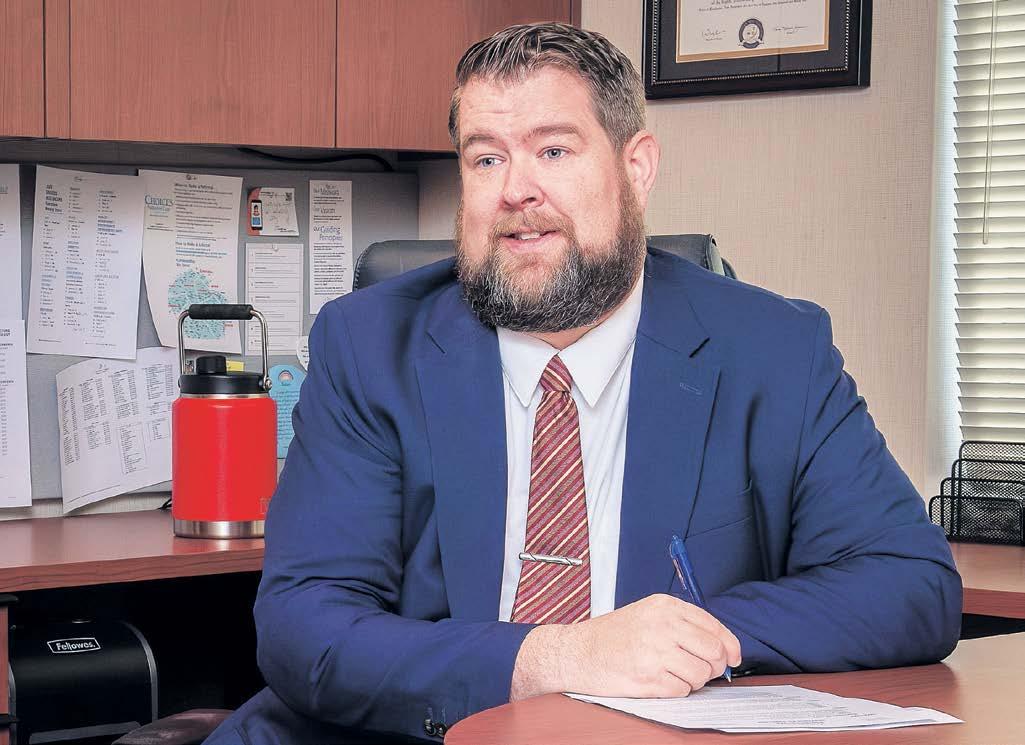
Choices Healthcare CEO Michael Link in his office on Good Drive in East Hempfield Township. LINK, page 12
Link Jones
Continued from 11
Choices now offers schedules outside of the traditional five eighthour days per week. For example, nurses can choose to work three 12hour shifts or four 10-hour shifts per week. Also, Choices is experimenting with gig-economy-like solutions to fill gaps in needs throughout the day.
Link says the organization is also testing AI to help manage documentation and other burdensome administrative tasks “so that the clinician can be back out in front spending time with the patient and family.” Route optimization technology is also in the works so inhome care clinicians can spend less time on the road.
Despite all that’s changing in health care, Link wants patients,
their families and Choices Healthcare staff to feel the shift as little as possible, even as Medicare Advantage changes how hospice organizations function on the back end.
“We need to be able to be nimble and diligent, (but) this is all behindthe-scenes, inside baseball stuff.”
What’s not so inside baseball is forthcoming community-facing innovations like a specialized dementia program and expanded veteran support. Link hopes to continue filling gaps in the community without straying from the mission of supporting those navigating serious illness.
“He is able to balance the need for growth in a challenging health care environment and at the same time, never forgetting what is most important, the care of our patients and their families,” Eddowes says.
Continued from 10
that I wanted to go into maternal child health. And the only place in the nation at that time that had a job (opening) in maternal child health was Delaware,” she says. “So I came to the other side of the country.”
She served as the Delaware Department of Public Health’s Director of Maternal and Child Health for almost a decade then worked as CEO of a community health center in Chester County for about seven years before starting this job.
of school are now always at school,” she says. “Because their asthma or their chronic illness is treated at the school-based health center.”
Her overall hopes for Lancaster County include continued investment in preventative services.
“We have amazing health systems here,” she says. “I’ve never lived in a community with more wonderful hospitals per square foot.”
But not everyone needs them. More work needs to be done to connect residents with primary care, she says.
Jones resigned last year from the Lancaster County Health Advisory Council more than six months before the conclusion of her term and declined comment on the reason. Jones has advocated for a public health department. Her departure from the council came months after she had asked at a meeting for a measles discussion. A year later, Jones chooses her words deliberately when talking about her public involvement today.
“Decisions about government are not made by me,” she says, adding she’ll always offer perspective and data. “I respect the role of voters to elect folks who are in line with things that they care about.”
Among the things that have her attention are school-based health centers — a growing focus for Union.
“Like at Washington (Elementary). We’ve been told that the kiddos that usually were missing days and days
“As long as we have folks who are dying prematurely, or who are using the emergency room for conditions that could have been treated elsewhere, we have more to do,” she says.
Jones would also like to see a concerted effort to increase the percentage of children covered by health insurance. “Healthy children and healthy young people change communities,” she says.
Jones — a mother to two stepsons and a son — sought a job in Lancaster largely because of the latter. While studying to be an electrician at Thaddeus Stevens College, he told Jones he could see settling down in Lancaster.
“So, I was like, ‘Well, I need to get myself together and figure out how I can get there,’ ” she says. “And it worked out.”
Her son is now established with a job and a place in the city.
“Now that he’s going to stay?” she says. “It’s even more impetus for me to do everything I can to keep Lancaster strong and thriving.”
ENVIRONMENT
PAGE 14
An American goldfinch perches on a plant in the pollinator park at Kellys Run Nature Preserve in Holtwood. As president and CEO of Lancaster Conservancy, Fritz Schroeder oversees the management of over 8,000 acres of preserved land.
BLAINE SHAHAN | STAFF PHOTOGRAPHER
‘I PINCH MYSELF’
Lancaster Conservancy’s Fritz Schroeder turns love of outdoors into mission to protect county land
SARAH NICELL SNICELL@LNPNEWS.COM
If you ask Fritz Schroeder what he likes to do when he’s not outdoors, he won’t know what to say.
“I don’t think I have a good answer to that. Can I think on that?” he says during a January interview. “What do I do when I’m not outdoors?”
He will instead tell you that he has worked with the Lancaster Conservancy for about 15 years — he doesn’t count anymore — and as the nonprofit’s president since 2023. He will tell you that he is a fifthgeneration and lifelong resident of Lancaster County. He will tell you that his parents bought a farm and started a tree nursery in Manor Township in 1979. His wife runs the nursery full time now, and Schroeder still handles an assortment of chores there on evenings and weekends, just trying to get his hands dirty. He will tell you that kids today don’t spend nearly enough time outside, that they haven’t turned over leaves to dig for insects or macroinvertebrates or dangled their feet in a running stream.
Schroeder says he never saw himself becoming the CEO of an organization, despite serving in several leadership roles at the conservancy since 2012 and founding ongoing initiatives, including Lancaster Water Week.
“I pinch myself those days, when I get to work with this great team,” Schroeder says. “There’s ups and downs and challenges with every single job, and this one has many, but it’s nice to be able to go home believing in what you do.”
Today, Lancaster Conservancy manages 50 nature preserves and 70 conservation easements (agreements in which property owners
keep ownership but give up their right to develop), more than 8,000 acres total, in Lancaster and York counties. The preserves are open to the public for free every day of the year.
SCHROEDER, page 15
FRITZ SCHROEDER
n Age: 53.
n From: Hamilton Park in Lancaster Township.
n Job title: President and CEO of Lancaster Conservancy.
n What he does in his free time: Schroeder leads the conservancy and assists at his family tree nursery, Schroeder Gardens, in Manor Township. He spends a lot of time outside.
CHRIS KNIGHT | STAFF PHOTOGRAPHER
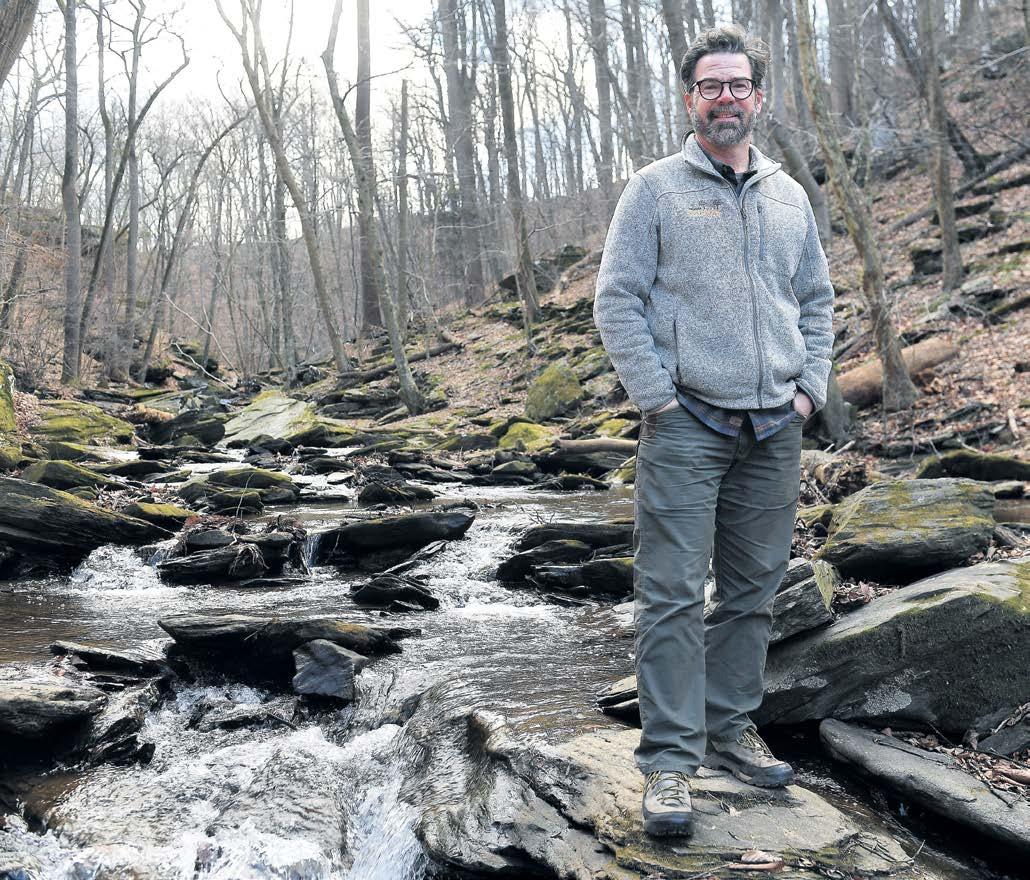
Fritz Schroeder, president and CEO of Lancaster Conservancy, stands on rocks at Climbers Run Nature Preserve in Martic Township.
Schroeder
Successes and barriers to a thriving environment
During Schroeder’s tenure at the Lancaster Conservancy, the nonprofit has acquired thousands of acres of forested land and streams along the Susquehanna River. Schroeder says the process for preserving land hasn’t changed, but strategies for overseeing that land have improved over time.
“For years and years, the organization has protected land, but we didn’t know how we were going to manage it long term,” Schroeder says.
Brandon Tennis, the conservancy’s land stewardship director, started out as “a staff of one” in 2016, back when Schroeder was the urban greening director. Now, the land stewardship team, which helps manage the conservancy’s acquired land, has about 11 people, Schroeder says.
Plus, Lancaster Conservancy has expanded from a countywide conservation organization to a regional one. The conservancy acquired its first parcels of land in York County in 2010 and has since expanded its land protection efforts on the other side of the river to include 12 nature preserves and more than 3,000 acres of land. Schroeder says he plans to continue to collaborate with environmental organizations in York.
Dan Ardia, a biology professor at Franklin & Marshall College and a Lancaster Conservancy board member, met Schroeder around 2018 when Ardia was applying for a grant to research wildlife along the Conestoga River. Ardia says Schroeder’s tolerance for risk has paid off, including in the push to acquire Eagle View Nature Preserve in October.
“When we normally acquire land, it may take several years,” Schroeder says. “But that was a beautiful 180acre parcel in Chanceford Township, York County, that was listed publicly.
We had to turn around the acquisition within four months.”
Schroeder says the conservancy competed with a person who pitched clearcutting the 180 acres instead, but his team managed to convince the sellers that the conservancy was the best option.
Ardia credits Schroeder’s work on projects like Eagle View for the conservancy’s high staff retention rates.
“He makes them feel like part of the larger whole,” Ardia says. “Most nonprofits have a lot of turnover. The conservancy is rare.”
Schroeder has also advanced collaborations with the county’s tourism and economic organizations, including Discover Lancaster and EDC Lancaster County, the county’s primary economic development agency, says EDC president Ezra Rothman.
By hosting workplace events that encourage employees to get outdoors, the conservancy is not only furthering its own mission but also that of the other organizations — promoting Lancaster County as a great place to live and work, Rothman says.
Outdoor recreation is a $19 billion industry statewide, according to a 2025 release from Pennsylvania Gov. Josh Shapiro’s office. Although people might not expect a business development leader and conservationist to get along, Rothman says EDC and the conservancy don’t compete for land.
“The more property they own and steward in the county, the better we are from an economic perspective because it increases the quality of life here,” Rothman says.
Hopes for the future
Despite his successes, Schroeder says the biggest barrier to protecting land in Lancaster County is a lack of funding. Property owners looking to sell their land, prime for nature preserves and outdoor recreation, often demand market rate, he says.
“We’re having to compete in an escalating market where property values and the cost per acre are only going up,” Schroeder says. “That’s the urgency that we feel. Once that property is purchased and developed,
you’re not getting it back.”
But Schroeder still has many hopes for the future. He says he wants to partner with more conservation organizations and elected officials at the municipal, county and state levels to build new land protection strategies and funding models. He says 1,600 miles of streams and rivers could see dedicated investments in the next 50 years to secure clean water across the county.
As for the next five years, Schroeder says he hopes to protect another 2,500 acres between Lancaster County and York County along the Susquehanna River, which will require strength in fundraising and in the willingness of property owners to sell their land to the conservancy.
And for those looking to get involved, there’s always an opportunity to volunteer. Or, Schroeder says, just go outside.
“I’d just encourage people to get out and take a walk in nature, walk the Enola, walk Northwest River Trail, go out to the conservancy’s Kellys Run or Clark Nature Preserve,” he says. “Get out on a trail and explore.”
The Clark Nature Preserve in Martic Township has an accessible trail for those with mobility issues.
PURSUE
Celebrating the journeyoflife, Moravian Manor Communities offers abundant opportunities to pursuewhatmatters to you …froma fulfilling career to amaintenance-free lifestyle or personalizedsupportand care.
ACareer with Purpose!
With aculture of opportunity,werecognize andrewardteammembers for their hard work. Some of our employees have been with us for 20+ years! Join our team at www.moravianmanorcommunities.org/careers.
AChoice of Residential Homes &Vibrant Community Life!
With two campuses in Lititz andfourhome styles, residentsare pursuing inspired lifestyles surrounded by first-class amenities andservices.
AHelping Hand or Continuing Care When Needed!
Within our supportive neighborhoods, residents benefit from awide rangeofprogramsthatfoster asense of communityand connectivity.
If you’researching for acelebrated communityinwhichtoworkorlive, we’d lovetosee you here!
COMMUNITY
18
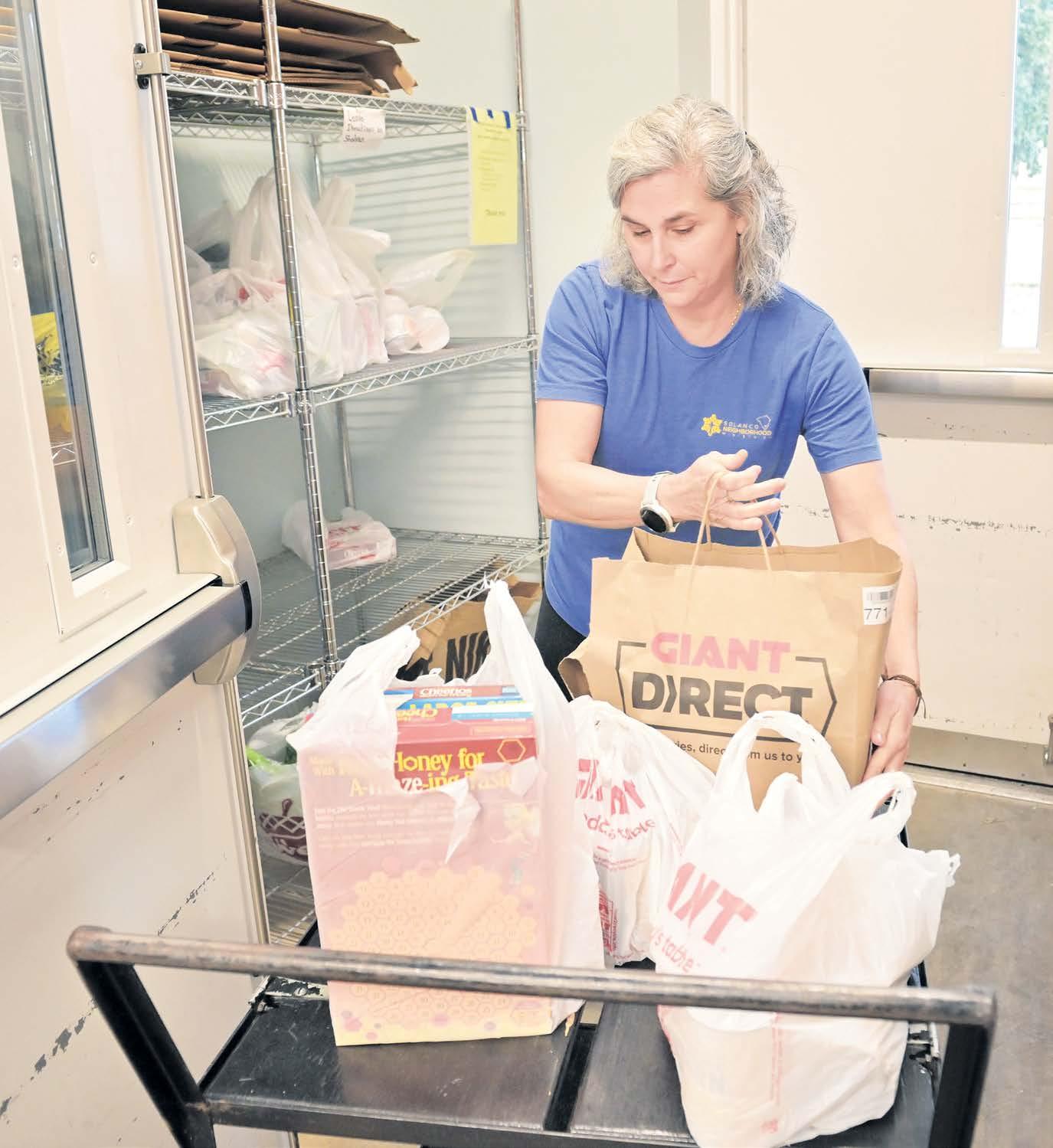
Teresa Dolan, executive director of Solanco Neighborhood Ministries in Quarryville, brings donations in from a dropoff area. Dolan has been meeting the increasing needs of her community for more than a decade.
SUZETTE WENGER | STAFF PHOTOGRAPHER SPONSORED
‘GOD BROUGHT ME HERE’
Teresa Dolan leads Solanco Neighborhood Ministries in meeting the needs of the southern end community
KARYL CARMIGNANI FOR LNP | LANCASTERONLINE
“Rural poverty is easy to miss,” says Teresa Dolan, executive director of the Solanco Neighborhood Ministries in Quarryville.
She should know, as she and her team have been providing an array of services to people in need across 14 zip codes.
“Our food bank is the biggest program,” Dolan says.
The Solanco Food Bank began in the basement of a church in 1990. At the suggestion of the volunteer coordinator, the Solanco Pastors Fellowship got together in 2011 to create an organization that would help meet the additional needs of southern end residents, Dolan says.
Solanco Neighborhood Ministries was formed in 2012.
Today, the organization is headquartered at the former Masonic Lodge, 14 S. Church St., Quarryville, and provides assistance with housing, heating, clothing and financial literacy.
As part of their holistic approach to meeting the needs of the community, one of five volunteer pastors (from different churches and denominations) holds open office hours on Wednesdays for people to unburden, chat and get support.
“All needs have increased and are more desperate than in the past,” Dolan says.
Thanksgiving holiday meal participation is up 31% over the past two years, she says; requests for emergency food has nearly doubled in the same time frame. Participation in the Second Saturday food distribution program is up from averaging around 80 families to over 100 families each month. They also serve approximately 60 individuals or families in varying degrees of homelessness, such as sleeping in a tent or car.
Dolan says every day is different, and every season is different. “It’s quite cyclical,” with colder months being extra busy due to the holidays and outdoor professions being laid off.
Fortunately, Dolan is genuinely happy to serve others. Her background includes working as a physician’s assistant at a health center and teaching in the health sciences. While researching a paper about a community organization, she came across Solanco Neighborhood Ministries and its food bank. The direc-
tor was going on maternity leave and not returning. After consideration, Dolan says it “felt like the right thing to do.”
“God brought me here,” she says. The organization has grown significantly under Dolan’s leadership, and continues to look for creative ways to help people with access to food, clothing, local and countywide resources, and other programs.
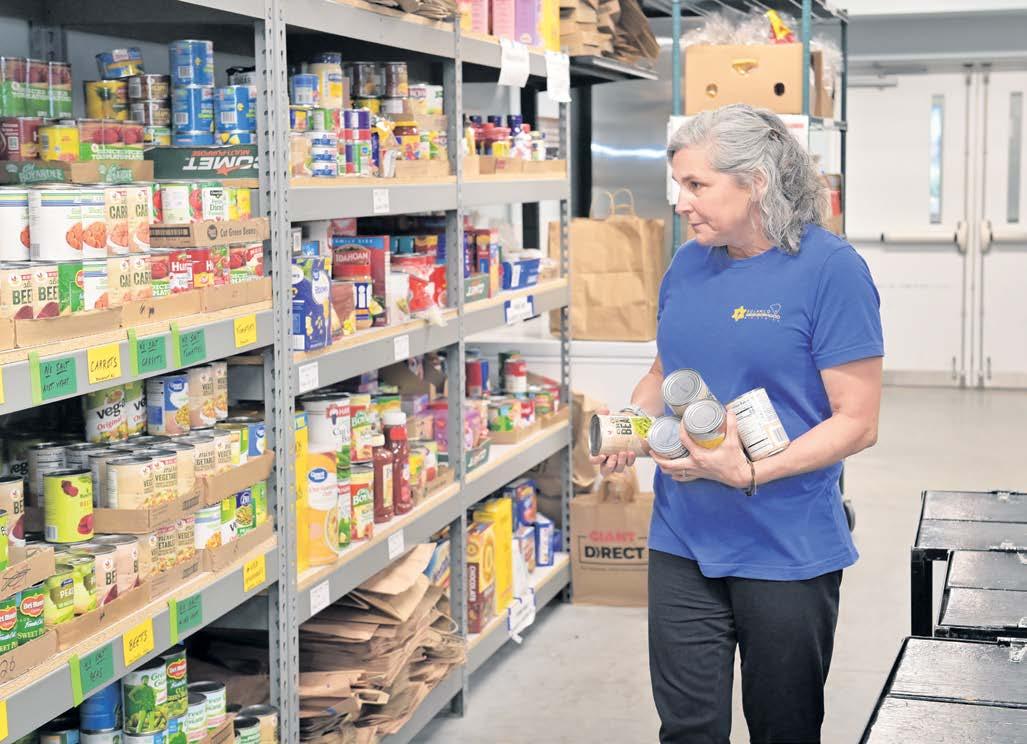
Solanco Neighborhood Ministries offers a choice pantry with healthy food items, weekend meals for stu-
TERESA DOLAN
n Age: 51.
n Job title: Executive director, Solanco Neighborhood Ministries for 12 years.
n Hometown: She grew up in Bucks County and has called Lancaster County home for the past 25 years.
n Responsibilities: She oversees the day-to-day operations of the ministry and meets with families to learn about their circumstances and goals. “Needs can pull me in different directions,” she says of her job. “Whoever is in front of me is the most important.”
SUZETTE WENGER | STAFF PHOTOGRAPHER
Teresa Dolan, executive director of Solanco Neighborhood Ministries, stocks the shelves of the food bank in Quarryville.
DOLAN, page 19
Dolan
dents and a self-serve lobby with weekly fresh, perishable foods. They even provide birthday bags with cake mix, icing, plates and candles.
A food locker out front allows clients to access food after hours with a code, Dolan says. Recently, they expanded food pantry services to Solanco High School, for kids to take food home.
While food is obviously important, Dolan says the organization also provides “wraparound services” to meet the needs of the community.
“Food brings them to us, but we ask other questions to best meet their needs,” Dolan says.
Todd Capitao agrees. As the director of programming for the past three years, he says Dolan brings honesty and transparency to the whole process.
“She is almost always present and available, whether it’s a client, volunteer, donor or coworker,” Capitao says. “With her leadership you know she has your back — her character is on display; it’s not just words.”
Capitao says he enjoys working with Dolan.
“I get to come to work and she’s a big part of that,” he says.
Solanco Neighborhood Ministries is intentional with “inviting, connecting and engaging” clients, Dolan says, noting as an example that socially isolated people were invited to join a book studies group. They gather a couple of times a month to talk and share food. Dolan says it’s great to see them grow, thrive and become
friends.
Solanco Neighborhood Ministries has three full-time and four parttime employees, along with 154 active volunteers who make things happen. Whether someone needs help getting their GED, finding housing, work or whatever, they are there to help.
“If we can’t help you, we often know someone who can,” Dolan says.
Dolan is all about relationships and partnerships; she continues to look for creative housing solutions on the southern end. The organization is reaching out to churches with land where they could create housing or safe places for people who live in their vehicles.
Half of those dealing with housing insecurity are over the age of 60, Dolan says, “with some income, just not significant income.” That inspired an idea for a single-dwelling housing community for the senior population, she says. It is a work in progress.
Dolan says she’d also like to expand educational programs such as financial literacy. And this spring they plan to start a mobile outreach, with a vehicle outfitted as an office to better reach folks on the southern end who may not be able to come to them, she says.
“We are primarily funded through donations from individuals, churches and businesses,” Dolan says. “About 5% of our income comes from grants.”
To help, visit solanconeighborhoodministries.org/donate, where you can also view the list of food bank needs. Food dropoffs can be made at 14 S. Church St., Quarryville.
SHE IS ALMOST ALWAYS PRESENT AND AVAILABLE, WHETHER IT’S A CLIENT, VOLUNTEER, DONOR OR COWORKER. WITH HER LEADERSHIP YOU KNOW SHE HAS YOUR BACK — HER CHARACTER IS ON DISPLAY; IT’S NOT JUST WORDS.
Experience the energ yof Lancaster Cit ywith Steeple View Loftsand Landis Placeon King,55+ rental communitiesoffering carefree, walkable living in thehear tof downtown.
Enjoymodernamenities, awelcoming atmosphere, and effor tless access to awardwinning restaurants,local shops,cultural attractions, and entertainment—alljust steps from your door.
—Todd Capitao, director of programming, Solanco Neighborhood Ministries
‘ALL THE INGREDIENTS ARE HERE’
With nonprofit Always Lancaster, David Greene looks to forge a new model for local journalism
CHAD UMBLE
CUMBLE@LNPNEWS.COM
David Greene hasn’t lived in Lancaster County for more than 30 years. But his experience of growing up and going to high school here inspired him to return to help the newspaper — and community — he remembers so fondly.
“My mom and I felt very quickly welcomed here. I never took that for granted. It really meant something,” says Greene, 49, who was in junior high school when he moved to Lancaster with his mom when she got a job as a psychology professor at Franklin & Marshall College.
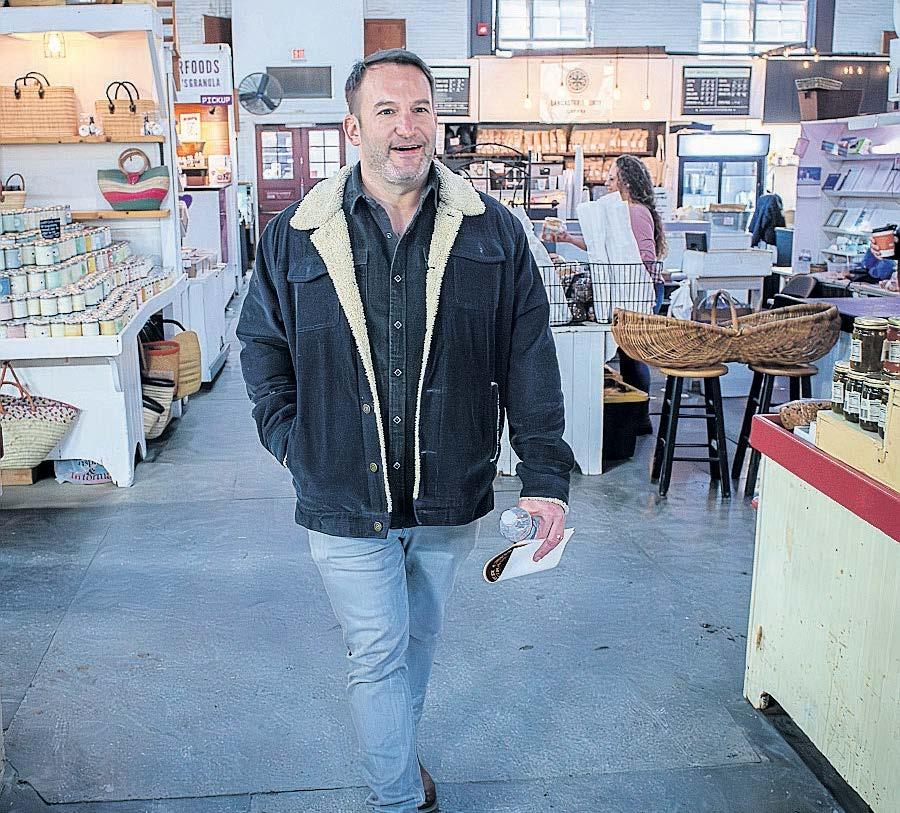
Greene lives in Los Angeles now but has been visiting Lancaster more than usual lately. When he’s here, he’s been leading an effort to forge a new, financially sustainable model for LNP | LancasterOnline. Greene is interim publisher and board chair of the nonprofit that now owns the media company where he once interned as a college student.
In January, his nonprofit, Always Lancaster, was gifted LNP | LancasterOnline by Pennon, the WITF parent company that itself was given the newspaper in 2023 by the Steinman family, its longtime owners.
As a nonprofit, Always Lancaster will solicit donations to complement revenue from subscribers and advertisers, creating what Greene describes as a “three-legged stool” that can support what is otherwise a broken business model for newspapers.
Greene, who maintained some strong ties to Lancaster, joined LNP’s board of directors when it was given to WITF by the Steinmans. He also became a board member then of the Steinman Institute for Civic Engagement, the Steinman-funded group that was supporting the new venture.
But within a couple of years,
Greene saw early optimism of that partnership giving way to some grim financial reality.
“Suddenly, we started talking about survival,” says Greene, recalling that options included a radical restructuring with severe job losses, bankruptcy or a sale of LNP. “That’s when we started to talk and see if there was another way.”
In his new role leading that other GREENE, page 21
DAVID GREENE
n Age: 49.
n Job title: Interim publisher and board chair of Always Lancaster, nonprofit owner of LNP | LancasterOnline.
n Residence: Los Angeles.
n Family: Wife, Rose Previte, who owns three Washington, D.C.-area restaurants and a wine company.
n Interesting fact: Greene’s first foray into broadcasting was at McCaskey High School with the “Bob, Dave & Lon Show,” where he teamed up with friends Lon Farenwald and Bobby Hopkins. “It was ridiculous and awesome,” Greene says. “We tried to turn it into a news show, but it was literally just morning announcements.”
David Greene, interim publisher and board chair of the nonprofit that owns LNP | LancasterOnline, says he wants the community to feel like it has a stake in its local newspaper.
Greene
way, Greene is pitching the idea that a community that feels like it has a stake in a local newspaper will support it with donations.
Greene says he is convinced that Lancaster’s history of supporting philanthropic causes coupled with the legacy of an independent newspaper creates a recipe for success.
“It just felt like all the ingredients are here,” Greene says.
A sort of homecoming
For Greene, the success of a community newspaper in Lancaster is personal.
After graduating from McCaskey High School, Greene attended Harvard University before beginning a journalism career that included working as a White House correspondent and spending nearly a decade as co-host of NPR’s “Morning Edition.”
While his journalism career has given him a national profile, Greene still counts his experiences in Lancaster — and especially at McCaskey — as his most formative.
“I had such an amazing experience at McCaskey,” Greene says. “I really think that school built me into who I am as a journalist and, in many ways, as a person.”
In addition to the diversity of the student body, Greene says he valued the extracurriculars, particularly his work on the school newspaper, The Vidette, where he was the editor-inchief during his senior year.
Greene says his most memorable Vidette story was prompted by the introduction of required student ID cards. Students who were found without their ID cards could face discipline, but some students grumbled that the enforcement wasn’t uniform, with teachers overlooking infractions from those considered “good” students.
“We decided to do a blowout story
about how the ID policy was being enforced unfairly,” Greene says.
And when the story came out, it had an impact.
“I was looking down the halls and everyone at their lockers was holding the Vidette and reading it,” he says.
“It just felt like, ‘Wow,’ this is what journalism can be. We can give voice to people who are concerned about people in power.’ ”
But students weren’t the only ones reading and Greene says he soon found himself talking to McCaskey Principal Carlos Lopez in his office.
“I felt what I thought was his frustration that we had criticized the way teachers and the administration were handling things,” Greene says. “But my message to him was, ‘If you want me to learn journalism here at McCaskey, this is what it is all about.’ He was great. And he totally got that.”
In an interview, Lopez says he didn’t recall that specific conversation with Greene but remembered that the ID card policy was controversial with some students.
“I’m sure that we tried to as a staff open up the doors for kids to express themselves,” says Lopez, who became the first Latino principal at McCaskey when he was hired in 1993.
“In terms of David Greene, I recall him writing a story about how my hiring as the principal at McCaskey high school was not based on race, but my competence,” says Lopez, who now lives in Allentown.
Overall, Lopez says he remembers Greene as “having an independent streak” but a respect for adults that illustrated a maturity that people responded to.
Lopez says he was aware — and proud — of Greene’s accomplishments in journalism. When told about Greene’s current effort with LNP | LancasterOnline, Lopez responded eagerly, saying he wants to know how to contact his former student.
“Let David know that we need the information so that we can make a donation to his nonprofit organization,” Lopez says.
Em race Embrace bra e
BLAINE SHAHAN | STAFF PHOTOGRAPHER
David Greene walks through Central Market in Lancaster city.
IMPROVING QUALITY OF LIFE
How Art Mann and the troubleshooting Hourglass Foundation look to set the county up for success
MICHAEL LONG MLONG@LNPNEWS.COM
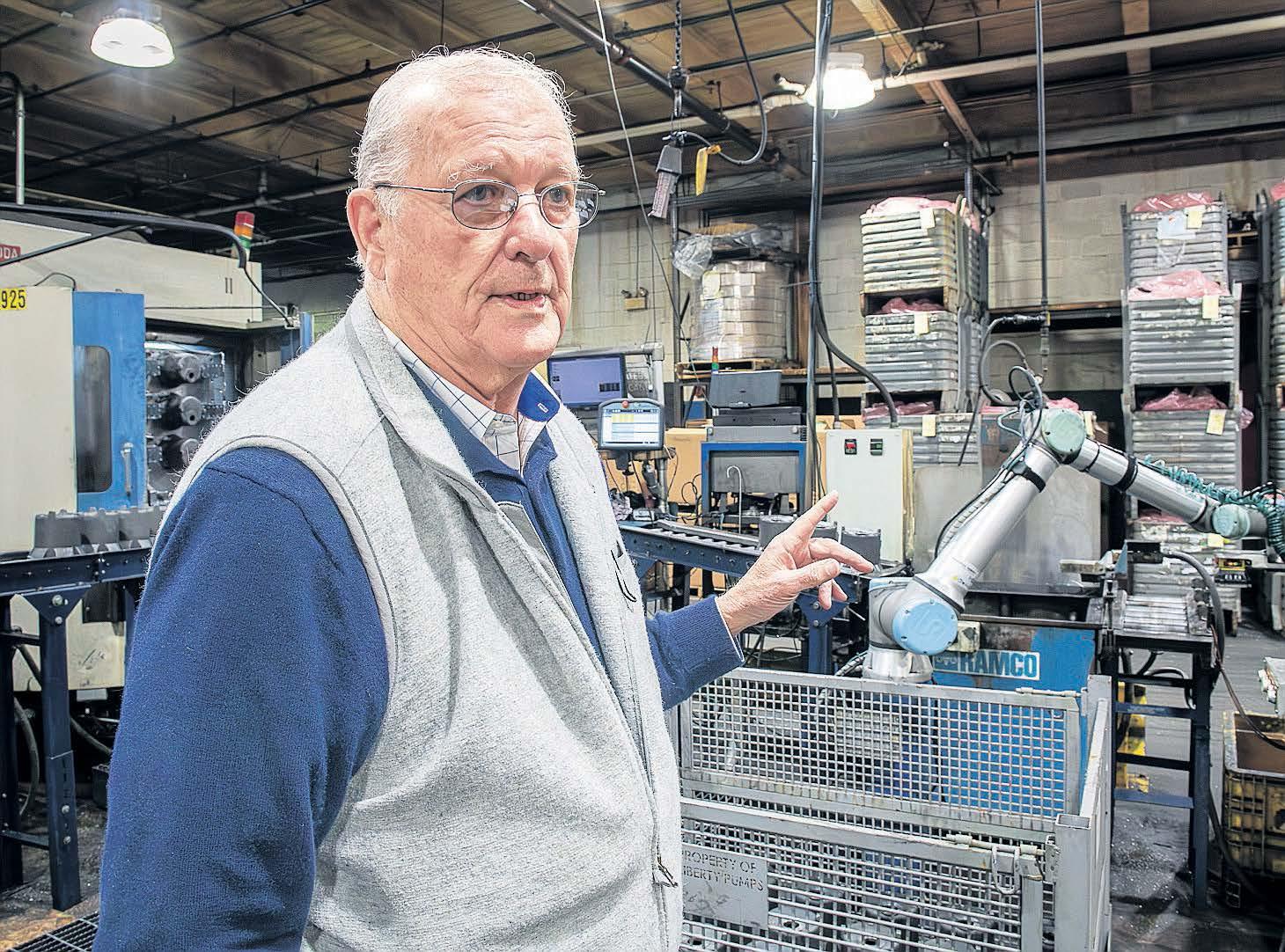
Art Mann Sr., a career businessman and captain of local industry, has amassed a lifetime catalog of engaging anecdotes.
If you were to get him alone, perhaps in a quiet corner of John Wright Restaurant, the popular Wrightsville eatery he co-owns, the 85-year-old Mann could fill your ear with stories.
Over a cup of ham and green bean soup, he might trace his Lancaster County lineage back to its 1740s roots, recount his formative education (he learned more in prep school at the Andover Academy, as he tells it, than he did at Yale) or regale you with tales of his Navy days and his tour with the 7th Fleet during the Vietnam War.
He does a mean impression of former Navy Admiral Hyman Rickover.
As a young naval officer, Mann fell in love with the daughter of a Wrightsville foundryman (his wife, Bess), then fell in love with foundry work, which is how today he comes to be the chairman of Donsco, a cast iron foundry that employs hundreds.
Give him the space, and Mann might tell you all about it. He’s a gifted conversationalist. In fact, his ability to start conversations may be Mann’s greatest gift to Lancaster County.
Thirty years ago, the county found itself in the national spotlight as one of America’s most endangered historic places. Development pressure was threatening the agrarian way of life that is so intimately bound to the county’s Anabaptist heritage, and people were noticing.
Like many a Lancaster County native, Mann possesses a deep love and sense of loyalty for this place, and he started a conversation with a few others in his circle — folks who could be characterized broadly as entre-
preneurs, self-starters and people of influence — about how to preserve the county’s farmland.
What began as conversations around Mann’s kitchen table quickly evolved into the Hourglass Foundation, and those troubleshooting discussions, still held in Mann’s kitchen on Friday mornings, have broadened to target core quality-of-life issues like public education, environmental stewardship and the vitality of Lancaster city.
Hourglass isn’t the sort of foundation that infuses local projects with
funding; this foundation invests intellectual capital.
“In the Hourglass, we look at how to create the conditions for success,” says Mann, who chairs the foundation, which has been working to inform and educate the county’s government officials since the late 1990s. “We can give you as much information as we can, but the judgment is yours to make. ... We’re not doing this from an ideological point of view.”
The foundation’s influence has takMANN, page 23
ART MANN
n Age: 85.
n Education: Yale University, Class of 1962.
n Family: Married his wife, Mary Elizabeth “Bess” Mann, in 1964. They have three sons, 12 grandchildren and welcomed their first greatgrandchild in September.
n Professional: Chairman of Donsco Inc., which has foundries in Wrightsville and Mount Joy, and chairman of the nonprofit Hourglass Foundation.
BLAINE SHAHAN | STAFF PHOTOGRAPHER
Art Mann shows a machining setup with a robotic arm in the machine shop for Donsco Inc., the cast iron foundry where he serves as chairman. Mann is also chairman of the nonprofit Hourglass Foundation.
Mann
en the form of surveys, studies and, most notably, regular public forums that address key issues of the day.
For instance, at a public forum in downtown Lancaster earlier this month, the foundation pressed Lancaster County’s three commissioners on their budget and tax strategies, giving each a chance to explain, in the light of a recent 10% increase in the county property tax, what contingencies they are planning for to mitigate the need for further increases and ensure the county’s long-term fiscal stability.
Today the topic is the county’s straining budget; tomorrow it could be how artificial intelligence will affect the education and business sectors. The point, Mann says, is to identify challenges when they’re small and manageable.
“What we’ve tried to do is look ahead, to drink upstream of the herd,” he says. “What do we see coming?”
Three decades ago, the foundation saw building pressure encroaching on farmland and it started a conversation. Today, Lancaster County leads the nation in conservation easements, having preserved more than 1,600 farms covering 124,000 acres through the concerted efforts of state, county and local governments and the efforts of nonprofits
like Lancaster Farmland Trust.
These conversations, Mann says, are only as powerful as the people who have the will to act on them, noting specifically the more than 3,000 nonprofits at work in the county.
“Lancaster County has that Amish and Mennonite heritage of, ‘We don’t want government. We’ll do it ourselves,’ ” Mann says. “So if there’s a social problem, there’s a 501(c)(3) handling it already.”
He points to outfits like Mennonite Central Committee and its core ethic of helping people in catastrophic times, and he points to individuals like S. Dale High, who subscribed to what Mann referred to as the “Hershey model” in structuring his manufacturing, construction and real estate businesses to invest profits back into the community.
High is an apt example of how people with resources and initiative are working to solve the county’s biggest problems.
With members of the county workforce struggling to find affordable places to live, a nonprofit funded by the High Foundation recently spent millions to buy a 60-unit apartment complex in Ephrata Township to secure affordable housing for low-income families who don’t qualify for traditional subsidized housing.
“If you look to the future,” Mann says, “as long as that entrepreneurial ethos is there, and we’re doing the right thing … and fixing problems on our own, it’s a great future.”
THEKNOW-HOWYOU NEED FORTHE CAREER YOUWANT
As one of the most innovative technicalschools in Pennsylvania, the Lancaster County Career& TechnologyCenter teaches studentswhat textbookscan’t.
With short-term, certificate, and specialized Associate Degree programs, the Lancaster County CTCoffers YOU skills that you canput to work right away! Our industry-experienced instructors work with studentstoensurethey areona path to success following course completion.
We offerprograms exclusivelyfor adult learners in:
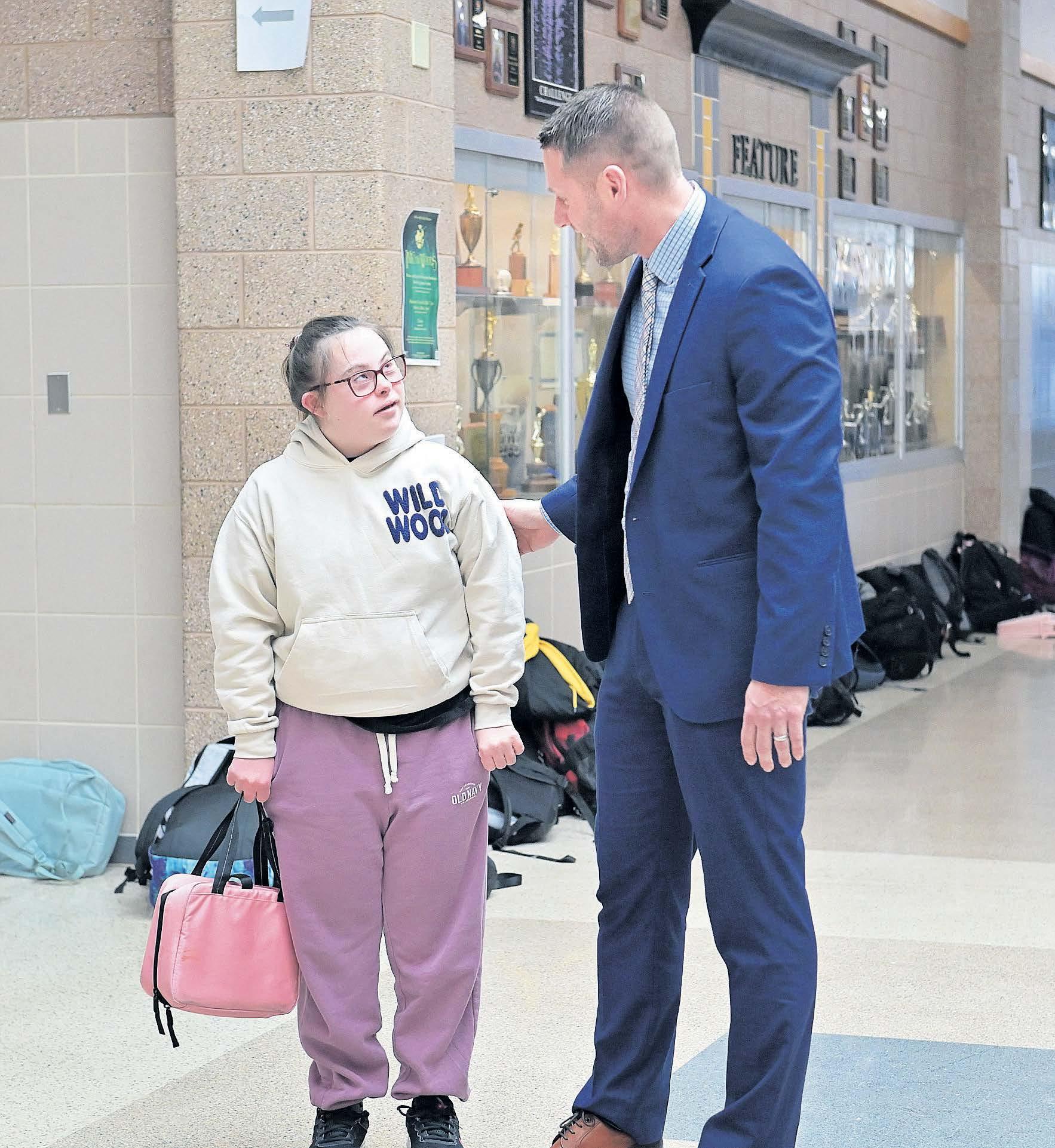
Zac Bauermaster chats with Solanco High School student Ella Caldwell, 14, daughter of Gina and Brian Caldwell, Little Britain. Bauermaster, a Solanco graduate, recently became principal of the high school after serving as principal of Providence Elemen-
SUZETTE WENGER | STAFF PHOTOGRAPHER SPONSORED
MAKING CONNECTIONS
Lauren Miller shows students career paths that can answer the workforce needs of local businesses
GAYLE JOHNSON FOR LNP | LANCASTERONLINE
Lauren Miller has this message for Lancaster County high school students interested in science, technology, engineering and mathematics: Don’t leave town after graduation. Local technology companies have cool jobs and training opportunities that high school students can start learning about now.
“The challenge that we still see is that students aren’t aware of all the career options in Lancaster,” Miller says. “So often we build our talent here, but then they leave because they think there’s better opportunities elsewhere. I think a challenge that continues is just making sure that our learning is relevant.”
Miller seems to occupy a unique position to make that happen.
First, she works as associate director for educational partnerships for Lancaster-Lebanon Intermediate Unit 13.
“The work I do in curriculum and instruction at IU13 is rooted in how do we leverage community partners? How do we make it relevant?” Miller asks.
The 44-year-old also serves as executive director of the Lancaster County STEM Alliance, a nonprofit that promotes interest in science, technology, engineering and math education and jobs. A contract between IU13 and the Steinman Foundation, another nonprofit, allows Miller to travel between two Lancaster offices with the same mission.
“I’m really working to connect and leverage community resources to make our education system better,” she explains.
Miller gets to work early — probably between 7:30 and 8 a.m., depending on whether she goes to the STEM Alliance office on King Street or to her IU13 office about 2.5 miles away
on New Holland Avenue.
“My work at the STEM Alliance and my work at IU13 really dovetails nicely,” she says.
“I would say like a typical day in my life is I’m out working with community partners, helping them see how they can work together,” Miller says.
For example, she might meet with a company looking to adopt a Manheim Township middle school so workers can visit and explain what they do, or talk to Garden Spot High School administrators about allowing teachers to follow technology workers at a local business for a few days so educators can better prepare
lessons.
In addition, she might help schedule a student field trip to a printing plant so pupils can use real-life math skills to figure out how many supplies to order.
“Getting students in high school out into careers is life-changing,” Miller notes. “And it not only builds their skills, but it keeps them in Lancaster because they have awareness of companies.”
Teachers also benefit, Miller says.
“Through the STEM Alliance, we immerse teachers in these career
LAUREN MILLER
n Age: 44.
n Job title: Associate director for educational partnerships, LancasterLebanon IU13; executive director, Lancaster County STEM Alliance.
n Hometown: Second generation Lancastrian educator who graduated from Penn Manor High School in 1999.
n Residence: Lives in Manheim Township with her husband and 9-yearold stepdaughter.
n Education: Bachelor of science in secondary science education from Millersville University, master’s in science and astronomy from West Chester University, doctorate in education from Drexel University, superintendent’s letter of eligibility from California University of Pennsylvania.
MILLER, page 30
Lauren Miller participates in a brainstorming session with community partners for a STEM festival this summer.
BLAINE SHAHAN | STAFF PHOTOGRAPHER
‘GROUNDED IN GRATITUDE’
Pete
Gurt expands Milton Hershey School’s reach to serve young children in Lancaster County
ASHLEY STALNECKER ASTALNECKER@LNPNEWS.COM
Milton Hershey School President Pete Gurt has been involved with the school, as a student and employee, for most of his life.
Gurt graduated in 1985 from the Dauphin County private school, which serves students in pre-K through 12th grade at no cost to families. It was founded by chocolatier Milton Hershey and his wife, Catherine, in 1909.
In 2020, under Gurt’s leadership, Milton Hershey School initiated a plan to expand its reach to serve students from the age of 6 weeks to 5 years through six Catherine Hershey Schools for Early Learning centers at no cost to their families.
This year, one of those centers will open in Lancaster County, with two more to follow in 2027, bringing the chocolatier’s charitable legacy to the place where he first launched the Lancaster Caramel Co. and later lived with his wife.
Gurt, 58, recently answered several questions for LNP | LancasterOnline regarding his own legacy, the work behind the school’s expansion into early childhood education and the long-standing impact of education on the broader community.
The following answers have been edited for length and clarity.
How did you wind up as a student at Milton Hershey, and how did that experience shape your approach to this role?
I came to Milton Hershey School as a child following a major turning point in my life. When I was just 2 years old, my father passed away suddenly from a heart attack, leaving my mother to raise eight children on her own. A few years later, I followed my older brothers to Milton Hershey
School, and it truly became my second family.
That experience shaped everything about who I am and how I lead today. I saw firsthand how a stable, caring environment can change the trajectory of a child’s life. As president, I carry that responsibility with me every day. My approach is grounded in gratitude, purpose and a deep understanding of the impact this institution can have on students and families.
You’ve served in several roles at the Milton Hershey School, from
staff development liaison to now president. What initially led you to seek a career at Milton Hershey School? Has it always been your intention to pursue a career in education?
My connection to Milton Hershey School never really ended after I graduated. I always felt a strong sense of responsibility to give back to the place that gave me so much.
Over time, as I served in various leadership roles and worked closely with students, educators and houseparents, I realized that education
PETE GURT
n Age: 58.
n Job title: President of Milton Hershey School and Catherine Hershey Schools for Early Learning.
n Responsibilities: Strategic leadership, collaboration, engaging community partners, planning for the future, maintaining founders’ core vision.
n Hometown: Northeast Philadelphia.
n Current residence: Lives in the Homestead building on the Milton Hershey School campus.
Pete Gurt is a Milton Hershey School graduate and now serves as the school’s president.
GURT, page 39
Discover Montessori Academy of Lancaster
BenefitsofMontessori PeaceEducation
Montessori educationprovidesa unique approach that encourages hands- on learning through exploration, creativity, andindependence, allowing childrentothriveina suppor tive environmentthat respects theirindividualneedsand interests.
your childtoday andwitness theirgrowth in anur turing Montessori environmentthat inspires explorationand independentthinking.
Joinusineducating youngminds,developing independence,and fosteringa love forlearning. Visitour websitewww.montlanc.comtoschedule atourofour school.
info@montlanc.com www.montlanc.com
‘NOBODY BETTER FOR THIS JOB’
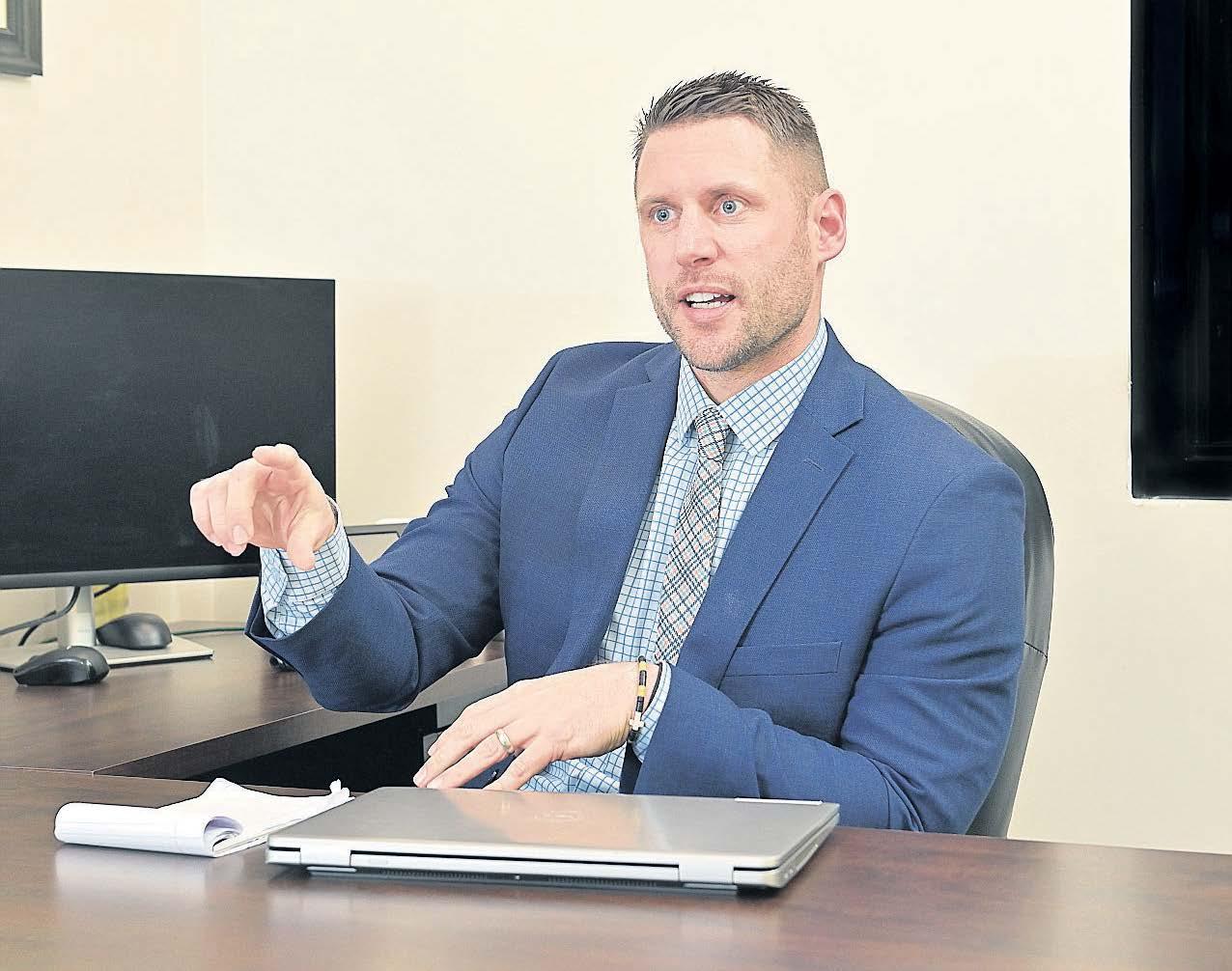
From elementary to high school principal, Zac Bauermaster builds lifelong relationships in his hometown
ASHLEY STALNECKER ASTALNECKER@LNPNEWS.COM
Solanco School District has been part of Zac Bauermaster’s life, in one way or another, for, well, his entire life.
Bauermaster was raised in Quarryville Borough and attended Providence Elementary School, a place he returned to 30 years later to become principal. He met Carly Sheridan at Solanco High School and graduated from the school in 2005. Sheridan and Bauermaster were married in 2010.
In the 2026-27 school year, his daughter, Olivia, will start classes at Solanco High School. Bauermaster, who assumed the role of Solanco High School principal Jan. 26, playfully jokes that he will be her homecoming date.
“There’s something special about being in your hometown and wanting people to do well, wanting to represent the town well and also really wanting each and every kid and family to succeed,” he says.
Bauermaster, 39, fills the post that was held by his longtime friend, Scott Long, who became the Lancaster County Career and Technology Center’s executive director the same day.
Superintendent Brian Bliss called the transition a “pretty strong handoff.”
“They’re both leaders of very high quality in terms of ethics and belief in children and that’s essential,” Bliss said.
Highlighting Solanco
Bauermaster’s leadership and positive attitude, especially around his students, has drawn national attention.
People magazine and other national media organizations ran pieces
or segments on the principal after a video of him high-fiving, hugging and fist-bumping students went viral on Instagram.
“One of my goals as a principal is… just to be an ambassador, to represent, and part of my goal is… how can I highlight Solanco,” Bauermaster says. “I’m really proud to have been a graduate of Solanco and be a teacher in Solanco and now have the opportunity to be a principal of the high school.”
Bauermaster’s education career started at Solanco High School where he taught as a social studies teacher for three years, following his graduation from Millersville University. He stayed in the district for another five years, teaching at Swift Middle School before taking his first administration job as a Manheim Central High School assistant principal.
After three years there, Bauermaster took a job at Manheim Central BAUERMASTER, page 30
ZAC BAUERMASTER
n Age: 39.
n Job title: Solanco High School principal.
n Responsibilities: Oversees academics, student services, athletics, arts, extracurricular activities and daily operations, while leading faculty and staff and partnering with families and the community.
n Hometown: Quarryville.
n Current residence: Quarryville.
SUZETTE WENGER | STAFF PHOTOGRAPHER
Zac Bauermaster recently left his position as Providence Elementary School principal to take the helm at Solanco High School.
agree.
Miller Bauermaster
“I get the credit she probably deserves,” Bridgen says.
experiences, but then with my IU hat, I bring the teachers back together and we write lessons and we build curriculum based on that experience,” Miller says. “The two worlds really blend well.”
Miller also focuses on networking, attending as many business gatherings as she can.
“I feel like that’s my value and what the (alliance) does is help take really cool ideas that solve a challenge in our community and find the right partners and resources to make it happen,” she says.
Ask Miller to talk about her accomplishments, though, and she tries to change the subject to highlight what others have done.
She mentions guidance from The Steinman Foundation, a local, independent family foundation funded by the companies that make up Steinman Communications. LNP | LancasterOnline, once part of Steinman Communications, is now owned by the nonprofit LNP Media Group.
The Steinman Foundation “has been the sole financial backer of this STEM ecosystem for the last 10 years,” Miller says, explaining that the term ecosystem encompasses nonprofits, schools, community partners and businesses who have joined to increase STEM awareness.
“The sign of a good leader is someone who goes out of their way to recognize their team,” says Shane Zimmerman, who chairs the alliance’s advisory board and serves as CEO of the Steinman Foundation.
“She really likes to shine her light on people and collaborators and not shine the light on herself,” Zimmerman says after praising Miller’s ability to connect with business leaders and educators.
John Bridgen, president of Lititzbased Precision Cobotics, would
For instance, Miller helped Bridgen create and secure funding for Robotic WorX, a partnership between students from Lancaster County high schools and Millersville University who work on reallife manufacturing problems instead of cases covered in textbooks.
Precision Cobotics solves automation problems for clients, and Robotic WorX participants proved to one global automaker that a robotic arm would work in one phase of manufacturing after the company didn’t think it could use automation in that instance, Bridgen says, noting he can’t reveal the name of the car company.
“Lauren is amazing,” says Jill Hackman, who coordinates career pathways for Garden Spot High School. “She wants to make a positive difference in STEM education.”
Through Miller, Hackman accompanies teachers on what she calls “externships,” allowing educators to see what happens in a technology company.
“This allows educators to learn about different industries and careers we’re not familiar with,” she says.
Students also take field trips to technology firms. Hackman cites an example of a student who once wanted to work in construction but changed his mind. During a field trip, that student realized he didn’t want to wear a helmet, goggles, closed-toe shoes and heavy clothing required for that job and instead pursued another profession that allowed him to work with his hands.
“I’ve become a strong believer that we can’t (practice) good education without having community partners at the table,” Miller says. “Every organization in Lancaster has something to teach.”
Continued from 29
School District’s Doe Run Elementary School for a year before beginning his first principal job at Kissel Hill Elementary School in the Warwick School District for a year and a half.
In 2022, he learned there was an opening at Providence Elementary School. He applied and was offered the job, returning him to the district that’s been home since he was a kid.
Bauermaster says he never wanted to leave Solanco in the first place, but explains, “The opportunities in Manheim Central and Warwick allowed me to step out of the familiar and find my leadership voice. Those were “really important years for me and have helped shape me as a person and as a leader before I returned to Solanco.”
Investing in teachers and students
Bauermaster says all teachers are leaders because they have an influence on the people around them. He describes his transition into administrative roles as a switch away from connecting with students to walking “alongside the staff and the teachers.”
“I love that part of being able to invest in them, because we talk about students having gifts and abilities — so do the staff,” Bauermaster says. “My job as a principal and in that leadership role was to put the staff in a spot to maximize their gifts and abilities for the kids so the kids can use it.”
Part of maximizing teachers’ gifts, though, is ensuring they are taking care of themselves professionally and personally, Bauermaster says.
“More than ever, work comes home and home comes to work and there can be a culture of burnout. But I really want to… encourage people to take care of themselves, to take care of their families, invest in their homes and that’s going to have a really great domino effect,” Bauermas-
ter says.
And while he will miss the pick-meup that walking into a kindergarten classroom might offer or the childlike wonder in elementary students, Bauermaster says he finds excitement in engaging with students of all ages.
“Whether you’re shaking hands with someone on stage at graduation or you’re welcoming a family to the district for the first time in kindergarten, the work and education is all about people and connecting and relationships,” Bauermaster says. “That doesn’t change.”
At the high school level, he will not only be in the same building as his daughter, and eventually his younger children, but at the start of next school year he will be able to again serve as the principal for many students who were part of the first classes he led as principal at Providence Elementary School.
“That’s something familiar that’ll be there for me,” Bauermaster says. “I mean, that’s what it’s about — those lifelong relationships… it’s going to be great to see them continue to grow.”
Bauermaster will work alongside teachers that he had in class 20 years ago as well as teachers who were students graduating alongside him in 2005.
“I think there might be a moment where I might come up here by myself and just walk through the hallways,” Bauermaster said in January, before becoming high school principal. “I’ll probably be able to look at the classrooms and think about those teachers that poured into me and just what a neat opportunity that I have here.”
Long says he was relieved when Bauermaster told him he’d take that opportunity; “It was like a weight off my shoulders.”
Bauermaster “is dynamic, he will do very well here,” Long says. “He’s teacher-centered, student-centered; he’s empathetic; he’s compassionate; he’s hard-working; he’s intelligent; he’s collaborative. Like, there’s nobody better for this job than him.”
HOME
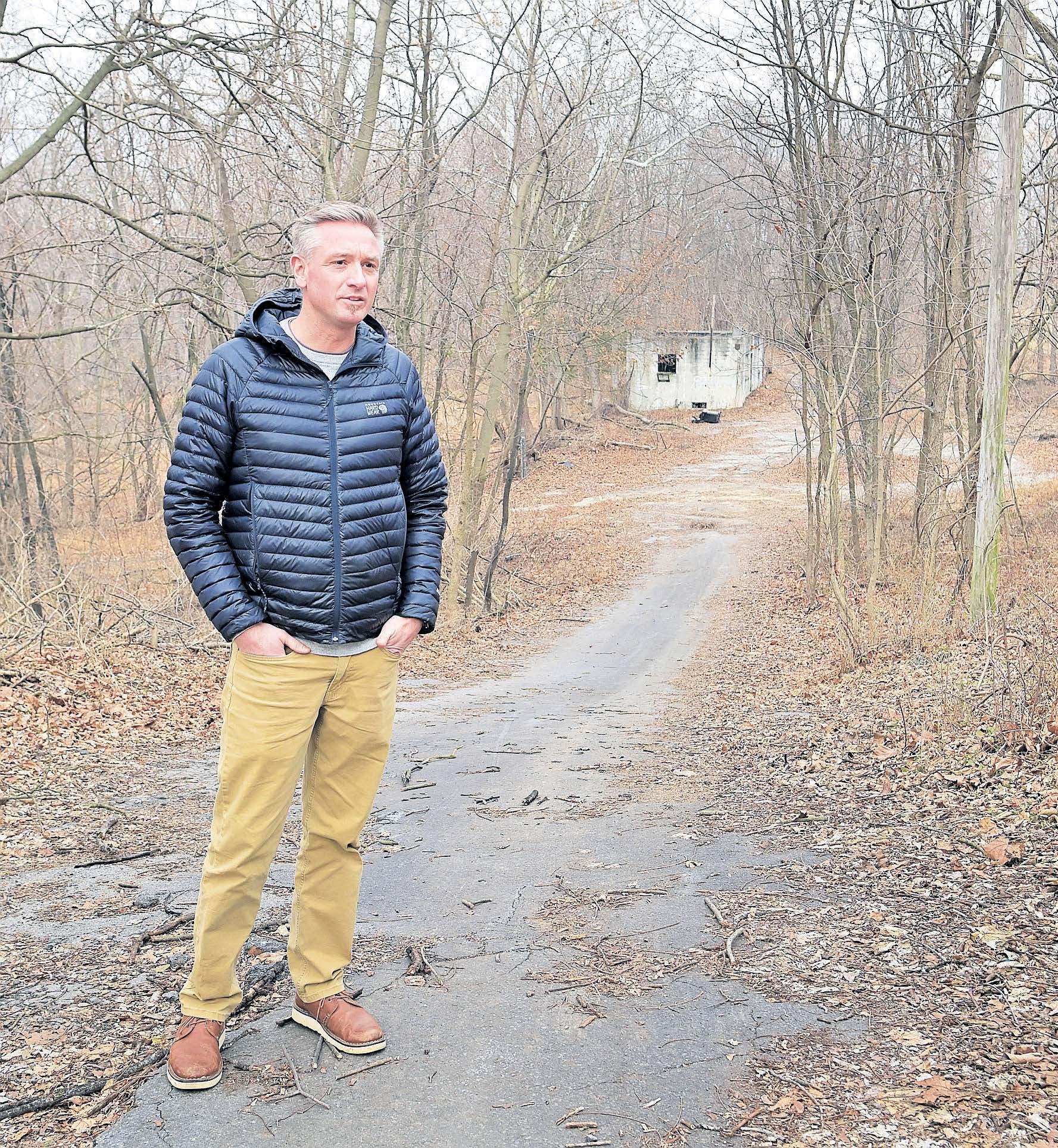
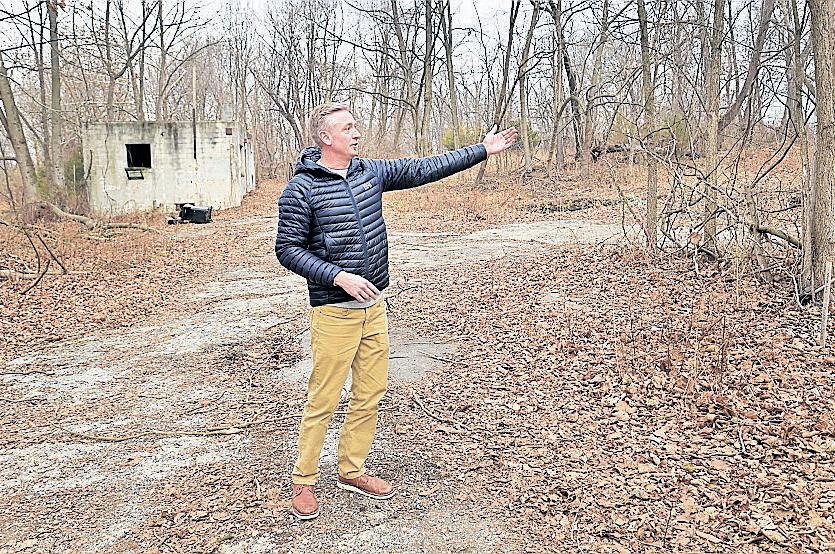
Joe Mugavero stands on the site of a former junkyard on Lancaster city’s Sunnyside peninsula where he hopes to build Sycamore Ridge, a $25 million, 75-unit housing development.
SUZETTE
‘A MAGICAL LITTLE GEM’
Developer and Lancaster city transplant Joe Mugavero hopes to write new chapter in Sunnyside’s history
REBECCA LOGAN FOR LNP | LANCASTERONLINE
Joe Mugavero was scouting anniversary staycation options when friends offered him and his wife a weekend at their family’s cottage in Sunnyside.
“I said, ‘What’s Sunnyside?’ ” Mugavero says.
Years later, he’s still seeking a complete answer. During that anniversary stay, Mugavero fell in love with Sunnyside — a sparsely populated Lancaster peninsula that’s cradled by the Conestoga River and carries a reputation of being long overlooked. He poured over old stories that newspapers published about Sunnyside. He learned from longtime residents about others that never saw print.
“Sunnyside is a little tragic. But also magic,” Mugavero says with a grin and a shrug, upon realizing he’d just channeled Jimmy Buffett. He’s fascinated by Sunnyside’s history and wants to write a chunk of its next chapter.
Mugavero and his business partner, Mark Peteritas, bought what was once a junkyard on Sunnyside. They hope to build there a $25 million, 79-unit housing development. Their plans were rejected by the Lancaster City Planning Commission in September because of an incomplete application. They’re working on a resubmission.
“We’ve been interfacing with the city staff and it’s going OK,” Mugavero says, as he walks the property in early January. “It could be way better, of course.”
As Mugavero treks across remnants of junkyard trash, it’s obvious he’s picturing what could be there instead of what is. Graffitied walls of the old junkyard office are to him a future community center. He sprints up a hill past a hole from which con-
taminants have been removed to point out where houses will go. He wraps his arms around one of the massive sycamores marked for saving.
Planning for the project dubbed Sycamore Ridge included consultation with Ross Chapin, author of “Pocket Neighborhoods: Creating Small-Scale Community in a LargeScale World.” Mugavero keeps handy a letter of support from Chapin. Mugavero says his pocket neighborhood will have a far different vibe MUGAVERO, page 33
JOE MUGAVERO
n Age: 40
n Job Title: Developer.
n Hometown: Newark, Delaware.
n Hopes for change: “This is not just a Lancaster thing. There are a lot of small towns and cities that are facing the same thing,” he says. “We get to the place where we get too big for our britches. Some of our rules outpace our ability to execute and enforce them.”
n Recent reads: “Abundance” by Ezra Klein and Derek Thompson. “It’s just an economist critiquing where we are on many fronts. Housing is one of them,” Mugavero says. “My hope is, and I stole it from his book, that we get back to being outcome driven.”
Joe Mugavero sits in one of two short-term rental houses he built in Sunnyside as a test run for his Sycamore Ridge development.
Mugavero
than what would have been, if plans for 300-plus homes proposed by previous landowners had not fallen through.
Mugavero says he wants to be a good neighbor to the environmental center planned for the other side of the peninsula, courtesy of commitments like $10 million from The High Foundation.
“I’m a nobody in the developer sphere,” Mugavero says. “I’m never going to be like a Joe Deerin or a Dale High. That’s not my goal. What I want to do is just to produce something that’s valuable to the city.”
It’s a city he never expected to call home. Mugavero grew up in Newark, Delaware, and attended Virginia Tech, where he met his wife, Shauna, a dietitian. They launched careers in
the South, then looked north when starting a family. Mugavero was skeptical when Shauna, a Conestoga Valley alumna, suggested considering Lancaster. But the couple decided to visit a friend and check it out.
“It was a done deal that weekend,” he says. “Mayor (Rick) Gray was in at that point. And there was just this buzz, this feeling that for anybody who wants to be somebody or do something cool or creative, this is the place to go.”
Gray spoke to the planning commission in September, encouraging members to work with Mugavero. So did another former Lancaster mayor, Art Morris, who ran across Sunnyside for cross country in the early 1960s and watched residents haul wagons of water drawn from a spring.
“I never forgot that,” says Morris. It wasn’t until he became mayor and MUGAVERO, page 34
Vo te d #1
SUZETTE WENGER | STAFF PHOTOGRAPHER
Joe Mugavero built these Twin Sycamore Cottages as a test run of sorts for his proposed Sycamore Ridge development in Sunnyside.
Mugavero
Continued from 33
made it a priority that Sunnyside got water and sewer in the 1980s.
“If you look at where Sunnyside was years ago, I could never envision it would end up a community with this kind of investment,” Morris says. “Suddenly this Joe guy has come up with this project. And it intrigues me.”
Mugavero gave Morris a tour of one of the two short-term rental houses he built in Sunnyside next to the Conestoga as a test run of sorts for Sycamore Ridge.
“They’re trying to maintain a rustic feel,” Morris says.
Mugavero abandoned competitive swimming and without a scholarship couldn’t justify paying for college while his career aspirations weren’t clear.
“Long story short, I kind of gave up everything and went full on into construction,” he says.
As the son of an architect for a large developer, Mugavero grew up pushing brooms on job sites. He tried other things after moving to Lancaster, like a software startup that didn’t work out. He also spent years as commercial business development manager for Two Dudes Painting Co. All the while he kept one foot in real estate.
Follow us on Instagram
For almost 30 years, Fox Country Sheds has been a local leader in crafting top-quality sheds and prefabricated garages. Explore their 3D Design Customizer and Augmented Reality feature for a personalized shed design experience. Imagine “viewing” your custom shed virtually in your backyard, before placing your order. While each shed is handcrafted in their local carpentry shop, Fox Country Sheds prioritizes current innovation and design trends to provide valuable storage solutions. Visit their manufacturing facility and sales lot to explore shed styles and options, or customize your design online in 3D from the comfort of your home
Mugavero says he relates to Morris’ inability to get Sunnyside out of his head. He says that, like Morris, he wants residents of Sunnyside’s roughly 42 existing homes to stay put.
“Almost everyone here that owns is like third generation,” Mugavero says. “Their parents were born in the same house they live in. They’re really, really cool people and they’re not ever going anywhere.”
Mugavero says the neighborhood reminds him a bit of Appalachia, which he formed an affinity for while attending Virginia Tech on a swimming scholarship.
“Unfortunately — well, probably fortunately — I was lucky enough to swim against Mike Phelps,” he says. “He put me in my place enough to know, ‘You’ve got no future in this.’ ”
“It was always kind of passive. On the side. Pick up a rental property and fix it up,” he says. “Very slow and steady. But every time, I would think, ‘I was kind of born to do this.’ ”
Among his completed projects is the first tiny home to be permitted in Lancaster.
Mugavero is still learning. For example, he’s no longer saying “affordable” to describe Sycamore Ridge after planning commission members questioned using the term for houses expected to start around $350,000. Attainable is his new adjective of choice.
“We’re producing something that is very connected, very intentionally placed within an existing neighborhood,” he says. “We always want to be this magical little gem in the woods around the river.”
I’M A NOBODY IN THE DEVELOPER SPHERE. I’M NEVER GOING TO BE LIKE A JOE DEERIN OR A DALE HIGH. THAT’S NOT MY GOAL. WHAT I WANT TO DO IS JUST TO PRODUCE SOMETHING THAT’S VALUABLE TO THE CITY.
SUZETTE WENGER | STAFF PHOTOGRAPHER
Joe Mugavero stands on the site where he hopes to build his Sycamore Ridge development along the Conestoga River in Sunnyside. He envisions converting the old junkyard office behind him into a community center.
— Joe Mugavero, developer
CULTURE
PAGE 37
Prima Theatre hosts everything from concerts to boundarybusting plays in its intimate space on Wheatland Avenue in Lancaster. Founding executive producer Mitch Nugent has guided Prima to 32% audience growth since 2019, with subscriptions more than doubling from last season.
‘THERE’S NOTHING ELSE LIKE IT’
How Victoria Abadir turned a new chapter in her life into a showcase for local artists
MICKAYLA MILLER MJMILLER@LNPNEWS.COM
A trip to an artsy venue in Alexandria, Virginia, would unknowingly be the building blocks for the Lancaster Art Vault, which houses two dozen resident artist studio spaces, gallery walls aplenty and more in downtown Lancaster.
Self-proclaimed travel enthusiast and business owner Victoria Abadir, of East Lampeter Township, says that she visited the Torpedo Factory Art Center in Virginia, and came back feeling inspired.
Abadir’s two children, Nile and Jolie Abadir, were starting their college careers. Around 2023, she wanted to figure out her path forward as Abadir, 51, became an empty nester.
“I think as women we tend to reinvent,” Abadir says. “Women hit their 50s and say, what’s next now? This is the time for my next chapter.”
Inspired by her trip, Abadir talked with local gallery owners and realized that Lancaster County was sorely lacking in artist studio spaces. Her husband, Essam Abadir, owned the building that formerly housed the Wells Fargo Bank, at 100 N. Queen St., Lancaster. It sat empty since 2022.
Abadir — who comes from a business background and has held positions such as building manager and business manager — figured that there could be some way to use the space to help the arts community.
After a successful pop-up event in December 2023, she opened the Lancaster Art Vault, commonly referred to as Art Vault, in May 2024.
“It has been really exciting to see how ... we’ve been embraced by the community,” Abadir says. “Not only by the guests, ... but fellow artists, whether they’re showing here or at other galleries.”
The Lancaster Art Vault is now home to around two dozen resident artists (with an extensive wait list), and features a variety of guest artists. There’s a new and curated themed show every two months. It’s not unusual to see an occasional concert or celebratory event happening at the venue, too.
“What I think we’ve accomplished the most of is really showcasing so much local art,” Abadir says. “We’ve had our walls filled with local artists of every medium, of every background, of every spot in their artistic career.”
Artist Carla J. Fisher, a resident artist at Lancaster Art Vault, operated a venue in Oriental, North Carolina, that was quite similar to the Art Vault. But, her lease ended abruptly, and she needed surgeries on her hands, so she decided to move to be closer to family.
While visiting a granddaughter from Columbia, Fisher by chance stopped at what would become the Art Vault. She talked with Abadir that day, and within about a month, Fisher was a Lancaster city resident.
“I made the decision with all kinds ABADIR, page 38
VICTORIA ABADIR
n Age: 51.
n Job title: Owner and founder of Lancaster Art Vault.
n Hometown: Lancaster city.
n Lives in: East Lampeter Township.
n Go-to First Friday plans: Wandering around downtown Lancaster, watching the sunset at The Exchange. Hit Gallery Row, then “hit some of these amazing little restaurants or cocktail bars,” including Passerine, Hi-Fi Izakaya and Yorgo’s, among others.
Victoria Abadir stands in a gallery inside Lancaster Art Vault, 100 N. Queen St.
BLAINE SHAHAN | STAFF PHOTOGRAPHER
‘MAKING ROOM FOR JOY’
Prima Theatre’s Mitch Nugent aims to transform Lancaster’s cultural landscape one experience at a time
KARYL
CARMIGNANI
FOR LNP | LANCASTERONLINE
When the lights go down and the stage springs to life, Mitch Nugent’s goal is to “spark something real — to lift, to connect, and to make us aware of the wonder possible in our lives.”
As the founding executive producer at Prima Theatre, Nugent is committed to creating experiences through mesmerizing concerts or boundarybusting plays “where people step out of the noise, experience something real together and return to their lives more awake than before,” he says.
“People don’t want to just get through life — we want to feel alive in it,” Nugent says. “My role — as producer and creative leader — is to help design experiences that bring people back. To joy. To clarity. To connection.”
In 2018, Prima Theatre moved into the former Hamilton Watch Co. space on Wheatland Avenue, on the west side of Lancaster (thanks to Nugent spearheading a multimilliondollar capital campaign).
It is an intimate space — no bad seats — that hosts “dynamic programming that transcends generational boundaries,” says Marquis Lupton in a preamble to a 2024 WITF interview with Nugent. His “forward-thinking approach, which embraces diversity and nurtures emerging talent” has led to Prima becoming a “beacon of inclusivity.”
“Prima is unique in bringing you into the show; you’re immersed in it,” adds Heather Valudes, president and CEO of Lancaster Chamber.
She has known Nugent well for three years.
“Mitch has both the vision and the creativity — and the energy to create thoughtfully,” she says.
Nugent says Prima is “intentionally intimate,” with approximately
150 seats, dependent on the arrangement of the space for the specific production. (Parking around the theater is abundant and free.)
By the numbers
Nugent’s forward-thinking leadership appears to be working. While national theater attendance is down 27%, according to the National Endowment for the Arts, Nugent says NUGENT, page 38
MITCH NUGENT
n Age: 41.
n Job title: Founding executive producer, Prima Theatre.
n Hometown: Syracuse, New York. He has been rooted in Lancaster for 20 years.
n Philosophy: He leads by “tending to the whole ecosystem — art, people, resources and vision.” Nugent says he curates bold experiences, builds the support that sustains them, and shapes a culture where creativity and care can coexist. “At the center of it all is one question: Does this help people feel more alive together?”
Mitch Nugent, founding executive producer of Prima Theatre, says his role is to create experiences that make audiences feel alive and connected.
Nugent
Prima has seen 32% audience growth since 2019; subscriptions have more than doubled from last season. He says attendance continues to grow as audiences come to trust the experience, not just the title of a show.
“That’s people essentially saying, ‘Let’s put regular doses of Prima on the calendar,’ ” he says. “People are noticing that when they make a habit of making room for joy, they actually feel more alive — it stops being a one-off night out and starts becoming part of how they care for their life and their relationships.”
Nugent says Prima draws audiences 25 years younger than the national average and has generated over $146 million in local economic impact.
Culture hub
“Lancaster doesn’t need more things to do,” Nugent says. “It needs places where people can breathe.”
Nugent sees the next few years focused on experiences that give the community oxygen — rooms where people laugh, soften, feel connected and seen, he says.
Abadir
of crazy things, but the tipping point was the Vault,” says Fisher, who has been involved since before the popup in 2023.
The Art Vault’s impact on the community can’t be understated, Fisher says.
“There’s the opportunity to experience art,” Fisher says. “That’s different than viewing art, or making art. And there’s nothing else like it around. God gave us five senses, we ought to be able to find five different ways to experience something in life.”
tours can start in Lancaster County.
“It prods us all to rethink where cultural moments can happen,” he says. “We’re exploring that same idea for theatrical work — letting Lancaster be the place where something meaningful begins, not just passes through.”
Plot twist
Prima Theatre was unexpectedly flooded in early January, causing significant damage and a disruption to upcoming performances. Nugent hopes to be up and running in time for the April production. But there’s a lot of work to be done between now and then.
True to form, Nugent points to the “unexpectedly beautiful” collaboration of so many people stepping forward to assist — neighbors, partners, helpers.
“Like the restaurant scene here, the arts thrive on variety,” he says. “One flavor doesn’t make a city sing; many do. I’m grateful Prima gets to offer one of those flavors, designed to energize the soul, alongside so many others doing good work.”
Last year, the play “We’ll Get Back To You,” written by Rob Bell (one of Time magazine’s Top 100 Most Influ-
ential People in the World), was developed and premiered at Prima and is now headed to its first commercial Manhattan run in 2027.
“That arc matters,” Nugent says. “It shows that bold, contemporary theater can be born here, shaped here and then shared with the world.”
Nugent points out that Rock Lititz proved that the world’s biggest music
“In the midst of the disruption, there’s also been a kind of cleansing — literally and figuratively,” he says. “New floors will happen, a fully cleaned-out basement will happen, and the chance to reset parts of the theater that haven’t had that kind of attention in a long while.”
Donations for repairs can be made online at primatheatre.org/support.
Art Vault’s future
Abadir is optimistic about the future of the Lancaster Art Vault, but there are a few challenges that come with the venue. The building was sold to Mid Penn Bank last June in a sheriff’s sale, after Brook Farms Development LLC, owned by Essam Abadir, stopped making payments on the mortgage. The building is available for sale for $8.95 million, decreased from its original sale price of $9.9 million.
Abadir says she hopes the next building owner decides to keep the Lancaster Art Vault as a tenant.
“We’re hoping that whoever does
purchase the building will recognize the impact we have in the community and will want to keep us,” Abadir says. “If that doesn’t happen, then we’ll have to pivot and figure out the next steps.”
Beyond the building challenges, there are some growing pains, too.
The Art Vault has only four employees, including Abadir, with a marketing manager, an exhibition manager and an exhibition associate. There are also two resident artists who volunteer weekly to run the front desk.
“I feel like there’s so many opportunities to grow this through education, through other guest artists coming through ... more than just the
three of us can handle,” Abadir says. “I think the Art Vault honestly needs to grow bigger than just me owning it.”
When Abadir isn’t at the Art Vault — which isn’t often — she says she loves to travel and experience new things.
“I love wandering through museums, having long lunches and just exploring, and being part of a new culture,” Abadir says.
But, her home is a sacred place for her, too.
“As soon as I’m home, I love to cozy up and read a book, and just be,” Abadir says.
SUBMITTED
“We’ll Get Back To You,” a play written by bestselling author Rob Bell, was developed and premiered at Prima Theatre last year and is now headed to its first commercial Manhattan run in 2027.
Gurt
and service were where I could make the greatest impact. What began as a desire to help evolved into a lifelong calling centered on education, child development and opportunity.
What is your day-to-day like as president?
My role involves strategic leadership, collaboration and ensuring that both Milton Hershey School and Catherine Hershey Schools remain mission-driven and student- and child-centered.
I spend time working with leadership teams, collaborating with students and staff, engaging with community partners, and planning for the future. How we best serve children, students and families while remaining dedicated to our founders’ vision remains at the core of everything we do.
What has been the most rewarding part of your work with the Milton Hershey School?
The most rewarding part is seeing lives change. Watching students arrive with uncertainty and leave with confidence and purpose is incredibly powerful.
I also find deep fulfillment in working alongside dedicated faculty, staff and houseparents who believe so strongly in our mission. Knowing that we are helping young people build brighter futures makes every challenge worthwhile.
You’re credited with growing the school to a record enrollment of more than 2,200 students. How did you accomplish this?
This growth is the result of a collective effort — not just one individual — by a community of people who have embraced the Hersheys’ vision as their own. That collective effort allowed us to dream and ultimately reach more students who could benefit from what the Hersheys envisioned.
I
BENEFITED DIRECTLY FROM MILTON AND CATHERINE HERSHEY’S VISION, AND I CARRY THAT RESPONSIBILITY WITH DEEP HUMILITY AND GRATITUDE.
—Pete
Gurt, president, Milton Hershey School and Catherine Hershey Schools
What was your inspiration for creating the Catherine Hershey Schools for Early Learning?
The inspiration for Catherine Hershey Schools for Early Learning came from a desire to expand the reach and impact of Milton and Catherine Hershey’s vision by supporting children even earlier in life. We know that the earliest years are critical to a child’s development, particularly for children and families facing social and financial challenges. Catherine Hershey was instrumental in founding MHS, with Milton Hershey stating years later, “It was Kitty’s idea.” Catherine believed every child deserved a chance to thrive. Her compassion and kindness inspired support for the youngest children in our communities. CHS honors her legacy, passions and beliefs.
Why expand the schools into Lancaster County?
Lancaster County holds deep historical and personal significance tied to Milton and Catherine Hershey. It’s where much of their early life and philanthropic work took root together. After their marriage in 1898, they lived in Lancaster, where Catherine quickly became deeply involved in local charitable efforts, including her work with the Lancaster Charity Society. Through this hands-on service to families in need, Catherine helped shape the couple’s shared vision for giving back. Expanding into Lancaster County honors those roots.
What are your goals for the Catherine Hershey Schools as they begin to open this year?
Our goal is to provide high-quality early childhood education that sets children on a path toward success. As centers open in New Danville,
Elizabethtown and Lancaster city, we want to ensure families feel supported and children are nurtured in safe, enriching environments.
Long-term, we hope all our centers become trusted community partners and a national model for what accessible early childhood education can look like.
What challenges have you faced in expanding into early childhood education, and what has been your approach to overcoming them?
Expanding into early childhood education required building something new while staying true to our mission. That meant developing new curriculum, staffing models and operational systems distinct from Milton Hershey School’s residential program.
We approached these challenges thoughtfully by listening to experts, engaging community partners and staying focused on quality and sustainability through intentional planning and collaboration.
What about your journey as a Milton Hershey graduate and now president emulates the journey of Milton Hershey himself? What might the school’s founder think of what you have done for the organization?
I benefited directly from Milton and Catherine Hershey’s vision, and I carry that responsibility with deep humility and gratitude. What I hope most is that they would recognize the intent they set forth in the Deed of Trust remains steadfast today. Their vision continues to guide every decision we make. From MHS to CHS, our work reflects the same enduring commitment they
CATHERINE HERSHEY SCHOOLS
The six Catherine Hershey Schools for Early Learning centers in Lancaster and Dauphin counties are funded through a $350 million initiative by the Milton Hershey School.
All three Dauphin County centers, with locations in Hershey, Harrisburg and Middletown, are now open. Countywide, the centers enroll 450 children.
Catherine Hershey Schools’ New Danville campus, at 393 Long Lane in Pequea Township (formerly a Lancaster Mennonite School campus), is slated to open in this summer.
Catherine Hershey Schools’ Elizabethtown campus, at 130 Alida St. in West Donegal Township (formerly Rheems Elementary School), is expected to open in summer 2027, and a Lancaster city center, at properties on North Plum Street and Tobacco Avenue, is scheduled to open in Fall 2027.
Once open, the three Lancaster County centers would serve more than 400 children.
established more than a century ago. (The Deed of Trust, created in 1909, establishes the Milton Hershey School and its operations.)
How has the Milton Hershey school endured and expanded for more than a century?
The success of Milton Hershey School lies in its unwavering commitment to mission and values. The school has remained focused on nurturing and educating children in social and financial need, while continuously evolving to meet modern needs. The expansion into early childhood education through Catherine Hershey Schools for Early Learning is a natural extension of that legacy. By creating high-quality learning communities that empower children and families … we are strengthening the foundation for success and reinforcing the Hersheys’ vision of education as a force for lasting change for individuals and entire communities.
THE FAMILIES THAT WE SERVE ARE OUR TOP PRIORITY
That is a statement that Melanie Scheid and her staff truly take to heart when serving families at their most difficult time. Grieving families are always put first and are offered a variety of unique ways to remember their loved ones.
As a first-generation funeral director, Melanie is proud to own and operate two funeral homes in Lancaster County. Being a full-service funeral home, she most recently acquired a small cemetery in Conestoga Township and designs cemeter y memorials that are unique to each individual. She now offers a green burial option at the Green Hill Cemeter y in Conestoga.
A licensed Pennsylvania funeral director since 1995, Melanie has devoted more than 30 years to helping local families through the most difficult times in their lives. She specializes in traditional casket funeral
services, cremation services, green burials and transporting your loved one back to their hometown or countr y.
Melanie is an active member of her community, whether it’s hosting a backpack giveaway for local children, supplying Christmas presents for families in need or donating to local food banks or supporting youth agriculture through 4H and FFA. She brings that dedication to her community and her neighbors in her work as a funeral director as well, taking the time to get to know families in their time of need and helping them prepare a fitting tribute that honors the lives of their loved ones.
Melanie will always work tirelessly to give those who have lost their lives – and their families – the memorial they deser ve.