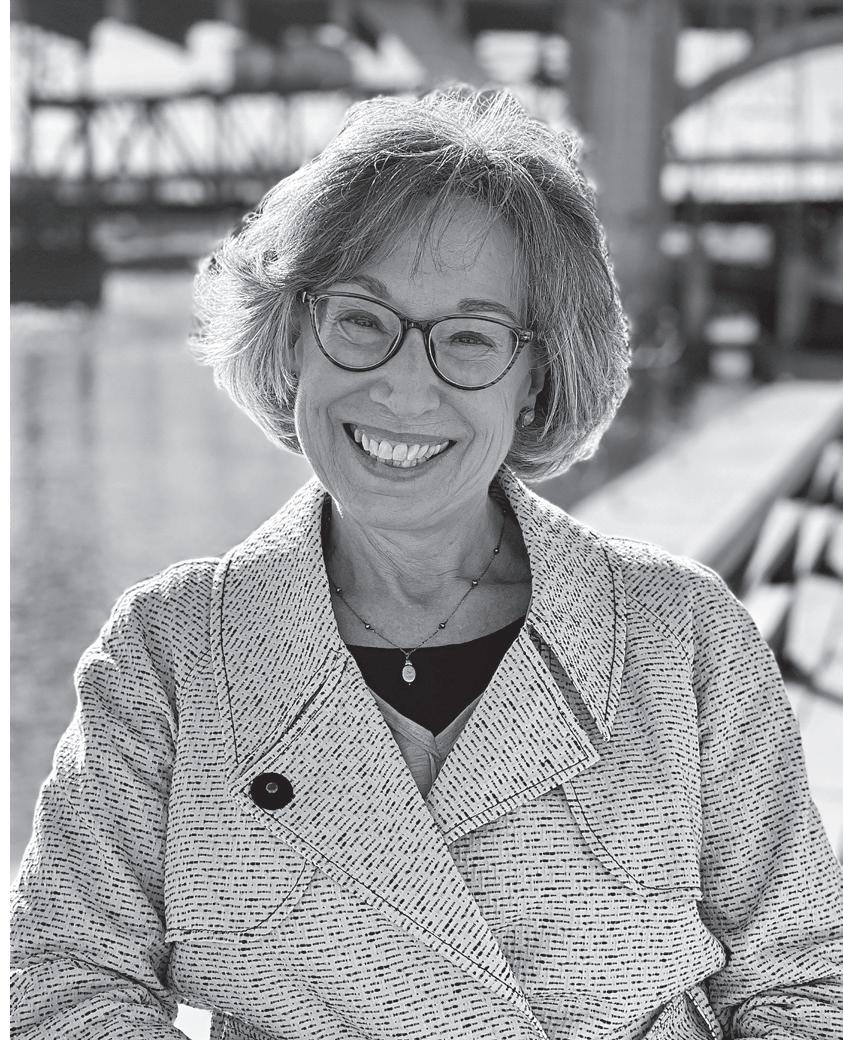
Barbara Moore (Saint Paul, MN) has been in love with tarot for over thirty-five years. She has shuffled her cards and taught tarot all over the world. Now she embraces her Hermit self by writing books and creating decks. Her Steampunk Tarot, Good Fortune Tarot, and Trick or Treat Tarot are among her favorites.
Library of Congress Cataloging-in-Publication Data
Names: Moore, Barbara, author
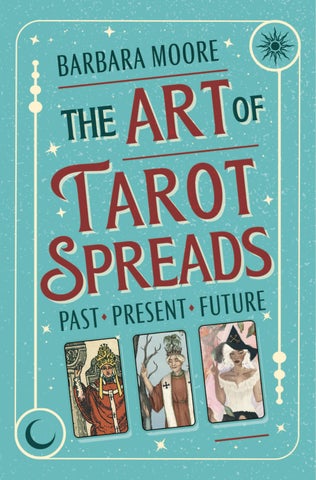
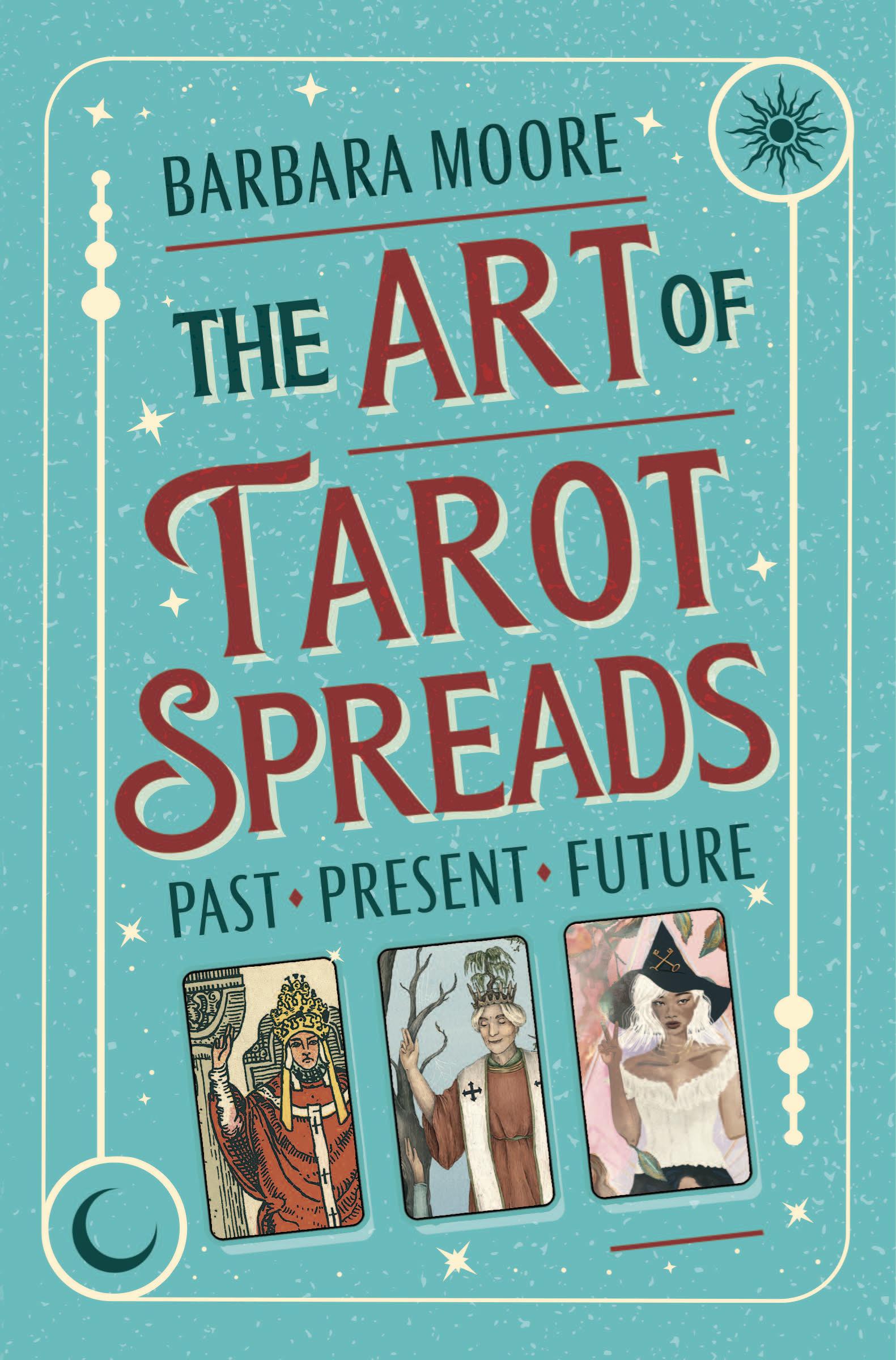
Title: The art of tarot spreads : past present future / Barbara Moore.
Description: First edition. | Woodbury, Minnesota : Llewellyn Publications, [2026] | Includes bibliographical references and index. | Summary: “A guide to classic and contemporary spreads for beginner to advanced tarot readers, including tips and techniques for adapting existing spreads to fit your needs”—Provided by publisher.
Identifiers: LCCN 2026013755 (print) | LCCN 2026013756 (ebook) | ISBN 9780738780405 paperback | ISBN 9780738780436 ebook
LC record available at https://lccn.loc.gov/2026013755
LC ebook record available at https://lccn.loc.gov/2026013756
Llewellyn Worldwide Ltd. does not participate in, endorse, or have any authority or responsibility concerning private business transactions between our authors and the public.
All mail addressed to the author is forwarded but the publisher cannot, unless specifically instructed by the author, give out an address or phone number.
Any internet references contained in this work are current at publication time, but the publisher cannot guarantee that a specific location will continue to be maintained. Please refer to the publisher’s website for links to authors’ websites and other sources.
Llewellyn Publications
A Division of Llewellyn Worldwide Ltd. 2143 Wooddale Drive Woodbury, MN 55125-2989 www.llewellyn.com
Printed in the United States of America
GPSR Representation: UPI-2M PLUS d.o.o., Medulic´eva 20, 10000 Zagreb, Croatia matt.parsons@upi2mbooks.hr
Contents
Introduction . . . 1
Chapter 1: All About Tarot Spreads ˙ 5
Chapter 2: Tableaux ˙ 27
Chapter 3: Modern Spreads ˙ 43
Chapter 4: Making a Case for Yes/No Spreads ˙ 77
Chapter 5: Useful Multipurpose Spreads ˙ 95
Chapter 6: Reading Tips and Practices ˙ 119
Chapter 7: How Many Spreads Do You Need? ˙ 143
Chapter 8: Unconventional Tarot Spreads ˙ 159
Chapter 9: Beyond Tarot Spreads ˙ 171
Conclusion . . . 187
Appendix: Traditional Tarot Spreads . . . 189
Spreads Index . . . 197
ntroduction
A tarot deck is a working model of the universe. In its shuffled state, it represents the chaos and uncertainty of life. In its ordered state, it represents lessons, paths, and connections. We lay out the cards to reveal reality. We peer into our readings just as a mathematician examines a fractal, looking for patterns and disturbances. How we look often determines what we see.
Spreads are a lens through which we view our readings. Some think of spreads as maps. Like maps, they control what sort of data is provided. A road map shows roads, a topographic map shows elevation, a map of breweries shows breweries. Similarly, the positions in a spread define the type of information revealed. It is a good metaphor, but I have a better one.
Chaos theory is concerned with the transition between disorder and order and the emergence of patterns. Used to study systems via recursive mathematical equations called fractals, it seeks to understand and predict. Sounds a lot like a tarot reading, doesn’t it? Within each fractal is a strange
INTRODUCTION
attractor, which, rather like the moon, acts as a gravitational pull, beguiling reality to take its shape. Tarot spreads, our oracular strange attractors, create the conditions that allow us to observe a moment in time and a facet of reality.
Spreads are sometimes viewed as mundane tools, mere instructions for laying the cards on the table. When we understand their role in the divinatory process, spreads take on new significance. This book explores spreads not as rigid templates but as dynamic structures. Can something be both dynamic and structured? The tarot itself is exactly that: structured in its ordered state and dynamic when shuffled. Tarot has always danced in the space in between order and chaos, helping us tease out possibilities and understand the flow of life. As readers, we know that when we are more comfortable with our cards, our readings flow more easily. If we can be as familiar with the inner workings and philosophical implications of our spreads, we extend that graceful fluency more deeply throughout our readings.
We’ll begin at the beginning, as the King of Hearts suggests, with cartomantic layouts adapted from playing-card divination. The history of tarot spreads is more interesting and more illuminating than many assume. A survey of all that has gone before shows how tarot spreads, like the cards themselves, evolve to reflect our understanding of the world and the process of divination. Beginning with tableaux-style spreads (cards laid out in a grid), courtesy of playing-card divination, we watch tarot transition to the Golden Dawn’s cosmic geometry to the intuitive pragmatism of a New York businesswoman to our beloved modern-day midwife of the soul, Mary K. Greer, and our dearly departed weaver of mythic
INTRODUCTION
tales, Rachel Pollack, to the tarot readers of today’s social media. Spreads have enjoyed a wild ride. You won’t want to miss it.
As we dive into spreads throughout time, we’ll learn not which spread to use but how and why to select ones that work for you. For the ones that don’t quite work, we have a toolkit of ideas for modifying spreads to suit the needs of the reader, the question, or the querent. Separating the act of reading the cards from spread design is difficult, so you’ll find tips for reading that help you uncover even more meaning. Many believe that yes/no spreads are worthless, but here I will attempt to persuade you otherwise. They can be incisive, surprising, and even reliable. Significators (using court cards to represent the person getting the reading), that all-but-forgotten practice, will be made relevant to modern readers. I share my favorite spreads that have stood the test of time as well as some unconventional spreads that will push the boundaries of the definition of “tarot spread.” Because I’ve been at this a long time, I have plenty of ideas to combat stagnation, inspire fascinating tarot sessions even when you don’t have a question, and even things to do that aren’t readings. This small book has enough to keep you busy for a long time.
Like all strange attractors, tarot isn’t here to tame the chaos of life. The patterns it reveals help us hear and understand the chaos as well as give us a glimpse of what is possible. That dance between structure and intuition, problems and solutions, and beginnings and endings is embedded in the cards, and we are invited to join in. The practice of tarot is an art and a craft; this book seeks to honor both approaches. My hope is that this exploration helps you become not just a better reader
INTRODUCTION
but a more authentic one. A solid knowledge of spreads and how those spreads work in your hands can give you confidence in your voice and your style as a reader.
Dedicated practice is key to building confidence. That means being intentional and systematic in your studies as well as tracking development. Keep a journal of all your readings and spread experiments. Include data like the date, the question asked, the spread used, and the cards drawn, as well as your interpretation. Practice builds confidence because that’s how we increase skill. Using a spread once will not give you the same fluency as using it many times. Your skills will grow even faster if you review your readings later, noting what worked, what didn’t, and what might improve the spread for next time. Diligent record keeping and intentional practice will make you a better reader faster than all the classes and books in the world.
It’s time to take up our cards, lay them down intentionally and thoughtfully, and see what happens.
Chapter 1
All About Tarot Spreads
When I first got into tarot and talked about spreads, my muggle friends would make jokes about cream cheese or apple butter or whatever they wanted to slather on a cracker. While there is a lot of variety in the world of tarot spreads, that’s probably where the similarities end. Unlike my non-card-slinging friends, you probably already have at least one tarot deck, have done readings, and have opinions about spreads, both culinary and cartomantic.
While some may think that a general definition is unnecessary, establishing terms gets us all on the same page and makes sensible discussions easier. Let’s begin with an exploration of why we use spreads and what we can reasonably expect of them. We’ll wrap up with a brief history of spreads, which will be more interesting than you may think.
The Purpose of Spreads
A tarot spread—indeed, a tarot reading—is a microcosm or symbolic act that invites us to an understanding of our lives, ourselves, and the world around us. A spread is a formula for setting cards down, and it is so much more. For example, it serves as a map of reality, establishes the priorities and goals of a reading, and makes a reading easier to interpret.
A randomly shuffled deck of cards and an unasked question symbolize the chaotic and random state of reality. We do readings to make sense of chaos. One of tarot’s main tenets is “As above, so below,” which means, in part, that the macro mirrors the micro. The way the universe functions is how your life functions. A tarot reading reflects reality in symbolic form, which is likely why it “works” in such a cool and mysterious way. The act of asking the question begins to organize the chaos or at least centers our focus.
The layout determines our priorities and goals with the reading. What are we seeking? How do various aspects of the situation affect other aspects? In physics, the observer effect refers to the idea that the act of observing something changes its state. Tarot, in a way, operates on a similar principle: Our focus shapes what we see. Like physics, tarot is concerned with observation and uncertainty. What we hope to find as we peer into the future (or present or even the past) will affect what we see. This is one excellent reason to select a spread with intention and care. A spread will highlight certain aspects of a situation, but it also hides or diminishes other aspects. Here is a simple example. If you have a choice to make, you might use a spread that explores two choices (or however many you
have identified). Seems sensible—and it is. But consider this: You may not know what you don’t know. You assume you’ve identified all your options, but what about ones you haven’t thought of? You may decide to expand the spread to include at least one of those invisible possibilities.
Some of us enjoy the abstract speculation about spreads, but we shouldn’t let that distract us from more practical concerns. I heard something about time existing so that everything doesn’t happen at once. A spread functions like time. Even the simplest of situations in our lives have innumerable variables affecting what happens. There probably aren’t enough cards in a deck to represent every single aspect. Instead, we lay out a few cards so that we can observe the complexity of life in understandable bites. In practical terms, a spread narrows the amount of data we take in and process. We get to decide what information is necessary and what is extraneous. We select a spread that focuses on our needs.
Ease and efficiency have not always been the goal of spreads. However, most modern readers agree that a spread should make doing a reading easier. Our divinatory ancestors were not so lucky. The old cartomantic and esoteric spreads are quite complex, as we shall see. Once you understand how a spread can support—or interfere with—reading ease, you’ll never look at spreads the same way again.
What Is a Tarot Spread?
At its most basic level, a tarot spread is a design that indicates how many cards will be used and how they will be placed on the table. The directions often include the order in which the cards should be placed. If you’ve explored the world of tarot
CHAPTER 1
spreads even a little, you probably noticed that some spreads just have a layout, some also have positional meanings, and some have more extensive directions about the mechanics of a reading and tips for interpretation. A comprehensive understanding of spreads makes it easier to determine what works best for you. Readers with a strong understanding of their own spread preferences can adapt any spread they wish. You will be one of those readers when you finish this book.
Layout
The most obvious and universal quality of tarot spreads is that they show how the cards are to be laid on the table, like so:
2 1 3 4 5
At a conference I participated in a group reading roundrobin activity. Everyone sat in a circle, and we read for the person on our left, following the directions of the group leader. The instructions changed every round. Each reading was a one-card spread. For one of the rounds, we were told to draw the card, to not look at it or show the querent, give the
ALL ABOUT TAROT SPREADS
reading, and put the card back without looking at it. It was a reading, but was it a spread? Which brings up an interesting question: Do all readings require a spread?
We can get really abstract and wonder if we even need cards. I’ve done “readings” in my mind without a physical deck, and probably some of you have, too. For those who enjoy unusual approaches, like reading without a deck, I predict that you will like chapter 8, Unconventional Tarot Spreads.
Positional Meanings
Many spreads show the design in which the cards are laid out and describe what those positions mean. In the example below, the spread positions are clear (and common). Each position has its own assigned meaning, where 1 = past, 2 = present, and 3 = future.
Usually the positions are simple, with a few words describing what the position represents. For example, “past” in the spread above means something that happened in the past. Other common positions include advice, outcome, strength, weakness, underlying issue, etc. When doing a reading, the reader combines the traditional meaning, the question asked, the positional meaning, and their own intuition to interpret the reading. Some readers also include the querent’s observations or responses. Interestingly, the current shift in spread design shows many spread creators moving away from short 2 1 3
CHAPTER 1
descriptors for the positional meanings and instead assigning a question to each position.
Some spreads assign meaning to rows or columns rather than individual positions. For example:
= What’s on the querent’s mind
= What is happening
= The foundation of the situation
These layouts are hybrids, combining the clarity of specific positional meanings with space for intuition and conversations between the cards. As you try different types of layouts, you will discover your preferences. Learning what works for you is valuable information that will help you select the best spread for each reading and adapt ones that are almost right.
Other spreads—particularly tableaux, which we explore in the next chapter—have no positional meanings assigned at all but instead include reading methods based on other aspects, 2 1 3 5 4 6 8 7 9
such as the location of the significator card. Significator cards are rarely used these days; however, a case can (and will) be made for their usefulness later.
Not all readers use formal layouts. Some free spirit types may simply lay down a certain number of cards each time, have favored patterns, or rely on their intuition completely. If this is you, experimenting with the number of cards and various arrangements will increase the robustness of your intuition and confidence.
Methods of Interpretation
Some spreads invite you to find the significator and count cards. Some suggest that you lay the cards face down, then turn the cards over one by one, interpreting each in turn. Other spreads are designed to be read with all the cards face up. Some include things to say as you lay the cards. Even if spreads include suggestions for interpretation, you can ignore them and do as you please. However, when trying a new spread, go all in and perform as written first, just to see what the creator intended. After that, modify to suit your taste. Here are some examples of interpretation methods, which we will explore in depth in later pages.
Tableaux include methods of interpretation as part of their design. These focus largely but not exclusively on the location of the significator.
The Celtic Cross designed by Arthur Waite is a popular spread that includes dramatic words to say as you lay down each card. For example, “This crosses the querent” or “This crowns the querent.” If you like to include a little mystery in
CHAPTER 1
your readings, practices like this create that sensation. Other esoteric spreads have directions like these too.
Some spreads incorporate techniques like reversals. Reversals are cards that appear upside down in a reading, achieved by deliberately shuffling so that some cards are reversed. Reversed cards are assigned different interpretations from the upright meaning. Sometimes it is the opposite meaning or the same energy but weakened or blocked.
Others might use elemental dignities. Elemental dignities is a method of interpreting cards that relies on the relationship between various elements represented by the suits. Each suit is assigned an element: wands are fire, cups are water, swords are air, and pentacles (or coins or disks) are earth. Fire and air are active elements; if they are near each other, they intensify each other. Likewise, water and earth are passive and also intensify each other. Fire and water are opposites and weaken each other, just as air and earth do. Fire and earth have little connection and no effect on each other, with air and water having a similar relationship. For example, if the Two of Cups is between the Ace of Pentacles and the Ten of Cups, it will be strengthened. If it is between the Two of Wands and Four of Swords, it will be weaker.
If you do not currently use either of those techniques, you can try them to see how they work or just ignore them.
Mechanics
The line between methods of interpretation and mechanics is blurry. Mechanics are actions that the reader takes during the reading. Mechanics can be associated with a specific
ALL ABOUT TAROT SPREADS
spread or just be something a reader does with all, most, or even just some of their readings.
A simple example of mechanics is how one lays the cards on the table—facing them up or down. Laying them face down and revealing them one by one increases the mystery and anticipation. It also helps the querent focus on the card being discussed rather than fixate on a troubling card elsewhere in the spread. Laying cards face up allows the reader to gain an overview of the situation at a glance.
Another mechanic is inviting the querent to select a card, either randomly or face up, to include in the reading.
Some readers shuffle, then cut the pack into piles equal to the number of positions. One pile is placed in each position, allowing more cards to be drawn as needed.
One useful mechanic is moving cards. With larger spreads, such as the Celtic Cross, there are several smaller sections that can be read as mini spreads. Moving those sub-spreads aside to review in isolation eliminates visual noise and allows you to focus. Moving a significator closer to or in between other cards lets you see how they react or respond in the situations described by the spread.
Layouts, positional meaning, interpretation methods, and mechanics have evolved over the decades. Many tarot readers are surprised to learn how reading styles have changed over time. Seeing the complexity of the early practices will make us appreciate modern attitudes! It will also eliminate that fear of tinkering with spreads. Understanding their history helps
us realize that spreads are not sacred things that were handed down from on high. They are tools that we created and that we will continue to create and change to suit our evolving needs. Let’s see what our oracular forebears used, perhaps gleaning some ideas that are old but new to us.
Early Spreads
Before tarot became popular, people used playing cards for divination. Perusing old cartomancy books is fascinating. They often give detailed, complicated instructions that feel very arbitrary yet mysterious. Did you know that you can connect some specific tarot card interpretations directly to their playing-card counterpart? For example, the Nine of Hearts was called the wish card, a meaning that is part of the modern Nine of Cups’s association with being very happy with your circumstances. Of course, these volumes contained spreads, too.
The spreads in these old books were designed for playing cards but were later used with tarot cards. Here is an example of an old spread that I’ve rewritten for clarity. It is still confusing, especially for folks who skim. If you go slowly, working along with the instructions, you will be able to do this, more or less. The problem—and I fear there will be problems—is not with my transcription of the instructions; it is with the paucity of instruction given by the original authors. If you want to be authentic, use a playing-card deck. Remove the two through six of each suit, leaving only each suit’s ace, king, queen, knave, ten, nine, eight, and seven. If you want to try a wild experiment, use your tarot deck, removing the same cards as well as the pages and major arcana.
ALL ABOUT TAROT SPREADS
Select a court card to represent the querent by matching their complexion as best you can: diamonds and hearts for the fairest complexions and clubs and spades for darker. It is interesting to note that in some early instructions there is no reference to age or gender, just complexion.
Add the significator to the pile and shuffle the cards, then cut them using the left hand and recombine them.
Turn the cards up by threes by laying out three cards in a horizontal row. If there are two (or three) cards of the same suit in the row, remove the highest-value card and place it aside on the table. If there are three cards of the same value, such as three queens, pick them all up, making sure to keep them in the order drawn, and place the pile aside on the table.
Repeat until you’ve gathered thirteen, fifteen, or seventeen cards. The number must always be uneven and the significator must be among them. If the significator is not among the cards, you have to start the reading over.
Once the cards have been collected, lay them out in a half circle in the order that they were drawn and interpret them.
To discover what or who the querent is thinking about, count seven cards from right to left starting with the significator. To do this, when you get to the end of the half circle, keep counting—just make the card on the extreme right the next card counted.
Begin with the seventh card and count seven again and interpret according to the card meaning.
Repeat a total of four times.
Look at the cards on either end of the semi-circle and combine them to interpret. Continue reading the second cards from either end, and so on.
Award-Winning Author
Barbara Moore Expands the Possibilities of Tarot Spreads
Dance in the space between order and chaos with innovative tarot spreads and profound wisdom from a renowned tarot expert. Barbara Moore, award-winning author of over thirty tarot books and decks, explores spreads not as rigid templates but as dynamic structures that help you see the best opportunities and keep your practice lively.
Beginners and experts alike will find a trove of information on optimizing card layouts and how card positions influence their messages. Sharing classic spreads, Barbara explores their historical and divinatory significance while also revealing their influence on modern spreads you can apply to any occasion. She also teaches you how to create your own spreads that will fit your needs perfectly.
From tried-and-true spreads like the Celtic Cross to unconventional layouts that push the boundaries of what we think of as a spread, this book helps you explore a variety of options and curate a collection that works specifically for you. $16.99 US
Barbara Moore has been in love with tarot for over thirty-five years. She has shuffled her cards and taught all over the world. Now she embraces her Hermit self, writing books and creating decks. Her Steampunk Tarot, Good Fortune Tarot, and Trick or Treat Tarot are among her favorites.