LYDIA KNECHT
Architectural Portfolio
ljk98@cornell.edu
Selected works 2022-2024
Architectural Portfolio
ljk98@cornell.edu
Selected works 2022-2024
Fall 2024
Instructors: Hanna Tullis & Marc McQuade
Project Type: Group Academic
Partner: Elaine Khoo, B.Arch, Cornell University
Verona, Italy
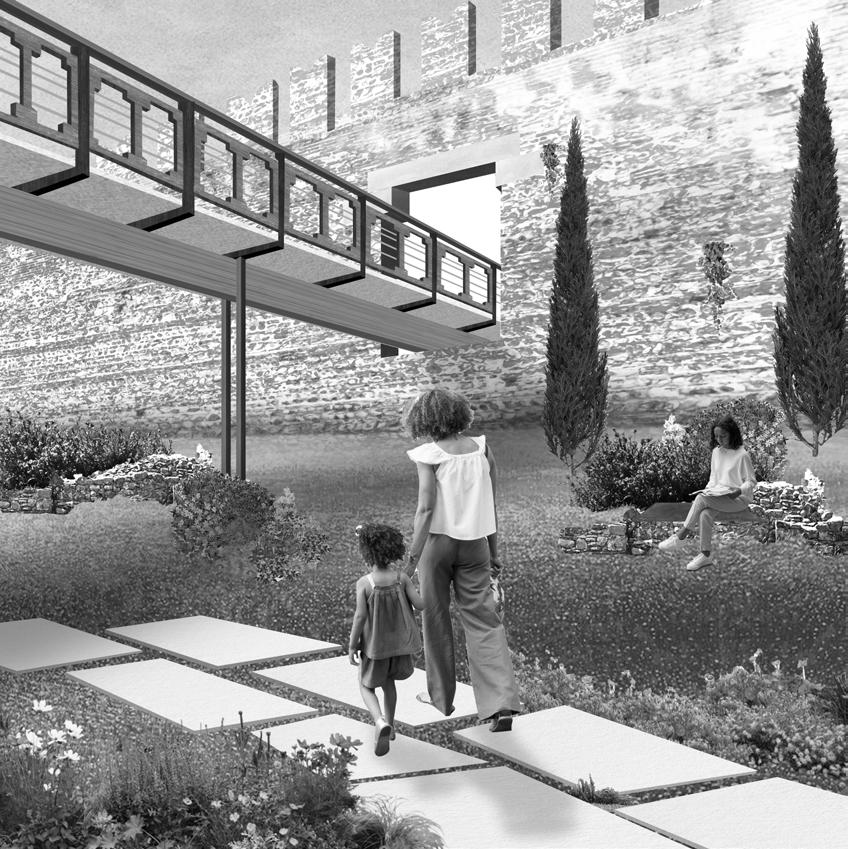
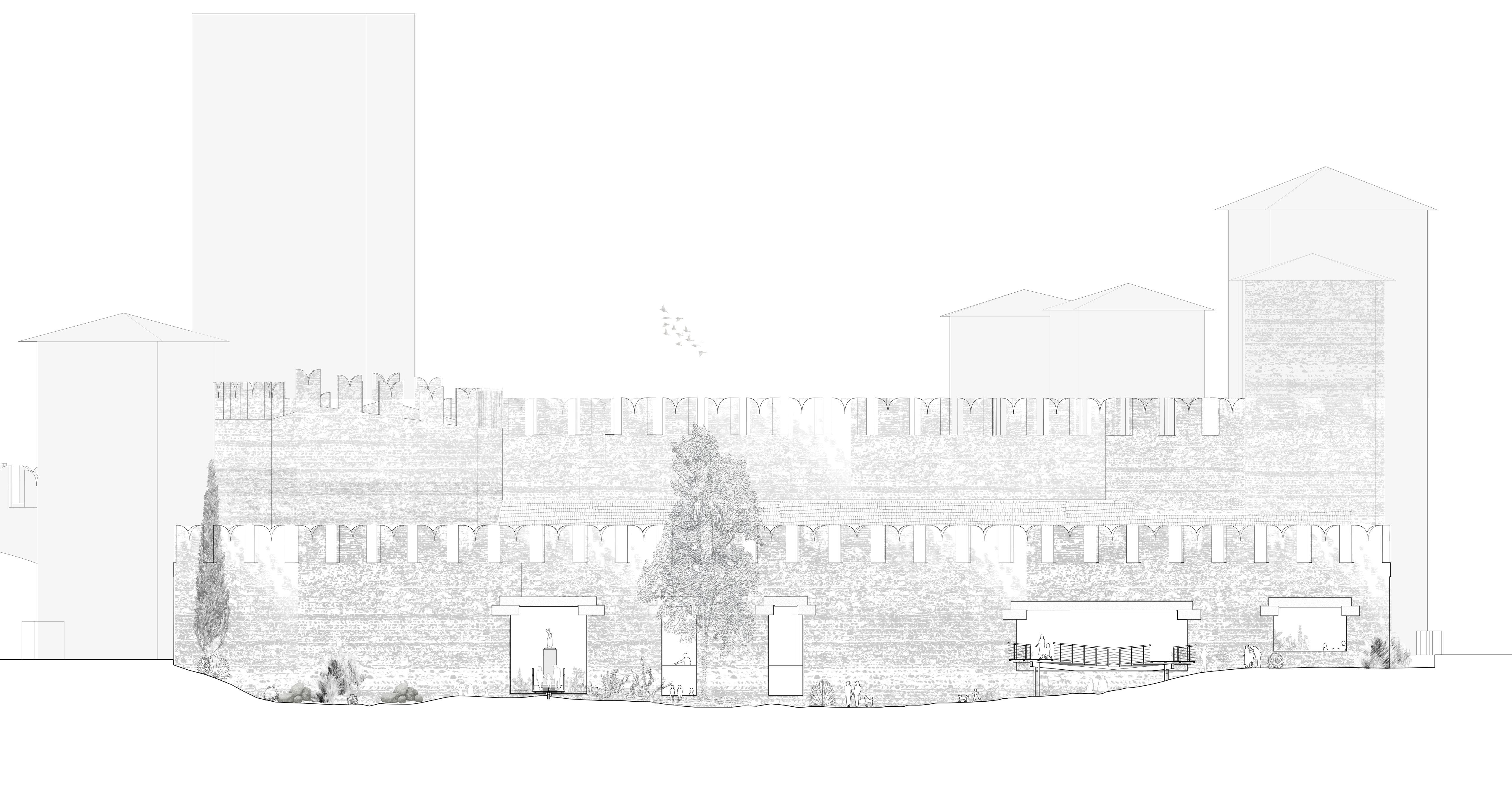
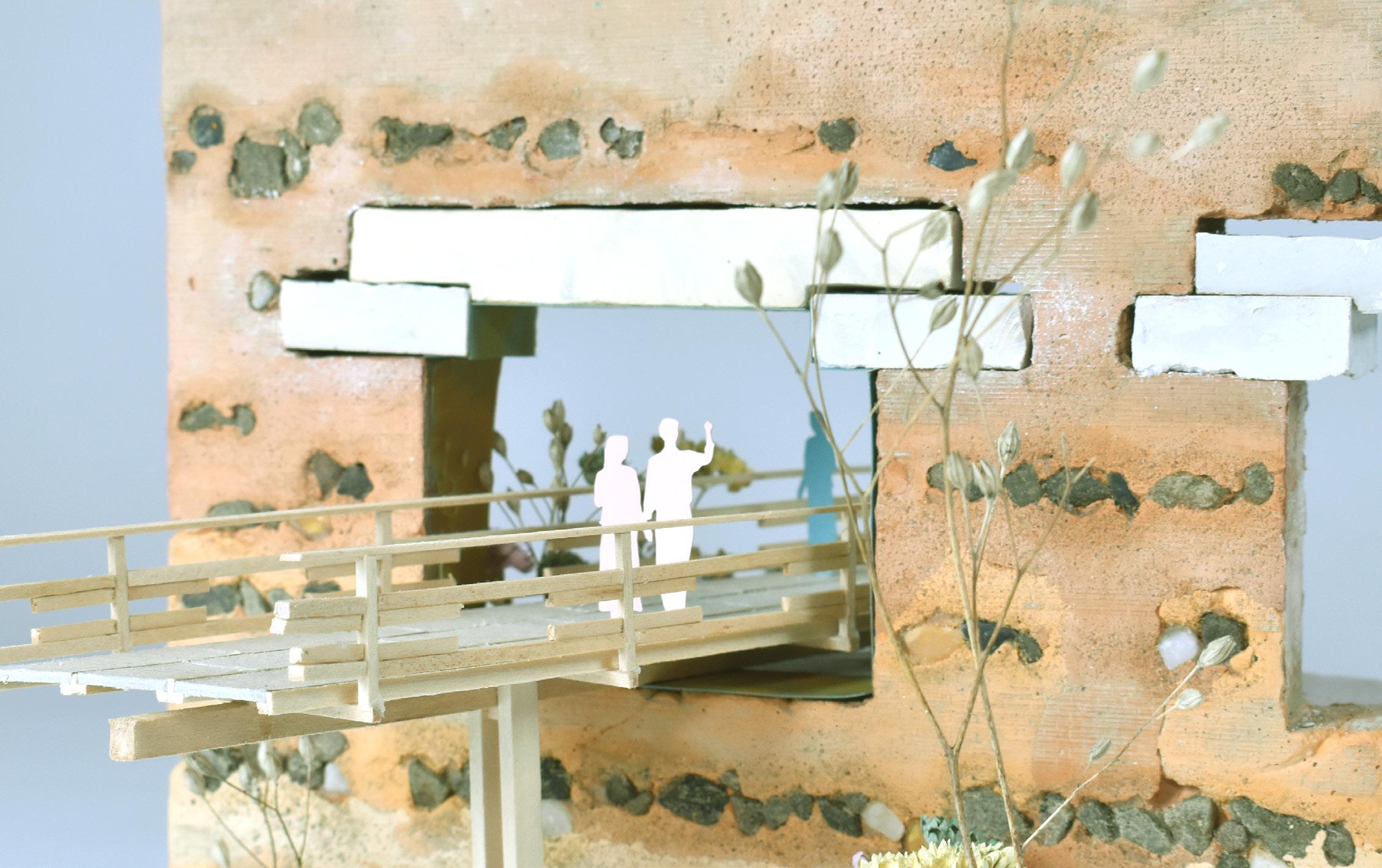
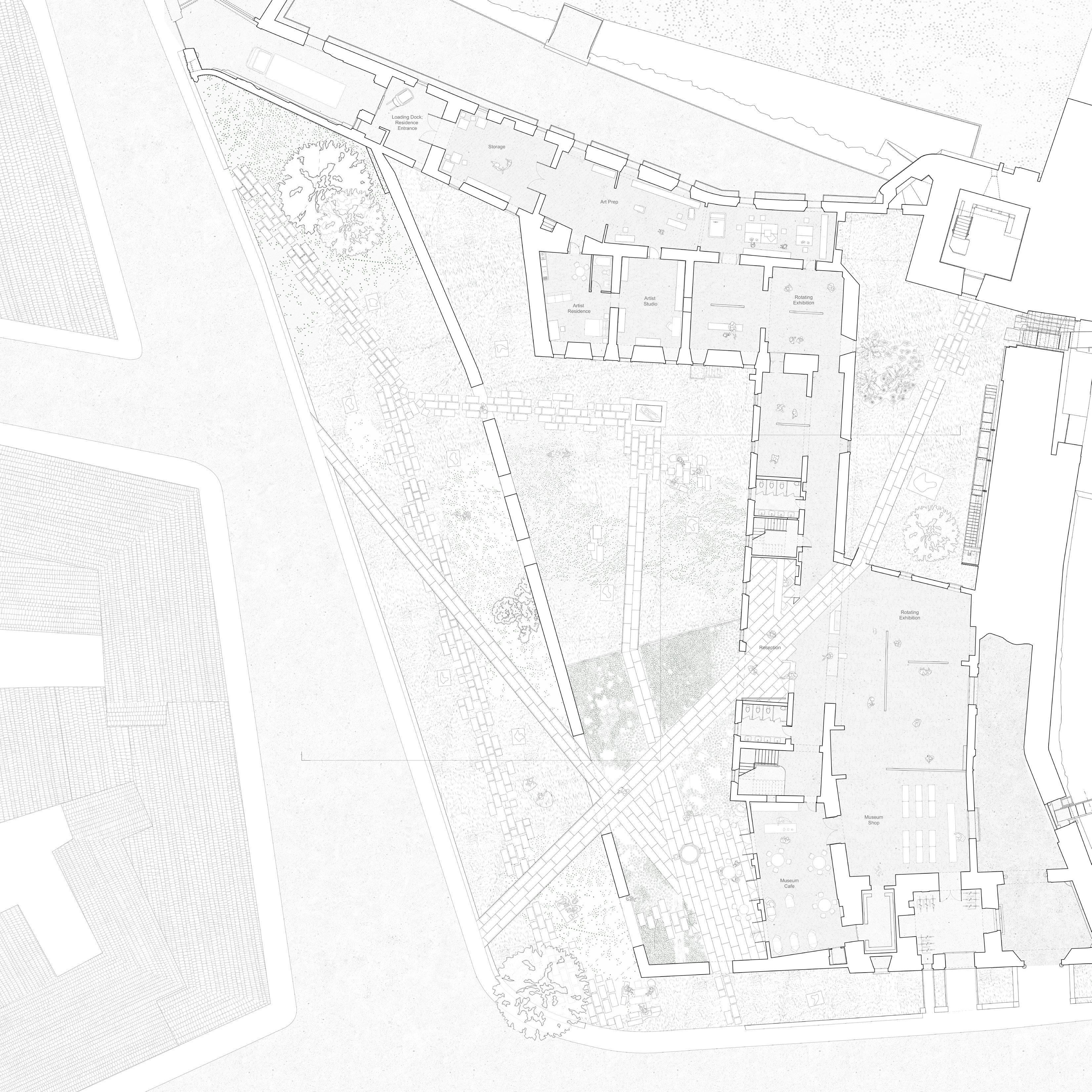
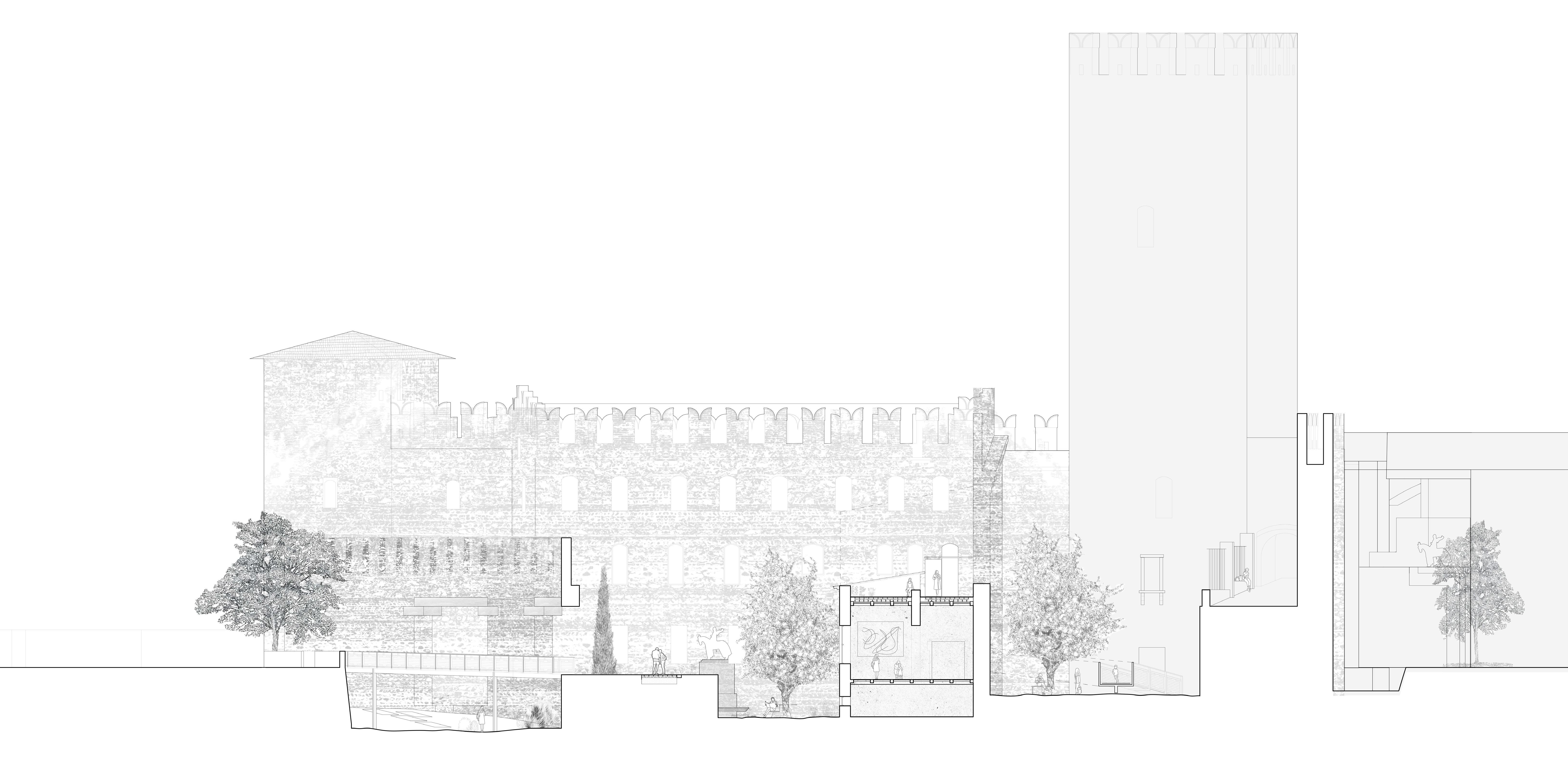
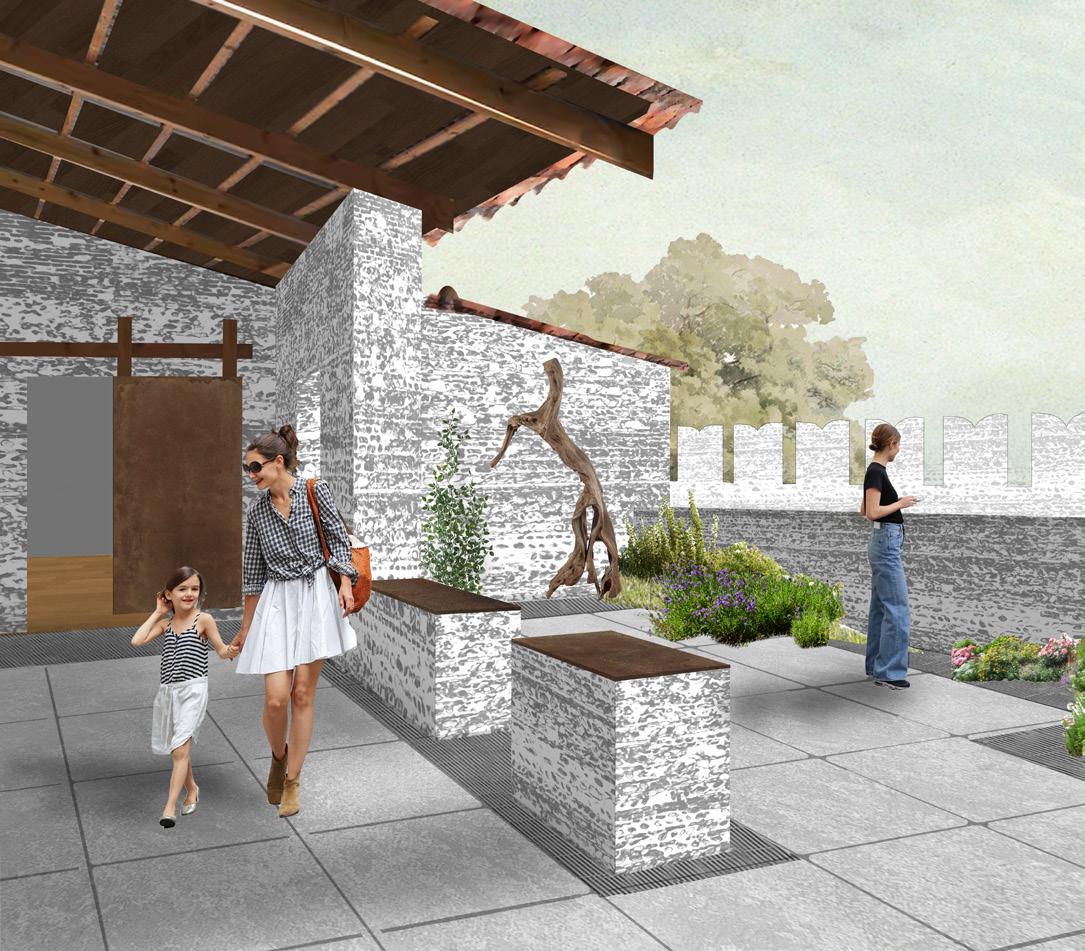
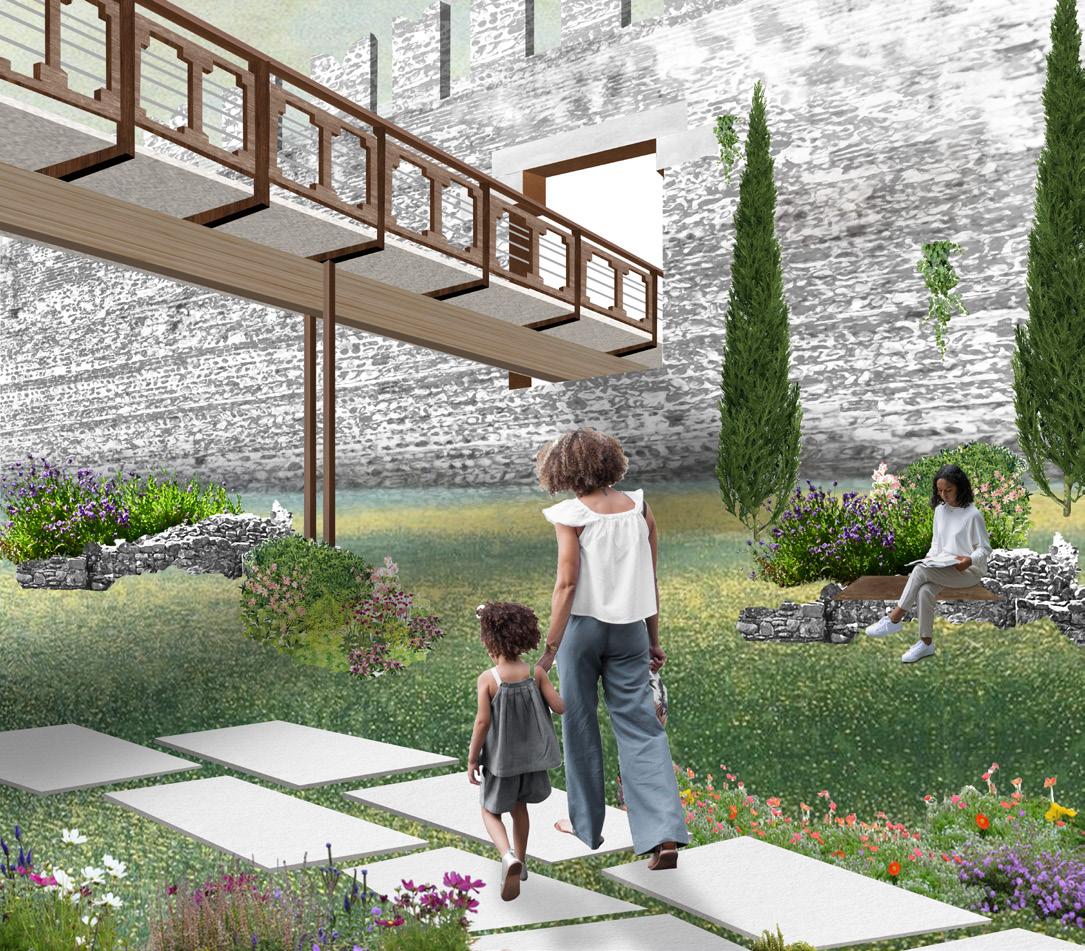
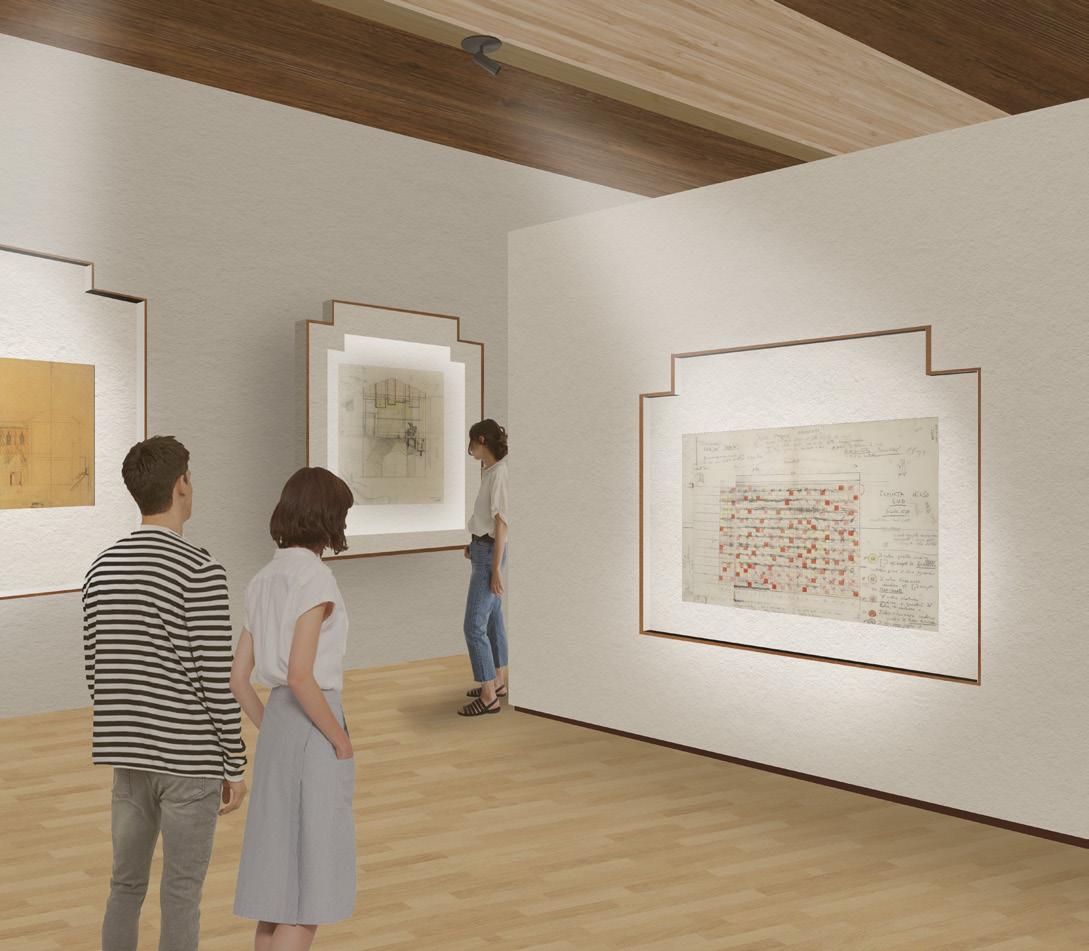
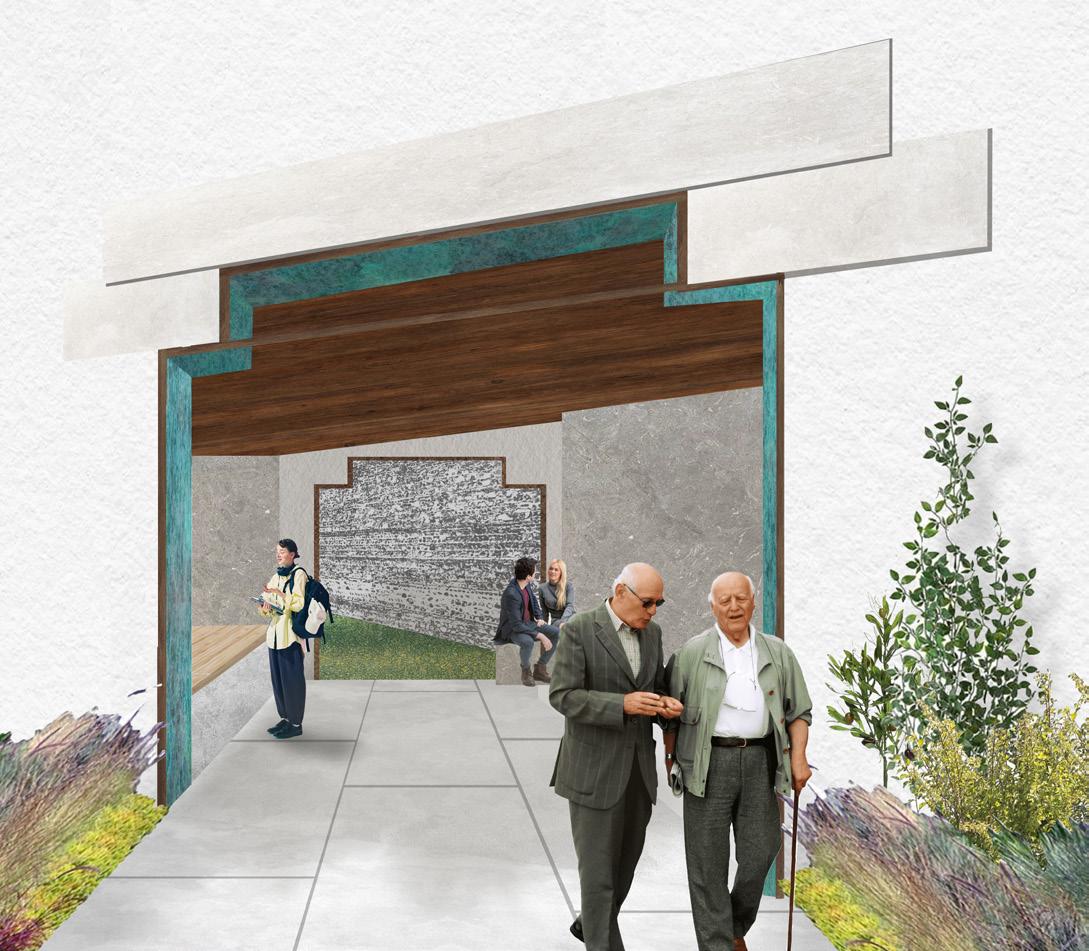
Verona, Italy’s historic Castevecchio sits within the city as an insular fortress. While the museum within its walls is open to the public, its entrance is quite unassuming, with circulation choked at a single access point. “Through the Cut” therefore reimagines the fortress through a series of cuts in its walls, inviting the city into and through the museum. Inspired by Antonio Scarpa’s architectural reveals and cuts throughout his 1960s renovation, the project borrows from his language. A second public entrance addresses the street corner, introducing porosity into what was a closed system. Cuts express themselves in various ways, such as walkways for public, apertures to view sculptures, or ledges to sit on. Materials from the cuts are dispersed into the courtyard and form seating. Larger spatial cuts adopt programs such as reception and viewing decks. A new gallery is introduced, displaying Scarpa’s many drawings that his interventions grew out of. The public not only gains physical access easily from Verona’s urban fabric, but also gains access to Scarpa’s designs, originally held in archival space within the fortress.
2023
Instructors: Emma Silverblatt & Adam Frampton
Project Type: Group Academic
Partner: Julian Helbing, B.Arch, Cornell University
Bushwick, New York
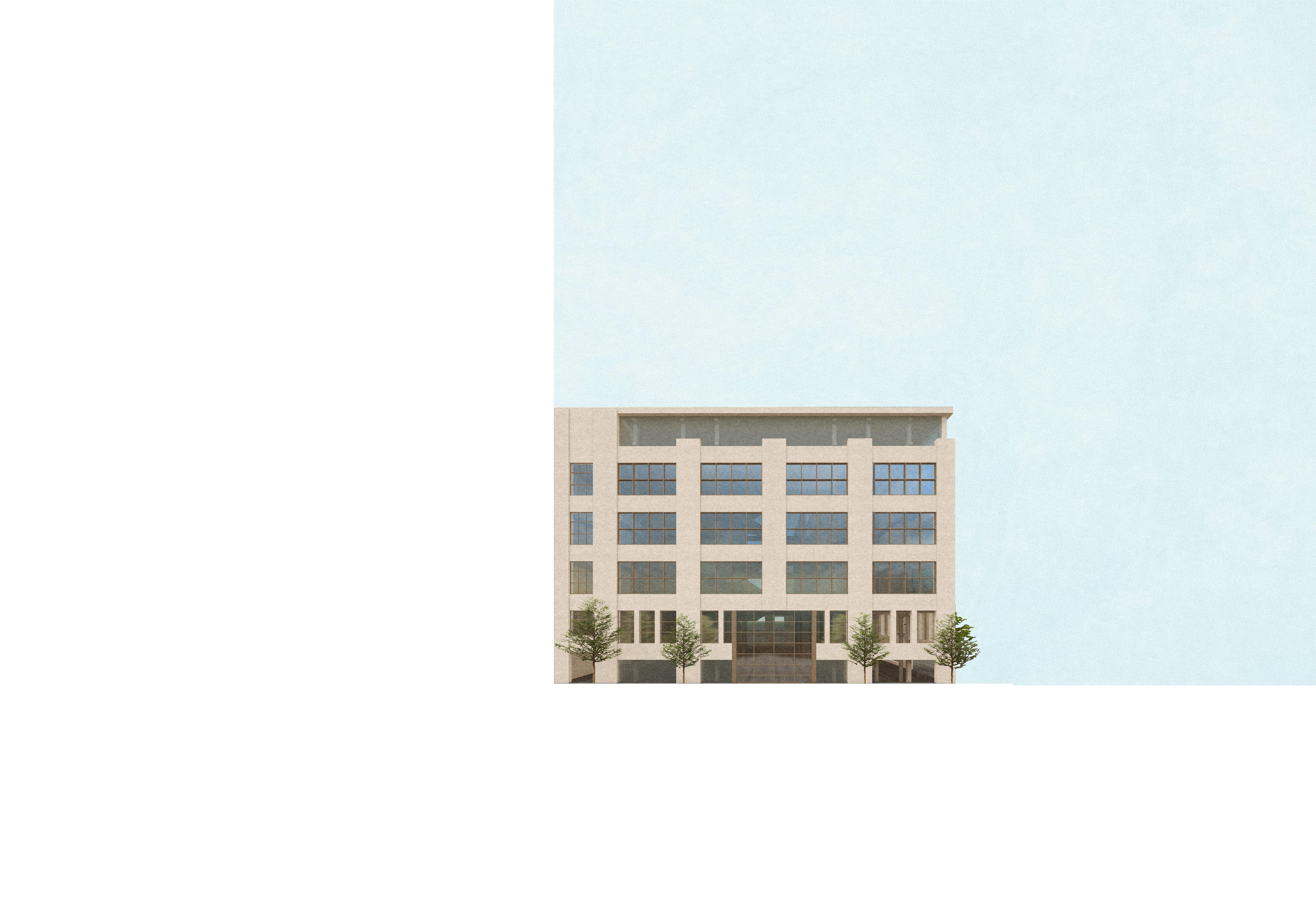
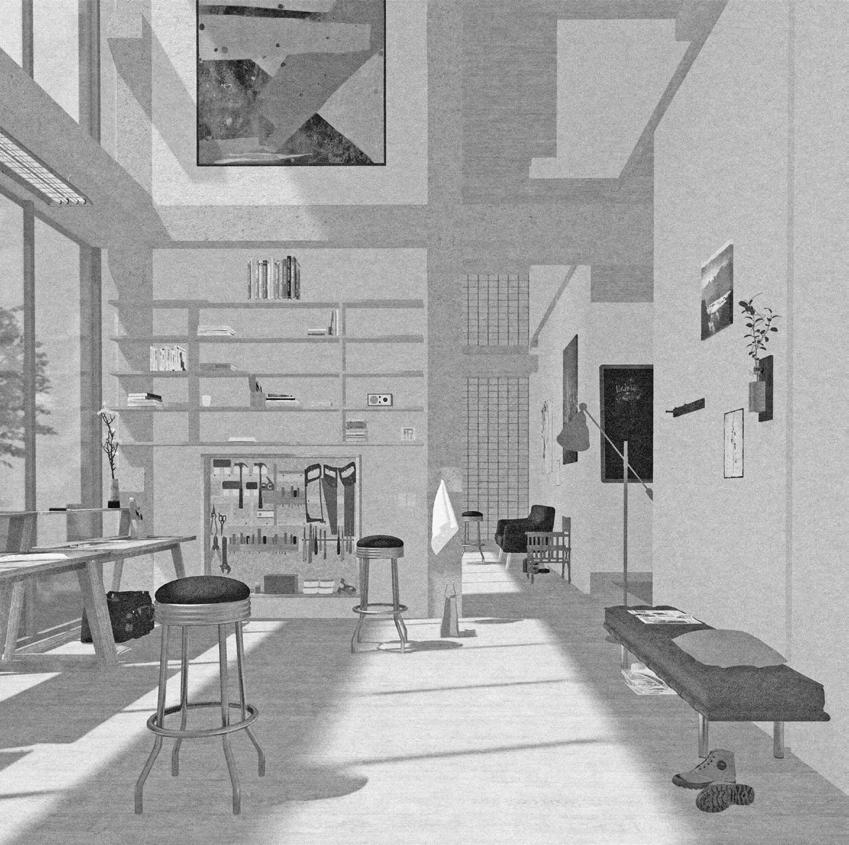
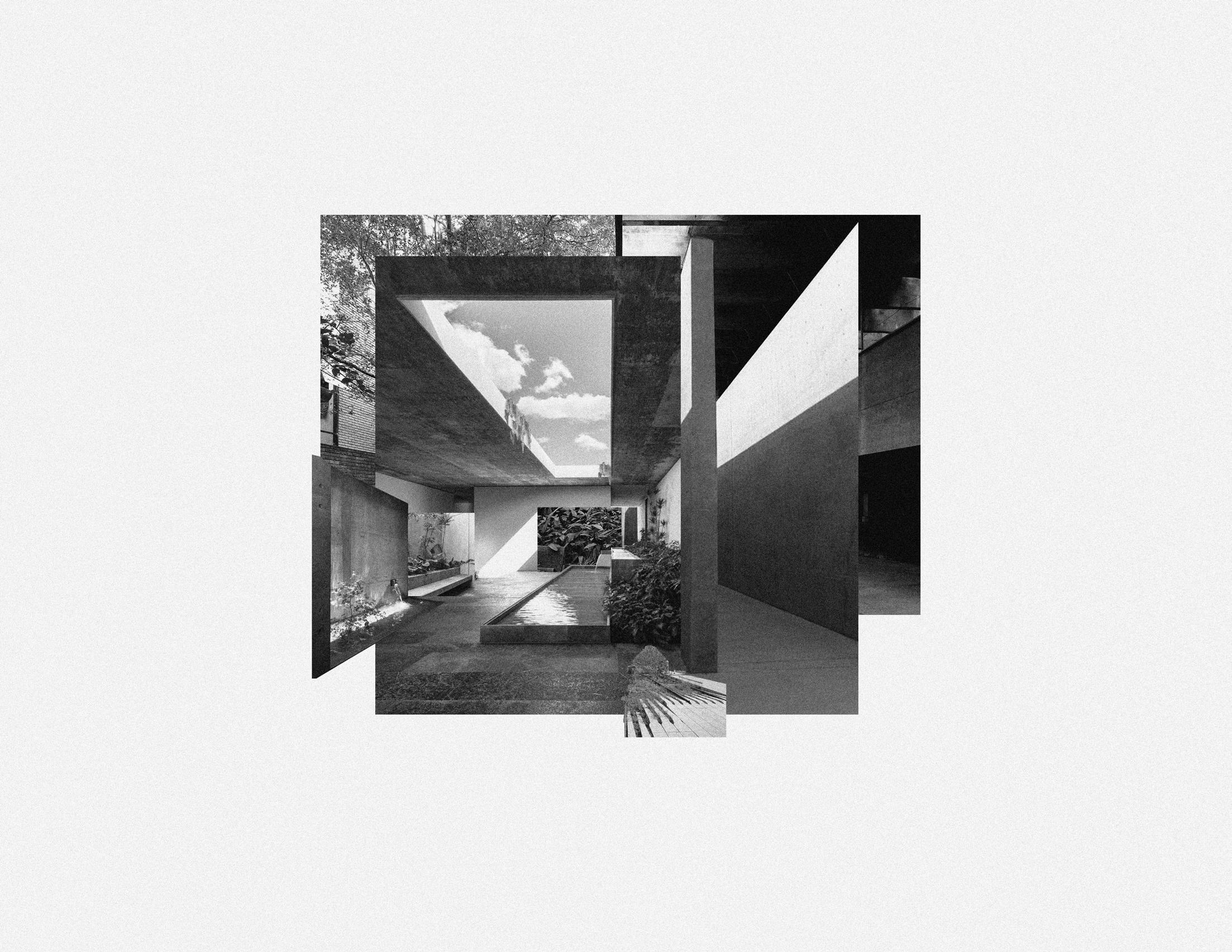
How can a site anticipate change while preserving parts of its past, and even future? Two typologies answer this question: housing and museum. Echo reintroduces a twin of its neighbor, entirely new and innovative in its conception and internal organization. Initially, the space provides artist housing and workspaces. Its future condition consists of artifacts from those who have moved away. A large central courtyard provides natural light for these workspaces, eventually translated into museum infill. The tool for change is a corbel concrete column, allowing floors to move sectionally. A gantry crane not only rearranges objects in the building, but also mediates the building’s physical change sectionally. Column placement determines enfilade organization in plan, the archetypal museum layout. Rigid artifacts like plumbing and HVAC systems live between each column. This preserves the spatial organization of the museum while allowing for open space among studios. Occupants therefore can determine their own spaces and preserve the dimensions of the typologies listed above.
Spring 2023
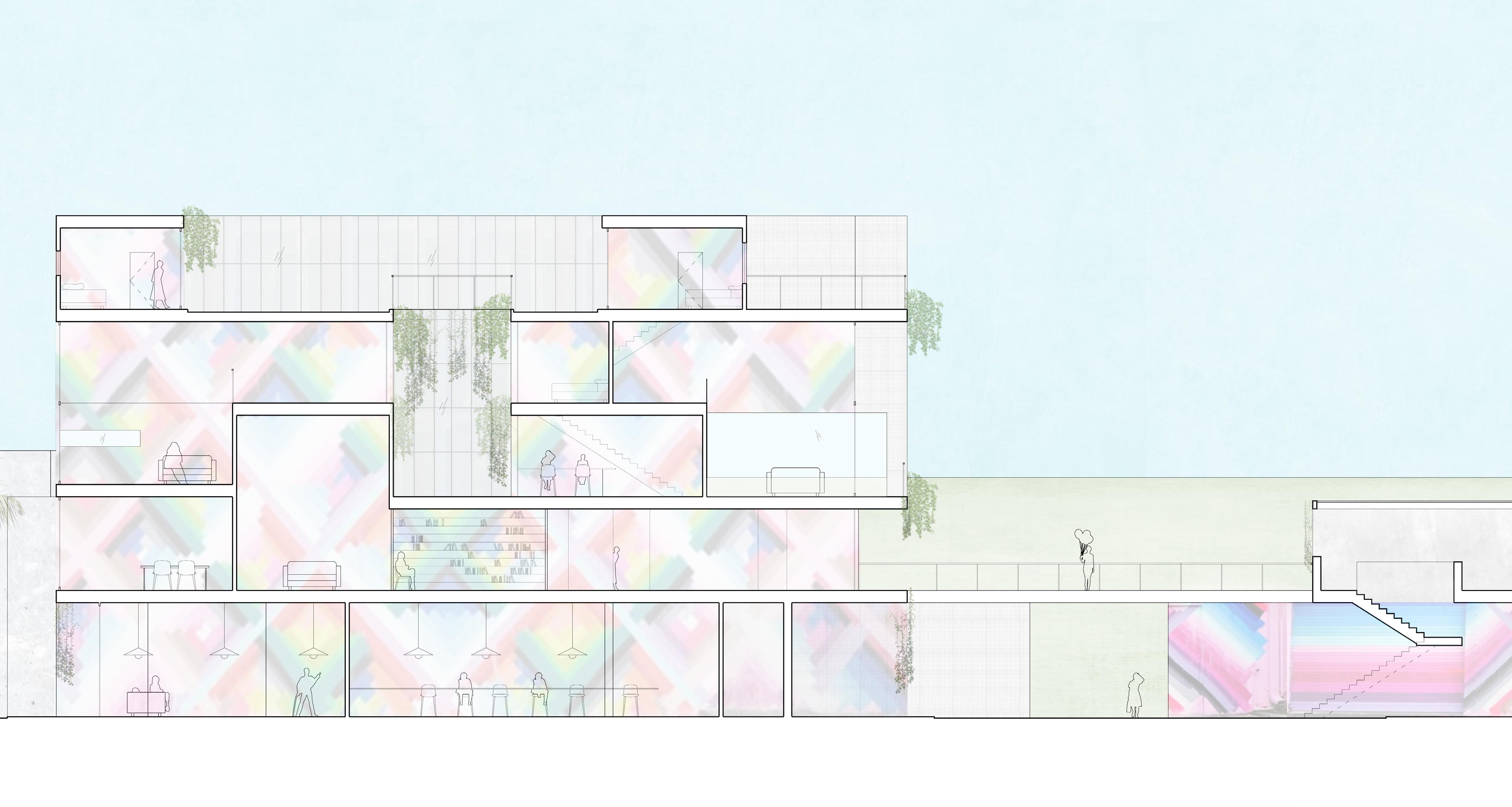
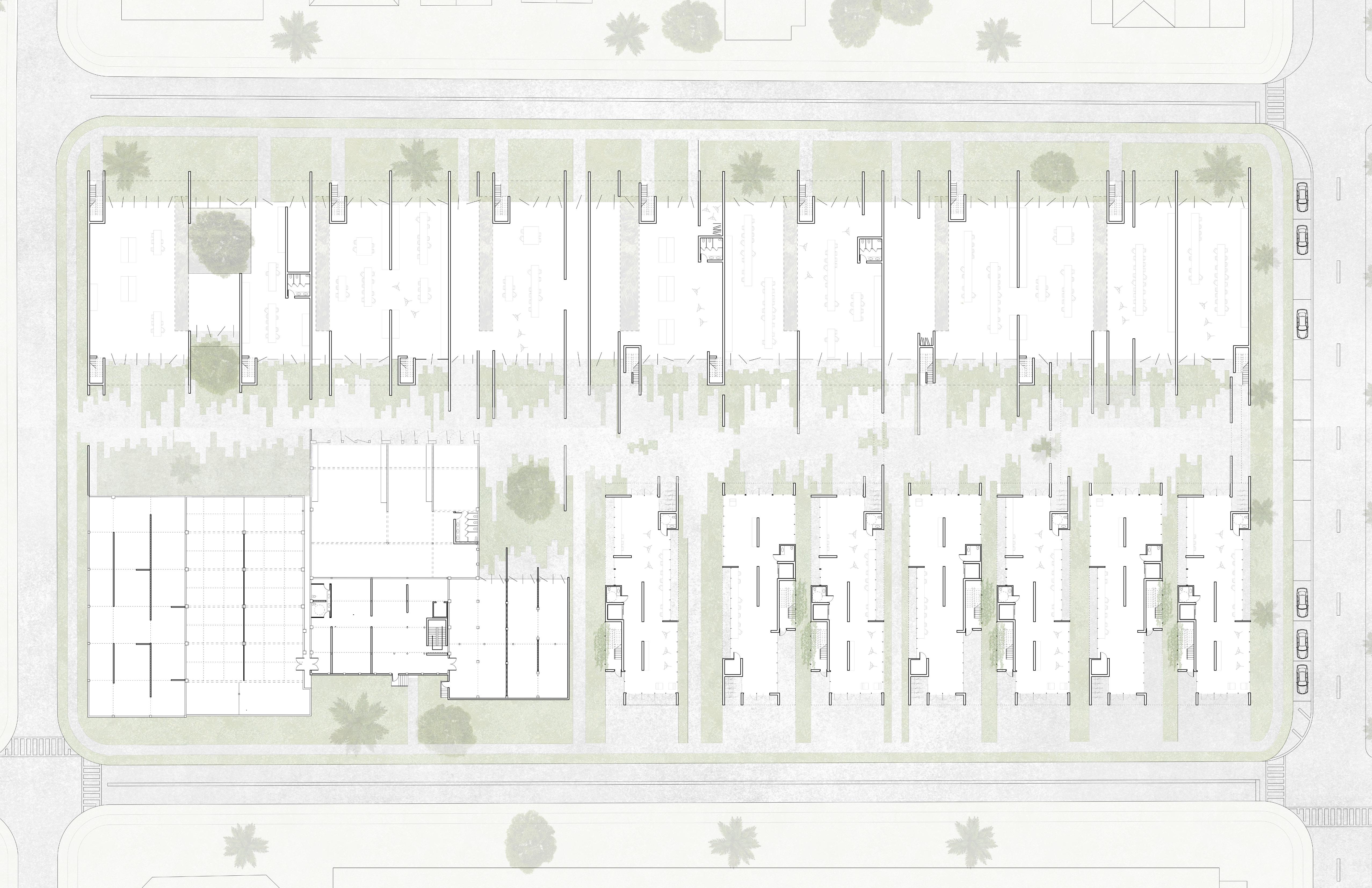
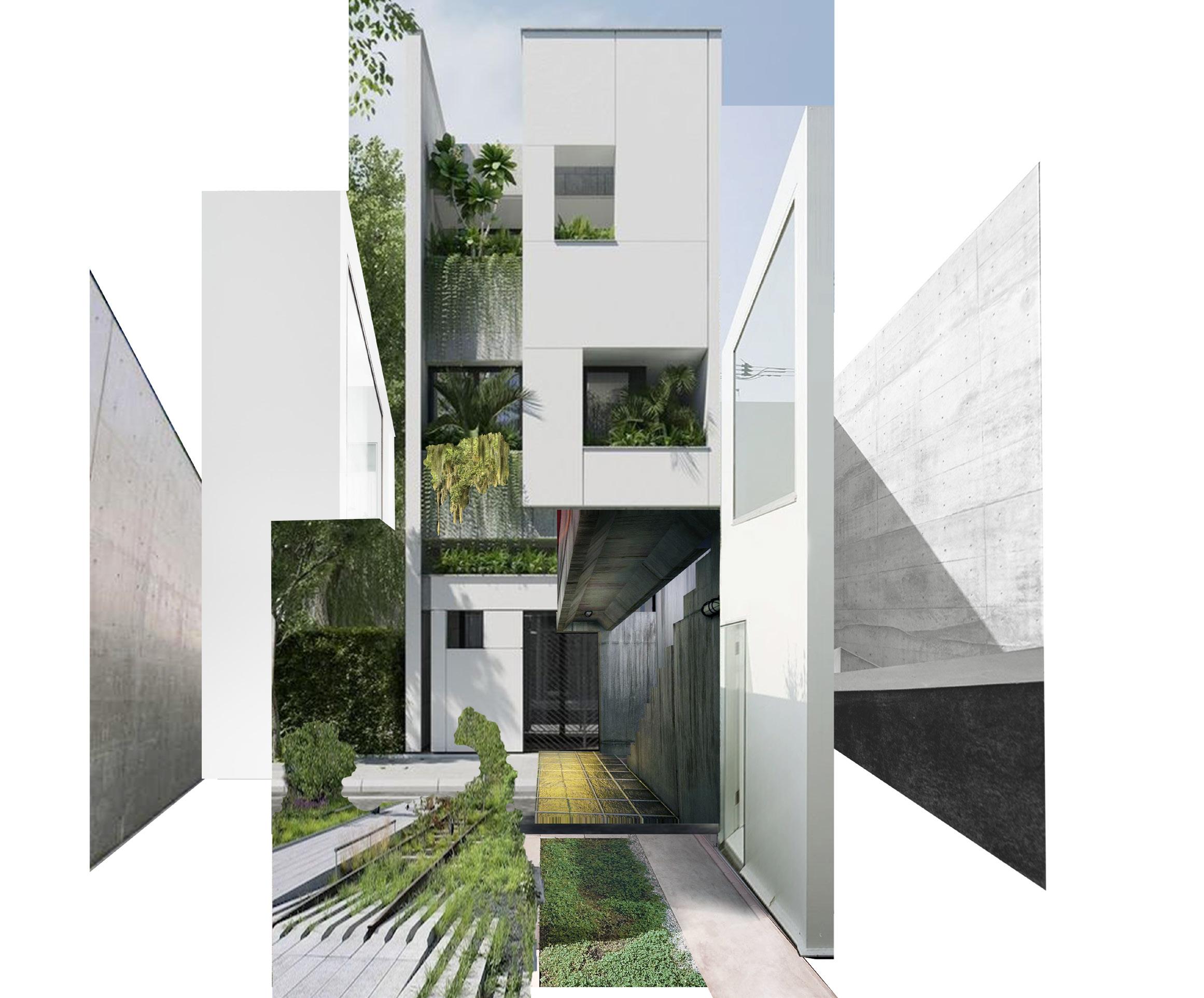
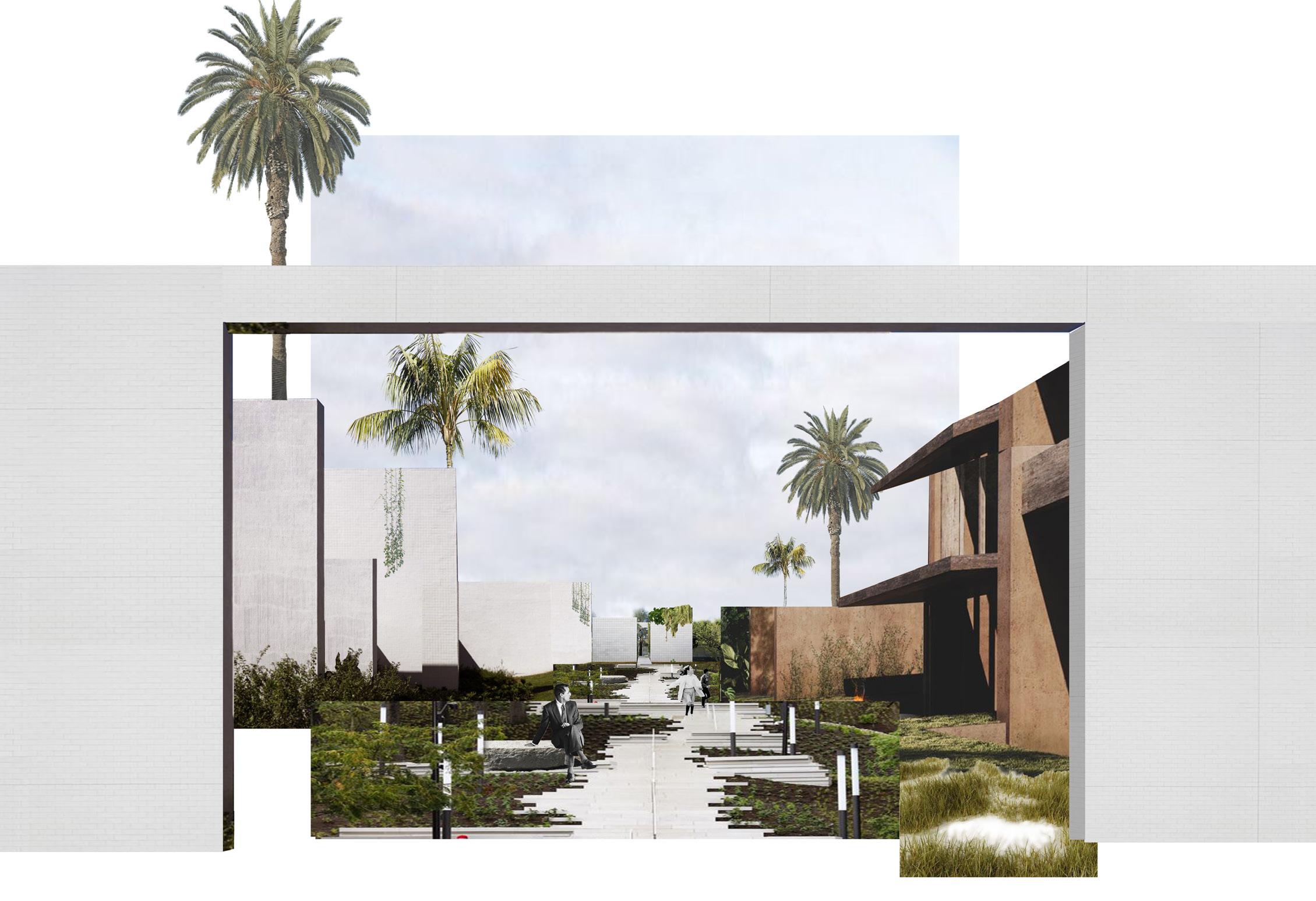
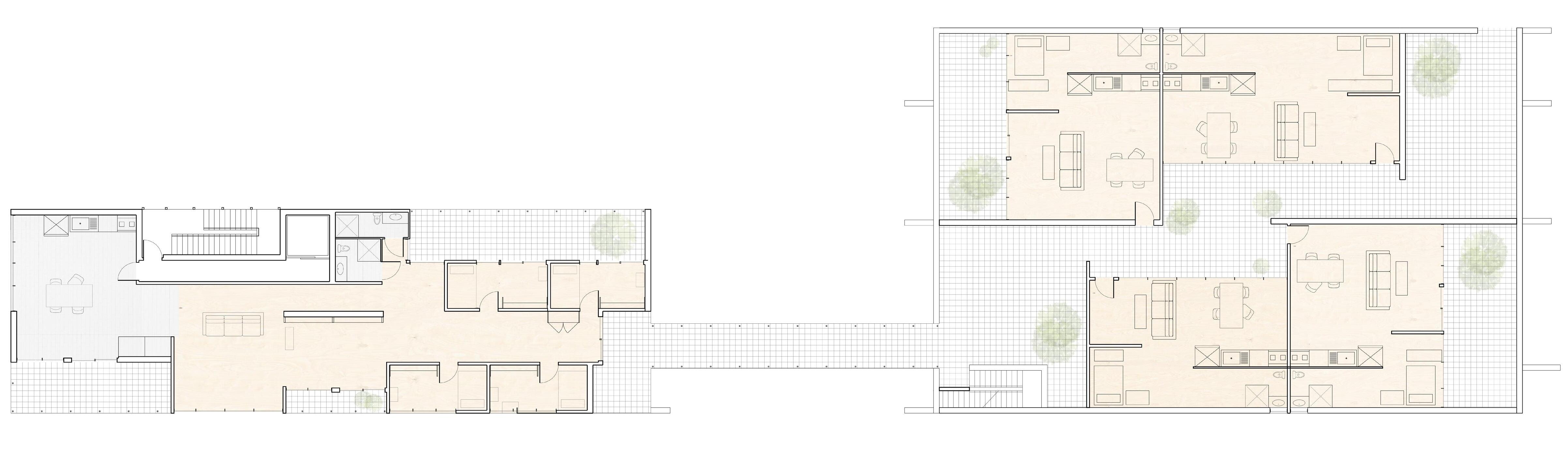
Wynwood, Miami is home to the intersection of multiple architectural and cultural scales. Situated adjacent to Wynwood Norte’s American Bakeries Company, (currently known as the Bakehouse Complex) this housing project expands the Complex’s proposal of a masterplan to create living and working spaces for artists. In reflection of Wynood Walls, a main feature in the district’s visual arts culture, the project determines programs in how the wall is employed. Public spaces are open; private spaces are enclosed. Two typologies of housing occur in response to context, both supported visually by the same walls. Ultimately, the wall provides new living possibilities for both those drawn to and currently residing in Wynwood.
Winning
Spring 2022
Instructor: David Costanza
Project Type: Individual Academic Auburn, New York
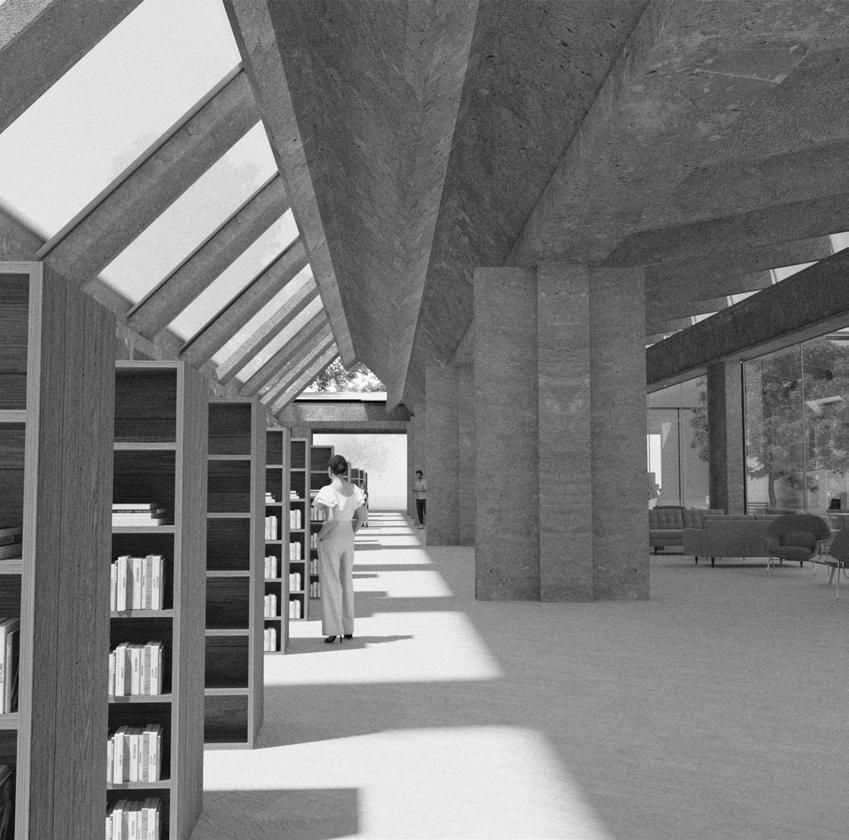
This small public branch library synthesizes a precedent and material system to create inventive redefinitions of organization, program, and tectonics. The Capilano Library by Patkau Architects generated the floor plan and program organization through concept of the building as a bar: private compartmentalized rooms, stacks, and reading rooms, each owner to a “bar” running the length of the plan. Open to both civic and historic contexts of Auburn, the library’s material system of precast concrete infrastructural elements carries out a gradient of opacity with glass as mediator. Public space reinterprets colloquial understanding of precast concrete elements; Double T’s establish opaque wall conditions in private spaces, constraining views to the commercial side of the site. Single-T’s and I-beams serve as columns, allowing ample light to enter. Hence, this plan is a hybrid system of The Capilano Library.
Spring 2024
Project Type: Individual
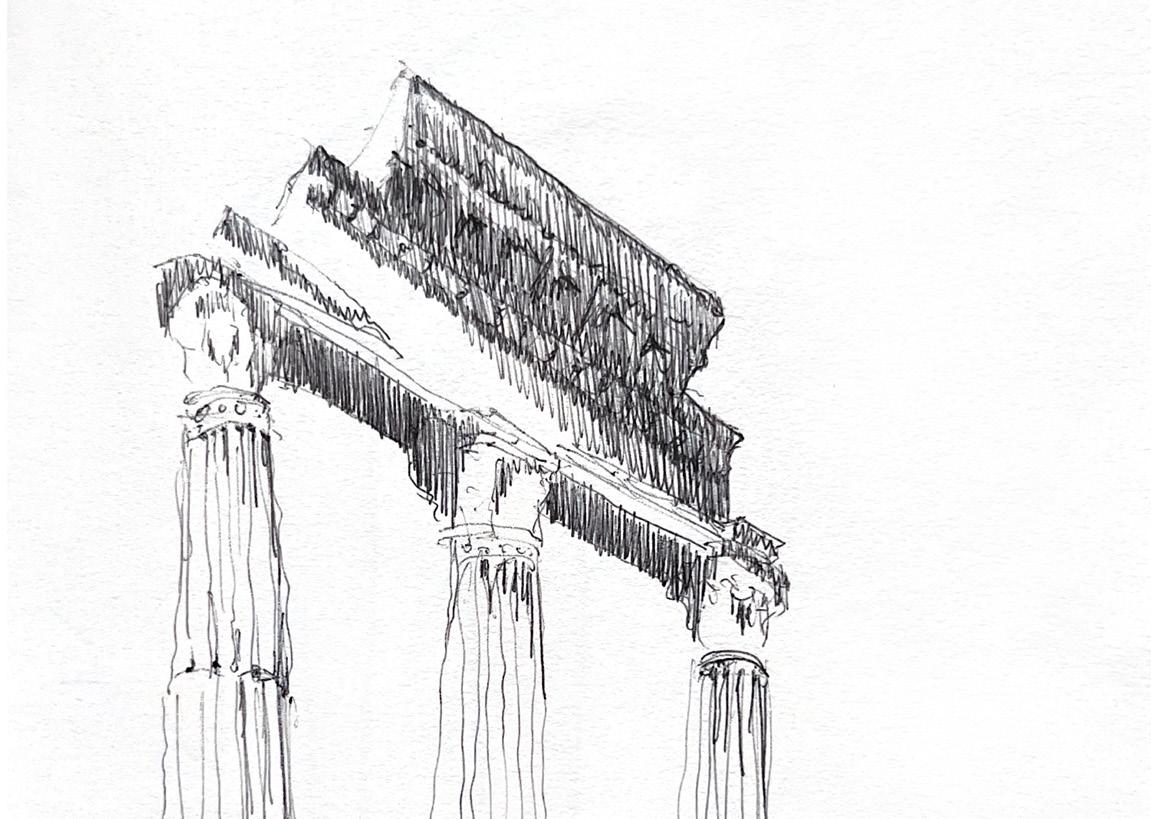
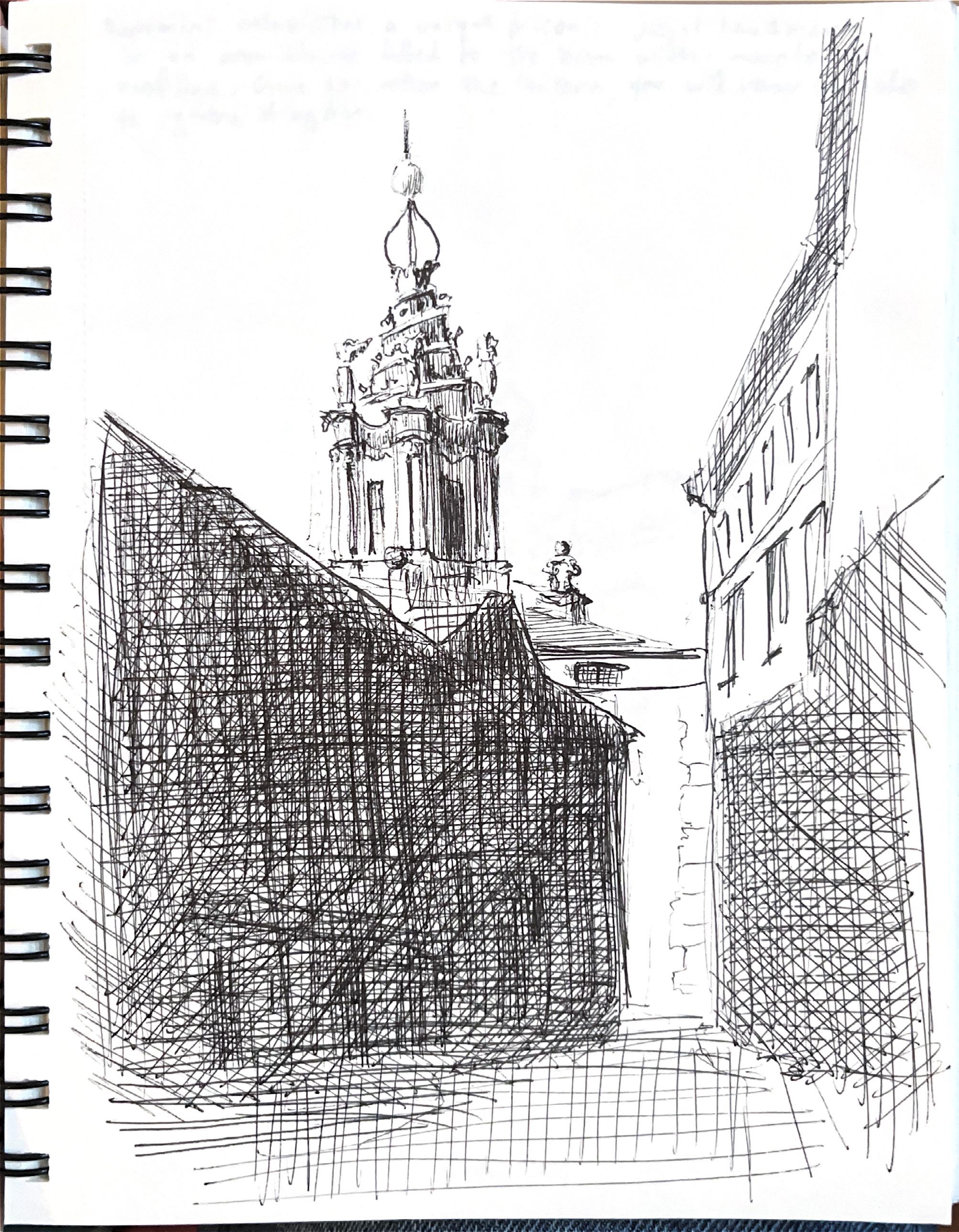
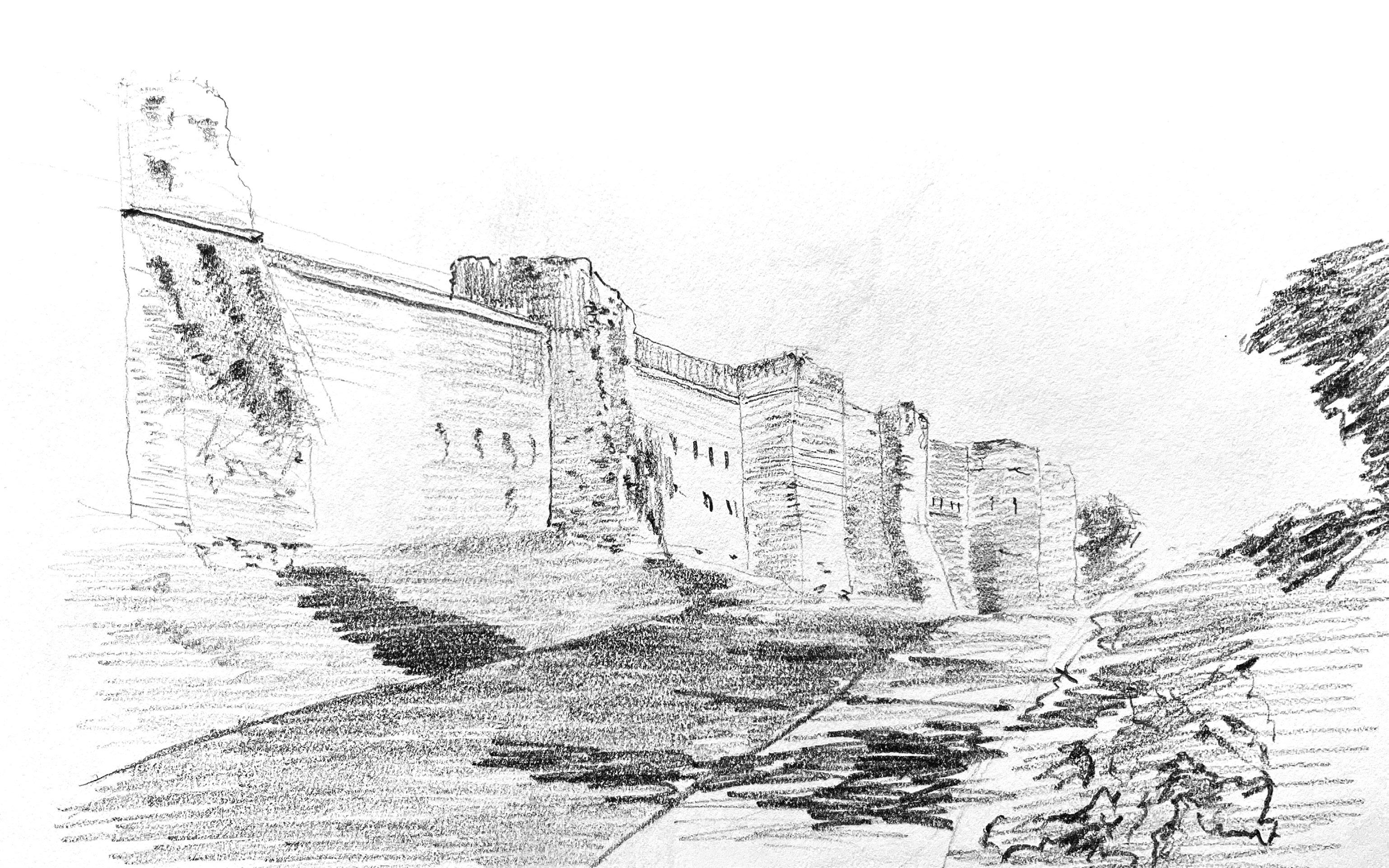
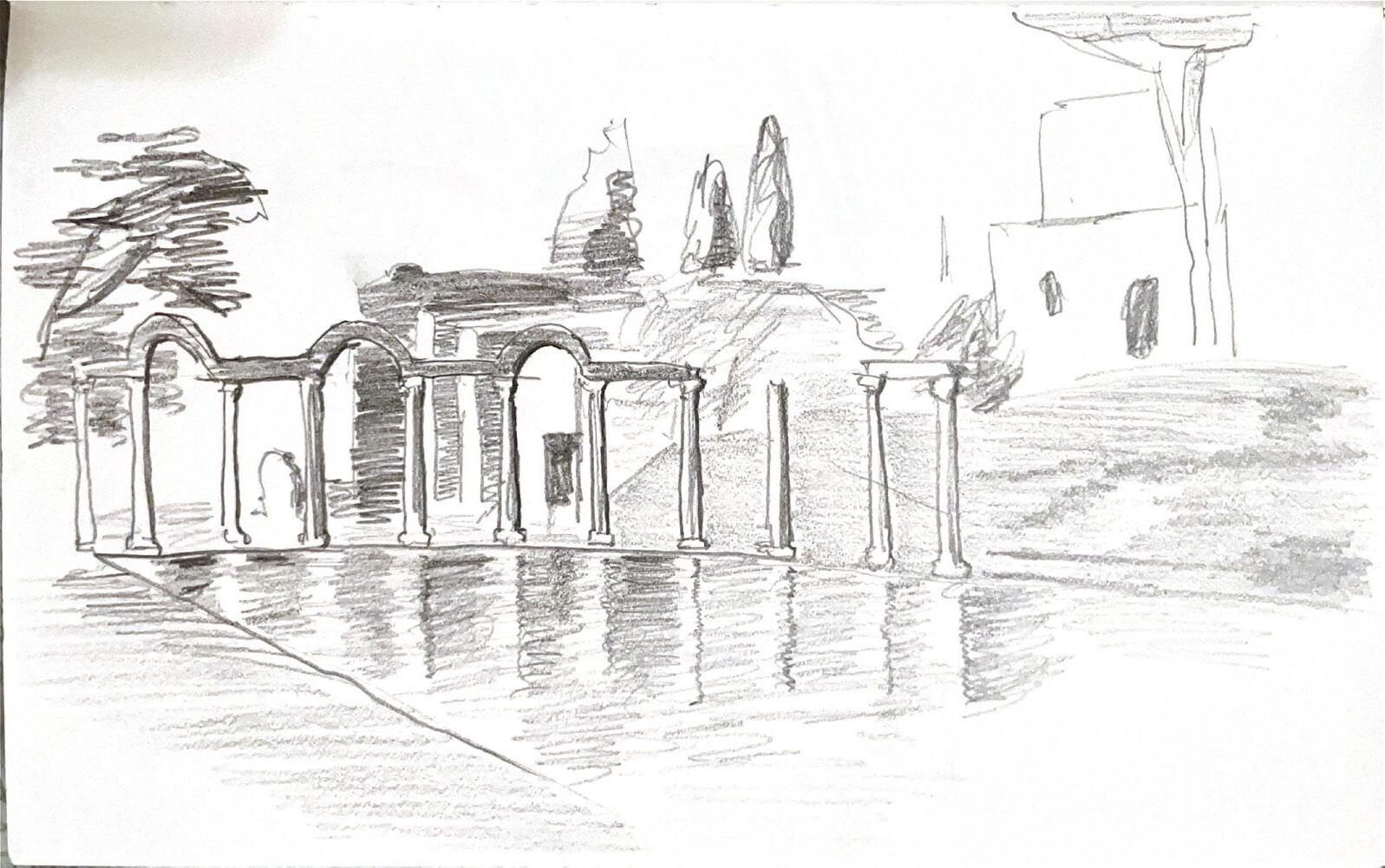
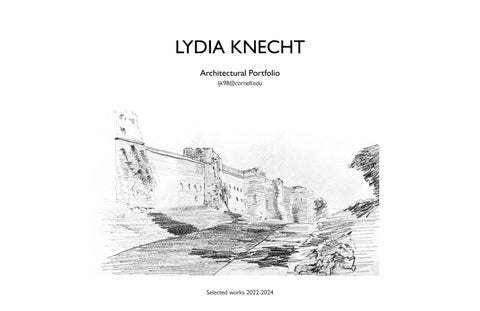
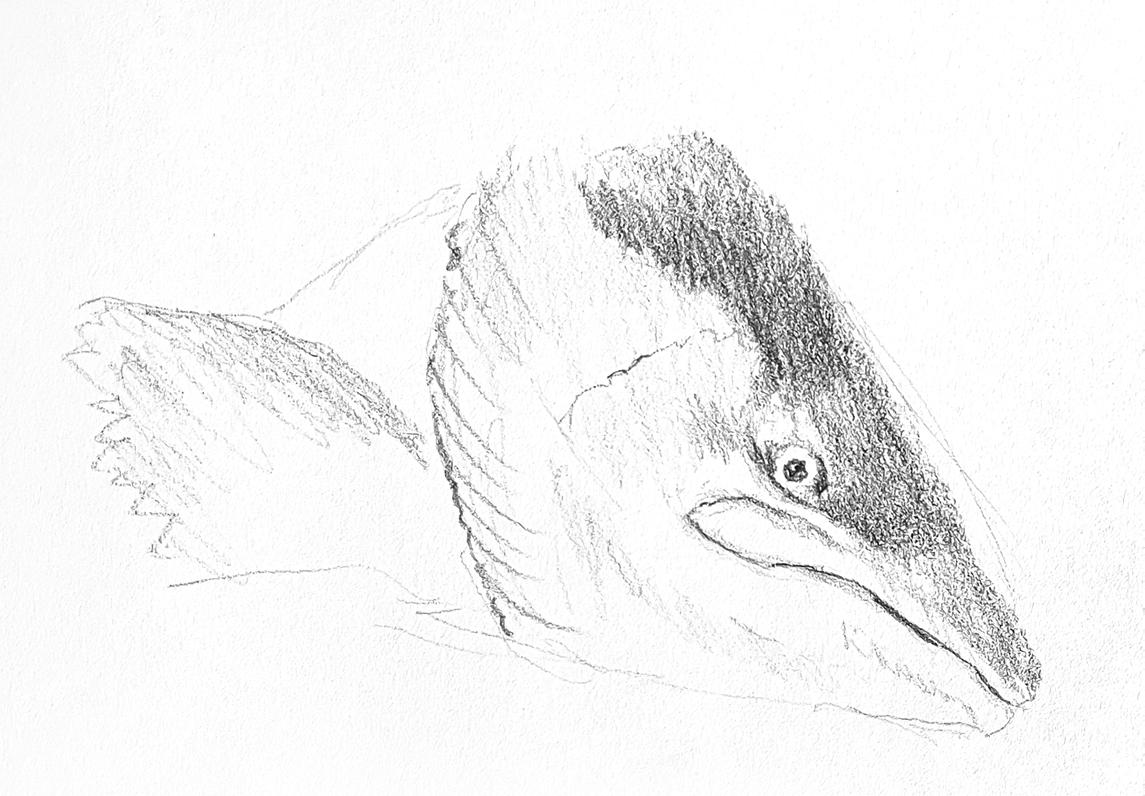
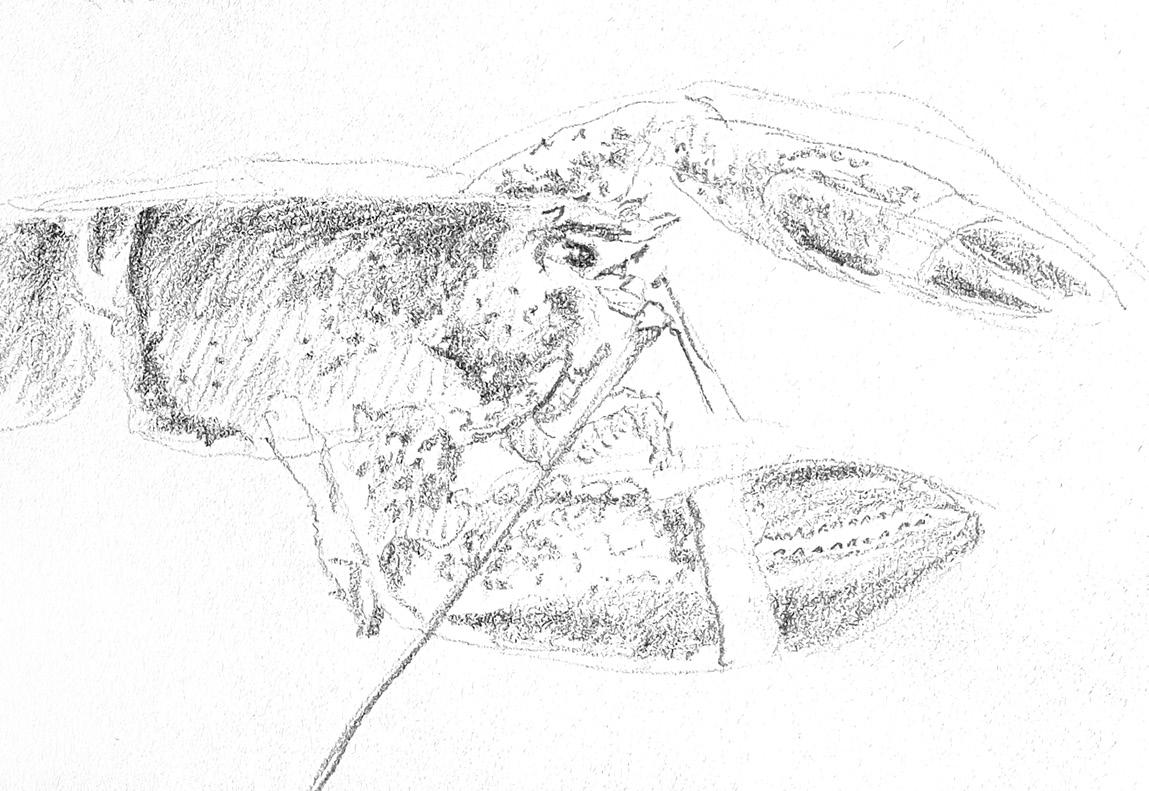
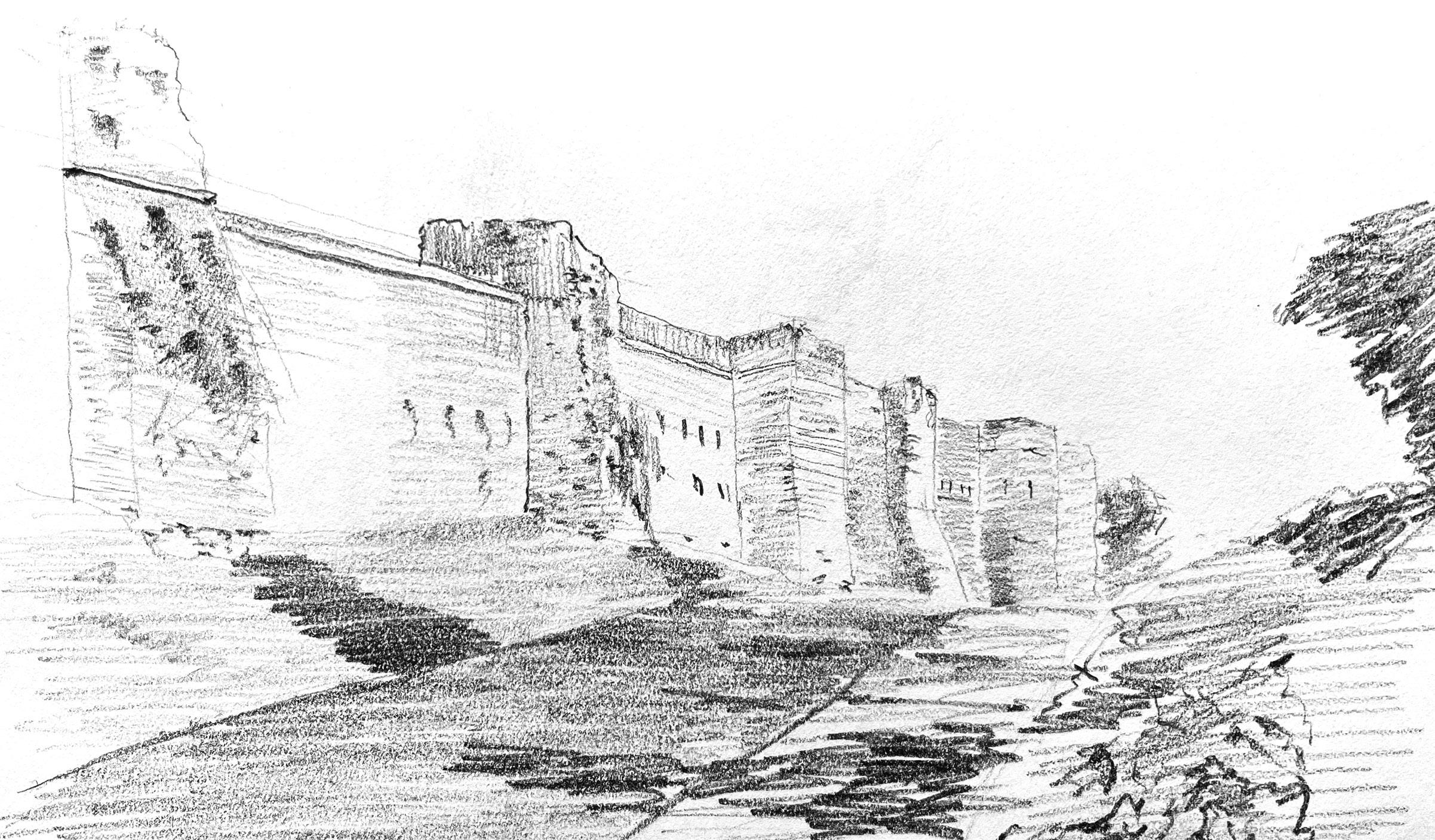
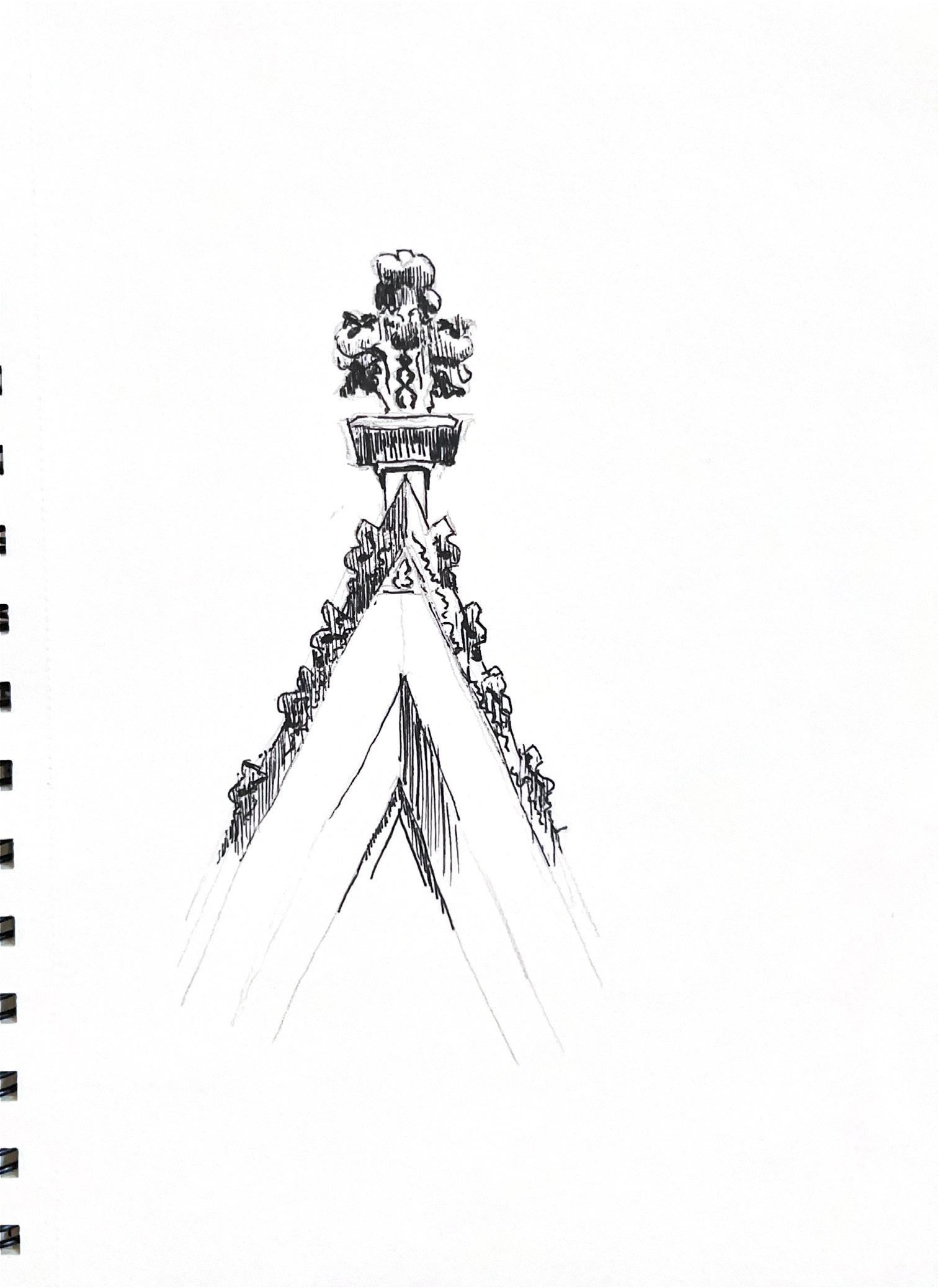
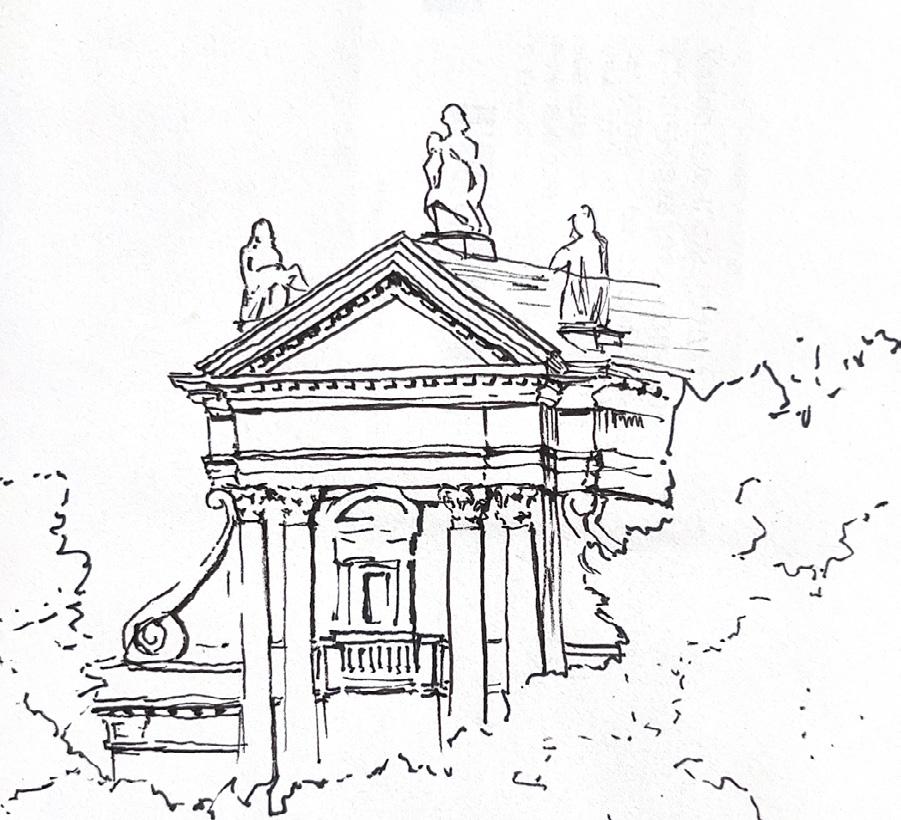
I find great enjoyment in sketching outside. These sketches were done on location around various cities in Italy during my semester abroad. I kept a small sketchbook on me everywhere I went, and used every opportunity possible to capture my experiences around the country.