Tri-C® Virtual Adjunct Faculty Conference
THE ANCHOR AND THE SAIL
Stability, Direction and Growth for the Modern Adjunct Educator
Virtual Adjunct Faculty Conference
THE ANCHOR AND THE SAIL
S tability, Direction and Growth for the Modern Adjunct Educator
The 2026 Cuyahoga Community College (Tri-C®) Adjunct Faculty Conference committee warmly welcomes you — faculty and staff from colleges and universities across Ohio and beyond — to today’s virtual conference.
Finding Stability and Direction
Our theme, The Anchor and the Sail: Stability, Direction and Growth for the Modern Adjunct Educator, speaks directly to the experience of all educators. We recognize the need for stability (the anchor) in your professional practice, even amidst the rapidly changing seas of higher education. This conference is designed to equip you with the tools and insights necessary to set a clear direction (the sail) in your teaching.
We will explore the current teaching and learning landscape together, seeking transformative ways to support students, faculty, staff and administrators in navigating continuous change.
A Note of Gratitude
We extend a special thank you to all our dedicated presenters today. We appreciate you sharing your valuable time and essential expertise. Your contributions are vital to this collective endeavor.
We also want to specifically acknowledge the adjunct faculty for the vital role you play in student success across all institutions of higher education. You are the anchors of our classrooms.
Opportunities for Growth
We genuinely hope that today’s sessions provide you with both the sturdy anchor of professional clarity and the powerful sail of personal and professional growth.
Sincerely,
The 2026 Tri-C Adjunct Faculty Conference Committee
“Education is the most powerful weapon which you can use to change the world.”
— Nelson Mandela
9 – 9:20 a.m.
Virtual Adjunct Faculty Conference
THE ANCHOR AND THE SAIL
Stability, Direction and Growth for the Modern Adjunct Educator
Welcome and Opening Remarks
Angela Baker, Moderator Manager, Adjunct Services
Michael A. Baston President, Cuyahoga Community College
Lindsay English Executive Vice President, Academic Affairs Cuyahoga Community College
Todd Kitchen Campus President, Eastern Campus
9:20 – 10:05 a.m. Keynote Address
10:15 – 11 a.m. Concurrent Session A
11:15 a.m. – noon Concurrent Session B
12:15 – 1 p.m. Concurrent Session C
Virtual Adjunct Faculty Conference
THE ANCHOR AND THE SAIL
Stability, Direction and Growth for the Modern Adjunct Educator
2026 Adjunct Faculty Conference Committee
Karen Cross-Hatten, Co-Chair
Sonja Elekhtaby, Co-Chair
Peter Anderson
Angela Baker
Helen Bednarz
Shandna Burroughs
David Crowell
Mike Donato
Redelia House
James Jarc
Dennis Joyce
Michael Lanstrum
Gary Nelson
Terry Sanders
Brad Scott
Cindy Shick
Leanne van Beers-Werneke
Chava Witt
Special Thanks
Television and Video Services
Information Technology Services
Adjunct Services
Marketing and Communications
Instructional Design and Learning Excellence
Sessions at a Glance
Click the hyperlinked titles for session descriptions and links to join.
Welcome and Opening Remarks
9 – 9:20 a.m.
Angela Baker
Michael A. Baston
Lindsay English
Todd Kitchen
Keynote Address
9:20 – 10:05 a.m.
Learning by Design: Unlocking Your Teaching DNA
James Frame, MHR, M.A., Educator, Speaker and Gallup-Certified Coach
Concurrent Session A
10:15 – 11 a.m.
A1 Confounded by Outcomes Assessment? CLOA Is Here To Help!
A2 Finding Harmony Amid the Hustle
A3 Help Is Here: Set Sail for a Healthy Semester
A4 Human Voices, AI Tools: Preserving Student Writing in the Age of AI
Concurrent Session B
11:15 a.m. – noon
B1 Anchoring Learning While Sailing Change
B2 The Mirror and the Map: Anchoring Practice and Charting Growth Through Reflective Teaching
B3 Trauma-Informed Pedagogy in the Urban Landscape
B4 Why Students Choose To Learn: Curb AI Misuse Through Motivation
Concurrent Session C
12:15 – 1 p.m.
C1 Anchored in Trauma-Informed Principles, Sail Toward Connection, Engagement and Retention
C2 Improve Your Course in Minutes: The Art of Teacher Reflection
C3 “These Kids Today”: The Science of Motivating Young Adults
C4 Lecture Capture and Videos: Anchoring Your Students With a Sail Toward Success
Presentation Pathways
Concurrent sessions are organized by Presentation Pathways, as described below.
Teaching and Learning Strategies
Engage and explore effective practices such as active learning, innovative teaching techniques and student engagement.
Curriculum and Assessment
Discuss opportunities to incorporate critical thinking in course design, learning outcomes and assessment strategies.
Faculty Scholarship and Engagement
Engage in reflective practices with peers to build and strengthen the teaching community, including the integration of Scholarship of Teaching and Learning (SoTL), personal growth and student development.
Technology for Teaching
Explore various technologies to support student learning.
Student Success
Identify and promote services, resources and success initiatives available to students.
Tri-C Specific
Sessions will discuss Tri-C-specific programs and/or policies.
Keynote Address
9:20 – 10:05 a.m.
Click the hyperlinked title to join the session.
Learning by Design: Unlocking Your Teaching DNA
James Frame, MHR, MA, Educator, Speaker and Gallup-Certified Coach
Every adjunct educator carries a unique “Teaching DNA” — a blend of talents, values and habits that fuels both purpose and performance. In this inspiring keynote, Gallup-Certified Strengths Coach James Frame helps faculty and staff rediscover their innate talents and move through a four-part growth journey: Know It Own It Apply It Grow It.
Through the lens of strengths and habits, participants will explore how to balance their anchor — their core values, stability and identity — with their sail — innovation, adaptability and continuous growth. Together, we’ll explore how self-awareness becomes confidence, confidence becomes application, and application becomes momentum.
Attendees will walk away with a “Personal Growth Map” and a practical framework for thriving in the modern adjunct landscape — renewing their energy, clarifying their direction, and aligning their teaching with what they do best.
Because when educators know it, own it, apply it and grow it, they don’t just navigate change in the modern age — they redefine what it means to teach with purpose.
About the Speaker
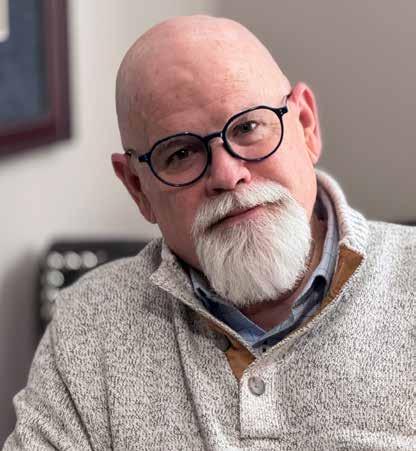
James Frame is an educator, leadership facilitator and Gallup-Certified Strengths Coach who helps individuals and teams unlock their unique Talent DNA to teach, lead and live with purpose. His signature framework— Know It Own It Apply It Grow It — guides participants from selfawareness to practical application, empowering them to turn insight into sustained professional growth.
Drawing on his experience in corporate leadership development and his work across higher education, Frame integrates positive psychology, strength-based development and habit awareness into an engaging approach that resonates with educators at every level. As a keynote speaker and faculty developer, he inspires adjuncts and academic professionals to align their strengths with their teaching mission, fostering renewed energy, connection and impact in the classroom and beyond.
CONCURRENT SESSION A
10:15 – 11 a.m.
Click the hyperlinked title to join the session.
A1 | Confounded by Outcomes Assessment? CLOA Is Here To Help!
Outcomes assessment is a required but often confusing part of faculty work. This session clarifies course outcomes, program outcomes, Essential Learning Outcomes (ELOs) and the use of SPOL. Participants are encouraged to bring questions and leave with practical guidance as part of the Q&A forum.
Pat Stansberry, Assistant Professor, English, Cuyahoga Community College
Meagan Fowler, Associate Professor, Librarian, Cuyahoga Community College
Amanda Nolan, Project Manager, Learning Outcomes, Assessment Systems, Cuyahoga Community College
Anne Distler, Executive Director, Curriculum Development, Assessment and Transfer, Cuyahoga Community College
At the end of this session, attendees will be able to:
1. Explain why outcomes assessment is critical to student success
2. Connect course-level outcomes to program outcomes and institutional ELOs
3. Use SPOL to submit outcomes assessment data
A2 | Finding Harmony Amid the Hustle
This interactive session reframes work-life balance as sustainable harmony rather than perfection. Participants will explore boundaries, priorities and energy management strategies that support both professional effectiveness and personal well-being across changing seasons of work and life.
Rachel Wallach, Manager, Talent Development, Cuyahoga Community College
At the end of this session, attendees will be able to:
1. Describe whole-life balance as managing demands while maintaining personal well-being
2. Apply strategies to manage energy, priorities and boundaries throughout the workday
3. Identify barriers that may prevent sustainable balance
A3 | Help Is Here: Set Sail for a Healthy Semester
Faculty are often the first to notice when students may be struggling with mental health concerns. This session provides an overview of mental health and suicide prevention indicators, communication tips and campus resources. Participants will leave better prepared to recognize concerns, approach students and connect them to appropriate support.
Sue Dieterich, Assistant Professor, Counseling, Cuyahoga Community College
Michelle Nicopolis, Professor, Psychology, Cuyahoga Community College
At the end of this session, attendees will be able to:
1. Identify common mental health warning signs and risk factors among college students
2. Locate mental wellness and suicide prevention resources available to the Tri-C community
3. Apply strategies for initiating supportive conversations and making referrals
A4 | Human Voices, AI Tools: Preserving Student Writing in the Age of AI
As AI reshapes writing instruction, adjunct faculty are often asked to adapt quickly with limited time and resources. This session introduces practical, voice-centered and process-based writing strategies that strengthen student learning while reducing reliance on AI-generated work. Participants will explore low-prep approaches — such as low-stakes writing, peer review, reflection and sustainable grading — that promote authentic student voice and instructional sustainability.
Donna Hunt, Program Manager, Arts and Humanities, Lorain County Community College
At the end of this session, attendees will be able to:
1. Identify writing practices that strengthen student voice and reduce reliance on AI-generated work
2. Implement low-prep, sustainable strategies that fit adjunct teaching realities
3. Explain how voice-centered, process-oriented instruction supports equity, academic integrity and instructional resilience
THE ANCHOR AND THE SAIL
CONCURRENT SESSION B
11:15 a.m. – noon
Click the hyperlinked title to join the session.
B1 | Anchoring Learning While Sailing Change
This session explores how adjunct faculty can serve as both the anchor and the sail in practice-based, skills-intensive programs. Participants will examine how foundational teaching practices create consistency, while intentional design, communication and instructional technology provide direction for student learning and professional readiness.
Kristen Medvetz, Lecturer, Surgical Technology, Cuyahoga Community College
At the end of this session, attendees will be able to:
1. Identify foundational teaching practices that provide stability and consistency in skills-based learning environments
2. Apply the “anchor and sail” framework to course design, communication and instructional technology
3. Describe collaborative strategies that support student growth and workforce preparation
B2 | The Mirror and the Map: Anchoring Practice and Charting Growth Through Reflective Teaching
This interactive session introduces reflective teaching as a practical tool for stability, direction and growth in adjunct practice. Participants will explore reflective frameworks — including Kolb’s Experiential Learning Cycle and Brookfield’s Four Lenses — and apply them to real instructional decisions. The session emphasizes sustainable reflection practices that support continuous improvement and student engagement.
Karen Cross-Hatten, Adjunct Faculty, Business, Cuyahoga Community College
At the end of this session, attendees will be able to:
1. Explain reflective teaching as a practical, evidence-informed strategy that strengthens instructional stability, improves student engagement, and supports adjunct faculty success in dynamic teaching environments.
2. Apply at least one of Brookfield’s Four Lenses to analyze a real classroom experience and identify one specific instructional adjustment to enhance learning outcome and use Kolb’s Experiential Learning Cycle to transform a teaching experience into a structured reflection process — moving from observation to conceptual insight and ending with an actionable improvement plan they can implement in their next class session
3. Develop a realistic and sustainable reflective teaching routine by selecting at least two reflection tools and outlining how they will use them to gather feedback and guide continuous improvement
B3 | Trauma-Informed Pedagogy in the Urban Landscape
This session explores trauma-informed strategies designed for urban community college contexts. Participants will learn how predictability, cognitive scaffolding and early reachin practices support psychological safety, engagement and academic success for students navigating systemic stressors.
Terry Webb, Assistant Dean, Counseling, Cuyahoga Community College
At the end of this session, attendees will be able to:
1. Identify common trauma-related triggers and redesign course elements to increase psychological safety
2. Implement a reach-in strategy to identify student barriers and connect learners to resources
3. Develop strategies to prevent secondary traumatic stress and support professional sustainability
B4 | Why Students Choose To Learn: Curb AI Misuse Through Motivation
This session reframes AI misuse as a motivation and design challenge rather than a discipline problem. Drawing on adult learning theory, motivation research and the Universal Design for Learning, participants will explore how course design influences student engagement, integrity and learning choices. The session offers practical strategies to promote intrinsic motivation and authentic academic work.
Arlo Graham, Sr. Instructional Designer, Cuyahoga Community College
At the end of this session, attendees will be able to:
1. Explain how motivation and course design influence AI use and academic integrity
2. Differentiate between intrinsic and extrinsic motivation and apply this distinction to instructional decisions
3. Design assignments that emphasize learning process, growth and authentic thinking
THE ANCHOR AND THE SAIL
Stability, Direction and Growth for the Modern Adjunct Educator
CONCURRENT SESSION C
12:15 – 1 p.m.
Click the hyperlinked title to join the session.
C1 | Anchored in Trauma-Informed Principles, Sailing Toward Connection, Engagement and Retention
This session introduces trauma-informed, brain-based teaching practices that foster connection, engagement and retention. Participants will explore how empathy, emotional regulation and communication strategies create safe, welcoming learning environments that support student success.
Sue Dieterich, Assistant Professor, Counseling, Cuyahoga Community College
Renee Kolecki, Lecturer, Counseling, Cuyahoga Community College
At the end of this session, attendees will be able to:
1. Identify the prevalence and impact of trauma in community college settings
2. Explain how trauma affects brain function, attention and emotional regulation
3. Evaluate and strengthen their use of empathy to support student engagement and retention
C2 | Improve Your Course in Minutes: The Art of Teacher Reflection
This session introduces quick, practical reflection strategies instructors can use to improve courses with minimal time investment. Participants will explore reflection tools, guiding questions and examples of instructional adjustments that support continuous improvement.
Katlyn Thomas, Adjunct Faculty, English as a Second Language, Cuyahoga Community College
At the end of this session, attendees will be able to:
1. Distinguish between actionable and non-actionable reflection
2. Select and use reflection tools that fit their teaching style
3. Implement a two-minute reflection routine after each lesson
C3 | “These Kids Today”: The Science of Motivating Young Adults
Based on 10 to 25: The Science of Motivating Young People, this session explores how young adults think, respond to authority and engage in learning. Participants will examine practical strategies for motivating students while reducing conflict and frustration in the classroom.
Amy Roediger, Adjunct Faculty, Chemistry, Cuyahoga Community College
At the end of this session, attendees will be able to:
1. Identify common thinking patterns of young adult learners
2. Explore research-based strategies for motivating young adults
3. Apply new motivational approaches in their educational settings
C4 | Lecture Capture and Videos: Anchoring Your Students With a Sail Toward Success
This session examines lecture captures and instructional videos as intentional teaching tools rather than simple accommodations. Participants will explore how video can provide instructional stability, clarify expectations, and support self-directed learning in both in-person and online courses.
John Kerezy, Associate Professor, Media and Journalism Studies, Cuyahoga Community College
Michelle Reed, Online Learning Administrator, Lecture Capture, Online Learning and Academic Technology, Cuyahoga Community College
At the end of this session, attendees will be able to:
1. Explain the instructional benefits of using video face-to-face and online courses
2. Identify key opportunities to integrate video to support learning outcomes
3. Use core features of a lecture capture platform effectively Stability, Direction and
Adjunct Faculty Conference
THE ANCHOR AND THE SAIL
Information and Upcoming Events
Tri-C
Adjunct Services Virtual Office Hours and Contact Information
• Eastern Campus: Fridays, Noon – 1 p.m. | Sonja Elekhtaby, Manager
• Metropolitan Campus: Fridays, 10:30 – 11:30 a.m. | Karen Cross-Hatten, Manager
• Western Campus: Wednesdays, Noon – 1 p.m. | Angela Baker, Manager
• Westshore Campus: Mondays, Noon – 1 p.m. | Dennis Joyce, Manager
Adjunct Faculty Appreciation: Making a Difference Every Day
This Collegewide virtual event, which recognizes the dedication and teaching excellence of TriC’s adjunct faculty for the 2025-2026 academic year, will launch in April. Be sure to stop by your campus Adjunct Services office from April 13 – 14 for special treats and giveaways. Watch for more details coming soon!
Faculty Development Calendar
Tri-C is committed to helping faculty grow and develop at every stage of their careers. The Office of Academic Professional Development (also known as Faculty Development) collaborates with several Collegewide and campus-based departments to support the ongoing training and development needs for all full-time and adjunct faculty. Find upcoming faculty development opportunities here!
Adjunct Development and Professional Training (ADAPT) Certificate Program
The Adjunct Development and Professional Training (ADAPT) Certificate Program offers an opportunity for Tri-C adjunct faculty to enhance their classroom success and promote engagement within the Tri-C community, providing a financial incentive of $500. These stipend-eligible categories are designed to focus on interdisciplinary, pedagogy and technology competencies. Learn more about the program here
Reminder: If you are in the Track I cohort, your stipend request deadline is one year from your date of hire, while the Track III deadline is April 15. Track II will launch in Fall 2026. Contact Adjunct Services if you have questions.
AdjunctNation.com
Adjunct Services has subscribed to this professional development resource. Contact your respective Adjunct Services office for details.
SAVE THE DATE! Ohio Association of Two-Year Colleges (OATYC) Conference
The 2026 Ohio Association of Two-Year Colleges (OATYC) Annual Conference will be held on Friday, Oct. 9, at Owens Community College in Perrysburg. Watch for more details coming soon!
Excellence in Teaching Award in Honor of Ralph M. Besse
The annual Excellence in Teaching Award in Honor of Ralph M. Besse recognizes Tri-C faculty Collegewide for their commitment to academic integrity, stimulation of intellectual development, and investment in students within and beyond the classroom.
Congratulations to the 2025 award winners!
2025 Adjunct Faculty Winners:
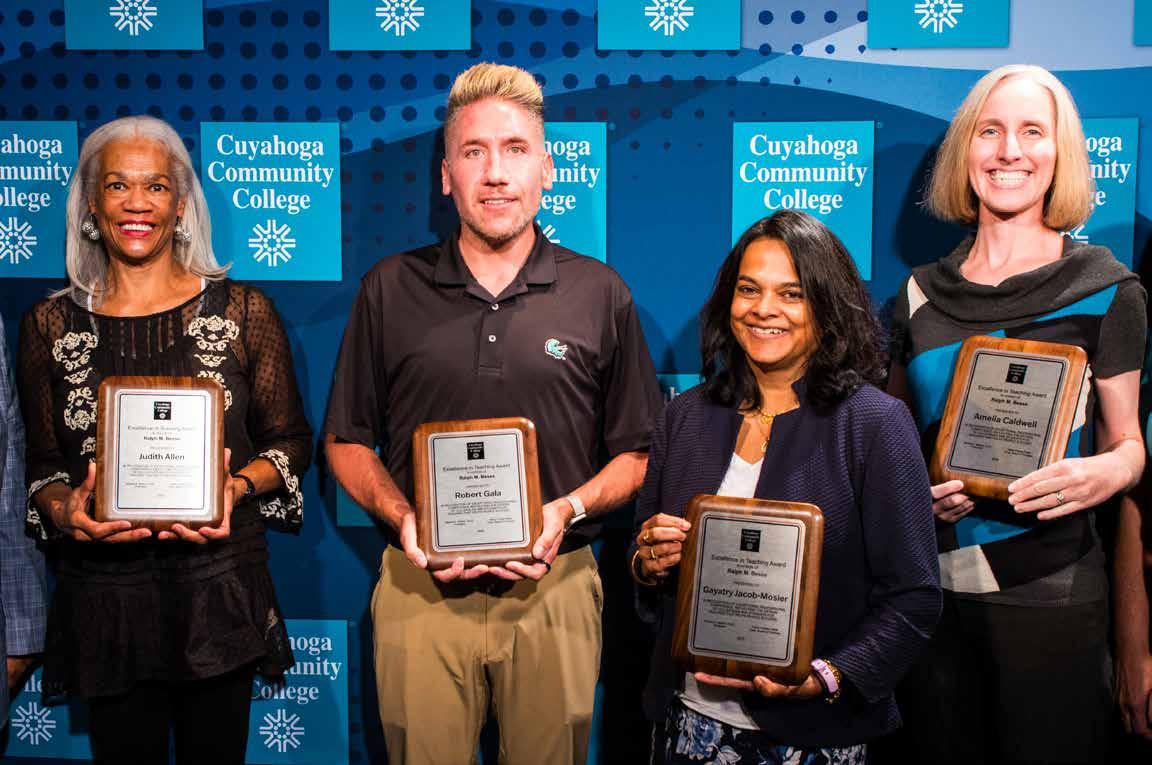
From left: Judith Allen, Lecturer*, Business Administration, Western Campus; Robert Gala, Adjunct Faculty*, Philosophy, Metropolitan Campus; Gayatry Jacob-Mosier, Lecturer*, Chemistry, Metropolitan Campus; Amelia Caldwell, Adjunct Faculty, Business Administration, Metropolitan Campus
*Current titles as of AY25-26: Judith Allen, Adjunct Faculty; Robert Gala, Lecturer; and Gayatry Jacob-Mosier, Assistant Professor
Virtual Adjunct Faculty Conference
THE ANCHOR AND THE SAIL
Stability, Direction and Growth for the Modern Adjunct Educator