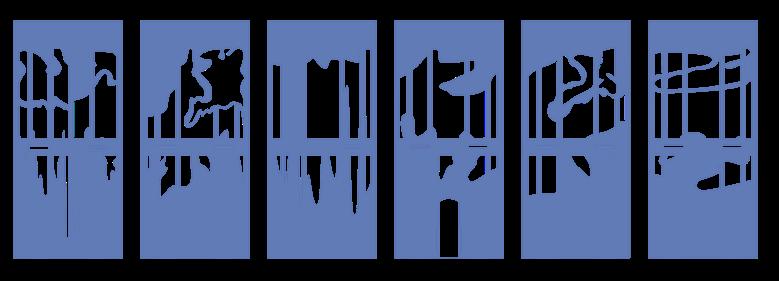
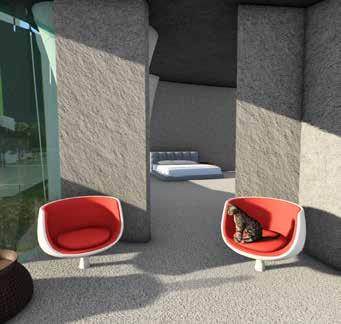
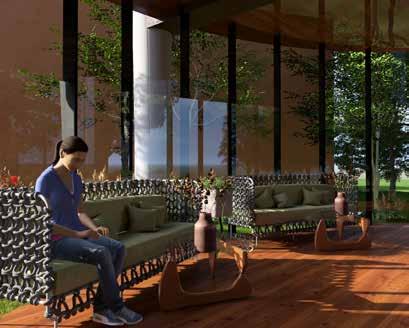
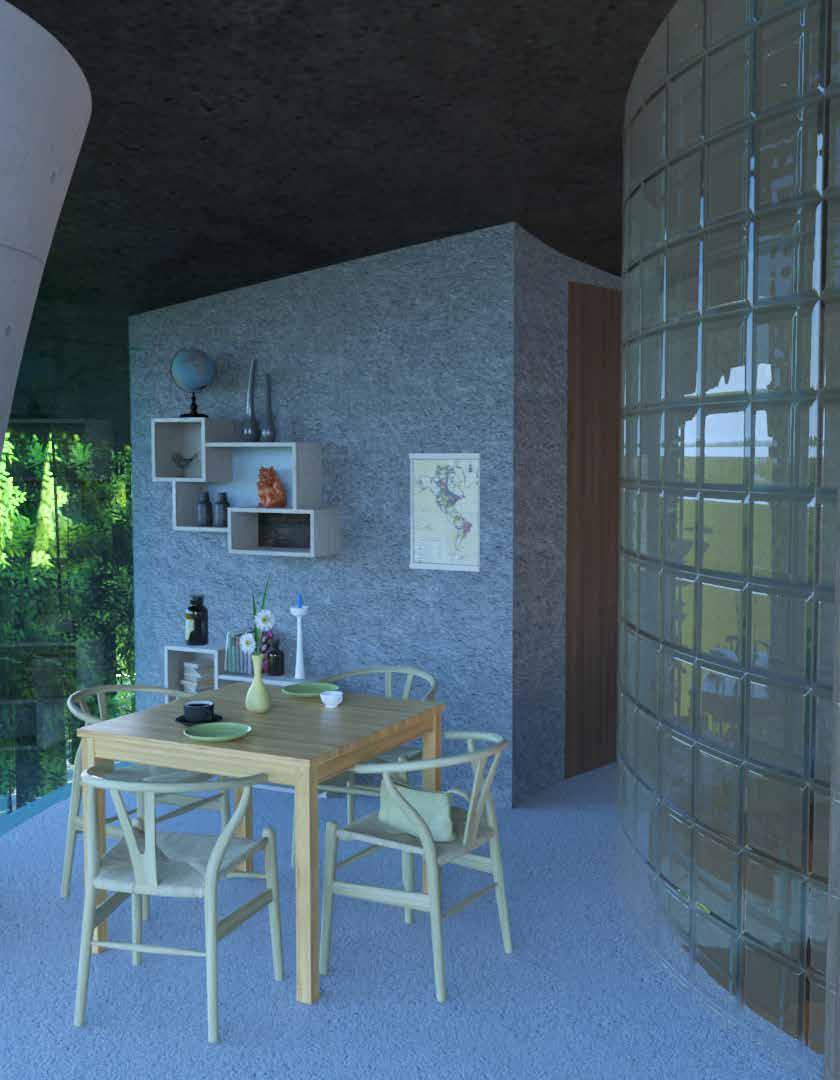
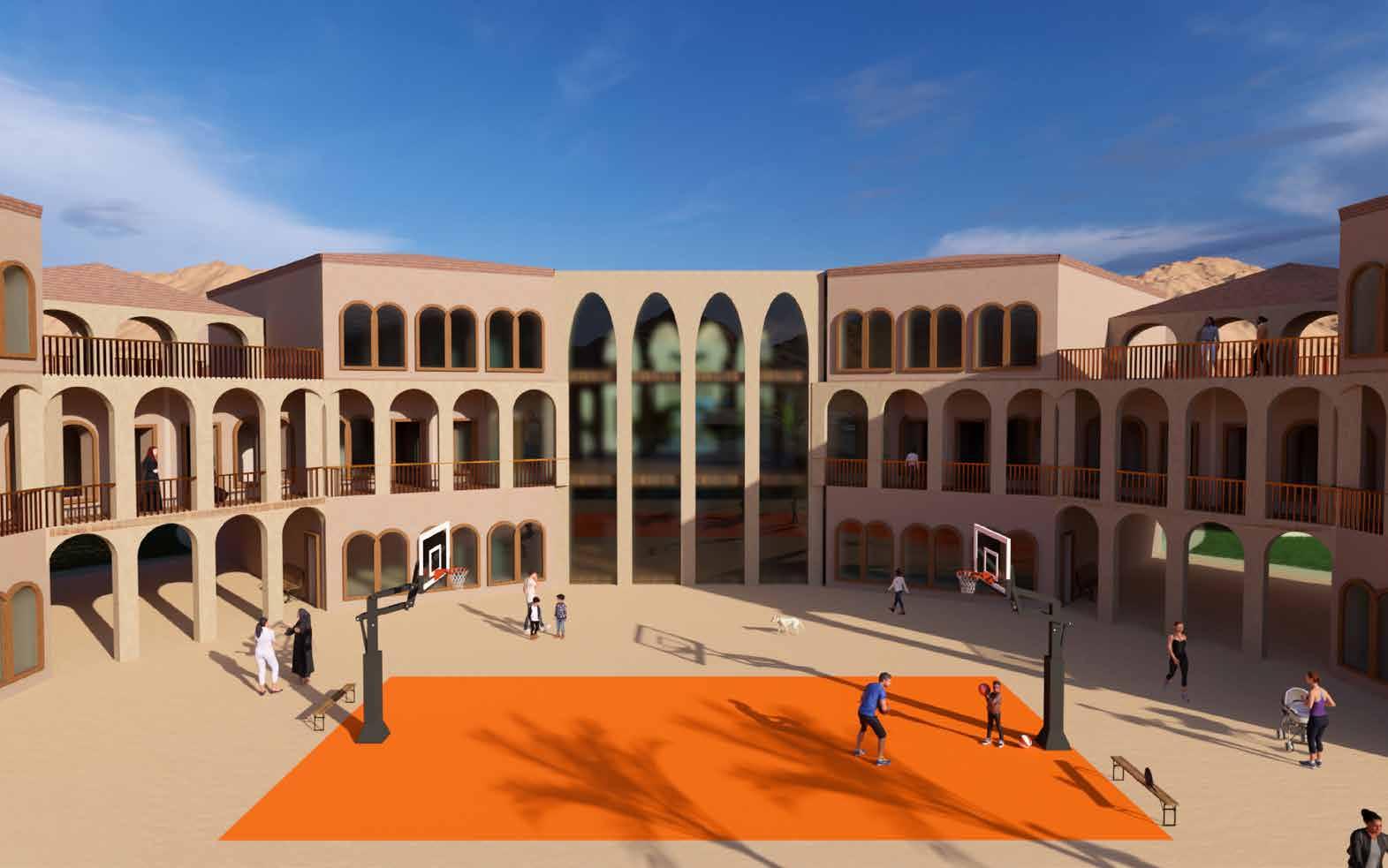
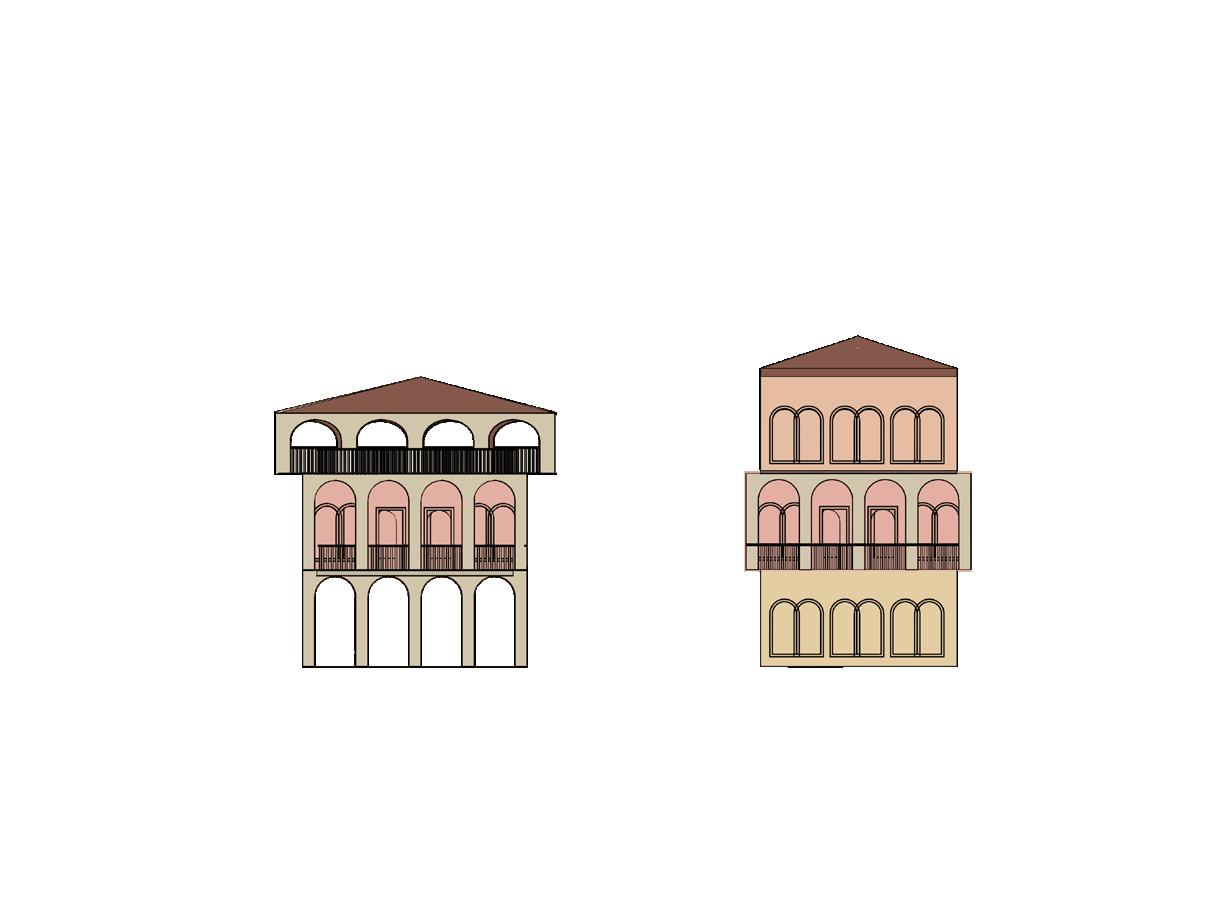
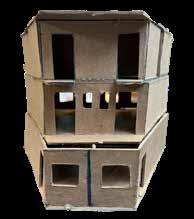
The Manenberg Residence a multi-family residential building Spring 2022 Manenburg, South Africa
THE WORKSHOP
a mixed-use building
Fall 2023 | Integrative Studio Charlottsville, VA
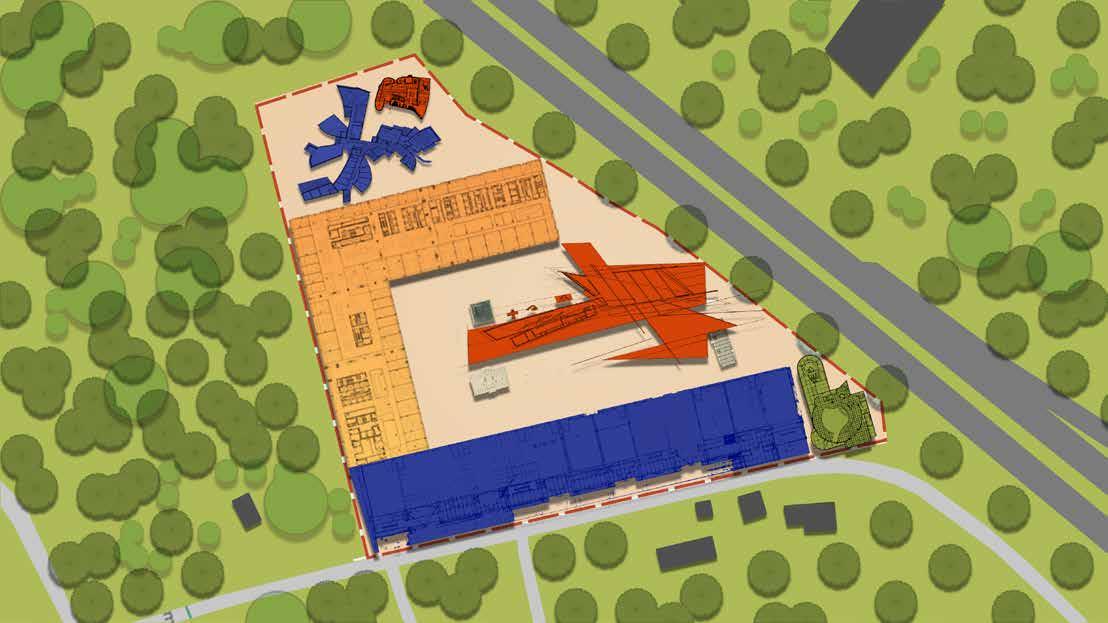
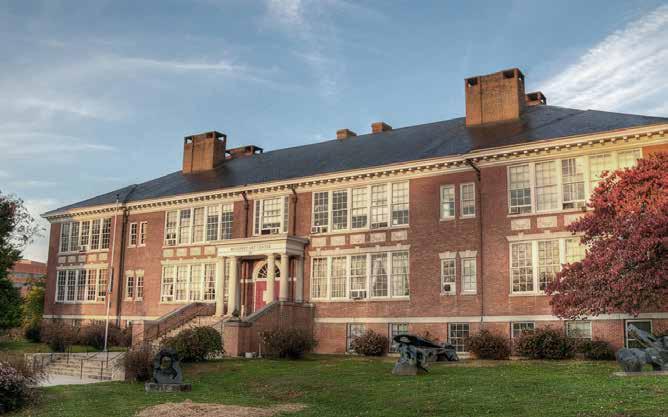
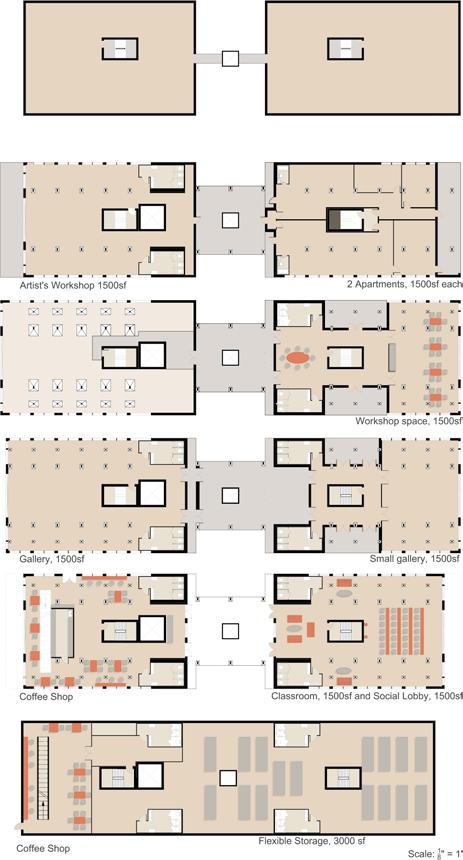
The Workshop is located near downtown of Charlottsville, VA. The building is an extension of the McGuffey Arts Center, located in its front yard. The Workshop is meant to house artists, provide spaces for education and spaces for exhibitions, storage for artworks, as well as serve as a social space for the residents of Charlottsville. The design of the buidling heavily focuses on separting its uses in a manner that is safe but still promotes interaction among its visitors and residents.
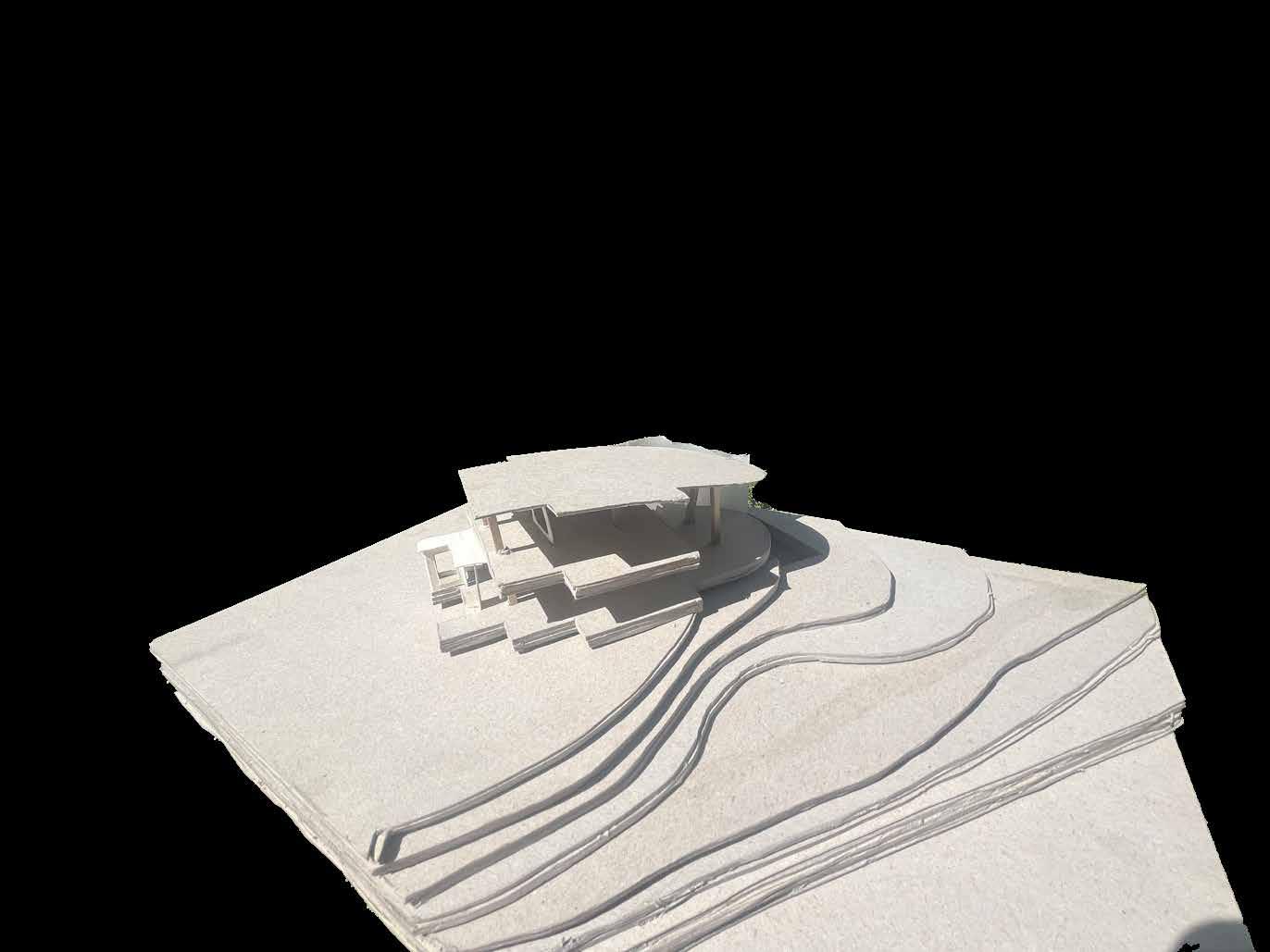
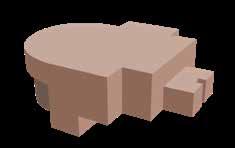
The process for the design of this building included creating a variety of conceptual models, that played with a limited space provided on the front lawn of the existing museum. These models served as an inspiration for the final project.
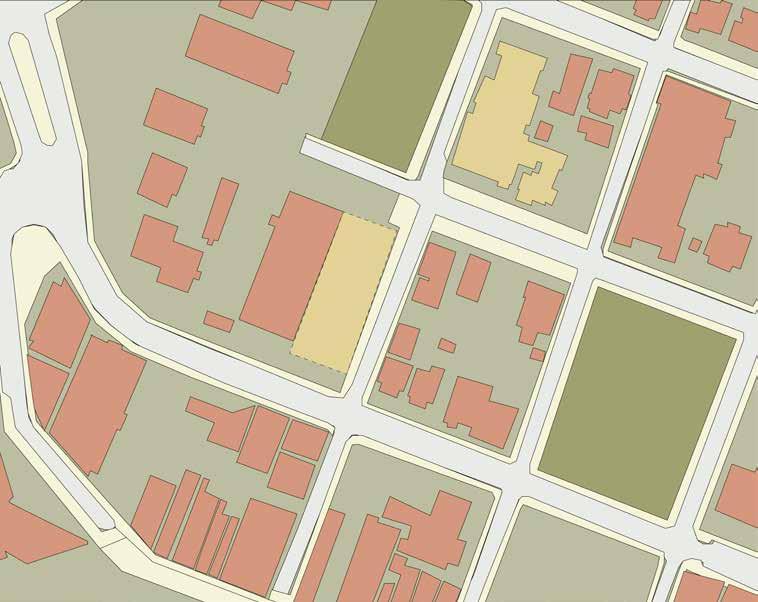
The space is located near the downtown of Charlottsville, which means it is accessible to a large number of tourists, visitors and locals. It is also only a few blocks away from the railroad that connects Charlottsville to other cities in Virginia as well as other states. This was a key factor in considering the design of the building, since I wanted for it to be memorable yet still fit in with the existing design of the neighbourhood.
MAIN STREET
the existing McGuffey Arts Center
RAILROAD
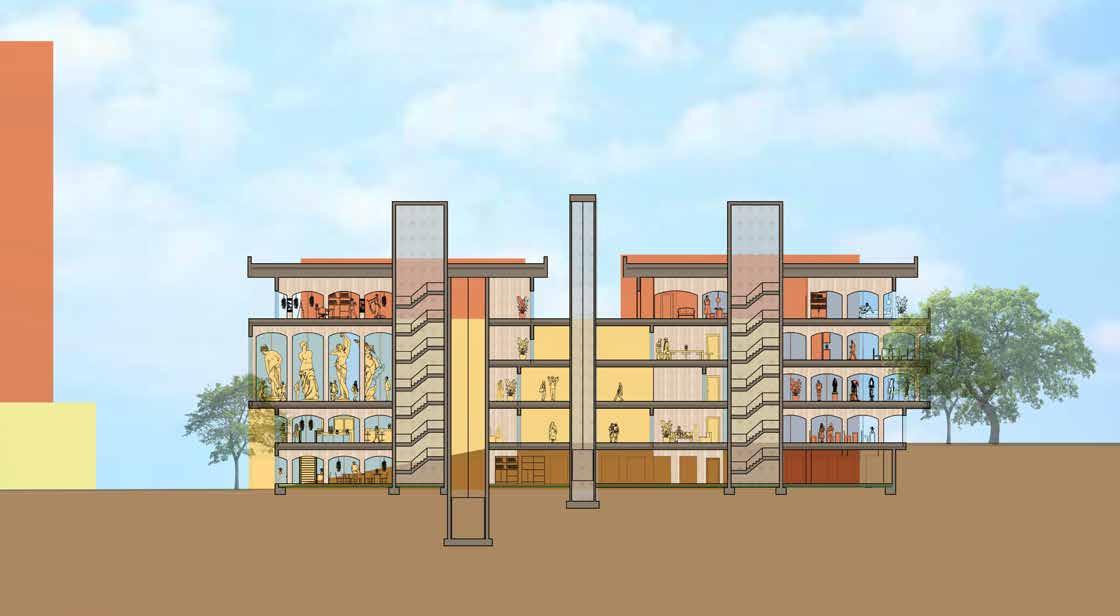
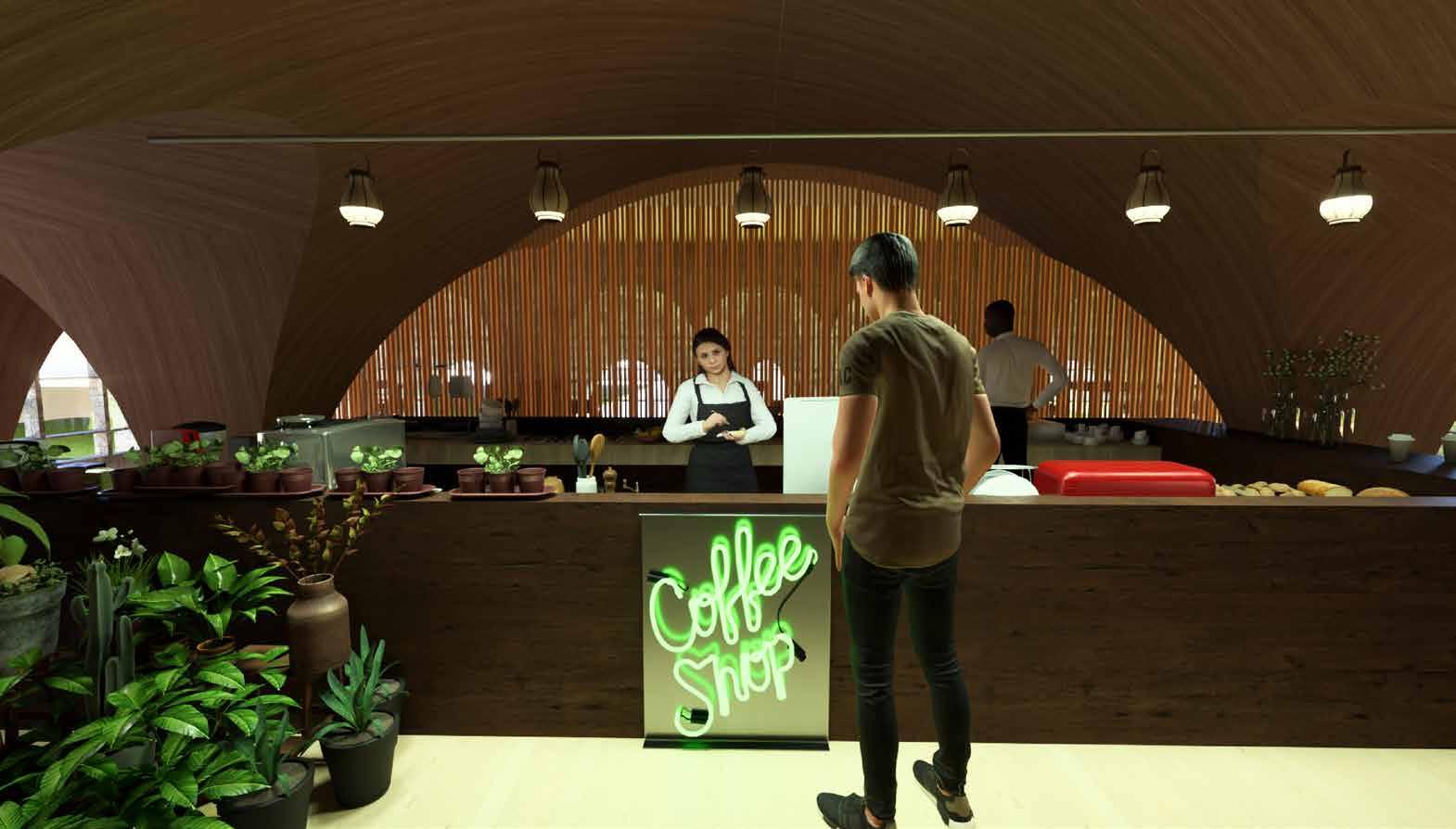
The structure is meant to be a delicate balance between private and public. The building is meant to provide a lot of services to the public such as the garden, the coffeeshop, the gallery and the classrooms open to visitors. However, it is also supposed to maintain the privacy of the seasonal artists that reside in htere, as well as a few residents. The resolution to this challenge was seprating activities by height,, making lower floors accessible to the public but increasing security and privacy as the building goes up. This way, there is room for interactions between visitors and residents without violating their privacy and comfort.
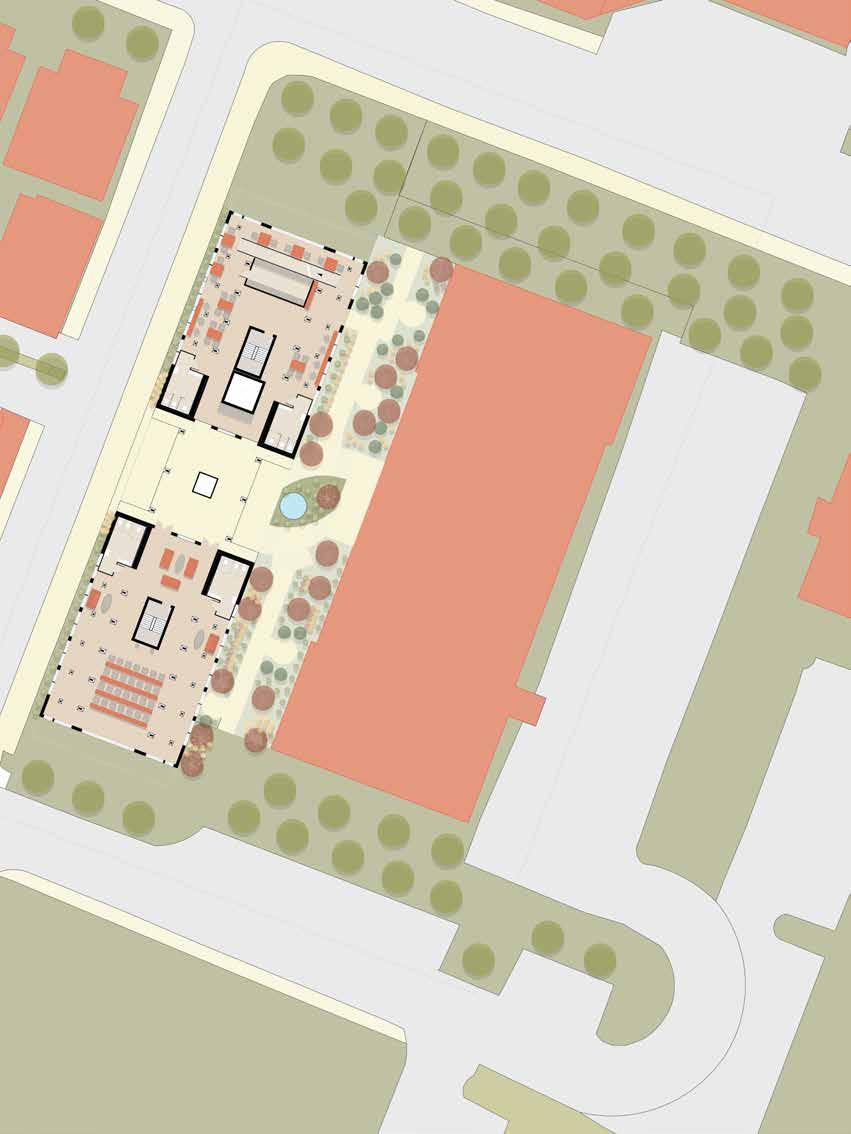
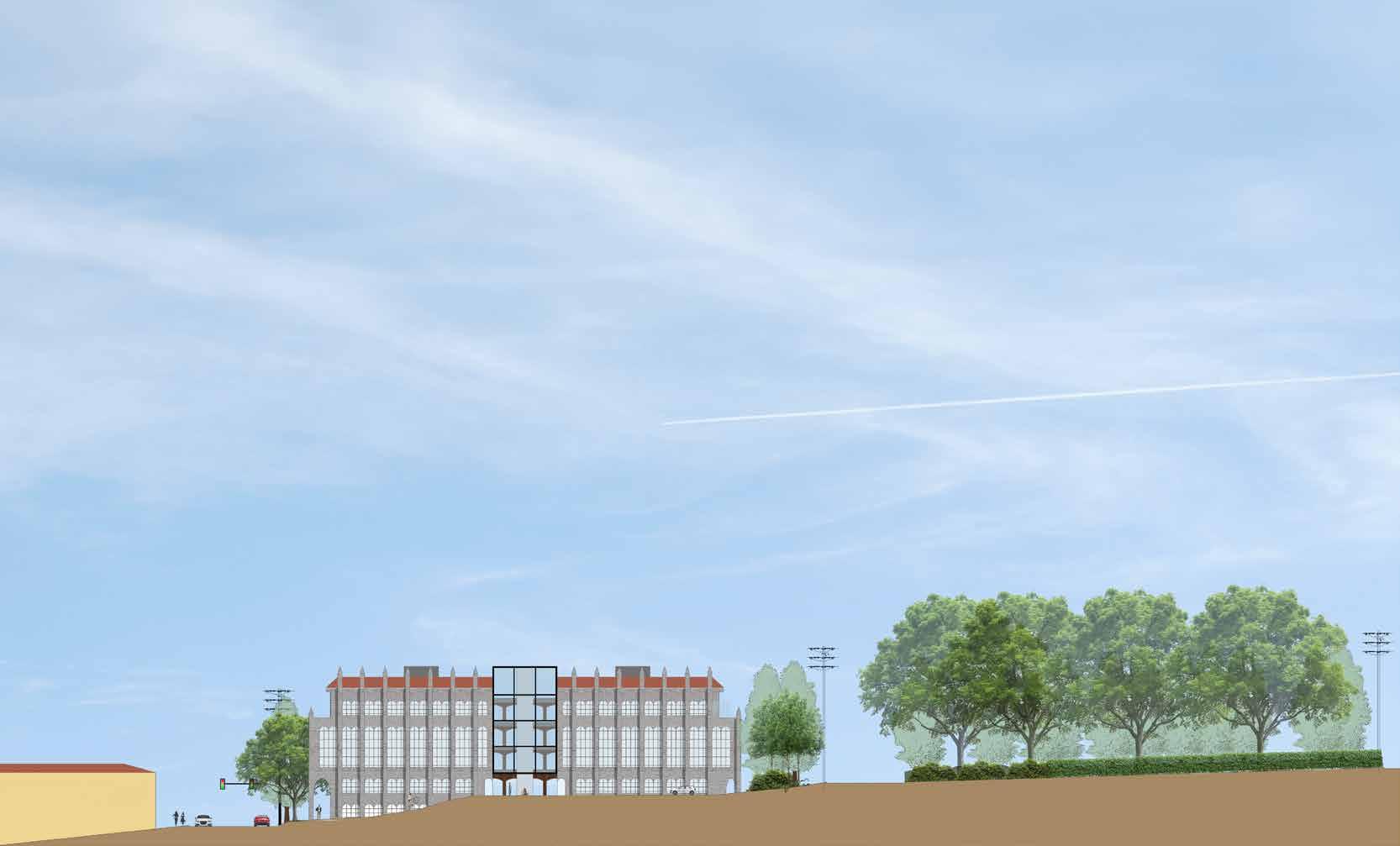
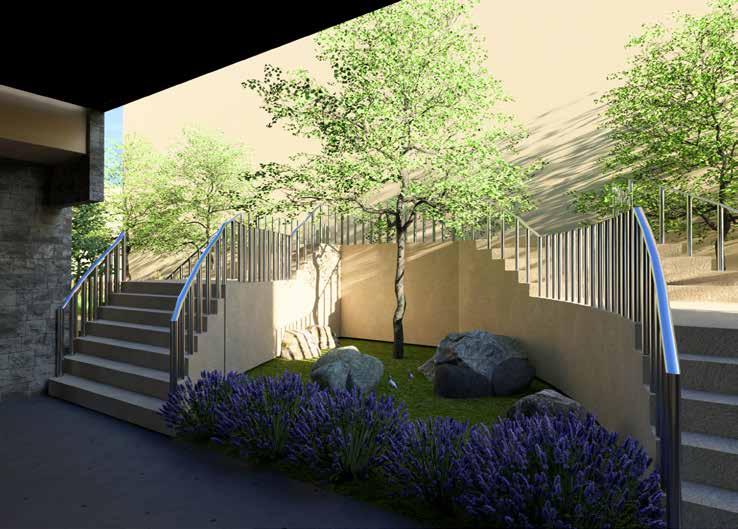
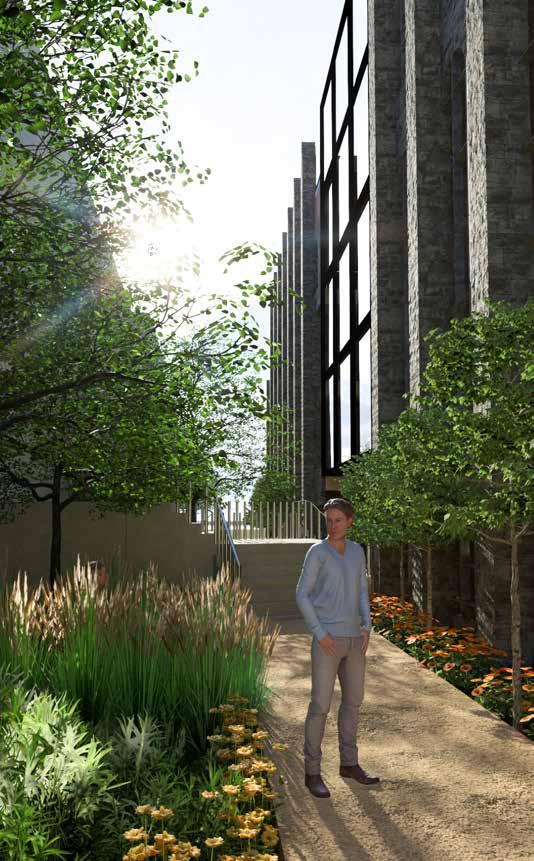
Previously, the McGuffrey Arts Center had an existing stair which served as a social space for after lectures and exhibitions. However, over time, the stair detoriated. Since the Workshop is a 4-story addition to the existing 2-story center, the foot traffic in the area would drastically increase. As a result, am proposing an addition of new public spaces such as a coffee store on the corner of the street, a public garden in-between the buildings and a new social stair.
staircase view
elevation view of the garden
an render of the new garden in-between the buildings
garden area featured in the render garden area elevation
THE STRUCTURE
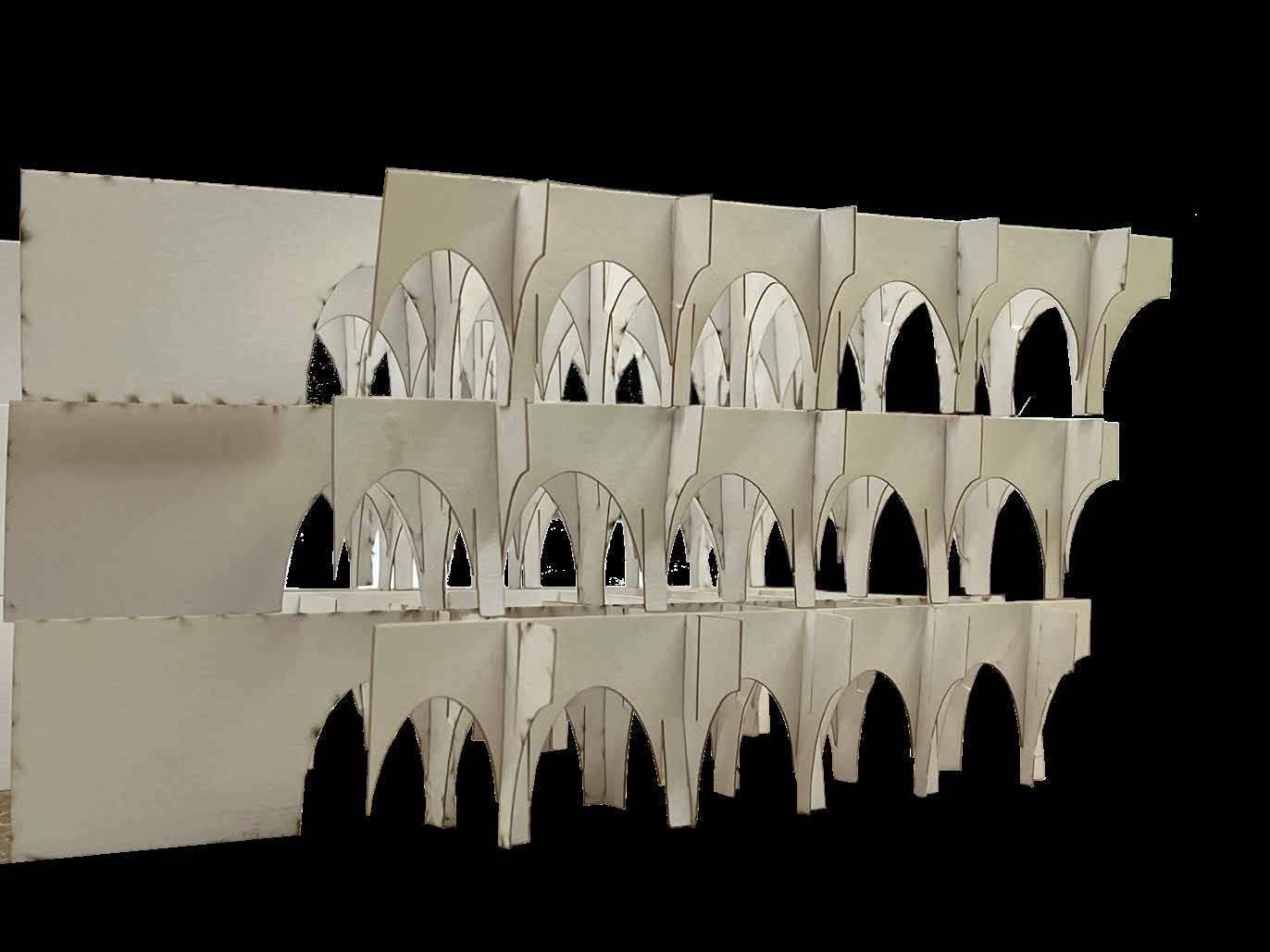
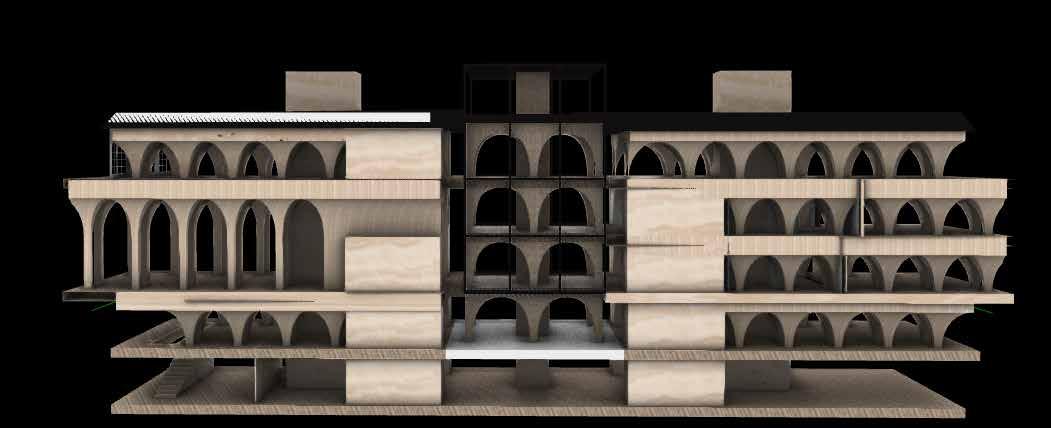
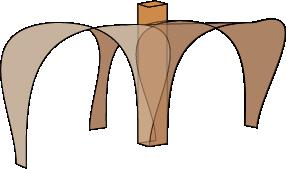
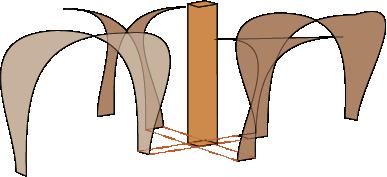
The entire building is meant to be made of mass timber. The building is meant to be supoorted by timber columns, hidden inside of the arches that are present throughout the entirity of the structure. The arches are meant to create a unifying experince throught the building while highlighting the material. Mass timber would allow for the building to be more environmentally friendly in the long run, and with additions of water-collecting stations on the roof and solar panels, the building could achieve net zero energy after a few years.
lasercut bristol structure model
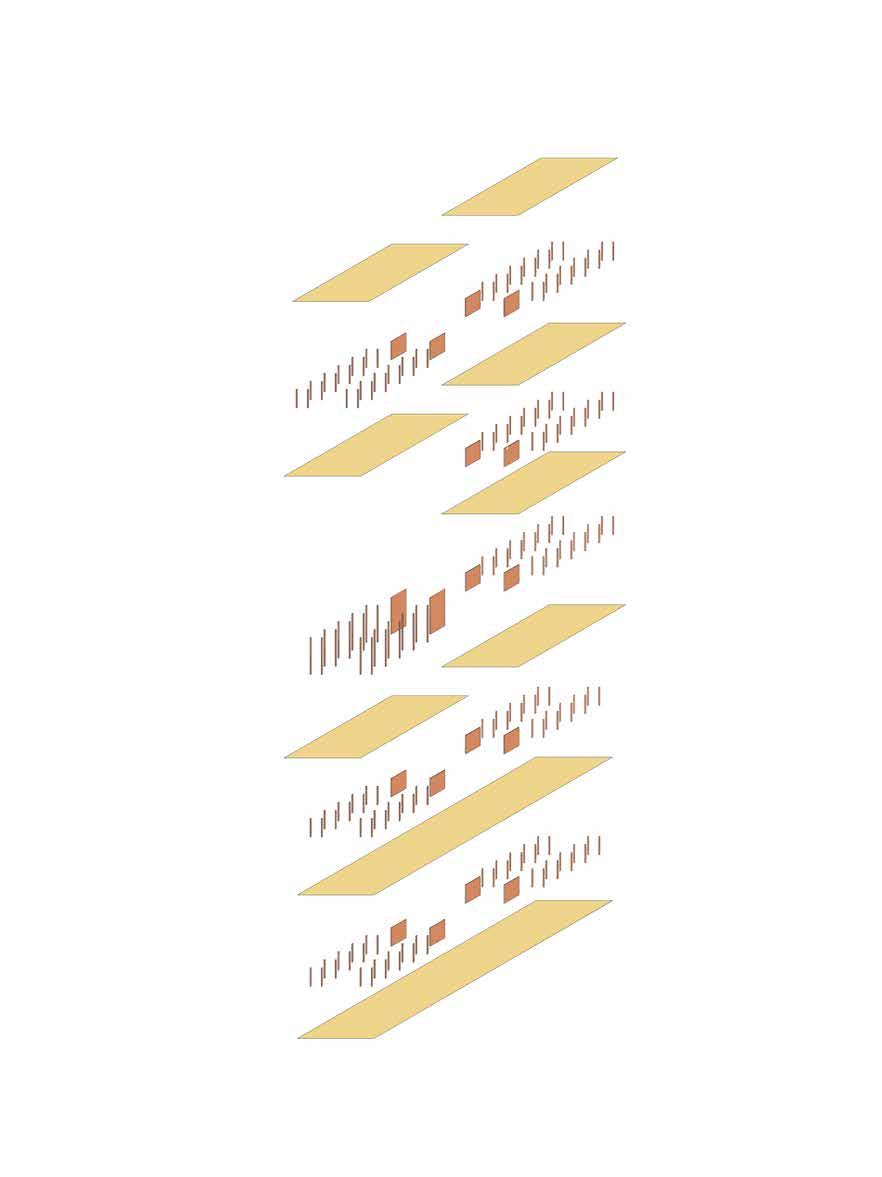
The building is focused on the mass-timber column structure with added arches to assist distributing the load. This combined system allows for both structure and aesthetic to shine through. The integration of arches helps in transferring the vertical and lateral loads more evenly, minimizing stress concentrations in specific areas. Timber panels and column systems can be modularly assembled, reducing construction time and material waste. Additionally, repeated arch elements allow for dynamic light and shadow play, enhancing the experience of visitors and residents of the building. The repeated arches also allow to “unite” the different uses of the building.
the building’s structure
THE CULT: DESIGNING A JAMES BOND VILLAIN LAIR
a religious space
Fall 2022-Spring 2023 | Capri, Italy
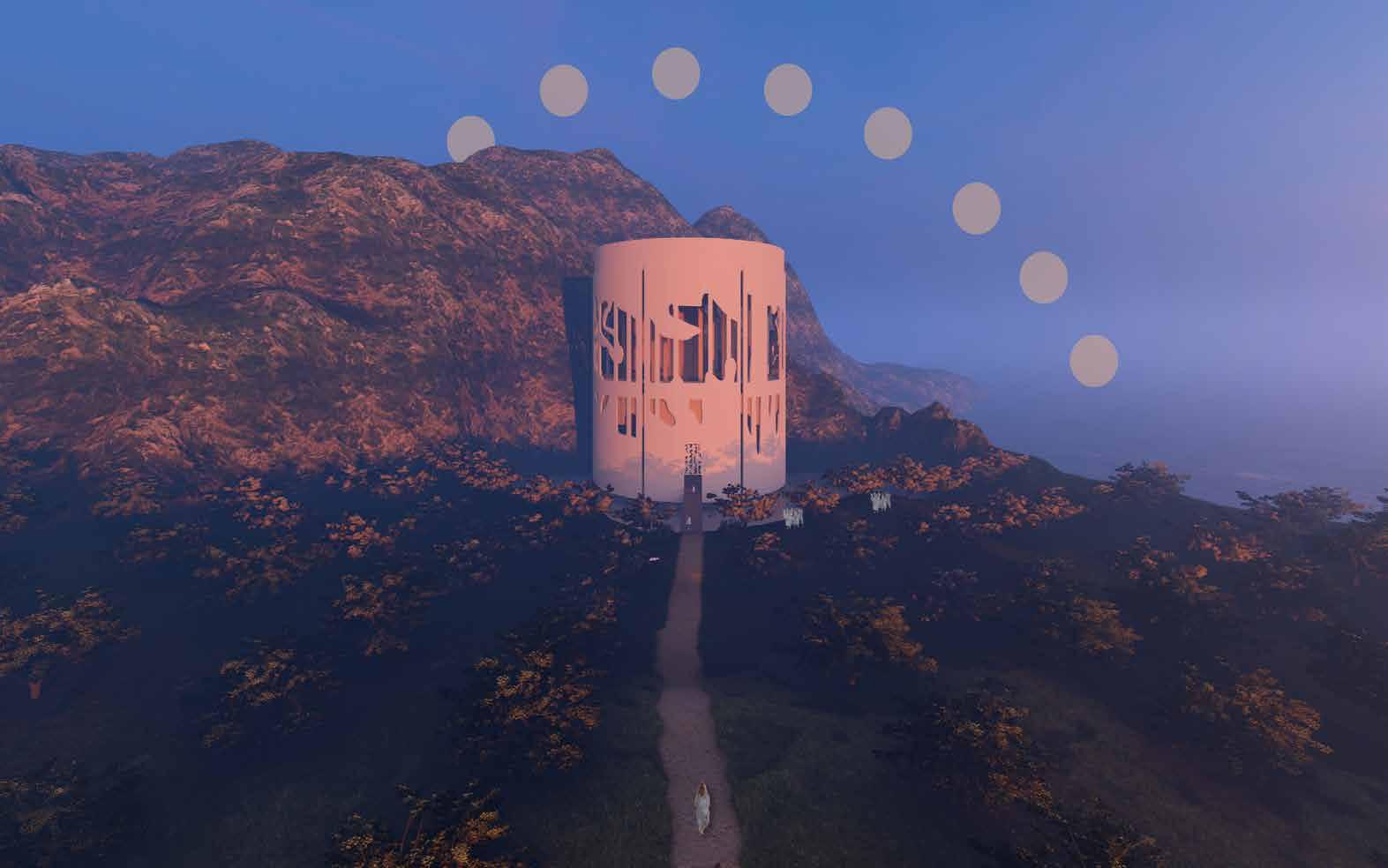
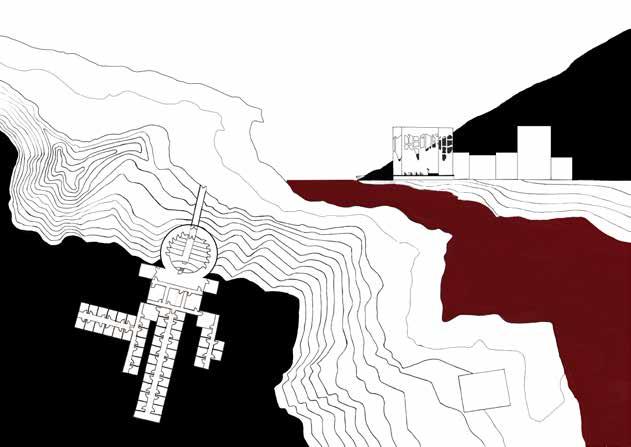
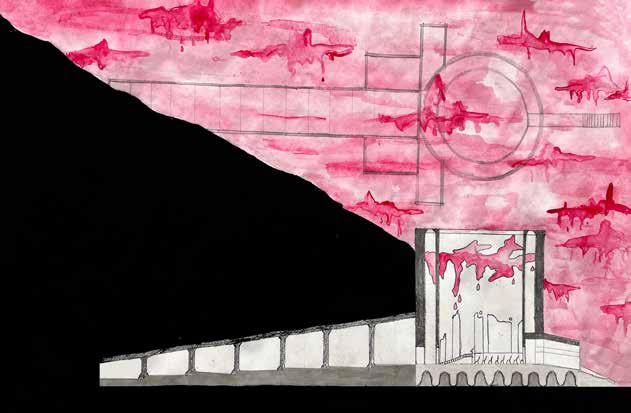
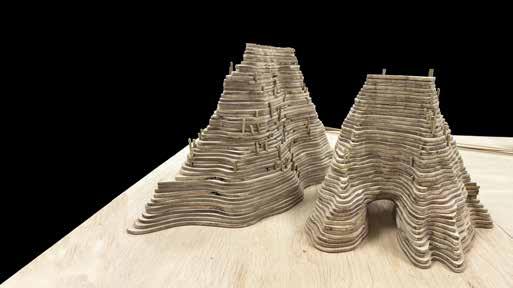
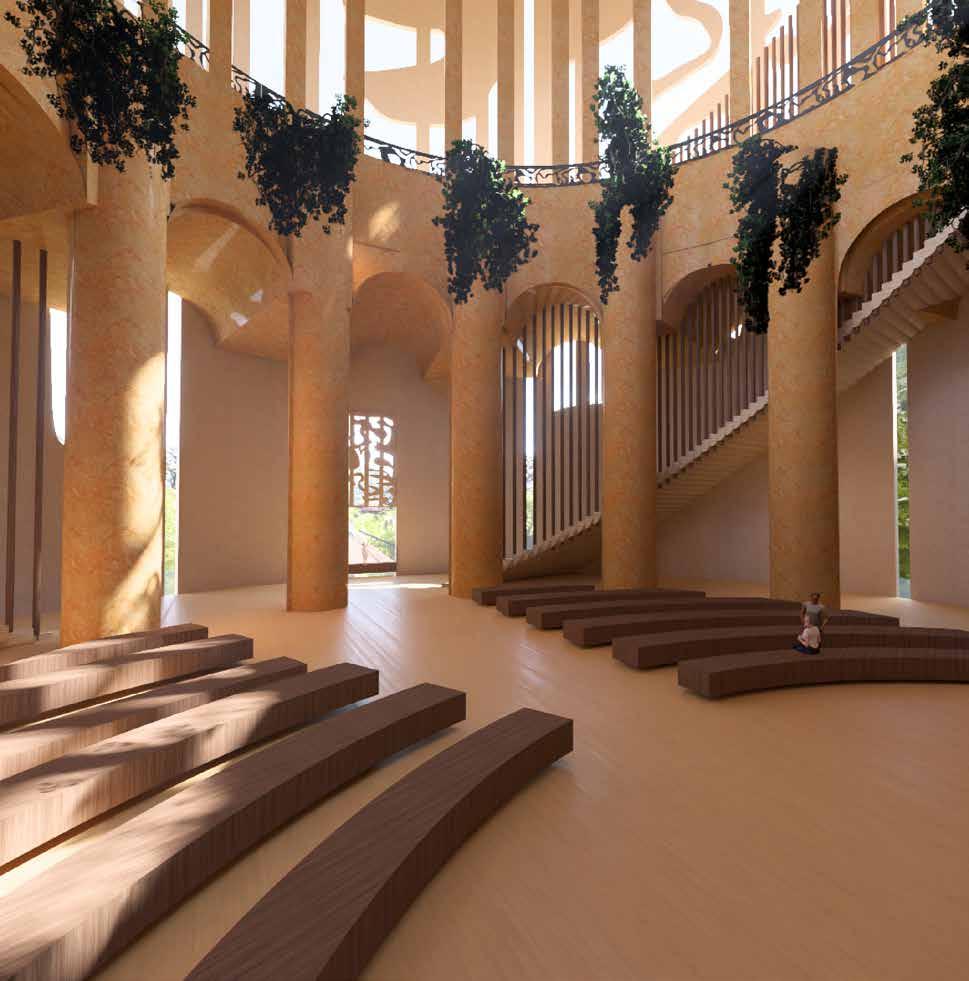
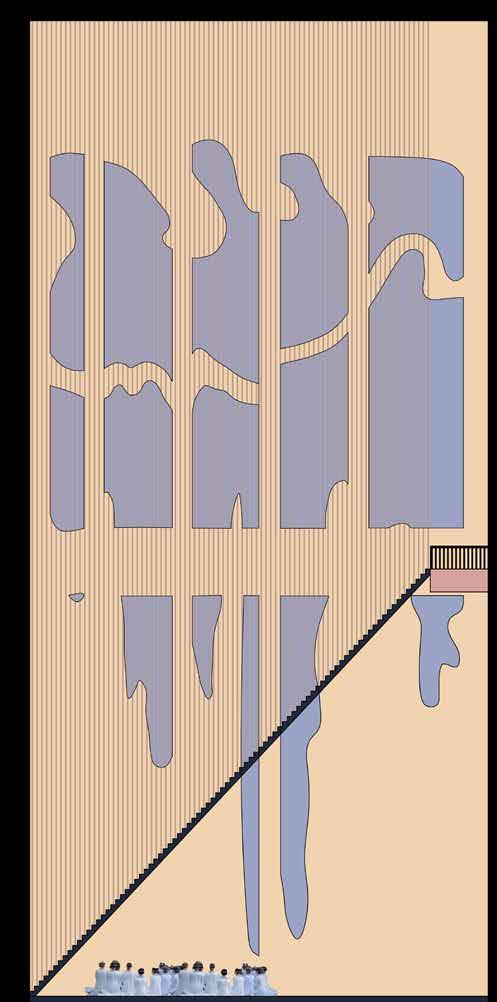
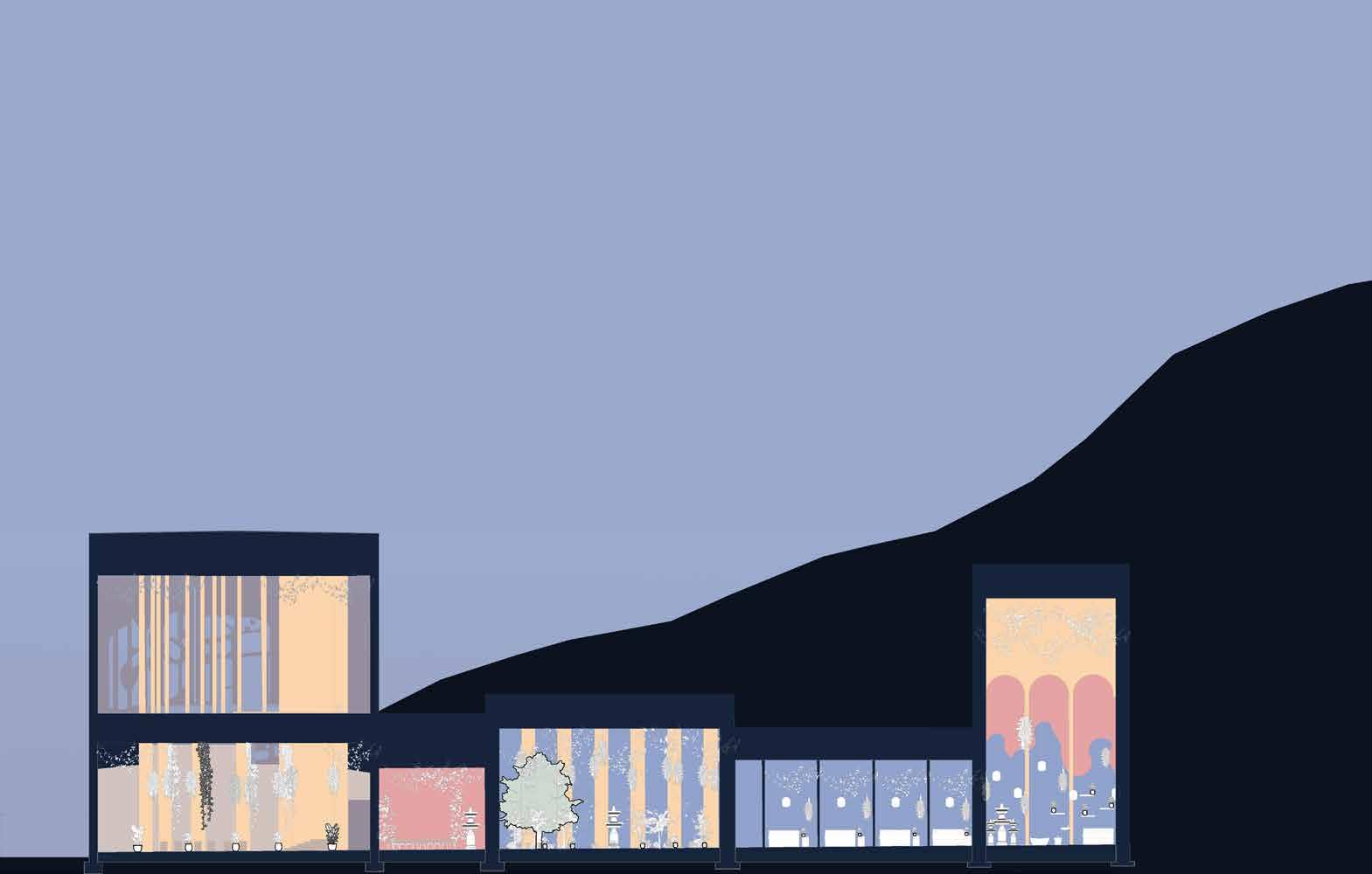
The Cult is a religious building located in Capri, Italy. It is a part of a series called James Bond Villain Lairs, where every person in the studio designed a lair and then placed within the island, united by one vision. My building represents a cult, with an beautiful atrium positioned on the surface and with dungeon-like cells inside of the mountain. The project focused heavily on model-making and exprimentation with glueless assembly. The Cult itself creates an heavy contrast between visible and hidden, forming a parallel between the dangers and allures of religion.
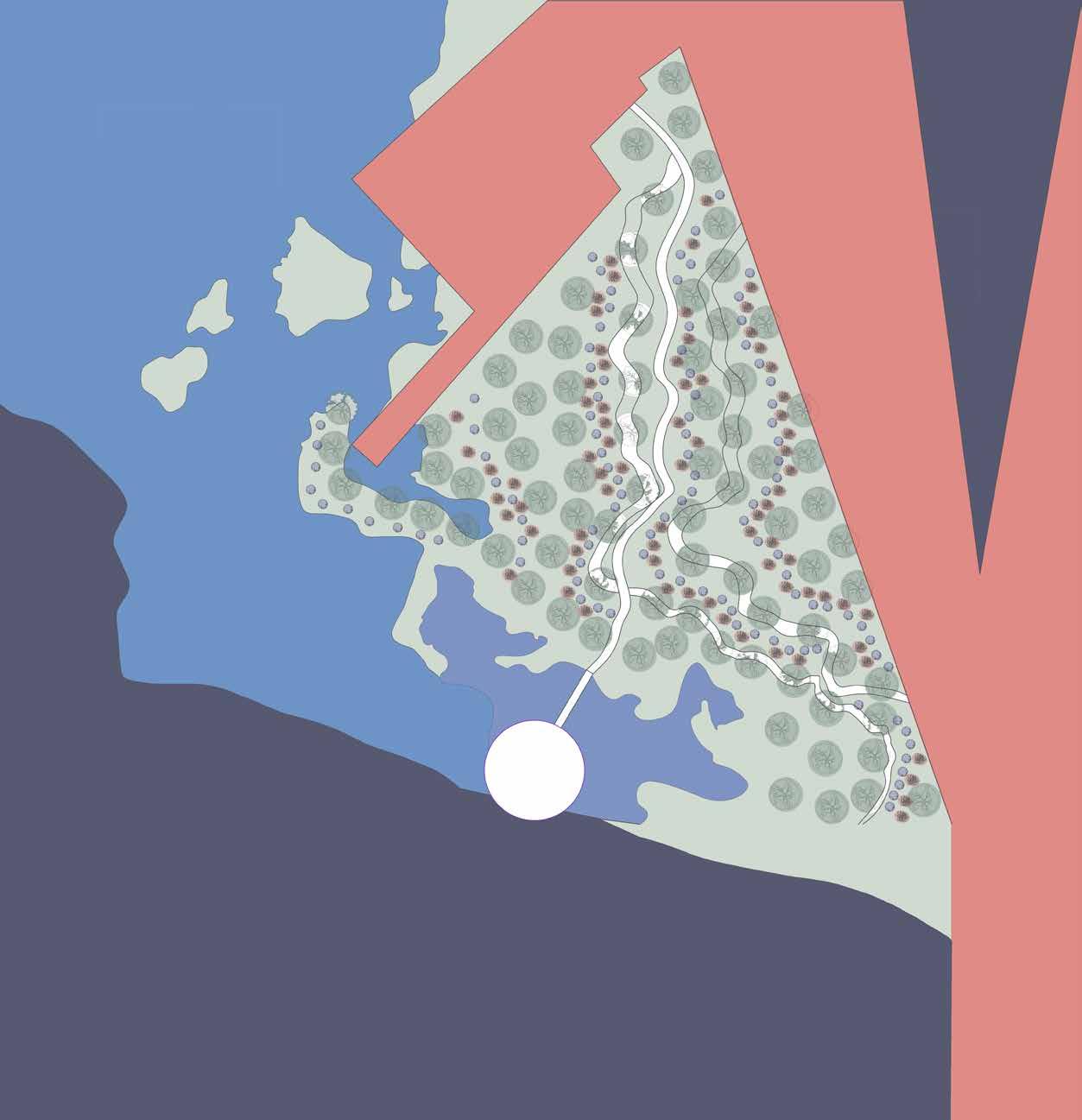
This project emphasized teamwork, since the class had to create a large wooden site model and an urban plan for all of our buildings. This allowed for me to design with consideration for surrounding spaces as well as the landscape of Capri. The Cult was developed in two stages: atrium design and then design of its “hidden” spaces. It is meant to invoke a strong emotional reaction both conceptually and visiually, when is seen. Itslandscape is also heavily planned with the goal of creating elaborate gardens that would contribute to the dangerous beauty of an atrium.
class site model
EARLY STAGES
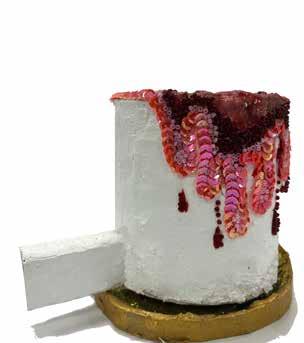
The Cult started out with a conceptual model (as seen below). The model was meant to embody the main concepts I wanted to reflect in the architectural designattractiveness - lucrativeness, danger and threat, and an inability to walk away despite all
The next stages included creating graphic section and early floor/site plan. Both were meant to elicit the sense of dread and danger associated with the building. I also was interested in using mixed media and combining drawings in one sheet through various layouts in order to let them have a conversation through each other.
The early model is made of cardboard, plaster, was painted and then covered with beads, sparkles and various mixed media material. I wanted the conceptual model to be explicit about its purpose and the meaning behind the architecture before it reaches its final form.
FOCUS ON PRODUCTION
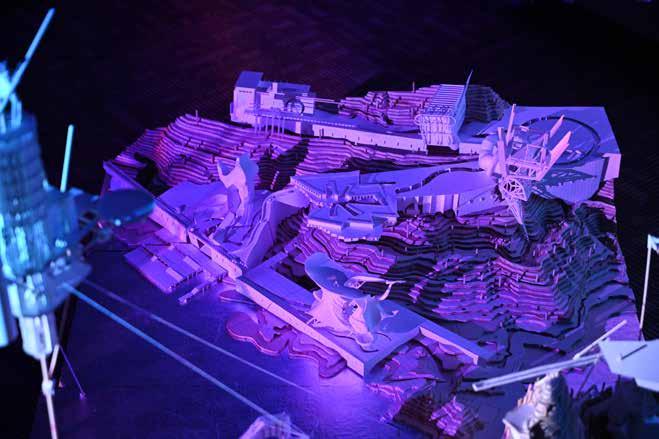
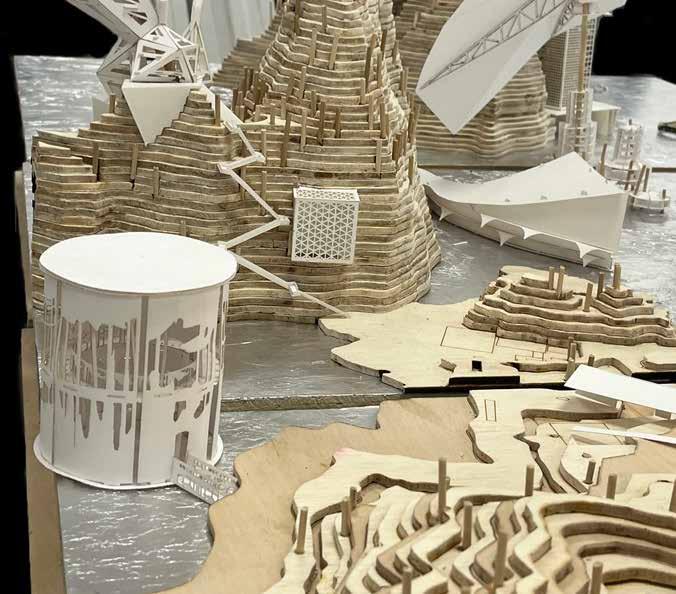
The entire proect focused heavily on the production side of the architectural design process. The studio (20 people) has collectively created large site model (approx. 4’-0” x 2’-6”) made of wood. The site model was meant to host everyon’e’s projects, united by a single urban plan with the unifying infrastructure.
The images on this slide feature individual islands created by my group (Ben Lee, Virginia Martin, Joseph Donaher). These islands were lasercut, fully sanded and glued together. Additionally, it features the image of the Cult on a large site model.
The entire proect focused heavily on the production side of the architectural design process. The studio (20 people) has collectively created large site model (approx. 4’-0” x 2’-6”) made of wood. The site model was meant to host everyon’e’s projects, united by a single urban plan with the unifying infrastructure. The images on this slide feature individual islands created by my group (Ben Lee, Virginia Martin, Joseph Dohaner). These islands were lasercut, fully sanded and glued together. Additionally, it features the image of the Cult on a large site model.
THE LEAF
THE LEAF a mixed-use building Spring-Summer 2024 | Braunschweig, Germany
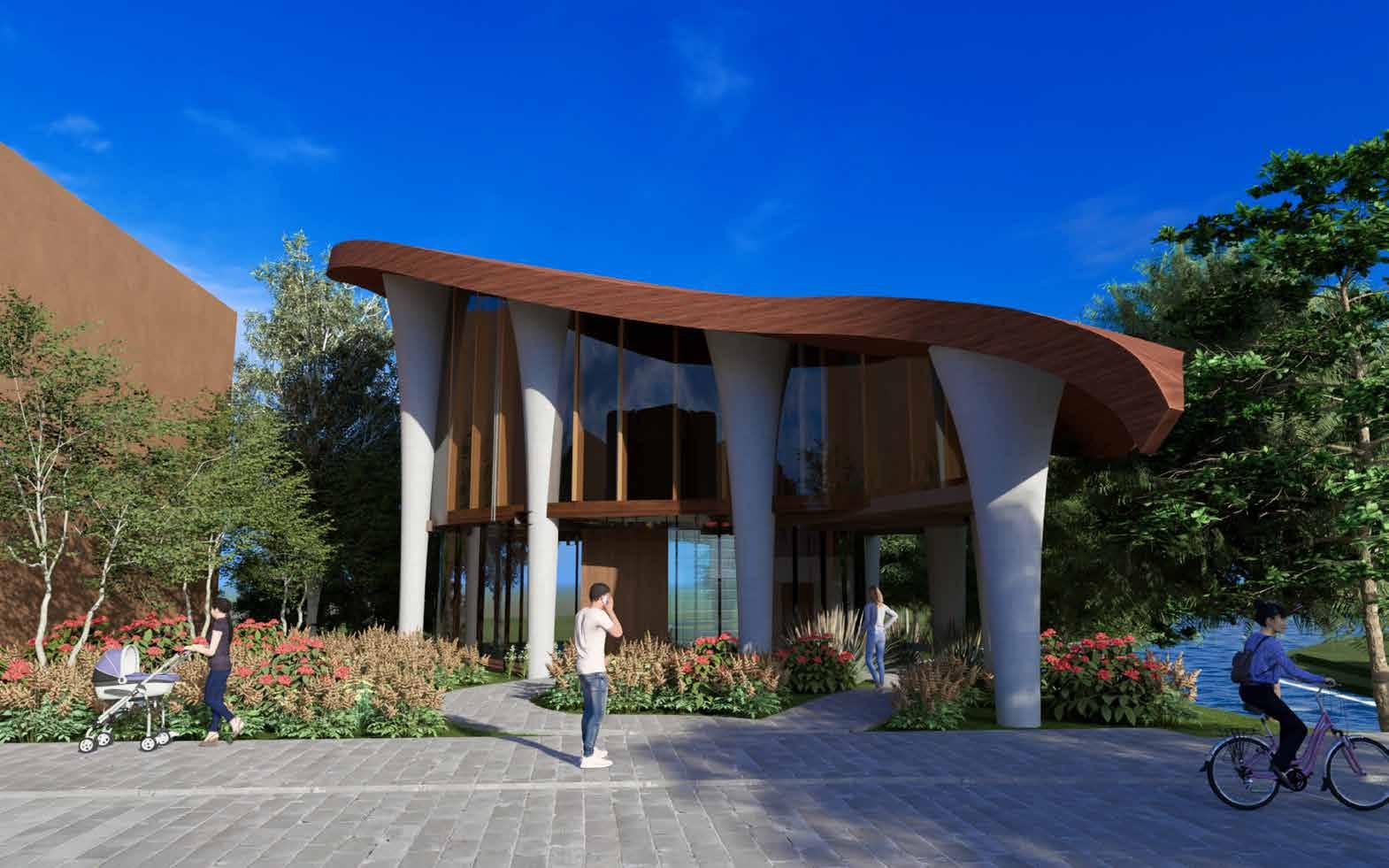
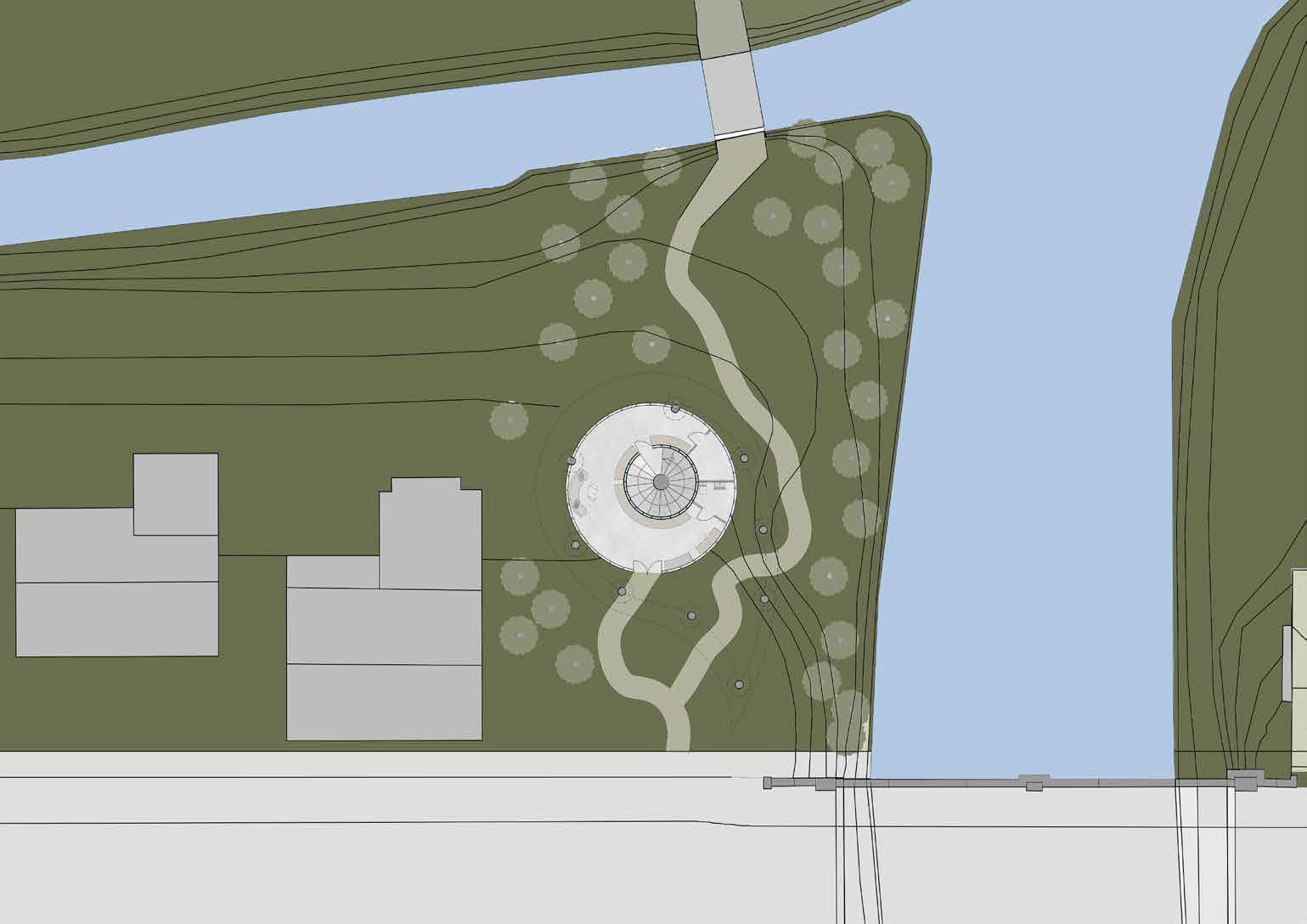
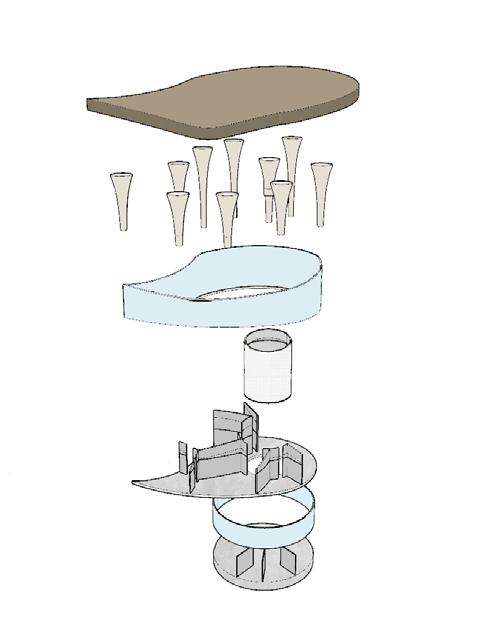
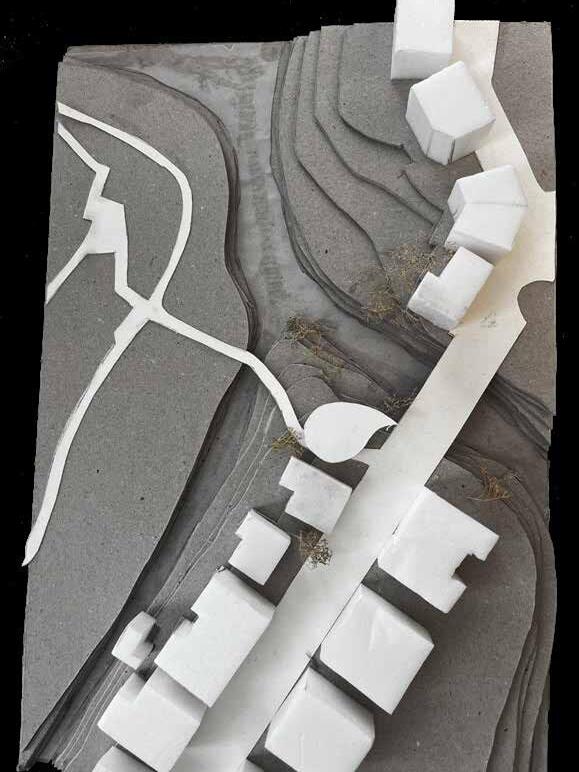
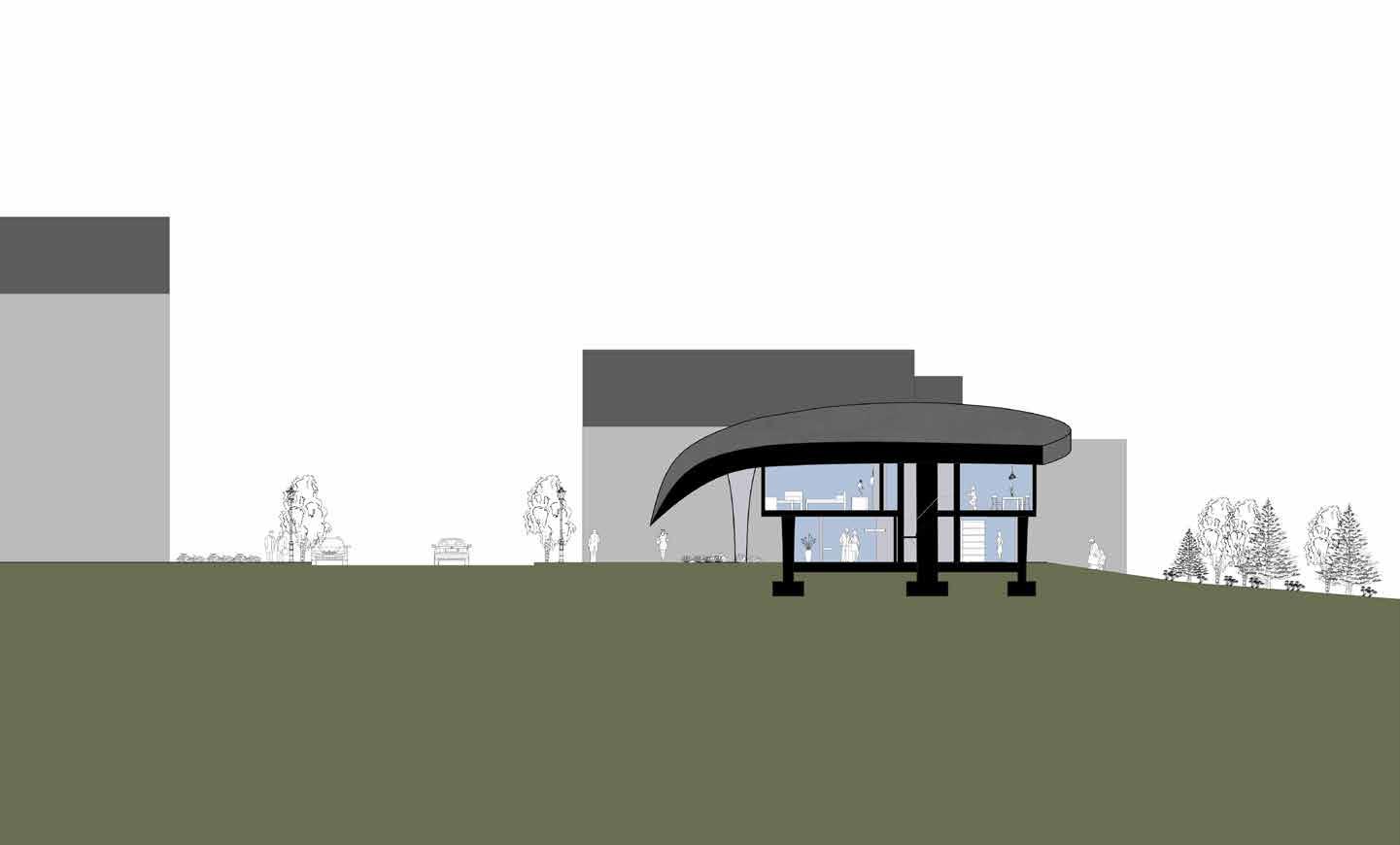
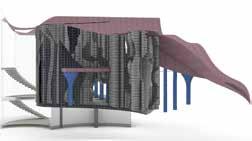
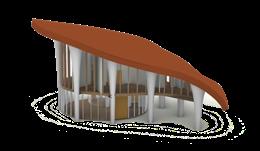
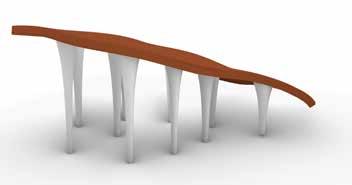
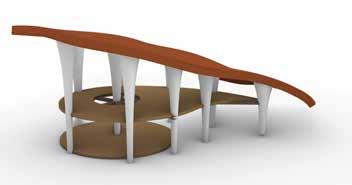
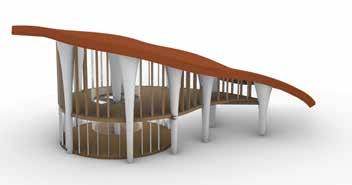
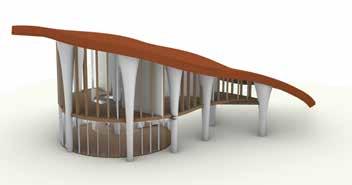
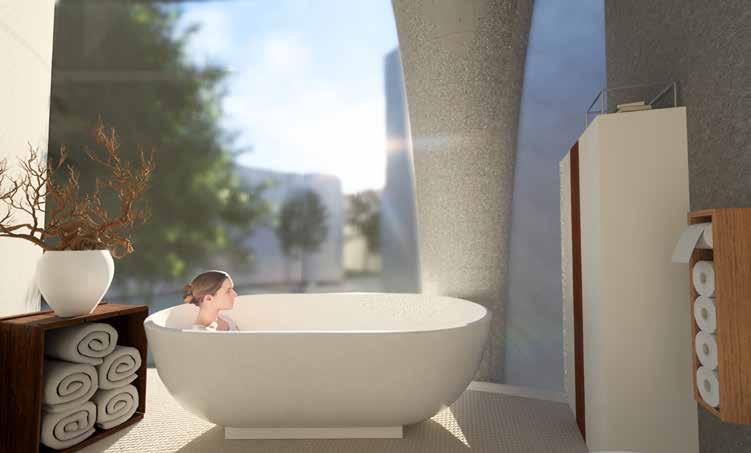
The Leaf is mixed-use building meant for both residential and retail use. It is a two-story building meant for a wedding shop owner, who would have their business downstairs and would have their family live on the upper floor. The building is located on a lot of the land right next to a public trail and its construction will impact the existing pathways. The goal behind creating the Leaf was to form a new organic space where residents can use the trail and shop, if they wanted to, while the family residing within the structure would still maintain their privacy. The concept of the building is inspired by the trees located on the lot. The leaf-shaped roof is being held up by concrete columns, letting the second floor rest on them, as if it is a small treehouse. The bottom floor is made primarily out of glass and permits for the surrounding nature to stand out more.
MODELING STAGES
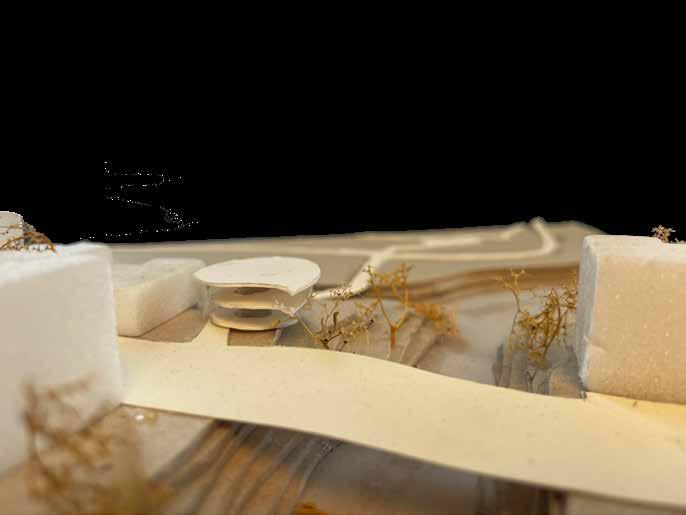
Working on this project was very rewarding in terms of exploring new model-making techniques and materials. I created a large 1:500 model to explore the building in its large context, as well as 1:20 section model to be able to talk about building’s structure and interior layouts.
site model: chipboard + foam
side view of the model
early model studies
DEFINING KEY ELEMENTS
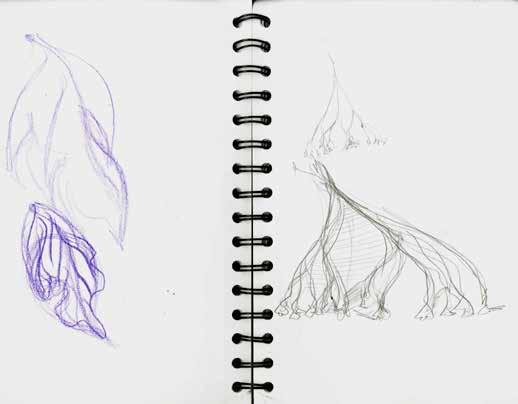
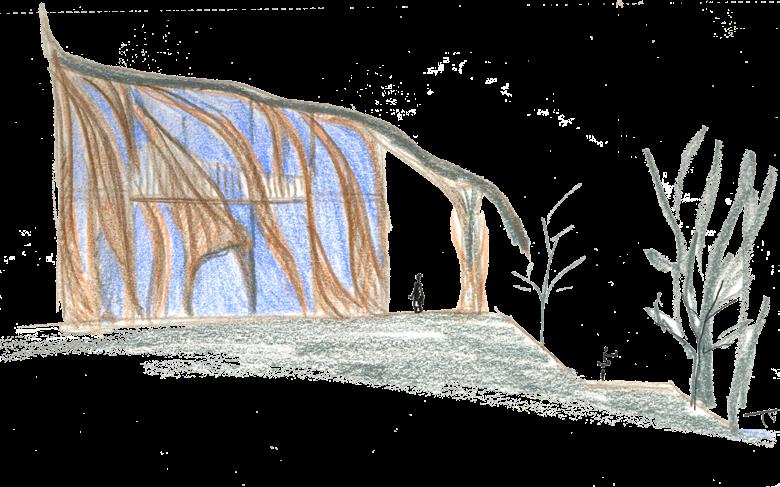
Throughout my research, I stumbled across many sources for inspiration. I was interested in the combination of structure and fluidity in architecture. This is how the idea of an expressive roof held up by rigid columns came into play. Initially, I considered two types of fluidity and organic shapes: the fluidity in fabrics and in natural elements. However, while modeling various draping scenarious on my building, I did not love them as much and ended up pursuing the organic path.
stage 1 early deisgn based on pavillion architecture
stage 2 : design based on fabric flow
stage 3 : design based on organic leaf form
construction: roof and columns
construction: adding beams + floor plates
SPIRAL STAIRCASE TO 2ND FLOOR
CHANGING ROOM
LIVING/DINING ROOM
construction: creating exterior curtain walls
construction: adding interior walls
SALES ROOM
BATHROOM
BEDROOM 1
BALCONY
WORKSPACE
BATHROOM
KITCHEN
BEDROOM 2
BATHROOM
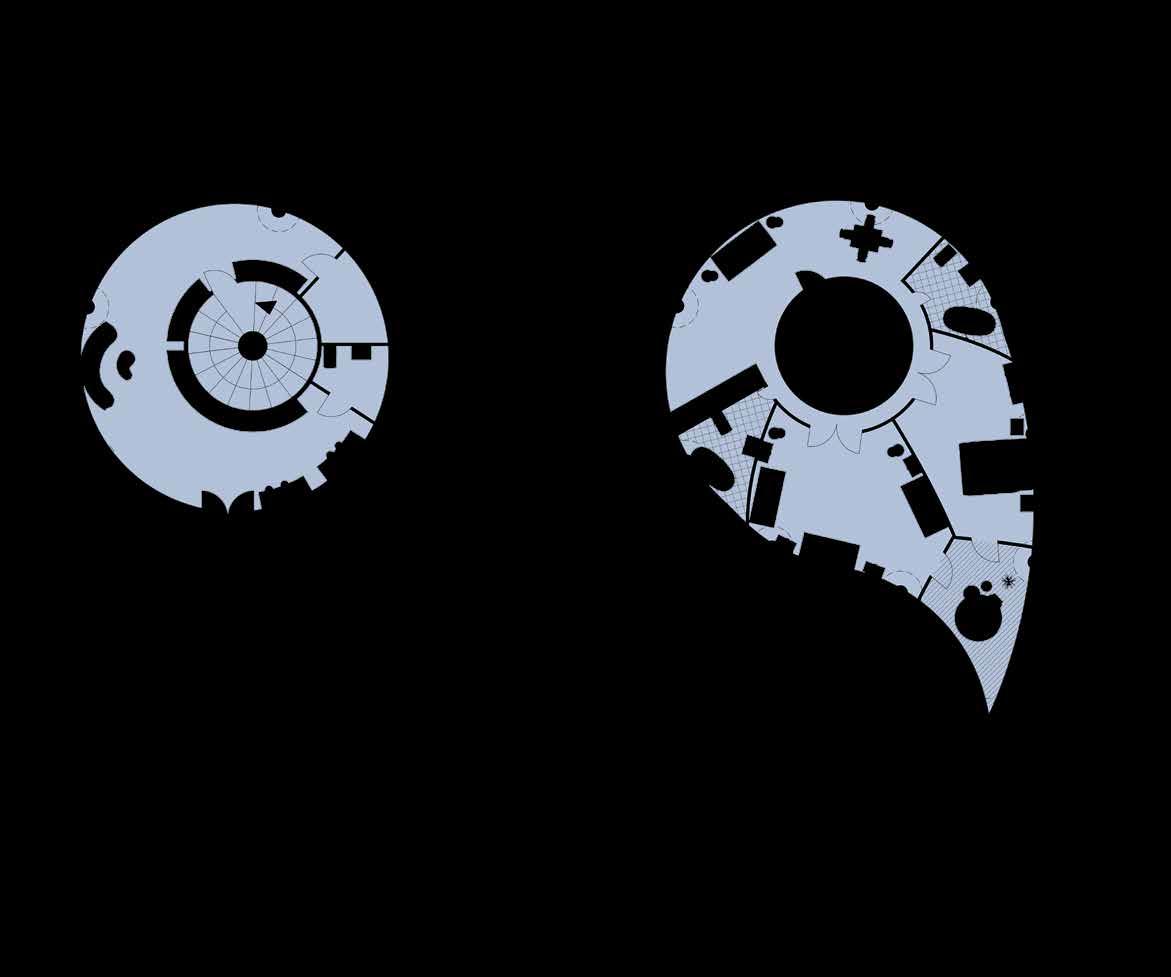
The building is meant to be centered around a radial staircase, which conseals the stairs and allows for the bottom floor to feel more transparent, blending it in with the surrounding nature. The second floor is meant to be similar to the treehouse, poached on top of the tree-like columns. Its organic shape is still translated in each room, following the leaf-like pattern. The second floor also has a larger foorprint and a greater variety of materials, allowing for it to stand out on its own, away from the retail.
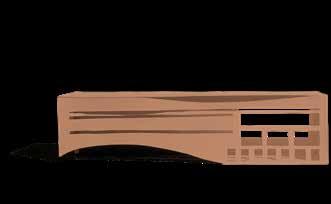
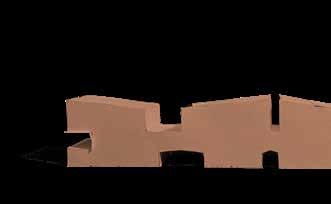
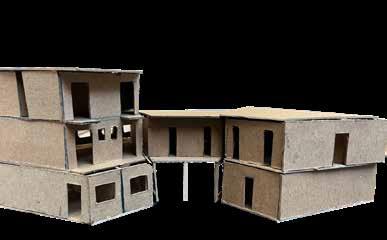
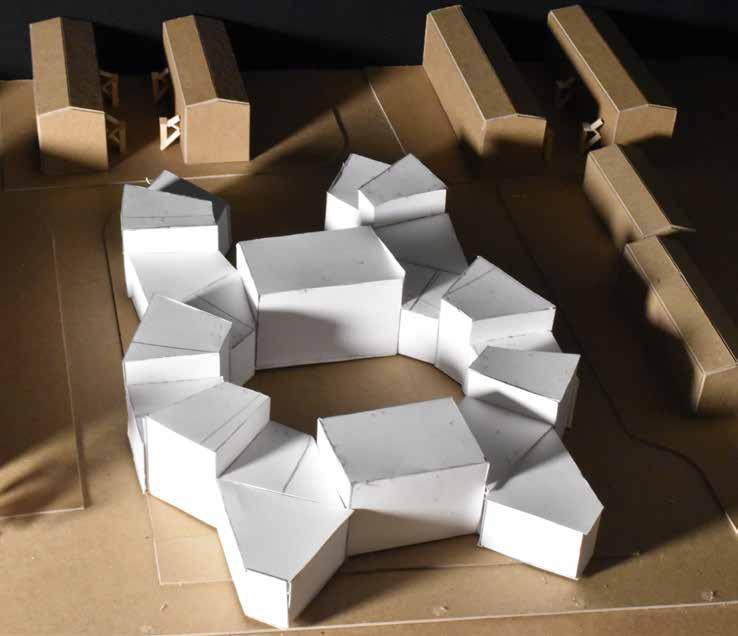
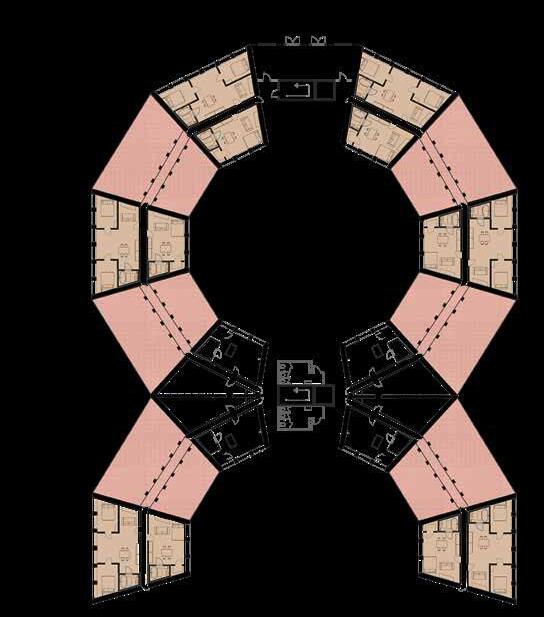
multiple options for density and layout of its “blocks”. Its modular design allows for prefabrication off-site, yet still variety between the building blocks in the shape of their connections and formations of the courtyards.
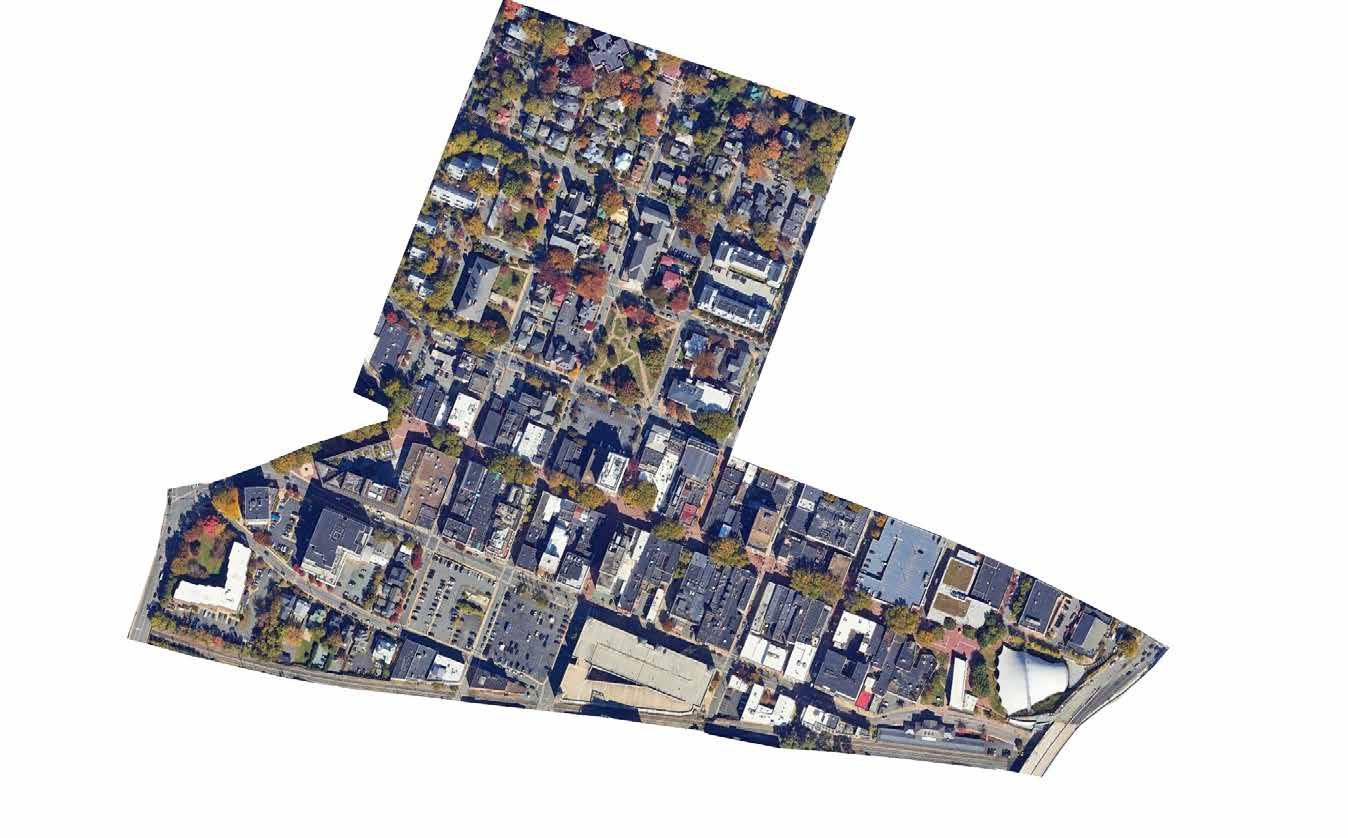
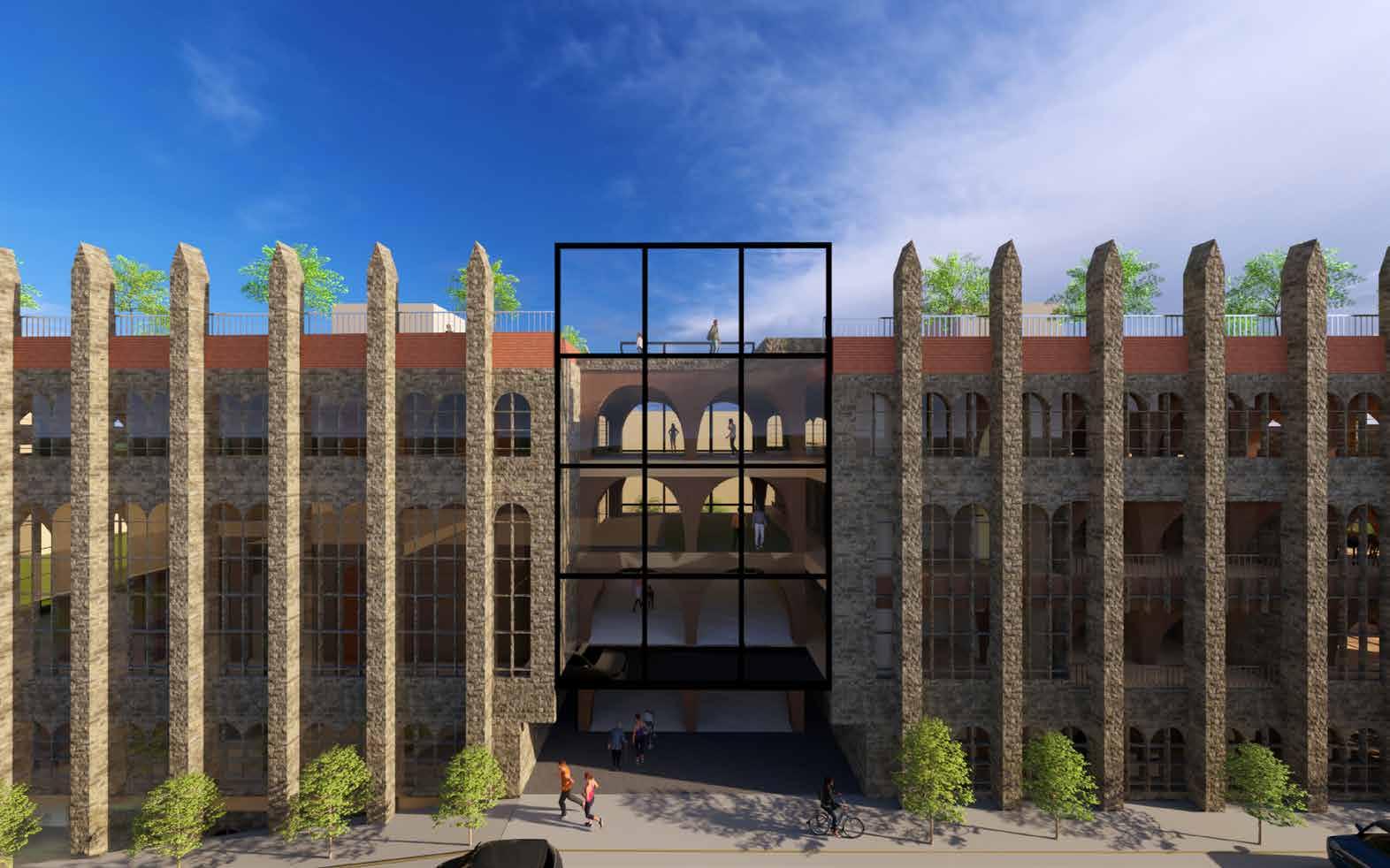
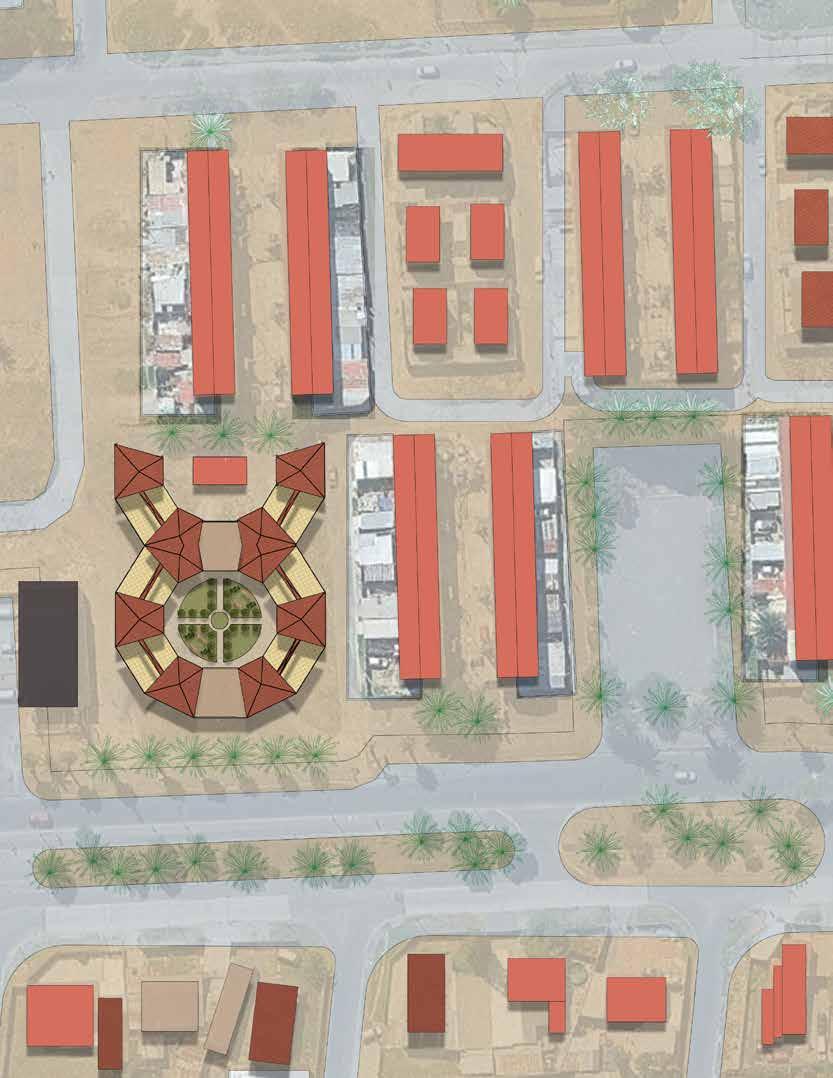
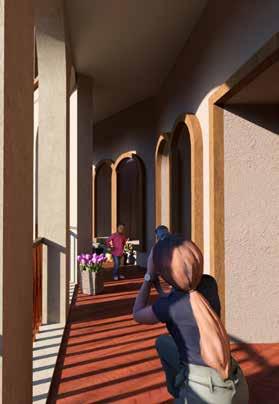
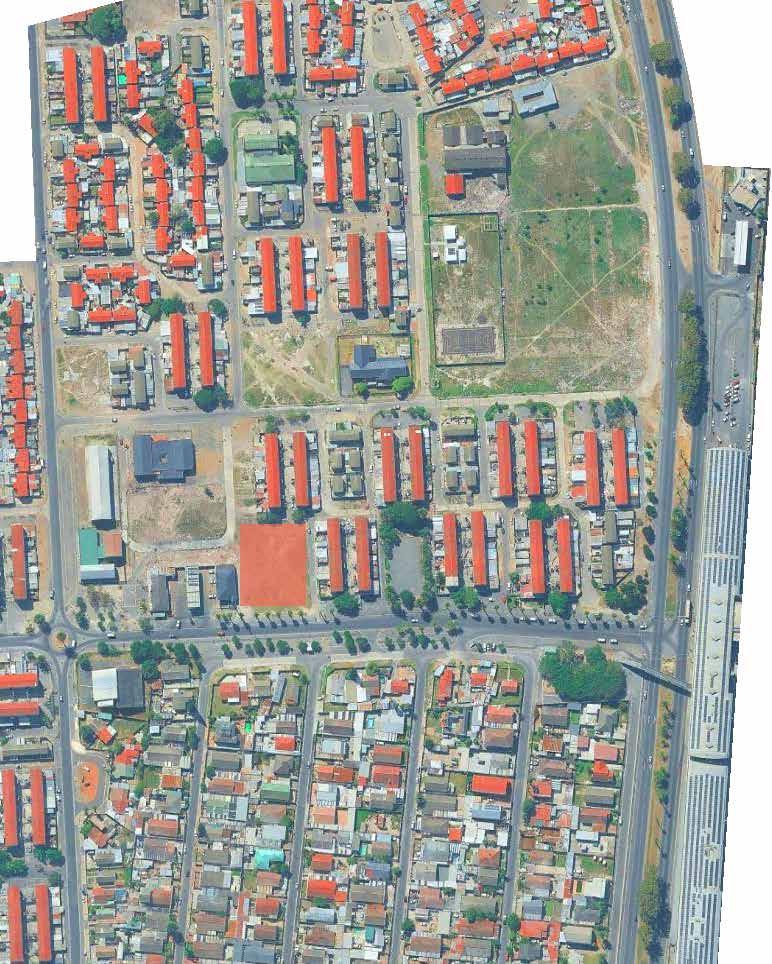
The Residence is focused on creating a new stadard for comfort in multi-family housing by creating noise and temperature regulation in its precast design. It also acts as a new social center in the region, as it is located near a train station and multiple apartment blocks. It provides a multitude of public spaces, like residential gardens, playgrounds, coffeshops and courtyards.
RAILROAD
STREET AXIS
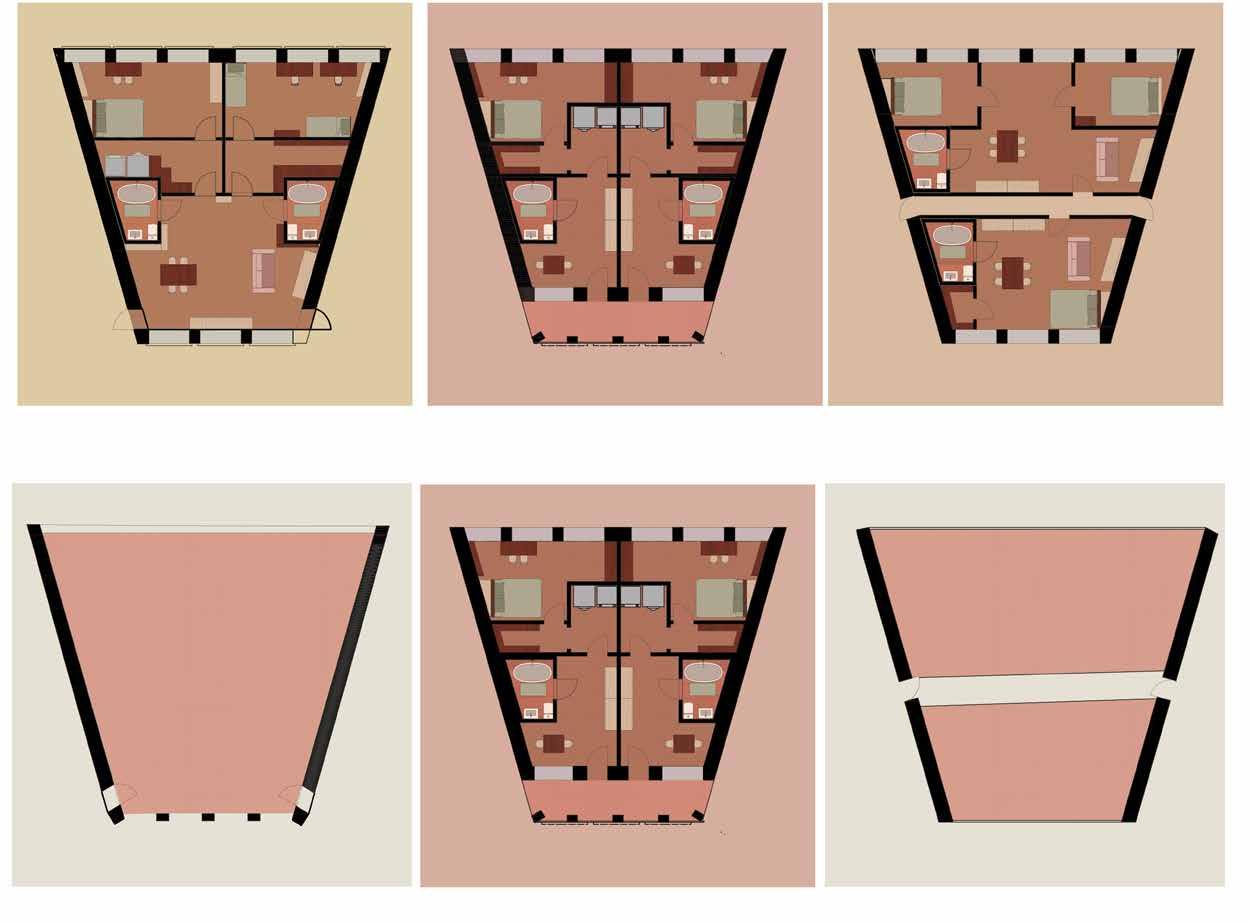
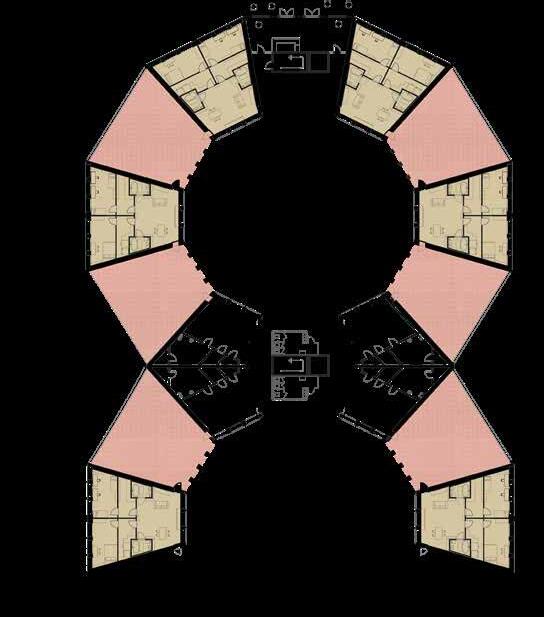
FLOOR 1
2 BED, 2 BATHROOM: ONE UNIT
1260.7 SF
OPEN SPACE - BOTTOM FLOOR
WOULD BE USED FOR CONNECTION TO OUTSIDE
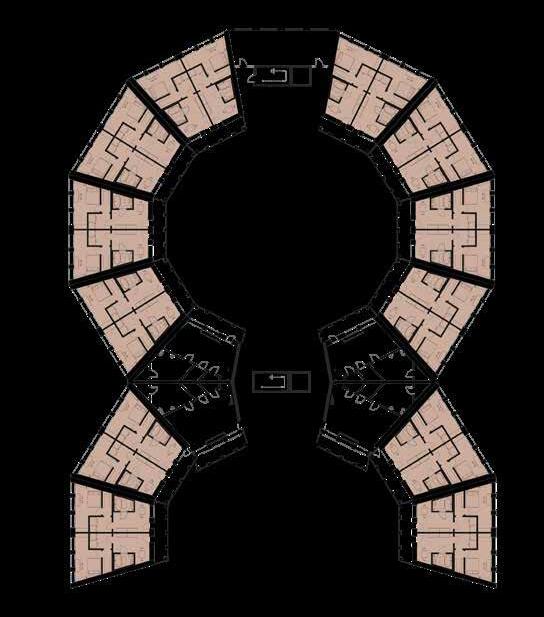
FLOOR 2
1 BED, 1 BATH: TWO UNITS WITHIN THE MODULE 554SF
FLOOR 3
STUDIO: 1 UNIT
2 BED, 1 BATH: 1 UNIT
BUILDING TYPE 1
Made of floor plans 1, 2 and 3.
FLOOR 2
1 BED, 1 BATH 1 BED, 1 BATH
OPEN SPACE - UPPER FLOOR WOULD BE USED FOR CONNECTION BETWEEN RESIDENTS
BUILDING TYPE 2
Made of floor plans 2 and two open walkways.
EXPLORING VARIOUS LAYOUTS
After settling on the shape of pre-fabicated modules, assessed potential layouts and the unit count they would yield. I did a variety of both form studies to see what shape would be architecturally pleasing and would also address the need for privacy and community involvement within the project.
EXPLORATION IN ELEVATION
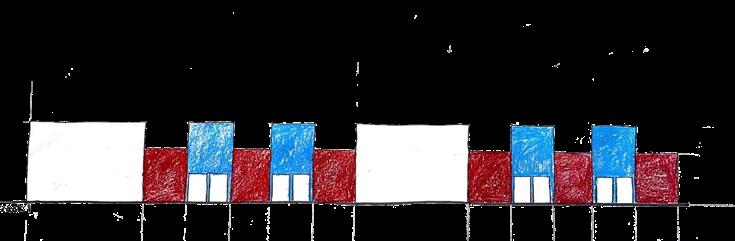
This study involved assessing the total unit count and aesthetics involved on two tracks - one would involve lower density and more open space, while another focused on higher density and maximixing space provided.
This study involved building physical models of the unit types 1 and 2, creating a layout with them and assessing whether any walkways were blocked off. It also allowed to make multiple studies in order to ensure the provideed openings and courtyards were sufficient.
In the end, the track with most unit count was chosen as the best one. This layout yields 52 units and addresses residents’ needs for both socialization and privacy.
This layout includes two community buildings, which provide services both to residents and visitors. It also includes the “blended units” which can be viewed as connection blocks between different tracks.
FLOOR 1
FLOOR 2
FLOOR 3
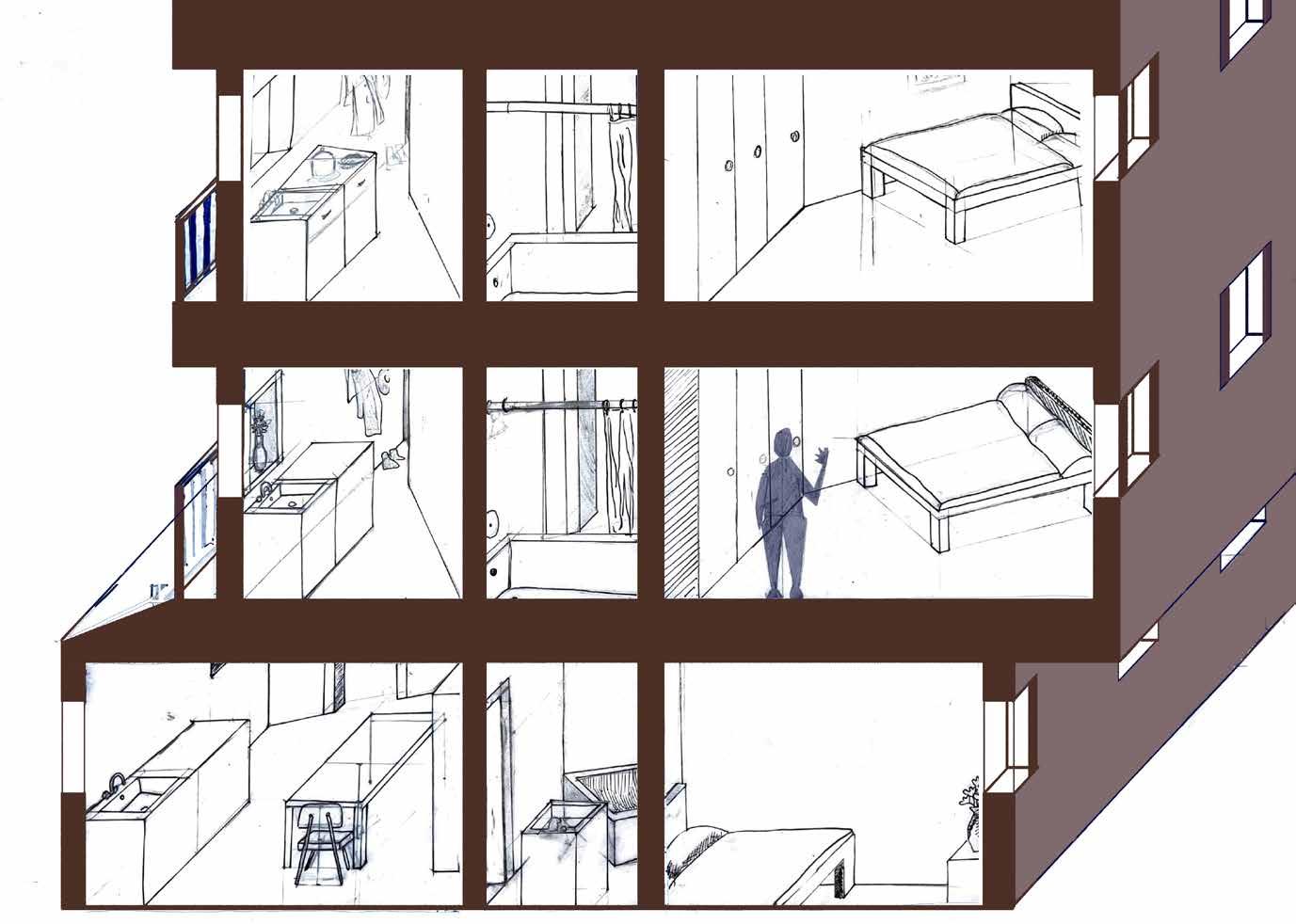
This handdrawn section created in the early stages of project provides an outlook into how the residential units would look like. Stacking the bathrooms on top of each other creates a more efficient plumbing system. This design also allows the viewer to see a part of noise distribution system with the bottom floor being the one with two bedrooms. Extra thick walls and floors are meant to provide neccessary cooling and heating in the summer and winter months, allowing for the households to be more energy-efficient.