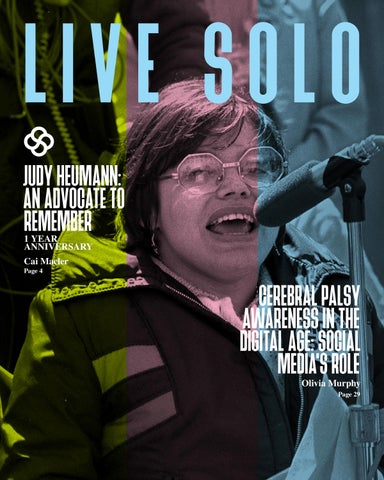
JUDY HEUMANN: AN ADVOCATE TO REMEMBER

Cai
CEREBRAL PALSY AWARENESS IN THE DIGITAL AGE: SOCIAL MEDIA'S ROLE
Macler 1 YEAR ANNIVERSARY
Murphy Page 4 Page 29
Olivia
Cai






Disclaaimer: All content provided by Live Solo LLC is solely intended to support others in the disabled community. It is NOT intended to heal, cure, therapize or give any suggestions that would require the advice or counsel of a medical or financial professional. All contributors to Live Solo LLC are fellow people with varying disabilities or people directly involved in the disabled community who have chosen to contribute their knowledge based on personal experiences. Please consult with a medical or financial professional before choosing to apply any advice or solutions provided by Live Solo LLC or our contributors.


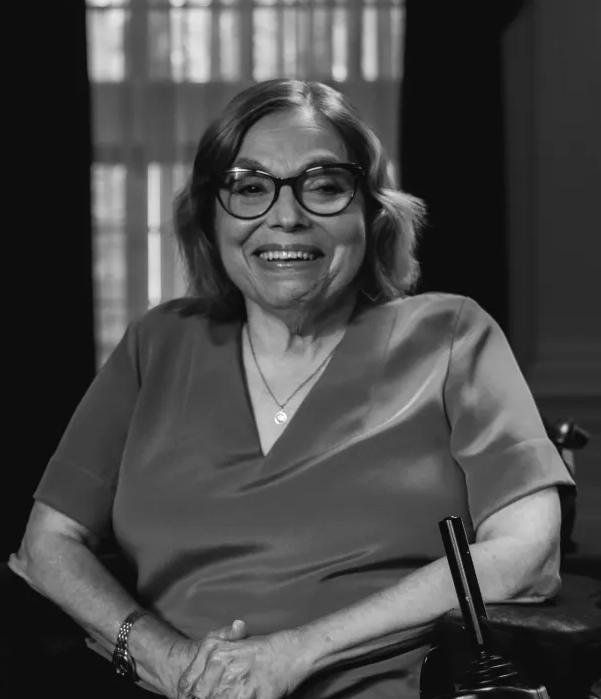
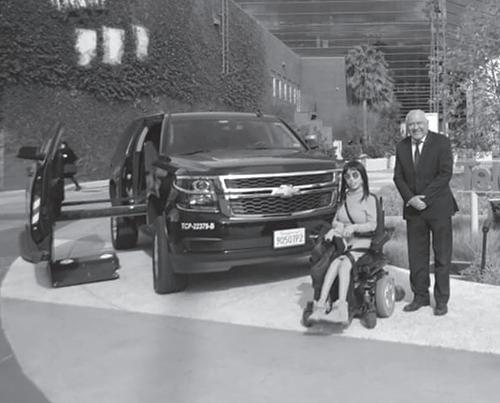
Judy Heumann, “mother of the disability rights movement”, passed away at age 75. The changes she fought her whole life to make a reality will forever impact the disabled community.
Judith “Judy” Heumann, at five years of age, was told her wheelchair was a fire hazard and was denied the right to attend public school. That was in 1952. Since then, Ms. Huemann has advocated for disability rights and has been internationally recognized as a leader in the disability community. On March 4th, 2023, Ms. Huemann passed away at the age of 75.
In 1949, in Brooklyn, New York, Ms. Huemann contracted polio at just two years old, becoming a quadriplegic and she’s been a wheelchair user since. Her parents played a huge role throughout her childhood in helping advocate for her rights, but they could only do so much. They homeschooled Ms. Huemann until, at nine years old, she was finally accepted at the public school, but they made her take classes sequestered in the basement with the other disabled students.
Ms. Huemann quickly learned how to advocate for herself and fought her whole life to advocate for others. "Disability only becomes a tragedy when society fails to provide the things we need to lead our lives — job opportunities or barrier-free buildings, for example," Ms. Huemann said to Joseph Shapiro with NPR. "It is not a tragedy to me that I'm living in a wheelchair." Despite obstacle after obstacle the world put in her way, in 1975, Ms. Huemann graduated from the University of California at Berkley with her master’s degree in public health. While in school, she helped found Berkeley Center for Independent Living which launched the independent living movement globally.
Ms. Huemann sought her teaching license, but her application was denied due to her lower limb paralysis. While the case was settled in court,
it inspired Ms. Huemann to establish Disabled in Action, a civil rights organization dedicated to ending discrimination against disabled people. After winning the trial, Ms. Huemann became the first teacher in New York to use a wheelchair.
The Rehabilitation Act, a federal law meant to prohibit discrimination based on disability in federal programs and federally funded programs, was signed into law in 1973. Four years later, in 1977, the law had yet to be implemented. People grew enraged. The American Coalition of Citizens with Disabilities released a statement detailing that if the law was not enacted by April 4th, there would be national protests. “We will no longer allow the government to oppress disabled individuals,” Ms. Huemann said later that spring at a special congressional hearing. “We want the law enforced. We will accept no more discussion of segregation.”
April 5th, 1977, national protests broke out. Protestors held sit-ins at federal buildings across the US. Ms. Heumann, with over 100 other disabled protestors, gathered at the regional Health, Education and Welfare office in San Francisco. The law was implemented on April 28th and the San Francisco sit-in lasted two more days, making it the longest peaceful sit-in in US history.
Ms. Huemann spent nearly 20 years working for the federal government in varying positions of advocacy from being appointed Assistant Secretary for the Office of Special Education and Rehabilitative Services in the Department of Education under the Clinton administration to being the first Special Advisor for International Disability Rights at the U.S. Department of State under the Obama administration.
Ms. Huemann has been featured in many documentaries on disability rights, like The Power of 504, Lives Worth Living and the Academy Award Nominated documentary, Crip Camp. As a Senior Fellow at the Ford Foundation, she wrote “Road Map for Inclusion: Changing the Face of Disability
in Media.” Her memoir, co-written with Kristen Joiner, “Being Human,” was recorded by Ali Stroker who was the first wheelchair user to perform on Broadway.
Her work, both in and out of the government, has changed the face of the disability rights movement and has helped to improve the lives of disabled people across America. Ms. Huemann suffered a lot from the world around her being inaccessible and unaccommodating and she wanted to ensure that no one else would ever struggle the way that she did.
Each and every single one of us deserves to have access to this world. We are still fighting every day for our rights, but we’ve come so far since 1952. Thank you, Judy Huemann, for all you did for us. We will not soon forget you or your contributions to the



PART
OF THE PROBLEM
IS THAT WE TEND TO THINK THAT EQUALITY IS ABOUT TREATING EVERYONE THE SAME, WHEN IT'S NOT. IT'S ABOUT FAIRNESS. IT'S ABOUT EQUITY OF ACCESS.
“ “
- JUDITH HEUMANN


 BY KIANNA NYCOLE

“Upon reflection, I don't think my parents' goal was to build my confidence by forcing me to speak up. I think their main concern was making sure I would be safe in their absence.
 Kianna N ycole
food for a special occasion. Students grabbed a plate and got in line buffet style. While other kids were salivating over the fried chicken and couldn’t wait to get to the front, I was secretly dreading having to tell the woman with the tongs about my nut allergy. Slowly but surely, I made my way to the front and told the lady about my allergy. She twisted up her face as if I insulted her and said “Why would chicken have nuts in it? You’re fine”. And she slapped a thigh and wing on my plate. Part of me was relieved that I could eat this chicken that smelled so heavenly, but the other part of me was taken aback…Why was she offended? Why the attitude? Did I do something wrong? I shrug it off and try to enjoy my food with my classmates when suddenly my throat is scratchy and hives start to swarm my body. Crap. Too good to be true. Needless to say, the chicken was cooked in peanut oil.
As I sat in the school lobby, while my mom fussed out the school staff, I realized an important lesson that day. Nobody will understand my allergy better than me, including grown ups, and it’s my responsibility to make sure that I’m safe. As I sat there with the school nurse waiting for the ambulance to arrive, I made a pact that I would always speak up and ask questions no matter how uncomfortable it is. And if my inquiries are met with an attitude or carelessness, then I won’t eat. Because it’s simply not worth the risk. If you have food allergies, here’s my top 3 tip on how to be your own self advocate when dining out:
If you have social anxiety, and don’t prefer in person interaction, you can check the menu for any allergen disclaimers or just to see if the menu offers a lot of your allergen before dining. Personally, if the menu has over 5 things I’m allergic to, I steer away because that means that kitchen is high risk. But that’s just personal preference. *wink! If you’re
unsure of the menu, call the restaurant and ask them if they can accommodate your allergy. You can even write a mini-script before you call which makes it less intimidating than face to face conversation!
Depending on the event, venue or occasion, you can be discreet with your allergy. I tend to just slip it in with my order, informing the waiter of my allergy and she’ll double check with the chef for me to ensure safety. When I was abroad, I had a business card in that country’s respective language explaining my allergy which was SUPER EASY. The waiter would take the card to the kitchen and let me know if it was safe or not. I should honestly do this again in the States. It was very convenient.
Congrats! Speaking up wasn’t too bad and now they know about your allergy. However, be observant. If the waiter seemed to disregard your request and didn’t seem certain with their answer, be on pause. If the kitchen messed up your order and included your allergen, be on pause. It’s never worth the risk, and if you don’t feel as though your allergy is taken seriously, don’t eat. It’s always better to end the night hungry, than in the hospital, trust me.
Fast forward to me now, 21 years old and completely comfortable and confident in myself and my voice. I have no problem addressing conflicts with friends, communicating with professors for deadline extensions, speaking to my strengths and goals in interviews and much more. I have seen my peers struggle to speak up, overcome with nerves and anxiety when having to express themselves or do a presentation.
Therefore, the greatest gift my food allergy has given me, is the ability to advocate for myself in all circumstances. I used to think my food allergy had to define me as if it was a personality trait that everyone in my social circle had to know about in order to understand me. But the truth is, my allergy has built my true characteristics: my outgoing spirit, my person-ability, and the power to articulate my thoughts with ease are what makes me who I am today.
 By Amanda Finn
This blogpost is for the future college students with disabilities and their parents. Having a disability often introduces more challenges, and hopefully by providing some guidance, you will both feel more at ease with this major life transition!
Disclaimer: I will be using the term “parents” to refer to whomever was your primary caregiver with recognition to various home lives and therefore not meaning who gave birth to you but rather who
cared for you and you looked to as a parental figure.
A cheat sheet for those of us who want the answers without reading ;)
• Have an open dialogue
• Set up doctors nearby
• Make sure to have at least a month of meds
• Check your college resources
• Deep breaths
A tidbit for young people to gain a little insight into our loving, yet sometimes overbearing, parents.
For most of your life your parents have probably been there to take care of you, especially when it came to your disability. Whether it was accompanying you to the doctors, helping you navigate the world, or providing extra accommodation, those of us with disabilities know our parents likely play a huge role in our day-to-day lives. I know for me, when I was diagnosed at 12 with a disease that entailed 5 hour IV infusion sessions at the hospital on a monthly basis, it was beyond scary.
I will never forget the day my doctor shared all of this overwhelming information about my disease. I remember going out into the hall and crying, trying to wrap my brain around this massive change. In that moment, I was scared and alone. Then my dad came out and held me. I don’t remember what he said, but I remember the fear dissipating, knowing that I wasn’t truly alone. But as we get older, we start getting more independent. Maybe you start taking charge of your own medical necessities; driving yourself to appointments, making decisions about medicines, choosing what treatment plan or doctor is best for you. Independence can be foreign and exciting, but for your parents, it might be terrifying. What if something happens and they aren’t there to help?
Finding that balance between supporting you and granting you your own freedom can be tough. I had difficulty seeing this, and at times even would feel infuriated when my parents expressed constant worry and anxiety. This becomes especially challenging if you are going off to college and your parents are miles and miles away, but there are a few steps you can take to make this transition more comfortable
Parents: I think the best way to prepare is to have an open dialogue with your child a couple months before they plan to move. Let them know you are there for them and will be there to help guide them as needed, but also instill confidence in them that they can handle this change. Together, you can make a list of things to accomplish before they leave. These things can be done together, but it may be a great time to let them take charge a bit, allowing your kid to be in charge of communicating with the school and doctors. Once they arrive at school these conversations can continue. But be careful to not assume they need help. Instead, a great way to have a healthy conversation is to ask your child if they want advice or just to have you listen. This lets your child be in charge of how they want to structure the conversation and allows them to be independent, while also seeking help if that’s what they want. Empower your child! It will help both of you grow.
Students: One important thing to take care of prior to going to school (at least a month in advance procrastinators!) is ensuring you have doctors and medicines taken care of. This is something a child can do on their own or with the help of their parent. I am going to be writing to the individual student themselves, however, parents please also pay attention! It is a good idea to do a check-in with all your doctors about a month prior to leaving. This should include the specialists who treat your disability, but also your regular doctors, dentists, etc. It is good to make sure nothing underlying is going on, and will provide you a nice gap before needing to get checked out again once at school. This is part of the reason to try to not procrastinate, as it can take a while to get this all set up. If needing to transition

doctors, you or your parent can still ask to have your current doctor as the primary one in your care but you can use a new doctor for in person appointments or emergencies. It is important to get your doctors communicating early on so everyone is in the loop and on the same page. Your current doctor may even have a referral for who you should see. If not, just make sure to call a new doctor a few weeks before leaving for school and tell them the situation and plan.
Parents and Students: As far as medicines go, again I would first see what your current doctor recommends, but if possible, it's a good idea to try to refill your meds for a month or even better a 90 day supply (if pesky insurance allows it) right before you go. This is just another way to ensure you won’t have to worry or stress about needing to refill those right away. In addition to prescriptions, it is a great idea to bring extra over-thecounter meds you take or may need while away (tylenol, benadryl, etc). I know for me it helped ease a lot of anxiety to know that I had a supply of medicines I may need.
Student: Research, research, research! I know research isn’t exactly fun, but hey, if you are going into college, you might as well prepare with something essential. Research your school in depth. If you are like me, you probably already want to do this just to see what clubs and fun coffee shops your school has to offer, but also make sure to check out their disability resources. I also highly recommend emailing a counselor or advisor ahead of time (you know the rule; 1 month), to discuss your disability and see who you should reach out to for accommodations. There are many great accommodations and resources out there to help make school more accessible and easier.
Whether you are a parent or a student reading this, the most important thing is to take a few deep breaths. College can be scary with or without a disability and navigating it while handling your health care can be extra stressful. Just remember, it is going to be okay. These tips are meant to ease some of the stress and offer helpful advice for making the transition as smooth as possible. When you get stressed or worried, take a few deep breaths and take a little break from the planning. Drink some tea, read a book, and once calmer then return. And don’t be afraid to ask your parents for help. It doesn’t make you any less of an adult or independent, I promise.








Safely welded around your wrist, anklet, or as a necklace so you can sparkle effortlessly every day!
LOS ANGELES: Book your appointment now!

I’ve been a serious cosplayer for over 10 years and have been to many conventions. I’ve given panels with my cosplay group as well as attending as a regular guest. Learning the best way to navigate a convention space is challenging enough, but when you add the additional layer of accommodation, it evolves like a Pokemon. Therefore, to make your experience the very best (like no one’s ever was), here’s a guide of what I learned the hard way so you don’t have to.
For those who don’t know, I have EhlersDanlos Syndrome, Type 3, or hEDS. This is a rare connective tissue disorder that results in joint pain, fatigue, and dislocations. As a co-condition, I also have Postural Orthostatic Tachycardia Syndrome, or POTS. This means my blood doesn’t pump as efficiently as it should and I’m prone to dizziness and sometimes fainting. When I started going to conventions, my condition didn’t affect my life as it does now. I had to relearn what accommodations were available for guests like me.
Accessible parking, especially at larger conventions, fills up almost as soon as the lot opens in the morning. Therefore, if you know you will need that spot, plan on getting into the

car queue as early as you can. That way, you can be directed to the appropriate location. Alternatively, if you know you need closer parking but not necessarily the extra room, some conventions will set aside regular spots and mark them as ADA (I experienced this recently and it really helped.)
If you know you don’t want to deal with the fuss, or are attending the convention from out of town, try to stay at a hotel that is either connected to the convention center or within a manageable walking distance. Then you can park your car once at the hotel and not move it until it’s time to go home.
Not only does this save you from the in-person queue, it also allows you to buy any extras you’re interested in. Many people attend conventions to meet their celebrity favorites, and those experiences can come with a price tag. So, to avoid waiting in two queues, as well as receiving a possible advanced purchase discount, buy online ahead of time. This is a good moment to mention companion tickets. Many conventions offer free admission for a caregiver. There are a few stipulations, some of which may include picking up a ticket at the accessibility desk each day or being required to stay with their patron the entire time. Usually, they will receive equal ticket access to what you have purchased, but do your research and reach out to the convention organizers for specially-ticketed events or other oneoff situations.
Conventions schedules usually come out two weeks before the event itself. Once they’re published, look through each day’s offerings and pick what you’d like to do. I like to use a colorcoordinated system to rank my interests, i.e. ‘cannot miss’ items in green, ‘could skip if needed’ in yellow, and ‘if plans change this could be an alternate’ in blue. A lot of conventions have apps these days, so you can also build a personalized schedule and set reminders to ping you.
Unless there is something you absolutely cannot miss on a Saturday, avoid it at all costs. Not only will attendance be at its highest, but moving through the space with a mobility aid can be stressful. At my latest convention, I witnessed people with scooters, manual wheelchairs, and powerchairs getting stuck in one spot for over 10 minutes because no one would give them space to move on the dealer’s room floor. That being said, if you’re going to a smaller convention, this shouldn’t be as big of an issue.
If you’ve read any blogs about going to conventions, everyone talks about their con bag. This mystical item is what many attendees pack their necessities into for the convention floor. Don’t feel as if you need to use something huge, either. If you pack it well, any bag will do. Below is an example of what I pack in my bag:
• Portable phone charger with cord
• Reusable water bottle (my bottle is metal, but if you want to save space, the type that collapse or roll up are excellent choices)
• Dietary-safe snacks
• Medical Rescue Bag:
• Medications
• Liquid IV packets
• Ginger Candies for Nausea (I personally recommend Gin-Gins)
• Stim Toys for my spouse who has ADHD and Autism
• Earplugs for both of us (Conventions can be loud places)
• Medical Card for emergencies
• A reusable shopping bag for my convention purchases
• A touch-up kit for cosplay make-up
• A hand fan
I want to begin by saying this; Cosplay is for everyone. No matter your body type, race, gender, ability, etc, cosplay is the expression of admiration of your favorite form of art through dressing as and embodying a character. The two most important things to remember are:
Don’t appropriate: If the character you love has a different life experience than your own, please approach your interpretation of that costume from a place of awareness. The last thing you want to do is harm a community you’re trying to pay respect to.
When I started cosplay, the convention space was akin to the Wild West. People would take pictures or pounce on you (called a ‘glomp’, which dates me, I know). It was an invasion of personal space and frankly could injure someone.In the past few years, the movement of getting consent has gained a lot of traction. It makes being in-
character or showing off your costume a lot more enjoyable. If someone isn’t following this rule, do not be afraid to set the boundry. Your bodily autonomy and privacy are important.
Take Breaks: The convention weekend can feel full-throttle, but that doesn’t mean self-care gets tossed out the window. Your body and mind will still need the rest they deserve to keep you at your baseline. So, take breaks. If fully removing yourself from the convention space to a hotel room is not an option, plenty of the buildings that house these events will have quiet areas away from the crowds (usually near the panel rooms). Find yourself a corner and recharge. I find this is an excellent time to hydrate, snack, and stretch out if possible. My husband uses this time to reset his social battery.
Build a Budget Battle Plan: The Dealer’s Room is a haven of pop-culture goods, independent artists, and sometimes unique snacks. You’re going to want to buy everything and I don’t blame you! Here’s a few things I’ve found helpful over the years.
Living with a disability means you’re no stranger to stretching a dollar as far as it will go. So, give yourself an overall budget for the event, as well as a daily spending cap. That way, you can get the things that matter most and still enjoy windowshopping. If you like something and can’t afford it at that moment, grab a business card. Most vendors have online shops.
Also, have some cash on you. Most vendors nowadays have credit card capabilities, but you’ll avoid charging minimums and extra tax if you have a bit of pocket money with you
It’s tempting, I know, but you may buy something at one booth and see it for a better price at another. Additionally, Sundays are when the deals come out and you may get it cheaper later on.
Artist Alley is a literal treasure trove of handmade goods and unique art you won’t find anywhere else. And, they don’t carry the mark-ups from some of the other resale vendors. I mean, I found handmade crab rangoon earrings in Artist Alley recently and can I just say, no regrets.
I hope you found this guide to navigating the convention useful. Whether you’re reading this in preparation for your very first one or are a veteran looking for tips you’ve not heard before, I wish you an amazing experience. There really is nothing like meeting other people out there who are just as passionate about your fandom as you are.



This blog is about what the letters ADHD mean, the societal connotations that stem from the letters, what is happening in the brain of individuals with ADHD, and what I’ve learned from my knowledge and experiences as someone diagnosed with ADHD as an adult.
My desire to pursue learning everything possible about ADHD on paper, and about the lived realities of other people living with ADHD was slightly before I received my ADHD diagnosis. What do the letters ADHD and what do the words mean? What is the reality for others living with Attention Deficit Hyper-Activity Disorder, ADHD, ADD, and comorbidities? What is going on in the brains of individuals with ADHD in comparison to those without? How can I help move the needle toward a better general understanding of neurodiversity at large and ADHD?
These have been a few of my many recurring thoughts this past 2 years, causing learning about, `and teaching others about ADHD to become one of my most consistent hyperfixations[1].
This gained knowledge has helped me in understanding what ADHD really is and has given me the ability to realize how ADHD has shown up in, and impacted me, my entire life, before and post-diagnosis.
Attention-Deficit / Hyperactivity Disorder is what the letters behind ADHD mean. To me, that would translate as somebody who lacks the ability to pay attention and is very hyper; while this could be true of someone with ADHD it isn’t necessarily; which goes to show
problem #1 with the name ADHD, it doesn’t fit many ADHDers.
While there are 3 different subtypes of ADHD, including one that is completely focused on hyperactivity of the mind, the umbrella term being very broad can cause an understandable misunderstanding of what ADHD is. Read to the bottom to find out which type of ADHD I am diagnosed with!
If people were to read what is listed on the National Institute of Mental Health’s website as examples of people experiencing symptoms of ADHD, at first glance, they’d likely be under the impression that individuals with ADHD are going to showcase symptoms of not being able to focus much, unable to have any self-control in social situations, and someone who seemingly chooses to behave out of a pure need for immediate reward or self-fulfillment.
While some of these things are understandable to a degree, anybody who truly understood ADHD would see the flaws and the connotations that could stem from that being the first thing that people read on an influential mental health organization’s website. Like many sites, this site has the primary focuses on children with ADHD and lack a thorough address of what is seriously going on in many adults’ lives, especially those who are diagnosed late with ADHD, and the repercussions of that. Some of the repercussions of being diagnosed with ADHD
late is an exacerbated increase in the likelihood of premature death. This site also doesn’t immediately provide any sort of tips or advice to those who for one reason or another aren’t allotted the ability to receive medication or treatment for their ADHD.
We all must be especially mindful of how we disseminate information on neurodiversity and disability. When the society one lives in lacks inclusivity for people with neuro differences, combined with ADHD being talked about from the childhood ADHD perspective constantly, it causes for the general public to believe that choice made and behaviors that are enacted upon to seem as though they are simply poor personal choices made from a state of an individual who is similar to that of a child. Another part of the harm in the narrative of ADHD being solely told from the lens of how it plays out for children is the infantilizing of adults with ADHD that this causes. This also causes for others in society to not look at the entire picture of ADHD, such as what is going on in the ADHD brain, and how that impacts people with ADHDs’ livelihoods, behaviors, etc.
From emotional regulation, to avolition, memory differences, and everything inbetween that many people with ADHD experience, what is going on in the regions and chemicals in the brain explains what is going on, though they don’t know exactly why it is going on.
Beyond the letters and all the jargon, ADHD to me is a brain difference that I have that impacts my ability to do things in a way that would be most ideal in the society of which I live. A capitalistic
society that isn’t necessarily too uplifting of people pursuing things when their brain and body allow them the ability to. A society that doesn’t necessarily appreciate people who pursue many different hobbies, tasks, passions, etc., such as myself and many other ADHDers.
To me, ADHD beyond the letters is something that is misunderstood both in the healthcare fie`ld, in the classrooms, in the media, in the workplace, and in many spaces. It is in my plans and desires to dispel the myths that stem from the words associated with ADHD to help people in understanding ADHD realities so that it is viewed as the deep, complex, and at times debilitating diagnosis that it is from the perspective of those of us living with ADHD.

Congratulations on making it this far, the answer to which type of ADHD I am diagnosed with is combined type! For more AD your homie with ADHD content feel free to checkout my Instagram @lexshedlight!
[1] Lex’s Definition of Hyperfixation: An activity, subject, object, thought, etc. that causes for disconnect with other things going on in the environment. Can be a positive or negative source of stimulation, causing the person in a state of hyperfocus to be in a deep head space. Think of it like a zoom on a camera. Can cause for the body and brain to tune things out so deeply that other senses seemingly change, increase immensely, or lessen completely.

“Ever think kids with Cerebral Palsy just grow up and ‘get over it’? Imagine living with constant muscle tension, juggling mobility aids, and navigating a world that is not built for a body like yours, trying to decide which mobility you’re going to use for specific activities; that’s the reality for adults with CP, a truth often obscured by the misconception of CP as a childhood disability.
Often perceived as a childhood disability, cerebral causes posture, muscle tone, and coordination problems due to brain damage during pregnancy, birth, or infancy. CP manifests in various types, such as spastic, ataxic, and dyskinetic, and mixed affecting mobility in different ways, from one side of the body to all four limbs. Contrary to popular belief, it’s essential to remember that children with cerebral palsy turn into adults with cerebral palsy.
When individuals with cerebral palsy become adults, there is no doubt that there is a lack of resources for doctors who specialize in adults with CP. Most of the time, unless you’re injured, it’s hard to get insurance to cover continuous physical therapy services, which Is incredibly beneficial to individuals with CP, no matter their age. Due to the lack of research, there’s no clear understanding of how cerebral palsy will affect individuals as they age. Still, luckily, social media has become a resource hub for individuals with cerebral palsy. In the digital era, social media has provided many opportunities for individuals to authentically share their journeys, shedding light on the unique aspects of living with CP in adulthood. Individuals can share insights into different assistive technologies and gadgets through various platforms, promoting
a more independent lifestyle and networking with each other.
Social media is a powerful tool to raise awareness and foster understanding within the CP community. Chelsea Bear, an influencer with spastic diplegia cerebral palsy, exemplifies this impact. Leaving her full-time job to dedicate herself to social media, Chelsea explores accessible places, showcasing adaptive gadgets and fashion that have worked for her and potentially benefit others with CP. Chelsea’s openness about the changes in the mobility she faces, likely stemming from the wear and tear on her joints, underscores the importance of sharing personal experiences on social media, mainly as research on aging with cerebral palsy is limited. Authenticity in demonstrating how individuals navigate daily challenges contributes to a more inclusive understanding of cerebral palsy.
In dealing with having a disability and feeling isolated or misunderstood, humor becomes a coping mechanism. TikToker Joseph Kibbler uses self-deprecating humor to address challenges and educate society on appropriate interactions with disabled individuals, adding a unique and relatable perspective to the discourse.


Steph Roach, a personal trainer, author, and podcast host, is another influential social media figure who has been making a substantial impact on social media and other mediums. Defying the definition imposed by cerebral palsy, her book “Driven: How Adversity Helped Me Find My Greatest Potential” reflects resilience and determination. Steph shares her journey on Instagram, inspiring over 22,000 followers with motivational posts and encouraging others to pursue their dreams regardless of hurdles or roadblocks.
Social media plays a vital role in creating awareness and promoting understanding of cerebral palsy and the disability community, especially in adulthood. Through authentic storytelling, sharing personal experiences, and utilizing humor as a coping mechanism, whether in the form of Instagram posts, long-form YouTube videos, or short TikTok videos, individuals with cerebral palsy have the power to make a significant impact. Such forms of expression bring about greater awareness and understanding of the daily lives of people with cerebral palsy, thus contributing towards a more inclusive societal knowledge of disabilities in general. Whether it’s just supporting other cerebral palsy advocates on social media, sharing our own stories, or advocating for better resources, we can help make a difference in the world for individuals with cerebral palsy.
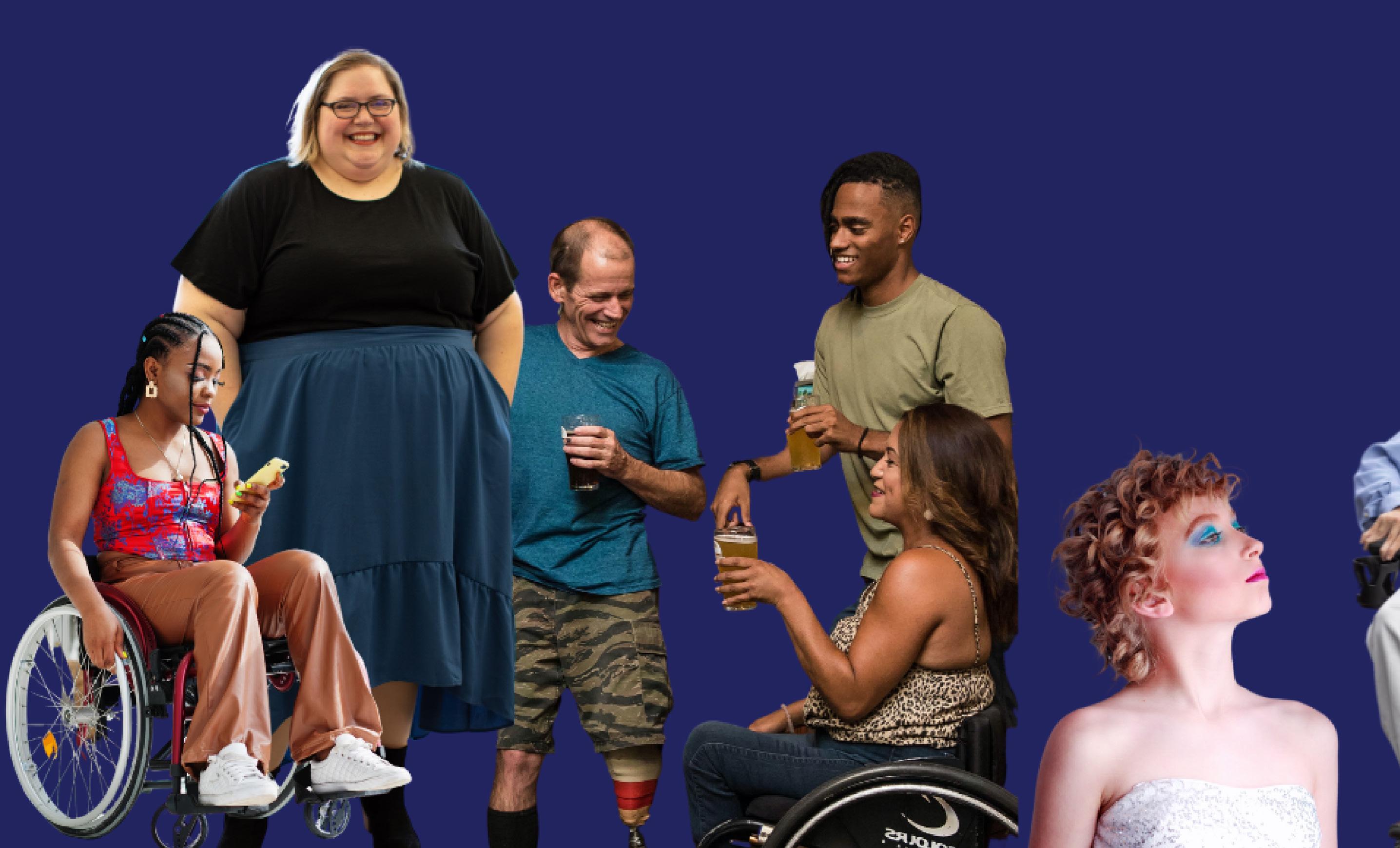
People with disabilities and chronic illness often encounter ableism on other dating apps. We understand the unique circumstances that present when dating with a disability, which is why we created a safe and accepting space to create meaningful connections for people with physical, intellectual, and psychiatric disabilities.
We invite LGBTQ+ people as we are dedicated to creating an inclusive dating app.
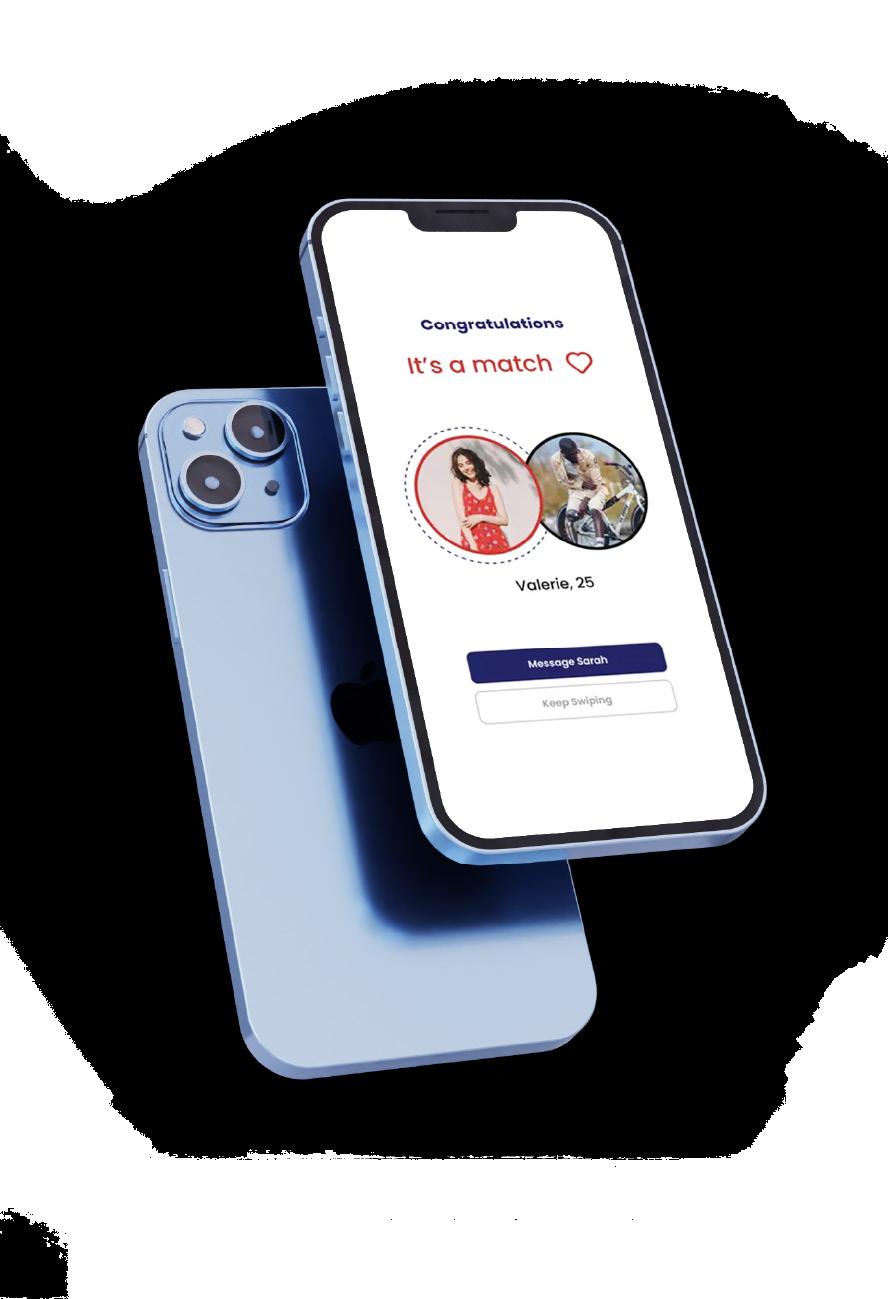

Dateability is available to use on iOS, Android, and web application (dateabilityapp.com) for North America.
EDITOR IN CHIEF
Lauren “Lolo” Spencer WRITERS
Alexis Williams-Cavanaugh
Amanda Finn
Kianna Nycole
Cai Macler
Kaetlyn Elliott
Olivia Murphy
COVER Mid-Journey
ART DIRECTION / DESIGN
Chappe.Studio
STOCK ASSETS
Envato Elements
Pexels
Freepik