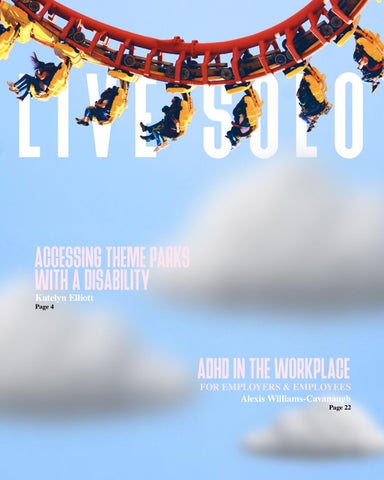
ACCESSING THEME PARKS WITH A DISABILITY
Katelyn Elliott
ADHD IN THE WORKPLACE FOR EMPLOYERS & EMPLOYEES

Page 4
Page 22
Alexis Williams-Cavanaugh





Disclaaimer: All content provided by Live Solo LLC is solely intended to support others in the disabled community. It is NOT intended to heal, cure, therapize or give any suggestions that would require the advice or counsel of a medical or financial professional. All contributors to Live Solo LLC are fellow people with varying disabilities or people directly involved in the disabled community who have chosen to contribute their knowledge based on personal experiences. Please consult with a medical or financial professional before choosing to apply any advice or solutions provided by Live Solo LLC or our contributors.

 By Katelyn Elliott
Let’s be honest, taking a vacation as a disabled person brings a variety of challenges. Not only must we consider the common things ablebodied people do but we must calculate the variables of our access. Will my hotel room meet my needs? Will I be able to share in the experience of my travel companions? Can I have fun if I’m worrying about all these things?
I’ve worked in Orlando theme-parks for 8 years and during that time, I went through the process of diagnosis for Hypermobile Ehlers-Danlos Syndrome, or hEDS. This is a rare connective tissue disorder that results in joint pain, fatigue, and dislocations. With my own access at the forefront of my mind, I realized that across the board, theme parks are more accessible than the average vacation destination. So, if you’re planning a trip to the Sunshine State, here are five things that will make your time there much more enjoyable.
We must consider what our body will require, as well as what we would like to do. And no matter what theme park you choose to go to, you’ll have an abundance of options! It is improbable you’ll get to it all.. So, how do we combat this? Visit your destination’s official website.It is an excellent and informative resource. (Walt Disney World,Universal Orlando Resort). Identify what you’re interested in on a park map and plot your route. Just remember: any of those attractions you’ve pinned in your mind could go down for technical maintenance. Prepare to pivot to nearby activities if there’s a delay in operations.


There are high-velocity roller coasters, slowmoving dark rides, immersive 3D simulators, and dazzling shows. So, how will you know what is right for you? Good news: not only does each attraction post their health and safety advisories outside the entrance, but the parks often have a comprehensive guide as well. These pamphlets can be downloaded, or picked up in person and have explicit details for each experience.
For example, most high-intensity attractions require riders to have the ability to sit upright, hold on with an upper extremity, as well as sustain the motion of the ride vehicle. These experiences will also require a lateral transfer, either independently or with assistance from your travel party. Conversely, some slower attractions can accommodate guests in a standard or personal wheelchair. You know your body best and the attendants know the ride best. So don’t be afraid to be honest with them. They will always be honest with you.
The best thing about theme park tickets is that most types have the ability to grant same day re-entry. If you know you’re ready for some time away, you can pop out to your hotel room for a time and return later. These destinations are large and you will cover a lot of miles, so there’s no shame in taking a break. It’s also a good way to avoid the Floridian sun at its brightest.
Theme parks have teams dedicated to advocate for accessibility. Below are some examples of the accommodations you may find:
For those in the Deaf/HOH communities, many attractions have handheld captioning, open captioning, or interpreter services. There are scheduled performances with ASL Interpretation, but you can request in advance for a specific time or performances.Please give them at least two-weeks' notice. ( resources here).
For those in the Blind community, there are handheld audio description devices, braille/ large print guidebooks, and tactile maps (both stationary and portable). Service animals are always permitted in the parks and there are relief areas set aside for their potty breaks.
For those with cognitive disabilities, these parks can provide a lot of external stimulation at once. There are usually designated quiet areas specifically set aside at First Aid. But, there are also plenty of places in the parks that are away from the crowds without removing yourself entirely. Pro-tip: If there isn’t a sensory room, First Aid will have rooms for nursing mothers. As long they are not in use, these are a great substitute as they’re dim and calm.
For those using mobility aids there are many ways to get from point A to B. Park transportation, such as boats, buses, and trains are equipped with ramps. Most terrain is delightfully flat but wheelchair users should be aware that there may be uneven ground. Some parks are built on top of employee tunnel systems, which can lead to large inclines/declines on the Guest level. If you’re using a powerchair, it should prove to be a minimal challenge. If you’re a manual chair user, a theme park day definitely benefits from the use of an external power drive, a willing friend, or frequent breaks.
If you have dietary restrictions, each park has a team of nutritionists an email away. They’re happy to answer your questions before the trip even begins. In addition, medications that need to be refrigerated can often be kept at First-Aid for you.
If your condition(s) prevent you from waiting in extended attraction queues there are additional accommodations that can be requested. The Walt Disney Parks have a system called the Disability Access Pass (commonly referred to as DAS). At Universal Parks, it’s referred to as a Guest Assistance Pass (GAP for short).They allow the Guest and a certain number of party members to receive a return time for their desired attraction. Instead of standing in the queue, you will pass the time doing other things. These passes are not the best fit for everyone and there are limitations in order to keep the system effective.
For example, if the condition/disability in question is aided by the use of a wheelchair the pass is usually not granted. This is due to the fact that queues are either ADA accessible or have alternative entrances. If the condition is not mobility-related, (i.e. cognitive like Autism Spectrum Disorder or physical like IBS/ Crohn’s), these passes would be beneficial. Most U.S. based parks do not ask for proof of diagnosis or a doctor’s note, but be prepared to speak openly about your needs with a member of staff. They will never ask the specifics, so share to your comfort level.
Straws are no longer automatically provided but
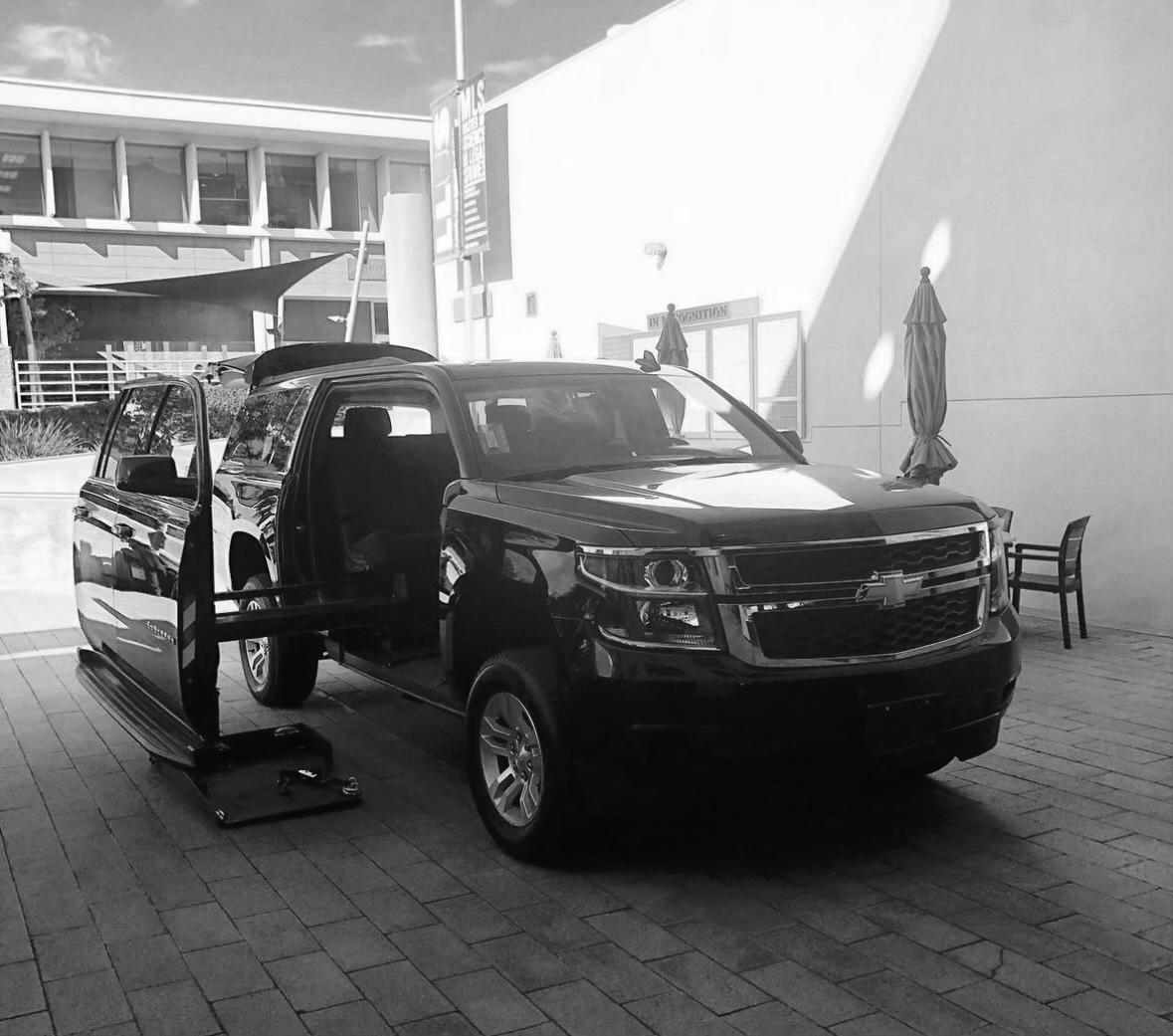

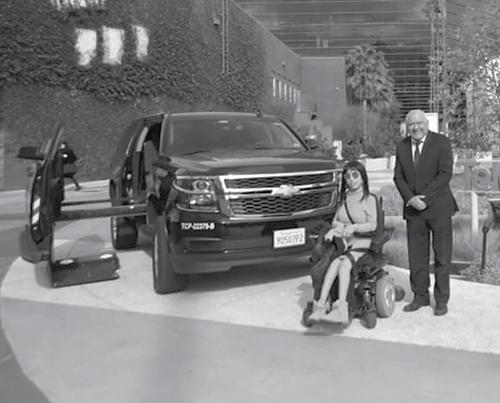
We are the first company in California with a Luxury Wheelchair Accessible SUV.
We are proud to introduce a new Mobility Division to our roster of cars. Our newest fleet addition is a luxury SUV fully furnished with a completely redesigned and converted interior to allow our clients to travel in style without the limitations of their disability.
BOOK WITH US TODAY (818) 342-3562
 by Ki'Anna Nycole
You’reat a birthday brunch with the girls. You’ve done your homework by checking the menu for nut-free options beforehand. The waiter takes your order and you inform them about your allergy. The food finally comes and it looks delicious and Instagram-ready. Everyone is taking pictures of their plates and the birthday girl is having a great time.
A few bites in… you feel something irritating your throat. You drink some water in hopes to ease the irritation, but it doesn't help. You continue to drink water to make sure your airways are still open. You begin picking at your plate, examining it for allergens. Please don’t let this be an allergic reaction. Now is not the time. Your girl asks you if something is wrong. “No, I’m fine.” You state when in reality,
you’re internally freaking out because your throat may be closing up.
This my friends… is food anxiety.
Another example of food anxiety can be the fear of others not taking your food allergy seriously. Let’s take the same scenario above, but instead of these being your close friends, it's a catered business meeting with co-workers you’re not too close with. Again, you did your homework and asked if the food was nut-safe prior, to which someone responded ensuring “sandwiches wouldn’t have nuts in it”. You trust them and assume it’s safe to eat. Halfway through the meeting, you experience the symptoms of an allergic reaction because your sandwich had pesto sauce in it (with pine nuts) without
your knowledge. At this point, you’re nonverbal as your throat is closing and you’re beginning to lose consciousness. Your clueless co-workers are unsure of what’s going on, some asking you if you need water, others stare in bewilderment. None of them know to dig in your purse and inject you with epinephrine so that you can have enough time to get to the hospital.
This my friends…is food anxiety.
Food anxiety by definition is the fear of the consequences of food consumption and how it will affect the body. According to VeryHealthWealth. com, it can involve severe picky eating, low appetite, and fear of allergic reaction and it can present itself in various ways. For me, food anxiety becomes most prevalent at social events with food. And it mainly comes down to how I’ll be perceived. I never want to come off selfish by suggesting we eat somewhere else because of my allergy, and I don’t want to come off as rude when I don’t eat the food at a cookout


or potluck because of cross-contamination risks and there’s no label.
These situations present a fine balance between being vocal, sacrificing for the sake of group wants, or packing an alternative/eating something before the event.
Although these situations can be uncomfortable, I never take them personally since I know it’s just a lack of knowledge and awareness. But don’t worry, I’m here to get you hip and right so that your next social gathering can be inclusive and anxiety free for your friends.
STEP THREE
Depending on the nature of the event and how food will be served, be sure to include labels on food options. It can be a cute nameplate that states potential allergens or a color code system where green is vegetarian and pink is nut-safe. Something that makes it easy for guests to know what they’re consuming goes a long way. You don’t understand the number of times I’ve had to chase down the waiting staff to ask the kitchen about what was in a specific food, and then by the time they got back to me the food was cold.
STEP ONE
(which can apply to numerous disabilities, not just food allergies) when planning an inclusive social gathering… include an accommodations request section on the RSVP. Not only does this show you’re considerate of all guests that may attend, but it also gives people the opportunity to state dietary restrictions and/or accessibility needs (closed caption video, interpreter, ramp/elevator access, etc.) This is such a simple gesture that takes the burden off of the guest to make sure they're accommodated by the host to ensure a good experience for all.
STEP TWO
Do your research. When considering catering or food options for your event, and one of your guests has stated a dietary restriction (vegetarian, lactose, food allergic, etc) ask if the restaurant/chef can accommodate these needs.
The same considerations apply on a smaller scale. Let’s say you’re road-tripping with your friends and it comes time to take a vote on where you want to eat. Everyone decides on Panda Express but you can’t eat there because they cook in peanut oil. And now you’re put in the awkward predicament of speaking up or suffering in silence. To avoid this, only vote on safe dining options and you can even ask your friend with the dietary restrictions and places they can eat at and the group can vote from those options.
Most importantly, take food allergies, or any disability accommodations seriously. Just because you may not fully understand it or its importance, doesn’t make it any less serious. And if you don’t understand, it’s okay to ask questions…in fact, I truly appreciate it when a friend’s mom would ask for a tutorial on how to administer an Epi-pen in the case of an emergency. It shows that they care, take my allergy seriously, and it eases my anxiety as I feel safe and understood.
Hopefully now with these tips, you can help to create a safe and inclusive environment for your friends with disabilities and share with others to do the same!
People with disabilities and chronic illness often encounter ableism on other dating apps. We understand the unique circumstances that present when dating with a disability, which is why we created a safe and accepting space to create meaningful connections for people with physical, intellectual, and psychiatric disabilities.
We invite LGBTQ+ people as we are dedicated to creating an inclusive dating app.
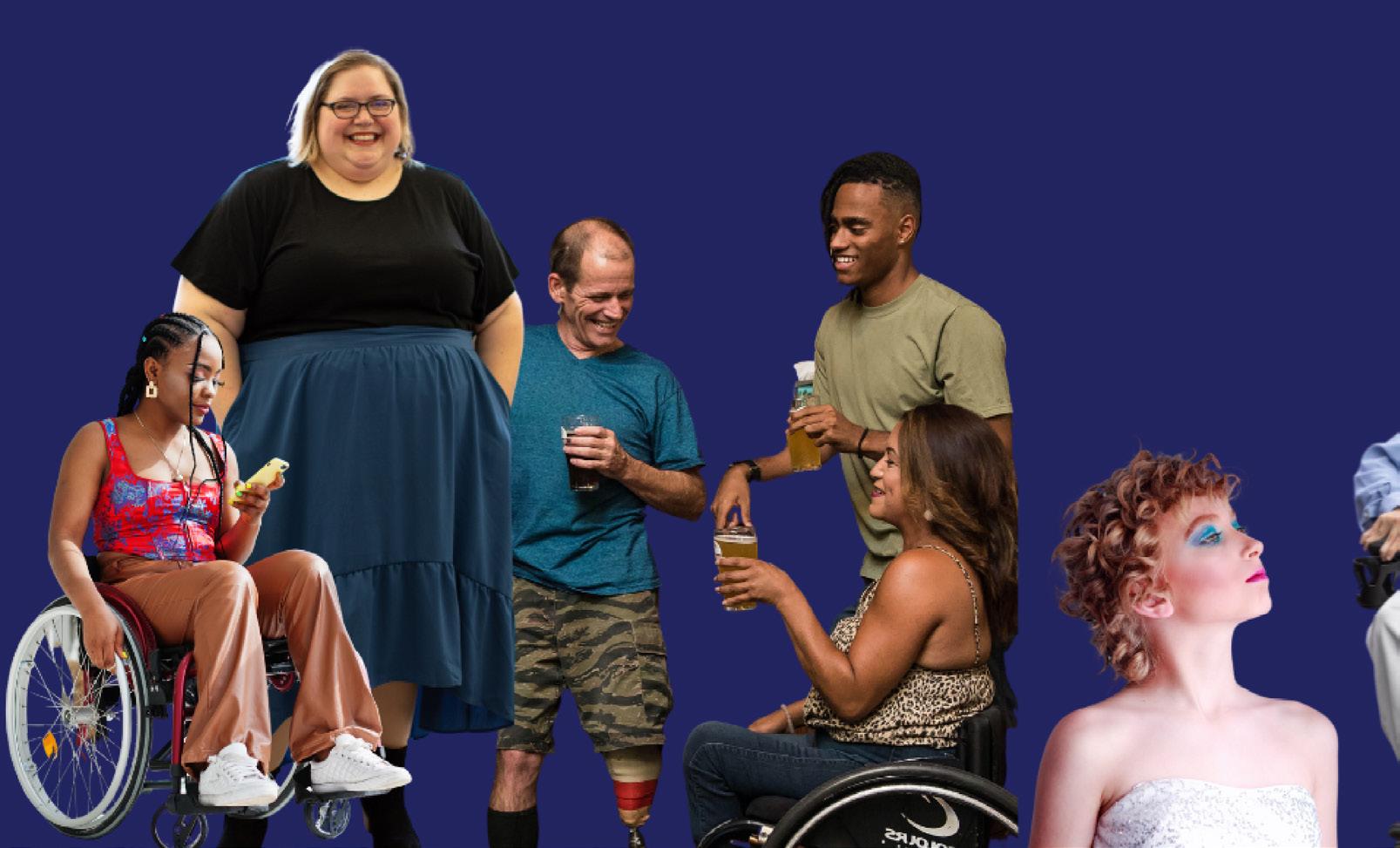
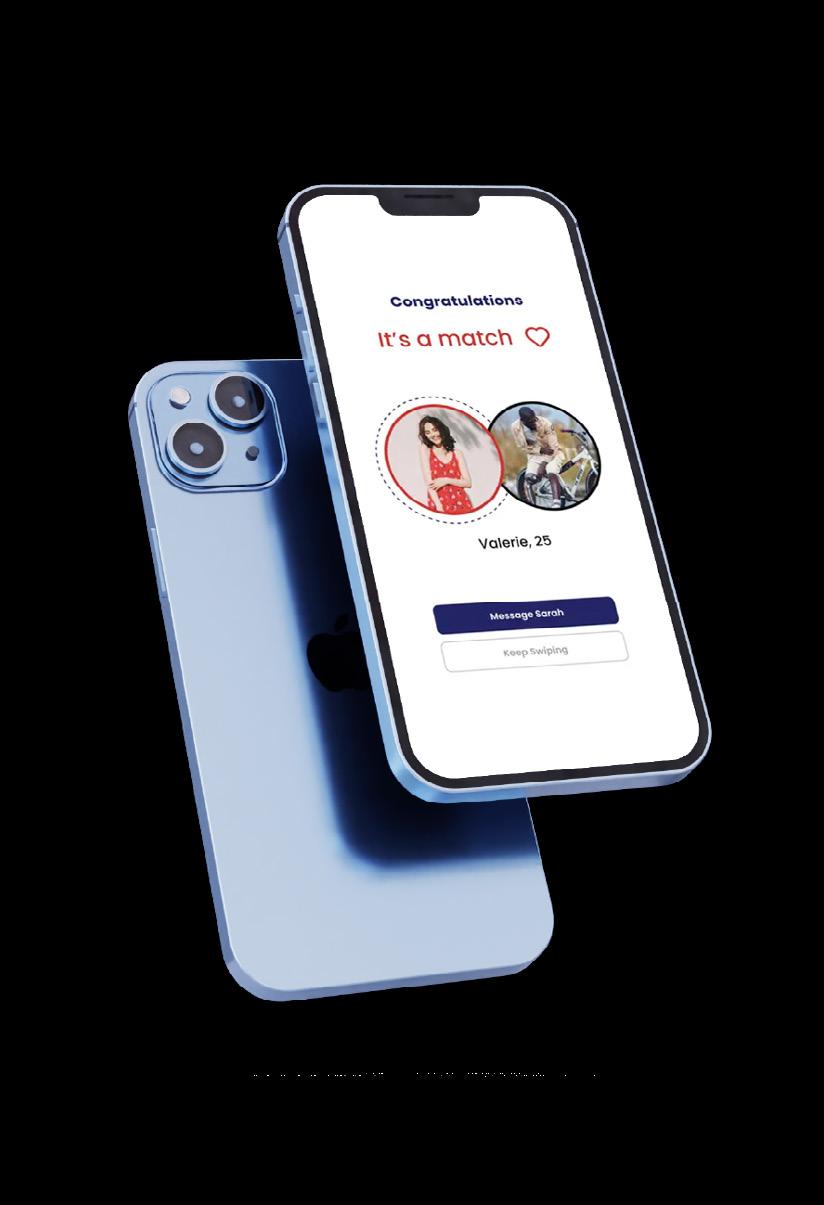
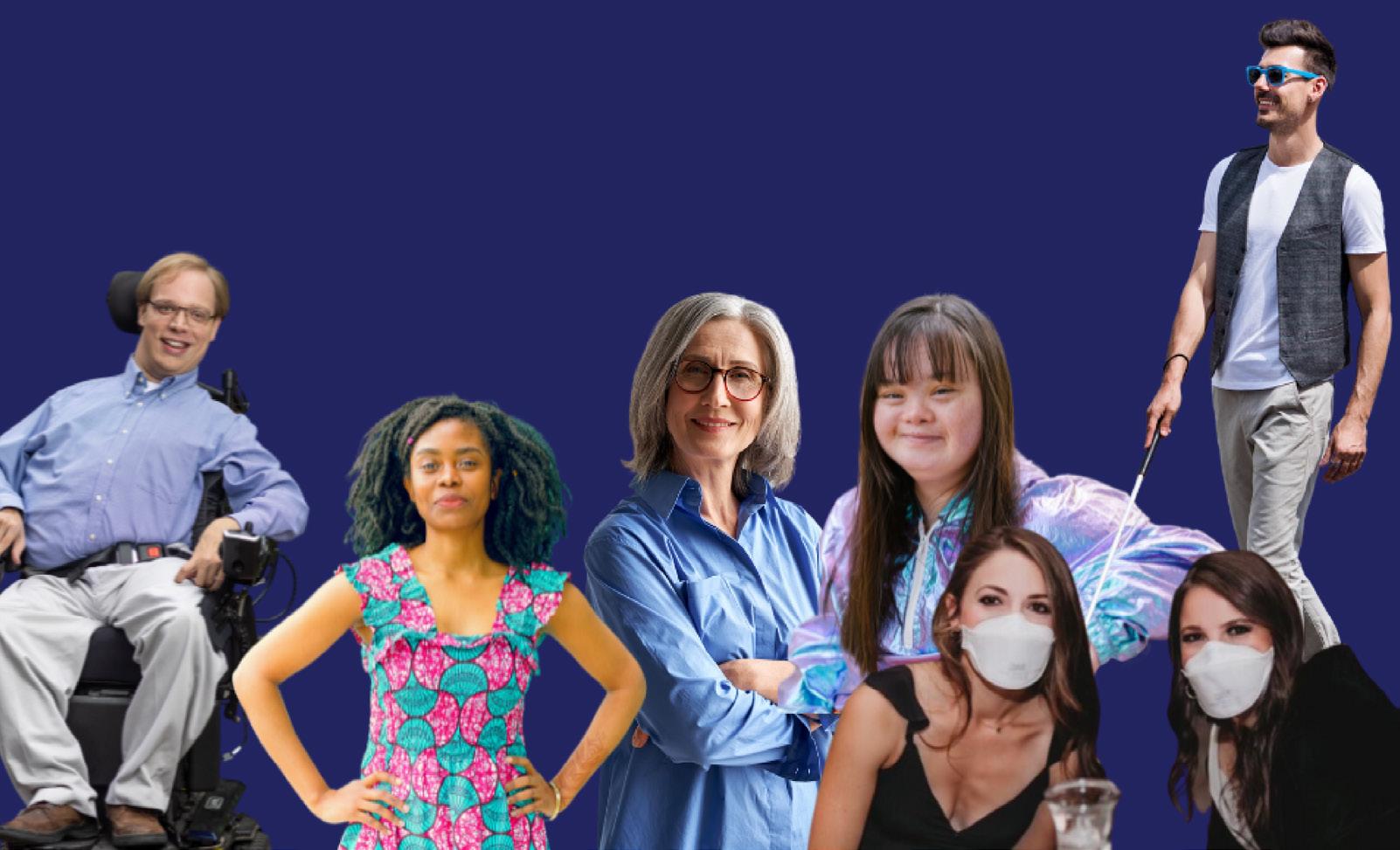
Dateability is available to use on iOS, Android, and web application (dateabilityapp.com) for North America.

Iwas diagnosed autistic at age 24, after suspecting I might be autistic for years. I've had cerebral palsy my whole life, but I felt different, more than physically disabled. I couldn't figure out why. However, the more I saw accurate representation of autistic characters with low support needs, the more I realized I related to them. Now having an official diagnosis, looking back, there are many specific characteristics and situations that are now clicking.
Fact: Vikram K. Jaswal and Nameera Akhtar state in their study published in Cambridge University Press called Being versus appearing socially uninterested: Challenging assumptions about social motivation in autism, “We argue that understanding and supporting autistic individuals will require interrogating this assumption, taking autistic testimony seriously, considering alternative explanations for unusual behaviors, and investigating unconventional even idiosyncratic ways in which autistic individuals may express their social interest. These steps are crucial, we believe, for creating a more accurate, humane, and useful science of autism”.
My Experience: When I was younger, I struggled with social skills. I always wanted to be social, but warming up to people took me a little longer.
What I wish others knew: We have social needs just like everyone else
Fact: According to the Cerebral Palsy Guide, it is estimated that 7% of children with cerebral palsy have concurrent autism, Although the degree to which they are affected can range.
My Experience: Growing up, whenever my parents asked whether I could be autistic, this was dismissed. The professionals assumed all of my differences were due to my physical disability and my learning disabilities. I was a very awkward child and sometimes had trouble relating to people. It took me an exceedingly long time to get comfortable with people. I avoided eye contact and liked to be hugged by anyone outside my immediate family.
What I wish others knew: Having cerebral palsy and autism doesn't make me any less valid.
Fact: According to Harvard Health publishing, autism spectrum disorder (ASD) is associated with differences in communication, learning, and behavior, though it can look different from person to person. People with ASD may have a wide range of strengths, abilities, needs, and challenges.
My Experience: I'm considered a level one autistic, which means I have lower support needs than others. For example, I went off to college; I was able to live on my own with the help of a personal care attendant who helped me with my physical needs.
What I wish others knew: Not everyone with autism is the same. What used to be classified as
high functioning or low functioning is now referred to as high support needs versus low support needs. Where a person lands on the spectrum does not mean they are more or less autistic.
THERE WAS A REASON THAT I FELT UNCOMFORTABLE AT MY BROTHER'S BASKETBALL GAMES, AND IT WASN'T JUST THAT I WASN'T AN ATHLETE.
Fact: According to Psychcentral, nearly 90% of autistic people experience hypersensitivity. This is not exclusive to sound; it can also be from smell or touch.
My Experience: When I was younger, going to my brother's basketball games always made me uncomfortable. I had sensory issues associated with the sound of squeaky sneakers on the floor and the buzzer. I remember it getting so bad that I had to plug my ears by putting my fingers or a small piece of rolled-up tissue in them.
What I wish others knew: Every autistic person has different sensitivities and triggers and may deal with them differently.
Fact: According to VerywellHealth, many autistic people experience alexithymia, characterized by the inability to label emotions.
My Experience: There is a misconception that all autistic people are not in tune with their emotions
and cannot express them. Before being diagnosed, I was guilty of believing that misconception. That could not be farther from the truth, but it took years of therapy to be in tune with my emotions, anxieties, and triggers.
What I wish others knew: The severity in which autistic individual struggles with their emotions can vary.
Fact: According to a study published in Research in Autism Spectrum Disorders in 2013, 41% of autistic children report an unusual fear.
My Experience: For as long as I could remember, I would say I didn’t like dolls and was extremely creeped out by them. Especially dolls that looked more human than others. I remember being terrified of American Girl dolls because their eyes opened and closed. Little did I know that fearing dolls was a fear that many girls with autism have or have at some point in life.
What I wish others knew: Having uncommon fears is typical for autistic people.
Fact: According to The Autism Group, special interests can last weeks, months, or even years. Autistic individuals often use their special interests to start conversations with people, reduce stress, or help them calm down.
My Experience: When I was younger, my special interests tended to be dogs and horses; now, they are concerts, music, and celebrities. I only recently understood special interests. Don't get me started on Taylor Swift, Hunter Hayes, and Ed Sheeran. If asked about my favorite shows, I will tell you every random fact I know about them.
What I wish others knew: Special interests are different from obsessions or hobbies.
Autistic people often want to know everything about their special interest, and have little to no interest in topics that are not within their special interest. Typically the intensity of a special interest versus hobby or obsession is different.
Fact: According to an article written by Amanda Morin, an Educational and Neurodiversity Consultant, "perseverance" describes a person who cannot let go of a subject or an idea. You may have heard it in reference to autism, but it can affect anyone. Repeatedly saying the same thing or acting the same way is a sign of perseverance. However, they can become stuck in their emotions, actions, and thoughts.
THERE WAS A REASON THAT WHEN PEOPLE SAID CERTAIN THINGS, IT WENT OVER MY HEAD.
Fact: According to research, Social and communication impairments are essential diagnostic criteria for defining Autism Spectrum Disorders (ASDs). Difficulties in appreciating nonliteral speech, such as irony in ASDs, have been explained as impairments in social understanding and in recognizing the speaker's communicative intention.
My Experience: Even though I have a good sense of humor, sometimes friends or family would say something here, and the meaning of what they said would go over my head, and I would take it.
What I wish others knew: I love sarcasm and use it often, but sometimes I can't tell when someone else is sarcastic.
My Experience: Growing up, there were times when people would say that they didn't think I could do certain things because I was disabled and would struggle and give up. it was more about proving to myself that they are wrong rather than proving them wrong. Those people who have low expectations of me, made me a driven person.
What I wish others knew: Autistic people can be successful and use society underestimating them as a driving force to succeed and whatever they put their mind to. Being autistic doesn't stop people from going to college or having a full-time job. Continue

Fact: According to the National Autistic Society, women don't fit the typical profile of autism, and we typically tend to mask more than men. Women also tend to be misdiagnosed. Additionally, according to Psychology Today, women often display an intense interest in a broader range of subjects, including how the mind works and people (especially romantic partners, "crushes," and celebrities). Autism often causes women to gravitate towards careers and hobbies requiring high levels of intense focus, such as research. Additionally, according to a 2022 study autistic woman have more emotional empathy than males do.
My Experience: Growing up, I would come off rude or blunt; I would tell it like it was without sugarcoating. I am an empath, making me anxious and emotional. Often, I am told to stop overreacting, leading to lower self-esteem. I always felt I was wrong.
What I wish others knew: Being autistic does not automatically mean we are never aware of the impact of my words on other people. While sometimes, we may not recognize how my direct words may impact someone, if I ever think that I said or did something wrong or hurtful, we feel terrible. Autistic individuals can be hypersensitive to others' emotions and sometimes feel responsible even when we are not.
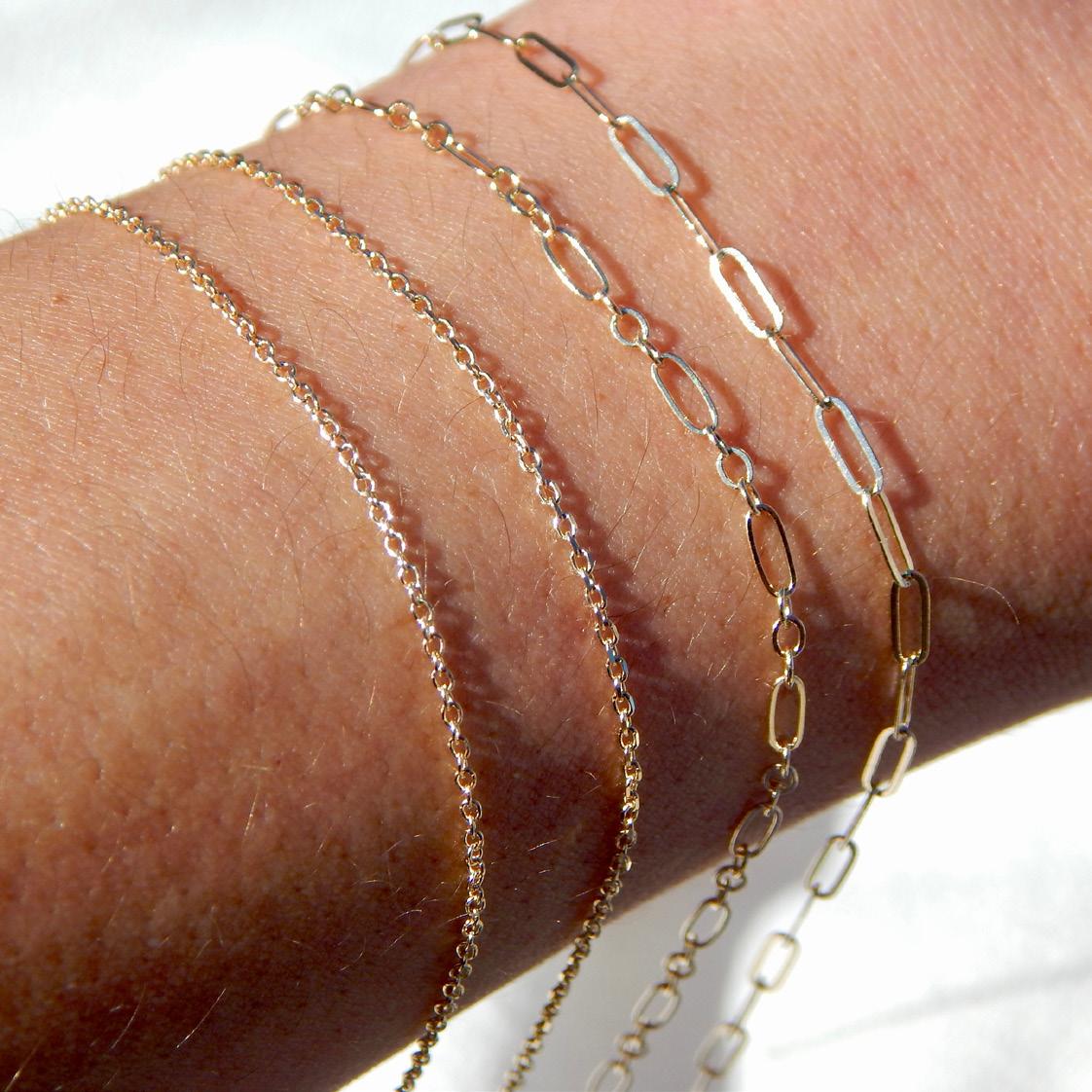
Safely welded around your wrist, anklet, or as a necklace so you can sparkle effortlessly every day!
ADHD friendly version: Read bold print only.
With ADHD being oftentimes portrayed within media in a light that isn’t truly reflective of the lived experience of many ADHDers it makes sense as to why employers may not understand how to best accommodate individuals with ADHD in the workplace.
Below are things to think about, and tips ‘n tricks for people leading, managing, and supporting employees with ADHD, and other neurodivergent diagnosis’. Are you somebody with ADHD seeking accommodation tips? Head to the link listed next to this to see tips on advocating for self as an ADHD employee.
I labeled the section employers of people because of the reality that many individuals with ADHD are part of what we in the neurodivergent community refer to as the late diagnosis club. Not only are some people diagnosed late, but many people are never diagnosed, unfortunately. I
struggles that are faced by people that are not allotted the ability to receive the community, accommodations, or support that I believe is necessary for people to survive with a decent quality life, and especially to thrive with a diagnosis such as ADHD.
Oftentimes a higher number of women, Black and brown people, folks from rural areas, and people who are poorer are among the individuals diagnosed late and or never. This reality is important to note due to employers needing to have workplaces designed in ADHD-friendly capacities prior to having people who are on paper diagnosed with ADHD showing up to the workplace.
Not only is there a lack of diagnosis of ADHD in marginalized communities, but there is also the reality that some individuals are apprehensive to report their ADHD diagnosis on applications for job and school opportunities due to fearing the backlash that could stem from an employer.
Employers need to do research on what is going on in the brain for many individuals with ADHD, and how the things that are going on within the brain relate to an individual’s potential behaviors and or quirks in the workplace.
For example, time obliviousness, misplaced objects, and accident/mishap proneness are some of the things that many individuals with ADHD struggle with. This oftentimes shows up in many people with ADHD’s daily lives, not excluding the workplace; some of these behaviors, quirks, and habits and can be viewed as carelessness at times if an employer doesn’t even attempt to understand what is going on with the employee.
Understand that all people with ADHD are different, just like all people of any other classification or group ever. Though many ADHDers struggle with similar things, we share many similarities related to strengths as well all, though again, ADHDers do not come one size fits all. The accommodations that one individual with ADHD may need doesn’t necessarily mean that another employee with ADHD would also need that same accommodation.
There are three primary subtypes of ADHD diagnoses - hyperactive, inattentive, and combined. There are also high chances of variations in an employee’s ADHD due to the reality that 50% of people with ADHD have a comorbidity of some type.
Alexis’ Definition of Comorbidity: Having multiple diagnoses (2 or more) and or the lived experience of two diagnoses even if not able to get
Having to ask for every little thing as an accommodation is likely to make someone with ADHD apprehensive to request. Though people with ADHD are known for having a lot of energy and being talkative, though this can be totally not true for some ADHDers, something many people don’t know about is rejection sensitivity dysphoria and how this shows up heavily within many people who have ADHD.
The intense fear of rejection and its impacts on communication with employers can be a severe problem if there aren’t modes of communication in place for employers to allow employees to communicate in various ways. Even then, people may fear utilizing this due to the backlash that could stem from submitting questions or thoughts, it is on employers to find ways to ensure that employees feel safe and protected, understood, and genuinely heard when employers seek out feedback.
It takes a lot of energy to put into sharing things for people who oftentimes deal with emotional regulation impacts so to feel as though one is utilizing a lot of energy to share something for “no reason” is likely to also lessen the chance of an employee with ADHD regarding opening up.
While the tips and things to think about above are important, they are not the says all be all to understanding how to best accommodate employees with ADHD. Ensuring that the way your workplace and work functions are designed are as user-friendly as possible for disabled and neurodivergent employees, and ensuring that you are leading people with an open and constantly growing mind, and heart is the key takeaway from this message due to ADHD not being a one size fits all reality in neither the workplace nor everyday life.
Feel free to utilize these tips to implement new
strategies or think about things in a new way for your current and future employees with and without ADHD. For more AD your homie with ADHD content follow me on Instagram at this link, or connect with me on LinkedIn at this one!
Remember that accommodations are not special privileges. Should you need accommodations from the jump or even after a while of having been within a role do not feel bad or shameful. Your needs are your needs, point blank period. Please do not allow yourself or others to make you feel as though you aren’t worthy of the support you need to do your best work!
Also, never forget – the ADA exists for a reason! People with ADHD are protected under the Americans with Disabilities Act.
Express your concerns to your employer in the way of communication that works best for you in the given moment. Many of us have comorbidities with a hefty amount having anxiety which can make the thought of being able to fully express yourself one liable to take your breath away, give you a stomachache, or make you unable to focus – if you know you know *whew*.
If it’s via writing? Write. Video? Video. Voice message? Record it! 1:1 Meeting? Set it up! Small group with another employee or manager’s supervisor? Do. What. You. Need. To. Do.
Be informed of your state’s laws should your sharing of an ADHD diagnosis with an employer for a new need for accommodations result in problems at your workplace but do not allow this potential
reality to cause you to be more apprehensive about not requesting accommodations. Just stay ready and armed with knowledge is all!
Emotional regulation with ADHD is ROUGH, especially with stuff like work problems or having to apply for new jobs and everything that comes with both of those realities can be very intense. Don’t discredit the heftiness of it all. Apply a little extra self-care however that looks best for you. Extra naps, a long bath, ice cream, FaceTiming a friend, binge-watching TV, taking a day off, whatever you can afford to do to get some peace of mind.
Another way to emotionally regulate during intense work-related things is to be proactive with administrative tasks such as having an email template saved in your drafts to discuss things with your employer (typed before the rage hahaha) and having your resume up to date should things not go as I hope they do – they give you the accommodations and things go smoothly afterward…not awkwardly. Or illegally? Otherwise, resort back to #3.
Sometimes accommodations in themselves won’t change a toxic workplace. Know when to find a new workplace should you be allotted the ability to do so and should your working toward accommodations seem like something you are not capable of mustering up the energy and ability to be able to do – I’ve been there. Or should you realize you simply want a workplace that is better for your mental wellbeing and is in alignment with what you are desiring and deserving of? You know when you know. Keep your heads up!
Feel free to utilize these tips to implement new strategies or think about things in a new way as you navigate this journey in receiving workplace accommodations for your ADHD. For more AD your homie with ADHD content follow me on Instagram at this link, or connect with me on LinkedIn at this one!
The experiences in my eight-year journey and point of view as an able-bodied person has given me the ability to grasp a neutral and genuine look with compassion in any scenario. Embracing it all has made me a more complete person. Of course, there are those bad days but connecting with people in the disability community has created a stronger foundation for me to keep growing.
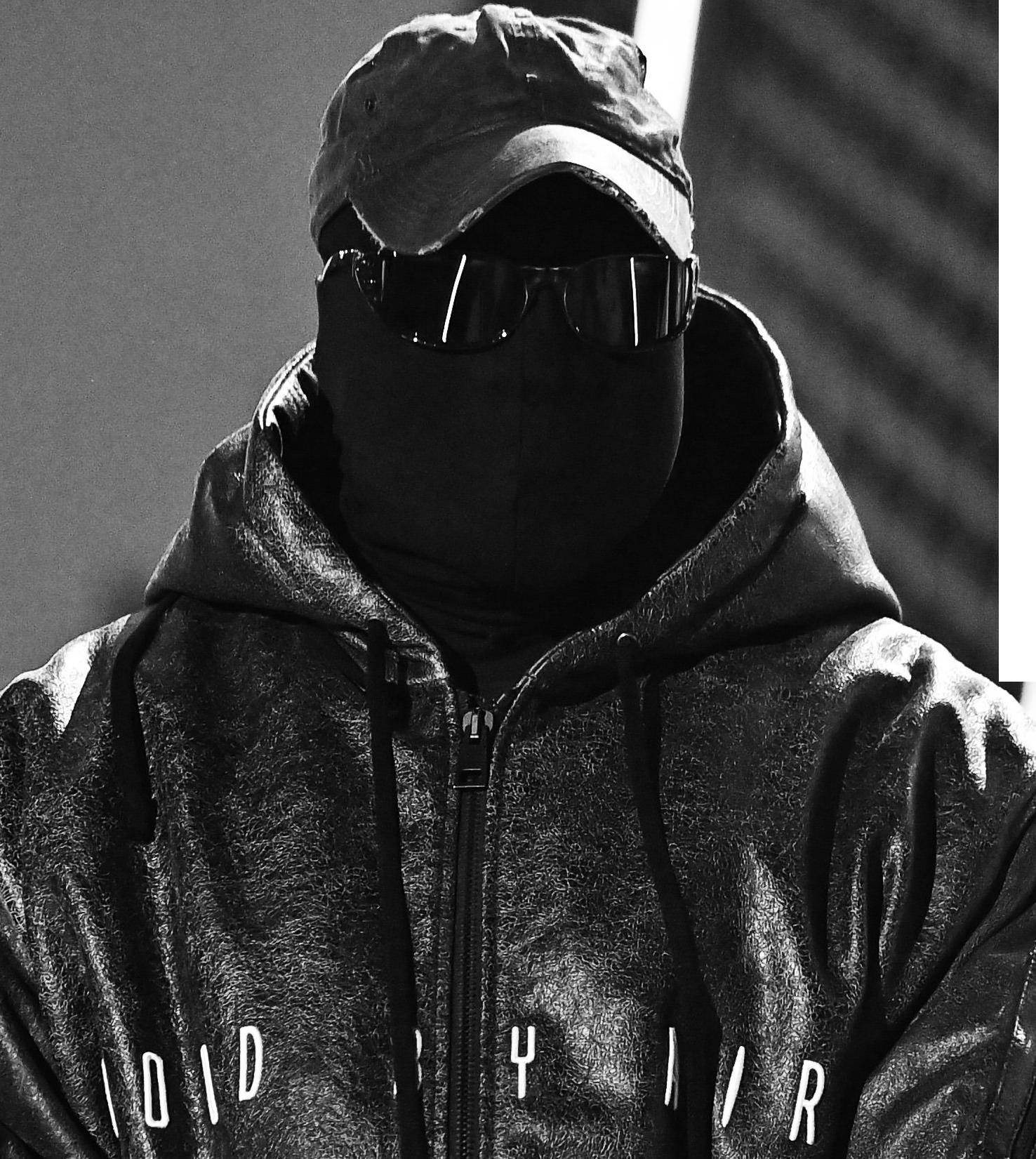
As I navigate life, I’ve experienced a variety of poor behavior and stings of discrimination. I’ve also become increasingly aware of it. For a while now, I’ve observed the way the media and the general public continue to treat Ye, as in Kanye West. As we set aside our differences, I want to discuss this matter because I believe it’s extremely problematic and harmful to overlook a disability, especially to the person experiencing it.
I am absolutely not trying to present an idea that a disability is or could be an excuse for any wrong doing. Nor am I addressing Ye’s inconsiderate language and social media posts.
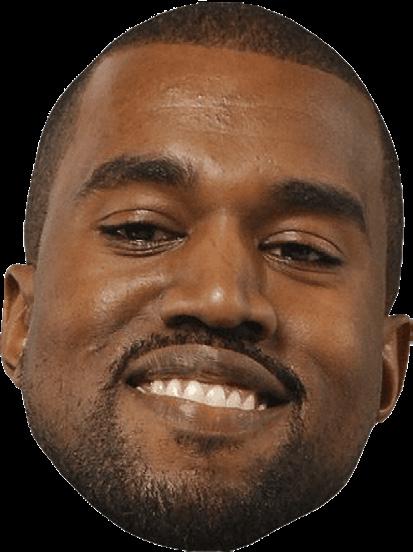
Ye is a lot of great things to me and to many others. Kanye was a major inspiration throughout my very extensive recovery. Unfortunately, his talent and contributions to art is not entirely celebrated. The simple reason as to why is because in this lifetime, Ye has been extremely reckless with his words and no redemption.
Ye’s disability and history with Mental Health is consistently excluded in all forms of mainstream media. It’s as if Ye’s own Mental Health journey is nonexistent, of value or irrelevant. I strongly believe that it’s not right to minimize a disability whether it is invisible, visible or however you feel about the person. Do you think this is okay?
The unnoticed treatment has quietly created an acceptable standard for people to only care about
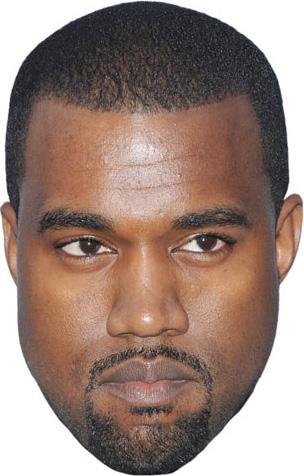
Mental Health when you like the person. The treatment normalizes for the world to expect for a person in a not okay mind state or in the middle of a state caused and affected by their disability, to always say the right thing and do the right thing. As a result, the general public has gone as far as to deem Ye of not being worthy of grace while the media just thrives on that continued narrative… Despite easily giving grace to others or celebrities whose actions are undoubtedly far worse.
In a way the media never gives space instead the media chooses to interview someone who is not in their best mental state for entertainment purposes. So basically, the media continues to low key antagonize and take advantage of Ye. During his journey while he is in the most vulnerable state and possibly attempting to move on.
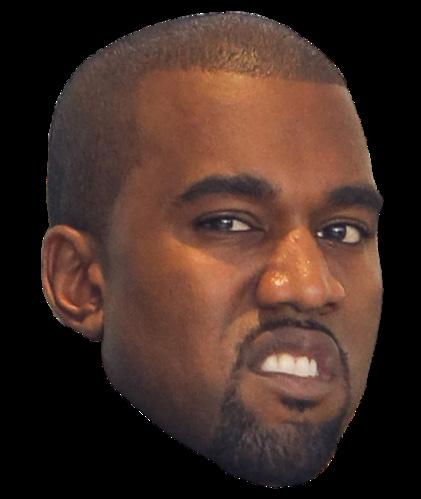
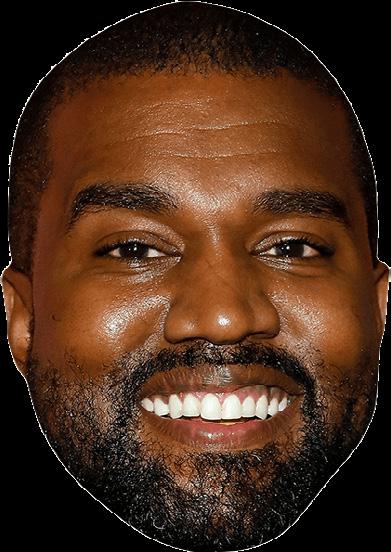
It’s necessary to point out what the media and the general public can do differently. The media, writers and the public should definitely become aware of the importance of research and learning about the spectrum of disabilities. Learn more about the person’s disability and specifically how they can produce less insensitive content. These simple changes can help the media to elevate their choice of speech and stop spreading prejudice towards people with disabilities.
Ye should take a moment for himself and consider embracing the disability community. As an outsider looking in, Ye is dealing with his Mental Health in a solo atmosphere. Ye is in a colorless setting with an audience and no sincerity. Ye is surrounded by groups of people that are yes types and masked ableists. Through connecting with the disability
community and resources, Ye can learn more about our inclusive and powerful space. Becoming an ally and immersing in the community, Ye will not only find pure relatability but he will unlock waves of peace. This connection can bring new clarity for Ye and finally Ye can obtain the most important thing, support to grow.
It’s so impactful to step out of your bubble every once in a while. To realize again that humans make mistakes and even the person who is in the wrong is a human and deserves the opportunity to move beyond it.


Whenever I’m struck by a good script idea, it lingers in my mind and ultimately burns inside my brain until I’m able to get my idea on paper. My short film Clarity was one of those moments. By the time I wrote the last scene, I knew this was a story I wanted to pursue to screen. Easy, right? I'm a film student in film school, after all. Well, not quite.
Up until this point, my scripts didn’t live on the big screen, but instead on a small screen..on my desktop…in a scripts folder. I was a producer and would be responsible for transforming my classmates’ ideas from script to screen. Producing became second nature. But time was ticking and I wanted something different. This was my senior year, and this time, I have a story I’m ready to tell.
Clarity explores the universal themes of insecurity and vulnerability through the perspective of Jones, a Black blind man. Jones, an aspiring businessman, is rejoicing after successfully closing a business deal while in Texas. However, his celebratory night takes an unpleasant turn when he faces discrimination at a bar, leading to feelings of insecurity and self-doubt that impact both his personal and professional life.
Although I could relate to the feelings of selfdoubt and insecurity, I still recognized that this wasn’t my lived experience. Therefore, I needed to do my research to ensure authentic storytelling. And research I did! I delved into articles, immersed myself in YouTube videos, and explored the spectrum of blindness, popular misconceptions, and shared struggles and successes within the community. I watched vlogs to understand how individuals navigate the world differently, discerning the nuances between using a guide dog versus a cane.
I used what I had learned, to enhance and inform my script. Upon completion of my script, I reached out to the non-profit RespectAbility, who connected me with the low vision/blind community to read my script and ensure authenticity. This was such a simple step, that not only strengthened the story but gave me the self-assurance and comfortability as a writer to convey an accurate portrayal of this experience.
Casting became the biggest challenge. Casting can make or break your film regardless, but I wasn’t just looking for stellar actors, I was set on casting a Black man who’s legally blind. I did a nationwide SEARCH. I was looking high and low trying to find the lead to my film, from casting calls
to email outreach to various blind and disability organizations. The clock was ticking. We were 2 weeks out from production and I still didn't have a lead.
Ping! I got an email from a woman who’s blind, inquiring about the part. We were in a tight spot, and my producer urged me to think creatively. “What if we cast her and switch gears to an LGBTQ film? At least that way we still get your authentic casting.” I understood her point, but it would distract from the main issue – the challenge men, especially black men, face in expressing their feelings openly. In Jones, we witness a profound struggle as he navigates the complexities of masculinity and how it limits his ability to confide in his wife.




Ping! Another hit. This time from a white blind male actor. However, it wouldn’t fit the film’s peak - when Jones is racially profiled in a bar in the Deep South. Unbeknownst to him, the atmosphere is charged with racism, as the patrons jump to rash conclusions, oblivious to his blindness; resulting in a powerful scene depicting both racial and disability discrimination.
“I think it’s time you cast a local Miami actor.” My professor sat me down after class. “I know you want the lead to be blind but that’s unnecessary and you’re giving yourself more stress”. I shook my head. “I can’t make the film if the lead isn’t blind in real life.”
“KiAnna. The point of actors is to act. It’s their job. They can do the research and play the part of a blind man on set”. That’s not the point. It was a discouraging conversation at the time but ultimately made me more determined.
I prevailed. I saw a video of Joshua on TikTok, explaining his day in life as a Black and blind college student. I contacted him, he auditioned, and the rest was history. This was Joshua’s first time acting before, and he killed it. He loved the script and played a huge role in making the story come to life.
We spent a lot of time unpacking the bar scene, and how it was important to highlight the intersectionality of disability and race. Joshua is 6’ tall, black, blind, and very independent and he revealed how often he’s misperceived. From people accusing him of “pretending” to be blind to making sure he’s safe and aware of his surroundings, not just as a blind person, but specifically because he’s a tall black man.
Joshua is over 6 feet tall, black, and blind, recounting how his profound independence commonly leads to misconceptions. His experiences ranged from accusations of him “faking his blindness” to the imperative need to ensure his safety and awareness of his environment.
Moreover, his experiences informed set design. He explained to our production designer how he does certain things in his home that help with accessibility. For example, his keys and other valuables are
always hung on the wall, because it's something tactile that he can feel for before heading out. These authentic touches brought substantial value to the film.
As a director, Joshua challenged me to communicate my notes differently. I had to emphasize tone of voice and inflection over facial expressions and body movements when guiding Joshua's performance. Rehearsals were also adjusted for accessibility. The script had to be screenreader accessible, and I mapped out when we would be rehearsing certain scenes ahead of time, allowing Joshua to be off-book for our table reads.
Contrary to Hollywood's excuses, being inclusive and accessible in filmmaking wasn't a hassle or an added expense. It simply required a bit more thought and planning, resulting in a significantly stronger and more enjoyable final product. I genuinely hope that the Clarity set inspired fellow film students to consider accessibility and disability representation in their work. I’m so grateful to my stellar cast and crew, who believed in the story and helped it come to fruition.
Clarity was an ambitious first film, that not only taught me about what I’m capable of as a creative but also the invaluable importance of authentic representation in film. And I owe a heartfelt thank you to my exceptional cast and crew who believed in the story and helped bring it to fruition.
You don't need an extravagant budget to do the right thing; what you need is the right heart and determination to see it through.
Clarity has been chosen for screening at seven film festivals so far and is scheduled for public release in 2024. To stay up to date on the film’s release follow @clarityshort on IG.
EDITOR IN CHIEF
Lauren “Lolo” Spencer
WRITERS
Alexis Williams-Cavanaugh
Kianna Nycole
Kaetlyn Elliott
Katiana Elena
Olivia Murphy COVER Mid-Journey ART DIRECTION / DESIGN
Chappe.Studio STOCK ASSETS
Envato Elements
Adobe Stock