Paediatriki
Volume 74 • Number 3 • July-August-September 2011
Trimonthly publication of the Greek Paediatric Society
President
A. Constantopoulos
Editorial board
Director
G. S. Varlamis
Members
S. Andronikou
E. Galanakis
A. Evangeliou
L. Thomaidou
M. Kanariou
A. Kapogiannis
S. Kitsiou-Tzeli
E. Mantadakis
P. Panagiotopoulou-Gartagani
A. Papadopoulou
V. Papaevagelou
A. Papathanassiou
A. Siamopoulou-Mavridou
A. Syrigou-Papavasiliou
Manuscript submission e-mail: grammateia@e-child.gr
Instructions to authors: http://e-child.gr/publications/ instructions-to-authors
Owner
Greek Paediatric Society 15, Mpakopoulou st. GR - 15451, Ν. Psychiko
Tηλ.: +302107771140, e-mail: grammateia@e-child.gr
Annual subscription
All foreign countries: US$50
EDITORIAL
G. S. Varlamis
REVIEW ARTICLES
Metabolic bone disease of prematurity: Diagnostic and therapeutic approach
E. Efstathiou, Τ. Sdogkou, C. Paganias
Acute lymphoblastic leukemia in childhood and adolescence: Contemporary and updated prognostic factors
M. Abatzidou, E. Rigatou, S. Polychronopoulou
Diet habits and asthma in children. Are they related?
A. Papadopoulou
S-100B protein as marker after traumatic brain injury in children
Ε. Gougoudi, E. Rahmani, A. Zavitsanakis
ORIGINAL ARTICLES
Parent’s compliance with immunization of children with cancer against H1N1 influenza virus
D. Doganis, E. Dana, D. Bouhoutsou, A. Pourtsidis, M. Baka, M. Varvoutsi, Μ. Servitzoglou, B. Raphailidou, P. Hantzi, E. Skiadopoulou, M. Tsolia, E. Kosmidi
Study of perinatal health of immigrant populations in a Greek public maternity hospital.
P. Koletsi, C. Costalos, M. Detsis, D. Papamichail, T. Panagiotopoulos
PRACTICAL ISSUE
Recommendations for the diagnosis and management of anaphylaxis in children
Working group of the Greek Pedoallergiologic Society: S. Tsabouri, M. Ziva, D. Kasimos, E. Mantzourani, K. Priftis, M. Triga, D. Hatzis
CASE REPORTS
Zellweger Syndrome in neonate
A. Andreou, V. Peristeri, E. Michelakaki, M. Moraitou, M. Mpantouraki, Th. Boutzetis
Microdeletion and microduplication 17q21.31 identified by molecular karyotype (array-CGH)
S. Kitsiou-Tzeli, M. Tzeti, K. Giannikou, V. Oikonomakis, A. Syrmou, K. Kosma, E. Leze, E. Kanavakis
Familial Mediterranean Fever
S. Nikorelou, M. Mavrikou, D. Delis, A. Triantafillidou, E. Panagiotou, L. Stamogiannou
Infant with cystic fibrosis and severe anemia
E. Mantziou, C. Koutsaftiki, G. Tapaki, K. Papantzimas, N. Miriokefalitakis
Τ.Β. Σδόγκου2
3
Χ.Γ.
Metabolic
bone disease of prematurity: Diagnostic and therapeutic approach
Abstract
E.I. Efstathiou1
Newborns’ Department, “P. & A. Kyriakou” Children Hospital, Athens, Greece
Τ.V.Sdogkou2
Second Pediatric Clinic of Athens University, “P. & A. Kyriakou” Children Hospital. Athens, Greece
C.G. Paganias3
Fourth Orthopaedic Department, KAT Hospital- Postgraduate Student in Metabolic Bone Diseases, Athens, Greece
The metabolic bone disease of prematurity is a condition which prevalence is augmenting through the years, as the survival rates of the prematurely born infants are ameliorating. It is commonly referred to as osteopenia of prematurity, though it concludes rickets as well. The etiology of this disease is still a field of research, as the classical belief that the major cause of the disease is the calcium and phosphate deficiency is now doubted and widened. Early diagnosis is difficult, because the disease is subclinical on its onset. This is why there are numerous serum and urine biochemical markers as well as radiographic and other imaging examinations, by which it is feasible to detect those premature infants at risk to develop metabolic bone disease of prematurity. The purpose is to diagnose the situation in time, so that intervention, which includes administration of calcium, phosphates and vitamin D, reevaluation of medicine administered for concomitant diseases, and physiotherapy, will start as soon as possible.
Keywords: metabolic bone disease, osteopenia, rickets, prematurity
E.I. Efstathiou1, Τ.V.Sdogkou2, C.G. Paganias3
Αλληλογραφία
151 24, Αθήνα
Τηλ.: 210 8067160
e-mail: elenhef@yahoo.gr
Correspodence
Eleni Ir. Efstathiou
Irodou Attikou 19, Maroussi
151 24, Athens
Tel.: +30 210 8067160
e-mail: elenhef@yahoo.gr
Κατάλογος
ALP
NTx
DXA
BUA
SOS = Ταχύτητα μετάδοσης του ήχου
AAP = Αμερικανική Ακαδημία
ESPGAN = Ευρωπαϊκή Εταιρεία
sorptiometry- DXA)
1. Lorenz JM. Survival of the extremely preterm infant in North America in the 1990s. Clin Perinatol 2000;27:255-262
2. Funke S, Morava E, Czako M, Vida G, Ertl T, Kosztolanyi G. Influence of genetic polymorphisms on bone disease of preterm infants. Pediatr Res 2006 Nov;60(5):607-612
3. Berseth, B, Abrams, S. Special Gastrointestional Concerns. In R Ballard, H Taeusch. Avery’s Diseases of the Newborn. 7th ed. Philadelphia:W.B. Saunders Co; 1998; 970-973
4. Dabezies EJ, Warren PD. Fractures in very low birth weight infants with rickets. Clin Orthop 1997;335:233-239
5. Holland PC, Wilkinson AR, Diez J, et al. Prenatal deficiency of phosphate, phosphate supplementation, and rickets in very-low-birthweight infants. Lancet 1990; 335: 697–701
6. Kaplan W, Haymond MW, McKay S, Karaviti LP. Osteopenic effects of MgSO4 in multiple pregnancies. J Pediatr Endocrinol Metab 2006 Oct;19(10):1225-1230
7. Demarini S. Calcium and phosphorus nutrition in preterm infants. Acta Pediatr Suppl 2005 Oct;94(449):87-92
8. Bernard L Salle, Edgar E Delvin, Alexandre Lapillonne, Nicholas J Bishop, Francis H Glorieux. Perinatal metabolism of vitamin D1–3. Am J Clin Nutr 2000;71(suppl):1317S–1324S
9. Weiler HA, Wang Z, Atkinson SA. Dexamethasone treatment impairs calcium regulation and reduces bone mineralization in infant pigs. Am J Clin Nutr 1995; 61: 805–811.
10. Venkataraman PS, Han BK, Tsang RC, et al. Secondary hyperparathyroidism and bone disease in infants receiving long-term furosemide therapy. Am J Dis Child 1983; 137: 1157–1161.
11. Zanardo V, Dani C, Trevisanuto D. Methylxanthines increase renal calcium excretion in preterm infants. Biol Neonate 1995; 68: 169–174.
12. Malowany JI, Knoppert DC, Chan AK, Pepelassis D, Lee DS. Enoxaparin use in the neonatal intensive care unit: experience over 8 years. Pharmacotherapy 2007 Sep;27(9):12631271.
13. Toth P, Erdei G, Vasarhelyi B. Potential consequences of the sudden postnatal drop of estrogen levels in preterm neonates. Orv Hetil 2003 Aug 31;144(35):1719-1724.
14. Frost H. From Wolff’s law to the Utah paradigm: insights about bone physiology and its clinical applications. Anat Rec 2001;262:398- 419
15. Kakebeeke TJ, von Siebenthal K, Largo RH. Differences in movement quality at term among preterm and term infants. Biol Neonate 1997;71:367- 378
16. Rodriguez JI, Palacios J, Garcia- Alix A, Pastor I, Paniagua R. Effects of immobilization on fetal bone development. A morphometric study in newborns with congenital neuromuscular diseases with intrauterine onset. Calcif Tissue Int 1988;43:335- 339
17. Eliakim A, Nemet D, Friedland O, Dolfin T, Regev RH. Spontaneous activity in premature infants affects bone strength. J Perinatol 2002 Dec;22(8):650-652
18. Cakir M, Mungan I, Karahan C, Can G, Okten A. Necrotizing enterocolitis increases the bone resorption in premature infants. Early Hum Dev 2006 Jun;82(6):405-409
19. Barbara J Stoll, Overview of mortality and morbidity (chapter 93). In: The fetus and the neonatal infant (Part XI). In: Nelson Textbook of Paediatrics 18th edition, Saunders, Philadelphia, 2007, pp.707
20. MC Backström, A Mahonen, M Ala- Houhala, H Sievanen, P Maenpaa, AM Koivisto, et al. Genetic determinants of bone mineral content in premature infants. Arch Dis Child Fetal Neonatal Ed 2001;85:F214- F216
21. Gross C, Eccleshall TR, Malloy PJ et al. The presence of polymorphism at the translation initiation site of vitamin D receptor gene is associated with low bone mineral density in postmenopausal Mexican- American women. J Bone Miner Res 1996; 11:1850-1855
22. Moreira- Andres MN, Papapietro K, Canizo FJ, et al. Correlations between bone mineral density, insuline- like growth factor I and auxological variables. Eur J Endocrinol 1995; 132: 573-579
23. Hany A, Mohamed FM, Hanna AA, Sahar H, Christine K, Kantilal P. Gestational age, sex and maternal parity correlate with bone turnover in premature infants. Pediatr Res. 2005; 57(5):708-711
24. Barbara J Stoll, Overview of mortality and morbidity (chapter 93). In: The fetus and the neonatal infant (Part XI). In: Nelson Textbook of Paediatrics 18th edition, Saunders, Philadelphia, 2007, pp.778
25. Harrison CM, Johnson K, McKechnie E. Osteopenia of prematurity: A national survey and review of practice Acta Pædiatrica 2008; 97: 407–413
26. Faerk J, Peitersen B, Petersen S, et al. Bone mineralization in premature infants cannot be predicted from serum alkaline phosphatase or serum phosphate. Arch Dis Child 2002; 87:F133–136
27. Mitchell SM, Rogers SP, Hicks PD, Hawthorne KM, Parker BR, Abrams SA. High frequencies of elevated alkaline phosphatase activity and rickets exist in extremely low birth weight infants despite current nutritional support. BMC Pediatr 2009 Jul 29;9:1471- 2431
28. J Faerk, B Peitersen, S Petersen, K F Michaelsen. Bone mineralisation in premature infants cannot be predicted from serum alkaline phosphatase or serum phosphate. Arch Dis Child Fetal Neonatal Ed 2002;87:F133–F136
29. Crofton PM, Shrivastava A, Wade JC, et al. Bone and collagen markers in preterm infants: relationship with growth and bone mineral content over the first 10 weeks of life. Ped Research 1999; 46: 581–587
30. Aiken CGA, Sherwood RA, Lenney W. Role of plasma phosphate measurements in detecting rickets of prematurity and in monitoring treatment. Ann Clin Biochem 1993; 30:469–475
31. Backstrom MC, Kouri T, Kuusela A-L, et al. Bone isoenzyme of serum alkaline phosphatase and serum inorganic phosphate in metabolic bone disease of prematurity. Acta Paediatr 2000;89: 867–873
32. Pohlandt F. Prevention of postnatal bone demineralisation in VLBW infants by individually monitored supplementation with calcium and phosphorus. Pediatr Res 1994; 35: 125–129
33. Hellstern G, Poschl J, Linderkamp O. Renal handling of premature infants of 23–25 weeks gestational age. Ped Nephr 2003; 18: 756–758
34. Catache M, Leone CR. Role of plasma and urinary calcium and phosphorus measurements in early detection of phosphorus deficiency in very low birthweight infants. Acta Pediatr 2003;92(1):76-80
35. Aladangady N, Coen PG, White MP, et al. Urinary excretion of calcium and phosphate in preterm infants. Pediatr Nephrol 2004; 19: 1225–1231
36. Schilling R, Haschke F, Kovarik J, et al. Phosphorus and calcium metabolism of premature infants fed human milk and formulated milk. Paediatr Padol 1982; 17: 667–674
37. Pohland F, Mihatsch WA. Reference values for urinary calcium and phosphorus to prevent osteopenia of prematurity. Pediatr Nephrol 2004 Nov;19(11):1192-1193.
38. Pratico G, Palano GM, Curreri R, Marletta M, Parisi G, Pratico ER. Normal urine levels of the aminoterminal telopeptide of type I collagen (NTx) in premature newborns in the first week of life. Pediatr Med Chir 2005 Jan-Apr;27(1-2):81-85
39. Mazess RB, Peppler WW, Chesney RW, et al. Does bone measurement of the radius indicate skeletal status? J Nucl Med 1984; 25: 281–288
40. Mussolino ME, Looker AC, Madans JH, et al. Risk factors for hip fracture in white men: the NHANES I epidemiologic follow-up study. J Bone Miner Res 1998; 13: 918–924
41. Rigo J, Nyamugabo K, Picaud JC. Reference values of body composition obtained by DEXA in preterm and term neonates. J Pediatr Gastroenterol Nutr 1998; 27: 184–190
42. Yeste D, Almar J, Clemente M, Gussinye M, Audi L, Carrascosa A. Areal bone mineral density of the lumbar spine in 80 premature newborns: a prospective and longitudinal study. J Pediatr Endocrinol Metab 2004 Jul;17(7):959-966
43. Littner Y, Mandel D, Mimoumi FB, et al. Bone ultrasound velocity curves of newly born term and preterm infants. J Pediatr Endocrinol Metab 2003; 16: 43–47
44. Altuncu E, Akman I, Yurdakul Z, Ozdogan T, Solakoglu M, Selim N et al. Quantitative ultrasound and biochemical parameters for the assessment of osteopenia in preterm infants. J Matern Fetal Neonatal Med 2007 May;20(5):401-405
45. Ashmeade T, Pereda L, Chen M, Carver JD. Longitudinal measurements of bone status in preterm infants. J Pediatr Endocrinol Metab 2007 Mar;20(3):415-424
46. Aiken CG, Sherwood RA, Lenney W. Role of plasma phosphate measurements in detecting rickets of prematurity and in monitoring treatment. Ann Clin Biochem 1993, 30;469- 475
47. B. K. Cross & E. Vasquez : Osteopenia Of Prematurity Prevention And Treatment. The Internet Journal of Advanced Nursing Practice. 2000 Volume 4 Number 2, ISSN: 15236064
48. Rigo J, Pieltain C, Salle B, Senterre J. Enteral calcium, phosphate and vitamin D requirements and bone mineralization in preterm infants. Acta Pediatr 2007 Jul;96(7):969974
49. Smith S, Kirchhoff K. Metabolic bone disease in very-low-birth-weight infants: assessment, prevention, and treatment by neonatal nurse practitioners. Journal of Obstetric, Gynecologic and Neonatal Nursing 1997;26:297-302
50. Wesol- Kucharska D et al. Prevention of osteopenia in premature infants. Med Wieku Rozwoj 2008 Oct-Dec;12(4 Pt 1):924-932
51. Rigo J, Senterre J. Nutritional needs of premature infants: current issues. J Pediatr 2006; 149: S80–88
52. Lowey A, Jackson M. Joulie’s Solution. NHS Pharmaceutical Quality Assurance Committee – Working Party for Extemporaneous Dispensing 2007 (January)
53. Kuschel CA, Harding JE. Multicomponent fortified human milk for promoting growth in preterm infants. Cochrane Database of Systematic Reviews 2004, Issue 1. Art. No.: CD000343. DOI: 10.1002/14651858.CD000343.pub2
54. Kislal FM, Dilmen U. Effect of different doses of vitamin D on osteocalcin and deoxypyridinoline in preterm infants. Pediatr Int 2008 Apr;50(2):204-207
55. Moyer-Mileur LJ, Brunstetter V, McNaught TP, et al. Daily physical activity program increases bone mineralization and growth in preterm very low birth weight infants. Pediatrics 2000; 106: 1088–1092
56. Aly H, Moustafa AN, Amer HA, Patel K. Physical activity combined with massage improves bone mineralization in premature infants: a randomized trial. J Perinatol 2004 May;24(5):305-309
57. Eliakim A, Nemet D. Osteopenia of prematurity - the role of exercise in prevention and treatment. Pediatr Endocrinol Rev 2005 Jun;2(4):675-682
58. Litmanovitz I, Dolfin T, Arnor S, Regev RH, Nemet D, Eliakim A. Assisted exercise and bone strength in preterm infants. Calcif Tissue Int 2007 Jan;80(1):39-43
59. Schulzke SM, Trachsel D, Patole SK. Physical activity programs for promoting bone mineralization and growth in preterm infants. Cochrane Database Syst Rev 2007 Apr 18;(2):CD005387
60. Dabezies EJ, Warren PD. Fractures in very low birth weight infants with rickets. Clin Orthop Relat Res 1997; 335: 233–239
61. Abrams SA, Schanler RJ, Tsang RC, et al. Bone mineralization in former very low birthweight infants fed either human milk or commercial formula: one year follow-up observation. J Pediatr 1989; 114: 1041–1044
62. McDevitt H, Tomlinson C, White MP, Ahmed SF. Changes in quantitative ultrasound in infants born at less than 32 weeks’ gestation over the first 2 years of life: influence of clinical and biochemical changes. Calcif Tissue Int 2007 Oct;81(4):263-269.
63. Pohlandt F. Bone mineral deficiency as the main factor of dolichocephalic head flattening in very-low-birth-weight infants. Eur J Pediatr 1994; 153: 234–236
64. Glasgow JFT, Thomas PS. Rachitic respiratory distress in small preterm infants. Arch Dis Child 1977; 52: 268–273
65. Lucas A, Brooke OG, Baker BA, et al. High alkaline phosphatase activity and growth in preterm neonates. Arch Dis Child 1989; 64: 902–909
66. Halaba ZP, Bursa J, Kaplon UK, Pluskiewicz W, Marciniak S, Drzewiecka U. Phalangeal quantitative ultrasound measurements in former pre-term children aged 9-11 years. Br J Radiol 2007 Jun;80(954):401-405
Acute lymphoblastic leukemia in childhood and adolescence: contemporary and updated prognostic factors
During the past decade and due to modern therapeutic approaches, survival rates in childhood acute lymphoblastic leukemia (ALL) have already exceeded 80%. This success has been accomplished through patient stratification in risk groups and mainly through an increasingly sophisticated understanding of genetic abnormalities that are associated with leukemogenesis (chromosomal abnormalities and patterns of gene expression). Identification of biologically distinctive subsets of childhood ALL by cytogenetic and molecular techniques, gene expression analysis, flow cytometry investigation of minimal residual disease (MRD) and host pharmacogenomics offer the potential of evolutionary prognostic criteria allowing for more precise risk stratification and individualized treatment planning. Early response to treatment remains, beyond doubt, one of the most fundamental and resolute prognostic factors. Advanced future research is oriented towards the identification of individual prognostic factors that will substitute or supplement traditional risk factors as well as further evolution and modification of currently applied chemotherapy and novel agents. Recent advances in cytogenetics and molecular
Αλληλογραφία
Μαρία Αμπατζίδου
Σινώπης 34, Αμπελόκηποι
Τ.Κ.11527, Αθήνα
Τηλ.: 6973631032
e-mail: mirellaaba@yahoo.gr
Correspodence
Eleni Ir. Efstathiou
Irodou Attikou 19, Maroussi
151 24, Athens
Tel.: +30 210 8067160
e-mail: elenhef@yahoo.gr
Κατάλογος
ALL = Acute Lymphoblastic Leukemia
MRD = Minimal Residual Disease
OS = Overall Survival
EFS = Event-free survival
FISH = Fluorescent in situ hydridization
ΜΑΑΚ = Mεταμόσχευση
techniques offer promising avenues in further decreases in treatment toxicity as well as novel individualized treatment implementation. The main goal always remains the improvement of long term outcome and survival of pediatric ALL patients.
Keywords: Childhood acute lymphoblastic leukemia, prognostic factors, gene expression profile, minimal residual disease, pharmacogenomics.
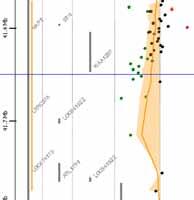
Τρισωμίες 4,10
t(12;21)(p13;q22)
t(11q23)
t(1;19)(q13;p13)
t(9;22)(q34;q11)
t(11;14)(p15;q11)
t(10;14)(q24;q11)
t(5;14)(q31;q32)
LMO1/TRA@ TALX1/TRA@ IL3/IGH@
* Vrooman LM, Silverman LB. Childhood acute lymphoblastic leukemia: update on prognostic factors. Current Opinion in Pediatrics 2009; 21: 1-8
ΦΑΡΜΑΚΟΓΕΝΩΜΙΚΗ (PHARMACOGENOMICS)
1. Smith M, Arthur D, Camitta B, et al. Uniform approach to risk classification and treatment assignment for children with acute lymphoblastic leukemia. J Clin Oncol 1996; 14:18–24.
2. Moghrabi A, Levy DE, Asselin B, et al. Results of the Dana-Farber Cancer Institute ALL Consortium Protocol 95-01 for children with acute lymphoblastic leukemia. Blood 2007; 109:896–904.
3. Schultz KR, Pullen DJ, Sather HN, et al. Risk- and response-based classification of childhood B-precursor acute lymphoblastic leukemia: a combined analysis of prognostic markers from the Pediatric Oncology Group (POG) and Children’s Cancer Group (CCG). Blood 2007; 109:926–935.
4. Moricke A, Reiter A, Zimmermann M, et al. Risk-adjusted therapy of acute lymphoblastic leukemia can decrease treatment burden and improve survival: treatment results of 2169 unselected pediatric and adolescent patients enrolled in the trial ALL-BFM 95. Blood 2008; 111:4477–4489.
5. Oudot C, Auclerc MF, Levy V, et al. Prognostic factors for leukemic induction failure in children with acute lymphoblastic leukemia and outcome after salvage therapy: the FRALLE 93 study. J Clin Oncol 2008; 26:1496–1503.
6. Schrappe M, Reiter A, Zimmermann M, et al. Long-term results of four consecutive trials in childhood ALL performed by the ALL-BFM study group from 1981 to 1995. BerlinFrankfurt-Munster. Leukemia 2000; 14:2205–2222.
7. Coustan-Smith E, Sancho J, Behm FG, et al. Prognostic importance of measuring early clearance of leukemic cells by flow cytometry in childhood acute lymphoblastic leukemia. Blood 2002; 100:52–58.
8. Zhou J, Goldwasser MA, Li A, et al. Quantitative analysis of minimal residual disease predicts relapse in children with B-lineage acute lymphoblastic leukemia in DFCI ALL Consortium Protocol 95-01. Blood 2007; 110:1607–1611.
9. van Dongen JJ, Seriu T, Panzer-Grumayer ER, et al. Prognostic value of minimal residual disease in acute lymphoblastic leukaemia in childhood. Lancet 1998; 352:1731–1738.
10. Flohr T, Schrauder A, Cazzaniga G, et al. Minimal residual disease-directed risk stratification using real-time quantitative PCR analysis of immunoglobulin and T-cell receptor gene rearrangements in the international multicenter trial AIEOP-BFM ALL 2000 for childhood acute lymphoblastic leukemia. Leukemia 2008; 22:771–782.
11. Borowitz MJ, Devidas M, Hunger SP, et al. Clinical significance of minimal residual disease in childhood acute lymphoblastic leukemia and its relationship to other prognostic factors: a Children’s Oncology Group study. Blood 2008; 111:5477–5485.
12. Raetz EA, Borowitz MJ, Devidas M, et al. Reinduction platform for children with first marrow relapse of acute lymphoblastic leukemia: a Children’s Oncology Group Study. J Clin Oncol 2008; 26:3971–3978.
13. Bader P, Hancock J, Kreyenberg H, et al. Minimal residual disease (MRD) status prior to
allogeneic stem cell transplantation is a powerful predictor for posttransplant outcome in children with ALL. Leukemia 2002; 16:1668–1672.
14. Nachman JB, Heerema NA, Sather H, et al. Outcome of treatment in children with hypodiploid acute lymphoblastic leukemia. Blood 2007; 110:1112–1115.
15. Moorman AV, Richards SM, Robinson HM, et al. Prognosis of children with acute lymphoblastic leukemia (ALL) and intrachromosomal amplification of chromosome 21 (iAMP21). Blood 2007; 109:2327–2330.
16. Rubnitz JE, Wichlan D, Devidas M, et al. Prospective analysis of TEL gene rearrangements in childhood acute lymphoblastic leukemia: a Children’s Oncology Group study. J Clin Oncol 2008; 26:2186–2191.
17. Jaffe ES, Harris NL, Stein H, Vardiman JW (eds). WHO Classification of Tumors of Haematopoietic and Lymphoid Tissues. IARC: Lyon 2008
18. Papadhimitriou SI, Polychronopoulou S, Tsakiridou AA, Androutsos G, Paterakis GS, Athanassiadou F. p16 inactivation associated with aggressive clinical course and fatal outcome in TEL/AML1-positive acute lymphoblastic leukemia. J Pediatr Hematol Oncol. 2005 Dec;27(12):675-7.
19. Tsellou E, Troungos C, Moschovi M, Athanasiadou-Piperopoulou F, Polychronopoulou S, Kosmidis H, Kalmanti M, Hatzakis A, Dessypris N, Kalofoutis A, Petridou E. Hypermethylation of CpG islands in the promoter region of the p15INK4B gene in childhood acute leukaemia. Eur J Cancer. 2005 Mar;41(4):584-9.
20. Dacou-Voutetakis C, Kitra V, Grafakos S, Polychronopoulou S, Drakopoulou M, Haidas S. Auxologic data and hormonal profile in long-term survivors of childhood acute lymphoid leukemia. Am J Pediatr Hematol Oncol. 1993 Aug;15(3):277-83.
21.
22. Γαλλά-Βαμβουράκη
2008; 71: 263-270.
23. Arico M, Valsecchi MG, Camitta B, et al. Outcome of treatment in children with Philadelphia chromosome-positive acute lymphoblastic leukemia. N Engl J Med 2000; 342:998–1006.
24. Schultz KR, Aledo A, Bowman WP, et al. Minimal toxicity of imatinib mesylate in combination with intensive chemotherapy for Philadelphia chromosome positive acute lymphoblastic leukemia (ALL) in children: a report of the Childrens Oncology Group (COG) AALL0031 protocol for very high risk ALL. Blood 2006; 108:A-283.
25. Attarbaschi A, Mann G, Panzer-Grumayer R, et al. Minimal residual disease values discriminate between low and high relapse risk in children with B-cell precursor acute lymphoblastic leukemia and an intrachromosomal amplification of chromosome 21: the Austrian and German acute lymphoblastic leukemia Berlin-Frankfurt-Munster (ALL-BFM) trials. J Clin Oncol 2008;26:3046–3050.
26. Behm FG, Raimondi SC, Frestedt JL, et al. Rearrangement of the MLL gene confers a poor prognosis in childhood acute lymphoblastic leukemia, regardless of presenting age. Blood 1996; 87:2870–2877.
27.Armstrong SA, Staunton JE, Silverman LB, et al. MLL translocations specify a distinct gene expression profile that distinguishes a unique leukemia. Nat Genet 2002; 30:41–47.
28. Pieters R, Schrappe M, De Lorenzo P, et al. A treatment protocol for infants younger
than 1 year with acute lymphoblastic leukaemia (Interfant-99): an observational study and a multicentre randomised trial. Lancet 2007;370:240–250.
29. Hilden JM, Dinndorf PA,Meerbaum SO, et al. Analysis of prognostic factors of acute lymphoblastic leukemia in infants: report on CCG 1953 from the Children’s Oncology Group. Blood 2006; 108:441–451.
30. Yeoh EJ, Ross ME, Shurtleff SA, et al. Classification, subtype discovery, and prediction of outcome in pediatric acute lymphoblastic leukemia by gene expression profiling. Cancer Cell 2002; 1:133–143.
31. Brown P, Levis M, McIntyre E, et al. Combinations of the FLT3 inhibitor CEP-701 and chemotherapy synergistically kill infant and childhood MLLrearranged ALL cells in a sequence-dependent manner. Leukemia 2006; 20:1368–1376.
32. van Grotel M, Meijerink JP, van Wering ER, et al. Prognostic significance of molecularcytogenetic abnormalities in pediatric T-ALL is not explained by immunophenotypic differences. Leukemia 2008; 22:124–131.
33. Breit S, Stanulla M, Flohr T, et al. Activating NOTCH1 mutations predict favorable early treatment response and long-term outcome in childhood precursor T-cell lymphoblastic leukemia. Blood 2006; 108:1151–1157.
34. Weng AP, Ferrando AA, Lee W, et al. Activating mutations of NOTCH1 in human T cell acute lymphoblastic leukemia. Science 2004; 306:269–271.
35. O’Neil J, Grim J, Strack P, et al. FBW7 mutations in leukemic cells mediate NOTCH pathway activation and resistance to gamma-secretase inhibitors. J Exp Med 2007; 204:1813–1824.
36. Zhu YM, Zhao WL, Fu JF, et al. NOTCH1 mutations in T-cell acute lymphoblastic leukemia: prognostic significance and implication in multifactorial leukemogenesis. Clin Cancer Res 2006; 12:3043–3049.
37. Burmeister T, Gokbuget N, Reinhardt R, et al. NUP214-ABL1 in adult T-ALL: the GMALL study group experience. Blood 2006; 108:3556–3559.
38. Quintas-Cardama A, Tong W, Manshouri T, et al. Activity of tyrosine kinase inhibitors against human NUP214-ABL1-positive T cell malignancies. Leukemia 2008; 22:1117–1124.
39. Flotho C, Coustan-Smith E, Pei D, et al. A set of genes that regulate cell proliferation predicts treatment outcome in childhood acute lymphoblastic leukemia. Blood 2007; 110:1271–1277.
40. Winter SS, Jiang Z, Khawaja HM, et al. Identification of genomic classifiers that distinguish induction failure in T-lineage acute lymphoblastic leukemia: a report from the Children’s Oncology Group. Blood 2007;110:1429–1438.
41. Holleman A, Cheok MH, den Boer ML, et al. Gene-expression patterns in drug-resistant acute lymphoblastic leukemia cells and response to treatment. N Engl J Med 2004; 351:533–542.
42.Rocha JC, Cheng C, Liu W, et al. Pharmacogenomics of outcome in children with acute lymphoblastic leukemia. Blood 2005; 105:4752-4758.
43) Stanulla M, Schaeffeler E, Flohr T, et al. Thiopurine methyltransferase (TPMT) genotype and early treatment response to mercaptopurine in childhood acute lymphoblastic leukemia. JAMA 2005; 293:1485-1489.
43.KrajinovicM, Costea I, Chiasson S. Polymorphism of the thymidylate synthase gene and outcome of acute lymphoblastic leukemia. Lancet 2002; 359:1033-1034.
44. Relling MV, Yang W, Das S, et al. Pharmacogenetic risk factors for ostonecrosis of the hip among children with leukemia. J Clin Oncol 2004; 22:3930-3936.
45. Charalampopoulou A, Petridou E, Spyridopoulos T, Dessypris N, Oikonomou A, Athanasiadou-Piperopoulou F, Baka M, Kalmanti M, Polychronopoulou S, Trichopoulos D. An integrated evaluation of socioeconomic and clinical factors in the survival from childhood acute lymphoblastic leukaemia: a study in Greece. Eur J Cancer Prev. 2004 Oct;13(5):397401.
Diet habits and asthma in children. Are they related?
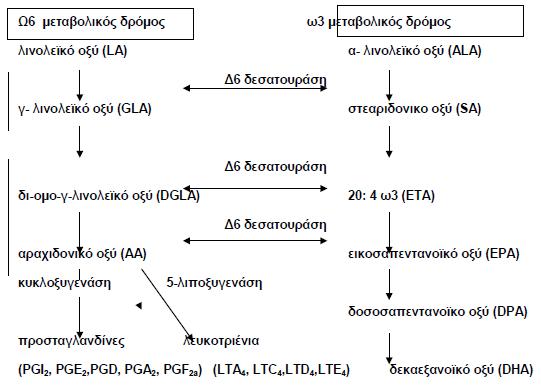
Diet consist one of the major changing environmental factors that is probable related to the increasing prevalence of asthma. The antioxidants factors, the n3 polyunsaturated fatty acids and the Mediterranean diet have been investigated in observational and interventional studies during pregnancy and early life and a possible protective effect has been proposed. However, quantity and quality of beneficial nutritional supplements and the effect of additional factors such as tobacco smoke, obesity and atopy have not been cleared.
Keywords: diet, asthma, children
Αλληλογραφία
14561 athinapap@yahoo.com
Correspodence
Eleni Ir. Efstathiou
Irodou Attikou 19, Maroussi 151 24, Athens
Tel.: +30 210 8067160 e-mail: elenhef@yahoo.gr
Κατάλογος
TΝF = tumor necrotic factor
CAPS = Childhood and atopy prevention study
ISAAC = International Study of Allergy and Asthma in Children
Burns JS17
Gilliland FD18
2002, Los Angeles
Rubin RN19
2004, NY
Okoko BJ20 2007,
Chatzi L21
2007,
Chatzi L22
2007,
Farchi S23
2002,
(4-16χρ)
Συγγραφείς
Willers SM24
2010, Ολλανδία
Asher MI25
2010, ISAAC II
Cook DG,26
1997, Αγγλία
Emmanouil E68 ,
2010, Ελλάδα
2870 (2-3χρ και 7-8χρ)
257,800 (6-7χρ)
463,801 (1314χρ)
2650 (8-11χρ)
Fogarty AW27
2009, Αγγλία
1964 (2-6 χρ)
Romieu I,28
2002, Μεξικό
4971 (4-6χρ)
5770 (4-6χρ)
158 (6-16χρ)
Isaac,
Συγγραφείς
Μελέτες παρατήρησης Υλικό
Burns JS17
2007,Βοστόνη
Miyake Y33
2008, Ιαπωνία
Gutiérrez-Delgado RI34 , 2009, Μεξικό
2112 (17χρ)
25,033 (6-15χρ)
5460 (6-8χρ) ή (11-14χρ)
598 (8-13χρ)
Tabak C, 35
2006, Ολλανδία
RodríguezRodríguez E36
2010, Ισπανία
Oien T37 , 2010, Νορβηγία
Asher MI25 2010, ISAAC II
638 (8-13χρ)
3086 (1-2χρ)
257,800 (6-7χρ)
463,801 (1314χρ)
Bolte G38, 2006, Γερμανία
Papadopoulou A70 , 2011, AθήναΘεσσαλονίκη
526 (8-11χρ)
2023 (9-10χρ)
Αυξημένη
Αυξημένη πρόσληψη ψαριών μειώνει ενεργό άσθμα
Αυξημένη πρόσληψη κεκορεσμένων ΛΟ αυξάνει ενεργό άσθμα
Αυξημένη
Mihrshahi S40, 2003, Αυστραλία (CAPS)
Almqvist C41, 2007, Αυστραλία (CAPS)
Shaheen SO48
2004, Λονδίνο
Devereux G49, 2006, Σκωτία
Devereux G50, 2007,
Litoujua AA51
2006,
Newson RB53, 2004
Willers SM54 , 2007, Aυστραλία
Fitzsimon N55, 2007, Δουβλίνο
Dustan JA56, 2003 Αυστραλία
Mihrshahi S40, 2003, Αυστραλία (CAPS)
Almqvist C41, 2007, Αυστραλία (CAPS)
Συγγραφείς
Garcia-Marcos L60 , 2007, Ισπανία
Nagel G61, 2010
Castro-Rodriguez JA62, 2008, Χιλή
Gonzalez Barcala FJ63, 2010, Ισπανία
20106 (6-7χρ)
Large ΝΕ64, 2010, Βοστώνη
Chatzi L65, 2008, Ισπανία
50004 (8-12χρ) 1784 ( 3-5χρ)
(6-14χρ)
460 (6χρ)
Μεσογειακή
με
Η μεσογειακή δίαιτα δεν συσχετίστηκε με άσθμα
Μεσογειακή διατροφή στην
De Battle J66, 2008, Μεξικό
Chatzi L22 2007, Κρήτη
(6-7χρ)
(7-18χρ)
Priftis K69, 2007, Αθήνα
(10-12χρ)
1. Holgate ST, Arshad HS, Roberts GC, Howarth PH, Thurner P, Davies DE. A new look at the pathogenesis of asthma.Clin Sci (Lond). 2009;118(7):439-50.
2. Kim JH, Ellwood PE, Asher MI Diet and asthma: looking back, moving forward. Respir Res 2009;10:49.
3. Litonjua AA. Dietary factors and the development of asthma. Immunol Allergy Clin North Am 2008;28(3):603-29.
4. Devereux G. Early life events in asthma--diet. Pediatr Pulmonol 2007;42(8):663-73.
5. Παπανδρέου Δ, Εμποριάδου Μ.
2005;68:399-407.
6. Kaur B, Rowe BH, Arnold E. Vitamin C supplementation for asthma. Cochrane Database Syst Rev 2009;(1):CD000993.
7. Burney P, Potts J, Makowska J, Kowalski M, Phillips J, Gnatiuc L, Shaheen S, Joos G, Van Cauwenberge P, van Zele T, Verbruggen K, van Durme Y, Derudder I, Wohrl S, GodnicCvar J, Salameh B, Skadhauge L, Thomsen G, Zuberbier T, Bergmann KC, Heinzerling L, Renz H, Al-Fakhri N, Kosche B, Hildenberg A, Papadopoulos NG, Xepapadaki P, Zannikos K, Gjomarkaj M, Bruno A, Pace E, Bonini S, Bresciani M, Gramiccioni C, Fokkens W, Weersink EJ, Carlsen KH, Bakkeheim E, Loureiro C, Villanueva CM, Sanjuas C, Zock JP, Lundback B, Janson C A case-control study of the relation between plasma selenium and asthma in European populations: a GAL2EN project. Allergy 2008;63(7):865-71.
8. Kew S, Mesa MD, Tricon S, Buckley R, Minihane AM, Yaqoob P. Effects of oils rich in eicosapentaenoic and docosahexaenoic acids on immune cell composition and function in healthy humans. Am J Clin Nutr. 2004 (4):674-81.
9. Seaton A, Godden DJ, Brown KM. Increase in asthma: a more toxic environment or a more susceptible population? Thorax 1994;49:171–174.
10. Kawai M, Hirano T, Higa S, Arimitsu J, Maruta M, Kuwahara Y, Ohkawara T, Hagihara K, Yamadori T, Shima Y, Ogata A, Kawase I, Tanaka T. Flavonoids and related compounds as anti-allergic substances. Allergol Int 2007 ;56(2):113-23.
11. Silva Bezerra F, Valença SS, Lanzetti M, Pimenta WA, Castro P, Gonçalves Koatz VL, Porto LC. Alpha-tocopherol and ascorbic acid supplementation reduced acute lung inflammatory response by cigarette smoke in mouse. Nutrition 2006 ;22(11-12):1192-201.
12. Okamoto N, Murata T, Tamai H, Tanaka H, Nagai H. Effects of alpha tocopherol and probucol supplements on allergen-induced airway inflammation and hyperresponsiveness in a mouse model of allergic asthma. Int Arch Allergy Immunol 2006;141(2):172-80.
13. Schock BC, Young IS, Brown V, Fitch PS, Taylor R, Shields MD, Ennis M. Antioxidants and protein carbonyls in bronchoalveolar lavage fluid of children: normal data. Pediatr Res 2001;49(2):155-61.
14. Sackesen C, Ercan H, Dizdar E, Soyer O, Gumus P, Tosun BN, Büyüktuncer Z, Karabulut E, Besler T, Kalayci O. A comprehensive evaluation of the enzymatic and nonenzymatic antioxidant systems in childhood asthma. J Allergy Clin Immunol 2008;122(1):78-85.
15. Ercan H, Birben E, Dizdar EA, Keskin O, Karaaslan C, Soyer OU, Dut R, Sackesen C, Besler T, Kalayci O. Oxidative stress and genetic and epidemiologic determinants of oxidant injury in childhood asthma. J Allergy Clin Immunol 2006 ;118(5):1097-104.
16. Al Senaidy AM. Serum vitamin A and beta-carotene levels in children with asthma. J Asthma 2009;46(7):699-702.
17. Burns JS, Dockery DW, Neas LM, Schwartz J, Coull BA, Raizenne M, Speizer FE. Low dietary nutrient intakes and respiratory health in adolescents. Chest 2007;132(1):238-45.
18. Gilliland FD, Berhane KT, Li YF, Kim DH, Margolis HG. Dietary magnesium, potassium, sodium, and children’s lung function. Am J Epidemiol 2002 ;155(2):125-31.
19. Rubin RN, Navon L, Cassano PA. Relationship of serum antioxidants to asthma prevalence in youth. Am J Respir Crit Care Med 2004;169(3):393-8.
20. Okoko BJ, Burney PG, Newson RB, Potts JF, Shaheen SO. Childhood asthma and fruit consumption. Eur Respir J 2007;29(6):1161-8.
21. Chatzi L, Torrent M, Romieu I, Garcia-Esteban R, Ferrer C, Vioque J, Kogevinas M, Sunyer J. Diet, wheeze, and atopy in school children in Menorca, Spain. Pediatr Allergy Immunol 2007 ;18(6):480-5.
22. Chatzi L, Apostolaki G, Bibakis I, Skypala I, Bibaki-Liakou V, Tzanakis N, Kogevinas M, Cullinan P. Protective effect of fruits, vegetables and the Mediterranean diet on asthma and allergies among children in Crete. Thorax 2007;62(8):677-83
23. Farchi S, Forastiere F, Agabiti N, Corbo G, Pistelli R, Fortes C, Dell’Orco V, Perucci CA. Dietary factors associated with wheezing and allergic rhinitis in children. Eur Respir J. 2003 ;22(5):772-80.
24. Willers SM, Wijga AH, Brunekreef B, Scholtens S, Postma DS, Kerkhof M, de Jongste JC, Smit HA. Childhood diet and asthma and atopy at 8 years of age: the PIAMA birth cohort study. Eur Respir J 2010 Nov 25. [Epub ahead of print].
25. Asher MI, Stewart AW, Mallol J, Montefort S, Lai CK, Aït-Khaled N, Odhiambo J; The ISAAC Phase One Study Group Which population level environmental factors are associated with asthma, rhinoconjunctivitis and eczema? Review of the ecological analyses of ISAAC Phase One. Respir Res 2010;11(1):8.
26. Cook DG, Carey IM, Whincup PH, Papacosta O, Chirico S, Bruckdorfer KR, Walker M. Effect of fresh fruit consumption on lung function and wheeze in children. Thorax 1997;52(7):628-33.
27. Fogarty AW, Antoniak M, Venn AJ, Davies L, Goodwin A, Salfield N, Britton JR, Lewis SA. A natural experiment on the impact of fruit supplementation on asthma symptoms in children. Eur Respir J 2009;33(3):481-5.
28. Romieu I, Sienra-Monge JJ, Ramirez-Aguilar M, et al. Antioxidant supplementation and lung functions among children with asthma exposed to high levels of air pollutants. Am J Respir Crit Care Med 2002;166(5):703–709
29. Black PN, Sharpe S. Dietary fat and asthma: is there a connection? Eur Respir J 1997;10(1):6-12.
30. Calder PC. n-3 polyunsaturated fatty acids, inflammation, and inflammatory diseases. Am J Clin Nutr 2006;83(6 Suppl):1505S-1519S.
31. Harizi H, Juzan M, Moreau JF, Gualde N. Prostaglandins inhibit 5-lipoxygenase-activating protein expression and leukotriene B4 production from dendritic cells via an IL10-dependent mechanism. J Immunol 2003 ;170(1):139-46.
32. Kaliński P, Hilkens CM, Snijders A, Snijdewint FG, Kapsenberg ML. IL-12-deficient dendritic cells, generated in the presence of prostaglandin E2, promote type 2 cytokine production in maturing human naive T helper cells. J Immunol 1997;159(1):28-35.
33. Miyake Y, Sasaki S, Arakawa M, Tanaka K, Murakami K, Ohya Y Fatty acid intake and asthma symptoms in Japanese children: the Ryukyus Child Health Study. Clin Exp Allergy 2008 (10):1644-50.
34. Gutiérrez-Delgado RI, Barraza-Villarreal A, Escamilla-Núñez MC, Solano-González M, Moreno-Macías H, Romieu I. Food consumption and asthma in school children in Cuernavaca, Morelos, Mexico. Salud Publica Mex 2009;51(3):202-11.
35. Tabak C, Wijga AH, de Meer G, Janssen NA, Brunekreef B, Smit HA. Diet and asthma in Dutch school children (ISAAC-2). Thorax 2006 ;61(12):1048-53.
36. Rodríguez-Rodríguez E, Perea JM, Jiménez AI, Rodríguez-Rodríguez P, LópezSobaler AM, Ortega RM. Fat intake and asthma in Spanish schoolchildren. Eur J Clin Nutr 2010;64(10):1065-71.
37. Oien T, Storrø O, Johnsen R. Do early intake of fish and fish oil protect against eczema and doctor-diagnosed asthma at 2 years of age? A cohort study. J Epidemiol Community Health 2010;64(2):124-9.
38. Bolte G, Kompauer I, Fobker M, Cullen P, Keil U, Mutius E, Weiland SK. Fatty acids in serum cholesteryl esters in relation to asthma and lung function in children. Clin Exp Allergy 2006 Mar;36(3):293-302.
39. Wood LG, Hazlewood LC, Foster PS, Hansbro PM. Lyprinol reduces inflammation and improves lung function in a mouse model of allergic airways disease. Clin Exp Allergy 2010 Dec;40(12):1785-93.
40. Mihrshahi S, Peat JK, Marks GB, Mellis CM, Tovey ER, Webb K, Britton WJ, Leeder SR; Childhood Asthma Prevention Study. Eighteen-month outcomes of house dust mite avoidance and dietary fatty acid modification in the Childhood Asthma Prevention Study (CAPS). J Allergy Clin Immunol 2003 ;111(1):162-8.
41. Almqvist C, Garden F, Xuan W, Mihrshahi S, Leeder SR, Oddy W, Webb K, Marks GB; CAPS team. Omega-3 and omega-6 fatty acid exposure from early life does not affect atopy and asthma at age 5 years. J Allergy Clin Immunol 2007;119(6):1438-44.
42. Barker DJ. Maternal nutrition, fetal nutrition, and disease in later life. Nutrition 1997;13(9):807-13.
43. Calder PC, Kremmyda LS, Vlachava M, Noakes PS, Miles EA. Is there a role for fatty acids in early life programming of the immune system? Proc Nutr Soc 2010 Aug;69(3):37380.
44. Islam S, Narra V, Coté GM, Manganaro TF, Donahoe PK, Schnitzer JJ. Prenatal vitamin E treatment improves lung growth in fetal rats with congenital diaphragmatic hernia. J Pediatr Surg 1999 ;34(1):172-6
45. Vojnik C, Hurley LS. Abnormal prenatal lung development resulting from maternal zinc deficiency in rats. J Nutr 1977;107(5):862-72.
46. Prescott SL, Dunstan JA. Prenatal fatty acid status and immune development: the pathways and the evidence. Lipids 2007;42(9):801-10.
47. Scaife AR, McNeill G, Campbell DM, Martindale S, Devereux G, Seaton A. Maternal intake of antioxidant vitamins in pregnancy in relation to maternal and fetal plasma levels at delivery. Br J Nutr 2006 Apr;95(4):771-8.
48. Shaheen SO, Newson RB, Henderson AJ, Emmett PM, Sherriff A, Cooke M; ALSPAC Study Team. Umbilical cord trace elements and minerals and risk of early childhood wheezing and eczema. Eur Respir J 2004;24(2):292-7.
49. Devereux G, Turner SW, Craig LC, McNeill G, Martindale S, Harbour PJ, Helms PJ, Seaton A. Low maternal vitamin E intake during pregnancy is associated with asthma in 5-year-old children. Am J Respir Crit Care Med 2006;174(5):499-507.
50. Devereux G, McNeill G, Newman G, Turner S, Craig L, Martindale S, Helms P, Seaton A. Early childhood wheezing symptoms in relation to plasma selenium in pregnant mothers and neonates. Clin Exp Allergy 2007;37(7):1000-8.
51. Litonjua AA, Rifas-Shiman SL, Ly NP, Tantisira KG, Rich-Edwards JW, Camargo CA Jr, Weiss ST, Gillman MW, Gold DR. Maternal antioxidant intake in pregnancy and wheezing illnesses in children at 2 y of age. Am J Clin Nutr 2006;84(4):903-11.
52. Arvaniti F, Priftis KN, Panagiotakos DB. Dietary habits and asthma: a review. Allergy Asthma Proc 2010 Mar;31(2):e1-10.
53. Newson RB, Shaheen SO, Henderson AJ, Emmett PM, Sherriff A, Calder PC. Umbilical cord and maternal blood red cell fatty acids and early childhood wheezing and eczema. J Allergy Clin Immunol 2004;114(3):531-7.
54. Willers SM, Devereux G, Craig LC, McNeill G, Wijga AH, Abou El-Magd W, Turner SW, Helms PJ, Seaton A. Maternal food consumption during pregnancy and asthma, respiratory and atopic symptoms in 5-year-old children. Thorax. 2007;62(9):773-9.
55. Fitzsimon N, Fallon U, O’Mahony D, Loftus BG, Bury G, Murphy AW, Kelleher CC; Lifeways Cross Generation Cohort Study Steering Group. Mothers’ dietary patterns during pregnancy and risk of asthma symptoms in children at 3 years. Ir Med J 2007 ;100(8):suppl 27-32.
56. Dunstan JA, Mori TA, Barden A, Beilin LJ, Taylor AL, Holt PG, Prescott SL Fish oil supplementation in pregnancy modifies neonatal allergen-specific immune responses and clinical outcomes in infants at high risk of atopy: a randomized, controlled trial. J Allergy Clin Immunol 2003;112(6):1178-84.
57. Psaltopoulou T, Naska A, Orfanos P, Trichopoulos D, Mountokalakis T, Trichopoulou A. Olive oil, the Mediterranean diet, and arterial blood pressure: the Greek European Prospective Investigation into Cancer and Nutrition (EPIC) study. Am J Clin Nutr 2004: 80:1012–18.
58. Trichopoulos D, Lagiou P. Mediterranean diet and cardiovascular epidemiology. Eur J Epidemiol 2004;19(1):7-8.
59. Lagiou P, Trichopoulos D, Sandin S, Lagiou A, Mucci L, Wolk A, Weiderpass E, Adami HO. Mediterranean dietary pattern and mortality among young women: a cohort study in Sweden. Br J Nutr 2006;96(2):384-92.
60. Garcia-Marcos L, Canflanca IM, Garrido JB, Varela AL, Garcia-Hernandez G, Guillen Grima F, Gonzalez-Diaz C, Carvajal-Urueña I, Arnedo-Pena A, Busquets-Monge RM, Morales Suarez-Varela M, Blanco-Quiros A. Relationship of asthma and rhinoconjunctivitis with obesity, exercise and Mediterranean diet in Spanish schoolchildren. Thorax 2007;62(6):503-8.
61. Nagel G, Weinmayr G, Kleiner A, Garcia-Marcos L, Strachan DP, the ISAAC Phase Two Study Group. Effect of diet on asthma and allergic sensitisation in the International Study on Allergies and Asthma in Childhood (ISAAC) Phase Two. Thorax 2010; 65(6): 516-522.
62. Castro-Rodriguez JA, Garcia-Marcos L, Alfonseda Rojas JD, Valverde-Molina J, Sanchez-Solis M. Mediterranean diet as a protective factor for wheezing in preschool children. J Pediatr 2008 ;152(6):823-8
63. Gonzalez Barcala FJ, Pertega S, Bamonde L, Garnelo L, Perez Castro T, Sampedro M, Sanchez Lastres J, San Jose Gonzalez MA, Lopez Silvarrey A. Mediterranean diet and asthma in Spanish schoolchildren. Pediatr Allergy Immunol 2010 Nov;21(7):1021-7
64. Lange NE, Rifas-Shiman SL, Camargo CA Jr, Gold DR, Gillman MW, Litonjua AA. Maternal dietary pattern during pregnancy is not associated with recurrent wheeze in children. J Allergy Clin Immunol 2010 Aug;126(2):250-5.
65. Chatzi L, Torrent M, Romieu I, Garcia-Esteban R, Ferrer C, Vioque J, Kogevinas M, Sunyer J. Mediterranean diet in pregnancy is protective for wheeze and atopy in childhood. Thorax 2008;63(6):507-513.
66. de Batlle J, Garcia-Aymerich J, Barraza-Villarreal A, Antó JM, Romieu I. Mediterranean diet is associated with reduced asthma and rhinitis in Mexican children Allergy 2008;63(10):1310-1316.
67. Βίδρα
2008;71(5):361-367.
68. Emmanouil E, Manios Y, Grammatikaki E, Kondaki K, Oikonomou E, Papadopoulos N, Vassilopoulou E. Association of nutrient intake and wheeze or asthma in a Greek preschool population. Pediatr Allergy Immunol 2010;21(1 Pt 1):90-95.
69. Priftis KN, Panagiotakos DB, Antonogeorgos G, Papadopoulos M, Charisi M, Lagona E, Anthracopoulos MB. Factors associated with asthma symptoms in schoolchildren from Greece: the Physical Activity, Nutrition and Allergies in Children Examined in Athens (PANACEA) study. J Asthma 2007;44(7):521-7.
70. Papadopoulou A, Hatziagorou E, Matziou VN,. Grigoropoulou DD, Panagiotakos DB, Tsanakas JN, Gratziou C, Priftis KN. Comparison in asthma and allergy prevalence in the two major cities in Greece: the ISAAC phase II survey. Allergol Immunopathol (Madr). 2011 (accepted Oct 2010).
S-100B protein as marker after traumatic brain injury in children
Objective: To evaluate the potential role of protein S-100B as a biochemical marker following head injury in children
Method: Literature review
Results: Brain injury is still difficult to be quantified despite the progress in cerebral monitoring. Glasgow Coma Scale (GCS) or Computed Tomographic scan (CT) and x-ray are mainly clinical and imaging tools. Several biochemical substances such as neuron-specific enolase-NSE, myelin basic protein-MBP and protein S-100B, have been studied to find a specific marker that indicates brain damage. Protein S-100B, as a specific brain injury marker, can be determined in several post-traumatic moments also in blood and urine. Conclusions: S-100B protein may have potential as a serum marker of brain damage. It can be concluded that the protein might be of clinical value for assessing the extent of brain injury.
Keywords: head injury, brain injury, biomarkers, children, S-100B
email: evagougoudi@yahoo.com
Correspodence
1. Berger RP, Pierce MC, Wisniewski SR, Adelson PD, Clark RSB, Ruppel RA, Kochanek PM. Neuron-specific enolase and S100B in cerebrospinal fluid after severe traumatic injury in infants and children. Pediatrics 2002;109(2):1-6
2. Berger RP, Adelson PD, Richichi R, Kochanek PM. Serum biomarkers after traumatic and hypoxemic brain injuries: insight into thw biochemical response of the pediatric brain to inflicted injury. Dev Neurosci. 2006;28(4-5):327-335
3. Jenny C, Hymel K, Pitzen A, Reinert S, Hay T. Analysis of missed cases of abusive head trauma. JAMA 1999;281:621-626
4. Adelson P, Kochanek P. Head injury in children. J Child Neurol. 1998;13:2-15
5. Ruppel R, Kochanek P, Adelson P, et al. Excitotoxicity after severe traumatic brain injury in infants and children: the role of child abuse. J Pediatr 2001;138:18-25
6. Piazza O, Storti MP, Cotena S, Stoppa F, Perrotta D, Esposito G, Pirozzi N, Tufano R. S100B is not a reliable prognostic index in paediatric TBI. Pediatr Neurosurg 2007;43(4):258-264
7. Raabe A, Grolms C, Sorge O, Zimmermann M, Seifert V. Serum S-100B protein in severe head injury. Neurosurgery Online 1999;45(3):477
8. Vollmer DG. Prognosis and outcome of severe head injury. In Cooper PR (ed): Head injury. Baltimore, Williams & Wilkins, 1993:553-581
9. Berger RP, Beers SR, Richichi R, Wiesman D, Adelson PD. Serum biomarker concentrations and outcome after pediatric traumatic brain injury. J Neurotrauma 2007;24(12):1793-1801
10. Nylen K, Ost M, Csajbok LZ, Nilsson I, Hall C, Blennow K, Nellgard B, Rosengren L. Serum levels of S100B, S100A1B and S100BB are all related to outcome after severe traumatic brain injury. Acta Neurochir 2008;150:221-227
11. Kanner AA, Marchi N, Fazio V, Mayberg MR, Koltz MT, Siomin V, Stevens GH, Masaryk T, Aumayr B, Vogelbaum MA, Barnett GH, Janigro D. Serum S-100beta: a noninvasive marker of blood-brain barrier function and brain lesions. Cancer 2003;97:2806-2813
12. Kapural M, Krizanac-Bengez LJ, Barnett G, Perl J, Masaryk T, Apollo D, Rasmussen P, Mayberg MR, Janigro D. Serum S-100beta as a possible marker of blood-brain barrier disruption. Brain Res 2002;940:102-104
13. Anderson RE, Hansson LO, Nilsson O, Dijlai-Merzoug R, Settergen G. Serum S100B levels for trauma patients without head injuries. Neurosurgery 2001;48:1255-1260
14. Astudillo R, van der Linden J, Radegran K, Hansson LO, Aberg B. Elevated serum levels of S-100 after deep hypothermic arrest correlate with duration of circulatory arrest. Eur J Cardiothorac Surg 1996;10:1107-1113
15. Taggart DP, Mazel JW, Bhattacharya K, Menston N, Standing SJ, Kay JD, Pillai R, Johnsson P, Westaby S. Comparison of serum S-100(beta) levels during CABG and intracardiac operations. Ann Thorac Surg 1997;63:492-496
16. Wiesmann M, Missler U, Hagenstrom H, Gottmann D. S-100 protein plasma levels after aneurysmal subarachnoid haemorrhage. Acta Neurochir (Wien) 1997;139:1155-1160
17. Kim JS, Yoon SS, Kim YH, Ryu JS. Serial measurement of interleukin-6, transforming growth factor-(beta), and S-100 protein in patients with acute stroke. Stroke 1996;27:1553-1557
18. Missler U, Wiesmann M, Friedrich C, Kaps M. S-100 protein and neuron-specific enolase concentrations in blood as indicators of infarction volume and prognosis in acute ischemic stroke. Stroke 1997;28:1956-1960
19.
Paediatr N Gr 2008;20:332-339
20. Qian J, Zhou D, Wang Y-W. Umbilical artery blood S100β protein: a tool for the early identification of neonatal hypoxic-ischemic encephalopathy. Eur J Pediatr 2009;168:7177
21. Murabayashi M, Minato M, Okuhata Y, Makimoto M, Hosono S, Masaoka N, et al. Kinetics of serum S100B in newborns with intracranial lesions. Pediatr Internat 2008;50:17-22
22. Florio P, Marinoni E, Di Iorio R, Bashir M, Ciotti S, Sacchi R, et al. Urinary S100B protein concentrations are increased in intrauterine growth retarded fetuses. Pediatrics 2006;118:e747-754
23. Spinella PC, Dominguez T, Drott HR, Huh J, McCormick L, Rajerda A, Argon J, McIntosh T, Helfaer M. S-100beta protein-serum levels in healthy children and its association with outcome in pediatric traumatic brain injury. Crit Care Med 2003;31(3):939-945
24. Akhtar JI, Spear RM, Senac MO, Peterson BM, Diaz SM. Detection of traumatic brain injury with magnetic resonance imaging and S-100B protein in children, despite normal computed tomography of the brain. Pediatr Crit Care Med 2003;4(3):322-326
25. Berger RP, Kochanek PM. Urinary S100B concentrations are increased after brain injury in children: A preliminary study. Pediatr Crit Care Med 2006;7(6):557-561
26. Pickering A, Carter J, Hanning I, Townend W. Emergency department measurment of urinary S100B in children following head injury: can extracranial injury confound findings? Emerg Med J 2008;25(2):88-89
27. Raabe A, Grolms C, Seifert V. Serum markers of brain injury and outcome prediction in patients after severe head injury. Br J Neurosurg 1999;13:56-59
28. Rommer B, Ingebrigtsen T, Kongstad P, Borgesen S. Traumatic brain damage: serum S-100 protein measurments related to neuroradiological findings. J Neurotrauma 2000;17:641-647
29. Fridriksson T, Kini N, Walsh-Kelly C, Hemnes H. Serum neuron-specific enolase as a predictor of intracranial lesions in children with head trauma: a pilot study. Acad Emerg Med 2000;7:816-820
Parent’s compliance with immunization of children with cancer 58 against h1n1 influenza virus
Background: The emergence of the pandemic H1N1 swine-origin influenza-A virus has generated an additional concern about vaccinating immunocompromised children. We evaluated the parent’s compliance with vaccination against H1N1 in our Oncology department.
Methods: In our department approximately 80 new patients with hematological malignancies or solid tumors are diagnosed every year. According to guidelines, we scheduled
12,
11523
Τηλ.: 2132009241 (εργασίας)
e-mail: doganisd@gmail.com
Correspodence
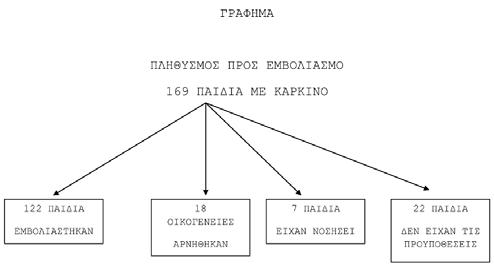
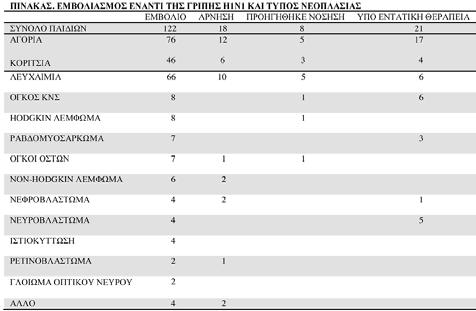
to vaccinate all patients on treatment as well as children during the first 12 months after the end of treatment. The available doses in our country were adjuvant-inactivated vaccine. Immunocompromised children were scheduled to receive two doses of the vaccine given 4 weeks apart holding chemotherapy and/or radiotherapy the following week. Results: A total of 169 patients were scheduled to be vaccinated. Ninety three of them were vaccinated in our department and 29 in other health center. Eighteen parents refused to have their children vaccinated whereas 8 children had already recovered from H1N1 infection. Twenty one children were excluded since they were on intensive chemotherapy or radiotherapy. No major complications were detected except for local swelling resolving within a few days. None of the vaccinated patients experienced H1N1 flu for at least 4 months after having had their first dose, although at that time, Greece was experiencing the peak of the pandemic attack. Furthermore, a total of 107 parents or close relatives were vaccinated at the same time in our department.
Conclusions: A remarkable compliance (87%, 122/140) was documented among parents of immunocompromised children eligible for vaccination.The vaccine was well tolerated and was proven effective for such a high risk population since no cases of H1N1 flu were detected so far among vaccinated children.
Κeywords: Influenza, malignancy, children, compliance
A/California/07/2009 (H1N1) (15).
1. Hall CB. Influenza—a shot or not? Pediatrics. 1987;79:564–565.
2. Kempe A, Hall CB, MacDonald NE, Foye HR, Woodin KA, Cohen HJ, Lewis ED, Gullace M, Gala CL, Dulberg CS, et al. Influenza in children with cancer. J Pediatr. 1989;115:33–39.
3. Porter CC, Poehling KA, Hamilton R, Frangoul H, Cooper WO. Influenza immunization practices among pediatric oncologists. J Pediatr Hematol Oncol. 2003;25:134–138.
4. Ridgway D, Wolff LJ. Active immunization of children with leukemia and other malignancies. Leuk Lymphoma. 1993;9:177–192.
5. Feldman S, Webster, RG, Sugg M. Influenza in children and young adults with cancer. Cancer. 1977;39:350–353.
6. Potter MN, Foot, ABM, Oakhill Α. Influenza A and the virus associated haemophagocytic syndrome: cluster of three cases in children with acute leukaemia. J Clin Pathol. 1991;44:297–299.
7. Centers for Disease Control and Prevention: Swine influenza A (H1N1) infection in two children—Southern California, March-April 2009. MMWR Morb Mortal Wkly Rep (24/4/2009). 2009;58:400-402.
8. Centers for Disease Control and Prevention. US outbreak of swine origin influenza A (H1N1) virus infection-Mexico, March-April 2009. MMWR Morb Mortal Wkly Rep (30/4/2009). 2009;58:1-3.
9. Chan M. World Health Organization. World now at the start of 2009 influenza pandemic.http://www.who.int/mediacentre/news/statements/2009/h1n1_pandemic_phase 6_20090611/en/index.html. World Health Organization. Accessed August 15, 2009.
10. http://cdc.gov/h1n1flu/reportingqa.htm.
11.http://www.keelpno.gr/images/stories/keelpno/nosimata/H1N1/epaggelmaties/ odig ies_nosokomeia. pdf
12. http://www.cdc.gov/h1n1flu/vaccination/acip.htm.
13. http://www.keelpno.gr/articles/topic/?id=984.
14. Chisholm JC, Devine T, Charlett A, Pinkerton CR, Zambon M. Response to influenza immunisation during treatment for cancer. Arch Dis Child. 2001;84:496–500.
15. Sullivan SJ, Jacobson RM, Dowdle WR, Poland GA. 2009 H1N1 Influenza. Mayo Clin Proc. 2010;85:64-76.
16.http://www.keelpno.gr/images/stories/keelpno/nosimata/H1N1/epaggelmaties/ algo rithmos_anilikwn.pdf
17.http://www.keelpno.gr/images/stories/keelpno/nosimata/H1N1/epaggelmaties/ gripi _nosok.pdf
18. http://www.keelpno.gr/keelpno/2010/id994/gripi_ebdo_20100526.pdf.
19. Gordon SM. Update on 2009 pandemic influenza A (H1N1) virus. Cleveland clinic journal of medicine. 2009;76:577-582.
20. Nicas M, Jones RM. Relative contributions of four exposure pathways to influenza infection risk. Risk Anal. 2009;29:1292-1303.
21. Maines TR, Jayaraman A, Belser JA, Wadford DA, Pappas C, Zeng H, Gustin KM, Pearce MB, Viswanathan K, Shriver ZH, Raman R, Cox NJ, Sasisekharan R, Katz JM, Tumpey TM. Transmission and pathogenesis of swine-origin 2009 A (H1N1) influenza viruses in ferrets and mice. Science. 2009;325:484-487.
22. Temte JL. Basic rules of influenza: how to combat the H1N1 influenza (swine flu) virus [editorial]. Am Fam Physician. 2009;79:938-939.
23. Jeannot AC, Hamoudi M, Bourayou N, Tabuteau C, Garandeau C, Trapateau JM, Bouscambert M, Lina B, Fleury HJ. First cases of secondary transmission of a novel swine-origin influenza A (H1N1) virus in France. Med Mal Infect. 2010;40:48-50.
24. Lye DC, Chow A, Tan A, et al. Oseltamivir therapy and viral shedding in pandemic (H1N1) 2009. In: Program and Abstracts of the 49th Interscience Conference on Antimicrobial Agents and Chemotherapy, San Francisco, California, September 12-15, 2009.
25. Klimov AI, Rocha E, Hayden FG, Shult PA, Roumillat LF, Cox NJ. Prolonged shedding of amantadine-resistant influenzae A viruses by immunodeficient patients: detection by polymerase chain reaction-restriction analysis. J Infect Dis. 1995;172:1352-1355.
26. Ison MG, Gubareva LV, Atmar RL, Treanor J, Hayden FG. Recovery of drug-resistant influenza virus from immunocompromised patients: a case series. J Infect Dis. 2006;193:760-764.
27. Ginocchio CC, Zhang F, Manji R, Arora S, Bornfreund M, Falk L, Lotlikar M, Kowerska M, Becker G, Korologos D, de Geronimo M, Crawford JM. Evaluation of multiple test methods for the detection of the novel 2009 influenza A (H1N1) during the New York City outbreak. J Clin Virol. 2009;45:191-195.
28. Weinstock DM, Gubareva LV, Zuccotti G. Prolonged shedding of multidrug- resistant influenza A virus in an immunocompromised patient. N Engl J Med. 2003;348:867-868.
29. Vaillant L, La Ruche G, Tarantola A, Barboza P; Epidemic Intelligence Team at InVS. Epidemiology of fatal cases associated with pandemic H1N1 influenza 2009. Euro Surveill. 2009;14(33). pii:19309.
30. Hanshaoworakul W, Simmerman JM, Narueponjirakul U, Sanasuttipun W, Shinde V, Kaewchana S, Areechokechai D, Levy J, Ungchusak K. Severe human influenza infections in Thailand: oseltamivir treatment and risk factors for fatal outcome. PLoS ONE. 2009;4:e6051.
31. Centers for Disease Control and Prevention (CDC). Intensive-care patients with severe novel influenza A (H1N1) virus infection—Michigan, June 2009. MMWR Morb Mortal Wkly Rep. 2009;58:749-752.
32. Department of Health. Immunisation against infectious disease. London: HMSO, 1996:113–120.
33. Advisory Committee on Immunisation Practices (ACIP) of the US Public Health Service. Prevention and control of influenza. MMWR. 1999;48:1–23.
34. Harper SA, Fukuda K, Uyeki TM, Cox NJ, Bridges CB; Advisory Committee on Immunization Practices (ACIP), Centers for Disease Control and Prevention (CDC). Prevention and control of influenza: Recommendations of the Advisory Committee on Immunization Practices (ACIP). MMWR Recomm Rep. 2004;53:1–40.
35. Joseph C, Goddard N, Gelb D. Influenza vaccine uptake and distribution in England and Wales using data from the General Practice Research Database, 1989/90-2003/04. J Public Health (Oxf). 2005;27:371-377.
36. Kosmidis S, Baka M, Bouhoutsou D, Doganis D, Kallergi C, Douladiris N, Pourtsidis A, Varvoutsi M, Saxoni-Papageorgiou F, Vasilatou-Kosmidis H. Longitudinal assessment of immunological status and rate of immune recovery following treatment in children with ALL. Pediatr Blood Cancer. 2008;50:528-532.
37. Gross PA, Gould L, Brown AE. Effect of cancer chemotherapy review of published studies. Rev Infect Dis. 1985;7:613–618.
38. Allison JE, Glezen WP, Taber LH, Paredes A, Webster RG. Reactogenicity and immunogenicity of bivalent influenza A and monovalent influenza B virus vaccines in high-risk children. J Infect Dis. 1997;136(suppl):S672–676.
39. Sumaya CV, Williams TE, Brunell PA. Bivalent influenza vaccine in children with cancer. J Infect Dis. 1997;136 (suppl):S656–660.
40. Gross PA, Lee H, Wolff JA, Hall CB, Minnefore AB, Lazicki ME. Influenza immunization in children with cancer. J Pediatr. 1978;92:30–35.
41. Gross PA. Reactogenicity and immunogenicity of bivalent influenza vaccine in one and two-dose trials in children: a summary. J Infect Dis. 1997; 136 (suppl):S616–625.
42. Wright PF, Cherry JD, Foy HM, Glezen WP, Hall CB, McIntosh K, Monto AS, Parrott RH, Portnoy B, Taber LH. Antigenicity and reactogenicity of influenza A/USSR/77 virus vaccine in children—a multicentred evaluation of dosage and safety. Rev Infect Dis. 1983;5:758–764.
43. Matsuzaki A, Suminoe A, Koga Y, Kinukawa N, Kusuhara K, Hara T. Immune Response After Influenza Vaccination in Children With Cancer Pediatr Blood Cancer. 2005;45:831–837.
44. Engelhard D, Nagler A, Hardan I, Morag A, Aker M, Baciu H, Strauss N, Parag G, Naparstek E, Ravid Z, et al. Antibody response to a two-dose regimen of influenza vaccine in allogeneic T cell-depleted and autologous BMT recipients. Bone Marrow Transplant. 1993;11:1–5.
45. Centers for Disease Control and Prevention (CDC). Safety of influenza A (H1N1) 2009 monovalent vaccines - United States, October 1-November 24, 2009. MMWR Morb Mortal Wkly Rep. 2009 Dec 11;58:1351-1356.
46. Nigel W. Crawford, John A. Heath, David Ashley, Peter Downie, Jim P. Buttery. Survivors of Childhood Cancer: An Australian Audit of Vaccination Status After Treatment. Pediatr Blood Cancer. 2010;54:128–133.
47. Perlman GY. The influence of an event in the Israeli media on the compliance of patients with influenza vaccinations in the winter of 2006-2007. Harefuah. 2009;148:811814, 856.
Patra Koletsi1
Dimitris Papamichail1
Takis Panagiotopoulos1
National School of Public Health
Christos Costalos2
Neonatal Intensive Care Unit, “Alexandra” General Hospital
Marios Detsis3
Center for disease control and prevention, Athens, Greece
Study of perinatal health of immigrant populations in a Greek public maternity hospital.
Patra Koletsi1, Christos Costalos2, Marios Detsis3, Dimitris Papamichail1, Takis Panagiotopoulos1
Study of perinatal health of immigrant populations in a Greek public maternity hospital. Patra Koletsi, Christos Costalos, Marios Detsis, Dimitris Papamichail, Takis Panagiotopoulos
Background: The increasing immigrant flows along with the augmenting number of women who chose to immigrate towards our country poses significant impact on Greek demographics. We aimed to study the influence of immigration on perinatal health in Greece comparing the births outcomes between Greek and immigrant parturients.
Αλληλογραφία
Πάτρα Κωλέτση
Λ. Αλεξάνδρας 196 11521, Αθήνα
Τηλ. : 6945082709
email: pkoletsi@gmail.com
Correspodence
Patra Koletsi
96 Alexandra ave. 11521, Athens, Greece
Tel.: 6945082709
email: pkoletsi@gmail.com
Methods: We conducted a retrospective study on the birth records of a Greek public maternal hospital, in Athens, from 01/01/2008 to 31/012/2008. A questionnaire with variables regarding the parturient (ethnicity, age, medical history, birth outcome, maternal deaths) and the neonate (birth weight, gestational age) was filled. Immigrants were classified by country of origin in 3 clusters according to Human Development Index (HDI), introduced by UNDP (United Nations Development Program) and Greeks were the control group. For the analyses, we used t-test and x2, with a level of statistical significance when p<0.05.
Results: 4916 births were recorded: 51.7% Greeks and 48.3% immigrants. The highest fetal and maternal mortality was observed among immigrants coming from countries with medium HDI (3.0 and 0.15%, p<0.05). However, immigrants were younger, had more often a vaginal delivery, had lower rates of premature and low birthweight neonates but were more frequently carriers of hepatitis B antigen, than Greeks (p<0.05).
Conclusions: It is necessary to reinforce prenatal care settings for immigrants coming from countries with medium HDI in order to improve fetal and maternal mortality indices. The favorable indices of perinatal morbidity possibly strengthen the “immigrant paradox” theory.
Keywords: immigrants, neonate, perinatal morbidity, immigrant paradox
Εισαγωγή
Κατάλογος
γρ:
ΔΑ:
ΕΘ:
96 (2.0) [1.6-2.4]
1 (0.02) [0.0-0.1]
[29.7-30.4]
226 (4.6) [4.0-5.2]
949 (19.3) [18.2-20.4]
251 (5.1) [4.5-5.8]
2551 (51.9) [50.5-53.4]
2006 (40.8) [39.4-42.2]
504 (11.1) [10.2-12.1]
404 (8.6) [7.8-9.5]
107 (2.4) [2.0-2.9]
Ελληνίδες
2541 (51.7) [50.3-53.1]
49 (1.9) [1.5-2.5]
0.0
30.1 [29.8-30.5]
167 (3.4) [2.7-4.2]
656 (25.8) [24.1-27.5]
163 (6.4) [5.5-7.4]
1154 (45.4) [43.4-47.3]
1212 (47.7) [45.7-49.6]
296 (12.8) [11.5-14.2]
248 (10.6) [9.1-11.6]
78 (3.2) [2.2-3.6]
ΥΔΑ
1658 (33.7) [32.4-35.1]
27 (1.6) [1.1-2.4]
0.0
24.8 * [24.4-25.1]
104 (6.3) * [5.2-7.6]
159 (9.6) * [8.3-11.2]
61 (3.7) * [2.9-4.7]
975 (58.8) * [56.4-61.2]
550 (33.2) * [31.0-35.6]
442 (9.4) † [8.0-10.9]
105 (6.7) * [5.5-8.0]
43 (2.7) [2.0-3.5]
ΜΔΑ
658 (13.4) [12.5-14.4]
20 (3.0) [2.0-4.6]
1 (0.2) † [0.0-0.9]
27.0 * [26.4-27.7]
18 (2.7) [1.7-4.3]
127 (19.3) * [16.5-22.5]
25 (3.8) † [2.5-5.6]
383 (58.2) * [54.3-61.9]
231 (35.1) * [31.5-38.9]
58 (9.5) † [7.5-12.1]
47 (7.4) † [5.5-9.7] 20 (3.2) [1.9- 4.7]
ΧΔΑ
59 (1.2) [0.9-1.5] 0.0 0.0
25.0 * [23.0-27.0]
6 (10.3) † [4.8-20.8]
5 (8.6) † [3.7-18.6]
2 (3.4) [0.9-11.5]
40 (67.8) † [55.1-78.3]
17 (28.8) † [18.8-41.4]
4 (7.3) [4.9-21.1]
4 (6.8) [2.7-16.2]
1 (1.8) [0.3-9.3]
(Epidata
2008, EpiData Association,Denmark).
Σύνολο
152 (3.2) [2.7-3.7]
55 (1.1) [0.8-1.3]
42 [0.9] [0.7-1.3]
10 (0.2) [0.1-0.4]
50 [1.0] [0.8-1.4]
6 (0.1) [0.1-0.3]
6 (0.1) [0.1-0.3]
Ελληνίδες
108 (4.3) [3.6-5.2]
31 (1.2) [0.9-1.8]
23 (0.9) [0.6-1.4]
10 (0.4) [0.2-0.7]
12 (0.5) [0.3-0.8]
3 (0.1) [0.0-0.4]
3 (0.1) [0.0-0.4]
ΥΔΑ
26 (1.6) * [1.1-2.3] 19 (1.2) [0.8-1.8] 14 (0.9) [0.5-1.4] 0.0 †
30 (1.9) * [1.3-2.6]
1 (0.1) [0.0-0.3] 1 (0.1) [0.0-0.3] ΜΔΑ
18 (2.8) [1.8-4.4]
4 (0.6) [0.2-1.6]
4 (0.6) [0.2-1.6] 0.0
7 (1.1) [0.5-2.2]
2 (0.3) [0.1-1.1]
2 (0.3) [0.1-1.1]
1 (1.8) [0.3-9.4]
(Epidata
2008, EpiData Association,Denmark).
Σύνολο
152 (3.2) [2.7-3.7]
55 (1.1) [0.8-1.3]
42 [0.9] [0.7-1.3]
10 (0.2) [0.1-0.4]
50 [1.0] [0.8-1.4]
6 (0.1) [0.1-0.3]
6 (0.1) [0.1-0.3]
Ελληνίδες
108 (4.3) [3.6-5.2]
31 (1.2) [0.9-1.8]
23 (0.9) [0.6-1.4]
10 (0.4) [0.2-0.7]
12 (0.5) [0.3-0.8]
3 (0.1) [0.0-0.4]
3 (0.1) [0.0-0.4]
ΥΔΑ
26 (1.6) * [1.1-2.3] 19 (1.2) [0.8-1.8] 14 (0.9) [0.5-1.4] 0.0 †
30 (1.9) * [1.3-2.6]
1 (0.1) [0.0-0.3] 1 (0.1) [0.0-0.3] ΜΔΑ
18 (2.8) [1.8-4.4]
4 (0.6) [0.2-1.6]
4 (0.6) [0.2-1.6] 0.0
7 (1.1) [0.5-2.2]
2 (0.3) [0.1-1.1]
2 (0.3) [0.1-1.1]
1 (1.8) [0.3-9.4]
1. Marmot M. Health in an unequal world. Lancet 2006;368:2081-2094
2. Gushulak B. Monitoring Migrants’ Health. Global consultation on migrant health. [Monograph, Internet]. WHO 2010. http://www.who.int/hac/events
3.
net]. MIGHEALTHNET 2009. http://www.mighealth.net/el
4.
[Monograph, Inter
6. Mendosa FS. Health disparities and children in immigrant families: A research agenda. Pediatrics 2009;124 (3Suppl): S187-S195
7. Mladovsky P. Migrant health in the EU. Eurohealth 2007;13(1):9-11.
8. Acevedo-Garcia D, Soobader MJ, Berkman LF. The differential effect of foreign-born status on low birth weight by race/ethnicity and education. Pediatrics 2005; 115(1):20-30.
9. El-Sayed AM, Galea S. Explaining the low risk of preterm birth among Arab Americans in the United States: an analysis of 617451 births. Pediatrics 2009; 123(3): 438-443.
10. Gushulak B. Healthier on arrival? Further insight into the ‘’healthy immigrant effect’’ CMAJ 2007;176(10):1439-1440
11. Ray JG, Vermeulen MJ, Schull MJ, Singh G, Shah R, Redelmeier DA. Results of the recent Immigrant pregnancy and perinatal long-term evaluation study (RIPPLES). CMAJ 2007;176(10):1419-1426.
12. Zeitlin J et al (2003) PERISTAT Indicators for monitoring and evaluating perinatal health in Europe. Eur J Public Health 2003;13(3):29-37.
13. Gagnon AJ, Zimbeck M, Zeitlin J. Migration and perinatal health surveillance: An international Delphi survey. Eur J Obstet Gynecol Reprod Biol 2010;149:37-43.
14. Klugman Jeni. Human Development Report 2009. Overcoming barriers: Human mobility and development [Monograph, Internet]. New York: United Nations Development Programme (UNDP);2009. Webpage:http://hdr.undp.org
15. Clarke SD and Nelson-Piercy C. Pre-eclampsia and HELLP syndrome. Anaesthesia Intensive Care 2008;9(3):110-114.
16. Mossialos E, Allin K, Karras K, Davaki K. An investigation of Caesarian sections in three Greek hospitals. Eur J Public Health 2005;15(3):p 288-295.
17. MMWR. Racial/Ethnic trends in fetal mortality-United States, 1990-2000. JAMA 2004;292(5):559-561.
18. Racape J, De Spiegelaere M, Alexander S, Dramaix M, Buekens P, Haelterman E. High perinatal mortality rate among immigrants in Brussels. Eur J Public Health 2010;20(5):536542.
19. Luque Fernandez MA, Bueno Cavanillas A, de Mateo S. Excess of maternal in foreign nationalities in Spain, 1996-2006. Eur J Obstet Reprod Biol 2010.149(1):52-56.
20. Rio I et al Reproductive and perinatal health indicators in immigrant and Spanish-born women in Catalonia and Valencia (2005-2006). Gaceta Sanitaria 2010; 24(2): 123-7.
21. Malin M, Gissler M. Maternal care and birth outcomes among ethnic minority women in Finland. BMC Public Health 2009;9:84
22. WHO [Webpage,Internet]. Neonatal and Perinatal Mortality Country Regional and global estimates 2007: http://www.who.int/entity/reproductive health/publications/en
23. Urquia ML et al. International migration and adverse birth outcomes: role of ethnicity, region of origin and destination. J Epidemiol Community Health 2010; 64(3):243-51.
24. Balchin I, Whittaker JC, Patel RR, Lamont RF, Steer PJ. Racial variation in the association between gestational age and perinatal mortality: prospective study. British Medical Journal 2010;334(7598):807-8.
25. Τζουμάκα-Μπακούλα
2001:325-338.
26. Elefsiniotis IS et al. HBeAg negative serological status and low viral replication levels characterize chronic hepatitis B virus-infected women at reproductive age in Greece: A one-year prospective single center study. World J Gastroenterol 2005;11(31):4879-4882.
27. Domingo Puiggros M, Figaro Volta C, Loverdos Eseverri I, Costa Colomer J, Badia Barnusell J. Immigrant pregnancy and neonatal morbidity. An Pediatr (Barc) 2008;68(6):596601.
28. Puig Sola C et al. Hospital admission in newborns according to ethnicity and parents’ country of origin in an urban area of Barcelona (Spain). Gac Sanit 2008; 22(6):555-64.
Recommendations for the Diagnosis and Management of Anaphylaxis in Children
Anaphylaxis is a severe, potentially fatal systemic allergic reaction, that is rapid in onset and may cause death. Τhe lack of a consensus definition for anaphylaxis, until recently, has made its diagnosis and management difficult. This paper, prepared by the Greek Society of Paediatric Allergy, summarizes the accurate diagnostic criteria and provides practical guidelines for managing anaphylaxis in childhood. Anaphylaxis has many clinical presentations, but respiratory compromise and cardiovascular collapse cause the greatest concern, because they can potentially lead to fatalities. Intramuscular epinephrine is the recommended first-line therapy for anaphylaxis, in hospital and in the community, and should be given as soon as the condition is recognised. Allergy assessment by paediatrician allergists is mandatory in all children with a history of anaphylaxis, in order to identify and avoid the trigger-allergen to prevent symptoms recurrence. Moreover, a tailored anaphylaxis management plan is needed, based on an individual risk assessment.
Keywords: anaphylaxis, adrenaline, food allergy, children, management.
2ο
Sampson
Μέτρια
Οποιοδήποτε από τα προηγούμενα Οποιοδήποτε από τα συμπτώματα ήπιας αντίδρασης + οξύ κοιλιακό άλγος, υποτροπιάζοντες έμετοι
Οποιοδήποτε από τα συμπτώματα ήπιας αντίδρασης + **βράγχος φωνής, υλακώδης βήχας, δυσκολία κατάποσης, σιγμός, συριγμός, δύσπνοια
2.
3.
1.
3.
(http://www.allergy.org.au).
(Airway),
(Breathing),
(7, 24, 35, 49, 50).
(Circulation)
iv
iv /im
/im iv/
im -Τοποθέτηση γραμμής iv -Επανάληψη αδρεναλίνης im -Επανάληψη υγρών bolus -Αδρεναλίνη iv
ανταπόκριση σε 5’-10’ ; -Αδρεναλίνη im -Κορτικοστεροειδή (με νεφελοποιητή) Τθέ ή i
- β2 αγωνιστές (με νεφελοποιητή) - β2 αγωνιστές iv (πιθανά ?) - Κορτικοστεροειδή iv - Αντισταμινικά iv/im Όχι ανταπόκριση σε 5’-10’ ;
-Αδρεναλίνη (με νεφελοποιητή) -Αδρεναλίνη im (πιθανά ?) -Κορτικοστεροειδή iv -Αντισταμινικά iv/im
1. Sampson HA, Muñoz-Furlong A, Campbell RL, Adkinson NF Jr, Bock SA, Branum A, Brown SG et al. Second symposium on the definition and management of anaphylaxis: summary report-Second National Institute Of Allergy and Infectious Disease/Food Allergy and Anaphylaxis Network symposium. J Allergy Clin Immunol. 2006; 117:391-397.
2. Simons FE, Chad ZH, Gold M. Real time reporting anaphylaxis in infants, children, and adolescents by physicians involved in the Canadian Pediatric Surveillance Program. J Allergy Clin Immunol. 2002;109:S181.
3. Boudreau- Romano M, Sullivan C, Pongracic J. A Retrospective Review of Anaphylaxis Management in a Pediatric Emergency Department. J Allergy Clin Immunol. 2008;121 (2) (Suppl 1): S25.
4. Weiler JM. Anaphylaxis in the general population: a frequent and occasionally fatal disorder that is underrecognized. J Allergy Clin Immunol. 1999;104:271-273.
5. Bock SA, Munoz-Furlong, Sampson HA. Further fatalities caused by anaphylactic reactions to food. J Allergy Clin Immunol. 2007;119:1016-1018.
6. Pumphrey RSH, Gowland MH. Further fatal reactions to food in the United Kingdom 1999-2006. J Allergy Clin Immunol. 2007;119:1018-1019.
7. Muraro A, Roberts G, Clark A, Eigenmann P, Halken S, Lack G, et al. EAACI Task Force on Anaphylaxis in Children. Allergy 2007; 62: 857-871.
8. Johansson SGO, Bieber T, Dahl R. Friedmann PS, Lanier B, Lockey R et al. A revised nomenclature for allergy for global use: Report of the Nomenclature Review Committee of World Allergy Organization. J Allergy Clin Immunol. 2004;113:832-836.
9. Brown A, McKinnon D, Chu K. Emergency department anaphylaxis: a review of 142 patients in one single year. J Allergy Clin Immunol 2001;108:861-866.
10. Braganza SC, Acworth JP, Mckinnon DR, Peake JE, Brown AF. Pediatric emergency department anaphylaxis: different patterns from adults. Arch Dis Child 2006; 91:159-163.
11. Simons E. Anaphylaxis. J Allergy Clin Immunol. 2010;125:S161-181.
12. Uguz A, Lack G, Pumphrey R, Ewan P, Warner J, Dick J et al. Allergic reactions in the community: a questionnaire survey of members of the anaphylaxis campaign. Clin Exp Allergy 2005; 35: 746-750.
13. Helbling A, Hurni T, Mueller UR, Pichler WJ. Incidence of anaphylaxis with circulatory symptoms: a study over a 3- year period compromising 940,000 inhabitants of the Swiss Canton Bern. Clin Exp Allergy 2004; 34:285-290.
14. Bock SA, Muňoz-Furlong A, Sampson HA. Fatalities due to anaphylactic reactions to foods. J Allergy Clin Immunol 2001; 107: 191-193.
15. Pumphrey RS. Lessons for management of anaphylaxis from a study of fatal reactions. Clin Exp Allergy 2000; 30: 1144-1150.
16. American Academy of Allergy, Asthma and Immunology; American College of Allergy, Asthma and Immunology; Joint Council of Allergy, Asthma and Immunology; Joint Task Force on Practice Parameters, American Academy of Allergy, Asthma and Immunology and Joint Council of Allergy, Asthma and Immunology. The diagnosis and management of anaphylaxis: an updated practice parameter. J Allergy Clin Immunol. 2005; 115 (Suppl. 2): S483-523.
17. Cianferoni A, Novembre E, Mugnaini L et al. Clinical features of acute anaphylaxis in patients admitted to a university hospital: a 11 year retrospective review (1985-1996). Ann Allergy Asthma Immunol 2001; 87: 27-32.
18. Brown SGΑ. Clinical features and severity grading of anaphylaxis. J Allergy Clin Immunol. 2004; 114: 371-376.
19. Brown SGΑ. Cardiovascular aspects of anaphylaxis: implications for treatment an diagnosis. Curr Opin Allergy Clin Immunol 2005; 5: 359-364.
20. Dibs S, Baker M. Anaphylaxis in children: a 5 year experience. Pediatrics 1997; 99: 1-5.
21. Sampson HA. Anaphylaxis and emergency treatment. Pediatrics 2003; 111S: 16011607.
22. Pumphrey R. Anaphylaxis: can we tell who is at risk of a fatal reaction? Curr Opin Allergy Clin Immunol 2004;4: 285-290
23. Smit de V, Cameron PA, Rainer TH. Anaphylaxis presentations to an emergency department in Hong Kong: incidence and predection of biphasic reactions. J Emerg Med 2005; 28: 381-388.
24. Lieberman P. Biphasic anaphylactic reactions. Ann Allergy Asthma Immunol 2005; 95: 217-26;quiz 226,258.
25. Mullins RJ. Anaphylaxis: risk factors for recurrence. Clin Exp Allergy 2003;33: 10331040.
26. Hourihane JO, Grimshaw KE, Lewis SA, Briggs RA, Trewin JB, King RM et al. Does severity of low- dose, double-blind, placebo-controlled, food challenge reflect severity of allergic reactions to peanut in the community. Clin Exp Allergy 2005; 35: 1227-1233.
27. Pumphrey RS, Stanworth SJ. The clinical spectrum of anaphylaxis in northwest England. Clin Exp Allergy. 1996; 26: 1364-1370.
28. Sampson HA, Mendelson LM, Rosen JP. Fatal and near fatal anaphylactic reactions to food in children and adolescents. N Eng J Med. 1992; 327: 380-384.
29. Romano A, Di Fonso M, Giuffreda F, Papa G, Artesani MC, Viola M et al. Food-dependent exercise-induced anaphylaxis: clinical and laboratory findings in 54 subjects. Int Arch Allergy Immunol 2001; 125: 264-272.
30. Tewari A, Du Toit G, Lack G. The difficulties of diagnosing food-dependent exerciseinduced anaphylaxis in childhood-a case study and review. Pediatr Allergy Immunol 2006; 17: 157-160.
31. Brown SGA, Blackman KE, Heddle RJ. Can serum tryptase help diagnose anaphylaxis? Emerg Med Australas 2004; 16: 120-124.
32. Sampson HA. Fatal food-induced anaphylaxis. Allergy 1998; 53(Suppl. 46): 125-30.
33. Host A, Andrae S, Charkin S, Diaz-Vazquez C, Dreborg S, Eigenamnn PA et al. Allergy testing in children: why, who, when and how? Allergy 2003; 58: 559-569.
34. Hogan MB, Kelly MA, Wilson NW. Idiopathic anaphylaxis in children. Ann Allergy Asthma Immunol 1998; 81:140-142.
35. 2005 American Heart Association guidelines for cardiopulmonary resuscitation and emergency cardiovascular care. Part 10.6: Anaphylaxis. Circulation 2005; 112: IV-143, IV145.
36. Lieberman P, Nicklas RA, Oppenheimer J, Kemp SF, Lang DM, Bernstein DA et al. The diagnosis and management of anaphylaxis practice. JACI 2010; 477-80.e1-42 [Epub 2010 Aug 7]
37. Gu X, Simons FE, Simons KJ. Epinephrine absorption after different routes of administration in animal model. Biopharm Drug Dispos 1999; 20:401-405.
38. Gold MS, Sainsbury R. First aid anaphylaxis management in children who were prescribed an epinephrine autoinjector device (Epipen). J Allergy Clin Immunol 2000; 106:171-176.
39. Simons FER, Chan ES, Gu X, Simons KJ. Epinephrine for out-of-hospital (first-aid) treatment of anaphylaxis in infants: is the ampule/syringe/needle method practical? J Allergy Clin Immunol 2001; 108: 1040-1044.
40. Simons FE. First-aid treatment of anaphylaxis to food: focus on epinephrine. J Allergy Clin Immunol 2004; 113: 837-844.
41. Simons FER, Gu X, Johnston LM, Simons KJ. Can epinephrine inhalation be substitued for epinephrine injection in children at risk for systemic anaphylaxis? Pediatrics 2000; 106: 1040-1044.
42. Järvinen KM, Sicherer SH, Sampson HA, Nowak-Wegrzyn. Use of multiple doses of epinephrine in food-induced anaphylaxis in children. J Allergy Clin Immunol 2008 Jul; 122 (1):133-8.
43. Sicherer S, Simons E. Self-injectable Epinephrine for First-Aid Management of Anaphylaxis. Pediatrics 2007; 119(3): 638-646.
44. Lieberman P, Kemp SF, et al. The diagnosis and management of anaphylaxis: an updated practice parameter. J Allergy Clin Immunol 2005;115:S483-523.
45. Pollack CV Jr. Utility of glucagon in the emergency department. J Emerg Med 1993; 11:195-205.
46. Thomas M, Crawford I. Best evidence topic report. Glucagon infusion in refractory anaphylactic shock in patients on beta-blockers. Emerg Med J 2005; 22: 272-3.
47. Nolan J, Basket P. ERC Guidelines for Resuscitation 2005. Oxford: Elsevier, 2005.
48. Sheikh A, Ten Broek V, Brown S, Simons F. H1-antihistamines for the treatment of anaphylaxis with and without shock. Cochrane Database Syst Rev 2007; CD006160.
49. Εllis AK, Day JH. Incidence and characteristics of biphasic anaphylaxis: a prospective evaluation of 103 patients. Ann Allergy Asthma Immunol 2005; 98: 64-92.
50. Simons E. Anaphylaxis in infants: can recognition and management be improved? Current Allergy & Clinical Immunology, June 2009; 22 (2): 67-69.
Α. Ανδρέου1 Β.
1
1
2
2
Zellweger σε
Zellweger,
Zellweger Syndrome in neonate
A. Andreou 1, V. Peristeri1, E. Michelakaki 2, M. Moraitou2, M.Mpantouraki 3, Th. Boutzetis1
Abstract
A. Andreou 1
V. Peristeri 1
Th. Boutzetis1
“Hippokration” General Hospital of Thessaloniki, Department of Neonatology
E. Michelakaki 2
M. Moraitou2
Children’s Hospital Agia Sofia ,Athens Institute of Children’s Health, Department of Enzymology and cellular function
M.Mpantouraki 3
“Hippokration” General Hospital of Thessaloniki, Department of Radiology
A neonate with typical Zellweger syndrome is described as follows. That neonate had typical craniofacial abnormalities (flat face, high forhead, large anterior fontanel, low ear set, microcephaly), severe hypotonia, seizures, hepatomegaly, renal cysts, elevated very long chain fatty acids in plasma and deficient plasmalogen synthesis. Fibroblasts culture has demonstrated deficiency of peroxisomes and the immunofluorescence study showed evidance of “peroxisomal ghosts”. The neonate died at the age of four months. In the following pregnancy specimen from biopsed chorion villous was examined for s.Z and was found normal. A healthy baby was born.
Keywords: neonate, Zellweger syndrome, peroxisome
Κατάλογος
σ.Z =
Zellweger ΥΟΣ
1. Mattias R, Baumgartner and Jean Marie Saudurney. Peroxisomal disorders. Semin Neonatol 2002; 7: 85-94.
2. Grayer Jen. RN, CNNP. Recognition of Zellweger Syndrome in infancy. Advances in Neonatal Care,) 2005; S(1): 5-13.
3. http://www.ncbi.nlm.nih.gov/ OMIM/214100
4. Bowen P, Lee CS, Zellweger H, Lindenberg R. A familial Syndrome of multiple Congetinal Detects. Bull Johns Hopkins Hosp. Jun 1964; 114: 402-414 (Medline).
5. Jones KL. Smith’s Recognizable Patterns of Human Maltormation. 6th ed Philadelphia, Pa: Elsevier Saundres; 2005.
6. Chedvawi AK, Clark GD. Peroxisomal disorders. Available in: http://www.emedicine. com/NEURO/topic309.htm. Accessed May 27, 2006.
7. Krause C., Rosewich H., Gartner J.. Rational diagnostic strategy for Zellweger syndrome spectrum patients, Eur J Hum Genet (2009) 17, 741-748
8. Arira Chedvawi MD : Peroxisomal disorders. Available in : http://www.emedicine.Medscape.com/article/1177387-print. Updated: May 8, 2007.
9. Yik Y.W., Steinberg J. S., Moser B. A., Moser W. H., Hacia G. J.. Identificaton of novel mutations and sequence variation in the Zellweger syndrome spectrum of peroxisome biogenesis disorders. Hum Mutat. 2009 March ; 30 (3): E467-E480
10. Steven J. Steinberg, Nursel E. Icioglu, Christina M. Slade, Arum Saukaralingam, Nikolas Dennis, Shehla N.Mohammed and Anthony H. Fensom. Peroxisomal disorders: Clinical and Biochemical Studies in 15 Children and Prenatal Diagnosis in 7 Families. Am S Med Genetic 1999; 85: 502-510.
11. Gould SJ, Raymound GV, Valle D. The peroxisome biogenesis disorders. In: Scriver CR, Beaudet AL, Valle D, Sly WS (eds). The metabolic and molecular bases of inherited disease. New York: McGraw-Hill, 2001; 3181-3217.
12. Wanters RJA, Bath PG, Heymanns HS. Single peroxisomal enzyme deficiencies. In: Scriver CR, Beaudet AL, Valle D, Sly WS (eds). The metabolic and molecular bases of inherited diseases. New York: McGraw-Hill, 2001; 3219-3256.
Microdeletion and microduplication 17q21.31 indentified by molecular karyotype (Array-CGH)
The recognition of the 17q21.31 microdeletion and microduplication syndrome has been facilitated by high resolution microarray technology (array-CGH). Molecular analysis of the deletions 17q21.31 demonstrated a critical region involving at least six genes, including STH and MAPT. The estimated prevalence of the microdeletion 17q21.31 syndrome seems to be 1 in 16000 births, while microduplication 17q21.31 syndrome has been reported so far only in five patients. In general, phenotypes associated with microduplications 17q21.31 seem to be milder than those associated with microdeletions. Here, we present three patients who have been referred for genetic evaluation due to developmental delay and minor congenital abnormalities. Previous standard karyotypes were negative, while array-CGH molecular analysis identified 17q21.31 microdeletion syndrome in the first two patients and 17q21.31 microduplication syndrome in the third, consisting the sixth reported case so far. The basic principles and the methodology of the new technology array CGH are described and its importance for the differential diagnosis of patients with previous negative genetic tests is emphasized.
Keywords: deletion, duplication, 17q21.31, array-CGH
Αλληλογραφία
Τ.Κ.11527
Τηλ.:210-7795553
e-mail: skitsiou@med.uoa.gr
Correspodence
FISH = Fluorescent In Situ Hybridization
array-CGH = Array Comparative Genomic Hybridization
NAHR = Non-Allelic Homologous Recombination
CNVs = Copy Number Variations
LCRs = Low-Copy Repeats
Agilent (Agilent Technologies, Santa Clara, CA).
(Agilent Technologies).
CNPs (Copy Number Polymorphisms).
DNA (Copy Number Variations,CNVs) (5,6)
(10-10000πλάσια)
(http//www.sanger.ac.uk/PostGenomics/decipher/), Ecaruca (http//www.ECARUCA.net), UCSC (http://genome.ucsc.edu/), Ensembl (http://www. ensembl.org) και Database of Genomic Variants (http://projects.tcag.ca/variation)]
(Copy Number Polymorphisms).
Εικόνα 2: del 17q21.31 (248.3kb) :
3: del17q21.31-q21.32 (810kb):σχηματική
17 (ασθενής 1) Εικόνα 4: dup 17q21.31-q21.32 (694kb):
ΧΑΡΑΚΤΗΡΙΣΤΙΚΑ
1.Menten B, Maas N, Thienpont B, Buysse K, Vandesompele J, Melotte C et al. Emerging patterns of cryptic chromosomal imbalance in patients with idiopathic mental retardation and multiple congenital anomalies: a new series of 140 patients and review of published reports. J Med Genet 2006;43:625-633
2.Miller DT, Adam MP, Aradhya S, Biesecker LG, Brothman AR, Carter NP, et al. Consensus statement:chromosomal microarray is a first-tier clinical diagnostic test for individuals with developmental disabilities or congenital anomalies. Am J Hum Genet 2010;86:749764
3.Aradhya S, Manning MA, Splendore A, Vherry AM. Whole-genome array-CGH indentifies novel contiguous gene deletions and duplications associated with developmental delay,mental retardation, and dysmorphic features. Am J Med Genet A 2007;143:14311441
4.Shaffer LG, Kashork CD, Saleki R, Romen E, Sundin K, Ballif BC, Bejjani BA. Targeted genomic microarray analysis for indentification of chromosome abnormalities in 1500 consecutive clinical cases. J Pediatr 2006;149:98-102
5.Redon R, Ishikawa S, Fitch KR, Feuk L, Perry GH, Andrews TD et al. Global variation in copy number in the human genome. Nature 2006;444:444-454
6. Sebat J, Lakshmi B, Troge J, Alexander J, Young J, Lundin P et al. Large-scale copy number polymorphism in the human genome. Science 2004;305:525-528
7. Sismani C, Kitsiou-Tzeli S, Ioannides M, Christodoulou C, Anastasiadou V, Stylianidou G et al. Cryptic genomic imbalances in patients with de novo or familial apparently balanced translocations and abnormal phenotype. Mol Cytogenet 2008
8. Kirchhoff M, Bisgaard AM, Duno M, Hansen FJ, Schwartz M. A 17q21.31 microduplication, reciprocal to the newly described 17q21.31 microdeletion,in a girl with severe psychomotor developmental delay and dysmorphic craniofacial feautures. J Med Genet 2007;50:256-263
9. Koolen DA, Sharp AJ, Hurst JA, Firth HV, Knight SJL, Goldenberg A et al.Clinical and molecular delineation of the 17q21.31 microdeletion syndrome. J Med Genet 2008;45:710720
10. Tan TY, Aftimos S, Worgan L, Susman R, Wilson M, Ghedia S et al. Phenotypic expansion and further characterization of the 17q21.31 microdeletion syndrome. J Med Genet 2009;46:480-489
11. Show-Smith C, Pittman AM, Willatt L, Martin H, Rickman L, Gribble S et al.Microdeletion encompassing MAPT at chromosome 17q21.31 is associated with developmental delay and learning disability. Nat Genet 2006;38:1032-1037
12. Grisart B, Willatt L, Destree A, Fryns J-P, Rack K, de Ravel T et al. 17q21.31 microduplication patients are characterized by behavioural problems and poor social interaction. J Med Genet 2009;46:524-530
13. Provost P. MicroRNAs as a molecular basis for mental retardation, Alzheimer’s and prion disease. Brain Res 2010;1338:58-66.
14. Bandiera S, Hatem E, Lyonnet S, Henrion-Claude A. MicroRNAs in diseases: from candidate to modifier genes. Clin Genet 2010;77:306-313.
(etanercept, infliximab, anakinra), thalidomide και SSRIs (selective serotonin reuptake inhibitors).
Familial Mediterranean Fever (FMF) belongs to recurrent febrile syndromes or autoinflammatory syndromes. It is an autosomal recessive disease, caused by a mutation on MEFV gene, which is located on 16 chromosome. This gene encodes a protein called pyrin - marenostrin. The disorder of this protein provokes the clinical manifestation of inflammation.
There are have been described more than 180 mutations so far.
The Familial Mediterranean Fever is characterized by recurrent episodes of fever, one to three days duration, which is accompanied by peritonitis, pleuritis, arthritis, or erysipelaslike erythema. Age of disease onset may be during infancy with median age of onset 5-10 years old.
The diagnosis of the disease is done by clinical criteria and is confirmed with genetical testing. The main complication of Familial Mediterranean Fever is renal amyloidosis. Lifelong treatment with colchicine is the therapy of choice. Colchicine may prevent renal amyloidosis. In cases resistant to colchicine have been used IFN-a, biological agents (etanercept, infliximab, anakinra), thalidomide and SSRIs (selective serotonin reuptake inhibitors).
We are reporting the case of a 26-month patient who has been diagnosed with FMF. Also, we are going to discuss the pathogenesis, the differential diagnosis and the treatment of the disease.
The patient was referred to our department for evaluation of recurrent abdominal pain and fever.
Keywords: recurrent febrile syndromes, familial mediterranean fever, inflammation, colchicine, MEFV
Αθήνα
Τηλ: 6947619407
E-mail: rnikorelou@yahoo.gr
Correspodence
Κατάλογος
FMF = Οικογενής
Πυρετός = Familial Mediterranean Fever
TRAPS = TNF receptor-associated periodic fever syndrome
CAPS = cryopyrin-associated periodic syndrome
FCAS = familial cold autoinflammatory syndrome
NOMID / CINCA = neonatal onset multi-system inflammatory disease/ chronic infantile neurological cutaneous and articular syndrome
HIDS = σύνδρομο
(familial
syndrome-FCAS),
Muckle-Wells
NOMID / CINCA (neonatal onset multi-system inflammatory disease / chronic infantile neurological cutaneous and articular syndrome),
(etanercept, infliximab, anakinra), thalidomide
reuptake inhibitors) (12).
SSRIs (selective
1. Donato Rigante. Autoinflammatory syndromes behind the scenes of Recurrent fevers in children. Med Sci Monit, 2009; 15(8): RA179-187
2. M. Lidar, A. Livneh. Familial Mediterranean fever: clinical, molecular and management advancements. The Netherlands Journal of Medicine, 2007;65(9): 318-323.
3. Marwan Shinawi, Fernando Scaglia. Hereditary Periodic Syndromes. Webpage: http:// emedicine.medscape.com/aricle/952254-overview
4. Hoffman, H.M. & Simon, A. Recurrent febrile syndromes-what a rheumatologist needs to know. Nat. Rev. Rheumatol, 2009; 5:249-256
5. Majeed HA et al, Familial Mediterranean fever in children the expanded clinical profile, QJM 1999; 92 (6):309-18
6. Lierl M. Periodic fever syndromes: a diagnostic challenge for the allergist. Allergy 2007; 62: 1349–1358
7. Ben-Chetrit E, Touitou I. Familial Mediterranean Fever in the World. Arthritis & Rheumatism (Arthritis Care & Research), 2009; 61(10):1447–1453
8. Jae J. Chae, Ivona Aksentijevich, Daniel L. Kastner. Advances in the understanding of familial Mediterranean fever and possibilities for targeted therapy. Br J Haematol. 2009; 146(5): 467-478.
9. Eldad Ben-Chetrit Periodic Fever in Infants: Familial Mediterranean Fever Only? IMAJ 2003;5:739±740
10. Oner A, Erdogan o, Demircin G, et al. Efficacy of colchicines therapy in amyloid nephrothapy of familial Mediteerranean fever. Pediatr Nephrol 2003; 18(6): 521-6
11. Goldfinger SE. Colchicine for familial Mediterranean fever [letter]. N Engl J Med 1972;287: 1302.
12. Galip Guza, Mehmet Kanbayb and M. Akif Ozturk. Current perspectives on familial Mediterranean fever. Curr Opin in Infect Dis 2009, 22:309-315.
Infant with cystic fibrosis and severe anemia
E. Mantziou, C. Koutsaftiki, G. Tapaki, K. Papantzimas, N. Miriokefalitakis
Cystic fibrosis is the most common fatal autosomal recessive disease. In the symptomatology of CF haematological abnormalities are not so frequent and not so severe. There are cases with hemolytic anemia due to vitamine E deficiency, with consequent coagulopathy related to vitamine K deficiency, with low iron levels due to anemia of cronic disease, one with pancytopenia ,with myelodysplastic syndrome and with erythroid hypoplasia. The anemia in CF usually is normocytic-normochronic without any abnormalities in the bone marrow aspiration. However, many patients demonstrate mild or atypical symptoms and clinicians should remain allert to the possibility of cystic fibrosis even when only a few of the usual features are present. A 5-week old boy was presented with failure to thrive, severe anemia and hypoproteinemia.
Keywords: Cystic fibrosis, anemia, failure to thrive, hypoproteinemia, edema.
κιν.: 6948830850 elmantziou@gmail.com
Correspodence
(5%-15%)
• ΓΟΠ (25%-50%)-Οισοφαγίτιδα-Γαστρίτιδα (λόγω παγρεατικής ανεπάρκειας)
• Κιρσοί οισοφάγου (σε κίρρωση ήπατος)
• Ειλεός από μηκώνιο(10%-20%)
• Σύνδρομο χαμηλής εντερικής απόφραξης
• Παγκρεατική ανεπάρκεια (85%-90%)
• Παγκρεατίτιδα (παγκρεατική επάρκεια)
•
Πίνακας 2: Εργαστηριακός έλεγχος
Αρχικός
Λευκά αιμοσφαίρια : 9530/mm3
(Π:21%, Λ:70%, ΜΜ:5%, Η:4%)
Αιματοκρίτης:34,7%, Αιμοσφαιρίνη:11,9g/dl
MCV:90,1fl, MCH:31,1pg
Άμεση Coombs:(-), ΔΕΚ:0,1% , CRP:(-)
Ομάδα αίματος και Rhesus μητέρας και βρέφους: Α(+)
G6PD:150 UI/109
Ουρία:< 10 mg/dl, κρεατινίνη:0,3 mg/dl
K+:5,7mEq/lt, Na+:141 mEq/lt, Cl-:111mEq/lt
Χολερυθρίνη:8,6mg/dl (άμεση:0,3)
Τρανσαμινάσες
Επανεισόδου
9090 mm3, Eρυθρά αιμοσφαίρια:2520M/mL
(Π:23%, Λ:68%, ΜΜ:6%, Η:3%)
Αιματοκρίτης:18,2%, Αιμοσφαιρίνη:6,1g/dl
MCV:84,3fl, MCH:28,3pg
Άμεση Coombs:(-), ΔΕΚ:1,6%
Rh, ΑΒΟ, υποομάδες : χωρίς ασυμβατότητα
Φερριτίνη:241ng/dl
Ερυθροποιητίνη:40μU /ml (Φ.Τ <25)
Γονιδιακός
Χολερυθρίνη:8,7mg/dl (άμεση :0,4mg/dl)
Mayer κοπράνων: (-)
Λευκώματα ολικά:3,6 g/dl
Λευκωματίνη ορού:1,8g/dl
Λοιπός βιοχημικός έλεγχος : φυσιολογικός
α1–αντιθρυψίνη φυσιολογική
Έλεγχος για λοίμωξη από παρβοϊό:
2.
3. Walkowiak J, Lisowska A, Blaszczynski M. The changing face of the exocrine pancreas in cystic fibrosis: pancreatic sufficiency, pancreatitis and genotype. Eur J Gastroenterol Hepatol, 2008 Mar; 20 (3): 157-160.
4. Stanley L Schrie, MD. Anemia of chronic disease. 2007 Webpage: http://www.uptodate.com
5. Μ.
6. Drygalski A, Biller J. Anemia in cystic fibrosis: incidence, mechanisms, and association with pulmonary function and vitamin deficiency. Nutr Clin Pract. 2008 0ct-Nov; 23(5): 557-63.
7. Kahre T, Teder M, Panov M, Metspalu A. Severe Cystic Fibrosis manifestation with anemia and failure to thrive in a394delTT homozygous patients. Journal of Cystic Fibrosis 3, 58-60. (2004).
8. Γ. Αδάμ, Γ.
1995, 42(3): 137-139.
9. Savasan S, Bhambhani K, Abdulhamid I, Ravindranathy. Cystic fibrosis and anemia in infancy. Lancet 1997 Jul 26;350(9073): 295
10. Fustik S, Jacovska T, Spirevska L, Koceva S. Protein-energy malnutrition as the first manifestation of cystic fibrosis in infancy. Pediatr Int 2009 Oct; 51(5): 678-683
11. Swann IL, Kendra JR. Anemia, vitamin E deficiency and failure to thrive in an infant. Clin Lab Haematol. 1998 Feb; 20 (1): 61-63
12. Minasian CC, Sriskandan S, Balfour-Lynn IM, Bush A. Cystic fibrosis presenting with haematological abnormalities. Clin Lab Haematol. 2006 Dec;28(6): 423-6