PICTURE PERFECT PRESTON PHOTOGRAPHY FESTIVAL

SAVING AMY AIRCRAFT DISPLAY
ROCK OF AGES A SWEET STORY
LASTING LEGACY
JIMMY ARMFIELD
YOUR PREMIER GUIDE TO LUXURY LIVING • ISSUE 114

PICTURE PERFECT PRESTON PHOTOGRAPHY FESTIVAL
SAVING AMY AIRCRAFT DISPLAY
ROCK OF AGES A SWEET STORY
LASTING LEGACY
JIMMY ARMFIELD
Get Double Discount on personalised comfort and Italian design today. Don’t miss our refreshing Summer Sale.

Sale Ends 31st August.


12 PICTURE PERFECT PRESTON
Photographer and creative, Garry Cook, brings a photography festival to the heart of Preston’s city centre.

66 SAVING AMY
A wonderful display is being held at Blackpool’s Hangar 42 to celebrate iconic pilot Amy Johnson.

102 REMEMBERING MR BLACKPOOL
The legacy of the Tangerine legend Jimmy Armfield that still exists across the Fylde coast.

104 ROCK OF AGES
The family of rock makers who are celebrating 75 years in business and spanning two generations.


Chairman: Simon Smith
Managing Director: Tedd Walmsley
Company Secretary: Elizabeth Walmsley
Editor: Alma Stewart
Graphic Designers: Nick Dittrich and Rob Walmsley
Operations Manager: Kate Hyde
Production Manager: James Britton
Photography: Peter Austin, Robin Lyndon, Roger Moore and Kirsten Platt
Sales Account Manager: Jane Hughes 07875 696 928
Editorial Contributors: Paul Agnew, Gail Bailey, Alison Bott, Tim Dixon, Michael Hodkinson, Meena McDonald, Lucy Newton, Sarah Ulyatt, Alan Veale and Jan Woolley
Live Magazines Limited Office 9, The Old Bakery Green Street Lytham FY8 5LG
T: 01772 319 465 live@live-magazines.co.uk www.live-magazines.co.uk
LIVE PRESTON & FYLDE magazine is hand delivered to selected households and businesses in Barton, Bretherton, Broughton, Buckshaw Village, Cottam, Croston, Eaves, Elswick, Garstang, Great Eccleston, Freckleton, Fulwood, Hutton, Kirkham, Little Eccleston, Longton, Lytham, Much Hoole, New Longton, Newton with Scales, Penwortham, Warton, Wesham, Whittle-le-Woods and Wrea Green.
Live Magazines Limited cannot accept responsibility for unsolicited submissions, manuscripts or photographs. While every care is taken, prices and details are subject to change and Live Magazines Ltd takes no responsibility for omissions and errors. We reserve the right to publish and credit any letters. All rights reserved.
An annual subscription is available at £17.50, to cover postage and packaging. For details of subscriptions please email subscriptions@live-magazines.co.uk. For advertising please contact us on 01772 319 465.

Hello and welcome to my first edition as editor of Live Preston & Fylde magazine. What an exciting time to highlight some of our fantastic people and places around our area.
Of course, the Fylde enjoys a number of Club Days over June and July. I hope you got to enjoy one of the events so far, including Warton, Kirkham, Freckleton, Lytham, Wrea Green and St Annes and we can also look forward to the Great Eccleston Show on 15th and 16th July. We meet Lytham’s newest Town Crier in this issue who led Lytham’s Club Day parade in this issue.
But let’s not forget Proud Preston.
In this issue, we find out more about a fantastically creative photography festival which will run until September in the heart of Preston’s city centre. Visitors to the city may already have noticed an array of pictures already pasted to a number of buildings, but there is a lot more to come! As you will discover, Garry Cook, the festival’s organiser, has been working hard to deliver a number of displays all with a common Preston connection. Make sure you don’t miss these amazing collections when visiting the city.
We also learn about what exciting developments are planned for Preston as we chat to the Chair of Preston’s Towns Fund Board. There are so many regeneration projects in the pipeline including the iconic Harris Museum.

Also featured is the St Annes rock-maker, taking the family business into the next generation. Businesswoman Heather made rock for the Kaiser Chief’s Souvenir album and as I visited Lytham Festival, I couldn’t help but remember this fact as I enjoyed their set. I wonder if any other visitors to the festival also thought watching Blondie was legendary experience!
Elsewhere, we shine a spotlight on Penwortham, a delightful area just across the river from Preston city centre. There really is a great vibe here with lots of shops, cafes, bars and restaurants to explore. Locals will no doubt have enjoyed this year’s Penwortham Gala that came complete with plenty of sunshine.

As we hopefully enjoy some more summer sunshine, you’ll find there is plenty to keep the whole family entertained across Preston and the Fylde. Happy exploring!
 Alma Stewart Editor



Stonyhurst’s award-winning museum is open to the public this summer showcasing an original copy of William Shakespeare’s First Folio as part of the global celebrations commemorating 400 years since its publication.
Open on selected dates throughout July and August


The intelligent system delivering the ultimate in design freedom –a stunning blend of beauty, flexibility and performance without sacrifice.
These blinds are intended to be installed without a pocket, fascia or top treatment.

Powered by batteries integrated into the blind itself, this solution is ideal for situations where wired is not an option.
RESIDENTIAL AND COMMERCIAL SOLUTIONS THAT PUT YOU IN CONTROL.
Bernard Dickinson, 13 Beech Drive, Fulwood, Preston, Lancashire, PR2 3NB
01772 862 266
bernarddickinson.co.uk
andrew@bernarddickinson.co.uk


An exciting photography festival is hitting Preston city centre this summer. Alma Stewart speaks to organiser Garry Cook to find out more about the Lancashire Photography Festival
Recent visitors to Preston city centre may have noticed an eclectic mix of photographic images displayed within its streets. From giant screaming faces to a variety of striking images taken by local photographers displayed


outside the former BHS building on Fishergate, the images have certainly attracted a lot of attention.
Photographer and journalist Garry is the organiser of the Lancashire Photography Festival – a series of displays spread across the city centre until September. Originally from Newcastle, he has made Preston his home since he studied at the University of Central Lancashire in the 1990s and it is his passion for Preston that drives his creativity, sharing his ideas on a large scale. “I love the people of Preston,” he said. “My work as a photographer led me to meet many local creatives and ideas and events have just grown. There are so many local people who
are passionate about the arts and especially photography, that we have formed a really strong network that even has support from local business.”
Coupled with the support of Arts Council England, Winckley Square CIC and Preston City Council, this year’s festival is an extension of the last ‘trial’ festival held in 2021 where more than 200 large-scale images were
 Photography: Garry Cook
Photography: Andy Ford
Photography: Garry Cook
Photography: Garry Cook
Photography: Garry Cook
Photography: Andy Ford
Photography: Garry Cook
Photography: Garry Cook
displayed outdoors across 16 locations across the city, showcasing the work of more than 60 photographers.
Garry continued: “This year in preparation for the festival, I have held some ‘mini’ participation events such as ‘Preston is My Paris’ where volunteers were photographed to create a unique archive of the people who

them to black and white then print them to their six-foot size and then cut them out by hand. It was tricky to paste them up because they are so big, but I managed to get some help from my son Teddy to complete the display.”
Some local photographers have also had some of their images blown up and pasted on the existing walls where the former Tokyo Jo’s stood which is currently a cleared space. “There are some really interesting walls that remain on the former site and the selection of images look really striking in that context,” Garry added.
exhibits images from her stunning One Day Young projects in Miller Park.
Yorkshire-based Ian Beesley, will show a selection of his stunning black and white Northern industrial images in Winckley Square. Street photographer Dougie Wallace, whose critically-acclaimed books include Stags Hens & Bunnies: a Blackpool Story and Harrodsburg, will exhibit his stunning brash people-focused images on the hoardings of the former BHS building on Fishergate.
live in Preston. The ‘Give Us Your Best Scream’ event had volunteers captured screaming and some of these have been blown up to over two metres long and displayed at the former Past Times shop on the corner of Fishergate and Glover’s Court, the former Club Arena nightclub and The Tithebarn pub opposite the bus station, I had to resize the images, change


The next phase of the festival will take place in the city centre’s Avenham and Miller Parks and Winckley Square Gardens where a number of leading photographers’ work will be displayed on metal panels. The renowned photographers taking part include: Martin Parr, the UK’s leading documentary photographer who is known around the world for his bold, satirical images documenting human life. Socialdocumentary photographer Jenny Lewis
Maryam Wahid’s work focuses on the identity of British Pakistani Muslim woman. Serena Dzenis’ surreal Icelandic landscapes, taken during lockdown in 2021, have already won several awards. The breathtaking images will also be displayed in the city.


THIS IS A FANTASTIC WAY TO INTRODUCE YOUNGSTERS TO PHOTOGRAPHY AND THE CREATIVE ARTS
I LOVE THE PEOPLE OF PRESTON. THERE ARE SO MANY LOCAL PEOPLE WHO ARE PASSIONATE ABOUT THE ARTS AND ESPECIALLY PHOTOGRAPHYPhotography: Sarah Maple Photography: Bobby Beasley Photography: Maryam Wahid
Many more photographers will have large-scale single images on display, while an extensive engagement programme will see multiple opportunities for local people to take part in the festival, either by taking photographs or by being photographed. There will be a map and suggested route to view all the images available at the time.
“But that’s not all,” said Garry, “thousands of school children across Lancashire will experience the festival via their own private exhibitions on school premises which will be sent to them in the post. This is a fantastic way to introduce youngsters to photography and the creative arts.”
Taking inspiration from the struggles of Preston suffragette Edith Rigby and the Lune Street riot of 1842, Garry has created a brand-new concept to grab people’s attention. The world’s first photography parade will take place on Saturday, 19th August. Garry


explained: “It will include most of Lancashire Photography Festival, beginning in Avenham and Miller Parks, with a walk through the city to the Flag Market.
“The idea behind both projects is to encourage photography and help anyone interested in photography get new experiences, build confidence and become better photographers. The parade aims to encourage people to join Preston’s growing creative community – and have loads of fun! Community groups are welcome to take part too.”
“Participants will carry photographs which are be mounted on sticks which we will help with, just like a real protest! The parade will be led by images taken in Preston. Participants are welcome to bring their own photographs – either stuck onto a stick (like they do in protests) or just printed big and held up high. Photographers can parade their own images or images can be provided.
Garry added: “I’m really thankful to the people who are allowing me to show their work and to the owners of the empty buildings who let me use their outdoor space to display the work. This is Preston’s best opportunity to enjoy, learn and participate in the wonderful medium of photography.” n
The Lancashire Photography Festival will run in Preston city centre until September enjoyshow.co.uk /lancashire-photography-festival/
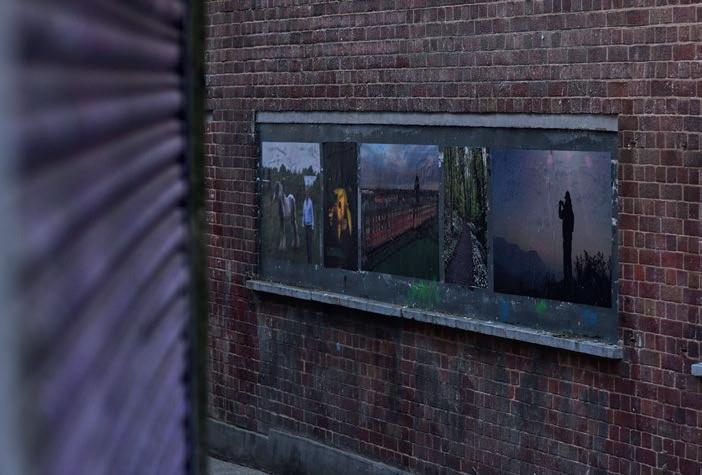
THE IDEA BEHIND BOTH PROJECTS IS TO ENCOURAGE PHOTOGRAPHY AND HELP ANYONE INTERESTED IN PHOTOGRAPHY GET NEW EXPERIENCESPhotography: Andy Ford Photography: Garry Cook Photography: Jenny Lewis
...for


BEOSOUND EXPLORE £169
Compact, tough Bluetooth speaker, IP67 dust and waterproof for outdoor adventures. Up to 27 hours playtime thanks to a high-performance battery. bernarddickinson.co.uk
MORSØ GRILL SPECIAL PRICE £799 Fuelmizas Bee Mill Preston Road Ribchester PR3 3XJ 01254 878368 fuelmizas.com
WATERPROOF OUTDOOR CUSHION IN PURE NEW WOOL - DOWN BY THE LAKE £44.50 heating-and-plumbing.com

Make your time outdoors ultimately comfortable, relaxing and enjoyable with these fabulous garden accessories


VITICCIO METAL GARDEN BENCH £225 oka.com

CUCKOOLAND HAMPSTEAD RATTAN DOUBLE GARDEN EGG CHAIR £599 cuckooland.com


BEOSOUND A1 SECOND GENERATION £239
IP67 dust and waterproof speaker with up to 18 hours playtime. On board microphones for conference calling and built in Alexa. Bang & Olufsen Preston

Bernard Dickinson 13 Beech Drive
Fulwood Preston PR2 3NB 01772 862266 bernarddickinson.co.uk
OUTDOOR NATURAL HISTORY
MUSEUM COCKLE SHELL PLANTER £25 nhmshop.co.uk

While every effort has been made to ensure accuracy, all prices and stockists are subject to change.
The Higold range is designed to perfection and trusted by luxury yacht-makers for deck furnishings. Featuring a rich and fade-resistant colour this is durable enough to be left outside year-round. Le Jardin Co 01706 600072 lejardinco.com
CANDY TUFT DECKCHAIR VINTAGE GARDEN £149.99 perkinsandmorley.com POLO CORNER SET BY HIGOLD £3399




aspiration for any landscaping. We built our first big shop on site and my father decided to put a big pond in the centre of it – partly as a focal point but mainly because there wasn’t really enough stock to put in it.
Celebrating 60 years in business, Barton Grange was originally a historic mansion set in five acres of gardens and woodland. Fast forward to 2023 and the Barton Grange name is synonymous with one of the best and largest garden centres in the north of England – now on a 52-acre site at Brock.
Still owned by the Topping family and run by bothers Guy and Peter, Barton Grange began life when their grandparents bought the mansion house back in 1945, creating a six-bedroom hotel: “My family were originally market gardeners,” recalls Guy.
“When my father joined the business in the mid 1950s he set up Barton Grange Landscapes within the grounds of the hotel and in the early 1960s Barton Grange Garden Centre was set up in a 12ft by 15ft shed – a bit different to what we have today!”

The move coincided with the introduction of containerised stock which enabled plants to be planted all year round: “The shed was filled with seeds, bulbs, plants and gardening equipment.”
As the first garden centre to open in the North West, business boomed for Barton Grange and new buildings were added to accommodate the public’s growing interest in gardening and landscaping.

“But in the 1970s and 80s there was a huge growth in gardening expenditure and products available,” continues Guy.
As Barton Grange Garden Centre entered the 1980s the momentum gathered pace and homeowners wanted garden furniture, barbecues, plants and gifts: “The market took off. There was an explosion in gardening products that became available.”
Working alongside his brother Peter, Guy adds: “We always knew we would outgrow the site and it soon became apparent that something would have to give. Both businesses – the hotel and the garden centre –needed more car parking and space.”
The announcement that a big multi-national garden centre chain was to open on the outskirts of Preston spurred the brothers on to looking for alternative premises: “We had to do something and it was an easy decision to make. We needed bigger premises for a modern-day garden centre.”
“Before 1960 most people lived in houses with small gardens and there was very little
They eventually found the ideal site at Brock – a former pub and a cattle and pig farm – all 52 acres of it!
Over six decades Barton Grange has grown into one of the North West’s largest and most successful garden centres
AMERICAN GARDEN CENTRE EXPERT ERNEST WERTHEIM CAME UP WITH A DESIGN THAT IS TODAY A PHENOMENAL 21ST CENTURY SUCCESS
“It was quite daunting at the time having such a big site and deciding what to put on it. It was a big challenge!” says Guy, who during his years attending conferences had met US landscape architect and garden centre designer Ernest Wertheim.
“While he was from America, Ernest worked all over the world. When he spoke, he had real substance and was a real perfectionist,” says Guy.
“Every garden centre he designed was different so when it came to designing the new Barton Grange Garden Centre on the site at Brock, we had to think long and hard about what we wanted to achieve in the long term. Ernest wanted to know everything to the last detail.”
After much consideration Ernest came up with a design that is today a phenomenal 21st century success.
With two catering outlets, The Riverside Cafe and Willows Restaurant, a cook shop
and farm shop and an outdoor plant area with retractable roof, Barton Grange is a joy

to behold. The family’s original Brookhouse Nursery site also supplies Barton Grange with 250,000 homegrown plants each year!

“It was a very proud moment for us to show Ernest around when we first opened,” says Guy, who had asked Ernest to leave roadside space on the site for any future development.
With online shopping taking off, retail wasn’t an option: “We wanted to add something that would enhance the garden centre and decided to opt for an indoor leisure experience.”
After much research conducted throughout the UK, a vision began to take shape and today, The Flower Bowl is the jewel in the Barton Grange crown.
With a cinema, 10-pin bowling, crazy golf and a genius idea from Guy – an Olympic-sized curling rink, The Flower Bowl has become an entertainment epicentre.

“We very much wanted to make The Flower Bowl unique,” he explains. “Looking back, it’s been an incredible journey!” n
Barton Grange Garden Centre
 Garstang Road, Brock
Preston PR3 0BT
Garstang Road, Brock
Preston PR3 0BT
01995 642900
bartongrange.co.uk
WITH A CINEMA, 10-PIN BOWLING, CRAZY GOLF AND A GENIUS IDEA FROM GUY – AN OLYMPICSIZED CURLING RINK, THE FLOWER BOWL HAS BECOME AN ENTERTAINMENT EPICENTRE
Gold is a sure-fire way to upgrade the look of luxury interiors and it is a trend that is here to stay.

In kitchens polished gold or antique brass taps come in many different styles and you can add accessories and swap cabinet handles to match. Add glitz by including pendant lighting above an island unit in brass or gold and don’t forget the small touches of gold – look out for gold trimmed crockery and cutlery to tie in with you theme.
In bedrooms and dressing rooms feature beautiful gold rimmed mirrors or more decadent heavy framed ones to add a touch of old-style glamour. Furniture featuring gold such as bedside cabinets are also great to add luxurious practicality.


In bath and shower rooms you can really let your imaginations run riot – gold shower heads, classic bath taps, basin taps and a whole host of accessories are available in gold with different finishes. From soap holders to towel rails – these really make a difference.

There are so many simple ways to feature gold in your living space. Gold is a returning trend that has been embraced by designers and homeowners, who appreciate that gold and brass add warmth and ambience.
Gone are the days of entering a kitchen or bathroom showroom where taps and accessories are all chrome – gold is now just as popular! n melodymaison.co.uk

There are many ways to integrate the trend for gold into your interiors – from living spaces, kitchens and bathrooms, it’s so easy to add that little touch of glamour


Whalley Construction take pride in every job they do, combining quality products with skilled craftsmanship, writes Gail Bailey
Whalley Construction are proud to be the supplier for Lancashire and the North West of American company Deckorators, who offer inspiration and innovation in materials, colours, textures and styles for the highest quality decking. Having a base at Shackleton’s Garden Centre in Chatburn for 12 years gives customers the ideal place to see the craftsmanship of Whalley Construction: “We’re proud to showcase our business at Shackletons,” says owner Andrew Whalley.
One of the first customers to have a Deckorators installation is Maureen Johnson from Blacko, who is incredibly happy with her new decking and also keen to share her experience.
DECKORATORS
TAKE THE ENJOYMENT OF PERSONALISING YOUR OUTDOOR LIVING SPACE TO A WHOLE NEW LEVEL
“We are so delighted with our new decking and the whole service from start to finish. We picked up a brochure at Shackleton’s and after

contacting Andrew, he came to our home to see our garden space and advise us. We chose the Deckorator product and had our existing composite decking replaced with this newer, more superior one. It is much sturdier than our old decking and so much more aesthetically pleasing to look at –we’ve had compliments from everyone who has visited,” Maureen says.
SURE WE NOW HAVE AN OUTSIDE SPACE AND DECKING WE LOVE
It isn’t only the product that Maureen is thrilled with but the service from Andrew and his team at Whalley Construction too:
“When Andrew came to see us he also brought us a range of shade samples to choose from and we were happy to choose the one he recommended – it looks amazing! Our house has quite a lot of steps and the way the Whalley Construction team have designed the decking has made the whole outside area much safer as well as being stylish to look at.
“Whalley Construction are 100 per cent reliable – they came when they said they would and couldn’t have been more helpful. They thought of everything to make sure we now have an outside space and decking we love. We have been so impressed, and we even bought the garden furniture we saw at Shackleton’s too!”

High praise indeed!
“Deckorators take the enjoyment of personalising your outdoor living space to a whole new level,” Andrew adds. “Their composite decking, deck railing, balusters and post caps make it easy for customers to stylishly extend their living space outside.” n
Whalley Construction Unit 10, Hallmoss Business Park Bolton Road, Darwen BB3 2TT 07754 463073

hello@whalleyconstruction.co.uk
whalleyconstruction.co.uk
Book in for a live design consultation to see how we can transform your home, this is a local service where we can design, manage and build your project for you.


jmf@firthassociates.com

Artist Nick Dittrich creates original artworks using a variety of mediums (acrylic, charcoal, graphite, pastel and chalk) or anything else –object trouvé, bottle tops, purchase receipts and micro shredded banknotes.

To purchase, or to commission an artwork call: 01279 861863 / 07909 850462
@ gmail.com
His latest collection are collages from recycled billboards and dry transfer lettering with original wording. He said about the artworks: “The large scale halftone printing, the torn forms, vivid colours and ripped edges are ideal to create purely abstract expressions, as opposed to the original advertising images.”


What makes the owner of a leading supplier and installer of windows, doors, conservatories and garden rooms in Lancashire tick? We speak to John Croft, a fifth generation descendant of Thomas Croft to find out
Croft Complete Homes have an impressive history providing thousands of home improvement projects to its discerning Lancashire customers.
Owner John Croft explains: “In the Croft family, building is in our genes. I always wanted to follow in their footsteps and join the family firm.
“My father read Civil Engineering at the University of Liverpool and worked for Ove Arup before joining Thomas Croft and Sons, and I read Building Management and Technology, at the same university and worked for George Wimpey before joining the family firm. Dating back to 1874 the original company closed in 1996, when I then started the current company having taken on their best employees. We have grown steadily since then, concentrating on quality over price.”
Family values and traditional craftsmanship are at the heart of the Croft business:
“My stepson Samuel studied Real Estate Management at Oxford Brooks University and joined the firm after graduating in summer 2020. His main focus is currently on all aspects of garden pods.
“My wife Allison graduated in Interior Design from Manchester in 1988 and worked for Building Design Partnership and Stephenson Bell Architects in Manchester. She does all the hand drawings and some of the marketing and is most of the time working in our garden pod at the wonderful Holden Clough Nursery which provides a haven of tranquillity to inspire creativity.”
I LOVE STRUCTURES WITH PLENTY OF NATURAL LIGHT AND
AM PARTICULARLY EXCITED ABOUT THE CURRENT DEMAND FOR GARDEN PODS AND THEIR INFINITE DESIGN POSSIBILITIES
John adds: “Much of my degree involved studying material structures and energy efficiency. This translated naturally into designing and specifying conservatories.
“Early conservatories were simply designed with lightweight polycarbonate roofs. At Crofts from the outset, we preferred glass roofs for their much-improved performance and longevity.

I
“Over the years, these structures have become far more complex and nuanced so as well as conservatories we do numerous orangeries, garden rooms and garden pods, all with specific specifications to suit the requirements and preferences of different customers.”


“There has been a clear shift over the past few years towards buildings still using modern high specification materials, but combining the benefits of natural light from the roof glazing with improved insulation from partially solid lightweight roofs, which are fully compliant with current building regulations.
“I love structures with plenty of natural light and I am particularly excited about the current demand for garden pods and their infinite design possibilities and uses. From home gyms, cinemas, playrooms and bars, our customers are never short of ideas for how to utilise the extra space in their gardens with a standalone garden pod.
“There has also been a significant shift towards aluminium, initially for large bi-folding doors but now more for the increasingly popular triple-track and four-section sliding doors and single-door
systems we offer as well as contemporary aluminium windows.
“With uPVC windows we have not only seen significant improvements in energy efficiency, but also increasing demand for different colours. At Croft we can now offer over 25 different colour combinations as standard to suit the aesthetics of any home.”
John explains that sliding sash windows and flush sash windows, which look like traditional timber windows, are very popular in conservation and rural areas and Croft still do traditional casement windows and turn and tilt windows, which were the original uPVC windows that Croft introduced from Germany in 1973.
“I am very proud of what we have achieved over the last 28 years, my last original business partner retired in 2018 so it is down to me and Samuel to keep things going for the next 28 years!”
When asked what John enjoys doing outside of construction projects, he says: “When I can get away from the office I enjoy good food and wine – Allison is a fantastic cook! Rugby –watching not playing these days – all sorts of cars and fishing. I am going to Iceland soon with Samuel and my 85-year-old father, who is still salmon fishing. Fishing is something else that must be in the Croft genes.” n
croftconservatories.co.uk
croftgardenbuildings.co.uk
I AM GOING TO ICELAND SOON WITH SAMUEL AND MY 85-YEAR-OLD FATHER, WHO IS STILL SALMON FISHING
Fuelmizas in Ribchester has a first-class collection of stoves and now that summer is well and truly here, a selection of lifestyle outdoor fires and grills to take your alfresco entertaining to the next level!

Fuelmizas owner Nick Astley has been in the industry for three decades working with many respected manufacturers and the Fuelmizas name has been going almost half a century, becoming synonymous with unrivalled products and unbeatable customer service.
Specialising in long-established brands, Fuelmizas’ leading manufacturers include Morso, Jotul and Esse, who have been manufacturing stoves for more than 150 years.

Nick and the team can offer the full package if you are looking for a new stove – whether that’s for a beautiful interior living space or for a dedicated outdoor space in your garden.
For interiors, Fuelmizas has a fireplace design service and an experienced installation team.
Visit the showroom in Bee Mill in Ribchester to meet Nick, who took over Fuelmizas with his wife Suzanne back in 2004 – here you will find an extensive working collection of stoves that are ultra-efficient and have green credentials.
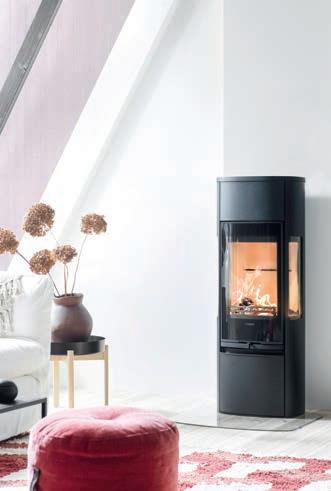
At the moment, the stylish outdoor Morsø stoves and grills are taking centre stage. Danish by design, the Morsø Forno, makes outdoor living ultimately easy and fun.
And what better way to see this highly functional fire grill, than at this year’s Royal Lancashire Agricultural Show next month!
love the stoves from Morsø! We are very excited to be at the Royal Lancashire Agricultural Show this year,” says Nick, whose family will be joining him to help out during the three-day summer extravaganza.
“Morsø are renowned for their recognisable eye-catching designs,” adds Nick.
“Their outdoor collection really reflects this – the ovens, grills, firepits and accessories are not only super-efficient and practical they are a style statement.” n
If you are considering a stove for your home contact Nick who will be delighted to help you find the perfect product


Come and meet the Fuelmizas team at the Royal Lancashire Show and see the fabulous Morsø Forno and Esse in action!
21st – 23rd July 2023
Fuelmizas will be there displaying the Morsø Forno in their gazebo – a working model will be set up and lit and there will also be an Esse garden stove on display. Plus, in the Esse trailer next door to Fuelmizas will be a whole range of working Esse cookers on display.
“Anyone who enjoys outdoor cooking will
In the heart of the Ribble Valley since 1975 CELEBRATING 40 YEARS IN THE INDUSTRY
Fuelmizas Bee Mill, Preston Road Ribchester PR3 3XJ 01254 878368
fuelmizas.co.uk
IT IS THE QUALITY AND THE STYLING OF THESE GRILLS AND OVENS THAT IS FANTASTIC AND THEY ARE SO EASY TO USE


Guests enjoyed canapes, champagne and a special guest appearance at the recent opening of a new art lounge at Hepplestone Fine Art

Luxuriating in the new Northern Art Lounge, the clients of Hepplestone
Fine Art were warmly greeted by managing director, Giles Hepplestone and special guest of honour, Manchester born and internationally recognised contemporary artist and sculptor, Geoffrey Key.

With many rare and unseen works revealed at the opening by prolific northern artists from the industrial era such as LS Lowry, Geoffrey Key, Harold Riley, Theodore Major and James Lawrence Isherwood, Hepplestone clients enjoyed a plethora of northern art at its very best.


Giles Hepplestone explains his reasoning for this newly dedicated area of the Hepplestone gallery: “The northern art movement has its roots in the Industrial Revolution and has documented the evolution of northern society over the decades. Having been born across the road from Lowry’s home in Mottram and with the gallery being so close to the homes of Wigan’s James Lawrence Isherwood and Theodore Major, it was a natural fit for us to want to champion such artists.
“ There is a huge amount of interest both locally and nationally in collecting and preserving our northern art heritage, so it is a great privilege to be able to showcase
these artists in the new dedicated Northern Art Lounge.” n
The Gallery and Northern Art Lounge are open six days a week from Tuesday to Sunday, and closed Monday. Opening times are available on the website with private client appointments available with the art director if required. Please call 01257 451121 for further information.
Hepplestone Fine Art Ltd

Heskin Hall Shopping Village
Wood Lane, Heskin PR7 5PA 01257 451121
sales@hepplestonefineart.com
hepplestonefineart.com
A NATURAL FIT FOR US TO WANT TO CHAMPION SUCH ARTISTS
SALE STARTS

CONVERSATION WIGAN – ORIGINAL OIL

From his ‘Atom Bomb’ series, this monumental original painting from the late Appley Bridge artist Theodore Major is a true masterpiece. Depicting the skeleton and working class figures against an industrial Wigan backdrop, it is a truly thought provoking composition from the artist.

LIMITED ITEMS ONLY AVAILABLE IN OUR 2022 SALE, SEE THE FULL RANGE ON-LINE OR VISIT US IN THE GALLERY
Now available to view and purchase at The Northern Art Lounge, Hepplestone Fine Art Gallery. To make an appointment, please call 01257 451121, we look forward to welcoming you.
Specialists in collectable original paintings, limited edition prints and sculpture by leading northern and international artists




Circular
455mm
0800 040 7795
‘American Style’ outdoor kitchen that can be used all year round, including pizza oven, smoker, flat bed grill, gas BBQ, and bar area. This outdoor kitchen creates a true indoor / outdoor living experience £POA.

BCAE Architects 01772 454727 bcae-architects.co.uk
 Opposite: An outdoor collection with a contemporary and timeless design made of cement. It is ideal for creating compositions and illuminating a space in a suggestive and warm way.
wall light price £197.50 each.
Bollard light priced £641.15 each, 705mm Bollard light priced £749.75. kok.lighting
Above: Oltco resin bound driveway made from a blend of aggregates coated with clear UV-stable polyurethane resin the gravel is finished to a smooth surface with no loose stones £POA Oltco
oltco.co.uk
Opposite: An outdoor collection with a contemporary and timeless design made of cement. It is ideal for creating compositions and illuminating a space in a suggestive and warm way.
wall light price £197.50 each.
Bollard light priced £641.15 each, 705mm Bollard light priced £749.75. kok.lighting
Above: Oltco resin bound driveway made from a blend of aggregates coated with clear UV-stable polyurethane resin the gravel is finished to a smooth surface with no loose stones £POA Oltco
oltco.co.uk
The Norfolk Leisure timber lounge set includes: an extended corner sofa, arm chair, height adjustable ceramic topped table and footstool. With a powder coated aluminium frame, quick drying all weather cushions and a five year guarantee £3499

Barton Grange Garstang Road
Brock Preston PPR3 0BT 01995 642900 bartongrange.co.uk
Using more stonework than standard, this beautiful orangery, complete with two sets of bi fold doors brings the outside in. Complementing the original property this is the perfect space for summer entertaining £POA.
Lee Kelly UPVC 364 Blackpool Road Fulwood Preston PR2 3AA 01772 788550 leekellyupvc.com


The lazy, hazy days of summer are best spent enjoying the outside space that you have lovingly nurtured and cared for over the past months
July is often one of the hottest months so make sure you keep plants well watered, using grey water where possible and hoe off weeds which thrive at this time of year.
If your garden isn’t flooded with sunshine all day then don’t worry – there are many plants that thrive and blossom in shady areas and making sure you choose the right ones is essential for successful growing.
So, thrifty tip for the month is to save money by selecting the right plant for the right place. Partial shade refers to areas that are shaded by buildings or trees and shrubs for up to six hours on sunny days – most gardens are in partial shade. Light shade is often used to describe shade cast by trees that is dappled and is suited to woodland plants in the summer and spring bulbs that finish flowering before trees are in leaf. Deep shade is when little or no light reaches the area during the growing season and is really only suitable for ferns and woodland plants.
Partial shade is also a great place to grow leafy herbs and vegetables, particularly as

lower light conditions tend to result in no fruits and no roots but lots of greenery. So, plants like tomatoes and potatoes won’t survive, but chard and spinach will be very happy. Vegetable and herb plants growing in shade have the same soil requirements as full sun plants – rich well-drained organic matter – but watering needs differ slightly. It’s best to water at the base of the plants early in the morning or evening to prevent fungal issues. Growing shade vegetables is easy and a great solution for small spaces such as balconies, patios and fence lines.
of bees and butterflies and their spiky seed cones offer winter texture and food for birds. Echinaceas are hardy up to around -15C and there are hundreds of varieties. Seen by many as a garden must-have, some new and popular varieties include ‘Pink Shimmer’ with a prominent orange-cone and flat, bright pink scented flower that grows to 100cm tall, ‘Green Jewel’ tall but compact with long stems up to 80cm and pale green petals with a cone that turns orange as the flower ages and ‘Virginia’ which reaches 80cm tall with good sizes scented white flowers. n
• Deadhead roses
• Don’t spray pests – let natural predators eat them or remove by hand
• Prune plum trees
If you have a garden that has more sunlight than shade then flowers that love the heat of the summer are the elegant echinaceas. These herbaceous perennials have pretty, daisy-like flowers with a central cone that matures from orange to black, hence their common name, coneflower. They’re easy to grow in a sunny position as they tolerate most soils and their sturdy stems mean that staking is unnecessary. Their flowers are favourites

• Prune magnolias
• Trim and shape conifers
• Move houseplants outdoors for a few weeks
• Keep ponds topped up
• L ift garlic crops
• Sow spring cabbage
• Target watering to specific plants and growing areas


Homeowners don’t need to spend a huge amount of money on their gardens for them to be beautiful, says Chelsea Flower Show
winner John EverissWhat does it take to create an award-winning Chelsea Flower Show Garden?


Certainly, award-winning professional landscaping designer and sculptor John Everiss can provide a level of insight into what is involved in creating a plethora of beautiful outdoor spaces as well as his multi-award-winning show gardens. For over 30 years, John has become known for pushing the boundaries of sculpture and artisan garden design, creating beautiful outdoor spaces of all sizes for private customers, show gardens and public exhibitions that are uniquely interesting, practical and long lasting. Indeed, John’s work has been recognised by the Royal Horticultural Society (RHS) on
multiple occasions, achieving gold at both the Tatton Park and Chelsea Flower Show, leading to commending coverage on the BBC’s radio and television stations as well as an assortment of local North West media.
“Gardens don’t have to be hugely expensive to be beautiful and impactful, they just need to be creative and imaginative,” says John. “It is important to use the available space wisely, and not to overcomplicate the overall design.
“Of course, it is always worth investing in high quality plants and to work with a supplier you can trust to grow, source and deliver plants and materials on time and within budget. For over 20 years, I have personally chosen Bannister Hall Nursery and landscaping supplies in Higher Walton, Preston, to supply both private garden projects and award-winning RHS show garden designs.”
Speaking of the prestigious Chelsea Flower Show, John says: “Chelsea is essentially a piece of theatre. We’re creating the illusion of a garden that’s always been there. It takes many months of planning and plant growing,
IT IS ALWAYS WORTH INVESTING IN HIGH QUALITY PLANTS AND TO WORK WITH A SUPPLIER YOU CAN TRUST TO GROW, SOURCE AND DELIVER PLANTS
even if it is built from scratch in just a few weeks at the London show site.”
He continues: “When designing artisan gardens, the available space is tiny, so it is important to draw the viewers eye to the corners or back wall to create the impression of an elongated plot. Creating a theme and story for a show garden is key and sculpture, for which I have become known, is essential for providing a huge visual impact when used appropriately.”
One of John’s most inspiring recent projects is his award-winning garden design for the RAF Benevolent Fund, developed specifically for the Chelsea Flower Show in 2022, featuring a four-meter sculpture of a young pilot looking up at the sky – a moving tribute for all those who have served and continue to serve in the RAF.
The sculpture of the RAF pilot is actually made from 223 individual layers of stainless steel and following a painstaking assembly process, the effect is simply mesmerizing: “The garden features a dry-stone wall of Purbeck stone which spirals around the sculpture and boasts a seven-foot-high cloud pruned camelia and a tapestry of beautiful azaleas, smaller camelias plus a more open area of woodland planting.
“For that particular show, Bannister Hall grew in the region of 2500 plants, from which I chose to use approximately 1300 of them including geraniums, cow parsley, cirsium and foxglove to name but a few. Overall, the garden really achieved a restful and peaceful ambience with an emphasis on muted colours.”
Testament to the impact of John’s incredible design, following the Chelsea Flower Show, the garden was relocated to a permanent site at London Biggin Hill Airport, as a larger commemorative garden which continues to receive many visitors, who sit within the garden and reflect on the service and sacrifice of all the RAF and civilian personnel.
When asked about upcoming future trends happening in gardening over the next few years, John replies: “It is very likely that there is going to me more emphasis on sustainability and affordability in gardens of all sizes, and for this reason, when thinking about your overall design, is it important to source your plants and landscaping materials from a supplier who can best meet that criterion. For me that continues to be Bannister Hall.” n
Dave Newsham is Bannister Hall’s down-to-earth and exceptionally knowledgeable plant expert. If you have any questions on what specimen trees or shrubs to plant in your garden, just give Dave a call. He will advise on what thrives best and where. He will be delighted to speak with you.


01772 877087
marketing@bannisterhall.co.uk

Bannister Hall Landscaping
Supplies Centre & Nurseries
Potter Lane, Higher Walton
Preston PR5 4EN
01772 877087
bannisterhall.com
OPEN MONDAY TO FRIDAY
FREE ON-SITE PARKING


Preston PR5 6BB
01772 312213
thespectaclefactory.com
 Robert la Roche ‘Steve’ sunglasses £550 Handmade in Italy with Zeiss lenses. The Spectacle Factory Unit 1 Dewhurst Row Bamber Bridge
21ST JULY 2023
4:00 PM - 7:00 PM
Enjoy a delightful assortment of refreshments throughoutthe evening with like-minded eyewear enthusiasts.


Prepare to immerse yourself in the worlds of Jimmy Choo and Porsche Design as we unveil their latest releases and provide you with an exclusive opportunity to try on their extraordinary creations.
Enjoy exclusive access to try on the captivating Porsche Design and Jimmy Choo collections.
Take advantage of the special offers exclusively available during the event with up to £100 OFF.
To ensure your attendance and reserve your spot for this exclusive evening, kindly RSVP by contacting Adam: adam@thespectaclefactory.com

Making the most of life’s simple pleasures and the great outdoors, Vareys Town & Country have been established in Clitheroe for over 50 years and constantly evolve to meet their customers changing needs. The store continues to retail all the popular brands they are renowned for but with lots of new and exciting collections being introduced –many exclusive to Vareys.
Owned since 1997 by Kevin Horkin and with Store Manager Luke Howarth employed for 12 years, Vareys stock a high calibre range of quality country clothing and footwear for men and women.


“We have a simple philosophy,” says Luke. “We provide a high-class personal service synonymous with Vareys, but continually evolve to give a unique, modern shopping experience for all our customers, old and new.”
Vareys moved from the original store on New Market Street into the former Yorkshire Bank premises in 2021 enabling them to use the space and high ceilings of this beautiful building: “Our new light and airy premises allows us to showcase the wide range of country lifestyle fashion brands we hold along with offering a wider selection,” Luke says. “We keep on track with what our customers want and seek the right brands to suit them.”
One new range which will be arriving with the autumn/winter stock is Sweden’s leading waterproof jacket designers
Didriksons: “The functional, fashionable

THE ROYAL LANCASHIRE SHOW IS A WONDERFUL EVENT AND GIVES US THE OPPORTUNITY TO SHOWCASE WHAT WE DO
garments from Didriksons keep you dry whatever the weather,” Luke says. “The company make jackets that allow you to spend more time outside. Their designs are inspired by nature, with colours such as clay beige, desert pink and dusty olive forming part of the current collections.”
Leading German manufacturer Schöffel continues to excel, combining innovation and technology with a passion for superb styling and outstanding quality: “As a specialist brand, Schöffel Country focuses on the latest fabrics and techniques to produce superb clothing, which is lightweight, technical, comfortable and specifically designed with the discerning country customer in mind,” Luke explains.
stock Dubarry. Their clothes, iconic footwear and accessories are the perfect example of engineered country style products, expertly designed and made to last.”
DUBARRY’S CLOTHES, ICONIC FOOTWEAR AND ACCESSORIES ARE THE PERFECT EXAMPLE OF ENGINEERED COUNTRY STYLE PRODUCTS, EXPERTLY DESIGNED AND MADE TO LAST

Vareys know their customers want to look and feel their best at all times. Wearing their clothing and footwear means clients can go from walking the dog in the fields into the town shops, pubs and restaurants of the Ribble Valley with confidence.

Footwear brands are a key feature of Vareys with all countryside activities catered for – be that walking, camping, shooting or equestrian: “We are well known for the quality and hardwearing array of footwear we stock. Meindl, Merrill, Berghaus and Aigle are just a few

of the familiar ranges we retail that ensure continued comfort, performance and style.”

Having a presence at local events and supporting the Ribble Valley is important to Vareys Town & Country and they will have an even bigger and better stand at this year’s Royal Lancashire Show to be held on 21st to 23rd July at Salesbury Hall: “The Royal Lancashire Show is a wonderful event and gives us the opportunity to showcase what we do, and replicate the store in the prestigious Lifestyle Marquee – we always look forward to being a part of it and are excited to be attending,” Luke says. “There will also be special offers in place for visitors at this year’s event, so make sure you come along and say hello.”
12th August sees Clitheroe Food Festival in full swing again listed in the Top Ten UK Food Festivals by Eventbrite. The streets of Clitheroe come alive with summer festival fever and Vareys are perfectly placed in the town centre to play an integral part. With over 100 exhibitors, family friendly fun and street entertainment it’s a wonderful showcase for the town. n
For days spent exploring and enjoying nature’s playground, and with the festival season now in full swing, Barbour clothing, footwear and accessories are a key factor that bring it all together, with outfits for every eventuality: “For day trips, long walks and weekend getaways Barbour have the perfect stylish jackets, hats, wellies, dresses, shorts, shirts and accessories to suit everyone.”
Dubarry of Ireland are a firm favourite with Vareys customers who appreciate the collection of premium performance footwear, clothing, leather goods and accessories: “We continue to


LEONARD DEWS HAS BEEN MY LIFE BUT NOW AT THE AGE OF 72 IT IS TIME FOR SOME REST, RELAXATION AND GOLF. SO THE GREATEST CLOSING DOWN SALE IN BLACKPOOL’S HISTORY WILL BE MY GRAND FINALE AND EVERYTHING MUST GO.
MICHAEL HYMAN, OWNER
From the beach to a barbecue, these lovely summer accessories are super stylish




HEALTHY BACK BAGS FROM £59 BAGLETT SMALL £24 BAGLETT LARGE £29


Fitright Footwear

32D King Street Clitheroe BB7 2EP 01200 425399 fitrightfootwear.co.uk
While every effort has been made to ensure accuracy, all prices and stockists are subject to change.
welcome addition, the collection features lots of colour and character and is of beautiful quality. A new arrival of Vilebrequin shorts in a range of bright, cosmopolitan shades are sure to be an instant hit with Scruples’ clients, who just love the stylish cut and colours from this European label.

Photography: Kirsten Platt
Summer has arrived at Scruples 1984 with stylish Tom Ford sunglasses alongside a whole new collection of colourful shirts and comfortable lightweight shorts and trousers.
Tom Ford is new to Scruples 1984 and store manager Tom Orrell couldn’t be happier to add this luxury brand to Scruples’ prestigious portfolio: “We were approached by Tom Ford on the back of our work with Canali – the luxury suiting brand. Canali has been phenomenal for us so to add Tom Ford to our range of collections is great for Scruples.”
The new sunglasses collection from Tom Ford features a wide range of styles. From classic aviators, metal frames and black frames as well as a few exclusive on-trend, stand-out styles – the glasses are the perfect accessory to Scruples’ stylish summer clothing.
A new collection of Paul & Shark tees and polos has just arrived in a range of new summer shades with orange, beige and various blues proving exceptionally popular –an aqua-blue in the collection has real appeal, providing a beautiful, uplifting pop of bright summer colour.
Summer-weight trousers in cotton by Handpicked and Tramarossa are slick, smart and comfortable while a light blue houndstooth , stretch trouser is currently taking centre stage at Scruples, proving particularly popular this season.
When you visit Scruples 1984, you can’t fail to notice just how important exquisite tailoring is to Tom and Scruples founder Stephen Collins. Canali along with Scruples in-house tailoring label Rupert Totti produce exclusive one-offs to demonstrate the quality of the cloths and unrivalled cut of these bespoke pieces that can be made to customer’s exact requirements.

Shirts from Guide, Claudio Lugli and Stenström are a cool addition to any wardrobe while shirts by Emanuel Berg come in stunning lightweight stretch fabric that are perfect for chilling at a summer barbecue or garden party.
Scruples has also introduced a brand-new label for the summer season – Pier St Barth.
This represents an exclusive collaboration with the Caribbean-based luxury summer wear brand, which came about following a rum-punch filled conversation with their designer on a beach in Barbados! A very
“Overall, we are delighted with how things are going and we can’t wait to show our customers the new Tom Ford collection of sunglasses. To bring such a prestigious brand on board is fantastic!” says Tom. n

Scruples 1984
85-87 Gisburn Road, Barrowford BB9 6DX 01282 695770
scruplesmenswear.co.uk

@scruplesmenswear
@scruplesmens
There’s a real buzz around Scruples 1984 this summer with the arrival of a new collection of Tom Ford sunglasses.
WE CAN’T WAIT TO SHOW OUR CUSTOMERS THE NEW TOM FORD COLLECTION OF SUNGLASSES. TO BRING SUCH A PRESTIGIOUS BRAND ON BOARD IS FANTASTIC!
extremely competitive and you are absolutely guaranteed value for money with the personal service along with the finest quality products.
The Spectacle Factory’s investment in sophisticated, state-of-the-art technology gives clients a 25x more accurate prescription than a standard test at other local opticians, guaranteeing you the best vision possible.

For spring and summer 2023, The Boss Eyewear Collection presents new sunglasses and optical frames crafted with innovative materials and elevated by distinctive signature details.
The Style & Expression line includes new sunglasses and optical frames designed with the planet in mind. These styles are crafted in acetate renew, an eco-friendly material and lenses made from bio-based nylon for recycled materials.
What are you looking for when you purchase glasses or have an eye test?


Do you consider personal service, price, the accuracy of the eye test, quality of the glasses, convenience of location and the range of glasses available?
The Spectacle Factory wins hands down on every single one of these! Here’s why:
The spectacle factory is renowned for its personal, friendly and outstanding service and you will be cared for by one their experienced optometrists. One of many reviews states: “I’m absolutely thrilled with the personalised care I receive and I genuinely wouldn’t go anywhere else. I feel safe and cared for at the Spectacle Factory.”
The pricing from the Spectacle Factory is
The frames stocked are from manufacturers who craft their eyewear to be of the highest quality, distinctive, stylish and totally original.
The stunning futuristic store is located two minutes from the M6, M65 and M61. There is ample parking and an electric charging point for customers to use, free of charge, whilst they’re there!
You will find an eclectic range of fabulous frames with brands such as Boss, Jimmy Choo, Carolina Herrera, Gucci, Cartier, Chloe and Chopard, as well as many unique independent collections which have been sourced from all over the world. Recently added are the new 2023 collections from Boss, Jimmy Choo and Carolina Herrera.

The Active & Dynamic line features new sunglasses with a sporty aesthetic, crafted in eco-injected resin and accented with contrast-colour rubber details for maximum comfort and grip.
Robert Sands, director of The Spectacle Factory concludes: “The perception of glasses has changed significantly over the past couple of years and the trend is now very much about personalisation and uniqueness. Some people prefer thick, chunky and colourful glasses whilst others opt for thin and minimalistic.
“Our aim is to make people feel amazing in their glasses whether their priority is style, price or durability. Glasses are now a part of people’s wardrobe having different styles for different occasions. The options are truly limitless. We believe in ‘eyewear for the individual’ and that’s what our team delivers.” n

The Spectacle Factory Unit 1 Dewhurst Row Bamber Bridge
Preston PR5 6BB 01772 312213
thespectaclefactory.com

At the heart of the Spectacle Factory is exceptional quality, style and unrivalled customer service, writes Meena McDonald.
Photography: Robin Lyndon
WHO WOULD HAVE THOUGHT A DAY AT THE OPTICIANS WOULD HAVE BEEN SO ENJOYABLE
CLARINS MINERAL SUN CARE FLUID £24
A handy travel size antioxidant highprotection sun care liquid developed for areas that are sensitive or highly exposed to the sun. clarins.co.uk

HELIOCARE 360 AGE ACTIVE FLUID £32.99


A light, hydrating fluid providing high-level broad-spectrum protection plus a triple anti-ageing complex to help prevent the visible signs of ageing. Get 10% discount + FREE P&P discoverlaser.co.uk/skincare-products
Develop a nice golden glow with these products, that will prep, protect and perfect in the summer sun
MEDIK8 ADVANCED DAY
ULTIMATE PROTECT™ £59*

Age-defying moisturiser with photolyase SPF 50+ PA++++ to fight the signs of ageing and sun damage with DNA repair enzymes. themeltco.com

SEOULISTA PEPPERMINT TOES £10
Infused with eucalyptus, shea butter and hyaluronic acid, for healthy feet maintenance. The Spa Hotel at Ribby Hall Village Ribby Road Preston PR4 2PR 01772 671111 ribbyhall.co.uk
LA PRAIRIE CELLULAR SWISS
UV PROTECTION VEIL £180
Designed to be used over your moisturiser, this powerful veil offers daily protection against exposure to UVA, UVB and the environment. laprairie.com

COOLA CLASSIC FACE MIST SPF 50 £32

Working without greasiness, this can be applied whenever the skin needs protecting or refreshing, including over makeup. spacenk.com
While every effort has been made to ensure accuracy, all prices and stockists are subject to change.
MEDIK8 DAILY RADIANCE VITAMIN C™ £59*


Energise your skin with this hydrating vitamin C and SPF 30 day cream for a brighter and more even complexion, whilst keeping future ageing and sun damage at bay. *Loyalty card with purchase
Melt Twitter Lane Waddington BB7 3LQ 01200 443377 themeltco.com
ISHGA EXFOLIATING FACE WASH £30

Quickly removes daily grime, dirt and pollution from the skin, leaving it smooth, soft and radiant. The perfect prep for that summer glow. ribbyhall.co.uk


A charity soccer match attended by many, including various celebrities, has helped raise money for local children’s charities
EMA Skin Aesthetics proudly sponsored a celebrity charity football match at Blackpool Football Club recently.


The event was in memory of young Jordan Banks who was fatally struck by lightning and sadly passed away two years ago.
The funds raised on the day will go to Brian House Children’s Hospice and The Matilda Foundation (Stillborn) charities. E mma Pearce, of EMA Skin Aesthetics, said: “It was a brilliant night of fundraising along with some of my wonderful clients and the support of many celebrities

including James Arthur, Joe Warren and Sam Bailey. I am extremely proud to be a sponsor of this event which will help two very worthy local children’s charities.” n
emaskinaesthetics.co.uk
If you or someone you know has cancer, you may find it helpful to talk to someone who understands what you’re going through. A team who can provide personal support and expert information. That’s what we do.
If you or someone you know has cancer, you may find it helpful to talk to someone who understands what you’re going through. A team who can provide personal support and expert information. That’s what we do.
So if you have any questions about your treatment, concerns about your finances or just want to talk, you don’t need to go through it alone. We’re here for you.
So if you have any questions about your treatment, concerns about your finances or just want to talk, you don’t need to go through it alone. We’re here for you. Call
Call the Macmillan Support Line free on 0808 808 00 00 (Mon – Fri, 9am – 8pm) or visit macmillan.org.uk
You
Emma Pearce at EMA Skin Aesthetics is one of the most sought after, experienced and highly skilled aesthetic specialists in Lancashire.


Her aim is to achieve life-changing results, and she has dedicated decades to mastering the safest, most effective and least intrusive treatments available.
With an approval rate and referral rate of 5 Stars across thousands of clients, you couldn’t really ask for more validation of her skills and success.
Two of the most popular anti-ageing treatments are:
PLASMAPEN which is perfect for tightening & erasing sagging jowls, turkey necks, marionette lines, smile and smokers’ lines around the lips, crow’s feet, puffy eyes, drooping eyelids, chest lines and more. With results that last up to 3 years.


7D FOCUSED ULTRASOUND which features the latest non-surgical technology using High-Intensity Focused Ultrasound and Micro-Macro Focused Ultrasound (MMFU) to deliver a non-invasive face, neck and body lifting treatment. It is best known for tightening skin with optimal results and is a nonsurgical and painless replacement for facelifts. It boosts collagen production giving a firmer and natural rejuvenating effect to the skin. With little to no down time!
“I’m extremely delighted with the results. I’ve had both PlasmaPen and 7D Ultrasound on my marionette lines and jowl area. I couldn’t be more pleased, so much so, I’ve now booked to have the neck lift.” (Denise M)
“I’ve had my full face and neck treated with PlasmaPen, Hyapen and Ultrasound 7D, and the results are just remarkable. I’m 73 but look and feel 20 years younger. Even my doctor thought I wasn’t in the waiting room recently as he didn’t think for a minute I could be his next 73-year-old patient.” (Christine K)
I’m 76years old and thought I was too old to receive any treatment for antiaging that would actually make a difference. Emma proved me wrong as promised. I am delighted with the results and feel so much confident, I feel ‘Emma has got an iron and ironed my wrinkles out’ Proves your never too old. (Jacqui S)


I’ve received both plasma pen and ultra sound from Emma and I can only say ‘I wish I did it earlier’. My concern was the lower face I was so self conscious and avoided all mirrors. I now have a new lease of life due to my impressive results. Thank you Emma. (Margaret G)
OUR SUMMER OFFERS ARE BACK BY POPULAR DEMAND!
PlasmaPen £175 off each area. Areas start from £250.
Ultrasound 7D £185 off each area. Areas start from £300
20% off each ml of Hyapen. Offers ends 6th September 2023. Limited availability!
IT’S OFTEN MUCH EASIER TO CARRY OUT RESTORATION WORK ON MULTIPLE TEETH RATHER THAN REPLACING A SINGLE TOOTH, WHICH CAN BE MORE OF A CHALLENGE
Riaz, Ursula was told that a dental bridge was not the ideal solution as it would have affected the two healthy teeth either side. “Usman was fantastic,” recalls Ursula. “He really put me at ease. It was a big deal for me, as I was really concerned about how

first responder working in the care sector, Ursula Rosimus had always been conscious about her teeth, having had a crown fitted many years ago. Just before the pandemic in 2020, she began to develop problems around the crown, as she explains: “I had an abscess and when I consulted a dentist, I was told a front tooth would have to be removed.”
Removing the top left front tooth resulted in an unsightly gap, so Ursula was advised to have a single tooth denture fitted, which was unbearable: “It was awful, but I knew I just had to get used to it. I was very selfconscious about it but there was nothing I could do as we were in the middle of Covid.”
When Ursula eventually managed to get an appointment with an NHS dentist, they suggested a bridge be fitted, which would replace the uncomfortable denture: “I felt very rushed. I didn’t know what to do so my husband suggested I speak with Dr Usman at Renovo Dental.”


During her consultation with Dr Usman
the issue could be resolved.”
Dr Usman, a highly experienced clinician with a special interest in aesthetic and implant dentistry, readily agreed to see Ursula, who went along to the beautifully restored Renovo surgery in Chatburn: “Usman carried out the assessment – and while he said there was significant bone loss at the site of the

A team of specialists at Renovo Dental have restored Ursula Rosimus’ smile as well as her confidence
missing tooth, he said a dental implant was certainly possible.”
Working alongside Usman on Ursula’s dentistry, was highly experienced periodontist and implant surgeon Dr Khurrum Hussain, who completed training in periodontology at the prestigious Eastman Dental Institute.
Dr Usman explains: “Ursula was missing a tooth in the aesthetic zone. She was struggling with a loose-fitting temporary denture and it really affected her confidence. She just couldn’t smile.
“During the initial assessment a CT scan was done and yes, it revealed Ursula didn’t have sufficient bone. So, we agreed that bone grafting was the solution.”
The next step was a consultation with specialist periodontist Dr Khurrum, who deals with degenerative bone issues and gum profiling. He carried out the bone graft as Ursula explains: “Where the crown had been I had very little bone – I had far less than the average person.”
carrying out the treatment,” explains Dr Khurrum.
“Our aim is always to get gum tissue and bone strong and health before we carry out further work. The foundations have to be strong.”
As a new clinic, Renovo has invested in the latest digital technology, including a state-of-the-art CT scanner which allows the team to plan and perform very precise implant surgery. This CT-guided surgery for implants is accurate, safe and comfortable and results in faster healing.

“The whole procedure was very slick and more importantly, pain-free. Dr Khurrum kept checking that I was okay as he conducted the graft,” says Ursula, who returned to Renovo a few months later to have the implant procedure.
“The implant looks and feels like my own tooth. My top teeth now are great – it’s really boosted my confidence.
“A colleague at work complimented me on
my teeth and I explained all the problems I had and told them about Renovo and the implant – she couldn’t believe it as it looked so natural!”
Her treatment at Renovo has now given Ursula the confidence to wear aligners to straighten her bottom teeth: “It’s been quite a journey but it’s all been worth it. The implant has made things so much easier.
“I am so glad I made the decision to go to Renovo Dental, I can’t fault them, they have all been brilliant. I have to say, it’s been a good investment. I like smiling now!”
Speaking about Ursula’s treatment plan, Dr Usman says: “When Ursula came to Renovo Dental it was evident that her upper left front crown had failed some time ago and the resulting extraction left her with compromised gum and bone tissue in the area. Ursula was desperate to have the missing tooth replaced.
“The end result was a bespoke metal-free porcelain tooth which perfectly matches her natural existing teeth.
“It’s often much easier to carry out restoration work on multiple teeth. Replacing a single tooth, in the smile zone, is much more of a challenge. The gum tissue and the implant restoration must be in perfect harmony with the smile.

“Now it looks and feels like a real tooth –Ursula is very sociable and it really has been a confidence booster.” n
A bone graft helps prevent tooth loss by holding your tooth in place. It also serves as a platform for the regrowth of natural bone. The technique also involves applying tissuestimulating proteins, which are the same proteins found in developing tooth enamel, which encourage the growth of healthy bone and tissue.
“There is often a general lack of awareness of what can be done in terms of the latest techniques, treatments and technology. Too often patients are told that the treatment for gum disease and bone loss is not possible. Yes, it is more complex, impossible it is not. That depends on the skillset of the team
Renovo Dental


Pendle House, Clitheroe Road
Chatburn BB7 4JY
01200 441000

hello@renovodental.co.uk
renovodental.co.uk
IT’S BEEN QUITE A JOURNEY, BUT IT’S ALL BEEN WORTH IT
symptoms and regulates sleep patterns. It also supports the immune system function, helping reduce the signs of chronic pain, tension and fatigue.
As someone who has suffered with anxiety and stress in the past, Laura was really eager to try the treatment out and share her experience. As she entered the room, the lights were dimmed and she was talked through the different programs to choose from, of which there are four, each lasting 22 minutes:
• Stress relief
• Mindfulness
• Powernap
• Awareness
Each had a long list of very appealing benefits and as a busy mum, Laura chose the ‘Stress Relief’ program.
Laura Lonsdale is a busy working mum and she has recently tested a new spa treatment which promises a whole new level of relaxation – even for the busiest of minds
The revolutionary new Welnamis therapy has arrived at The Spa Hotel at Ribby Hall Village and Laura had the pleasure of learning more about this new treatment and its endless benefits, by trying it out for herself.


Welnamis is an audio and vibration therapy which combines binaural acoustic waves and dynamic stimulation to assist with stress, anxiety and also provides deep relaxation.

Laura was fascinated to learn that the vibracoustic technology used in the Welnamis system has been tested and researched by
the US Army. The treatment was actually designed to aid US military war veterans suffering from PTSD, as well as other stress related issues.
She climbed onto the bed supported with heated water cushions and knee and lumbar support. The gentle vibration was really relaxing to lie upon. Laura was then covered in a towel and given headphones and eye mask, ready for the treatment to begin, alone in the peace of the treatment room.
Through the headphones came very calming nature sounds, and they helped Laura drift gently into her own world sending her into a ‘dream like’ state. She was aware of her surroundings yet felt hypnotised by the sounds and gentle vibrations.
Similar to meditation, the Welnamis experience encourages anti-inflammatory responses, helps reduce stress-related
As the treatment progressed, she felt more and more relaxed and slipped deeper into a meditative state. Laura has always loved the relaxation of a massage or facial, as much for the ‘me time’ as the actual treatment itself. The treatment felt like 22 minutes of uninterrupted deep relaxation and sound healing for her mind and body.
Once the program gently ended, Laura opened her eyes feeling utterly calm and relaxed. She got on with her day feeling energised and rejuvenated. She is keen to return for the ‘Awareness’ program focussed on increasing focus and memory recall, something she feels she is definitely in need of! n
Ribby Hall Village
Ribby Road
Preston PR4 2PR
01772 671111
ribbyhall.co.uk
I FELT MORE AND MORE RELAXED AND SLIPPED DEEPER INTO MY MEDITATIVE STATEModel used in photograph
selves? Or have we inadvertently succumbed to the pressures of societal expectations, conforming to a version of ourselves that may not be genuine? This existential question arises: are you living a lie?
Living a lie can manifest in different ways. It may mean pursuing a career that society deems prestigious or financially rewarding, but deep down, it leaves you unfulfilled and disconnected from your true purpose. It could involve maintaining relationships or friendships that no longer bring you joy or nurture your growth, simply because you fear judgement or the discomfort of change. It might even involve masking your true emotions and feelings, putting on a facade to fit in or please others.
Living a lie also erodes our sense of self-worth. When we continuously suppress our true desires and aspirations, we deny ourselves the opportunity for personal growth and fulfilment. We become disconnected from our passions and talents, settling for a mediocre existence that leaves us feeling unfulfilled. Over time, this can lead to a deep sense of regret and a nagging feeling that something essential is missing from our lives.
To break free from the confines of a lie, we must embark on a journey of self-discovery and self-acceptance. It starts with introspection and a genuine desire to uncover our true selves. What are our values, passions and dreams? What brings us joy and a sense of purpose? By asking these fundamental questions, we can begin to align our lives with our authentic selves.
Embracing vulnerability is another crucial step towards living an authentic life. It requires the courage to be honest with ourselves and others about who we truly are. This may mean having difficult conversations, setting boundaries, or making challenging decisions to distance ourselves from relationships or situations that no longer serve us. While these steps may be uncomfortable, they are necessary for personal growth and living a life of integrity.
Ultimately, living a lie is a disservice to ourselves. It hinders our personal growth, prevents us from experiencing true happiness and denies the world the opportunity to witness our unique gifts.
The most common thing that clients say to me when we discuss this is, ‘I don’t have any option’. I will tell them we always have options. You just need to explore what those are. So, take a moment to reflect on your life. Are you living a lie? If so, it’s never too late to start living authentically. Break free from the constraints of societal expectations and step into the freedom of living as your true self. Your journey towards authenticity begins now. Never compromise on your own happiness and remember, ‘you are enough’. n
In today’s ever-changing world, where image and perception often take precedence over authenticity, it’s important to pause and reflect on our lives. Are we truly living in alignment with our values, passions and true

One of the primary reasons why people live a lie is the fear of judgement and rejection. Society often imposes expectations and standards that pressure individuals into conforming, whether it’s in terms of appearance, success or behaviour. This fear can be paralysing, preventing individuals from expressing their authentic selves and leading to a life filled with pretence and unhappiness.
To find out more contact Lynn on 07753 579745 or go to: focus101.co.uk

Therapeutic coach Lynn Scholes urges us to live authentically and be our true selves
Penwortham has always been a popular destination and it’s easy to see why. With an eclectic mix of friendly businesses and a number of events and activities to choose from, it’s no wonder Penwortham is the place to be writes

 Alma Stewart
This charming area nestling near the River Ribble has been a popular spot for generations. Listed in the Doomsday Book as ‘Penverdent’, Penwortham gets its name from pen (meaning a hill), wort (meaning green) and ham (meaning settlement) and its proximity to Preston city centre makes it an ideal spot for many reasons.
With easy access to an abundance of amenities, neighbouring towns and villages and great transports links, it is easy to see why Penwortham is so popular.
With a fantastic community feel, Penwortham draws many visitors who can enjoy this pretty town both in the day and at night-time. With its wide array of independent shops and bigger chains, you can browse to your heart’s content enjoying refreshments from the many café’s, restaurants and bars. There is literally something to suit all tastes!
For other amenities there’s everything you could want without having to travel out of town, including estate agents, solicitors, bakeries, health and beauty, garages, pubs,
restaurants and coffee shops as well as a vet, and food retailer Booths.
Historically, Penwortham was seen as an attractive place for wealthy businesspeople to live, away from the noise and grime of the mills and factories and today it is still
transport links into the town. The Preston and Lancashire City Deal is an agreement between the Government and four local partners: Lancashire County Council, Lancashire Enterprise Partnership, Preston City Council and South Ribble Borough Council. The deal is a landmark agreement to achieve a once-in-a-lifetime transformation of the area, creating thousands of new jobs and homes. A total £434m new investment will lead to the expansion and improvement of the transport infrastructure in Preston and South Ribble at an unprecedented rate, enabling a forecast 20,000 new jobs and 17,420 new homes to be created. Providing a huge boost to the local economy, it is expected to grow by £1 billion over the next ten years.
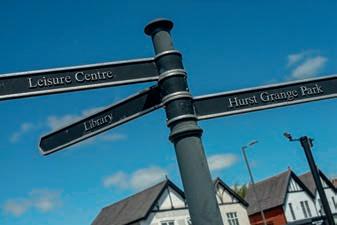
Many events are organised in Penwortham throughout the year bringing together the local community to enjoy celebrations together. The longest running event, the Penwortham Gala, is held annually on Hurst Grange Park. It features a procession of floats that are filled with children from local primary schools and community organisations and the festivities run into the evening. Other annual events include the firework display and Christmas markets. There are also all manner of artistic shows and exhibitions at the Penwortham Arts Centre – also known as The Venue. Many of the town’s many bars and cafes also host their own special and regular events.
as attractive with a reputation of being a safe and pleasant place to live. There have been many new housing developments over recent years and of course the new £17m bypass is helping build on excellent
If exercise and leisure is your thing, Penwortham Leisure Centre boasts a gym, ladies only gym, swimming pool and a dance studio. A great day of golf on challenging parkland can be enjoyed at
THERE IS LITERALLY SOMETHING TO SUIT ALL TASTES!
Penwortham Golf Club, offering all year play with a great green it also features a sleek modern club house.


You’ll also find plenty of green spaces to enjoy. Hurst Grange Park has worked to restore its historic Coach House. Originally built in 1848 to accommodate the estate’s coach and horses in the north of the park, the Coach House to provide a range of visitor facilities and events space. The Hurst Grange Park Ramble runs throughout the year. This walking route provides an opportunity to pass peacefully through the southern part of Preston, taking in the calm, tranquil scenery.
The stretch of the Ribble Way from Longton to Preston passes close to Penwortham and promises a delightful walk, particularly enjoyable in summer and with excellent views of the river. There are also a number of fascinating trails around Penwortham taking in a number of historic buildings




cyclists some spectacular views.
The area has a plethora of schools with an excellent reputation, so families won’t be short of choice when it comes to giving their children the best education, whatever their age. Penwortham Girls High School enjoys a unique status as the only non-selective, non-fee playing girls school in Lancashire.
Middleforth Green consists of 19 acres of traditionally laid out rolling parkland consisting of mature trees and a variety of grassland. Both make popular places for a stroll and some fresh air. The park is popular with a variety of people ranging from those wishing to indulge in informal play to those who wish to just sit and relax. The park also plays host to Penwortham Town Council’s annual firework display.
along the way. Earlier this year as part of the government’s Levelling Up Fund, the 200-year-old Old Tram Bridge linking Avenham Park and Penwortham is set to be rebuilt, replacing the old bridge that was closed due to safety concerns. Once complete, the bridge will once again offer walkers and
All Hallows Catholic High School received an outstanding rating from Ofsted this year where pupils were commended for their enthusiasm, commitment, and exemplary behaviour. n
MANY EVENTS ARE ORGANISED IN PENWORTHAM THROUGHOUT THE YEAR BRINGING TOGETHER THE LOCAL COMMUNITY TO ENJOY CELEBRATIONS TOGETHER
A cosmopolitan yet cosy licensed coffee bar located in the heart of bustling Penwortham. Offering a variety of fresh, homemade food, alcoholic beverages, unique blend coffee with a side of family values and local touches writes Lucy Newton. Photography: Roger Moore
BonBons Coffee Bar is owned and run by married couple Sylvia and Paul.


“It has always been a dream of ours to open a coffee bar,” said Sylvia in a recent interview. In 2017 the couple took the plunge to open BonBons due to both a mix of passion for all things coffee and also to accommodate for life with their disabled daughter, Zoe. “We wanted a place where Zoe could go whilst we were working, and what better solution than to be able to bring Zoe to our work!” This family ethos underpins the atmosphere and attitude of BonBons. With excellent disabled and baby changing facilities, a dog friendly area and Paul and Sylvia’s charming, northern personalities, customers can be sure to receive a very warm welcome.
Located on the vibrant ‘Penwortham Boulevard’, the building was originally owned by the Robinson family from 1944 until 2005 to which Paul and Sylvia pay homage through a series of photographs throughout the coffee bar, a gentle nod to the local history of the area. When asked about

the location, the couple’s enthusiasm for the area was evident “It had to be Penwortham! There’s just something about it, I can’t explain what it is but it has such a charm!”

The coffee bar offers ample seating both inside where customers will find themselves in cosy surroundings with ambient lighting, and also outside in their beautifully adorned courtyard, with seats for sunseekers and also shaded areas under their new canopy.
The coffee bar offers homemade, fresh
IT HAD TO BE PENWORTHAM, IT HAS SUCH A CHARM!
food cooked by Sylvia herself ranging from quesadillas to paninis and salads. However, for those fancying something a bit sweeter, BonBons has recently started serving fresh, hot desserts with the likes of waffles and warm cookie dough on the menu. Being fully licensed, customers can also treat themselves to the likes of alcoholic smoothies or make the most of their three for £12 offer on bottled beer and spirits. With afternoon tea also available for £20 per person, and extensive gluten free options available, there really is something for everyone.
Booking is advised. However, Paul and Sylvia also accommodate walk-in customers. n
BonBons Coffee Bar
44 Liverpool Road
Penwortham PR1 0DQ 01772 497772
Penwortham2017
Opening times
Tuesday and Wednesday: 12-5pm
Thursday: 12-4pm
Friday: 12-9pm
Saturday and Sunday: 11-5pm
IT HAS ALWAYS BEEN A DREAM OF OURS TO OPEN A COFFEE BAR
not previously considered. For instance, we’d picked up from a client how much they loved cooking and their garden, so we created a bespoke window seat looking out from their
is included in the fee, is seeing plans in 3D using Virtual Reality (VR) headsets. “2D plans are useful for space planning, but don’t bring a project to life. With the VR headsets we can walk people through the spaces, it’s also great for the contractors as nothing is left to interpretation, everyone can see what the final version will look like,” explained Ben.
Based across two sites in Preston and Manchester, BCAE Architects offer high-end, bespoke designs for contemporary house extensions, unique eco homes, rural barn conversions, home adaptations and larger scale residential schemes across the North West.


Co-directors, and qualified chartered architects, Ben Craven and Arron El-Ammar, pride themselves on delivering a highly personal architectural service, producing exceptional designs with strong attention to detail.
“Every project we undertake is unique –we’re not the kind of architects who deliver an off the shelf product,” explained Ben.


“We work closely with our clients from start to finish, looking at creating a quality, innovative, personalised space. We develop designs, sort planning, building regs, arrange tenders and project manage during construction – we’re there every step of the way.
“Our main aim is to help people achieve their aspirations of creating their dream home or improve their existing space. It’s about listening to our clients and also advising them and coming up with ideas they had
kitchen, framing the view into their garden –something they hadn’t thought about and is now their favourite spot.”
A unique offer from BCAE Architects, which
“Ben understood our vision from the first design appointment, and his drawings took our lifestyle into full consideration.
“Arron and Ben have stayed in contact throughout the build, ensuring any amendments are in line with the aesthetic we wanted. It would have been a lot more stressful without their help!”
andBen and Arron create strikingly distinctive designs, often exploring different materials from the norm that fits in with its unique setting.
Since setting up BCAE Architects in 2022, they’ve gone from strength to strength, delivering numerous projects from house renovations and extensions to new builds. With a recent entry for a unique new build home (within the South Ribble greenbelt) at the Manchester Society of Architects awards, BCAE Architects are the perfect choice to create your dream home or space. n
BCAE Architects

Unit 17, Guest House Farm
Runshaw Lane, Euxton PR7 6HD 01772 454727 07540 591628
info@bcae-architects.co.uk
bcae-architects.co.uk

BCAE Architects are forging a reputation for contemporary, innovative, bespoke residential and commercial designs, writes
Sarah Ulyatt
OUR MAIN AIM IS TO HELP PEOPLE ACHIEVE THEIR ASPIRATIONS OF CREATING THEIR DREAM HOME OR IMPROVE THEIR EXISTING SPACEEloise Oliver Fortune (New build eco home)
The only person on board that fateful flight was the pilot, 37-year-old Amy Johnson. While she reportedly survived the crash, weather conditions were horrendous, the sea intensely cold, and a rescue attempt failed. Her body was never recovered.
If the name sounds familiar, that’s probably because Amy Johnson was a major celebrity. She made her name in 1930 by being the first woman to fly solo from England to Australia. More long-distance records tumbled during the next decade, while her marriage in 1932 lasted only six years. Once divorced, Amy pursued other ways to make a living through business ventures, journalism and fashion. At the outbreak of the war, she worked for a company operating short flights across the Solent from Portsmouth and flew as a practice target for searchlight batteries and anti-aircraft

Just over 82 years ago, off-course and out of fuel, an aircraft plunged into the Thames estuary off the Kent coast. Alan Veale tells the story of the Saving Amy project. Photography: Alan Veale

gunners. But in March 1940 she was made redundant, and two months later she joined the Air Transport Auxiliary (ATA), transporting aircraft around the country for the Royal Air Force. On 4th January 1941, Amy Johnson flew to RAF Squires Gate, now Blackpool Airport. Today, Hangar 42 survives with a coating of rust, devoid of the camouflage paint that made it look from the air like a row of houses. Eric Watkiss is the leader of a project which will eventually serve as a permanent tribute to Amy. Eric is a BAE Systems engineer, a former RAF aircraft mechanical engineer, and a member of the Lancashire Aircraft Investigation Team, specialising in the recovery and preservation of historic artefacts. He explains, after the Battle of Britain in

September 1940, there was a huge demand for training bomber crews to take the fight back to Hitler. The Airspeed Oxford Mk II, with dual controls, was the preferred choice of the RAF and Commonwealth forces.
This was the aircraft Amy was flying on the morning of 5th January 1941, after staying overnight with her sister in Blackpool. She anticipated a flight time to Oxfordshire of around 90 minutes, but a combination of bad weather and a reported problem with her compass took her far off course. One report states that she was shot down by ‘friendly fire’ but has never been verified. Officially, Amy Johnson simply ran out of fuel, and then out of luck.
“She was great at navigation,” says Eric.

“She found her way to Australia on her own. But landing was her weak point. Rumour has it the ATA wouldn’t let her fly certain aircraft.”
The hangar is like an oversized man-cave, crammed with objects that would be very familiar to Amy – there are three Spitfires and a Hurricane – so valuable to the war effort.

It is a fitting feast for the eyes as Eric recounts how the Saving Amy project was formed: “I was part of the team that first set up these exhibits, but I wanted another project with historical links to Blackpool and the North-West. We looked around for
an original aircraft that we could re-build at Hangar 42, to help spread the word that we were here.”

Eric continues to describe how Amy’s Airspeed Oxford was chosen. Largely made of wood, it was primarily designed to be built quickly and cheaply by semi-skilled cabinet-makers. While there were several places around the Commonwealth still retaining bits of the original aircraft, these would only be the metal parts, as the wooden frames had perished. Only six survived intact, and two of these are on display elsewhere in the UK.
By a chance conversation with a colleague, Eric discovered the remains of an Oxford Mark V had already been retrieved from Canada and were sitting in a barn in North Yorkshire. It was the ideal choice. All he needed now was to recruit volunteers to put it all back together.
After a media appeal in early 2020, helped largely by the connection to Amy’s story, that team gradually assembled. Restoring an aircraft for this period needs specialised techniques. The volunteers had to adapt
existing skills to breathe life into a framework blending new materials with original parts.
On display in Hangar 42 are several items from the cockpit. These include the bombsystem that was vital to train new recruits in wartime. There’s a complete (operational) electric fuse box, and of course the pilot’s instrument panel and control columns.

this awesome project.
Within the next two months this ‘IKEA flat-pack’ (Eric’s words) will be put together and made ready to display for an important event. On 14th October, there will be an Amy Johnson celebration at the airport, including several talks and a dramatisation of Amy’s flight to Australia.
In a workshop inside a portacabin are the newly-assembled floor and walls of the cockpit, a Perspex canopy for the bombaimer, and all the disassembled parts of the twin engines. Every piece of this aircraft has been identified on detailed drawings pinned to the wall, and the volunteers know what is expected of them for each stage of

Eric adds: “It’s to celebrate Amy, showing that she’s not forgotten, and to promote the ethos she had, in that if you try hard, and work hard, you will succeed. We are getting there. We have nearly finished the complete cockpit section, with the intention to carry on and produce a complete aircraft. That will be featured at Blackpool Airport in its own display area, telling the story of Amy Johnson, and the people that flew (and lost their lives in) this type of aircraft for our freedom.” n
Hangar 42 is open every weekend until the end of October
savingamy.net spitfirevisitorcentre.co.uk
SHE MADE HER NAME IN 1930 BY BEING THE FIRST WOMAN TO FLY SOLO FROM ENGLAND TO AUSTRALIA
IT’S TO CELEBRATE AMY, SHOWING THAT SHE’S NOT FORGOTTEN, AND TO PROMOTE THE ETHOS SHE HAD, IN THAT IF YOU TRY HARD, AND WORK HARD, YOU WILL SUCCEED
If you’re looking for a holiday home that’s a little bit special in a perfect location, then look no further!
Nestled within the beautiful countryside of Ribby Hall Village, Reeds Bay offers uniquely designed holiday homes enjoying an exclusive lakeside setting. Boasting the highest specification available anywhere in the UK, each lodge is individually designed to offer the ultimate in style and luxury living.


As part of your purchase, when you buy a Reeds Bay lodge at Ribby Hall Village you will have exclusive discounts across the 5-star holiday village including the award-winning Health Club, restaurants, bars and The Spa Hotel.

What’s more, as your holiday home will be exactly as you left it you can arrive knowing that your holiday starts right from the moment you arrive. And with an onsite grounds team your surroundings and views will be maintained throughout the year.


Only a 15-minute walk away is the quintessential English Village of Wrea Green and further afield there is so much to explore including the restaurants, Cafe scene and beautiful beaches of Lytham St Annes, the shows and theme parks of Blackpool and the stunning rolling mountains of the Lake District.
And, because Reeds Bay is only minutes from the motorway network, escaping to your dream home couldn’t be easier!


Overlooking a large outdoor terrace and beautifully manicured grounds, The Walled Garden restaurant has just launched its new summer menu using seasonal, locally sourced Lancashire produce, from Salt Marsh lamb, fresh locally sourced fish and not forgetting fresh herbs from the onsite herb garden.


The Walled Garden’s new summer menu embraces the season, making the most of the abundance of fresh ingredients and summer produce on its doorstep. From a starter of chicken, baby leek and apricot terrine to the classic pan seared scallops and vegan wild mushroom tart, there’s something for everyone including plenty of vegetarian and gluten free options. Not forgetting delicious desserts including pear frangipane with homemade pear sorbet, Manchester tart with raspberry sorbets plus a selection of Lancastrian and Cumbrian cheeses with homemade crackers.
Understandably, one of the most popular options at the Walled Garden is afternoon tea, given its quintessentially English-garden location. Enjoy a selection of fresh finger sandwiches and for the sweet treats, which all are made in-house, indulge yourself with a fruit or plain scone, clotted cream and strawberry jam, and a section of handmade cakes. Wash it down with a selection of fruit teas, coffee or glass of Prosecco, alcohol-free sparkling wine or choose from an extensive range of wines from around Europe, all while enjoying the outdoor terrace. Just make sure you pre-book the afternoon tea by 10am on the day of your visit. Gluten free, vegan and vegetarian options also available, just ask at time of booking.
New head chef, Tom Gardener and restaurant Manager, Josip Malovic are excited about their roles. Tom said: “We are delighted to bring a fresh and vibrant new summer menu to our customers and we are aiming to be a ‘destination’ restaurant. We’re so lucky to be surrounded by a host of specialist growers and producers, giving us access to the best seasonal fruit and vegetables as well as quality meats.”
Josip added: “I’m thrilled to be able to bring a high level of customer service to Barton
WE’RE SO LUCKY TO BE SURROUNDED BY A HOST OF SPECIALIST GROWERS AND PRODUCERS, GIVING US ACCESS TO THE BEST SEASONAL FRUIT AND VEGETABLES AS WELL AS QUALITY MEATS
Manor. It’s an exciting time for the company and I look forward to welcoming new and existing customers who I’m sure will be as excited as we are about our excellent food and service.”


This leading Lancashire eatery, is the perfect place to meet family or friends this summer with the option of dining inside in their relaxed rustic surroundings or the orangery that opens up onto the terrace –perfect for dining al fresco in the summer months. The Walled Garden can cater for all, whether it’s a romantic dinner for two, a meal with friends or a small gathering of up to 30 people for birthdays or special occasions. These gatherings take place in an area cleverly partitioned off so guests have a private space but still have access to the lawns and outdoor terrace.

Open for lunch, dinner and afternoon tea from 12noon to 9pm, the restaurant warmly welcomes non-residents as well as hotel guests.
Barton Manor was formerly Barton Grange Hotel – also renowned for its garden centre. The Walled Garden fittingly occupies the area of the gardens originally planned to be a walled vegetable garden – hence the name. Ninety years later, the space has been transformed into a leading eatery in a perfect location so why not make it your summertime dining destination. The business also plans to extend its bedroom offering and extend
The Walled Garden is offering a 10% discount off all main menu and drink orders to Live Preston and Fylde readers. Show this voucher to redeem. Available Monday – Thursday all day.
Barton Manor Hotel
the dedicated reception and events entrance and welcome area.
The four-star Barton Manor Hotel & Spa and Walled Garden is just five minutes from J32 of the M6, close to Blackpool, the Trough of Bowland, historic Lancaster and the Lake District. n

The Walled Garden
Barton Manor Hotel and Spa
746-768 Garstang Road Barton PR3 5AA 01772 866135
bartonmanorhotel.co.uk
Open from 12noon to 9pm to non-residents, as well as hotel guests
746 – 768 Garstang Road Barton, PR3 5AA
T: 01772 862 551 W: bartonmanorhotel.co.uk
E: stay@bartonmanorhotel.co.uk
IT’S AN EXCITING TIME FOR THE COMPANY AND I LOOK FORWARD TO WELCOMING NEW AND EXISTING CUSTOMERS WHO I’M SURE WILL BE AS EXCITED AS WE ARE ABOUT OUR EXCELLENT FOOD AND SERVICE


A hidden gem in the heart of Tarleton, The Courtyard department store is a family business with family values, offering good old-fashioned service. You can be sure that there will be something here for everyone, writes Lucy
 Photography: Roger Moore
Newton
Photography: Roger Moore
Newton
.
Yates, in a recent interview. The unassuming exterior of the shop gives little indication of the vast range of departments within the store. “It has been described as a Tardis!” said business partner Jon Addis. “It looks

With seven-day trading between 10am until 5pm, Monday to Saturday and 11am until 5pm on Sundays and along with on-site parking, customers can enjoy a day out at The Courtyard any day of the week. “Nobody flies in,” laughed Simon, “we have top notch ‘browsability.’” With multiple departments and The Barn restaurant and coffee shop on site, it is easy to see how customers end up making a day out of visiting.
Located in the centre of Tarleton village in West Lancashire, The Courtyard is a family run, independent department store that has been the beating heart of the village for the past 10 years. “We wanted to bring something to the area that wasn’t already here, and we feel like we have done that with The Courtyard,” said co-owner Simon
WE WANTED TO BRING SOMETHING TO THE AREA THAT WASN’T ALREADY HERE, AND WE FEEL LIKE WE HAVE DONE THAT WITH THE COURTYARD
small from the outside, but the reality is quite the contrary.” With the department store stocking everything from women’s clothing to homeware to specialist balloon displays, the store ensures to cater for all needs.

The Courtyard stocks more than 20 different popular ladieswear brands including the likes of Klass and Just Elegance. Customers can be sure to have access to the latest trends and styles, with seasonal stock arriving daily. For those unsure of what they are looking for,
one of the store’s experienced and personable staff will be on hand to assist. “We pride ourselves on our service and going the extra mile,” said Jon. For individuals after fashionable yet practical clothing, the store also stocks the likes of Regatta and Tog24. Customers can also browse the stores lingerie, nightwear and accessories departments at their leisure.
The Courtyard’s menswear department offers great value for money, with a large range of socks and underwear along with popular clothing brands such as Gabicci and Carabou available at competitive prices. The extensive footwear department also offers quality branded footwear such as Hotter, Sketchers, Rieker and Van Dal. Whether it be shoes for a special occasion, the outdoors or your trusty, ‘go to’ pair for everyday wear, the array in store won’t disappoint!

The Courtyard offers a vast array of homeware with everything from kitchenware to bedding and textiles. Offering 18 different colours of towels and specialist cookware from the likes of Stellar and Judge, customers will be greeted with recognisable brands at unrecognisable prices. “We offer commercial brands at the right price,” stated Jon. With bedding brands such as Julian Charles, Catherine Lansfield and Paoletti, customers can purchase top quality products that are in keeping with the current trends.
The department store boasts more than 4000 greeting card options and has recently started providing a specialist balloon display service, in which customers can purchase a personalised and unique display for all occasions. “We wanted everything under one roof. Customers can purchase a gift, card and wrapping all at the same time!” said Simon. The gift shop ensures to cater for gifts for all types of celebration. Silk flowers, photo frames, ornaments, room scents and candles including Yankee Candles are all available to purchase in store. Whatever the occasion, you will be spoilt for choice!

A new addition to the store, The Courtyard
now proudly stocks a new selection of garden furniture. With everything from chic outdoor sofas, fire pits and the sought after swinging egg chairs, kitting out your garden has never been easier!
The Barn located at the back of the store, offers beautifully cooked, locally sourced food for those who have worked up an appetite from shopping! The Barn offers a variety of light snacks, hot food, excellent coffee, delectable cakes and Luxury Lakes ice cream. Diners can be sure to experience top quality, fresh
ingredients with local produce sourced from the likes of Johnson’s Tarleton Village Butcher and Taylor Produce from nearby Hesketh Bank. Afternoon tea is also available for £14.95 per person for customers looking to add a little extra opulence.

To plan your day out to The Courtyard, visit courtyardtarleton.co.uk or telephone 01772 815068. With top quality brands, at fantastic value mixed with old fashioned service and values, you won’t want to leave! For those who can’t get enough of all things retail, why not visit The Courtyard’s sister store, Ena Mill. Located in Atherton, this 45,000 square foot retail outlet offers more than 200 brands with an authentic Italian coffee shop on site to provide much needed refreshments! n


WE PRIDE OURSELVES ON OUR SERVICE AND GOING THE EXTRA MILE
If you have any charity news please contact: alma.stewart@live-magazines.co.uk


Blue Skies Hospitals Fund is the charity that supports Blackpool Teaching Hospitals NHS Foundation Trust.


It supports the provision of healthcare, free or fully supported, by central NHS funds. Blue Skies exists to support the best in healthcare and medical research at the Trust. Its aim is to help the Trust become world-class in patient care.
The charity works to raise money which will be used to enhance the care the Trust offers to patients, whether they are residents of Blackpool, Lancashire or South Cumbria, or one of the millions of holidaymakers who visit each year. They reach out to help improve the hospital experience for all patients.
Earlier in 2023, local skating legends Dan Whiston and Hayley Tamaddon became Blue Skies Patrons to support fundraising efforts. The charity also offers a Blue Skies Young Fundraisers scheme. Whether Tiny (0-5), Junior (5-11) or a Teen Raiser (11-16), youngsters can work towards a Bronze, Silver or Gold Award, also earning Blue Skies branded merchandise, certificate and awards.

Blue Skies are marking the 75th anniversary of the NHS with a special appeal. It will be raising funds by holding a 75th anniversary Ball at the Clifton Arms Hotel on 15th July. Tickets sold out in an hour! There was also a 7.5 mile ‘Walk For Wards’ from Clifton Hospital, St Annes to Blackpool Victoria Hospital on 5th July. bfwh.nhs.uk/blueskies/

Serving Royal Preston Hospital, Chorley and South Ribble Hospital and the Specialist Mobility Rehabilitation Centre, Lancashire Teaching Hospitals Charity aims to provide those added extras that can make all the difference to patients. The charity makes it its mission to help fund the items at your local hospitals which are over and above what the NHS can provide.
This is made possible by raising vital funds to ensure the hospitals are equipped with the very latest in technology, enabling vital research and making the hospitals a little more comfortable for patients and their families.
Lancashire Teaching Hospitals Charity is a family of charities that includes The Rosemere Cancer Foundation, which supports the provision of world class cancer treatment throughout Lancashire and South Cumbria, working in partnership with local clinical staff to achieve the best possible care for cancer patients whether they be treated at Royal Preston Hospital or at one of the further seven local cancer units in Chorley, Blackpool, Burnley, Blackburn, Lancaster, Kendal and Barrow. Baby Beat, supports babies and mothers being cared for in the maternity units at the hospitals. Baby Beat seeks to save the lives of babies not yet born and give the babies born in the area the very best chance for life at the start of their journey into the world.
The charity has many people celebrating the 75th birthday of the NHS this year doing a Big Tea event and this can be done at anytime, not just on the birthday of the NHS, but 75 years of care is worthy of a celebration at any point throughout this special year.
There are a number of events to still get involved in this year including Cross Bay Walk events or participate in a skydive or run.
lthcharity.org.uk


“It’s very common for people to put off making estate planning decisions until later life,” says Ashley Marshall, private client solicitor at Farleys.

“People often find it difficult to approach, where to start and ensure they have done everything they can in a tax efficient way.”
There are different ways to protect your wealth for future generations. The right financial planning will not only ensure that your estate is distributed exactly how you’d like it, but also can help to reduce your taxable estate and liabilities.
Whilst there are many things to be considered with effective estate planning, Ashley gives four main points to consider:
Wouldn’t it be amazing if we could see into our future and plan accordingly? Without that crystal ball, none of us can be certain about what the future holds. What we can do however, is put in place a plan for ensuring that our loved ones are protected should the worst happen and we are no longer able to support them.
Arguably the most important thing to do. Your will underpins all of your other estate planning and will help to set out what you would like to happen to your money, assets and possessions when you die. More than half of the adult population don’t have a will in place, and put off making one but it is a key part of succession planning. Your will also needs to be reviewed regularly to account for changes in your family circumstances.

Whether in relation to personal or business
a Lasting Power of Attorney (LPA) ensures that someone can make decisions on your behalf and manage your affairs should you be incapacitated for any reason. An LPA can be financial, legal or health related, and allows you to appoint a trusted individual to act on your behalf should the need arise.
A large part of estate planning is looking at how IHT may affect your estate and putting in steps to mitigate this where possible, through structuring your estate effectively, through investments or gifting assets.
There are many different types of trusts, but simply put a trust can help you when deciding who will benefit from your assets, how they can be used, and when they can be received. Speaking to the right professional can help you to ensure that you protect what matters the most to you and plan for the future. n
Ashley Marshall, private client solicitor at Farleys explains how you can plan for the future
Lytham Club Day. “I was a bag of emotions, excited, honoured, overawed and terrified,” admitted Kila. “Club Day is so important to the town, and such an institution, to be the first female Town Crier to lead the procession was a dream.”
“I loved every moment, and I hope I did the town proud.”
Kila, whose day job is Head of Charity for Blue Skies, the Blackpool Teaching Hospitals NHS charity, said: “I always wanted to be a Town Crier, even as a little girl – I just loved the pomp and ceremony of the role.”

Club Day was Kila’s 30th proclamation since she was inaugurated 104 days before the event. She has already performed a number of ceremonial duties and public proclamations, including the Coronation of King Charles III.
“I am ecstatic to have been given this role,” she said. It can be very demanding, sometimes doing multiple cries in different locations on one day, but it is incredibly rewarding.”
The bubbly mum has four girls and two grandchildren who are the apple of her eye. She has even bought the grandchildren Town Crier hats and bells so they can get in some practice for when they are older!
“I am very lucky to have the unwavering support of my four children, Jessica, Mily, Grace and Clara and of course my amazing husband, Andrew,” Kila added.
again at the recent Club Day. In her elaborate red, white and blue outfit, tricorne hat and black boots, Kila Redfearn certainly stands out in any crowd. But her visible appearance is almost dwarfed by her audible presence!
Photography: Roger Moore
Town Criers have existed for hundreds of years and the majority of them have been men. Chertsey’s Mary Anne Blaker became England’s first female town crier in 1914 due to WWI. Now 119 years later, history was made in Lytham earlier this year as it inaugurated its first female Town Crier. And history was made
Kila embraces with passion, humour and a large pinch of theatrical aplomb. Her delivery of Oyez, Oyez, Oyez is commanding (and loud) and more than matches her flamboyant attire. Last month (June) she was delighted to become the first woman to ever lead the parade at
Historically town criers, or Bellmen, were the original newsmen of the day and their existence can be traced back to medieval times. Currently there are about 140 registered criers in England and Wales of which about 20 are female.
The role of Lytham Town Crier is voluntary and any money raised from undertaking private proclamations within the position will go back into Lytham Hall Charity which is the seat of the original Squire of Lytham.
Kila added: “I was selected for the role by the squire and I have a real affinity with Lytham Hall. I am delighted to be able to raise money to help with the upkeep of what is the finest Georgian house in Lancashire.” n
The people of Lytham have a brand new, official proclaimer who has made recent history as Alison Bott discovers.
I AM ECSTATIC TO HAVE BEEN GIVEN THIS ROLE
Country inns with stunning views, historic hotels in idyllic locations and a summer schedule packed with unmissable events.


With 9 hotels, inns and restaurants to choose from, get summer sorted with James’ Places.


from


Expand your horizons and experience roads less travelled with Britain’s premier bike brand Ribble
Ribble Cycles’ award-winning adventure bikes are the perfect companion to your next big adventure. Ribble has a long-standing reputation for expertly designing bespoke and personalised handcrafted bikes to take on any terrain. Established in 1897, the brand truly understands adventure – and how your bike makes the epic experience possible as you discover new paths and trails wherever you are or plan to go.
Bikepacking gives you the freedom to escape the everyday and get up close and personal with nature. It could be a long
ENJOY THE INCREDIBLE SCENERY OF THE RIBBLE VALLEY, EXPLORING TRAILS AND CLIMBING TO THE HIGHEST PEAK. A GRAVEL BIKE WILL GIVE YOU AN INCREDIBLE EXPERIENCE!

weekend in the Lakes or a tour of the Highlands – with multiple fixing points, your bike has more than enough storage capability to pack the essentials and more. Or, it could be a day trip during the
summer months, to enjoy the incredible scenery of the Ribble Valley, exploring trails and climbing to the highest peak. A gravel bike will give you an incredible experience! Ride on your own, together or as a larger group – however you go, getting on a Ribble adventure bike is a fantastic way to get out there and experience the great outdoors. n
Discover your adventure bike at Ribble’s flagship showroom in Clitheroe where one of their experts will be on hand to take you through their extensive range or visit online: ribblecycles.co.uk


If you are a business looking to keep your workforce happy and enthusiastic or you’re a course leader looking for a flexible space –soul, vision and wellbeing are the very essence of Everything Retreat
Aquiet, calming and relaxing retreat or a vibrant open space in which to bolster confidence and wellbeing – Everything Retreat can be anything you want it to be.
For entrepreneur Louise Monk, Everything Retreat is a vision that has come to life thanks to her foresight and a willingness to invest in order to create something that is truly unique in terms of luxury and relaxation.
Everything Retreat is a quiet country hideaway for couples and friends, but it can also be used as a perfect space for corporate wellbeing stays incorporating workshops, demonstrations and yoga classes, as Louise explains: “Local businesses, retreat leaders


and guests can create whatever they want here – they have the freedom to use the space as they wish.

building activities you choose to do – whether that’s a day of learning a new skill or simply relaxing in the beautiful surroundings, everyone benefits. We can literally make it Everything you want it to be,” says Louise.
From exercise classes to electric biking, wreath-making to wine-tasting, Everything Retreat is open-minded as to how potential visitors use the outdoor and indoor spaces. Whether it’s attending a yoga-focused break run by retreat leaders, creating wellness in the workplace via a themed retreat or just a private visit where guests can revitalise and re-connect in a quiet place, Louise and her team are all passionate about Everything’s wellness credentials.
“Wellness in the workplace is a big thing. Many people are still working from home so some are missing their colleagues and face-to-face interaction.
“Bringing your team together at Everything Retreat re-connects people. Whatever team-
Tucked away in the rolling rural Ribble Valley hills, Everything Retreat is a secure, private haven where the outside world seems to grind to a quiet halt. As you draw up to the huge electronic gates that glide silently open, visitors know they are set for a very special, unique experience.
The grounds are filled with green spaces and blossom, while dotted along the hillside

EVERYTHING RETREAT IS A SECURE, PRIVATE HAVEN WHERE THE OUTSIDE WORLD SEEMS TO GRIND TO A QUIET HALT
are the retreat’s beautiful lodges providing stunning, luxury accommodation for guests.
These include a unique collection of themed lodges alongside the retreat’s Signature lodges overlooking the pond – all featuring interiors with log burner and outdoor hot tubs where guests can sip a sundowner and reflect on their day.

Whether you’ve spent your time exploring the Ribble Valley, hiking in the hills or on an organised retreat focusing on yoga and exercise, the retreat team will ensure your stay is perfect.

“It really is a beautiful destination to experience. It’s a quiet place where guests can relax, unwind and connect with nature,” says Louise, who has further plans for the retreat, having recently opened the Balance Bar, which serves drinks and light-bites including cheese and charcuterie boards along with BBQ and pizza evenings for guests during the summer.

“As Everything Retreat is very much about wellbeing, our ethos is ensuring that life is all about balance – hence the Balance Bar,” explains Louise, who is delighted that the retreat is now attracting visitors from throughout the UK to the heart of the Ribble Valley: “I think it’s very positive to be attracting people from out of the area – it shows them just how vibrant and beautiful the Ribble Valley is. Local businesses benefit too, which is always good.” n
If you are interested in organising and leading a retreat, or if you’re a business keen to keep your workforce happy and well, please contact Louise
Everything Retreat
Primrose Hill, Primrose Lane, Mellor BB2 7EQ 01254 965095
hello@everything-retreat.com

everything-retreat.com
everythingretreat
RibbleValley
EVERYTHING retreatIF YOU ARE INTERESTED IN ORGANISING AND LEADING A RETREAT, OR IF YOU’RE A BUSINESS KEEN TO KEEP YOUR WORKFORCE HAPPY AND WELL, THIS IS PERFECT!
There’s a very busy summer season of events in store in and around Lytham. The weekend of 19th and 20th August sees the twelfth annual Lytham 1940s Weekend taking place on the Green, with music, song, dance, vehicles, aircraft from the era, plus military charities and it is a great opportunity to buy vintage clothing, hats, scarves and plenty more. There’s something for everyone including a vintage fairground, children’s activities and make sure you support the town centre businesses, many of whom make the effort to dress their shops in the wartime fashion.
now, plus there’s a very busy summer season of events at the Hall busy events programme that is featured on their website.

There’s plenty going on at the Lowther Pavilion over the summer too, including the Ice Cream Festival (22nd - 23rd July) and the Food and Drink Festival (26th – 28th August), so do check out their website to see the great range of events and shows they have scheduled and make sure you visit the statue of the late local comedian Bobby Ball who lived just a stone’s throw from the park. Look out too for the TENT in the park this year – a new initiative with a wonderful music, arts and cultural programme.
your own boules, then it’s a great way to enjoy something new. There’s also the 18 hole Mini Links, the Adventure Golf at Fairhaven, crown green bowling, tennis, plus great views across to Southport and North Wales along the promenade from Fairhaven to Lytham Green.

Shortly after, look out for the Last Night of the Proms event which is sure to be a real hit in the beautiful setting of the grounds of Lytham Hall on 27th August, headlined by Katherine Jenkins OBE with tickets on sale


Further afield there’s the popular St Annes International Kite Festival taking place in September with kite fliers from all over the world with incredible kites of all shapes and sizes. A free event with two full days of kite flying, plus a Friday evening of illuminated kite flying, plus fairground, food and drink stalls and more. The event is entirely weather dependent so fingers crossed for suitable conditions!
Located close to the Grand Hotel is a brand new Petanque court so if you want to bring

For a day out with a difference, why not hire a beach hut on St Anne’s Promenade –these modern huts based on a traditional offering have proved really popular over the years for family gatherings with ‘hutters’ and are well equipped with great views across the beach. n
So, there’s something going on all the time and you can find out more by logging on to: discoverfylde.co.uk
If a trip to Lytham and St Annes is on the cards this summer, you won’t be disappointed. There is so much planned with something for everyone as Tim Dixon explains
THERE’S SOMETHING GOING ON ALL THE TIMEPhotography: Mark Liebenberg Photography: Mark Liebenberg Photography: Mark Liebenberg
Be part of our new luxury lodge gated community in these peaceful, beautiful settings with a unique 12-month holiday home licence.
Ribble Valley View is situated near the historic market towns and villages of Whalley, Clitheroe, Ribchester, Hurst Green and Longridge, each brimming with individual shops, historic treasures and tales to be told.
welcome to your own luxury lodge development in the heart of the ribble valley. •


Our park has the highest quality, fully furnished luxury lodges, all lodges have a large private individual parking space and raised decking, surrounding them to ensure you can enjoy the amazing views across The Ribble Valley.
WE ARE LOCATED NEXT TO THE BLACK BULL AT OLD LANGHO

AKS’ Prep Chamber Choir competed in the final of the Last Choir Singing competition, held at King Georges Hall, Blackburn. They opened with “Sing Together” with a beautiful solo from Lucy and then joined elegantly by George. The Choir worked so hard on the actions, and they certainly impressed. Next was the chance to sing their own song, “I Will Stand Up Tall”. The choir are proud to announce that they came third and received a trophy and £150 towards new music. The choir’s performance was just outstanding, their dedication, commitment, determination, and talent was clear for all to see.
A former Newman College student has had a portrait acquired by The Harris. Azraa Motala has visited the Harris since she was a child and recognised that she could not see herself represented in the collections so she worked with the museum to develop a new project called ‘Unapologetic’ in 2021. Azraa’s painting will be displayed in the Art Gallery alongside a portrait of her choice from the Fine Art Collection. This portrait is of local UCLan graduate Samiya who previously represented Lancashire in Cricket.


The winners have been announced at an event recognising the best innovators and researchers in health and care in Cheshire, Merseyside, Lancashire and South Cumbria. The North West Coast Research and Innovation Awards is the only health awards event for the region, run by three NHS bodies focussed on research and innovation. The Innovation in Workforce Development Award was presented to Health Education England NW; Lancashire and South Cumbria NHS Foundation Trust; and University of Central Lancashire, for a project which created a new career entry point in the NHS for graduate psychologists.
Dame Jacqueline Wilson met with students from Westholme and visiting schools from the area during a special ‘meet the author event’ on 23rd May. Held in Westholme’s magical Croston Theatre, visitors were able to get a signed copy of the irresistible story ‘The Magic Faraway Tree: A new adventure’, inspired by Enid Blyton. Bestselling and beloved children’s author Dame Jacqueline Wilson has written over 100 books and won numerous prizes. Dr Richard Robson, Principal at Westholme School, said: “We are overjoyed to have had such a notable author visit Westholme.”

Over the past year Stonyhurst pupil, Archie, has played in the Lancashire Schools FA U18 football team. The squad reached the final of the Northern Counties Championship, played on 20th May at Fleetwood FC versus Durham Schools FA U18s. Archie and his Lancashire team were victorious winning on penalties following a 2-2 draw after extra time. After his A level studies, Archie will attend university after being awarded a football scholarship in West Virginia in August, studying business management.

Primary school children from Preston have taken part in the Primary Engineer Construction project. They showcased and competed with their completed engineering builds at a celebration event at Preston College judged by Baxi engineers. Ten of the company’s engineers have spent the last four months working with teachers in participating primary schools. At the event, the Baxi engineers tested and judged the builds, then interviewed the children who were excited to explain the research they had carried out, the aspects of the project they liked best, and the engineering knowledge they had acquired through the process.

The
DEVELOP YOUR BUSINESS SKILLS IN:
• Preparing you for your first roles in management
• AI and its impact on modern business
• How technology is shaping the future of business
• How to create the perfect mindset for success
• Contemporary best practice in strategic international management
• Understanding of the nature of business management in a world of volatility, uncertainty, change and ambiguity
• Analyse and evaluate solutions to complex, real-life problems
BCUC’s expert Tutors, industry connections and cutting-edge facilities will provide you with the knowledge of contemporary management theories, giving you the opportunity to apply and integrate that knowledge into live projects.
By blending both academic study and skills development, we enhance the employability of our graduates while equipping them with the skills to progress in higher education.

Stonyhurst College and its Prep School, Stonyhurst St Mary’s Hall, have been awarded the highest possible rating of ‘Excellent in all areas’ following an inspection by the Independent Schools Inspectorate (ISI), maintaining its global reputation for outstanding teaching and care in the competitive independent school sector.
Stonyhurst underwent a comprehensive inspection of its teaching, pastoral care, facilities and extra-curricular provision in April 2023 as part of the regular inspection procedures for independent schools. The key findings of the report acknowledged the excellence of the school in every area under


PUPILS WERE FOUND TO BE HIGHLY ARTICULATE AND SPEAK WITH ELOQUENCE WHEN ADDRESSING OTHERS
inspection. The dedication of the school in fulfilling its aims and the outstanding achievements of the pupils in academic studies and attitudes to learning, in addition to personal development were subjects of particular praise.
The report recognised the high standards
of academic achievement of the pupils, stating that ‘pupils of all ages and abilities display excellent attitudes towards their learning’ and ‘possess strong study skills and take an inquiry-based approach to their studies’ with their academic and other achievements being ‘wide and varied, and highly accomplished’. Pupils were found to be ‘highly articulate and speak with eloquence when addressing others’.
From a personal development perspective, the report documents that ‘pupils of all ages show excellent levels of self-understanding’ and ‘show strong levels of perseverance when faced with challenges’. Pupils were found to ‘demonstrate high levels of self-esteem’.

On global matters, ‘pupils have a highly developed sense of social awareness, they are passionate about making a difference and fully committed to helping others through service and voluntary work’, ‘pupils have a strong appreciation for the multi-cultural nature and diversity of the school community’ and ‘the overwhelming majority of parents agreed that the school actively promotes values of democracy and, respect and tolerance of other people’, a reflection of Stonyhurst’s aim to develop men and women with a global outlook who can play a positive role in the
world as outstanding people of the future. Headmaster, John Browne, said: “I am thrilled that Stonyhurst has been awarded the highest possible rating by the ISI in all areas of the latest inspection. Stonyhurst not only achieved full regulatory compliance but also secured
PUPILS OF ALL AGES SHOW EXCELLENT LEVELS OF SELF-UNDERSTANDING AND SHOW STRONG LEVELS OF PERSEVERANCE WHEN FACED WITH CHALLENGES
a finding of ‘Excellent’ in both the main inspection headings: for the quality of the pupils’ academic and other achievements and the quality of the pupils’ personal development.
“The inspectors saw Stonyhurst in all its glory and celebrated us as a Jesuit community where everyone plays their part for our children and young people.” n

Stonyhurst Clitheroe BB7 9PZ 01254 827073
stonyhurst.ac.uk

Westholme thrives on its uniqueness and is pioneering its own educational philosophy, writes

 Meena McDonald
Following the tremendous success of the INSPIRED Sixth Form, Westholme is delighted to announce the launch of its new educational philosophy for the EMPOWERED Prep for children aged four to 11.
Dr Richard Robson, Principal at Westholme, launched the INSPIRED vision for the Sixth Form two years ago, which clearly outlined a unique educational philosophy for students aged 16 to 18 and it is now thriving and full to capacity.
With such powerful validation of the philosophy, Westholme is set to achieve the same results with the EMPOWERED vision as numbers are rising rapidly.
The academic approach is made up of six pillars which underpin the educational structure of the school with each cluster attributed equal status:

• Sports
• C reative Arts and Technology
• Performing Arts
• M aths and Science
• World Languages
• Humanities and Social Sciences
Dr Robson commented: “The philosophy is all about providing structure, clarity and focus for every pupil, parent and teacher to follow. It is part of our DNA, underpinning our ambition and freedom to encourage, nourish and provide an enriched environment for every pupil to thrive to their full potential. The structure consolidates and champions our philosophy, and the balance of the six pillars delivers unrivalled holistic excellence for each pupil.”
Each letter carries a powerful statement which underpins the philosophy of the school.
Incorporating the unique Westholme values of a warm and welcoming family atmosphere, small classes, nurturing individuality, fostering friends for life and thriving in a dynamic and stimulating environment.
Creating a Prep curriculum which maximises each pupil’s academic potential, fostering intellectual, imaginative and independent thinkers. The school’s dynamic curriculum introduces every element of the six pillars to each pupil from the age of four – a unique opportunity only available at Westholme.


Achieved through Westholme’s 21st Century Essential Skills (21CES) which sow the seeds of a strong work ethic and emotional intelligence from the minute they arrive at the school, developing each pupil’s initiative, critical thinking, communication skills, confidence, leadership skills and so much more.
The school communicates with parents and carers of each child on a personal level, even inviting them to have lunch with their child. The new bespoke Westholme app, which will launch in the next academic year, will also enable real time communication with parents.
Being involved in a whole range of activities develops new passions and ventures, which are encouraged through award schemes throughout the school. The Singleton Award dedicated to the Prep, recognises the commitment of each pupil and provides them with skills they can utilise in the outside world.

Embracing the entrepreneurial spirit of the school through specific educational programmes such as real-world financial education as well as strong links with local charities and businesses to enrich the education of the pupils.
The Prep pupils experience the stunning and nurturing rural surroundings of the Westholme environment on a daily basis, living by the school motto, ‘Mens sana in corpore sano’, a healthy mind in a healthy body, experiencing an amazing array of opportunities with outdoor pursuits, the forest school, the mud kitchen, ravine walks, the outdoor school and storytelling.
Every pupil at the school has access to the full range of advanced facilities and resources from the age of four to 18, including the professional theatre, recording studio, photo infinity wall, art studio with kiln, science labs, 3D printing technology and swimming pool, along with specialist teachers for French, music, computers, sports and drama.
A defining feature of the past 100 years of the school is its pioneering spirit. This has resulted in the school expanding in its current centenary year to 800 pupils, yet retaining every ounce of its nurturing and wholesome spirit. The difference is simply Westholme.
Dr Robson concludes: “The authenticity of the school permeates through every aspect and is tangible with each pupil. We develop altruistic pupils who are happy in their individuality, polite, interesting, friendly and have a genuine belief in themselves. With the unrivalled holistic excellence the school offers, the difference is powerful and transformative!”
Come and find out why there really is no Prep like Westholme. n
Westholme School

Wilmar Lodge, Meins Road, Pleasington BB2 6QU 01254 506070
Contact: registrar@westholmeschool.com westholmeschool.com

Photography:
You can’t get much more ‘Preston’ than being born in Preston Royal Infirmary and here is where John’s journey began in 1971.
Preston born and bred, John’s parents both worked and lived at Larches House, a residential school for children with emotional and behavioural difficulties, in Ashton and so John’s childhood is full of memories of this area where he now lives. He also loved rugby and started playing for Preston Grasshoppers from the age of eight and continued to play for the First XV for 13 seasons. Since retiring in 2003, he remains involved with the club as a member of the management committee.
John went on to study A Levels at Newman College but wasn’t sure what he wanted to do as a career. “I was told that if you are not sure which career you want, study something you like, and for me that was history.” So, John went on to study Modern History and Economics at the University of Manchester.
commuting three hours a day. With a wife and children at home, I felt I was missing out on home life.”
Around the same time, introduced by a mutual friend, John went to meet a rather engaging character, Eddie Starkie, who was a senior partner at Harrison Drury. “Eddie was a real character with a loyal client following, but the firm needed modernisation. When I joined in January 2007, the office only had one computer connected to the internet and the firm wasn’t really plugged into the local business community, so I saw an opportunity to change this and took the jump to buy Eddie out in 2008, which of course was the beginning of the financial crash, but the opportunity was one I didn’t want to miss.”
the aim of improving Preston city centre’s leisure and cultural offer.
“The Towns Fund is a fantastic opportunity to revitalise the city. A strong Preston is a strong Lancashire. We have brilliant, bright people moving here to work and we need to provide them with good places to live too and there has been significant investment in providing city living. Within 15 minutes of the city centre, you can be in the countryside. In a lunch break you can take a walk in the beautiful Winckley Square Gardens and historic Avenham Park – not many cities have wonderful open spaces so close, so this is a real asset.
It wasn’t until the early 90s recession hit, when many workers were losing their jobs that John realised the safer careers lay in law and the professions. After completing work experience, he decided to study a conversion course at the University of Central Lancashire in Preston then went on to the College of Law at Chester.
John’s first job was at Banks Wilson & Co, later Brabners, with offices in Preston, Liverpool and Manchester where he qualified as a solicitor in 1997, becoming a partner in 2003. “Because of my expertise in resolving property disputes, I was working at the Manchester office, then Liverpool and found I was
The firm weathered the storm and John committed himself to recruit lawyers who had local roots to work with clients in the city centre and later, to the subsequent five branches in Garstang, Kendal, Clitheroe, Lancaster and Lytham. John said: “When opening new branches, having a lawyer with a good local reputation is key, and local clients appreciate the investment in their area when we open an office. The aim of our branch strategy is to deliver the full range of our legal services to businesses and individuals as close to our clients as possible.”
Because of his passion for serving local people, John sits on various boards. He is Chair of trustees at St Catherine’s Hospice, Lancashire, a member of the Preston Youth Zone committee and a founder member of the Winckley Square Community Interest Company (WSCIC). John sits on the board for Preston’s Business Improvement District and is also Chair of the Preston Partnership. He also became Chair of Preston’s Towns Fund Board. Preston was one of the cities awarded £20.9 million of funding to support a series of regeneration projects in the with
“Preston has improved so much over the years; you can see this all around the city centre. There is still a way to go, but the city has such an exciting future particularly with the amount of recent investment. Some of the projects that will make a real difference include Animate, the new £40 million cinema and leisure complex, the Harris Quarter regeneration, the Station Quarter Project, the City Living Strategy, the Preston Youth Zone – a planned state-of-the-art facility for young people aged between eight and 19 and the reimagining of the Harris Museum, one of Preston’s best loved buildings.
“These improvements are what the people of Preston deserve. Prestonians are typically down to earth – what you see is what you get –and Preston has created deep seated bonds with all sections of the community. The future of the city is bright and I can’t wait to see the impact of these exciting projects coming to fruition which will make the city Proud Preston indeed.” n
harrison-drury.com
investprestoncity.com
HAVING A LAWYER WITH A GOOD LOCAL REPUTATION IS KEY
PRESTON HAS IMPROVED SO MUCH OVER THE YEARS
If you have any Business Matters news items contact: alma.stewart@live-magazines.co.uk
From industrial and retail units in and around the city, Preston City Council owns and leases a number of units and spaces suitable for a range of businesses across Preston. If you’re looking for self-contained storage space, there is currently a unit empty at Riversway Managed Workshops at Preston Docks. Conveniently placed to reach the city centre and to also benefit from the newly opened Edith Rigby Way (formerly known as the Preston Western Distributor Road) connecting easily to the M55 motorway, the available unit is 742 square feet with reasonable rent and terms. As the only vacant unit of 29 at the site, the available space benefits from water and electricity supply plus a roller-shutter door suitable for storage and deliveries. Lease terms would be subject to approved business use.
Knipe Grill at Gilpin Hotel & Lake House, near Windermere, was recently added to the Michelin Guide as part of ‘The Michelin Inspectors’ Favourite New Restaurants’ for June. Each month Michelin reveals new recommendations based on its inspectors’ reviews. Knipe Grill has been praised for its picturesque setting and the playful element added to the array of charcoal-fired Cumbrian produce, from resident chef Tom ‘Westy’ Westerland. The addition of Knipe Grill alongside SOURCE at Gilpin and pan-Asian restaurant Gilpin Spice, means that the property is now one of only two hotels in the UK & Ireland to have three restaurants featured in the guide – the Savoy Hotel in London being the only other property to hold the accolade.


One of Preston’s most recognisable restaurants has found a new permanent home. Fino Tapas has relocated from its site at Guildhall Street to the upstairs dining room at Plau on Friargate. The restaurant will now be known as Fino @ Plau. The downstairs area will remain as Plau Bar. The move has been the long-term plan for the restaurant for some time but has been expedited due to unforeseen issues with the building at Guildhall Street. Plau had recently paused serving food in its upstairs area in anticipation of the move. The move marks an exciting chapter for both establishments as they come together to create a unique culinary experience. The ground floor and basement bar area at Plau, one of Preston’s most iconic bars, will remain unchanged and brunch will continue to be served in this part of the building. However, the venue will return to being a seven-days-per-week venture as a result of the change.

Another business support initiative supported by Fylde Council’s UK Shared Prosperity Fund allocation is set to launch in July 2023, thanks to the dedication of Fylde’s town centre business groups, working together with the Council’s Economic Development Team. Kirkham Business Group, Lytham Business Partnership and St Annes Enterprise Partnership, alongside Fylde Council’s Economic Development Team, have created a new local initiative to reward residents and visitors for their patronage within the town centres. This follows a similar, successful scheme launched in Kirkham by their trailblazing Business Group. A pan Fylde loyalty card scheme will launch in July with quarterly draws for high street spend prizes sponsored by fellow Fylde businesses and organisations. The physical card scheme will receive set-up costs and marketing support funding through Fylde Council’s UK Shared Prosperity Fund.

spirit is alive and well in Preston and Fylde,




The Defender P400e is a big beast of a car with exceptional handling, power and performance. Paul Agnew takes it for a spin to find out more. Photography: Roger Moore
Life is about squeezing the juice out of the magic moments. Those fun opportunities – some planned, others unexpected – that make you smile and feel good about the world.
Like when someone invites you to take a spin in a special vehicle.
In this case a very, very special vehicle –the new, mind-blowing, hybrid variant of the iconic Land Rover Defender 4x4.
Gleaming in the spring sunshine, the Defender P400e was a joy to behold. Every head turned to take a closer look.
But looks can be deceptive, can’t they? Not in this case. From the moment you step inside to be enveloped by the sumptuous seating and overall sense of quality and space, you know that the next half-hour or so is going to be a real treat.
The drive is little short of superb and for a
big beast of a car, the handling is exceptional. So quiet too – like a lion on the prowl, you can move in electric silence knowing that power and performance is right there should you choose to call upon it.
IT’S RENOWNED ACROSS THE MOTORING WORLD FOR ITS ABILITY AND AGILITY OVER THE TOUGHEST OF TERRAINS, BUT IT’S EQUALLY AT HOME ON MOTORWAYS AND AROUND TOWNS AND VILLAGES
The Defender P400e uses a 2.0-litre four-cylinder turbo engine, mated up to an electric motor and 19.2kWh battery for a total output of 398bhp.
That electric assistance delivers a pokey
5.6 seconds within the standard 0-62mph timeframe. Land Rover claims 85.3 mpg as the best fuel economy figure and, as you might expect, the P400e is the model with the lowest emissions.


It is also one of the few PHEVs (Plug-in Hybrid Electric Vehicles) with integrated fast charging. This allows for the battery to be topped up to 80 per cent in as little half an hour.
Impressive. But impressive is what this all-wheel drive car is all about.
In glossy Santorini Black with privacy glass, sliding panoramic roof, signature graphic, black roof rails, LED headlights, auto highbeam assist and electrically deployable tow bar, it looks every inch a modern Land Rover, a car for the time.
Not forgetting heated windscreen, heated electric power fold door mirrors, front fog
lights, automatic headlight levelling, LED tail lights, ABS (Anti-lock Braking System), emergency brake assist, heated rear window with timer, rain sensing wipers, satin silver front and rear skid pan, grille bar and badging.
As for capability and dynamics, it offers All-Wheel Drive, eight-speed automatic transmission, electronic air suspension, power-assisted steering, hill launch assist and descent control and terrain response.
For further driver assistance count on 3D surround camera, lane keep and blind spot assist, adaptive cruise control, 360⁰ parking aid, rear traffic monitor, traffic sign recognition and adaptive speed limiter.
Fancy a peep inside? The luxury look and feel continues with Ebony Windsor leather and Robustec seats, 14-way heated and cooled
electric memory front seats with four-way manual headrests, 40:20:40 folding rear seats with centre armrest, Ebony Morzine headlining, leather steering wheel (heated of course), electrically adjustable steering column and leather gearshift.
footwell lights, rear reading lights, twin front cupholders, unique X-Dynamic seat tab and treadplate – plus infotainment of the highest order.
There’s a Meridian sound system, interactive driver display, 11.4” touchscreen, DAB radio, Android Auto, Apple CarPlay, Pivi Pro with connected navigation and online pack with data plan, 12V power socket in loadspace and a trip computer.
For towing and safety, let’s just say (for the purposes of editorial space) it has everything you’d expect and plenty you might not.
You’ll also find configurable cabin lighting, two-zone climate control, electric cabin pre-conditioning, rear centre headrest,
But it is the effortless way this car moves that really impresses and the imperious driving position.
Of course, it’s renowned across the motoring world for its ability and agility over the toughest of terrains, but it’s equally at home on motorways and around towns and villages.


And so comfortable too. It simply glides along.
Trust me, there is no pothole anxiety here!
In summary, the Land Rover Defender P400e is for all those who relish the thrill of driving, who seek prestige, performance and practicality, who enjoy technology and refinement and who simply want to move from A to B with the utmost style and grace. n

LIKE A LION ON THE PROWL, YOU CAN MOVE IN ELECTRIC SILENCE KNOWING THAT POWER AND PERFORMANCE IS RIGHT THERE SHOULD YOU CHOOSE TO CALL UPON IT
Renowned artists join hundreds of guests to mark the 75th anniversary of Porsche at a special birthday event.

Photography: Peter Austin
Alandmark anniversary attracted all the glitz and glamour you would expect at a special event at one of Preston’s leading luxury car centres. With more than 350 owners and enthusiasts gathering to celebrate the 75th anniversary of the iconic Porsche, it was only fitting that the event featured colourful new artwork created by a renowned local artist.
Carla Raads revealed the artwork at Porsche Centre Preston, created specially to mark the auspicious occasion. Carla created her tribute inspired by Porsche’s global theme of ‘Dream in Full Colour’. The artwork features a solar explosion of speed and acceleration, with specific references to the sun. The sun represents reaching new heights when following dreams. The artwork features the collection of iconic Porsche colours.
C arla, who is based in Lytham, is known for her profound impact on the world of art through her abstract sea and landscape paintings. As part of the celebration, fellow artist Lincoln Townley interviewed Carla for the guests to learn more about her inspiring work. Lincoln Townley is one of the world’s
leading contemporary figurative artists and over the past ten years, his works have been exhibited internationally and purchased by some of the most famous and powerful people on earth as investment-grade art. Together, Lincoln and Carla explored the intersection of art and automotive excellence, taking a closer look at the inspiration behind Carla’s work. Together on stage, they revealed the centre’s Art Car – again, a reflection of Carla’s creativity.
Tom Fox, managing director at Porsche Centre Preston, welcomed and thanked the evening’s guests who helped to make the celebration such a huge success. He said:
“Carla Raads’ exceptional talent was the perfect fit with the ‘Dream in Full Colour’ theme. We were also grateful to Lincoln

I WANTED TO SHOWCASE THIS ICONIC BRAND’S ENDURING LEGACY OF PASSION AND INNOVATION THROUGHOUT ITS ILLUSTRIOUS HISTORY
Townley for sharing his insights and time as part of our celebration.
“We were celebrating 75 years in which Porsche has fulfilled the sports car dreams of drivers worldwide. But the event was also an opportunity to thank the many people who have supported us in our four years since opening. As a relatively new member of the Porsche retail family, it was important for us to come together and make our mark on a global celebration.”
The celebration also featured a raffle in support of Porsche Centre Preston’s new charity partner, the Community Foundation for Lancashire; an independent charity that promotes local giving to address local disadvantage. The raffle prize was a limited edition signed print of Carla Raads’ 75th-anniversary artwork raising more than £2000.
In 1948, Ferry Porsche realised his dream of a sports car, and since then, the company has continued to innovate and push the boundaries of what’s possible in the automotive industry.
Porsche’s success story and to make a record of their own dreams and values using a digital module. Porsche also released a book called ‘Porsche 75th Anniversary: Expect the Unexpected’, which provides a comprehensive look at the carmaker’s history. n


Carla said: “It was an absolute honour to be commissioned to create this artwork to mark Porsche’s 75th Anniversary. I wanted to showcase this iconic brand’s enduring legacy of passion and innovation throughout its illustrious history. Many guests offered some lovely comments, and it was a joy to talk to Lincoln about my work. I hope everyone enjoyed the night.”
Porsche is celebrating its 75th anniversary this year with several events and shows. The ‘75 Years of Porsche Sports Cars’ exhibition opened on 27th January, 2023, at the DRIVE Volkswagen Group Forum in Berlin and will run until 10th September, 2023. Visitors will have the opportunity to immerse themselves in the visions and ventures of
Porsche Centre Preston Watery Lane, Preston PR2 1QJ 01772 911911
porschepreston.co.uk
@PorscheCentrePreston
@Porsche_Preston
@Porsche_Preston
WE WERE CELEBRATING 75 YEARS IN WHICH PORSCHE HAS FULFILLED THE SPORTS CAR DREAMS OF DRIVERS WORLDWIDE
energy and fed directly into the battery.
The AC Charging Professional can be used when charging either at home or on the go. By equipping this feature, the maximum charging power increases from 11kW to 22kW. In simple terms, no cause for any range anxiety.
Photography:
Perfection. We can chase it, but can we ever reach it? Is there actually anything out there without fault or defect that’s able to satisfy all our requirements? Sorry to disappoint, probably not.
But sometimes it’s possible to get close, very close and BMW is certainly giving it a real go with the new all-electric iX1.
The first of its type and a car, I am happy to declare, without any obvious negatives.
BMW reckon the iX1 will ‘electrify all your adventures’ and ‘fulfil every expectation of a Sports Activity Vehicle’.
Well friends, they’re not wrong.
I tested the M Sport variant and it was an absolute joy.

With advanced technology supporting you at every turn – along with amazing new digital capabilities within the interior – the all-electric iX1 is capable and comfortable,
nippy and spacious, technically blessed and very decent looking too.
So, let’s explore a little deeper, starting with performance.
This is an athletic and agile car with M Adaptive Suspension helping to deliver a high degree of balance. Cornering is controlled and dynamic.
At the forefront of the BMW all-electric iX1 is a modern and futuristic interior with an impressive array of digital tools and technologies. A stand-out highlight is the frameless curved display that can be interacted via intuitive touch and voice control.
With a power output of 313 hp, it zips from 0-62mph in 5.6 seconds and there is obviously no need to bother yourself about any matters relating to fuel consumption or C02 emissions. Both stand at zero.
As for ‘range’, you can rely on up to 270 miles from a fully-charged battery.
Brake Energy Regeneration means the alternator generates electricity primarily when you brake, or take your foot off the accelerator. Previously unused kinetic energy is thereby transformed into electrical
Powerful software is housed within a connected 10.7” control display and 10.25” instrument display, ensuring a seamless communication between driver and vehicle. Everything is just so easy to see, find and use.
Some cars can suffer from overcrowding the dash, but BMW’s designers have ensured that isn’t the case here. You won’t have to twist and turn, alter the seat or steering wheel to find what you need.
Other delights include stylish sports seats, a stunning glass sunroof and plenty of leg room and storage space. Oh, not forgetting the wonderfully named ‘floating armrest’, which
The all-electric BMW iX1 comes close to perfection. It’s athletic, agile, more than capable and decent looking too, writes Paul Agnew.Peter Austin
THE ALL-ELECTRIC IX1 IS CAPABLE AND COMFORTABLE, NIPPY AND SPACIOUS
houses key controls like the start/stop function, gear lever switch and electromechanical parking brake.
As for the drive itself, it handles quite brilliantly and the steering is as light as the running is quiet.
Having recognised way back that electric is the future of motoring, BMW has found a way to make it both appealing and exciting. Nowhere is this more apparent than in the all-electric iX1 where engineering, innovation and aesthetics come together seamlessly.

It’s intelligent too.
Intelligent Driving systems can manoeuvre your BMW through traffic jams, keep at a safe distance when necessary and offer support in hazardous situations.


Intelligent Vision keeps everything in view with innovative technologies helping in unclear situations to also guarantee the best possible visibility at night.
Intelligent Parking assistance ensures that every trip is trouble free, including parking. Simpler, safer and effortless in every situation.
The My BMW App is another major plus. Easy to install and even easier to navigate, it’s been designed to maximise the driving experience. Map out routes to send directly to your car, check your vehicle status and access the battery level – no matter where you are.
Additional features such as My Trips, the Explore tab and calendar synchronisation offer all sorts of useful options. Available for both iOS and Android operating systems, the My BMW App can be downloaded FOC via the Apple App Store or the Google Play store.
The BMW all-electric iX1 is a car of the moment for the moment, well worthy of close inspection and crammed with features and positives. n

Bowker Preston
Channel Way
Preston PR2 2YA 01772 769976
bowkerprestonbmw.co.uk
@BowkerBMW
@bmw_bowker
bowker-motor-group
IT HANDLES QUITE BRILLIANTLY AND THE STEERING IS AS LIGHT AS THE RUNNING IS QUIET
Patrons of a new Lytham-based charity are sons of a legendary footballer whose reputation was much admired within many local communities. Michael Hodkinson discovers how the Tangerines’ greatest player has left his legacy throughout the Fylde coast
There is a tradition in this country dating back centuries, the naming of a school after someone famous. Many have been saints or religious leaders. Cardinal Newman in Preston and St George’s School, Blackpool are examples. Sometimes it is royalty. Two schools in Lytham were named after King Edward and Queen Mary respectively, but a footballer? Who names a school after someone who kicked a leather bag of wind for a living? But then I suppose it depends on who the footballer was.
Jimmy Armfield was not part of the House of Windsor, but if you captain your country 15 times, win 43 international caps, are voted the World’s best right back after the 1962 World Cup and only the injury sustained just before the 1966 World Cup triumph denying


football immortality, no-one can challenge your right to footballing royalty. There is a religious connection also, playing the church organ at St Peter’s Church in Blackpool for half a lifetime. But although this will never qualify anyone for sainthood, Jimmy’s
father joined them at the end of the war. Christopher Armfield became a greengrocer with his own shop on Dale Street, close to the Promenade, but with austerity ruling, money was tight. Fortunately, Jimmy was intelligent, passing his 11+ and being accepted as a non-fee payer at Arnold School, the prestigious Boys Grammar School in the South Shore area. Here, to his disgust, football was frowned upon, rugby and hockey being the prescribed sports. But sport was a way to earn respect and at the annual Sports’ Day, the leading athlete was presented with an award.
Cliff Warburton, no mean athlete himself who represented Lancashire at tennis for years and years at different age groups, explained how Armfield’s presence thwarted him from earning the right to be Victor Ludorum: “I had won three events, the same as Jimmy, and the day ended with the Steeplechase. I had won the hurdles and high jump and was favourite.
behaviour and attitude as a man earned him so much respect from so many across Lancashire and in Blackpool in particular.
During the blitz, his mother and Jimmy escaped from Denton near Manchester to the safe haven of Blackpool, staying in rented accommodation for three years until his
I led into the finishing straight, but Jimmy and his blistering pace flashed past in the final few yards, snatching the trophy from me. Of course, I was disappointed, but he was such a genuine lad, always smiling and liked and respected by all the other boys, so it was no disgrace to lose to someone like him.”
Simply looking at Jimmy’s footballing career is worth a book in itself, and let us remember that he is one of only five English born football managers to steer a team to the final of Europe’s premier event, Leeds United in the 1975 European Cup. But there was far more to Armfield than football. After the heartache of that undeserved defeat to Bayern Munich, being the victim of some extremely poor refereeing decisions, he decided to re-invent himself. For 15 years, he worked as a football reporter with the Daily Express, running alongside 30 years as
JIMMY TOLD ME OF HIS PRIDE IN BEING ASSOCIATED WITH THE PROJECT
a match summariser with BBC Radio 5Live. He was involved with the FA, consulting on the appointment of new England team managers and in demand outside sport also. He became a Director at the NHS Trust, a Governor at Arnold School, was High Sheriff of Lancashire and was awarded the OBE and CBE, all awards and appointments which showed the faith that the local community had in his character.

Chris Lickiss explained that when Arnold School amalgamated with the King Edward School and moved to its Lytham site, the Department for Education decided that Blackpool needed another secondary school to accommodate the growing population within the town. The ex-Arnold site was chosen and Fylde Coast Academy Trust (FCAT) established a free school for pupils from the age of four to eighteen. Chris, the Trust’s Executive Head Teacher, highlighted about the problems in finding an appropriate title for the new school: “We wanted a name which local people could relate to, but if it was to be named after an individual, it had

to be someone deserving total respect and without a single stain on his character. Jimmy fitted this description to a tee and following a public vote which was 90 per cent
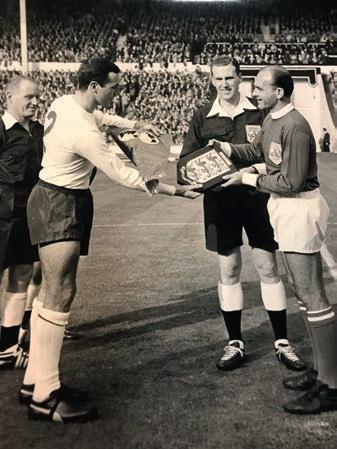
plus in favour of ‘Armfield Academy’, Jimmy told me of his pride in being associated with the project. But at the age of 82, he sadly died just prior to the official opening.”


The result of the 2012 amalgamation of
Arnold and the two long standing Lytham schools is ‘AKS’ and if you think you have heard the last of an Armfield connection, think again. Duncan and John, sons of Jimmy, are lending their support as patrons to a new charity based at the school, the ‘AKS Lytham Foundation’. This will offer fully-funded inclusive bursaries to any bright young person regardless of their family’s circumstances, something which Jimmy would have championed. John is also Vice-Chair of Governors at Armfield Academy, a school that is equally committed to achieving the very best educational outcomes for every one of their learners. And should future generations of scholars ask “why the Armfield Academy?”, surely the achievements of this one club man, one of the very greatest of players to don the Tangerine shirt, will be recounted to them. With a stroll down to Bloomfield Road, they will metaphorically and literally look up to his statue and learn about ‘Mr Blackpool’, a legend on the field but even more importantly, a thoroughly decent man with the aspirations of the local people at heart. n
WE WANTED A NAME WHICH LOCAL PEOPLE COULD RELATE TO


lackwood’s of Blackpool have been for decades at the forefront of manufacturing one of Blackpool’s most famous souvenirs – the stick of rock. Founded in 1948, when sugar was still rationed and smuggled into the factory in prams, the Blackwood family started a successful business, which included a shop, that is still going strong 75 years later.
Bob Blackwood and step-brother Geoffrey Race, aged 70 and 79 respectively, grew up helping in the shop and still create a wide variety of tempting treats from the traditional stick of rock, to sugar dummies and lollipops. Together with Geoffrey’s wife Margaret, 76, they continue to make, package and sell these seaside staples.
Geoffrey and Margaret’s daughter Heather, picked up the rock making mantle back in 2008. A former computer programmer, Heather was a busy mum of three and when Geoffrey gave her a leftover rock order where the customer had asked for the rock to be cut into smaller sizes. Geoffrey suggested she may be able to sell this unusual size and she was surprised to find she was onto a business winner.
Heather said: “Dad had had an unusual request to cut the rock into smaller pieces and there was quite a lot left over. He suggested I try to sell a bag on eBay to make a bit of money, and I found they sold straight away. So, I listed another bag and again they quickly sold. I realised there was a market for this, so I started to look at different flavours and designs.” Little did she know that this would lead one of her creations to appear on the cover of a Kaiser Chiefs album, Souvenir.
And talking of celebrity endorsements, mum Margaret wrote to the Queen ahead of her visit to Blackpool in 1994, to ask if she could present the monarch with some of their homemade rock. Before long, Palace security

A St Annes family carries on creating a seaside treat into the next generation, as Alma Stewart finds out how to ‘Say it with a Sweetie’
staff descended on the factory to make sure nothing was going in the mix that could cause the Queen any harm. Margaret did indeed present the rock to Her Majesty at her visit to the Grand Theatre with Heather and Geoffrey looking on.


Heather’s company, Say It With A Sweetie Ltd, now creates 20 designs and an eclectic mix of flavours such as pink lemonade, chilli, frozen berries, rhubarb and custard and Caribbean crush. Heather explains the flavouring process: “It only takes a couple of drops of both flavour and colour. I really enjoy mixing the flavours to create something different but this takes a bit of guesswork. The mixed berries for example was a combination of raspberry, strawberry and blueberry flavours. I am often eating a sweet or drinking a can of pop and suddenly think ‘I can try and create that flavour!’.
sugar and water mix which is then poured onto a tray to keep warm. When the mix is aired, it turns white. Another mix is coloured and the two go through the rollers to stretch and flatten the mixture. The coloured mix is cut in blocks to form letters and the white is moulded around them. This huge stick of rock is then rolled thinner and thinner and then for the sweets, it’s put through the cutting machine which also wraps the sweets in plastic free and biodegradable cellophane.”
If there is any doubt about the process, in 1990, mum Margaret wrote a book on this very subject entitled ‘The Story of Blackpool Rock’ which explains more of the fascinating process.
I AM OFTEN EATING A SWEET OR DRINKING A CAN OF POP AND SUDDENLY THINK ‘I CAN TRY AND CREATE THAT FLAVOUR!

The designs feature a choice of lettering and icons to suit many occasions. During Covid, Heather found a rise in sales of rainbow edged ‘thank you’ sweets. She has also created a stick of rock for Children in Need, had a televised visit from actor and comedian Ade Edmundson, created branded sweets for Tommy Hillfiger and last year, also made personalised rock for comedian Russell Brand. Her sweets have also been shipped all over the world.
Heather said: “My biggest sales recently have been for Pride events around the UK, between 10 and 20 thousand a week which is a fair amount for me as I run the business by myself. My ‘love’ rainbow sweets have really grabbed the gay community and it’s a real honour to be able to support the LGBTQA+ celebrations.”
And now to the question everyone wants to ask – how do you get the lettering in the rock?
Heather explains: “Well first of all, there can be no more than 16 letters within the rock. So the first stage is taking the melted glucose,
Although Heather is busy with her company, she also has found time to explore another passion – marine biology – and has just finished her first year of a BSc degree though Blackpool and the Fylde College. She added: “Being ‘sand grown’, I have always loved the beach and of course, the sea and diving. I wanted to grab an opportunity to study this fascinating subject and I am excited to be volunteering on a study of sea grass meadows this summer in Greece. Next year, I hope to spend my 30 hours of volunteering here in St Annes to help conserve our sand dunes.”
Proof indeed that Heather’s life has been committed to the local seaside in more ways than one! n
sayitwithasweetie.co.uk
LITTLE DID SHE KNOW THAT THIS WOULD LEAD ONE OF HER CREATIONS TO APPEAR ON THE COVER OF A KAISER CHIEFS ALBUM, SOUVENIR


Just a short stroll from Northcote, the flagship Ribble Valley restaurant is one of the Valley’s hidden gems.
The award-winning Black Bull Old Langho is a traditional pub with a burgeoning reputation for fantastic food, super service and a laid-back vibe. The pub is owned and run by husband and wife team Becky and Jamie Govier with Becky very much hands on and the energetic driving force behind the business.
I’m hoping for a stunning summer as the outside space really comes into its own. I often smile at the social media pics taken by both staff and clients as they really do capture the mood and vibe. I’m struggling to think of somewhere better on a warm summers day or evening than sitting in that lovely garden
with a glass of something refreshing.
Outside or inside the summer food options remain wide and varied – a classic bar menu is supplemented with the authentic taste of Italy with wood fired pizzas served al fresco –Becky tells me that those incredible sharing boards and the odd Chateau Briand are often also served outside.


Not everyone is an al fresco fan of course and while the roaring fire warms up the
lovely old pub in winter, those thick walls certainly make it cooler in summer for those who prefer the shade.

Weekends are as popular as ever and the now famed Sunday lunch is invariably a sell-out each week. With a seven-day opening, which is increasing becoming more rare in the Ribble Valley, it’s the obvious choice for lunch or dinner in the early part of the week –a little quieter perhaps and laid back but ideal on so many levels. The Bull rarely has many events based on its popularity, but Becky tells

me they have something very special planned for the last Bank Holiday of the summer in late August. Billed as an end of summer garden party, there will be live music from Langhobased Ella Shaw, live music from a steel band and saxophonist and a party vibe with a DJ playing great music all afternoon. This is an outdoor event and will sell out quickly so if this is for you, I urge you to book early!
I’m thrilled for Becky and her ever-expanding team that they remain so popular amongst the incredible selection of Ribble Valley eateries, no coincidence that great ethics and hard work really do pay off.
It’s well worth the short journey to be part of something this special. n
Discover one of the best al fresco dining experiences or relax in this cool country inn, writes Tedd Walmsley
A CLASSIC BAR MENU IS SUPPLEMENTED WITH THE AUTHENTIC TASTE OF ITALY WITH WOOD FIRED PIZZAS SERVED AL FRESCO
With an award-winning chef offering a host of delicious dishes and an exciting array of drinks and cocktails, Yu Copster is not to be missed


The Ribble Valley is home to one of the north west’s finest modern Chinese restaurants namely Yu Copster Green. Award winning chef Victor Yu has been creating stunning dishes here for nearly 20 years – the restaurant is a huge hit with the locals and an incredible experience from start to finish.

As you enter the restaurant the long bar offers an exciting range of pre-dinner drinks and the accomplished team have created an array of drinks and cocktails to be enjoyed whilst perusing the menu. You’ll also take in the carefully planned décor with its cool sophisticated look which only adds further to the surroundings and vibe.
Mein and curry using the legendary Charlie Yu’s (Victor’s dad) recipe.

Victor has developed and refined some very modern Chinese cooking techniques displayed in his signature dishes – these are exceptional and very popular. This food is to be savoured and often shared and the attentive and knowledgeable staff complete the excellent experience you’re sure to have in this very special restaurant.
The menu is a feast for the eyes and has a stunning mix of traditional small plates and dim sum through to classic dishes, Chow

Victor has also recently opened, ‘Teepee on the Green’ on the same site. It’s an exciting al fresco concept that sees a new menu of small plates, bao buns and poke bowls. The meat and fish are cooked freshly on the outdoor Robata grill – there’s nothing else quite like this and well worth the trip. Al fresco dining is a more casual affair that retains the luxury elements and touches that Yu is synonymous for and the menu has been curated and designed specifically
for this al fresco experience.
I’m told there will be a stellar line up of guest chefs who will collaborate with Victor over the next few months, even more reason to see what all the fuss is about! This significant addition to the Yu experience has also added extended hours with the teepee open Thursday to Sunday 12 noon until 9.30pm. Both the main restaurant and the teepee are very family friendly, and their social media and website bang up to date with all the exciting events planned for summer. n
Yu Copster Green Teepee on the Green by Yu 500 LongsightRoad (A59) Copster Green BB1 9EU 01254 240665 yucopstergreen.co.uk

VICTOR HAS DEVELOPED AND REFINED SOME VERY MODERN CHINESE COOKING TECHNIQUES DISPLAYED IN HIS SIGNATURE DISHES

New gastropub the Rum Fox at Grindleton is celebrating summer in style with a wonderful new garden room and seasonal menus,

 writes Gail Bailey
Local talented chef patron Bob Geldeard is very quickly gaining a host of regular diners in his newly refurbished pub and restaurant in Grindleton.

“The aim is to provide the finest food and drink with an emphasis on the seasonal, the local and the surprising,” Bob says.
The stylish and cosy surroundings have the wonderful addition of a garden room with an amazing louvred roof - perfect to enjoy the summer sun. With fabulous views over

Pendle, it’s the ideal place to relax, unwind and sample some of the sensational, summer menus Bob has created: “We change our dishes weekly dependent upon ingredients,” he explains. “Popular dishes have been our starter of scallop with Champagne and oyster sauce, the Eaves Hall Farm pork and the wonderful Isle of Man lobster has been a real treat.”
POPULAR DISHES HAVE BEEN OUR SCALLOP WITH CHAMPAGNE AND OYSTER SAUCE, THE EAVES HALL FARM PORK AND THE WONDERFUL ISLE OF MAN LOBSTER HAS BEEN A REAL TREAT
Events will be a key feature at the Rum Fox with the upcoming Wine Dinner selling out quickly: “We are delighted to welcome the talented Richard Bracken from Milestone Wines to the Rum Fox for our first Wine Dinner,” says Bob. “We have created a wonderful four-course menu, including canapes and champagne on arrival with Richard’s selection of outstanding wines from the Milestone cellar to complement each course.”
Already having requests from customers to hold more events, Bob and his team are making plans for the next: “We have been asked to repeat our Wine Club Dinner and intend to hold them every two months – keep an eye on our website and social media for details and links to book.”
Bob and his team really have created the perfect space to spend quality time with family and friends. The wonderful interior
has wood panelling, oak beams, a huge fireplace and a feature quartz-topped bar. There is a modern open-plan kitchen in the restaurant creating a contemporary and vibrant experience and there is even a private dining area for those extra special occasions which seats up to 10 people.
“We’ve had a really positive first three months here in Grindleton and can’t wait to welcome more people from the Ribble Valley and beyond to discover why the Rum Fox is the perfect place to relax, enjoy a pint and a light bite, or to dine in style.” n
Sawley Road, Grindleton, Clitheroe BB7 4QS 01200 871691
therumfox.co.uk
Open all day
Food served

Wednesday to Sunday
Wednesday to Saturday 12noon - 2pm, 5.30pm - 8.30pm
Sundays 12noon - 4.30pm
This year Clitheroe Food Festival is back bigger and better than ever with a week long foodie celebration. We’ve got two very special events at Holmes Mill in the lead up to the Food Festival on Saturday 12th August.
THURSDAY 10TH AUGUST // 6PM
Brewery tour • Bowland Brewery tasters • Pie & chips £25 per person
THE BAR & GRILL
FRIDAY 11TH AUGUST // 7PM
Champagne cocktail • 3 course seafood dinner
Champagne pairings • £65 per person
SATURDAY 12TH AUGUST // FROM 12NOON FESTIVAL
LIVE MUSIC • BBQ • OUTDOOR BARS
DJ & SAX • FOOD STALLS • & MORE!
Please visit the website for more information and tickets.
WWW.HOLMESMILL.CO.UK
Holmes Mill, Greenacre Street, Clitheroe BB7 1EB | 01200 407120




Craig talked us through each one with tips and recommendations.
Cookery School at Northcote includes lunch which, as only to be expected, was exquisite. Back at our work-stations, we were able to watch Richard and Ben start assembling the dishes and, the best part, we were able to taste them! First up was the warm salmon, cured with sea salt, fennel, juniper berries and lemon, then lightly cooked and placed on a bed of dill emulsion and finished with velvet-soft balsamic butter sauce – it was sublime!
and is filled with light cheesecake mousse with a core of tangy apple puree – probably the most technically challenging of the dishes and the one we started work on first as the half-spheres of mousse needed blast freezing in their silicone moulds.

Arriving at Northcote’s Cookery School, head tutor Richard Ogden talked us through the dishes we were about to make – a menu devised by Northcote’s executive chef Lisa Goodwin-Allen and cleverly adapted by Richard so they can be recreated at home.

The menu started with warm cured salmon, white balsamic butter sauce, dill oil and pickled cucumber. This was followed by salt aged beef, marrowbone crust, smoked pancetta and mushroom Bourguinon and pomme Anna. For dessert – Lisa’s apple cheesecake, a fabulous creation that looks like an apple

While this was being done, we started on the Bourguignon sauce for the main course. Richard and Ben demonstrated first, then class members made their own according to the recipes and instructions. Top tip from the chefs – always use shallots, not onions, in a sauce.
Sauce-making said Richard, is all about layering and reduction to get the depth of flavour required. While reduction has to be done quickly until the correct consistency is achieved – you can’t rush a sauce, he advised.
Shortly before lunch, there was a flurry of activity when Lisa popped in to say hello and Northcote’s Craig Bancroft conducted a mini-wine tasting, which featured three wines – an award-winning Gusbourne English sparkling wine made in Appledore, Kent, a red sparkling shiraz from Barossa Valley which was a revelation and a lovely By.Ott Rose from, of course, Provence – a delicate pastel pink, luscious and fruity on the palate. Ultimately knowledgeable,
The aged beef was equally delicious as was the delicate and technically brilliant apple cheesecake.
At the end of the day, we were each given Northcote goody bags – inside, carefully packed, chilled and labelled were all the sauces and accompaniments we had made and everything we needed to recreate the dishes at home, including salmon and steak. I can’t begin to say how much I learnt or how much I enjoyed this one-day masterclass and when I came to recreate the dishes for guests at home, they looked super impressive and tasted divine!
Northcote Cookery School is the perfect place to learn new culinary skills in a fabulous, enjoyable environment with friends, family or colleagues. It really is an experience not to be missed! n

To find out more go to: northcote.com/cookery-school/
Northcote Langho 01254 240555 northcote.com
Having been to Northcote Cookery School a number of years ago, I was delighted to be invited back to take part in a ‘media masterclass’ with talented duo Richard Ogden and Ben Hinchcliffe, writes Jan Woolley
surrounding countryside – this is a relaxed dining experience with really no rush to leave. While away the afternoon or evening sipping wine or a cocktail on the terrace and forget the rest of the world.
During summer Chippy Tea on Fridays is a highlight not to be missed, it’s delicious –and at just £16.95 it’s great value!
If you love fabulous gardens then book a date in your diary for 8th July when they will
The Gibbon Bridge Hotel and Restaurant is set on the edge of the rural village of Chipping and if you haven’t visited before, you really must do soon!
This idyllic retreat, crafted by its owner over many years, is an absolutely amazing place to visit.
It is set amidst amazing gardens and grounds, with hidden spots for al fresco dining, magnificent terraces for Champagne and canapes and wonderful outdoor dining. The views over the Trough of Bowland and the warmth of the beautiful local stone buildings, create a fabulous environment to enjoy the superb hospitality on offer.
The long-standing team at the Gibbon Bridge have a warm welcome awaiting you with friendly personal service, irrespective of
whether you are a new visitor or a regular. The food at Gibbon Bridge, produced by an extremely talented kitchen brigade, is always a delight. Specialising in hearty classic English dishes, many ingredients are sourced locally with the emphasis on perfectly cooked garden-fresh vegetables, delicious soups and superb meat and fish. The delicious artisan breads, decadent desserts and petite fours to enjoy with tea and coffee are all made in the on-site Gibbon Bridge bakery.
be opening their gardens with a Picnic Lunch, giving visitors the chance to meander through the grounds, chatting to the gardeners along with the floral team, all of whom have a wealth of knowledge and expertise. There will be refreshments from the bar, live music, a children’s play area and a plant and bakery stall making this a wonderful afternoon out for all the family.
Gibbon Bridge really is a jewel in the crown of this Area of Outstanding Natural Beauty. With many events planned throughout the summer and autumn, it is well worth browsing the website where you will find more details and special offers to stay at this lovely hotel, and much more.
As one of the region’s most prestigious wedding venues, Gibbon Bridge also offers bespoke packages for your special day. The team will be delighted to give you a tour of the hotel and grounds if you have wedding plans. n
Great value
The menu is varied, but two amazing dishes – crisp roast leg of Goosnargh duck and a twice-baked cheese souffle really are worth a special visit!

Lunchtime menus are amazing value with lots of choice – £28 for two delicious courses –unbeatable!


Whether you’re dining inside or out, there are fabulous views of the gardens and

Located in the heart of the Forest of Bowland, Gibbon Bridge represents superb relaxed dining in elegant and comfortable surroundings
IF YOU LOVE FABULOUS GARDENS THEN BOOK A DATE IN YOUR DIARY FOR 8TH JULY WHEN GIBBON BRIDGE WILL OPEN THEIR GARDENS WITH A PICNIC LUNCH
Gibbon Bridge is the ideal place for lunch or dinner in the Ribble Valley, the restaurant overlooks the award-winning gardens and Longridge Fell and is open daily and offers a relaxed and comfortable atmosphere. The hotel is also perfectly situated for exploring the Forest of Bowland on foot, by bicycle or by car, and throughout the year offers exceptional value with its varied calendar of events, short breaks and overnight stays. Visit the website for current offers. Whether you are visiting, or live in the area, it is the perfect place to enjoy quality homemade food and exceptional service in good company!
Fridays, 5.30pm - 6.30pm 21st July, 4th & 25th August
Call in and sit in our gorgeous gardens for fish, chips & mushy peas for ONLY £16.95.
26th July, 16th & 23rd August, 6th & 20th September, 11th October, 15th November
Enjoy a selection of freshly made sandwiches, scones & cakes along with tea accompanied by live piano music.
£23 PP - payment required on booking.
Saturday 5th August
Gin Tasting 5pm Gin Themed Dinner 7pm
£275 PER COUPLE - Including tasting, dinner, accommodation, breakfast and a set of miniature gins to take away.

£45 PP - tasting & dinner only.
Monday 28th August 12pm for 12.30pm
Enjoy our summer concert in the glorious sunshine, with the return of Lostock Hall Memorial Band. Pimm’s and 2-course lunch.

£35 PP - payment required on booking.
(Booking advised)
Lunch 12.00 – 1.30pm
1 course £22.00 I 2 courses £28 I 3 courses £34
Sunday Lunch with Pianist playing 2 courses £31 I 3 courses £38.50

Dinner 6pm to 7.30pm
2 courses £30 I 3 courses £37.50
Dinner and an overnight stay at The Coach & Horses, followed by a hearty breakfast and a bracing walk up nearby Pendle Hill, was an absolute delight, writes Kat Booth. Photography: Kirsten Platt

Located in the heart of the beautiful Ribble Valley, a short drive from Clitheroe, we arrived in Bolton-byBowland on a sunny afternoon, looking forward to our stay at The Coach & Horses, and we weren’t disappointed.

A Grade II listed coaching inn with a two AA Rosette restaurant, The Coach & Horses is a little slice of country refinement, with a wonderfully picturesque exterior and an even more delightful interior.

Greeted at the door by the lovely Ramune, we checked into Henry, a dog-friendly room with a stylish aesthetic, beautiful rolltop bath and views over the village. Henry is one of seven bedrooms, all of which have their own unique décor, with two family friendly rooms and two dog-friendly rooms.
to have a look at the micro-brewery, which is located just behind the restaurant and now brews two beers, Goldie and Imperial Haze. Given the weather, we took the opportunity to sit outside in the pub’s beer garden, which was recently refurbished with new garden furniture and is a great spot to relax, enjoy a bite to eat and soak up the sun.
WE BOTH PLUMPED FOR THE FULL ENGLISH, WHICH GAVE US THE STAMINA WE NEEDED TO HEAD OUT INTO THE COUNTRYSIDE
we were spoilt for choice, but it just gives us more reason to go back!
Once we’d finished our meal, we sat in the bar and made the most of the atmosphere, before retiring to our room for a great night’s sleep.
We started the next day in the best possible way with breakfast in the restaurant. We both plumped for the full English, which gave us the stamina we needed to head out into the countryside for a walk up Pendle Hill, which is only a short drive from The Coach & Horses.
Once we’d settled in, we headed down to the bar to start our stay off with a cocktail and a pint of Goldie, made on-site at The Coach’s own micro-brewery, 4 Mice Ales. We went
As we were staying on a Thursday, we took advantage of the Midweek Stay package, which includes bed and breakfast, as well as the Midweek Menu for two. A recently new addition, the Midweek Menu is a set fourcourse menu created by head chef Ian Moss, which changes every two weeks and includes dishes such as twice-baked Lancashire cheese souffle, pan fried gurnard with tomato refogado and chargrilled courgette, and a strawberry and white chocolate cheesecake. While we chose the Midweek Menu and enjoyed every last morsel, there is also a range of menus we could have chosen from, which has definitely piqued our interest. From the Tasting Menu to the a la Carte Menu, Sunday Lunch Menu and an informal Sandwich Menu,
We felt immediately at home at The Coach –the team couldn’t be more helpful, the food was fantastic and our room was a delight. We can’t wait to go back! n

Coach & Horses
Main Street, Bolton by Bowland
Clitheroe BB7 4NW
01200 447331
coachandhorsesribblevalley.co.uk


AIX PROVENCE ROSE
SPECIAL INTRO OFFER £16.99*
Aix (pronounced Ex) Rose is the new Provence Rose that is storming to prominence. Collecting gold medals galore, this recently scored highest in Whalley Wine Shop’s blind Provence Rose tasting. *While stocks last, during promotional period only, RRP £19.99

The Whalley Wine Shop
63 King Street Whalley Clitheroe BB7 9SW 01254 822581 thewhalleywineshop.com
Sit back and relax with a glass of something special
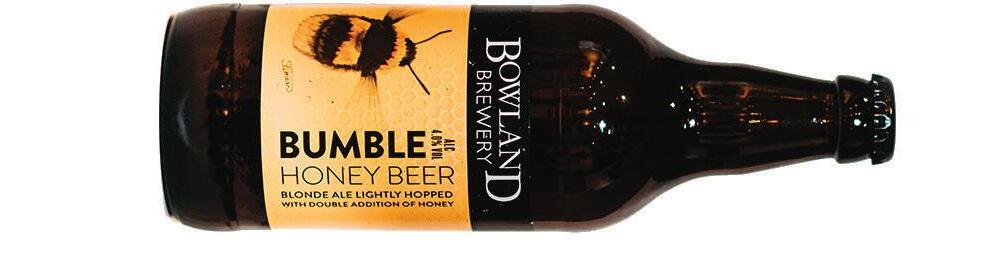

SUNSHINE GIN £36
Buzzing with natural honey and infused with mouthwatering raspberries, this refreshingly smooth gin is a wonderfully sweet and summery spirit. brindledistillery.co.uk
SUNDOWNER RUM £35


Expertly blended using both Lancashire and South American white rum, this is lightly infused with vanilla, cinnamon, clover, ginger and natural honey. brindledistillery.co.uk

SPRING VODKA £30
Celebrating the amazing spring water down on Holmes Farm, this is crystal clear, neutral and smooththe perfect ingredient when blended with 100 per cent British wheat spirit.
Brindle Distillery /Cuckoo Gin


Holmes Farm Sandy Lane Chorley PR6 8LZ 01772 323313 brindledistillery.co.uk
While every effort has been made to ensure accuracy, all prices and stockists are subject to change.
SUPERNOVA GIN £38
A 100 per cent real citrus fruit gin with no added sugar, naturally blush coloured and made with grapefruit and pomelo. brindledistillery.co.uk
 PHEASANT PLUCKER PACK OF THREE £10 CAMRA gold medal-winning ale from Bowland Brewery - a copper coloured bitter with rounded berry flavours. holmesmill.co.uk/food-hall/
BUMBLE HONEY BEER PACK OF THREE £10 This SIBA regional gold winner, from Bowland Brewery, is a blonde ale which is lightly hopped and naturally sweetened with honey. holmesmill.co.uk/food-hall/
PHEASANT PLUCKER PACK OF THREE £10 CAMRA gold medal-winning ale from Bowland Brewery - a copper coloured bitter with rounded berry flavours. holmesmill.co.uk/food-hall/
BUMBLE HONEY BEER PACK OF THREE £10 This SIBA regional gold winner, from Bowland Brewery, is a blonde ale which is lightly hopped and naturally sweetened with honey. holmesmill.co.uk/food-hall/











The Vineyard at Stockcross, which has two Michelin stars and Cliveden House Hotel. A pre-dinner drink in the bar whilst perusing the menu is almost compulsory at Gilpin, in our case it was their 10-course tasting menu. This was to be fine dining at its very best, a clever combination of subtlety and big flavours with each delicious course. The snacks at the beginning of the meal set the scene perfectly for our epic food journey.
An epic food journey with a stellar line-up of amazing dishes, the new tasting menu at SOURCE is an experience not to be missed, writes
 Tedd Walmsley
Liz and I didn’t need a second invitation to try the new tasting menu at SOURCE at Gilpin Hotel, created by SOURCE’s new Executive Chef Ollie Bridgwater.

The restaurant not only has a new Executive Chef but also a new name ‘SOURCE’ – very apt, as owners Barney and Zoe Cunliffe shared with me their vision to create the most delicious, sustainable and ethical dishes.
Ollie Bridgwater has an excellent CV and pedigree having worked alongside Heston Blumenthal at The Fat Duck for more than 10 years. His training, development and innovation have created a host of new techniques and skills to add so much to the culinary offering at Gilpin.

His Head Chef, Jack Bond, has an equally impressive CV – having studied at Southport Catering College he went on to work for
Marcus Wareing for nine years, followed by the three Michelin-starred Eleven Madison Park in New York, the Michelin-starred Davies & Brook at Claridges and Restaurant Gordon Ramsay with three Michelin stars. Before I talk about the food, I want to give a big shout out to the excellent front of house team. Whilst young, they are all professional, energetic, passionate and knowledgeable about the food and wine. They also had personalities and an eagerness to engage – these are a great group who contributed to what turned out to be an incredible evening.
If forced to choose a favourite course, it would probably have to be the roast Scottish lobster served with lettuce peanuts and chilli, whilst not a combination I’d had before it really was superb. We rested between savoury and sweet finale and reflected on some amazing cooking and perfect wine pairings – a dinner such as this needs to be savoured, taken slowly and enjoyed course by course.
Since our visit, the team has been joined by Thomas Mercier as Restaurant Manager, who brings a wealth of friendly charm as well as incredible experience from three Michelin-starred L’Enclume, Michael Wignall at The Latymer with two Michelin stars, Coworth Park with one Michelin star,

The puddings were a perfect end to a stellar meal. Perhaps the most important update from Gilpin is that SOURCE alongside the other restaurants, Gilpin Spice and Knipe Grill at Gilpin Lake House, all Michelin listed, can now all be enjoyed by non-residents.
Having made the journey many times from the Ribble Valley, broadly 60 minutes sees you parking up on the Gilpin car park – this is one journey you’re definitely going to want to make, whether for the tasting menu or the equally brilliant a la carte menu. Ollie and his brigade are going to drive forward over the next year that’s for sure – having retained the coveted Michelin star recently I’d be keeping a close eye on them in the months ahead. n

SOURCE ALONG WITH GILPIN SPICE AND KNIPE GRILL AT GILPIN LAKE HOUSE, CAN NOW ALL BE ENJOYED BY NON-RESIDENTS


One of our favourite things that our guests say, is that when they think of Gilpin, they think of love and laughter –ours, and theirs, which is such a lovely compliment. For us, hospitality starts with a very warm welcome and ends with a friendly goodbye, with extraordinary service, exquisite décor, beautiful spa experiences both at Gilpin Hotel and at Gilpin Lake House, and stunning culinary experiences in our three restaurants.



In June 2023 Gilpin joined the Savoy as one of only two properties in the UK to have three restaurants featured in the Michelin Guide: SOURCE at Gilpin Hotel (one Michelin star since 2016) and Gilpin Spice (Michelin listed since 2018) have been joined in the Guide by Knipe Grill at Gilpin Lake House Michelin listed in June 2023 when it was highlighted as one of The Michelin Inspectors’ Favourite New Restaurants


We hope to welcome you to Gilpin soon.

A rather unusual structure is being constructed on a supermarket car park in Ribbleton, but, as Alma Stewart explores, the octangular, tent will hold a host of arts and culture.

Photography: Michael Porter Photography
It was an idea that was trialled in the city centre in 2022 in order to provide a revolutionary arts centre that travels directly to neighbourhoods, igniting creativity, fostering connections, and empowering communities to embrace the magnificent world of arts and culture.

The Mobile Event Tent, or MET, was designed by project architect Charlie MacKeith of Research Design in partnership with Professor Charles Quick, co-founder of In Certain Places, a curatorial partnership based at the University of Central Lancashire. The visual artist Jenny Steele worked with different cultural groups within the city to create decoration that wraps all the internal walls, while co ordinating the overall colour scheme. This results in a magical interior that reflects Preston’s diverse cultural heritage. Gavin Renshaw has painted the
large thunderbird identification numbers on the four containers in which it is stored.
A number of events were held within its stretch-fabric walls last year as the MET opened on the empty land of the former indoor market (currently the construction site of the Animate scheme) before moving to University Square in the autumn. This multi-use space, spanning 150 square metres and able to accommodate up to 100 people, hosted a number of activities such as dance classes, music performances and networking events.


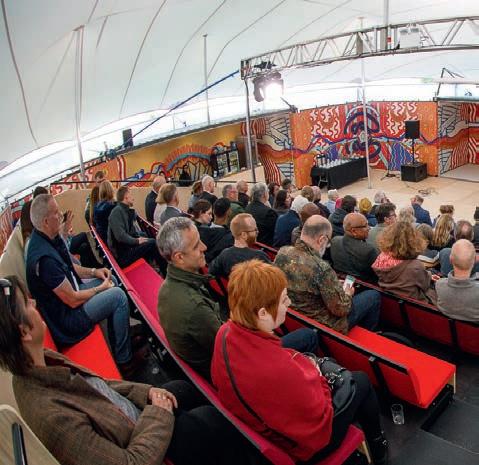
our new community facilitator, we decided that Ribbleton was a great location for a number of different communities and groups.”
Partnering with the vibrant communities of Ribbleton, the MET is set to take residency at Ribbleton Morrisons car park throughout July, delivering an impressive month-long event programme. With its transformative capabilities, the MET evolves into a captivating auditorium, providing an ideal stage for creative performances, music, theatre, meetings and films and all of the events are free.
This year, as Professor Charles Quick explains, the MET has moved to the heart of communities with activities based on their feedback and ideas. “Since In Certain Places began in 2003, we have worked closely with communities to encourage them to take part in city centre activities, but we realised through feedback activities, that many people did not want, or were not able, to travel to the city. This year, we decided to take the MET to the community and through engagement through
Professor Quick continued: “The programme of events this year is in direct relation to conversation sessions with the community. For example, one young lady’s dream is to become a dance teacher and so we have given her an opportunity to lead a Caribbean dance class. A young mum was talking about how her children loved the film Mamma Mia and didn’t realise that ABBA were a band. This gave us the idea of bringing
THE PROGRAMME OF EVENTS THIS YEAR IS IN DIRECT RELATION TO CONVERSATION SESSIONS WITH THE COMMUNITY
an ABBA tribute band to the MET.”
The MET really is a versatile space. Once the seats are cleared, this dynamic space expands into a vast open area, spanning an impressive 12 x 12 meters. This versatile setup becomes a hub for lively dance performances, community meals that bring people together around shared tables, and engaging workshops that nurture creativity and skills development.
cake making. Movie nights are planned as well as dance classes, drama workshops, youth activities and even a family fun day.
Martin Wood, Operations Manager at Ribbleton Morrisons, expressed enthusiasm about the partnership. He said: “We are thrilled to collaborate with the MET and bring this animated mobile arts centre to Ribbleton Morrisons car park. It’s exciting to


empower individuals and leave a lasting impact on our community.”
What truly sets the MET apart is its mobility. By venturing beyond the city centre and into neighbourhoods where cultural opportunities are limited, the MET bridges gaps and breaks barriers. This impressive mobile events tent ensures that everyone, regardless of location, has the chance to participate, learn, and be inspired.

At the core of the MET’s mission lies a commitment to co-production and skill development. Working closely with local communities, the MET collaborates to curate a vibrant month-long programme that reflects the diversity of its surroundings. This inclusive approach empowers individuals, fosters a sense of ownership, and leaves a lasting impact on the places the MET visits.
July’s events programme has a wide variety of activities. Grow and Sow is a weekly gardening class, where participants can learn, week by week, the science and apply practical skills on how to grow seasonal vegetables. Visitors can also learn confectionary and
witness this innovative space transform and provide opportunities for our community to engage with the arts in all their magnificent forms. We believe that the MET’s commitment to co-production and skill development will

Professor Quick added: “The aspiration is to move the MET within many of the city’s communities each year. Access to culture creates all sorts of emotions and. It goes beyond politics, language, and cultural boundaries and everyone should have access to it especially for the part it plays in community cohesion.
“The MET is a welcoming space and I hope many people come along and experience it for themselves and most importantly, enjoy it.”
The MET will move again to University Square in autumn where it will host further events in collaboration with the University of Central Lancashire, the Encounter Festival and the local community.
The MET project has been developed by In Certain Places in partnership with Preston City Council, the Preston Partnership and supported by the Preston’s Towns Fund Board. n
THE MET IS A WELCOMING SPACE AND I HOPE MANY PEOPLE COME ALONG AND EXPERIENCE IT FOR THEMSELVES AND MOST IMPORTANTLY, ENJOY IT
Check out some of the biggest movie releases being shown at The Flower Bowl in Preston. For more information visit: theflowerbowl.uk
Release Date: 21st July
Directors: Greta Gerwig
Starring: Margot Robbie and Ryan Gosling

Certificate:
Oscar-nominated writer and director Greta Gerwig brings Barbie to life in this much-hyped live action movie. Join Barbie (Margot Robbie) in Barbie Land, where everyone is a perfect being in a perfect place. Unless you have a full-on existential crisis. Or you’re a Ken (Ryan Gosling). After being expelled from Barbie Land for being a less-than-perfect doll, Barbie sets off on an adventure to the real world to find true happiness. A series of individual cast posters confirm rumours and reports that the movie will feature many Barbie and Ken variants alongside those portrayed by Robbie and Gosling. The film is being billed as a new feminist take on the famous ’50s Mattel doll – and Gerwig whose previous projects include Lady Bird and Little Women, certainly looks set to deliver on that front. n
Release Date: 10th July
Director: Christopher McQuarrie
Starring: Tom Cruise, Hayley Atwell and Ving Rhames
Certificate:
Rumoured to be the grande finale for Tom Cruise’s secret agent, the Dead Reckoning two-parter kicks off the summer with the most epic MI movie to date. From a deadly new villain to cinema’s most outrageous bike jump, it promises to be a full throttle ride from start to finish. Ethan Hunt (Cruise) and the team must track down a terrifying new weapon that threatens all of humanity if it falls into the wrong hands. With control of the future and the fate of the world at stake, a deadly race around the globe begins. Confronted by an all-powerful enemy, Ethan is forced to consider that nothing can matter more than the mission –not even the lives of those he cares about most. Critics are praising the movie as yet another winner in the global franchise. n

Release Date: 28th July
Director: Michael Gracey
Starring: Hugh Jackman, Zac Efron, Michelle Williams, Rebecca Ferguson and Zendaya

Certificate:
It’s showtime! Cheer on Broadway veteran Hugh Jackman and the cast as you experience The Greatest Showman in the best way possible – with lyrics on the screen so you can join in as loud as you want. Sit back and enjoy as PT Barnum and his troupe of performers rewrite the stars. Jackman takes front stage as the showbusiness pioneer who rises from nothing to create a world-famous circus spectacle. A cracking soundtrack and uplifting storyline made this one of the biggest sleeper hits in movie history. The anthemic This Is Me is a particular highlight. Join us for this sing-along version for the ultimate feel-good experience! n
Hue Folk i s an exciting, emergent British urban pop artist. Born in 1989, he is heavily influenced by the pop culture of his era, creatively using bold colours, iconic images, cartoons and fashion design. His fascination with vibrant colour is an element that carries across all his original mixed media works.
Opting to paint under a pseudonym, not much is known about the person behind Hue Folk, and this means that you are able to delve into the rich and energetic world which Hue Folk conjures up without having the experience connected to the real world.

Everything remains an adventure with this artist, and you are able to live in that adventurous and magical land with each piece that he creates.
Richard King is a well-known artist from Birmingham. He is a part-time art teacher with over 20 years’ experience of teaching art in schools and colleges and has a master’s degree in Fine Art from Wolverhampton University.
All his paintings have been created from spectacular scenes witnessed first and photographed by him then created in the studio using a unique technique of painting, in which he paints backwards on the opposite side of glass to create mesmerising landscapes and seascapes.

His unconventional method was honed after experimenting with various surfaces to achieve the results he sought. Working on glass allows him to create a softer gradient of colour and tone and a stronger range of contrast allowing him to create the vivid scenes he could not achieve on canvas. Richard has always had a love affair with nature and turned to Turner for his inspiration for paintings of atmospheric events and light.
He has been coined the modern-day Turner on glass. He is very passionate about ecology and has seen first-hand how we have affected our own environment and wants to make people aware of the changes by showing the beauty of this planet, which might be lost to future generations.
There is an ongoing theme to Richard’s paintings (Fragile Planet) which has become his painting objective, to seek out beautiful places, which are under threat of ecological change. n
To view these, or any of our other pieces, come see us in the gallery, or visit our website and social media platforms
Gallery is pleased to introduce two new names to its highly popular collection of artists, Hue Folk and Richard King‘Morning Gory’ by Richard King ‘Purple Haze’ by Hue Folk
Prices start from £645,000

Contemporary and fabulous! An exclusive development of 14, 4 and 5 bedroom homes, finished to exceptional standards throughout in a highly accessible location close to main road networks.


Complete with showstopping living kitchens, full height glazing, vaulted ceilings and a range of highly efficient energy-saving features, phase 1 will be released soon.
OIRO £625,000


An immaculately kept, deceptively spacious property this is really a home to be viewed! Set in an attractive courtyard position, this 5 bed, 3 reception room home has been owned by the current vendors since conversion and has large private gardens to the rear, along with a double garage.
 Bartle Lane, Lower Bartle, Preston
Barnfield Manor, Lodge Lane, Singleton, Poulton-le-Fylde
Bartle Lane, Lower Bartle, Preston
Barnfield Manor, Lodge Lane, Singleton, Poulton-le-Fylde
Hall
Annes

Fox Lane Ends, Westby, Preston

Offers Over £600,000
This hidden gem is tucked away in one of the most attractive positions on the edge of Wrea Green.


Set centrally in a large plot, with privacy and views this cottage offers fantastic potential for those looking to make a home their own. A property that can be extended, rebuilt or simply improved subject to the necessary consents.


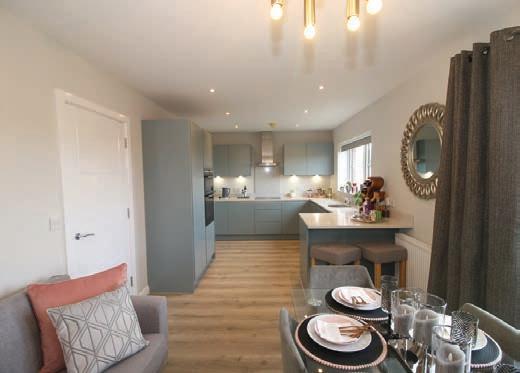


extension and barn conversion to a Georgian dwelling adjacent to Cromwell’s Bridge in Hurst Green.
In planning news, we have obtained approval for a contemporary new-build ecohome in Edenfield and we are due to receive the decision on our new-build holistic home in the West Lancashire Greenbelt.
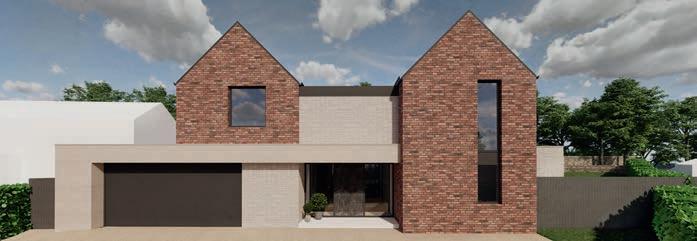
‘bring the indoors out’.
Your garden is an extension of the internal space of your home, where you can create fully functioning spaces to entertain, relax and spend quality time with your family and friends.
When you extend the limits of your project to include your full garden, land or ownership you can create a home that works for you, your extended family members and even your business. You can create your home as a one-stop-shop for everyday living, family gatherings, health and well-being and good old-fashioned R&R.
You may wish to add more wow-factor to your home, add a leisure space, create a family annexe or even create a second home or holiday lodge for your family to retreat to.
Ready to start your own project journey? Visit our website and tell us what you want to achieve, we will then book your free consultation and take it from there. n

Summer has most definitely arrived in the Ribble Valley, and it’s that time of year for BBQs, outdoor walks and designing your new home! It’s also bat surveying season, bird nesting season and the perfect time to take some amazing photographs of our finished projects.

In design news, we have just presented a concept design for a contemporary new build eco-home in the Carr Hall / Wheatley Lane Road Conservation Area. We are currently working on transforming a farmhouse in Ribchester located on the River Ribble and we are also working on a contemporary
As we commence our seventh year in business, we are currently working behind the scenes on what this means for ZMA as we enter a new chapter for the practice. All will be revealed in the next article.

Summer is a time when you can evaluate if your home works for you, or if there are areas which require improvement. One of our most popular requests when re-designing a property is to ‘bring the outdoors in’, as everyone wants to experience the great outdoors, making the most of the good weather and utilise their gardens to instead
For regular behind the scenes updates or on-site progress, visit our Instagram: @zaramoonarchitects
Zara Moon Architects
We transform sites, buildings, and lives. Unit 37, Mitton Road Business Park Mitton Road, Whalley BB7 9YE 01200 403840
enquiries@zaramoonarchitects.co.uk zaramoonarchitects.co.uk

Working on a number of new and exciting projects, the team at ZMA look forward to a busy summer