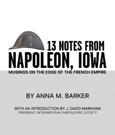
Cartoonists, writers, inventors, a prehistoric snail and an anthropomorphized marble.
A very big boom, 68 years of hiccups, cyber-trucking and an ’80s ode to Waterloo.
Bonnie and Clyde, the (other) Black Angel, Yoko’s lost daughter and a corporate villain.
Little Village (ISSN 2328-3351) is an independent, community-supported news and culture publication based in Iowa City, published monthly by Little Village, LLC, 623 S Dubuque St., Iowa City, IA 52240. Through journalism, essays and events, we work to improve our community according to core values: environmental sustainability, affordability and access, economic and labor justice, racial justice, gender equity, quality healthcare, quality education and critical culture. Letters to the editor(s) are always welcome. We reserve the right to fact check and edit for length and clarity. Please send letters, comments or corrections to editor@littlevillagemag.com. Subscriptions: lv@littlevillagemag.com. The US annual subscription price is $120. All rights reserved, reproduction in whole or in part without written permission is prohibited. If you would like to reprint or collaborate on new content, reach us at lv@littlevillagemag. com. To browse back issues, visit us online at issuu.com/littlevillage.
@littlevillagemag
: lv@littlevillagemag.com
EDITORIAL
Publisher Jordan Sellergren jordan@littlevillagemag.com
Abby McClatchey, Achilles Fergus Seastrom, Alice Cruse, Alissa Cornick, Ariana Martinez, Casey Maynard, Dan McCurley, Elisabeth Oster, Gabi Vanek, Genevieve Trainor, Jessica Doolittle, Jessie Kraemer, John Busbee, Kara Taghon, Kellee Forkenbrock, Kembrew McLeod, Lauren Haldeman, Lee Keeler, M.T. Bostic, Malcolm MacDougall, Mike Kuhlenbeck, Nicholas Dolan, Ramona Muse Lambert, Rob Brezsny, Sam Locke Ward, Sarah Elgatian, Sara Williams, Tiffani Green,
Issue 347 December 2025 cover illustration by Dan mccurley
Think Iowa’s boring? Let’s see if we can pique your interest. For the fifth Peak Iowa issue, LV has harvested stories of intrigue and invention, scandal and calamity.
meet this month’s contributors!
Abby McClatchey is an elementary school teacher turned education marketer, project manager and content creator.
Achilles Fergus Seastrom is a transgender writer and artist living in Ames. Find his nature and culture podcast Not All That Human on Spotify.
Alice Cruse is a graduate of the University of Iowa School of Journalism and Mass Communication, currently teaching English in Taiwan on a Fulbright.
Alissa Cornick is a youth services librarian at the Des Moines Public Library.
Ariana Martinez is a freelance film critic and Cinema Studies graduate student at the University of Iowa.
Casey Maynard is a children’s librarian at the Iowa City Public Library.
Elisabeth Oster is a freelance writer and designer, and collector of dad rock.
Dan McCurley is a designer, artist and educator based in Des Moines.
Gabi Vanek hates music. At least that's what she tells herself.
Genevieve Trainor is brought to you by the numbers 2112 and 2358.
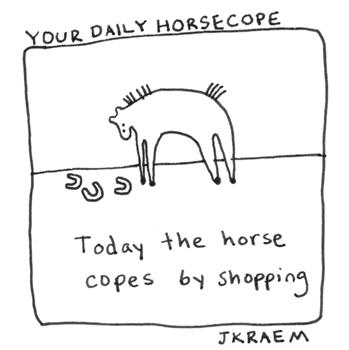
Jessie Kraemer (@ jkraem) is a writer and artist living in Iowa City.
John Busbee produces The Culture Buzz, a weekly arts & culture radio show on www.kfmg.org, covering Iowa’s arts scene with an inclusive sweep of the cultural brush.
Kara Taghon is an activist, poet and jack of all trades. She is the owner of The Atlas Collective, an indie bookstore and coffee bar in Moline, IL.
Kellee Forkenbrock is the award winning Public Services Librarian for North Liberty Library. She writes romance under the pseudonym Eliza David.
Kembrew McLeod is a founding Little Village columnist and the chair of Communication Studies at the University of Iowa.
Lauren Haldeman is a graphic novelist and poet. She has received an Iowa Arts Fellowship, a Sustainable Arts Foundation Award and fellowships from the Iowa Writers' Workshop.
Lee Keeler is a film professor for the Des Moines Area Community College. He is a regular contributor for Boing Boing and spins records at Black Sheep in downtown DSM. He co-founded Green Gravel Comedy in 2014.
M.T. Bostic is a photographer, musician, emerging writer, and U.S. Army recruiter residing in Coralville with his wife and four children.
Malcolm MacDougall is a writer, sewist and father living in Cedar Rapids on a small protofarm with his spouse.
Mike Kuhlenbeck is a freelance journalist and National Writers Union member based in Des Moines.
Nicholas Dolan is currently a PhD student in English and American Literature at Washington University in St. Louis.
Ramona Muse Lambert makes art and music. Sometimes she's in charge of dinner, too. Buy her art at ramonamuselambert.com.
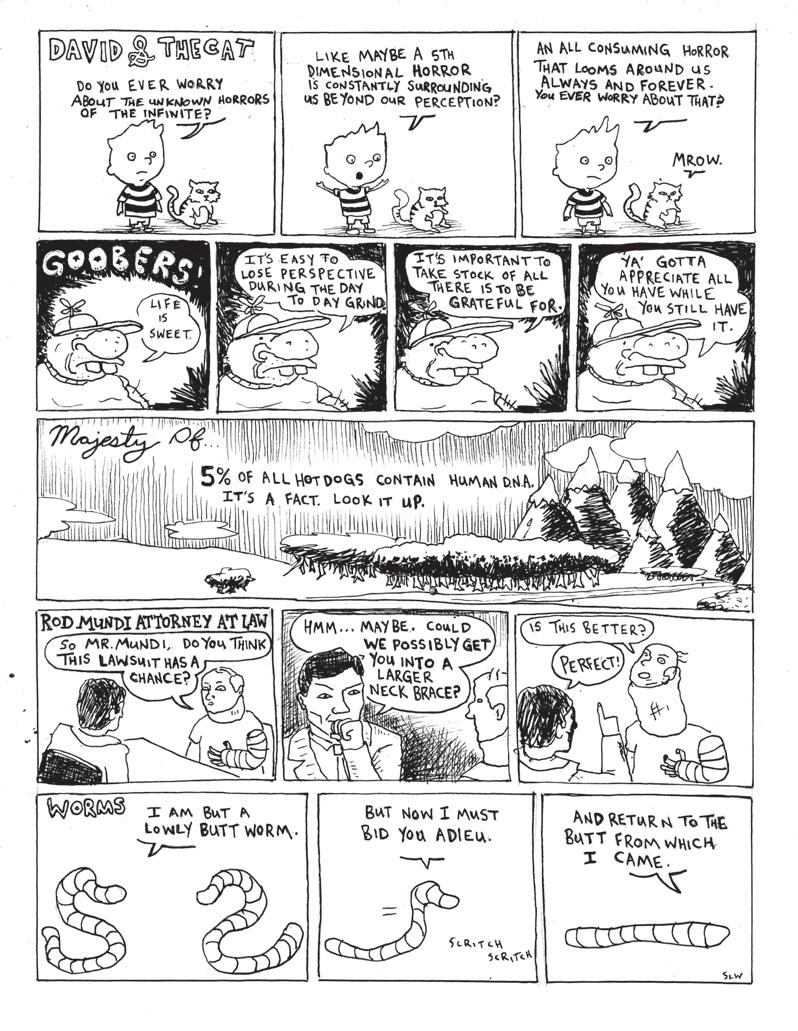
Sam Locke Ward is a cartoonist and musician from Iowa City. He self publishes the comic zines Voyage Into Misery and '93 Grind Out.
Sarah Elgatian is a writer, activist and educator living in Iowa. She likes dark coffee, bright colors and long sentences. She dislikes meanness.
Sara Williams is a multidisciplinary artist who was raised in Bondurant, Iowa. She currently resides near Amana.
Tiffani Green is an Iowa City writer and Little Village restaurant reviewer.
William Lowell is an Iowa City native. He has an MFA in Creative Writing from Old Dominion University.
Top Stories
Catch up on some of Little Village’s most-viewed headlines from last month,and get the latest news sent to your inbox every afternoon: littlevillagemag.com/subscribe. Articles by Paul Brennan.
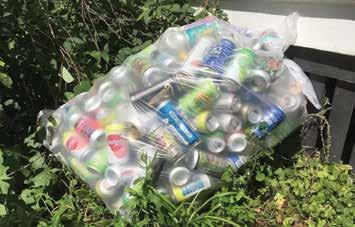
many stores stopped redeeming empties after republicans gutted Iowa’s ‘bottle bill.’ Three years later, the Sierra club is calling for a review.
Nov. 5
Some Iowa groups and consumers say it's time to redeem Gov. Robert Ray's favorite piece of legislation: the 1978 "bottle bill," which was drained of its potency in 2022 with the passage of SF 2378.
Northern lights appear in Iowa this week Nov. 12
The northern lights dipped far enough south on Tuesday night to bring a dramatic color to the sky over Iowa. The show will continue tonight, but will be primarily visible in the northern half of the state according to the Space Weather Prediction Center of NOAA.
‘Spineless, shameful bullshit’: Iowa Democratic candidates for Senate oppose funding deal with republicans
Nov. 10
Noting that more than 100,000 Iowans will see their health insurance premiums double or triple as a result, Nathan Sage, Josh Turek and Zach Wahls have all scorned Senate Democrats for caving on the GOP spending bill last night.
No bidders for the chauncey and other foreclosed moen buildings at the sheriff’s auction
Nov. 20
The minimum bid for downtown Iowa City’s Chauncey, Plaza Towers and Park@201 was set at $24 million. None of the approximately 30 people gathered outside the Johnson County Jail on Tuesday entered a bid.
Until we see you again in print next month, subscribe to LV newsletters to stay up to date: LittleVillageMag.com
AllSpice (62)
Andrew Ingham (60)
Brucemore (59)
CaseGroup Realty (39)
Cedar Rapids Opera (70)
Cindy Clark, Realtor (17)
City of Iowa City Human Rights (79)
CommUnity Crisis Services & Food Bank (43)
Coralville Public Library (74)
Critical Hit Games (72)
Crooked Path Theatre (58)
Des Moines Art Center (16)
Des Moines Highland Park
Neighborhood Co-op (75)
— Des Moines Mercantile
— The Slow Down
Des Moines Metro Opera (11)
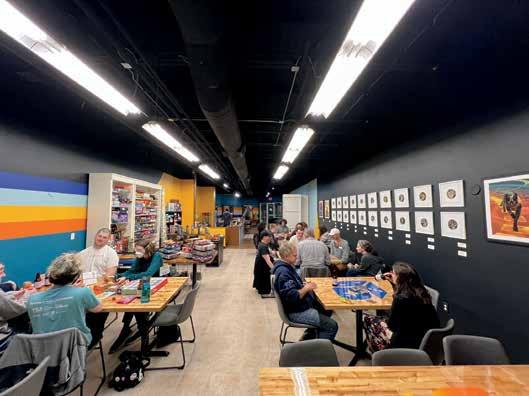
Diversions Tabletop Game Lounge (63)
Emma Goldman Clinic (59)
Field to Family (20)
FilmScene (66)
Goodfellow Printing, Inc. (74)
Grinnell College Museum of Art (62)
THANK YOU TO THIS ISSUE’S ADVERTISING PARTNERS
This issue of Little Village is supported by:
Hancher Auditorium (2-3)
Heartland Yoga (35, 74)
Historic Valley Junction (80)
Honeybee Hair Parlor &
Hive Collective (19)
Hot Spot Tattoo & Piercing (72)
Indigo River & Co. (19)
Iowa Children’s Museum (65)
Iowa City Communications Department (36)
Iowa City Downtown District (19)
Iowa City Downtown
Neighborhood Co-op (64)
— Beadology
— Get Fresh
— Iowa City Functional Nutrition
— Larkspur Mental Health
— Mailboxes of Iowa City
— Record Collector
— Release Body Modification
— The Green House
— The Wedge Pizzeria
— Yotopia
Iowa City Mutual Aid (19)
Iowa City Northside Marketplace
Neighborhood Co-op (68)
— Artifacts
— Dodge St. Tire
— George’s
— Pagliai’s Pizza
— R.S.V.P.
— The Haunted Bookshop
— Willow & Stock
Iowa City Public Library (17)
Iowa Department of Public Health (32)
Iowa Public Radio (14)
James Ochs Artworks (65)
John’s Grocery (43)
KCCK Jazz 88.3 (62)
Kim Schillig, Realtor (20)
Maharishi School (74)
Mainframe Studios (63)
Martin Construction (72)
McCue & Associates LLC (18)
Mohair Pear (28)
Mosaic (70)
Musician’s Pro Shop (43)
New Pioneer Food Co-op (6)
Next Page Books (36)
Nodo (10)
Northside Family Dental (63)
Orchestra Iowa (11)
Performing Arts at Iowa (61)
Phoebe Martin, Realtor (9)
PolicyWorks (28)
Polk County Conservation (70)
Prairie Lights Bookstore & Cafe (55)
Public Space One (66)
Raccoon Motel (56)
Revival (48)
Riverside Theatre (58)
RSFIC (66)
Shakespeare’s Pub & Grill (74)
Source Bookstore (35)
Sweet Mercantile (35)
Tapestry Healing Arts (63)
Theatre Cedar Rapids (79)
The Club Car (20)
The Daisy (36)
The Dandy Lion (39)
The Englert Theatre (53)
Think Iowa City (4)
Tim Conroy, Realtor (35)
Wig & Pen Pizza Pub (10)
Wildwood (56)
xBk (55)
FEATURING
LYNNE ROTHROCK
IOWA WOMEN’S JAZZ ORCHESTRA
The Orchestra Iowa DISCOVERY YOUTH CHORUS
The Orchestra Iowa SYMPHONIC CHORUS
Reader
Survey Fill it out. Send it in. Help us help you. Page 78.
Interactions
LV encourages readers to submit letters to Editor@LittleVillageMag.com. Please include your name, city of residence and any relevant job titles or affiliations. Letters may be edited for accuracy and style. To be considered for print publication, letters should be under 500 words. Preference is given to letters that have not been published elsewhere.
Randy Feenstra officially launches campaign for Iowa governor (Oct. 29)
“Vote for me because I’m tall!” —Daniel W.
Iowa can and should do better than Randy. He is inept and blindly follows the party line constituents be damned. —Dennis S.
Letting kids go hungry instead of standing up to his master for the funds available for SNAP.He must make you feel proud. —Ken T.
I’m independent and I refuse to vote for anyone who refused to sign the Epstein discharge petition. —Jared W.
Randy Feenstra is from my district, but in no way does he represent me. He tries to divide us, he kisses Trump‘s ass, and he does nothing for Northwest Iowa. We’re
losing our healthcare. We lost our markets for our grain and now we’re losing the beef too. And yet, Randy Feenstra still kisses Trump‘s ring. —Donna B.
Why does the [campaign video] narrator have a Southern accent? Is that a dog whistle to all his confederate followers?? And his main qualification per the ad seems to be that he’s tall. —Angie A.
This guy (Randy Feenstra) goes on vacation like most people work and works like most people go on vacation. In six months he’s worked, what? 17 days? Think it’s time HR calls his BS and fires him. —Ben W.
I didn’t know Feenstra was 6’-9” tall. —Gale K.
Seen shit piled that high before. —Nick M.
HAVE AN OPINION?
Father Guillermo Treviño, a leading advocate for immigrants and workers in eastern Iowa, dies at 39 (Nov. 4)
Horrible news. He was very courageous. —JuJu M.
Heartbreaking loss. —Sonja H.
May he rest in peace and may his memory be a blessing and source of inspiration to us all. —Elsie N.
I’ll miss you, my friend. —Leslie K.
Many stores stopped redeeming empties after Republicans gutted Iowa’s ‘bottle bill.’ Three years later, the Sierra Club is calling for a review. (Nov. 4)
fix our bottle bill and make sure the industry is responsible for all the trash and litter it brings into our neighborhoods. —MSS
In Case You Missed It
Catch up on LV’s top arts stories from November.
review: Private school parents clash over uncomfortably familiar issues in ‘Eureka Day’ at riverside Theatre
By K. Margaret Smith,
Oct. 31
review: Des moines Symphony performs its first work by an Indigenous composer, paired with Dvořák and chopin
By Meghan Klinkenborg,
Nov. 4
review: Dance company bODYTrAFFIc pays homage to buddy Holly, Peggy Lee and James brown in Des moines
By Meghan Klinkenborg,
Nov. 7
In 2021 and 2022 alone, the american beverage association spent almost 3.5 million on lobbying across the country. in 2022 they spent 11.5k on iowa speaker of the house pat grassley, 3k on iowa president of senate jake chapman, and 5k on kim reynolds according to opensecrets. org. Beverage distributors & bottlers get to keep unclaimed deposits btw. —Josie P.
The Litter Crew can attest that a better bottle bill is needed. Expand to include water bottles and other containers, increase the deposit to a dime, and get back to the original intent of the bill from almost 50 years ago. —Iowa City Litter Crew
Iowa food companies routinely violate water pollution permits and rarely face penalties (Sentient, Nov. 7)
Let’s also put some blame on our state universities and their ag departments who keep pushing CAFO’S as a “sustainable” way to raise meat. A complete lie. —Sandy R.
Actually, a lot of them are now trying to turn toward more responsible manure handling technologies. It’s really a no win. Most people in the United States want low price meat and they consume it on a daily basis but then they get mad at this. With our large meat consumption, of course, there’s no possible way that we could freerange every animal across our country. Really the best thing you can do is just act on the consumer side. —Jenna G.
Break up Big Ag! —Sheila H.
After more than 140 years of local ownership, the Gazette is being sold to a Minnesota multimedia corporation (Nov. 18)
Very little good can come of this. —Erin S.
This is bad news for Eastern Iowa as I fear significant cost cutting that will downgrade our news. —Stan M.
This makes me sad. Local news and control threatened. Thanks Little Village for your report. The DMR was ruined by Gannett, will this be the demise of the Gazette. I thought the Gazette was employee owned? I look forward to all
the news of this transaction that is fit to print in the Wednesday edition. —MC M.
Everyone reading this should become a donor to Little Village Mag!! littlevillagemag.com/subscribe —Katie R.
No bidders for the Chauncey and other foreclosed Moen buildings at the sheriff’s auction (Nov. 20)
Well, they should have let us start the bidding at $5 and I would have been there for it. —Stephen D.
New white lightning warehouse my vote. —Joshua D.H.
Think of how many unhoused humans this could better a situation for? EACH WITH A CAT. Or three. —Kitty Corner Social Club
So you are saying being in favor of the SSMID tax did not work out for the Moen group? —Joe M.
‘We know enough’: Researchers call for Iowa ag regulations to protect public health (Nov. 21)
TRUE LOVE
RAMONA MUSE LAMBERT
INTERACTIONS
I have no hope of any type of public policy in regards to this ever happening. Big ag owns this state, including the ISU ag departments and all of the legislators and governor. They could literally get cancer themselves from the chemicals and still not do anything about it. Absolutely appalling. —Sandy R.
I hope something happens and a precedent is set to start tackling the synthetic fertilizer industry. —JoJo J.
This is at the top of the ticket for most Iowans. Be loud so we know who to vote for, [Democratic candidates]. —Hannah R.
Reminder: Kim Reynolds’ own husband is dying from cancer and she still has not made it a priority to fix issues that hurt Iowans. —Katie R.
SpareMe, beloved bowling and pinball destination in downtown Iowa City, is shutting down (Nov. 24)
This is most unfortunate. It is a fun, unique place in downtown where friends and family can hang out. Not very many places like it in the area. Beer selection was decent, too, for the type of place. I can’t say anything bad about it and am sorry to see it go. —Cabel G.
So sad, we loved going there with our older kids during the holidays. —Pattie I.P.
This place was so cool and fun for the whole family! —Kristy J.
Prices were great. Food was great. Drinks were great. Arcade was great. This place had everything our family wanted. Sooo
PERSONALS
Sometimes you just want to get in the car and drive—doesn’t matter where you’re going, just who you’re with. There’s no better road trip companion than Lukey, an 8-year-old bully mix who enjoys both lounging and adventuring, by car and by foot. Highly food motivated, he’s been easy to train. In fact, Lukey’s absolutely come out of his shell since arriving at the Iowa City Animal Center in April, selected by staff as “Our Most Improved Good Boy” in November. He can’t wait for his forever home—and the car ride that’ll take him there. Inquire at icanimalcenter.org.
In Case You Missed It
Catch up on LV’s top arts stories from November.
review: Yo-Yo ma reflects on finding his sound, overcoming doubts and what makes us human at Hancher
By Mauricio Ruiz,
Nov. 10
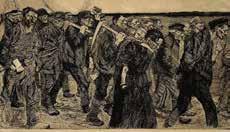
review: Käthe Kollwitz’s stark, intimate portraits of war, on display at the cedar rapids museum of Art, feel all too familiar
By Andrea Truitt,
Nov. 12
With ‘Salt, Fat, Acid, Heat,’ chef Samin Nosrat boiled cooking down to its elements. At Hancher — and with her new book — she reflects on why we set a table in the first place
By Azura Tyabji,
Nov. 20
CINDY CLARK
sad this is happening. —Roslyn B.C.
Not even their fault which is the worse part, huge loss for pinball culture. —Leo C.
This makes me so sad! We had a B Mitzvah as a Jewish community at this venue once and it was superb. I am so sorry to see them close. —Esther H.
Thank you to the team for all your hard work! The pinball spot was near and dear in my household. —Maddie C.
Heather did such an incredible job! Thank you for all of your community collaboration and the fun times, Heather! —Katie R.
Damn it! I loved going to this place. One of my kids and I discovered that they have one of the best secret breakfast cooks in town. And we would also go to Wednesday night free pinball and then catch the Late Shift at the Grindhouse afterwards. This is a serious loss for community and fun in IC. That’s my selfish perspective. On the other side of things, what a lousy time to tell everyone that they are losing their jobs...the day before Thanksgiving? Fucking hell… —Charlie M.
You know what’s not going under. New Pi. I don’t even live there anymore and I’m still pissed that the one plan for that building that included New Pi wasn’t selected. —Adrianne B.
grandparents to the toddlers had fun. Boo! Very disappointing. —Ruth S.B.
This stinks. There are so few activities spaces downtown. Real loss. So sorry for the employees too. Crazy short notice. —Meggan F.
DES mOINES, NOV. 11
I saw you at the Jays CD and Hobby and I was awestruck. You took my breath away with your knowledge about Pokemon. I could hear you talk about about Rellor all day, sigh. Your beauty is unmatched. I wish someday we could go enjoy a sonic hot dog together and eat it like Lady and the Tramp. Until we meet again my sweet prince … <3 xoxox
So many great mems at Spare Me — thanks to all who made it possible. —Kate C.
Where can a person get kinky on the weekend?
Are there any time-efficient volunteering opportunities?
Read the answers on Pg. 63
This was the best place for celebrating birthdays. The whole family, from the
Submissions may be edited for clarity and length, and may appear in print or online. Think you’re the subject of one? reach out: littlevillagemag.com/missed-connections
< Donate to sustain our work
On Nov. 30, eight months after they opened in downtown Iowa City, the cat cafe Kitty corner Social club marked its 200th cat adoption. The cafe’s adoptable inhabitants are sourced from two local animal shelters, the Iowa City Animal Care and Adoption Center and the Cedar County League of Animal Welfare (CCLAW).
A program led by Allison Levin, professor of Counselor Education at the University of Iowa, has received a $2.1 million grant from the U.S. Department of Education. Project STEM Ready-VR (short for Project Strengthening Training and Employment Models for Readiness in STEM within Vocational Rehabilitation) is a five-year initiative. “This project is about increasing access and preparedness for students with disabilities to enter and succeed in STEM careers,” Levine said. “By combining virtual simulation with AI-driven feedback, we can help students and professionals alike build confidence and competence in real-world situations.”
James Wetzel, an adjunct assistant professor of physics at Coe College in Cedar Rapids, has been awarded a $1.3 million grant from the U.S. Department of Energy’s Office of High Energy Physics. Wetzel conducts research into nuclear and experimental particle physics. “Electrons—you’re on notice,” he posted in celebration.
Iowa City West High Principal mitch Gross was selected as the 2026 Iowa High School Principal of the Year by the School Administrators of Iowa (SAI) association. “Mitch’s passion for education is rooted in his belief that it is an instrument for social change and a place for students to be their true, authentic selves,” a West High teacher wrote to SAI on behalf of Gross, citing the principal’s “deeply held convictions about equity and justice.”
Hawkeye football senior Kaden Wetjen has been named a finalist for the Jet Award, given annually to “the most outstanding return specialist in college football.” Wetjen, who won the Jet Award last year, has a 28.3-yard punt return average this season as of print time, the highest in the NCAA.
Fully Booked: Recommendations from Local Librarians
Delightful Poetry for Kids
Iloved children’s poetry books as a kid. The poems were fun and silly, and they’d get stuck in my head, just like a song; I can recite a few to this day! As a librarian, children’s poetry still delights me, especially as a tool for language development, literacy support and creative expression. Here are a few newer children’s poetry books that have caught my eye recently.
Poetry can be a hard sell for kids sometimes, but you know what isn’t? Graphic novels! With Poetry Comics, Grant Snider writes and illustrates his poetry using the familiar panels and gutters of comic books. The pictures are simple and colorful, and, most importantly, they work in perfect partnership with the words to emphasize the meaning of each poem. With the appeal of graphic novels and the sparse, yet impactful, language, this is an excellent book for any kiddo, whether they are new to poetry or already in love with it!
Science and poetry come together in Your One and Only Heart by Rajani LaRocca, MD (author) and Lauren Paige Conrad (illustrator). Each poem teaches us about the human heart, from what it is to how it works to why it’s so important. All are accompanied by colorful illustrations that effectively enrich the meaning of the poem. My favorite aspect of this book, however, is the way it plays with opposites—simple and complex, energetic and relaxed—to teach us about the fascinating way our bodies work.
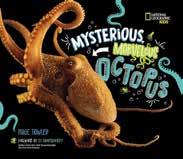
What could be more poetic than a cephalopod? With gorgeous photography, Mysterious, Marvelous Octopus by Paige Towler teaches us about octopuses and the environments they live in through flowing, rhyming text. It reads more like a picture book, as the poetry isn’t arranged in specific verse but rather unfolds narratively across each page. The text is visually playful and illustrative, and would be great for earlier readers or as a read-aloud. Plus, there are octopus facts scattered throughout, and it’s always good to have an octopus fact in your back pocket!
—Alissa Cornick, Des Moines Public Library
2025 Titles to Gift Your Bundle of Joy
The holidays are here again, and so are cozy family storytimes. Here is a short list of books published in 2025 that would make good gifts for children from birth through age 12.
Radka Piro’s latest title in their Stories from Nature series is Whose Baby is This? featuring beautiful illustrations and fun peek-a-boo flaps. Children will love looking for the missing gosling and learning more about the animals and habitats they encounter on the journey.
Fans of maximalism, neon colors and seekand-find adventures will delight in Jennifer Eckford’s 500 Dreams. Marketed as a method of choosing between 20 dreamlands and 500 dreams, the highly saturated color palette and wealth of things to spot may suit daytime readers as well. Short poems feature 20 items to spot on each page, but repeat readers will appreciate the intricate details of each spread and wealth of other items to find.
Head back to “The Pocket” with Lauren Soloy’s second gnome title, The Newest Gnome New readers will take joy in finding out about each gnome’s contribution to their thriving community. Those returning to The Pocket will delight in this lovely exploration of its inhabitants and how they each care for their home.
Another second installment in a series, The Witch in the Tower by Júlia Sardà, follows the magnificent The Queen in the Cave from 2021. Carmela, the middle of three sisters, steps out and discovers worlds within and around herself. Don’t be fooled by the longform picture book package—this is a serious read full of important lessons for readers of all ages.
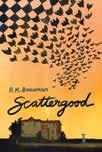
H. M. Bouwman’s historical novel Scattergood is gorgeous, heartbreaking and hopeful. Set in West Branch, Iowa during the summer of 1941 at the Scattergood Hostel for refugees, Scattergood follows soon-to-be 13-year-old Peggy as she navigates loss, love and learning about the ongoing war in Europe. This would make a fabulous gift for a family that reads together!
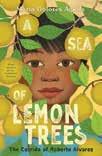
A debut novel-in-verse, A Sea of Lemon Trees by María Dolores Águila, follows 5th grader Roberto Alvarez as his community challenges the Lemon Grove School District’s decision to segregate Mexican-American students. Based on the first successful school desegregation case in U.S. history in California, 1931, A Sea of Lemon Trees is a bittersweet historical fiction just right for middle-grade readers.
Finally, no 2025 gift book list would be complete without the latest Pokémon title, the Pokémon Big Book of Facts. With more than 1,000 tidbits of trivia, Pokémon fans will surely find something new and exciting to explore here.
Be sure to check out ICPL’s website for a complete list of great gift books and other new titles children and their caregivers will be happy to receive this holiday season
—Casey Maynard, Iowa City Public Library
LOCAL NEWS. ♥︎ LOCAL AND SOPHISTICATED, A GOOD MIX ♥︎ I’VE WRITTEN FOR IT: I KNOW PEOPLE WHO WRITE FOR IT. MATT WAS A STUDENT OF MINE. TO ME IT’S INTEGRAL TO WHAT I LOVE ABOUT MY TOWN. PLUS, I ORGANISE MY LIFE USING THE CALENDAR. ♥︎ GOOD, RELIABLE SOURCE OF LOCAL NEWS ♥︎ LOCAL NEWS AND INFORMATION. ♥︎ GOOD JOURNALISM AND NOTICE OF AREA EVENTS ♥︎ I LOVE THAT IT SUPPORTS ALL HUMANS ♥︎ THE ONLY CONSISTENT SNAPSHOT OF THE AREA ARTS SCENE. ♥︎ LOCAL NEWS IS IMPORTANT ♥︎ YOU ARE OUR LOCAL NEWSPAPER, AND YOU DO IT WELL. ♥︎ LOVE SUPPORTING INDEPENDENT LOCAL ENTERTAINMENT/ COMMUNITY/POLITICAL NEWS. OFFERS A FRESH LENS ON INFORMATION. ♥︎ LOVE SUPPORTING LOCAL JOURNALISM AND THE COMMUNITY IT BUILDS ♥︎ LOCAL AND INDEPENDENT AND FREE ♥︎ ITS A GREAT INSIGHT INTO LOCAL HAPPENINGS. ♥︎ IT’S THERE FOR PEOPLE WHO CARE ABOUT THE ARTS, THEIR COMMUNITY, AND THEIR NEIGHBORS. ♥︎ ALL THE OTHER LOCAL ALT WEEKLIES STOPPED WRITING ORIGINAL ARTICLES ♥︎ ALL NEWS IS LOCAL, AND LV IS THE MOST HONEST LOCAL SOURCE I’VE GOT. ♥︎ LOCAL NEWS, IDEAS, EVENTS, POLITICS ♥︎ IT COVERS NEWS STORIES AND EVENTS THAT ARE NOT ACCIDENTS, MURDERS AND OTHER VARIOUS UNHAPPY EVENTS. ♥︎ GOOD COVERAGE OF LOCAL AND STATE POLITICS. THE QUALITY OF THE WRITING IS VERY GOOD. LOVE THE COMICS! ♥︎ RELIABLE AND WILL PRODUCE SOURCE FOR NEWS AND INFORMATION, LOCAL ENVIRONMENT. GOING LOCAL EVENTS ARE HAPPENING, LOCAL ISSUES. ♥︎ THE THING THAT IS SPECIAL ABOUT LV IS THAT I GRAB A COPY WHEN WE GO DOWNTOWN, AND THEN CAN READ IT -OFF AND ON - FOR SEVERAL DAYS. I’M NOT AS INTERESTED IN CEDAR RAPIDS THAN I AM IN IOWA CITY, BUT THAT’S OKAY. SOMEDAY I MAY NEED TO DRIVE UP THERE AND I WILL KNOW WHERE TO EAT. ♥︎ IT IS ONE OF THE BEST SOURCES OF LOCAL CULTURE ♥︎ IT’S OUR ONLY LOCAL NEWS SOURCE ♥︎ LV IS A CONSISTENTLY RELIABLE SOURCE OF JOURNALISTIC INTEGRITY AND SPEAKS TRUTH TO POWER AT A TIME WHEN DOING SO IS PERHAPS MORE NECESSARY AND MORE IMPORTANT THAN IT HAS EVER BEEN. LOVE THIS FOR IOWANS! ♥︎ COVERS NEWS AND COMMUNITY AFFAIRS THAT MATTER TO ME. ♥︎ I LIKE LOCAL CONTACTS ♥︎ TOO OFTEN MEDIA FOCUSES ON JUST NEWS AND JUST THINGS THAT HAPPEN OUTSIDE OF THE COMMUNITY. THERE IS TIME FOR CELEBRATION, FOR SHARING, FOR RECORDING THE ART, LIFE, AND HISTORY THAT IS BEING MADE IN OUR STATE. ♥︎ FREEDOM OF PRESS ♥︎ FREE (THOUGH I SUBSCRIBE), GOOD WRITING (ARTS STUFF COULD BE BETTER), LOCAL NEWS ♥︎ LOCAL LOCAL LOCAL ♥︎
Local, sophisticated, trustworthy and smart. And always, endlessly in need of cash.
YOU COVER TOPICS THAT INTEREST ME IN GREATER DEPTH AND/OR FROM DIFFERENT PERSPECTIVES THAN OTHER SOURCES. ♥︎ IT PROVIDES LOCAL NEW, AND INFORMATION AND HAS OTHER ENTERTAINING SECTIONS ♥︎ LOCAL NEWS FOR HE WIN! ♥︎ IT IS A GREAT WAY TO KEEP IN TOUCH WITH ALL THE CULTURAL OPPORTUNITIES IN OUR AREA! I LOVE IT! ♥︎ INDEPENDENT, LOCAL NEWS IS INVALUABLE ♥︎ LOCAL NEWS IS GREAT & KNOWING WHAT’S GOING ON/KEEPING UP WITH SUPPORTING THE ARTS AND THE CITY OF LITERATURE. ♥︎ GREAT CULTURAL INFO ♥︎ YOU COVER LOCAL POLITICS IN AN HONEST AND ACCESSIBLE WAY, ARTS AND MUSIC COVERAGE, EVENTS CALENDAR ♥︎ SUPPORT LOCAL BUSINESSES, CREATIVES, AND EVENTS ♥︎ CAN’T REALLY REPLACE IT WITH AI, OFC, BUT ALSO BECAUSE IT STANDS FOR SOMETHING IMPORTANT - THE IDEA THAT REGARDLESS OF THE PROFITABILITY OR PRACTICALITY OF BEING ALWAYS FREE AND IN PRINT, IT’S THE PRINCIPLE THAT STANDS REGARDLESS. ♥︎ UPDATE ON LOCAL EVENTS ♥︎ LOCAL NEWS AND ARTS, CONNECTION TO LOCAL EVENTS AND BUSINESSES, COMMUNITY. ♥︎ SO GOOD TO LIVE IN A PLACE WITH A SUCH A GOOD LOCAL INDEPENDENT MONTHLY ♥︎ IVE READ LV SINCE I WENT TO COLLEGE IN THE LATE 90’S. IT FEELS LIKE HOME AND HELPS ME STAY CONNECTED TO MY COMMUNITY ♥︎ ITS WONDERFUL TO HAVE A LOCAL NEWS SOURCE THAT CARES ABOUT EVERYTHING FROM POLITICS TO CULTURE. YOU CAN ADD MORE FOCUS ON OUR PARKS/ ENVIRONMENT AND COMMUNITY ENGAGEMENT OPPORTUNITIES. ♥︎ LIBERAL, FREE PRESS, VIEWPOINTS ARE NEEDED NOW MORE THAN EVER ♥︎ NON-TRADITIONAL ♥︎ I LIKE AN ALTERNATIVE TO “CORPORATE NEWS”. I ENJOY SUPPORTING MY LOCAL COMMUNITY ♥︎ I GET THE LOCAL PERSPECTIVE ON ARTS AND MUSIC. ♥︎ LOCAL NEWS AND EVENTS ♥︎ HONEST JOURNALISM ♥︎ IT IS INTERESTING ARTICLES AND EVENTS CALENDAR ♥︎ GREAT COVERAGE OF LOCAL AND STATE NEWS. BETTER THAN THE PC OR HAZETTE. CONGRATULATIONS! ♥︎ I LIKE THE LOCAL ASPECT AND IT’S INTENTIONALITY AROUND ISSUES THAT CLEARLY IMPACT US HERE AT “HOME”, ALSO GREAT PLACE TO FIND OUT WHAT’S HAPPENING ♥︎ A UNIQUE NEWS/EVENTS RESOURCE ♥︎ LOCAL AND INDEPENDENT ♥︎ I LIKE READING THE LETTER TO THE EDITOR ARTICLES SO I CAN RAISE MY BLOOD PRESSURE. ♥︎ LOCAL PEOPLE COVERING LOCAL EVENTS. ♥︎ IT’S THE BEST SOURCE FOR KNOWING WHAT IS HAPPENING ON A LOCAL LEVEL - AND WE NEED TO ACT AND UNDERSTAND WHAT HIS HAPPENING LOCALLY TO GET TO A BETTER PLACE NATIONALLY. ♥︎ AMPLIFYING VOICES THAT ARE OTHERWISE OVERLOOKED ♥︎ IT’S A LOCALLY-OWNED NEWS Little Village is headquartered in Iowa City and covers and distributes throughout Eastern and Central Iowa.
ENTITY, AND THERE ARE SO MANY FEWER OF THOSE IN OUR COUNTRY TODAY. ♥︎ THERE IS NO BETTER PLACE TO LEARN ABOUT CULTURAL HAPPENINGS IN THE IOWA CITY AREA. IT’S AN INCREDIBLE RESOURCE FOR KNOWING WHAT’S GOING ON IN MY CITY. PLUS THE NEWS COVERAGE, ALTHOUGH LIMITED, IS TOP NOTCH! ♥︎ LOCAL MEDIA KEEPS COMMUNITIES GROUNDED AND CONNECTED. ♥︎ IT IS A WONDERFUL COMMUNITY RESOURCE! ♥︎ LOCAL INFORMATION ♥︎ IT’S NEWS AND STORIES I TRUST ♥︎ I TRUST THE JOURNALISM, AND AM HORRIFIED DAILY OF LIES AND OTHER FALSEHOIDS FED TO ALL OF US GENERATED IN THIS RECENT HISTORY OF OUR CULTURE. ♥︎ LOCAL COVERINGS IN THE COMMUNITY AND I WANT TO SUPPORT THAT ♥︎ LOCAL NEWS ♥︎ LOCAL! ♥︎ IT’S MOSTLY ABOUT COMMUNITY CONNECTION. LITTLE VILLAGE FILLS A LOT OF GAPS IN IOWA CITY, ESPECIALLY WITH THE DECLINE OF LOCAL NEWS MEDIA. ♥︎ LOCAL NEWS, COMMENTARY, AND EVENTS ARE WHAT I LOVE ABOUT THE IOWA CITY AREA. IT’S EDGY AND SMART, WHICH CAN BE HARD TO FIND THESE DAYS. ♥︎ LOCAL MEDIA MATTERS. ♥︎ LOCAL, PROGRESSIVE OUTREACH. ♥︎ GOOD UP TO DATE LISTING ON COMMUNITY EVENTS ♥︎ INFORMATIVE, FUN TO READ. LOVE THE LETTERS TO THE EDITOR ♥︎ LOCAL! INDEPENDENT!
♥︎ I GET MORE DETAILS ABOUT STATE AND LOCAL POLITICS ♥︎ GREAT STORIES AND NOTIFICATIONS OF EVENTS ♥︎ LV DOES MORE THAN REPUBLISH IOWA CITY GOVERNMENT PRESS RELEASES. IT IS A PLATFORM FOR THE OTHERWISE UNHEARD VOICES IN OUR COMMUNITY AND PROVIDES MORE IN-DEPTH ANALYSIS OF ISSUES THAN ANY OTHER LOCAL SOURCE. ♥︎ IT’S STILL INFORMATIVE FOR DIFFERENT TYPES OF PEOPLE ♥︎ I AM A BIG ADVOCATE OF LOCAL & COMMUNITY LEVEL ACTION / INVOLVEMENT! ♥︎ I FIND IT DIFFERENT. ♥︎ REAL NEWS, COMMUNITY INVOLVEMENT ♥︎ HAS INFORMATION NOT GENERALLY FOUND OR READILY ACCESSED BY OUTER MEDIA IN THE AREA. ♥︎ CONNECTS ME TO THE COMMUNITY ♥︎ KEEPS ME UP TO DATE ON LOCAL EVENTS, ARTISTS AS WELL AS POLITICAL AND SOCIAL ISSUES IN IOWA ♥︎ LOCAL ♥︎ LOCAL INFO AND OPINION ♥︎ BECAUSE YOU PROVIDE DECENT COVERAGE OF THE STATEHOUSE. ♥︎ LOCAL, UNAFRAID, TRUTHFUL TRUSTWORTHY ♥︎ IT’S INDEPENDENT, PUBLISHES LETTERS TO THE EDITOR FROM ME EVEN THOUGH I NO LONGER LIVE IN IOWA CITY BUT AM STILL HEAVILY INVOLVED, AND IT HAS A UNIQUE, LOCAL LENS ♥︎ COMMUNITY INVOLVEMENT, SUPPORT OF LOCAL BUSINESSES, ARTISTS, AND ORGANIZATIONS ♥︎ INDIE, LOCAL, PROGRESSIVE VALUES, CONNECTION TO WHAT’S HAPPENING, SUPPORT LOCAL BUSINESS, FUN TO
You can help keep it going. Donate or subscribe to LV today!
THUMB THROUGH, ARTS RELATED EVENTS ♥︎ PUBLICLY PRODUCED, PUBLICLY SUPPORTED MEDIA IS VITAL IN THE PEOPLE’S FIGHT AGAINST MISINFORMATION AND FASCISM. ♥︎ THEATER DATES, BOOK REVIEWS, ART, FOOD ♥︎ GOOD WRITING. APPRECIATE THE LIBERAL POV. ♥︎ INDIE JOURNALISM IS WHERE COMMUNITY THRIVES ♥︎ LOCAL CONNECTIONS ♥︎ I LIKE IT BECAUSE IT PROVIDES ME WITH EVERYTHING LOCAL HAPPENING WITHIN THE MONTH! IT HELPS ME PLAN OUT IF I HAVE THE TIME TO GO OR NOT. I’VE ALSO GOTTEN REALLY GOOD FOOD RECOMMENDATIONS FROM IT WHICH I’M APPRECIATIVE OF. ♥︎ THE EVENTS CALENDAR ♥︎ I USED TO LIVE IN IOWA DURING COVID. WHEN I LEFT POST COVID, I REALIZED HOW MUCH I MISSED OUT ON. I HAVE A RENEWED CHANCE TO BE INVOLVED IN THE COMMUNITY AS MUCH AS POSSIBLE AND EXPERIENCE EVERYTHING IOWA HAS TO OFFER. I LOVE READING LITTLE VILLAGE AND READING ABOUT DIFFERENT BUSINESSES, PEOPLE’S EXPERIENCES, OPINIONS, AND NEWS ABOUT WHAT’S GOING ON HERE!! IT’S NOT JUST POLITICAL BUT GETTING TO READ ABOUT THE ART SCENE IS REFRESHING AS WELL. THIS MAGAZINE IS IMPORTANT TO ME BECAUSE IT IS THE GATEWAY TO THE COMMUNITY FOR ME. I ALWAYS LOOK OUT FOR A NEW PRINT AT THE BEGINNING OF EVERY MONTH. ♥︎ KEEPS ME CONNECTED TO THE COMMUNITY, BOTH IN THE SPIRIT OF HOW PEOPLE ARE FEELING AND EVENTS THAT I ENJOY ATTENDING OR PARTICIPATING IN. ♥︎ BECAUSE I BELIEVE IN SUPPORTING LOCAL. ♥︎ HIGH QUALITY LOCAL NEWS ♥︎ PHYSICAL MEDIA IS SO IMPORTANT ESPECIALLY WHEN IT’S LOCAL MEDIA ♥︎ AS LOCAL NEWS COVERAGE GROWS MORE AND MORE RARE, YOUR COVERAGE REMAINS ONE OF THE ONLY TRULY LOCAL
SOURCES ♥︎ FUN TO READ ♥︎ I LIVE OVER AN HOUR AWAY BUT LOVE IOWA CITY AND ITS VIBE. SO I LIKE TO READ ABOUT ALL THE GOINGS ON AND DECIDE WHERE TO SHOP, EAT, AND SEE PERFORMANCES! I ALSO APPRECIATE HAVING A LOCAL PUBLICATION THAT REFLECTS MY POLITICAL LEANINGS. IT’S IMPORTANT TO FEEL LIKE PART OF A LIKEMINDED COMMUNITY IN THESE TRYING TIMES! ♥︎ THE STORIES ARE FASCINATING AND DIFFERENT. THANK YOU FOR TELLING ME MORE ABOUT SHILO AND FOR HELPING ME LEARN ABOUT SMUTTY CORN. ♥︎ I TRUST THE PUBLISHER ♥︎ KEEPS ME IN TOUCH WITH CULTURAL EVENTS AND POLITICAL LIFE OF MY COMMUNITY
♥︎ INDEPENDENT JOURNALISM IS SO IMPORTANT ♥︎ ENJOY CHECKING OUT THINGS IN THE SURROUNDING AREA ♥︎ EVENTS CALENDAR AND LOCAL, INDEPENDENT JOURNALISM
♥︎ IT HELPS ME FEEL LIKE I’M PART OF A LARGER COMMUNITY. ♥︎ ACTUALLY READABLE. ORIGINAL ART.
PEAK IOWA
There’s no place like home—for better or worse. Brush up on some Hawkeye State history, mystery and scandal.
Icons Play Among the Stars
From Mount Pleasant’s James Van Allen (“Father of Space Science”) to Beaconsfield’s Peggy Whitson (who holds the U.S. endurance record for most cumulative time in space at 695 days) to the July 2025 TRACERS mission to study space weather, developed and tested at the University of Iowa, our state has had a long and fruitful relationship to NASA and space exploration in the United States.
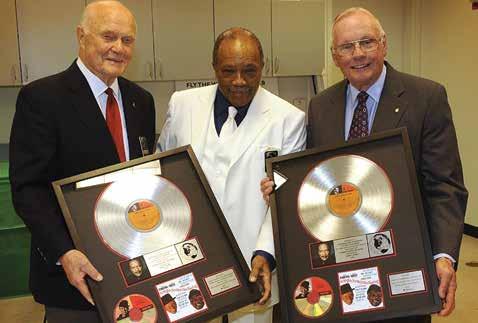
One lesser known component of that? Bart Howard, a composer from Burlington, Iowa, whose 1954 song “Fly Me to the Moon” became the soundtrack to the space program’s mid-20th century Apollo program. Frank Sinatra’s 1964 recording of the tune played when Apollo 10 orbited the moon in 1969, and again on Apollo 11, just before the first moon landing. It was also played at the 2012 memorial service for Apollo
11 mission commander Neil Armstrong.
The song was first recorded by comedian Kaye Ballard. Peggy Lee, who made a cover in 1960 and sang it on The Ed Sullivan Show later that year, convinced Howard to change the name from “In Other Words” to the title it’s known by today.
Bart Howard, born June 1, 1915 as Howard Joseph Gustafson, grew up in a musical family, his piano lessons financed by his father’s bootlegging. He left Iowa at 16 years old to tour the vaudeville and burlesque circuits as pianist for British conjoined twins Daisy and Violet Hilton. During World War II, he served as a musician in the U.S. Army, and in the 1950s, he became an established presence at the Blue Angel Night Club in New York City.
While there, he served as mentor to singer Johnny Mathis, who recorded several of his songs and referred to Howard as “my Cole Porter.” Howard brought his Iowa hospitality with him to the big city, sharing meals with Mathis in his home, as the Black singer was frequently discriminated against at area restaurants. Also during that time, he met Bud Fowler. The couple remained together for 58 years, until Howard’s death in 2004. The two are buried side by side in Clarksville, Texas.
—Genevieve Trainor
A Fashionable Writer from Iowa City
The paths in Hickory Hill Park were covered in leaves, and Oakland Cemetery was full of deer—whole families, plodding in the grass, lying down—when my wife and I began our search. We’ve walked through there so many times, but coming with a mission, it seemed that we’d hardly seen any of it.
We wanted to find the gravestone of Eleanor Hoyt Brainerd, the novelist born in Iowa City in 1868 to noted abolitionists Walter Hoyt and Louisa Smith. In the style of Eugène Sue’s The Mysteries of Paris, Brainerd wrote serialized narratives that appeared in newspapers all over the country—often short stories
John Glenn (left), Quincy Jones and Neil Armstrong pose with records of "Fly Me to the Moon" during NASA's 50th anniversary gala in 2008. Bill Ingalls / Public Domain
Plum Grove Historic Home, 1030 Carroll St, Iowa City. Kellan Doolittle / Little Village
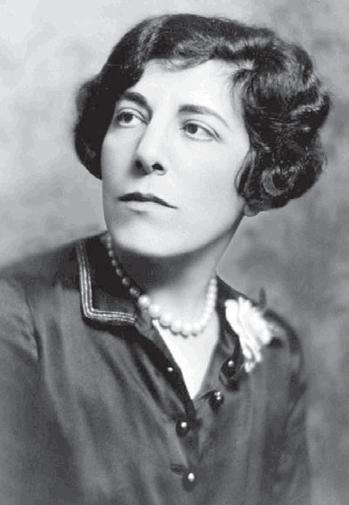
Illustration of "Miss Eleanor Hoyt" (18681942). From The Critic, June 1902 (vol. XL, no. 6), page 527. Public Domain
about precocious Midwestern girls on adventure in the big city. She also wrote for magazines in New York and reported on fashion in Paris. Of her 10 novels, three of them were turned into silent films. She retired in California, dying at the age of 75.
Brainerd was the type of person who, if she attended dinner, would be the subject of an article the next morning. But her obituary came on the other side of her career, almost 15 years after her last publication, and it’s more like a missive, collapsing her life into a handful of facts: author, educator, died in Pasadena.
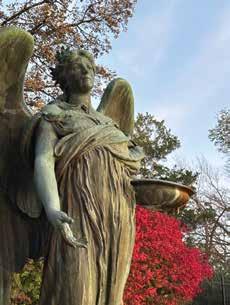
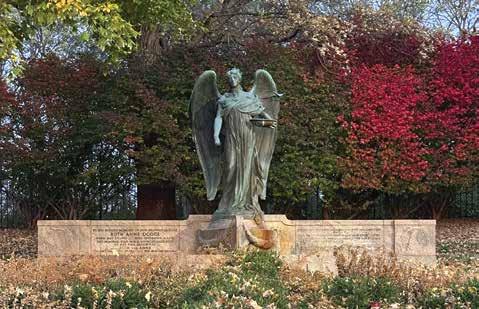
It took us half an hour, going from stone to stone, brushing leaves off the downtrodden ones, before we found her among the family plot. It seemed that it couldn’t have been more obvious. I had been walking past Brainerd’s resting place my entire life, on my way to see the Black Angel.
Only two miles away from her grave is the home in which she grew up, Plum Grove—off Kirkland Avenue, behind a fence and tall bushes, looking almost like a brick schoolhouse. Plum Grove is where Robert Lucas, first governor of the Iowa Territory, retired with his wife, Friendly, in 1842. It was put on the historic registry in 1946 and restored to the way Lucas left it. What that meant for me, going in there, was that it looked similar to the way the Hoyt family must have found it in 1866—the way that Eleanor would have first known it.
—William Lowell
Grinnell and the ‘Gadget
Guy’
of Jazz
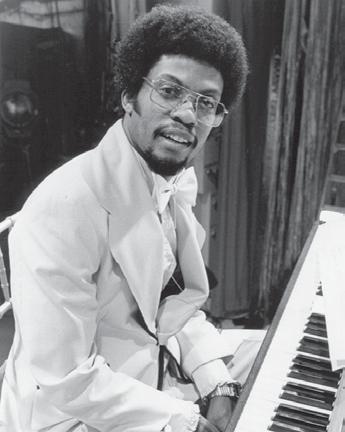
In his last performance in Iowa City, jazz great Herbie Hancock mentioned how he felt “at home in Iowa” because of his years at Grinnell College. For most artists, a nod to their alma mater might sound like simple gratitude. In Hancock’s case, it was an understatement. His time at Grinnell did not just influence him personally, it helped shape the way we hear modern music. What he learned in a small Iowa town altered the course of jazz, funk, electronic music and even early hip hop.
Hancock began attending Grinnell College in the late 1950s as an electrical engineering major. His lifelong fascination with how things work fueled his interest in circuitry and mechanics, but
Delhi, India
jazz kept pulling him away from equations and into improvisation. As he put it, “Jazz was occupying the time I should’ve been studying physics and math.”
Ultimately, he graduated with a double major in music and electrical engineering. That combination became the blueprint for his innovations.
Hancock created his own performance opportunities, forming a student big band composed of classmates with varying skill levels.
“I had no idea that what I was doing was amazing ear training,” he later said. The experience became a turning point, convincing him to shift his major to composition and pursue life as a professional musician after graduation.
Hancock’s engineering mindset followed him into his career. With Miles Davis’s “Second Great Quintet,” he became one of the primary architects of the post-bop sound.
In the 1970s, Hancock was an early adopter of synthesizers in jazz and funk, using the ARP Odyssey and other instruments to blaze entirely new sonic terrain. Because of his background in circuitry and electronics, he had a keen ability to communicate with developers of these new electronic instruments and innovate alongside them. This experimentation led to Head Hunters, the first platinum-selling jazz album, on which Hancock fused deep funk grooves with electronic textures that had never been heard before. The project showcased his dual identity as both musician and engineer, the “gadget guy” of jazz.
His influence extended far beyond his own recordings. Hancock shared his technical knowledge with other artists, even showing Quincy Jones his
computer-based recording setup in the early 1980s. That exchange with Michael Jackson’s collaborator helped shape some of the most successful pop productions in history. He also brought the music and technology connection to children, famously demonstrating synthesizers on Sesame Street, saying, “Technology is just another instrument, another way to explore.”
Hancock also championed new electronic sounds he did not invent, including early hip-hop turntable scratching. His hit “Rockit” from the album Future Shock propelled scratching into the mainstream and introduced the technique to an international audience. Herbie Hancock’s story is a reminder that groundbreaking ideas can emerge anywhere, even at a small liberal arts college surrounded by cornfields.
—M.T. Bostic
Snap, Crackle, Pop Off
Marshmallows, Rice Krispies, a little butter and your mom’s best 9”-by13” Pyrex baking dish—the only ingredients needed for that ubiquitous, always-welcome fixture of the Midwestern potluck, the Rice Krispie Treat.
The alchemist who helped turn Rice Krispies from a mediocre, snap-cracklepopping milk-sponge cereal into a dessert icon was Iowa State University grad Mildred Day. The year was 1929.
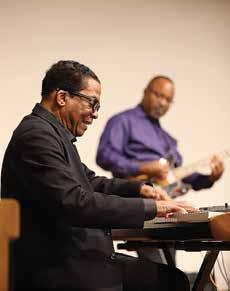
Left: Herbie Hancock on a CBS television program about jazz in 1976. CBS / Public Domain
Right: Hancock performs during a jazz workshop at the U.S. Embassy in New
in January 2024. U.S. Embassy New Delhi / Public Domain
Day was an employee at Kellogg’s; as a married woman, her bosses had to grant her special dispensation to work for the company. Inspired by the classic boardwalk treat of popcorn balls—the kernals stuck together with melted sugar—Day and Malitta Jensen, a coworker from Tampa, tried to recreate the concept with Rice Krispies and melted marshmallows. It worked like a crunchy dream.
Day’s daughter, Sandra Rippie, called her an “outstanding professional woman years before women were given equal rights,” per the Des Moines Register
However, Rippie claims she didn’t learn about her mother’s role in inventing the Rice Crispie Treat until she was an adult. Her mother didn’t like to make them—probably because the first test of the dessert was a grueling two-day marathon in which Day produced tray after tray for a Kansas City Camp Fire Girls fundraiser. The treats were a hit, of course, but one can only stare down the barrel of yet another gloopy mass of marshmallow so many times before balking.
“If you’d made them for two weeks from 6:30 in the morning until 10:30 at night,” Day told her daughter, “you wouldn’t want to make them again either.”
—Malcolm MacDougall
The Cornfield Prophet
As A History of Iowa author Leland L. Sage wrote, “the history of American agriculture could be written in the form of a biography” of Iowa-born scholar and statesman Henry Agard Wallace, who was born on his father’s farm near Orient, Iowa in 1888.
The elder Henry C. Wallace was a dairy instructor at Iowa State University before he became the Secretary of Agriculture for Republican presidents Warren Harding and Calvin Coolidge. While working at ISU, he befriended pioneering geneticist George Washington Carver, who tutored the younger Wallace on botany during after-school walks through the meadows of Ames. These lessons with Carver—born into slavery before becoming ISU’s first Black student in 1891—made deep impressions on Wallace.
Developing one of the first hybrid seed varieties, Wallace co-founded the Hi-Bred Corn Co. in 1926. The company was later renamed Pioneer Hi-Bred Corn Co., and sold for $10 billion to Du Pont.
Wallace was a staunch critic of President Herbert Hoover and advocate for the New Deal, leading to an appointment in Franklin D. Roosevelt’s cabinet. Historian Arthur Schlesinger declared Wallace “the best Secretary of Agriculture the country ever had.”
As the Axis powers spread across Europe and Asia, fascist sympathies festered in the U.S., especially among the ruling class. Media mogul William Randolph Hearst proudly published articles by Hitler and Mussolini while his “wrecking crew”
for $600,000,000
of reporters targeted anything they deemed “unAmerican,” including immigrants and organized labor. Meanwhile, automobile tycoon Henry Ford spread antisemitism in his Dearborn Independent newspaper. On Feb. 20, 1939, the German-American Bund hosted a Nazi event at Madison Square Garden attended by 20,000 people, promoted as a “Pro-America Rally.”
“They are patriotic in time of war because it is to their interest to be so,” Wallace wrote of America’s flag-toting titans of industry, “but in time of peace they follow power and the dollar wherever they may lead.”
In 1944’s “The Danger of American Fascism,” Wallace described a fascist as a person “whose lust for money or power is combined with such an intensity of intolerance toward those of other races, parties, classes, religions, cultures, regions or nations as to make him ruthless in his use of deceit or violence to attain his ends.”
At the 1944 Democratic Party convention in Chicago, Harry S. Truman was chosen by party bosses as FDR’s running mate over Wallace, a move the party’s progressive wing called “a coup.” Roosevelt died during his fourth term on April 12, 1945, and Truman was sworn in as commander in chief.
The new president surrounded himself with business hawks and cold warriors, whose visions for the country greatly differed from Wallace, who was fired as Secretary of Commerce by Truman in 1946. Shortly after, Wallace became the editor of The New Republic magazine, using his pen to criticize the administration and outline his vision for a truly free and democratic society.
The Taft-Hartley Act of 1947 greatly diminished the power of labor unions, while Truman’s Executive Order 9835 authorized investigations into the beliefs and associations of federal workers. Congress passed the National Security Act that year, creating the National Security Council and the CIA. The bipartisan House of Un-American Activities Committee set their sights on the political left, paving the path for Sen. Joseph McCarthy’s witch hunts in the 1950s.
Wallace decided to run for president as an independent, proclaiming, “There is no real fight between a Truman and a Republican. Both stand for a policy which can lead to war in our lifetime and make war certain for our children. The American people must have more than a choice between evils. They must have a chance to vote for the greatest good for the greatest number.”
Running on the Progressive Party ticket, Wallace championed civil rights, labor rights, women’s rights, and peaceful co-existence with the Soviet Union. His running mate, U.S. Senator Glen H. Taylor from Idaho—also known as “the singing cowboy”—had attended the Southern Negro Youth Conference in segregated Birmingham, Alabama, where he was beaten and arrested by police. The incident “dramatizes the hypocrisy of spending billions for arms in the name of defending freedom abroad, while freedom is trampled on here at home,” Wallace remarked.
Journalist H.L. Mencken, who covered the Progressive Party’s founding convention in Philadelphia in 1948, unsympathetically characterized Wallace supporters as “gangs of dubious leaders, slick
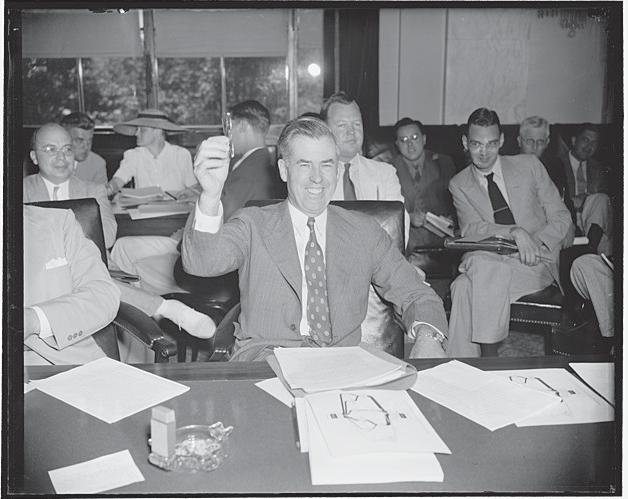
Secretary of Agriculture Henry A. Wallace boosts President Roosevelt's suggestion
in rural security loans. Harris & Ewing / Public Domain
communists, obfuscators, sore veterans, Bible-belt evangelists and mischievous college students.” Casting a different light, a youth delegate at the convention, future Democratic presidential candidate George McGovern, recalled in a PBS interview, “The people I met at that convention were just ordinary farmers and workers, just ordinary Americans from across the country. I thought it was wonderful.”
Controversially, Wallace accepted the endorsement of the Communist Party, USA. Despite Wallace describing himself as a “progressive capitalist,” he was smeared as a “Russian dupe” or a “closet Bolshevik.”
As early as 1943, J. Edgar Hoover’s FBI opened a 500-page file on Wallace, obtained by the Des Moines Register in 1983 through the Freedom of Information Act, revealing how the Bureau tapped his phone, opened his mail and placed his associates under surveillance.
On the campaign trail, Wallace and his supporters constantly faced attacks from racists and anti-communists armed with baseball bats, shotguns and Molotov cocktails. Back in Iowa, Wallace was barred from campaigning on the University of Iowa campus. He moved his rally to a local park, where nearly 3,000 people gathered, the majority students. Eggs were thrown, missing Wallace but striking a reporter and a child.
Truman was elected by an infamously narrow victory. Wallace found himself in fourth place, even trailing behind the racist Strom Thurmond.
The old guard had won, and the Cold War at home ramped up. The Pittsburgh Press, owned by ScrippsHoward, published the names of nearly 1,000 citizens who signed petitions supporting Wallace’s campaign, along with their home addresses and places of work.
Wallace spent his final days in South Salem, New York, continuing his hybrid research with chickens, gladioli and strawberries. Stricken with ALS, he died at the age of 77. His papers and archives are housed at the University of Iowa.
—Mike Kuhlenbeck
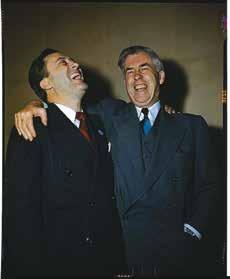
Glen Taylor (left) and Henry A. Wallace. Bettmann Archive / Public Domain
Being for the Benefit of Byron Burford
Born and raised in Mississippi, Byron Burford was drawn to the University of Iowa through an interest in one of its professors: Iowa’s Regionalism artist, Grant Wood. The American Gothic painter mentored Burford as an undergraduate, helping him hone his talents and lifelong love of circuses and carnivals into a distinctive oeuvre.
Burford earned his B.A. from UI in 1942; the same year, Wood died of pancreatic cancer at just 51 years old. After enlisting and serving in the U.S. Army Air Corps during WWII, Burford returned to Iowa City to finish his M.F.A.
A teaching career in the UI School of Art and Art History would keep him here for 38 years, along with his wife of 65 years Kathleen Kane, herself a notable artist. They befriended Kurt Vonnegut and other luminaries of the Iowa City cultural scene.
When not teaching, Burford traveled around the country playing the drums in circus bands. This produced a definitive collection of circus-themed works in a variety of styles, from painting to photo collage to lithograph. More serious subjects, reflecting darker sides of the human condition, were influenced by soldiers and the Vietnam War.
Like Grant Wood, Burford demonstrated an eclectic taste and competence with a variety of media, including oil, prints and engravings. His deft eye for vibrant colors and figurative subject matter are represented in all; even his more muted monochromatic works are still dynamic.
“Mr. Burford surprises us by displaying a very lively imagination, some obsessive themes and a real flair for dramatizing his ideas,” the New York Times’ Hilton Kramer wrote of Burford’s first one-person show in New York in 1966. “Motifs drawn from carnival and circus life, from popular culture and nostalgic glimpses of forgotten wars, are transformed into graphic symbols of a notable complexity.”
Burford died at the age of 90 in 2011, just two years after his wife. Major museums and private collections contain Burford works, including UI’s own Stanley Museum of Art, which has at least 10 paintings depicting musicians, dancers, circus animals, Uncle Sams on stilts, feathered and sequined showgirls, and the octopus ride at an amusement park. The Cedar Rapids Museum of Art presented a popular exhibition three years ago titled “Byron Burford: Ringmaster.”
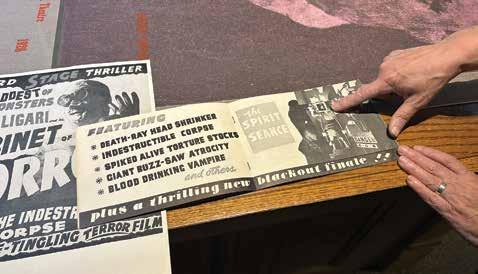
Kathy Rash of Iowa City’s Art Mission is currently overseeing the selling of his works. This includes incredible artifacts from Burford’s side hustle selling Houdini images, and staging a haunted house-themed show.
—John Busbee
Mamie’s House
Aquaint yellow house in Boone, Iowa—a community of just over 12,000—appears relatively unassuming from the outside. But on Nov. 14, 1896, one of the most influential women of the 1950s was born inside. Mary Geneva Doud would go on to become Mamie Eisenhower, the wife of the 34th U.S. President Dwight D. Eisenhower.
Mamie was born the second of four daughters to John and Elivera Doud. Her early years were spent in Cedar Rapids, where her family moved when she was 9 months old. The Douds left Iowa for Colorado in 1905.
She met her husband, recent West Point graduate Dwight “Ike” Eisenhower, in Texas in 1915. The smitten couple was married the next year.
When her husband assumed the presidency in 1953, Mamie became first lady. In this role, she embodied traditional 1950s feminine ideals with her renowned charm, hosting ability and enduring support of her husband. Her style also left its mark, with her oftworn shade of pink being colloquially referred to as “Mamie pink.”
Despite moving in larger circles for much of her life, Doud Eisenhower never forgot her Iowa roots. She frequently returned to visit Boone, with her final visit only two years before her death in 1979.
Her birthplace is one of only two first lady birthplaces designated as National Historic Sites, along with Abigail Adams’ Massachusetts home. Mamie is also the second first lady to be born in Iowa, the first being Lou Henry Hoover, born in Waterloo in 1874.
The Mamie Doud Eisenhower House is not open for visits in the colder months, but its doors will reopen in June.
—Alice Cruse
The Iowa Kid Born to Draw Batman
From the shadows, Iowa City has played a quiet role in the mythology of the Batman, all thanks to the co-creations of Norm Breyfogle. When we saw Ratcatcher save the day in James Gunn’s version of The Suicide Squad? That character came from an IC kid. Any time Jeremiah Arkham showed up in a show, that was Norm. He also gave the world Victor Zsasz, a psycho killer who has graced everything from Batman Begins to the Batman: Arkham video games that have sold
over 32 million units worldwide.
The 1990s marked an explosion for the comic book industry, with sales that broke records and artists who became rock stars in their own right: Todd McFarlane, Jim Lee, Rob Liefeld and more. Breyfogle was among this vanguard, and actually turned down the invitation to join the front lines of Image Comics when it was founded in 1992. He was that good.
Born Norman Keith Breyfogle in Iowa City in 1960, the superhero-obsessed kid would pull issues of Neal Adams’ Batman off of spinner racks at the downtown Thrifty Drug Store.
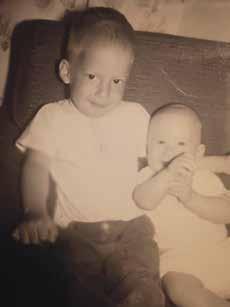
“He would draw his own comics in pencil,” Kevin Breyfogle, his younger brother, said over a phone call. “Batman was his favorite.”
“We used to go into separate rooms and draw scenes of gladiators fighting,” he continued with a laugh. “Then we would compare them.”
As a young teen, Norm’s sketch of Robin appeared in an issue of Batman Family as part of an amateur contest that would tether his destiny to the caped crusader for life.
Norm settled down in Los Angeles after college, going after technical and commercial gigs that paid the bills, but never taking his eye off of Gotham City. He landed some back-up stories here and there, hopping between Marvel Fanfare and a ninja series called Whisper with First Comics. His big break came in 1987 with a back-up story in Batman Annual #11
The man could carve a nasty panel. His Batman was sharp and mean, menacing the streets of Gotham like a demon borne from the night. NB always brought energy to the page with experimental layouts that broke borders and forced the eye forward. These kinetic visuals, along with hardboiled scripts from Alan Grant, meant readers were trying to keep up in the best possible way.
White House portrait of Mamie Eisenhower in her signature "Mamie pink."
White House / Public Domain
Norm (left) and Kevin Breyfogle.
Courtesy of Kevin Breyfogle
He pushed the format and had fun doing it, too; you never knew when the edge of a page would just bleed off into an inky cloud of bats. His versions of Clayface, featured in the historic Mud Pack storyline, each brought their own heartbreak, gravitas and goo. The tale set the gold standard for what the character could be; fans can expect some of these moments to ooze into the upcoming Clayface film coming out next fall.
When Neal Adams redesigned the new Robin, Norm was the creator who put a bo staff in his hand. It remains one of his most notable traits to this day. Beyond his drafting skills, Breyfogle’s delivery was prolific. Between 1987 and 1992, he drew hundreds of pages, pumping out over 65 issues between the Detective Comics, Batman and Shadow of the Bat titles alone.
“I don’t know how he did it,” Kevin, a professional painter himself, confesses. “He was pencilling two books a month, which is 44 pages. Plus he made thumbnail sketches of each page.”
According to The Comics Journal, this era bridged
the gap between Frank Miller’s Dark Knight and Tim Burton’s landmark film. In the midst of this, somebody had to do the consistent, month-to-month heavy lifting, bringing fresh takes to well-worn characters and taking us to new depths of darkness within the walls of Arkham.
"THE FIrST TImE I SAW HIS PENcILS, I WAS AWESTrUcK."
—ALAN BRENNERT
In this, Norm Breyfogle remains the most underrated Batman artist of all time. This guy was our MVP, the Cal Ripken Jr. of the cowl. It’s a crime that his work is not more recognized in the pantheon of comic book legends.
Alan Brennert, Breyfogle’s writer and partner on the 1991 graphic novel Batman: Holy Terror, agrees.
“The first time I saw his pencils,” Brennert tells me over the phone, “I was awestruck.”
Breyfogle was tasked with creating a Gotham that had been shaped by a theocratic government, with spires and buttresses soaring into the fog. It was no easy task, taking an already-industrial river town and somehow making it more gothic and grim.
“Some folks would think that Norm had a sketchy style, but he was capable of doing incredible rendering,” Brennert said. “His sense of architecture was just wonderfully detailed and ornate.”
The book also raises serious ethical questions about overt religious influence over the realms of science, justice and family values. Holy Terror takes us into the bowels of labs where outsiders are imprisoned, tortured and experimented upon, denied their rights granted by nature and God. People are snatched from their families and communities before they are given a chance to realize their full potential as heroes. It’s a little spooky to look at, given the current political climate, but Holy Terror is worth revisiting for Breyfogle’s masterful hand alone.
While Gotham by Gaslight is technically the first of its kind, Holy Terror was the first comic to officially bear the Elseworlds imprint on its cover. It remains a benchmark of quality.
“I really credit Norm with most of the power of the story,” Brennert said. “He created the most fully realized alternate world that DC has ever published.” Breyfogle died in 2018, years after a stroke had taken away his ability to draw. His legacy lives on in various products that have popped up over the years. New Era recently designed a cap based on his style, and the McFarlane Toys Breyfogle Batman figure sold out within months.
And hey, if you want to discover Breyfogle’s dark magic for yourself, there are back issues of his work in the long boxes at Daydreams Comics in downtown Iowa City. Get to digging.
—Lee Keeler
A Sparky of Genius
This Modern World, the long-running satirical comic that Dan Perkins publishes under the pen name Tom Tomorrow, came to life in Iowa City during the mid-’80s. Perkins first began sketching the strip while working at a downtown copy shop, though his passion for cartooning developed much earlier when his parents first moved to Iowa City in 1966.
“When I was around 6 years old, I was very into Peanuts, and then I started getting into Mad Magazine,” Perkins said. “My dad would take me to the university’s library, which had a pretty good comic section, and I would check out these collections of Mad Magazine. Or I was checking out Charles Addams’ collections when I was 7 or 8, because I loved all the comics.”
Dan Perkins’ first published piece was run in the Des Moines Register’s letters section in 1983. Courtesy of Dan Perkins
Iowa Cartoonists
Here are just a handful of the award-winning satirical artists who have called Iowa home.
Ding Darling (1876-1962) moved with his family from Michigan to Sioux City, Iowa at age 10, starting his newspaper career in 1900 at the Sioux City Journal as a reporter. He began publishing political cartoons six years later at the Des Moines Register and Leader Darling spent the bulk of his career at the New York Herald Tribune, which published his work from 1917-1949, including his two Pulitzer Prize winners (1924, 1943). He left New York in 1919, however, creating his cartoons at his home in Des Moines.
After his parents divorced, Perkins moved around with his mother for several years until they resettled in Iowa City when he was a teenager. By the time he graduated from West High in 1979, he had become an underground comics aficionado.
“My path into comics was largely the underground comics—you know, Robert Crumb, Zap Comics, The Fabulous Furry Freak Brothers, that sort of thing,” Perkins recalled. “Those were made possible because every town had a head shop that sold bongs or whatever, and the head shops all carried underground comics.”
While working as a teenaged doorman at The Iowa Theater, a defunct cinema that was located on Dubuque Street, he befriended a projectionist who shared his passion for comics. Later in the evenings when the last film was running, the two were the only ones left working and would stay up talking, which turned Perkins on to a lot of cool stuff.
“I did a year at the University [of Iowa],” he said, “and then I was just an impatient young man who wanted to see the world. My friend the projectionist had moved to New York City with a couple of his friends, and I decided I was going to do that also. So, I moved there at the age of 19 or 20 with maybe $500 to my name, and I worked a bunch of random jobs, including a short-lived competitor of The Comics Journal named The Comics Times. I did paste-up and went to Marvel press conferences, which was great, but then the magazine folded.”
Perkins moved back to Iowa City and made a halfassed attempt at going back to school before landing an awful job printing blueprints while breathing
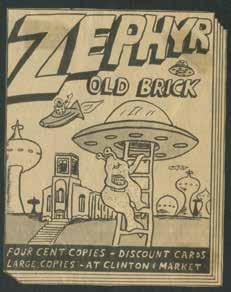
Before there was This Modern World, Dan Perkins, a.k.a. Tom Tomorrow, reproduced comics at Zephyr in Iowa City. Courtesy of Dan Perkins
ammonia in the basement of Plaza Centre One. Work life improved a bit after landing a job at Zephyr Copies.
“That copy shop was the hub, with the entire fucking city coming in to make copies,” he said. “In terms of cartooning, I remember being pretty starstruck when Berkeley Breathed would bring in his originals to copy before sending them out to his syndicate.”
Paul conrad (1924-2010), born in Cedar Rapids and raised in Des Moines, got his start in editorial cartooning at the Daily Iowan while studying art at the University of Iowa. He worked for three decades as chief editorial cartoonist for the Los Angeles Times, snagging three Pulitzer Prizes for his work (1964, 1971, 1984) as well as a spot on Richard Nixon’s Enemies List.
Frank miller (1925-1983) may have “only” taken home a single Pulitzer during his three decades of political cartooning for the Des Moines Register, but the winning piece packed a big punch. “I said—” calls one tiny figure on the precipice of a blasted world to another across a chasm, “We sure settled that dispute, didn’t we!” The unsettling commentary on nuclear arms won in 1963.
Sam Locke Ward hasn’t won a Pulitzer (yet), but Little Village’s own long-time political cartoonist has impressed the Association of Alternative Newsmedia, snagging their top cartooning award in 2020 for his comic Futile Wrath. The fact that the fiercely independent DIY musician and zine-maker has maintained his collaboration with LV for so long is its own kind of award, if you ask us!
berkeley breathed (b. 1957) only lived in Iowa City a few years (his then-girlfriend attended the University of Iowa College of Law), but the locale left an indelible mark on his long-running strip Bloom County, which won a Pulitzer in 1987. The boarding house where many of his characters lived at times was based on the Lindsay House on College Street.
—Genevieve Trainor
Perkins had grown more serious about cartooning, and was attempting to work in a more traditional style with pen and ink on Bristol board. The goal was to get his work into newspapers via syndication—like Breathed’s Bloom County—but Perkins felt that he was just being imitative, and so he forged his own path into the unknown.
“I’d also be at Zephyr late running the machines with a lot of downtime,” Perkins said, “which gave me time to work on my own zines and the collage-based comics that were the predecessors to what I do today. I also used to play with image degradation. Like, I’d take a self-portrait and make a copy of the copy dozens of times until the image was completely abstracted and strange. I guess I can admit however-many decades later that I may have abused my privileges as a copy shop employee to print those up.”
“By this point, I had really grown fascinated with collage,” he continued. “I loved those old mid-century advertising images. The one moment that profoundly changed everything was finding a stack of cheap old ’40s and ’50s Life magazines in an antique store. I bought them, took them home, and immediately started cutting things out and creating these collages from the images, then started messing around with them on the copier.”
This eventually led Perkins to the aesthetic that he developed for This Modern World, because a lot of the strip’s stock characters had roots in those midcentury Life magazines. During those long nights at Zephyrs, he started thinking, I’m really interested in collage, and I’m really interested in comics—how can I combine these two?
“I played around with that idea in various ways,” Perkins said, “so I did another zine, which was maybe a 16-page story that was basically an extended satire of consumerism and technophilia. And then from there, I started developing it into a weekly cartoon, because alt-weeklies were starting to pop up everywhere.”
Throughout the ’80s and ’90s, most cities in America had alternative weekly newspapers that served as community bulletin boards in that preinternet era. The majority of those weeklies have since disappeared like dust in the wind, starting with the Iowa City ICON, which folded at the turn of the century. This was followed by dozens of other closures over the next two decades, including the mother of all alt-weeklies, The Village Voice, which ceased publishing its print edition in 2017 and stopped publishing altogether the following year. Today, only a handful of publications across America continue to carry the torch, including Little Village
“With few very rare exceptions, there was no way you were going to directly get your work into a daily newspaper,” Perkins said. “But the alt-weeklies were open to most anything. Like, someone at a paper would be opening the mail and say, ‘Oh, this is good. Let’s run this.’ You could approach them directly, and I was able to self-syndicate my work and have it run in a lot of those papers nationally.”
The San Diego Reader was the first to run This Modern World in 1987, and Perkins’ reach expanded after he got his hands on the Association of Alternative News Weeklies’ mailing list. Stuffing envelopes with his comic strips and sending them out across the land became a monthly ritual, and the number of media outlets that published the strip continued to snowball. When his syndications dipped in 2009 as an effect of the financial crisis, Perkins’ friend Eddie Vedder tapped him to design the cover art for Pearl Jam’s album Backspacer
“I was very lucky that I was able to establish an audience by running in those papers for so long,” Perkins said. “And as the ground shifted under me, and everything started changing, I just had to adapt. A big part of my income now is my own subscription newsletter that I send out, and that’s a lot of what helps keep me afloat. You could say that I was a counterintuitively decent businessman, at least for an artist.”
Over the years, Perkins has anthologized his This Modern World strips in 14 books that have followed a similar publishing trajectory. The first collection, Greetings From This Modern World, was published in 1992 by St. Martin’s Griffin. Fast-forward a few decades and Perkins is doing it himself again with his most recent Kickstarter-backed anthology that spans 2020 to 2025—the appropriately-titled Our Long National Nightmare—which blew away its $30,000 goal by more than $100K. Fans can also receive This Modern World for as little as $2 a month by subscribing to his weekly newsletter, and it continues to appear in a handful of print publications, including the one you hold in your hands.
“I fucking love that I still have a tangible connection to Iowa City, because it still runs in Little Village,” Perkins said. “My father passed away four years ago, so I don’t have an excuse to get back there like I used to.
But I always liked Iowa City. It’s so full of memories. When I do make it back, I always love walking around and revisiting old haunts. So, as long as my strip is running, I feel like I still have a thread of a connection to this town, which is really important.”
—Kembrew McLeod
The Ultimate Iowa Photographer I
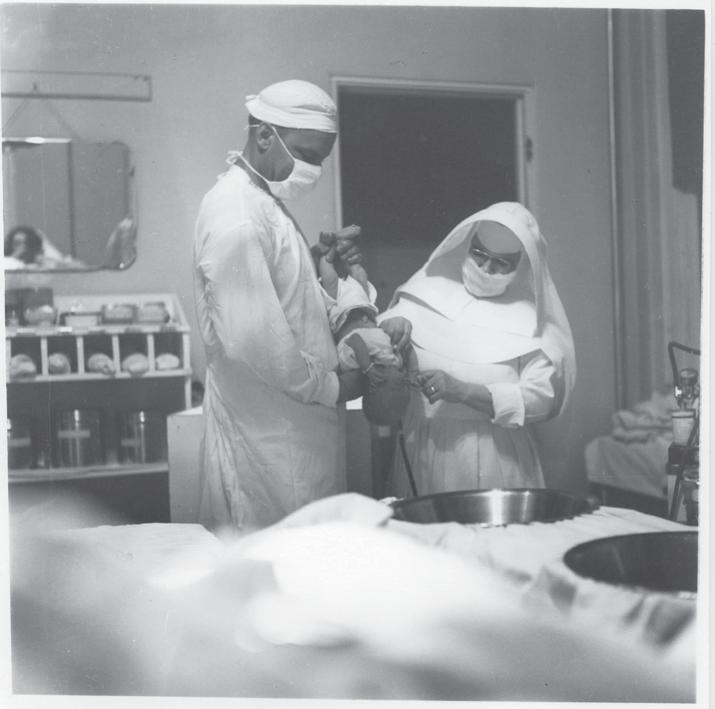
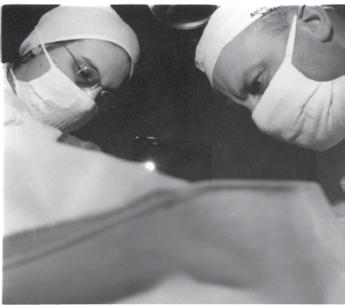
n 1951, Joan Liffring-Zug Bourret was fired from her job as a photojournalist at the Cedar Rapids Gazette. The reason: she was pregnant. She responded by photographing the birth to her son—an audacious proposition at the time. The photos—mostly shots of the doctors, nurses and newborn Artie from her POV on the delivery bed— were deemed “unfit to print” by many of the magazines she submitted them to, but were ultimately printed by the Des Moines Sunday Register, Minneapolis Tribune and Look magazine.
This fierce rebuke of sex-based discrimination helped launch, and set the tone for, Liffring-Zug Bourret’s trailblazing career. Through her own freelance photography business in Cedar Rapids, she captured images of the city’s prominent families, women’s clubs, underrepresented and misrepresented Iowans, and famous people who visited the area, from Martin Luther King Jr. to Barack Obama. She was inducted into the Iowa Women’s Hall of Fame in 1996.
Liffring-Zug Bourret passed away in 2022 at the age of 93.
“You do not need to leave your own home state to lead a useful, interesting life as a photographer,” she once said, per the Press-Citizen. “Through the images of my camera, I have been privileged to share in the lives of many Iowans.”
This writer was fortunate enough to have befriended Joan Liffring-Zug Bourret in life. She was gracious, smart as a whip and a champion for many worthy causes. Part of her legacy continues through her publishing company, Penfield Books, in Iowa City. Established in 1979, Penfield grew into a unique boutique-publishing dynamo.
Its founder rightfully claimed that hers was the most ethnically diverse Iowa publisher, offering books of interest to those of Czech, Danish, Dutch, Finnish, French, German, Irish, Italian, Mexican, Norwegian, Polish, Scandinavian, Scottish, Slovak, Swedish and Ukrainian descent. Food and recipes are dominant
Birth pictures by Joan Liffring-Zug Bourret, originally published in the Des Moines Register Courtesy of Forrest Heusinkveld
Liffrig-Zug Bourret is shown in the mirror (upper left) taking a photograph of her baby Artie with Dr. Sam Lehr and SIster DeLellis. Courtesy of Forrest Heusinkveld
threads in these titles, reinforcing the idea of food as an international language.
Of course, Liffring-Zug Bourret published books of her own, each an evocative collection of images that reflect the timelessness of the issues she so strongly championed—especially her 2011 autobiography
An Archive in Peril
Joan Liffring-Zug Bourret left important collections of her work to the Cedar Rapids Museum of Art and the State Historical Society of Iowa (SHSI). The SHSI collection, over half-a-million prints and negatives, as well as letters and other written material, was archived at the society’s Iowa City research center. It’s where Liffring-Zug Bourret wanted the collection to go.
But neither her nor any other SHSI donor’s wishes were considered when the Iowa Department of Administrative Services announced in June it was closing the Iowa City research center as a cost-saving move. The fate of its collections was unclear, because the SHSI was not adhering to any recognized professional standards for handling archival material in its haste to shutter the center.
Forrest Heusinkveld is one of 17 plaintiffs in a lawsuit filed in September to stop the dismantling of the Iowa City center and have all materials removed from it returned. Heusinkveld is Liffring-Zug Bourret’s grandson, and he wants to make sure the material she donated is protected and the promises made to her about where it would be archived are honored. On Oct. 24, a district court judge issued a temporary injunction stopping the state from removing material from the Iowa City center while the lawsuit works its way through the courts.
—Paul Brennan
Pictures and People: A Search for Visual Truth and Social Justice.
In 2023, Liffring-Zug Bourret was posthumously awarded the Governor’s Art Award, and the following year she was honored with the Women of Achievement Award from Women Lead Change, which included a plaque bearing her name installed on the Women of Achievement Bridge in downtown Des Moines.
—John Busbee
Save the Pleistocene Snail
The giant ground sloth may be the most beloved of all of Iowa’s Ice Age animals, thanks to Rusty the Giant Sloth charming generations of students since he went on display at the University of Iowa’s Museum of Natural History in 1985. Rusty’s contemporaries, the mammoth and the giant beaver, also have a kind of megafauna charisma. But are any of them really as impressive as the Iowa Pleistocene snail? This snail, no bigger than your thumbnail, is still here after 400,000 years, while the giants are all gone.
The Iowa Pleistocene snail (Discus macclintocki) is only 5 to 8 millimeters in size, and lives up to seven years. Its high-spiral, almost dome-shaped shell is either brownish or greenish in color. And for decades, everyone thought the tiny survivor was extinct.
It was just assumed the Iowa Pleistocene snail was extinct when the species was first identified from fossilized shell remains in 1928. It wasn’t until 1955 that living examples were discovered in northeast Iowa. In large part that’s because the Iowa Pleistocene snail can only survive in a very specific environment, the cool atmosphere created by algific talus slopes in the Driftless Area.
The Driftless Area is the section of northeastern Iowa, as well as adjacent parts of Illinois, Wisconsin and Minnesota, that was never covered by glaciers during the last ice age, and therefore didn’t have glacial till (or “drift”) deposited on it, creating a geological zone unique in those states. Algific talus slopes are only found in the Driftless.
The algific talus slopes are sometimes called “hills that breathe.” Algific means “cold producing” and talus means “loose rock.” Cracks and holes in the limestone or dolomite of these hills lets water and snowmelt sink beneath them, where it combines with already existing deposits of ice and rocks that are chilled by the ice. Air that returns to the surface after passing over the subterranean ice and cold rock formations creates a microclimate on the hillside that is cool in the summer and not overly frigid in the winter. That’s what the Iowa Pleistocene snail needs, because it can only survive in temperatures below 50 degrees and above 14 degrees.
Iowa has more algific talus slopes than any other state, so it’s not surprising it has the largest number of Pleistocene snail population groups. Largest, however, doesn’t mean large. Since 1955, researchers have identified 30 population groups in Iowa, all occupying friendly sections of algific talus, and one in Illinois.
It’s estimated that about 75 percent of the snail’s original habitat has been destroyed since 1850, through logging (the snails only eat leaf litter, mostly from birch, maple and dogwood trees), cattle grazing (cattle will eat the snails along with a mouthful of grass, and crush them under hoof as well), road construction, pesticide use and quarrying. Even well-meaning eco-tourist types can pose a threat, accidentally treading on the tiny snails they are climbing a hillside to see.
The U.S. Fish and Wildlife Service added the Iowa Pleistocene snail to the Endangered Species List in 1978. Eleven years later in 1989, the Driftless National Wildlife Refuge was established to help protect the remaining habitat of the Iowa Pleistocene snail and the northern wild monkshood, a threatened species of flowering plant that thrives on algific talus slopes.
Unfortunately, the wildlife refuge does nothing to protect the snails from another major threat, climate change. Algific talus can only do so much to counter a hotter planet with more violent weather, and unfortunately, the Trump and Reynolds administrations are doing little to help. If human-driven climate change continues unchecked, humans may adapt, but the Iowa Pleistocene snail may end up as just a museum exhibit next to the giants it outlived.
—Paul Brennan
Rolling with My Homies
The number-one marble racing entity on the internet is Jelle’s Marble Runs. The Netherlands-based YouTube channel has 1.5 million subs, nearly 800 videos, dozens of “teams” and race “venues,” surprisingly elaborate lore, and a sheen of professional quality rivaling any ESPN sportscast. Part of that quality comes from the stellar commentary of Iowan Greg Woods. Woods, whose main job is with the Iowa Department of Health and Human Services, has provided playby-play for all Jelle’s Marble Runs events going on a decade. A fan of Formula 1 racing with experience commentating the Drake Relays, Woods recorded himself calling the action on one of Jelle (pronounced like “yelluh”) Baker’s videos back in February 2016. The recording caught Baker’s attention, and he invited Woods to partner with his spherical sporting apparatus.
Newcomers to the channel’s marble madness will find regularly scheduled leagues and tournaments, conducted with the kind of immersive, unshakable
kayfabe found in pro wrestling. As of this writing, the sixth season of Marbula One is underway, following the Marble League summer season (formerly named the MarbleLympics).
The team behind the channel is meticulous in crafting miniature arenas with elaborate, ever-changing courses, populated by marble spectators (complete with dynamic crowd sounds and chants) and hundreds of marble athletes, each with a name and backstory.
Woods has his own marble avatar—a dark orb with a white swirl, always situated above the action on the racecourse. The races are filmed separately from Woods’ commentary, but he treats each recording session like a live event, fresh and unscripted.
“Normally I’ll watch the first few seconds [of a video] just to see how long I need to talk before the action starts. That gives me a general idea of what kind of intro I need to give,” he said in an interview with Little Village
“Usually it’s just the one take, and for better or worse, that’s what you get.”
Jelle’s team will occasionally send Woods background notes “if it’s a new event, or if it’s got a different scoring system,” he explained. “They don’t tell me what happens results-wise, which is good.”
After listening back to see if audio adjustments are necessary, Woods then sends the file to his Dutch compadres to continue the video editing and upload process.
Greg Woods' marble (top left) commentating a Marble League event. Courtesy of Jelle’s Marble Runs
Reduce waste this season holiday
A longtime Jelle’s Marble Runs fan myself (go Midnight Wisps), I always suspected Woods used single takes. You can feel that urgency in the commentating. “If I had to try to redo it, or try to craft it in a recorded setting, I worry that you’d be
“There’d be something in the voice, a giveaway. So I just treat it as if I’m viewing it live, and that’s all I got. So I better make it count.”
-Wrapping paper
-Metallic or glitter coated paper or greeting cards
-Tissue paper
-Plastic bags/film/wrap
-Styrofoam
Jelle’s Marble Runs saw a huge spike in viewership during the pandemic, culminating in a sponsorship by Last Week Tonight with John Oliver in 2020. (Well, technically, it was the marble “John Rolliver” that sponsored that year’s Marble League.)
“I think it’s been forced to evolve several times, and usually it’s always been for the better,” Woods said of the channel, which Jelle Baker first launched in 2006. “But that was nothing like what happened when it went viral during the pandemic. That was a whole other animal, and really forced us to change how we went about several different things surrounding
Jelle’s is now a brand, selling marbles, marble runs and team merch online. It’s also grown into a subculture to rival storied sports leagues and
“Jelle’s been able to do a lot more with detail, but the overall world-building feel of it, his flair in designing that marble world, remained remarkably consistent,” Woods said. “Also what the fans have done, too, because the lore has added so much to it. The engagement has really driven it in a way that I would never have guessed back in those first
“Marble-Earth” has its own cities and countries, but Woods occasionally lets his Iowa flag fly. A recent Marble League bout hosted by the Orangers in their Wild Westthemed home turf of Orlango included a corn maze event, prompting Woods to mention his IRL home state. “Ten seconds in,” a viewer wrote in the comments, “and Iowa has somehow been added to the marble canon despite the U.S. not being in
Fans have made a wiki to catalogue this marbleverse, which Woods said comes in handy.
“I try to keep track as best I can. I am certainly not as deep into it as some people are,” he admitted. “I’ll dip into the wiki … if I’m looking for something specific to say about a host team, or about a track, because some of the tracks were designed by the marbles. Some of them met at university when they first formed their team, and those little things. I used to do this with the Drake Relays—having a bunch of things on tap ready to go, just in case you had time to talk about it. If you can bring even just a few stats, then that adds to the commentary realism as well.” Some of the Iowa love Woods has shown on the
“I had actually gotten a request to come and speak to a school in West Branch. They said, ‘Hey, the kids are all big fans. We heard you’re from Iowa. Would you be willing to come over and talk to them for a little bit?’ Like, I don’t know what the heck I’m gonna say. They’re gonna see me and be like, ‘he’s not a marble, who’s this random guy?’ But it was a great afternoon. They asked all kinds of questions. They made some of their own marble runs and it was just this very surreal moment of, huh, you never know where this is going to touch.”
You never know how the marble races will go down, either. The randomness of the runs produces some odd patterns over time; there seem to be specific marbles or teams that consistently excel at certain types of events. Sometimes there’s a massive gulf between the first and last place finisher, despite the marbles being identical in size, shape and weight. The chaos theory of probability runs amok, adding to the mystique of it all.
“That inadvertently mirrors real sports, too,” Woods observed. “On any given day in certain events or in certain sports, somebody could come out of nowhere. I’m sure if you were a physics major or something, you could explain a lot of it. ‘Well, this caused this, and the friction coefficient and everything else here’ … but we’re not doing that on these videos. We are treating this just like you would in real sports. ‘What an upset,’ or, ‘An excellent come-from-behind!’ Those are the things that really drive you as a sports fan to keep watching.”
“There’s something in it for just about anybody you know,” he added. “It’s not only exclusive to the sports fans. It’s not only exclusive to the fans of—I don’t know what else you’d call it—whimsy or the unusual. It is its own thing, depending on how you watch it.”
—Chuy Renteria
BAn
Arsenal
of Outrage
efore she became one of the most popular writers of her day, Edna Ferber (18851968) grew up in a “nomadic family” of Jewish Midwesterners, moving from Kalamazoo, Michigan to Chicago to Ottumwa, Iowa when she was still a girl.
In stark contrast to the warm hospitality for which the Midwest has a reputation, the young Ferber encountered what her biographer (and grand-niece) Julie Gilbert calls “raw antisemitism.” Walking through the cornfields to school every day, the other children taunted her with the cruel names they learned from their parents. Adult men joined their taunting, yelling in mock Yiddish accents, even spitting on her.
“Although at the time Ferber had no defense, no retorts, she was able to build up an arsenal of outrage against any and every kind of prejudice,” writes Gilbert, author of the 2024 book Giant Love: Edna Ferber. “It became a battleground within her. She had to consistently expose, examine, and attempt to disarm the scourge of racism.”
As an adult in the late 1920s, Ferber visited Ottumwa again. “For the first time in my life, out of the deep well of depression where they had so long festered, I dragged those seven years of my bitter little girlhood and looked at them,” she wrote. “And the cool, clean Iowa air cleansed them, and I saw them, not as bitter and corroding years but as astringent, strengthening years, years whose adversity has given me and mine a solid foundation of stamina, determination and a profound love of justice.”
“Through it all, I may add, the Ferber family went to the theater. Bitter Iowa winters, burning Iowa summers; death, business crises, illness—the Ferber family went to the theater when any form of theater was to be had in the boundaries of that thenbenighted little town.”
In 1894, as the nation was suffering through its worst depression yet, Ferber witnessed Kelly’s Army, a group of more than 1,400 unemployed men trekking from California to Washington D.C to demand the government create jobs, float down the Des Moines River on rafts they built during a stop in Des Moines. Among them was 18-year-old Jack London, who wrote about the experience in his 1907 book The Road
The next year, when she was 10, the family resettled in Appleton, Wisconsin. Ferber quit high school at 17 to work as a reporter for the local paper, and eventually the Milwaukee Journal. While recuperating from a bout of anemia, she sold her first short story, “The Homely Heroine.” In 1911, she published her first novel, Dawn O’Hara, The Girl Who Laughed, a Milwaukee-based story about a young woman who had been a reporter.
A series of Ferber’s stories featuring Mrs. Emma McChesney, an ambitious salesperson, and her son Jock appeared in some of the biggest publications of the day, such as American Magazine and Cosmopolitan. Ferber collaborated with George S. Kaufman on successful Broadway plays in the 1920s and 1930s, and was a member of the famed Algonquin Roundtable, alongside writers and critics such as Dorothy Parker, Heywood Broun, Robert Benchley, and future contributors to the New Yorker magazine.
After Ferber’s novel So Big won the 1925 Pulitzer Prize, Ferber wrote the wildly successful Show Boat (1926), which was adapted for a Broadway musical
Marbles race on the Savage Speedway in the second Grand Prix of Marbula One season 6. Video still via Jelle's Marble Runs
Edna Ferber. Nickolas Muray for Theatre Magazine Company / Public Domain
the following year and at least three films. The flood described in her novel is based on the rising water of the Des Moines River in Ottumwa and the Mississippi: “I knew how the rivers behaved. I saw bridges as they swayed, crackled, then, with screams of despair, were swept downstream… I saw houses tossing like toys in midstream… People…marooned on housetops.”
In the 1920s, Ferber was alarmed to find the anti-Jewish prejudice that terrorized her family in childhood was now being promoted on the political stage under the Nazi Party. She ridiculed the “pathological madman” Hitler and his “toadlike” minister of propaganda Joseph Goebbels while treating them as deadly serious threats to all of humanity.
“All my life I have lived, walked, talked, worked as I wished,” Ferber writes. “I should refuse to live in a world in which I could no longer say this. Since 1933 the whole German people have been slaves.”
The horrors of the Holocaust stirred in her a deeper sense of pride as a Jewish woman. “The gorgeous
"[OTTUmWA] mUST bE HELD AccOUNTAbLE FOr ANYTHING IN mE THAT IS HOSTILE TOWArD THE WOrLD."
—EDNA FERBER
irony” of the Third Reich, she wrote, was that “Adolf Hitler has done more to strengthen, to unite, to solidify and to spiritualize the Jews of the world than any other man since Moses.”
In the post-war period, Ferber’s fame and output both began to wane. Her 1952 epic novel Giant, courted controversy by examining Texas’s nouveau riche, while a film adaptation starring James Dean and Elizabeth Taylor garnered nine Oscar nominations. And her last novel, Ice Palace (1958) set in Alaska, has been credited with giving a boost to the statehood for Alaska movement. Ferber lived another 10 years,
dying at home in New York City on April 16, 1968. She was 82.
In her 1939 memoir A Peculiar Treasure, Ferber writes,“It has been my privilege, then, to have been a human being on the planet Earth; and to have been an American, a writer, a Jew.” But she noted that her time growing up in Iowa left permanent scars. Ottumwa “must be held accountable for anything in me that is hostile toward the world.”
—Mike Kuhlenbeck
Oddities
That’ll Do, Teagan
Standing on a hill overlooking a green pasture, Rachel Ritland and I watched a group of cattle at the bottom of the valley. I pulled my jacket tight against the frigid
Effects of the 1947 Des Moines River flood in Ottumwa. Left: Waters recede across Richmond Ave; Center: Clean-up efforts commence on Main St;
Right: Salvation Army volunteers prepare food for flood workers and stranded citizens. Sanders & Prater, Courtesy of U.S. Forest Service / Public Domain
Queenie Smith (left), Sammy White and Helen Westley in James Whale's Show Boat (1936), adapted from Edna Ferber's novel of the same title. Universal Pictures / Public Domain
First edition of So Big by Edna Ferber. Public Domain
wind, but Ritland, co-director of 3rd District of the United States Border Collie Handlers’ Association (USBCHA), didn’t seem to mind. She focused intently on the scene.
We were watching the USBCHA’s National Cattledog Finals. An annual event, the Finals bring handlers from out of state and sometimes out of country. The 2025 contest, held Oct. 16-19, took place at Hoover Angus Farms around eight miles from Shannon City, Iowa.
Iowa’s border collie handler community has grown into a herd over the last few decades. Everyone at the event attributed this to Bob Johnson of Tingley, Iowa, a mostly self-taught collie coach. After gathering some wisdom from handlers in other states, he began to hold his own workshops in Iowa.
A few feet away from Ritland and me, separated by corral panels, handler Michael McNutt stood with his dog Teagan. Teagan was competing in the Nursery Championship (for dogs under 4 years old), but later that day she would also compete in the Open Championship.
McNutt, a retired farrier, was tall and slim and looked every bit a shepherd. He could have been James Cromwell’s stunt double in Babe. Teagan, a young border collie with the characteristic feathery, black-and-white fur, watched the cattle in intense anticipation. Occasionally, she danced around McNutt’s feet in excitement.
When McNutt released Teagan, she ran wide around the pasture, avoiding a straight line to the cattle in a maneuver called an “outrun.” Her body quickly became a speck in the distance. Then, she disappeared behind a rise in the landscape.
Teagan reappeared behind the cows. She began the “lift”—the process of meeting the cattle and beginning to move them. From the lift, she moved into a “fetch,” or bringing the cattle in a straight line to the handler through fetch panels, two corral panels set in the middle of the field.
Before reaching McNutt, Teagan turned the cattle away from him at a 90-degree angle in a “drive” and moved them through drive panels, also two corral panels.
Teagan, or any other dog competing, is judged for each of these actions as well as a few others: in
A border collie herds cattle. Courtesy of Rachel Ritland, co-director of 3rd District of the USBCHA
a “sort,” the dog and handler use gates and panels to separate cattle into groups, and in a “pen” they move the cattle into an enclosure.
At the top of the hill, McNutt whistled commands to Teagan or called out terms like “come bye” (flank around the cattle clockwise), “away to me” (flank around the cattle counterclockwise), “there” (stop flanking and drive the cattle forward) and, of course, “that’ll do” (the job is done).
Relieved of her duties, Teagan flopped into a bucket of water to cool off. She panted. Her pink tongue lolled out of her mouth. Her satisfaction at the job well done seemed as great as her excitement before the trial began.
When McNutt called, she jumped from the water. In her eagerness, she splashed anyone in range and ran after him.
—Achilles Fergus Seastrom
Don’t Hold Your Breath
For 68 years, an Iowa man suffered from a condition most people shake off in minutes.
Charles Osborne of Anthon, Iowa endured nonstop hiccups for nearly his entire adult life, earning the record for the longest continuous
hiccup attack ever documented. His struggle lasted until shortly before his death in 1991.
Osborne’s ordeal began in 1922 after he took a fall while trying to hang a large hog on a farm near Union, Nebraska. The seemingly minor accident triggered a lifetime of involuntary spasms that averaged 20 to 40 hiccups a minute. By the end of his life, he was estimated to have hiccupped 430 million times. Even decades later, doctors remained uncertain about the cause, suggesting a ruptured blood vessel in the brain or possibly an injury to his ribs or diaphragm.
He traveled long distances searching for relief, visiting doctors in Nebraska, Illinois and Minnesota.
A Mayo Clinic physician briefly stopped the hiccups using a mix of carbon monoxide and oxygen, but the treatment was too dangerous to continue. With no safe cure available, Osborne was forced to endure the condition. In a 1978 interview he admitted, “I’d give everything I got in the world if I could get rid of them.”
Living with constant hiccups proved overwhelming. Osborne described the pain as relentless, and the condition caused exhaustion and severe insomnia. Eating solid food became difficult, and he eventually blended most of his meals. He also developed a unique way of breathing and speaking that hid the sound of the spasms.
His condition brought him national attention. He appeared in the Guinness Book of World Records
and on the Ripley’s Believe It or Not radio show, Johnny Carson and That’s Incredible! Despite his notoriety, friends remembered him as a cheerful man who rarely talked about his struggles.
In 1990, at age 96, Osborne’s hiccups stopped without explanation. He lived one more year before passing away, having built a full life marked by resilience, family and unimaginable endurance.
—M.T. Bostic
The ‘Anomaly’ That Killed Some (But Not All) the Dinosaurs
The first anomalous thing people living in Manson noticed was the water. Iowa’s groundwater typically has a fairly high dissolved mineral content, mostly calcium and magnesium, absorbed as the water passes over and through the limestone formations underlying the state. It’s considered “hard water.” But water coming from wells in the small western Iowa town, settled in the 1870s, is soft, with low mineral content. That’s because the limestone that would have been beneath Manson was obliterated by a massive meteor strike during the Cretaceous Period.
Of course, no humans were around 74 million years ago to witness the arrival of a stony meteorite measuring more than a mile across. As for any
The Manson Anomaly is represented by the gray spot in the northwest quadrant of this map showing projected future drawdown in the Jordan Aquifer over the next 25-50 years. Iowa Geological Survey / Public Domain
Subscribe to LV newsletters to get A-List events in your inbox every Thursday: LittleVIllageMag.com/newsletters
A border collie herds a calf. Courtesy of Rachel Ritland, co-director of 3rd District of the USBCHA
Eugene Shoemaker, astrogeologist known for studying impact craters, in Manson. USGS / Public Domain
dinosaurs and small mammals at that spot on the coast of the Western Interior Seaway, none would have survived the impact of the 10 billion-ton space rock.
The blast created by the impact was “the equivalent of about 10 trillion tons of TNT,” according to UI geologist Raymond R. Anderson. “An electromagnetic pulse moved away from the point of impact at nearly the speed of light, instantly igniting anything that would burn within approximately 130 miles (most of Iowa). The shockwave toppled trees up to 300 miles away (Chicago, Minneapolis, St. Louis) and probably killed most animals within about 650 miles (Detroit, Denver).”
In his A Short History of Nearly Everything, Bill Bryson offered a pithy summary of what happened 74 million years ago: “The Manson impact was the biggest thing that has ever occurred on the mainland of the United States—of any type, ever.”
It’s possible that Iowa pride led Bryson, who grew up in Des Moines, to overestimate the Manson impact. But if he’s wrong, he’s not wrong by much.
The impact left a crater approximately three miles deep and 24 miles in diameter. But there’s no sign of that crater in the flat landscape around Manson. The glaciers that later covered most of Iowa filled and buried the crater with glacial till as they moved across the Midwest.
The first sign that something unusual was deep beneath Manson came in early in the 20th century, when people drilling water wells turned up unusual rocks. More rocks showing signs of some massive shock surfaced during some wildcat oil drilling attempts in the 1930s. The weird rocks and soft water got the local geology classified as the “Manson anomaly.”
The first investigation of the anomaly by geologists happened in 1955. At first, the general consensus was there might be a crypto-volcano under Manson. In 1959, Robert Diaz concluded the anomaly was a massive meteorite impact crater. Evidence for the impact crater continued to be found, and by the mid‛60s, it was clear that was the answer.
As the scale of Manson impact structure became better understood, some floated the notion that the big blast was partially responsible for the extinction of the dinosaurs at the end of the Cretaceous Period, 65 million years ago. But improvements in dating technology eventually exonerated Manson. The dinosaurs still had another 9 million years ahead of them after “the biggest thing that has ever occurred” in Calhoun County happened.
—Paul Brennan
Time is a Flat Circus
Almost everything on the Monday, Feb. 29, 1960 frontpage of the Des Moines Register made for grim reading: Southern senators plotting to kill a civil rights bill. An armed robbery on School Street. Iowans weary of winter cold. But sandwiched between stories about a brewing Middle East border war and President Eisenhower’s state visit to a sweltering Argentina was something cheerier: the world premiere of Bil Keane’s now-ubiquitous The Family Circus.
The one-panel comic appeared under its original name, The Family Circle. According to an accompanying frontpage story, that’s “because it goes round and round in a swirl of hilarity that nudges funny-bones of families everywhere.” The title went from Circle to Circus pretty quickly after a long-established magazine named Family Circle complained. But nothing else about the comic changed. That’s fitting because very little has changed in The Family Circus since the early ‛60s.
“We are, in the comics, the last frontier of good, wholesome family humor and entertainment,” Bil Keane told the AP in 1995. “On radio and television, magazines and the movies, you can’t tell what you’re going to get.”
With The Family Circus you always know what you’re going to get: lukewarm humor about characters sort of based on Keane’s family, circa 1959, living in a sort of Scottsdale, Arizona, where the Keane family moved in 1959. That frontpage panel in 1960 is so blandly familiar it’s not worth describing. It could have run at any point in the strip’s history. And increasingly, there’s a good chance it might also run at some point in its future.
That’s because Family Circus is made increasingly of recycled material, as Don McHoull explains in a fascinating YouTube video he posted in June, “The weird zombie existence of the Family Circus.”
Reworking old material has always been common in comics. Two prominent strips, Peanuts and Calvin and Hobbes, run these days as reprints, because Charles Schulz and Bill Watterson were (rightly) considered irreplaceable and no one took over the features once they stopped drawing. But according to McHoull, what’s happened with The Family Circus since Jeff Keane took over after his father’s death in 2011 doesn’t resemble what other strips have done over the years. And neither Keane nor the papers that carry The Family Circus have acknowledged the recycling program.
If it was just recycling old jokes or reprinting old strips, that wouldn’t be interesting, McHoll said: “What intrigues me is the lengths it will go to disguise decades-old panels as new material.”
The two most common changes in the recycled strips are the mother’s hair and the shape of TVs.
After 36 years in print, Bil Keane changed the mother’s hairstyle in 1997—a move so surprising, given the relentless sameness of the strip, it was covered as a news story by major papers like the Los Angeles Times
The recycled strips currently running will reprint a panel exactly as it appeared decades ago, but update the mother’s hair so it’s not obviously from before 1997.
Likewise, strips from decades ago will run with just changes to the family’s TV, altering it from a big ‛60s console to a contemporary flatscreen. And for a brief time during the height of the COVID pandemic, there was another change: Old strips were rerun, but masks were placed on characters’ faces when they were out in public. Everything else remained the same unless the mother’s hair or a TV was in the frame.
According to McHoull, the amount of lightly altered recycled material dates back to at least 2016. It increased noticeably in 2020, and has only grown since.
“Somehow one of the most popular comic strips of all time has mostly stopped creating new material
The first publication of The Family Circus (originally The Family Circle) by Bil Keane. The Des Moines Register / Fair Use
without anyone really noticing,” he said.
It doesn’t seem to have affected the popularity of The Family Circus. According to King Features Syndicate, which has distributed the strip since 1986, it is the most popular one-panel comic in the world. Before 1986, it was syndicated by the Register and Tribune Syndicate. That’s why The Family Circle got the frontpage treatment in the Register in February 1960.
The Des Moines Register has been published under that name since 1915, 12 years after it was purchased by Garner Cowles, Sr., a prominent banker turned publisher. It remained a Cowles family business until they sold to Gannett in 1985. The Register and Tribune Syndicate was sold off to King Feature the following year.
The syndicate was started in 1922 by John Cowles, Sr., son of Garner Sr. It syndicated feature stories, columns and comics to newspapers and magazines around the country, and was already syndicating an earlier one-panel comic by Bil Keane, Channel Chuckles (the “chuckles” were about people watching TV) when he came up with The Family Circle. After the name changed, The Family Circus went on to become the most successful comic distributed by the Register and Tribune.
—Paul Brennan
An Allotment of Moon Dirt
Is this heaven? No, but there are pieces of the heavens in Iowa— and 135 countries, all U.S. states and the United Nations. Specifically, four rice-grain-sized pieces of moon rock from the Apollo 11 mission, the first to land on the Moon.
the rocks have come out of storage since they were entrusted to the SHMI was in 2019, for the 50th anniversary of the moon landing.
It’s worth mentioning an Iowa connection to the Apollo 11 landing: Steve Bales was a University of Iowa graduate and served as the guidance officer for the 1969 mission. In the last few minutes of the landing, the onboard computers shot up alarms due to too many inputs overloading their processing power. Bales approved the lander to continue as planned, and the rest was history.
—Malcolm MacDougall
Life is a Virtual Highway
As I pull out of the home-improvement big box store—a simulacrum of Iowa City’s Menards called “Shop Town”—I think to myself, In another life I could’ve been a truck driver. The thought returns as I haul various cargo from one Iowa destination to another: lumber from Des Moines to Iowa City, ice cream from Cedar Rapids to Davenport, and so on.
In total, the mission returned to Earth with 47.5 pounds of lunar material, which would subsequently be divvied up as “goodwill” gifts to other nations—though in consideration of the whole freshly won Space Race thing, it also smacks as a bit of a victory lap.
About 180 out of the 277 gifted rocks from Apollo 11 and 17 are currently “unaccounted for,” including New Jersey’s. The Garden State has samples from Apollo 11 but are “not sure” if they’d ever gotten the Apollo 17 rocks.
It’s no surprise that they tend to go missing— they’re quite valuable. One rock that was stolen from Honduras was offered to FBI sting agents for over $5 million in 1998. In 2022, a NASA intern stole $21 million worth of moon rocks—approximately 17 pounds—and later put them inside his mattress so that he and his accomplice/girlfriend of three weeks could “have sex on the moon.”
If you’re tempted to attempt a little lunar bedrocking of your own here in Iowa, good luck. Iowa’s are rarely put on display and spend most of their time under lock and key in the State Historical Museum of Iowa’s archives in Des Moines. The only time
In my travels, I note details like the crunch of gravel as my truck turns off the highway and onto a rural road. Or how, as I barrel down I-80 at dusk, the Iowan skyline greets me with its familiar hues of orange, pink and blue. The first time I drove into the evening, I received the notification “Headlight usage offense. -$380.” At this, I pecked at my keyboard, trying to turn on my virtual headlights before sideswiping a car and getting a “Vehicle crash offence” notification. The fines are automatically deducted from my endgame payout. Perhaps driving a big rig full time isn’t my calling. Either way, it’s been fascinating to play American
Truck Simulator and its latest Iowa DLC (that’s “downloadable content” for the uninitiated).
Iowa was released on July 10, developed by SCS Software, a videogame simulation company founded in the Czech Republic in the late ‛90s. The SCS represents its founders, Pavel Šebor, Martin Český and Petr Šebor. While navigating my virtual travels, I had a chance to correspond with Simon “Saimon” Endt, the Map Expansion & Art Lead at SCS and the leader of the specific team within SCS Software that took on the Iowa DLC.
Even though the mainline American Truck Simulator has been around for almost a decade, I had never played. Which is why, on my first journey out of Des Moines, I was surprised that the landscape was scaled down to 1:20. It took about half an hour to get from the state capital to Iowa City. (One can only dream; maybe if they ever build that high-speed rail.)
“When selecting landmarks,” Endt said, “we focus on what locals value, what stands out visually, and what fits within the game’s 1:20 scale and economy. Tough compromises are inevitable—some beautiful places simply can’t make it in—but our goal was to include enough iconic locations for players to instantly recognize Iowa while still enjoying it as a rich, explorable game world.”
Extensive research goes into choosing these landmarks, he explained, including on-site visits. In
Members of the American Truck Simulator map team explore Czech Village in Cedar Rapids. Courtesy of SCS Software
Still from American Truck Simulator on I-380 crossing the Cedar River in Cedar Rapids. Courtesy of SCS Software
a blog post, SCS Software detailed a Nebraska and Iowa trip Endt and his team made during the summer of 2023. “Over five days, they travelled approximately 1,000 miles, visiting various large and small towns, driving on highways and back roads, and exploring different landmarks and logistical areas.”
“Our first impression, based on common knowledge, was simple: Iowa equals corn,” Endt admitted. “But as we dug deeper into our research, we quickly discovered just how much more diverse the state truly is. Iowa turned out to be far more varied and beautiful than the cliché suggests. That richness and variety gave the team a real boost of creative energy.”
Appropriately, the Prague-based team visited Cedar Rapids’ Czech Village, taking photos of the historic immigrant neighborhood. Turns out this trip became the first half of an inadvertent cultural exchange with the city, as earlier this year SCS Software welcomed Cedar Rapids’ Metro Steam Academy robotics team. While their trip to Prague was already planned, the SCS studio visit was the result of Metro Robotics reaching out after hearing about the Iowa DLC, Endt explained.
“It turned out to be a wonderful coincidence and a great opportunity to spend some time together.”
While the “simulation” part of American Truck Simulator is paramount, the team also peppers in easter eggs for drivers that venture off the beaten path. In Iowa, these include a Field of Dreams-inspired corn maze just west of Dubuque off US-52, and a barn in the shape of Star Trek’s USS Enterprise between Iowa City and Ottumwa off Highway 218.
The DLC release schedule is following a sort of reverse westward expansion: the studio started in California and is making its way to the East Coast. In the final moments of the livestream launch of Iowa, I watched Mark M., SCS Software’s vehicle production coordinator, at the wheel. “Did you guys talk about this rest area with the windmill blade? Yeah, I think it’s near Clive, oh—” His truck veers off the road, almost swiping a sign. The team laughs.
Here’s to American Truck Simulator, for all of us who realized driving a big rig might not be their calling, but who are enamored with the trucking experience all the same.
—Chuy Renteria
I Want My Waterloo!
In 1982, the inaugural My Waterloo Days Festival was held as a celebration of the beginning of the summer. Replete with a parade, laser light shows and hot air balloons, it was a special event seeking to foster community bonding amid economic strife. John Deere was seeing mass layoffs, the Rath Packing Company was on its way out, and the rising unemployment rate was pushing people to move away from the Cedar Valley.
Taking the Brain to Task
You’ve heard of the Iowa Test of Basic Skills. Now meet its strung-out cousin, the Iowa Gambling Test.
In collaboration with the festival, the Waterloo Chamber of Commerce commissioned a song and music video dubbed “You’re My Waterloo.” (MTV had just launched the year before, after all.) It wasn’t a take on ABBA’s Eurovision-winning hit, but an original softrock ode to the Waterloo, Iowa metro, set to nostalgic, very late-’70s-coded imagery: schoolkids reciting the “Pledge of Allegiance,” blue-collar workers assembling a Deere tractor, dancers at a disco, an old man selling tomatoes, a very small boy riding a mechanical bull at the fair, a hayride, various sports games, a rollerskater outside the JCPenney at Crossroads Center, kids tossing the morning paper, a large group of people taking hands and walking through a grassy park Coca-Cola “Hilltop” ad style, and much more.
“You’re My Waterloo” was written by Bob Jenkins, Joe Pundzak and Des Moines musician Susan Oatts, who provides vocals (and continues to perform to this day). The lyrics are fawning: “You’re a cool breeze on a summer night / There’s a warmth in the glow of your city lights / You’re my friend and my home, my work and my pride / You make me feel so alive!”
“You lift your head high for the world to see,” Oatts continues. “The beauty of the morning sky, always there for me … You’re my Waterloo / And you’re growing up to be a lady / Don’t you know you’re the neighbors I come home to?”
The video ran as a TV ad, the song on the radio, and both resonated with locals. The Chamber of Commerce had 1,000 45’’ vinyl records pressed, which sold for $2 each. Merchandise, including sheet music, was available in stores, and the song played frequently in the very JCPenney featured in the video.
And it’s still remembered fondly; a Facebook upload of the “You’re My Waterloo” video by retired KWWLTV anchor Ron Steele in 2023 garnered a wave of wistful comments. Recognizing the power of the song 40 years later, the tourism board Experience Waterloo, which now oversees the My Waterloo Days Festival, put out a new video recreating most of the clips in a modern context, maintaining Oatts’ original vocals. Still, the ’80s version has an unmatched charm. As dated as it all may be, it’s also timeless. After all, “You’re my Waterloo / And you know I’m always gonna need you.”
—Ariana Martinez
IGT, also called the Iowa Gambling Task Experiment, is considered the gold standard for measuring cognitive decision-making. Thirty years after its debut, scientists (along with pop-science writers, podcasters and YouTubers) still continue to discuss it. In fact, researchers from two universities in China just published a follow-up study exploring the role of forgetting in decision-making on June 4 in the Decision Neuroscience section of Frontiers in Psychology, an open-access academic journal known for its rigorous peer-review process. On March 18, a team from the University of South Florida resynthesized the original study and offered improvements, including considering the impact of emotion-processing on decision-making.
But what is the Iowa Gambling Test exactly? I’ll do my best to interpret the landmark psychological tool and its impact for my fellow lay-Iowans.
It all goes back to a 1994 study titled “Insensitivity to future consequences following damage to human prefrontal cortex.” (If that already sounds sorta confusing, you’re not alone.) Antoine Bechara and four fellow researchers, known collectively as “Bechara et al,” devised a mechanism to explain the “defect in real-life decision-making” exhibited by people with a particular type of brain damage. They wanted to simulate scenarios that, as in real life, have uncertain outcomes, rewards and punishments.
That’s where the “task” comes in. Simulating a casino game, participants repeatedly choose cards from four decks labeled A, B, C and D, each with different schedules of monetary “rewards” and “punishments.” The goal is to accumulate as much “money” as possible after 100 trials. What they’re not told upfront is that C and D are “risky” decks with larger immediate rewards but harsher penalties, resulting in a lower—or even negative—overall payout. The other two are “safe” decks, with smaller individual reward amounts but less significant penalty cards, yielding a higher payout over time.
It’s in their decisions about which cards to choose that the magic of the task lies. Through trial and error at different rates, patients develop their own strategies for accumulating wealth—or debt. Common variations include giving out real money, using a digital touch screen and even conducting the task on rats.
The outcome? Subjects with prefrontal cortex damage seemed
to be “oblivious to the future consequences of their actions.” This was significant, as it offered the first possibility of detecting, measuring and investigating the causes of this “elusive impairment.” Since its inception, IGT has been used to study the impact of a wide variety of conditions on the brain’s decision-making strategies, including alcoholism, pathological gambling, schizophrenia, ADHD, mood disorders like depression, cocaine dependence and Parkinson’s Disease.
However, with the IGT, the journey is more important than the destination. It’s the special design of the experiment itself—the “task”—that endures in psychological research and practice, as well as Iowa history.
—Abby McClatchey
The Black Angel on the Bluff
RContent warning: Suicide
uth stands alone on a rocky shore, surrounded by a hazy sea. In the distance, a shape appears through the mist. A boat approaches, and at the bow stands a woman so beautiful she must be an angel. Right hand outstretched, left hand clutching a basin of water, the angel beckons softly, “Drink.”
This is the dream Ruth Anne Dodge recounted to her three daughters shortly before her death on Sept. 5, 1916. For three nights she had this dream, and twice she refused the angel’s invitation. On the third night, she obliged, telling her children that the angel had offered her the water of life and by drinking it she had “transformed into a new and glorious spiritual being.” This dream became the inspiration for the Ruth Anne Dodge Memorial.
There wasn’t enough space in Council Bluffs’ Fairview Cemetery for the fountain memorial that Lettie, Ella and Anne envisioned for their mother, so they acquired property on a nearby bluff, tearing down the house there to make room. The plot sits about a mile from Dodges’ 14-room, three-story mansion.
In 1917, the Dodge daughters hired renowned sculptor Daniel Chester French to craft the memorial. French and his colleague, architect Henry Bacon, were also working on a concurrent project at the time: the Lincoln Memorial in Washington D.C. (A lesser-known Lincoln Monument stands just down the bluff from the Ruth Anne Dodge Memorial at the site on which Mrs. Dodge’s husband—Union Army General, politician and railroad tycoon Grenville M. Dodge—stood with President-to-be Abraham Lincoln in 1859. Together, Dodge and Lincoln decided on Council Bluffs as the beginning of the transcontinental railroad.)
A child rides a mechanical bull at the fairground in a still from “You’re My Waterloo." via the Waterloo Chamber of Commerce
Legends of The Black Angel
Many people have reported supernatural experiences related to Ruth Anne Dodge Memorial, with some claiming the phenomena began on Feb. 20, 1996, the day Audrey Munson died. Allegedly:
• The stairs to the memorial change numbers when you walk up and down them.
• If you try to take the angel’s picture, you may have unexplained technical difficulties.
• At night she leaves her pedestal and flies around Council Bluffs.
• When the moon is full, she cries real tears.
• If you touch her outstretched hand, you’ll die.
The scope and authority of the Dodge family’s influence is uncontested. When General Dodge died just nine months before his wife, his procession and burial attracted thousands, the largest funeral in Council Bluffs history.
Though the Dodge daughters imagined a tribute to their mother with equal pomp, the Ruth Anne Dodge Memorial was ultimately dedicated four years after Mrs. Dodge’s death on a cold and lonely day in March. “The Black Angel,” as it would come to be known, reflected the scandal and tragedy of the woman who lent the angel her likeness.
For a few years beginning in 1914, Audrey Munson was arguably the most famed celebrity in the country. A Broadway and silent film actress, Munson also
modeled for countless famous statues including Civic Fame and The Spirit of Life in New York, and her likeness also appears on the William Boyd Allison Monument at the Iowa State Capitol.
French had worked with Munson on The Spirit of Life just three years prior, and chose her again for Ruth Anne Dodge’s angel. Work on the memorial proceeded with the approval of the Dodge daughters and only a few setbacks. Copper shortages during the first World War delayed the bronze casting of the statue and the pipework for the fountain from which the water of life flows. By the time the memorial was finished in October 1918, the Spanish Flu pandemic was well underway. Despite this, the Dodge daughters began planning a lavish dedication for the following
• If you look her in the eyes at midnight on the anniversary of Ruth Anne Dodge’s death, her eyes will turn red and you’ll die in two days.
—Kellan Doolittle
spring, with French and others on the guest list. But a brutal murder 1,200 miles away derailed their arrangements entirely.
In February of 1919, Julia Wilkins was bludgeoned to death outside her home in Long Beach, New York. Her husband, Dr. Walter Keene Wilkins, was soon arrested, charged, tried and convicted for the murder. Rumors swirled alleging that he killed his wife so he could romantically pursue Audrey Munson, prompting the lead prosecutor on the case to hold a public press conference announcing a search for the actress.
Though Munson denied any connection to the murder, the sensationalized news tanked her career and turned her fame to infamy. She lived the rest of her life in poverty, struggling to find work and taking odd jobs until she attempted suicide in 1922. In 1931, Munson’s mother petitioned the court to have her committed to the St. Lawrence State Hospital for the Insane, where she remained for over six decades until her death at the age of 104. Dr. Wilkins, bound for the electric chair, died by suicide before his execution.
It was an insult the esteemed Dodge daughters could not excuse: the face of their mother’s memorial was a working woman who had appeared nude in statuary and film for national audiences, and had become embroiled in a salacious murder investigation. The grand ceremony was canceled. Instead, the Black Angel simply appeared one day, and has maintained her lonely post on the bluff ever since.
—Kellan Doolittle
Left and below: The Ruth Anne Dodge Memorial, also called The Black Angel, at 623 N 2nd St, Council Bluffs. Jessica Doolittle / Little Village Right: Audrey Munson photographed on March 23, 1915. Arnold Genthe / Public Domain
Shot Through the Heart
Bon Jovi’s “You Give Love a Bad Name”? 1986. Tom Petty and the Heartbreakers’ “Free Fallin’”? 1989. The process to create small-diameter lead shot by allowing molten lead to free-fall through a copper sieve in a tall tower into water? Patented in 1782 by plumber William Watts, who built the first shot tower as an extension to his own home in the Redcliffe district of Bristol, England. (I decided against referencing Live’s Throwing Copper here, as the lead was dropped, not thrown; the copper was entirely stationary; and Watts’ original tower used zinc instead of copper anyway.)
Previous to Watts’ invention, shot balls were cast in molds (prohibitively expensive) or dripped into water barrels (imprecise results). The Watts method was improved on in 1848 by T.O LeRoy Company of New York City, which blasted cold air during the process to reduce the needed drop distance that previously determined shot size.
The last of the classic tall towers was built in 1969. Only a few original Watts-style towers remain, scattered across Europe, Australia and the United States.
One is the George W. Rogers Company Shot Tower in Dubuque. Built in 1856, the tower currently stands 120 ft tall—30 ft taller than Watts’ original. Construction cost $10,000 (a relative cost of over
$6 million today) and the tower could produce six to eight tons of shot.
Unfortunately, it spent very little time utilized for its intended purpose, and the Panic of 1857—the first worldwide economic crisis—was to blame. Still, it played its part, pivoting to a new role as a fire watchtower, until arson damaged its interior in 1911.
The Dubuque Shot Tower was added to the National Registry of Historic Places in 1976, following several changes in ownership and attempts at preservation,
Technical drawings for the Shot Tower in Dubuque. Public Domain
including a 1959 S.O.S. (“Save Our Shot Tower”) campaign. Some may have thought that no one could save it, the damage was done—but a 2003 grant from the State Historical Society of Iowa and a 2004 Save America’s Treasures federal grant finally enabled the restoration of the tower.
A statue of President Andrew Jackson, who promised the U.S. heaven, but put us through hell, was erected atop the tower in the early 1870s. It was in place less than a decade before its removal in 1881.
—Genevieve Trainor
The Prodigal Bell Returns
After 177 years, 1,200 miles, $35,000 and a 70-page report by historians from the Church of Jesus Christ of Latterday Saints, a 782-pound church bell was returned to its original home in Iowa City.
On Oct. 5, Iowa City’s First Presbyterian Church held a dedication and blessing for what they now call their “Hummer Bell.” It’s a three-foot-wide bronze bell named for the church’s first pastor, Rev. Michael Hummer, whose foibles later made it famous. The ceremony marked the return of the bell after it had been smuggled out of Iowa in 1850.
What’s the significance of this particular bell? It’s a story full of intrigue—mistaken identity, theft, arson and even a “madman” with an “ungovernable temper” trapped in a belltower.
Rev. Hummer, a controversial and “peculiar” Kentuckian, obtained the bell during fundraising travels for the Iowa City church he co-founded. While their building was under construction on land donated by Chauncey Swan—where Old Brick is now—the congregation met in the Capitol Building—now the Old Capitol—where the bell tolled from the east door. Iowa City historians say it was among the first to ring out over the town and on this side of the Mississippi River.
Later, after parting ways with First Presbyterian Church, Rev. Hummer attempted to take the bell as compensation for unpaid wages. However, while lowering the bell from its tower, townspeople moved his ladder and he became stuck, “raving and scolding and gesticulating like a madman” and throwing bricks while the crowd laughed.
Meanwhile, a group of four Iowa Citians conspired to stop the apparent robbery by loading up the bell and lowering it into the Iowa River. Swearing themselves to secrecy, they later recovered the bell and stowed it away as they traveled west toward the California Gold Rush. The bell went to a pioneer freight company bound for Utah, where it was sold to the Church of Jesus Christ of Latter-day Saints for $600 and put in storage. Around the same time, persecuted Latter-day Saints were moving west on the Mormon Trail. Church
Dubuque Shot Tower. Public Domain
members removed the bell from the Nauvoo Temple in Illinois before arsonists ravaged the structure in 1848. It chimed in Temple Square in Salt Lake City until it cracked the next winter and was destroyed after failed attempts at recasting.
Jump to 1939, and the Hummer Bell was pulled from an exhibit and mistakenly referred to as the Nauvoo bell. After nearly 100 years, the accidental switcheroo seems feasible. It was hung in Temple Square, and its clear, crisp chime marked the top of the hour on radio stations across the country.
It took until the following century for an investigation by Latter-day Saints historians to initiate “corrective efforts.” That’s when First Presbyterian Church got the call. The Church of Jesus Christ of Latter-day Saints not only returned the Hummer Bell, but funded a restoration to its original appearance.
The bell has taken a remarkable journey, from its origins in New York, to its hiding place in the Iowa River, to tolling on the big stage in Utah. Now, in 2025, it has made its way home to First Presbyterian Church on Rochester Avenue in Iowa City, where it welcomes congregants to Sunday worship service from outside their fellowship hall.
In his sermon on Oct. 5, First Presbyterian Pastor Nathan Willard said, “Every time this bell rings, we think not only of the people who heard it in Iowa City, but the people who heard it for decades in Salt Lake City, and say, ‘This unites us.’”
—Abby McClatchey
That Time the Shiloh Cult Disappeared Yoko Ono’s Daughter
For a pair of prominent anti-war activists, John Lennon and Yoko Ono had many battles to fight in 1971. Upon their move to America, they faced the ire of bitter (and often racist and misogynistic) Beatles fans, investigations by the FBI, deportation attempts by the Nixon administration and pressure to either manifest or temper the revolution as bombing campaigns in and around Vietnam escalated.
Perhaps the most personal and pivotal of them all, however, was a custody battle.
Ono gave birth to her first child and only daughter Kyoko Ono Cox in 1963. While Ono wasn’t married to Kyoko’s father for long—especially after meeting Lennon in ’66—she and American filmmaker and artist Anthony Cox co-parented amicably while exploring their respective careers and relationships. At least, at the beginning.
In the new HBO doc One to One: John & Yoko, Ono admits to being an “offbeat mother,” bringing
Kyoko onstage during performances as a baby and to Montreal for the “bed-in” for peace with Lennon when she was only 4. The unconventional family even gathered in Denmark for New Year’s Eve in 1969—Ono and Lennon, Cox and his new wife Melinda Kendall, and little Kyoko.
The peace wouldn’t last. Ono and Lennon found it harder and harder to communicate with Cox, who grew paranoid that the celebrity couple was plotting to take Kyoko away from him for good. He missed a
court-ordered appearance in 1971 and was jailed. Out on bail, he disappeared with the 8-year-old.
Cox and Kendall had been searching for a higher power, a sense of belonging—and validation for their rash decision to withhold Kyoko from her mother and stepfather. They found it in the Living Word Fellowship (LWF), also called the Church of the Living Word or simply “The Walk.”
As readers of Little Village may recognize, LWF is the cult that built the Shiloh township south of
The Hummer Bell at First Presbyterian Church, 2701 Rochester Ave, Iowa City, was dedicated on Oct. 5, 2025. Kellan Doolittle / Little Village
Yoko Ono (left) and John Lennon visit Kyoko Ono Cox (center), Anthony Cox and Melinda Kendall in Denmark for New Year’s Eve, 1969. Public Domain
Kalona, not far from the birthplace of its founder and charismatic prophet John Robert Stevens. Before it was abandoned and leveled in a controlled burn in 2020, Shiloh hosted all-night death prayers, doomsday prepping, child labor, abusive summer camps, inadequate schools, a farm that produced and sold snake-oil health products, and an annual Fourth of July fireworks show attended by normal families across eastern Iowa.
While Shiloh served as the spiritual headquarters of the LWF, the cult formed in southern California among God-fearing hippies and wayward artists.
“In our first meeting with John Robert Stevens, he solved all our problems,” Cox claimed.
“Father John” invited Cox in front of his L.A. congregation, prophesying the artist would raise his small family in Iowa. Cox obliged.
“The relationship was all right between us and Mr. Cox,” Lennon said in a 1972 interview on the The Dick Cavett Show. “But one day something happened, and we just didn’t see her, and Yoko hasn’t seen her child for two years. For two years, we’ve been chasing him all over the world.”
Kyoko was the main reason Ono and Lennon made their fateful move to the States. They spent a fortune on lawyers and investigators to try and find Cox, who they knew was somewhere in his home country.
Meanwhile, Kyoko found herself in a quaint Iowa farmhouse doing chores: cleaning, husking dried beans and listening to tapes of John Robert Steven’s sermons, over and over. Even mainstream Christian music was frowned upon, let alone Top 40 radio.
“There’s my mom and John doing all these things to appeal to me,” Kyoko told the Daily Mail in a rare interview earlier this year. “But I was living on a farm in Iowa. We didn’t own a TV.”
Ono and Lennon pined over Kyoko in talk show appearances and in songs. “Happy Xmas (War is Over)” begins with Ono whispering, “Happy Christmas, Kyoko.” She wails her daughter’s name in “Don’t Worry Kyoko (Mummy’s Only Looking for Her Hand in the Snow).” In her 1973 song “Looking Over From My Hotel Window,” Ono pleads, “If I ever die, please go to my daughter and tell her that she used to haunt me in my dreams (That’s saying a lot for a neurotic like me).”
Back in Shiloh, “We never talked about my mom and John. We avoided people who would talk about it,” Kyoko said. “Going into a cult was like the perfect place to go if you were scared of being tracked down by the FBI. … Nobody there gave a damn. They were in love with the cult leader and trying to read the Bible and do whatever the cult leader said and listen to his sermons.”
“There were so many times that I said to my dad, ‘I really want to get back in touch with my mom.’ And he would say, ‘Well, if you do, first of all, it’s not what God wants you to do, and then second of all, you’ll put me in jeopardy. Your mom is for sure going to put me in prison.’”
Once, Cox let Kyoko call her mother briefly on Christmas. When Ono asked, “So where are you?” he ended the call immediately.
After a few years, the family would join the LWF congregation in Los Angeles, Kyoko attending the cult’s school. Cox gradually grew disillusioned with Stevens. He picked Kyoko up early one day and whisked her away. His wife stayed.
Ever paranoid, Cox convinced Kyoko that Ono would have trouble forgiving them both for falling off the map. He insisted she attend the conservative Christian Wheaton College in Illinois. There, she met her future husband, who would help her gain independence from her father. She began a career as a public school teacher and married in 1992. In 1994—14 years after Lennon’s murder—she finally found the fortitude to reach out to Ono.
Her mother didn’t care about prosecuting Cox; to this day, he hasn’t faced any legal consequences for kidnapping Kyoko, who now views her father as “impossible,” “self-deluded” and a “major narcissist.”
Ono was simply elated. “She wanted to see me right away and then we just started spending time together,” Kyoko said.
“When Kyoko finally appeared, I was totally in shock,” Ono told People in 2003. “It felt like the part of me that was missing came back.”
Mother and daughter have been close ever since. Today, Kyoko lives in California. She has two children of her own, now in their late 20s.
John Robert Stevens died in 1983. His widow and another high-ranking member married and took control
"THErE WErE SO mANY TImES THAT I SAID TO mY DAD, 'I rEALLY WANT TO GET bAcK IN TOUcH WITH mY mOm.' AND HE WOULD SAY, 'WELL, IF YOU DO, FIrST OF ALL, IT'S NOT WHAT GOD WANTS YOU TO DO, AND THEN SEcOND OF ALL, YOU'LL PUT mE IN JEOPArDY.'" —KYOKO ONO COX
of the Living Word Fellowship, which dissolved in 2018 amid revelations of sexual abuse and cover-ups at the highest levels. The former Shiloh was annexed by the city of Kalona, which is converting the land into trails and a park.
—Emma McClatchey
Dry Milk, Wet Cat
Food and Racist Cult Cereal
Nestlé, the multinational conglomerate known for stealing water from vulnerable communities and selling it back to them, has a few key ties to the Hawkeye State, known for poisoning its own water with agri-chemicals.
The world’s largest food and beverage company began in the 19th century with two Swiss dairy brands.
The Anglo-Swiss Condensed Milk Company was founded in Cham by a pair of Illinois-born farmers turned federal employees turned expat manufacturing entrepreneurs. Raised in Dixon, Illinois, Charles and George Ham Page came from a dairy farming family. George attended and briefly taught at Iowa Conference Seminary in Mt. Vernon, Iowa, a college founded by his uncle that we know today as Cornell College.
Teaching wasn’t George’s calling, so he returned to the family farm for a short stint before going to work for the Department of Military Affairs during the Civil War. Charles Page served as U.S. commercial consul to Switzerland in Zurich from 1865 to ‛69. It’s thought that the country’s bucolic rural scenes reminded him of his background in farming and inspired the idea for Anglo-Swiss, a condensed milk company in an untapped market. In 1866, George joined Charles in Europe and Anglo-Swiss was born.
Within a year, over 25 other condensed milk producers popped up around Europe. Anglo-Swiss would respond by acquiring their competitors whenever possible, presaging a practice that the future Nestlé would rely on heavily.
A year later, Farine Lactée Henri Nestlé (FLHN) was founded in Vevey, Switzerland by the eponymous Henri Nestlé. Born Heinrich Nestle in Frankfurt, he was a German national who originally trained as a pharmacist and chemist. The 11th of 14 children, Nestle’s surname meant “little nest” in the dialect of the Black Forest region, inspiring Nestlé’s logo featuring three birds in a nest.
Nestle migrated to Switzerland sometime between 1834 and 1839 for “reasons unknown” and Frenchified his name to better fit into the Francophone area. Nestlé dabbled in a number of industries, foreshadowing his company’s future as a corporate hydra: nut oils, mineral water, spirits, gas lighting, fertilizer. He’d use his chemistry background to help Swiss chocolatier Daniel Peter perfect the manufacture of milk chocolate. But
FLHN’s key invention was the first widely successful powdered baby formula.
The two companies coexisted well until after Henri Nestlé’s retirement in 1875. In 1877, Anglo-Swiss would add baby formula to their product lineup, making them direct competitors with FLHN. The following year, FLHN’s new owners would respond in kind by adding condensed milk to their offerings. In 1879, they joined with Peter’s chocolate business.
In a classic enemies-to-merger twist, the rivals joined to form the Anglo-Swiss and Nestlé Condensed Milk Company in 1905. They would shorten this cumbersome moniker to simply Nestlé S.A. in 1977.
The Nestlé corporation’s history is plagued with scandals, from supplying coffee to soldiers on both sides of WWII to a deceptive marketing campaign to convince mothers in developing countries that their baby formula is as good or better than breastfeeding (even when clean water is scarce); food safety violations to working with cocoa suppliers using child labor; union busting to convincing the World Water Council to classify access to clean drinking water as a “need” rather than a right, the better to get away with taking control of aquifers around the world. Through it all, they’ve voraciously gobbled up once independent brands: Gerber, Garden of Life, San Pellegríno, Jenny Craig, Carnation and Ralston-Purina, to name a few. Before its absorption by the beast, Carnation was an evaporated milk manufacturer from Kent, Washington. It opened a plant in Waverly, Iowa in 1923, using milk from local dairy farms. The popularization of home refrigeration reduced demand for shelf stable dairy products by the 1950s, so they branched out with Carnation Instant Breakfast (remember that jingle?) and Carnation hot cocoa mix, opening additional facilities in Waverly in the ‛60s and ‛70s to manufacture these products.
John Robert Stevens, founder of The Living Word Fellowship. Courtesy of Scott Barker
Poster protesting Nestlé in Bogotá, Columbia. SINALTRAINAL / Public Domain
When Nestlé acquired Carnation in 1985, the Waverly facilities merged to whip up Ovaltine, Nestea and Nesquik products and Carnation-branded items under one roof.
Ralston-Purina began as animal feed company Purina Mills in 1894 in St. Louis. In 1900 the company began producing whole grain cereals at the behest of Webster Edgerly, the founder of a eugenicist cult called Ralstonism. Ralstonites believed in “racial hygiene” and followed bizarre edicts governing various aspects of their lives in exchange for the promise of learning mind control. Seriously. These rules included very strict dietary guidelines, which led Edgerly to seek out a manufacturer to mass produce Ralstonite food. This, folks, is how we got Chex and shredded wheat, which to be fair, do seem like foods cult members would invent.
Cereal inspired by racism turned out to be good business, leading the company to change its name to Ralston-Purina in 1902. The brand walked so MAHA conspiracy theorists could run.
Ralston-Purina first staked a claim in Iowa in 1927, buying a former Kellogg plant in Davenport. It opened another plant in Clinton in 1969, and acquired a Friskies cat food factory in Fort Dodge in 1975. Coincidentally enough, Friskies was established in the 1930s as a subsidiary of Carnations, which became Nestlé in ‛85. In 2001, Ralston-Purina joined the, uh, family. All three Nestlé Purina plants in Iowa remain in operation today.
Nestlé’s relationship with Iowa, like the world at large, has been a complicated one. The facilities have provided thousands of local jobs, but when layoffs come to small cities, most recently in Waverly in 2017, the impact reverberates. Nestlé announced in October that they plan to eliminate nearly 6 percent of their workforce, amounting to 16,000 jobs, over the next two years. The company has not stated where these cuts will take place, so it remains to be seen if Iowa will be part of another shocking twist from the company that sold slavery-sourced coffee to Nazis, bottled water branded as “eco-friendly” and cookie dough laced with E. Coli. The possibilities are endless.
—Tiffani Green
That Time Epstein
‘Did His Magic’ in Fairfield
In some cases, the truism “there’s always an Iowa connection” becomes a threat. The Jeffrey Epstein “birthday book,” revealed this summer, is one such case.
Amid 238 pages of fawning, friendly and conspiratorial birthday messages to the billionaire rapist and child trafficker written by his rich, powerful cohorts and gathered by Ghislaine Maxwell in 2003— most famously the “enigmas never age,” “another wonderful secret” note from Donald Trump—is a grim
"IT'S HArD TO TELL THE DIFFErENcE bETWEEN THE GIrLS AND THE HOGS."
—WILLIAM ELKUS
little anecdote from Fairfield, Iowa.
In a jovial letter included in the “Friends” section of the birthday book, Democratic Party donor and founder of Clearstone Venture Capital William Elkus recounts a 1988 trip to Iowa he and Epstein took to “manag[e] the money of the Zimmerman family.”
Elkus mulls over the apparently common saying that in southeastern Iowa, “its [sic] hard to tell the difference between the girls and the hogs.” Yet somehow, in this land of unfortunates and yokels, Epstein chanced upon a “spectacular tall blonde woman” who was going city to city selling athletically branded clothing to colleges. Using the unique charisma that comes with having a suppurating void where a soul should be, Epstein “did his magic” and convinced the bombshell to come back to New York with him for the weekend.
“I’ll admit to wondering at the time whether Jeffrey somehow arranged the whole episode through some long distance escort service,” Elkus writes. But, “she was the real McCoy.”
Elkus, like many of Epstein’s acquaintances, credits the man with an almost superhuman charm and intelligence. As of the time of this writing, a veritable library of emails from Epstein has been released for public viewing, and the half-spelled, nigh-incoherent ramblings do not support these assertions.
That Fairfield was involved in an attempt at mythmaking to bolster a cult of personality is somewhat appropriate. Claire Hoffman, author of Greetings from Utopia Park, a memoir on her childhood growing up in
a Transcendental Meditation community in Fairfield, describes her experience discovering the truth behind the “Yogic Flying” technique, a form of meditation supposed to enable the practitioner to fly Superman-style. When she was 9 or 10, she stumbled on the process in action, which was more “awkward, ugly jumping” than bird, plane, etc., and the aesthetic dissonance was the first steps of many towards disillusionment.
—Malcolm MacDougall
An Amusement Park Shootout with the Barrow Gang
Americans have always had a soft spot for flamboyant, devil-may-care criminals and the tales of their escapades and fast living. Add in a doomed love affair, and you’ve really got an enduring hit.
The infamous Bonnie Parker and Clyde Barrow were together just a few short years, meeting in January 1930 and dying in a shootout in May 1934, which added to the romantic appeal. The folklorish couple were the subject of morbid attractions such as the Bonnie and Clyde Ambush Museum in Gibsland, Louisiana and the Bonnie and Clyde Death Car, a bullethole-riddled Ford V8 that toured state fairs, flea markets and car museums across the country before taking up residence in a casino in Primm, Nevada. The website Roadside America even offers a convenient Bonnie and Clyde Bloody Adventure Trail map for dark travelers. Songs have been written,
Blanche Barrow, sister-in-law of famous outlaw Clyde Barrow, was captured at Dexfield Park on July 24, 1933. FBI / Public Domain
films have been made. There was a Broadway musical about them in 2011.
And, of course, there is an Iowa connection. Just 10 months before their final stand, the Barrow Gang, which Clyde formed in 1932, holed up outside of Des Moines, Iowa near the tiny town of Dexter (population 640 as of the 2020 census—down from the 748 who lived there in 1930). They were fleeing north after a police raid in Platte City, Missouri, and realized while on the run that Clyde’s brother and sister-in-law, Buck and Blanche Barrow, had been injured. The gang found what must have seemed like the perfect place to hide out and tend to their wounded: an abandoned amusement park. (This was long before Batman’s nemesis the Joker made such locations villain chic).
Dexfield Park, built in 1915, was for a time the largest amusement park in Iowa. Its 65 acres sprawled between Dexter and Redfield, and it featured an Olympic-sized swimming pool, a baseball field, a movie screen, a roller rink and a dance hall, in addition to the rides, games and food stands. The park closed in 1928, but locals still occasionally used the area for campouts—including the Girl Scouts. A troop camping in the old pavilion were surprised to encounter other campers while out for an early morning hike in July 1933. They didn’t figure out until later that they’d happened upon the Barrow Gang.
Henry Nye was more suspicious after coming across the camp while out blackberry hunting. He noticed used bandages and bloodied belongings, and returned to surveil the campsite with Dexter police officer John Love. Love reached out to Dallas County Sheriff Clint Knee, who rallied a posse of around 50 law enforcement and civilians from as far away as Des Moines. They set upon the gang at around 5 a.m. on July 24, 1933. Buck and Blanche ended their criminal careers at Dexfield Park. Still recovering from the head wound he got in Platte City, Buck was shot in the back during the fray and died in a hospital in Perry, Iowa five days later. Blanche was captured by police and remanded to Missouri. She served six years in prison and lived a quiet, peaceful life thereafter. Bonnie, Clyde and gang member W.D. Jones, however, managed to escape. A posse that had ballooned to 200 surrounded them again in Guthrie Center, Iowa later that day, but they escaped again and continued north past Sioux City.
—Genevieve Trainor
Blanche Barrow's mugshot. FBI / Public Domain
December A-LIST: FILM
CEDAR RAPIDS
Wed, Dec. 17, 7 p.m., mid-Week Film club, cSPS Hall
Tues, Dec. 23, 7 p.m., movies at the Paramount: Elf, Paramount Theatre
DES MOINES
Opens Thu, Dec. 4, The Apartment –An Olli Screening, Varsity cinema
Wed, Dec. 17, 10 p.m., Late Shift at the Grindhouse: To All a Goodnight, FilmScene
A-LIST: DECEMBER 2025
Fri, Sun and mon, Dec. 19, 21 & 22, 1 p.m., The Muppet Christmas Carol, FilmScene
Fri, Sat and Tue, Dec. 19, 20 & 23, various times, Home Alone, FilmScene
Fri, Sun and Tue, Dec. 19, 21 & 23, various times, It’s a Wonderful Life, FilmScene
Sat, Dec. 20, 9:30 p.m., Die Hard, FilmScene
mon, Dec. 22, 6:30 p.m., Die Hard, FilmScene
Wed, Dec. 31, 5 p.m., History is Made at Night, FilmScene
QUAD CITIES
Thu, Dec. 4, 6:45 p.m., The Room, w/ Greg Sestero, The Last Picture House
Sat, Dec. 6, 7 p.m., Time Travelers VHS cinema: An Nyc Stern/Heard Double Feature: Home Alone 2 & C.H.U.D., rock Island, rozz-Tox
Fri, Dec. 12, 7 p.m., Time Travelers VHS cinema: A bob clark Xmas Double Feature: A Christmas Story & Black Christmas, rock Island, rozz-Tox
Wed, Dec. 17, 6:30 p.m., FILmSOFIA: A Clockwork Orange, rock Island, rozz-Tox
Fri, Dec. 19, 7 p.m., It’s a Wonderful Life, rock Island, rozz-Tox
LOCAL & NOTABLE
Little Village's monthly print calendar is a non-exhaustive, curated list of arts and cultural events across LV's reader areas. Want to see more? Browse listings online at littlevillagemag.com/calendar.
Are you planning an event? Add it to our online calendar: littlevillagemag. com/calendar. (Please include: event image, event name, date, time, venue name and address, admission price or price range and a brief description. No all-caps, exclamation points or advertising verbiage, please.)
MUSIC
DES MOINES/AMES
Tue, Dec. 2, max Wellman’s 16th Annual Home for the Holidays, Noce
Wed, Dec. 3, Sounds of the Season w/ The Des moines big band, Noce
Wed, Dec 3, rev3rent, Habeas corpus, beyond Lobotomy, Ataraxis, Lefty's Live music
Wed, Dec. 3, christmas w/ the celts, Hoyt Sherman Place
Thu, Dec. 4, christmas w/ Lorie Line, Hoyt Sherman Place
Thu, Dec. 4, backhand blue, xbk Live
Thu, Dec. 4, Josh meloy, Wooly's
Thu, Dec. 4, max Wellman’s 16th Annual Home for the Holidays, Noce
Fri, Dec 5, Another Enemy, Source of Fire, Enemy of man, Losing Dice, True commando, Lefty’s Live music
Fri, Dec 5, This is for Lefty’s Showcase, Lefty’s Live music
Fri, Dec. 5, The Nadas, Wooly's
Fri, Dec. 5, Advanced base, Locals
Fri, Dec. 5, All I Want for christmas: Gina Gedler, Noce
Sat, Dec. 6, max Wellman’s 16th Annual Home for the Holidays, Noce
Sat, Dec. 6, Display case, more chase, Pull String, Locals
Sat, Dec. 6, Dickie w/ The carousel and rutabaga, xbk Live
Sat, Dec 6, Wrestling with Wolves, Happy Thoughts, TV cop, Lefty’s Live music
Sat, Dec 6, casey Joe & The Ghosts, banjokat, canby, Lefty’s Live music
Sun, Dec. 7, Patricia Holly Satin Sashes Album release, xbk Live
Dec. 5 through Jan. 3, Scott charles ross The Earth Talks, moberg Gallery
Fri, Dec. 5, 5 p.m., Scott charles ross opening reception, moberg Gallery
Through Dec. 31, Stephanie brunia: to name one’s heart, Polk county Heritage Gallery
Sat, Dec. 6, 1 p.m., “Aliza Nisenbaum: Día de los muertos” Exhibition Tour, Des moines Art center
Sun, Dec. 7, 2 p.m., World AIDS Day: A Day With(out) Art, Des moines Art center
Sun, Dec. 14, 1:30 p.m., Gallery Talk: manuel Álvarez bravo: collaborations, Des moines Art center
Wed, Dec. 31, 1 p.m., museum Highlights Tour, Des moines Art center
IOWA CITY
Thu, Dec. 4, 6 p.m., Heard It Through the Grapevine: The UI and HbcU connection, Stanley museum of Art
Sat, Dec. 6, 7 p.m., Dada Prom, PS1 close House
Sun, Dec. 7 4 p.m., Iowa city Flea, Kindred coffee & The James Theatre
Tue, Dec. 9, 5 p.m., Art market at big Grove, big Grove Iowa city Taproom
Fri, Dec. 12, 2 p.m., chill & create w/ Dana Keeton, Stanley museum of Art
Sat, Dec. 13, 11 a.m., Surreal House Family Day!, PS1 close House
Sat, Dec. 13, 6 p.m., Possibility Party, PS1 close House
Tue-Thu, Dec. 16-18, 10 a.m.-4 p.m., Study at the Stanley, Stanley museum of Art
Dec. 19-Feb 21, Dead or Amazing installation, Ethan Edvenson and charles borowics, PS1 Northside
CEDAR RAPIDS
Through Dec., cedar river Artisans Exhibition: Varied Perspectives, The cherry building
Wed, Dec. 3, 12:15 p.m., Art bites: barn Storm: Picturing a midwestern Icon, cedar rapids museum of Art
Through Jan 4, “Powerful: The Art of Kathe Kollwitz”, cedar rapids museum of Art
Through Jan 18, “men and Women at Work: Images of Labor from the collection”, cedar rapids museum of Art
QUAD CITIES
Dec. 20 through June 21, A Surreal Lens: Photography From the Figge collection, Figge Art museum
DUBUQUE/MAQUOKETA
Fri, Dec. 5, 5:30 p.m., Dubuque
First Fridays Art Exhibits: “Shape of Spirit”, Voices Studios, Dubuque
Through Jan 30, Skate Deck Art Show Exhibit, Smokestack
RECENT ACQUISITIONS TO THE MUSEUM’S ART COLLECTION
October 9 – December 14, 2025
of Kathleen and Gregg R. Narber ’68 (2023.164)
John Buck (American, b. 1946), East-West, 1988. Woodblock print on 2 sheets of Suzuki paper, 74 x 73 1/2 in. Gift
Dear Kiki,
Are there any weekends devoted to BDSM and kinky activities?
—Desperately Seeking Sadists
It’s the most wonderful time of the year, isn’t it? Kiki does so love the season of S&M: Santa and mistletoe! That is to say, delivering coal to those with punishment kinks and CNC kisses at every party. (That first “C” in consensual nonconsent is crucial, of course, even—especially!—with a timehonored tradition like kissing under the mistletoe.)
the truth is that our predicament is more common than we realize.
It can sometimes feel like you have to know someone who knows someone or have extreme amounts of downtime to donate. A lot of organizations benefit from consistency in volunteer staffing. And a lot of volunteering involves work you need to be trained in or time-consuming applications and background checks. But trust me, that is not all there is to it.
Just as one quick example, have you made a monetary donation this year to a cause you care about? If so, check your mail in the coming weeks: I suspect you’ll receive a holiday card or letter with a nudge to include them in your year-end giving as well. And do you know who licks those envelopes and sticks those stamps for smaller, local groups? Volunteers! That’s usually a one-off meetup of a few hours, max, no special skills required.
game night!
hundreds of gam meetups and events e friendly & casual vibe comfy chairs & big ta
The quick answer is Iowa Leather Weekend, a yearly event in Des Moines sponsored by the Blazing Saddle. What began as Mr. Iowa Leather in 1988 has evolved into a broader celebration of Iowa’s entire fetish community. It includes competitions for Mr. Iowa Leather, Ms. Iowa Leather, Mr. Iowa Bear and Iowa Pet (the winners all go on to compete at nationals) as well as a variety of events and vendors. The 2026 ILW is scheduled for Aug. 28-30; tickets
If you’re looking to plug into the community sooner than later, you might want to check out the annual Kinky Krampus Party at Basix in Cedar Rapids. That’s coming up Dec. 20 at 9 p.m. Like any public event, it’s unlikely to reach the level of play you’re hoping for. But meeting the right people usually leads to more fun in the future.
Club G in Des Moines offers events nearly every weekend, but it’s membership-based and requires all attendees to be verified. Membership costs $50 and individual event admission runs $20-60. Non-members can access certain events (paying $40-100), but still need to be pre-verified.
There’s also a hoppin’ calendar of ILW events, but that includes tamer community gatherings like game nights and book clubs. They do have a monthly Gear Night at the Blazing Saddle; the next one is Dec. 27 at 9 p.m.
If you learn of any more opportunities (or if other readers have info), please let us know!
––xoxo, Kiki
Dear Kiki,
How do people find time to volunteer? I would like to give more of myself but I don’t know where I would find the time most weeks. Are there effective volunteering opportunities that don’t require a great deal of time or training out there?
Thanks, —Helpless
Dear Helpless,
Not only do I hear you on this one, but I am racking my brain trying to remember if I perhaps somehow submitted this question, as a way to trick myself into helping myself! That does sound like something I would do. However, I think
Other one-off, skill-light options include yearly events like a BioBlitz, where you can help ecological researchers catalog a local habitat. Or look into ushering at a nearby theater: that usually comes with some minimal training, but once you’re in, you can sign up as rarely or as frequently as you want. With a bit more time to spare, you could apply to join a volunteer board; those often meet only monthly. Really, your first hurdle, Helpless, is deciding what causes you love—because I promise you, those opportunities are out there. Narrow it down to three or four and then start joining email lists! I know, no one wants more email. But you can set up a filter or even use a dedicated email address to collect those in one place so they don’t overwhelm you. Then, when you have time to give, go check the past week or so of emails for opportunities that fit.
Here’s the real kicker. The truth is, Helpless, you can volunteer as much or as little as you want, entirely under your own auspices! Yes, there are countless organizations doing good work in our communities that could use your help. But unless you’re doing it for school credit or to fulfill a court order, you’re not required to go through them at all.
Get some gloves and a trash bag and take a walk through a nearby park, cleaning as you go, ticking both the “do good” and the “get exercise” boxes on your daily checklist. Knock on the door of a neighbor who hasn’t raked their leaves yet and ask if you can help. Even the old Boy Scout standby of helping an old lady across the street really does add to the overall measure of kindness in the world.
As to how people find the time? I think you’ll discover, Helpless, that once you start, you’ll become eager not just to find but to make the time. It’ll scratch an itch you didn’t even realize you had, and, like Bill Murray says at the end of Scrooged, “You’ve just got to want that feeling. And if you like it and you want it, you’ll get greedy for it. You’ll want it every day of your life.”
––xoxo, Kiki
GIVE CURIOSITY A PLACE TO
GROW
This holiday season, give them moments that matter. Memberships and gift cards available at theicm.org
319.625.6255 | theicm.org 1451 Coral Ridge Ave, Coralville, IA 52241
ASTROLOGY
SAGITTARIUS (Nov. 22-Dec. 21): Some seeds can remain dormant for centuries, waiting for the right conditions to germinate. The oldest successfully germinated seed was a 2,000-year-old date palm seed. I suspect you will experience psychospiritual and metaphorical versions of this marvel in the coming weeks. Certain aspects of you have long been dormant but are about to sprout. Some of your potentials have been waiting for conditions that you haven’t encountered until recently. Is there anything you can do to encourage these wondrous developments? Be alert for subtle magic that needs just a little nudge.
CAPRICORN (Dec. 22-Jan. 19): Orb weaver spiders make seven different types of silk, each engineered for different purposes: sticky silk for catching prey, strong silk for the web’s frame, stretchy silk for wrapping food, and soft silk for egg sacs. In other words, they don’t generate a stream of generic resources and decide later what to do with them. Each type of silk is produced by distinct silk glands and spinnerets, and each is carefully tailored for a particular use. I advise you to be like the orb weavers in the coming weeks, Capricorn. Specificity will be your superpower.
AQUARIUS (Jan. 20-Feb. 18): Benevolent gossip is the practice of speaking about people not to diminish them but to fondly wonder about them and try to understand them. What if gossip could be generous? What if talking about someone in their absence could be an act of compassionate curiosity rather than judgment? What if you spoke about everyone as if they might overhear you—not from fear but from respect? Your words about others could be spells that shape how they exist in the collective imagination. Here’s another beautiful fact about benevolent gossip: It can win you appreciation and attention that will enhance your ability to attract the kind of help and support you need.
PISCES (Feb. 19-March 20): Every 21,000 years, the Sahara Desert transforms into a lush green savanna. It’s due to precession, which is a wobble in the Earth’s axis. The African seasonal monsoon becomes much stronger, bringing increased rainfall to the entire area. The last time this occurred was from about 11,000 to 5,000 years ago. During this era, the Sahara supported lakes, rivers, grasslands and diverse animal and human populations. I’m predicting a comparable shift for you in the coming months, Pisces. The onset of luxuriant growth is already underway. And right now is an excellent time to encourage and expedite the onset of flourishing abundance. Formulate the plans and leap into action.
ARIES (March 21-April 19): The Japanese word mushin means “no mind.” In Zen Buddhism, it refers to the state of flow where thinking stops and being takes over. When you are moving along in the groove of mushin, your body knows what to do before your brain catches up. You’re so present you disappear into the action itself. Athletes refer to it as “the zone.” It’s the place where effort becomes effortless, where you stop trying and simply love the doing. In the coming weeks, Aries, you can enjoy this state more than you have in a long time. Ride it with glee!
TAURUS (April 20-May 20): For the foreseeable future, salmon are your spirit creatures. I’ll remind you about their life cycle. They are born in freshwater, migrate to the ocean and live there for years. Then they return, moving against river currents, up waterfalls, past bears and eagles. Eventually, they arrive at the exact stream where they were born. How do they do it? They navigate using the Earth’s magnetic field and their sense of smell, remembering chemical signatures from years ago. I think your own calling is as vivid as theirs, dear Taurus. And in the coming weeks, you will be extra attuned to that primal signal. Trust the ancient pull back toward your soul’s home.
GEMINI (May 21-June 20): What if procrastination isn’t always a problem? On some occasions, maybe it’s a message from your deeper self. Delay could serve as a form of protection. Avoidance might be a sign of your deep wisdom at work. Consider these possibilities, Gemini. What if your resistance to the “should” is actually your soul’s immune system rejecting a foreign agenda? It might be trying to tell you secrets about what you truly want versus what you think you should want.
CANCER (June 21-July 22): I’m only slightly joking when I recommend that you practice the art of sacred bitching in the coming days. You are hereby authorized to complain and criticize with creative zeal. But the goal is not to push hard in a quest to solve problems perfectly. Instead, simply give yourself the luxury of processing and metabolizing the complications. Your venting and whining won’t be pathological, but a legitimate way to achieve emotional release. Sometimes, like now, you need acknowledgement more than solutions. Allowing feelings is more crucial than fixing things. The best course of action is saying “this is hard” until it’s slightly less hard.
LEO (July 23-Aug. 22): The Chinese concept of yuanfen means that some connections are fated. Certain people were always meant to cross your path. Not soulmates necessarily, but soulevokers: those who bring transformations that were inscribed on your destiny before you knew they were coming. When you meet a new person and feel instant recognition, that’s yuanfen. When a relationship changes your life, that’s yuanfen. When timing aligns impossibly but wonderfully, that’s yuanfen. According to my analysis, you Leos are due for such phenomena in the coming weeks—at least two, maybe more. Some opportunities appear because you pursue them. Others were always going to arrive simply because you opened your mind and heart.
VIRGO (Aug. 23-Sept. 22): Let’s talk about a forest’s roots. Mostly hidden from sight, they are the source of all visible life. They are always communicating with each other, sharing nourishment and information. When extra help is needed, they call on fungi networks to support them, distributing their outreach even further. Your own lineage works similarly, Virgo. It’s nutrient-rich and endlessly intertwined with others, some of whom came long before you. You are the flowering tip of an unseen intelligence. Every act of grounding—breathing deeply, resting your feet, returning to gratitude—is your body’s way of remembering its subterranean ancestry. Please keep these meditations at the forefront of your awareness in the coming weeks. I believe you will thrive to the degree that you draw from your extensive roots.
LIBRA (Sept. 23-Oct. 22): You are currently in a phase when it’s highly possible to become both smarter and wiser. You have a sixth sense for knowing exactly how to enhance both your intellectual and emotional intelligence. With this happy news in mind, I will remind you that your brain is constantly growing and changing. Every experience carves new neural pathways. Every repeated thought strengthens certain connections and weakens others. You’re not stuck with the brain you have, but are continuously building the brain that’s evolving. The architecture of your consciousness is always under construction. Take full advantage of this resilience and plasticity!
SCORPIO (Oct. 23-Nov. 21): The coming weeks will be a favorable time to stand near what you want to become. I advise you to surround yourself with the energy you want to embody. Position yourself in the organic ecosystem of your aspirations without grasping or forcing. Your secret power is not imitation but osmosis. Not ambition but proximity. The transformations you desire will happen sideways, through exposure and absorption. You won’t become by trying to become; you will become by staying close to what calls you.
PATrIcIA HOLLY
Satin Sashes
PATRICIAHOLLY.COM
With a stage name like Patricia Holly, a Christmas album seems to be a no-brainer. Name synergy aside, the Des Moines-based jazz and Americana artist is wholly up to the task of a new holiday effort; her signature vintage sound glides effortlessly between dazzling bigband-style orchestrations and a jazzy, moody piano bar, guided by a vocal delivery reminiscent of a Peggy Lee or Rosemary Clooney. Across 12 tracks, Satin Sashes enfolds its listener in a wooly and warm embrace, crackled with fiery flare-ups of jazzy horns.
The holiday music genre, as a whole, is often a daunting realm to enter, unwelcoming to new renditions, trotting out not only the same songs but also the same singers. In doing so, there’s a preoccupation with how to break through with something completely different—a 10th reindeer, a 13th day of Christmas, an addition to the Christmas carol oeuvre. That’s where Satin Sashes strikes a balance, heralding back to classic holiday in a way that still rings fresh, while offering up two new songs for the seasonal rotation. Sometimes, it’s less about reinvention than playing on iteration, providing echoes of comfort and familiarity, just as family traditions are passed down.
With each flurry of tinkling piano and delicate drum brush patterns, the album not only skates but glides. Whether through smoldering Christmas romancers “Santa Baby” and original “Gingerbread Man,” or the melodic hearth of “Sleigh Ride” and “Have Yourself a Merry Little Christmas,” Satin Sashes neatly nestles under the tree.
Holly’s crystal-clear vocal tones and clean production channel the whimsy of the stop-motion worlds of Rudolph and
AT THE SIGNAL OF A HOrN SOLO Or KEY cHANGE, THE SUN
SETS
AND THE ALbUm ENTErS A SmOKY, DArK JAZZ cLUb FULL OF JEWELEDTONED TINSEL AND WHIFFS OF EGGNOG. cHEErFUL INTImAcY GIVES WAY TO SmOLDErING SWAGGEr.
Frosty specials, with candied, pristine snow and ice blue skies. But just as quickly, at the signal of a horn solo or key change, the sun sets and the album enters a smoky, dark jazz club full of jeweled-toned tinsel and whiffs of eggnog. Cheerful intimacy gives way to smoldering swagger.
These jazzy flourishes make the well-trodden songs dynamic. “You’re a Mean One, Mr. Grinch” starts traditionally, simmering and slightly mischievous, before Holly begins playfully harmonizing with the horns, vocally ramping up, only to pause before enunciating, “Stink, stank, stunk!” Each word lands in light staccato, like an olive plopped into a glass. On “Santa Baby,” the songstress leaves the listener with a winking closeout: “I’ll be waiting. Mwah.” And on new track “Gingerbread Man,” Holly spins the melodies and structure of “Run, Run, Rudolph” into a spiced love story, with bluegrass background harmonizing.
Holly closes out with the wistful “What Are You Doing New Year’s Eve?” As much as Satin Sashes brings the yuletide and glimpses of yesteryear, the decorations are put away and a new year lies ahead, lying in wait for next holiday season, and where perhaps, you may have a new Christmas album to join the yearly shuffle.
—Elisabeth Oster
Iwant to begin by saying that Bryon Dudley and Ira Rat describing their album City Dead as “Zombi Giallo” immediately grabbed my attention. Was the title specifically an homage to the 1980 Lucio Fulci classic City of the Living Dead? A delightful review of said film had called it “a muddled vision of Middle America.” We’re in Middle America! What an apropos quote to prove wrong during the course of our listening adventure.
note, the drum pad samples chosen sound perfectly natural—I needed to remind myself of the instrumentation on the record. “Shorn of Pity” incorporates a riff on the “Amen” break that is tonally near indiscernible if you didn’t know that the duo is only guitar and synthesizers.
The album is remarkably well balanced. Every part feels comfortable and knows its role in the piece. Dudley’s guitar, crusty and soaked in delay and reverb, is never truly the star of the show, but that seems to be the point. It is part of the vibe, cruising both above and below the occasionally grimy, but often quite comfy synth lines. This confirms the duo’s intention of “creating a soundscape ripped from a warped copy of a forgotten cult slasher.”
It’s also described as “neoclassical,” though I’m not sure where they got that. While I’m reluctant to call it chamber music for a variety of reasons, the album’s nuances are reminiscent of the genre. The more
THE mOrE I LISTENED TO THE ALbUm, THE mOrE I NOTIcED ELEmENTS HIDING IN THE bAcKGrOUND. "TEmPOrArILY" bEGINS WITH AN ALmOST HOrN-LIKE TONE THAT rEmINDS mE OF A rEcOrD PLAYEr NOT QUITE SET TO THE rIGHT SPEED, GETTING WArmED UP, WAITING TO bE cOrrEcTED.
AS THE TrAcK ADDS ITS LAYErS, THIS SAmE TONE SLINKS INTO THE bAcKGrOUND.
The collaboration by Dudley and Rat opens with the track “Nausea,” which kicks off with perfect downtown tempo sleaziness via synths shortly joined by distorted, delayed, high heavy electric guitar. Barely noticeable, but if you listen carefully, plinking in the background, a clean piano tone harmonizes with the bassy trudge that introduces the track. Picture your favorite slimelord walking down a flickering neon lit avenue. Is he coming for you?
I listened to the album, the more I noticed elements hiding in the background. “Temporarily” begins with an almost horn-like tone that reminds me of a record player not quite set to the right speed, getting warmed up, waiting to be corrected. As the track adds its layers, this same tone slinks into the background. City of the Dead is a chillwave experience that indeed begs to be listened to alongside your favorite B-movie. Give it a try.
Satin Sashes Album release Party Sunday, Dec. 7, 6 p.m. xBk, Des Moines
Subtlety is the name of the game on this record and it is incredibly well done. Clearly Rat is manning multiple synths and therefore handling a multitude of instrumental tones. Of
—Gabi Vanek
brYON DUDLEY & IrA rAT City Dead IRARAT.BANDCAMP.COM
NORTHSIDE MARKETPLACE NORTHSIDE MARKETPLACE
NORTHSIDE MARKETPLACE NORTHSIDE MARKETPLACE
NORTHSIDE MARKETPLACE NORTHSIDE MARKETPLACE
NORTHSIDE MARKETPLACE NORTHSIDE MARKETPLACE
NORTHSIDE MARKETPLACE NORTHSIDE MARKETPLACE
NORTHSIDE MARKETPLACE NORTHSIDE MARKETPLACE
NORTHSIDE MARKETPLACE NORTHSIDE MARKETPLACE
NORTHSIDE MARKETPLACE NORTHSIDE MARKETPLACE
NORTHSIDE MARKETPLACE NORTHSIDE MARKETPLACE
NORTHSIDE MARKETPLACE NORTHSIDE MARKETPLACE
NORTHSIDE MARKETPLACE NORTHSIDE MARKETPLACE
NORTHSIDE MARKETPLACE NORTHSIDE MARKETPLACE
NORTHSIDE MARKETPLACE NORTHSIDE MARKETPLACE
NORTHSIDE MARKETPLACE NORTHSIDE MARKETPLACE
NORTHSIDE MARKETPLACE NORTHSIDE MARKETPLACE
NORTHSIDE MARKETPLACE NORTHSIDE MARKETPLACE
NORTHSIDE MARKETPLACE NORTHSIDE MARKETPLACE
NORTHSIDE MARKETPLACE NORTHSIDE MARKETPLACE
NORTHSIDE MARKETPLACE NORTHSIDE MARKETPLACE
NORTHSIDE MARKETPLACE NORTHSIDE MARKETPLACE
NORTHSIDE MARKETPLACE NORTHSIDE MARKETPLACE
NORTHSIDE MARKETPLACE NORTHSIDE MARKETPLACE
NORTHSIDE MARKETPLACE NORTHSIDE MARKETPLACE
NORTHSIDE MARKETPLACE NORTHSIDE MARKETPLACE
NORTHSIDE MARKETPLACE NORTHSIDE MARKETPLACE
NORTHSIDE MARKETPLACE NORTHSIDE MARKETPLACE
ASTrO brAT
Astro Brat EP
ASTROBRATBAND.COM
Like a lot of people, undergrad was a formative time for my musical tastes. If I were to let you scroll the wheel of my iPod in the mid-aughts, chances are you’d find something that could qualify as “dance-punk.” I’m talking about groups like Bloc Party, Le Tigre, The Rapture, !!!, Hot Chip and LCD Soundsystem. There’s a special place in my heart for bands that lean into grooves while still maintaining an edge.
I bring this up because Astro Brat, a barebones duo with a big sound out of Des Moines, proudly wears the subgenre moniker front and center. Their
pixels, incandescent pinball machines and the performers, followed via fisheye lens. It’s a visual aesthetic that hits the same nostalgic-but-new notes as the track.
The playing throughout the project is fast but tight, with the band never missing a step during the many moments of syncopated gear-shifting. Take “Pretend,” in which McGrew counts up to six in French before letting loose on the hi-hat while belting out, “Lost your head like Total Recall. Good enough for one-size-fits-all. You’re too short to take a ride, but if it’s close I’ll let it slide.”
“Cookie Cutter,” the second track on the project, complements the first, as if they were designed to be played back-to-back on a setlist for maximum effect—to get the bodies mashed together and pulsing on the dance floor.
A highlight comes at the tail end of “Bone Dry” the penultimate track on the project. The singing stops and the BPMs fly. McGrew and Lupercal lock in with a big, meaty riff that almost sounds like the famous riff from the original DOOM PC game. Only, Astro Brat’s version is much more likely to get your head nodding.
“WHITE LIES” ADDS JUST ENOUGH SONIc LAYErS AND mUSIcAL mOTIFS TO HIT THAT bALANcE bETWEEN A rObUST SOUND AND A DrIVEN, HIGH-OcTANE PULSE.
Instagram bio simply states, “DANCE PUNK. SO DANCE, PUNK.” The group is made up of drummer and vocalist Ryan McGrew and bassist Ambrose Lupercal. The pair released their debut, self-titled EP last month. With its straightforward yet frenetic rhythms, earworm hooks and melodic sensibilities, Astro Brat would fit right into a shuffled playlist of those aforementioned acts.
The EP wastes no time getting into things with lead single “Pretend.” Lupercal sets the scene with an overdriven, fuzzy bass riff which McGrew backs with rhythms designed to get the crowd boppin’. The recently released music video for the track features McGrew and Lupercal performing in an arcade, camera shots alternating between close-ups of fuzzy
cALmEr FEELING
Pianos in the Fields of Color CALMERFEELING.BANDCAMP.COM
This is one of the few times I can compare a song to the music you might hear in a swanky therapist’s office and mean it as a compliment.
“Waiting Room” off Pianos in the Fields of Color transports you into a world of familiar serenity.
Calmer Feeling, the duo of prolific Des Moines multi-disciplinary artist Mark Rushton and Orlando, Florida pianist and composer John Eric Copeland (to my knowledge, unrelated to the Eric Copeland of noise band Black Dice) certainly evokes the atmosphere of spa-like mellowness.
Clocking in at under 45 minutes, you need not be intimidated by the album’s 16 individual tracks, which seem to be divided between a side A and side B. Unlike many ambient albums, each track ends with a hard stop, though Pianos has a unifying factor of a chorallike drone accompanying Copeland’s piano throughout.
track. If you were blissing out before, this track reminds you that you are not, nor have ever been, at the spa. The piano, less menacing, plunks around in half-steps and minor intervals. The track is short and following it, the listener arrives back in the airy world of earlier in the album, albeit one that sounds a bit more mysterious. A dissonant synth returns in “Water Vapor Cloud,” but the piano meanders tonally around in its full range, making the track less of a wake-up than “Blank Canvas.”
The last three tracks of the album are quite different from the previous 40 minutes, and could almost be treated as bonus tracks. The first, “We Can Move Mountains,” introduces a tambourine sample, creating a collaborative rhythmic world for the musicians to
THE SYNTHS ArE mENAcING, crUNcHY ... THE PIANO mEANDErS TONALLY ArOUND IN ITS FULL rANGE.
Those nods will continue into “White Lies,” a perfect denouement of the project. Though the straightforward nature of the tracks before it are appreciated, “White Lies” adds just enough sonic layers and musical motifs to hit that balance between a robust sound and a driven, high-octane pulse. Both the intro and outro of the song are of note, the former sounding like glamrock firing shot and the latter crawling to a heavy, Sabbath-esque riff to cap off the project.
At four tracks, Astro Brat’s debut feels like an announcement that its members have already arrived on the scene, confident that the rest of us will catch up. They’ve already embraced the dance punk; now it’s up to us punks to dance in their wake.
—Chuy Renteria
The first half of the project is largely sparse and celestial, with the piano tastefully drenched in reverb drifting around the landscape provided by Rushton’s electronics. Interestingly, the track that shares the name of the album begins with what sounds like the piano in a very high register, but it becomes clear that it’s actually Rushton’s synths. This allows the listener, for one of the few times in the album, to wonder where the piano begins and the electronics end. I found the track “Contemplative Moments” a change of pace with its brief organ-like sample at the beginning followed by low register piano.
“Side B” begins with “Blank Canvas,” introducing the first real elements of dissonance. The synths are menacing, crunchy and begin the
play in. “Happy Generator” inspires imagery of some sort of calculating machine with electronic bleep-bloops. Incidentally, with the use of minor intervals, the piano doesn’t come across as particularly “happy.” Finally, the record closes with “Organic Air.” Fun synthy keys and percussive samples drop the listener back into the real world.
If you’re looking for a listen to turn your brain off to, Calmer Feeling’s prescription Pianos in the Fields of Color is able to help. The co-pay is only $9, and it’s just as long as an appointment with your therapist.
—Gabi Vanek
BY JOHANN STRAUSS
ADAm AL-SIrGANY
More Hell: Stories, Tilled and Driftless WHISKEY TIT PRESS
More Hell: Stories, Tilled and Driftless is a compendium of rural tales from multiple perspectives, each carrying a layered experience of what it means to be human, challenge stereotypes and grieve loved (or notso-loved) ones. The book oozes with palpable Midwest dread, as I like to call it, with nods to Iowa City and the Quad Cities tossed in.
I had the distinct pleasure of getting the chance to hear al-Sirgany read a few of these stories aloud at his book event at my indie bookstore, the Atlas Collective in Moline, Illinois. From the moment he began to read “Gracie’s
AL-SIrGANY DELIVErS STOrIES THAT ALmOST FEEL STIcKY, SINKING THEIr FINGErS INTO YOU AND HOLDING ON FOr HOLY HELL ... [HE] SErVES UP THE SAcrEDNESS OF A FAmILY HOmE, THE LAYErS OF LIFE, DUST AND NONSENSE ... THANK YOU, ADAm, FOr THIS PrOFOUND GIFT.
Story,” I welcomed a settling breath in myself, but also noticed the rest of the audience settling as the author really dug deep. Adam spins stories with a rich lyrical quality—spoken and written. This trait is rare, and seeing this style in a short collection of fiction was wildly refreshing.
This book is divided into three collections, all similar and woven, yet told in distinct ways. In the piece “Long Weekend,” early on in the book, al-Sirgany had me sat. This piece feels like a life lived, a full circle, as referenced once: “...it was a circle his words turned on.” Sirgany found a way to paint this heavily personal and nostalgic piece in words that feel and look like an Iowa dusk, or how he describes it, “the sky is a contusion. Cloud’s striate horizon so that the sun, somewhere above, spreads from a perse into violets and pinks.” It truly stopped me in my tracks.
Many stories in the middle collection, entitled “Lies, Damned Lies and Statistics,” had me thinking of the sad millennial girl I used to be, and all the memories I repressed, packed up in a box and chucked into the attic. Within those boxes resides my creative self, which I recently began to pry them open again in my 30s. The opening piece, “A Real Drag Princess” has a quote spoken by Jason, a musician and drifter of sorts, that made me strum my guitar for the first time in years. “He believed—still believes—making music, really making music, whatever the circumstances, is the hardest thing a person can do.” We must never lose sight of the wonder we once had, no matter how dark it once was and currently is.
Between openly cackling, shedding a couple tears and taking a moment to journal, al-Sirgany delivers stories that almost feel sticky, sinking their fingers into you and holding on for holy hell. In the last section entitled “Heritage,” the mention of “pretzel Jell-O salad” sent me back to my Busia’s kitchen— the flavors, voices and that musty Catholic church I was raised in. AlSirgany serves up the sacredness of a family home, the layers of life, dust and nonsense. By doing so, he helped me reflect on my own Midwestern background. Thank you Adam, for this profound gift.
—Kara Taghon
AND JANETTE Y. TAYLOr
The Black Superwoman & Mental Health: Power & Pain
PETER LANG
Toni Morrison once said, “For me the history of the place of Black people in this country is so varied, complex and beautiful.” I read the influence of Mother Morrison’s quote among the stories, essays and poems shared in the anthology The Black Superwoman & Mental Health. This collection, edited by Drs. Venise T. Berry and Janette Y. Taylor, highlights the primary mental health challenges that Black women face: anxiety, bias, spirituality, suicide. It’s a complex and beautiful mix of emotions and narratives. Per the preface written by award-winning author Marita Golden, “This book will become a seminal text, a crucial reference” to the overdue dialogue Black women are having more often about mental wellness and healing.
There are several themes front and present throughout the anthology, including microaggressions, self doubt and silence about it all. The most prominent of them is the idealization of the “strong Black superwoman,” the narrative that Black women are and should be everything to everybody. Shanita Baraka Akintonde’s essay “I Am Not Your Superwoman: I Only Play One on TV” sheds light on this harmful misnomer by exploring its impacts on Black women’s mental health. She cites examples of this internal war at play in pop culture works like Beyonce’s Lemonade
album and Jodie Turner Smith’s protagonist in the film Queen & Slim, writing, “Black women’s essential strength is needed by many and requited by few.”
The prose of the anthology’s poets hit just as hard. In “My Sisters in Media,” Moala Bannavti calls out the tropes: “We are Black women in media / Mammy / Jezebel / Overworked / Walked through hell.”
Averi Bryant’s “Holes In My Mind” explores the psychological effects of this messaging; Black women facing constant discouragement, misogynoir and resentment grow to undervalue themselves. As a reader who happens to be a Black woman, the message is clear and relatable, especially as someone inhabiting predominately white spaces on a daily basis.
Anika Dean speaks to this in “Abandoned, Disappointed, and Angry,” a recounting of her interactions with white liberal friends five days after the murder of George Floyd. “During this time of unrest, amid a global pandemic, mental health was at a low point for many people. But especially within the Black community, my community.”
Interwoven with these real-life stories are a few fictional pieces, which pack the same emotional punch as the essays and poetry. After reading Cynthia Harbor’s “Jess and the Boo Hag”—it’s giving “Southern noir Cinderella meets Octavia Butler in the lowcountry” vibes—I immediately emailed Harbor to request more of this magical realism hoodoo tale of a Black woman working to decenter her toxic stepfamily. It was equal parts hoodoo fairy tale and call for self-care. Thick! by Jan Pena-Davis follows Bea, a woman on a weight loss journey. Without the proper support she deserves in place, Bea struggles to navigate everyone else’s thoughts about it. (Sound familiar, sistas?)
In all, this anthology grips its reader on a ride of emotions, fears and successes while reminding us to check in on the real “strong friend”: ourselves.
—Kellee Forkenbrock
EDITED bY VENISE T. bErrY
ANNA bArKEr
13 Notes from Napoleon, Iowa: Musings of the Edge of the French Empire
ICE CUBE PRESS
For several years, University of Iowa literature professor Anna Barker has produced a steady blizzard of commentary on classic French literature: Hugo, Stendahl, Dumas, Balzac. In her debut book, 13 Notes from Napoleon, Iowa: Musings of the Edge of the French Empire, Barker follows the trail of arguably the most important individual for the global spread of French culture: the emperor Napoleon.
The trail begins in Iowa City, spans the breadth of Europe’s Schengen Area, and finds times for excursions to St. Petersburg and the Aegean Sea. The essay collection emerges from Barker’s Press-Citizen column, in which, as she puts it, Barker has “proceed[ed] to hyperventilate on Napoleon-related subjects” on a monthly basis.
As this book chronicles, Iowa maintains many signs of its former inclusion in the French colonial territory of Louisiana (named after Louis XIV): the tricolor flag, the towns named after French explorers and miners (see: Dubuque) and battles fought by Napoleon (see: Marengo, the Italian village where, in 1800, the Austrian army had its collective Hintern decisively handed to it by everyone’s favorite emperor). This is to say nothing of the original name of the French settlement that would become Iowa City: the name was Napoleon, of course.
Barker is lovingly attentive to the state of Iowa, perhaps most of all in her
coverage of Marengo, which was part of the same Napoleonic naming spree that bequeathed us chicken marengo (recipe included). Yet the French Midwest is far from the sole focus. This book, like Napoleon himself, likes to get out there and see things.
To that end Anna Barker hits the road with her sidekick, an exceedingly photogenic yorkie named Watson. The reader joins Barker on the drive “from the French city of La Rochelle on the Atlantic coast to the Lithuanian capital Vilnius, on the eastern edge of the European Union.”
In my favorite chapter, Anna and Watson visit the Garden of Heroes Monument to the English celebrity poet Lord Byron, in the Greek coastal city of Missolonghi. Where Byron died of illness while encamped with Greek independence fighters combating Ottoman rule. Byron had a long and fond relationship with Greece and Albania, his visits to which helped fertilize his breakout work, Childe Harold’s Pilgrimage
Much like Barker’s book, Bryon’s poetry weds encyclopedic enthusiasm for geopolitics with the Romantic exaltation of the sublimely individual, over and against rationalizing bureaucracy. The sultry poetic persona with which Byron achieves this fusion is an early example of the imprint of Napoleon and his great love, Joséphine, on 19th century European literature.
Barker connects the NapoleonJoséphine paradigm not only to the protagonists of Stendahl novels, but to the saga of Barbie and Ken in Greta Gerwig’s Barbie movie. She also makes room for Gladiator II and— how could she not?—Ridley Scott’s Napoleon (2023), which is interpreted as a proud continuation of the tradition of Napoleonic propaganda.
I haven’t even gotten to the discussion of opera, Dostoevsky or the empire waist design (on which Barker offers what one might call “flowing” prose). Nor have I doted on the book’s lavish full-color illustrations, which consist of reproductions of paintings and Barker’s travel photography. Like its namesake ruler, its namesake town (today’s Iowa City), and its soon-to-be iconic yorkie, 13 Notes from Napoleon, Iowa is small, but mighty.
—Nick Dolan
Poetry is best when it’s a shock of feeling. When I feel jarred awake by art, I know I’ve found something worth a little extra attention.
Groceries by Nora Claire Miller spills into the hybrid terrain to challenge expectations of mixed-genre. It opens a narrative sentence and bulldozes parts of speech to reach its own truest conclusion. It forces its audience to re-learn how to read.
While that may not appeal to everyone, I would love to push this book into everyone’s hands. Like its namesake, Groceries is nourishing, if occasionally also work. Many of the poems teeter closer to sonic poetry than the narrative or expressive poems most of us are used to, and many make conversation with themselves. As a collection, it functions as a dialogue, a criticism and domestic document. It is also an art piece.
I want to give special attention to the �s (that’s right, little rectangles; it’s a symbol my word processor does not include under “insert special character”) which create visual poetry, supplement the language, and embody movement on the page. The table of contents contains only seven English words but is a sea of moving �s and spaces. These �s show movement, rhythm. They say something, sometimes big picture and sometimes zoomed in. In trying to excerpt from Groceries, I find myself unable to provide the necessary space and shapes for some of these pages, but I hope they will be seen and lingered over by many.
LIKE ITS NAmESAKE, GROCERIES IS NOUrISHING, IF OccASIONALLY ALSO WOrK.
I have referred to Miller’s book as a “collection,” and referenced the poems collected therein, but I think it is misleading to expect that there are clear starting and stopping points. There are no titles, no delineation in the table of contents. This book cannot be so easily divided and I found myself drawing Xs in the corners to note what to re-read, what to reference, what to quote. What I noticed in my own bookmarks was variety, more than anything.
The tone is consistent throughout. I think we are led by a single narrator who is observing life on Earth (a refrain) through lists and characters, but without any interest in being linear or transparent. Within these pages are plain experiences, unfiltered, “it’s in the / middle images, � � � pouring forth / from the cracks ��� ��� in the floor. a / pitcher full of oranges. oh teach me to be an oval, to fill in / until the circles return.”
In Groceries, Miller asks us again and again to explain life on Earth. They ask us to take these lists, to inhabit them. “is this a place you can make more places through? life / on earth asked me seriously and with purpose. I nodded / my many earnest heads. night was coming, whistling up / from beneath the sand.”
Upon finishing this book, I began to draw boxes within boxes and writing in the margins between them. Something in this book made me want to explore life on Earth.
—Sarah Elgatian
NOrA cLAIrE mILLEr Groceries FONOGRAF EDITIONS
Negin Farsad, e.g.
19. ___-com
20. Debugging company?
21. ___ party (IRL gamer gathering)
22. Chocolate-filled container at the climax of Wonka, e.g. 23. Appear
24. Place to go through the daily grind?
26. Black ___ (snake that can slither faster than
12 kilometers per hour)
28. You might pop one after a potluck
30. ___: Romulus
31. Tennis champ Naomi
34. What a speedrunner might do after missing a jump
35. Ornate post-Baroque building style
39. Fútbol cheer
40. SNL alum Cheri
41. Make a pained face
42. Striped gemstones
46. It might get booped
47. Muppet who refers to himself in the third person
49. Swear
51. Org. that awarded Tracy Chapman Song of the Year in 2023 for “Fast Car”
52. Jo-Issa ___ Diop (full name of a noted actor/director)
53. Musical community, as it were
54. “Be it shame or slander, seduction or smear, there is but one thing that humbles even the most highly regarded members of our dear ___ ... a scandal”
(Bridger___ pilot quote)
55. “As a heads-up ...”
58. Dumpling featured in a Pixar short
59. Sea ___ (colorful marine invertebrate)
60. “Please. Stop. Talking.”
61. Balanceseeking device?
62. Some overnight trips
63. Japanese honorific
DOWN
1. Savory pastry that might be served with chutney
2. The Bright Sessions podcaster Shippen
3. Bed type in The Sims 4: Vampires
4. Pulitzer-winning Kendrick Lamar album
5. Big ___ City (metropolis on Donkey Kong island)
6. Wait Wait... Don’t Tell Me! network
7. Fire a bunch of personal questions at
8. It pulls out at all the stops
9. Westworld star ___ Rachel Wood
10. Lion’s lair 11. Dessert that’s ladyfingerlicking good
12. Key part of some summertime floats
13. “10/10, would eat again!”
18. [Small, oval, often green, native to South America]
22. Parking convenience
24. Catchall category: Abbr.
25. State with (owing to migrant miners a century ago) a thriving Basque food scene
26. Lucas who won an Oscar for her editing of Star Wars
27. Certain gambler’s start
29. Laced-up burlesque garment
32. Word after press or “mess”
33. Elite squad
35. Outerwear for a pup during a storm, perhaps
36. “This is so freakin’ delicious”
37. [Large, oblong, often brown, native to the Amazon rainforest]
38. Thus
39. Golfs and Beetles, for short
43. Sharp as a ___
44. Items on a calendar
45. California county that an oenophile might visit
47. Made less tricky
48. “I can do it!”
50. “Congratulations, team!”
52. Ancient Germanic letter
53. Takes to court
54. “Deets coming soon”
55. Cookie vessel
56. [Small, round, often yellow, native to East Asia]
57. R.E.M.’s “The ___ I Love”
Reader Survey
Thank you for reading Little Village! Filling out this survey will help us provide a better experience for our readers and advertising partners. We appreciate the time and effort you put into it! All sections are optional and all responses are confidential.
Fill out your survey today, then cut it out and mail it in (or drop it off):
LV HQ, 623 S Dubuque St, Iowa City, IA 52240.
Where do you pick up the print edition of Little Village?
Iowa City area
Cedar Rapids area
Des Moines area
Ames area
Quad Cities area
Waterloo/Cedar Falls area
Dubuque/Maquoketa area
Another area
This was a mailed copy
Is there a Little Village pickup location that you frequently visit?
How often do you read the print edition of Little Village?
Every month
Sometimes
Rarely
Has a Little Village advertisement influenced your purchasing decisions in the last year?
Yep Nope
What other magazines do you read regularly?
What are your primary news sources?
Which LV print content do you read?
Arts
Astrology
Sports
Comics
News
Crossword
Dear Kiki
En Español
Calendar
Food & Drink
Interactions
Letter to the Editor
Album & Book Reviews
How often do you vote in local (city, county, school board) elections?
Regularly Occasionally Never
How often do you participate in primary elections? Regularly Occasionally Never
How often do you check the events calendar on littlevillagemag.com? Regularly Occasionally Never
Which types of events do you regularly attend?
Visual arts
Cinema
Community/political
Educational/lecture
Family stuff
Food & drink
Live music
Literature
Sports/recreation
Theatre, dance and comedy
Wellness/spiritual
How often do you visit your nearest metro downtown district (other than for work)?
Less than once per week
1-3x per week
3-5x per week
5+x per week
How often do you volunteer your time in your community?
Rarely/never
Sporadically
Monthly
Weekly or more
What is your highest level of education
Some high school High school diploma
Some college Associate's degree Bachelor's degree Master's degree Doctoral degree
What is your personal annual income?
Less than $20,000
$20,000–$39,999
$40,000–$59,999
$60,000–$79,000
$80,000–$99,999
$100,000+
What is your zip code?
How many years have you lived in your current metro area?
What is your current housing status?
Own Rent Supported Transient
What is your current employment status? Unemployed
Interested in getting your news and culture by email?
Add your email here to receive LV Daily and LV Weekender newsletters.
Thank you for completing the reader Survey! Would you like us to mail you a sticker? If so, please leave your first and last name and complete mailing address below and indicate your preference between Cyan, Magenta and Yellow.