ISSUE 161 Wants€& Needs
Yasmina Floyer
Tom White
Zakariya Loutfi
Caleb Azumah Nelson
Nandita Dutta
Mary Lynn Reed
Jeremy Townley
/
Editor-in-Chief Eric Akoto | Online Editor online@litro.co.uk
Arts Editor Daniel Janes, arts@litro.co.uk | Assistant Fiction
Editor/Story Sunday Barney Walsh, fictioneditor@litro.co.uk
Tuesday Tales Hayley Camis, tuesdaytales@litro.co.uk
Flash Fiction Editor, Catherine McNamara, flash@litro.co.uk
Contributing Editor at Large Sophie Lewis, Rio, Brazil
Design Assistant Elina Nikkinen | Advertising Manager +44(0) 203 371 9971 sales@litro.co.uk
Litro Magazine believes literary magazines should not just be targeted at writers themselves, or even those with a particular interest in literature, instead Litro believes in reaching the general reader whether they be a commuter, someone browsing in bookshop or in a bar or café to meet a friend.
General inquiries: contact info@litro.co.uk or call 020 3371 9971


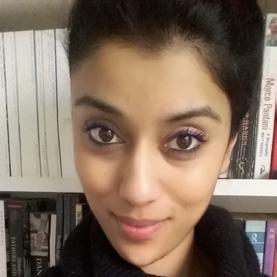
Yasmina Floyer: I live in London where I take care of my family and work as a private tutor. Since completing a Masters in Creative Writing at Glasgow University, my work has appeared in AVIS Literary Journal and due to appear in By&By Poetry. My short stories have also been highly commended in writing competitions. I am currently working on my frst novel.
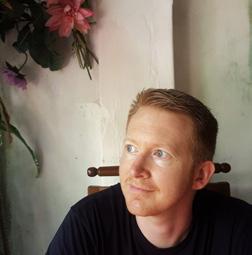
Tom White was born in 1981 in Cardif. After completing a degree in English Literature and Creative Writing, he taught English in Turkey. Since then, he has lived in Morocco and Saudi Arabia. He is currently based in Manchester. His book-length poems Old Sense and My Camp are published by Veer Books. He is currently completing a novel called Liberace in Vegas.

Caleb Azumah Nelson is a writer and flmmaker, based in London, UK. He has previously written for BBC and contributed to several award winning short flms. He currently has a feature flm in development, and will be directing his frst short flm this upcoming summer.

Jeremy Townley has published in Harvard Review, Hayden’s Ferry Review, Prairie Schooner, The Treepenny Review, and other magazines and journals. His stories have been nominated for the Pushcart Prize and Best of the Net award. He holds an MFA in Creative Writing from the University of British Columbia and an MPhil in English from Oxford University, and he teaches at the University of Virginia.

Nandita Dutta is a journalist and writer from India. Her frst book on women in flm-making will be out this year, while her short stories have been published in numerous Indian journals and anthologies. Besides holding a Masters in Gender Studies from SOAS, London, she is a bona fde barista and chai addict.

Michael Handrick was born in the UK and raised in various countries. A graduate from the Creative and Life Writing MA at Goldsmiths, University of London, his short stories have been published in various anthologies; his journalism appears in magazines such as PYLOT, as well as academic research published by Te Inter- Disciplinary Press.

Mary Lynn Reed is a fction writer and mathematician. Her work has appeared in Mississippi Review, Colorado Review, Te MacGufn, Sakura Review, and Whistling Shade, among other places. She has an MFA in Creative Writing from the University of Maryland and a Ph.D. in Mathematics from the University of Illinois.
Editor's letter
Dear Reader,
We all have our wants and needs, but huge numbers of us now seem to have a massive sense of entitlement, a belief that instant gratifcation is only our due – “I want it nooooow!” shrieked Veruca Salt, and so many people (especially if you go online) sound like spoilt little kids. But if it’s an Age of Entitlement, it’s also an age of gross inequality (aren’t they all?). We seek self-actualisation in an app while billions the world over are languishing at the base of Maslow’s hierarchy of needs, struggling for food, shelter, clothing, healthcare, any sense of security. In this country we luckily mostly have our basic needs met, and we generally don’t know true Want – famously paired by Dickens with Ignorance – but then again under the Tories the number of food banks in the country has exploded, the NHS is underfunded and crumbling, and infation driven by the collapse of the pound since the Brexit vote may well be the beginning of a cost-of-living crisis…
Still, to turn to the fction that flls this issue – as if the literary can ever be entirely apolitical (can it? Discuss) – it’s basic Creative Writing 101 advice: make sure your
character wants something, even if it’s only a glass of water. Well, this month we have a set of short stories about characters who have wants and needs for rather more than that, and who – neatly happy endings being in short supply – mostly don’t get it. But what we want is so often not what we truly need…
Te issue opens with teenagers – and who’s more hormonally conficted about what they want and need than teenagers? – in a B&B, in Yasmina Floyer’s “Crush”. Tom White’s “Cruise” follows, a story set at sea, exploring the contrary wants–needs of stability or freedom, belonging or exploring…
“Birds in a Glass Cage”, by Caleb Azumah Nelson, weaves a complex story of a brief love afair in a desert dreamscape, Nandita Dutta’s “Hairfall” is a playful story of awkward sexual encounters and colourful hair, and “Te Termodynamics of Glass”, by Mary Lynn Reed, looks at the incompatible wants and needs of two young scientists in love.
Te issue closes with “Post-Mortem”, by Michael Handrick, a strange, genderless tale of modern love, complications of technology, constant desire for more or better … and “Decantation”, by Jeremy Townley, in which the tale of one woman’s rise and fall is poetically refected in the wines she imbibes.
***
Tis month we’re excited about Legion and the rise of Surreality TV. Legion, if you’ve not caught up with the show, is an FX Marvel Comics drama full of scenes taking place within illusions, or illusions nestled within illusions. Te lead character David (Dan Stevens) is a powerful telekinetic (so we’re led to believe) who is rescued from a psychiatric hospital (so it appears…). Legion will leave you with existential doubts as it persistently asks the question “What is real?” Legion, as Surreality TV, is an art form apt for our times. Like Dada and Surrealist art, which developed as a counter to the horrors of the twentieth century, Legion, and other shows and movies like it, is all too suited to the world
we live in – the days of fake news – when shared objective truth is under attack.
***
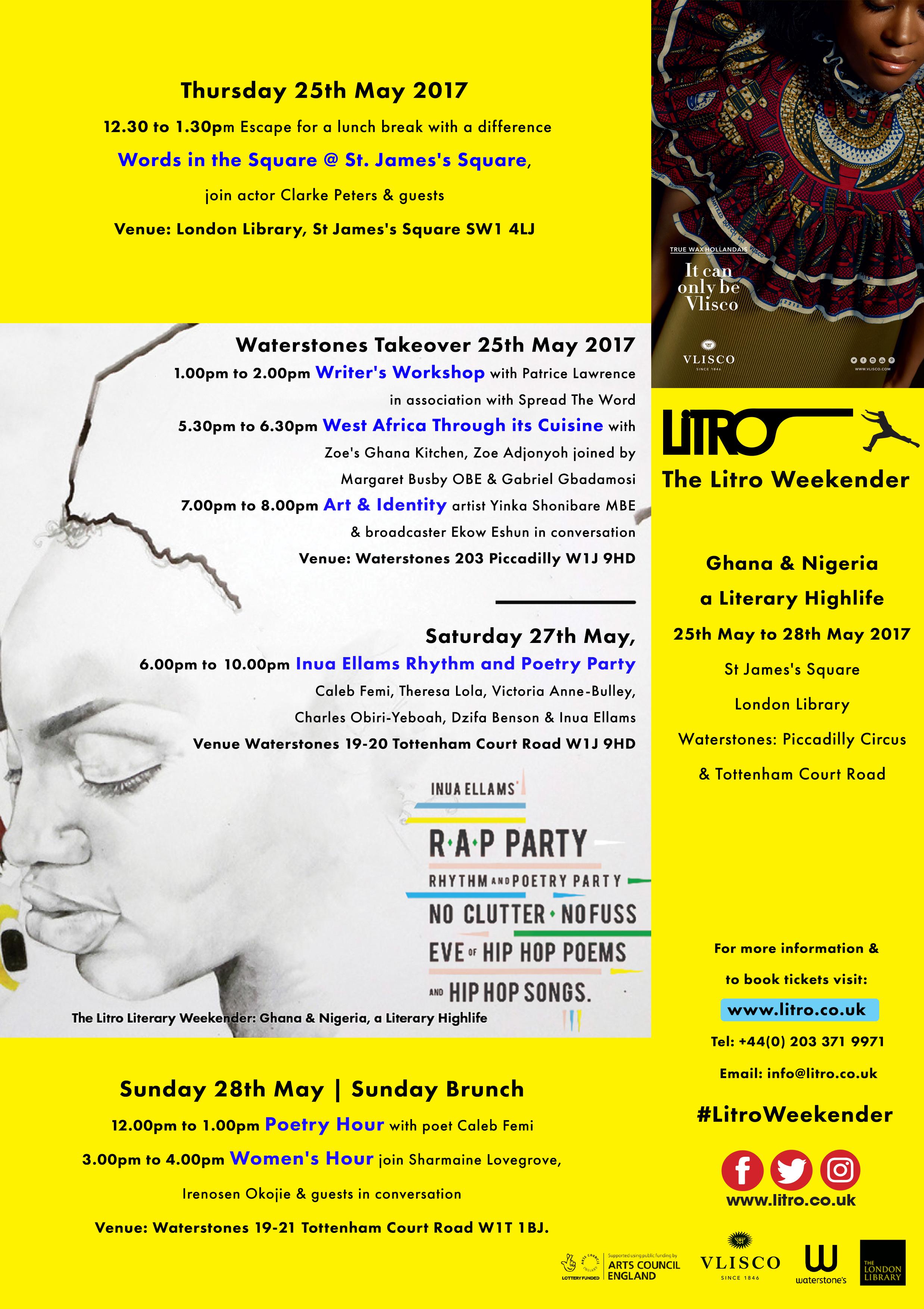
And of course our own Literary Weekender is this coming May Bank Holiday: we return with a special World Series event, London’s frst literary festival exploring the literature and cultural landscapes of Ghana & Nigeria. Follow us on social media for event details.
Eric Akoto Editor-in-Chief

Crush
/ /
Yasmina Floyer
Inevitable, she said.
It was not meant to happen like this. Check out is in less than two hours. Te rakethin man with a pot belly who owns the Bed and Breakfast only agrees to bring eggs to their room because they ofer to pay him fve pounds. It was not his habit to serve breakfast past ten in the morning, he tells them, he likes to run a tight establishment. Te silhouette fgures on the dated fock wallpaper snigger to one another at the word “establishment”.
Tey sit side by side on top of the bedcovers chipping away at the egg shells. Te yolks are meant to be runny, David says. Poppy nods. A piece of shell lodges beneath his nail. He picks it out and squeezes his thumb, sucking at the bloody ooze. She slices his eggs for him, revealing solid grey rings around stale yellow discs. Plastic cups stained the colour of deep bruises loiter on the carpet by the bottom of the bed. Last night’s red wine sits uncorked on the bedside table. Poppy leans forward on her stomach reaching for the cups, and then pours the remainder of the wine into them. He sips reluctantly. Te wine leaves a chalky coating on David’s teeth. When he thinks she isn’t looking, he quickly runs his tongue along them, catching against the one incisor that juts out from his otherwise straight set. He reminds himself to smile with his lips pressed shut.
Poppy is not hungry for eggs. She stands with her back to David but can see them both in the mirror of the Victorian-style dresser. Every now and then her blue eyes move away from her own refection to David’s. He catches her looking at him and quickly looks away. She brushes her dyed black hair and turns to face him, wearing an oversized t-shirt, and for the frst time he notices how narrow her shoulders are without the broad cut of her jacket. He feels ridiculously exposed; his large frame perches awkwardly on the edge of the bed and though sat down he contracts inwards in an attempt to occupy less space. She stands by the dresser in such stillness that for a moment David sees her as a doll in a toy house. Te thought of her like this makes him shift his weight uncomfortably on the bed, which groans, giving voice to his unrest. Te more he tries to ignore it, the louder the word becomes in his thoughts: virgin.
A striped emerald-and-black tie slides of the back of the chair. Poppy picks it up and drapes it back over the school blazer. Teir eyes meet for a moment in the mirror. David reaches down for his cup and then remembers that it is empty. Inevitable, he thinks to himself. Poppy said that to him after their frst kiss. He liked the sound of it at the time but was unclear what she meant by it.
Te after school maths lessons were essential. Tis line was repeated by both, though thinking about it now David was not sure who suggested it frst. Anyone peering into the classroom long past the end of school would have caught sight of a worn textbook sat redundant on the desk, its pages splayed open at a trigonometry chapter. Te pages of the book
to tolerate the rufed duvet that serves as a reminder of his failure. Tough he tries hard to ignore it, the word repeats over and over in his mind: virgin.
She is fully dressed now in her familiar charcoal-grey suit. Te wine begins to work through him, warming his veins. Te numbness spreads within him slowly, until he feels complete detachment. David thinks of his mother home alone, gradually petrifying at the kitchen table and begins to understand. Poppy has been talking at him but he hasn’t heard a word of it. She is speaking quickly now, repeating over and over that she doesn’t know what to say. Tere is a knock at the door. Te pot-bellied man reminds them they have less than an hour until check out. Inevitable, David thinks to himself. He doesn’t need her to say it.
FICTION
Conficting wants and needs: stability or freedom, belonging or exploring…
Tom White / /
Mosques and temples jostle with shops selling everything from massage oils to cut-price CDs. When the narrow streets get too much, follow the sounds of a cricket match onto Galle Face Green as the sun sets over the Indian ocean.
My mobile beeps and I’m back in the room. It’s a Grindr message.
—Hey. What you into?
Crass, that directness. But the shitty signal on board is an excuse for getting to the point and I’m horny enough to overlook minor irritations.
—Btm 4 top. U?
—Vers. Pics?
I send some and get three in return.
—Nice. Wen u looking?
—30 mins.
—Cabin?
Te cabin is crap in a rush. I bash my shin on the side table (luckily the vase with its single plastic poppy is superglued in place) and in my search for a jockstrap, clothes spill out of the miserly wardrobe. I douche quick-smart, distending the plastic walls as I press against them in the tight space. Tis fimsy cabin could split at the seams. Even when doing nothing it’s a snug ft and more than a little claustrophobic. Te sun is shining outside – but open these curtains and there’s just a couple of lightbulbs behind an opaque screen. Tere’s a stif breeze coming of the ocean mere metres away – but here there’s only stufy AC. It’s an inside cabin. Te cheapest sort. Still, with the TV on to give a sense of depth, it’s possible to inhabit the space for a few hours.
Birds in a Glass Cage
In the dusty dreamscape of the desert of Andalucía…
Caleb Azumah Nelson / /
Imagine this: Te sky is a cylinder of blue. You are sure it goes on forever. You are sure this moment will go on forever, when you turn your gaze from the cleanest of skies to her prone, motionless body, although, on closer inspection, you see her chest rising and falling with every second of life that runs through her, and you stare in an admixture of awe and disbelief, unsure if this existence is truthful, wondering if this is but another possibility in the multiverse, and there, if you blink, you miss the edge of her lips’ pull towards her cheeks, the mouth opening, the teeth on show, contagious, and like the most pleasant of diseases, you do so too, unsure if she is looking back at you behind dark lenses, or if she feels the warmth of your stare.
Regardless, you are sure you hear her eyes crinkle and shimmer as they do when she is joyous. You look back to the sky. Tere’s not a cloud in sight. ***
A sobering glimpse: In the not so distant future, you will be driving a rental car, at speed, along a dirt track designed for pedestrians and bikes. Sophia Garcia is in the passenger seat. She is glamorous, and everything you want, but perhaps not everything you need. She is freedom, liberty, and hope, wrapped in a ferce, uncompromising package. She is also not the woman you think you love. At that moment, she will have been partying for two days straight, and will be at the height of an acid trip.
“Sophia, I’m driving,” you say, as she reaches for the inside of your thigh, your foot jolting, fve extra miles per hour in the death mobile.
“And I am exploring another possibility in the multiverse,” she says, working her way up.
You will swallow. You will not stop her, but something in you, which has not yet been rendered ignoble, will delay.
“And which reality is that?”
“Te one in which this ends very badly.”
A great sea mist rolls in and threatens to ruin everything.
“You’re being dramatic,” she says.
“Literally, everything.” You pause and gaze at the impenetrable wall of cloud. “Tis is the worst thing that could have happened.”
She bites her lip in an attempt to keep a giggle escaping her mouth. She fails, but does not fail to catch the fash of hurt on your face, before you retreat inside yourself, a mollusc in predatory danger.
She turns to look at you, but you don’t look back, no, straight ahead, because you want her to pry, want her to dig into the nature of your condition. Why are you being
Hairfall
Nandita Dutta /
Your hair is going to be a problem.
NOW.
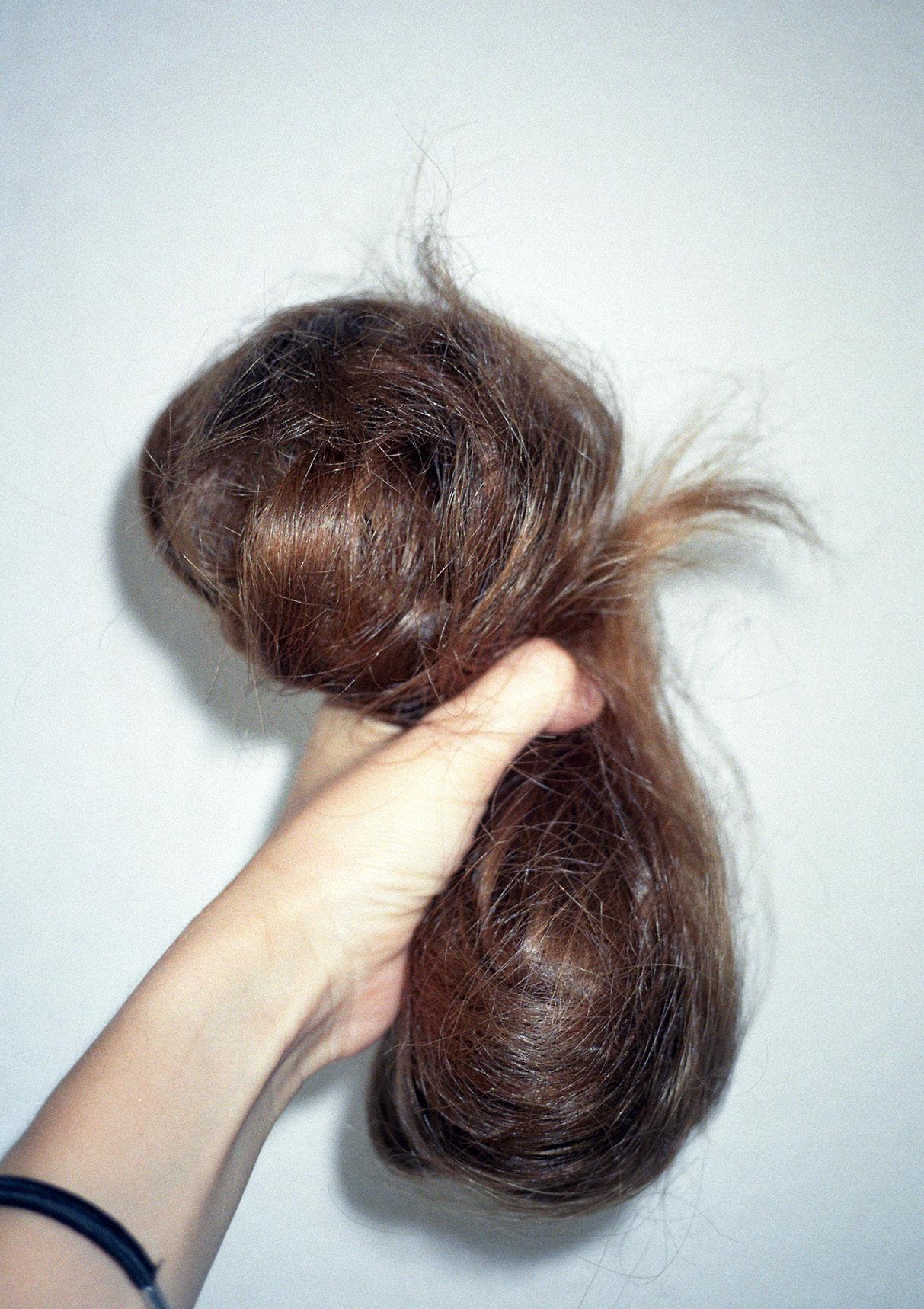
Sitting in a traditional Jewish bakery in Stamford Hill, she gobbled the last piece of a jam doughnut. It hit her body like acid: frst it blacked everything out, then it projected a stream of kaleidoscopic images before her eyes, it dilated her pupils and caused her limbs to shake uncontrollably. Te eight doughnuts and twelve other desserts she had eaten before, in a collective mutiny, ripped her stomach open and then violently swam upwards to gush out through her mouth. After drenching the kosher bakery in her vomit, her voluminous body – accentuated by spectacular rainbow-hair – hit the foor with a thud, on the holy day of Sabbath.
TWENTY MINUTES, FORTY-FIVE SECONDS AGO.
An envelope rested on the table between them – an oddly calm presence compared to her fdgety fngers and wiggly toes. Te logo on the envelope read: We make you love what you do. She turned over every single word in her head a hundred times; the same head that had been used as a mounting for her rainbow-coloured hair. She sneaked a look at the notifcations on her phone – a message from her bank saying she had exceeded her overdraft limit, a text from her ex warning her to stop texting him. She scraped a milky spot on the table like an angry kitten. Te impeccably dressed woman sitting across from her – whose job was to help other people fnd jobs – threw another disparaging glance at her, put her cofee mug down and fnally said, “Look, your hair is going to be a problem. What can you do about it?”
She read those words again. In reverse order this time. Do You What Love…
“I don’t know, I spent a lot of money getting it done,” she blurted.
Te woman’s instinctive reaction was to be shocked, followed by a deep sense of unconcealed relief. “OK then! Tere’s not much I can do for you I guess. Sorry and good luck!” she rose from her seat and smoothed out her skirt.
“Your hair…”
“Yes?” she had her attention momentarily.
“I don’t know … I think I spotted dandruf fakes. You might want to fx it.”
Te woman rolled her eyes, clutched her handbag and walked away.
She looked at those words on the envelope a fnal time and started to feel sick. She instantly ordered an apple tart, a lemon meringue pie, a pecan pie and a mug of hot chocolate. With whipped cream on the top.
Conversations about hair made her edgy and edginess induced in her an appetite that could only be quelled by things that contained a lot of sugar. She ate until it made her queasy.
She picked up her phone and texted the guy from Tinder again.
While she was waiting for his reply, she received a text from her dad in Dubai.
The Thermodynamics of Glass
Mary Lynn Reed
Drowning in glass…
/ /
It’s October and the damp cling of Ann Arbor summer is gone, but Jaye is still wearing her shorts around the apartment. She sits on the futon, sips hot tea, and slowly rubs her bare legs together. She’s trying to rouse her lover, Andie, out of her comic-book stupor. It’s not working. It hasn’t worked in a long time.
Andie was kicked out of the physics Ph.D. program last semester, and now she sits in the old recliner she and Jaye rescued from the dumpster. She sits there all the time, immersed in comics from Mad Joe’s. Te afternoon sun shines through the sliding glass door. Andie squints and shifts. Jaye thinks of the Tin Man as empty beer cans slip under Andie’s thighs, crunch, and conform to her body. Andie reaches for the can between her legs. It’s empty, Jaye knows it, but she watches Andie suck fumes of the top, comic book still in hand.
Jaye wants Andie to put Te Huntress down. All she can see is Andie’s mangywild hair and that damn comic book. Jaye wants Andie to stop reading and notice she isn’t alone in the apartment, or the world. But Jaye doesn’t say anything. She never says anything. She spreads her toes apart, examines the brown-panelled wall between them, and thinks about the thermodynamics of glass. She’s writing a paper on the subject. It’s due next week and Jaye is in a panic. Viscosity, fuidity, phase transition.
Glass: is it solid or liquid? Scientists disagree.
Jaye stares at the cover of Te Huntress in Andie’s hands, at the reactionary feminist superhero’s skimpy purple outft, her black cape fowing in the wind. She stands over a throng of defeated thugs and villains. She has a dark and violent past. Andie told Jaye all about it.
Jaye needs Andie’s help with thermodynamics but physics isn’t spoken here anymore. Tere are only comic books and vigilantes and sometimes, game shows on TV. Te sun begins to reach Jaye’s legs. Te tea has warmed her hands. For a moment, hope is almost a possibility.
Ten Andie says: “I’m moving back to Miami.”
Jaye puts her tea cup down. “You can’t do that.”
Andie’s dark eyes peer over the comic. “And what shall I do? What’s your next brilliant idea, baby?”
Andie’s already tried pizza delivery, dog grooming, and corn husking. She didn’t last more than a week at any of those jobs. Tey were demeaning, degrading; she couldn’t do them.
Te cans crunch again and the sour smell of warm beer permeates the room. “What about the museum?” Jaye says. “Tey hire people to explain science to kids
Post-Mortem
Michael Handrick / /
Modern love, the complications of technology, the constant desire for more or better…
You danced in the rain that October night. Spinning, turning under the rain, under the stars. Divided, horrifying and beautiful. Fleshless, but fesh. Hand-shadows on the foor, on my face. You asked me to dance. Took my hand, stepped from the path, stepped into the night. You spun me, spun new worlds. Beat of your heart as I held you. Racing. Drip of water from your fringe. Close, closer. And I knew I had to have it. Look up, look down. Peel away the skin: fesh and blood and bone. Peel again, there, the dancing, beating rhythm of you. I wanted to bottle, contain that little dancer, the dancing part of my self.
We travelled across countries, down pathways and networks that crossed over boundaries and city lines, followed a red thread you connected across the continent. We stood on an unfnished bridge in Avignon, holding each other, listening to the waters rumble, and the Mistral blew your eucalyptus-scented hair in my face. Standing on the edge, we looked out into the night, on that bridge with no end and no destination.
I held you back as you wanted to step out into the darkness and twirl the stars and the moon, merge with their light. I watched you desperate to step on the high winds of banners, lifting your arms so you could be uprooted and taken to other lands. I could tell that you were thinking about the size of the world. And I, in your arms again, thought how none of the world mattered. We went to Rome, and Berlin, and the fords in Scandinavia where ice and water speckled your fesh. When we arrived back at King’s Cross station all I wondered was, what would happen when you stopped dancing?
Tat night, the feeling of emptiness next to me woke me up. Turning under the sheets you stood by the open moonlit window, just in your pyjama bottoms, slightly pulled down below the waist. Te light showed how white your groin area was in comparison to your torso. Your eyes were closed, head slightly tilted back so the wind rufed your hair. Te cigarette glowed as you took another drag and exhaled, typing quickly on your phone with the other hand. Type and swipe. You laughed silently to yourself. Some joke that I was not part of. Tat face I traced so many times was full of smug satisfaction. I watched your long back in the mirror’s refection, which narrowed down to the point where the buttocks split. Te point where pale skin and shadow played with each other. You stubbed out the cigarette, pulled of your pyjamas and climbed back under the sheets next to me.
Freedom was your beloved, and it shifted with your dreams: a tiny boat to sail across the ocean, a tightrope in a circus, a sun-dusted forest where you danced alone. All of those boats sailed towards you, and I anchored them so we couldn’t leave. I watched you in the morning, when the light came through the shutters and your skin was translucent and glittered as the sun rose. Te currents of your blood and passion swirled blue underneath and I saw how your body pliéd and slid to the shifting desires of your consciousness. You
Decantation
Jeremy Townley /
A life in wines...
Cabernet Sauvignon , Clos de l ’ Ame , Napa Valley, 1998 , $501 , 13%
For our robust Cabernet Sauvignon, we harvest grapes from the original Napa vineyard planted by founder and viticulture legend Jean-Paul de la Clos de l’Ame. Aged in French oak for nine months, then estate bottled, Clos de l’Ame Cabernet Sauvignon is ultrarich and complex, with a dense core of meaty blackberry, dark cherry, and currant. Notes of pipe tobacco and dark chocolate, loamy earth and crushed rock. A silky fnish that folds in smoky anise, graphite, and grippy tannins. Pair with veal Marsala at client appreciation luncheons or polo feld victory parties, as you linger near the libations table, imagining your name on the frm’s letterhead, business cards, and afdavits: McClelland, Stewart, Leland, & Brandt. Clos de l’Ame Cabernet Sauvignon: imbibe relentlessly.
Merlot, Domaine Dionysos , Sonoma Valley, 2003 , $251 , 13 . 6%
Our supple, expressive Merlot boasts an inky colour and plush texture, layering blueberry and plum chewiness with hints of espresso, green olives, and warm pine needles. A tight fnish of ashes and river stones. Perfect with wild boar and grilled asparagus, fne leather boots and a well-deserved promotion to partner – the frst woman in the frm’s history. So kick up your feet, light a Montecristo #2, and pour yourself another glass. You’ve earned it!
Pinot Noir, Case Closed Cellars , Willamette Valley, 2004 , $198 , 14%
Our celebrated Pinot Noir is lithe and silky, structured around blueberry, blackberry and dark cherry pâté de fruits. Hints of orange peel, Darjeeling tea, and singed raisins. Juicy and succulent body. Elegant, foral fnish with velvety tannins. Pairs well with cassoulet and a new BMW 5 series, silk sheets and male musk – though not your husband’s. Quaf deeply, and celebrate your silver tongue.
Shiraz , Big Bikkie Vineyards , South Australia , 2005 , $185 , 13 . 1%
We produce our Shiraz in the Mediterranean climate of South Australia, where the grapes grow plump from warm sunshine and mineral-rich soil. A crisp entry blossoms into a succulent medley of ripe boysenberry and juicy fg favors. Enjoy accents of vanilla, blooming orchids, and rum-laced fruitcake. Long, luxurious fnish. Lovely with wild bovine or fruits de mer, but drinks easily in a polished glass, as you perch on the edge of your desk in your corner ofce with a view of the Golden Gate, lording it over your vassals. Speak softly, and carry a Big Bikkie!