ISSUE 162
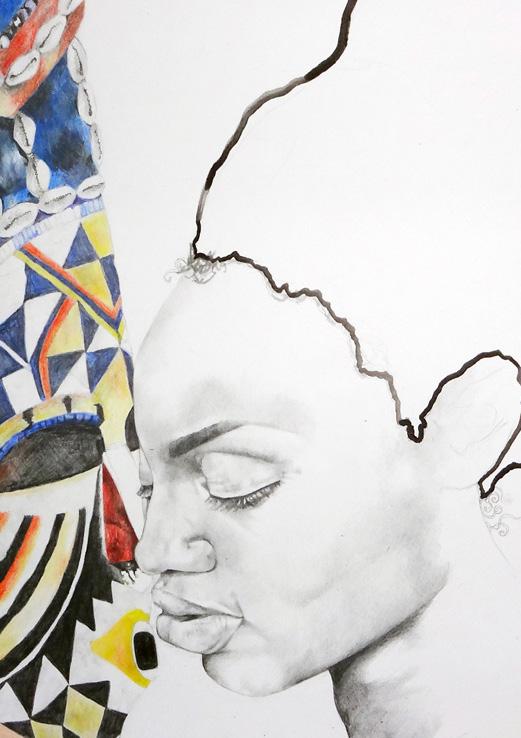
Nana Ocran
Poetra Asantewa
Ato Quayson
Caleb Femi
Irenosen Okojie
Martin Egblewogbe
Kobina Ankomah-Graham
Ayobami Adebayo
Jumoke Verissimo
Victoria Adukwei Bulley
Theresa Lola
O’Zionn

Nana Ocran
Poetra Asantewa
Ato Quayson
Caleb Femi
Irenosen Okojie
Martin Egblewogbe
Kobina Ankomah-Graham
Ayobami Adebayo
Jumoke Verissimo
Victoria Adukwei Bulley
Theresa Lola
O’Zionn
Editor-in-Chief Eric Akoto | Online Editor online@litro.co.uk
Arts Editor Daniel Janes, arts@litro.co.uk | Assistant Fiction
Editor/Story Sunday Barney Walsh, fictioneditor@litro.co.uk
Tuesday Tales Hayley Camis, tuesdaytales@litro.co.uk
Flash Fiction Editor, Catherine McNamara, flash@litro.co.uk
Contributing Editor at Large Sophie Lewis, Rio, Brazil
Design Assistant Elina Nikkinen | Advertising Manager +44(0) 203 371 9971 sales@litro.co.uk
Litro Magazine believes literary magazines should not just be targeted at writers themselves, or even those with a particular interest in literature, instead Litro believes in reaching the general reader whether they be a commuter, someone browsing in bookshop or in a bar or café to meet a friend.
General inquiries: contact info@litro.co.uk or call 020 3371 9971
Charcoal by Ayobami Adebayo
Jam by Kobina Ankomah-Graham
Building Memories by Nana Ocran
Te Ferryman by Martin Egblewogbe
Transcripts of the Social Imaginary in Accra: Beyond Oxford Street by Ato Quasyon, University of Toronto
T e Dark Haunts Nigeria by Teresa Lola
Te Unbelievable by Victoria Adukwei Bulley
Spit by Poetra Asantewa
Tired Arms by Poetra Asantewa
Te Sisterhood of Wahala by Jumoke Verissimo
Whilst the pastor preached about hell, his son was texting girls by Caleb Femi
Terminal Index by Victoria Adukwei Bulley
Neo Poet by O’Zionn
Te Moon Gave No Name To Tides by Caleb Femi
Te Brazilian Connection by Jumoke Verissimo
A Song in the Storm by O’Zionn
Harmattan Season by T eresa Lola
Litro In Conversation With Jenn Nkiru – Irenosen Okojie

20<ʰ & 21s< MAY, 2017 British Library, London
FOr more information visit jaipurliteraturefestival.org

Born in Nigeria, Inua Ellams is an award winning poet, playwright & founder of the Midnight Run. Identity, Displacement & Destiny are reoccurring themes in his work in which he mixes the old with the new, traditional with the contemporary. His books are published by Flipped Eye, Akashic, Nine Arches & Oberon.
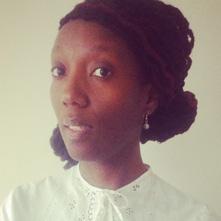
Nana Ocran A Londonbased writer and lecturer, Nana’s work has featured topics including architectural design, African pop culture, green spaces and technology, all of which has been a vehicle for some delightful commissions and collaborations with national and international organisations including the Time Out Group, Iniva, Pernod-Ricard Paris, Gestalten Books (Berlin) and the British Council.

Ayobami Adebayo holds BA and MA degrees in Literature from Obafemi Awolowo University. She also has an MA in creative writing from the University of East Anglia where she was awarded an international bursary for creative writing. Her debut novel, Stay with Me, has been shortlisted for the Baileys prize.
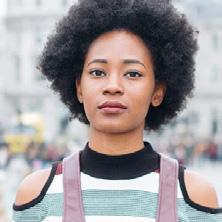
Teresa Lola is a British Nigerian Poet. She was shortlisted for the 2016 Bridport Poetry Prize, 2016 London Magazine Poetry Prize and was highly commended for the Charles Causley Poetry Prize. She is a Barbican Young Poet alumnus from the 2015/2016 programme.
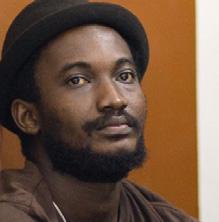
Daniel Kojo Appiah, also known by his stage / pen name, O'Zionn, is a literary enthusiast and a poet. He also identifes as a lexivist. He spends his time promoting literary events and projects in Ghana. He is currently working on his frst anthology of poetry.
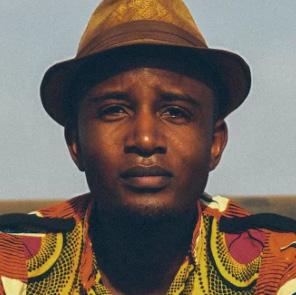
Kobby Ankomah-Graham is a writer, lecturer and DJ raised between the alternate realities of Cape Coast, London and Accra, where he now resides. A member of the nKENTEn creative collective, he uses the weird to explore the mundane. He was a runner-up in the inaugural John La Rose short story competition.

Jumoke Verissimo was born in Lagos, Nigeria. She is the author of two poetry collections, I am memory (Dada Books) and Te Birth of Illusion (Fullpoint). Jumoke is currently in the fnal stages of discussion with the Cassava Republic for her frst novel. Some of her poems are in translation in Norwegian, Japanese, Italian, French and Macedonian.
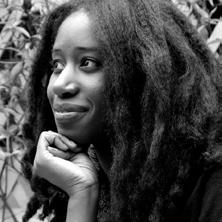
Victoria Adukwei Bulley is a British-born Ghanaian poet and writer. A former Barbican Young Poet, her work has been commissioned by the Royal Academy of Arts, in addition to being featured on BBC Radio 4. Her debut pamphlet, Girl B, is edited by Kwame Dawes and forms part of the New-Generation African Poets series 2017. She is currently directing Mother Tongues, a forthcoming flm, poetry and translation series supported by the Arts Council and Autograph ABP.
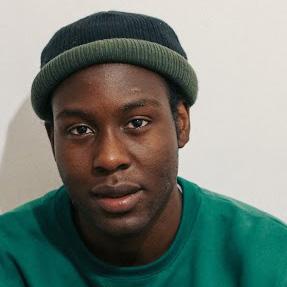
Caleb Femi is the Young People's Laureate for London.
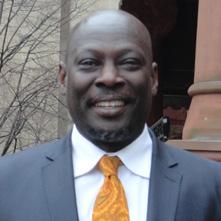
Ato Quayson is University Professor and Director of the Centre for Diaspora and Transnational Studies at the University of Toronto. He was educated at the University of Ghana and at Cambridge. His most recent book is Oxford Street, Accra: City Life and the Itineraries of Transnationalism.

Martin Egblewogbe is the author of Mr Happy and Te Hammer of God & Other Stories (Ayebia, 2012). He coedited the poetry anthologies Look where you have gone to sit (Woeli, 2010) and According To Sources (Woeli, 2015), and he is co-founder and director of the Writers Project of Ghana, a literary organisation.
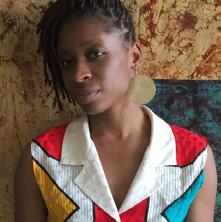
Irenosen Okojie is a writer and Arts Project Manager. Her work has been published by the Observer, the Guardian, the BBC, the Hufngton Post amongst others. Her debut novel, Butterfy Fish, won a Betty Trask Award. Her short story collection, Speak Gigantular, was shortlisted for the Jhalak Prize. Her story, Animal Parts, will be adapted for the stage by Bafta-winning documentary maker and director Julia Pascal.
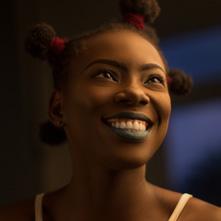
Poetra Asantewa is writer and a poet based in Accra. Her work, both as a performer and a writer engages issues of becoming, feminism, inequality, womanhood and mental health in her community. She has participated in internationally acclaimed workshops organised by Femrite (2013) and Farfna Trust (2016) and was the frst Poet to be selected as a OneBeat 2016 fellow.
Every year, Litro publishes international editions focusing on diferent parts of the globe. In 2016, we had an issue dedicated to Cuba, and one highlighting South Asian writing in English; we featured young voices like Aatish Taseer alongside established writers and artists like Shehan Karunatilaka and Coco Fusco.
As 2017 marks Ghana’s sixtieth birthday, our latest World Series instalment, Literary Highlife, seeks to celebrate Ghana by inviting its neighbour Nigeria to join the party – we explore the literary and cultural landscape of both countries.
Our issue’s title comes from ‘highlife’, a kind of popular music from Ghana that began early in the twentieth century and blended traditional Akan musical rhythms with European military band instruments imported under colonialism. It spread, and still infuences current Ghanaian and Nigerian afrobeats, and other forms of music, today.
We can’t dedicate an issue to celebrating Ghana’s sixtieth year without taking a look into its past. In 1957, Ghana – till then the Gold Coast – became the frst British African colony to be granted independence, ending centuries of colonial rule. It was a peaceful transition, and inspired other states to follow suit, with the federation of Nigeria forming just three years later. Today Ghana is peaceful, free from the civil strife and terrorism that afects it neighbours.
Ghana had been at the centre of the slave trade until it was abolished in the early 1800s.
It was called the Gold Coast, of course, because of the huge amounts of gold found there. Tis gold was protected by forts, built by the Dutch and British along the fve-hundred-kilometre coastline between the ffteenth and eighteenth centuries, that served as trading posts as well as keeping the foreign settlers safe from their rivals and from threats from the African population. Te forts were carefully placed as links in the trade routes, and were attacked, taken over, exchanged, sold and fnally abandoned during the almost four centuries of struggle between European powers for domination over what would one day be Ghana.
In the 1500s, as demand grew for human labour in the New World, the focus shifted from the gold to the people. After being built to store gold, ivory and other such plunder, the forts now imprisoned slaves before they were transported across the Atlantic – human beings reduced to just another commodity to be bought, sold, used. Ghana’s breath-taking coastline was lined with dark dungeons, overfowing with misery and despair, right up until the slave
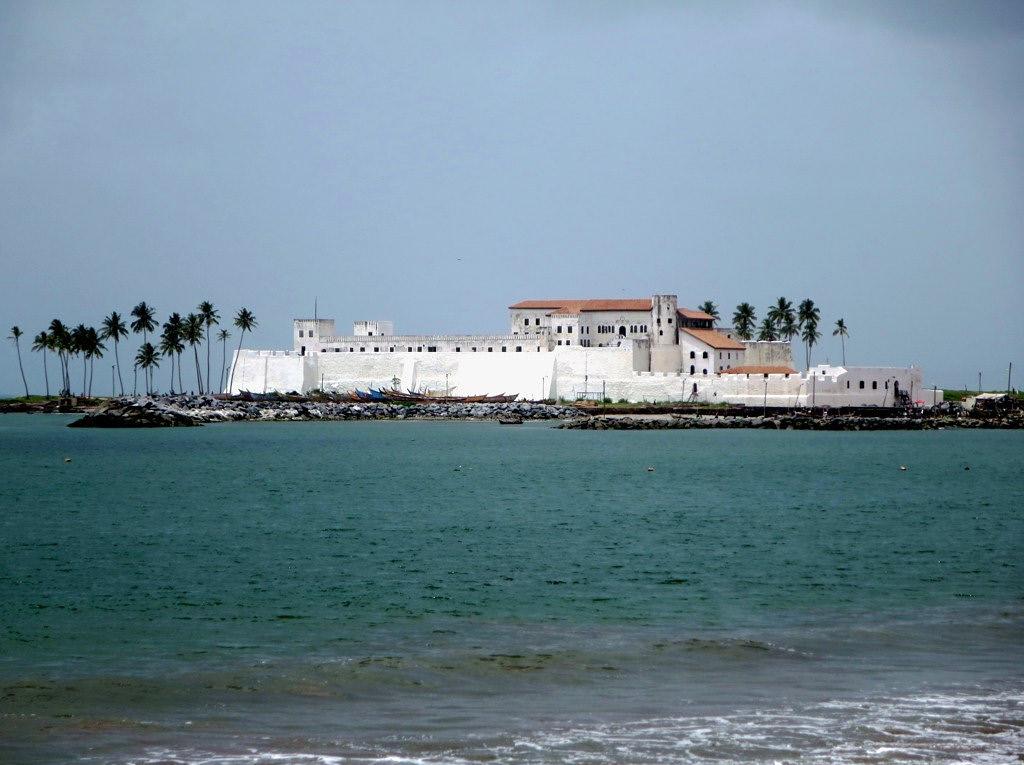
trade was eventually abolished. It’s estimated that up to six million slaves had been shipped to other countries.
Today these coastal castles have been transferred to the Ghana Museum and Monuments Board, and they are among the most well-visited historical sites in the region. President Barack Obama chose Ghana for his frst ofcial visit to Africa.
In keeping with our ethos of giving a platform to emerging international writers, I invited the poet Inua Ellams to team up with me in editing this issue – which covers topics such as the underlying rivalry between Ghana and Nigeria – and how that rivalry is perceived by others.
We frst published Inua’s work in November 2010, in Litro #93, the Climate issue, which sought to explore the place of story, even of fction, in debates about climate – sadly a conversation that seems to have spiralled backwards, with the most powerful leader of the so-called free world denying climate change’s very existence, despite the backdrop of seasoned scientists and thinkers attesting otherwise.
From Climate Change to History –the story, and in fact fction, will always continue to have a place in our cultural zeitgeist.
We’ll continue to use fction and the story to explore the many pressing topics of our times. Litro’s next issue, themed on Alternative Facts, has suddenly become even more topical than it already was with Teresa May’s – cynically opportunistic? You think? –snap general election on 8 June, but we follow that in July with what might be a more soothing, sensual issue of heady summer stories, themed on Te Senses. Te Senses issue, and all those following it, are still open
for submissions of short stories and creative nonfction – see our website for guidelines. After the August break we’re back in September with a trip south of that grotesque promised wall, to Latin America, and then in October, in time for Halloween, we take a look at what goes on After Dark, After Hours: secrets and shady stuf, or things more magical – the store mannequins come to life, elves appear to do the shoemaker’s work… Tings get political again after that – as if they’re ever not – in our Protest issue in November, because these are for sure the times to make our voices heard, to speak truth to power. And fnally we’ll wind up the year in December with a look into Faith & Faithlessness of all diferent sorts – is this a time for belief, or for scepticism?
Lastly, while it is obviously impossible for a small selection of this kind to represent the diverse voices writing in Ghana and Nigeria today, it is interesting to note that, months after the selection for these pages was made, frst time novelist Ayobami Adebayo was shortlisted for the Baileys Women’s Prize for Fiction – with a winner yet to be announced.
We will be also celebrating this Ghana & Nigeria edition’s launch with a special weekend extravaganza, from the 25th–28th May, taking over Waterstones’s Piccadilly and Tottenham Court Road branches. I hope you will join us; further details can be found on our website, www.litro.co.uk.
When I lived in Nigeria I had a Ghanaian tutor, a strict disciplinarian whose humour was as fat as I thought his accent was. Te week my father asked him to leave for dishing out harsh punishments, our house was broken into and my father lay his suspicion at the tutor’s feet. His anger raged for two days when, after I repeated his sentiments, he conceded it was not the tutor. Afterwards I began to tune into any talk of Ghanaians around me, and found that what lay beneath the words, beneath allegations and stories, was an old playful brotherly rivalry.
When I moved to England, I found this amplifed in school cafeterias, churches, barber shops and football tournaments where it seemed an invisible line had been drawn over which we’d hurl taunts and soft insults at each other. In the decades after, I saw the quick-witted banter intensify and mutate on various social media platforms
like Facebook and Twitter, and return to the real world in the form of Jollof rice competitions held on the continent and in the west.
I saw similar relationships paralleled among Irish and English communities, Spanish and Catalan, Algerian and Egyptian and American and Canadian … but for those of us in the diaspora, the brotherly rivalry served a greater purpose; we used it to bond.
Members of minority communities need safe spaces to explore, practise and strengthen their traditions. Physical spaces are vital, but arguably, the mental spaces more so. Challenging and arguing with one another as we have, often leaves non-Nigerians and Ghanians bafed, but the humour and inknowing of the rivalry served and continues to serve as a way of maintaining and making ourselves, where, like left and right hands cupped together, we would create, celebrate
and guard something intangible, but vital.
In this Literary Highlife issue, you will fnd Nana Ocran’s “Building Memories”, an essay considering how the design and architecture of Ghana looks backwards to go forwards; Jumoke Verissimo’s poem “Te Sisterhood of Wahala”, which explores twin experiences of journeying through the cities of Accra and Lagos; Ayobami Adebayo’s short story “Charcoal”, painting a vivid and emotional portrait of the darker side of our rivalry; Irenosen Okojie’s interview of the prolifc flmmaker, dual-city-living Jenn Nkiru; and much more.
In the very spirit of our rivalry, the attempt is to celebrate, guard and pin down that intangible yet vital something that binds us, and that will keep binding us.
Inua Ellams
/ /
Ayobami Adebayo
A mother’s letter to her estranged son…
Adarkwa House, West Legon, Accra, Ghana. 30/01/2016.
Ayomide,
Did you take note of the address? If you didn’t, come on, read it again. Good. Now, if you’re still reading this letter after realising that I’m not in Lagos as I write this, perhaps your ears are fnally ready to funnel my words to your brain.
I should not have to explain myself to you. After all, I walked this earth for more than four decades before you fought your way into it, and when you did, you came in through my portal. It was my blood poured on your head that baptised you into humanity. You suckled at my breast and I carried you on this back of mine. I washed your nappies, sucked snot from your nostrils so you could breathe easier and held your hand through the night whenever you were ill. But apparently, all I ever did means nothing to you now.
He asked me to write to you, he begged me to. He is the kind of man who does not think it is shameful to beg a woman. I lived for seventy-six years and didn’t even realise that men like that existed, seventy-six years. Now, don’t you take this as me criticising your father. Paul, God rest his soul, was as good as any man I knew when I chose him and that’s that. Making comparisons between both men would be foolishness and that is not the point of this letter.
I suppose the point is to let you know I will now be dividing my time between Accra and Lagos. Or rather, we will be dividing our time between Accra and Lagos. We being Julius and I. Your sisters know about this already, but they tell me you threatened to cut them of the last time they brought up my new marriage with you. Tey say you called my marriage shameful and dishonourable, that you called me a disgrace to your father’s memory.
Julius says the girls might have misunderstood you, but I know they didn’t. Of course they didn’t, is it not you who has refused to speak to me for two years now? You, who unleashed your dogs on Julius’ relatives when they came to your house. You, who after I asked your wife to give you an invite to my eightieth birthday even though you were behaving like a toddler, sent the shredded invite back to me by speed post. You, who subsequently banned said wife from calling me or coming to visit me while I still lived in Lagos. You, who sent policemen to evict me from
Kobina Ankomah-Graham
A taste of Heaven is sweet…
I killed an angel this morning.
I thought I was swiping away a mosquito; one whose wings did not buzz but rather sang, like perfectly tuned notes on a church organ. At that time of morning, however, one’s ears are not tuned for such beauty and so (semi-comatose) I did what anyone who hears buzzing around their ear does:
I swatted.
Whatever I hit could not possibly have been heavier than the average wellfed mosquito. And so I returned to sleep, the night’s silence only occasionally broken – according to my wife – by the sound of my snoring. It was Shari’s fault we had stayed up so late, watching two of her favourite TV programs – Women Who Kill and the new season premiere of How to Get Away with Murder – uploaded to my laptop by friends who cared enough to share. Tank God for community.
Tat night, Shari and I gorged on all the chocolates and biscuits a recently returned friend had brought us from abroad. Expensive shit. Te government eventually intervened, turning of our neighbourhood’s power; their tax on citizens having fun. Te laptop died soon after. It would take a few paydays before we could aford the new battery it needed.
It had been Shari’s turn to do the dishes and lock up. She hated cleaning up, but if we did not put things back in our mostly empty fridge, ants would get to everything by morning; something Shari hated even more than cleaning up. She was still getting used to all of Africa’s insects and microbes, and how much of a say they had in the speed at which food had to be consumed. Europe had been like a fridge; the cold keeping everything crisp and fresh. She would tell me she was surprised she missed it, but such conversations always ended with tales of crime and racism and the rise of the right. If others could make it here, she could too.
African nights are long without power. No electricity means no fan, which would not matter so much if all the new buildings like ours, rented out at ridiculous Accra rates, used louvre-bladed windows, instead of the new sliding ones that halve ventilation. Worse still for us, because several local evangelical churches were doing well enough to own generators, Shari and I had learned to live with the hum of such machines. We were still taking lessons on how much screaming and singing was involved in bringing people to God. New entrepreneurial churches on every other street corner with loud sound systems, vie for congregants through various
Nana Ocran
Looking backwards to go forwards: the design and architecture of Ghana.
I’ve been thinking a lot about ghosts lately. Not so much about phantoms, haints or apparitions; no. It has far more to do with back-in-the-day shadows and memories; old ways, old stories and the kind of happenings that national or international talk of independence unearths for me.
With #Ghana60, and this year’s Independence Day celebrations, it came to me, through a quick mental calculation, that in my lifetime – which is getting up there in years – I’ve spent less than a year in total in what is either my mother country, or fatherland – depending on my mood. I reckon I’ve clocked up around nine months in total, and these have been spent in short- to mid-term batches that have essentially involved UK-to-Ghana visits to immediate and extended family, and a lone, Accra-based working assignment when on route to Lagos.
For me, any mention of Ghana – particularly pre-1957 – takes me back to the home I grew up in, where parental reminiscences of what I as a child thought was a pristinely named Gold Coast, were very much a part of my south London oral experience. Tese were stories of boarding school traumas (mum); being beaten for braving the ocean (dad); school trips to a leprosy hospital (mum); taking cigarettes and books to Sekondi’s Central Prison (dad); a colonial school ban on all talk of apartheid (mum); brief firtations with life as a photographer (dad); the death of a teenage brother (mum) … all of which have long been lodged in my memory bank. However, these true-life tales always kept Ghana very much as a place “over there” until adulthood, when I zoomed in – via my work as a writer – on the new styles and narratives of design, technology and architecture; topics that rightly or wrongly became commercial knowledge banks of cultural information.
It’s through editorial means that I’ve forged a new relationship with Ghana. Although the spirit of any country can’t truly be imbibed through print or digital platforms, it’s my focus on future-facing design, the architectural ghosts of Accra and elsewhere and the tributary stories that come from this, that ofer an inspirational mishmash of interests in history, art and visual culture that helps me to keep navigating a country from which I get much of my cultural DNA.
It’s thoughts about Ghana’s heritage and its architectural shadows that probably started to take shape a few years back, through a casual conversation with Nat Amarteifo – a curator, architect, art collector and one time Mayor of Accra. An avuncular personality, I met him in Milan for Afrofuture, an African-fused, experimental event with designers, artists, tech activists and photographers who were in-
Teresa Lola /
And God said, “Let there be light” and a politician plagiarised the phrase until he was crowned saviour.
Time passed yet every light bulb is naked glass. We scream NEPA has taken light and our faces go dim as a blown bulb.
And God said, “Let there be light” and the government gulped the money meant for reviving electricity. Greed is the hunger that leads a man to see starving bodies as thin plates.
Everything my family owns that relies on electricity withers like fowers drained of sunlight.
And God said, “Let there be light” and NEPA company promised to obey, but just before electricity touched our bulbs protestors used cables to whip dark lines into their skin so NEPA do not forget the dark they put us through.
However, a child who remains bitter at their country will inherit a curse for their generation. Now my country is haunted, using candles, lanterns and generators to chase away a darkness that sticks like a serpent’s teeth to skin.
And God said, “Let there be light” but lack of electricity is now a booming business so generator sellers beg him to stay quiet. One says God thank you for fnancial blessing in a time of poverty.
And God said “Let there be light” and I am still holding on to the hope of an eternal source, but NEPA keeps cutting into my prayers.
Do not blame us for flling out churches, we are praying against the things the dark attracts.
after Martin Carter
Victoria Adukwei Bulley
Tey like talking in the dark.
Tey are just voices. With the lamp of his voice is air, warm, passing over her ear, and the ear is catching it. Tey have no obvious bodies, no histories to set alight. Tey are, both of them, black, and the breath of the universe. Tey are a part of the darkness, the emptiness in the unbelievable, in the shadowness of the night. And they are talking about how they should go to Accra in August, because Europe is nice but gets boring. And one voice is talking about how its body needs heat – how, in the heat that body remembers that it has a body, begins to love that body again. And the other voice is agreeing, though the other voice has a body that’s from here, that doesn’t sufer too much in the cold, though, still, that body is here, warming hers. And they are as good as twins in the womb tonight, in the unbelievable in the shadowness.
Poetra Asantewa /
January has been teaching me that hurt can come from even the most comforting spaces. I’m reminded you are still a smart, beautiful, confused, selfsh, foolish, caring boy I love who has no desire to learn to love me back in my love language. I miss the boy you used to be; insecurity and fear leaves my body and comes back homeless. Wednesday evening we talk about news trending in Accra, how it’s the only thing that resembles home but is still incapable of loving wholeheartedly, and reasons why I think you’re full of shit sometimes. We talk about your day and my day and everything but how you and the city are breaking my heart. After minutes of silence, you ask what I’m thinking, and I smile and say nothing. Of the time we kissed how you melted in my mouth. It’s like taking a gun to a swordfght, it’s not fair. I need to fnd a way to stop dying my way into my own poems. Our love is a unfnished poem. You dish out I-love-you’s like there’s a famine in your throat and you have to ration them.
What’s the English word for someone who still has hope in lovers who cause too much anxiety? Tell me so I can spit it out. I left my vulnerability in the mouth of a nerdy boy and I want it back.
Poetra Asantewa
Can I ever say I’m tired of feminism?
Tat it’s like waking up one morning and telling God I no longer want a uterus, so can he take it and replace it with breasts that ft into a D cup?
But sometimes, I get tired. I get tired of fghting alone.
Israel only ever won against Amalek because Aaron and Hur held Moses’ hands up. My arms are heavy from doing it all by myself.
Someone I love is teaching me how to fght back and still stay safe with pepper spray at men who get aggressive because I won’t smile at their compliments.
Someone I admire is tweeting about how he wishes feminism will just disappear because he’s tired of the diferent connotations.
I don’t know which comes frst, the sound of my heart breaking or my fst clenching.
I’m 19 all over again and telling my mother about the boy next door who kneels under the window to watch me bathe.
My mother’s words are like a hot slap resetting his sense of entitlement, and the neighbour across the street is telling her boys will always be boys.
And I’m writing about how God ought to be a woman because truly, there is no other beftting synonym.
And a man tells me he loves women, he tells me that his love for women isn’t wedged in feminism. How do you tailor women to your wants and call it love?
He tells me I can write all the poetry I want but God remains a man. I need a new God then.
I need a God whose hands work from all this dragging. I need a God whose hope is birthed from constant rejection.
Jumoke Verissimo /
If you want to know wahala
You can fnd it always in two places
A tro-tro in Accra
Or a danfo bus in Lagos.
On a tro-tro in Accra
Wahala is the conductor raising His armpit, his mouth spouting words
Responding to another passenger
While I defend my face
From his cascade of spittle
Until I fnd a voice to scream, Wetin do you?
Only to see the other passengers snigger, “Ha, she’s Nigerian.”
On a danfo in Lagos
Wahala is the conductor shouting owa-owa
While the driver speeds
Many kilometres past
Te intended stop.
Trying hard not to scream,
Knowing I have not learnt to pitch
Higher than the danfo’s din
I alight muttering, “Chale, your eye red.”
Only to see the other passengers snigger, “Ha, she’s Ghanaian.”
Danfo or tro-tro
Te fre heats against my skin
And the conductor’s armpits
Always confesses to my nostrils
Tat home is where I can alight at a market
Where the sky opens over my head
And I can move from one stall to another
Haggling a price over our collective sanity.
Martin Egblewogbe
Tere are memories and memories of being driven around, across the country, in various cities and towns and villages, coasting along the arterial tarmacadamed surfaces giving life to the modern settlement. I recall many years ago, on a trip from Sunyani to Nkoranza, the steel-grey road surface racing to meet us, the taxi driver and I sharing the thrill of taking the wide sweeping curves at a hundred kilometres an hour, sharing the exhilaration in the greens fashing by, the comforting purr of the engine. I recall the countless times I have turned up at some taxi station or other in the blazing tropical heat, where a number of saloon cars were parked, their fenders characteristically painted some shade of amber or yellow, the drivers waiting for passengers. A wooden board placed on one of the cars says, “Moving Car”, despite the fact that the car is stationary; indeed, once the taxi is flled with passengers and ready to go, the board is removed.
Taxicabs are everywhere in Ghana, and replete in the cities, the drivers play an indispensable role in Ghanaian society, and in our cities that have no regular transport services, this motley army of men connect communities, carry thousands on the daily commute, and then some. Taxis have saved marriages by rushing the groom to church when the hired wedding car broke down somewhere, have been the bearers of happiness and life by getting women in labour to hospitals on time, made it possible for drunken students to still get to the airport in time for the fight out of Accra. And many other things. And on a grimmer note they carry them too, the ill, the dying, the dead: converted into makeshift ambulances with the driver leaning on the horn as the cab weaves through the meaningless streets, convoluted and impractical, each turn a hurdle, each trafc lamp an impediment, as are the other cars, the trafc rules and in the back, an injured or sick person, drawing shallow breaths and groaning in pain, each bump a testament to the fact that it could always get worse, the victim could have been drawn from the suburbs where the roads are gullied dirt tracks, and now the taxi carries the patient to the hospital where a nonchalant nurse would say, “Tere are no beds available, try so-andso hospital,” and the burden of the passenger becomes the burden of the driver too, and from hospital to hospital in fear and despair: “We cannot treat this here, please go to 37” … “Tere are no beds” … “Please go to N—” … “We only take cash” –and still speeding through the brutal city until the patient gives up and the wracking sobs of the woman in the back who struggled through the pain of the invalid tells the driver he now carries a corpse, and the next trafc light winking only says this wicked system is full of shit: we watch our neighbours die, and why did no one care that the wicked system had just made an innocent man die, just die, and in his taxi too.
Caleb Femi /
On the left wing of the church, you would sit in rows with the other boys dressed like a tidy supermarket shelf of tuna, listening to the sermon about a version of Hell:
burning is Light’s work. You joke to the other boys: in Naija burning is light work.
Sometimes the pastor forgets the nature of his congregation as if Sister Linda’s son, who would usually sit behind you, isn’t lying in a ward, half a pound lighter in the liver after he got caught slipping in Brixton.
Te congregation know burning like childhood photos. Te congregation know the shattering it comes clothed in.
So whilst the pastor preached, you text Rachel on your 3310. Peeking at your mother sitting on the other side of the church, you are not met with her usual condemning glare. She sits pretty like the sequins on her gele, facing the clock above
the pulpit and you know she is remembering Jos: the man who cut the belly of a pregnant woman open in the street during the riot, fetched the foetus out and with the cord tied it on a pole to parade.
Tis is what God himself will have to account for; allowing a man to have such an imagination.
As the sermon continues, only the hands of the clock is heard ticking a chorus: preach of heaven we know of hell.
Victoria Adukwei Bulley /
So far, what I have is you, Dad, migrating from sitting room, bottom right-hand side of the house, two foors skywards to the loft, then back earthbound to catch signal:
Hello! / onouhi, onouhi? / can you hear me?
And though my sides split and leak laughs onto the internet at this telecom farce, I will know what that phrase means for what’s left of my life. And then you, Mum, downstairs with a more local transmission phone warm at your cheeks’ clan marks, now transmitters, breathing
ohh wohyémi / I am well / God is good
or you, Mum, with me on the foor of the kitchen my kneecap a bar of soap ablaze, my mouth a chimney of howl, and your kpo… kpo…
conjured to end pain, unspill milk, or unspool thread tied too tautly around a bale of braided hair.
So far, my menagerie of terms is small fragment, speck, found object, sound, word and phonic – but I keep it. Collect, collect, collate and conceal it, under head and pillow just as Grandma caches money – in case she ever needs it in case it one day grows.
Director Jenn Nkiru’s En Vogue, an experimental, high-concept, bold short flm documenting the potent vitality of New York’s voguing and ballroom subculture, marked the arrival of an exciting new voice. Possessing a visually striking, poetic style, Nkiru’s work captures stories of the socially marginalised through the lenses of race, gender and music. Of Nigerian heritage but British and a Howard University alumnus, she’s part of a diasporic group of artists who navigate their multiple identities with ease. Having collaborated with Oscar-nominated cinematographer Bradford Young, amongst others, the future looks promising. I sat down with her to discuss her process and forging a path for herself in the current climate.
Litro: You’ve just launched your frst ever series, HASHTAG$, on music and subculture, which you wrote, produced and most importantly directed for Red Bull Music, exec produced by Pulse Films, the same execs behind Beyoncé’s Lemonade music video flm. Tell us about it.
Jenn: Yes! Tis is my frst ever series and I’m really proud of it as it took a lot of work to get it out. My series of HASHTAG$ is actually series two of the franchise. Tere was an initial series which ended up being really successful for Red Bull and resulted in being their most watched. Because of this, Red Bull were really eager to do a second series and approached Pulse Films to do so. At the time I’d been writing music video ideas with Pulse for everyone from Pharrell to Major Laser through to J Cole and Imagine Dragons. Tis project came in the middle of that and we both agreed it would be perfect for me so we started developing ideas for it. It took of from there. Tis was a big project – we shot internationally from here in the continent (South Africa) through to Europe and LA and New York. I interviewed over sixty musicians, journalists and tastemakers throughout the project. We shot fve episodes and four were released.
Litro: How do you think being Nigerian living in the UK and US has infuenced you as a flmmaker?
Jenn: Te British-Nigerian identity is a cultural identity in and of itself at this point. Moving to America at twenty-one to go to flm school, and at a historically Black university at that, just added another layer to my consciousness and identity as a flmmaker. Te biggest infuence being the clearest sense of self: learning about my history, who I am, where I’m from, roots and culture. Tis level of awareness has been the most important infuence in my life, making flm and the content of my flms itself.
Ethereal life of words and stranger way of saying them
All these almost-mystical people
Tey smell so passionate
Tey look so full of narratives
Yet here I am wondering which way to go
Tere is a distinct style about each one of them
Te yellow glow of the stage light colours their faces with exotic hues
Te intermittence of the MC gives me the needed pause, that break, where I can draw in lungfuls of this artsy air
Tere is a disparity in the scatter of applause
Punctuating the fuid motions of the evening
Appreciation expands in my heart
Oh! Tis feels like home
I must be a part of it
EhaLaKasa … EhaLaKasa!
My voice will reverberate this song of words, when?
And my face painted with the yellowish glow of the stage light, when? And now a weak applause
I am done with my frst performance
I realize this eternal rhythm has always lived in me
I am fnding my spot I am fnding my space
EhaLaKasa!
Yesterday, another boy took your name, happened behind Rockingham estate. What’s in a name? Tat thing that latches itself to the undercut of your ribs, convinces you it is your liver. What are you to do without one, and what is another boy doing with two?
You go to get it back, take a shotgun the length of your torso. At the trial, your father will testify about the family name, its reputation back in Warri, how your grandfather was often a mediator famous for his sayings:
water get no enemy if it drowned your child you still have to drink it, bathe with it. it is better to take up a grudge with the moon since it is the moon that causes the water to rise and fall.
As your father leaves the witness box, the prosecutor – teeth the colour of sheep –turns to you perchance young man you should have shot at the moon.
Caleb Femi /
Jumoke Verissimo /
Boil some water. Put in some garri
Turn it. Until it forgets its past as cassava
Once it learns to accept duty as local meal
Teach it some lesson with soup
Tat is adapted from colonial amalgamations Make snack of coconut, dish to the tongues
Mingua or Feijao de leite is food for memory
Cool the worries with music that travels Into the white and red blood cells
Promise music eternity and call it high life
Watch it travel from Accra to Lagos,
Lift up souls in Tinubu and Osu. Whisper, Any song that fnds voice loses nationality
Ten teach the children to not forget Tat before the food came and music traversed Souls, something unforgettable wove two cities Into a syntax of delineated identities and accents.
Tis could be the history of our return, Do you understand all of this now, Chale?
O’Zionn
the eyes that never saw this sequence of movements will continue to live in the pretentious denial perpetually myopic and blurry, weighed down and hardened in the heart in biblical proportions with feet gathered like sticks, in a bundle they will assemble here only to be scattered by a breeze
that prophecy never came in the usualness of a religious text though written in ink and printed on paper it came from the will of the obstinate, the awakened, who have made themselves gods and try to wrestle with destiny
so time will fnd us fnding ourselves in the rubble of ill-begotten purposes that have had their foundations set on facts propping up the stately edifces of governance
we are the eyes the prophecies saw and we are the whisper that call out the tune
no one saw this coming
we are the crowd gathered in the heat of the sun
make it rain nana Kwame
we are you, in the present with one foot in the past and the other, whirling in tomorrow
Teresa Lola /
//His face glows like hot suya//Te boy at school sneaks in letters to your dorm room/teases that your body is a fat surface which means it will be easier to spread on a fat surface// It is harmattan season/the weather is dry and cold as the air between the boys and girls hostel in boarding school//
To keep warm, you and your friends place suya on a grill/ chew on the skewered meat and gossip about boys// You are the age where your body is meat spilling red fuid/ your mother told you a boy touching the knife cut between your legs will cause a scar to explode on your stomach//
Your mother’s warnings sting like pepper stuck in an eye/ so though he glows like suya you still feel like the piece of meat// You want more time to warm up/but lust is kerosene eager to pull the body towards combustion// He says you are the texture of cement/difcult to sink his hands into//
You have forgotten that somewhere your mother prays may my daughter never consume youthful lust// Te weather hardening your skin into a stone-cold wall is not a coincidence//
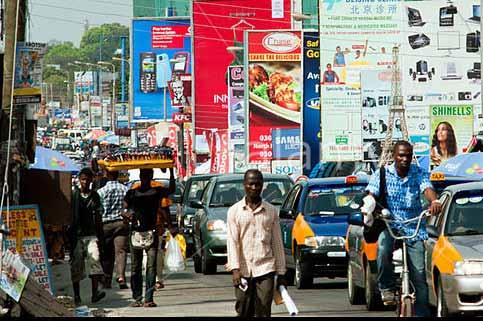
City Life and the Itineraries of Transnationalism Ato Quayson
Ato Quayson, University of Toronto /
On the tro-tro slogans of Ghana. /
|
Excerpts:
Epilogue: Back to the Beginning... Facets of Power
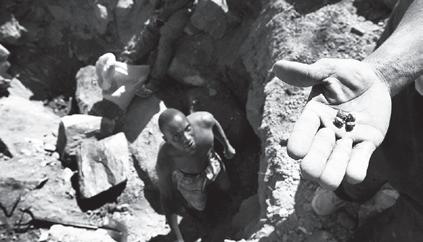
London and Antwerp are famous for major diamond robberies. These are nothing compared with what happened in Zimbabwe.
Excerpts: Grace & other stories
“Here are soulstirring individual and collective stories of villagers, and just in the background, a country failing the hopes of its people.”
- NoViolet Bulawayo
Review: Look at the kwerekwere in the mirror #RhodesMustFall
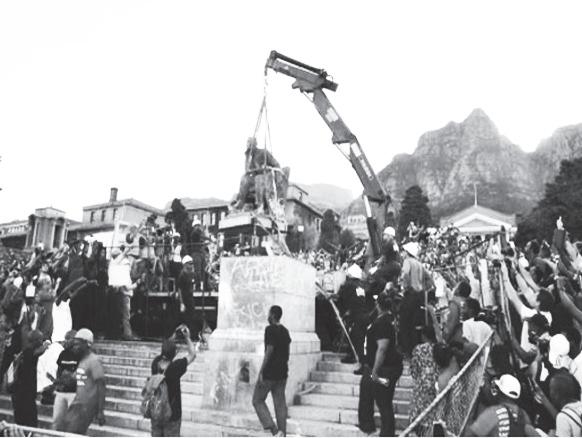
Black South Africans have embraced European ideas, so why can’t citizenship be equally fuid? - Tinyiko Maluleke, Mail and Guardian, South Africa
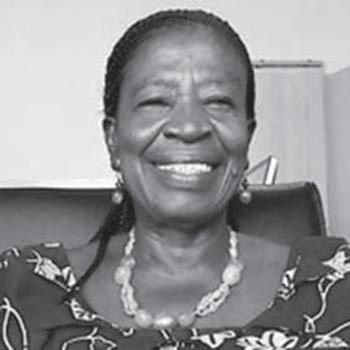
In 1993 Akoss Ofori-Mensah started her own publishing house: Sub-Saharan Publishers, Accra African Books Collective