LINK Kenton Reader - Volume 4, Issue 1 - November 21, 2025
By Meghan Goth
Are robots about to overtake everything, including McDonald’s?
“In my professional work lifetime, do I think I’m going to get my Big Mac from a robot?” asked Dan Cahill of HSD Metrics in Covington. “I’m 100% sure I will. Because there will not be another option. There won’t be people.”
This likelihood, the CEO of the workforce data company told LINK nky, will be just one example of a flashpoint created from change and disruption, spurred by everything from technology to generational changes.
So what will work look like in Northern Kentucky? “When you start to drop in things like transportation and workforce, I don’t know that anyone can give you any sort of projection even about how these
Continues on page 4
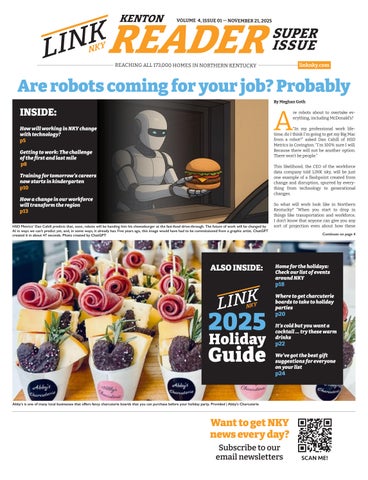
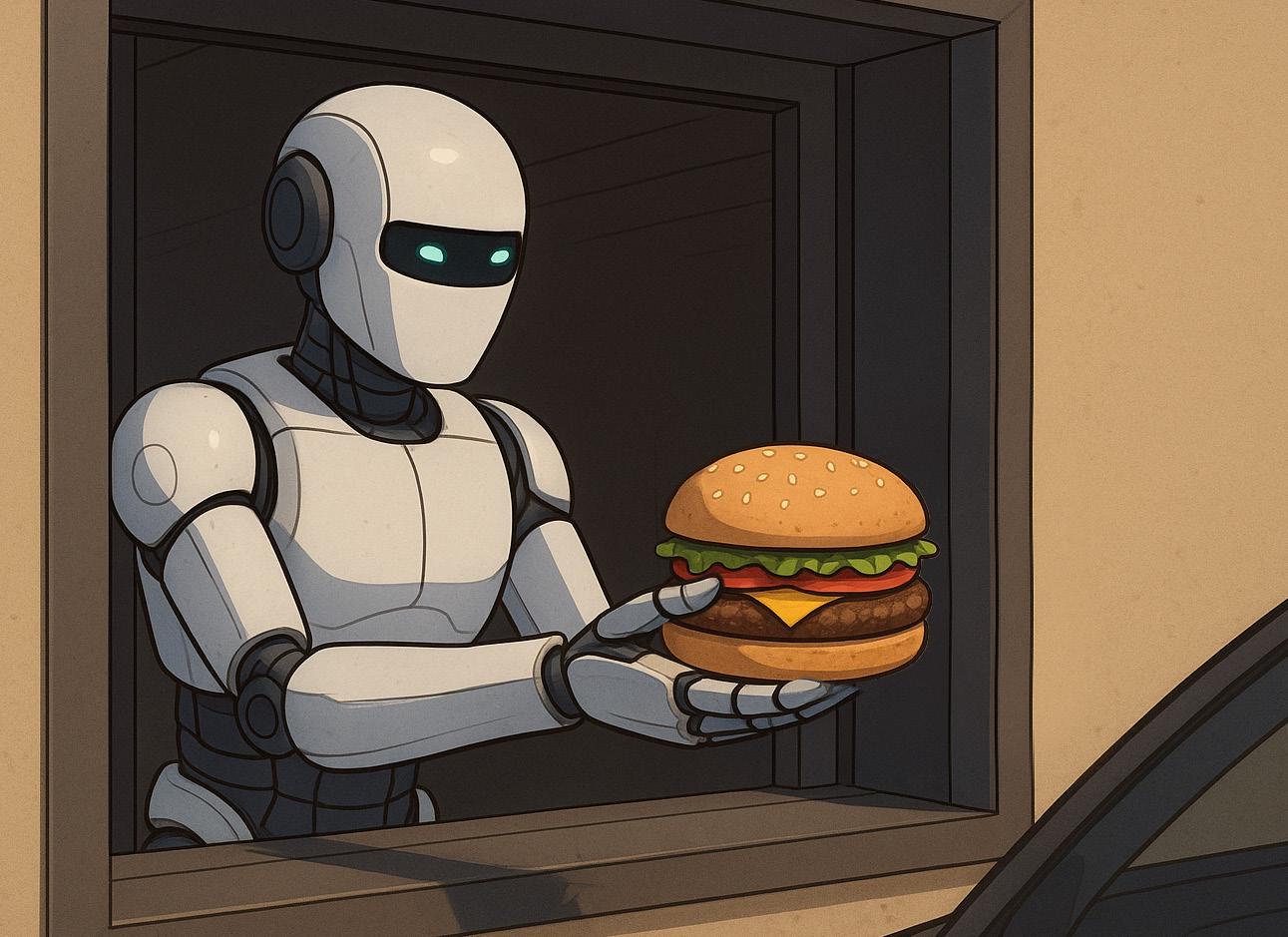
HSD Metrics’ Dan Cahill predicts that, soon, robots will be handing him his cheeseburger at the fast-food drive-through. The future of work will be changed by AI in ways we can’t predict yet, and, in some ways, it already has: Five years ago, this image would have had to be commissioned from a graphic artist. ChatGPT created it in about 47 seconds. Photo created by ChatGPT
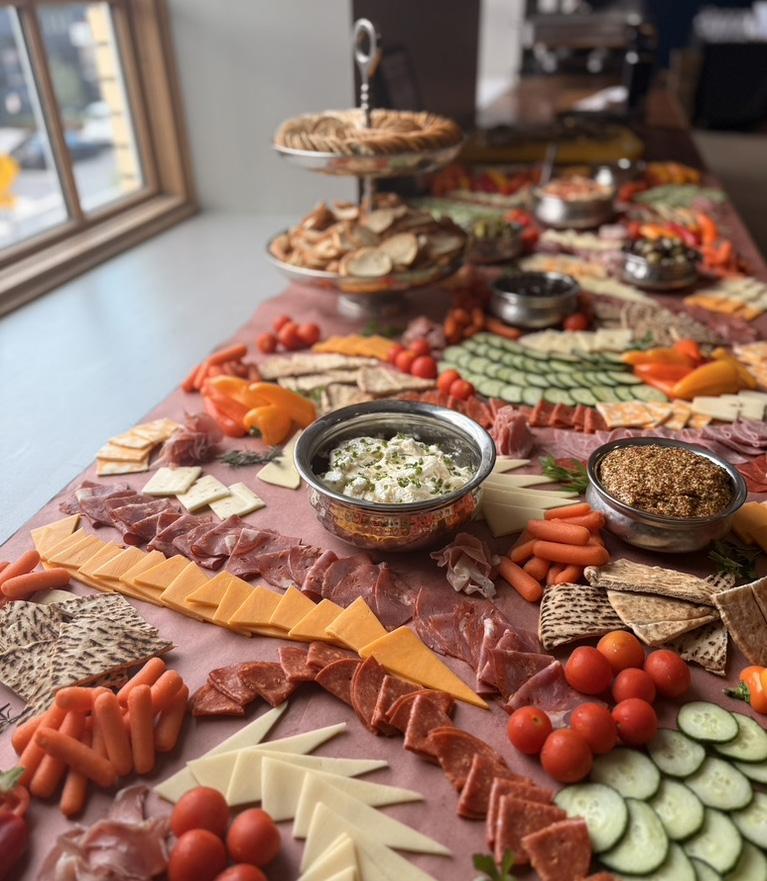
Abby’s is one of many local businesses that offers fancy charcuterie boards that you can purchase before your holiday party. Provided | Abby’s Charcuterie
PRESIDENT & CEO Lacy Starling
EXECUTIVE EDITOR Meghan Goth
SPORTS EDITOR Evan Dennison
LINK nky Kenton Reader is published weekly by LINK Media LLC, 31 Innovation Alley, Covington, KY 41011.
Periodicals Postage Paid at Covington, KY.
POSTMASTER: Send address changes to LINK nky Kenton Reader, 31 Innovation Alley, Covington, KY 41011. ISSN 3064-7460
859-878-1669 | www.LINKnky.com
HAVE A TIP? News@LINKnky.com
WANT TO ADVERTISE? Marketing@LINKnky.com
WANT TO SUBSCRIBE?
Send a check for $58.30 ($55 non-auto-renewing rate plus 6% Kentucky sales tax) to LINK nky 523 Madison Avenue, 2nd Floor Covington, KY 41011 or scan this QR code below
SUPPORT OUR WORK
Love what we're doing?
Want to support public-interest journalism in Northern Kentucky? Make a tax-deductible donation to support our work. Scan the QR code below, or mail a check payable to the Northern Kentucky Community Journalism Fund to 50 East Rivercenter Blvd. Suite 431, Covington, KY 41011.
No part of this publication may be used without permission of the publisher. Every effort is made to avoid errors, misspellings, and omissions. If, however, an error comes to your attention, please let us know and accept our sincere apologies in advance.
Continued from page 1 things are going to work,” Cahill said.
Futurist Christopher Rice said that, if Northern Kentucky can get really good at systems thinking, the region is in a favorable position to respond to the demographic, climate and geopolitical challenges ahead. But, Rice said, there’s not one specific factor that’s going to change the way we work, because multiple challenges are arising at the same time.
“We’re in the midst of a polycrisis, and that means that any meaningful forecast about the future has to take those multiple trends and drivers and think about how they interact at a systems level,” Rice said.
Here at LINK nky, we like a good challenge, so we set out to find out what the future holds for work in Northern Kentucky. How will tariffs, unemployment and the evolution of AI change the way we work? How will the way we get to work change? What about how we’re trained? What about the workforce itself?
As much as Cahill says nobody knows what’s coming, he may be better equipped than most to make these predictions because his company collects and analyzes data that looks into everything from generational differences in workplace values to how companies are planning for the future.
Generations and AI
The baby boom generation, Cahill said, had a very traditional sense of workplace values: Boomers expected to start a career with one company, work up the chain into a high-paying management job, then retire. They want to work in an office and expect younger workers to go through the challenges they did as new employees before earning higher salaries and better hours.
Then you’ve got millennials, which started out as a more disruptive generation until waves of financial crises molded their workplace values to be more traditional. That is, with the exception of working from home. Millennials want that because, for those who did have children, day care is a sudden impossibility.
Gen Zers, Cahill said, like to go to the office, but they don’t want management roles, and they don’t want traditional values in a workplace.
Even outside of the office, the differences will be obvious as time goes on.
“The millennials are probably the last folks who want to live in the suburbs or can even afford that housing,” Cahill said.
While millennials are having kids, they are having them at much lower rates than previous generations. “People aren’t making babies, and it started with the millennials,” Cahill said. “So there is a shortage of bodies. There’s probably 3 million fewer people working this generation.”
How can Northern Kentucky use that systemic thinking to prepare?
Rice, the futurist, said training is going to be key as the workforce ages. “We have to think about supporting, training and re-
taining older workers,” he said.
That’s where AI comes in. “Companies paused in their hiring because they said, ‘Now wait a minute, before we go hire anyone else, can AI fix this?’” Cahill said.
The problem, he said, is that AI won’t actually be able to solve those kinds of problems for three to five years.
“I think nobody knows what is going to happen now,” Cahill said. “It’s a Molotov cocktail of change and disruption, from technology to generational differences.”
During those years, though, Cahill said there will be a gradual digestion of change and disruption. “We’ll get back to work, and we’ll grow and we’ll continue to solve things incrementally.” he said.
It’s possible, Rice said, that generative AI might not end up having a huge impact beyond software, customer service and marketing. “However, other forms of AI could lead to some significant advances in robotics, agricultural drones and medical advances,” he said.
What other factors may play in?
“By 2040, there will not be a majority ethnicity in our country,” Cahill said. “All of the evolution of these different ethnicities will
come together, so I don’t think people can predict how this will affect work.”
Education and training
There’s also the fight we’re seeing at the university level for students.
“The four-year degree isn’t what it once was,” Cahill said. “Now kids are looking at the trades and other alternatives.”
What the public decides to do about funding colleges and universities will have a major impact on the quality of our workforce, Rice said.
“I’ve never seen a time of more budgetary and strategic uncertainty in higher ed than I see right now,” Rice said. “One of the U.S.’s great engines of innovation and competitiveness globally has been our system of higher education, so that’s going to be a big impact.”
One thing that would help, he said, is for the state of Kentucky to step up to continue to support institutions like Northern Kentucky University and the Kentucky Community & Technical College System, of which Gateway is a part.
Training departments within companies are likely to see change, too. Cahill said he was talking to a local Fortune 500 company
Generational differences are among factors that will impact the future of work. Millennials would rather work from home so they can take care of their chidren amid rising child care costs. Gen Zers prefer being in office. Provided | Charles Deluvio via Unsplash
that has a huge training department.
“We figure in a year all of that will go away and it will be AI based,” he said. “As training companies bubble up, people are more or less figuring that, rather than training, they will just have an AI assistant as a regular part of their job.”
Not only that, but Rice said AI is having a big impact on being able to verify whether learners are actually acquiring the needed skills. He said he saw someone use Perplexity AI’s Comet browser to complete a compliance training without actually watching the videos that included the training in them.
“So it’s a big challenge,” Rice said. “My general impression is that there’s going to be a big push for more in-person training and assessment where employers can see employees and job applicants actually prove their skills.”
What does all of this mean for the future of work?
“The nature of the generations accepting totally different principles and values; the technology; and then the nature of how employers will need to approach these individuals” are all things that will shape what our future looks like here.
With companies looking at not having enough people anyway, will they look to technology to help fill those voids?
“That’s what will shape everything else
you’re talking about,” Cahill said.
Cahill said most large companies have one business plan that is their normal SOP and another that includes some of the changes we’re talking about. “It’s going to be a while before companies will be able to operate with one business plan,” Cahill said.
For Northern Kentucky, it’ll come down to the local community and leaders, Rice said:
“Leaders in NKY will have to work closely with partners like Amazon and other AI-forward businesses to ensure the needs of the local communities and workers are taken into account during this transition.”
Dan Cahill is a member of LINK nky’s Managing Board, which oversees the business operations at LINK but has no say in editorial matters.
Interested in hearing more from Christopher
Rice?
He is speaking at our next Community Conversation about the future of work in Northern Kentucky. Scan this QR code for more information and to RSVP.
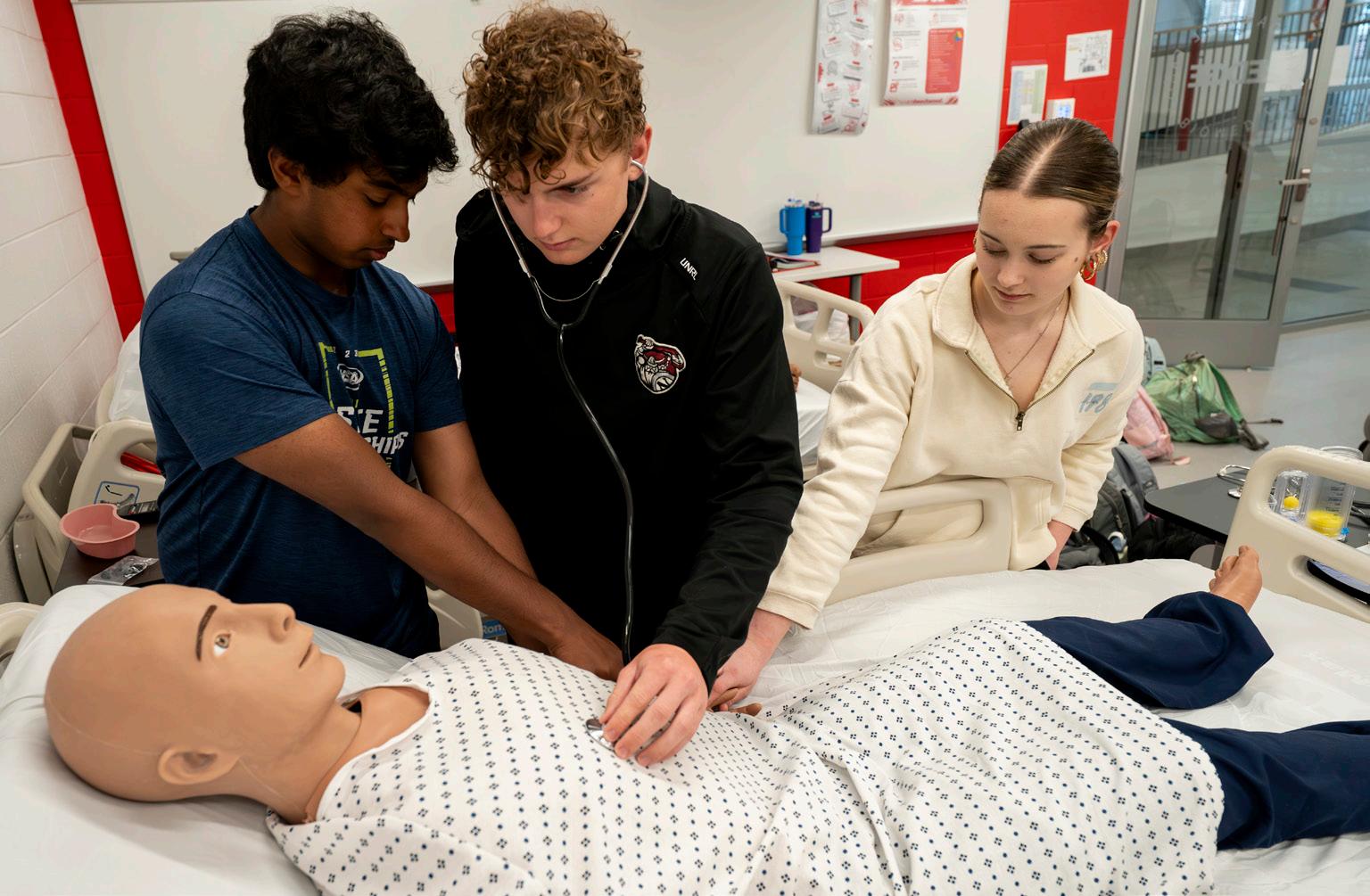
A Beechwood High School student gets real-world experience as part of the EDGE program. Provided | Beechwood High School
The traditional rush hour could become a thing of the past if people don’t have to travel physically to work so often. Provided | Jeswin Thomas via Unsplash
To compete, region must lean into assets
By Kenton Hornbeck
America’s economy is rapidly changing, and Northern Kentucky’s business leaders don’t want to be caught with their heads in the sand.
Automation, artificial intelligence, educational changes, trade wars and other looming challenges threaten to upend the status quo, as transformative technologies and geopolitical conflicts become part of everyday life.
While often viewed as a national issue, these challenges are felt most acutely on the local level. Change is often experienced first by workers, educators and ordinary residents as evolving technology transforms their livelihoods.
When people discuss the future of work, the conversation often centers on robots replacing human jobs. A McKinsey Global Institute report projects that, by 2030, driven by faster adoption of AI, nearly 30% of work hours in the United States could be automated.
What will that look like in Northern Kentucky?
Manufacturing work evolves
Manufacturing is often seen as one of the sectors most likely to be affected by automation and AI. Long considered a cornerstone of the American economy, manufacturing has experienced fluctuations since its peak during the post-World War II economic boom.
Manufacturing is one of Northern Kentucky’s largest employment sectors, and it is a key component of the region’s economy. BE NKY Growth Partnership, Northern Kentucky’s leading economic development agency, emphasizes “advanced manufacturing” as one of the region’s four key industry clusters. There are more than 300 manufacturers in the region with over 50,000 employees in all, including in machine tools, electronics, aviation, aerospace, and steel and metal fabrication.
A widely cited 2019 Oxford Economics report suggests that automation, particularly the use of industrial robots, could result in the displacement of 20 million manufacturing jobs globally by 2030. There are projected to be 4.6 million manufacturing jobs to fill in the United States by 2028, according to a report published by Rockwell Automation. The report found that automation
is expected to reduce labor demand in certain routine or manual roles.
Under this logic, it stands to reason that one of Northern Kentucky’s vital economic sectors could experience a complete transformation through the continued adoption of advanced robotics and artificial intelligence.
Perfetti Van Melle, one of the world’s largest confectionery manufacturers, has its North American headquarters in Erlanger. The 400,000-square-foot facility produces about 6.5 million Airheads bars per day and employs approximately 450 people.
Sylvia Buxton, president of Perfetti Van Melle’s North American operation, told LINK nky that there is a misconception around the discussion of robotics and artificial intelligence eliminating employees’ jobs. From her perspective, investment in automation and AI has led the role of a manufacturing worker to evolve rather than be eliminated.
“I would say it’s less that jobs go away and more that there is a shift in skill set needed,” she said. “I think that that same shift is already occurring and will need to occur as we move into more of the AI and technology space.”
Buxton said Perfetti Van Melle has been investing in automation and artificial intelligence for years, using these technologies to improve efficiency and reduce costs. In that same period, the company has nearly tripled its workforce in Erlanger.
“We have, over the last 10 years, invested almost $70 million in our Northern Kentucky facilities, including factory, warehouse, etc.,” she said. “A lot of that was capacity expansion, but also automation. So during that same time period, we’ve more than tripled our workforce.”
New opportunities, new skills
Many local industry leaders, such as Buxton, believe that, although AI and automation may eliminate certain jobs, they will also create new job opportunities. For employers, this could manifest in “task reallocation,” where machines or AI handle routine work while humans take on more interpersonal, creative or complex problem-solving tasks. Many workers may need to learn new skills to remain competitive in the job market rather than needing to find new jobs altogether.
A 2019 report from the Brookings Institution, “Automation and Artificial Intelligence: How Machines Are Affecting People and Places,” suggests that machines are likely to replace specific tasks rather than entire jobs. Although the authors acknowledge that nearly every occupation will be impacted by technological advancement, only a small number of professions can be entirely automated.
To help students and workers prepare for upcoming economic changes, regional educational institutions will need to adapt to better equip the next generation of workers. This could include increased investments in skilled-labor education, such as
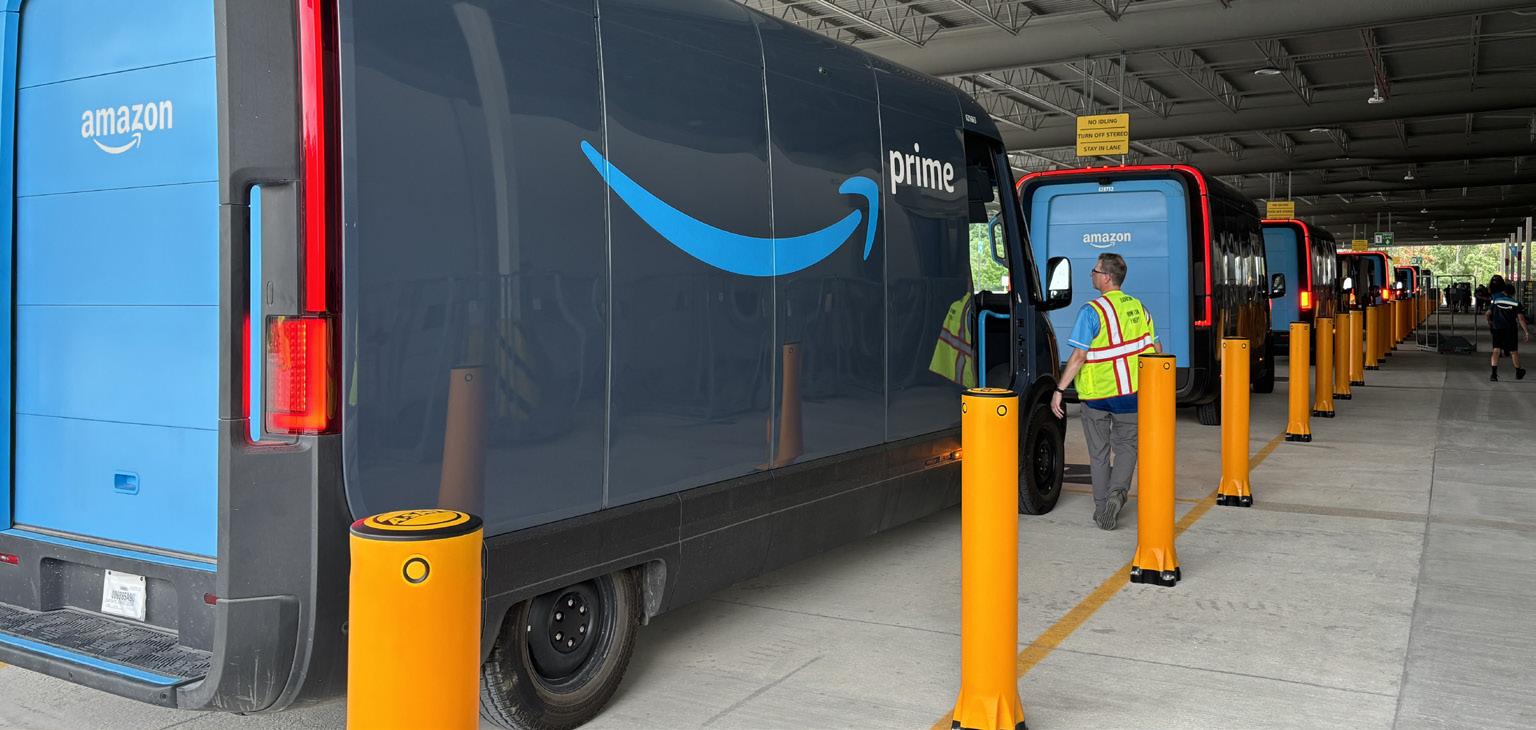
Two Rivian delivery trucks lined up outside a new Amazon distribution center in Florence. Photo by Kenton Hornbeck | LINK nky
trades, and further education in AI training.
Workforce shrinking
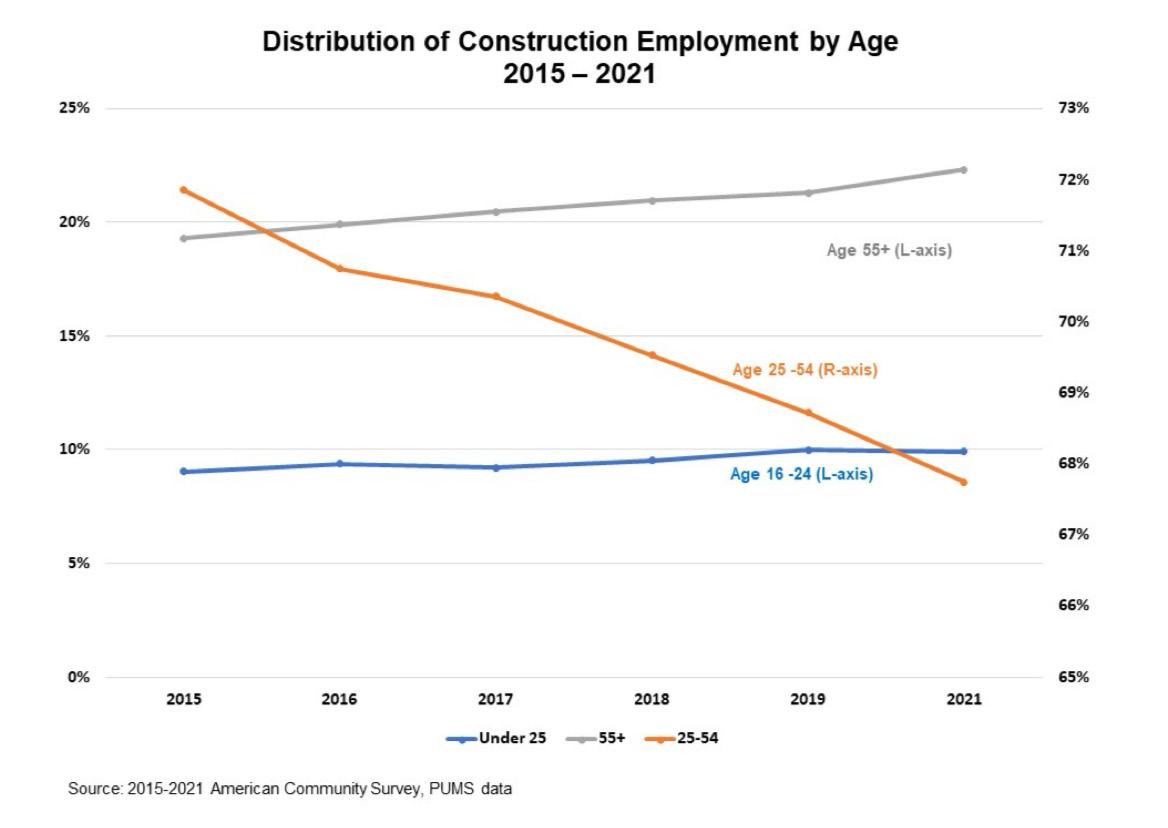
David Drees, CEO of Drees Homes, one of Greater Cincinnati’s largest homebuilders, said AI’s emergence may not significantly affect the construction industry. However, he noted that demographic shifts will make labor more scarce as the population ages. According to the 2023 Homebuilders Labor Market Report, one in five construction workers is 55 or older, indicating that a significant portion of the workforce is approaching retirement age.
Furthermore, the United States’ total fertility rate was 1.59 births per woman in 2024, significantly below the replacement rate of 2.0. Essentially, the U.S. will lack enough future workers to replace those retiring.
As current workers age out of the workforce, the responsibility to take over will fall on younger tradespeople. Conversely, older workers might be encouraged or compelled to work beyond the standard retirement age of 65. To counteract this, Drees suggests that economic stakeholders invest more time and money in trade education and technical training programs. Drees heralded Northern Kentucky-based trade schools, such as the Enzweiler Building Institute, as programs that should be emulated.
“We tried to bring the conversation back towards one of our key initiatives is education, and obviously that needs to be improved dramatically here locally in Ken-
tucky and Northern Kentucky specifically, and we need to train people to be able to utilize the changing technology that’s out there. But we probably also need to gear people up to the job they’re going to be in in the future.”
Venture capitalist Chad Summe, a partner at Covington-based eGateway Capital, believes that, because the future labor pool is shrinking, Northern Kentucky – and Greater Cincinnati as a whole – must outcompete similarly sized metropolitan areas, such as Columbus, Indianapolis and Louisville, for younger workers. This includes ongoing investment in “quality-of-life” amenities, such as bike trails, walkable cities and unique entertainment venues.
Another wrinkle in the future workforce is how older workers will respond to evolving workplace dynamics, especially regarding the adoption of AI in daily tasks. A survey of 500 U.S. professionals conducted by Yooz revealed that over 75% of workers have observed older or senior colleagues resist new technology.
Futurist Christopher Rice told LINK nky that older workers will require support through training and retraining to remain competitive.
“Fewer young workers [are] entering the workforce, and more older workers [are] sticking around for a longer period of time,” Rice said. “We have a lot of ageism in business right now in terms of employment that’s going to need to be overcome at the same time we’re thinking about lifelong learning and upskilling/reskilling needs for
a long-term workforce. So we have to think about supporting, training and retaining older workers.”
Buxton believes older workers can adapt to AI integration in the workplace because she finds the tools to be intuitive. She described students who are growing up using AI regularly as “AI natives,” similar to how “digital natives” were referred to during the rise of the internet. Younger generations will become fluent in AI, with using it becoming second nature to them.
“For the folks who are, you know, at the other end of their career, I think it won’t be that challenging to learn how to use them, because the tools are pretty intuitive. And I think … in a lot of cases they’re behind the scenes without [workers] even knowing that they were there.”
Clean-up work
Although AI adoption and technological advances can be seen as a beneficial disruptive force for the economy, they’re not without critics and skeptics.
Rice warned that Northern Kentucky’s creative and customer service sectors could face disruption from generative AI, with many skilled roles being replaced by lower-paying “clean-up” work.
“One worry I have is the impact of generative AI on the arts, design and marketing industries in NKY. Those industries, along with call centers/customer support, are likely to see the biggest impacts from deployment of AI over the next few years in terms of demand for skilled workers. There’s growing evidence that there will be growth in the need for people in those professions to clean up the slop produced by AI, but those ‘clean-up’ gigs almost always pay less than the original skilled jobs producing content or serving customers.”
While some business leaders believe AI will drive adaptation among companies and employees, Rice said corporate giants like Amazon are fully committing to AI, which will transform their workforce. Amazon is one of the largest employers in Northern Kentucky, with thousands of workers at its North American Airhub at Cincinnati/ Northern Kentucky International Airport in Hebron.
Amazon already relies heavily on auton-
omous robots at that facility, but Rice believes more are likely to be introduced. He described a future not too far off when AI tools, such as augmented reality glasses, enhance human workers’ efficiency, potentially reducing their decision-making autonomy.
“Amazon has patents for using small robots launched from a central truck in a neighborhood to deliver packages, but it turns out that’s really hard to make work in terms of autonomous technologies,” he said. “So, rather than make robots more like humans, it looks like it could result in making humans more like robots. What’s been called ‘reverse centaurism.’ But in the warehouses, it’s the opposite situation: Amazon will soon have more robots than humans working in its fulfillment centers, and there’s nothing to indicate that trend will be reversed anytime soon.”
Despite the potential drawbacks, stakeholders such as Dave Spaulding, CEO of the Cincinnati-based real estate development firm Acendion Collective, see AI integration as inevitable. He believes community leaders should promote the idea that AI can be a useful resource. This approach can help the community collaboratively develop improved regulations and practices.
“The more we think of AI not as like a siloed tool but a community resource, it’ll be a better advantage in Northern Kentucky just because we’re smaller and nimble, and we’re way more open across all of our businesses, taking all of the best practices and lessons learned and spreading them across so we would use it quicker and faster than other communities.”
The future of work in Northern Kentucky is not a distant scenario – it’s happening now. Robotics is reshaping factories. AI is rewriting the rules of professional services. Offices are filling back up. Trade jobs remain scarce. And education remains the linchpin.
Local business leaders agree on one thing: Whether Northern Kentucky thrives in this transition will depend on whether the community leans into its assets, adapts quickly and tells a clear story about the future it wants to build.
“The only thing that matters is outpacing our competitive set,” Summe said. “Somebody’s going to win. Why not us?”
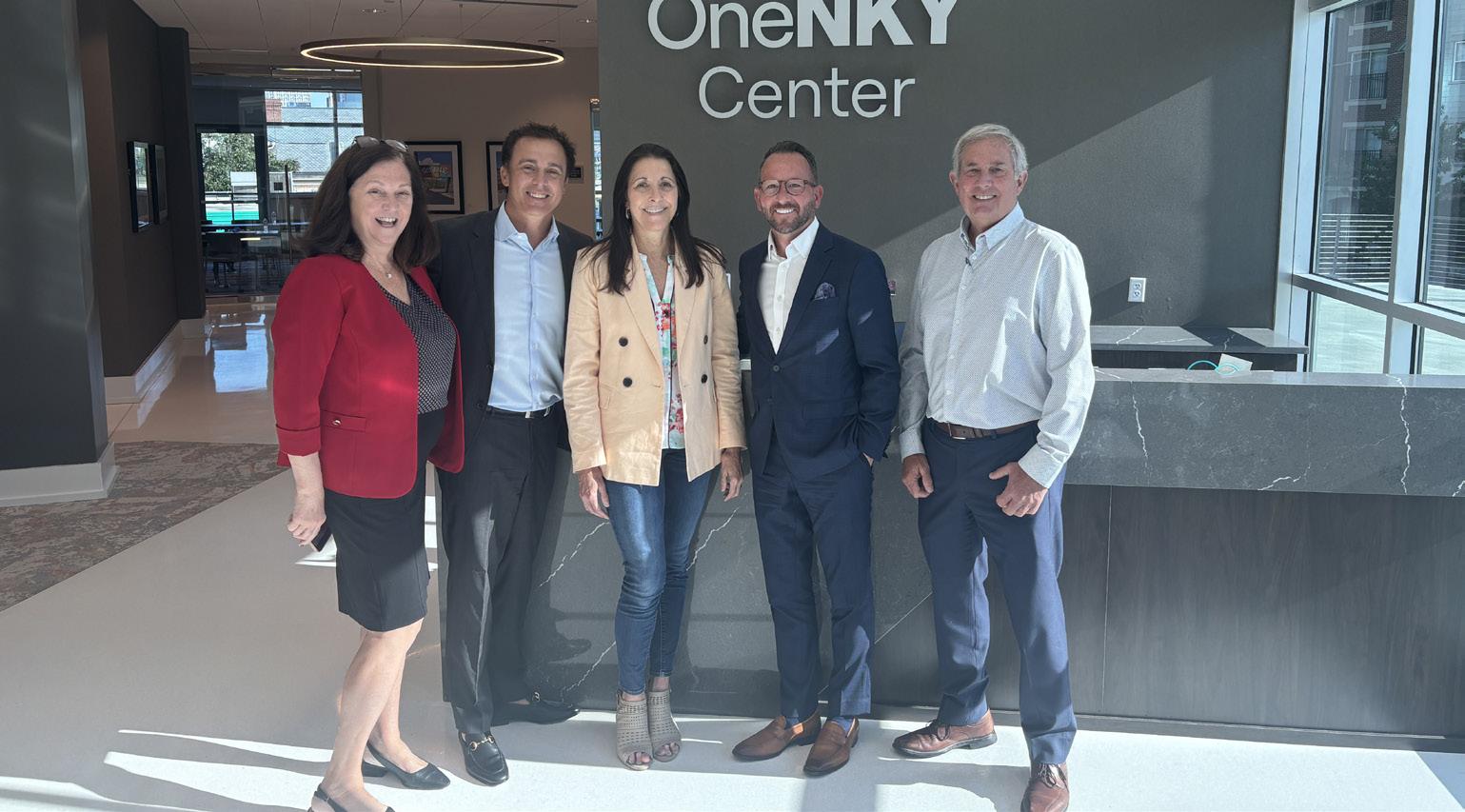
Karen Finan, from left, Chad Summe, Sylvia Buxton, Dave Spaulding and David Drees are prominent business and nonprofit leaders in Northern Kentucky. Photo by Kenton Hornbeck | LINK nky
We
and be part of something powerful.
We believe there is tremendous value in the skills, experience and training you acquired while serving our country, and we want to tap into them. Join the more than 2,000 veterans working at Duke Energy and be part of something powerful.
By Robin Gee
WGetting to work challenge: The first, last mile
hen Brenden Pulte lived in Newport, he did not have a car.
Getting to and from his restaurant job in Cincinnati’s Hyde Park neighborhood involved complex planning to ensure a connection to the right bus at the right time.
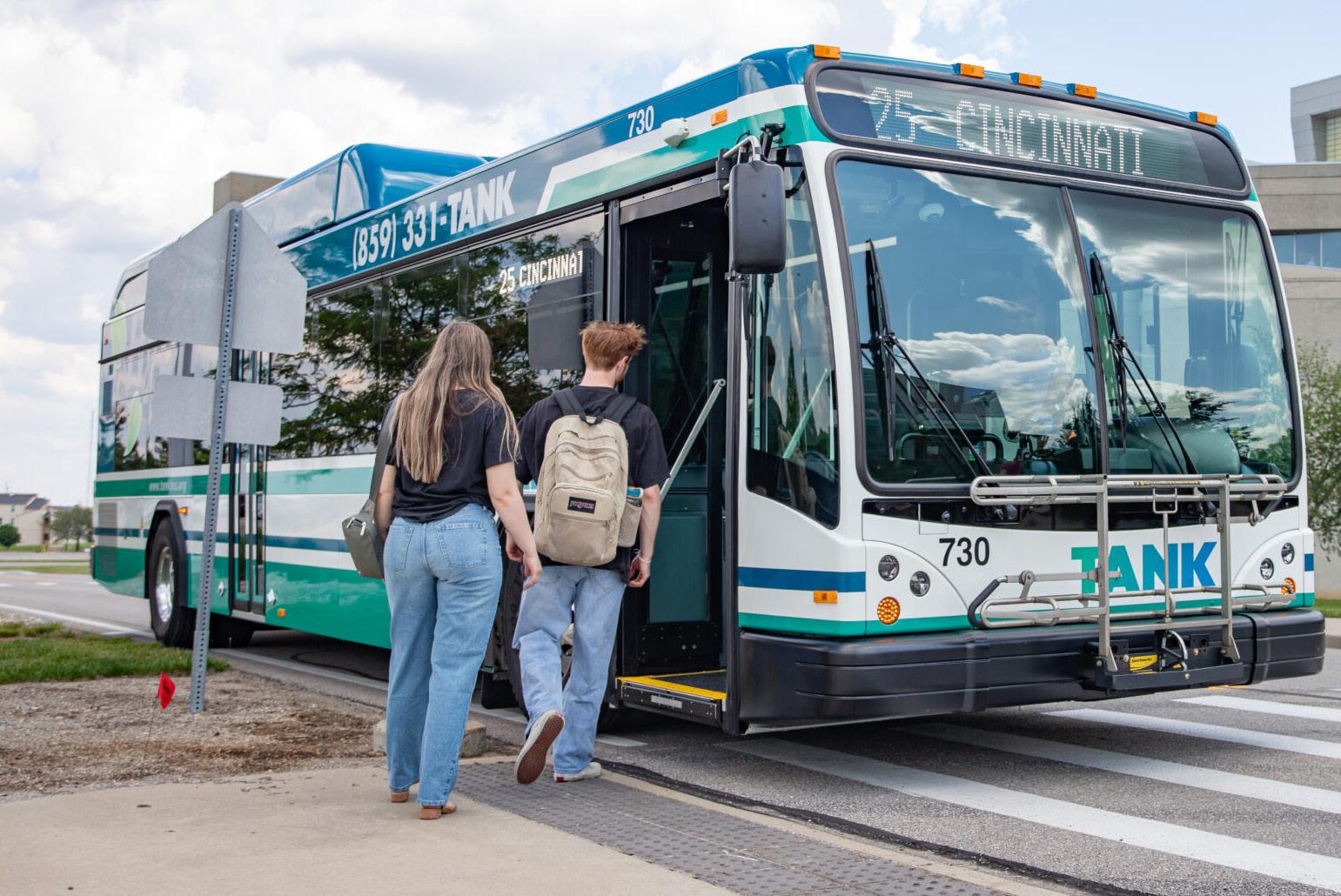
To get to his job for the night shift, he would take a Transit Authority of Northern Kentucky bus that came right outside his door. But it only came once an hour. Then he’d be dropped in downtown Cincinnati for a layover before boarding the bus to Hyde Park.
“The bigger obstacle for me was getting home from work,” Pulte said. “At that point, I would have to take the 11 [Metro] bus back downtown and connect to one of the TANK buses going over to Newport. The problem is that those come once in an hour. The last [TANK] 16 bus, which I would take, ran out of downtown to Newport at 9:30 p.m. After that, I’d have to take the 25, which was going to be several blocks more of a walk once I got to Newport.”
Pulte is part of the 83% of Northern Kentucky’s workforce that still commutes to work every day, with 76% of workers commuting alone by car. While only about 1% of the population here uses public transportation for that commute, the jobs those people are getting to are essential to communities, said Gina Douthat, TANK’s general manager.
“About 75% of those are people who are using the bus to either go to work or school,” Douthat said. “That is the primary function that our service provides.”
TANK is carrying people to essential jobs like shipping and logistics, health care and child care and even front-line workers who do things like provide groceries or work in fast food restaurants, Douthat said. “These are people that all of us depend on every day to do the things that we need them to do,” she said.
How we get back and forth to and from work presents challenges across our region. Pulte, for one, thinks more coordi-
nation between Cincinnati and Northern Kentucky would go a long way.
Anyone who travels along major transportation corridors knows the frustrations of rush hour congestion and delays. Local, state and regional officials and planning experts are working to address these problems, while they also look toward future growth, development and unknown technological changes. How will this change the way we get to work as a region?
The
first and last mile
The Ohio-Kentucky-Indiana Regional Council of Governments, known as OKI, is the official body charged with planning and coordinating federal transportation funding in our region.
“We do more, however, than just plan,” said CEO Mark Policinski. “We get projects in the ground. We invest between $50 million and $80 million a year,… and we work very closely with all jurisdictions, state departments, transportation and transit agencies.”
The agency handles critical improvements to roads and is part of the Brent Spence project, as a couple of examples.
“We also invest a lot of money in transit,”
campaign to gather input from riders and communities.
“We need to make sure that the services that are being used are the ones that are available, and try some different things, try some new types of services that might meet our community’s needs,” she said. “That’s where things like this microtransit pilot come in … where you have more of an on-demand service. You have a vehicle that’s available in a designated geographic zone, and customers can either call or use an app very similar to a rideshare app.”
Microtransit will not replace buses, Douthat and Policinski said, but it is an option that could benefit commuters, especially those who live or work outside the urban core.
Ensuring access
Policinski said. “Just in the past decade or so, we’ve invested $116 million in transit agencies in the region.”
OKI is working on a long-range plan out to the year 2050. The plan identifies $8.5 billion worth of projects, and $700 million of that would be directed to public transit, Policinski said.
“And when it comes to transit, the issue that has surrounded it since its existence has been the first and last mile,” Policinski said. “How do I get to the transit stop and then, when I’m dropped off, how do I get to work?”
Policinski pointed to a program at Cincinnati Metro that lets people book rides within specific zones that he said has gotten a lot of support. “So, instead of being public transit, where everybody goes to one place and gets on a bus, this is targeted toward the individual,” he said.
It’s something that has become possible only with technology that’s become available in the last five or six years, he said.
TANK started a similar pilot last year in Campbell County. Douthat said so far it’s had some success. It leads into a new planning effort by TANK called Reimagining Transit. The company recently launched a
The nonprofit Northern Kentucky Area Development District, referred to as NKADD, works closely with OKI, TANK and other planning and economic development bodies to coordinate and collaborate efforts.
“We’re actually written into state statute with the goal of supporting regional collaboration, convening and planning,” said Tara Johnson-Noem, NKADD’s executive director. “We also provide a number of direct service programs to clients, individuals, their families, employers, job seekers – lots of folks.”
Three of the biggest barriers to finding employment are housing, child care and transportation, said Correy Eimer, associate director of workforce development at NKADD. He said employers have had to get creative to connect with employees who live outside the urban core, especially those living in the southern parts of the region.
NKADD also connects employers and their workers to programs designed to provide transportation solutions such as Enterprise Commute, a paid ride-share service provided through OKI. OKI provides a monthly subsidy toward rental of a seven- to 15-passenger van. Another program then coordinates ride-sharing logistics for commuters living and working along the same routes.
SCAN TO DONATE
SCAN TO DONATE
TANK is seeking input from riders for its Reimagining Transit planning project. Provided | TANK
Ivy Stites is a community development planner for NKADD. She is working on the technology behind the Regional Mobility Coordinated Transit Plan designed to identify gaps, especially in public transit systems, and to help coordinate efforts to address those gaps.
NKADD Transportation Manager Jeff Thelen focuses on road travel for the five southern counties in Northern Kentucky. His counterparts in OKI focus on Boone, Campbell and Kenton counties. Both planning bodies are in the middle of the state SHIFT process – the Strategic Highway Investment Formula for Tomorrow. SHIFT
is a prioritization process involving all the area development and metropolitan planning organizations, including OKI, across the state every two years.
The process involves identifying top projects in each county or region, an elaborate scoring process and further selection. A final list of selected projects heads to the state legislature for recommendations to the governor. If all goes well, they make it into the governor’s road plan.
Going autonomous
OKI’s Policinski said technological advances available today can change the commuting landscape if people are open to it.
“If you go out 10 or 15 or 20 years, if you’re really looking at what the landscape is going to be, you have to look at autonomous vehicles, driverless cars,” he said. “Autonomous vehicles are here. Waymo, Google’s driverless car service, has 30 million miles already on streets and roads. For years, driverless taxis have been operating in Las Vegas, and their use is spreading all over.”
The technology actually has been around for decades, he said, but recent advancements in other areas have made it a much safer and more practical choice.
Right now, public perception also poses barriers to overcome, Policinski said. After a handful of well-publicized accidents with driverless vehicles, the public is skittish. Yet, according to a recent study of Waymo published in Traffic Injury Prevention,
safety data is promising. Comparing Waymo to human drivers, the driverless vehicles had 85% fewer crashes that could have resulted in serious injuries or worse. More research is needed, but it looks promising.
Not only do autonomous vehicles eliminate the most dangerous factor in driving – human error – they promise benefits in reducing pollution and easing congestion, but only if we approach the technology with these goals in mind. It’s a cultural shift, but it can happen, Policinski said.
“If everybody has an autonomous vehicle, you don’t get fewer vehicles on the road,” Policinski said. “The only way this all works …is if people are willing to get in a driver-
less car and to share that ride.”
Much of the technology already exists to figure out where people are, where they need to go and how to put all that together. People could be offered shared rides to work at reduced rates depending how many others are in the ride, he explained.
“This is a crazy word to use nowadays, but I would hope that people would be optimistic about what’s coming,” Policinski said. “How technology is actually going to work to make their lives better with easier access to work, as well as to their families. The technology is on the commuters’ side.”
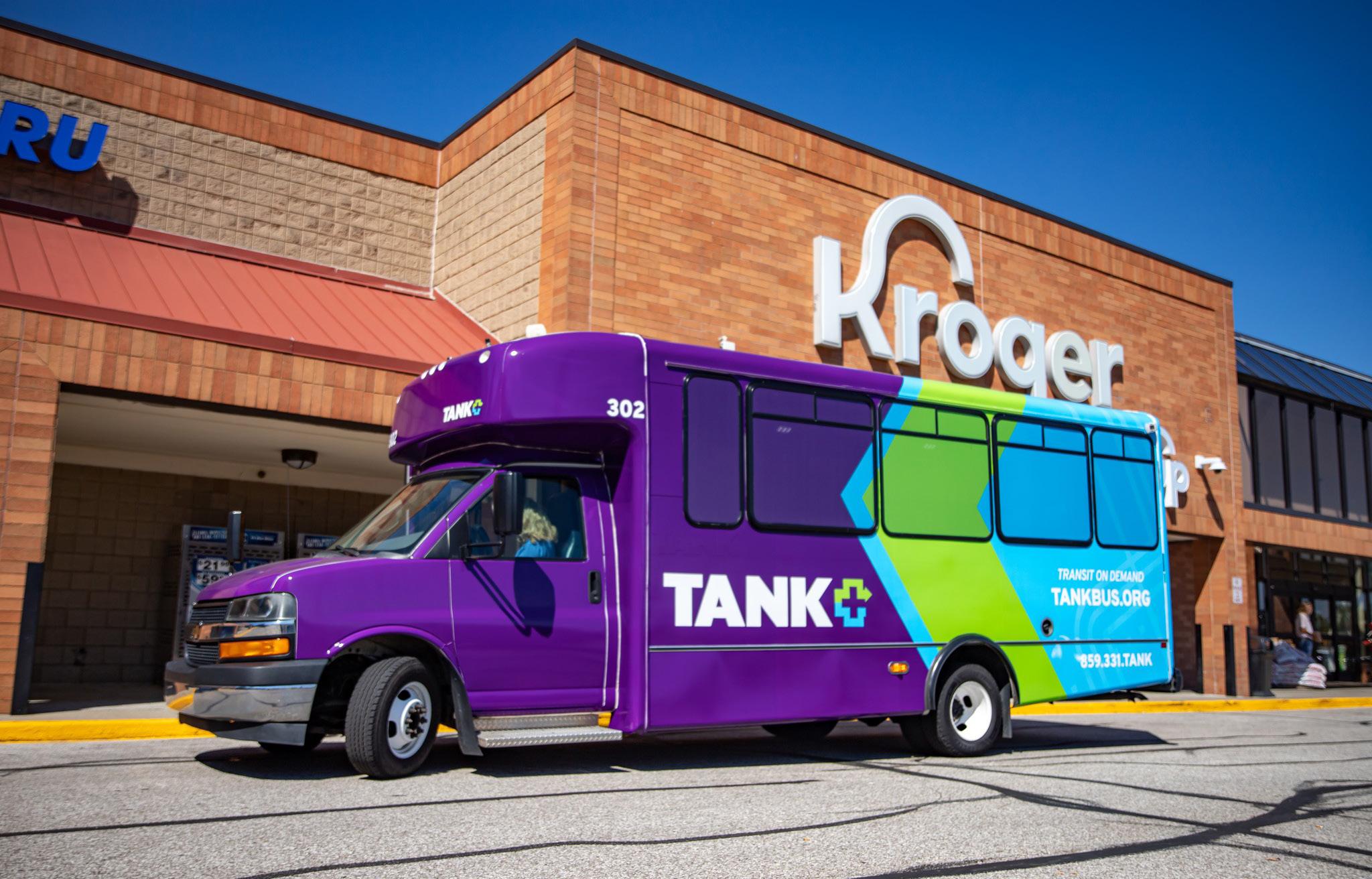
A pilot program in Campbell County offers in-demand service to take riders to destinations within a designated zone. Provided | TANK
Cyclists, some of them commuters, cross the Fourth Street Licking River Bridge from Newport to Covington. Work begins soon to replace the 90-year-old span. Provided | Devou Good
Training for tomorrow’s careers starts in kindergarten
By Haley Parnell
Beechwood Independent Schools is taking the training wheels off K-12 education and reimagining what it could look like to prepare its students better for the workforce.
“What job exists where you sit down for two weeks, you listen to your boss, and at the end you write down everything your boss said, turn it in, and you get a paycheck?” said Beechwood Superintendent Justin Kaiser.
The school’s EDGE program prepares students for the workforce in kindergarten through 12th grade alongside their regular courses like math, science, social studies and English. EDGE stands for education, design, geared toward experience.
As generational changes and generative AI change the way we live and work, schools like Beechwood are already anticipating how to get ahead of changes to the way future workers are trained.
At the high school level, students can choose a “minor,” a four-year course of study selected for ninth through 12th grade. EDGE minors are offered in biomed, informatics, entrepreneurship, culinary, engineering, media, performing arts, environmental and fine arts. During their senior year, students complete their minors through an internship, research, or early
college or dual credit aligned to the minor. Beechwood senior Everett Pohlgeers is a biomed minor. Pohlgeers said he became interested in the medical field through his aunt, who is the team doctor for the Louisville men’s basketball team.
“The EDGE program has helped me build that dream, build my motivation and show me what all I can do,” he said.
Pohlgeers has an internship with St. Elizabeth Hospital. He is in the hospital learning for two hours a day, Monday through Friday. He works in a different unit within the hospital every day, including sterile processing, outpatient physical therapy, skilled nursing and transitional care units.
Merle Heckman, a lecturer at Northern Kentucky University’s Department of Management, is not only a university professor; he also has years of experience teaching trainers worldwide.
“We have got to get away from just the information dump,” Heckman said. “I find that, when I have freshmen, sophomores, even juniors, who I’m teaching management to, and work situations, if they don’t have a point of reference, I can talk all day long, but they can’t connect it in their heads.”
In Pohlgeers’ biomed classroom, there is an anatomage table, which is essentially a human body-sized iPad. On it are five digi-
tized cadavers that come from people who donated their bodies to science. Students can observe abnormalities and see how different diseases the people had affect multiple organs in their systems.
“I pull it up in front of the class, and it’s huge,” said Beechwood biomedical science class teacher Kaylee Flynn. “I can show them this is what an elastic cartilage tissue looks like under the microscope. The kids really like that, because they’ve never experienced anything like that, and neither had I.”
Pohlgeers said all of the different equipment they are allowed to use is really cool.
“Being able to use that and see more indepth is more interesting than just it being on a whiteboard,” he said.
The class also has two mannequins. One is more basic. Flynn said it is used for learning how to help patients get in and out of their hospital bed, feeding, grooming, etc. The other mannequin is AI-powered and can talk. Flynn said students use it when they are learning how to ask questions of patients and learn the bigger picture of what’s going on. Students can also learn how to take vital signs and blood pressure because it has active pulse points.
“That’s cool,” Flynn said, “because, when
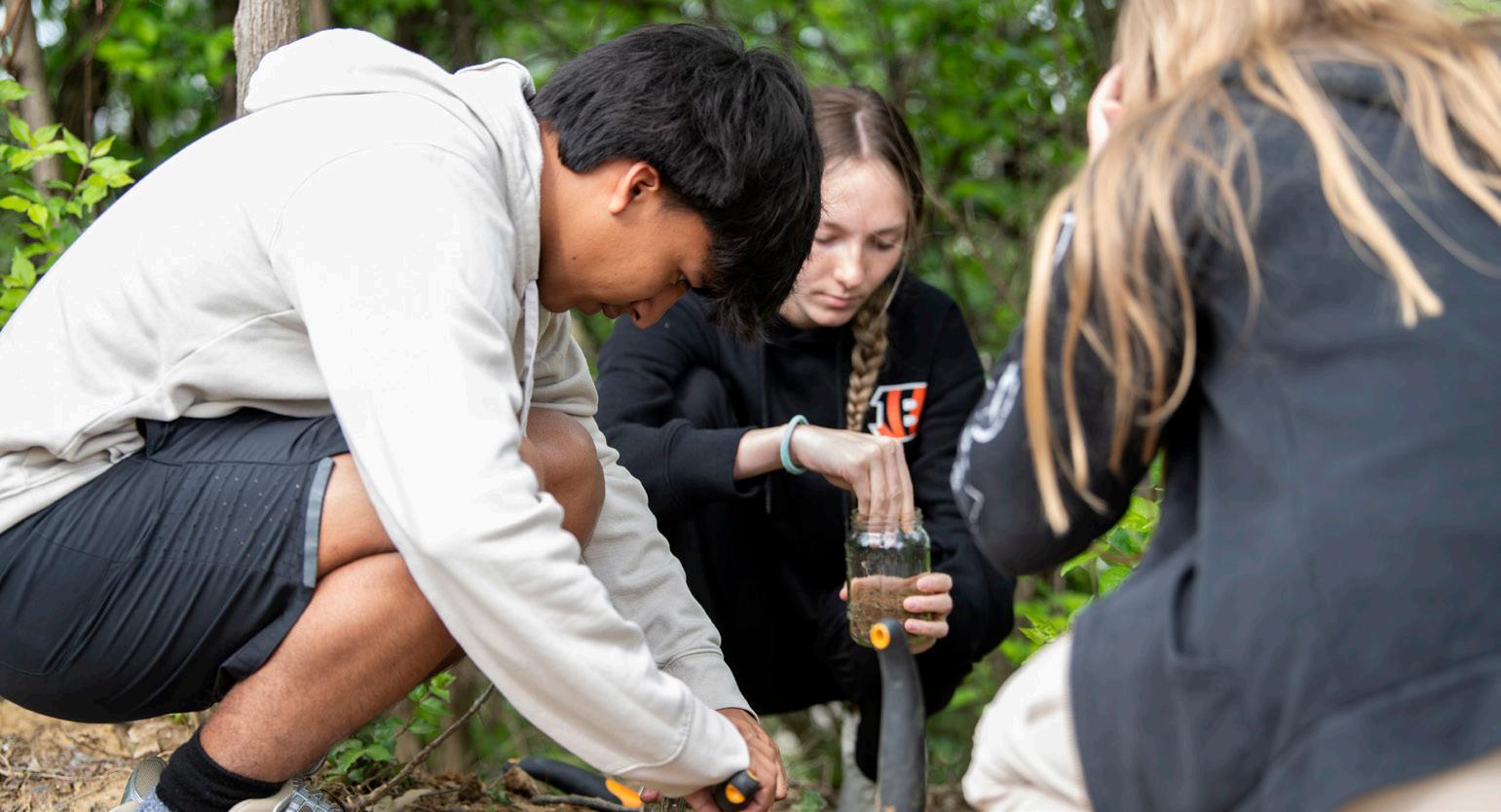
Beechwood High School students can choose from among nine “minors” that offer focused, hands-on study through the EDGE program. Above, students work on an environmental project. Photo by Aurora Institute-Fusion Photography
SCAN TO VIEW HOMES
I’ve taught similar classes in the past and we learn vital signs, I was never able to tell if they just made up a number or not. With this, I can control the mannequin’s vital signs, and, when they take the blood pressure and tell me what it is, I can assess it more easily.”
Continuum of learning
This type of work is not going on only at the high school level.
Beginning in kindergarten, every student experiences personalized, concept-based learning that continues through fourth grade. In fifth through eighth grade, students participate in “seminar,” a challenge-based curriculum that develops problem-solving skills through increasing-
ly complex, real-world projects. Local businesses present many of these “challenges,” providing students with hands-on experience in creating solutions.
By seventh and eighth grade, seminar expands to explore multiple postsecondary fields, mirroring the minors offered in high school and connecting students with business partners to tackle industry-specific problems.
Beechwood Assistant Superintendent Sarah Schobel said that students in seventh and eighth grade do challenges in each of the offered high school minor fields, so they get exposure to each topic before having to select one in ninth grade.
“Workforce development preparation, the skill development, doesn’t begin in high school,” said Schobel. “This starts down in kindergarten. There’s a continuum. They’re doing challenges with partners in kindergarten. Every year they’re adding more. So, by the time they get to high school, they’re used to feedback.”
Beechwood works with 170 community partners in the EDGE program. Kaiser said kids being exposed to these partners so early builds the idea of workforce retention. He said a lot of their kids go away for college and don’t come back, but, if a business builds a relationship with students while they’re in school, they might be more likely to want to work there.
Through his experience training people, Heckman said he has learned that people
do not learn as well when they’re just talked at. Heckman said one method of learning he finds successful is when people learn something, go out and practice it, and then come back to share their experiences with others, helping them learn in the process.
“How many times did you cram for a test and the day after you crammed, the test was over, a couple of days later, you had a hard time remembering?” Heckman said. “The more that we take education and make it practical, make it real, the better off we are.”
Heckman said the idea of a four-year college degree is something he is no longer sold on, even as a university professor.
“In many ways, it’s been watered down, kind of just shuffle people through, and I think it’s going to come to where, with people having to pay so much and not knowing exactly what they’re getting into,” Heckman said. “We’re having people graduate with MBAs who are getting jobs at Starbucks.”
Everything ‘keeps changing’
The number of students earning college degrees fell for the second year in a row, according to a new report from the National Student Clearinghouse Research Center. According to the report, the total number of people earning any undergraduate credential (bachelor’s degrees, associate degrees and certificates) fell by 2.8%, or almost 100,000, in the 2023-24 academic year, the most recent year for which data was available.
Heckman said that, when he considers the skills people have, no matter what training they’re going to go into, even with AI, there will always be a need for human interaction skills. He said there are essential skills a person needs to be successful in a career no matter what they go into. Those include the ability to communicate effectively with others, empathy, social skills, a basic understanding of data and its interpretation, and critical thinking.
“It’s a reality that we’ve got to help people understand the life skills that they need, that they have to learn to be adaptable,” Heckman said. “Adaptability is huge, because everything just keeps changing. Nothing’s the same, and it will continue to be that way.”
One of the skills Beechwood is instilling into its students is the ability to accept and handle feedback.
Flynn said one of the challenges students do in her class involves a population health professor from Xavier University. She said kids typically are used to just checking the boxes and turning something in and being done with it, but Beechwood stresses feedback. Midway through the challenges, the professor will come back and students will present to him what they have so far and get his feedback.
“It’s so interesting to me to see how they perceive feedback from someone that’s not their teacher,” Flynn said. “Going through school, you’re going to get feedback from your teachers, but when it’s someone that you’re not used to, they’ve never received a professional’s feedback, and this professor, he’s very blunt, not mean, but he’s very blunt and they have to learn that feedback is a gift. He’s not being mean to you. He’s helping you.”
Beechwood students are not required to stay in a minor if they don’t like it.
“They can switch. You can be in performing arts and be in the band, and you can be in informatics,” Schobel said. “We did some things with schedules and providing that flexibility so kiddos can explore in high school, which can save time and money before they go to college.”
Pohlgeers said his internship with St. Elizabeth and his classroom experience have shown him the multiple possibilities in the medical field and have helped him decide that he wants to pursue a career in that field. Though he hasn’t made up his mind yet, Pohlgeers said he is thinking about majoring in premedicine.
Schobel said about 75% of Beechwood’s seniors have an internship.
“That hands-on aspect, that ability to see things you wouldn’t be able to see in a textbook or from a teacher, is really important for finding what you’re interested in and what you’re not interested in,” Pohlgeers said. “You can’t really do that if you’re just listening to a teacher or reading a textbook.”
Students working on one of Beechwood’s biomedical class mannequins.
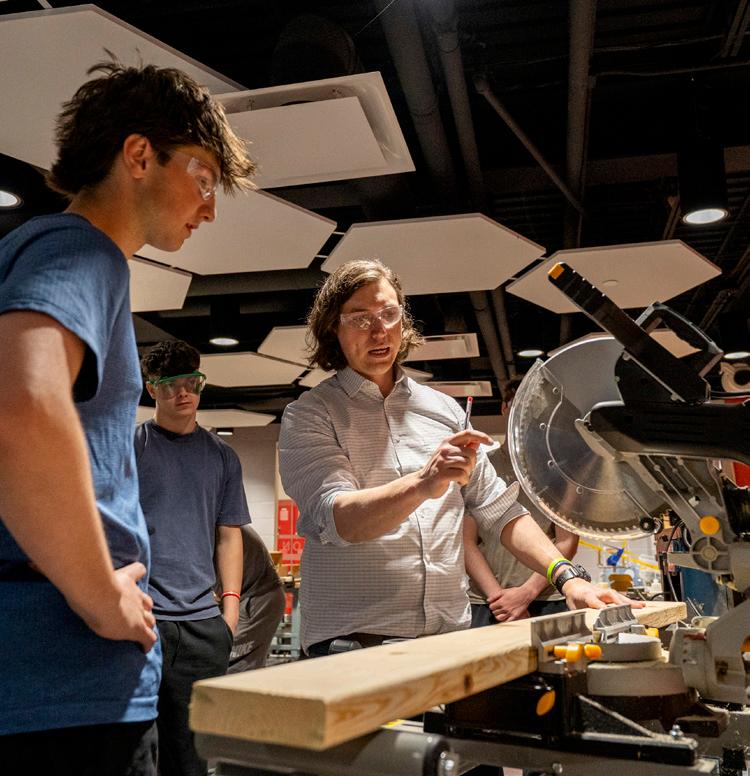
Students in the engineering class. EDGE minors are completed through an internship, research, or early college or dual credit. Photos by Aurora Institute-Fusion Photography
NKY’s workforce shrinking. How will region respond?
By Nathan Granger
“Everyone that’s going to enter the labor market in the next 15 years has been born,” said Janet Harrah, senior director of the Center for Economic Analysis and Development at Northern Kentucky University.
Harrah met with LINK nky to discuss ongoing labor and workforce trends in Northern Kentucky, which in many ways mirrors trends nationwide, she said.
When considering the future of work in the region, several trends need to be reckoned
with. Among them are slower population growth, an aging population and growing ethnic diversity among workers. (Increased federal emphasis on immigration enforcement may affect that trend.)
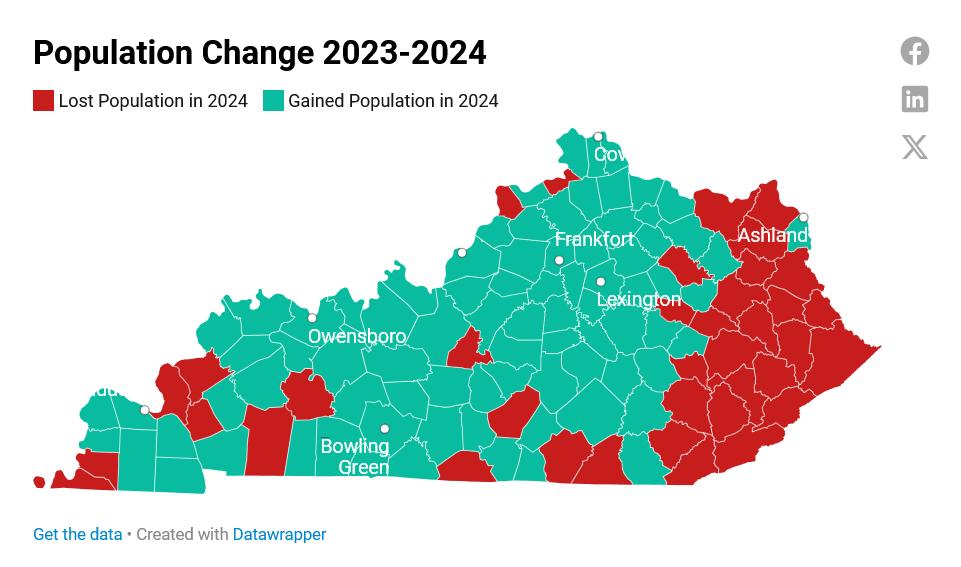
A report from the Census Bureau at the end of last year, which was analyzed and reported on by the Kentucky Lantern, illustrates these trends for Kentucky. Deaths exceeded births in the commonwealth in 2024 – 53,140 Kentuckians died compared to 52,248 born – according to the report. That was offset by migration from other states of 7,294 people. International migration, on the other hand, was the greatest source of population growth: Kentucky
gained 31,430 people as a net exchange from other countries, accounting for about 80% of the state’s net population gain.
Boone, Kenton and Campbell counties saw estimated population increases of 2,624, 2,614 and 149, respectively, between 2023 and 2024, according to estimates from the Census Bureau.
What do these trends mean for the future of labor, public services and the economy for the Northern Kentucky region?
How we got here
It’s difficult to understand the current state of affairs in Northern Kentucky without understanding what led to it.
Prior to the American Civil War, much of Northern Kentucky’s economy was agrarian. After the Civil War and into the 20th century, the river cities, especially Covington and Newport, became economic hubs as stops for steamships carrying goods up and down the Ohio. Cincinnati itself was a hub for the construction of such ships, which continue to play a role in local culture, even if they’ve been sidelined as economic engines.
In time, this gave way to manufacturing. Compared to other parts of the state, where economies ran on coal mining and other ventures, the workers in these cities became highly organized.
“You had more of a robust labor class in Northern Kentucky because of the goods that were coming up and down the river,” said Eric Jackson, a historian and dean of NKU’s College of Arts and Sciences. “And you have more organizing of a labor force in Northern Kentucky because of the river.”
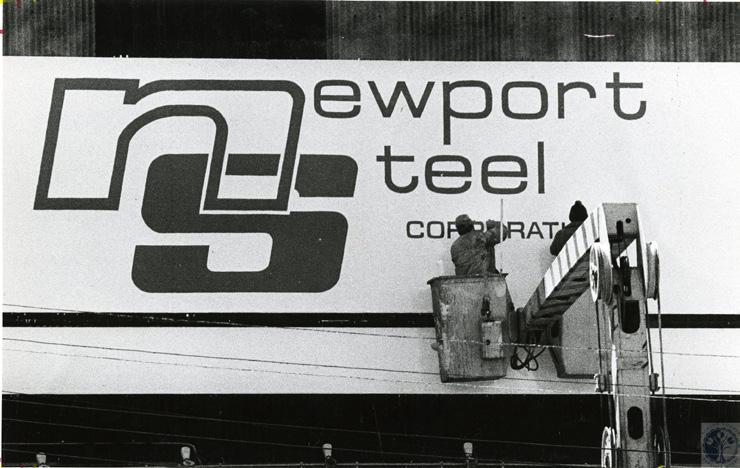
Newport itself was the site of one of the longest strikes in history, the Newport Steel strike, which officially lasted for nearly seven years from 1921 to 1928 (although in practice it lasted less than a year). The power of unions waned in the latter years of the 20th century, however. Changes in technology, especially in the industrial sectors where unions tended to dominate, and federal economic policy meant organized labor as an institution in the river cities lost prominence over time. Steel production in Newport, for instance, completely ceased by 2001.
Continues on page 16
A map showing population trends in Kentucky based on U.S. Census Bureau data. Green counties indicate a growing population. Red counties indicate a declining population. Provided | The Kentucky Lantern
The old Interlake Steel sign is painted over with a Newport Steel Corp. logo in 1981. Photo by Terry Duennes | The Kentucky Post via the Kenton County Public Library
Featuring millions of dazzling lights, seasonal food and festive treats, special Christmas shows, and much more! FREE Admission | Just pay for parking
As in the past, changes in science and technology have an indelible impact on the labor market, as other stories in this issue attest.
Boone County takes off
Boone County was a different story. It remained largely agrarian even into the 20th century, Jackson said. That is, until the airport came.
“That airport changed everything,” Jackson said.
The first commercial flight to what was then called the Greater Cincinnati Airport landed in 1947, but the airport didn’t begin to take its current form until the 1970s and 1980s. By the mid 1980s, the airport had become a major hub for Delta Air Lines, and the number of major international airlines serving it grew. The airport’s growth reshaped Boone County.
“It changed flight patterns,” Jackson said. “It changed the growth patterns. It changed race relations … because now you were shipping goods in and out, and people in and out, and you needed land, and so the county was buying land, and other folks were being manipulated out of their farms, particularly African Americans.”
DHL opened a cargo hub at the airport in 1983, and Amazon broke ground on its hub there in 2019. Logistics and shipping continue to be a huge economic driver in the region, and, as a result, many of the workers at the airport are more transient. Mean-
while, the river cities and other parts of the region began to transform into residential augmentations of businesses headquartered in Cincinnati.
“What [Newport and Covington] have is the growth coming from folks from across the river because they’re more connected to Cincinnati,” Jackson said. “So their labor force is probably more tied into Fortune 500 companies whose headquarters are in Cincinnati.”
The region’s entrepreneurial landscape began to increase in the late 20th century and into the 21st. Professionals and business people who lived in Northern Kentucky but worked in downtown Cincinnati wanted nice restaurants, recreation and other activities to occupy themselves outside of work. Jackson described the current labor market as a bit of a “hodgepodge.”
Health care is currently the largest employment sector, according to Harrah, but she’s quick to point out that big employment sectors aren’t necessarily the ones driving growth. “Most of your jobs are in sectors that are shuffling money around the community,” she said. “Health care, retail trade, restaurants, entertainment.”
In contrast, industries “bringing new dollars into the market,” Harrah said, tend to be found in the life sciences, advanced manufacturing, aviation, logistics and wholesale trade sectors. Employment in these sectors, compared to the traditional employment sectors, tends to be more top heavy, occupied by a handful of (often wellpaid) salaried professionals, rather than
large numbers of wage laborers.
“GDP can be growing, even as the distribution of that GDP is becoming more unequal,” Harrah said.
What does the future hold?
“Lots of [baby boomers] have already retired, but the millennials are big enough to replace those jobs, to replace the boomers in number,” Harrah said. “But when we look at the Gen Z, there aren’t as many of them as there are millennials.”
This means the overall labor force is likely to decrease in the coming years, making it “one of the questions we have to figure out as a society,” Harrah said.
There are several things the region has to do in order to ensure the economy continues to grow in the face of a shrinking labor force: Ensure everyone is educated enough to work, whether that’s through college or through trades education or other post-secondary education; and properly employ technological advances to increase economic output and invest in training and retraining programs.
To counter overall aging of the population, Harrah said, “One solution might be, how do we keep people longer in the workforce? But that’s not something that we can impose on employers.”
It’s harder for people over the age of 50 to re-enter the workforce if they are laid off or have to leave a job for some other reason, Harrah said. The typical age of retirement is also increasing from 65, she said. So what would it take to keep people in the workforce from 65 onward, Harrah asked.
Harrah admitted that she didn’t have a ready-made solution.
Allen and her colleagues are holding several community sessions on issues related to aging, such as transportation, long-term health care, senior housing and other topics through the fall.
While she believed Kenton County was doing better than many other counties across the country, she said, “what we hear from folks in all of our interviews and community conversations with people is a lot of the services are fragmented, and it’s hard for a person to navigate through the care system.”
Allen points to three primary drivers of the aging population:
• Increased life expectancy due to advances in technology and medicine.
• The fact that aging baby boomers are one of larger generational cohorts.
• A ripple effect from the Great Recession, the economic strain of which led to fewer children being born.
Change work, not workers
When asked about older adults in the workforce, Allen said, “a lot of it comes down to workplace policies and how supportive they are for older adults.”
She pointed to an August 2023 AARP report from researchers Lisa Berkman and Beth Truesdale titled “Who’s Working Longer – and Who’s Left Behind? Good Jobs Make Delayed Retirement a Healthier Option.” It essentially argues to “change the work, not the worker” and offers recommendations to deal with an aging workforce. Those include:
• Allowing more flexibility in how employees complete their work.
• Moderating excessive work demands.
• Improving social relationships in the workplace.
Of course, one issue with arguing that people should continue working into their late 60s and early 70s is that many people at that age will begin to experience health problems that will impede their ability to work.
“Most counties across the U.S. don’t have a plan on aging,” said Laura Allen, a postdoctoral researcher, former Fulbright scholar and one of the researchers behind Kenton County’s Age Well Initiative, which aims to build a five-year plan on aging for the county’s seniors. The work is being done in partnership with the Northern Kentucky Area Development District, which is managing the money for the project as its fiscal agent.
“I don’t know how many people who are in their 70s, if they’re doing blue collar occupations, would be able to maintain the speed, timing and agility to keep that job,” said Karen Hill, a resident at Panorama Apartments in Covington.
Originally from Cincinnati and now 67, Hill has a Ph.D. in environmental biology and formerly worked as a field researcher in South America. She was diagnosed with terminal cancer in 2015 and hasn’t been able to work since her diagnosis. Like many seniors who’ve left the workforce, she lives on a fixed income.
Only in her late 50s when diagnosed, she wasn’t immediately eligible for Social Security payments, although she would eventually qualify for Supplemental Security Income, or SSI. When she stopped working, she said, her income tanked from six figures to about $12,000 a year.
Panorama Apartments, where she lives, is a nonprofit housing facility in Covington with about 240 units. The organization that owns the complex has a sister facility in Florence, which has 60 units.
As LINK has previously reported, the region’s housing woes are a continuing source of anxiety for many residents. There are many reasons seniors could lose their housing. Many older renters get displaced when rents jump. Other times, health issues make living in a previous home physically untenable.
Hill, for instance, had decided to sell her home and move in with an acquaintance to be closer to where she got her cancer treatments. Then that acquaintance decided to sell her own house, so Hill ended up in a place called the Center for Respite Care in Cincinnati. The center then contacted Karen Hargett, Panorama’s executive director,
who worked to get Hill an apartment at the complex.
Hargett said the waiting list to get a room at Panorama was about 130 people as of mid-September, when LINK interviewed her.
When asked about how the region was planning for its aging population, Hargett said, “I don’t feel like we’re prepared for it at all.”
Allen, of the Age Well Initiative, was complimentary of Kenton County, saying it had begun making strides in planning for its aging population, unlike other communities in the country. Hill, for her part, thought Northern Kentucky was more welcoming to seniors overall.
“I’m a lot more relaxed living in Kentucky,” Hill said. “It’s more laid back.”
In relation to its older residents, whether working or nonworking, Anne Wildman, the associate director of aging and disability at the Northern Kentucky Area Development District, gave the following recommendations for the region:
• Expand home and community-based care resources (in contrast to institutional care like nursing homes) for older adults.
• Increase the amount of senior-friendly housing.
• Strengthen support for senior caregivers, whether professional or otherwise.
• Increase health care access in rural areas.
Chilling effect on immigrants
Immigration, on the other hand, is more uncertain.
While it’s true that immigrants tend to have higher birth rates than other demographics, recent changes at the federal level mean that the future of migration is in flux. With the passage of the so-called Big Beautiful Bill, which took effect Oct. 1, Congress set aside approximately $170 billion for immigration enforcement.
Employment visas, according to Jessica Ramos, an attorney and manager of the immigration team at the Legal Aid Society of Greater Cincinnati, are “generally only available to people with higher education. There are very few unskilled labor visas available technically.”
In June, the Trump administration began sending out notices to about 500,000 migrants with temporary protected status that had previously been granted the right to work, encouraging them to self-deport.
Theresa Cruz, founder of Boone County nonprofit Fiesta NKY, said actions like this, as well as the increased likelihood of enforcement raids, could have a chilling effect on migrants looking for work in the U.S.
“I feel bad for companies, because, once they start having more raids, [migrants] aren’t going to want to go work,” Cruz said, adding that, with all the changes at the federal level, “we don’t know what’s going to happen from one day to the next.”
The Panorama Apartments in Covington in September 2025. Photo by Nathan Granger | LINK nky
It’s almost the holiday season, and Santa Claus has lots of toys for every good little girl and boy.
And Northern Kentucky has lots of fun for the whole family. From ice skating to visits with the big man himself to light displays and more, there’s something for everyone.
Find an NKY holiday event for you:
City of Florence Tree Lighting CeremonyGovernment Center, Enjoy visits with Santa, storytime with Mrs. Claus and festive holiday music.
NKU Jazz Ensemble Holiday Concert – Southgate House Revival: Live jazz holiday performance.
Holiday Hope Charity DriveHenry Hosea House
Covington Christkindlmarkt – Mainstrasse (Dec. 6–7): Curated holiday market featuring local makers, food, drinks, and festive activities.
Santa on the Levee –Newport on the Levee: Meet Santa at the Levee.
Santa on the Levee –Newport on the Levee: Meet Santa at the Levee.
Braxton Dark Charge Winter Block Party – Braxton Covington: Annual winter street party with beer releases and entertainment.
Santa on the Levee –Newport on the Levee: Meet Santa at the Levee.
Pictures with Santa at Bellevue Beach Chair –Bellevue Beach Park: Photos with Santa in the city’s new Giant
Christmas with No Promises – The Carnegie, Covington A cappella holiday concert.
Grazing boards offer communal holiday experience
By Annie Hammock
Holidays are about gathering with friends and family, so why not let them commune around a gorgeous culinary centerpiece that provides a little something for everybody?
Grazing boards, which are made of charcuterie (meats) and cheeses, along with options like dried or fresh fruit, pickled items and other offerings, provide a way to feed your guests and get them talking at the same time.
Below is an alphabetical list of eight Northern Kentucky shops and restaurants that will create a board for you so you don’t have to spend hours cutting up cheeses and arranging salami rosettes. The price and lead time required depends on the size of the order and the customization required.
Abby’s Charcuterie
Co-owner Abby Johnson started this mom-anddaughter business when she was just 15. She’s off at college now, so her mother, Michelle Johnson, runs the show out of her home in Union. She uses a nearby bakery’s kitchen to whip up boards for any holiday, ranging from Thanksgiving and Christmas to Derby Day and St. Patrick’s Day.
She also does charcuterie cones, individual servings of grazeables, which became popular during the COVID pandemic when communal edibles weren’t so appetizing.
859-620-8273; facebook.com/abbyscharcuterie
Board Chick
Retired Cincinnati school teacher Mitza Constantini is the Board Chick, who runs the business out of her Newport home overlooking the river. The upstairs is a private event space, where she offers charcuterie classes for every occasion from bridal showers to book club meetings.
Her small boards serve four people, but she has fed as many as 500 at weddings and other large events. Constantini says people enjoy edibles that are “elevated but easy” and that they enjoy celebrations of culture, which her international boards can supply.
This Covington restaurant calls itself an “extension of your living room.” To that end, the staff there is happy to make your holiday appetizers on your favorite personal charcuterie board. You’ll need to take it in two to three days in advance.
Vic Hugo says the restaurant can make kosher fare for people bringing in kosher boards. It also serves porkless boards for Muslim holidays. He urges hosts to ask about dietary restrictions no matter whom they choose to hire.
642 Main St., Covington; 859-360-0476; craftsandvines.com
Bouquet Bistro
This Covington restaurant specializes in small gatherings with boards created to serve four to eight people. (Buy them in multiples to feed a larger crowd.) The largest board, known in the industry as an operation’s “mother board,” include four meats, five cheese and “a whole host of pickled items” according to Lauren Strasser. All the pickled items are made in house.
Strasser says the Bistro also specializes in vegan and vegetarian boards and can accommodate people with gluten allergies.
519 Main St., Covington; 859-491-7777; bouquetbistro. com
A charcuterie board from Board Chick. Provided | Board Chick
One of Bouquet Bistro’s charcuterie boards. Provided | Bouquet Bistro
One of Crafts and Vines’ charcuterie boards. Provided | Crafts and Vines
A Thanksgiving charcuterie board from Abby’s Charcuterie. Provided | Abby’s Charcuterie
The Delish Dish
Executive chef Mavis Lennemann says this Covington restaurant offers “full service custom care,” so holiday themes are not an issue. The restaurant charges per person and can accommodate gatherings “as big or small as you like.”
The chef will prepare the board at your event, so every board is a little bit different, with customers choosing what they like from a collection of homemade jams and hummus, along with pickles, vegetables and the usual meats and cheeses.
1032 Madison Ave., Covington; 859-250-0881; thedelishdish.com
Governor’s House
Wine Bar and Italian Kitchen
James Curvall says any board can look like Christmas with some holly and cranberries added. The Italian kitchen can create smaller boards in a little as 24 hours, he says. For larger orders or those with customized ingredients, he suggests a few days lead time.
Curvall says candied pecans are a popular accompaniment right now. The boards also include jams and Dijon mustard. He says that, if a host wants something special that is not in stock, he’ll go out of his way to get it.
Owner Mary Appelman says her store is for online orders and delivery within 15 miles of Erlanger. She likens grazing boards to a scavenger hunt as you move from one item to the next.
What’s really fun, she says, is discovering which cheese pairs best with other items on the board, and trying all the sweet, savory and crunchy things until you find something that suits you. The grazing board is as much about experience as taste, she says.
This gourmet grocery store in Crestview Hills (the name is German for “on tap”) sells specialized ingredients for making your own boards or will create a board for you to feed from three to 1,000 people. Jeff Finley says the store will also make gourmet baskets for parties or gifts.
Grazing boards are popular, Finley says, because people are always going to find something they will like.
2770 Town Center Blvd., Crestview Hills; 859-331-1896; vomfassusa.com
The Motherboard from Delish Dish. Provided | Delish Dish
A charcuterie board from Governor’s House Wine Bar and Italian Kitchen. Provided | Governor’s House
A charcuterie board from Social Grazer. Provided | Social Grazer
One of VomFass' European-inspired charcuterie boards. Provided | VomFass
By Maggy McDonel
The holidays are certainly a cheery time of year, but sometimes we need a little extra cheer to get through the season.
Whether you’re looking for a drink to warm you up on a cold winter night or you’re searching for something to serve at a holiday party, we’ve got options for everyone’s taste, plus some suggestions on supporting local businesses with your festive libations.
Hot toddy
If you’re looking for a quick drink to warm you up on a chilly day, look no further. A hot toddy is a simple and classic cold-weather cocktail that sounds and looks fancier than it is (you probably have all the ingredients in your cabinets right now). Traditionally, these are made with bourbon or whiskey, but I love them with rum!
Ingredients
1.5 ounces bourbon (Shop local: A shot of New Riff would work wonders.)
2 teaspoons honey (Shop local: Check out Beelicious Honey Shop in Ludlow.)
Festive cocktails raise your spirits
2 teaspoons fresh lemon juice ¾ cup hot water
Instructions
In a mug, stir hot water, whiskey, lemon juice and honey until the honey dissolves. Garnish with a lemon round and cinnamon stick.
Mulled wine
Craving something warm, spicy and delicious that will also make your house smell great? Mulled wine is the perfect drink to have simmering on your stove during any holiday party. Also known as “glühwein,” which translates to “glowing wine,” the recipe is a popular Germanic holiday tradition.
Ingredients
1 bottle red wine (Shop local: Check out Ripple Wine Bar for a great bottle.)
3-4 cinnamon sticks
5-6 whole cloves
3-4 star anise pods (Shop local: Colonel De Gourmet Herbs & Spices has spices in bulk.)
1 orange sliced ¼ cup sugar, honey, maple syrup or your preferred sweetener ¼ cup brandy (or more, who cares?)
Instructions
Combine all ingredients and bring to a simmer for about 20 minutes. This can also be
done in a slow cooker on low for about an hour. Serve in mugs, garnish with cinnamon sticks and orange slices. Enjoy!
Spiked eggnog
If you don’t want to use a dozen eggs and spend hours (if not days or even weeks, depending on the recipe) making your own eggnog, store-bought is fine. This rich, creamy cocktail is controversial, but to many (including myself), it wouldn’t be the holiday season without at least one glass.
Ingredients
8 ounces eggnog (Shop local: Stop by a farmers market around the holidays. You might just find a bottle.)
1.5 ounces dark rum, bourbon or brandy
Instructions
Mix ingredients together, or for a unique twist, shake carefully over ice. This can also be done in a pitcher portion, with the liquor amount proportionate to the eggnog. Garnish with a little ground nutmeg.
Irish coffee
Back off espresso martini! Here comes the original coffee cocktail. (Just kidding, espresso martinis, we still love you.) If you’re needing a bit of a pick-me-up after several holiday parties and too much inter-
action with your extended family, we’ve got you covered.
Ingredients
6 ounces of fresh hot coffee
1 teaspoon brown sugar (or whatever sweetener you prefer)
1.5 ounces Irish whiskey
Whipped cream
Instructions
Brew coffee, pour into a mug, add sweetener and stir until dissolved, stir in whiskey and top with whipped cream.
Cranberry Moscow mule
This seasonal take on the classic Moscow mule makes for a fun and light cocktail. If you’ve got someone who prefers fruity, vodka-based drinks, this is the one for them! While you don’t need the fancy copper cups, they do look very festive.
Ingredients
4 ounces ginger beer
4 ounces cranberry juice cocktail
2 ounces vodka
1 lime, cut in half crushed ice cubes fresh or frozen cranberries
Instructions
Fill a copper mug or glass with ice. Shake cranberry juice, vodka and the juice of half a lime in a cocktail shaker over ice. Pour into glass and top with ginger beer. Garnish with cranberries, a lime wedge and a rosemary stalk.
Glasses of eggnog. Photo by Maryam Sicard | Unsplash
New Riff bourbon by the fire. Provided | New Riff Distilling on Facebook
Mulled wine and spices. Photo by Natalie Behn | Unsplash
Top gift picks for everyone on your list
By Dillon Cain
The holiday season is rapidly approaching, and, in 2025, finding the perfect present for your loved ones is more complicated than ever. Between the newest, trend-forward items and comforting classics, finding a balance between staying stylish and thoughtful in your gift-giving is key.
We’re here to help you, though, with a guide that brings together the best of both worlds: picks that are of-the-moment yet personal and full of heart. No matter who you’re shopping for, this year’s lineup of gifts will create memories that stick long after the season ends.
From cozy comforts to must-have collectibles, games and experiences, and whether for little ones, teens or adults, these selections will help you show your love in ways that feel personal and genuine. There are gifts here to make the season brighter for everyone on your list, so grab your cocoa, and let’s unwrap this year’s top selections.
Labubu figures (Pop Mart: The Monsters)
No 2025 gift list would be complete without including the year’s ultimate toy craze. Quirky and delightfully edgy, Pop Mart’s Labubu figures come in colorful designs of varying rarities and exciting “blind boxes,” making them a hit with kids, teens and collectors alike. Unfortunately, these sought-after plushies aren’t easy to score, so watch out for resellers trying to cash in with sky-high prices.
Where to buy: PopMart.com, Amazon
Jellycat plushies
An easier-to-find alternative to the Labubu, Jellycats are endlessly charming, irresistibly huggable collectibles that have recently taken the world by storm. Founded in London in 1999, the plush collection ranges from sweet bunnies to imaginative fruits and vegetables, offering timeless comfort for anyone who loves a touch of whimsy while keeping up with current favorites.
From making jewelry to beginner crochet sets to even just a simple set of colorful markers, crafting kits are perfect gifts for both adults and kids alike, providing hours of fun for anyone looking to relieve their creative itch or even just a chance to de-
stress. Whether it sparks a new hobby or just a cozy afternoon in, these kits are as thoughtful as they are fun.
Michaels, Hobby Lobby, Target, Walmart, Amazon
Sporting equipment
Athletic gear of any kind is a timeless gift that keeps on giving. A soccer ball can get the whole family playing in the yard, and a basketball hoop can turn a driveway into a stadium. Anyone can join in, stay active and enjoy a little friendly competition. It’s a lasting gift that gets people moving and creates shared moments worth remembering.
Dick’s Sporting Goods, Play It Again Sports, Target, Walmart, Amazon
Wireless charging stand
Any person with an iPhone 12 or newer will love the convenience of a wireless charging
stand. Sleek and compact, these stands hold a phone upright while powering it, with many models also charging earbuds and smartwatches simultaneously. It’s a gift that simplifies daily life while adding a modern, practical touch to any desk or nightstand.
Best Buy, Target, Walmart, Amazon Apple AirPods Pro (2nd gen/3rd gen)
AirPods have grown to become a musthave accessory and style statement for teens and adults, but the AirPods Pro are a worthy upgrade from their predecessors. Unlike regular AirPods, they offer active noise cancellation and immersive spatial audio. It’s a gift that’s as fashionable as it is functional, keeping your loved ones connected to the latest and greatest.
Apple Store or Apple.com, Best Buy, Staples, Target, Walmart, Amazon
Nintendo Switch 2
The Nintendo Switch 2 is
for gamers of all ages, taking the quality and beloved versatility of the original
Sporting equipment is great for athletes. Provided | Target
Labubus. Provided | Amazon Everyone needs to charge their electronic stuff! Provided | Amazon
This bunny is part of the huggable Jellycats collection. Provided | jellycat.com
Crafting kits can offer a way to destress. Provided | Michael’s
perfect
console
to a new level. With enhanced graphics, longer battery life and an ever-growing library of exclusive games, it’s excellent for teens, adults or families looking to level up their game nights.
GameStop, Best Buy, Walmart, Target, Amazon
Blanket hoodies
Everyone loves a good blanket hoodie. Provided | us.theoodie.com.
Oversized and impossibly soft, blanket hoodies are the must-have comfort gift of 2025. One fan-favorite brand, the Oodie, has kept loungewear up with the times, combining coziness with playful designs that appeal to all ages. Regardless of the brand you choose, the blanket hoodie is a gift that will wrap your loved ones in comfort and surely be a hit.
TheOodie.com, Amazon, Target, Walmart
Lego sets
Lego is a gift for anyone with an imagination, from kids building for the first time to adults seeking a creative escape. For little ones, Lego Duplo offers a fun and safe introduction to building, while older kids and adults can dive into collectible sets like Star Wars and Harry Potter, or explore the Architecture series for intricate, display-worthy creations.
Gobblet is a clever twist on classic strategy games like chess and Connect 4, perfect for anyone who enjoys a simple, strategic game. Easy to learn but challenging to master, it’s ideal for family game nights, holiday gatherings, travel or just about anything else, making it an essential gift for players of all ages who enjoy strategy and fun.
Amazon
Hitster is a fast-paced, music-themed card game that’s perfect for music listeners of all ages. In quick rounds that keep everyone on their toes, teams take turns drawing cards that challenge them to name songs and artists, racing against the clock
to score points. Great for postholiday gatherings or casual hangouts, Hitster is a gift that brings everyone together through music and competition.
Walmart, Amazon Concerts, plays and movie experiences
From Riverbend to Bogart’s, Music Hall to Megacorp Pavilion, Northern Kentucky and the surrounding Tristate are filled with places to experience live entertainment. Concert tickets make an amazing gift for music lovers, while plays, comedy shows and even movie tickets can be just as special. These kinds of gifts go beyond something to unwrap, creating meaningful moments for you to share with your loved ones.