LINK Kenton Reader - Volume 3, Issue 33 - July 18, 2025
Between law, ethics: Ex-teacher’s admission highlights gray area
By Meghan Goth
As a Kentucky State Police detective interviewed him in 2022, a former Beechwood teacher’s answers became quieter and shorter.
In a recording of the interview, obtained by LINK nky, the teacher admits to having sexual contact with and even grooming a 2020 graduating senior.
“So we can probably agree that there is a little bit of grooming going on with these two kids that led up to those massages, right? Like bringing them soup, getting them ice cream?” Det. Joseph Filiatreau asks the teacher during the 2022 interview.
“Mm-hmm,” replies the teacher, indicating his answer is yes.
“Mm-hmm. Um, that concerns me,” Filiatreau says. “You being a teacher and being around K-12 kids all the time. You see what I’m saying?”
COMMUNITY VOICES
What are tariffs and why do they matter?
This Community Voices column is written by Janet Harrah, senior director for the Center for Economic Analysis and Development in the Haile College of Business at Northern Kentucky University.
Let’s talk about tariffs.
Yeah, we know – it’s not exactly dinner table conversation. But here’s the thing: Tariffs affect the prices you pay, the stuff you can buy and even what kinds of jobs are available in your community. It’s worth knowing the basics.
Don’t worry. We’ll keep it simple.
What is a tariff?
A tariff is a tax on goods that come into the
country from somewhere else. It’s the government’s way of saying, “Sure, you can sell your stuff here – but it’s going to cost you.”
Let’s say the U.S. consumers want to buy cars from Japan. If the government slaps a $1,000 tariff on every car that comes in, the company bringing those cars over has to pay that $1,000. That’s a tariff.
Why do governments use tariffs?
Countries usually have a few reasons for using tariffs:
• To protect local jobs and businesses. Imagine there’s a bicycle company in the United States that makes bikes for $200 each. But another company overseas can
Continues on page 6
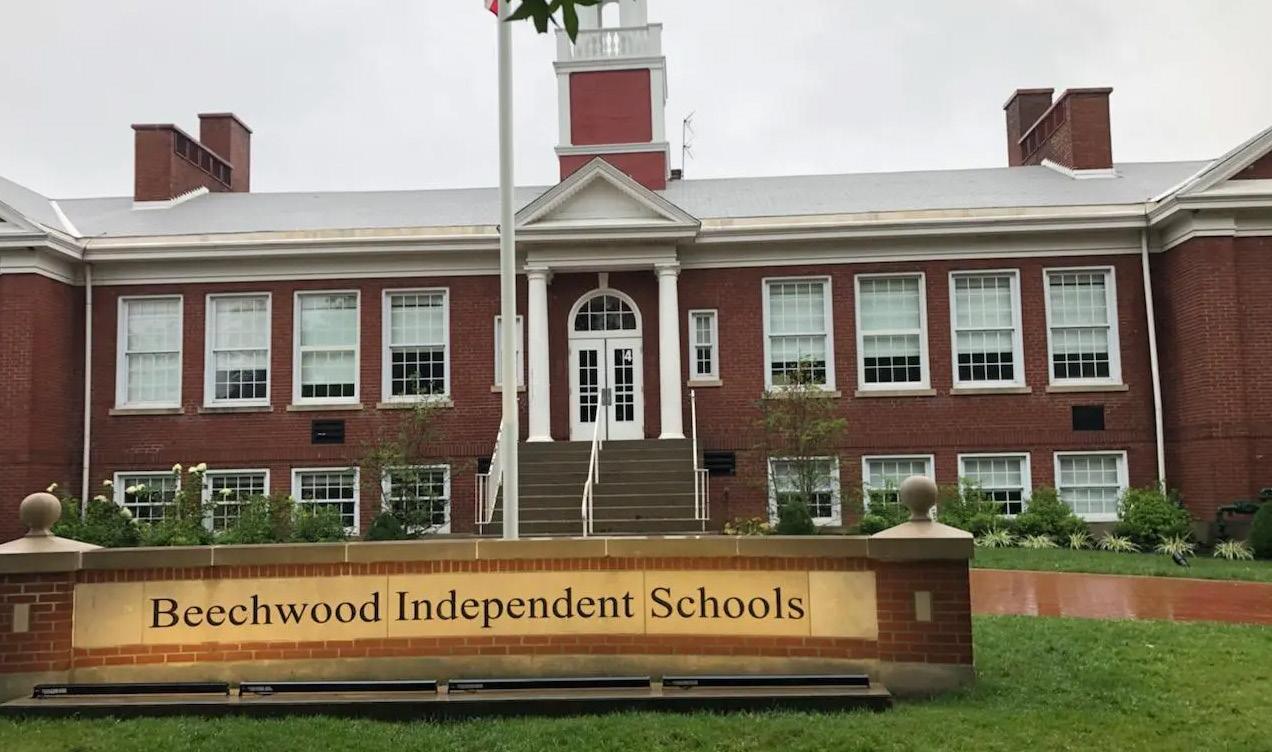
The response of Beechwood’s superintendent to a former teacher’s admission of sexual contact with a student led the state to suspend his education certificate. Provided | Beechwood Independent Schools
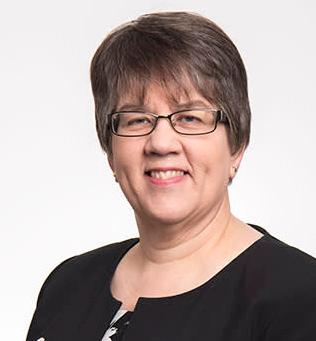
Janet Harrah is senior director of NKU’s Center for Economic Analysis and Development. Provided | NKU
PRESIDENT & CEO Lacy Starling
EXECUTIVE EDITOR Meghan Goth
SPORTS EDITOR Evan Dennison
LINK nky Kenton Reader is published weekly by LINK Media LLC, 31 Innovation Alley, Covington, KY 41011. Periodicals Postage Paid at Covington, KY.
POSTMASTER: Send address changes to LINK nky Kenton Reader, 31 Innovation Alley, Covington, KY 41011. ISSN 3064-7460
859-878-1669 | www.LINKnky.com
HAVE A TIP? News@LINKnky.com
WANT TO ADVERTISE? Marketing@LINKnky.com
WANT TO SUBSCRIBE?
Send a check for $58.30 ($55 non-auto-renewing rate plus 6% Kentucky sales tax) to LINK nky
31 Innovation Alley, Ground Floor Covington, KY 41011 or scan this QR code below
Love what we're doing? Want to support public-interest journalism in Northern Kentucky? Make a tax-deductible donation to support our work. Scan the QR code below, or mail a check payable to the Northern Kentucky Community Journalism Fund to 50 East Rivercenter Blvd. Suite 431, Covington, KY 41011.
No part of this publication may be used without permission of the publisher. Every effort is made to avoid errors, misspellings, and omissions. If, however, an error comes to your attention, please let us know and accept our sincere apologies in advance.
Continued from page 1
“That’s understandable,” the teacher replies.
“And that is kind of why I am here talking to you today,” Filiatreau says. “I mean one day you are going to have kids. Would you want them to be around teachers that are going to try and give massages to them?”
“Of course not,” the teacher replies.
The teacher, according to documents obtained by LINK nky, resigned immediately following the interview.
Three years later, the announcement of Beechwood Superintendent Mike Stacy’s retirement helped bring to light the circumstances of that resignation. It’s also spotlighted how standards for teachers, district leaders and regular citizens are different depending on whom you ask – and so are the consequences.
Meetings during COVID shutdown
The teacher, whom we are not naming because he has not been charged with a crime, worked at Beechwood from 2017 to the day of the interview in March 2022.
In the 2022 interview, the teacher described the uncertainty of transitioning to remote learning as COVID-19 shut down schools and businesses. By May, it was time for students to return their equipment as classes wrapped up.
The teacher described in the 2022 interview how he texted some students toward the end of the year about assignments, answering questions, offering guidance or returning equipment.
Eventually, he said in the interview, that led to his sending a photo of himself with his shirt off to a female student. It was, he said, part of an ab challenge, and he was sending the photo as a progress report of sorts.
He said he worked out at the same gym as the student, so they would sometimes find themselves on treadmills next to each other. Sometimes they would do ab workouts together.
The teacher then told Filiatreau that, as the school year came to a close, students would sometimes come to the parking lot outside of his residence to turn in assignments or ask questions.
The female student was one of those students, and, the teacher said in the recording, he and the student had sexual contact in the back of her car at least once. The female student was 18 when the contact occurred, according to the Kenton County commonwealth’s attorney.
Those aware of the date or dates of the sexual contact disagree on whether it happened before or after the student had officially graduated. According to Kentucky law, though, that doesn’t much matter: So long as a student is 18, it is not illegal for a teacher to have sex with that student.
“I don’t think it should be legal for teachers to ever have sex with students, but that’s not Kentucky law,” said Kenton County commonwealth’s Attorney Rob Sanders.
Continues on page 4
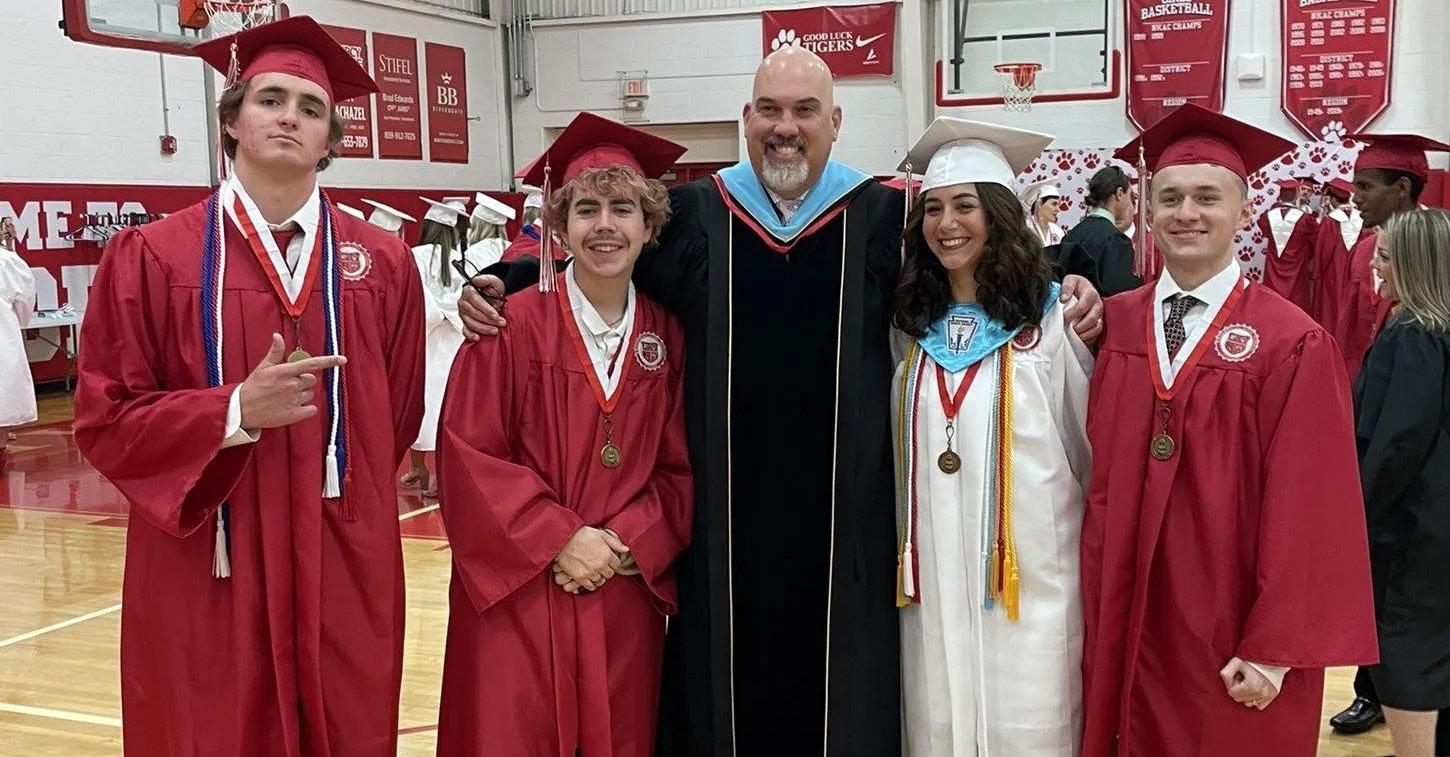
A photo of former Beechwood Superintendent Mike Stacy with graduating students. Provided | Beechwood Independent Schools
Had the student been 17 when the contact occurred, Sanders said, the teacher would have been charged with a felony.
It is also not illegal in Kentucky for a teacher to groom a student, and so, even though the teacher admitted to the detective that his behavior could be considered grooming, the teacher didn’t violate Kentucky law.
Grooming, according to national anti-sexual violence organization RAINN, is defined as a series of “manipulative behaviors that the abuser uses to gain access to a potential victim, coerce them to agree to the abuse, and reduce the risk of being caught.
“While these tactics are used most often against younger kids, teens and vulnerable adults are also at risk,” according to RAINN’s website. “Grooming can take place online or in-person. It’s usually employed by a family member or someone else in the victim’s circle of trust, such as a coach, teacher, youth group leader or others who naturally have some interaction with the victim.”
Differences in standards
Standards for educators or those working in schools, Sanders told LINK nky, are higher than those for regular citizens, which is why an educator may lose the ability to be certified to work in schools even if he or she hasn’t been charged criminally.
The Beechwood teacher eventually did lose his ability to be certified to work in schools in Kentucky, but not until two years after
his 2022 interview with the KSP and resignation.
That’s where retiring Superintendent Mike Stacy comes back into play.
LINK nky received a tip that the Education Professional Standards Board decided on June 4 that Stacy could not request that his certification to work in Kentucky schools be renewed after his retirement, effective June 30.
The tip came after ongoing controversy over Stacy’s salary. That controversy came to a head after Stacy’s contract renewal in May 2024, followed by the announcement of his retirement in March 2025 with two years still left on his contract.
The standards board, which is part of the Kentucky Department of Education, wrote in its June 2025 meeting minutes that “Stacy shall neither apply for, nor be issued, a teaching, administrative or emergency certificate in the commonwealth of Kentucky at any time in the future.”
The minutes do not provide a reason for the decision, but, through a records request, LINK obtained several pertinent documents, including a memo outlining the reasoning behind the board’s decision.
Stacy had been in the room for at least some of Filiatreau’s 2022 interview with the teacher and, according to the board, Stacy had a duty to report what he learned to the board itself. Because Stacy didn’t report the teacher to the board, which is responsible for certifying certain public
861 S Collier Blvd Essex S 104 Marco Island, FL for Rent
2-bedroom 2 bath fully furnished condo. 3-minute walk to the beach. Full size laundry in condo. First fl oor covered, assigned parking. Beach towels, cart, chairs & 2 bicycles. Pricing & availability upon request.
For more information, contact: angie@earlfranksflooring.com
school employees, the board said he created an “unreasonably dangerous” situation for students in Kentucky.
“[The teacher] had a valid teaching certificate and could have taught in a classroom in the commonwealth of Kentucky until June 4, 2024,” the memo states. That was the date the teacher agreed to surrender his certification to work in schools in Kentucky, according to the board’s meeting minutes.
“Superintendent Stacy clearly neglected his duty to protect the students in the commonwealth and his failure to act warrants sanction by the EPSB,” the memo concludes. “His serious lack of judgment created an unreasonably dangerous situation for all students in the commonwealth.”
Stacy said in a rebuttal to the board’s decision that he was not in the room for the entirety of the interview.
“While present at most of the interview, I did arrive late and leave early,” Stacy wrote in the rebuttal. “I was not present for the ‘mm-hmm’ response to the question that would indicate grooming. Nor was I told by state police … that [the teacher] in any way admitted to doing anything at Beechwood.”
Also present at the time of the interview was then-high school principal Justin Kaiser, who was appointed superintendent of the district in May. His first official day as superintendent was July 1.
Kaiser, upon further review of the recording, appears to have been in the room for the entirety of the conversation. He faced no repercussions because, according to the Kentucky Department of Education’s Jennifer Ginn, the Education Professional Standards Board’s “duty to report to the EPSB pursuant to KRS 161.120(3) is specific to the superintendent and does not apply to the principal.”
Whether state police are aware of or in the midst of an ongoing investigation, a superintendent is still required to report alleged abuse to the board.
Stacy said that’s irrelevant because he wasn’t in the room to hear about the alleged abuse. “I’ve always held and will continue to hold to the fact that no one affiliated with Beechwood did anything wrong with the information we were given in 2022,” Stacy said.
He also said the situation had been dragging on for years and that he wasn’t surprised to receive a settlement offer after he announced his retirement.
“Of course, I don’t like it and maintain there is nothing fair about it, but it’s better than the alternative I was facing,” Stacy said. “I’ve dedicated my entire career of 28 years to taking care of people’s children, and I have no interest in letting attorneys try to defend me by going back at one. There are times in life when winning isn’t winning, and I’m here to get it right rather than proving that I am right.”
Sanders told LINK nky that this is an important learning opportunity for Beech-
wood and all other Kentucky districts.
“KRS 161.120 requires superintendents to report all allegations of sexual contact or other sexual misconduct to the EPSB, not just those resulting in criminal charges,” he said in a statement to LINK. “Until the legislature closes the legal loophole for sex with 18-year-old students, sadly, this won’t be the last time a teacher ducks criminal charges, but that doesn’t change the superintendent’s duty to report.”
Stacy’s personnel record at Beechwood shows that his performance was deemed exemplary during the entirety of his tenure at the school system, from 2015 to 2025.
‘Passing the trash’
Rep. James Tipton, a Republican from Taylorsville, sponsored bills to require teachers to disclose past investigations to future employees in 2023, 2024 and 2025.
None of the bills passed, but, Tipton said, he once worked on a bill for six sessions before it finally passed, and now everyone thinks it’s “the greatest thing since apple pie.”
Tipton said the reason he’s so persistent with the bill is to make sure there’s an understanding of the issue.
“We always try to remind everybody that 99% of teachers and school employees are not who we’re after here,” Tipton said. “We’re just trying to protect students from the bad apples.”
Sometimes, Tipton said, predators go from school district to school district.
Tipton said he knew someone “many years ago that had this happen to her. The family looked into it and found out the teacher had a similar accusation at another school district and just resigned and left, and the school district dropped the investigation, and nobody knew about it at the new school district.”
That’s why, Tipton said, one of the provisions in the most recent iteration of the bill was that, once an accusation is made, a school district is required to complete the investigation.
“I was on a webinar recently on the subject, and one of the national people said there’s a term out there called ‘passing the trash,’” Tipton said. “And that’s essentially what was happening, and what does happen.”
So why would anyone oppose a bill like
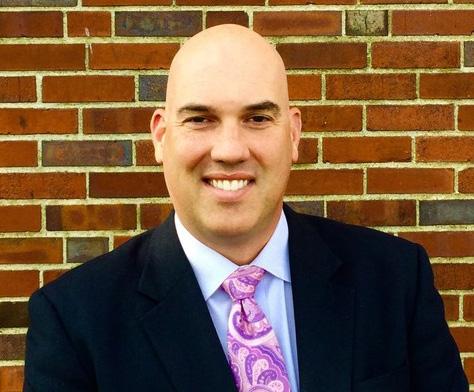
Mike Stacy retired this year as Beechwood superintendent. Provided | Beechwood Independent Schools
this? Tipton said he has learned more about what the concerns are each year.
“One of the major concerns is from one of the groups that represents the teachers,” Tipton said. “They’re concerned that the passage of the bill will lead to more false accusations. They assert that there are a lot of false accusations already going on out there.”
Tipton said it’s unfortunate that this happens, but he doesn’t think the legislation he’s looking to turn into law would increase such accusations.
“We’ve made some adjustments to the bill over time in response to some concerns,” Tipton said. “Most of the education community seemed to be on board with it.”
But the bill met just enough resistance in the end that it was put on hold again. “So, we continue to work on the subject,” he said.
“I would anticipate that it be brought up again next year,” Tipton said. “I’m debating whether or not to try and find another sponsor.”
A bill that did pass in the 2025 session was Senate Bill 181, which establishes a traceable communication system for electronic communication between school staff and students. The bill prohibits staff from using personal communication platforms like social media or personal messaging apps for school-related communication with students without written parental consent. Sen. Lindsey Tichenor, a Republican from Smithfield, sponsored the bill.
All communication between students and school staff, according to the bill, must be traceable and accessible to parents and the district.
“The thing about Senate Bill 181 is it is intended to not only to protect students, but to protect teachers,” Tipton said. “This is a way to protect teachers from these false accusations where there is traceable communication.”
Backed by school board
The Beechwood Board of Education stands firmly behind Stacy and maintains that neither he nor the district did anything wrong.
“Beechwood does not condone employee misconduct, and Dr. Stacy never attempted to cover up or hide any alleged inappropriate behavior by the teacher in question,” says a statement provided to LINK nky through the school board’s attorney, Jeremy Deters.
The statement goes on to say that, when the Kentucky State Police detective arrived unannounced to question the teacher, district administrators cooperated and gave KSP full access to school facilities and the teacher in question.
No arrest was made after the interview, the statement says, and Filiatreau said he would need to confer with Sanders. Though Stacy asked to see the student’s written statement that led to the interview, he was
told the Kentucky State Police would not provide it.
“After the KSP detective left Beechwood, Dr. Stacy immediately met with the teacher who denied any misconduct,” the district statement says. “However, when Dr. Stacy advised he would need to open an investigation, the teacher elected to resign. The teacher never returned to the classroom or to Beechwood’s campus, ensuring the safety of students and staff.”
Stacy maintains, according to the statement, that because neither he nor the dis-
trict received any information from the state police or the commonwealth’s attorney’s office, he did not reasonably believe there was anything he needed to report to the board.
“Dr. Stacy has been in public education for 28 years and has never previously been accused of any educator misconduct,” the statement concludes. “Dr. Stacy acknowledges he did not make a report but maintains he did not reasonably believe he had information that would warrant such a report, particularly when the KSP and the Kenton County Commonwealth Attorney’s
NOTICE
office never followed up with any criminal proceedings.
“Beechwood has, and will continue to, put the safety and security of all students at the forefront.”
If you or someone you know has experienced sexual violence, call the National Sexual Abuse Hotline at 800-656-4673. Locally, the Ion Center for Violence Prevention, which offers free services to those who have experienced sexual violance, intimate partner violence, child abuse or stalking can be reached at 859-491-3335.
Duke Energy Kentucky, Inc. (Duke Energy Kentucky or Company) hereby gives notice that, in an application to be filed no later than July 1, 2025, Duke Energy Kentucky will be seeking approval by the Public Service Commission, Frankfort, Kentucky, of an adjustment of its Pipeline Modernization Mechanism (Rider PMM) rates and charges proposed to become effective on and after January 1, 2026. The Commission has docketed this proceeding as Case No. 2025-00229.
DUKE ENERGY KENTUCKY PRESENT AND PROPOSED RATES
The present and proposed rates charged in all territories served by Duke Energy Kentucky are as follows:
Present Rates
Rate RS, Residential Service
Proposed Rates
Rate RS, Residential Service
Present Rates
Rate GS, General Service
Proposed Rates
Rate GS, General Service
Present Rates
Residential Service – Rate RS
$0.12/ccf
$0.24/ccf
General Service – Rate GS
$0.03/ccf
$0.06/ccf
Firm Transportation Service – Large Rate FT-L
FT-L, Firm Transportation Service – Large $0.00102/ccf Proposed Rates Rate FT-L, Firm Transportation Service – Large $0.00190/ccf
These rates reflect an increase in gas revenues of approximately $16,755,374 for 2026 to Duke Energy Kentucky. The allocation of this estimated increase among rate classes is as follows:
The average monthly bill for each customer class to which the proposed rates will apply will increase(decrease) approximately as follows:
The rates contained in this notice are the rates proposed by Duke Energy Kentucky; however, the Commission may order rates to be charged that differ from the proposed rates contained in this notice. Such action may result in a rate for consumers other than the rates in this notice.
Any corporation, association, body politic or person with a substantial interest in the matter may, by written request within thirty (30) days after publication of this notice of the proposed rate changes, request leave to intervene; intervention may be granted beyond the 30-day period for good cause shown. Such motion shall be submitted to the Kentucky Public Service Commission, P.O. Box 615, 211 Sower Boulevard, Frankfort, Kentucky 40602-0615, and shall set forth the grounds for the request including the status and interest of the party. If the Commission does not receive a written request for intervention within thirty (30) days of the initial publication, the Commission may take final action on the application.
Intervenors may obtain copies of the application and other filings made by the Company by requesting same through email at DEKInquiries@duke-energy.com or by telephone at (513) 287-4366. A copy of the application and other filings made by the Company are available for public inspection through the Commission’s website at http://psc.ky.gov, at the Commission’s office at 211 Sower Boulevard, Frankfort, Kentucky, Monday through Friday, 8:00 am. to 4:30 p.m., and at the following Company office: Erlanger Ops Center, 1262 Cox Road, Erlanger, Kentucky 41018. Comments regarding the application may be submitted to the Public Service Commission through its website, or by mail at the following Commission address.
For further information contact:
PUBLIC SERVICE COMMISSION DUKE ENERGY KENTUCKY
COMMONWEALTH OF KENTUCKY 1262 COX ROAD
P.O. BOX 615 ERLANGER, KENTUCKY 41018
211 SOWER BOULEVARD (513) 287-4366
FRANKFORT, KENTUCKY 40602-0615 (502) 564-3940
sell bikes here for only $100. Without any tariffs, most people would buy the cheaper bike. That’s bad news for the U.S. company.
If the government adds a $100 tariff to the imported bikes, though, both would cost $200. Suddenly, the local company has a fighting chance. This is what people mean when they say tariffs “protect American jobs.”
• To raise money. Like any tax, tariffs bring in money. That money can be used to pay for things like schools, roads and other public services.
• To send a message. Sometimes tariffs are less about money and more about making a point.
If one country thinks another is playing unfairly – maybe by selling goods too cheaply or making it hard for other countries to compete – it might raise tariffs as a way to push back.
Who actually pays the tariff?
This gets a little tricky. Companies that bring products into the country technically pay the tariff. They don’t just eat that cost, though – they usually pass it on to the buyer.
HANDS is here for new parents.
Visit hands.ky.gov today to get the helping HANDS you need.
Let’s go back to that bicycle. If a company has to pay $100 extra to get it into the U.S., they might raise the price in the store to make up for it.
In the end, then, you might be the one paying more.
Do tariffs help or hurt?
It depends whom you ask. Some say tariffs help because:
• They protect U.S. jobs and companies.
• They support industries that would struggle without help.
• They give the government more control over trade.
Others say tariffs hurt because:
• They make things more expensive for everyone.
• They can spark trade wars (more on that in a second).
• They make life harder for businesses that rely on imported parts or supplies.
What’s a trade war?
A trade war is what happens when countries start fighting with each other by raising tariffs. If one country adds a tax on imports, the other country adds one right back. Then it escalates.
Let’s say the U.S. puts a tariff on electrics made in China. China says, “OK, fine,” and adds its own tariff on something it buys from us – like cars or soybeans. Suddenly, both countries are paying more, selling less, and things get complicated fast.
Trade wars can hurt farmers, manufacturers and even consumers. Usually, they end when countries sit down and strike a deal. Until that happens, it can get messy.
In the past few years, the U.S. has added tariffs on products from places like China. China responded with tariffs of its own. Some of those tariffs are still in place, and some have been dropped after trade deals were made.
Now, people are talking about tariffs on things like electric vehicles, solar panels and steel. These are big industries that affect what kinds of jobs and products we’ll see in the future. For example, tariffs on
Real-life examples
Here are some categories in which you might notice tariffs.
• Electronics: If there’s a tariff on parts for computers or phones, those gadgets can cost more.
• Clothes: Tariffs on imported clothing can bump up prices at the mall.
• Groceries: Tariffs on cheese, fruit or other food items? That means your grocery bill might inch up, too.
• Cars and shoes: Even if you’re not shopping for foreign cars or building solar panels, tariffs can still sneak into your everyday life.
electric cars could make them cost more or change which cars are available at your local dealership.
Why should you care?
Even if you don’t run a business or keep up with politics, tariffs still matter to you because:
• They can raise prices at the store.
• They can affect your job – or your neighbor’s.
• They shape what’s made here and what’s brought in from somewhere else.
You might not feel it every day, but tariffs are part of the hidden price tag on many of the things we buy.
The bottom line
Tariffs might sound complicated, but the idea is simple: They’re taxes on stuff we import. They’re used to protect local jobs, raise money or send a political message. Sometimes they help, sometimes they backfire.
Now, next time someone brings up tariffs – at the gas station, in the checkout line or during the news – you’ll know exactly what they’re talking about.
If you have an idea for a Community Voices column, email Meghan Goth at mgoth@ linknky.com.
Shipping containers. Provided | Teng Yuhong via Unsplash
IRS cuts mean ‘challenges ahead’ for Covington
By Nathan Granger
Covington’s second largest employer, the Internal Revenue Service, has cut 750 positions as of the end of June, according to an internal city email obtained by LINK nky.
City Manager Ken Smith sent the email June 25, a day after the Covington Board of Commissioners voted to pass its budget for the coming fiscal year. It warns city staff members of “financial challenges ahead,” as one subheading put it, as the city considers how to deal with an estimated $1.5 million loss in tax revenue arising from the job cuts. The city has confirmed the email’s authenticity and said the 750 figure “was recently confirmed by the IRS.”
The IRS employed about 2,600 people through its Covington office as of June 30, 2024, the last day of the 2024 fiscal year, according to the city’s annual financial report, making it second to only Fidelity in number of employees.
A former IRS employee, who asked not
to be named so as not to jeopardize the worker’s retirement benefits but who was familiar with the workings of the local office, confirmed cuts had occurred in June. The employee could not verify the number of positions cut but described a situation similar to what has occurred at other federal agencies, wherein workers receive an offer to resign before actual terminations of lower-seniority staff begin.
LINK nky has also asked the IRS media relations department for confirmation and comment, but they did not respond by LINK’s publication deadline. We will update this story once they respond.
An advocacy organization within the IRS called the National Taxpayer Advocacy Service recently reported that the IRS workforce nationwide had declined by about 26% as of June 4, equivalent to 26,411 positions.
The ramifications of the cuts extend to the lives of the workers themselves as well as the overall financial health of the city. Smith had intimated in budget and com-
mission meetings leading up June 24’s vote that the city ought to be “cautious,” especially given that it was already reeling from financial problems prior to knowing the depth of the cuts.
A shortfall within the general fund emerged during the pandemic, and, although the city’s most recent financial audit indicated the deficit was closing, the city is still largely reliant on reallocated COVID-19 emergency funding to fill the gap. The city’s other funds, which are not paid for with payroll tax revenue, were not affected by the decline that struck the general fund.
The city has about a year and a half’s worth of COVID funding remaining and is banking on economic development, particularly the Central Riverfront Development (which in a twist of fate is on the site of the old IRS building) to solve the problem long-term. Smith stated earlier in June that there is still about a $4 million gap in the general fund, but the June 25 email suggests the city will have to dig even deeper into its pockets to guarantee services.
The NKY Chamber ’s Annual Golf Outing & Clinic
“We’ve used American Rescue Plan Act funds to avoid service cuts in recent years,” Smith writes. “The [fiscal year 2026] budget includes $6 million in ARPA support, which may need to increase to $8 million due to the recent job losses. However, these funds must be spent by December 2026 and will not be available for the [fiscal year 2027] budget.”
In other words, come the end of 2026, the city will lose its primary source of funding for closing the gap in the general fund.
It’s not clear at this time what this will mean for basic city services, but in a statement to LINK nky the city said it was “committed to being fiscally responsible while maintaining the high level of services our residents expect. We recognize the challenges ahead and remain open to creative, collaborative solutions, including sharing responsibilities and services where appropriate, to ensure the long-term financial health and vitality of our community.”
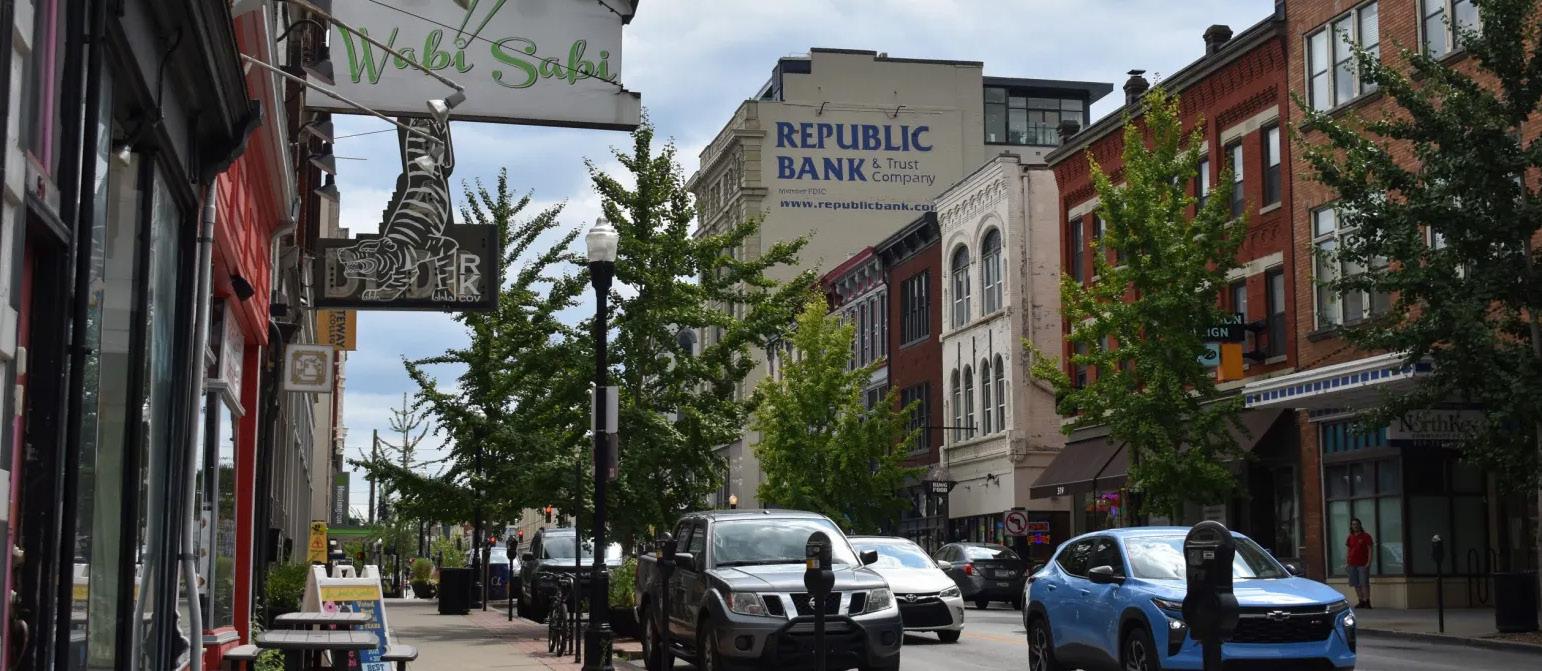
Shops and businesses in Covington off of Madison Avenue. Photo by Hailey Roden | LINK nky
Covington
mayor talks IRS
job cuts, lost revenue for city
Amid a budget crunch after hundreds of federal jobs were eliminated in Covington, LINK’s media partner, WCPO, sat down with Mayor Ron Washington to see where his priorities lie for the city’s spending.
LINK nky previously reported (see sto-
ry, page 7) that the city’s budget took a hit with the late-June revelation that its second-largest employer, the Internal Revenue Service, had cut 750 employees. The job cuts are projected to cut the city’s payroll tax revenues by $1.5 million.
Before addressing the impact on the city, Washington acknowledged the impact on the IRS workers who no longer worked inside the Gateway Center. “When you lose your job and your ability to provide for your family, it’s going to hurt,” he said. “My heart goes out to them.”
The $1.5 million lost with the IRS jobs comes on top of approximately $4 million in payroll taxes the city already is losing out on from work-from-home policies. “Work from home has hurt the city of Covington like many states in the state of Kentucky, the way our taxes are structured,” Washington said.
WCPO asked if the city was trying to do anything to entice workers to come back and work in person. “Well, we’ve met with some employers, and we’ve encouraged them and explained to them how this hurts
the city,” Washington said.
In addition to encouraging existing businesses to bring workers back in person, Washington said the city’s economic development team is working to creating additional jobs to replace lost payroll tax revenue. “We’re putting them on steroids and sending them out and shaking every tree possible,” he said.
An internal email from the city shared with WCPO indicates the city may have to use its remaining federal American Rescue Plan dollars to fill shortfalls in the 2026 budget year. That money will not be available in 2027.
WCPO asked what would be prioritized if cuts to public services were necessary.
“Well, always public safety,” Washington said. “That’s what cities are here for, is to make sure [of] public safety.”
The mayor said he didn’t expect service cuts at this point, but “belt tightening” would be necessary.
NOTICE OF PROPOSED ELECTRIC TRANSMISSION LINE CONSTRUCTION PROJECT
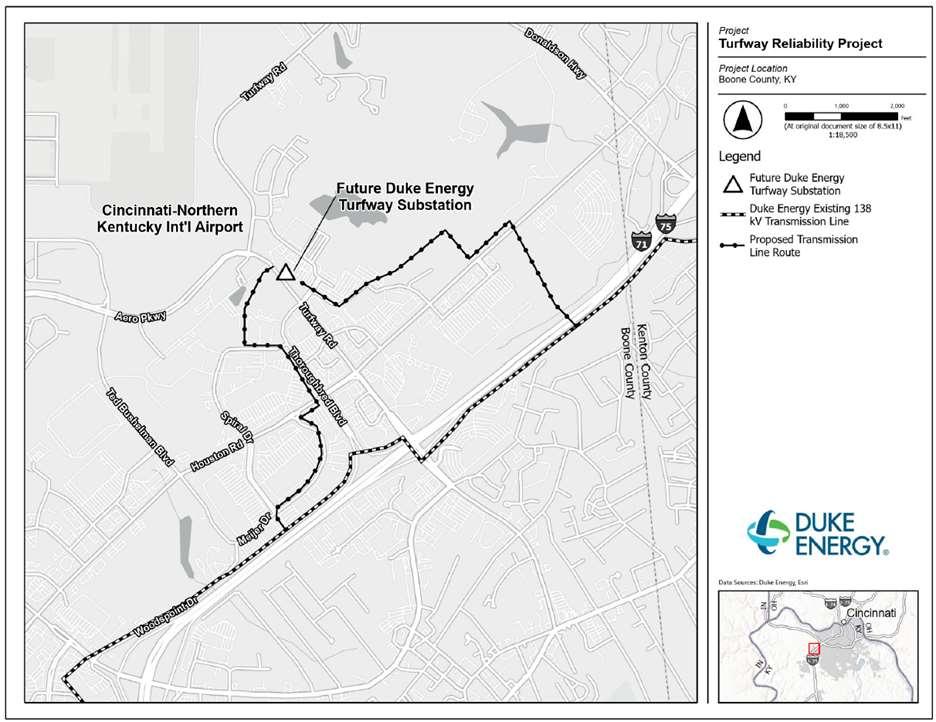
Duke Energy Ohio, Inc. (Duke Energy Ohio) proposes to construct the Turfway Reliability Project in Boone County, Kentucky. Th e Turfway Reliability Project involves construction of two new 138 kilovolt (kV) transmission lines which will connect the futu re Turfway Substation on Turfway Road to the existing Duke Energy Circuit 23984 Transmission Line along Interstate 71.
The western transmission line is 1.2 miles long and starts at the Circuit 23984 Transmission Line north of Interstate 71 near the intersection of Spiral Drive and Meijer Drive. It then proceeds north along Meijer Drive and Thoroughbred Blvd, turns west along Spiral Drive, and continues north to the future Turfway Substation. The eastern transmission line is 1.3 miles long, beginning at the Cir cuit 23984 Transmission Line south of Interstate 71 at Erlanger Lions Club. It then crosses north over Interstate 71 and Houston Road an d crosses behind Tapestry Turfway and Turfway Park Racing and Gaming before reaching the future Turfway Substation. The new transmission lines will be constructed within a new right -of-way varying in width up to 100 feet.
The proposed construction of the nonregulated electric transmission lines is subject to approval by the Kentucky State Board on Electric Generation and Transmission Siting, which may be contacted through the Kentucky Public Service Commission at 211 Sower Boulevard, P.O. Box 615, Frankfort, Kentucky 40602 -0615 or by phone at (502) 564-3940.
Duke Energy Ohio is required to file an application with the Kentu cky Electric Generation and Transmission Siting Board seeking a certificate of construction authorizing the Turfway Reliability Project. The application and other filings in connection wi th Duke Energy Ohio’s application may be accessed at http://psc.ky.gov under Case No. 2025-00228 once filed. Project updates and further information may also be found on the Company’s website: www.duke-energy.com/Turfway
A map of the proposed electrical transmission lines is shown below.
County recommends Erlanger zoning change for cannabis cultivator
The Kenton County Planning Commission recommended approving a zoning change for a medical cannabis cultivation facility off Dixie Highway in Erlanger, sending final zoning approval to the city.
The vote came July 8 during a special meeting of the planning commission. The meeting had been rescheduled due to the Independence Day holiday.
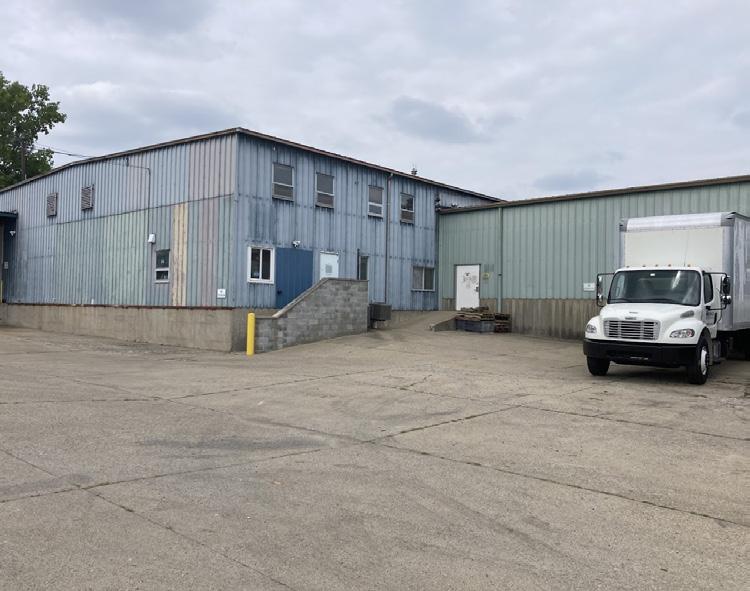
The property in question covers about 1.26 acres off Dixie Highway. Access is via a private road called Burley Drive just south of the railroad; the building itself is behind a Speedway.
The property is owned by Jerome Henke, founder and president of Henke Industrial. The building is still listed as Henke Industrial’s rigging and dispatch center on the company’s website, although documents presented during the meeting indicate this is no longer its primary use.
The building occupies just over 19,000 square feet and contains two loading docks and a mezzanine on a single floor. Site plans submitted to county planners prior to the meeting indicate plans for 34 off-street parking spaces and a new fence, likely to remain in compliance with Kentucky law, which restricts access to cultivation facilities to workers employed there.
The cultivator is listed as Flower Power 5390 LLC. The business got its license after another medical cannabis business, Bluegrass LLC, transferred its license to Flower Power in May, according to the Kentucky Office of Medical Cannabis. The building’s size puts it in the state’s Tier 1 cultivator category, the smallest category.
Daniel Woodward, representing the cultivator, told the planning commission the company had not started doing business
NOTICE OF PUBLIC HEARING
The Public Service Commission of Kentucky issued an order on March 13, 2025, scheduling a hearing to be held on August 4, 2025, at 9 a.m., Eastern Daylight Time, in the Richard Raff Hearing Room at the offices of the Public Service Commission located at 211 Sower Boulevard in Frankfort, Kentucky, for Case No. 2025 -00045. This is an examination of the Electronic Application of Kentucky Utilities Company and Louisville Gas and Electric Company for Certificates of Public Convenience and Necessity and Site Compatibility Certificates. This hearing will be streamed live and may be viewed on the PSC website, psc.ky.gov.
Public comments may be made at the beginning of the hearing. Those wishing to make oral public comments may do so by following the instructions listed on the PSC website, psc.ky.gov.
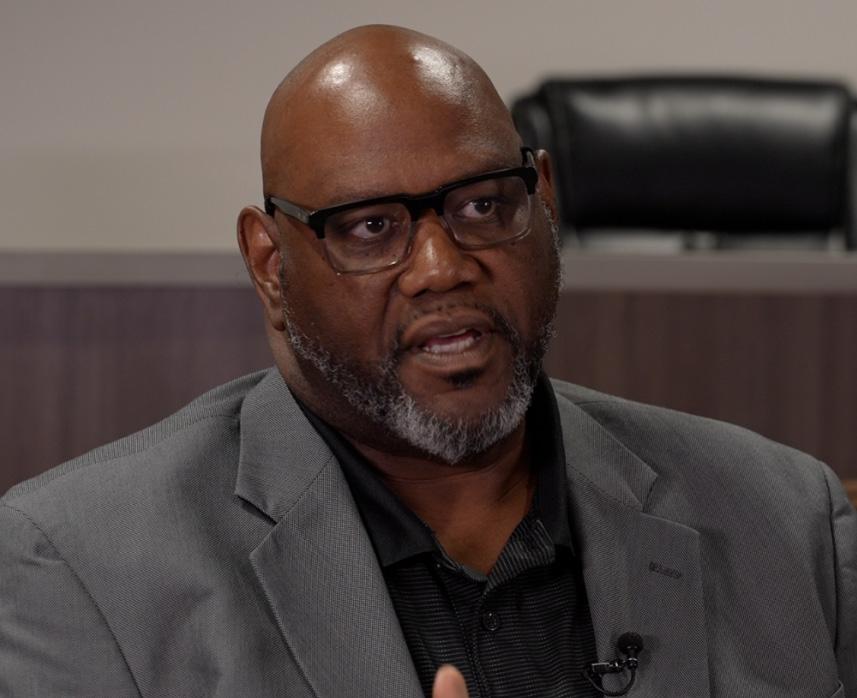
Covington Mayor Ron Washington said the city is looking to encourage job creation. Provided | WCPO
The building currently on the land where the cultivator hopes to set up shop. Provided | Henke Industrial LLC.
yet. He also stated that “we’ve not moved forward yet with construction.”
Exact timelines for construction and the start date for the cultivator’s operation were not discussed at the meeting.
Erlanger passed an ordinance regulating the zoning of medical cannabis businesses in September. The building was zoned as a community commercial property prior to the July 8 vote, and the cultivator had received a special allowance in May to operate a medical cannabis business on the site from the Erlanger Board of Adjustment. After that, the business sought a change to industrial zoning in the hopes of avoiding compliance issues in the future.
“The proposed [change] will prevent potential difficulties associated with running a nonconforming business,” said Cody Sheets, associated planner with Kenton County Planning and Development Services, “such as a restriction on expansion and certain restrictions on structural alterations.”
Sheets and the other county planners recommended the zoning, albeit with some conditions related to landscaping and other changes to the building that would bring it in line with the city’s standards for industrial zones. Henke, who attended the meeting, said he would agree to the conditions.
Statements from Erlanger officials indicate the city was pleased to have the business in the city. “We do feel like this is going to be an improvement to the property and bring additional revenue to the city,” said Economic Development Director Mark Collier.
Elsmere authorizes contractor to build city welcome sign
Elsmere has authorized a bid for a city welcome sign.
At its July 8 meeting, city council approved a municipal order authorizing the mayor to enter a contract with Centric Constructions Inc. The company was chosen after entering a bid advertised by the city on June 11.
Centric is set to build a welcome sign at 4517 Dixie Highway for $49,175. The sign is expected to be completed within 90 to 120 days, though a formal contract is pending.
Council also approved a municipal order authorizing the mayor to enter an interlocal agreement with the Erlanger concerning St. Henry Roman Catholic Church.
Under the agreement, both cities will pool funding to maintain a school resource officer at St. Henry Catholic Parish and School while classes are in session. The students will be considered residents of both Elsmere and Erlanger.
BLINK announces 2026 dates, deadline for artists to apply
It may feel like a long way away, but Cincinnati’s favorite light and art festival will return before you know it.
The leadership team behind BLINK announced on July 8 that the light-inspired artistic festival will return to the Tristate Oct. 8-11, 2026. It’s also opened the call to artists, inviting those locally, nationally and internationally to submit their installation, mural or projection mapping ideas.
“What makes BLINK so special is the artists who bring it to life each year,” said Leslie Mooney, executive director of BLINK. “We welcome artists from all walks of life – with a variety of ideas and creative visions – to embark with us on a life-changing journey. We are committed to showcasing works from emerging artists who are on the rise in their careers as well as to those who are well established.”
Last year’s event spanned more than 30 city blocks through Cincinnati, Covington and Newport. BLINK said artists from 65 countries made more than 900 submissions. In the end, BLINK showcased 37 projection mapping projects, 31 light-based installations and 19 permanent murals.
BLINK said 84% of the artists who applied in 2024 had never applied before, and 88% of the artists whose work was featured had not shown their work at previous BLINK festivals. BLINK does give artists financial resources, project feedback and production support for their work.
Artists interested in showcasing their work must apply by Oct. 8.
Mary Ann Kluemper Manners, health professional Ronald Paul Smith,
MBanks in North Carolina. She was 76.
Ms. Manners was born May 8, 1949, the oldest child of George and Shirley Kluemper of Covington. She graduated from the University of Kentucky, where she was active in Sen. Robert Kennedy’s 1968 presidential campaign.
After a few years of working in Kentucky, she returned to school, earning a master’s degree in public health from the University of Missouri. She then moved to Omaha for an internship in family practice at the University of Nebraska Medical Center. There, she met Russ Manners, who became her husband of 43 years.
Ms. Manners was active in many volunteer organizations, most involving children. Her latest and most meaningful work was as a court appointed special advocate volunteer. In that role, she worked to make foster children’s lives better. She also enjoyed painting, a well written novel and a challenging crossword puzzle.
Ms. Manners was a loving mother of two sons, Ryan and Mark, and of daughterin-law Alexandra. She was the proud grandmother of a new grandson, Grey. All live in Denver, Colorado. As the oldest of five children, she also will be deeply missed by her siblings and their loving families.
Funeral services and a celebration of life will be announced at a later date. Remembrances can be sent to Nebraska CASA Association, 3701 Sumner St., Lincoln, NE 68506; to Lauritzen Gardens, 100 Bancroft St., Omaha, NE 68108; or the charity of the donor’s choice. Gallop Funeral Services Inc. was entrusted with arrangements. Messages of comfort may be shared at gallopfuneralservices.com.
Ronald Paul Smith, of Fountain City, Indiana, and formerly of the Covington and Dayton, Kentucky, area, died July 1 at Reid Health in Richmond, Indiana. He was 69.
Mr. Smith was born July 13, 1955, in Dayton, Kentucky. He was a retired injection mold technician from Montaplast. He loved watching the films of John Wayne.
Mr. Smith is survived by his wife of 27 years, Jennifer; two daughters, Rae and Becky; two sons, Ronnie and Alex; grandchildren, Nick Petroze, Kenzie Smith and Logan Smith; and the mother of his children, Kathy Smith. He was preceded in death by his mother, Janice Smith.
Services will be private at Mr. Smith’s request. Memorial contributions may be made to the Animal Care Alliance, 1353 Abington Pike, Richmond, IN 47374. The Smith-McQuiston & Webster Funeral Home, Fountain City, is assisting with arrangements. Condolences may be expressed at smithmcquiston.com.
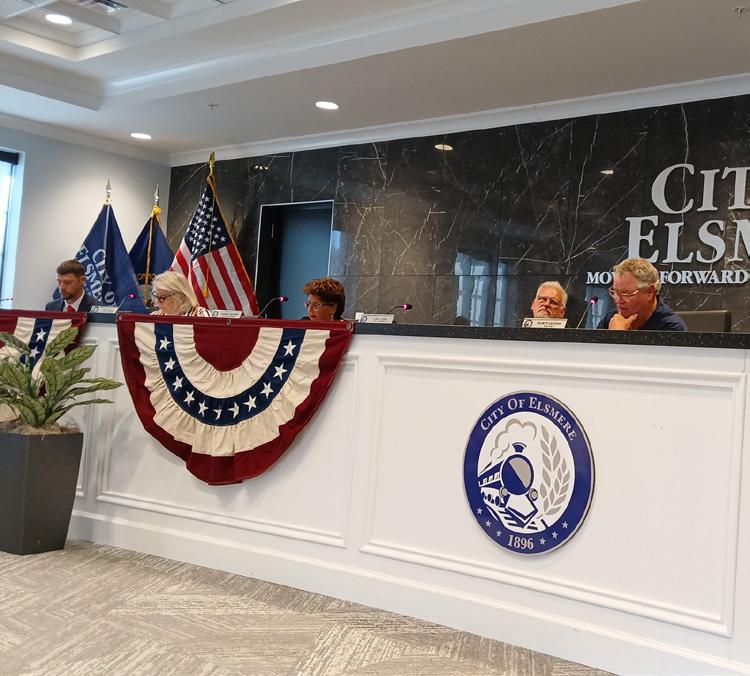
July 8 saw the first Elsmere city council meeting with new council member Andrew Myatt. Photo by Mildred Nguyen.
An art installation in BLINK 2024. Provided | BLINK on Facebook
ary Ann Kluemper Manners died peacefully in her sleep June 8 while on a family vacation to the Outer
50 sports icons in Northern Kentucky: Days 25-34
We’re presenting our “50 sports icons in Northern Kentucky” one every day online over 50 days. For our print editions, we’re spotlighting groups of icons each week through July.
This week’s installment, the fourth, covers Days 25 through 34.
Sports editor Evan Dennison spoke and conferred with several local NKY sports history buffs to get their opinions and their lists of who should be “locks” for the 50 sports icons. We compiled those lists to come up with our own 50 (maybe cheated a little by putting families in as one).
You may disagree with who should or shouldn’t be in the top 50, but these 50 stood out to us. We hope you enjoy reliving the stories of these great achievers.
Day 25: Kirsten Allen
While the history of fast-pitch softball doesn’t go too far, there’s no argument on who the best all-time is. It’s clearly Ryle’s Kirsten Allen.
A true legend in Northern Kentucky high school softball, Allen, who graduated in 2008, is the first athlete from Ryle to be inducted into the LaRosa’s High School Sports Hall of Fame. She also won Kentucky Gatordade Player of the Year and Miss Kentucky Softball in 2008, and she is second all-time in KHSAA history with 142 wins in the circle.
Allen earned nine varsity letters in her high school career in softball and volleyball. In five varsity seasons for the Lady Raiders, Allen went 142-24, leading Ryle to a state championship in 2006, the lone Northern Kentucky team in the KHSAA fast-pitch softball era to win a state title. She led Ryle back to the state title game in 2007, finishing runner-up.
She set 10 state records in her career, including pitching 41 no-hitters, 15 perfect games and 110 career shutouts. She notched 1,865 strikeouts and once pitched 210 consecutive innings without giving up an earned run. Many of her records still stand.
She also was a Northern Kentucky all-star
volleyball player. Kirsten went on to pitch at the University of Oklahoma and today is the HPES program director and a professor at Randall University in Oklahoma.
Day 26: The Oldendick family
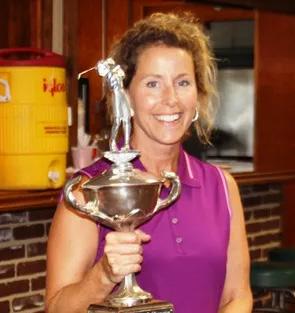
It starts with Tom Oldendick. A Bellevue grad, Tom Oldendick is a long-time Northern Kentucky player, rules official and Kentucky Golf Association board member. He’s also a member of the Kentucky Golf Hall of Fame.
Tom’s son Bruce Oldendick is four-time Northern Kentucky Men’s Amateur champion and winner of five KPGA Senior events. He is a four-time KPGA senior player of the year. He won a KHSAA state championship at Boone County in 1982, one of just two from NKY ever to do so (St. Henry’s Ray Hoffman was the other in 1945).
He then went on to play at Eastern Kentucky University from 1984-87 and was OVC Golfer of the Year in 1985 and ’86. He won the Northern Kentucky Amateur a record three years in a row from 1984-86. He’s currently the club pro at Pendleton Hills Golf Course in Butler.
Bruce Oldendick has won Kentucky PGA Player of the Year honors four times – in 2018, 2020, 2021 and 2022. In 2022, he won eight tournaments – the Kentucky Senior Open, the Kentucky Senior Match Play event, the Kentucky Golf House Classic No. 2, the 2x2 Pro Am, the Titleist and Footjoy Team championships and the Kentucky Senior PGA Championship.
During his golf career beginning at age 15,
Brucer Oldendick has won more than 140 tournaments, set three course records and recorded 19 holes in one.
Lori Oldendick Eberle, Bruce’ sister, is an eight-time Northern Kentucky Women’s Amateur champion. Eberle won her eighth Northern Kentucky Women’s Amateur in 2014, two weeks before coaching the Beechwood girls golf team to its first-ever All “A” Classic regional crown.
Lori is a Northern Kentucky Sports Hall of Fame member and won the 1984 KHSAA state championship when she was at Boone County and followed it with a stellar college career at Western Kentucky University. She’s one of just two females from NKY ever to win a state title (Notre Dame’s Bonnie Overman in 1980 is the other).
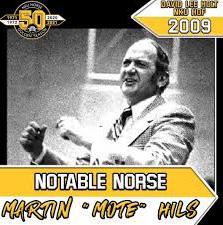
Martin “Mote” Hils played a leading role in shaping basketball in Northern Kentucky. Before Northern Kentucky University had a campus, it had a coach. Hils was asked in early 1971 to build a men’s basketball program from scratch. There were no players, no schedule, no gym, and very little time. Hils said it could be done, and it was.
He had already built a powerhouse at Covington Catholic, winning five straight 9th Region championships and consistently sending players on to the college level. His success there made him the obvious choice to launch the program at the then-Northern Kentucky State College.
His first NKU team won its debut game, 109-65, and finished with a 12-15 record. Over the next nine seasons, Hils compiled a 119-118 record, despite often playing without a true center and with no starter taller than 6-foot-2. In 1978, NKU earned its first win over a Division I opponent, defeating Xavier, 59-58, in Cincinnati. That team went 20-8, reached the NCAA Division II Tournament, and finished ranked sixth in the nation.
Hils delivered NKU’s first winning season and led the program to some of its most important early victories. After retiring from coaching in 1980, he stayed on cam-
pus for 20 more years, serving until 2003 as an academic adviser and testing coordinator.
Hils died in 2016 at age 81. His legacy is forever part of the foundation of Northern Kentucky basketball.
Day 28: Nell Fookes
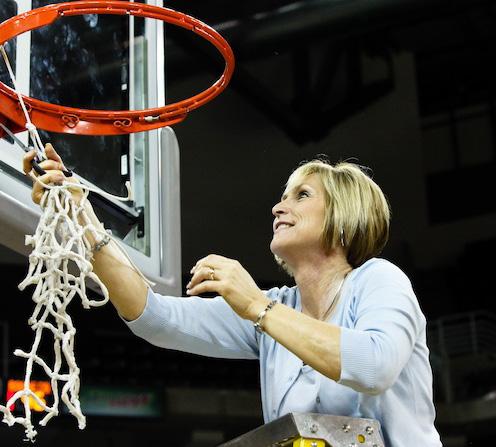
Nell Fookes built one of the most consistent and respected girls basketball programs in Kentucky during her legendary 30-year run as head coach at Boone County High School. With a career record of 686-253, she ranks among the top five all-time in wins in KHSAA girls basketball history. Her teams never had a losing season, won 22 district titles, nine regional championships and reached the state semifinals twice.
Known for her energy and demanding practices, Fookes often reminded her players that “nobody ever drowned in sweat.” Her passion was contagious. Boone County’s court now bears her name, a tribute to the high standard she set every time her team took the floor. Her 686 wins rank fifth all-time in Kentucky girls basketball coaching history, according to the KHSAA basketball record book, and her .729 winning percentage speaks to her sustained success.
Fookes grew up in Virginia and was a fouryear starter at Radford University before moving into coaching. After six years as an assistant at Eastern Kentucky University, she was hired to lead Boone County in 1985. She never left.
Her influence extended far beyond wins and titles. She was named 9th Region Coach of the Year multiple times, honored as Coach of the Decade in the 1990s by the Greater Cincinnati Coaches Association and was a finalist for National Coach of the Year in 2010. Fookes is enshrined in several halls of fame, including the LaRosa’s, Greater Cincinnati Basketball Coaches Association, NKADA and Kentucky High School Basketball halls. She retired in 2015.
Day 29: Owen Hauck
Owen Hauck’s name is etched into the history of Northern Kentucky football not just
Day 27: Martin ‘Mote’ Hils
Bruce Oldendick
Lori Oldendick Eberle
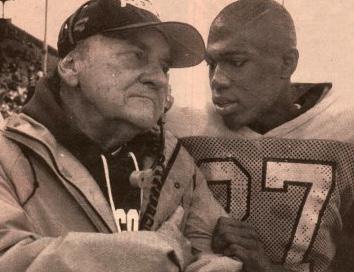
for his 284 career wins and championship pedigree, but for the example he set as a coach, mentor and advocate. A Ludlow native and graduate of Eastern Kentucky University, Hauck coached with passion and purpose across four decades, leading programs at Highlands, Mt. Healthy and Boone County.
At Highlands, he followed Homer Rice and compiled a 48-8-1 record, winning a state title and finishing runner-up twice. He also spent four seasons at Mt. Healthy in suburban Cincinnati before taking over Boone County’s program in 1973. Over 25 seasons there, he went 210-101 and led the Rebels to four state championship games. His most notable player, Shaun Alexander, became a record-setting running back at Alabama and later the NFL’s Most Valuable Player in 2005. Alexander credited Hauck for instilling the toughness and values that shaped his career and life.
While Hauck was known for hard-nosed, tailback-driven football, he was just as revered for his kindness and commitment to others. After his son Glenn was diagnosed with intellectual developmental disabilities, Owen and his wife, Shirley, became leaders in advocating for better resources and opportunities for children with special needs. Their work helped launch schools and support systems that made lasting change in the region.
Hauck retired in 1997 and was inducted into the Dawahares/KHSAA Hall of Fame in 1999. Boone County named its football stadium in his honor in 2003. He died in 2016 at age 88, leaving a legacy built on heart, discipline and service.
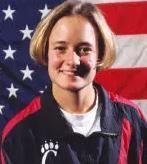
Becky Ruehl’s journey from Lakeside Park to the Olympic stage began as an 8-yearold diver with the Cincinnati Stingrays under Coach Charlie Casuto. A former gymnast, Ruehl quickly took to the sport and never looked back. Competing for Villa Madonna Academy, she won five straight KHSAA state diving titles and six consecutive regional championships, beginning in the seventh grade.
By the time she reached high school, Ruehl was already on the international stage. She won a bronze medal at the 1995 Pan American Games in Argentina as a teenager, then etched her name in history at the 1996 Atlanta Olympics by finishing fourth on the platform, narrowly missing a medal. She
Ruehl continued her diving career at the University of Cincinnati, where she became the first female UC athlete to win an NCAA championship by capturing the platform title in 1996. She was a five-time All-American, earned National Diver of the Year honors, and won multiple NCAA and national titles in platform and three-meter events. She added a USA Nationals victory to her résumé and competed through the 2000 Olympic trials before retiring after finishing seventh.
In 1995, she was named Kentucky’s Outstanding Female Athlete of the Year and received numerous national honors, including the Phillips 66 Performance Award and the USOC Diver of the Year. A first-ballot LaRosa’s Hall of Fame inductee, Ruehl also was enshrined in the UC Athletic Hall of Fame in 2005.
a
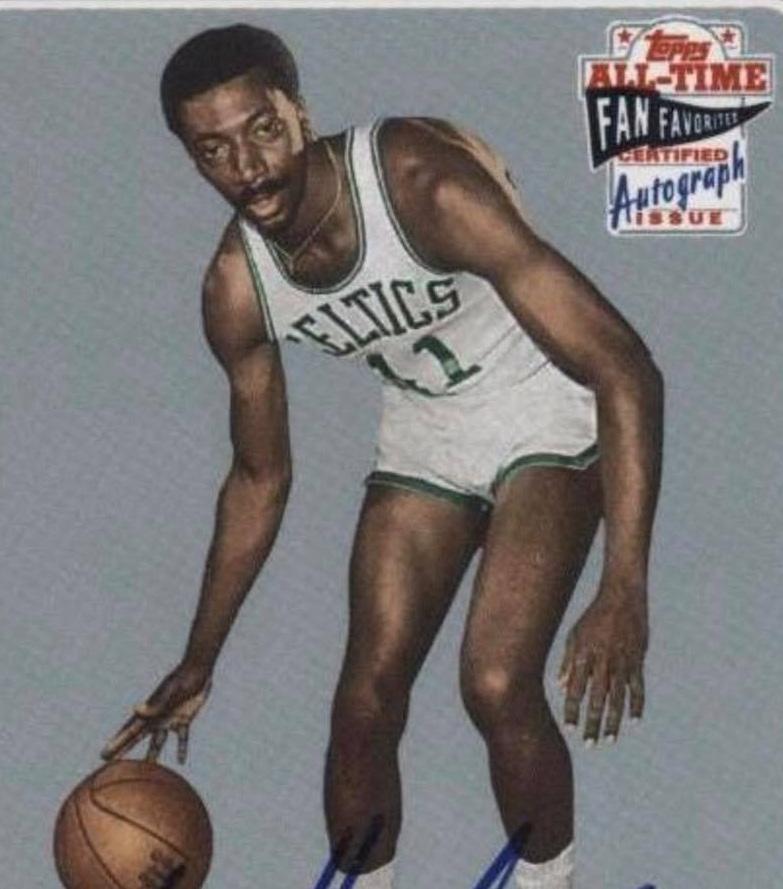
was one of the most accomplished and versatile basketball players of his era. He starred at William Grant High School, where he averaged over 30 points per game.
Thacker began his successful career earning all-tournament recognition as a freshman at the Kentucky High School Athletic League’s state tournament. The next three years, he earned the same honor at the KHSAA’s Sweet 16. He earned All-State
mention in both his junior and senior seasons, averaging 31.7 and 33.8 points per game, respectively. Many rated him the best sophomore in the state of Kentucky, and, by his senior year, he was a finalist for Mr. Basketball honors.
Thacker went on to the University of Cincinnati and helped usher in one of the most dominant stretches in college basketball history. A three-time All-Missouri Valley Conference selection, Thacker played in three consecutive NCAA championship games, winning titles in 1961 and ’62 over top-ranked Ohio State and narrowly missing a third in ’63. He earned consensus All-America honors as a senior and graduated with over 1,100 career points.
Drafted by the Cincinnati Royals as a territorial pick in 1963, Thacker played seven professional seasons, including stints with the Boston Celtics and Indiana Pacers. He won an NBA championship with Boston in 1968 and an ABA title with the Pacers in 1970, becoming the only player in history to win championships in the NCAA, NBA, and ABA.
Beyond his playing days, Thacker made history off the court as well. He earned both bachelor’s and master’s degrees from UC and became the university’s first Black head coach when he took over the women’s basketball program in 1974. His coaching record included three winning seasons over four years. He remained active with youngsters, conducting summer and midnight basketball leagues and other youth sports programs in Greater Cincinnati.
A pioneer, champion and trailblazer, Tom Thacker’s impact on basketball spans generations. He is a member of multiple halls of fame, including those of UC, Northern Kentucky and Ohio basketball, a testament to his excellence both on and off the court.
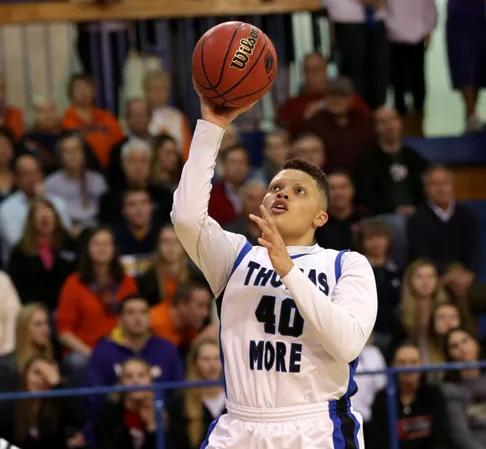
Sydney Moss boasts a decorated résumé in women’s basketball. A Boone County High School legend, Moss was a force from the start, earning Kentucky Miss Basketball, Gatorade Player of the Year and a McDonald’s All-American nomination in 2012. She finished her prep career with nearly 3,000 points and 1,600 rebounds before heading to Florida, where she earned All-SEC Freshman Team honors after leading the
Gators in assists and finishing second in scoring, rebounding and steals.
Following her freshman season, Moss came back home to Division III Thomas More. There, she became a generational talent, winning three National Player of the Year awards and leading the Saints to back-to-back national championships in 2015 and 2016. Her 63-point game and 891-point season remain benchmarks in Division III history. She finished her career averaging over 22 points, seven rebounds and three assists. Her jersey was retired in 2019.
After playing, Moss transitioned to coaching. She held assistant roles at St. Thomas University in Florida and the University of Charleston before returning to Thomas More as lead assistant and recruiting coordinator, helping the Saints win the 2022 NAIA national title. She then spent two seasons as head coach at Wilmington College in Ohio.
Most recently, Moss joined the Division I ranks as an assistant at Stetson University, bringing a deep résumé of success. The daughter of NFL Hall of Famer Randy Moss, Sydney has long since stepped out of the shadow, blazing her own trail of excellence and leadership.
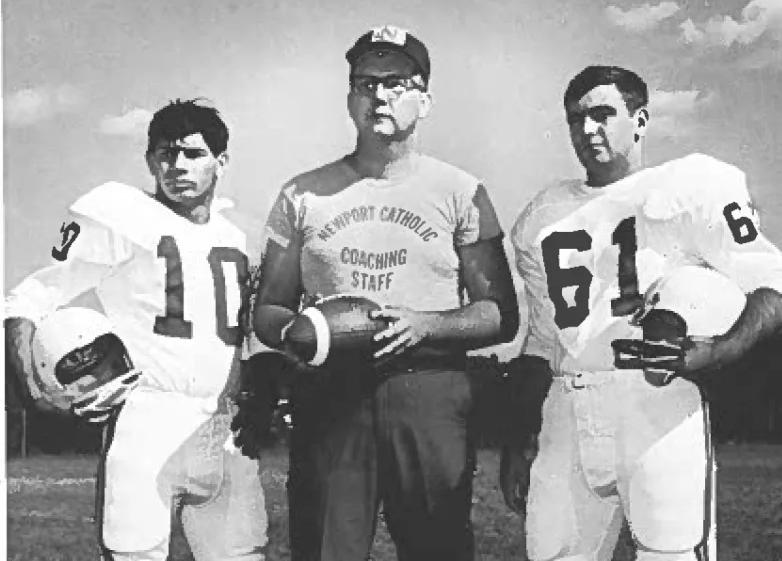
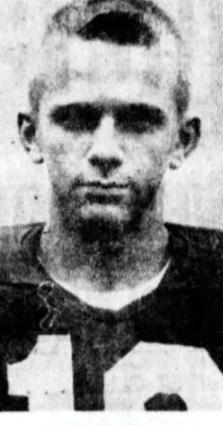
Bob Schneider’s name is etched into Kentucky high school football history as one of its most iconic coaches. A Newport Central Catholic graduate, Schneider returned to his alma mater in 1966 to take over a struggling program that had averaged just 1.5 wins per season. Over the next 44 years, he transformed NewCath into a powerhouse, compiling a career record of 345-183-2 and winning state championships in 1984, 2005 and 2006. At his retirement in 2009, he was the winningest coach in KHSAA history and remains among the state’s alltime leaders in victories.
In addition to football, Schneider coached baseball for nine seasons, leading NewCath to back-to-back regional championships in 1975 and 1976, with the latter team finishing as state runner-up. He continued helping the program even after stepping down due to heart issues, working behind the scenes and mentoring players and coaches.
Schneider’s contributions to education were as meaningful as his coaching acContinues on page 12
Day 30: Becky Ruehl
became the first Northern Kentuckian to compete in the Olympics.
Day 31: Tom Thacker
Tom Thacker,
Covington native,
Day 32: Sydney Moss
Day 33: Bob Schneider
complishments. A dedicated educator, he taught English for 50 years, served as NewCath’s athletic director for 35 years, assistant principal for 21, and directed the Tuition Assistance Program for 12.
A Thomas More and Xavier University graduate, Schneider earned a master’s degree and superintendent’s certificate, reflecting his lifelong commitment to learning. A member of the Kentucky Athletic Hall of Fame, he left a legacy of faith, discipline and service. The Northern Kentucky Coach of the Year award now bears his name, a fitting tribute to a man who built both programs and people.
Day 34: The Walz family
Few families in Kentucky high school sports history boast a legacy like the Walz family, and the Walz name defines generational impact in Northern Kentucky athletics.
Roger Walz, a 1962 Highlands graduate, helped ignite the Bluebirds’ football dynasty as quarterback of teams from 1959-61 that went 35-1 and reached three straight state finals. He later returned as head coach, guiding Highlands to the 1975 Class 3A title and serving as the school’s athletic director.
His wife, Janine Thoeny Walz, was a trailblazer in girls sports, winning the first five girls regional tennis championships from 1960-64, earning letters on Bellevue’s boys tennis team and entering the Northern Kentucky Athletic Directors Hall of Fame. A cheerleader, valedictorian and pioneer, Janine inspired a family legacy rooted in excellence.
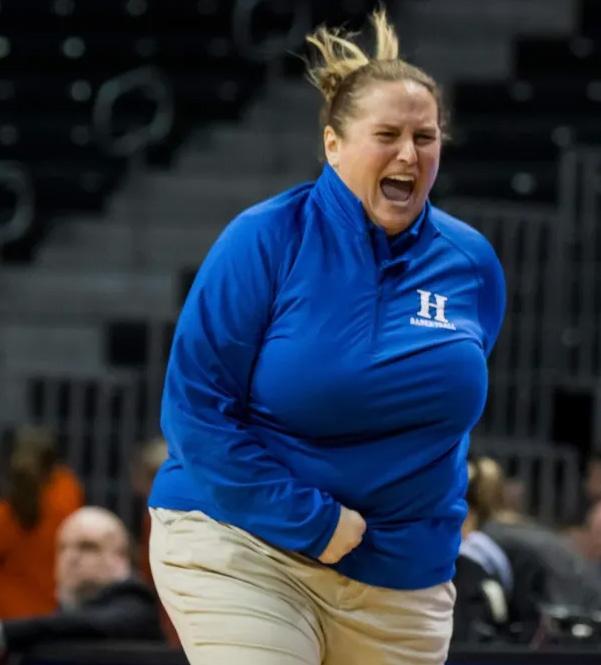
Their daughter, Jaime Walz-Richey, remains one of the most decorated basketball players in Kentucky history, named Miss Basketball, Parade Magazine National Player of the Year and Gatorade Circle of Champions in 1996. Her 4,948 career points stood as the state record for 20 years. She now coaches the Highlands girls basketball team and has over 400 wins. Her husband, Bert Richey, is also part of the Highlands family; he coaches boys golf and is an assistant on Jaime’s staff.
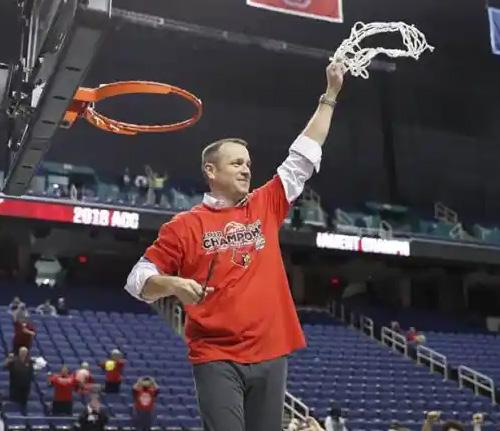
Their son, Jeff Walz, is one of the top women’s college basketball coaches in America. In nearly 20 seasons at Louisville, he’s led the Cardinals to over 500 wins, transforming UofL into a perennial power. His teams have gone to four Final Fours and two national title games.
ANTHONY SHELTON, AS ADMINISTRATOR FOR THE ESTATE OF JENNIFER LYNN JONES, ET AL
By virtue of a judgment and order of sale of the Boone Circuit Court rendered JUNE 24, 2025 the above case, I shall proceed to offer for sale at the Justice Center Building in Burlington, Kentucky, to the highest bidder, at public auction on THURSDAY, JULY 31, 2025 at the hour of 9:00 a.m. or thereabouts, the following described property to-wit:
The complete legal description is particularly set out in the Judgment and Order of Sale entered in this case.
DIVISION III
BOONE CIRCUIT COURT CASE NO.: 23-CI-01079
US BANK TRUST NATIONAL ASSOCIATION, NOT IN ITS INDIVIDUAL CAPACITY BUT SOLELY AS OWNER TRUSTEE FOR VRMTG ASSET TRUST VERSUS}
RONNIE L. COX, ET AL
By virtue of a judgment and order of sale of the Boone Circuit Court rendered JUNE 24, 2025 the above case, I shall proceed to offer for sale at the Justice Center Building in Burlington, Kentucky, to the highest bidder, at public auction on THURSDAY, JULY 31, 2025 at the hour of 9:00 a.m. or thereabouts, the following described property to-wit:
TERMS OF SALE: The property shall be sold as a whole. The purchaser may pay all or part of the purchase price in cash, and may pay the balance of the purchase price on a credit of 30 days after date of sale; said credit shall be granted only upon the execution by the purchaser of bond, with surety thereon, and said surety shall be a lending institution authorized and doing business in Kentucky, or a reputable fidelity or surety company, authorized and doing business in Kentucky, and only if said surety be acceptable to the Commissioner of the Boone Circuit Court; and an authorized officer of the surety must be present at the sale or must have given the Commissioner adequate assurance of its intent to be surety prior to or at the sale; and said Bond shall be, and shall remain, a lien on the property sold as additional security for the payment of the full purchase price, and shall have the full force and effect of a Judgment; and said Bond shall bear interest at the rate provided by the Judgment up to Twelve (12%) Percent per annum until paid. The purchaser shall be required to pay the sum of 10% of the bid amount in cash or certified check on the purchase at the time of sale.
The successful bidder at the sale shall, at bidder’s own expense, carry fire and extended insurance coverage on any improvements from the date of sale until the purchase price is fully paid, with a loss payable clause to the Commissioner of the Boone Circuit Court. Failure of the purchaser to effect such insurance shall not affect the validity of the sale or the purchaser’s liability thereunder, but shall entitle, but not require, a lien holder herein, after giving notice to the Commissioner, to effect said insurance and furnish the policy or evidence thereof to the Commissioner, and the premium thereon or the proper portion thereof shall be charged to the purchaser as purchaser’s cost.
The property shall be sold subject to ad valorem taxes for the year 2025 and all subsequent years thereafter; easements, restrictions and stipulations of record; assessments for public improvements levied against the property, if any; existing zoning ordinances, statutes, laws, or regulations; and any facts which an inspection and accurate survey of the property may disclose. BIDDERS SHALL BE PREPARED TO COMPLY WITH THESE TERMS. All sales are “as is” and the Plaintiff, the Master Commissioner, and the Court shall not be deemed to have warranted title of the real estate to the purchaser.
FURTHER INFORMATION REGARDING THESE SALES AND OTHER UPCOMING SALES CAN BE FOUND AT www.boonecountyky.org (Link to Department/Agencies to Master Commissioner) PROSPECTIVE BIDDERS ARE ADVISED AND ENCOURAGED TO REFER TO THAT WEBSITE FOR ANSWERS TO ANY QUESTIONS.
The Walz family includes Highlands player and coach Roger Walz, above, Louisville’s Jeff Walz, top right, and Highlands coach Jaime Walz-Richey.
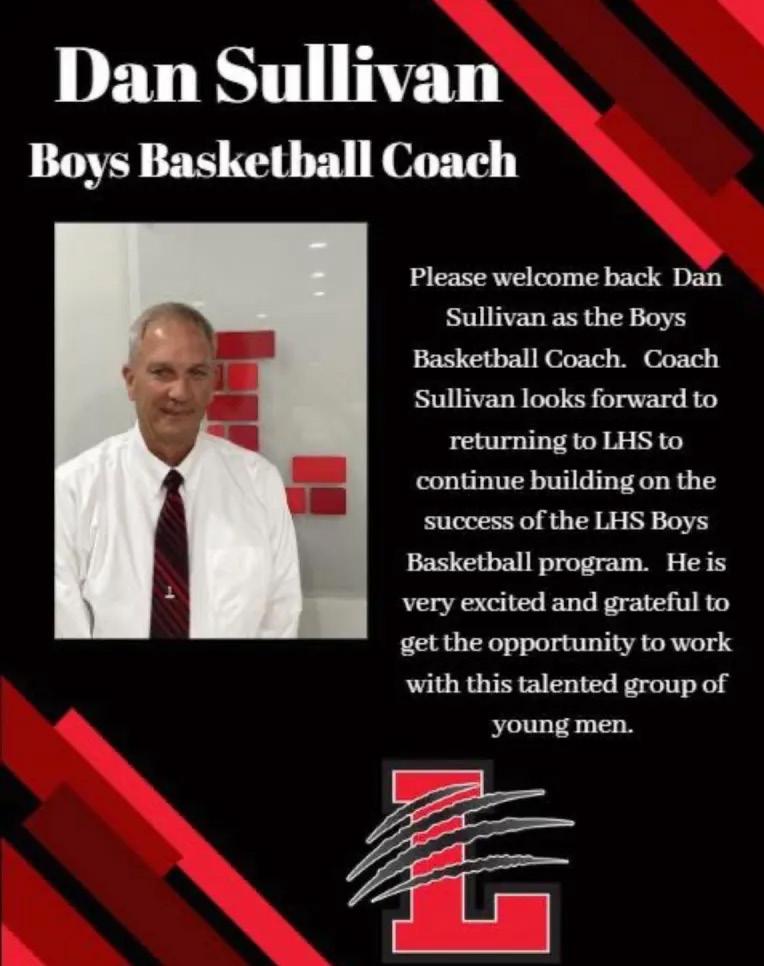
Ludlow brings back Sullivan to lead boys basketball
A familiar face will be back on the Ludlow sidelines next season.
The Panthers hired Dan Sullivan to be their next boys basketball coach. He replaces Aaron Stamm, who took the Bishop Brossart girls basketball job last month.
Sullivan has more than 30 years of coaching experience, including 2018-22 with the Panthers. He was head coach at Campbell County for nine seasons and for four seasons with Walton-Verona. He’s won over 200 games as a head coach.
Sullivan’s first head coaching job was at Walton-Verona, going 60-46 in four seasons from 1990-94. He later became head coach at Campbell County and compiled a 126-118 record in nine seasons from 19942003. In 2001, he led the Camels to a 10th Region title and a trip to the KHSAA Sweet 16.
He went 64-55 over four seasons in his first stint with Ludlow. He then became an assistant on his son Vance’s staff at Gallatin County.
Sullivan takes over a team that graduated four seniors and finished 16-15 in the 2024-25 season. The Panthers won their third straight NKAC Division III title in the process. Among the four graduates were three of the team’s four leading scorers. Spencer Brandenburg (17.4 points per game), Joseph Scott (12.8) and Byron Conley (9.6) all depart. The team is expected to return freshman Logan Day and sophomore Gage Grider, two of five that played in all 31 games last season. Of the eight that played in at least 22 games last season, four were underclassmen.
Sullivan is another new face in a district that has seen lots of turnover the past two seasons. Also in the 34th, St. Henry and Ludlow will present two new coaches after Dave Faust retired and Tim Sullivan came in from Cooper for the Crusaders. Dixie Heights’ Scott Code and Villa Madonna’s James Meyers will be coaching just their
second seasons this coming year. Lloyd Memorial’s Mike Walker, now the longest tenured coach in the district, enters his sixth season.
CovCath hires
Michels to succeed longtime baseball coach
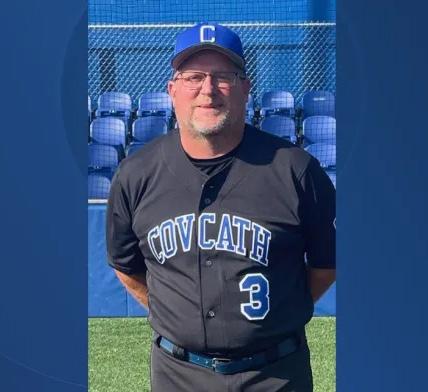
Covington Catholic High School named John Michels as its next head baseball coach. CovCath said in a news release that the school conducted an extensive and competitive coaching search with more than 25 candidates from across the region.
Michels, a 1988 CovCath graduate, succeeds former longtime Colonels coach Bill Krumpelbeck, who concluded his 48th and final season at the helm this spring.
Krumpelbeck’s tenure is marked by exceptional achievement – 1,149 career wins, second all-time in Kentucky High School Athletic Association baseball history.
Michels has served in multiple roles in the CovCath baseball program over the years. He was most recently the junior varsity head coach – a role in which he compiled a 408-144 record. He led the Colonels to six regional championships and 12 regional final appearances. He had a 48-13 record as the freshman head coach from 2002 to 2004.
Michels played on the 1987 regional championship team that advanced to a state quarterfinal.
CovCath’s Sheets wins 3rd Gatorade player of year honor
another honor.
Sheets was named Gatorade Track and Field Player of the Year. It’s the third time Sheets has earned a Gatorade player of the year award, something that has been done by fewer than 20 athletes in 40 years of honoring the nation’s most elite athletes.
His senior track and field season is one that came with three state records. The 6-foot3, 175-pound senior set a state record in the 3,000-meter run at the Penn Relays Carnival, finishing with a time of 8:11.60, ranking eighth nationally for boys prep runners. He also set a state record in the mile at the HOKA Festival of Miles, running a 4:03.05, good for 18th nationally. At the KHSAA Class 2A track and field meet, Sheets won the 800 meters and finished second in the 1,600 and 3,200 meters, helping the Colonels take back-to-back state titles. One last state record came in his career’s final home prep meet, when he clocked 8:48.67 in the two-mile, a time that ranks No. 2 nationally.
Sheets was also the 2022-23 and 2024-25 Gatorade Kentucky Boys Cross Country Player of the Year.
Sheets’ run to stardom started his sophomore year, when he won a Class 3A state championship in cross country, the first individual to win one for the Colonels. He was named Gatorade Kentucky Cross Country Runner of the Year and Northern Kentucky Co-Runner of the Year. In track and field,
Sheets won a state title in the 3,200 and was a member of the 4x800 state champion relay team, setting a school record in the event.
As a junior, Sheets’ cross country season was injury plagued. He missed the majority of the season before returning to place third in the KHSAA Class 2A state meet, helping the Colonels win a state title. In track and field, he finished runner-up in both the 1,600 and 3,200, helping the team win its first state track and field title since 2009.
On top of a busy athletic career, Sheets is student body president at Covington Catholic. He has signed with the University of Virginia to continue his running and academic career. He graduated with a 4.65 weighted GPA.
The Gatorade Player of the Year program annually recognizes one winner in each state and the District of Columbia across 12 high school sports – football, girls volleyball, boys and girls cross country, boys and girls basketball, boys and girls soccer, baseball, softball, and boys and girls track and field – and awards one National Player of the Year in each sport. The selection committee includes coaches, scouts, media and others to help evaluate and determine state winners in each sport. Each player of the year also receives a grant to donate to a social impact partner.
The decorated high school career of Covington Catholic’s Will Sheets just added
Ludlow has named Dan Sullivan as its boys basketball coach. Provided
Covington Catholic named John Michels as its baseball coach. The 1988 CovCath graduate succeeds former longtime coach Bill Krumpelbeck. Provided
Covington Catholic’s Will Sheets was named the 2025 Gatorade Track and Field Player of the Year. Provided | Ray Schaefer LINK nky contributor
Address: 11962 Staffordsburg Road, Independence
Price: $675,000
Bedrooms: Four
Bathrooms: Three
Square footage: 2,856
School district: Kenton County
County: Kenton
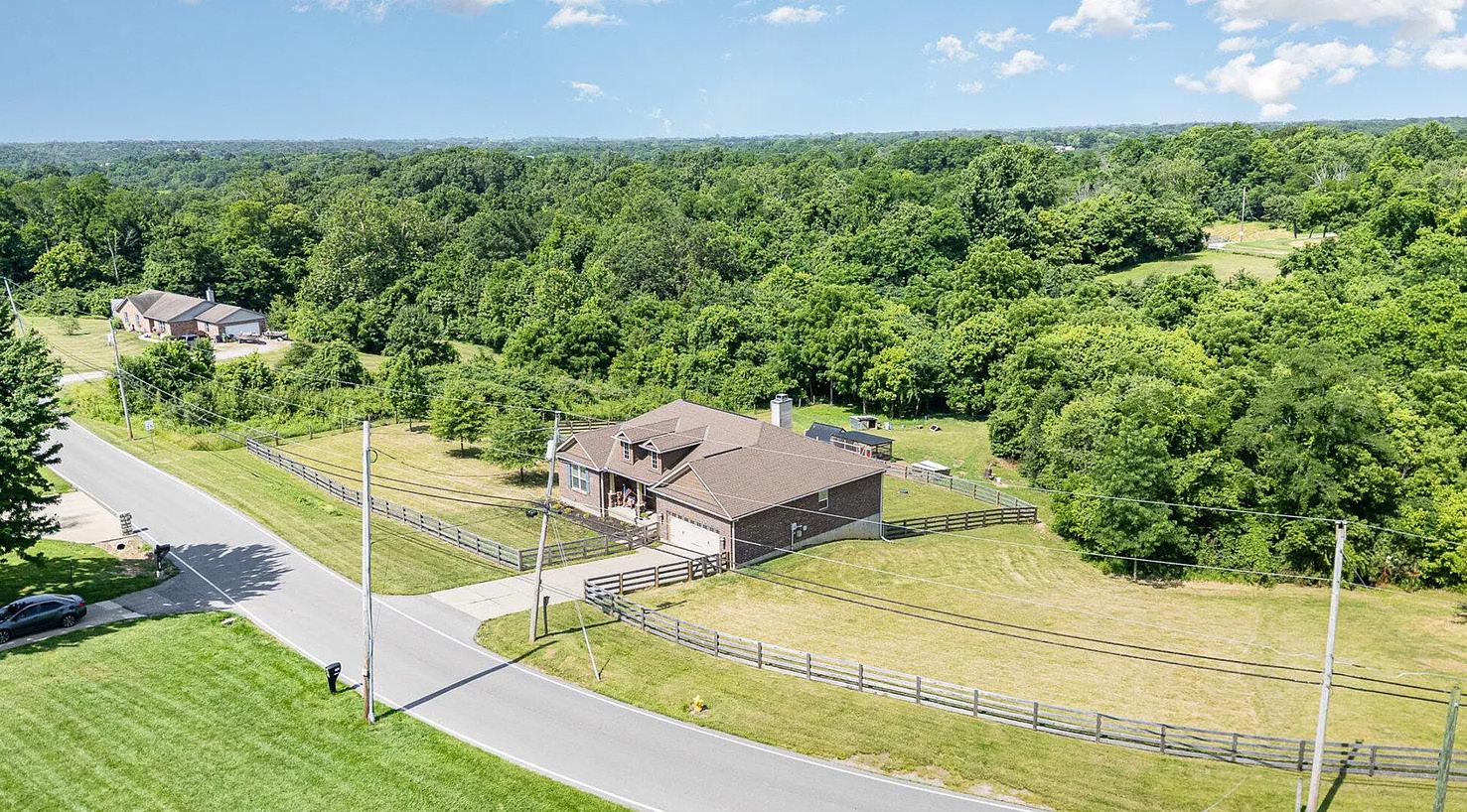
Special features: Enjoy space and privacy in this four-bedroom, three-bath ranch on nearly 4 acres. Just 11 years old, it features an open floor plan, newer carpet, fresh paint and a whole-home water filtration system. The finished lower level adds extra living space. Fully fenced with a garden area – ideal for pets or small livestock.
4-bed ranch on nearly 4 acres
A look at this home’s living room and kitchen. A drone shot of this home and property.
-PUBLIC NOTICE-
The Northern Kentucky Solid Waste Management Area will hold its regularly scheduled open meeting at 10:30 a.m. on August 14. The meeting will be held at the Campbell County Administration Building, 1098 Monmouth Street, Newport, KY 41071; Fiscal Court Chambers, First Floor. The agenda will be posted on the Campbell, Kenton, and Boone County websites and the location of the meeting 48 hours prior to the meeting. Any individual requiring special accommodation should contact Campbell County in advance of the meeting at 859-547-1866.
Kentucky now allows for Public Notices to be published digitally on LINK nky’s website. You can find public notices for the following organizations on our site at https://linkreader.column.us/search
• AJ’s Towing & Recovery
• Boone County Clerk
• Campbell County Clerk’s Office
• Campbell County District Court
• Campbell County Fire District #1
• Campbell County Fiscal Court
• Campbell County Planning & Zoning
• Campbell County Public Library
• Campbell County Sheriffs Office
• City of Alexandria
• City of Bellevue
• City of Cold Spring
• City of Covington
• City of Cresent Springs
• City of Crestview Hills
• City of Dayton
• City of Edgewood
• City of Elsmere
• City of Erlanger
• City of Florence
• City of Fort Mitchell
• City of Fort Thomas
• City of Fort Wright
• City of Highland Heights
• City of Independence
• City of Lakeside Park
• City of Ludlow
• City of Newport
• City of Ryland Heights
• City of Silver Grove
• City of Southgate
• City of Union
• City of Villa Hills
• City Of Walton
• City of Wilder
• City of Woodlawn
• Covington Public Independent Schools
• Cresent Springs Board of Adjustment
• Family Dollar Store
• Fort Mitchell Board of Adjustment
• Fort Thomas Independent Schools
• Highland Heights Planning & Zoning
• Joseph F Grimme, Campbell County Master Commissioner
• Keating, Muething & Klekamp PLL
• Kenton County Fiscal Court
• Kenton County Joint Board of Adjustment
• Larry Dillon, Boone County Master Commissioner
• Northern Kentucky Port Authority
• Northern Kentucky Water District
• Planning & Development Services of Kenton County
• The Baker Firm PLLC
• The Hidden Chapter Bookstore LLC
An exterior view of this Independence home. Photos provided | Lisa Brandenburg and Kerry Schrand-Rawe with Huff Realty
5/26/25 - 6/1/25
Edited by Margie E. Burke
HOW TO SOLVE:
Each row must contain the numbers 1 to 9; each column must contain the numbers 1 to 9; and each set of 3 by 3 boxes must contain the numbers 1 to 9. 2 6 5
Answer to Previous Sudoku:
Edited by Margie E. Burke
Each row must contain the numbers 1 to 9; each column must contain the numbers 1 to 9; and each set of 3 by 3 boxes must contain the numbers 1 to 9.
Answer to Previous Sudoku:
2025 COMMUNITY CONVERSATION SERIES:
OCTOBER 9
DECEMBER 4
Scan the QR code to register – Education – Workforce
Events will be held at the Erlanger Branch of the Kenton County Public Library from 6-7:30 p.m. Events will also be live-streamed on LINK nky’s Facebook page.
Our December Community Conversation event will be held at a different location: The new SparkHaus Entrepreneurial Hub at 727 Madison Avenue in Covington. What a better place to talk about workforce? We’ll see you there!