


"...BRINGS VOICES OF MONTREALERS TOGETHER IN A PORTRAIT OF COMMUNITY RESILIENCE"

– POV MAGAZINE



WRITTEN AND DIRECTED BY





STEFAN VERNA
















"...BRINGS VOICES OF MONTREALERS TOGETHER IN A PORTRAIT OF COMMUNITY RESILIENCE"
– POV MAGAZINE
WRITTEN AND DIRECTED BY
decision
Maria Cholakova
Concordia University con rmed with e Link it will extend its contract with food provider Aramark for another year following the contract's original end date in May 2026.
e decision comes a er students voted to abolish contracts with the U.S.-based company in 2024. Its subsidiary, Aramark Correctional Services, provides food to 450 prisons and jails and has contracts with facilities in at least 35 states.
In 2015, Concordia o cially made Aramark its primary food partner for on-campus meals.
Aramark handles the university’s dining halls, which cater 2,700 meals a day, seven days a week. Aramark also operates ve retail locations on campus: Starbucks, LBEE Café and the Stingers Café at the university’s downtown campus, as well as Faro Café and Sweet Bees Café at Loyola campus.
Student disapproval
In the 2024 Concordia Student Union (CSU) by-elections, 83 per cent of students voted to abolish “exclusive food service contracts with multinational corporations like Aramark,” a er which the position was added to the union's Positions Book.
Despite students adopting the position, Concordia has not moved to cancel its contract with the prison food provider.
According to Concordia spokesperson Julie Fortier, the university is exercising its option to renew its contract with Aramark for another year.
In an email to e Link, Fortier wrote that the decision was made a er a “comprehensive evaluation of Aramark’s performance and also takes into account feedback from students received through a number of channels.”
Adam Semergian, the Arts and Science Federation of Associations (ASFA) academic coordinator, says the association, like the CSU, is strictly opposed to Aramark.
ASFA’s Positions Book outlines a number of concerns with Aramark and mandates that the association “see through the abolition of multinational corporate food service provision on campus.”
e position further mandates that ASFA, alongside the CSU, actively works on developing on-campus food service alternatives.
Semergian actively disagrees with the renewal of the Aramark contract. He compares it to Concordia's continued employment partnership with Lockheed Martin.
“Concordia is complicit in that it is supporting not-so-great companies," Semergian said.
Aramark’s history
Students have raised concerns with Aramark for over a decade, namely due to food quality issues, the company's ties to the U.S. Immigration and Customs Enforcement (ICE) and its use of prison labour in the U.S.
According to an American Friends Service Committee (AFSC) investigation, Aramark provided food to ICE immigration jails through subcontracts from the private prison company CoreCivic. e AFSC also uncovered that Aramark provided food to state and local prisons used by ICE in Illinois, Michigan, Oklahoma and Rhode Island. Records listing Aramark as a food pro-
vider date from 2020, apart from Oklahoma, where documents go back to 2012.
In an email to e Link, Chris Collom, Aramark’s VP of corporate communications, said that “Aramark does not and never has had contracts with U.S. Customs and Border Protection, ICE or the Department of Homeland Security to provide food service to immigration detainees.
“ e company also does not have operations anywhere in the country with Correctional Services Canada,” he added.
Aramark has also been accused of unfair prison labour practices by advocacy groups in the U.S.
Aramark uses prison labour to prepare and package food in some of the U.S. prisons where it operates. Under the company’s In2Work program, over 6,000 incarcerated people have worked in Aramark prison kitchens.
Eight inmates in California sued the company in 2020 for unpaid labour and demanded that they be paid the state’s minimum wage.
In 2024, a er the case went to California’s Supreme Court, the court ruled that “the state’s minimum wage law does not apply to people working for private companies while they are held in pretrial detention in California’s jails.”
Plans for the future
Gabriela Lopes, the Concordia Food Coalition (CFC) general coordinator, says that the coalition is opposed to Aramark’s place at Concordia.
“Our stance on Aramark is we want to replace them. We want a di erent food provider,” she said.
However, Lopes acknowledged that replacing them might be a challenge. She also believes that focusing solely on the food provider is not the most useful strategy when it comes to improving food systems at Concordia.
“It doesn't matter how good Aramark is. It doesn't matter how sustainable their metrics are, because we're talking about systemic problems. We're not talking about the little Band-Aid solutions,” she said. “We need to look at it at that level.”
e CFC’s 2026 Phoenix Report, which presents CFC’s history, accomplishments and future goals, outlines that scale, pro t, risk aversion, ideological mismatch and economic pressure are the main factors preventing a contract between the university and a more local campus food provider.
According to the report, the CFC is focused on “strengthening what already exists and preparing for future transformation through ve guiding goals.”
e goals include: supporting local food systems, growing food literacy and connection, reclaiming campus spaces, supporting free and a ordable food programs, and securing stable funding for food justice work.
For students who want to avoid Aramark on campus, Lopes suggests looking to the CFC.
“We've got all kinds of resources that try to help people establish in their mental map what the food that they like and is a ordable to them and is relevant to them is on campus,” she said.

Family of Tumbler Ridge victim sues OpenAI e mother of one of the victims critically injured during the mass shooting in Tumbler Ridge, B.C., is suing OpenAI, the maker of ChatGPT, stating the company had knowledge of the shooter’s plans but did not alert authorities. e lawsuit alleges that 12 OpenAI employees agged the posts as “indicating an imminent risk of serious harm to others” and recommended that Canadian law enforcement be informed.
Quebec security minister open to releasing Quebec police watchdog reports publicly
Quebec security minister Ian Lafrenière said he is open to making investigations by the province’s independent police watchdog public, as is common in other provinces. Lafrenière added that those reports would likely be signi cantly redacted if they were pub-
licly released. Quebec’s police watchdog is the only one in Canada that doesn't make its investigation reports public, according to the CBC.
Thirty femicides in Canada in 2026

irty women and girls have been violently killed in Canada so far in 2026, according to the Canadian Femicide Observatory for Justice and Accountability. e organization said the growing gures are a sign that more prevention and awareness are needed. e observatory recorded 147 killings in 2025, a decline compared to recent years. However, founder Myrna Dawson described the killings as part of a larger pattern of male violence against women. Advocates say many femicides are preceded by intimate partner violence.



Every Wednesday night
is a chance for people to discover the art of swing
Chantal Bellefeuille @bellefeuille0chantal

Every Wednesday night, Café La Ligne Verte near Frontenac
Metro station transforms from a dimly lit, charming café into a lively yet intimate dance oor for its weekly event, Mercredis Swing. ere, swing dancers and jazz musicians come together to party the night away.
is pay-what-you-can event is open to all ages and welcomes newcomers and seasoned dancers alike to experience live jazz and swing dancing. e evening starts at 7 p.m. with an introductory dance class to get attendees into the rhythm of the evening, followed by three live jazz sets beginning at 8 p.m.
“I think I fell in love with swing dancing because it’s such a nice activity,” Camille Bouchard said, a Mercredis Swing organization collaborator and teacher for its introductory dance class.
“It’s people giving love to each other in a way with music and the festive ambiance,” Bouchard added. “I’ve never seen that anywhere else like I’ve seen in the swing community.”
Bouchard, 17, started swing dancing at 14 a er deciding to follow her mother to her classes. When she moved to Montreal from Kamouraska, Quebec, for CEGEP, she found Mercredis Swing and knew right away she wanted to volunteer her skills.
“ e goal is not to push people into performance, it’s to get them to feel what swing is,” Bouchard said. “Sharing this art of dancing, my passion and showing how accessible it is—this is how I feel when I teach swing.”
Gender roles are also le at the door as people swap dance positions, choosing to lead or to follow. When leading, a person initiates movement, pace and direction, while a follower would interpret these signals to respond in real time.
“We’re lucky in Montreal to have places where culture can exist in inexpensive spaces,” said former Mercredis Swing promoter Nicolas Nadeau-Fredette. “We are lucky to have an inclusive, rich collective.”
Nadeau-Fredette, who has since stepped down from his role but remains part of the organization team, said the most special
aspect he’s seen is the connection between the dancers and musicians, especially among those who become regulars.
“For us, we bond with other musicians and dancers, and dancers bond together with us,” said Blanche Moisan-Méthé, who played the tuba and cornet at its latest jam night. “It’s such a good vibe.”
Mercredis Swing prides itself on being the only weekly swing event in Montreal to feature consistent live music. Every rst Wednesday of the month is jam night, when amateur musicians and pros come together to play their tunes for the dancers. is allows musicians to network within the jazz community and encourages them to return to Mercredis Swing’s stage.
“ ere’s something very special about real instruments. It’s a cra ,” Moisan-Méthé said. “It’s something we put so much time into, and the dancers also put so much time into learning the steps."
e dancers can also interact with the musicians because the stage is almost parallel to the dance oor, rather than the traditional divide of an elevated stage.
“Not only do we dance at the same time and play music at the same time, but we can also get a drink together,” Nadeau-Fredette said. “It creates a sense of community.”
And the regulars feel that. Nikolaus Kaeser-Reiss has been coming to Mercredis Swing for about a year. He said that it has had a huge impact on him.
“It’s kind of my whole life now,” Kaeser-Reiss said. “It’s nice to have something to look forward to every week that’s just always there.”
One of the main reasons Kaeser-Reiss started coming to Mercredis Swing was to connect more with jazz music through the weekly live bands. But he said participating in dancing has given it even more meaning.
“It’s reconnecting with yourself, the people around you and being present in the moment, which is something we lose these days, being super connected online,” Kaeser-Reiss said. “Moving your body in ways you don’t normally do, it’s just a freeing human experience.”
Swing dance was created by Black communities hailing from New York City’s Harlem neighbourhood in the late 1920s. e rst dance of the swing genre blended African and European dance in uences together to birth the Lindy Hop, which originated at the Savoy Ballroom in 1928 and broke the race barrier during a time of segregation in the United States. is upbeat dance historically encapsulates jubilation in the face of oppression.
“Swing is always a dichotomy,” said Zack Richard, co-founder and owner of dance school Swing ConneXion. “Swing is mainly the idea of nding joy in hardship.”
Richard emphasized that he tries to maintain this history by teaching it in his dance classes at Swing ConneXion.
“It’s something that I mention as much as I can,” Richard said. “Sometimes I overshare. I sometimes joke with students like, ‘If you want to know more about it, buy me a beer at Mercredis Swing, and I’ll tell you everything you want to know and more.’”
Swing ConneXion, which recently celebrated its 20th anniversary in 2025, established Mercredis Swing in 2008 to give a space for students to practice their skills with a live band and to recruit new dancers.
This dance school specializes in teaching dances such as the Lindy Hop, a versatile style with the signature move, the swingout, in which two partners transition from open position to close and back to open at a fast pace. It also teaches the Balboa, a style known for less body movement but intricate, quick footwork and high speeds. ough Swing ConneXion became a bit distant from Mercredis Swing over the years, it has recently re-established its management of the event and encourages people to come and give Mercredis Swing a wholehearted try.
“If you come to the dances and make a little e ort to talk to people, you’re going to discover a lot of cool people and maybe discover an activity that you’ll want to continue,” Richard said. “Dance is one of the greatest gi s you can give to yourself.”









































Someoneis lying to you right now.
You probably won’t know it’s a lie for days, if at all. And by then, the story will have already done what it was designed to do: be shared, repeated and absorbed into the endless noise that fills our screens.
This is what the information landscape looks like now. Artificial intelligence has made mass deception effortless.
This is already visible in North American politics. During the 2025 Canadian federal election campaign, researchers tracked a surge of AI-generated political images and fake news posts circulating across social media, including pages impersonating outlets like CBC and CTV to push fabricated stories.
Researchers have also uncovered networks of so-called “content farms” using artificial intelligence to generate political misinformation at scale. A BBC investigation found Facebook pages run from overseas that post AI-generated images and fabricated news stories about politicians, often disguised as legitimate news outlets.
Manipulated political content has become easier than ever to produce. AI tools can now generate convincing clips of politicians appearing to say or do things they never actually said or did.
In 2024, a deepfake video of Finance Minister Chrystia Freeland circulated online promoting a fraudulent investment platform.
The video was formatted to look like a legitimate broadcast from CBC News and CTV News, complete with fake reporters introducing the segment. In the clip, the fabricated Freeland appeared to encourage Canadians to invest their money in a supposed AI trading program.
Health reporting has also been severely affected by online misinformation campaigns.
During the COVID-19 pandemic, false claims spread faster than any newsroom could respond. Viral posts circulated suggesting vaccines contained tracking microchips or could alter a person’s DNA, despite being repeatedly debunked by health authorities.
Similarly, other posts promoted drugs like ivermectin and hydroxychloroquine as COVID-19 cures, even though health authorities warned they did not treat the virus.

Governments have begun to acknowledge the scale of the problem. In Canada, federal policy discussions have identified deepfakes and AI-generated media as emerging threats to public trust and democratic institutions.
Yet meaningful regulation has struggled to keep pace with the technology.
The stakes are no longer limited to a few misleading posts. When misinformation spreads, it distorts public debate and erodes trust in institutions and the media.
For newsrooms already facing shrinking budgets and fewer reporters, the result is a constant race against a wave of misinformation that is cheap to produce and expensive to debunk. Each correction requires time, expertise and verification, while the original false claim may have taken seconds to generate.
In this environment, the role of journalism becomes even more critical. Reporting grounded in verification, accountability and transparency is not simply another voice in the information stream; it is one of the few mechanisms society has for distinguishing fact from fabrication.
But journalism cannot defend the information ecosystem alone.
The Link calls on platforms to stop treating engagement as an excuse for harm. Platforms that profit from attention must also take responsibility for moderating content, enforcing their own policies and investing in stronger systems to detect and remove false information.
The Link calls on governments to legislate with urgency. AI is advancing faster than the policies governing it. Recognizing the risks is no longer enough. Democracies must develop rules that protect the integrity of public information before the line between fact and fabrication becomes impossible to see.
Every journalist, editor and media organization should pledge to hold the line. In an environment flooded with synthetic content, the standards of verification, accountability and transparency are more important than ever.
Lastly, The Link calls on readers to demand better from their feeds, from their sources and from themselves. Every moment of attention shapes what spreads.
The truth should be a practice, a standard and a demand we make of ourselves and of everyone with a platform.

The course's instructor says it teaches artists to engage with AI critically
Hannah Scott-Talib @hannah.sctt
In February, Concordia University announced a new initiative promoting discussions on the use of artificial intelligence at the university, particularly in the field of fine arts.

The initiative, titled “CTRL + AI: Human Creativity and Agency in the Age of AI,” is backed by the Tom Berry Fund for AI and Creativity. It combines a for-credit fine arts undergraduate course with a “series of six public conversations and hands-on workshops that foreground artistic agency, experimentation and critical engagement,” according to Concordia’s website.
However, the initiative is drawing criticism from art students and practicing artists at the university. In particular, students are criticizing the undergraduate course within the initiative, titled “AI + Creativity.”
Alyson Bouffard, a student in the studio arts undergraduate program at Concordia, said she believes that generative AI has no place in the world of visual arts.
“I don’t know why they would introduce a class like that,” Bouffard said. “I don’t know what clientele they’re trying to reach.”
The “AI + Creativity” course description states that it seeks to “prepare students to integrate generative AI into professional creative workflows as a collaborative tool,” adding that “students will learn to use AI to explore divergent directions, generate raw material, and accelerate iteration, while maintaining rigorous professional standards.”

Bouffard said she was shocked to discover the existence of the course.
“I think that just doesn’t make sense because how can you create something raw with AI?” she said. “I definitely don’t think that it should be promoted as a new technology or a new way of creating art.”
Bouffard is not the only Concordia student who feels that a course on generative AI does not have a place at the university. Meggan Caunter, an artist and English literature student at Concordia, finds the idea
In the world of visual arts, generative AI companies have long been accused of stealing the pre-existing works of artists, leading to widespread backlash and lawsuits from artists.
Given her view on the course, Caunter said that she began to look into pursuing a degree at another institution and will be leaving Concordia this year.

“The installation of the AI course was the final straw for me to realize that this institution is going in an awful direction and I want absolutely nothing to do with it,” she said.
According to both Caunter and Bouffard, not a single artist they know supports the idea of a future where generative AI becomes normalized and integrated into art practices.
“The whole point of [pursuing an arts degree] is to learn how to get more creative and how to think artistically and improve our modes of creating,” Bouffard said. “I just think that using AI is completely backwards from what could be learned and taught through universities."
For Caunter, the promotion of generative AI in the art world is harmful for many reasons.
“First of all, you’re teaching students that it’s OK to copy and steal from other artists, you’re teaching artists not to think for themselves, you’re teaching students to be lazier,” Caunter said. “These programs skip steps.”

She added that the course’s description, which refers to generative AI as a collaborative tool for artists, is misleading, along with the thought process of “it’s going to happen whether you want it or not” when it comes to the integration of generative AI into the arts.
“That exact mentality is why it’s happening, and why we’re normalizing it,” Caunter said. “We’re normalizing it and making people be OK with it by accepting this wave of AI.”

In an email statement to The Link, Concordia’s inaugural AI expert-in-residence Christian Beltrami, who will be teaching the “AI + Creativity” course, said that the goal of the course is not to teach students how to generate more content faster.
“It is about teaching them how to remain artists when generation becomes easy. It is about new frameworks for thinking, new methods of critique, new ways of working and a much higher standard for selection and authorship,” Beltrami wrote in the email. “If a student leaves the course believing the goal is to prompt harder and flood the world with more images, then the course has failed.”
Beltrami continued that, through this course, students must be taught that AI is not a neutral tool, but a system shaped by human data, historical bias and embedded assumptions.
“That means learning to ask concrete questions before using any tool,” Belrami said. “What role is this system actually playing in the process? Where was it trained? What kinds of biases or flattening effects might it produce? And how much trust should be placed in its output without human oversight?”
According to Beltrami, artists will come across AI in the future of their careers, whether they like it or not.
“The question is not whether students can avoid these systems entirely. They will encounter them,” he said. “The real question is whether they are being prepared to use them critically, knowing what these tools accelerate, what they flatten and where human craft still has to lead.”

Meanwhile, Bouffard said that, in her case, pursuing a degree in studio arts should not involve learning about generative AI.

Looking towards the general future of visual arts, Bouffard said she has noticed that an increasing number of artists seem to be drawn towards digital practices, which saddens her as an artist who works primarily through paint and canvas.

“I don’t think it belongs there. I don’t think AI generative art is a [real] thing," Caunter said. "I don’t think it’s art. It’s just a compilation of different arts that were stolen off the internet from actual artists.”


“It’s really not what Concordia is to me,” Bouffard said. “I chose to study here because I knew that I could get a great education from artists who know what they’re doing and who have had experiences in

of the course "abhorrent." the field.”









“What drives me to be an artist is the fact that I can get creative with my hands and create things physically. Sculptures and things like that cannot be replicated through digital art,” Bouffard said. “It would be sad to see more people leaning towards that, and losing these original forms of art that are so old and that have been so important to society.”



Racha Rais and Sean Richard
Thecity of Montreal recently announced the construction of an artificial intelligence hub downtown, saying it will be used to find solutions to construction site management.
Through this hub, the city plans to hire researchers to work on planning and improving safety and accessibility around construction sites, as well as simulating construction scenarios using AI.

Vybihal said AI can help with organizing information and identifying patterns, but warned that the city should not rely too heavily on its recommendations.
“I think they are using AI now because they don’t know how to fix things,” Vybihal said.
The mechanism to implement these solutions is known as the “digital twin” system, which is used to create a virtual duplicate of real-world objects.
Concordia University engineering professor Mazdak Nik-Bakht said he believes that digital twin models can help manage construction projects.
“The digital twin can create a light inventory of knowing what is under construction along with [the project’s] schedule,” Nik-Bakht said. “[Such as] where you have to break the ground for what purpose and what impact it can have over that neighbourhood.”
He added that digital twin models can help with scenario simulation and analysis.
“You can basically simulate as many foreseeable futures when major construction comes,” he said. “We can optimize in terms of the urban management to make sure that no region is overgrown or undergrown in terms of the impact of construction.”
Some experts, however, are skeptical that AI will be effective in urban planning.

Meanwhile, Renee Sieber, a professor of geographic information technologies at McGill University, said many of the proposed solutions under this digital twin system rely mainly on predictive analytics, which are tools that use existing data to anticipate patterns such as traffic congestion or construction timelines.
While this technology can help cities analyze information and potentially coordinate projects more efficiently, Sieber said it does not address the deeper causes of construction delays.
She said that AI has become a very attractive term because it promises to solve many urban problems, but that cities are complex and messy.
“Technology alone won’t fix those challenges,” Sieber said.
The city also announced that technology company executives would form an advisory committee to oversee the use of AI.
Nik-Bakht said that while technology companies may lead the project initially, it would only be effective if construction companies are involved as well.
Joseph Vybihal, a computer science professor at McGill University, said the city may be turning to AI because it just doesn’t know how to solve complex problems.
“I think if I [were] the one who's running this project, from day zero, I'd make it very clear that my most important stakeholder is the construction entity,” Nik-Bakht said.
Sieber added that public discussions about AI
often create unrealistic expectations, and that addressing urban planning problems in the city depends on government action, not technical solutions.
“One of the big challenges is the rhetoric around AI,” Sieber said. “Construction in Montreal isn’t really a computational problem. It is a political problem.”


police, not the public
Cléo Clamen
InMontreal’s 2026 budget, Mayor Soraya Martinez Ferrada’s administration pledged to spend $40 million on police body-worn cameras and additional security cameras over the next 10 years if the Quebec government approves the use of the technology.

But some researchers, activists and politicians argue that body cameras are costly, invasive and often fail to address systemic issues.
Craig Sauvé, a former Montreal city councillor and the leader of the political party Transition Montréal (TM), told The Link that TM opposes the technology and does not see it as a “sustainable solution” to police brutality.
Sauvé expressed concerns about the technology's limited effectiveness in jurisdictions where it has been implemented and says he would instead like to see the Bureau des enquêtes indépendantes (BEI) do a better job of holding officers accountable for brutality.
“What we really have to be working on is improving the socioeconomic status of our citizens,” Sauvé said, adding that improving Montreal’s social safety nets would reduce crime and the need for heavy policing.
Experts and advocates say body cams are a surveillance tool that
cism despite widespread and costly implementations of the technology in some jurisdictions.
Rutland also noted that in the past decade, many police killings of civilians have been filmed on smartphones without the officers involved facing any consequences.

“We have to deal with the fact that the video evidence is not holding police accountable,” Rutland said. He pointed to the fact that the BEI recently chose not to charge any of the officers involved in the 2025 killing of Abisay Cruz despite smartphone video evidence of the killing.
Ted Rutland is a Concordia University professor, human geographer and policing researcher. Rutland said that after more than 15 years of body camera usage, research has not demonstrated improved police accountability or reductions in police violence and ra-
“But [smartphone recordings] help to give a more accurate representation of what the police actually do,” Rutland added.
Rutland criticized disproportionate police killings of BIPOC people and people with mental illness in Canada, and the lack of consequences faced by SPVM officers who kill civilians.
A member of the Defund the Police coalition, who was granted the pseudonym Hugo Gareau for safety reasons, said the origin of body cameras as a “tool for transparency” can be traced back to the early 2010s.
“Body cameras were actually originally marketed as a tool that would make the police more effective at repressing people, at surveilling people and at convicting people,” Gareau said.
Gareau pointed to early marketing by Axon—then known as Taser—that positioned body cameras as a way for police to protect themselves from lawsuits.
The company only began promoting the technology
as a way to promote police reform after the police killing of Michael Brown in Ferguson, Missouri, in 2014.
In Rutland’s opinion, body cameras were not introduced to protect civilians or hold police accountable, but to gather evidence and surveil citizens.
“The evidence that they’re collecting through the body cameras—which is 99 per cent just interactions with citizens that they’re targeting—can be used in court, either to extract a plea deal or to convict someone,” Rutland said.
Rutland is skeptical of the Montreal Police Brotherhood’s support for body camera implementation.
He suspects that the organization has ulterior motives, pointing to past statements where the Brotherhood has expressed a desire to combat the narrative created by social media footage of police violence.
Gareau expressed similar concerns.
“By [equipping all police with] body cameras, we are basically deploying 4,000 new security cameras that are moving around across the city,” Gareau said. "It's an unimaginable expansion of the surveillance network."
The SPVM reports on its website the management and use of 46 urban security cameras across Montreal. This excludes Metro cameras and traffic cameras, which are managed by other bodies.
Gareau also expressed concern that the police video database created by widespread recordings could be used to surveil protesters and that the SPVM’s new artificial intelligence video surveillance software
may be utilized to track activists.
They added that they believe that if footage is released to the public, it could be selectively released to make the police look good while violating civilians’ privacy.
“Oftentimes, the police encounter people in the worst moment of their lives,” Gareau said. “To have that recorded and disseminated is a huge violation and devastating for people.”
For Rutland, the solution to police violence is not body cameras or diversity training for police officers. It is to reduce the role of the police and instead use unarmed, nonviolent response teams for scenarios like mental health crises.
“Many cities are introducing a fourth response team,” said Rutland. “They respond to 911 calls that have nothing to do with crime or violence, which is the vast majority of mental health calls.”
Sauvé said he would support the implementation of a fourth response team, adding that TM proposed spending $20 million to develop a similar team in Montreal in the 2025 municipal election.
Rutland believes that governments should focus on investing in reducing violence and crime instead of
further investing in the police, who primarily respond to violence after it has already occurred.
Gareau also emphasized that body cameras cost millions of dollars a year and said that they believe those funds should be reallocated to community organizations.
Sauvé said that he would rather see the funds, which come from Montreal’s capital investment, or infrastructure budget, used for infrastructure, such as for building community centres and libraries that will “improve the quality of life for our citizens.”
“Repression is not working,” Sauvé added, noting that increases in police spending have not been proven to reduce crime rates.

Sauvé said he believes the focus should be on “evidence-based policy,” and that criminology researchers have demonstrated that improving civilians’ socioeconomic conditions, education and overall opportunities is the solution to reducing crime.
He added that the SPVM regularly exceeds their allocated budget (by around $55 million in 2024 and $60 million in 2025) and argued that the city should instead invest that money in supporting its civilians, particularly those at risk of ending up in the criminal justice system.
Matthew Daldalian @mattdaldalian
Asartificial intelligence expands and new data centres crop up in Quebec, environmental researchers warn that the digital infrastructure powering the technology could place strain on electricity and water systems.
Demand for data centres has gone up globally as companies race to build the computing infrastructure needed to train and operate large AI models. Montreal has been identified as a potential hub for this development, thanks to its relatively cheap hydroelectric power.
But experts say the environmental consequences of these facilities are still poorly understood.
“They’re using enough to put the strain on the electricity grid,” said Olivier Chalifour, a Concordia University PhD candidate studying AI applications in climate modelling. “It's almost exponential.”
Chalifour said large AI servers require powerful processors that generate significant heat and must be cooled continuously, a process that often requires large volumes of fresh water. That water is used to absorb heat from servers and then cooled again in large towers before being reused or discharged.
A recent CBC News analysis found that data centres powering AI can consume millions of litres of water annually from cooling alone.
When looking at powering the centres, the environmental implications in Quebec are somewhat different.

The province’s electricity system is dominated by hydroelectric power, which produces far fewer greenhouse-gas emissions than fossil-fuel-based grids, more common in the United States.
Still, the availability of that electricity is not unlimited.
Normand Mousseau, scientific director of the Trottier energy institute at Polytechnique Montréal, said the larger environmental concern may be how much electricity these facilities could eventually consume.
“Hydro-Québec would see [usage] multiplying by five, roughly this demand over the next 10 years,” Mousseau said, referring to projected electricity use by data centres in the province.
At the moment, the sector represents a relatively small portion of Quebec’s electricity demand.
Mousseau estimates current data-centre consumption lies at around 200 megawatts, compared to roughly 12,000 megawatts used by the industry across the province.
The challenge with this level of consumption, he said, lies in the scale of new facilities being proposed.
“The new [centres] are enormous, and one setting could consume 100 megawatt today,” Mousseau said.





Hydro-Québec has already begun examining how to manage the growth in energy consumption, revealed through a recent proposal on new electricity pricing for large data centres as demand from

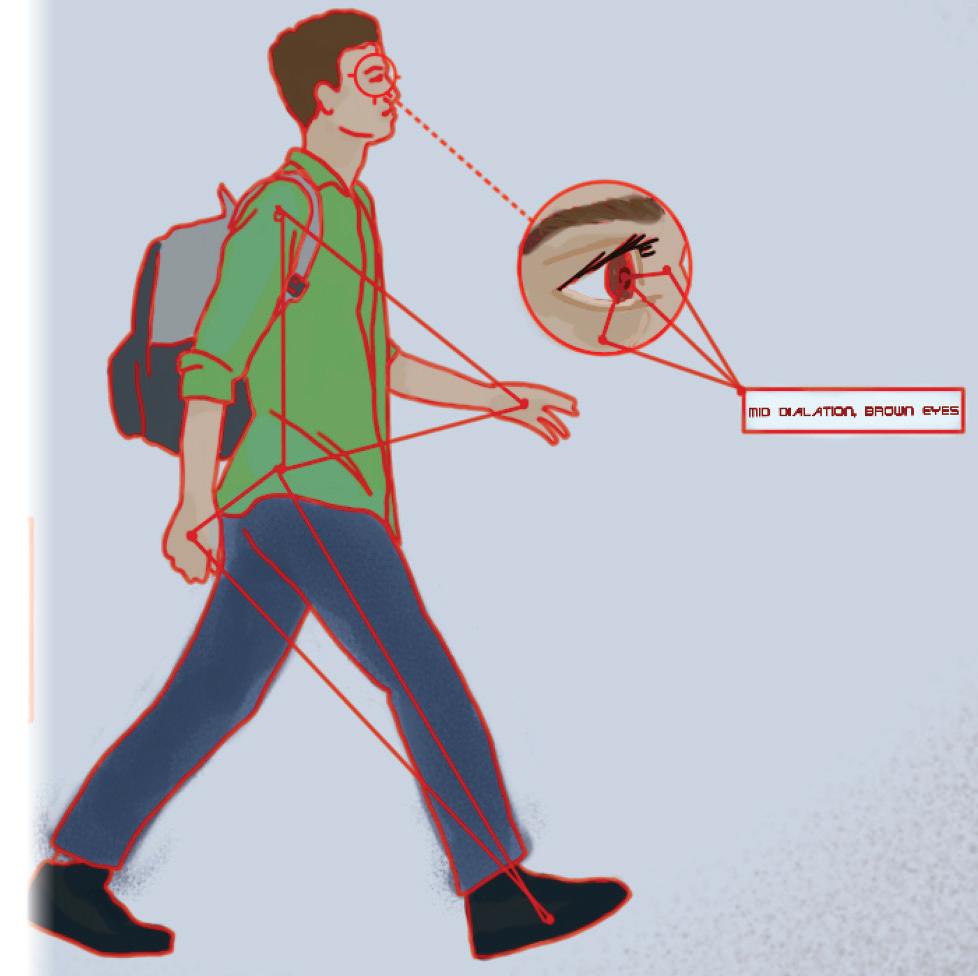
As AI grows, experts raise questions on its environmental impact and economic benefits
tate analysts have identified Montreal as one of Canada’s fastest-growing data-centre markets, citing its access to renewable electricity and dense fibre-optic networks as advantages.
Meanwhile, investment funds have begun financing new facilities designed specifically for AI workloads.
Yet, the economic benefits of these projects remain contested.

Fabien-Kenzo Sato, managing director of the Conseil régional de l’environnement de Montréal, said the economic case for large data centres is often overstated.
While new industries are frequently promoted as engines of job creation and local wealth, he argued the reality of data-centre infrastructure is very different.
“Usually, the main positive argument for developing new industries is it will bring wealth, it will bring new jobs,” Sato said. “But for data centres, there are very few jobs associated to data centres.”
Mousseau warned that large computing facilities could compete with other priorities for Quebec’s electricity supply, particularly as governments attempt to electrify transportation and reduce emissions in other sectors.
“Let’s put this money where it’s going to have real effects [in] improving quality of life and bringing down crime,” Sauvé said. the sector rises.


At the same time, provincial officials have signalled interest in attracting more AI infrastructure.




In December 2025, the Coalition Avenir Québec government marked out plans to support new AI initiatives and related projects.
Commercial real-es-

Meanwhile, Chalifour said he believes the environmental debate surrounding AI should not be reduced to a single factor such as carbon emissions. He added that electricity use, water consumption and infrastructure demand must all be considered together.
“It's really important enough that it can cause a shortage of electricity if there's too much on the grid,” Chalifour said.
Looking to the future, municipal officials have also begun exploring local AI use.
Earlier this year, the City of Montreal announced plans to develop an AI-powered “digital twin” system, designed to simulate construction projects and potentially reduce disruptions such as road closures.
The City of Montreal was contacted with questions about the digital twin initiative and its use of AI, but did not respond before publication.
For now, the debate surrounding data centres in Quebec remains largely theoretical.

Sean Richard
Young Canadians spend more time online than any other age group and report higher-than-average usage rates for online activities, according to a data snapshot from Statistics Canada.
Video calls and online gaming have become central to their online usage, with the platform Discord becoming increasingly popular. Currently, the application has over 200 million global monthly users.
fication, yet also have concerns about the information they collect.
“I can understand why age verification is required, and I do understand why ID would be the easiest way,” Zwick said. “On the other hand, I was also raised in a household where my mom always told me, ‘Don't say your real age. Don't say your real name.’”
The platform has faced criticism from parents on its safety measures for minors, which has prompted Discord to develop an age verification service for its users. The subsequent backlash from users over privacy concerns with age verification software has raised questions on how platforms can find the right balance between data privacy and user safety.
Discord’s rise in popularity
According to long-time Discord users Alexandru Burgoci and Elizabeth Zwick, the main reason why they use the platform is to interact with others while gaming.
“I was probably in high school when I discovered it," Zwick said. "It was just the easiest platform to be able to talk and play [games] at the same time."
About three in 10 teenagers use Discord, according to a 2023 Pew Research Center survey of U.S. teens aged 13 to 17.
The platform enables users to create private servers in which they can foster their own communities for anything from video games to school projects. This environment has been shown to facilitate predators’ access to grooming children or online extremist groups sharing child sexual abuse material.
In 2025, Discord and the online gaming platform Roblox were sued following the alleged grooming of children on their platforms. Following this, last month, Discord started developing an age verification software to check the age of its users.
Risks of age verification software
Azfar Adib is a PhD candidate in electrical and computer engineering at Concordia University whose research specializes in age verification software. He says that age verification has always been an important limit.
“If you look back, it's not actually a new idea, because there are things like alcohol, tobacco [and] gambling in the casinos,” Adib said. “These are always for 18-plus people.”
He said he believes that a lot of the pressure for the implementation of age verification software comes from parents’ concerns about their children’s social media usage.
Discord announced in February that it would be rolling out age verification globally in March. All users will be put into a “teen-appropriate experience” by default, which means that only verified adult users can change their settings to access age-restricted content.
Following the announcement, the platform received backlash from users and, in turn, delayed the launch of the software until the second half of 2026.
On their website, Discord officially announced on Feb. 24 that age verification will only be prompted when users try to access age-restricted content, and that the age verification will be done through a vendor like k-ID that will not store the data acquired.
This does not mean that personal data cannot be breached. In October 2025, Discord announced that a vendor they worked with had been breached, and the official ID photos of 70,000 users were potentially leaked.
According to Adib, it is impossible to completely eliminate risks of data breaches.
“If our data is leaked, my address, my date of birth, my name and other things, then it's possible that people can make use of that,” he said.
“We are having a lot of challenges for kids," Adib said. "They are very addicted to social media, they are not able to study properly, [and] some of them are becoming violent."
According to the Canadian Psychological Association, excessive social media usage among adolescents is associated with reduced self-esteem, distraction from school, and addiction, which can interfere with daily functioning.
Adib explained that most age verification software, like that used by Roblox, verifies people’s ages through two methods.
The application may ask a user to turn on their camera so that it can take a selfie of the user; then, artificial intelligence is used to scan the photo and determine whether the user is 18 years old or younger.
The second method consists of uploading a picture of some form of identification—often government-issued—that confirms the user’s date of birth.
Users like Zwick understand the need for age veri-

Adib also raised concerns about data concerning users’ physical characteristics, also known as biometric data, being leaked.
“Nowadays, we see a lot of deepfake content, like someone's pictures being used to make someone [who] factually doesn't go with them,” he said.
Generative AI has been increasingly used to manipulate videos, images and audio of people to create fake content. This has become a problem, particularly for women, who have been the main targets of deepfake pornography.

supported by investments from Founders Fund, a venture capital firm led by billionaire entrepreneur Peter Thiel.
Thiel is a co-founder of Palantir Technologies, an American software company that recently partnered with U.S. Immigration and Customs Enforcement (ICE) to develop a platform that utilizes AI and data mining to aid ICE in identifying undocumented immigrants.
According to Adib, the public’s faith in data collection software depends on how the government decides to use the data collected.
“If we have a responsible government and we can trust that they will not manipulate our data, [then] that should be our point of trust,” he said. “But now what's happening in the U.S., especially with ICE and with other organizations, people are really fed up.”
Discord announced on Feb. 24 that it no longer wished to work with Persona after running an age verification test with them in the U.K. to test its services. According to Discord, the biometric data collected from Persona’s facial age estimation did not exclusively stay on the user’s phone.
Adib is a part of the age verification team for the Digital Governance Council, a not-for-profit organization that recently published a new National Standard of Canada for age assurance technologies.
He hopes this standard can provide technical references for national legislation or guidelines for companies that want to provide age verification software.




Roblox and Reddit’s servi-
ces are provided by Persona, a company that offers identity and age verification services. Persona is

“For legislation, we hope that at least from the technical side, they can take help from here,” Adib said. “Maybe there is a new company in need of [an] age verification service, then how do they do that, what are the guidelines to follow, what can be done, and what can not be done?”
For now, TeamSpeak, a rival platform to Discord, has seen a rise in new users since Discord’s announcement that it would develop an age verification system. Still, users like Burgoci don’t believe that switching platforms





don’t will change much. same laying the inevitable.”
“I think TeamSpeak would eventually have to do the same thing [as Discord],” he said. “It would just be de-




Disclaimer: The following interviews are real. The snarky comments are satire.
Hannah Scott-Talib @bigsmokesarchive
On a crisp spring morning in April 2025, while waiting a staggering 30 minutes in line for a bus, a fed-up Dawson College student opened up Instagram and created an account to vent.
“I had an exam in the morning for biology, I think,” they said, recalling the moment in an interview with The Link almost a full year later. “I was just so frustrated with waiting in line because the bus was delayed or broken down.”
The username for this Instagram account came to them on a whim: @thedawsonhuzz.
“I just chose a random name; I have no idea why I chose that name,” The Dawson Huzz admitted casually. “But it does have a ring to it.”
For a short period of time prior to the creation of the account, The Huzz had considered creating a parody of Dawson’s current student news publication, The Plant, which would have been tentatively titled The Stump.
Regrettably, the idea fizzled out once a local Instagram competitor, The Dawson Misinformer, beat them to the punch.
But all’s well that ends well. Since the creation of the account, The Dawson Huzz has garnered over 8,000 followers, with its posts collectively racking up millions of views.


membership cards, known as OPUS cards, need to be recharged at the start of every month.
Yet, for all Dawsuzz’s efforts to provide monthly reminders to their loyal community, they revealed a tragic truth.
“I remember to make the post every month, but almost every single time without fail, I forget to recharge my OPUS card,” Dawsuzz expressed despondently.
In a heartbreaking turn of events, the night before Dawsuzz’s interview with The Link, they had gone out bowling with some friends and left past midnight to catch the last Metro before it closed.
“I ran all the way to Vendôme, tapped my OPUS card. It didn’t work, then the metro passed,” they said.
Thankfully, it’s not all melancholy when it comes to Dawsuzz’s relationship with the STM. In fact, the official @stminfo Instagram account can be seen in The Dawson Huzz’s own comment section from time to time.
In what might be Dawsuzz’s most successful post, pinned to their profile, Instagram scrollers can observe basketball star LeBron James in a video edit alongside pictures of the Montreal Metro. Synced with the edit is the audio: “LeBron James, scream if you love the STM.”
And in the comments below this video, @stminfo wrote: “How will this affect his legacy?”

The page's content ranges from hyper-specific Dawson College posts about 8 a.m. classes and stopping at the Cocobun bakery in Atwater Metro station on the way to school, to Montreal memes about the Mad Hatter Pub or the trials and tribulations of taking the STM's oh-so reliable transit services.

But while Dawsuzz and the STM progress their haters-to-lovers arc by continuously flirting with each other through social media posts, one Concordia student has been busy brewing up brainrot of their own for the past year and a half.














In other words, it’s a


veritable smorgasbord of local brainrot content.
When asked about the


nature of their posts, Dawson Dawsuzz (The Dawson Huzz’s less formal name) had some wisdom to share.


posts are the






It comes in the form of Spotted Concordia, an Instagram account with over 10,000 followers, dedicated entirely to Concordia students’ most jarring, disgusting, entertaining, unfiltered, and downright horny confessions.
This is not fake news nor an exaggeration. One glance at the page confirms it.
Like The Dawson Huzz, the owner of Spotted Concordia created the account on a whim.
“Someone on Reddit, I think, posted about
Concordia not having one,” Spotted said. “And so I was like, ‘You know what, I'll just make one.’ And then I just made one.”
While they would not delve into much detail about what it means to run a university student confessions page, they did have something to say about the colourful confessions they receive on the daily.

kind of thing where you can’t really describe them,” they said. “If you start describing brainrot, it kind of falls apart.”












guess you could say,” Spotted said.


is perAs any average
haps best known for one particular type of post above all else: a monthly reminder to their audience to recharge their OPUS cards.




“I’ve discovered a lot about Concordia students, I Between hosting on-campus events such as the since
Performative Male competition last October and scheduling daily confession uploads on the Instagram account, Spotted has kept busy since September 2024, when things first started.
You see, part of Spotted and Dawsuzz's whole gimmick is the mysterious aura that surrounds them.
“[Being anonymous] feels a little powerful, but also mostly just fun,” Spotted admitted. “Honestly, I don't take it very seriously at all.”
Unsurprisingly, both account owners have chosen to remain anonymous to their followers. After all, who knows what kind of danger these niche meme accounts could be exposed to, should their real names be revealed?
However, top-secret intel provided to The Link via a hand-written scroll delivered by carrier pigeon may have just leaked the identities behind these two accounts.
The scroll suggests STM CEO Marie-Claude Léonard is the potential owner of The Dawson Huzz account, and that a 6’10” ancient void entity named Hubert (?) is the figure behind Spotted Concordia.
For legal reasons, The Link cannot confirm that this is true. But we’ll leave it up to you for interpretation. When it comes to the future of these two accounts, much is still up in the air, like whether the accounts will be passed on to respective disciples, if the two owners will maintain access to them even after graduation, or a secret, more exciting third option.
“There was a point where I considered passing it on, but I don’t know,” Dawsuzz said. “I feel like if I were to pass the account on to someone else, it wouldn’t be the same account.”


Regardless of what happens to the account beyond their graduation, Dawsuzz has granted The Link an exclusive to unveil some big news: they will soon be a

Concordia student. no to at least for now.
For Spotted, there are also no plans to hand the account over to anyone,









“I'm honestly not sure yet what I plan on doing after I graduate with it. I might pass it down,” Spotted said. “But I have some time left anyways.” (Three years. They’re here for three more years, in case you’re wondering.)










They informed The Link that they even own a
custom T-shirt with one of their favourite confessions printed on it, a gift bestowed upon them by friends on their birthday. They added that they have worn the shirt a few times out in pub-


Montreal student knows too well, the STM’s transit



lic, but “not like in class or something, because that would be too obvious.”












In the coming months, fans of Spotted can look forward to reading more abysmally dirty daily confessions from touch-deprived Concordians, and potentially even attending a Heated Rivalry lookalike competition Spotted is planning in the also reached out to famed confessions page Splotted McGill for this article, but unfortunately, its (multiple) admins were far too busy scheduling their next confession post to sit down with us before publication date.
near future. The Link down with us before





Safa Hachi @safahachi
Fourteen years ago, Ariana Molly met Connor McComb in Concordia University’s Grey Nuns Residence. They lived a hallway apart.
Long before she knew this would become a 14-year partnership, Molly was already taking pictures. McComb entered a life that was already being documented.
“We have photos from even before we started dating, because I was taking photos of the people in my life. And he was already in my life.”

When they began dating in March of their first year, the moments already meant everything. They just didn’t yet know they were beginning something that would last over a decade.


















Their early relationship exists in two parallel archives: grainy Snapchat screenshots and undeveloped rolls of film.
“I have all these screenshots of old Snapchat, grainy early iPhone photos of us sending to each other.”



The digital trace is perfectly imperfect.
When she began revisiting the photos, she realized just how much had been captured.
“It’s such a beast going through those archives.”
Seeing and being seen

In 2023, Molly’s cousin moved into Grey Nuns. By coincidence or what felt like cosmic alignment, she was assigned J-202, Molly’s old room.
The building had since expanded to four times its original size.
They returned before her cousin moved out. The walls were dense with posters, the same cornered desk; the room felt familiar without trying to.
They recreated the first photo they had ever taken together in that room.

Neither was created to serve as evidence of anything. They were just living.


“You wouldn’t believe it unless you had proof.”
And they do.


Many of their most consistent images follow the same format: she photographs him, and he stands in her place and photographs her.
It wasn’t a planned concept. It wasn’t intentional symmetry.

They were capturing each other through the other's lens.
“We loved the idea of, ‘I see you, and you see me.’”
Over time, the repetition became its own structure. The images don’t always match perfectly, but they weren’t designed to. What stays constant is the gesture. They simply see each other.
“There’s something really beautiful about the way photography freezes a person you love in that particular moment in time. The camera doesn’t stand between them. It’s just an extension of them.
What changes, what doesn’t



Molly shoots almost exclusively on film. She waits for development.
Sometimes the images don’t turn out. She doesn’t see that as a failure.

“Even the mistakes have a story to tell.”
Molly describes photography as a reflection of experience rather than a distortion of it.
“Photography can be the most honest reflection of a period of time. Sometimes you just don’t realize that honesty until later.”
Memory, she notes, is unstable. Each time we revisit it, we reshape it slightly. A photograph resists that.

“One thing that doesn’t change is the photo. A photo is a photo.”

Looking back at early images, even the ones she might have once disliked, she sees something new in them.
“What a sacred relic of the past. This is irreplaceable.”
The image doesn’t validate the relationship. That exists between them. What it offers is something quieter: a fixed point to return to.
It’s not proof of love.
It’s a record of having been there.
“It’s not up for debate. And I love that.”
They stood in that light, in that room, in that exact configuration of time.



In an era of instant output and increasingly frictionless image-making, she values delay.
“There is a greater sense of reward and anticipation that comes from delay.”
The archive is not curated to perfection. Imperfect exposures, awkward framing, half-blinks.
Growing up together
They moved in together at 19. They never moved out.
Time, she says, is the least replaceable factor in their relationship.
“We established all of our ways of being adults together.”


If something were artificially perfected, she asks, where would the story live?
She has questioned many things in her life. Not this.
“I’ve questioned everything in my life, but I’ve never questioned my partnership with Connor. Ever.”
The archive, she says, would be something beautiful to hold if she ever needed grounding.
It's not a confirmation of love but a physical trace of having lived it.

“The archives of our life are all the affirmation I would ever need.”
All quotes in this piece are from Ariana Molly.




Kristina Stamkopoulos
music and art scenes are filled with promotional posters.
Walk down any street in the city, and you’re sure to find many, whether they are tacked to corkboards, taped to lampposts or stacked on counters in coffee shops.

“A serif font versus a sans-serif font is not the same at all, so I will start with that,” Thexton explains.
The time it takes to design a poster depends on the artist and the technique being used. Miller says a typical poster for commission usually takes a few


hours to make, while Thexton says designing for their own events can take days.
“One flyer I did was entirely pixel art that I was doing dot by dot, and that took me a week to do,” Thexton says. “I was seeing pixels by the end of it.”




The initial use of flyers was purely commercial, conceived as disposable advertisements that were meant to be seen and then discarded. However, as design techniques continue to evolve, these seemingly simple 8.5-by-11-inch sheets of paper have transformed into an art form of their own, opening new opportunities for artists to experiment with typography, colour and texture.



In Montreal’s DIY music and art scenes, posters are more than promotion. They are often the first glimpse into a show’s aesthetic or a collective’s identity.


Even as event promotion moves online, there remains a community of people who value the impact that a unique and eye-catching poster can have, and are working to keep this art form alive.




Hew Miller, a graduate from the design program at Concordia University, is a freelance graphic designer whose interest in designing for the arts began when he was a teenager.


Though his focus in school was on furniture design and architecture, Miller began to do freelance graphic design shortly before graduating.


Over the years, artificial intelligence has begun to infiltrate the world of art as a means of automation, though artist-assisting tools have existed for decades.



“It happened through osmosis and being involved in the music scene here,” Miller says. “I had friends who were in bands, and I asked to do covers for them, or posters. The goal was to build a portfolio, but it just snowballed.”


For example, the Magic Wand tool in Photoshop, which has been around since the late 1980s, allows users to quickly select a portion of an image based on the colours of the pixels.


However, many modern generative AI models have gone beyond being tools that assist artists to ones that can replace them entirely.
“Artistically, do I worry about it? I just focus on doing my own thing,” Miller says in response to the rise of AI in art.







Miller now designs posters on commission, while also working with recurring clients. He experiments with a combination of digital and analogue processes to create his designs.








“I’m big on Photoshop and Illustrator, but I do a lot of analogue work,” Miller says. “I try to do some collage, and I scan a lot of stuff to do digital collage to get some texture. I will often sketch something first on paper and then bring it into digital.”




“The whole point of art is that there is humanity in it which AI can never replicate, so I don’t think it can ever take over,” Thexton says. “Especially in a scene that is inherently creative, there’s something very contradictory about an artist wanting to hire AI to design an event flyer.”
Aviva Majerczyk is the head music director at CJLO, Concordia’s campus radio station. She also runs a booking and promotion business for DIY music events in Montreal, for which Miller has designed a poster.

Majerczyk explains that human artists can understand the vibe of different bands and transform this into art in a way that AI can’t.


Miller says he likes to listen to the music of the artist whose poster he’s designing in order to capture their visual vibe. However, he says, inspiration can be found in many different places.




Marik Thexton, who often goes by the name of The Bald Girl, has been throwing raves with their friends under the collective Strawberry Gothcake since 2020. This led Thexton to start designing posters, pulling inspiration from early 2000s rave culture, childhood memories and nostalgia.
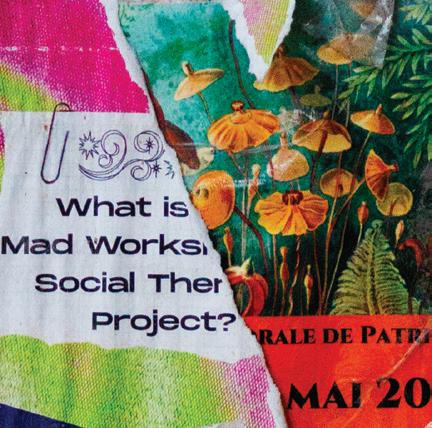




“I love browsing on Pinterest for inspiration,” Thexton says. “I look at flyers, but also photos and other random things. I was once inspired by a photo of a nail set that I liked.”




Since flyers rely heavily on text to convey necessary information, Thexton likes to begin their designs by choosing the right font.



“I love being able to collaborate with an artist and then be surprised and excited by what they end up producing in a flyer,” Majerczyk says. “That collaboration and social element can’t exist if I were to just plop a prompt into an AI model.”
Like most promotional materials, event flyers are often limited to the confines of the online world. Physical posters have increasingly become a novelty item, similar to collecting CDs and records in an age where streaming takes precedence.
“Everything is online now, so my flyers will always be the exact same dimensions,” Thexton explains. “There’s no real room to play around with that because they are mainly being shared on Instagram. It kind of sucks, but it’s an unavoidable part of it.”
Despite this, Montreal remains a city with a vibrant music scene and culture, thanks to the local artists who are helping to keep it alive.


“It is unfortunate that the ‘signpost’ is Instagram, usually,” Miller says. “But you go to any street corner in Montreal, in the Plateau or Mile End or Rosemont, and you see a million posters.”
Marissa Guthrie @marinoellle
OiLmagazine is a Montreal-based online publication founded in 2025 with a clear mission: to spotlight small artists and create space for work that might otherwise go unnoticed. But beyond simply publishing art, the team behind OiL attempts to rethink what the internet can and should be used for.
OiL’s origin story began as overlapping conversations.
Co-founders and students David Morales and Sabine Salim-Ullyot were discussing launching an uncensored zine centred on unpopular opinions around the same time that Morales and fellow co-founder Sola Spiegelman were planning on starting a magazine.
Once the project's focus shifted toward art, V Nguyen joined the team, drawn to the opportunity to curate and build something cool and community-driven.
The team said they had simply wanted to start something of their own. Since launching in August, they’ve grown increasingly proud of the project, noting that they notice improvements in each edition, alongside their own development.
From the beginning, they resisted polish in favour of personality.
“We don’t want to be boring or corporate, ” Spiegelman said. “We want to get down and gritty with it.”
In between full-length online editions, OiL also publishes zines, a format the team values for its accessibility and deep roots in punk culture.
Though OiL exists entirely online, its relationship to the internet is intentionally conflicted. The name stands for Overt Internet Literature, a title Spiegelman describes as meant to feel bold and confrontational.
“We want it to be overt, shocking, in your face,” she said.
Early drafts even carried the tagline “Get Off The Internet,” reflecting what the team sees as a complicated dynamic between digital platforms and real-world engagement.
"One of the best uses of the internet is to find cool art, things that are made by humans,” Spiegelman said. "It’s a great tool that’s owned by assholes who are making it addiction technology."
Morales echoes that tension, recalling what he calls the “romanticism of the early internet.”
“It started in weird forums,” Morales said. “It used to be much more oriented around cool subcultures, but it’s since become homogenized.”
OiL, he says, hopes to revive some of that earlier energy, using the web as a space for experimentation rather than performativity.
The team’s concerns extend beyond platform fatigue. Salim-Ullyot sees parallels between digital shifts and broader political anxieties.
“The devaluation of art through the rise of AI parallels the devaluation of minorities and diversity through the rise of fascism,” Salim-Ullyot said. “Despite how small our contribution is, we’re still trying to maintain the integrity of artistry and provide support to people who don’t have it.”
That philosophy informs the magazine’s charitable focus, with the publication donating profits from a recent zine launch to the Native Women’s Shelter of Montreal.
“We live in a crazy world, and a lot of people want to make change but are scared,” Spiegelman said. “There’s a need to do something.”
For Nguyen, the willingness of young artists to contribute feels especially meaningful in a time when many feel disconnected.
“It’s so inspiring,” Nguyen said. “A lot of young people feel isolated, so it’s heartwarming to know there are people who care and want to help.”

While the significance of the internet is intrinsic to OiL, the team is wary of how the internet reshapes in-person communities.
“The internet takes away from community now because you’re on the internet instead of going out,” Morales said. “It used to be a place where outsiders went to find community.”
OiL attempts to exist within that contradiction by circulating art digitally while encouraging tangible engagement beyond the screen. The magazine operates with an open-door ethos. Rather than acting as gatekeepers, the team emphasizes inclusion.
“So much of being an artist is being told 'No,'” Morales said. “Being able to just say 'Yes' to people is great.”
Spiegelman agreed, emphasizing the magazine’s openness.
“We’re not picky at all,” Spiegelman added. “We’ll publish anyone we get.”
Every member of the team agreed that, beyond publishing art, this project has had an impact on their personal and professional lives.
“I didn’t really consider myself a creative until, like, a year ago,” Salim-Ullyot said. “I wanted to feel like I was participating more in the community. I wanted to respect my ability to create art and be inspired by other people.”


Nguyen says joining the project has been a privilege.
“When you guys asked me [to join], I was honoured,” Nguyen said to the other members of the team. “I’ve always wanted to curate and do something creative. This is my passion project, my opportunity to use my free will and really make a difference in the community.”
For Spiegelman, the magazine gave them a clear path forward.
“To me, community is always going to be central to what I do,” they said. “I want to do this type of thing for the rest of my life, this community-oriented thing, so it’s a step in that direction."
Producing something every month, Spiegelman said, has reshaped how they see both themself and the city around them.
“I feel more connected to other artists in the city," Spiegelman said. "It feels disjointed sometimes, seeing everyone’s art individually, but with this magazine, it feels like we all came together.”
For Nguyen, the process has deepened their appreciation for the labour behind creative work, especially in a digital landscape where people often consume art in five second increments and forget it just as quickly.
“I feel more appreciative of the creative industry because it’s hard work,” Nguyen said.
In a space defined by feeds, metrics and endless scrolling, OiL insists on something slower: deliberate participation. Their final message is simple.
Their message to readers is direct: submit work, take risks and don’t be afraid to be controversial.


Winie Coulanges
Atany major sporting event, the losers of a game aren’t only on the court. They’re in the stands, in line waiting to use the bar bathroom or in their living room with the television turned on.
The profits of modern sports entertainment have gone beyond ticket, merchandise and concession sales. They now have monetized fan expectations.

Platforms like bet365 and DraftKings have meticulously positioned themselves as a natural extension of sports entertainment. In the process, they’ve also seduced a new generation of sports fanatics and deconstructed the taboo around gambling.
However, this hasn’t decreased its stakes for our society and the health of those who partake, especially when it’s become more accessible than ever with dozens of online casinos and sportsbooks available for mobile download.
According to a 2025 Mental Health Research Canada study, 9 per cent of Canadian adults are classified as people with problem gambling. Individuals with problem gambling are four times as likely to experience suicidal ideation.
This makes it clear that the risks tied to gambling, like addiction and financial strain, are beyond the scope of the fine print’s advice to simply “gamble responsibly.”
According to Adrianos Tom, a research assistant at Concordia University’s Research Chair on Gambling, the new space betting occupies in sports entertainment is similar to alcohol consumption.
“It’s used as an enhancer to make something exciting more exciting,” Tom said. ”In my opinion, it's both a social standard, like it's become the norm to have a beer while you watch a game.
The accelerating popularity of this industry is thanks to the revision of laws that once heavily restricted sports betting in Canada and the United States.
Canada’s lack of framework for gambling advertisements is a blind spot in regulation
ture a new audience and revolutionize how fans place bets.
This February, ESPN reported that Americans alone legally wagered an estimated US$1.76 billion on Super Bowl LX. According to Canadian Gaming Business, people wagered C$98.3 billion through Ontario’s iGaming platforms last year.
The House always wins

The arrival of single-game bets has widened the scope of bets users can place. Fans can now bet on the coin toss, the colour of sideline Gatorade, the speed of the first goal and beyond. All of which encourage impulsive behavior from fans as they get more “immersed” in a game.
win, and then I'll be back winning,” he said.
On its website, DraftKings says it offers “an immersive sports entertainment experience.” Bet365’s “Never Ordinary” advertisement campaign argues that anything can be bet on, and even “unstimulating” sports can maximize their entertainment value with monetary strain from fans.

Dr. Liam Young, program head of Carleton University’s communication and media studies department, has observed that the trajectory of sports gambling is eerily similar to that of financial markets.
These digital platforms use deceptive marketing like offering “boosts” on in-game odds to encourage users to make new bets that they’ll likely lose.
“It takes advantage of people's illusions of statistics,” Tom said about the marketing strategy.
“The more predictions you make the greater the chances that you're going to lose.”
Last September, iGaming’s monthly report showed that Ontarians lost $329.3 million dollars on wagers while DraftKings reported $1.1 billion dollars in revenue during the third quarter of 2025.
In Canada, sportsbook advertising is in a grey area. Currently, it’s up to the provinces to decide what’s allowed and while Ontario is the only province allowing private companies to operate, their ads are still seen all over the country.
The Act Respecting a National Framework on Sports Betting Advertising which aims to restrict advertising that may harm minors or people at risk of gambling harm completed its second reading at the House of Commons in Feb 2026.
“Traders view financial markets as a series of units that they aggregate in different ways,” Young said. “You're kind of breaking a larger entity apart into little units, and then you're combining and moving those things around to try to generate value, and that's exactly what's happening with sports now.”
Young called this process "datafication," in which a game is disconnected from the sport and its athletes are viewed as assets, rather than holistically.
This subtle dehumanization of players can embolden bettors to be obsessive or aggressive towards athletes when their performance doesn’t align with their parlays.
Cameron Corhen, a college basketball player, told NPR in 2025 that he had been a victim of social media harassment from bettors.
“After the games, you'll check your DMs and people are wishing harmful things on family members,” Corhen said.
The same year, the National Collegiate Athletic Association found that 10 per cent of its male Division I athletes received social media abuse linked to sports betting in the last year.
The rise
In 2018, the U.S. Supreme Court struck down the Professional and Amateur Sports Protection Act, which allowed sportsbooks to operate outside of the state of Nevada. In 2021, the Canadian government legalized single-event betting, allowing digital sportsbooks like DraftKings and bet365 to cap-



In 2025, market research company Leger reported that about half of the Canadian bettors they surveyed said they would be more likely to increase their bets when they were exposed to live odds on a screen.



Max Friedl, a basketball fan, has also noticed the pressure from the platforms to chase losses.



Industry giant DraftKings began as a fantasy sports platform allowing fans to draft their ideal teams by choosing players with the best or most practical statistics. Their experience in communicating those statistics to users allows them to transfer that knowledge into odds and separate a game into consumable parts.
Platforms hope to heighten engagement from fans by showing them various statistics and odds.

“You're like, oh, I lost two, so I'll bet [more], I'll win one, I'll place twice as much and





“[It's] inviting them to take that expertise and take that knowledge and take that emotional investment and monetize it," Young said. “That's at least a substantial part of the story."
Conversations and debates about betting can also generate excitement. This explains why many in-game broadcasters even discuss their own bets on the air.
“There's an incentive to use it to analyze and to create space for people to talk about it, and that feeds into the kind of mainstreaming of it,” Young said.
Official partnerships, like the one recently announced between bet365 and UFC, demonstrate that broadcasters, leagues and gambling platforms are all aligned in a mutually beneficial relationship.
“Television broadcasters want us to keep our attention on the game,” Young said. “So a gambling app that encourages you to make a bet and then keep watching the game to see the result of that bet is good for the broadcasters, and it's good for the leagues.”
In a way, the vertical integration of betting has transformed sports entertainment into a major success story of the attention economy.
But this begs the question: when did sports stop being enough?
If you or someone you know is struggling with gambling, you can contact Aide Jeu, a free, bilingual and confidential telephone consultation service at 514-527-0140.

Samuel Kayll @sdubk24
Flip the switch, strap on the headset and step into the stadium.
Virtual reality (VR) technology uses a head-mounted display to immerse users in a virtual, 3D simulation. Its development has led to breakthroughs in video game action, treatment of psychological disorders and now the world of sports.

While still early in its development, VR has already begun to shape athletic development. VR allows athletes to train on their own personal field, simulate game scenarios to improve real-time decision-making and enhance rehabilitation with engaging visuals that help them stick to a recovery plan.
Nour Hatira is a PhD student studying computer science at Concordia University. She discussed the advantages of VR technology not just in its ability to help athletes train, but to give them a comfortable place to do so.
“Some people can be stressed when they are in the gym or when other people can see them performing a task,” Hatira said. “Using VR offers the same realism. And you can do it alone in any other place. You don't have to be surrounded by people.”
The accessibility of VR technology has allowed it to find a place in the world of athletics. Whether in a lab, on a field or even in a basement, athletes can safely and effectively improve their skills.
Professional athletes have already hopped on the VR wave. Washington Commanders quarterback Jayden Daniels credits his use of virtual training in helping him win the Heisman Trophy in 2023 and the NFL Offensive Rookie of the Year award in 2024.
Tennis star Alexander Zverev uses VR technology with his brother to train automations for use at game speed. And VR simulations helped Canada’s Paralympic curlers train for the 2026 Games.
A study published by Hatira in 2024 compared the use of VR, augmented reality (AR) and 2D touchscreen technology to train the hand-eye coordination of professional volleyball players. Participants displayed improvement in VR activities from the start of the study to the end, exhibiting VR as an effective tool in the development of athletic skills.


But VR can have an effect in an area all athletes are familiar with: rehab.
Steven Warsh is a licensed athletic therapist and the founder of RECOVR Sports, a Montreal-based agency that uses VR technology to help rehab physical injuries. Warsh focused on VR’s ability to provide athletes with a more immersive and captivating way to train and recuperate.
“I'm tired of hearing people say that they hate doing the exercises,” Warsh said. “I’m trying to find ways to make it more engaging, more fun, whether it's weight loss or you're rehabbing from an ankle sprain or a wrist injury. That's the goal.”
Hatira echoes the sentiment of gamification, explaining that a more engaging environment allows for increased rehabilitation sessions.
“For VR, we can make the training environment more gamified, a more game-like environment,” Hatira said. “It would create more engaging training. People are actually more interested to play, to do the training in VR.”
Warsh pointed to graphics quality as the major point of improvement for VR over the past two years, calling past experiences “cartoony” and “ugly.” Now, he can spend three hours in a game and stay fully immersed in the experience, with games like NFL Pro Era keeping users focused on the action.
“I had my friend come over, and he was literally like, ‘I would never put this down. This is so much better than playing Madden, I'm actually QB1,’” Warsh said.

perception,” Hatira said. “In VR, you can see the target in front of you. You can just press it, and you think that you are pressing it, but it's still far away.”
Batmaz isn’t shy to admit the current limitations of the headset, which range from its inability to function underwater to slipping when an athlete sweats.

But there are uses for its data-gathering abilities, as evidenced by Meta’s collaboration with sport and lifestyle brand Oakley. The two companies developed AI glasses that can record and gather data from an athlete in action.
“Say that you do the training, and when you record this information, you can give feedback, for example, for biking,” Batmaz said. “We can provide this, so that there is a technology that evolves, that is going to change.”
And VR action was never meant to replace physical movement entirely. Real-time, full-speed reps remain the best way for athletes to train for game day—that will never change. But as a strategic tool for development, VR can prove to be a powerful ally.
Hatira advocates for a holistic approach in any sport that doesn’t take place fully virtually. Athletes like the volleyball players in her study, for example, can learn transferable skills from both physical and virtual training.
“In the case, for example, for volleyball players, that training was meant to improve their eye-hand coordination,” Hatira explained. “For example, if we wanted to improve their volleyball performance, they should have been using both the VR training and the actual training.”
As sports become more technologically advanced, Warsh sees the shift coming and is ready to take advantage of the latest gadget making its way into an established industry.
“The quality of what you're actually seeing makes it more immersive, it makes it more real."
Anil Ufuk Batmaz, a professor of computer science and software engineering at Concordia with research interests in VR and AR, helped Hatira publish her paper and has published several of his own on similar topics. He explained how the lack of physical contact in a virtual setting minimizes the risk of accidents during VR training sessions.



“When the ball comes towards you, it doesn't hit you in a virtual environment,” Batmaz said.







“So that reduces the injuries. It actually helps the players to practice more and whenever they want and when they want. So this is the huge benefit.”


Of course, VR training isn’t without its limits. Its clunky headsets inhibit user movement, and the technology still lags behind more familiar technology already ingrained within athletes’ training regimens.
While participants in Hatira’s study did improve their results in VR simulations, they performed best overall using 2D tools.
“In that study, we found that the 2D screen is better in the performance metrics compared to VR and AR because of the depth
“The old generation doesn't really resonate as much with technology and is scared of it. I think that people often think it's going to replace jobs like AI,” Warsh said. “But honestly, this is a tool in the toolbox. As athletic therapists, we always say we have a toolbox, and we take the tool out, and we use what we have."










Racha Rais
Artificialintelligence could play a bigger role in offside calls at the 2026 World Cup, as FIFA’s technology partner Lenovo plans to generate 3D avatars of every player to better track movement during matches.
Adam Rachek, a soccer fan and former player who represented the South Shore in a regional selection tournament in Montreal, said offside calls may be one of the areas where AI can work effectively.
“I think artificial intelligence can do it really well," Rachek said. "If you train it properly with data that isn’t complicated, it will easily be able to determine whether there is an offside or not.”
Because offside decisions are largely factual, based on the position of players at a specific moment, Rachek believes the technology could make those calls more consistent.
However, he said that applying AI to other refereeing decisions would be much more complicated.
“Each referee sees things in their own way,” Rachek said. “Some referees will call an error at certain moments, while others won’t call it. It really depends on the referee’s interpretation.”
Rachek pointed to handball decisions as an example of the subjectivity of certain calls. Some referees might consider contact with the hand accidental, while others may see it as an error. Because of those differences, he said AI could struggle to interpret such situations.
He also expressed concern that referees might become too dependent on technology.
“Referees might rely too much on artificial intelligence rather than on their own judgment,” Rachek said.
While he expects the system could speed up decisions during matches, Rachek believes it will not eliminate controversies surrounding refereeing.
“Artificial intelligence will save time, but the problems will remain the same,” he said.
Others in the soccer community see the technology as a tool that could help support referees rather than replace them.
Emily Douris-Blondin, a soccer player on the women's team and a coach at Concordia University’s Stingers Academy, said offside calls are often difficult for referees to make in real time.
“It’s very difficult. You have two lines on each side and the refs in the middle,” she said. “They can’t always see everything. They’re obviously vulnerable to human error.”
Douris-Blondin said the technology could help speed up decisions and make the game fairer for both teams.
“A lot of the time, even as viewers watch games, we think something is offside, but it doesn't get called,” she said. “It’s nice to have technology like that to make sure the game ends up being fair for everyone.”
Still, Douris-Blondin emphasized that referees should remain central to decision-making.
Trent Deschamps-Coinner @rascha___
During the chaos of this current NBA season, people uncovered an X burner account which allegedly belonged to NBA superstar Kevin Durant, along with leaks of some of the account’s private messages.
Fans believe the account @GetHigher77 could belong to Durant for two main reasons. First, the account’s profile banner was a picture that Durant had previously tweeted on his main account. Second, Durant has already faced a burner scandal in the past when he accidentally replied to fans defending himself (in the third person) on his main account.
“I don’t think it should take away the job of referees,” she said. “But it will definitely help their jobs, especially when they can review things better.”
Douris-Blondin compared the potential of AI to the introduction of the Video Assistant Referee (VAR) system, which allows officials to review key decisions during matches. She said similar technologies have already improved accuracy in professional soccer.
While some fans may initially resist the charge, she expects attitudes to shift over time.
Douris-Blondin also suggested that adopting new technologies could help address concerns about fairness and transparency in international soccer.
“There’s obviously a lot of controversy around FIFA,” she said. “This technology could help hold referees accountable, because now you have the cameras and the technology to prove if the calls are true or not.”
Dexter Great, who played on the men’s team that won first place in the Tampa Cup Top Rated Series, said the introduction of AI could affect referee’s work.
“The use of AI will definitely change the way referees make decisions during the match,” Great said.
He noted that while some players and fans remain skeptical of technology, AI could still bring benefits to the sport as it is “unbiased.”
Ultimately, it remains to be seen exactly how AI will impact professional sports in the long term.





When one of the league’s biggest stars uses slurs online, it normalizes toxic behaviour for the next generation
When questioned about this account by the media, Durant dismissed the question entirely, saying that he was not there to “get into Twitter nonsense.”
Some of the leaked tweets and DMs were lighthearted in nature, like the account’s pro-Drake stance in the Kendrick Lamar beef. However, the bulk of this controversy concerns Durant’s alleged comments regarding his former teammates.
In DMs discussing his Houston Rockets costar, centre Alperen engün, the burner wrote: “Your franchise player can’t shoot or defend.” This was far from the worst, as the account also referred to his teammates collectively as “crayon eaters” and specifically called out forward Jabari Smith Jr., calling him an ableist slur.
Durant's alleged leaked criticisms were not reserved for just his current teammates. The account condescending joked about missing former All-Star Ben Simmons’ lack of skill, saying that Simmons would at least pass Durant the ball. It also compared Durant's former teammate Devin Booker and then-coach Frank Vogel to “Two dictators / Stalin and Hitler.”
Even Durant’s championship days on the Golden State Warriors were not free from criticism.
The account claimed Steve Kerr hated “darkskins” ever since Michael Jordan punched him in the face, and wrote, “If u don't screen and pass up shots for Steph. U gettin waived.” It also referred to an interaction between Shannon Sharpe and LeBron James as “beyond gay.”
The NBA overall has had a mixed track record when it comes to disciplining players.
Like Durant, Minnesota Timberwolves guard Anthony Edwards was fined US$50,000 over a video of him derogatorily referring to a group of men as “queer.” Three-time MVP Nikola Joki was also fined for homophobic language.
However, it seems as though the NBA may punish players relative to their star power.
Former Miami Heat centre Meyers Leonard was fined the same amount for using an antisemitic slur, but he was also suspended from all basketball activities, and the saga essentially ended his career in the NBA.
Some fans were more concerned with Durant's alleged investments in Skydio, a company that has sent drones to the Israel Defense Forces to support its genocide of the Palestinian people. The burner account joked, "If they need drones!! We got ya."









Having a burner linked to an NBA superstar could have been hilarious. But if this is truly Durant’s account and reflects his real views, the NBA needs to levy a legitimately harsh punishment to set an example for the rest of the league.
The same NBA punished Memphis Grizzlies guard Ja Morant for flashing a gun under the guise of it being a bad example for the NBA’s younger fanbase. But if the league wants to say this, they must also enforce it when the faces of the league make offensive remarks or use slurs.
This also begs a larger question: how can we actively encourage NBA players to change their behaviour? While US$50,000 is a lot of money, it ultimately represents a drop in the bucket for the NBA’s largest stars. I don’t necessarily believe suspensions are the right move either, as they have the potential to punish fans for the actions of players.



While no clear answer exists, the league’s silence on Durant’s alleged burner account speaks volumes. By failing to address the behaviour at all, the NBA is missing an opportunity to show younger fans that toxicity and harassment have no place in sports.







ArtificialMaria Paula Rojas Diaz
intelligence is already part of student life, and pretending it doesn't exist is unrealistic. The real question isn’t whether students will use AI. It’s how.
When used transparently and within clear rules, AI is not a shortcut to cheating but a tool that can make learning more accessible, creative and efficient.


AI can act as a digital assistant: helping organize ideas, clarify complex concepts, fix grammar, debug code or provide feedback on drafts. This doesn’t replace learning, it supports it. A student who uses AI to help restructure a paragraph or check their logic still has to understand the content.
Critics argue that AI weakens critical thinking and encourages dependency. That risk is real, but it comes from misuse. If institutions clearly define what is allowed and what is not, students can use AI without compromising their learning or crossing ethical lines.




use for brainstorming or editing drafts, but consider submitting AI-generated work as your own to be academic misconduct.
For example, many universities now allow AI



At institutions like the Massachusetts Institute of Technology, students are encouraged to experiment with AI tools if they disclose how they were used and remain responsible for verifying the information. At Stanford University, AI assistance is equated to receiving help from another person.

AI can also lower barriers for students who already face disadvantages. Non-native speakers can use it to improve clarity without losing their voice.
Students with learning disabilities can break down dense readings into manageable summaries. In these cases, AI functions like assistive technology, similar to spellcheckers or calculators.

engines because students might plagiarize; we taught them how to research properly. We didn’t ban word processors because they made writing easier; we focused on ideas instead of handwriting.
In that sense, AI is not a trap by default. It becomes one only when students are never taught how to use it critically.
Tools that increase access to education should not be treated automatically as threats.
Banning AI outright ignores how education has always adapted to new tools. We didn’t ban search




And using AI critically means to remain aware of AI limitations and its dangers, to understand how to use emerging technology critically despite its inherent biases.
Termed "AI literacy," this philosophy is encouraged by initiatives like the Centre for Artificial Intelligence Ethics, Literacy and Integrity at the University of Calgary.

In its own way, AI is a microscope that exposes the long-standing, damaging power structures inextricably tied to the digital, whose frameworks are the source of great injustice. Teaching responsible AI use is instrumental to uncovering and combating these structures in the classroom and beyond.



Withthe rising prominence of Generative Artificial Intelligence (GenAI) in academia, universities are becoming increasingly concerned about students' capacity for learning.


Overreliance on AI has begun to overshadow student-made work and threatens to erode the value of human creation in general. What’s worse is that, as Large Language Models (LLMs) continue to get better at mimicking human communication, it’s becoming increasingly difficult for us to tell the difference.
Faculties themselves are already noticing the shift.


Jocelyn Gardner @mariapaularojasdiaz
cational context of writing an essay.”

In a 2025 survey conducted by the American Association of Colleges and Universities and Elon University’s Imagining the Digital Future Center, 95 per cent of the 1,057 faculty participants agreed that students’ overreliance on GenAI is on the rise. Additionally, 90 per cent agreed that these tools risk undermining students’ critical thinking skills.


Using electroencephalography, researchers recorded the brain activity of 54 college students in three groups: LLM-assisted, search-engine-assisted and brain-only. They found significant differences in each group’s neural connectivity patterns, with the LLM-assisted participants showing weaker overall cognitive engagement.


Even with its small sample size, the study lays important groundwork: relying on AI to write may come at a real cognitive cost.
The real problem is that universities currently have few practical ways to respond. Faculties often struggle to prove, or even notice, AI use among students. The normalization of academic AI use threatens students who refrain from using it, too, as we are not only graded against our peers, but also against technology.

These claims are further supported by a Massachusetts Institute of Technology study on “the cognitive cost of using an LLM in the edu-


Students must be prepared to defend the humanity of their work in the face of accusations of AI use and acknowledge that some professors may find their defence insufficient. Since AI detectors have proven unreliable, a return to in-class assessments, written by hand or pre-



sented orally, may be one of the few remaining ways to guarantee authenticity.
A 2024 study testing the detectability of AI-written undergraduate exams at a UK university found that 94 per cent of AI submissions flew under the radar. They also found that these submissions averaged higher grades than those written by real students, a result that should make universities question how academic merit is currently evaluated.

This brings into question the evaluation and merit of AI-produced work, as standards designed to assess human writing may not be sufficient to determine the quality of AI-generated content.
How should a machine’s human-mimicking creation be valued in contrast to the human works from which it’s trained? As a system whose internal logic and imaginative capacities grow from the seeds of our data, LLMs anomalously fuse social construction and computational performance.

AI now exists as a liminal force between humans and machines, and universities have yet to fully confront what that means for the future of learning.



For years, the internet has been described as a borderless digital commons. It is upheld as a place where geography fades, and speech flows freely.
In theory, the internet flattens hierarchies. In practice, it reinforces them. The internet is not neutral. It is infrastructure, and infrastructure is political.
Let's start with access.

Mani Asadieraghi @mani.asadieraghi
In Syria, years of conflict and infrastructure breakdown have made stable connectivity unreliable. When electricity falters, telecommunications collapse with it, and internet access becomes unreliable. Education, news consumption and communication are interrupted.
No formal censorship order is required to produce exclusion. Fragile systems alone can determine who participates in the digital public sphere and who does not.
In other contexts, exclusion is intentional.
During recent protests in Iran, authorities imposed sweeping internet restrictions and shutdowns. Monitoring groups documented nationwide blackouts that disrupted messaging platforms and limited independent information.
When a state can shut down connectivity, it does more than restrict access. It controls visibility and circulation. It determines which images circulate and which testimonies disappear. It isolates citizens from outside scrutiny and severs ties with diaspora communities.
Shutdowns are not technical failures. They are tools of political control.
Censorship can also be permanent and structural rather than episodic.
In China, state authorities block major international platforms and tightly regulate domestic ones.
In Russia, regulators have restricted access to independent websites and escalated pressure on tools used to bypass state filters.


In the United Arab Emirates, voice and video services on certain platforms have been restricted, and the use of VPNs to circumvent blocks can carry legal risk.
In these environments, access is conditional. Digital borders are enforced.
It would be easy to treat this as a problem unique to authoritarian regimes, but that would be overtly simplistic. Democratic systems rarely rely on direct shutdowns, yet regulation, platform governance and corporate decisions can still reshape the flow of information online.


In Canada, the Online News Act was designed to require major platforms to compensate news organizations. In response, Meta blocked news content on Facebook and Instagram for users in Canada.
The result was not state censorship. It was a regulatory dispute that reshaped how Canadians accessed and shared news. Meanwhile, Google negotiated a framework that includes a significant annual financial contribution to Canadian news outlets.
The episode revealed something important: Governments and corporations together influence what gains reach. Platform policies, algorithmic design and regulatory frameworks quietly structure public discourse.
The myth of neutrality becomes even harder to sustain when we look at the internet’s origins. ARPANET, the precursor to today’s internet, was funded by the

English accounts for roughly half of the known content on websites worldwide. The largest social media platforms that shape global discourse are owned by a small number of corporations, many headquartered in North America. When language dominance aligns with corporate concentration, narrative dominance often follows.
Stories from the Global South can struggle for sustained visibility in Western-dominated media ecosystems. Attention cycles move quickly. Algorithms reward engagement patterns shaped by dominant-language audiences. Representation online shapes representation offline. If certain regions and perspectives are structurally harder to amplify, the internet cannot honestly be described as culturally egalitarian.

U.S. Department of Defence. It was built to connect research institutions during a period of geopolitical tension. Its purpose was resilience and strategic communication, not democratic deliberation.
This history does not condemn the internet, but it reminds us that control and survivability were embedded in its architecture from the outset. The internet did not begin as a democratic project. Its democratization came later.
Even where access is stable and censorship is limited, inequality persists.



Taken together, these realities challenge the romantic image of the internet as inherently democratic. Access is uneven. Connectivity can be revoked. Visibility is filtered. Narratives are amplified selectively.
The conclusion is not that the internet is irredeemable; it is that its governance matters.
Digital rights advocates argue that this trajectory is not inevitable. Organizations such as the Electronic Frontier Foundation, a nonprofit defending civil liberties in the digital world, have long pushed for stronger protections for free expression, privacy and open access online. Advocacy groups like Access Now monitor
groups
internet shutdowns globally and campaign against government-ordered disruptions.
International institutions have also increasing-
ly framed connectivity as a rights issue. The United Nations Human Rights Council has affirmed that the tected online. Human rights organizations, including ternet shutdowns can violate freedom of expression
same rights people enjoy offline must also be proAmnesty International, have similarly warned that inand restrict access to information.
If access to information, speech and civic partici-
pation now depends on connectivity, then the internet is no longer layered onto democracy. It is part of its al. They are either protected or
foundation. And foundations are not optionthey fracture.






Samuel Kayll
Marc-André Élément knows the team culture he wants to build.
Smiling throughout an interview after the Concordia University men’s hockey team defeated McGill University 4-3 to win the Corey Cup on Feb. 7, Élément spoke of the team’s recent success. He also took the opportunity to honour the packed house at Ed Meagher Arena, a rare occasion that Élément wants to see normalized.
“The rink should be packed every game,” Élément said. “That's why we're working hard at building this program with the good recruiting and getting kids that want to promote the Stingers.”
After following up last year’s Queen’s Cup triumph as champions of Ontario University Athletics with a heartbreaking loss in the quarterfinals this year, the Stingers are prepared to undergo major changes. With 10 seniors departing from the nation’s top-ranked team, fresh faces will have to step up.
But who will walk through the doors to sustain success after two seasons spent competing for a national championship?
It takes a special kind of player, one with the talent to scorch the ice and the maturity to stay calm in the heat of battle. It takes one with the team’s values already instilled within him, who recognizes familiar faces in a new home. Maybe it would take more than one.
That’s where Thomas Hébert and Jesse Carrière come in.
Hébert and Carrière’s relationship started on the ice. Both took after their fathers when starting their careers in hockey, hopping on the ice at just five years old. It was there, on a summer hockey team in Châteauguay, that their lives would become intertwined.
“We were on the same team to play spring hockey, summer hockey,” Carrière said. “Tom easily became my best friend because both of us had the same passion for hockey.”
Hébert and Carrière’s parents got along, too—a major bonus for the young pair. When the families got together, the young hotshots would lace up their skates to hone their skills against each other or scamper to the basement to play ball hockey.
That bond grew over time as the pair continued to play together, up to their stint with the Châteauguay Grenadiers in the U18 AAA Hockey Development League. Throughout their careers, it was clear that the two had the potential to go far.
“I’ve always been a guy recognized by my peers as someone who is very passionate, ever since I was very young,” Hébert said. “I think that over the years, you can see it. Most of the time, I became one of the best players in my age group.”
Under that hard-working exterior, though, is a person that Carrière describes as “a big Care Bear.” Just the idea of Hébert’s two distinct sides makes him laugh.
“On the ice, he’s a fierce competitor. He’s hard-nosed. Sometimes he might take a stupid penalty, but that’s part of his game. He com-
petes all the time," Carrière said. "And off the ice, it’s completely different. He takes care of everyone.”
Still, as both Hébert and Carrière’s careers grew, they inevitably went their separate ways.
After Châteauguay, Hébert bounced around the Quebec Maritimes Junior Hockey League (QMJHL), with stints in Gatineau, Shawinigan, Val-d'Or and Chicoutimi.
Carrière, meanwhile, took his talents to the Sherbrooke Phoenix, splitting time with them and the team he would eventually reunite with Hébert on: the Valleyfield Braves.
Before the duo could reunite, both had to find their place. Hébert, a natural defenceman, played as a forward for extended stints in the QMJHL, stunting his growth as a player and denting his confidence.
“I loved my experience, but toward the end, there was a small constraint with ice time,” Hébert said. “I wanted more ice time.”
Hébert joined the Braves in the 2024-25 season and immediately made an impact. His two-way play helped stabilize a team on pushing for a championship, and let him return to his preferred position.
“With Valleyfield, I had the opportunity to get more ice time and to play defence,” Hébert said. “I was able to give myself the confidence to make plays that maybe in major junior I wouldn’t have given myself the confidence to try.”
Carrière, on the other hand, joined an immediate contender with the Phoenix, seeing spot minutes on a team that featured current Laval Rocket forward Joshua Roy. Despite grinding his way through the next couple of years, he started to see the writing on the wall as he reached 19.
“I was starting to get a bit older, and I saw the direction the GM and the coach wanted to go,” Carrière said. “They wanted to go into a rebuild. They wanted a younger team.”
However, Carrière wouldn’t have to wait long to find his new team. Within five minutes of being cut by Sherbrooke, Valleyfield head coach Bruce Richardson called him.
“The plan he wanted to put in place last year with the players we had—it was a no-brainer. I wanted to go play there and have a chance to win,” Carrière said.
And win they did. Both Hébert and Carrière stepped up their scoring in the 2025 playo s to push Valley eld to the Quebec Junior Hockey League nal against the Collège Français de Longueuil. In a tight six-game series, Valley eld emerged victorious to hoist the NAPA Cup.
“Thinking about all the guys I’ve played with since I was young,” Hébert said, "it was really special to win that.”
And as Hébert and Carrière looked to continue the trend into their university stint, they zeroed in on one school: Concordia.
Élément coached with Richardson for a year with the Châteauguay Grenadiers in 2013-14. e two developed a strong relationship, with Élément praising Richardson’s in uence on Hébert and Carrière
“When you take players from good coaches, it helps us because they know how to play the right way, so it's going to be an easy transition,” Élément said.
Richardson encouraged Carrière towards Concordia through his connection to Élément. Carrière commented on his future coach’s similarities to his current one.
“I think they have the same mentality,” Carrière said. “I think the way the Stingers play is the same way we tried to play with the Braves.”
Hébert appreciated the closeness and human approach that Richardson and Élément shared. He also acknowledged the chance to prepare and develop as a young player in a university system.
“You look at the number of games in U Sports—I think there are 30 or 32 games total in the season—that really gives you time to develop physically, mentally,” Hébert said.
Comparatively, he said that in some other North American leagues, players are expected to perform from a young age.
“It’s not the right time for you, you’re not ready to perform and really play at a high level with guys who are fully mature at 24, 25, 26 years old,” Hébert said.
Carrière discussed the team’s current record and the opportunities that await after the departure of the Stingers’ massive senior class.
“The older guys will leave next year. That leaves room for younger guys like me and Tom (Hébert) coming in,” Carrière said. “We’ll be able to make our place right away, not wait, not sit out games, basically not spend a year in the stands.”
Both Hébert and Carrière want to complete their bachelor’s degrees as well, placing a premium on their education. But most of all, they want another chance to play together and to compete for championships together.
“It’s special to share this with someone you’ve known since you were ve or six years old,” Hébert said. “Sometimes you arrive somewhere far away, and you don’t always know people, but here, it’s special. You’re living these moments with someone you know really well.”
Carrière echoed the sentiment.
“Having that experience with him brings something extra to both of us when we move on to the next level,” Carrière said. “Doing it with him—it’s about spending as many years as possible with your buddies. You want to surround yourself with good people. It’s really fun.”

Jayde Lazier @jaydelourdess
For many of us, it started when we were teenagers. We get our rst phone, download Instagram and TikTok, make an account and begin following in uencers. Before long, we’re watching them do everything: getting ready for the day, grocery shopping, going on dates, crying, smiling and everything else in between.
We end up inserting ourselves into so many intimate parts of these people’s lives. It’s not just because we enjoy the content they produce, but because we believe we share something deeper with them: the same values, opinions and outlook on the world.
As one of the most le -leaning people I know, for example, I would never choose to follow an in uencer if I knew they held conservative views, simply because our beliefs and characteristics as human beings would never align.
But in today’s political climate, openly identifying as conservative, especially as a MAGA supporter, o en comes with intense backlash online. Because of that, many in uencers either avoid talking about their political beliefs altogether or shape how they present themselves to better match their audience’s expectations.
The influencer economy incentivizes moral performance, not moral commitment. Social media tends to favour influencers who appear aligned with their audiences rather than those who are fully transparent about their values. After all, these platforms operate as businesses driven by engagement, aesthetics and marketability, and clear political or moral positions can threaten an influencer’s appeal.
But ultimately, some of the responsibility also falls on audiences. We often confuse relatability for shared ethics. Just because an influencer speaks casually, shares personal moments or seems to have similar tastes doesn’t mean they hold the


The internet
same values. The connection we feel often relies on projection rather than real alignment.
A McMaster University study examined how social media engagement shapes parasocial connections and found that compulsive platform use is linked to signi cantly more negative parasocial outcomes.
In other words, the more intensely people engage with in uencers online, the more likely those one-sided relationships become unhealthy or distorted.
We assume that, based on the way certain in uencers talk or act, we share the same worldviews, and that’s a problematic projection on our part as the viewers. While in uencers may sell a carefully constructed brand, audiences are also holding them to expectations they never explicitly agreed to meet.
And that’s truly the scary part of social media: the distance that normally exists between public gures and audiences disappears, encouraging viewers to place in uencers on a pedestal rather than consume their content critically.
A November 2025 study from the Media Ecosystem Observatory, a collaboration between McGill University and the University of Toronto, found that in uencers can now reach audiences more e ectively than traditional news outlets or politicians, largely because consistent posting builds trust with followers.
If that trust develops in what is ultimately a commercial environment, then it becomes important to remember what in uencers fundamentally are: businesses. In uencers sell a sense of belonging, shaping their identity to match the audience they want to attract. In that environment, moral identity becomes less about conviction and more about market segmentation.
Helena Reyes Teruel @roby.thealchemist
Atall,mysterious Concordia University student was walking across campus when an unassuming newsstand caught their eye. ere, a new edition of e Link sat beckoning.
e student's eyes lit up, and with anticipation, they picked up the newspaper, their ngers working through the pages with fervour. eir eyes, in their bluish, greenish, brownish hue, so ened when they fell across this page.
ey sat down and absorbed the article, the world narrowing to this quiet reading moment.



e preceding attempt at fan ction's owery narration is part of a tradition of storytelling that, some say, began in the late 1960s with Star Trek fanzines and would continue into the era of the internet and its multitude of online forums.
net’s most enduring creative ecosystems.
e gi economy within fan ction fosters community by having authors present their work for free to the audience, who, in turn, give feedback and recognition. is collaborative system is part of what has allowed fan ction communities to survive for decades without commercial backing.
More crucially, this ecosystem is also a way for underrepresented groups, particularly the LGBTQIA2S+ community and women, to bond and take the spotlight that mainstream media constantly denies them.

threaten censorship. If these pressures succeed, they risk dismantling one of the few spaces where marginalized communities have historically been able to create and share freely.
One such event occurred in July 2023, when AO3 went o ine for more than 24 hours due to a cyberattack performed by an allegedly "religiously and politically motivated" group.
Today, fandoms in the U.S. are concerned about the proliferation of bills such as the Kids Online Safety Act (KOSA), whose age veri cation mandate seeks to protect kids from, among other things, "the harms of sexual and transgender content."








But in 1998, the fan ction community blossomed with the creation of the rst multi-fandom archive, fan ction.net (FFN). A fan ction writer described the site in a 2002 Time article as a “giant shopping mall." Another interviewee highlighted that “nobody else is archiving so much or has such an open editorial policy."


What emerged a erward was not just a hobby, but one of the inter-




is appeal has existed since the early fanNew York Times article observed that women Star Trek fan writers wrote work where “real-life concerns such as sexuality and equality can be discussed in the metaphorical language.”









Forty years later, this space has grown bigger and more diverse, thanks to FFN, Wattpad and Archive of Our Own (AO3). However, this new visibility has also attracted the unwanted attention of conservative groups and governments that


Although KOSA doesn't target nonpro t platforms like AO3, users are concerned that the vague legislative language and janky age veri cation so ware could constitute a worrying precedent.
While no censorship act or bill has yet a ected fan ction sites in any Western country, China provides an example of what could happen to the fan ction community if governments are allowed control over our online spaces.
In 2020, the Chinese government banned AO3 and similar Chinese sites.
A University of Pennsylvania study explored how Chinese fan writers were operating post-AO3. e interviewees reported that fan ction is still produced and shared underground, but that the previous gi economy of AO3 has been disrupted entirely.
Fan writer Yanghu, cited in the study, re ected a er the ban: “I wrote fan ction as [...] resistance to male chauvinism, resistance to the real world, resistance to the censorship system, and then I found that I could not resist any of them.”
is reminds us that protecting the online spaces that sustain the gi economy means protecting one of the internet’s most enduring forms of community-driven creativity: fan ction.














Welcome back to the good ol' days.
On Feb. 28, 2026, the United States and Israel launched their rst coordinated attacks against Iran a er weeks of growing tensions, launching a urry of airstrikes aimed at government and military targets. Supreme Leader Ali Khamenei was among those killed in the initial attacks, and the strikes have not ceased.
In retaliation, Iran has launched strikes of its own, targeting Israel and neighbouring countries that host U.S. military bases. e country has also shuttered the crucial Strait of Hormuz in the Arabian Gulf, which sees a h of the world’s traded oil pass through it, and has threatened to expand its attacks in the region.
Many of us have logged onto social media and seen hordes of people, Iranians among them, celebrating the death of Khamenei as a monumental moment for the freedom of the nation. is reaction is understandable—Khamenei’s status as a brutal dictator cannot be understated, and no punishment can undo the atrocities committed under his rule.
But to treat this operation as benevolent, or to assume the U.S. acted in the interest of Iranian citizens, re ects a deeply myopic view of U.S. interventionism.
Does this sound familiar? e Link’s Issue 7 editorial featured a similar condemnation of the U.S.’s imperialistic actions in Venezuela. e editorial was aware of the U.S.'s willingness to continue
its intrusions, but we were largely oblivious to its intentions in Iran. And now we nd ourselves back in the same place.
It is exceedingly clear that the U.S.’s greedy and egocentric foreign identity knows no bounds. Donald Trump, Pete Hegseth and an administration hellbent on American expansion have orchestrated a costly and destructive war that has already led to the deaths of at least 13 American soldiers and sent the price of oil soaring to over $100 a barrel.
As of March 15, 1,444 people have been killed in Iran, 170 of whom were casualties of a U.S.-Israeli attack on a primary girls' school. At least a dozen civilians, predominantly migrant workers, were killed in the Arabian Gulf states due to Iranian strikes. A related escalation of Israeli attacks on southern Lebanon has led to over 800 deaths and 850,000 people displaced.
Canada’s response has been disheartening and woefully inadequate.
As the war continued, Prime Minister Mark Carney pledged his support for the strikes on Iran “with some regret,” meeting with Qatari Emir Sheikh Tamim bin Hamad al- ani to discuss resolving the con ict.
Carney also deferred the responsibility for deciding the legality of the U.S. and Israel’s actions, preferring, as usual, to stray away from the di cult questions and o er a safe, comfortable, PR-trained answer.
A er conversations with MPs, Carney later changed his
tune, a rming that the country would “never participate” in the con ict, albeit maintaining a hostile tone towards Iran. But Carney’s initial statements have done damage already. e leader of Canada has once again failed to condemn the callous and destructive actions of a country that takes every chance to ridicule and insult Canadian sovereignty. It is insulting to Canadians themselves to see their government hem and haw about its international perception, while one of its supposed allies attempts to wipe its enemies o the map.
Almost 23 years to the day, the U.S. invaded Iraq under fabricated pretenses of Iraq’s production of "weapons of mass destruction." e subsequent con ict led to the deaths of over 300,000 civilians and combatants and eroded trust in the U.S. government both domestically and abroad.
e U.S. has made its intentions clear. It will not stop. Which side of history will Canada fall on?
e international community must do its part to put pressure on the U.S. and clearly display that its actions will not be tolerated. It is disheartening, and frankly disgusting, that it has not learned its lesson from past con icts. But it now has another chance to put a stop to this destructive and pointless war.
e Link wholeheartedly condemns the imperialist actions of the U.S. and Israel in its war against Iran, along with the indecisive nature of the nations that refuse to take a stand against tyranny.
Volume 46, Issue 11 Tuesday, March 17, 2026
Concordia University
Library Building, Room LB-717 1400 de Maisonneuve Blvd. W. Montreal, Quebec H3G 2V8
Editor: 514-848-2424 x. 7407
Arts: 514-848-2424 x. 5813
News: 514-848-2424 x. 8682
Business: 514-848-7406
Advertising: 514-848-7406
The Link is published 12 times during the academic year by The Link Publication Society Inc. Content is independent of the university and student associations (ECA, CASA, ASFA, FASA, CSU). Editorial policy is set by an elected board as provided for in The Link 's constitution. Any student is welcome to work on The Link and become a voting staff member. Material appearing in The Link may not be reproduced without prior written permision from The Link Letters to the editor are welcome. All letters 400 words or less will be printed, space permitting. The letters deadine is Friday at 4:00 p.m. The Link reserves the right to edit letters for clarity and length and refuse those deemed racist, sexist, homophobic, xenophobic, libellous or otherwise contrary to The Link 's statement of principles.
BOARD OF DIRECTORS 2025-2026: Voting Members: Iness Rifay, Hannah Vogan, Alice Martin| Non-Voting Members: Maria Cholakova, Varda Nisar, Lory Saint-Fleur, Geneviève Sylvestre.
TYPESETTING by The Link PRINTING by Hebdo-Litho.
CONTRIBUTORS: Aahana Kitson, Alissia Bocarro, Anika Yvette, Anthony Napoli, Bianca Matei, Caroline Marsh, Chantal Bellefeuille, Cléo Clamen, Halle Keays, Helena Reyes Teruel, Ikram Dridi, Ines Talis, Jaiden Gales, Jayde Lazier, Jocelyn Gardner, Kasey Lamer, Kristina Stamkopoulos, Mani Asadieraghi, Maria Cholakova, Maria Paula Rojas, Marissa Guthrie, Racha Rais, Sean Richard, Sehra Maloney, Winie Coulanges
COVER AND POSTER: Andraé Lerone Lewis, Naya Hachwa, Myriam Ouazzani
HOUSE ADS: Naya Hachwa, Myriam Ouazzani, Matthew Daldalian
MODEL: Floris Mutoni
CORRECTIONS FOR VOLUME 46, ISSUE 10: On p. 3, the article “Ten years of sustainability at Concordia” stated that Sustainable Concordia became the Sustainability Action Fund. This is incorrect, the two are different groups. Additionally, a quote in the seventh paragraph was incorrectly attributed to Cassandra Lamontagne. On p. 6, the article “SPVM increase in chemical irritant usage sparks outcry” stated that Andy Brunet was tear gassed by police during a protest on Oct. 7, 2023. This is incorrect, the incident took place in 2024. Lastly, on p. 11, the photo for the article “Stingers well represented at Canadian football combines” was incorrectly attributed. It was taken by Caroline Marsh. The Link regrets all above mentioned errors.