
ASSIGNMENT 01
Group Presentation Spread
Group Video Screenshots
Class Exercise
Progression
Reflection

ASSIGNMENT 02
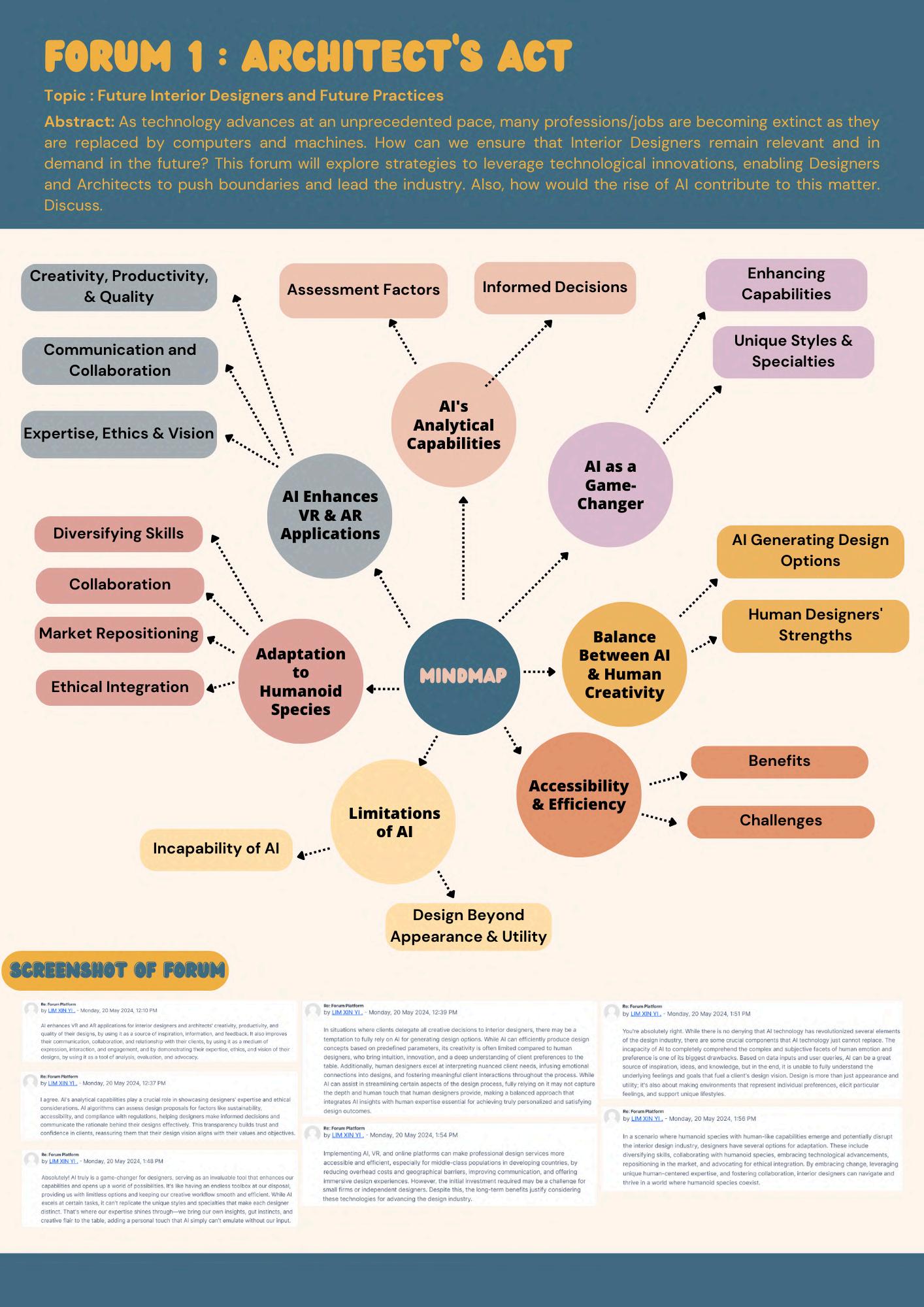
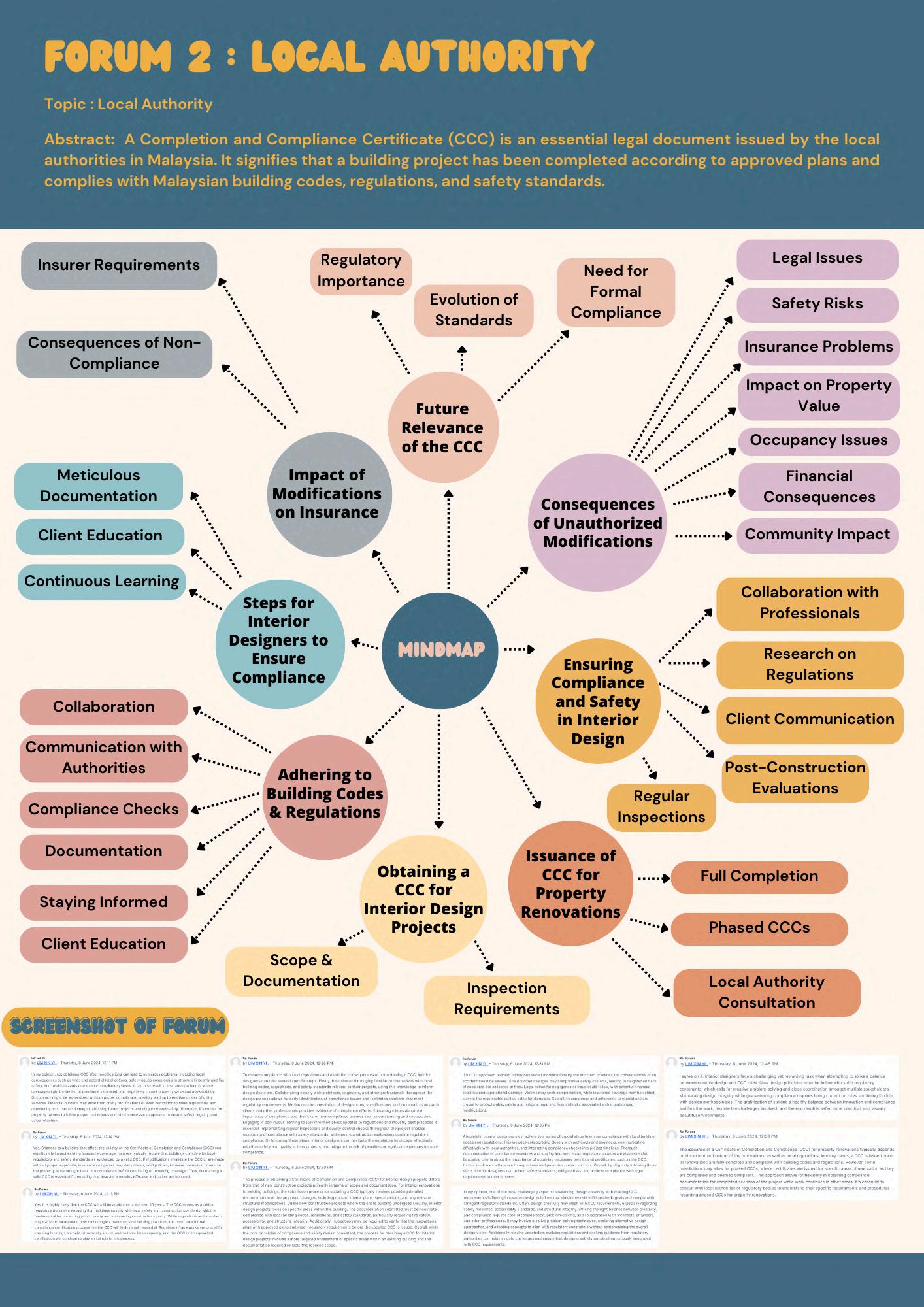
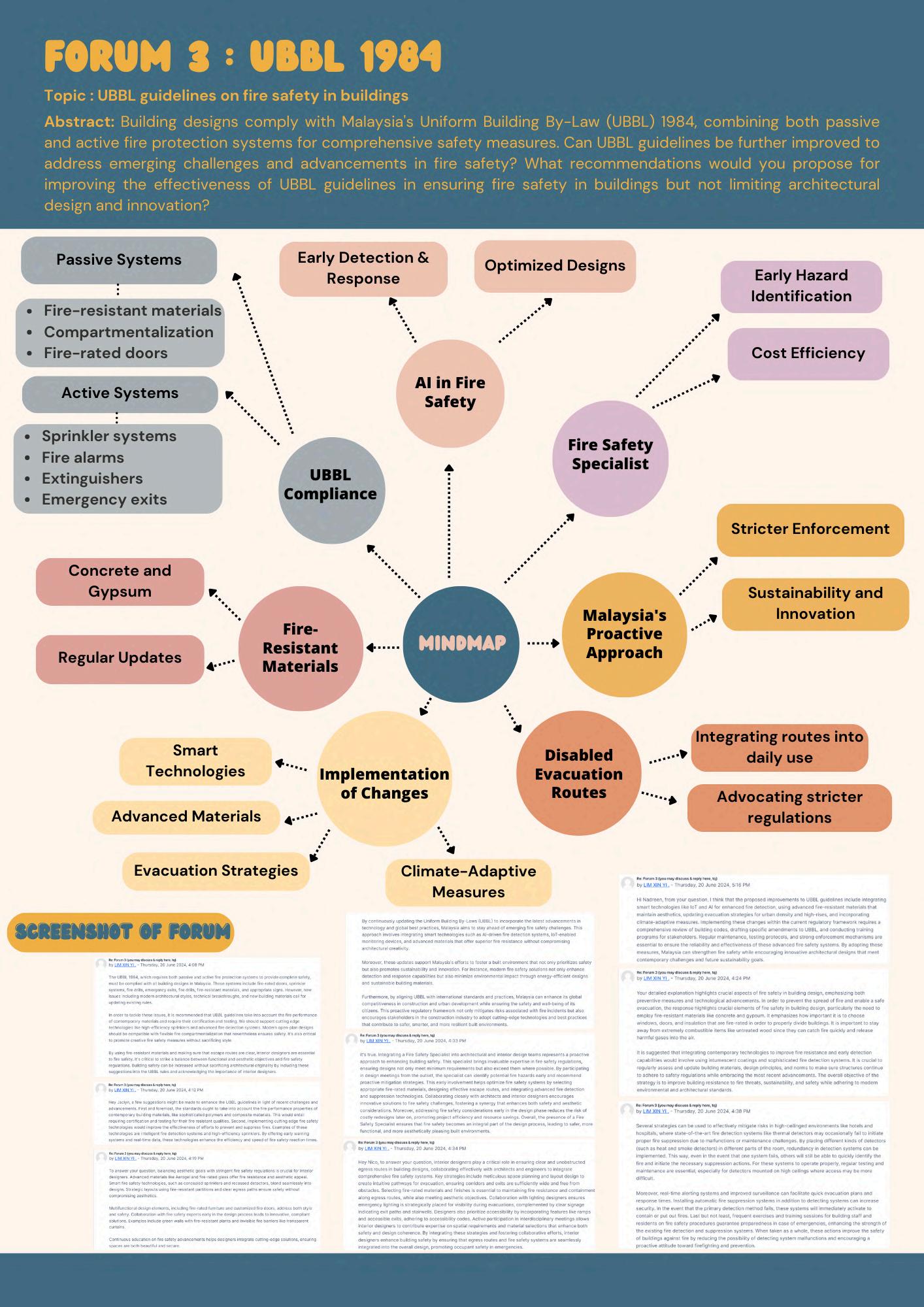
Forum Summary
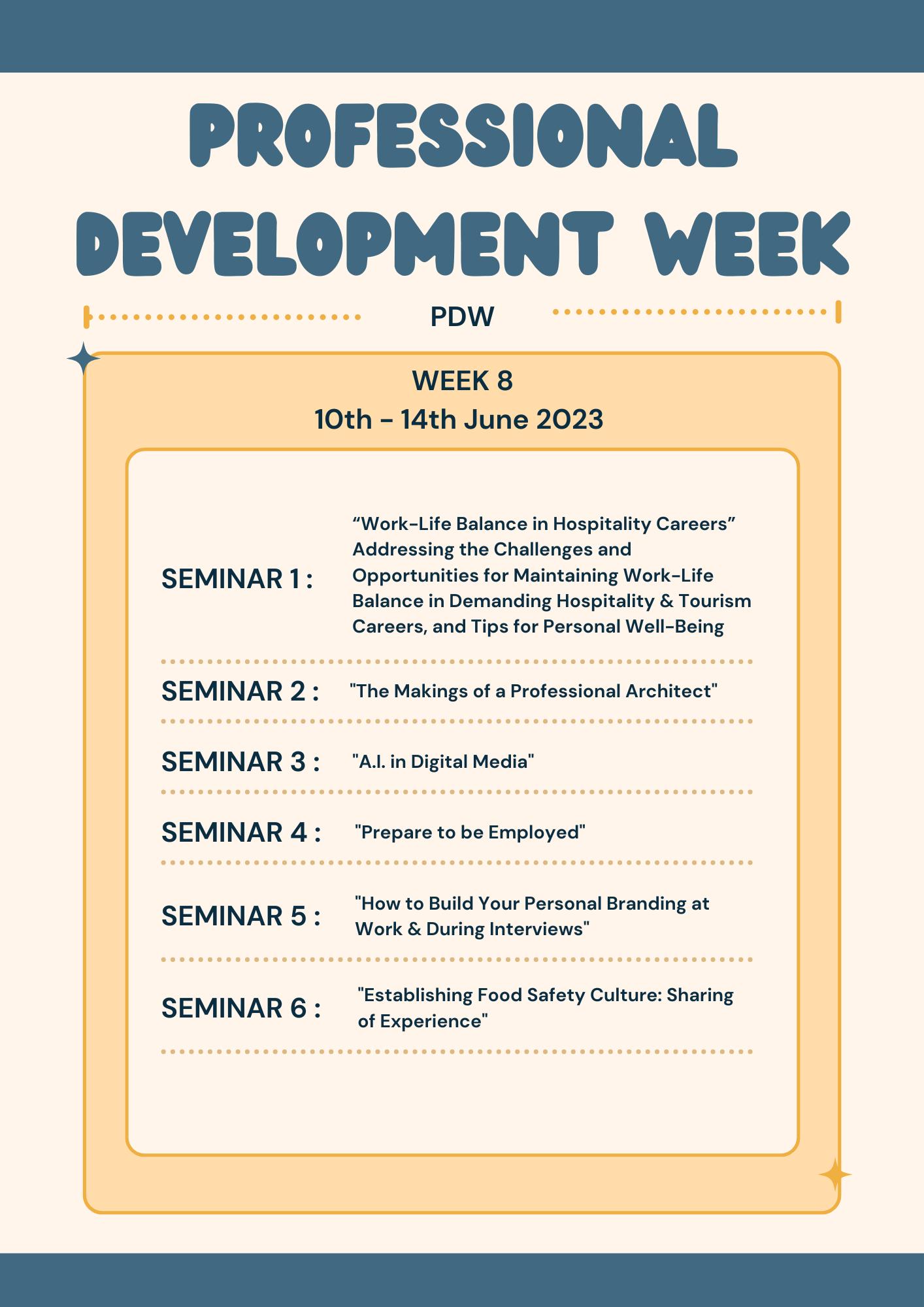
PDW Summary
ASSIGNMENT 03
Group Presentation Spread
Group Video Screenshots
Progression
Reflection
ASSIGNMENT 04
Individual Presentation Spread
Reflection Progression
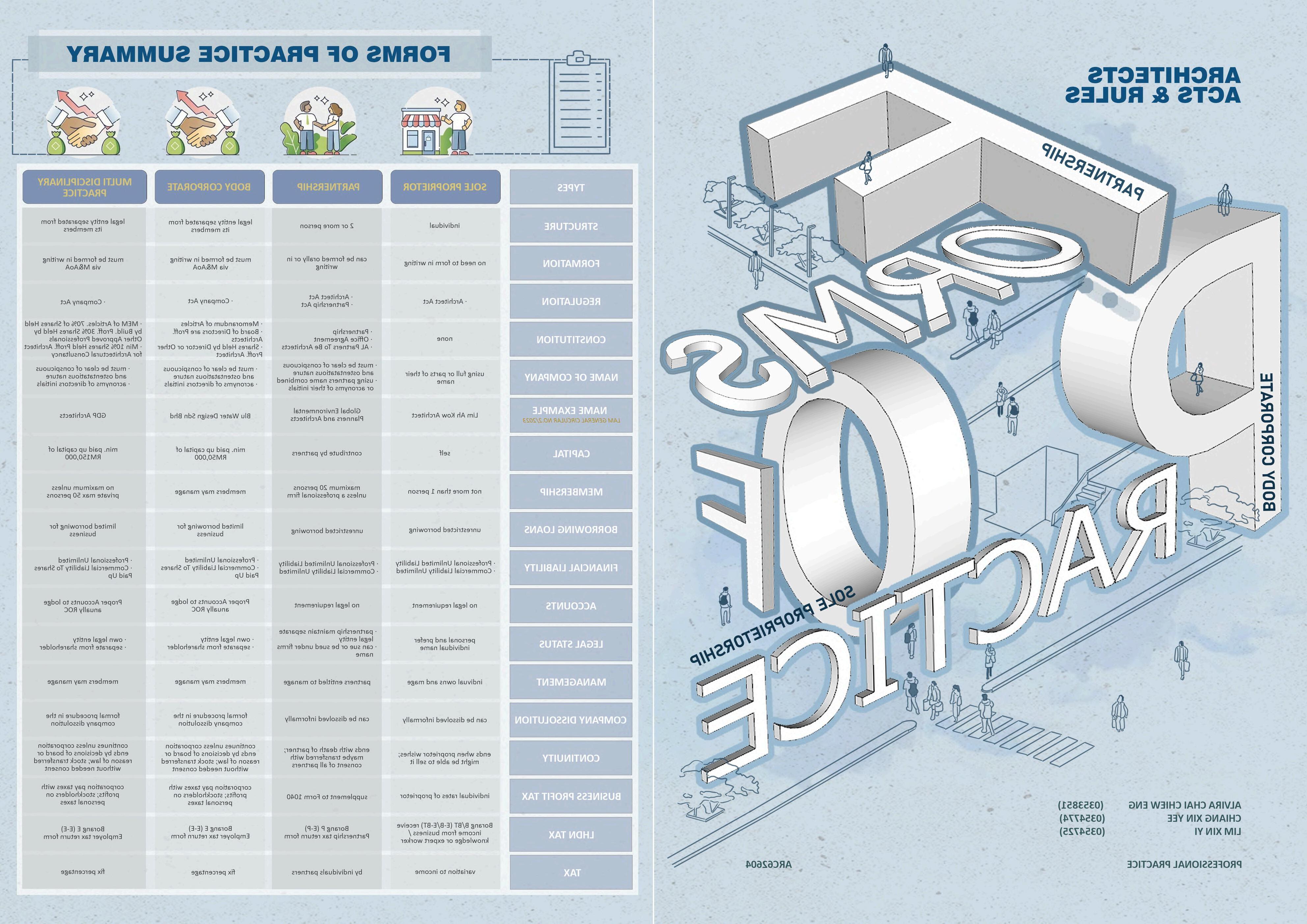

This assignment serves as an introduction to the standard of Professional Conduct and Practice. It aims to outline the general Professional Conduct and self-discipline expected of Interior Designers registered with the Board of Architects (Lembaga Arkitek Malaysia). Each group is required to investigate one topic and conduct an in-depth study to gain an adequate understanding how it applies in practice.
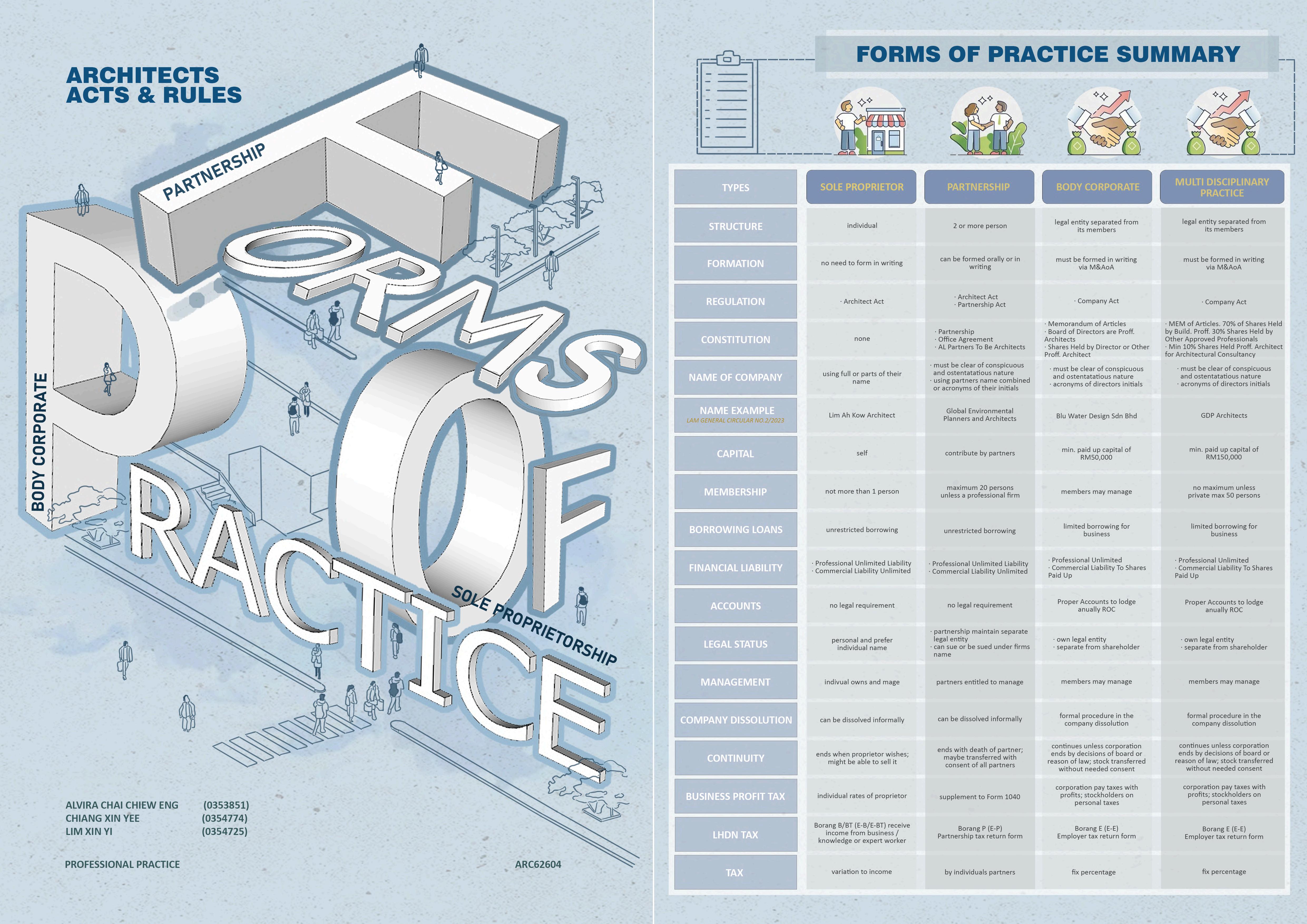
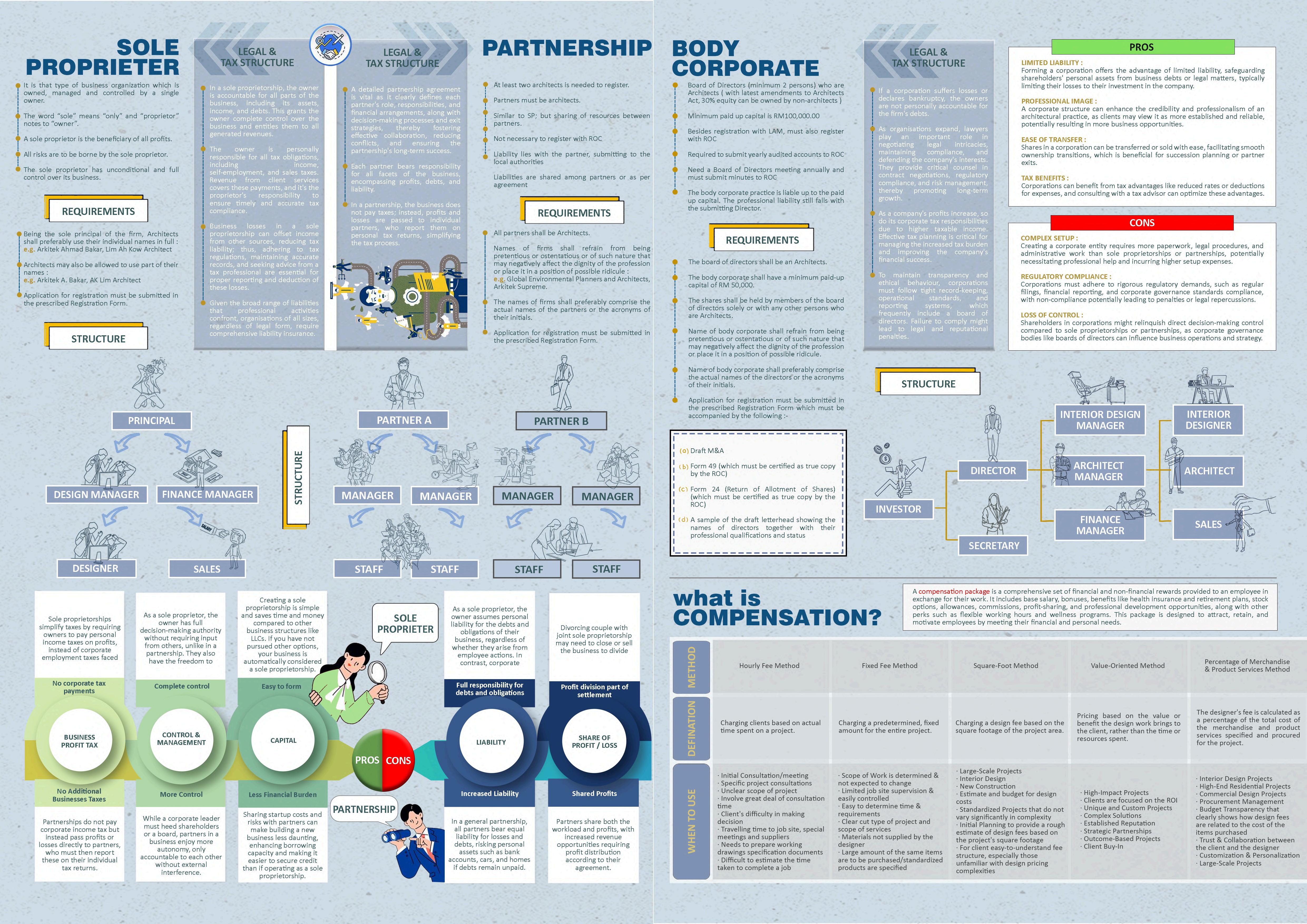
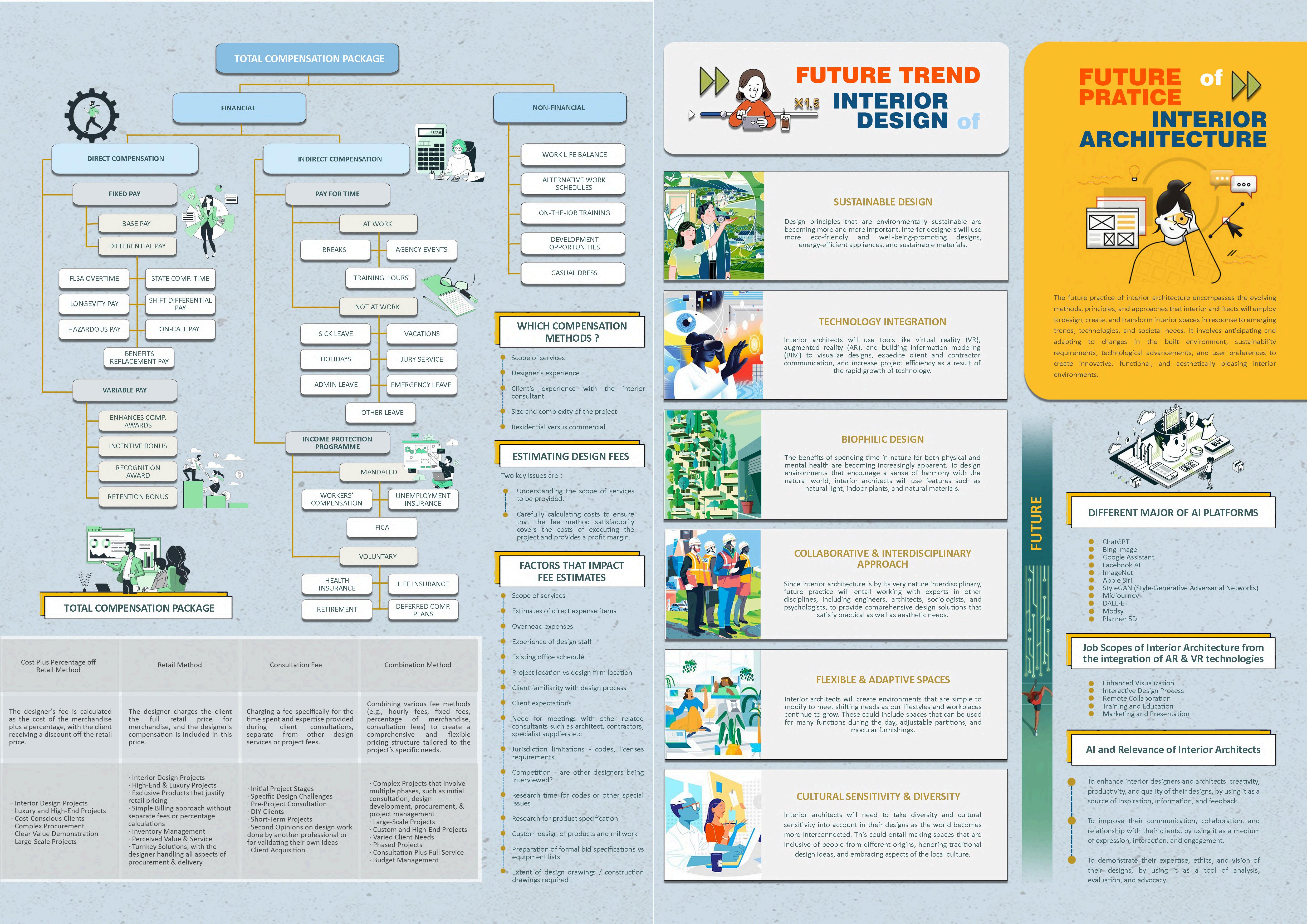
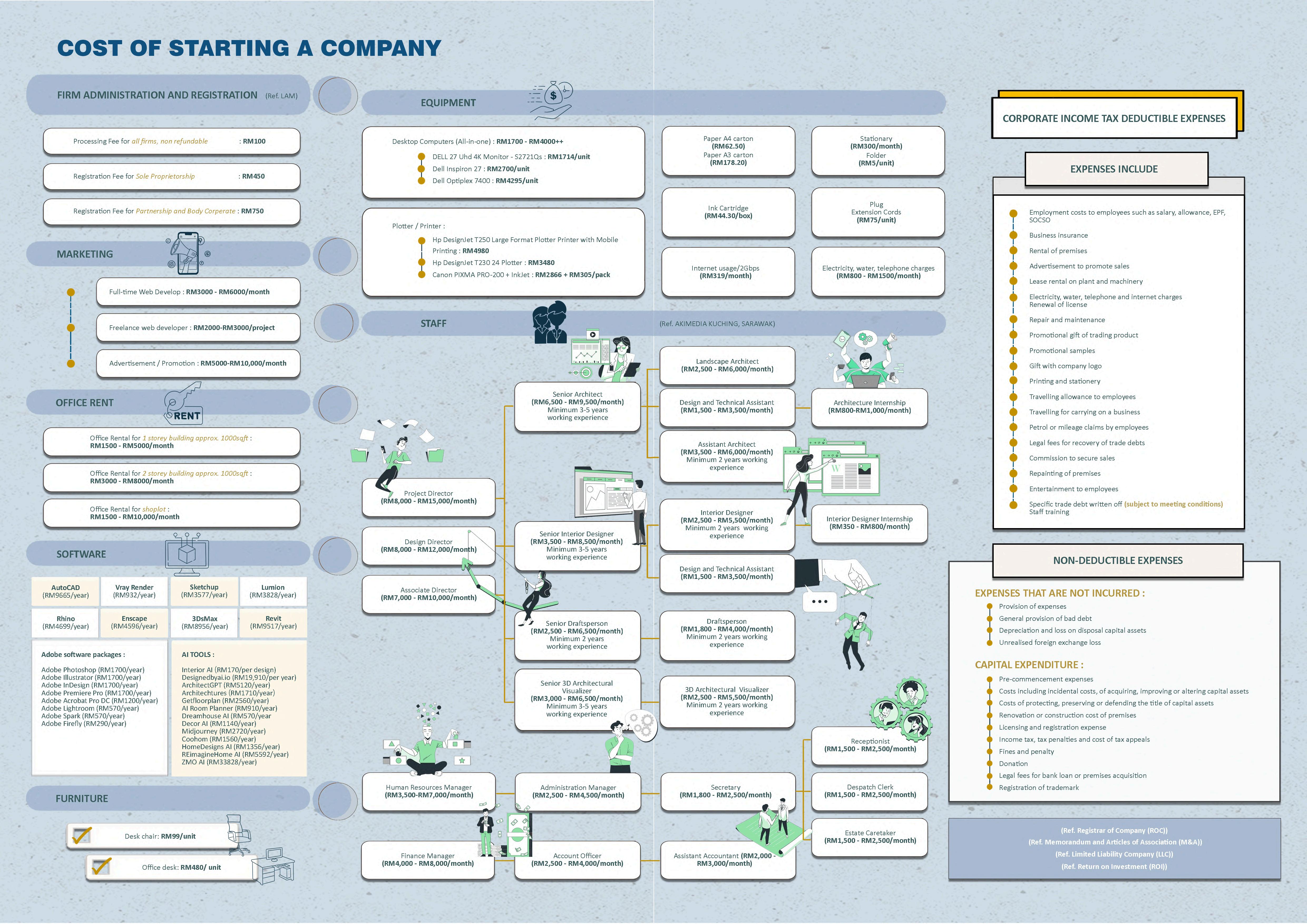
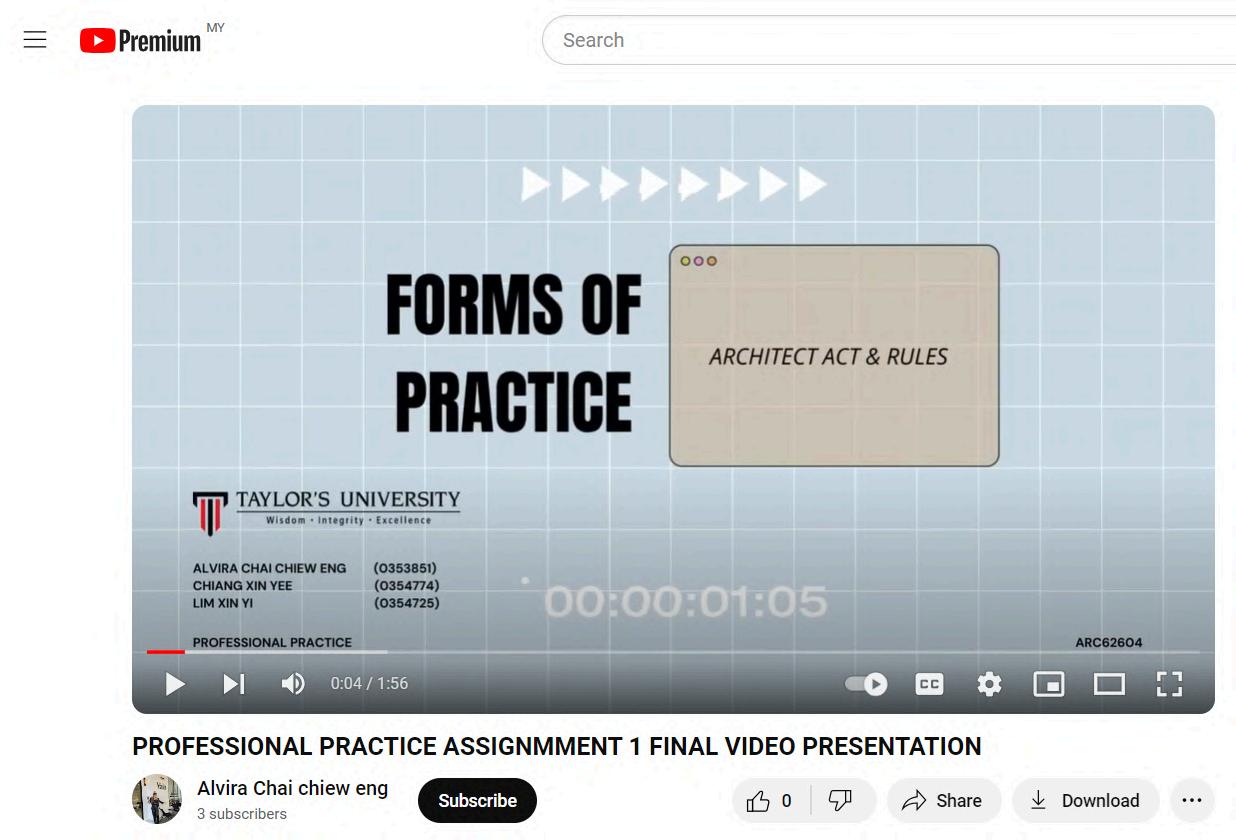
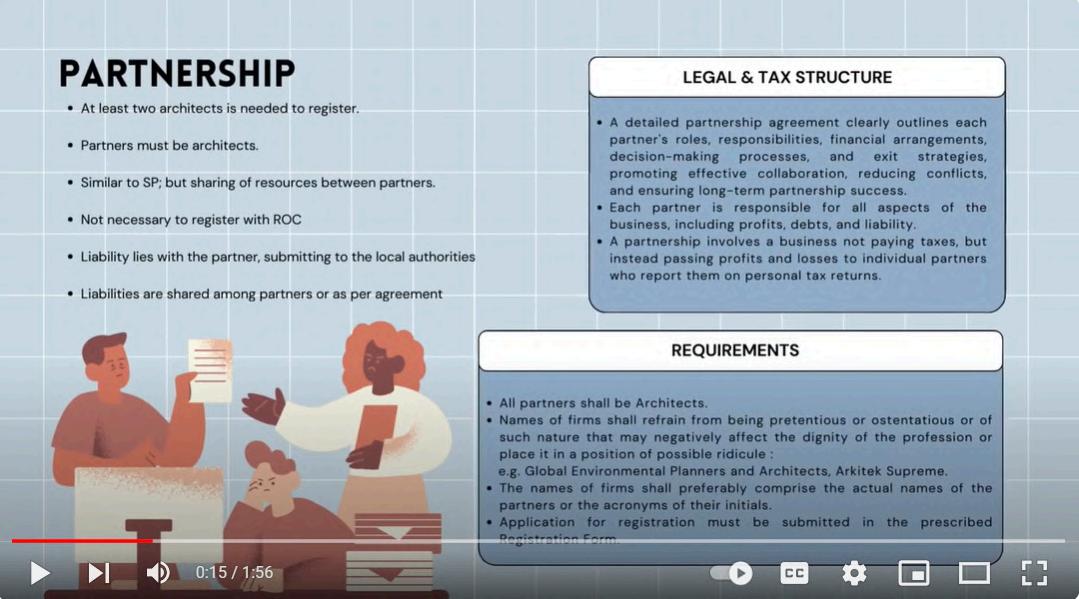

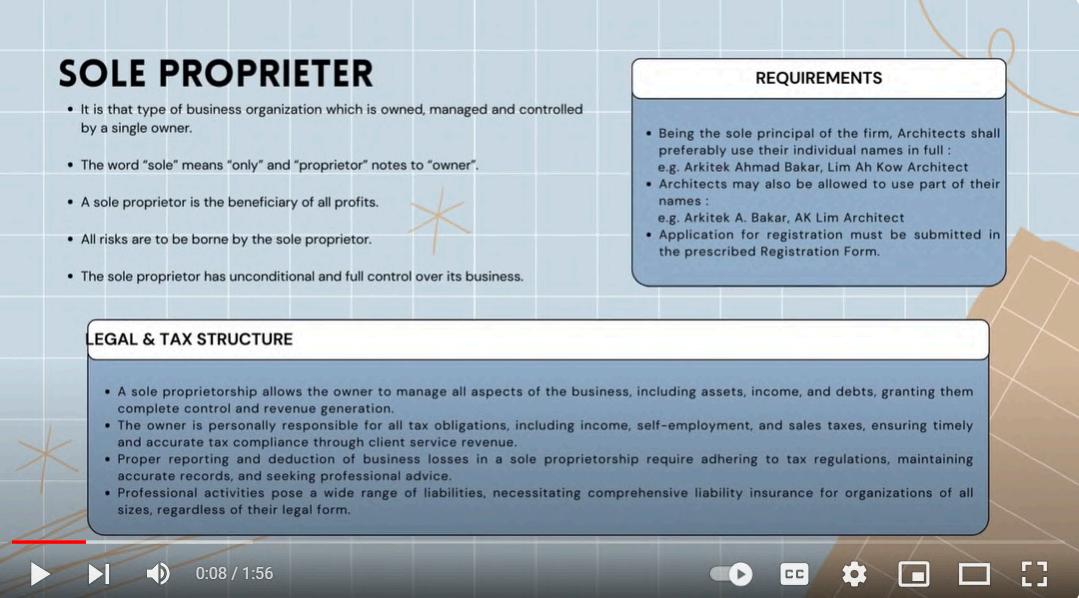
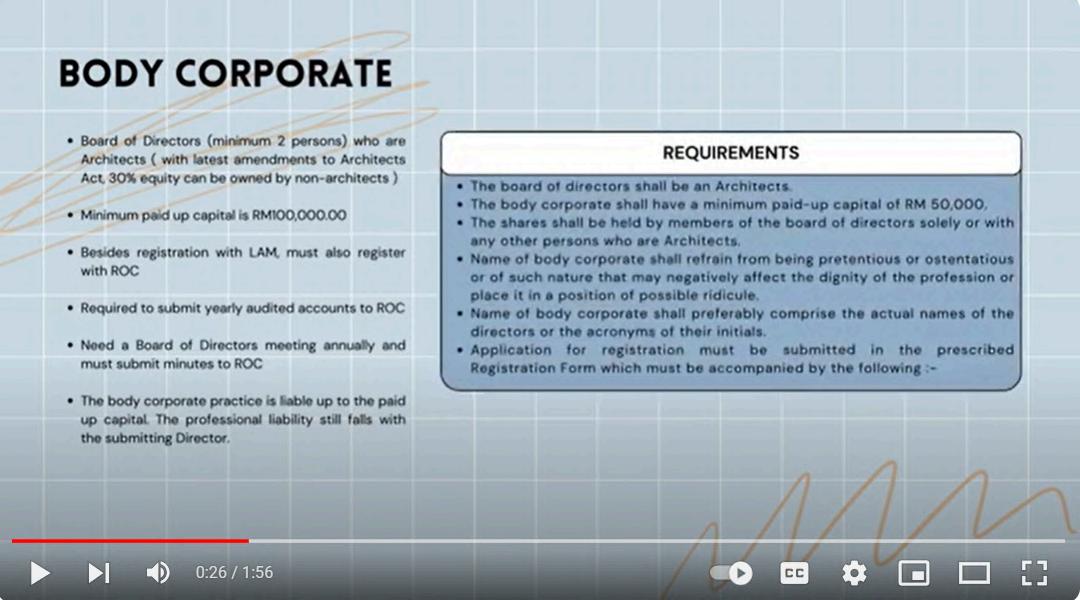

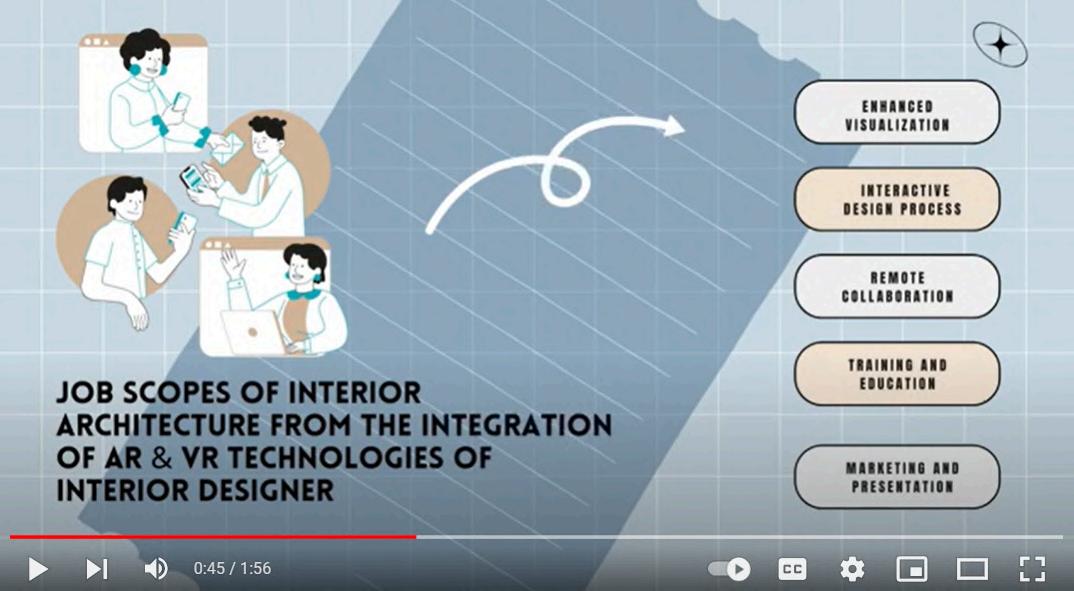
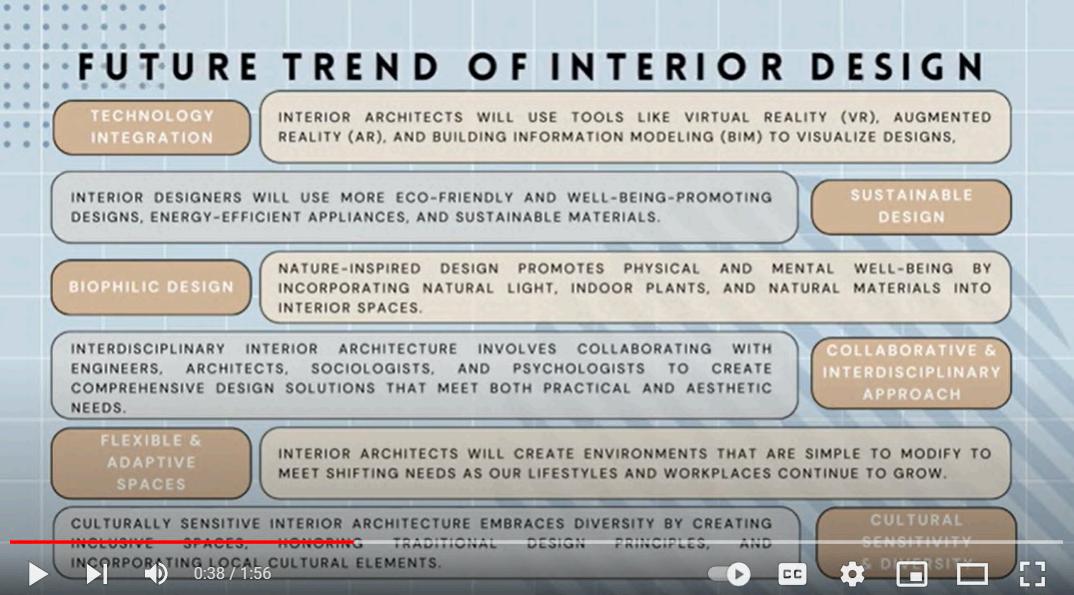
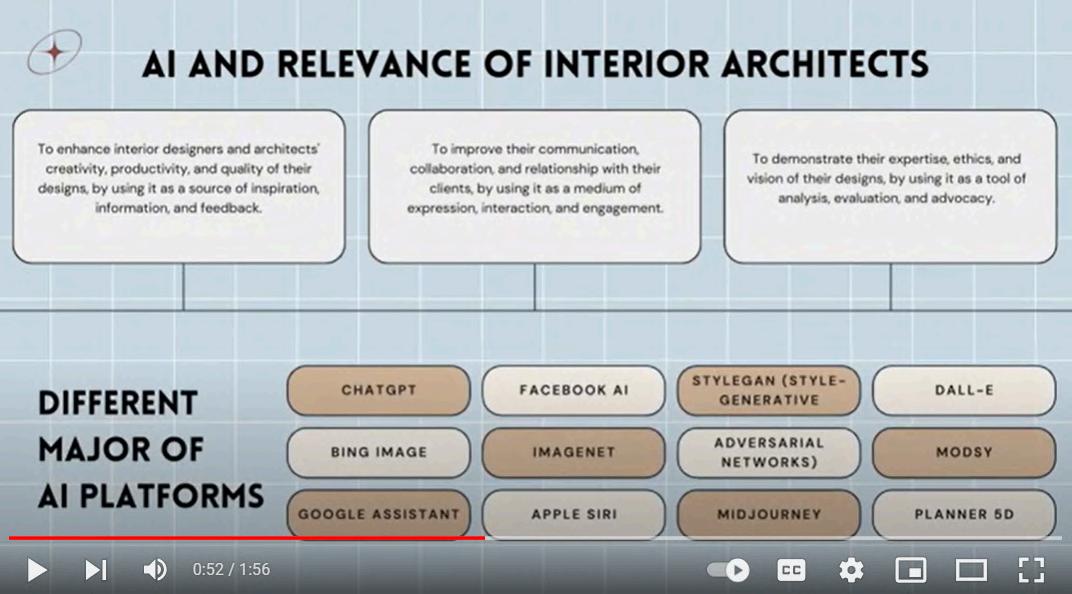
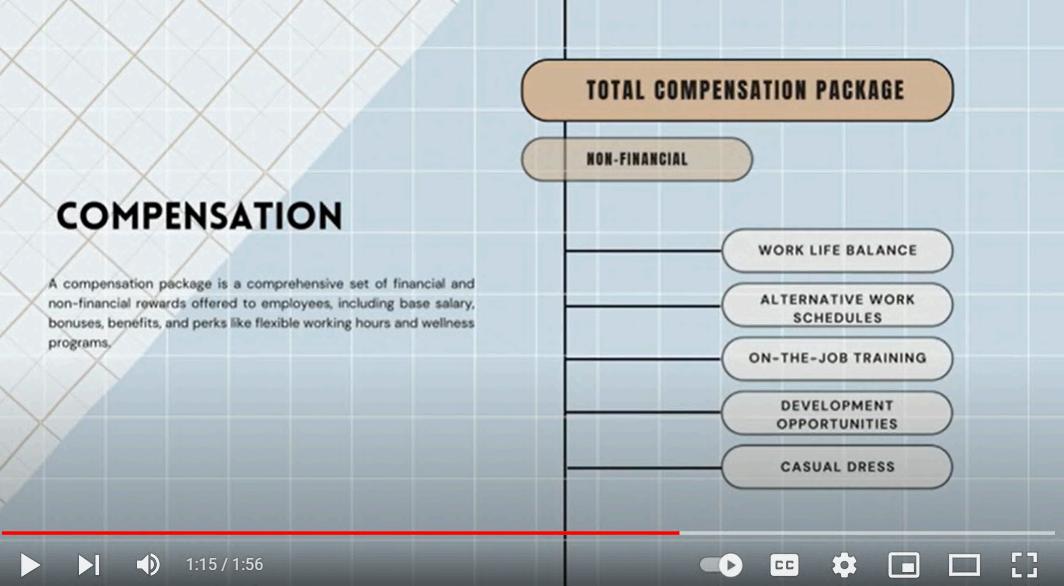
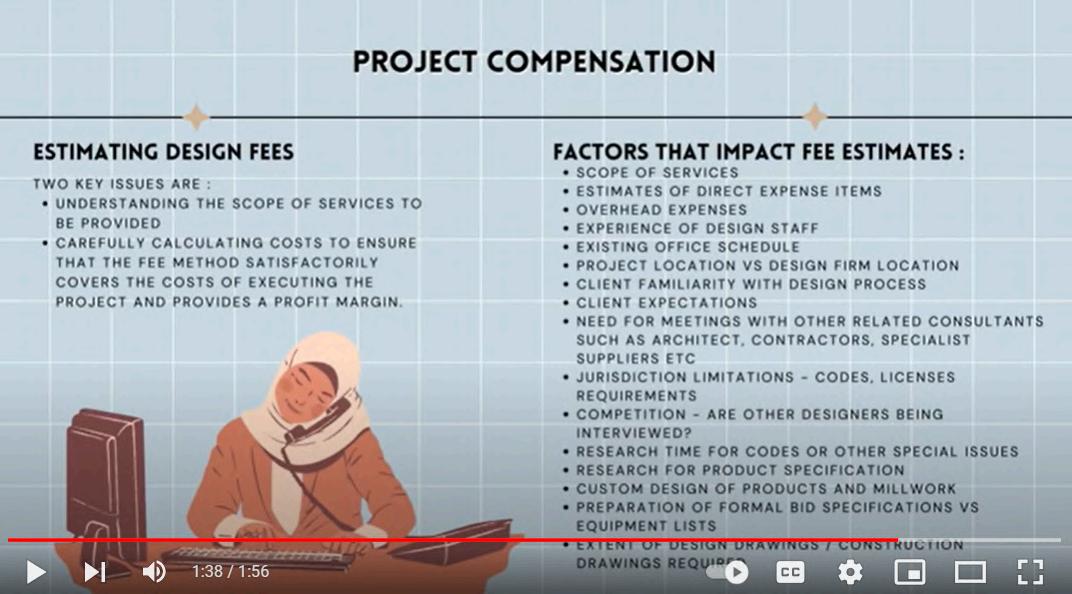
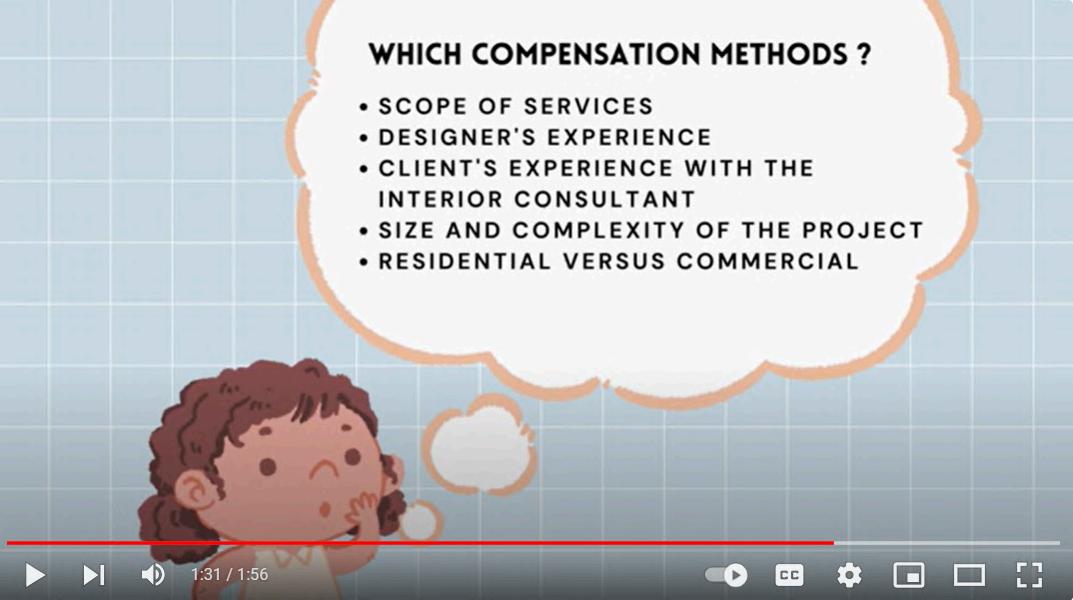





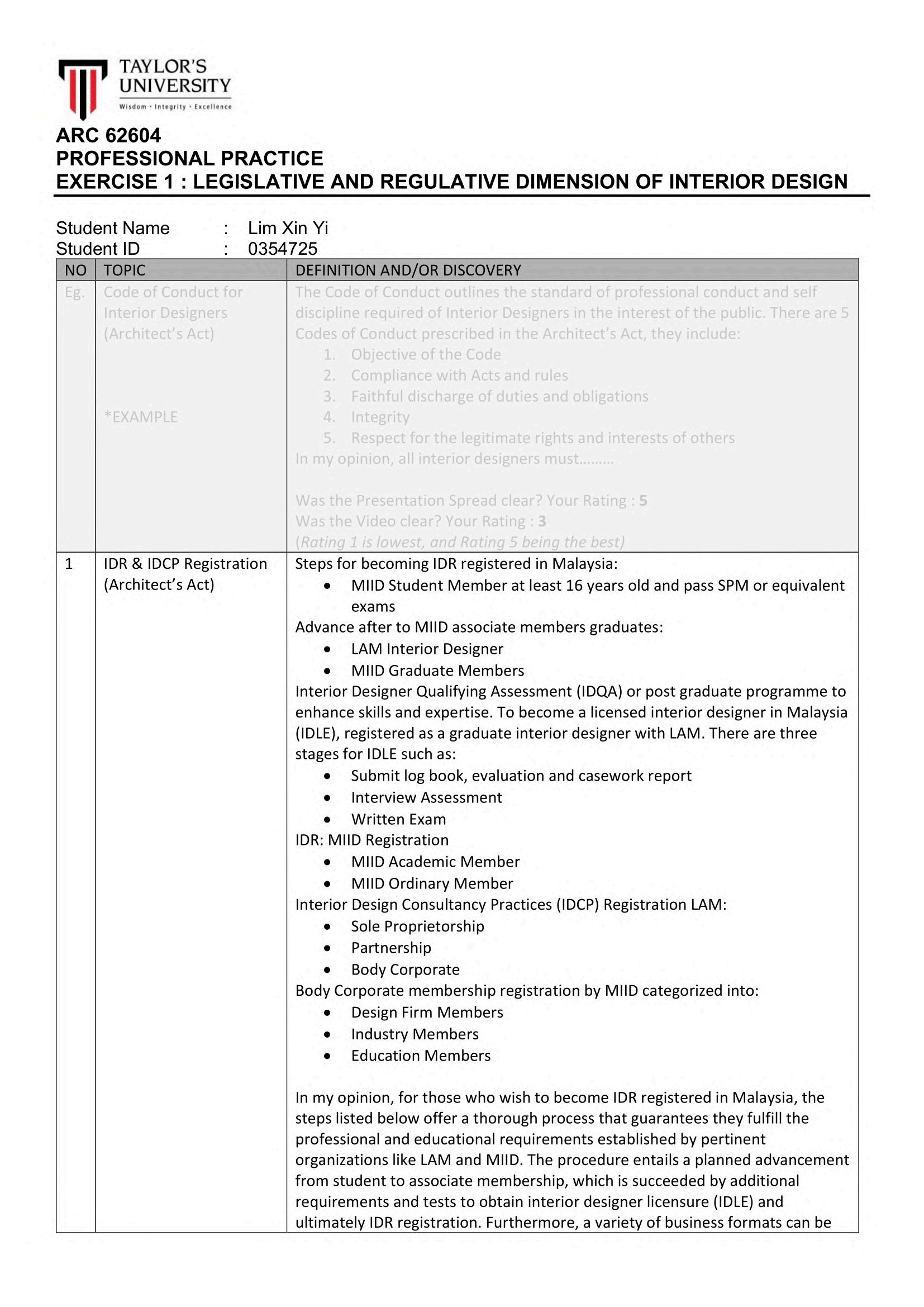
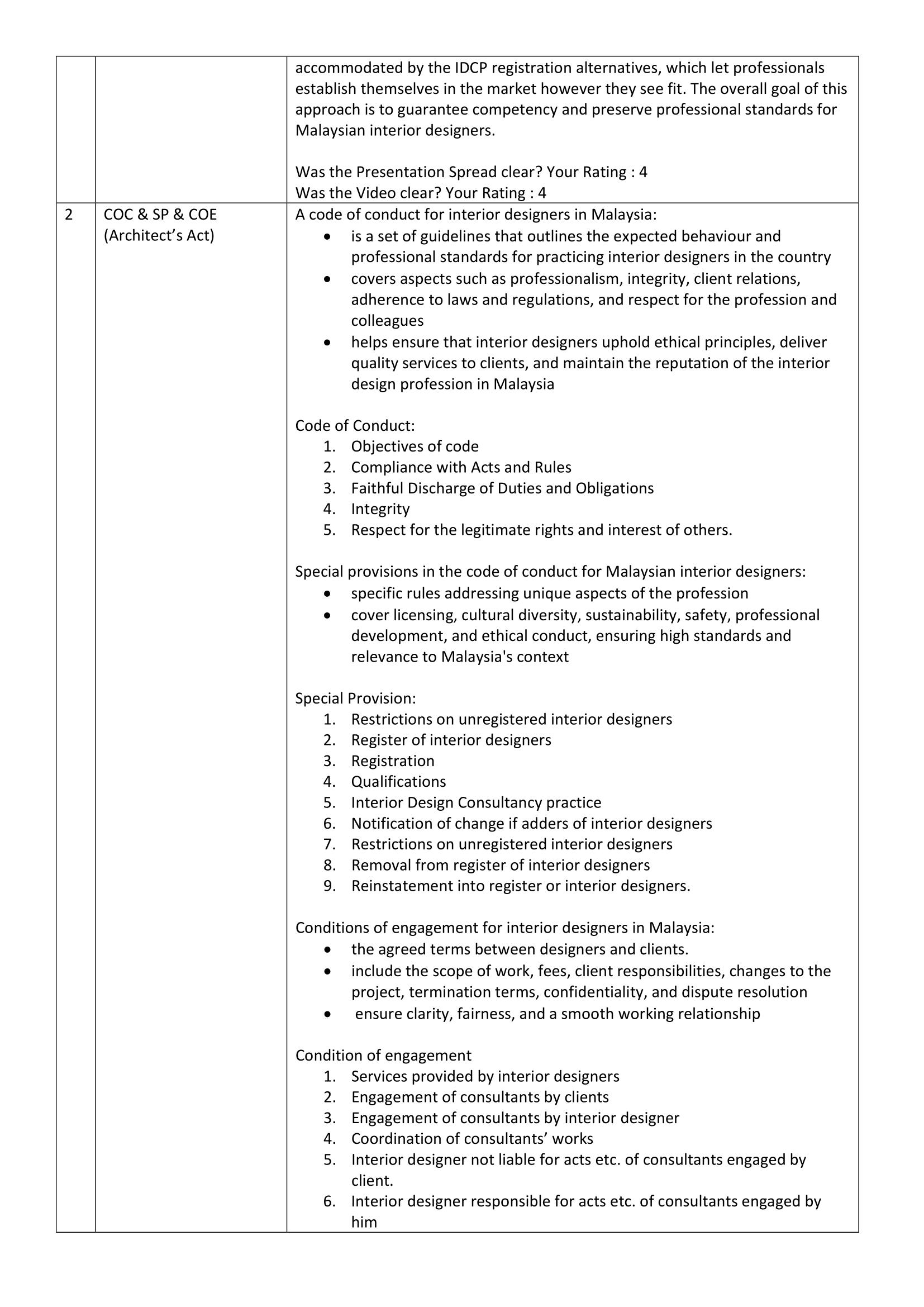
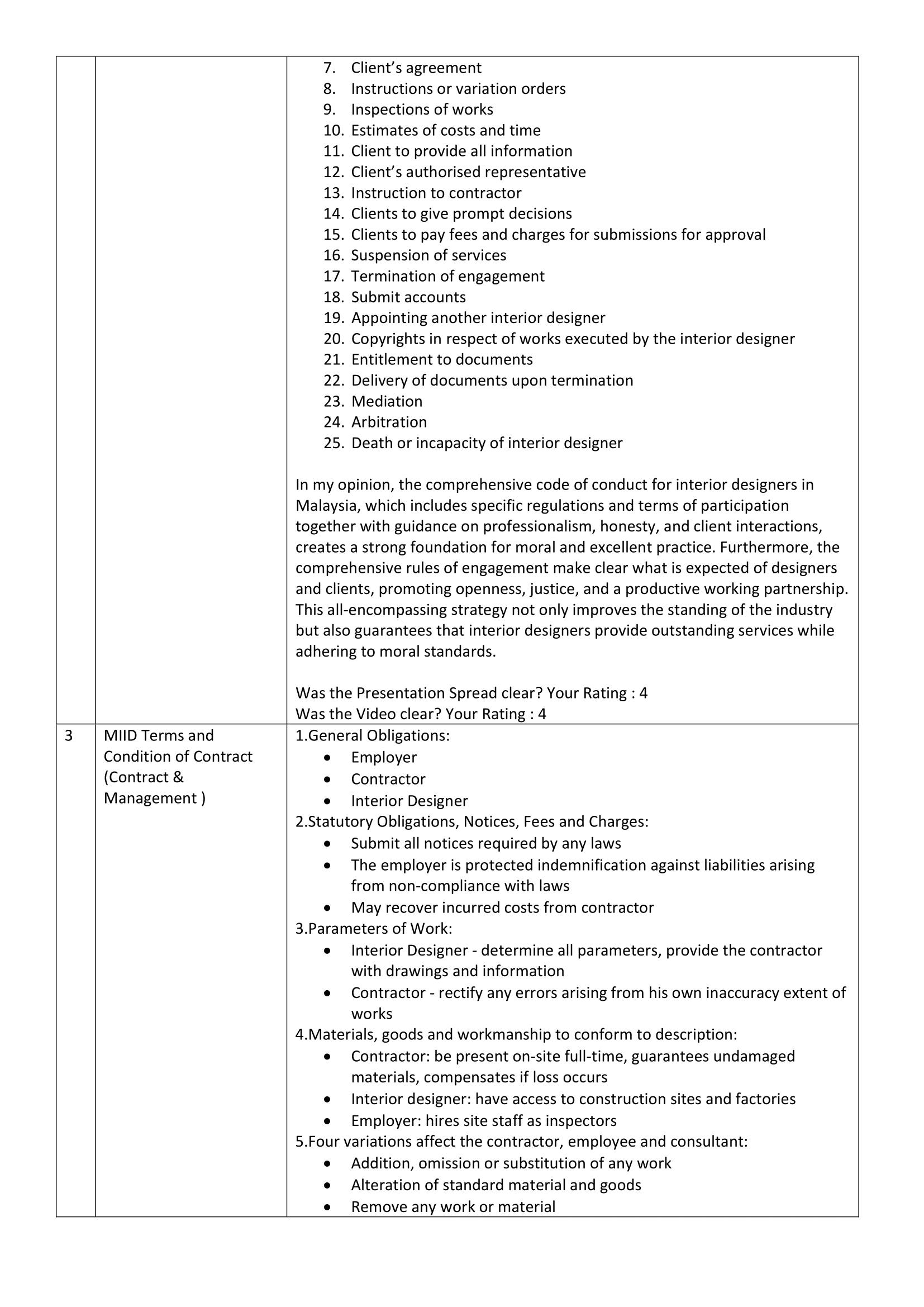
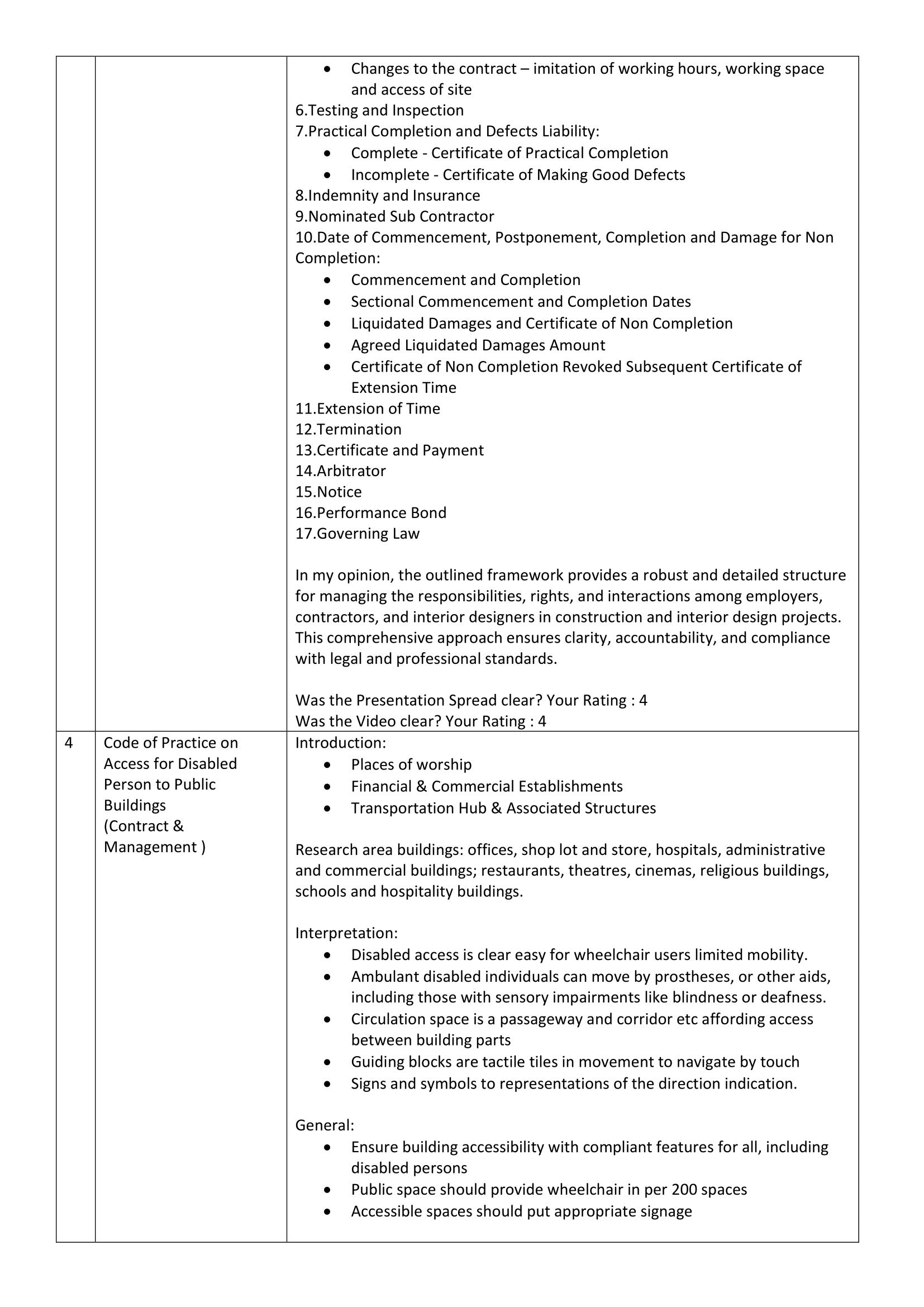
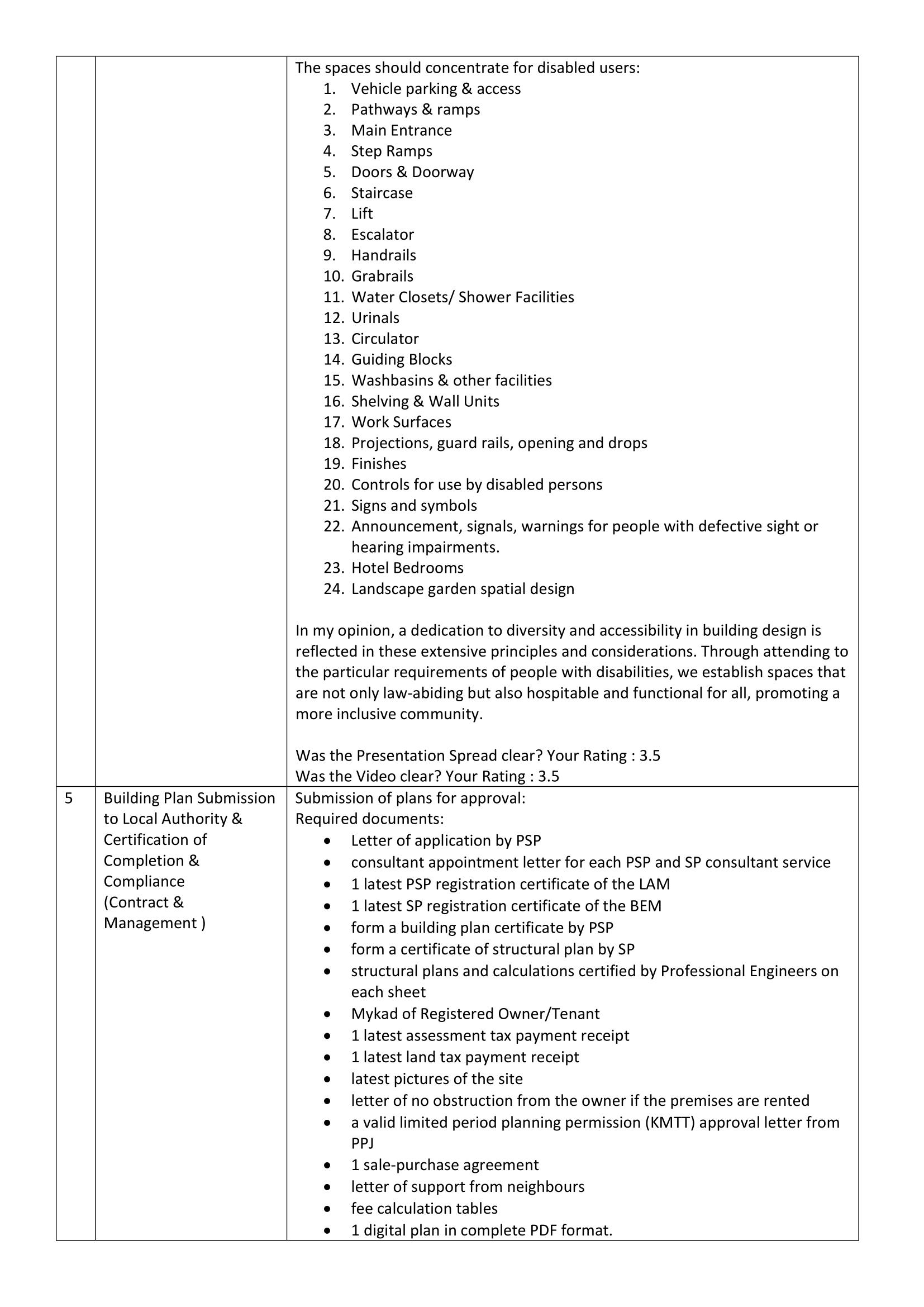
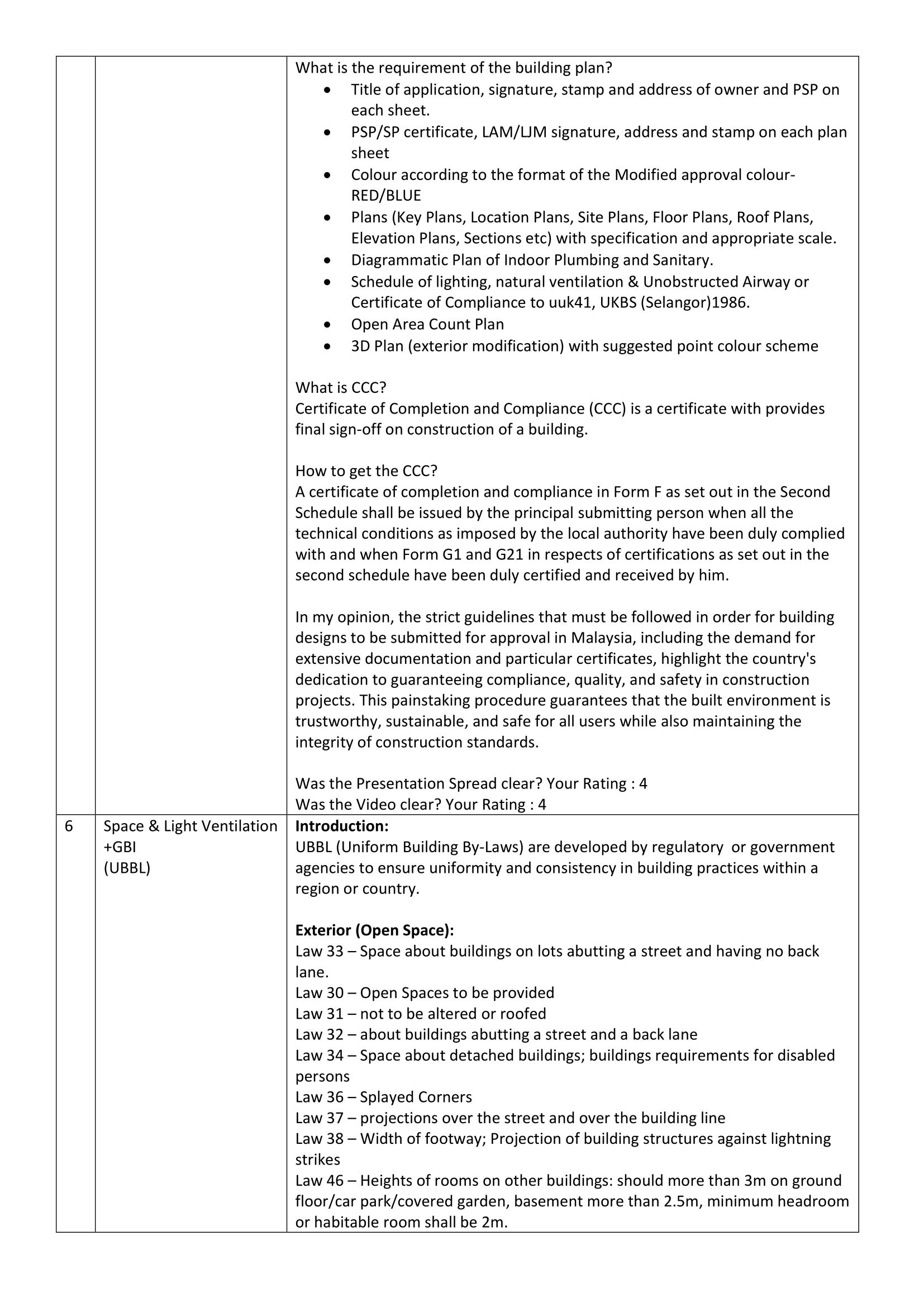
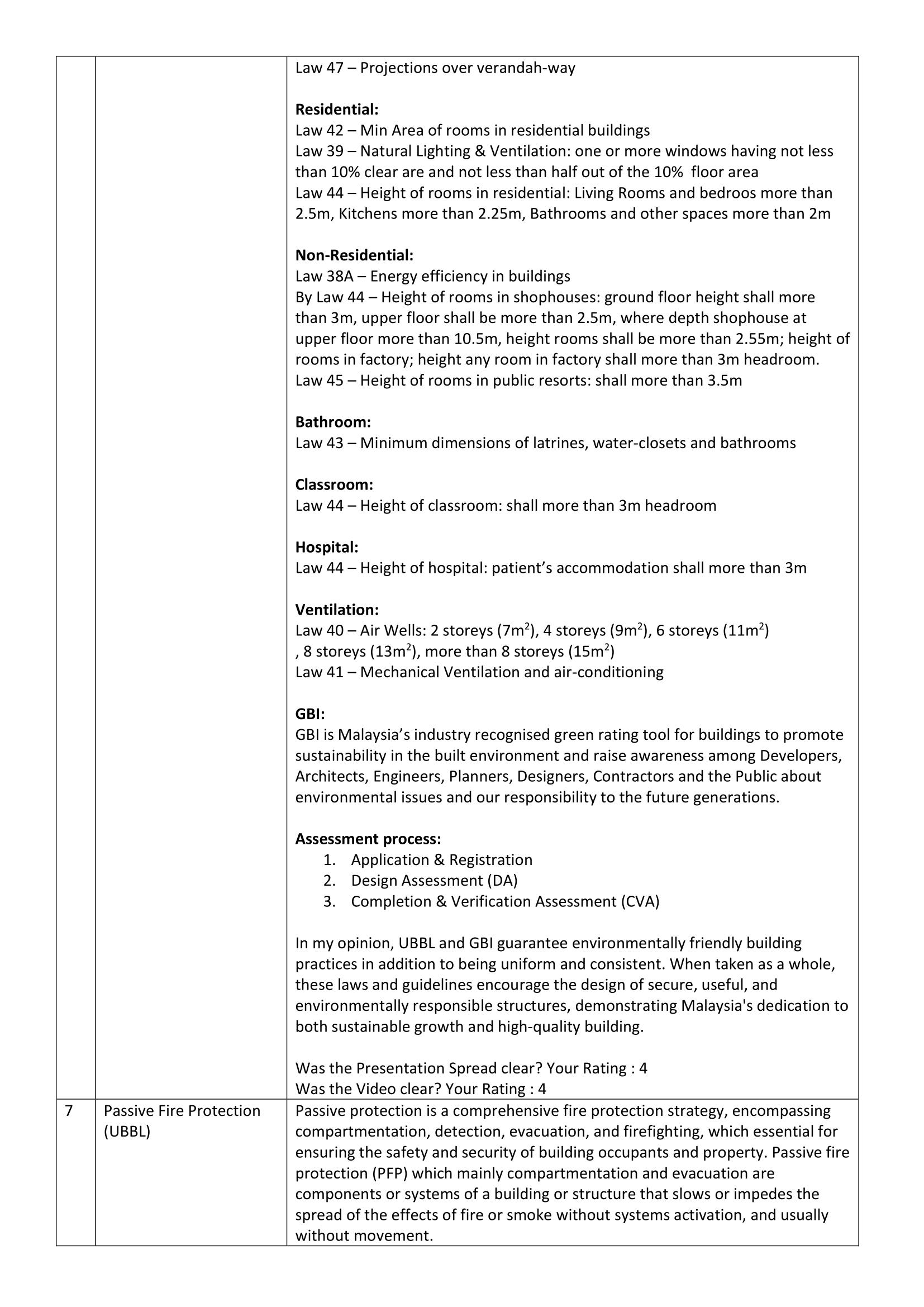
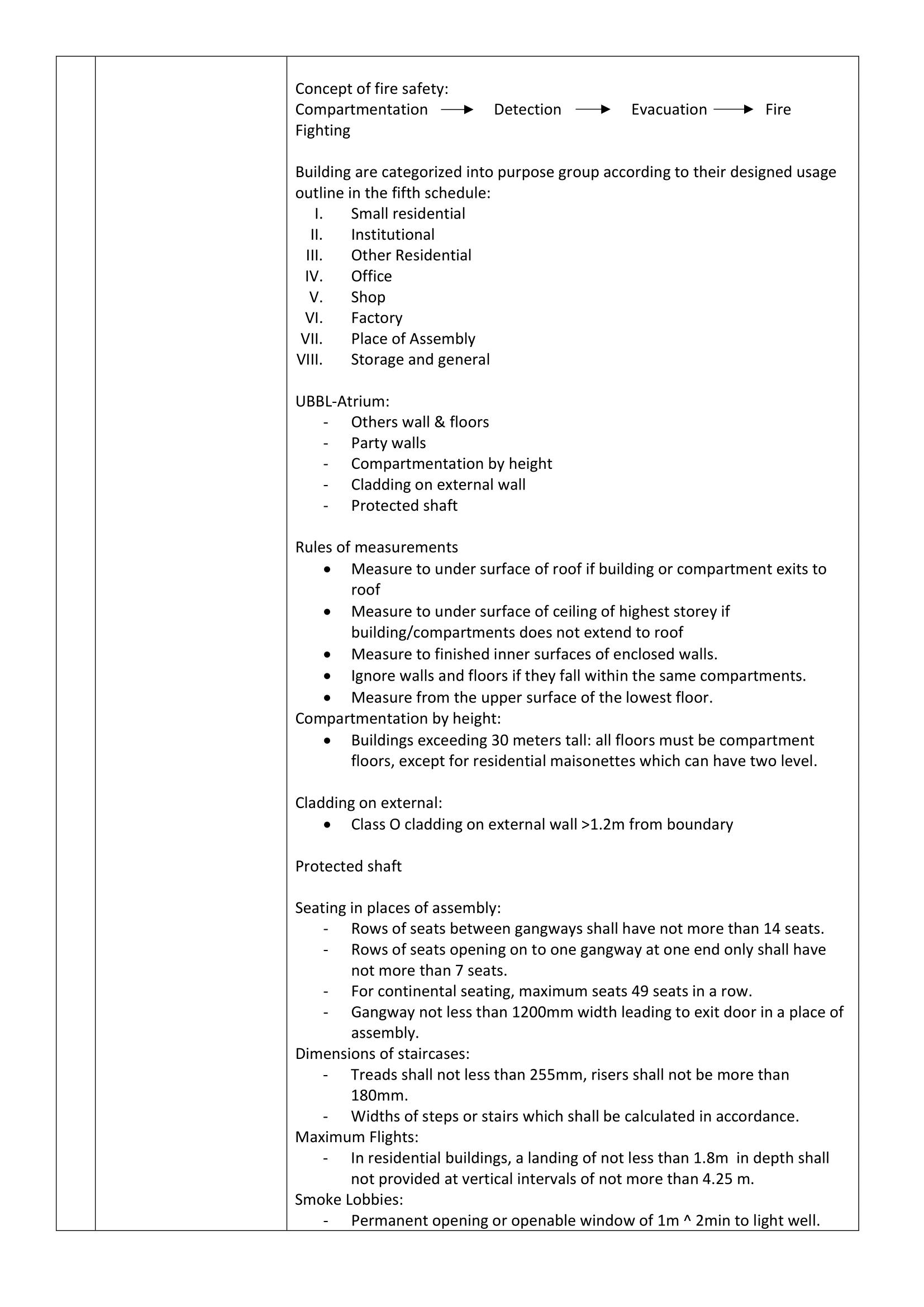
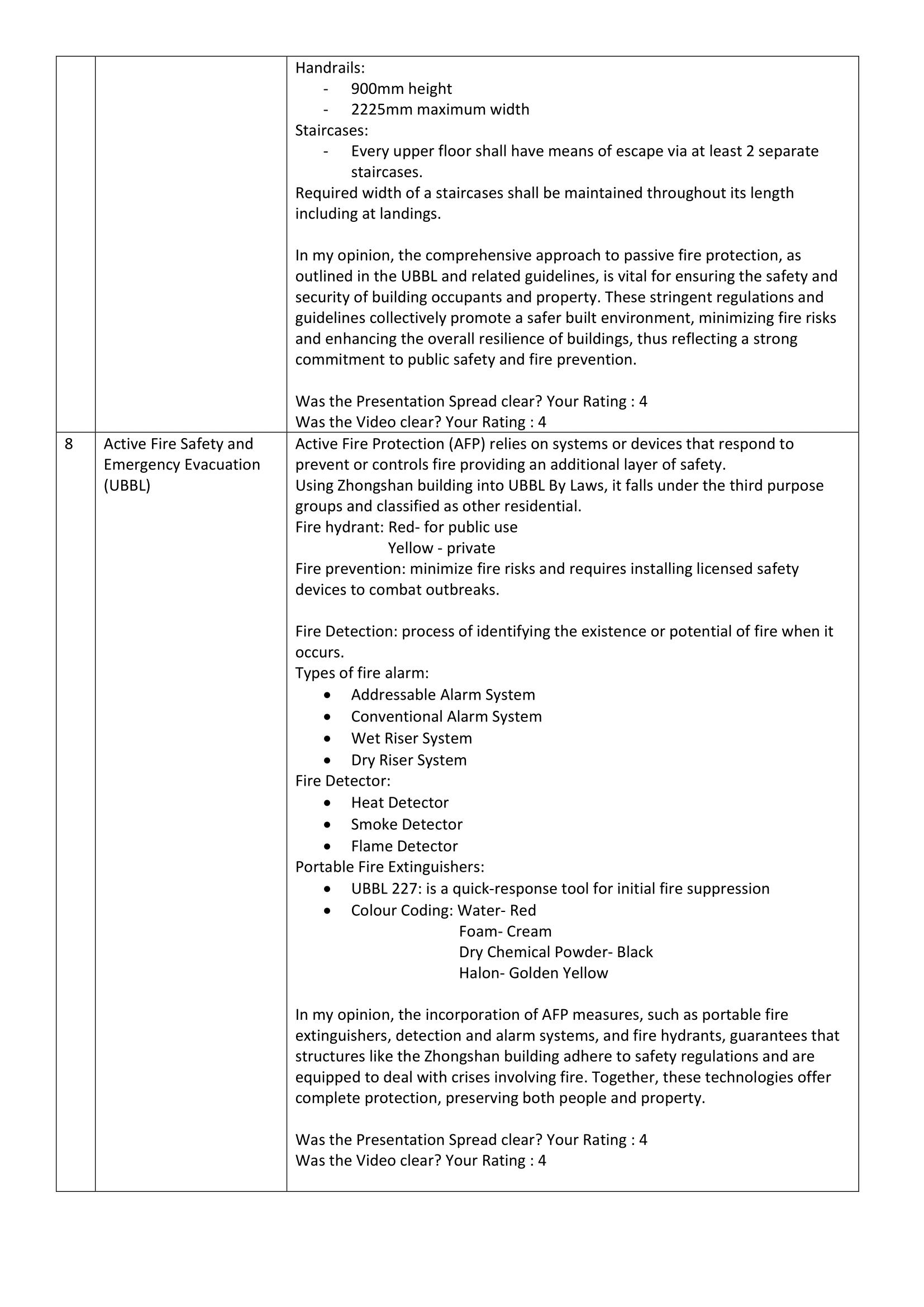
This assignment has introduced me to the standards of Professional Conduct and Practice expected by the Board of Architects (Lembaga Arkitek Malaysia), emphasizing self-discipline and ethical standards. By studying key documents such as the Architects Act 1967, Architects Rules 1996, Uniform Building By-Laws 1984, and PAM/MIID Contracts, I gain insights into the legal framework that governs our profession. This was a group assignment, we divided tasks based on individual expertise and interests, facilitating efficient research and knowledge sharing. Collaborative learning and in-depth research on specific topics enhance our critical thinking and practical application skills, preparing us to meet industry expectations with professionalism and integrity. This foundational exercise ensures we are well-equipped to navigate our future careers with a thorough understanding of our responsibilities and the regulatory environment.

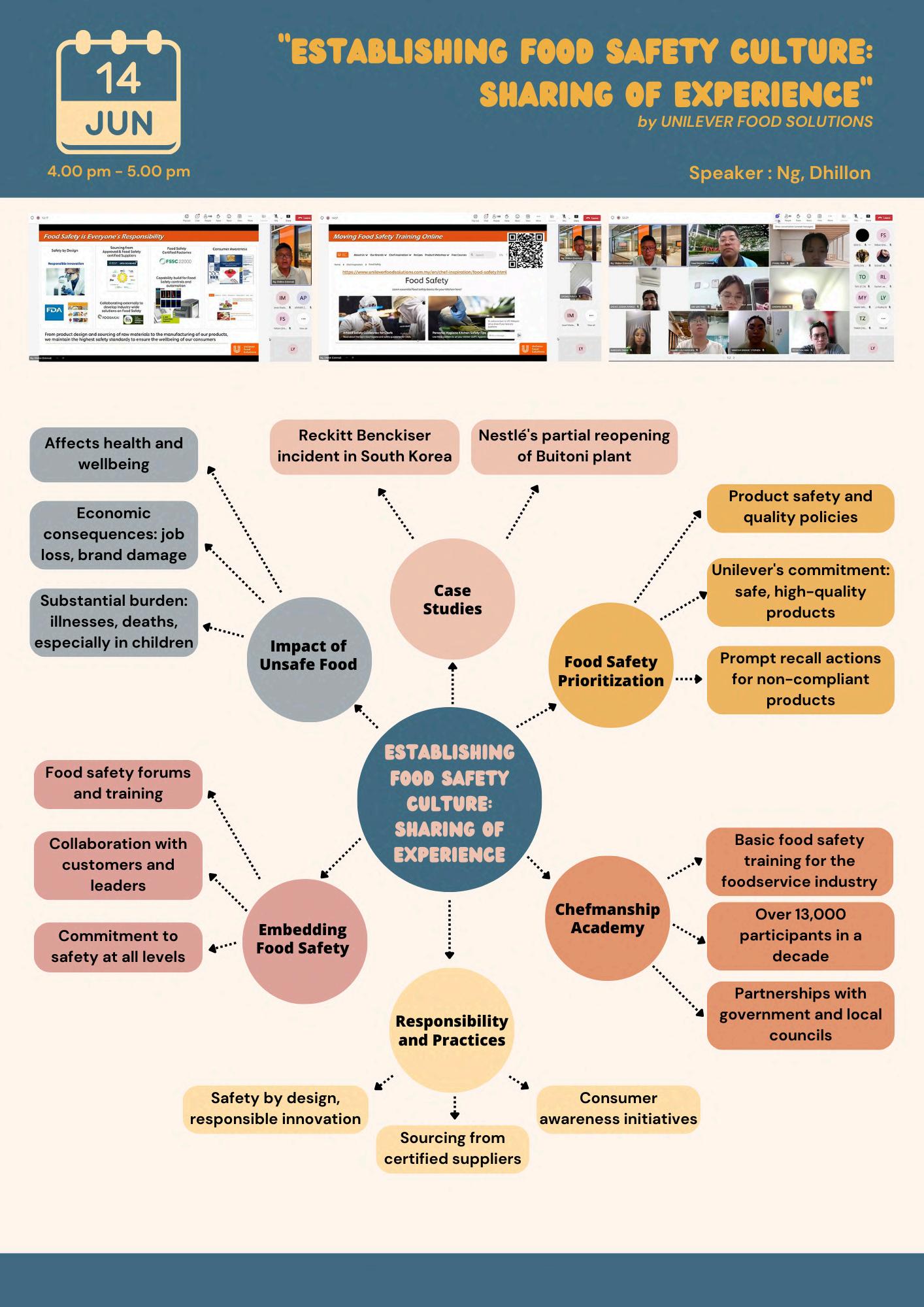
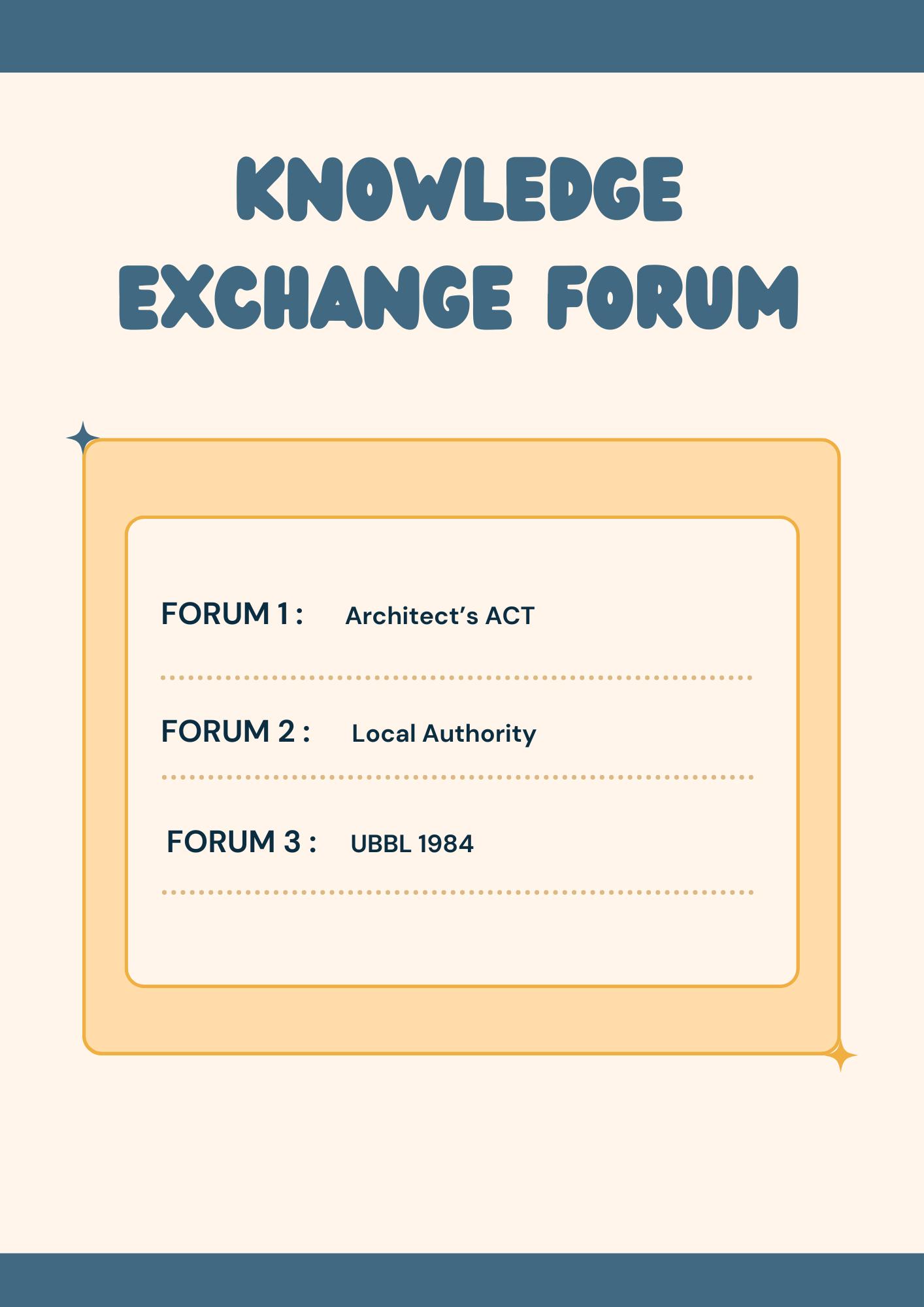
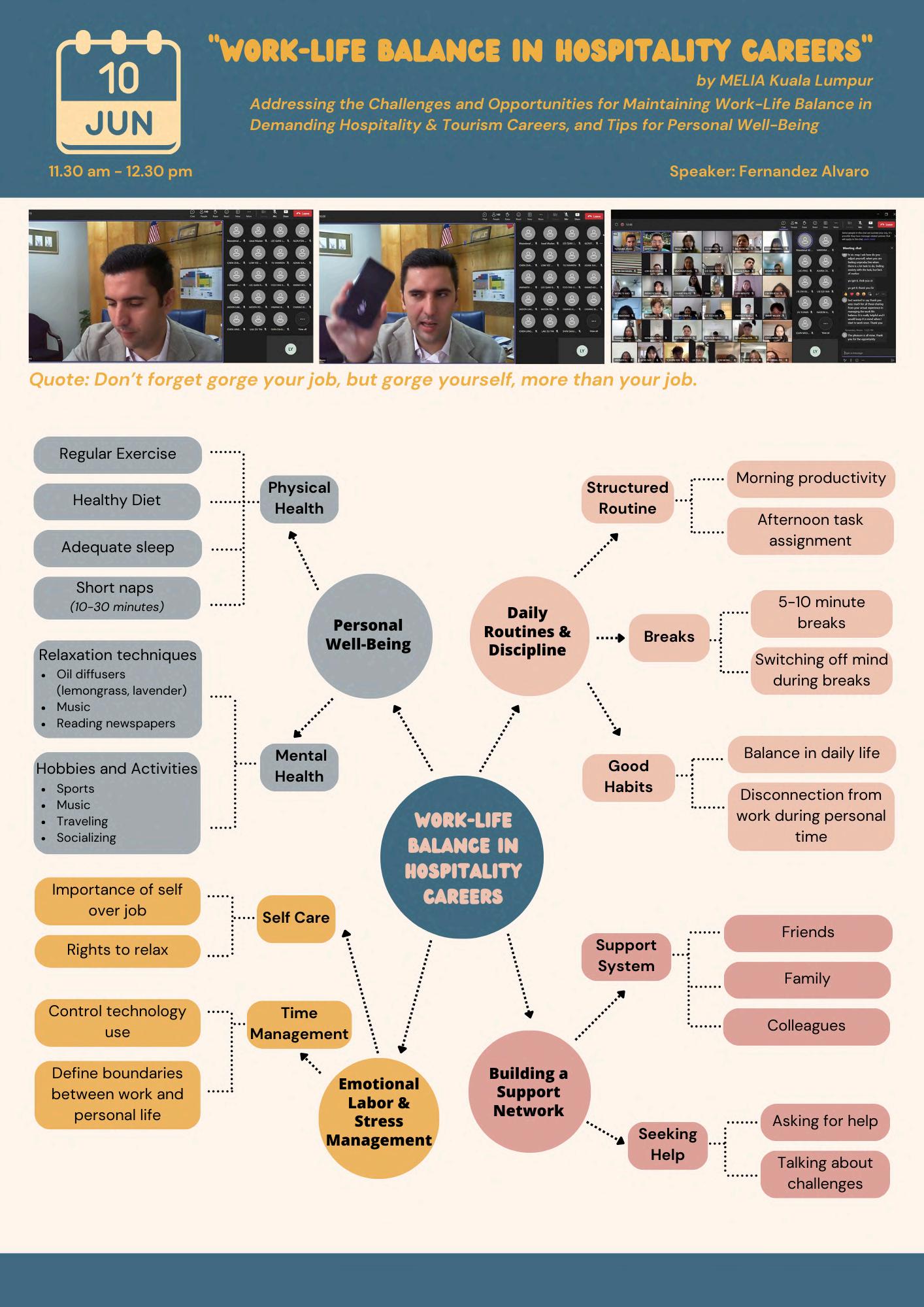
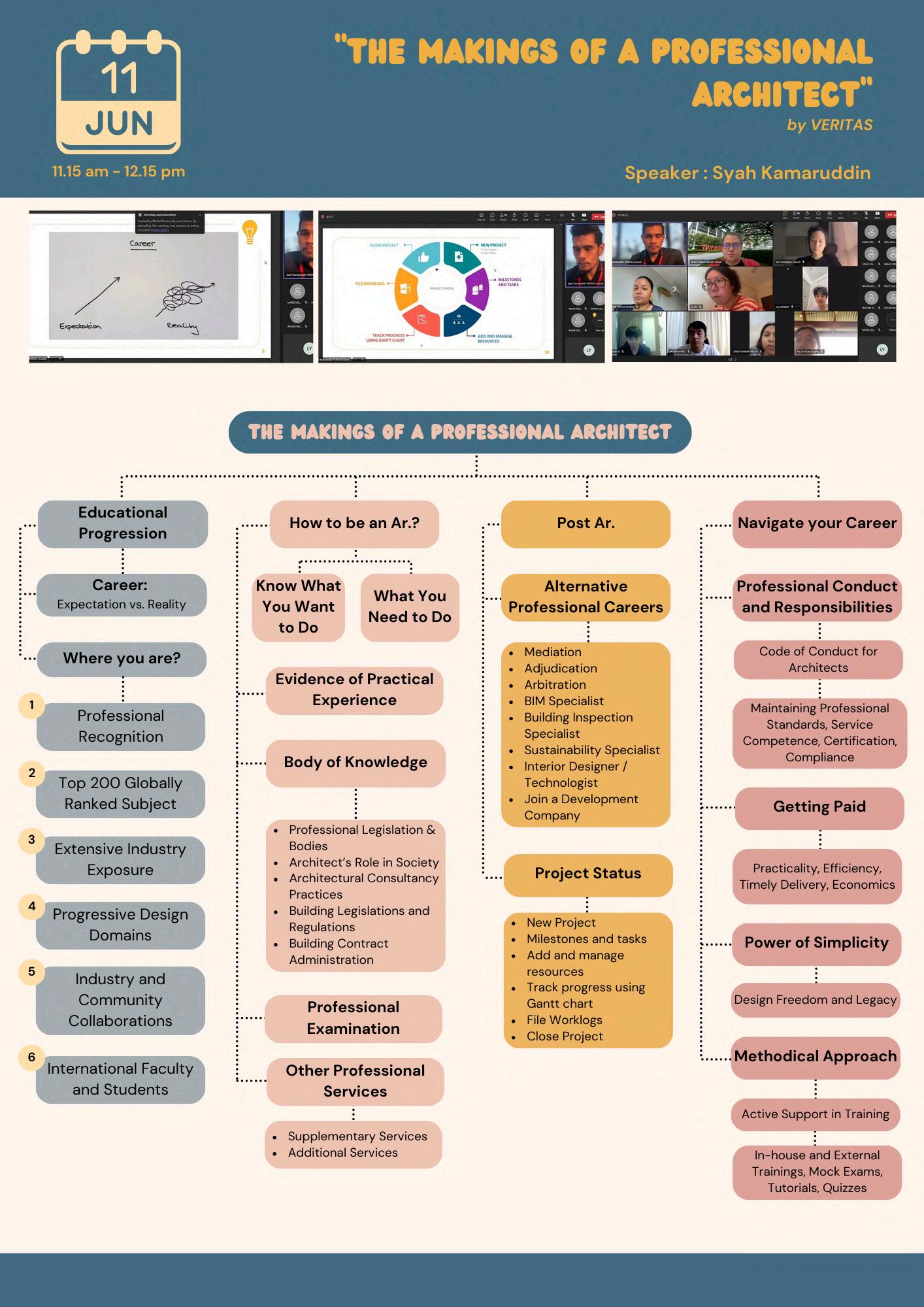
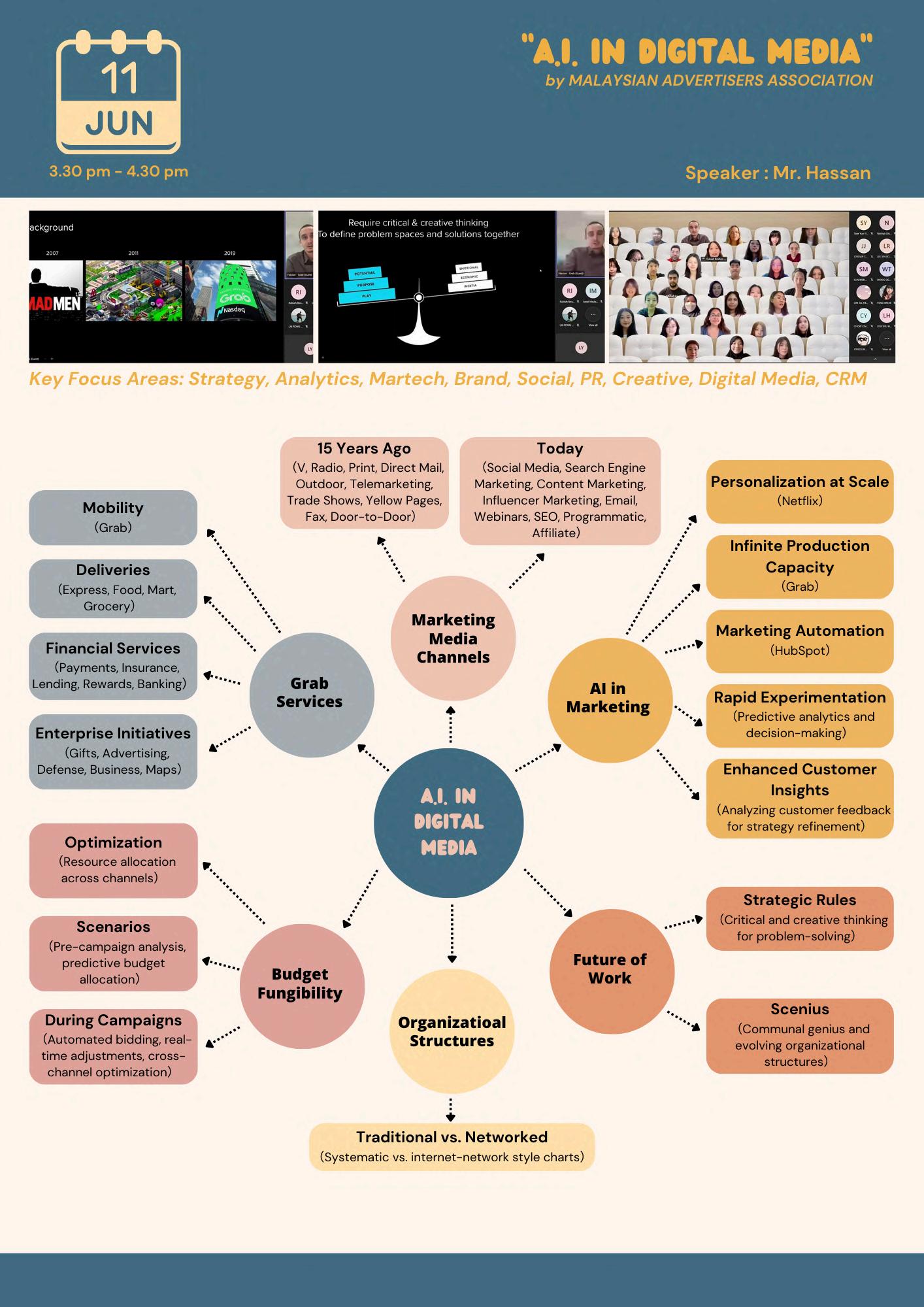
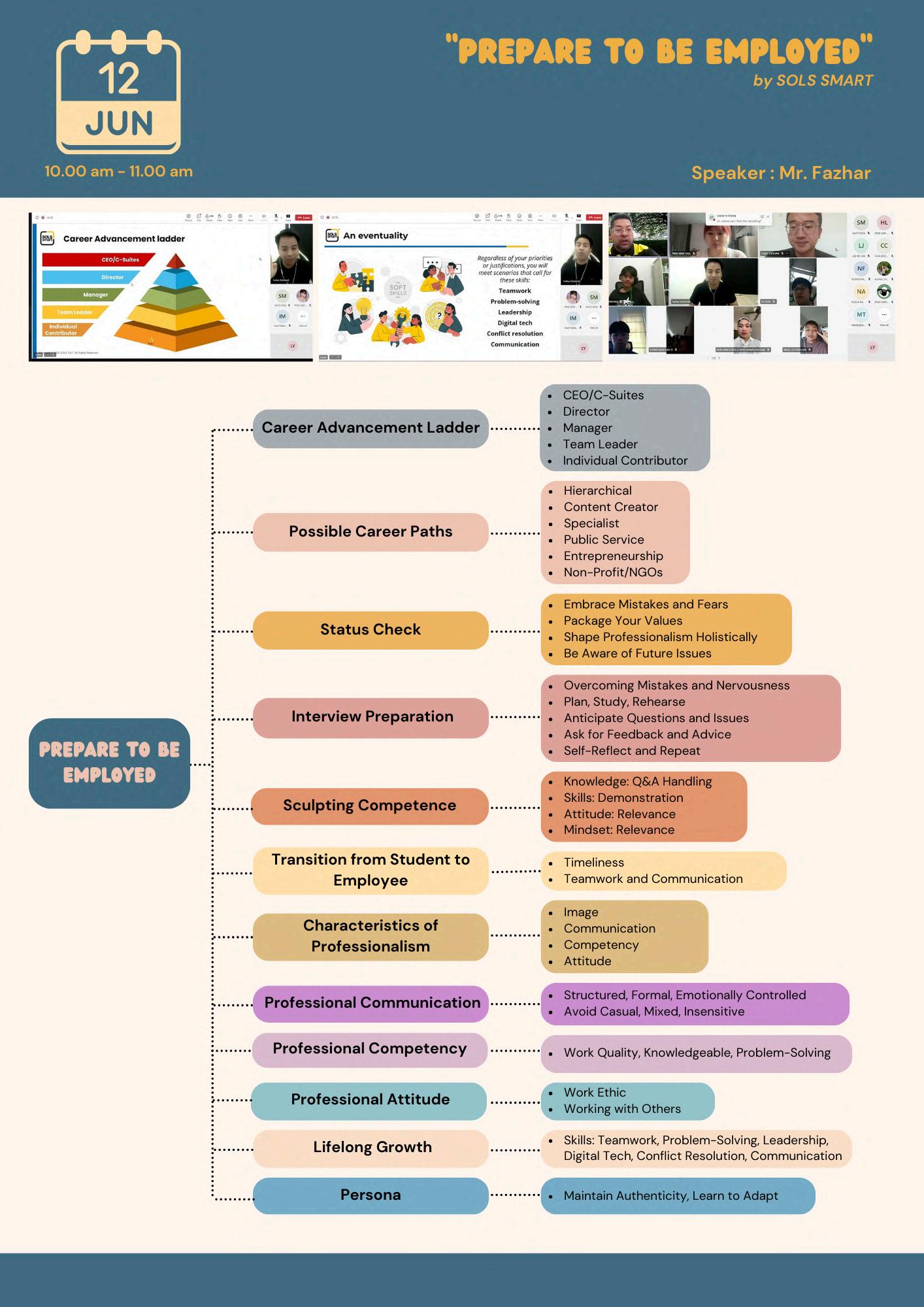
The first task is to encourage more democratic exchanges whereby in the online forum, each student has a voice that will be heard by anyone who chooses to read his or her comments. Students will experience personal and academic gains as result of their communication with their peers. The second task is to participate in Professional Development Week at Week 8, the University will require you to join at least 6 seminars (TBC) & at the end of the PDW week each student will be required to conclude a summary/reflection of their personal thoughts of your selected PDW seminars.
FORUM + PROFESSIONAL DEVELOPMENT WEEK



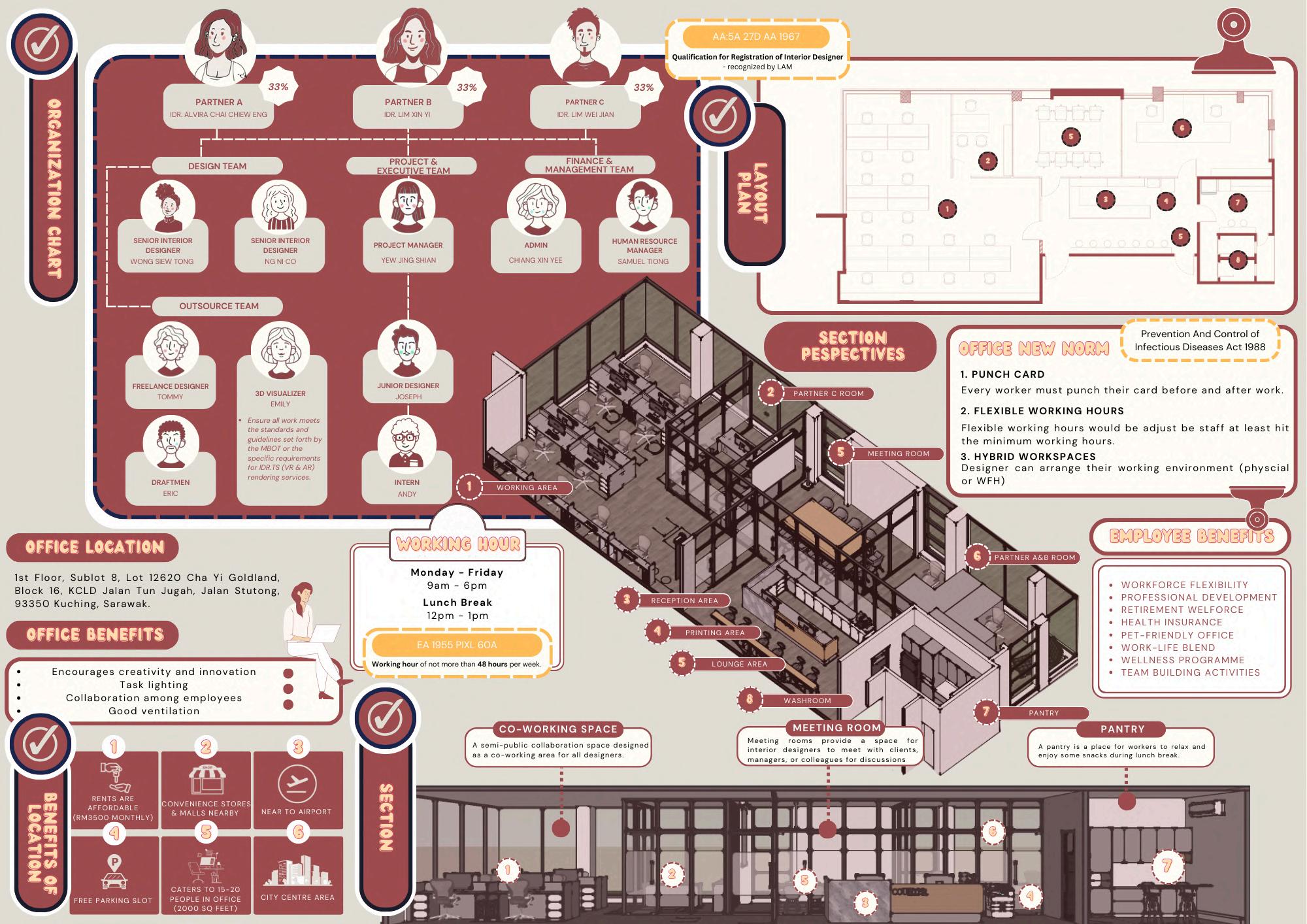
This assignment encourages students to reimagine and reconceptualize the ideal architectural practice of the future by addressing common challenges faced by architects/designers and proposing innovative solutions and business models. By critically evaluating data from Project 1, students clarify their vision and mission for their own design companies within a business context. They will reflect on their actions and apply effective business practices, incorporating knowledge from previous assignments related to legal matters. The assignment involves planning and organizing a realistic design practice (as a sole proprietor, partnership, or body corporate), requiring creativity and resourcefulness in forming their own business.
Future Practices (Formation of IDCP)
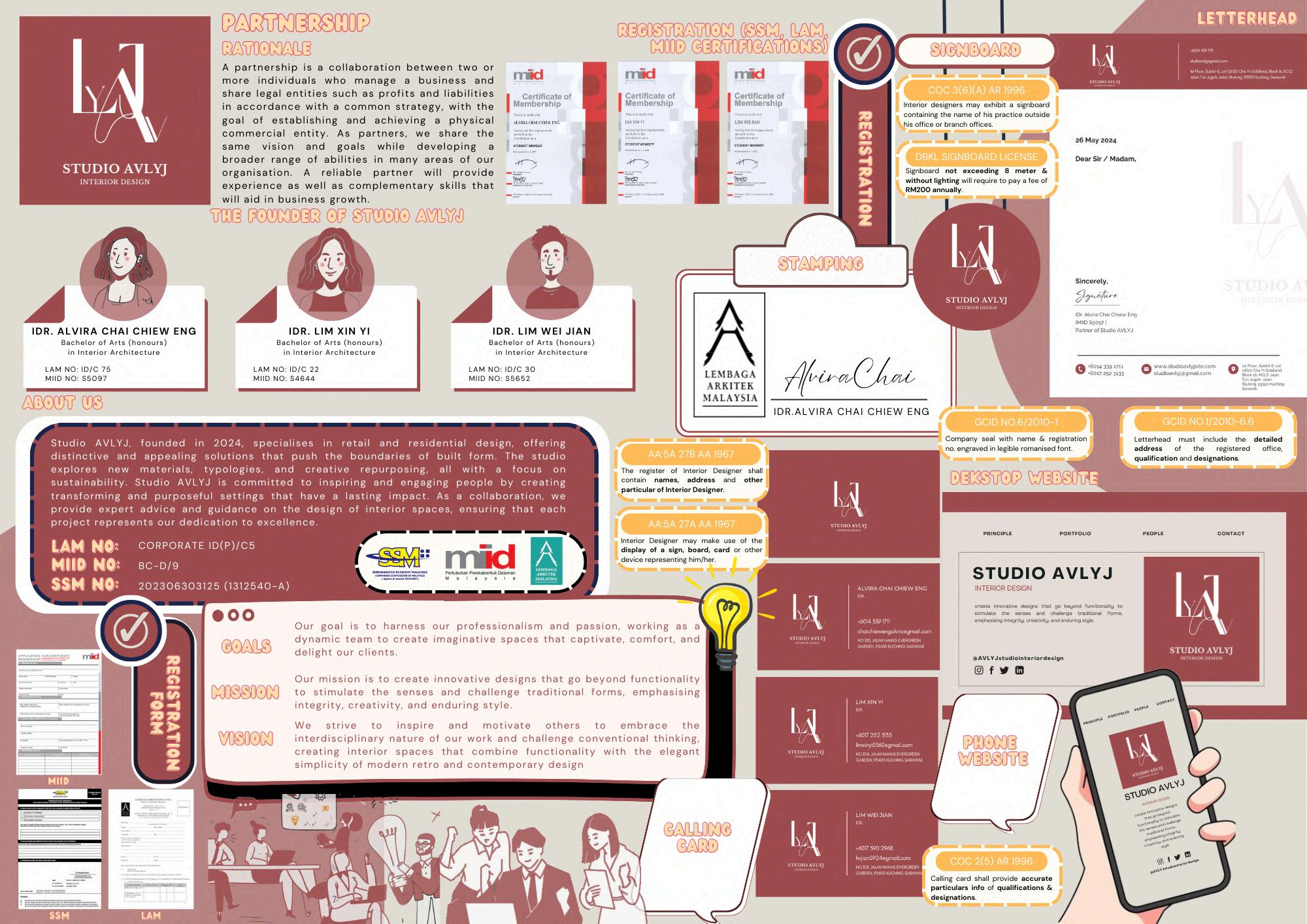
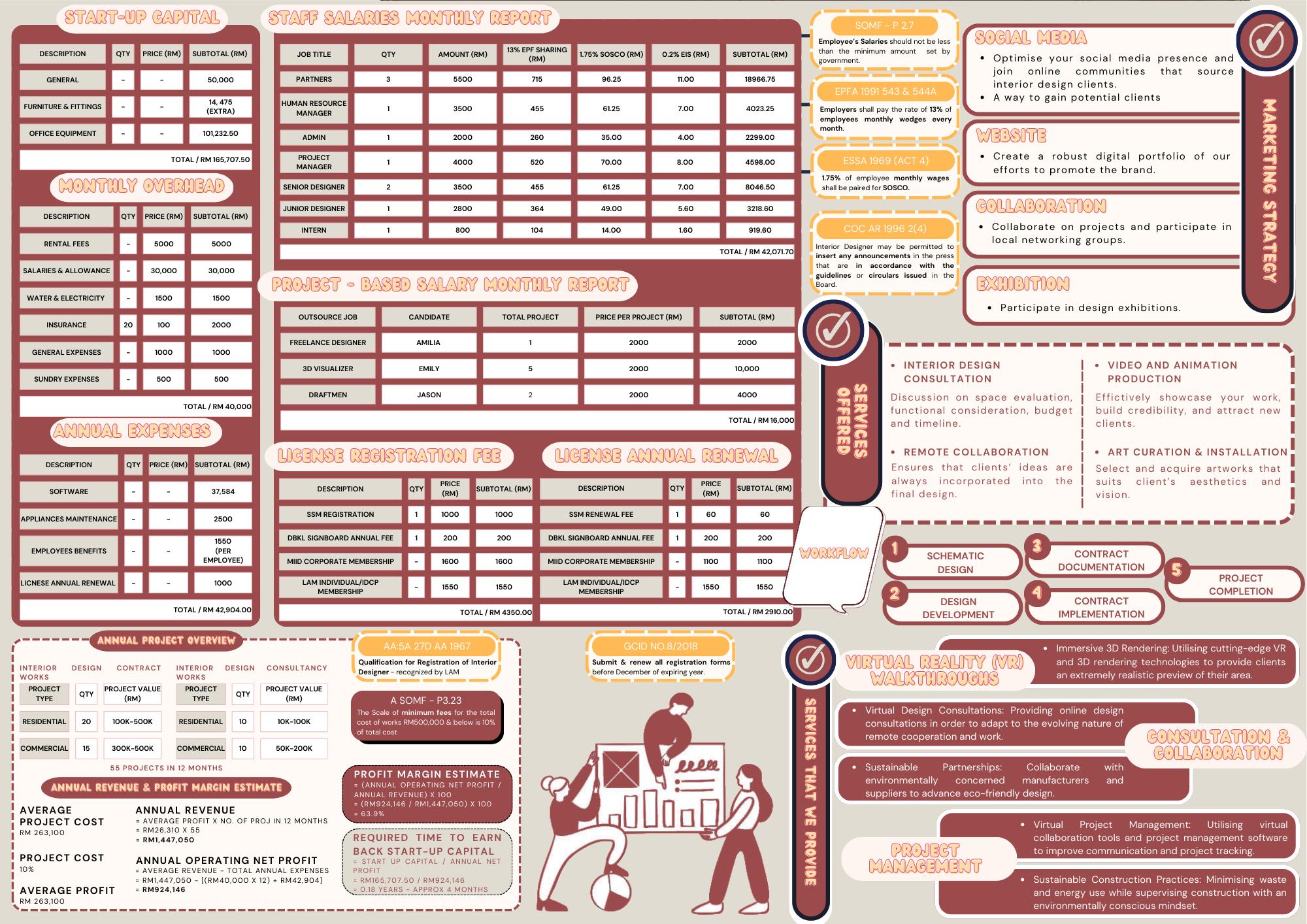
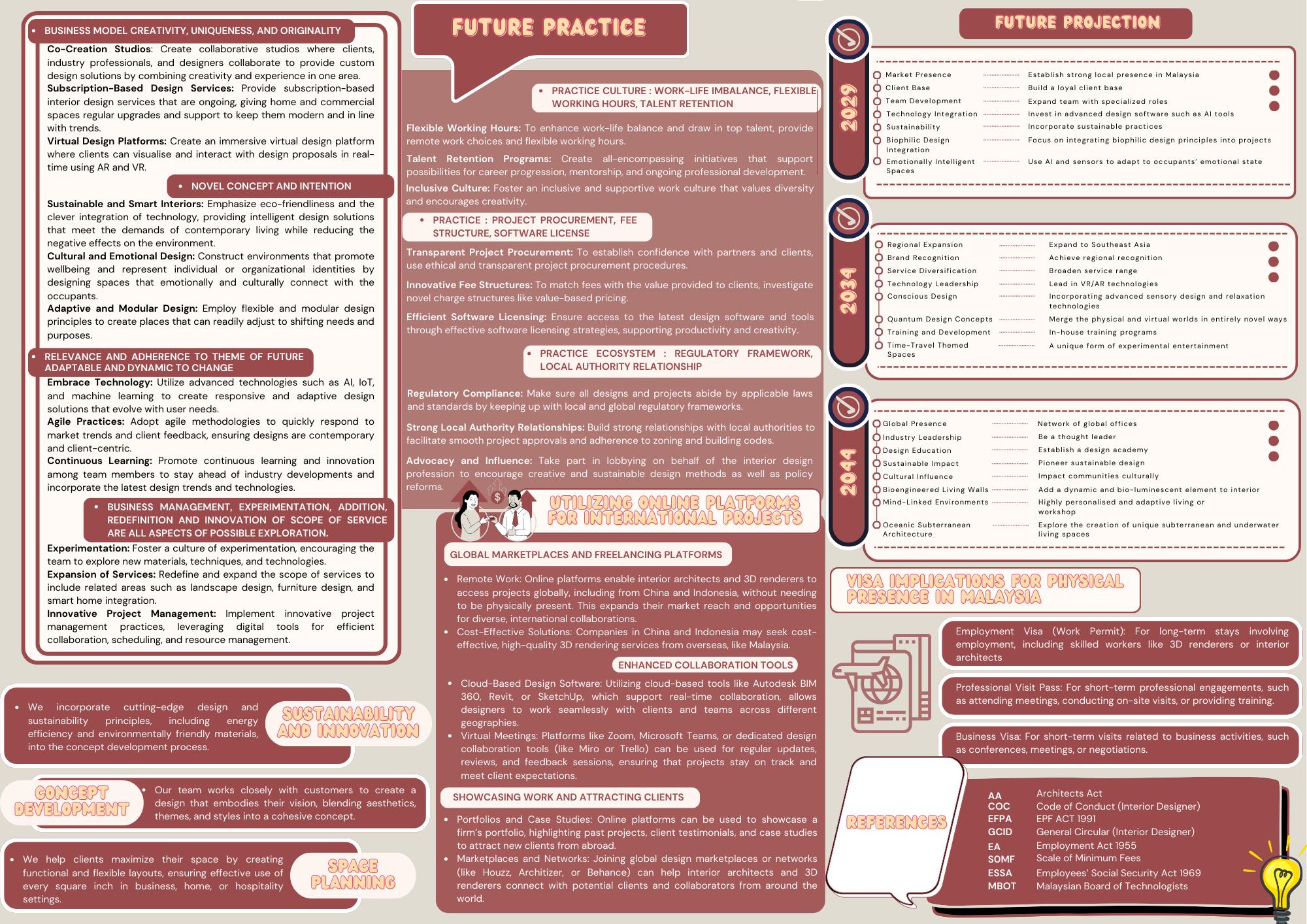



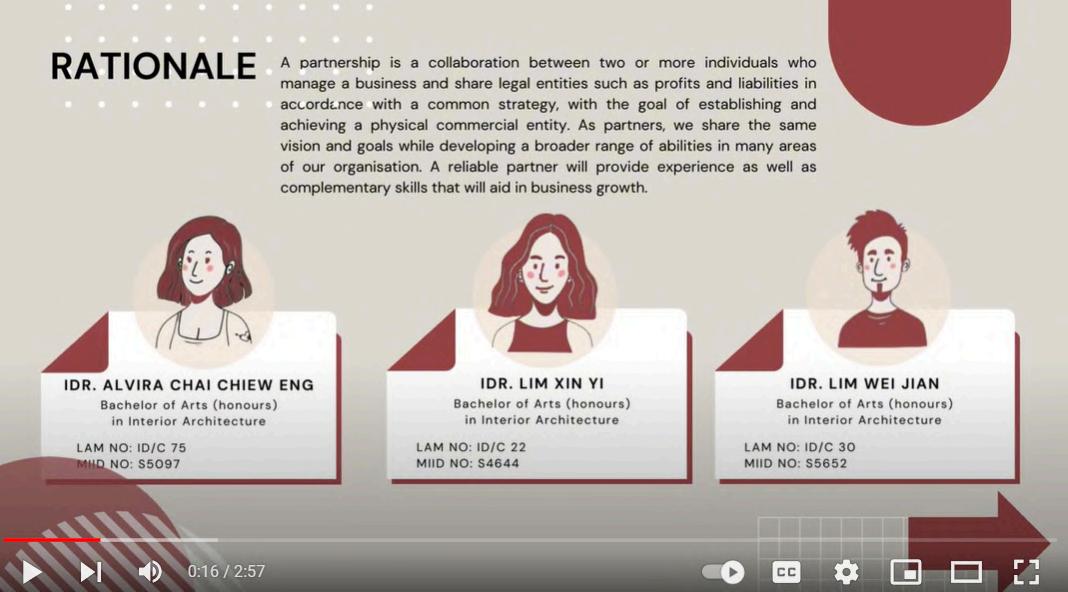
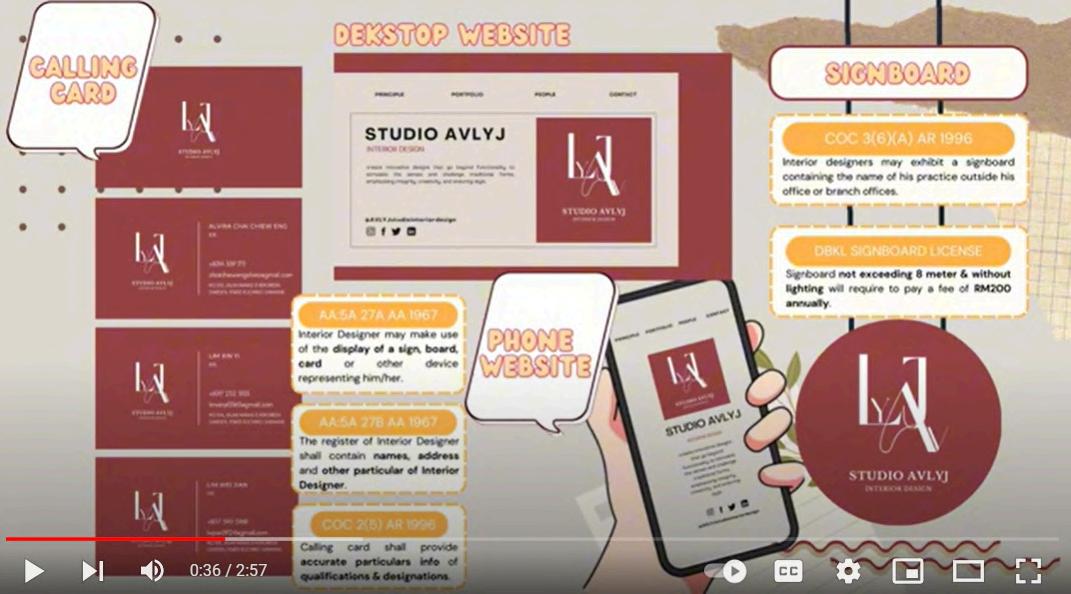
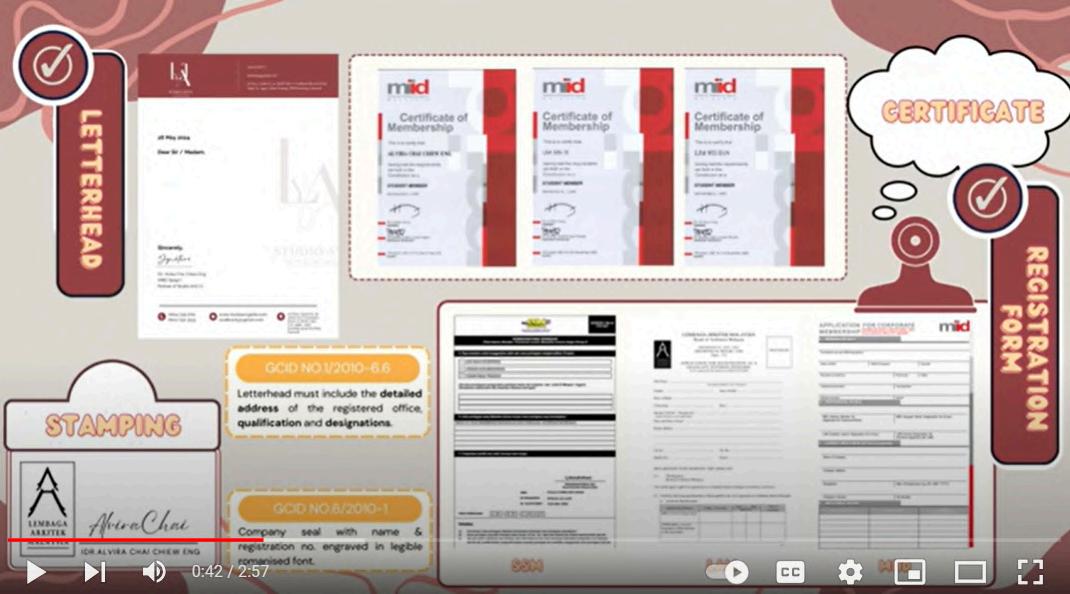
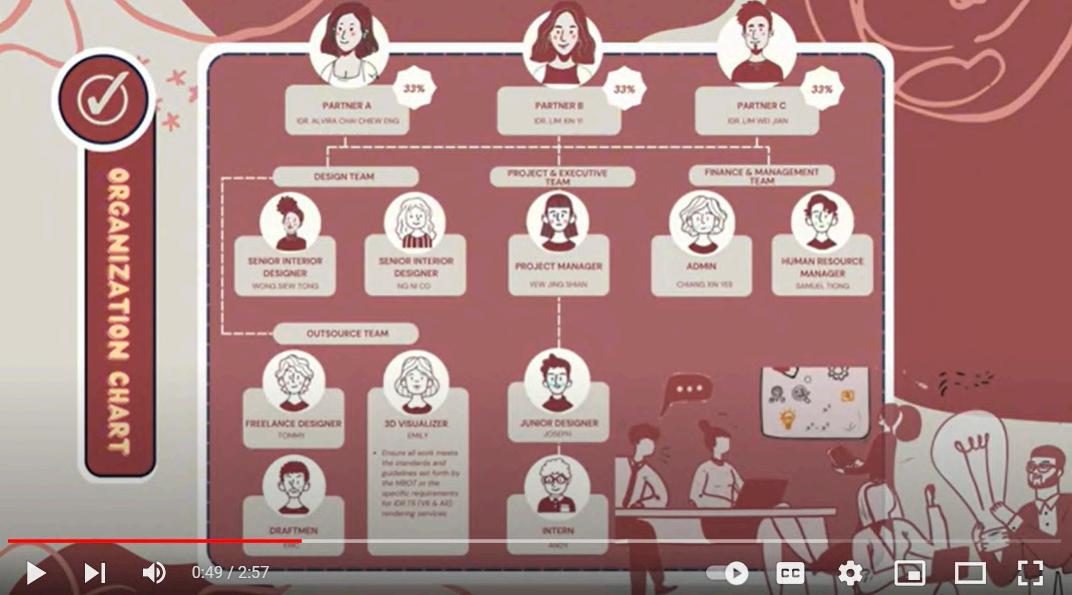
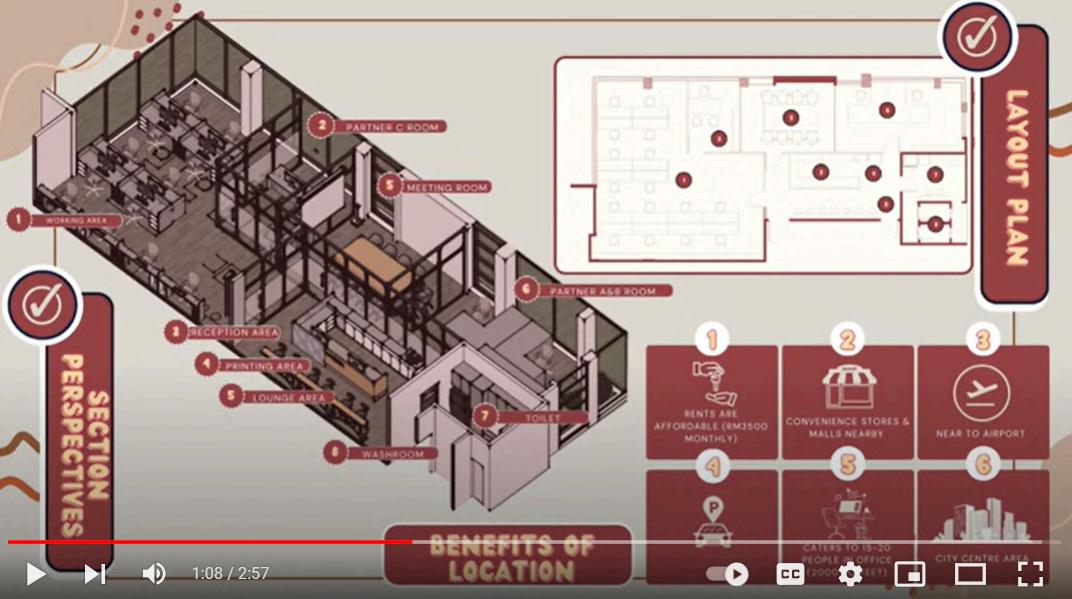
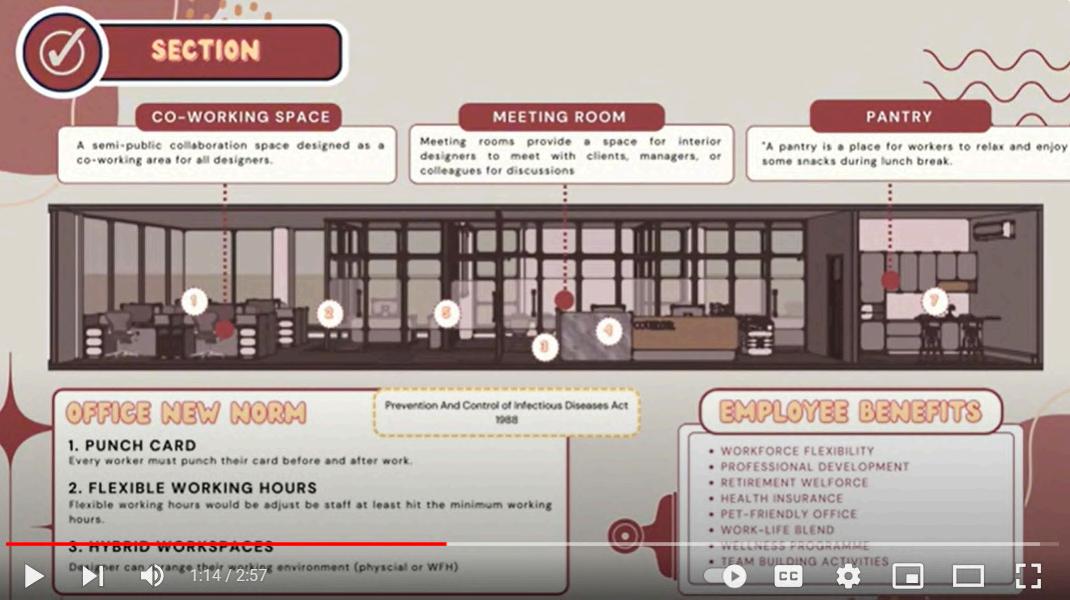
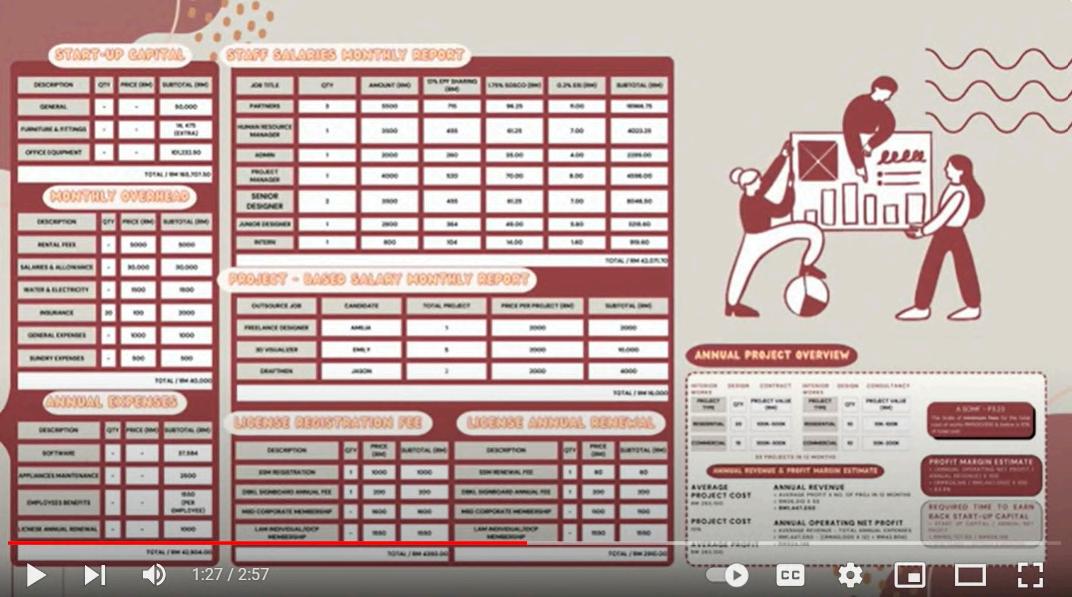
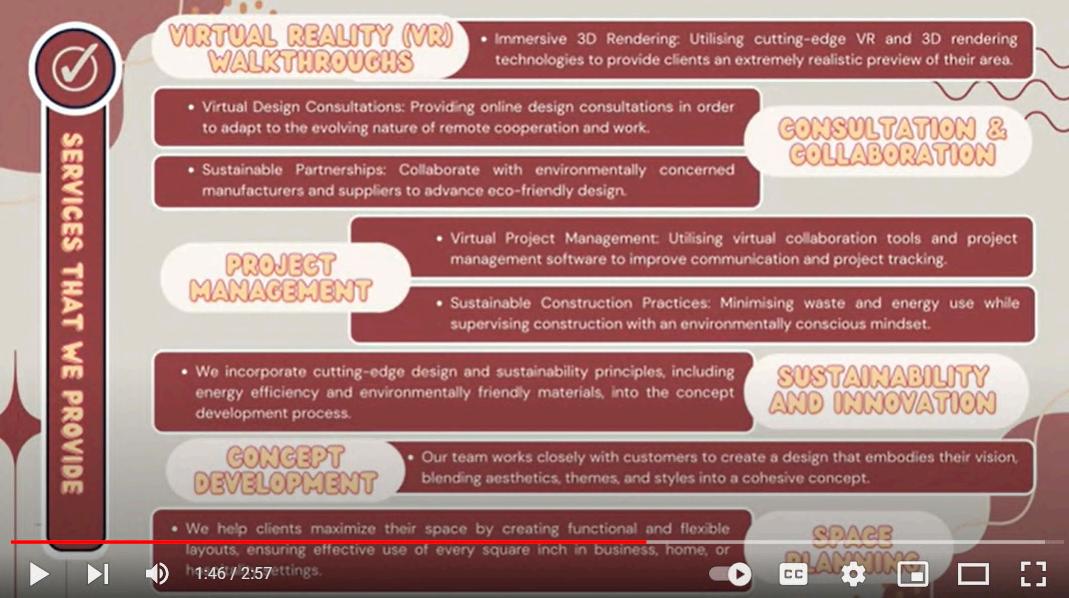
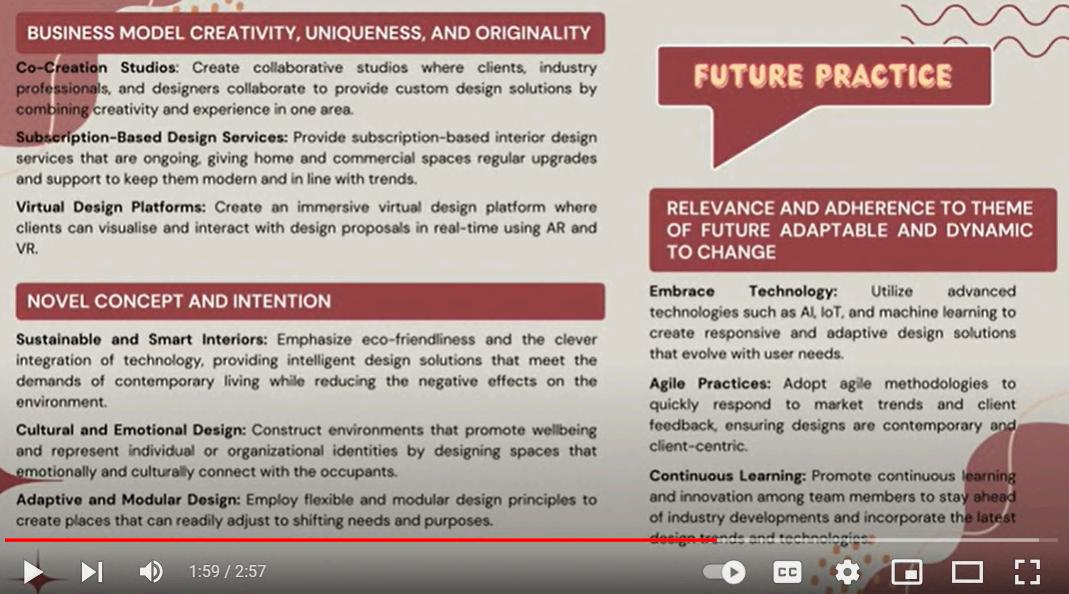
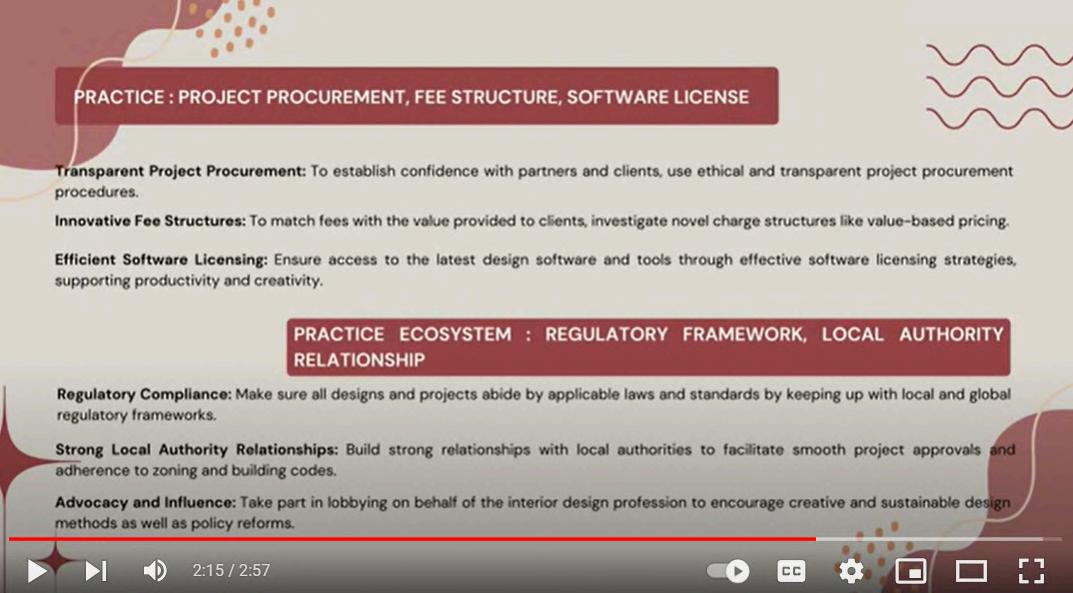

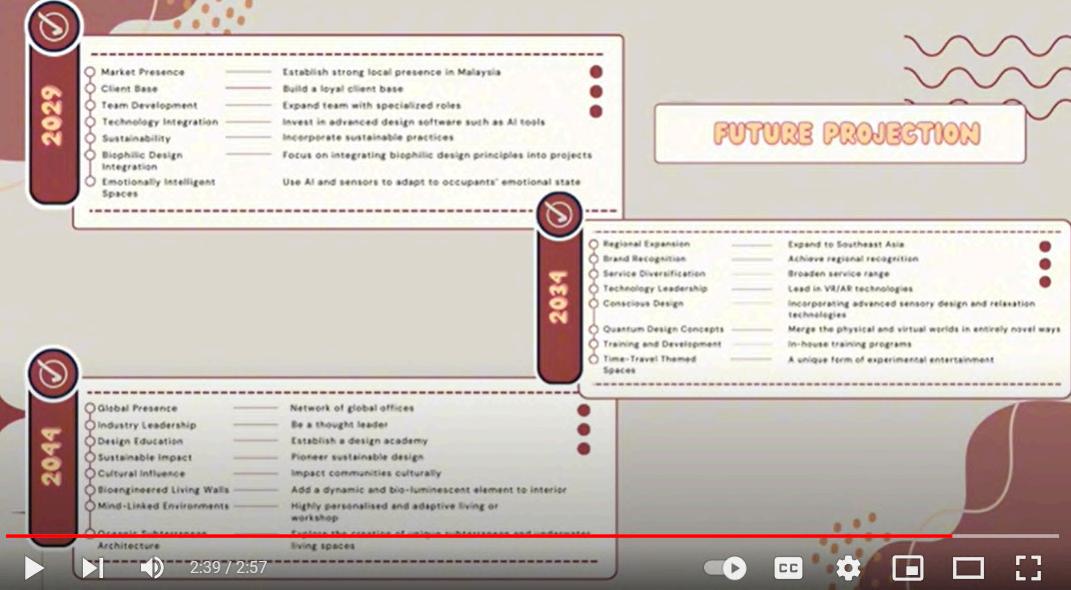
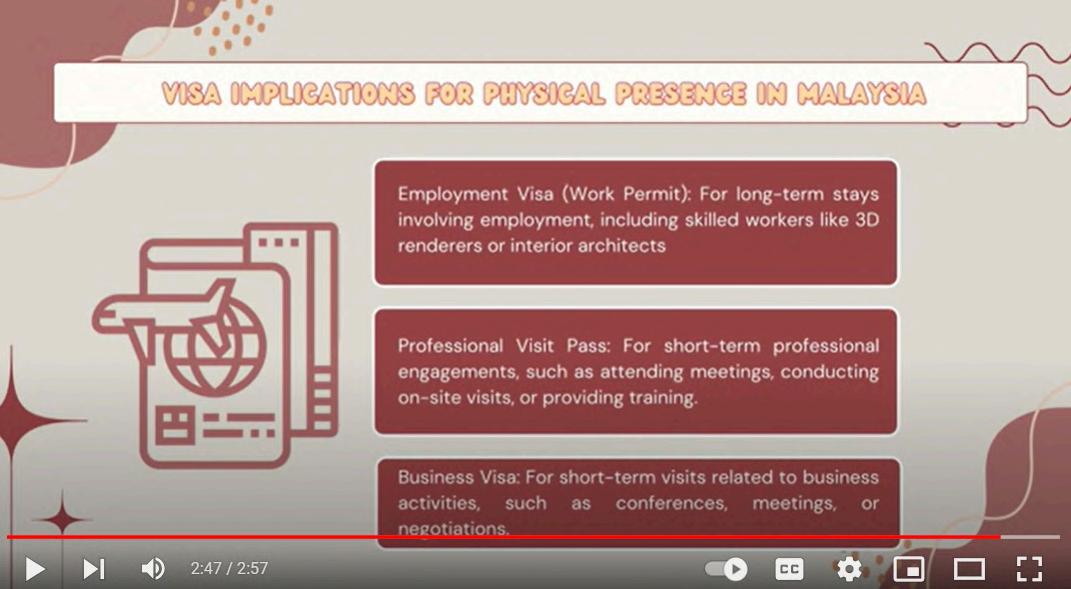


This assignment provided a valuable opportunity to reimagine the future of architectural practice by addressing industry challenges and proposing innovative solutions and business models. Through critical evaluation of data from Project 1, I clarified my vision and mission for forming a design company within a realistic business context. Collaborative efforts enhanced our research and honed essential teamwork skills. Reflecting on effective business practices and incorporating legal knowledge from previous assignments has given me a solid foundation for understanding the regulatory framework of the industry. Overall, this assignment has prepared me to navigate my career with a clear vision, ethical integrity, and a strategic approach to establishing my own design business.

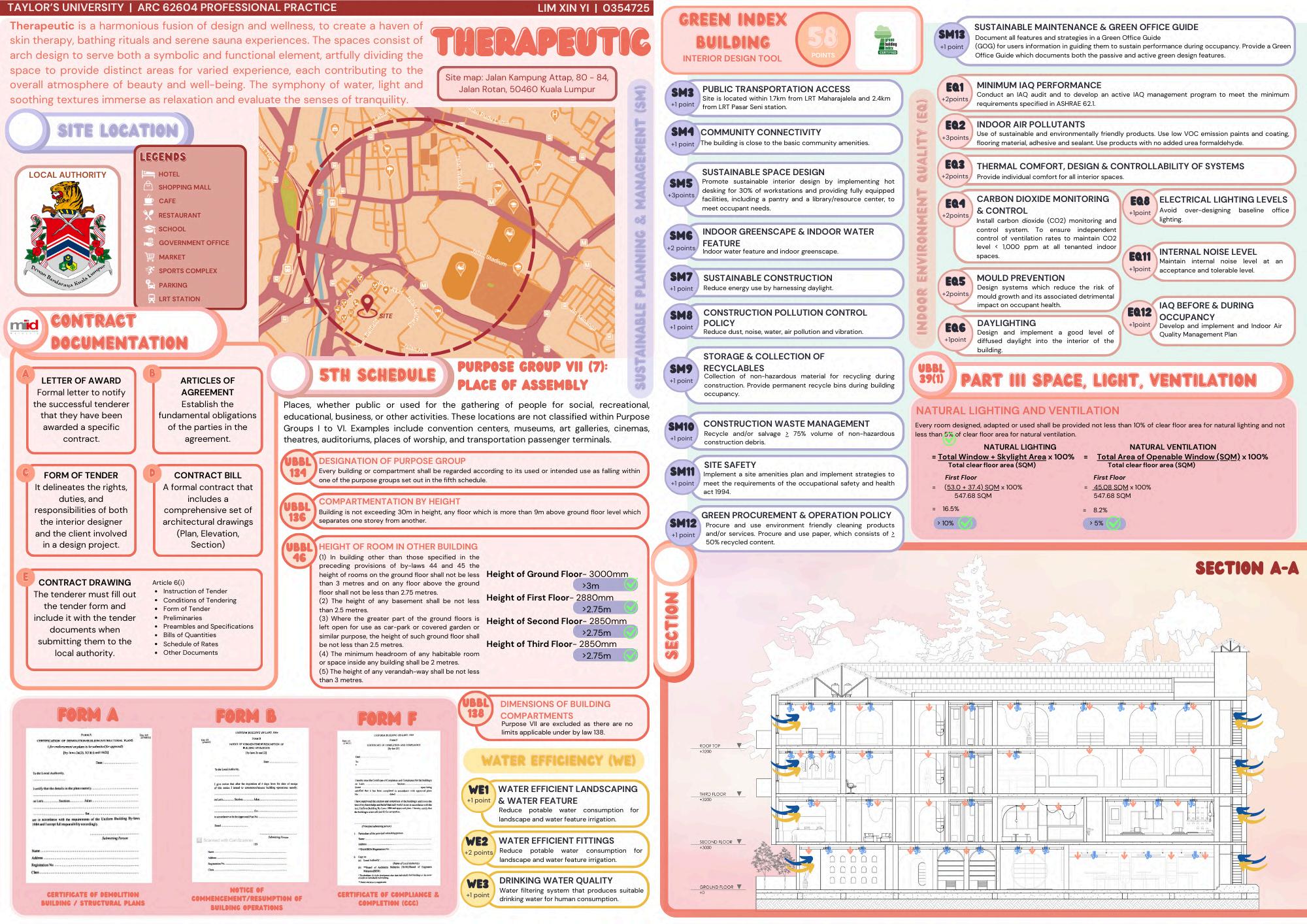
This assignment enables students to apply knowledge from Project 1 to their individual AIAD2 projects by illustrating regulatory, legislative, and technical provisions in an informative report presentation with dimensions, drawings, and materials. Assessment is based on their ability to explain and apply this knowledge to their Final AIAD2 Project. Serving as a working paper for AIAD, the design should not be altered by laws due to time constraints but should act as a guideline for future steps before finalizing building plans.
BY-LAW APPLICATION AND PREREQUISITES FOR BUILDING PLAN SUBMISSION
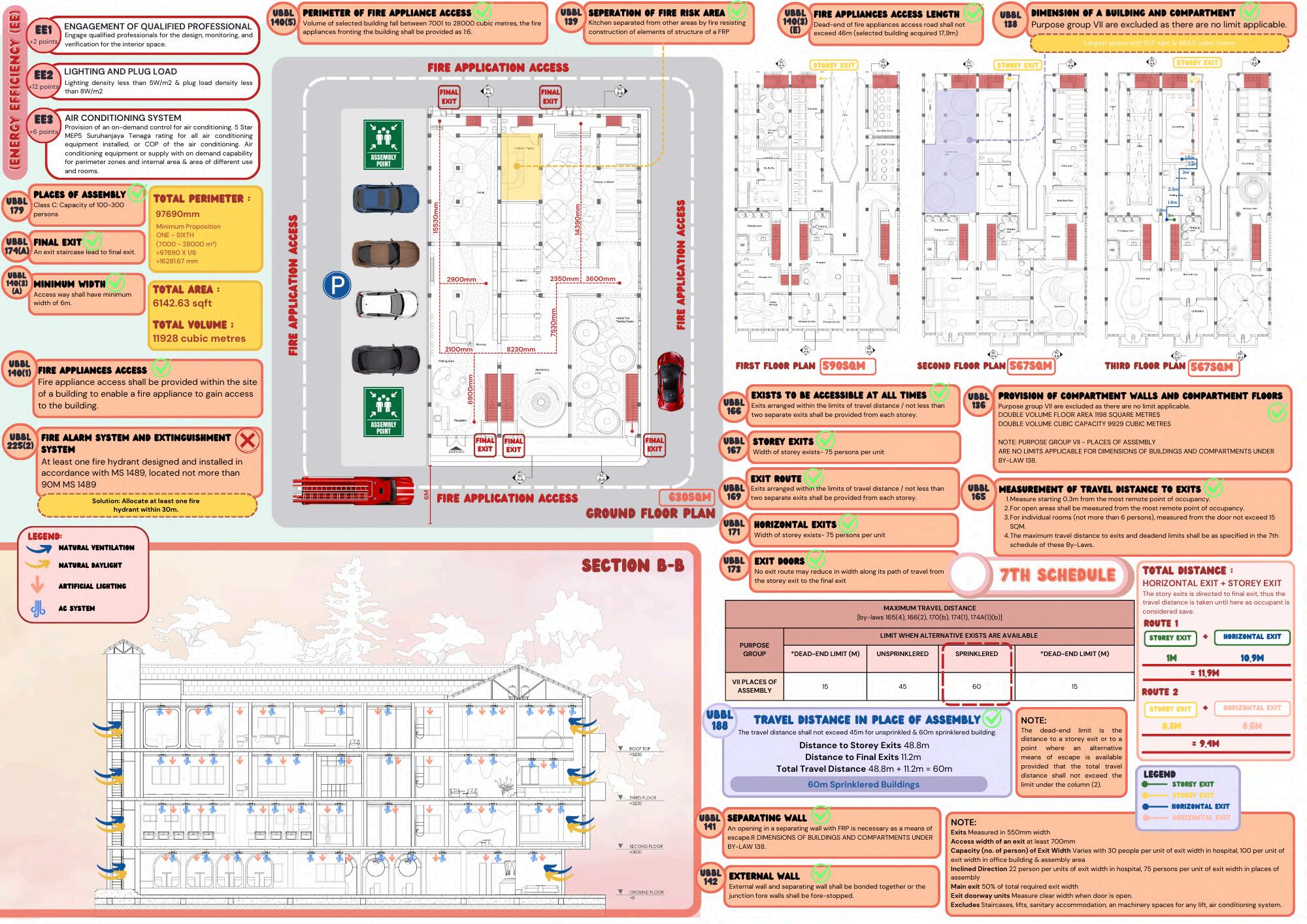
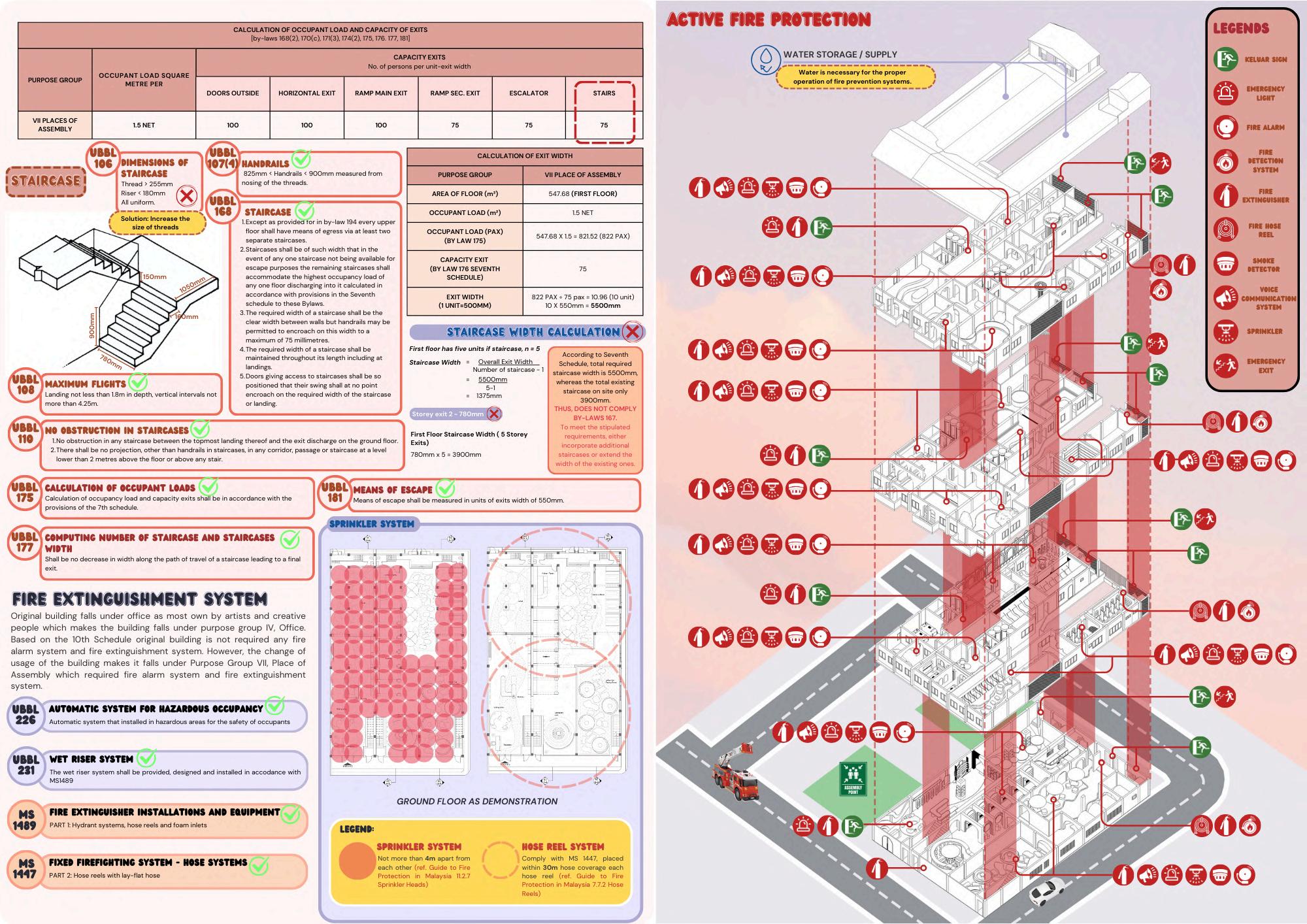
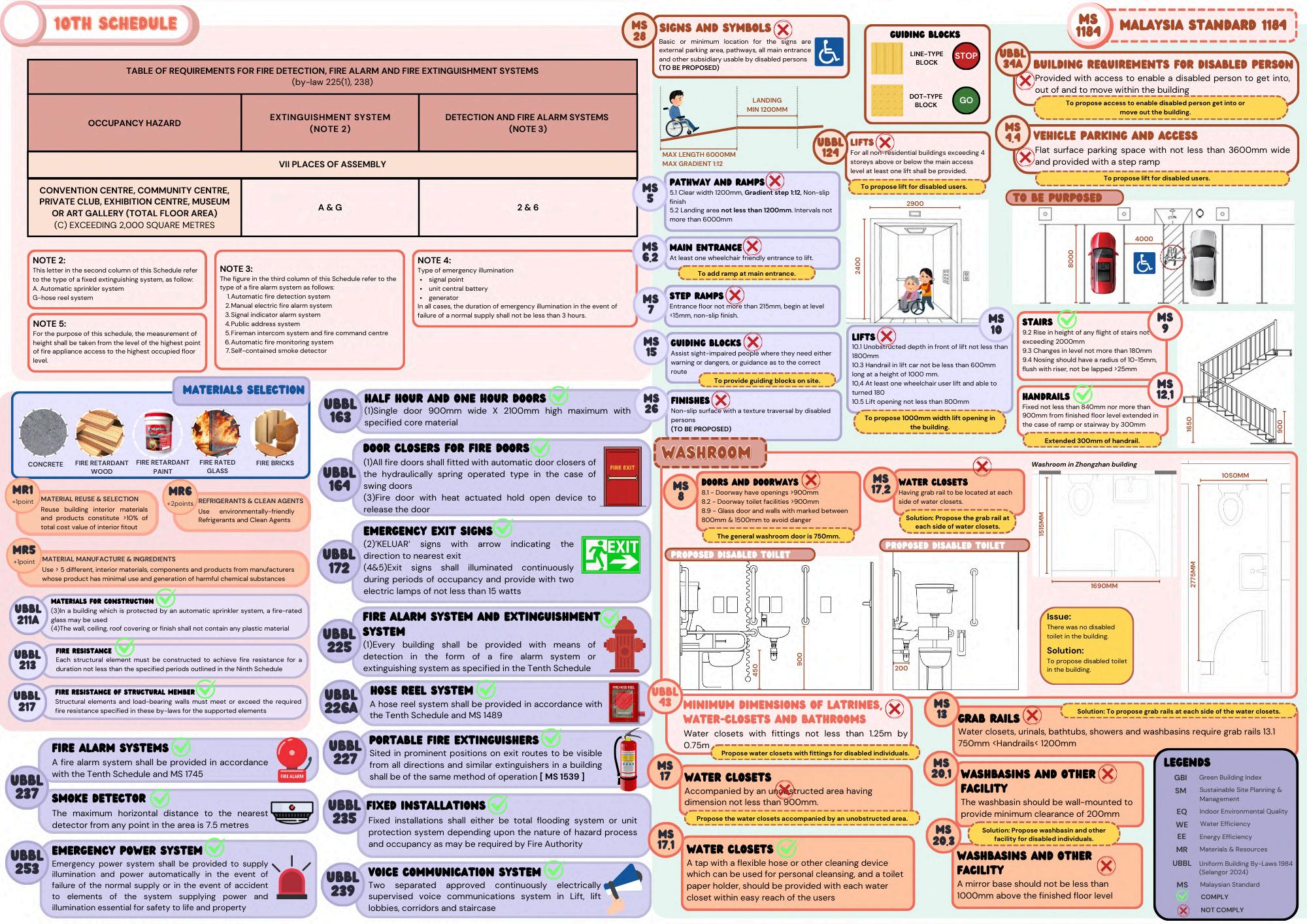
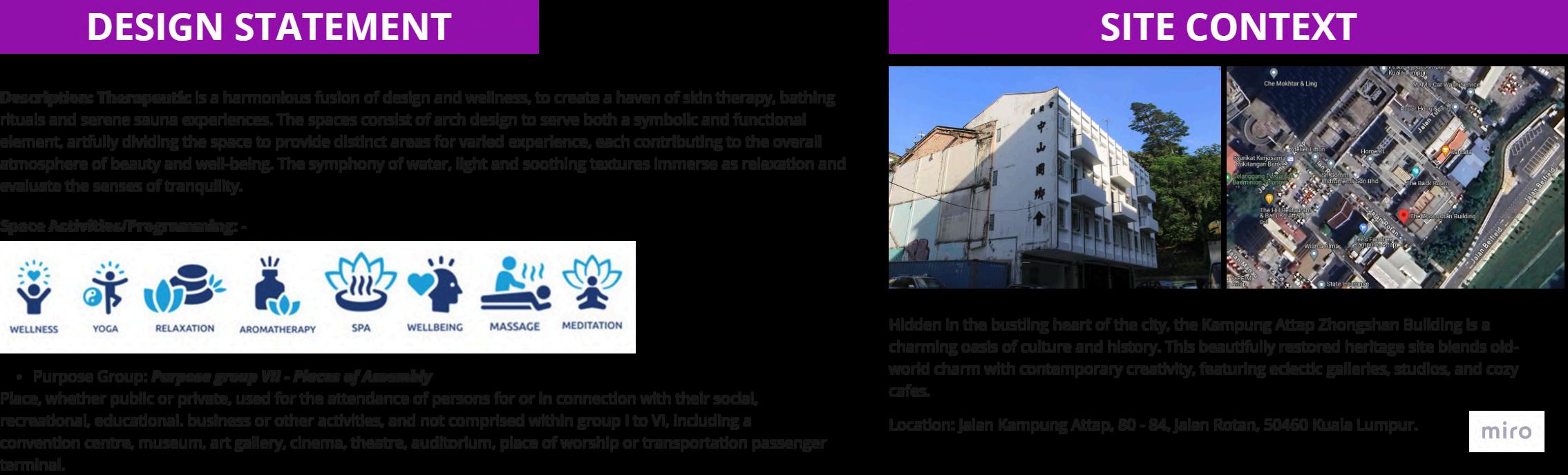
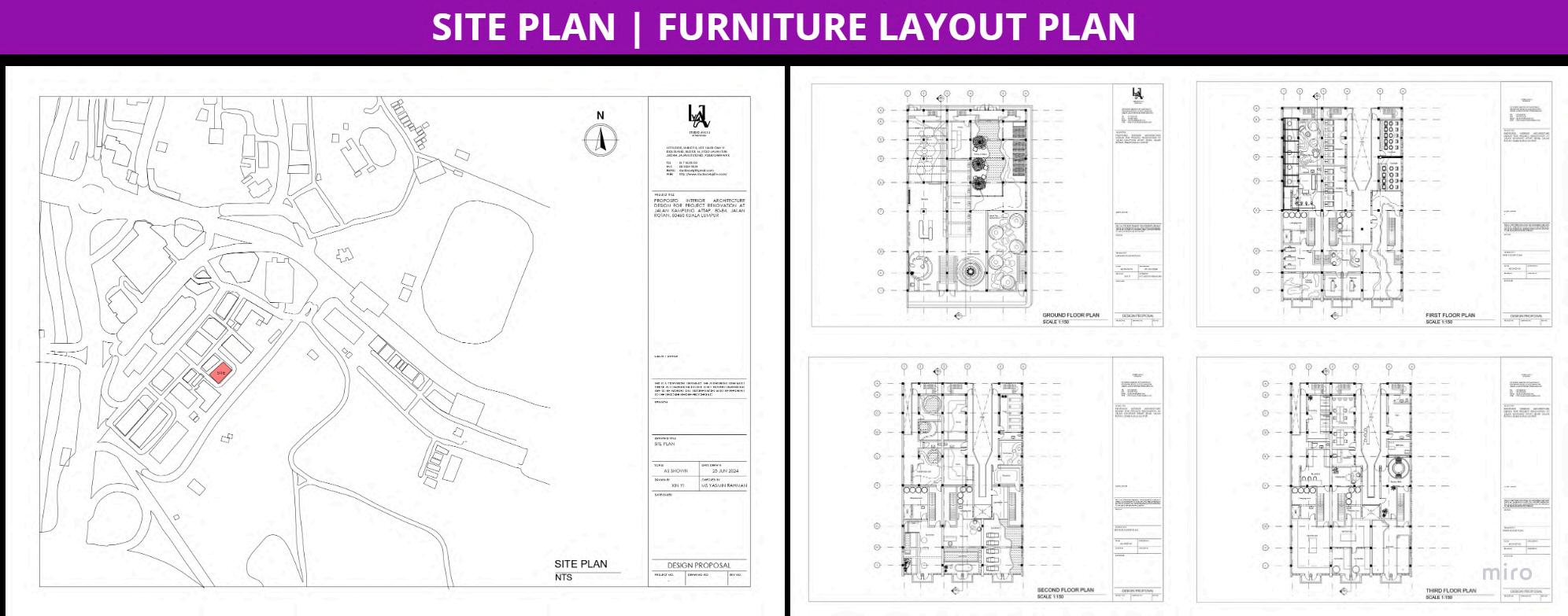
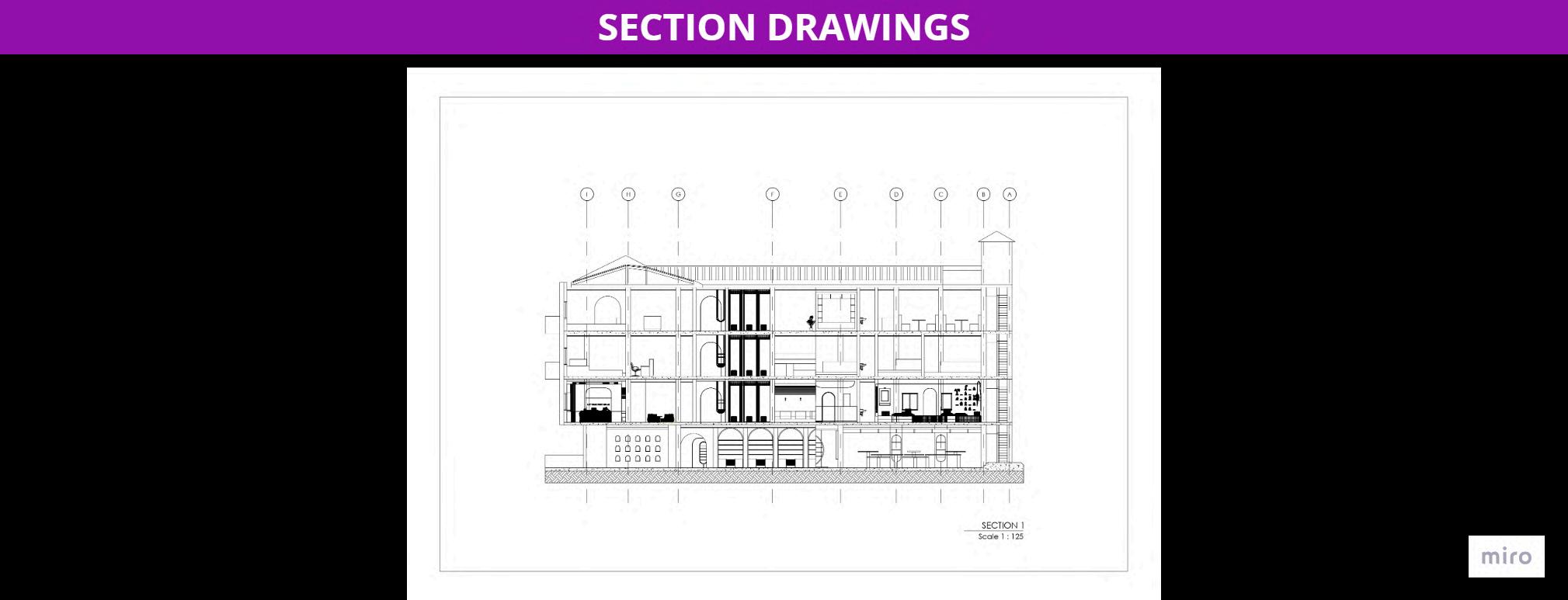
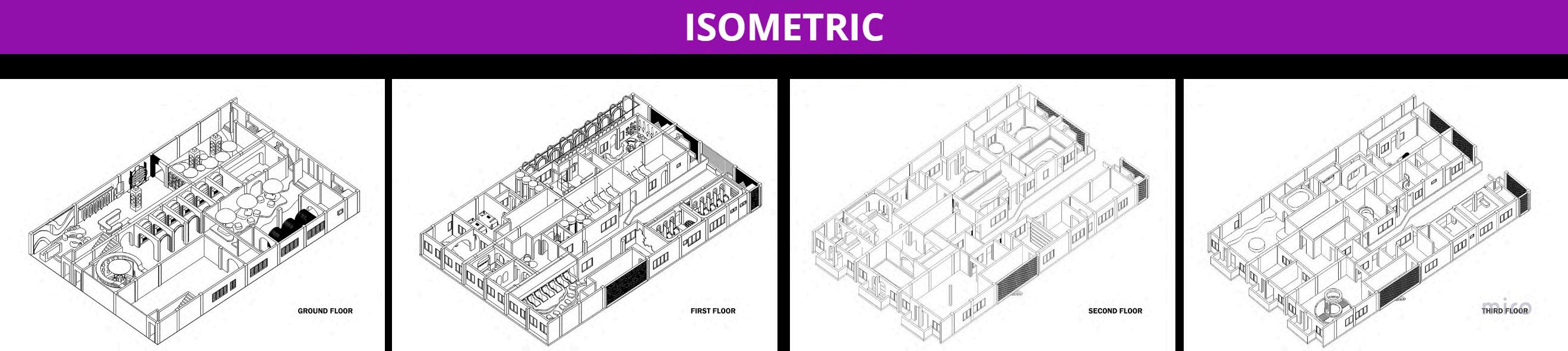

This assignment has been instrumental in applying the knowledge from Project 1 to my AIAD2 project, deepening my understanding of integrating regulatory, legislative, and technical provisions into practical design. Creating detailed report presentations with dimensions, drawings, and materials enhanced my communication skills, while identifying non-compliance and proposing rectifications sharpened my problem-solving abilities. Despite time constraints preventing design changes, this assignment provided a valuable framework for ensuring legal compliance before finalizing building plans, reinforcing the importance of regulatory knowledge in professional practice. Overall, it has prepared me to approach architectural design with a more comprehensive and legally informed perspective.

The Professional Practice Module has been invaluable, significantly enhancing my understanding of the professional, legal, and practical aspects of interior design through four assignments. The first assignment established a strong foundation in contractual, professional, and legislative terms, while the second allowed me to reimagine future architectural practices, emphasizing creativity and strategic business planning. The third assignment focused on applying regulatory knowledge to practical projects, sharpening my problem-solving skills and ensuring legal compliance. The final assignment involved planning a realistic design practice, integrating all previous knowledge to develop a comprehensive, legally informed approach to establishing a successful design business. I am now better equipped to navigate my future career with confidence, competence, and a thorough understanding of my responsibilities and the regulatory environment that governs our profession.