VERY HARSH LIGHTING A Environment


What They Don’t Know About Their LEDs Could Hurt Their Bottom Line
Your customers may think their LED systems are still performing like day one—but you know better. Let’s turn that insight into opportunity:
Systems running for 5–8 years likely have:
■ 30% light loss
■ Drivers nearing failure
■ Negative employee/customer experience due to reduced visual impact and in productivity
With Acuity, you can:
■ Re-engage past clients with meaningful solutions
■ Improve performance and safety with strategic upgrades
■ Deliver energy savings and smarter controls
■ Extend system life and enhance value
When you win, we win. We’re not just a manufacturer—we’re your growth partner.
Don’t leave opportunity on the table.
Contact George McIntyre at Acuity and start your next retrofit win—with a partner who’s all in on your success.
CONTACT

CONTRIBUTOR
Editor and Publisher
Randy Reid
Assistant Editor
Parker Allen
VP, Associate Publisher, Advertising
Cliff Smith 917.705.3439
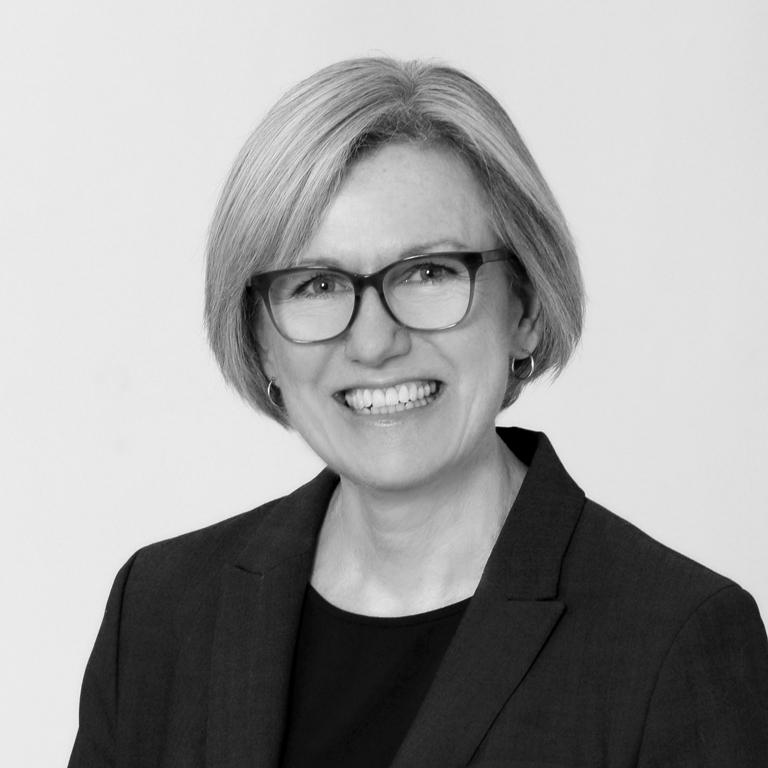
SHIRLEY COYLE
Shirley Coyle has worked in the North American commercial lighting industry for several decades, holding various leadership roles. A Past President of the Illuminating Engineering Society (IES), Shirley is very active in the lighting community, including participation on lighting standards development.
Art Direction
Seraphine Morris
Lighting Management & Maintenance (LM&M) publishes information for the benefit of its members and readers. The sponsor (NALMCO), publisher and editor of LM&M cannot be held liable for changes, revision or inaccuracies contained in the material published. For detailed information on the products, programs, services or policies covered, it is recommended readers contact the appropriate person, company agency of industry group.
LM&M is published by EdisonReport (ISSN 2835-821X). Statements and opinions expressed in articles and editorials in LM&M are the expressions of contributors and do not necessarily represent the policies or opinions of the EdisonReport. Advertisements appearing in the publication are the sole responsibility of the advertiser.
On The Cover
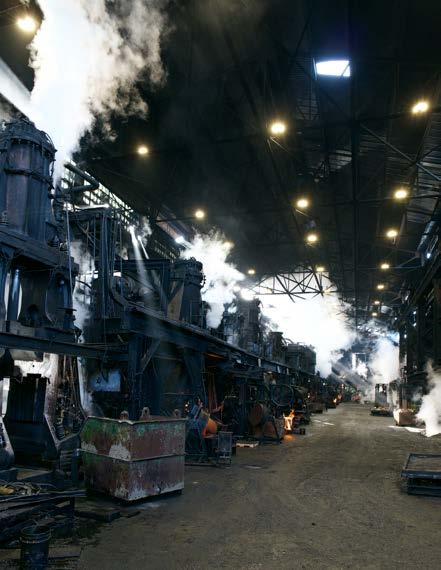
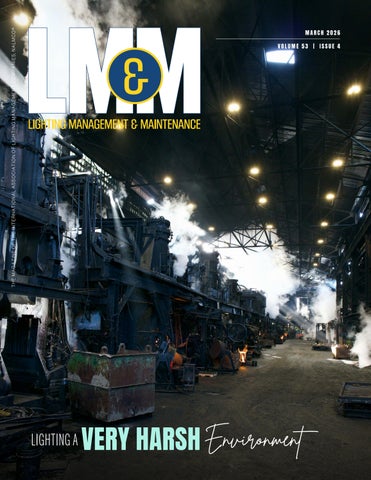
Park Ohio’s century-old forge facility in Canton, Ohio
BOARD OF DIRECTORS
BOARD OF DIRECTORS

making lighting the easiest part of your job—from specification to installation and every step in between. PRODUCTS
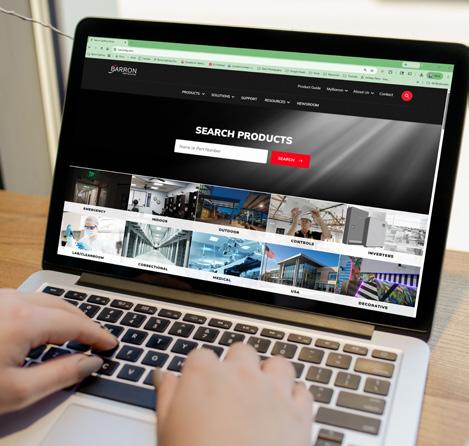
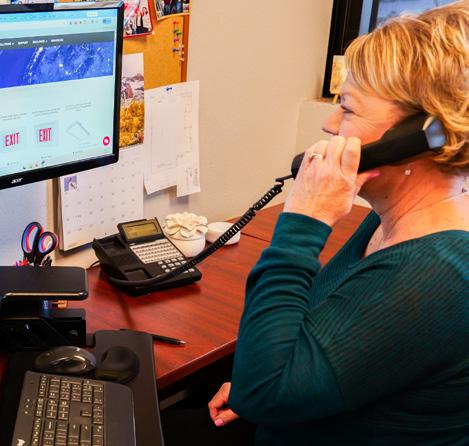
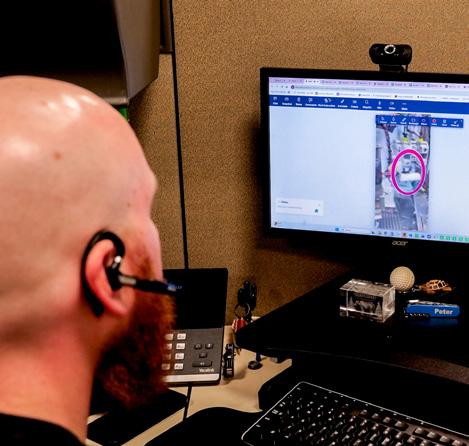
REAL EXPERTS WHO ANSWER THE PHONE
You get a real person— every time— ready to help you solve problems.
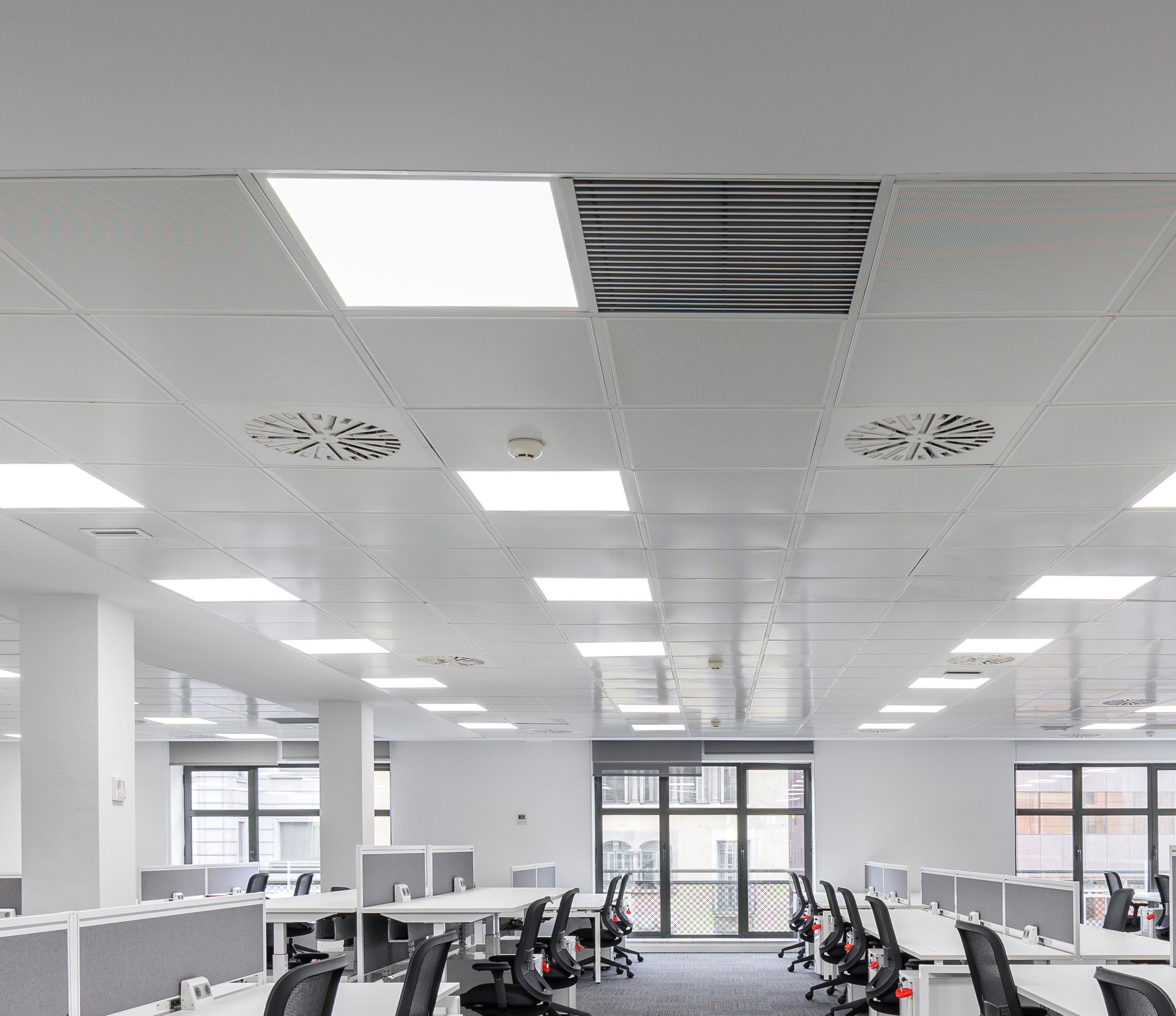
SUPPORT THAT CONTINUES AFTER THE SALE
We stand behind our products and support you long after installation.
President's MESSAGE Dear members
and industry colleagues,
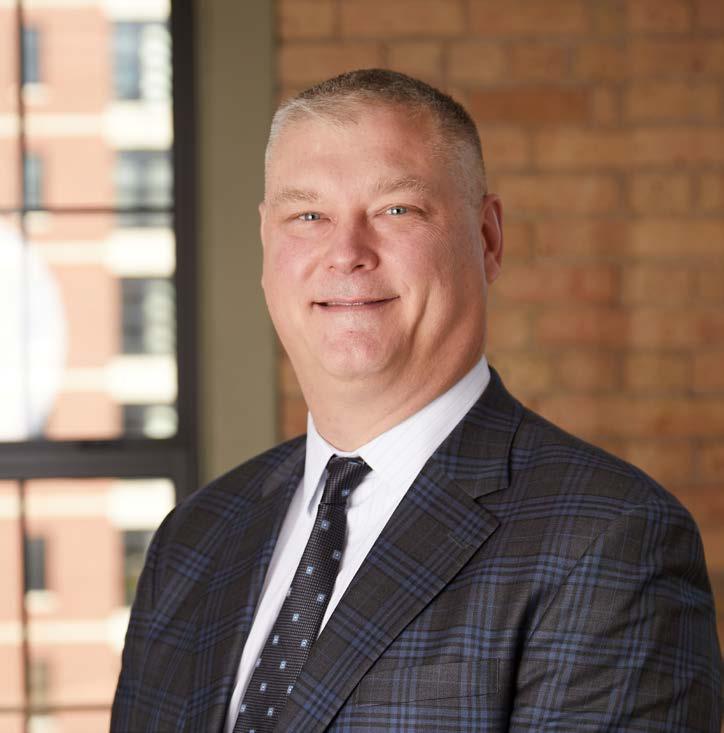
ERIK J. ENNEN CLMC, CLA, CLCP, CSLC, CLEP, C-GUVMP President, NALMCO Board of Directors
We are now almost a quarter of the way into 2026, and I am, energized by the momentum building within NALMCO and across the lighting industry as a whole. Our association was founded on the belief that collaboration strengthens outcomes— for our members, our partners, and the customers we serve—and that belief has never been more relevant than it is today.
The year ahead presents meaningful opportunities for NALMCO members to deepen relationships, share expertise, and elevate the role of lighting management within the broader industry ecosystem. From manufacturers and distributors to designers, contractors, utilities, and end users, the future of lighting depends on our ability to work together, align goals, and learn from one another.
In 2026, NALMCO will continue to expand opportunities for networking and engagement. Keep an eye out for the new opportunities with NAESCO and NFMT. Our conferences, regional events, and certifications will be designed to foster open dialogue, practical collaboration, and peer-to-peer learning. These gatherings are more than meetings—they are platforms for innovation, partnership, and professional growth.
We will also strengthen our collaboration with industry organizations and stakeholders to ensure that lighting management perspectives are represented in conversations around energy efficiency, sustainability, controls integration, workforce development, and emerging technologies. By actively participating in cross-industry initiatives, NALMCO members can help shape best practices and influence the future direction of lighting solutions nationwide.
Equally important is our commitment to member involvement. NALMCO committees offer powerful ways to connect with colleagues, contribute expertise, and build lasting professional relationships. In 2026, we encourage every member to engage—your voice, experience, and ideas are essential to our collective success.
By strengthening our connections and collaborating across the lighting industry, we not only advance our businesses, but also elevate the value of lighting management as a critical component of efficient, sustainable, and high-performing spaces.
Thank you for your continued commitment to NALMCO. I look forward to connecting with many of you in 2026 as we work together to grow, innovate, and lead.
Warm regards,
Local Inventory + Lighting Design Support from One Partner
More than a supplier
Our local lighting design and controls specialists are here to make your job easy. We’ll support you with:
• Professional on-site audits
• Design layouts
• Specifying products
• Identifying rebates
• Controls commissioning
Sonepar brands across the US have extensive lighting inventory –and a single point of contact for your projects nationwide.
Look to your local Sonepar distributor for your lighting needs.
FROM THE EDITOR
Putting together this issue of LM&M proved more challenging than expected. The original plan did not include significant coverage of the NALMCO Spring Seminar, largely because the event has not traditionally generated a high volume of news. Each year, the Annual Conference draws strong attendance and attention, while the Spring Seminar has remained somewhat under the radar. In fact, despite years of involvement with NALMCO events, this was the first time taking a closer look at what the Spring Seminar truly offers.
That changed quickly.
After hearing consistent feedback about the strength of this year’s program, it became clear the event deserved attention. Held at the Sheraton Valley Forge in King of Prussia, the seminar created a focused environment centered on education, connection, and practical takeaways. The format encouraged engagement and made it easy for attendees to maximize their time onsite.
To better understand its impact, several attendees were interviewed. Their enthusiasm was consistent and genuine. What stood out most was the role the Spring Seminar plays within the NALMCO ecosystem. It fills a specific need that complements, rather than competes with, the Annual Conference.
At the center of that value are the Learning Labs. These sessions delivered targeted, actionable education aligned with real-world challenges facing lighting maintenance professionals. Topics included LED-to-LED conversions, circular economy product strategies, glare control in sports lighting, and transportation efficiency through solutions like Omnivan. Additional sessions addressed DALI fundamentals, lighting controls incentives, evolving regulations, and improving LED safety and reliability through better design practices.
The takeaway is straightforward. The Spring Seminar delivers exactly the kind of practical, businessfocused education the NALMCO audience is looking for.
Plans are already forming to attend in 2027—and based on what was learned, it may be worth adding it to your calendar as well. ■

FROM THE EDITOR


Certified Apprentice GUV Technician (CA-GUVT)
• Introduction to germicidal GUV technology
• Principles and mechanisms of germicidal GUV disinfection
• Safety considerations and protocols

Exam Fee: $350
Certified Lighting Management Consultant® (CLMC®)
• Characteristics and proper usage of lamps, ballasts, fixtures, and controls
• Lighting layout designs and applications
• Energy conservation related to lighting and controls and sustainable lighting practices

Exam Fee: $500 (Member Rate)
Prerequisites: 3
Contact
Certified Lighting Controls Professional™ (CLCP™)
• Introduction to lighting, switching, dimming, personal lighting, wireless lighting, and intelligent lighting control
• Daylight harvesting, energy codes, LEDs, etc.

Exam Fee: $200 (Member Rate)
Certified Lighting Auditor (CLA)
• Perform accurate, energy-efficient lighting audits
• Assures clients of precise, comprehensive audit recommendations
• Ideal for lighting professionals, energy auditors, and facility managers

Exam Fee: $225 (Member Rate)
BUILT FOR HEAT, VIBRATION,
Lighting a Forge
HEAT,VIBRATION, AND SOOT: That Never Stops
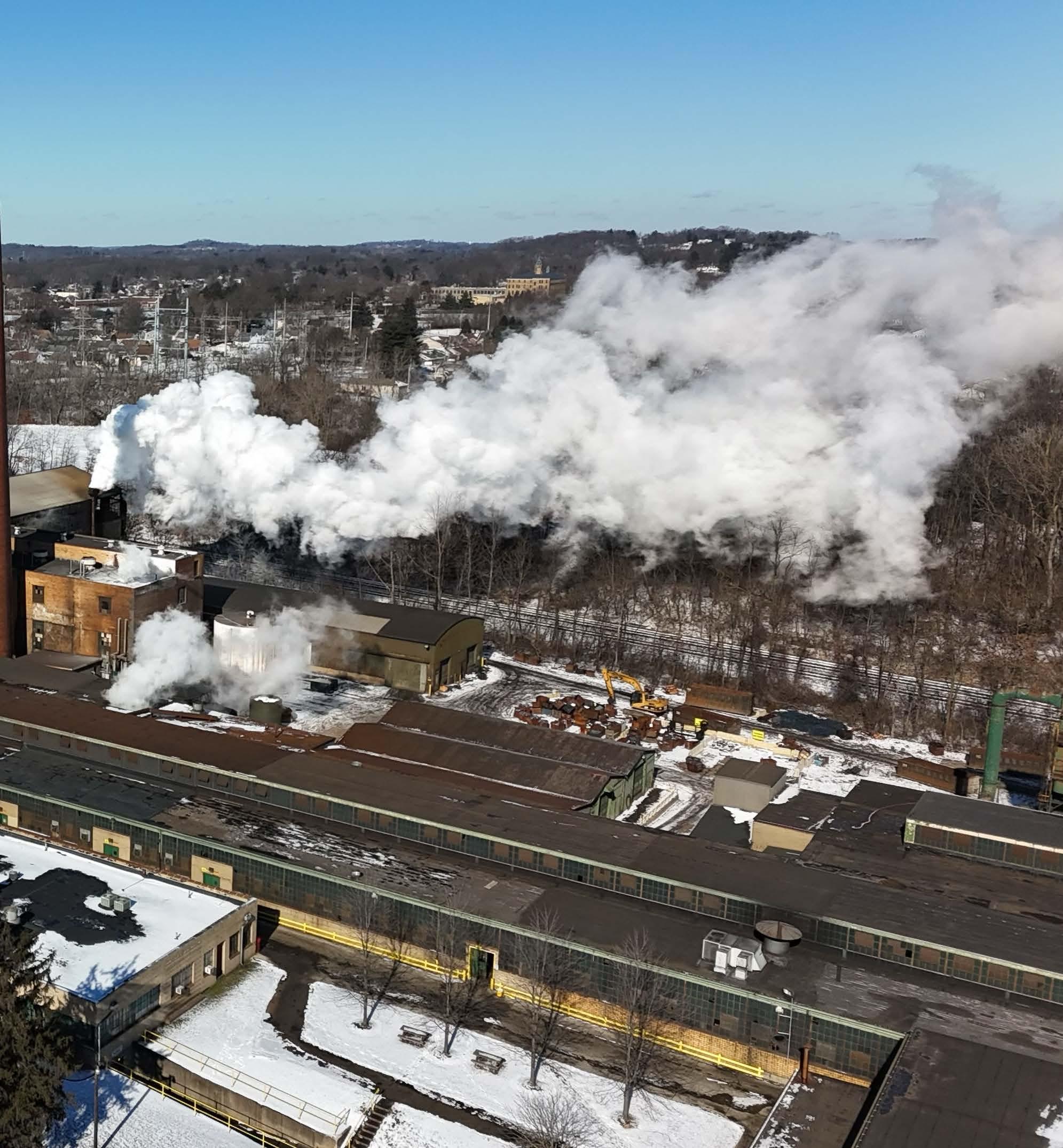
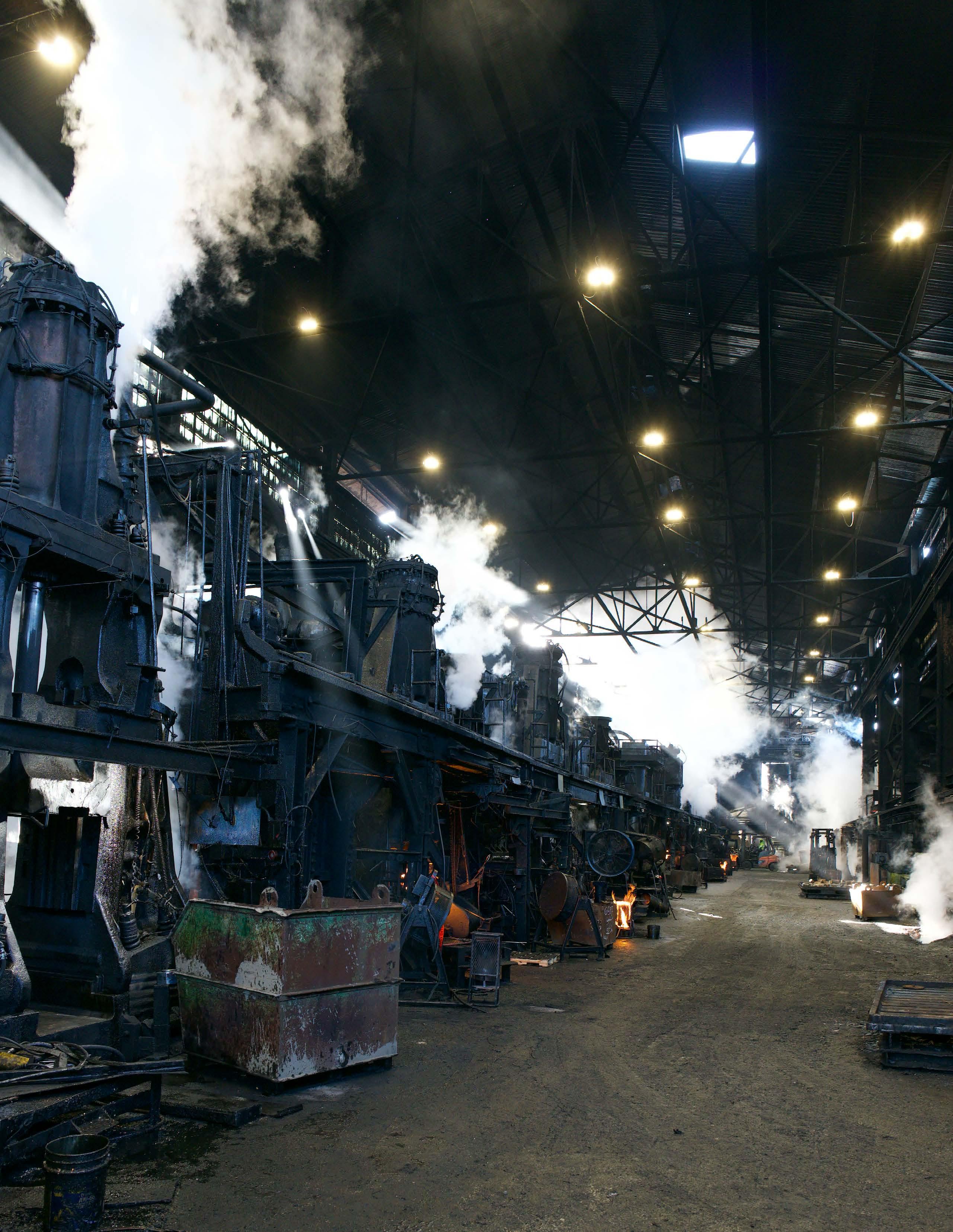
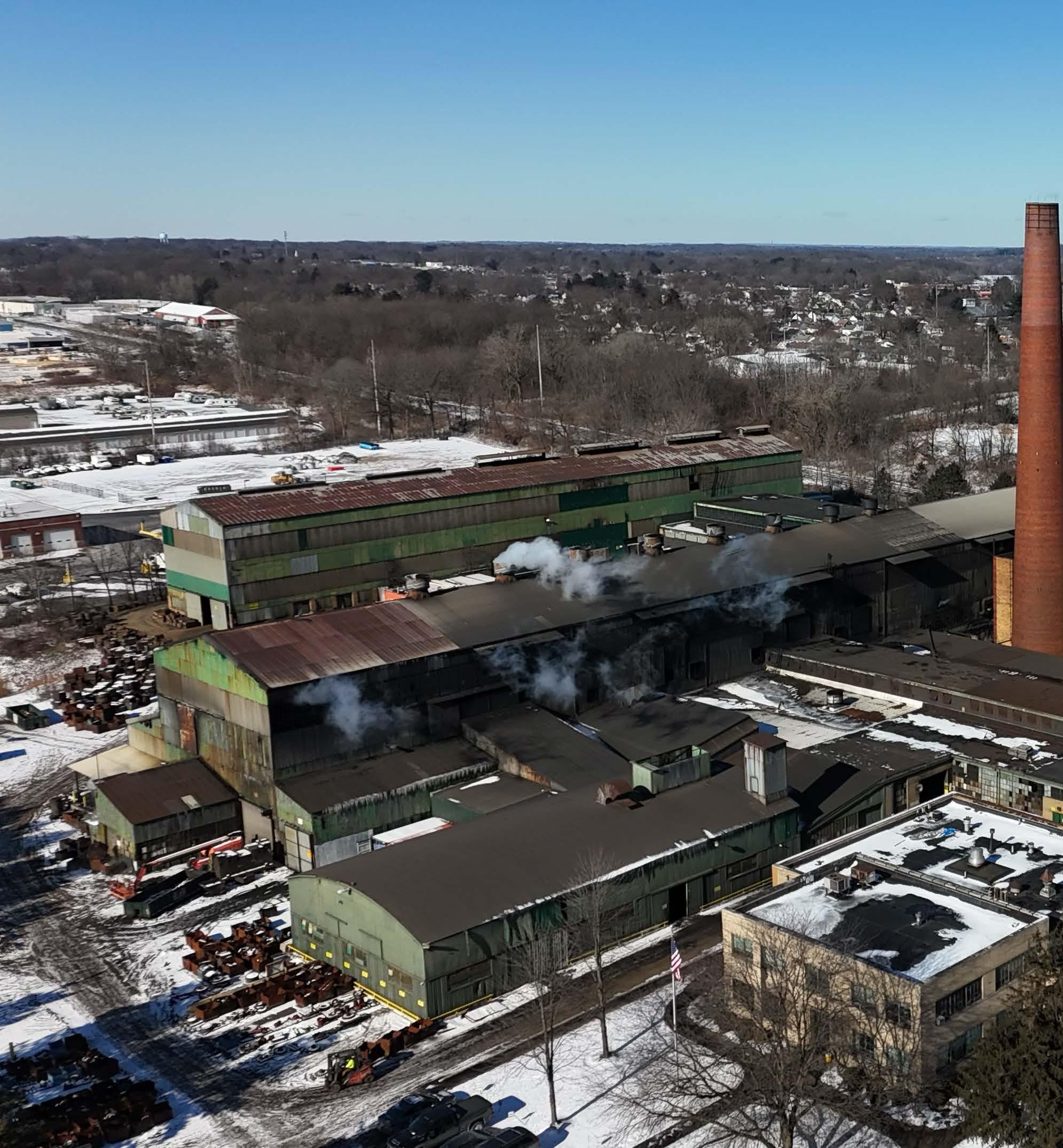
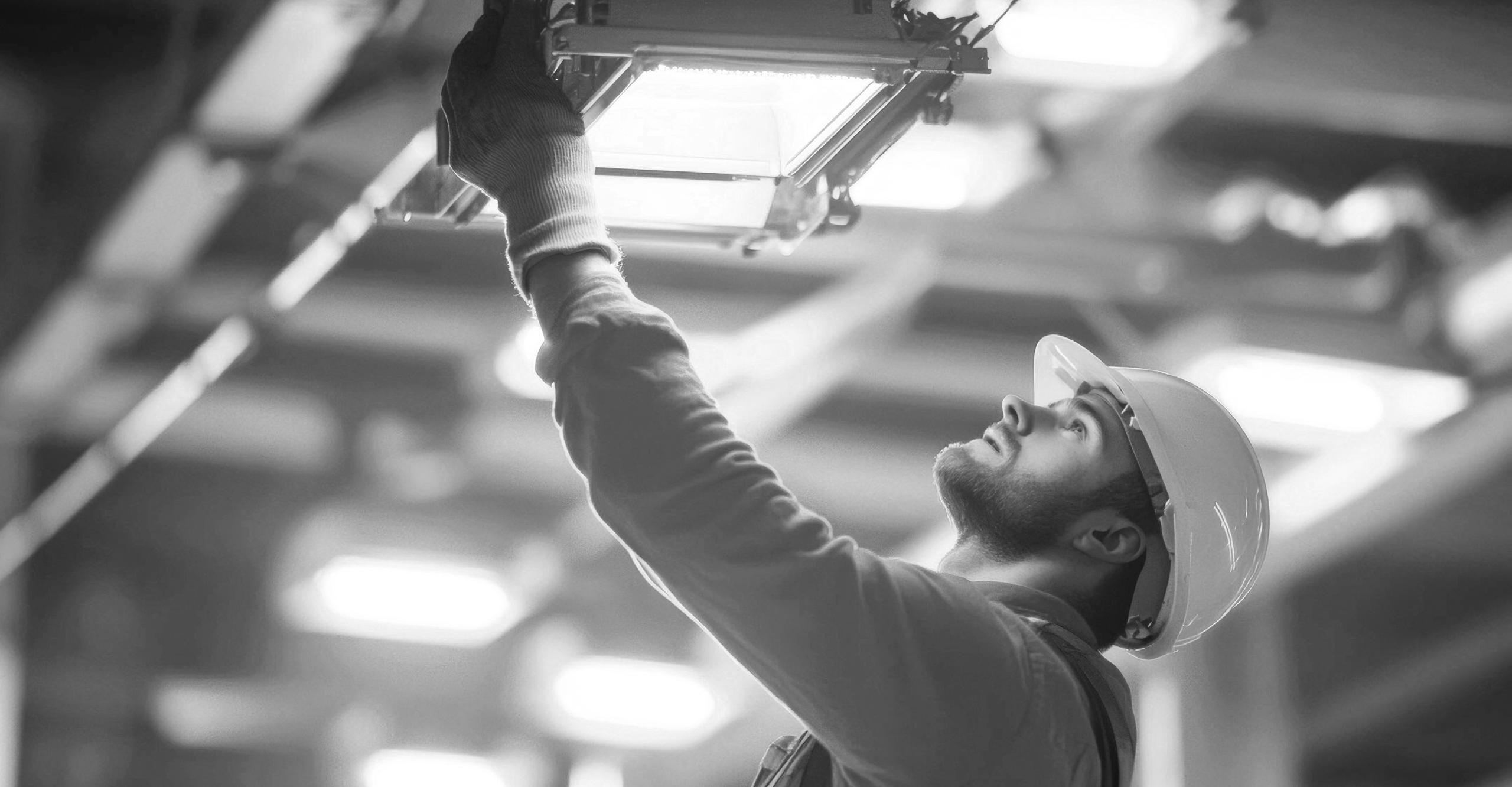
At a century-old forge facility in Canton, Ohio, lighting was more than a visibility issue—it was a constant operational challenge. Extreme heat, heavy vibration, airborne soot, and round-theclock production had pushed previous lighting systems to failure. For the maintenance team, frequent fixture outages and difficult access points—some reaching 60 feet—created an ongoing cycle of disruption and cost.
By Randy Reid
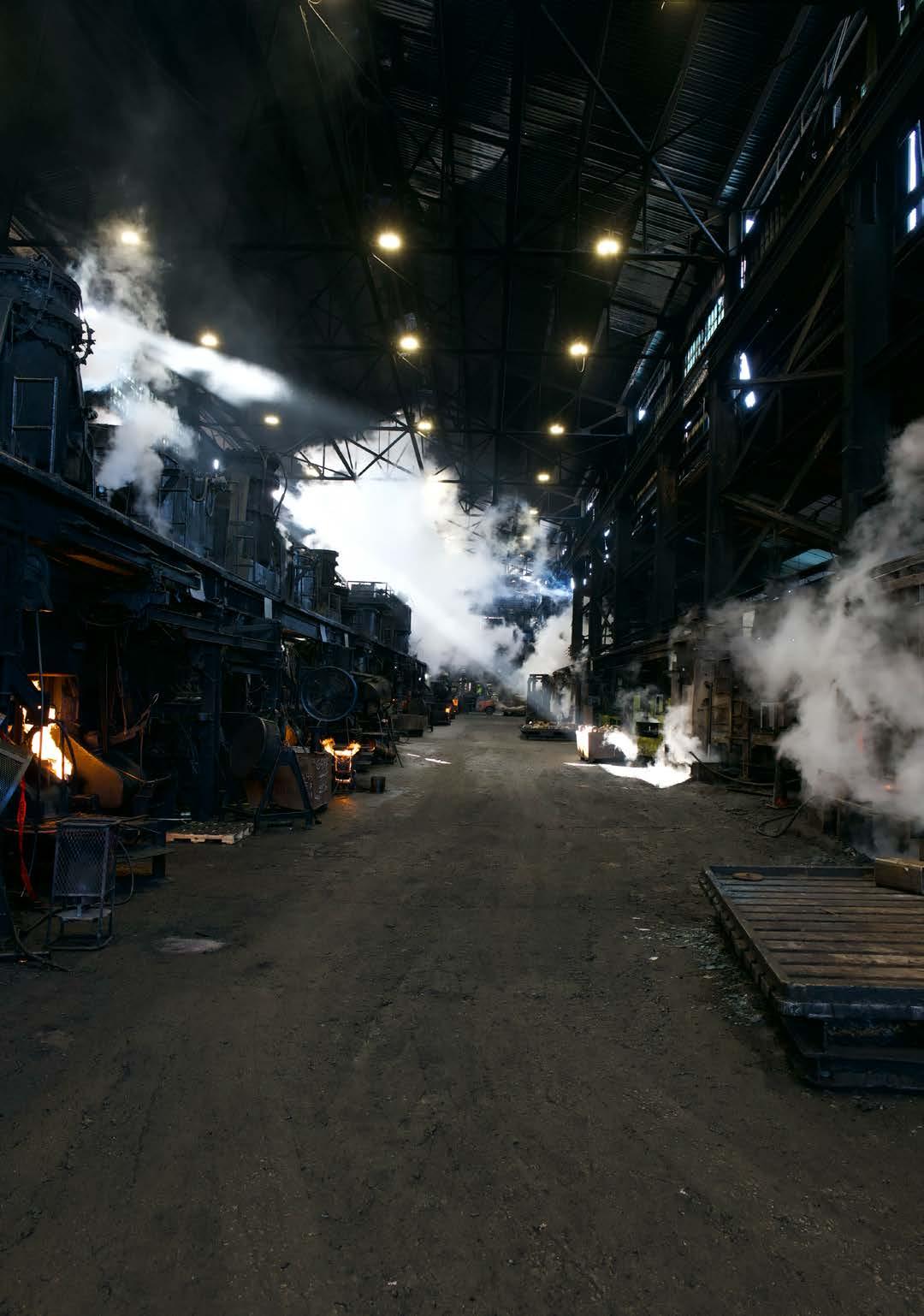
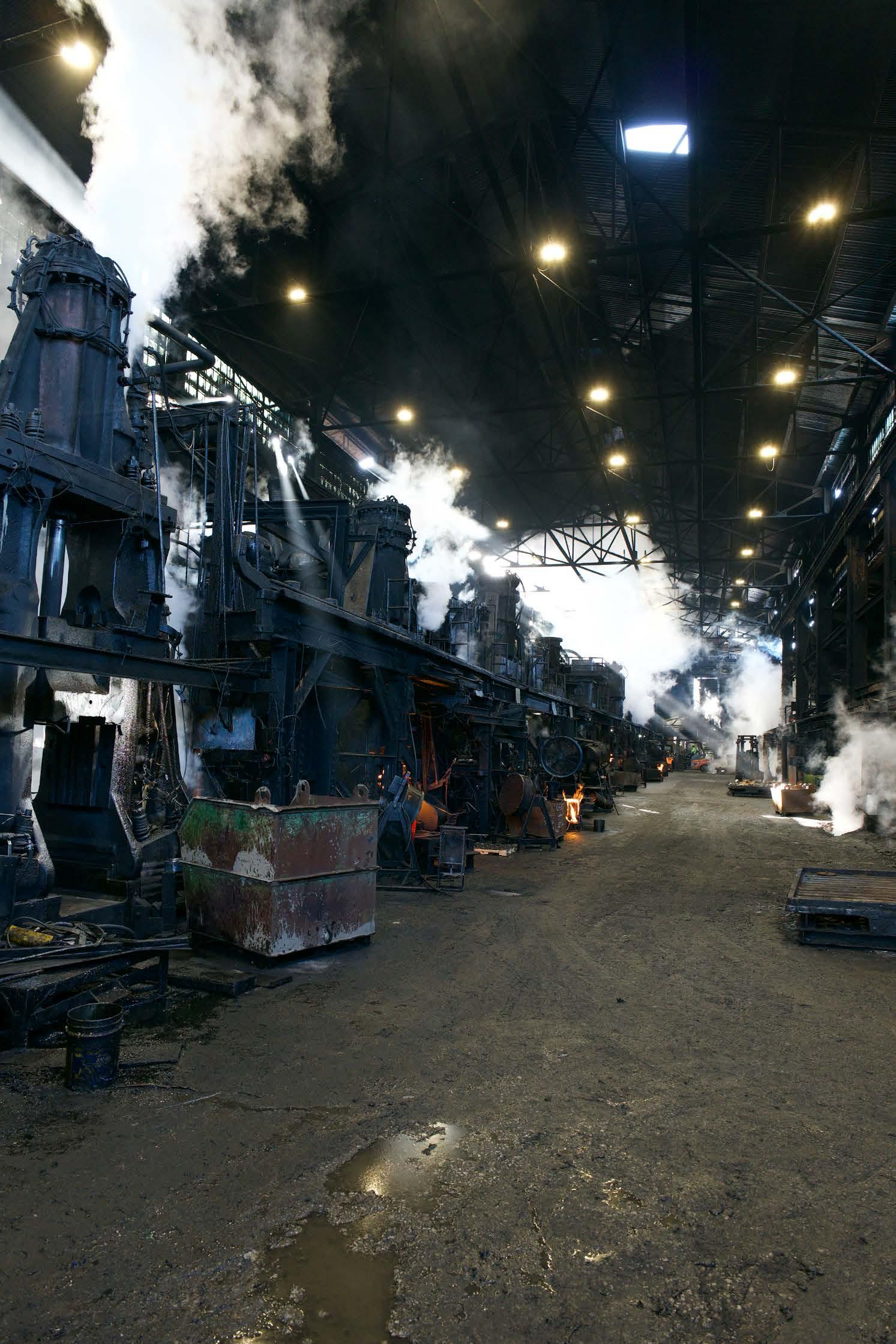
Step inside the space and the conditions become immediately clear. The forge stretches roughly 300 feet long, 60 feet wide, and 60 feet tall.
Originally built with large windows, the facility once allowed natural light to flood the interior— enough, as one observer noted, “to grow palm trees.” Today, those windows are completely obscured by soot, allowing almost no daylight through.
Underfoot, the floor tells its own story. It is technically dirt, but decades of oil saturation have turned it into something closer to warm margarine. Forklifts struggle for traction, often slipping as they transport molten steel weighing thousands of pounds. Overhead, cranes and hoists move constantly. Every drop of the forge hammer sends vibrations through the structure—so powerful that buildings half a mile away reportedly shake.
For lighting contractors, this project represents a familiar but demanding scenario: a harsh industrial environment where standard LED solutions simply do not hold up.
A FACILITY BUILT ON EXTREMES
The forge operates in temperatures that can reach 60°C (140°F). Add in constant vibration from heavy machinery and airborne contaminants, and it becomes clear why earlier lighting retrofits struggled.
The facility had undergone multiple lighting evolutions over the decades—from 2000-watt incandescent systems to HID, fluorescent, and eventually LED. Mounting heights varied widely, from 15 feet to 55 feet, often in inconsistent layouts. Some areas had been upgraded in bulk, while others were maintained reactively, replacing fixtures only as they failed.
The result was a patchwork system. In some areas, fixtures were visibly melted. In others, drivers failed under heat
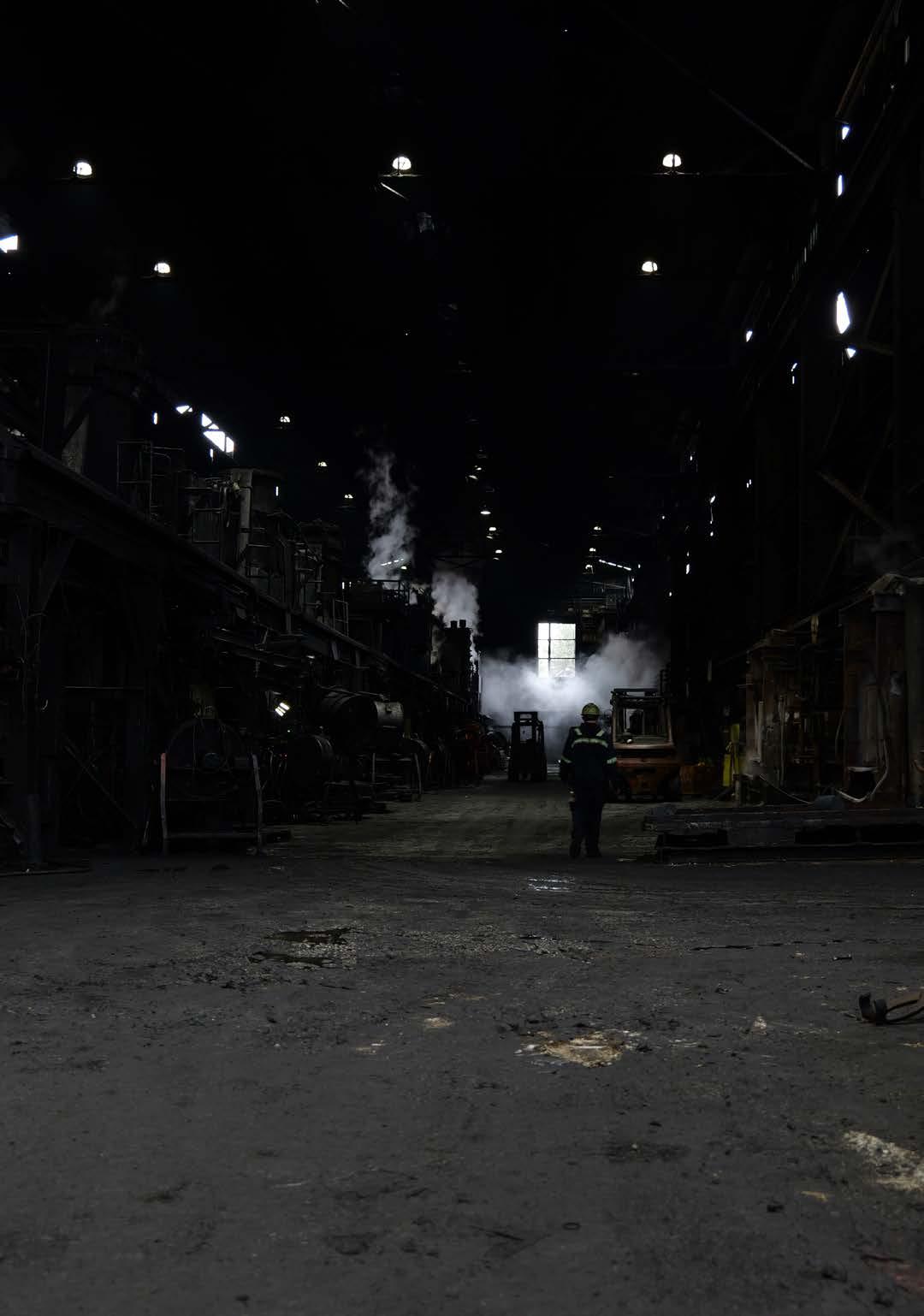
stress. Dark zones emerged across the floor, creating uneven illumination and increasing safety risks.
That inconsistency ultimately became the breaking point. The facility needed reliable, uniform light to maintain safe operations.
IDENTIFYING THE RIGHT FIXTURE
The solution came through a collaboration between Acuity and MAG Energy (a division of Mid-American Group). After evaluating the conditions, the team selected the Holophane HOLOBAY™ fixture.
This was not a standard high-bay swap. The specification focused on durability first, then efficiency.
Key features included:
♦ High-temperature rating up to 80°C (176°F)
♦ Robust construction designed for high-vibration environments
♦ Glass optics that maintain performance under sustained heat exposure
♦ Long-life performance with L70 rated at approximately 140,000 hours
♦ Field-serviceable driver design for simplified maintenance
The choice of materials was critical. In this environment, optic degradation is expected. The use of glass ensured long-term optical stability without the risk of deformation seen in other materials under extreme heat.
ENGINEERING FOR LONGEVITY
One of the more notable technical decisions was the pairing of a smaller light engine with a larger heat sink. This design helps dissipate heat more effectively, extending component life.
Equally important, the system eliminated the need for remote-mounted drivers. In many industrial applications, remote drivers are used to protect sensitive components from heat. However, they add installation complexity and labor.
In this case, the internal driver design proved viable due to the fixture’s hightemperature rating. The team conducted site surveys during peak summer conditions to validate performance under maximum heat load. The result was a simpler, more efficient system without the added complexity of remote components.
Photometric design also required adjustment. With surfaces heavily coated in soot and offering virtually no reflectance, traditional assumptions did not apply. The system was intentionally overdesigned by approximately 20 percent to account for rapid dirt depreciation. A long-term plan is in place to monitor light levels annually and establish a maintenance cycle based on real-world performance.
DELIVERING MEASURABLE RESULTS
Installation presented its own challenges. Work had to be coordinated carefully around active operations. The environment was dark, filled with smoke and steam, and constantly in motion.
Crews often worked in short windows between production cycles—entering the space, installing one or two fixtures, and clearing out before operations resumed. Full shutdowns were not an option due to cost, making flexibility and coordination essential.
Improved light levels enhanced visibility across the forge floor. Workers could better identify hazards in an environment where footing is uncertain and loads are extreme.
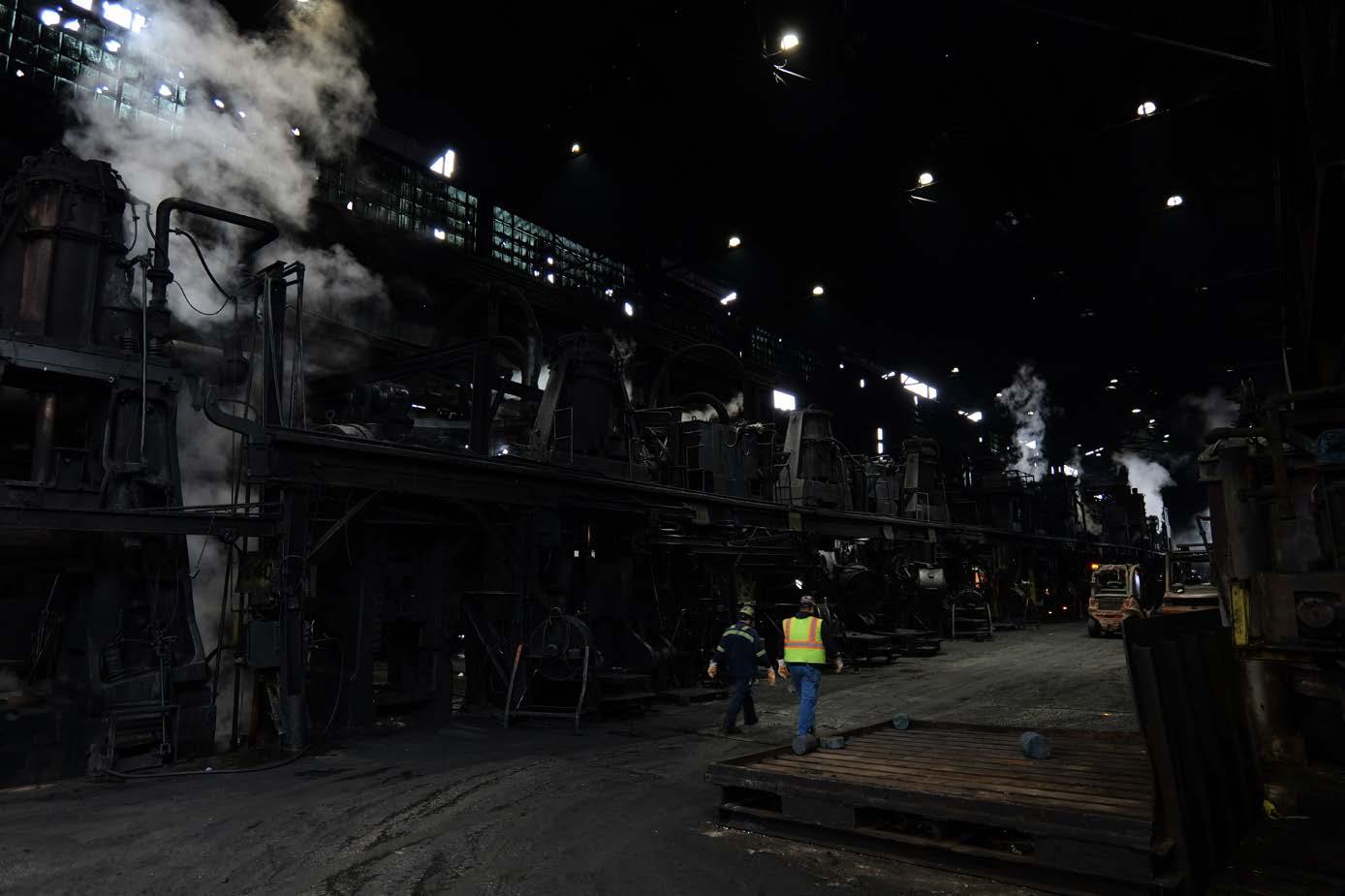
PRE RETROFIT
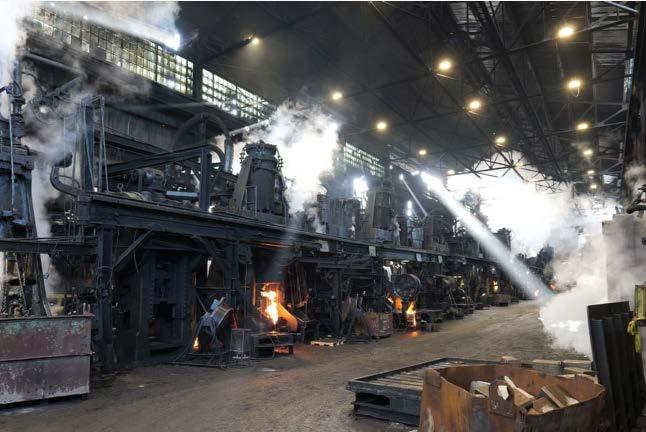
POST RETROFIT
THE RESULTS WERE IMMEDIATE.
Improved light levels enhanced visibility across the forge floor. Workers could better identify hazards in an environment where footing is uncertain and loads are extreme.
Maintenance demands dropped significantly. With fewer failures and longer fixture life, the need for lifts and shutdowns decreased. For a 24/7 operation, this translated directly into cost savings.
Energy efficiency also improved. Even compared to the previous LED system, the new installation delivered a favorable payback.
Just as important, the fixtures were designed to operate without controls. In this environment, simplicity equals reliability. Eliminating controls reduced potential failure points and ensured consistent performance.
When the system was energized, the reaction was immediate. The gradual degradation of the previous system had masked how poor conditions had become. The new installation revealed the space with clarity not seen in years.
A VISUAL TRANSFORMATION
Before-and-after photography tells a compelling story. Areas once dim and uneven are now brightly and uniformly lit. The improvement is not just technical—it is immediately visible.
Video interviews with the project team, including Holophane and MAG Energy, further highlight the collaborative approach and the reasoning behind key design decisions.
LESSONS FOR LIGHTING CONTRACTORS
This project underscores a critical point: not all LED solutions are created equal. In extreme environments, fixture selection must go beyond lumens per watt.
Thermal management, material durability, and serviceability become the defining factors. Equally important is understanding how environmental conditions—heat, vibration, contamination, and low reflectance—affect system performance over time.
For contractors working in foundries, steel mills, or other high-heat industrial settings, this installation provides a proven roadmap. A tailored approach—supported by the right manufacturer and rep partner—can significantly reduce maintenance costs while improving safety and performance.
SETTING A NEW STANDARD
The project demonstrates how modern lighting solutions can revitalize even the most demanding industrial spaces. By addressing the root causes of previous failures, the team delivered a system built for longevity.
When theenvironment is extreme, the specification must be equally robust. ■
POST RETROFIT

Linmore LED Labs Advocates for Circular Lighting Design at NALMCO
By Randy Reid
Wayne Callham has been in the lighting industry long enough to see multiple cycles of innovation, disruption, and, in some cases, unintended consequences.
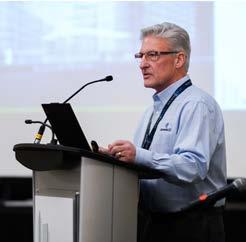
Wayne Callham LC, CLEP, CLCP, CLMC Senior VP of Sales Linmore LED
Today, as Vice President of Sales, North America for Linmore LED Labs, he finds himself focused less on chasing the next incremental gain in efficacy and more on something the industry arguably overlooked during the rapid rise of LED: maintainability.
Linmore LED Labs, headquartered in California, has built its reputation over the past decade on designing and manufacturing advanced LED lighting solutions for commercial and industrial environments. The company has emphasized engineering-driven performance from the beginning, developing high-output, application-specific luminaires while maintaining a strong focus on reliability. More recently, that focus has expanded to include sustainability—not just in terms of energy savings, but in how products are built, serviced, and ultimately kept out of landfills.
At the recent NALMCO Spring Seminar, Wayne served as both educator and industry advocate during one of the Learning Lab sessions. As a member of the NALMCO program committee and board, Wayne is deliberate in how he approaches these sessions.
“I want to make sure that we’re filling the need of the organization and not just our corporate need,” he explained. “You have to be careful. It’s about education first.”
His session this year centered on the concept of the circular economy, a topic gaining traction globally but still emerging in the U.S. lighting market. Rather than positioning the discussion as a product pitch, Wayne used the platform to introduce attendees to the framework behind TM-66, a technical memorandum developed in the UK to assess how well lighting products align with circular economy principles.
“The point of the session was to educate people into what is a circular economy versus a linear economy,” Wayne said. “A linear model is take, make, use, dispose. A circular economy is about maintaining, reusing, and recycling.”
In Wayne’s view, the industry’s early promise that LED would eliminate frequent replacements has not fully materialized. Instead, many LED fixtures have proven difficult—or impossible—to repair.
“We went from what was supposed to be the last fixture you’d ever buy to becoming the light fixture you can’t maintain,” he noted.
Drivers change, components become unavailable, and entire luminaires are often discarded long before the
If we don’t change how we design products, the economics of lighting upgrades are going to get harder and harder to justify.”
WAYNE CALLHAM
physical housing reaches the end of its useful life. That reality has created both an environmental issue and a growing operational challenge for contractors and service providers.
Linmore’s response has been to rethink fixture design from the inside out. The company’s modular approach allows key components—light engines, drivers, and controls—to be replaced without rewiring or complex electrical work. In many cases, maintenance can be performed using plug-andplay components.
“After the initial install, you’re not terminating wires anymore—you’re unplugging and replacing modules,” Wayne said. “That opens the door for maintenance staff, not just electricians, to do the work.”
For companies involved in lighting maintenance and retrofit work, that shift could be significant. Labor shortages continue to impact the industry, and the cost of skilled electricians has risen sharply.
“The labor rates have doubled in the last six years,” Wayne said. “If we don’t change how we design products, the economics of lighting upgrades are going to get harder and harder to justify.”
By reducing the complexity of service tasks, modular systems offer a path to lower maintenance costs, faster turnaround times, and extended fixture life. The approach also aligns with the broader goals of TM-66, which evaluates products based on design, materials, manufacturing, and ecosystem support—including the availability of spare parts and end-of-life recycling.
Wayne emphasized that this is not simply a design preference, but a necessary evolution for the industry.
“With the shortage of skilled labor and the amount of infrastructure work coming, we have to find ways to do more with fewer people,” he said.
At the same time, he acknowledged that adoption will depend on market acceptance. While sustainability and circularity are gaining attention, most buyers still expect pricing to remain competitive with traditional fixtures.
Still, the response at NALMCO was encouraging. Attendees engaged in the discussion and showed a growing awareness that lighting systems must be designed with long-term serviceability in mind.
NALMCO’s role in facilitating that conversation remains important. As Wayne pointed out, it is one of the few organizations that provides structured education for the lighting maintenance community, with clear guardrails to ensure sessions remain informative rather than promotional.
“NALMCO is one of the few organizations that offers educational seminars with a set of rules for manufacturers to follow,” Wayne said. “It’s meant to be education, not pure commerce.”
For Wayne Callham, the takeaway is straightforward. The next phase of the LED industry will not be defined solely by how efficiently fixtures produce light, but by how effectively they can be maintained over time. And in that shift, both manufacturers and service providers will need to adapt— together. ■
Semper Fi to LED: Manny Andrews Brings Military Discipline to Lighting Labor
By Randy Reid

Manuel Andrews doesn’t talk about labor the way most people in the lighting industry do. There’s no hand-wringing or abstract complaints about shortages. Instead, he speaks from the ground up—where labor actually lives, where projects succeed or fail, and where relationships determine whether work gets done.
Andrews, who goes by Manny, is the founder of Brighter Solutions, a company based in Akron, Ohio that focuses almost exclusively on providing skilled labor for commercial lighting installations. In an industry often dominated by manufacturers, distributors, and project managers, Manny has built his business around a different reality: none of it
matters if there aren’t trained people on-site to install and maintain the systems.
Brighter Solutions started five years ago as a small, family-oriented operation. According to the company’s background, it was built on practical experience in lighting and a desire to bring professionalism and structure to the labor side of the business. Today, the company operates out of an 11,000-square-foot facility, including warehouse space that allows them to stage materials and support larger projects.
But the core of the business remains the same—labor.
Manny described it simply: “We focus right now on the commercial lighting installation labor portion only.” That focus has made Brighter Solutions a trusted partner for companies that secure retrofit and upgrade projects but need reliable crews to execute the work. In many cases, firms win the job and then rely on Manny’s team to deliver on-site.
The model reflects a broader truth in the industry. Labor is not just a cost—it’s a bottleneck. And as Manny noted, labor rates are rising while the pool of skilled technicians continues to shrink.
What sets Brighter Solutions apart is not just capability, but adaptability. Locally, the company has begun taking
on smaller projects directly, gradually expanding beyond labor-only work. At the same time, they maintain strong partnerships with larger firms and manufacturers, including direct relationships that allow them to source materials when needed.
That flexibility has been critical in a challenging economy. “Lighting is slow, especially at my level,” Manny said. “We depend on partners. We’re at the bottom of the food chain, so we feel it first.”
Yet Brighter Solutions has remained steady. Manny credits that stability to a mix of discipline and relationships. Smaller clients—often overlooked by larger firms—have provided consistent work during slow periods. Maintenance services and ongoing partnerships have helped bridge gaps when larger projects stall.
“If we didn’t have those smaller projects and those relationships, we would not be afloat,” he said.
That mindset reflects Manny’s background as both an entrepreneur and a Marine Corps veteran. He served more than five years, including three tours in Afghanistan, where he worked as a machine gunner after initially training for presidential support. The experience shaped his approach to business—focused, resilient, and grounded in teamwork.
He carries that perspective into the industry today. At recent industry discussions, Manny has been advocating for more open dialogue around labor—what it costs, how it’s structured, and how companies can work together more effectively.
Rather than viewing labor as purely competitive, he sees an opportunity for collaboration at a foundational level. Companies may protect their pricing and specific relationships, but there is value in aligning expectations and standards across the industry.
“We need to be comfortable saying where the baseline is,” he explained. “Then the specifics can come later.”
It’s a practical approach from someone who lives the realities of the job every day. In a business where success often depends on execution rather than theory, Manny Andrews has built Brighter Solutions around one simple idea: show up, do the work, and build relationships that last—especially when times get tough. ■
Rather than viewing labor as purely competitive, he sees an opportunity for collaboration at a foundational level.
WHAT'S NEW
LED TROFFERS
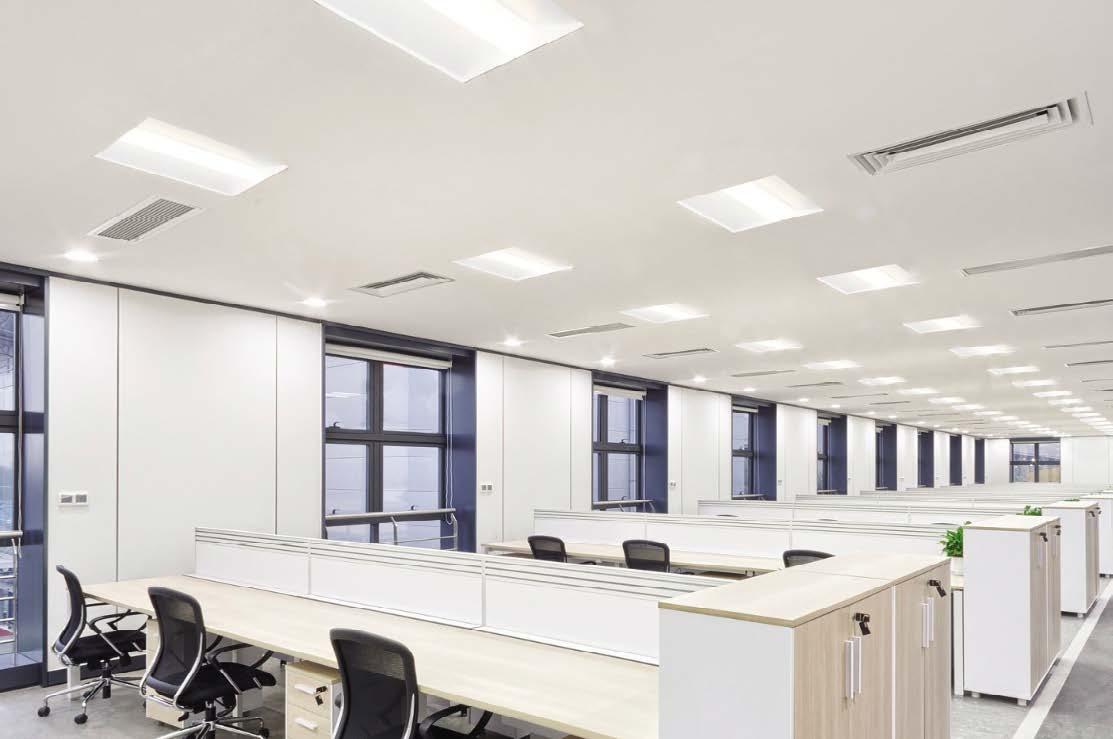
LED troffers provide both functionality and efficiency with two integrated, selectable switches. Selectable lumens allow for a variety of mounting heights, and Selectable CCT adjusts the color temperature. A smooth matte white finish provides glare-reducing general lighting for commercial and industrial applications. The luminaires are suitable for office, school, retail, hospital, and hospitality applications.
WALL WASHER
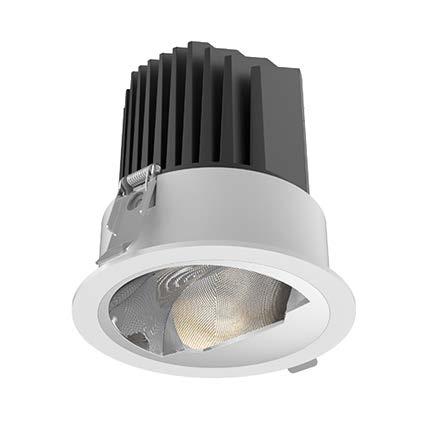
Two sizes Wall Washer is a low glare downlight (UGR: 19) that is perfectly suitable for a wide illumination of wall surfaces to allow homogeneous light distribution, with a damp location rating. This completely new revolutionary design is rethinking the Wall Wash application by placing the LED on a vertical plane which gives a perfect illumination on the wall starting at 0 degree.
SEKONIC C-700-U SPECTROMETER
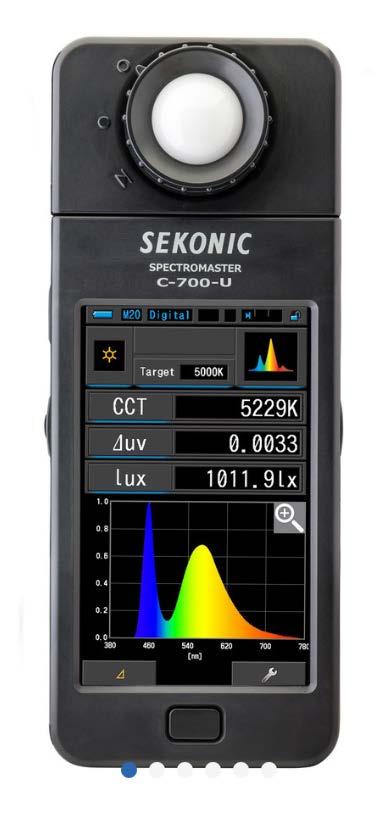
The Sekonic C-700-U Spectrometer is a compact, professional-grade instrument designed to give lighting contractors, designers, and technicians a clear understanding of how light actually performs in the field. Capable of measuring across the full visible spectrum from 380 to 780 nanometers, it accurately analyzes LED, HMI, fluorescent, tungsten, natural light, and flash sources. With a wide measurement range spanning color temperatures from 1,600K to 40,000K and illuminance levels up to 200,000 lux, the C-700-U provides precise data needed for both installation and troubleshooting.
HARMONY
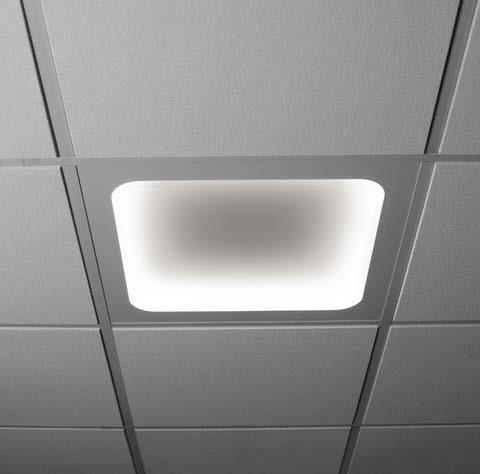
Visa Lighting has expanded its Harmony recessed ceiling fixture family with eleven new models designed for healthcare, commercial, and behavioral health / high-abuse applications. The original Harmony 2x4 Overbed fixture earned the prestigious Nightingale Gold Award in 2022 and quickly became a favorite among designers and healthcare facilities. With its signature cove-like lens design, soft presence and illumination that mimics indirect light, Harmony helps create calmer, more restorative environments. The expanded line now includes 2x2 and 2x4 models. All twelve of the Harmony family models are now available. Learn more at visalighting.com
SEKTOR AREA LIGHT
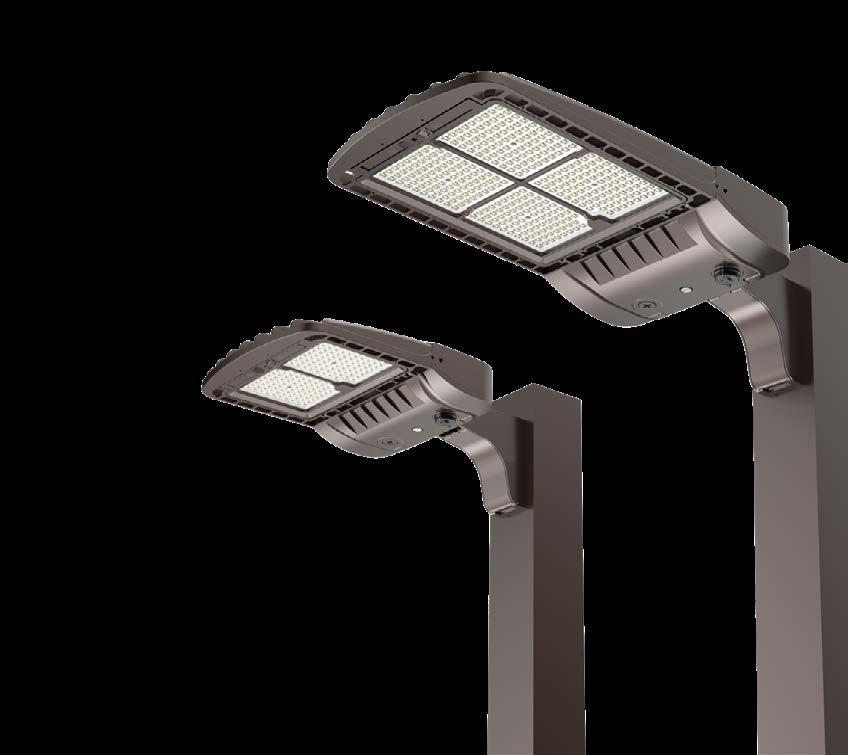
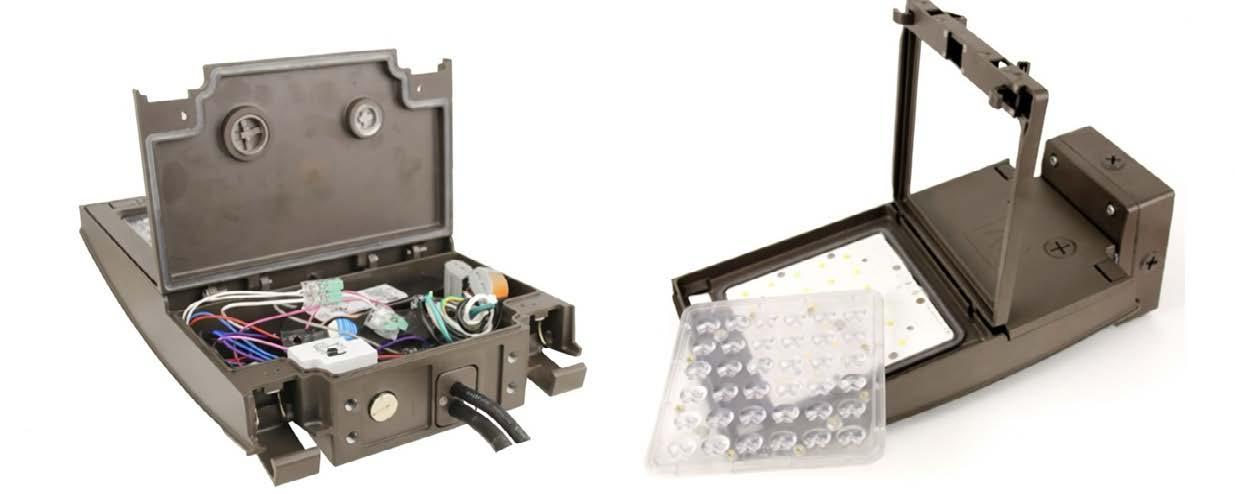
Halco’s SekTor Area Light advances sustainable outdoor lighting by embracing circular economy design principles that prioritize longevity, adaptability, and waste reduction. Built with serviceable, replaceable components, it enables LED board replacements in the field—extending fixture life and significantly reducing the need for full luminaire replacement. This approach conserves materials, lowers lifecycle environmental impact, and maximizes long-term ROI.
M SERIES
The New M Series is a versatile outdoor lighting solution designed for effortless retrofitting, maintaining compatibility with previous models while offering a wide array of customizable features. This series provides exceptional flexibility through three housing sizes that cover 12 different wattages, alongside six distinct mounting options tailored for area, flood, and wall applications. Users can finetune their lighting environment with seven changeable and rotatable lens choices and selectable CCT settings ranging from 3000K to 5000K. The fixture is also built for modern efficiency, featuring wattage-selectable capabilities and readiness for c-Max controls. Learn more at www.maxlite.com

MOMENTUM
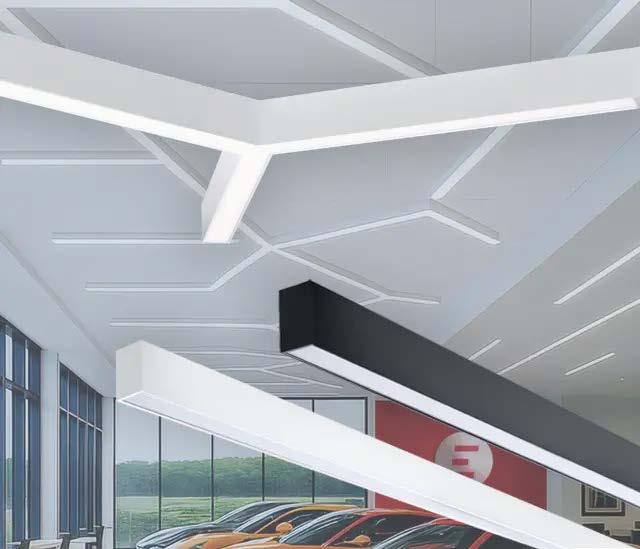
MOMENTUM, SATCO’s latest innovation, combining precision engineering with field flexibility. Applications include commercial, hospitality, institutional, retail, and modern offices. Designed for seamless adaptability, MOMENTUM offers field-selectable light distribution, wattage and CCT, a range of mounting options, and optional PIR sensors to enhance efficiency through motion responsiveness.
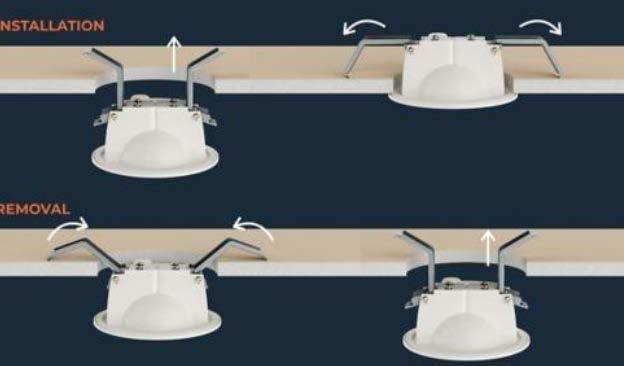
HALO CANLESS
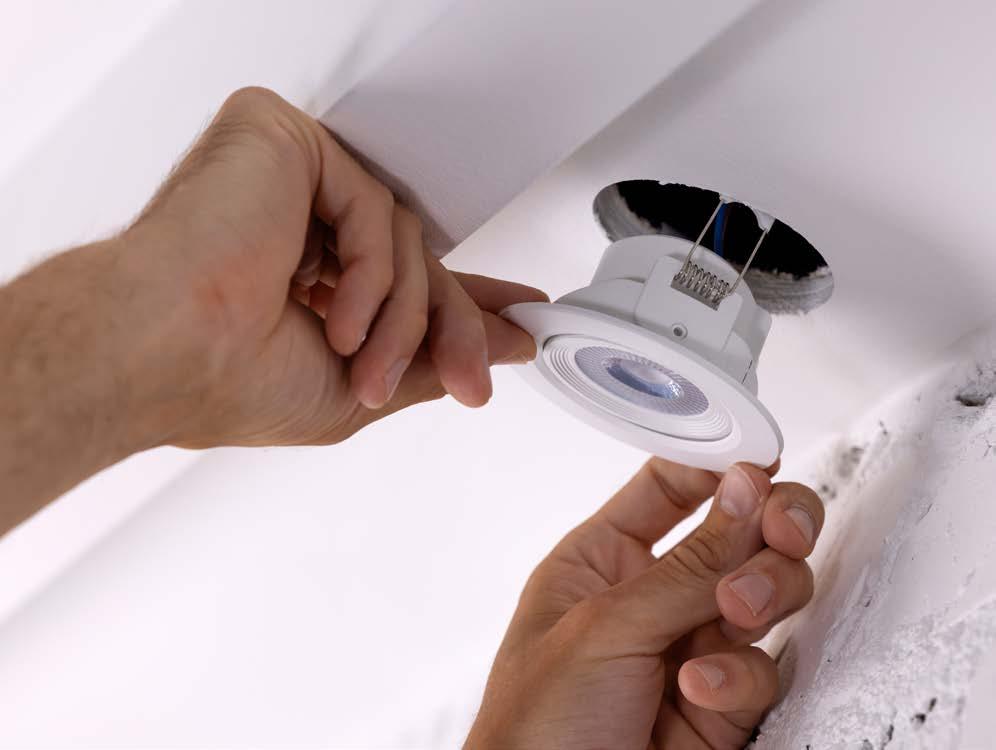
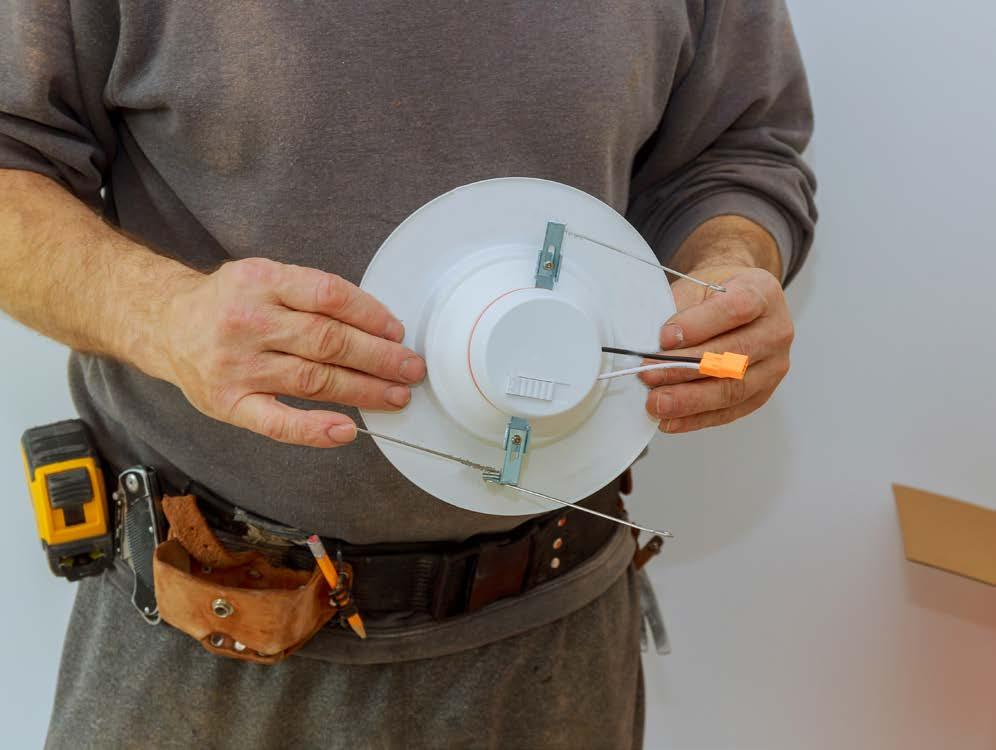
A new Cooper product that would be meaningful for lighting distributors - HALO Canless fixture with Flip-NKlip™ Springs. This installation innovation, Flip-N-Klip, prevents painful spring snap which contractors love.
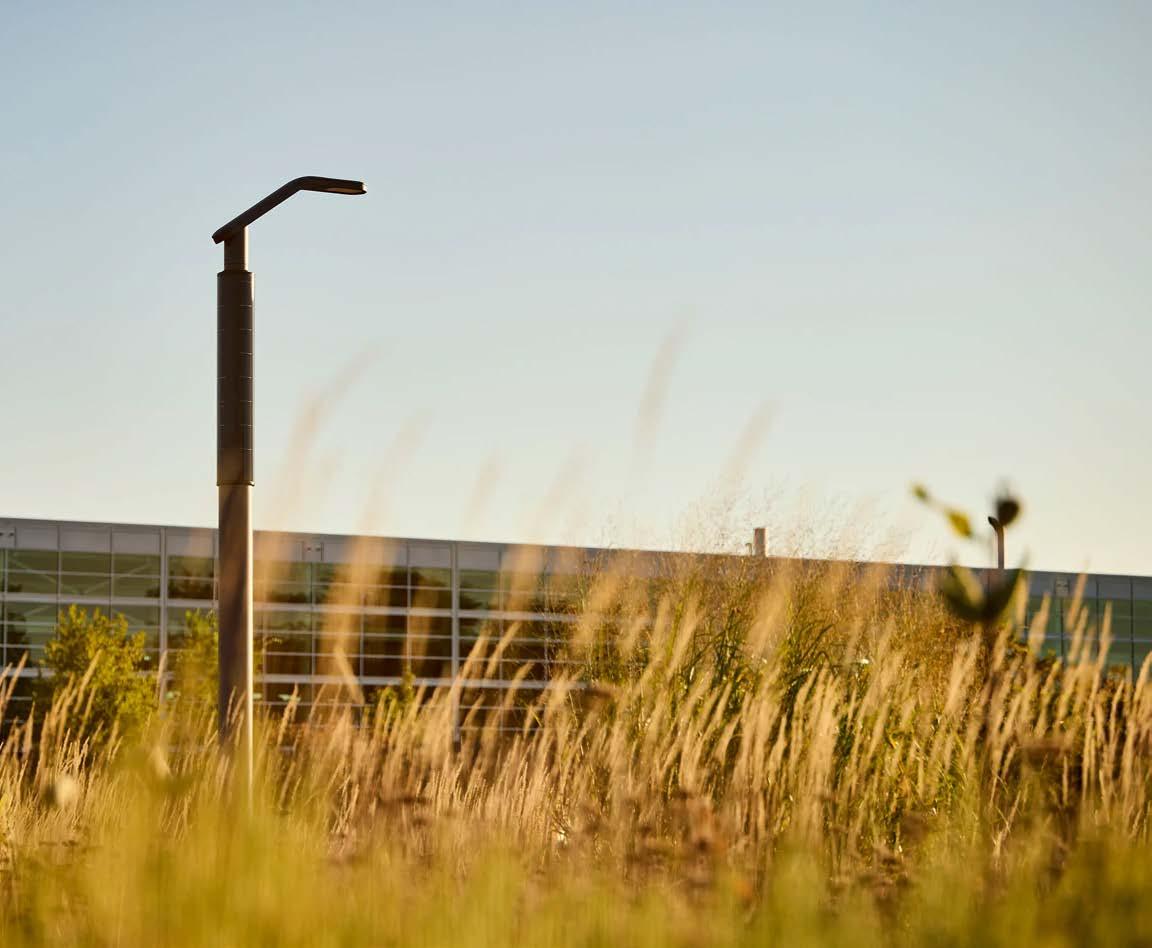
360 SOLAR BY LANDSCAPE FORMS
360 Solar by Landscape Forms redefines off-grid lighting with a breakthrough cylindrical solar array that wraps vertically around the pole, capturing sunlight from all angles for exceptional efficiency and year-round performance. Integrated edge-computing intelligence autonomously optimizes energy use with no apps or programming required, while a sleek architectural form eliminates the compromises of traditional solar.
THE KEYSTONE WAY: ENERGY, EDUCATION, AND EXECUTION AT NALMCO
By Randy Reid
From the outset, Keystone Technologies committed to doing the NALMCO Spring Seminar “the Keystone way.” That meant energy, structure, and a willingness to open the doors fully—not just to showcase products, but to expose how the company actually operates.
“We said we’re going to make it dynamic, we’re going to make it energized,” Gene Lindemann, VP of Business Development, said. “We’re going to show them every facet of our operation.”
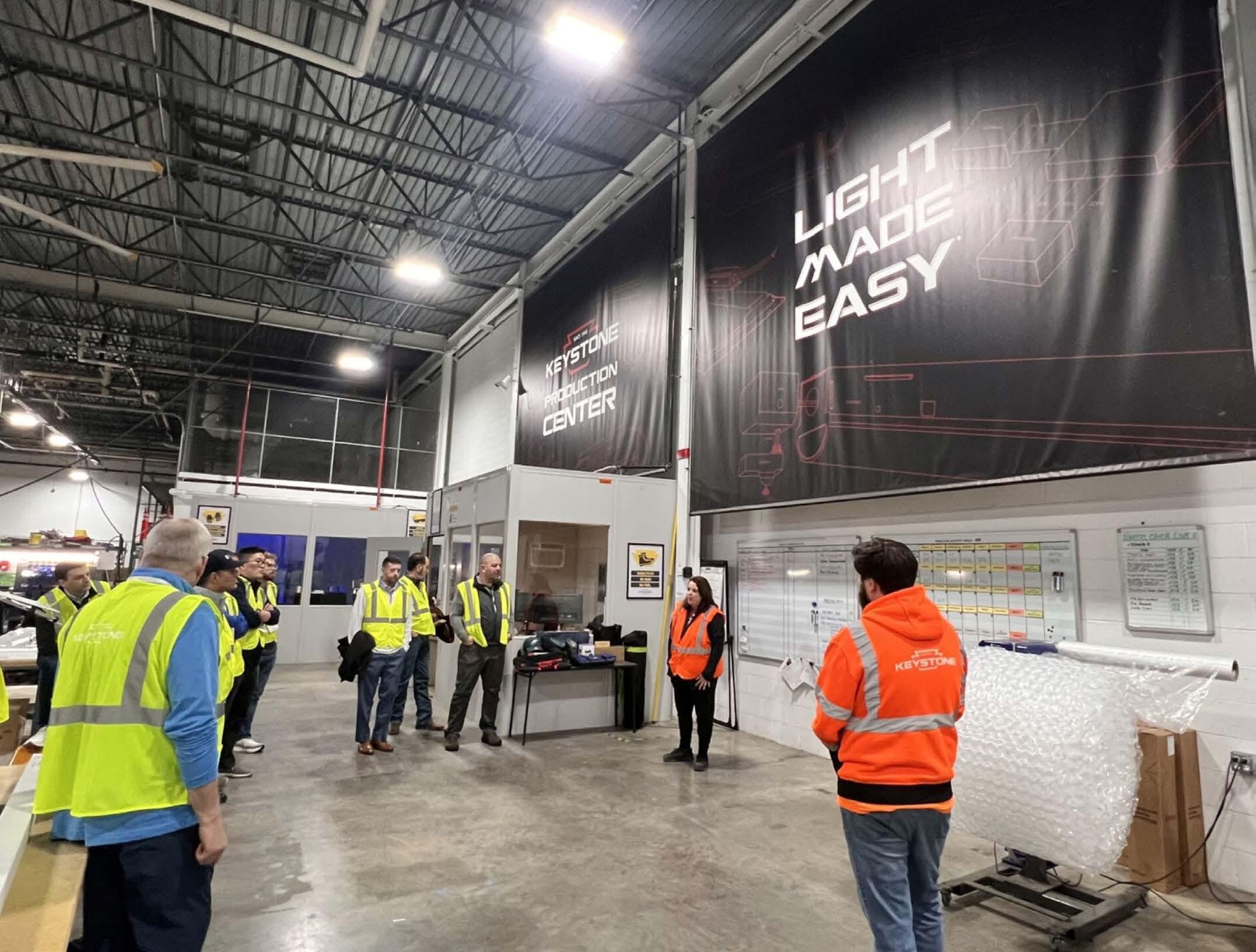
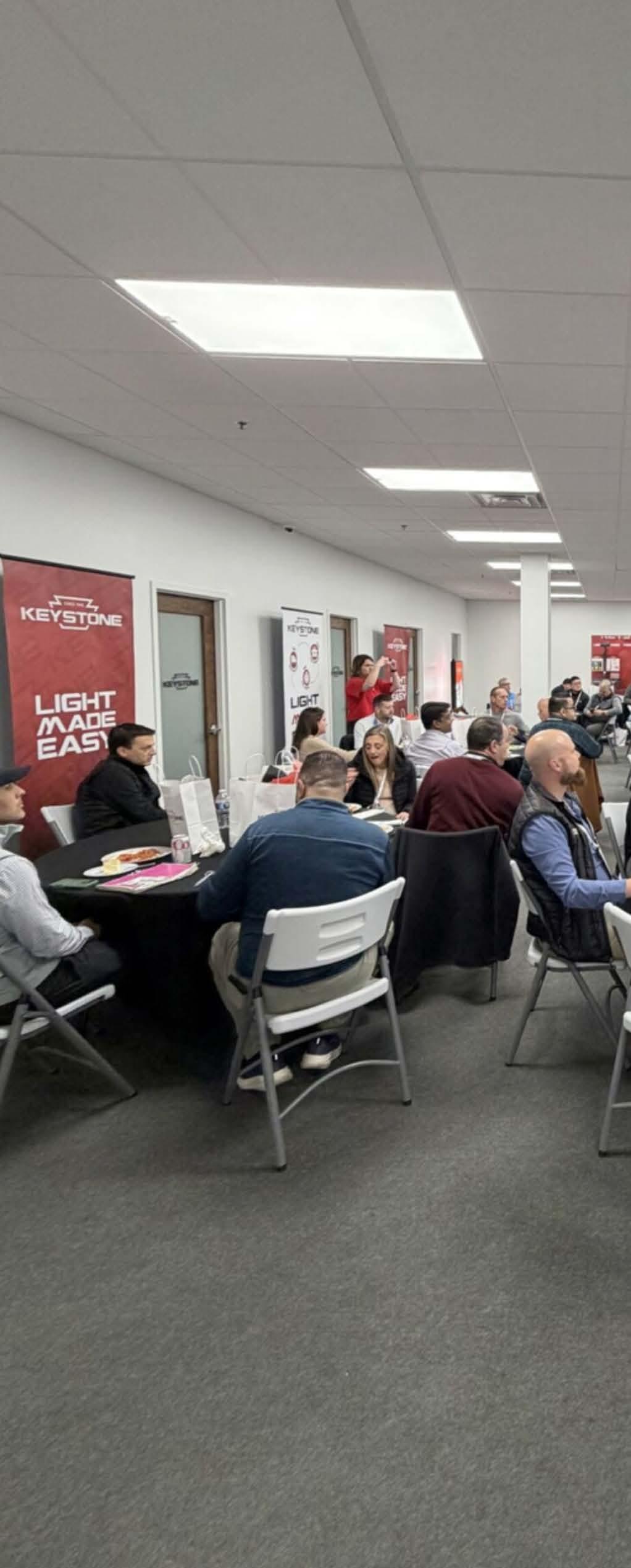
That philosophy carried tough the entire event. Keystone hosted the opening reception, provided the keynote speaker, and then welcomed NALMCO’s contractor members to its Lansdale, Pennsylvania facility for a hands-on, behind-the-scenes experience.
Unlike a typical plant tour, Keystone rethought the logistics. Instead of moving a large group through the building, they divided attendees into small pods of roughly 15 people.
“We didn’t want 60 people trying to pay attention at once,” Gene explained. “So we broke them into groups and escorted them through. One person on the front, one on the back, making sure everyone stayed engaged.”
The result was a more personal and immersive experience—one where attendees could ask questions, interact directly with Keystone’s team, and absorb the details.
LEARNING FIRST, SELLING SECOND
The NALMCO Spring Seminar is built on a simple but strict principle: education comes first.
That philosophy was especially evident in Keystone’s Learning Lab sessions, led by Joel Shumsky, Director of Engineering and Technical Services. Joel’s role spans engineering, quality, and both pre- and post-sale technical support—putting him at the center of realworld product performance.
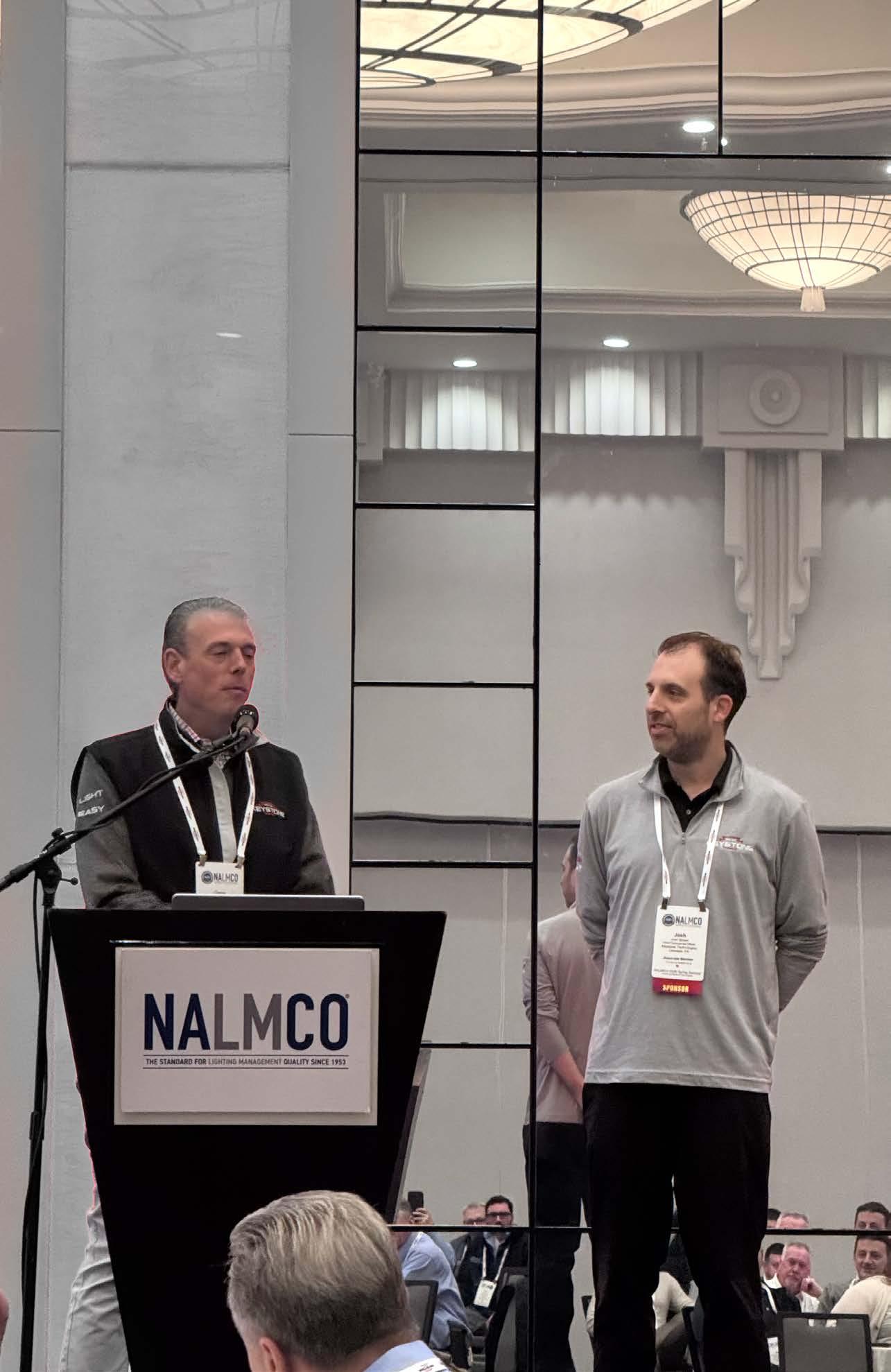
Gene Lindemann and Josh Brown
“My team handles engineering, quality, and field support,” Joel said. “That includes everything from specs and wiring questions before a sale to troubleshooting failures on job sites after installation.”
For the Learning Labs, Keystone deliberately avoided product promotion and instead focused on fundamentals— how to properly design an LED system.
“Let’s talk about best practices,” Gene said. “How do you think about drivers? LEDs? Heat? Airflow? Not specific to Keystone—just how to do it right.”
That approach resonated.
“I think people were almost enraptured by what Joel was explaining,” Gene added. “Then when they came into the facility, they saw that same thinking applied in real life.”
BRINGING THE TECHNICAL TO LIFE
If the Learning Labs established the theory, the facility tour delivered the proof.
One of the most talked-about moments came in Keystone’s lab, where Joel conducted live demonstrations—complete with controlled failures.
“I actually blew up lamps,” Joel said with a laugh. “It’s one thing to talk about miswiring. It’s another to see it happen.”
Using Amazon-purchased LED corn cob lamps designed to replace 400-watt metal halide systems, Joel demonstrated how improper wiring—specifically leaving a ballast in place— can lead to catastrophic failure.
“You see the lamp come on, so you think everything’s fine,” he explained. “But then the current spikes, the voltage from the ballast is too high, and suddenly you’ve turned an LED into a smoke machine.”
The demonstration combined visual, electrical, and real-time data elements.
“You see the smoke, you see the current on the meter, and you see the waveform on the oscilloscope,” Joel said. “That kind of sticks with people.”
It was a powerful teaching moment—one that connected directly to the field challenges contractors face every day.
CONNECTING THE DOTS
What made the Keystone-hosted seminar particularly effective was how well the pieces connected.
Attendees first heard Joel explain engineering principles in the Learning Labs. Then, at the facility, they saw those principles applied across multiple departments—from production to warehouse operations to quality control.
Meredith Geranta, who oversees warehouse operations, walked groups through how Keystone strategically positions inventory across the country to minimize lead times. Heather Schmidt, who leads production, demonstrated how products are assembled with consistency and scale.
“They saw how we make sure we’re almost never more than two days out on delivery,” Gene said. “They saw the science behind how we design, and then they saw how we execute.”
That continuity reinforced credibility. It also highlighted Keystone’s emphasis on process—not just product.
THE ROLE OF ENERGY
Beyond the technical content, one theme came up repeatedly: energy.
“The thing that was exciting for me—and everyone on the board picked up on it—is that you walk through the building and feel it,” Gene said. “People want to be here.”
That culture was not lost on attendees.
“You could feel it,” one participant commented during the tour. “It’s not just a company showing you around. It’s a team that’s engaged.”
Gene credits that atmosphere to leadership and a shared sense of purpose.
“There’s an enthusiasm here,” he said. “And I think that translated to the event.”
A BROADER PERSPECTIVE
Keystone also took seriously its role in shaping the broader conversation.
The company selected Ed Orlett of the National Association
They saw the science behind how we
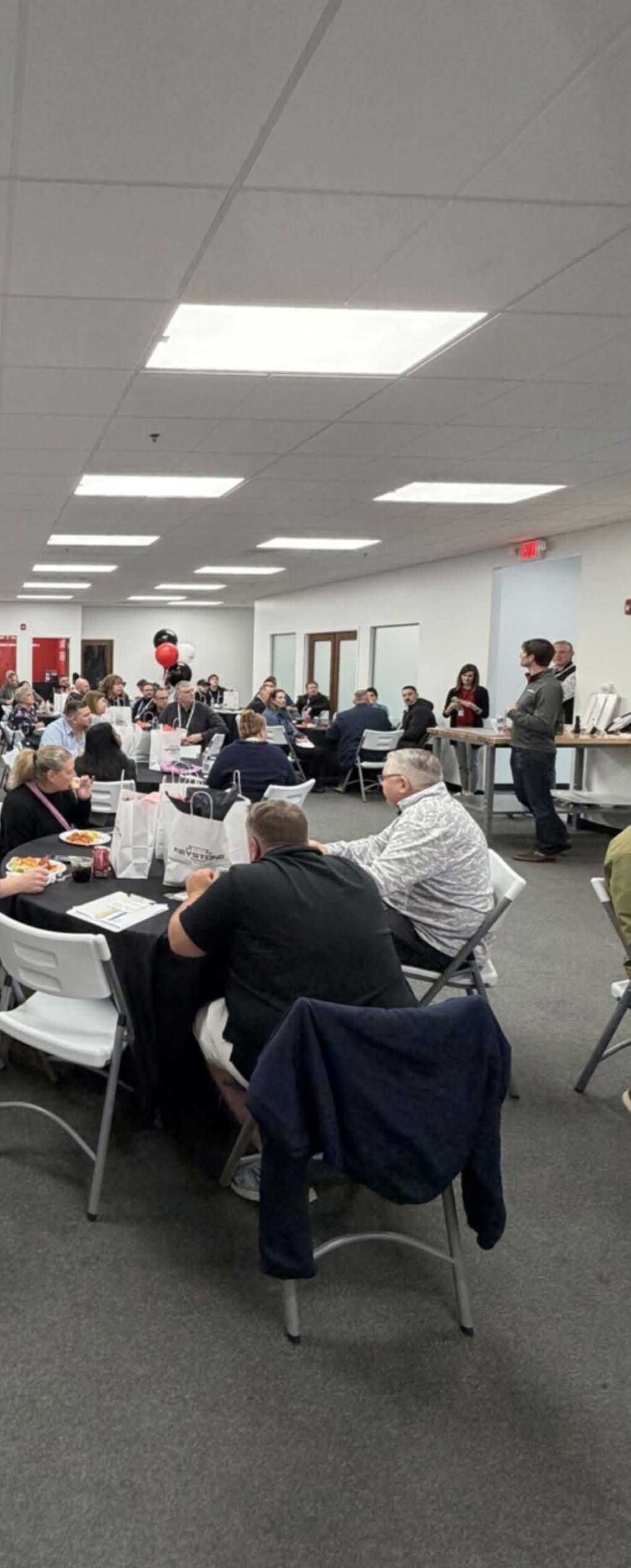
of Electrical Distributors as its keynote speaker. Orlett provided a policy-level perspective on energy efficiency, regulatory trends, and how political priorities continue to shift.
“He talked about the difference between ‘green’ and ‘resilient,’” Gene noted. “And how the pendulum has swung over time.”
That perspective added context to the technical discussions, reminding attendees that the industry does not operate in isolation.
COMMITMENT GOING FORWARD
For Keystone, the Spring Seminar was more than a one-time event—it was a turning point.
“Would we do it again? Yes,” Gene said without hesitation. “And not only that, we’re probably going to attend every Spring Seminar going forward.”
That commitment reflects a deeper realization about the value of NALMCO’s community.
“These are the people who give us the information—and sometimes the affirmation—that we’re doing it the right way,” Gene said.
It also reflects a belief that there is more to contribute.
“I think there are things we see in the market, technologies that are ready now,” he added. “We already have ideas about how to bring those into future sessions.”
RAISING THE BAR
Hosting the NALMCO Spring Seminar is never a small task. It requires coordination, investment, and a willingness to open your operations to scrutiny.
Keystone embraced that challenge—and, in many ways, raised the bar.
By combining strong educational content, immersive facility access, and a clear sense of culture, the company delivered an experience that resonated with attendees and reinforced the purpose of the event.
For an industry facing labor shortages, technical complexity, and rapid change, that kind of engagement matters.
And for Keystone, it’s just the beginning. ■
design, and then they saw how we execute.
Annual Convention and Trade Show 73 rd NALMCO
The NALMCO Annual Convention and Trade Show is a three-day event held each October, bringing together lighting management professionals from across the United States. The convention attracts an average of 250 attendees and 50 exhibitors, creating a focused yet dynamic environment for learning, networking, and business development.
Attendance includes business owners, seniorlevel management, design staff, and lighting technicians, all representing a broad crosssection of the lighting management industry. With a strong emphasis on peer-to-peer connection, the convention provides valuable opportunities to share ideas, explore solutions, and strengthen professional relationships.
Hotel
• Renaissance Phoenix Glendale Hotel & Conference Center435 Park St, Des Moines, IA 50309
• Room block closes September 19
• Nightly room rate:$219
• No booking link yet, but guests can call and make reservations: 623.937.3700
• 9495 W Entertainment Blvd, Glendale, AZ 85305
• Located in the Westgate Entertainment District: westgateaz.com
In addition to the trade show, the convention features a variety of networking events designed to foster meaningful connections. These include networking receptions, a structured speed networking event connecting general and associate members, and a labor partner meet and greet where labor buyers can engage directly with labor providers.
The convention also offers a lineup of education sessions focused on industry trends, best practices, and practical insights. Together, these sessions and events make the NALMCO Annual Convention and Trade Show a comprehensive experience for professionals looking to stay informed, connected, and competitive in the lighting management industry.
Registration
• General Member: $600*/$750
• Associate Member (Not Exhibiting): $2,500*/$2650
• Non-Member, General Equivalent:$1500*/$1750
• Non-Member, Associate Equivalent: $3750*/$3,950
• Professional Member: $600*/$750
• Non-Industry Related Guest:$400/$500 *Reflects early-bird pricing. Early-Bird pricing ends on August 29th


Stephen McGown delivered a powerful keynote at the 2025 event, leaving a lasting impression on attendees. A former Al Qaeda hostage, Stephen shared his extraordinary journey with honesty and clarity, offering a perspective shaped by nearly six years in captivity. His story went far beyond survival—it explored resilience, hope, and the strength of the human spirit under unimaginable conditions.
During his presentation, Stephen spoke about the mental discipline and attitude that sustained him through captivity. He described how small routines, perspective, and a commitment to endurance helped him navigate each day. Attendees were particularly struck by his ability to translate such a harrowing experience into practical lessons for both personal and professional life.
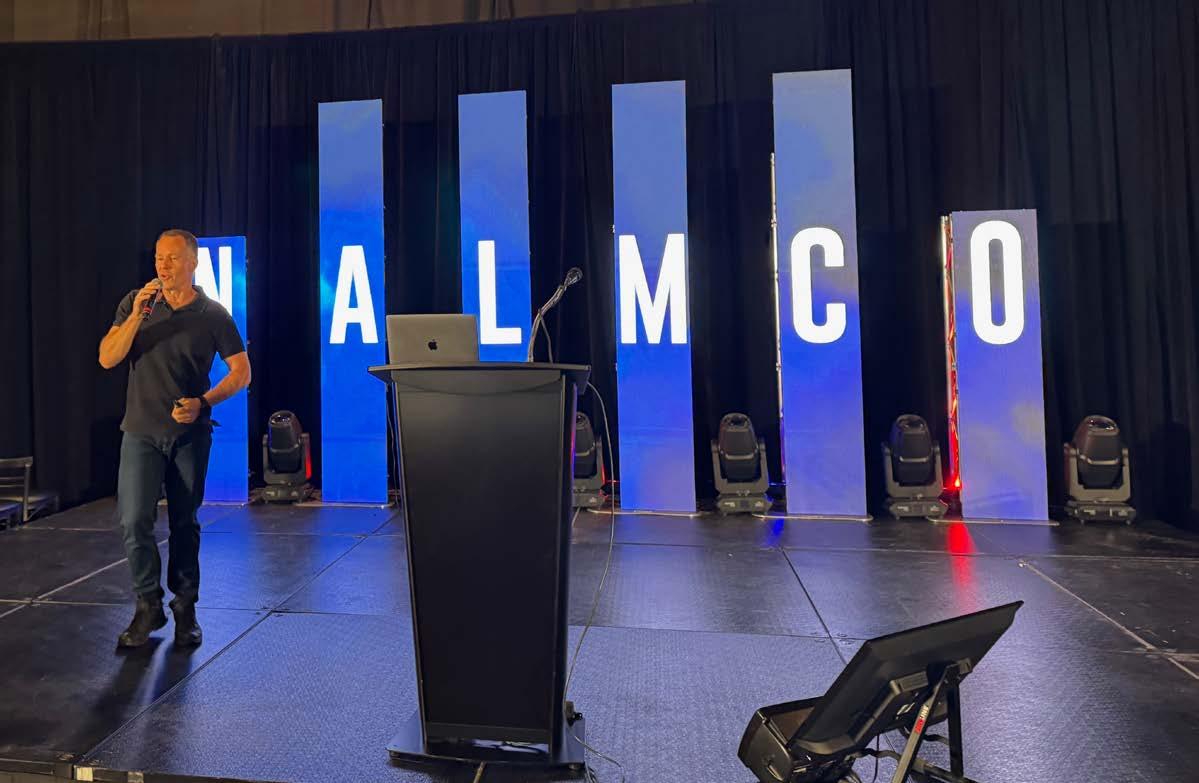
Stephen’s keynote reinforced the idea that mindset plays a critical role in overcoming adversity. His message resonated strongly with the audience, many of whom noted its relevance to leadership, teamwork, and navigating challenges in business. His appearance set a high bar for keynote speakers and remains a memorable highlight as we look ahead to the 2026 event.
Read the LM&M article here.


NEW CERTIFICATIONS
CERTIFIED APPRENTICE
LIGHTING TECHNICIAN™
McBride Lighting, Inc.
Nicholas Reinert, CSLT
US LED
Britney Field, CALT
Cailin Fournier, CALT
EMC
Kaesha Thakur, CALT
Tony Sandberg, CALT
Have Lights Will Travel
Cameron Rodriguez, CALT
James Ferguson, CALT
Evolved Lighting & Energy
Geonta Cotton, CALT
Sai Vaughn Mitchell, CALT
Evergreen
Felipe Gomez, CALT
Sunset Lighting
Kathy Burrell, CALT
CERTIFIED SENIOR LIGHTING TECHNICIAN™
McBride Lighting, Inc.
Nicholas Reinert, CSLT
Lighting Technologies Inc.
John Rakestraw, CSLT
Colorado Lighting
Theodore Smith, CSLT
CERTIFIED LIGHTING CONTROLS PROFESSIONAL™
Contemporary Energy Solutions
Joseph Canett, CSLT, CLCP
Aptitude
Alex Hunter, CLCP
Mantis Innovation
Joe Clancy, CLCP
IoT Deployment Services
Mark Smith, CLCP
Adrian Glover, CLCP
Jeremy Haapala, CLCP
McKinstry
Randy Cherwin, CLCP
Keystone Technologies
Joe Harclerode, CLCP
Coastal Controls
Joshua Watters, CLCP
Alex Gershowitz, CLCP
CERTIFIED LIGHTING MANAGEMENT
CONSULTANT™
Coastal Controls
Joshua Watters, CLCP
Dewberry Engineers
Amanda Height, CLMC, CLEP
Energy Systems Group
Nicholas A. Christiansen, CLMC
CERTIFIED APPRENTICE GUV
TECHNICIAN
(CA-GUVT)
AirCare de México
Brandon Guerrero, CA-GUVT
Jesus Cantú, CA-GUVT
LILIA SANMIGUEL, CA-GUVT
María Gaona Rojas, CA-GUVT
OSCAR RICAÑO, CA-GUVT
NEW MEMBERS
GENERAL COMPANY MEMBER
Direct Energy Controls, LLC.
BURLESON, TX
Join Date: 1/21/2026
Greentech Energy Services
MAPLE SHADE, NJ
Join Date: 11/1/2025
Infinity Group/Light Pros
BIRD ISLAND, MN
Join Date: 3/3/2026
LED Solutions
PELHAM, AL
Join Date: 1/16/2026
Optimal Energy Solutions, LLC
ONTARIO, NY
Join Date: 1/28/2026
SLG Lighting
STAFFORD, TX
Join Date: 2/10/2026
Summit West Signs
MESA, AZ
Join Date: 11/13/2025
The Controls Tune-Up The Controls Tune-Up The Controls Tune-Up
Lighting controls have a funny way of doing exactly what we ask of them, until they don’t. A system can be commissioned perfectly, operate perfectly for a year or two, and then slowly drift into a faulty state: sensors get blocked, schedules get overwritten, daylight setpoints stop making sense after a space gets reconfigured, and the “temporary override” becomes permanent.
The frustrating part is that most of these problems aren’t mysterious. They’re the controls equivalent of skipped oil changes. And the fix usually isn’t a rip-and-replace. It’s a tune-up: a deliberate, repeatable process that brings the system back to a known baseline, confirms performance in the field, and prevents the same issues from creeping back in six months.
1) Why controls need a tune-up (and why it’s worth doing)
Controls are often sold as “set it and forget it,” but buildings don’t work that way. Schools reconfigure classrooms, add after-hours activities, and change custodial schedules. Warehouses shift racking, change aisles, and run different shifts depending on demand. Healthcare spaces evolve constantly—patient needs, staff routines, even infection-control priorities. The lighting system is living inside all of that.
A practical tune-up mindset is the same one good contractors use when they demo lighting before committing to a full rollout: prove it in the real world and solidify expectations before you scale it. As one ESCO put it, you can ask the right questions, but you still need to show the solution “in practice” to make sure everyone is aligned.
Controls deserve that same respect.
2) Establish the baseline first (or you’ll chase ghosts)
Before you touch settings, you want a baseline—something you can return to if the system gets worse instead of better. This is where the best maintenance programs separate themselves from the callback cycle.
Baseline essentials (do these once, then keep them current):
• Zone map: what controls what, and why (include “oddities” people forget—nightlights, egress, exterior, vestibules).
• Device list: sensors, gateways, panels, keypads, fixtures/
drivers (model numbers matter later).
• Sequences of operation: not what you think it does— what it’s supposed to do.
• Current schedules + scenes: export them, save them, date-stamp them.
• A backup you can actually restore: and at least one person besides “the controls guy” who knows how.
If you’re maintaining multiple facilities—especially a school district or a healthcare network—this baseline becomes your playbook. Without it, every service call is a new mystery novel.
3) The tune-up checklist: one walk-through that solves most problems
A good tune-up starts in the field, not on a laptop. You’re looking for the simple stuff first, because the simple stuff causes the majority of the complaints.
A practical controls walk-through (60–90 minutes per typical building area):
• Look up and look around
• Sensors blocked by banners, new ducts, racking, or shelving (warehouses are notorious for this after re-layouts).
• Daylight sensors “seeing” the wrong thing after blinds, paint colors, or furniture layouts change.
• Watch the space behave
• Occupancy response time: does it feel immediate where it should (classrooms, corridors, nurse stations)?
• Timeouts: are they sensible for the activity? A classroom and a warehouse aisle are not the same space.
• False offs / nuisance dimming: especially in healthcare, where a “good energy strategy” can turn into staff frustration quickly.
• Check the human touchpoints
• Keypads: are the buttons labeled in a way that matches how people use the room?
• Overrides: how often are they used, and who has access? (If the override is used daily, it isn’t an exception anymore.)
Checklists, Diagnostics, and Preventive Maintenance
By Parker Allen
• Confirm the schedule reality
• Does the schedule reflect the building’s actual rhythm? Schools often have a clean “academic day,” then chaos after 3 p.m.—sports, meetings, events, custodial.
• Warehouses may be predictable—or may flip between shifts week to week.
• Healthcare is frequently 24/7, but individual zones aren’t; support spaces can and should behave differently than patient areas.
• Spot-check the obvious technical culprits
• Wireless battery levels (if applicable).
• Time sync issues (systems drifting by minutes can become “why are the lights doing that?”).
• A quick fault scan in software, but only after you’ve seen behavior in the field.
This is also where you capture what I’ll call “unwritten requirements.” The people who work in the space will tell you what the system needs to do—sometimes in one sentence. In school environments, for example, “the gym has to stay on for games” is not a preference. It’s a requirement.
4) Diagnostics: when the checklist doesn’t fix it
When a tune-up doesn’t solve the issue, you move into diagnostics. The mistake here is jumping straight to “it must be the network” or “the sensor is bad.” Instead, isolate.
A clean diagnostic flow:
1. Is it localized or widespread?
• One room = device, placement, settings, or local wiring.
• An entire wing = schedules, groups, gateways, or a controller.
• The whole building = time clock, server/ gateway, network, upstream power, or global settings.
2. Is it a “can’t” problem or a “won’t” problem?
• Can’t = hardware failure, power, comms, address.
• Won’t = programming, priorities, overrides, schedules.
3. Prove inputs before blaming outputs
• If occupancy isn’t triggering, confirm the sensor is seeing motion and actually reporting it.
• If daylight dimming is erratic, confirm the sensor reading makes sense at different times of day.
4. Check priorities and conflicts
• Many “mystery behaviors” come from competing commands: schedule vs. vacancy vs. manual scene.
5. Make changes like a professional, not like a gambler
• Change one variable at a time, document it, and verify in the space.
• When you’re dealing with mission-critical areas (healthcare corridors, egress paths), do it deliberately and with the right stakeholders looped in.
If you take nothing else from this section: controls problems are often conflict problems. Two “smart” rules can produce a dumb outcome.
5) Preventive maintenance that actually prevents things
A tune-up isn’t a one-time event. The goal is to turn it into a cadence—lightweight enough to be realistic, structured enough to catch problems early.
A practical cadence:
• Quarterly (or per season): quick walk-through of priority areas, schedule sanity check, top complaints review.
• Semi-annual: sensor verification and calibration checks (especially daylighting), wireless battery plan, software fault review.
• Annual: full backup/restore test, update documentation, recommission high-impact sequences.
Where the setting matters is in deciding what’s “priority.”
• Schools: focus on schedules, overrides, and spaces that change function (cafeterias, gyms, auditoriums). You’re maintaining a building that behaves differently every day of the week.
• Healthcare: focus on reliability, comfort, and staff workflow. Energy savings matter, but the “cost” of nuisance behavior is often higher than the kWh you’re chasing.
• Warehouses: focus on safety, sensor coverage, and physical changes—racking, aisle layout, and shift patterns. A forklift aisle that goes dark at the wrong moment is not an acceptable outcome.
The best part about a tune-up program is that it creates credibility. You stop being the person who shows up when something breaks and start being the person who keeps the system working. And in a world where controls are only getting more common and more layered, that’s not just maintenance. That’s value. ■

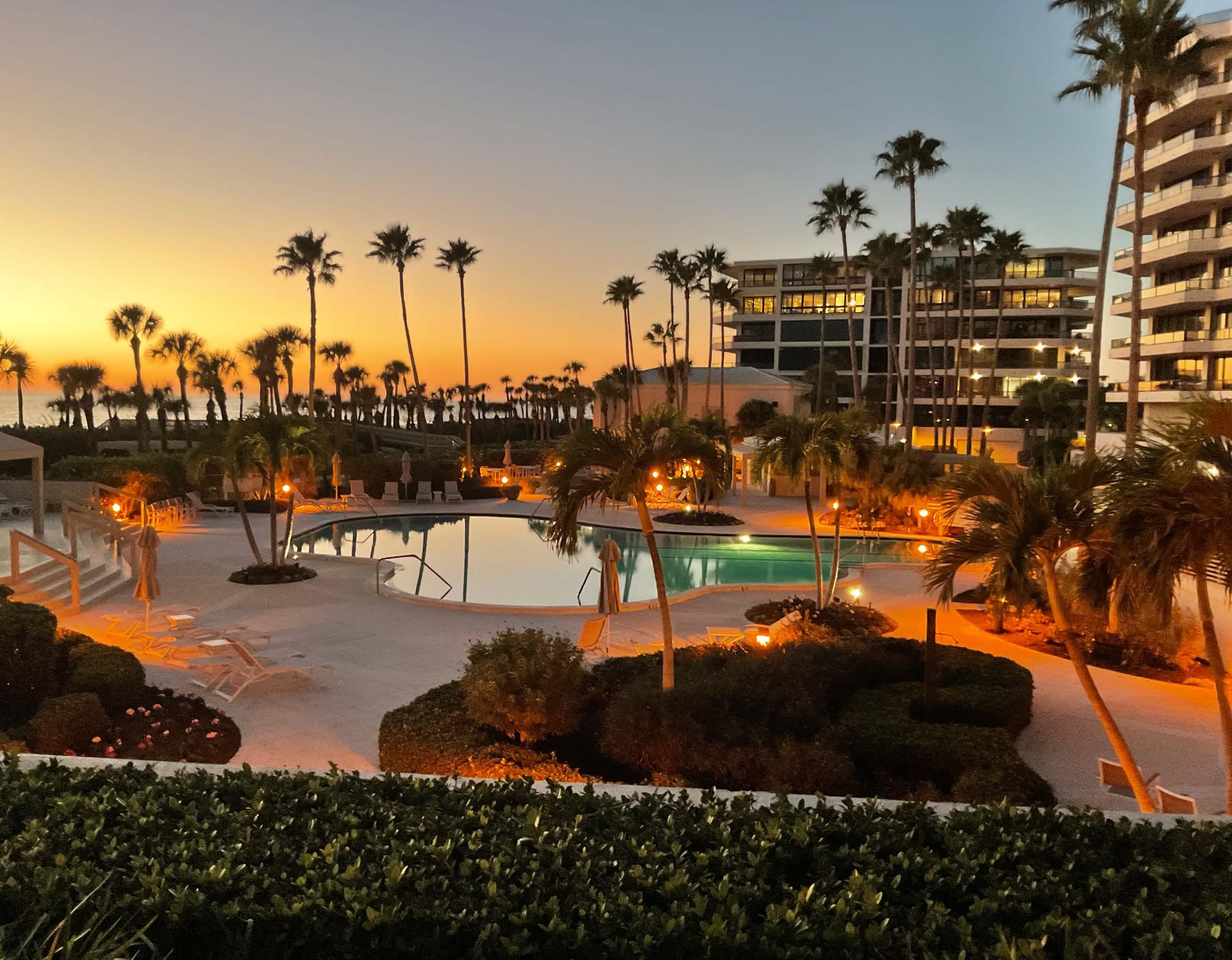
A FLORIDA COASTAL COMMUNITY BALANCES SAFETY, TECHNOLOGY, AND SEA TURTLE PROTECTION
On Florida’s Gulf Coast, where the Gulf of Mexico meets some of the state’s most valuable beachfront property, lighting design must balance more than aesthetics and safety. It must also protect one of the region’s most vulnerable residents: sea turtles.
At The Sanctuary condominium complex on Longboat Key, a major exterior lighting upgrade recently tackled this challenge head-on. The project combined advanced LED technology, smart controls, and careful coordination with environmental regulations to deliver lighting that satisfies both residents and wildlife protection requirements.
The result is a unique system that can switch between traditional white lighting and turtle-safe amber illumination—
an approach that gives residents the visibility they want while ensuring compliance during sea turtle nesting season.
A COASTAL LIGHTING CHALLENGE
The Sanctuary is a large beachfront condominium community on Longboat Key, Florida—one of the state’s most affluent coastal areas. With hundreds of residential units and expansive outdoor amenities, the property includes parking lots, walkways, boardwalks, pool areas, and numerous exterior lighting applications.
Because the complex sits directly on the beach, its lighting must comply with Florida’s sea turtle protection regulations.
Each year from April 1 through October, sea turtle nesting season brings strict requirements designed to prevent hatchlings from becoming disoriented by artificial lighting. When baby turtles emerge from their nests, they instinctively move toward the brightest horizon—historically the moonlight reflecting off the Gulf.
Artificial white lighting along the shoreline can confuse this instinct.
“If they head east instead of west toward the Gulf,” explained Mark Cline of World Electric Supply, “they’ll be dead before morning.”
To prevent that outcome, lighting near nesting beaches must use amber light within a narrow wavelength band—typically 560–595 nanometers—which sea turtles cannot easily see.
The requirement is straightforward in principle. In practice, however, it creates significant resistance from property owners and residents.
Many people simply don’t want their homes and outdoor spaces illuminated with amber lighting year-round.
RESIDENT EXPECTATIONS MEET
ENVIRONMENTAL POLICY
The Sanctuary’s residents, like many coastal property owners, invested heavily in their homes. Many condos at the property are valued in the millions of dollars, and owners expect a certain level of nighttime visibility and aesthetics.
“People don’t like living and playing under orange or amber light,” Cline said.
For years, this tension between environmental requirements and resident preferences has shaped lighting decisions along Florida’s coast. Property owners often push back, arguing that reduced lighting could create safety concerns for walking paths, stairways, and parking areas.
Yet compliance is increasingly unavoidable. After the BP oil spill, funding and regulatory support expanded dramatically for sea turtle protection programs, strengthening enforcement and increasing oversight of coastal lighting.
Against this backdrop, the Sanctuary sought a solution that could satisfy both sides of the equation.
The key question was deceptively simple:
Could exterior lighting switch between white and turtle-safe amber depending on the time of year?
SEARCHING FOR A TECHNICAL SOLUTION
At the time the project began, lighting solutions capable of switching between compliant amber and standard white illumination were rare.
Unlike color-changing decorative lighting, turtle-safe amber cannot be produced using common RGB or phosphor-based LEDs. Even if the light appears amber to the human eye, sea turtles can still detect the underlying wavelengths.
To meet regulatory requirements, the fixtures must use true amber LED chips within the specific wavelength range.
That requirement drastically limits available products.
“The amber chip itself is expensive to manufacture,” Cline explained, “and for a long time there were very few manufacturers producing it.”
After searching for options, the project team ultimately identified a manufacturer in Latvia that had developed architectural-grade fixtures capable of housing multiple LED sources.
The solution was straightforward but innovative:
• Amber LED chips for turtle season
• 4000K white LED chips for the remainder of the year
• Two separate drivers within the same fixture
These drivers, developed by Inventronics, allow the system to activate one light source or the other depending on the programmed configuration.
LIGHTING A LARGE COASTAL PROPERTY
The lighting upgrade at The Sanctuary ultimately encompassed six different exterior applications, including:
• Parking lot lighting
• Pool deck and surrounding areas
• Boardwalk lighting
• Walkways and pedestrian areas
• Bollards and landscape lighting
• Additional exterior applications throughout the property
The parking lot represented the largest portion of the project, including 63 pole-mounted fixtures.
These poles were equipped with the dual-driver system, allowing the lighting to change from amber during turtle season to white during the rest of the year.
Other areas of the property—such as boardwalks, pool areas, and landscape lighting—remain amber year-round, where residents were more comfortable with the softer light.
CONTROLS ENABLE SEASONAL SWITCHING
The project’s flexibility relies heavily on its control system.
Using HubSense software and Inventronics drivers, technicians can access the lighting network via Bluetooth and a mesh communication system. This allows facility staff

to connect to any fixture in the network using a mobile application.
Once connected, the system identifies individual drivers within each fixture and allows users to activate either the amber or white source.
“Each fixture has two drivers—one for the 4000K light and one for the turtle-safe amber,” explained Francis Carampatan, who handled commissioning and training for the
controls system.
Through the app, technicians can switch drivers, troubleshoot issues, and ensure every fixture is set correctly for the season.
During commissioning, technicians moved throughout the property connecting to fixtures and updating their settings until the entire network had transitioned from amber to white once turtle season ended.

TRAINING THE MAINTENANCE TEAM
An important part of the project involved ensuring that the property’s maintenance team could operate and maintain the new lighting system.
Carampatan worked directly with the facility staff to train them on the software and troubleshooting process.
The goal was to ensure that minor issues—such as a fixture
displaying the wrong color temperature—could be corrected quickly without requiring outside service.
Now, the maintenance team can simply connect to the system using the mobile app and switch the appropriate driver if needed.
FUNDING—AND A KEY DECISION
The Sanctuary project also highlights the complicated relationship between environmental programs and property owners.
The Sea Turtle Conservancy offers grant funding for lighting upgrades that meet its strict requirements. However, accepting that funding would have prohibited the use of a switchable white-and-amber system.
Instead, funded projects must remain turtle-compliant at all times.
In this case, the Sanctuary’s owners chose a different path.
They declined the grant funding and instead financed the lighting upgrade themselves as part of a broader capital improvement effort.
Their decision allowed them to implement the dual-color system while still ensuring compliance during nesting season.
EARLY RESULTS AND RESIDENT FEEDBACK
After installation, the system was initially set to amber during turtle season. Once the season ended in November, the lighting was switched to white.
The response from residents has been overwhelmingly positive.
According to the project team, residents appreciate the ability to return to traditional white lighting during the months when turtle protection rules are not in effect.
At the same time, the system ensures that the property remains compliant when nesting season returns.
A MODEL FOR COASTAL COMMUNITIES?
As coastal communities continue to balance environmental protection with resident expectations, projects like the Sanctuary upgrade may become increasingly common.
Advances in LED technology and controls are making solutions possible that were difficult—or impossible—just a few years ago.
For properties along the Gulf and Atlantic coasts, the ability to adapt lighting seasonally could offer a practical way forward.
And at The Sanctuary, the project demonstrates that with the right combination of technology, collaboration, and persistence, lighting can protect both people and wildlife— without forcing either to live entirely in the dark. ■
WHERE PERFORMANCE IS ENGINEERED: INSIDE THE NALMCO Spring Seminar with Shane Acernese
At the back of the room, long after the slides had faded and the conversations broke into smaller circles, Shane Acernese was still talking. Not selling. Not pitching. Just working through ideas— drivers, airflow, labor, lifecycle. The kind of discussion that only happens when the people in the room all understand what it takes to make a project actually work.
For Shane, Managing Partner of American Eagle Solutions (AES), that is the lens everything runs through. Not theory. Not brochure language. Performance in the field.
“I look at everything through what holds up over time,” he explained. “What works after the install is done, not just what looks good on paper.”
That perspective framed both the conversation and his experience at the NALMCO Spring Seminar—an event that felt less like a conference and more like an intensive working session for contractors, engineers, and manufacturers trying to solve the same problems from different angles.
FROM THE FIELD TO THE ROOM
AES was founded in 2016 in Hazleton, Pennsylvania, beginning as a family-owned lighting services contractor. In its early years, the company focused on audits, proposals, and project management—often all handled directly by Shane. By 2018, AES had become a preferred partner on one of the world’s largest lighting retrofit programs, quietly executing large-scale work across facilities typically exceeding 50,000 square feet.
That early foundation shaped what the company is today: a turnkey energy integrator.
Over time, AES expanded well beyond lighting. The work increasingly involved time-sensitive electrical infrastructure—projects tied directly to tenant occupancy and accelerated “go-live” schedules. In that environment,
By Randy Reid Photo Credit: American Eagle Solutions
delays are not theoretical. They are expensive.
“Sometimes tenants are paying rent for months before they can even use the space,” Shane said. “We built our model around solving that.”
Execution at that scale requires more than internal capability. It depends on alignment across the supply chain. Shane emphasized the importance of partnerships, particularly with American manufacturers, to ensure materials are available and timelines can be met.
WHAT’S INSIDE MATTERS
One of the sessions that stayed with him came from Keystone Technologies. On the surface, it was a technical discussion about drivers and system behavior. In practice, it was something more fundamental.
The presentation broke down how fixtures actually perform under real-world conditions—thermal stress, power quality, environmental exposure. It also addressed something contractors see every day but rarely hear explained clearly: failure rarely happens all at once.
“There are signs,” Shane noted. “Flicker. Flashing. Intermittent issues. Those aren’t random—they’re indicators of stress in the system.”
The bigger takeaway was straightforward but often overlooked. Two fixtures can look identical on a spec sheet. Same output. Same efficacy. Same form factor.
But what sits inside—component selection, driver quality, thermal management—determines how that fixture behaves over time.
“Performance is engineered,” he said. “It’s not just about the numbers. It’s about how the system is built.”
THINKING BEYOND THE INSTALL
Another moment that shifted the conversation came during Linmore’s presentation on circular economy and lifecycle thinking.
For contractors, the traditional approach has often been
simple: install, operate, replace. The session challenged that model.
Instead of focusing only on efficiency, the discussion moved toward serviceability—how easily a system can be maintained, repaired, and adapted over time. Modular LED fixtures, in particular, stood out as a practical evolution. Rather than replacing an entire fixture, components such as drivers or boards can be swapped in minutes.
“It’s a better long-term play,” Shane said. “Less waste, less
labor, and a system that actually supports how facilities operate.”
That shift also ties into a broader conversation Shane is exploring through doctoral research—how companies make capital decisions. Pre-COVID, sustainability often drove decisions. During and after COVID, many shifted back to ROI. Now, the industry appears to be finding a balance between ESG goals and financial performance, supported by technologies that make both achievable.
A MORE COMPLEX SYSTEM
Throughout the seminar, that theme repeated. Lighting is no longer a standalone decision.
Sessions on exterior lighting, sports lighting, and DALI drivers all pointed in the same direction— greater integration, more complexity, and a deeper connection to the overall electrical ecosystem of a building.
At AES, Shane sees that daily. He described a clear shift in market demand.
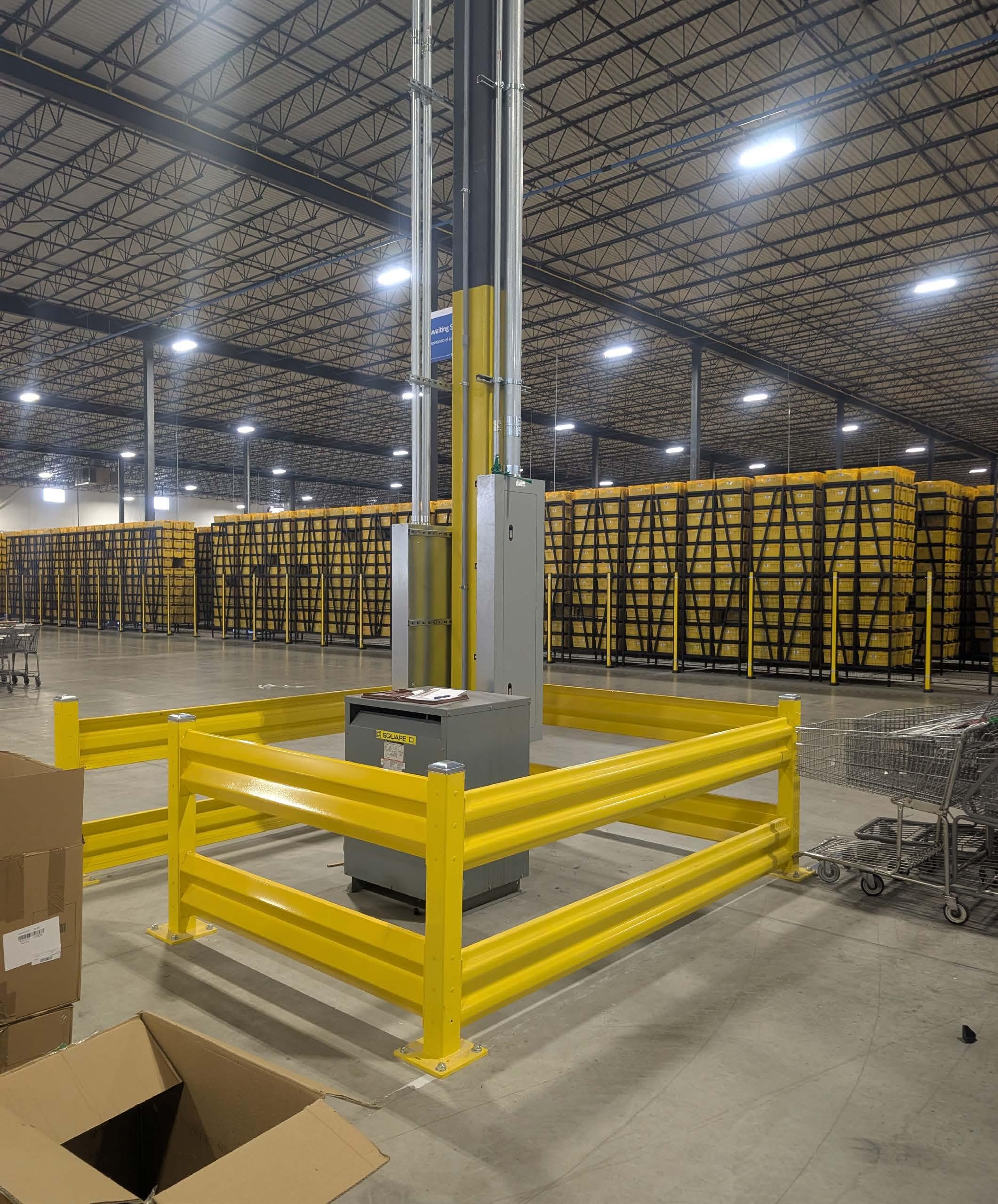
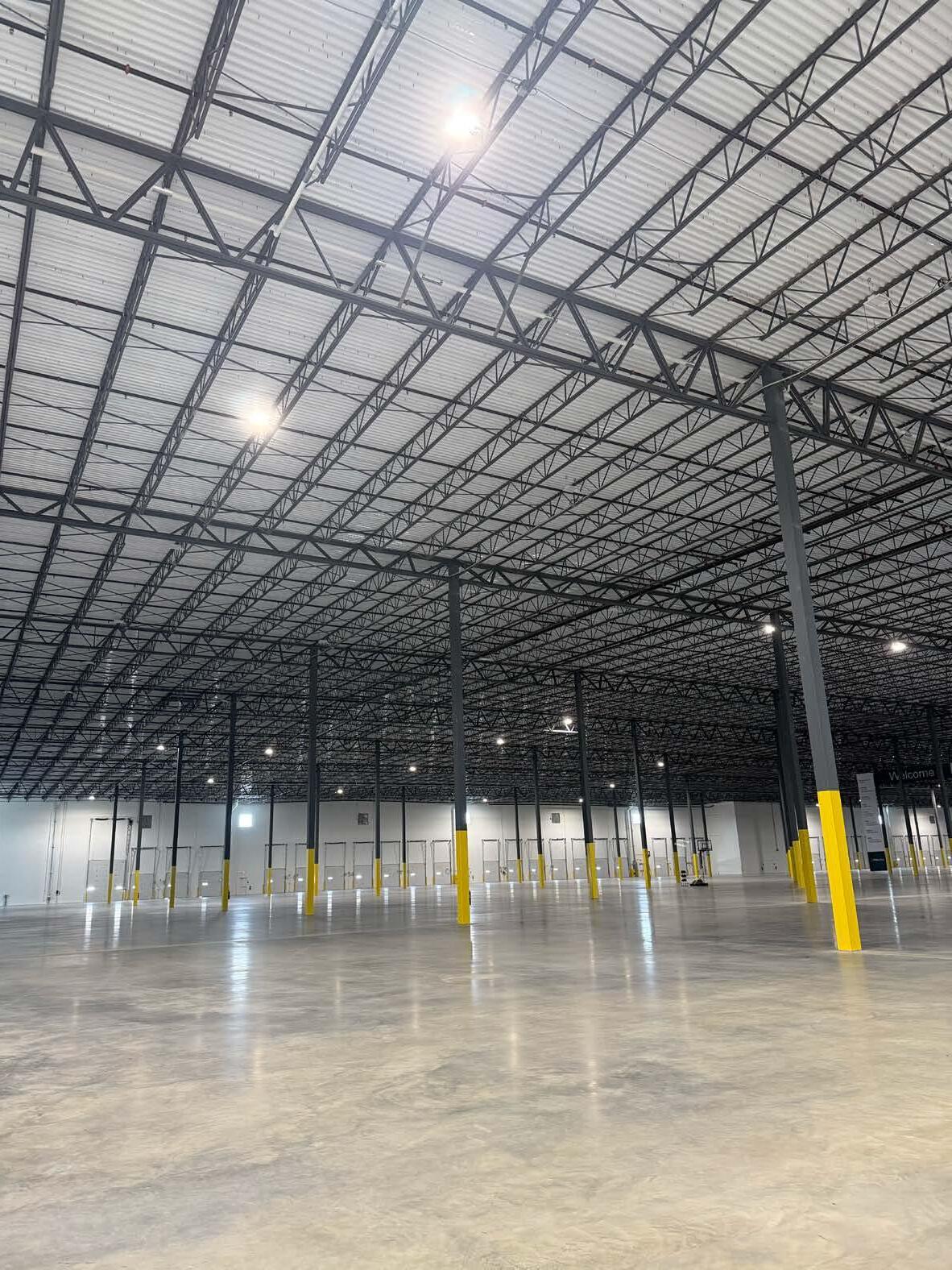
During COVID, warehouse operators were focused on maximizing throughput. Vacancy rates dropped, and companies pushed to use every inch of available space. AES responded by helping clients transition to very narrow aisle racking systems. That required careful coordination of lighting—using narrow-aisle optics and demand-driven controls to maintain performance without driving up energy costs.
Post-COVID, the priorities have changed again.
Facilities are now asking for EV charging infrastructure, high-speed forklift charging, and more robust electrical systems to support evolving operations. At the same time, there is a renewed emphasis on employee comfort.
Even something as familiar as airflow is being reconsidered.
“People used to think a fan is a fan,” he said. “It’s not.”
But perhaps the most valuable element was the exchange between disciplines. Contractors sharing field experience. Engineers explaining design intent. Manufacturers opening up about how products are built—and where they fail.
By applying airflow studies and rethinking fan selection— often using solutions like Go Fan Yourself—AES has been able to reduce circuiting, minimize labor, and improve performance. In some cases, smaller, more efficient fans spaced strategically can outperform larger units, while also reducing installation time.
The impact extends beyond cooling. By destratifying air and pushing heat back down from the ceiling, these systems can reduce heating energy significantly, while improving comfort for workers on the floor.
It is a reminder that every system in a facility is connected, whether it is treated that way or not.
EDUCATION THAT MOVES THE INDUSTRY
For Shane, one of the most important outcomes of the Spring Seminar was what happened after it ended.
He began reviewing NALMCO’s certification pathways and registered for his first exam.
“That speaks to the value of the content,” he said. “It makes you want to go deeper.”
The seminar also extended beyond the classroom. A tour of Keystone’s facility added context to the technical discussions, grounding theory in manufacturing reality.
“It’s a place where what we see in the field actually gets heard,” Shane said. “And that matters.”
WHERE IT’S ALL GOING
If there was a single thread running through both the interview and the seminar, it was this: lighting is no longer just about light.
It is an infrastructure decision. One that ties together design, component selection, installation, and long-term operation.
For contractors, that means the role is expanding. The work is no longer just about installing fixtures. It is about understanding how systems behave over time—and guiding clients toward decisions that balance performance, cost, and longevity.
“The companies that lead are going to be the ones that understand how all of it connects,” Shane said. “Not just at install, but five, ten years down the road.”
At the NALMCO Spring Seminar, that future was not presented as a theory. It was discussed, debated, and, in many cases, already underway.
And for those in the room, it felt less like a conference—and more like a working blueprint for what comes next. ■
AD

Page 17 Page 3 Page 9
UP CLOSE WITH

BEN GROTHE
By Shirley Coyle, LC
Ben Grothe’s path into the lighting industry started in a sign shop.
As a high school student in San Diego, Ben worked after school for his stepfather’s sign company, hauling neon to be repaired, sweeping the shop, helping local crews. Upon graduation he went full time, becoming a certified welder and operating an 85-foot crane. “I was on top of the world,” he recalled.
Those early years in the field gave Ben a deep, hands-on understanding of how to manage service work and a lasting respect for the crews who install and maintain.
While Ben thrived in the field, he recognized that to grow his career and earning potential, he’d need to move into the office. That opportunity came when he joined his uncle’s company, B&C Enterprises, a lighting maintenance firm in San Diego.
Despite initially knowing little about lighting or electrical work from a technical standpoint, Ben took on the role of service manager, leaning into his strengths: organizing teams, coordinating projects efficiently, and communicating clearly with customers.
His uncle quickly spotted another talent in his nephew that Ben himself hadn’t fully embraced—sales. Though Ben once joked that being called a “salesman” was almost an insult, his deep operational knowledge and ability to explain complex concepts in straightforward language made him a natural.

Customers trusted Ben because he understood their facilities, their budgets, and the value of keeping systems running reliably.
The California energy crisis of the late 1990s became a turning point. As electricity rates surged and new technologies like compact fluorescents and early LEDs came to market, Ben immersed himself in energy-efficient retrofits.
Converting T12s to T8s, redesigning systems for efficiency, and delivering fast paybacks to customers energized him. Trade shows became a highlight; Ben
loved staying on the leading edge of what lighting technology could do. “We were just geeking out on whatever was new and improved that the lighting companies came up with!”
At the same time, Ben and his wife were thinking hard about where they wanted to raise their children. Though he loved San Diego, Ben had never forgotten the years he spent in Little Rock as a young child and the sense of belonging he felt in the South.
They sold their house, took a pay cut, and moved to Arkansas while expecting their second child.
Looking back, Ben recognizes how bold that leap was. But at the time, he was simply focused on building the life he wanted for his family.
Joining Little Rock Electrical (LRE) in Arkansas, Ben helped build new business for the company by introducing the concept of planned lighting maintenance to a market that had largely never seen it. Relentlessly networking with commercial property and facility managers, Ben positioned the service as a way for customers to stabilize budgets and create predictable costs. The response was immediate and enthusiastic; Ben quickly became known as the go-to resource for lighting maintenance and retrofit solutions.
Eventually he focused on the possibility of building his own professional service company that would focus on lighting. Through NALMCO, he connected with people who seemed to have perfected this service offering to the industry.
He remembered, “I would talk to people like Jami Hall, Devin Grandis, and others on the proper way to do business.” Ben’s perseverance and desire “to get this done right” ultimately set the stage for his next chapter.
He started his own company Lumatech in 2010 and build the Arkansas lighting management market in his own way. Lumatech grew rapidly, doing well in its first year and scaling aggressively over the next several years.
That growth brought challenges. Ben was hiring faster than he could properly train,
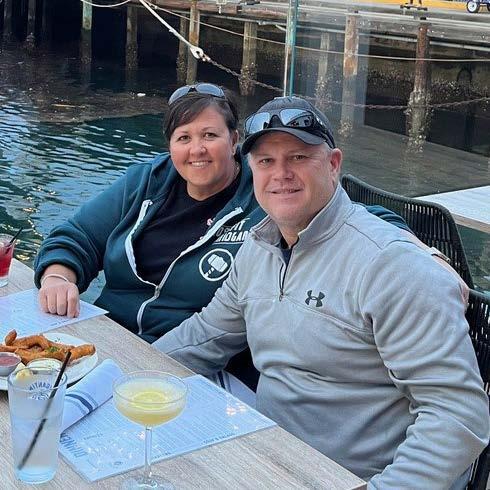
promoting technicians into management before they were ready, and navigating the financial strain of an expanding operation. After so much growth in the first six years , “the company hit some stumbling blocks from 2017 to 2019, and we were hanging on by a thread. It was scary but we never missed a payroll.”
The COVID-19 pandemic initially felt like a breaking point. Responsible for about 50 employees and their families, Ben describes nights of heavy stress and self-doubt. With guidance from his CPA, he leveraged the Paycheck Protection Program, renegotiated leases and financing, and used the downtime to strengthen Lumatech’s financial structure.
When electricians were deemed essential and competitors faltered, Ben was ready, securing labor-only retrofit work while payroll was covered, giving the company the boost it needed to emerge stronger.

Ben consistently adapts to industry change and looks to find new opportunities. Just before the pandemic Ben recognized that LED technology was eroding traditional maintenance contracts. So, he started to dive into EV charging, “something that turned out to be huge for us,” he added.
When the pandemic hit, Lumatech added services in air purification.

In 2021, Ben was invited to do some sports lighting work. He noted, “It was the biggest job I’d ever sold – putting new LED sportslighters on a football field.”
Ben saw the opportunity to add sports lighting as a specialty niche for Lumatech: “It required the skills of all three of our divisions—lighting, signs and electrical.”
With Lumatech about to turn sixteen years old, Ben is now able to take more time for his many activities: golfing, CrossFit, working on his five-acre property, spending time on Arkansas lakes with his wife, and riding off-road in the California desert. A resilient entrepreneur, Ben balances ambition with gratitude, viewing his journey as shaped not only by hard work and good decisions, but by a sense of “divine direction” and the responsibility to support both his family and his community. ■
COMING IN MAY
THEME: RETROFITS, UPGRADES, AND SUSTAINABILITY

Prioritizing retrofit projects in aging facilities
Energy savings, rebates, and sustainability goals from a maintenance perspective.